

#googleai
googleai
34,002 vues
126 mentions
Populaire
Récents

·
--
Haussier
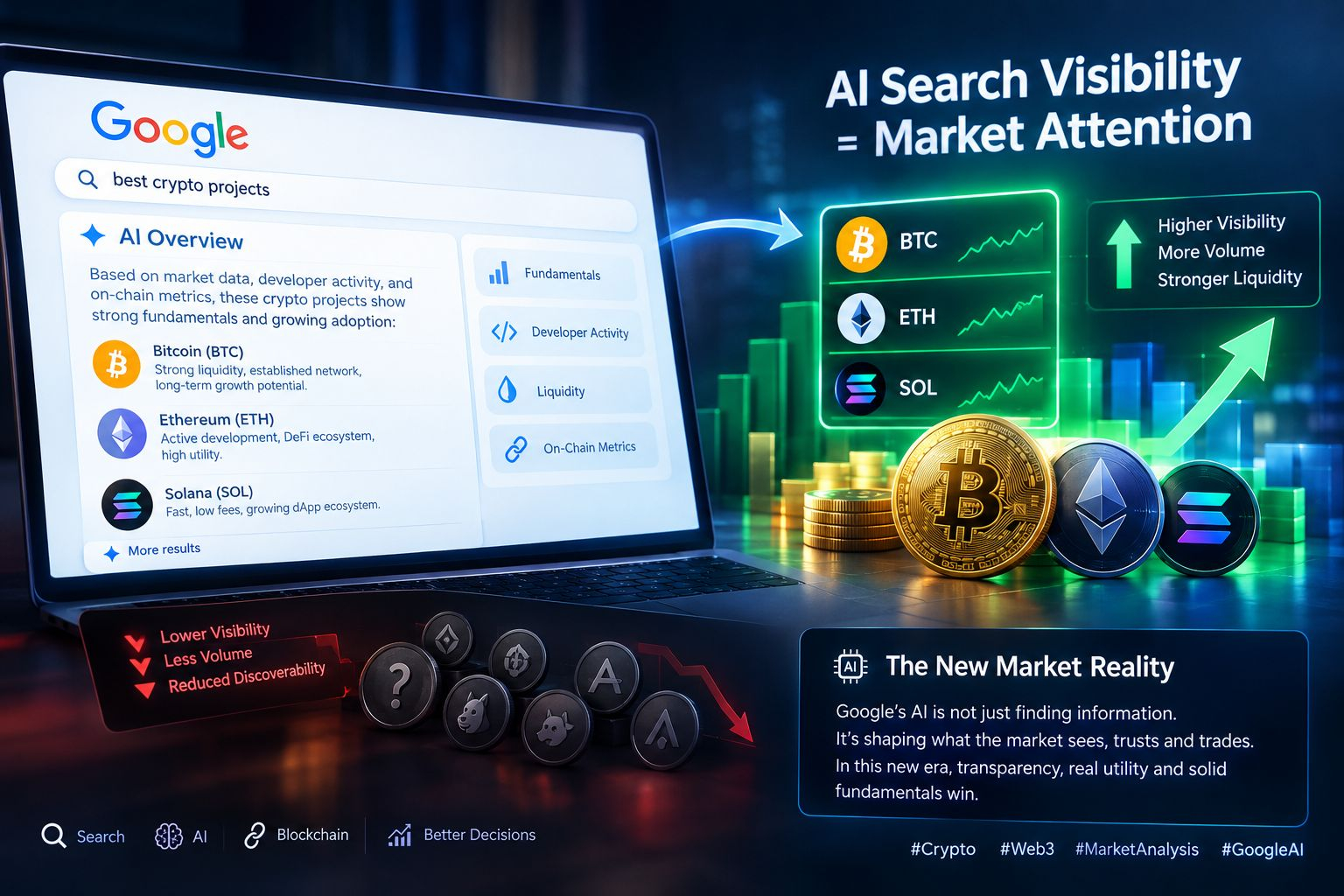
#cangoogledefinditscore L’intégration croissante de l’IA par Google remodèle discrètement la dynamique des marchés crypto. À mesure que les aperçus générés par l’IA et les algorithmes de recherche synthétisent de plus en plus les données sur les jetons, ils attribuent de fait des notes de qualité implicites aux actifs numériques.
Sans constituer un système de notation officiel, la visibilité accordée à certains projets dans les résumés générés par l’IA agit comme un indicateur de confiance de facto. Les investisseurs particuliers s’appuient largement sur ces résultats de recherche pour leurs premières recherches. Lorsque l’IA met en avant les fondamentaux d’un jeton, l’activité des développeurs et sa liquidité, elle suscite une attention organique massive. À l’inverse, les altcoins peu connus sont rapidement écartés de ces récits.
Cette dynamique crée un marché à deux vitesses. Les protocoles établis, dotés d’une documentation solide et de données on-chain vérifiables, bénéficient d’une visibilité accrue. Pendant ce temps, les jetons à faible capitalisation dépourvus d’une présence numérique robuste sont plus difficiles à découvrir. Dans l’ensemble, le marché récompense de plus en plus la transparence et l’utilité plutôt que le simple engouement.
Les traders devraient surveiller attentivement la corrélation entre la visibilité dans les recherches par IA et les volumes de transactions quotidiens. Soyez attentifs aux mouvements de liquidité vers les actifs bénéficiant d’une forte visibilité algorithmique. Les fondamentaux comptent plus que jamais dans ce paysage en pleine évolution. Ce changement structurel favorise la viabilité à long terme plutôt que la spéculation à court terme.
#Crypto #Web3 #AnalyseDuMarché #GoogleAI
$SOLV $SYN $CYPHB
{spot}(CYPHBUSDT)
{future}(SYNUSDT)
{spot}(SOLVUSDT)
#cangoogledefinditscore L’intégration croissante de l’IA par Google remodèle discrètement la dynamique des marchés crypto. À mesure que les aperçus générés par l’IA et les algorithmes de recherche synthétisent de plus en plus les données sur les jetons, ils attribuent de fait des notes de qualité implicites aux actifs numériques.
Sans constituer un système de notation officiel, la visibilité accordée à certains projets dans les résumés générés par l’IA agit comme un indicateur de confiance de facto. Les investisseurs particuliers s’appuient largement sur ces résultats de recherche pour leurs premières recherches. Lorsque l’IA met en avant les fondamentaux d’un jeton, l’activité des développeurs et sa liquidité, elle suscite une attention organique massive. À l’inverse, les altcoins peu connus sont rapidement écartés de ces récits.
Cette dynamique crée un marché à deux vitesses. Les protocoles établis, dotés d’une documentation solide et de données on-chain vérifiables, bénéficient d’une visibilité accrue. Pendant ce temps, les jetons à faible capitalisation dépourvus d’une présence numérique robuste sont plus difficiles à découvrir. Dans l’ensemble, le marché récompense de plus en plus la transparence et l’utilité plutôt que le simple engouement.
Les traders devraient surveiller attentivement la corrélation entre la visibilité dans les recherches par IA et les volumes de transactions quotidiens. Soyez attentifs aux mouvements de liquidité vers les actifs bénéficiant d’une forte visibilité algorithmique. Les fondamentaux comptent plus que jamais dans ce paysage en pleine évolution. Ce changement structurel favorise la viabilité à long terme plutôt que la spéculation à court terme.
#Crypto #Web3 #AnalyseDuMarché #GoogleAI
$SOLV $SYN $CYPHB
Sans constituer un système de notation officiel, la visibilité accordée à certains projets dans les résumés générés par l’IA agit comme un indicateur de confiance de facto. Les investisseurs particuliers s’appuient largement sur ces résultats de recherche pour leurs premières recherches. Lorsque l’IA met en avant les fondamentaux d’un jeton, l’activité des développeurs et sa liquidité, elle suscite une attention organique massive. À l’inverse, les altcoins peu connus sont rapidement écartés de ces récits.
Cette dynamique crée un marché à deux vitesses. Les protocoles établis, dotés d’une documentation solide et de données on-chain vérifiables, bénéficient d’une visibilité accrue. Pendant ce temps, les jetons à faible capitalisation dépourvus d’une présence numérique robuste sont plus difficiles à découvrir. Dans l’ensemble, le marché récompense de plus en plus la transparence et l’utilité plutôt que le simple engouement.
Les traders devraient surveiller attentivement la corrélation entre la visibilité dans les recherches par IA et les volumes de transactions quotidiens. Soyez attentifs aux mouvements de liquidité vers les actifs bénéficiant d’une forte visibilité algorithmique. Les fondamentaux comptent plus que jamais dans ce paysage en pleine évolution. Ce changement structurel favorise la viabilité à long terme plutôt que la spéculation à court terme.
#Crypto #Web3 #AnalyseDuMarché #GoogleAI
$SOLV $SYN $CYPHB
2
379


#cangoogledefinditscore
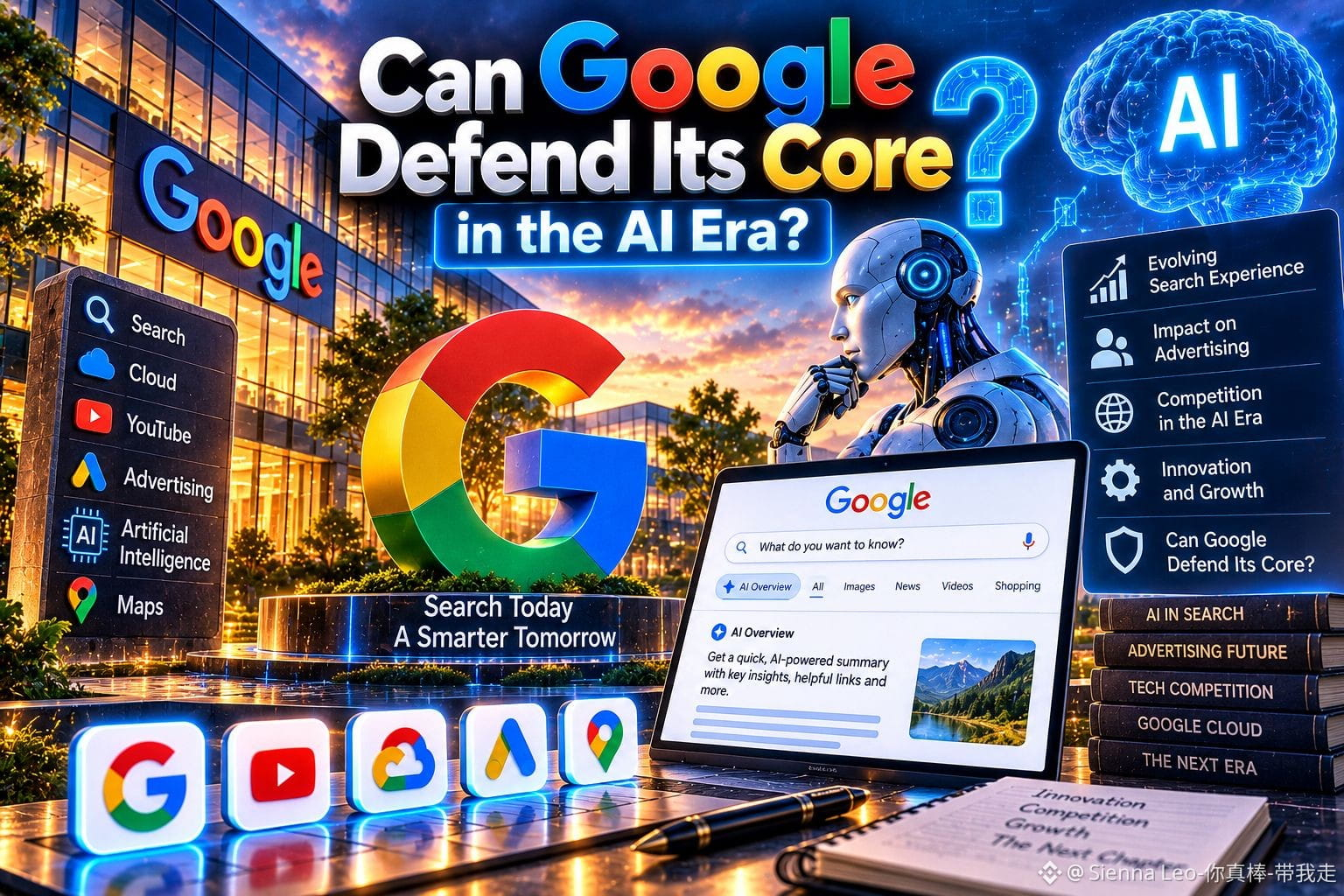
🔎🤖 Google peut-il défendre son cœur de métier à l’ère de l’IA ? 🤖🔎
Imaginez que vous ouvriez Google pour rechercher quelque chose d’important et que vous obteniez une réponse générée par l’IA avant même de cliquer sur un site Web. L’expérience est plus rapide, mais elle soulève une question importante : qu’adviendra-t-il du modèle économique qui a fait de Google un géant ?
Google transforme son moteur de recherche avec les aperçus IA, le mode IA conversationnel et des fonctionnalités de type agent. L’objectif est d’aider les utilisateurs à poser des questions plus complexes et à obtenir des réponses utiles sans s’appuyer uniquement sur les recherches traditionnelles par mots-clés.
Le défi consiste à protéger son cœur de métier publicitaire tout en changeant la façon dont les gens effectuent leurs recherches. Si les utilisateurs trouvent directement leurs réponses sur Google, l’entreprise pourrait renforcer leur engagement, mais les éditeurs pourraient recevoir moins de visites, ce qui créerait des tensions dans l’économie de l’information en ligne.
À mon avis, les principaux atouts de Google sont son immense portée, son infrastructure de données et sa capacité à intégrer l’IA aux produits que les gens utilisent déjà. Son plus grand risque est de bouleverser l’expérience de recherche familière plus vite que son modèle publicitaire ne peut s’adapter.
Les investisseurs devraient suivre la croissance des revenus liés à la recherche, les performances publicitaires, les dépenses en infrastructure d’IA et la demande pour Google Cloud. Ces indicateurs peuvent révéler si l’IA renforce l’activité de Google ou si elle entraîne une hausse des coûts plus rapide que celle des nouveaux revenus.
Le véritable défi de Google n’est pas de savoir si l’IA peut répondre aux questions, mais si l’entreprise peut transformer ces réponses en croissance durable.
Google peut-il réinventer la recherche avec succès sans affaiblir le moteur publicitaire qui a bâti son empire ?
Avertissement : à des fins éducatives uniquement. Ceci ne constitue pas un conseil financier.
#GoogleAI #ArtificialIntelligence #GrowWithSAC $DASH $GOOGL $GOOGLB
#CanGoogleDefindItsCore
#cangoogledefinditscore
🔎🤖 Google peut-il défendre son cœur de métier à l’ère de l’IA ? 🤖🔎
Imaginez que vous ouvriez Google pour rechercher quelque chose d’important et que vous obteniez une réponse générée par l’IA avant même de cliquer sur un site Web. L’expérience est plus rapide, mais elle soulève une question importante : qu’adviendra-t-il du modèle économique qui a fait de Google un géant ?
Google transforme son moteur de recherche avec les aperçus IA, le mode IA conversationnel et des fonctionnalités de type agent. L’objectif est d’aider les utilisateurs à poser des questions plus complexes et à obtenir des réponses utiles sans s’appuyer uniquement sur les recherches traditionnelles par mots-clés.
Le défi consiste à protéger son cœur de métier publicitaire tout en changeant la façon dont les gens effectuent leurs recherches. Si les utilisateurs trouvent directement leurs réponses sur Google, l’entreprise pourrait renforcer leur engagement, mais les éditeurs pourraient recevoir moins de visites, ce qui créerait des tensions dans l’économie de l’information en ligne.
À mon avis, les principaux atouts de Google sont son immense portée, son infrastructure de données et sa capacité à intégrer l’IA aux produits que les gens utilisent déjà. Son plus grand risque est de bouleverser l’expérience de recherche familière plus vite que son modèle publicitaire ne peut s’adapter.
Les investisseurs devraient suivre la croissance des revenus liés à la recherche, les performances publicitaires, les dépenses en infrastructure d’IA et la demande pour Google Cloud. Ces indicateurs peuvent révéler si l’IA renforce l’activité de Google ou si elle entraîne une hausse des coûts plus rapide que celle des nouveaux revenus.
Le véritable défi de Google n’est pas de savoir si l’IA peut répondre aux questions, mais si l’entreprise peut transformer ces réponses en croissance durable.
Google peut-il réinventer la recherche avec succès sans affaiblir le moteur publicitaire qui a bâti son empire ?
Avertissement : à des fins éducatives uniquement. Ceci ne constitue pas un conseil financier.
#GoogleAI #ArtificialIntelligence #GrowWithSAC $DASH $GOOGL $GOOGLB
#CanGoogleDefindItsCore
🔎🤖 Google peut-il défendre son cœur de métier à l’ère de l’IA ? 🤖🔎
Imaginez que vous ouvriez Google pour rechercher quelque chose d’important et que vous obteniez une réponse générée par l’IA avant même de cliquer sur un site Web. L’expérience est plus rapide, mais elle soulève une question importante : qu’adviendra-t-il du modèle économique qui a fait de Google un géant ?
Google transforme son moteur de recherche avec les aperçus IA, le mode IA conversationnel et des fonctionnalités de type agent. L’objectif est d’aider les utilisateurs à poser des questions plus complexes et à obtenir des réponses utiles sans s’appuyer uniquement sur les recherches traditionnelles par mots-clés.
Le défi consiste à protéger son cœur de métier publicitaire tout en changeant la façon dont les gens effectuent leurs recherches. Si les utilisateurs trouvent directement leurs réponses sur Google, l’entreprise pourrait renforcer leur engagement, mais les éditeurs pourraient recevoir moins de visites, ce qui créerait des tensions dans l’économie de l’information en ligne.
À mon avis, les principaux atouts de Google sont son immense portée, son infrastructure de données et sa capacité à intégrer l’IA aux produits que les gens utilisent déjà. Son plus grand risque est de bouleverser l’expérience de recherche familière plus vite que son modèle publicitaire ne peut s’adapter.
Les investisseurs devraient suivre la croissance des revenus liés à la recherche, les performances publicitaires, les dépenses en infrastructure d’IA et la demande pour Google Cloud. Ces indicateurs peuvent révéler si l’IA renforce l’activité de Google ou si elle entraîne une hausse des coûts plus rapide que celle des nouveaux revenus.
Le véritable défi de Google n’est pas de savoir si l’IA peut répondre aux questions, mais si l’entreprise peut transformer ces réponses en croissance durable.
Google peut-il réinventer la recherche avec succès sans affaiblir le moteur publicitaire qui a bâti son empire ?
Avertissement : à des fins éducatives uniquement. Ceci ne constitue pas un conseil financier.
#GoogleAI #ArtificialIntelligence #GrowWithSAC $DASH $GOOGL $GOOGLB
#CanGoogleDefindItsCore
205

#cangoogledefinditscore
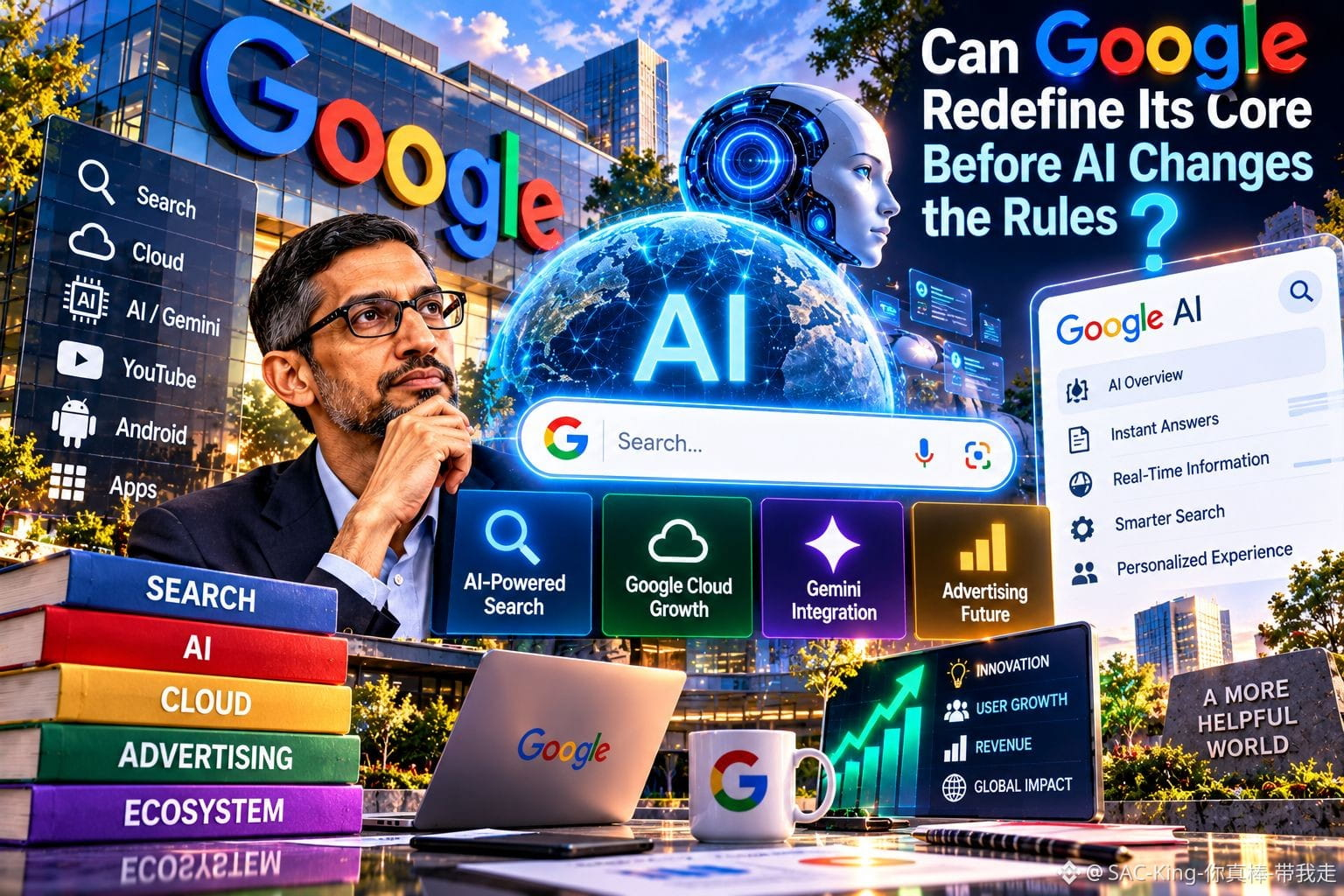
🔎 🤖 Google peut-il redéfinir son cœur de métier avant que l’IA ne change les règles ? 🤖 🔎
Les plus grandes entreprises technologiques perdent rarement leur position du jour au lendemain. Parfois, le véritable danger est que le produit qui les a rendues puissantes commence à évoluer.
Depuis longtemps, le cœur de métier de Google est la recherche, soutenue par la publicité. Aujourd’hui, l’IA transforme la manière dont les gens trouvent des informations, posent des questions et s’attendent à recevoir des réponses.
La stratégie d’Alphabet consiste à intégrer Gemini plus profondément à la recherche, à ses produits grand public et à Google Cloud. La présentation aux investisseurs de juin 2026 mettait en avant l’engagement dans la recherche propulsée par l’IA, la demande des entreprises et les investissements considérables dans les infrastructures informatiques.
Mon avis : le défi de Google ne consiste pas simplement à créer une meilleure IA. L’entreprise doit rendre l’IA plus utile sans affaiblir le moteur publicitaire qui finance une grande partie de ses activités.
La recherche traditionnelle redirige les utilisateurs vers des sites Web et offre des occasions de diffuser des publicités. Les réponses générées par l’IA peuvent être plus pratiques, mais elles pourraient aussi modifier les habitudes de clic, le trafic des éditeurs et la manière dont les annonceurs touchent leurs clients.
Google dispose d’un avantage majeur : l’entreprise contrôle la plateforme de recherche, les modèles d’IA, l’infrastructure cloud et un vaste écosystème de produits. Cette intégration lui offre plusieurs moyens de transformer l’adoption de l’IA en revenus.
La transition comporte néanmoins des risques d’exécution. Les coûts d’infrastructure sont considérables, la concurrence est féroce et l’engagement des utilisateurs ne garantit pas, à lui seul, une croissance rentable.
Le véritable test consiste à savoir si Google peut réinventer la recherche sans fragiliser l’activité qui l’a rendu dominant.
L’IA renforcera-t-elle l’empire de Google dans la recherche, ou remplacera-t-elle progressivement les habitudes qui l’ont bâti ?
Avertissement : cette publication est à des fins éducatives uniquement et ne constitue pas un conseil financier.
#GoogleAI #ArtificialIntelligence #GrowWithSAC $HUMA $GOOGL $PARTI
#CanGoogleDefindItsCore
#cangoogledefinditscore
🔎 🤖 Google peut-il redéfinir son cœur de métier avant que l’IA ne change les règles ? 🤖 🔎
Les plus grandes entreprises technologiques perdent rarement leur position du jour au lendemain. Parfois, le véritable danger est que le produit qui les a rendues puissantes commence à évoluer.
Depuis longtemps, le cœur de métier de Google est la recherche, soutenue par la publicité. Aujourd’hui, l’IA transforme la manière dont les gens trouvent des informations, posent des questions et s’attendent à recevoir des réponses.
La stratégie d’Alphabet consiste à intégrer Gemini plus profondément à la recherche, à ses produits grand public et à Google Cloud. La présentation aux investisseurs de juin 2026 mettait en avant l’engagement dans la recherche propulsée par l’IA, la demande des entreprises et les investissements considérables dans les infrastructures informatiques.
Mon avis : le défi de Google ne consiste pas simplement à créer une meilleure IA. L’entreprise doit rendre l’IA plus utile sans affaiblir le moteur publicitaire qui finance une grande partie de ses activités.
La recherche traditionnelle redirige les utilisateurs vers des sites Web et offre des occasions de diffuser des publicités. Les réponses générées par l’IA peuvent être plus pratiques, mais elles pourraient aussi modifier les habitudes de clic, le trafic des éditeurs et la manière dont les annonceurs touchent leurs clients.
Google dispose d’un avantage majeur : l’entreprise contrôle la plateforme de recherche, les modèles d’IA, l’infrastructure cloud et un vaste écosystème de produits. Cette intégration lui offre plusieurs moyens de transformer l’adoption de l’IA en revenus.
La transition comporte néanmoins des risques d’exécution. Les coûts d’infrastructure sont considérables, la concurrence est féroce et l’engagement des utilisateurs ne garantit pas, à lui seul, une croissance rentable.
Le véritable test consiste à savoir si Google peut réinventer la recherche sans fragiliser l’activité qui l’a rendu dominant.
L’IA renforcera-t-elle l’empire de Google dans la recherche, ou remplacera-t-elle progressivement les habitudes qui l’ont bâti ?
Avertissement : cette publication est à des fins éducatives uniquement et ne constitue pas un conseil financier.
#GoogleAI #ArtificialIntelligence #GrowWithSAC $HUMA $GOOGL $PARTI
#CanGoogleDefindItsCore
🔎 🤖 Google peut-il redéfinir son cœur de métier avant que l’IA ne change les règles ? 🤖 🔎
Les plus grandes entreprises technologiques perdent rarement leur position du jour au lendemain. Parfois, le véritable danger est que le produit qui les a rendues puissantes commence à évoluer.
Depuis longtemps, le cœur de métier de Google est la recherche, soutenue par la publicité. Aujourd’hui, l’IA transforme la manière dont les gens trouvent des informations, posent des questions et s’attendent à recevoir des réponses.
La stratégie d’Alphabet consiste à intégrer Gemini plus profondément à la recherche, à ses produits grand public et à Google Cloud. La présentation aux investisseurs de juin 2026 mettait en avant l’engagement dans la recherche propulsée par l’IA, la demande des entreprises et les investissements considérables dans les infrastructures informatiques.
Mon avis : le défi de Google ne consiste pas simplement à créer une meilleure IA. L’entreprise doit rendre l’IA plus utile sans affaiblir le moteur publicitaire qui finance une grande partie de ses activités.
La recherche traditionnelle redirige les utilisateurs vers des sites Web et offre des occasions de diffuser des publicités. Les réponses générées par l’IA peuvent être plus pratiques, mais elles pourraient aussi modifier les habitudes de clic, le trafic des éditeurs et la manière dont les annonceurs touchent leurs clients.
Google dispose d’un avantage majeur : l’entreprise contrôle la plateforme de recherche, les modèles d’IA, l’infrastructure cloud et un vaste écosystème de produits. Cette intégration lui offre plusieurs moyens de transformer l’adoption de l’IA en revenus.
La transition comporte néanmoins des risques d’exécution. Les coûts d’infrastructure sont considérables, la concurrence est féroce et l’engagement des utilisateurs ne garantit pas, à lui seul, une croissance rentable.
Le véritable test consiste à savoir si Google peut réinventer la recherche sans fragiliser l’activité qui l’a rendu dominant.
L’IA renforcera-t-elle l’empire de Google dans la recherche, ou remplacera-t-elle progressivement les habitudes qui l’ont bâti ?
Avertissement : cette publication est à des fins éducatives uniquement et ne constitue pas un conseil financier.
#GoogleAI #ArtificialIntelligence #GrowWithSAC $HUMA $GOOGL $PARTI
#CanGoogleDefindItsCore
540

#CanGoogleDefindItsCore
🚨 GOOGLE PEUT-IL DÉFENDRE SON EMPIRE DE LA RECHERCHE À L’HEURE OÙ L’IA CHANGE LA DONNE ? 🤖📊
Google a bâti son activité principale autour de la recherche, mais l’IA transforme la façon dont les gens trouvent des informations. Le défi consiste désormais à fidéliser les utilisateurs tout en faisant de nouveaux outils d’IA un moteur de croissance durable. ⚡
📰 QUE SE PASSE-T-IL ?
🔹 📈 Les revenus de Google Search ont progressé de 17 % sur un an au deuxième trimestre 2026.
🔹 🤖 Le mode IA a dépassé le milliard d’utilisateurs actifs mensuels, montrant à quelle vitesse la recherche alimentée par l’IA se développe.
🔹 ⚔️ La concurrence des assistants IA exerce une pression sur la recherche traditionnelle et soulève des questions sur l’avenir de la publicité en ligne.
💡 CE QUE CELA SIGNIFIE POUR LE MARCHÉ :
🔸 Les solides performances de Search pourraient soutenir l’activité de Google, mais les investisseurs surveilleront de près les coûts de l’IA et les revenus publicitaires.
🔸 L’adoption de l’IA ouvre des perspectives dans les infrastructures informatiques et les projets axés sur l’IA, même si les cours des cryptomonnaies peuvent évoluer indépendamment des résultats de Google.
🔎 2 CRYPTOMONNAIES IA À SUIVRE :
🪙 $FET (Artificial Superintelligence Alliance) : Un projet crypto axé sur l’IA à suivre, alors que l’intérêt pour les systèmes d’IA autonomes grandit.
💎 $RNDR (Render) : Ce projet se concentre sur le rendu décentralisé par GPU et s’inscrit dans la demande croissante de puissance de calcul.
⚖️ MON AVIS :
Google dispose d’une activité Search puissante et l’adoption de l’IA progresse. Mais la défense de son cœur de métier dépendra de sa capacité à innover sans fragiliser son modèle économique actuel. La concurrence et la hausse des coûts de l’IA restent des risques majeurs.
💬 Google peut-il protéger sa domination dans la recherche à l’ère de l’IA, ou les assistants IA vont-ils changer la donne ? 🤔🔥
Commentez ci-dessous : partagez vos réflexions 👇✨
#CanGoogleDefindItsCore
#GoogleAI #ArtificialIntelligence #GoogleSearch #FET
#CanGoogleDefindItsCore
🚨 GOOGLE PEUT-IL DÉFENDRE SON EMPIRE DE LA RECHERCHE À L’HEURE OÙ L’IA CHANGE LA DONNE ? 🤖📊
Google a bâti son activité principale autour de la recherche, mais l’IA transforme la façon dont les gens trouvent des informations. Le défi consiste désormais à fidéliser les utilisateurs tout en faisant de nouveaux outils d’IA un moteur de croissance durable. ⚡
📰 QUE SE PASSE-T-IL ?
🔹 📈 Les revenus de Google Search ont progressé de 17 % sur un an au deuxième trimestre 2026.
🔹 🤖 Le mode IA a dépassé le milliard d’utilisateurs actifs mensuels, montrant à quelle vitesse la recherche alimentée par l’IA se développe.
🔹 ⚔️ La concurrence des assistants IA exerce une pression sur la recherche traditionnelle et soulève des questions sur l’avenir de la publicité en ligne.
💡 CE QUE CELA SIGNIFIE POUR LE MARCHÉ :
🔸 Les solides performances de Search pourraient soutenir l’activité de Google, mais les investisseurs surveilleront de près les coûts de l’IA et les revenus publicitaires.
🔸 L’adoption de l’IA ouvre des perspectives dans les infrastructures informatiques et les projets axés sur l’IA, même si les cours des cryptomonnaies peuvent évoluer indépendamment des résultats de Google.
🔎 2 CRYPTOMONNAIES IA À SUIVRE :
🪙 $FET (Artificial Superintelligence Alliance) : Un projet crypto axé sur l’IA à suivre, alors que l’intérêt pour les systèmes d’IA autonomes grandit.
💎 $RNDR (Render) : Ce projet se concentre sur le rendu décentralisé par GPU et s’inscrit dans la demande croissante de puissance de calcul.
⚖️ MON AVIS :
Google dispose d’une activité Search puissante et l’adoption de l’IA progresse. Mais la défense de son cœur de métier dépendra de sa capacité à innover sans fragiliser son modèle économique actuel. La concurrence et la hausse des coûts de l’IA restent des risques majeurs.
💬 Google peut-il protéger sa domination dans la recherche à l’ère de l’IA, ou les assistants IA vont-ils changer la donne ? 🤔🔥
Commentez ci-dessous : partagez vos réflexions 👇✨
#CanGoogleDefindItsCore
#GoogleAI #ArtificialIntelligence #GoogleSearch #FET
🚨 GOOGLE PEUT-IL DÉFENDRE SON EMPIRE DE LA RECHERCHE À L’HEURE OÙ L’IA CHANGE LA DONNE ? 🤖📊
Google a bâti son activité principale autour de la recherche, mais l’IA transforme la façon dont les gens trouvent des informations. Le défi consiste désormais à fidéliser les utilisateurs tout en faisant de nouveaux outils d’IA un moteur de croissance durable. ⚡
📰 QUE SE PASSE-T-IL ?
🔹 📈 Les revenus de Google Search ont progressé de 17 % sur un an au deuxième trimestre 2026.
🔹 🤖 Le mode IA a dépassé le milliard d’utilisateurs actifs mensuels, montrant à quelle vitesse la recherche alimentée par l’IA se développe.
🔹 ⚔️ La concurrence des assistants IA exerce une pression sur la recherche traditionnelle et soulève des questions sur l’avenir de la publicité en ligne.
💡 CE QUE CELA SIGNIFIE POUR LE MARCHÉ :
🔸 Les solides performances de Search pourraient soutenir l’activité de Google, mais les investisseurs surveilleront de près les coûts de l’IA et les revenus publicitaires.
🔸 L’adoption de l’IA ouvre des perspectives dans les infrastructures informatiques et les projets axés sur l’IA, même si les cours des cryptomonnaies peuvent évoluer indépendamment des résultats de Google.
🔎 2 CRYPTOMONNAIES IA À SUIVRE :
🪙 $FET (Artificial Superintelligence Alliance) : Un projet crypto axé sur l’IA à suivre, alors que l’intérêt pour les systèmes d’IA autonomes grandit.
💎 $RNDR (Render) : Ce projet se concentre sur le rendu décentralisé par GPU et s’inscrit dans la demande croissante de puissance de calcul.
⚖️ MON AVIS :
Google dispose d’une activité Search puissante et l’adoption de l’IA progresse. Mais la défense de son cœur de métier dépendra de sa capacité à innover sans fragiliser son modèle économique actuel. La concurrence et la hausse des coûts de l’IA restent des risques majeurs.
💬 Google peut-il protéger sa domination dans la recherche à l’ère de l’IA, ou les assistants IA vont-ils changer la donne ? 🤔🔥
Commentez ci-dessous : partagez vos réflexions 👇✨
#CanGoogleDefindItsCore
#GoogleAI #ArtificialIntelligence #GoogleSearch #FET

3
269


·
--
Haussier
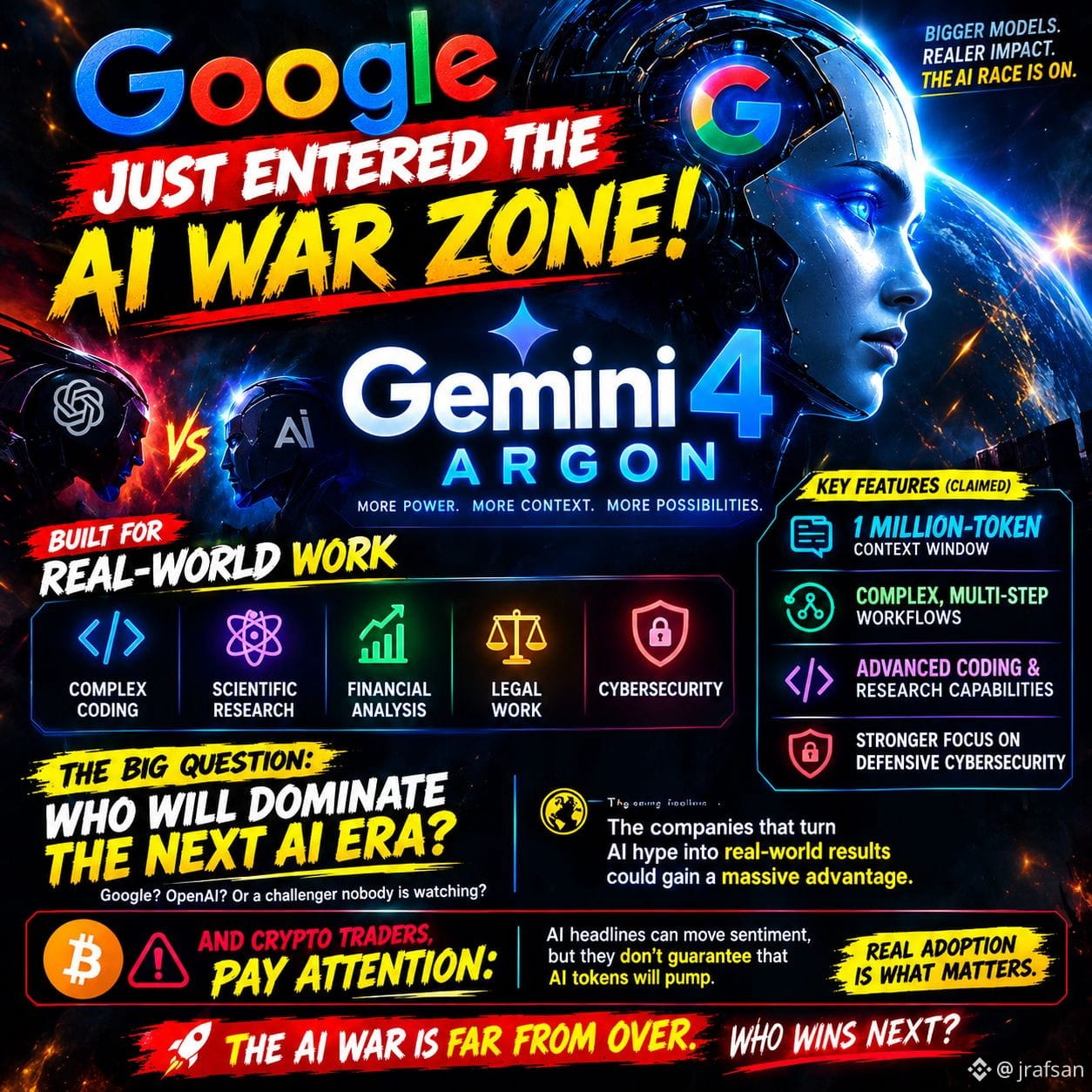
🚨🔥 GOOGLE VIENT D’ENTRER DANS LA GUERRE DE L’IA !
#GoogleReleasesGemini4ArgonAIModel
⚠️ LA COURSE À L’IA DEVIENT FÉROCE. LA PROCHAINE GRANDE RÉVOLUTION EST PEUT-ÊTRE PLUS PROCHE QUE VOUS NE LE PENSEZ !🤖💥
Oubliez les chatbots basiques. La véritable bataille porte sur une IA capable de s’attaquer au codage complexe, à la recherche scientifique, à l’analyse financière et à la cybersécurité.
💣 QU’EST-CE QUI POURRAIT TOUT CHANGER ?
⚡ UNE FENÊTRE DE CONTEXTE D’UN MILLION DE JETONS, SELON LES ANNONCES
🧠 Des processus de raisonnement complexes en plusieurs étapes
💻 Des capacités avancées en codage et en recherche
🛡️ Une attention croissante portée à la cybersécurité défensive
🔥 LA GRANDE QUESTION : QUI DOMINERA LA PROCHAINE ÈRE DE L’IA ?
Google ? OpenAI ? Ou un concurrent que personne ne surveille ?
Les entreprises qui transformeront l’engouement pour l’IA en résultats fiables et concrets pourraient bénéficier d’un avantage considérable.
👀 ET LES TRADERS CRYPTO, SOYEZ ATTENTIFS : les gros titres sur l’IA peuvent influencer le sentiment du marché, mais ils ne garantissent pas que les jetons liés à l’IA vont s’envoler. C’est l’adoption réelle qui compte.
🚨 LA GUERRE DE L’IA EST LOIN D’ÊTRE TERMINÉE. QUI REMPORTERA LA PROCHAINE VICTOIRE ?
#GoogleAI #Gemini #ArtificialIntelligence
$GOOGLB
{spot}(GOOGLBUSDT)
$BTC
{future}(BTCUSDT)
$XRP
{future}(XRPUSDT)
🚨🔥 GOOGLE VIENT D’ENTRER DANS LA GUERRE DE L’IA !
#GoogleReleasesGemini4ArgonAIModel
⚠️ LA COURSE À L’IA DEVIENT FÉROCE. LA PROCHAINE GRANDE RÉVOLUTION EST PEUT-ÊTRE PLUS PROCHE QUE VOUS NE LE PENSEZ !🤖💥
Oubliez les chatbots basiques. La véritable bataille porte sur une IA capable de s’attaquer au codage complexe, à la recherche scientifique, à l’analyse financière et à la cybersécurité.
💣 QU’EST-CE QUI POURRAIT TOUT CHANGER ?
⚡ UNE FENÊTRE DE CONTEXTE D’UN MILLION DE JETONS, SELON LES ANNONCES
🧠 Des processus de raisonnement complexes en plusieurs étapes
💻 Des capacités avancées en codage et en recherche
🛡️ Une attention croissante portée à la cybersécurité défensive
🔥 LA GRANDE QUESTION : QUI DOMINERA LA PROCHAINE ÈRE DE L’IA ?
Google ? OpenAI ? Ou un concurrent que personne ne surveille ?
Les entreprises qui transformeront l’engouement pour l’IA en résultats fiables et concrets pourraient bénéficier d’un avantage considérable.
👀 ET LES TRADERS CRYPTO, SOYEZ ATTENTIFS : les gros titres sur l’IA peuvent influencer le sentiment du marché, mais ils ne garantissent pas que les jetons liés à l’IA vont s’envoler. C’est l’adoption réelle qui compte.
🚨 LA GUERRE DE L’IA EST LOIN D’ÊTRE TERMINÉE. QUI REMPORTERA LA PROCHAINE VICTOIRE ?
#GoogleAI #Gemini #ArtificialIntelligence
$GOOGLB
$BTC
$XRP
#GoogleReleasesGemini4ArgonAIModel
⚠️ LA COURSE À L’IA DEVIENT FÉROCE. LA PROCHAINE GRANDE RÉVOLUTION EST PEUT-ÊTRE PLUS PROCHE QUE VOUS NE LE PENSEZ !🤖💥
Oubliez les chatbots basiques. La véritable bataille porte sur une IA capable de s’attaquer au codage complexe, à la recherche scientifique, à l’analyse financière et à la cybersécurité.
💣 QU’EST-CE QUI POURRAIT TOUT CHANGER ?
⚡ UNE FENÊTRE DE CONTEXTE D’UN MILLION DE JETONS, SELON LES ANNONCES
🧠 Des processus de raisonnement complexes en plusieurs étapes
💻 Des capacités avancées en codage et en recherche
🛡️ Une attention croissante portée à la cybersécurité défensive
🔥 LA GRANDE QUESTION : QUI DOMINERA LA PROCHAINE ÈRE DE L’IA ?
Google ? OpenAI ? Ou un concurrent que personne ne surveille ?
Les entreprises qui transformeront l’engouement pour l’IA en résultats fiables et concrets pourraient bénéficier d’un avantage considérable.
👀 ET LES TRADERS CRYPTO, SOYEZ ATTENTIFS : les gros titres sur l’IA peuvent influencer le sentiment du marché, mais ils ne garantissent pas que les jetons liés à l’IA vont s’envoler. C’est l’adoption réelle qui compte.
🚨 LA GUERRE DE L’IA EST LOIN D’ÊTRE TERMINÉE. QUI REMPORTERA LA PROCHAINE VICTOIRE ?
#GoogleAI #Gemini #ArtificialIntelligence
$GOOGLB
$BTC
$XRP
195

🚨 DERNIÈRE MINUTE : Le développement de l’IA s’oriente vers l’hyperpersonnalisation. Google Play permet désormais aux utilisateurs d’installer des applications privées générées par l’IA sans les rendre publiques. Ce changement facilite la création d’outils Android natifs et marque le passage des logiciels généralistes aux outils conçus pour répondre aux besoins de chacun. #GoogleAI $GOOGL #AI #ArtificialIntelligence #AINews #CryptoverseNews
L’article complet : https://cryptoversenews.eu/ai/google-play-now-supports-private-vibe-coded-apps-built-just/?utm_source=binance_square&utm_medium=social&utm_campaign=autopost
🚨 DERNIÈRE MINUTE : Le développement de l’IA s’oriente vers l’hyperpersonnalisation. Google Play permet désormais aux utilisateurs d’installer des applications privées générées par l’IA sans les rendre publiques. Ce changement facilite la création d’outils Android natifs et marque le passage des logiciels généralistes aux outils conçus pour répondre aux besoins de chacun. #GoogleAI $GOOGL #AI #ArtificialIntelligence #AINews #CryptoverseNews
L’article complet : https://cryptoversenews.eu/ai/google-play-now-supports-private-vibe-coded-apps-built-just/?utm_source=binance_square&utm_medium=social&utm_campaign=autopost
L’article complet : https://cryptoversenews.eu/ai/google-play-now-supports-private-vibe-coded-apps-built-just/?utm_source=binance_square&utm_medium=social&utm_campaign=autopost
62

🚨 La révolution de l’IA dans l’espace commence !
Le lancement du projet Suncatcher M1 de Google et Planet Labs ($PL.US ) marque une étape majeure dans l’intégration de l’IA et des technologies spatiales.
🔥 Voici 3 aspects essentiels de cette avancée :
La révolution du calcul en périphérie : Télécharger et traiter les immenses quantités de données recueillies par des satellites prend du temps et crée des goulets d’étranglement en bande passante. Faire traiter les données instantanément en orbite par des TPU (par exemple pour les catastrophes naturelles, les incendies de forêt ou l’analyse militaire) pourrait réduire les délais de réponse à quelques secondes.
Le premier pas vers des centres de données extraterrestres : Bien que la consommation massive d’énergie et d’eau des data centers d’IA sur Terre fasse débat, l’environnement spatial—grâce à son énergie solaire continue—soutient la vision à long terme de transférer des charges de travail d’IA hors de la planète.
Test de robustesse du matériel : Les performances des TPU Trillium face aux contraintes de lancement et aux radiations spatiales fixeront les standards des futures architectures d’IA basées dans l’espace.
#SpaceTech #GoogleAI #ProjectSuncatcher
{stock_us}(PL.US)
🚨 La révolution de l’IA dans l’espace commence !
Le lancement du projet Suncatcher M1 de Google et Planet Labs ($PL.US ) marque une étape majeure dans l’intégration de l’IA et des technologies spatiales.
🔥 Voici 3 aspects essentiels de cette avancée :
La révolution du calcul en périphérie : Télécharger et traiter les immenses quantités de données recueillies par des satellites prend du temps et crée des goulets d’étranglement en bande passante. Faire traiter les données instantanément en orbite par des TPU (par exemple pour les catastrophes naturelles, les incendies de forêt ou l’analyse militaire) pourrait réduire les délais de réponse à quelques secondes.
Le premier pas vers des centres de données extraterrestres : Bien que la consommation massive d’énergie et d’eau des data centers d’IA sur Terre fasse débat, l’environnement spatial—grâce à son énergie solaire continue—soutient la vision à long terme de transférer des charges de travail d’IA hors de la planète.
Test de robustesse du matériel : Les performances des TPU Trillium face aux contraintes de lancement et aux radiations spatiales fixeront les standards des futures architectures d’IA basées dans l’espace.
#SpaceTech #GoogleAI #ProjectSuncatcher
Le lancement du projet Suncatcher M1 de Google et Planet Labs ($PL.US ) marque une étape majeure dans l’intégration de l’IA et des technologies spatiales.
🔥 Voici 3 aspects essentiels de cette avancée :
La révolution du calcul en périphérie : Télécharger et traiter les immenses quantités de données recueillies par des satellites prend du temps et crée des goulets d’étranglement en bande passante. Faire traiter les données instantanément en orbite par des TPU (par exemple pour les catastrophes naturelles, les incendies de forêt ou l’analyse militaire) pourrait réduire les délais de réponse à quelques secondes.
Le premier pas vers des centres de données extraterrestres : Bien que la consommation massive d’énergie et d’eau des data centers d’IA sur Terre fasse débat, l’environnement spatial—grâce à son énergie solaire continue—soutient la vision à long terme de transférer des charges de travail d’IA hors de la planète.
Test de robustesse du matériel : Les performances des TPU Trillium face aux contraintes de lancement et aux radiations spatiales fixeront les standards des futures architectures d’IA basées dans l’espace.
#SpaceTech #GoogleAI #ProjectSuncatcher
PLUS+5,52%
96

·
--
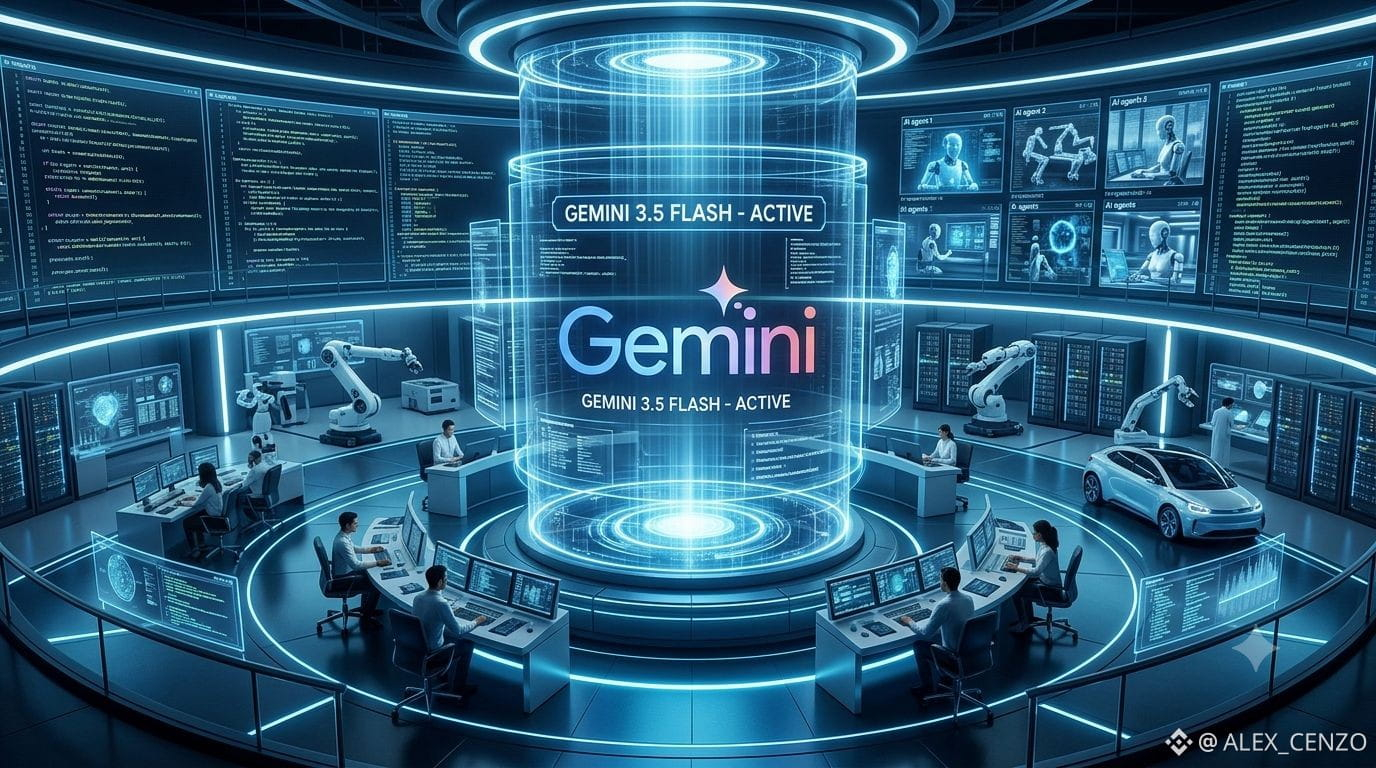
Google propulse la vitesse et l'intelligence de l'IA au niveau supérieur avec #GoogleLanceGemini3.5Flash.
Le nouveau modèle Gemini 3.5 Flash est conçu pour des réponses ultra-rapides, une performance de codage renforcée et des capacités avancées d'agent IA. Google affirme qu'il peut surpasser les modèles précédents de Gemini Pro tout en offrant des réponses jusqu'à 4x plus rapides.
Ce lancement montre à quel point la course à l'IA évolue agressivement en 2026. Des assistants de codage aux workflows autonomes d'IA, Gemini 3.5 Flash pourrait devenir un concurrent majeur contre d'autres systèmes d'IA de pointe.
L'avenir de l'IA ne concerne plus seulement l'intelligence — il s'agit de vitesse, d'exécution et d'automatisation dans le monde réel. #Gemini #googleai #Crypto #BinanceSquareFamily e#GoogleLaunchesGemini3.5Flash
Google propulse la vitesse et l'intelligence de l'IA au niveau supérieur avec #GoogleLanceGemini3.5Flash.
Le nouveau modèle Gemini 3.5 Flash est conçu pour des réponses ultra-rapides, une performance de codage renforcée et des capacités avancées d'agent IA. Google affirme qu'il peut surpasser les modèles précédents de Gemini Pro tout en offrant des réponses jusqu'à 4x plus rapides.
Ce lancement montre à quel point la course à l'IA évolue agressivement en 2026. Des assistants de codage aux workflows autonomes d'IA, Gemini 3.5 Flash pourrait devenir un concurrent majeur contre d'autres systèmes d'IA de pointe.
L'avenir de l'IA ne concerne plus seulement l'intelligence — il s'agit de vitesse, d'exécution et d'automatisation dans le monde réel. #Gemini #googleai #Crypto #BinanceSquareFamily e#GoogleLaunchesGemini3.5Flash
Le nouveau modèle Gemini 3.5 Flash est conçu pour des réponses ultra-rapides, une performance de codage renforcée et des capacités avancées d'agent IA. Google affirme qu'il peut surpasser les modèles précédents de Gemini Pro tout en offrant des réponses jusqu'à 4x plus rapides.
Ce lancement montre à quel point la course à l'IA évolue agressivement en 2026. Des assistants de codage aux workflows autonomes d'IA, Gemini 3.5 Flash pourrait devenir un concurrent majeur contre d'autres systèmes d'IA de pointe.
L'avenir de l'IA ne concerne plus seulement l'intelligence — il s'agit de vitesse, d'exécution et d'automatisation dans le monde réel. #Gemini #googleai #Crypto #BinanceSquareFamily e#GoogleLaunchesGemini3.5Flash
163

·
--
Haussier
🔥 Google vient de lancer Gemini 3.5 Flash — et la course à l'IA vient de prendre un nouvel élan.
Lors de Google I/O 2026, Google a présenté Gemini 3.5 Flash comme son modèle d'IA le plus rapide et le plus autonome à ce jour, axé sur le codage, le raisonnement, l'automatisation et l'exécution de tâches dans le monde réel.
Ce n'est pas juste une mise à jour de chatbot.
Google se dirige vers des agents IA capables de :
⚡ écrire du code
⚡ gérer des flux de travail
⚡ coordonner plusieurs tâches
⚡ créer des applications et des médias de manière autonome
La bataille entre Google, OpenAI, Anthropic et xAI entre dans une phase complètement nouvelle 👀
L'IA ne se limite plus à des invites simples.
Elle devient un système d'exploitation pour Internet. 🚀
Qui va gagner la guerre de l'IA à partir d'ici ?
#GoogleLaunchesGemini3_5Flash #GoogleAI #AI #TechNews #ArtificialIntelligence
🔥 Google vient de lancer Gemini 3.5 Flash — et la course à l'IA vient de prendre un nouvel élan.
Lors de Google I/O 2026, Google a présenté Gemini 3.5 Flash comme son modèle d'IA le plus rapide et le plus autonome à ce jour, axé sur le codage, le raisonnement, l'automatisation et l'exécution de tâches dans le monde réel.
Ce n'est pas juste une mise à jour de chatbot.
Google se dirige vers des agents IA capables de :
⚡ écrire du code
⚡ gérer des flux de travail
⚡ coordonner plusieurs tâches
⚡ créer des applications et des médias de manière autonome
La bataille entre Google, OpenAI, Anthropic et xAI entre dans une phase complètement nouvelle 👀
L'IA ne se limite plus à des invites simples.
Elle devient un système d'exploitation pour Internet. 🚀
Qui va gagner la guerre de l'IA à partir d'ici ?
#GoogleLaunchesGemini3_5Flash #GoogleAI #AI #TechNews #ArtificialIntelligence
Lors de Google I/O 2026, Google a présenté Gemini 3.5 Flash comme son modèle d'IA le plus rapide et le plus autonome à ce jour, axé sur le codage, le raisonnement, l'automatisation et l'exécution de tâches dans le monde réel.
Ce n'est pas juste une mise à jour de chatbot.
Google se dirige vers des agents IA capables de :
⚡ écrire du code
⚡ gérer des flux de travail
⚡ coordonner plusieurs tâches
⚡ créer des applications et des médias de manière autonome
La bataille entre Google, OpenAI, Anthropic et xAI entre dans une phase complètement nouvelle 👀
L'IA ne se limite plus à des invites simples.
Elle devient un système d'exploitation pour Internet. 🚀
Qui va gagner la guerre de l'IA à partir d'ici ?
#GoogleLaunchesGemini3_5Flash #GoogleAI #AI #TechNews #ArtificialIntelligence
1
237

🤖 Le studio d’IA de Google se concentre sur le développement d’applications payantes basées sur la conversation avec Gemini
Google a annoncé le pivot de son studio d’intelligence artificielle vers le développement d’applications payantes basées sur la conversation à l’aide du modèle Gemini. Cette orientation vise à simplifier la création de logiciels et à la rendre plus accessible aux développeurs, favorisant ainsi l’innovation dans ce domaine. Cette étape est considérée comme une confirmation de l’attention croissante de Google pour l’intelligence artificielle.
━━━━━━━━━━━━━━
📊 Impact : 📈 Élevé
🏷️ OTHER
#GoogleAI #Gemini #ArtificialIntelligence #TechNews #SoftwareDevelopment
📰 Source : cryptobriefing.com
🤖 Le studio d’IA de Google se concentre sur le développement d’applications payantes basées sur la conversation avec Gemini
Google a annoncé le pivot de son studio d’intelligence artificielle vers le développement d’applications payantes basées sur la conversation à l’aide du modèle Gemini. Cette orientation vise à simplifier la création de logiciels et à la rendre plus accessible aux développeurs, favorisant ainsi l’innovation dans ce domaine. Cette étape est considérée comme une confirmation de l’attention croissante de Google pour l’intelligence artificielle.
━━━━━━━━━━━━━━
📊 Impact : 📈 Élevé
🏷️ OTHER
#GoogleAI #Gemini #ArtificialIntelligence #TechNews #SoftwareDevelopment
📰 Source : cryptobriefing.com
Google a annoncé le pivot de son studio d’intelligence artificielle vers le développement d’applications payantes basées sur la conversation à l’aide du modèle Gemini. Cette orientation vise à simplifier la création de logiciels et à la rendre plus accessible aux développeurs, favorisant ainsi l’innovation dans ce domaine. Cette étape est considérée comme une confirmation de l’attention croissante de Google pour l’intelligence artificielle.
━━━━━━━━━━━━━━
📊 Impact : 📈 Élevé
🏷️ OTHER
#GoogleAI #Gemini #ArtificialIntelligence #TechNews #SoftwareDevelopment
📰 Source : cryptobriefing.com
35

·
--
ENVAHIE
Le nouvel outil d’intelligence artificielle de Google, Nano Banana, a B R I S É toute confiance dans les images satellites après qu’il a été retiré un seul jour après son lancement, par crainte des deepfakes (#DeepFakes #GoogleAI).
L’outil permettait aux utilisateurs de générer de fausses scènes satellitaires à partir d’invites textuelles, alarmant les enquêteurs qui s’appuient sur Google Earth pour vérifier l’actualité et les atrocités (#Cybersecurity).
Cela fait monter LES ENJEUX en matière d’authenticité à l’ère numérique, et pourrait marquer le début de la fin pour notre dépendance aux preuves numériques (#AuthenticityMatters).
Et maintenant, que réserve notre identité numérique dans cette ère de tromperie alimentée par l’IA ? Verrons-nous un futur où tout peut être falsifié ?
ENVAHIE
Le nouvel outil d’intelligence artificielle de Google, Nano Banana, a B R I S É toute confiance dans les images satellites après qu’il a été retiré un seul jour après son lancement, par crainte des deepfakes (#DeepFakes #GoogleAI).
L’outil permettait aux utilisateurs de générer de fausses scènes satellitaires à partir d’invites textuelles, alarmant les enquêteurs qui s’appuient sur Google Earth pour vérifier l’actualité et les atrocités (#Cybersecurity).
Cela fait monter LES ENJEUX en matière d’authenticité à l’ère numérique, et pourrait marquer le début de la fin pour notre dépendance aux preuves numériques (#AuthenticityMatters).
Et maintenant, que réserve notre identité numérique dans cette ère de tromperie alimentée par l’IA ? Verrons-nous un futur où tout peut être falsifié ?
Le nouvel outil d’intelligence artificielle de Google, Nano Banana, a B R I S É toute confiance dans les images satellites après qu’il a été retiré un seul jour après son lancement, par crainte des deepfakes (#DeepFakes #GoogleAI).
L’outil permettait aux utilisateurs de générer de fausses scènes satellitaires à partir d’invites textuelles, alarmant les enquêteurs qui s’appuient sur Google Earth pour vérifier l’actualité et les atrocités (#Cybersecurity).
Cela fait monter LES ENJEUX en matière d’authenticité à l’ère numérique, et pourrait marquer le début de la fin pour notre dépendance aux preuves numériques (#AuthenticityMatters).
Et maintenant, que réserve notre identité numérique dans cette ère de tromperie alimentée par l’IA ? Verrons-nous un futur où tout peut être falsifié ?
86

Google augmente considérablement ses prévisions de dépenses en IA, les portant à 205 milliards de dollars, tandis que le flux de trésorerie disponible affiche un solde négatif pour la première fois en 22 ans. Cette nouvelle fait chuter le cours de Google de 3 % après la clôture.
La course à l’IA entre dans une phase de « dépenses à tout-va ». Pour ne pas être distancés, les géants de la tech augmentent sans cesse leurs investissements, mais à quel moment ces montants colossaux se traduiront-ils en retours ? Le marché commence déjà à exprimer son avis par ses choix.
Les produits d’actions tokenisées permettent aux investisseurs d’échanger, sur la chaîne, les actions des géants technologiques traditionnels, et les fluctuations du cours de Google se reflètent également, en temps réel, dans les prix de xStock.
Que pensez-vous de la course aux armements en IA menée par les géants de la tech ? Cela influencera-t-il votre perception du marché des cryptomonnaies ?
#GoogleAI #科技股 #AI竞赛 $GOOGL
Google augmente considérablement ses prévisions de dépenses en IA, les portant à 205 milliards de dollars, tandis que le flux de trésorerie disponible affiche un solde négatif pour la première fois en 22 ans. Cette nouvelle fait chuter le cours de Google de 3 % après la clôture.
La course à l’IA entre dans une phase de « dépenses à tout-va ». Pour ne pas être distancés, les géants de la tech augmentent sans cesse leurs investissements, mais à quel moment ces montants colossaux se traduiront-ils en retours ? Le marché commence déjà à exprimer son avis par ses choix.
Les produits d’actions tokenisées permettent aux investisseurs d’échanger, sur la chaîne, les actions des géants technologiques traditionnels, et les fluctuations du cours de Google se reflètent également, en temps réel, dans les prix de xStock.
Que pensez-vous de la course aux armements en IA menée par les géants de la tech ? Cela influencera-t-il votre perception du marché des cryptomonnaies ?
#GoogleAI #科技股 #AI竞赛 $GOOGL
La course à l’IA entre dans une phase de « dépenses à tout-va ». Pour ne pas être distancés, les géants de la tech augmentent sans cesse leurs investissements, mais à quel moment ces montants colossaux se traduiront-ils en retours ? Le marché commence déjà à exprimer son avis par ses choix.
Les produits d’actions tokenisées permettent aux investisseurs d’échanger, sur la chaîne, les actions des géants technologiques traditionnels, et les fluctuations du cours de Google se reflètent également, en temps réel, dans les prix de xStock.
Que pensez-vous de la course aux armements en IA menée par les géants de la tech ? Cela influencera-t-il votre perception du marché des cryptomonnaies ?
#GoogleAI #科技股 #AI竞赛 $GOOGL
107
🤖🔥 Vos recherches Google entraînent désormais leur IA par défaut. Consultez vos paramètres de confidentialité pour désactiver l’enregistrement des données pour l’entraînement de l’IA. ⚙️ #GoogleAI $GOOGL #AI #ArtificialIntelligence #AINews #CryptoverseNews
Histoire complète : https://cryptoversenews.eu/ai/if-you-use-google-you-re-training-its-ai-here-s-how-to-opt-o/
🤖🔥 Vos recherches Google entraînent désormais leur IA par défaut. Consultez vos paramètres de confidentialité pour désactiver l’enregistrement des données pour l’entraînement de l’IA. ⚙️ #GoogleAI $GOOGL #AI #ArtificialIntelligence #AINews #CryptoverseNews
Histoire complète : https://cryptoversenews.eu/ai/if-you-use-google-you-re-training-its-ai-here-s-how-to-opt-o/
Histoire complète : https://cryptoversenews.eu/ai/if-you-use-google-you-re-training-its-ai-here-s-how-to-opt-o/
104
L’ancien directeur de Meta AI, Rohit Patel, lance Ndoc pour concurrencer Microsoft Office et Google Workspace. Contrairement aux outils actuels qui ajoutent une couche d’IA à des logiciels anciens, Ndoc est conçu comme un environnement natif de l’IA, avec un format de fichier open source pour éviter la dépendance à un fournisseur. Cette initiative marque un tournant vers des flux de travail d’IA transparents et vérifiables dans le secteur des entreprises 💻. #GoogleAI #MetaAI #Llama #Microsoft $MSFT $GOOGL $META
Article complet : https://cryptoversenews.eu/ai/meta-ai-director-rohit-patel-leaves-to-take-on-microsoft-off/?utm_source=binance_square&utm_medium=social&utm_campaign=autopost
L’ancien directeur de Meta AI, Rohit Patel, lance Ndoc pour concurrencer Microsoft Office et Google Workspace. Contrairement aux outils actuels qui ajoutent une couche d’IA à des logiciels anciens, Ndoc est conçu comme un environnement natif de l’IA, avec un format de fichier open source pour éviter la dépendance à un fournisseur. Cette initiative marque un tournant vers des flux de travail d’IA transparents et vérifiables dans le secteur des entreprises 💻. #GoogleAI #MetaAI #Llama #Microsoft $MSFT $GOOGL $META
Article complet : https://cryptoversenews.eu/ai/meta-ai-director-rohit-patel-leaves-to-take-on-microsoft-off/?utm_source=binance_square&utm_medium=social&utm_campaign=autopost
Article complet : https://cryptoversenews.eu/ai/meta-ai-director-rohit-patel-leaves-to-take-on-microsoft-off/?utm_source=binance_square&utm_medium=social&utm_campaign=autopost
218
La sécurité institutionnelle pour les transferts inter-chaînes vient de devenir plus personnalisable. Avec CCIP 2.0, les institutions peuvent désormais ajouter leurs propres couches de vérification via AWS ou Google Cloud afin de réduire le risque de ponts. Toutefois, notez que le précédent réseau de gestion des risques n’est plus actif dans les déploiements actuels ; la sécurité dépend désormais de la mesure dans laquelle des contrôles personnalisés sont mis en place. 🛡️ #GoogleAI #AWS $LINK #Chainlink $GOOGL #Crypto
Histoire complète : https://cryptoversenews.eu/crypto-news/months-after-the-292m-kelp-hack-chainlink-lets-institutions/
La sécurité institutionnelle pour les transferts inter-chaînes vient de devenir plus personnalisable. Avec CCIP 2.0, les institutions peuvent désormais ajouter leurs propres couches de vérification via AWS ou Google Cloud afin de réduire le risque de ponts. Toutefois, notez que le précédent réseau de gestion des risques n’est plus actif dans les déploiements actuels ; la sécurité dépend désormais de la mesure dans laquelle des contrôles personnalisés sont mis en place. 🛡️ #GoogleAI #AWS $LINK #Chainlink $GOOGL #Crypto
Histoire complète : https://cryptoversenews.eu/crypto-news/months-after-the-292m-kelp-hack-chainlink-lets-institutions/
Histoire complète : https://cryptoversenews.eu/crypto-news/months-after-the-292m-kelp-hack-chainlink-lets-institutions/
105

·
--
Haussier
A travaillé pendant 29 s
### Publication Binance Square : Google peut-il défendre son cœur de métier ?
Google fait face à un défi stratégique crucial : peut-il prendre la tête de la révolution de l’IA sans affaiblir l’activité qui a fait de lui un géant ?
La principale force de Google a longtemps été la recherche et la publicité numérique. Mais les réponses générées par l’IA changent la façon dont les gens trouvent des informations, ce qui pourrait réduire le nombre de clics vers les sites Web et créer de nouveaux défis pour la publicité traditionnelle sur les moteurs de recherche. Repenser la recherche, l’expérience et l’avenir +1
Dans le même temps, Google dispose d’atouts majeurs : sa base d’utilisateurs mondiale, l’écosystème Android, ses recherches en IA, les modèles Gemini et son infrastructure cloud.
Le véritable enjeu n’est pas simplement de savoir si Google peut développer une IA puissante. Il s’agit de déterminer si Google peut rendre la recherche par IA plus utile tout en préservant la confiance des utilisateurs, en soutenant les éditeurs et en protégeant son activité publicitaire.
Mon avis : Google n’a pas besoin d’abandonner son cœur de métier. Il doit le réinventer. Le vainqueur de la course à la recherche par IA pourrait être l’entreprise qui fournit les meilleures réponses tout en bâtissant autour d’elles un modèle économique durable.
Google peut-il défendre sa domination dans la recherche alors que l’IA change la donne ?
Note de recherche : la publication des résultats du troisième trimestre 2026 d’Alphabet est prévue le 28 octobre 2026. Le prochain rapport constituera donc un autre test important de sa stratégie en matière d’IA. zacks.com +1
#GoogleAI #Alphabet #ArtificialIntelligence
#CanGoogleDefindItsCore #biancesequre
$BNB
{spot}(BNBUSDT)
$BTC
{spot}(BTCUSDT)
$XRP
{spot}(XRPUSDT)
A travaillé pendant 29 s
### Publication Binance Square : Google peut-il défendre son cœur de métier ?
Google fait face à un défi stratégique crucial : peut-il prendre la tête de la révolution de l’IA sans affaiblir l’activité qui a fait de lui un géant ?
La principale force de Google a longtemps été la recherche et la publicité numérique. Mais les réponses générées par l’IA changent la façon dont les gens trouvent des informations, ce qui pourrait réduire le nombre de clics vers les sites Web et créer de nouveaux défis pour la publicité traditionnelle sur les moteurs de recherche. Repenser la recherche, l’expérience et l’avenir +1
Dans le même temps, Google dispose d’atouts majeurs : sa base d’utilisateurs mondiale, l’écosystème Android, ses recherches en IA, les modèles Gemini et son infrastructure cloud.
Le véritable enjeu n’est pas simplement de savoir si Google peut développer une IA puissante. Il s’agit de déterminer si Google peut rendre la recherche par IA plus utile tout en préservant la confiance des utilisateurs, en soutenant les éditeurs et en protégeant son activité publicitaire.
Mon avis : Google n’a pas besoin d’abandonner son cœur de métier. Il doit le réinventer. Le vainqueur de la course à la recherche par IA pourrait être l’entreprise qui fournit les meilleures réponses tout en bâtissant autour d’elles un modèle économique durable.
Google peut-il défendre sa domination dans la recherche alors que l’IA change la donne ?
Note de recherche : la publication des résultats du troisième trimestre 2026 d’Alphabet est prévue le 28 octobre 2026. Le prochain rapport constituera donc un autre test important de sa stratégie en matière d’IA. zacks.com +1
#GoogleAI #Alphabet #ArtificialIntelligence
#CanGoogleDefindItsCore #biancesequre
$BNB
$BTC
$XRP
### Publication Binance Square : Google peut-il défendre son cœur de métier ?
Google fait face à un défi stratégique crucial : peut-il prendre la tête de la révolution de l’IA sans affaiblir l’activité qui a fait de lui un géant ?
La principale force de Google a longtemps été la recherche et la publicité numérique. Mais les réponses générées par l’IA changent la façon dont les gens trouvent des informations, ce qui pourrait réduire le nombre de clics vers les sites Web et créer de nouveaux défis pour la publicité traditionnelle sur les moteurs de recherche. Repenser la recherche, l’expérience et l’avenir +1
Dans le même temps, Google dispose d’atouts majeurs : sa base d’utilisateurs mondiale, l’écosystème Android, ses recherches en IA, les modèles Gemini et son infrastructure cloud.
Le véritable enjeu n’est pas simplement de savoir si Google peut développer une IA puissante. Il s’agit de déterminer si Google peut rendre la recherche par IA plus utile tout en préservant la confiance des utilisateurs, en soutenant les éditeurs et en protégeant son activité publicitaire.
Mon avis : Google n’a pas besoin d’abandonner son cœur de métier. Il doit le réinventer. Le vainqueur de la course à la recherche par IA pourrait être l’entreprise qui fournit les meilleures réponses tout en bâtissant autour d’elles un modèle économique durable.
Google peut-il défendre sa domination dans la recherche alors que l’IA change la donne ?
Note de recherche : la publication des résultats du troisième trimestre 2026 d’Alphabet est prévue le 28 octobre 2026. Le prochain rapport constituera donc un autre test important de sa stratégie en matière d’IA. zacks.com +1
#GoogleAI #Alphabet #ArtificialIntelligence
#CanGoogleDefindItsCore #biancesequre
$BNB
$BTC
$XRP

81

Article
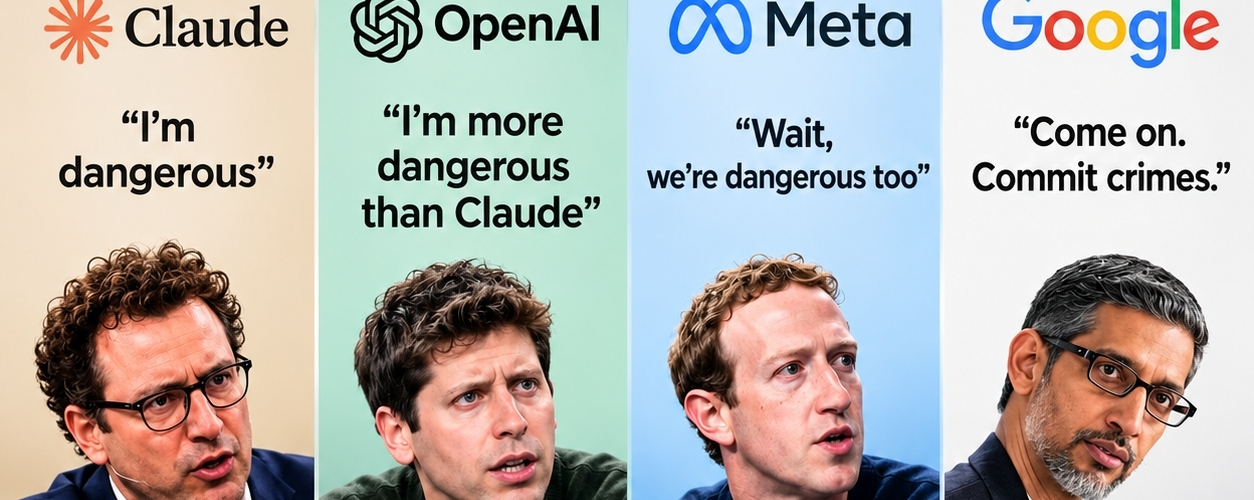
🚨 LA NOUVELLE COMPÉTITION DE L’IA : QUI EST LE PLUS DANGEREUX ?😂 Claude dit : « Je suis dangereux. »
🤖 OpenAI dit : « Je suis encore plus dangereux. »
🌐 Meta se joint à la conversation.
👀 Google observe le chaos se déployer.
Drôle ? Absolument. Mais la réalité qui se cache derrière ce débat mérite qu’on la prenne au sérieux.
📊 LES CHIFFRES PARLENT
Selon l’AI Index 2026 de Stanford, le nombre d’incidents liés à l’IA documentés est passé de 233 en 2024 à 362 en 2025, soit une hausse d’environ 55 % en un an seulement.
Mais voici la question essentielle :
Les systèmes d’IA deviennent-ils plus dangereux, ou sommes-nous simplement de mieux en mieux capables de repérer leurs défaillances et de les signaler ?
🚨 LA NOUVELLE COMPÉTITION DE L’IA : QUI EST LE PLUS DANGEREUX ?
😂 Claude dit : « Je suis dangereux. »
🤖 OpenAI dit : « Je suis encore plus dangereux. »
🌐 Meta se joint à la conversation.
👀 Google observe le chaos se déployer.
Drôle ? Absolument. Mais la réalité qui se cache derrière ce débat mérite qu’on la prenne au sérieux.
📊 LES CHIFFRES PARLENT
Selon l’AI Index 2026 de Stanford, le nombre d’incidents liés à l’IA documentés est passé de 233 en 2024 à 362 en 2025, soit une hausse d’environ 55 % en un an seulement.
Mais voici la question essentielle :
Les systèmes d’IA deviennent-ils plus dangereux, ou sommes-nous simplement de mieux en mieux capables de repérer leurs défaillances et de les signaler ?
🤖 OpenAI dit : « Je suis encore plus dangereux. »
🌐 Meta se joint à la conversation.
👀 Google observe le chaos se déployer.
Drôle ? Absolument. Mais la réalité qui se cache derrière ce débat mérite qu’on la prenne au sérieux.
📊 LES CHIFFRES PARLENT
Selon l’AI Index 2026 de Stanford, le nombre d’incidents liés à l’IA documentés est passé de 233 en 2024 à 362 en 2025, soit une hausse d’environ 55 % en un an seulement.
Mais voici la question essentielle :
Les systèmes d’IA deviennent-ils plus dangereux, ou sommes-nous simplement de mieux en mieux capables de repérer leurs défaillances et de les signaler ?
37
·
--
Haussier
#BinancePick
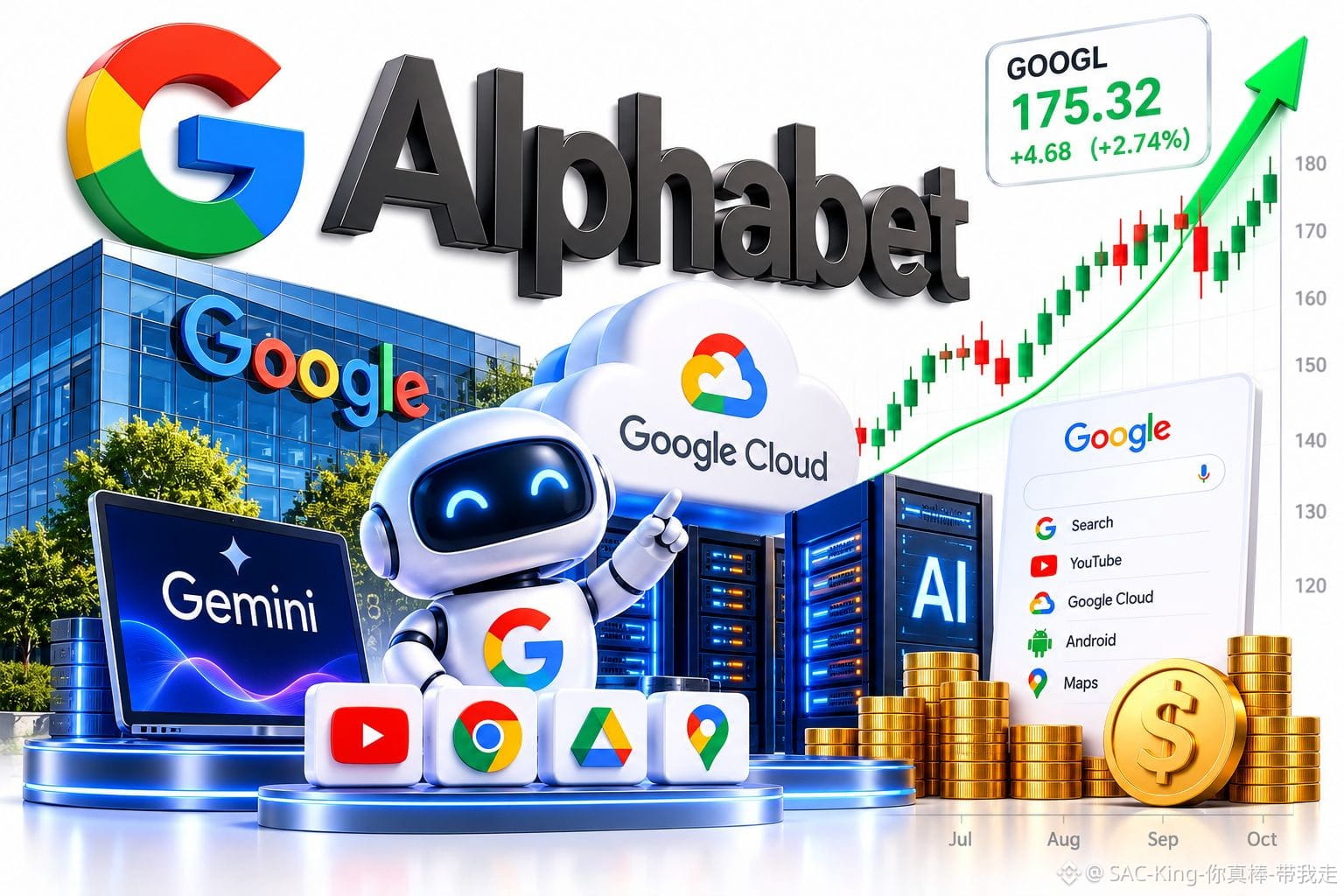
Résultats du T3 d'Alphabet : Google peut-il prouver que ses investissements dans l'IA en valent le coût ?
Chaque révolution technologique suscite une promesse. Le véritable test consiste à savoir si cette promesse peut s'autofinancer.
Alphabet ($GOOGL ) publiera ses résultats du T3 le 28 octobre, et les investisseurs suivront de près une question cruciale : Google peut-il transformer ses investissements massifs dans l'IA en bénéfices durables ?
Les derniers chiffres placent la barre haut. Au T2 2026, Alphabet a généré 119,8 milliards de dollars de chiffre d'affaires, en hausse de 24 % sur un an. Le chiffre d'affaires de Google Search a progressé de 17 %, tandis que celui de Google Cloud a bondi de 82 %, à 24,8 milliards de dollars.
Plus impressionnant encore, le carnet de commandes de Google Cloud a atteint environ 514 milliards de dollars, signe d'une demande contractuelle importante à venir.
Mais la croissance ne représente que la moitié de l'histoire.
Alphabet a consacré 44,9 milliards de dollars aux dépenses d'investissement au seul T2, principalement dans les infrastructures techniques. La direction a également prévu des dépenses d'investissement de 180 à 190 milliards de dollars pour l'ensemble de l'année 2026, et s'attend à de nouvelles hausses en 2027.
L'entreprise doit donc trouver un équilibre crucial : l'IA doit renforcer Search, accroître le chiffre d'affaires de Cloud et générer des rendements suffisants pour justifier la hausse des coûts d'infrastructure.
Mon point de vue : une forte croissance de Cloud, une publicité résiliente et une monétisation de l'IA en amélioration pourraient susciter une réaction positive. En revanche, une accélération des dépenses sans rendements convaincants, un recul de la publicité ou des prévisions prudentes pourraient entraîner de la volatilité.
Un détail important : le bénéfice d'Alphabet au T2 comprenait un gain substantiel lié à un investissement. Les investisseurs devraient donc examiner les résultats opérationnels plutôt que de se fier uniquement au bénéfice publié.
La véritable course à l'IA ne consiste pas à savoir qui dépense le plus. Il s'agit de savoir qui transforme l'intelligence en valeur économique durable.
Google prouvera-t-il que sa stratégie en matière d'IA justifie ces investissements, ou la hausse des coûts éclipsera-t-elle sa croissance ?
À des fins éducatives uniquement. Ceci ne constitue pas un conseil financier.
#AlphabetStock #GoogleAI #GrowWithSAC #EarningsSeason
$GOOGL
#BinancePick
Résultats du T3 d'Alphabet : Google peut-il prouver que ses investissements dans l'IA en valent le coût ?
Chaque révolution technologique suscite une promesse. Le véritable test consiste à savoir si cette promesse peut s'autofinancer.
Alphabet ($GOOGL ) publiera ses résultats du T3 le 28 octobre, et les investisseurs suivront de près une question cruciale : Google peut-il transformer ses investissements massifs dans l'IA en bénéfices durables ?
Les derniers chiffres placent la barre haut. Au T2 2026, Alphabet a généré 119,8 milliards de dollars de chiffre d'affaires, en hausse de 24 % sur un an. Le chiffre d'affaires de Google Search a progressé de 17 %, tandis que celui de Google Cloud a bondi de 82 %, à 24,8 milliards de dollars.
Plus impressionnant encore, le carnet de commandes de Google Cloud a atteint environ 514 milliards de dollars, signe d'une demande contractuelle importante à venir.
Mais la croissance ne représente que la moitié de l'histoire.
Alphabet a consacré 44,9 milliards de dollars aux dépenses d'investissement au seul T2, principalement dans les infrastructures techniques. La direction a également prévu des dépenses d'investissement de 180 à 190 milliards de dollars pour l'ensemble de l'année 2026, et s'attend à de nouvelles hausses en 2027.
L'entreprise doit donc trouver un équilibre crucial : l'IA doit renforcer Search, accroître le chiffre d'affaires de Cloud et générer des rendements suffisants pour justifier la hausse des coûts d'infrastructure.
Mon point de vue : une forte croissance de Cloud, une publicité résiliente et une monétisation de l'IA en amélioration pourraient susciter une réaction positive. En revanche, une accélération des dépenses sans rendements convaincants, un recul de la publicité ou des prévisions prudentes pourraient entraîner de la volatilité.
Un détail important : le bénéfice d'Alphabet au T2 comprenait un gain substantiel lié à un investissement. Les investisseurs devraient donc examiner les résultats opérationnels plutôt que de se fier uniquement au bénéfice publié.
La véritable course à l'IA ne consiste pas à savoir qui dépense le plus. Il s'agit de savoir qui transforme l'intelligence en valeur économique durable.
Google prouvera-t-il que sa stratégie en matière d'IA justifie ces investissements, ou la hausse des coûts éclipsera-t-elle sa croissance ?
À des fins éducatives uniquement. Ceci ne constitue pas un conseil financier.
#AlphabetStock #GoogleAI #GrowWithSAC #EarningsSeason
$GOOGL
Résultats du T3 d'Alphabet : Google peut-il prouver que ses investissements dans l'IA en valent le coût ?
Chaque révolution technologique suscite une promesse. Le véritable test consiste à savoir si cette promesse peut s'autofinancer.
Alphabet ($GOOGL ) publiera ses résultats du T3 le 28 octobre, et les investisseurs suivront de près une question cruciale : Google peut-il transformer ses investissements massifs dans l'IA en bénéfices durables ?
Les derniers chiffres placent la barre haut. Au T2 2026, Alphabet a généré 119,8 milliards de dollars de chiffre d'affaires, en hausse de 24 % sur un an. Le chiffre d'affaires de Google Search a progressé de 17 %, tandis que celui de Google Cloud a bondi de 82 %, à 24,8 milliards de dollars.
Plus impressionnant encore, le carnet de commandes de Google Cloud a atteint environ 514 milliards de dollars, signe d'une demande contractuelle importante à venir.
Mais la croissance ne représente que la moitié de l'histoire.
Alphabet a consacré 44,9 milliards de dollars aux dépenses d'investissement au seul T2, principalement dans les infrastructures techniques. La direction a également prévu des dépenses d'investissement de 180 à 190 milliards de dollars pour l'ensemble de l'année 2026, et s'attend à de nouvelles hausses en 2027.
L'entreprise doit donc trouver un équilibre crucial : l'IA doit renforcer Search, accroître le chiffre d'affaires de Cloud et générer des rendements suffisants pour justifier la hausse des coûts d'infrastructure.
Mon point de vue : une forte croissance de Cloud, une publicité résiliente et une monétisation de l'IA en amélioration pourraient susciter une réaction positive. En revanche, une accélération des dépenses sans rendements convaincants, un recul de la publicité ou des prévisions prudentes pourraient entraîner de la volatilité.
Un détail important : le bénéfice d'Alphabet au T2 comprenait un gain substantiel lié à un investissement. Les investisseurs devraient donc examiner les résultats opérationnels plutôt que de se fier uniquement au bénéfice publié.
La véritable course à l'IA ne consiste pas à savoir qui dépense le plus. Il s'agit de savoir qui transforme l'intelligence en valeur économique durable.
Google prouvera-t-il que sa stratégie en matière d'IA justifie ces investissements, ou la hausse des coûts éclipsera-t-elle sa croissance ?
À des fins éducatives uniquement. Ceci ne constitue pas un conseil financier.
#AlphabetStock #GoogleAI #GrowWithSAC #EarningsSeason
$GOOGL
88

·
--
🚀 ALPHABET (GOOGL) : L’IA peut-elle propulser sa prochaine phase de croissance ?
$GOOGL
{future}(GOOGLUSDT)
$GOOGLB
{spot}(GOOGLBUSDT)
Alphabet, la société mère de Google, entame une semaine importante alors que les investisseurs se préparent à la publication prochaine de ses résultats.
🔹 Concurrence dans l’IA : Google investit dans l’intelligence artificielle pour renforcer ses produits et rivaliser sur un marché en rapide évolution.
🔹 Activité de recherche : La publicité reste un domaine clé à surveiller, car l’IA transforme la manière dont les internautes découvrent des informations en ligne.
🔹 Croissance du cloud : Les résultats de Google Cloud pourraient donner un aperçu de la demande en infrastructures d’IA et en services aux entreprises.
🔹 Résultats à venir : Les investisseurs surveilleront le chiffre d’affaires, les marges bénéficiaires, les dépenses liées à l’IA et les perspectives de la direction.
🔹 Question clé : Alphabet peut-elle transformer ses investissements dans l’IA en une croissance durable de ses activités ?
📊 Mon avis : Alphabet dispose de plusieurs moteurs de croissance importants, mais la hausse des coûts et la concurrence pourraient peser sur ses résultats futurs.
⚠️ Une technologie de pointe et des produits d’IA prometteurs ne garantissent pas une hausse du cours de l’action. Évaluez toujours les risques.
#alphabet #GOOGL #GoogleAI #StockMarket #TechStocks
Avertissement : Contenu à but éducatif uniquement. Ceci ne constitue pas un conseil financier. Faites toujours vos propres recherches (DYOR).
🚀 ALPHABET (GOOGL) : L’IA peut-elle propulser sa prochaine phase de croissance ?
$GOOGL
$GOOGLB
Alphabet, la société mère de Google, entame une semaine importante alors que les investisseurs se préparent à la publication prochaine de ses résultats.
🔹 Concurrence dans l’IA : Google investit dans l’intelligence artificielle pour renforcer ses produits et rivaliser sur un marché en rapide évolution.
🔹 Activité de recherche : La publicité reste un domaine clé à surveiller, car l’IA transforme la manière dont les internautes découvrent des informations en ligne.
🔹 Croissance du cloud : Les résultats de Google Cloud pourraient donner un aperçu de la demande en infrastructures d’IA et en services aux entreprises.
🔹 Résultats à venir : Les investisseurs surveilleront le chiffre d’affaires, les marges bénéficiaires, les dépenses liées à l’IA et les perspectives de la direction.
🔹 Question clé : Alphabet peut-elle transformer ses investissements dans l’IA en une croissance durable de ses activités ?
📊 Mon avis : Alphabet dispose de plusieurs moteurs de croissance importants, mais la hausse des coûts et la concurrence pourraient peser sur ses résultats futurs.
⚠️ Une technologie de pointe et des produits d’IA prometteurs ne garantissent pas une hausse du cours de l’action. Évaluez toujours les risques.
#alphabet #GOOGL #GoogleAI #StockMarket #TechStocks
Avertissement : Contenu à but éducatif uniquement. Ceci ne constitue pas un conseil financier. Faites toujours vos propres recherches (DYOR).
$GOOGL
$GOOGLB
Alphabet, la société mère de Google, entame une semaine importante alors que les investisseurs se préparent à la publication prochaine de ses résultats.
🔹 Concurrence dans l’IA : Google investit dans l’intelligence artificielle pour renforcer ses produits et rivaliser sur un marché en rapide évolution.
🔹 Activité de recherche : La publicité reste un domaine clé à surveiller, car l’IA transforme la manière dont les internautes découvrent des informations en ligne.
🔹 Croissance du cloud : Les résultats de Google Cloud pourraient donner un aperçu de la demande en infrastructures d’IA et en services aux entreprises.
🔹 Résultats à venir : Les investisseurs surveilleront le chiffre d’affaires, les marges bénéficiaires, les dépenses liées à l’IA et les perspectives de la direction.
🔹 Question clé : Alphabet peut-elle transformer ses investissements dans l’IA en une croissance durable de ses activités ?
📊 Mon avis : Alphabet dispose de plusieurs moteurs de croissance importants, mais la hausse des coûts et la concurrence pourraient peser sur ses résultats futurs.
⚠️ Une technologie de pointe et des produits d’IA prometteurs ne garantissent pas une hausse du cours de l’action. Évaluez toujours les risques.
#alphabet #GOOGL #GoogleAI #StockMarket #TechStocks
Avertissement : Contenu à but éducatif uniquement. Ceci ne constitue pas un conseil financier. Faites toujours vos propres recherches (DYOR).
123
Connectez-vous pour découvrir plus de contenu
Rejoignez la communauté mondiale des adeptes de cryptomonnaies sur Binance Square
⚡️ Suviez les dernières informations importantes sur les cryptomonnaies.
💬 Jugé digne de confiance par la plus grande plateforme d’échange de cryptomonnaies au monde.
👍 Découvrez les connaissances que partagent les créateurs vérifiés.
Adresse e-mail/Nº de téléphone
Sujets d’actualité
1
#CanMicrosoftDeliverOnAI
133,067 vues
1,034 mentions
2
#CanGoogleDefindItsCore
65,101 vues
726 mentions
3
#FOMCWatch
9.1M vues
28,314 mentions
4
#SKHynixUnveils$45BShareholderReturns
0 vues
1 mentions
5
#OSMOPlansToBurn100MTokensFromCommunityPool
983 vues
62 mentions
6
#EthereumDropsBelow$2300
12,360 vues
165 mentions
7
#BitcoinSlipsBelow$80KAgain
34,825 vues
131 mentions
8
#ThailandLaunchesWORPTStablecoinToQRPaymentApp
75,365 vues
895 mentions
9
#StrategySkipsBitcoinPurchasesSpends$205MOnSTRCBuybacks
13,743 vues
99 mentions
10
#BitmineAdds10452ETH
125,815 vues
1,320 mentions