

oxbinishaq
18 Publications

oxbinishaq
Signaler
Bloquer l’utilisateur
crypto trader|| web3 hunter||
Ouvert au trading
Trade occasionnellement
3.3 an(s)
6 Suivis
14 Abonnés
25 J’aime
Publications
Portefeuille
·
--
Liquidity Needs Better Routing
More liquidity doesn’t automatically mean better swaps. The harder problem is getting users to the liquidity they need without making them manage every chain themselves.
STON.fi addresses this through Omniston, its cross-chain routing and execution infrastructure. Instead of users manually bridging assets, switching networks, finding destination gas, and handling separate transactions, STON.fi can use Omniston to connect the swap flow across supported networks.
You select what to swap and where you want it to arrive. Omniston works underneath to handle the cross-chain route and settlement.
That makes STON.fi more than a place to swap tokens. It becomes an interface for accessing liquidity across connected ecosystems without exposing all the infrastructure complexity to the user.
The overlooked advantage in DeFi may not be creating more liquidity, but making existing liquidity easier to reach.
Explore cross-chain routes on STON.fi.
Liquidity Needs Better Routing
More liquidity doesn’t automatically mean better swaps. The harder problem is getting users to the liquidity they need without making them manage every chain themselves.
STON.fi addresses this through Omniston, its cross-chain routing and execution infrastructure. Instead of users manually bridging assets, switching networks, finding destination gas, and handling separate transactions, STON.fi can use Omniston to connect the swap flow across supported networks.
You select what to swap and where you want it to arrive. Omniston works underneath to handle the cross-chain route and settlement.
That makes STON.fi more than a place to swap tokens. It becomes an interface for accessing liquidity across connected ecosystems without exposing all the infrastructure complexity to the user.
The overlooked advantage in DeFi may not be creating more liquidity, but making existing liquidity easier to reach.
Explore cross-chain routes on STON.fi.
More liquidity doesn’t automatically mean better swaps. The harder problem is getting users to the liquidity they need without making them manage every chain themselves.
STON.fi addresses this through Omniston, its cross-chain routing and execution infrastructure. Instead of users manually bridging assets, switching networks, finding destination gas, and handling separate transactions, STON.fi can use Omniston to connect the swap flow across supported networks.
You select what to swap and where you want it to arrive. Omniston works underneath to handle the cross-chain route and settlement.
That makes STON.fi more than a place to swap tokens. It becomes an interface for accessing liquidity across connected ecosystems without exposing all the infrastructure complexity to the user.
The overlooked advantage in DeFi may not be creating more liquidity, but making existing liquidity easier to reach.
Explore cross-chain routes on STON.fi.
56
·
--
Making Cross-Chain Feel Native
Cross-chain swaps can become complicated fast when users have to think about bridges, gas, network changes, and separate transactions.
STON.fi is approaching that problem from the infrastructure side with Omniston. The protocol connects supported networks and coordinates the routing and execution behind the swap instead of making users manage each part manually.
The practical difference is simple: users can focus on what they want to swap and where they want it, while the cross-chain path is handled underneath.
This also expands STON.fi beyond a single-network swapping experience. Its role becomes a gateway to liquidity across connected ecosystems.
The real UX improvement isn’t adding another button. It’s removing the steps users shouldn’t need to understand in the first place.
#BinanceWillListHyperliquid(HYPE) #FedOctoberRateHikeOddsRiseTo69.7%
Making Cross-Chain Feel Native
Cross-chain swaps can become complicated fast when users have to think about bridges, gas, network changes, and separate transactions.
STON.fi is approaching that problem from the infrastructure side with Omniston. The protocol connects supported networks and coordinates the routing and execution behind the swap instead of making users manage each part manually.
The practical difference is simple: users can focus on what they want to swap and where they want it, while the cross-chain path is handled underneath.
This also expands STON.fi beyond a single-network swapping experience. Its role becomes a gateway to liquidity across connected ecosystems.
The real UX improvement isn’t adding another button. It’s removing the steps users shouldn’t need to understand in the first place.
#BinanceWillListHyperliquid(HYPE) #FedOctoberRateHikeOddsRiseTo69.7%
Cross-chain swaps can become complicated fast when users have to think about bridges, gas, network changes, and separate transactions.
STON.fi is approaching that problem from the infrastructure side with Omniston. The protocol connects supported networks and coordinates the routing and execution behind the swap instead of making users manage each part manually.
The practical difference is simple: users can focus on what they want to swap and where they want it, while the cross-chain path is handled underneath.
This also expands STON.fi beyond a single-network swapping experience. Its role becomes a gateway to liquidity across connected ecosystems.
The real UX improvement isn’t adding another button. It’s removing the steps users shouldn’t need to understand in the first place.
#BinanceWillListHyperliquid(HYPE) #FedOctoberRateHikeOddsRiseTo69.7%
118
·
--
STON.fi Arc Joins Omniston’s Cross-Chain Network
STON.fi is extending Omniston’s cross-chain infrastructure with Arc, Circle’s EVM-compatible Layer-1 designed around stablecoin-based finance.
USDC on Arc can now move through the same cross-chain swap flow as other supported networks, with Omniston handling routing and settlement behind the scenes.
The important part isn’t another chain being added. It’s what happens when more networks can access the same liquidity infrastructure without each application having to build separate connections.
Omniston now supports stablecoin routes across TON, TRON, Ethereum, BNB Chain, Base, Avalanche, Arbitrum, Polygon, Robinhood Chain, X Layer, and Arc.
For the initial Arc integration, each swap is temporarily capped at $1,000.
The broader direction is simple: more connected liquidity, less fragmentation at the user layer.
#AIStocksWhatNext #DogecoinRises15%
STON.fi Arc Joins Omniston’s Cross-Chain Network
STON.fi is extending Omniston’s cross-chain infrastructure with Arc, Circle’s EVM-compatible Layer-1 designed around stablecoin-based finance.
USDC on Arc can now move through the same cross-chain swap flow as other supported networks, with Omniston handling routing and settlement behind the scenes.
The important part isn’t another chain being added. It’s what happens when more networks can access the same liquidity infrastructure without each application having to build separate connections.
Omniston now supports stablecoin routes across TON, TRON, Ethereum, BNB Chain, Base, Avalanche, Arbitrum, Polygon, Robinhood Chain, X Layer, and Arc.
For the initial Arc integration, each swap is temporarily capped at $1,000.
The broader direction is simple: more connected liquidity, less fragmentation at the user layer.
#AIStocksWhatNext #DogecoinRises15%
STON.fi is extending Omniston’s cross-chain infrastructure with Arc, Circle’s EVM-compatible Layer-1 designed around stablecoin-based finance.
USDC on Arc can now move through the same cross-chain swap flow as other supported networks, with Omniston handling routing and settlement behind the scenes.
The important part isn’t another chain being added. It’s what happens when more networks can access the same liquidity infrastructure without each application having to build separate connections.
Omniston now supports stablecoin routes across TON, TRON, Ethereum, BNB Chain, Base, Avalanche, Arbitrum, Polygon, Robinhood Chain, X Layer, and Arc.
For the initial Arc integration, each swap is temporarily capped at $1,000.
The broader direction is simple: more connected liquidity, less fragmentation at the user layer.
#AIStocksWhatNext #DogecoinRises15%
79
·
--
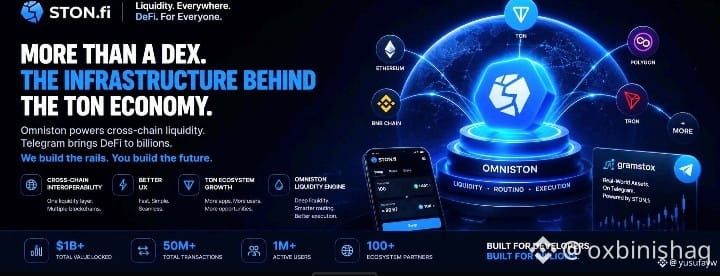
STON.fi Is Quietly Powering the Next Wave of TON DeFi
Every successful DeFi app depends on reliable execution.
That's why the TractionEye integration matters.
By using Omniston, STON.fi provides the swap infrastructure behind TractionEye's social trading marketplace, helping users access strategy pools with efficient liquidity routing and smooth execution.
The bigger takeaway isn't another integration.
It's that more TON builders are choosing STON.fi infrastructure instead of building swap systems from scratch.
That's how ecosystems scale—one integration at a time.
$NVDAB $TON
#ChinaBlacklists40More #KoreaKOSDAQRulesRiskCryptoTreasuryFirmDelisting
STON.fi Is Quietly Powering the Next Wave of TON DeFi
Every successful DeFi app depends on reliable execution.
That's why the TractionEye integration matters.
By using Omniston, STON.fi provides the swap infrastructure behind TractionEye's social trading marketplace, helping users access strategy pools with efficient liquidity routing and smooth execution.
The bigger takeaway isn't another integration.
It's that more TON builders are choosing STON.fi infrastructure instead of building swap systems from scratch.
That's how ecosystems scale—one integration at a time.
$NVDAB $TON
#ChinaBlacklists40More #KoreaKOSDAQRulesRiskCryptoTreasuryFirmDelisting
Every successful DeFi app depends on reliable execution.
That's why the TractionEye integration matters.
By using Omniston, STON.fi provides the swap infrastructure behind TractionEye's social trading marketplace, helping users access strategy pools with efficient liquidity routing and smooth execution.
The bigger takeaway isn't another integration.
It's that more TON builders are choosing STON.fi infrastructure instead of building swap systems from scratch.
That's how ecosystems scale—one integration at a time.
$NVDAB $TON
#ChinaBlacklists40More #KoreaKOSDAQRulesRiskCryptoTreasuryFirmDelisting
47
·
--
STON.fi: Missions That Lead Somewhere
STON.fi’s “One Swap. Across Chains” campaign is taking a different approach to rewards.
Instead of making every mission feel like a standalone task, the campaign gives users reasons to explore different parts of Web3. My Wallet and Gram Wallet bring wallet utilities, Mira adds AI, Getgems focuses on NFTs, SafePal covers security, while WenLong brings a trading angle.
The interesting part is the connection between them. Completing one mission can naturally lead you to another product, turning the campaign into a broader discovery path rather than a simple reward checklist.
Weekly Flight Deals add another layer because the available routes can change, giving users new reasons to return and explore.
The real value here is discovery: rewards become the entry point, while the products themselves determine whether users stay.
Check the latest partner missions and Flight Deals before the current rewards cycle ends.
BitcoinBreaksAboveMayHighNears$86K#DogecoinRises15% #AIStocksWhatNext
STON.fi: Missions That Lead Somewhere
STON.fi’s “One Swap. Across Chains” campaign is taking a different approach to rewards.
Instead of making every mission feel like a standalone task, the campaign gives users reasons to explore different parts of Web3. My Wallet and Gram Wallet bring wallet utilities, Mira adds AI, Getgems focuses on NFTs, SafePal covers security, while WenLong brings a trading angle.
The interesting part is the connection between them. Completing one mission can naturally lead you to another product, turning the campaign into a broader discovery path rather than a simple reward checklist.
Weekly Flight Deals add another layer because the available routes can change, giving users new reasons to return and explore.
The real value here is discovery: rewards become the entry point, while the products themselves determine whether users stay.
Check the latest partner missions and Flight Deals before the current rewards cycle ends.
BitcoinBreaksAboveMayHighNears$86K#DogecoinRises15% #AIStocksWhatNext
STON.fi’s “One Swap. Across Chains” campaign is taking a different approach to rewards.
Instead of making every mission feel like a standalone task, the campaign gives users reasons to explore different parts of Web3. My Wallet and Gram Wallet bring wallet utilities, Mira adds AI, Getgems focuses on NFTs, SafePal covers security, while WenLong brings a trading angle.
The interesting part is the connection between them. Completing one mission can naturally lead you to another product, turning the campaign into a broader discovery path rather than a simple reward checklist.
Weekly Flight Deals add another layer because the available routes can change, giving users new reasons to return and explore.
The real value here is discovery: rewards become the entry point, while the products themselves determine whether users stay.
Check the latest partner missions and Flight Deals before the current rewards cycle ends.
BitcoinBreaksAboveMayHighNears$86K#DogecoinRises15% #AIStocksWhatNext
53
·
--
STON.fi: Missions That Lead Somewhere
STON.fi’s “One Swap. Across Chains” campaign is taking a different approach to rewards.
Instead of making every mission feel like a standalone task, the campaign gives users reasons to explore different parts of Web3. My Wallet and Gram Wallet bring wallet utilities, Mira adds AI, Getgems focuses on NFTs, SafePal covers security, while WenLong brings a trading angle.
The interesting part is the connection between them. Completing one mission can naturally lead you to another product, turning the campaign into a broader discovery path rather than a simple reward checklist.
Weekly Flight Deals add another layer because the available routes can change, giving users new reasons to return and explore.
The real value here is discovery: rewards become the entry point, while the products themselves determine whether users stay.
Check the latest partner missions and Flight Deals before the current rewards cycle ends.
BitcoinBreaksAboveMayHighNears$86K#DogecoinRises15% #AIStocksWhatNext
STON.fi: Missions That Lead Somewhere
STON.fi’s “One Swap. Across Chains” campaign is taking a different approach to rewards.
Instead of making every mission feel like a standalone task, the campaign gives users reasons to explore different parts of Web3. My Wallet and Gram Wallet bring wallet utilities, Mira adds AI, Getgems focuses on NFTs, SafePal covers security, while WenLong brings a trading angle.
The interesting part is the connection between them. Completing one mission can naturally lead you to another product, turning the campaign into a broader discovery path rather than a simple reward checklist.
Weekly Flight Deals add another layer because the available routes can change, giving users new reasons to return and explore.
The real value here is discovery: rewards become the entry point, while the products themselves determine whether users stay.
Check the latest partner missions and Flight Deals before the current rewards cycle ends.
BitcoinBreaksAboveMayHighNears$86K#DogecoinRises15% #AIStocksWhatNext
STON.fi’s “One Swap. Across Chains” campaign is taking a different approach to rewards.
Instead of making every mission feel like a standalone task, the campaign gives users reasons to explore different parts of Web3. My Wallet and Gram Wallet bring wallet utilities, Mira adds AI, Getgems focuses on NFTs, SafePal covers security, while WenLong brings a trading angle.
The interesting part is the connection between them. Completing one mission can naturally lead you to another product, turning the campaign into a broader discovery path rather than a simple reward checklist.
Weekly Flight Deals add another layer because the available routes can change, giving users new reasons to return and explore.
The real value here is discovery: rewards become the entry point, while the products themselves determine whether users stay.
Check the latest partner missions and Flight Deals before the current rewards cycle ends.
BitcoinBreaksAboveMayHighNears$86K#DogecoinRises15% #AIStocksWhatNext
73
·
--
TON DeFi Is Becoming More Connected
This week’s STON.fi updates point to a bigger shift: staking, farming, liquidity, and cross-chain infrastructure are starting to work as parts of the same ecosystem.
STON staking brings governance and Boost Farm opportunities, while cross-chain research focuses on solving fragmented liquidity and improving how assets move between networks.
The September 1, 2026 Toncoin & Token Bridge shutdown is also an important deadline for users holding bridged assets.
Farming snapshot:
TONG/GRAM — 66%
USD₮/JETTON — 50%
GRAM/JETTON — 28%
STON/USD₮ — 13% | Boost APR → 27%
📊 Weekly swap volume: $16.8M
📊 TVL: $26.1M
📊 LP earnings: ~$37,277
The metric worth watching is whether better infrastructure can turn TON’s growing liquidity into sustained on-chain active
#SECReviewsSix3xLeveragedCommodityETFs #USToPressNationsToPickUSOrChinaAICoalition
TON DeFi Is Becoming More Connected
This week’s STON.fi updates point to a bigger shift: staking, farming, liquidity, and cross-chain infrastructure are starting to work as parts of the same ecosystem.
STON staking brings governance and Boost Farm opportunities, while cross-chain research focuses on solving fragmented liquidity and improving how assets move between networks.
The September 1, 2026 Toncoin & Token Bridge shutdown is also an important deadline for users holding bridged assets.
Farming snapshot:
TONG/GRAM — 66%
USD₮/JETTON — 50%
GRAM/JETTON — 28%
STON/USD₮ — 13% | Boost APR → 27%
📊 Weekly swap volume: $16.8M
📊 TVL: $26.1M
📊 LP earnings: ~$37,277
The metric worth watching is whether better infrastructure can turn TON’s growing liquidity into sustained on-chain active
#SECReviewsSix3xLeveragedCommodityETFs #USToPressNationsToPickUSOrChinaAICoalition
This week’s STON.fi updates point to a bigger shift: staking, farming, liquidity, and cross-chain infrastructure are starting to work as parts of the same ecosystem.
STON staking brings governance and Boost Farm opportunities, while cross-chain research focuses on solving fragmented liquidity and improving how assets move between networks.
The September 1, 2026 Toncoin & Token Bridge shutdown is also an important deadline for users holding bridged assets.
Farming snapshot:
TONG/GRAM — 66%
USD₮/JETTON — 50%
GRAM/JETTON — 28%
STON/USD₮ — 13% | Boost APR → 27%
📊 Weekly swap volume: $16.8M
📊 TVL: $26.1M
📊 LP earnings: ~$37,277
The metric worth watching is whether better infrastructure can turn TON’s growing liquidity into sustained on-chain active
#SECReviewsSix3xLeveragedCommodityETFs #USToPressNationsToPickUSOrChinaAICoalition
195
·
--
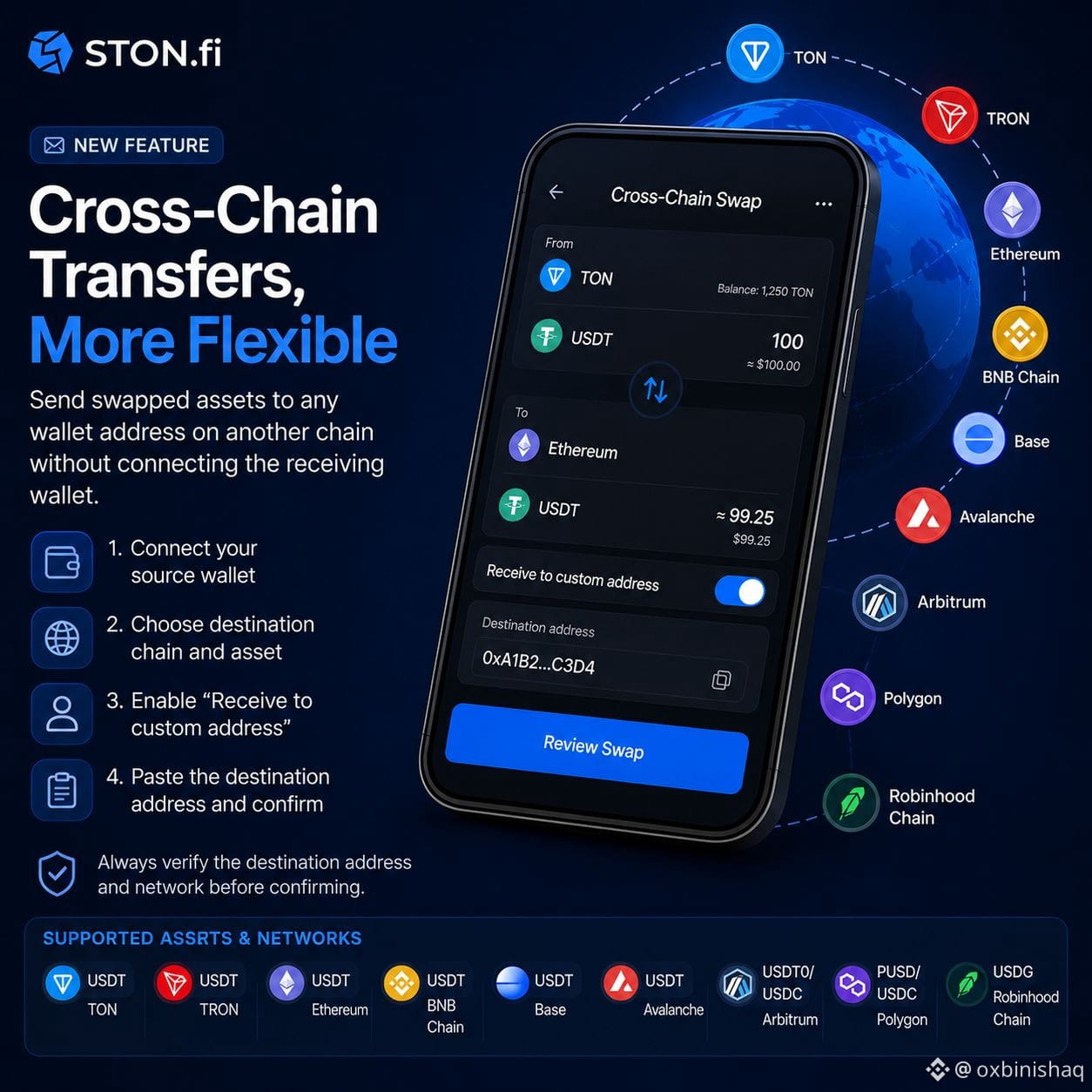
Cross-chain swaps are becoming less complicated.
STON.fi now lets you send the tokens you receive to a different wallet address without connecting that wallet to the app. You connect the wallet you’re swapping from, choose the network, enter the destination address, and complete the transaction.
It supports major networks including TON, TRON, Ethereum, BNB Chain, Base, Avalanche, Arbitrum, Polygon, and Robinhood Chain.
This may look like a small feature, but it removes a real point of friction: you no longer need to manage two wallet connections for one transfer.
Always check the destination address and network before confirming.
#BNBChainToActivatePasteurHardFork #SanDiskRises7%OnRevenueGrowthOutlook #USJulyRetailSalesFall0.6%
Cross-chain swaps are becoming less complicated.
STON.fi now lets you send the tokens you receive to a different wallet address without connecting that wallet to the app. You connect the wallet you’re swapping from, choose the network, enter the destination address, and complete the transaction.
It supports major networks including TON, TRON, Ethereum, BNB Chain, Base, Avalanche, Arbitrum, Polygon, and Robinhood Chain.
This may look like a small feature, but it removes a real point of friction: you no longer need to manage two wallet connections for one transfer.
Always check the destination address and network before confirming.
#BNBChainToActivatePasteurHardFork #SanDiskRises7%OnRevenueGrowthOutlook #USJulyRetailSalesFall0.6%
STON.fi now lets you send the tokens you receive to a different wallet address without connecting that wallet to the app. You connect the wallet you’re swapping from, choose the network, enter the destination address, and complete the transaction.
It supports major networks including TON, TRON, Ethereum, BNB Chain, Base, Avalanche, Arbitrum, Polygon, and Robinhood Chain.
This may look like a small feature, but it removes a real point of friction: you no longer need to manage two wallet connections for one transfer.
Always check the destination address and network before confirming.
#BNBChainToActivatePasteurHardFork #SanDiskRises7%OnRevenueGrowthOutlook #USJulyRetailSalesFall0.6%
65
·
--
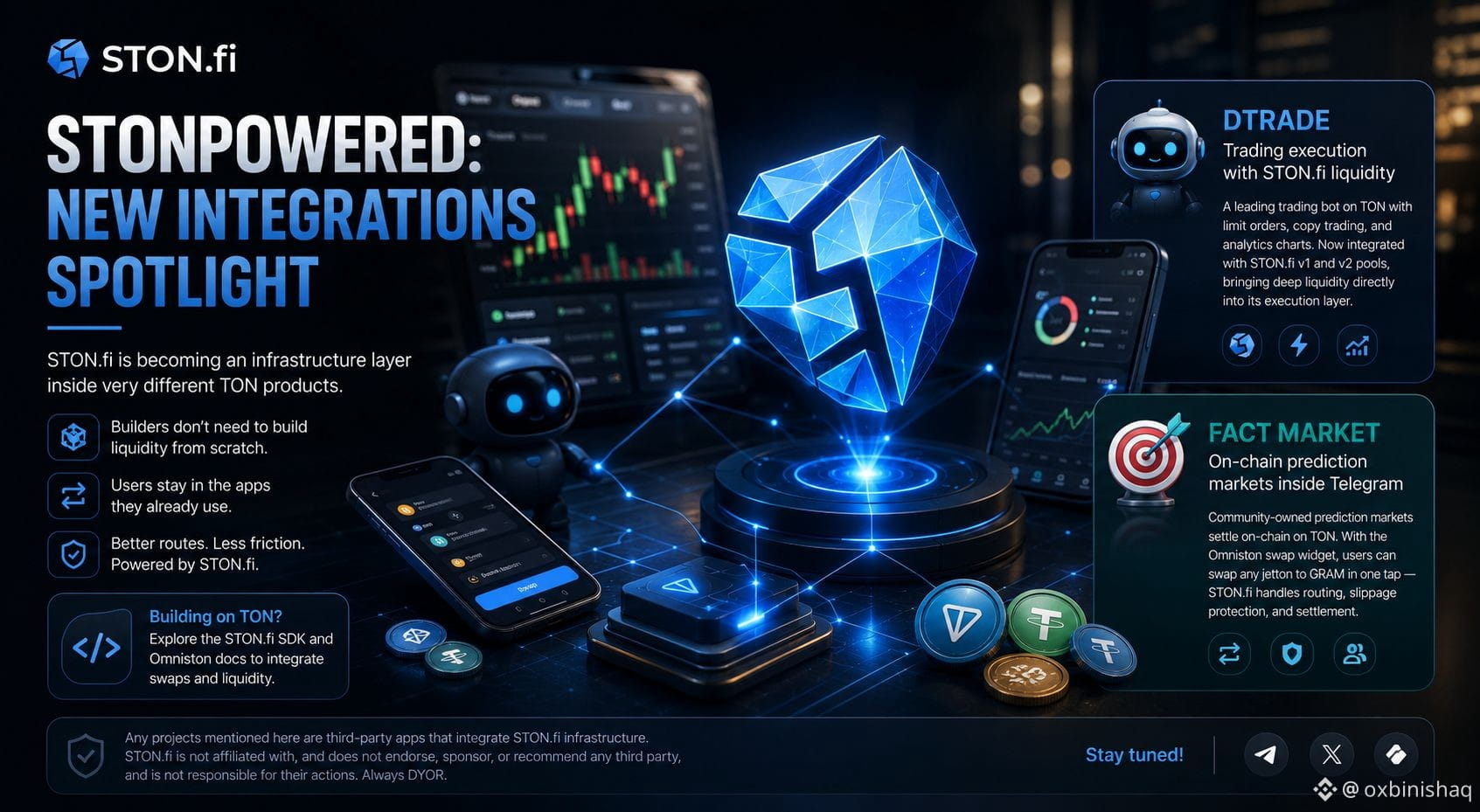
STON.fi Is Bringing TRON Into the Cross-Chain Future
Stonfiers! STON.fi has expanded its cross-chain ecosystem by integrating TRON, connecting one of crypto's largest stablecoin networks directly with TON and major EVM chains through a single self-custodial experience.
This is another step toward a future where users no longer think about blockchains. They choose the asset they want to swap, while STON.fi and Omniston handle routing, execution, and settlement behind the scenes.
Supported stablecoins include: • USDT on TON & TRON
• USDT and USDC on Ethereum, BNB Chain, Base, Avalanche
• USDT0 and USDC on Arbitrum
• PUSD and USDC on Polygon
• USDG on Robinhood Chain
Powered by Omniston, swaps provide transparent pricing, protected execution, and typically complete within 15–40 seconds.
At launch, cross-chain transactions are temporarily limited to $1,000 per swap.
Every new integration strengthens STON.fi's vision of making cross-chain liquidity feel like one seamless financial network.
Try TRON cross-chain swaps on STON.fi: https://ston.fi
#CitadelBuysSituationalAwarenessEquities #SaudiOilTankersRerouteAroundAfrica
STON.fi Is Bringing TRON Into the Cross-Chain Future
Stonfiers! STON.fi has expanded its cross-chain ecosystem by integrating TRON, connecting one of crypto's largest stablecoin networks directly with TON and major EVM chains through a single self-custodial experience.
This is another step toward a future where users no longer think about blockchains. They choose the asset they want to swap, while STON.fi and Omniston handle routing, execution, and settlement behind the scenes.
Supported stablecoins include: • USDT on TON & TRON
• USDT and USDC on Ethereum, BNB Chain, Base, Avalanche
• USDT0 and USDC on Arbitrum
• PUSD and USDC on Polygon
• USDG on Robinhood Chain
Powered by Omniston, swaps provide transparent pricing, protected execution, and typically complete within 15–40 seconds.
At launch, cross-chain transactions are temporarily limited to $1,000 per swap.
Every new integration strengthens STON.fi's vision of making cross-chain liquidity feel like one seamless financial network.
Try TRON cross-chain swaps on STON.fi: https://ston.fi
#CitadelBuysSituationalAwarenessEquities #SaudiOilTankersRerouteAroundAfrica
Stonfiers! STON.fi has expanded its cross-chain ecosystem by integrating TRON, connecting one of crypto's largest stablecoin networks directly with TON and major EVM chains through a single self-custodial experience.
This is another step toward a future where users no longer think about blockchains. They choose the asset they want to swap, while STON.fi and Omniston handle routing, execution, and settlement behind the scenes.
Supported stablecoins include: • USDT on TON & TRON
• USDT and USDC on Ethereum, BNB Chain, Base, Avalanche
• USDT0 and USDC on Arbitrum
• PUSD and USDC on Polygon
• USDG on Robinhood Chain
Powered by Omniston, swaps provide transparent pricing, protected execution, and typically complete within 15–40 seconds.
At launch, cross-chain transactions are temporarily limited to $1,000 per swap.
Every new integration strengthens STON.fi's vision of making cross-chain liquidity feel like one seamless financial network.
Try TRON cross-chain swaps on STON.fi: https://ston.fi
#CitadelBuysSituationalAwarenessEquities #SaudiOilTankersRerouteAroundAfrica
47
·
--
STONfi Is Redefining What a Modern DEX Should Be
For years, a DEX had one primary job: swap one token for another.
That definition no longer captures what's happening.
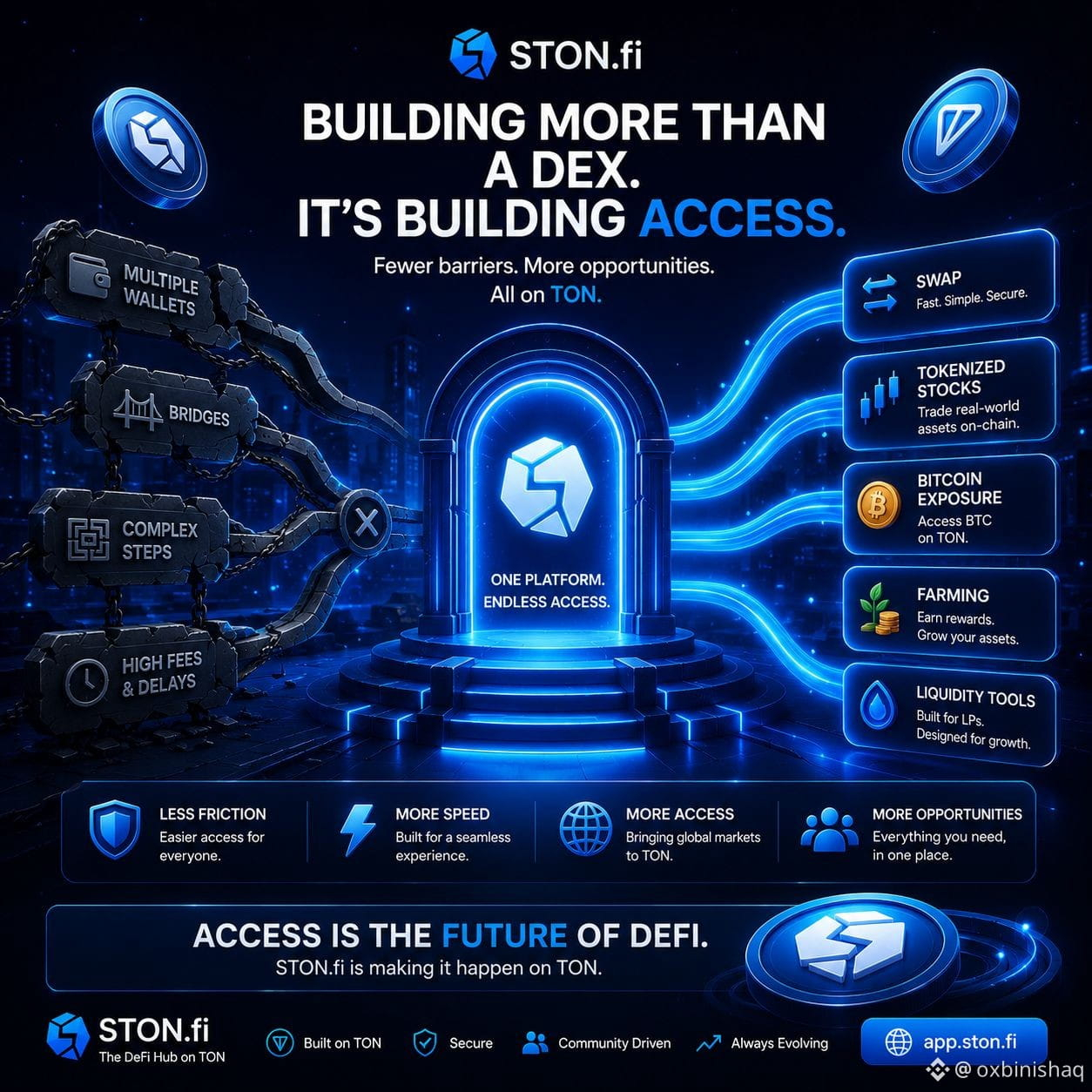
STON.fi is evolving beyond simple token swaps into a platform where users can access cross-chain liquidity, tokenized stocks, Bitcoin exposure on #TON, farming opportunities, and DeFi tools from a single ecosystem.
The real innovation isn't the number of features.
It's how those features work together to reduce complexity.
A modern DEX shouldn't force users to jump between multiple apps, bridges, and wallets to achieve one goal. It should bring liquidity, assets, and opportunities into one seamless experience.
That's why I think STON.fi represents a broader shift in DeFi.
The platforms that shape the next generation of on-chain finance won't be defined by swaps alone. They'll be defined by how much friction they remove for the people using them.
To me, that's what a modern DEX should look like.
Explore: https://ston.fi/
#KospiUp15.13%InMorningTrade #AppleChipShortageHurtsSalesForecast
STONfi Is Redefining What a Modern DEX Should Be
For years, a DEX had one primary job: swap one token for another.
That definition no longer captures what's happening.
STON.fi is evolving beyond simple token swaps into a platform where users can access cross-chain liquidity, tokenized stocks, Bitcoin exposure on #TON, farming opportunities, and DeFi tools from a single ecosystem.
The real innovation isn't the number of features.
It's how those features work together to reduce complexity.
A modern DEX shouldn't force users to jump between multiple apps, bridges, and wallets to achieve one goal. It should bring liquidity, assets, and opportunities into one seamless experience.
That's why I think STON.fi represents a broader shift in DeFi.
The platforms that shape the next generation of on-chain finance won't be defined by swaps alone. They'll be defined by how much friction they remove for the people using them.
To me, that's what a modern DEX should look like.
Explore: https://ston.fi/
#KospiUp15.13%InMorningTrade #AppleChipShortageHurtsSalesForecast
For years, a DEX had one primary job: swap one token for another.
That definition no longer captures what's happening.
STON.fi is evolving beyond simple token swaps into a platform where users can access cross-chain liquidity, tokenized stocks, Bitcoin exposure on #TON, farming opportunities, and DeFi tools from a single ecosystem.
The real innovation isn't the number of features.
It's how those features work together to reduce complexity.
A modern DEX shouldn't force users to jump between multiple apps, bridges, and wallets to achieve one goal. It should bring liquidity, assets, and opportunities into one seamless experience.
That's why I think STON.fi represents a broader shift in DeFi.
The platforms that shape the next generation of on-chain finance won't be defined by swaps alone. They'll be defined by how much friction they remove for the people using them.
To me, that's what a modern DEX should look like.
Explore: https://ston.fi/
#KospiUp15.13%InMorningTrade #AppleChipShortageHurtsSalesForecast
60
·
--
Haussier
STON.fi Is Building Momentum on Every Front
This week wasn't about one announcement it was about execution.
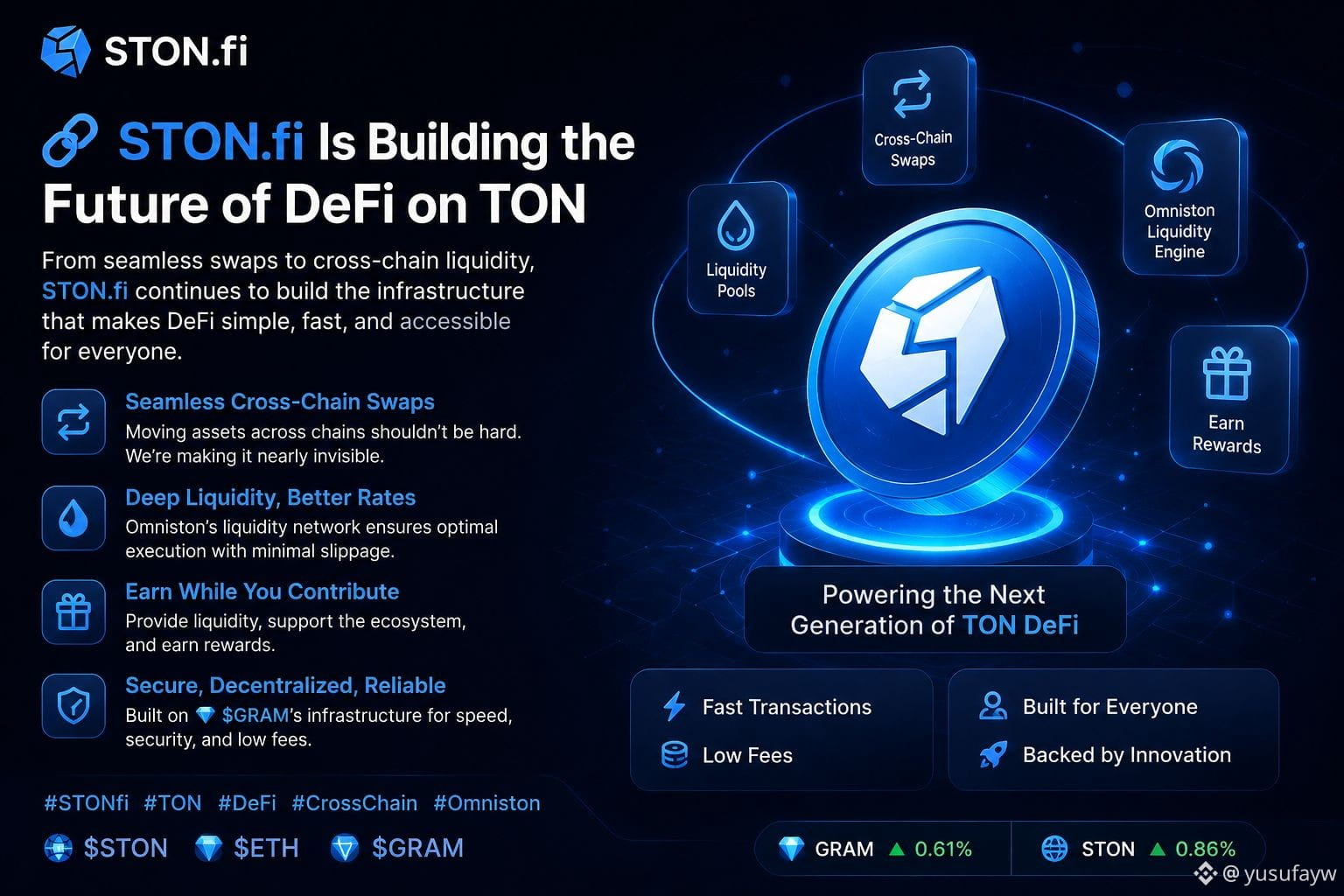
Cross-chain swaps between TON and EVM networks are now live, Omniston expanded into Gramstox to power xStocks swaps, and May closed with an impressive $331M in swap volume, a 4.7× increase over April.
Another highlight is how STON.fi keeps growing beyond its own app. More projects are integrating Omniston and the STON.fi SDK, turning its infrastructure into a foundation for new TON applications.
The message is becoming clearer with every update.
STON.fi isn't only scaling a DEX.
It's steadily building the infrastructure that connects liquidity, developers, and users across the TON ecosystem.
#KoreaKOSDAQRulesRiskCryptoTreasuryFirmDelisting #USIranAgreeToHaltAttacks #PBOCSetsOvernightLiquidityRateBelowForecasts $BTC $TSLAB
{spot}(TSLABUSDT)
STON.fi Is Building Momentum on Every Front
This week wasn't about one announcement it was about execution.
Cross-chain swaps between TON and EVM networks are now live, Omniston expanded into Gramstox to power xStocks swaps, and May closed with an impressive $331M in swap volume, a 4.7× increase over April.
Another highlight is how STON.fi keeps growing beyond its own app. More projects are integrating Omniston and the STON.fi SDK, turning its infrastructure into a foundation for new TON applications.
The message is becoming clearer with every update.
STON.fi isn't only scaling a DEX.
It's steadily building the infrastructure that connects liquidity, developers, and users across the TON ecosystem.
#KoreaKOSDAQRulesRiskCryptoTreasuryFirmDelisting #USIranAgreeToHaltAttacks #PBOCSetsOvernightLiquidityRateBelowForecasts $BTC $TSLAB
This week wasn't about one announcement it was about execution.
Cross-chain swaps between TON and EVM networks are now live, Omniston expanded into Gramstox to power xStocks swaps, and May closed with an impressive $331M in swap volume, a 4.7× increase over April.
Another highlight is how STON.fi keeps growing beyond its own app. More projects are integrating Omniston and the STON.fi SDK, turning its infrastructure into a foundation for new TON applications.
The message is becoming clearer with every update.
STON.fi isn't only scaling a DEX.
It's steadily building the infrastructure that connects liquidity, developers, and users across the TON ecosystem.
#KoreaKOSDAQRulesRiskCryptoTreasuryFirmDelisting #USIranAgreeToHaltAttacks #PBOCSetsOvernightLiquidityRateBelowForecasts $BTC $TSLAB
1
41
·
--
STON.fi Is Quietly Powering the Next Wave of TON DeFi
Every successful DeFi app depends on reliable execution.
That's why the TractionEye integration matters.
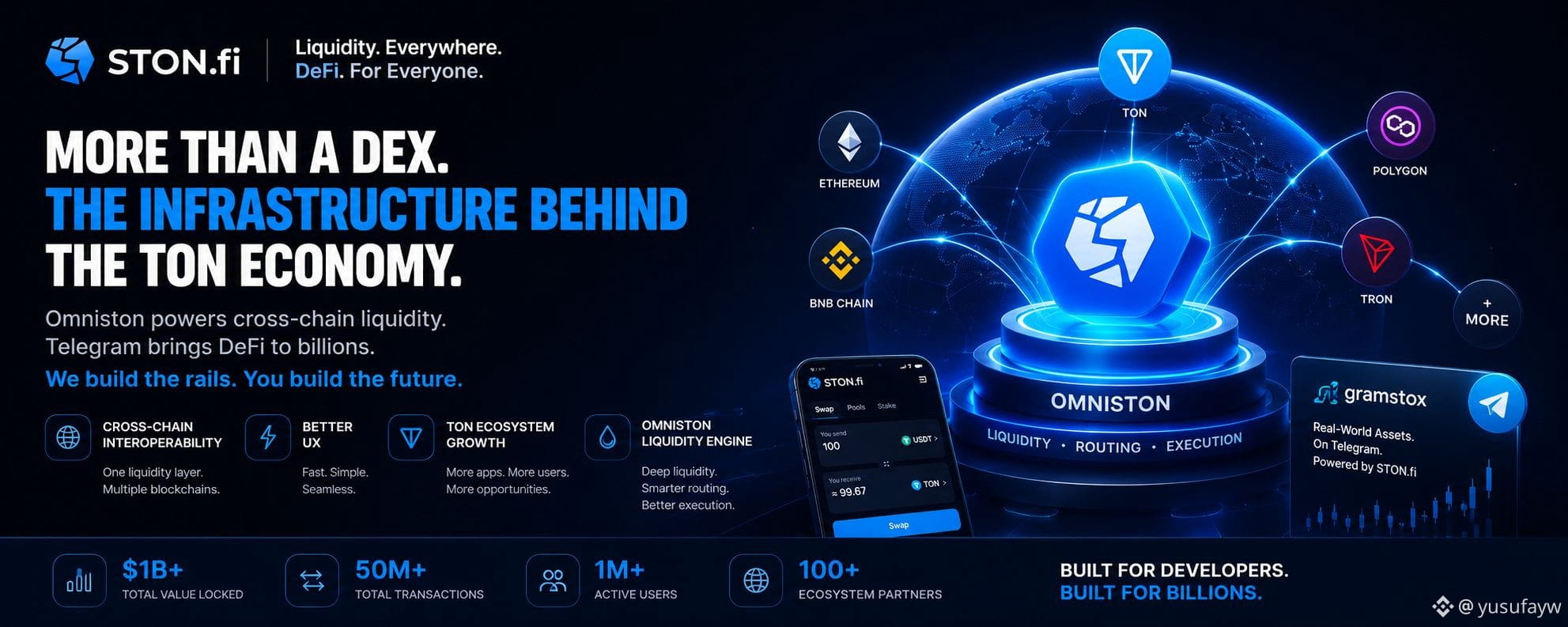
By using Omniston, STON.fi provides the swap infrastructure behind TractionEye's social trading marketplace, helping users access strategy pools with efficient liquidity routing and smooth execution.
The bigger takeaway isn't another integration.
It's that more TON builders are choosing STON.fi infrastructure instead of building swap systems from scratch.
That's how ecosystems scale—one integration at a time.
$NVDAB $TON
#ChinaBlacklists40MoreJapanEntities #KoreaKOSDAQRulesRiskCryptoTreasuryFirmDelisting
STON.fi Is Quietly Powering the Next Wave of TON DeFi
Every successful DeFi app depends on reliable execution.
That's why the TractionEye integration matters.
By using Omniston, STON.fi provides the swap infrastructure behind TractionEye's social trading marketplace, helping users access strategy pools with efficient liquidity routing and smooth execution.
The bigger takeaway isn't another integration.
It's that more TON builders are choosing STON.fi infrastructure instead of building swap systems from scratch.
That's how ecosystems scale—one integration at a time.
$NVDAB $TON
#ChinaBlacklists40MoreJapanEntities #KoreaKOSDAQRulesRiskCryptoTreasuryFirmDelisting
Every successful DeFi app depends on reliable execution.
That's why the TractionEye integration matters.
By using Omniston, STON.fi provides the swap infrastructure behind TractionEye's social trading marketplace, helping users access strategy pools with efficient liquidity routing and smooth execution.
The bigger takeaway isn't another integration.
It's that more TON builders are choosing STON.fi infrastructure instead of building swap systems from scratch.
That's how ecosystems scale—one integration at a time.
$NVDAB $TON
#ChinaBlacklists40MoreJapanEntities #KoreaKOSDAQRulesRiskCryptoTreasuryFirmDelisting
1
54
·
--
Haussier
Infrastructure Creates More Value Than Features
Most people notice new DeFi applications.
Fewer notice the infrastructure that makes those applications work.
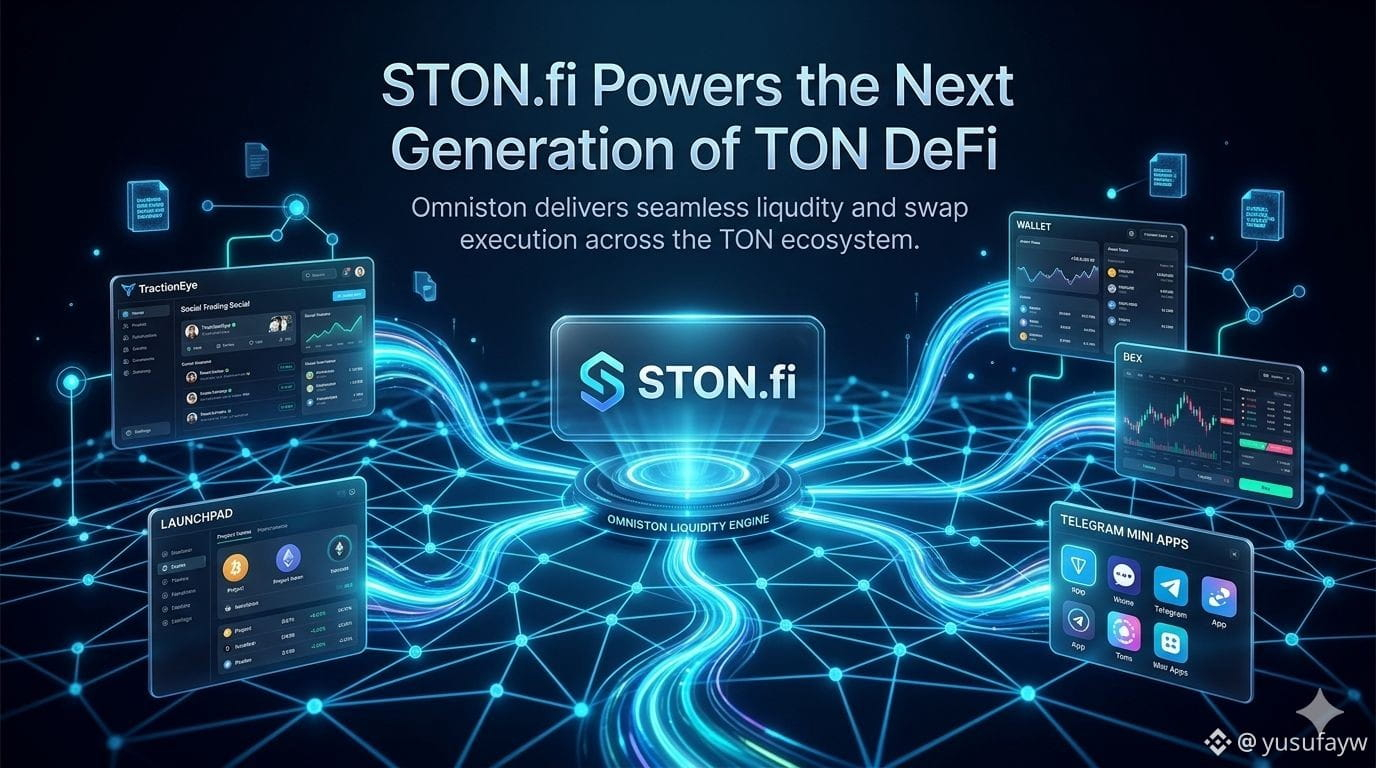
The TractionEye integration highlights a broader trend. Instead of building swap infrastructure from scratch, more TON projects are integrating STON.fi's Omniston to handle liquidity routing and execution behind the scenes.
This approach does more than save development time.
It allows builders to focus on creating better products while relying on infrastructure designed for efficient execution and deep liquidity.
The strongest ecosystems aren't defined by how many apps they launch.
They're defined by how many builders choose the same foundation.
OilReclaims$70BitcoinSpotETFsPost$1.79BOutflows#ChinaBlacklists40MoreJapanEntities
Infrastructure Creates More Value Than Features
Most people notice new DeFi applications.
Fewer notice the infrastructure that makes those applications work.
The TractionEye integration highlights a broader trend. Instead of building swap infrastructure from scratch, more TON projects are integrating STON.fi's Omniston to handle liquidity routing and execution behind the scenes.
This approach does more than save development time.
It allows builders to focus on creating better products while relying on infrastructure designed for efficient execution and deep liquidity.
The strongest ecosystems aren't defined by how many apps they launch.
They're defined by how many builders choose the same foundation.
OilReclaims$70BitcoinSpotETFsPost$1.79BOutflows#ChinaBlacklists40MoreJapanEntities
Most people notice new DeFi applications.
Fewer notice the infrastructure that makes those applications work.
The TractionEye integration highlights a broader trend. Instead of building swap infrastructure from scratch, more TON projects are integrating STON.fi's Omniston to handle liquidity routing and execution behind the scenes.
This approach does more than save development time.
It allows builders to focus on creating better products while relying on infrastructure designed for efficient execution and deep liquidity.
The strongest ecosystems aren't defined by how many apps they launch.
They're defined by how many builders choose the same foundation.
OilReclaims$70BitcoinSpotETFsPost$1.79BOutflows#ChinaBlacklists40MoreJapanEntities
1
99
·
--
Haussier
The Smart Liquidity Layer Powering TON DeFi
The TON DeFi ecosystem is entering a new phase of maturity. STON.fi, one of the most active DEX platforms on TON, has introduced Omniston — an advanced liquidity system designed to unify fragmented liquidity across the network.
Today, most traders on TON face one issue: liquidity is scattered across multiple platforms, causing inconsistent swap rates and higher slippage. Omniston solves this by connecting every major pool and resolver within the ecosystem, allowing users to access the best swap conditions automatically.
Instead of moving between exchanges to compare prices, Omniston’s engine scans the TON market in real time — calculating routes, analyzing fees, and executing the most efficient swaps directly through STON.fi.
This system does more than improve user experience. It strengthens TON’s DeFi foundation by building a single, intelligent liquidity layer that other protocols can integrate with, boosting scalability and capital efficiency across the ecosystem.
You can explore the demo and see how it works via omniston.ston.fi.
$TON $BTC $ETH $TRUMP
The Smart Liquidity Layer Powering TON DeFi
The TON DeFi ecosystem is entering a new phase of maturity. STON.fi, one of the most active DEX platforms on TON, has introduced Omniston — an advanced liquidity system designed to unify fragmented liquidity across the network.
Today, most traders on TON face one issue: liquidity is scattered across multiple platforms, causing inconsistent swap rates and higher slippage. Omniston solves this by connecting every major pool and resolver within the ecosystem, allowing users to access the best swap conditions automatically.
Instead of moving between exchanges to compare prices, Omniston’s engine scans the TON market in real time — calculating routes, analyzing fees, and executing the most efficient swaps directly through STON.fi.
This system does more than improve user experience. It strengthens TON’s DeFi foundation by building a single, intelligent liquidity layer that other protocols can integrate with, boosting scalability and capital efficiency across the ecosystem.
You can explore the demo and see how it works via omniston.ston.fi.
$TON $BTC $ETH $TRUMP
The TON DeFi ecosystem is entering a new phase of maturity. STON.fi, one of the most active DEX platforms on TON, has introduced Omniston — an advanced liquidity system designed to unify fragmented liquidity across the network.
Today, most traders on TON face one issue: liquidity is scattered across multiple platforms, causing inconsistent swap rates and higher slippage. Omniston solves this by connecting every major pool and resolver within the ecosystem, allowing users to access the best swap conditions automatically.
Instead of moving between exchanges to compare prices, Omniston’s engine scans the TON market in real time — calculating routes, analyzing fees, and executing the most efficient swaps directly through STON.fi.
This system does more than improve user experience. It strengthens TON’s DeFi foundation by building a single, intelligent liquidity layer that other protocols can integrate with, boosting scalability and capital efficiency across the ecosystem.
You can explore the demo and see how it works via omniston.ston.fi.
$TON $BTC $ETH $TRUMP
10
35
Connectez-vous pour découvrir plus de contenu
Rejoignez la communauté mondiale des adeptes de cryptomonnaies sur Binance Square
⚡️ Suviez les dernières informations importantes sur les cryptomonnaies.
💬 Jugé digne de confiance par la plus grande plateforme d’échange de cryptomonnaies au monde.
👍 Découvrez les connaissances que partagent les créateurs vérifiés.
Adresse e-mail/Nº de téléphone