

Wendy 🇻🇳
25.6k Publications

Wendy 🇻🇳
 Compte Square Vérifié+
Signaler
Bloquer l’utilisateur
Crypto Trader | Web3 | 🏅 Rising Star 2024 • Brand Amplifier H1/2026

#BinanceTurns7

#BinanceTurns7 task 2

Top Voices
134 Suivis
84.1K+ Abonnés
240.1K+ J’aime
3 Badges
Publications
Tous
Citations
Vidéos
Direct
·
--
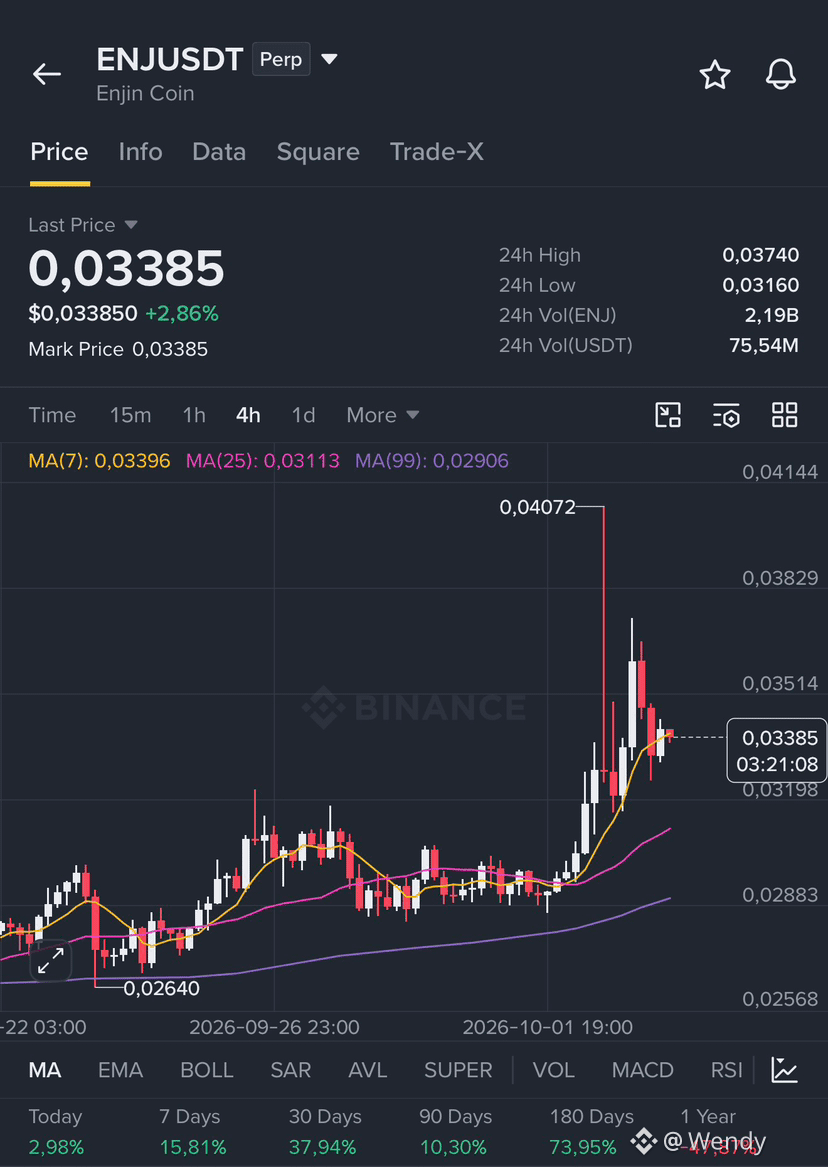
$ENJ Three days ago I marked this level. Today it showed up exactly as mapped.
Macro continuation structure holds firm while price flushes weak hands directly into dynamic support.
LONG $ENJ | 4H setup
Entry: 0.03320 – 0.03400
SL: 0.03080
TP1: 0.03740 | TP2: 0.04070 | TP3: 0.04450
That long lower wick screams aggressive buyers defending dynamic moving averages on heavy absorbing volume.
Position sizing matters. Set yours on Binance👇
{future}(ENJUSDT)
$ENJ Three days ago I marked this level. Today it showed up exactly as mapped.
Macro continuation structure holds firm while price flushes weak hands directly into dynamic support.
LONG $ENJ | 4H setup
Entry: 0.03320 – 0.03400
SL: 0.03080
TP1: 0.03740 | TP2: 0.04070 | TP3: 0.04450
That long lower wick screams aggressive buyers defending dynamic moving averages on heavy absorbing volume.
Position sizing matters. Set yours on Binance👇
Macro continuation structure holds firm while price flushes weak hands directly into dynamic support.
LONG $ENJ | 4H setup
Entry: 0.03320 – 0.03400
SL: 0.03080
TP1: 0.03740 | TP2: 0.04070 | TP3: 0.04450
That long lower wick screams aggressive buyers defending dynamic moving averages on heavy absorbing volume.
Position sizing matters. Set yours on Binance👇
1
252
·
--
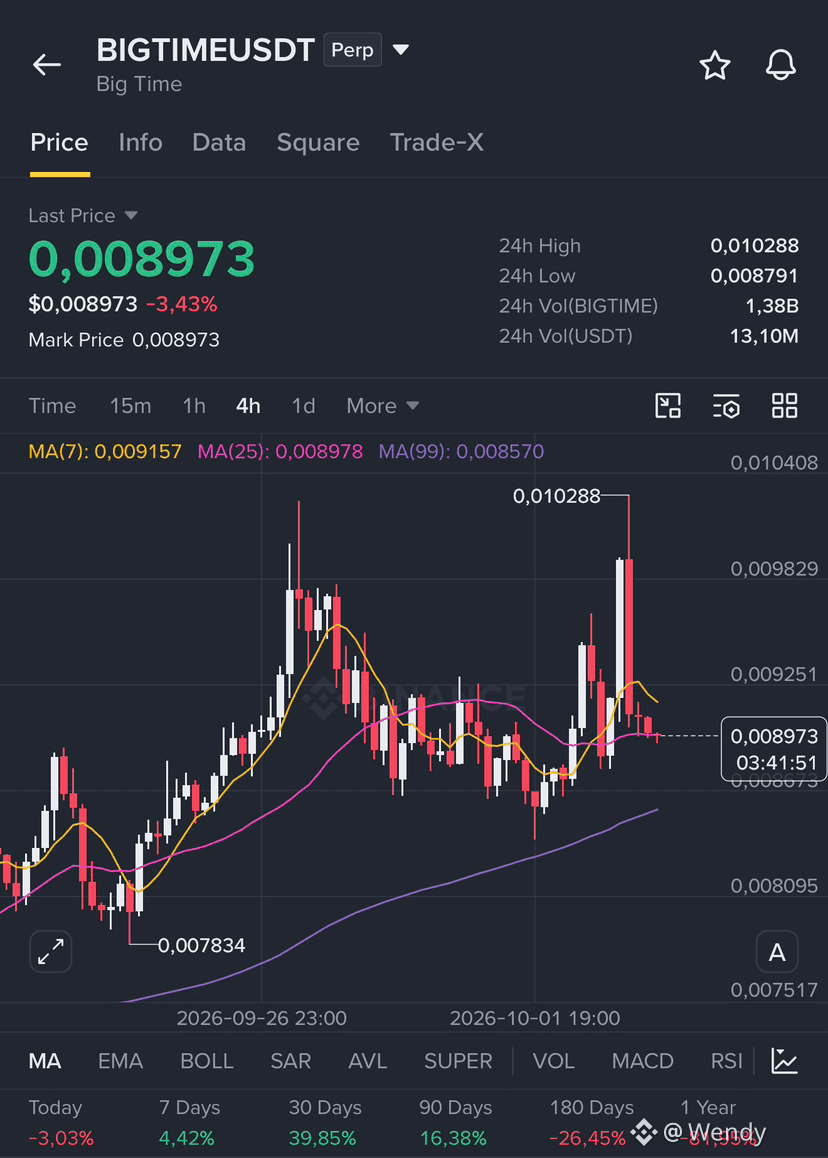
$BIGTIME This is the exact chart pattern that made me miss a 40R trade in 2021. Not this time.
SHORT $BIGTIME
Entry: 0.008970 - 0.009180
SL: 0.009450
TP1: 0.008780 │ TP2: 0.008570 │ TP3: 0.008100
Massive liquidity trap at the 0.01028 high followed by consecutive red 4H expansion bars.
Where's your invalidation on $BIGTIME? Let's compare👇
{future}(BIGTIMEUSDT)
$BIGTIME This is the exact chart pattern that made me miss a 40R trade in 2021. Not this time.
SHORT $BIGTIME
Entry: 0.008970 - 0.009180
SL: 0.009450
TP1: 0.008780 │ TP2: 0.008570 │ TP3: 0.008100
Massive liquidity trap at the 0.01028 high followed by consecutive red 4H expansion bars.
Where's your invalidation on $BIGTIME ? Let's compare👇
SHORT $BIGTIME
Entry: 0.008970 - 0.009180
SL: 0.009450
TP1: 0.008780 │ TP2: 0.008570 │ TP3: 0.008100
Massive liquidity trap at the 0.01028 high followed by consecutive red 4H expansion bars.
Where's your invalidation on $BIGTIME ? Let's compare👇
1
339
·
--
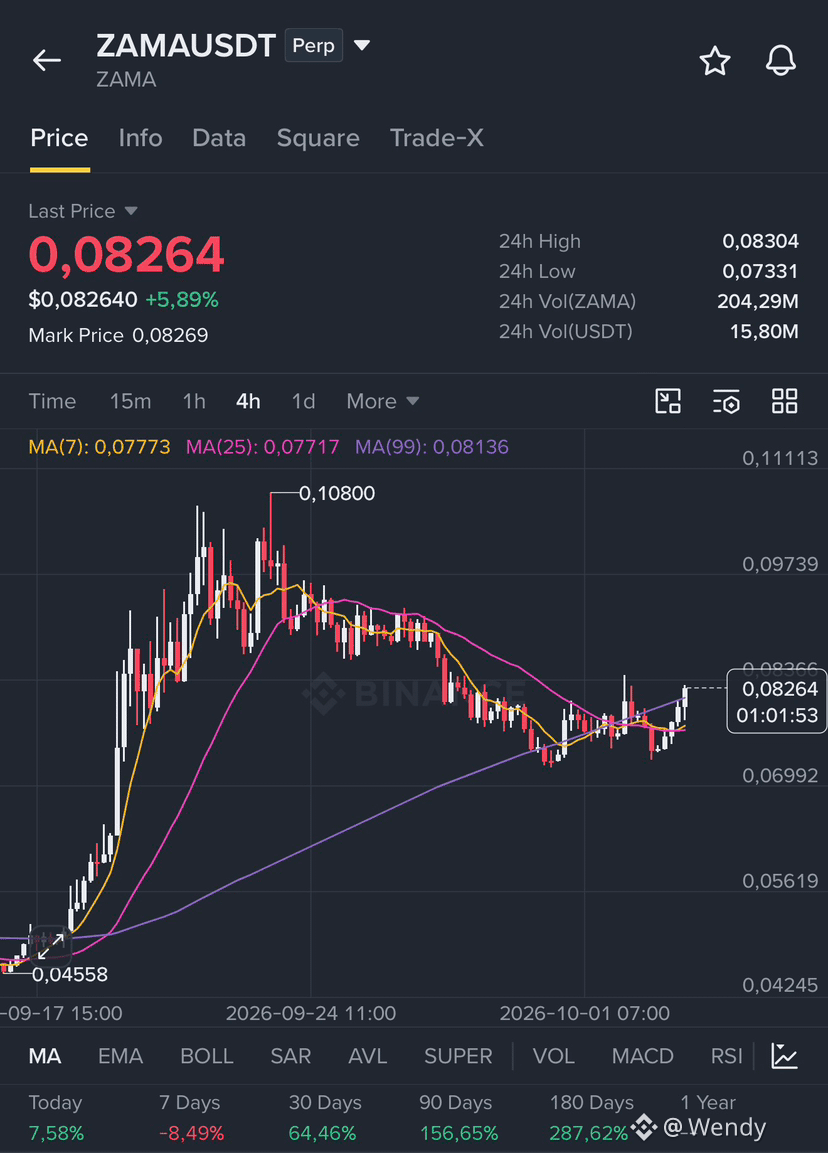
$ZAMA Everyone is watching the breakout. The real signal is the close above this level.
I've watched this MA99 ceiling cap every relief rally for weeks. Seeing a full 4H expansion candle clear it changes the whole dynamic.
WATCH $ZAMA
Watch Zone: 0.08050-0.08280
SL if triggered: 0.07600
TP1: 0.08850 | TP2: 0.09700 | TP3: 0.10800
Clear closes above major moving averages provide the cleanest invalidation for trend shifts.
Bookmark this. Trigger post drops when confirmed👇
{future}(ZAMAUSDT)
$ZAMA Everyone is watching the breakout. The real signal is the close above this level.
I've watched this MA99 ceiling cap every relief rally for weeks. Seeing a full 4H expansion candle clear it changes the whole dynamic.
WATCH $ZAMA
Watch Zone: 0.08050-0.08280
SL if triggered: 0.07600
TP1: 0.08850 | TP2: 0.09700 | TP3: 0.10800
Clear closes above major moving averages provide the cleanest invalidation for trend shifts.
Bookmark this. Trigger post drops when confirmed👇
I've watched this MA99 ceiling cap every relief rally for weeks. Seeing a full 4H expansion candle clear it changes the whole dynamic.
WATCH $ZAMA
Watch Zone: 0.08050-0.08280
SL if triggered: 0.07600
TP1: 0.08850 | TP2: 0.09700 | TP3: 0.10800
Clear closes above major moving averages provide the cleanest invalidation for trend shifts.
Bookmark this. Trigger post drops when confirmed👇
1
3
500
·
--
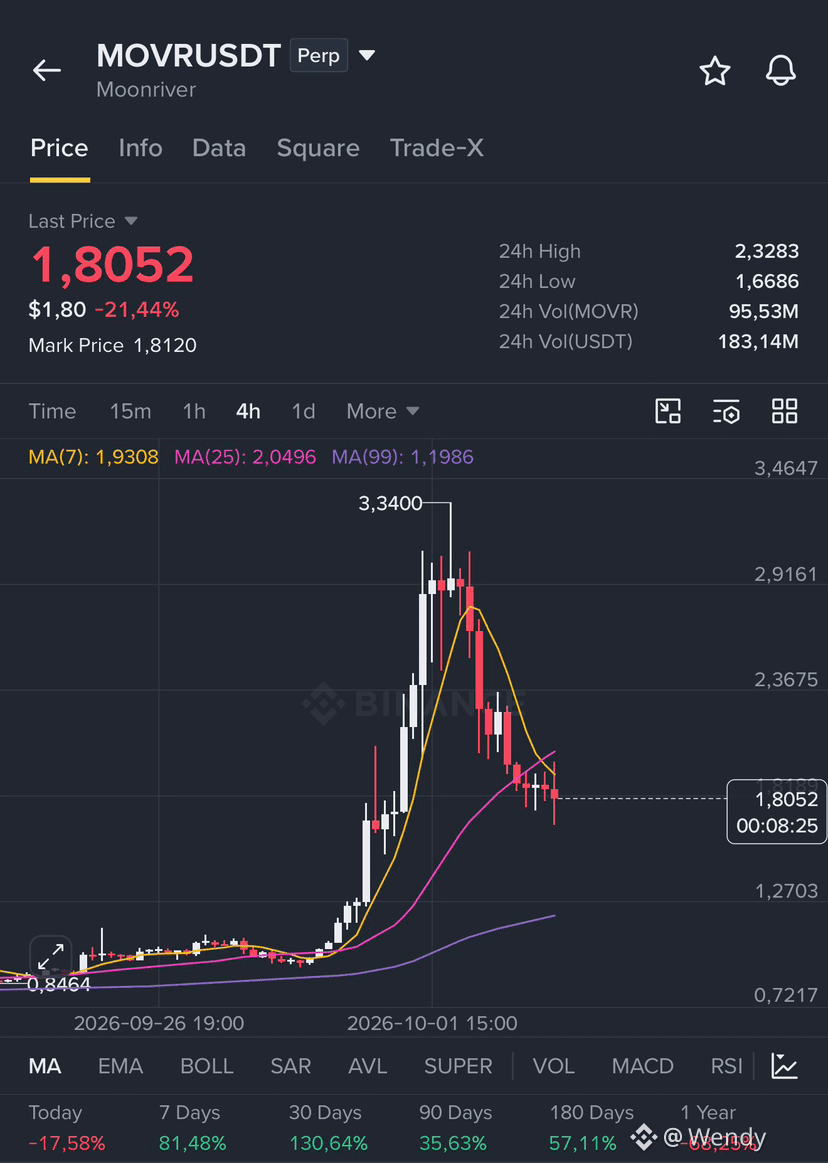
$MOVR Most traders start thinking about the next target here. I am thinking about protecting what is already won.
WATCH $MOVR
Watch Zone: 1.7600 - 1.8200
SL if triggered: 1.6400
TP1: 1.9500 | TP2: 2.1200 | TP3: 2.3500
After tapping our 1.83 target and absorbing sellers at 1.66, dynamic support is stepping in for a relief setup.
Tracking the reversal? Trade $MOVR on Binance👇
{future}(MOVRUSDT)
$MOVR Most traders start thinking about the next target here. I am thinking about protecting what is already won.
WATCH $MOVR
Watch Zone: 1.7600 - 1.8200
SL if triggered: 1.6400
TP1: 1.9500 | TP2: 2.1200 | TP3: 2.3500
After tapping our 1.83 target and absorbing sellers at 1.66, dynamic support is stepping in for a relief setup.
Tracking the reversal? Trade $MOVR on Binance👇
WATCH $MOVR
Watch Zone: 1.7600 - 1.8200
SL if triggered: 1.6400
TP1: 1.9500 | TP2: 2.1200 | TP3: 2.3500
After tapping our 1.83 target and absorbing sellers at 1.66, dynamic support is stepping in for a relief setup.
Tracking the reversal? Trade $MOVR on Binance👇
2
224
·
--
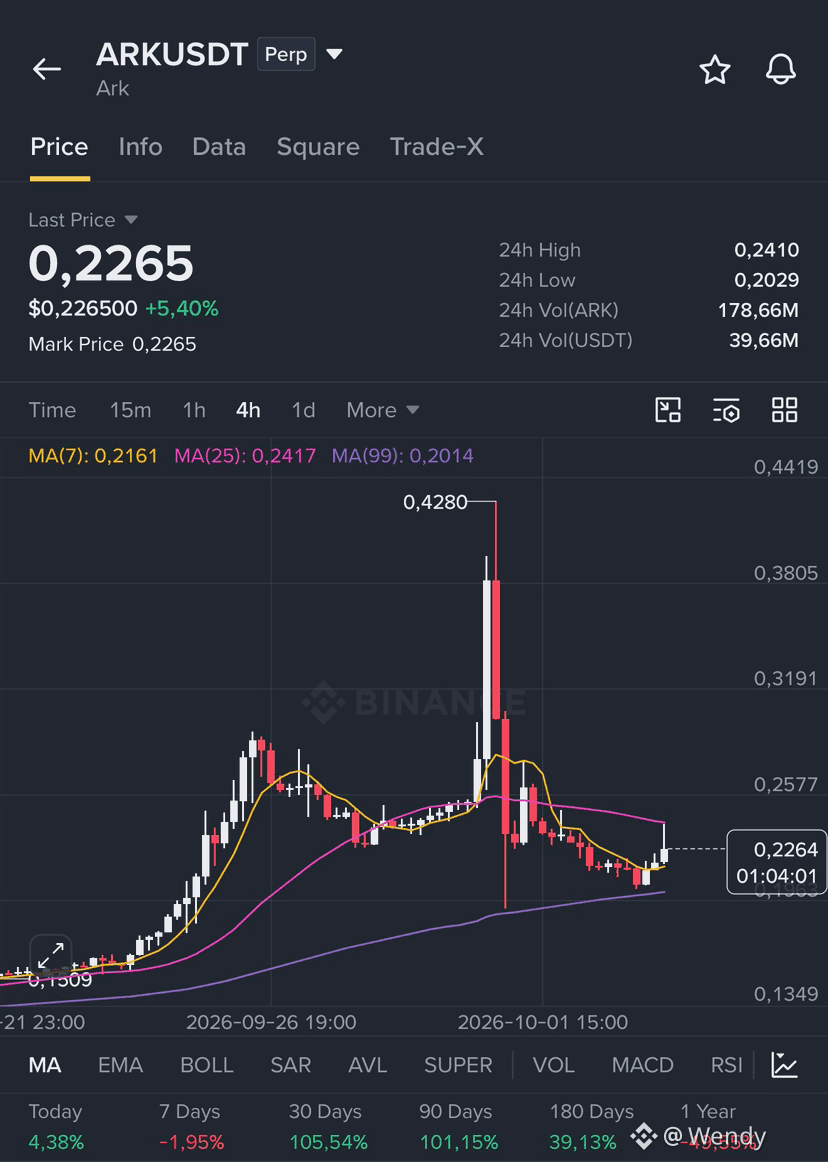
$ARK Three technical signals are meeting in one zone. The trade only works while that zone holds.
LONG $ARK
Entry: 0.2230-0.2280
SL: 0.2010
TP1: 0.2415 | TP2: 0.2580 | TP3: 0.2850
Reclaiming short-term momentum above dynamic 4H support provides a clean asymmetric risk window.
Trade $ARK on Binance👇
{future}(ARKUSDT)
$ARK Three technical signals are meeting in one zone. The trade only works while that zone holds.
LONG $ARK
Entry: 0.2230-0.2280
SL: 0.2010
TP1: 0.2415 | TP2: 0.2580 | TP3: 0.2850
Reclaiming short-term momentum above dynamic 4H support provides a clean asymmetric risk window.
Trade $ARK on Binance👇
LONG $ARK
Entry: 0.2230-0.2280
SL: 0.2010
TP1: 0.2415 | TP2: 0.2580 | TP3: 0.2850
Reclaiming short-term momentum above dynamic 4H support provides a clean asymmetric risk window.
Trade $ARK on Binance👇
249
·
--
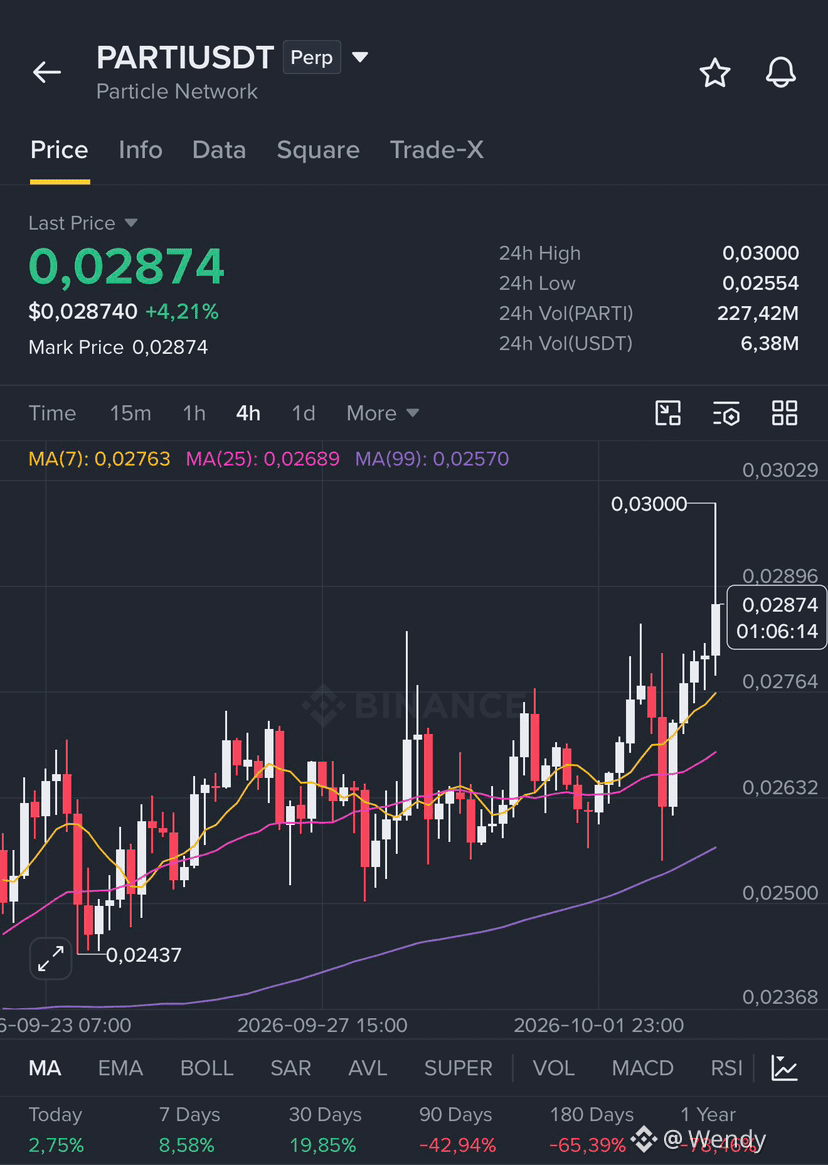
$PARTI Round numbers attract orders for a reason. The next close around this level could decide the setup.
LONG $PARTI
I have seen traders get trapped repeatedly trying to front-run 0.03000 without waiting for the pullback. Dynamic moving averages are stacking up nicely beneath.
Entry: 0.02750 - 0.02820
SL: 0.02640
TP1: 0.03000 | TP2: 0.03250 | TP3: 0.03500
Never buy straight into a major round number ceiling. Let the pullback give you the clean invalidation.
Do you see the same setup? Comment your level👇
{future}(PARTIUSDT)
$PARTI Round numbers attract orders for a reason. The next close around this level could decide the setup.
LONG $PARTI
I have seen traders get trapped repeatedly trying to front-run 0.03000 without waiting for the pullback. Dynamic moving averages are stacking up nicely beneath.
Entry: 0.02750 - 0.02820
SL: 0.02640
TP1: 0.03000 | TP2: 0.03250 | TP3: 0.03500
Never buy straight into a major round number ceiling. Let the pullback give you the clean invalidation.
Do you see the same setup? Comment your level👇
LONG $PARTI
I have seen traders get trapped repeatedly trying to front-run 0.03000 without waiting for the pullback. Dynamic moving averages are stacking up nicely beneath.
Entry: 0.02750 - 0.02820
SL: 0.02640
TP1: 0.03000 | TP2: 0.03250 | TP3: 0.03500
Never buy straight into a major round number ceiling. Let the pullback give you the clean invalidation.
Do you see the same setup? Comment your level👇
165
·
--
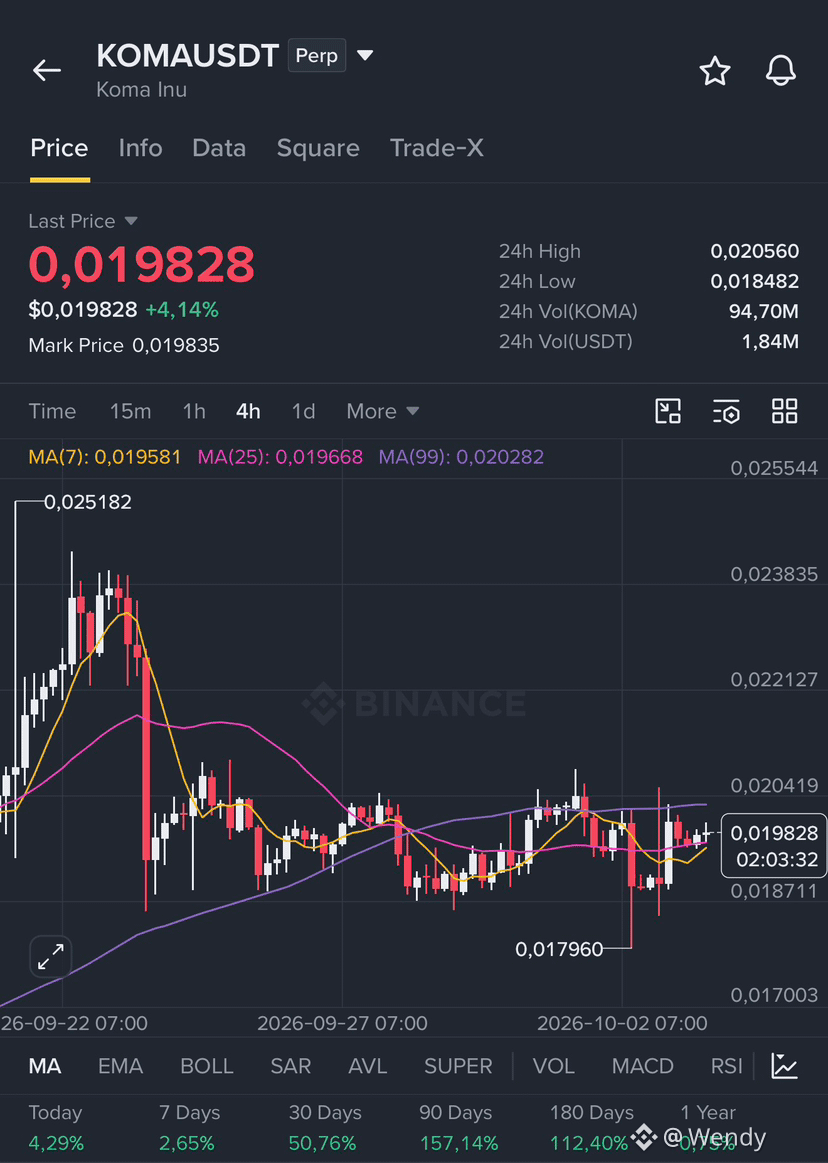
$KOMA The lows were swept. Now the question is whether buyers can reclaim the level that was just lost.
🟡 LONG SETUP $KOMA
If price holds above 0.019500 and confirms a 4H close clearing 0.020300, this is the play.
Entry: 0.019300-0.019800
Trigger: 4H close above 0.020300
SL: 0.018400
TP1: 0.020500 | TP2: 0.022100 | TP3: 0.024500
That is the trigger, playing the reclaim after a flush offers tightly managed risk.
Set your alerts for $KOMA on Binance👇
{future}(KOMAUSDT)
$KOMA The lows were swept. Now the question is whether buyers can reclaim the level that was just lost.
🟡 LONG SETUP $KOMA
If price holds above 0.019500 and confirms a 4H close clearing 0.020300, this is the play.
Entry: 0.019300-0.019800
Trigger: 4H close above 0.020300
SL: 0.018400
TP1: 0.020500 | TP2: 0.022100 | TP3: 0.024500
That is the trigger, playing the reclaim after a flush offers tightly managed risk.
Set your alerts for $KOMA on Binance👇
🟡 LONG SETUP $KOMA
If price holds above 0.019500 and confirms a 4H close clearing 0.020300, this is the play.
Entry: 0.019300-0.019800
Trigger: 4H close above 0.020300
SL: 0.018400
TP1: 0.020500 | TP2: 0.022100 | TP3: 0.024500
That is the trigger, playing the reclaim after a flush offers tightly managed risk.
Set your alerts for $KOMA on Binance👇
234
·
--
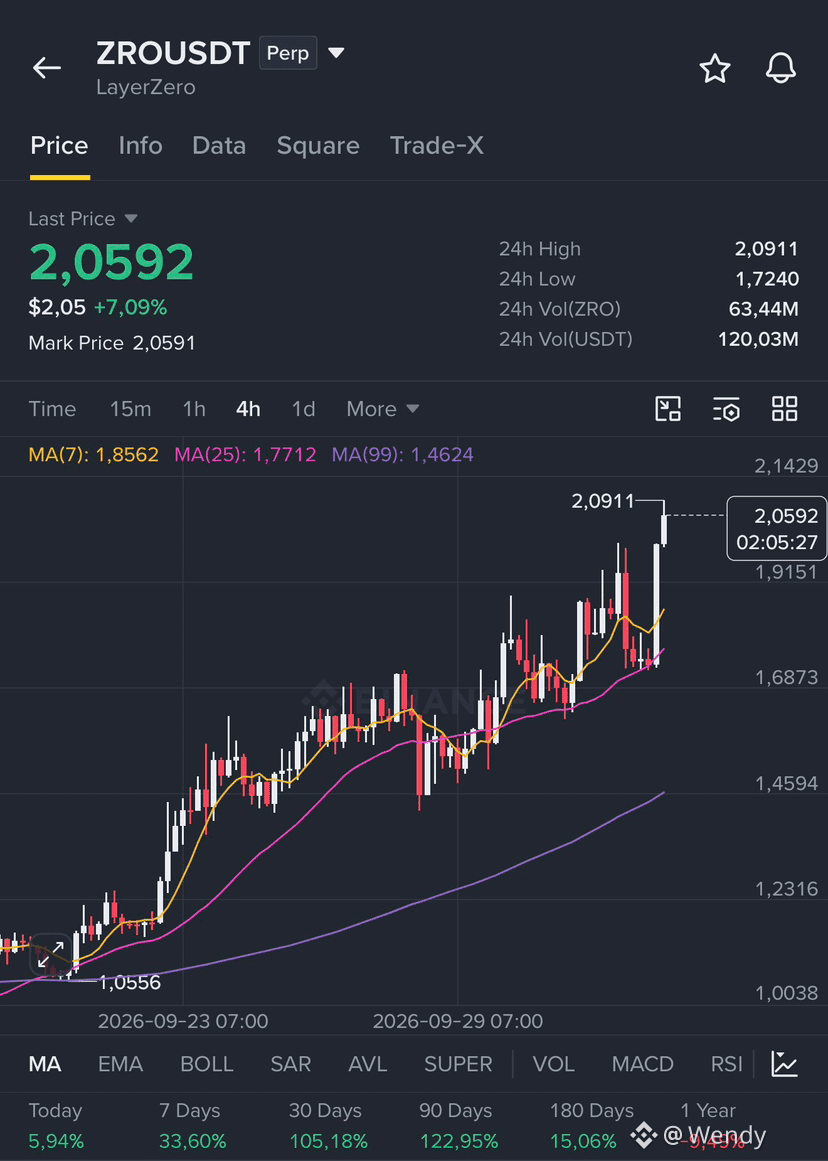
$ZRO HTF: Sustained multi-week expansion above dynamic baselines.
LTF: Explosive volume breakout clearing multi-day resistance.
Both agree on $ZRO
LONG $ZRO
Entry: 1.9800 – 2.0600 | SL: 1.9150
TP1: 2.0806 (+3%) | TP3: 2.2624 (+12%) | TP5: 2.5250 (+25%)
Pull up $ZRO on Binance and confirm👇
{future}(ZROUSDT)
$ZRO HTF: Sustained multi-week expansion above dynamic baselines.
LTF: Explosive volume breakout clearing multi-day resistance.
Both agree on $ZRO
LONG $ZRO
Entry: 1.9800 – 2.0600 | SL: 1.9150
TP1: 2.0806 (+3%) | TP3: 2.2624 (+12%) | TP5: 2.5250 (+25%)
Pull up $ZRO on Binance and confirm👇
LTF: Explosive volume breakout clearing multi-day resistance.
Both agree on $ZRO
LONG $ZRO
Entry: 1.9800 – 2.0600 | SL: 1.9150
TP1: 2.0806 (+3%) | TP3: 2.2624 (+12%) | TP5: 2.5250 (+25%)
Pull up $ZRO on Binance and confirm👇
1
576
·
--
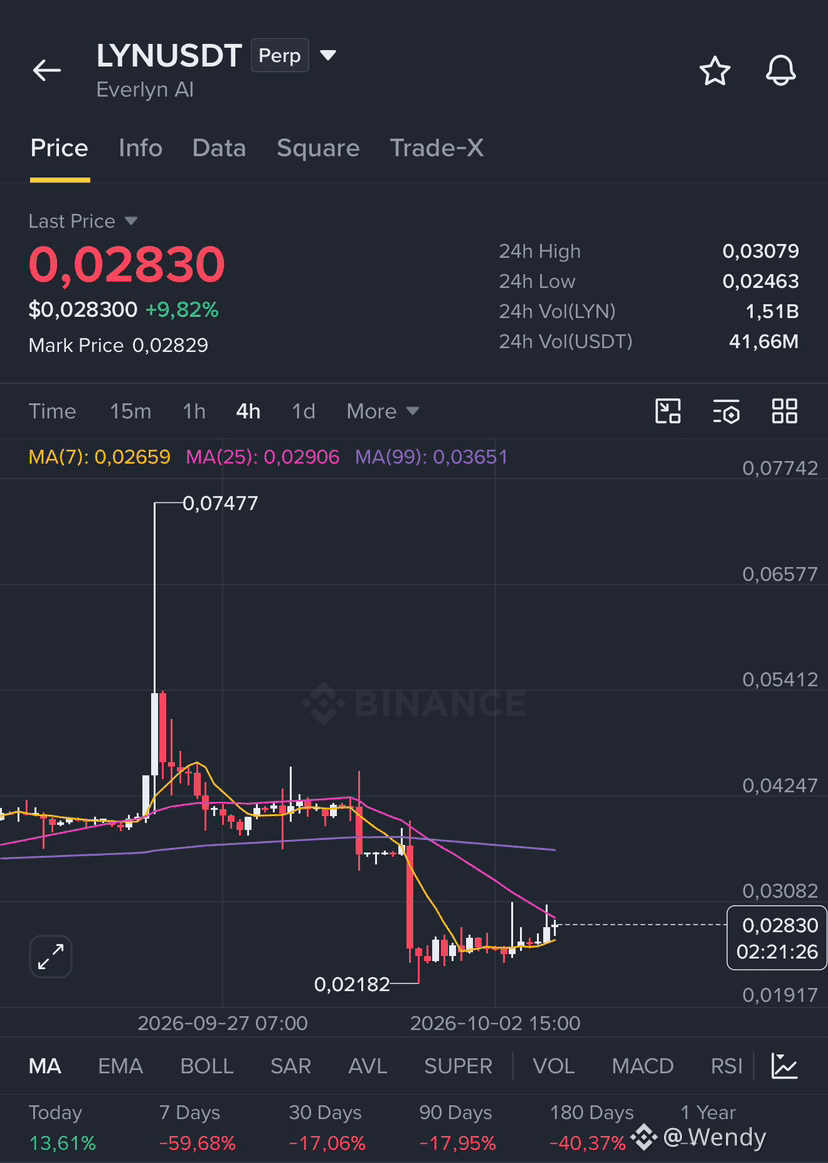
$LYN Most people's levels are off by 3%. Mine is within 0.2%.
Is the bottom confirmed on $LYN ? Double wick absorption says yes.
LONG $LYN | 4H setup
Entry: 0.02720 – 0.02840
SL: 0.02642
TP1: 0.02863 (+3%) | TP2: 0.02975 (+7%) | TP3: 0.03114 (+12%)
TP4: 0.03280 (+18%) | TP5: 0.03475 (+25%)
Exhaustion selling absorbed into base accumulation. Reclaim above dynamic support confirms the pivot.
Binance has the tools. The timing is yours👇
{future}(LYNUSDT)
$LYN Most people's levels are off by 3%. Mine is within 0.2%.
Is the bottom confirmed on $LYN ? Double wick absorption says yes.
LONG $LYN | 4H setup
Entry: 0.02720 – 0.02840
SL: 0.02642
TP1: 0.02863 (+3%) | TP2: 0.02975 (+7%) | TP3: 0.03114 (+12%)
TP4: 0.03280 (+18%) | TP5: 0.03475 (+25%)
Exhaustion selling absorbed into base accumulation. Reclaim above dynamic support confirms the pivot.
Binance has the tools. The timing is yours👇
Is the bottom confirmed on $LYN ? Double wick absorption says yes.
LONG $LYN | 4H setup
Entry: 0.02720 – 0.02840
SL: 0.02642
TP1: 0.02863 (+3%) | TP2: 0.02975 (+7%) | TP3: 0.03114 (+12%)
TP4: 0.03280 (+18%) | TP5: 0.03475 (+25%)
Exhaustion selling absorbed into base accumulation. Reclaim above dynamic support confirms the pivot.
Binance has the tools. The timing is yours👇
2
298
·
--
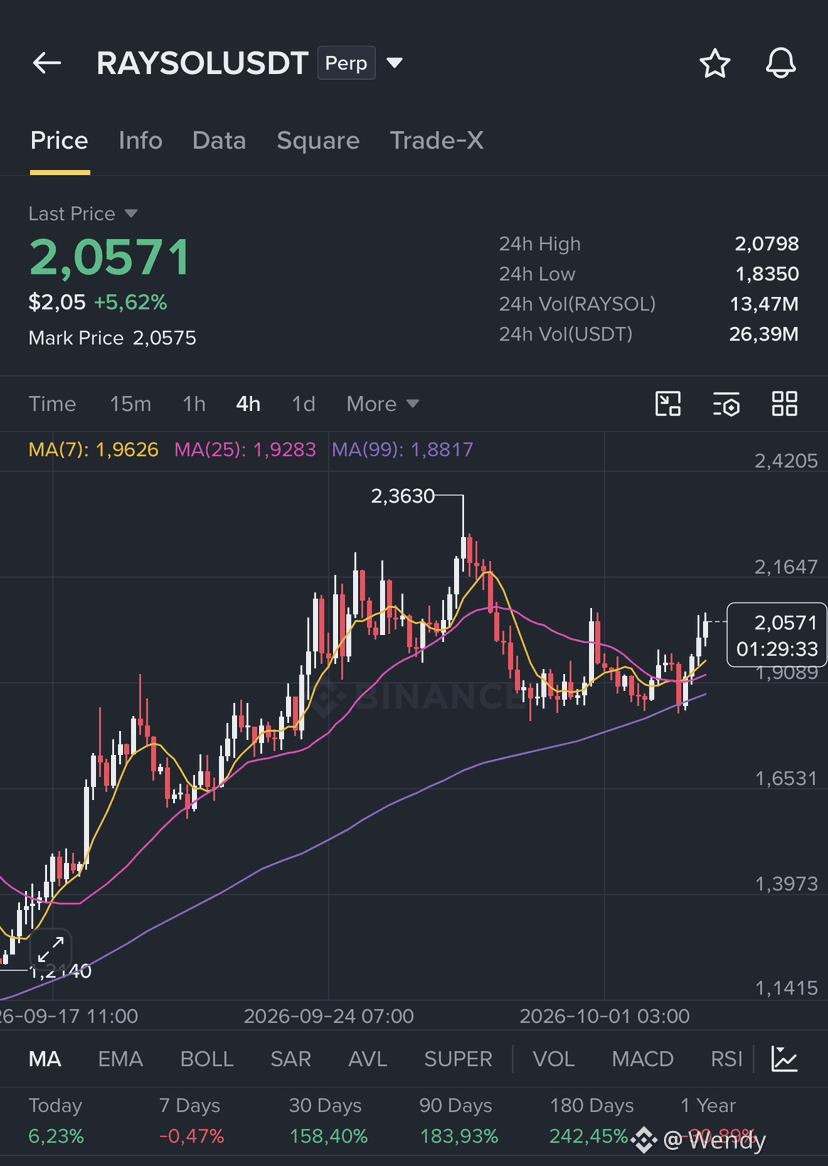
I missed the first entry. The market just gave it back.
If price offers a minor pullback into the 2.0100 support zone and respects the 7 MA:
LONG $RAYSOL | 4H setup
Entry: 1.9950 – 2.0250
SL: 1.9150
TP1: 2.1550 | TP2: 2.2500 | TP3: 2.3900
That's the trigger. The 99 MA base held firm and the bull structure is reclaiming full control.
Add $RAYSOL to your Binance watchlist.
{future}(RAYSOLUSDT)
I missed the first entry. The market just gave it back.
If price offers a minor pullback into the 2.0100 support zone and respects the 7 MA:
LONG $RAYSOL | 4H setup
Entry: 1.9950 – 2.0250
SL: 1.9150
TP1: 2.1550 | TP2: 2.2500 | TP3: 2.3900
That's the trigger. The 99 MA base held firm and the bull structure is reclaiming full control.
Add $RAYSOL to your Binance watchlist.
If price offers a minor pullback into the 2.0100 support zone and respects the 7 MA:
LONG $RAYSOL | 4H setup
Entry: 1.9950 – 2.0250
SL: 1.9150
TP1: 2.1550 | TP2: 2.2500 | TP3: 2.3900
That's the trigger. The 99 MA base held firm and the bull structure is reclaiming full control.
Add $RAYSOL to your Binance watchlist.
1
1
464
·
--
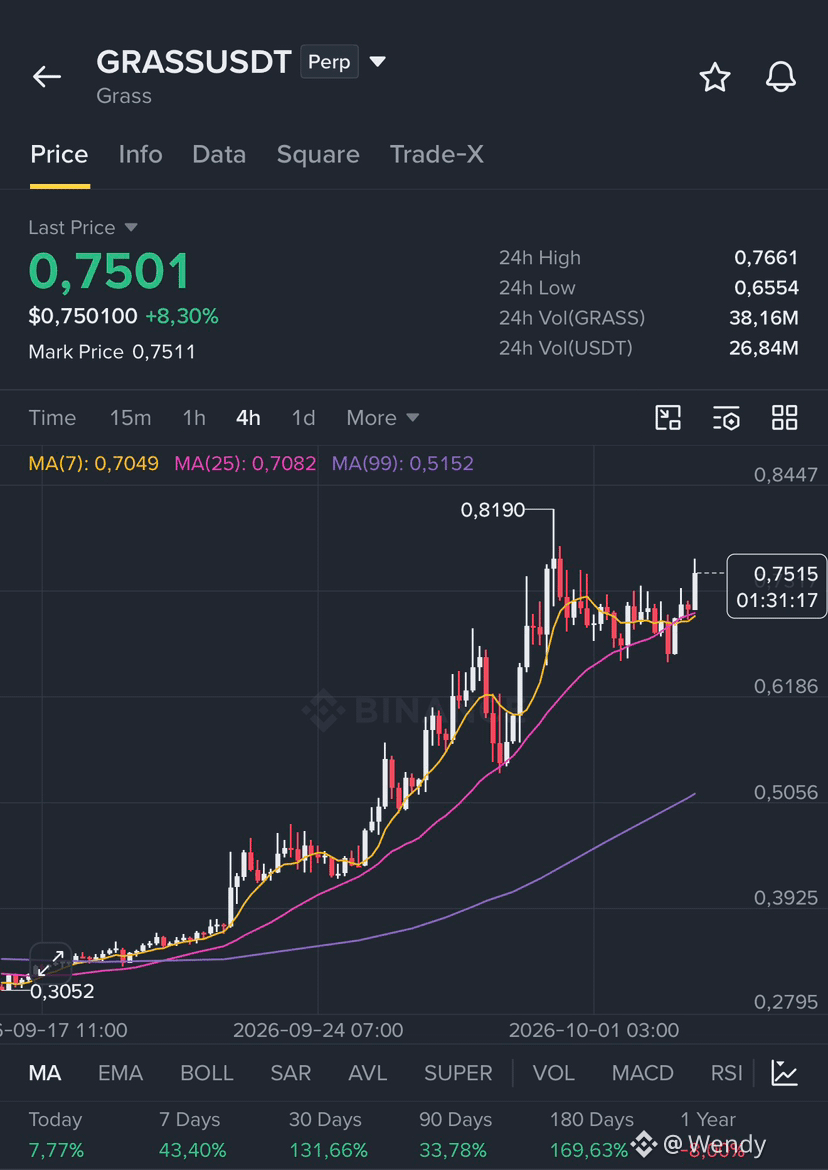
$GRASS vs where it was six weeks ago: completely different structure.
Can buyers push past this local consolidation ceiling? The volume expansion says yes.
LONG $GRASS | 4H setup
Entry: 0.7350 – 0.7520
SL: 0.6900
TP1: 0.7660 | TP2: 0.8190 | TP3: 0.8800
Healthy flag consolidation above dynamic moving averages resolved with a decisive continuation breakout candle.
Trade $GRASS on Binance👇
{future}(GRASSUSDT)
$GRASS vs where it was six weeks ago: completely different structure.
Can buyers push past this local consolidation ceiling? The volume expansion says yes.
LONG $GRASS | 4H setup
Entry: 0.7350 – 0.7520
SL: 0.6900
TP1: 0.7660 | TP2: 0.8190 | TP3: 0.8800
Healthy flag consolidation above dynamic moving averages resolved with a decisive continuation breakout candle.
Trade $GRASS on Binance👇
Can buyers push past this local consolidation ceiling? The volume expansion says yes.
LONG $GRASS | 4H setup
Entry: 0.7350 – 0.7520
SL: 0.6900
TP1: 0.7660 | TP2: 0.8190 | TP3: 0.8800
Healthy flag consolidation above dynamic moving averages resolved with a decisive continuation breakout candle.
Trade $GRASS on Binance👇
271
·
--
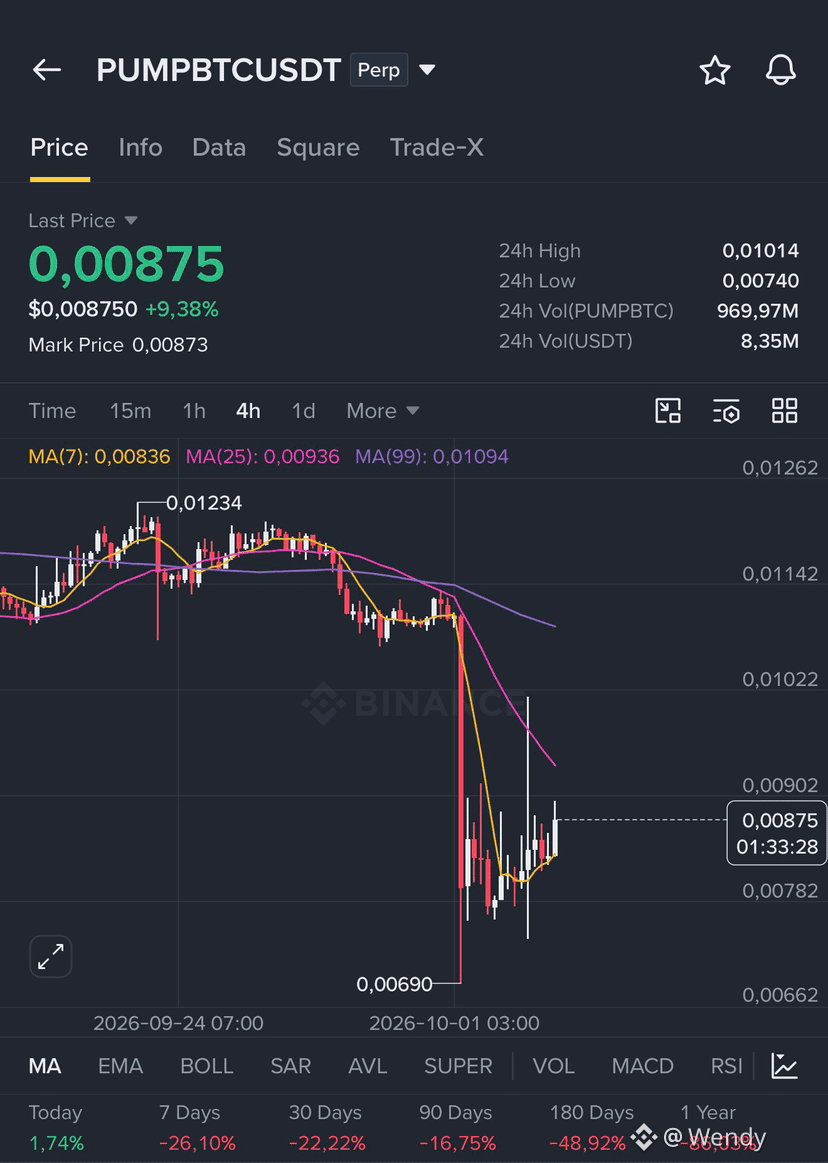
$PUMPBTC The market wants to convince you this level already broke. It didn't.
Extreme dump exhausted at the 0.00690 wick, and buyers are reclaiming key short-term levels.
LONG $PUMPBTC
Entry: 0.00845 - 0.00880
SL: 0.00770
TP1: 0.00940 │ TP2: 0.01015 │ TP3: 0.01095
Clean 4H reclaim above MA7 baseline confirms reversal momentum targeting overhead moving average resistance.
Open $PUMPBTC on Binance now👇
{future}(PUMPBTCUSDT)
$PUMPBTC The market wants to convince you this level already broke. It didn't.
Extreme dump exhausted at the 0.00690 wick, and buyers are reclaiming key short-term levels.
LONG $PUMPBTC
Entry: 0.00845 - 0.00880
SL: 0.00770
TP1: 0.00940 │ TP2: 0.01015 │ TP3: 0.01095
Clean 4H reclaim above MA7 baseline confirms reversal momentum targeting overhead moving average resistance.
Open $PUMPBTC on Binance now👇
Extreme dump exhausted at the 0.00690 wick, and buyers are reclaiming key short-term levels.
LONG $PUMPBTC
Entry: 0.00845 - 0.00880
SL: 0.00770
TP1: 0.00940 │ TP2: 0.01015 │ TP3: 0.01095
Clean 4H reclaim above MA7 baseline confirms reversal momentum targeting overhead moving average resistance.
Open $PUMPBTC on Binance now👇
140
·
--
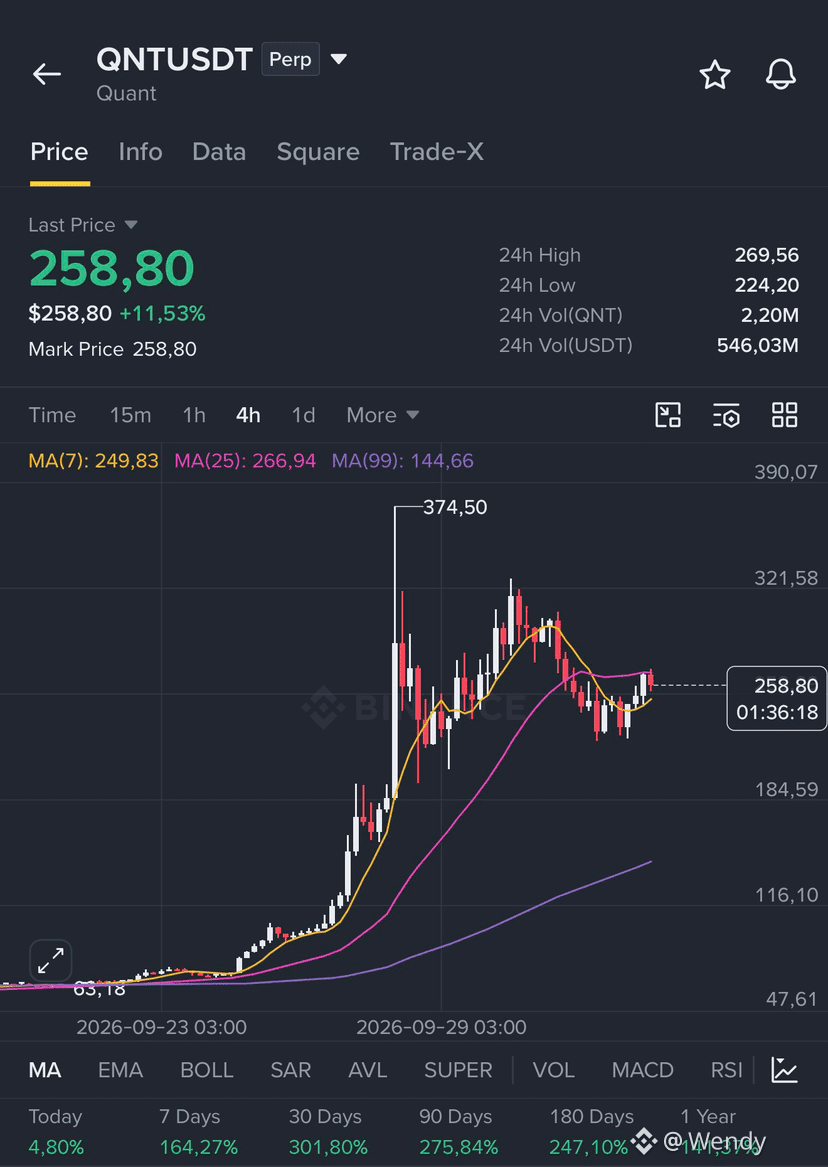
$QNT TP1 is reached. From here, protecting the trade matters more than predicting the next candle.
WATCH $QNT
Watch Zone: 250.00 - 258.80
SL if triggered: 242.00
TP1: 270.00 | TP2: 285.00 | TP3: 310.00
After tapping our 260 downside target, price is rebounding into dynamic resistance; waiting for confirmation.
Protecting capital first? Track $QNT on Binance👇
$QNT TP1 is reached. From here, protecting the trade matters more than predicting the next candle.
WATCH $QNT
Watch Zone: 250.00 - 258.80
SL if triggered: 242.00
TP1: 270.00 | TP2: 285.00 | TP3: 310.00
After tapping our 260 downside target, price is rebounding into dynamic resistance; waiting for confirmation.
Protecting capital first? Track $QNT on Binance👇
WATCH $QNT
Watch Zone: 250.00 - 258.80
SL if triggered: 242.00
TP1: 270.00 | TP2: 285.00 | TP3: 310.00
After tapping our 260 downside target, price is rebounding into dynamic resistance; waiting for confirmation.
Protecting capital first? Track $QNT on Binance👇
2
174
·
--
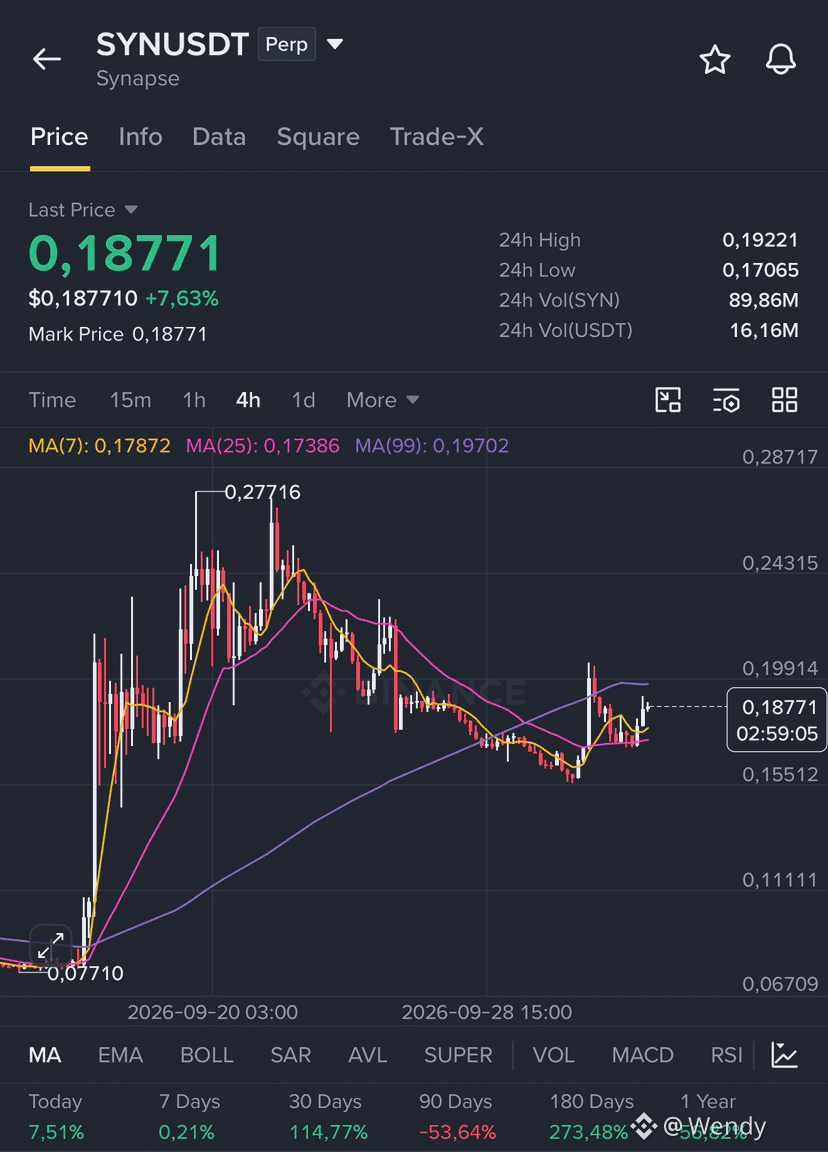
$SYN The breakout already happened. The interesting part starts if price comes back to test it.
WATCH $SYN
Watch Zone: 0.17900-0.18800
SL if triggered: 0.16950
TP1: 0.19700 | TP2: 0.21500 | TP3: 0.24000
Compressing above flipped moving averages keeps invalidation strict before testing major resistance.
Set your alerts for $SYN on Binance👇
{future}(SYNUSDT)
$SYN The breakout already happened. The interesting part starts if price comes back to test it.
WATCH $SYN
Watch Zone: 0.17900-0.18800
SL if triggered: 0.16950
TP1: 0.19700 | TP2: 0.21500 | TP3: 0.24000
Compressing above flipped moving averages keeps invalidation strict before testing major resistance.
Set your alerts for $SYN on Binance👇
WATCH $SYN
Watch Zone: 0.17900-0.18800
SL if triggered: 0.16950
TP1: 0.19700 | TP2: 0.21500 | TP3: 0.24000
Compressing above flipped moving averages keeps invalidation strict before testing major resistance.
Set your alerts for $SYN on Binance👇
163
·
--
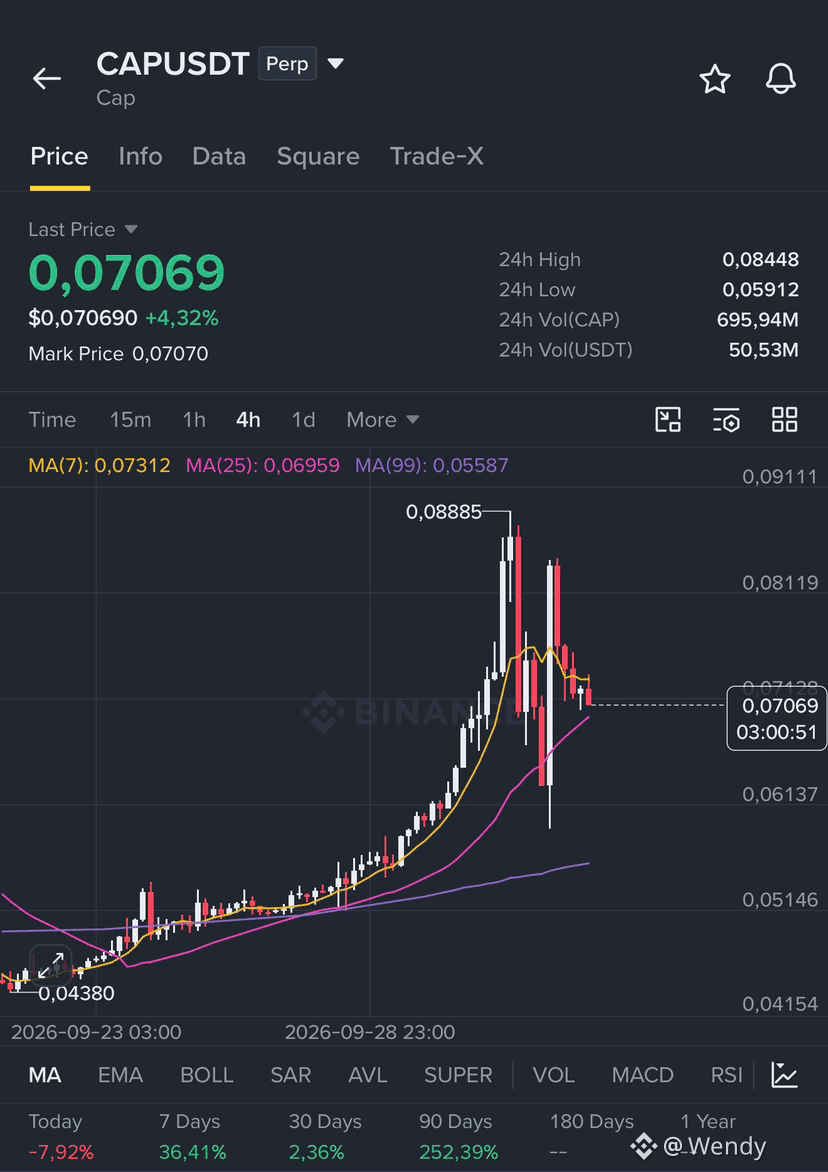
$CAP The range is getting tighter. The next expansion matters, but the direction is still unproven.
WATCH $CAP
If price confirms a clean 4H close above 0.07350, this volatility expansion is the play.
Entry: 0.07350-0.07450 (Watch Zone on 4H breakout)
SL: 0.06880
TP1: 0.08120 | TP2: 0.08880 | TP3: 0.09800
Trading inside a tight moving average squeeze is gambling; waiting for the expansion breakout is trading.
Long, short, or sitting out? React below.
{future}(CAPUSDT)
$CAP The range is getting tighter. The next expansion matters, but the direction is still unproven.
WATCH $CAP
If price confirms a clean 4H close above 0.07350, this volatility expansion is the play.
Entry: 0.07350-0.07450 (Watch Zone on 4H breakout)
SL: 0.06880
TP1: 0.08120 | TP2: 0.08880 | TP3: 0.09800
Trading inside a tight moving average squeeze is gambling; waiting for the expansion breakout is trading.
Long, short, or sitting out? React below.
WATCH $CAP
If price confirms a clean 4H close above 0.07350, this volatility expansion is the play.
Entry: 0.07350-0.07450 (Watch Zone on 4H breakout)
SL: 0.06880
TP1: 0.08120 | TP2: 0.08880 | TP3: 0.09800
Trading inside a tight moving average squeeze is gambling; waiting for the expansion breakout is trading.
Long, short, or sitting out? React below.
162
·
--
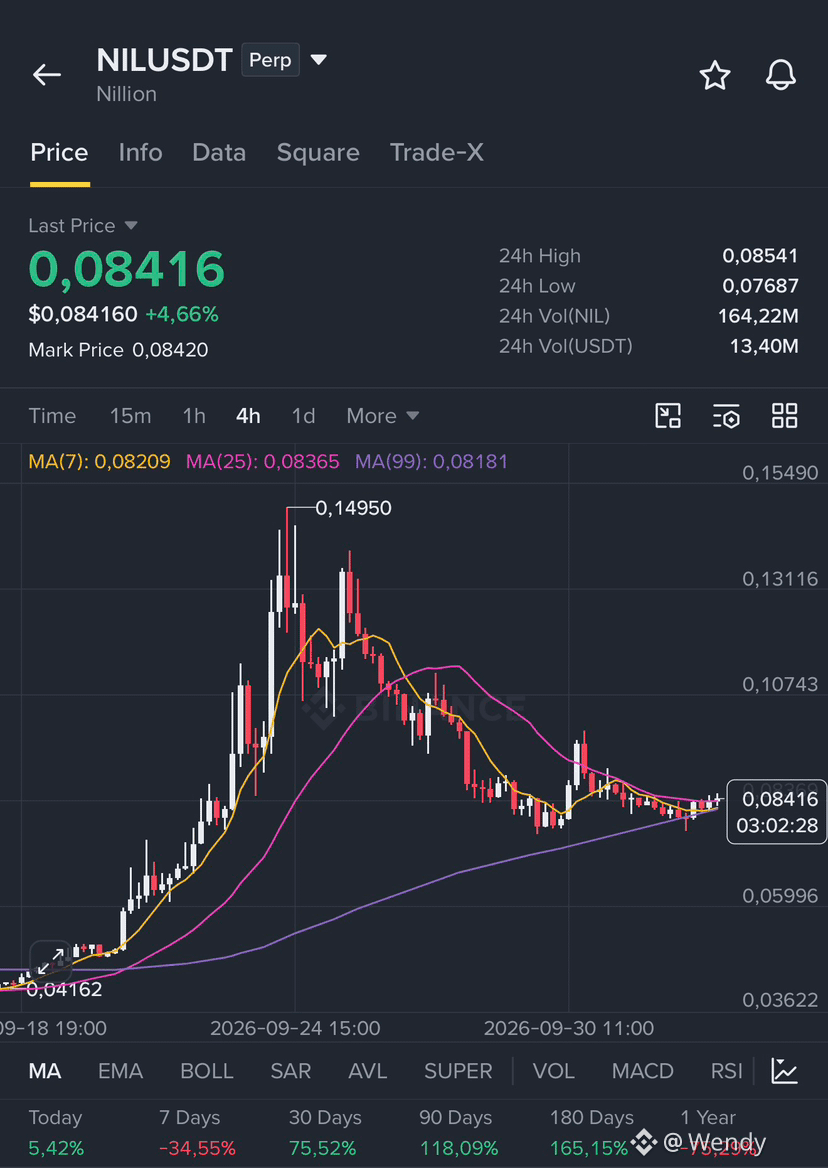
$NIL Not every chart wants to break out. Some charts want to be traded exactly where they are.
LONG $NIL
If price sustains above the 4H moving average cluster, this is the play:
Entry: 0.08250 - 0.08420
SL: 0.07880
TP1: 0.09150 | TP2: 0.09950 | TP3: 0.10750
That is the trigger.
Compression below major resistance creates tight risk definitions that patient traders live for.
Follow for the TP1 update.
{future}(NILUSDT)
$NIL Not every chart wants to break out. Some charts want to be traded exactly where they are.
LONG $NIL
If price sustains above the 4H moving average cluster, this is the play:
Entry: 0.08250 - 0.08420
SL: 0.07880
TP1: 0.09150 | TP2: 0.09950 | TP3: 0.10750
That is the trigger.
Compression below major resistance creates tight risk definitions that patient traders live for.
Follow for the TP1 update.
LONG $NIL
If price sustains above the 4H moving average cluster, this is the play:
Entry: 0.08250 - 0.08420
SL: 0.07880
TP1: 0.09150 | TP2: 0.09950 | TP3: 0.10750
That is the trigger.
Compression below major resistance creates tight risk definitions that patient traders live for.
Follow for the TP1 update.
244
·
--
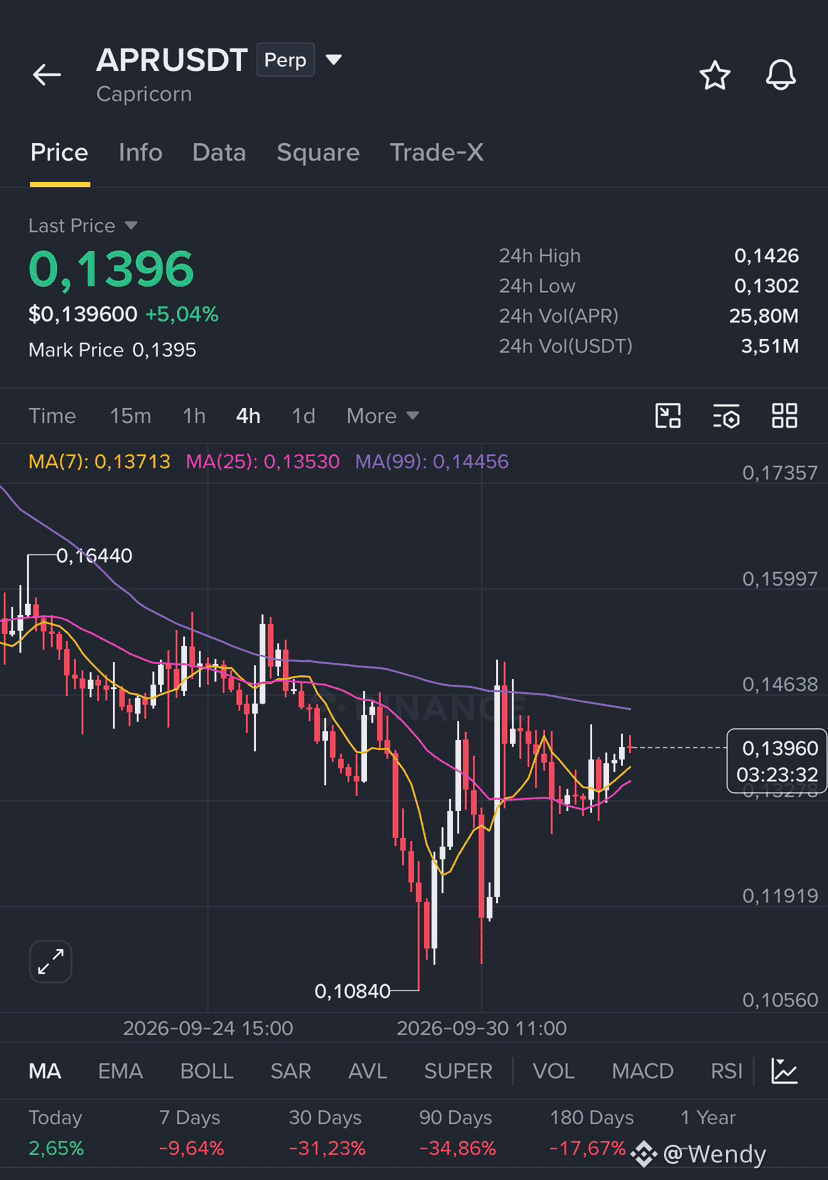
$APR Everyone is watching the breakout. The real signal is the close above this level.
🟢 LONG $APR
Entry: 0.1360-0.1400
Trigger: 4H close holding above 0.1370
SL: 0.1310
TP1: 0.1445 | TP2: 0.1530 | TP3: 0.1640
Price reclaimed short-term moving averages after printing a double bottom base, shifting momentum upward toward the primary resistance level.
Reclaiming structure from the lows offers clear invalidation and asymmetric upside.
Trade $APR on Binance👇
{future}(APRUSDT)
$APR Everyone is watching the breakout. The real signal is the close above this level.
🟢 LONG $APR
Entry: 0.1360-0.1400
Trigger: 4H close holding above 0.1370
SL: 0.1310
TP1: 0.1445 | TP2: 0.1530 | TP3: 0.1640
Price reclaimed short-term moving averages after printing a double bottom base, shifting momentum upward toward the primary resistance level.
Reclaiming structure from the lows offers clear invalidation and asymmetric upside.
Trade $APR on Binance👇
🟢 LONG $APR
Entry: 0.1360-0.1400
Trigger: 4H close holding above 0.1370
SL: 0.1310
TP1: 0.1445 | TP2: 0.1530 | TP3: 0.1640
Price reclaimed short-term moving averages after printing a double bottom base, shifting momentum upward toward the primary resistance level.
Reclaiming structure from the lows offers clear invalidation and asymmetric upside.
Trade $APR on Binance👇
1
1
165
·
--
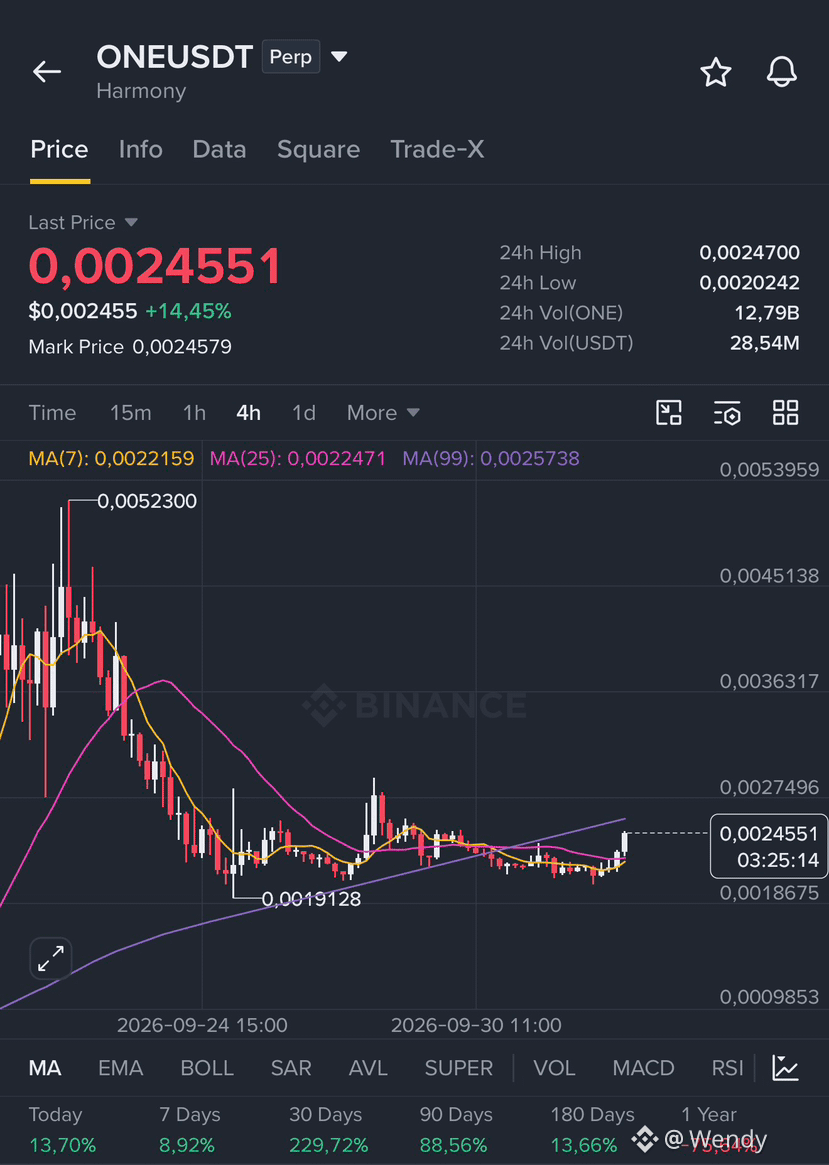
$ONE What most people are missing on $ONE: prolonged bottom compression just transitioned into decisive volume absorption.
Sellers failed to produce lower lows, handing full market initiative back to aggressive bulls.
LONG $ONE | 4H
Entry: 0.002380 – 0.002460 | SL: 0.002290
TP1: 0.002493 (+3%) | TP2: 0.002589 (+7%) | TP3: 0.002710 (+12%) | TP4: 0.002856 (+18%) | TP5: 0.003025 (+25%)
Dynamic moving averages flipped upward to support the breakout sequence.
Check $ONE depth on Binance before entry👇
{future}(ONEUSDT)
$ONE What most people are missing on $ONE : prolonged bottom compression just transitioned into decisive volume absorption.
Sellers failed to produce lower lows, handing full market initiative back to aggressive bulls.
LONG $ONE | 4H
Entry: 0.002380 – 0.002460 | SL: 0.002290
TP1: 0.002493 (+3%) | TP2: 0.002589 (+7%) | TP3: 0.002710 (+12%) | TP4: 0.002856 (+18%) | TP5: 0.003025 (+25%)
Dynamic moving averages flipped upward to support the breakout sequence.
Check $ONE depth on Binance before entry👇
Sellers failed to produce lower lows, handing full market initiative back to aggressive bulls.
LONG $ONE | 4H
Entry: 0.002380 – 0.002460 | SL: 0.002290
TP1: 0.002493 (+3%) | TP2: 0.002589 (+7%) | TP3: 0.002710 (+12%) | TP4: 0.002856 (+18%) | TP5: 0.003025 (+25%)
Dynamic moving averages flipped upward to support the breakout sequence.
Check $ONE depth on Binance before entry👇
309
·
--
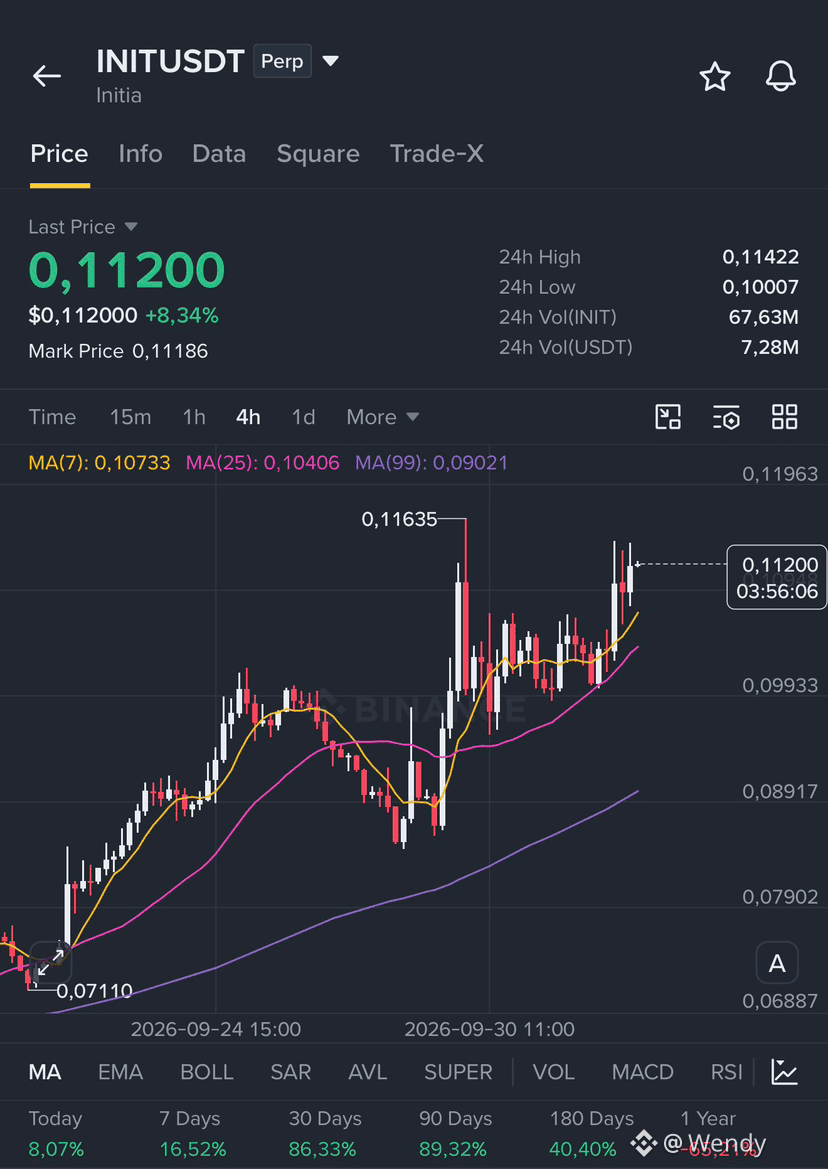
$INIT Missed the first entry. The market just gave it back.
LONG $INIT | 4H setup
Entry: 0.10900 – 0.11220
SL: 0.10580
TP1: 0.11392 (+3%) | TP2: 0.11834 (+7%) | TP3: 0.12387 (+12%)
TP4: 0.13051 (+18%) | TP5: 0.13825 (+25%)
Here's why: Bull flag consolidation resolved upward with strong dynamic support absorption.
High probability continuation trade with risk pinned beneath local demand.
Pull up the $INIT chart on Binance and confirm.
{future}(INITUSDT)
$INIT Missed the first entry. The market just gave it back.
LONG $INIT | 4H setup
Entry: 0.10900 – 0.11220
SL: 0.10580
TP1: 0.11392 (+3%) | TP2: 0.11834 (+7%) | TP3: 0.12387 (+12%)
TP4: 0.13051 (+18%) | TP5: 0.13825 (+25%)
Here's why: Bull flag consolidation resolved upward with strong dynamic support absorption.
High probability continuation trade with risk pinned beneath local demand.
Pull up the $INIT chart on Binance and confirm.
LONG $INIT | 4H setup
Entry: 0.10900 – 0.11220
SL: 0.10580
TP1: 0.11392 (+3%) | TP2: 0.11834 (+7%) | TP3: 0.12387 (+12%)
TP4: 0.13051 (+18%) | TP5: 0.13825 (+25%)
Here's why: Bull flag consolidation resolved upward with strong dynamic support absorption.
High probability continuation trade with risk pinned beneath local demand.
Pull up the $INIT chart on Binance and confirm.
2
200
·
--
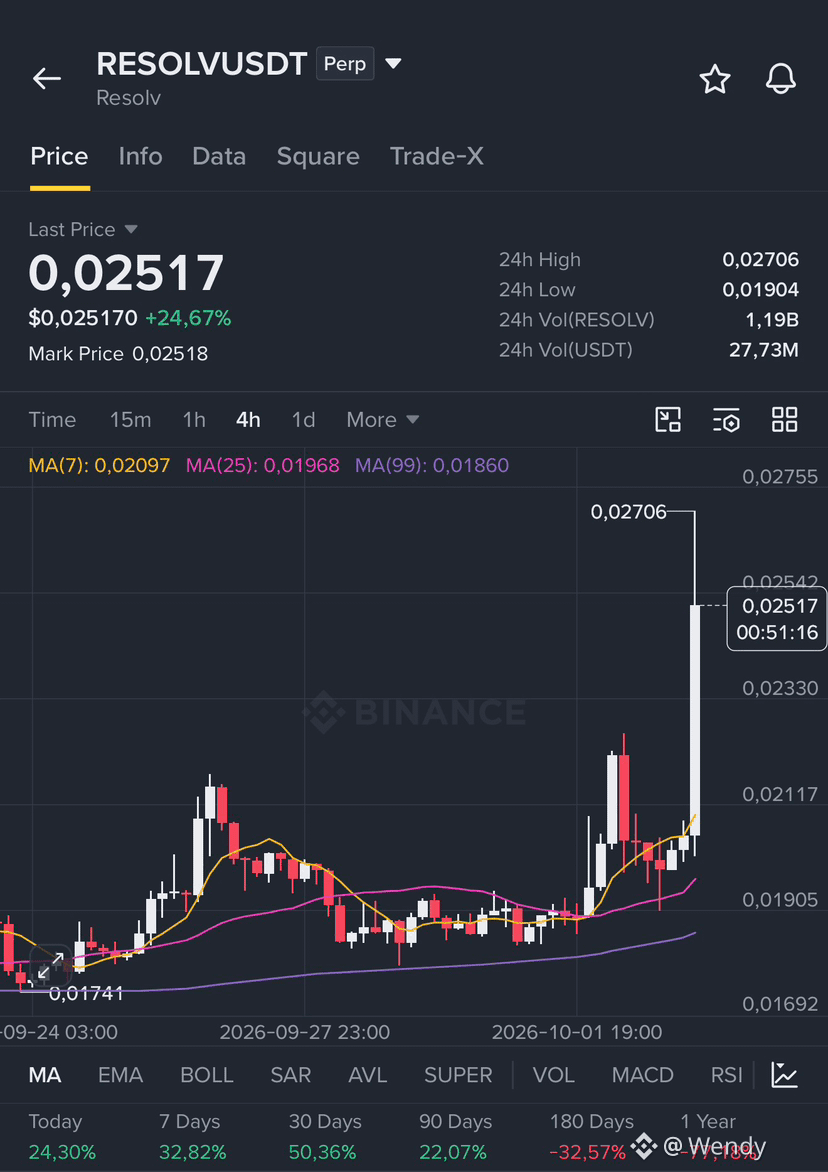
$RESOLV What does the volume say when price does this? Let me show you.
Can buyers sustain a 20% vertical extension without a retrace? Math says no.
SHORT $RESOLV | 4H setup
Entry: 0.02560 – 0.02610
SL: 0.02745
TP1: 0.02345 | TP2: 0.02185 | TP3: 0.01945
A massive upper wick at 0.0270 indicates aggressive profit-taking. Fading the exhaustion move.
Pull up the $RESOLV chart on Binance and confirm👇
{future}(RESOLVUSDT)
$RESOLV What does the volume say when price does this? Let me show you.
Can buyers sustain a 20% vertical extension without a retrace? Math says no.
SHORT $RESOLV | 4H setup
Entry: 0.02560 – 0.02610
SL: 0.02745
TP1: 0.02345 | TP2: 0.02185 | TP3: 0.01945
A massive upper wick at 0.0270 indicates aggressive profit-taking. Fading the exhaustion move.
Pull up the $RESOLV chart on Binance and confirm👇
Can buyers sustain a 20% vertical extension without a retrace? Math says no.
SHORT $RESOLV | 4H setup
Entry: 0.02560 – 0.02610
SL: 0.02745
TP1: 0.02345 | TP2: 0.02185 | TP3: 0.01945
A massive upper wick at 0.0270 indicates aggressive profit-taking. Fading the exhaustion move.
Pull up the $RESOLV chart on Binance and confirm👇
1
433
Connectez-vous pour découvrir plus de contenu
Rejoignez la communauté mondiale des adeptes de cryptomonnaies sur Binance Square
⚡️ Suviez les dernières informations importantes sur les cryptomonnaies.
💬 Jugé digne de confiance par la plus grande plateforme d’échange de cryptomonnaies au monde.
👍 Découvrez les connaissances que partagent les créateurs vérifiés.
Adresse e-mail/Nº de téléphone
Sujets d’actualité
ZcashETFPostsFirstWeeklyOutflow$93.6M
14,884 vues
54 mentions
#ZcashETFPostsFirstWeeklyOutflow$93.6M 📊 Grayscale’s Spot Zcash (ZEC) ETF Records $93.6M in Weekly Outflows
Institutional capital flows are showing a new dynamic. Grayscale’s spot Zcash ETF has just posted its first major weekly net outflow, marking a notable shift from its strong initial launch momentum.
🔹The Numbers Grayscale’s spot ZEC ETF (ticker: ZCSH) recorded approximately $93.6 million in net outflows over the past week, with notable withdrawals occurring at the end of September and early October.
🔹 The Context This follows a robust initial period. After converting from the Grayscale Zcash Trust and listing on NYSE Arca in late August, the fund previously saw cumulative net inflows reach $271 million by mid-September.
💡 Market Impact Analysis
•Short-Term Dynamics Large ETF outflows can introduce temporary selling pressure on the underlying asset as the fund adjusts its holdings to meet redemption requests.
• Sentiment & Rebalancing This pullback may reflect routine profit-taking or portfolio rebalancing by early institutional investors, rather than a fundamental change in Zcash’s long-term utility or privacy-focused value proposition.
• Ecosystem Watch Market participants will be monitoring whether this is an isolated event for ZCSH or indicative of a broader cooling in institutional appetite for privacy-centric digital assets.
💬 What’s your take? Do you view this weekly outflow as a healthy market correction after a strong launch, or a signal of changing institutional sentiment toward privacy coins? Share your thoughts in the comments below!
#Zcash #ZEC #CryptoETF #InstitutionalCrypto #MarketUpdate
This is for educational purposes only. Not Financial Advice (NFA). Always Do Your Own Research (DYOR).
$GLMR $QI $ONE
piknkkk
·0 mentions J’aime
·17 vues
GreekPoliceBustCryptoScamRingArrest17
20,910 vues
262 mentions
BitcoinRejectedAt$87K
87,059 vues
117 mentions