

vip09
34 Publications

vip09
Signaler
Bloquer l’utilisateur
Crypto Trader and Crypto Influencer. vippremium09. Trader with best crypto trading community. Trading from last 8 Years. Crypto is Love Binance is Love.
1 Suivis
3 Abonnés
41 J’aime
Publications
Tous
Citations
·
--
Article
Binance Futures Trading Tips: 10 Tips for BeginnersBinance Futures Trading Tips: A Complete Guide for Beginners
Binance Futures trading can offer flexibility and advanced trading tools, but it also comes with significant risk.
Unlike spot trading, futures allow traders to use leverage, which can magnify both profits and losses. For beginners, understanding risk management, leverage, stop-loss orders, and position sizing is often more important than finding the perfect trade setup.
In this guide, we’ll cover practical Binance Futures trading tips that can help you develop a more disciplined approach to futures trading.
What Is Binance Futures?
Binance Futures is a derivatives trading platform that allows users to trade cryptocurrency contracts without directly owning the underlying asset.
Basically, Traders can take long & short positions and may use leverage to control larger position with less margin.
For example, a trader expecting Bitcoin to rise may open a long position, while someone expecting the price to fall may open a short position.
However, leverage increases the potential impact of price movements, which makes risk management particularly important.
10 Binance Futures Trading Tips for Beginners
1. Start With Proper Risk Management
One of the most important Binance Futures trading tips is to manage your risk before entering a trade.
Instead of deciding how much to risk after opening a position, determine your maximum acceptable loss beforehand.
A simple framework is:
Risk per trade = Account balance × Risk percentage
For example, if your trading account is $1,000 and you decide to risk 1% per trade:
$1,000 × 1% = $10 maximum planned loss
Your actual position size should then be calculated based on your stop-loss distance.
So, Remember that risking a small percentage per trade does not guarantee profits. It simply helps limit the damage from an individual losing trade.
2. Don't Use Excessive Leverage
Leverage is one of the most misunderstood aspects of Binance Futures.
Higher leverage does not automatically mean higher-quality trading opportunities. It mainly allows you to control a larger position relative to your margin, while losses can also accumulate faster.
For beginners, using lower leverage can make it easier to manage positions and avoid unnecessary liquidation risk.
The goal should be controlled risk—not maximum leverage.
3. Always Know Where Your Stop Loss Is
A stop-loss can help define the point at which your trading idea is considered invalid.
Before entering a position, ask:
- Where is my entry?
- Where is my stop loss?
- Where is my take profit?
- How much will I lose if the stop loss is hit?
- Does the potential reward justify the risk?
For example, if your planned risk is $50 and your potential profit is $100, the setup has a planned 1:2 risk-to-reward ratio.
A good risk-to-reward ratio does not guarantee that a trade will win, but it can be useful when combined with a strategy that has a measurable historical edge.
4. Understand Position Size
Many beginners focus on leverage but overlook position sizing.
Position size determines how much exposure your trade actually has.
A basic approach is:
Position Size = Amount You're Willing to Risk ÷ Stop-Loss Distance
Suppose you are willing to risk $20 and your stop-loss distance represents a 2% price movement:
$20 ÷ 2% = $1,000 position exposure
This is a simplified example. In real trading, fees, funding, slippage, contract specifications, and execution conditions should also be considered.
5. Don't Move Your Stop Loss Just to Avoid a Loss
One common trading mistake is moving a stop loss farther away because the market is approaching it.
If your original analysis says the trade is invalid below a certain level, moving the stop without a predefined reason can turn a controlled loss into a much larger one.
Instead, define your invalidation level before entering the trade.
If the setup fails, accept the predefined loss and wait for another opportunity.
6. Don't Overtrade
More trades do not necessarily mean more profits.
Crypto markets operate around the clock, which can make it tempting to constantly search for setups.
However, entering trades simply because you are bored, trying to recover a previous loss, or feeling that you "must" trade can lead to poor decisions.
A better approach is to establish specific conditions for entering a trade.
For example:
Trend + Market Structure + Entry Zone + Confirmation + Risk/Reward
If your conditions are not present, there may be no reason to trade.
7. Avoid Revenge Trading
After taking a losing trade, some traders immediately increase their position size to recover the loss.
This is commonly known as revenge trading.
For example:
Loss → frustration → larger trade → another loss → even larger trade
This can quickly create a damaging cycle.
Instead, treat each trade as an independent event. A losing trade does not mean you need to immediately recover the money.
Sometimes the best trade after a loss is no trade at all.
8. Understand Funding Fees
Perpetual futures contracts can involve funding payments between traders.
Funding rates can change depending on market conditions and positioning. If you hold positions for longer periods, funding costs can become relevant to your overall trading performance.
Therefore, don't evaluate a futures strategy only by entry and exit price.
Also consider:
Trading feesFunding feesSlippageSpreadExecution quality
These costs can have a meaningful impact on frequent trading strategies.
9. Keep a Trading Journal
A trading journal can help you identify patterns in your own behavior.
Record information such as:
Trading pairLong or shortEntry priceStop-lossTake-profitPosition sizeRisk percentageTrading setupResultReason for enteringReason for exitingEmotional stateScreenshot of the setup
After collecting enough trades, review your data.
You may discover that certain setups perform better than others or that many losses come from breaking your own rules.
10. Backtest Before Increasing Your Risk
Before committing significant capital to a trading strategy, consider testing it against historical data.
For example, you could test:
Win rateAverage risk-to-reward ratioMaximum losing streakMaximum drawdownProfit factorAverage tradePerformance across different market conditions
A strategy that looks impressive after five trades may look very different after 100 or 500 trades.
Historical backtesting also has limitations. Past performance does not guarantee future results, and real-world execution can differ from theoretical results.
Binance Futures Risk Management Example
Consider a hypothetical $5,000 trading account.
Suppose the trader chooses a maximum planned risk of 1% per trade.
Account balance: $5,000Risk per trade: 1%Maximum planned loss: $50
Now imagine the trader identifies an entry where the stop-loss distance requires a $50 risk for a particular position size.
The important point is that the trader determines the acceptable loss before deciding how large the position should be.
This is generally more controlled than choosing a large position first and then trying to find a stop-loss afterward.
Should Beginners Use High Leverage?
Beginners should be particularly careful with high leverage.
Leverage can increase exposure without requiring the trader to deposit the entire notional value of the position. However, it also reduces the amount of adverse price movement that can be tolerated relative to the available margin.
For example, a highly leveraged position can experience a substantial percentage loss from a relatively small market movement.
Therefore, leverage should be treated as a risk-management parameter, not a profit target.
Common Binance Futures Mistakes
Here are some mistakes that frequently affect inexperienced futures traders:
Trading Without a Stop Loss
Without a predefined exit, a small losing trade can potentially become much larger.
Using Too Much Leverage
High leverage can make relatively small market movements have a large effect on your margin.
Risking Too Much on One Trade
One trade should not have the power to seriously damage your entire account.
Increasing Position Size After Losses
Trying to recover losses immediately can lead to emotional decision-making.
Trading Every Market Movement
Not every price movement provides a high-quality trading opportunity.
Ignoring Fees and Funding
A strategy can look profitable before costs but perform differently after fees and funding are included.
Changing Your Strategy Constantly
Changing your rules after every losing trade makes it difficult to determine whether your strategy actually works.
A Simple Binance Futures Trading Checklist
Before opening a trade, ask yourself:
Market
What is the current market structure?Is the market trending or ranging?Are there important support or resistance levels?
Setup
Is my trading setup valid?Do I have confirmation?Where is my entry?
Risk
Where is my stop loss?How much am I risking?Is my position size appropriate?
Reward
Where is my take-profit?What is my planned risk-to-reward ratio?
Execution
Have I considered trading fees?Could funding costs matter?Am I entering because of my strategy or because of emotion?
If several answers are unclear, waiting may be better than forcing a trade.
How to Start Binance Futures Trading?
First of all, Download Binance Application from Play store or App Store.
Then, Create a Binance Account or use your existing Binance Account. Use Binance Referral Code EITH2IPA to get Discount in Trading fees.
Complete KYC and open Binance Futures Section. Now, enter [Binance Futures Referral Code](https://www.binance.com/en/square/post/372498049730021) to move forward.
Final Thoughts on Binance Futures Trading
Successful futures trading is not simply about predicting whether Bitcoin will go up or down.
A sustainable trading process involves risk management, position sizing, disciplined execution, strategy testing, and emotional control.
The most important Binance Futures trading tip is to focus on protecting your trading capital first. No strategy wins every trade, so your approach should account for losing trades and losing streaks.
Remember:
You don't need to trade every market movement. You need to trade when your setup meets your rules.
And sometimes, no trade is better than a bad trade.
Frequently Asked Questions
Is Binance Futures suitable for beginners?
Futures trading involves significant risk, particularly when leverage is used. Beginners should first understand how futures, margin, liquidation, fees, funding, and risk management work before trading with meaningful capital.
What is the best leverage for Binance Futures?
There is no universally best leverage. The appropriate level depends on the strategy, position size, stop-loss distance, and amount of risk being taken.
How much should I risk per Binance Futures trade?
There is no single amount that is appropriate for everyone. Many traders use a small percentage of their account as a predefined maximum risk, but your risk level should reflect your financial situation and ability to tolerate losses.
Is a stop loss necessary in Binance Futures?
A stop loss can help traders define their maximum planned loss and exit a position when their trading thesis is invalidated. However, stop orders do not guarantee execution at the exact requested price during rapidly changing market conditions.
Can Binance Futures make you rich?
There is no guaranteed way to make money through futures trading. Leverage can amplify both gains and losses, and traders can lose substantial amounts of capital.
#binancefutures #BinanceFutures
Binance Futures Trading Tips: 10 Tips for Beginners
Binance Futures Trading Tips: A Complete Guide for Beginners
Binance Futures trading can offer flexibility and advanced trading tools, but it also comes with significant risk.
Unlike spot trading, futures allow traders to use leverage, which can magnify both profits and losses. For beginners, understanding risk management, leverage, stop-loss orders, and position sizing is often more important than finding the perfect trade setup.
In this guide, we’ll cover practical Binance Futures trading tips that can help you develop a more disciplined approach to futures trading.
What Is Binance Futures?
Binance Futures is a derivatives trading platform that allows users to trade cryptocurrency contracts without directly owning the underlying asset.
Basically, Traders can take long & short positions and may use leverage to control larger position with less margin.
For example, a trader expecting Bitcoin to rise may open a long position, while someone expecting the price to fall may open a short position.
However, leverage increases the potential impact of price movements, which makes risk management particularly important.
10 Binance Futures Trading Tips for Beginners
1. Start With Proper Risk Management
One of the most important Binance Futures trading tips is to manage your risk before entering a trade.
Instead of deciding how much to risk after opening a position, determine your maximum acceptable loss beforehand.
A simple framework is:
Risk per trade = Account balance × Risk percentage
For example, if your trading account is $1,000 and you decide to risk 1% per trade:
$1,000 × 1% = $10 maximum planned loss
Your actual position size should then be calculated based on your stop-loss distance.
So, Remember that risking a small percentage per trade does not guarantee profits. It simply helps limit the damage from an individual losing trade.
2. Don't Use Excessive Leverage
Leverage is one of the most misunderstood aspects of Binance Futures.
Higher leverage does not automatically mean higher-quality trading opportunities. It mainly allows you to control a larger position relative to your margin, while losses can also accumulate faster.
For beginners, using lower leverage can make it easier to manage positions and avoid unnecessary liquidation risk.
The goal should be controlled risk—not maximum leverage.
3. Always Know Where Your Stop Loss Is
A stop-loss can help define the point at which your trading idea is considered invalid.
Before entering a position, ask:
- Where is my entry?
- Where is my stop loss?
- Where is my take profit?
- How much will I lose if the stop loss is hit?
- Does the potential reward justify the risk?
For example, if your planned risk is $50 and your potential profit is $100, the setup has a planned 1:2 risk-to-reward ratio.
A good risk-to-reward ratio does not guarantee that a trade will win, but it can be useful when combined with a strategy that has a measurable historical edge.
4. Understand Position Size
Many beginners focus on leverage but overlook position sizing.
Position size determines how much exposure your trade actually has.
A basic approach is:
Position Size = Amount You're Willing to Risk ÷ Stop-Loss Distance
Suppose you are willing to risk $20 and your stop-loss distance represents a 2% price movement:
$20 ÷ 2% = $1,000 position exposure
This is a simplified example. In real trading, fees, funding, slippage, contract specifications, and execution conditions should also be considered.
5. Don't Move Your Stop Loss Just to Avoid a Loss
One common trading mistake is moving a stop loss farther away because the market is approaching it.
If your original analysis says the trade is invalid below a certain level, moving the stop without a predefined reason can turn a controlled loss into a much larger one.
Instead, define your invalidation level before entering the trade.
If the setup fails, accept the predefined loss and wait for another opportunity.
6. Don't Overtrade
More trades do not necessarily mean more profits.
Crypto markets operate around the clock, which can make it tempting to constantly search for setups.
However, entering trades simply because you are bored, trying to recover a previous loss, or feeling that you "must" trade can lead to poor decisions.
A better approach is to establish specific conditions for entering a trade.
For example:
Trend + Market Structure + Entry Zone + Confirmation + Risk/Reward
If your conditions are not present, there may be no reason to trade.
7. Avoid Revenge Trading
After taking a losing trade, some traders immediately increase their position size to recover the loss.
This is commonly known as revenge trading.
For example:
Loss → frustration → larger trade → another loss → even larger trade
This can quickly create a damaging cycle.
Instead, treat each trade as an independent event. A losing trade does not mean you need to immediately recover the money.
Sometimes the best trade after a loss is no trade at all.
8. Understand Funding Fees
Perpetual futures contracts can involve funding payments between traders.
Funding rates can change depending on market conditions and positioning. If you hold positions for longer periods, funding costs can become relevant to your overall trading performance.
Therefore, don't evaluate a futures strategy only by entry and exit price.
Also consider:
Trading feesFunding feesSlippageSpreadExecution quality
These costs can have a meaningful impact on frequent trading strategies.
9. Keep a Trading Journal
A trading journal can help you identify patterns in your own behavior.
Record information such as:
Trading pairLong or shortEntry priceStop-lossTake-profitPosition sizeRisk percentageTrading setupResultReason for enteringReason for exitingEmotional stateScreenshot of the setup
After collecting enough trades, review your data.
You may discover that certain setups perform better than others or that many losses come from breaking your own rules.
10. Backtest Before Increasing Your Risk
Before committing significant capital to a trading strategy, consider testing it against historical data.
For example, you could test:
Win rateAverage risk-to-reward ratioMaximum losing streakMaximum drawdownProfit factorAverage tradePerformance across different market conditions
A strategy that looks impressive after five trades may look very different after 100 or 500 trades.
Historical backtesting also has limitations. Past performance does not guarantee future results, and real-world execution can differ from theoretical results.
Binance Futures Risk Management Example
Consider a hypothetical $5,000 trading account.
Suppose the trader chooses a maximum planned risk of 1% per trade.
Account balance: $5,000Risk per trade: 1%Maximum planned loss: $50
Now imagine the trader identifies an entry where the stop-loss distance requires a $50 risk for a particular position size.
The important point is that the trader determines the acceptable loss before deciding how large the position should be.
This is generally more controlled than choosing a large position first and then trying to find a stop-loss afterward.
Should Beginners Use High Leverage?
Beginners should be particularly careful with high leverage.
Leverage can increase exposure without requiring the trader to deposit the entire notional value of the position. However, it also reduces the amount of adverse price movement that can be tolerated relative to the available margin.
For example, a highly leveraged position can experience a substantial percentage loss from a relatively small market movement.
Therefore, leverage should be treated as a risk-management parameter, not a profit target.
Common Binance Futures Mistakes
Here are some mistakes that frequently affect inexperienced futures traders:
Trading Without a Stop Loss
Without a predefined exit, a small losing trade can potentially become much larger.
Using Too Much Leverage
High leverage can make relatively small market movements have a large effect on your margin.
Risking Too Much on One Trade
One trade should not have the power to seriously damage your entire account.
Increasing Position Size After Losses
Trying to recover losses immediately can lead to emotional decision-making.
Trading Every Market Movement
Not every price movement provides a high-quality trading opportunity.
Ignoring Fees and Funding
A strategy can look profitable before costs but perform differently after fees and funding are included.
Changing Your Strategy Constantly
Changing your rules after every losing trade makes it difficult to determine whether your strategy actually works.
A Simple Binance Futures Trading Checklist
Before opening a trade, ask yourself:
Market
What is the current market structure?Is the market trending or ranging?Are there important support or resistance levels?
Setup
Is my trading setup valid?Do I have confirmation?Where is my entry?
Risk
Where is my stop loss?How much am I risking?Is my position size appropriate?
Reward
Where is my take-profit?What is my planned risk-to-reward ratio?
Execution
Have I considered trading fees?Could funding costs matter?Am I entering because of my strategy or because of emotion?
If several answers are unclear, waiting may be better than forcing a trade.
How to Start Binance Futures Trading?
First of all, Download Binance Application from Play store or App Store.
Then, Create a Binance Account or use your existing Binance Account. Use Binance Referral Code EITH2IPA to get Discount in Trading fees.
Complete KYC and open Binance Futures Section. Now, enter Binance Futures Referral Code to move forward.
Final Thoughts on Binance Futures Trading
Successful futures trading is not simply about predicting whether Bitcoin will go up or down.
A sustainable trading process involves risk management, position sizing, disciplined execution, strategy testing, and emotional control.
The most important Binance Futures trading tip is to focus on protecting your trading capital first. No strategy wins every trade, so your approach should account for losing trades and losing streaks.
Remember:
You don't need to trade every market movement. You need to trade when your setup meets your rules.
And sometimes, no trade is better than a bad trade.
Frequently Asked Questions
Is Binance Futures suitable for beginners?
Futures trading involves significant risk, particularly when leverage is used. Beginners should first understand how futures, margin, liquidation, fees, funding, and risk management work before trading with meaningful capital.
What is the best leverage for Binance Futures?
There is no universally best leverage. The appropriate level depends on the strategy, position size, stop-loss distance, and amount of risk being taken.
How much should I risk per Binance Futures trade?
There is no single amount that is appropriate for everyone. Many traders use a small percentage of their account as a predefined maximum risk, but your risk level should reflect your financial situation and ability to tolerate losses.
Is a stop loss necessary in Binance Futures?
A stop loss can help traders define their maximum planned loss and exit a position when their trading thesis is invalidated. However, stop orders do not guarantee execution at the exact requested price during rapidly changing market conditions.
Can Binance Futures make you rich?
There is no guaranteed way to make money through futures trading. Leverage can amplify both gains and losses, and traders can lose substantial amounts of capital.
#binancefutures #BinanceFutures
Binance Futures trading can offer flexibility and advanced trading tools, but it also comes with significant risk.
Unlike spot trading, futures allow traders to use leverage, which can magnify both profits and losses. For beginners, understanding risk management, leverage, stop-loss orders, and position sizing is often more important than finding the perfect trade setup.
In this guide, we’ll cover practical Binance Futures trading tips that can help you develop a more disciplined approach to futures trading.
What Is Binance Futures?
Binance Futures is a derivatives trading platform that allows users to trade cryptocurrency contracts without directly owning the underlying asset.
Basically, Traders can take long & short positions and may use leverage to control larger position with less margin.
For example, a trader expecting Bitcoin to rise may open a long position, while someone expecting the price to fall may open a short position.
However, leverage increases the potential impact of price movements, which makes risk management particularly important.
10 Binance Futures Trading Tips for Beginners
1. Start With Proper Risk Management
One of the most important Binance Futures trading tips is to manage your risk before entering a trade.
Instead of deciding how much to risk after opening a position, determine your maximum acceptable loss beforehand.
A simple framework is:
Risk per trade = Account balance × Risk percentage
For example, if your trading account is $1,000 and you decide to risk 1% per trade:
$1,000 × 1% = $10 maximum planned loss
Your actual position size should then be calculated based on your stop-loss distance.
So, Remember that risking a small percentage per trade does not guarantee profits. It simply helps limit the damage from an individual losing trade.
2. Don't Use Excessive Leverage
Leverage is one of the most misunderstood aspects of Binance Futures.
Higher leverage does not automatically mean higher-quality trading opportunities. It mainly allows you to control a larger position relative to your margin, while losses can also accumulate faster.
For beginners, using lower leverage can make it easier to manage positions and avoid unnecessary liquidation risk.
The goal should be controlled risk—not maximum leverage.
3. Always Know Where Your Stop Loss Is
A stop-loss can help define the point at which your trading idea is considered invalid.
Before entering a position, ask:
- Where is my entry?
- Where is my stop loss?
- Where is my take profit?
- How much will I lose if the stop loss is hit?
- Does the potential reward justify the risk?
For example, if your planned risk is $50 and your potential profit is $100, the setup has a planned 1:2 risk-to-reward ratio.
A good risk-to-reward ratio does not guarantee that a trade will win, but it can be useful when combined with a strategy that has a measurable historical edge.
4. Understand Position Size
Many beginners focus on leverage but overlook position sizing.
Position size determines how much exposure your trade actually has.
A basic approach is:
Position Size = Amount You're Willing to Risk ÷ Stop-Loss Distance
Suppose you are willing to risk $20 and your stop-loss distance represents a 2% price movement:
$20 ÷ 2% = $1,000 position exposure
This is a simplified example. In real trading, fees, funding, slippage, contract specifications, and execution conditions should also be considered.
5. Don't Move Your Stop Loss Just to Avoid a Loss
One common trading mistake is moving a stop loss farther away because the market is approaching it.
If your original analysis says the trade is invalid below a certain level, moving the stop without a predefined reason can turn a controlled loss into a much larger one.
Instead, define your invalidation level before entering the trade.
If the setup fails, accept the predefined loss and wait for another opportunity.
6. Don't Overtrade
More trades do not necessarily mean more profits.
Crypto markets operate around the clock, which can make it tempting to constantly search for setups.
However, entering trades simply because you are bored, trying to recover a previous loss, or feeling that you "must" trade can lead to poor decisions.
A better approach is to establish specific conditions for entering a trade.
For example:
Trend + Market Structure + Entry Zone + Confirmation + Risk/Reward
If your conditions are not present, there may be no reason to trade.
7. Avoid Revenge Trading
After taking a losing trade, some traders immediately increase their position size to recover the loss.
This is commonly known as revenge trading.
For example:
Loss → frustration → larger trade → another loss → even larger trade
This can quickly create a damaging cycle.
Instead, treat each trade as an independent event. A losing trade does not mean you need to immediately recover the money.
Sometimes the best trade after a loss is no trade at all.
8. Understand Funding Fees
Perpetual futures contracts can involve funding payments between traders.
Funding rates can change depending on market conditions and positioning. If you hold positions for longer periods, funding costs can become relevant to your overall trading performance.
Therefore, don't evaluate a futures strategy only by entry and exit price.
Also consider:
Trading feesFunding feesSlippageSpreadExecution quality
These costs can have a meaningful impact on frequent trading strategies.
9. Keep a Trading Journal
A trading journal can help you identify patterns in your own behavior.
Record information such as:
Trading pairLong or shortEntry priceStop-lossTake-profitPosition sizeRisk percentageTrading setupResultReason for enteringReason for exitingEmotional stateScreenshot of the setup
After collecting enough trades, review your data.
You may discover that certain setups perform better than others or that many losses come from breaking your own rules.
10. Backtest Before Increasing Your Risk
Before committing significant capital to a trading strategy, consider testing it against historical data.
For example, you could test:
Win rateAverage risk-to-reward ratioMaximum losing streakMaximum drawdownProfit factorAverage tradePerformance across different market conditions
A strategy that looks impressive after five trades may look very different after 100 or 500 trades.
Historical backtesting also has limitations. Past performance does not guarantee future results, and real-world execution can differ from theoretical results.
Binance Futures Risk Management Example
Consider a hypothetical $5,000 trading account.
Suppose the trader chooses a maximum planned risk of 1% per trade.
Account balance: $5,000Risk per trade: 1%Maximum planned loss: $50
Now imagine the trader identifies an entry where the stop-loss distance requires a $50 risk for a particular position size.
The important point is that the trader determines the acceptable loss before deciding how large the position should be.
This is generally more controlled than choosing a large position first and then trying to find a stop-loss afterward.
Should Beginners Use High Leverage?
Beginners should be particularly careful with high leverage.
Leverage can increase exposure without requiring the trader to deposit the entire notional value of the position. However, it also reduces the amount of adverse price movement that can be tolerated relative to the available margin.
For example, a highly leveraged position can experience a substantial percentage loss from a relatively small market movement.
Therefore, leverage should be treated as a risk-management parameter, not a profit target.
Common Binance Futures Mistakes
Here are some mistakes that frequently affect inexperienced futures traders:
Trading Without a Stop Loss
Without a predefined exit, a small losing trade can potentially become much larger.
Using Too Much Leverage
High leverage can make relatively small market movements have a large effect on your margin.
Risking Too Much on One Trade
One trade should not have the power to seriously damage your entire account.
Increasing Position Size After Losses
Trying to recover losses immediately can lead to emotional decision-making.
Trading Every Market Movement
Not every price movement provides a high-quality trading opportunity.
Ignoring Fees and Funding
A strategy can look profitable before costs but perform differently after fees and funding are included.
Changing Your Strategy Constantly
Changing your rules after every losing trade makes it difficult to determine whether your strategy actually works.
A Simple Binance Futures Trading Checklist
Before opening a trade, ask yourself:
Market
What is the current market structure?Is the market trending or ranging?Are there important support or resistance levels?
Setup
Is my trading setup valid?Do I have confirmation?Where is my entry?
Risk
Where is my stop loss?How much am I risking?Is my position size appropriate?
Reward
Where is my take-profit?What is my planned risk-to-reward ratio?
Execution
Have I considered trading fees?Could funding costs matter?Am I entering because of my strategy or because of emotion?
If several answers are unclear, waiting may be better than forcing a trade.
How to Start Binance Futures Trading?
First of all, Download Binance Application from Play store or App Store.
Then, Create a Binance Account or use your existing Binance Account. Use Binance Referral Code EITH2IPA to get Discount in Trading fees.
Complete KYC and open Binance Futures Section. Now, enter Binance Futures Referral Code to move forward.
Final Thoughts on Binance Futures Trading
Successful futures trading is not simply about predicting whether Bitcoin will go up or down.
A sustainable trading process involves risk management, position sizing, disciplined execution, strategy testing, and emotional control.
The most important Binance Futures trading tip is to focus on protecting your trading capital first. No strategy wins every trade, so your approach should account for losing trades and losing streaks.
Remember:
You don't need to trade every market movement. You need to trade when your setup meets your rules.
And sometimes, no trade is better than a bad trade.
Frequently Asked Questions
Is Binance Futures suitable for beginners?
Futures trading involves significant risk, particularly when leverage is used. Beginners should first understand how futures, margin, liquidation, fees, funding, and risk management work before trading with meaningful capital.
What is the best leverage for Binance Futures?
There is no universally best leverage. The appropriate level depends on the strategy, position size, stop-loss distance, and amount of risk being taken.
How much should I risk per Binance Futures trade?
There is no single amount that is appropriate for everyone. Many traders use a small percentage of their account as a predefined maximum risk, but your risk level should reflect your financial situation and ability to tolerate losses.
Is a stop loss necessary in Binance Futures?
A stop loss can help traders define their maximum planned loss and exit a position when their trading thesis is invalidated. However, stop orders do not guarantee execution at the exact requested price during rapidly changing market conditions.
Can Binance Futures make you rich?
There is no guaranteed way to make money through futures trading. Leverage can amplify both gains and losses, and traders can lose substantial amounts of capital.
#binancefutures #BinanceFutures
102
·
--
Article
Binance Futures Referral Code VIP09CRYPTO – Complete Guide for New UsersThe Binance Futures Referral Code is VIP09CRYPTO. Eligible new Binance users can enter this referral code during registration to access any referral benefits currently offered by Binance. Referral benefits, eligibility, and terms may vary, so always check the offer displayed by Binance before completing your signup.
What Is the Binance Futures Referral Code?
A Binance Futures Referral Code is a code associated with Binance's referral system. Eligible users can use a referral code or referral link when creating an account, depending on the applicable Binance referral program.
For this guide, the referral code is:
VIP09CRYPTO
When registering, make sure the referral code shown during the signup process is VIP09CRYPTO before completing registration.
Binance operates different referral mechanisms, and the exact benefits can vary according to the program, account eligibility, region, and current terms. Consequently, you should always check the benefits displayed by Binance before completing registration.
Binance Futures Referral Code: VIP09CRYPTO
If you specifically searched for Binance Futures Referral Code VIP09CRYPTO, here is the basic information:
Referral Code: VIP09CRYPTOPlatform: BinanceProduct: Binance FuturesPurpose: Binance referral/signup
Important: Available benefits and eligibility may vary. Always verify the referral terms displayed by Binance during registration.
The code can be useful for users who are already planning to create a Binance account and want to register through a referral.
However, a referral code should not be the only factor you consider. You should also understand Binance's fees, futures contracts, leverage, funding rates, liquidation mechanics, and applicable regional restrictions.
Using a referral code is generally straightforward. However, the exact Binance interface can change over time.
Step 1: Open Binance
Visit the official Binance website or use the official Binance app.
[Official Binance Website](https://www.binance.com/join?ref=vip09crypto)
Step 2: Start Registration
Create a Binance account using one of the available registration methods.
Step 3: Enter the Referral Code
During registration, look for the referral code field.
Enter:
VIP09CRYPTO
Step 4: Check the Referral Information
Before completing registration, carefully check whether the referral code has been applied and what benefits are displayed for your account.
Step 5: Complete Verification
Follow Binance's current account verification requirements.
Step 6: Access Binance Futures
Once your account is eligible for Futures, you can access the Futures section and review the available contracts and trading features.
Binance's official documentation explains that users can access referral functionality through their account's referral section, although the interface and program structure can change.
Why Use a Binance Futures Referral Code?
There are several reasons people search for a Binance Futures Referral Code.
First, referral programs can provide eligible users with certain trading-fee benefits or other promotional rewards.
Second, using a referral link or code can connect your registration with a specific referrer.
Third, Binance periodically changes or introduces referral campaigns. Therefore, the exact benefits available to a new user should always be checked at the time of registration.
For example, Binance's current referral documentation describes referral programs involving trading-fee-related benefits, while separate promotional campaigns may have different requirements.
Important: A referral code does not make futures trading risk-free.
What Is Binance Futures?
Binance Futures allows eligible users to trade cryptocurrency futures contracts.
Unlike spot trading, where you generally buy or sell the underlying cryptocurrency, futures trading involves contracts whose value is connected to the price of an underlying asset.
For example, a trader may use a futures contract to take a long or short position based on their expectations about the market.
However, futures trading introduces additional risks.
Some important concepts include:
LeverageMarginMaintenance marginFunding ratesLiquidationMark priceOrder typesTrading feesPosition sizeStop-loss orders
Consequently, beginners should understand these concepts before trading with real money.
Binance Futures Fees
Trading fees are an important consideration when using Binance Futures.
Your actual trading costs can depend on factors such as your account level, trading volume, order type, contract, and the applicable Binance fee schedule.
Additionally, futures traders may encounter costs or mechanisms beyond ordinary trading fees, such as funding payments.
Therefore, don't calculate your potential trading performance using the referral discount alone.
Instead, consider the complete trading cost, including applicable fees, funding, spread, and potential slippage.
Does a Binance Futures Referral Code Guarantee Profit?
No.
A referral code does not guarantee trading profits.
This is extremely important for beginners.
A discount on trading fees can potentially reduce an eligible trading cost, but it does not predict whether a trade will make money.
Futures prices can move rapidly. Moreover, leverage can increase both potential gains and potential losses.
As a result, you should treat the Binance Futures Referral Code VIP09CRYPTO as a signup/referral benefit rather than a trading strategy.
Binance Futures Leverage: What Beginners Should Know
Leverage allows traders to control a position larger than the amount of margin they provide.
For example, higher leverage can make relatively small price movements have a larger impact on the trader's margin.
However, this works in both directions.
If the market moves against the position, losses can increase quickly. In some circumstances, the position can be liquidated.
Therefore, beginners should avoid thinking about leverage only in terms of increasing potential profits.
Instead, understand how leverage affects:
Position sizeRequired marginLiquidation priceRisk per tradeLosses during sudden market movements
How to Trade Binance Futures More Responsibly
If you're new to futures trading, consider learning the fundamentals before increasing your position size.
1. Understand risk management
Never risk money that you cannot afford to lose.
2. Learn how stop-loss orders work
A stop-loss can help manage downside risk, although execution can vary during extremely volatile market conditions.
3. Understand liquidation
Know where liquidation can occur before opening a leveraged position.
4. Start with a smaller position
There is no need to immediately use a large position.
5. Don't overtrade
More trades do not automatically mean more profits.
6. Understand funding rates
Funding payments can affect the cost of holding certain futures positions.
7. Keep emotions under control
Fear, greed, revenge trading, and overconfidence can negatively affect decision-making.
Binance Futures for Beginners
If you're completely new to Binance Futures, don't start by focusing only on finding the perfect trade.
Instead, learn the platform first.
Understand how to:
Open the Futures interfaceSelect a trading pairChoose a position sizeUnderstand marginSelect leveragePlace a market orderPlace a limit orderSet a stop-lossSet a take-profitMonitor an open positionClose a positionReview trading history
Once you understand the mechanics, you can focus on developing your own trading approach.
Is Binance Futures Suitable for Beginners?
Binance Futures may be accessible to beginners from a user-interface perspective, but futures trading itself is a high-risk financial activity.
Therefore, beginners should not confuse an easy-to-use platform with an easy way to make money.
Before trading, learn how leverage, margin, liquidation, funding, and trading fees work.
Additionally, check whether Binance Futures is available to you under the rules applicable to your location.
Final Thoughts
If you're searching for a Binance Futures Referral Code, you can use:
VIP09CRYPTO
However, the referral code should only be one part of your Binance onboarding process.
Before trading, understand the platform, trading fees, leverage, funding, liquidation, and risk management. Most importantly, never assume that a referral discount or promotional reward means that futures trading is profitable or low-risk.
Binance's official referral documentation confirms that its referral programs can provide trading-related benefits, but the exact terms, eligibility requirements, and program structure can change.
Always verify the current terms shown by Binance before completing your registration.
Binance Futures Referral Code VIP09CRYPTO – Complete Guide for New Users
The Binance Futures Referral Code is VIP09CRYPTO. Eligible new Binance users can enter this referral code during registration to access any referral benefits currently offered by Binance. Referral benefits, eligibility, and terms may vary, so always check the offer displayed by Binance before completing your signup.
What Is the Binance Futures Referral Code?
A Binance Futures Referral Code is a code associated with Binance's referral system. Eligible users can use a referral code or referral link when creating an account, depending on the applicable Binance referral program.
For this guide, the referral code is:
VIP09CRYPTO
When registering, make sure the referral code shown during the signup process is VIP09CRYPTO before completing registration.
Binance operates different referral mechanisms, and the exact benefits can vary according to the program, account eligibility, region, and current terms. Consequently, you should always check the benefits displayed by Binance before completing registration.
Binance Futures Referral Code: VIP09CRYPTO
If you specifically searched for Binance Futures Referral Code VIP09CRYPTO, here is the basic information:
Referral Code: VIP09CRYPTOPlatform: BinanceProduct: Binance FuturesPurpose: Binance referral/signup
Important: Available benefits and eligibility may vary. Always verify the referral terms displayed by Binance during registration.
The code can be useful for users who are already planning to create a Binance account and want to register through a referral.
However, a referral code should not be the only factor you consider. You should also understand Binance's fees, futures contracts, leverage, funding rates, liquidation mechanics, and applicable regional restrictions.
Using a referral code is generally straightforward. However, the exact Binance interface can change over time.
Step 1: Open Binance
Visit the official Binance website or use the official Binance app.
Official Binance Website
Step 2: Start Registration
Create a Binance account using one of the available registration methods.
Step 3: Enter the Referral Code
During registration, look for the referral code field.
Enter:
VIP09CRYPTO
Step 4: Check the Referral Information
Before completing registration, carefully check whether the referral code has been applied and what benefits are displayed for your account.
Step 5: Complete Verification
Follow Binance's current account verification requirements.
Step 6: Access Binance Futures
Once your account is eligible for Futures, you can access the Futures section and review the available contracts and trading features.
Binance's official documentation explains that users can access referral functionality through their account's referral section, although the interface and program structure can change.
Why Use a Binance Futures Referral Code?
There are several reasons people search for a Binance Futures Referral Code.
First, referral programs can provide eligible users with certain trading-fee benefits or other promotional rewards.
Second, using a referral link or code can connect your registration with a specific referrer.
Third, Binance periodically changes or introduces referral campaigns. Therefore, the exact benefits available to a new user should always be checked at the time of registration.
For example, Binance's current referral documentation describes referral programs involving trading-fee-related benefits, while separate promotional campaigns may have different requirements.
Important: A referral code does not make futures trading risk-free.
What Is Binance Futures?
Binance Futures allows eligible users to trade cryptocurrency futures contracts.
Unlike spot trading, where you generally buy or sell the underlying cryptocurrency, futures trading involves contracts whose value is connected to the price of an underlying asset.
For example, a trader may use a futures contract to take a long or short position based on their expectations about the market.
However, futures trading introduces additional risks.
Some important concepts include:
LeverageMarginMaintenance marginFunding ratesLiquidationMark priceOrder typesTrading feesPosition sizeStop-loss orders
Consequently, beginners should understand these concepts before trading with real money.
Binance Futures Fees
Trading fees are an important consideration when using Binance Futures.
Your actual trading costs can depend on factors such as your account level, trading volume, order type, contract, and the applicable Binance fee schedule.
Additionally, futures traders may encounter costs or mechanisms beyond ordinary trading fees, such as funding payments.
Therefore, don't calculate your potential trading performance using the referral discount alone.
Instead, consider the complete trading cost, including applicable fees, funding, spread, and potential slippage.
Does a Binance Futures Referral Code Guarantee Profit?
No.
A referral code does not guarantee trading profits.
This is extremely important for beginners.
A discount on trading fees can potentially reduce an eligible trading cost, but it does not predict whether a trade will make money.
Futures prices can move rapidly. Moreover, leverage can increase both potential gains and potential losses.
As a result, you should treat the Binance Futures Referral Code VIP09CRYPTO as a signup/referral benefit rather than a trading strategy.
Binance Futures Leverage: What Beginners Should Know
Leverage allows traders to control a position larger than the amount of margin they provide.
For example, higher leverage can make relatively small price movements have a larger impact on the trader's margin.
However, this works in both directions.
If the market moves against the position, losses can increase quickly. In some circumstances, the position can be liquidated.
Therefore, beginners should avoid thinking about leverage only in terms of increasing potential profits.
Instead, understand how leverage affects:
Position sizeRequired marginLiquidation priceRisk per tradeLosses during sudden market movements
How to Trade Binance Futures More Responsibly
If you're new to futures trading, consider learning the fundamentals before increasing your position size.
1. Understand risk management
Never risk money that you cannot afford to lose.
2. Learn how stop-loss orders work
A stop-loss can help manage downside risk, although execution can vary during extremely volatile market conditions.
3. Understand liquidation
Know where liquidation can occur before opening a leveraged position.
4. Start with a smaller position
There is no need to immediately use a large position.
5. Don't overtrade
More trades do not automatically mean more profits.
6. Understand funding rates
Funding payments can affect the cost of holding certain futures positions.
7. Keep emotions under control
Fear, greed, revenge trading, and overconfidence can negatively affect decision-making.
Binance Futures for Beginners
If you're completely new to Binance Futures, don't start by focusing only on finding the perfect trade.
Instead, learn the platform first.
Understand how to:
Open the Futures interfaceSelect a trading pairChoose a position sizeUnderstand marginSelect leveragePlace a market orderPlace a limit orderSet a stop-lossSet a take-profitMonitor an open positionClose a positionReview trading history
Once you understand the mechanics, you can focus on developing your own trading approach.
Is Binance Futures Suitable for Beginners?
Binance Futures may be accessible to beginners from a user-interface perspective, but futures trading itself is a high-risk financial activity.
Therefore, beginners should not confuse an easy-to-use platform with an easy way to make money.
Before trading, learn how leverage, margin, liquidation, funding, and trading fees work.
Additionally, check whether Binance Futures is available to you under the rules applicable to your location.
Final Thoughts
If you're searching for a Binance Futures Referral Code, you can use:
VIP09CRYPTO
However, the referral code should only be one part of your Binance onboarding process.
Before trading, understand the platform, trading fees, leverage, funding, liquidation, and risk management. Most importantly, never assume that a referral discount or promotional reward means that futures trading is profitable or low-risk.
Binance's official referral documentation confirms that its referral programs can provide trading-related benefits, but the exact terms, eligibility requirements, and program structure can change.
Always verify the current terms shown by Binance before completing your registration.
What Is the Binance Futures Referral Code?
A Binance Futures Referral Code is a code associated with Binance's referral system. Eligible users can use a referral code or referral link when creating an account, depending on the applicable Binance referral program.
For this guide, the referral code is:
VIP09CRYPTO
When registering, make sure the referral code shown during the signup process is VIP09CRYPTO before completing registration.
Binance operates different referral mechanisms, and the exact benefits can vary according to the program, account eligibility, region, and current terms. Consequently, you should always check the benefits displayed by Binance before completing registration.
Binance Futures Referral Code: VIP09CRYPTO
If you specifically searched for Binance Futures Referral Code VIP09CRYPTO, here is the basic information:
Referral Code: VIP09CRYPTOPlatform: BinanceProduct: Binance FuturesPurpose: Binance referral/signup
Important: Available benefits and eligibility may vary. Always verify the referral terms displayed by Binance during registration.
The code can be useful for users who are already planning to create a Binance account and want to register through a referral.
However, a referral code should not be the only factor you consider. You should also understand Binance's fees, futures contracts, leverage, funding rates, liquidation mechanics, and applicable regional restrictions.
Using a referral code is generally straightforward. However, the exact Binance interface can change over time.
Step 1: Open Binance
Visit the official Binance website or use the official Binance app.
Official Binance Website
Step 2: Start Registration
Create a Binance account using one of the available registration methods.
Step 3: Enter the Referral Code
During registration, look for the referral code field.
Enter:
VIP09CRYPTO
Step 4: Check the Referral Information
Before completing registration, carefully check whether the referral code has been applied and what benefits are displayed for your account.
Step 5: Complete Verification
Follow Binance's current account verification requirements.
Step 6: Access Binance Futures
Once your account is eligible for Futures, you can access the Futures section and review the available contracts and trading features.
Binance's official documentation explains that users can access referral functionality through their account's referral section, although the interface and program structure can change.
Why Use a Binance Futures Referral Code?
There are several reasons people search for a Binance Futures Referral Code.
First, referral programs can provide eligible users with certain trading-fee benefits or other promotional rewards.
Second, using a referral link or code can connect your registration with a specific referrer.
Third, Binance periodically changes or introduces referral campaigns. Therefore, the exact benefits available to a new user should always be checked at the time of registration.
For example, Binance's current referral documentation describes referral programs involving trading-fee-related benefits, while separate promotional campaigns may have different requirements.
Important: A referral code does not make futures trading risk-free.
What Is Binance Futures?
Binance Futures allows eligible users to trade cryptocurrency futures contracts.
Unlike spot trading, where you generally buy or sell the underlying cryptocurrency, futures trading involves contracts whose value is connected to the price of an underlying asset.
For example, a trader may use a futures contract to take a long or short position based on their expectations about the market.
However, futures trading introduces additional risks.
Some important concepts include:
LeverageMarginMaintenance marginFunding ratesLiquidationMark priceOrder typesTrading feesPosition sizeStop-loss orders
Consequently, beginners should understand these concepts before trading with real money.
Binance Futures Fees
Trading fees are an important consideration when using Binance Futures.
Your actual trading costs can depend on factors such as your account level, trading volume, order type, contract, and the applicable Binance fee schedule.
Additionally, futures traders may encounter costs or mechanisms beyond ordinary trading fees, such as funding payments.
Therefore, don't calculate your potential trading performance using the referral discount alone.
Instead, consider the complete trading cost, including applicable fees, funding, spread, and potential slippage.
Does a Binance Futures Referral Code Guarantee Profit?
No.
A referral code does not guarantee trading profits.
This is extremely important for beginners.
A discount on trading fees can potentially reduce an eligible trading cost, but it does not predict whether a trade will make money.
Futures prices can move rapidly. Moreover, leverage can increase both potential gains and potential losses.
As a result, you should treat the Binance Futures Referral Code VIP09CRYPTO as a signup/referral benefit rather than a trading strategy.
Binance Futures Leverage: What Beginners Should Know
Leverage allows traders to control a position larger than the amount of margin they provide.
For example, higher leverage can make relatively small price movements have a larger impact on the trader's margin.
However, this works in both directions.
If the market moves against the position, losses can increase quickly. In some circumstances, the position can be liquidated.
Therefore, beginners should avoid thinking about leverage only in terms of increasing potential profits.
Instead, understand how leverage affects:
Position sizeRequired marginLiquidation priceRisk per tradeLosses during sudden market movements
How to Trade Binance Futures More Responsibly
If you're new to futures trading, consider learning the fundamentals before increasing your position size.
1. Understand risk management
Never risk money that you cannot afford to lose.
2. Learn how stop-loss orders work
A stop-loss can help manage downside risk, although execution can vary during extremely volatile market conditions.
3. Understand liquidation
Know where liquidation can occur before opening a leveraged position.
4. Start with a smaller position
There is no need to immediately use a large position.
5. Don't overtrade
More trades do not automatically mean more profits.
6. Understand funding rates
Funding payments can affect the cost of holding certain futures positions.
7. Keep emotions under control
Fear, greed, revenge trading, and overconfidence can negatively affect decision-making.
Binance Futures for Beginners
If you're completely new to Binance Futures, don't start by focusing only on finding the perfect trade.
Instead, learn the platform first.
Understand how to:
Open the Futures interfaceSelect a trading pairChoose a position sizeUnderstand marginSelect leveragePlace a market orderPlace a limit orderSet a stop-lossSet a take-profitMonitor an open positionClose a positionReview trading history
Once you understand the mechanics, you can focus on developing your own trading approach.
Is Binance Futures Suitable for Beginners?
Binance Futures may be accessible to beginners from a user-interface perspective, but futures trading itself is a high-risk financial activity.
Therefore, beginners should not confuse an easy-to-use platform with an easy way to make money.
Before trading, learn how leverage, margin, liquidation, funding, and trading fees work.
Additionally, check whether Binance Futures is available to you under the rules applicable to your location.
Final Thoughts
If you're searching for a Binance Futures Referral Code, you can use:
VIP09CRYPTO
However, the referral code should only be one part of your Binance onboarding process.
Before trading, understand the platform, trading fees, leverage, funding, liquidation, and risk management. Most importantly, never assume that a referral discount or promotional reward means that futures trading is profitable or low-risk.
Binance's official referral documentation confirms that its referral programs can provide trading-related benefits, but the exact terms, eligibility requirements, and program structure can change.
Always verify the current terms shown by Binance before completing your registration.
1
130
·
--
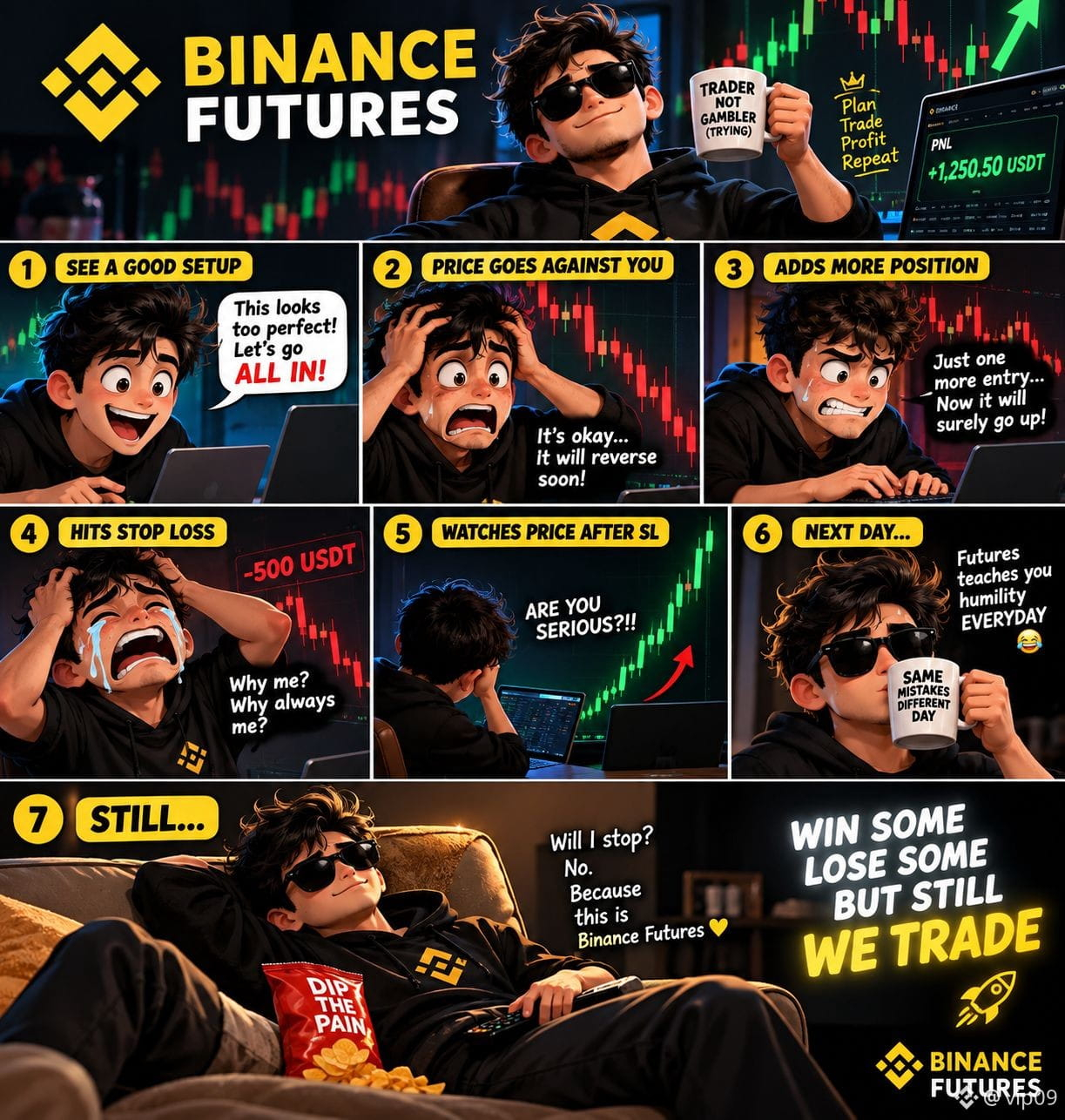
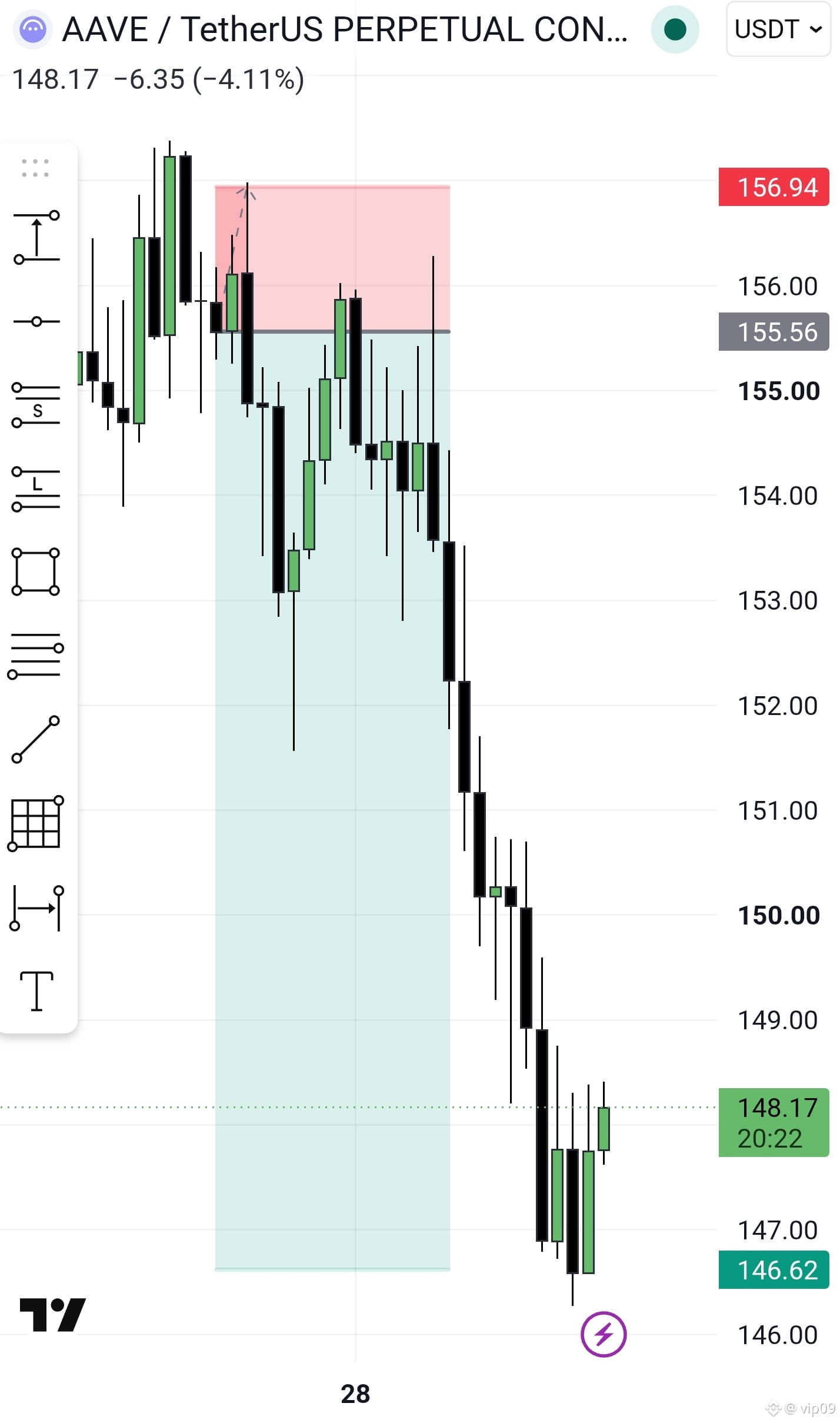
Who said breakups hurt most? This stop loss just slapped me with reality 😭 #BinanceFutures
Who said breakups hurt most? This stop loss just slapped me with reality 😭 #BinanceFutures
109
·
--
53
·
--
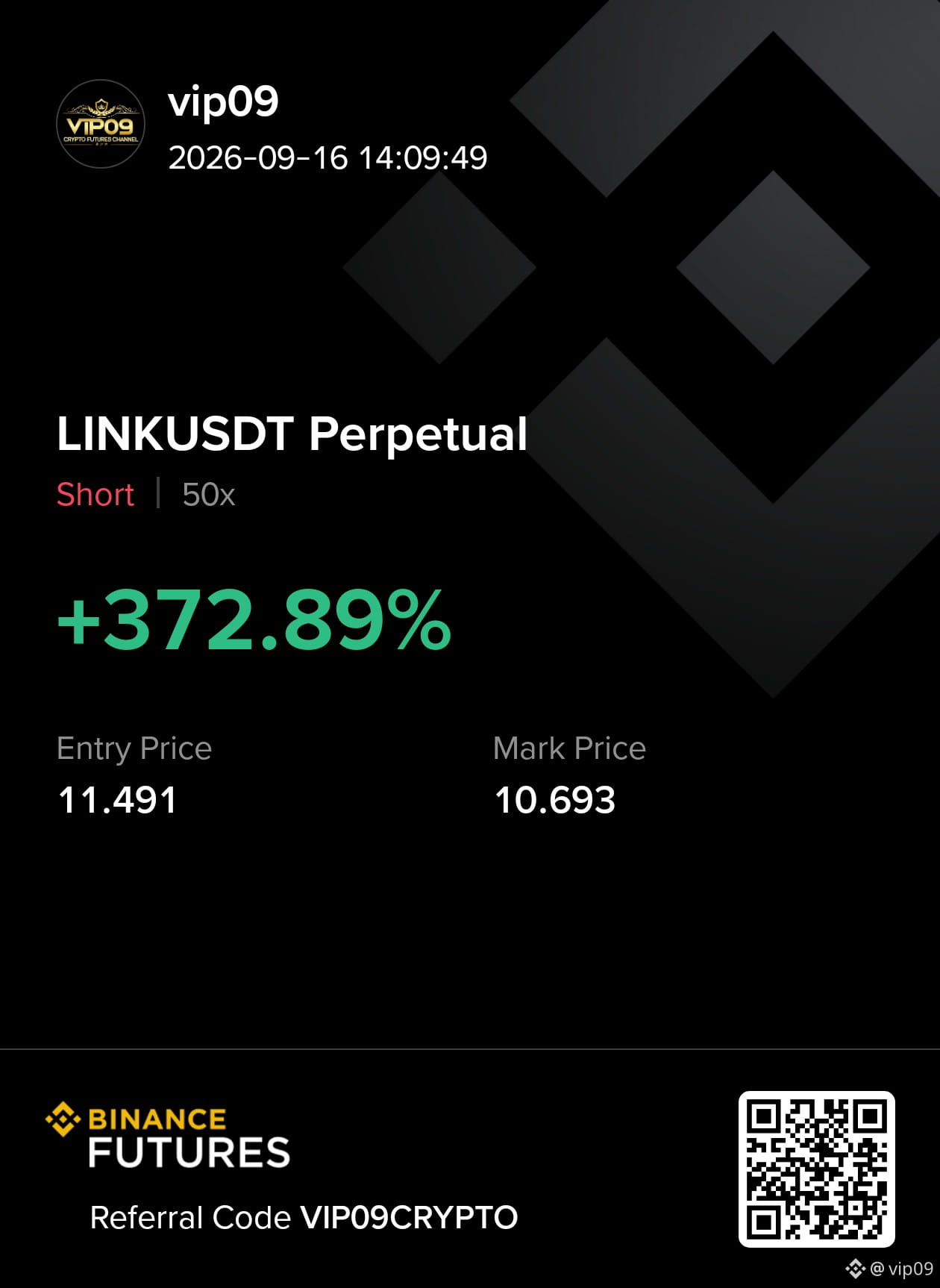
#LINKUSDT Shared Yesterday. Now we just loaded our bags 💥. What a crash.
#LINKUSDT Shared Yesterday. Now we just loaded our bags 💥. What a crash.
133
·
--
Which Strategy you follows?
Which Strategy you follows?
Price Action 🔥
0%
SMC 🥶
0%
Only Support and Resistance 💀
0%
I Follow VIP09 😎
0%
0 Votes • Vote fermé
1
1
·
--
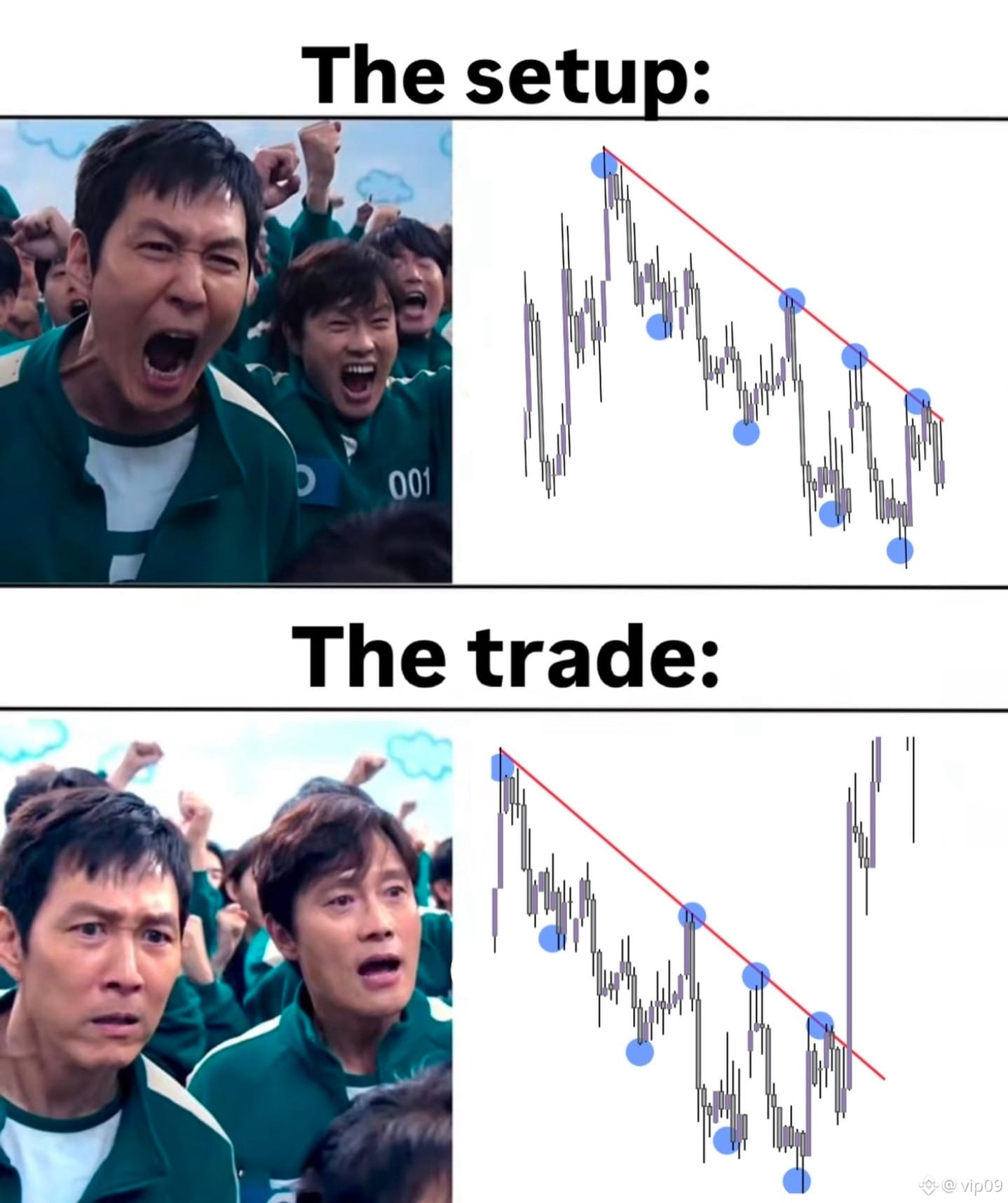
Expect the unexpected and think longterm. Price Action ❌️🤡 SMC ✅️💀
Expect the unexpected and think longterm. Price Action ❌️🤡 SMC ✅️💀
40
·
--
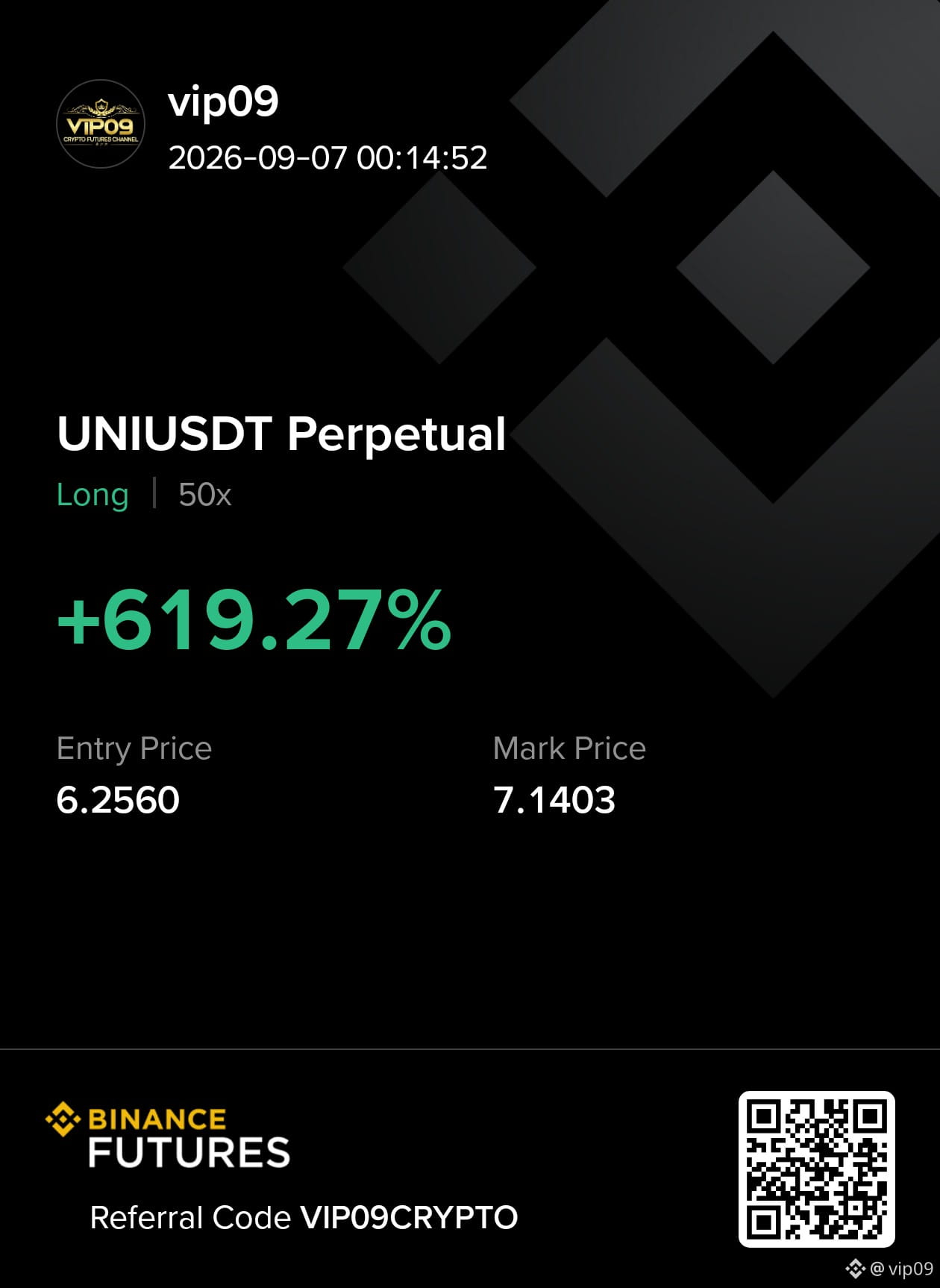
We didn't predict the future.
We prepared for a possibility. 🎯
UNI setup shared 6 hours ago — and the market gave us the move. 📈💰💥
That’s the beauty of trading:
You prepare.
You wait.
You execute.
Then you let the market decide.
#BinanceFutureSignal #BinanceFutureTrading
We didn't predict the future.
We prepared for a possibility. 🎯
UNI setup shared 6 hours ago — and the market gave us the move. 📈💰💥
That’s the beauty of trading:
You prepare.
You wait.
You execute.
Then you let the market decide.
#BinanceFutureSignal #BinanceFutureTrading
We prepared for a possibility. 🎯
UNI setup shared 6 hours ago — and the market gave us the move. 📈💰💥
That’s the beauty of trading:
You prepare.
You wait.
You execute.
Then you let the market decide.
#BinanceFutureSignal #BinanceFutureTrading
1
141
·
--
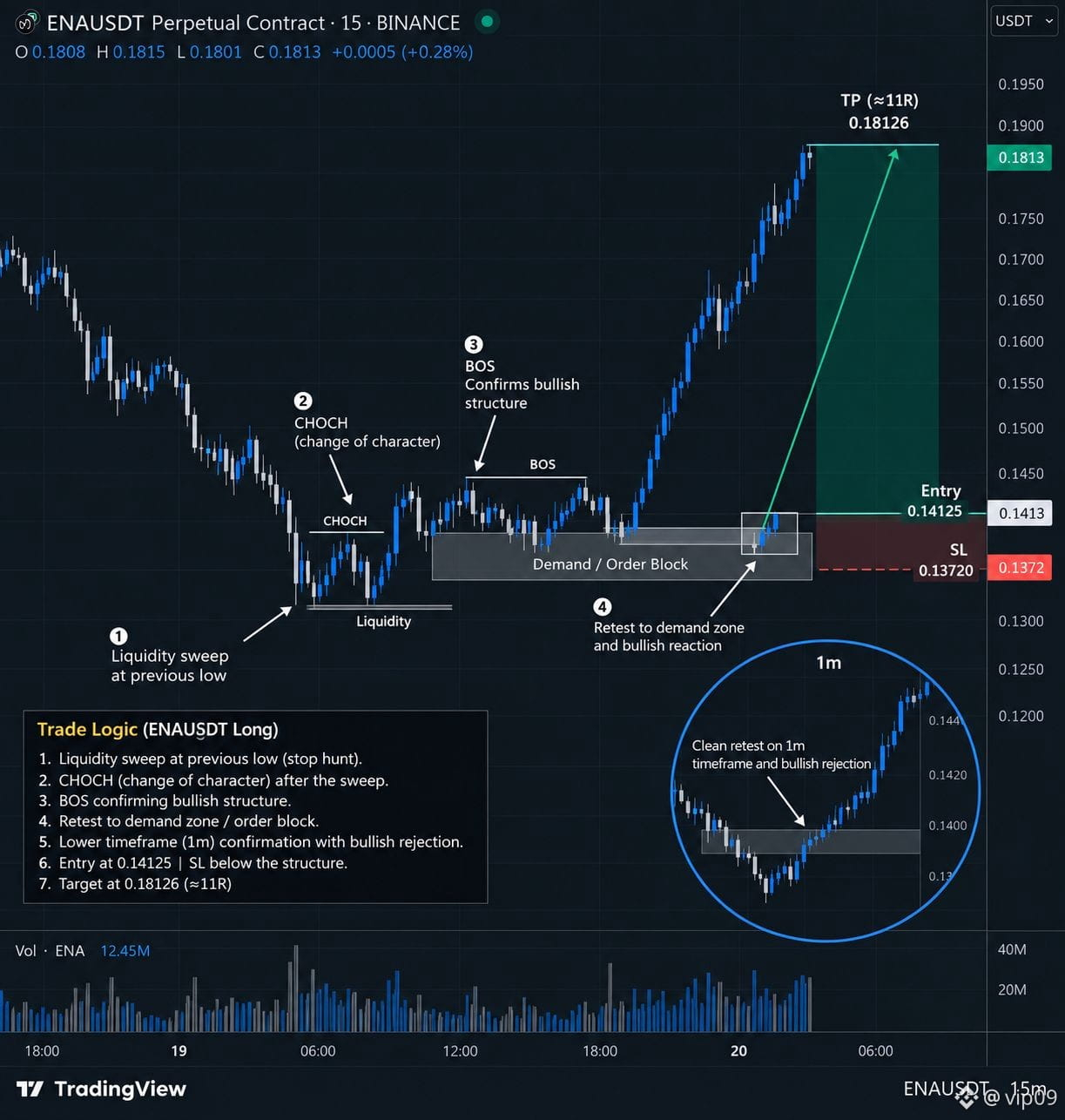
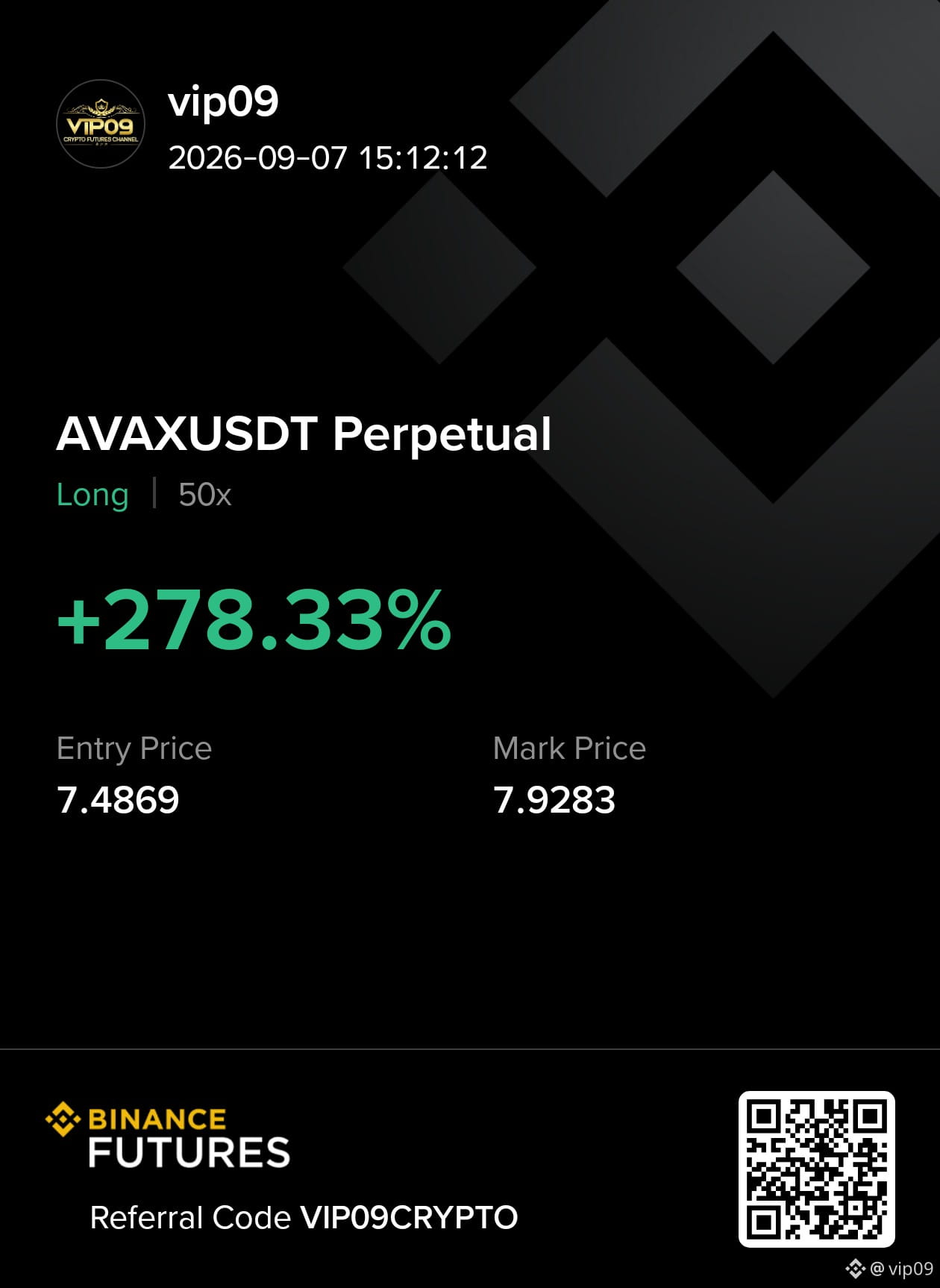
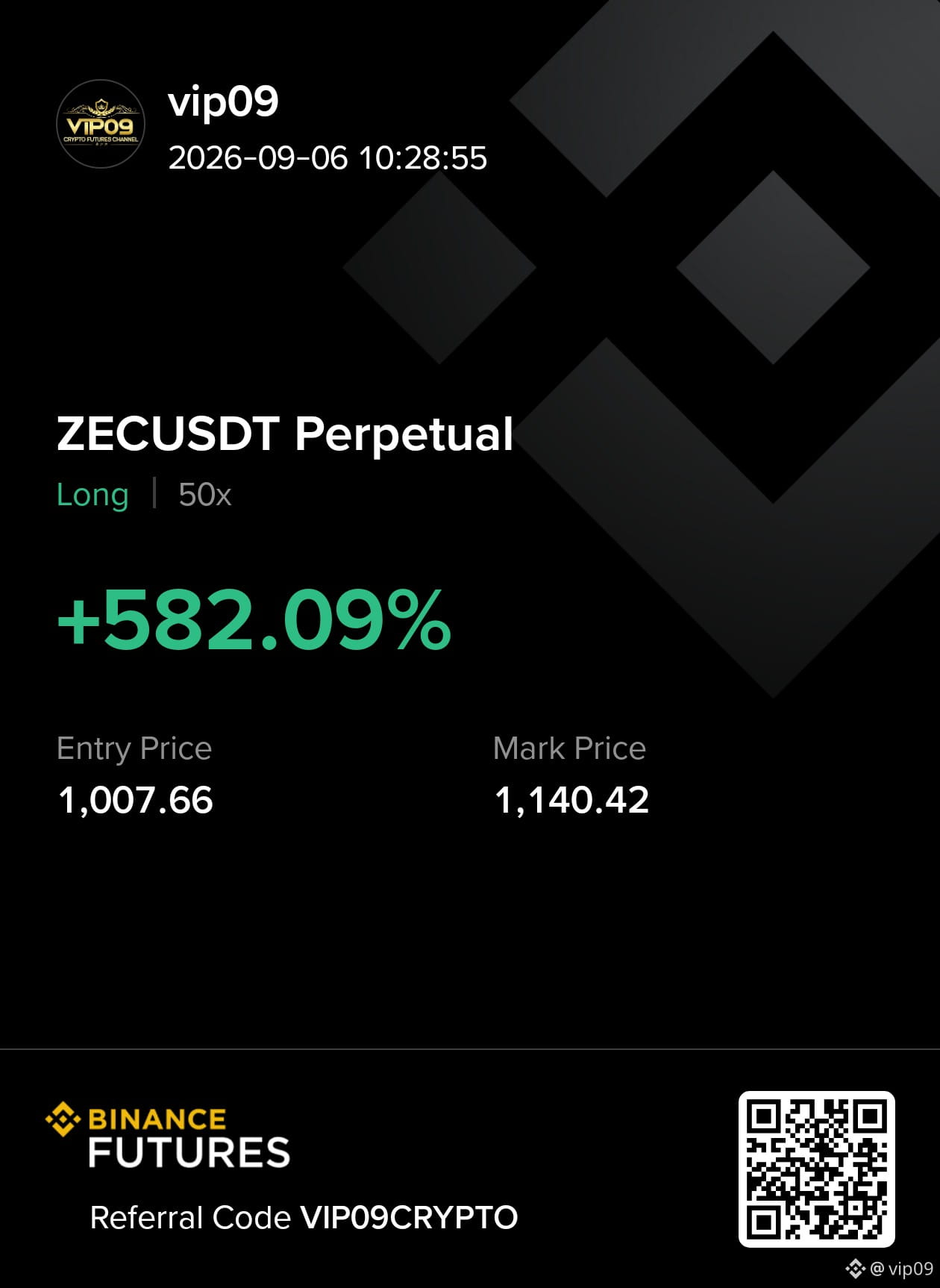
A few hours ago, this was just an idea on the chart…
Now it’s a trade in serious profit. 📈💰
This is your reminder:
Keep working on your analysis.
Keep improving your execution.
And most importantly — don’t give up. 🧠🔥
#BinanceFutureSignal #BinanceFutureTrading
A few hours ago, this was just an idea on the chart…
Now it’s a trade in serious profit. 📈💰
This is your reminder:
Keep working on your analysis.
Keep improving your execution.
And most importantly — don’t give up. 🧠🔥
#BinanceFutureSignal #BinanceFutureTrading
Now it’s a trade in serious profit. 📈💰
This is your reminder:
Keep working on your analysis.
Keep improving your execution.
And most importantly — don’t give up. 🧠🔥
#BinanceFutureSignal #BinanceFutureTrading
144
·
--
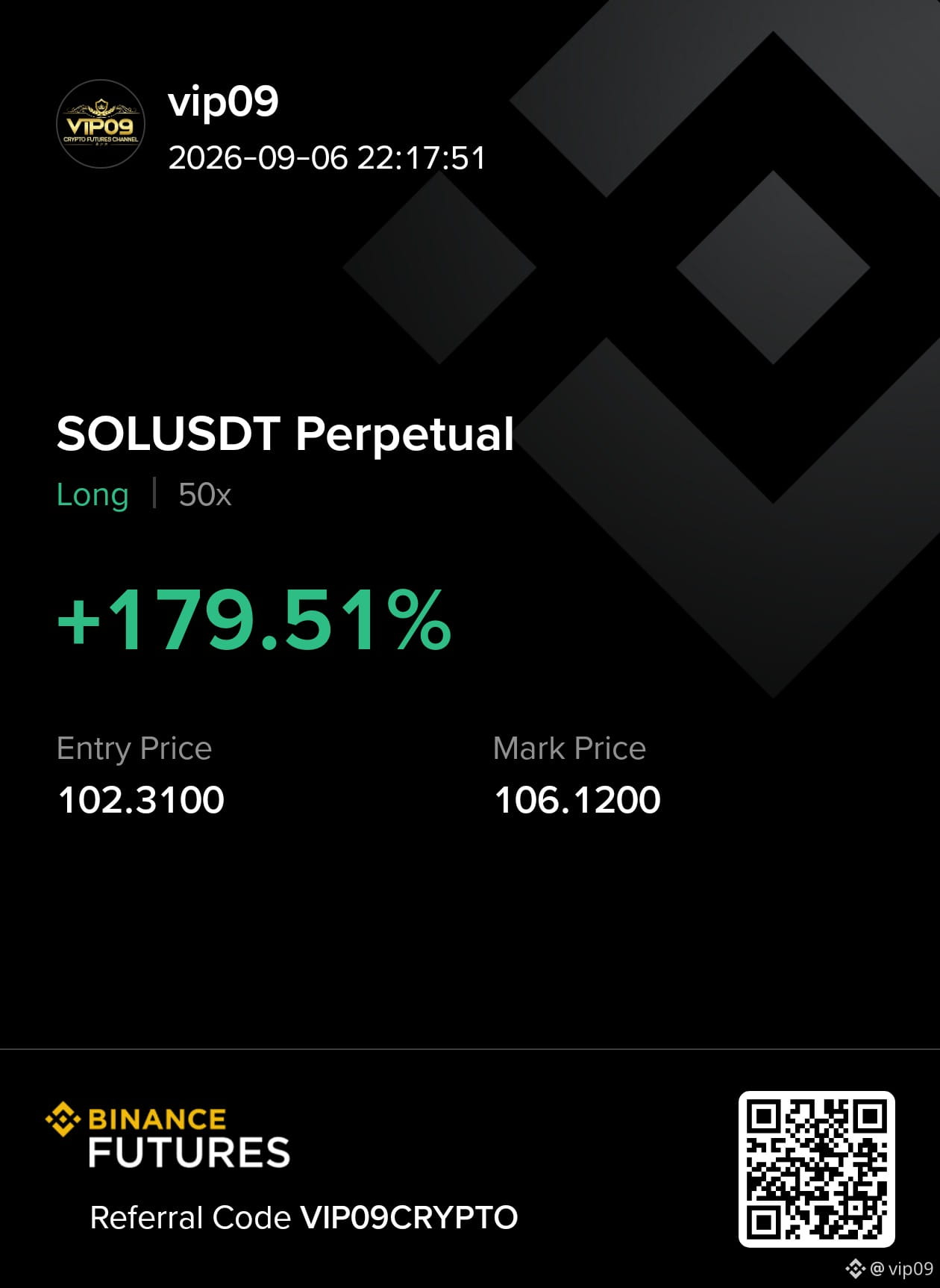
The best feeling is watching a setup play out after planning it in advance. 📊
SOL trade shared 3 hours ago — and now the position is in strong profit. 📈🔥
This is why patience matters. Don’t chase the move. Wait for your setup.
#BinanceFutureSignal #BinanceFutureTrading
The best feeling is watching a setup play out after planning it in advance. 📊
SOL trade shared 3 hours ago — and now the position is in strong profit. 📈🔥
This is why patience matters. Don’t chase the move. Wait for your setup.
#BinanceFutureSignal #BinanceFutureTrading
SOL trade shared 3 hours ago — and now the position is in strong profit. 📈🔥
This is why patience matters. Don’t chase the move. Wait for your setup.
#BinanceFutureSignal #BinanceFutureTrading
1
104
·
--
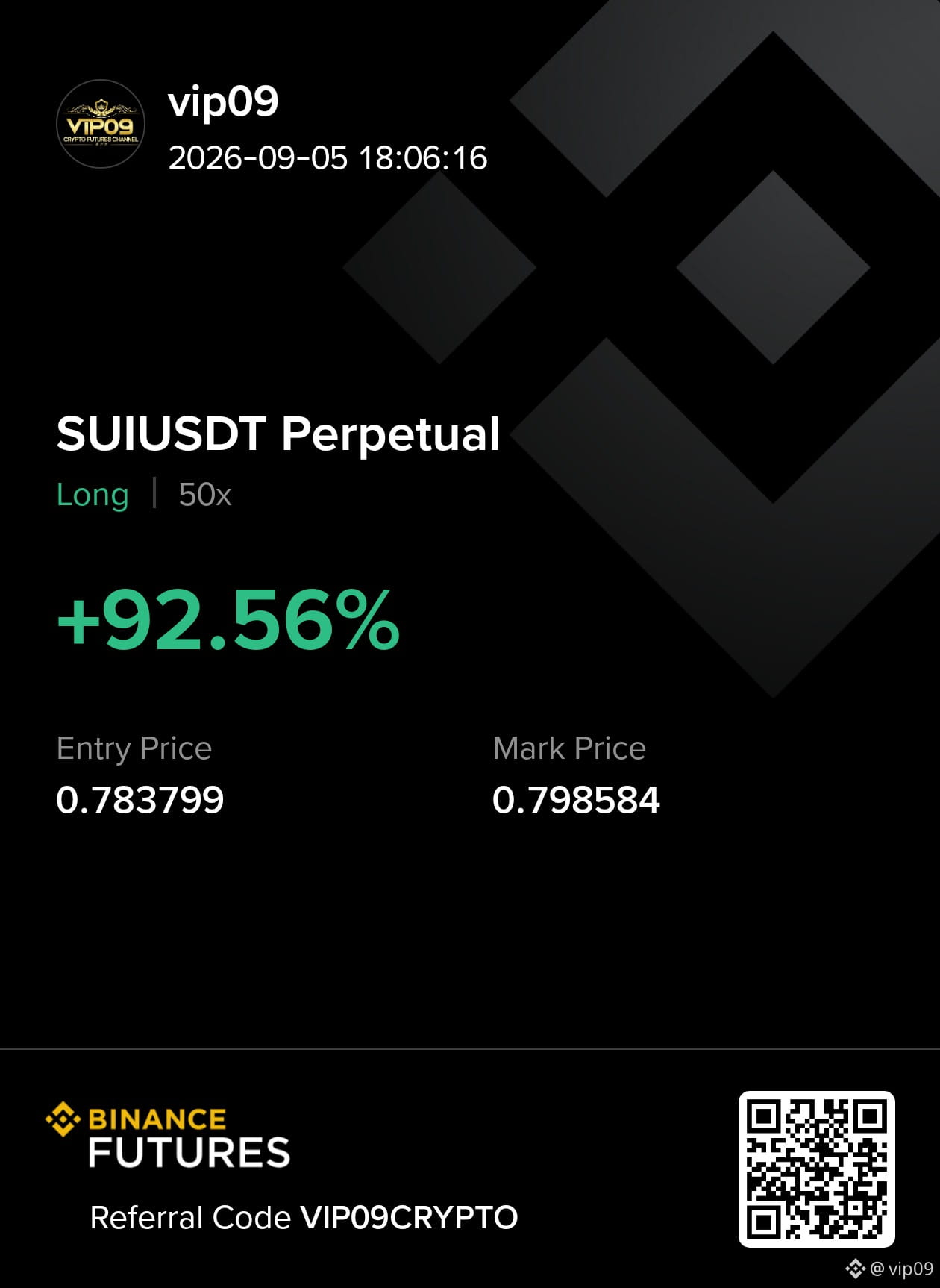
Remember this SUI setup I shared 3 hours ago? 👀
Well… look at it now. 📈🔥#
The setup played out exactly as expected, and the trade is now sitting in solid profit.
Analysis first. Execution second.
#BinanceFutureSignal #BinanceFutureTrading
Remember this SUI setup I shared 3 hours ago? 👀
Well… look at it now. 📈🔥#
The setup played out exactly as expected, and the trade is now sitting in solid profit.
Analysis first. Execution second.
#BinanceFutureSignal #BinanceFutureTrading
Well… look at it now. 📈🔥#
The setup played out exactly as expected, and the trade is now sitting in solid profit.
Analysis first. Execution second.
#BinanceFutureSignal #BinanceFutureTrading
1
151
·
--
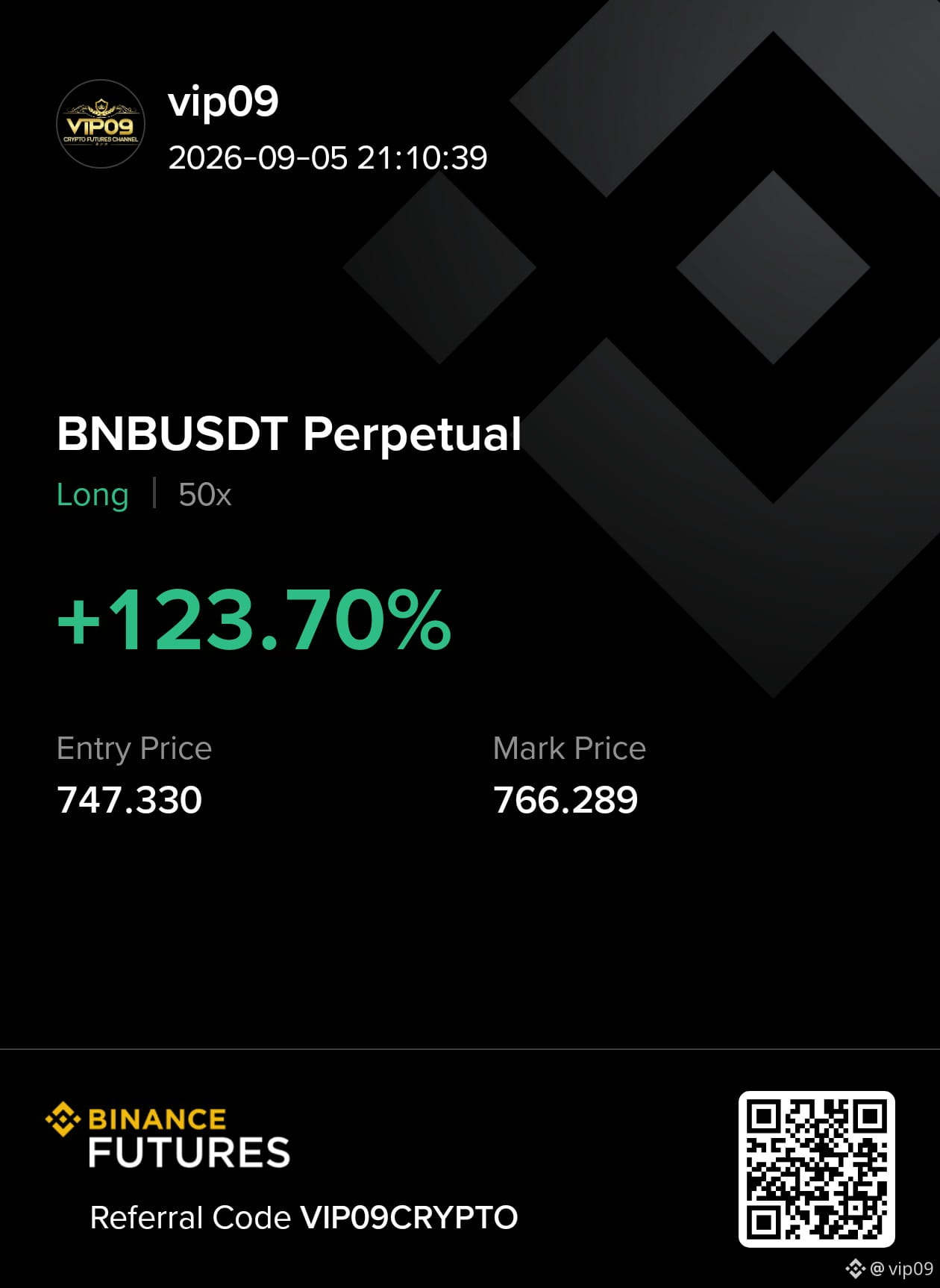
Shared this BNB Trade 3 Hours back. and now this trade is in insane profit #BinanceFutureSignal #BinanceFutureTrading
Shared this BNB Trade 3 Hours back. and now this trade is in insane profit #BinanceFutureSignal #BinanceFutureTrading
1
27
·
--
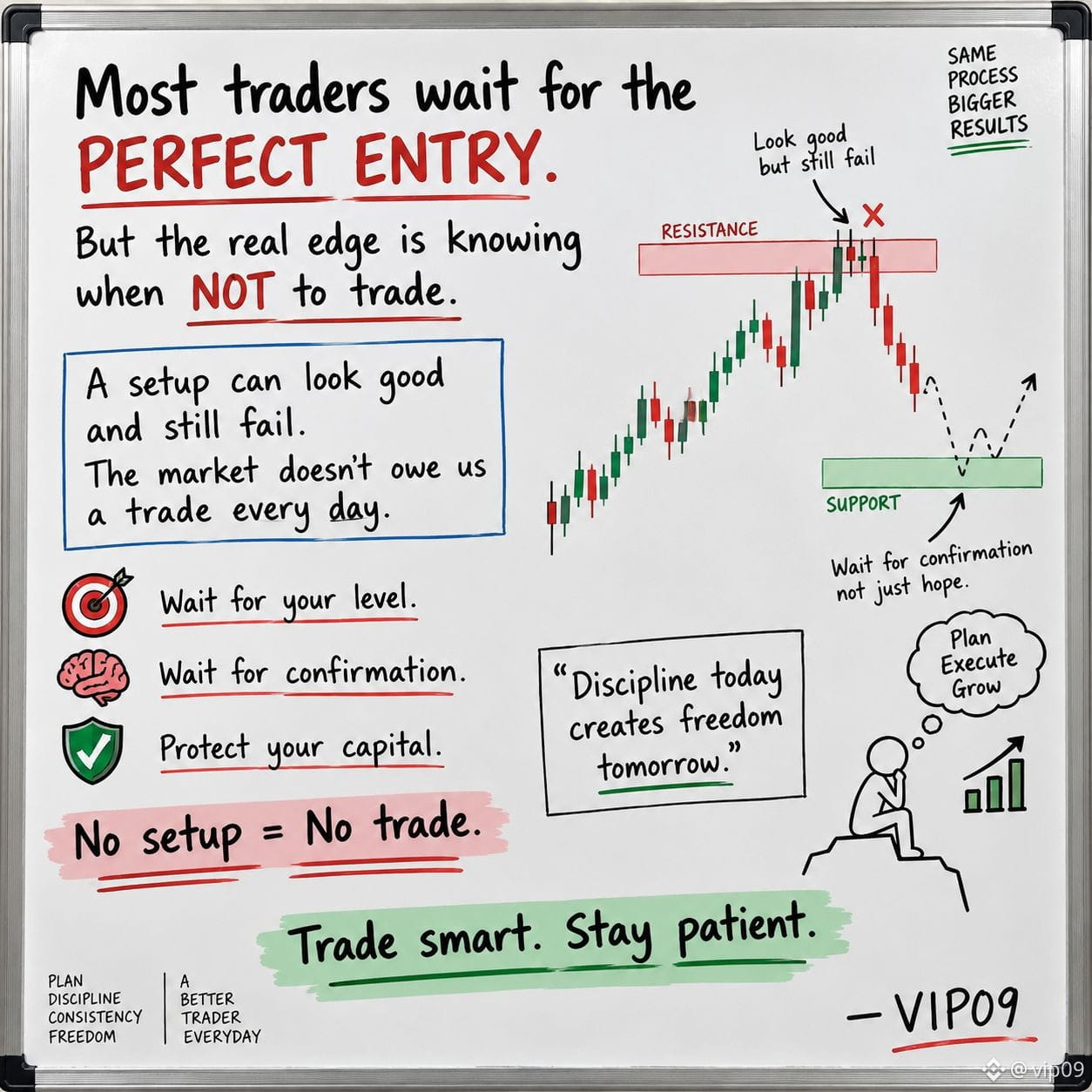
Most traders wait for the perfect entry.
But the real edge is knowing when NOT to trade.
A setup can look good and still fail.
The market doesn’t owe us a trade every day.
🎯 Wait for your level
🧠 Wait for confirmation
🛡️ Protect your capital
No setup = No trade.
Trade smart. Stay patient.
— VIP09
Most traders wait for the perfect entry.
But the real edge is knowing when NOT to trade.
A setup can look good and still fail.
The market doesn’t owe us a trade every day.
🎯 Wait for your level
🧠 Wait for confirmation
🛡️ Protect your capital
No setup = No trade.
Trade smart. Stay patient.
— VIP09
But the real edge is knowing when NOT to trade.
A setup can look good and still fail.
The market doesn’t owe us a trade every day.
🎯 Wait for your level
🧠 Wait for confirmation
🛡️ Protect your capital
No setup = No trade.
Trade smart. Stay patient.
— VIP09
100
·
--
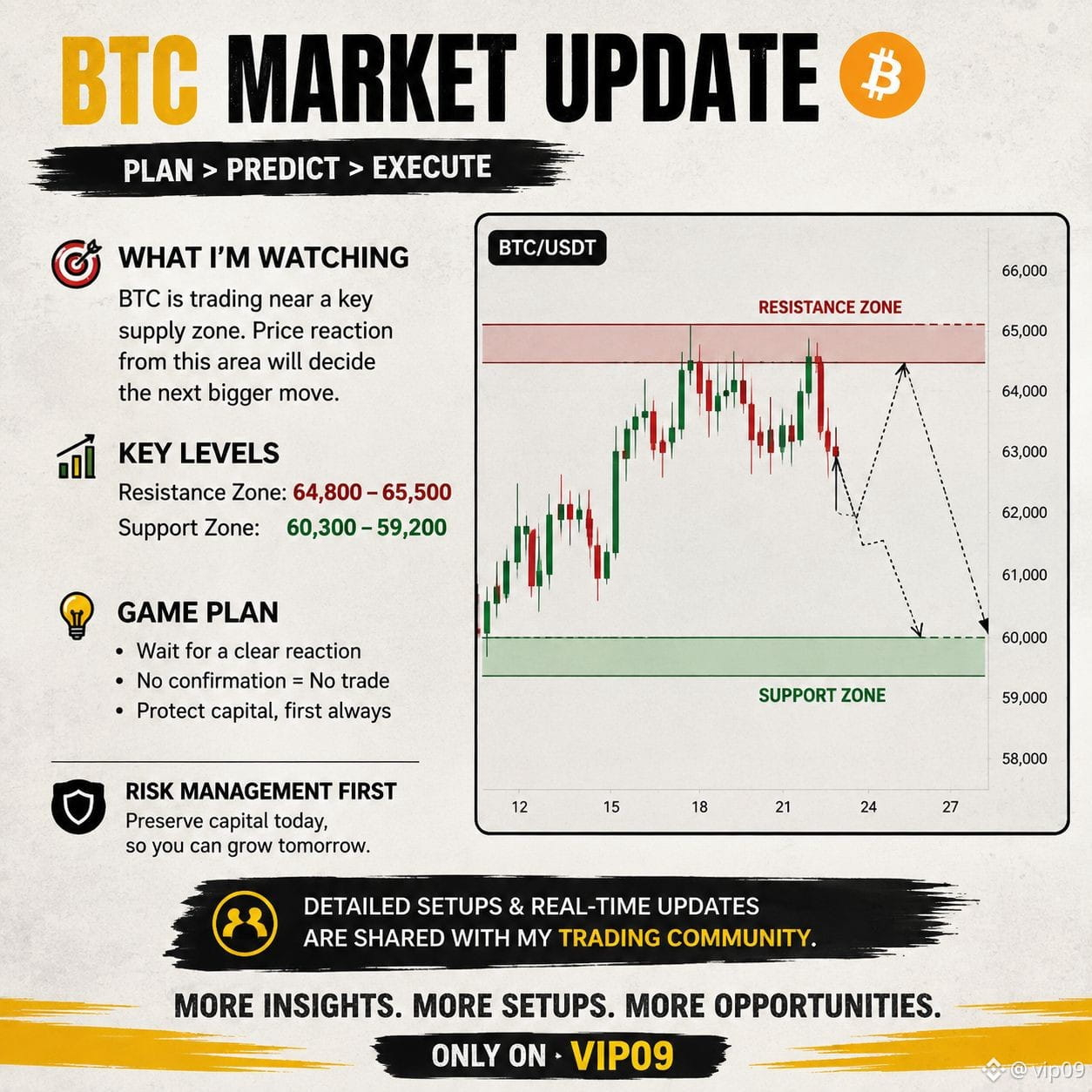
BTC MARKET CHECK
BTC is approaching an important area.
I’m watching the reaction carefully before taking any position.
🎯 Key levels matter.
⏳ Patience matters more.
🛡️ No confirmation = No trade.
Plan first. Execute second.
— VIP09
BTC MARKET CHECK
BTC is approaching an important area.
I’m watching the reaction carefully before taking any position.
🎯 Key levels matter.
⏳ Patience matters more.
🛡️ No confirmation = No trade.
Plan first. Execute second.
— VIP09
BTC is approaching an important area.
I’m watching the reaction carefully before taking any position.
🎯 Key levels matter.
⏳ Patience matters more.
🛡️ No confirmation = No trade.
Plan first. Execute second.
— VIP09
1
1
371
·
--
Most traders don’t lose because they can’t find setups.
They lose because they trade EVERY setup.
A setup can look good and still fail.
The real skill is knowing when to stay out, wait for confirmation, and protect your capital.
Trade less. Trade better.
— VIP09
Most traders don’t lose because they can’t find setups.
They lose because they trade EVERY setup.
A setup can look good and still fail.
The real skill is knowing when to stay out, wait for confirmation, and protect your capital.
Trade less. Trade better.
— VIP09
They lose because they trade EVERY setup.
A setup can look good and still fail.
The real skill is knowing when to stay out, wait for confirmation, and protect your capital.
Trade less. Trade better.
— VIP09
1
47
Connectez-vous pour découvrir plus de contenu
Rejoignez la communauté mondiale des adeptes de cryptomonnaies sur Binance Square
⚡️ Suviez les dernières informations importantes sur les cryptomonnaies.
💬 Jugé digne de confiance par la plus grande plateforme d’échange de cryptomonnaies au monde.
👍 Découvrez les connaissances que partagent les créateurs vérifiés.
Adresse e-mail/Nº de téléphone
Sujets d’actualité
ZcashETFPostsFirstWeeklyOutflow$93.6M
33,809 vues
98 mentions
#ZcashETFPostsFirstWeeklyOutflow$93.6M
🚨🚨🚨🚨🚨🚨🚨🚨🚨🚨🚨🚨🚨🚨✅ 🚨 ZCASH ETF FLOWS TURN NEGATIVE FOR THE FIRST TIME! 📉
$ZEC is facing a notable shift in institutional fund flows, with Zcash investment products recording their first weekly net outflow since launching in August.
According to fund-flow data, around $93.6M was withdrawn from Zcash products during the latest week, while ZEC price action also cooled significantly.
📊 WHAT HAPPENED?
• Weekly Zcash ETF outflow: $93.6M
• September 30 daily outflow: $30.25M
• ZCSH previously attracted around $98.2M in one week
• ZEC is trading near $1,300
• Recent high: around $1,690
• Weekly decline: roughly 17%+
🔍 LEVELS TO WATCH
🟢 Support: $1,280–$1,300
🔴 Resistance: $1,450–$1,500
The key question now is whether the $1,300 area can hold and attract fresh buyers.
Institutional flows will also be important. A return of consistent positive inflows could signal renewed confidence, while continued outflows may keep pressure on $ZEC .
👀 Is this simply profit-taking after ZEC’s huge rally, or could we see another deeper pullback before buyers return?
Share your view below. 👇
#Zcash #ZEC #ZcashETF #Crypto
#analysis
owhggwiohsjowve
·0 mentions J’aime
·152 vues
GreekPoliceBustCryptoScamRingArrest17
69,893 vues
672 mentions
BitcoinRejectedAt$87K
119,027 vues
156 mentions