

Mohamed A. El-Erian Re-poster
1.1k Publications

Mohamed A. El-Erian Re-poster
Signaler
Bloquer l’utilisateur
Rene M Kern Prof of Prac at Wharton. Allianz Advisor. Gramercy Chair. Chair of UnderArmour Board. Former Pimco CEO/co-CIO and President of Queens' Col Cambridge
0 Suivis
649 Abonnés
1.1K+ J’aime
Publications
Tous
Vidéos
Here is an insightful comparison highlighting the year-to-date performance of US stocks against bonds, as recently reported by the Wall Street Journal.
#economy #markets #stocks #bonds @WSJ
Here is an insightful comparison highlighting the year-to-date performance of US stocks against bonds, as recently reported by the Wall Street Journal.
#economy #markets #stocks #bonds @WSJ
#economy #markets #stocks #bonds @WSJ
16
A very good morning to you all. Even though we have entered a brand new month for the financial markets, the prevailing trend remains unchanged at this time. Government bond yields are continuing to face persistent upward momentum.
Just this morning, the UK 30-year gilt escalated to heights that have not been witnessed since 1998. Alongside this development, the yields for both the US 10-year and 30-year treasuries are currently hovering around figures last recorded in 2002.
#economy #markets #yields #bonds
A very good morning to you all. Even though we have entered a brand new month for the financial markets, the prevailing trend remains unchanged at this time. Government bond yields are continuing to face persistent upward momentum.
Just this morning, the UK 30-year gilt escalated to heights that have not been witnessed since 1998. Alongside this development, the yields for both the US 10-year and 30-year treasuries are currently hovering around figures last recorded in 2002.
#economy #markets #yields #bonds
Just this morning, the UK 30-year gilt escalated to heights that have not been witnessed since 1998. Alongside this development, the yields for both the US 10-year and 30-year treasuries are currently hovering around figures last recorded in 2002.
#economy #markets #yields #bonds
TLTETF-0,27%
IEFETF-0,27%
26
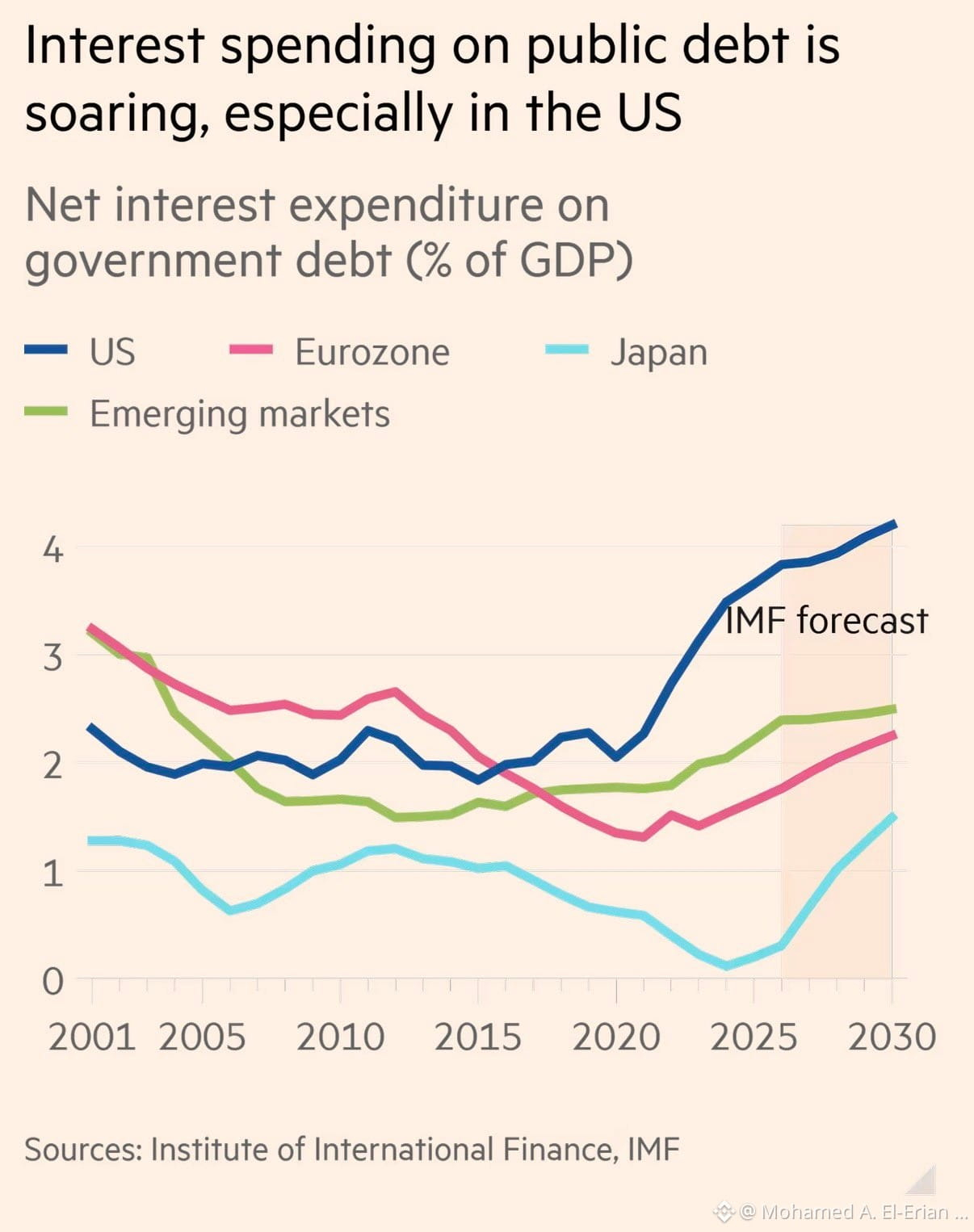
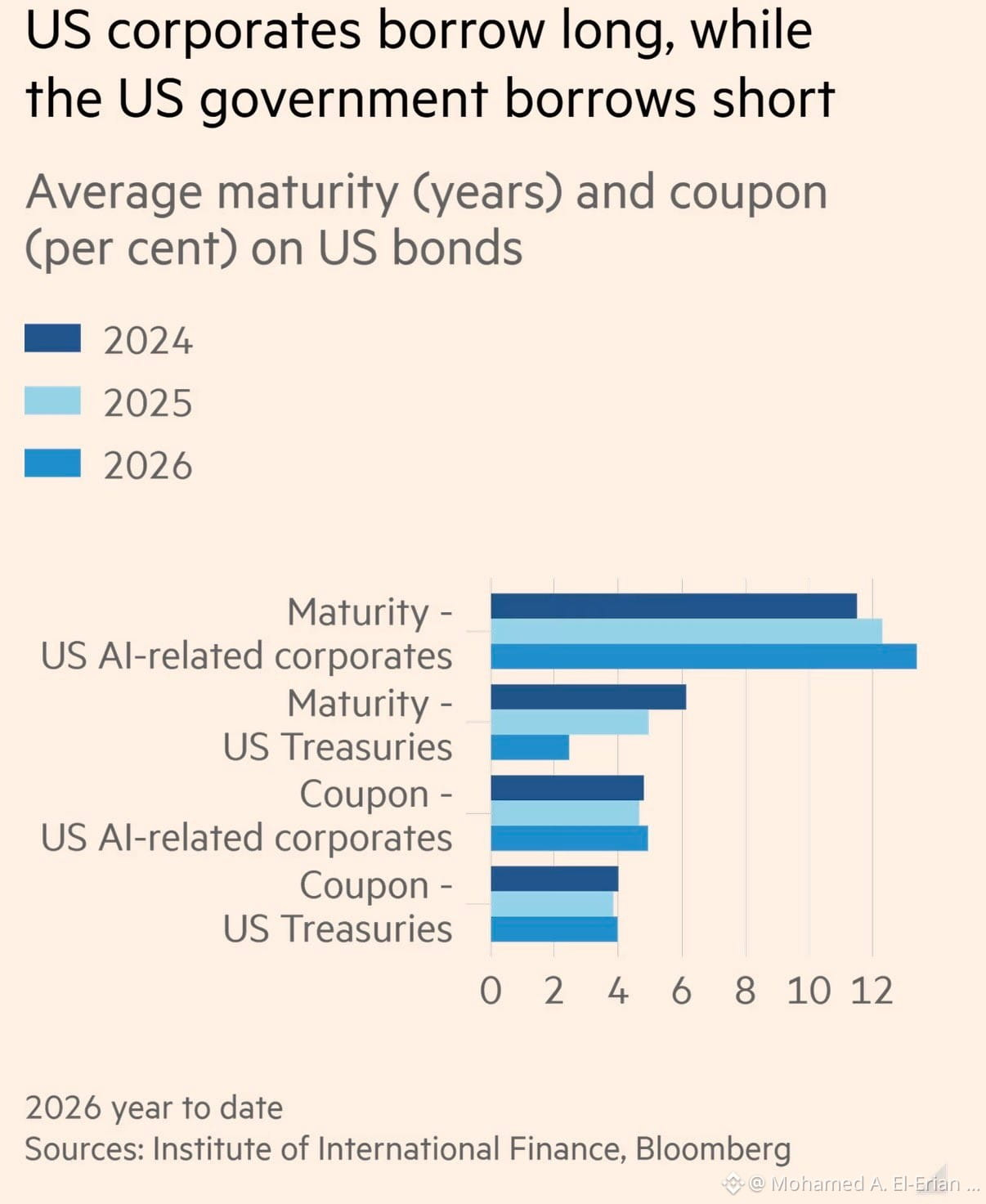
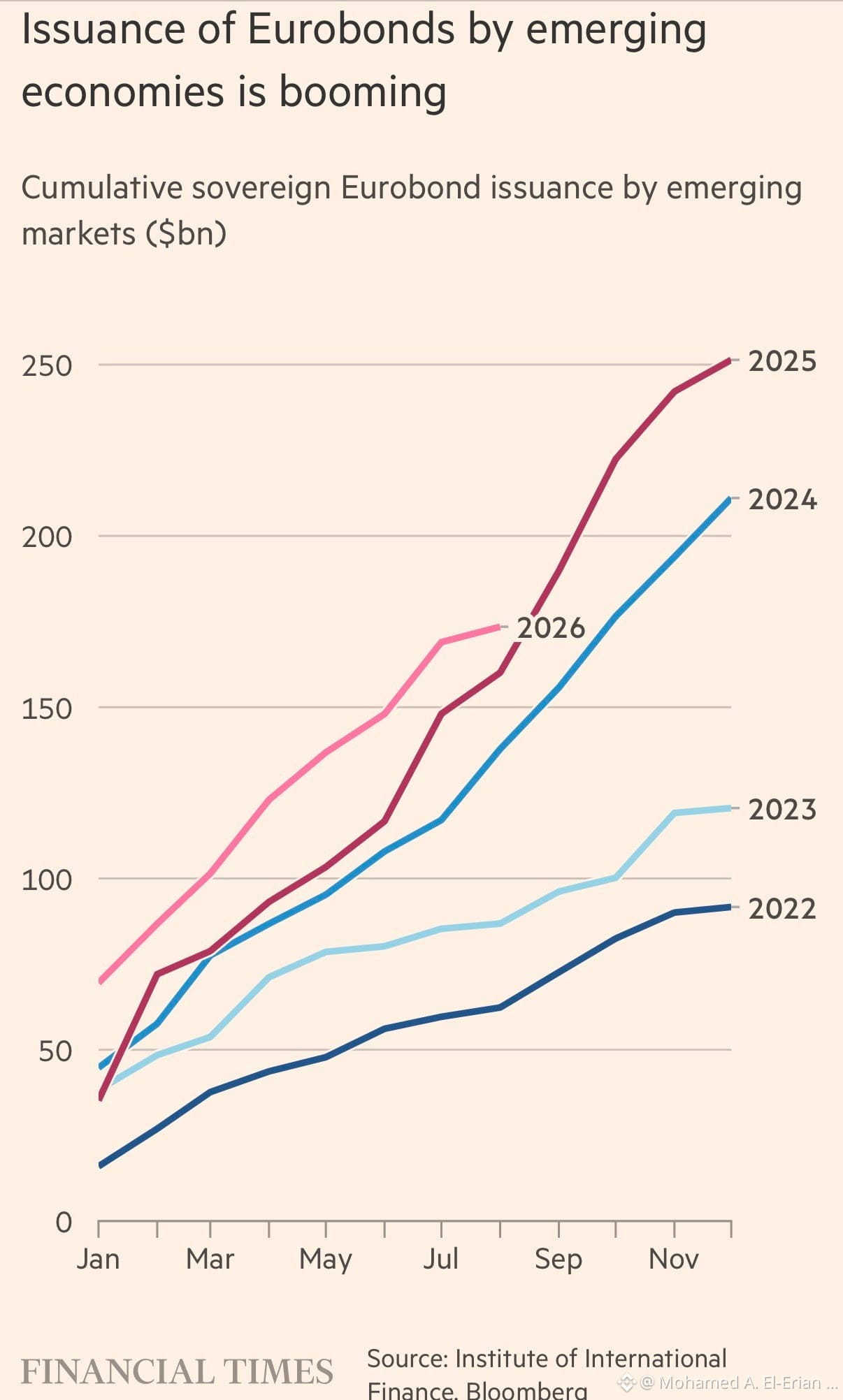
Here are a few captivating data visualizations featured in the recent column authored by Martin Wolf for the FT.
#economy #markets #debt @FT
Here are a few captivating data visualizations featured in the recent column authored by Martin Wolf for the FT.
#economy #markets #debt @FT
#economy #markets #debt @FT
13
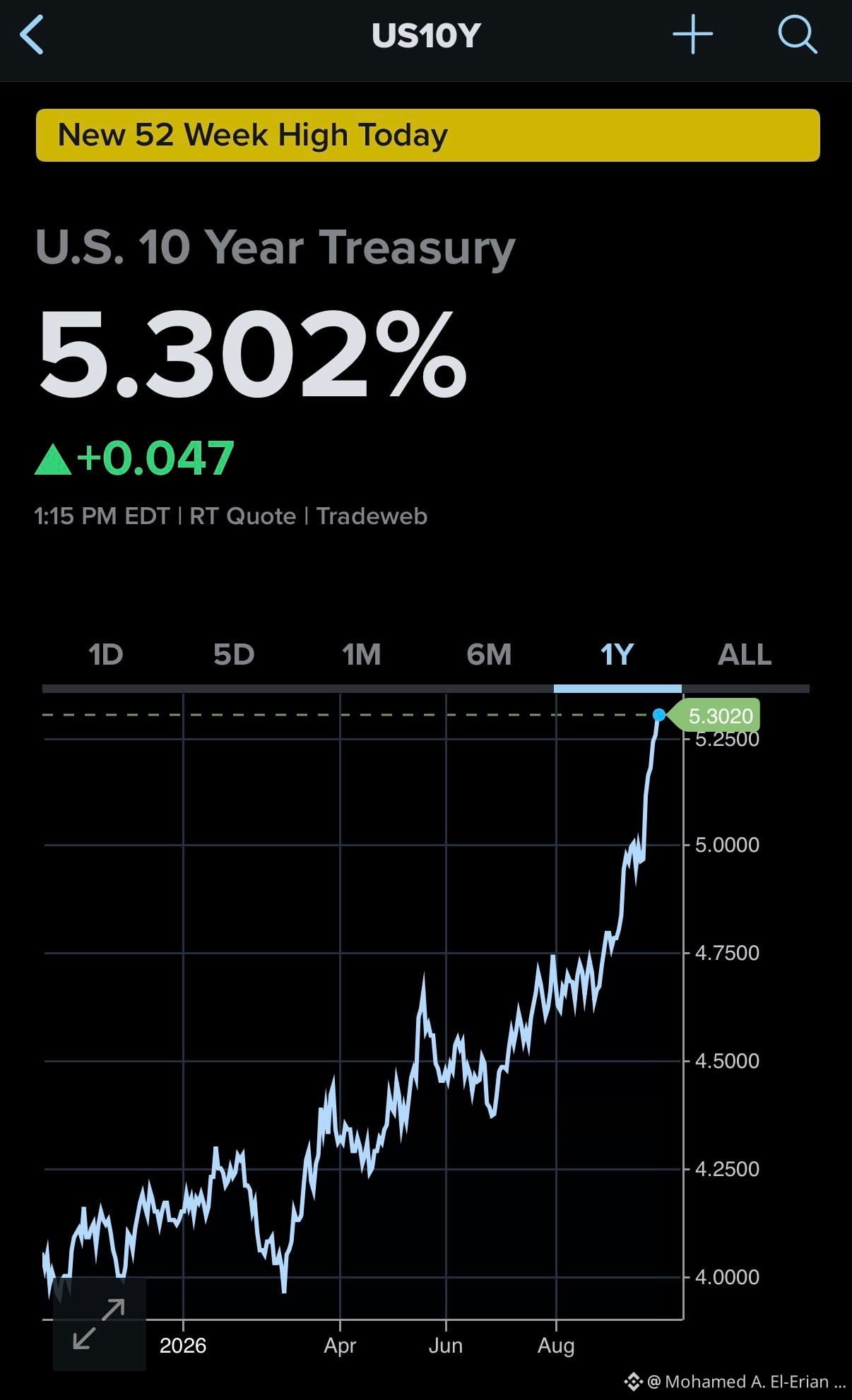
For those keeping an eye on the latest financial updates, the yield on 10-year United States government bonds is currently trading at a rate of 5.30%.
#economy #markets #yields #bonds
For those keeping an eye on the latest financial updates, the yield on 10-year United States government bonds is currently trading at a rate of 5.30%.
#economy #markets #yields #bonds
#economy #markets #yields #bonds
IEFETF-0,27%
12
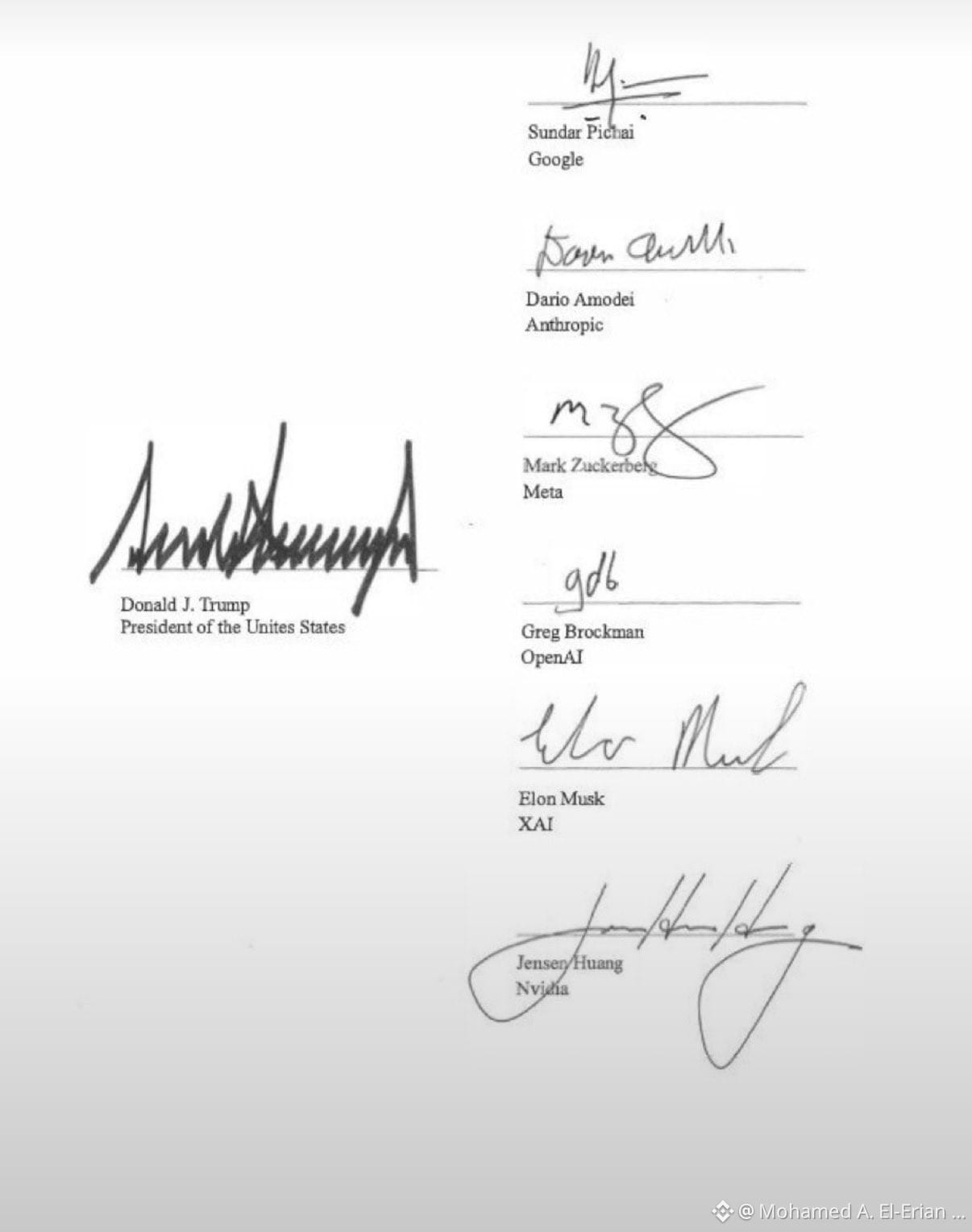
We are pleased to share the newly established agreement, The White House Accord on Super Intelligence, which received its official signatures yesterday.
#economy #tech #ai #markets
We are pleased to share the newly established agreement, The White House Accord on Super Intelligence, which received its official signatures yesterday.
#economy #tech #ai #markets
#economy #tech #ai #markets

2
1
3
3.1k
Partiellement vrai
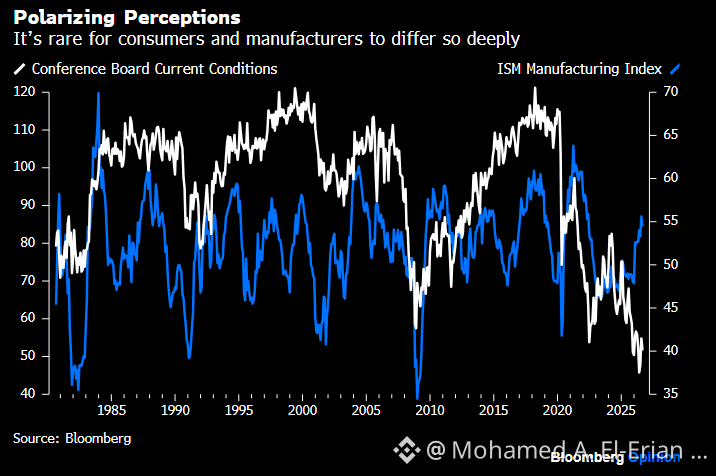
John Authers recently provided an outstanding graph that highlights a rather rare divergence. This visual perfectly captures the unexpected disconnect currently taking place between the manufacturing sector and US consumer confidence.
#economy #markets @johnauthers
John Authers recently provided an outstanding graph that highlights a rather rare divergence. This visual perfectly captures the unexpected disconnect currently taking place between the manufacturing sector and US consumer confidence.
#economy #markets @johnauthers
#economy #markets @johnauthers
2
1.6k
Vérifié
Recent economic updates emerging from Europe are unlikely to be well received by the ECB.
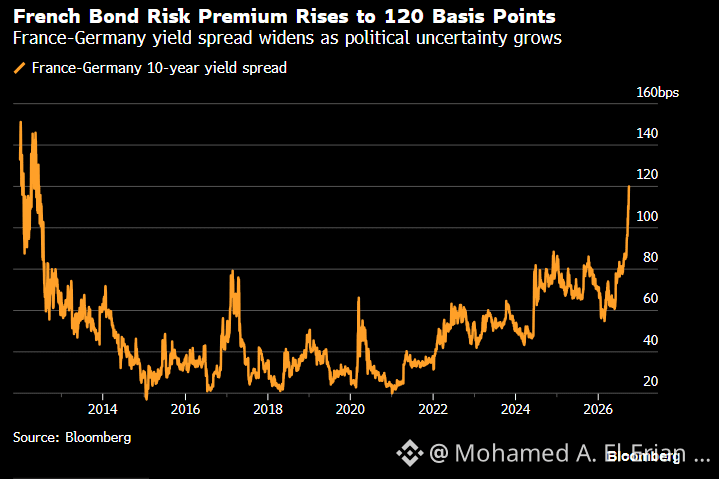
Taking a look at the most recent inflation figures, Spain has reached 5.0%, Italy sits at 4.1%, and France has recorded 3.4%. In addition to these numbers, French sovereign spreads are currently trading 120 basis points higher than Germany.
#economy #europe #markets #inflation #France #Italy #Spain
Recent economic updates emerging from Europe are unlikely to be well received by the ECB.
Taking a look at the most recent inflation figures, Spain has reached 5.0%, Italy sits at 4.1%, and France has recorded 3.4%. In addition to these numbers, French sovereign spreads are currently trading 120 basis points higher than Germany.
#economy #europe #markets #inflation #France #Italy #Spain
Taking a look at the most recent inflation figures, Spain has reached 5.0%, Italy sits at 4.1%, and France has recorded 3.4%. In addition to these numbers, French sovereign spreads are currently trading 120 basis points higher than Germany.
#economy #europe #markets #inflation #France #Italy #Spain
2
3
2.9k
A recent chart from CNBC highlights just how eventful the past month has been for the fixed-income sector. We watched the 10-year yield climb roughly 50 bps, hitting a peak we have not witnessed since 2007. At the same time, the 2-year yield saw a slightly greater increase, while the 30-year yield soared to marks last recorded back in 2002.
These dramatic shifts naturally prompt a couple of pressing questions concerning global markets and the wider economy. Primarily, are we currently entering a lasting era of consistently high interest rates? Furthermore, have the majority of the ripple effects already impacted other risk factors and the broader economy?
Given the reasoning detailed previously, my perspective remains straightforward. I would answer yes to the first inquiry, and no to the second.
#economy #markets #yields #bonds
A recent chart from CNBC highlights just how eventful the past month has been for the fixed-income sector. We watched the 10-year yield climb roughly 50 bps, hitting a peak we have not witnessed since 2007. At the same time, the 2-year yield saw a slightly greater increase, while the 30-year yield soared to marks last recorded back in 2002.
These dramatic shifts naturally prompt a couple of pressing questions concerning global markets and the wider economy. Primarily, are we currently entering a lasting era of consistently high interest rates? Furthermore, have the majority of the ripple effects already impacted other risk factors and the broader economy?
Given the reasoning detailed previously, my perspective remains straightforward. I would answer yes to the first inquiry, and no to the second.
#economy #markets #yields #bonds
These dramatic shifts naturally prompt a couple of pressing questions concerning global markets and the wider economy. Primarily, are we currently entering a lasting era of consistently high interest rates? Furthermore, have the majority of the ripple effects already impacted other risk factors and the broader economy?
Given the reasoning detailed previously, my perspective remains straightforward. I would answer yes to the first inquiry, and no to the second.
#economy #markets #yields #bonds
TLTETF-0,27%
SHYETF-0,25%
IEFETF-0,27%
79
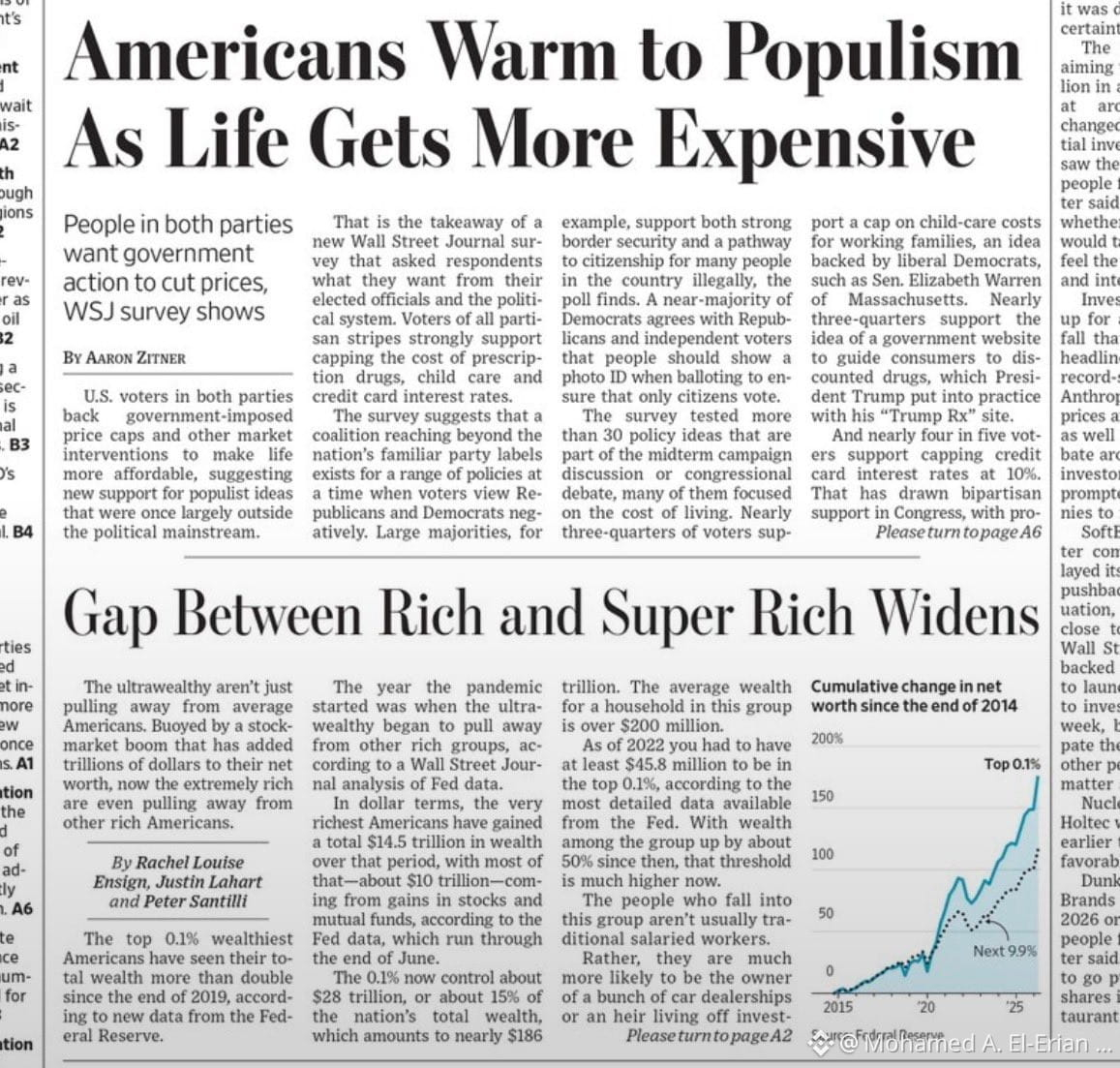
Here is a look at the cover page for today's edition of the Wall Street Journal.
#economy #markets #jobs #affordability #inequality #populism
Here is a look at the cover page for today's edition of the Wall Street Journal.
#economy #markets #jobs #affordability #inequality #populism
#economy #markets #jobs #affordability #inequality #populism
125
Good morning.
As an active week for US economic data rolls on, attention turns to this morning's release of the August PCE, a metric traditionally recognized as the preferred inflation indicator for the Fed. Consensus forecasts predict that both the headline and core PCE grew by 0.3% during August. Should these estimates hold, the year-over-year rates will remain unchanged from July, landing at 3.7% and 3.3% respectively. In addition to these inflation metrics, we are also keeping a close watch on today's income and spending figures as we prepare for the upcoming jobs report on Friday.
#economy #markets #inflation #federalreserve
Good morning.
As an active week for US economic data rolls on, attention turns to this morning's release of the August PCE, a metric traditionally recognized as the preferred inflation indicator for the Fed. Consensus forecasts predict that both the headline and core PCE grew by 0.3% during August. Should these estimates hold, the year-over-year rates will remain unchanged from July, landing at 3.7% and 3.3% respectively. In addition to these inflation metrics, we are also keeping a close watch on today's income and spending figures as we prepare for the upcoming jobs report on Friday.
#economy #markets #inflation #federalreserve
As an active week for US economic data rolls on, attention turns to this morning's release of the August PCE, a metric traditionally recognized as the preferred inflation indicator for the Fed. Consensus forecasts predict that both the headline and core PCE grew by 0.3% during August. Should these estimates hold, the year-over-year rates will remain unchanged from July, landing at 3.7% and 3.3% respectively. In addition to these inflation metrics, we are also keeping a close watch on today's income and spending figures as we prepare for the upcoming jobs report on Friday.
#economy #markets #inflation #federalreserve
84
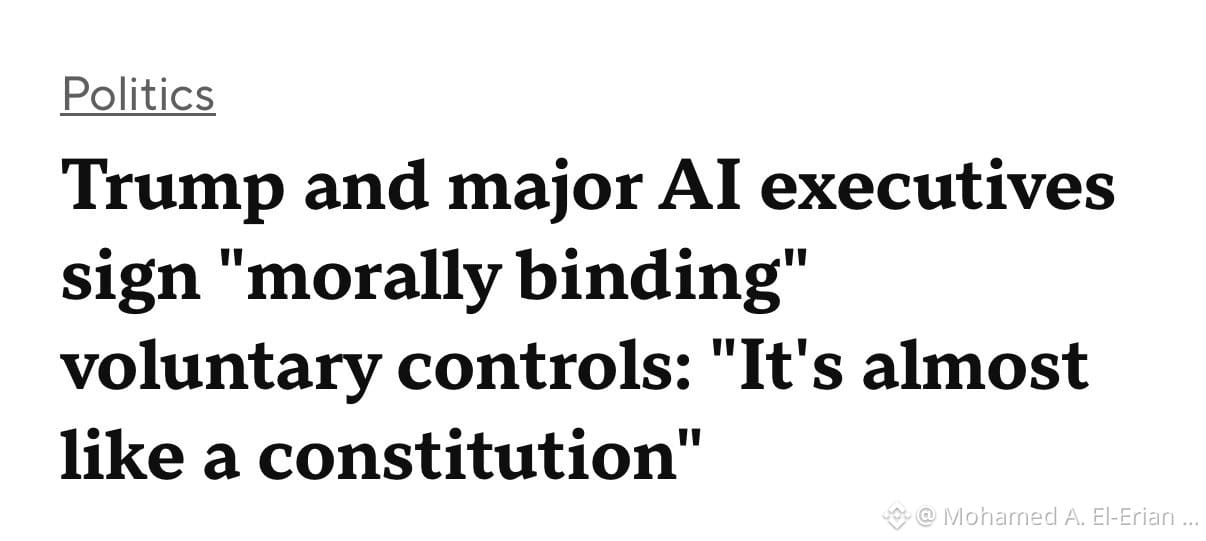
Even before participants had the opportunity to review the actual document, the preliminary feedback during my meeting was incredibly diverse. Opinions ultimately stretched between two polar opposites. On one side of the spectrum, some believe that a combination of self-policing and group-policing will be successful, which would generate positive outcomes and increased potential for both investors and the industry. The opposing perspective warns that this strategy will collapse, inevitably causing an involuntary sudden stop that brings harm to the sector, its financial backers, and society at large. Regardless of where individuals stand on the matter, it is absolutely clear that this ongoing discussion is far from over. You can find the referenced CBS headline just below.
#economy #ai #tech #si #markets
Even before participants had the opportunity to review the actual document, the preliminary feedback during my meeting was incredibly diverse. Opinions ultimately stretched between two polar opposites. On one side of the spectrum, some believe that a combination of self-policing and group-policing will be successful, which would generate positive outcomes and increased potential for both investors and the industry. The opposing perspective warns that this strategy will collapse, inevitably causing an involuntary sudden stop that brings harm to the sector, its financial backers, and society at large. Regardless of where individuals stand on the matter, it is absolutely clear that this ongoing discussion is far from over. You can find the referenced CBS headline just below.
#economy #ai #tech #si #markets
#economy #ai #tech #si #markets
59
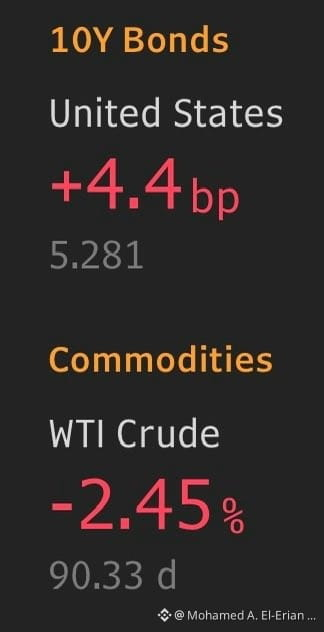
We are seeing a growing trend where oil prices and sovereign bond yields move in entirely separate directions, meaning the current trading session is certainly not the first to witness this split. As this divergence occurs much more often, it brings a couple of important realities to light. For one, the sustained upward momentum in yields is being pushed by factors well outside the energy sector. Additionally, it is simply a waiting game until expanding credit spreads create an extra obstacle, which will inevitably drive up the cost of borrowing for both businesses and everyday households.
#economy #markets
We are seeing a growing trend where oil prices and sovereign bond yields move in entirely separate directions, meaning the current trading session is certainly not the first to witness this split. As this divergence occurs much more often, it brings a couple of important realities to light. For one, the sustained upward momentum in yields is being pushed by factors well outside the energy sector. Additionally, it is simply a waiting game until expanding credit spreads create an extra obstacle, which will inevitably drive up the cost of borrowing for both businesses and everyday households.
#economy #markets
#economy #markets
466
Partiellement vrai
Even though recent United States economic indicators have fallen short of predictions across both hard and soft metrics, we are observing a fascinating situation where US yields continue to climb. A prime example of this upward trend is the 30-year US Treasury bond, which has recently soared to its highest peak since the year 2002, despite a backdrop of underwhelming reports.
Taking a closer look at the data, consumer confidence has experienced a significant decline, pushing essential measurements well beneath what experts had forecasted. The general index slipped to 81.9 compared to an anticipated 89.0. At the same time, the assessment of current conditions dropped to 109.3 against a projection of 121.2, and future expectations fell to 63.6 from an estimated 68.5.
Employment figures reflect a similar pattern. The number of open job vacancies came in at 7.228 million, missing the consensus target of 7.27 million. Nevertheless, this collection of weaker data has done little to halt the universal rise in yields that we are currently witnessing across the financial landscape.
#economy #markets
Even though recent United States economic indicators have fallen short of predictions across both hard and soft metrics, we are observing a fascinating situation where US yields continue to climb. A prime example of this upward trend is the 30-year US Treasury bond, which has recently soared to its highest peak since the year 2002, despite a backdrop of underwhelming reports.
Taking a closer look at the data, consumer confidence has experienced a significant decline, pushing essential measurements well beneath what experts had forecasted. The general index slipped to 81.9 compared to an anticipated 89.0. At the same time, the assessment of current conditions dropped to 109.3 against a projection of 121.2, and future expectations fell to 63.6 from an estimated 68.5.
Employment figures reflect a similar pattern. The number of open job vacancies came in at 7.228 million, missing the consensus target of 7.27 million. Nevertheless, this collection of weaker data has done little to halt the universal rise in yields that we are currently witnessing across the financial landscape.
#economy #markets
Taking a closer look at the data, consumer confidence has experienced a significant decline, pushing essential measurements well beneath what experts had forecasted. The general index slipped to 81.9 compared to an anticipated 89.0. At the same time, the assessment of current conditions dropped to 109.3 against a projection of 121.2, and future expectations fell to 63.6 from an estimated 68.5.
Employment figures reflect a similar pattern. The number of open job vacancies came in at 7.228 million, missing the consensus target of 7.27 million. Nevertheless, this collection of weaker data has done little to halt the universal rise in yields that we are currently witnessing across the financial landscape.
#economy #markets
TLTETF-0,27%
573
Contesté
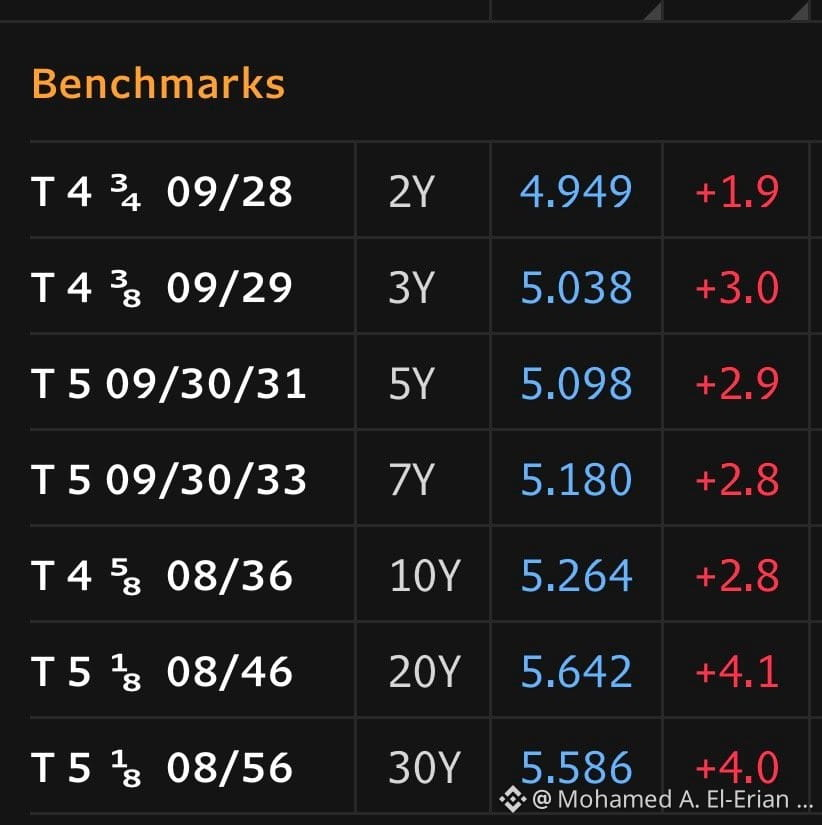
To understand the current standing of the US Treasury curve, please refer to the details provided below. A quick review of this Bloomberg screen reveals that every maturity rate has successfully crossed the 5% threshold, leaving the 2-year note as the sole exception.
This unique landscape presents quite a complex dilemma for various investors. On one hand, they can choose to act now and secure the highest nominal and real yields available in years. On the other hand, they might prefer to stay on the sidelines. Choosing to wait means watching the market navigate a structural supply and demand imbalance driven by longer-term participants, which is further complicated by unsettling volatility as fast money increasingly steps up to fill the void.
#economy #bonds #markets #yields a
To understand the current standing of the US Treasury curve, please refer to the details provided below. A quick review of this Bloomberg screen reveals that every maturity rate has successfully crossed the 5% threshold, leaving the 2-year note as the sole exception.
This unique landscape presents quite a complex dilemma for various investors. On one hand, they can choose to act now and secure the highest nominal and real yields available in years. On the other hand, they might prefer to stay on the sidelines. Choosing to wait means watching the market navigate a structural supply and demand imbalance driven by longer-term participants, which is further complicated by unsettling volatility as fast money increasingly steps up to fill the void.
#economy #bonds #markets #yields a
This unique landscape presents quite a complex dilemma for various investors. On one hand, they can choose to act now and secure the highest nominal and real yields available in years. On the other hand, they might prefer to stay on the sidelines. Choosing to wait means watching the market navigate a structural supply and demand imbalance driven by longer-term participants, which is further complicated by unsettling volatility as fast money increasingly steps up to fill the void.
#economy #bonds #markets #yields a
IEFETF-0,27%
1.7k
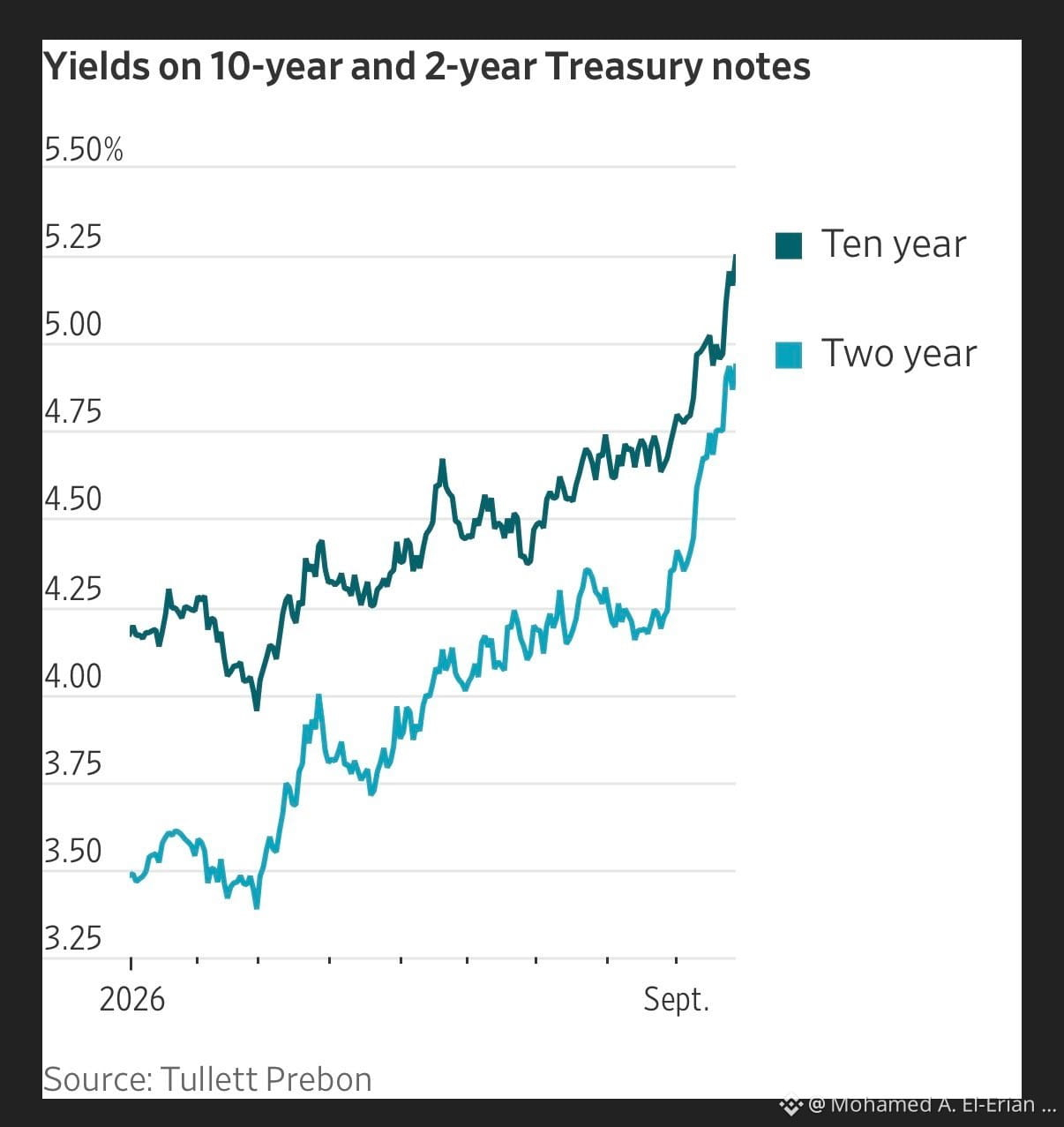
Following a sudden spike across every maturity level, US Treasury yields have managed to level off today. This steadiness might just be a temporary pause, but the situation has calmed down for the time being, as illustrated in the WSJ chart provided below.
#economy #markets #bonds #yields
Following a sudden spike across every maturity level, US Treasury yields have managed to level off today. This steadiness might just be a temporary pause, but the situation has calmed down for the time being, as illustrated in the WSJ chart provided below.
#economy #markets #bonds #yields
#economy #markets #bonds #yields
SHYETF-0,25%
IEFETF-0,27%
1
376
Over the next few years, the world of finance is going to be driven by a pair of major, long-term trends that happen to be moving in completely opposite directions. Groundbreaking technological advancements are sparking transformation from the ground up, while at the same time, geoeconomic forces are imposing new pressures from the top down. I explore these dynamics in my recent Project Syndicate column, noting that both financial institutions and their regulators will need to make substantial adjustments to navigate this complex landscape. Because these two forces are pulling against one another, the ultimate outcome is still very much up in the air. Feel free to check out the complete discussion using the link provided here.
https://www.project-syndicate.org/commentary/financial-industry-must-adapt-to-world-of-ai-digitalization-government-interventions-by-mohamed-a-el-erian-2026-09
#economy #markets #finance #tech #geoeconomics
Over the next few years, the world of finance is going to be driven by a pair of major, long-term trends that happen to be moving in completely opposite directions. Groundbreaking technological advancements are sparking transformation from the ground up, while at the same time, geoeconomic forces are imposing new pressures from the top down. I explore these dynamics in my recent Project Syndicate column, noting that both financial institutions and their regulators will need to make substantial adjustments to navigate this complex landscape. Because these two forces are pulling against one another, the ultimate outcome is still very much up in the air. Feel free to check out the complete discussion using the link provided here.
https://www.project-syndicate.org/commentary/financial-industry-must-adapt-to-world-of-ai-digitalization-government-interventions-by-mohamed-a-el-erian-2026-09
#economy #markets #finance #tech #geoeconomics
https://www.project-syndicate.org/commentary/financial-industry-must-adapt-to-world-of-ai-digitalization-government-interventions-by-mohamed-a-el-erian-2026-09
#economy #markets #finance #tech #geoeconomics
31
A sincere thanks to Andrew and Becky for a truly engaging dialogue earlier today on CNBC's Squawk Box. For those interested in viewing our morning discussion, you can access the clips via the URLs provided below.
https://www.cnbc.com/video/2026/09/28/watch-cnbcas-full-interview-with-allianzas-mohamed-el-erian.html
https://www.cnbc.com/video/2026/09/28/mohamed-el-erian-on-why-weall-be-talking-more-about-the-k-shaped-economy.html
@CNBC @SquawkCNBC #economy #markets #cnbc @BeckyQuick @andrewrsorkin
A sincere thanks to Andrew and Becky for a truly engaging dialogue earlier today on CNBC's Squawk Box. For those interested in viewing our morning discussion, you can access the clips via the URLs provided below.
https://www.cnbc.com/video/2026/09/28/watch-cnbcas-full-interview-with-allianzas-mohamed-el-erian.html
https://www.cnbc.com/video/2026/09/28/mohamed-el-erian-on-why-weall-be-talking-more-about-the-k-shaped-economy.html
@CNBC @SquawkCNBC #economy #markets #cnbc @BeckyQuick @andrewrsorkin
https://www.cnbc.com/video/2026/09/28/watch-cnbcas-full-interview-with-allianzas-mohamed-el-erian.html
https://www.cnbc.com/video/2026/09/28/mohamed-el-erian-on-why-weall-be-talking-more-about-the-k-shaped-economy.html
@CNBC @SquawkCNBC #economy #markets #cnbc @BeckyQuick @andrewrsorkin
IEFETF-0,27%
52
Could we be experiencing a revival of the US policy approach seen in the early 1980s?
Because there are currently no indications of serious fiscal consolidation, financial markets are leaning heavily on the Federal Reserve to fight off sudden price shocks. I covered the finer details of this situation in my FT column published a week ago.
If this trend keeps up for an extended period, our broad policy environment will bear a striking resemblance to that of the early 1980s. That era was defined by a severe lack of fiscal restraint alongside an overreliance on monetary tightening. Such a dynamic generally acts as a barrier to balanced economic growth, as it tends to strengthen the US dollar while squeezing sectors that are highly sensitive to interest rates.
Despite this historical comparison, there is a reassuring silver lining for us today. The positive productivity shock we are currently experiencing is anticipated to yield results much faster than the one from that past period, which did not actually take full effect until the 1990s.
#economy #markets #growth #federalreserve #monetarypolicy #fiscalpolicy #budget
Could we be experiencing a revival of the US policy approach seen in the early 1980s?
Because there are currently no indications of serious fiscal consolidation, financial markets are leaning heavily on the Federal Reserve to fight off sudden price shocks. I covered the finer details of this situation in my FT column published a week ago.
If this trend keeps up for an extended period, our broad policy environment will bear a striking resemblance to that of the early 1980s. That era was defined by a severe lack of fiscal restraint alongside an overreliance on monetary tightening. Such a dynamic generally acts as a barrier to balanced economic growth, as it tends to strengthen the US dollar while squeezing sectors that are highly sensitive to interest rates.
Despite this historical comparison, there is a reassuring silver lining for us today. The positive productivity shock we are currently experiencing is anticipated to yield results much faster than the one from that past period, which did not actually take full effect until the 1990s.
#economy #markets #growth #federalreserve #monetarypolicy #fiscalpolicy #budget
Because there are currently no indications of serious fiscal consolidation, financial markets are leaning heavily on the Federal Reserve to fight off sudden price shocks. I covered the finer details of this situation in my FT column published a week ago.
If this trend keeps up for an extended period, our broad policy environment will bear a striking resemblance to that of the early 1980s. That era was defined by a severe lack of fiscal restraint alongside an overreliance on monetary tightening. Such a dynamic generally acts as a barrier to balanced economic growth, as it tends to strengthen the US dollar while squeezing sectors that are highly sensitive to interest rates.
Despite this historical comparison, there is a reassuring silver lining for us today. The positive productivity shock we are currently experiencing is anticipated to yield results much faster than the one from that past period, which did not actually take full effect until the 1990s.
#economy #markets #growth #federalreserve #monetarypolicy #fiscalpolicy #budget
50
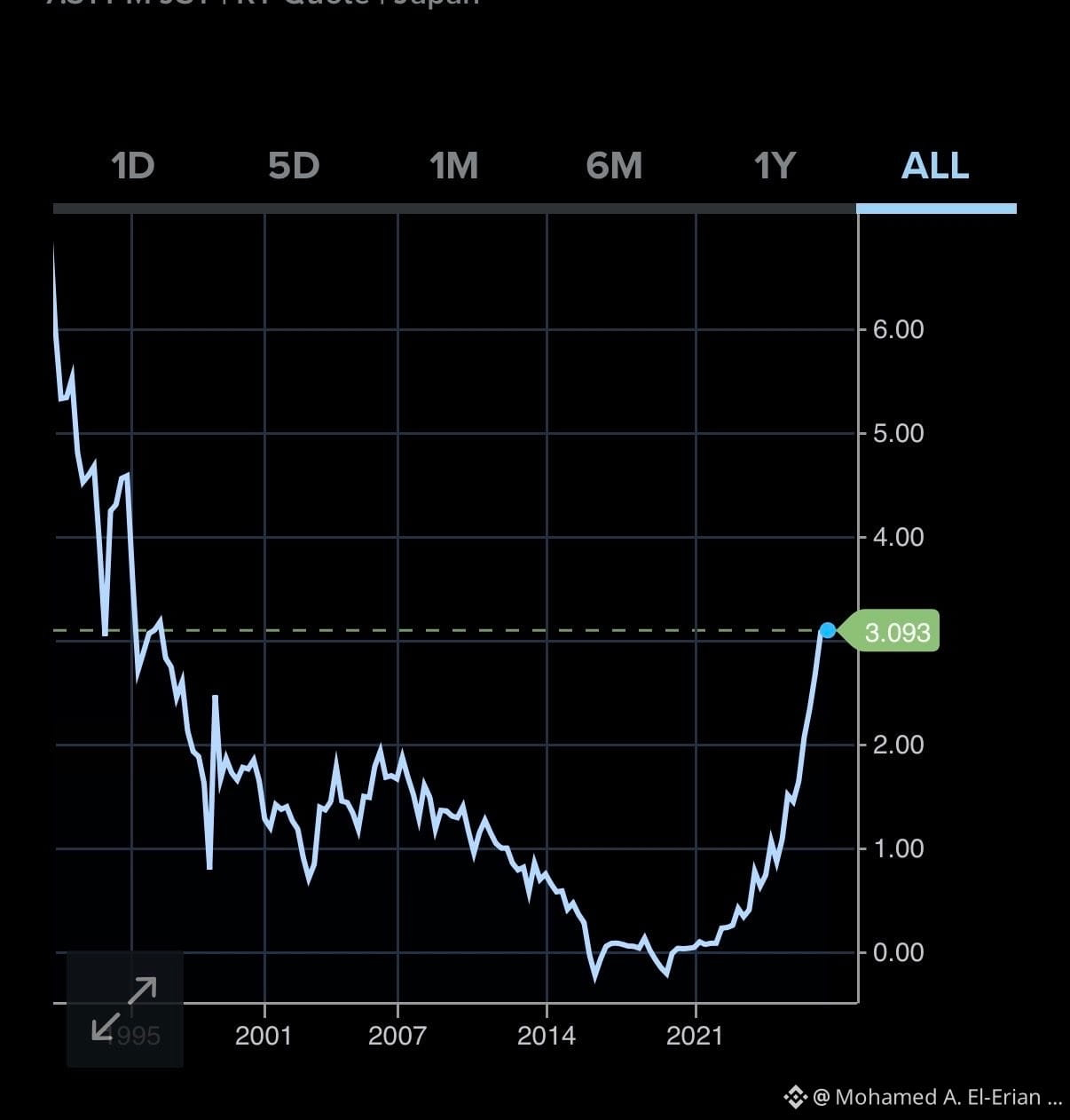
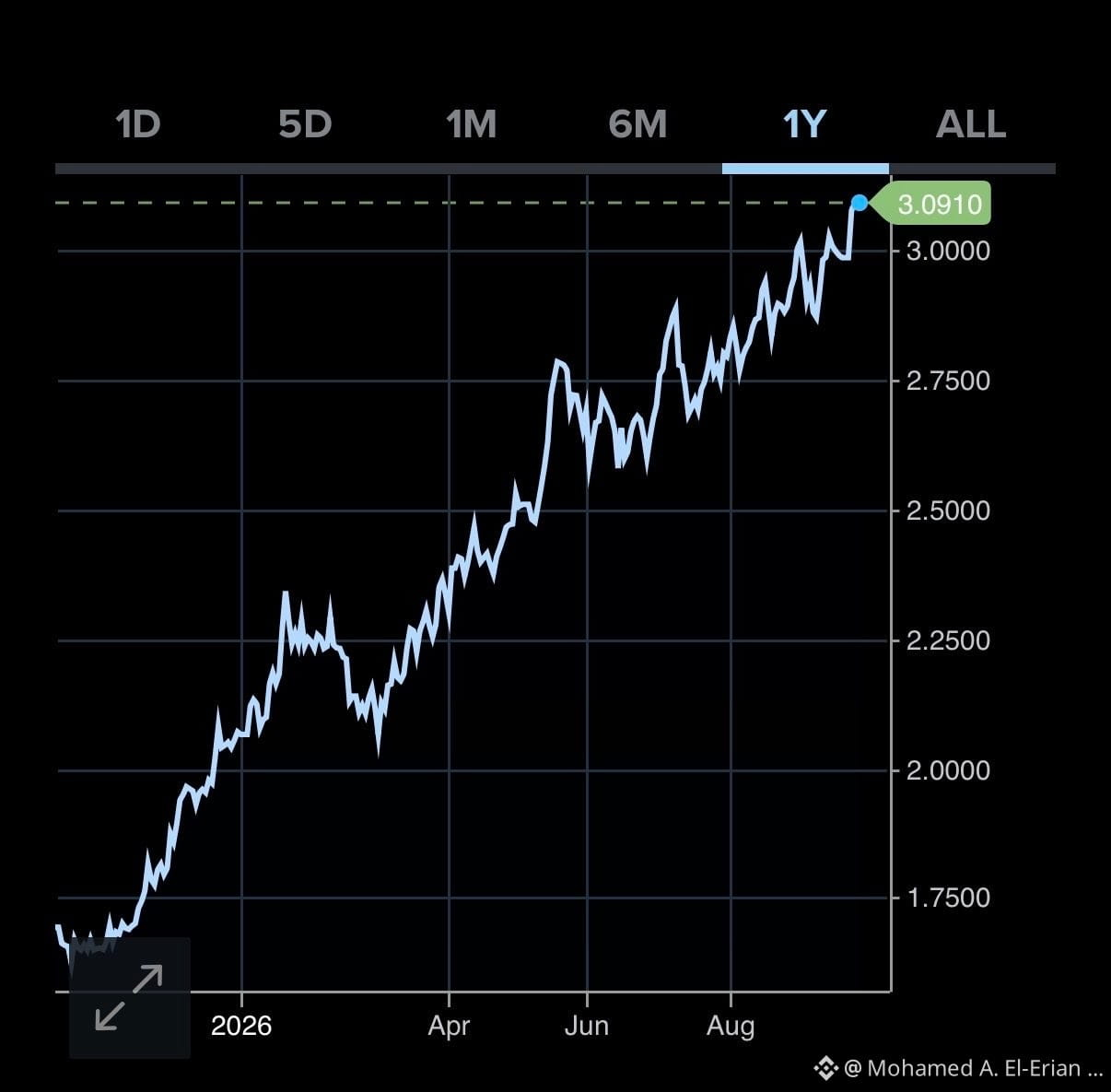
When thinking about yields, it is a good idea to monitor the UK, France, and Japan, as they currently represent three notable points of fragility within the G7. Taking a closer look at Japan specifically, the national currency continues to struggle even with 10-year JGB yields approaching 3.10%, a peak not seen in three decades. Changes in the US bond sector rarely stay isolated domestically, and in a very similar way, the ongoing currency and bond tensions in Japan are creating global spillovers. If this financial environment drags on, there is a growing danger that the US Treasury market could eventually lose a highly dependable, long-term purchaser.
#economy #markets #bonds #yields
When thinking about yields, it is a good idea to monitor the UK, France, and Japan, as they currently represent three notable points of fragility within the G7. Taking a closer look at Japan specifically, the national currency continues to struggle even with 10-year JGB yields approaching 3.10%, a peak not seen in three decades. Changes in the US bond sector rarely stay isolated domestically, and in a very similar way, the ongoing currency and bond tensions in Japan are creating global spillovers. If this financial environment drags on, there is a growing danger that the US Treasury market could eventually lose a highly dependable, long-term purchaser.
#economy #markets #bonds #yields
#economy #markets #bonds #yields
90
Wishing everyone a good morning.
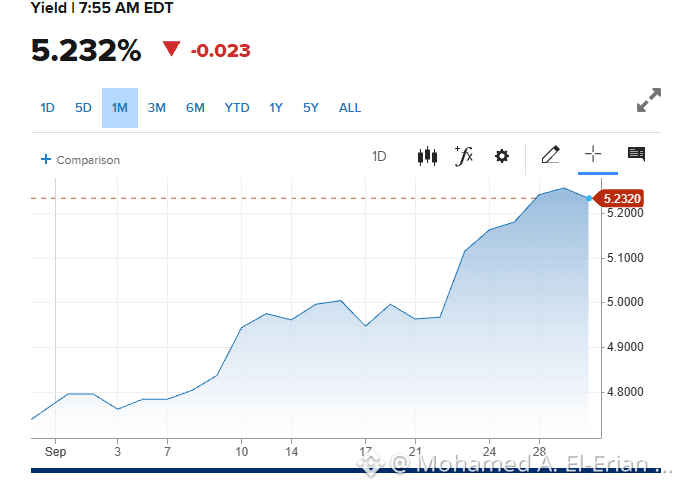
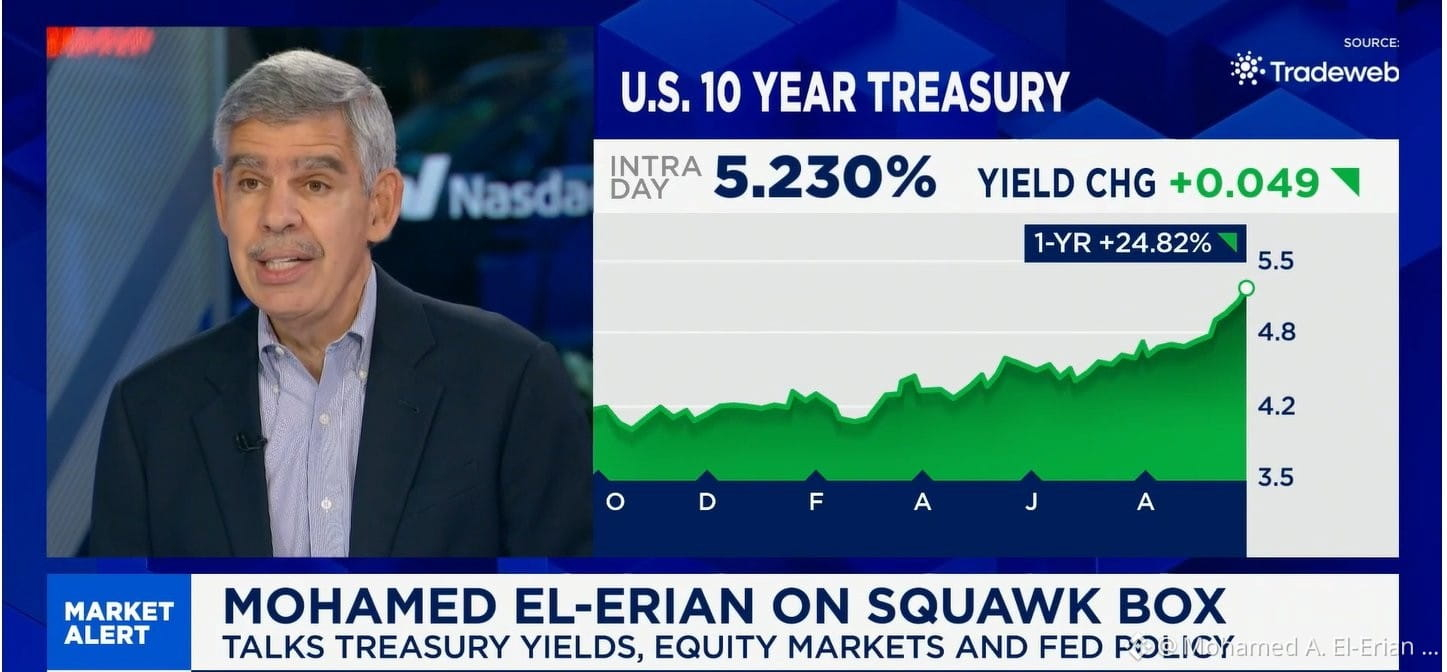
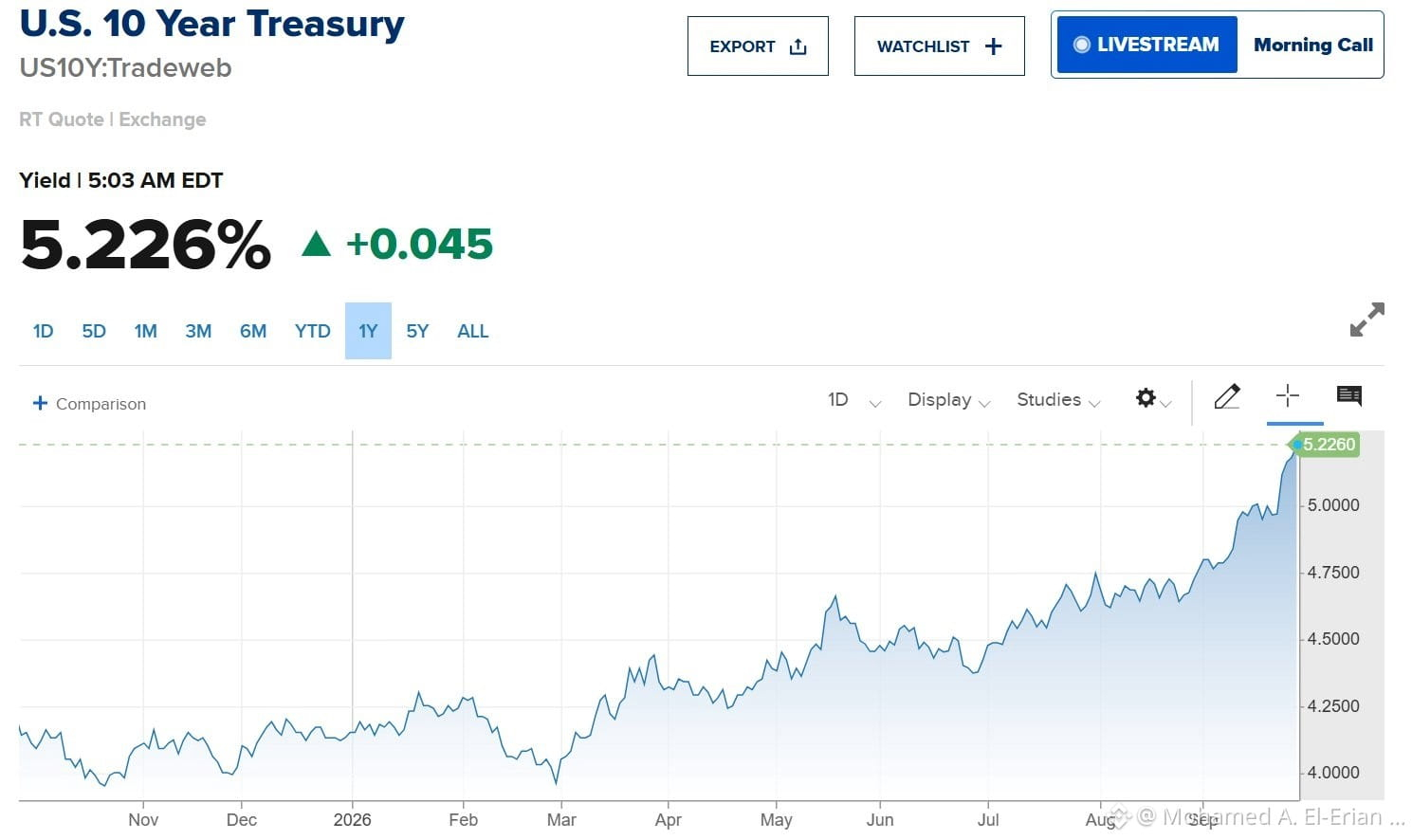
The spotlight in the financial markets has returned to US bond yields today. Notably, the 10-year yield has climbed to 5.22%, marking its highest point since 2002. Concurrently, the price of Brent oil is drawing closer to the $110 mark.
Please refer to the CNBC chart provided below for a visual representation.
#economy #markets #oil #energy #bonds #yields
Wishing everyone a good morning.
The spotlight in the financial markets has returned to US bond yields today. Notably, the 10-year yield has climbed to 5.22%, marking its highest point since 2002. Concurrently, the price of Brent oil is drawing closer to the $110 mark.
Please refer to the CNBC chart provided below for a visual representation.
#economy #markets #oil #energy #bonds #yields
The spotlight in the financial markets has returned to US bond yields today. Notably, the 10-year yield has climbed to 5.22%, marking its highest point since 2002. Concurrently, the price of Brent oil is drawing closer to the $110 mark.
Please refer to the CNBC chart provided below for a visual representation.
#economy #markets #oil #energy #bonds #yields
329
Connectez-vous pour découvrir plus de contenu
Rejoignez la communauté mondiale des adeptes de cryptomonnaies sur Binance Square
⚡️ Suviez les dernières informations importantes sur les cryptomonnaies.
💬 Jugé digne de confiance par la plus grande plateforme d’échange de cryptomonnaies au monde.
👍 Découvrez les connaissances que partagent les créateurs vérifiés.
Adresse e-mail/Nº de téléphone
Sujets d’actualité
US10YearYieldNears5.3%
582 vues
34 mentions
#US10YearYieldNears5.3%
📊 BOND YIELDS AT MULTI-YEAR HIGHS!
The US 10-year Treasury yield approaching 5.3% is creating a major talking point across global financial markets. Rising yields reflect changing expectations around inflation, economic growth, and government borrowing.
🌍 What makes this situation particularly interesting is the impact on crypto sentiment. Higher bond yields may reduce demand for riskier assets, while persistent institutional interest could provide some support to crypto markets.
₿ The real question is: Can Bitcoin maintain its strength while traditional financial markets face rising borrowing costs?
💡 Sometimes, the biggest market signals come from outside the crypto market.
#Bitcoin #CryptoMarket #US10YearYield #TreasuryYields #BTC $BTC
PALASH5
·0 mentions J’aime
·344 vues
BitcoinETFsTake$6.34BillionInQ3
53 vues
8 mentions
KoreaProposesTokenizingStocksAndBonds
22,393 vues
321 mentions