

Blockchain Bella
145 Publications
Blockchain Bella
Signaler
Bloquer l’utilisateur
Crypto investor focused on fundamentals | Long-term vision, calculated moves | Finance meets strategy.
Ouvert au trading
Trade régulièrement
2.2 an(s)
406 Suivis
67 Abonnés
82 J’aime
Publications
Portefeuille
#dusk $DUSK @Dusk_Foundation DUSK: Privacy That Still Has to Prove Itself
Sometimes I wonder what privacy really means on a public blockchain.
DUSK approaches the problem differently. Instead of simply hiding information, its architecture separates what needs to be private from what still needs to be verified.
With public and shielded transaction models, users can keep sensitive financial details protected while still allowing the network to confirm that the rules were followed.
The interesting part is the trade-off.
Traditional blockchains prioritize transparency, but financial applications often need confidentiality. Fully private systems, on the other hand, can make verification harder.
DUSK is trying to sit between those extremes by combining privacy tools, smart contracts, and compliance-focused infrastructure.
For me, the bigger question isn’t whether privacy sounds good.
It’s whether developers, institutions, and users actually find enough value to build and stay.
That’s the part worth watching.
Sometimes the real story isn’t the technology itself, but what people eventually do with it.@Dusk_Foundation
#dusk $DUSK @Dusk DUSK: Privacy That Still Has to Prove Itself
Sometimes I wonder what privacy really means on a public blockchain.
DUSK approaches the problem differently. Instead of simply hiding information, its architecture separates what needs to be private from what still needs to be verified.
With public and shielded transaction models, users can keep sensitive financial details protected while still allowing the network to confirm that the rules were followed.
The interesting part is the trade-off.
Traditional blockchains prioritize transparency, but financial applications often need confidentiality. Fully private systems, on the other hand, can make verification harder.
DUSK is trying to sit between those extremes by combining privacy tools, smart contracts, and compliance-focused infrastructure.
For me, the bigger question isn’t whether privacy sounds good.
It’s whether developers, institutions, and users actually find enough value to build and stay.
That’s the part worth watching.
Sometimes the real story isn’t the technology itself, but what people eventually do with it.@Dusk
Sometimes I wonder what privacy really means on a public blockchain.
DUSK approaches the problem differently. Instead of simply hiding information, its architecture separates what needs to be private from what still needs to be verified.
With public and shielded transaction models, users can keep sensitive financial details protected while still allowing the network to confirm that the rules were followed.
The interesting part is the trade-off.
Traditional blockchains prioritize transparency, but financial applications often need confidentiality. Fully private systems, on the other hand, can make verification harder.
DUSK is trying to sit between those extremes by combining privacy tools, smart contracts, and compliance-focused infrastructure.
For me, the bigger question isn’t whether privacy sounds good.
It’s whether developers, institutions, and users actually find enough value to build and stay.
That’s the part worth watching.
Sometimes the real story isn’t the technology itself, but what people eventually do with it.@Dusk
95
#dusk $DUSK @Dusk_Foundation DUSK: The Missing Layer of Financial Privacy
The more I look into DUSK, the more I think blockchain privacy is being discussed from the wrong angle.
The question isn’t simply:
“How do we hide transactions?”
The better question is:
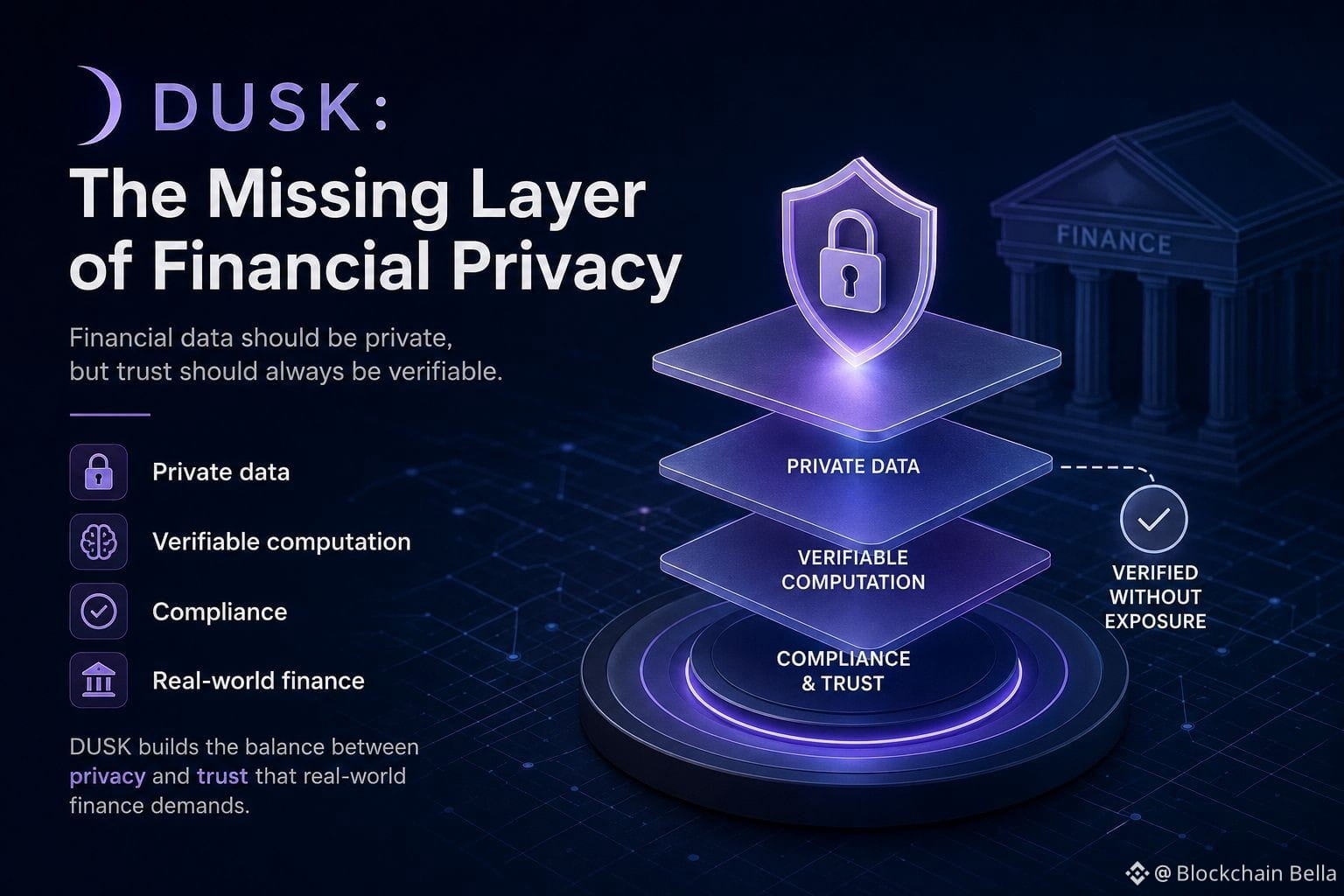
“How can financial data stay private while the network still proves everything is valid?”
That distinction matters.
Traditional finance depends on sensitive data, regulatory requirements, and controlled access. A fully transparent blockchain can expose too much, while a completely private system can make verification difficult.
DUSK explores a middle ground — using privacy-preserving technology and zero-knowledge proofs to keep sensitive information confidential while maintaining verifiability.
🔐 Private data
🧠 Verifiable computation
✅ Compliance
🏦 Real-world finance
That’s why I don’t see DUSK as simply a “privacy blockchain.”
I see it as an attempt to build financial infrastructure where privacy doesn’t come at the cost of trust.
And if blockchain is going to enter real-world finance, that balance could be one of its most important missing pieces.@Dusk_Foundation
#dusk $DUSK @Dusk DUSK: The Missing Layer of Financial Privacy
The more I look into DUSK, the more I think blockchain privacy is being discussed from the wrong angle.
The question isn’t simply:
“How do we hide transactions?”
The better question is:
“How can financial data stay private while the network still proves everything is valid?”
That distinction matters.
Traditional finance depends on sensitive data, regulatory requirements, and controlled access. A fully transparent blockchain can expose too much, while a completely private system can make verification difficult.
DUSK explores a middle ground — using privacy-preserving technology and zero-knowledge proofs to keep sensitive information confidential while maintaining verifiability.
🔐 Private data
🧠 Verifiable computation
✅ Compliance
🏦 Real-world finance
That’s why I don’t see DUSK as simply a “privacy blockchain.”
I see it as an attempt to build financial infrastructure where privacy doesn’t come at the cost of trust.
And if blockchain is going to enter real-world finance, that balance could be one of its most important missing pieces.@Dusk
The more I look into DUSK, the more I think blockchain privacy is being discussed from the wrong angle.
The question isn’t simply:
“How do we hide transactions?”
The better question is:
“How can financial data stay private while the network still proves everything is valid?”
That distinction matters.
Traditional finance depends on sensitive data, regulatory requirements, and controlled access. A fully transparent blockchain can expose too much, while a completely private system can make verification difficult.
DUSK explores a middle ground — using privacy-preserving technology and zero-knowledge proofs to keep sensitive information confidential while maintaining verifiability.
🔐 Private data
🧠 Verifiable computation
✅ Compliance
🏦 Real-world finance
That’s why I don’t see DUSK as simply a “privacy blockchain.”
I see it as an attempt to build financial infrastructure where privacy doesn’t come at the cost of trust.
And if blockchain is going to enter real-world finance, that balance could be one of its most important missing pieces.@Dusk
78
#dusk $DUSK @Dusk_Foundation DUSK RWA: The Bigger Idea Behind Privacy 🔏
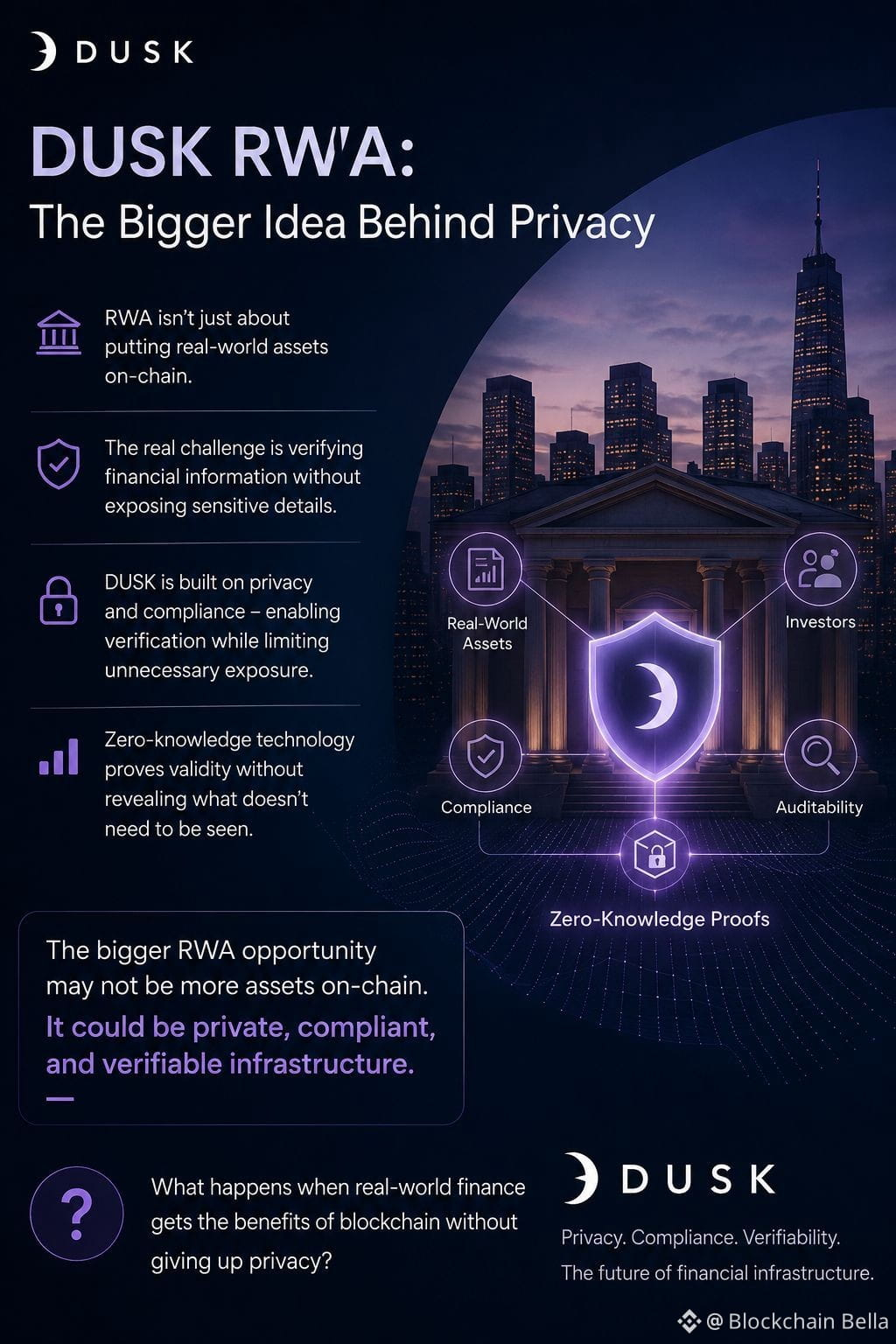
When I first looked at RWA, I thought the challenge was simply putting real-world assets on-chain.
But there’s a deeper problem: how do you make those assets verifiable without exposing every sensitive detail?
This is where @Dusk gets interesting.
DUSK is designed around privacy and compliance, allowing financial information to be verified while limiting unnecessary exposure.
For tokenized assets, that trade-off matters.
Institutions may want blockchain settlement, transparency and auditability — but they also cannot put every balance, transaction and investor detail into a completely public environment.
Zero-knowledge technology can help prove that something is valid without revealing everything behind the proof.
So the bigger RWA opportunity may not be “more assets on-chain.”
It could be private, compliant and verifiable financial infrastructure.
And that makes me wonder:
What happens when real-world finance gets the benefits of blockchain without giving up privacy?@Dusk_Foundation
#dusk $DUSK @Dusk DUSK RWA: The Bigger Idea Behind Privacy 🔏
When I first looked at RWA, I thought the challenge was simply putting real-world assets on-chain.
But there’s a deeper problem: how do you make those assets verifiable without exposing every sensitive detail?
This is where @Dusk gets interesting.
DUSK is designed around privacy and compliance, allowing financial information to be verified while limiting unnecessary exposure.
For tokenized assets, that trade-off matters.
Institutions may want blockchain settlement, transparency and auditability — but they also cannot put every balance, transaction and investor detail into a completely public environment.
Zero-knowledge technology can help prove that something is valid without revealing everything behind the proof.
So the bigger RWA opportunity may not be “more assets on-chain.”
It could be private, compliant and verifiable financial infrastructure.
And that makes me wonder:
What happens when real-world finance gets the benefits of blockchain without giving up privacy?@Dusk
When I first looked at RWA, I thought the challenge was simply putting real-world assets on-chain.
But there’s a deeper problem: how do you make those assets verifiable without exposing every sensitive detail?
This is where @Dusk gets interesting.
DUSK is designed around privacy and compliance, allowing financial information to be verified while limiting unnecessary exposure.
For tokenized assets, that trade-off matters.
Institutions may want blockchain settlement, transparency and auditability — but they also cannot put every balance, transaction and investor detail into a completely public environment.
Zero-knowledge technology can help prove that something is valid without revealing everything behind the proof.
So the bigger RWA opportunity may not be “more assets on-chain.”
It could be private, compliant and verifiable financial infrastructure.
And that makes me wonder:
What happens when real-world finance gets the benefits of blockchain without giving up privacy?@Dusk
1
84
#dusk $DUSK @Dusk_Foundation Once upon a time… 🌙
I had a friend who was going through a really difficult financial phase. There were days when she didn’t even have enough money for her phone package.
She started doing small online jobs just to get by.
Then one day, she found @Dusk.
At first, she bought a little DUSK out of curiosity. But instead of only watching the price, she started learning about the project, exploring trading, staking, and understanding how privacy and compliance could work together on-chain.
What really caught her attention was the technology behind it — especially zero-knowledge proofs, which can help verify that something is valid without exposing every piece of sensitive information.
Slowly, things started changing.
She became more confident, learned from her mistakes, and kept building.
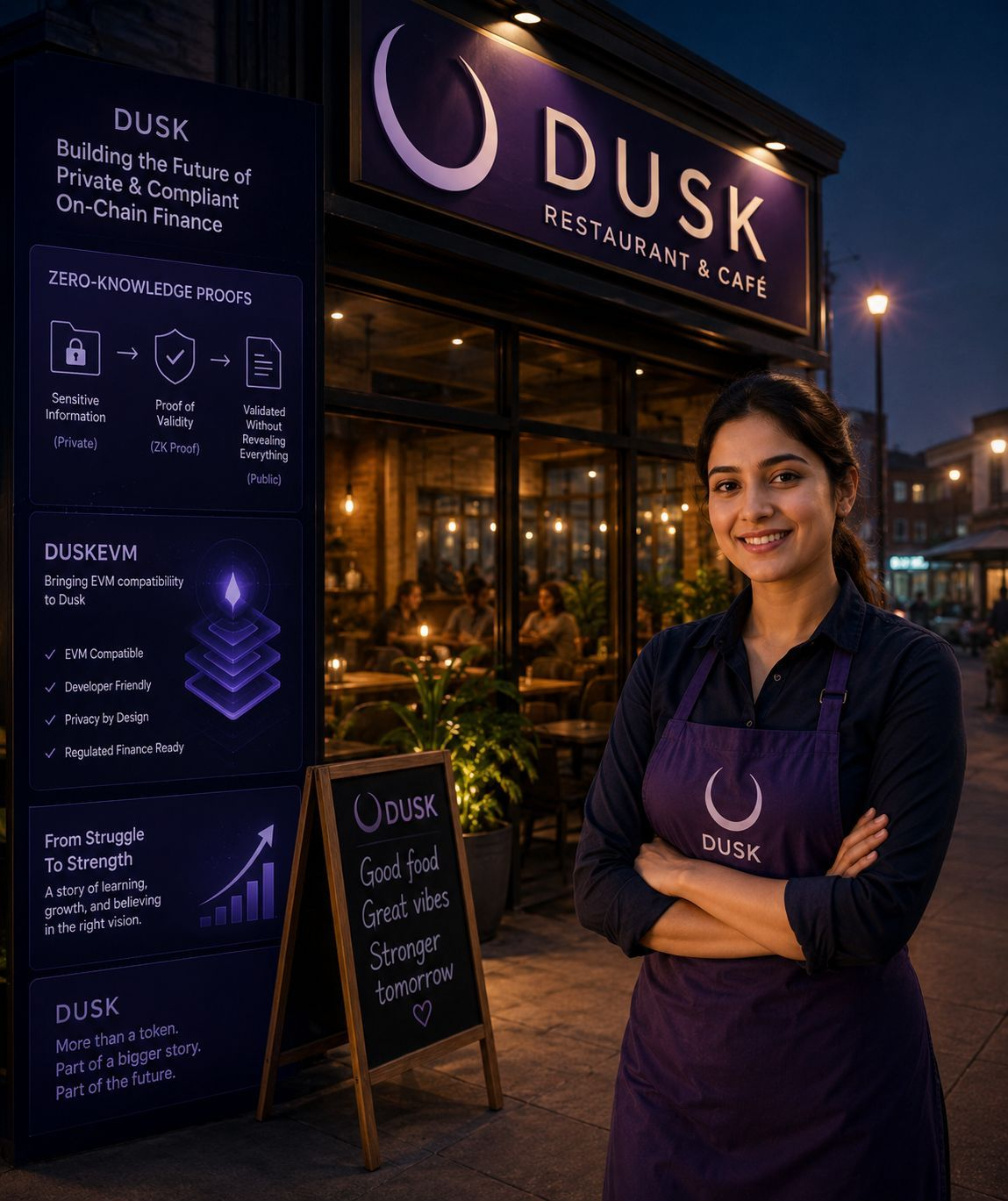
And today, she has opened a small restaurant with “DUSK” in its name.
Dusk itself is evolving too. With DuskEVM, it’s bringing EVM compatibility to the ecosystem, making it easier for developers and Ethereum-based applications to connect with Dusk while keeping privacy and regulated financial use cases in focus.
For her, DUSK isn’t just a token anymore.
@Dusk_Foundation
It’s a small part of a much bigger story.
#dusk $DUSK @Dusk Once upon a time… 🌙
I had a friend who was going through a really difficult financial phase. There were days when she didn’t even have enough money for her phone package.
She started doing small online jobs just to get by.
Then one day, she found @Dusk.
At first, she bought a little DUSK out of curiosity. But instead of only watching the price, she started learning about the project, exploring trading, staking, and understanding how privacy and compliance could work together on-chain.
What really caught her attention was the technology behind it — especially zero-knowledge proofs, which can help verify that something is valid without exposing every piece of sensitive information.
Slowly, things started changing.
She became more confident, learned from her mistakes, and kept building.
And today, she has opened a small restaurant with “DUSK” in its name.
Dusk itself is evolving too. With DuskEVM, it’s bringing EVM compatibility to the ecosystem, making it easier for developers and Ethereum-based applications to connect with Dusk while keeping privacy and regulated financial use cases in focus.
For her, DUSK isn’t just a token anymore.
@Dusk
It’s a small part of a much bigger story.
I had a friend who was going through a really difficult financial phase. There were days when she didn’t even have enough money for her phone package.
She started doing small online jobs just to get by.
Then one day, she found @Dusk.
At first, she bought a little DUSK out of curiosity. But instead of only watching the price, she started learning about the project, exploring trading, staking, and understanding how privacy and compliance could work together on-chain.
What really caught her attention was the technology behind it — especially zero-knowledge proofs, which can help verify that something is valid without exposing every piece of sensitive information.
Slowly, things started changing.
She became more confident, learned from her mistakes, and kept building.
And today, she has opened a small restaurant with “DUSK” in its name.
Dusk itself is evolving too. With DuskEVM, it’s bringing EVM compatibility to the ecosystem, making it easier for developers and Ethereum-based applications to connect with Dusk while keeping privacy and regulated financial use cases in focus.
For her, DUSK isn’t just a token anymore.
@Dusk
It’s a small part of a much bigger story.
3
2
89
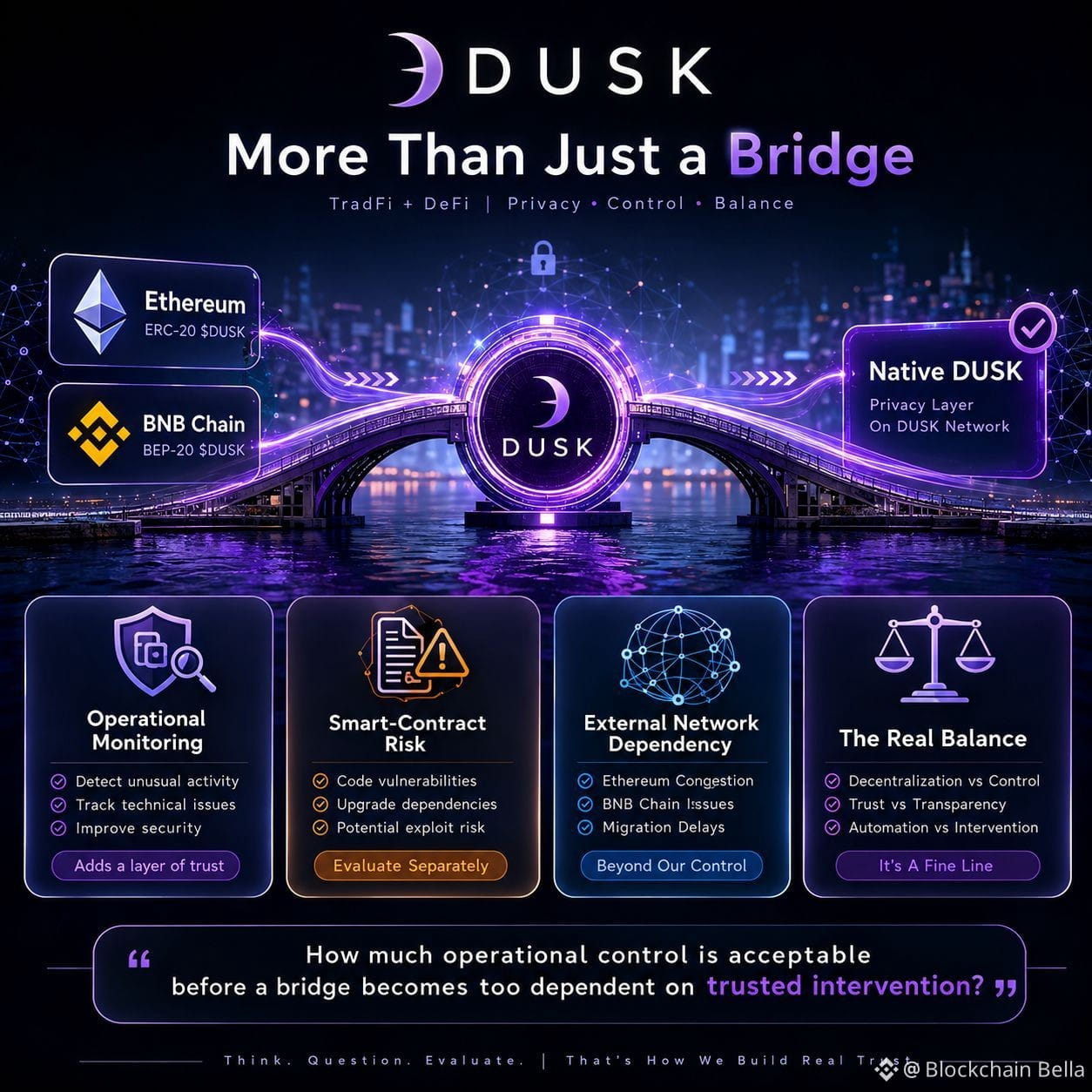
#dusk $DUSK @Dusk_Foundation Dusk is building more than a TradFi + DeFi bridge.
While looking deeper into DUSK’s Bridge and migration system, I noticed something interesting.
At first, it looks simple: move ERC-20 or BEP-20 $DUSK to Native DUSK, and migrate it back when needed.
But the real question isn’t just how tokens move.
It’s who controls the bridge when something goes wrong?
Operational monitoring can help detect unusual activity and technical issues quickly, which is obviously valuable for security.
But it also introduces an important trade-off:
More operational control can mean another layer of trust.
Then there’s smart-contract risk and dependency on external networks like Ethereum and BNB Chain. Congestion or issues on those networks could potentially affect the migration process.
I’m not saying DUSK Bridge is unsafe.
I’m saying security and trust assumptions should be evaluated separately.
So my question is:
How much operational control is acceptable before a bridge becomes too dependent on trusted intervention?@Dusk_Foundation
#dusk $DUSK @Dusk Dusk is building more than a TradFi + DeFi bridge.
While looking deeper into DUSK’s Bridge and migration system, I noticed something interesting.
At first, it looks simple: move ERC-20 or BEP-20 $DUSK to Native DUSK, and migrate it back when needed.
But the real question isn’t just how tokens move.
It’s who controls the bridge when something goes wrong?
Operational monitoring can help detect unusual activity and technical issues quickly, which is obviously valuable for security.
But it also introduces an important trade-off:
More operational control can mean another layer of trust.
Then there’s smart-contract risk and dependency on external networks like Ethereum and BNB Chain. Congestion or issues on those networks could potentially affect the migration process.
I’m not saying DUSK Bridge is unsafe.
I’m saying security and trust assumptions should be evaluated separately.
So my question is:
How much operational control is acceptable before a bridge becomes too dependent on trusted intervention?@Dusk
While looking deeper into DUSK’s Bridge and migration system, I noticed something interesting.
At first, it looks simple: move ERC-20 or BEP-20 $DUSK to Native DUSK, and migrate it back when needed.
But the real question isn’t just how tokens move.
It’s who controls the bridge when something goes wrong?
Operational monitoring can help detect unusual activity and technical issues quickly, which is obviously valuable for security.
But it also introduces an important trade-off:
More operational control can mean another layer of trust.
Then there’s smart-contract risk and dependency on external networks like Ethereum and BNB Chain. Congestion or issues on those networks could potentially affect the migration process.
I’m not saying DUSK Bridge is unsafe.
I’m saying security and trust assumptions should be evaluated separately.
So my question is:
How much operational control is acceptable before a bridge becomes too dependent on trusted intervention?@Dusk
1
2
104
#dusk $DUSK @Dusk_Foundation I kept coming back to one question while looking into Dusk:
What if financial privacy doesn’t mean hiding everything?
That’s where Dusk gets interesting.
Its approach is closer to selective visibility — sensitive transaction data can remain confidential, while zero-knowledge proofs can still show that the required conditions were met.
The important part isn’t just privacy.
It’s the possibility of having privacy and verifiability in the same system.
A regulator could verify what matters.
A counterparty could prove what it needs to prove.
And the wider network doesn’t necessarily need access to every underlying detail.
That could make a lot more sense for RWAs and institutional finance than simply putting everything on a transparent ledger.
But I’m still cautious.
Technology can prove that something is valid. Whether regulators and institutions accept that model at scale is a different question.
That’s the part I’ll be watching with Dusk.
Because the real test of confidential finance isn’t whether it works on paper.
It’s whether the real world trusts it.@Dusk_Foundation
#dusk $DUSK @Dusk I kept coming back to one question while looking into Dusk:
What if financial privacy doesn’t mean hiding everything?
That’s where Dusk gets interesting.
Its approach is closer to selective visibility — sensitive transaction data can remain confidential, while zero-knowledge proofs can still show that the required conditions were met.
The important part isn’t just privacy.
It’s the possibility of having privacy and verifiability in the same system.
A regulator could verify what matters.
A counterparty could prove what it needs to prove.
And the wider network doesn’t necessarily need access to every underlying detail.
That could make a lot more sense for RWAs and institutional finance than simply putting everything on a transparent ledger.
But I’m still cautious.
Technology can prove that something is valid. Whether regulators and institutions accept that model at scale is a different question.
That’s the part I’ll be watching with Dusk.
Because the real test of confidential finance isn’t whether it works on paper.
It’s whether the real world trusts it.@Dusk
What if financial privacy doesn’t mean hiding everything?
That’s where Dusk gets interesting.
Its approach is closer to selective visibility — sensitive transaction data can remain confidential, while zero-knowledge proofs can still show that the required conditions were met.
The important part isn’t just privacy.
It’s the possibility of having privacy and verifiability in the same system.
A regulator could verify what matters.
A counterparty could prove what it needs to prove.
And the wider network doesn’t necessarily need access to every underlying detail.
That could make a lot more sense for RWAs and institutional finance than simply putting everything on a transparent ledger.
But I’m still cautious.
Technology can prove that something is valid. Whether regulators and institutions accept that model at scale is a different question.
That’s the part I’ll be watching with Dusk.
Because the real test of confidential finance isn’t whether it works on paper.
It’s whether the real world trusts it.@Dusk
1
1
75
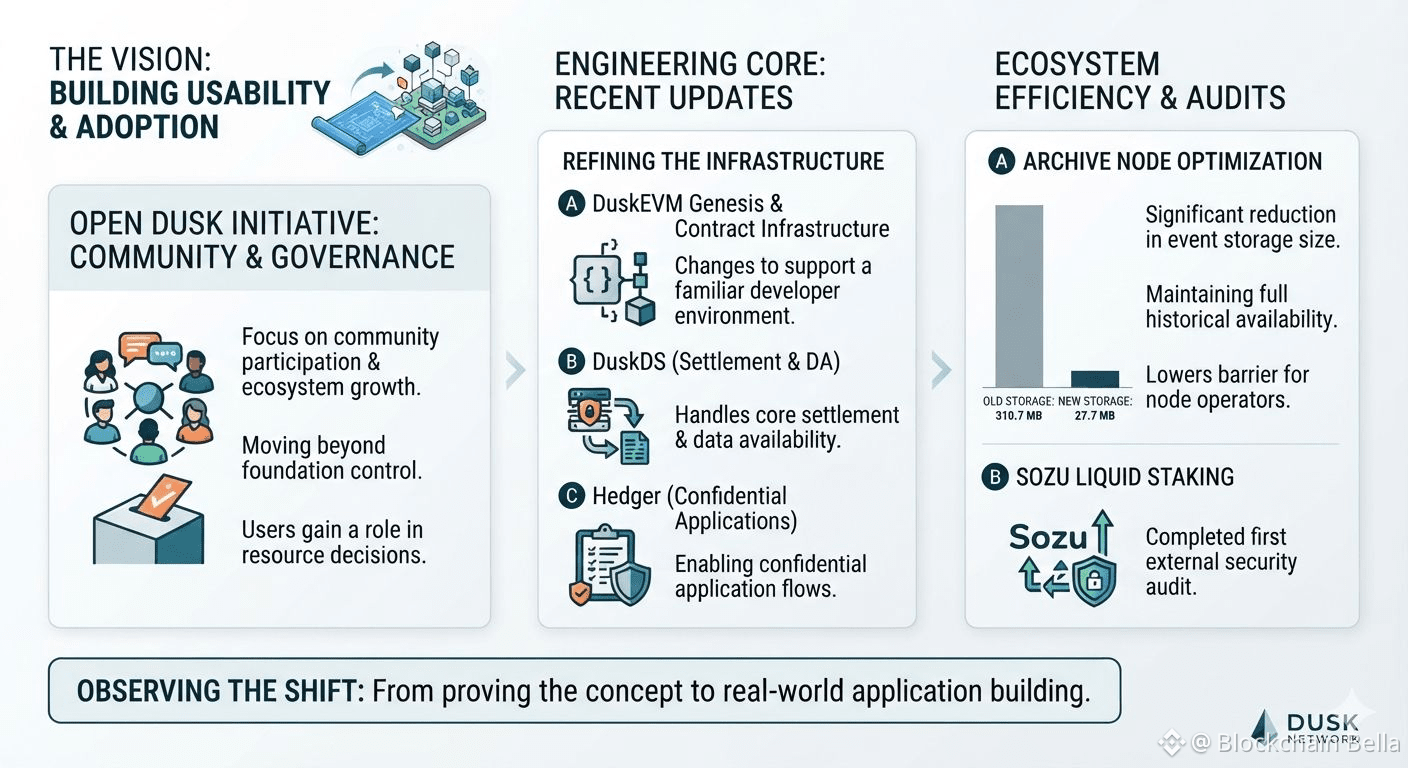
#dusk $DUSK @Dusk_Foundation I’ve been watching Dusk lately, and the interesting part is that the work now feels less about proving the idea and more about making the pieces usable.
The OpenDusk initiative is pushing more attention toward community participation and ecosystem development. That matters because Dusk is trying to move beyond a foundation controlled network and give users a bigger role in deciding how resources are used.
At the same time, the engineering work is still active. Recent repository updates show changes around DuskEVM genesis and the underlying contract infrastructure. The architecture is also becoming easier to understand. DuskDS handles settlement and data availability, while DuskEVM gives developers the familiar Solidity environment. Hedger then provides a path toward confidential application flows.
One update I found interesting was the archive node improvement. Dusk says event storage dropped from 310.7 MB to 27.7 MB while keeping historical results available. That sounds small, but infrastructure efficiency becomes important when a network wants more operators.
Sozu, the liquid staking project building on Dusk, also recently completed its first external security audit.
It feels quiet lately, but something is building maybe. I’m mainly watching whether these infrastructure pieces turn into actual users and applications.@Dusk_Foundation
#dusk $DUSK @Dusk I’ve been watching Dusk lately, and the interesting part is that the work now feels less about proving the idea and more about making the pieces usable.
The OpenDusk initiative is pushing more attention toward community participation and ecosystem development. That matters because Dusk is trying to move beyond a foundation controlled network and give users a bigger role in deciding how resources are used.
At the same time, the engineering work is still active. Recent repository updates show changes around DuskEVM genesis and the underlying contract infrastructure. The architecture is also becoming easier to understand. DuskDS handles settlement and data availability, while DuskEVM gives developers the familiar Solidity environment. Hedger then provides a path toward confidential application flows.
One update I found interesting was the archive node improvement. Dusk says event storage dropped from 310.7 MB to 27.7 MB while keeping historical results available. That sounds small, but infrastructure efficiency becomes important when a network wants more operators.
Sozu, the liquid staking project building on Dusk, also recently completed its first external security audit.
It feels quiet lately, but something is building maybe. I’m mainly watching whether these infrastructure pieces turn into actual users and applications.@Dusk
The OpenDusk initiative is pushing more attention toward community participation and ecosystem development. That matters because Dusk is trying to move beyond a foundation controlled network and give users a bigger role in deciding how resources are used.
At the same time, the engineering work is still active. Recent repository updates show changes around DuskEVM genesis and the underlying contract infrastructure. The architecture is also becoming easier to understand. DuskDS handles settlement and data availability, while DuskEVM gives developers the familiar Solidity environment. Hedger then provides a path toward confidential application flows.
One update I found interesting was the archive node improvement. Dusk says event storage dropped from 310.7 MB to 27.7 MB while keeping historical results available. That sounds small, but infrastructure efficiency becomes important when a network wants more operators.
Sozu, the liquid staking project building on Dusk, also recently completed its first external security audit.
It feels quiet lately, but something is building maybe. I’m mainly watching whether these infrastructure pieces turn into actual users and applications.@Dusk
1
71
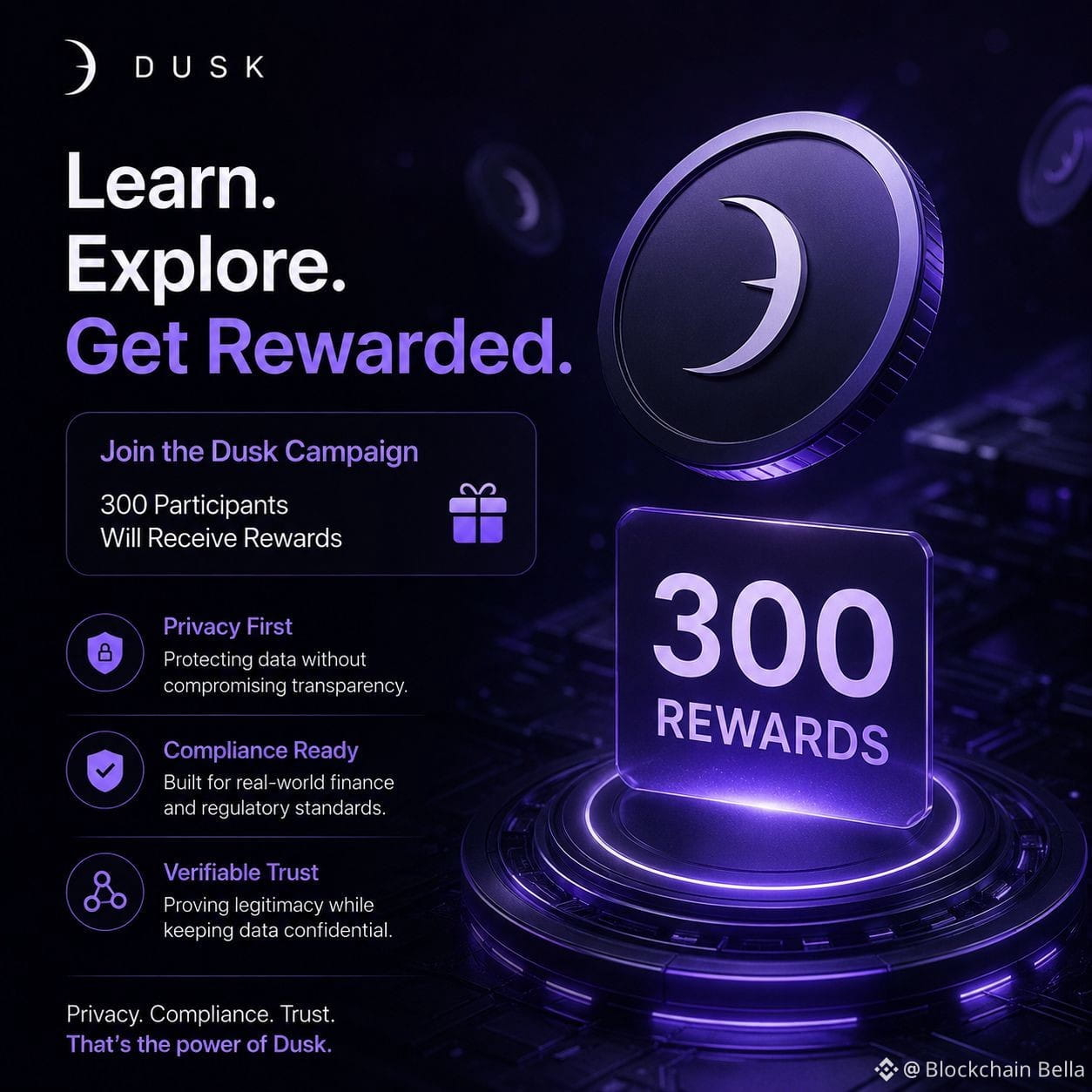
#dusk $DUSK What if learning about Dusk could actually get you rewarded? 👀
That’s what caught my attention about the Dusk campaign.
Dusk is building blockchain infrastructure focused on something the industry really needs: privacy without giving up compliance and verifiability.
What makes this campaign even more interesting is the community incentive — 300 participants can receive rewards.
For me, campaigns like this are more than just chasing rewards. They’re a chance to actually explore a project, understand what it’s building, and share that journey with others.
I’ve been following Dusk because I believe privacy will become increasingly important as blockchain moves closer to real-world finance.
So yes, the rewards caught my attention.
But the technology is what made me stay.
Sometimes a campaign gets you to discover a project… and the project gives you a reason to keep watching. @Dusk_Foundation
#dusk $DUSK What if learning about Dusk could actually get you rewarded? 👀
That’s what caught my attention about the Dusk campaign.
Dusk is building blockchain infrastructure focused on something the industry really needs: privacy without giving up compliance and verifiability.
What makes this campaign even more interesting is the community incentive — 300 participants can receive rewards.
For me, campaigns like this are more than just chasing rewards. They’re a chance to actually explore a project, understand what it’s building, and share that journey with others.
I’ve been following Dusk because I believe privacy will become increasingly important as blockchain moves closer to real-world finance.
So yes, the rewards caught my attention.
But the technology is what made me stay.
Sometimes a campaign gets you to discover a project… and the project gives you a reason to keep watching. @Dusk
That’s what caught my attention about the Dusk campaign.
Dusk is building blockchain infrastructure focused on something the industry really needs: privacy without giving up compliance and verifiability.
What makes this campaign even more interesting is the community incentive — 300 participants can receive rewards.
For me, campaigns like this are more than just chasing rewards. They’re a chance to actually explore a project, understand what it’s building, and share that journey with others.
I’ve been following Dusk because I believe privacy will become increasingly important as blockchain moves closer to real-world finance.
So yes, the rewards caught my attention.
But the technology is what made me stay.
Sometimes a campaign gets you to discover a project… and the project gives you a reason to keep watching. @Dusk
1
2
90
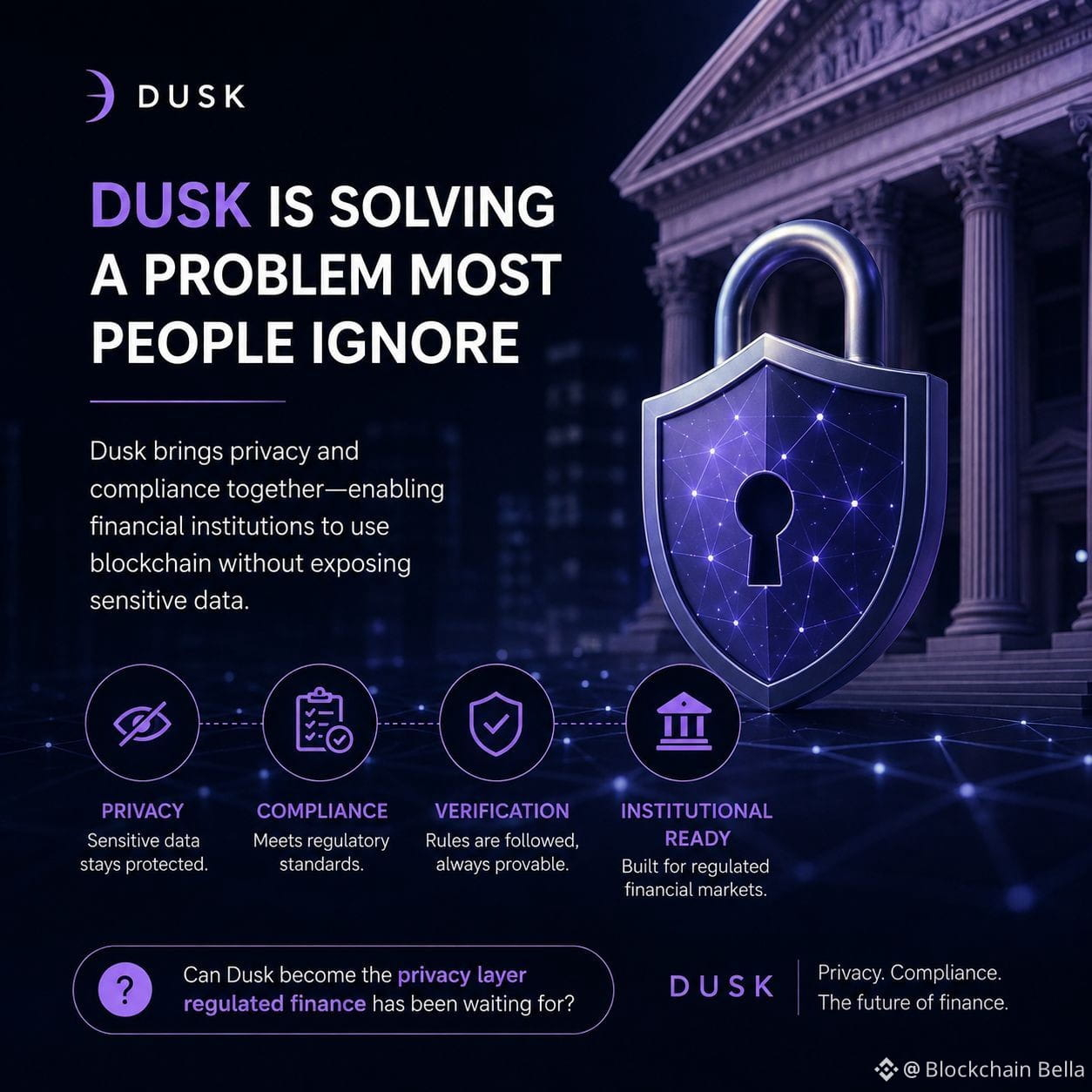
#dusk $DUSK Dusk Is Solving a Problem Most People Ignore
People talk a lot about faster blockchains, cheaper transactions, and bigger numbers.
But what happens when real financial institutions want to move on-chain and simply can’t afford to put everything in public?
That’s what makes Dusk interesting to me.
Dusk isn’t just trying to make blockchain faster. It’s tackling a deeper problem: financial data is sensitive, but regulated markets still require transparency, proof, and trust.
You can’t build serious financial infrastructure on “just trust me.”
You need both privacy and verification.
That’s where Dusk feels different. Its approach is built around protecting sensitive financial activity while still giving the right parties enough evidence to verify that the rules are being followed.
And that could matter a lot more as tokenized assets and on-chain finance move closer to traditional markets.
Because institutions are not only asking, “How fast is it?”
They’re also asking, “Who can see my data?”
So the bigger question is:
Can Dusk become the privacy layer that makes regulated finance comfortable enough to move on-chain?
If regulated finance moves on-chain, projects that solve this problem won’t be optional. They’ll be essential.@Dusk_Foundation
#dusk $DUSK Dusk Is Solving a Problem Most People Ignore
People talk a lot about faster blockchains, cheaper transactions, and bigger numbers.
But what happens when real financial institutions want to move on-chain and simply can’t afford to put everything in public?
That’s what makes Dusk interesting to me.
Dusk isn’t just trying to make blockchain faster. It’s tackling a deeper problem: financial data is sensitive, but regulated markets still require transparency, proof, and trust.
You can’t build serious financial infrastructure on “just trust me.”
You need both privacy and verification.
That’s where Dusk feels different. Its approach is built around protecting sensitive financial activity while still giving the right parties enough evidence to verify that the rules are being followed.
And that could matter a lot more as tokenized assets and on-chain finance move closer to traditional markets.
Because institutions are not only asking, “How fast is it?”
They’re also asking, “Who can see my data?”
So the bigger question is:
Can Dusk become the privacy layer that makes regulated finance comfortable enough to move on-chain?
If regulated finance moves on-chain, projects that solve this problem won’t be optional. They’ll be essential.@Dusk
People talk a lot about faster blockchains, cheaper transactions, and bigger numbers.
But what happens when real financial institutions want to move on-chain and simply can’t afford to put everything in public?
That’s what makes Dusk interesting to me.
Dusk isn’t just trying to make blockchain faster. It’s tackling a deeper problem: financial data is sensitive, but regulated markets still require transparency, proof, and trust.
You can’t build serious financial infrastructure on “just trust me.”
You need both privacy and verification.
That’s where Dusk feels different. Its approach is built around protecting sensitive financial activity while still giving the right parties enough evidence to verify that the rules are being followed.
And that could matter a lot more as tokenized assets and on-chain finance move closer to traditional markets.
Because institutions are not only asking, “How fast is it?”
They’re also asking, “Who can see my data?”
So the bigger question is:
Can Dusk become the privacy layer that makes regulated finance comfortable enough to move on-chain?
If regulated finance moves on-chain, projects that solve this problem won’t be optional. They’ll be essential.@Dusk
1
2
90
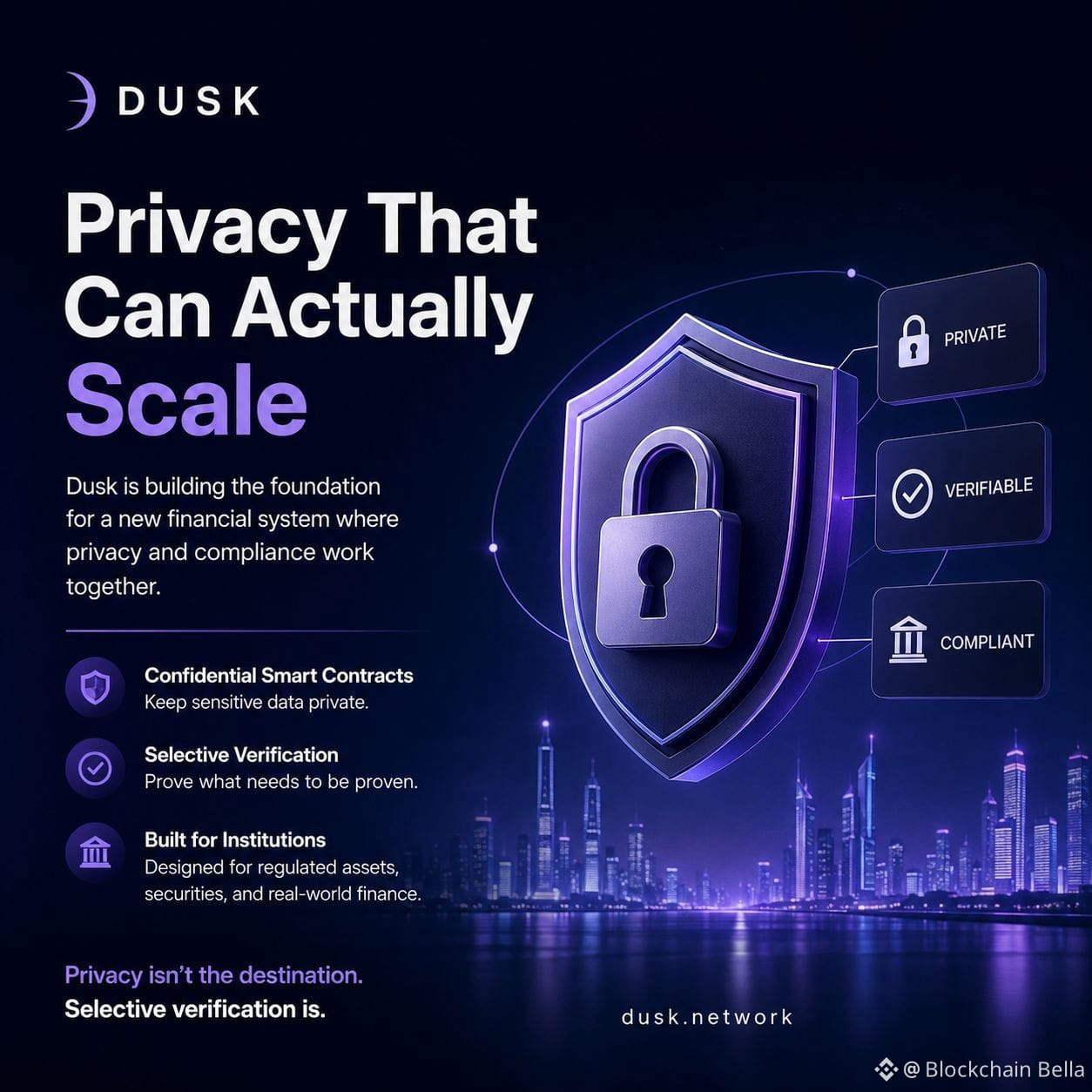
#dusk $DUSK Dusk: Privacy That Can Actually Scale
The more I look into Dusk, the more I realize its biggest idea isn’t simply private transactions.
The real challenge is creating a financial blockchain where privacy and compliance can work together.
Traditional finance already follows this balance. Your financial history isn’t publicly visible, yet institutions can still verify what they need. Bringing that same principle on-chain is much harder.
Dusk is built around confidential smart contracts and privacy-preserving verification, allowing sensitive financial information to remain protected while still proving that specific conditions are met.
This becomes especially important for regulated assets, securities, and institutional finance.
The future of tokenization probably won’t be about making every financial detail public.
It will be about proving what needs to be proven, while keeping everything else private.
That’s what makes Dusk interesting to me.
Privacy alone isn’t enough.
The real breakthrough is selective verification.@Dusk_Foundation
#dusk $DUSK Dusk: Privacy That Can Actually Scale
The more I look into Dusk, the more I realize its biggest idea isn’t simply private transactions.
The real challenge is creating a financial blockchain where privacy and compliance can work together.
Traditional finance already follows this balance. Your financial history isn’t publicly visible, yet institutions can still verify what they need. Bringing that same principle on-chain is much harder.
Dusk is built around confidential smart contracts and privacy-preserving verification, allowing sensitive financial information to remain protected while still proving that specific conditions are met.
This becomes especially important for regulated assets, securities, and institutional finance.
The future of tokenization probably won’t be about making every financial detail public.
It will be about proving what needs to be proven, while keeping everything else private.
That’s what makes Dusk interesting to me.
Privacy alone isn’t enough.
The real breakthrough is selective verification.@Dusk
The more I look into Dusk, the more I realize its biggest idea isn’t simply private transactions.
The real challenge is creating a financial blockchain where privacy and compliance can work together.
Traditional finance already follows this balance. Your financial history isn’t publicly visible, yet institutions can still verify what they need. Bringing that same principle on-chain is much harder.
Dusk is built around confidential smart contracts and privacy-preserving verification, allowing sensitive financial information to remain protected while still proving that specific conditions are met.
This becomes especially important for regulated assets, securities, and institutional finance.
The future of tokenization probably won’t be about making every financial detail public.
It will be about proving what needs to be proven, while keeping everything else private.
That’s what makes Dusk interesting to me.
Privacy alone isn’t enough.
The real breakthrough is selective verification.@Dusk
1
2
84
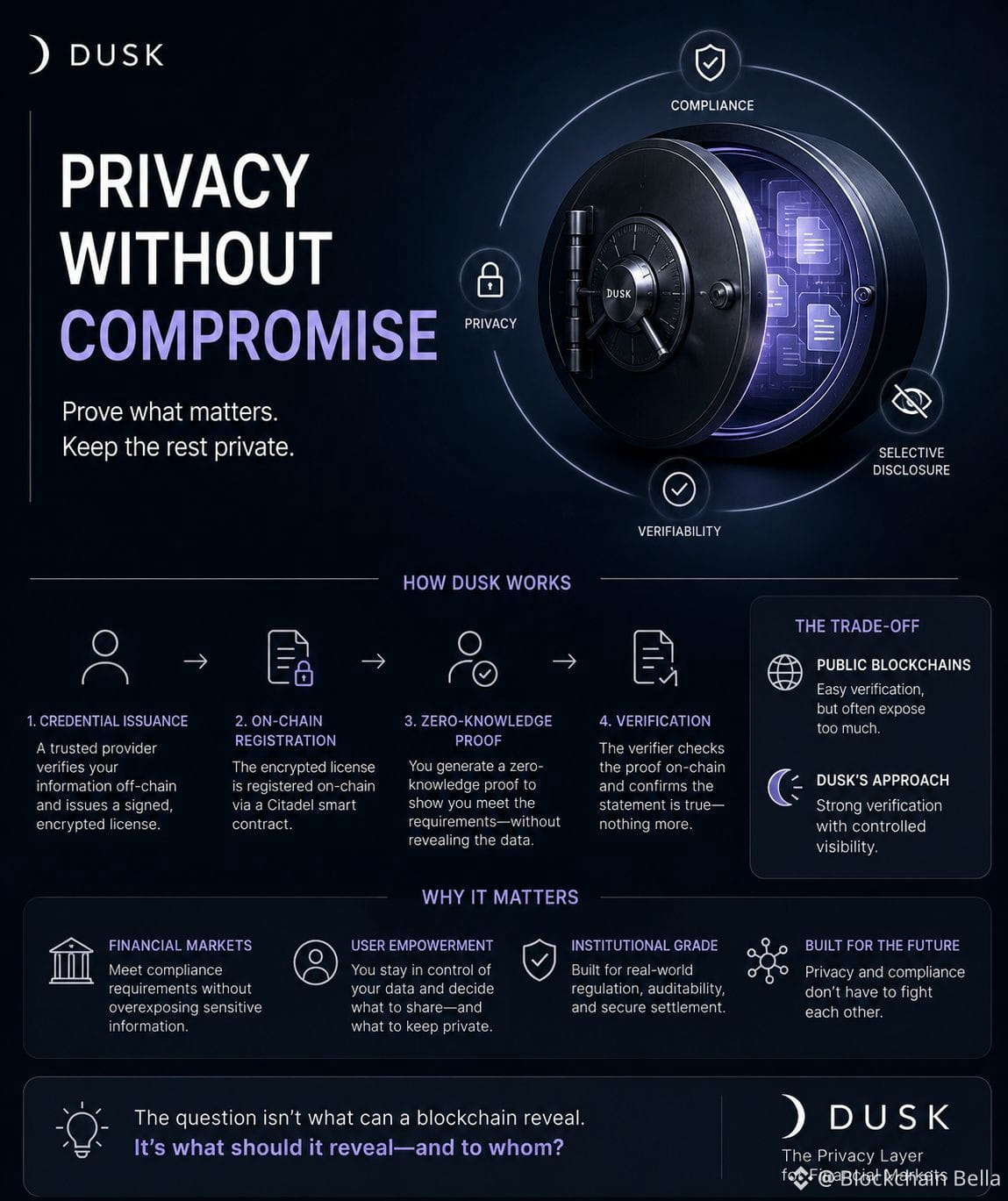
#dusk $DUSK I used to think privacy and compliance were naturally on opposite sides.
Then Dusk made me look at the problem differently.
Dusk is designed around a simple idea: you should be able to prove something without revealing everything behind that proof.
Its privacy model uses zero-knowledge proofs and selective disclosure, allowing users to demonstrate eligibility or satisfy certain conditions while keeping unnecessary personal or financial details hidden.
The interesting trade-off is this:
Public blockchains make verification easy, but often expose too much.
Dusk tries to keep verification strong while making visibility more controlled.
For financial markets, that balance could matter more than another headline about speed or hype.
Maybe the bigger question isn’t what can a blockchain reveal?
It’s what should it reveal—and to whom?,@Duck
#dusk $DUSK I used to think privacy and compliance were naturally on opposite sides.
Then Dusk made me look at the problem differently.
Dusk is designed around a simple idea: you should be able to prove something without revealing everything behind that proof.
Its privacy model uses zero-knowledge proofs and selective disclosure, allowing users to demonstrate eligibility or satisfy certain conditions while keeping unnecessary personal or financial details hidden.
The interesting trade-off is this:
Public blockchains make verification easy, but often expose too much.
Dusk tries to keep verification strong while making visibility more controlled.
For financial markets, that balance could matter more than another headline about speed or hype.
Maybe the bigger question isn’t what can a blockchain reveal?
It’s what should it reveal—and to whom?,@Duck
Then Dusk made me look at the problem differently.
Dusk is designed around a simple idea: you should be able to prove something without revealing everything behind that proof.
Its privacy model uses zero-knowledge proofs and selective disclosure, allowing users to demonstrate eligibility or satisfy certain conditions while keeping unnecessary personal or financial details hidden.
The interesting trade-off is this:
Public blockchains make verification easy, but often expose too much.
Dusk tries to keep verification strong while making visibility more controlled.
For financial markets, that balance could matter more than another headline about speed or hype.
Maybe the bigger question isn’t what can a blockchain reveal?
It’s what should it reveal—and to whom?,@Duck
1
2
72
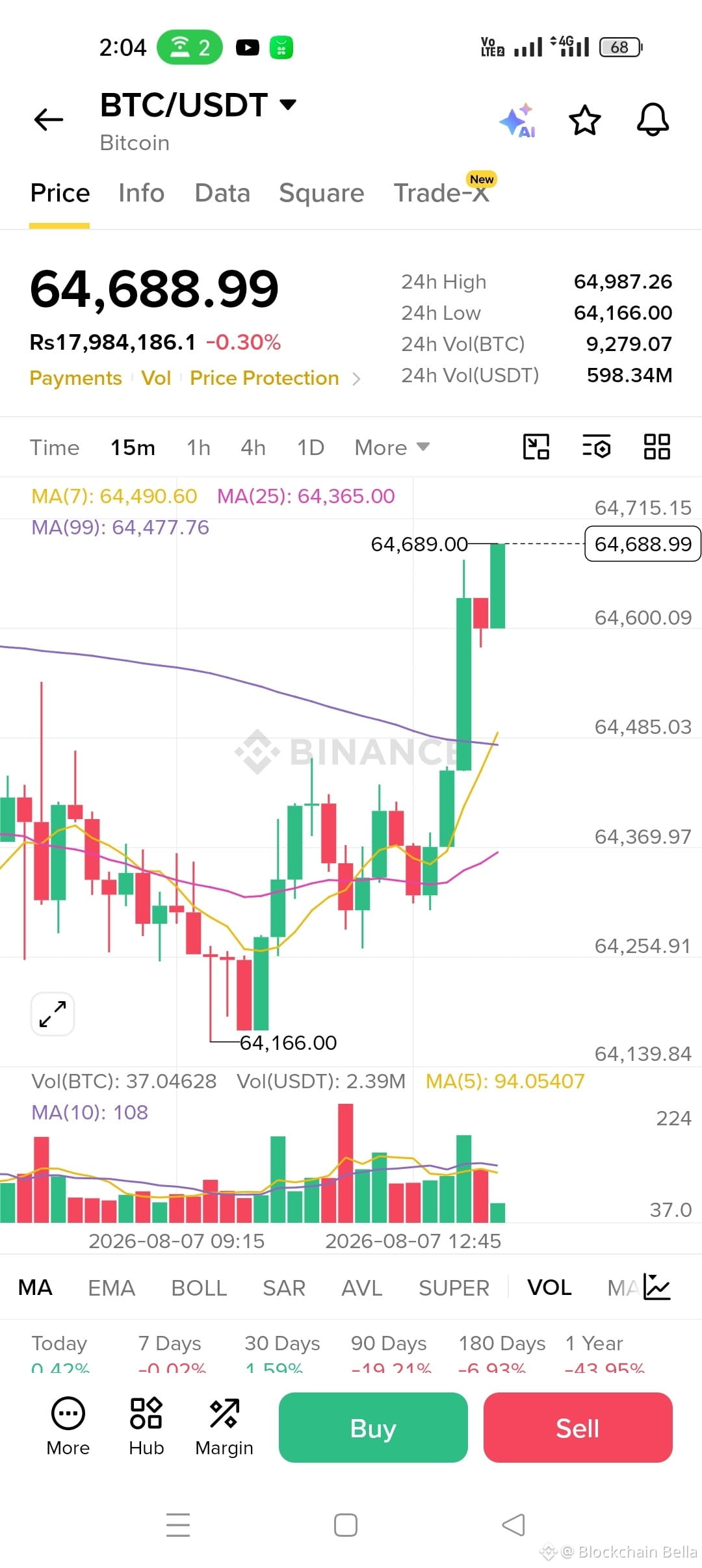
$BTC is showing strong bullish momentum after breaking above the 64,485 zone.
📍 Entry: 64,600–64,680
🛑 SL: 64,430
🎯 TP1: 64,715
🎯 TP2: 64,850
🎯 TP3: 64,980
If BTC holds above 64,485, the bullish move could continue.
But remember: SL is important — protect your capital first. ⚠️
What do you think — BTC to $65K next? 👀
{spot}(BTCUSDT)
#BTC☀️ #BTCUSDT #BTC走势分析 #BTC🔥🔥🔥🔥🔥 #btc70k
$BTC is showing strong bullish momentum after breaking above the 64,485 zone.
📍 Entry: 64,600–64,680
🛑 SL: 64,430
🎯 TP1: 64,715
🎯 TP2: 64,850
🎯 TP3: 64,980
If BTC holds above 64,485, the bullish move could continue.
But remember: SL is important — protect your capital first. ⚠️
What do you think — BTC to $65K next? 👀
#BTC☀️ #BTCUSDT #BTC走势分析 #BTC🔥🔥🔥🔥🔥 #btc70k
📍 Entry: 64,600–64,680
🛑 SL: 64,430
🎯 TP1: 64,715
🎯 TP2: 64,850
🎯 TP3: 64,980
If BTC holds above 64,485, the bullish move could continue.
But remember: SL is important — protect your capital first. ⚠️
What do you think — BTC to $65K next? 👀
#BTC☀️ #BTCUSDT #BTC走势分析 #BTC🔥🔥🔥🔥🔥 #btc70k
1
90
#baby $BABY Why I'm Paying Close Attention to Babylon ($BABY)
In crypto, many projects focus on short-term hype. Babylon stands out because it's building real infrastructure for the future of Bitcoin.
Babylon introduces a new approach that allows Bitcoin holders to help secure Proof-of-Stake networks while keeping Bitcoin on the Bitcoin network. This idea has the potential to unlock new utility for BTC without relying on traditional bridging models.
What I like most is that Babylon is focused on long-term innovation rather than temporary market excitement. As the ecosystem grows, I believe projects with strong fundamentals and real-world use cases will continue to attract attention.
I'm following Babylon because I want to understand the technology, not just the price.
What's your view on the future of Bitcoin staking?
@babylonlabs_io
#baby $BABY Why I'm Paying Close Attention to Babylon ($BABY )
In crypto, many projects focus on short-term hype. Babylon stands out because it's building real infrastructure for the future of Bitcoin.
Babylon introduces a new approach that allows Bitcoin holders to help secure Proof-of-Stake networks while keeping Bitcoin on the Bitcoin network. This idea has the potential to unlock new utility for BTC without relying on traditional bridging models.
What I like most is that Babylon is focused on long-term innovation rather than temporary market excitement. As the ecosystem grows, I believe projects with strong fundamentals and real-world use cases will continue to attract attention.
I'm following Babylon because I want to understand the technology, not just the price.
What's your view on the future of Bitcoin staking?
@BabylonLabs_io
In crypto, many projects focus on short-term hype. Babylon stands out because it's building real infrastructure for the future of Bitcoin.
Babylon introduces a new approach that allows Bitcoin holders to help secure Proof-of-Stake networks while keeping Bitcoin on the Bitcoin network. This idea has the potential to unlock new utility for BTC without relying on traditional bridging models.
What I like most is that Babylon is focused on long-term innovation rather than temporary market excitement. As the ecosystem grows, I believe projects with strong fundamentals and real-world use cases will continue to attract attention.
I'm following Babylon because I want to understand the technology, not just the price.
What's your view on the future of Bitcoin staking?
@BabylonLabs_io
1
104
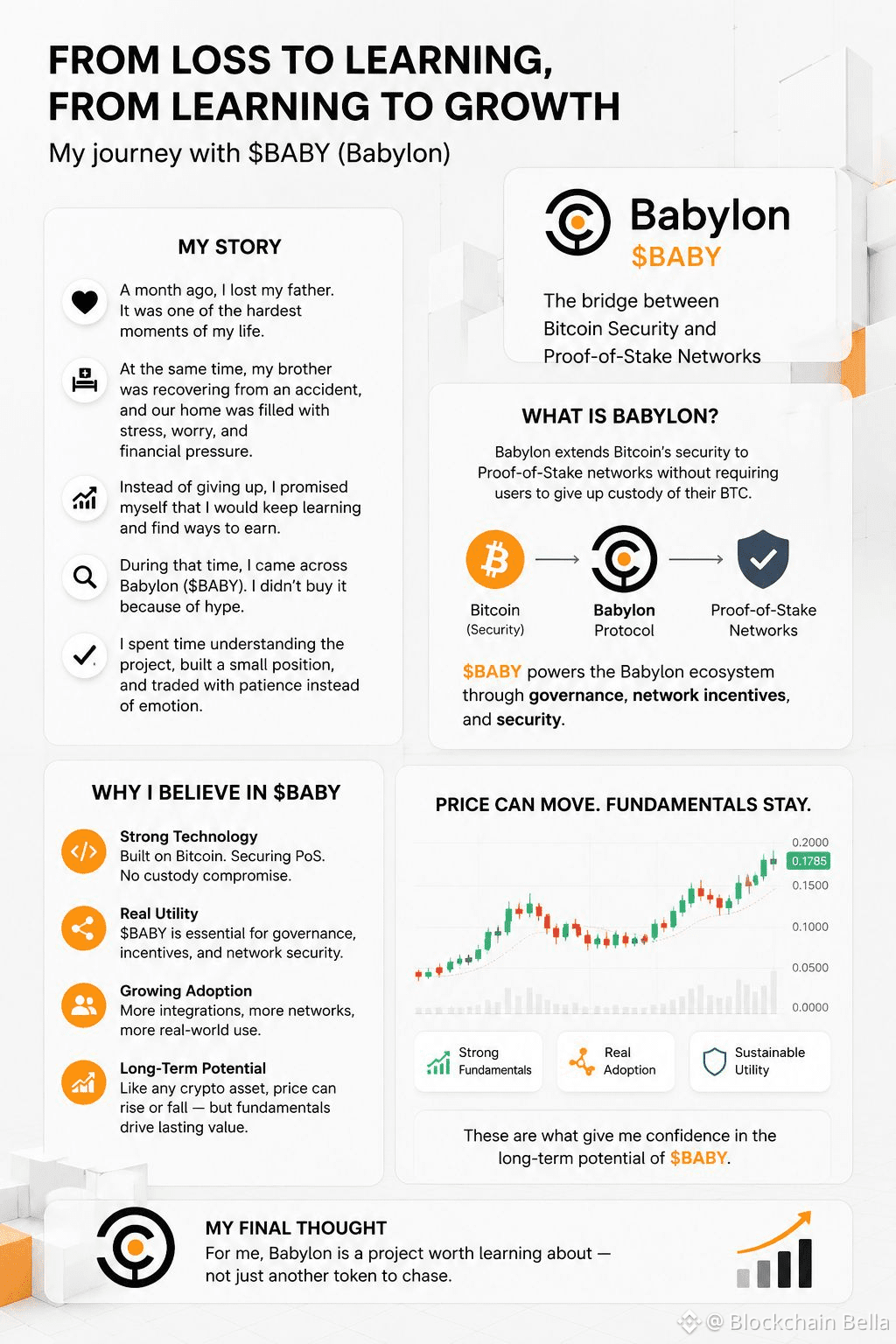
#baby $BABY A month ago, I lost my father.
It was one of the hardest moments of my life. On top of that, my brother was recovering from an accident, and our home was filled with stress, worry, and financial pressure. There were days when I didn't know what the future would look like.
Instead of giving up, I promised myself that I would keep learning and find ways to earn.
During that time, I came across Babylon ($BABY). I didn't buy it because of hype. I spent time understanding the project, built a small position, and traded with patience instead of emotion.
What made Babylon stand out to me wasn't the promise of quick profits—it was the technology behind it. $BABY powers the Babylon ecosystem through governance, network incentives, and security while Babylon extends Bitcoin's security to Proof-of-Stake networks without requiring users to give up custody of their BTC.
Like any crypto asset, $BABY's price can rise or fall, but strong fundamentals, growing adoption, and real utility are what give me confidence in its long-term potential.
For me, Babylon is a project worth learning about—not just another token to chase.
@babylonlabs_io
#baby $BABY A month ago, I lost my father.
It was one of the hardest moments of my life. On top of that, my brother was recovering from an accident, and our home was filled with stress, worry, and financial pressure. There were days when I didn't know what the future would look like.
Instead of giving up, I promised myself that I would keep learning and find ways to earn.
During that time, I came across Babylon ($BABY ). I didn't buy it because of hype. I spent time understanding the project, built a small position, and traded with patience instead of emotion.
What made Babylon stand out to me wasn't the promise of quick profits—it was the technology behind it. $BABY powers the Babylon ecosystem through governance, network incentives, and security while Babylon extends Bitcoin's security to Proof-of-Stake networks without requiring users to give up custody of their BTC.
Like any crypto asset, $BABY 's price can rise or fall, but strong fundamentals, growing adoption, and real utility are what give me confidence in its long-term potential.
For me, Babylon is a project worth learning about—not just another token to chase.
@BabylonLabs_io
It was one of the hardest moments of my life. On top of that, my brother was recovering from an accident, and our home was filled with stress, worry, and financial pressure. There were days when I didn't know what the future would look like.
Instead of giving up, I promised myself that I would keep learning and find ways to earn.
During that time, I came across Babylon ($BABY ). I didn't buy it because of hype. I spent time understanding the project, built a small position, and traded with patience instead of emotion.
What made Babylon stand out to me wasn't the promise of quick profits—it was the technology behind it. $BABY powers the Babylon ecosystem through governance, network incentives, and security while Babylon extends Bitcoin's security to Proof-of-Stake networks without requiring users to give up custody of their BTC.
Like any crypto asset, $BABY 's price can rise or fall, but strong fundamentals, growing adoption, and real utility are what give me confidence in its long-term potential.
For me, Babylon is a project worth learning about—not just another token to chase.
@BabylonLabs_io
3
3
116
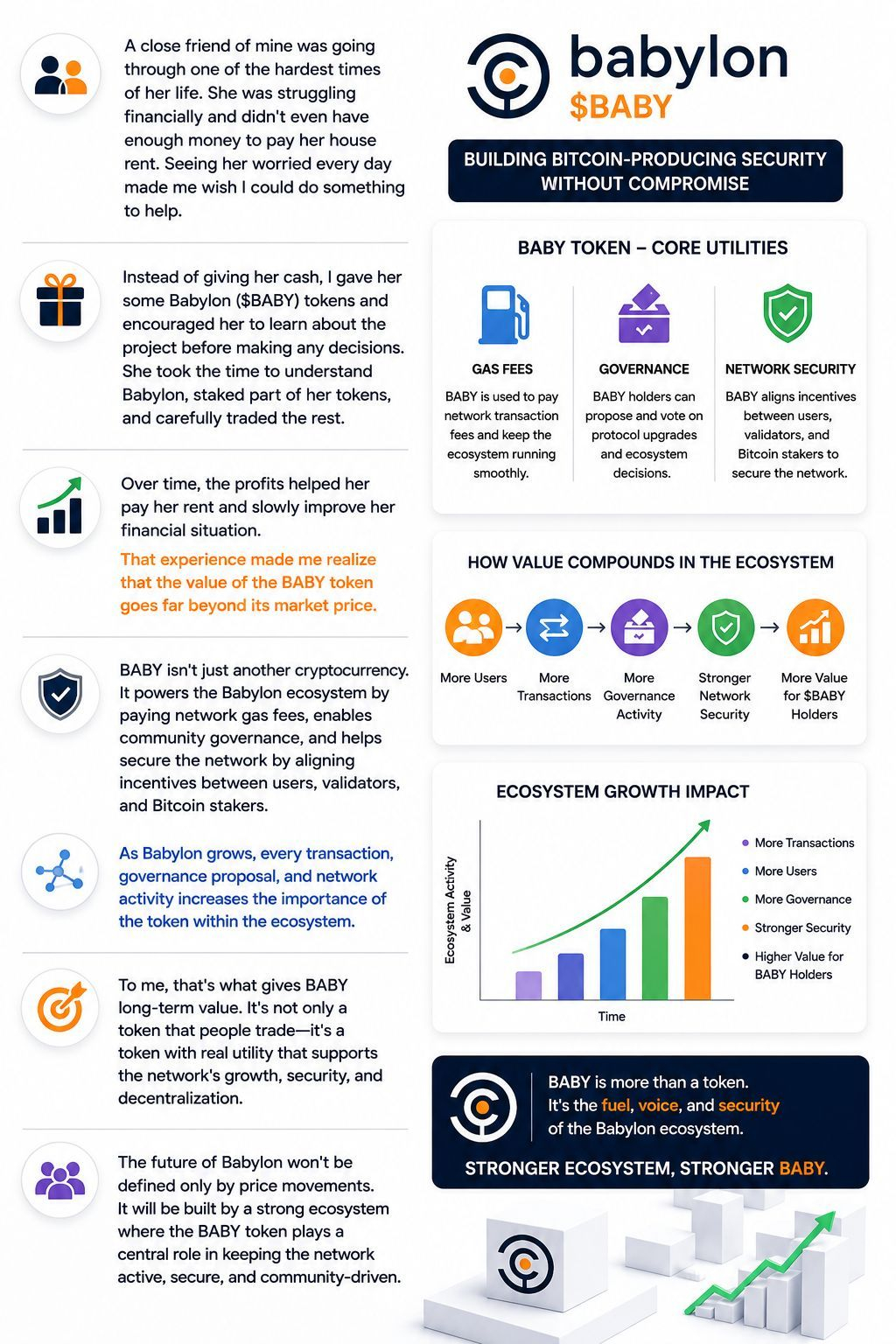
#baby $BABY A close friend of mine was going through one of the hardest times of her life. She was struggling financially and didn't even have enough money to pay her house rent. Seeing her worried every day made me wish I could do something to help.
Instead of giving her cash, I gave her $200 worth of Babylon ($BABY) tokens and encouraged her to learn about the project before making any decisions. She took the time to understand Babylon, staked part of her tokens, and carefully traded the rest. Over the next few months, she made around $350 in profit, which helped her pay her overdue rent and gradually improve her financial situation.
That experience made me realize that the value of the BABY token goes far beyond its market price.
BABY isn't just another cryptocurrency. It powers the Babylon ecosystem by paying network gas fees, enables community governance, and helps secure the network by aligning incentives between users, validators, and Bitcoin stakers.
As Babylon grows, every transaction, governance proposal, and network activity increases the importance of the token within the ecosystem.
To me, that's what gives BABY long-term value. It's not only a token that people trade—it's a token with real utility that supports the network's growth, security, and decentralization.
The future of Babylon won't be defined only by price movements. It will be built by a strong ecosystem where the BABY token plays a central role in keeping the network active, secure, and community-driven.
@babylonlabs_io
#baby $BABY A close friend of mine was going through one of the hardest times of her life. She was struggling financially and didn't even have enough money to pay her house rent. Seeing her worried every day made me wish I could do something to help.
Instead of giving her cash, I gave her $200 worth of Babylon ($BABY ) tokens and encouraged her to learn about the project before making any decisions. She took the time to understand Babylon, staked part of her tokens, and carefully traded the rest. Over the next few months, she made around $350 in profit, which helped her pay her overdue rent and gradually improve her financial situation.
That experience made me realize that the value of the BABY token goes far beyond its market price.
BABY isn't just another cryptocurrency. It powers the Babylon ecosystem by paying network gas fees, enables community governance, and helps secure the network by aligning incentives between users, validators, and Bitcoin stakers.
As Babylon grows, every transaction, governance proposal, and network activity increases the importance of the token within the ecosystem.
To me, that's what gives BABY long-term value. It's not only a token that people trade—it's a token with real utility that supports the network's growth, security, and decentralization.
The future of Babylon won't be defined only by price movements. It will be built by a strong ecosystem where the BABY token plays a central role in keeping the network active, secure, and community-driven.
@BabylonLabs_io
Instead of giving her cash, I gave her $200 worth of Babylon ($BABY ) tokens and encouraged her to learn about the project before making any decisions. She took the time to understand Babylon, staked part of her tokens, and carefully traded the rest. Over the next few months, she made around $350 in profit, which helped her pay her overdue rent and gradually improve her financial situation.
That experience made me realize that the value of the BABY token goes far beyond its market price.
BABY isn't just another cryptocurrency. It powers the Babylon ecosystem by paying network gas fees, enables community governance, and helps secure the network by aligning incentives between users, validators, and Bitcoin stakers.
As Babylon grows, every transaction, governance proposal, and network activity increases the importance of the token within the ecosystem.
To me, that's what gives BABY long-term value. It's not only a token that people trade—it's a token with real utility that supports the network's growth, security, and decentralization.
The future of Babylon won't be defined only by price movements. It will be built by a strong ecosystem where the BABY token plays a central role in keeping the network active, secure, and community-driven.
@BabylonLabs_io
1
1
8
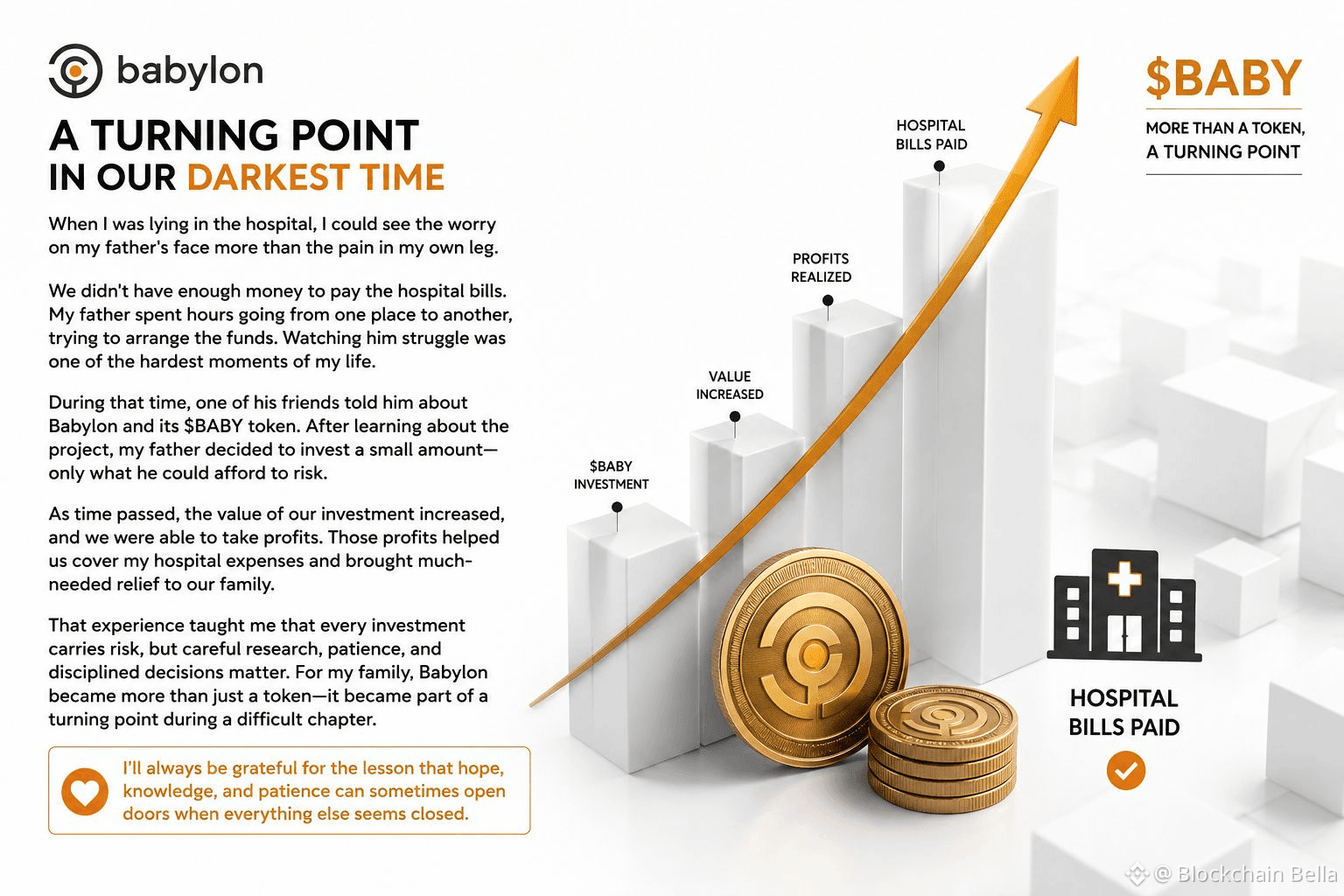
#baby $BABY When I was lying in the hospital, I could see the worry on my father's face more than the pain in my own leg.
We didn't have enough money to pay the hospital bills. My father spent hours going from one place to another, trying to arrange the funds. Watching him struggle was one of the hardest moments of my life.
During that time, one of his friends told him about Babylon and its $BABY token. After learning about the project, my father decided to invest a small amount—only what he could afford to risk.
As time passed, the value of our investment increased, and we were able to take profits. Those profits helped us cover my hospital expenses and brought much-needed relief to our family.
That experience taught me that every investment carries risk, but careful research, patience, and disciplined decisions matter. For my family, Babylon became more than just a token—it became part of a turning point during a difficult chapter.
I'll always be grateful for the lesson that hope, knowledge, and patience can sometimes open doors when everything else seems closed.
@babylonlabs_io
#baby $BABY When I was lying in the hospital, I could see the worry on my father's face more than the pain in my own leg.
We didn't have enough money to pay the hospital bills. My father spent hours going from one place to another, trying to arrange the funds. Watching him struggle was one of the hardest moments of my life.
During that time, one of his friends told him about Babylon and its $BABY token. After learning about the project, my father decided to invest a small amount—only what he could afford to risk.
As time passed, the value of our investment increased, and we were able to take profits. Those profits helped us cover my hospital expenses and brought much-needed relief to our family.
That experience taught me that every investment carries risk, but careful research, patience, and disciplined decisions matter. For my family, Babylon became more than just a token—it became part of a turning point during a difficult chapter.
I'll always be grateful for the lesson that hope, knowledge, and patience can sometimes open doors when everything else seems closed.
@BabylonLabs_io
We didn't have enough money to pay the hospital bills. My father spent hours going from one place to another, trying to arrange the funds. Watching him struggle was one of the hardest moments of my life.
During that time, one of his friends told him about Babylon and its $BABY token. After learning about the project, my father decided to invest a small amount—only what he could afford to risk.
As time passed, the value of our investment increased, and we were able to take profits. Those profits helped us cover my hospital expenses and brought much-needed relief to our family.
That experience taught me that every investment carries risk, but careful research, patience, and disciplined decisions matter. For my family, Babylon became more than just a token—it became part of a turning point during a difficult chapter.
I'll always be grateful for the lesson that hope, knowledge, and patience can sometimes open doors when everything else seems closed.
@BabylonLabs_io
5
4
30
#baby $BABY This morning, I was sitting with a glass of juice, scrolling through crypto updates.
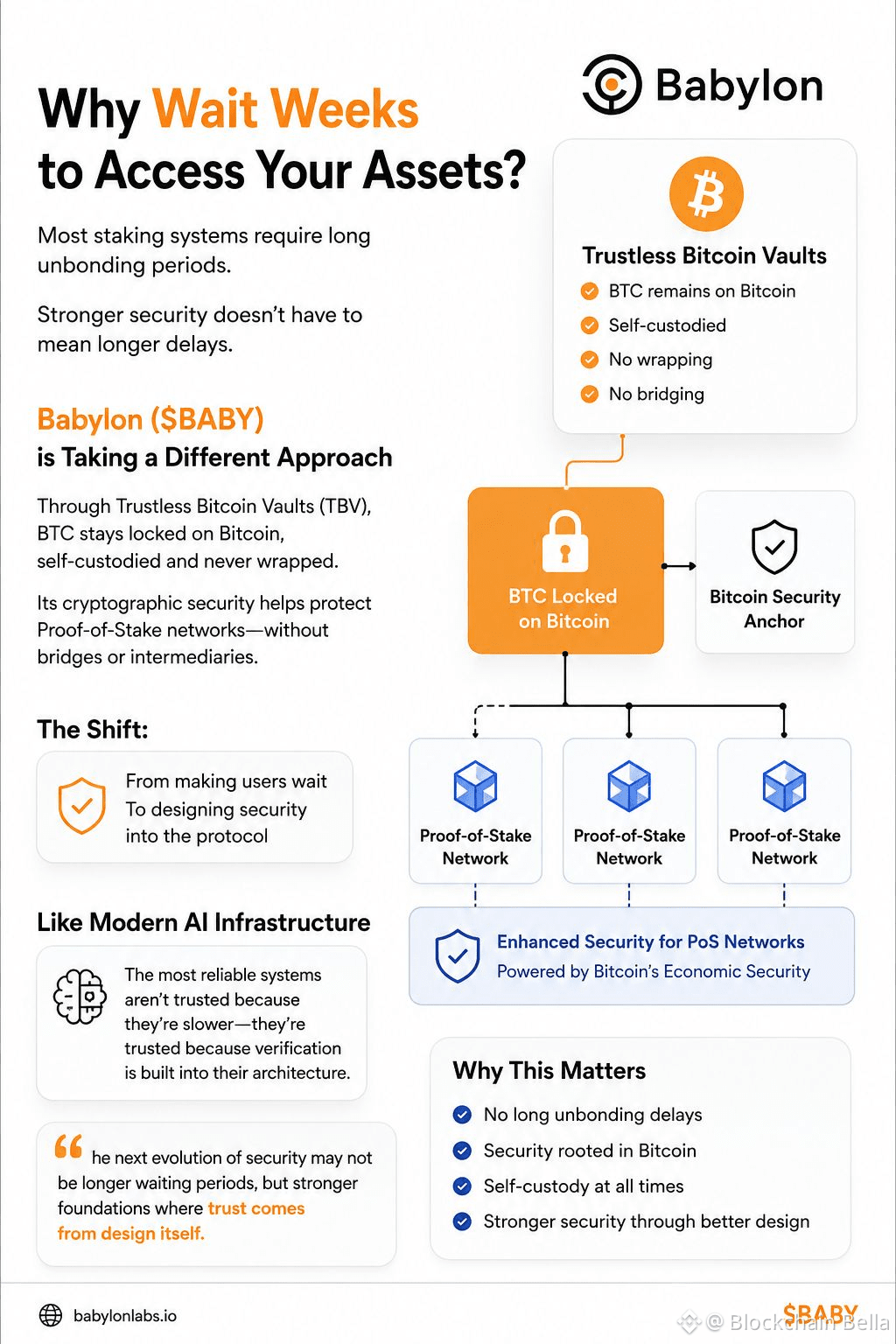
One question stayed with me: why do some staking systems still require users to wait weeks before accessing their assets again?
Most people assume stronger security always comes with longer unbonding periods. But the more I learned, the more I realized that isn't the only way.
Babylon ($BABY) is taking a different approach. Instead of relying on long delays, it anchors security to Bitcoin through Trustless Bitcoin Vaults (TBV). BTC remains self-custodied and locked on Bitcoin, while its cryptographic security helps protect Proof-of-Stake networks—without wrapping or bridging coins.
That changes the conversation. The focus shifts from making users wait to designing security directly into the protocol.
It reminds me of modern AI infrastructure. The most reliable systems aren't trusted because they're slower—they're trusted because verification is built into their architecture.
Maybe blockchain is heading in the same direction.
The next evolution of security may not be longer waiting periods, but stronger foundations where trust comes from design itself.
@babylonlabs_io
#baby $BABY This morning, I was sitting with a glass of juice, scrolling through crypto updates.
One question stayed with me: why do some staking systems still require users to wait weeks before accessing their assets again?
Most people assume stronger security always comes with longer unbonding periods. But the more I learned, the more I realized that isn't the only way.
Babylon ($BABY ) is taking a different approach. Instead of relying on long delays, it anchors security to Bitcoin through Trustless Bitcoin Vaults (TBV). BTC remains self-custodied and locked on Bitcoin, while its cryptographic security helps protect Proof-of-Stake networks—without wrapping or bridging coins.
That changes the conversation. The focus shifts from making users wait to designing security directly into the protocol.
It reminds me of modern AI infrastructure. The most reliable systems aren't trusted because they're slower—they're trusted because verification is built into their architecture.
Maybe blockchain is heading in the same direction.
The next evolution of security may not be longer waiting periods, but stronger foundations where trust comes from design itself.
@BabylonLabs_io
One question stayed with me: why do some staking systems still require users to wait weeks before accessing their assets again?
Most people assume stronger security always comes with longer unbonding periods. But the more I learned, the more I realized that isn't the only way.
Babylon ($BABY ) is taking a different approach. Instead of relying on long delays, it anchors security to Bitcoin through Trustless Bitcoin Vaults (TBV). BTC remains self-custodied and locked on Bitcoin, while its cryptographic security helps protect Proof-of-Stake networks—without wrapping or bridging coins.
That changes the conversation. The focus shifts from making users wait to designing security directly into the protocol.
It reminds me of modern AI infrastructure. The most reliable systems aren't trusted because they're slower—they're trusted because verification is built into their architecture.
Maybe blockchain is heading in the same direction.
The next evolution of security may not be longer waiting periods, but stronger foundations where trust comes from design itself.
@BabylonLabs_io
1
2
110
#baby $BABY Last night, I was just about to fall asleep...
And for some reason, $BABY popped into my head.
This morning, I grabbed a coffee and started reading about Babylon again.
Then I realized I'd been asking the wrong question.
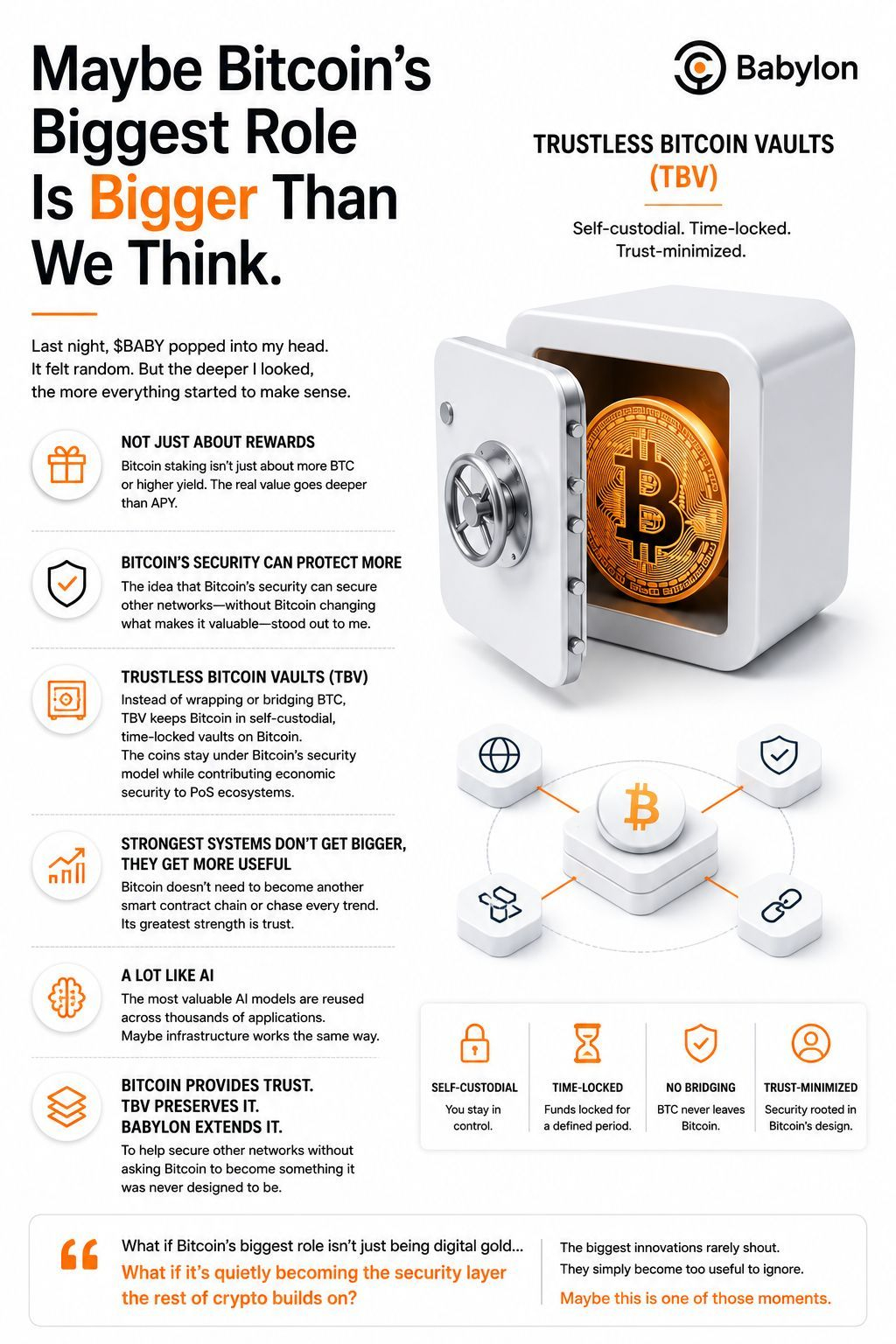
I used to think Bitcoin staking was only about earning rewards.
But what caught my attention wasn't the APY.
It was Trustless Bitcoin Vaults (TBV).
Instead of wrapping or bridging BTC, TBV lets Bitcoin remain self-custodied on the Bitcoin network while contributing security to proof-of-stake chains.
That changed how I looked at Bitcoin.
Its greatest strength has always been trust.
Babylon doesn't try to change Bitcoin—it extends that trust to secure other networks.
It reminds me of AI.
The most valuable systems aren't always the loudest.
They're the ones whose core strengths can be reused in new ways.
What if Bitcoin's biggest role isn't just being digital gold...
What if it's quietly becoming the security layer the rest of crypto builds on?
@babylonlabs_io
#baby $BABY Last night, I was just about to fall asleep...
And for some reason, $BABY popped into my head.
This morning, I grabbed a coffee and started reading about Babylon again.
Then I realized I'd been asking the wrong question.
I used to think Bitcoin staking was only about earning rewards.
But what caught my attention wasn't the APY.
It was Trustless Bitcoin Vaults (TBV).
Instead of wrapping or bridging BTC, TBV lets Bitcoin remain self-custodied on the Bitcoin network while contributing security to proof-of-stake chains.
That changed how I looked at Bitcoin.
Its greatest strength has always been trust.
Babylon doesn't try to change Bitcoin—it extends that trust to secure other networks.
It reminds me of AI.
The most valuable systems aren't always the loudest.
They're the ones whose core strengths can be reused in new ways.
What if Bitcoin's biggest role isn't just being digital gold...
What if it's quietly becoming the security layer the rest of crypto builds on?
@BabylonLabs_io
And for some reason, $BABY popped into my head.
This morning, I grabbed a coffee and started reading about Babylon again.
Then I realized I'd been asking the wrong question.
I used to think Bitcoin staking was only about earning rewards.
But what caught my attention wasn't the APY.
It was Trustless Bitcoin Vaults (TBV).
Instead of wrapping or bridging BTC, TBV lets Bitcoin remain self-custodied on the Bitcoin network while contributing security to proof-of-stake chains.
That changed how I looked at Bitcoin.
Its greatest strength has always been trust.
Babylon doesn't try to change Bitcoin—it extends that trust to secure other networks.
It reminds me of AI.
The most valuable systems aren't always the loudest.
They're the ones whose core strengths can be reused in new ways.
What if Bitcoin's biggest role isn't just being digital gold...
What if it's quietly becoming the security layer the rest of crypto builds on?
@BabylonLabs_io
2
3
93
#baby $BABY A few days ago, I was talking to a developer friend who builds DeFi apps.
He said,
Everyone wants Bitcoin liquidity, but nobody wants the headache of integrating Bitcoin infrastructure.
At first, I didn't fully understand what he meant.
Then he explained that most DeFi protocols are built for tokens that already exist on their own chains. Bitcoin is different. If a lending protocol, stablecoin platform, or trading application wants to use native BTC, developers have to deal with a lot of complexity behind the scenes.
That's when I started reading about Babylon deposit smart contracts.
Imagine a lending protocol on an EVM chain. Instead of rebuilding everything from scratch, the protocol could use deposit smart contracts that connect Bitcoin vaults with existing DeFi infrastructure. Locked BTC can be represented through familiar ERC20 tokens, allowing lending markets, liquidators, and other DeFi applications to interact with Bitcoin in a way they're already comfortable with.
My friend smiled and said,
So developers can focus on building products instead of fighting infrastructure?
Exactly.
The more I read, the more it felt like Babylon is not just building tools for users its building tools for builders. The easier it becomes for developers to integrate Bitcoin, the faster Bitcoin can become part of everyday DeFi.
Later, I checked the BABY ecosystem and saw that around 4.03B BABY are circulating from a 10.9B total supply. Many people only look at the chart, but I started wondering something else:
What happens if hundreds of developers begin using the infrastructure being built today?
Because history shows that the biggest winners in tech are often the platforms that make life easier for developers.
My friend finished his coffee and said,
Most people will never know what deposit contracts or light clients are.
I laughed........
@babylonlabs_io
#baby $BABY A few days ago, I was talking to a developer friend who builds DeFi apps.
He said,
Everyone wants Bitcoin liquidity, but nobody wants the headache of integrating Bitcoin infrastructure.
At first, I didn't fully understand what he meant.
Then he explained that most DeFi protocols are built for tokens that already exist on their own chains. Bitcoin is different. If a lending protocol, stablecoin platform, or trading application wants to use native BTC, developers have to deal with a lot of complexity behind the scenes.
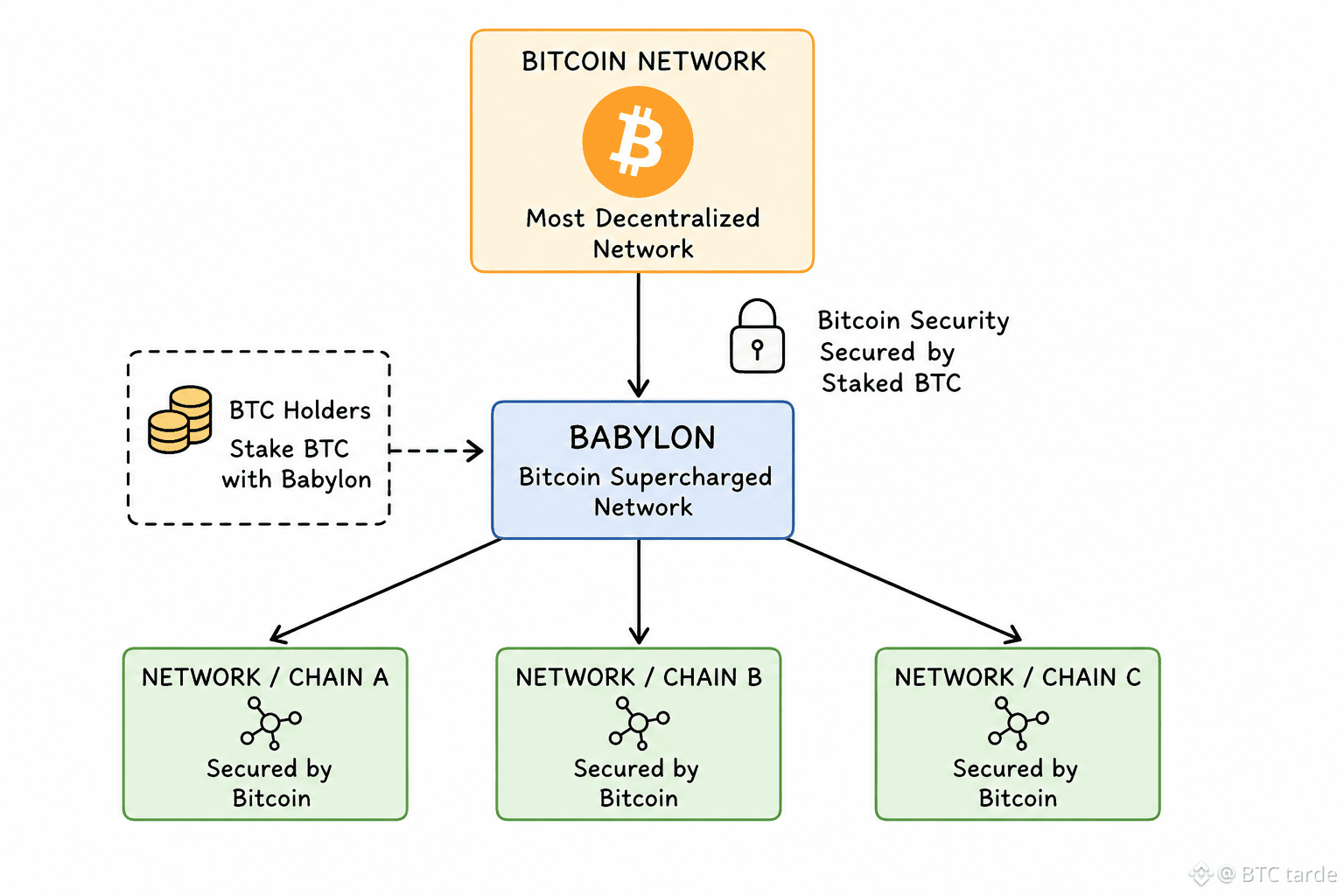
That's when I started reading about Babylon deposit smart contracts.
Imagine a lending protocol on an EVM chain. Instead of rebuilding everything from scratch, the protocol could use deposit smart contracts that connect Bitcoin vaults with existing DeFi infrastructure. Locked BTC can be represented through familiar ERC20 tokens, allowing lending markets, liquidators, and other DeFi applications to interact with Bitcoin in a way they're already comfortable with.
My friend smiled and said,
So developers can focus on building products instead of fighting infrastructure?
Exactly.
The more I read, the more it felt like Babylon is not just building tools for users its building tools for builders. The easier it becomes for developers to integrate Bitcoin, the faster Bitcoin can become part of everyday DeFi.
Later, I checked the BABY ecosystem and saw that around 4.03B BABY are circulating from a 10.9B total supply. Many people only look at the chart, but I started wondering something else:
What happens if hundreds of developers begin using the infrastructure being built today?
Because history shows that the biggest winners in tech are often the platforms that make life easier for developers.
My friend finished his coffee and said,
Most people will never know what deposit contracts or light clients are.
I laughed........
@BabylonLabs_io
He said,
Everyone wants Bitcoin liquidity, but nobody wants the headache of integrating Bitcoin infrastructure.
At first, I didn't fully understand what he meant.
Then he explained that most DeFi protocols are built for tokens that already exist on their own chains. Bitcoin is different. If a lending protocol, stablecoin platform, or trading application wants to use native BTC, developers have to deal with a lot of complexity behind the scenes.
That's when I started reading about Babylon deposit smart contracts.
Imagine a lending protocol on an EVM chain. Instead of rebuilding everything from scratch, the protocol could use deposit smart contracts that connect Bitcoin vaults with existing DeFi infrastructure. Locked BTC can be represented through familiar ERC20 tokens, allowing lending markets, liquidators, and other DeFi applications to interact with Bitcoin in a way they're already comfortable with.
My friend smiled and said,
So developers can focus on building products instead of fighting infrastructure?
Exactly.
The more I read, the more it felt like Babylon is not just building tools for users its building tools for builders. The easier it becomes for developers to integrate Bitcoin, the faster Bitcoin can become part of everyday DeFi.
Later, I checked the BABY ecosystem and saw that around 4.03B BABY are circulating from a 10.9B total supply. Many people only look at the chart, but I started wondering something else:
What happens if hundreds of developers begin using the infrastructure being built today?
Because history shows that the biggest winners in tech are often the platforms that make life easier for developers.
My friend finished his coffee and said,
Most people will never know what deposit contracts or light clients are.
I laughed........
@BabylonLabs_io
4
5
911
#baby $BABY I used to think Bitcoin's biggest role was simply preserving value. The more I learned, the more I realized its security could be useful beyond its own network.
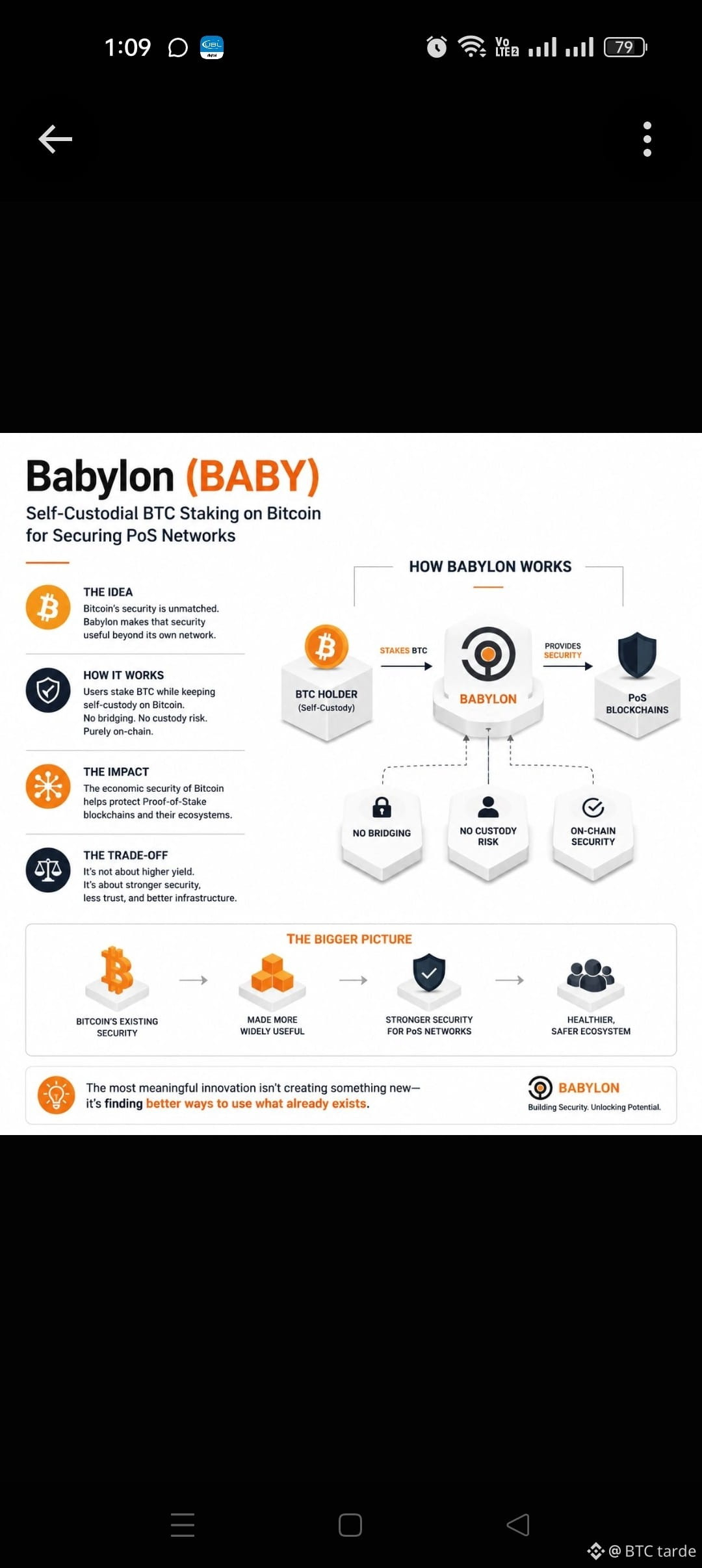
Babylon takes an interesting approach. Instead of asking users to bridge their BTC or give up custody, it enables self-custodial BTC staking directly on Bitcoin. That economic security can then help strengthen Proof-of-Stake blockchains.
The pattern is simple: reduce extra trust while making Bitcoin's security more widely useful. The trade-off is that the focus shifts from chasing yield to building stronger infrastructure.
Sometimes the most meaningful innovation isn't creating something new—it's finding better ways to use what already exists.
@babylonlabs_io #babay
#baby $BABY I used to think Bitcoin's biggest role was simply preserving value. The more I learned, the more I realized its security could be useful beyond its own network.
Babylon takes an interesting approach. Instead of asking users to bridge their BTC or give up custody, it enables self-custodial BTC staking directly on Bitcoin. That economic security can then help strengthen Proof-of-Stake blockchains.
The pattern is simple: reduce extra trust while making Bitcoin's security more widely useful. The trade-off is that the focus shifts from chasing yield to building stronger infrastructure.
Sometimes the most meaningful innovation isn't creating something new—it's finding better ways to use what already exists.
@BabylonLabs_io #babay
Babylon takes an interesting approach. Instead of asking users to bridge their BTC or give up custody, it enables self-custodial BTC staking directly on Bitcoin. That economic security can then help strengthen Proof-of-Stake blockchains.
The pattern is simple: reduce extra trust while making Bitcoin's security more widely useful. The trade-off is that the focus shifts from chasing yield to building stronger infrastructure.
Sometimes the most meaningful innovation isn't creating something new—it's finding better ways to use what already exists.
@BabylonLabs_io #babay
1
3
455
Connectez-vous pour découvrir plus de contenu
Rejoignez la communauté mondiale des adeptes de cryptomonnaies sur Binance Square
⚡️ Suviez les dernières informations importantes sur les cryptomonnaies.
💬 Jugé digne de confiance par la plus grande plateforme d’échange de cryptomonnaies au monde.
👍 Découvrez les connaissances que partagent les créateurs vérifiés.
Adresse e-mail/Nº de téléphone