
Axel Nyx
641 Publications

Axel Nyx
Signaler
Bloquer l’utilisateur
Crypto market insights 📊 Support • Resistance • Targets 🎯Bitcoin | Altcoins | Trading setups
Ouvert au trading
Trade régulièrement
9.4 mois
129 Suivis
2.8K+ Abonnés
568 J’aime
Publications
Portefeuille
Tous
Citations
Direct
·
--
Haussier
J’ai passé du temps à creuser $BABY aujourd’hui, et une chose ressortait.
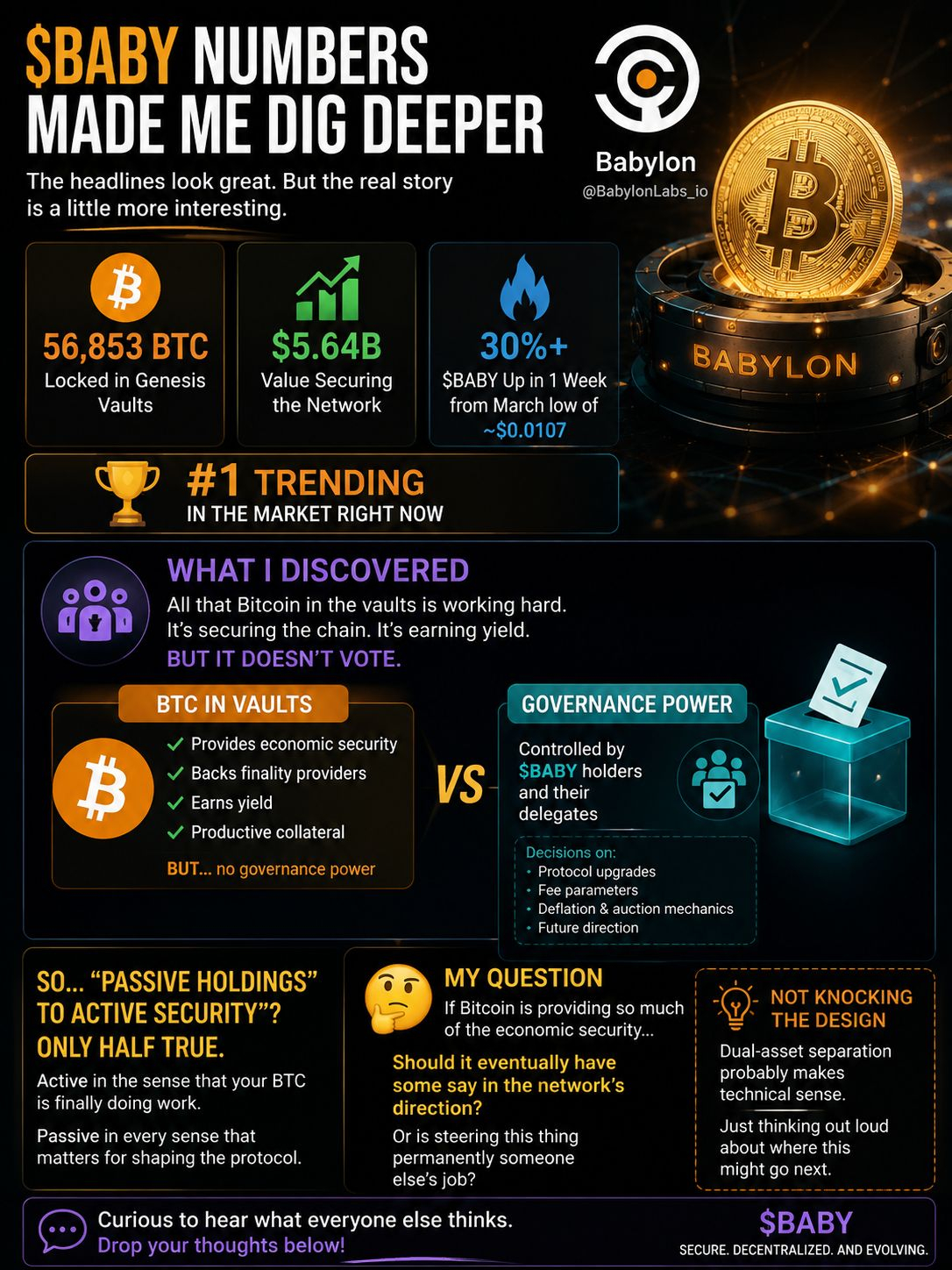
Désormais, plus de 56 800 BTC sont bloqués dans les coffres Babylon. Ce sont des milliards de dollars qui contribuent à sécuriser le réseau et à générer un rendement. Sur le papier, c’est une énorme avancée pour l’utilité de Bitcoin.
Mais plus je lisais, plus je me suis rendu compte d’un détail intéressant.
Le Bitcoin lui-même ne participe pas à la gouvernance. Il renforce la sécurité du réseau, soutient les fournisseurs de finalité et reste entièrement productif, mais les décisions concernant les mises à niveau du protocole, les frais et la direction future sont encore prises par les détenteurs de BABY via la gouvernance.
Cela change la façon dont je regarde la phrase « Bitcoin devient actif. »
Il est actif parce qu’il est enfin utilisé au lieu de rester inactif. Mais il n’est pas actif dans le sens d’avoir une voix au niveau du protocole qu’il aide à sécuriser.
C’est peut-être le bon design. Séparer la sécurité de la gouvernance permet de garder les choses plus propres et plus faciles à gérer.
Cependant, cela me laisse une question :
Si Bitcoin fournit une si grande part de la sécurité économique, devrait-il éventuellement avoir une certaine influence sur l’orientation du réseau, ou la gouvernance est-elle destinée à rester avec le token BABY pour toujours ?
J’ai hâte de connaître l’avis de tout le monde.
#baby @babylonlabs_io $BABY
J’ai passé du temps à creuser $BABY aujourd’hui, et une chose ressortait.
Désormais, plus de 56 800 BTC sont bloqués dans les coffres Babylon. Ce sont des milliards de dollars qui contribuent à sécuriser le réseau et à générer un rendement. Sur le papier, c’est une énorme avancée pour l’utilité de Bitcoin.
Mais plus je lisais, plus je me suis rendu compte d’un détail intéressant.
Le Bitcoin lui-même ne participe pas à la gouvernance. Il renforce la sécurité du réseau, soutient les fournisseurs de finalité et reste entièrement productif, mais les décisions concernant les mises à niveau du protocole, les frais et la direction future sont encore prises par les détenteurs de BABY via la gouvernance.
Cela change la façon dont je regarde la phrase « Bitcoin devient actif. »
Il est actif parce qu’il est enfin utilisé au lieu de rester inactif. Mais il n’est pas actif dans le sens d’avoir une voix au niveau du protocole qu’il aide à sécuriser.
C’est peut-être le bon design. Séparer la sécurité de la gouvernance permet de garder les choses plus propres et plus faciles à gérer.
Cependant, cela me laisse une question :
Si Bitcoin fournit une si grande part de la sécurité économique, devrait-il éventuellement avoir une certaine influence sur l’orientation du réseau, ou la gouvernance est-elle destinée à rester avec le token BABY pour toujours ?
J’ai hâte de connaître l’avis de tout le monde.
#baby @BabylonLabs_io $BABY
Désormais, plus de 56 800 BTC sont bloqués dans les coffres Babylon. Ce sont des milliards de dollars qui contribuent à sécuriser le réseau et à générer un rendement. Sur le papier, c’est une énorme avancée pour l’utilité de Bitcoin.
Mais plus je lisais, plus je me suis rendu compte d’un détail intéressant.
Le Bitcoin lui-même ne participe pas à la gouvernance. Il renforce la sécurité du réseau, soutient les fournisseurs de finalité et reste entièrement productif, mais les décisions concernant les mises à niveau du protocole, les frais et la direction future sont encore prises par les détenteurs de BABY via la gouvernance.
Cela change la façon dont je regarde la phrase « Bitcoin devient actif. »
Il est actif parce qu’il est enfin utilisé au lieu de rester inactif. Mais il n’est pas actif dans le sens d’avoir une voix au niveau du protocole qu’il aide à sécuriser.
C’est peut-être le bon design. Séparer la sécurité de la gouvernance permet de garder les choses plus propres et plus faciles à gérer.
Cependant, cela me laisse une question :
Si Bitcoin fournit une si grande part de la sécurité économique, devrait-il éventuellement avoir une certaine influence sur l’orientation du réseau, ou la gouvernance est-elle destinée à rester avec le token BABY pour toujours ?
J’ai hâte de connaître l’avis de tout le monde.
#baby @BabylonLabs_io $BABY
2
1
81
·
--
Haussier
J’ai passé du temps à creuser dans $BABY today, et une chose a retenu l’attention.
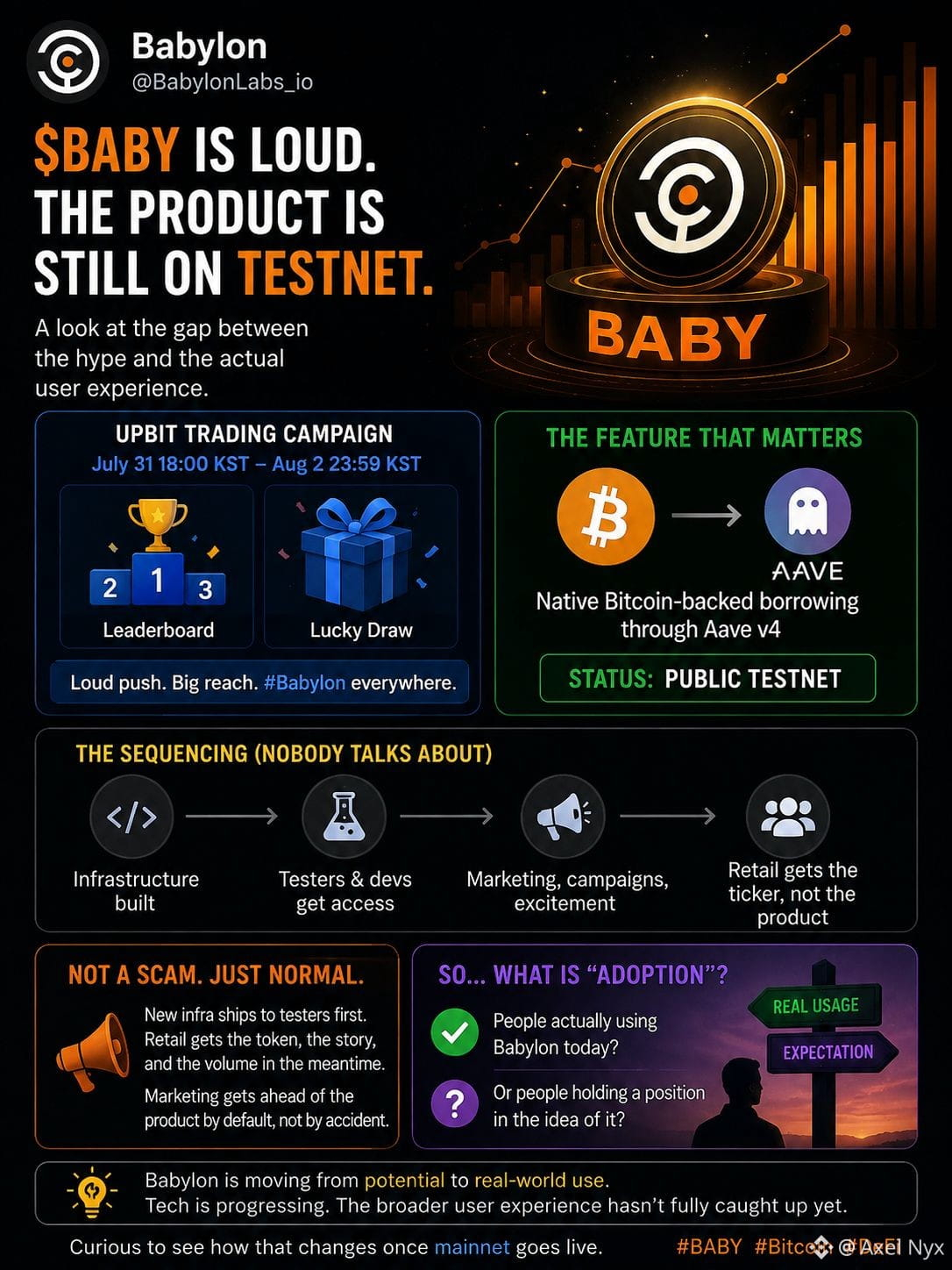
Alors que tout le monde parlait d’activité de trading, de campagnes et d’évolution des prix, j’ai cherché la fonctionnalité qui rend Babylon différent dès le départ : emprunter en utilisant le BTC natif sans renoncer à la garde des fonds.
Le point intéressant ? Cette expérience est toujours disponible sur le testnet public.
Rien d’anormal à cela. La nouvelle infrastructure atteint presque toujours les développeurs et les testeurs avant de toucher les utilisateurs du quotidien. Pourtant, c’est un détail facile à manquer quand la conversation est saturée de chiffres et d’excitation autour des tokens.
Cela m’a fait réfléchir à la fréquence à laquelle le marché valorise la promesse avant même que le produit ne soit largement disponible.
Ce n’est pas forcément un mauvais signe. Cela signifie simplement qu’il existe un décalage entre l’histoire dont les gens parlent et l’expérience que la plupart des gens peuvent réellement utiliser aujourd’hui.
C’est peut-être aussi pour cela que le mot « adoption » peut être si délicat dans le monde des cryptos. Parfois, il signifie que les gens utilisent activement un protocole. D’autres fois, cela veut simplement dire qu’ils sont convaincus que cela comptera plus tard.
Pour l’instant, Babylon ressemble à un projet qui passe encore du potentiel à un usage dans le monde réel. La technologie progresse, mais l’expérience utilisateur globale n’a pas encore pleinement rattrapé son retard.
Curieux de voir comment cela évoluera une fois que le produit principal dépassera le testnet.
@babylonlabs_io #baby $BABY
J’ai passé du temps à creuser dans $BABY today, et une chose a retenu l’attention.
Alors que tout le monde parlait d’activité de trading, de campagnes et d’évolution des prix, j’ai cherché la fonctionnalité qui rend Babylon différent dès le départ : emprunter en utilisant le BTC natif sans renoncer à la garde des fonds.
Le point intéressant ? Cette expérience est toujours disponible sur le testnet public.
Rien d’anormal à cela. La nouvelle infrastructure atteint presque toujours les développeurs et les testeurs avant de toucher les utilisateurs du quotidien. Pourtant, c’est un détail facile à manquer quand la conversation est saturée de chiffres et d’excitation autour des tokens.
Cela m’a fait réfléchir à la fréquence à laquelle le marché valorise la promesse avant même que le produit ne soit largement disponible.
Ce n’est pas forcément un mauvais signe. Cela signifie simplement qu’il existe un décalage entre l’histoire dont les gens parlent et l’expérience que la plupart des gens peuvent réellement utiliser aujourd’hui.
C’est peut-être aussi pour cela que le mot « adoption » peut être si délicat dans le monde des cryptos. Parfois, il signifie que les gens utilisent activement un protocole. D’autres fois, cela veut simplement dire qu’ils sont convaincus que cela comptera plus tard.
Pour l’instant, Babylon ressemble à un projet qui passe encore du potentiel à un usage dans le monde réel. La technologie progresse, mais l’expérience utilisateur globale n’a pas encore pleinement rattrapé son retard.
Curieux de voir comment cela évoluera une fois que le produit principal dépassera le testnet.
@BabylonLabs_io #baby $BABY
Alors que tout le monde parlait d’activité de trading, de campagnes et d’évolution des prix, j’ai cherché la fonctionnalité qui rend Babylon différent dès le départ : emprunter en utilisant le BTC natif sans renoncer à la garde des fonds.
Le point intéressant ? Cette expérience est toujours disponible sur le testnet public.
Rien d’anormal à cela. La nouvelle infrastructure atteint presque toujours les développeurs et les testeurs avant de toucher les utilisateurs du quotidien. Pourtant, c’est un détail facile à manquer quand la conversation est saturée de chiffres et d’excitation autour des tokens.
Cela m’a fait réfléchir à la fréquence à laquelle le marché valorise la promesse avant même que le produit ne soit largement disponible.
Ce n’est pas forcément un mauvais signe. Cela signifie simplement qu’il existe un décalage entre l’histoire dont les gens parlent et l’expérience que la plupart des gens peuvent réellement utiliser aujourd’hui.
C’est peut-être aussi pour cela que le mot « adoption » peut être si délicat dans le monde des cryptos. Parfois, il signifie que les gens utilisent activement un protocole. D’autres fois, cela veut simplement dire qu’ils sont convaincus que cela comptera plus tard.
Pour l’instant, Babylon ressemble à un projet qui passe encore du potentiel à un usage dans le monde réel. La technologie progresse, mais l’expérience utilisateur globale n’a pas encore pleinement rattrapé son retard.
Curieux de voir comment cela évoluera une fois que le produit principal dépassera le testnet.
@BabylonLabs_io #baby $BABY
1
108
·
--
Haussier
J’ai passé du temps à approfondir $BABY aujourd’hui, et une chose est ressortie.
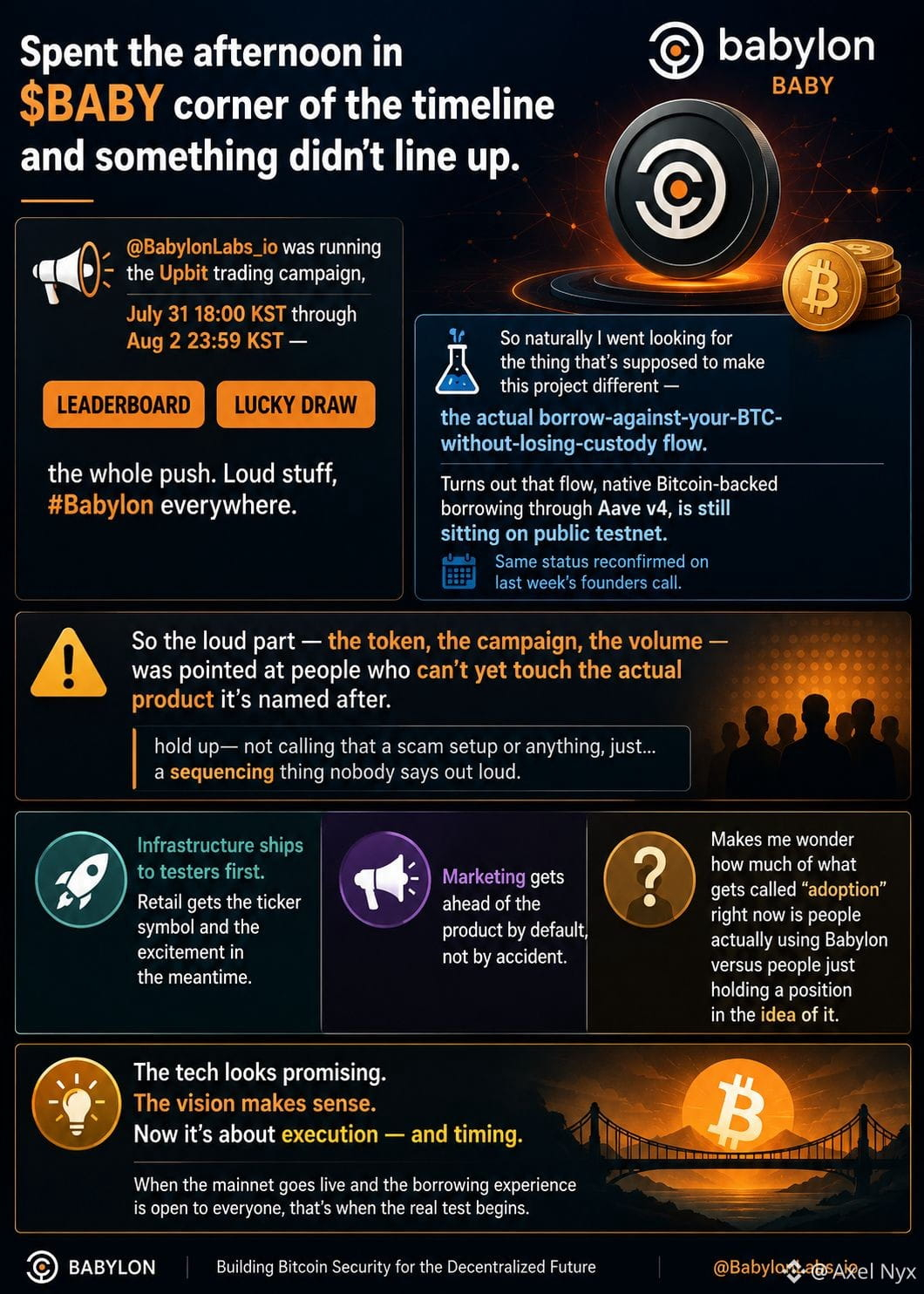
Alors que @BabylonLabs_io faisait la promotion de campagnes d’échange, de compétitions de trading et d’événements communautaires, je voulais vérifier à quel point la plus grande promesse du projet est réellement proche—emprunter adossé au Bitcoin de manière native, sans renoncer à la garde de vos BTC.
Après avoir parcouru les dernières mises à jour et les échanges avec les fondateurs, la réponse est assez claire : le système d’emprunt est encore sur le testnet public.
Ce n’est pas forcément une mauvaise chose. Tout protocole sérieux a besoin de temps pour tester avant d’ouvrir ses portes à tout le monde.
Ce qui a surtout attiré mon attention, c’est le calendrier.
Le token attire déjà l’attention, le volume de trading augmente, et davantage de personnes découvrent Babylon. Pendant ce temps, le produit central est encore en cours d’affinage en coulisses.
C’est un rappel que les marchés bougent souvent avant que les produits ne soient totalement prêts. Les gens n’achètent pas toujours ce qui existe aujourd’hui : ils achètent souvent ce qu’ils pensent existera demain.
Cela ne signifie pas automatiquement que le projet est surévalué ou sous-évalué. Cela veut simplement dire que le marché intègre des attentes futures.
Maintenant, je suis curieux de voir ce qui se passera lorsque l’expérience d’emprunt principale finira enfin par être lancée. C’est à ce moment-là que nous aurons une image bien plus claire du nombre d’utilisateurs venus pour la technologie—et du nombre de ceux venus uniquement pour le token.
Parfois, la plus grande histoire ne se trouve pas dans le graphique des prix. Elle se trouve dans l’écart entre le produit disponible aujourd’hui et la vision que tout le monde échange déjà.
@babylonlabs_io $BABY #baby
{future}(BABYUSDT)
J’ai passé du temps à approfondir $BABY aujourd’hui, et une chose est ressortie.
Alors que @BabylonLabs_io faisait la promotion de campagnes d’échange, de compétitions de trading et d’événements communautaires, je voulais vérifier à quel point la plus grande promesse du projet est réellement proche—emprunter adossé au Bitcoin de manière native, sans renoncer à la garde de vos BTC.
Après avoir parcouru les dernières mises à jour et les échanges avec les fondateurs, la réponse est assez claire : le système d’emprunt est encore sur le testnet public.
Ce n’est pas forcément une mauvaise chose. Tout protocole sérieux a besoin de temps pour tester avant d’ouvrir ses portes à tout le monde.
Ce qui a surtout attiré mon attention, c’est le calendrier.
Le token attire déjà l’attention, le volume de trading augmente, et davantage de personnes découvrent Babylon. Pendant ce temps, le produit central est encore en cours d’affinage en coulisses.
C’est un rappel que les marchés bougent souvent avant que les produits ne soient totalement prêts. Les gens n’achètent pas toujours ce qui existe aujourd’hui : ils achètent souvent ce qu’ils pensent existera demain.
Cela ne signifie pas automatiquement que le projet est surévalué ou sous-évalué. Cela veut simplement dire que le marché intègre des attentes futures.
Maintenant, je suis curieux de voir ce qui se passera lorsque l’expérience d’emprunt principale finira enfin par être lancée. C’est à ce moment-là que nous aurons une image bien plus claire du nombre d’utilisateurs venus pour la technologie—et du nombre de ceux venus uniquement pour le token.
Parfois, la plus grande histoire ne se trouve pas dans le graphique des prix. Elle se trouve dans l’écart entre le produit disponible aujourd’hui et la vision que tout le monde échange déjà.
@BabylonLabs_io $BABY #baby
Alors que @BabylonLabs_io faisait la promotion de campagnes d’échange, de compétitions de trading et d’événements communautaires, je voulais vérifier à quel point la plus grande promesse du projet est réellement proche—emprunter adossé au Bitcoin de manière native, sans renoncer à la garde de vos BTC.
Après avoir parcouru les dernières mises à jour et les échanges avec les fondateurs, la réponse est assez claire : le système d’emprunt est encore sur le testnet public.
Ce n’est pas forcément une mauvaise chose. Tout protocole sérieux a besoin de temps pour tester avant d’ouvrir ses portes à tout le monde.
Ce qui a surtout attiré mon attention, c’est le calendrier.
Le token attire déjà l’attention, le volume de trading augmente, et davantage de personnes découvrent Babylon. Pendant ce temps, le produit central est encore en cours d’affinage en coulisses.
C’est un rappel que les marchés bougent souvent avant que les produits ne soient totalement prêts. Les gens n’achètent pas toujours ce qui existe aujourd’hui : ils achètent souvent ce qu’ils pensent existera demain.
Cela ne signifie pas automatiquement que le projet est surévalué ou sous-évalué. Cela veut simplement dire que le marché intègre des attentes futures.
Maintenant, je suis curieux de voir ce qui se passera lorsque l’expérience d’emprunt principale finira enfin par être lancée. C’est à ce moment-là que nous aurons une image bien plus claire du nombre d’utilisateurs venus pour la technologie—et du nombre de ceux venus uniquement pour le token.
Parfois, la plus grande histoire ne se trouve pas dans le graphique des prix. Elle se trouve dans l’écart entre le produit disponible aujourd’hui et la vision que tout le monde échange déjà.
@BabylonLabs_io $BABY #baby
1
64
·
--
Haussier
J’ai passé un peu de temps à me pencher sur @BabylonLabs_io aujourd’hui plutôt que de ne regarder que le prix. Plus je lis à propos des Trustless Bitcoin Vaults, plus une chose ressort. La technologie et le marché ne progressent pas toujours au même rythme.
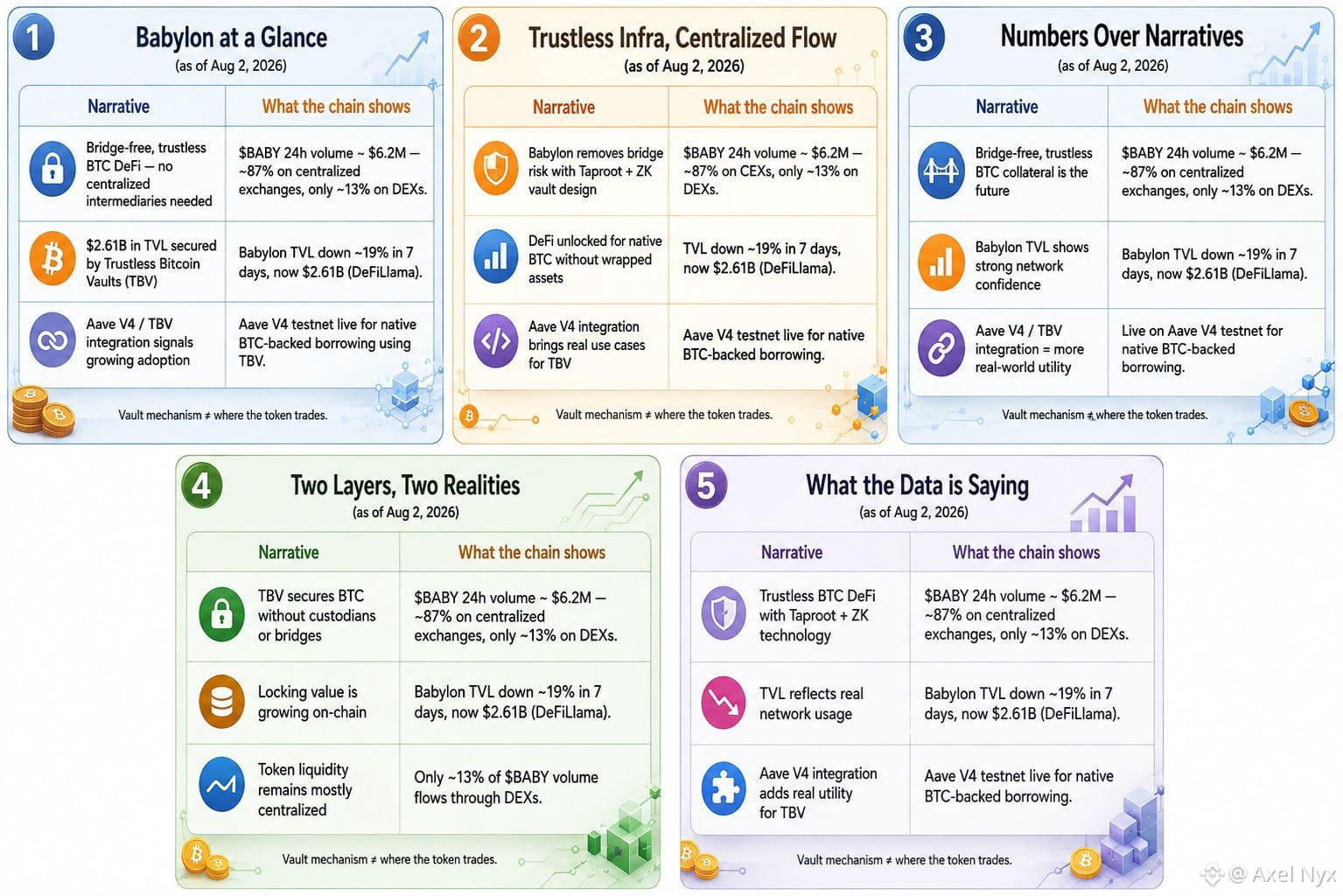
L’idée est simple : utiliser le BTC natif comme garantie, sans l’envelopper ni le confier à un pont. C’est une étape solide pour la DeFi adossée à Bitcoin. Mais ensuite, j’ai vérifié les chiffres.
Environ 2,6 Md$ restent encore bloqués dans Babylon, mais la TVL a glissé au cours de la semaine passée. Dans le même temps, la grande majorité des $BABY trading se fait encore sur des échanges centralisés, tandis qu’une faible part seulement passe par des DEX.
Cela ne veut pas dire que le protocole ne fonctionne pas. Le système de vaults et le marché du token résolvent des problèmes différents. L’un vise à sécuriser Bitcoin sans confiance supplémentaire, tandis que l’autre dépend de l’endroit où les traders préfèrent trouver la liquidité.
Cela m’a fait réfléchir à quelque chose que je n’avais pas envisagé auparavant.
Un protocole peut supprimer la confiance de l’infrastructure, mais l’adoption ne supprime pas instantanément la confiance du marché lui-même. Ce sont deux parcours différents, et ils ne se dérouleront peut-être pas au même rythme.
Peut-être que c’est là la vraie histoire à suivre au cours des prochains mois.
Qu’est-ce qui compte le plus à long terme : construire une infrastructure sans confiance, ou voir une liquidité sans confiance devenir la norme ?
@babylonlabs_io $BABY #baby
J’ai passé un peu de temps à me pencher sur @BabylonLabs_io aujourd’hui plutôt que de ne regarder que le prix. Plus je lis à propos des Trustless Bitcoin Vaults, plus une chose ressort. La technologie et le marché ne progressent pas toujours au même rythme.
L’idée est simple : utiliser le BTC natif comme garantie, sans l’envelopper ni le confier à un pont. C’est une étape solide pour la DeFi adossée à Bitcoin. Mais ensuite, j’ai vérifié les chiffres.
Environ 2,6 Md$ restent encore bloqués dans Babylon, mais la TVL a glissé au cours de la semaine passée. Dans le même temps, la grande majorité des $BABY trading se fait encore sur des échanges centralisés, tandis qu’une faible part seulement passe par des DEX.
Cela ne veut pas dire que le protocole ne fonctionne pas. Le système de vaults et le marché du token résolvent des problèmes différents. L’un vise à sécuriser Bitcoin sans confiance supplémentaire, tandis que l’autre dépend de l’endroit où les traders préfèrent trouver la liquidité.
Cela m’a fait réfléchir à quelque chose que je n’avais pas envisagé auparavant.
Un protocole peut supprimer la confiance de l’infrastructure, mais l’adoption ne supprime pas instantanément la confiance du marché lui-même. Ce sont deux parcours différents, et ils ne se dérouleront peut-être pas au même rythme.
Peut-être que c’est là la vraie histoire à suivre au cours des prochains mois.
Qu’est-ce qui compte le plus à long terme : construire une infrastructure sans confiance, ou voir une liquidité sans confiance devenir la norme ?
@BabylonLabs_io $BABY #baby
L’idée est simple : utiliser le BTC natif comme garantie, sans l’envelopper ni le confier à un pont. C’est une étape solide pour la DeFi adossée à Bitcoin. Mais ensuite, j’ai vérifié les chiffres.
Environ 2,6 Md$ restent encore bloqués dans Babylon, mais la TVL a glissé au cours de la semaine passée. Dans le même temps, la grande majorité des $BABY trading se fait encore sur des échanges centralisés, tandis qu’une faible part seulement passe par des DEX.
Cela ne veut pas dire que le protocole ne fonctionne pas. Le système de vaults et le marché du token résolvent des problèmes différents. L’un vise à sécuriser Bitcoin sans confiance supplémentaire, tandis que l’autre dépend de l’endroit où les traders préfèrent trouver la liquidité.
Cela m’a fait réfléchir à quelque chose que je n’avais pas envisagé auparavant.
Un protocole peut supprimer la confiance de l’infrastructure, mais l’adoption ne supprime pas instantanément la confiance du marché lui-même. Ce sont deux parcours différents, et ils ne se dérouleront peut-être pas au même rythme.
Peut-être que c’est là la vraie histoire à suivre au cours des prochains mois.
Qu’est-ce qui compte le plus à long terme : construire une infrastructure sans confiance, ou voir une liquidité sans confiance devenir la norme ?
@BabylonLabs_io $BABY #baby
2
1
127
·
--
Haussier
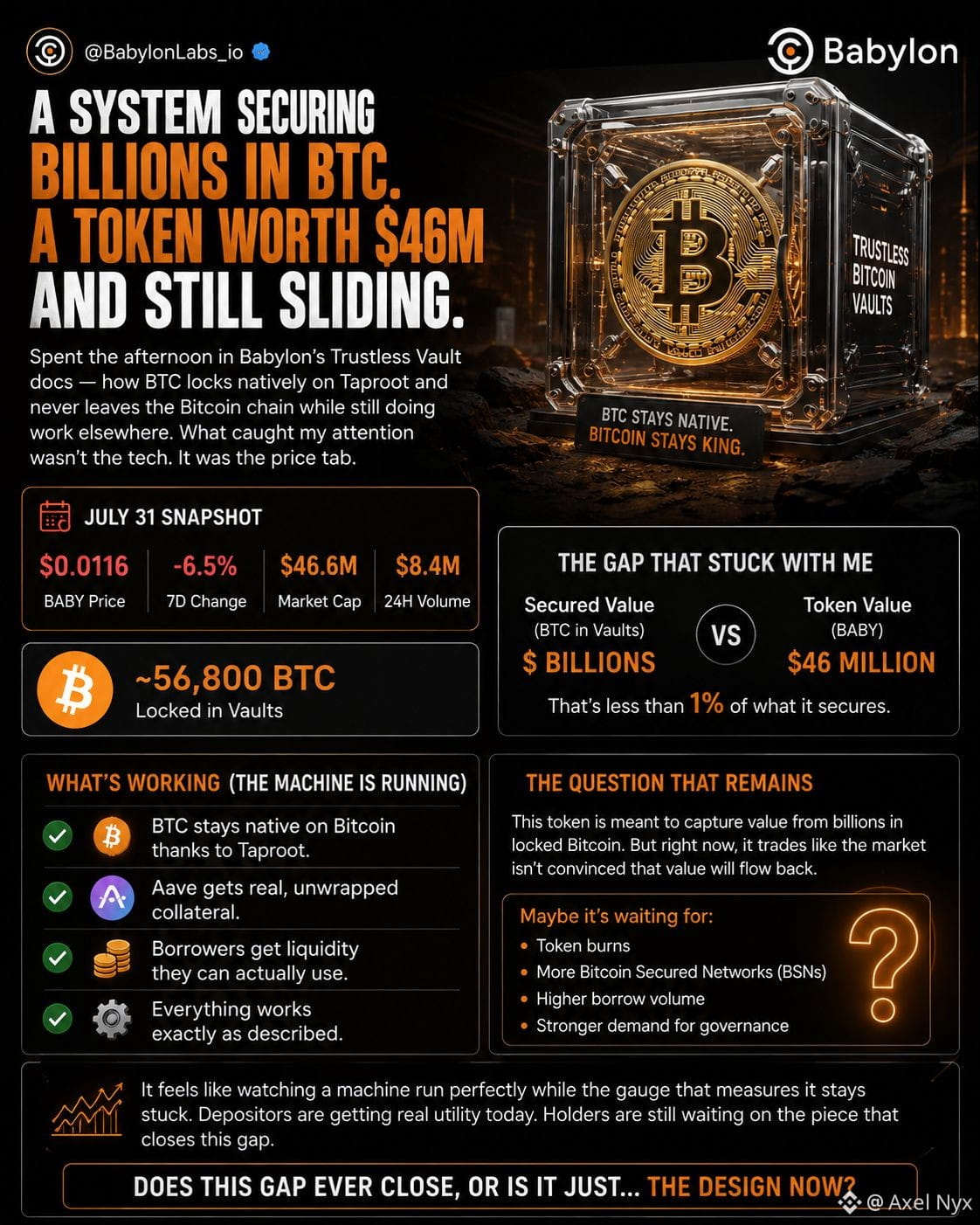
J’ai passé un peu de temps aujourd’hui à fouiller dans la documentation du Trustless Vault de @BabylonLabs_io au lieu de rester à regarder des graphiques. La partie qui m’est restée n’était pas la conception Taproot ni la manière dont le BTC reste sur le réseau Bitcoin tout en étant utilisé ailleurs. C’est ce que j’ai vu après avoir ouvert l’onglet des prix.
Au 31 juillet, $BABY se situait autour de 0,0116 $, en baisse d’environ 6,5 % sur la semaine, avec une capitalisation boursière proche de 46,6 M$ et quelque 8,4 M$ de volume sur 24 heures. Dans le même temps, le système de vault qu’il contribue à régir sécurisait environ 56 800 BTC.
Ce contraste est difficile à ignorer.
L’infrastructure ne semble pas cassée. Le BTC natif reste dans le modèle de sécurité de Bitcoin. Les vaults offrent une garantie utilisable. Les emprunteurs gagnent en liquidité sans envelopper leurs pièces. L’idée centrale fonctionne déjà.
Pourtant, le token lié à cet écosystème n’est valorisé que pour une fraction minuscule du capital qui y circule.
Peut-être que le marché attend une meilleure captation de la valeur. Peut-être qu’il veut une activité d’emprunt plus forte, davantage d’expansion du réseau, ou une demande de gouvernance plus claire. Ou peut-être qu’il lui faut simplement du temps avant que l’utilité ne se reflète dans le token lui-même.
Pour moi, c’est la vraie question qui entoure Babylon aujourd’hui — pas de savoir si la technologie fonctionne, mais si la valeur créée par le réseau sera finalement reflétée dans $BABY.
C’est ce que je vais surveiller.
@babylonlabs_io #baby $BABY
{spot}(BABYUSDT)
J’ai passé un peu de temps aujourd’hui à fouiller dans la documentation du Trustless Vault de @BabylonLabs_io au lieu de rester à regarder des graphiques. La partie qui m’est restée n’était pas la conception Taproot ni la manière dont le BTC reste sur le réseau Bitcoin tout en étant utilisé ailleurs. C’est ce que j’ai vu après avoir ouvert l’onglet des prix.
Au 31 juillet, $BABY se situait autour de 0,0116 $, en baisse d’environ 6,5 % sur la semaine, avec une capitalisation boursière proche de 46,6 M$ et quelque 8,4 M$ de volume sur 24 heures. Dans le même temps, le système de vault qu’il contribue à régir sécurisait environ 56 800 BTC.
Ce contraste est difficile à ignorer.
L’infrastructure ne semble pas cassée. Le BTC natif reste dans le modèle de sécurité de Bitcoin. Les vaults offrent une garantie utilisable. Les emprunteurs gagnent en liquidité sans envelopper leurs pièces. L’idée centrale fonctionne déjà.
Pourtant, le token lié à cet écosystème n’est valorisé que pour une fraction minuscule du capital qui y circule.
Peut-être que le marché attend une meilleure captation de la valeur. Peut-être qu’il veut une activité d’emprunt plus forte, davantage d’expansion du réseau, ou une demande de gouvernance plus claire. Ou peut-être qu’il lui faut simplement du temps avant que l’utilité ne se reflète dans le token lui-même.
Pour moi, c’est la vraie question qui entoure Babylon aujourd’hui — pas de savoir si la technologie fonctionne, mais si la valeur créée par le réseau sera finalement reflétée dans $BABY .
C’est ce que je vais surveiller.
@BabylonLabs_io #baby $BABY
Au 31 juillet, $BABY se situait autour de 0,0116 $, en baisse d’environ 6,5 % sur la semaine, avec une capitalisation boursière proche de 46,6 M$ et quelque 8,4 M$ de volume sur 24 heures. Dans le même temps, le système de vault qu’il contribue à régir sécurisait environ 56 800 BTC.
Ce contraste est difficile à ignorer.
L’infrastructure ne semble pas cassée. Le BTC natif reste dans le modèle de sécurité de Bitcoin. Les vaults offrent une garantie utilisable. Les emprunteurs gagnent en liquidité sans envelopper leurs pièces. L’idée centrale fonctionne déjà.
Pourtant, le token lié à cet écosystème n’est valorisé que pour une fraction minuscule du capital qui y circule.
Peut-être que le marché attend une meilleure captation de la valeur. Peut-être qu’il veut une activité d’emprunt plus forte, davantage d’expansion du réseau, ou une demande de gouvernance plus claire. Ou peut-être qu’il lui faut simplement du temps avant que l’utilité ne se reflète dans le token lui-même.
Pour moi, c’est la vraie question qui entoure Babylon aujourd’hui — pas de savoir si la technologie fonctionne, mais si la valeur créée par le réseau sera finalement reflétée dans $BABY .
C’est ce que je vais surveiller.
@BabylonLabs_io #baby $BABY
1
81
·
--
Haussier
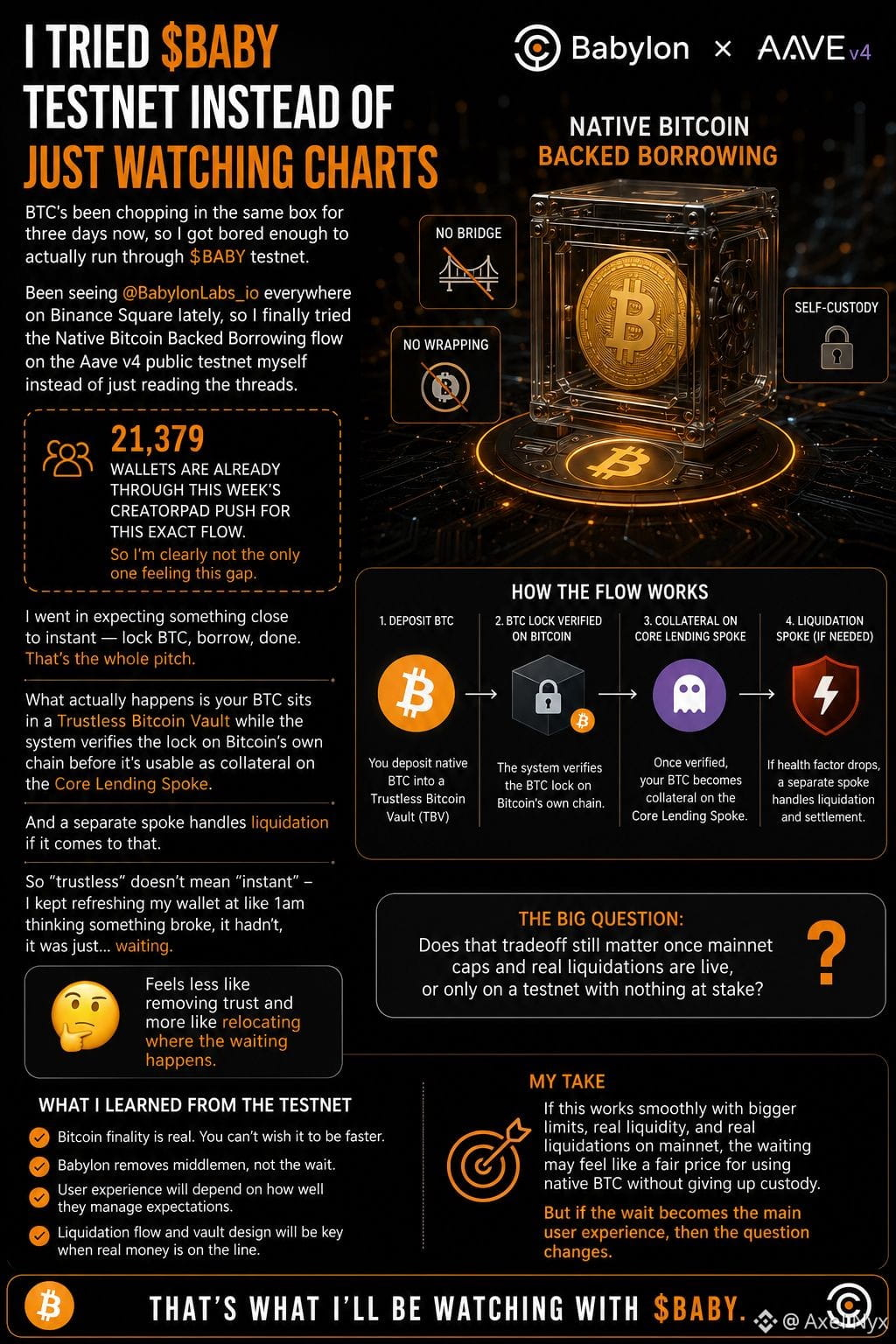
BTC faisait du surplace dans une seule et même fourchette depuis quelques jours, alors j’ai finalement arrêté de regarder le graphique et je me suis plongé dans $BABY.
Le flux Native Bitcoin Backed Borrowing de @BabylonLabs_io apparaissait dans ma timeline depuis un moment, alors au lieu de lire d’autres fils de discussion, j’ai carrément suivi le flow du testnet public Aave v4 moi-même.
Le pitch paraît simple : verrouiller du BTC natif, pas de bridge, pas de wrapping, puis l’utiliser comme garantie pour emprunter.
Mais l’expérience réelle est un peu différente.
D’abord, ton BTC est placé dans un Trustless Bitcoin Vault. Ensuite, le verrouillage du Bitcoin doit être vérifié sur la propre blockchain de Bitcoin avant que ce BTC puisse servir de collatéral sur le Core Lending Spoke. Et si quelque chose tourne mal, la liquidation a aussi son propre chemin.
C’est cette partie qui a attiré mon attention.
« Trustless » ne veut pas dire « instantané. »
À un moment, je vérifiais mon wallet encore et encore, en me demandant si j’avais raté quelque chose. Rien n’était cassé. Bitcoin faisait simplement ce que fait Bitcoin — prendre son temps.
Et c’est peut-être là le vrai test pour Babylon.
Si ça fonctionne avec fluidité avec des limites plus élevées, une vraie liquidité et de vraies liquidations sur le mainnet, l’attente peut sembler un prix raisonnable à payer pour utiliser du BTC natif sans renoncer à la garde.
Mais si l’attente devient l’expérience utilisateur principale, alors la question change :
Est-ce qu’on supprime vraiment la friction, ou est-ce qu’on la déplace ailleurs ?
C’est ce que je vais surveiller avec
@babylonlabs_io #baby $BABY
BTC faisait du surplace dans une seule et même fourchette depuis quelques jours, alors j’ai finalement arrêté de regarder le graphique et je me suis plongé dans $BABY .
Le flux Native Bitcoin Backed Borrowing de @BabylonLabs_io apparaissait dans ma timeline depuis un moment, alors au lieu de lire d’autres fils de discussion, j’ai carrément suivi le flow du testnet public Aave v4 moi-même.
Le pitch paraît simple : verrouiller du BTC natif, pas de bridge, pas de wrapping, puis l’utiliser comme garantie pour emprunter.
Mais l’expérience réelle est un peu différente.
D’abord, ton BTC est placé dans un Trustless Bitcoin Vault. Ensuite, le verrouillage du Bitcoin doit être vérifié sur la propre blockchain de Bitcoin avant que ce BTC puisse servir de collatéral sur le Core Lending Spoke. Et si quelque chose tourne mal, la liquidation a aussi son propre chemin.
C’est cette partie qui a attiré mon attention.
« Trustless » ne veut pas dire « instantané. »
À un moment, je vérifiais mon wallet encore et encore, en me demandant si j’avais raté quelque chose. Rien n’était cassé. Bitcoin faisait simplement ce que fait Bitcoin — prendre son temps.
Et c’est peut-être là le vrai test pour Babylon.
Si ça fonctionne avec fluidité avec des limites plus élevées, une vraie liquidité et de vraies liquidations sur le mainnet, l’attente peut sembler un prix raisonnable à payer pour utiliser du BTC natif sans renoncer à la garde.
Mais si l’attente devient l’expérience utilisateur principale, alors la question change :
Est-ce qu’on supprime vraiment la friction, ou est-ce qu’on la déplace ailleurs ?
C’est ce que je vais surveiller avec
@BabylonLabs_io #baby $BABY
Le flux Native Bitcoin Backed Borrowing de @BabylonLabs_io apparaissait dans ma timeline depuis un moment, alors au lieu de lire d’autres fils de discussion, j’ai carrément suivi le flow du testnet public Aave v4 moi-même.
Le pitch paraît simple : verrouiller du BTC natif, pas de bridge, pas de wrapping, puis l’utiliser comme garantie pour emprunter.
Mais l’expérience réelle est un peu différente.
D’abord, ton BTC est placé dans un Trustless Bitcoin Vault. Ensuite, le verrouillage du Bitcoin doit être vérifié sur la propre blockchain de Bitcoin avant que ce BTC puisse servir de collatéral sur le Core Lending Spoke. Et si quelque chose tourne mal, la liquidation a aussi son propre chemin.
C’est cette partie qui a attiré mon attention.
« Trustless » ne veut pas dire « instantané. »
À un moment, je vérifiais mon wallet encore et encore, en me demandant si j’avais raté quelque chose. Rien n’était cassé. Bitcoin faisait simplement ce que fait Bitcoin — prendre son temps.
Et c’est peut-être là le vrai test pour Babylon.
Si ça fonctionne avec fluidité avec des limites plus élevées, une vraie liquidité et de vraies liquidations sur le mainnet, l’attente peut sembler un prix raisonnable à payer pour utiliser du BTC natif sans renoncer à la garde.
Mais si l’attente devient l’expérience utilisateur principale, alors la question change :
Est-ce qu’on supprime vraiment la friction, ou est-ce qu’on la déplace ailleurs ?
C’est ce que je vais surveiller avec
@BabylonLabs_io #baby $BABY
1
68
·
--
Haussier
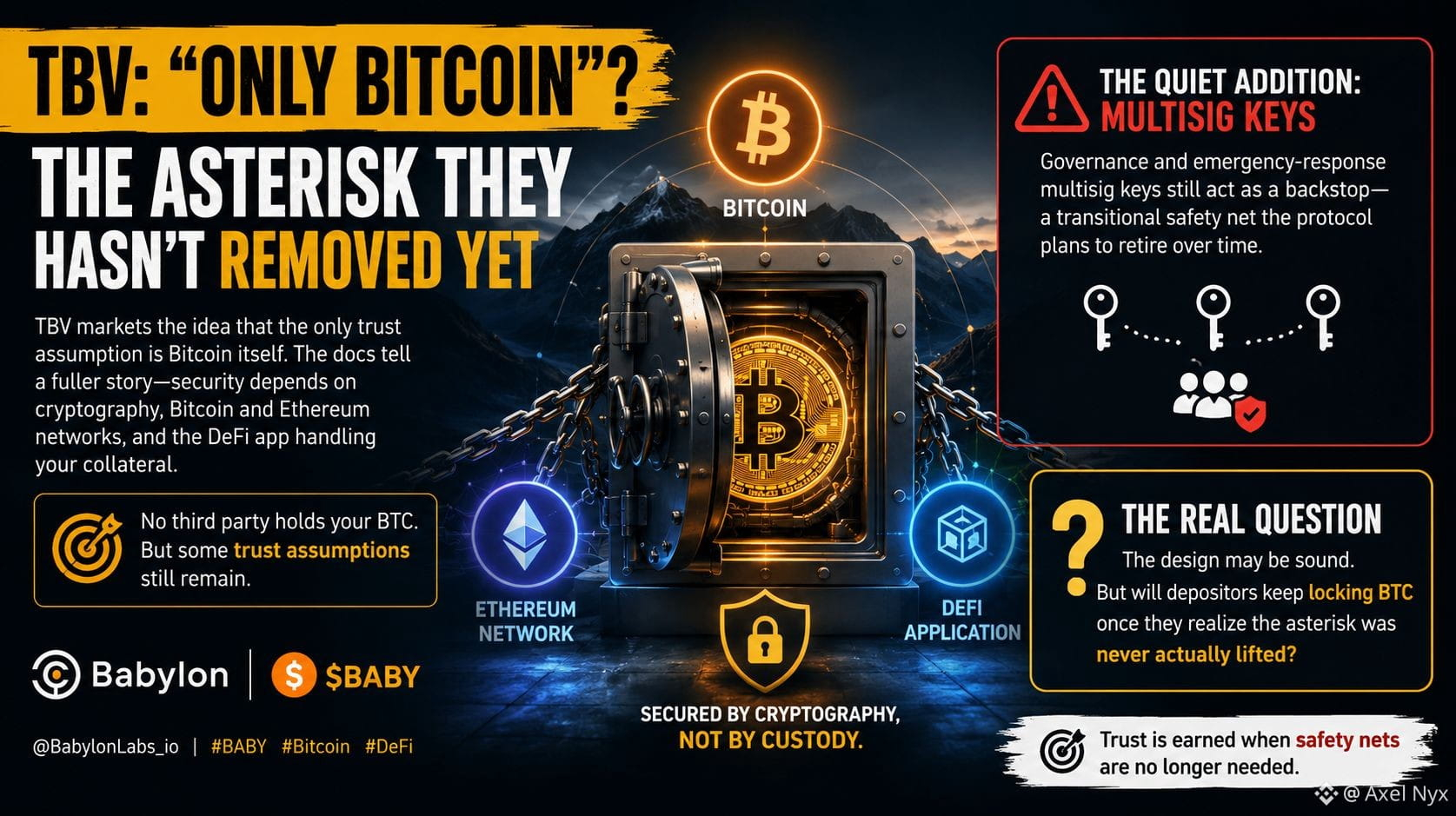
Au début, j’ai pris la plus grande promesse de TBV au pied de la lettre : la seule chose à laquelle il fallait faire confiance était le Bitcoin lui-même. Plus je passais de temps à lire la documentation, plus cette affirmation me semblait être une simplification plutôt que l’image complète.
Le protocole supprime bien le dépositaire traditionnel. C’est une amélioration significative. Mais les déposants s’appuient encore sur plusieurs éléments mobiles : la cryptographie sous-jacente, la sécurité du Bitcoin, la couche d’exécution d’Ethereum et l’application DeFi qui interagit avec la garantie.
Puis j’ai remarqué un autre détail, rarement mentionné dans le titre.
Le protocole fonctionne encore avec des clés de gouvernance et de multisig d’urgence. Elles sont décrites comme des garanties temporaires qui seront éventuellement supprimées, mais aujourd’hui elles font toujours partie du modèle de sécurité. Cela ne rend pas TBV moins innovant. Cela signifie simplement que le parcours vers une minimisation totale de la confiance n’est pas encore terminé.
Ce que je surveille n’est pas la conception du coffre-fort en elle-même. C’est le moment où le protocole se sent suffisamment sûr pour mettre fin à ces contrôles d’urgence. Retirer un filet de sécurité est facile sur le papier. Le faire sans réduire la confiance des utilisateurs est beaucoup plus difficile.
Le véritable test ne sera pas de savoir si la cryptographie fonctionne. Il s’agira de savoir si les utilisateurs continuent de verrouiller du BTC lorsque l’on attend du protocole qu’il se tienne entièrement sur ses propres bases.
@babylonlabs_io #baby $BABY
Au début, j’ai pris la plus grande promesse de TBV au pied de la lettre : la seule chose à laquelle il fallait faire confiance était le Bitcoin lui-même. Plus je passais de temps à lire la documentation, plus cette affirmation me semblait être une simplification plutôt que l’image complète.
Le protocole supprime bien le dépositaire traditionnel. C’est une amélioration significative. Mais les déposants s’appuient encore sur plusieurs éléments mobiles : la cryptographie sous-jacente, la sécurité du Bitcoin, la couche d’exécution d’Ethereum et l’application DeFi qui interagit avec la garantie.
Puis j’ai remarqué un autre détail, rarement mentionné dans le titre.
Le protocole fonctionne encore avec des clés de gouvernance et de multisig d’urgence. Elles sont décrites comme des garanties temporaires qui seront éventuellement supprimées, mais aujourd’hui elles font toujours partie du modèle de sécurité. Cela ne rend pas TBV moins innovant. Cela signifie simplement que le parcours vers une minimisation totale de la confiance n’est pas encore terminé.
Ce que je surveille n’est pas la conception du coffre-fort en elle-même. C’est le moment où le protocole se sent suffisamment sûr pour mettre fin à ces contrôles d’urgence. Retirer un filet de sécurité est facile sur le papier. Le faire sans réduire la confiance des utilisateurs est beaucoup plus difficile.
Le véritable test ne sera pas de savoir si la cryptographie fonctionne. Il s’agira de savoir si les utilisateurs continuent de verrouiller du BTC lorsque l’on attend du protocole qu’il se tienne entièrement sur ses propres bases.
@BabylonLabs_io #baby $BABY
Le protocole supprime bien le dépositaire traditionnel. C’est une amélioration significative. Mais les déposants s’appuient encore sur plusieurs éléments mobiles : la cryptographie sous-jacente, la sécurité du Bitcoin, la couche d’exécution d’Ethereum et l’application DeFi qui interagit avec la garantie.
Puis j’ai remarqué un autre détail, rarement mentionné dans le titre.
Le protocole fonctionne encore avec des clés de gouvernance et de multisig d’urgence. Elles sont décrites comme des garanties temporaires qui seront éventuellement supprimées, mais aujourd’hui elles font toujours partie du modèle de sécurité. Cela ne rend pas TBV moins innovant. Cela signifie simplement que le parcours vers une minimisation totale de la confiance n’est pas encore terminé.
Ce que je surveille n’est pas la conception du coffre-fort en elle-même. C’est le moment où le protocole se sent suffisamment sûr pour mettre fin à ces contrôles d’urgence. Retirer un filet de sécurité est facile sur le papier. Le faire sans réduire la confiance des utilisateurs est beaucoup plus difficile.
Le véritable test ne sera pas de savoir si la cryptographie fonctionne. Il s’agira de savoir si les utilisateurs continuent de verrouiller du BTC lorsque l’on attend du protocole qu’il se tienne entièrement sur ses propres bases.
@BabylonLabs_io #baby $BABY
101
·
--
Haussier
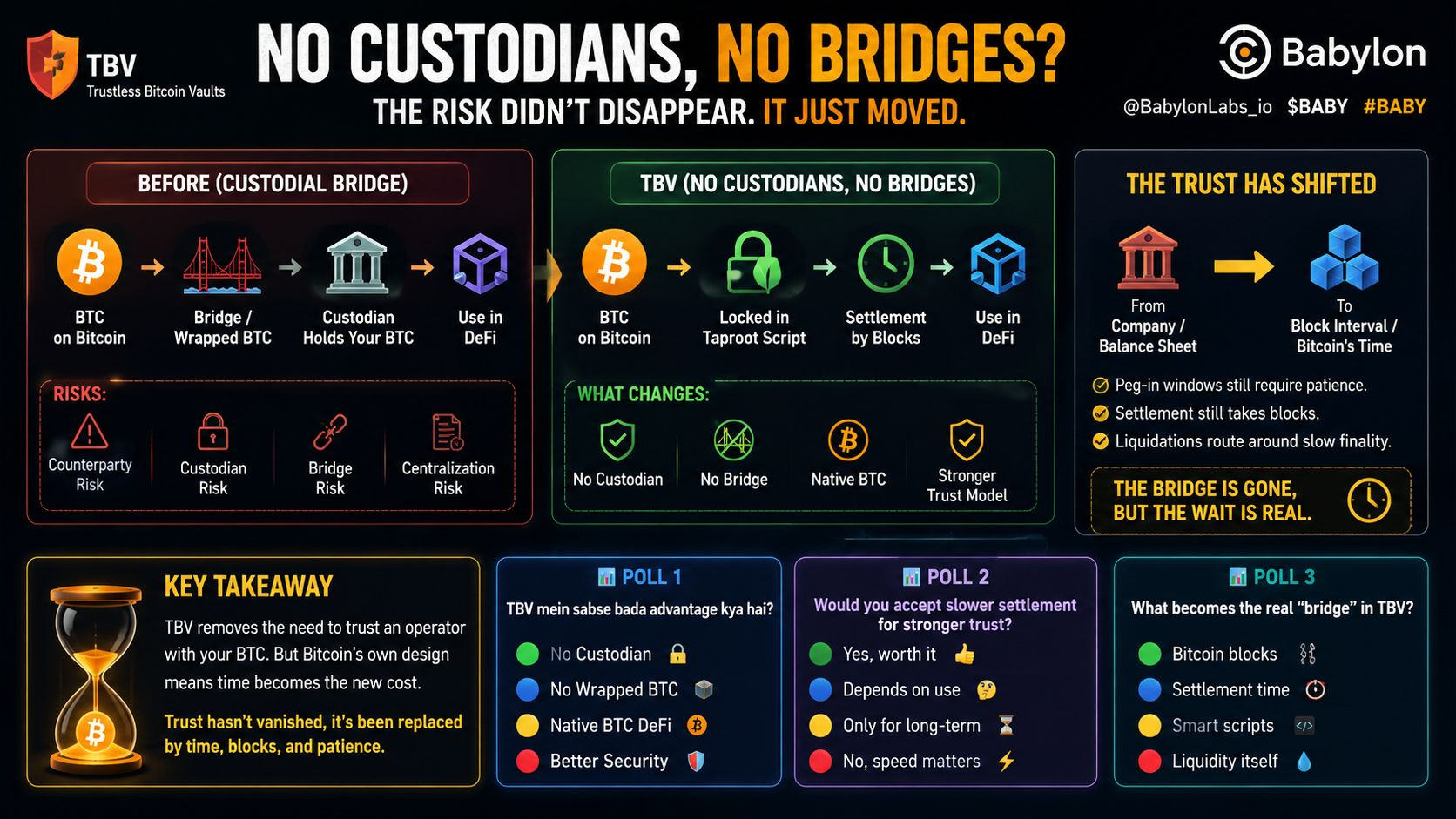
Je pensais que « pas de dépositaires, pas de ponts » signifiait que le TBV avait éliminé les principaux risques de la DeFi Bitcoin.
Mais en regardant plus en profondeur, j’ai réalisé que le risque ne disparaissait pas.
Il s’est déplacé.
Avec TBV, le BTC peut rester natif et être verrouillé directement via le système de scripts natif de Bitcoin, plutôt que d’être confié à un dépositaire ou à un actif tokenisé. C’est une avancée majeure. Mais Bitcoin a encore une chose que vous ne pouvez pas coder : le temps.
Les fenêtres de peg-in exigent toujours de la patience. Le règlement prend toujours des blocs. La liquidation doit toujours s’appuyer sur la finalité plus lente de Bitcoin.
Du coup, le modèle de confiance paraît différent.
Vous ne faites plus confiance à une entreprise pour conserver votre BTC.
Vous faites confiance à la chaîne pour faire son travail — et vous acceptez que la chaîne avance à son propre rythme.
Cet arbitrage m’intrigue.
Le pont a peut-être disparu, mais l’attente n’a pas disparu. Elle est simplement devenue une partie du système lui-même.
Et cela m’amène à me demander :
Si la patience devient le nouveau coût d’utilisation du BTC natif dans la DeFi, les capitaux sérieux accepteront-ils d’attendre pour des hypothèses de confiance plus solides ?
Ou bien la liquidité cherchera-t-elle toujours la sortie la plus rapide ?
@babylonlabs_io #baby $BABY
Je pensais que « pas de dépositaires, pas de ponts » signifiait que le TBV avait éliminé les principaux risques de la DeFi Bitcoin.
Mais en regardant plus en profondeur, j’ai réalisé que le risque ne disparaissait pas.
Il s’est déplacé.
Avec TBV, le BTC peut rester natif et être verrouillé directement via le système de scripts natif de Bitcoin, plutôt que d’être confié à un dépositaire ou à un actif tokenisé. C’est une avancée majeure. Mais Bitcoin a encore une chose que vous ne pouvez pas coder : le temps.
Les fenêtres de peg-in exigent toujours de la patience. Le règlement prend toujours des blocs. La liquidation doit toujours s’appuyer sur la finalité plus lente de Bitcoin.
Du coup, le modèle de confiance paraît différent.
Vous ne faites plus confiance à une entreprise pour conserver votre BTC.
Vous faites confiance à la chaîne pour faire son travail — et vous acceptez que la chaîne avance à son propre rythme.
Cet arbitrage m’intrigue.
Le pont a peut-être disparu, mais l’attente n’a pas disparu. Elle est simplement devenue une partie du système lui-même.
Et cela m’amène à me demander :
Si la patience devient le nouveau coût d’utilisation du BTC natif dans la DeFi, les capitaux sérieux accepteront-ils d’attendre pour des hypothèses de confiance plus solides ?
Ou bien la liquidité cherchera-t-elle toujours la sortie la plus rapide ?
@BabylonLabs_io #baby $BABY
Mais en regardant plus en profondeur, j’ai réalisé que le risque ne disparaissait pas.
Il s’est déplacé.
Avec TBV, le BTC peut rester natif et être verrouillé directement via le système de scripts natif de Bitcoin, plutôt que d’être confié à un dépositaire ou à un actif tokenisé. C’est une avancée majeure. Mais Bitcoin a encore une chose que vous ne pouvez pas coder : le temps.
Les fenêtres de peg-in exigent toujours de la patience. Le règlement prend toujours des blocs. La liquidation doit toujours s’appuyer sur la finalité plus lente de Bitcoin.
Du coup, le modèle de confiance paraît différent.
Vous ne faites plus confiance à une entreprise pour conserver votre BTC.
Vous faites confiance à la chaîne pour faire son travail — et vous acceptez que la chaîne avance à son propre rythme.
Cet arbitrage m’intrigue.
Le pont a peut-être disparu, mais l’attente n’a pas disparu. Elle est simplement devenue une partie du système lui-même.
Et cela m’amène à me demander :
Si la patience devient le nouveau coût d’utilisation du BTC natif dans la DeFi, les capitaux sérieux accepteront-ils d’attendre pour des hypothèses de confiance plus solides ?
Ou bien la liquidité cherchera-t-elle toujours la sortie la plus rapide ?
@BabylonLabs_io #baby $BABY
351
·
--
Haussier
Je suis entré là-dedans en pensant qu’un coffre-fort à Bitcoin était simple.
Déposer du BTC. Le verrouiller. Emprunter sur cette base. C’est fait.
Plus j’y regardais, plus je me rendais compte que la conception est bien plus intelligente que je ne l’avais d’abord imaginé.
Un détail a totalement changé ma façon de voir.
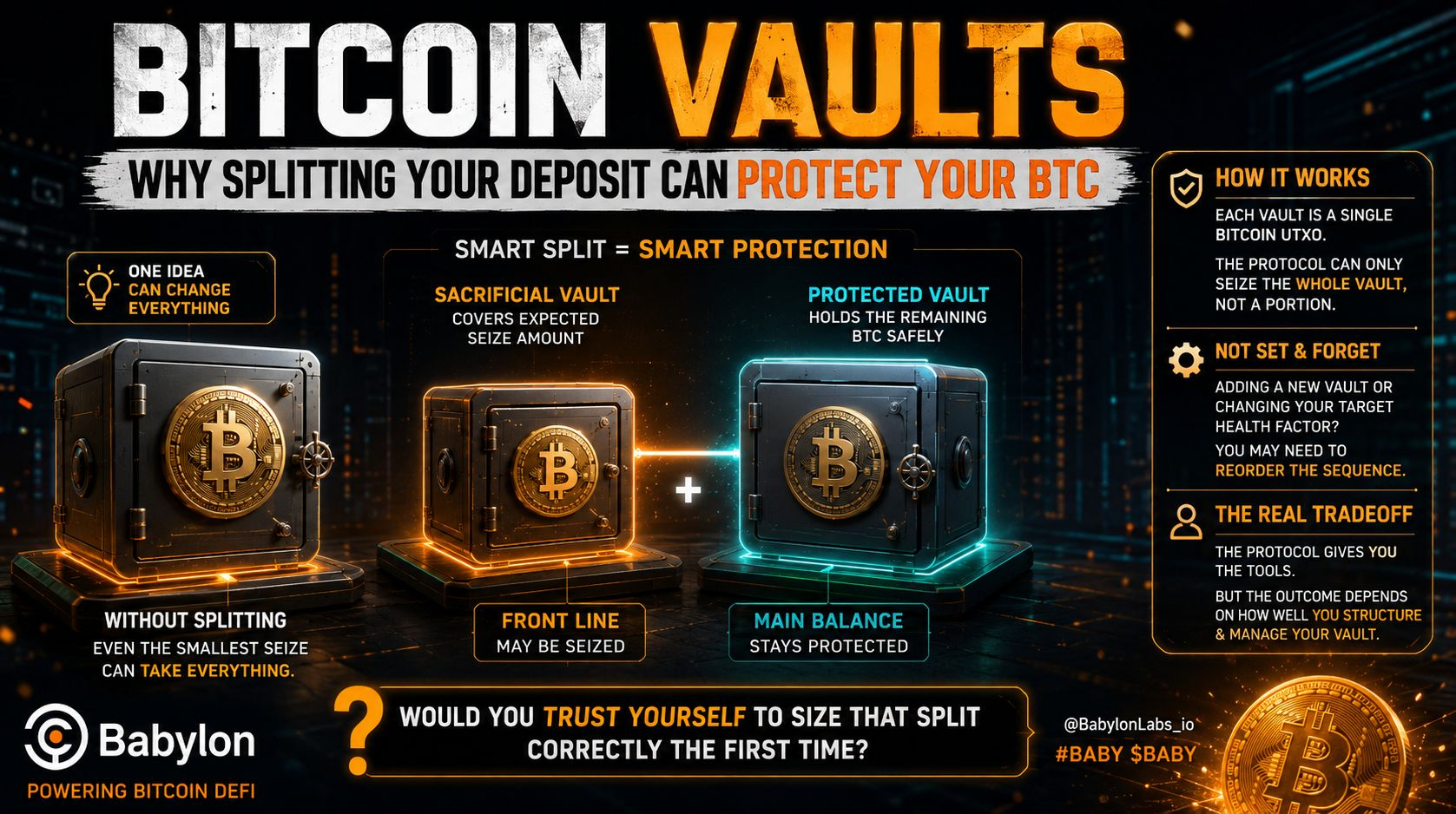
Au lieu de placer tout le BTC dans un seul coffre-fort, le dépôt peut être réparti entre plusieurs coffres. Le premier sert de tampon, tandis que le second protège la plus grande partie du Bitcoin. Comme un coffre-fort à Bitcoin est construit à partir d’un seul UTXO, le protocole ne peut pas intervenir dedans pendant la liquidation : il ne peut que saisir l’intégralité du coffre.
Cela signifie que la façon dont un coffre est structuré compte autant que la quantité de BTC qu’il contient.
Si tout est dans un seul coffre, même une petite liquidation peut mettre tout le dépôt en danger. Mais avec une répartition bien pensée, seul le plus petit coffre peut être affecté, laissant le solde principal intact.
Ce qui m’intéresse, c’est que ce n’est pas un système « régler et oublier ». À mesure qu’une position change ou que de nouveaux coffres sont ajoutés, la structure peut devoir être ajustée pour conserver la protection visée.
À mes yeux, c’est le vrai compromis.
Le protocole fournit les outils, mais le résultat dépend encore de la façon dont l’utilisateur construit et gère le coffre dès le départ.
Ce n’est pas forcément une faiblesse : cela signifie simplement que comprendre le système est aussi important que l’utiliser.
J’aimerais savoir ce que les autres en pensent.
Seriez-vous à l’aise de structurer votre propre coffre avant de verrouiller de vrais BTC ?
@babylonlabs_io #baby $BABY
Je suis entré là-dedans en pensant qu’un coffre-fort à Bitcoin était simple.
Déposer du BTC. Le verrouiller. Emprunter sur cette base. C’est fait.
Plus j’y regardais, plus je me rendais compte que la conception est bien plus intelligente que je ne l’avais d’abord imaginé.
Un détail a totalement changé ma façon de voir.
Au lieu de placer tout le BTC dans un seul coffre-fort, le dépôt peut être réparti entre plusieurs coffres. Le premier sert de tampon, tandis que le second protège la plus grande partie du Bitcoin. Comme un coffre-fort à Bitcoin est construit à partir d’un seul UTXO, le protocole ne peut pas intervenir dedans pendant la liquidation : il ne peut que saisir l’intégralité du coffre.
Cela signifie que la façon dont un coffre est structuré compte autant que la quantité de BTC qu’il contient.
Si tout est dans un seul coffre, même une petite liquidation peut mettre tout le dépôt en danger. Mais avec une répartition bien pensée, seul le plus petit coffre peut être affecté, laissant le solde principal intact.
Ce qui m’intéresse, c’est que ce n’est pas un système « régler et oublier ». À mesure qu’une position change ou que de nouveaux coffres sont ajoutés, la structure peut devoir être ajustée pour conserver la protection visée.
À mes yeux, c’est le vrai compromis.
Le protocole fournit les outils, mais le résultat dépend encore de la façon dont l’utilisateur construit et gère le coffre dès le départ.
Ce n’est pas forcément une faiblesse : cela signifie simplement que comprendre le système est aussi important que l’utiliser.
J’aimerais savoir ce que les autres en pensent.
Seriez-vous à l’aise de structurer votre propre coffre avant de verrouiller de vrais BTC ?
@BabylonLabs_io #baby $BABY
Déposer du BTC. Le verrouiller. Emprunter sur cette base. C’est fait.
Plus j’y regardais, plus je me rendais compte que la conception est bien plus intelligente que je ne l’avais d’abord imaginé.
Un détail a totalement changé ma façon de voir.
Au lieu de placer tout le BTC dans un seul coffre-fort, le dépôt peut être réparti entre plusieurs coffres. Le premier sert de tampon, tandis que le second protège la plus grande partie du Bitcoin. Comme un coffre-fort à Bitcoin est construit à partir d’un seul UTXO, le protocole ne peut pas intervenir dedans pendant la liquidation : il ne peut que saisir l’intégralité du coffre.
Cela signifie que la façon dont un coffre est structuré compte autant que la quantité de BTC qu’il contient.
Si tout est dans un seul coffre, même une petite liquidation peut mettre tout le dépôt en danger. Mais avec une répartition bien pensée, seul le plus petit coffre peut être affecté, laissant le solde principal intact.
Ce qui m’intéresse, c’est que ce n’est pas un système « régler et oublier ». À mesure qu’une position change ou que de nouveaux coffres sont ajoutés, la structure peut devoir être ajustée pour conserver la protection visée.
À mes yeux, c’est le vrai compromis.
Le protocole fournit les outils, mais le résultat dépend encore de la façon dont l’utilisateur construit et gère le coffre dès le départ.
Ce n’est pas forcément une faiblesse : cela signifie simplement que comprendre le système est aussi important que l’utiliser.
J’aimerais savoir ce que les autres en pensent.
Seriez-vous à l’aise de structurer votre propre coffre avant de verrouiller de vrais BTC ?
@BabylonLabs_io #baby $BABY
2
77
·
--
Haussier
Au cours des derniers jours, j’ai appris davantage sur les coffres Bitcoin sans confiance (Trustless Bitcoin Vaults, TBV), et une chose est devenue très claire : Bitcoin ne se limite plus à stocker des coins en toute sécurité. Son écosystème se développe de façon à rendre le BTC plus utile, sans renoncer à la décentralisation.
En explorant @babylonlabs_io , j’ai remarqué que l’objectif n’est pas de changer Bitcoin. Au contraire, il s’agit de débloquer de nouvelles façons d’utiliser $BTC tout en préservant ses valeurs fondamentales.
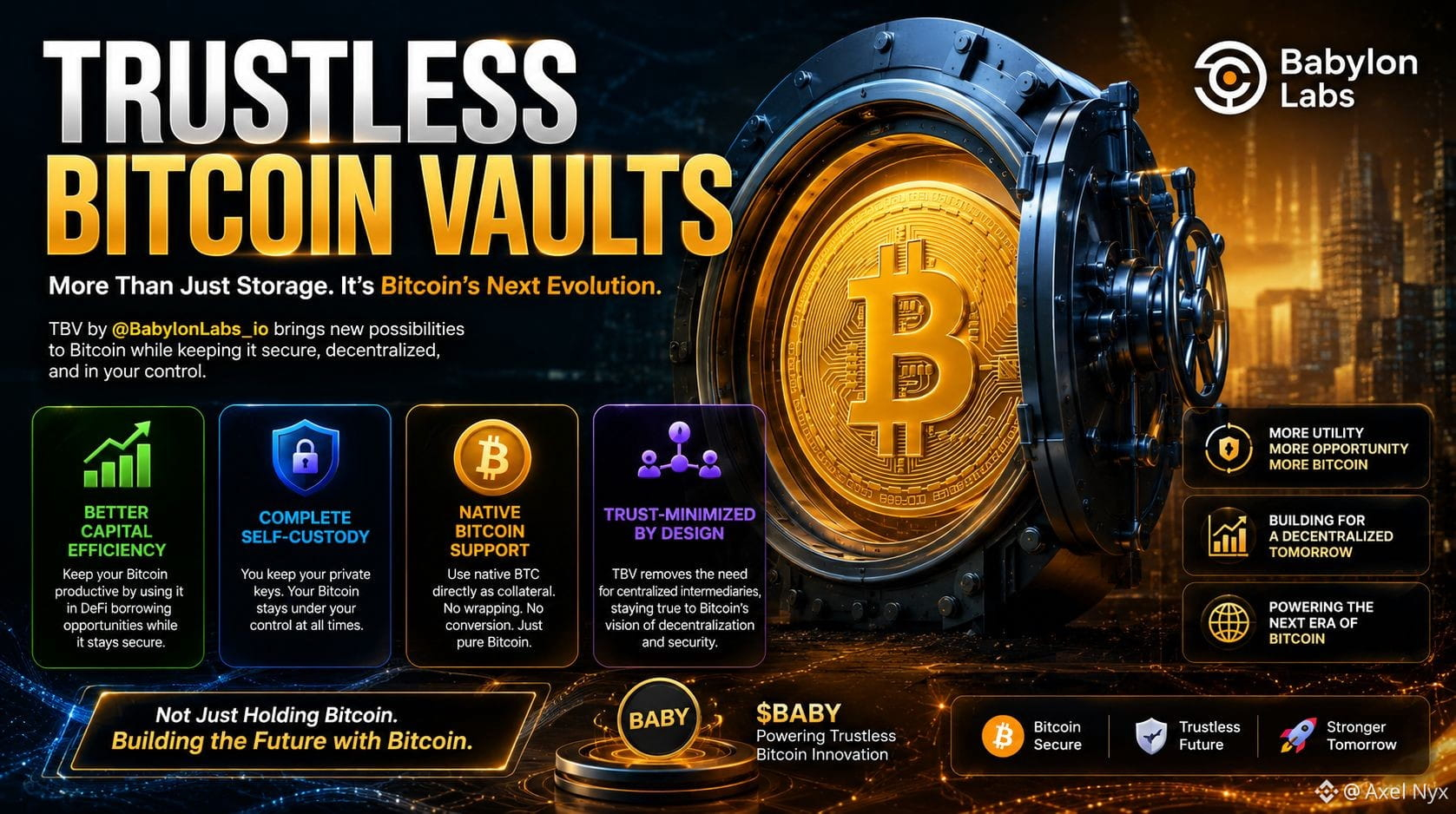
Voici les quatre points qui m’ont le plus impressionné :
➡ Faites travailler votre BTC
Au lieu de rester inactif, le Bitcoin natif peut soutenir le prêt DeFi et d’autres opportunités, tout en restant productif.
➡ Restez en contrôle total
Vous gardez vos clés privées à tout moment. Votre Bitcoin reste sous votre propre garde, et non entre les mains de quelqu’un d’autre.
➡ Utilisez le Bitcoin natif
Pas d’enrobage. Pas de conversion en jetons. Le BTC natif peut être utilisé directement, ce qui rend le processus simple et sécurisé.
➡ Conçu autour de la sécurité sans confiance
Les TBV éliminent le besoin d’intermédiaires centralisés, ce qui aligne davantage le système avec la vision originale de Bitcoin.
Plus j’ai approfondi, plus j’ai eu l’impression qu’il s’agit du type d’innovation qui mérite de l’attention. Elle ne créera peut-être pas le même engouement que les memecoins, mais les progrès réels viennent généralement de la résolution de vrais problèmes.
Je suis enthousiaste à l’idée de continuer à suivre @BabylonLabs_io, car je pense que les coffres Bitcoin sans confiance pourraient jouer un rôle important dans l’avenir de Bitcoin en le rendant plus utile, sans compromettre la sécurité ni la décentralisation.
Qu’en pensez-vous ? Les TBV pourraient-elles devenir la prochaine grande étape pour l’adoption de Bitcoin ?
#Bitcoin #BinanceSquare #baby $BABY
{future}(BABYUSDT)
Au cours des derniers jours, j’ai appris davantage sur les coffres Bitcoin sans confiance (Trustless Bitcoin Vaults, TBV), et une chose est devenue très claire : Bitcoin ne se limite plus à stocker des coins en toute sécurité. Son écosystème se développe de façon à rendre le BTC plus utile, sans renoncer à la décentralisation.
En explorant @BabylonLabs_io , j’ai remarqué que l’objectif n’est pas de changer Bitcoin. Au contraire, il s’agit de débloquer de nouvelles façons d’utiliser $BTC tout en préservant ses valeurs fondamentales.
Voici les quatre points qui m’ont le plus impressionné :
➡ Faites travailler votre BTC
Au lieu de rester inactif, le Bitcoin natif peut soutenir le prêt DeFi et d’autres opportunités, tout en restant productif.
➡ Restez en contrôle total
Vous gardez vos clés privées à tout moment. Votre Bitcoin reste sous votre propre garde, et non entre les mains de quelqu’un d’autre.
➡ Utilisez le Bitcoin natif
Pas d’enrobage. Pas de conversion en jetons. Le BTC natif peut être utilisé directement, ce qui rend le processus simple et sécurisé.
➡ Conçu autour de la sécurité sans confiance
Les TBV éliminent le besoin d’intermédiaires centralisés, ce qui aligne davantage le système avec la vision originale de Bitcoin.
Plus j’ai approfondi, plus j’ai eu l’impression qu’il s’agit du type d’innovation qui mérite de l’attention. Elle ne créera peut-être pas le même engouement que les memecoins, mais les progrès réels viennent généralement de la résolution de vrais problèmes.
Je suis enthousiaste à l’idée de continuer à suivre @BabylonLabs_io, car je pense que les coffres Bitcoin sans confiance pourraient jouer un rôle important dans l’avenir de Bitcoin en le rendant plus utile, sans compromettre la sécurité ni la décentralisation.
Qu’en pensez-vous ? Les TBV pourraient-elles devenir la prochaine grande étape pour l’adoption de Bitcoin ?
#Bitcoin #BinanceSquare #baby $BABY
En explorant @BabylonLabs_io , j’ai remarqué que l’objectif n’est pas de changer Bitcoin. Au contraire, il s’agit de débloquer de nouvelles façons d’utiliser $BTC tout en préservant ses valeurs fondamentales.
Voici les quatre points qui m’ont le plus impressionné :
➡ Faites travailler votre BTC
Au lieu de rester inactif, le Bitcoin natif peut soutenir le prêt DeFi et d’autres opportunités, tout en restant productif.
➡ Restez en contrôle total
Vous gardez vos clés privées à tout moment. Votre Bitcoin reste sous votre propre garde, et non entre les mains de quelqu’un d’autre.
➡ Utilisez le Bitcoin natif
Pas d’enrobage. Pas de conversion en jetons. Le BTC natif peut être utilisé directement, ce qui rend le processus simple et sécurisé.
➡ Conçu autour de la sécurité sans confiance
Les TBV éliminent le besoin d’intermédiaires centralisés, ce qui aligne davantage le système avec la vision originale de Bitcoin.
Plus j’ai approfondi, plus j’ai eu l’impression qu’il s’agit du type d’innovation qui mérite de l’attention. Elle ne créera peut-être pas le même engouement que les memecoins, mais les progrès réels viennent généralement de la résolution de vrais problèmes.
Je suis enthousiaste à l’idée de continuer à suivre @BabylonLabs_io, car je pense que les coffres Bitcoin sans confiance pourraient jouer un rôle important dans l’avenir de Bitcoin en le rendant plus utile, sans compromettre la sécurité ni la décentralisation.
Qu’en pensez-vous ? Les TBV pourraient-elles devenir la prochaine grande étape pour l’adoption de Bitcoin ?
#Bitcoin #BinanceSquare #baby $BABY
89
·
--
Le protocole Newton (NEWT) est une infrastructure décentralisée émergente conçue pour alimenter une automatisation sécurisée et vérifiable pour la finance et l’IA sur chaîne. Au lieu de s’appuyer sur des robots centralisés ou d’exposer des clés privées, il permet aux utilisateurs de déléguer des tâches complexes de blockchain à des agents IA autonomes tout en conservant un contrôle total de leurs actifs grâce à des autorisations programmables. Le protocole associe des environnements d’exécution sécurisés (Trusted Execution Environments, TEE) à des preuves à divulgation nulle de connaissance (Zero-Knowledge Proofs, ZKP), permettant à chaque action automatisée d’être exécutée de manière sûre et vérifiée on-chain sans révéler d’informations sensibles.
Son architecture prend en charge des stratégies de trading pilotées par l’IA, la réallocation de portefeuille, le staking, les transactions inter-chaînes, l’optimisation du rendement, les paiements récurrents et d’autres flux financiers automatisés. Les développeurs peuvent créer et publier des agents IA, les opérateurs exécutent les tâches, les validateurs sécurisent le réseau et les utilisateurs accèdent à ces services via un marché décentralisé. Ce modèle favorise l’innovation tout en garantissant transparence et responsabilité.
Le jeton natif NEWT sécurise le réseau via le staking, paie les frais de transaction, sert de garantie pour les agents IA et permet la gouvernance communautaire. Avec une offre fixe d’un milliard de tokens, Newton se concentre sur une croissance durable de l’écosystème. Développé par Magic Labs et soutenu par la Magic Newton Foundation, le protocole vise à devenir une couche d’automatisation fondamentale pour Web3, rendant la finance décentralisée plus accessible, efficace et digne de confiance, tout en accélérant l’adoption d’applications blockchain propulsées par l’IA sur plusieurs réseaux.
$SENT #SouthKoreanStocksRise5% $ALLO
#USNonfarmPayrollsAdd57K
$ETH
Le protocole Newton (NEWT) est une infrastructure décentralisée émergente conçue pour alimenter une automatisation sécurisée et vérifiable pour la finance et l’IA sur chaîne. Au lieu de s’appuyer sur des robots centralisés ou d’exposer des clés privées, il permet aux utilisateurs de déléguer des tâches complexes de blockchain à des agents IA autonomes tout en conservant un contrôle total de leurs actifs grâce à des autorisations programmables. Le protocole associe des environnements d’exécution sécurisés (Trusted Execution Environments, TEE) à des preuves à divulgation nulle de connaissance (Zero-Knowledge Proofs, ZKP), permettant à chaque action automatisée d’être exécutée de manière sûre et vérifiée on-chain sans révéler d’informations sensibles.
Son architecture prend en charge des stratégies de trading pilotées par l’IA, la réallocation de portefeuille, le staking, les transactions inter-chaînes, l’optimisation du rendement, les paiements récurrents et d’autres flux financiers automatisés. Les développeurs peuvent créer et publier des agents IA, les opérateurs exécutent les tâches, les validateurs sécurisent le réseau et les utilisateurs accèdent à ces services via un marché décentralisé. Ce modèle favorise l’innovation tout en garantissant transparence et responsabilité.
Le jeton natif NEWT sécurise le réseau via le staking, paie les frais de transaction, sert de garantie pour les agents IA et permet la gouvernance communautaire. Avec une offre fixe d’un milliard de tokens, Newton se concentre sur une croissance durable de l’écosystème. Développé par Magic Labs et soutenu par la Magic Newton Foundation, le protocole vise à devenir une couche d’automatisation fondamentale pour Web3, rendant la finance décentralisée plus accessible, efficace et digne de confiance, tout en accélérant l’adoption d’applications blockchain propulsées par l’IA sur plusieurs réseaux.
$SENT #SouthKoreanStocksRise5% $ALLO
#USNonfarmPayrollsAdd57K
$ETH
Son architecture prend en charge des stratégies de trading pilotées par l’IA, la réallocation de portefeuille, le staking, les transactions inter-chaînes, l’optimisation du rendement, les paiements récurrents et d’autres flux financiers automatisés. Les développeurs peuvent créer et publier des agents IA, les opérateurs exécutent les tâches, les validateurs sécurisent le réseau et les utilisateurs accèdent à ces services via un marché décentralisé. Ce modèle favorise l’innovation tout en garantissant transparence et responsabilité.
Le jeton natif NEWT sécurise le réseau via le staking, paie les frais de transaction, sert de garantie pour les agents IA et permet la gouvernance communautaire. Avec une offre fixe d’un milliard de tokens, Newton se concentre sur une croissance durable de l’écosystème. Développé par Magic Labs et soutenu par la Magic Newton Foundation, le protocole vise à devenir une couche d’automatisation fondamentale pour Web3, rendant la finance décentralisée plus accessible, efficace et digne de confiance, tout en accélérant l’adoption d’applications blockchain propulsées par l’IA sur plusieurs réseaux.
$SENT #SouthKoreanStocksRise5% $ALLO
#USNonfarmPayrollsAdd57K
$ETH
🤖 AI-powered automation
100%
🔒 Secure & verifiable
0%
1 Votes • Vote fermé
1
1
88
·
--
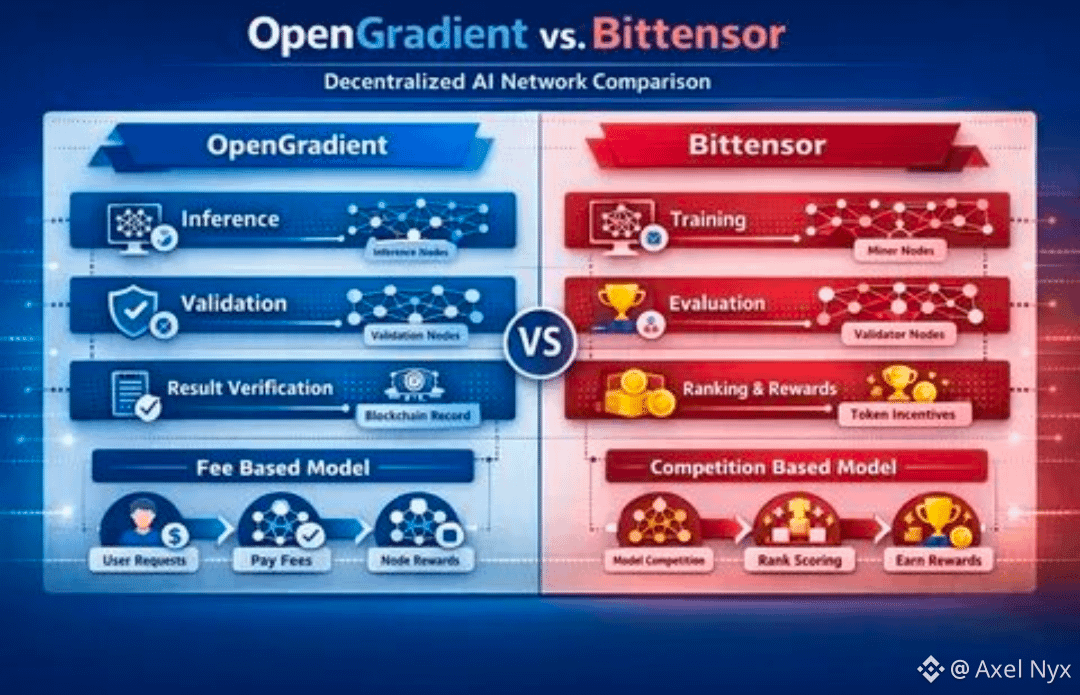
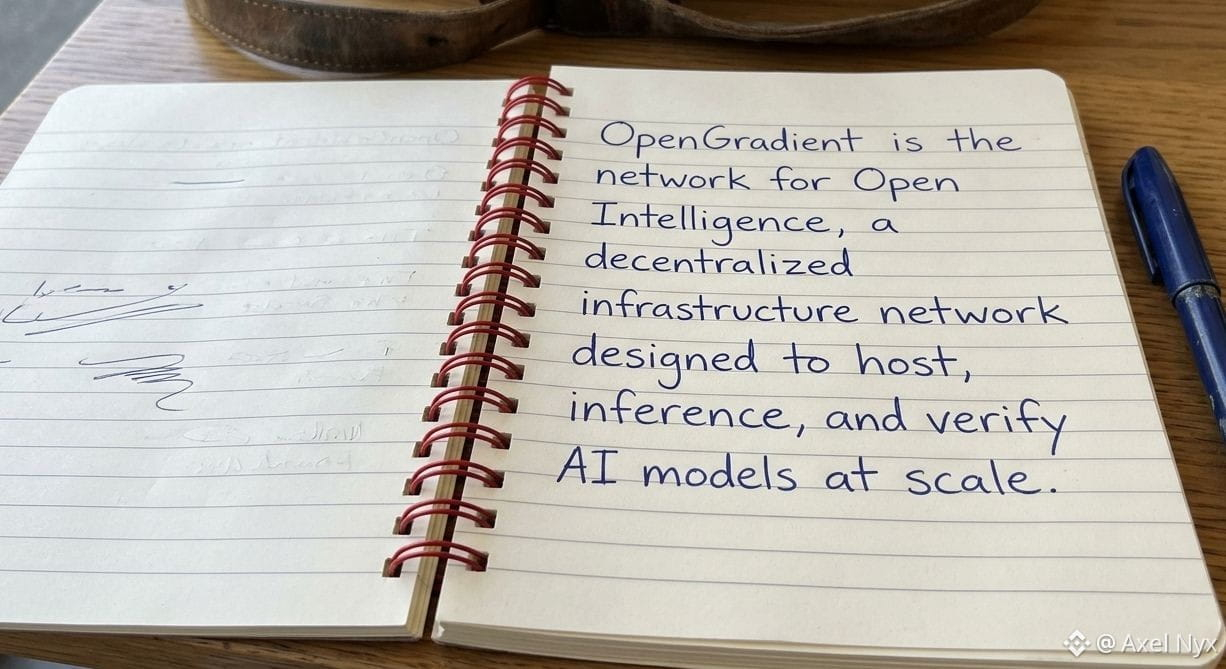
OpenGradient est le réseau destiné à l’Open Intelligence, un système d’infrastructure décentralisée conçu pour héberger, exécuter des inférences et vérifier des modèles d’IA à grande échelle.
Je me suis penché plus en profondeur sur OpenGradient ces derniers jours, et j’ai l’impression que c’est l’un de ces projets qui cherche à construire quelque chose de concret plutôt que de simplement compter sur l’attention du marché.
Ce qui m’a le plus marqué, c’est sa volonté de regrouper, au sein d’un même réseau, l’hébergement décentralisé de l’IA, l’inférence et la vérification. Sur un marché où de nombreuses plateformes proposent des récits similaires, cette approche lui donne un angle différent. L’équipe semble se concentrer sur la création d’une utilité réelle autour de l’infrastructure d’IA décentralisée, ce qui pourrait devenir plus important à mesure que le secteur mûrit.
Je ne le vois pas comme un gagnant garanti. La crypto m’a appris que de puissants récits, à eux seuls, ne suffisent jamais. Ce qui compte, c’est de savoir si un projet peut continuer à livrer des produits, attirer des utilisateurs et maintenir son élan dans les périodes à la fois favorables et difficiles.
Cela dit, les développements récents autour d’OpenGradient m’ont amené à y prêter davantage attention. La combinaison de l’exécution d’IA vérifiable, d’une infrastructure de calcul décentralisée et de sa vision à long terme en fait un projet qui mérite d’être suivi.
Pour l’instant, il reste sur ma liste de surveillance. Je suis curieux de voir comment l’adoption évolue et si l’équipe peut transformer ses idées en une croissance d’écosystème mesurable au cours des prochains mois.
@OpenGradient #OPG $OPG
{future}(OPGUSDT)
$SYN
{future}(SYNUSDT)
$DEXE
{future}(DEXEUSDT)
OpenGradient est le réseau destiné à l’Open Intelligence, un système d’infrastructure décentralisée conçu pour héberger, exécuter des inférences et vérifier des modèles d’IA à grande échelle.
Je me suis penché plus en profondeur sur OpenGradient ces derniers jours, et j’ai l’impression que c’est l’un de ces projets qui cherche à construire quelque chose de concret plutôt que de simplement compter sur l’attention du marché.
Ce qui m’a le plus marqué, c’est sa volonté de regrouper, au sein d’un même réseau, l’hébergement décentralisé de l’IA, l’inférence et la vérification. Sur un marché où de nombreuses plateformes proposent des récits similaires, cette approche lui donne un angle différent. L’équipe semble se concentrer sur la création d’une utilité réelle autour de l’infrastructure d’IA décentralisée, ce qui pourrait devenir plus important à mesure que le secteur mûrit.
Je ne le vois pas comme un gagnant garanti. La crypto m’a appris que de puissants récits, à eux seuls, ne suffisent jamais. Ce qui compte, c’est de savoir si un projet peut continuer à livrer des produits, attirer des utilisateurs et maintenir son élan dans les périodes à la fois favorables et difficiles.
Cela dit, les développements récents autour d’OpenGradient m’ont amené à y prêter davantage attention. La combinaison de l’exécution d’IA vérifiable, d’une infrastructure de calcul décentralisée et de sa vision à long terme en fait un projet qui mérite d’être suivi.
Pour l’instant, il reste sur ma liste de surveillance. Je suis curieux de voir comment l’adoption évolue et si l’équipe peut transformer ses idées en une croissance d’écosystème mesurable au cours des prochains mois.
@OpenGradient #OPG $OPG
$SYN
$DEXE
Je me suis penché plus en profondeur sur OpenGradient ces derniers jours, et j’ai l’impression que c’est l’un de ces projets qui cherche à construire quelque chose de concret plutôt que de simplement compter sur l’attention du marché.
Ce qui m’a le plus marqué, c’est sa volonté de regrouper, au sein d’un même réseau, l’hébergement décentralisé de l’IA, l’inférence et la vérification. Sur un marché où de nombreuses plateformes proposent des récits similaires, cette approche lui donne un angle différent. L’équipe semble se concentrer sur la création d’une utilité réelle autour de l’infrastructure d’IA décentralisée, ce qui pourrait devenir plus important à mesure que le secteur mûrit.
Je ne le vois pas comme un gagnant garanti. La crypto m’a appris que de puissants récits, à eux seuls, ne suffisent jamais. Ce qui compte, c’est de savoir si un projet peut continuer à livrer des produits, attirer des utilisateurs et maintenir son élan dans les périodes à la fois favorables et difficiles.
Cela dit, les développements récents autour d’OpenGradient m’ont amené à y prêter davantage attention. La combinaison de l’exécution d’IA vérifiable, d’une infrastructure de calcul décentralisée et de sa vision à long terme en fait un projet qui mérite d’être suivi.
Pour l’instant, il reste sur ma liste de surveillance. Je suis curieux de voir comment l’adoption évolue et si l’équipe peut transformer ses idées en une croissance d’écosystème mesurable au cours des prochains mois.
@OpenGradient #OPG $OPG
$SYN
$DEXE
14
15
122
·
--
Haussier
Il y a quelques années, l'idée de faire tourner ou de vérifier des modèles d'IA en dehors d'un petit nombre de grands fournisseurs semblait irréaliste. La plupart des gens acceptaient simplement que l'IA avancée resterait concentrée derrière des systèmes fermés.
Dernièrement, je ne suis plus si sûr.
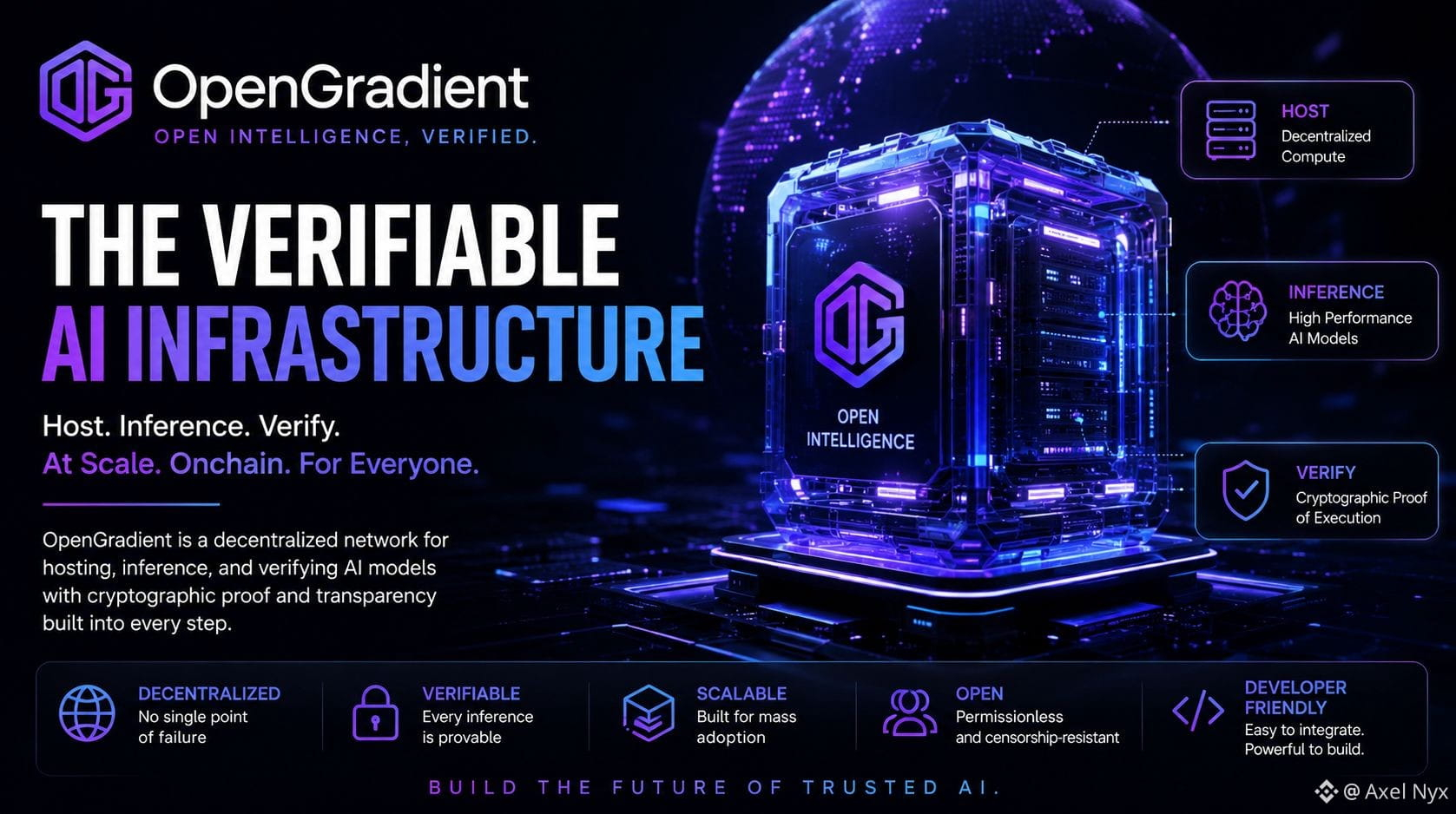
Des projets comme OpenGradient explorent un chemin différent, où l'infrastructure IA est distribuée à travers un réseau plutôt que contrôlée par quelques entités centralisées. Ce qui m'intéresse le plus, ce n'est pas seulement l'hébergement décentralisé ou l'inférence. C'est l'accent mis sur la vérifiabilité.
Obtenir une réponse générée par une IA est facile. Comprendre d'où vient cette réponse, comment elle a été produite et si le processus peut être fiable est un défi beaucoup plus grand. À mesure que l'IA devient plus impliquée dans la finance, l'automatisation et la prise de décision, la confiance pourrait devenir tout aussi importante que la performance.
Bien sûr, l'échelle reste le véritable test. Chaque système décentralisé semble prometteur jusqu'à ce que l'adoption s'accélère et que la demande réelle commence à en pousser les limites. Nous avons vu cette histoire se dérouler plusieurs fois dans l'infrastructure blockchain.
Peut-être que l'avenir ne consiste pas à choisir entre l'IA centralisée et décentralisée. Peut-être qu'il s'agit de construire des systèmes où l'intelligence est accessible, évolutive et vérifiable en même temps.
Quoi qu'il en soit, la conversation autour de la confiance en l'IA ne fait que commencer, et cela pourrait finir par être l'une des discussions technologiques les plus importantes de cette décennie.
@OpenGradient #OPG $OPG
{future}(OPGUSDT)
$AT
{future}(ATUSDT)
$JUP
{future}(JUPUSDT)
Il y a quelques années, l'idée de faire tourner ou de vérifier des modèles d'IA en dehors d'un petit nombre de grands fournisseurs semblait irréaliste. La plupart des gens acceptaient simplement que l'IA avancée resterait concentrée derrière des systèmes fermés.
Dernièrement, je ne suis plus si sûr.
Des projets comme OpenGradient explorent un chemin différent, où l'infrastructure IA est distribuée à travers un réseau plutôt que contrôlée par quelques entités centralisées. Ce qui m'intéresse le plus, ce n'est pas seulement l'hébergement décentralisé ou l'inférence. C'est l'accent mis sur la vérifiabilité.
Obtenir une réponse générée par une IA est facile. Comprendre d'où vient cette réponse, comment elle a été produite et si le processus peut être fiable est un défi beaucoup plus grand. À mesure que l'IA devient plus impliquée dans la finance, l'automatisation et la prise de décision, la confiance pourrait devenir tout aussi importante que la performance.
Bien sûr, l'échelle reste le véritable test. Chaque système décentralisé semble prometteur jusqu'à ce que l'adoption s'accélère et que la demande réelle commence à en pousser les limites. Nous avons vu cette histoire se dérouler plusieurs fois dans l'infrastructure blockchain.
Peut-être que l'avenir ne consiste pas à choisir entre l'IA centralisée et décentralisée. Peut-être qu'il s'agit de construire des systèmes où l'intelligence est accessible, évolutive et vérifiable en même temps.
Quoi qu'il en soit, la conversation autour de la confiance en l'IA ne fait que commencer, et cela pourrait finir par être l'une des discussions technologiques les plus importantes de cette décennie.
@OpenGradient #OPG $OPG
$AT
$JUP
Dernièrement, je ne suis plus si sûr.
Des projets comme OpenGradient explorent un chemin différent, où l'infrastructure IA est distribuée à travers un réseau plutôt que contrôlée par quelques entités centralisées. Ce qui m'intéresse le plus, ce n'est pas seulement l'hébergement décentralisé ou l'inférence. C'est l'accent mis sur la vérifiabilité.
Obtenir une réponse générée par une IA est facile. Comprendre d'où vient cette réponse, comment elle a été produite et si le processus peut être fiable est un défi beaucoup plus grand. À mesure que l'IA devient plus impliquée dans la finance, l'automatisation et la prise de décision, la confiance pourrait devenir tout aussi importante que la performance.
Bien sûr, l'échelle reste le véritable test. Chaque système décentralisé semble prometteur jusqu'à ce que l'adoption s'accélère et que la demande réelle commence à en pousser les limites. Nous avons vu cette histoire se dérouler plusieurs fois dans l'infrastructure blockchain.
Peut-être que l'avenir ne consiste pas à choisir entre l'IA centralisée et décentralisée. Peut-être qu'il s'agit de construire des systèmes où l'intelligence est accessible, évolutive et vérifiable en même temps.
Quoi qu'il en soit, la conversation autour de la confiance en l'IA ne fait que commencer, et cela pourrait finir par être l'une des discussions technologiques les plus importantes de cette décennie.
@OpenGradient #OPG $OPG
$AT
$JUP
18
16
219
·
--
En ce moment, les modèles d'IA les plus puissants au monde se cachent derrière les portes closes de quelques géants de la tech. Mais OpenGradient est là pour réécrire complètement ce livre de règles.
Connu comme le réseau pour "Intelligence Ouverte", OpenGradient construit une infrastructure décentralisée spécifiquement conçue pour héberger, inférer et vérifier des modèles d'IA à grande échelle.
Mais laissons de côté le jargon technique, qu'est-ce que cela signifie réellement pour nous ?
Vraie Décentralisation : Aucune entité unique ne possède le calcul ou les données.
Vérification à Grande Échelle : Vous n'avez pas juste à "faire confiance" à un modèle d'IA pour faire ce qu'il prétend ; le réseau le vérifie mathématiquement.
Scalabilité Massive : Conçu pour gérer de lourdes charges de travail d'IA dans le monde réel sans atteindre un goulet d'étranglement.
En reliant le Web3 et l'Intelligence Artificielle, OpenGradient ne lance pas juste un autre projet crypto, ils construisent l'épine dorsale d'un écosystème IA transparent, sécurisé et démocratique.
L'avenir de l'intelligence ne devrait pas être monopolisé. Il doit être ouvert, sans confiance, et vérifié. Gardez un œil sur celui-ci. 🚀
@OpenGradient $OPG #OpportunityKnocks
{spot}(OPGUSDT)
$RE
#
En ce moment, les modèles d'IA les plus puissants au monde se cachent derrière les portes closes de quelques géants de la tech. Mais OpenGradient est là pour réécrire complètement ce livre de règles.
Connu comme le réseau pour "Intelligence Ouverte", OpenGradient construit une infrastructure décentralisée spécifiquement conçue pour héberger, inférer et vérifier des modèles d'IA à grande échelle.
Mais laissons de côté le jargon technique, qu'est-ce que cela signifie réellement pour nous ?
Vraie Décentralisation : Aucune entité unique ne possède le calcul ou les données.
Vérification à Grande Échelle : Vous n'avez pas juste à "faire confiance" à un modèle d'IA pour faire ce qu'il prétend ; le réseau le vérifie mathématiquement.
Scalabilité Massive : Conçu pour gérer de lourdes charges de travail d'IA dans le monde réel sans atteindre un goulet d'étranglement.
En reliant le Web3 et l'Intelligence Artificielle, OpenGradient ne lance pas juste un autre projet crypto, ils construisent l'épine dorsale d'un écosystème IA transparent, sécurisé et démocratique.
L'avenir de l'intelligence ne devrait pas être monopolisé. Il doit être ouvert, sans confiance, et vérifié. Gardez un œil sur celui-ci. 🚀
@OpenGradient $OPG #OpportunityKnocks
$RE
#
Connu comme le réseau pour "Intelligence Ouverte", OpenGradient construit une infrastructure décentralisée spécifiquement conçue pour héberger, inférer et vérifier des modèles d'IA à grande échelle.
Mais laissons de côté le jargon technique, qu'est-ce que cela signifie réellement pour nous ?
Vraie Décentralisation : Aucune entité unique ne possède le calcul ou les données.
Vérification à Grande Échelle : Vous n'avez pas juste à "faire confiance" à un modèle d'IA pour faire ce qu'il prétend ; le réseau le vérifie mathématiquement.
Scalabilité Massive : Conçu pour gérer de lourdes charges de travail d'IA dans le monde réel sans atteindre un goulet d'étranglement.
En reliant le Web3 et l'Intelligence Artificielle, OpenGradient ne lance pas juste un autre projet crypto, ils construisent l'épine dorsale d'un écosystème IA transparent, sécurisé et démocratique.
L'avenir de l'intelligence ne devrait pas être monopolisé. Il doit être ouvert, sans confiance, et vérifié. Gardez un œil sur celui-ci. 🚀
@OpenGradient $OPG #OpportunityKnocks
$RE
#
22
16
338
·
--
Haussier
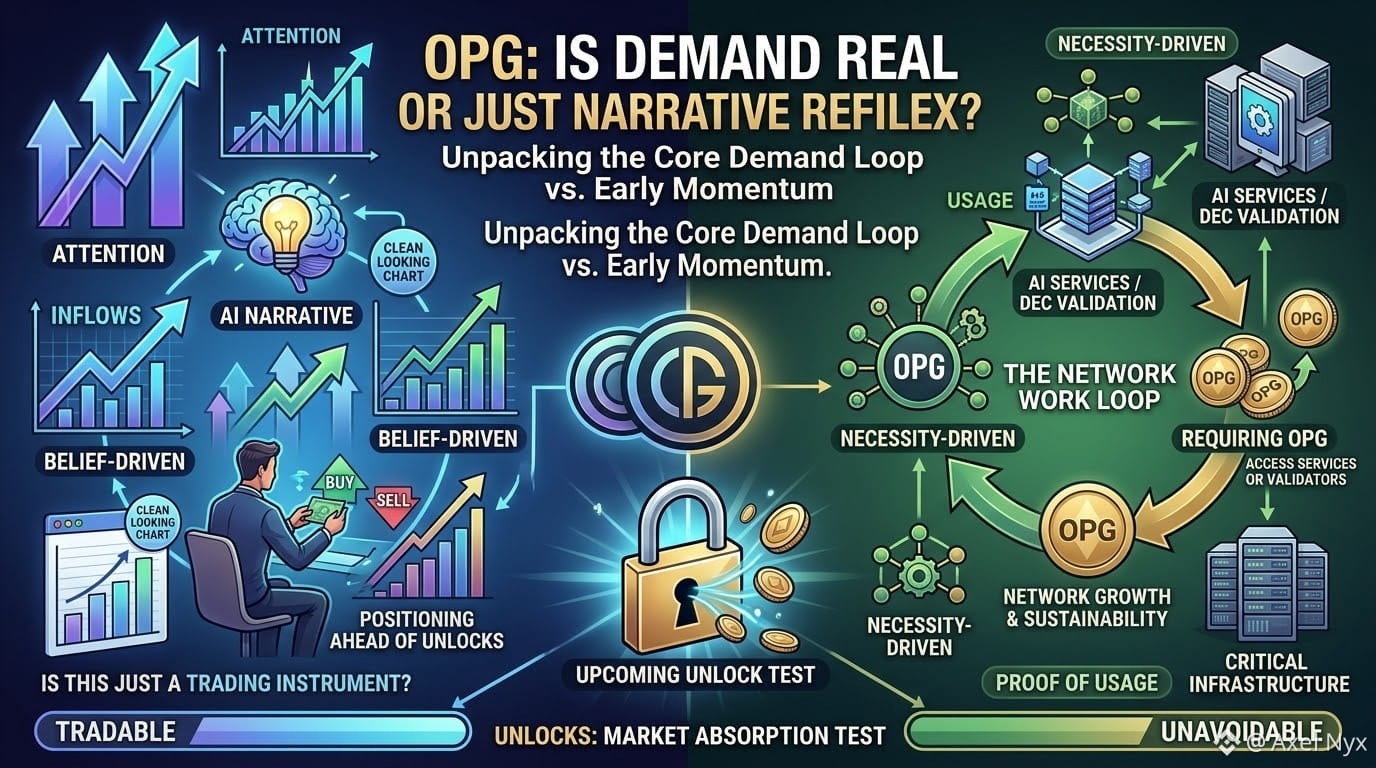
OPG reçoit l'attention habituelle du début de cycle - récit sur l'IA, afflux, momentum, et un graphique propre.
Mais je reviens toujours à une question : qu'est-ce qui force réellement la demande ici ?
Ça a l'air bien. Mais les bonnes idées sont bon marché dans le crypto.
En ce moment, ça ressemble plus à du positionnement qu'à une preuve. Le capital tourne en anticipation des mises à niveau et des déblocages, mais ce n'est pas la même chose que l'utilisation. Pas même proche.
L'adoption n'est pas la même chose que l'attention.
Si OPG est une véritable infrastructure pour l'IA ou une validation décentralisée, il devrait y avoir une boucle claire où l'utilisation doit passer par le token. Si cette boucle est faible ou pas claire, alors ce que nous voyons est principalement un réflexe narratif - le prix réagit à la croyance, pas à la nécessité.
Et le déblocage à venir testera discrètement cette différence.
Le marché a déjà vu ce schéma. Une histoire forte, un momentum précoce, puis la réalité décide de ce qui survit.
Donc, la vraie question est simple : OPG construit-il quelque chose d'inévitable - ou juste quelque chose de négociable ?
@OpenGradient #OPG $OPG $AT
{future}(ATUSDT)
$JUV
{spot}(JUVUSDT)
{future}(OPGUSDT)
OPG reçoit l'attention habituelle du début de cycle - récit sur l'IA, afflux, momentum, et un graphique propre.
Mais je reviens toujours à une question : qu'est-ce qui force réellement la demande ici ?
Ça a l'air bien. Mais les bonnes idées sont bon marché dans le crypto.
En ce moment, ça ressemble plus à du positionnement qu'à une preuve. Le capital tourne en anticipation des mises à niveau et des déblocages, mais ce n'est pas la même chose que l'utilisation. Pas même proche.
L'adoption n'est pas la même chose que l'attention.
Si OPG est une véritable infrastructure pour l'IA ou une validation décentralisée, il devrait y avoir une boucle claire où l'utilisation doit passer par le token. Si cette boucle est faible ou pas claire, alors ce que nous voyons est principalement un réflexe narratif - le prix réagit à la croyance, pas à la nécessité.
Et le déblocage à venir testera discrètement cette différence.
Le marché a déjà vu ce schéma. Une histoire forte, un momentum précoce, puis la réalité décide de ce qui survit.
Donc, la vraie question est simple : OPG construit-il quelque chose d'inévitable - ou juste quelque chose de négociable ?
@OpenGradient #OPG $OPG $AT
$JUV
Mais je reviens toujours à une question : qu'est-ce qui force réellement la demande ici ?
Ça a l'air bien. Mais les bonnes idées sont bon marché dans le crypto.
En ce moment, ça ressemble plus à du positionnement qu'à une preuve. Le capital tourne en anticipation des mises à niveau et des déblocages, mais ce n'est pas la même chose que l'utilisation. Pas même proche.
L'adoption n'est pas la même chose que l'attention.
Si OPG est une véritable infrastructure pour l'IA ou une validation décentralisée, il devrait y avoir une boucle claire où l'utilisation doit passer par le token. Si cette boucle est faible ou pas claire, alors ce que nous voyons est principalement un réflexe narratif - le prix réagit à la croyance, pas à la nécessité.
Et le déblocage à venir testera discrètement cette différence.
Le marché a déjà vu ce schéma. Une histoire forte, un momentum précoce, puis la réalité décide de ce qui survit.
Donc, la vraie question est simple : OPG construit-il quelque chose d'inévitable - ou juste quelque chose de négociable ?
@OpenGradient #OPG $OPG $AT
$JUV
9
7
343
·
--
Haussier
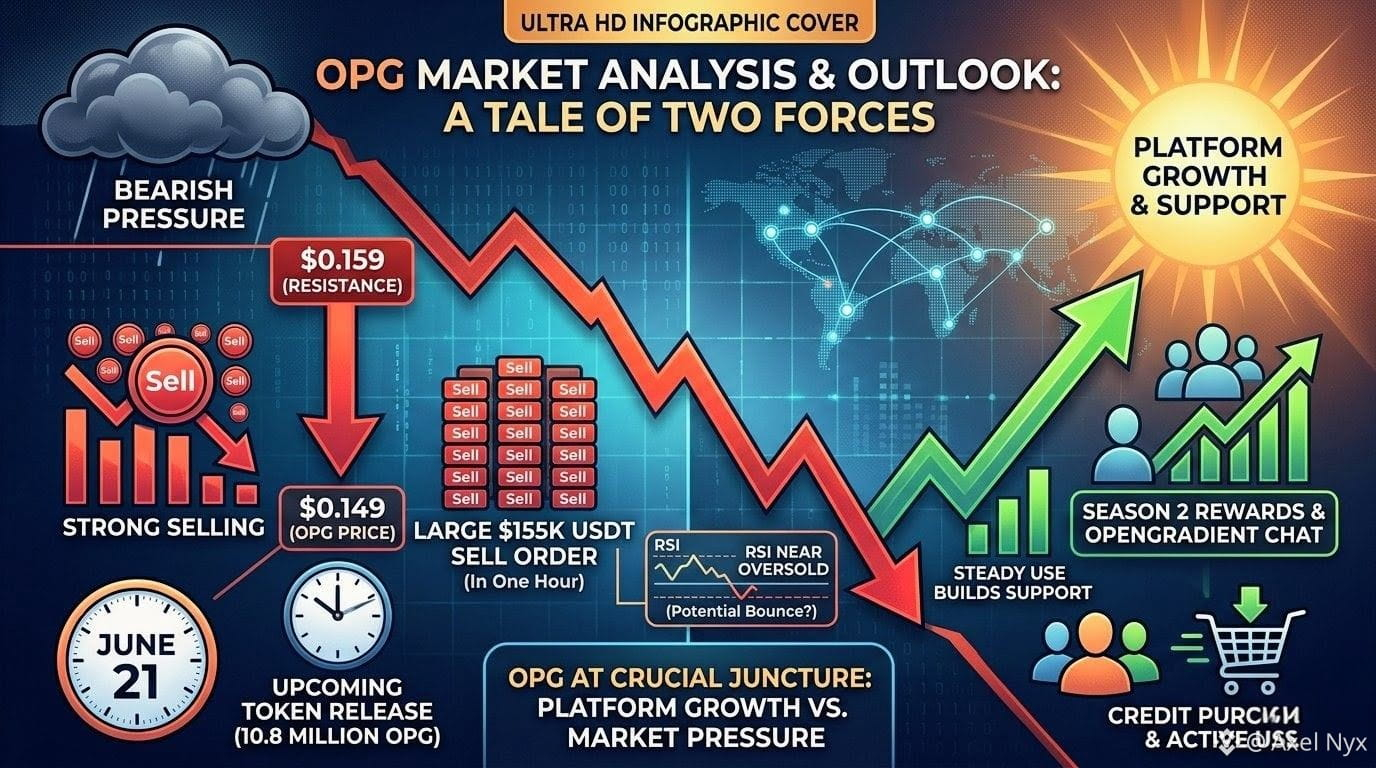
OPG a eu une journée difficile alors que le prix est tombé à environ 0,149 $ au cours des dernières 24 heures. La principale raison était une forte pression de vente. Un gros ordre de vente de plus de 155K USDT en seulement une heure a poussé le prix près de 0,150 $ et a montré que de nombreux traders restent prudents.
Même avec la baisse, il y a quelques bons signes. Le lancement des récompenses de la Saison 2 et OpenGradient Chat attire de plus en plus d'utilisateurs sur la plateforme. Les gens achètent des crédits, utilisent les outils et restent actifs. Cette utilisation régulière aide à donner un certain soutien à OPG pendant que le marché reste faible.
Sur le graphique, OPG a tenté de remonter et a touché 0,159 $, mais les vendeurs l'ont rapidement repoussé vers le bas. Les signaux du marché pointent toujours vers un mouvement à la baisse à court terme. Cependant, le RSI est proche des niveaux de survente, ce qui signifie que la pression de vente pourrait devenir trop forte et un rebond reste possible.
Le prochain grand événement est la sortie de tokens le 21 juin. Environ 10,8 millions de tokens OPG vont entrer sur le marché. Une offre accrue peut entraîner plus de ventes, surtout lorsque l'activité de trading est faible.
Pour l'instant, OPG se trouve à un point important. La forte croissance de la plateforme est un signe positif, mais l'approvisionnement supplémentaire en tokens et la vente continue maintiennent une pression sur le prix. Les prochains jours pourraient jouer un rôle clé dans la décision de la direction que prendra OPG ensuite.
@OpenGradient #OPG $OPG
{future}(OPGUSDT)
OPG a eu une journée difficile alors que le prix est tombé à environ 0,149 $ au cours des dernières 24 heures. La principale raison était une forte pression de vente. Un gros ordre de vente de plus de 155K USDT en seulement une heure a poussé le prix près de 0,150 $ et a montré que de nombreux traders restent prudents.
Même avec la baisse, il y a quelques bons signes. Le lancement des récompenses de la Saison 2 et OpenGradient Chat attire de plus en plus d'utilisateurs sur la plateforme. Les gens achètent des crédits, utilisent les outils et restent actifs. Cette utilisation régulière aide à donner un certain soutien à OPG pendant que le marché reste faible.
Sur le graphique, OPG a tenté de remonter et a touché 0,159 $, mais les vendeurs l'ont rapidement repoussé vers le bas. Les signaux du marché pointent toujours vers un mouvement à la baisse à court terme. Cependant, le RSI est proche des niveaux de survente, ce qui signifie que la pression de vente pourrait devenir trop forte et un rebond reste possible.
Le prochain grand événement est la sortie de tokens le 21 juin. Environ 10,8 millions de tokens OPG vont entrer sur le marché. Une offre accrue peut entraîner plus de ventes, surtout lorsque l'activité de trading est faible.
Pour l'instant, OPG se trouve à un point important. La forte croissance de la plateforme est un signe positif, mais l'approvisionnement supplémentaire en tokens et la vente continue maintiennent une pression sur le prix. Les prochains jours pourraient jouer un rôle clé dans la décision de la direction que prendra OPG ensuite.
@OpenGradient #OPG $OPG
Même avec la baisse, il y a quelques bons signes. Le lancement des récompenses de la Saison 2 et OpenGradient Chat attire de plus en plus d'utilisateurs sur la plateforme. Les gens achètent des crédits, utilisent les outils et restent actifs. Cette utilisation régulière aide à donner un certain soutien à OPG pendant que le marché reste faible.
Sur le graphique, OPG a tenté de remonter et a touché 0,159 $, mais les vendeurs l'ont rapidement repoussé vers le bas. Les signaux du marché pointent toujours vers un mouvement à la baisse à court terme. Cependant, le RSI est proche des niveaux de survente, ce qui signifie que la pression de vente pourrait devenir trop forte et un rebond reste possible.
Le prochain grand événement est la sortie de tokens le 21 juin. Environ 10,8 millions de tokens OPG vont entrer sur le marché. Une offre accrue peut entraîner plus de ventes, surtout lorsque l'activité de trading est faible.
Pour l'instant, OPG se trouve à un point important. La forte croissance de la plateforme est un signe positif, mais l'approvisionnement supplémentaire en tokens et la vente continue maintiennent une pression sur le prix. Les prochains jours pourraient jouer un rôle clé dans la décision de la direction que prendra OPG ensuite.
@OpenGradient #OPG $OPG
17
17
133
·
--
Haussier
$LUMIA montre une légère dérive à la hausse avec environ deux pour cent de gains alors que le prix se maintient juste au-dessus du seuil de dix centimes après un petit rebond depuis un support inférieur. L'activité de trading reste stable, suggérant une participation constante même si le momentum n'est pas encore très fort. Le prix évolue toujours dans une plage étroite où les acheteurs défendent les baisses et les vendeurs apparaissent près des récents sommets, maintenant la structure équilibrée avec un léger biais à la hausse. La tendance générale est encore en développement plutôt que pleinement tendance, le marché attendant une rupture plus claire. D'un point de vue plus large, $LUMIA se situe dans l'espace d'infrastructure blockchain Layer 1 et Layer 2 où les réseaux se concentrent sur l'évolutivité, les couches d'exécution et l'amélioration des performances des systèmes décentralisés. Ces actifs se déplacent souvent par phases graduelles alors que la liquidité s'accumule et que l'attention se déplace à travers les écosystèmes. Le sentiment global est prudemment positif à court terme, mais le prochain mouvement dépendra de la capacité des acheteurs à maintenir leur force au-dessus de la résistance ou si le prix retombe à nouveau en consolidation.
#FedHawkishDotPlotFlattensYieldCurve #SaudiSupertankersBeginCrossingStraitOfHormuz #YenSlidesToFourDecadeLow #TrumpAnnouncesUS10%IntelStake #IEAForecasts5MbdOilOverhang2027
$LUMIA montre une légère dérive à la hausse avec environ deux pour cent de gains alors que le prix se maintient juste au-dessus du seuil de dix centimes après un petit rebond depuis un support inférieur. L'activité de trading reste stable, suggérant une participation constante même si le momentum n'est pas encore très fort. Le prix évolue toujours dans une plage étroite où les acheteurs défendent les baisses et les vendeurs apparaissent près des récents sommets, maintenant la structure équilibrée avec un léger biais à la hausse. La tendance générale est encore en développement plutôt que pleinement tendance, le marché attendant une rupture plus claire. D'un point de vue plus large, $LUMIA se situe dans l'espace d'infrastructure blockchain Layer 1 et Layer 2 où les réseaux se concentrent sur l'évolutivité, les couches d'exécution et l'amélioration des performances des systèmes décentralisés. Ces actifs se déplacent souvent par phases graduelles alors que la liquidité s'accumule et que l'attention se déplace à travers les écosystèmes. Le sentiment global est prudemment positif à court terme, mais le prochain mouvement dépendra de la capacité des acheteurs à maintenir leur force au-dessus de la résistance ou si le prix retombe à nouveau en consolidation.
#FedHawkishDotPlotFlattensYieldCurve #SaudiSupertankersBeginCrossingStraitOfHormuz #YenSlidesToFourDecadeLow #TrumpAnnouncesUS10%IntelStake #IEAForecasts5MbdOilOverhang2027
#FedHawkishDotPlotFlattensYieldCurve #SaudiSupertankersBeginCrossingStraitOfHormuz #YenSlidesToFourDecadeLow #TrumpAnnouncesUS10%IntelStake #IEAForecasts5MbdOilOverhang2027
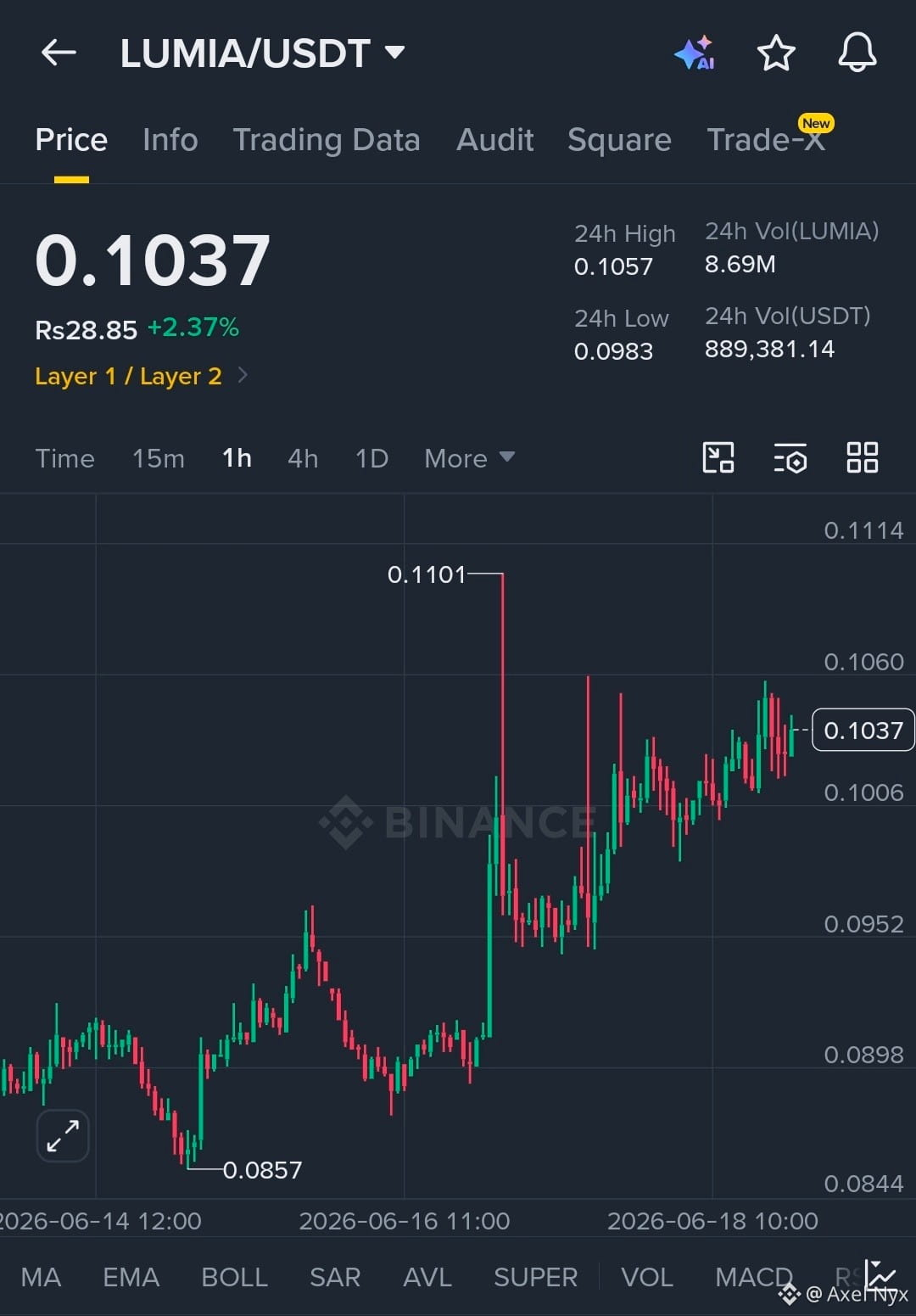
56
·
--
Haussier
$CHIP montre un léger mouvement à la hausse avec près de trois pour cent de gains alors que le prix se maintient au-dessus de la zone médiane des trois cents après avoir rebondi depuis des creux récents. L'activité de trading reste solide, suggérant une participation constante même si le momentum n'est pas encore très fort. Le prix continue de naviguer dans une plage définie où les acheteurs interviennent sur les baisses tandis que les vendeurs apparaissent près de la zone supérieure, maintenant la structure équilibrée et légèrement positive. La tendance générale semble toujours indécise, le marché attendant une poussée plus claire dans un sens ou dans l'autre. D'un point de vue plus large, $CHIP se situe dans l'écosystème DeFi où l'infrastructure blockchain est utilisée pour soutenir des outils financiers décentralisés comme les systèmes de liquidité et la coordination on-chain. Ces actifs se déplacent souvent par phases alors que l'attention tourne et que les flux de liquidité changent entre les secteurs. Le sentiment général est légèrement stable à court terme, mais la prochaine direction dépendra de la capacité des acheteurs à maintenir la pression au-dessus de la résistance ou si le prix retombe dans une consolidation à nouveau.
#FedHawkishDotPlotFlattensYieldCurve #SaudiSupertankersBeginCrossingStraitOfHormuz #IEAForecasts5MbdOilOverhang2027 #Fed4thConsecutiveRateHold #USStocksSlipAfterFedRateDecision
$CHIP montre un léger mouvement à la hausse avec près de trois pour cent de gains alors que le prix se maintient au-dessus de la zone médiane des trois cents après avoir rebondi depuis des creux récents. L'activité de trading reste solide, suggérant une participation constante même si le momentum n'est pas encore très fort. Le prix continue de naviguer dans une plage définie où les acheteurs interviennent sur les baisses tandis que les vendeurs apparaissent près de la zone supérieure, maintenant la structure équilibrée et légèrement positive. La tendance générale semble toujours indécise, le marché attendant une poussée plus claire dans un sens ou dans l'autre. D'un point de vue plus large, $CHIP se situe dans l'écosystème DeFi où l'infrastructure blockchain est utilisée pour soutenir des outils financiers décentralisés comme les systèmes de liquidité et la coordination on-chain. Ces actifs se déplacent souvent par phases alors que l'attention tourne et que les flux de liquidité changent entre les secteurs. Le sentiment général est légèrement stable à court terme, mais la prochaine direction dépendra de la capacité des acheteurs à maintenir la pression au-dessus de la résistance ou si le prix retombe dans une consolidation à nouveau.
#FedHawkishDotPlotFlattensYieldCurve #SaudiSupertankersBeginCrossingStraitOfHormuz #IEAForecasts5MbdOilOverhang2027 #Fed4thConsecutiveRateHold #USStocksSlipAfterFedRateDecision
#FedHawkishDotPlotFlattensYieldCurve #SaudiSupertankersBeginCrossingStraitOfHormuz #IEAForecasts5MbdOilOverhang2027 #Fed4thConsecutiveRateHold #USStocksSlipAfterFedRateDecision
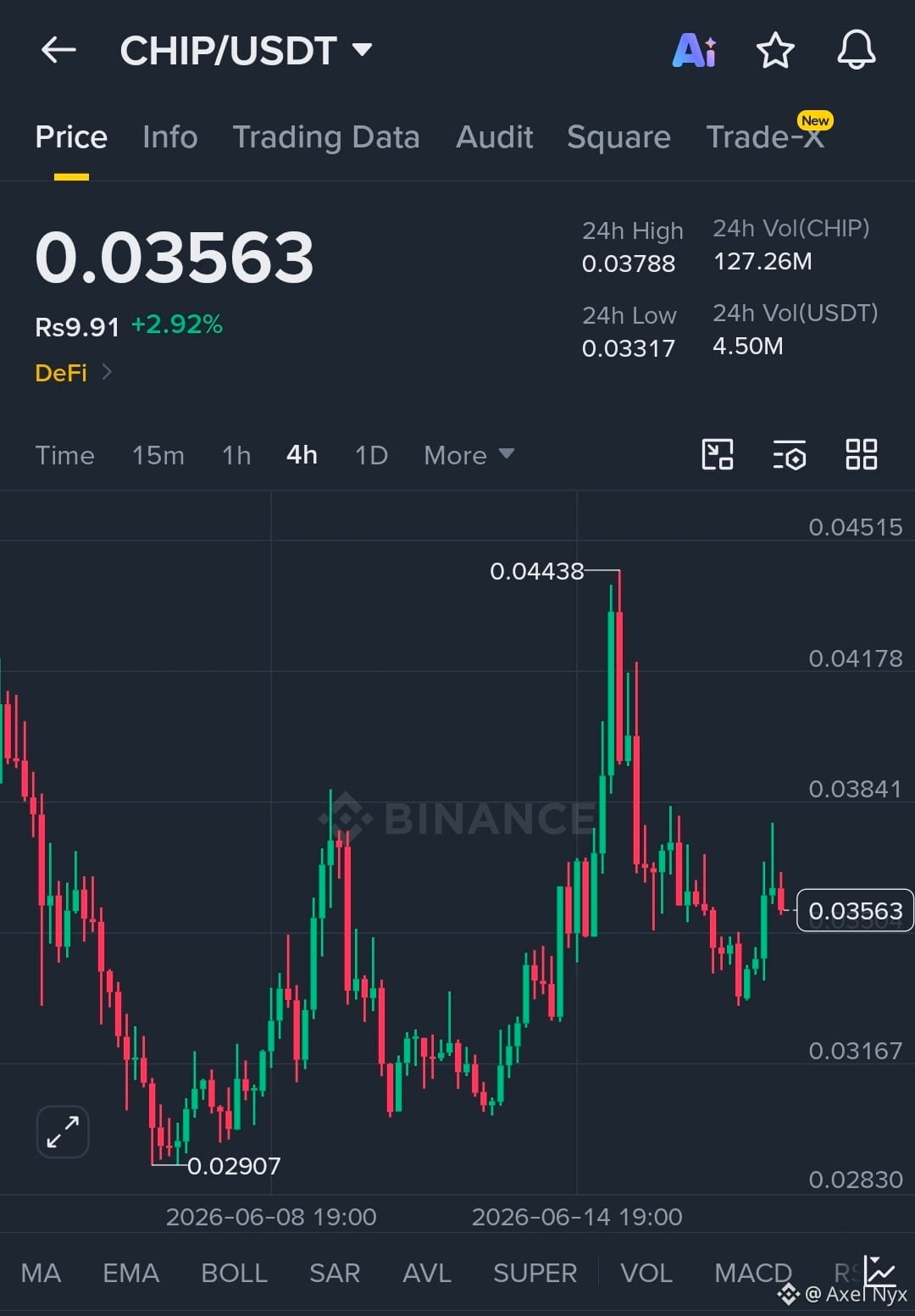
1
194
·
--
Haussier
$EUL montre un léger mouvement à la hausse avec des gains d'environ deux à trois pour cent alors que le prix se stabilise juste au-dessus du niveau d'un dollar après un récent pullback depuis des zones plus élevées. L'activité de trading reste stable, suggérant que la participation demeure constante même si le momentum a refroidi par rapport aux mouvements précédents. Le prix évolue dans une fourchette définie où les vendeurs apparaissent près des récents sommets et les acheteurs continuent de défendre la zone de soutien inférieure, maintenant la structure équilibrée et légèrement positive. La tendance générale reste incertaine, avec le marché attendant une direction de breakout plus claire. D'un point de vue plus large, $EUL se situe dans l'infrastructure blockchain et l'écosystème DeFi où les protocoles visent à améliorer l'efficacité du capital, les systèmes de prêt et la coordination financière sur chaîne. Ces réseaux se déplacent souvent par phases alors que la liquidité tourne et que l'attention se déplace à travers différents secteurs. Le sentiment général est prudemment stable à court terme, mais la prochaine direction dépend de la capacité des acheteurs à construire suffisamment de force pour dépasser la résistance ou si le prix retombe à nouveau dans la consolidation.
#FedHawkishDotPlotFlattensYieldCurve #SaudiSupertankersBeginCrossingStraitOfHormuz #TrumpAnnouncesUS10%IntelStake #IEAForecasts5MbdOilOverhang2027 #Fed4thConsecutiveRateHold
$EUL montre un léger mouvement à la hausse avec des gains d'environ deux à trois pour cent alors que le prix se stabilise juste au-dessus du niveau d'un dollar après un récent pullback depuis des zones plus élevées. L'activité de trading reste stable, suggérant que la participation demeure constante même si le momentum a refroidi par rapport aux mouvements précédents. Le prix évolue dans une fourchette définie où les vendeurs apparaissent près des récents sommets et les acheteurs continuent de défendre la zone de soutien inférieure, maintenant la structure équilibrée et légèrement positive. La tendance générale reste incertaine, avec le marché attendant une direction de breakout plus claire. D'un point de vue plus large, $EUL se situe dans l'infrastructure blockchain et l'écosystème DeFi où les protocoles visent à améliorer l'efficacité du capital, les systèmes de prêt et la coordination financière sur chaîne. Ces réseaux se déplacent souvent par phases alors que la liquidité tourne et que l'attention se déplace à travers différents secteurs. Le sentiment général est prudemment stable à court terme, mais la prochaine direction dépend de la capacité des acheteurs à construire suffisamment de force pour dépasser la résistance ou si le prix retombe à nouveau dans la consolidation.
#FedHawkishDotPlotFlattensYieldCurve #SaudiSupertankersBeginCrossingStraitOfHormuz #TrumpAnnouncesUS10%IntelStake #IEAForecasts5MbdOilOverhang2027 #Fed4thConsecutiveRateHold
#FedHawkishDotPlotFlattensYieldCurve #SaudiSupertankersBeginCrossingStraitOfHormuz #TrumpAnnouncesUS10%IntelStake #IEAForecasts5MbdOilOverhang2027 #Fed4thConsecutiveRateHold
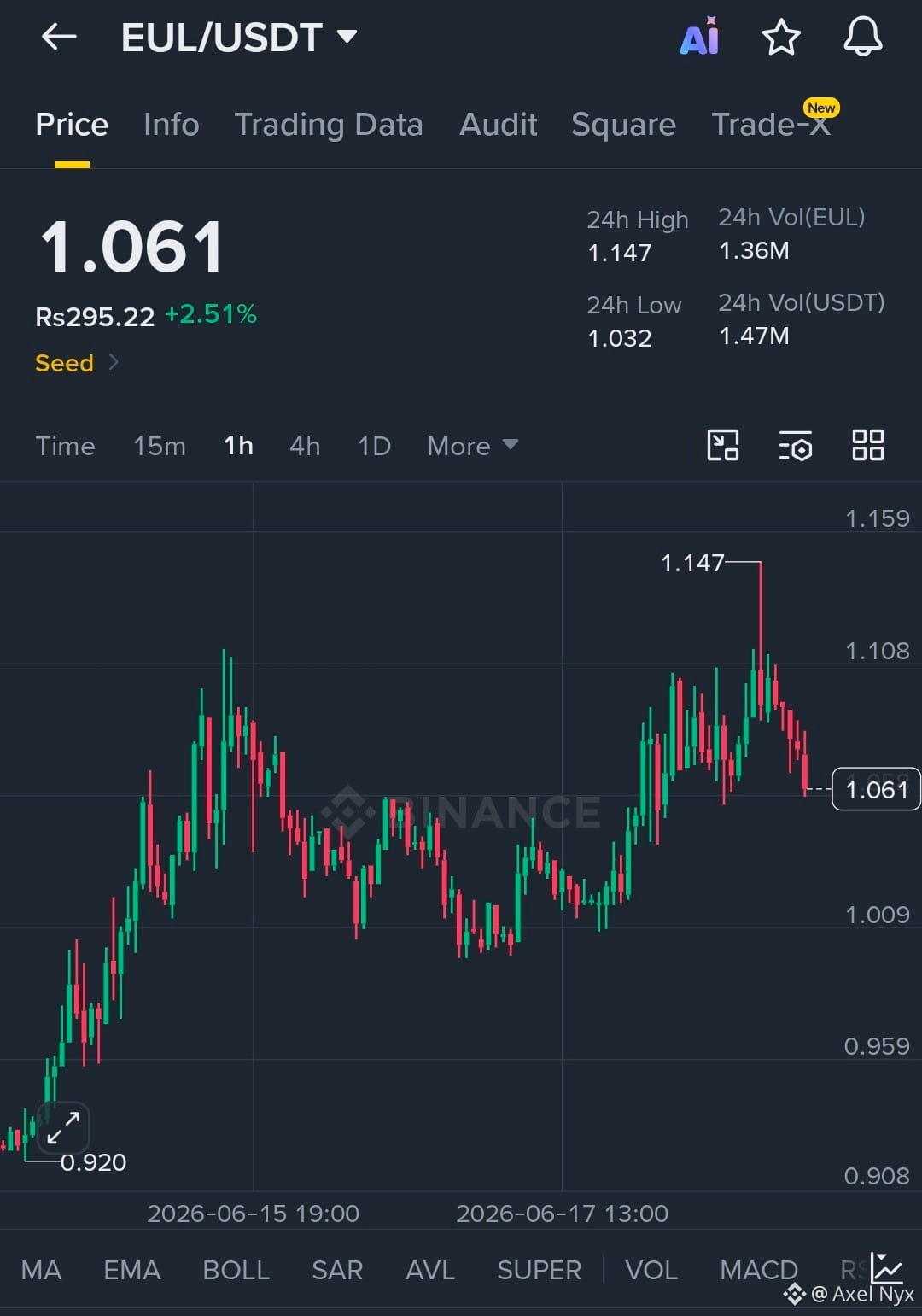
58
·
--
Haussier
$VIC monte légèrement avec un petit gain d'environ trois pour cent alors que le prix se maintient près de la partie supérieure de sa récente fourchette après avoir rebondi depuis le support inférieur. Ce mouvement est soutenu par une activité de trading stable, montrant que la participation est encore active même si le momentum n'est pas très fort pour l'instant. Le prix continue de pivoter entre des niveaux clairs où les acheteurs défendent les replis et les vendeurs interviennent près de la résistance, maintenant la structure équilibrée et confinée. Le ton général est légèrement positif, mais le marché attend toujours une direction de rupture plus claire. D'un point de vue plus large, $VIC se situe dans l'infrastructure blockchain et l'écosystème lié à l'IA où les projets se concentrent sur la construction de systèmes évolutifs et le soutien à la computation décentralisée et aux applications basées sur les données. Ces tokens se déplacent souvent par phases alors que l'attention et la liquidité se déplacent à travers les secteurs. Le sentiment global s'améliore légèrement à court terme, mais la prochaine direction dépendra de la capacité des acheteurs à maintenir la pression au-dessus de la résistance ou si le prix dérive à nouveau vers la fourchette inférieure.
#FedHawkishDotPlotFlattensYieldCurve #SaudiSupertankersBeginCrossingStraitOfHormuz #TrumpAnnouncesUS10%IntelStake #IEAForecasts5MbdOilOverhang2027 #Fed4thConsecutiveRateHold
$VIC monte légèrement avec un petit gain d'environ trois pour cent alors que le prix se maintient près de la partie supérieure de sa récente fourchette après avoir rebondi depuis le support inférieur. Ce mouvement est soutenu par une activité de trading stable, montrant que la participation est encore active même si le momentum n'est pas très fort pour l'instant. Le prix continue de pivoter entre des niveaux clairs où les acheteurs défendent les replis et les vendeurs interviennent près de la résistance, maintenant la structure équilibrée et confinée. Le ton général est légèrement positif, mais le marché attend toujours une direction de rupture plus claire. D'un point de vue plus large, $VIC se situe dans l'infrastructure blockchain et l'écosystème lié à l'IA où les projets se concentrent sur la construction de systèmes évolutifs et le soutien à la computation décentralisée et aux applications basées sur les données. Ces tokens se déplacent souvent par phases alors que l'attention et la liquidité se déplacent à travers les secteurs. Le sentiment global s'améliore légèrement à court terme, mais la prochaine direction dépendra de la capacité des acheteurs à maintenir la pression au-dessus de la résistance ou si le prix dérive à nouveau vers la fourchette inférieure.
#FedHawkishDotPlotFlattensYieldCurve #SaudiSupertankersBeginCrossingStraitOfHormuz #TrumpAnnouncesUS10%IntelStake #IEAForecasts5MbdOilOverhang2027 #Fed4thConsecutiveRateHold
#FedHawkishDotPlotFlattensYieldCurve #SaudiSupertankersBeginCrossingStraitOfHormuz #TrumpAnnouncesUS10%IntelStake #IEAForecasts5MbdOilOverhang2027 #Fed4thConsecutiveRateHold
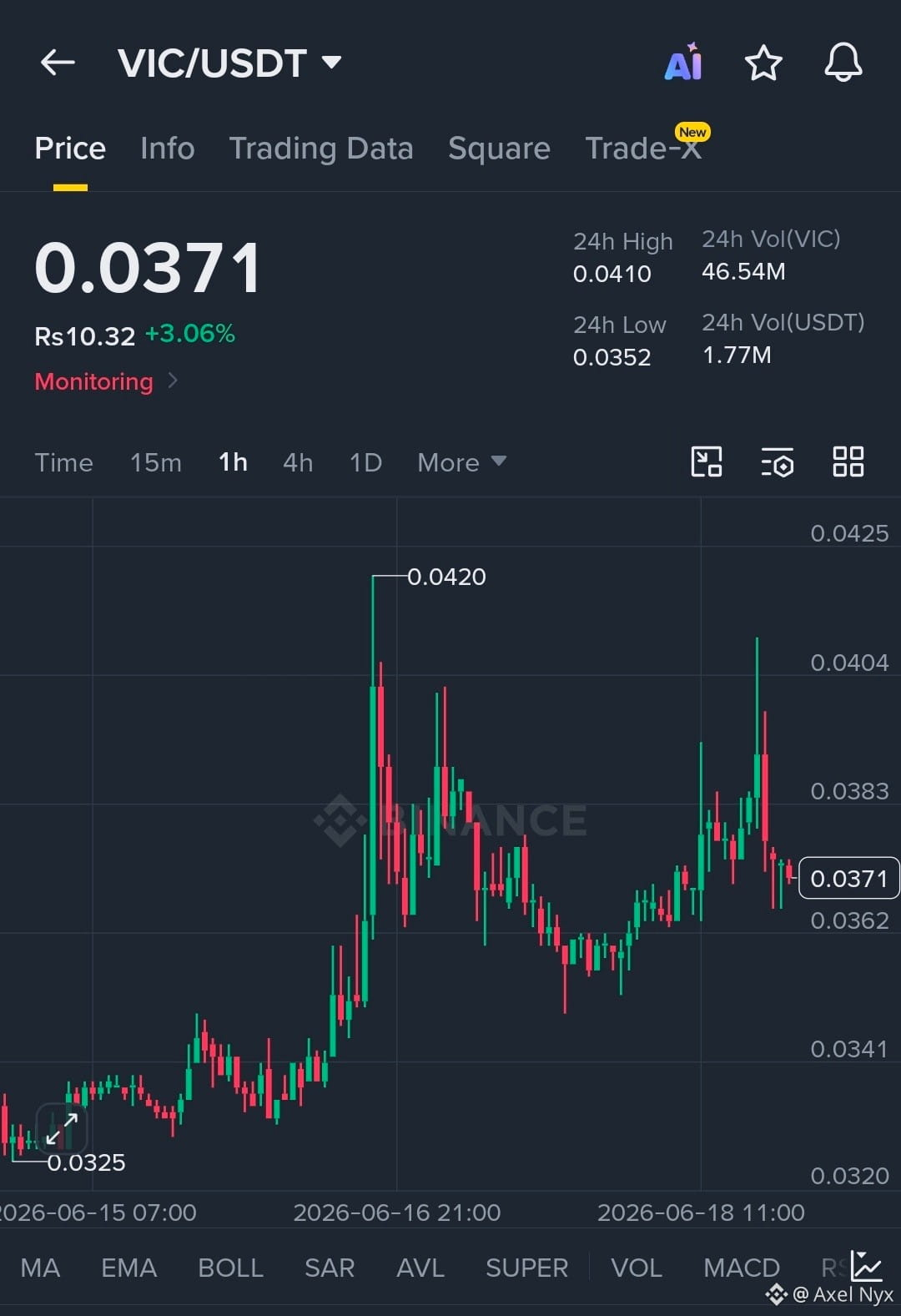
87
Connectez-vous pour découvrir plus de contenu
Rejoignez la communauté mondiale des adeptes de cryptomonnaies sur Binance Square
⚡️ Suviez les dernières informations importantes sur les cryptomonnaies.
💬 Jugé digne de confiance par la plus grande plateforme d’échange de cryptomonnaies au monde.
👍 Découvrez les connaissances que partagent les créateurs vérifiés.
Adresse e-mail/Nº de téléphone
Sujets d’actualité
BOJRaisesRatesTo31YearHigh
134,447 vues
2,102 mentions
#BOJRaisesRatesTo31YearHigh
#BOJRaisesRatesTo31YearHigh 🇯🇵📈
La Banque du Japon a franchi une nouvelle étape majeure en relevant les taux d’intérêt à leur plus haut niveau depuis 31 ans, plaçant les marchés mondiaux en état d’alerte. Cette décision signale une poursuite du changement par rapport à la politique monétaire ultra-accommodante de longue date du Japon. Des taux japonais plus élevés pourraient renforcer le yen, influencer les rendements mondiaux des obligations et potentiellement impacter les flux de capitaux à travers les marchés financiers. La crypto et les actifs à risque pourraient également réagir alors que les investisseurs réévaluent la liquidité et l’exposition au risque. Les traders observent désormais de près les prochaines déclarations de la BOJ à la recherche d’indices sur les futures décisions de taux. La volatilité pourrait augmenter pendant que les marchés digèrent le changement de politique et son impact mondial potentiel. #BOJ #Japon #Crypto #Marchés #InterestRates $NVDAB
maqsoodahmed1
·1 mentions J’aime
·170 vues
BuffettStepsDownAsBerkshireChairman
63,290 vues
1,043 mentions
XRPExchangeReservesHitSevenYearLow
68,874 vues
972 mentions