
Abhishek Baruri
3.6k Publications
Abhishek Baruri
369800
Ouvert au trading
Trade régulièrement
1.9 an(s)
2.9K+ Suivis
639 Abonnés
159 J’aime
Publications
Portefeuille
Tous
Citations
Direct
PINNED
Voir la traduction
NVDAUS-0,20%
Voir la traduction


Binance Square Official
·
--
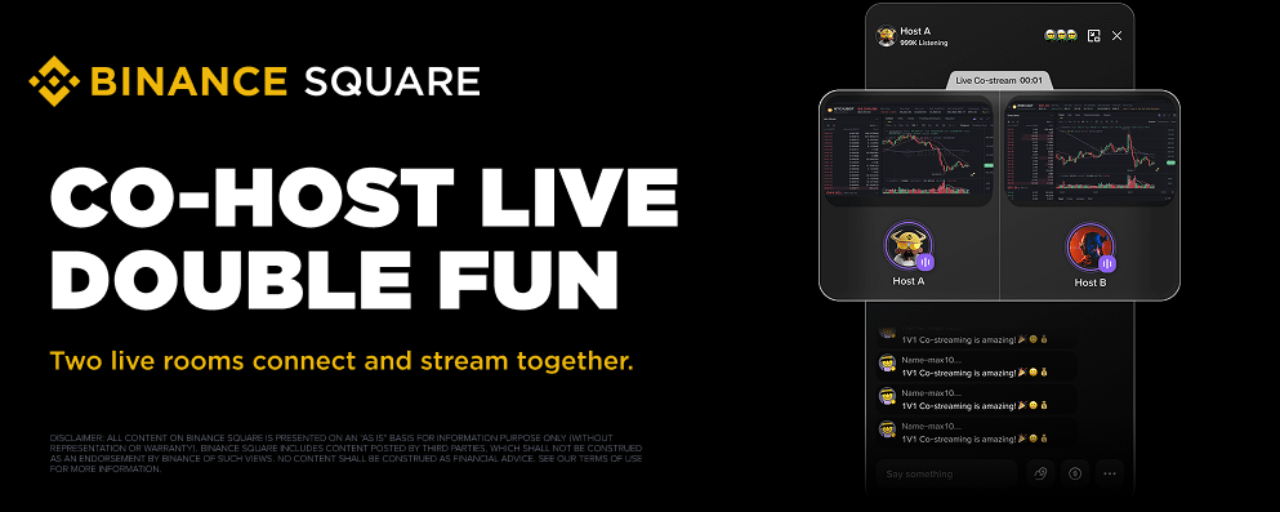
Binance Square Live Co-stream : deux présentateurs, un seul écran, et bien plus à regarder
Le co-stream en direct est une fonctionnalité d’interaction en temps réel pour Binance Square Live. Les présentateurs peuvent inviter un autre présentateur en direct à co-stream — une fois l’invitation acceptée, les deux apparaissent à l’écran ensemble, prolongeant la conversation au-delà d’une seule salle. Mettez votre application à jour vers la dernière version (V3.16.0 ou ultérieure) pour profiter des nouvelles fonctionnalités.
Points forts
Deux présentateurs, une scène
Diffusez en direct ensemble dans des salles séparées : échangez les rôles, explorez différents marchés ou laissez simplement la complicité opérer. Le co- streaming transforme une diffusion solo en un dialogue en direct, à regarder absolument.
Points forts
Deux présentateurs, une scène
Diffusez en direct ensemble dans des salles séparées : échangez les rôles, explorez différents marchés ou laissez simplement la complicité opérer. Le co- streaming transforme une diffusion solo en un dialogue en direct, à regarder absolument.
Voir la traduction

Binance TG Community
·
--
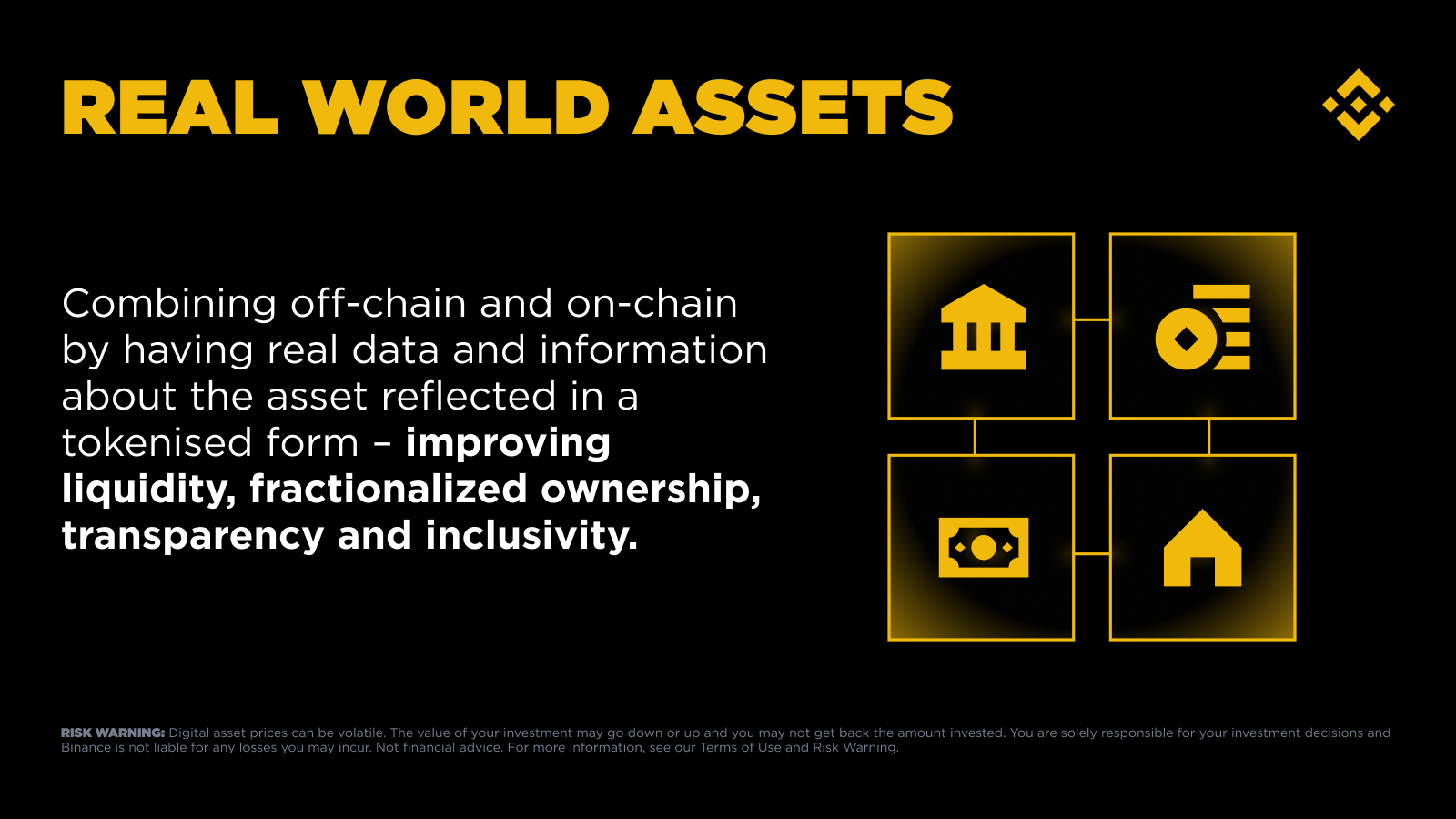
HaussierIntégrer des actifs réels dans l’économie numérique.
#FOMCWatch #BinanceSquareTG
$BNB
#FOMCWatch #BinanceSquareTG
$BNB


TermMax
·
--
$BOB et $GAIB sont maintenant disponibles sur TermMax Alpha !
💹 Prends des positions longues ou courtes à ta guise : aucun risque de liquidation, la perte maximale est seulement la prime
🤑 Rendement stable : dépose des USDT ou des tokens, gagne ~50% APY + 60x XP en points chaque jour
Aucune liquidation, options pures, le choix de levier le plus sécurisé de l'écosystème Binance Alpha 🛡️
Rends-toi dès maintenant sur le site de TermMax pour faire l'expérience.
💹 Prends des positions longues ou courtes à ta guise : aucun risque de liquidation, la perte maximale est seulement la prime
🤑 Rendement stable : dépose des USDT ou des tokens, gagne ~50% APY + 60x XP en points chaque jour
Aucune liquidation, options pures, le choix de levier le plus sécurisé de l'écosystème Binance Alpha 🛡️
Rends-toi dès maintenant sur le site de TermMax pour faire l'expérience.
Binance Square Official
·
--
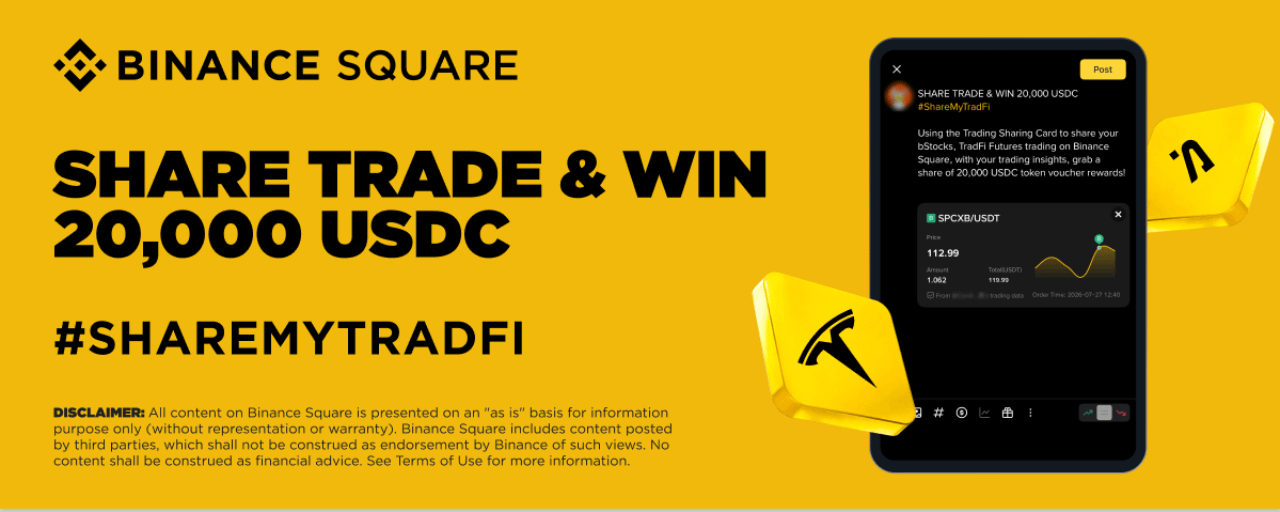
Partagez les opérations en bStocks & TradFi Futures et obtenez une part des récompenses de 20 000 USDC
Binance Square est heureux de vous présenter une nouvelle campagne. En utilisant le widget de carte de partage des échanges pour partager vos opérations en bStocks et/ou TradFi Futures sur Binance Square, ainsi que vos analyses de trading, obtenez une part pouvant aller jusqu’à 20 000 bons-récompenses en jetons USDC !
Période d’activité : 28/07/2026 12:00 (UTC) - 05/08/2026 23:59 (UTC)
Distribution des récompenses en jetons : avant le 26/08/2026
Comment participer :
Suivez les étapes ci-dessous et partagez vos opérations en bStocks et/ou TradFi Futures sur Binance Square avec vos analyses.
Étape 1 : Ouvrez l’éditeur de publication et appuyez sur [Ajouter des transactions].
Période d’activité : 28/07/2026 12:00 (UTC) - 05/08/2026 23:59 (UTC)
Distribution des récompenses en jetons : avant le 26/08/2026
Comment participer :
Suivez les étapes ci-dessous et partagez vos opérations en bStocks et/ou TradFi Futures sur Binance Square avec vos analyses.
Étape 1 : Ouvrez l’éditeur de publication et appuyez sur [Ajouter des transactions].
Binance Square Official
·
--
Binance Square Live Co-stream : deux présentateurs, un seul écran, et bien plus à regarder
Le co-stream en direct est une fonctionnalité d’interaction en temps réel pour Binance Square Live. Les présentateurs peuvent inviter un autre présentateur en direct à co-stream — une fois l’invitation acceptée, les deux apparaissent à l’écran ensemble, prolongeant la conversation au-delà d’une seule salle. Mettez votre application à jour vers la dernière version (V3.16.0 ou ultérieure) pour profiter des nouvelles fonctionnalités.
Points forts
Deux présentateurs, une scène
Diffusez en direct ensemble dans des salles séparées : échangez les rôles, explorez différents marchés ou laissez simplement la complicité opérer. Le co- streaming transforme une diffusion solo en un dialogue en direct, à regarder absolument.
Points forts
Deux présentateurs, une scène
Diffusez en direct ensemble dans des salles séparées : échangez les rôles, explorez différents marchés ou laissez simplement la complicité opérer. Le co- streaming transforme une diffusion solo en un dialogue en direct, à regarder absolument.
Binance Square Official
·
--
Partagez les opérations en bStocks & TradFi Futures et obtenez une part des récompenses de 20 000 USDC
Binance Square est heureux de vous présenter une nouvelle campagne. En utilisant le widget de carte de partage des échanges pour partager vos opérations en bStocks et/ou TradFi Futures sur Binance Square, ainsi que vos analyses de trading, obtenez une part pouvant aller jusqu’à 20 000 bons-récompenses en jetons USDC !
Période d’activité : 28/07/2026 12:00 (UTC) - 05/08/2026 23:59 (UTC)
Distribution des récompenses en jetons : avant le 26/08/2026
Comment participer :
Suivez les étapes ci-dessous et partagez vos opérations en bStocks et/ou TradFi Futures sur Binance Square avec vos analyses.
Étape 1 : Ouvrez l’éditeur de publication et appuyez sur [Ajouter des transactions].
Période d’activité : 28/07/2026 12:00 (UTC) - 05/08/2026 23:59 (UTC)
Distribution des récompenses en jetons : avant le 26/08/2026
Comment participer :
Suivez les étapes ci-dessous et partagez vos opérations en bStocks et/ou TradFi Futures sur Binance Square avec vos analyses.
Étape 1 : Ouvrez l’éditeur de publication et appuyez sur [Ajouter des transactions].

Binance Square Official
·
--
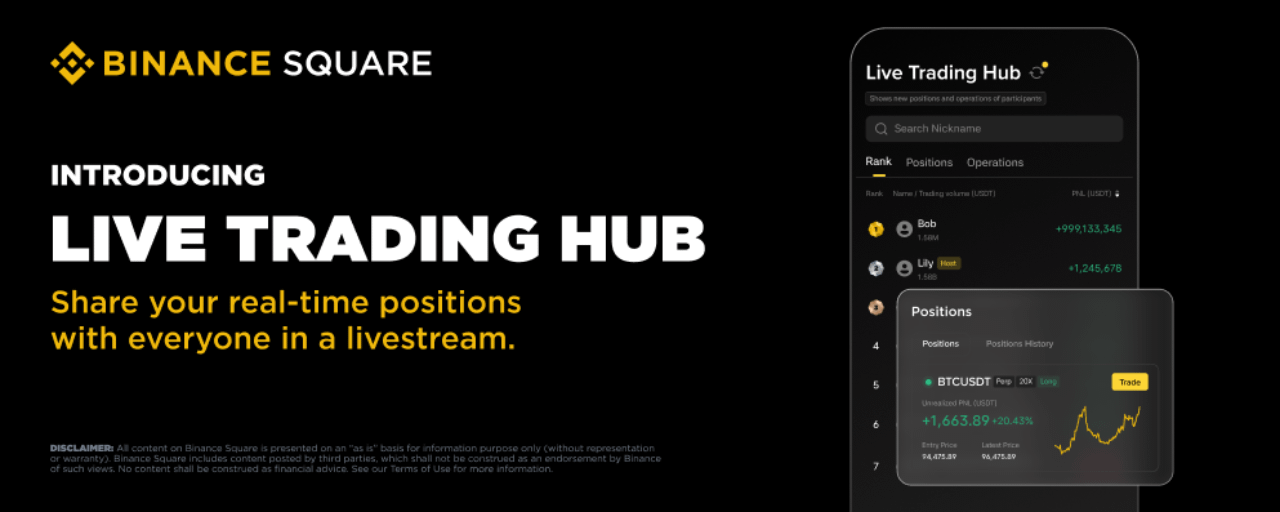
Comment utiliser le Hub de Trading en Direct : Trade en Direct, Trade Social
Qu'est-ce que le Hub de Trading en Direct ?
Le Hub de Trading en Direct est une nouvelle fonctionnalité de trading social dans Binance Square Live. Une fois qu'un streamer l'active, les spectateurs peuvent rejoindre et partager publiquement leurs données de trading en temps réel — positions, PnL, et activité de trading — le tout affiché sur un leaderboard en direct.
Remarque : Actuellement, seul les données des Futures de Livraison USDT-M sont supportées. Cette fonctionnalité peut ne pas être disponible dans votre région.
Pour les Streamers : Comment activer le Hub de Trading en Direct
1. Prépare-toi avant de passer en direct
Ouvre l'éditeur de diffusion (disponible pour les livestreams audio, les livestreams vidéo et le streaming tiers)
Le Hub de Trading en Direct est une nouvelle fonctionnalité de trading social dans Binance Square Live. Une fois qu'un streamer l'active, les spectateurs peuvent rejoindre et partager publiquement leurs données de trading en temps réel — positions, PnL, et activité de trading — le tout affiché sur un leaderboard en direct.
Remarque : Actuellement, seul les données des Futures de Livraison USDT-M sont supportées. Cette fonctionnalité peut ne pas être disponible dans votre région.
Pour les Streamers : Comment activer le Hub de Trading en Direct
1. Prépare-toi avant de passer en direct
Ouvre l'éditeur de diffusion (disponible pour les livestreams audio, les livestreams vidéo et le streaming tiers)
Connectez-vous pour découvrir plus de contenu