Binance Square

CORDIA FMHL

875 Suivis
809 Abonnés
9.4K+ J’aime
89 Partagé(s)
Tout le contenu
--
YIELD GUILD GAMES A NEW DIGITAL FAMILY IN BLOCKCHAIN GAMINGI'm slowly looking at Yield Guild Games, and I think that's how big and meaningful this project actually is: every time I think about it more deeply, I realize they're building something that is not only about NFTs or video games but building a worldwide community where people can play together, grow together inside virtual worlds that actually reward them for the time and energy. When compared to traditional games where players spend years collecting items that never belong to them and never give them anything in return, I see how YGG is trying to turn that idea around to something just and owned by the community, where the players actually have a real place in the economic side of gaming and are not just consumers. I'm noticing how they built Yield Guild Games as a decentralized organization so there is no single boss or company that controls everything from the top. They're using a blockchain structure where people who hold the YGG token are the ones who guide the project through voting, proposals, and staking, and if someone wants to get more involved they can stake their tokens into different parts of the ecosystem and actually shape the future of the guild. It makes everything feel like a living digital society instead of some normal gaming brand, you know, because everyone has a voice if they want to use it. I think about the SubDAO structure they've come up with, and something about it feels brilliant, as it allows for YGG to scale into so many different directions without becoming convoluted and weighty. Each SubDAO is a small world within a world; some have a very game-focused approach, while others are regionally and culturally focused. If someone loves one special game, they can be part of a SubDAO that lives in and around that game universe. If someone exists in a certain part of the world, they might find there's a regionally specific SubDAO that gels with their language, culture, and kind of gaming. That gives people a place where they feel close and comfortable while still being part of something far greater. I would imagine that new players would join the YGG because many people wish to enter blockchain games, but when they see how expensive or incomprehensible the NFTs are, they just stop. What YGG does is solve this by giving access to NFTs from the guild treasuries, so that players can begin to play without having to spend huge money in advance. When a player has the skills and time to earn through playing, they can share part of the rewards with the guild that gave them the access. This turns out to be a friendly bridge that helps people enter the blockchain world in a natural and simple way; it feels like a win for everyone because the player learns, earns, and grows while the guild gets stronger with active members. I'm seeing how the YGG token functions almost like a passport inside the guild; when someone holds and stakes this token, they unlock more opportunities, more community access, and more benefits from the Guild's activities. Staking also becomes meaningful since it connects them to different reward systems originating from different games or SubDAOs. If a user strongly believes in a particular part of the guild, they can support that part by staking there and receiving rewards over time. It is almost like being part of a global digital economy where gaming, work, and community all mix together and slowly create something bigger than all of us. I'm also considering how YGG interacts with various game studios and creators because they do not simply leap into any random games for the sake of rewards; instead, they establish long-term relationships that enable games to grow in ways such that real players enter them. When a new blockchain game launches, for example, often a player doesn't know where to start or how to understand token systems and blockchain mechanics, but what YGG does is help bring experienced communities into these games and give them tools to grow inside that world, building up the game and making the guild stronger. I'm feeling how the Vault system adds another layer of depth because the Vaults are designed to give people a place to stake their YGG and receive rewards from different games depending on what each Vault focuses on. If a Vault is connected with a farming game, then staking there means sharing part of the farming rewards, and if a Vault is connected with a regional guild, then staking there connects you with what that region is earning and learning. This gives people a choice and makes the whole idea flexible, personal, and exciting. I watch the global community form around YGG, and the number of people who feel supported and guided because the guild organizes leaders, managers, and helpers who teach new members how to start, how to play safely, and how to understand Web3 systems that might otherwise seem quite confusing. If someone comes in for the first time and feels welcomed instead of bewildered, they are more likely to stick around, learn, and perhaps even become a future leader. And once that happens, the cycle only keeps growing, as today's beginner becomes tomorrow's teacher. I think about the long-term vision of Yield Guild Games, and man, I realize how huge this could get. The world of gaming is growing bigger each year, and blockchain gaming is only at the very start of its journey. If YGG keeps on growing organically and stays focused on community ownership, helpful onboarding, and smart partnerships, I could definitely see how millions of players could make their way into Web3 through this guild. They are building a new digital family across countries, languages, and cultures, and that makes me feel like this project might become one of the strongest pillars in the future of gaming. @YieldGuildGames $YGG #YGGPlay

YIELD GUILD GAMES A NEW DIGITAL FAMILY IN BLOCKCHAIN GAMING

I'm slowly looking at Yield Guild Games, and I think that's how big and meaningful this project actually is: every time I think about it more deeply, I realize they're building something that is not only about NFTs or video games but building a worldwide community where people can play together, grow together inside virtual worlds that actually reward them for the time and energy. When compared to traditional games where players spend years collecting items that never belong to them and never give them anything in return, I see how YGG is trying to turn that idea around to something just and owned by the community, where the players actually have a real place in the economic side of gaming and are not just consumers.
I'm noticing how they built Yield Guild Games as a decentralized organization so there is no single boss or company that controls everything from the top. They're using a blockchain structure where people who hold the YGG token are the ones who guide the project through voting, proposals, and staking, and if someone wants to get more involved they can stake their tokens into different parts of the ecosystem and actually shape the future of the guild. It makes everything feel like a living digital society instead of some normal gaming brand, you know, because everyone has a voice if they want to use it.
I think about the SubDAO structure they've come up with, and something about it feels brilliant, as it allows for YGG to scale into so many different directions without becoming convoluted and weighty. Each SubDAO is a small world within a world; some have a very game-focused approach, while others are regionally and culturally focused. If someone loves one special game, they can be part of a SubDAO that lives in and around that game universe. If someone exists in a certain part of the world, they might find there's a regionally specific SubDAO that gels with their language, culture, and kind of gaming. That gives people a place where they feel close and comfortable while still being part of something far greater.
I would imagine that new players would join the YGG because many people wish to enter blockchain games, but when they see how expensive or incomprehensible the NFTs are, they just stop. What YGG does is solve this by giving access to NFTs from the guild treasuries, so that players can begin to play without having to spend huge money in advance. When a player has the skills and time to earn through playing, they can share part of the rewards with the guild that gave them the access. This turns out to be a friendly bridge that helps people enter the blockchain world in a natural and simple way; it feels like a win for everyone because the player learns, earns, and grows while the guild gets stronger with active members.
I'm seeing how the YGG token functions almost like a passport inside the guild; when someone holds and stakes this token, they unlock more opportunities, more community access, and more benefits from the Guild's activities. Staking also becomes meaningful since it connects them to different reward systems originating from different games or SubDAOs. If a user strongly believes in a particular part of the guild, they can support that part by staking there and receiving rewards over time. It is almost like being part of a global digital economy where gaming, work, and community all mix together and slowly create something bigger than all of us.
I'm also considering how YGG interacts with various game studios and creators because they do not simply leap into any random games for the sake of rewards; instead, they establish long-term relationships that enable games to grow in ways such that real players enter them. When a new blockchain game launches, for example, often a player doesn't know where to start or how to understand token systems and blockchain mechanics, but what YGG does is help bring experienced communities into these games and give them tools to grow inside that world, building up the game and making the guild stronger.
I'm feeling how the Vault system adds another layer of depth because the Vaults are designed to give people a place to stake their YGG and receive rewards from different games depending on what each Vault focuses on. If a Vault is connected with a farming game, then staking there means sharing part of the farming rewards, and if a Vault is connected with a regional guild, then staking there connects you with what that region is earning and learning. This gives people a choice and makes the whole idea flexible, personal, and exciting.
I watch the global community form around YGG, and the number of people who feel supported and guided because the guild organizes leaders, managers, and helpers who teach new members how to start, how to play safely, and how to understand Web3 systems that might otherwise seem quite confusing. If someone comes in for the first time and feels welcomed instead of bewildered, they are more likely to stick around, learn, and perhaps even become a future leader. And once that happens, the cycle only keeps growing, as today's beginner becomes tomorrow's teacher.
I think about the long-term vision of Yield Guild Games, and man, I realize how huge this could get. The world of gaming is growing bigger each year, and blockchain gaming is only at the very start of its journey. If YGG keeps on growing organically and stays focused on community ownership, helpful onboarding, and smart partnerships, I could definitely see how millions of players could make their way into Web3 through this guild. They are building a new digital family across countries, languages, and cultures, and that makes me feel like this project might become one of the strongest pillars in the future of gaming.
@Yield Guild Games $YGG #YGGPlay
Yield Guild Games is steadily growing as new players join SubDAOs and more games integrate YGG features. The guild is enhancing reward systems and simplifying onboarding so beginners can start earning easily. Active participation in guild events, quests, and social activities shows a vibrant community even during slower markets. Meanwhile, more locked assets are being put to productive use, giving players access to valuable NFTs and sustaining momentum across multiple gaming ecosystems. @YieldGuildGames #YieldGuildGames $YGG
Yield Guild Games is steadily growing as new players join SubDAOs and more games integrate YGG features. The guild is enhancing reward systems and simplifying onboarding so beginners can start earning easily. Active participation in guild events, quests, and social activities shows a vibrant community even during slower markets. Meanwhile, more locked assets are being put to productive use, giving players access to valuable NFTs and sustaining momentum across multiple gaming ecosystems.

@Yield Guild Games #YieldGuildGames $YGG
YGG’s Masterstroke: From P2E Guild to Web3 Gaming Infrastructure Yield Guild Games ($YGG) is no longer just a 2021 P2E guild—it’s evolving into a core infrastructure layer for Web3 gaming. 1. The 2025 Treasury Pivot YGG moved 50M tokens (~$7.5M) into an actively managed Ecosystem Pool, shifting from passive holding to active deployment. This fuels new game partnerships, yield strategies, and ecosystem growth with full on-chain transparency. 2. The Reputation Layer YGG is building gamer identity for Web3: • Soulbound Tokens (SBTs) track skills and achievements • Reputation becomes more valuable than wallet size This aims to turn YGG into the “Steam engine” of the metaverse by 2026. 3. YGG Play: A New Publishing Model YGG Play introduces transparent, smart-contract-based revenue sharing. It focuses on creator-friendly, streamable games like LOL Land, which hit $64M annualized revenue. Recent deals—like the Gigaverse partnership using Abstract for fast social logins—show this model gaining traction. 4. The Long-Term Vision YGG is building the connective tissue of Web3 gaming: • Active capital management • On-chain reputation • A transparent publishing arm • Community-led growth It’s laying the groundwork for a player-owned digital economy that empowers real communities—not just speculators. #ygg $YGG YGG @YieldGuildGames
YGG’s Masterstroke: From P2E Guild to Web3 Gaming Infrastructure

Yield Guild Games ($YGG ) is no longer just a 2021 P2E guild—it’s evolving into a core infrastructure layer for Web3 gaming.

1. The 2025 Treasury Pivot

YGG moved 50M tokens (~$7.5M) into an actively managed Ecosystem Pool, shifting from passive holding to active deployment.
This fuels new game partnerships, yield strategies, and ecosystem growth with full on-chain transparency.

2. The Reputation Layer

YGG is building gamer identity for Web3:
• Soulbound Tokens (SBTs) track skills and achievements
• Reputation becomes more valuable than wallet size
This aims to turn YGG into the “Steam engine” of the metaverse by 2026.

3. YGG Play: A New Publishing Model

YGG Play introduces transparent, smart-contract-based revenue sharing.
It focuses on creator-friendly, streamable games like LOL Land, which hit $64M annualized revenue.

Recent deals—like the Gigaverse partnership using Abstract for fast social logins—show this model gaining traction.

4. The Long-Term Vision

YGG is building the connective tissue of Web3 gaming:
• Active capital management
• On-chain reputation
• A transparent publishing arm
• Community-led growth

It’s laying the groundwork for a player-owned digital economy that empowers real communities—not just speculators.

#ygg $YGG YGG @Yield Guild Games
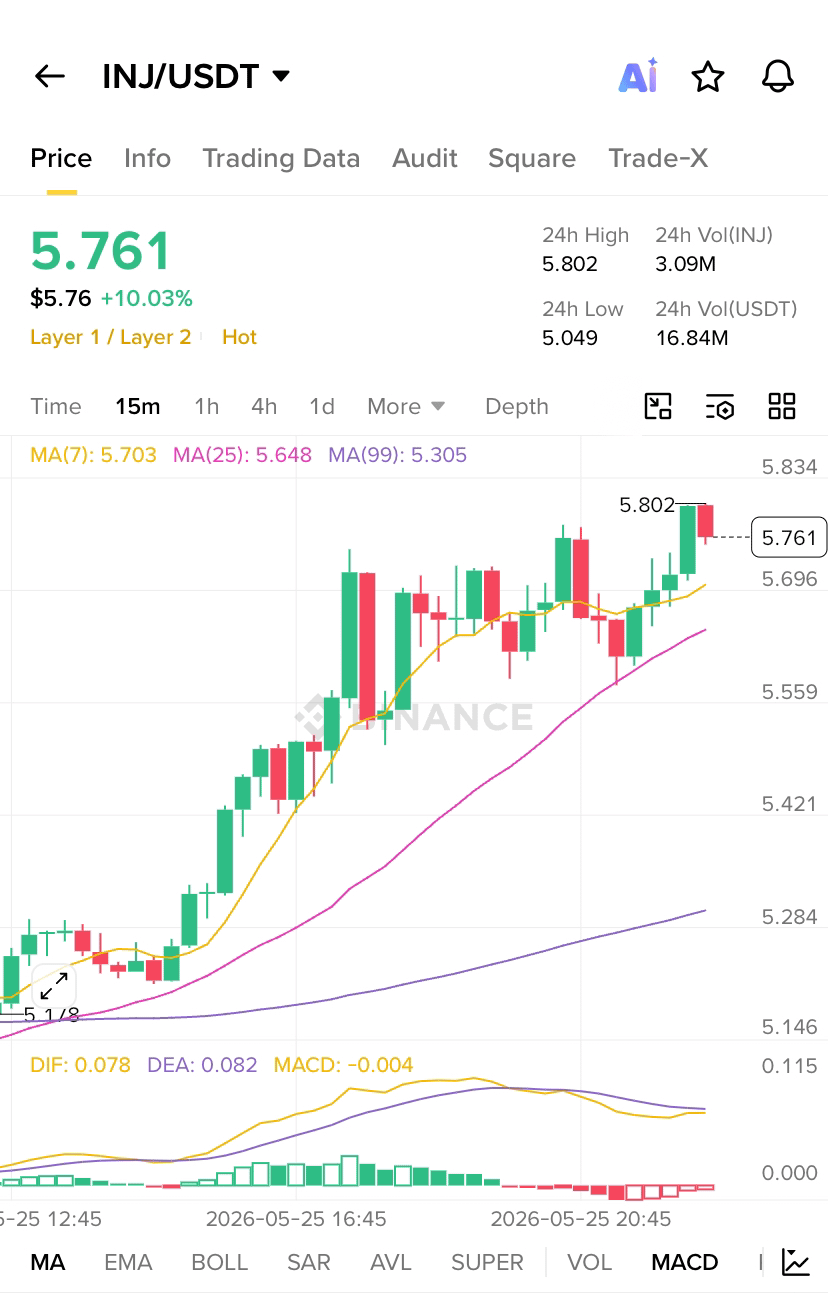
INJ: The Quiet Network Whales Prefer Injective became a silent favorite among whales for one reason: efficiency without noise. They want speed, liquidity, and stability—INJ delivers all three. • CEX-level execution • Easy creation of financial derivatives • Native connections to both Cosmos and Ethereum The result? A professional class of traders treating Injective as their quiet refuge. $INJ #injective @Injective INJUSDT
INJ: The Quiet Network Whales Prefer

Injective became a silent favorite among whales for one reason: efficiency without noise.
They want speed, liquidity, and stability—INJ delivers all three.

• CEX-level execution
• Easy creation of financial derivatives
• Native connections to both Cosmos and Ethereum

The result? A professional class of traders treating Injective as their quiet refuge.

$INJ #injective @Injective
INJUSDT
YIELD GUILD GAMES: THE MOVEMENT THAT TURNED PLAY INTO A FUTURE Yield Guild Games (YGG) began with a simple belief: players deserve ownership of the worlds they build. For years, gamers spent countless hours creating value inside digital universes—yet owned none of it. YGG changed that forever. A New Era of Digital Ownership YGG started as a DAO built to give players real ownership through NFTs and in-game digital assets. But the real magic wasn’t the tech—it was the opportunity it unlocked. Through YGG’s scholarship system, players gained access to high-value gaming assets that were once out of reach, turning passion into possibility. Real Impact, Real Lives During the Play-to-Earn boom, YGG became a global lifeline: • students paying tuition • parents covering bills • young people finding purpose The guild proved that digital labor can create real-world stability. A Growing Ecosystem YGG expanded into a full economic network: • YGG Vaults – organize yields, rewards, and shared value. • SubDAOs – regional and game-focused communities that empower thousands of players. • YGG Token – the glue of the ecosystem, granting governance, access, and a sense of belonging. From Game Time to Real Opportunity YGG showed that gaming builds teamwork, leadership, and strategy—skills with real-world value. Players became creators, leaders, and community builders. The guild honors every role because every role adds value. A Future Built by Players YGG imagines a world where digital economies are respected, where gaming becomes a career path, where families gain stability through digital opportunity, and where players everywhere can rise—regardless of circumstance. Why YGG Matters Because it transforms play into: growth, income, community, and hope. It proves that virtual worlds can open real doors and that the future belongs to the players who build it. Yield Guild Games isn’t just part of gaming history—it’s the turning point. And this movement is only getting started. #YGGPlay @YieldGuildGames $YGG

YIELD GUILD GAMES: THE MOVEMENT THAT TURNED PLAY INTO A FUTURE

Yield Guild Games (YGG) began with a simple belief: players deserve ownership of the worlds they build. For years, gamers spent countless hours creating value inside digital universes—yet owned none of it. YGG changed that forever.

A New Era of Digital Ownership

YGG started as a DAO built to give players real ownership through NFTs and in-game digital assets. But the real magic wasn’t the tech—it was the opportunity it unlocked. Through YGG’s scholarship system, players gained access to high-value gaming assets that were once out of reach, turning passion into possibility.

Real Impact, Real Lives

During the Play-to-Earn boom, YGG became a global lifeline:

• students paying tuition

• parents covering bills

• young people finding purpose

The guild proved that digital labor can create real-world stability.

A Growing Ecosystem

YGG expanded into a full economic network:

• YGG Vaults – organize yields, rewards, and shared value.

• SubDAOs – regional and game-focused communities that empower thousands of players.

• YGG Token – the glue of the ecosystem, granting governance, access, and a sense of belonging.

From Game Time to Real Opportunity

YGG showed that gaming builds teamwork, leadership, and strategy—skills with real-world value. Players became creators, leaders, and community builders. The guild honors every role because every role adds value.

A Future Built by Players

YGG imagines a world where digital economies are respected, where gaming becomes a career path, where families gain stability through digital opportunity, and where players everywhere can rise—regardless of circumstance.

Why YGG Matters

Because it transforms play into:

growth, income, community, and hope.

It proves that virtual worlds can open real doors and that the future belongs to the players who build it.

Yield Guild Games isn’t just part of gaming history—it’s the turning point.

And this movement is only getting started.

#YGGPlay @Yield Guild Games $YGG
Injective's Next Phase — building markets that act like markets, not experimentsThere's a vibe shift when a crypto platform stops trying to "prove it belongs" and starts acting like it's here to run the show. Injective has hit that sweet spot. Gone are the days of chasing headline-grabbing features; now, the team's laser-focused on tightening the "boring" stuff that actually keeps markets ticking: execution you can set your watch by, data you don't have to second-guess, liquidity that flows where it's needed, and governance that reads like an operations memo—not a theater script. Think of Injective: Not a Chain, But a "Marketplace OS" Forget labeling Injective as just another smart-contract chain. Better to think of it as an OS, actually purpose-built for trading. Everything's modular in its architecture, from order books, staking tools and cross-chain bridges, to oracles, and even real-world asset rails. Think plug-and-play building blocks, not clunky, one-piece machine. Why does that matter? Imagine a trading venue wanting to launch perpetual futures, a derivatives desk needing to build structured products, and a liquidity provider looking to plug into multiple markets-all without rebuilding core "how trades happen" mechanics from scratch. Injective's shared backbone lets them do exactly that. No reinvention, no messy workarounds-just build on top of the parts that already work. For Traders & Institutions: Predictability outclasses novelty. For institutional traders, they don't need or care about "cool new features"; they care about "will this trade clear when I need it to?" That's where Injective shines. Thanks to Tendermint finality-the tech that locks in transactions fast-and its finely tuned execution system, the settlement of trades happens within consistent windows and settlement behavior repeats itself. No "maybe if the network's not busy" guesswork-just reliability. This predictability is gold for the person running any kind of risk model, automated hedge, or margin calculation. If you can design a product knowing the underlying chain won't throw a surprise-say, just a random 10-second delay-you can actually build institutional-grade markets on-chain. No more treating DeFi like a "fun experiment." Order Books: the “Foundation Stone” of Fair Trading Injective doesn't monkey around with order books, instead, it treats them as a "first-class citizen" of the network. Bids, asks, and trade matches happen transparently on-chain with no off-chain shenanigans masquerading as "decentralized." This opens the door to way fairer trading: Batch auctions: No more front-running by bots that jump in ahead of your order. Less MEV leakage: That sneaky "extra cost" from manipulated order flows? It gets cut way down. Composable products: Perpetuals, structured bets, and prediction markets all plug into the same liquidity pool, making it easier to build and reliably trade these products. Cross-Chain Liquidity: No More “Trapped Cash” Lots of chains talk about cross-chain liquidity-but Injective actually makes it work, not just draw it on slides. Here's how: Cosmos Connections: Uses IBC, the Cosmos "highway" to move assets seamlessly between other Cosmos chains, fast, cheap, and secure. Non-Cosmos Bridges: Ties bridge security to its validators, meaning assets from Ethereum, Solana, or Aptos move into Injective with way less friction. The outcome? Liquidity does not sit locked up on one chain; instead, it flows to wherever it is most useful-like a highway for cash. For market makers, this is the stuff of which one can only dream: deeper order books, better spreads, and multi-network collateral management without pulling out your hair. Validators: from "block signers" to "market operators" On most chains, validators are just “node operators” who sign blocks—like factory workers stamping boxes. On Injective, they’re more like exchange ops teams: some specialize in relaying accurate price feeds, others keep bridge liquidity healthy, still more monitor transaction latency and data quality. This changes the game. For validators, success isn't just about "how many blocks can I sign?" It is about "am I keeping the markets running smoothly?" Uptime and accuracy become part of their job-when the data is bad or the bridge is down, the whole trading ecosystem suffers. It is that practical, hands-on approach that feels like just what professional traders need. Data with Confidence: Not Just Numbers, but Trust But Injective's oracles don't just spit out prices-they give you a "confidence score" to go with them. The oracle layer pulls in data from dozens of sources, then grades each one on how consistent it is (variance) and how fast it updates (latency). If a feed starts acting weird-say, if a tiny exchange sees a random price spike-it automatically loses influence. Why does that matter? In the course of a Bitcoin flash crash or market panic, you don't want a faulty feed triggering waves of unfair liquidations. Injective's system lets contracts "trust but verify"-they adjust behavior based on how reliable the data is, not panicking at the first blip. It keeps markets usable when the going gets tough. Governance: Fix the Leaks, Don't Debate the Philosophy Gone are the days of Injective's governance being comprised of ideological debates. Now, conversations comprise all types of maintenance questions: "Should we tweak oracle weights?" "How do we improve relayer performance?" "Is this fee curve working for market makers?" It's governance as "housekeeping." This is what decentralized markets need: not dramatic last-minute interventions, but steady small tweaks that keep the system stable. Injective's governance has moved from "making noise" to "keeping the lights on"-and that's precisely what builds long-term trust. What builders are actually building now The projects launching on Injective tell the whole story. Developers aren't chasing flashy novelties—they're building the tools traders actually need: risk management platforms, synthetic asset factories, structured yield products, and composable derivatives. They're choosing Injective for reliability, not hype. What these builders want is tools that function the same way when the market is hot and when it's cold. Tired of "cool" features that break under stress, they want something on which to bet real capital. Why This Could Stick (Hint: It’s About Turmoil) The real test of any trading platform is not how it works on a calm Tuesday, but how it holds up during a market meltdown. Injective's big wager is: predictable settlement, trustworthy data, and seamless cross-chain liquidity will always mean more than who launches the fanciest feature. If Injective continues to deliver on that promise of stable fees, execution you can count on, reliable oracles, and modular tools, it won't just be some other "crypto project." It'll be where teams go to run real capital-not just experiment with it. Signals to Watch: Ignore the Hype, Track These Want to know if Injective's next phase is for real? Skip the Twitter buzz and track these four metrics: Liquidity Routing: Does cash actually move between venues without getting stuck? No silos = real utility. Oracle Stability: Do those confidence scores stay steady under price shocks? If yes, the data layer works. Uptime Focus: Are developers and validators talking more about "keeping systems up" than about "launching new stuff"? Governance Calm: Are proposals about tweaking parameters-not starting drama? Steady = reliable. Final Thought: The “Boring” Work Wins In a crypto market obsessed with "growth metrics" and viral launches, Injective is doing the opposite: making the "plumbing" of trading dependable. It's not glamorous. It won't trend on Crypto Twitter. But for anyone who cares about moving real money on-chain-traders, institutions, market makers-that's the work that lasts. Injective isn't building the next big experiment. It's building markets that behave like the ones people already trust—just faster, more open, and on-chain. And in the end, that's the future of trading. Injective@Injective #Injective $INJ

Injective's Next Phase — building markets that act like markets, not experiments

There's a vibe shift when a crypto platform stops trying to "prove it belongs" and starts acting like it's here to run the show. Injective has hit that sweet spot. Gone are the days of chasing headline-grabbing features; now, the team's laser-focused on tightening the "boring" stuff that actually keeps markets ticking: execution you can set your watch by, data you don't have to second-guess, liquidity that flows where it's needed, and governance that reads like an operations memo—not a theater script.
Think of Injective: Not a Chain, But a "Marketplace OS"
Forget labeling Injective as just another smart-contract chain. Better to think of it as an OS, actually purpose-built for trading. Everything's modular in its architecture, from order books, staking tools and cross-chain bridges, to oracles, and even real-world asset rails. Think plug-and-play building blocks, not clunky, one-piece machine.
Why does that matter? Imagine a trading venue wanting to launch perpetual futures, a derivatives desk needing to build structured products, and a liquidity provider looking to plug into multiple markets-all without rebuilding core "how trades happen" mechanics from scratch. Injective's shared backbone lets them do exactly that. No reinvention, no messy workarounds-just build on top of the parts that already work.
For Traders & Institutions: Predictability outclasses novelty.
For institutional traders, they don't need or care about "cool new features"; they care about "will this trade clear when I need it to?" That's where Injective shines. Thanks to Tendermint finality-the tech that locks in transactions fast-and its finely tuned execution system, the settlement of trades happens within consistent windows and settlement behavior repeats itself. No "maybe if the network's not busy" guesswork-just reliability.
This predictability is gold for the person running any kind of risk model, automated hedge, or margin calculation. If you can design a product knowing the underlying chain won't throw a surprise-say, just a random 10-second delay-you can actually build institutional-grade markets on-chain. No more treating DeFi like a "fun experiment."
Order Books: the “Foundation Stone” of Fair Trading
Injective doesn't monkey around with order books, instead, it treats them as a "first-class citizen" of the network. Bids, asks, and trade matches happen transparently on-chain with no off-chain shenanigans masquerading as "decentralized." This opens the door to way fairer trading:
Batch auctions: No more front-running by bots that jump in ahead of your order.
Less MEV leakage: That sneaky "extra cost" from manipulated order flows? It gets cut way down.
Composable products: Perpetuals, structured bets, and prediction markets all plug into the same liquidity pool, making it easier to build and reliably trade these products.
Cross-Chain Liquidity: No More “Trapped Cash”
Lots of chains talk about cross-chain liquidity-but Injective actually makes it work, not just draw it on slides. Here's how:
Cosmos Connections: Uses IBC, the Cosmos "highway" to move assets seamlessly between other Cosmos chains, fast, cheap, and secure.
Non-Cosmos Bridges: Ties bridge security to its validators, meaning assets from Ethereum, Solana, or Aptos move into Injective with way less friction.
The outcome? Liquidity does not sit locked up on one chain; instead, it flows to wherever it is most useful-like a highway for cash. For market makers, this is the stuff of which one can only dream: deeper order books, better spreads, and multi-network collateral management without pulling out your hair.
Validators: from "block signers" to "market operators"
On most chains, validators are just “node operators” who sign blocks—like factory workers stamping boxes. On Injective, they’re more like exchange ops teams: some specialize in relaying accurate price feeds, others keep bridge liquidity healthy, still more monitor transaction latency and data quality.
This changes the game. For validators, success isn't just about "how many blocks can I sign?" It is about "am I keeping the markets running smoothly?" Uptime and accuracy become part of their job-when the data is bad or the bridge is down, the whole trading ecosystem suffers. It is that practical, hands-on approach that feels like just what professional traders need.
Data with Confidence: Not Just Numbers, but Trust
But Injective's oracles don't just spit out prices-they give you a "confidence score" to go with them. The oracle layer pulls in data from dozens of sources, then grades each one on how consistent it is (variance) and how fast it updates (latency). If a feed starts acting weird-say, if a tiny exchange sees a random price spike-it automatically loses influence.
Why does that matter? In the course of a Bitcoin flash crash or market panic, you don't want a faulty feed triggering waves of unfair liquidations. Injective's system lets contracts "trust but verify"-they adjust behavior based on how reliable the data is, not panicking at the first blip. It keeps markets usable when the going gets tough.
Governance: Fix the Leaks, Don't Debate the Philosophy
Gone are the days of Injective's governance being comprised of ideological debates. Now, conversations comprise all types of maintenance questions: "Should we tweak oracle weights?" "How do we improve relayer performance?" "Is this fee curve working for market makers?" It's governance as "housekeeping."
This is what decentralized markets need: not dramatic last-minute interventions, but steady small tweaks that keep the system stable. Injective's governance has moved from "making noise" to "keeping the lights on"-and that's precisely what builds long-term trust.
What builders are actually building now
The projects launching on Injective tell the whole story. Developers aren't chasing flashy novelties—they're building the tools traders actually need: risk management platforms, synthetic asset factories, structured yield products, and composable derivatives. They're choosing Injective for reliability, not hype.
What these builders want is tools that function the same way when the market is hot and when it's cold. Tired of "cool" features that break under stress, they want something on which to bet real capital.
Why This Could Stick (Hint: It’s About Turmoil)
The real test of any trading platform is not how it works on a calm Tuesday, but how it holds up during a market meltdown. Injective's big wager is: predictable settlement, trustworthy data, and seamless cross-chain liquidity will always mean more than who launches the fanciest feature.
If Injective continues to deliver on that promise of stable fees, execution you can count on, reliable oracles, and modular tools, it won't just be some other "crypto project." It'll be where teams go to run real capital-not just experiment with it.
Signals to Watch: Ignore the Hype, Track These
Want to know if Injective's next phase is for real? Skip the Twitter buzz and track these four metrics:
Liquidity Routing: Does cash actually move between venues without getting stuck? No silos = real utility.
Oracle Stability: Do those confidence scores stay steady under price shocks? If yes, the data layer works.
Uptime Focus: Are developers and validators talking more about "keeping systems up" than about "launching new stuff"?
Governance Calm: Are proposals about tweaking parameters-not starting drama? Steady = reliable.
Final Thought: The “Boring” Work Wins
In a crypto market obsessed with "growth metrics" and viral launches, Injective is doing the opposite: making the "plumbing" of trading dependable. It's not glamorous. It won't trend on Crypto Twitter. But for anyone who cares about moving real money on-chain-traders, institutions, market makers-that's the work that lasts.
Injective isn't building the next big experiment. It's building markets that behave like the ones people already trust—just faster, more open, and on-chain. And in the end, that's the future of trading.
Injective@Injective #Injective $INJ
How Injective Solves Blockchain Isolation with IBC (Short Version) Blockchains used to operate like isolated islands—fast, powerful, but disconnected. Moving assets between them was slow, risky, and often required centralized bridges. Injective fixes this isolation through the Inter-Blockchain Communication protocol (IBC). The Problem: Fragmented Chains Traditional bridges relied on “lock-and-mint,” which created: • Security risks if the vault was hacked • High fees and complexity • Liquidity trapped on separate chains The Solution: IBC IBC isn’t a bridge—it’s a shared language that lets chains communicate natively and securely. Injective supports IBC at the core of its design, enabling direct, trustless asset transfers with chains across Cosmos. How IBC Works on Injective Handshake: Chains authenticate each other. Light Clients: Each chain verifies the other’s transactions cryptographically. Relayers: Neutral messengers deliver packets but can’t modify them. This creates a secure, decentralized communication channel. Why Injective Becomes a Cross-Chain Hub Injective acts as a financial “Port City” in the Cosmos ecosystem: • Aggregated Liquidity Assets from chains like Celestia, Noble, Osmosis, and more can instantly move to Injective for trading. • Cross-Chain Composability Apps on different chains now work together: Borrow on one chain → trade on Injective → repay on another. • Speed & Finality With instant finality and fast IBC transfers, moving assets feels near-instant—no more hour-long waits or bridge anxiety. Beyond Tokens: Data Connectivity Injective can also receive secure data from other chains, improving: • Oracle data • DeFi logic • Cross-chain queries This eliminates data silos and strengthens the ecosystem. Security First IBC transfers rely on validator security, not centralized custodians. No wrapped assets, no middleman risk—just cryptographic verification. The Future Injective aims to extend IBC-style connections beyond Cosmos to Ethereum, Solana, and more—so users won’t even notice they’re moving cross-chain. It will simply “just work.” Conclusion Injective + IBC transforms isolated blockchains into a connected financial network. The result: faster transfers, safer assets, deeper liquidity, and a seamless cross-chain experience. @Injective #Injective🔥 $INJ

How Injective Solves Blockchain Isolation with IBC (Short Version)

Blockchains used to operate like isolated islands—fast, powerful, but disconnected. Moving assets between them was slow, risky, and often required centralized bridges. Injective fixes this isolation through the Inter-Blockchain Communication protocol (IBC).

The Problem: Fragmented Chains

Traditional bridges relied on “lock-and-mint,” which created:

• Security risks if the vault was hacked

• High fees and complexity

• Liquidity trapped on separate chains

The Solution: IBC

IBC isn’t a bridge—it’s a shared language that lets chains communicate natively and securely. Injective supports IBC at the core of its design, enabling direct, trustless asset transfers with chains across Cosmos.

How IBC Works on Injective

Handshake: Chains authenticate each other.
Light Clients: Each chain verifies the other’s transactions cryptographically.
Relayers: Neutral messengers deliver packets but can’t modify them.

This creates a secure, decentralized communication channel.

Why Injective Becomes a Cross-Chain Hub

Injective acts as a financial “Port City” in the Cosmos ecosystem:

• Aggregated Liquidity

Assets from chains like Celestia, Noble, Osmosis, and more can instantly move to Injective for trading.

• Cross-Chain Composability

Apps on different chains now work together:

Borrow on one chain → trade on Injective → repay on another.

• Speed & Finality

With instant finality and fast IBC transfers, moving assets feels near-instant—no more hour-long waits or bridge anxiety.

Beyond Tokens: Data Connectivity

Injective can also receive secure data from other chains, improving:

• Oracle data

• DeFi logic

• Cross-chain queries

This eliminates data silos and strengthens the ecosystem.

Security First

IBC transfers rely on validator security, not centralized custodians.

No wrapped assets, no middleman risk—just cryptographic verification.

The Future

Injective aims to extend IBC-style connections beyond Cosmos to Ethereum, Solana, and more—so users won’t even notice they’re moving cross-chain. It will simply “just work.”

Conclusion

Injective + IBC transforms isolated blockchains into a connected financial network.

The result: faster transfers, safer assets, deeper liquidity, and a seamless cross-chain experience.

@Injective #Injective🔥 $INJ
YGG Token Is Heating Up — Here’s the Quick Breakdown Yield Guild Games ($YGG) is back on everyone’s radar as momentum builds across the GameFi sector. 1. Full Token Supply = No More Unlock Pressure All YGG tokens are now fully unlocked. No more cliffs, no more sell pressure. For the first time ever, price action is purely market-driven — and sentiment is turning bullish. 2. YGG Play Is Exploding in Popularity YGG Play has become the hub for Web3 gaming: • Discover new games • Earn tokens through daily quests • Track guild rewards • Get early access to new game tokens via the YGG Launchpad Stakers receive allocations from new launches, meaning YGG holders earn a steady stream of fresh altcoins. 3. Chart Looks Ready for a Breakout YGG is retesting a massive 4-year downtrend from the 2021 ATH. A weekly close above $1.70–$1.80 could trigger a major breakout, with room toward $4–$6+ if altcoin season strengthens. 4. Stronger Fundamentals, Better Vibes The community is more mature, the product is real, and revenue streams exist. 2025 energy feels healthier and more sustainable than the hype-driven run of 2021. 5. Risks Still Apply Regulatory uncertainty, weaker launchpad projects, or Bitcoin volatility could slow momentum — but these risks existed in 2021 too. Bottom Line With full circulation, a growing product ecosystem, rising usage, and a critical technical setup, $YGG may be gearing up for its strongest run yet. YGGUSDT Perp: 0.07811 (+5.82%) @YieldGuildGames #YGGPlay $YGG ---
YGG Token Is Heating Up — Here’s the Quick Breakdown

Yield Guild Games ($YGG ) is back on everyone’s radar as momentum builds across the GameFi sector.

1. Full Token Supply = No More Unlock Pressure

All YGG tokens are now fully unlocked.
No more cliffs, no more sell pressure.
For the first time ever, price action is purely market-driven — and sentiment is turning bullish.

2. YGG Play Is Exploding in Popularity

YGG Play has become the hub for Web3 gaming:
• Discover new games
• Earn tokens through daily quests
• Track guild rewards
• Get early access to new game tokens via the YGG Launchpad

Stakers receive allocations from new launches, meaning YGG holders earn a steady stream of fresh altcoins.

3. Chart Looks Ready for a Breakout

YGG is retesting a massive 4-year downtrend from the 2021 ATH.
A weekly close above $1.70–$1.80 could trigger a major breakout, with room toward $4–$6+ if altcoin season strengthens.

4. Stronger Fundamentals, Better Vibes

The community is more mature, the product is real, and revenue streams exist.
2025 energy feels healthier and more sustainable than the hype-driven run of 2021.

5. Risks Still Apply

Regulatory uncertainty, weaker launchpad projects, or Bitcoin volatility could slow momentum — but these risks existed in 2021 too.

Bottom Line

With full circulation, a growing product ecosystem, rising usage, and a critical technical setup, $YGG may be gearing up for its strongest run yet.

YGGUSDT Perp: 0.07811 (+5.82%)
@Yield Guild Games #YGGPlay $YGG

---
Injective (INJ): The Interoperable Blockchain Built for the Future of DeFi Injective has emerged as one of the strongest Layer-1 blockchains in Web3, built specifically for high-performance decentralized finance. With ultra-fast speeds, near-zero fees, and deep interoperability, it offers one of the most optimized environments for financial applications. What Injective Is Injective is a hyper-scalable Layer-1 designed for advanced DeFi, including: DEXs and derivatives Prediction markets Lending and staking protocols Automated trading strategies Built on Cosmos and powered by IBC, it connects seamlessly with Ethereum, Solana, and other chains. Why Injective Stands Out Lightning-Fast Speed — Sub-second blocks for real-time trading. Near-Zero Fees — Ideal for high-frequency transactions. True Interoperability — Connects easily across major ecosystems. Developer-Friendly — CosmWasm enables secure, flexible smart contracts. Fully Decentralized — Permissionless infrastructure for anyone to build. INJ Token Utility INJ powers the entire ecosystem through: Staking Governance Fee payments Burn auctions (60% of fees burned) Collateral in DeFi and derivatives This multi-utility design supports sustained token demand. Why Injective Is Trending Injective continues gaining attention thanks to: Rapid ecosystem growth Strong developer activity Major partnerships Upgrades enhancing speed and interoperability Expanding community adoption Real-World Use Cases Injective enables: High-performance DEXs Advanced derivatives and trading systems Asset tokenization AI-driven trading models Cross-chain liquidity routing On-chain financial strategies Looking Ahead With deep interoperability, fast execution, and a focus on real financial use cases, Injective is positioned to lead the next era of decentralized finance. Conclusion Injective blends speed, technology, and financial innovation into one powerful ecosystem. For developers and users alike, it remains one of the most compelling chains in crypto. NFA — always DYOR. #Injective🔥 @Injective $INJ

Injective (INJ): The Interoperable Blockchain Built for the Future of DeFi

Injective has emerged as one of the strongest Layer-1 blockchains in Web3, built specifically for high-performance decentralized finance. With ultra-fast speeds, near-zero fees, and deep interoperability, it offers one of the most optimized environments for financial applications.

What Injective Is

Injective is a hyper-scalable Layer-1 designed for advanced DeFi, including:

DEXs and derivatives
Prediction markets
Lending and staking protocols
Automated trading strategies

Built on Cosmos and powered by IBC, it connects seamlessly with Ethereum, Solana, and other chains.

Why Injective Stands Out

Lightning-Fast Speed — Sub-second blocks for real-time trading.
Near-Zero Fees — Ideal for high-frequency transactions.
True Interoperability — Connects easily across major ecosystems.
Developer-Friendly — CosmWasm enables secure, flexible smart contracts.
Fully Decentralized — Permissionless infrastructure for anyone to build.

INJ Token Utility

INJ powers the entire ecosystem through:

Staking
Governance
Fee payments
Burn auctions (60% of fees burned)
Collateral in DeFi and derivatives

This multi-utility design supports sustained token demand.

Why Injective Is Trending

Injective continues gaining attention thanks to:

Rapid ecosystem growth
Strong developer activity
Major partnerships
Upgrades enhancing speed and interoperability
Expanding community adoption

Real-World Use Cases

Injective enables:

High-performance DEXs
Advanced derivatives and trading systems
Asset tokenization
AI-driven trading models
Cross-chain liquidity routing
On-chain financial strategies

Looking Ahead

With deep interoperability, fast execution, and a focus on real financial use cases, Injective is positioned to lead the next era of decentralized finance.

Conclusion

Injective blends speed, technology, and financial innovation into one powerful ecosystem. For developers and users alike, it remains one of the most compelling chains in crypto.

NFA — always DYOR.

#Injective🔥 @Injective $INJ
Falcon Finance is trying, quietly, to make DeFi act like real finance. If you've spent time in DeFi, you know how fast "stable" can turn messy: an oracle hiccup here, a liquidity scrape there, and positions that looked safe evaporate overnight. Falcon Finance started from that problem, not from a marketing slogan. Its whole project is about making collateral-and the yields built on it-behave more like working finance and less like a fragile experiment. The core idea is relatively simple but hard to build: let the assets people already own back an on‑chain dollar, USDf, without forcing them to sell. But the real innovation in Falcon is not the token; it is the system of control around it. The collateral is not considered value in stasis to be frozen but measured, scored, and continuously readjusted so that the system can keep nudging the exposure before things get catastrophic. Think of the Falcon risk engine as a car's cruise control. It monitors price variance, liquidity depth, oracle latency, and correlation across assets, then slowly tightens or loosens margins as conditions change. That means that instead of huge, sudden liquidations, users see incremental reweights and reduced borrowing capacity-less drama and more survivability for the whole book. In that sense, USDf is more than a peg-it's a live balance sheet signal. Every issued USDf links back to a set of collateral and a health score you can inspect on‑chain. That transparency matters: counterparties, auditors, oracles, and even regulators can follow the same data instead of relying on quarterly PDFs or opaque attestations. On the yield side, sUSDf vaults compound income from diversified sources-funding-rate arbitrage, staking where appropriate, and tokenized short‑term bonds or treasuries where available. Adding real‑world income - tokenized sovereign bills or RWA credit - isn't gimmickry here; it's a ballast that helps smooth crypto revenue swings and makes the stable‑dollar behave more like a money‑market instrument. Governance at Falcon reflects this way of thinking: Votes are about measurable signals-feed inclusion, confidence weights, risk corridors-rather than slogans. Committees and proposals are more and more about tuning parameters and publishing before‑and‑after performance so that the DAO is an operational control room, not a theater of grand gestures. That has some tradeoffs to conservatism. Reliance on oracles, custody providers, and cross-chain bridges introduces points of operational failure. Adding tokenized RWAs brings regulatory surface area: custody, KYC expectations, and audit standards will matter. And a chunk of short-term revenues still can flow from perp funding or arbitrage, which is cyclical in nature. So, the progress of Falcon looks like the slow work of plumbing: audits, attestations, multi-sig custody, insurance reserves, and documented reserve flows. Those things do not make headlines, but they're the type of engineering that lets institutional treasuries use USDf as a short‑term parking place without throwing away auditability. If you want to judge whether Falcon scales beyond a clever idea, watch the right signals: stable peg behavior during real market shocks, growth in USDf net inflows versus outflows, concrete RWA integrations with live custody attestations, and whether the protocol confidence scores stay stable rather than swinging wildly. Also, watch how governance publishes stress tests and responds to real volatility. In other words, Falcon isn't trying to be the fastest or loudest stablecoin. It's trying to be the most measured: making collateral elastic, yields verifiable, and liquidity usable without forcing owners to sell. If DeFi ever wants money-like instruments that institutions can trust, it will need more projects that think like Falcon: patient, data-driven, and obsessed with reliability. @falcon_finance Finance$FF #FalconFinance

Falcon Finance is trying, quietly, to make DeFi act like real finance

.
If you've spent time in DeFi, you know how fast "stable" can turn messy: an oracle hiccup here, a liquidity scrape there, and positions that looked safe evaporate overnight. Falcon Finance started from that problem, not from a marketing slogan. Its whole project is about making collateral-and the yields built on it-behave more like working finance and less like a fragile experiment.
The core idea is relatively simple but hard to build: let the assets people already own back an on‑chain dollar, USDf, without forcing them to sell. But the real innovation in Falcon is not the token; it is the system of control around it. The collateral is not considered value in stasis to be frozen but measured, scored, and continuously readjusted so that the system can keep nudging the exposure before things get catastrophic.
Think of the Falcon risk engine as a car's cruise control. It monitors price variance, liquidity depth, oracle latency, and correlation across assets, then slowly tightens or loosens margins as conditions change. That means that instead of huge, sudden liquidations, users see incremental reweights and reduced borrowing capacity-less drama and more survivability for the whole book.
In that sense, USDf is more than a peg-it's a live balance sheet signal. Every issued USDf links back to a set of collateral and a health score you can inspect on‑chain. That transparency matters: counterparties, auditors, oracles, and even regulators can follow the same data instead of relying on quarterly PDFs or opaque attestations.
On the yield side, sUSDf vaults compound income from diversified sources-funding-rate arbitrage, staking where appropriate, and tokenized short‑term bonds or treasuries where available. Adding real‑world income - tokenized sovereign bills or RWA credit - isn't gimmickry here; it's a ballast that helps smooth crypto revenue swings and makes the stable‑dollar behave more like a money‑market instrument.
Governance at Falcon reflects this way of thinking: Votes are about measurable signals-feed inclusion, confidence weights, risk corridors-rather than slogans. Committees and proposals are more and more about tuning parameters and publishing before‑and‑after performance so that the DAO is an operational control room, not a theater of grand gestures.
That has some tradeoffs to conservatism. Reliance on oracles, custody providers, and cross-chain bridges introduces points of operational failure. Adding tokenized RWAs brings regulatory surface area: custody, KYC expectations, and audit standards will matter. And a chunk of short-term revenues still can flow from perp funding or arbitrage, which is cyclical in nature.
So, the progress of Falcon looks like the slow work of plumbing: audits, attestations, multi-sig custody, insurance reserves, and documented reserve flows. Those things do not make headlines, but they're the type of engineering that lets institutional treasuries use USDf as a short‑term parking place without throwing away auditability.
If you want to judge whether Falcon scales beyond a clever idea, watch the right signals: stable peg behavior during real market shocks, growth in USDf net inflows versus outflows, concrete RWA integrations with live custody attestations, and whether the protocol confidence scores stay stable rather than swinging wildly. Also, watch how governance publishes stress tests and responds to real volatility.
In other words, Falcon isn't trying to be the fastest or loudest stablecoin. It's trying to be the most measured: making collateral elastic, yields verifiable, and liquidity usable without forcing owners to sell. If DeFi ever wants money-like instruments that institutions can trust, it will need more projects that think like Falcon: patient, data-driven, and obsessed with reliability.
@Falcon Finance Finance$FF #FalconFinance
Injective 2025: The Year It Became a Financial Powerhouse Injective entered 2025 as a fast trading chain — and ended the year as a full financial operating system. It now supports native EVM, prepares for Solana VM, enables tokenized equities and funds, powers FX markets, prediction systems, derivatives, and runs a deflationary economy tied directly to real on-chain activity. Few blockchains have ever evolved this dramatically without breaking their core design. A Unified Multi-VM Chain The turning point was Injective’s native EVM launch in late 2025. Unlike sidechains or rollups, Injective embedded Ethereum’s execution layer directly into its chain, merging EVM and WASM into one environment. Developers can deploy Solidity apps instantly while accessing Injective’s orderbook, low fees, and IBC liquidity. With Solana VM on the roadmap, Injective could become the first chain where Ethereum, Solana, and Cosmos apps run together with shared liquidity. iBuild: AI-Powered Financial Creation Injective also released iBuild — a no-code, AI-driven tool that lets anyone create financial markets and products through natural language. It can generate perps, options, FX products, synthetic assets, structured yields, and more, all optimized for Injective’s execution layers. This massively accelerates development and experimentation. Institutional-Grade Research & Economics The Injective Research Hub consolidates technical and economic insights for funds, banks, and analysts, giving the network institutional credibility. A major economic upgrade followed with the Community BuyBack system — a monthly, open burn mechanism tied to real ecosystem revenue. Combined with strong staking yields, liquid staking, gas demand across execution layers, and ongoing burns, INJ now has one of crypto’s most advanced token economies. RWA Expansion and Full-Spectrum Markets 2025 also marked Injective’s leap into RWAs. – Helix launched synthetic stock indices mirroring major global companies. – Libre brought tokenized BlackRock-, Nomura-, and Hamilton Lane–linked products on-chain. – SBET introduced tokenized treasury assets. – Injective’s iAssets unlocked 24/7 FX markets for EURUSD, USDJPY, GBPUSD and more. Injective is becoming a global marketplace where equities, FX, RWAs, crypto, and synthetic assets coexist in one system. Enterprise-Grade Infrastructure Validators like Deutsche Telekom, Google Cloud, and Kraken support the network, while the Injective Council (Galaxy, NTT Digital, BitGo, Republic, etc.) guides strategic evolution. This level of institutional involvement is rare outside Ethereum. Market vs. Fundamentals Despite macro headwinds and altcoin weakness suppressing price action in late 2025, Injective’s fundamentals have strengthened at record speed. EVM adoption, FX markets, RWAs, iBuild-driven dApps, and institutional testing continue to rise. Monthly burns and growing staking participation push supply down as demand increases. The Big Picture Injective isn’t trying to be another Layer 1. It’s building the financial internet — a universal execution layer where every asset, on-chain or off-chain, becomes programmable and composable. If EVM traction grows, SVM arrives on schedule, RWAs scale, and burns remain strong, Injective won’t just join the next wave of adoption — it will help build it. 2025 wasn’t just a milestone for Injective. It was the year it transformed into a next-generation financial infrastructure for global markets. @Injective #Injective🔥

Injective 2025: The Year It Became a Financial Powerhouse

Injective entered 2025 as a fast trading chain — and ended the year as a full financial operating system. It now supports native EVM, prepares for Solana VM, enables tokenized equities and funds, powers FX markets, prediction systems, derivatives, and runs a deflationary economy tied directly to real on-chain activity. Few blockchains have ever evolved this dramatically without breaking their core design.

A Unified Multi-VM Chain

The turning point was Injective’s native EVM launch in late 2025. Unlike sidechains or rollups, Injective embedded Ethereum’s execution layer directly into its chain, merging EVM and WASM into one environment. Developers can deploy Solidity apps instantly while accessing Injective’s orderbook, low fees, and IBC liquidity. With Solana VM on the roadmap, Injective could become the first chain where Ethereum, Solana, and Cosmos apps run together with shared liquidity.

iBuild: AI-Powered Financial Creation

Injective also released iBuild — a no-code, AI-driven tool that lets anyone create financial markets and products through natural language. It can generate perps, options, FX products, synthetic assets, structured yields, and more, all optimized for Injective’s execution layers. This massively accelerates development and experimentation.

Institutional-Grade Research & Economics

The Injective Research Hub consolidates technical and economic insights for funds, banks, and analysts, giving the network institutional credibility. A major economic upgrade followed with the Community BuyBack system — a monthly, open burn mechanism tied to real ecosystem revenue. Combined with strong staking yields, liquid staking, gas demand across execution layers, and ongoing burns, INJ now has one of crypto’s most advanced token economies.

RWA Expansion and Full-Spectrum Markets

2025 also marked Injective’s leap into RWAs.

– Helix launched synthetic stock indices mirroring major global companies.

– Libre brought tokenized BlackRock-, Nomura-, and Hamilton Lane–linked products on-chain.

– SBET introduced tokenized treasury assets.

– Injective’s iAssets unlocked 24/7 FX markets for EURUSD, USDJPY, GBPUSD and more.

Injective is becoming a global marketplace where equities, FX, RWAs, crypto, and synthetic assets coexist in one system.

Enterprise-Grade Infrastructure

Validators like Deutsche Telekom, Google Cloud, and Kraken support the network, while the Injective Council (Galaxy, NTT Digital, BitGo, Republic, etc.) guides strategic evolution. This level of institutional involvement is rare outside Ethereum.

Market vs. Fundamentals

Despite macro headwinds and altcoin weakness suppressing price action in late 2025, Injective’s fundamentals have strengthened at record speed. EVM adoption, FX markets, RWAs, iBuild-driven dApps, and institutional testing continue to rise. Monthly burns and growing staking participation push supply down as demand increases.

The Big Picture

Injective isn’t trying to be another Layer 1. It’s building the financial internet — a universal execution layer where every asset, on-chain or off-chain, becomes programmable and composable. If EVM traction grows, SVM arrives on schedule, RWAs scale, and burns remain strong, Injective won’t just join the next wave of adoption — it will help build it.

2025 wasn’t just a milestone for Injective.

It was the year it transformed into a next-generation financial infrastructure for global markets.

@Injective #Injective🔥
Injective ($INJ ) saw a slight 24-hour price uptick as its ecosystem continues to strengthen. INJ 5.6 — +0.53% 1. Ecosystem Expansion: New assets and rising developer participation are boosting Injective’s financial network. 2. Strong Strategic Position: MultiVM support and purpose-built financial infrastructure continue to attract builders and institutions. 3. Market Outlook: Recent pullbacks create short-term uncertainty, but Injective’s long-term fundamentals remain solid. #Injective🔥 @Injective
Injective ($INJ ) saw a slight 24-hour price uptick as its ecosystem continues to strengthen.

INJ
5.6 — +0.53%

1. Ecosystem Expansion: New assets and rising developer participation are boosting Injective’s financial network.

2. Strong Strategic Position: MultiVM support and purpose-built financial infrastructure continue to attract builders and institutions.

3. Market Outlook: Recent pullbacks create short-term uncertainty, but Injective’s long-term fundamentals remain solid.

#Injective🔥 @Injective
The Silent Architecture Behind Modern Gaming GuildsYield Guild Games (YGG) began as a simple experiment: a decentralized network that pooled NFT game assets and made them accessible to players worldwide. Over time, it evolved into a powerful coordination layer that helps people enter, navigate, and grow within digital economies. Lowering Barriers YGG removes the initial hurdles of blockchain games—high asset costs, complexity, and lack of guidance. New players gain instant access to tools, mentors, and communities, creating shared entry points that build long-term engagement. Collective Access and Community Structure Instead of focusing on individual advancement, YGG promotes collective success. Shared assets encourage cooperation, information exchange, and collaborative decision-making. This turns the guild into an informal prediction network that identifies trends and opportunities early. Ownership and Responsibility While the guild owns many in-game assets, players keep the experience and identity they build. This blend of communal ownership and personal accountability creates stable, respectful behavior within the guild. Scaling Across Worlds YGG isn’t tied to one game. It spans multiple virtual economies, letting players move freely without losing their social circle. This cross-world presence gives YGG deep insight into market patterns and player behavior across ecosystems. Behavior, Identity, and Incentives Members develop long-term thinking. They take on roles—mentors, coordinators, leaders—that become part of their identity. Contribution, not status, shapes reputation inside YGG. Knowledge Flow and Real-World Parallels Strategies and insights move from one game to another, creating advantages for the entire guild. Its structure resembles real organizations but operates at digital speed with transparent, decentralized coordination. A Quiet Force Shaping Future Economies As blockchain gaming expands, players will rely on guilds for stability, knowledge, and guidance. YGG already acts as a bridge between worlds, shaping how virtual economies grow and how players build identity across them. YGG is quietly defining the next era of connected, collaborative, and resilient digital worlds. @YieldGuildGames #YieldGuildGames

The Silent Architecture Behind Modern Gaming Guilds

Yield Guild Games (YGG) began as a simple experiment: a decentralized network that pooled NFT game assets and made them accessible to players worldwide. Over time, it evolved into a powerful coordination layer that helps people enter, navigate, and grow within digital economies.

Lowering Barriers

YGG removes the initial hurdles of blockchain games—high asset costs, complexity, and lack of guidance. New players gain instant access to tools, mentors, and communities, creating shared entry points that build long-term engagement.

Collective Access and Community Structure

Instead of focusing on individual advancement, YGG promotes collective success. Shared assets encourage cooperation, information exchange, and collaborative decision-making. This turns the guild into an informal prediction network that identifies trends and opportunities early.

Ownership and Responsibility

While the guild owns many in-game assets, players keep the experience and identity they build. This blend of communal ownership and personal accountability creates stable, respectful behavior within the guild.

Scaling Across Worlds

YGG isn’t tied to one game. It spans multiple virtual economies, letting players move freely without losing their social circle. This cross-world presence gives YGG deep insight into market patterns and player behavior across ecosystems.

Behavior, Identity, and Incentives

Members develop long-term thinking. They take on roles—mentors, coordinators, leaders—that become part of their identity. Contribution, not status, shapes reputation inside YGG.

Knowledge Flow and Real-World Parallels

Strategies and insights move from one game to another, creating advantages for the entire guild. Its structure resembles real organizations but operates at digital speed with transparent, decentralized coordination.

A Quiet Force Shaping Future Economies

As blockchain gaming expands, players will rely on guilds for stability, knowledge, and guidance. YGG already acts as a bridge between worlds, shaping how virtual economies grow and how players build identity across them.

YGG is quietly defining the next era of connected, collaborative, and resilient digital worlds.

@Yield Guild Games #YieldGuildGames
Falcon Finance: Revolutionizing On-Chain Liquidity Falcon Finance is creating a universal collateralization platform that lets users leverage digital and tokenized real-world assets to mint USDf, an overcollateralized synthetic dollar. This provides stable, flexible on-chain liquidity without requiring users to sell their holdings. By supporting multiple asset types—crypto, real estate, commodities, equities, and more—Falcon expands DeFi beyond crypto-only environments. Users can use USDf across trading, lending, staking, and yield strategies, improving capital efficiency and enabling seamless interoperability with other DeFi protocols. The system is built on secure, automated smart contracts that manage collateral ratios, liquidations, and risk parameters, ensuring stability even during volatility. Governance is decentralized, allowing the community to set collateral types, risk rules, and incentives for liquidity providers and participants. Falcon also bridges traditional finance and DeFi by enabling tokenized real-world assets to generate yield and liquidity on-chain. Strong risk management, insurance mechanisms, and overcollateralization keep USDf stable and the platform secure. Ultimately, Falcon Finance unlocks new levels of capital efficiency and global participation by transforming underutilized assets into productive on-chain liquidity. It provides a foundation for the next generation of decentralized financial products, making DeFi more accessible, scalable, and integrated with traditional markets. #FalconInsights @falcon_finance ---
Falcon Finance: Revolutionizing On-Chain Liquidity

Falcon Finance is creating a universal collateralization platform that lets users leverage digital and tokenized real-world assets to mint USDf, an overcollateralized synthetic dollar. This provides stable, flexible on-chain liquidity without requiring users to sell their holdings.

By supporting multiple asset types—crypto, real estate, commodities, equities, and more—Falcon expands DeFi beyond crypto-only environments. Users can use USDf across trading, lending, staking, and yield strategies, improving capital efficiency and enabling seamless interoperability with other DeFi protocols.

The system is built on secure, automated smart contracts that manage collateral ratios, liquidations, and risk parameters, ensuring stability even during volatility. Governance is decentralized, allowing the community to set collateral types, risk rules, and incentives for liquidity providers and participants.

Falcon also bridges traditional finance and DeFi by enabling tokenized real-world assets to generate yield and liquidity on-chain. Strong risk management, insurance mechanisms, and overcollateralization keep USDf stable and the platform secure.

Ultimately, Falcon Finance unlocks new levels of capital efficiency and global participation by transforming underutilized assets into productive on-chain liquidity. It provides a foundation for the next generation of decentralized financial products, making DeFi more accessible, scalable, and integrated with traditional markets.

#FalconInsights @Falcon Finance
---
Injective: The Blockchain That's Actually Reinventing Finance!!Forget what you think you know about blockchains. Slow networks, expensive fees, and fragmented liquidity aren't the future. The future is Injective. Since its debut in 2018, Injective has quietly been building something extraordinary: a blockchain that doesn't just host apps-it runs an entire financial universe. This isn't hype; this is infrastructure with intention, designed from the ground up to handle real-world markets with speed, stability, and transparency. Injective isn't just another Layer 1; it's a financial engine where everything from high-frequency trading to tokenized treasuries can operate seamlessly. Built With Finance In Mind Most blockchains try to do everything at once. Injective took a different approach: focus on what matters for markets. That means the network is optimized for trading, derivatives, deep liquidity, and precise settlement. Every module, every upgrade, every integration is built to make financial activity faster, smoother, and more reliable. Sub-second finality? Check. Minimal fees? Check. Predictable block production so developers and traders can plan strategies confidently? Absolutely. This is why Injective feels less like a blockchain and more like a next-generation exchange built for a global, decentralized economy. Speed Without Sacrifice Speed means more than just a number of transactions per second. It's about predictability in the moments that matter most. Injective is designed to handle even the most turbulent market conditions with ease: from liquidation cascades to flash trades to sudden, sharp market movements, the chain keeps moving smoothly. For traders and LPs alike, the confidence to act on conviction comes from knowing the network won't choke up or freeze at the worst moment. Interoperability That Actually Works Injective doesn't live in a bubble. It connects Ethereum, Solana, and the Cosmos ecosystem into one connected financial layer. This allows for seamless, organic liquidity and asset movement between networks. Developers can now build products composably leveraging multiple ecosystems, while users benefit from better, more efficient trading opportunities. Think of Injective as the hub where several blockchains' best parts are combined into a single coherent, high-performance financial network. A Modular Playground for Developers Injective's modular design is about unleashing creativity, not just flexibility. Developers do not spend months wrestling with the complex architecture or workarounds but get a clean and intuitive environment to deploy financial products, from derivatives and prediction markets to tokenized stocks and yield strategies. This simplicity makes Injective the destination of choice for projects seeking speed, low cost, and composable applications. It is much more than a blockchain; it is a canvas for creativity. INJ: More Than Just a Token INJ is not here to sit in a wallet as a speculative asset. It powers the network. It secures the chain through staking. It governs proposals, aligns incentives and makes sure that every part of the ecosystem grows sustainably. The more the ecosystem expands, the more indispensable INJ becomes. As new products go live, as trading activity grows and liquidity increases, the usefulness of INJ increases organically. In this manner, the token isn't just a form of currency-it's the lifeblood of the network. Finance Without Borders Traditional finance is slow, expensive, and constrained. Injective breaks down those barriers: anyone with a wallet can trade provide liquidity, or launch new instruments, permissionlessly. This creates a truly global market where anyone can participate, regardless of geography. This allows developers to test ideas that would never survive in traditional markets, while traders get access to products that were previously reserved for institutional desks only. Injective democratizes access without sacrificing professional-grade performance. Advanced Tools, Institutional Confidence Injective is more than a DeFi experiment. Injective has institutional support on the rise and sophisticated trading strategies that are here to stay. AMMs, algorithmic strategies, tokenized treasuries, synthetic derivatives now have on-chain implementations with transparent and verifiable performance. The network is transforming into a playground for retail innovators and professional traders. It’s where the next generation of financial products is being built fully on-chain, without compromise. Why Injective Stands Out What sets Injective apart from nearly any other blockchain? It's a combination of speed, stability, interoperability, developer freedom, and token economy. Every aspect of the network is tuned for finance: Instant execution and sub-second finality for traders. Predictable and stable blocks for risk models and automated strategies Cross-chain liquidity for better market efficiency Native modules for order books, derivatives and structured products A token economy that aligns incentives and scales naturally. Injective isn't just a participant in DeFi-injective is a leader, building the rails for a new financial era. The Road Ahead 2025 is set to be a pivotal year. Major infrastructure upgrades, greater cross-chain integrations, and broader institutional adoption are propelling Injective to the forefront of on-chain finance. Your community is active, your builders are busy, and the ecosystem is growing rapidly with security and decentralization intact. This is the type of blockchain that does not follow fleeting trends. Instead, it grows silently, focuses on substance, and builds a foundation to last for decades. Injective is now being set up as the backbone of a global, decentralized financial world. Bottom Line Injective is not built to compete with traditional finance, but to make a better one: faster, fairer, and more accessible, reliably. It's a chain that understands the rhythm of the markets, the needs of the traders, and the ambition of builders. When you combine speed, precision, modularity, interoperability, and a strong token economy, you get a network that doesn't just scale; it scales for the real markets. Injective is redefining on-chain finance: slowly, steadily, and with unparalleled vision. Injective#Injective $INJ

Injective: The Blockchain That's Actually Reinventing Finance!!

Forget what you think you know about blockchains. Slow networks, expensive fees, and fragmented liquidity aren't the future. The future is Injective. Since its debut in 2018, Injective has quietly been building something extraordinary: a blockchain that doesn't just host apps-it runs an entire financial universe.
This isn't hype; this is infrastructure with intention, designed from the ground up to handle real-world markets with speed, stability, and transparency. Injective isn't just another Layer 1; it's a financial engine where everything from high-frequency trading to tokenized treasuries can operate seamlessly.
Built With Finance In Mind
Most blockchains try to do everything at once. Injective took a different approach: focus on what matters for markets. That means the network is optimized for trading, derivatives, deep liquidity, and precise settlement. Every module, every upgrade, every integration is built to make financial activity faster, smoother, and more reliable.
Sub-second finality? Check. Minimal fees? Check. Predictable block production so developers and traders can plan strategies confidently? Absolutely. This is why Injective feels less like a blockchain and more like a next-generation exchange built for a global, decentralized economy.
Speed Without Sacrifice
Speed means more than just a number of transactions per second. It's about predictability in the moments that matter most. Injective is designed to handle even the most turbulent market conditions with ease: from liquidation cascades to flash trades to sudden, sharp market movements, the chain keeps moving smoothly. For traders and LPs alike, the confidence to act on conviction comes from knowing the network won't choke up or freeze at the worst moment.
Interoperability That Actually Works
Injective doesn't live in a bubble. It connects Ethereum, Solana, and the Cosmos ecosystem into one connected financial layer. This allows for seamless, organic liquidity and asset movement between networks. Developers can now build products composably leveraging multiple ecosystems, while users benefit from better, more efficient trading opportunities.
Think of Injective as the hub where several blockchains' best parts are combined into a single coherent, high-performance financial network.
A Modular Playground for Developers
Injective's modular design is about unleashing creativity, not just flexibility. Developers do not spend months wrestling with the complex architecture or workarounds but get a clean and intuitive environment to deploy financial products, from derivatives and prediction markets to tokenized stocks and yield strategies.
This simplicity makes Injective the destination of choice for projects seeking speed, low cost, and composable applications. It is much more than a blockchain; it is a canvas for creativity.
INJ: More Than Just a Token
INJ is not here to sit in a wallet as a speculative asset. It powers the network. It secures the chain through staking. It governs proposals, aligns incentives and makes sure that every part of the ecosystem grows sustainably.
The more the ecosystem expands, the more indispensable INJ becomes. As new products go live, as trading activity grows and liquidity increases, the usefulness of INJ increases organically. In this manner, the token isn't just a form of currency-it's the lifeblood of the network.
Finance Without Borders
Traditional finance is slow, expensive, and constrained. Injective breaks down those barriers: anyone with a wallet can trade provide liquidity, or launch new instruments, permissionlessly. This creates a truly global market where anyone can participate, regardless of geography.
This allows developers to test ideas that would never survive in traditional markets, while traders get access to products that were previously reserved for institutional desks only. Injective democratizes access without sacrificing professional-grade performance.
Advanced Tools, Institutional Confidence
Injective is more than a DeFi experiment. Injective has institutional support on the rise and sophisticated trading strategies that are here to stay. AMMs, algorithmic strategies, tokenized treasuries, synthetic derivatives now have on-chain implementations with transparent and verifiable performance.
The network is transforming into a playground for retail innovators and professional traders. It’s where the next generation of financial products is being built fully on-chain, without compromise.
Why Injective Stands Out
What sets Injective apart from nearly any other blockchain? It's a combination of speed, stability, interoperability, developer freedom, and token economy. Every aspect of the network is tuned for finance:
Instant execution and sub-second finality for traders.
Predictable and stable blocks for risk models and automated strategies
Cross-chain liquidity for better market efficiency
Native modules for order books, derivatives and structured products
A token economy that aligns incentives and scales naturally.
Injective isn't just a participant in DeFi-injective is a leader, building the rails for a new financial era.
The Road Ahead
2025 is set to be a pivotal year. Major infrastructure upgrades, greater cross-chain integrations, and broader institutional adoption are propelling Injective to the forefront of on-chain finance. Your community is active, your builders are busy, and the ecosystem is growing rapidly with security and decentralization intact.
This is the type of blockchain that does not follow fleeting trends. Instead, it grows silently, focuses on substance, and builds a foundation to last for decades. Injective is now being set up as the backbone of a global, decentralized financial world.
Bottom Line
Injective is not built to compete with traditional finance, but to make a better one: faster, fairer, and more accessible, reliably. It's a chain that understands the rhythm of the markets, the needs of the traders, and the ambition of builders.
When you combine speed, precision, modularity, interoperability, and a strong token economy, you get a network that doesn't just scale; it scales for the real markets.
Injective is redefining on-chain finance: slowly, steadily, and with unparalleled vision.
Injective#Injective $INJ
Injective (INJ) is sitting on strong support and gearing up for a potential breakout. 🚀 The new EVM Mainnet upgrade unlocks Ethereum app compatibility, while the INJ 3.0 Burn Mechanism is aggressively cutting supply — a bullish combo. 🔥 Market pressure exists, but the fundamentals remain solid. #İnjective @Injective $INJ
Injective (INJ) is sitting on strong support and gearing up for a potential breakout. 🚀
The new EVM Mainnet upgrade unlocks Ethereum app compatibility, while the INJ 3.0 Burn Mechanism is aggressively cutting supply — a bullish combo. 🔥
Market pressure exists, but the fundamentals remain solid.

#İnjective @Injective $INJ
YGG Play Launchpad: The New Gateway to Web3 Gaming Yield Guild Games just launched the YGG Play Launchpad, a curated hub where players can discover top Web3 games, explore new worlds, and gain early access to upcoming titles and game tokens. The Launchpad lets users dive into game mechanics, join active communities, and participate in early economies — giving gamers, creators, and crypto enthusiasts a head start in the next wave of blockchain gaming. With $YGG at the core, the Launchpad strengthens YGG’s mission of empowering global players and expanding Web3 opportunities. It’s more than a platform — it’s your entry point to quests, rewards, and the future of digital gaming. The next era of Web3 gaming begins now. #YGGPlay $YGG @YieldGuildGames
YGG Play Launchpad: The New Gateway to Web3 Gaming

Yield Guild Games just launched the YGG Play Launchpad, a curated hub where players can discover top Web3 games, explore new worlds, and gain early access to upcoming titles and game tokens.

The Launchpad lets users dive into game mechanics, join active communities, and participate in early economies — giving gamers, creators, and crypto enthusiasts a head start in the next wave of blockchain gaming.

With $YGG at the core, the Launchpad strengthens YGG’s mission of empowering global players and expanding Web3 opportunities. It’s more than a platform — it’s your entry point to quests, rewards, and the future of digital gaming.

The next era of Web3 gaming begins now.
#YGGPlay $YGG @Yield Guild Games
Injective: The Next-Generation Multi-VM Finance Hub@Injective is entering a new chapter in its evolution, and this shift is much larger than a normal upgrade or feature addition. For the longest time, Injective was known mainly as a finance-focused Layer-1 chain inside the Cosmos ecosystem, powered by fast Tendermint consensus and a native on-chain orderbook. But with its new native EVM launch and growing support for multiple virtual machines, Injective is moving into an entirely different class of networks. What began as a chain engineered for lightning-fast trading is now becoming a multi-VM finance engine with one of the most flexible developer environments in crypto. This makes Injective more than just a decentralized finance chain. It positions it as a global hub that blends the strengths of Ethereum, Cosmos, and future VM ecosystems into one unified financial layer. Understanding why this shift is so important requires seeing the bigger picture: the entire crypto world is moving toward a multi-chain, multi-VM environment. Ethereum alone cannot handle all the use cases developers want to build. Cosmos alone cannot attract all the developers who rely on solidity tools. And Solana’s ecosystem, while powerful, speaks a completely different language. In this kind of world, fragmentation becomes the biggest challenge. Assets get siloed. Liquidity spreads too thin. Developers cannot easily move between ecosystems. And users suffer because every chain behaves like an island. Injective is solving this fragmentation at the root by letting multiple environments — starting with Ethereum and Cosmos, and expanding toward others — run inside one high-performance chain without splitting the liquidity or the developer base. This ability to unify multiple VM communities under one financial infrastructure is something that almost no chain has achieved so far. And this is what makes Injective’s new direction one of the most interesting developments in the entire Layer-1 space. Injective's Multi-VM Vision: Why It Matters Now The heart of Injective’s new identity is the idea that financial activity should not be limited by VM boundaries. Historically, Ethereum developers were stuck inside Ethereum-style environments, building with Solidity and deploying on EVM chains or rollups. Cosmos developers built in CosmWasm and enjoyed modularity and speed, but often lacked access to the massive liquidity and developer base that EVM brings. These two worlds rarely touched, and even when they did, bridging was slow, risky, or inconvenient. Injective turns this story on its head. With native EVM support layered directly on top of a Cosmos SDK foundation, Injective has created a place where Solidity apps and CosmWasm apps can coexist, share liquidity, interact with each other, and operate on the same financial rails. This alone removes one of the biggest walls in blockchain development. Developers no longer need to abandon their preferred stack or rewrite their entire application to benefit from Injective’s speed and predictability. They can choose the environment they know, deploy it instantly, and still take advantage of Injective’s finance-optimized design. This is why the native EVM launch was not just another update. It was a major transition that broadened Injective’s reach, strengthened its ecosystem, and opened the door to developers who previously could not interact with the chain at all. It is extremely rare for a blockchain to achieve this kind of dual-environment execution without compromising performance or splitting the ecosystem. Injective’s ability to merge these worlds is one of the key reasons it stands out. Why Finance Needs Multi-VM Infrastructure Finance is not one kind of application. It's a whole vertical with many different layers: exchanges, lending markets, derivatives engines, risk systems, structured products, asset tokenization, custody, arbitrage, automated strategies, and a lot more. Each of these different layers attracts different kinds of developers who use different tooling, different languages, different ecosystems. Ethereum's Solidity developers could implement structured vaults, perps platforms or prediction markets. Cosmos builders might create risk modules, oracle systems, or cross-chain settlement engines. AI researchers might execute trading models that rely on predictable block times. Market makers may need an environment where orderbooks behave like traditional exchanges. Real-world asset issuers need a chain that can guarantee stable settlement and long-term compliance. No single VM can effectively serve all of these groups. An EVM-only chain is too generic for high frequency finance. A WASM-only system is too niche for mass developer adoption. A Solana-style environment is too specialized for EVM tooling. The future of financial infrastructure needs something more adaptive than any single-VM chain can deliver. Injective's multi-VM design forms the basis for a solution. It enables Solidity developers to create high-level logic, CosmWasm developers to design low-level modules, while orderbooks and financial primitives reside in the chain itself-and all these layers share the same liquidity and settlement environment. In this way, different worlds of developers are building on the same foundation without fragmentation. The Performance Role: Why Speed and Finality Still Matter One of the biggest challenges in decentralized finance is the tension between performance and decentralization. Many blockchains deliver excellent theoretical throughput but fail during moments when markets are moving fast. Fees spike, block times slow, and transactions get stuck. These conditions ruin leveraged positions, break arbitrage strategies, and cause liquidation failures. A finance chain needs more than raw TPS. It needs stability, predictability, and finality. Injective’s Tendermint-based architecture provides exactly that. Blocks finalize in roughly a second, and finality is deterministic. This means that once a block is confirmed, it will not be reorganized. In finance, this is the difference between a stable liquidation and a catastrophic one. It allows risk engines to operate in a clean, predictable rhythm. It helps trading bots and arbitrage systems rely on consistent timing. And it gives builders confidence that their smart contracts will behave deterministically. Injective's performance profile reflects that of classic financial engines far better than generic smart-contract environments. In traditional markets, execution systems execute on predictable timing cycles. Injective replicates this cadence in a decentralized environment-it features prominently for high-frequency strategies, cross-chain arbitrage, perps, and real-world financial flows. Orderbooks on the Base Layer: Injective's Unique Advantage One of the most underappreciated aspects of Injective's architecture is the presence of its native on-chain orderbook. While most chains have their orderbooks built out in very expensive smart contracts, Injective integrates order matching directly into the chain itself. This has several important effects that ripple across the entire financial ecosystem. This reduces friction for developers: instead of reinventing matching engines, they can tap into a built-in system that executes orders quickly and fairly. It improves liquidity, because all the applications are sharing the same underlying orderbook infrastructure. And it unlocks trading experiences that feel much closer to centralized exchanges in terms of speed and execution quality. Most blockchains only natively support this style of AMM trading. Orderbooks require low latency, high throughput, and predictable finality — characteristics many chains fall short on. Injective was engineered to handle this, which is why it feels like a hybrid between a decentralized network and a highly optimized trading engine. This orderbook foundation becomes even more powerful when combined with multi-VM support. Solidity contracts can now tap directly into the chain-level matching engine. Cosmos modules can do the same. This creates an environment where perps, options, and structured products can coexist and share liquidity pools natively. It's a financial ecosystem stitched together at the protocol level-not glued together with contracts. Unified Liquidity: Why It Matters Liquidity is the lifeblood of finance: assets must move easily, trade efficiently, and price correctly across markets. Most multi-chain systems suffer from fragmentation. Ethereum's liquidity stays on Ethereum. Cosmos's liquidity stays across IBC chains. Solana has its own liquidity island. Moving them between ecosystems is slow, risky, and costly. Injective unites these worlds, bringing cross-chain assets into a common settlement layer. Cosmos assets come in via IBC, Ethereum assets via its bridges, and CEX liquidity can flow in via direct integrations. Once on Injective, these assets interact under the chain's high-performance financial environment. This is what gives Injective its unique advantage: not just multi-VM execution, but multi-ecosystem liquidity. When an asset arrives, it is not isolated. It becomes part of a wider toolkit. It can be used for trading, yield strategies, perps, RWAs, cross-chain arbitrage, AI-based execution models, and more. This is the foundation of a true financial hub. Cross-Chain Capital Flows and Their Significance But as the crypto market develops, it's becoming increasingly evident that no single chain will dominate all liquidity. Instead, different ecosystems are going to specialize in different layers. Ethereum for general smart contracts, Solana for speed, Cosmos for modularity, Bitcoin for settlement and store of value, and so forth. In this world, liquidity is going to constantly move across networks based on opportunity. Injective will be one of the most important stopovers for this liquidity. Its design invites in capital from multiple chains and renders that capital productive. Liquidity flows into Injective because it can use it effectively. It flows out of Injective when strategies close. This constant flow turns Injective into a financial router for the multi-chain world. The core strengths of Injective—such as speed, finality, unified liquidity, and multi-VM execution—are further emphasized with an increasing maturity of cross-chain infrastructures and more stablecoins flowing between the ecosystems. Developers Win: Injective Removes Friction One of the biggest factors standing between developing superior financial products and actually building them is the complexity of blockchain environments. Developers have to deal with exorbitant fees, unreliable performance, and crippling language limitations. Injective solves these problems by providing developers with one of the smoothest experiences in DeFi. Solidity developers can deploy immediately. CosmWasm developers can continue to use the tools they know and love. And as additional VMs are added in the future, Injective will become a universal home for financial builders. All this flexibility means that developers no longer have to choose between performance and familiarity. They can have both. When developers gain freedom, ecosystems grow faster. Injective’s new multi-VM approach accelerates innovation by expanding the pool of builders who can participate without friction. The Institutional Angle: Why Injective Appeals to Professionals What institutions really want is stability, performance, compliance awareness, and predictable execution. They can't build on ecosystems that are unreliable or chaotic. Injective's architecture perhaps aligns most closely with the demands of institutional finance. Deterministic finality ensures reliable settlement. High throughput supports large order flows. Native orderbook logic creates pricing structures institutions understand. Unified liquidity reduces structural fragmentation. And cross-chain access allows institutions to integrate Ethereum-style and Cosmos-style assets into the same environment. With these characteristics, Injective is uniquely positioned to attract institutional experimentation around tokenization, structured products, and automated trading systems. A Future of Convergence, Not Competition While most blockchains compete for developers, dApps, and liquidity, Injective is taking a different approach. Instead of trying to outcompete every chain, it is becoming a place where multiple ecosystems converge. Solidity developers bring EVM liquidity. CosmWasm developers bring modular innovation. Future VM ecosystems add their own strengths. All of them settle, trade, and operate in a unified financial environment. This is the opposite of fragmentation: a blueprint, in other words, for a future in which blockchain finance is not split across dozens of incompatible chains but connected by infrastructure that enables them to coexist. Injective's path forward is not about becoming the biggest general-purpose chain; instead, it is about becoming the most important financial hub-the chain where money, assets, and applications meet, regardless of their origin. Injective is redefining what it means for a blockchain to be finance-focused. It is not just fast; it is not just efficient. It is not just cross-chain. Injective is creating a multi-VM financial base layer where different programming worlds meet, liquidity becomes one, execution speeds up, and financial applications operate without friction. This is the kind of architecture that will be able to support on-chain finance of the next generation, ranging from high-frequency trading to RWAs, AI models, derivatives, structured vaults, stablecoin systems, and cross-chain markets. The transformation of Injective from a specialized derivatives chain into an international multi-VM finance hub is not a mere upgrade; it is a metamorphosis. The more this ecosystem gets exposed to various developers, the more liquidity will flow into it, and thus, Injective's role in the multi-chain world will grow stronger with each passing day. This is the kind of direction that could make Injective one of the defining financial infrastructures of the next wave of blockchain adoption. Injective as a Global Settler To see Injective as a global settlement engine, you have to zoom out from the usual “DeFi chain” framing and imagine how financial flows move in a mature multi-chain world. In that world, assets live on many networks, but serious trading, hedging, and risk management need a reliable place to settle. A true settlement engine must offer fast and final confirmation of trades, support many types of assets, and stay stable even when markets are under stress. Injective checks these boxes by design. Its Tendermint-based consensus provides deterministic finality, meaning once a transaction is included, it is not rolled back later. This is critical for large trades, liquidations, and cross-chain strategies where uncertainty about finality can make risk models fail. As more chains emerge, the system does not need one chain to “win everything.” What it needs is a few strong settlement hubs where value can be netted out, positions closed, and risk transferred in a predictable way. Injective is positioning itself to be one of those hubs. Assets can enter from Cosmos through IBC, from Ethereum through bridges, and in the future potentially from even more ecosystems. Once there, trades clear on a native orderbook with low latency and tight spreads. For cross-chain players, this means Injective can become the place where they balance books, run hedges, and close out positions, even if the trades began elsewhere. Over time, this role as a neutral settlement point may be more important than being a “destination chain” in the traditional sense. Injective becomes the piping in the background that keeps multi-chain finance functioning smoothly. Injective and the Rise of AI-Driven Trading Systems AI-driven trading systems are slowly moving from experimentation to real deployment, and they have a very different set of demands from human traders. AI agents need predictable behavior from the chain. They do not tolerate random delays, unstable fees, or inconsistent ordering of transactions. They depend on fast feedback to update their models and on reliable execution so that their strategies do not break halfway through. Injective’s architecture fits this environment unusually well. With fast blocks, deterministic finality, and a native orderbook, this looks much more like a programmable exchange engine than a generic smart-contract chain. This is, therefore, a natural home for AI agents that wish to interact with markets at machine speed. When you combine this with multi-VM support, the picture becomes stronger. AI developers can write their infrastructure in the environment they already know, whether that is Solidity for on-chain components or off-chain services that talk to Injective through APIs. Meanwhile, the chain’s financial modules handle matching and settlement. This division of labor is ideal for AI systems: they focus on prediction and decision-making, while Injective takes care of low-level execution. In addition, as decentralized GPU and compute networks mature, AI models can be hosted in distributed environments that plug into Injective as the execution layer. Over time, this could lead to entire markets dominated by automated strategies that live across many chains but choose Injective as their primary execution and settlement venue because it offers the reliability and performance they need. The rise of AI does not replace human traders; it changes the shape of markets. Chains which can't handle automated high-frequency decision-making will lose flows to those that can. Injective is one of the few projects building explicitly for that future. Injective vs Competitors: A Comparative View When you compare Injective to other major players, the key difference is the problem it is trying to solve. Many chains focus on general computation or broad ecosystem growth. Solana aims for extreme throughput for all kinds of apps. Ethereum and its L2s focus on security, composability, and general-purpose smart contracts. dYdX and other perps-focused systems go deep on one product type. Injective, in contrast, aims to be a flexible but finance-first base layer that can host many financial products but still behave like a trading engine at its core. This middle position is important: it is specialized enough to offer strong market structure, but general enough to support a full range of financial applications, from spot to perps to RWAs and structured products. Against dYdX-style chains, Injective has the advantage of being a full L1 with multi-VM support and the ability to host many different financial protocols, not just one main exchange. Against Solana and other high-speed L1s, Injective has the benefit of a built-in orderbook module and a consensus design focused on deterministic finality rather than just raw TPS. Against Ethereum L2s, Injective avoids sequencer bottlenecks and fee spikes during congestion and offers a more predictable environment for derivatives and leveraged products. Within Cosmos itself, Injective stands out by combining IBC interoperability with a strong finance narrative, native exchange logic, and now native EVM support, which many Cosmos chains still lack. This does not mean Injective “wins” on every metric. Some chains will always have bigger communities, larger TVL, or more general-purpose usage. But if you narrow the lens to “which chains are best suited to host serious, multi-product, cross-chain, AI-ready financial systems,” Injective belongs in a very small group. That is its real competitive edge: it is built for a narrower but far more demanding use case than most of its peers. Injective's Token Economy and Long-Term Sustainability A finance chain is only as strong as the incentives that secure it. Injective’s token economy is structured around this idea. INJ is used for staking, governance, fees, and participation in weekly burn auctions that redistribute value back to the token holders by permanently removing supply. All of the initial token unlocks are already complete, which means the future supply dynamics depend primarily on staking inflation versus protocol-level burns and buybacks. This is different from projects that still face large vesting cliffs and unlock schedules that can weigh on price and discourage long-term holders. On the inflation side, Injective uses a dynamic model that adjusts according to the staking ratio. When more INJ is staked, the inflation rate can decrease, balancing security and dilution. On the deflation side, the weekly auction mechanism converts protocol fees into buy pressure for INJ and then burns the tokens used to purchase the fee basket. As ecosystem usage grows, this mechanism becomes more powerful. Higher trading volumes and more dApp activity mean larger fee baskets, more INJ burned, and a stronger deflationary pull. In addition, community-approved buybacks and special burns can further tighten supply over time. From a sustainability perspective, this design attempts to line up three forces: network security, user demand, and token value. Staking rewards encourage validators and delegators to secure the chain. Real usage generates fees, which feed into burns instead of simply enriching a central entity. Governance sits on top, allowing the community to adjust parameters as conditions change. If Injective succeeds in attracting long-term financial activity — especially in derivatives, RWAs, and institutional flows — then the fee-and-burn mechanism could turn INJ into one of the more structurally deflationary L1 tokens, not because of marketing promises but because of constant on-chain usage. Of course, this outcome is not guaranteed. It depends on real volume, real builders, and real users continuing to choose Injective as their base layer. But that is exactly where the multi-VM, finance-first design loops back into the token story: the better Injective is at serving complex financial use cases, the more natural it becomes for activity to concentrate here, and the more its token economy benefits from genuine, sustainable usage instead of temporary incentives. Injective in the Frontier of Tokenized Capital Markets The rise of tokenized capital markets is one of the strongest long-term themes in crypto. Governments, institutions, and asset managers are experimenting with bringing real securities, bonds, and funds on-chain. But not every blockchain is ready for this shift. Real-world assets require predictable settlement, accurate price discovery, and systems that won’t slow down or break under stress. Injective’s architecture makes it naturally suited for this. Its deterministic finality ensures that each transfer or settlement is final and irreversible, just like traditional financial rails. Its native orderbook allows RWA products to trade with real price depth, not artificial AMM pricing. And its multi-VM support means both Ethereum-native issuers and Cosmos-native financial teams can deploy their tokenization frameworks on the same chain. If RWAs grow into a multi-trillion dollar sector, chains like Injective — which behave more like professional financial engines than retail trading platforms — could quietly become one of the preferred settlement layers for these instruments. Injective Reduces Fragmentation in the Multi-Chain Era Fragmentation is one of crypto’s biggest weaknesses. Liquidity sits isolated on separate chains. Applications cannot easily talk to one another. Bridges introduce risk. Users constantly hop between ecosystems without a unified financial experience. Injective reduces this fragmentation by acting as a convergence layer where assets from multiple chains settle in one predictable environment. Instead of splitting liquidity into dozens of AMM pools and wrapped asset pairs, Injective lets assets come into one chain with a unified orderbook, shared collateral systems, and a consistent execution layer. This reduces slippage, improves pricing, and allows strategies to operate across assets regardless of their origin. Over time, the chains that succeed will not be those that try to “win everything,” but those that attract flows from every ecosystem. Injective is built exactly for that task: it is not trying to capture all activity — only the financial activity that needs clean execution and deep liquidity. Injective as the Foundation for Cross-Chain Derivatives Cross-chain derivatives — where collateral sits on one chain, markets trade on another, and settlement occurs across several networks — will become one of the most important sectors of crypto. Injective’s structure gives it a natural advantage in hosting these products. The fast block times ensure that margin and liquidation processes run smoothly. The on-chain orderbook provides the market depth needed for derivatives to price correctly. Cross-chain asset support enables collateral to flow in from different sources, not just native Injective assets. And the multi-VM setup lets developers build complex derivative systems using the tools they already know. Over time, this could allow Injective to become the preferred layer for decentralized perps, options, structured swaps, and synthetic instruments — especially those involving multi-chain collateral. Injective as the Settlement Layer for Autonomous Agents As automated agents grow more sophisticated, they need execution environments that match their logic. Human traders can tolerate delays, slippage, and unpredictable fees. Machines cannot. They execute based on assumptions of timing, block rhythms, and predictable costs. Injective’s deterministic timing, low fees, and stable orderbook behavior make it one of the few environments that feels “machine-friendly.” An entire ecosystem of intelligent agents — arbitrage bots, portfolio managers, liquidation engines, vault optimizers, credit risk evaluators, yield allocators — could live on Injective because the chain matches the operational needs of automated systems. In the long run, markets will rely more on these agents than on manual trading. Injective’s infrastructure positions it as a natural home for this evolution. Injective's Governance Model and Why It Strengthens the Chain Governance is often overlooked in Layer-1 discussions, but it matters, especially in financial ecosystems. Injective’s governance model emphasizes transparency, community-driven proposals, and parameter tuning. Because the chain handles core financial infrastructure — orderbooks, margin systems, derivatives modules — governance must be precise and responsible. A poorly designed governance model could endanger the entire ecosystem. Injective mitigates this risk by requiring stake-weighted voting and by burning proposal deposits when malicious or poorly formed proposals are rejected. This creates an environment where governance evolves but avoids reckless experimentation. As Injective grows, its governance will play a central role in scaling features, onboarding institutional partners, tuning auction parameters, and securing the chain. Injective's Role of Growing Importance in the Interoperability Layer of Web3 Interoperability is becoming the backbone of the Web3 financial economy. Users expect to move assets across chains without friction. Builders want to compose contracts across ecosystems. And institutions need chain-agnostic infrastructure to deploy tokenized assets. Injective strengthens this interoperability layer through IBC connectivity, Ethereum bridges, and a unified execution environment. By serving as a point where assets, applications, and strategies converge, Injective increases the velocity of capital and reduces the inefficiency caused by multi-chain silos. Over time, as blockchains become more specialized, Injective’s strength will lie in its ability to unify, not dominate — to connect liquidity instead of splitting it, and to offer one of the cleanest settlement environments for the movements of value across Web3. Injective's Value Proposition in the Case of a Mature Crypto Market In a mature market, chains survive not due to hype cycles but because they fill essential roles. Ethereum does well because it's the center of general smart-contract activity. Solana does well because it's ultra-fast consumer and gaming apps support it. Cosmos does well because it allows modular chains to exist. Injective’s long-term value comes from its ability to serve as a financial backbone — a place where trades clear, liquidity concentrates, strategies execute, and risk is settled. Its multi-VM design ensures it stays open to all developers. Its on-chain financial modules ensure performance never becomes a bottleneck. Its governance ensures stability. And its tokenomics ensure that real economic activity feeds back into the network’s value. This is the formula for a chain that may not always chase attention but quietly becomes indispensable in the evolving structure of digital finance. Injective $INJ @Injective #Injective🔥

Injective: The Next-Generation Multi-VM Finance Hub

@Injective is entering a new chapter in its evolution, and this shift is much larger than a normal upgrade or feature addition. For the longest time, Injective was known mainly as a finance-focused Layer-1 chain inside the Cosmos ecosystem, powered by fast Tendermint consensus and a native on-chain orderbook. But with its new native EVM launch and growing support for multiple virtual machines, Injective is moving into an entirely different class of networks. What began as a chain engineered for lightning-fast trading is now becoming a multi-VM finance engine with one of the most flexible developer environments in crypto. This makes Injective more than just a decentralized finance chain. It positions it as a global hub that blends the strengths of Ethereum, Cosmos, and future VM ecosystems into one unified financial layer.
Understanding why this shift is so important requires seeing the bigger picture: the entire crypto world is moving toward a multi-chain, multi-VM environment. Ethereum alone cannot handle all the use cases developers want to build. Cosmos alone cannot attract all the developers who rely on solidity tools. And Solana’s ecosystem, while powerful, speaks a completely different language. In this kind of world, fragmentation becomes the biggest challenge. Assets get siloed. Liquidity spreads too thin. Developers cannot easily move between ecosystems. And users suffer because every chain behaves like an island.
Injective is solving this fragmentation at the root by letting multiple environments — starting with Ethereum and Cosmos, and expanding toward others — run inside one high-performance chain without splitting the liquidity or the developer base. This ability to unify multiple VM communities under one financial infrastructure is something that almost no chain has achieved so far. And this is what makes Injective’s new direction one of the most interesting developments in the entire Layer-1 space.
Injective's Multi-VM Vision: Why It Matters Now
The heart of Injective’s new identity is the idea that financial activity should not be limited by VM boundaries. Historically, Ethereum developers were stuck inside Ethereum-style environments, building with Solidity and deploying on EVM chains or rollups. Cosmos developers built in CosmWasm and enjoyed modularity and speed, but often lacked access to the massive liquidity and developer base that EVM brings. These two worlds rarely touched, and even when they did, bridging was slow, risky, or inconvenient.
Injective turns this story on its head. With native EVM support layered directly on top of a Cosmos SDK foundation, Injective has created a place where Solidity apps and CosmWasm apps can coexist, share liquidity, interact with each other, and operate on the same financial rails. This alone removes one of the biggest walls in blockchain development. Developers no longer need to abandon their preferred stack or rewrite their entire application to benefit from Injective’s speed and predictability. They can choose the environment they know, deploy it instantly, and still take advantage of Injective’s finance-optimized design.
This is why the native EVM launch was not just another update. It was a major transition that broadened Injective’s reach, strengthened its ecosystem, and opened the door to developers who previously could not interact with the chain at all. It is extremely rare for a blockchain to achieve this kind of dual-environment execution without compromising performance or splitting the ecosystem. Injective’s ability to merge these worlds is one of the key reasons it stands out.
Why Finance Needs Multi-VM Infrastructure
Finance is not one kind of application. It's a whole vertical with many different layers: exchanges, lending markets, derivatives engines, risk systems, structured products, asset tokenization, custody, arbitrage, automated strategies, and a lot more. Each of these different layers attracts different kinds of developers who use different tooling, different languages, different ecosystems.
Ethereum's Solidity developers could implement structured vaults, perps platforms or prediction markets. Cosmos builders might create risk modules, oracle systems, or cross-chain settlement engines. AI researchers might execute trading models that rely on predictable block times. Market makers may need an environment where orderbooks behave like traditional exchanges. Real-world asset issuers need a chain that can guarantee stable settlement and long-term compliance.
No single VM can effectively serve all of these groups. An EVM-only chain is too generic for high frequency finance. A WASM-only system is too niche for mass developer adoption. A Solana-style environment is too specialized for EVM tooling. The future of financial infrastructure needs something more adaptive than any single-VM chain can deliver.
Injective's multi-VM design forms the basis for a solution. It enables Solidity developers to create high-level logic, CosmWasm developers to design low-level modules, while orderbooks and financial primitives reside in the chain itself-and all these layers share the same liquidity and settlement environment. In this way, different worlds of developers are building on the same foundation without fragmentation.
The Performance Role: Why Speed and Finality Still Matter
One of the biggest challenges in decentralized finance is the tension between performance and decentralization. Many blockchains deliver excellent theoretical throughput but fail during moments when markets are moving fast. Fees spike, block times slow, and transactions get stuck. These conditions ruin leveraged positions, break arbitrage strategies, and cause liquidation failures. A finance chain needs more than raw TPS. It needs stability, predictability, and finality.
Injective’s Tendermint-based architecture provides exactly that. Blocks finalize in roughly a second, and finality is deterministic. This means that once a block is confirmed, it will not be reorganized. In finance, this is the difference between a stable liquidation and a catastrophic one. It allows risk engines to operate in a clean, predictable rhythm. It helps trading bots and arbitrage systems rely on consistent timing. And it gives builders confidence that their smart contracts will behave deterministically.
Injective's performance profile reflects that of classic financial engines far better than generic smart-contract environments. In traditional markets, execution systems execute on predictable timing cycles. Injective replicates this cadence in a decentralized environment-it features prominently for high-frequency strategies, cross-chain arbitrage, perps, and real-world financial flows.
Orderbooks on the Base Layer: Injective's Unique Advantage
One of the most underappreciated aspects of Injective's architecture is the presence of its native on-chain orderbook. While most chains have their orderbooks built out in very expensive smart contracts, Injective integrates order matching directly into the chain itself. This has several important effects that ripple across the entire financial ecosystem.
This reduces friction for developers: instead of reinventing matching engines, they can tap into a built-in system that executes orders quickly and fairly. It improves liquidity, because all the applications are sharing the same underlying orderbook infrastructure. And it unlocks trading experiences that feel much closer to centralized exchanges in terms of speed and execution quality.
Most blockchains only natively support this style of AMM trading. Orderbooks require low latency, high throughput, and predictable finality — characteristics many chains fall short on. Injective was engineered to handle this, which is why it feels like a hybrid between a decentralized network and a highly optimized trading engine.
This orderbook foundation becomes even more powerful when combined with multi-VM support. Solidity contracts can now tap directly into the chain-level matching engine. Cosmos modules can do the same.
This creates an environment where perps, options, and structured products can coexist and share liquidity pools natively. It's a financial ecosystem stitched together at the protocol level-not glued together with contracts.
Unified Liquidity: Why It Matters
Liquidity is the lifeblood of finance: assets must move easily, trade efficiently, and price correctly across markets. Most multi-chain systems suffer from fragmentation. Ethereum's liquidity stays on Ethereum. Cosmos's liquidity stays across IBC chains. Solana has its own liquidity island. Moving them between ecosystems is slow, risky, and costly.
Injective unites these worlds, bringing cross-chain assets into a common settlement layer. Cosmos assets come in via IBC, Ethereum assets via its bridges, and CEX liquidity can flow in via direct integrations. Once on Injective, these assets interact under the chain's high-performance financial environment.
This is what gives Injective its unique advantage: not just multi-VM execution, but multi-ecosystem liquidity. When an asset arrives, it is not isolated. It becomes part of a wider toolkit. It can be used for trading, yield strategies, perps, RWAs, cross-chain arbitrage, AI-based execution models, and more. This is the foundation of a true financial hub.
Cross-Chain Capital Flows and Their Significance
But as the crypto market develops, it's becoming increasingly evident that no single chain will dominate all liquidity. Instead, different ecosystems are going to specialize in different layers. Ethereum for general smart contracts, Solana for speed, Cosmos for modularity, Bitcoin for settlement and store of value, and so forth. In this world, liquidity is going to constantly move across networks based on opportunity.
Injective will be one of the most important stopovers for this liquidity. Its design invites in capital from multiple chains and renders that capital productive. Liquidity flows into Injective because it can use it effectively. It flows out of Injective when strategies close. This constant flow turns Injective into a financial router for the multi-chain world.
The core strengths of Injective—such as speed, finality, unified liquidity, and multi-VM execution—are further emphasized with an increasing maturity of cross-chain infrastructures and more stablecoins flowing between the ecosystems.
Developers Win: Injective Removes Friction
One of the biggest factors standing between developing superior financial products and actually building them is the complexity of blockchain environments. Developers have to deal with exorbitant fees, unreliable performance, and crippling language limitations. Injective solves these problems by providing developers with one of the smoothest experiences in DeFi.
Solidity developers can deploy immediately. CosmWasm developers can continue to use the tools they know and love. And as additional VMs are added in the future, Injective will become a universal home for financial builders. All this flexibility means that developers no longer have to choose between performance and familiarity. They can have both.
When developers gain freedom, ecosystems grow faster. Injective’s new multi-VM approach accelerates innovation by expanding the pool of builders who can participate without friction.
The Institutional Angle: Why Injective Appeals to Professionals
What institutions really want is stability, performance, compliance awareness, and predictable execution. They can't build on ecosystems that are unreliable or chaotic. Injective's architecture perhaps aligns most closely with the demands of institutional finance.
Deterministic finality ensures reliable settlement. High throughput supports large order flows. Native orderbook logic creates pricing structures institutions understand. Unified liquidity reduces structural fragmentation. And cross-chain access allows institutions to integrate Ethereum-style and Cosmos-style assets into the same environment.
With these characteristics, Injective is uniquely positioned to attract institutional experimentation around tokenization, structured products, and automated trading systems.
A Future of Convergence, Not Competition
While most blockchains compete for developers, dApps, and liquidity, Injective is taking a different approach. Instead of trying to outcompete every chain, it is becoming a place where multiple ecosystems converge. Solidity developers bring EVM liquidity. CosmWasm developers bring modular innovation. Future VM ecosystems add their own strengths. All of them settle, trade, and operate in a unified financial environment.
This is the opposite of fragmentation: a blueprint, in other words, for a future in which blockchain finance is not split across dozens of incompatible chains but connected by infrastructure that enables them to coexist.
Injective's path forward is not about becoming the biggest general-purpose chain; instead, it is about becoming the most important financial hub-the chain where money, assets, and applications meet, regardless of their origin.
Injective is redefining what it means for a blockchain to be finance-focused. It is not just fast; it is not just efficient. It is not just cross-chain. Injective is creating a multi-VM financial base layer where different programming worlds meet, liquidity becomes one, execution speeds up, and financial applications operate without friction.
This is the kind of architecture that will be able to support on-chain finance of the next generation, ranging from high-frequency trading to RWAs, AI models, derivatives, structured vaults, stablecoin systems, and cross-chain markets.
The transformation of Injective from a specialized derivatives chain into an international multi-VM finance hub is not a mere upgrade; it is a metamorphosis. The more this ecosystem gets exposed to various developers, the more liquidity will flow into it, and thus, Injective's role in the multi-chain world will grow stronger with each passing day.
This is the kind of direction that could make Injective one of the defining financial infrastructures of the next wave of blockchain adoption.
Injective as a Global Settler
To see Injective as a global settlement engine, you have to zoom out from the usual “DeFi chain” framing and imagine how financial flows move in a mature multi-chain world. In that world, assets live on many networks, but serious trading, hedging, and risk management need a reliable place to settle. A true settlement engine must offer fast and final confirmation of trades, support many types of assets, and stay stable even when markets are under stress. Injective checks these boxes by design. Its Tendermint-based consensus provides deterministic finality, meaning once a transaction is included, it is not rolled back later. This is critical for large trades, liquidations, and cross-chain strategies where uncertainty about finality can make risk models fail.
As more chains emerge, the system does not need one chain to “win everything.” What it needs is a few strong settlement hubs where value can be netted out, positions closed, and risk transferred in a predictable way. Injective is positioning itself to be one of those hubs. Assets can enter from Cosmos through IBC, from Ethereum through bridges, and in the future potentially from even more ecosystems. Once there, trades clear on a native orderbook with low latency and tight spreads. For cross-chain players, this means Injective can become the place where they balance books, run hedges, and close out positions, even if the trades began elsewhere. Over time, this role as a neutral settlement point may be more important than being a “destination chain” in the traditional sense. Injective becomes the piping in the background that keeps multi-chain finance functioning smoothly.
Injective and the Rise of AI-Driven Trading Systems
AI-driven trading systems are slowly moving from experimentation to real deployment, and they have a very different set of demands from human traders. AI agents need predictable behavior from the chain. They do not tolerate random delays, unstable fees, or inconsistent ordering of transactions. They depend on fast feedback to update their models and on reliable execution so that their strategies do not break halfway through. Injective’s architecture fits this environment unusually well.
With fast blocks, deterministic finality, and a native orderbook, this looks much more like a programmable exchange engine than a generic smart-contract chain. This is, therefore, a natural home for AI agents that wish to interact with markets at machine speed.
When you combine this with multi-VM support, the picture becomes stronger. AI developers can write their infrastructure in the environment they already know, whether that is Solidity for on-chain components or off-chain services that talk to Injective through APIs. Meanwhile, the chain’s financial modules handle matching and settlement. This division of labor is ideal for AI systems: they focus on prediction and decision-making, while Injective takes care of low-level execution. In addition, as decentralized GPU and compute networks mature, AI models can be hosted in distributed environments that plug into Injective as the execution layer. Over time, this could lead to entire markets dominated by automated strategies that live across many chains but choose Injective as their primary execution and settlement venue because it offers the reliability and performance they need.
The rise of AI does not replace human traders; it changes the shape of markets. Chains which can't handle automated high-frequency decision-making will lose flows to those that can. Injective is one of the few projects building explicitly for that future.
Injective vs Competitors: A Comparative View
When you compare Injective to other major players, the key difference is the problem it is trying to solve. Many chains focus on general computation or broad ecosystem growth. Solana aims for extreme throughput for all kinds of apps. Ethereum and its L2s focus on security, composability, and general-purpose smart contracts. dYdX and other perps-focused systems go deep on one product type. Injective, in contrast, aims to be a flexible but finance-first base layer that can host many financial products but still behave like a trading engine at its core. This middle position is important: it is specialized enough to offer strong market structure, but general enough to support a full range of financial applications, from spot to perps to RWAs and structured products.
Against dYdX-style chains, Injective has the advantage of being a full L1 with multi-VM support and the ability to host many different financial protocols, not just one main exchange. Against Solana and other high-speed L1s, Injective has the benefit of a built-in orderbook module and a consensus design focused on deterministic finality rather than just raw TPS. Against Ethereum L2s, Injective avoids sequencer bottlenecks and fee spikes during congestion and offers a more predictable environment for derivatives and leveraged products. Within Cosmos itself, Injective stands out by combining IBC interoperability with a strong finance narrative, native exchange logic, and now native EVM support, which many Cosmos chains still lack.
This does not mean Injective “wins” on every metric. Some chains will always have bigger communities, larger TVL, or more general-purpose usage. But if you narrow the lens to “which chains are best suited to host serious, multi-product, cross-chain, AI-ready financial systems,” Injective belongs in a very small group. That is its real competitive edge: it is built for a narrower but far more demanding use case than most of its peers.
Injective's Token Economy and Long-Term Sustainability
A finance chain is only as strong as the incentives that secure it. Injective’s token economy is structured around this idea. INJ is used for staking, governance, fees, and participation in weekly burn auctions that redistribute value back to the token holders by permanently removing supply. All of the initial token unlocks are already complete, which means the future supply dynamics depend primarily on staking inflation versus protocol-level burns and buybacks. This is different from projects that still face large vesting cliffs and unlock schedules that can weigh on price and discourage long-term holders.
On the inflation side, Injective uses a dynamic model that adjusts according to the staking ratio. When more INJ is staked, the inflation rate can decrease, balancing security and dilution. On the deflation side, the weekly auction mechanism converts protocol fees into buy pressure for INJ and then burns the tokens used to purchase the fee basket. As ecosystem usage grows, this mechanism becomes more powerful. Higher trading volumes and more dApp activity mean larger fee baskets, more INJ burned, and a stronger deflationary pull. In addition, community-approved buybacks and special burns can further tighten supply over time.
From a sustainability perspective, this design attempts to line up three forces: network security, user demand, and token value. Staking rewards encourage validators and delegators to secure the chain. Real usage generates fees, which feed into burns instead of simply enriching a central entity. Governance sits on top, allowing the community to adjust parameters as conditions change. If Injective succeeds in attracting long-term financial activity — especially in derivatives, RWAs, and institutional flows — then the fee-and-burn mechanism could turn INJ into one of the more structurally deflationary L1 tokens, not because of marketing promises but because of constant on-chain usage.
Of course, this outcome is not guaranteed. It depends on real volume, real builders, and real users continuing to choose Injective as their base layer. But that is exactly where the multi-VM, finance-first design loops back into the token story: the better Injective is at serving complex financial use cases, the more natural it becomes for activity to concentrate here, and the more its token economy benefits from genuine, sustainable usage instead of temporary incentives.
Injective in the Frontier of Tokenized Capital Markets
The rise of tokenized capital markets is one of the strongest long-term themes in crypto. Governments, institutions, and asset managers are experimenting with bringing real securities, bonds, and funds on-chain. But not every blockchain is ready for this shift. Real-world assets require predictable settlement, accurate price discovery, and systems that won’t slow down or break under stress. Injective’s architecture makes it naturally suited for this. Its deterministic finality ensures that each transfer or settlement is final and irreversible, just like traditional financial rails. Its native orderbook allows RWA products to trade with real price depth, not artificial AMM pricing. And its multi-VM support means both Ethereum-native issuers and Cosmos-native financial teams can deploy their tokenization frameworks on the same chain. If RWAs grow into a multi-trillion dollar sector, chains like Injective — which behave more like professional financial engines than retail trading platforms — could quietly become one of the preferred settlement layers for these instruments.
Injective Reduces Fragmentation in the Multi-Chain Era
Fragmentation is one of crypto’s biggest weaknesses. Liquidity sits isolated on separate chains. Applications cannot easily talk to one another. Bridges introduce risk. Users constantly hop between ecosystems without a unified financial experience. Injective reduces this fragmentation by acting as a convergence layer where assets from multiple chains settle in one predictable environment. Instead of splitting liquidity into dozens of AMM pools and wrapped asset pairs, Injective lets assets come into one chain with a unified orderbook, shared collateral systems, and a consistent execution layer. This reduces slippage, improves pricing, and allows strategies to operate across assets regardless of their origin. Over time, the chains that succeed will not be those that try to “win everything,” but those that attract flows from every ecosystem. Injective is built exactly for that task: it is not trying to capture all activity — only the financial activity that needs clean execution and deep liquidity.
Injective as the Foundation for Cross-Chain Derivatives
Cross-chain derivatives — where collateral sits on one chain, markets trade on another, and settlement occurs across several networks — will become one of the most important sectors of crypto. Injective’s structure gives it a natural advantage in hosting these products. The fast block times ensure that margin and liquidation processes run smoothly. The on-chain orderbook provides the market depth needed for derivatives to price correctly. Cross-chain asset support enables collateral to flow in from different sources, not just native Injective assets. And the multi-VM setup lets developers build complex derivative systems using the tools they already know. Over time, this could allow Injective to become the preferred layer for decentralized perps, options, structured swaps, and synthetic instruments — especially those involving multi-chain collateral.
Injective as the Settlement Layer for Autonomous Agents
As automated agents grow more sophisticated, they need execution environments that match their logic. Human traders can tolerate delays, slippage, and unpredictable fees. Machines cannot. They execute based on assumptions of timing, block rhythms, and predictable costs. Injective’s deterministic timing, low fees, and stable orderbook behavior make it one of the few environments that feels “machine-friendly.” An entire ecosystem of intelligent agents — arbitrage bots, portfolio managers, liquidation engines, vault optimizers, credit risk evaluators, yield allocators — could live on Injective because the chain matches the operational needs of automated systems. In the long run, markets will rely more on these agents than on manual trading. Injective’s infrastructure positions it as a natural home for this evolution.
Injective's Governance Model and Why It Strengthens the Chain
Governance is often overlooked in Layer-1 discussions, but it matters, especially in financial ecosystems. Injective’s governance model emphasizes transparency, community-driven proposals, and parameter tuning. Because the chain handles core financial infrastructure — orderbooks, margin systems, derivatives modules — governance must be precise and responsible. A poorly designed governance model could endanger the entire ecosystem. Injective mitigates this risk by requiring stake-weighted voting and by burning proposal deposits when malicious or poorly formed proposals are rejected. This creates an environment where governance evolves but avoids reckless experimentation. As Injective grows, its governance will play a central role in scaling features, onboarding institutional partners, tuning auction parameters, and securing the chain.
Injective's Role of Growing Importance in the Interoperability Layer of Web3
Interoperability is becoming the backbone of the Web3 financial economy. Users expect to move assets across chains without friction. Builders want to compose contracts across ecosystems. And institutions need chain-agnostic infrastructure to deploy tokenized assets. Injective strengthens this interoperability layer through IBC connectivity, Ethereum bridges, and a unified execution environment. By serving as a point where assets, applications, and strategies converge, Injective increases the velocity of capital and reduces the inefficiency caused by multi-chain silos. Over time, as blockchains become more specialized, Injective’s strength will lie in its ability to unify, not dominate — to connect liquidity instead of splitting it, and to offer one of the cleanest settlement environments for the movements of value across Web3.
Injective's Value Proposition in the Case of a Mature Crypto Market
In a mature market, chains survive not due to hype cycles but because they fill essential roles. Ethereum does well because it's the center of general smart-contract activity. Solana does well because it's ultra-fast consumer and gaming apps support it. Cosmos does well because it allows modular chains to exist.
Injective’s long-term value comes from its ability to serve as a financial backbone — a place where trades clear, liquidity concentrates, strategies execute, and risk is settled. Its multi-VM design ensures it stays open to all developers. Its on-chain financial modules ensure performance never becomes a bottleneck. Its governance ensures stability. And its tokenomics ensure that real economic activity feeds back into the network’s value. This is the formula for a chain that may not always chase attention but quietly becomes indispensable in the evolving structure of digital finance.
Injective
$INJ @Injective #Injective🔥
YGG & DeFi: Unlocking the Next Evolution of Web3 Gaming Yield Guild Games (YGG) sits at the intersection of blockchain gaming and DeFi, turning in-game NFTs into productive financial assets. Instead of treating NFTs as collectibles, YGG deploys them through scholarships, rentals, and community programs — and DeFi integration takes this even further by transforming these assets into liquid, collateralizable, and yield-generating instruments. Unlocking Liquidity High-value gaming NFTs are often illiquid. Through DeFi platforms, these assets can be tokenized, collateralized, or used to borrow stablecoins. This gives YGG instant liquidity without selling assets, allowing scholars and investors to use NFTs both in-game and in financial strategies. Dual Yield Potential Fractionalizing NFTs allows them to enter liquidity pools and earn trading fees while still generating in-game rewards. This creates a double-yield model where gaming performance and DeFi farming work together to maximize returns. NFT-Backed Lending YGG’s productive NFTs can serve as collateral for decentralized loans. This enables the guild to borrow capital for growth and lets holders access liquidity without losing ownership, increasing capital efficiency across the ecosystem. Governance & Token Utility The YGG token gains additional power through DeFi staking, liquidity mining, and governance integrations. This boosts utility, strengthens community participation, and connects gaming rewards with broader financial incentives. Cross-Platform Flexibility Interoperable NFTs can move across games and DeFi protocols, allowing YGG to reallocate assets where they’re most profitable. This improves flexibility, risk management, and portfolio diversification. Stronger Community Alignment DeFi integration empowers scholars, token holders, and managers to earn from staking, governance, and yield strategies — aligning incentives across the entire ecosystem. A Glimpse Into the Future As YGG bridges NFTs into DeFi, gaming assets evolve into real financial instruments: tradable, collateralizable, and capable of generating multiple income streams. This shift transforms NFTs from speculative objects into productive assets supporting long-term digital economies. YGG is proving that Web3 gaming and DeFi are far stronger together — unlocking liquidity, expanding earning opportunities, and building a resilient digital economy for players and investors alike. #YieldGuildGame s @YieldGuildGames $YGG

YGG & DeFi: Unlocking the Next Evolution of Web3 Gaming

Yield Guild Games (YGG) sits at the intersection of blockchain gaming and DeFi, turning in-game NFTs into productive financial assets. Instead of treating NFTs as collectibles, YGG deploys them through scholarships, rentals, and community programs — and DeFi integration takes this even further by transforming these assets into liquid, collateralizable, and yield-generating instruments.

Unlocking Liquidity

High-value gaming NFTs are often illiquid. Through DeFi platforms, these assets can be tokenized, collateralized, or used to borrow stablecoins. This gives YGG instant liquidity without selling assets, allowing scholars and investors to use NFTs both in-game and in financial strategies.

Dual Yield Potential

Fractionalizing NFTs allows them to enter liquidity pools and earn trading fees while still generating in-game rewards. This creates a double-yield model where gaming performance and DeFi farming work together to maximize returns.

NFT-Backed Lending

YGG’s productive NFTs can serve as collateral for decentralized loans. This enables the guild to borrow capital for growth and lets holders access liquidity without losing ownership, increasing capital efficiency across the ecosystem.

Governance & Token Utility

The YGG token gains additional power through DeFi staking, liquidity mining, and governance integrations. This boosts utility, strengthens community participation, and connects gaming rewards with broader financial incentives.

Cross-Platform Flexibility

Interoperable NFTs can move across games and DeFi protocols, allowing YGG to reallocate assets where they’re most profitable. This improves flexibility, risk management, and portfolio diversification.

Stronger Community Alignment

DeFi integration empowers scholars, token holders, and managers to earn from staking, governance, and yield strategies — aligning incentives across the entire ecosystem.

A Glimpse Into the Future

As YGG bridges NFTs into DeFi, gaming assets evolve into real financial instruments: tradable, collateralizable, and capable of generating multiple income streams. This shift transforms NFTs from speculative objects into productive assets supporting long-term digital economies.

YGG is proving that Web3 gaming and DeFi are far stronger together — unlocking liquidity, expanding earning opportunities, and building a resilient digital economy for players and investors alike.

#YieldGuildGame s @Yield Guild Games $YGG
YGG: A Community-Led Revolution in Web3 Gaming Yield Guild Games (YGG) is a global Web3 gaming collective that helps players access digital opportunities through shared ownership of in-game assets. Many blockchain games require expensive NFTs to participate, but YGG removes this barrier by purchasing assets and lending them to players — known as scholars — so they can earn without paying upfront. This simple model evolved into a worldwide network of SubDAOs, training programs, and communities that help players build skills and income in virtual worlds. YGG’s mission is to make digital work accessible to anyone. It supports players with NFT access, education, and structured training, while also helping them grow into leadership and management roles. The broader vision is a global digital workforce where people can earn, learn, and develop long-term skills through gaming and community-driven platforms. The roadmap focuses on expanding partnerships with Web3 games, strengthening SubDAOs, and creating new forms of digital work beyond gaming — including virtual services, content creation, and community operations. SubDAOs act as regional or game-specific branches with their own leaders and treasuries, allowing YGG to scale while staying aligned with local communities. The YGG ecosystem functions as a layered network: scholars use lent NFTs to earn, managers support and train them, SubDAOs organize regional activity, and token holders guide the entire system through decentralized governance. Smart contracts automate rewards and asset management, making the system transparent and efficient. The YGG token anchors governance, staking strategies, and long-term participation. Token holders can stake in different vaults tied to real gameplay activity and vote on decisions such as partnerships and treasury use. As more SubDAOs and games join, the YGG token becomes even more essential as the connective tissue of the ecosystem. YGG’s revenue model is built on real in-game productivity, providing sustainable earnings as scholars play and generate rewards. Vaults, SubDAOs, and long-term NFT holdings add additional stability, helping the guild remain resilient even during market shifts. Yield Guild Games is shaping the future of Web3 by turning gaming into a meaningful economic pathway. Through accessibility, community empowerment, and decentralized governance, YGG is building a global digital economy where players can earn, grow, and lead — creating real-world impact through virtual worlds. @YieldGuildGames $YGG #YGGPlay

YGG: A Community-Led Revolution in Web3 Gaming

Yield Guild Games (YGG) is a global Web3 gaming collective that helps players access digital opportunities through shared ownership of in-game assets. Many blockchain games require expensive NFTs to participate, but YGG removes this barrier by purchasing assets and lending them to players — known as scholars — so they can earn without paying upfront. This simple model evolved into a worldwide network of SubDAOs, training programs, and communities that help players build skills and income in virtual worlds.

YGG’s mission is to make digital work accessible to anyone. It supports players with NFT access, education, and structured training, while also helping them grow into leadership and management roles. The broader vision is a global digital workforce where people can earn, learn, and develop long-term skills through gaming and community-driven platforms.

The roadmap focuses on expanding partnerships with Web3 games, strengthening SubDAOs, and creating new forms of digital work beyond gaming — including virtual services, content creation, and community operations. SubDAOs act as regional or game-specific branches with their own leaders and treasuries, allowing YGG to scale while staying aligned with local communities.

The YGG ecosystem functions as a layered network: scholars use lent NFTs to earn, managers support and train them, SubDAOs organize regional activity, and token holders guide the entire system through decentralized governance. Smart contracts automate rewards and asset management, making the system transparent and efficient.

The YGG token anchors governance, staking strategies, and long-term participation. Token holders can stake in different vaults tied to real gameplay activity and vote on decisions such as partnerships and treasury use. As more SubDAOs and games join, the YGG token becomes even more essential as the connective tissue of the ecosystem.

YGG’s revenue model is built on real in-game productivity, providing sustainable earnings as scholars play and generate rewards. Vaults, SubDAOs, and long-term NFT holdings add additional stability, helping the guild remain resilient even during market shifts.

Yield Guild Games is shaping the future of Web3 by turning gaming into a meaningful economic pathway. Through accessibility, community empowerment, and decentralized governance, YGG is building a global digital economy where players can earn, grow, and lead — creating real-world impact through virtual worlds.

@Yield Guild Games $YGG

#YGGPlay
Connectez-vous pour découvrir d’autres contenus
Découvrez les dernières actus sur les cryptos
⚡️ Prenez part aux dernières discussions sur les cryptos
💬 Interagissez avec vos créateurs préféré(e)s
👍 Profitez du contenu qui vous intéresse
Adresse e-mail/Nº de téléphone

Dernières actualités

--
Voir plus
Plan du site
Préférences en matière de cookies
CGU de la plateforme