

AnonWhisker
5.5k Publications

AnonWhisker
Signaler
Bloquer l’utilisateur
Discipline builds destiny, daily self improvement as a trader, and the steady power of patience and consistency.
Ouvert au trading
Trade fréquemment
3.1 an(s)
186 Suivis
9.1K+ Abonnés
2.4K+ J’aime
Publications
Portefeuille
Tous
Citations
Direct
·
--
A golden moon above, a delicious mooncake beside us, and the Binance spirit shining brighter than ever. 💛🌕🥮 May this Mid-Autumn Festival bring peaceful moments, happy hearts, sweet memories, and plenty of reasons to smile. Let’s enjoy the glow, share the joy, and celebrate together. ✨ #BinanceMidAutumn #BinanceSquareTG
A golden moon above, a delicious mooncake beside us, and the Binance spirit shining brighter than ever. 💛🌕🥮 May this Mid-Autumn Festival bring peaceful moments, happy hearts, sweet memories, and plenty of reasons to smile. Let’s enjoy the glow, share the joy, and celebrate together. ✨ #BinanceMidAutumn #BinanceSquareTG

1
66
·
--
🇮🇳 Happy 80th Independence Day, India 🇮🇳
Today, we celebrate the courage, sacrifices, and dreams that shaped our great nation. We honor the brave heroes who fought for our freedom and remember the countless sacrifices made to give us a better tomorrow.
Let us continue building an India filled with unity, peace, progress, prosperity, and hope. May our diversity remain our strength, our spirit remain fearless, and our dreams continue to reach new heights.
May our glorious Tricolor always fly high with pride, reminding us of courage, peace, prosperity, and the unbreakable spirit of India. ❤️🤍💚
One Nation. One People. One Pride. ✊
Jai Hind! Happy Independence Day 🇮🇳✨
#IndependenceDay #India #15August #80thIndependenceDay #ProudToBeIndian
🇮🇳 Happy 80th Independence Day, India 🇮🇳
Today, we celebrate the courage, sacrifices, and dreams that shaped our great nation. We honor the brave heroes who fought for our freedom and remember the countless sacrifices made to give us a better tomorrow.
Let us continue building an India filled with unity, peace, progress, prosperity, and hope. May our diversity remain our strength, our spirit remain fearless, and our dreams continue to reach new heights.
May our glorious Tricolor always fly high with pride, reminding us of courage, peace, prosperity, and the unbreakable spirit of India. ❤️🤍💚
One Nation. One People. One Pride. ✊
Jai Hind! Happy Independence Day 🇮🇳✨
#IndependenceDay #India #15August #80thIndependenceDay #ProudToBeIndian
Today, we celebrate the courage, sacrifices, and dreams that shaped our great nation. We honor the brave heroes who fought for our freedom and remember the countless sacrifices made to give us a better tomorrow.
Let us continue building an India filled with unity, peace, progress, prosperity, and hope. May our diversity remain our strength, our spirit remain fearless, and our dreams continue to reach new heights.
May our glorious Tricolor always fly high with pride, reminding us of courage, peace, prosperity, and the unbreakable spirit of India. ❤️🤍💚
One Nation. One People. One Pride. ✊
Jai Hind! Happy Independence Day 🇮🇳✨
#IndependenceDay #India #15August #80thIndependenceDay #ProudToBeIndian

1.3k
75
1.3k

·
--
Article
SIGN Leads the Shift Toward Practical Blockchain AdoptionThe global conversation around blockchain is no longer about speculation alone. It is now about infrastructure, governance, and real world deployment. This is where SignOfficial is creating a meaningful shift. By focusing on utility rather than hype, the ecosystem around the SIGN token is positioning itself as a core layer for digital transformation, especially across emerging economies in the Middle East.
SignOfficial is not just another blockchain project. It is building SignDigitalSovereignInfra, a framework designed to empower governments, enterprises, and institutions with secure, scalable, and sovereign digital systems. This approach aligns perfectly with the growing demand for national level digital independence, where countries seek control over their data, identity systems, and economic infrastructure.
The Middle East is rapidly becoming a hub for blockchain innovation, and SIGN is playing a critical role in this transformation. Governments in the region are actively exploring digital identity, tokenized assets, and secure public infrastructure. SignOfficial provides a ready to deploy foundation that supports these ambitions with efficiency and long term scalability.
From Vision to Reality How SIGN is Scaling Web3 Utility Today
What sets SIGN apart is its commitment to practical execution. Instead of promising unrealistic returns or abstract use cases, SignOfficial is focused on delivering tangible solutions that can be adopted at scale. This makes SIGN a strong contender in the evolving Web3 landscape.
Latest updates and key developments
Expansion into Middle East partnerships focused on government ready blockchain infrastructureEnhanced scalability features within the SIGN ecosystem to support large scale adoptionIntegration of secure digital identity layers for public and private sector useContinued development of SignDigitalSovereignInfra as a backbone for national digital systemsIncreased focus on compliance and regulatory alignment to support long term sustainabilityGrowing ecosystem support around the SIGN token with real utility driven demand
The strength of SignOfficial lies in its vision to bridge the gap between traditional systems and decentralized technologies. By enabling sovereign digital frameworks, SIGN is not only supporting economic growth but also redefining how nations interact with blockchain.
As adoption accelerates, projects that deliver real infrastructure will lead the market. SignOfficial is clearly moving in that direction. With SIGN at the center of this ecosystem, the future of Web3 looks less speculative and more foundational, driven by real world needs and sustainable innovation.
As SignOfficial continues to expand its footprint, the focus is becoming even sharper on long term impact rather than short term attention. The evolution of the SIGN ecosystem reflects a deeper understanding of what global markets truly need from blockchain technology. It is no longer about isolated applications, but about building interconnected systems that can support entire economies.
One of the most important aspects of SignDigitalSovereignInfra is its ability to integrate with existing national frameworks without disruption. This makes adoption smoother for governments that cannot afford risk or instability in critical systems. SIGN is designed to complement, not replace, ensuring a transition that is both secure and efficient.
Another major advantage is the flexibility within the SIGN ecosystem. Whether it is digital identity, financial infrastructure, or data governance, SignOfficial is creating modules that can be customized based on regional requirements. This adaptability is especially important in the Middle East, where each country has its own regulatory environment and strategic priorities.
Key strategic directions moving forward
Strengthening cross border digital infrastructure between Middle East economiesExpanding enterprise adoption through scalable blockchain solutions powered by SIGNAdvancing privacy focused identity systems under SignDigitalSovereignInfraSupporting tokenized economies with real world asset integrationBuilding long term partnerships with regulatory bodies and institutionsEnhancing network performance to meet increasing demand
The role of SIGN in this ecosystem continues to grow as more use cases come into reality. It is becoming a utility driven asset that supports real transactions, real systems, and real governance models. This creates a strong foundation for sustainable growth rather than temporary hype cycles.
What makes SignOfficial truly stand out is its disciplined approach. In an industry often driven by noise, it is focusing on execution, partnerships, and infrastructure. This positions SIGN as a serious player in the next phase of blockchain adoption.
Looking ahead, the importance of sovereign digital infrastructure will only increase. Nations are realizing the need to control their digital future, and SignDigitalSovereignInfra provides the tools to achieve that vision. With consistent development and expanding adoption, SignOfficial is not just participating in the Web3 movement, it is actively shaping its direction.
The journey from vision to reality is already in motion, and SIGN is at the center of this transformation, driving practical blockchain adoption that goes beyond expectations and into real world impact.
@SignOfficial $SIGN #SignDigitalSovereignInfra
SIGN Leads the Shift Toward Practical Blockchain Adoption
The global conversation around blockchain is no longer about speculation alone. It is now about infrastructure, governance, and real world deployment. This is where SignOfficial is creating a meaningful shift. By focusing on utility rather than hype, the ecosystem around the SIGN token is positioning itself as a core layer for digital transformation, especially across emerging economies in the Middle East.
SignOfficial is not just another blockchain project. It is building SignDigitalSovereignInfra, a framework designed to empower governments, enterprises, and institutions with secure, scalable, and sovereign digital systems. This approach aligns perfectly with the growing demand for national level digital independence, where countries seek control over their data, identity systems, and economic infrastructure.
The Middle East is rapidly becoming a hub for blockchain innovation, and SIGN is playing a critical role in this transformation. Governments in the region are actively exploring digital identity, tokenized assets, and secure public infrastructure. SignOfficial provides a ready to deploy foundation that supports these ambitions with efficiency and long term scalability.
From Vision to Reality How SIGN is Scaling Web3 Utility Today
What sets SIGN apart is its commitment to practical execution. Instead of promising unrealistic returns or abstract use cases, SignOfficial is focused on delivering tangible solutions that can be adopted at scale. This makes SIGN a strong contender in the evolving Web3 landscape.
Latest updates and key developments
Expansion into Middle East partnerships focused on government ready blockchain infrastructureEnhanced scalability features within the SIGN ecosystem to support large scale adoptionIntegration of secure digital identity layers for public and private sector useContinued development of SignDigitalSovereignInfra as a backbone for national digital systemsIncreased focus on compliance and regulatory alignment to support long term sustainabilityGrowing ecosystem support around the SIGN token with real utility driven demand
The strength of SignOfficial lies in its vision to bridge the gap between traditional systems and decentralized technologies. By enabling sovereign digital frameworks, SIGN is not only supporting economic growth but also redefining how nations interact with blockchain.
As adoption accelerates, projects that deliver real infrastructure will lead the market. SignOfficial is clearly moving in that direction. With SIGN at the center of this ecosystem, the future of Web3 looks less speculative and more foundational, driven by real world needs and sustainable innovation.
As SignOfficial continues to expand its footprint, the focus is becoming even sharper on long term impact rather than short term attention. The evolution of the SIGN ecosystem reflects a deeper understanding of what global markets truly need from blockchain technology. It is no longer about isolated applications, but about building interconnected systems that can support entire economies.
One of the most important aspects of SignDigitalSovereignInfra is its ability to integrate with existing national frameworks without disruption. This makes adoption smoother for governments that cannot afford risk or instability in critical systems. SIGN is designed to complement, not replace, ensuring a transition that is both secure and efficient.
Another major advantage is the flexibility within the SIGN ecosystem. Whether it is digital identity, financial infrastructure, or data governance, SignOfficial is creating modules that can be customized based on regional requirements. This adaptability is especially important in the Middle East, where each country has its own regulatory environment and strategic priorities.
Key strategic directions moving forward
Strengthening cross border digital infrastructure between Middle East economiesExpanding enterprise adoption through scalable blockchain solutions powered by SIGNAdvancing privacy focused identity systems under SignDigitalSovereignInfraSupporting tokenized economies with real world asset integrationBuilding long term partnerships with regulatory bodies and institutionsEnhancing network performance to meet increasing demand
The role of SIGN in this ecosystem continues to grow as more use cases come into reality. It is becoming a utility driven asset that supports real transactions, real systems, and real governance models. This creates a strong foundation for sustainable growth rather than temporary hype cycles.
What makes SignOfficial truly stand out is its disciplined approach. In an industry often driven by noise, it is focusing on execution, partnerships, and infrastructure. This positions SIGN as a serious player in the next phase of blockchain adoption.
Looking ahead, the importance of sovereign digital infrastructure will only increase. Nations are realizing the need to control their digital future, and SignDigitalSovereignInfra provides the tools to achieve that vision. With consistent development and expanding adoption, SignOfficial is not just participating in the Web3 movement, it is actively shaping its direction.
The journey from vision to reality is already in motion, and SIGN is at the center of this transformation, driving practical blockchain adoption that goes beyond expectations and into real world impact.
@SignOfficial $SIGN #SignDigitalSovereignInfra
SignOfficial is not just another blockchain project. It is building SignDigitalSovereignInfra, a framework designed to empower governments, enterprises, and institutions with secure, scalable, and sovereign digital systems. This approach aligns perfectly with the growing demand for national level digital independence, where countries seek control over their data, identity systems, and economic infrastructure.
The Middle East is rapidly becoming a hub for blockchain innovation, and SIGN is playing a critical role in this transformation. Governments in the region are actively exploring digital identity, tokenized assets, and secure public infrastructure. SignOfficial provides a ready to deploy foundation that supports these ambitions with efficiency and long term scalability.
From Vision to Reality How SIGN is Scaling Web3 Utility Today
What sets SIGN apart is its commitment to practical execution. Instead of promising unrealistic returns or abstract use cases, SignOfficial is focused on delivering tangible solutions that can be adopted at scale. This makes SIGN a strong contender in the evolving Web3 landscape.
Latest updates and key developments
Expansion into Middle East partnerships focused on government ready blockchain infrastructureEnhanced scalability features within the SIGN ecosystem to support large scale adoptionIntegration of secure digital identity layers for public and private sector useContinued development of SignDigitalSovereignInfra as a backbone for national digital systemsIncreased focus on compliance and regulatory alignment to support long term sustainabilityGrowing ecosystem support around the SIGN token with real utility driven demand
The strength of SignOfficial lies in its vision to bridge the gap between traditional systems and decentralized technologies. By enabling sovereign digital frameworks, SIGN is not only supporting economic growth but also redefining how nations interact with blockchain.
As adoption accelerates, projects that deliver real infrastructure will lead the market. SignOfficial is clearly moving in that direction. With SIGN at the center of this ecosystem, the future of Web3 looks less speculative and more foundational, driven by real world needs and sustainable innovation.
As SignOfficial continues to expand its footprint, the focus is becoming even sharper on long term impact rather than short term attention. The evolution of the SIGN ecosystem reflects a deeper understanding of what global markets truly need from blockchain technology. It is no longer about isolated applications, but about building interconnected systems that can support entire economies.
One of the most important aspects of SignDigitalSovereignInfra is its ability to integrate with existing national frameworks without disruption. This makes adoption smoother for governments that cannot afford risk or instability in critical systems. SIGN is designed to complement, not replace, ensuring a transition that is both secure and efficient.
Another major advantage is the flexibility within the SIGN ecosystem. Whether it is digital identity, financial infrastructure, or data governance, SignOfficial is creating modules that can be customized based on regional requirements. This adaptability is especially important in the Middle East, where each country has its own regulatory environment and strategic priorities.
Key strategic directions moving forward
Strengthening cross border digital infrastructure between Middle East economiesExpanding enterprise adoption through scalable blockchain solutions powered by SIGNAdvancing privacy focused identity systems under SignDigitalSovereignInfraSupporting tokenized economies with real world asset integrationBuilding long term partnerships with regulatory bodies and institutionsEnhancing network performance to meet increasing demand
The role of SIGN in this ecosystem continues to grow as more use cases come into reality. It is becoming a utility driven asset that supports real transactions, real systems, and real governance models. This creates a strong foundation for sustainable growth rather than temporary hype cycles.
What makes SignOfficial truly stand out is its disciplined approach. In an industry often driven by noise, it is focusing on execution, partnerships, and infrastructure. This positions SIGN as a serious player in the next phase of blockchain adoption.
Looking ahead, the importance of sovereign digital infrastructure will only increase. Nations are realizing the need to control their digital future, and SignDigitalSovereignInfra provides the tools to achieve that vision. With consistent development and expanding adoption, SignOfficial is not just participating in the Web3 movement, it is actively shaping its direction.
The journey from vision to reality is already in motion, and SIGN is at the center of this transformation, driving practical blockchain adoption that goes beyond expectations and into real world impact.
@SignOfficial $SIGN #SignDigitalSovereignInfra
83
·
--
The Middle East is rapidly shifting toward sovereign digital economies, and Sign is emerging as a core infrastructure layer powering that transformation. With real government-focused deployments, partnerships like Abu Dhabi’s blockchain ecosystem, and support for CBDCs and digital identity systems, Sign is bridging the gap between crypto innovation and national-scale adoption.
SIGN is not just a token, it represents access to scalable, compliant, and omnichain infrastructure designed for governments. From enabling secure digital credentials to supporting cross-border financial systems, Sign is helping nations build future-ready economies.
As Middle East economies accelerate initiatives like Vision 2030 and digital trade corridors, infrastructure like Sign is becoming essential for secure, sovereign growth.
@SignOfficial #SignDigitalSovereignInfra $SIGN
The Middle East is rapidly shifting toward sovereign digital economies, and Sign is emerging as a core infrastructure layer powering that transformation. With real government-focused deployments, partnerships like Abu Dhabi’s blockchain ecosystem, and support for CBDCs and digital identity systems, Sign is bridging the gap between crypto innovation and national-scale adoption.
SIGN is not just a token, it represents access to scalable, compliant, and omnichain infrastructure designed for governments. From enabling secure digital credentials to supporting cross-border financial systems, Sign is helping nations build future-ready economies.
As Middle East economies accelerate initiatives like Vision 2030 and digital trade corridors, infrastructure like Sign is becoming essential for secure, sovereign growth.
@SignOfficial #SignDigitalSovereignInfra $SIGN
SIGN is not just a token, it represents access to scalable, compliant, and omnichain infrastructure designed for governments. From enabling secure digital credentials to supporting cross-border financial systems, Sign is helping nations build future-ready economies.
As Middle East economies accelerate initiatives like Vision 2030 and digital trade corridors, infrastructure like Sign is becoming essential for secure, sovereign growth.
@SignOfficial #SignDigitalSovereignInfra $SIGN
36
·
--
Article
SIGN Leads the Shift Toward Practical Blockchain AdoptionThe blockchain space is entering a new phase where speculation is fading and real-world utility is taking center stage. In this evolving landscape, SignOfficial and the SIGN token are emerging as key players driving meaningful adoption. Rather than focusing on short-term trends, Sign is building long-term infrastructure designed for governments, enterprises, and large-scale economic systems, especially across the rapidly transforming Middle East.
The Middle East has become a global hotspot for digital innovation, with countries actively investing in smart governance, digital identity, and blockchain-backed infrastructure. This is where SignDigitalSovereignInfra stands out. It provides a foundation for nations to create secure, compliant, and scalable digital ecosystems without relying on fragmented or external systems. Sign is not just another protocol, it is positioning itself as a sovereign layer for digital economies.
One of the most important insights around Sign’s approach is its alignment with real institutional needs. Many blockchain projects struggle because they fail to meet regulatory standards or lack practical usability. Sign addresses both challenges by focusing on compliance, modular infrastructure, and seamless integration with existing systems. This makes it highly attractive for governments and enterprises looking to adopt blockchain without unnecessary risk.
Latest updates and ecosystem insights:
Stronger positioning in Middle East markets, aligning with regional digital transformation strategiesIncreased focus on government-ready solutions such as digital identity and verification layersOngoing improvements in scalability to support high-volume institutional use casesGrowing ecosystem interest from developers building real-world applications on SignEnhanced interoperability efforts to connect with other blockchain networks and traditional systemsContinued protocol upgrades aimed at improving security and performance
The SIGN token plays a critical role in enabling this ecosystem. It is used for governance, network operations, and value exchange within the infrastructure. As adoption grows, the utility and demand for SIGN are expected to strengthen, making it an essential component of the network’s expansion.
What truly differentiates SignOfficial is its focus on practical implementation over theoretical innovation. While many projects remain limited to niche use cases, Sign is actively working toward large-scale deployment scenarios such as national digital systems, cross-border economic frameworks, and enterprise-grade applications.
Another key insight is the timing. The global shift toward regulatory clarity and institutional blockchain adoption is accelerating. Sign is strategically positioned to benefit from this shift by offering solutions that are already aligned with compliance and real-world requirements.
As we move forward, the importance of sovereign digital infrastructure will only increase. Countries want control, transparency, and efficiency in their digital systems, and Sign is delivering exactly that. Through SignDigitalSovereignInfra, it is enabling a future where blockchain is not just an option but a foundational layer of economic growth.
In a market crowded with promises, SignOfficial is building execution. And with the SIGN token at its core, it is helping shape a future where blockchain adoption is not just possible, but practical, scalable, and globally impactful.
@SignOfficial $SIGN #SignDigitalSovereignInfra
SIGN Leads the Shift Toward Practical Blockchain Adoption
The blockchain space is entering a new phase where speculation is fading and real-world utility is taking center stage. In this evolving landscape, SignOfficial and the SIGN token are emerging as key players driving meaningful adoption. Rather than focusing on short-term trends, Sign is building long-term infrastructure designed for governments, enterprises, and large-scale economic systems, especially across the rapidly transforming Middle East.
The Middle East has become a global hotspot for digital innovation, with countries actively investing in smart governance, digital identity, and blockchain-backed infrastructure. This is where SignDigitalSovereignInfra stands out. It provides a foundation for nations to create secure, compliant, and scalable digital ecosystems without relying on fragmented or external systems. Sign is not just another protocol, it is positioning itself as a sovereign layer for digital economies.
One of the most important insights around Sign’s approach is its alignment with real institutional needs. Many blockchain projects struggle because they fail to meet regulatory standards or lack practical usability. Sign addresses both challenges by focusing on compliance, modular infrastructure, and seamless integration with existing systems. This makes it highly attractive for governments and enterprises looking to adopt blockchain without unnecessary risk.
Latest updates and ecosystem insights:
Stronger positioning in Middle East markets, aligning with regional digital transformation strategiesIncreased focus on government-ready solutions such as digital identity and verification layersOngoing improvements in scalability to support high-volume institutional use casesGrowing ecosystem interest from developers building real-world applications on SignEnhanced interoperability efforts to connect with other blockchain networks and traditional systemsContinued protocol upgrades aimed at improving security and performance
The SIGN token plays a critical role in enabling this ecosystem. It is used for governance, network operations, and value exchange within the infrastructure. As adoption grows, the utility and demand for SIGN are expected to strengthen, making it an essential component of the network’s expansion.
What truly differentiates SignOfficial is its focus on practical implementation over theoretical innovation. While many projects remain limited to niche use cases, Sign is actively working toward large-scale deployment scenarios such as national digital systems, cross-border economic frameworks, and enterprise-grade applications.
Another key insight is the timing. The global shift toward regulatory clarity and institutional blockchain adoption is accelerating. Sign is strategically positioned to benefit from this shift by offering solutions that are already aligned with compliance and real-world requirements.
As we move forward, the importance of sovereign digital infrastructure will only increase. Countries want control, transparency, and efficiency in their digital systems, and Sign is delivering exactly that. Through SignDigitalSovereignInfra, it is enabling a future where blockchain is not just an option but a foundational layer of economic growth.
In a market crowded with promises, SignOfficial is building execution. And with the SIGN token at its core, it is helping shape a future where blockchain adoption is not just possible, but practical, scalable, and globally impactful.
@SignOfficial $SIGN #SignDigitalSovereignInfra
The Middle East has become a global hotspot for digital innovation, with countries actively investing in smart governance, digital identity, and blockchain-backed infrastructure. This is where SignDigitalSovereignInfra stands out. It provides a foundation for nations to create secure, compliant, and scalable digital ecosystems without relying on fragmented or external systems. Sign is not just another protocol, it is positioning itself as a sovereign layer for digital economies.
One of the most important insights around Sign’s approach is its alignment with real institutional needs. Many blockchain projects struggle because they fail to meet regulatory standards or lack practical usability. Sign addresses both challenges by focusing on compliance, modular infrastructure, and seamless integration with existing systems. This makes it highly attractive for governments and enterprises looking to adopt blockchain without unnecessary risk.
Latest updates and ecosystem insights:
Stronger positioning in Middle East markets, aligning with regional digital transformation strategiesIncreased focus on government-ready solutions such as digital identity and verification layersOngoing improvements in scalability to support high-volume institutional use casesGrowing ecosystem interest from developers building real-world applications on SignEnhanced interoperability efforts to connect with other blockchain networks and traditional systemsContinued protocol upgrades aimed at improving security and performance
The SIGN token plays a critical role in enabling this ecosystem. It is used for governance, network operations, and value exchange within the infrastructure. As adoption grows, the utility and demand for SIGN are expected to strengthen, making it an essential component of the network’s expansion.
What truly differentiates SignOfficial is its focus on practical implementation over theoretical innovation. While many projects remain limited to niche use cases, Sign is actively working toward large-scale deployment scenarios such as national digital systems, cross-border economic frameworks, and enterprise-grade applications.
Another key insight is the timing. The global shift toward regulatory clarity and institutional blockchain adoption is accelerating. Sign is strategically positioned to benefit from this shift by offering solutions that are already aligned with compliance and real-world requirements.
As we move forward, the importance of sovereign digital infrastructure will only increase. Countries want control, transparency, and efficiency in their digital systems, and Sign is delivering exactly that. Through SignDigitalSovereignInfra, it is enabling a future where blockchain is not just an option but a foundational layer of economic growth.
In a market crowded with promises, SignOfficial is building execution. And with the SIGN token at its core, it is helping shape a future where blockchain adoption is not just possible, but practical, scalable, and globally impactful.
@SignOfficial $SIGN #SignDigitalSovereignInfra
2
1
62
·
--
In 2026, Sign is emerging as the backbone of digital sovereign infrastructure across the Middle East. With real partnerships involving regional tech ministries and blockchain centers, SIGN is powering secure digital identity, cross-border data trust, and next-gen economic systems.
As capital shifts during geopolitical uncertainty, decentralized systems like Sign are gaining traction, with SIGN utility surging over 130% in recent weeks showing real demand beyond speculation.
From digital IDs to CBDC-ready infrastructure, Sign is not just a protocol, it is becoming the foundation of a sovereign, resilient digital economy in the Middle East.
@SignOfficial $SIGN #SignDigitalSovereignInfra
In 2026, Sign is emerging as the backbone of digital sovereign infrastructure across the Middle East. With real partnerships involving regional tech ministries and blockchain centers, SIGN is powering secure digital identity, cross-border data trust, and next-gen economic systems.
As capital shifts during geopolitical uncertainty, decentralized systems like Sign are gaining traction, with SIGN utility surging over 130% in recent weeks showing real demand beyond speculation.
From digital IDs to CBDC-ready infrastructure, Sign is not just a protocol, it is becoming the foundation of a sovereign, resilient digital economy in the Middle East.
@SignOfficial $SIGN #SignDigitalSovereignInfra
As capital shifts during geopolitical uncertainty, decentralized systems like Sign are gaining traction, with SIGN utility surging over 130% in recent weeks showing real demand beyond speculation.
From digital IDs to CBDC-ready infrastructure, Sign is not just a protocol, it is becoming the foundation of a sovereign, resilient digital economy in the Middle East.
@SignOfficial $SIGN #SignDigitalSovereignInfra
2
69
·
--
Article
How SIGN is Driving Government Ready Web3 InfrastructureIf you look at where Web3 is actually getting real adoption, the Middle East is moving fast and not just in hype but in execution. Governments here are pushing for digital transformation, and that is exactly where SIGN is stepping in as a serious infrastructure layer. Instead of focusing only on DeFi trends or short-term narratives, SIGN is building something much deeper which is sovereign-grade digital infrastructure that governments and institutions can actually rely on.
SIGN is not just another token project. It is designed to support real-world systems like identity verification, credential validation, and secure on-chain data handling. These are the core building blocks needed for any country that wants to move towards a digital economy. With growing interest from Middle Eastern regions in blockchain-backed governance, SIGN is positioning itself as a bridge between Web2 government systems and Web3 innovation.
One of the latest developments around SIGN is its increasing focus on compliance-ready frameworks. This is very important because governments do not adopt tech that is uncertain or unregulated. SIGN is working in a direction where its infrastructure can align with legal and regulatory requirements while still maintaining decentralization benefits. That balance is what makes it stand out right now.
Another important aspect is scalability. SIGN is being designed to handle large-scale data verification without slowing down or increasing costs too much. This makes it suitable for national-level deployments where millions of users might interact with systems like digital IDs, licenses, or certifications. Instead of rebuilding everything from scratch, governments can plug into SIGN’s infrastructure layer and move faster.
Key highlights of what SIGN is currently bringing to the table:
Focus on digital sovereign infrastructure tailored for government useStrong alignment with Middle East digital transformation goalsEmphasis on identity, credentials, and verifiable on-chain dataBuilding compliance-friendly systems for real-world adoptionScalable architecture suitable for large population useBridging traditional systems with decentralized frameworksLong-term vision beyond hype cycles and short-term trends
The Middle East is aiming to become a global hub for innovation, and digital infrastructure is a big part of that vision. SIGN fits right into this narrative by offering tools that are not just experimental but practical and deployable. As more governments explore blockchain integration, projects like SIGN are likely to play a foundational role rather than just being another layer on top.
Picking up from here, what makes SIGN even more interesting is how it is slowly building a full ecosystem instead of just one product layer. A lot of projects talk about infrastructure, but SIGN is actually stacking multiple components together so that governments and enterprises don’t need to depend on fragmented solutions.
For example, when we talk about digital sovereignty, it is not just about storing data on-chain. It is about ownership, control, verification, and long-term accessibility. SIGN is working on making sure that identities, agreements, and credentials can be verified globally while still being controlled locally by institutions or governments. That is a big deal, especially for regions like the Middle East where cross-border trade, finance, and mobility are growing rapidly.
Another recent direction SIGN is pushing is interoperability. Instead of locking systems into one chain or one framework, SIGN is building in a way that allows integration across multiple ecosystems. This is important because governments will not commit to something that limits their flexibility. Being chain-agnostic or at least chain-friendly gives SIGN a strong advantage in long-term adoption.
Let’s break down a few more important angles that are shaping SIGN’s growth right now:
Expanding focus on cross-border digital verification systemsSupporting government-backed digital ID and document validationImproving interoperability between different blockchain ecosystemsEnabling secure, tamper-proof record keeping for public sector useAligning with enterprise-grade security and privacy standardsBuilding tools that simplify Web3 adoption for non-crypto users
Also, timing matters a lot here. The Middle East is actively investing in smart cities, digital governance, and AI-driven infrastructure. When you combine that with blockchain, you need a base layer that can handle trust, transparency, and verification at scale. SIGN is stepping into that exact gap.
Another thing worth noticing is how the narrative is shifting. Earlier, Web3 projects were mainly focused on retail users, trading, and NFTs. Now the focus is clearly moving towards real-world utility and institutional adoption. SIGN fits perfectly into this new phase where infrastructure projects are getting more attention than speculative tokens.
From a long-term perspective, if SIGN continues building in this direction and secures real partnerships or integrations at the government level, it could become a core layer for how digital systems operate in emerging economies. That is where the real value lies, not just in price movement but in actual usage.
So yeah, SIGN is not just trying to ride the Web3 wave. It is trying to build the rails underneath it. And if the Middle East continues its current growth trajectory in digital infrastructure, SIGN could end up being one of the key players powering that transformation.
@SignOfficial $SIGN #SignDigitalSovereignInfra
How SIGN is Driving Government Ready Web3 Infrastructure
If you look at where Web3 is actually getting real adoption, the Middle East is moving fast and not just in hype but in execution. Governments here are pushing for digital transformation, and that is exactly where SIGN is stepping in as a serious infrastructure layer. Instead of focusing only on DeFi trends or short-term narratives, SIGN is building something much deeper which is sovereign-grade digital infrastructure that governments and institutions can actually rely on.
SIGN is not just another token project. It is designed to support real-world systems like identity verification, credential validation, and secure on-chain data handling. These are the core building blocks needed for any country that wants to move towards a digital economy. With growing interest from Middle Eastern regions in blockchain-backed governance, SIGN is positioning itself as a bridge between Web2 government systems and Web3 innovation.
One of the latest developments around SIGN is its increasing focus on compliance-ready frameworks. This is very important because governments do not adopt tech that is uncertain or unregulated. SIGN is working in a direction where its infrastructure can align with legal and regulatory requirements while still maintaining decentralization benefits. That balance is what makes it stand out right now.
Another important aspect is scalability. SIGN is being designed to handle large-scale data verification without slowing down or increasing costs too much. This makes it suitable for national-level deployments where millions of users might interact with systems like digital IDs, licenses, or certifications. Instead of rebuilding everything from scratch, governments can plug into SIGN’s infrastructure layer and move faster.
Key highlights of what SIGN is currently bringing to the table:
Focus on digital sovereign infrastructure tailored for government useStrong alignment with Middle East digital transformation goalsEmphasis on identity, credentials, and verifiable on-chain dataBuilding compliance-friendly systems for real-world adoptionScalable architecture suitable for large population useBridging traditional systems with decentralized frameworksLong-term vision beyond hype cycles and short-term trends
The Middle East is aiming to become a global hub for innovation, and digital infrastructure is a big part of that vision. SIGN fits right into this narrative by offering tools that are not just experimental but practical and deployable. As more governments explore blockchain integration, projects like SIGN are likely to play a foundational role rather than just being another layer on top.
Picking up from here, what makes SIGN even more interesting is how it is slowly building a full ecosystem instead of just one product layer. A lot of projects talk about infrastructure, but SIGN is actually stacking multiple components together so that governments and enterprises don’t need to depend on fragmented solutions.
For example, when we talk about digital sovereignty, it is not just about storing data on-chain. It is about ownership, control, verification, and long-term accessibility. SIGN is working on making sure that identities, agreements, and credentials can be verified globally while still being controlled locally by institutions or governments. That is a big deal, especially for regions like the Middle East where cross-border trade, finance, and mobility are growing rapidly.
Another recent direction SIGN is pushing is interoperability. Instead of locking systems into one chain or one framework, SIGN is building in a way that allows integration across multiple ecosystems. This is important because governments will not commit to something that limits their flexibility. Being chain-agnostic or at least chain-friendly gives SIGN a strong advantage in long-term adoption.
Let’s break down a few more important angles that are shaping SIGN’s growth right now:
Expanding focus on cross-border digital verification systemsSupporting government-backed digital ID and document validationImproving interoperability between different blockchain ecosystemsEnabling secure, tamper-proof record keeping for public sector useAligning with enterprise-grade security and privacy standardsBuilding tools that simplify Web3 adoption for non-crypto users
Also, timing matters a lot here. The Middle East is actively investing in smart cities, digital governance, and AI-driven infrastructure. When you combine that with blockchain, you need a base layer that can handle trust, transparency, and verification at scale. SIGN is stepping into that exact gap.
Another thing worth noticing is how the narrative is shifting. Earlier, Web3 projects were mainly focused on retail users, trading, and NFTs. Now the focus is clearly moving towards real-world utility and institutional adoption. SIGN fits perfectly into this new phase where infrastructure projects are getting more attention than speculative tokens.
From a long-term perspective, if SIGN continues building in this direction and secures real partnerships or integrations at the government level, it could become a core layer for how digital systems operate in emerging economies. That is where the real value lies, not just in price movement but in actual usage.
So yeah, SIGN is not just trying to ride the Web3 wave. It is trying to build the rails underneath it. And if the Middle East continues its current growth trajectory in digital infrastructure, SIGN could end up being one of the key players powering that transformation.
@SignOfficial $SIGN #SignDigitalSovereignInfra
SIGN is not just another token project. It is designed to support real-world systems like identity verification, credential validation, and secure on-chain data handling. These are the core building blocks needed for any country that wants to move towards a digital economy. With growing interest from Middle Eastern regions in blockchain-backed governance, SIGN is positioning itself as a bridge between Web2 government systems and Web3 innovation.
One of the latest developments around SIGN is its increasing focus on compliance-ready frameworks. This is very important because governments do not adopt tech that is uncertain or unregulated. SIGN is working in a direction where its infrastructure can align with legal and regulatory requirements while still maintaining decentralization benefits. That balance is what makes it stand out right now.
Another important aspect is scalability. SIGN is being designed to handle large-scale data verification without slowing down or increasing costs too much. This makes it suitable for national-level deployments where millions of users might interact with systems like digital IDs, licenses, or certifications. Instead of rebuilding everything from scratch, governments can plug into SIGN’s infrastructure layer and move faster.
Key highlights of what SIGN is currently bringing to the table:
Focus on digital sovereign infrastructure tailored for government useStrong alignment with Middle East digital transformation goalsEmphasis on identity, credentials, and verifiable on-chain dataBuilding compliance-friendly systems for real-world adoptionScalable architecture suitable for large population useBridging traditional systems with decentralized frameworksLong-term vision beyond hype cycles and short-term trends
The Middle East is aiming to become a global hub for innovation, and digital infrastructure is a big part of that vision. SIGN fits right into this narrative by offering tools that are not just experimental but practical and deployable. As more governments explore blockchain integration, projects like SIGN are likely to play a foundational role rather than just being another layer on top.
Picking up from here, what makes SIGN even more interesting is how it is slowly building a full ecosystem instead of just one product layer. A lot of projects talk about infrastructure, but SIGN is actually stacking multiple components together so that governments and enterprises don’t need to depend on fragmented solutions.
For example, when we talk about digital sovereignty, it is not just about storing data on-chain. It is about ownership, control, verification, and long-term accessibility. SIGN is working on making sure that identities, agreements, and credentials can be verified globally while still being controlled locally by institutions or governments. That is a big deal, especially for regions like the Middle East where cross-border trade, finance, and mobility are growing rapidly.
Another recent direction SIGN is pushing is interoperability. Instead of locking systems into one chain or one framework, SIGN is building in a way that allows integration across multiple ecosystems. This is important because governments will not commit to something that limits their flexibility. Being chain-agnostic or at least chain-friendly gives SIGN a strong advantage in long-term adoption.
Let’s break down a few more important angles that are shaping SIGN’s growth right now:
Expanding focus on cross-border digital verification systemsSupporting government-backed digital ID and document validationImproving interoperability between different blockchain ecosystemsEnabling secure, tamper-proof record keeping for public sector useAligning with enterprise-grade security and privacy standardsBuilding tools that simplify Web3 adoption for non-crypto users
Also, timing matters a lot here. The Middle East is actively investing in smart cities, digital governance, and AI-driven infrastructure. When you combine that with blockchain, you need a base layer that can handle trust, transparency, and verification at scale. SIGN is stepping into that exact gap.
Another thing worth noticing is how the narrative is shifting. Earlier, Web3 projects were mainly focused on retail users, trading, and NFTs. Now the focus is clearly moving towards real-world utility and institutional adoption. SIGN fits perfectly into this new phase where infrastructure projects are getting more attention than speculative tokens.
From a long-term perspective, if SIGN continues building in this direction and secures real partnerships or integrations at the government level, it could become a core layer for how digital systems operate in emerging economies. That is where the real value lies, not just in price movement but in actual usage.
So yeah, SIGN is not just trying to ride the Web3 wave. It is trying to build the rails underneath it. And if the Middle East continues its current growth trajectory in digital infrastructure, SIGN could end up being one of the key players powering that transformation.
@SignOfficial $SIGN #SignDigitalSovereignInfra
1
2
69
·
--
As the Middle East accelerates toward a digitally sovereign future, infrastructure is becoming the real battleground. Sign is positioning itself as a foundational layer where governments, institutions, and businesses can securely manage identity, data, and cross-border interactions without relying on centralized systems. With its focus on verifiable credentials and decentralized attestations, Sign is helping build trust-first digital ecosystems that align with the region’s push for independence and innovation.
Recent developments show growing momentum. SIGN has gained strong attention in 2026 as demand rises for sovereign-grade digital infrastructure, especially amid geopolitical shifts. Its technology supports tamper-proof credentials, digital IDs, and even potential integration with national financial systems, making it highly relevant for Middle East economies investing heavily in smart cities and blockchain adoption.
This is more than a trend. It is a shift toward resilient, neutral infrastructure that can operate even when traditional systems face disruption. As capital and innovation flow into the region, Sign stands out as a key enabler of secure, scalable, and independent digital growth powered by SIGN.
@SignOfficial $SIGN #SignDigitalSovereignInfra
As the Middle East accelerates toward a digitally sovereign future, infrastructure is becoming the real battleground. Sign is positioning itself as a foundational layer where governments, institutions, and businesses can securely manage identity, data, and cross-border interactions without relying on centralized systems. With its focus on verifiable credentials and decentralized attestations, Sign is helping build trust-first digital ecosystems that align with the region’s push for independence and innovation.
Recent developments show growing momentum. SIGN has gained strong attention in 2026 as demand rises for sovereign-grade digital infrastructure, especially amid geopolitical shifts. Its technology supports tamper-proof credentials, digital IDs, and even potential integration with national financial systems, making it highly relevant for Middle East economies investing heavily in smart cities and blockchain adoption.
This is more than a trend. It is a shift toward resilient, neutral infrastructure that can operate even when traditional systems face disruption. As capital and innovation flow into the region, Sign stands out as a key enabler of secure, scalable, and independent digital growth powered by SIGN.
@SignOfficial $SIGN #SignDigitalSovereignInfra
Recent developments show growing momentum. SIGN has gained strong attention in 2026 as demand rises for sovereign-grade digital infrastructure, especially amid geopolitical shifts. Its technology supports tamper-proof credentials, digital IDs, and even potential integration with national financial systems, making it highly relevant for Middle East economies investing heavily in smart cities and blockchain adoption.
This is more than a trend. It is a shift toward resilient, neutral infrastructure that can operate even when traditional systems face disruption. As capital and innovation flow into the region, Sign stands out as a key enabler of secure, scalable, and independent digital growth powered by SIGN.
@SignOfficial $SIGN #SignDigitalSovereignInfra
1
114
·
--
Article
How SIGN is Connecting Web3 Innovation with Real EconomiesThe evolution of Web3 is no longer limited to speculation or isolated ecosystems. It is now entering a phase where real-world economies, governments, and institutions are actively exploring blockchain infrastructure to unlock efficiency, transparency, and sovereignty. This is where SignOfficial and the SIGN token are positioning themselves as a foundational layer. SignDigitalSovereignInfra is not just a concept, it represents a structural shift toward digitally empowered economies, especially across rapidly developing regions like the Middle East.
SignOfficial is building digital sovereign infrastructure that enables nations and enterprises to manage identity, data, agreements, and financial interactions on-chain while maintaining control and compliance. In regions like the Middle East, where economic diversification and digital transformation are top priorities, SIGN is emerging as a key enabler bridging Web3 innovation with real economic systems.
One of the latest developments around SIGN highlights its growing role in institutional adoption. The platform is focusing on scalable identity solutions, verifiable credentials, and secure digital agreements that can integrate seamlessly with government frameworks and enterprise systems. This aligns perfectly with the Middle East’s push toward smart cities, digital governance, and blockchain-powered public services.
Key highlights and latest insights around SignOfficial and SIGN include:
Expansion into real-world use cases such as digital identity verification and on-chain agreementsFocus on compliance-friendly infrastructure suitable for government and enterprise adoptionStrengthening partnerships aimed at Middle East digital economy initiativesScalable architecture designed to handle high-volume institutional useIncreasing relevance of SIGN token as a utility layer within the ecosystem
What makes SIGN particularly important is its ability to act as a trust layer. In traditional systems, trust is fragmented across institutions, paperwork, and intermediaries. SignDigitalSovereignInfra replaces this with cryptographic trust, enabling faster and more secure interactions between entities. This is crucial for cross-border trade, financial services, and regulatory processes in emerging economic hubs.
The Middle East is uniquely positioned to benefit from this transformation. With strong capital inflow, government-backed innovation programs, and a willingness to adopt advanced technologies, the region can leverage SIGN to accelerate its transition into a digitally sovereign economy. From UAE to Saudi Arabia, the integration of blockchain infrastructure like SignOfficial can streamline operations across finance, logistics, and governance.
SIGN token plays a central role in this ecosystem by powering transactions, incentivizing participation, and ensuring network security. As adoption grows, the utility and demand for SIGN are expected to align closely with real economic activity rather than speculative cycles alone.
SignOfficial is not just another Web3 project. It is building the backbone for digital sovereignty in real economies. With SignDigitalSovereignInfra at its core and SIGN driving its ecosystem, the project is connecting blockchain innovation with tangible economic growth. The Middle East could become one of the first regions to fully realize this vision, setting a global example for how Web3 can integrate with and enhance real-world systems.
@SignOfficial $SIGN #SignDigitalSovereignInfra
How SIGN is Connecting Web3 Innovation with Real Economies
The evolution of Web3 is no longer limited to speculation or isolated ecosystems. It is now entering a phase where real-world economies, governments, and institutions are actively exploring blockchain infrastructure to unlock efficiency, transparency, and sovereignty. This is where SignOfficial and the SIGN token are positioning themselves as a foundational layer. SignDigitalSovereignInfra is not just a concept, it represents a structural shift toward digitally empowered economies, especially across rapidly developing regions like the Middle East.
SignOfficial is building digital sovereign infrastructure that enables nations and enterprises to manage identity, data, agreements, and financial interactions on-chain while maintaining control and compliance. In regions like the Middle East, where economic diversification and digital transformation are top priorities, SIGN is emerging as a key enabler bridging Web3 innovation with real economic systems.
One of the latest developments around SIGN highlights its growing role in institutional adoption. The platform is focusing on scalable identity solutions, verifiable credentials, and secure digital agreements that can integrate seamlessly with government frameworks and enterprise systems. This aligns perfectly with the Middle East’s push toward smart cities, digital governance, and blockchain-powered public services.
Key highlights and latest insights around SignOfficial and SIGN include:
Expansion into real-world use cases such as digital identity verification and on-chain agreementsFocus on compliance-friendly infrastructure suitable for government and enterprise adoptionStrengthening partnerships aimed at Middle East digital economy initiativesScalable architecture designed to handle high-volume institutional useIncreasing relevance of SIGN token as a utility layer within the ecosystem
What makes SIGN particularly important is its ability to act as a trust layer. In traditional systems, trust is fragmented across institutions, paperwork, and intermediaries. SignDigitalSovereignInfra replaces this with cryptographic trust, enabling faster and more secure interactions between entities. This is crucial for cross-border trade, financial services, and regulatory processes in emerging economic hubs.
The Middle East is uniquely positioned to benefit from this transformation. With strong capital inflow, government-backed innovation programs, and a willingness to adopt advanced technologies, the region can leverage SIGN to accelerate its transition into a digitally sovereign economy. From UAE to Saudi Arabia, the integration of blockchain infrastructure like SignOfficial can streamline operations across finance, logistics, and governance.
SIGN token plays a central role in this ecosystem by powering transactions, incentivizing participation, and ensuring network security. As adoption grows, the utility and demand for SIGN are expected to align closely with real economic activity rather than speculative cycles alone.
SignOfficial is not just another Web3 project. It is building the backbone for digital sovereignty in real economies. With SignDigitalSovereignInfra at its core and SIGN driving its ecosystem, the project is connecting blockchain innovation with tangible economic growth. The Middle East could become one of the first regions to fully realize this vision, setting a global example for how Web3 can integrate with and enhance real-world systems.
@SignOfficial $SIGN #SignDigitalSovereignInfra
SignOfficial is building digital sovereign infrastructure that enables nations and enterprises to manage identity, data, agreements, and financial interactions on-chain while maintaining control and compliance. In regions like the Middle East, where economic diversification and digital transformation are top priorities, SIGN is emerging as a key enabler bridging Web3 innovation with real economic systems.
One of the latest developments around SIGN highlights its growing role in institutional adoption. The platform is focusing on scalable identity solutions, verifiable credentials, and secure digital agreements that can integrate seamlessly with government frameworks and enterprise systems. This aligns perfectly with the Middle East’s push toward smart cities, digital governance, and blockchain-powered public services.
Key highlights and latest insights around SignOfficial and SIGN include:
Expansion into real-world use cases such as digital identity verification and on-chain agreementsFocus on compliance-friendly infrastructure suitable for government and enterprise adoptionStrengthening partnerships aimed at Middle East digital economy initiativesScalable architecture designed to handle high-volume institutional useIncreasing relevance of SIGN token as a utility layer within the ecosystem
What makes SIGN particularly important is its ability to act as a trust layer. In traditional systems, trust is fragmented across institutions, paperwork, and intermediaries. SignDigitalSovereignInfra replaces this with cryptographic trust, enabling faster and more secure interactions between entities. This is crucial for cross-border trade, financial services, and regulatory processes in emerging economic hubs.
The Middle East is uniquely positioned to benefit from this transformation. With strong capital inflow, government-backed innovation programs, and a willingness to adopt advanced technologies, the region can leverage SIGN to accelerate its transition into a digitally sovereign economy. From UAE to Saudi Arabia, the integration of blockchain infrastructure like SignOfficial can streamline operations across finance, logistics, and governance.
SIGN token plays a central role in this ecosystem by powering transactions, incentivizing participation, and ensuring network security. As adoption grows, the utility and demand for SIGN are expected to align closely with real economic activity rather than speculative cycles alone.
SignOfficial is not just another Web3 project. It is building the backbone for digital sovereignty in real economies. With SignDigitalSovereignInfra at its core and SIGN driving its ecosystem, the project is connecting blockchain innovation with tangible economic growth. The Middle East could become one of the first regions to fully realize this vision, setting a global example for how Web3 can integrate with and enhance real-world systems.
@SignOfficial $SIGN #SignDigitalSovereignInfra
1
82
·
--
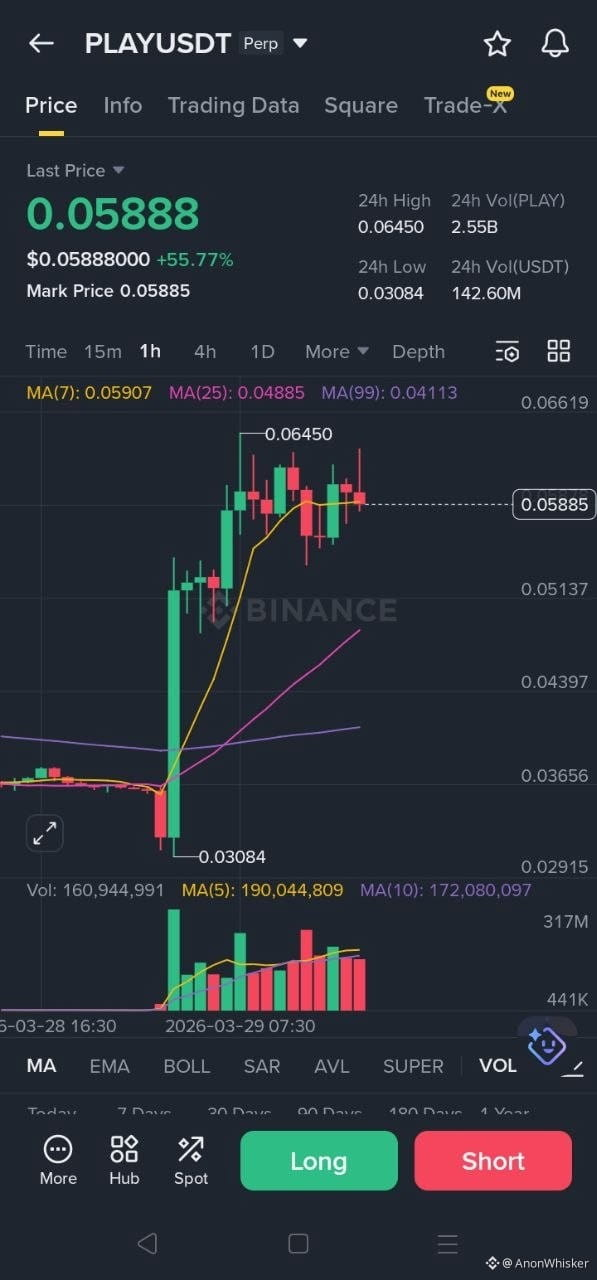
$PLAY is currently trading around $0.035 – $0.060 USD, showing strong short-term recovery with a recent +5% to +10% daily gain and rising volume. The project has gained attention after recent ecosystem growth in the embedded gaming sector, pushing market cap above $30M and improving liquidity across major exchanges.
From an investment perspective, PLAY is showing early bullish momentum, but remains volatile after its previous drop from ATH levels. A smart strategy is to watch for consolidation above $0.035 before entry. If momentum continues with volume support, upside is possible, but always manage risk and avoid overexposure. #play
$PLAY is currently trading around $0.035 – $0.060 USD, showing strong short-term recovery with a recent +5% to +10% daily gain and rising volume. The project has gained attention after recent ecosystem growth in the embedded gaming sector, pushing market cap above $30M and improving liquidity across major exchanges.
From an investment perspective, PLAY is showing early bullish momentum, but remains volatile after its previous drop from ATH levels. A smart strategy is to watch for consolidation above $0.035 before entry. If momentum continues with volume support, upside is possible, but always manage risk and avoid overexposure. #play
From an investment perspective, PLAY is showing early bullish momentum, but remains volatile after its previous drop from ATH levels. A smart strategy is to watch for consolidation above $0.035 before entry. If momentum continues with volume support, upside is possible, but always manage risk and avoid overexposure. #play
1
109
·
--
@SignOfficial The future of the Middle East economy is being shaped by digital infrastructure, and $SIGN is at the center of it. Through #SignDigitalSovereignInfra , SignOfficial is enabling secure transactions, scalable systems, and real-world blockchain adoption that supports businesses and governments alike. From cross-border efficiency to digital identity solutions, SIGN is turning Web3 into a practical engine for growth and innovation across the region.
@SignOfficial The future of the Middle East economy is being shaped by digital infrastructure, and $SIGN is at the center of it. Through #SignDigitalSovereignInfra , SignOfficial is enabling secure transactions, scalable systems, and real-world blockchain adoption that supports businesses and governments alike. From cross-border efficiency to digital identity solutions, SIGN is turning Web3 into a practical engine for growth and innovation across the region.
2
42
·
--
Article
The Latest Evolution of SIGN in Building Real World Blockchain SystemsThe blockchain industry is entering a phase where real-world impact matters more than speculation. In this transition, SignOfficial is emerging as a powerful force, redefining how decentralized systems integrate with national economies and institutional frameworks. The project is not focused on short-term hype but on building long-term, sustainable infrastructure powered by SIGN.
As countries increasingly prioritize digital sovereignty, the need for secure, scalable, and verifiable systems becomes critical. SignOfficial addresses this demand by offering a framework that allows nations to maintain control over their data while leveraging the benefits of decentralization.
Digital Sovereign Infrastructure: The Core Vision
At its core, SignOfficial is building what can be described as digital sovereign infrastructure. This means enabling governments and enterprises to operate independently within a decentralized ecosystem without relying on external control.
SIGN plays a crucial role in this vision by acting as the utility layer that powers transactions, validation, and participation across the network. This approach ensures that the infrastructure is not only decentralized but also efficient and self-sustaining.
Key elements of this vision include:
Ownership and control of digital identity and dataTransparent and tamper-proof verification systemsReduced dependency on centralized intermediariesScalable frameworks for national-level adoption
This positions SIGN as a foundational asset in the future of digital economies.
Why the Middle East is a Key Growth Region?
The Middle East is rapidly transforming into a global leader in digital innovation. Governments in the region are actively investing in smart cities, AI-driven governance, and blockchain-powered solutions. SignOfficial is strategically aligning itself with this growth by offering infrastructure that complements these initiatives.
The region’s focus on efficiency, security, and modernization creates the perfect environment for SIGN adoption. By enabling secure identity verification and seamless data exchange, SignOfficial supports large-scale digital transformation efforts.
Real-World Use Cases of SIGN Infrastructure
One of the strongest aspects of SignOfficial is its practical application across multiple sectors. Unlike many blockchain projects that remain theoretical, SIGN is designed for real-world integration.
Some of the most impactful use cases include:
Digital Identity Systems: Secure and verifiable identity frameworks for citizens and residentsFinancial Services: Faster, transparent, and compliant transaction systemsGovernment Services: Streamlined public service delivery with reduced fraud and increased efficiencyEnterprise Solutions: Secure data sharing and verification across organizationsCross-Border Collaboration: Trusted infrastructure for international trade and partnerships
These applications demonstrate how SIGN can become deeply embedded in everyday economic activities.
Latest Updates and Strategic Developments
SignOfficial continues to strengthen its ecosystem with ongoing developments aimed at increasing adoption and performance:
Expansion into Middle Eastern markets with a focus on government partnershipsIntroduction of advanced decentralized identity protocolsStrategic collaborations with institutions to build trust frameworksEnhanced scalability to support millions of users and transactionsContinuous improvement of developer tools for easier integration
These updates highlight a clear commitment to real-world deployment and long-term growth.
The Utility and Value of SIGN Token
The SIGN token is not just a digital asset but a functional component of the ecosystem. It is used for:
Powering transactions within the networkIncentivizing validators and participantsEnabling access to various infrastructure servicesSupporting governance and ecosystem development
As adoption increases, the demand for SIGN is expected to rise, strengthening its role within the infrastructure.
Challenges and Forward Strategy
While the vision is strong, building digital sovereign infrastructure comes with challenges such as regulatory alignment, technological scalability, and adoption barriers. However, SignOfficial is actively addressing these through continuous innovation and strategic partnerships.
The focus remains on creating solutions that are not only technologically advanced but also practical and compliant with regional requirements.
SIGN as a Foundation for Future Economies
The evolution of SignOfficial represents a major step toward integrating blockchain with real-world systems. By focusing on digital sovereignty, scalability, and practical use cases, SIGN is positioning itself as a critical infrastructure layer for future economies.
As the Middle East continues to lead in digital transformation, the role of SIGN is expected to grow significantly. The project is not just participating in the blockchain revolution, it is actively shaping how decentralized infrastructure will support economic growth on a global scale.
The journey of SIGN is still unfolding, but its direction is clear: building a secure, scalable, and sovereign digital future.
@SignOfficial $SIGN #SignDigitalSovereignInfra
The Latest Evolution of SIGN in Building Real World Blockchain Systems
The blockchain industry is entering a phase where real-world impact matters more than speculation. In this transition, SignOfficial is emerging as a powerful force, redefining how decentralized systems integrate with national economies and institutional frameworks. The project is not focused on short-term hype but on building long-term, sustainable infrastructure powered by SIGN.
As countries increasingly prioritize digital sovereignty, the need for secure, scalable, and verifiable systems becomes critical. SignOfficial addresses this demand by offering a framework that allows nations to maintain control over their data while leveraging the benefits of decentralization.
Digital Sovereign Infrastructure: The Core Vision
At its core, SignOfficial is building what can be described as digital sovereign infrastructure. This means enabling governments and enterprises to operate independently within a decentralized ecosystem without relying on external control.
SIGN plays a crucial role in this vision by acting as the utility layer that powers transactions, validation, and participation across the network. This approach ensures that the infrastructure is not only decentralized but also efficient and self-sustaining.
Key elements of this vision include:
Ownership and control of digital identity and dataTransparent and tamper-proof verification systemsReduced dependency on centralized intermediariesScalable frameworks for national-level adoption
This positions SIGN as a foundational asset in the future of digital economies.
Why the Middle East is a Key Growth Region?
The Middle East is rapidly transforming into a global leader in digital innovation. Governments in the region are actively investing in smart cities, AI-driven governance, and blockchain-powered solutions. SignOfficial is strategically aligning itself with this growth by offering infrastructure that complements these initiatives.
The region’s focus on efficiency, security, and modernization creates the perfect environment for SIGN adoption. By enabling secure identity verification and seamless data exchange, SignOfficial supports large-scale digital transformation efforts.
Real-World Use Cases of SIGN Infrastructure
One of the strongest aspects of SignOfficial is its practical application across multiple sectors. Unlike many blockchain projects that remain theoretical, SIGN is designed for real-world integration.
Some of the most impactful use cases include:
Digital Identity Systems: Secure and verifiable identity frameworks for citizens and residentsFinancial Services: Faster, transparent, and compliant transaction systemsGovernment Services: Streamlined public service delivery with reduced fraud and increased efficiencyEnterprise Solutions: Secure data sharing and verification across organizationsCross-Border Collaboration: Trusted infrastructure for international trade and partnerships
These applications demonstrate how SIGN can become deeply embedded in everyday economic activities.
Latest Updates and Strategic Developments
SignOfficial continues to strengthen its ecosystem with ongoing developments aimed at increasing adoption and performance:
Expansion into Middle Eastern markets with a focus on government partnershipsIntroduction of advanced decentralized identity protocolsStrategic collaborations with institutions to build trust frameworksEnhanced scalability to support millions of users and transactionsContinuous improvement of developer tools for easier integration
These updates highlight a clear commitment to real-world deployment and long-term growth.
The Utility and Value of SIGN Token
The SIGN token is not just a digital asset but a functional component of the ecosystem. It is used for:
Powering transactions within the networkIncentivizing validators and participantsEnabling access to various infrastructure servicesSupporting governance and ecosystem development
As adoption increases, the demand for SIGN is expected to rise, strengthening its role within the infrastructure.
Challenges and Forward Strategy
While the vision is strong, building digital sovereign infrastructure comes with challenges such as regulatory alignment, technological scalability, and adoption barriers. However, SignOfficial is actively addressing these through continuous innovation and strategic partnerships.
The focus remains on creating solutions that are not only technologically advanced but also practical and compliant with regional requirements.
SIGN as a Foundation for Future Economies
The evolution of SignOfficial represents a major step toward integrating blockchain with real-world systems. By focusing on digital sovereignty, scalability, and practical use cases, SIGN is positioning itself as a critical infrastructure layer for future economies.
As the Middle East continues to lead in digital transformation, the role of SIGN is expected to grow significantly. The project is not just participating in the blockchain revolution, it is actively shaping how decentralized infrastructure will support economic growth on a global scale.
The journey of SIGN is still unfolding, but its direction is clear: building a secure, scalable, and sovereign digital future.
@SignOfficial $SIGN #SignDigitalSovereignInfra
As countries increasingly prioritize digital sovereignty, the need for secure, scalable, and verifiable systems becomes critical. SignOfficial addresses this demand by offering a framework that allows nations to maintain control over their data while leveraging the benefits of decentralization.
Digital Sovereign Infrastructure: The Core Vision
At its core, SignOfficial is building what can be described as digital sovereign infrastructure. This means enabling governments and enterprises to operate independently within a decentralized ecosystem without relying on external control.
SIGN plays a crucial role in this vision by acting as the utility layer that powers transactions, validation, and participation across the network. This approach ensures that the infrastructure is not only decentralized but also efficient and self-sustaining.
Key elements of this vision include:
Ownership and control of digital identity and dataTransparent and tamper-proof verification systemsReduced dependency on centralized intermediariesScalable frameworks for national-level adoption
This positions SIGN as a foundational asset in the future of digital economies.
Why the Middle East is a Key Growth Region?
The Middle East is rapidly transforming into a global leader in digital innovation. Governments in the region are actively investing in smart cities, AI-driven governance, and blockchain-powered solutions. SignOfficial is strategically aligning itself with this growth by offering infrastructure that complements these initiatives.
The region’s focus on efficiency, security, and modernization creates the perfect environment for SIGN adoption. By enabling secure identity verification and seamless data exchange, SignOfficial supports large-scale digital transformation efforts.
Real-World Use Cases of SIGN Infrastructure
One of the strongest aspects of SignOfficial is its practical application across multiple sectors. Unlike many blockchain projects that remain theoretical, SIGN is designed for real-world integration.
Some of the most impactful use cases include:
Digital Identity Systems: Secure and verifiable identity frameworks for citizens and residentsFinancial Services: Faster, transparent, and compliant transaction systemsGovernment Services: Streamlined public service delivery with reduced fraud and increased efficiencyEnterprise Solutions: Secure data sharing and verification across organizationsCross-Border Collaboration: Trusted infrastructure for international trade and partnerships
These applications demonstrate how SIGN can become deeply embedded in everyday economic activities.
Latest Updates and Strategic Developments
SignOfficial continues to strengthen its ecosystem with ongoing developments aimed at increasing adoption and performance:
Expansion into Middle Eastern markets with a focus on government partnershipsIntroduction of advanced decentralized identity protocolsStrategic collaborations with institutions to build trust frameworksEnhanced scalability to support millions of users and transactionsContinuous improvement of developer tools for easier integration
These updates highlight a clear commitment to real-world deployment and long-term growth.
The Utility and Value of SIGN Token
The SIGN token is not just a digital asset but a functional component of the ecosystem. It is used for:
Powering transactions within the networkIncentivizing validators and participantsEnabling access to various infrastructure servicesSupporting governance and ecosystem development
As adoption increases, the demand for SIGN is expected to rise, strengthening its role within the infrastructure.
Challenges and Forward Strategy
While the vision is strong, building digital sovereign infrastructure comes with challenges such as regulatory alignment, technological scalability, and adoption barriers. However, SignOfficial is actively addressing these through continuous innovation and strategic partnerships.
The focus remains on creating solutions that are not only technologically advanced but also practical and compliant with regional requirements.
SIGN as a Foundation for Future Economies
The evolution of SignOfficial represents a major step toward integrating blockchain with real-world systems. By focusing on digital sovereignty, scalability, and practical use cases, SIGN is positioning itself as a critical infrastructure layer for future economies.
As the Middle East continues to lead in digital transformation, the role of SIGN is expected to grow significantly. The project is not just participating in the blockchain revolution, it is actively shaping how decentralized infrastructure will support economic growth on a global scale.
The journey of SIGN is still unfolding, but its direction is clear: building a secure, scalable, and sovereign digital future.
@SignOfficial $SIGN #SignDigitalSovereignInfra
1
1
92
·
--
Article
How SignOfficial is Building a Resilient Digital Infrastructure for the Middle East with SIGNThe Middle East is undergoing a remarkable transformation, embracing digital technologies to strengthen its economic infrastructure and assert financial sovereignty in a rapidly evolving global landscape. At the forefront of this movement is SignOfficial, a groundbreaking initiative designed to provide digital sovereign infrastructure tailored to the region’s unique needs. Powered by the utility token SIGN, SignOfficial is redefining how governments, businesses, and institutions can operate securely, transparently, and independently in a digital-first world.
SignOfficial’s Vision for the Middle East
The vision of SignOfficial is simple but profound: to create a resilient, decentralized, and sovereign digital ecosystem that empowers economic growth while preserving data integrity and security. By offering blockchain-based solutions that are scalable, compliant, and adaptable, SignOfficial ensures that the Middle East can harness digital innovation without compromising sovereignty or control over sensitive economic and financial data.
Key Features Driving Economic Growth with SIGN
Decentralized Financial Infrastructure: SIGN facilitates frictionless cross-border transactions, reducing reliance on traditional financial intermediaries while maintaining transparency and security.Data Sovereignty: Governments and enterprises can manage their digital assets and data with full control, ensuring privacy and compliance with local regulations.Smart Contract Automation: Businesses in the region can streamline operations, reduce manual overhead, and accelerate contract execution using SignOfficial’s blockchain protocols.Scalable Integration: SignOfficial is designed to integrate seamlessly with existing infrastructure, allowing both public and private sector organizations to leverage digital sovereignty without extensive system overhauls.
Recent Updates and Strategic Developments
SignOfficial has recently rolled out several key initiatives that strengthen its role as a catalyst for Middle East economic resilience:
Launch of regional nodes to enhance network decentralization and reduce latency for enterprise applications.Strategic partnerships with local fintech companies and government agencies to implement sovereign digital payment solutions.Expansion of SIGN tility beyond transaction purposes to governance, staking, and enterprise workflow solutions.Continuous development of tools for secure, real-time data exchange across borders, fostering collaboration while respecting regulatory frameworks.
Why SIGN is Central to the Vision
SIGN not just a token; it’s the lifeblood of SignOfficial’s infrastructure. It powers transactions, validates network operations, and incentivizes participants to contribute to a secure and efficient ecosystem. As more Middle Eastern nations adopt SignOfficial’s solutions, SIGN poised to become an essential instrument for economic independence and technological sovereignty.
With #SignDigitalSovereignInfra, SignOfficial is not merely a technology platform it is a transformative force for the Middle East’s digital economy. By combining cutting-edge blockchain solutions with a commitment to sovereignty and security, SignOfficial and SIGN laying the foundation for a future where economic growth, innovation, and independence go hand in hand. The Middle East is on the cusp of a digital renaissance, and SignOfficial is leading the way.
@SignOfficial $SIGN #SignDigitalSovereignInfra
How SignOfficial is Building a Resilient Digital Infrastructure for the Middle East with SIGN
The Middle East is undergoing a remarkable transformation, embracing digital technologies to strengthen its economic infrastructure and assert financial sovereignty in a rapidly evolving global landscape. At the forefront of this movement is SignOfficial, a groundbreaking initiative designed to provide digital sovereign infrastructure tailored to the region’s unique needs. Powered by the utility token SIGN, SignOfficial is redefining how governments, businesses, and institutions can operate securely, transparently, and independently in a digital-first world.
SignOfficial’s Vision for the Middle East
The vision of SignOfficial is simple but profound: to create a resilient, decentralized, and sovereign digital ecosystem that empowers economic growth while preserving data integrity and security. By offering blockchain-based solutions that are scalable, compliant, and adaptable, SignOfficial ensures that the Middle East can harness digital innovation without compromising sovereignty or control over sensitive economic and financial data.
Key Features Driving Economic Growth with SIGN
Decentralized Financial Infrastructure: SIGN facilitates frictionless cross-border transactions, reducing reliance on traditional financial intermediaries while maintaining transparency and security.Data Sovereignty: Governments and enterprises can manage their digital assets and data with full control, ensuring privacy and compliance with local regulations.Smart Contract Automation: Businesses in the region can streamline operations, reduce manual overhead, and accelerate contract execution using SignOfficial’s blockchain protocols.Scalable Integration: SignOfficial is designed to integrate seamlessly with existing infrastructure, allowing both public and private sector organizations to leverage digital sovereignty without extensive system overhauls.
Recent Updates and Strategic Developments
SignOfficial has recently rolled out several key initiatives that strengthen its role as a catalyst for Middle East economic resilience:
Launch of regional nodes to enhance network decentralization and reduce latency for enterprise applications.Strategic partnerships with local fintech companies and government agencies to implement sovereign digital payment solutions.Expansion of SIGN tility beyond transaction purposes to governance, staking, and enterprise workflow solutions.Continuous development of tools for secure, real-time data exchange across borders, fostering collaboration while respecting regulatory frameworks.
Why SIGN is Central to the Vision
SIGN not just a token; it’s the lifeblood of SignOfficial’s infrastructure. It powers transactions, validates network operations, and incentivizes participants to contribute to a secure and efficient ecosystem. As more Middle Eastern nations adopt SignOfficial’s solutions, SIGN poised to become an essential instrument for economic independence and technological sovereignty.
With #SignDigitalSovereignInfra, SignOfficial is not merely a technology platform it is a transformative force for the Middle East’s digital economy. By combining cutting-edge blockchain solutions with a commitment to sovereignty and security, SignOfficial and SIGN laying the foundation for a future where economic growth, innovation, and independence go hand in hand. The Middle East is on the cusp of a digital renaissance, and SignOfficial is leading the way.
@SignOfficial $SIGN #SignDigitalSovereignInfra
SignOfficial’s Vision for the Middle East
The vision of SignOfficial is simple but profound: to create a resilient, decentralized, and sovereign digital ecosystem that empowers economic growth while preserving data integrity and security. By offering blockchain-based solutions that are scalable, compliant, and adaptable, SignOfficial ensures that the Middle East can harness digital innovation without compromising sovereignty or control over sensitive economic and financial data.
Key Features Driving Economic Growth with SIGN
Decentralized Financial Infrastructure: SIGN facilitates frictionless cross-border transactions, reducing reliance on traditional financial intermediaries while maintaining transparency and security.Data Sovereignty: Governments and enterprises can manage their digital assets and data with full control, ensuring privacy and compliance with local regulations.Smart Contract Automation: Businesses in the region can streamline operations, reduce manual overhead, and accelerate contract execution using SignOfficial’s blockchain protocols.Scalable Integration: SignOfficial is designed to integrate seamlessly with existing infrastructure, allowing both public and private sector organizations to leverage digital sovereignty without extensive system overhauls.
Recent Updates and Strategic Developments
SignOfficial has recently rolled out several key initiatives that strengthen its role as a catalyst for Middle East economic resilience:
Launch of regional nodes to enhance network decentralization and reduce latency for enterprise applications.Strategic partnerships with local fintech companies and government agencies to implement sovereign digital payment solutions.Expansion of SIGN tility beyond transaction purposes to governance, staking, and enterprise workflow solutions.Continuous development of tools for secure, real-time data exchange across borders, fostering collaboration while respecting regulatory frameworks.
Why SIGN is Central to the Vision
SIGN not just a token; it’s the lifeblood of SignOfficial’s infrastructure. It powers transactions, validates network operations, and incentivizes participants to contribute to a secure and efficient ecosystem. As more Middle Eastern nations adopt SignOfficial’s solutions, SIGN poised to become an essential instrument for economic independence and technological sovereignty.
With #SignDigitalSovereignInfra, SignOfficial is not merely a technology platform it is a transformative force for the Middle East’s digital economy. By combining cutting-edge blockchain solutions with a commitment to sovereignty and security, SignOfficial and SIGN laying the foundation for a future where economic growth, innovation, and independence go hand in hand. The Middle East is on the cusp of a digital renaissance, and SignOfficial is leading the way.
@SignOfficial $SIGN #SignDigitalSovereignInfra
1
85
·
--
My favorite #Binance product is Binance Spot Trading because it’s simple, transparent, and perfect for beginners to understand how the market works. I’d recommend it to a new Binancian since it helps build real trading experience without complex strategies.
Another great one is Binance Launchpad, where you can get early access to new projects. It’s exciting for beginners and gives a chance to be part of new crypto innovations from the start.
Binance Convert is also very beginner friendly. It allows instant crypto swaps with no complicated charts, which makes it ideal for anyone just starting out. #BinanceSquareTG
My favorite #Binance product is Binance Spot Trading because it’s simple, transparent, and perfect for beginners to understand how the market works. I’d recommend it to a new Binancian since it helps build real trading experience without complex strategies.
Another great one is Binance Launchpad, where you can get early access to new projects. It’s exciting for beginners and gives a chance to be part of new crypto innovations from the start.
Binance Convert is also very beginner friendly. It allows instant crypto swaps with no complicated charts, which makes it ideal for anyone just starting out. #BinanceSquareTG
Another great one is Binance Launchpad, where you can get early access to new projects. It’s exciting for beginners and gives a chance to be part of new crypto innovations from the start.
Binance Convert is also very beginner friendly. It allows instant crypto swaps with no complicated charts, which makes it ideal for anyone just starting out. #BinanceSquareTG


Binance Angels
·
--
We’re 200K strong. Now we want to hear from you.🎉
Tell us ✨What your favorite Binance product is and why you would recommend it to a new Binancian ? 💛 and win your share of $2000 in USDC. Use #BinanceSquareTG
🔸 Follow @BinanceAngel square account
🔸 Like this post and repost
🔸 Comment/post: ✨What your favorite #Binance product is and why you would recommend it to a new Binancian ?
🔸 Fill out the survey: here
Top 200 responses win. Creativity counts. Let your voice lead the celebration. 😇
$BNB
Tell us ✨What your favorite Binance product is and why you would recommend it to a new Binancian ? 💛 and win your share of $2000 in USDC. Use #BinanceSquareTG
🔸 Follow @BinanceAngel square account
🔸 Like this post and repost
🔸 Comment/post: ✨What your favorite #Binance product is and why you would recommend it to a new Binancian ?
🔸 Fill out the survey: here
Top 200 responses win. Creativity counts. Let your voice lead the celebration. 😇
$BNB
123
·
--
Big momentum for #SignDigitalSovereignInfra as @SignOfficial drives community engagement with the new reward campaign and $SIGN utility expanding, attracting buzz and participation this week on Square and beyond stay tuned for more growth and innovation from Sign’s sovereign infra vision
Big momentum for #SignDigitalSovereignInfra as @SignOfficial drives community engagement with the new reward campaign and $SIGN utility expanding, attracting buzz and participation this week on Square and beyond stay tuned for more growth and innovation from Sign’s sovereign infra vision
1
2
45
·
--
Article
How SIGN Delivers Real World Utility in Web3In the rapidly evolving world of Web3, the question of real-world utility has always been central. Many blockchain projects promise innovation but often fall short when it comes to tangible impact. SignOfficial is changing that narrative with its native token, SIGN, and the pioneering SignDigitalSovereignInfra, positioning itself as the digital sovereign infrastructure driving economic growth, particularly in the Middle East.
The Middle East has been at the forefront of adopting blockchain for economic modernization, and SignOfficial is uniquely positioned to serve as a backbone for this transformation. Unlike other projects that focus solely on speculative applications, SIGN is designed to integrate directly with real-world industries, governments, and enterprises, ensuring that digital assets and blockchain technology can create measurable value.
Some of the latest updates from SignOfficial highlight key milestones that demonstrate its commitment to practical utility:
Cross-Border Digital Payments: SIGN now enables faster, more secure, and transparent financial transactions across the Middle East, reducing reliance on traditional banking systems and cutting down transaction costs.Enterprise Integration: Several major corporations have begun adopting SignDigitalSovereignInfra to streamline operations, enhance supply chain transparency, and enable tokenized assets for better liquidity management.Regulatory Alignment: SignOfficial actively collaborates with regulatory bodies to ensure compliance, making SIGN a reliable tool for governments exploring digital transformation initiatives.Decentralized Identity Solutions: Through SignDigitalSovereignInfra, users and organizations can maintain sovereign control over digital identities, fostering trust and security in online interactions and financial systems.Sustainable Growth: The infrastructure is designed to support long-term scalability, ensuring that as the ecosystem grows, SIGN continues to deliver practical solutions without compromising efficiency or security.
The utility of SIGN goes beyond theoretical benefits it represents a bridge between blockchain technology and everyday economic activity. By providing tools for secure payments, tokenized assets, and decentralized identity management, SignOfficial is creating a platform where businesses, governments, and individuals can participate in a Web3-enabled economy without losing sight of real-world needs.
Investors and enthusiasts alike are increasingly recognizing that SIGN is not just another token; it is a gateway to a functional, sovereign, and digitally empowered Middle Eastern economy. With SignDigitalSovereignInfra as the foundational layer, the project demonstrates that Web3 can deliver more than hype it can deliver impact, efficiency, and growth in ways that touch every sector of society.
As the ecosystem continues to expand, SignOfficial remains committed to providing transparency, accessibility, and real-world utility, proving that the future of Web3 lies not in speculative promise, but in tangible, sovereign infrastructure capable of shaping economies and empowering communities.
One of the most exciting aspects of SignOfficial is its commitment to fostering an ecosystem where users are not just participants but stakeholders. With SIGN, token holders can actively engage in governance decisions, helping shape the direction of the platform and ensuring that it evolves in a way that meets both economic and social needs. This level of involvement turns blockchain from a theoretical tool into a living, breathing infrastructure that powers real change.
SignDigitalSovereignInfra plays a crucial role in this vision. By offering a robust, scalable, and secure framework, it allows businesses and governments to experiment with blockchain solutions without the usual technical overhead or risk. Imagine a Middle Eastern enterprise streamlining supply chain operations across multiple countries, or a government issuing digital bonds backed by blockchain transparency all possible through the secure and versatile infrastructure that SignOfficial provides.
The growth potential for SIGN in the Middle East cannot be overstated. The region is actively embracing digital transformation, and blockchain is seen as a critical component for future economic expansion. SIGN positions itself as a foundational tool for this journey, delivering practical solutions such as:
Tokenized Assets and Investments: Enabling companies to unlock liquidity from previously illiquid assets, making capital more accessible.Smart Contract Automation: Reducing administrative burdens and errors in commercial and governmental transactions.Enhanced Data Security: Leveraging blockchain’s immutability to safeguard sensitive information and digital identities.Interoperability Across Borders: Facilitating seamless operations between nations while respecting regulatory standards.
For the average user, SIGN offers more than financial opportunities. It provides access to a secure and sovereign digital identity, the ability to participate in decentralized governance, and a chance to contribute to a rapidly growing economy. By bridging the gap between Web3 promise and real-world application, SignOfficial demonstrates that blockchain can be practical, empowering, and transformative.
Looking ahead, SignOfficial’s roadmap includes deeper integration with regional industries, expanding decentralized finance applications, and fostering educational programs to help communities understand and benefit from the power of blockchain. With SIGN and SignDigitalSovereignInfra, the future of Web3 in the Middle East is not just imagined it’s being built, one real-world application at a time.
In a world where many projects are still asking “what if,” SignOfficial is proving “what is” by delivering concrete, scalable, and impactful solutions. This makes SIGN not just a token, but a vehicle for economic sovereignty, growth, and innovation.
The era of digital sovereignty is here, and SignOfficial with SIGN is leading the way. By connecting blockchain infrastructure to everyday economic activity, the project is setting a new standard for how Web3 can be useful, actionable, and transformative.
@SignOfficial $SIGN #SignDigitalSovereignInfra
How SIGN Delivers Real World Utility in Web3
In the rapidly evolving world of Web3, the question of real-world utility has always been central. Many blockchain projects promise innovation but often fall short when it comes to tangible impact. SignOfficial is changing that narrative with its native token, SIGN, and the pioneering SignDigitalSovereignInfra, positioning itself as the digital sovereign infrastructure driving economic growth, particularly in the Middle East.
The Middle East has been at the forefront of adopting blockchain for economic modernization, and SignOfficial is uniquely positioned to serve as a backbone for this transformation. Unlike other projects that focus solely on speculative applications, SIGN is designed to integrate directly with real-world industries, governments, and enterprises, ensuring that digital assets and blockchain technology can create measurable value.
Some of the latest updates from SignOfficial highlight key milestones that demonstrate its commitment to practical utility:
Cross-Border Digital Payments: SIGN now enables faster, more secure, and transparent financial transactions across the Middle East, reducing reliance on traditional banking systems and cutting down transaction costs.Enterprise Integration: Several major corporations have begun adopting SignDigitalSovereignInfra to streamline operations, enhance supply chain transparency, and enable tokenized assets for better liquidity management.Regulatory Alignment: SignOfficial actively collaborates with regulatory bodies to ensure compliance, making SIGN a reliable tool for governments exploring digital transformation initiatives.Decentralized Identity Solutions: Through SignDigitalSovereignInfra, users and organizations can maintain sovereign control over digital identities, fostering trust and security in online interactions and financial systems.Sustainable Growth: The infrastructure is designed to support long-term scalability, ensuring that as the ecosystem grows, SIGN continues to deliver practical solutions without compromising efficiency or security.
The utility of SIGN goes beyond theoretical benefits it represents a bridge between blockchain technology and everyday economic activity. By providing tools for secure payments, tokenized assets, and decentralized identity management, SignOfficial is creating a platform where businesses, governments, and individuals can participate in a Web3-enabled economy without losing sight of real-world needs.
Investors and enthusiasts alike are increasingly recognizing that SIGN is not just another token; it is a gateway to a functional, sovereign, and digitally empowered Middle Eastern economy. With SignDigitalSovereignInfra as the foundational layer, the project demonstrates that Web3 can deliver more than hype it can deliver impact, efficiency, and growth in ways that touch every sector of society.
As the ecosystem continues to expand, SignOfficial remains committed to providing transparency, accessibility, and real-world utility, proving that the future of Web3 lies not in speculative promise, but in tangible, sovereign infrastructure capable of shaping economies and empowering communities.
One of the most exciting aspects of SignOfficial is its commitment to fostering an ecosystem where users are not just participants but stakeholders. With SIGN, token holders can actively engage in governance decisions, helping shape the direction of the platform and ensuring that it evolves in a way that meets both economic and social needs. This level of involvement turns blockchain from a theoretical tool into a living, breathing infrastructure that powers real change.
SignDigitalSovereignInfra plays a crucial role in this vision. By offering a robust, scalable, and secure framework, it allows businesses and governments to experiment with blockchain solutions without the usual technical overhead or risk. Imagine a Middle Eastern enterprise streamlining supply chain operations across multiple countries, or a government issuing digital bonds backed by blockchain transparency all possible through the secure and versatile infrastructure that SignOfficial provides.
The growth potential for SIGN in the Middle East cannot be overstated. The region is actively embracing digital transformation, and blockchain is seen as a critical component for future economic expansion. SIGN positions itself as a foundational tool for this journey, delivering practical solutions such as:
Tokenized Assets and Investments: Enabling companies to unlock liquidity from previously illiquid assets, making capital more accessible.Smart Contract Automation: Reducing administrative burdens and errors in commercial and governmental transactions.Enhanced Data Security: Leveraging blockchain’s immutability to safeguard sensitive information and digital identities.Interoperability Across Borders: Facilitating seamless operations between nations while respecting regulatory standards.
For the average user, SIGN offers more than financial opportunities. It provides access to a secure and sovereign digital identity, the ability to participate in decentralized governance, and a chance to contribute to a rapidly growing economy. By bridging the gap between Web3 promise and real-world application, SignOfficial demonstrates that blockchain can be practical, empowering, and transformative.
Looking ahead, SignOfficial’s roadmap includes deeper integration with regional industries, expanding decentralized finance applications, and fostering educational programs to help communities understand and benefit from the power of blockchain. With SIGN and SignDigitalSovereignInfra, the future of Web3 in the Middle East is not just imagined it’s being built, one real-world application at a time.
In a world where many projects are still asking “what if,” SignOfficial is proving “what is” by delivering concrete, scalable, and impactful solutions. This makes SIGN not just a token, but a vehicle for economic sovereignty, growth, and innovation.
The era of digital sovereignty is here, and SignOfficial with SIGN is leading the way. By connecting blockchain infrastructure to everyday economic activity, the project is setting a new standard for how Web3 can be useful, actionable, and transformative.
@SignOfficial $SIGN #SignDigitalSovereignInfra
The Middle East has been at the forefront of adopting blockchain for economic modernization, and SignOfficial is uniquely positioned to serve as a backbone for this transformation. Unlike other projects that focus solely on speculative applications, SIGN is designed to integrate directly with real-world industries, governments, and enterprises, ensuring that digital assets and blockchain technology can create measurable value.
Some of the latest updates from SignOfficial highlight key milestones that demonstrate its commitment to practical utility:
Cross-Border Digital Payments: SIGN now enables faster, more secure, and transparent financial transactions across the Middle East, reducing reliance on traditional banking systems and cutting down transaction costs.Enterprise Integration: Several major corporations have begun adopting SignDigitalSovereignInfra to streamline operations, enhance supply chain transparency, and enable tokenized assets for better liquidity management.Regulatory Alignment: SignOfficial actively collaborates with regulatory bodies to ensure compliance, making SIGN a reliable tool for governments exploring digital transformation initiatives.Decentralized Identity Solutions: Through SignDigitalSovereignInfra, users and organizations can maintain sovereign control over digital identities, fostering trust and security in online interactions and financial systems.Sustainable Growth: The infrastructure is designed to support long-term scalability, ensuring that as the ecosystem grows, SIGN continues to deliver practical solutions without compromising efficiency or security.
The utility of SIGN goes beyond theoretical benefits it represents a bridge between blockchain technology and everyday economic activity. By providing tools for secure payments, tokenized assets, and decentralized identity management, SignOfficial is creating a platform where businesses, governments, and individuals can participate in a Web3-enabled economy without losing sight of real-world needs.
Investors and enthusiasts alike are increasingly recognizing that SIGN is not just another token; it is a gateway to a functional, sovereign, and digitally empowered Middle Eastern economy. With SignDigitalSovereignInfra as the foundational layer, the project demonstrates that Web3 can deliver more than hype it can deliver impact, efficiency, and growth in ways that touch every sector of society.
As the ecosystem continues to expand, SignOfficial remains committed to providing transparency, accessibility, and real-world utility, proving that the future of Web3 lies not in speculative promise, but in tangible, sovereign infrastructure capable of shaping economies and empowering communities.
One of the most exciting aspects of SignOfficial is its commitment to fostering an ecosystem where users are not just participants but stakeholders. With SIGN, token holders can actively engage in governance decisions, helping shape the direction of the platform and ensuring that it evolves in a way that meets both economic and social needs. This level of involvement turns blockchain from a theoretical tool into a living, breathing infrastructure that powers real change.
SignDigitalSovereignInfra plays a crucial role in this vision. By offering a robust, scalable, and secure framework, it allows businesses and governments to experiment with blockchain solutions without the usual technical overhead or risk. Imagine a Middle Eastern enterprise streamlining supply chain operations across multiple countries, or a government issuing digital bonds backed by blockchain transparency all possible through the secure and versatile infrastructure that SignOfficial provides.
The growth potential for SIGN in the Middle East cannot be overstated. The region is actively embracing digital transformation, and blockchain is seen as a critical component for future economic expansion. SIGN positions itself as a foundational tool for this journey, delivering practical solutions such as:
Tokenized Assets and Investments: Enabling companies to unlock liquidity from previously illiquid assets, making capital more accessible.Smart Contract Automation: Reducing administrative burdens and errors in commercial and governmental transactions.Enhanced Data Security: Leveraging blockchain’s immutability to safeguard sensitive information and digital identities.Interoperability Across Borders: Facilitating seamless operations between nations while respecting regulatory standards.
For the average user, SIGN offers more than financial opportunities. It provides access to a secure and sovereign digital identity, the ability to participate in decentralized governance, and a chance to contribute to a rapidly growing economy. By bridging the gap between Web3 promise and real-world application, SignOfficial demonstrates that blockchain can be practical, empowering, and transformative.
Looking ahead, SignOfficial’s roadmap includes deeper integration with regional industries, expanding decentralized finance applications, and fostering educational programs to help communities understand and benefit from the power of blockchain. With SIGN and SignDigitalSovereignInfra, the future of Web3 in the Middle East is not just imagined it’s being built, one real-world application at a time.
In a world where many projects are still asking “what if,” SignOfficial is proving “what is” by delivering concrete, scalable, and impactful solutions. This makes SIGN not just a token, but a vehicle for economic sovereignty, growth, and innovation.
The era of digital sovereignty is here, and SignOfficial with SIGN is leading the way. By connecting blockchain infrastructure to everyday economic activity, the project is setting a new standard for how Web3 can be useful, actionable, and transformative.
@SignOfficial $SIGN #SignDigitalSovereignInfra
1
3
76
·
--
Sign Official continues pushing boundaries as SIGN evolves into a true cross-chain powerhouse, strengthening decentralized identity and infrastructure. With new integrations and growing adoption, SIGN is shaping the future of digital sovereignty. #SignDigitalSovereignInfra $SIGN @SignOfficial
Sign Official continues pushing boundaries as SIGN evolves into a true cross-chain powerhouse, strengthening decentralized identity and infrastructure. With new integrations and growing adoption, SIGN is shaping the future of digital sovereignty. #SignDigitalSovereignInfra $SIGN @SignOfficial
2
93
·
--
Article
SIGN Expands Ecosystem with New Cross Chain DevelopmentsThe evolution of blockchain is no longer defined by isolated networks. The future belongs to interoperability, scalability, and true digital sovereignty. This is exactly where SignOfficial is positioning itself as a forward-looking force. With the growing adoption of its native token SIGN, the project is steadily building a powerful infrastructure that aligns with the vision of SignDigitalSovereignInfra.
At its core, SignOfficial is not just another blockchain project. It is an ecosystem focused on enabling seamless cross-chain communication while maintaining security, efficiency, and decentralized control. The latest developments highlight a strong push toward breaking barriers between networks, making SIGN more than just a token. It is becoming a utility layer across multiple chains.
The recent cross-chain advancements are a clear signal that SignOfficial is moving beyond traditional limitations. By integrating new bridging technologies and improving interoperability protocols, SIGN is now capable of interacting with multiple blockchain environments with reduced friction. This means faster transactions, lower costs, and enhanced usability for both developers and users.
What makes this development important is not just the technology itself, but the vision behind it. SignOfficial is aligning its infrastructure with the concept of digital sovereignty. In a world where data ownership and control are becoming critical, SignDigitalSovereignInfra represents a future where users and networks operate independently without relying on centralized authorities.
The expansion also opens new doors for decentralized applications. Developers can now build across ecosystems without worrying about compatibility issues. This increases the overall value of SIGN as it becomes deeply integrated into multiple blockchain environments.
Key Highlights of the Latest Update:
Enhanced cross-chain bridge functionality for smoother asset transfersImproved transaction speed and reduced gas inefficiencies across networksStronger security layers to prevent vulnerabilities in multi-chain interactionsIncreased utility of SIGN token within decentralized ecosystemsExpansion of developer tools to support multi-chain dApp creationAlignment with global trends toward digital sovereignty infrastructure
These upgrades are not just technical improvements. They are strategic moves that strengthen the foundation of SignOfficial. The project is clearly focused on long-term scalability and real-world adoption rather than short-term hype.
Another important insight is the growing role of SIGN in governance and ecosystem participation. As cross-chain capabilities expand, the token’s influence also grows. It is no longer limited to a single environment but acts as a connector across networks, increasing its demand and utility.
Looking ahead, the roadmap suggests even deeper integrations and partnerships. If executed correctly, SignOfficial could become a central player in the multi-chain future. The focus on SignDigitalSovereignInfra ensures that the project is not just keeping up with trends but actively shaping the direction of decentralized infrastructure.
As the cross-chain framework continues to mature, SignOfficial is also placing strong emphasis on liquidity movement and capital efficiency across networks. One of the key challenges in multi-chain ecosystems has always been fragmented liquidity. With the latest upgrades, SIGN is gradually transforming into a unifying layer that allows value to move more freely without unnecessary delays or excessive fees.
This shift is critical because it directly impacts user experience and adoption. When users can transfer assets across chains seamlessly, it removes friction and encourages deeper engagement with decentralized applications. SignOfficial is clearly focusing on making SIGN a practical, everyday utility rather than just a speculative asset.
Another major insight from the recent developments is the growing role of infrastructure-level innovation under SignDigitalSovereignInfra. Instead of building isolated solutions, SignOfficial is designing a system where identity, data, and transactions can coexist securely across chains. This creates a foundation where users retain control over their digital presence while interacting with multiple ecosystems.
The developer ecosystem is also benefiting significantly from these upgrades. By simplifying cross-chain integrations, SignOfficial is lowering the barrier for builders who want to create scalable and interoperable applications. This will likely lead to a surge in new projects leveraging SIGN as a core component of their infrastructure.
Additional Insights and Forward Momentum:
Increasing focus on cross-chain liquidity pools to improve capital flowDevelopment of modular infrastructure for easier integration across blockchainsExpansion of validator and node participation for stronger decentralizationContinuous optimization of bridging mechanisms to reduce latencyStrengthening community governance powered by SIGN token holdersEarly signals of strategic collaborations to expand ecosystem reach
Beyond technology, SignOfficial is also building a narrative around trust and independence. In an era where centralized control is being questioned, the concept of SignDigitalSovereignInfra resonates strongly with both developers and users. It represents a shift toward systems where ownership is transparent, and control is decentralized.
What stands out is the consistency in execution. Instead of rushing announcements, SignOfficial appears to be steadily rolling out meaningful upgrades that contribute to long-term growth. This approach builds credibility and positions SIGN as a reliable asset within the evolving crypto landscape.
As adoption grows, the network effects will likely accelerate. More integrations mean more use cases, and more use cases drive demand for SIGN. This creates a reinforcing cycle that strengthens the entire ecosystem.
In the bigger picture, SignOfficial is not just expanding its ecosystem. It is redefining how blockchain networks interact with each other. By pushing forward with cross-chain developments and aligning with SignDigitalSovereignInfra, the project is laying the groundwork for a truly interconnected and sovereign digital future.
The journey is still unfolding, but the direction is clear. SIGN is evolving from a token into a critical piece of next-generation blockchain infrastructure.
@SignOfficial $SIGN #SignDigitalSovereignInfra
SIGN Expands Ecosystem with New Cross Chain Developments
The evolution of blockchain is no longer defined by isolated networks. The future belongs to interoperability, scalability, and true digital sovereignty. This is exactly where SignOfficial is positioning itself as a forward-looking force. With the growing adoption of its native token SIGN, the project is steadily building a powerful infrastructure that aligns with the vision of SignDigitalSovereignInfra.
At its core, SignOfficial is not just another blockchain project. It is an ecosystem focused on enabling seamless cross-chain communication while maintaining security, efficiency, and decentralized control. The latest developments highlight a strong push toward breaking barriers between networks, making SIGN more than just a token. It is becoming a utility layer across multiple chains.
The recent cross-chain advancements are a clear signal that SignOfficial is moving beyond traditional limitations. By integrating new bridging technologies and improving interoperability protocols, SIGN is now capable of interacting with multiple blockchain environments with reduced friction. This means faster transactions, lower costs, and enhanced usability for both developers and users.
What makes this development important is not just the technology itself, but the vision behind it. SignOfficial is aligning its infrastructure with the concept of digital sovereignty. In a world where data ownership and control are becoming critical, SignDigitalSovereignInfra represents a future where users and networks operate independently without relying on centralized authorities.
The expansion also opens new doors for decentralized applications. Developers can now build across ecosystems without worrying about compatibility issues. This increases the overall value of SIGN as it becomes deeply integrated into multiple blockchain environments.
Key Highlights of the Latest Update:
Enhanced cross-chain bridge functionality for smoother asset transfersImproved transaction speed and reduced gas inefficiencies across networksStronger security layers to prevent vulnerabilities in multi-chain interactionsIncreased utility of SIGN token within decentralized ecosystemsExpansion of developer tools to support multi-chain dApp creationAlignment with global trends toward digital sovereignty infrastructure
These upgrades are not just technical improvements. They are strategic moves that strengthen the foundation of SignOfficial. The project is clearly focused on long-term scalability and real-world adoption rather than short-term hype.
Another important insight is the growing role of SIGN in governance and ecosystem participation. As cross-chain capabilities expand, the token’s influence also grows. It is no longer limited to a single environment but acts as a connector across networks, increasing its demand and utility.
Looking ahead, the roadmap suggests even deeper integrations and partnerships. If executed correctly, SignOfficial could become a central player in the multi-chain future. The focus on SignDigitalSovereignInfra ensures that the project is not just keeping up with trends but actively shaping the direction of decentralized infrastructure.
As the cross-chain framework continues to mature, SignOfficial is also placing strong emphasis on liquidity movement and capital efficiency across networks. One of the key challenges in multi-chain ecosystems has always been fragmented liquidity. With the latest upgrades, SIGN is gradually transforming into a unifying layer that allows value to move more freely without unnecessary delays or excessive fees.
This shift is critical because it directly impacts user experience and adoption. When users can transfer assets across chains seamlessly, it removes friction and encourages deeper engagement with decentralized applications. SignOfficial is clearly focusing on making SIGN a practical, everyday utility rather than just a speculative asset.
Another major insight from the recent developments is the growing role of infrastructure-level innovation under SignDigitalSovereignInfra. Instead of building isolated solutions, SignOfficial is designing a system where identity, data, and transactions can coexist securely across chains. This creates a foundation where users retain control over their digital presence while interacting with multiple ecosystems.
The developer ecosystem is also benefiting significantly from these upgrades. By simplifying cross-chain integrations, SignOfficial is lowering the barrier for builders who want to create scalable and interoperable applications. This will likely lead to a surge in new projects leveraging SIGN as a core component of their infrastructure.
Additional Insights and Forward Momentum:
Increasing focus on cross-chain liquidity pools to improve capital flowDevelopment of modular infrastructure for easier integration across blockchainsExpansion of validator and node participation for stronger decentralizationContinuous optimization of bridging mechanisms to reduce latencyStrengthening community governance powered by SIGN token holdersEarly signals of strategic collaborations to expand ecosystem reach
Beyond technology, SignOfficial is also building a narrative around trust and independence. In an era where centralized control is being questioned, the concept of SignDigitalSovereignInfra resonates strongly with both developers and users. It represents a shift toward systems where ownership is transparent, and control is decentralized.
What stands out is the consistency in execution. Instead of rushing announcements, SignOfficial appears to be steadily rolling out meaningful upgrades that contribute to long-term growth. This approach builds credibility and positions SIGN as a reliable asset within the evolving crypto landscape.
As adoption grows, the network effects will likely accelerate. More integrations mean more use cases, and more use cases drive demand for SIGN. This creates a reinforcing cycle that strengthens the entire ecosystem.
In the bigger picture, SignOfficial is not just expanding its ecosystem. It is redefining how blockchain networks interact with each other. By pushing forward with cross-chain developments and aligning with SignDigitalSovereignInfra, the project is laying the groundwork for a truly interconnected and sovereign digital future.
The journey is still unfolding, but the direction is clear. SIGN is evolving from a token into a critical piece of next-generation blockchain infrastructure.
@SignOfficial $SIGN #SignDigitalSovereignInfra
At its core, SignOfficial is not just another blockchain project. It is an ecosystem focused on enabling seamless cross-chain communication while maintaining security, efficiency, and decentralized control. The latest developments highlight a strong push toward breaking barriers between networks, making SIGN more than just a token. It is becoming a utility layer across multiple chains.
The recent cross-chain advancements are a clear signal that SignOfficial is moving beyond traditional limitations. By integrating new bridging technologies and improving interoperability protocols, SIGN is now capable of interacting with multiple blockchain environments with reduced friction. This means faster transactions, lower costs, and enhanced usability for both developers and users.
What makes this development important is not just the technology itself, but the vision behind it. SignOfficial is aligning its infrastructure with the concept of digital sovereignty. In a world where data ownership and control are becoming critical, SignDigitalSovereignInfra represents a future where users and networks operate independently without relying on centralized authorities.
The expansion also opens new doors for decentralized applications. Developers can now build across ecosystems without worrying about compatibility issues. This increases the overall value of SIGN as it becomes deeply integrated into multiple blockchain environments.
Key Highlights of the Latest Update:
Enhanced cross-chain bridge functionality for smoother asset transfersImproved transaction speed and reduced gas inefficiencies across networksStronger security layers to prevent vulnerabilities in multi-chain interactionsIncreased utility of SIGN token within decentralized ecosystemsExpansion of developer tools to support multi-chain dApp creationAlignment with global trends toward digital sovereignty infrastructure
These upgrades are not just technical improvements. They are strategic moves that strengthen the foundation of SignOfficial. The project is clearly focused on long-term scalability and real-world adoption rather than short-term hype.
Another important insight is the growing role of SIGN in governance and ecosystem participation. As cross-chain capabilities expand, the token’s influence also grows. It is no longer limited to a single environment but acts as a connector across networks, increasing its demand and utility.
Looking ahead, the roadmap suggests even deeper integrations and partnerships. If executed correctly, SignOfficial could become a central player in the multi-chain future. The focus on SignDigitalSovereignInfra ensures that the project is not just keeping up with trends but actively shaping the direction of decentralized infrastructure.
As the cross-chain framework continues to mature, SignOfficial is also placing strong emphasis on liquidity movement and capital efficiency across networks. One of the key challenges in multi-chain ecosystems has always been fragmented liquidity. With the latest upgrades, SIGN is gradually transforming into a unifying layer that allows value to move more freely without unnecessary delays or excessive fees.
This shift is critical because it directly impacts user experience and adoption. When users can transfer assets across chains seamlessly, it removes friction and encourages deeper engagement with decentralized applications. SignOfficial is clearly focusing on making SIGN a practical, everyday utility rather than just a speculative asset.
Another major insight from the recent developments is the growing role of infrastructure-level innovation under SignDigitalSovereignInfra. Instead of building isolated solutions, SignOfficial is designing a system where identity, data, and transactions can coexist securely across chains. This creates a foundation where users retain control over their digital presence while interacting with multiple ecosystems.
The developer ecosystem is also benefiting significantly from these upgrades. By simplifying cross-chain integrations, SignOfficial is lowering the barrier for builders who want to create scalable and interoperable applications. This will likely lead to a surge in new projects leveraging SIGN as a core component of their infrastructure.
Additional Insights and Forward Momentum:
Increasing focus on cross-chain liquidity pools to improve capital flowDevelopment of modular infrastructure for easier integration across blockchainsExpansion of validator and node participation for stronger decentralizationContinuous optimization of bridging mechanisms to reduce latencyStrengthening community governance powered by SIGN token holdersEarly signals of strategic collaborations to expand ecosystem reach
Beyond technology, SignOfficial is also building a narrative around trust and independence. In an era where centralized control is being questioned, the concept of SignDigitalSovereignInfra resonates strongly with both developers and users. It represents a shift toward systems where ownership is transparent, and control is decentralized.
What stands out is the consistency in execution. Instead of rushing announcements, SignOfficial appears to be steadily rolling out meaningful upgrades that contribute to long-term growth. This approach builds credibility and positions SIGN as a reliable asset within the evolving crypto landscape.
As adoption grows, the network effects will likely accelerate. More integrations mean more use cases, and more use cases drive demand for SIGN. This creates a reinforcing cycle that strengthens the entire ecosystem.
In the bigger picture, SignOfficial is not just expanding its ecosystem. It is redefining how blockchain networks interact with each other. By pushing forward with cross-chain developments and aligning with SignDigitalSovereignInfra, the project is laying the groundwork for a truly interconnected and sovereign digital future.
The journey is still unfolding, but the direction is clear. SIGN is evolving from a token into a critical piece of next-generation blockchain infrastructure.
@SignOfficial $SIGN #SignDigitalSovereignInfra
1
1
51
Connectez-vous pour découvrir plus de contenu
Rejoignez la communauté mondiale des adeptes de cryptomonnaies sur Binance Square
⚡️ Suviez les dernières informations importantes sur les cryptomonnaies.
💬 Jugé digne de confiance par la plus grande plateforme d’échange de cryptomonnaies au monde.
👍 Découvrez les connaissances que partagent les créateurs vérifiés.
Adresse e-mail/Nº de téléphone
Sujets d’actualité
TrumpRejectsAIRulesForVoluntaryAudits
900 vues
112 mentions
Super Intelligence" & The AI Policy Shift: Self-Policing or a Risky Gamble?
Nurul Hasnat Samir
·0 mentions J’aime
·305 vues
BitgetHotWalletBreachTiedToThirdPartySecurityFlaw
371 vues
87 mentions
OpenAIUnveilsAlwaysOnAgentDots
1,532 vues
135 mentions