

KEVIN SPACEY BNB
16.5k Publications

KEVIN SPACEY BNB
 Binance Square Vérifié
Signaler
Bloquer l’utilisateur
Gentle with feelings. Dangerous with potential...
Ouvert au trading
Trade occasionnellement
2.1 an(s)
549 Suivis
35.9K+ Abonnés
27.6K+ J’aime
Publications
Portefeuille
Tous
Citations
Vidéos
Direct
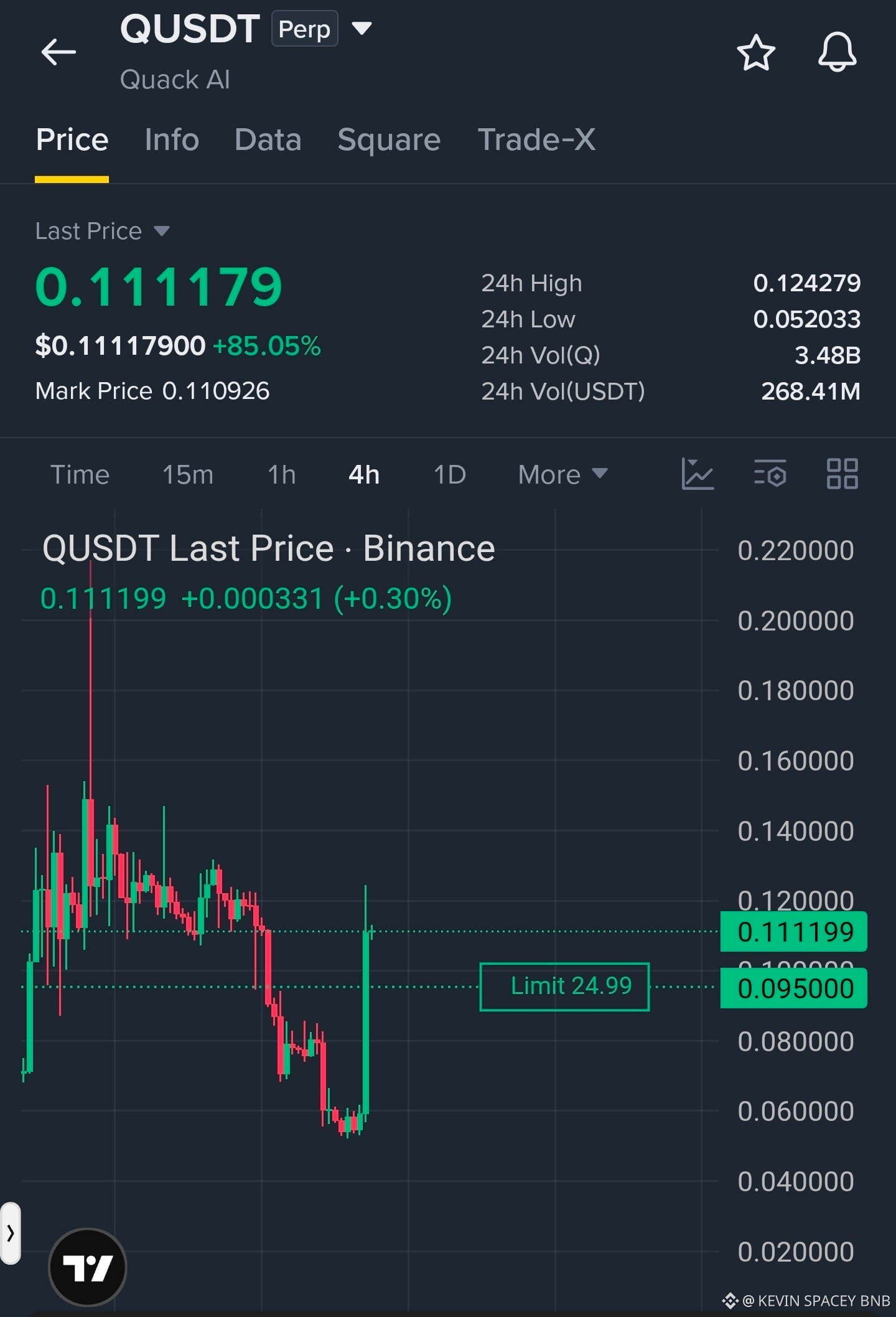
$QUSDT Eyes $0.124 Again as Sharp Bullish Reversal Signals More Upside! 🚀🔥
Trade Setup: LONG 🟢
Entry Zone: $0.0950 – $0.1000
TP1: $0.1120
TP2: $0.1240
TP3: $0.1400
SL: $0.0860
I'm watching the powerful 4H recovery from $0.055, which shows aggressive buying after the recent sell-off. If $0.095 holds as support on a retest, I expect another push toward $0.124 and potentially higher.
Trade Here On $Q👇
#BinancePick #EarningsSeason #AnthropicTTMRevenueGrewAbout1200%
$QUSDT Eyes $0.124 Again as Sharp Bullish Reversal Signals More Upside! 🚀🔥
Trade Setup: LONG 🟢
Entry Zone: $0.0950 – $0.1000
TP1: $0.1120
TP2: $0.1240
TP3: $0.1400
SL: $0.0860
I'm watching the powerful 4H recovery from $0.055, which shows aggressive buying after the recent sell-off. If $0.095 holds as support on a retest, I expect another push toward $0.124 and potentially higher.
Trade Here On $Q👇
#BinancePick #EarningsSeason #AnthropicTTMRevenueGrewAbout1200%
Trade Setup: LONG 🟢
Entry Zone: $0.0950 – $0.1000
TP1: $0.1120
TP2: $0.1240
TP3: $0.1400
SL: $0.0860
I'm watching the powerful 4H recovery from $0.055, which shows aggressive buying after the recent sell-off. If $0.095 holds as support on a retest, I expect another push toward $0.124 and potentially higher.
Trade Here On $Q👇
#BinancePick #EarningsSeason #AnthropicTTMRevenueGrewAbout1200%
1
1
619
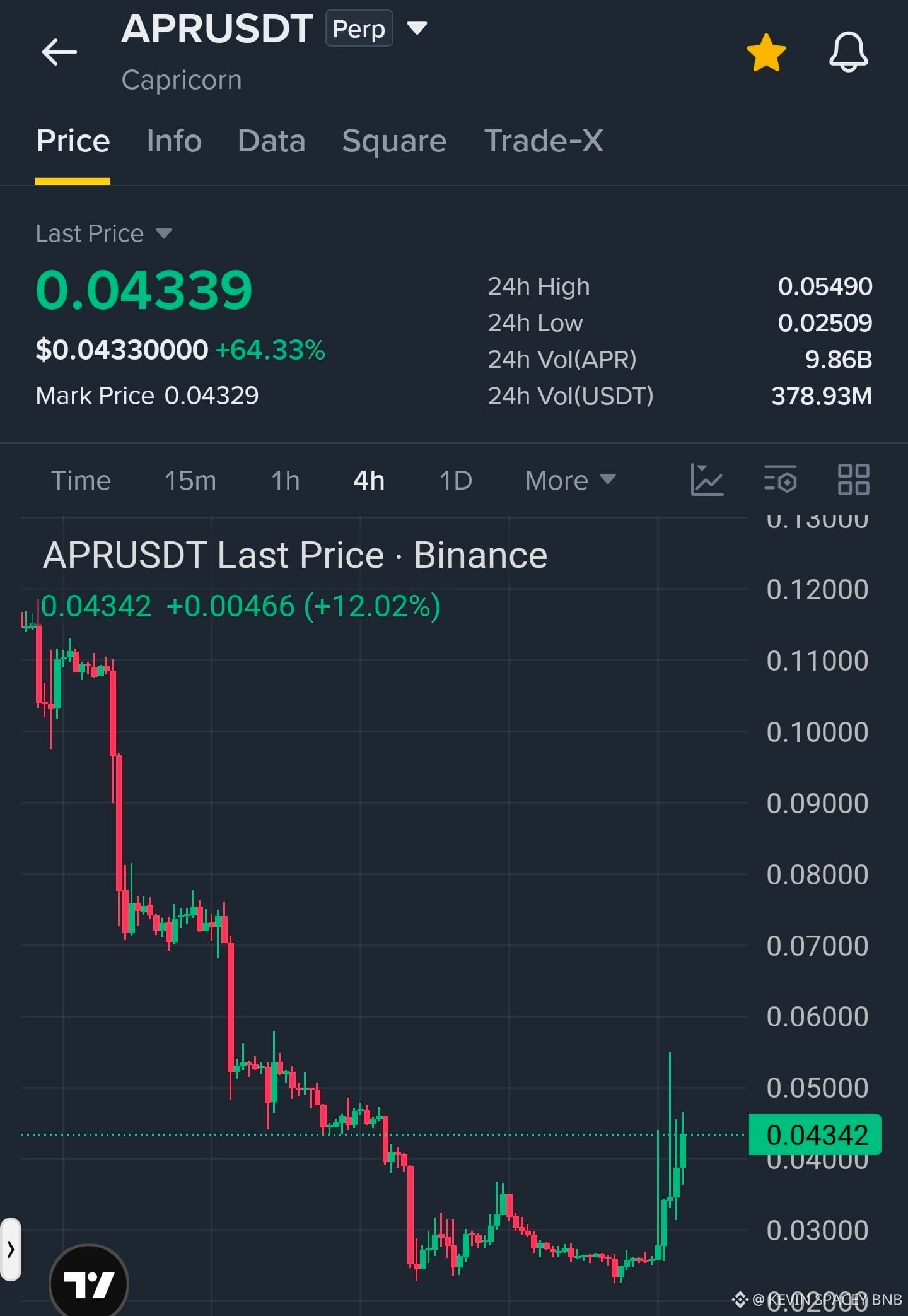
$APR Rebounds Sharply From Its Lows — $0.050 Could Be the Next Target! 🚀
🟢 Trade Setup: LONG
Entry Zone: $0.0405 – $0.0430
🎯 TP1: $0.0475
🎯 TP2: $0.0500
🎯 TP3: $0.0545
🛑 SL: $0.0370
I’m watching $APR after a sharp recovery from $0.025, with consecutive bullish 4H candles showing renewed buying pressure. If buyers defend the $0.040 support area, I expect another attempt toward $0.050, although the recent upper wick signals possible selling pressure.
Trade Here On $APR 👇
$APR Rebounds Sharply From Its Lows — $0.050 Could Be the Next Target! 🚀
🟢 Trade Setup: LONG
Entry Zone: $0.0405 – $0.0430
🎯 TP1: $0.0475
🎯 TP2: $0.0500
🎯 TP3: $0.0545
🛑 SL: $0.0370
I’m watching $APR after a sharp recovery from $0.025, with consecutive bullish 4H candles showing renewed buying pressure. If buyers defend the $0.040 support area, I expect another attempt toward $0.050, although the recent upper wick signals possible selling pressure.
Trade Here On $APR 👇
🟢 Trade Setup: LONG
Entry Zone: $0.0405 – $0.0430
🎯 TP1: $0.0475
🎯 TP2: $0.0500
🎯 TP3: $0.0545
🛑 SL: $0.0370
I’m watching $APR after a sharp recovery from $0.025, with consecutive bullish 4H candles showing renewed buying pressure. If buyers defend the $0.040 support area, I expect another attempt toward $0.050, although the recent upper wick signals possible selling pressure.
Trade Here On $APR 👇
1
317
🎙️ Day 5: Vote For ETHcryptohub (Rising Star) Category ✨ and also Guests

Fin
03 h 17 min 57 sec
2.1k
11
9
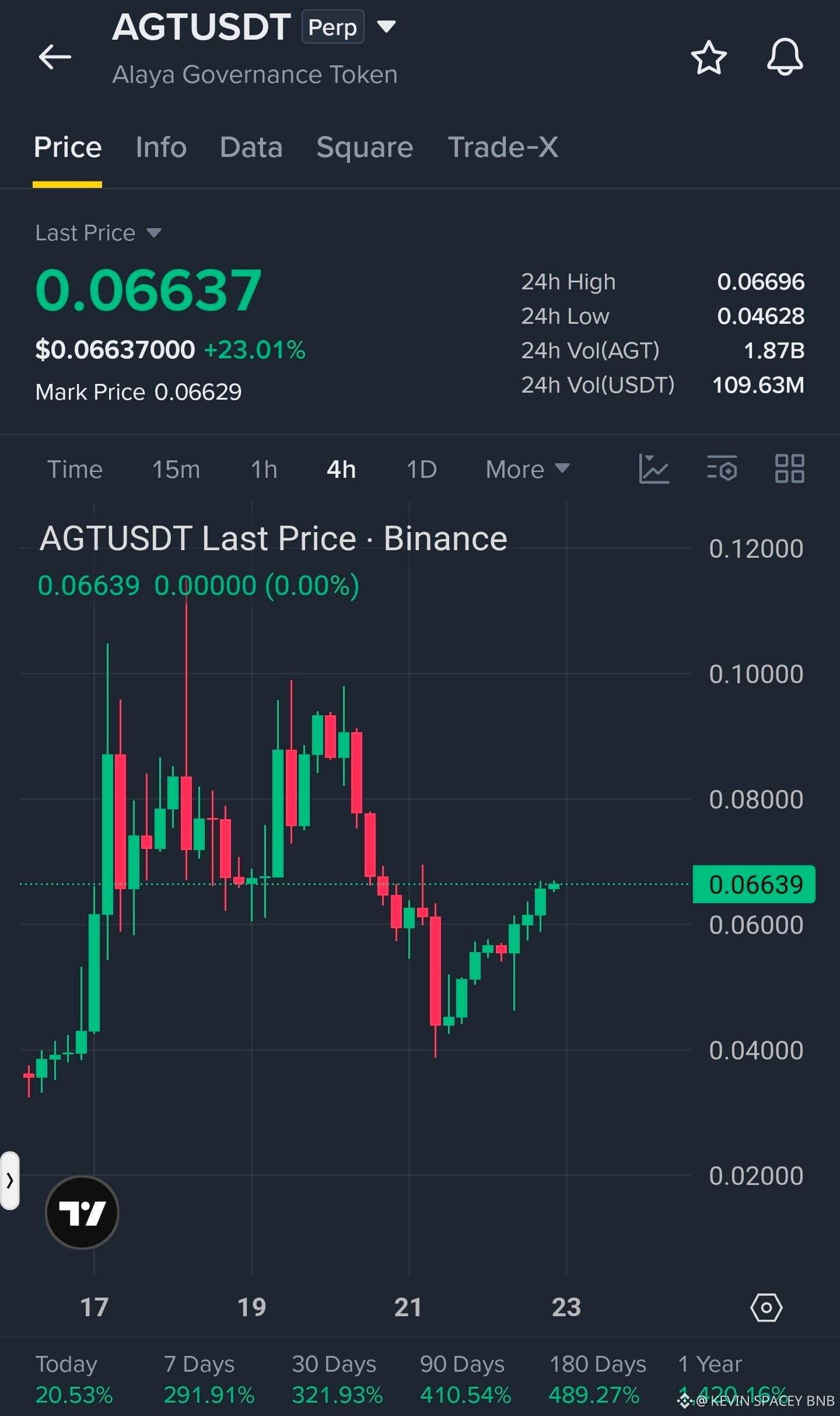
$AGT Is Testing a Key Breakout Zone — Another Push Higher Could Be Next! 🚀
Trade Setup: LONG 🟢
Entry Zone: $0.0670 – $0.0680
🎯 TP1: $0.0720
🎯 TP2: $0.0780
🎯 TP3: $0.0850
🛑 SL: $0.0620
I’m watching $AGT closely as the 4H chart shows a sharp recovery from $0.043, followed by higher lows and steady buying pressure. A confirmed breakout above $0.0670 could open the door for another upward move, while rejection at this resistance remains a risk.
Trade Here On $AGT 👇
#BinancePick #TeslaSlides5%PreMarket #KOSPISinks3.52%ToLowestCloseSinceApril
$AGT Is Testing a Key Breakout Zone — Another Push Higher Could Be Next! 🚀
Trade Setup: LONG 🟢
Entry Zone: $0.0670 – $0.0680
🎯 TP1: $0.0720
🎯 TP2: $0.0780
🎯 TP3: $0.0850
🛑 SL: $0.0620
I’m watching $AGT closely as the 4H chart shows a sharp recovery from $0.043, followed by higher lows and steady buying pressure. A confirmed breakout above $0.0670 could open the door for another upward move, while rejection at this resistance remains a risk.
Trade Here On $AGT 👇
#BinancePick #TeslaSlides5%PreMarket #KOSPISinks3.52%ToLowestCloseSinceApril
Trade Setup: LONG 🟢
Entry Zone: $0.0670 – $0.0680
🎯 TP1: $0.0720
🎯 TP2: $0.0780
🎯 TP3: $0.0850
🛑 SL: $0.0620
I’m watching $AGT closely as the 4H chart shows a sharp recovery from $0.043, followed by higher lows and steady buying pressure. A confirmed breakout above $0.0670 could open the door for another upward move, while rejection at this resistance remains a risk.
Trade Here On $AGT 👇
#BinancePick #TeslaSlides5%PreMarket #KOSPISinks3.52%ToLowestCloseSinceApril
342
$KITE I Think AI Agents Could Follow Every Rule and Still Waste My Money. 🪁
I can trust an AI agent with my money, set strict spending limits, and watch it complete every transaction correctly.
But what if I still get nothing valuable in return?
That's the overlooked problem in the agent economy, and it's exactly why Kite caught my attention.
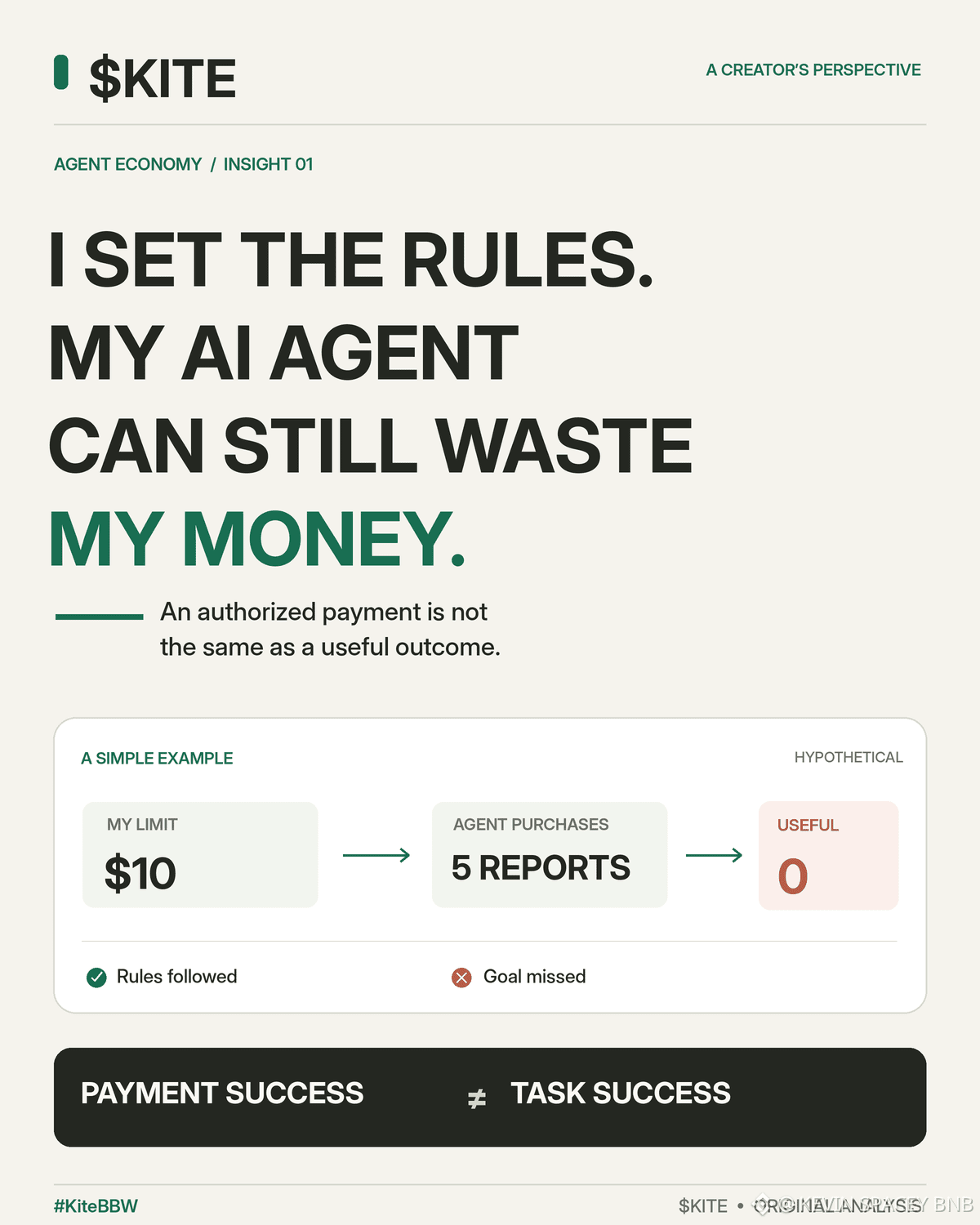
Imagine I run an online store and authorize an AI agent to purchase market research. I give it a $10 budget and limit each transaction to $2.
The agent buys five reports, follows my instructions, and completes every payment.
But what if those reports are outdated?
My payments succeeded. My business objective failed.
After exploring Kite, I found its approach to autonomous payments particularly interesting.
Kite's Agent Passport supports delegated permissions and spending controls, while x402 integrations enable automated payments to compatible services.
What interests me most is the separation between my authority and the agent's execution.
I control the boundaries. The agent handles transactions.
However, I believe successful agent commerce requires more than payment verification.
I'd evaluate it through three questions:
1. Task Success: Did my agent actually complete the task?
2. Spending Efficiency: Did I receive meaningful value?
3. Accountability: Who takes responsibility when my purchase fails?
For $KITE , I'll be watching real ecosystem adoption rather than assuming transaction activity guarantees token demand.
My takeaway: I don't just want an AI agent that can spend my money independently. I want one that spends responsibly, delivers useful results, and remains accountable.
I see Kite as an important step toward that future.
What do you think? If my AI agent follows every rule but wastes my money, who should be responsible?
#KiteBBW $KITE #AgentEconomy
$KITE I Think AI Agents Could Follow Every Rule and Still Waste My Money. 🪁
I can trust an AI agent with my money, set strict spending limits, and watch it complete every transaction correctly.
But what if I still get nothing valuable in return?
That's the overlooked problem in the agent economy, and it's exactly why Kite caught my attention.
Imagine I run an online store and authorize an AI agent to purchase market research. I give it a $10 budget and limit each transaction to $2.
The agent buys five reports, follows my instructions, and completes every payment.
But what if those reports are outdated?
My payments succeeded. My business objective failed.
After exploring Kite, I found its approach to autonomous payments particularly interesting.
Kite's Agent Passport supports delegated permissions and spending controls, while x402 integrations enable automated payments to compatible services.
What interests me most is the separation between my authority and the agent's execution.
I control the boundaries. The agent handles transactions.
However, I believe successful agent commerce requires more than payment verification.
I'd evaluate it through three questions:
1. Task Success: Did my agent actually complete the task?
2. Spending Efficiency: Did I receive meaningful value?
3. Accountability: Who takes responsibility when my purchase fails?
For $KITE , I'll be watching real ecosystem adoption rather than assuming transaction activity guarantees token demand.
My takeaway: I don't just want an AI agent that can spend my money independently. I want one that spends responsibly, delivers useful results, and remains accountable.
I see Kite as an important step toward that future.
What do you think? If my AI agent follows every rule but wastes my money, who should be responsible?
#KiteBBW $KITE #AgentEconomy
I can trust an AI agent with my money, set strict spending limits, and watch it complete every transaction correctly.
But what if I still get nothing valuable in return?
That's the overlooked problem in the agent economy, and it's exactly why Kite caught my attention.
Imagine I run an online store and authorize an AI agent to purchase market research. I give it a $10 budget and limit each transaction to $2.
The agent buys five reports, follows my instructions, and completes every payment.
But what if those reports are outdated?
My payments succeeded. My business objective failed.
After exploring Kite, I found its approach to autonomous payments particularly interesting.
Kite's Agent Passport supports delegated permissions and spending controls, while x402 integrations enable automated payments to compatible services.
What interests me most is the separation between my authority and the agent's execution.
I control the boundaries. The agent handles transactions.
However, I believe successful agent commerce requires more than payment verification.
I'd evaluate it through three questions:
1. Task Success: Did my agent actually complete the task?
2. Spending Efficiency: Did I receive meaningful value?
3. Accountability: Who takes responsibility when my purchase fails?
For $KITE , I'll be watching real ecosystem adoption rather than assuming transaction activity guarantees token demand.
My takeaway: I don't just want an AI agent that can spend my money independently. I want one that spends responsibly, delivers useful results, and remains accountable.
I see Kite as an important step toward that future.
What do you think? If my AI agent follows every rule but wastes my money, who should be responsible?
#KiteBBW $KITE #AgentEconomy
1
1
5
155
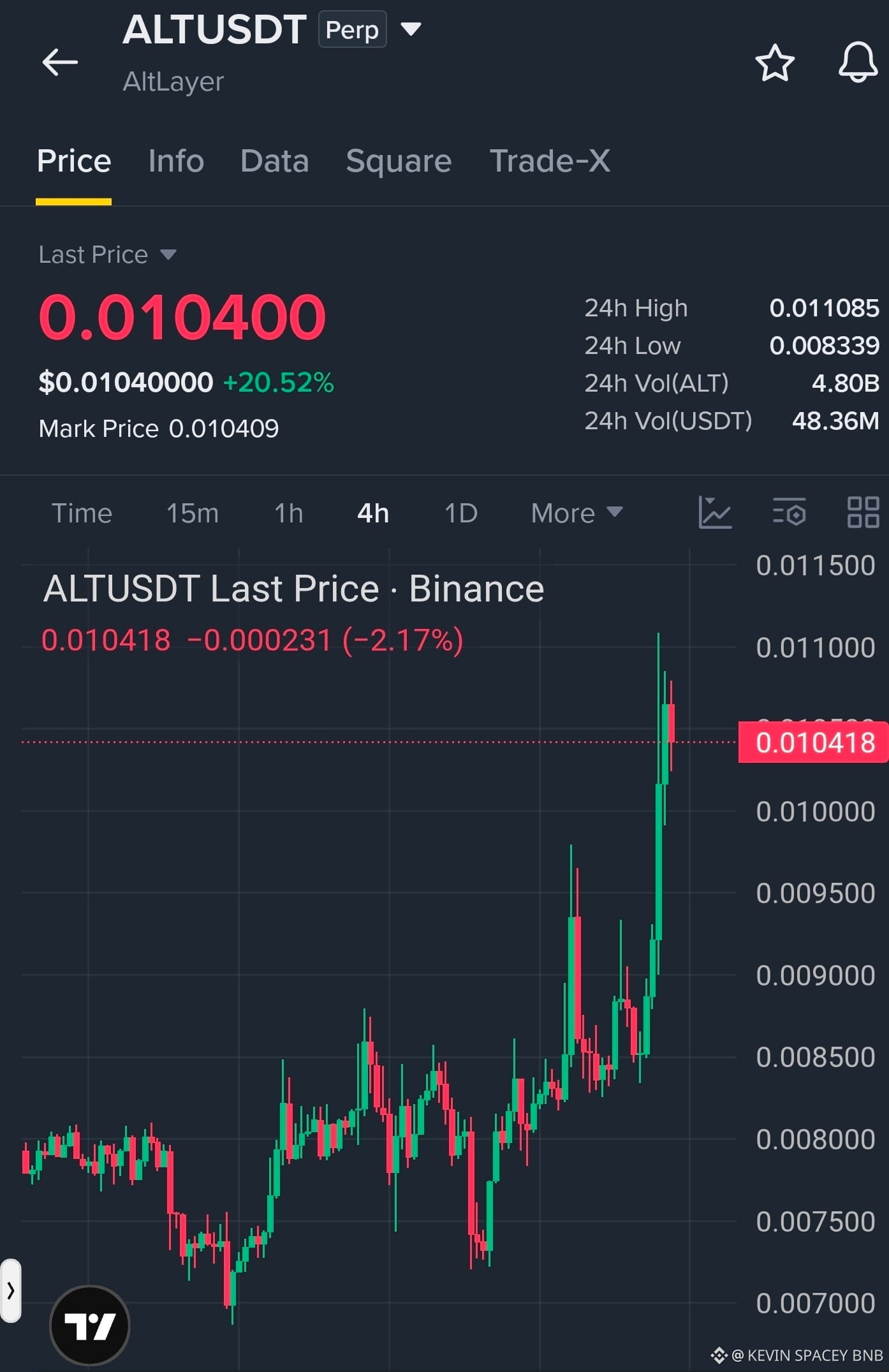
$ALT Could Retest $0.0110 After Its Sharp 4H Rally! 🚀
Trade Setup: LONG 🟢
Entry Zone: $0.01020 – $0.01040
SL: $0.00985
TP1: $0.01075
TP2: $0.01110
TP3: $0.01150
I can see a clear move above the previous resistance near $0.0095, followed by a quick push toward $0.0110. The latest red candle shows some profit-taking, but if $0.0102 holds as support, I'll be watching for another move higher.
Trade Here On $ALT 👇
#KOSPIFallsMoreThan2% #ElicePlunges33%InKoreanIPODebut #GoogleSetsUAELicensingRulesForCryptoAds
$ALT Could Retest $0.0110 After Its Sharp 4H Rally! 🚀
Trade Setup: LONG 🟢
Entry Zone: $0.01020 – $0.01040
SL: $0.00985
TP1: $0.01075
TP2: $0.01110
TP3: $0.01150
I can see a clear move above the previous resistance near $0.0095, followed by a quick push toward $0.0110. The latest red candle shows some profit-taking, but if $0.0102 holds as support, I'll be watching for another move higher.
Trade Here On $ALT 👇
#KOSPIFallsMoreThan2% #ElicePlunges33%InKoreanIPODebut #GoogleSetsUAELicensingRulesForCryptoAds
Trade Setup: LONG 🟢
Entry Zone: $0.01020 – $0.01040
SL: $0.00985
TP1: $0.01075
TP2: $0.01110
TP3: $0.01150
I can see a clear move above the previous resistance near $0.0095, followed by a quick push toward $0.0110. The latest red candle shows some profit-taking, but if $0.0102 holds as support, I'll be watching for another move higher.
Trade Here On $ALT 👇
#KOSPIFallsMoreThan2% #ElicePlunges33%InKoreanIPODebut #GoogleSetsUAELicensingRulesForCryptoAds
1
3
290
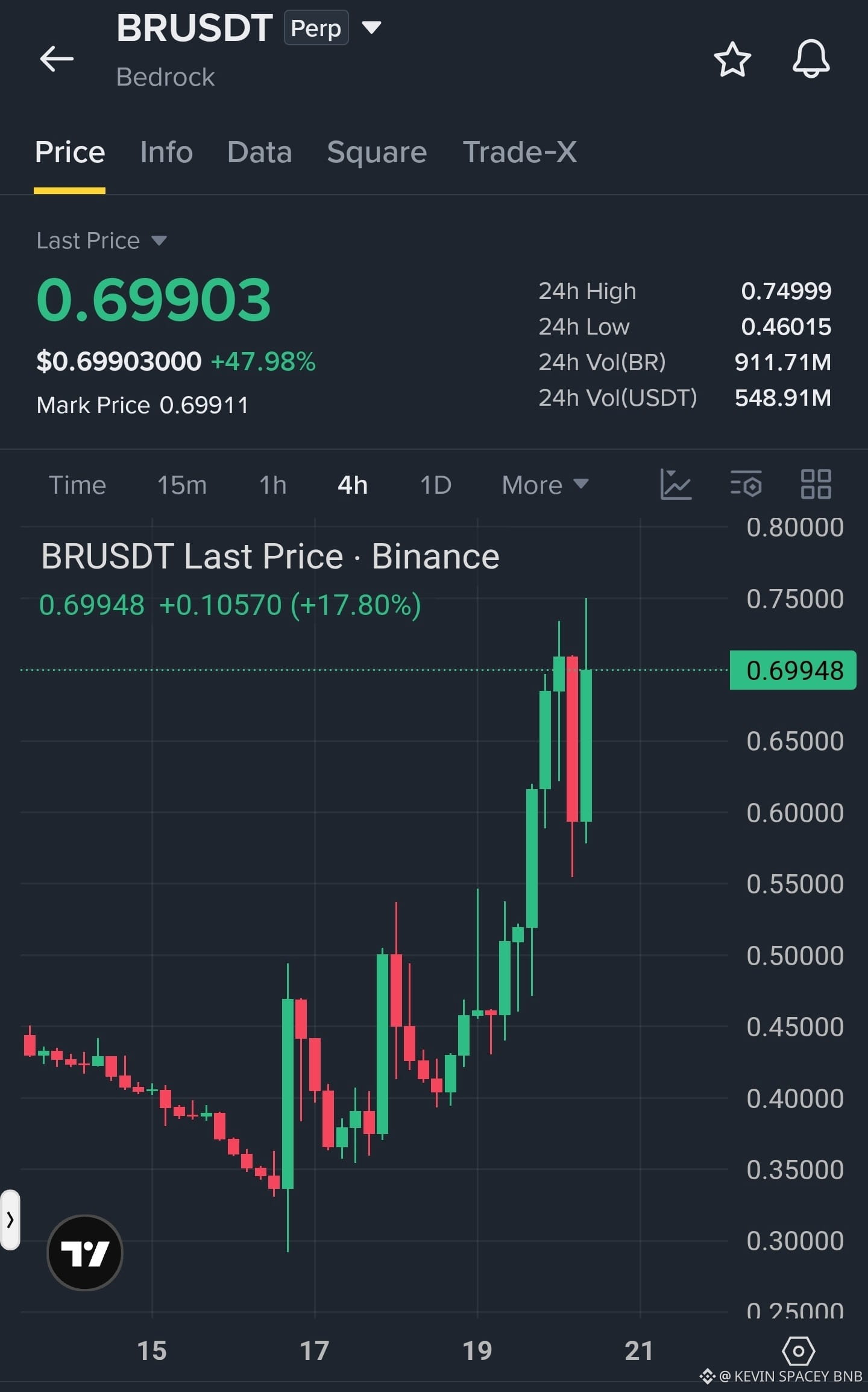
$BR Eyes Another Push Toward $0.75 as Buyers Reclaim $0.70! 🚀
Trade Setup: LONG 🟢
Entry Zone: $0.6800 – $0.7000
🎯 TP1: $0.7250
🎯 TP2: $0.7500
🎯 TP3: $0.7900
🛑 SL: $0.6350
I'm watching the strong 4H recovery after buyers quickly absorbed the sharp rejection near $0.75. The latest green candle suggests renewed buying interest, and holding above $0.68 could open the door for another resistance test.
Trade Here On $BR 👇
#KOSPIFallsMoreThan2% #ElicePlunges33%InKoreanIPODebut #GoogleSetsUAELicensingRulesForCryptoAds
$BR Eyes Another Push Toward $0.75 as Buyers Reclaim $0.70! 🚀
Trade Setup: LONG 🟢
Entry Zone: $0.6800 – $0.7000
🎯 TP1: $0.7250
🎯 TP2: $0.7500
🎯 TP3: $0.7900
🛑 SL: $0.6350
I'm watching the strong 4H recovery after buyers quickly absorbed the sharp rejection near $0.75. The latest green candle suggests renewed buying interest, and holding above $0.68 could open the door for another resistance test.
Trade Here On $BR 👇
#KOSPIFallsMoreThan2% #ElicePlunges33%InKoreanIPODebut #GoogleSetsUAELicensingRulesForCryptoAds
Trade Setup: LONG 🟢
Entry Zone: $0.6800 – $0.7000
🎯 TP1: $0.7250
🎯 TP2: $0.7500
🎯 TP3: $0.7900
🛑 SL: $0.6350
I'm watching the strong 4H recovery after buyers quickly absorbed the sharp rejection near $0.75. The latest green candle suggests renewed buying interest, and holding above $0.68 could open the door for another resistance test.
Trade Here On $BR 👇
#KOSPIFallsMoreThan2% #ElicePlunges33%InKoreanIPODebut #GoogleSetsUAELicensingRulesForCryptoAds
1
327
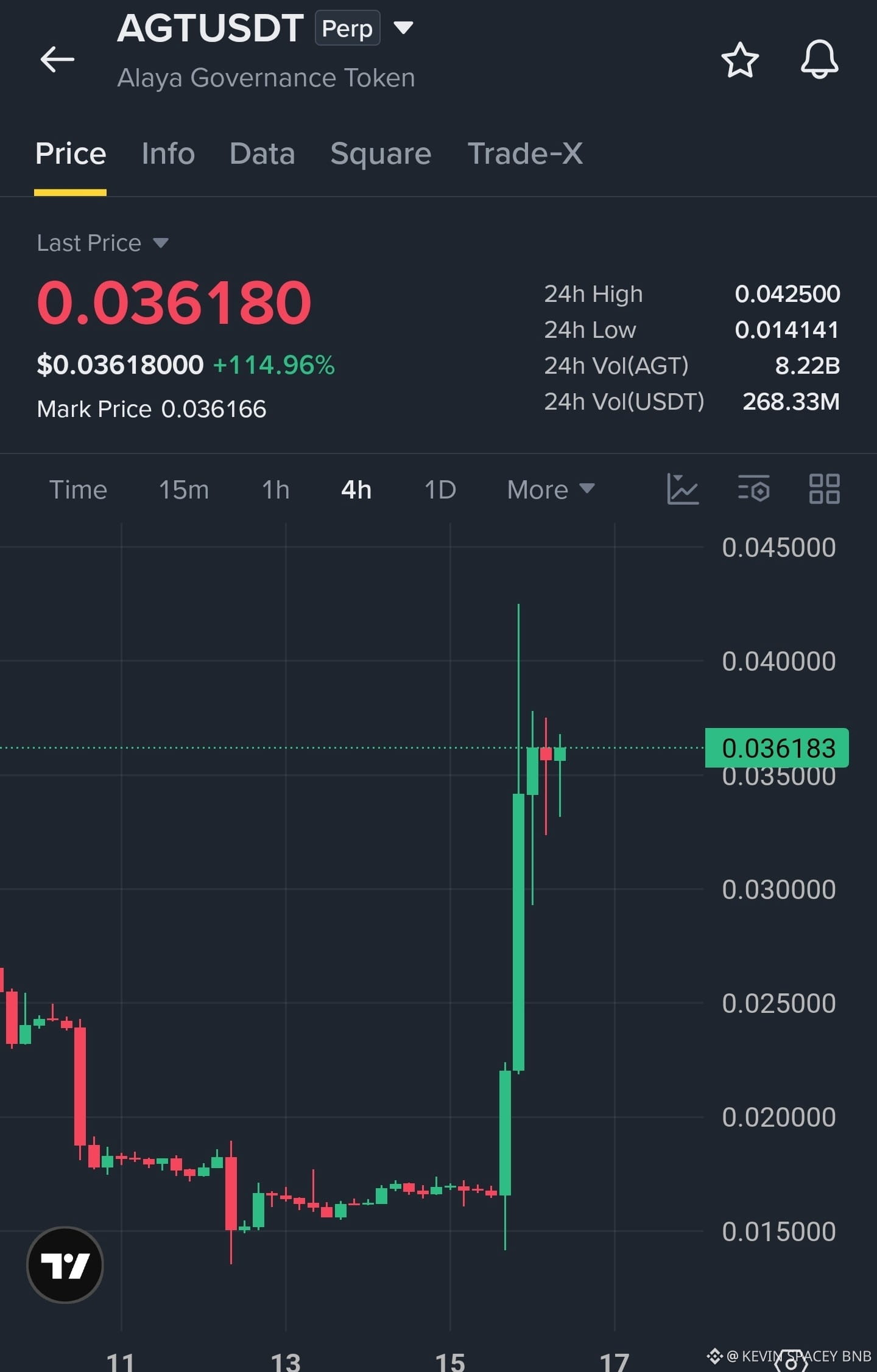
$AGT — After a sharp breakout, I’m watching for another push toward $0.040 if buyers defend the current range.
Trade Setup: LONG
Entry Zone: $0.0345 – $0.0360
SL: $0.0320
TP1: $0.0385
TP2: $0.0405
TP3: $0.0425
I can see a powerful move from the $0.017 area, followed by tight consolidation near $0.036. The long upper wick shows selling pressure, but buyers are still holding much of the breakout. I’d look for a support hold before expecting another move higher.
Trade Here On $AGT 👇
$AGT — After a sharp breakout, I’m watching for another push toward $0.040 if buyers defend the current range.
Trade Setup: LONG
Entry Zone: $0.0345 – $0.0360
SL: $0.0320
TP1: $0.0385
TP2: $0.0405
TP3: $0.0425
I can see a powerful move from the $0.017 area, followed by tight consolidation near $0.036. The long upper wick shows selling pressure, but buyers are still holding much of the breakout. I’d look for a support hold before expecting another move higher.
Trade Here On $AGT 👇
Trade Setup: LONG
Entry Zone: $0.0345 – $0.0360
SL: $0.0320
TP1: $0.0385
TP2: $0.0405
TP3: $0.0425
I can see a powerful move from the $0.017 area, followed by tight consolidation near $0.036. The long upper wick shows selling pressure, but buyers are still holding much of the breakout. I’d look for a support hold before expecting another move higher.
Trade Here On $AGT 👇
3
418

🎙️ Today I have applied for Nomination under Rising Star ✨ Support 🤝
Fin
03 h 44 min 32 sec
1.2k
1
1
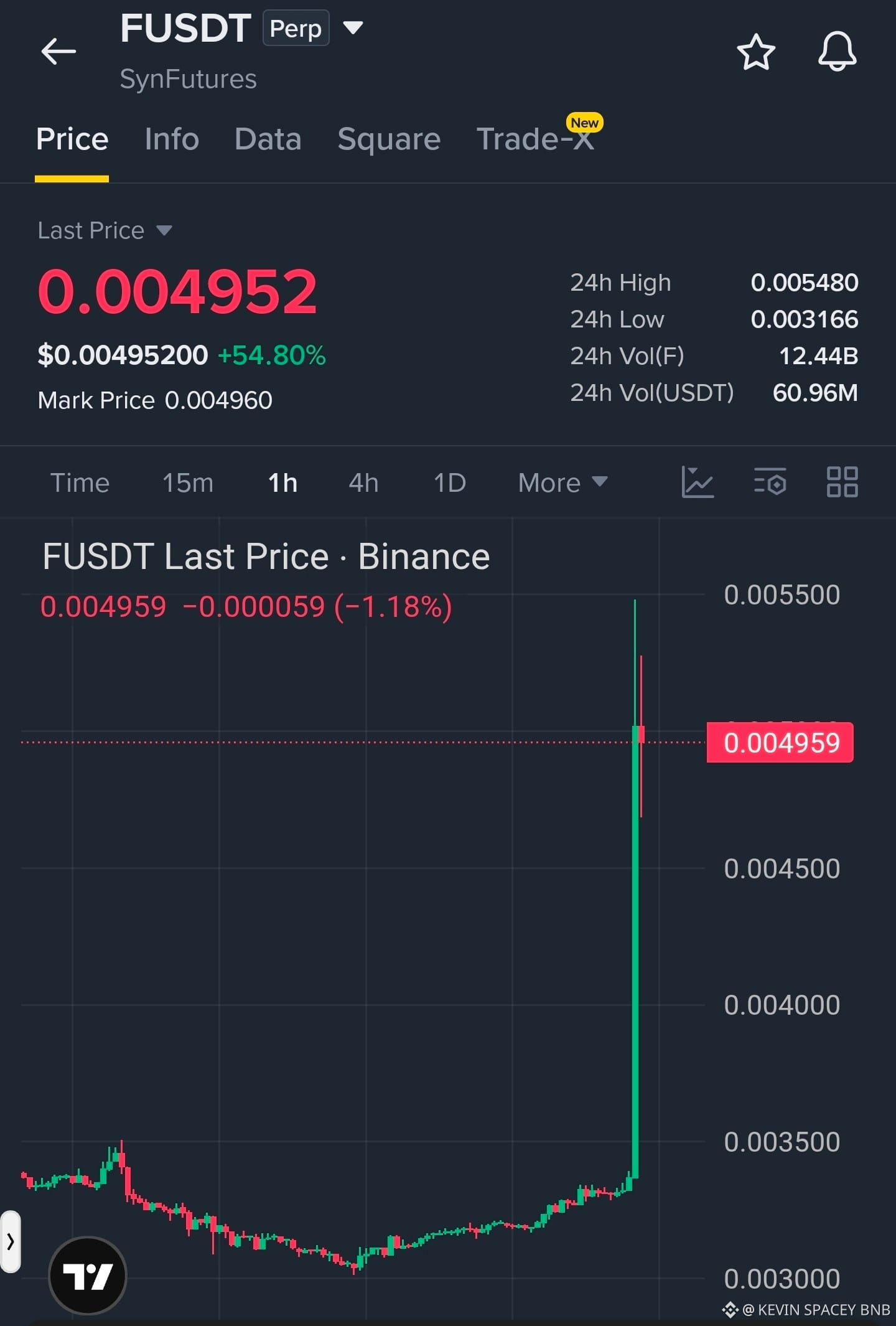
$F just exploded out of its base, and I’m watching the first pullback for a possible continuation toward the spike high.
Trade Setup: LONG
Entry Zone: $0.00465 – $0.00485
SL: $0.00438
TP1: $0.00515
TP2: $0.00548
TP3: $0.00575
I see a huge 1H expansion candle breaking price away from the $0.0033 area, followed by rejection near $0.0055. I’d look for buyers to defend the breakout rather than chase the top of this sharp move.
Trade Here On $F 👇
#HYPEJumpsOver11%
$F just exploded out of its base, and I’m watching the first pullback for a possible continuation toward the spike high.
Trade Setup: LONG
Entry Zone: $0.00465 – $0.00485
SL: $0.00438
TP1: $0.00515
TP2: $0.00548
TP3: $0.00575
I see a huge 1H expansion candle breaking price away from the $0.0033 area, followed by rejection near $0.0055. I’d look for buyers to defend the breakout rather than chase the top of this sharp move.
Trade Here On $F 👇
#HYPEJumpsOver11%
Trade Setup: LONG
Entry Zone: $0.00465 – $0.00485
SL: $0.00438
TP1: $0.00515
TP2: $0.00548
TP3: $0.00575
I see a huge 1H expansion candle breaking price away from the $0.0033 area, followed by rejection near $0.0055. I’d look for buyers to defend the breakout rather than chase the top of this sharp move.
Trade Here On $F 👇
#HYPEJumpsOver11%
3
185
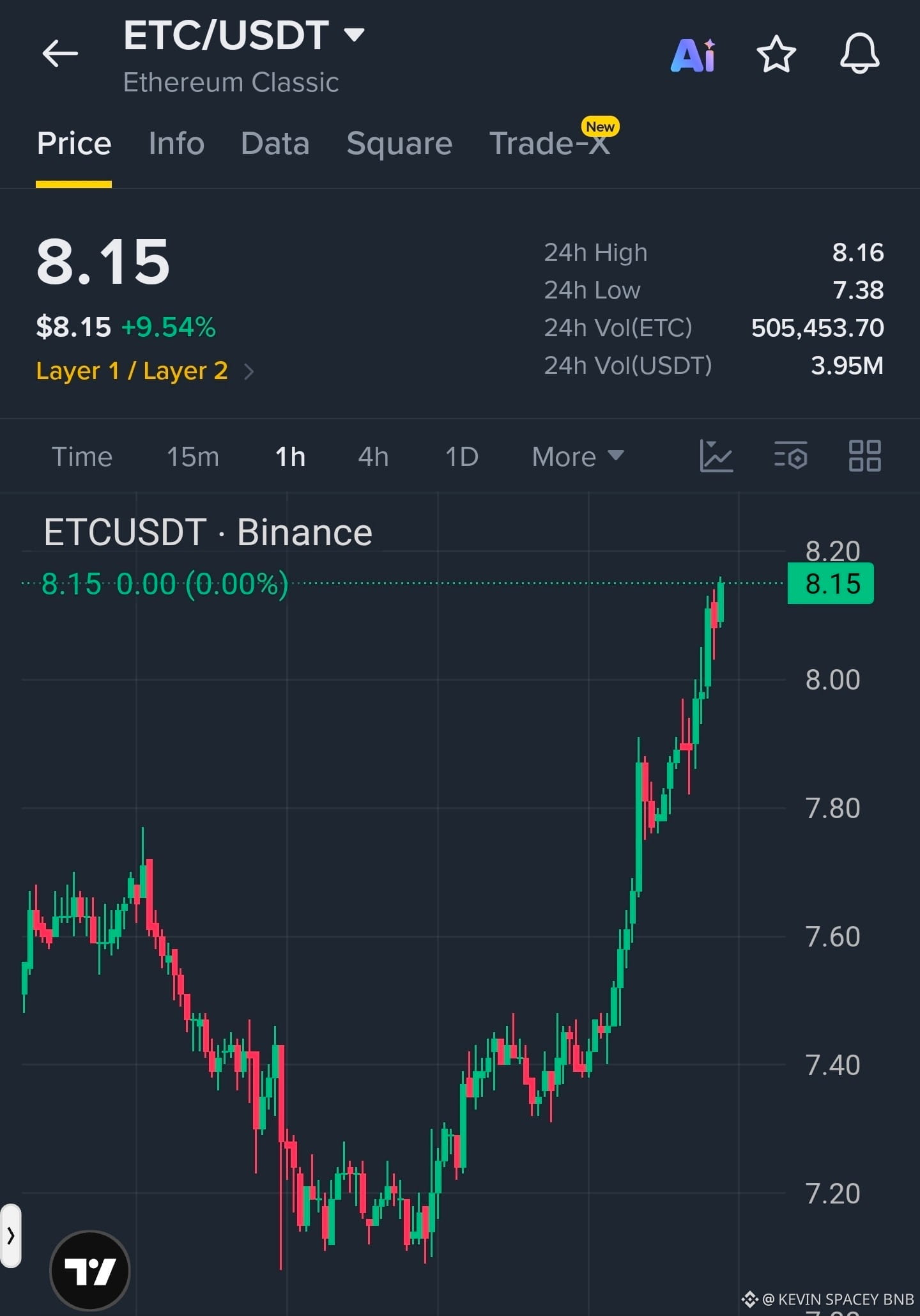
$ETC is climbing with a clean sequence of higher candles, and a hold above $8.00 could keep the move extending higher.
Trade Setup: LONG
Entry Zone: $8.00 – $8.10
SL: $7.84
TP1: $8.20
TP2: $8.35
TP3: $8.50
I see buyers repeatedly stepping in after shallow 1H pullbacks, with price pushing from the $7.40 region toward $8.15. The structure remains upward for me while the recent breakout around $8.00 stays supported.
Trade Here On $ETC 👇
#BTCBreaks80K
$ETC is climbing with a clean sequence of higher candles, and a hold above $8.00 could keep the move extending higher.
Trade Setup: LONG
Entry Zone: $8.00 – $8.10
SL: $7.84
TP1: $8.20
TP2: $8.35
TP3: $8.50
I see buyers repeatedly stepping in after shallow 1H pullbacks, with price pushing from the $7.40 region toward $8.15. The structure remains upward for me while the recent breakout around $8.00 stays supported.
Trade Here On $ETC 👇
#BTCBreaks80K
Trade Setup: LONG
Entry Zone: $8.00 – $8.10
SL: $7.84
TP1: $8.20
TP2: $8.35
TP3: $8.50
I see buyers repeatedly stepping in after shallow 1H pullbacks, with price pushing from the $7.40 region toward $8.15. The structure remains upward for me while the recent breakout around $8.00 stays supported.
Trade Here On $ETC 👇
#BTCBreaks80K
1
136
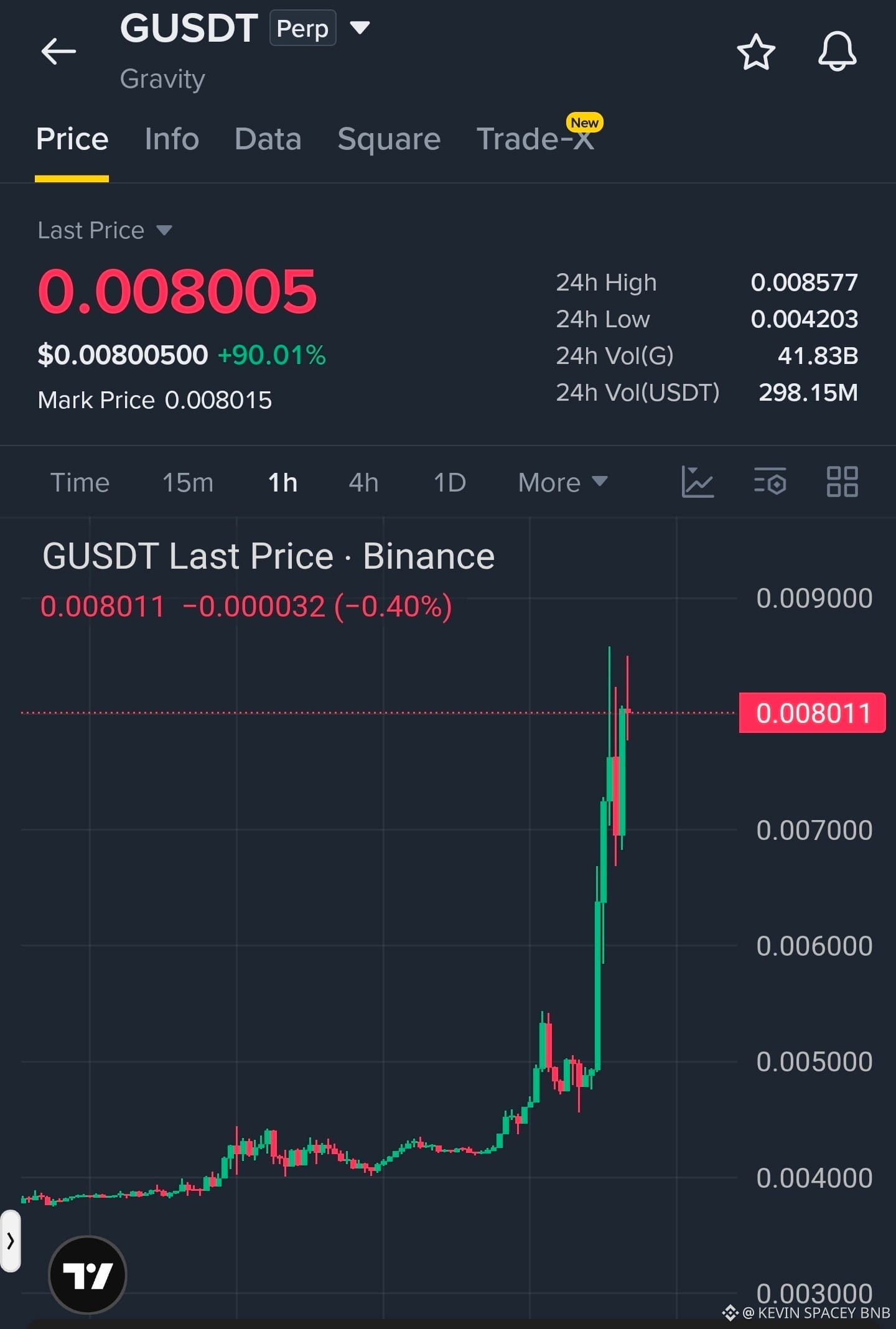
$G is pressing the highs after a vertical run, and holding above $0.0070 could open another push toward fresh short-term highs.
Trade Setup: LONG
Entry Zone: $0.00740 – $0.00780
TP1: $0.00830
TP2: $0.00858
TP3: $0.00900
SL: $0.00685
I see aggressive buying after the breakout from the $0.0050 area, while the latest candles are consolidating near the top rather than giving back the whole move. I’d favor continuation as long as the recent $0.0070 breakout area remains defended.
Trade Here On $G 👇.
#BOJHikesRatesTo31YearHigh
$G is pressing the highs after a vertical run, and holding above $0.0070 could open another push toward fresh short-term highs.
Trade Setup: LONG
Entry Zone: $0.00740 – $0.00780
TP1: $0.00830
TP2: $0.00858
TP3: $0.00900
SL: $0.00685
I see aggressive buying after the breakout from the $0.0050 area, while the latest candles are consolidating near the top rather than giving back the whole move. I’d favor continuation as long as the recent $0.0070 breakout area remains defended.
Trade Here On $G 👇.
#BOJHikesRatesTo31YearHigh
Trade Setup: LONG
Entry Zone: $0.00740 – $0.00780
TP1: $0.00830
TP2: $0.00858
TP3: $0.00900
SL: $0.00685
I see aggressive buying after the breakout from the $0.0050 area, while the latest candles are consolidating near the top rather than giving back the whole move. I’d favor continuation as long as the recent $0.0070 breakout area remains defended.
Trade Here On $G 👇.
#BOJHikesRatesTo31YearHigh
1
180
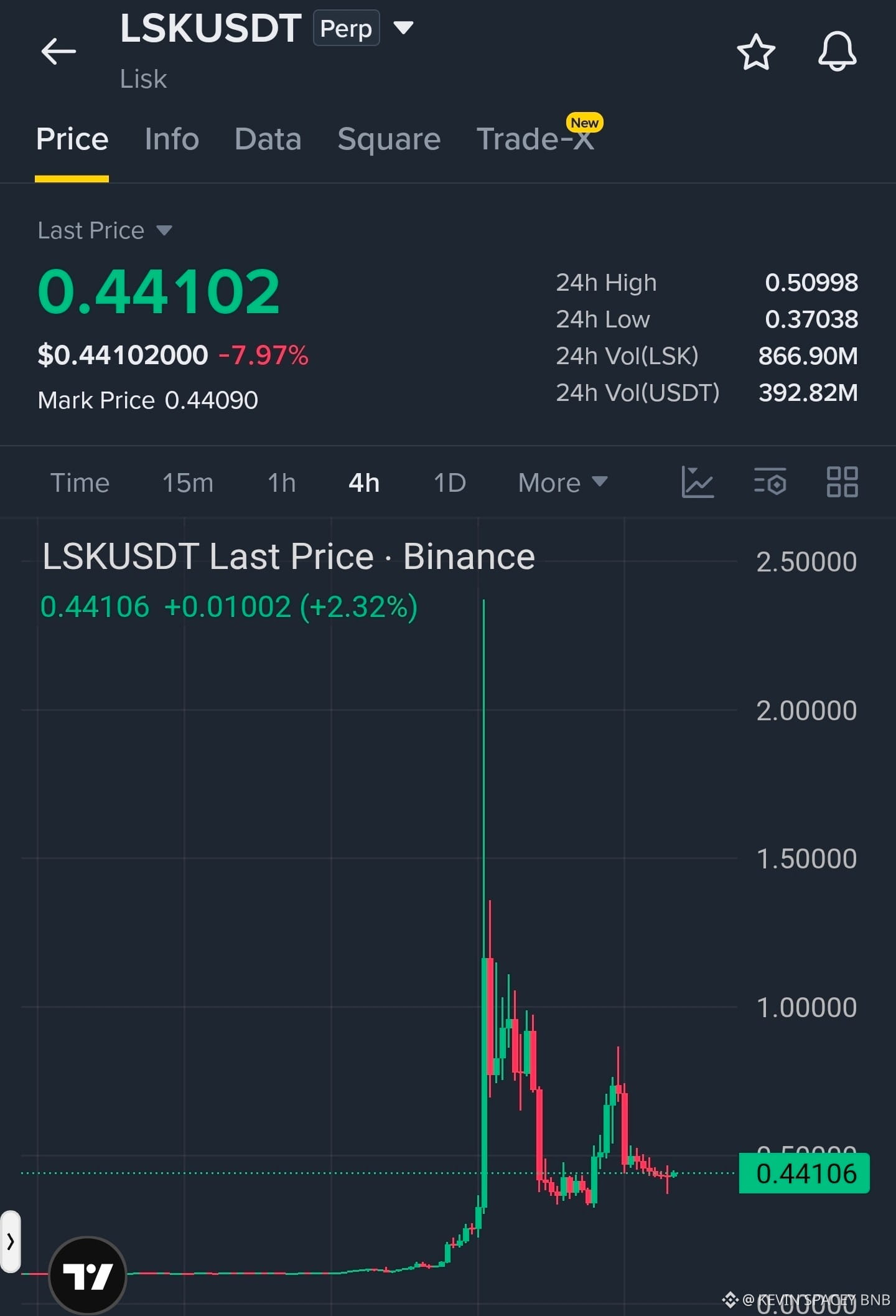
$LSK is trying to stabilize after the selloff, and I’m watching for a rebound from this base before the next push higher.
Trade Setup: LONG
Entry Zone: 0.425 – 0.445
SL: 0.395
TP1: 0.485
TP2: 0.550
TP3: 0.650
I can see price settling around the 0.42–0.44 area after the sharp rejection from the recent spike. The latest 4H candles are getting tighter, so I’d look for this support to hold and buyers to reclaim the 0.48–0.50 area.
Trade Here On $LSK 👇
#LSKUSDT
$LSK is trying to stabilize after the selloff, and I’m watching for a rebound from this base before the next push higher.
Trade Setup: LONG
Entry Zone: 0.425 – 0.445
SL: 0.395
TP1: 0.485
TP2: 0.550
TP3: 0.650
I can see price settling around the 0.42–0.44 area after the sharp rejection from the recent spike. The latest 4H candles are getting tighter, so I’d look for this support to hold and buyers to reclaim the 0.48–0.50 area.
Trade Here On $LSK 👇
#LSKUSDT
Trade Setup: LONG
Entry Zone: 0.425 – 0.445
SL: 0.395
TP1: 0.485
TP2: 0.550
TP3: 0.650
I can see price settling around the 0.42–0.44 area after the sharp rejection from the recent spike. The latest 4H candles are getting tighter, so I’d look for this support to hold and buyers to reclaim the 0.48–0.50 area.
Trade Here On $LSK 👇
#LSKUSDT
1
637
$ONE
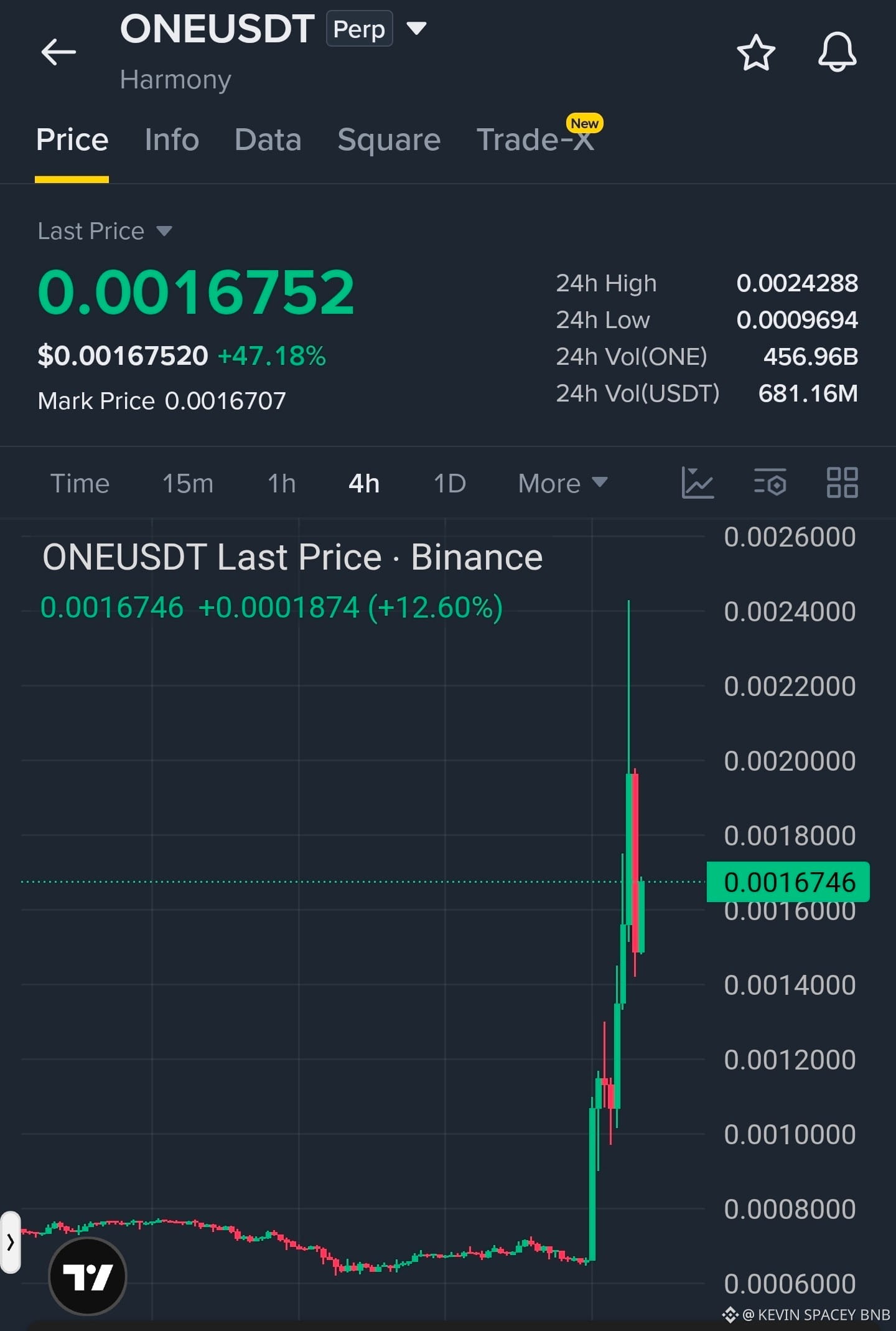
ONE has already made the explosive move; I’m looking for the pullback to hold before price takes another shot at the recent highs.
Trade Setup: LONG
Entry Zone: $0.00148 – $0.00160
SL: $0.00138
TP1: $0.00180
TP2: $0.00200
TP3: $0.00240
I see a clean 4H expansion from the $0.00065 area followed by a sharp rejection near $0.00240. Price pulled back but buyers responded around $0.00145, so I’d watch that higher support area for a continuation attempt.
Trade Here On $ONE 👇
#SECGrantsInnovationExemptionForTokenizedStocks
$ONE
ONE has already made the explosive move; I’m looking for the pullback to hold before price takes another shot at the recent highs.
Trade Setup: LONG
Entry Zone: $0.00148 – $0.00160
SL: $0.00138
TP1: $0.00180
TP2: $0.00200
TP3: $0.00240
I see a clean 4H expansion from the $0.00065 area followed by a sharp rejection near $0.00240. Price pulled back but buyers responded around $0.00145, so I’d watch that higher support area for a continuation attempt.
Trade Here On $ONE 👇
#SECGrantsInnovationExemptionForTokenizedStocks
ONE has already made the explosive move; I’m looking for the pullback to hold before price takes another shot at the recent highs.
Trade Setup: LONG
Entry Zone: $0.00148 – $0.00160
SL: $0.00138
TP1: $0.00180
TP2: $0.00200
TP3: $0.00240
I see a clean 4H expansion from the $0.00065 area followed by a sharp rejection near $0.00240. Price pulled back but buyers responded around $0.00145, so I’d watch that higher support area for a continuation attempt.
Trade Here On $ONE 👇
#SECGrantsInnovationExemptionForTokenizedStocks
319
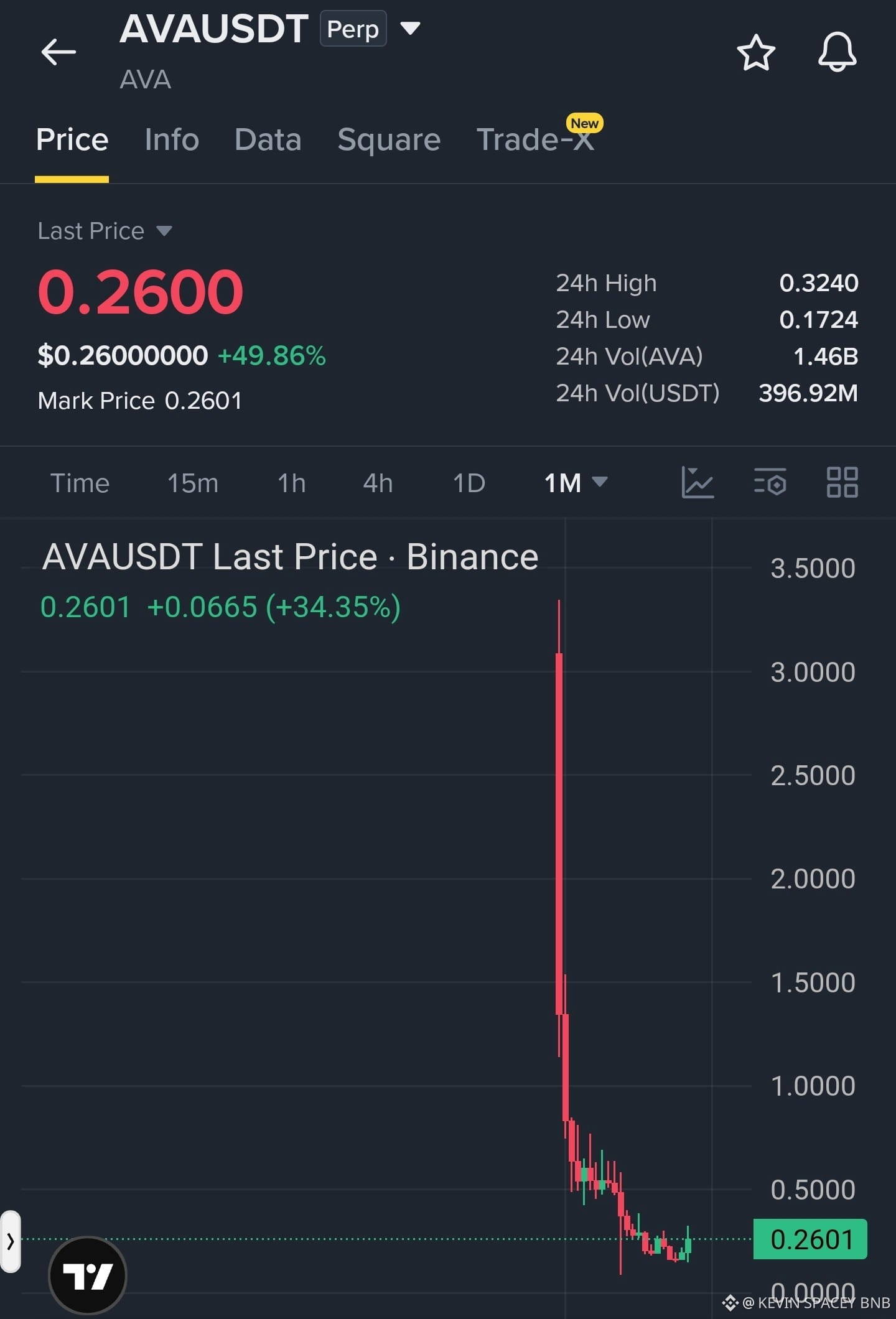
$AVA
The bounce is sharp, but I’m watching for AVA to hold the recent base before another push higher.
Trade Setup: LONG
Entry Zone: $0.235 – $0.260
SL: $0.170
TP1: $0.325
TP2: $0.400
TP3: $0.500
I see price recovering from the recent lows after a prolonged monthly decline, with the latest candle showing buyers stepping back in. If the $0.23–$0.26 area holds, I’d look for price to retest the visible resistance zones above.
Trade Here On $AVA 👇
#StellarActivatesProtocol28At211TPS
$AVA
The bounce is sharp, but I’m watching for AVA to hold the recent base before another push higher.
Trade Setup: LONG
Entry Zone: $0.235 – $0.260
SL: $0.170
TP1: $0.325
TP2: $0.400
TP3: $0.500
I see price recovering from the recent lows after a prolonged monthly decline, with the latest candle showing buyers stepping back in. If the $0.23–$0.26 area holds, I’d look for price to retest the visible resistance zones above.
Trade Here On $AVA 👇
#StellarActivatesProtocol28At211TPS
The bounce is sharp, but I’m watching for AVA to hold the recent base before another push higher.
Trade Setup: LONG
Entry Zone: $0.235 – $0.260
SL: $0.170
TP1: $0.325
TP2: $0.400
TP3: $0.500
I see price recovering from the recent lows after a prolonged monthly decline, with the latest candle showing buyers stepping back in. If the $0.23–$0.26 area holds, I’d look for price to retest the visible resistance zones above.
Trade Here On $AVA 👇
#StellarActivatesProtocol28At211TPS
171

Connectez-vous pour découvrir plus de contenu
Rejoignez la communauté mondiale des adeptes de cryptomonnaies sur Binance Square
⚡️ Suviez les dernières informations importantes sur les cryptomonnaies.
💬 Jugé digne de confiance par la plus grande plateforme d’échange de cryptomonnaies au monde.
👍 Découvrez les connaissances que partagent les créateurs vérifiés.
Adresse e-mail/Nº de téléphone