

charts language
16 Publications

charts language
Ouvert au trading
Trade occasionnellement
2.9 an(s)
2 Suivis
2 Abonnés
2 J’aime
Publications
Portefeuille
Tous
Citations


Hadia-BTC
·
--
@Dusk I used to see blockchain privacy in a pretty simple way: keep transaction details hidden, and the privacy problem is solved.
But the more I looked into Dusk, the less convincing that idea became.
In regulated finance, you cannot always treat privacy as “hide everything.” An investor may want their balance and activity kept private, while an issuer, auditor, or supervisor may still need access to specific information for verification.
That made me look more closely at selective disclosure.
Dusk approaches this through shielded transactions and zero-knowledge proofs. Phoenix can keep transaction details private, while viewing keys provide a way to disclose specific information when an authorized workflow actually requires it.
What I find interesting is the balance here.
This is not really about picking a blockchain that's totally open to the public or one that is totally private.
It is, about figuring out who gets to see what information and when they get to see it like who can look at the blockchain and when they can do that.
That distinction could matter a lot in real financial markets, where sensitive information needs protection but verification cannot simply disappear.
For me, that is where Dusk becomes more interesting. Privacy is not the end goal. Controlled visibility is.
#dusk $DUSK
But the more I looked into Dusk, the less convincing that idea became.
In regulated finance, you cannot always treat privacy as “hide everything.” An investor may want their balance and activity kept private, while an issuer, auditor, or supervisor may still need access to specific information for verification.
That made me look more closely at selective disclosure.
Dusk approaches this through shielded transactions and zero-knowledge proofs. Phoenix can keep transaction details private, while viewing keys provide a way to disclose specific information when an authorized workflow actually requires it.
What I find interesting is the balance here.
This is not really about picking a blockchain that's totally open to the public or one that is totally private.
It is, about figuring out who gets to see what information and when they get to see it like who can look at the blockchain and when they can do that.
That distinction could matter a lot in real financial markets, where sensitive information needs protection but verification cannot simply disappear.
For me, that is where Dusk becomes more interesting. Privacy is not the end goal. Controlled visibility is.
#dusk $DUSK
Hadia-BTC
·
--
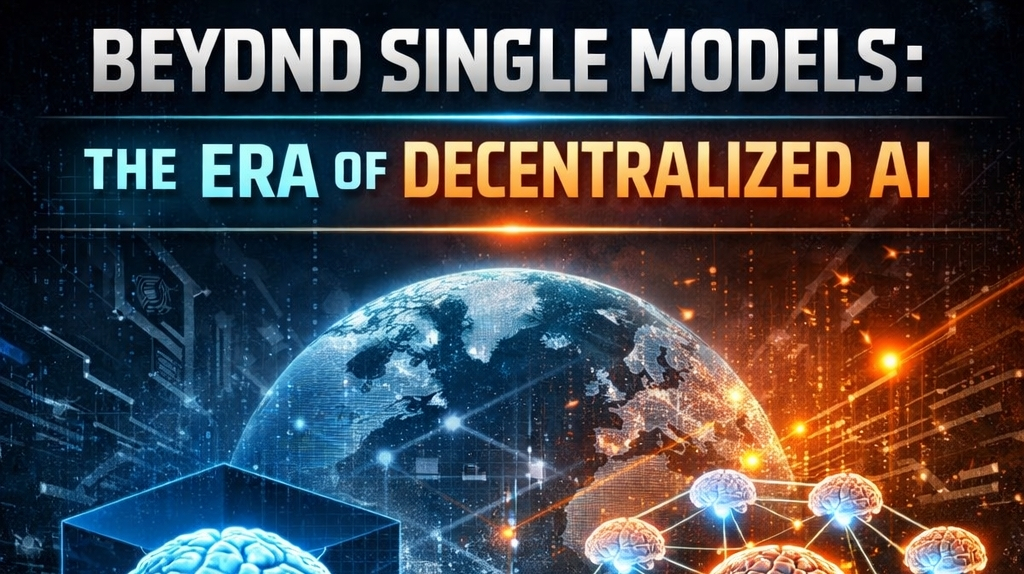
Beyond Single Models: How Decentralized Consensus is Solving the AI Accuracy Crisis
We all know that Artificial Intelligence is powerful, but it has a massive "trust" problem. Even the best AI models today suffer from hallucinations (making things up) and bias. After reading the whitepaper for @Mira - Trust Layer of AI _network, it’s clear that the old way of building one giant "perfect" model just isn't working.
The paper explains a "Training Dilemma": when developers try to make a model more precise, they often accidentally add bias. If they make it too diverse, the accuracy drops. It’s a wall that a single AI model simply cannot climb alone.
The Solution: Collective Wisdom
This is where @Mira - Trust Layer of AI introduces a game-changer. Instead of relying on one AI, why not use a decentralized network of many?
Strength in Numbers: By using a decentralized consensus, multiple AI models work together to verify an output. If one model makes a mistake, the others catch it.
Trustless Verification: You don’t have to "hope" the AI is telling the truth. The network uses a hybrid Proof-of-Work and Proof-of-Stake system to reward honest nodes and punish bad data.
Real Autonomy: For AI to truly handle high-stakes tasks without humans watching over it 24/7, we need this kind of decentralized infrastructure.
My Take:
The future isn't about which company has the biggest model; it's about which network has the best verification. By holding the $MIRA token and supporting this ecosystem, we are moving toward a world where AI is finally reliable and unbiased.
The "Single Model" era is reaching its limit. The era of Decentralized AI is just beginning$MIRA
#Mira
The paper explains a "Training Dilemma": when developers try to make a model more precise, they often accidentally add bias. If they make it too diverse, the accuracy drops. It’s a wall that a single AI model simply cannot climb alone.
The Solution: Collective Wisdom
This is where @Mira - Trust Layer of AI introduces a game-changer. Instead of relying on one AI, why not use a decentralized network of many?
Strength in Numbers: By using a decentralized consensus, multiple AI models work together to verify an output. If one model makes a mistake, the others catch it.
Trustless Verification: You don’t have to "hope" the AI is telling the truth. The network uses a hybrid Proof-of-Work and Proof-of-Stake system to reward honest nodes and punish bad data.
Real Autonomy: For AI to truly handle high-stakes tasks without humans watching over it 24/7, we need this kind of decentralized infrastructure.
My Take:
The future isn't about which company has the biggest model; it's about which network has the best verification. By holding the $MIRA token and supporting this ecosystem, we are moving toward a world where AI is finally reliable and unbiased.
The "Single Model" era is reaching its limit. The era of Decentralized AI is just beginning$MIRA
#Mira
Connectez-vous pour découvrir plus de contenu