Binance Square

Justcryptopays

Crypto enthusiast | Exploring blockchain | insightful and Trader | CMC KOL
19 Suivis
402 Abonnés
2.1K+ J’aime
335 Partagé(s)
Publications
PINNED
·
--
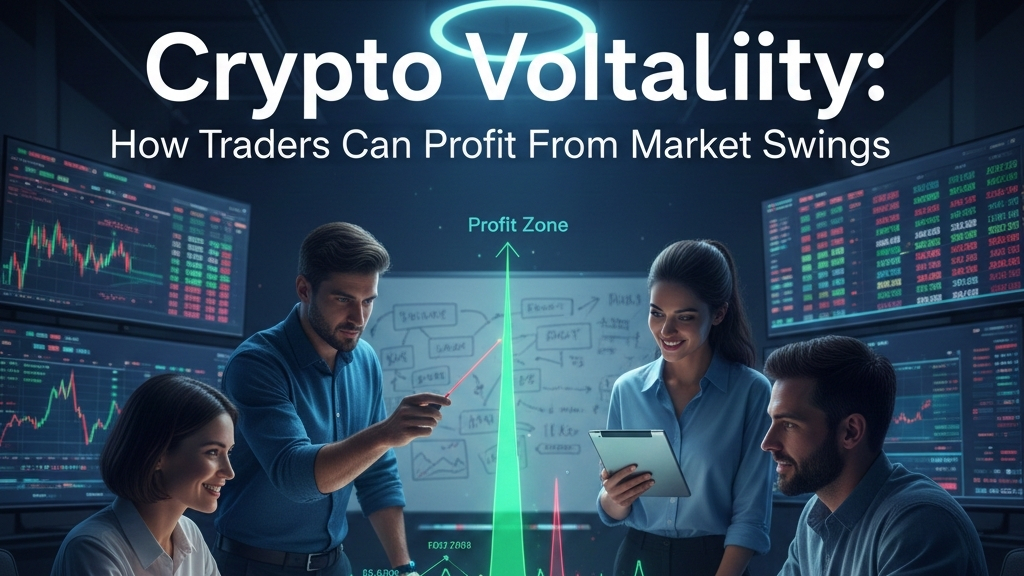
Crypto Volatility: How Traders Can Profit From Market SwingsCryptocurrency markets are famous for one defining characteristic volatility. Unlike traditional equities or bonds, major digital assets like $BTC and Litecoin (LTC) can swing 10–30% or more in a single day sometimes much more. While volatility scares conservative investors, it creates opportunities for knowledgeable traders to profit from price movements in both directions. What Is Crypto Volatility? Volatility measures how dramatically prices move over time. In crypto: Bitcoin : historically has seen annualized volatility far above most stocks Litecoin : correlated with BTC but often more erratic has experienced huge range-bound swings from its lows to all-time highs This volatility is driven by factors like 24/7 trading, sentiment-driven news cycles, shifting liquidity, and macroeconomic events that affect risk assets. Historical BTC & LTC Spikes Bitcoin 2020–2021 Rally + Crash: Bitcoin surged from roughly $10,000 to over $64,000 in less than a year, before crashing back toward $30,000 within months a move of nearly ±50%+ peak-to-trough 2011–2013 Experiences: Early in its life, BTC bounced from $31 to nearly $300, then collapsed again COVID Crash (March 2020): BTC’s largest one-day drop was about 50%, followed by an aggressive rebound the kind of volatility that infuses opportunity and risk. Litecoin (LTC) $LTC , one of the oldest Bitcoin forks, has shown even larger historical percentage moves: In the 2013–2015 era, LTC fell 97% from its peak to valley, then rallied to a new high in 2017 a 27,600% gain from earlier lows. Its all-time high of over $400 remains a landmark of crypto volatility. These dramatic movements underline why volatility isn’t just noise it fuels tradable price swings. How Traders Make Money From Volatility Swing Trading Swing traders hold positions for days to weeks to capture significant price swings as markets trend up or down. They use tools like RSI, MACD, and Fibonacci retracements to time entries and exits This strategy works in BTC and LTC alike watch for sharp pullbacks followed by momentum continuation to enter positions. Scalping Scalpers make many small trades within short timeframes aiming to profit from frequent mini-swings. Volatility creates constant opportunities for quick entry/exit patterns. It requires discipline, fast reactions, and platforms with low fees. Arbitrage During volatile periods, price spreads between exchanges often widen. Traders buy on a cheaper exchange and sell on a more expensive one. Crypto arbitrage is especially relevant across global exchanges where liquidity imbalances arise.This strategy works well in highly volatile regimes where prices momentarily dislocate across platforms. Derivatives Advanced traders use futures, options, and other derivatives to tailor risk and amplify profits: Futures allow directional bets on price movement with leverage. Options strategies (like straddles or strangles) profit when price swings either way, even if direction is uncertain. Why Volatility Is the Trader’s Friend Traditional investors often interpret volatility as instability and heightened risk. Traders, on the other hand, see it as opportunity in motion. Rapid price swings create clear entry and exit points. Temporary imbalances in price open the door for strategic positioning. Different market conditions allow traders to apply multiple approaches, from short-term scalping to longer-term swing setups. Most importantly, volatility rewards those who stay disciplined, manage risk carefully, and stick to a well-defined plan. In conclusion BTC and LTC volatility isn’t randomly chaotic it’s systematic and repeatable. Historical spikes give traders a roadmap for patterns, reactions, and range boundaries. With a solid strategy, good risk controls, and technical discipline, crypto market swings are not just fluctuations they’re opportunities. #CZAMAonBinanceSquare

Crypto Volatility: How Traders Can Profit From Market Swings

Cryptocurrency markets are famous for one defining characteristic volatility. Unlike traditional equities or bonds, major digital assets like $BTC and Litecoin (LTC) can swing 10–30% or more in a single day sometimes much more.
While volatility scares conservative investors, it creates opportunities for knowledgeable traders to profit from price movements in both directions.
What Is Crypto Volatility?
Volatility measures how dramatically prices move over time. In crypto:
Bitcoin : historically has seen annualized volatility far above most stocks
Litecoin : correlated with BTC but often more erratic has experienced huge range-bound swings from its lows to all-time highs
This volatility is driven by factors like 24/7 trading, sentiment-driven news cycles, shifting liquidity, and macroeconomic events that affect risk assets.
Historical BTC & LTC Spikes
Bitcoin
2020–2021 Rally + Crash:
Bitcoin surged from roughly $10,000 to over $64,000 in less than a year, before crashing back toward $30,000 within months a move of nearly ±50%+ peak-to-trough
2011–2013 Experiences:
Early in its life, BTC bounced from $31 to nearly $300, then collapsed again
COVID Crash (March 2020):
BTC’s largest one-day drop was about 50%, followed by an aggressive rebound the kind of volatility that infuses opportunity and risk.

Litecoin (LTC)
$LTC , one of the oldest Bitcoin forks, has shown even larger historical percentage moves:
In the 2013–2015 era, LTC fell 97% from its peak to valley, then rallied to a new high in 2017 a 27,600% gain from earlier lows.
Its all-time high of over $400 remains a landmark of crypto volatility.

These dramatic movements underline why volatility isn’t just noise it fuels tradable price swings.
How Traders Make Money From Volatility
Swing Trading
Swing traders hold positions for days to weeks to capture significant price swings as markets trend up or down. They use tools like RSI, MACD, and Fibonacci retracements to time entries and exits
This strategy works in BTC and LTC alike watch for sharp pullbacks followed by momentum continuation to enter positions.
Scalping
Scalpers make many small trades within short timeframes aiming to profit from frequent mini-swings. Volatility creates constant opportunities for quick entry/exit patterns. It requires discipline, fast reactions, and platforms with low fees.
Arbitrage
During volatile periods, price spreads between exchanges often widen.
Traders buy on a cheaper exchange and sell on a more expensive one. Crypto arbitrage is especially relevant across global exchanges where liquidity imbalances arise.This strategy works well in highly volatile regimes where prices momentarily dislocate across platforms.
Derivatives
Advanced traders use futures, options, and other derivatives to tailor risk and amplify profits:
Futures allow directional bets on price movement with leverage. Options strategies (like straddles or strangles) profit when price swings either way, even if direction is uncertain.
Why Volatility Is the Trader’s Friend
Traditional investors often interpret volatility as instability and heightened risk. Traders, on the other hand, see it as opportunity in motion. Rapid price swings create clear entry and exit points. Temporary imbalances in price open the door for strategic positioning.
Different market conditions allow traders to apply multiple approaches, from short-term scalping to longer-term swing setups. Most importantly, volatility rewards those who stay disciplined, manage risk carefully, and stick to a well-defined plan.
In conclusion BTC and LTC volatility isn’t randomly chaotic it’s systematic and repeatable. Historical spikes give traders a roadmap for patterns, reactions, and range boundaries. With a solid strategy, good risk controls, and technical discipline, crypto market swings are not just fluctuations they’re opportunities.
#CZAMAonBinanceSquare
PINNED
AI-Driven Trading Bots vs Manual Trading: Who Wins in Volatile Markets?Volatility is the lifeblood of financial markets and nowhere is this more evident than in crypto. When $BTC spikes 8% in an hour or altcoins swing double digits overnight, traders face a defining question: Do algorithms outperform human intuition when markets turn chaotic? Let's break it down What Are AI-Driven Trading Bots AI-driven trading bots are automated software programs that use artificial intelligence and machine learning to analyze market data and execute trades without human intervention. Instead of a trader manually watching charts, these bots: Scan large amounts of real-time data Identify patterns and probabilities Generate buy/sell signals Execute trades automatically Manage risk based on preset rules Why Bots Thrive in Volatile Markets 1. Speed & Execution Markets can move in milliseconds. Bots execute instantly no hesitation, no emotional delay. 2. 24/7 Operation Crypto never sleeps. Bots monitor markets around the clock without fatigue. 3. Data Processing Power AI models analyze order books, funding rates, volatility clusters, and on-chain metrics simultaneously. 4. Emotionless Decisions Fear and greed destroy human traders during flash crashes. Bots follow predefined rules. Where Bots Struggle Overfitting to past data Poor performance during black swan events Strategy breakdown in regime shifts Dependence on clean liquidity and stable infrastructure When volatility becomes irrational rather than statistical, bots can malfunction or amplify losses. What Is Manual Trading? Manual trading is when a human trader personally analyzes the market and executes buy or sell orders without automated systems making decisions for them. Every step from chart analysis to clicking buy or sell is controlled by the trader. The Case for Manual Trading Manual trading relies on discretion, macro interpretation, market psychology, and experience. Why Humans Still Matter 1. Context Awareness Humans understand narratives ETF approvals, regulatory shocks, geopolitical risk. For example, during major news tied to Bitcoin or Ethereum, discretionary traders can react to tone and sentiment before models adjust. 2. Adaptive Thinking Markets change regimes trending, ranging, panic-driven. Experienced traders can shift strategies faster than rigid algorithms. 3. Creative Risk Management Humans can reduce exposure, hedge creatively, or step aside entirely during extreme uncertainty. Where Humans Fail Emotional bias (revenge trading, FOMO, panic selling) Inconsistent discipline Slower execution Fatigue in 24/7 markets In highly volatile environments, emotions become the biggest liability. Performance in Volatile Markets: Who Has the Edge? 1. Structured Volatility (Trending + Liquidity Present) Bots often outperform. Momentum models and breakout algorithms thrive. 2. News-Driven Spikes Manual traders may win. Context and interpretation beat pure pattern recognition. 3. Flash Crashes / Liquidity Gaps Mixed results. Bots can either capture arbitrage instantly or get liquidated rapidly. 4. Extended Sideways Chop Both struggle but disciplined humans may preserve capital better. What Is the Hybrid Model in Trading? The hybrid model in trading is a combination of AI-driven automation and human decision making. Instead of choosing between bots or manual trading, traders use both allowing technology to handle speed and data, while humans manage strategy and risk. How the Hybrid Model Works 1. AI Handles the Heavy Lifting Scans markets 24/7 Detects patterns and volatility shifts Generates trade signals Executes trades instantly 2. Humans Provide Oversight Adjust strategy during regime changes Interpret macro events and narratives Manage portfolio-level risk Override or pause systems during extreme conditions The Hybrid Model: The Real Winner Increasingly, professional traders combine both approaches: AI for signal generation Automation for execution Human oversight for risk control Institutional desks use algorithms to exploit micro-inefficiencies while portfolio managers oversee macro exposure. The edge is no longer bot vs human. It’s bot plus human. Key comparison between AI trading and Manual trading 1.Speed AI Bots: Instant Manual Trading: Slower 2. Emotional Control AI Bots: Perfect Manual Trading: Vulnerable 3. Adaptability AI Bots: Depends on model Manual Trading: High (if experienced) 4. 24/7 Capability AI Bots: Yes Manual Trading: Limited 5. Narrative Awareness AI Bots: Weak Manual Trading: Strong In conclusion, In highly volatile crypto markets, the winner often depends on the type of movement unfolding. During short-term, high-frequency chaos, AI-driven bots typically have the advantage thanks to their speed and precision. But when markets shift due to powerful narratives or macro regime changes, experienced human traders tend to perform better because they can interpret context and adapt quickly. Over the long run, however, neither speed nor intuition guarantees success disciplined risk management does. The real edge isn’t about ego or raw intelligence; it’s about structure and consistency. Markets don’t consistently reward who is smartest they reward who manages risk best. And in volatile conditions, the trader who controls downside exposure whether human or algorithm is the one who ultimately survives and wins. #CPIWatch

AI-Driven Trading Bots vs Manual Trading: Who Wins in Volatile Markets?

Volatility is the lifeblood of financial markets and nowhere is this more evident than in crypto. When $BTC spikes 8% in an hour or altcoins swing double digits overnight, traders face a defining question:
Do algorithms outperform human intuition when markets turn chaotic?

Let's break it down

What Are AI-Driven Trading Bots
AI-driven trading bots are automated software programs that use artificial intelligence and machine learning to analyze market data and execute trades without human intervention.
Instead of a trader manually watching charts, these bots:
Scan large amounts of real-time data
Identify patterns and probabilities
Generate buy/sell signals
Execute trades automatically
Manage risk based on preset rules

Why Bots Thrive in Volatile Markets
1. Speed & Execution Markets can move in milliseconds. Bots execute instantly no hesitation, no emotional delay.
2. 24/7 Operation Crypto never sleeps. Bots monitor markets around the clock without fatigue.
3. Data Processing Power AI models analyze order books, funding rates, volatility clusters, and on-chain metrics simultaneously.
4. Emotionless Decisions Fear and greed destroy human traders during flash crashes. Bots follow predefined rules.

Where Bots Struggle
Overfitting to past data
Poor performance during black swan events
Strategy breakdown in regime shifts
Dependence on clean liquidity and stable infrastructure
When volatility becomes irrational rather than statistical, bots can malfunction or amplify losses.

What Is Manual Trading?
Manual trading is when a human trader personally analyzes the market and executes buy or sell orders without automated systems making decisions for them.
Every step from chart analysis to clicking buy or sell is controlled by the trader.

The Case for Manual Trading
Manual trading relies on discretion, macro interpretation, market psychology, and experience.

Why Humans Still Matter
1. Context Awareness Humans understand narratives ETF approvals, regulatory shocks, geopolitical risk.
For example, during major news tied to Bitcoin or Ethereum, discretionary traders can react to tone and sentiment before models adjust.
2. Adaptive Thinking Markets change regimes trending, ranging, panic-driven. Experienced traders can shift strategies faster than rigid algorithms.
3. Creative Risk Management Humans can reduce exposure, hedge creatively, or step aside entirely during extreme uncertainty.

Where Humans Fail
Emotional bias (revenge trading, FOMO, panic selling)
Inconsistent discipline
Slower execution
Fatigue in 24/7 markets
In highly volatile environments, emotions become the biggest liability.

Performance in Volatile Markets: Who Has the Edge?

1. Structured Volatility (Trending + Liquidity Present)
Bots often outperform.
Momentum models and breakout algorithms thrive.
2. News-Driven Spikes
Manual traders may win.
Context and interpretation beat pure pattern recognition.
3. Flash Crashes / Liquidity Gaps
Mixed results.
Bots can either capture arbitrage instantly or get liquidated rapidly.
4. Extended Sideways Chop
Both struggle but disciplined humans may preserve capital better.

What Is the Hybrid Model in Trading?
The hybrid model in trading is a combination of AI-driven automation and human decision making.
Instead of choosing between bots or manual trading, traders use both allowing technology to handle speed and data, while humans manage strategy and risk.

How the Hybrid Model Works

1. AI Handles the Heavy Lifting
Scans markets 24/7
Detects patterns and volatility shifts
Generates trade signals
Executes trades instantly

2. Humans Provide Oversight
Adjust strategy during regime changes
Interpret macro events and narratives
Manage portfolio-level risk
Override or pause systems during extreme conditions

The Hybrid Model: The Real Winner
Increasingly, professional traders combine both approaches:
AI for signal generation
Automation for execution
Human oversight for risk control
Institutional desks use algorithms to exploit micro-inefficiencies while portfolio managers oversee macro exposure.
The edge is no longer bot vs human.
It’s bot plus human.

Key comparison between AI trading and Manual trading
1.Speed
AI Bots: Instant
Manual Trading: Slower

2. Emotional Control
AI Bots: Perfect
Manual Trading: Vulnerable

3. Adaptability
AI Bots: Depends on model
Manual Trading: High (if experienced)

4. 24/7 Capability
AI Bots: Yes
Manual Trading: Limited

5. Narrative Awareness
AI Bots: Weak
Manual Trading: Strong

In conclusion, In highly volatile crypto markets, the winner often depends on the type of movement unfolding. During short-term, high-frequency chaos, AI-driven bots typically have the advantage thanks to their speed and precision. But when markets shift due to powerful narratives or macro regime changes, experienced human traders tend to perform better because they can interpret context and adapt quickly.
Over the long run, however, neither speed nor intuition guarantees success disciplined risk management does. The real edge isn’t about ego or raw intelligence; it’s about structure and consistency. Markets don’t consistently reward who is smartest they reward who manages risk best. And in volatile conditions, the trader who controls downside exposure whether human or algorithm is the one who ultimately survives and wins.
#CPIWatch
$SEI has dropped to the 1.38 Fibonacci extension on the downside, marking fresh bear market lows a typical target zone for wave (iii). A bounce from this level is possible. For wave (iv), the key resistance area sits between $0.118 and $0.294 #CPIWatch
$SEI has dropped to the 1.38 Fibonacci extension on the downside, marking fresh bear market lows a typical target zone for wave (iii). A bounce from this level is possible.
For wave (iv), the key resistance area sits between $0.118 and $0.294
#CPIWatch
$FET may be developing a wave (3) move to the upside, with a potential target around the 1.38 Fibonacci extension at $0.21. However, as long as price stays below $0.26, the possibility of another move lower remains. The bullish outlook would be invalidated on a drop below $0.119. #MarketRebound
$FET may be developing a wave (3) move to the upside, with a potential target around the 1.38 Fibonacci extension at $0.21.

However, as long as price stays below $0.26, the possibility of another move lower remains. The bullish outlook would be invalidated on a drop below $0.119.
#MarketRebound
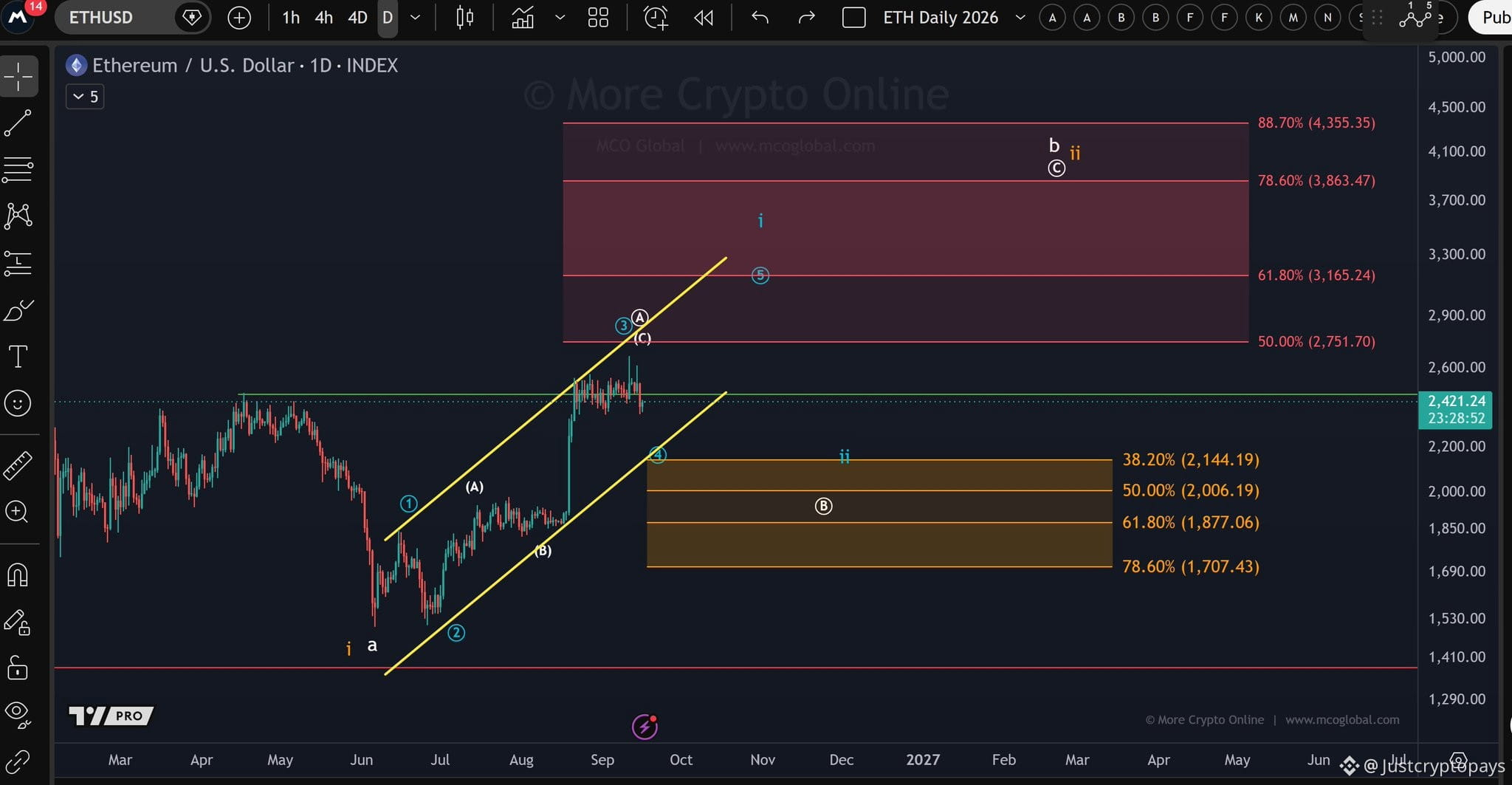
$ETH : A minor five-wave structure is developing to the upside. One more push higher in wave (1) would offer stronger confirmation of this setup. In the event of a pullback, key support lies between 1,999 and 1,940 #MarketRebound
$ETH : A minor five-wave structure is developing to the upside. One more push higher in wave (1) would offer stronger confirmation of this setup.
In the event of a pullback, key support lies between 1,999 and 1,940
#MarketRebound
$SOL : A new all-time high is still possible as long as the price stays above the $61.64 support level. However, with $BTC breaking below a key support zone, upside momentum could face some pressure. A corrective ABC move to the upside remains likely, with resistance expected between $141 and $215. #MarketRebound
$SOL : A new all-time high is still possible as long as the price stays above the $61.64 support level.
However, with $BTC breaking below a key support zone, upside momentum could face some pressure. A corrective ABC move to the upside remains likely, with resistance expected between $141 and $215.
#MarketRebound
$ETH : As long as the price stays above the $2,047 support level, there’s still room for further upside in wave (1). If a wave (2) pullback begins, the key support zone to watch lies between 1,999 and 1,940. #MarketRebound
$ETH : As long as the price stays above the $2,047 support level, there’s still room for further upside in wave (1).
If a wave (2) pullback begins, the key support zone to watch lies between 1,999 and 1,940.
#MarketRebound
done
done
mehrishh
·
--
​"Let's support each other to grow! 🤝 Just followed you, please follow back so we can both reach 500 followers soon. Done! ✅"
Thank you
Thank you
Binance Square Official
·
--
Congratulations to the winners who won the 1BNB surprise drop from Binance Square on Feb 13 for your content. Keep it up and continue to share good quality insights with unique value.
@Agoraflux_WOP : So Bitcoin Is Dead?
@Ography : The 2026 Crypto Reset: Why the Market Tanked and How to Keep Your Cool
@Justcryptopays : Crypto Volatility: How Traders Can Profit From Market Swings
@VietNexus BNB :Ripple CEO on XRP as the ‘North Star,’ CLARITY Act and Trillion-Dollar Crypto Company
@Tung9xnb :Ai sẽ cứu Bitcoin khỏi cuộc khủng hoảng này?
$ETH has moved above Thursday’s swing high, which is a positive sign. However, the advance currently appears to consist of only three waves. A further push to a new high would be ideal, as it would improve the probability that wave (c) to the upside is in progress rather than this being just a temporary corrective move #MarketRebound
$ETH has moved above Thursday’s swing high, which is a positive sign. However, the advance currently appears to consist of only three waves.

A further push to a new high would be ideal, as it would improve the probability that wave (c) to the upside is in progress rather than this being just a temporary corrective move
#MarketRebound
$TAO We’ve seen a strong green candle, but for now, the move higher still looks more like a three-wave push rather than the start of a true impulsive rally. The real test in the upcoming sessions is whether price can build out a clean five-wave structure. Without that confirmation, this advance is better viewed as a corrective bounce rather than the beginning of a larger trend reversal. Structurally, the $144 swing low remains the closest key reference level. On the upside, bulls need to reclaim and hold above $300 to signal a more meaningful shift in momentum. #MarketRebound
$TAO We’ve seen a strong green candle, but for now, the move higher still looks more like a three-wave push rather than the start of a true impulsive rally.
The real test in the upcoming sessions is whether price can build out a clean five-wave structure.

Without that confirmation, this advance is better viewed as a corrective bounce rather than the beginning of a larger trend reversal.

Structurally, the $144 swing low remains the closest key reference level. On the upside, bulls need to reclaim and hold above $300 to signal a more meaningful shift in momentum.
#MarketRebound
Is the Crypto Market in a New Crypto Winter?What We’re Seeing Right Now As of February 2026, the crypto market’s mood has shifted decisively into risk-off territory: Bitcoin prices have slid back sharply from late‑2025 highs, dipping below key support levels near $66,000–$70,000 after losing nearly half of its peak value. Recent analyst warnings even highlight potential deeper drops toward $31,000 if bearish dynamics persist. Ethereum, which once traded well above $3,000, is struggling with renewed downside pressure around $1,900–$2,000. XRP is also under stress, with prices falling below $2 and broad market commentary describing a potential further slump This persistent selloff, across majors and altcoins alike, reflects elements commonly associated with a crypto winter. Investors are seeing diminished participation, weaker liquidity, and heightened fear, factors that extend beyond normal market corrections. Why This Downturn Feels Like a Crypto Winter A crypto winter is typically defined as a prolonged period of declining or stagnant prices coupled with reduced market activity and investor enthusiasm. Several interconnected forces are at play: 1. Macro Conditions & Risk Appetite Broader risk assets have retreated, and appetite for speculative investments like cryptos has faded as investors pivot to traditional safe havens. Ongoing macro uncertainty especially around interest rates and global growth is putting pressure on risk assets. 2. ETF and Institutional Flow Dynamics Contrary to the surge of institutional involvement in 2025, recent data shows: Outflows from Bitcoin and Ethereum ETFs have outweighed inflows in early 2026, signaling traditional investors pulling capital out of crypto exposure. Some analysts argue institutional demand has become selective focused on a few large assets like BTC/ $ETH rather than broad market support which can sap broader liquidity. This shift away from fear of missing out (FOMO) driven capital has contributed to weakening price structures. 3. Technical and Sentiment Pressures Key technical support levels in Bitcoin and Ethereum have broken, prompting stop‑loss cascades and further liquidations. Market sentiment indicators like the Fear & Greed Index are displaying extreme fear, often a hallmark of extended market bleakness. Thinner liquidity makes prices more sensitive to downside news and exacerbates volatility also consistent with extended downturn phases. 4. Regulatory and Structural Headwinds Regulatory tightening across major markets has also played a role: Enforcement actions, compliance pressures, and unclear frameworks for key assets have dampened retail and institutional confidence. Broader market participation has been affected as platforms face stricter scrutiny and operations become more constrained. Is This Just a Correction or a True Crypto Winter? Many analysts agree that the crypto market is either in the early stages of a new crypto winter or on the verge of entering one. This is driven by ongoing price declines across major cryptocurrencies, reduced liquidity among both retail and institutional investors, increasing macroeconomic pressures, and technical breakdowns that amplify selling momentum. What makes this downturn feel particularly severe is that any rebounds so far have been brief and weak, suggesting the market still lacks the confidence or momentum needed for a sustained bull run. What Comes Next? Crypto winters are never short-lived. A potential turnaround would likely require factors such as renewed institutional inflows to restore liquidity, clearer regulatory frameworks to ease uncertainty, and macroeconomic catalysts like interest rate cuts or stronger growth data that boost risk appetite. Until these conditions come into play, market confidence is likely to remain low, making the current phase feel more like a prolonged downturn than a temporary correction. In conclusion The evidence strongly suggests that the crypto market is experiencing a new crypto winter in early 2026 a phase defined by weakening prices, thin liquidity, cautious investors, and macro headwinds that suppress conviction across Bitcoin, Ethereum, $XRP , and the broader market. Whether this winter will deepen or pave the way for the next leg up depends on a complex mix of institutional capital flows, regulatory clarity, macroeconomic shifts, and renewed retail/institutional interest factors that will define the market’s trajectory throughout 2026. #CZAMAonBinanceSquare

Is the Crypto Market in a New Crypto Winter?

What We’re Seeing Right Now
As of February 2026, the crypto market’s mood has shifted decisively into risk-off territory:
Bitcoin prices have slid back sharply from late‑2025 highs, dipping below key support levels near $66,000–$70,000 after losing nearly half of its peak value. Recent analyst warnings even highlight potential deeper drops toward $31,000 if bearish dynamics persist.

Ethereum, which once traded well above $3,000, is struggling with renewed downside pressure around $1,900–$2,000.

XRP is also under stress, with prices falling below $2 and broad market commentary describing a potential further slump

This persistent selloff, across majors and altcoins alike, reflects elements commonly associated with a crypto winter. Investors are seeing diminished participation, weaker liquidity, and heightened fear, factors that extend beyond normal market corrections.
Why This Downturn Feels Like a Crypto Winter
A crypto winter is typically defined as a prolonged period of declining or stagnant prices coupled with reduced market activity and investor enthusiasm. Several interconnected forces are at play:
1. Macro Conditions & Risk Appetite
Broader risk assets have retreated, and appetite for speculative investments like cryptos has faded as investors pivot to traditional safe havens.
Ongoing macro uncertainty especially around interest rates and global growth is putting pressure on risk assets.

2. ETF and Institutional Flow Dynamics
Contrary to the surge of institutional involvement in 2025, recent data shows:
Outflows from Bitcoin and Ethereum ETFs have outweighed inflows in early 2026, signaling traditional investors pulling capital out of crypto exposure.
Some analysts argue institutional demand has become selective focused on a few large assets like BTC/ $ETH rather than broad market support which can sap broader liquidity.
This shift away from fear of missing out (FOMO) driven capital has contributed to weakening price structures.
3. Technical and Sentiment Pressures
Key technical support levels in Bitcoin and Ethereum have broken, prompting stop‑loss cascades and further liquidations.
Market sentiment indicators like the Fear & Greed Index are displaying extreme fear, often a hallmark of extended market bleakness.
Thinner liquidity makes prices more sensitive to downside news and exacerbates volatility also consistent with extended downturn phases.
4. Regulatory and Structural Headwinds
Regulatory tightening across major markets has also played a role:
Enforcement actions, compliance pressures, and unclear frameworks for key assets have dampened retail and institutional confidence.
Broader market participation has been affected as platforms face stricter scrutiny and operations become more constrained.

Is This Just a Correction or a True Crypto Winter?
Many analysts agree that the crypto market is either in the early stages of a new crypto winter or on the verge of entering one. This is driven by ongoing price declines across major cryptocurrencies, reduced liquidity among both retail and institutional investors, increasing macroeconomic pressures, and technical breakdowns that amplify selling momentum. What makes this downturn feel particularly severe is that any rebounds so far have been brief and weak, suggesting the market still lacks the confidence or momentum needed for a sustained bull run.

What Comes Next?
Crypto winters are never short-lived. A potential turnaround would likely require factors such as renewed institutional inflows to restore liquidity, clearer regulatory frameworks to ease uncertainty, and macroeconomic catalysts like interest rate cuts or stronger growth data that boost risk appetite. Until these conditions come into play, market confidence is likely to remain low, making the current phase feel more like a prolonged downturn than a temporary correction.
In conclusion
The evidence strongly suggests that the crypto market is experiencing a new crypto winter in early 2026 a phase defined by weakening prices, thin liquidity, cautious investors, and macro headwinds that suppress conviction across Bitcoin, Ethereum, $XRP , and the broader market.
Whether this winter will deepen or pave the way for the next leg up depends on a complex mix of institutional capital flows, regulatory clarity, macroeconomic shifts, and renewed retail/institutional interest factors that will define the market’s trajectory throughout 2026.
#CZAMAonBinanceSquare
$VIRTUAL will need to break above the $0.68 level to provide the first clear indication that a low may have been established in wave ii/b. #CPIWatch
$VIRTUAL will need to break above the $0.68 level to provide the first clear indication that a low may have been established in wave ii/b.
#CPIWatch
Institutional Interest in Solana: The Big PictureSolana has rapidly transitioned from a predominantly retail‑driven project to one attracting serious institutional capital including hedge funds, corporate treasuries, and regulated investment products. 1. Hedge Funds & Traditional Financial Players Are Allocating to Solana Hedge funds and crypto-focused investment firms, including Galaxy Digital, are reportedly shifting portions of their portfolios into SOL from other major cryptocurrencies, reflecting growing confidence in Solana’s potential. Surveys, such as those conducted by AIMA, show an increasing number of hedge funds holding crypto, with $SOL adoption in some cases surpassing Ethereum, driven by clearer regulatory guidelines and promising upside. Additionally, anecdotal reports circulating widely on social media suggest that major Wall Street banks, including Goldman Sachs, may hold significant amounts of SOL, though these claims have yet to be confirmed through official filings. These trends show that institutions aren’t merely dabbling they’re strategically positioning in Solana. 2. Corporate Treasuries & Long-Term Holders Moving Heavy Capital Institutional interest in Solana extends beyond hedge funds. Several publicly traded companies now hold hundreds of millions of dollars in SOL, signaling a strong long-term commitment. For instance, Forward Industries reportedly stores tens of millions of SOL in cold wallets. Meanwhile, firms such as Upexi, DeFi Development Corp., SOL Strategies, and Torrent Capital collectively controlled over 3.5 million SOL (roughly $590 million) as of mid‑2025. Many of these institutional holdings are staked, allowing them to earn yield while also reducing the circulating supply. 3. Institutional Products Fueling Capital Inflows One of the clearest signposts of institutional participation is the rise of regulated investment products: (a) Solana ETFs Exchange‑traded funds provide regulated pathways for institutional capital that can’t hold private keys or manage crypto directly. Solana‑linked ETFs like Bitwise’s Solana Staking ETF have seen strong initial capital inflows, even during price pullbacks. ETFs make Solana exposure accessible to pension funds, insurance companies, and large asset managers. (b) Corporate & Treasury Vehicles Innovative instruments such as Solana‑focused public treasuries and staking vehicles (e.g., initiatives backed by Pantera, Multicoin, and Jump Crypto) suggest institutional investors aren’t satisfied with passive exposure they want active yield and strategic roles. 4. Why Institutions Are Interested in Solana (a) High‑Performance Technology Solana is prized for its fast throughput and low fees attributes attractive for institutional trading, high‑frequency desks, tokenized assets, and DeFi infrastructure (b) Yield Generation Staking yields and treasury returns provide income‑generating strategies beyond mere price appreciation an appealing diversification play for hedge funds (c) Diversification Beyond BTC/ETH Institutional appetite for assets beyond $BTC and Ethereum has grown, with Solana gaining a notable share in institutional portfolios especially among alpha seekers. 5. Risks and Market Nuances Even with strong institutional interest, there are important considerations: Institutional flows, particularly through ETFs, can be sensitive to price swings and broader macroeconomic conditions. At the same time, Solana’s on-chain activity and participation metrics have occasionally dipped from their peak, which may influence long-term outlooks. Additionally, regulatory clarity especially in the U.S. and EU is still evolving, playing a key role in how institutions engage with the network. In conclusion Hedge funds and traditional institutional investors are steadily increasing their exposure to Solana through direct holdings, regulated investment products, and strategic hedging. At the same time, corporate treasuries and institutional vehicles are accumulating SOL both as a treasury asset and as a source of yield. The inflows from ETFs and other regulated products further highlight strong interest from smart money seeking compliant avenues for participation. Altogether, these trends indicate that institutional confidence in Solana is robust and growing, driven by a combination of long-term strategic positioning and product-driven capital flows, rather than mere speculative activity. #CPIWatch

Institutional Interest in Solana: The Big Picture

Solana has rapidly transitioned from a predominantly retail‑driven project to one attracting serious institutional capital including hedge funds, corporate treasuries, and regulated investment products.

1. Hedge Funds & Traditional Financial Players Are Allocating to Solana
Hedge funds and crypto-focused investment firms, including Galaxy Digital, are reportedly shifting portions of their portfolios into SOL from other major cryptocurrencies, reflecting growing confidence in Solana’s potential.
Surveys, such as those conducted by AIMA, show an increasing number of hedge funds holding crypto, with $SOL adoption in some cases surpassing Ethereum, driven by clearer regulatory guidelines and promising upside.
Additionally, anecdotal reports circulating widely on social media suggest that major Wall Street banks, including Goldman Sachs, may hold significant amounts of SOL, though these claims have yet to be confirmed through official filings.
These trends show that institutions aren’t merely dabbling they’re strategically positioning in Solana.

2. Corporate Treasuries & Long-Term Holders Moving Heavy Capital
Institutional interest in Solana extends beyond hedge funds. Several publicly traded companies now hold hundreds of millions of dollars in SOL, signaling a strong long-term commitment. For instance, Forward Industries reportedly stores tens of millions of SOL in cold wallets.
Meanwhile, firms such as Upexi, DeFi Development Corp., SOL Strategies, and Torrent Capital collectively controlled over 3.5 million SOL (roughly $590 million) as of mid‑2025. Many of these institutional holdings are staked, allowing them to earn yield while also reducing the circulating supply.

3. Institutional Products Fueling Capital Inflows
One of the clearest signposts of institutional participation is the rise of regulated investment products:
(a) Solana ETFs
Exchange‑traded funds provide regulated pathways for institutional capital that can’t hold private keys or manage crypto directly.
Solana‑linked ETFs like Bitwise’s Solana Staking ETF have seen strong initial capital inflows, even during price pullbacks.
ETFs make Solana exposure accessible to pension funds, insurance companies, and large asset managers.

(b) Corporate & Treasury Vehicles
Innovative instruments such as Solana‑focused public treasuries and staking vehicles (e.g., initiatives backed by Pantera, Multicoin, and Jump Crypto) suggest institutional investors aren’t satisfied with passive exposure they want active yield and strategic roles.

4. Why Institutions Are Interested in Solana

(a) High‑Performance Technology
Solana is prized for its fast throughput and low fees attributes attractive for institutional trading, high‑frequency desks, tokenized assets, and DeFi infrastructure

(b) Yield Generation
Staking yields and treasury returns provide income‑generating strategies beyond mere price appreciation an appealing diversification play for hedge funds

(c) Diversification Beyond BTC/ETH
Institutional appetite for assets beyond $BTC and Ethereum has grown, with Solana gaining a notable share in institutional portfolios especially among alpha seekers.

5. Risks and Market Nuances
Even with strong institutional interest, there are important considerations:
Institutional flows, particularly through ETFs, can be sensitive to price swings and broader macroeconomic conditions. At the same time, Solana’s on-chain activity and participation metrics have occasionally dipped from their peak, which may influence long-term outlooks. Additionally, regulatory clarity especially in the U.S. and EU is still evolving, playing a key role in how institutions engage with the network.
In conclusion Hedge funds and traditional institutional investors are steadily increasing their exposure to Solana through direct holdings, regulated investment products, and strategic hedging.
At the same time, corporate treasuries and institutional vehicles are accumulating SOL both as a treasury asset and as a source of yield. The inflows from ETFs and other regulated products further highlight strong interest from smart money seeking compliant avenues for participation.
Altogether, these trends indicate that institutional confidence in Solana is robust and growing, driven by a combination of long-term strategic positioning and product-driven capital flows, rather than mere speculative activity.

#CPIWatch
Behavioral Finance in Crypto Markets: Fear, Greed, and Cognitive BiasesCryptocurrency markets have captivated retail and institutional investors alike with their volatility, rapid innovation, and potential for outsized returns. Yet for all the quantitative data and blockchain fundamentals driving crypto analysis, there’s another force shaping price action just as powerfully: human psychology. Behavioral finance the study of how emotional and cognitive factors influence financial decisions offers key insights into why crypto markets often behave unlike traditional ones. In crypto, sentiment isn’t just commentary on price movements it often is the price movement. Why Behavioral Finance Matters in Crypto Classical economic theory assumes that markets are rational: investors process information efficiently, make unbiased decisions, and assets are always fairly priced. Behavioral finance challenges that assumption, arguing that individuals are subject to emotional responses and cognitive errors that lead to systematic patterns of irrational behavior. In highly liquid, mainstream markets like equities or forex, emotions still matter but they’re mitigated by vast institutional participation, diversified portfolios, and slower reaction times. Crypto markets, by contrast, are: Retail‑driven and sentiment‑sensitive Highly volatile 24/7 and globally accessible Largely unregulated or loosely regulated These features amplify emotional responses and create fertile ground for cognitive biases to shape behavior sometimes accelerating trends well beyond reasonable fundamentals. Fear and Greed At its core, crypto price movement is a battle between two primal emotions: Fear Fear in crypto shows up in several ways: Panic selling: Sharp declines trigger emotion‑driven exits without regard to fundamentals. Fear of missing out (FOMO): Even bearish investors jump back in when prices rally, driven by anxiety about being left behind. Capitulation: Long‑term holders sell at deep losses, abandoning conviction when volatility peaks. These fear responses often magnify drawdowns, deepen sell‑offs, and crystallize losses that might otherwise be temporary paper losses. Greed Greed the flip side of fear is equally powerful: Overleveraging: Traders take outsized risk chasing quick gains. Speculative bubbles: Exuberant buying pushes prices far above intrinsic value (e.g., crypto mania cycles). Hype buying: Tokens with no real use cases skyrocket simply due to social buzz or celebrity endorsement. Greed fuels market tops just as fear fuels bottoms. The classic “buy high, sell low” trap is often a direct outcome of greed‑induced entry and fear‑induced exit. Cognitive Biases at Work Behavioral finance identifies numerous cognitive biases that influence investor behavior. Below are the most potent ones in crypto: Confirmation Bias Investors seek out information that supports their existing views and disregard contradictory evidence. In crypto, this shows up when believers only follow bullish YouTube analysts and dismiss credible bearish risk analysis. Herd Mentality Humans evolved to follow the group, and in markets this leads to mimicry: “If everyone’s buying Bitcoin/AI coins/altcoins, I should too.” Impact: Viral pump cycles, crowd‑driven bubbles, sudden chaotic reversals. Anchoring Investors anchor on a specific price they paid, or a past high, and make decisions based on that emotional reference point rather than real value. Recency Bias People overweight recent events and extrapolate them forward. After several days of rising prices, traders expect the uptrend to continue indefinitely. Loss Aversion Behavioral studies show that losses hurt more emotionally than equivalent gains feel good. In crypto, investors often hold losing positions too long hoping to break even, while taking profits too quickly. Availability Bias Investors overestimate the importance of information that’s easily recalled often sensational headlines or hot Tweets. How Fear and Greed Show Up on a Market Level Crypto traders often refer to Fear & Greed Index, a sentiment metric aggregating different data points to reflect overall market mood. Extreme greed readings are often followed by corrections, while extreme fear can signal market bottoms. Patterns seen repeatedly include: V‑shaped relief rallies when markets recover quickly from deep fears. Parabolic blow‑offs where greed overwhelms logic. Volatility clustering due to emotional panic waves. These aren’t random they’re manifestations of collective human psychology interacting with liquidity and information flow. Managing Behavioral Biases: Practical Tips Understanding the psychology is one thing acting differently is another. Successful crypto participants incorporate behavioral insights into disciplined strategies: Use rules, not emotions Set predefined stop‑loss and take‑profit levels. Diversify exposure Avoid overcommitting to a single asset class or token. Follow data, not hype Use objective metrics and not just social sentiment for decisions. Keep a journal Track decisions and emotions to detect recurring biases. Take breaks Stepping away during high volatility can prevent impulsive trades. In Conclusion Behavioral finance is not a soft science it’s a practical roadmap to understanding why crypto markets frequently defy classical expectations. Fear and greed aren’t just colorful metaphors; they are measurable forces that shape price action, create cycles, and influence the success or failure of traders. In crypto, where sentiment moves faster than fundamentals, mastering behavioral biases may be just as important as understanding blockchain technology or market structure. The most profitable investors aren’t those who ignore emotion they’re the ones who recognize, respect, and manage it. #CPIWatch

Behavioral Finance in Crypto Markets: Fear, Greed, and Cognitive Biases

Cryptocurrency markets have captivated retail and institutional investors alike with their volatility, rapid innovation, and potential for outsized returns. Yet for all the quantitative data and blockchain fundamentals driving crypto analysis, there’s another force shaping price action just as powerfully: human psychology. Behavioral finance the study of how emotional and cognitive factors influence financial decisions offers key insights into why crypto markets often behave unlike traditional ones.
In crypto, sentiment isn’t just commentary on price movements it often is the price movement.

Why Behavioral Finance Matters in Crypto
Classical economic theory assumes that markets are rational: investors process information efficiently, make unbiased decisions, and assets are always fairly priced. Behavioral finance challenges that assumption, arguing that individuals are subject to emotional responses and cognitive errors that lead to systematic patterns of irrational behavior.
In highly liquid, mainstream markets like equities or forex, emotions still matter but they’re mitigated by vast institutional participation, diversified portfolios, and slower reaction times. Crypto markets, by contrast, are:
Retail‑driven and sentiment‑sensitive
Highly volatile
24/7 and globally accessible
Largely unregulated or loosely regulated
These features amplify emotional responses and create fertile ground for cognitive biases to shape behavior sometimes accelerating trends well beyond reasonable fundamentals.

Fear and Greed
At its core, crypto price movement is a battle between two primal emotions:

Fear
Fear in crypto shows up in several ways:
Panic selling: Sharp declines trigger emotion‑driven exits without regard to fundamentals.
Fear of missing out (FOMO): Even bearish investors jump back in when prices rally, driven by anxiety about being left behind.
Capitulation: Long‑term holders sell at deep losses, abandoning conviction when volatility peaks.
These fear responses often magnify drawdowns, deepen sell‑offs, and crystallize losses that might otherwise be temporary paper losses.

Greed
Greed the flip side of fear is equally powerful:
Overleveraging: Traders take outsized risk chasing quick gains.
Speculative bubbles: Exuberant buying pushes prices far above intrinsic value (e.g., crypto mania cycles).
Hype buying: Tokens with no real use cases skyrocket simply due to social buzz or celebrity endorsement.
Greed fuels market tops just as fear fuels bottoms. The classic “buy high, sell low” trap is often a direct outcome of greed‑induced entry and fear‑induced exit.

Cognitive Biases at Work
Behavioral finance identifies numerous cognitive biases that influence investor behavior. Below are the most potent ones in crypto:
Confirmation Bias
Investors seek out information that supports their existing views and disregard contradictory evidence. In crypto, this shows up when believers only follow bullish YouTube analysts and dismiss credible bearish risk analysis.

Herd Mentality
Humans evolved to follow the group, and in markets this leads to mimicry: “If everyone’s buying Bitcoin/AI coins/altcoins, I should too.”
Impact: Viral pump cycles, crowd‑driven bubbles, sudden chaotic reversals.

Anchoring
Investors anchor on a specific price they paid, or a past high, and make decisions based on that emotional reference point rather than real value.

Recency Bias
People overweight recent events and extrapolate them forward. After several days of rising prices, traders expect the uptrend to continue indefinitely.

Loss Aversion
Behavioral studies show that losses hurt more emotionally than equivalent gains feel good. In crypto, investors often hold losing positions too long hoping to break even, while taking profits too quickly.

Availability Bias
Investors overestimate the importance of information that’s easily recalled often sensational headlines or hot Tweets.

How Fear and Greed Show Up on a Market Level
Crypto traders often refer to Fear & Greed Index, a sentiment metric aggregating different data points to reflect overall market mood. Extreme greed readings are often followed by corrections, while extreme fear can signal market bottoms.
Patterns seen repeatedly include:
V‑shaped relief rallies when markets recover quickly from deep fears.
Parabolic blow‑offs where greed overwhelms logic.
Volatility clustering due to emotional panic waves.
These aren’t random they’re manifestations of collective human psychology interacting with liquidity and information flow.
Managing Behavioral Biases: Practical Tips
Understanding the psychology is one thing acting differently is another. Successful crypto participants incorporate behavioral insights into disciplined strategies:
Use rules, not emotions
Set predefined stop‑loss and take‑profit levels.
Diversify exposure
Avoid overcommitting to a single asset class or token.
Follow data, not hype
Use objective metrics and not just social sentiment for decisions.
Keep a journal
Track decisions and emotions to detect recurring biases.
Take breaks
Stepping away during high volatility can prevent impulsive trades.

In Conclusion Behavioral finance is not a soft science it’s a practical roadmap to understanding why crypto markets frequently defy classical expectations. Fear and greed aren’t just colorful metaphors; they are measurable forces that shape price action, create cycles, and influence the success or failure of traders.
In crypto, where sentiment moves faster than fundamentals, mastering behavioral biases may be just as important as understanding blockchain technology or market structure. The most profitable investors aren’t those who ignore emotion they’re the ones who recognize, respect, and manage it.
#CPIWatch
$SOL has bounced well off support. Next, we’ll need to see if the bulls can push the price above $89.61. For now, there’s no reason to adjust the current roadmap. #CZAMAonBinanceSquare
$SOL has bounced well off support. Next, we’ll need to see if the bulls can push the price above $89.61. For now, there’s no reason to adjust the current roadmap.
#CZAMAonBinanceSquare
BlackRock’s Head of Digital Assets revealed that institutional investors are actively accumulating $BTC during periods of price weakness. He also pushed back against speculation that hedge funds involved with IBIT were responsible for the recent market sell-off. #CZAMAonBinanceSquare
BlackRock’s Head of Digital Assets revealed that institutional investors are actively accumulating $BTC during periods of price weakness. He also pushed back against speculation that hedge funds involved with IBIT were responsible for the recent market sell-off.
#CZAMAonBinanceSquare
Perpetual Futures vs Quarterly Futures: Which Offers the Better Edge?In crypto derivatives trading, your edge doesn’t come from leverage alone it comes from structure. Two traders can hold the same directional bias on $BTC or Ethereum and end up with completely different results depending on the type of futures contract they choose. The debate between perpetual futures and quarterly futures isn’t about which is superior in general it’s about which provides the better advantage under specific market conditions. What Are Perpetual Futures? Perpetual futures (commonly called perps) are derivative contracts that allow traders to speculate on the price of an asset without owning it and without an expiration date. Unlike traditional futures, perpetual contracts can be held indefinitely, as long as the trader maintains sufficient margin. Key Features: No expiry date Funding rate mechanism High liquidity (especially in crypto) Ideal for short-term trading The Funding Rate Mechanism Since perpetual futures never expire, exchanges use a funding rate to keep the contract price aligned with the spot market. If perps trade above spot: Longs pay shorts If perps trade below spot: Shorts pay longs Funding typically occurs every 8 hours. This creates a hidden cost that directly affects profitability especially during extended trends when funding can stay positive or negative for days. Perpetual futures dominate crypto markets because they offer flexibility, deep liquidity, and continuous exposure. What Are Quarterly Futures? Quarterly futures are traditional futures contracts with a fixed expiration date, typically at the end of each financial quarter (March, June, September, December). When the contract expires, it settles automatically either in cash or crypto, depending on the platform. Key Features: Fixed expiry date No funding rate Often trade at premium (contango) or discount (backwardation) Preferred for structured positioning How Pricing Works Instead of funding payments, quarterly futures reflect market expectations directly in their price: In bullish markets contracts usually trade above spot (contango) In bearish markets contracts may trade below spot This difference between futures price and spot price is called the basis and it creates opportunities for arbitrage and structured strategies. Structural Differences That Create Edge 1. Cost Structure Perpetual Futures: Variable funding cost Can become expensive in strong trends Less predictable over long holding periods Quarterly Futures: No recurring funding Cost is locked in via basis at entry More predictable for swing or position traders 2. Short-Term Trading Efficiency Perpetual contracts dominate intraday trading because: They track spot tightly Liquidity is deeper No concern about expiry Lower slippage in most cases 3. Trend Markets vs Sideways Markets In Strong Uptrends: Perpetual funding often turns highly positive. Long traders continuously pay shorts. Quarterly futures may trade at a premium, but that premium doesn’t increase endlessly like funding costs can. In Sideways Markets: Funding oscillates. Costs may be minimal. Perps often become more efficient. 4. Arbitrage & Institutional Edge Quarterly futures create structured opportunities: Cash-and-carry arbitrage Basis trading Calendar spreads Institutions often prefer quarterly contracts because: They offer predictable pricing No funding uncertainty Clear expiry structure Perpetuals are more retail-driven due to accessibility and simplicity. 5. Risk & Liquidation Dynamics Both contracts use leverage, but: Perpetual traders may suffer from funding spikes during volatile sentiment shifts. Quarterly traders face settlement risk at expiry but avoid funding distortions. Neither is inherently safer risk depends on leverage management. So, Which Offers the Better Edge? It depends entirely on your strategy. Perpetual Futures Offer Better Edge If : You trade short-term volatility You scalp or day trade You need constant liquidity You actively monitor funding Quarterly Futures Offer Better Edge If: You hold multi-week positions You want predictable cost structure You trade basis or arbitrage You prefer institutional-style positioning In conclusion Perpetual futures lead crypto trading volumes for a reason they’re flexible, highly liquid, and designed for continuous market exposure. At the same time, quarterly futures offer their own strategic advantages, especially in strong trending conditions or longer-term trades, where removing funding uncertainty can protect profitability. The real advantage isn’t committing to one contract type over the other. It’s understanding when each instrument makes more sense. Experienced traders adjust their tools to match the market environment. In derivatives trading, contract structure directly influences results and mastering that structure is where true edge is built. #CPIWatch

Perpetual Futures vs Quarterly Futures: Which Offers the Better Edge?

In crypto derivatives trading, your edge doesn’t come from leverage alone it comes from structure. Two traders can hold the same directional bias on $BTC or Ethereum and end up with completely different results depending on the type of futures contract they choose.
The debate between perpetual futures and quarterly futures isn’t about which is superior in general it’s about which provides the better advantage under specific market conditions.

What Are Perpetual Futures?
Perpetual futures (commonly called perps) are derivative contracts that allow traders to speculate on the price of an asset without owning it and without an expiration date.
Unlike traditional futures, perpetual contracts can be held indefinitely, as long as the trader maintains sufficient margin.
Key Features:
No expiry date
Funding rate mechanism
High liquidity (especially in crypto)
Ideal for short-term trading
The Funding Rate Mechanism
Since perpetual futures never expire, exchanges use a funding rate to keep the contract price aligned with the spot market.
If perps trade above spot: Longs pay shorts
If perps trade below spot: Shorts pay longs
Funding typically occurs every 8 hours.
This creates a hidden cost that directly affects profitability especially during extended trends when funding can stay positive or negative for days.
Perpetual futures dominate crypto markets because they offer flexibility, deep liquidity, and continuous exposure.

What Are Quarterly Futures?
Quarterly futures are traditional futures contracts with a fixed expiration date, typically at the end of each financial quarter (March, June, September, December).
When the contract expires, it settles automatically either in cash or crypto, depending on the platform.
Key Features:
Fixed expiry date
No funding rate
Often trade at premium (contango) or discount (backwardation)
Preferred for structured positioning
How Pricing Works
Instead of funding payments, quarterly futures reflect market expectations directly in their price:
In bullish markets contracts usually trade above spot (contango)
In bearish markets contracts may trade below spot
This difference between futures price and spot price is called the basis and it creates opportunities for arbitrage and structured strategies.

Structural Differences That Create Edge

1. Cost Structure
Perpetual Futures:
Variable funding cost
Can become expensive in strong trends
Less predictable over long holding periods
Quarterly Futures:
No recurring funding
Cost is locked in via basis at entry
More predictable for swing or position traders

2. Short-Term Trading Efficiency
Perpetual contracts dominate intraday trading because:
They track spot tightly
Liquidity is deeper
No concern about expiry
Lower slippage in most cases

3. Trend Markets vs Sideways Markets
In Strong Uptrends:
Perpetual funding often turns highly positive. Long traders continuously pay shorts.
Quarterly futures may trade at a premium, but that premium doesn’t increase endlessly like funding costs can.
In Sideways Markets:
Funding oscillates. Costs may be minimal. Perps often become more efficient.

4. Arbitrage & Institutional Edge
Quarterly futures create structured opportunities:
Cash-and-carry arbitrage
Basis trading
Calendar spreads
Institutions often prefer quarterly contracts because:
They offer predictable pricing
No funding uncertainty
Clear expiry structure
Perpetuals are more retail-driven due to accessibility and simplicity.

5. Risk & Liquidation Dynamics
Both contracts use leverage, but:
Perpetual traders may suffer from funding spikes during volatile sentiment shifts.
Quarterly traders face settlement risk at expiry but avoid funding distortions.
Neither is inherently safer risk depends on leverage management.

So, Which Offers the Better Edge?
It depends entirely on your strategy.
Perpetual Futures Offer Better Edge If :
You trade short-term volatility
You scalp or day trade
You need constant liquidity
You actively monitor funding
Quarterly Futures Offer Better Edge If:
You hold multi-week positions
You want predictable cost structure
You trade basis or arbitrage
You prefer institutional-style positioning

In conclusion Perpetual futures lead crypto trading volumes for a reason they’re flexible, highly liquid, and designed for continuous market exposure.
At the same time, quarterly futures offer their own strategic advantages, especially in strong trending conditions or longer-term trades, where removing funding uncertainty can protect profitability.
The real advantage isn’t committing to one contract type over the other. It’s understanding when each instrument makes more sense.
Experienced traders adjust their tools to match the market environment. In derivatives trading, contract structure directly influences results and mastering that structure is where true edge is built.
#CPIWatch
Altseason or Fakeout? How to Spot Real Capital Rotation EarlyCryptocurrency markets are cyclical, and every cycle brings the same dopplegänger, Altseason that either blossoms into massive gains or fizzles into a fakeout that traps latecomers at the peak. What is Altseason ? Altseason is a period in the crypto market when altcoins outperform Bitcoin often dramatically over weeks or months. Instead of money flowing primarily into BTC, capital rotates into other cryptocurrencies like Ethereum, Solana, $XRP , AI tokens, DeFi tokens, meme coins, and more. What Is a Fakeout in Crypto? A fakeout is when the market appears to be starting a big move like an altcoin rally or a new trend but quickly reverses, trapping traders who jumped in too early. It’s essentially a false signal. Key Characteristics of a Fakeout: 1. Short-lived price moves Price spikes or dips dramatically but doesn’t sustain. Example: An altcoin shoots up 20% in a day but falls back the next day. 2. No real capital rotation The movement isn’t supported by new money entering the market. Often a reallocation within the same assets, not a genuine trend. 3. Low market breadth Only a few coins pump. Most altcoins or the overall market don’t follow along. 4. Reversal signs Indicators like BTC dominance, TOTAL3, and stablecoin flows do not confirm the trend. Whales may be selling into the hype. What Is Capital Rotation ? Capital rotation refers to the movement of money between different assets or sectors within the cryptocurrency market. How does it work ? 1. From Bitcoin to Altcoins Investors may move money from BTC into altcoins once BTC stabilizes or traders see higher growth potential in alts. 2. From Altcoins Back to BTC or Stablecoins After altcoins surge, profits are often taken and moved back into BTC or stablecoins to lock in gains. 3. Between Altcoins Even within altcoins, capital may rotate from large-cap coins to mid- or small-cap coins depending on market trends. Three key on-chain and Market depth indicators: 1. BTC Dominance ( Indicator 1) What Is BTC Dominance? BTC Dominance is a metric that shows what percentage of the total cryptocurrency market capitalization is made up by Bitcoin . It’s basically a way to measure Bitcoin’s market share relative to all other cryptocurrencies. How to read it BTC Dominance drops sharply means Capital flowing into altcoins (bullish altseason signal) BTC Dominance flatlines or bounces means Altcoin gains are likely just BTC weakness (fakeout risk) Divergence means BTC price rising but dominance dropping = strong altcycle What Real Altseason Looks Like A sustained breakout from a long-term level of BTC dominance not just a brief dip. Look for: Multi-week decrease Higher timeframe support breaks Confluence with decreasing BTC altcoin flows 2. TOTAL3 (Indicator 2) What Is TOTAL3? TOTAL3 is a cryptocurrency market metric that tracks the combined market capitalization of all cryptocurrencies excluding Bitcoin and stablecoins. It’s essentially the altcoin market cap in absolute terms. Why TOTAL3 Matters BTC dominance only tells relative share. TOTAL3 tells absolute size of alt market growth. Key patterns: TOTAL3 trending up strongly, means legitimate expansion of alt markets TOTAL3 stagnating or returning to range, means fakeout cycle How To Use It Confirm a higher high in TOTAL3 after a prior range Confirm with volume expansion (more inflows, not just token rotations) Compare TOTAL3 against BTC price if alts outperform BTC, real rotation is happening 3. Stablecoin Inflows ( Indicator 3 ) What Are Stablecoin Inflows? Stablecoin inflows refer to the movement of stablecoins (like USDT, USDC, BUSD, DAI) onto cryptocurrency exchanges, usually in preparation for buying other crypto assets. They’re an important early indicator of new capital entering the market. Why Stablecoin Flows Matter Stablecoins like USDT, USDC, BUSD, etc. often represent new capital waiting on the sidelines. When more stablecoins are created and deposited onto exchanges, it usually means there is fresh capital ready to be invested into cryptocurrencies. What To Watch (a) Stablecoin Supply Growth If the total supply of stablecoins is expanding sharply, it means: New money is entering Traders are potentially ready to chase yield (b) Stablecoin Exchange Flow Large inflows of stablecoins into major exchanges indicate: Traders ready to deploy capital into assets (especially alts) (c) Stablecoin outflows from exchanges Often a bullish hold signal capital gets parked off exchanges before rally continuation Common Pitfalls & Fakeout Traps 📉 Fakeout #1: BTC Weakness Rally BTC drops and alts pump temporarily doesn’t mean rotation, just BTC fear trades. 📊 Fakeout #2 : Meme Coin Explosions Short squeezes and low-cap token mania can inflate alt prices but don’t signal structural flow. 🧨 Fakeout #3 : Whales Dumping at Tops Large wallets rotating from freshly pumped alts back to BTC/stablecoins signal the end of rallies. Always confirm flow , breadth , fresh capital, not just price moves. In conclusion Altseason isn’t driven by memes or hype it’s all about real capital moving through the market. The main signs to watch are BTC dominance steadily declining, not just a temporary dip TOTAL3 growing, showing altcoins are gaining in both absolute and relative value Stablecoin supply rising and flowing onto exchanges, signaling fresh money ready to be deployed When several of these factors line up, it usually means early-stage genuine rotation into altcoins. If prices look strong but these metrics don’t support it, the move is likely just a fakeout #CPIWatch

Altseason or Fakeout? How to Spot Real Capital Rotation Early

Cryptocurrency markets are cyclical, and every cycle brings the same dopplegänger, Altseason that either blossoms into massive gains or fizzles into a fakeout that traps latecomers at the peak.
What is Altseason ?
Altseason is a period in the crypto market when altcoins outperform Bitcoin often dramatically over weeks or months.
Instead of money flowing primarily into BTC, capital rotates into other cryptocurrencies like Ethereum, Solana, $XRP , AI tokens, DeFi tokens, meme coins, and more.

What Is a Fakeout in Crypto?
A fakeout is when the market appears to be starting a big move like an altcoin rally or a new trend but quickly reverses, trapping traders who jumped in too early.
It’s essentially a false signal.

Key Characteristics of a Fakeout:
1. Short-lived price moves
Price spikes or dips dramatically but doesn’t sustain.
Example: An altcoin shoots up 20% in a day but falls back the next day.
2. No real capital rotation
The movement isn’t supported by new money entering the market.
Often a reallocation within the same assets, not a genuine trend.
3. Low market breadth
Only a few coins pump.
Most altcoins or the overall market don’t follow along.
4. Reversal signs
Indicators like BTC dominance, TOTAL3, and stablecoin flows do not confirm the trend.
Whales may be selling into the hype.

What Is Capital Rotation ?

Capital rotation refers to the movement of money between different assets or sectors within the cryptocurrency market.
How does it work ?
1. From Bitcoin to Altcoins
Investors may move money from BTC into altcoins once BTC stabilizes or traders see higher growth potential in alts.
2. From Altcoins Back to BTC or Stablecoins
After altcoins surge, profits are often taken and moved back into BTC or stablecoins to lock in gains.
3. Between Altcoins
Even within altcoins, capital may rotate from large-cap coins to mid- or small-cap coins depending on market trends.

Three key on-chain and Market depth indicators:
1. BTC Dominance ( Indicator 1)
What Is BTC Dominance?
BTC Dominance is a metric that shows what percentage of the total cryptocurrency market capitalization is made up by Bitcoin .
It’s basically a way to measure Bitcoin’s market share relative to all other cryptocurrencies.

How to read it
BTC Dominance drops sharply means Capital flowing into altcoins (bullish altseason signal)
BTC Dominance flatlines or bounces means Altcoin gains are likely just BTC weakness (fakeout risk)
Divergence means BTC price rising but dominance dropping = strong altcycle
What Real Altseason Looks Like
A sustained breakout from a long-term level of BTC dominance not just a brief dip.
Look for:
Multi-week decrease
Higher timeframe support breaks
Confluence with decreasing BTC altcoin flows

2. TOTAL3 (Indicator 2)
What Is TOTAL3?
TOTAL3 is a cryptocurrency market metric that tracks the combined market capitalization of all cryptocurrencies excluding Bitcoin and stablecoins.
It’s essentially the altcoin market cap in absolute terms.
Why TOTAL3 Matters
BTC dominance only tells relative share. TOTAL3 tells absolute size of alt market growth.
Key patterns:
TOTAL3 trending up strongly, means legitimate expansion of alt markets
TOTAL3 stagnating or returning to range, means fakeout cycle
How To Use It
Confirm a higher high in TOTAL3 after a prior range
Confirm with volume expansion (more inflows, not just token rotations)
Compare TOTAL3 against BTC price if alts outperform BTC, real rotation is happening

3. Stablecoin Inflows ( Indicator 3 )
What Are Stablecoin Inflows?
Stablecoin inflows refer to the movement of stablecoins (like USDT, USDC, BUSD, DAI) onto cryptocurrency exchanges, usually in preparation for buying other crypto assets.
They’re an important early indicator of new capital entering the market.
Why Stablecoin Flows Matter
Stablecoins like USDT, USDC, BUSD, etc. often represent new capital waiting on the sidelines.
When more stablecoins are created and deposited onto exchanges, it usually means there is fresh capital ready to be invested into cryptocurrencies.
What To Watch
(a) Stablecoin Supply Growth
If the total supply of stablecoins is expanding sharply, it means:
New money is entering
Traders are potentially ready to chase yield
(b) Stablecoin Exchange Flow
Large inflows of stablecoins into major exchanges indicate:
Traders ready to deploy capital into assets (especially alts)
(c) Stablecoin outflows from exchanges
Often a bullish hold signal capital gets parked off exchanges before rally continuation

Common Pitfalls & Fakeout Traps
📉 Fakeout #1: BTC Weakness Rally
BTC drops and alts pump temporarily doesn’t mean rotation, just BTC fear trades.
📊 Fakeout #2 : Meme Coin Explosions
Short squeezes and low-cap token mania can inflate alt prices but don’t signal structural flow.
🧨 Fakeout #3 : Whales Dumping at Tops
Large wallets rotating from freshly pumped alts back to BTC/stablecoins signal the end of rallies.
Always confirm flow , breadth , fresh capital, not just price moves.

In conclusion Altseason isn’t driven by memes or hype it’s all about real capital moving through the market. The main signs to watch are
BTC dominance steadily declining, not just a temporary dip
TOTAL3 growing, showing altcoins are gaining in both absolute and relative value
Stablecoin supply rising and flowing onto exchanges, signaling fresh money ready to be deployed
When several of these factors line up, it usually means early-stage genuine rotation into altcoins. If prices look strong but these metrics don’t support it, the move is likely just a fakeout
#CPIWatch
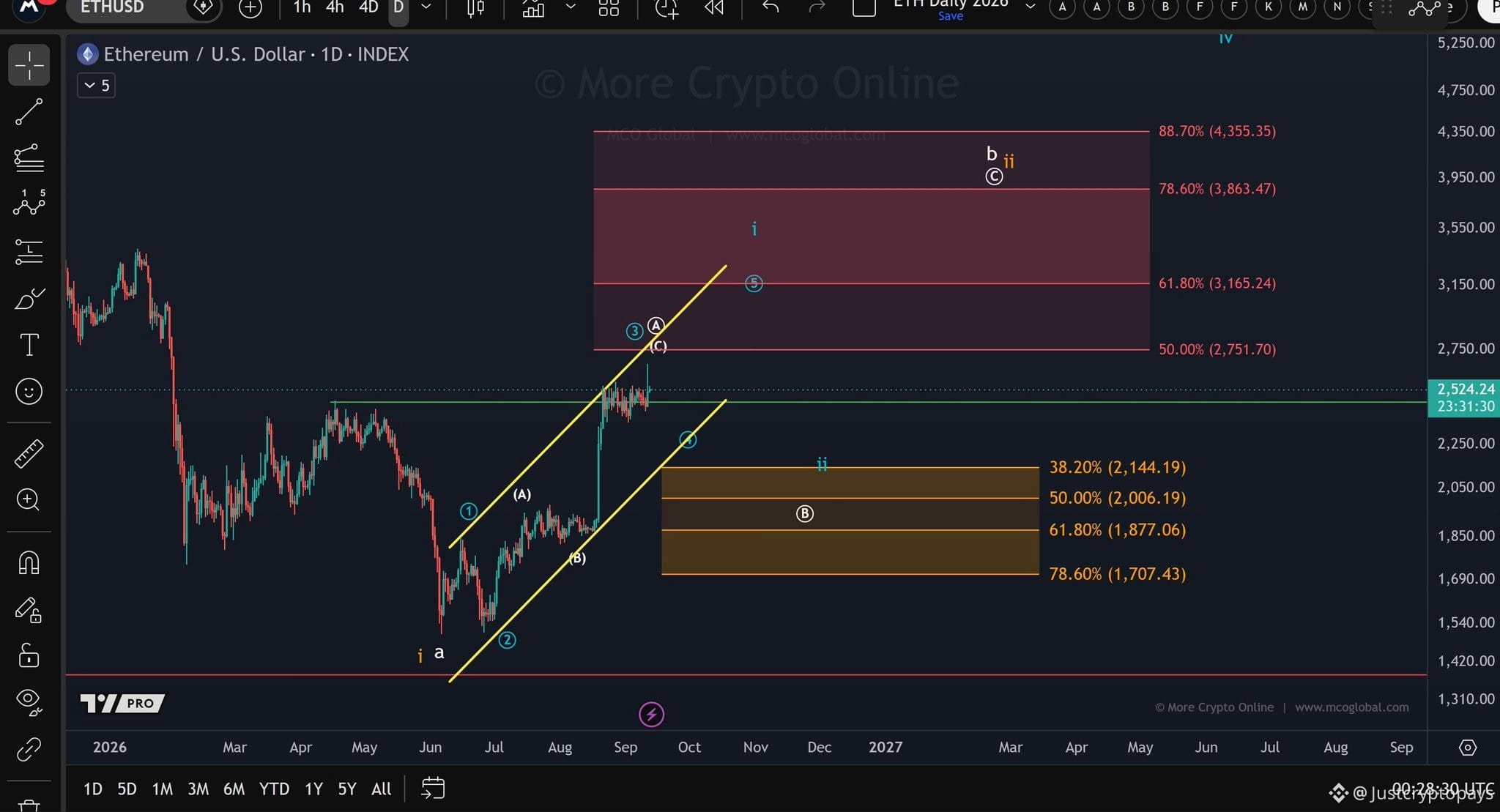
$ETH appears to still be developing a wave B move to the downside. The key support level to watch is 1,832. As long as price holds above this zone, the structure remains intact However, a clear and decisive break below 1,832 would likely increase bearish pressure and open the path toward the next downside target around 1,600. #CZAMAonBinanceSquare
$ETH appears to still be developing a wave B move to the downside.

The key support level to watch is 1,832. As long as price holds above this zone, the structure remains intact

However, a clear and decisive break below 1,832 would likely increase bearish pressure and open the path toward the next downside target around 1,600.
#CZAMAonBinanceSquare
Connectez-vous pour découvrir d’autres contenus
Découvrez les dernières actus sur les cryptos
⚡️ Prenez part aux dernières discussions sur les cryptos
💬 Interagissez avec vos créateurs préféré(e)s
👍 Profitez du contenu qui vous intéresse
Adresse e-mail/Nº de téléphone
Plan du site
Préférences en matière de cookies
CGU de la plateforme