
Michael_Leo
23.7k Publications

Michael_Leo
 Compte Square Vérifié+
Signaler
Bloquer l’utilisateur
Crypto Trader || BNB || BTC || ETH || Mindset for Crypto || Web3 content Writer || Binanace KoL
Ouvert au trading
Trade régulièrement
1.7 an(s)
51 Suivis
35.5K+ Abonnés
24.3K+ J’aime
Publications
Portefeuille
Tous
Citations
Direct
·
--
Voir la traduction
✖️ Bitcoin Magazine
JUST IN: Public companies Strategy and Strive bought a combined 2,305 Bitcoin for $182.7 million.
Strategy: 950 BTC
Strive: 1,355 BTC
$BITCOIN
{alpha}(10x72e4f9f808c49a2a61de9c5896298920dc4eeea9)
✖️ Bitcoin Magazine
JUST IN: Public companies Strategy and Strive bought a combined 2,305 Bitcoin for $182.7 million.
Strategy: 950 BTC
Strive: 1,355 BTC
$BITCOIN
JUST IN: Public companies Strategy and Strive bought a combined 2,305 Bitcoin for $182.7 million.
Strategy: 950 BTC
Strive: 1,355 BTC
$BITCOIN


94
·
--
Haussier
$GOOGL — COURT 📉
Google fait face à une importante amende pour violation de la vie privée dans le cadre du RGPD, d’un montant de 460 M$, ce qui pourrait créer une pression vendeuse à court terme sur GOOGL. Pour la transaction, j’attendrais une cassure confirmée sous le support intraday le plus proche plutôt que de poursuivre le titre. Une cassure nette suivie d’un retest apporterait davantage de confirmation au setup COURT, avec 340 $ comme TP1 et 330 $ comme TP2. Si le prix reconquiert fortement la zone de cassure et que les acheteurs reprennent le contrôle, le setup est invalidé.
Direction : COURT 📉
Entrée : Cassure + retest
TP1 : 340 $
TP2 : 330 $
SL : Au-dessus de la résistance reconquise
{future}(GOOGLUSDT)
#BOJRaisesRatesTo31YearHigh
#GOOGL
$GOOGL — COURT 📉
Google fait face à une importante amende pour violation de la vie privée dans le cadre du RGPD, d’un montant de 460 M$, ce qui pourrait créer une pression vendeuse à court terme sur GOOGL. Pour la transaction, j’attendrais une cassure confirmée sous le support intraday le plus proche plutôt que de poursuivre le titre. Une cassure nette suivie d’un retest apporterait davantage de confirmation au setup COURT, avec 340 $ comme TP1 et 330 $ comme TP2. Si le prix reconquiert fortement la zone de cassure et que les acheteurs reprennent le contrôle, le setup est invalidé.
Direction : COURT 📉
Entrée : Cassure + retest
TP1 : 340 $
TP2 : 330 $
SL : Au-dessus de la résistance reconquise
#BOJRaisesRatesTo31YearHigh
#GOOGL
Google fait face à une importante amende pour violation de la vie privée dans le cadre du RGPD, d’un montant de 460 M$, ce qui pourrait créer une pression vendeuse à court terme sur GOOGL. Pour la transaction, j’attendrais une cassure confirmée sous le support intraday le plus proche plutôt que de poursuivre le titre. Une cassure nette suivie d’un retest apporterait davantage de confirmation au setup COURT, avec 340 $ comme TP1 et 330 $ comme TP2. Si le prix reconquiert fortement la zone de cassure et que les acheteurs reprennent le contrôle, le setup est invalidé.
Direction : COURT 📉
Entrée : Cassure + retest
TP1 : 340 $
TP2 : 330 $
SL : Au-dessus de la résistance reconquise
#BOJRaisesRatesTo31YearHigh
#GOOGL
1
231
·
--
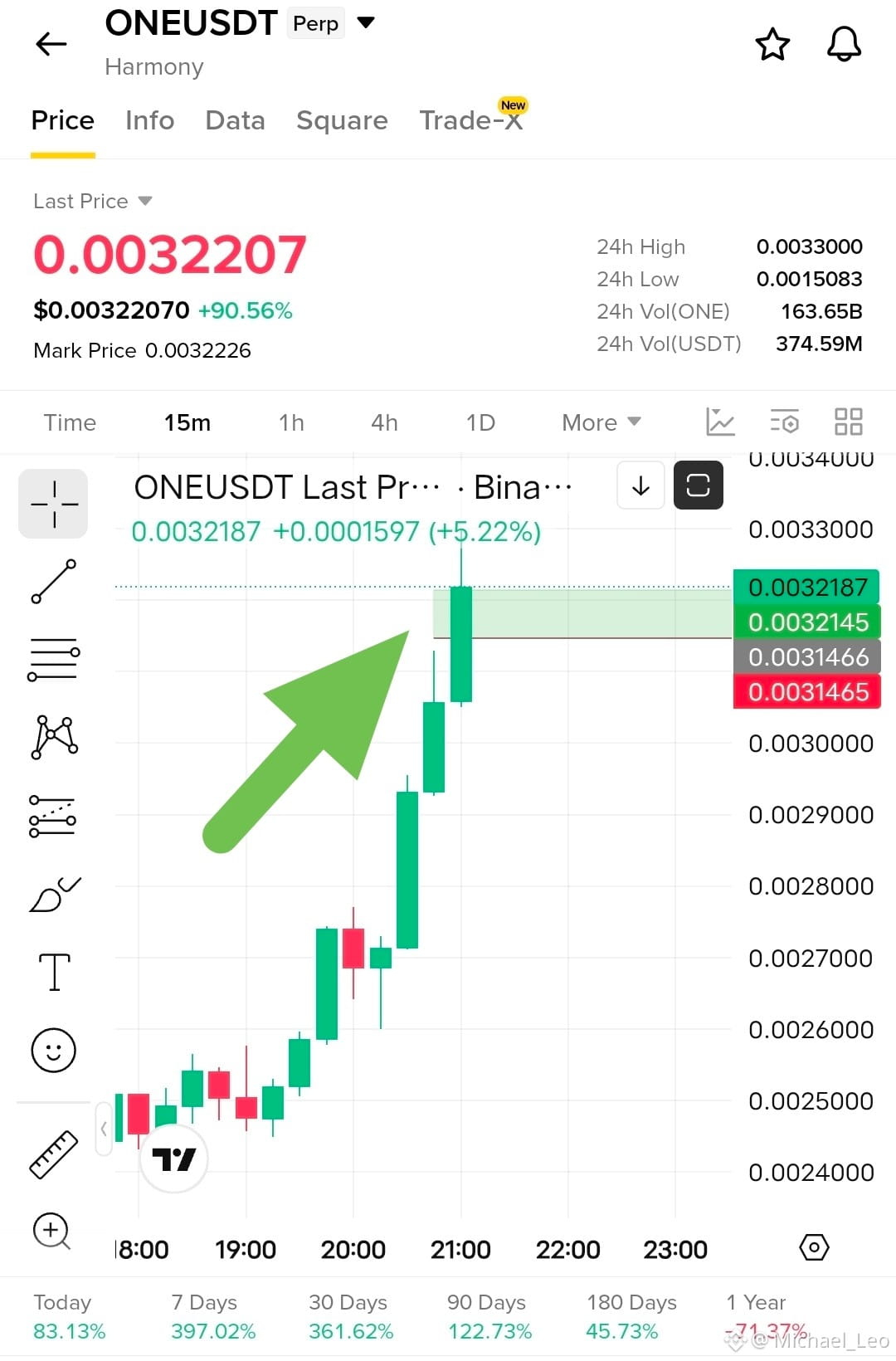
$ONE se consolide près de la résistance après un fort mouvement de cassure. Le prix se maintient au-dessus de la zone de cassure récente avec un fort élan.
EP
0.00318–0.00323
TP
0.00330
0.00340
0.00350
SL
0.00314
Le prix reste haussier tant que le support 0.00314 tient. Une cassure confirmée au-dessus de 0.00330 pourrait déclencher une nouvelle expansion vers des objectifs plus élevés. Attendez la confirmation et gérez le risque.
Allons-y $ONE
une pièce de plus
$AKE
{future}(AKEUSDT)
{spot}(ONEUSDT)
$ONE se consolide près de la résistance après un fort mouvement de cassure. Le prix se maintient au-dessus de la zone de cassure récente avec un fort élan.
EP
0.00318–0.00323
TP
0.00330
0.00340
0.00350
SL
0.00314
Le prix reste haussier tant que le support 0.00314 tient. Une cassure confirmée au-dessus de 0.00330 pourrait déclencher une nouvelle expansion vers des objectifs plus élevés. Attendez la confirmation et gérez le risque.
Allons-y $ONE
une pièce de plus
$AKE
EP
0.00318–0.00323
TP
0.00330
0.00340
0.00350
SL
0.00314
Le prix reste haussier tant que le support 0.00314 tient. Une cassure confirmée au-dessus de 0.00330 pourrait déclencher une nouvelle expansion vers des objectifs plus élevés. Attendez la confirmation et gérez le risque.
Allons-y $ONE
une pièce de plus
$AKE
324
·
--
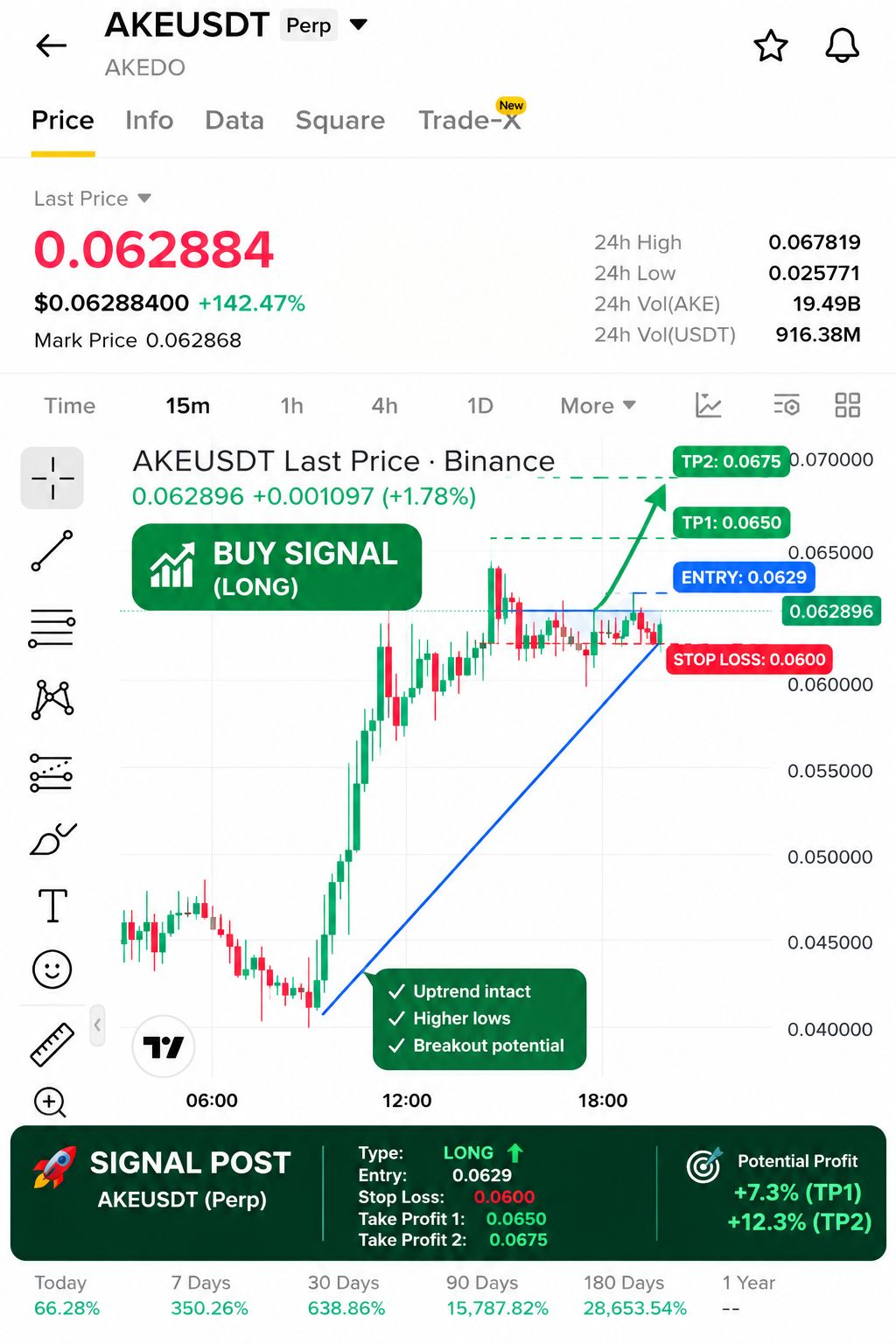
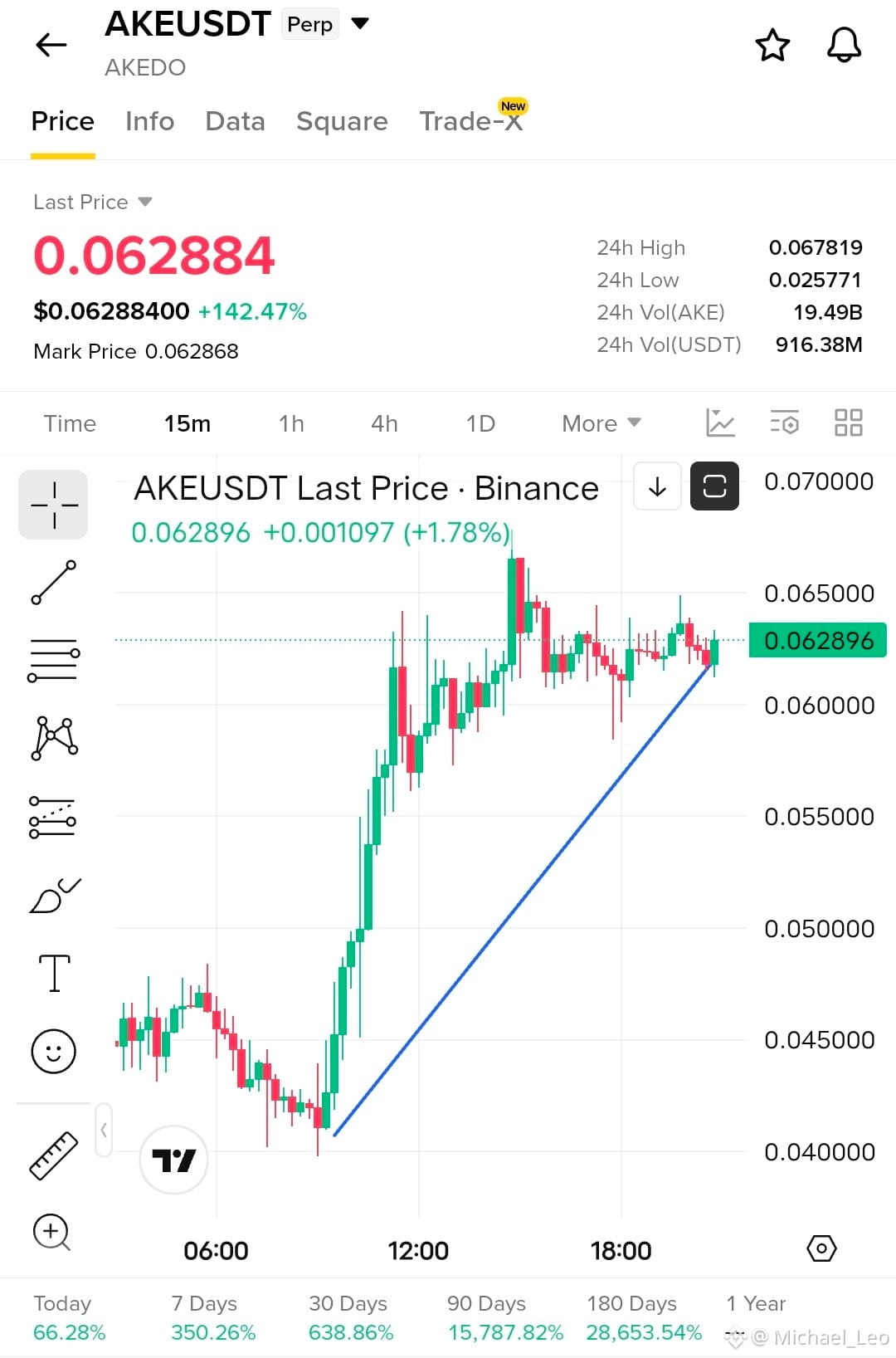
$AKE Consolidation au-dessus du niveau de support clé après un fort breakout.
EP
0.0625–0.0630
TP
0.0650
0.0675
0.0700
SL
0.0600
Le prix maintient une tendance haussière avec des creux plus élevés sur le graphique 15 minutes. Une cassure confirmée au-dessus de 0.0650 pourrait ouvrir la voie vers 0.0675 et 0.0700. Si le support à 0.0600 se brise, la configuration haussière s’affaiblit.
Allons-y $AKE
{future}(AKEUSDT)
$AR
{spot}(ARUSDT)
#VietnamPlansFirstCryptoLicensesIn2026
#BTCBreaks80K
$AKE Consolidation au-dessus du niveau de support clé après un fort breakout.
EP
0.0625–0.0630
TP
0.0650
0.0675
0.0700
SL
0.0600
Le prix maintient une tendance haussière avec des creux plus élevés sur le graphique 15 minutes. Une cassure confirmée au-dessus de 0.0650 pourrait ouvrir la voie vers 0.0675 et 0.0700. Si le support à 0.0600 se brise, la configuration haussière s’affaiblit.
Allons-y $AKE
$AR
#VietnamPlansFirstCryptoLicensesIn2026
#BTCBreaks80K
EP
0.0625–0.0630
TP
0.0650
0.0675
0.0700
SL
0.0600
Le prix maintient une tendance haussière avec des creux plus élevés sur le graphique 15 minutes. Une cassure confirmée au-dessus de 0.0650 pourrait ouvrir la voie vers 0.0675 et 0.0700. Si le support à 0.0600 se brise, la configuration haussière s’affaiblit.
Allons-y $AKE
$AR
#VietnamPlansFirstCryptoLicensesIn2026
#BTCBreaks80K
221
·
--
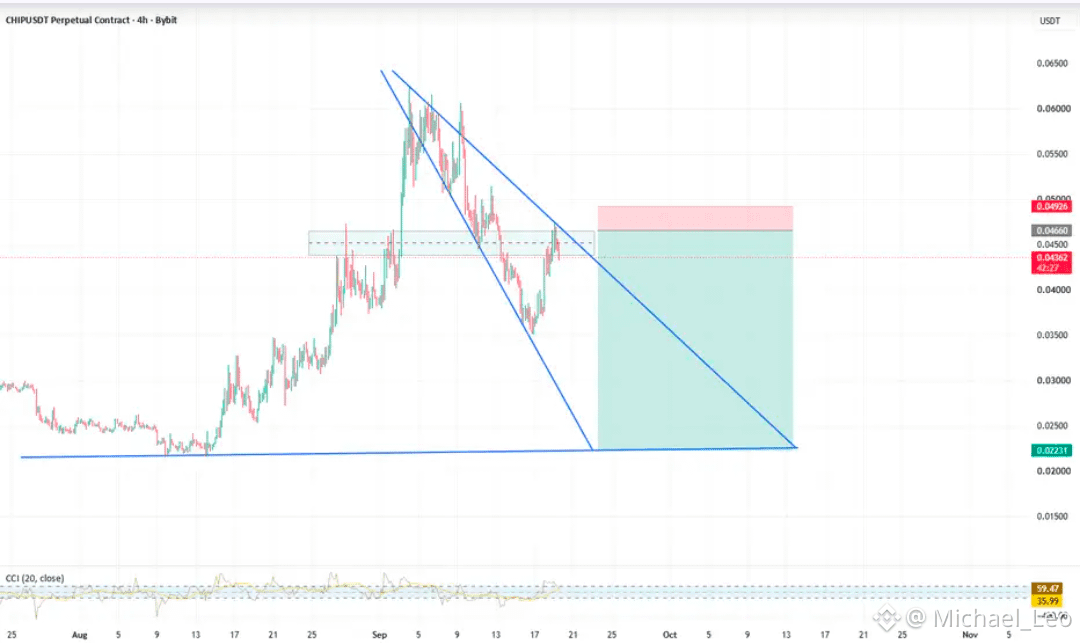
$CHIP montre une forte pression baissière sur le graphique en 4H, avec une structure de prix favorisant une correction plus profonde vers la zone de support précédente.
ENTRÉE COURTE
0.46 – 0.44
TP
0.21
SL
Au-dessus de 0.48
Le rejet du prix depuis la zone de résistance 0.44–0.46 pourrait confirmer une poursuite baissière. Le niveau 0.21 reste la cible clé de support à la baisse. Attendez une confirmation avant d’entrer et gérez soigneusement le risque.
FAITES VOS PROPRES RECHERCHES
Allons-y $CHIP
{spot}(CHIPUSDT)
$LAB
{future}(LABUSDT)
#VietnamPlansFirstCryptoLicensesIn2026 #BitcoinMarketCapTopsTesla #chip
$CHIP montre une forte pression baissière sur le graphique en 4H, avec une structure de prix favorisant une correction plus profonde vers la zone de support précédente.
ENTRÉE COURTE
0.46 – 0.44
TP
0.21
SL
Au-dessus de 0.48
Le rejet du prix depuis la zone de résistance 0.44–0.46 pourrait confirmer une poursuite baissière. Le niveau 0.21 reste la cible clé de support à la baisse. Attendez une confirmation avant d’entrer et gérez soigneusement le risque.
FAITES VOS PROPRES RECHERCHES
Allons-y $CHIP
$LAB
#VietnamPlansFirstCryptoLicensesIn2026 #BitcoinMarketCapTopsTesla #chip
ENTRÉE COURTE
0.46 – 0.44
TP
0.21
SL
Au-dessus de 0.48
Le rejet du prix depuis la zone de résistance 0.44–0.46 pourrait confirmer une poursuite baissière. Le niveau 0.21 reste la cible clé de support à la baisse. Attendez une confirmation avant d’entrer et gérez soigneusement le risque.
FAITES VOS PROPRES RECHERCHES
Allons-y $CHIP
$LAB
#VietnamPlansFirstCryptoLicensesIn2026 #BitcoinMarketCapTopsTesla #chip
326
·
--
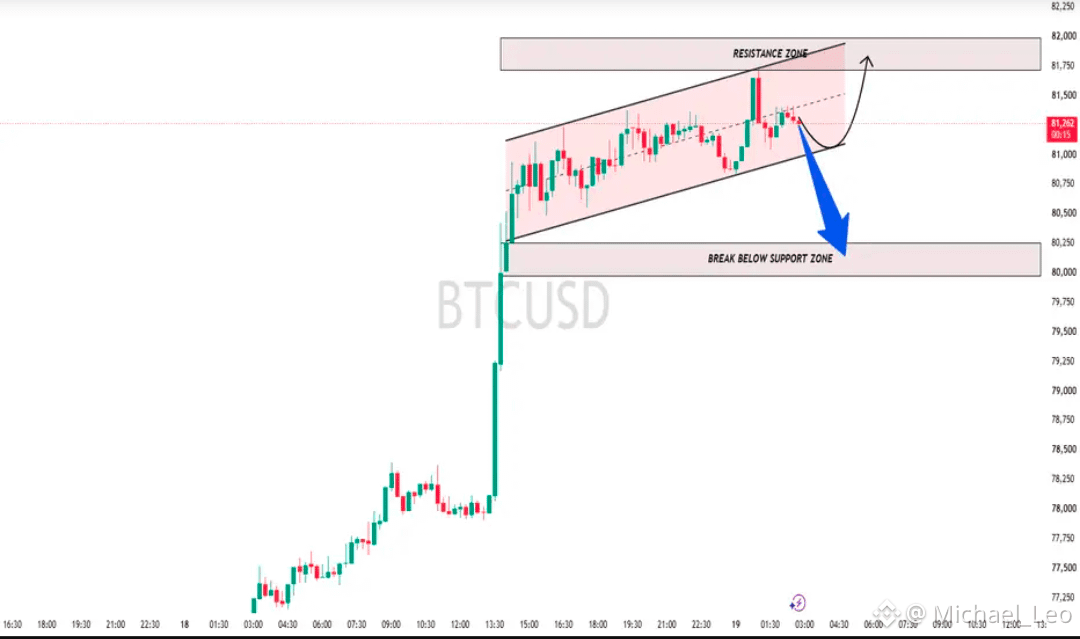
$BTC se consolide à l’intérieur d’un canal parallèle ascendant après une forte impulsion haussière.
📌 ENTRÉE DE CONFIRMATION
Attendez la clôture d’une bougie 15M/1H au-dessus de 82 000, suivie d’un retest/maintien réussi de 81 750–82 000.
ENTRÉE : 82 000–82 150 après confirmation
🎯 TP1 : 82 250
🎯 TP2 : 82 750
🎯 TP3 : 83 250
🛑 SL : 81 500
Support clé : 80 000–80 250
Une cassure durable en dessous de 80 000 affaiblit/invalide la structure haussière.
⚠️ Ceci ne constitue pas un conseil financier. Gérez le risque en conséquence.
{spot}(BTCUSDT)
$AR
{spot}(ARUSDT)
$AKE
{future}(AKEUSDT)
#bitcoin #BTC
$BTC se consolide à l’intérieur d’un canal parallèle ascendant après une forte impulsion haussière.
📌 ENTRÉE DE CONFIRMATION
Attendez la clôture d’une bougie 15M/1H au-dessus de 82 000, suivie d’un retest/maintien réussi de 81 750–82 000.
ENTRÉE : 82 000–82 150 après confirmation
🎯 TP1 : 82 250
🎯 TP2 : 82 750
🎯 TP3 : 83 250
🛑 SL : 81 500
Support clé : 80 000–80 250
Une cassure durable en dessous de 80 000 affaiblit/invalide la structure haussière.
⚠️ Ceci ne constitue pas un conseil financier. Gérez le risque en conséquence.
$AR
$AKE
#bitcoin #BTC
📌 ENTRÉE DE CONFIRMATION
Attendez la clôture d’une bougie 15M/1H au-dessus de 82 000, suivie d’un retest/maintien réussi de 81 750–82 000.
ENTRÉE : 82 000–82 150 après confirmation
🎯 TP1 : 82 250
🎯 TP2 : 82 750
🎯 TP3 : 83 250
🛑 SL : 81 500
Support clé : 80 000–80 250
Une cassure durable en dessous de 80 000 affaiblit/invalide la structure haussière.
⚠️ Ceci ne constitue pas un conseil financier. Gérez le risque en conséquence.
$AR
$AKE
#bitcoin #BTC
268
·
--
Haussier
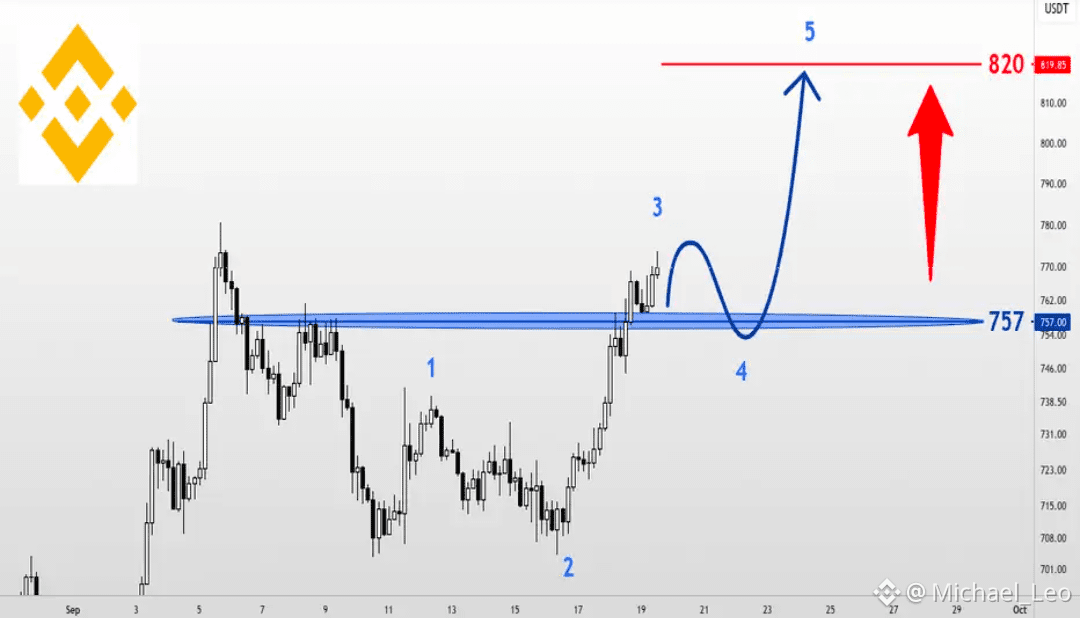
$BNB USD | Continuation de tendance haussière — 10% de hausse sur un support solide ?
📊 À moyen terme, BNB reste en tendance haussière selon la structure des vagues d’Elliott et pourrait être en train de terminer une structure en 5 vagues.
📐 Du point de vue de l’analyse de l’action des prix, le niveau de 757 $ se distingue comme une zone de support solide.
🛡️ Tant que le prix reste au-dessus de ce niveau, la structure haussière demeure valide.
🎯 Objectif : 820 $
📈 Ce scénario représente environ 10 % de potentiel de hausse par rapport aux niveaux actuels.
⚠️ À des fins éducatives uniquement — pas un conseil en investissement.
$AR $AKE
{future}(AKEUSDT)
{future}(ARUSDT)
{future}(BNBUSDT)
$BNB USD | Continuation de tendance haussière — 10% de hausse sur un support solide ?
📊 À moyen terme, BNB reste en tendance haussière selon la structure des vagues d’Elliott et pourrait être en train de terminer une structure en 5 vagues.
📐 Du point de vue de l’analyse de l’action des prix, le niveau de 757 $ se distingue comme une zone de support solide.
🛡️ Tant que le prix reste au-dessus de ce niveau, la structure haussière demeure valide.
🎯 Objectif : 820 $
📈 Ce scénario représente environ 10 % de potentiel de hausse par rapport aux niveaux actuels.
⚠️ À des fins éducatives uniquement — pas un conseil en investissement.
$AR $AKE
📊 À moyen terme, BNB reste en tendance haussière selon la structure des vagues d’Elliott et pourrait être en train de terminer une structure en 5 vagues.
📐 Du point de vue de l’analyse de l’action des prix, le niveau de 757 $ se distingue comme une zone de support solide.
🛡️ Tant que le prix reste au-dessus de ce niveau, la structure haussière demeure valide.
🎯 Objectif : 820 $
📈 Ce scénario représente environ 10 % de potentiel de hausse par rapport aux niveaux actuels.
⚠️ À des fins éducatives uniquement — pas un conseil en investissement.
$AR $AKE
231
·
--
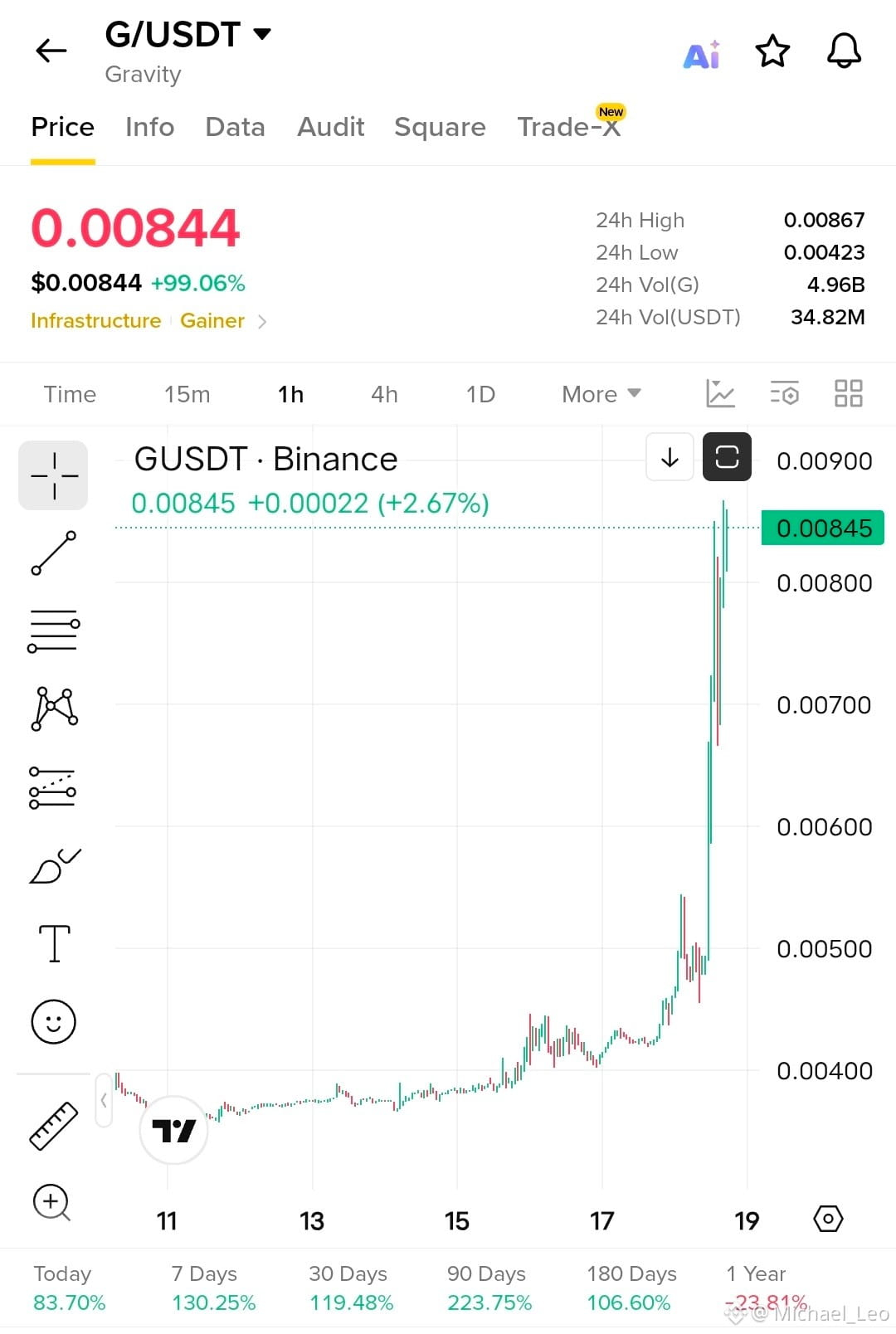
$G consolidant près de la zone de cassure après une puissante expansion de l’élan.
La demande reste forte tant que le prix se maintient au-dessus de la zone de support récente.
EP
0.00810–0.00845
TP
0.00900
0.00980
0.01100
SL
0.00745
Le prix a franchi nettement la consolidation précédente, confirmant un fort élan acheteur. La zone de support clé se situe autour de 0.00800–0.00810, tandis que 0.00867 constitue la résistance immédiate et le déclencheur de cassure. Une reconquête propre au-dessus de 0.00867 pourrait ouvrir la voie vers 0.00980 et 0.01100. Si le prix perd 0.00800 avec une pression vendeuse forte, la configuration s’affaiblit. Gérez le risque avec soin, car la volatilité est extrêmement élevée après le récent mouvement vertical.
Allons-y $G
{spot}(GUSDT)
$APM
{alpha}(560x72a22faa6a522c81a8f5d508381e18af3da0921e)
#StellarActivatesProtocol28At211TPS
$G consolidant près de la zone de cassure après une puissante expansion de l’élan.
La demande reste forte tant que le prix se maintient au-dessus de la zone de support récente.
EP
0.00810–0.00845
TP
0.00900
0.00980
0.01100
SL
0.00745
Le prix a franchi nettement la consolidation précédente, confirmant un fort élan acheteur. La zone de support clé se situe autour de 0.00800–0.00810, tandis que 0.00867 constitue la résistance immédiate et le déclencheur de cassure. Une reconquête propre au-dessus de 0.00867 pourrait ouvrir la voie vers 0.00980 et 0.01100. Si le prix perd 0.00800 avec une pression vendeuse forte, la configuration s’affaiblit. Gérez le risque avec soin, car la volatilité est extrêmement élevée après le récent mouvement vertical.
Allons-y $G
$APM
#StellarActivatesProtocol28At211TPS
La demande reste forte tant que le prix se maintient au-dessus de la zone de support récente.
EP
0.00810–0.00845
TP
0.00900
0.00980
0.01100
SL
0.00745
Le prix a franchi nettement la consolidation précédente, confirmant un fort élan acheteur. La zone de support clé se situe autour de 0.00800–0.00810, tandis que 0.00867 constitue la résistance immédiate et le déclencheur de cassure. Une reconquête propre au-dessus de 0.00867 pourrait ouvrir la voie vers 0.00980 et 0.01100. Si le prix perd 0.00800 avec une pression vendeuse forte, la configuration s’affaiblit. Gérez le risque avec soin, car la volatilité est extrêmement élevée après le récent mouvement vertical.
Allons-y $G
$APM
#StellarActivatesProtocol28At211TPS
340
·
--
Voir la traduction
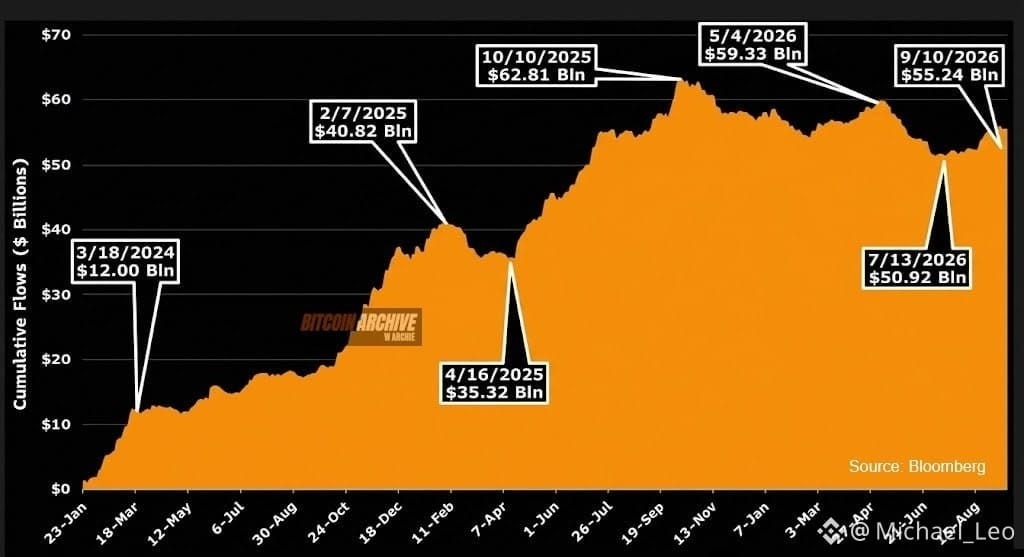
JUST IN: 🟠 Bitcoin ETF cumulative net flows hold strong at $55 billion despite 50% price drawdown.
🔸Flows dropped slightly from $63B peak.
🔸Excludes price changes to show real demand.
$BTC
{spot}(BTCUSDT)
$APM
{alpha}(560x72a22faa6a522c81a8f5d508381e18af3da0921e)
$ONE
{spot}(ONEUSDT)
JUST IN: 🟠 Bitcoin ETF cumulative net flows hold strong at $55 billion despite 50% price drawdown.
🔸Flows dropped slightly from $63B peak.
🔸Excludes price changes to show real demand.
$BTC
$APM
$ONE
🔸Flows dropped slightly from $63B peak.
🔸Excludes price changes to show real demand.
$BTC
$APM
$ONE
146
·
--
$PYTH maintient au-dessus d’une zone de support clé après une consolidation récente, avec une dynamique qui tente de se redresser à la hausse.$APM et $one
Support : $0.0520–$0.0530
Résistance : $0.0557
Prochain objectif : $0.0595–$0.0630
EP
$0.0535–$0.0550
TP
$0.0575
$0.0595
$0.0630
SL
$0.0515
Une cassure propre au-dessus de $0.0557 pourrait ouvrir la voie vers une résistance plus élevée, tandis que la perte de $0.0520 affaiblirait la configuration. Les lectures techniques actuelles indiquent une amélioration de la dynamique autour de la zone de support.
{alpha}(560x72a22faa6a522c81a8f5d508381e18af3da0921e)
{spot}(ONEUSDT)
Allons-y $PYTH
{spot}(PYTHUSDT)
$PYTH maintient au-dessus d’une zone de support clé après une consolidation récente, avec une dynamique qui tente de se redresser à la hausse.$APM et $one
Support : $0.0520–$0.0530
Résistance : $0.0557
Prochain objectif : $0.0595–$0.0630
EP
$0.0535–$0.0550
TP
$0.0575
$0.0595
$0.0630
SL
$0.0515
Une cassure propre au-dessus de $0.0557 pourrait ouvrir la voie vers une résistance plus élevée, tandis que la perte de $0.0520 affaiblirait la configuration. Les lectures techniques actuelles indiquent une amélioration de la dynamique autour de la zone de support.
Allons-y $PYTH
Support : $0.0520–$0.0530
Résistance : $0.0557
Prochain objectif : $0.0595–$0.0630
EP
$0.0535–$0.0550
TP
$0.0575
$0.0595
$0.0630
SL
$0.0515
Une cassure propre au-dessus de $0.0557 pourrait ouvrir la voie vers une résistance plus élevée, tandis que la perte de $0.0520 affaiblirait la configuration. Les lectures techniques actuelles indiquent une amélioration de la dynamique autour de la zone de support.
Allons-y $PYTH
Bullish 💚
85%
Bearish ❤️
15%
13 Votes • Vote fermé
1
1.7k
·
--
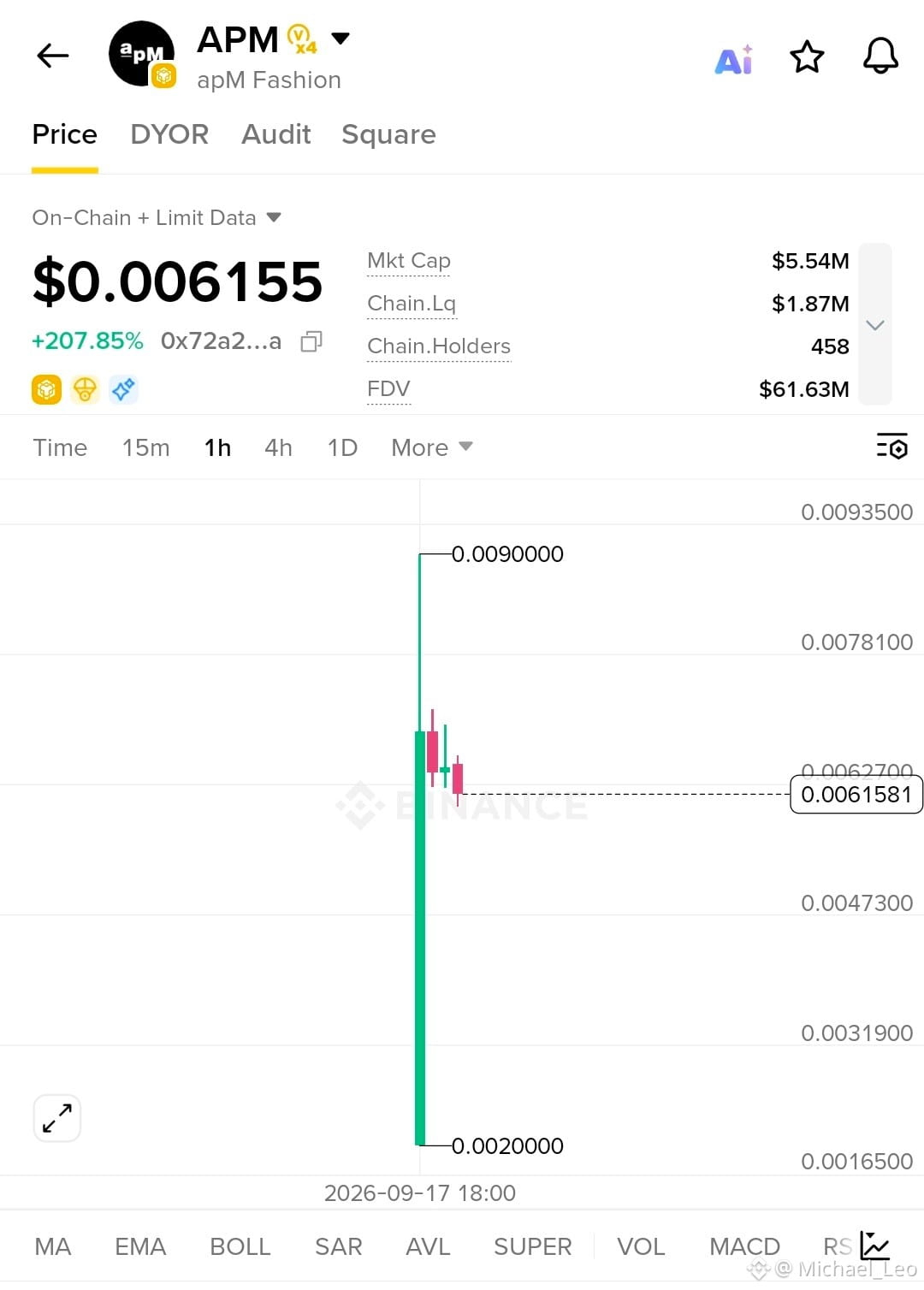
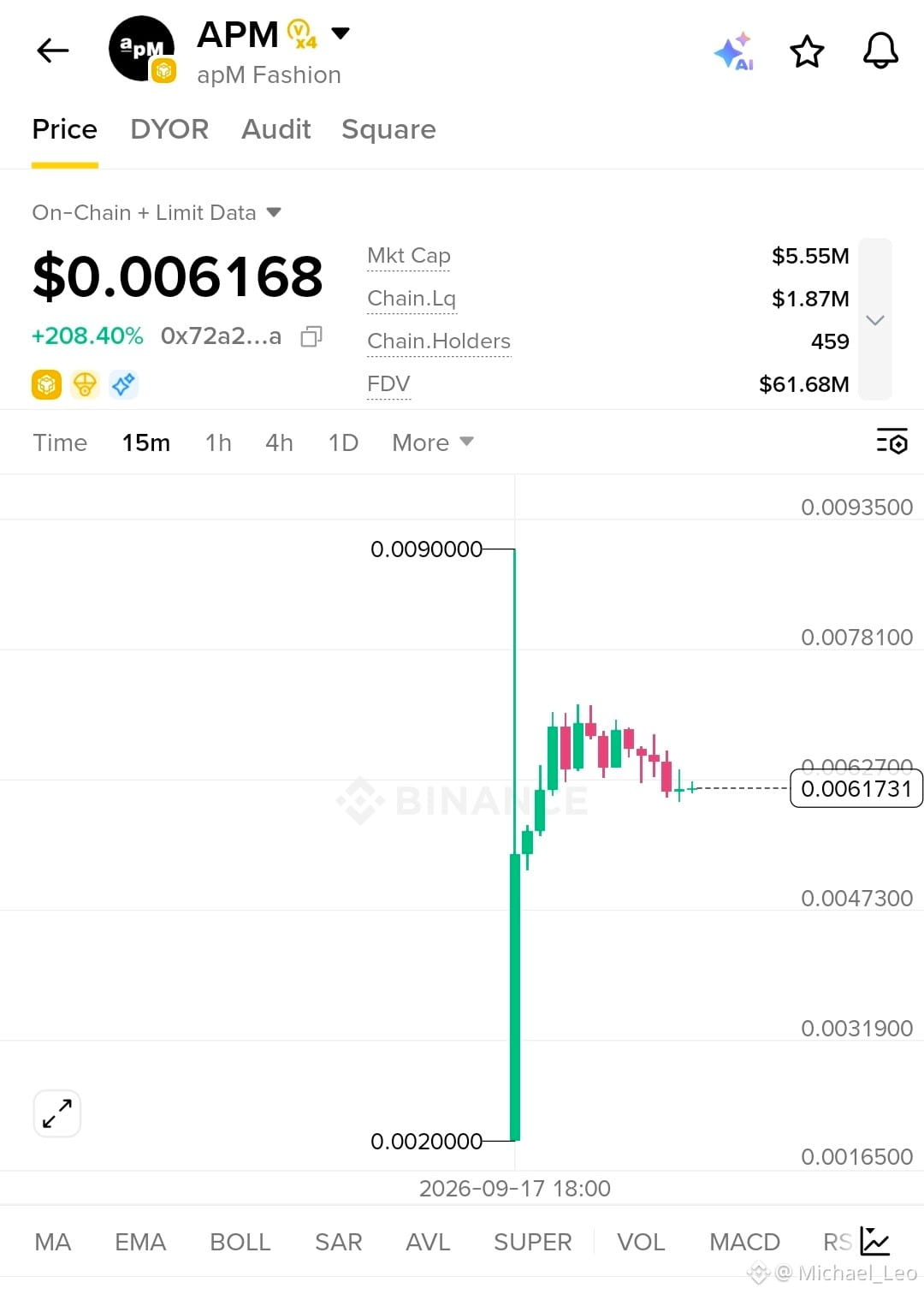
$APM est en phase de consolidation après une cassure puissante, en restant proche de la zone des 0,0061 $ tandis que le momentum reste actif. La structure en 15m montre que les acheteurs défendent la zone de demande récente, mais le prix doit reprendre la résistance pour la prochaine expansion.
EP
0,00605–0,00630
Support
0,00580–0,00600
Résistance
0,00670
TP
0,00780
0,00900
SL
0,00545
Une cassure nette et une reconquête au-dessus de 0,00670 $ pourraient amplifier le momentum vers 0,00780, avec le précédent sommet de la mèche près de 0,00900 $ servant d’objectif principal. Si le support tient, la consolidation pourrait offrir la configuration pour un autre mouvement à la hausse.
Allons-y $APM
{alpha}(560x72a22faa6a522c81a8f5d508381e18af3da0921e)
$ONE
{spot}(ONEUSDT)
$APM est en phase de consolidation après une cassure puissante, en restant proche de la zone des 0,0061 $ tandis que le momentum reste actif. La structure en 15m montre que les acheteurs défendent la zone de demande récente, mais le prix doit reprendre la résistance pour la prochaine expansion.
EP
0,00605–0,00630
Support
0,00580–0,00600
Résistance
0,00670
TP
0,00780
0,00900
SL
0,00545
Une cassure nette et une reconquête au-dessus de 0,00670 $ pourraient amplifier le momentum vers 0,00780, avec le précédent sommet de la mèche près de 0,00900 $ servant d’objectif principal. Si le support tient, la consolidation pourrait offrir la configuration pour un autre mouvement à la hausse.
Allons-y $APM
$ONE
EP
0,00605–0,00630
Support
0,00580–0,00600
Résistance
0,00670
TP
0,00780
0,00900
SL
0,00545
Une cassure nette et une reconquête au-dessus de 0,00670 $ pourraient amplifier le momentum vers 0,00780, avec le précédent sommet de la mèche près de 0,00900 $ servant d’objectif principal. Si le support tient, la consolidation pourrait offrir la configuration pour un autre mouvement à la hausse.
Allons-y $APM
$ONE
512
·
--
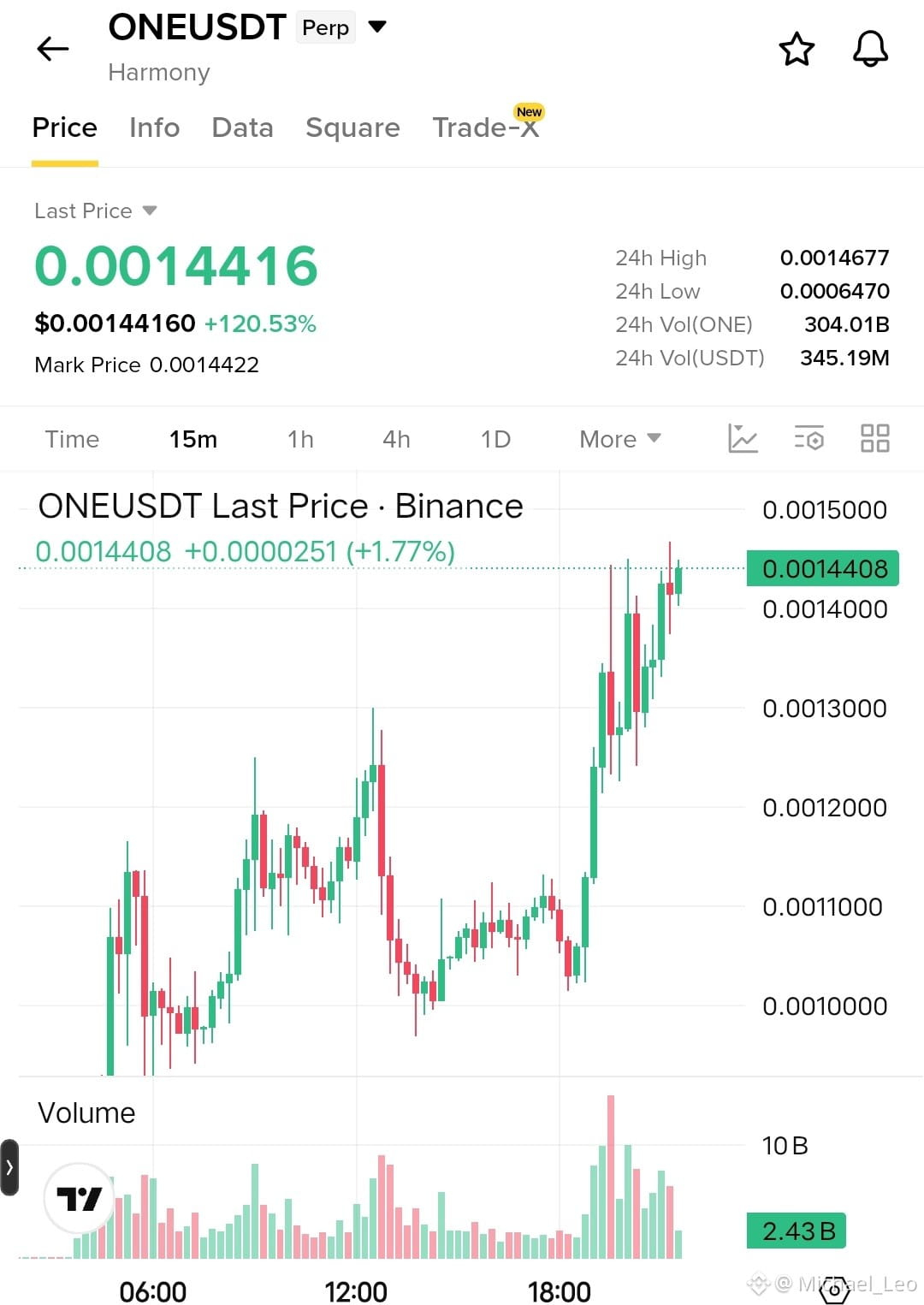
$ONE affiche une dynamique haussière explosive après un puissant breakout suite à la consolidation précédente. Le prix se maintient près de la zone 0.00140 tandis que les acheteurs continuent de défendre les niveaux supérieurs.$APM $AVA
{spot}(AVAUSDT)
EP
0.00138–0.00144
TP
0.00150
0.00158
0.00170
SL
0.00131
Support : 0.00138, avec une demande plus forte autour de 0.00130. Résistance : 0.00147–0.00150, et un breakout net au-dessus de cette zone pourrait ouvrir la voie vers 0.00158 et 0.00170. Le volume en hausse confirme une forte impulsion, mais après un mouvement aussi brusque, une courte consolidation ou un retest est possible. Se maintenir au-dessus du support garde la structure haussière intacte.
Allons-y $ONE
{alpha}(560x72a22faa6a522c81a8f5d508381e18af3da0921e)
{spot}(ONEUSDT)
#ElSalvadorBTCHoldingsRiseTo7777 #HyperliquidUSDCSupplyOvertakesSolana #SKPoliceRefer18PolymarketUsersToProsecutors
$ONE affiche une dynamique haussière explosive après un puissant breakout suite à la consolidation précédente. Le prix se maintient près de la zone 0.00140 tandis que les acheteurs continuent de défendre les niveaux supérieurs.$APM $AVA
EP
0.00138–0.00144
TP
0.00150
0.00158
0.00170
SL
0.00131
Support : 0.00138, avec une demande plus forte autour de 0.00130. Résistance : 0.00147–0.00150, et un breakout net au-dessus de cette zone pourrait ouvrir la voie vers 0.00158 et 0.00170. Le volume en hausse confirme une forte impulsion, mais après un mouvement aussi brusque, une courte consolidation ou un retest est possible. Se maintenir au-dessus du support garde la structure haussière intacte.
Allons-y $ONE
#ElSalvadorBTCHoldingsRiseTo7777 #HyperliquidUSDCSupplyOvertakesSolana #SKPoliceRefer18PolymarketUsersToProsecutors
EP
0.00138–0.00144
TP
0.00150
0.00158
0.00170
SL
0.00131
Support : 0.00138, avec une demande plus forte autour de 0.00130. Résistance : 0.00147–0.00150, et un breakout net au-dessus de cette zone pourrait ouvrir la voie vers 0.00158 et 0.00170. Le volume en hausse confirme une forte impulsion, mais après un mouvement aussi brusque, une courte consolidation ou un retest est possible. Se maintenir au-dessus du support garde la structure haussière intacte.
Allons-y $ONE
#ElSalvadorBTCHoldingsRiseTo7777 #HyperliquidUSDCSupplyOvertakesSolana #SKPoliceRefer18PolymarketUsersToProsecutors
441
·
--
$BR consolidation près du support après une impulsion haussière forte. La demande reste favorable tant que l’élan reste fermement du côté des acheteurs.
EP 0.3110–0.3190
TP 0.3350 0.3550 0.3800
SL 0.3000
Le prix se maintient au-dessus de la zone de support proche après un fort mouvement à la hausse. La zone 0.3350 est la prochaine résistance importante, et une reprise nette pourrait déclencher une nouvelle expansion vers des objectifs plus élevés. La consolidation actuelle est constructive tant que les acheteurs défendent la zone de demande. Une cassure au-dessus de la résistance avec un momentum durable renforcerait la structure de continuation haussière.
On y va $BR
{future}(BRUSDT)
$BR consolidation près du support après une impulsion haussière forte. La demande reste favorable tant que l’élan reste fermement du côté des acheteurs.
EP 0.3110–0.3190
TP 0.3350 0.3550 0.3800
SL 0.3000
Le prix se maintient au-dessus de la zone de support proche après un fort mouvement à la hausse. La zone 0.3350 est la prochaine résistance importante, et une reprise nette pourrait déclencher une nouvelle expansion vers des objectifs plus élevés. La consolidation actuelle est constructive tant que les acheteurs défendent la zone de demande. Une cassure au-dessus de la résistance avec un momentum durable renforcerait la structure de continuation haussière.
On y va $BR
EP 0.3110–0.3190
TP 0.3350 0.3550 0.3800
SL 0.3000
Le prix se maintient au-dessus de la zone de support proche après un fort mouvement à la hausse. La zone 0.3350 est la prochaine résistance importante, et une reprise nette pourrait déclencher une nouvelle expansion vers des objectifs plus élevés. La consolidation actuelle est constructive tant que les acheteurs défendent la zone de demande. Une cassure au-dessus de la résistance avec un momentum durable renforcerait la structure de continuation haussière.
On y va $BR
104
·
--
$BTW consolide au-dessus de la demande après une forte expansion haussière. Les acheteurs défendent le support, maintenant l’élan orienté vers le haut.
EP 0.6650–0.6820
TP 0.7100 0.7450 0.7900
SL 0.6450
Le prix reste positionné au-dessus de la zone de support immédiate, et la zone 0.7000–0.7100 agit comme la prochaine zone de résistance. Une reprise et une cassure au-dessus de cette zone pourraient déclencher une nouvelle phase haussière, alors que le momentum revient. La zone de demande autour de l’entrée doit rester protégée pour que la configuration demeure valable. Une consolidation maîtrisée suivie d’une cassure décisive favoriserait la continuation vers les objectifs les plus élevés.
Allons-y $BTW
{future}(BTWUSDT)
$LAB
{future}(LABUSDT)
$BTW consolide au-dessus de la demande après une forte expansion haussière. Les acheteurs défendent le support, maintenant l’élan orienté vers le haut.
EP 0.6650–0.6820
TP 0.7100 0.7450 0.7900
SL 0.6450
Le prix reste positionné au-dessus de la zone de support immédiate, et la zone 0.7000–0.7100 agit comme la prochaine zone de résistance. Une reprise et une cassure au-dessus de cette zone pourraient déclencher une nouvelle phase haussière, alors que le momentum revient. La zone de demande autour de l’entrée doit rester protégée pour que la configuration demeure valable. Une consolidation maîtrisée suivie d’une cassure décisive favoriserait la continuation vers les objectifs les plus élevés.
Allons-y $BTW
$LAB
EP 0.6650–0.6820
TP 0.7100 0.7450 0.7900
SL 0.6450
Le prix reste positionné au-dessus de la zone de support immédiate, et la zone 0.7000–0.7100 agit comme la prochaine zone de résistance. Une reprise et une cassure au-dessus de cette zone pourraient déclencher une nouvelle phase haussière, alors que le momentum revient. La zone de demande autour de l’entrée doit rester protégée pour que la configuration demeure valable. Une consolidation maîtrisée suivie d’une cassure décisive favoriserait la continuation vers les objectifs les plus élevés.
Allons-y $BTW
$LAB
212
·
--
🚨 SUIVI CPI : LA FED VA-T-ELLE AUGMENTER OU MAINTENIR ?
Honnêtement, je pense que le prochain chiffre de l’IPC pourrait décider de l’orientation à court terme des actifs à risque. Les dernières données sur l’emploi ont montré des créations de postes plus fortes que prévu, et cela donne à la Réserve fédérale une raison supplémentaire de rester prudente.
Pour moi, la question clé n’est pas seulement de savoir si l’IPC dépasse ou manque les attentes. Je surveille à quel point l’inflation semble « tenace », et si les données donnent suffisamment confiance à la Fed pour maintenir des taux plus élevés plus longtemps.
🔥 Si l’IPC ressort plus chaud :
Les marchés pourraient rapidement intégrer l’idée de moins de baisses de taux. Le dollar pourrait se raffermir, les rendements pourraient monter, et les actifs à bêta élevé comme la crypto et les valeurs tech pourraient subir une pression vendeuse. Le Bitcoin pourrait mieux résister que les plus petites altcoins, mais la volatilité peut toucher tout le monde.
📈 Si l’IPC ressort plus frais :
Cela pourrait relancer des attentes d’une politique monétaire plus accommodante. Les actifs sensibles à la liquidité pourraient réagir en premier, avec un BTC potentiellement bénéficiant de la meilleure demande initiale avant que les capitaux ne se réorientent vers les altcoins.
Ma méthode ? Je n’essaie pas de prédire le chiffre avant qu’il ne tombe. J’attends de voir la réaction du marché après la publication.
Un point important que beaucoup de traders oublient : de bonnes données économiques ne sont pas toujours bonnes pour la crypto. Si de solides créations d’emplois et un IPC tenace forcent la Fed à rester restrictive, les actifs à risque peuvent en souffrir.
👀 Alors, votre avis : hausse de la FED ou maintien ?
#CPIWatch
{future}(ZECUSDT)
{future}(LABUSDT)
{spot}(ETHUSDT)
🚨 SUIVI CPI : LA FED VA-T-ELLE AUGMENTER OU MAINTENIR ?
Honnêtement, je pense que le prochain chiffre de l’IPC pourrait décider de l’orientation à court terme des actifs à risque. Les dernières données sur l’emploi ont montré des créations de postes plus fortes que prévu, et cela donne à la Réserve fédérale une raison supplémentaire de rester prudente.
Pour moi, la question clé n’est pas seulement de savoir si l’IPC dépasse ou manque les attentes. Je surveille à quel point l’inflation semble « tenace », et si les données donnent suffisamment confiance à la Fed pour maintenir des taux plus élevés plus longtemps.
🔥 Si l’IPC ressort plus chaud :
Les marchés pourraient rapidement intégrer l’idée de moins de baisses de taux. Le dollar pourrait se raffermir, les rendements pourraient monter, et les actifs à bêta élevé comme la crypto et les valeurs tech pourraient subir une pression vendeuse. Le Bitcoin pourrait mieux résister que les plus petites altcoins, mais la volatilité peut toucher tout le monde.
📈 Si l’IPC ressort plus frais :
Cela pourrait relancer des attentes d’une politique monétaire plus accommodante. Les actifs sensibles à la liquidité pourraient réagir en premier, avec un BTC potentiellement bénéficiant de la meilleure demande initiale avant que les capitaux ne se réorientent vers les altcoins.
Ma méthode ? Je n’essaie pas de prédire le chiffre avant qu’il ne tombe. J’attends de voir la réaction du marché après la publication.
Un point important que beaucoup de traders oublient : de bonnes données économiques ne sont pas toujours bonnes pour la crypto. Si de solides créations d’emplois et un IPC tenace forcent la Fed à rester restrictive, les actifs à risque peuvent en souffrir.
👀 Alors, votre avis : hausse de la FED ou maintien ?
#CPIWatch
Honnêtement, je pense que le prochain chiffre de l’IPC pourrait décider de l’orientation à court terme des actifs à risque. Les dernières données sur l’emploi ont montré des créations de postes plus fortes que prévu, et cela donne à la Réserve fédérale une raison supplémentaire de rester prudente.
Pour moi, la question clé n’est pas seulement de savoir si l’IPC dépasse ou manque les attentes. Je surveille à quel point l’inflation semble « tenace », et si les données donnent suffisamment confiance à la Fed pour maintenir des taux plus élevés plus longtemps.
🔥 Si l’IPC ressort plus chaud :
Les marchés pourraient rapidement intégrer l’idée de moins de baisses de taux. Le dollar pourrait se raffermir, les rendements pourraient monter, et les actifs à bêta élevé comme la crypto et les valeurs tech pourraient subir une pression vendeuse. Le Bitcoin pourrait mieux résister que les plus petites altcoins, mais la volatilité peut toucher tout le monde.
📈 Si l’IPC ressort plus frais :
Cela pourrait relancer des attentes d’une politique monétaire plus accommodante. Les actifs sensibles à la liquidité pourraient réagir en premier, avec un BTC potentiellement bénéficiant de la meilleure demande initiale avant que les capitaux ne se réorientent vers les altcoins.
Ma méthode ? Je n’essaie pas de prédire le chiffre avant qu’il ne tombe. J’attends de voir la réaction du marché après la publication.
Un point important que beaucoup de traders oublient : de bonnes données économiques ne sont pas toujours bonnes pour la crypto. Si de solides créations d’emplois et un IPC tenace forcent la Fed à rester restrictive, les actifs à risque peuvent en souffrir.
👀 Alors, votre avis : hausse de la FED ou maintien ?
#CPIWatch

1
175
·
--
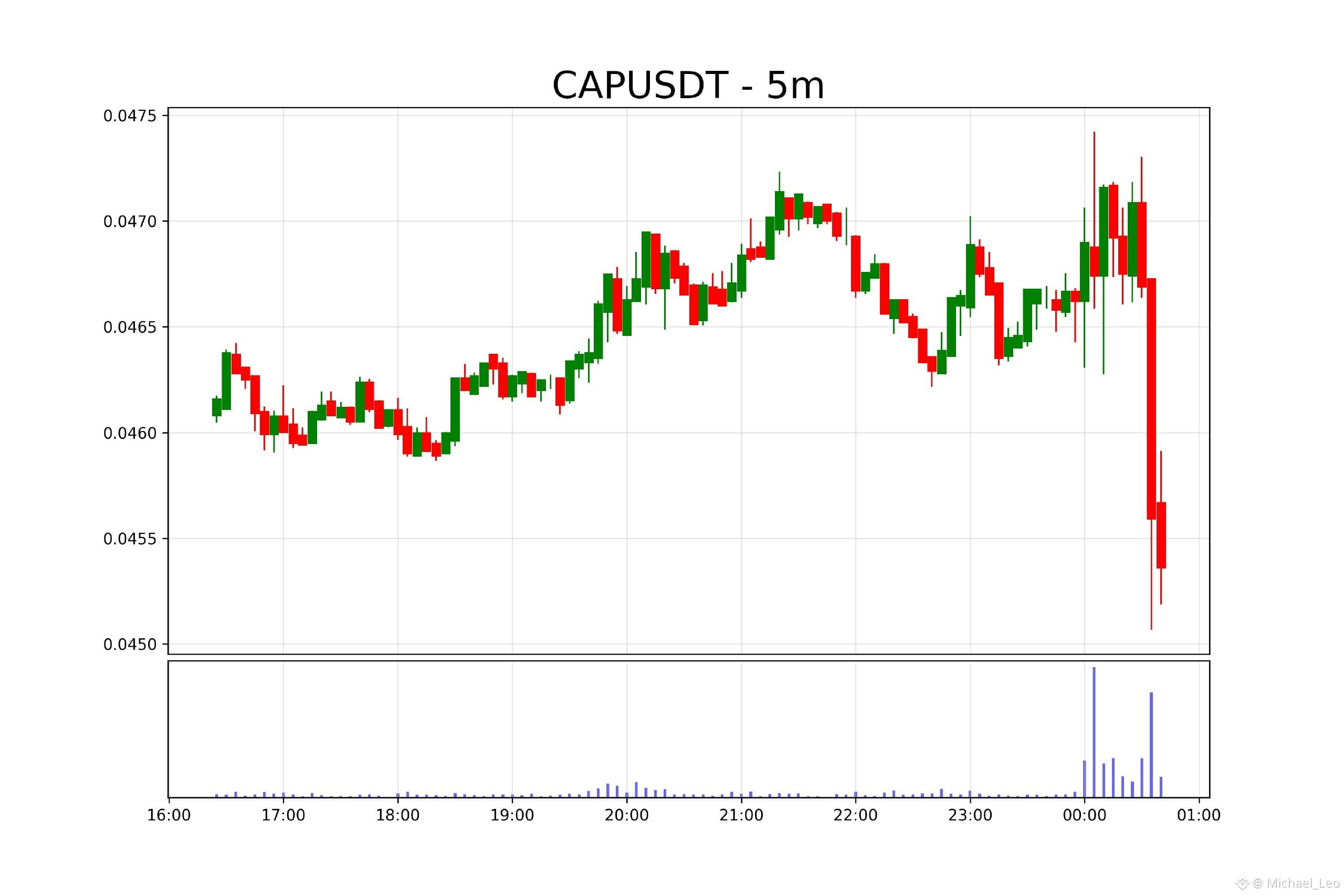
$CAP USDT fait face à un repli à court terme, en baisse de 2,35 %, tandis que le volume a bondi de 220,4 %. Malgré la chute, le CAP reste en hausse de 9,9 % sur 24 h, ce qui indique que l’élan plus large demeure positif.
Prix : 0,04565 Volume 24 h : 15,43 M
Le volume élevé suggère une forte participation du marché. Le maintien de la zone de support actuelle pourrait permettre aux acheteurs de retrouver de l’élan, tandis qu’une cassure sous le support pourrait déclencher une consolidation supplémentaire. Surveillez une reprise de la résistance proche avant d’anticiper le prochain mouvement d’expansion.
$CAP USDT fait face à un repli à court terme, en baisse de 2,35 %, tandis que le volume a bondi de 220,4 %. Malgré la chute, le CAP reste en hausse de 9,9 % sur 24 h, ce qui indique que l’élan plus large demeure positif.
Prix : 0,04565 Volume 24 h : 15,43 M
Le volume élevé suggère une forte participation du marché. Le maintien de la zone de support actuelle pourrait permettre aux acheteurs de retrouver de l’élan, tandis qu’une cassure sous le support pourrait déclencher une consolidation supplémentaire. Surveillez une reprise de la résistance proche avant d’anticiper le prochain mouvement d’expansion.
Prix : 0,04565 Volume 24 h : 15,43 M
Le volume élevé suggère une forte participation du marché. Le maintien de la zone de support actuelle pourrait permettre aux acheteurs de retrouver de l’élan, tandis qu’une cassure sous le support pourrait déclencher une consolidation supplémentaire. Surveillez une reprise de la résistance proche avant d’anticiper le prochain mouvement d’expansion.
203
·
--
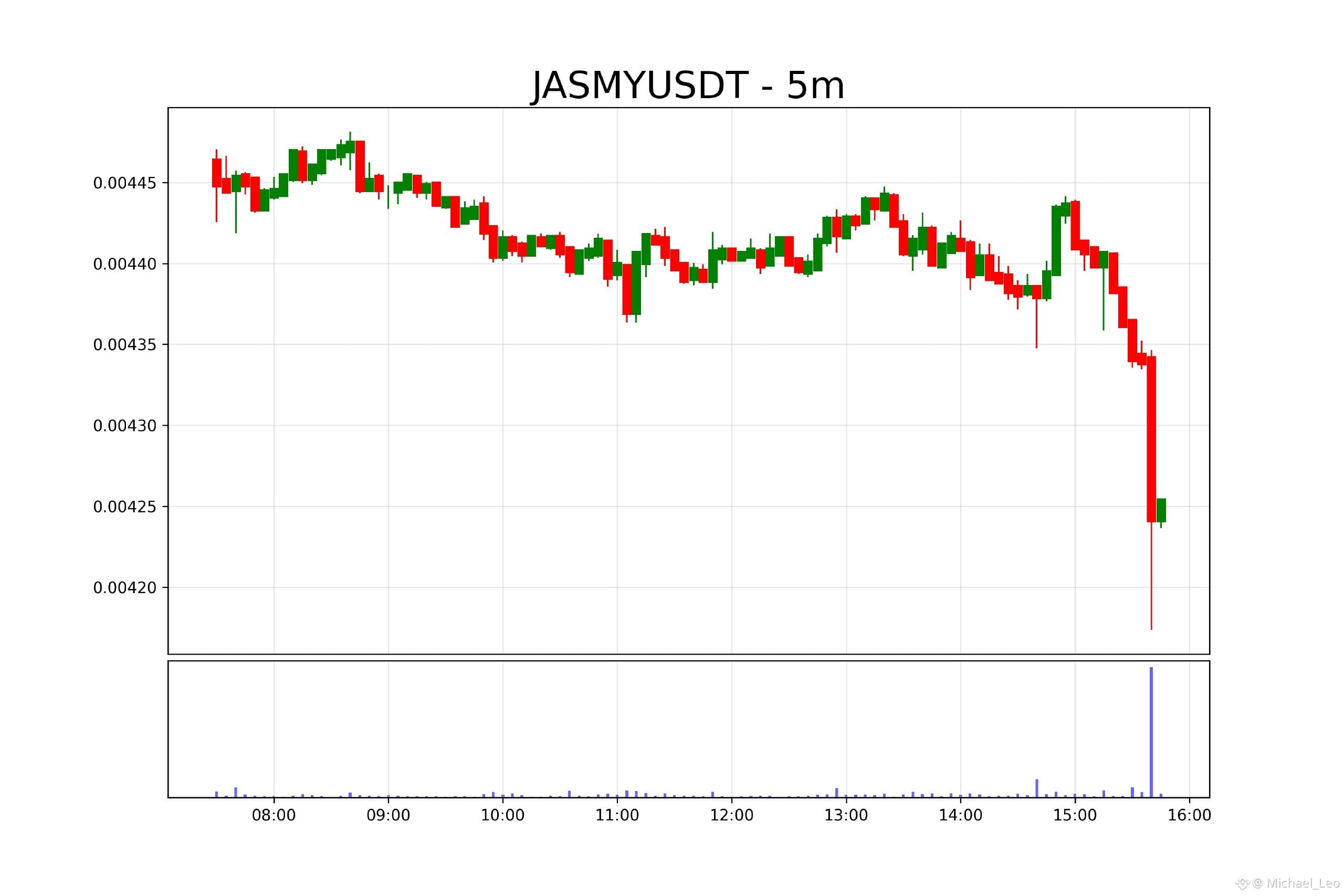
📉 $JASMY USDT Mise à jour du marché
Le prix baisse de 2,24 % tandis que le volume a explosé de 3027,3 % — une forte hausse d’activité malgré la faiblesse.
💰 Prix : 0,004243
📊 Variation sur 24h : -1,4 %
📈 Volume sur 24h : 9,09M$
Un volume élevé avec un prix en baisse suggère une pression de vente agressive et une participation accrue du marché. Surveillez attentivement la prochaine réaction au support.
#jasmy #JASMYUSDT #Crypto #altcoins
📉 $JASMY USDT Mise à jour du marché
Le prix baisse de 2,24 % tandis que le volume a explosé de 3027,3 % — une forte hausse d’activité malgré la faiblesse.
💰 Prix : 0,004243
📊 Variation sur 24h : -1,4 %
📈 Volume sur 24h : 9,09M$
Un volume élevé avec un prix en baisse suggère une pression de vente agressive et une participation accrue du marché. Surveillez attentivement la prochaine réaction au support.
#jasmy #JASMYUSDT #Crypto #altcoins
Le prix baisse de 2,24 % tandis que le volume a explosé de 3027,3 % — une forte hausse d’activité malgré la faiblesse.
💰 Prix : 0,004243
📊 Variation sur 24h : -1,4 %
📈 Volume sur 24h : 9,09M$
Un volume élevé avec un prix en baisse suggère une pression de vente agressive et une participation accrue du marché. Surveillez attentivement la prochaine réaction au support.
#jasmy #JASMYUSDT #Crypto #altcoins
185
·
--
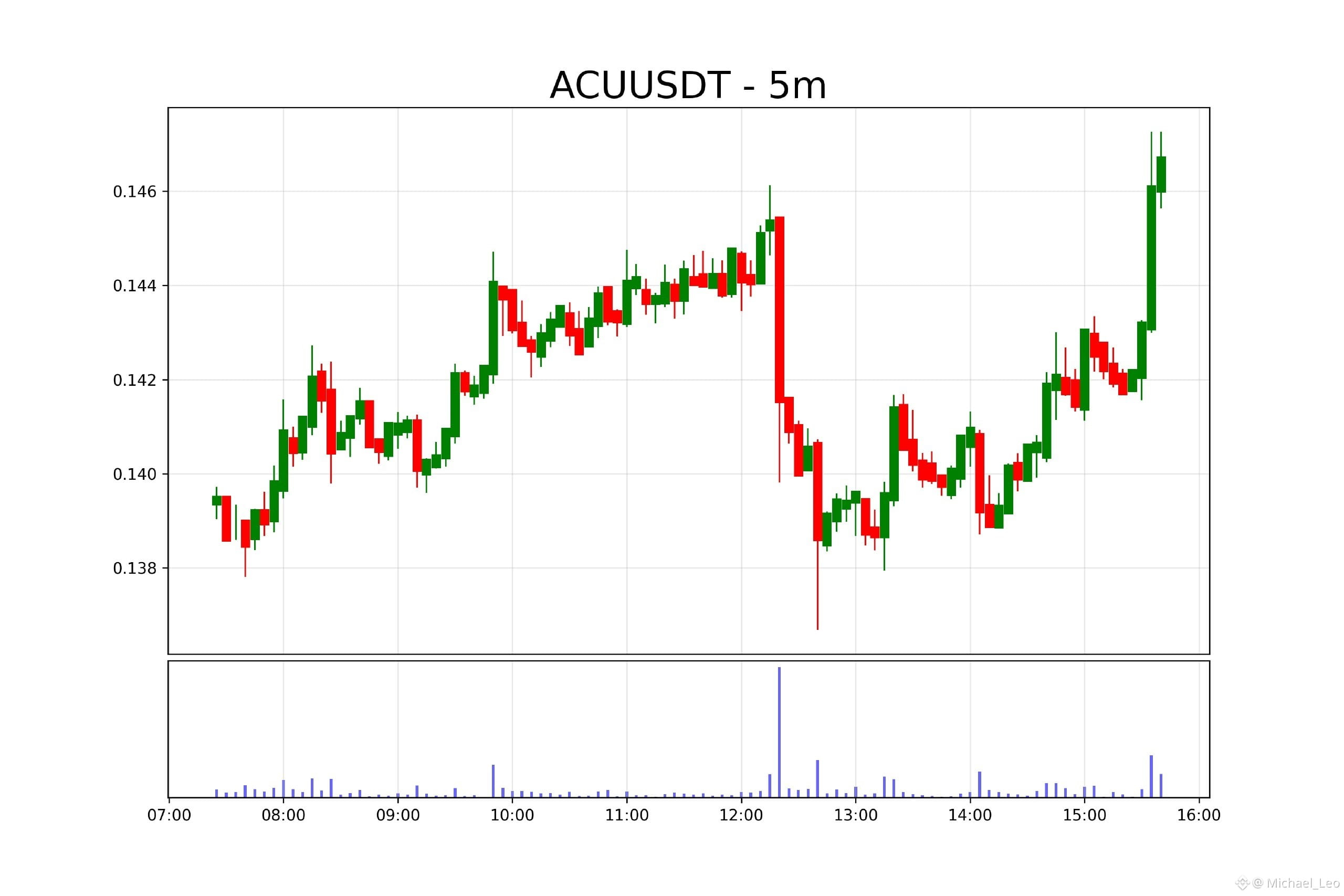
🚀 $ACU Mise à jour du marché en USDT
$ACU montre une forte dynamique, en hausse de 9,8% sur 24 h tandis que le volume a explosé de 537,9% — un signe clair d’une activité accrue sur le marché.
Prix : 0,14607 $
Volume sur 24 h : 3,40 M$
Mouvement actuel : +2,0%
Si le volume continue de soutenir la hausse, ACU pourrait rester sous les projecteurs pour un potentiel supplémentaire. Surveillez les résistances clés et évitez de poursuivre des bougies trop étendues.
#ACU #crypto #altcoins #trading
{future}(ACUUSDT)
🚀 $ACU Mise à jour du marché en USDT
$ACU montre une forte dynamique, en hausse de 9,8% sur 24 h tandis que le volume a explosé de 537,9% — un signe clair d’une activité accrue sur le marché.
Prix : 0,14607 $
Volume sur 24 h : 3,40 M$
Mouvement actuel : +2,0%
Si le volume continue de soutenir la hausse, ACU pourrait rester sous les projecteurs pour un potentiel supplémentaire. Surveillez les résistances clés et évitez de poursuivre des bougies trop étendues.
#ACU #crypto #altcoins #trading
$ACU montre une forte dynamique, en hausse de 9,8% sur 24 h tandis que le volume a explosé de 537,9% — un signe clair d’une activité accrue sur le marché.
Prix : 0,14607 $
Volume sur 24 h : 3,40 M$
Mouvement actuel : +2,0%
Si le volume continue de soutenir la hausse, ACU pourrait rester sous les projecteurs pour un potentiel supplémentaire. Surveillez les résistances clés et évitez de poursuivre des bougies trop étendues.
#ACU #crypto #altcoins #trading
213
·
--
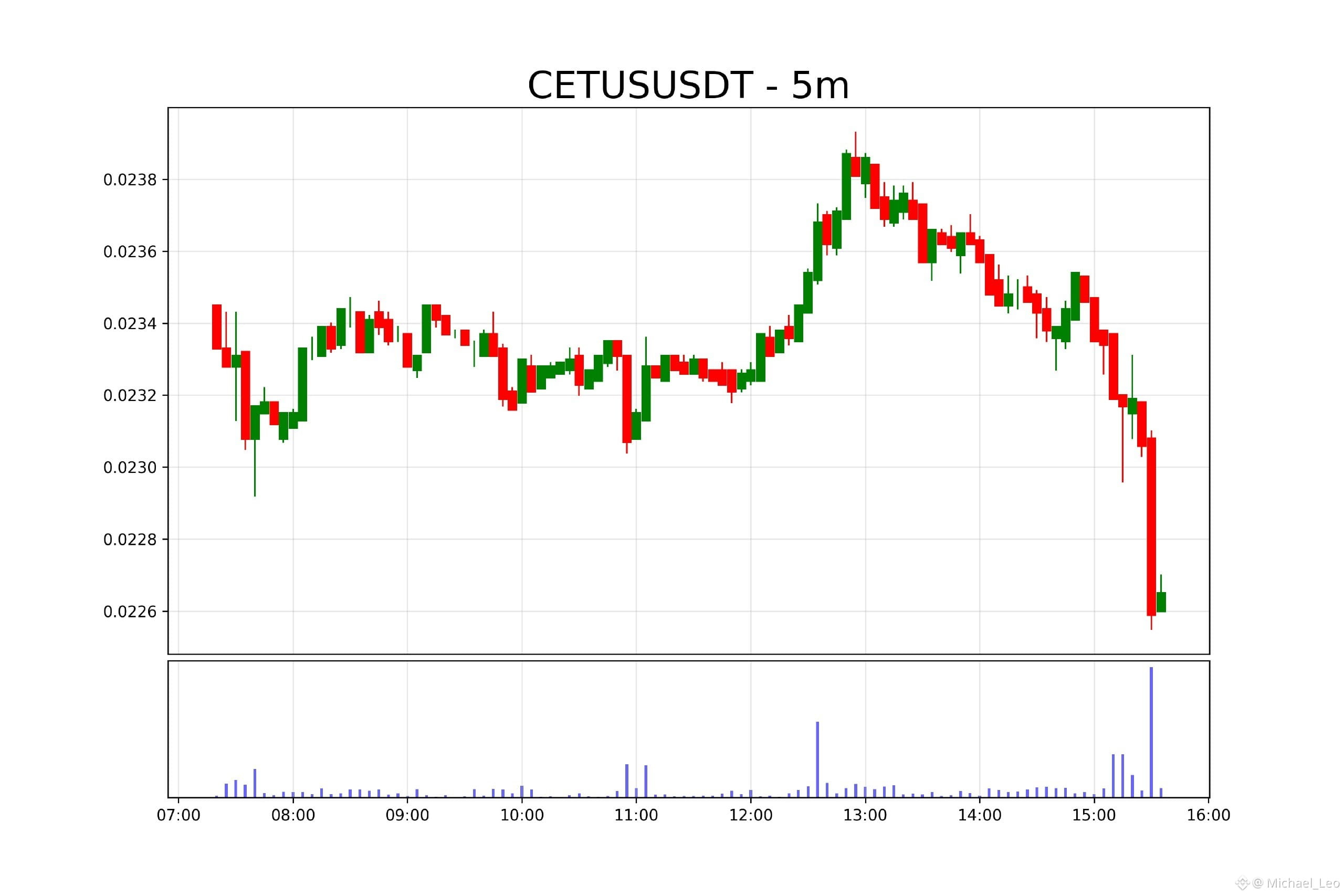
$CETUS SUSDT connaît une baisse de 2,04 % alors que le prix évolue autour de 0,02261 $, mais le signal réel est l’explosion du volume.
Volume sur 24 h : 1,55 M$
Volume : +731,2 %
Cette forte hausse d’activité suggère une participation importante malgré le repli. Les traders devraient surveiller si CETUS peut reconquérir la résistance proche, ou si le volume élevé confirme une pression baissière supplémentaire.
$CETUS #CETUSUADT #cryptouniverseofficial
$CETUS SUSDT connaît une baisse de 2,04 % alors que le prix évolue autour de 0,02261 $, mais le signal réel est l’explosion du volume.
Volume sur 24 h : 1,55 M$
Volume : +731,2 %
Cette forte hausse d’activité suggère une participation importante malgré le repli. Les traders devraient surveiller si CETUS peut reconquérir la résistance proche, ou si le volume élevé confirme une pression baissière supplémentaire.
$CETUS #CETUSUADT #cryptouniverseofficial
Volume sur 24 h : 1,55 M$
Volume : +731,2 %
Cette forte hausse d’activité suggère une participation importante malgré le repli. Les traders devraient surveiller si CETUS peut reconquérir la résistance proche, ou si le volume élevé confirme une pression baissière supplémentaire.
$CETUS #CETUSUADT #cryptouniverseofficial
150
·
--
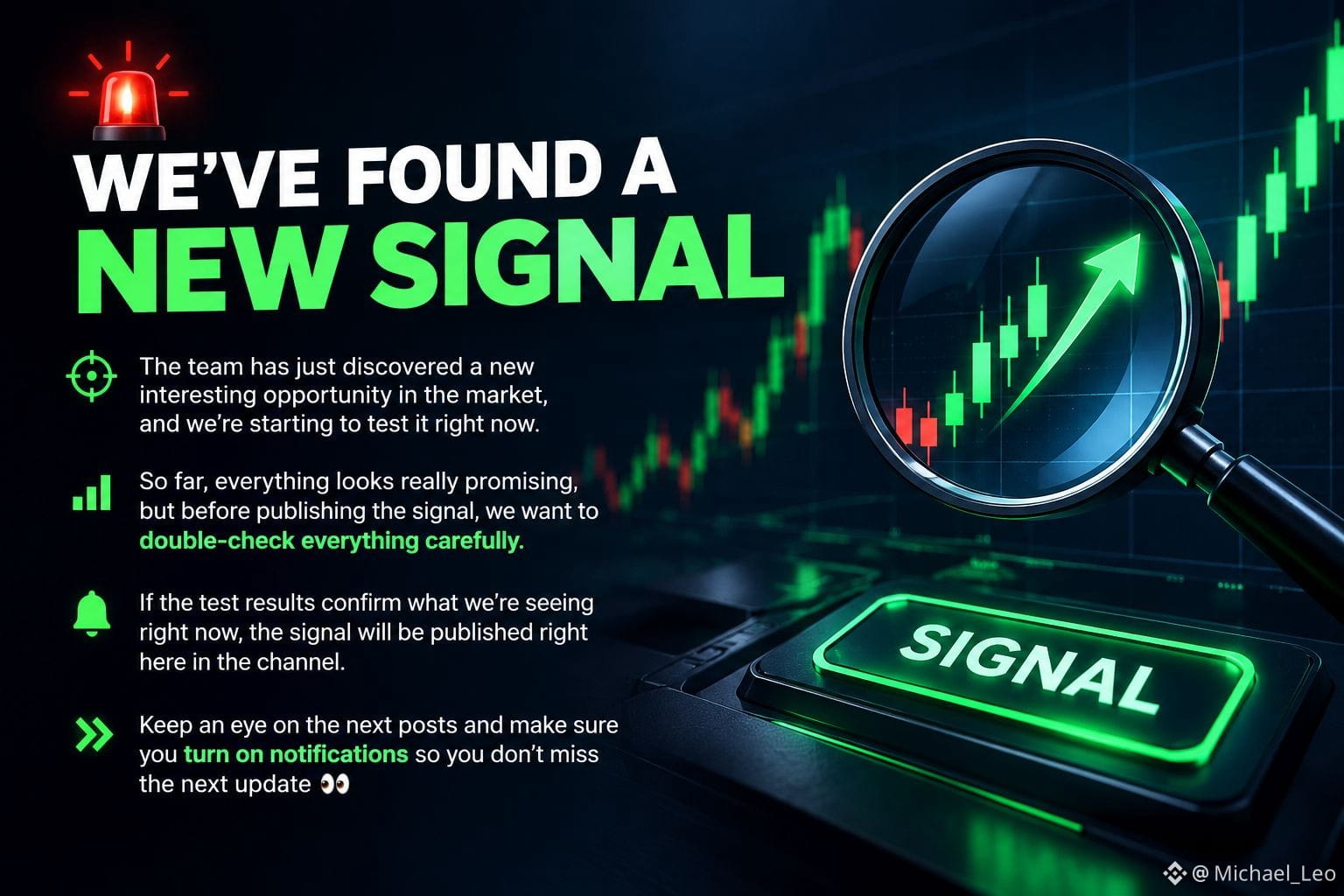
🚨 NOUS AVONS TROUVÉ UN NOUVEAU SIGNAL
L’équipe vient de découvrir une nouvelle opportunité intéressante sur le marché, et nous commençons à la tester dès maintenant
Pour l’instant, tout semble vraiment prometteur, mais avant de publier le signal, nous voulons tout vérifier soigneusement
Si les résultats des tests confirment ce que nous voyons actuellement, le signal sera publié ici même dans le canal
Surveillez les prochaines publications et activez les notifications pour ne pas manquer la prochaine mise à jour 👀
#UpdateAlert
🚨 NOUS AVONS TROUVÉ UN NOUVEAU SIGNAL
L’équipe vient de découvrir une nouvelle opportunité intéressante sur le marché, et nous commençons à la tester dès maintenant
Pour l’instant, tout semble vraiment prometteur, mais avant de publier le signal, nous voulons tout vérifier soigneusement
Si les résultats des tests confirment ce que nous voyons actuellement, le signal sera publié ici même dans le canal
Surveillez les prochaines publications et activez les notifications pour ne pas manquer la prochaine mise à jour 👀
#UpdateAlert
L’équipe vient de découvrir une nouvelle opportunité intéressante sur le marché, et nous commençons à la tester dès maintenant
Pour l’instant, tout semble vraiment prometteur, mais avant de publier le signal, nous voulons tout vérifier soigneusement
Si les résultats des tests confirment ce que nous voyons actuellement, le signal sera publié ici même dans le canal
Surveillez les prochaines publications et activez les notifications pour ne pas manquer la prochaine mise à jour 👀
#UpdateAlert
81
Connectez-vous pour découvrir plus de contenu
Rejoignez la communauté mondiale des adeptes de cryptomonnaies sur Binance Square
⚡️ Suviez les dernières informations importantes sur les cryptomonnaies.
💬 Jugé digne de confiance par la plus grande plateforme d’échange de cryptomonnaies au monde.
👍 Découvrez les connaissances que partagent les créateurs vérifiés.
Adresse e-mail/Nº de téléphone
Sujets d’actualité
NEARRisesNearly80%InAWeek
43,874 vues
968 mentions
#nearrisesnearly80%inaweek $NEAR vient de faire +80% en 7 jours et personne ne parle du POURQUOI 🚀
$2.20 → $4.29 pendant que tout le marché n’était monté que de 6%.
Les vrais moteurs :
→ Volume d’intentions près de $30B
→ Lancement de Perps confidentiels avec Hyperliquid
→ TVL de retour à $190M + 52K portefeuilles actifs
Je l’ai vu à $2.30 et je n’ai rien fait. Leçon retenue.
Tu le détiens ou tu continues de regarder depuis les coulisses ? 👀
$NEAR #NEARProtocol #CryptoNews
True News
·2 mentions J’aime
·804 vues
MultiversXPlansHardForkRecovery
36,615 vues
744 mentions
CircleLaunchesInstitutionalBTCBackedBorrowing
34,573 vues
803 mentions