Binance Square
Nihalshibili
42 Publications

Nihalshibili

1 Suivis
12 Abonnés
9 J’aime
Publications

PINNED
·
--
Article
1: Introduction to Crypto and Stock Market Trading#StockMarketSuccess #studying #begginers #begginermistake #TradingMadeEasy Overview of the Crypto and Stock Markets: The world of financial markets offers a diverse array of investment opportunities, with two prominent avenues being the cryptocurrency and stock markets. While both facilitate investment and trading, they operate on distinct principles and mechanisms. Cryptocurrencies, such as Bitcoin, Ethereum, and Litecoin, are digital assets built on blockchain technology. They offer decentralization, anonymity, and potential for rapid growth but are also known for their high volatility and regulatory uncertainty. In contrast, the stock market represents ownership in publicly traded companies, where investors buy and sell shares to capitalize on company performance and market trends. Stocks are subject to regulatory oversight, corporate governance, and economic factors that influence their value. Understanding these markets involves grasping their unique dynamics, including liquidity, volatility, and market sentiment. While cryptocurrencies often exhibit higher volatility due to their nascent stage and speculative nature, stocks are influenced by company fundamentals, industry trends, and broader economic indicators. Importance of Understanding Market Dynamics and Trends: Successful trading hinges on a deep understanding of market dynamics and trends. Various factors, such as supply and demand, investor sentiment, regulatory developments, and technological advancements, drive price movements in both crypto and stock markets. Market dynamics can be analyzed through technical and fundamental analysis, which involve studying price charts, indicators, financial statements, and market news. By identifying patterns and trends, traders can anticipate price movements and make informed decisions. Moreover, staying abreast of market trends enables traders to adapt to changing conditions and seize profitable opportunities.Whether it's a bullish run in cryptocurrencies fueled by adoption news or a stock rally driven by strong earnings reports, recognizing and capitalizing on trends is crucial for maximizing returns. Setting Realistic Goals and Expectations: Trading is not without its risks, and setting realistic goals and expectations is paramount for long-term success. Many novice traders fall into the trap of chasing quick profits or expecting constant market growth, only to be disappointed by the realities of market volatility. Instead, traders should define clear investment objectives, establish achievable goals, and align their strategies with their risk tolerance levels and time horizons. This involves conducting thorough research, developing a trading plan, and adhering to disciplined risk management practices. Furthermore, patience and resilience are essential virtues in trading, as markets can be unpredictable and setbacks are inevitable. By maintaining realistic expectations and a disciplined approach, traders can navigate the ups and downs of the market with confidence and resilience. In conclusion, gaining a comprehensive understanding of crypto and stock market dynamics, trends, and risk management principles is essential for aspiring traders. By embracing knowledge, discipline, and patience, traders can embark on their journey with a solid foundation for success

1: Introduction to Crypto and Stock Market Trading

#StockMarketSuccess #studying #begginers #begginermistake #TradingMadeEasy
Overview of the Crypto and Stock Markets:
The world of financial markets offers a diverse array of investment opportunities,
with two prominent avenues being the cryptocurrency and stock markets. While
both facilitate investment and trading, they operate on distinct principles and
mechanisms.
Cryptocurrencies, such as Bitcoin, Ethereum, and Litecoin, are digital assets built
on blockchain technology. They offer decentralization, anonymity, and potential
for rapid growth but are also known for their high volatility and regulatory
uncertainty.
In contrast, the stock market represents ownership in publicly traded companies,
where investors buy and sell shares to capitalize on company performance and
market trends. Stocks are subject to regulatory oversight, corporate governance,
and economic factors that influence their value.
Understanding these markets involves grasping their unique dynamics, including
liquidity, volatility, and market sentiment. While cryptocurrencies often exhibit
higher volatility due to their nascent stage and speculative nature, stocks are
influenced by company fundamentals, industry trends, and broader economic
indicators.
Importance of Understanding Market Dynamics and Trends:
Successful trading hinges on a deep understanding of market dynamics and
trends. Various factors, such as supply and demand, investor sentiment,
regulatory developments, and technological advancements, drive price
movements in both crypto and stock markets.
Market dynamics can be analyzed through technical and fundamental analysis,
which involve studying price charts, indicators, financial statements, and market
news. By identifying patterns and trends, traders can anticipate price movements
and make informed decisions.
Moreover, staying abreast of market trends enables traders to adapt to changing
conditions and seize profitable opportunities.Whether it's a bullish run in cryptocurrencies fueled by adoption news or a stock rally driven by strong
earnings reports, recognizing and capitalizing on trends is crucial for maximizing
returns.
Setting Realistic Goals and Expectations:
Trading is not without its risks, and setting realistic goals and expectations is
paramount for long-term success. Many novice traders fall into the trap of
chasing quick profits or expecting constant market growth, only to be
disappointed by the realities of market volatility.
Instead, traders should define clear investment objectives, establish achievable
goals, and align their strategies with their risk tolerance levels and time horizons.
This involves conducting thorough research, developing a trading plan, and
adhering to disciplined risk management practices.
Furthermore, patience and resilience are essential virtues in trading, as markets
can be unpredictable and setbacks are inevitable. By maintaining realistic
expectations and a disciplined approach, traders can navigate the ups and
downs of the market with confidence and resilience.
In conclusion, gaining a comprehensive understanding of crypto and stock
market dynamics, trends, and risk management principles is essential for
aspiring traders. By embracing knowledge, discipline, and patience, traders can
embark on their journey with a solid foundation for success
Here are some of the latest news and developments regarding XRP: Court Ruling: A recent court ruling in the SEC vs. Ripple case has been seen as a positive development for XRP. The court ruled that XRP, when sold to institutional investors, was not considered a security. This decision has led to increased confidence in XRP and could potentially pave the way for wider adoption of the cryptocurrency. Price Surge: Following the court ruling, the price of XRP has surged significantly, reaching its highest level in several years. This surge in price has attracted the attention of investors and traders, who are optimistic about XRP's future prospects. Regulatory Clarity: The court ruling has brought much-needed regulatory clarity to the cryptocurrency industry, particularly regarding the classification of digital assets. This clarity could encourage more institutional investors to consider investing in cryptocurrencies, including XRP. Global Adoption: Ripple's technology, which utilizes XRP, is being used by various financial institutions around the world to facilitate cross-border payments. This growing adoption of Ripple's technology could lead to increased demand for XRP, further boosting its price. Future Outlook: The future of XRP is uncertain, but the recent court ruling has certainly brightened its prospects. If Ripple can continue to innovate and expand its network of partners, XRP could become a major player in the global payments ecosystem. However, regulatory risks still remain, and it is important to monitor developments in the regulatory landscape. Overall, XRP is a cryptocurrency with significant potential, but it is important to conduct thorough research and consider the risks before investing.
Here are some of the latest news and developments regarding XRP:

Court Ruling: A recent court ruling in the SEC vs. Ripple case has been seen as a positive development for XRP. The court ruled that XRP, when sold to institutional investors, was not considered a security. This decision has led to increased confidence in XRP and could potentially pave the way for wider adoption of the cryptocurrency.
Price Surge: Following the court ruling, the price of XRP has surged significantly, reaching its highest level in several years. This surge in price has attracted the attention of investors and traders, who are optimistic about XRP's future prospects.
Regulatory Clarity: The court ruling has brought much-needed regulatory clarity to the cryptocurrency industry, particularly regarding the classification of digital assets. This clarity could encourage more institutional investors to consider investing in cryptocurrencies, including XRP.
Global Adoption: Ripple's technology, which utilizes XRP, is being used by various financial institutions around the world to facilitate cross-border payments. This growing adoption of Ripple's technology could lead to increased demand for XRP, further boosting its price.
Future Outlook:

The future of XRP is uncertain, but the recent court ruling has certainly brightened its prospects. If Ripple can continue to innovate and expand its network of partners, XRP could become a major player in the global payments ecosystem. However, regulatory risks still remain, and it is important to monitor developments in the regulatory landscape.

Overall, XRP is a cryptocurrency with significant potential, but it is important to conduct thorough research and consider the risks before investing.
·
--
Haussier
#ICPCoin Internet Computer (ICP) has been making waves in the cryptocurrency market recently, with its price surging by 21.40% in the last 7 days. This outperformance compared to the broader crypto market and similar Layer 1 (L1) cryptocurrencies has caught the attention of investors and analysts alike. Key Points: Price Surge: ICP's price has increased significantly in the past week, reaching $11.9 today with a 24-hour trading volume of $619 million. Market Cap: With a circulating supply of 470 million ICP, the cryptocurrency is currently valued at a market cap of $5.3 billion. Positive Sentiment: The recent price increase and outperformance have led to positive sentiment surrounding ICP, with many analysts and investors bullish on its future prospects. Technological Advancements: DFINITY Foundation, the organization behind ICP, has been actively working on various technological advancements, including the development of smart contracts and decentralized applications.   Partnerships: ICP has also been forging partnerships with various organizations, which could further drive its adoption and price appreciation.   However, it's important to note that the cryptocurrency market is highly volatile, and ICP's price could fluctuate significantly in the future. Investors should conduct thorough research and consider consulting with a financial advisor before making any investment decisions.
#ICPCoin Internet Computer (ICP) has been making waves in the cryptocurrency market recently, with its price surging by 21.40% in the last 7 days. This outperformance compared to the broader crypto market and similar Layer 1 (L1) cryptocurrencies has caught the attention of investors and analysts alike.

Key Points:

Price Surge: ICP's price has increased significantly in the past week, reaching $11.9 today with a 24-hour trading volume of $619 million.
Market Cap: With a circulating supply of 470 million ICP, the cryptocurrency is currently valued at a market cap of $5.3 billion.
Positive Sentiment: The recent price increase and outperformance have led to positive sentiment surrounding ICP, with many analysts and investors bullish on its future prospects.
Technological Advancements: DFINITY Foundation, the organization behind ICP, has been actively working on various technological advancements, including the development of smart contracts and decentralized applications.
Partnerships: ICP has also been forging partnerships with various organizations, which could further drive its adoption and price appreciation.
However, it's important to note that the cryptocurrency market is highly volatile, and ICP's price could fluctuate significantly in the future. Investors should conduct thorough research and consider consulting with a financial advisor before making any investment decisions.
Crypto Market Today: A Bullish Surge Continues Bitcoin (BTC) Dominates the Headlines Bitcoin continues its remarkable rally, edging closer to the coveted $100,000 mark. This surge is primarily driven by increased institutional interest and optimism surrounding potential regulatory changes under the Trump administration. Key Points: Bitcoin's All-Time High: Bitcoin has shattered records, reaching a new all-time high of $98,000. Institutional Interest: Major players like BlackRock and potentially Donald Trump's media company are showing increased interest in cryptocurrencies. Market Sentiment: The overall market sentiment is overwhelmingly bullish, with experts predicting further growth in the coming months. Other Cryptocurrencies: While Bitcoin steals the limelight, other cryptocurrencies are also experiencing significant gains: Ethereum (ETH): Ethereum, the second-largest cryptocurrency, is also on an upward trajectory, benefiting from increased DeFi activity and network upgrades. XRP (XRP): XRP has shown promising signs of recovery, with its price increasing steadily. Cardano (ADA): Cardano, a popular smart contract platform, has gained traction due to its focus on scalability and sustainability. Important Considerations: Volatility: The cryptocurrency market is inherently volatile, and prices can fluctuate rapidly. Regulatory Risks: Regulatory uncertainties can impact the market, so it's crucial to stay updated on the latest developments. Risk Management: It's essential to conduct thorough research and consider your risk tolerance before investing in cryptocurrencies.
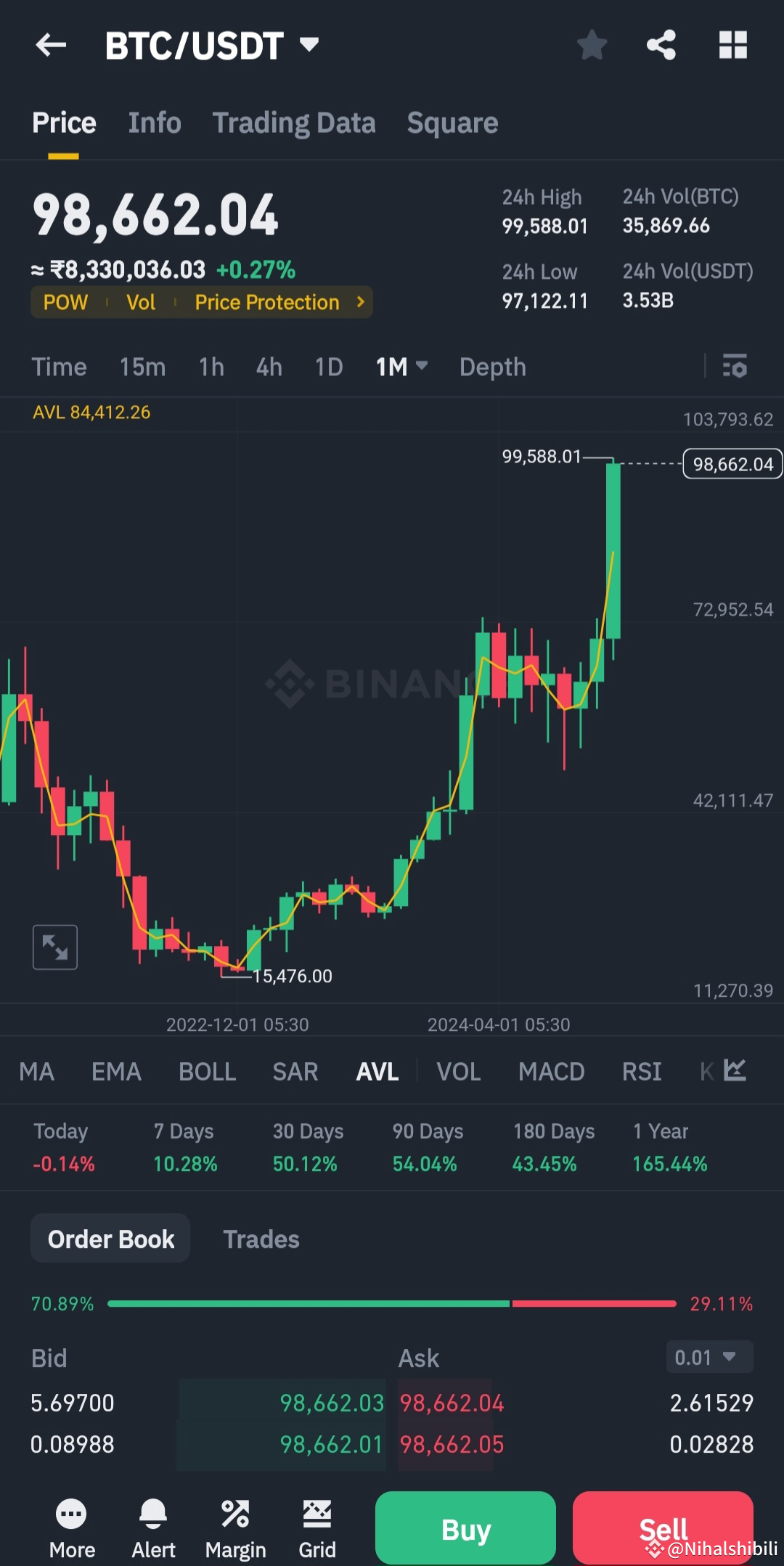
Crypto Market Today: A Bullish Surge Continues

Bitcoin (BTC) Dominates the Headlines

Bitcoin continues its remarkable rally, edging closer to the coveted $100,000 mark. This surge is primarily driven by increased institutional interest and optimism surrounding potential regulatory changes under the Trump administration.

Key Points:

Bitcoin's All-Time High: Bitcoin has shattered records, reaching a new all-time high of $98,000.
Institutional Interest: Major players like BlackRock and potentially Donald Trump's media company are showing increased interest in cryptocurrencies.
Market Sentiment: The overall market sentiment is overwhelmingly bullish, with experts predicting further growth in the coming months.
Other Cryptocurrencies:

While Bitcoin steals the limelight, other cryptocurrencies are also experiencing significant gains:

Ethereum (ETH): Ethereum, the second-largest cryptocurrency, is also on an upward trajectory, benefiting from increased DeFi activity and network upgrades.
XRP (XRP): XRP has shown promising signs of recovery, with its price increasing steadily.
Cardano (ADA): Cardano, a popular smart contract platform, has gained traction due to its focus on scalability and sustainability.
Important Considerations:

Volatility: The cryptocurrency market is inherently volatile, and prices can fluctuate rapidly.
Regulatory Risks: Regulatory uncertainties can impact the market, so it's crucial to stay updated on the latest developments.
Risk Management: It's essential to conduct thorough research and consider your risk tolerance before investing in cryptocurrencies.

Article
ConclusionTrading successfully in financial markets requires a multifaceted approach that combines knowledge, discipline, and emotional control. Throughout this guide, we've explored essential aspects of trading, from fundamental and technical analysis to advanced strategies and risk management. Here’s a summary of the key points: Understanding the Basics: Fundamental analysis involves assessing a company's financial health and market position, while technical analysis focuses on price movements and chart patterns. Developing a solid foundation in both areas enables traders to make informed decisions. Risk Management and Diversification: Effective risk management protects capital and ensures long-term viability. Setting stop-loss orders and managing position sizes are crucial practices. Diversifying across asset classes reduces risk and enhances the potential for stable returns. Advanced Strategies: Options, futures, and margin trading offer sophisticated ways to enhance returns but require a deep understanding of the associated risks. Leveraging these strategies effectively involves careful planning and stringent risk controls. Psychological Mastery: Cultivating patience, discipline, and resilience is essential for navigating market volatility and setbacks. Overcoming emotions like fear and greed ensures more rational and consistent decision-making. Continuous Improvement: Analyzing past trades and learning from mistakes is key to ongoing improvement. Staying informed about market developments and continuously educating oneself keeps traders adaptable and competitive. Building a Successful Trading Mindset: Balancing optimism with realistic expectations helps maintain motivation while avoiding unrealistic goals. Developing a trading plan and adhering to it fosters discipline and reduces emotional trading. In conclusion, successful trading is not about achieving quick profits but about building a sustainable, long-term approach. It requires continuous learning, diligent risk management, and emotional control. By integrating these principles, traders can navigate the complexities of the financial markets and work towards consistent profitability. Whether you're a novice trader or an experienced professional, committing to these practices will enhance your trading journey and help you achieve your financial goals.#CryptoDecision #TradingMadeEasy #BullRunAhead #begginers #begginermistake

Conclusion

Trading successfully in financial markets requires a multifaceted approach that
combines knowledge, discipline, and emotional control. Throughout this guide,
we've explored essential aspects of trading, from fundamental and technical
analysis to advanced strategies and risk management. Here’s a summary of the
key points:
Understanding the Basics:
Fundamental analysis involves assessing a company's financial health and
market position, while technical analysis focuses on price movements and chart
patterns.
Developing a solid foundation in both areas enables traders to make informed
decisions.
Risk Management and Diversification:
Effective risk management protects capital and ensures long-term viability.
Setting stop-loss orders and managing position sizes are crucial practices.
Diversifying across asset classes reduces risk and enhances the potential for
stable returns.
Advanced Strategies:
Options, futures, and margin trading offer sophisticated ways to enhance returns
but require a deep understanding of the associated risks.
Leveraging these strategies effectively involves careful planning and stringent
risk controls.
Psychological Mastery:
Cultivating patience, discipline, and resilience is essential for navigating market
volatility and setbacks.
Overcoming emotions like fear and greed ensures more rational and consistent
decision-making.
Continuous Improvement:
Analyzing past trades and learning from mistakes is key to ongoing improvement.
Staying informed about market developments and continuously educating
oneself keeps traders adaptable and competitive.
Building a Successful Trading Mindset:
Balancing optimism with realistic expectations helps maintain motivation while
avoiding unrealistic goals.
Developing a trading plan and adhering to it fosters discipline and reduces
emotional trading.
In conclusion, successful trading is not about achieving quick profits but about
building a sustainable, long-term approach. It requires continuous learning,
diligent risk management, and emotional control. By integrating these principles,
traders can navigate the complexities of the financial markets and work towards
consistent profitability. Whether you're a novice trader or an experienced
professional, committing to these practices will enhance your trading journey and
help you achieve your financial goals.#CryptoDecision #TradingMadeEasy #BullRunAhead #begginers #begginermistake
Article
Chapter 10: Building a Successful Trading MindsetCultivating Patience, Discipline, and Resilience Patience Patience is crucial for making well-timed trading decisions and waiting for the right opportunities. Waiting for Setups: Avoid impulsive trades by waiting for your predefined criteria and setups. Long-Term Perspective: Focus on long-term goals rather than short-term fluctuations. Understand that consistent profits take time. Avoiding Overtrading: Stick to your trading plan and avoid unnecessary trades driven by impatience. Discipline Discipline ensures adherence to trading plans and strategies, helping to avoid emotional and impulsive decisions. Following the Plan: Stick to your trading plan's rules and strategies, even when tempted to deviate. Risk Management: Consistently apply risk management practices, including setting stop-losses and managing position sizes. Routine and Consistency: Develop a trading routine to maintain consistency. Review and analyze trades regularly. Resilience Resilience helps traders recover from losses and setbacks, maintaining a positive outlook. Learning from Mistakes: View losses as learning opportunities. Analyze what went wrong and how to improve. Emotional Control: Manage stress and maintain emotional stability, especially during volatile market conditions.Staying Motivated: Set realistic goals and celebrate small successes to stay motivated and resilient. Overcoming Fear and Greed in Trading Fear and greed are two of the most common emotions that can negatively impact trading decisions. Understanding Fear Fear can lead to hesitation, missed opportunities, and premature exits. Identify Triggers: Recognize what triggers your fear (e.g., past losses, market volatility) and address them. Risk Management: Implementing strict risk management rules can help mitigate fear by limiting potential losses. Confidence Building: Gain confidence through practice and education. Simulated trading or small position sizes can help build confidence. Managing Greed Greed can cause traders to take excessive risks, chase trends, or hold positions too long. Set Profit Targets: Define profit targets for each trade and adhere to them. Avoid the temptation to hold out for higher gains. Discipline: Stick to your trading plan and avoid chasing trades outside of your strategy. Regular Withdrawals: Regularly take profits out of your trading account to realize gains and reduce the temptation to overtrade. Techniques for Emotional Control Mindfulness and Meditation: Practice mindfulness or meditation to stay calm and focused. Physical Activity: Regular exercise can help manage stress and improve mental clarity. Breaks and Downtime: Take regular breaks from trading to avoid burnout and maintain perspective. Balancing Optimism with Realistic Expectations Optimism is important for maintaining a positive mindset, but it must be balanced with realistic expectations to avoid disappointment and reckless decisions. Setting Realistic Goals Specific and Measurable: Define clear, specific, and measurable goals for your trading activities. Achievable and Relevant: Ensure goals are achievable and relevant to your trading experience and market conditions. Time-Bound: Set time frames for achieving your goals to keep focused and motivated. Continuous Learning and Adaptation Stay Informed: Continuously educate yourself about market trends, new strategies, and trading tools. Adapt Strategies: Be willing to adapt and evolve your trading strategies based on performance and changing market conditions. Seek Feedback: Engage with other traders or mentors to gain insights and feedback on your trading approach. Reflecting on Performance Regular Reviews: Conduct regular reviews of your trading performance to assess progress and identify areas for improvement. Journaling: Maintain a trading journal to document trades, strategies, emotions, and reflections. Celebrate Achievements: Recognize and celebrate your achievements, no matter how small, to maintain motivation and a positive outlook. Maintaining Perspective Long-Term View: Keep a long-term perspective on your trading journey. Understand that setbacks are part of the learning process. Diversification: Diversify your investments to reduce risk and avoid putting all your capital into a single trade or market. Work-Life Balance: Maintain a healthy work-life balance to ensure trading does not negatively impact your overall well-being. By cultivating patience, discipline, and resilience, overcoming fear and greed, and balancing optimism with realistic expectations, traders can build a successful trading mindset that supports long-term success and growth#CryptoDecision #TradingMadeEasy #BullRunAhead #begginermistake #begginers

Chapter 10: Building a Successful Trading Mindset

Cultivating Patience, Discipline, and Resilience
Patience
Patience is crucial for making well-timed trading decisions and waiting for the
right opportunities.
Waiting for Setups: Avoid impulsive trades by waiting for your predefined criteria
and setups.
Long-Term Perspective: Focus on long-term goals rather than short-term
fluctuations. Understand that consistent profits take time.
Avoiding Overtrading: Stick to your trading plan and avoid unnecessary trades
driven by impatience.
Discipline
Discipline ensures adherence to trading plans and strategies, helping to avoid
emotional and impulsive decisions.
Following the Plan: Stick to your trading plan's rules and strategies, even when
tempted to deviate.
Risk Management: Consistently apply risk management practices, including
setting stop-losses and managing position sizes.
Routine and Consistency: Develop a trading routine to maintain consistency.
Review and analyze trades regularly.
Resilience
Resilience helps traders recover from losses and setbacks, maintaining a
positive outlook.
Learning from Mistakes: View losses as learning opportunities. Analyze what
went wrong and how to improve.
Emotional Control: Manage stress and maintain emotional stability, especially
during volatile market conditions.Staying Motivated: Set realistic goals and celebrate small successes to stay
motivated and resilient.
Overcoming Fear and Greed in Trading
Fear and greed are two of the most common emotions that can negatively impact
trading decisions.
Understanding Fear
Fear can lead to hesitation, missed opportunities, and premature exits.
Identify Triggers: Recognize what triggers your fear (e.g., past losses, market
volatility) and address them.
Risk Management: Implementing strict risk management rules can help mitigate
fear by limiting potential losses.
Confidence Building: Gain confidence through practice and education. Simulated
trading or small position sizes can help build confidence.
Managing Greed
Greed can cause traders to take excessive risks, chase trends, or hold positions
too long.
Set Profit Targets: Define profit targets for each trade and adhere to them. Avoid
the temptation to hold out for higher gains.
Discipline: Stick to your trading plan and avoid chasing trades outside of your
strategy.
Regular Withdrawals: Regularly take profits out of your trading account to realize
gains and reduce the temptation to overtrade.
Techniques for Emotional Control
Mindfulness and Meditation: Practice mindfulness or meditation to stay calm and
focused.
Physical Activity: Regular exercise can help manage stress and improve mental
clarity.
Breaks and Downtime: Take regular breaks from trading to avoid burnout and maintain perspective.
Balancing Optimism with Realistic Expectations
Optimism is important for maintaining a positive mindset, but it must be balanced
with realistic expectations to avoid disappointment and reckless decisions.
Setting Realistic Goals
Specific and Measurable: Define clear, specific, and measurable goals for your
trading activities.
Achievable and Relevant: Ensure goals are achievable and relevant to your
trading experience and market conditions.
Time-Bound: Set time frames for achieving your goals to keep focused and
motivated.
Continuous Learning and Adaptation
Stay Informed: Continuously educate yourself about market trends, new
strategies, and trading tools.
Adapt Strategies: Be willing to adapt and evolve your trading strategies based on
performance and changing market conditions.
Seek Feedback: Engage with other traders or mentors to gain insights and
feedback on your trading approach.
Reflecting on Performance
Regular Reviews: Conduct regular reviews of your trading performance to assess
progress and identify areas for improvement.
Journaling: Maintain a trading journal to document trades, strategies, emotions,
and reflections.
Celebrate Achievements: Recognize and celebrate your achievements, no matter
how small, to maintain motivation and a positive outlook.
Maintaining Perspective
Long-Term View: Keep a long-term perspective on your trading journey.
Understand that setbacks are part of the learning process.
Diversification: Diversify your investments to reduce risk and avoid putting all
your capital into a single trade or market.
Work-Life Balance: Maintain a healthy work-life balance to ensure trading does
not negatively impact your overall well-being.
By cultivating patience, discipline, and resilience, overcoming fear and greed,
and balancing optimism with realistic expectations, traders can build a successful
trading mindset that supports long-term success and growth#CryptoDecision #TradingMadeEasy #BullRunAhead #begginermistake #begginers
Article
Chapter 9: Advanced Strategies and TechniquesExploring Advanced Trading Strategies Advanced trading strategies can enhance potential returns but also come with increased complexity and risk. Key strategies include options trading, futures contracts, and margin trading. Options Trading Options are financial derivatives that provide the right, but not the obligation, to buy or sell an underlying asset at a predetermined price before a specific date. Call Options: Give the holder the right to buy an asset at a specific price (strike price) within a specific time frame. Put Options: Give the holder the right to sell an asset at a specific price within a specific time frame. Common Strategies: Covered Call: Holding a long position in an asset and selling call options on the same asset to generate income. Protective Put: Buying put options to hedge against potential losses in a long position. Straddle: Buying both a call and a put option at the same strike price and expiration date, anticipating significant price movement in either direction. Iron Condor: Selling an out-of-the-money call and put, while simultaneously buying further out-of-the-money call and put options, to profit from low volatility. Futures Contracts Futures are standardized contracts to buy or sell an asset at a future date and price. Hedging: Using futures to lock in prices and mitigate the risk of price fluctuations in the underlying asset. Speculation: Attempting to profit from expected changes in the price of the underlying asset. Common Strategies:Long Futures: Buying futures contracts to profit from an anticipated price increase. Short Futures: Selling futures contracts to profit from an anticipated price decrease. Spread Trading: Taking opposing positions in two different futures contracts to profit from changes in the price differential. Margin Trading Margin trading involves borrowing funds from a broker to trade a larger position than the capital available in the trading account. Leverage: Amplifies potential gains, but also magnifies potential losses. Margin Requirements: The minimum account balance required to open and maintain a leveraged position. Key Considerations: Initial Margin: The amount of capital required to open a leveraged position. Maintenance Margin: The minimum balance that must be maintained to keep the position open. Margin Calls: A broker’s demand for additional funds if the account balance falls below the maintenance margin. Leveraging Leverage: Understanding the Risks and Rewards Potential Rewards Increased Profits: Leverage allows traders to control larger positions, potentially leading to higher returns. Capital Efficiency: Leverage enables traders to use less capital for the same exposure, freeing up funds for other investments. Associated Risks Amplified Losses: Losses are magnified just as much as gains, increasing the risk of significant financial loss. Margin Calls: If the market moves against the position, traders may be required to deposit additional funds to maintain the position. Interest Costs: Borrowing funds incurs interest, which can erode profits over time. Risk Management Techniques Position Sizing: Carefully calculate position sizes to manage risk exposure. Stop-Loss Orders: Use stop-loss orders to limit potential losses. Regular Monitoring: Continuously monitor leveraged positions to react quickly to market changes. Incorporating Macroeconomic Factors into Trading Decisions Macroeconomic factors can significantly impact financial markets. Incorporating these factors into trading decisions can enhance strategy effectiveness. Key Macroeconomic Indicators Gross Domestic Product (GDP): Measures economic growth. Strong GDP growth often leads to bullish market sentiment. Interest Rates: Central bank policies influence borrowing costs and economic activity. Lower rates typically boost markets, while higher rates can dampen growth. Inflation: Affects purchasing power and cost of living. Moderate inflation is generally positive for equities, but high inflation can erode profits. Unemployment Rate: Reflects labor market health. Lower unemployment rates usually indicate a strong economy. Consumer Confidence: Measures sentiment about the economy’s future. High confidence can lead to increased spending and investment. Analyzing Economic Data Releases Earnings Reports: Corporate earnings provide insight into business performance and economic trends. Economic Reports: Regularly review economic reports (e.g., non-farm payrolls, consumer price index) to gauge economic conditions. Central Bank Announcements: Monitor statements from central banks for changes in monetary policy that can affect market conditions. Global Events and Geopolitics Trade Policies: Changes in trade policies and tariffs can impact global markets and specific sectors.Political Stability: Political events, such as elections and regulatory changes, can create market volatility. Natural Disasters: Natural events can disrupt markets and supply chains, impacting asset prices. Integrating Macroeconomic Analysis into Trading Top-Down Approach: Start with an analysis of the overall economy, then narrow down to sectors and individual stocks. Scenario Analysis: Assess different economic scenarios (e.g., recession, expansion) and their potential impact on the portfolio. Diversification: Allocate assets across different sectors and geographies to mitigate the impact of macroeconomic fluctuations. By exploring advanced trading strategies, understanding the risks and rewards of leverage, and incorporating macroeconomic factors into trading decisions, traders can develop sophisticated strategies to navigate complex market environments and optimize their trading performance.#CryptoDecision #TradingMadeEasy #BullRunAhead #begginers #begginermistake

Chapter 9: Advanced Strategies and Techniques

Exploring Advanced Trading Strategies
Advanced trading strategies can enhance potential returns but also come with
increased complexity and risk. Key strategies include options trading, futures
contracts, and margin trading.
Options Trading
Options are financial derivatives that provide the right, but not the obligation, to
buy or sell an underlying asset at a predetermined price before a specific date.
Call Options: Give the holder the right to buy an asset at a specific price (strike
price) within a specific time frame.
Put Options: Give the holder the right to sell an asset at a specific price within a
specific time frame.
Common Strategies:
Covered Call: Holding a long position in an asset and selling call options on the
same asset to generate income.
Protective Put: Buying put options to hedge against potential losses in a long
position.
Straddle: Buying both a call and a put option at the same strike price and
expiration date, anticipating significant price movement in either direction.
Iron Condor: Selling an out-of-the-money call and put, while simultaneously
buying further out-of-the-money call and put options, to profit from low volatility.
Futures Contracts
Futures are standardized contracts to buy or sell an asset at a future date and
price.
Hedging: Using futures to lock in prices and mitigate the risk of price fluctuations
in the underlying asset.
Speculation: Attempting to profit from expected changes in the price of the
underlying asset.
Common Strategies:Long Futures: Buying futures contracts to profit from an anticipated price
increase.
Short Futures: Selling futures contracts to profit from an anticipated price
decrease.
Spread Trading: Taking opposing positions in two different futures contracts to
profit from changes in the price differential.
Margin Trading
Margin trading involves borrowing funds from a broker to trade a larger position
than the capital available in the trading account.
Leverage: Amplifies potential gains, but also magnifies potential losses.
Margin Requirements: The minimum account balance required to open and
maintain a leveraged position.
Key Considerations:
Initial Margin: The amount of capital required to open a leveraged position.
Maintenance Margin: The minimum balance that must be maintained to keep the
position open.
Margin Calls: A broker’s demand for additional funds if the account balance falls
below the maintenance margin.
Leveraging Leverage: Understanding the Risks and Rewards
Potential Rewards
Increased Profits: Leverage allows traders to control larger positions, potentially
leading to higher returns.
Capital Efficiency: Leverage enables traders to use less capital for the same
exposure, freeing up funds for other investments.
Associated Risks
Amplified Losses: Losses are magnified just as much as gains, increasing the
risk of significant financial loss.
Margin Calls: If the market moves against the position, traders may be required
to deposit additional funds to maintain the position.
Interest Costs: Borrowing funds incurs interest, which can erode profits over time.
Risk Management Techniques
Position Sizing: Carefully calculate position sizes to manage risk exposure.
Stop-Loss Orders: Use stop-loss orders to limit potential losses.
Regular Monitoring: Continuously monitor leveraged positions to react quickly to
market changes.
Incorporating Macroeconomic Factors into Trading Decisions
Macroeconomic factors can significantly impact financial markets. Incorporating
these factors into trading decisions can enhance strategy effectiveness.
Key Macroeconomic Indicators
Gross Domestic Product (GDP): Measures economic growth. Strong GDP growth
often leads to bullish market sentiment.
Interest Rates: Central bank policies influence borrowing costs and economic
activity. Lower rates typically boost markets, while higher rates can dampen
growth.
Inflation: Affects purchasing power and cost of living. Moderate inflation is
generally positive for equities, but high inflation can erode profits.
Unemployment Rate: Reflects labor market health. Lower unemployment rates
usually indicate a strong economy.
Consumer Confidence: Measures sentiment about the economy’s future. High
confidence can lead to increased spending and investment.
Analyzing Economic Data Releases
Earnings Reports: Corporate earnings provide insight into business performance
and economic trends.
Economic Reports: Regularly review economic reports (e.g., non-farm payrolls,
consumer price index) to gauge economic conditions.
Central Bank Announcements: Monitor statements from central banks for
changes in monetary policy that can affect market conditions.
Global Events and Geopolitics
Trade Policies: Changes in trade policies and tariffs can impact global markets and specific sectors.Political Stability: Political events, such as elections and regulatory changes, can
create market volatility.
Natural Disasters: Natural events can disrupt markets and supply chains,
impacting asset prices.
Integrating Macroeconomic Analysis into Trading
Top-Down Approach: Start with an analysis of the overall economy, then narrow
down to sectors and individual stocks.
Scenario Analysis: Assess different economic scenarios (e.g., recession,
expansion) and their potential impact on the portfolio.
Diversification: Allocate assets across different sectors and geographies to
mitigate the impact of macroeconomic fluctuations.
By exploring advanced trading strategies, understanding the risks and rewards of
leverage, and incorporating macroeconomic factors into trading decisions,
traders can develop sophisticated strategies to navigate complex market
environments and optimize their trading performance.#CryptoDecision #TradingMadeEasy #BullRunAhead #begginers #begginermistake
Article
Chapter 8: Learning from Mistakes and ContinuousImprovement Common Pitfalls to Avoid in Trading Trading can be complex and emotionally challenging. Avoiding common mistakes is crucial for long-term success: Lack of a Trading Plan Solution: Develop a detailed trading plan outlining strategies, risk management rules, and goals. Overtrading Solution: Stick to your trading plan and avoid making impulsive trades. Limit the number of trades to those that meet your criteria. Ignoring Risk Management Solution: Always use stop-loss orders and manage position sizes to protect your capital. Letting Emotions Drive Decisions Solution: Follow your plan objectively. Avoid making decisions based on fear or greed. Failing to Adapt Solution: Be flexible and ready to adjust strategies based on market conditions. Continuous learning and adaptation are key. 6. Neglecting to Keep Records Solution: Maintain a trading journal to document all trades, strategies, outcomes, and emotions during trades. Analyzing Past Trades and Identifying Areas for Improvement Analyzing past performance is essential for growth as a trader. Keeping a Trading Journal Details to Record: Entry and exit points Reasons for entering/exiting trades Market conditions Emotions and mindset during trades Outcomes and reflections Post-Trade Analysis Evaluate Performance: Review both successful and unsuccessful trades. Identify patterns or recurring mistakes. Assess whether trades followed the plan and if the strategy was effective. Identifying Areas for Improvement Common Areas to Focus On: Entry and exit timing Risk management practices Emotional control Strategy effectiveness under different market conditions Implementing Changes Develop new strategies or refine existing ones based on analysis. Set specific, measurable goals for improvement. Regularly review progress and make necessary adjustments. Importance of Ongoing Education and Staying Informed About Market Developments Continuous learning and staying updated with market trends are vital for trading success. Ongoing Education Courses and Seminars: Enroll in trading courses and attend seminars to enhance knowledge. Focus on areas like technical analysis, risk management, and trading psychology. Books and Publications: Read books by successful traders and market experts. Subscribe to financial publications for market insights. Staying Informed Market News: Follow financial news sources to stay updated on market developments, economic indicators, and global events. Use financial news apps and websites for real-time updates. Economic Indicators: Monitor key economic indicators (e.g., GDP, unemployment rates, interest rates) that influence market movements. Company Reports: Regularly review earnings reports and other relevant announcements from companies in your portfolio. Networking and Mentorship Join Trading Communities: Participate in online forums, social media groups, and local trading clubs. Share insights and learn from the experiences of other traders. Mentorship: Seek mentorship from experienced traders who can provide guidance and feedback. Adapting to Market Changes Stay Agile: Be prepared to modify strategies based on new information and market conditions. Continually test and validate trading strategies to ensure they remain effective. Use Technology: Utilize trading software, tools, and platforms to enhance trading efficiency and stay competitive. Employ algorithmic trading and automated systems if appropriate. Reflecting on Learning and Growth Regular Reviews: Conduct regular reviews of your trading performance and learning progress. Set aside time for reflection and planning for continuous improvement. By learning from past mistakes, continuously analyzing trades, and staying informed about market developments, traders can enhance their skills, adapt to changing market conditions, and achieve long-term success in trading.#CryptoDecision #TradingMadeEasy #BullRunAhead #begginermistake #begginers

Chapter 8: Learning from Mistakes and Continuous

Improvement
Common Pitfalls to Avoid in Trading
Trading can be complex and emotionally challenging. Avoiding common mistakes
is crucial for long-term success:
Lack of a Trading Plan
Solution: Develop a detailed trading plan outlining strategies, risk management
rules, and goals.
Overtrading
Solution: Stick to your trading plan and avoid making impulsive trades. Limit the
number of trades to those that meet your criteria.
Ignoring Risk Management
Solution: Always use stop-loss orders and manage position sizes to protect your
capital.
Letting Emotions Drive Decisions
Solution: Follow your plan objectively. Avoid making decisions based on fear or
greed.
Failing to Adapt
Solution: Be flexible and ready to adjust strategies based on market conditions.
Continuous learning and adaptation are key.
6. Neglecting to Keep Records
Solution: Maintain a trading journal to document all trades, strategies, outcomes,
and emotions during trades.
Analyzing Past Trades and Identifying Areas for Improvement
Analyzing past performance is essential for growth as a trader.
Keeping a Trading Journal
Details to Record:
Entry and exit points
Reasons for entering/exiting trades
Market conditions
Emotions and mindset during trades
Outcomes and reflections
Post-Trade Analysis
Evaluate Performance:
Review both successful and unsuccessful trades.
Identify patterns or recurring mistakes.
Assess whether trades followed the plan and if the strategy was effective.
Identifying Areas for Improvement
Common Areas to Focus On:
Entry and exit timing
Risk management practices
Emotional control
Strategy effectiveness under different market conditions
Implementing Changes
Develop new strategies or refine existing ones based on analysis.
Set specific, measurable goals for improvement.
Regularly review progress and make necessary adjustments.
Importance of Ongoing Education and Staying Informed About Market
Developments
Continuous learning and staying updated with market trends are vital for trading success.
Ongoing Education
Courses and Seminars:
Enroll in trading courses and attend seminars to enhance knowledge.
Focus on areas like technical analysis, risk management, and trading
psychology.
Books and Publications:
Read books by successful traders and market experts.
Subscribe to financial publications for market insights.
Staying Informed
Market News:
Follow financial news sources to stay updated on market developments,
economic indicators, and global events.
Use financial news apps and websites for real-time updates.
Economic Indicators:
Monitor key economic indicators (e.g., GDP, unemployment rates, interest rates)
that influence market movements.
Company Reports:
Regularly review earnings reports and other relevant announcements from
companies in your portfolio.
Networking and Mentorship
Join Trading Communities:
Participate in online forums, social media groups, and local trading clubs.
Share insights and learn from the experiences of other traders.
Mentorship:
Seek mentorship from experienced traders who can provide guidance and feedback.
Adapting to Market Changes
Stay Agile:
Be prepared to modify strategies based on new information and market
conditions.
Continually test and validate trading strategies to ensure they remain effective.
Use Technology:
Utilize trading software, tools, and platforms to enhance trading efficiency and
stay competitive.
Employ algorithmic trading and automated systems if appropriate.
Reflecting on Learning and Growth
Regular Reviews:
Conduct regular reviews of your trading performance and learning progress.
Set aside time for reflection and planning for continuous improvement.
By learning from past mistakes, continuously analyzing trades, and staying
informed about market developments, traders can enhance their skills, adapt to
changing market conditions, and achieve long-term success in trading.#CryptoDecision #TradingMadeEasy #BullRunAhead #begginermistake #begginers
Article
Chapter 7: Risk Management and Portfolio DiversificationImportance of Risk Management in Trading Risk management is essential in trading to protect capital and ensure long-term success. Effective risk management helps traders to: Minimize Losses: By setting predefined limits on how much they are willing to lose on a single trade or overall. Preserve Capital: Ensures that traders have enough funds to continue trading even after losses. Reduce Emotional Stress: Knowing that there is a plan to manage losses reduces the emotional impact of trading decisions. Improve Consistency: Consistent application of risk management principles leads to more predictable and controlled outcomes. Setting Stop-Loss Orders and Managing Position Sizes Setting Stop-Loss Orders A stop-loss order is an order placed with a broker to buy or sell once the stock reaches a certain price. It limits the trader's loss on a position. Fixed Percentage Stop-Loss: Set a stop-loss order at a fixed percentage below the purchase price. For example, if you buy a stock at $100 and set a 5% stop-loss, you would sell the stock if it drops to $95. Volatility-Based Stop-Loss: Set the stop-loss order based on the stock’s volatility. More volatile stocks might have wider stop-loss limits, while less volatile stocks have tighter limits. Trailing Stop-Loss: A flexible stop-loss that moves with the stock price. If a stock rises, the trailing stop moves up; if the stock falls, the stop-loss stays at the last highest point, protecting gains. Managing Position Sizes Position sizing determines how much capital to allocate to a single trade. Risk Per Trade: Decide on a maximum percentage of your capital to risk on a single trade (commonly 1-2%). Position Size Calculation: Use the following formula to calculate the position size: Position Size = Amount to Risk Trade Risk Position Size= Trade Risk Amount to Risk For example, if you have $10,000 and decide to risk 1% per trade, your risk per trade is $100. If your stop-loss is set at $5, you can buy 20 shares ($100 / $5). Building a Diversified Investment Portfolio Across Different Asset Classes Diversification spreads investments across various assets to reduce risk. Asset Classes Equities (Stocks): Shares in companies that can offer high returns but come with higher risk. Bonds: Debt instruments that provide regular interest payments and lower risk compared to equities. Real Estate: Property investments that can provide rental income and potential appreciation. Commodities: Physical assets like gold, oil, and agricultural products that can hedge against inflation. Cash and Cash Equivalents: Savings accounts, treasury bills, and money market funds that offer liquidity and safety. Alternative Investments: Hedge funds, private equity, and collectibles that can provide uncorrelated returns. Diversification Strategies Across Asset Classes: Spread investments among different asset classes to mitigate the impact of poor performance in one area.Within Asset Classes: Diversify within an asset class. For example, within equities, invest in different sectors (technology, healthcare, finance) and geographies (domestic and international markets). Risk Tolerance: Align the portfolio with your risk tolerance and investment goals. Higher risk tolerance might mean more equities, while lower risk tolerance could mean more bonds and cash equivalents. Rebalancing: Regularly adjust the portfolio to maintain the desired asset allocation. If equities perform well and their proportion exceeds the target allocation, sell some and reinvest in underperforming assets to rebalance. Portfolio Allocation Example For a balanced investor: 40% Equities: Mix of large-cap, mid-cap, and international stocks. 30% Bonds: Combination of government and corporate bonds. 15% Real Estate: Real estate investment trusts (REITs) and direct property investments. 10% Commodities: Gold, oil, and other commodities. 5% Cash and Cash Equivalents: High-yield savings accounts and money market funds. Benefits of Diversification Reduces Risk: Limits exposure to any single asset or sector. Enhances Returns: Provides the potential to achieve more stable and consistent returns. Improves Stability: Helps cushion the impact of market volatility and economic downturns. By implementing effective risk management strategies and building a diversified investment portfolio, traders and investors can better navigate market uncertainties and achieve their financial objectives.#CryptoDecision #TradingMadeEasy #BullRunAhead #begginermistake #begginers

Chapter 7: Risk Management and Portfolio Diversification

Importance of Risk Management in Trading
Risk management is essential in trading to protect capital and ensure long-term
success. Effective risk management helps traders to:
Minimize Losses: By setting predefined limits on how much they are willing to
lose on a single trade or overall.
Preserve Capital: Ensures that traders have enough funds to continue trading
even after losses.
Reduce Emotional Stress: Knowing that there is a plan to manage losses
reduces the emotional impact of trading decisions.
Improve Consistency: Consistent application of risk management principles leads
to more predictable and controlled outcomes.
Setting Stop-Loss Orders and Managing Position Sizes
Setting Stop-Loss Orders
A stop-loss order is an order placed with a broker to buy or sell once the stock
reaches a certain price. It limits the trader's loss on a position.
Fixed Percentage Stop-Loss: Set a stop-loss order at a fixed percentage below
the purchase price. For example, if you buy a stock at $100 and set a 5%
stop-loss, you would sell the stock if it drops to $95.
Volatility-Based Stop-Loss: Set the stop-loss order based on the stock’s volatility.
More volatile stocks might have wider stop-loss limits, while less volatile stocks
have tighter limits.
Trailing Stop-Loss: A flexible stop-loss that moves with the stock price. If a stock
rises, the trailing stop moves up; if the stock falls, the stop-loss stays at the last
highest point, protecting gains.
Managing Position Sizes
Position sizing determines how much capital to allocate to a single trade.
Risk Per Trade: Decide on a maximum percentage of your capital to risk on a
single trade (commonly 1-2%).
Position Size Calculation: Use the following formula to calculate the position size:
Position Size
=
Amount to Risk
Trade Risk
Position Size=
Trade Risk
Amount to Risk
For example, if you have $10,000 and decide to risk 1% per trade, your risk per
trade is $100. If your stop-loss is set at $5, you can buy 20 shares ($100 / $5).
Building a Diversified Investment Portfolio Across Different Asset Classes
Diversification spreads investments across various assets to reduce risk.
Asset Classes
Equities (Stocks): Shares in companies that can offer high returns but come with
higher risk.
Bonds: Debt instruments that provide regular interest payments and lower risk
compared to equities.
Real Estate: Property investments that can provide rental income and potential
appreciation.
Commodities: Physical assets like gold, oil, and agricultural products that can
hedge against inflation.
Cash and Cash Equivalents: Savings accounts, treasury bills, and money market
funds that offer liquidity and safety.
Alternative Investments: Hedge funds, private equity, and collectibles that can
provide uncorrelated returns.
Diversification Strategies
Across Asset Classes: Spread investments among different asset classes to
mitigate the impact of poor performance in one area.Within Asset Classes: Diversify within an asset class. For example, within
equities, invest in different sectors (technology, healthcare, finance) and
geographies (domestic and international markets).
Risk Tolerance: Align the portfolio with your risk tolerance and investment goals.
Higher risk tolerance might mean more equities, while lower risk tolerance could
mean more bonds and cash equivalents.
Rebalancing: Regularly adjust the portfolio to maintain the desired asset
allocation. If equities perform well and their proportion exceeds the target
allocation, sell some and reinvest in underperforming assets to rebalance.
Portfolio Allocation Example
For a balanced investor:
40% Equities: Mix of large-cap, mid-cap, and international stocks.
30% Bonds: Combination of government and corporate bonds.
15% Real Estate: Real estate investment trusts (REITs) and direct property
investments.
10% Commodities: Gold, oil, and other commodities.
5% Cash and Cash Equivalents: High-yield savings accounts and money market
funds.
Benefits of Diversification
Reduces Risk: Limits exposure to any single asset or sector.
Enhances Returns: Provides the potential to achieve more stable and consistent
returns.
Improves Stability: Helps cushion the impact of market volatility and economic
downturns.
By implementing effective risk management strategies and building a diversified
investment portfolio, traders and investors can better navigate market
uncertainties and achieve their financial objectives.#CryptoDecision #TradingMadeEasy #BullRunAhead #begginermistake #begginers
Article
Chapter 6: Technical AnalysisBasics of Chart Analysis Technical analysis focuses on using historical price data and trading volumes to forecast future price movements. Key components include: Candlestick Patterns Candlestick charts display price movements within a specific time frame, showing opening, closing, high, and low prices. Common patterns include: Doji: Indicates indecision in the market; the opening and closing prices are very close. Hammer: Suggests potential reversal from a downtrend; has a small body and long lower wick. Engulfing Pattern: A reversal pattern where a larger candle completely engulfs the previous candle's body. Support and Resistance Levels Support Level: A price point where buying interest is strong enough to prevent the price from declining further. Resistance Level: A price point where selling interest is strong enough to prevent the price from rising further. These levels help traders identify potential entry and exit points, as prices often bounce off these levels. Using Technical Indicators to Identify Trends and Entry/Exit Points Technical indicators are mathematical calculations based on price, volume, or open interest. Common indicators include: Moving Averages Simple Moving Average (SMA): The average price over a specified number of periods. Exponential Moving Average (EMA): Similar to SMA but gives more weight to recent prices. Relative Strength Index (RSI) Measures the magnitude of recent price changes to evaluate overbought or oversold conditions. RSI values range from 0 to 100; typically, an RSI above 70 indicates overbought conditions, while below 30 indicates oversold conditions . Moving Average Convergence Divergence (MACD) Consists of the MACD line (difference between two EMAs), the signal line (SMA of the MACD line), and the histogram (difference between MACD line and signal line). Used to identify trend changes and momentum. Bollinger Bands Consist of a middle SMA line and upper and lower bands that are standard deviations away from the SMA. Useful for identifying volatility and potential price breakouts. Charting Strategies for Short-Term and Long-Term Trading Different trading strategies are used depending on the time frame and objectives: Short-Term Trading Focuses on quick gains within a short period (minutes to days). Key strategies include: Day Trading: Involves buying and selling within the same trading day. Requires real-time data and quick decision-making. Scalping: Aimed at profiting from small price changes, often executing dozens or hundreds of trades in a single day. Long-Term Trading Focuses on longer holding periods (weeks to years). Key strategies include: Swing Trading: Attempts to capture gains in a stock over a few days to weeks. Relies heavily on technical indicators to identify trend reversals and continuations. Position Trading: Based on the long-term trends. Traders hold positions for weeks, months, or even years, and use technical analysis to time their entries and exits within a larger trend. Strategy Implementation Short-Term Strategy Example: Breakout Trading Identify a stock trading within a defined range (support and resistance levels). Enter a trade when the price breaks out of the range with significant volume. Place stop-loss orders just below the breakout point to manage risk. Long-Term Strategy Example: Trend Following Use moving averages (e.g., 50-day and 200-day) to identify long-term trends. Enter a trade when a shorter moving average crosses above a longer moving average (bullish crossover). Exit the trade when the shorter moving average crosses below the longer moving average (bearish crossover). By mastering chart analysis, utilizing technical indicators, and applying appropriate trading strategies, traders can enhance their ability to predict price movements and make informed trading decisions.#CryptoNewss #TradingMadeEasy #BullRunAhead #begginers #begginermistake

Chapter 6: Technical Analysis

Basics of Chart Analysis
Technical analysis focuses on using historical price data and trading volumes to
forecast future price movements. Key components include:
Candlestick Patterns
Candlestick charts display price movements within a specific time frame, showing
opening, closing, high, and low prices. Common patterns include:
Doji: Indicates indecision in the market; the opening and closing prices are very
close.
Hammer: Suggests potential reversal from a downtrend; has a small body and
long lower wick.
Engulfing Pattern: A reversal pattern where a larger candle completely engulfs
the previous candle's body.
Support and Resistance Levels
Support Level: A price point where buying interest is strong enough to prevent
the price from declining further.
Resistance Level: A price point where selling interest is strong enough to prevent
the price from rising further.
These levels help traders identify potential entry and exit points, as prices often
bounce off these levels.
Using Technical Indicators to Identify Trends and Entry/Exit Points
Technical indicators are mathematical calculations based on price, volume, or
open interest. Common indicators include:
Moving Averages
Simple Moving Average (SMA): The average price over a specified number of
periods.
Exponential Moving Average (EMA): Similar to SMA but gives more weight to
recent prices.
Relative Strength Index (RSI)
Measures the magnitude of recent price changes to evaluate overbought or
oversold conditions.
RSI values range from 0 to 100; typically, an RSI above 70 indicates overbought
conditions, while below 30 indicates oversold conditions
.
Moving Average Convergence Divergence (MACD)
Consists of the MACD line (difference between two EMAs), the signal line (SMA
of the MACD line), and the histogram (difference between MACD line and signal
line).
Used to identify trend changes and momentum.
Bollinger Bands
Consist of a middle SMA line and upper and lower bands that are standard
deviations away from the SMA.
Useful for identifying volatility and potential price breakouts.
Charting Strategies for Short-Term and Long-Term Trading
Different trading strategies are used depending on the time frame and objectives:
Short-Term Trading
Focuses on quick gains within a short period (minutes to days). Key strategies
include:
Day Trading: Involves buying and selling within the same trading day. Requires
real-time data and quick decision-making.
Scalping: Aimed at profiting from small price changes, often executing dozens or
hundreds of trades in a single day.
Long-Term Trading
Focuses on longer holding periods (weeks to years). Key strategies include:
Swing Trading: Attempts to capture gains in a stock over a few days to weeks.
Relies heavily on technical indicators to identify trend reversals and
continuations.
Position Trading: Based on the long-term trends. Traders hold positions for
weeks, months, or even years, and use technical analysis to time their entries
and exits within a larger trend.
Strategy Implementation
Short-Term Strategy Example: Breakout Trading
Identify a stock trading within a defined range (support and resistance levels).
Enter a trade when the price breaks out of the range with significant volume.
Place stop-loss orders just below the breakout point to manage risk.
Long-Term Strategy Example: Trend Following
Use moving averages (e.g., 50-day and 200-day) to identify long-term trends.
Enter a trade when a shorter moving average crosses above a longer moving
average (bullish crossover).
Exit the trade when the shorter moving average crosses below the longer moving
average (bearish crossover).
By mastering chart analysis, utilizing technical indicators, and applying
appropriate trading strategies, traders can enhance their ability to predict price
movements and make informed trading decisions.#CryptoNewss #TradingMadeEasy #BullRunAhead #begginers #begginermistake
Article
Chapter 4 Deep Dive: Selecting Your Trading ArsenalThis chapter dives into the essential task of choosing the platforms and tools that will power your trading activity. It emphasizes selecting options that align with your goals and preferences for a smooth and successful trading experience. Unveiling the Trading Landscape: Popular Platforms This section delves into the world of popular trading platforms, both for cryptocurrencies and traditional stocks. It emphasizes understanding the following key aspects of each platform: Features: What functionalities does the platform offer? Does it cater to your specific trading needs (e.g., margin trading, algorithmic trading)? Fees: What are the associated costs of using the platform? This includes transaction fees, commission fees, and any account maintenance charges. User Experience: How user-friendly is the platform? Is the interface intuitive and easy to navigate? By thoroughly examining these features, you can shortlist platforms that align with your trading style and budget. Brokerage and Trading Software: A Deeper Look This section goes beyond just platforms and focuses on selecting a brokerage account and suitable trading software. Here's what you'll learn: Brokerage Account Evaluation: Here, you'll gain insights into assessing brokerage firms based on critical factors that directly impact your trading experience: Commission Rates: How much does the broker charge per trade? Are there different commission structures depending on the asset class (stocks, options, etc.)? Customer Service: Does the brokerage firm offer reliable and responsive customer support? Trading Tools: What trading tools and resources does the broker provide? This could include research reports, fundamental analysis tools, or educational resources.Trading Software Exploration: Explore the different trading software options available. This software can enhance your trading efficiency by providing features like: Advanced Order Types: Ability to place more complex orders beyond simple market or limit orders. Automation Capabilities: The software may allow you to automate certain trading strategies. Real-time Market Data & Charting: Access to live market data and advanced charting tools for in-depth analysis. Charting Tools and Indicators: Demystifying Technical Analysis The final section delves into the world of charting tools and technical indicators: Charting Tools: These tools allow you to visualize historical price movements and identify potential trading opportunities. Technical Indicators: These are mathematical calculations applied to price and volume data to help predict future price movements. By familiarizing yourself with common charting platforms and popular technical indicators, you'll equip yourself to analyze price charts effectively and make informed trading decisions based on technical analysis. Remember, this chapter equips you to make informed choices. By carefully considering the factors mentioned above, you'll be well on your way to selecting the perfect trading platform, brokerage account, and software that empowers you to achieve your trading goals.#StockMarketSuccess #TradingMadeEasy #BullRunAhead #begginermistake #begginers

Chapter 4 Deep Dive: Selecting Your Trading Arsenal

This chapter dives into the essential task of choosing the platforms and tools that
will power your trading activity. It emphasizes selecting options that align with
your goals and preferences for a smooth and successful trading experience.
Unveiling the Trading Landscape: Popular Platforms
This section delves into the world of popular trading platforms, both for
cryptocurrencies and traditional stocks. It emphasizes understanding the
following key aspects of each platform:
Features: What functionalities does the platform offer? Does it cater to your
specific trading needs (e.g., margin trading, algorithmic trading)?
Fees: What are the associated costs of using the platform? This includes
transaction fees, commission fees, and any account maintenance charges.
User Experience: How user-friendly is the platform? Is the interface intuitive and
easy to navigate?
By thoroughly examining these features, you can shortlist platforms that align
with your trading style and budget.
Brokerage and Trading Software: A Deeper Look
This section goes beyond just platforms and focuses on selecting a brokerage
account and suitable trading software. Here's what you'll learn:
Brokerage Account Evaluation: Here, you'll gain insights into assessing
brokerage firms based on critical factors that directly impact your trading
experience:
Commission Rates: How much does the broker charge per trade? Are there
different commission structures depending on the asset class (stocks, options,
etc.)?
Customer Service: Does the brokerage firm offer reliable and responsive
customer support?
Trading Tools: What trading tools and resources does the broker provide? This
could include research reports, fundamental analysis tools, or educational
resources.Trading Software Exploration: Explore the different trading software options
available. This software can enhance your trading efficiency by providing features
like:
Advanced Order Types: Ability to place more complex orders beyond simple
market or limit orders.
Automation Capabilities: The software may allow you to automate certain trading
strategies.
Real-time Market Data & Charting: Access to live market data and advanced
charting tools for in-depth analysis.
Charting Tools and Indicators: Demystifying Technical Analysis
The final section delves into the world of charting tools and technical indicators:
Charting Tools: These tools allow you to visualize historical price movements and
identify potential trading opportunities.
Technical Indicators: These are mathematical calculations applied to price and
volume data to help predict future price movements.
By familiarizing yourself with common charting platforms and popular technical
indicators, you'll equip yourself to analyze price charts effectively and make
informed trading decisions based on technical analysis.
Remember, this chapter equips you to make informed choices. By carefully
considering the factors mentioned above, you'll be well on your way to selecting
the perfect trading platform, brokerage account, and software that empowers you
to achieve your trading goals.#StockMarketSuccess #TradingMadeEasy #BullRunAhead #begginermistake #begginers
Article
Chapter 3: Developing a Trading StrategyIn this chapter, we'll delve into key aspects of crafting an effective trading strategy: Assessing Risk Tolerance and Investment Goals: Understanding your risk tolerance is crucial. It helps determine the level of risk you're comfortable with and aligns your trading approach with your financial goals. Creating a Personalized Trading Plan: Tailoring a plan to your unique situation involves defining entry and exit points, setting profit targets, and incorporating risk management techniques like stop-loss orders. Strategies for Managing Emotions and Maintaining Discipline: Emotional control is paramount in trading. Techniques such as mindfulness, journaling, and setting predefined rules can help keep emotions in check and ensure adherence to your trading plan. By addressing these areas thoughtfully, you can develop a robust trading strategy that suits your individual needs and maximizes your chances of success#StockMarketSuccess #TradingMadeEasy #BullRunAhead #begginers #begginermistake

Chapter 3: Developing a Trading Strategy

In this chapter, we'll delve into key aspects of crafting an effective trading
strategy:
Assessing Risk Tolerance and Investment Goals: Understanding your risk
tolerance is crucial. It helps determine the level of risk you're comfortable with
and aligns your trading approach with your financial goals.
Creating a Personalized Trading Plan: Tailoring a plan to your unique situation
involves defining entry and exit points, setting profit targets, and incorporating
risk management techniques like stop-loss orders.
Strategies for Managing Emotions and Maintaining Discipline: Emotional control
is paramount in trading. Techniques such as mindfulness, journaling, and setting
predefined rules can help keep emotions in check and ensure adherence to your
trading plan.
By addressing these areas thoughtfully, you can develop a robust trading
strategy that suits your individual needs and maximizes your chances of success#StockMarketSuccess #TradingMadeEasy #BullRunAhead #begginers #begginermistake
Article
Chapter 2: Getting Started: Understanding the BasicsIn the world of trading, mastering the fundamentals is akin to laying a solid foundation for a skyscraper. Without a thorough understanding of key terms, concepts, and various trading strategies, navigating the financial markets can be akin to walking through a labyrinth blindfolded. This chapter aims to demystify the essential elements that underpin the trading landscape, providing a roadmap for aspiring traders to embark on their journey with confidence. Key Terms and Concepts in Trading: Stocks: Shares of ownership in a company, representing a claim on part of the company's assets and earnings. Bonds: Debt securities issued by governments or corporations to raise capital, entitling the holder to regular interest payments and repayment of the principal at maturity. Options: Financial derivatives that give the buyer the right, but not the obligation, to buy or sell an underlying asset at a predetermined price within a specified time frame. Futures: Contracts obligating the buyer to purchase or sell an asset at a predetermined price on a future date. Leverage: The use of borrowed capital to increase the potential return on investment. While leverage can amplify gains, it also magnifies losses. Margin: Borrowed funds from a broker to purchase securities. Margin trading allows investors to leverage their positions, but it also involves increased risk. Types of Trading: Day Trading: Involves buying and selling financial instruments within the same trading day, aiming to profit from short-term price fluctuations. Day traders typically close out all positions before the market closes to avoid overnightexposure. Swing Trading: Involves holding positions for several days to weeks, capitalizing on intermediate-term price trends. Swing traders aim to capture gains from market swings or 'swings' in prices. Long-term Investing: Involves holding assets for an extended period, often years or decades, with the expectation that their value will appreciate over time. Long-term investors focus on fundamental analysis and the underlying health and growth prospects of the companies they invest in. Introduction to Market Analysis: Technical Analysis: A method of evaluating securities by analyzing statistical trends gathered from trading activity, such as price movement and volume. Technical analysts use charts and technical indicators to identify patterns and forecast future price movements. Fundamental Analysis: Involves examining the financial health, performance, and prospects of a company or security. Fundamental analysts assess factors such as earnings, revenue, assets, liabilities, and industry trends to determine the intrinsic value of an investment. By comprehending these key terms, mastering different trading styles, and understanding the principles of market analysis, traders can cultivate a solid foundation upon which to build their expertise and navigate the dynamic world of finance with confidence and proficiency #begginers #begginermistake #StockMarketSuccess #BullRunAhead #BTCBreaks100K?

Chapter 2: Getting Started: Understanding the Basics

In the world of trading, mastering the fundamentals is akin to laying a solid
foundation for a skyscraper. Without a thorough understanding of key terms,
concepts, and various trading strategies, navigating the financial markets can be
akin to walking through a labyrinth blindfolded. This chapter aims to demystify the
essential elements that underpin the trading landscape, providing a roadmap for
aspiring traders to embark on their journey with confidence.
Key Terms and Concepts in Trading:
Stocks: Shares of ownership in a company, representing a claim on part of the
company's assets and earnings.
Bonds: Debt securities issued by governments or corporations to raise capital,
entitling the holder to regular interest payments and repayment of the principal at
maturity.
Options: Financial derivatives that give the buyer the right, but not the obligation,
to buy or sell an underlying asset at a predetermined price within a specified time
frame.
Futures: Contracts obligating the buyer to purchase or sell an asset at a
predetermined price on a future date.
Leverage: The use of borrowed capital to increase the potential return on
investment. While leverage can amplify gains, it also magnifies losses.
Margin: Borrowed funds from a broker to purchase securities. Margin trading
allows investors to leverage their positions, but it also involves increased risk.
Types of Trading:
Day Trading: Involves buying and selling financial instruments within the same
trading day, aiming to profit from short-term price fluctuations. Day traders
typically close out all positions before the market closes to avoid overnightexposure. Swing Trading: Involves holding positions for several days to weeks, capitalizing
on intermediate-term price trends. Swing traders aim to capture gains from
market swings or 'swings' in prices.
Long-term Investing: Involves holding assets for an extended period, often years
or decades, with the expectation that their value will appreciate over time.
Long-term investors focus on fundamental analysis and the underlying health
and growth prospects of the companies they invest in.
Introduction to Market Analysis:
Technical Analysis: A method of evaluating securities by analyzing statistical
trends gathered from trading activity, such as price movement and volume.
Technical analysts use charts and technical indicators to identify patterns and
forecast future price movements.
Fundamental Analysis: Involves examining the financial health, performance, and
prospects of a company or security. Fundamental analysts assess factors such
as earnings, revenue, assets, liabilities, and industry trends to determine the
intrinsic value of an investment.
By comprehending these key terms, mastering different trading styles, and
understanding the principles of market analysis, traders can cultivate a solid
foundation upon which to build their expertise and navigate the dynamic world of
finance with confidence and proficiency #begginers #begginermistake #StockMarketSuccess #BullRunAhead #BTCBreaks100K?
Conclusion Trading successfully in financial markets requires a multifaceted approach that combines knowledge, discipline, and emotional control. Throughout this guide, we've explored essential aspects of trading, from fundamental and technical analysis to advanced strategies and risk management. Here’s a summary of the key points: Understanding the Basics: Fundamental analysis involves assessing a company's financial health and market position, while technical analysis focuses on price movements and chart patterns. Developing a solid foundation in both areas enables traders to make informed decisions. Risk Management and Diversification: Effective risk management protects capital and ensures long-term viability. Setting stop-loss orders and managing position sizes are crucial practices. Diversifying across asset classes reduces risk and enhances the potential for stable returns. Advanced Strategies: Options, futures, and margin trading offer sophisticated ways to enhance returns but require a deep understanding of the associated risks. Leveraging these strategies effectively involves careful planning and stringent risk controls. Psychological Mastery: Cultivating patience, discipline, and resilience is essential for navigating market volatility and setbacks. Overcoming emotions like fear and greed ensures more rational and consistent decision-making. Continuous Improvement: Analyzing past trades and learning from mistakes is key to ongoing improvement.Staying informed about market developments and continuously educating oneself keeps traders adaptable and competitive. Building a Successful Trading Mindset: Balancing optimism with realistic expectations helps maintain motivation while avoiding unrealistic goals. Developing a trading plan and adhering to it fosters discipline and reduces emotional trading. In conclusion, successful trading is not about achieving quick profits but about building a sustainable, long-term approach. It requires continuous learning, diligent risk management, and emotional control.
Conclusion
Trading successfully in financial markets requires a multifaceted approach that
combines knowledge, discipline, and emotional control. Throughout this guide,
we've explored essential aspects of trading, from fundamental and technical
analysis to advanced strategies and risk management. Here’s a summary of the
key points:
Understanding the Basics:
Fundamental analysis involves assessing a company's financial health and
market position, while technical analysis focuses on price movements and chart
patterns.
Developing a solid foundation in both areas enables traders to make informed
decisions.
Risk Management and Diversification:
Effective risk management protects capital and ensures long-term viability.
Setting stop-loss orders and managing position sizes are crucial practices.
Diversifying across asset classes reduces risk and enhances the potential for
stable returns.
Advanced Strategies:
Options, futures, and margin trading offer sophisticated ways to enhance returns
but require a deep understanding of the associated risks.
Leveraging these strategies effectively involves careful planning and stringent
risk controls.
Psychological Mastery:
Cultivating patience, discipline, and resilience is essential for navigating market
volatility and setbacks.
Overcoming emotions like fear and greed ensures more rational and consistent
decision-making.
Continuous Improvement:
Analyzing past trades and learning from mistakes is key to ongoing improvement.Staying informed about market developments and continuously educating
oneself keeps traders adaptable and competitive.
Building a Successful Trading Mindset:
Balancing optimism with realistic expectations helps maintain motivation while
avoiding unrealistic goals.
Developing a trading plan and adhering to it fosters discipline and reduces
emotional trading.
In conclusion, successful trading is not about achieving quick profits but about
building a sustainable, long-term approach. It requires continuous learning,
diligent risk management, and emotional control.
Balancing Optimism with Realistic Expectations Optimism is important for maintaining a positive mindset, but it must be balanced with realistic expectations to avoid disappointment and reckless decisions. Setting Realistic Goals Specific and Measurable: Define clear, specific, and measurable goals for your trading activities. Achievable and Relevant: Ensure goals are achievable and relevant to your trading experience and market conditions. Time-Bound: Set time frames for achieving your goals to keep focused and motivated. Continuous Learning and Adaptation Stay Informed: Continuously educate yourself about market trends, new strategies, and trading tools. Adapt Strategies: Be willing to adapt and evolve your trading strategies based on performance and changing market conditions. Seek Feedback: Engage with other traders or mentors to gain insights and feedback on your trading approach. Reflecting on Performance Regular Reviews: Conduct regular reviews of your trading performance to assess progress and identify areas for improvement. Journaling: Maintain a trading journal to document trades, strategies, emotions, and reflections. Celebrate Achievements: Recognize and celebrate your achievements, no matter how small, to maintain motivation and a positive outlook. Maintaining Perspective Long-Term View: Keep a long-term perspective on your trading journey. Understand that setbacks are part of the learning process. Diversification: Diversify your investments to reduce risk and avoid putting all your capital into a single trade or market.Work-Life Balance: Maintain a healthy work-life balance to ensure trading does not negatively impact your overall well-being. By cultivating patience, discipline, and resilience, overcoming fear and greed, and balancing optimism with realistic expectations, traders can build a successful trading mindset that supports long-term success and growth.
Balancing Optimism with Realistic Expectations
Optimism is important for maintaining a positive mindset, but it must be balanced
with realistic expectations to avoid disappointment and reckless decisions.
Setting Realistic Goals
Specific and Measurable: Define clear, specific, and measurable goals for your
trading activities.
Achievable and Relevant: Ensure goals are achievable and relevant to your
trading experience and market conditions.
Time-Bound: Set time frames for achieving your goals to keep focused and
motivated.
Continuous Learning and Adaptation
Stay Informed: Continuously educate yourself about market trends, new
strategies, and trading tools.
Adapt Strategies: Be willing to adapt and evolve your trading strategies based on
performance and changing market conditions.
Seek Feedback: Engage with other traders or mentors to gain insights and
feedback on your trading approach.
Reflecting on Performance
Regular Reviews: Conduct regular reviews of your trading performance to assess
progress and identify areas for improvement.
Journaling: Maintain a trading journal to document trades, strategies, emotions,
and reflections.
Celebrate Achievements: Recognize and celebrate your achievements, no matter
how small, to maintain motivation and a positive outlook.
Maintaining Perspective
Long-Term View: Keep a long-term perspective on your trading journey.
Understand that setbacks are part of the learning process.
Diversification: Diversify your investments to reduce risk and avoid putting all
your capital into a single trade or market.Work-Life Balance: Maintain a healthy work-life balance to ensure trading does
not negatively impact your overall well-being.
By cultivating patience, discipline, and resilience, overcoming fear and greed,
and balancing optimism with realistic expectations, traders can build a successful
trading mindset that supports long-term success and growth.
Staying Motivated: Set realistic goals and celebrate small successes to stay motivated and resilient. Overcoming Fear and Greed in Trading Fear and greed are two of the most common emotions that can negatively impact trading decisions. Understanding Fear Fear can lead to hesitation, missed opportunities, and premature exits. Identify Triggers: Recognize what triggers your fear (e.g., past losses, market volatility) and address them. Risk Management: Implementing strict risk management rules can help mitigate fear by limiting potential losses. Confidence Building: Gain confidence through practice and education. Simulated trading or small position sizes can help build confidence. Managing Greed Greed can cause traders to take excessive risks, chase trends, or hold positions too long. Set Profit Targets: Define profit targets for each trade and adhere to them. Avoid the temptation to hold out for higher gains. Discipline: Stick to your trading plan and avoid chasing trades outside of your strategy. Regular Withdrawals: Regularly take profits out of your trading account to realize gains and reduce the temptation to overtrade. Techniques for Emotional Control Mindfulness and Meditation: Practice mindfulness or meditation to stay calm and focused. Physical Activity: Regular exercise can help manage stress and improve mental clarity. Breaks and Downtime: Take regular breaks from trading to avoid burnout and maintain perspective.
Staying Motivated: Set realistic goals and celebrate small successes to stay
motivated and resilient.
Overcoming Fear and Greed in Trading
Fear and greed are two of the most common emotions that can negatively impact
trading decisions.
Understanding Fear
Fear can lead to hesitation, missed opportunities, and premature exits.
Identify Triggers: Recognize what triggers your fear (e.g., past losses, market
volatility) and address them.
Risk Management: Implementing strict risk management rules can help mitigate
fear by limiting potential losses.
Confidence Building: Gain confidence through practice and education. Simulated
trading or small position sizes can help build confidence.
Managing Greed
Greed can cause traders to take excessive risks, chase trends, or hold positions
too long.
Set Profit Targets: Define profit targets for each trade and adhere to them. Avoid
the temptation to hold out for higher gains.
Discipline: Stick to your trading plan and avoid chasing trades outside of your
strategy.
Regular Withdrawals: Regularly take profits out of your trading account to realize
gains and reduce the temptation to overtrade.
Techniques for Emotional Control
Mindfulness and Meditation: Practice mindfulness or meditation to stay calm and
focused.
Physical Activity: Regular exercise can help manage stress and improve mental
clarity.
Breaks and Downtime: Take regular breaks from trading to avoid burnout and
maintain perspective.
Chapter 10: Building a Successful Trading Mindset Cultivating Patience, Discipline, and Resilience Patience Patience is crucial for making well-timed trading decisions and waiting for the right opportunities. Waiting for Setups: Avoid impulsive trades by waiting for your predefined criteria and setups. Long-Term Perspective: Focus on long-term goals rather than short-term fluctuations. Understand that consistent profits take time. Avoiding Overtrading: Stick to your trading plan and avoid unnecessary trades driven by impatience. Discipline Discipline ensures adherence to trading plans and strategies, helping to avoid emotional and impulsive decisions. Following the Plan: Stick to your trading plan's rules and strategies, even when tempted to deviate. Risk Management: Consistently apply risk management practices, including setting stop-losses and managing position sizes. Routine and Consistency: Develop a trading routine to maintain consistency. Review and analyze trades regularly. Resilience Resilience helps traders recover from losses and setbacks, maintaining a positive outlook. Learning from Mistakes: View losses as learning opportunities. Analyze what went wrong and how to improve. Emotional Control: Manage stress and maintain emotional stability, especially during volatile market conditions.#StockMarketSuccess #TradingMadeEasy #begginermistake #begginers #BullRunAhead
Chapter 10: Building a Successful Trading Mindset

Cultivating Patience, Discipline, and Resilience
Patience
Patience is crucial for making well-timed trading decisions and waiting for the
right opportunities.
Waiting for Setups: Avoid impulsive trades by waiting for your predefined criteria
and setups.
Long-Term Perspective: Focus on long-term goals rather than short-term
fluctuations. Understand that consistent profits take time.
Avoiding Overtrading: Stick to your trading plan and avoid unnecessary trades
driven by impatience.
Discipline
Discipline ensures adherence to trading plans and strategies, helping to avoid
emotional and impulsive decisions.
Following the Plan: Stick to your trading plan's rules and strategies, even when
tempted to deviate.
Risk Management: Consistently apply risk management practices, including
setting stop-losses and managing position sizes.
Routine and Consistency: Develop a trading routine to maintain consistency.
Review and analyze trades regularly.
Resilience
Resilience helps traders recover from losses and setbacks, maintaining a
positive outlook.
Learning from Mistakes: View losses as learning opportunities. Analyze what
went wrong and how to improve.
Emotional Control: Manage stress and maintain emotional stability, especially
during volatile market conditions.#StockMarketSuccess #TradingMadeEasy #begginermistake #begginers #BullRunAhead
Global Events and Geopolitics Trade Policies: Changes in trade policies and tariffs can impact global markets and specific sectors. Political Stability: Political events, such as elections and regulatory changes, can create market volatility. Natural Disasters: Natural events can disrupt markets and supply chains, impacting asset prices. Integrating Macroeconomic Analysis into Trading Top-Down Approach: Start with an analysis of the overall economy, then narrow down to sectors and individual stocks. Scenario Analysis: Assess different economic scenarios (e.g., recession, expansion) and their potential impact on the portfolio. Diversification: Allocate assets across different sectors and geographies to mitigate the impact of macroeconomic fluctuations. By exploring advanced trading strategies, understanding the risks and rewards of leverage, and incorporating macroeconomic factors into trading decisions, traders can develop sophisticated strategies to navigate complex market environments and optimize their trading performance.#StockMarketSuccess #TradingMadeEasy #begginers #begginermistake #BullRunAhead
Global Events and Geopolitics
Trade Policies: Changes in trade policies and tariffs can impact global markets
and specific sectors.
Political Stability: Political events, such as elections and regulatory changes, can
create market volatility.
Natural Disasters: Natural events can disrupt markets and supply chains,
impacting asset prices.
Integrating Macroeconomic Analysis into Trading
Top-Down Approach: Start with an analysis of the overall economy, then narrow
down to sectors and individual stocks.
Scenario Analysis: Assess different economic scenarios (e.g., recession,
expansion) and their potential impact on the portfolio.
Diversification: Allocate assets across different sectors and geographies to
mitigate the impact of macroeconomic fluctuations.
By exploring advanced trading strategies, understanding the risks and rewards of
leverage, and incorporating macroeconomic factors into trading decisions,
traders can develop sophisticated strategies to navigate complex market
environments and optimize their trading performance.#StockMarketSuccess #TradingMadeEasy #begginers #begginermistake #BullRunAhead
Risk Management Techniques Position Sizing: Carefully calculate position sizes to manage risk exposure. Stop-Loss Orders: Use stop-loss orders to limit potential losses. Regular Monitoring: Continuously monitor leveraged positions to react quickly to market changes. Incorporating Macroeconomic Factors into Trading Decisions Macroeconomic factors can significantly impact financial markets. Incorporating these factors into trading decisions can enhance strategy effectiveness. Key Macroeconomic Indicators Gross Domestic Product (GDP): Measures economic growth. Strong GDP growth often leads to bullish market sentiment. Interest Rates: Central bank policies influence borrowing costs and economic activity. Lower rates typically boost markets, while higher rates can dampen growth. Inflation: Affects purchasing power and cost of living. Moderate inflation is generally positive for equities, but high inflation can erode profits. Unemployment Rate: Reflects labor market health. Lower unemployment rates usually indicate a strong economy. Consumer Confidence: Measures sentiment about the economy’s future. High confidence can lead to increased spending and investment. Analyzing Economic Data Releases Earnings Reports: Corporate earnings provide insight into business performance and economic trends. Economic Reports: Regularly review economic reports (e.g., non-farm payrolls, consumer price index) to gauge economic conditions. Central Bank Announcements: Monitor statements from central banks for changes in monetary policy that can affect market conditions.#StockMarketSuccess #TradingMadeEasy #begginers #begginermistake #BullRunAhead
Risk Management Techniques
Position Sizing: Carefully calculate position sizes to manage risk exposure.
Stop-Loss Orders: Use stop-loss orders to limit potential losses.
Regular Monitoring: Continuously monitor leveraged positions to react quickly to
market changes.
Incorporating Macroeconomic Factors into Trading Decisions
Macroeconomic factors can significantly impact financial markets. Incorporating
these factors into trading decisions can enhance strategy effectiveness.
Key Macroeconomic Indicators
Gross Domestic Product (GDP): Measures economic growth. Strong GDP growth
often leads to bullish market sentiment.
Interest Rates: Central bank policies influence borrowing costs and economic
activity. Lower rates typically boost markets, while higher rates can dampen
growth.
Inflation: Affects purchasing power and cost of living. Moderate inflation is
generally positive for equities, but high inflation can erode profits.
Unemployment Rate: Reflects labor market health. Lower unemployment rates
usually indicate a strong economy.
Consumer Confidence: Measures sentiment about the economy’s future. High
confidence can lead to increased spending and investment.
Analyzing Economic Data Releases
Earnings Reports: Corporate earnings provide insight into business performance
and economic trends.
Economic Reports: Regularly review economic reports (e.g., non-farm payrolls,
consumer price index) to gauge economic conditions.
Central Bank Announcements: Monitor statements from central banks for
changes in monetary policy that can affect market conditions.#StockMarketSuccess #TradingMadeEasy #begginers #begginermistake #BullRunAhead
Common Strategies: Long Futures: Buying futures contracts to profit from an anticipated price increase. Short Futures: Selling futures contracts to profit from an anticipated price decrease. Spread Trading: Taking opposing positions in two different futures contracts to profit from changes in the price differential. Margin Trading Margin trading involves borrowing funds from a broker to trade a larger position than the capital available in the trading account. Leverage: Amplifies potential gains, but also magnifies potential losses. Margin Requirements: The minimum account balance required to open and maintain a leveraged position. Key Considerations: Initial Margin: The amount of capital required to open a leveraged position. Maintenance Margin: The minimum balance that must be maintained to keep the position open. Margin Calls: A broker’s demand for additional funds if the account balance falls below the maintenance margin. Leveraging Leverage: Understanding the Risks and Rewards Potential Rewards Increased Profits: Leverage allows traders to control larger positions, potentially leading to higher returns. Capital Efficiency: Leverage enables traders to use less capital for the same exposure, freeing up funds for other investments. Associated Risks Amplified Losses: Losses are magnified just as much as gains, increasing the risk of significant financial loss. Margin Calls: If the market moves against the position, traders may be required to deposit additional funds to maintain the position. Interest Costs: Borrowing funds incurs interest, which can erode profits over time.#StockMarketSuccess #TradingMadeEasy #begginermistake #begginers #BullRunAhead
Common Strategies:
Long Futures: Buying futures contracts to profit from an anticipated price
increase.
Short Futures: Selling futures contracts to profit from an anticipated price
decrease.
Spread Trading: Taking opposing positions in two different futures contracts to
profit from changes in the price differential.
Margin Trading
Margin trading involves borrowing funds from a broker to trade a larger position
than the capital available in the trading account.
Leverage: Amplifies potential gains, but also magnifies potential losses.
Margin Requirements: The minimum account balance required to open and
maintain a leveraged position.
Key Considerations:
Initial Margin: The amount of capital required to open a leveraged position.
Maintenance Margin: The minimum balance that must be maintained to keep the
position open.
Margin Calls: A broker’s demand for additional funds if the account balance falls
below the maintenance margin.
Leveraging Leverage: Understanding the Risks and Rewards
Potential Rewards
Increased Profits: Leverage allows traders to control larger positions, potentially
leading to higher returns.
Capital Efficiency: Leverage enables traders to use less capital for the same
exposure, freeing up funds for other investments.
Associated Risks
Amplified Losses: Losses are magnified just as much as gains, increasing the
risk of significant financial loss.
Margin Calls: If the market moves against the position, traders may be required
to deposit additional funds to maintain the position.
Interest Costs: Borrowing funds incurs interest, which can erode profits over time.#StockMarketSuccess #TradingMadeEasy #begginermistake #begginers #BullRunAhead
Connectez-vous pour découvrir plus de contenu
Rejoignez la communauté mondiale des adeptes de cryptomonnaies sur Binance Square
⚡️ Suviez les dernières informations importantes sur les cryptomonnaies.
💬 Jugé digne de confiance par la plus grande plateforme d’échange de cryptomonnaies au monde.
👍 Découvrez les connaissances que partagent les créateurs vérifiés.
Adresse e-mail/Nº de téléphone
Plan du site
Préférences de cookies
CGU de la plateforme