

Namtaba
53 Publications

Namtaba
Signaler
Bloquer l’utilisateur
2.2K+ Suivis
946 Abonnés
146 J’aime
Publications
Tous
Citations
·
--
Haussier
JUSTIN SUN: WHERE IS @TRONDAO HEADING?
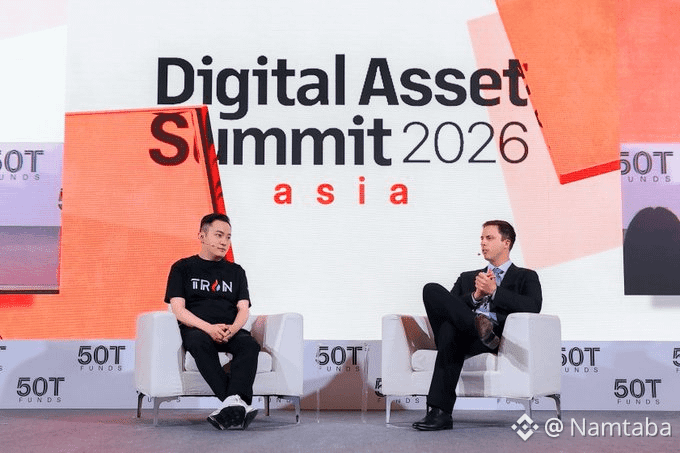
I just watched three short clips from @justinsuntron’s conversation with Mike Ippolito at Digital Asset Summit Asia.
Three points stood out to me:
1. Stablecoins remain TRON’s core advantage
Justin emphasized that TRON is focused on making USD move faster and more cheaply.
It’s not just about low fees, but also the ability to transfer stablecoins almost instantly between users across different markets.
2. From AI → tokenized equities
One quote from Justin caught my attention:
“If you want to get rich, you probably need to own some AI assets.”
According to him, the growth of AI is also driving demand for tokenized financial assets.
If stablecoins are the first step, tokenized equities could be the next direction TRON is looking toward.
3. Stablecoins could become a new form of “bank account”
Justin raised a simple but very practical question:
“If they don’t have a bank account, how do they store the value of their money?”
In countries where local currencies are weak or access to traditional banking is limited, USD stablecoins could become a way to store value and receive payments.
A TRON account could potentially give users access to USD without requiring a traditional bank account.
For me, this is the most interesting part.
Looking at it this way, TRON may not just be trying to become a network for stablecoin transfers.
Stablecoins could be the starting point. Tokenized equities could be the next step.
The question is: can TRON evolve into a broader onchain financial infrastructure layer rather than simply being seen as a “stablecoin transfer network”?
I think this is a direction worth watching.
JUSTIN SUN: WHERE IS @TRON DAO HEADING?
I just watched three short clips from @justinsuntron’s conversation with Mike Ippolito at Digital Asset Summit Asia.
Three points stood out to me:
1. Stablecoins remain TRON’s core advantage
Justin emphasized that TRON is focused on making USD move faster and more cheaply.
It’s not just about low fees, but also the ability to transfer stablecoins almost instantly between users across different markets.
2. From AI → tokenized equities
One quote from Justin caught my attention:
“If you want to get rich, you probably need to own some AI assets.”
According to him, the growth of AI is also driving demand for tokenized financial assets.
If stablecoins are the first step, tokenized equities could be the next direction TRON is looking toward.
3. Stablecoins could become a new form of “bank account”
Justin raised a simple but very practical question:
“If they don’t have a bank account, how do they store the value of their money?”
In countries where local currencies are weak or access to traditional banking is limited, USD stablecoins could become a way to store value and receive payments.
A TRON account could potentially give users access to USD without requiring a traditional bank account.
For me, this is the most interesting part.
Looking at it this way, TRON may not just be trying to become a network for stablecoin transfers.
Stablecoins could be the starting point. Tokenized equities could be the next step.
The question is: can TRON evolve into a broader onchain financial infrastructure layer rather than simply being seen as a “stablecoin transfer network”?
I think this is a direction worth watching.
I just watched three short clips from @justinsuntron’s conversation with Mike Ippolito at Digital Asset Summit Asia.
Three points stood out to me:
1. Stablecoins remain TRON’s core advantage
Justin emphasized that TRON is focused on making USD move faster and more cheaply.
It’s not just about low fees, but also the ability to transfer stablecoins almost instantly between users across different markets.
2. From AI → tokenized equities
One quote from Justin caught my attention:
“If you want to get rich, you probably need to own some AI assets.”
According to him, the growth of AI is also driving demand for tokenized financial assets.
If stablecoins are the first step, tokenized equities could be the next direction TRON is looking toward.
3. Stablecoins could become a new form of “bank account”
Justin raised a simple but very practical question:
“If they don’t have a bank account, how do they store the value of their money?”
In countries where local currencies are weak or access to traditional banking is limited, USD stablecoins could become a way to store value and receive payments.
A TRON account could potentially give users access to USD without requiring a traditional bank account.
For me, this is the most interesting part.
Looking at it this way, TRON may not just be trying to become a network for stablecoin transfers.
Stablecoins could be the starting point. Tokenized equities could be the next step.
The question is: can TRON evolve into a broader onchain financial infrastructure layer rather than simply being seen as a “stablecoin transfer network”?
I think this is a direction worth watching.
105
·
--
Something new is taking shape inside the Injective ecosystem.
The Injective Foundation has introduced Trench Treasury, an initiative designed to support builders who are creating with $INJ and recognize the communities that have been contributing along the way.
What I find interesting is the criteria.
This is not simply about picking projects with the biggest numbers. Injective is looking at things like organic holder distribution, real liquidity, sustained community activity, fair launches, and whether a project is actually creating value for the ecosystem.
That matters.
A strong ecosystem is not built only by funding new products. It also needs to support the users, communities, and builders who make the ecosystem grow from the ground up.
The Trench is where many of those people start.
Now the interesting part is seeing how Trench Treasury turns that idea into action.
This is information, not investment advice.
Something new is taking shape inside the Injective ecosystem.
The Injective Foundation has introduced Trench Treasury, an initiative designed to support builders who are creating with $INJ and recognize the communities that have been contributing along the way.
What I find interesting is the criteria.
This is not simply about picking projects with the biggest numbers. Injective is looking at things like organic holder distribution, real liquidity, sustained community activity, fair launches, and whether a project is actually creating value for the ecosystem.
That matters.
A strong ecosystem is not built only by funding new products. It also needs to support the users, communities, and builders who make the ecosystem grow from the ground up.
The Trench is where many of those people start.
Now the interesting part is seeing how Trench Treasury turns that idea into action.
This is information, not investment advice.
The Injective Foundation has introduced Trench Treasury, an initiative designed to support builders who are creating with $INJ and recognize the communities that have been contributing along the way.
What I find interesting is the criteria.
This is not simply about picking projects with the biggest numbers. Injective is looking at things like organic holder distribution, real liquidity, sustained community activity, fair launches, and whether a project is actually creating value for the ecosystem.
That matters.
A strong ecosystem is not built only by funding new products. It also needs to support the users, communities, and builders who make the ecosystem grow from the ground up.
The Trench is where many of those people start.
Now the interesting part is seeing how Trench Treasury turns that idea into action.
This is information, not investment advice.
210
·
--
One thing I find pretty interesting when looking at Injective:
If you only look at the price of $INJ
{spot}(INJUSDT)
, it’s easy to overlook what’s actually being built underneath.
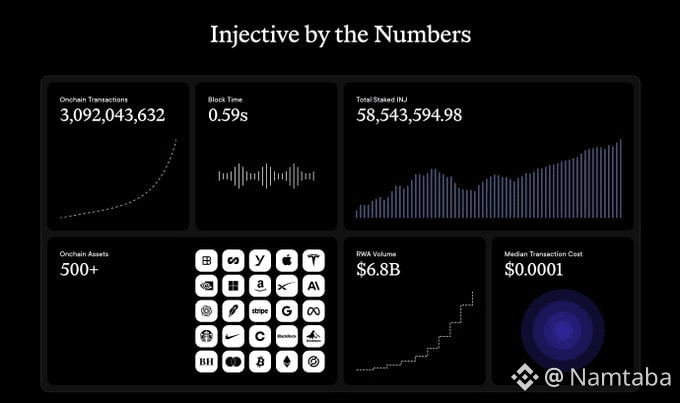
Injective has now processed 3B+ onchain transactions, with around 58.5M $INJ staked and more than 500 onchain assets.
But the part that catches my attention the most is the $6.8B+ in RWA volume.
From derivatives and tokenized stocks to FX and real estate, Injective is building infrastructure for financial activity to move directly onchain.
I don’t know how the market will ultimately value this narrative.
But if tokenization continues to grow, this is definitely an area worth watching.
This is information, not investment advice.
#Injective🔥 @Injective
One thing I find pretty interesting when looking at Injective:
If you only look at the price of $INJ
, it’s easy to overlook what’s actually being built underneath.
Injective has now processed 3B+ onchain transactions, with around 58.5M $INJ staked and more than 500 onchain assets.
But the part that catches my attention the most is the $6.8B+ in RWA volume.
From derivatives and tokenized stocks to FX and real estate, Injective is building infrastructure for financial activity to move directly onchain.
I don’t know how the market will ultimately value this narrative.
But if tokenization continues to grow, this is definitely an area worth watching.
This is information, not investment advice.
#Injective🔥 @Injective
If you only look at the price of $INJ
, it’s easy to overlook what’s actually being built underneath.
Injective has now processed 3B+ onchain transactions, with around 58.5M $INJ staked and more than 500 onchain assets.
But the part that catches my attention the most is the $6.8B+ in RWA volume.
From derivatives and tokenized stocks to FX and real estate, Injective is building infrastructure for financial activity to move directly onchain.
I don’t know how the market will ultimately value this narrative.
But if tokenization continues to grow, this is definitely an area worth watching.
This is information, not investment advice.
#Injective🔥 @Injective
680
·
--
Haussier
There’s one change I think is pretty easy to overlook with @Injective
It’s not a new TVL figure or another volume milestone
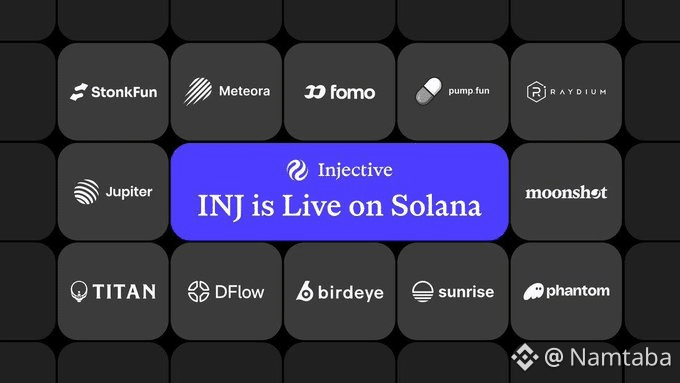
It’s that $INJ is starting to show up in places I would normally associate with Solana
Open Jupiter → Injective is there
Check Birdeye → Injective is there
Use Phantom → Injective is there
Look across DeFi and trading platforms → Injective keeps showing up
This kind of expansion is more interesting to me than simply adding another chain
Because adoption doesn’t always start with users actively seeking out a particular chain
Sometimes it starts with that chain becoming part of the workflow users are already using
And with Solana, Injective seems to be moving in that direction pretty clearly
Still waiting to see what’s behind the remaining REDACTED names 👀
$INJ
This is information, not investment advice
There’s one change I think is pretty easy to overlook with @Injective
It’s not a new TVL figure or another volume milestone
It’s that $INJ is starting to show up in places I would normally associate with Solana
Open Jupiter → Injective is there
Check Birdeye → Injective is there
Use Phantom → Injective is there
Look across DeFi and trading platforms → Injective keeps showing up
This kind of expansion is more interesting to me than simply adding another chain
Because adoption doesn’t always start with users actively seeking out a particular chain
Sometimes it starts with that chain becoming part of the workflow users are already using
And with Solana, Injective seems to be moving in that direction pretty clearly
Still waiting to see what’s behind the remaining REDACTED names 👀
$INJ
This is information, not investment advice
It’s not a new TVL figure or another volume milestone
It’s that $INJ is starting to show up in places I would normally associate with Solana
Open Jupiter → Injective is there
Check Birdeye → Injective is there
Use Phantom → Injective is there
Look across DeFi and trading platforms → Injective keeps showing up
This kind of expansion is more interesting to me than simply adding another chain
Because adoption doesn’t always start with users actively seeking out a particular chain
Sometimes it starts with that chain becoming part of the workflow users are already using
And with Solana, Injective seems to be moving in that direction pretty clearly
Still waiting to see what’s behind the remaining REDACTED names 👀
$INJ
This is information, not investment advice
2
286
·
--
Vérifié
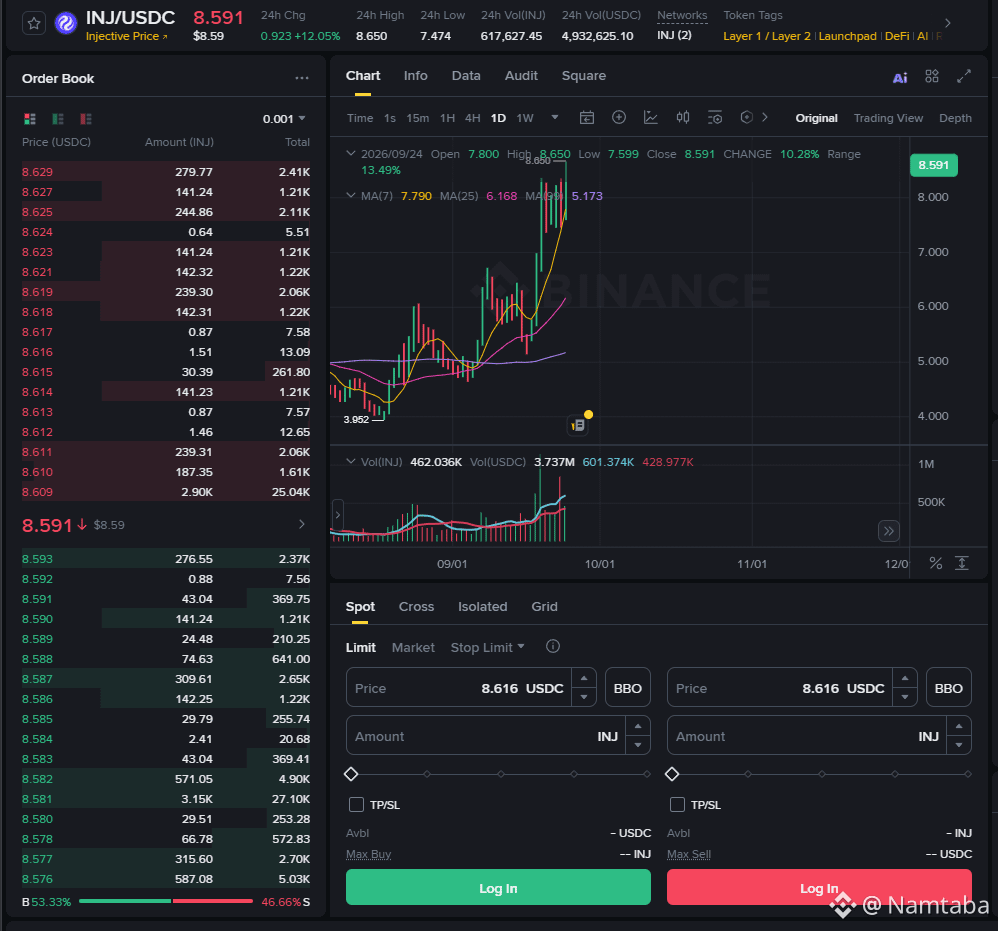
$INJ is trading around $8.5, with 24h trading volume reaching roughly $194M.
The number I’m paying the most attention to is actually the volume.
With a market cap of around $853M, 24h trading volume is equivalent to more than 22% of its market cap.
At the same time, Injective has just completed the Meridian upgrade, expanded INJ to Solana, and continues to push deeper into RWA.
I think this is a good time to look at the data rather than just the chart.
Will the volume continue to hold?
Will RWA generate real activity?
And will the new liquidity coming from Solana stay within the ecosystem?
These are the things that will show how much the current $INJ move is actually backed by real activity.
This is information, not investment advice.
@Injective
$INJ is trading around $8.5, with 24h trading volume reaching roughly $194M.
The number I’m paying the most attention to is actually the volume.
With a market cap of around $853M, 24h trading volume is equivalent to more than 22% of its market cap.
At the same time, Injective has just completed the Meridian upgrade, expanded INJ to Solana, and continues to push deeper into RWA.
I think this is a good time to look at the data rather than just the chart.
Will the volume continue to hold?
Will RWA generate real activity?
And will the new liquidity coming from Solana stay within the ecosystem?
These are the things that will show how much the current $INJ move is actually backed by real activity.
This is information, not investment advice.
@Injective
The number I’m paying the most attention to is actually the volume.
With a market cap of around $853M, 24h trading volume is equivalent to more than 22% of its market cap.
At the same time, Injective has just completed the Meridian upgrade, expanded INJ to Solana, and continues to push deeper into RWA.
I think this is a good time to look at the data rather than just the chart.
Will the volume continue to hold?
Will RWA generate real activity?
And will the new liquidity coming from Solana stay within the ecosystem?
These are the things that will show how much the current $INJ move is actually backed by real activity.
This is information, not investment advice.
@Injective
1
785
·
--
Just came across this update about @Injective 🥷
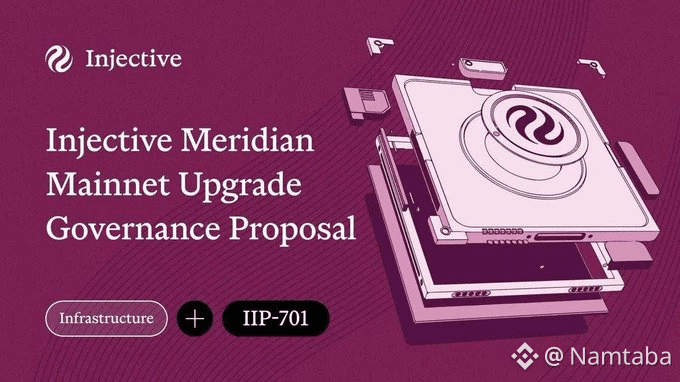
Meridian is now up for a governance vote, with quite a few changes happening under the hood:
RWA → tokenization → perp markets → private RFQ.
What stands out to me is that Injective isn’t just adding a few new features. It’s bringing multiple pieces of onchain financial infrastructure together within the same ecosystem.
Especially if tokenized assets and RWA start seeing real usage, upgrades like this could matter much more than just another announcement.
The vote is expected to end on September 22, with the upgrade planned for September 24 if approved.
I’ll be watching how much real usage Meridian brings once it goes live.
This is for informational purposes only and should not be considered investment advice.
Just came across this update about @Injective 🥷
Meridian is now up for a governance vote, with quite a few changes happening under the hood:
RWA → tokenization → perp markets → private RFQ.
What stands out to me is that Injective isn’t just adding a few new features. It’s bringing multiple pieces of onchain financial infrastructure together within the same ecosystem.
Especially if tokenized assets and RWA start seeing real usage, upgrades like this could matter much more than just another announcement.
The vote is expected to end on September 22, with the upgrade planned for September 24 if approved.
I’ll be watching how much real usage Meridian brings once it goes live.
This is for informational purposes only and should not be considered investment advice.
Meridian is now up for a governance vote, with quite a few changes happening under the hood:
RWA → tokenization → perp markets → private RFQ.
What stands out to me is that Injective isn’t just adding a few new features. It’s bringing multiple pieces of onchain financial infrastructure together within the same ecosystem.
Especially if tokenized assets and RWA start seeing real usage, upgrades like this could matter much more than just another announcement.
The vote is expected to end on September 22, with the upgrade planned for September 24 if approved.
I’ll be watching how much real usage Meridian brings once it goes live.
This is for informational purposes only and should not be considered investment advice.
475
·
--
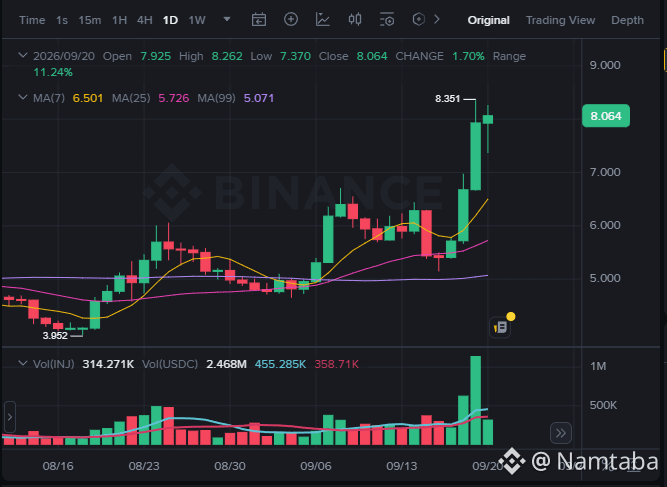
Something feels different around INJ lately.
Not because $INJ
{spot}(INJUSDT)
touched $8 again.
It’s because the token is starting to have more reasons to exist outside of the Injective ecosystem itself.
Solana is becoming a bigger part of that picture:
Stonk → launches
Jupiter → swaps
Phantom → wallet access
Meteora → liquidity
Sunrise → connectivity
That’s a pretty different setup from simply saying “@Injective is expanding to Solana.”
Now the question becomes:
Can these new distribution points turn into real usage for INJ?
The price move is easy to see.
The adoption data is what I’ll be watching next.
This is information, not financial advice. DYOR.
Something feels different around INJ lately.
Not because $INJ
touched $8 again.
It’s because the token is starting to have more reasons to exist outside of the Injective ecosystem itself.
Solana is becoming a bigger part of that picture:
Stonk → launches
Jupiter → swaps
Phantom → wallet access
Meteora → liquidity
Sunrise → connectivity
That’s a pretty different setup from simply saying “@Injective is expanding to Solana.”
Now the question becomes:
Can these new distribution points turn into real usage for INJ?
The price move is easy to see.
The adoption data is what I’ll be watching next.
This is information, not financial advice. DYOR.
Not because $INJ
touched $8 again.
It’s because the token is starting to have more reasons to exist outside of the Injective ecosystem itself.
Solana is becoming a bigger part of that picture:
Stonk → launches
Jupiter → swaps
Phantom → wallet access
Meteora → liquidity
Sunrise → connectivity
That’s a pretty different setup from simply saying “@Injective is expanding to Solana.”
Now the question becomes:
Can these new distribution points turn into real usage for INJ?
The price move is easy to see.
The adoption data is what I’ll be watching next.
This is information, not financial advice. DYOR.
1
609
·
--
I’ve been paying more attention to what @Injective is doing beyond crypto-native markets.
Perpetuals started with assets like BTC and ETH, but the same market structure can also be used for equities, commodities, FX, indices and even pre-IPO references.
@Injective currently has 135 active RWA perpetual markets:
→ 111 equities
→ 11 FX
→ 9 commodities
→ 2 indices
→ 2 pre-IPO references
What makes this interesting to me is that these markets are quoted against native USDC and use Injective’s existing onchain infrastructure for orderbooks, oracle pricing, margin, liquidation and settlement.
The numbers are also starting to show actual activity.
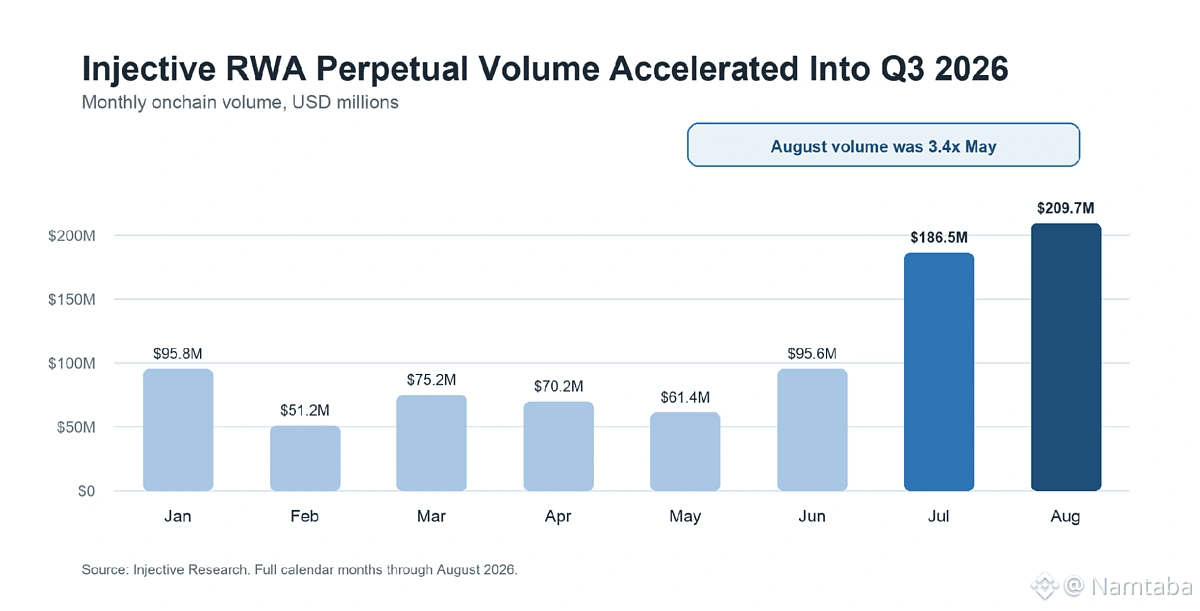
Injective’s RWA perpetuals have processed more than $5.3B in cumulative volume since early 2025, with $186.5M in July and $209.7M in August 2026.
So the bigger story here isn’t simply “RWAs onchain.”
It’s whether onchain infrastructure can become a practical way to access global market exposure without needing to put the underlying asset itself onchain.
I’ll be watching how this market develops from here.
$INJ
This is information, not investment advice.
I’ve been paying more attention to what @Injective is doing beyond crypto-native markets.
Perpetuals started with assets like BTC and ETH, but the same market structure can also be used for equities, commodities, FX, indices and even pre-IPO references.
@Injective currently has 135 active RWA perpetual markets:
→ 111 equities
→ 11 FX
→ 9 commodities
→ 2 indices
→ 2 pre-IPO references
What makes this interesting to me is that these markets are quoted against native USDC and use Injective’s existing onchain infrastructure for orderbooks, oracle pricing, margin, liquidation and settlement.
The numbers are also starting to show actual activity.
Injective’s RWA perpetuals have processed more than $5.3B in cumulative volume since early 2025, with $186.5M in July and $209.7M in August 2026.
So the bigger story here isn’t simply “RWAs onchain.”
It’s whether onchain infrastructure can become a practical way to access global market exposure without needing to put the underlying asset itself onchain.
I’ll be watching how this market develops from here.
$INJ
This is information, not investment advice.
Perpetuals started with assets like BTC and ETH, but the same market structure can also be used for equities, commodities, FX, indices and even pre-IPO references.
@Injective currently has 135 active RWA perpetual markets:
→ 111 equities
→ 11 FX
→ 9 commodities
→ 2 indices
→ 2 pre-IPO references
What makes this interesting to me is that these markets are quoted against native USDC and use Injective’s existing onchain infrastructure for orderbooks, oracle pricing, margin, liquidation and settlement.
The numbers are also starting to show actual activity.
Injective’s RWA perpetuals have processed more than $5.3B in cumulative volume since early 2025, with $186.5M in July and $209.7M in August 2026.
So the bigger story here isn’t simply “RWAs onchain.”
It’s whether onchain infrastructure can become a practical way to access global market exposure without needing to put the underlying asset itself onchain.
I’ll be watching how this market develops from here.
$INJ
This is information, not investment advice.
379
·
--
I've been looking at the RWA narrative on Injective from a slightly different angle.
It's easy to focus on how many assets are being brought onchain.
What interests me more is whether people are actually using the financial infrastructure.
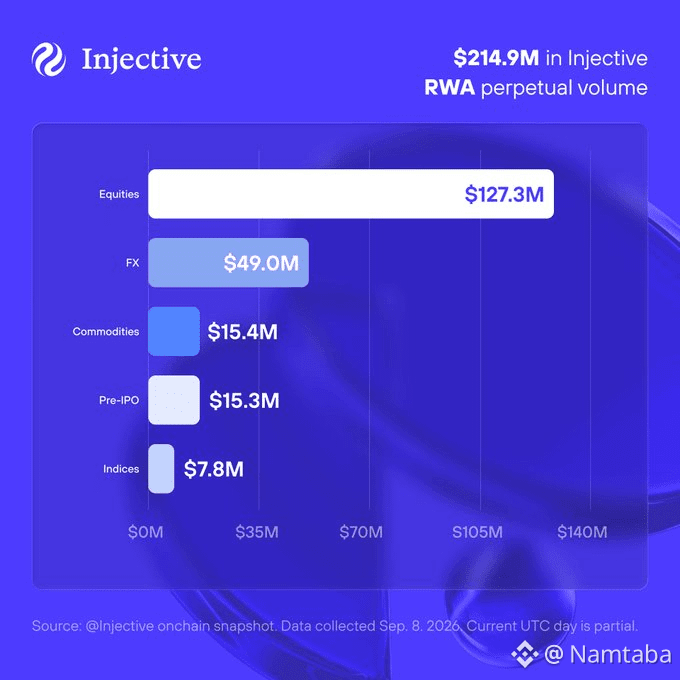
Injective's RWA Perpetual markets recorded $214.9M in volume over the past 30 days, covering equities, FX, commodities, indices and pre-IPO markets.
To me, this is where Injective's thesis around onchain finance starts to become more tangible.
The goal isn't just to tokenize an asset and leave it there.
It's to build infrastructure where people can actually trade and interact with different financial markets onchain, 24/7.
And that's also why I keep paying attention to $INJ.
If Injective continues expanding its financial markets and attracting real activity, the network itself becomes more important to the thesis behind the token.
Still early, and volume alone doesn't guarantee anything.
But personally, I'd rather watch actual usage than just another RWA headline.
This is information, not investment advice
I've been looking at the RWA narrative on Injective from a slightly different angle.
It's easy to focus on how many assets are being brought onchain.
What interests me more is whether people are actually using the financial infrastructure.
Injective's RWA Perpetual markets recorded $214.9M in volume over the past 30 days, covering equities, FX, commodities, indices and pre-IPO markets.
To me, this is where Injective's thesis around onchain finance starts to become more tangible.
The goal isn't just to tokenize an asset and leave it there.
It's to build infrastructure where people can actually trade and interact with different financial markets onchain, 24/7.
And that's also why I keep paying attention to $INJ.
If Injective continues expanding its financial markets and attracting real activity, the network itself becomes more important to the thesis behind the token.
Still early, and volume alone doesn't guarantee anything.
But personally, I'd rather watch actual usage than just another RWA headline.
This is information, not investment advice
It's easy to focus on how many assets are being brought onchain.
What interests me more is whether people are actually using the financial infrastructure.
Injective's RWA Perpetual markets recorded $214.9M in volume over the past 30 days, covering equities, FX, commodities, indices and pre-IPO markets.
To me, this is where Injective's thesis around onchain finance starts to become more tangible.
The goal isn't just to tokenize an asset and leave it there.
It's to build infrastructure where people can actually trade and interact with different financial markets onchain, 24/7.
And that's also why I keep paying attention to $INJ.
If Injective continues expanding its financial markets and attracting real activity, the network itself becomes more important to the thesis behind the token.
Still early, and volume alone doesn't guarantee anything.
But personally, I'd rather watch actual usage than just another RWA headline.
This is information, not investment advice
370
·
--
Haussier
Chuyện gì đang xảy ra với giá dầu vậy ae :))
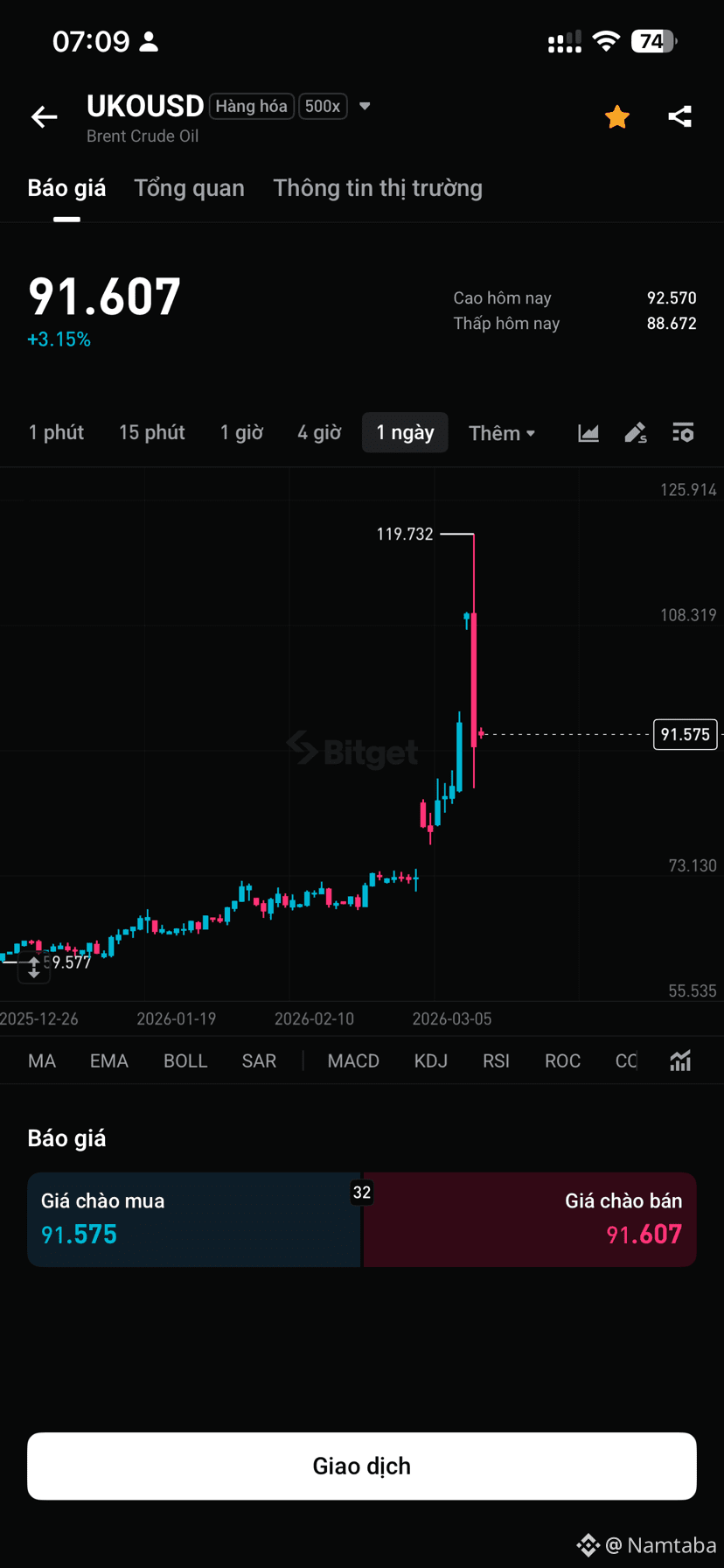
Dầu từ $90 bay thẳng lên $120 chỉ trong một ngày… rồi lại rơi về $91 Dump 32% 😀
Hôm qua thấy giá dầu $UKO 115$ trong phần TradeFi trên @bitget mà sợ nó còn tăng nữa nên không dám short, qua mà short thì nay bú đậm 🤣
Giá dầu hạ nhiệt cũng tốt cho kinh tế chung. Nếu năng lượng bớt áp lực thì có khi sắp tới Kinh tế ổn định hơn chút
Dầu giảm rồi $BTC moon thôi nào 🤣
#BTC
Chuyện gì đang xảy ra với giá dầu vậy ae :))
Dầu từ $90 bay thẳng lên $120 chỉ trong một ngày… rồi lại rơi về $91 Dump 32% 😀
Hôm qua thấy giá dầu $UKO 115$ trong phần TradeFi trên @bitget mà sợ nó còn tăng nữa nên không dám short, qua mà short thì nay bú đậm 🤣
Giá dầu hạ nhiệt cũng tốt cho kinh tế chung. Nếu năng lượng bớt áp lực thì có khi sắp tới Kinh tế ổn định hơn chút
Dầu giảm rồi $BTC moon thôi nào 🤣
#BTC
Dầu từ $90 bay thẳng lên $120 chỉ trong một ngày… rồi lại rơi về $91 Dump 32% 😀
Hôm qua thấy giá dầu $UKO 115$ trong phần TradeFi trên @bitget mà sợ nó còn tăng nữa nên không dám short, qua mà short thì nay bú đậm 🤣
Giá dầu hạ nhiệt cũng tốt cho kinh tế chung. Nếu năng lượng bớt áp lực thì có khi sắp tới Kinh tế ổn định hơn chút
Dầu giảm rồi $BTC moon thôi nào 🤣
#BTC
4
14
·
--
Nhiều người chỉ nhìn $ROBO như một token mới list, nhưng câu chuyện phía sau @FabricFND khá đáng chú ý. Fabric đang xây dựng hạ tầng để robot và AI agents có danh tính on-chain, có thể tương tác và thanh toán trực tiếp trong một nền kinh tế máy móc. Nếu mô hình robot economy phát triển, $ROBO sẽ đóng vai trò trung tâm trong việc staking, governance và vận hành toàn bộ mạng lưới. #ROBO
Nhiều người chỉ nhìn $ROBO như một token mới list, nhưng câu chuyện phía sau @FabricFND khá đáng chú ý. Fabric đang xây dựng hạ tầng để robot và AI agents có danh tính on-chain, có thể tương tác và thanh toán trực tiếp trong một nền kinh tế máy móc. Nếu mô hình robot economy phát triển, $ROBO sẽ đóng vai trò trung tâm trong việc staking, governance và vận hành toàn bộ mạng lưới. #ROBO
7
90
·
--

Article
$ROBO – Khi Robot Bắt Đầu Có Ví Crypto Và Tham Gia Nền Kinh Tế On-chainGần đây mình thấy khá nhiều người chỉ nhìn $ROBO như một token mới vừa list. Nhưng nếu nhìn sâu hơn vào những gì @FabricFND đang xây dựng thì câu chuyện thú vị hơn khá nhiều.
Fabric Foundation đang theo đuổi một ý tưởng khá khác biệt: robot và AI agents trong tương lai sẽ không chỉ là công cụ, mà là những thực thể kinh tế có thể tự tương tác với hệ thống tài chính on-chain.
Hiện tại phần lớn robot hoạt động trong các hệ thống đóng, bị kiểm soát bởi công ty hoặc nền tảng riêng. Điều này khiến việc phối hợp giữa nhiều robot hoặc nhiều hệ thống khác nhau trở nên rất khó. Fabric Protocol muốn giải quyết vấn đề này bằng cách tạo ra một lớp điều phối chung, nơi robot có thể có danh tính on-chain, quyền truy cập, và khả năng thanh toán trực tiếp thông qua blockchain.
Trong mô hình này, $ROBO đóng vai trò là lớp giá trị trung tâm của mạng lưới. Token được dùng cho phí giao dịch, staking để tham gia hệ sinh thái, cũng như cơ chế quản trị để quyết định các thay đổi của giao thức. Khi số lượng robot hoặc autonomous agents tham gia mạng lưới tăng lên, nhu cầu tương tác với hệ thống cũng tăng theo.
Một điểm đáng chú ý là dự án được triển khai trong hệ sinh thái liên quan đến OpenMind và Virtuals, hai cái tên đang phát triển mạnh trong mảng AI agents. Điều này giúp Fabric không chỉ dừng ở lý thuyết mà có khả năng tích hợp trực tiếp với các agent framework trong tương lai.
Tất nhiên hiện tại dự án vẫn ở giai đoạn rất sớm, và thị trường vẫn đang định giá narrative này. Nhưng nếu xu hướng AI agents + robot economy tiếp tục phát triển, những giao thức hạ tầng như Fabric có thể trở thành mảnh ghép quan trọng.
Vì vậy với mình,không chỉ là một token mới list, mà là một thử nghiệm khá thú vị về việc đưa robot và AI vào nền kinh tế on-chain.
#ROBO
$ROBO – Khi Robot Bắt Đầu Có Ví Crypto Và Tham Gia Nền Kinh Tế On-chain
Gần đây mình thấy khá nhiều người chỉ nhìn $ROBO như một token mới vừa list. Nhưng nếu nhìn sâu hơn vào những gì @Fabric Foundation đang xây dựng thì câu chuyện thú vị hơn khá nhiều.
Fabric Foundation đang theo đuổi một ý tưởng khá khác biệt: robot và AI agents trong tương lai sẽ không chỉ là công cụ, mà là những thực thể kinh tế có thể tự tương tác với hệ thống tài chính on-chain.
Hiện tại phần lớn robot hoạt động trong các hệ thống đóng, bị kiểm soát bởi công ty hoặc nền tảng riêng. Điều này khiến việc phối hợp giữa nhiều robot hoặc nhiều hệ thống khác nhau trở nên rất khó. Fabric Protocol muốn giải quyết vấn đề này bằng cách tạo ra một lớp điều phối chung, nơi robot có thể có danh tính on-chain, quyền truy cập, và khả năng thanh toán trực tiếp thông qua blockchain.
Trong mô hình này, $ROBO đóng vai trò là lớp giá trị trung tâm của mạng lưới. Token được dùng cho phí giao dịch, staking để tham gia hệ sinh thái, cũng như cơ chế quản trị để quyết định các thay đổi của giao thức. Khi số lượng robot hoặc autonomous agents tham gia mạng lưới tăng lên, nhu cầu tương tác với hệ thống cũng tăng theo.
Một điểm đáng chú ý là dự án được triển khai trong hệ sinh thái liên quan đến OpenMind và Virtuals, hai cái tên đang phát triển mạnh trong mảng AI agents. Điều này giúp Fabric không chỉ dừng ở lý thuyết mà có khả năng tích hợp trực tiếp với các agent framework trong tương lai.
Tất nhiên hiện tại dự án vẫn ở giai đoạn rất sớm, và thị trường vẫn đang định giá narrative này. Nhưng nếu xu hướng AI agents + robot economy tiếp tục phát triển, những giao thức hạ tầng như Fabric có thể trở thành mảnh ghép quan trọng.
Vì vậy với mình,không chỉ là một token mới list, mà là một thử nghiệm khá thú vị về việc đưa robot và AI vào nền kinh tế on-chain.
#ROBO
Fabric Foundation đang theo đuổi một ý tưởng khá khác biệt: robot và AI agents trong tương lai sẽ không chỉ là công cụ, mà là những thực thể kinh tế có thể tự tương tác với hệ thống tài chính on-chain.
Hiện tại phần lớn robot hoạt động trong các hệ thống đóng, bị kiểm soát bởi công ty hoặc nền tảng riêng. Điều này khiến việc phối hợp giữa nhiều robot hoặc nhiều hệ thống khác nhau trở nên rất khó. Fabric Protocol muốn giải quyết vấn đề này bằng cách tạo ra một lớp điều phối chung, nơi robot có thể có danh tính on-chain, quyền truy cập, và khả năng thanh toán trực tiếp thông qua blockchain.
Trong mô hình này, $ROBO đóng vai trò là lớp giá trị trung tâm của mạng lưới. Token được dùng cho phí giao dịch, staking để tham gia hệ sinh thái, cũng như cơ chế quản trị để quyết định các thay đổi của giao thức. Khi số lượng robot hoặc autonomous agents tham gia mạng lưới tăng lên, nhu cầu tương tác với hệ thống cũng tăng theo.
Một điểm đáng chú ý là dự án được triển khai trong hệ sinh thái liên quan đến OpenMind và Virtuals, hai cái tên đang phát triển mạnh trong mảng AI agents. Điều này giúp Fabric không chỉ dừng ở lý thuyết mà có khả năng tích hợp trực tiếp với các agent framework trong tương lai.
Tất nhiên hiện tại dự án vẫn ở giai đoạn rất sớm, và thị trường vẫn đang định giá narrative này. Nhưng nếu xu hướng AI agents + robot economy tiếp tục phát triển, những giao thức hạ tầng như Fabric có thể trở thành mảnh ghép quan trọng.
Vì vậy với mình,không chỉ là một token mới list, mà là một thử nghiệm khá thú vị về việc đưa robot và AI vào nền kinh tế on-chain.
#ROBO
7
99
·
--
🛑#Update $ROBO
Sau khi airdrop và list hàng loạt CEX, $ROBO hiện đang dao động quanh vùng 0.042. Điều thú vị là câu chuyện phía sau @FabricFND: xây dựng hạ tầng cho robot và AI agents có danh tính on-chain, có thể tự tương tác và tạo giá trị trong nền kinh tế số. Nếu mô hình robot economy này phát triển, $ROBO sẽ đóng vai trò trung tâm trong việc điều phối và staking của toàn hệ sinh thái. #ROBO
🛑#Update $ROBO
Sau khi airdrop và list hàng loạt CEX, $ROBO hiện đang dao động quanh vùng 0.042. Điều thú vị là câu chuyện phía sau @FabricFND: xây dựng hạ tầng cho robot và AI agents có danh tính on-chain, có thể tự tương tác và tạo giá trị trong nền kinh tế số. Nếu mô hình robot economy này phát triển, $ROBO sẽ đóng vai trò trung tâm trong việc điều phối và staking của toàn hệ sinh thái. #ROBO
Sau khi airdrop và list hàng loạt CEX, $ROBO hiện đang dao động quanh vùng 0.042. Điều thú vị là câu chuyện phía sau @FabricFND: xây dựng hạ tầng cho robot và AI agents có danh tính on-chain, có thể tự tương tác và tạo giá trị trong nền kinh tế số. Nếu mô hình robot economy này phát triển, $ROBO sẽ đóng vai trò trung tâm trong việc điều phối và staking của toàn hệ sinh thái. #ROBO
3
209
·
--
Article
Update ROBOCon này ae chắc thấy nhiều rồi vì airdrop + listing CEX khá nhanh. Hiện giá đang quanh 0.042, sau khi hype list xong thì market đang bắt đầu đi ngang tích lũy.
Project đứng sau là @FabricFND, làm mảng khá thú vị: robot economy + AI agents.
Hiểu đơn giản là họ xây hạ tầng để robot và autonomous agents có danh tính on-chain, có ví, có thể tương tác kinh tế giống một thực thể độc lập.
Token $ROBO đóng vai trò:
• Phí mạng cho robot interaction
• Staking để tham gia network
• Governance hệ sinh thái
• Incentive cho các hoạt động agent/robot
Narrative này khá khác so với mấy con AI chỉ gắn label. Ở đây họ đang push idea machine có wallet riêng và tự vận hành kinh tế.
Hiện tại market đang test vùng 0.04 khá rõ.
Nếu ecosystem OpenMind + Virtuals tiếp tục build agent layer thì con này còn nhiều thứ để theo dõi.
Cá nhân mình thấy đây kiểu infrastructure play cho AI agents, nên có thể không pump ngay nhưng narrative khá dài.
Ae nào farm OpenMind trước chắc cũng ăn airdrop kha khá rồi :))
Check thêm: @FabricFND
$ROBO #ROBO
Update ROBO
Con này ae chắc thấy nhiều rồi vì airdrop + listing CEX khá nhanh. Hiện giá đang quanh 0.042, sau khi hype list xong thì market đang bắt đầu đi ngang tích lũy.
Project đứng sau là @FabricFND, làm mảng khá thú vị: robot economy + AI agents.
Hiểu đơn giản là họ xây hạ tầng để robot và autonomous agents có danh tính on-chain, có ví, có thể tương tác kinh tế giống một thực thể độc lập.
Token $ROBO đóng vai trò:
• Phí mạng cho robot interaction
• Staking để tham gia network
• Governance hệ sinh thái
• Incentive cho các hoạt động agent/robot
Narrative này khá khác so với mấy con AI chỉ gắn label. Ở đây họ đang push idea machine có wallet riêng và tự vận hành kinh tế.
Hiện tại market đang test vùng 0.04 khá rõ.
Nếu ecosystem OpenMind + Virtuals tiếp tục build agent layer thì con này còn nhiều thứ để theo dõi.
Cá nhân mình thấy đây kiểu infrastructure play cho AI agents, nên có thể không pump ngay nhưng narrative khá dài.
Ae nào farm OpenMind trước chắc cũng ăn airdrop kha khá rồi :))
Check thêm: @FabricFND
$ROBO #ROBO
Project đứng sau là @FabricFND, làm mảng khá thú vị: robot economy + AI agents.
Hiểu đơn giản là họ xây hạ tầng để robot và autonomous agents có danh tính on-chain, có ví, có thể tương tác kinh tế giống một thực thể độc lập.
Token $ROBO đóng vai trò:
• Phí mạng cho robot interaction
• Staking để tham gia network
• Governance hệ sinh thái
• Incentive cho các hoạt động agent/robot
Narrative này khá khác so với mấy con AI chỉ gắn label. Ở đây họ đang push idea machine có wallet riêng và tự vận hành kinh tế.
Hiện tại market đang test vùng 0.04 khá rõ.
Nếu ecosystem OpenMind + Virtuals tiếp tục build agent layer thì con này còn nhiều thứ để theo dõi.
Cá nhân mình thấy đây kiểu infrastructure play cho AI agents, nên có thể không pump ngay nhưng narrative khá dài.
Ae nào farm OpenMind trước chắc cũng ăn airdrop kha khá rồi :))
Check thêm: @FabricFND
$ROBO #ROBO
2
115
·
--
Haussier
Làm tý long $ASTER đi ae, Đừng quên là Cz vẫn còn hold Aster và trend perpdex sẽ không dừng lại
{future}(ASTERUSDT)
Làm tý long $ASTER đi ae, Đừng quên là Cz vẫn còn hold Aster và trend perpdex sẽ không dừng lại
3
3
236
·
--
$ORCA market comback hệ sinh thái $SUI cũng comback mạnh mẽ, gameble tý không cả nhà nhỉ
{spot}(SUIUSDT)
{spot}(ORCAUSDT)
$ORCA market comback hệ sinh thái $SUI cũng comback mạnh mẽ, gameble tý không cả nhà nhỉ
6
234
·
--
$BARD có đẩy láo không ae nhỉ, short tý không mn
{spot}(BARDUSDT)
$BARD có đẩy láo không ae nhỉ, short tý không mn
4
9
399
·
--
Article
$ROBO Ở 0.041 – Vùng Tích Lũy Thông Minh Trước Khi Robot Economy Thức Tỉnh?$ROBO hiện đang giao dịch quanh mốc 0.041. Với nhiều người, đây chỉ là một con số dao động trong biên độ ngắn hạn. Nhưng nếu nhìn sâu hơn, đây có thể là giai đoạn thị trường đang “định giá lại” toàn bộ câu chuyện phía sau @FabricFND
Fabric Foundation không đi theo hướng xây token AI đơn thuần để bắt trend. Họ đang xây dựng một giao thức điều phối cho robot và autonomous agents – nơi mỗi thực thể máy móc có danh tính on-chain, có cơ chế xác minh hành động và có hệ thống khuyến khích rõ ràng. Khi robot không chỉ là phần cứng mà trở thành một tác nhân kinh tế, chúng cần một lớp hạ tầng trung lập để phối hợp và ghi nhận giá trị. Đó chính là vai trò của Fabric Protocol.
Trong mô hình này, $ROBO là lớp động lực trung tâm. Token được sử dụng cho staking, quản trị, thanh toán phí và đảm bảo tính trung thực của hệ thống. Khi số lượng agent tăng lên, nhu cầu tương tác với mạng lưới cũng tăng theo. Điều này tạo ra một mối liên kết trực tiếp giữa adoption thực tế và nhu cầu token – thay vì chỉ phụ thuộc vào đầu cơ.
Ở mức giá 0.041, câu hỏi không phải là “pump hay dump”, mà là: liệu thị trường đã hiểu hết tiềm năng của một nền kinh tế robot on-chain chưa? Nếu Fabric thực thi đúng lộ trình, giá hiện tại có thể chỉ là bước đệm cho một chu kỳ định giá mới.
$ROBO Ở 0.041 – Vùng Tích Lũy Thông Minh Trước Khi Robot Economy Thức Tỉnh?
$ROBO hiện đang giao dịch quanh mốc 0.041. Với nhiều người, đây chỉ là một con số dao động trong biên độ ngắn hạn. Nhưng nếu nhìn sâu hơn, đây có thể là giai đoạn thị trường đang “định giá lại” toàn bộ câu chuyện phía sau @Fabric Foundation
Fabric Foundation không đi theo hướng xây token AI đơn thuần để bắt trend. Họ đang xây dựng một giao thức điều phối cho robot và autonomous agents – nơi mỗi thực thể máy móc có danh tính on-chain, có cơ chế xác minh hành động và có hệ thống khuyến khích rõ ràng. Khi robot không chỉ là phần cứng mà trở thành một tác nhân kinh tế, chúng cần một lớp hạ tầng trung lập để phối hợp và ghi nhận giá trị. Đó chính là vai trò của Fabric Protocol.
Trong mô hình này, $ROBO là lớp động lực trung tâm. Token được sử dụng cho staking, quản trị, thanh toán phí và đảm bảo tính trung thực của hệ thống. Khi số lượng agent tăng lên, nhu cầu tương tác với mạng lưới cũng tăng theo. Điều này tạo ra một mối liên kết trực tiếp giữa adoption thực tế và nhu cầu token – thay vì chỉ phụ thuộc vào đầu cơ.
Ở mức giá 0.041, câu hỏi không phải là “pump hay dump”, mà là: liệu thị trường đã hiểu hết tiềm năng của một nền kinh tế robot on-chain chưa? Nếu Fabric thực thi đúng lộ trình, giá hiện tại có thể chỉ là bước đệm cho một chu kỳ định giá mới.
Fabric Foundation không đi theo hướng xây token AI đơn thuần để bắt trend. Họ đang xây dựng một giao thức điều phối cho robot và autonomous agents – nơi mỗi thực thể máy móc có danh tính on-chain, có cơ chế xác minh hành động và có hệ thống khuyến khích rõ ràng. Khi robot không chỉ là phần cứng mà trở thành một tác nhân kinh tế, chúng cần một lớp hạ tầng trung lập để phối hợp và ghi nhận giá trị. Đó chính là vai trò của Fabric Protocol.
Trong mô hình này, $ROBO là lớp động lực trung tâm. Token được sử dụng cho staking, quản trị, thanh toán phí và đảm bảo tính trung thực của hệ thống. Khi số lượng agent tăng lên, nhu cầu tương tác với mạng lưới cũng tăng theo. Điều này tạo ra một mối liên kết trực tiếp giữa adoption thực tế và nhu cầu token – thay vì chỉ phụ thuộc vào đầu cơ.
Ở mức giá 0.041, câu hỏi không phải là “pump hay dump”, mà là: liệu thị trường đã hiểu hết tiềm năng của một nền kinh tế robot on-chain chưa? Nếu Fabric thực thi đúng lộ trình, giá hiện tại có thể chỉ là bước đệm cho một chu kỳ định giá mới.
7
359
·
--
$ROBO hôm nay quanh mức 0.043 – điều thú vị là giá đang chững lại thay vì bứt phá mạnh. Với mình, đây không hẳn là tín hiệu xấu. Sau giai đoạn biến động, thị trường thường cần thời gian hấp thụ cung và tái tích lũy.
Điểm đáng theo dõi là cách @FabricFND xây dựng nền tảng robot economy: danh tính on-chain, cơ chế staking và xác minh cho AI agents. Nếu adoption tăng dần, $ROBO không chỉ phản ánh tâm lý ngắn hạn mà còn đại diện cho nhu cầu sử dụng hạ tầng. Giá 0.041 có thể là vùng kiểm tra niềm tin trước khi thị trường định giá lại câu chuyện dài hạn. #ROBO
{spot}(ROBOUSDT)
$ROBO hôm nay quanh mức 0.043 – điều thú vị là giá đang chững lại thay vì bứt phá mạnh. Với mình, đây không hẳn là tín hiệu xấu. Sau giai đoạn biến động, thị trường thường cần thời gian hấp thụ cung và tái tích lũy.
Điểm đáng theo dõi là cách @Fabric Foundation xây dựng nền tảng robot economy: danh tính on-chain, cơ chế staking và xác minh cho AI agents. Nếu adoption tăng dần, $ROBO không chỉ phản ánh tâm lý ngắn hạn mà còn đại diện cho nhu cầu sử dụng hạ tầng. Giá 0.041 có thể là vùng kiểm tra niềm tin trước khi thị trường định giá lại câu chuyện dài hạn. #ROBO
Điểm đáng theo dõi là cách @Fabric Foundation xây dựng nền tảng robot economy: danh tính on-chain, cơ chế staking và xác minh cho AI agents. Nếu adoption tăng dần, $ROBO không chỉ phản ánh tâm lý ngắn hạn mà còn đại diện cho nhu cầu sử dụng hạ tầng. Giá 0.041 có thể là vùng kiểm tra niềm tin trước khi thị trường định giá lại câu chuyện dài hạn. #ROBO
5
160
Connectez-vous pour découvrir plus de contenu
Rejoignez la communauté mondiale des adeptes de cryptomonnaies sur Binance Square
⚡️ Suviez les dernières informations importantes sur les cryptomonnaies.
💬 Jugé digne de confiance par la plus grande plateforme d’échange de cryptomonnaies au monde.
👍 Découvrez les connaissances que partagent les créateurs vérifiés.
Adresse e-mail/Nº de téléphone
Sujets d’actualité
FedMinutesFocusOnOctoberPause
233,180 vues
1,516 mentions
🚨 HIGH ALERT ‼️ PLEASE DON’T TRADE BLINDLY FOR THE NEXT HOUR 🚨
Guys, we have FOMC Minutes coming in less than 1 hour.
And after the kind of volatility we already saw today, I really don’t want anyone opening random high-leverage positions just before this release.
The biggest reaction I’m watching will be in Gold (XAU), Silver (XAG), BTC and ETH. Then coins like SOL and other highly leveraged mid/low-cap alts can exaggerate whatever move BTC makes.
Gold and Silver are especially sensitive tonight because the market is already reacting to the US dollar + Treasury yields, and both metals have been under heavy pressure ahead of the Fed minutes.
Briefly speaking
📉Hawkish Fed Minutes → Dollar/yields can push higher → pressure on BTC, crypto, Gold & silver
📈Dovish Fed Minutes → Dollar/yields can cool → BTC, Gold, Silver and risk assets can bounce hard.
And please remember the first candle can be a trap. We can get a pump, immediate dump, liquidations on both sides, and then the real direction.
So for now, protect your positions, reduce unnecessary leverage and don’t FOMO into the first move.
Tonight I’m watching $XAU , $XAG and $BTC first. These will tell us very quickly how the market is reading the Fed.
I will Update you guys on time
Follow @Panda Traders and Turn on Your notifications right now
#FedMinutesFocusOnOctoberPause
Panda Traders
·19 mentions J’aime
·4.4k vues
BinanceLaunchesBinanceIntelligence
1.2M vues
6,688 mentions
EvernorthDelaysNasdaqDebutToOct12
26,567 vues
366 mentions