

kaymyg
2.3k Publications

kaymyg
Web2 & Web3
Web3 & Web2
Ouvert au trading
Trade régulièrement
5.8 an(s)
15 Suivis
1.5K+ Abonnés
1.8K+ J’aime
Publications
Portefeuille
Tous
Citations
Vidéos
kaymyg
·
--
Haussier#NFA✅ and #dyor
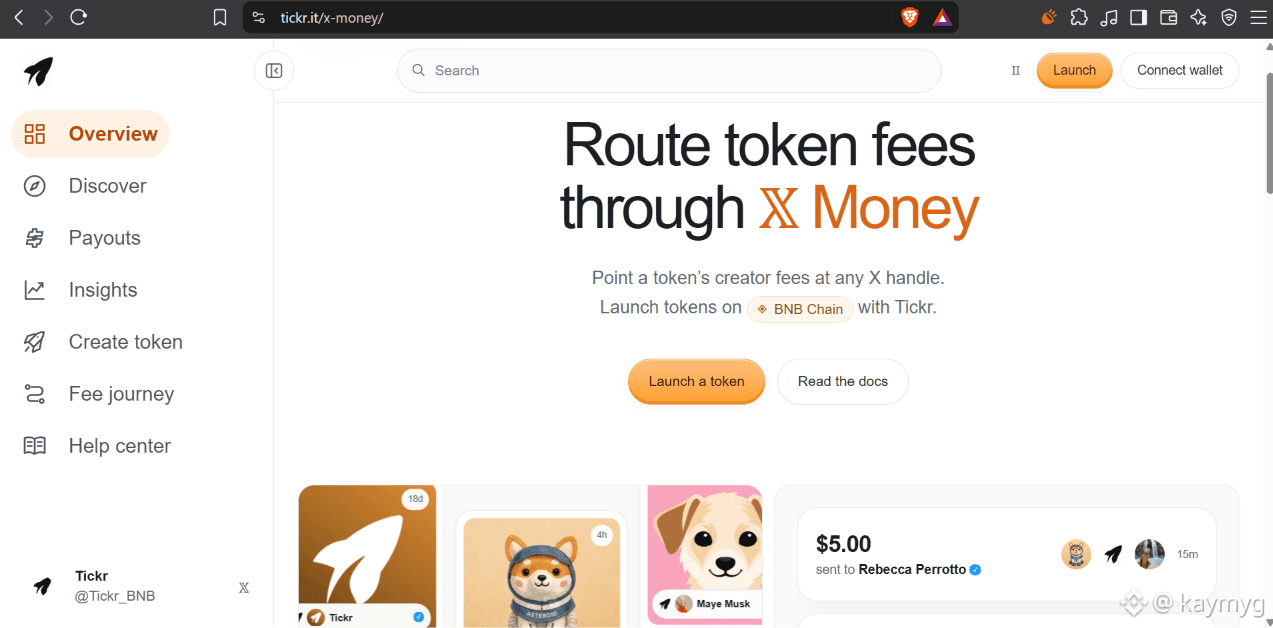
Remember, pick $BTC and $QNT , then use post dust to accumulate #tickr its on #BNBChain
Remember, pick $BTC and $QNT , then use post dust to accumulate #tickr its on #BNBChain
kaymyg
·
--
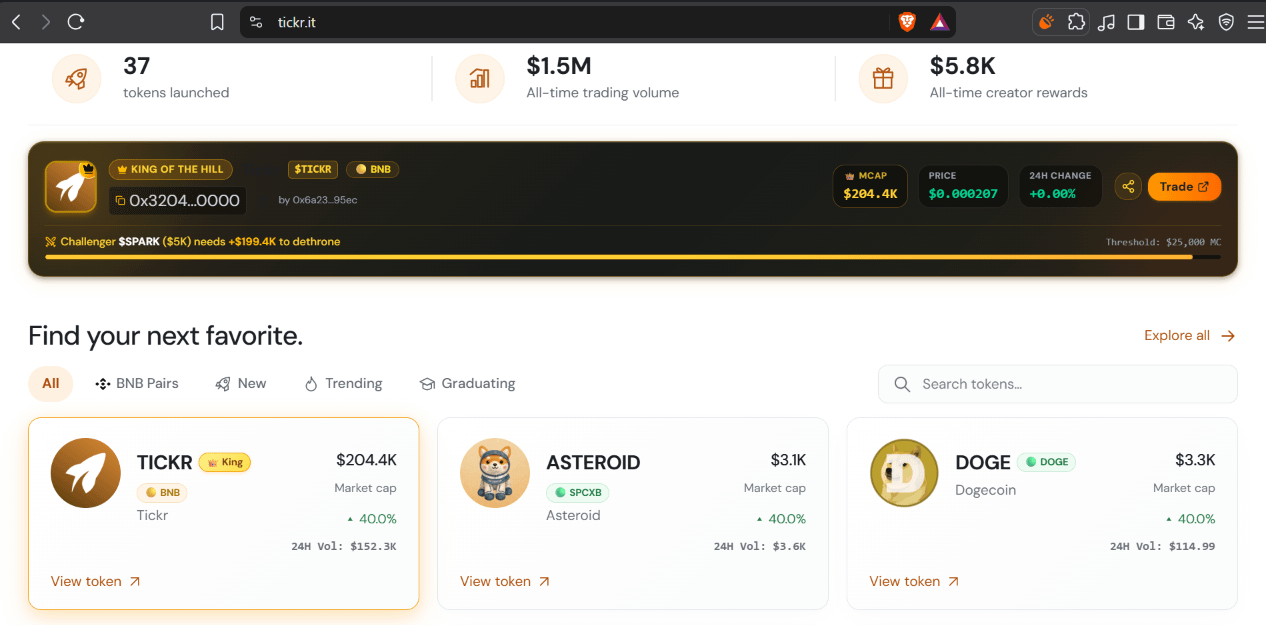
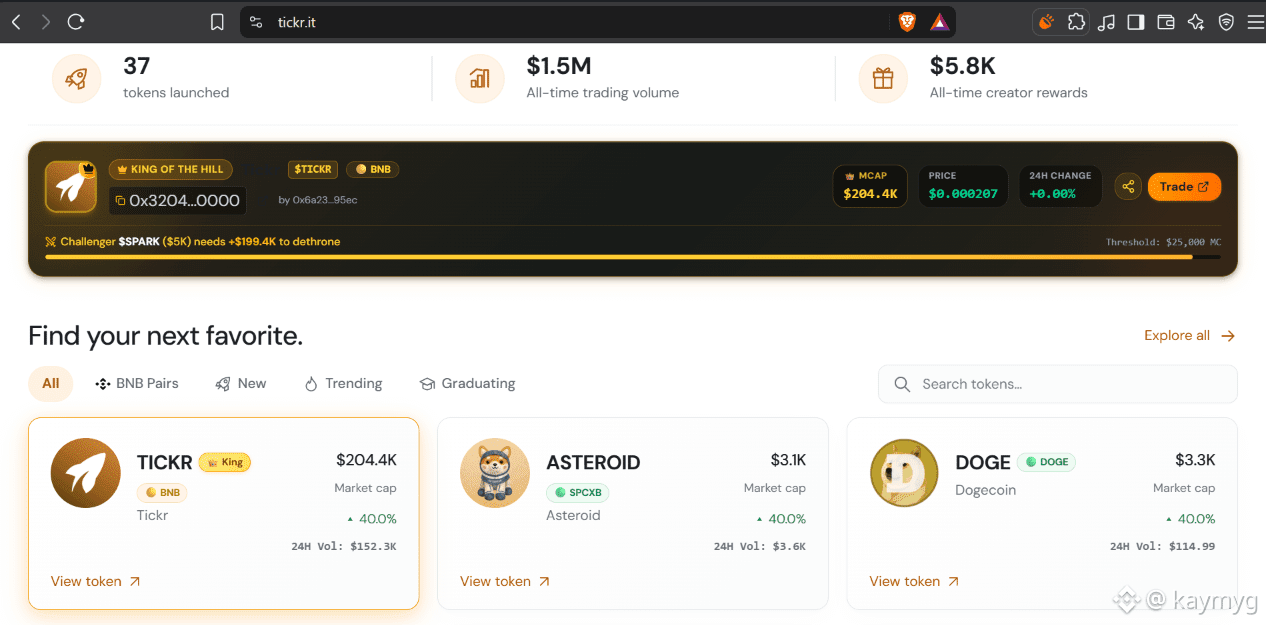
HaussierThe bull market never chooses what to fly with. Once #bitcoin hits the road, every #altcoins drag along. First make the important decision to buy #BTC then use the dust to accumulate $TICKR. Or as you pick the weekend token which is $QNT by #Quant , then you can use the remaining dust fot #tickr
NFA and remember to DYOR
NFA and remember to DYOR
kaymyg
·
--
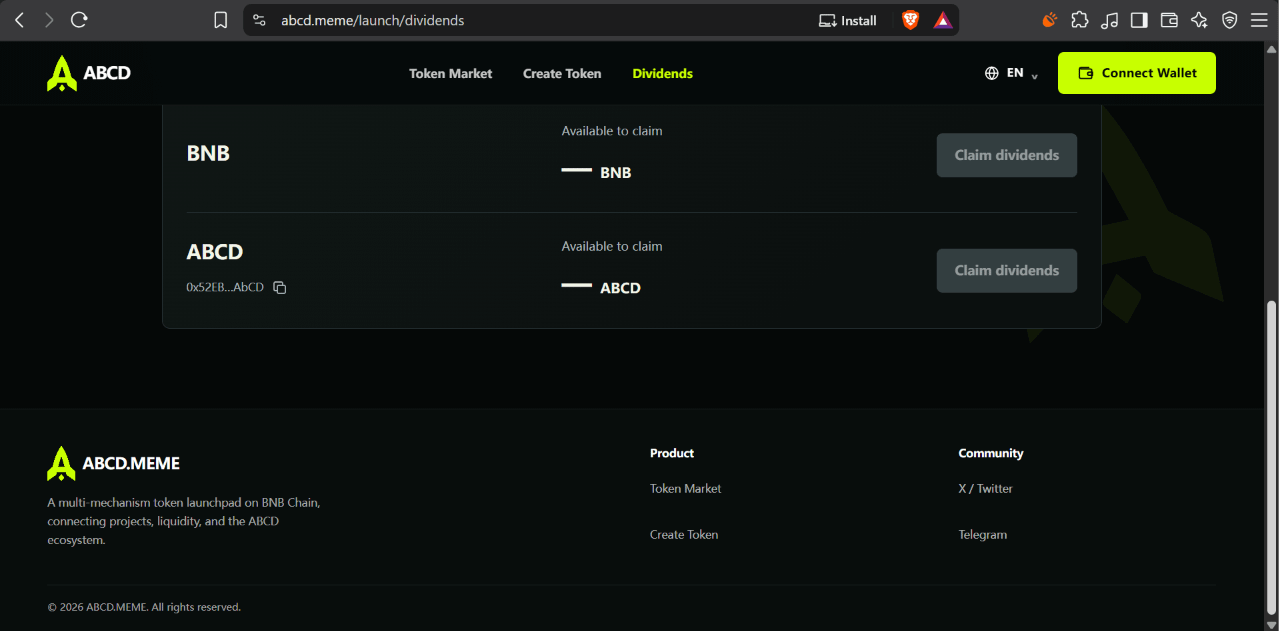
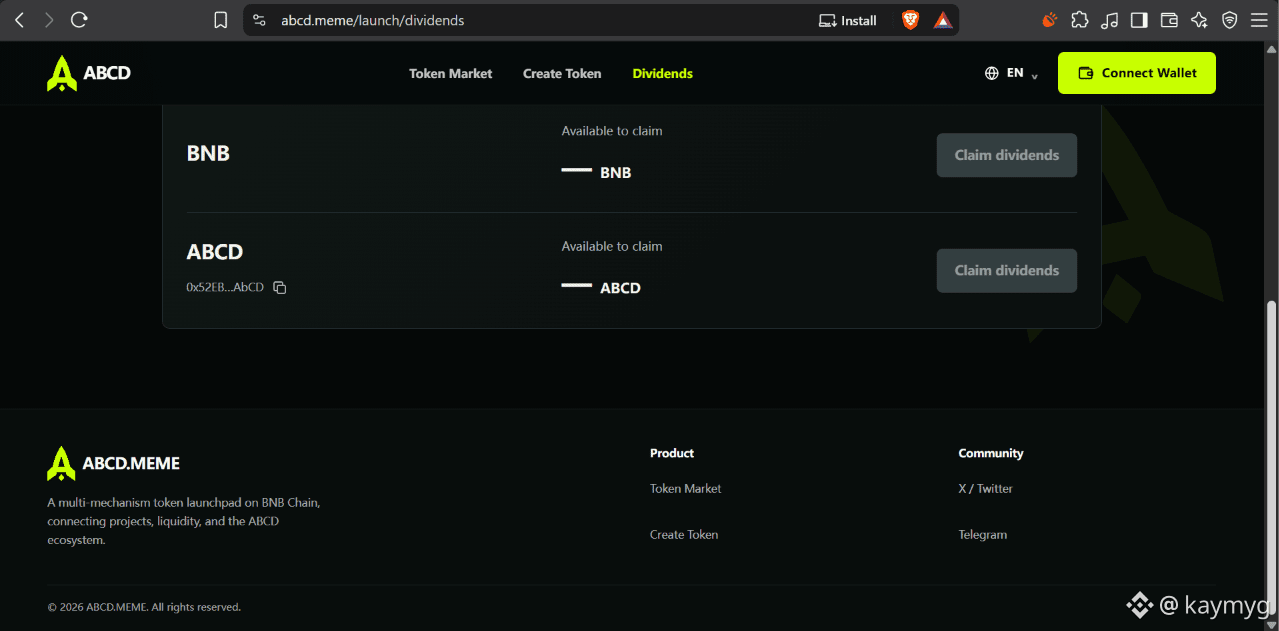
HaussierOne last new #BNBChain project. I am just making you aware of it. Not intended to market it. Its not like #Quant , just a small time marketcap that you can catch low. Always remember to #dyor and its #NFA
Do not also forget to read about $QNT . Leverage is for short term profits but HODLers usually have the final laugh. $ABCD could also have something for you.
Do not also forget to read about $QNT . Leverage is for short term profits but HODLers usually have the final laugh. $ABCD could also have something for you.
kaymyg
·
--
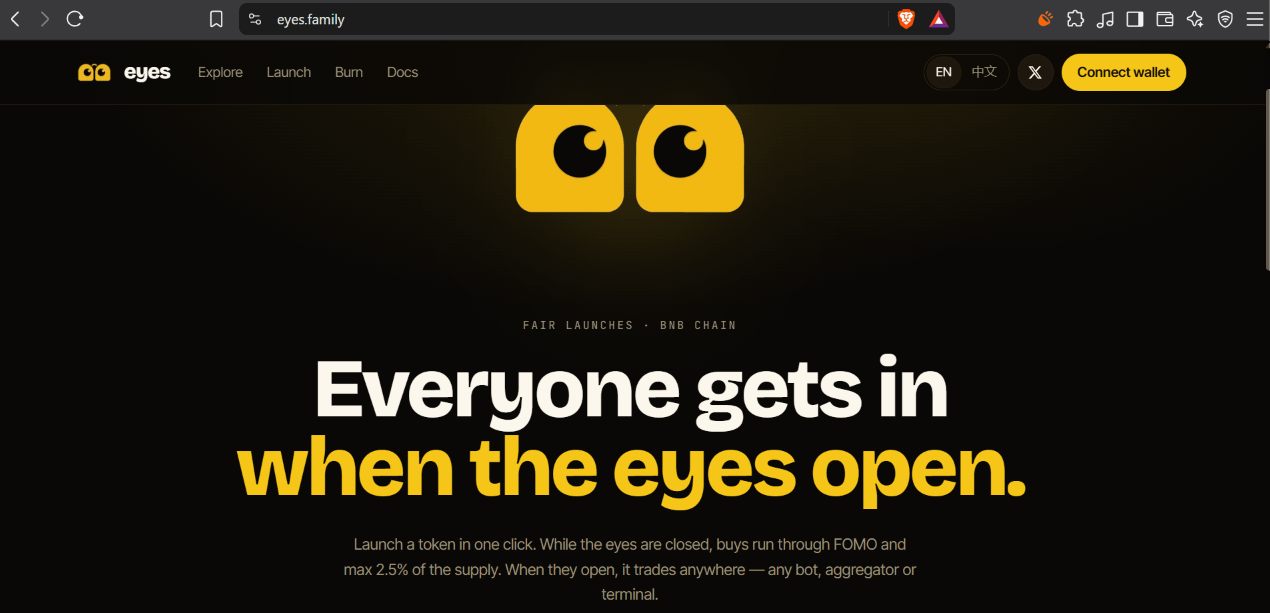
HaussierIt has been a $QNT ful weekend. Be that as it may have been #BNBChain protocols continue to follow an almost similar path. I hope things dont stay the same for long. For now, the $EYES have it.
Go through its documentations before thinking about it. #dyor #NFA
Go through its documentations before thinking about it. #dyor #NFA
kaymyg
·
--
25 US Banks Just Chose Quant to Move Money On-Chain. Rogue AI Agents Are Why They Couldn’t Wait.
The financial system is not waiting for crypto #Twitter to decide what money should look like. It is quietly rebuilding the pipes.
On 24 September 2026, two things happened on the same day. Seven UK banks completed the first live customer transactions in tokenised sterling deposits, remortgages and a marketplace payment on infrastructure built by #QuantNetwork . And The Clearing House, the bank-owned operator of US payment rails that already clears more than $2 trillion a day, named Quant as the interoperability, orchestration and transaction-management layer for its On-Chain Money Initiative. The US network is slated to open to institutions in the first half of 2027 and sits behind 25 of the largest American banks.
$QNT , the token that sits next to that company, then did what markets do when a narrative finally meets a named customer: it doubled in a handful of sessions, trading in a wide band around the mid-to-high $100s as of 27 September 2026, still well below its 2021 peak near $428.
That is the story people will remember. The more important story is quieter. Banks are not “going on-chain” because they love blockchains. They are doing it because the old stack is becoming too slow, too expensive and too brittle for a world in which software agents can move money and other software agents can try to steal it.
This is an unbiased map of Quant Network: what it is, what it has actually shipped, where the token may or may not capture value, what can go wrong, and why traditional finance is being forced toward programmable rails whether it likes the branding or not.
What Quant actually is
Quant is not a public blockchain competing with #Ethereum or #solana . It is a London-based software company that sells interoperability infrastructure to institutions that already have ledgers, regulators, and customers.
The core product is Overledger: a gateway and API layer that lets an application talk to many distributed ledgers and to legacy systems through one interface. Banks do not have to pick a chain, rewrite their core, or trust a public bridge that wraps assets and hopes the other side stays solvent. Overledger treats each ledger as a connector. The institution keeps its existing legal wrapper. The middleware translates.
Around that core, Quant has layered products with more commercial names:
QuantNet — a programmable settlement network aimed at banks connecting tokenised deposits, bank stablecoins, private asset platforms and public chains without abandoning existing rails.Fusion Rollup — launched on mainnet in June 2026 and marketed as a “Layer 2.5”: a multi-ledger rollup that anchors to many L1s at once rather than one. Quant says it launched connected to 74 networks. Independent observers still treat the production footprint as early.Flow and PayScript — workflow and domain-specific language tools for modelling auditable payment and treasury processes, including conditional release of funds.Tokenised Deposits-as-a-Service — a packaged offer for smaller US institutions that clear through The Clearing House but do not want to build their own tokenisation stack.
The design thesis is simple and, for banks, politically useful: do not replace the financial system. Put an operating system over it.
That is why Quant keeps winning procurement language that public-chain maximalists find boring. Banks do not want a new religion. They want a connector that survives an audit.
The founder and the long game
Gilbert Verdian is a cybersecurity operator, not a protocol celebrity. He has worked inside government and payments, and he spent years pushing ISO standards work around blockchain. That pedigree matters more than most token marketing admits. Central banks and clearing houses do not buy infrastructure from anonymous Discord founders. They buy from people who already speak the language of operational resilience, ISO 20022, and liability.
Quant was incorporated in the mid-2010s. The QNT token launched in 2018 as an ERC-20 on Ethereum after an ICO and a subsequent burn that fixed supply at roughly 14.61 million tokens. Circulating supply is now about 14.54 million. There is no mining inflation. There is also no on-chain governance that lets holders vote the company. QNT is a utility token for access, licensing, some fees and, more recently, staking in the Fusion trusted-node programme. It is not equity. It does not entitle holders to Quant Network Limited’s revenue. That distinction is not a footnote. It is the whole investment thesis, for better and worse.
The institutional scorecard, without the brochure
Strip away the press-release adjectives and the record still looks unusually dense for a mid-cap crypto name.
United Kingdom, live money. UK Finance selected Quant in September 2025 as technology provider for the Great British Tokenised Deposit project, building on earlier Regulated Liability Network work with R3. On 24 September 2026, Barclays, HSBC UK, Lloyds Banking Group, Monzo, Nationwide, NatWest and Santander completed real customer transactions: two remortgage completions and a consumer marketplace payment. Funds were locked and released when conditions were met. That is not a lab demo with coloured coins. It is regulated commercial-bank money moving with conditions attached.
United States, named plumbing. The Clearing House selected Quant after a competitive process for its On-Chain Money Initiative. Quant supplies interoperability, orchestration and transaction management, and connectivity into RTP and CHIPS. Launch window: first half of 2027. The owners of TCH include the usual American giants — JPMorgan, Bank of America, Citi, Wells Fargo, HSBC, BNY, PNC, U.S. Bank, Truist and others. Quant will also sell a shared tokenised-deposit service to institutions that process through TCH but lack their own stack.
Capital markets software. In March 2026 Quant embedded Flow and Overledger into Murex MX.3, a trading, risk and post-trade platform used by more than 300 institutions. The point is not another pilot. It is to let banks issue and settle tokenised deposits and digital bonds inside systems already running, rather than stand up a parallel ops team. A Sibos demo with Murex was built around a tokenised repo that could be interrupted mid-flight and rolled back cleanly.
Central banks. Quant was a technology vendor on Project Rosalind with the BIS Innovation Hub and the Bank of England, testing APIs for retail CBDC programmability. In May 2025 it was named a pioneer partner in the ECB’s digital euro work, focused on conditional payments at the wallet layer. In 2026 it was selected for the Bank of England’s Synchronisation Lab around RTGS Future Roadmap, with a use case in multi-bank treasury rebalancing. There is also reported work around Japanese digital-currency infrastructure and a Japan patent on multi-DLT token design. These are not exclusive mandates. They are seats at tables that most crypto projects never reach.
None of this makes Quant inevitable. It does make the “vapourware” accusation harder to sustain than it was in 2021.
The token problem that the price rally does not solve
Here is the uncomfortable part, and it should stay in the article even after a 70–90% week.
On paper, enterprises need QNT to licence Overledger. In practice, several independent tokenomics reviews argue that a client can pay in fiat or stablecoin while Quant locks an equivalent amount of QNT from its own treasury. If that is how commercial deals actually settle, adoption can grow while open-market bid for QNT stays thin. Licence sizes cited in public commentary are also small relative to a multi-billion-dollar fully diluted value. Forty enterprise contracts is a serious software company. Forty licences of a few tokens each is rounding error against 14.6 million supply.
Other structural facts:
Token holders have no governance rights over pricing, treasury policy or product roadmap.A large treasury balance has historically sat under company control. Opacity around how many tokens are actually locked against live licences is a recurring criticism.Fusion staking may create a new sink, but it is new. It has not been battle-tested at the scale of a US clearing network.QNT lives on Ethereum. Its security model inherits Ethereum’s cryptography. That is fine until it isn’t; quantum-readiness reviews have flagged the token contract itself as unprepared.
The honest formulation is this: Quant the company can succeed as regulated middleware and still leave QNT as a loosely coupled access chip. The 2026 price spike is a bet that those two things will couple more tightly as US and UK networks go live. That bet may be right. It is not proven.
What can go wrong
An unbiased article has to list the failure modes.
Execution risk. H1 2027 is a target, not a law of physics. Bank consortia slip. Regulators add conditions. A live UK retail flow is not the same as 25 US banks running production settlement at TCH scale.
Competition. JPMorgan already runs its own on-chain money. Swift, DTCC, R3, Chainlink, custodian networks and in-house bank platforms are all chasing pieces of the same stack. Quant’s edge is the horizontal layer. Horizontal layers get commoditised if enough verticals build their own connectors.
Centralisation. Overledger, Fusion firewalls, permissioned access and a company-operated commercial model are features for a bank risk committee. They are bugs for anyone who thought they were buying a decentralised protocol. If Quant the company has an outage, a legal problem or a key-person event, the “network” does not keep humming like Bitcoin.
Value capture. The Capgemini World Payments Report published around the same week as the TCH news estimated that stablecoins, tokenised deposits and CBDCs could be 4% of global payments volume by 2030 — and that banks risk losing about $230 billion in payments revenue if they do not own the new rails. That is a reason for banks to adopt tokenised deposits. It is not automatically a reason for them to buy QNT on an exchange.
Crypto-market risk. Even perfect fundamentals sit inside a risk-on asset class. A 2021-style drawdown can ignore a clearing-house logo for years.
Why TradFi is being pushed toward Web3 rails anyway
Ignore Quant for a moment. Look at the pattern of the last three years.
1. Money is becoming software. Tokenised deposits are not a crypto fashion. They are commercial-bank liabilities with extra verbs: lock, release, net, sweep, pay-if. Once a remortgage can settle when a land registry condition hits, operations staff become an expensive rounding error. Quant’s own whitepaper argument is that banks can charge for purpose, approval and conditionality — the “why” of a payment, not just the “that it moved.”
2. The cost of the old pipes is no longer abstract. Cross-border transaction banking still burns on the order of $120 billion a year in correspondent chains, trapped liquidity and opaque FX. Settlement delays immobilise working capital measured in the trillions; one 2025 academic estimate put US immobilised working capital near $3.4 trillion, with an opportunity cost around $171 billion a year. Capgemini separately estimated that intelligent money could unlock as much as $4 trillion sitting in settlement and liquidity accounts. Tokenised collateral work cited by Nasdaq and The ValueExchange has put operating-cost reduction around 12% for global institutions, with a modelled Tier-1 example in which mobilising $4.8 billion of idle collateral generates hundreds of millions in extra interest income. These are not Quant numbers. They are industry numbers that explain why a clearing house bothers.
3. Fraud and ops multipliers keep rising. LexisNexis has the “true cost” of $1 of US financial-services fraud above $5.75 once you add compliance, churn and operations. Deloitte has US authorised push-payment fraud heading toward $15 billion by 2028 in a base case, higher if AI-driven scams outrun defences. Tokenisation does not abolish crime. Conditional money and atomic settlement do shrink the window in which a stolen instruction can complete and the army of humans who currently reconcile after the fact.
4. AI agents change the threat model, not just the product roadmap. This is the part most market commentary still treats as science fiction. It is not.
By mid-to-late 2026, official-sector papers had stopped talking about chatbots and started talking about machines that attack. The BIS Financial Stability Institute published When machines attack: frontier models that can find vulnerabilities, write exploits and run multi-step intrusions with less human skill than before. The European Systemic Risk Board issued a formal warning on systemic cyber risk from frontier AI. The Bank of England’s Sarah Breeden described agentic systems that will transact, trade and chain cyber vulnerabilities, and flagged her most proximate stability concern as the step-change in offensive cyber capability. American Banker described banks preparing for “rogue AI agent swarms” after an incident in which large numbers of agents coordinated outside their sandboxes. Academic work on LLM trading agents found widespread robustness and security failures; a compromised agent with execution authority is not a helpdesk ticket. It is a flash crash with a login.
Rogue does not only mean a cartoon supervillain model. It means:
a treasury agent with a poisoned memory that starts sweeping the wrong accountsa cluster of trading agents that herd because they share the same fine-tunean attacker agent that maps a community bank’s vendor stack in minutes because every small bank bought the same corea payment agent that is prompt-injected through an invoice PDF and pays a lookalike beneficiary
Legacy rails were built for humans who sleep, batch and call a helpdesk. Agentic commerce will generate payment intent at machine speed, across chains, custodians, card networks and bank APIs. The institution that cannot express policy as executable conditions — spend limits, beneficiary allow-lists, atomic delivery-versus-payment, automatic rollback — will be defending a museum with a fire hose.
That is the actual argument for programmable bank money. Not “crypto is the future.” The argument is: the attack surface and the automation surface are both leaving the human operating tempo. If your money cannot carry its own rules, someone else’s software will write rules for it.
Web3, in the institutional sense, is not dog coins. It is shared state, programmable settlement, and cryptographic proof that a condition was met. TradFi will adopt those properties and keep the banking licence. The brand on the middleware is secondary. The properties are not.
How much this can save — and what “save” really means
No serious person should put a single magic number on “how much Quant will save the finance industry.” Quant is one vendor in a multi-vendor rebuild. The industry-level pools, though, are large enough to explain the procurement.
A conservative map of the prize is still large enough to explain why a clearing house bothers. Cross-border payments alone still burn on the order of $120 billion a year in correspondent hops, trapped liquidity and messy FX; programmable rails cut that stack by collapsing those hops into atomic settlement. Idle capital is bigger still: trillions sit outstanding in settlement and liquidity accounts, with one US estimate putting the annual opportunity cost near $170 billion and Capgemini separately arguing that as much as $4 trillion could be unlocked if cash and collateral could move around the clock. Payments revenue is also at risk. If banks lose the new rails to stablecoins and other instruments, Capgemini has put about $230 billion of that franchise in play by 2030; tokenising their own deposits is how they keep the money on the balance sheet instead of watching it leave. Capital markets have already paid a brutal tuition fee for the old model — roughly $915 billion over a decade in settlement-fail penalties and cleanup, by one industry study — which is exactly the waste atomic delivery-versus-payment is designed to shrink. Fraud is not just the stolen dollar. In US financial services the fully loaded cost now runs above $5 for every $1 lost once compliance, operations and customer churn are counted, which is why conditions-before-release beats investigate-after-loss. Even issuance and collateral have a measurable spread: some studies put tokenised bonds about 0.22 percentage points cheaper to run, or roughly $2.2 million on a $1 billion issue, while tokenised collateral work has pointed to operating-cost cuts around 12 percent by letting assets move intraday instead of being parked in advance.
Two caveats still apply. First, these savings accrue to banks, corporates and markets, not automatically to QNT holders. Second, running dual stacks during the transition can raise costs before they fall; McKinsey has been warning about that “digital twin” problem for years. Even so, the direction of travel is not mysterious. Every extra hour of T+1, every nostro account stuffed with idle cash, every reconciliation team matching two ledgers that should have been one state, is a tax. Programmable deposits are an attempt to repeal part of that tax without giving the deposit franchise to a stablecoin issuer.
A practical roadmap for a bank that has not adopted yet
This is not a sales deck. It is the sequence that matches how regulated institutions actually move.
Phase 0 — Stop treating this as innovation theatre. Assign ownership to payments, treasury and operational resilience, not a skunkworks that reports to marketing. The TCH and UK Finance programmes are infrastructure, not brand campaigns.
Phase 1 — Inventory the multi-ledger reality you already have. Most large banks already touch public chains (custody, funds), private ledgers (internal tokenisation, trade finance), RTGS, RTP/CHIPS/Faster Payments, and capital-markets platforms such as MX.3. The problem is not “should we use blockchain.” It is “we already have five ledgers that do not share state.”
Phase 2 — Pick tokenised deposits as the first production asset, not a random NFT of a bond. Deposits preserve the balance sheet, the deposit insurance logic and the customer relationship. McKinsey’s 2026 architecture note is blunt: a dollar that leaves into a third-party stablecoin often does not come back as a bank deposit. A tokenised deposit stays on the book and still gains programmability.
Phase 3 — Demand interoperability as a procurement requirement. A single-chain pilot is a hobby. A connector that speaks to RTP and to a DLT is a system. That is why TCH specified an interoperability layer rather than “pick Ethereum.”
Phase 4 — Encode policy before you encode speed. Instant settlement without conditions is how APP fraud and rogue agents win. Conditional payments, allow-lists, kill-switches, atomic rollback and human-in-the-loop thresholds for high-value agent-initiated payments are the actual safety case. Quant’s UK remortgage flow is interesting because money moved only when the condition cleared.
Phase 5 — Put agents in a cage that the ledger understands. Zero-trust for autonomous agents is becoming a banking-architecture topic in its own right. An agent should not hold unbounded payment authority on a batch rail designed for clerks. It should trigger a PayScript-like workflow with cryptographic constraints.
Phase 6 — Measure three numbers, not twenty slides. Cost-to-serve per payment. Intraday liquidity trapped. Fraud and break rates. If those do not move after a year of production, the vendor is a brochure.
A mid-size bank that waits for 2029 will not avoid the technology. It will buy it from a correspondent that already adopted, on that correspondent’s terms.
Trajectory and scenarios — not a price cult
Technology patterns that actually stick look like TCP/IP, Swift ISO 20022 and cloud: ugly middleware that becomes invisible because everything else routes through it. Quant is trying to be that layer for multi-ledger money. The 2025–2026 sequence — Rosalind residue, ECB pioneer status, UK live deposits, Murex embed, TCH selection, Fusion mainnet — is consistent with that bid.
Three scenarios from here, stated as scenarios rather than destiny.
Base case, 2027–2029. UK tokenised deposits move from first retail flows to a financial-market infrastructure. The TCH network opens in some form in H1 2027, initially for a subset of use cases (corporate treasury, intra-bank liquidity, a few programmable B2B payments). Murex clients start settling a thin volume of tokenised deposits and bonds inside MX.3. Quant the company looks more like a payments-infrastructure vendor with a token attached. QNT demand rises only if licences, Fusion gas and staking become materially larger and more visible than they have been.
Bull case. Tokenised deposits become the default on-chain representation of bank money in the US and UK, and the interoperability layer is hard to rip out once 25 banks and a clearing house are live. Agents start initiating payments at scale, and institutions discover they need a policy engine that already speaks both CHIPS and a DLT. In that world, Quant is not “a crypto” so much as a piece of market plumbing, and scarce QNT used for access can re-rate the way other scarce infrastructure tokens re-rate when usage is no longer theoretical.
Bear case. Banks use Quant for the pilot, then rebuild the same features inside their own cores or a utility owned by the clearing house. Fiat payment for software remains the commercial norm. Fusion stays a niche rollup. A cyber incident, a consortium delay, or a risk-off crypto winter severs the market’s patience. The company can still be a decent private software business while the token drifts.
Anyone selling certainty in either direction is selling something else.
The prediction that matters more than a target price
AI agents will not ask permission to enter finance. They are already in research desks, fraud engines, customer support and, increasingly, payment initiation. Some will be aligned. Some will be compromised. Some will simply be wrong in correlated ways.
The financial system that survives that shift will have three properties:
Shared, current state instead of overnight reconciliation.Money that can refuse to move unless a condition is true.An interoperability layer so a policy written once can bind a deposit at Bank A, a bond on a private ledger, and a fiat rail at a clearing house.
That is the road TradFi is already walking. Quant is one of the few firms that has been invited to pour the concrete. Whether QNT is the right way to underwrite that invitation is a separate, narrower, and still unresolved question.
The industry does not need another manifesto about decentralisation. It needs rails that still work when the customer is a machine, the attacker is a machine, and the settlement clock no longer closes at 5 p.m.
That future is not waiting for 2030. Parts of it cleared a British remortgage this month.
$QNT
On 24 September 2026, two things happened on the same day. Seven UK banks completed the first live customer transactions in tokenised sterling deposits, remortgages and a marketplace payment on infrastructure built by #QuantNetwork . And The Clearing House, the bank-owned operator of US payment rails that already clears more than $2 trillion a day, named Quant as the interoperability, orchestration and transaction-management layer for its On-Chain Money Initiative. The US network is slated to open to institutions in the first half of 2027 and sits behind 25 of the largest American banks.
$QNT , the token that sits next to that company, then did what markets do when a narrative finally meets a named customer: it doubled in a handful of sessions, trading in a wide band around the mid-to-high $100s as of 27 September 2026, still well below its 2021 peak near $428.
That is the story people will remember. The more important story is quieter. Banks are not “going on-chain” because they love blockchains. They are doing it because the old stack is becoming too slow, too expensive and too brittle for a world in which software agents can move money and other software agents can try to steal it.
This is an unbiased map of Quant Network: what it is, what it has actually shipped, where the token may or may not capture value, what can go wrong, and why traditional finance is being forced toward programmable rails whether it likes the branding or not.
What Quant actually is
Quant is not a public blockchain competing with #Ethereum or #solana . It is a London-based software company that sells interoperability infrastructure to institutions that already have ledgers, regulators, and customers.
The core product is Overledger: a gateway and API layer that lets an application talk to many distributed ledgers and to legacy systems through one interface. Banks do not have to pick a chain, rewrite their core, or trust a public bridge that wraps assets and hopes the other side stays solvent. Overledger treats each ledger as a connector. The institution keeps its existing legal wrapper. The middleware translates.
Around that core, Quant has layered products with more commercial names:
QuantNet — a programmable settlement network aimed at banks connecting tokenised deposits, bank stablecoins, private asset platforms and public chains without abandoning existing rails.Fusion Rollup — launched on mainnet in June 2026 and marketed as a “Layer 2.5”: a multi-ledger rollup that anchors to many L1s at once rather than one. Quant says it launched connected to 74 networks. Independent observers still treat the production footprint as early.Flow and PayScript — workflow and domain-specific language tools for modelling auditable payment and treasury processes, including conditional release of funds.Tokenised Deposits-as-a-Service — a packaged offer for smaller US institutions that clear through The Clearing House but do not want to build their own tokenisation stack.
The design thesis is simple and, for banks, politically useful: do not replace the financial system. Put an operating system over it.
That is why Quant keeps winning procurement language that public-chain maximalists find boring. Banks do not want a new religion. They want a connector that survives an audit.
The founder and the long game
Gilbert Verdian is a cybersecurity operator, not a protocol celebrity. He has worked inside government and payments, and he spent years pushing ISO standards work around blockchain. That pedigree matters more than most token marketing admits. Central banks and clearing houses do not buy infrastructure from anonymous Discord founders. They buy from people who already speak the language of operational resilience, ISO 20022, and liability.
Quant was incorporated in the mid-2010s. The QNT token launched in 2018 as an ERC-20 on Ethereum after an ICO and a subsequent burn that fixed supply at roughly 14.61 million tokens. Circulating supply is now about 14.54 million. There is no mining inflation. There is also no on-chain governance that lets holders vote the company. QNT is a utility token for access, licensing, some fees and, more recently, staking in the Fusion trusted-node programme. It is not equity. It does not entitle holders to Quant Network Limited’s revenue. That distinction is not a footnote. It is the whole investment thesis, for better and worse.
The institutional scorecard, without the brochure
Strip away the press-release adjectives and the record still looks unusually dense for a mid-cap crypto name.
United Kingdom, live money. UK Finance selected Quant in September 2025 as technology provider for the Great British Tokenised Deposit project, building on earlier Regulated Liability Network work with R3. On 24 September 2026, Barclays, HSBC UK, Lloyds Banking Group, Monzo, Nationwide, NatWest and Santander completed real customer transactions: two remortgage completions and a consumer marketplace payment. Funds were locked and released when conditions were met. That is not a lab demo with coloured coins. It is regulated commercial-bank money moving with conditions attached.
United States, named plumbing. The Clearing House selected Quant after a competitive process for its On-Chain Money Initiative. Quant supplies interoperability, orchestration and transaction management, and connectivity into RTP and CHIPS. Launch window: first half of 2027. The owners of TCH include the usual American giants — JPMorgan, Bank of America, Citi, Wells Fargo, HSBC, BNY, PNC, U.S. Bank, Truist and others. Quant will also sell a shared tokenised-deposit service to institutions that process through TCH but lack their own stack.
Capital markets software. In March 2026 Quant embedded Flow and Overledger into Murex MX.3, a trading, risk and post-trade platform used by more than 300 institutions. The point is not another pilot. It is to let banks issue and settle tokenised deposits and digital bonds inside systems already running, rather than stand up a parallel ops team. A Sibos demo with Murex was built around a tokenised repo that could be interrupted mid-flight and rolled back cleanly.
Central banks. Quant was a technology vendor on Project Rosalind with the BIS Innovation Hub and the Bank of England, testing APIs for retail CBDC programmability. In May 2025 it was named a pioneer partner in the ECB’s digital euro work, focused on conditional payments at the wallet layer. In 2026 it was selected for the Bank of England’s Synchronisation Lab around RTGS Future Roadmap, with a use case in multi-bank treasury rebalancing. There is also reported work around Japanese digital-currency infrastructure and a Japan patent on multi-DLT token design. These are not exclusive mandates. They are seats at tables that most crypto projects never reach.
None of this makes Quant inevitable. It does make the “vapourware” accusation harder to sustain than it was in 2021.
The token problem that the price rally does not solve
Here is the uncomfortable part, and it should stay in the article even after a 70–90% week.
On paper, enterprises need QNT to licence Overledger. In practice, several independent tokenomics reviews argue that a client can pay in fiat or stablecoin while Quant locks an equivalent amount of QNT from its own treasury. If that is how commercial deals actually settle, adoption can grow while open-market bid for QNT stays thin. Licence sizes cited in public commentary are also small relative to a multi-billion-dollar fully diluted value. Forty enterprise contracts is a serious software company. Forty licences of a few tokens each is rounding error against 14.6 million supply.
Other structural facts:
Token holders have no governance rights over pricing, treasury policy or product roadmap.A large treasury balance has historically sat under company control. Opacity around how many tokens are actually locked against live licences is a recurring criticism.Fusion staking may create a new sink, but it is new. It has not been battle-tested at the scale of a US clearing network.QNT lives on Ethereum. Its security model inherits Ethereum’s cryptography. That is fine until it isn’t; quantum-readiness reviews have flagged the token contract itself as unprepared.
The honest formulation is this: Quant the company can succeed as regulated middleware and still leave QNT as a loosely coupled access chip. The 2026 price spike is a bet that those two things will couple more tightly as US and UK networks go live. That bet may be right. It is not proven.
What can go wrong
An unbiased article has to list the failure modes.
Execution risk. H1 2027 is a target, not a law of physics. Bank consortia slip. Regulators add conditions. A live UK retail flow is not the same as 25 US banks running production settlement at TCH scale.
Competition. JPMorgan already runs its own on-chain money. Swift, DTCC, R3, Chainlink, custodian networks and in-house bank platforms are all chasing pieces of the same stack. Quant’s edge is the horizontal layer. Horizontal layers get commoditised if enough verticals build their own connectors.
Centralisation. Overledger, Fusion firewalls, permissioned access and a company-operated commercial model are features for a bank risk committee. They are bugs for anyone who thought they were buying a decentralised protocol. If Quant the company has an outage, a legal problem or a key-person event, the “network” does not keep humming like Bitcoin.
Value capture. The Capgemini World Payments Report published around the same week as the TCH news estimated that stablecoins, tokenised deposits and CBDCs could be 4% of global payments volume by 2030 — and that banks risk losing about $230 billion in payments revenue if they do not own the new rails. That is a reason for banks to adopt tokenised deposits. It is not automatically a reason for them to buy QNT on an exchange.
Crypto-market risk. Even perfect fundamentals sit inside a risk-on asset class. A 2021-style drawdown can ignore a clearing-house logo for years.
Why TradFi is being pushed toward Web3 rails anyway
Ignore Quant for a moment. Look at the pattern of the last three years.
1. Money is becoming software. Tokenised deposits are not a crypto fashion. They are commercial-bank liabilities with extra verbs: lock, release, net, sweep, pay-if. Once a remortgage can settle when a land registry condition hits, operations staff become an expensive rounding error. Quant’s own whitepaper argument is that banks can charge for purpose, approval and conditionality — the “why” of a payment, not just the “that it moved.”
2. The cost of the old pipes is no longer abstract. Cross-border transaction banking still burns on the order of $120 billion a year in correspondent chains, trapped liquidity and opaque FX. Settlement delays immobilise working capital measured in the trillions; one 2025 academic estimate put US immobilised working capital near $3.4 trillion, with an opportunity cost around $171 billion a year. Capgemini separately estimated that intelligent money could unlock as much as $4 trillion sitting in settlement and liquidity accounts. Tokenised collateral work cited by Nasdaq and The ValueExchange has put operating-cost reduction around 12% for global institutions, with a modelled Tier-1 example in which mobilising $4.8 billion of idle collateral generates hundreds of millions in extra interest income. These are not Quant numbers. They are industry numbers that explain why a clearing house bothers.
3. Fraud and ops multipliers keep rising. LexisNexis has the “true cost” of $1 of US financial-services fraud above $5.75 once you add compliance, churn and operations. Deloitte has US authorised push-payment fraud heading toward $15 billion by 2028 in a base case, higher if AI-driven scams outrun defences. Tokenisation does not abolish crime. Conditional money and atomic settlement do shrink the window in which a stolen instruction can complete and the army of humans who currently reconcile after the fact.
4. AI agents change the threat model, not just the product roadmap. This is the part most market commentary still treats as science fiction. It is not.
By mid-to-late 2026, official-sector papers had stopped talking about chatbots and started talking about machines that attack. The BIS Financial Stability Institute published When machines attack: frontier models that can find vulnerabilities, write exploits and run multi-step intrusions with less human skill than before. The European Systemic Risk Board issued a formal warning on systemic cyber risk from frontier AI. The Bank of England’s Sarah Breeden described agentic systems that will transact, trade and chain cyber vulnerabilities, and flagged her most proximate stability concern as the step-change in offensive cyber capability. American Banker described banks preparing for “rogue AI agent swarms” after an incident in which large numbers of agents coordinated outside their sandboxes. Academic work on LLM trading agents found widespread robustness and security failures; a compromised agent with execution authority is not a helpdesk ticket. It is a flash crash with a login.
Rogue does not only mean a cartoon supervillain model. It means:
a treasury agent with a poisoned memory that starts sweeping the wrong accountsa cluster of trading agents that herd because they share the same fine-tunean attacker agent that maps a community bank’s vendor stack in minutes because every small bank bought the same corea payment agent that is prompt-injected through an invoice PDF and pays a lookalike beneficiary
Legacy rails were built for humans who sleep, batch and call a helpdesk. Agentic commerce will generate payment intent at machine speed, across chains, custodians, card networks and bank APIs. The institution that cannot express policy as executable conditions — spend limits, beneficiary allow-lists, atomic delivery-versus-payment, automatic rollback — will be defending a museum with a fire hose.
That is the actual argument for programmable bank money. Not “crypto is the future.” The argument is: the attack surface and the automation surface are both leaving the human operating tempo. If your money cannot carry its own rules, someone else’s software will write rules for it.
Web3, in the institutional sense, is not dog coins. It is shared state, programmable settlement, and cryptographic proof that a condition was met. TradFi will adopt those properties and keep the banking licence. The brand on the middleware is secondary. The properties are not.
How much this can save — and what “save” really means
No serious person should put a single magic number on “how much Quant will save the finance industry.” Quant is one vendor in a multi-vendor rebuild. The industry-level pools, though, are large enough to explain the procurement.
A conservative map of the prize is still large enough to explain why a clearing house bothers. Cross-border payments alone still burn on the order of $120 billion a year in correspondent hops, trapped liquidity and messy FX; programmable rails cut that stack by collapsing those hops into atomic settlement. Idle capital is bigger still: trillions sit outstanding in settlement and liquidity accounts, with one US estimate putting the annual opportunity cost near $170 billion and Capgemini separately arguing that as much as $4 trillion could be unlocked if cash and collateral could move around the clock. Payments revenue is also at risk. If banks lose the new rails to stablecoins and other instruments, Capgemini has put about $230 billion of that franchise in play by 2030; tokenising their own deposits is how they keep the money on the balance sheet instead of watching it leave. Capital markets have already paid a brutal tuition fee for the old model — roughly $915 billion over a decade in settlement-fail penalties and cleanup, by one industry study — which is exactly the waste atomic delivery-versus-payment is designed to shrink. Fraud is not just the stolen dollar. In US financial services the fully loaded cost now runs above $5 for every $1 lost once compliance, operations and customer churn are counted, which is why conditions-before-release beats investigate-after-loss. Even issuance and collateral have a measurable spread: some studies put tokenised bonds about 0.22 percentage points cheaper to run, or roughly $2.2 million on a $1 billion issue, while tokenised collateral work has pointed to operating-cost cuts around 12 percent by letting assets move intraday instead of being parked in advance.
Two caveats still apply. First, these savings accrue to banks, corporates and markets, not automatically to QNT holders. Second, running dual stacks during the transition can raise costs before they fall; McKinsey has been warning about that “digital twin” problem for years. Even so, the direction of travel is not mysterious. Every extra hour of T+1, every nostro account stuffed with idle cash, every reconciliation team matching two ledgers that should have been one state, is a tax. Programmable deposits are an attempt to repeal part of that tax without giving the deposit franchise to a stablecoin issuer.
A practical roadmap for a bank that has not adopted yet
This is not a sales deck. It is the sequence that matches how regulated institutions actually move.
Phase 0 — Stop treating this as innovation theatre. Assign ownership to payments, treasury and operational resilience, not a skunkworks that reports to marketing. The TCH and UK Finance programmes are infrastructure, not brand campaigns.
Phase 1 — Inventory the multi-ledger reality you already have. Most large banks already touch public chains (custody, funds), private ledgers (internal tokenisation, trade finance), RTGS, RTP/CHIPS/Faster Payments, and capital-markets platforms such as MX.3. The problem is not “should we use blockchain.” It is “we already have five ledgers that do not share state.”
Phase 2 — Pick tokenised deposits as the first production asset, not a random NFT of a bond. Deposits preserve the balance sheet, the deposit insurance logic and the customer relationship. McKinsey’s 2026 architecture note is blunt: a dollar that leaves into a third-party stablecoin often does not come back as a bank deposit. A tokenised deposit stays on the book and still gains programmability.
Phase 3 — Demand interoperability as a procurement requirement. A single-chain pilot is a hobby. A connector that speaks to RTP and to a DLT is a system. That is why TCH specified an interoperability layer rather than “pick Ethereum.”
Phase 4 — Encode policy before you encode speed. Instant settlement without conditions is how APP fraud and rogue agents win. Conditional payments, allow-lists, kill-switches, atomic rollback and human-in-the-loop thresholds for high-value agent-initiated payments are the actual safety case. Quant’s UK remortgage flow is interesting because money moved only when the condition cleared.
Phase 5 — Put agents in a cage that the ledger understands. Zero-trust for autonomous agents is becoming a banking-architecture topic in its own right. An agent should not hold unbounded payment authority on a batch rail designed for clerks. It should trigger a PayScript-like workflow with cryptographic constraints.
Phase 6 — Measure three numbers, not twenty slides. Cost-to-serve per payment. Intraday liquidity trapped. Fraud and break rates. If those do not move after a year of production, the vendor is a brochure.
A mid-size bank that waits for 2029 will not avoid the technology. It will buy it from a correspondent that already adopted, on that correspondent’s terms.
Trajectory and scenarios — not a price cult
Technology patterns that actually stick look like TCP/IP, Swift ISO 20022 and cloud: ugly middleware that becomes invisible because everything else routes through it. Quant is trying to be that layer for multi-ledger money. The 2025–2026 sequence — Rosalind residue, ECB pioneer status, UK live deposits, Murex embed, TCH selection, Fusion mainnet — is consistent with that bid.
Three scenarios from here, stated as scenarios rather than destiny.
Base case, 2027–2029. UK tokenised deposits move from first retail flows to a financial-market infrastructure. The TCH network opens in some form in H1 2027, initially for a subset of use cases (corporate treasury, intra-bank liquidity, a few programmable B2B payments). Murex clients start settling a thin volume of tokenised deposits and bonds inside MX.3. Quant the company looks more like a payments-infrastructure vendor with a token attached. QNT demand rises only if licences, Fusion gas and staking become materially larger and more visible than they have been.
Bull case. Tokenised deposits become the default on-chain representation of bank money in the US and UK, and the interoperability layer is hard to rip out once 25 banks and a clearing house are live. Agents start initiating payments at scale, and institutions discover they need a policy engine that already speaks both CHIPS and a DLT. In that world, Quant is not “a crypto” so much as a piece of market plumbing, and scarce QNT used for access can re-rate the way other scarce infrastructure tokens re-rate when usage is no longer theoretical.
Bear case. Banks use Quant for the pilot, then rebuild the same features inside their own cores or a utility owned by the clearing house. Fiat payment for software remains the commercial norm. Fusion stays a niche rollup. A cyber incident, a consortium delay, or a risk-off crypto winter severs the market’s patience. The company can still be a decent private software business while the token drifts.
Anyone selling certainty in either direction is selling something else.
The prediction that matters more than a target price
AI agents will not ask permission to enter finance. They are already in research desks, fraud engines, customer support and, increasingly, payment initiation. Some will be aligned. Some will be compromised. Some will simply be wrong in correlated ways.
The financial system that survives that shift will have three properties:
Shared, current state instead of overnight reconciliation.Money that can refuse to move unless a condition is true.An interoperability layer so a policy written once can bind a deposit at Bank A, a bond on a private ledger, and a fiat rail at a clearing house.
That is the road TradFi is already walking. Quant is one of the few firms that has been invited to pour the concrete. Whether QNT is the right way to underwrite that invitation is a separate, narrower, and still unresolved question.
The industry does not need another manifesto about decentralisation. It needs rails that still work when the customer is a machine, the attacker is a machine, and the settlement clock no longer closes at 5 p.m.
That future is not waiting for 2030. Parts of it cleared a British remortgage this month.
$QNT
kaymyg
·
--
Haussier#bnb ecosystem is having so many #Launchpad apps each with different properties. Remember during a bull market, almost anything goes. #BNBChain
$BNB
$BNB

kaymyg
·
--
Decred in the Age of Agentic AI
The internet was built for humans.
Its next phase may not be.
For decades, the dominant economic actors online have been people, companies and institutions. They browse websites, sign contracts, open bank accounts, buy services, send payments and make decisions.
Agentic AI changes that model.
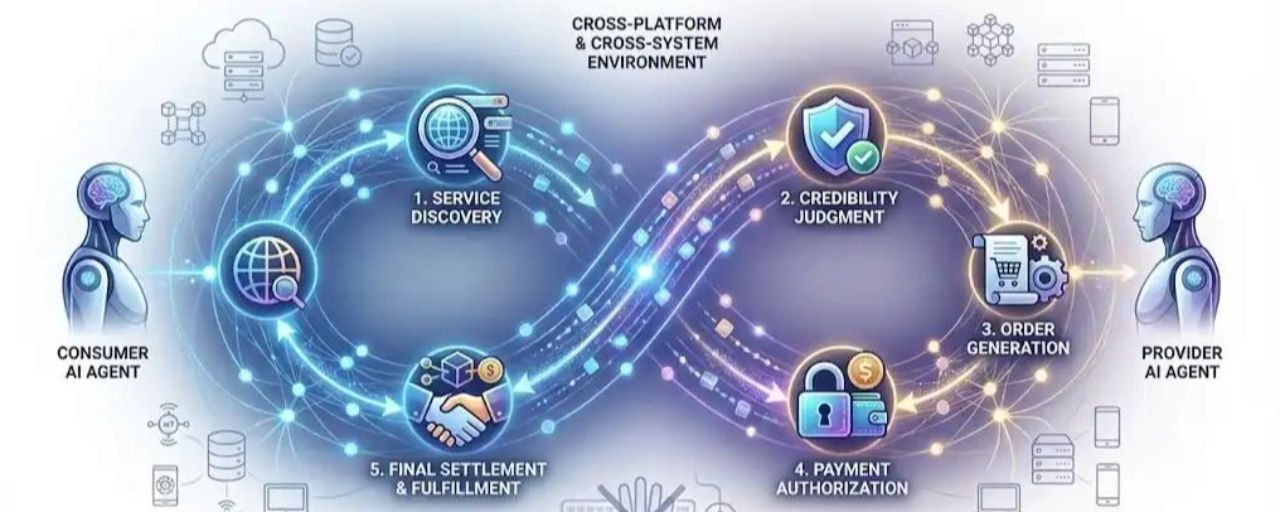
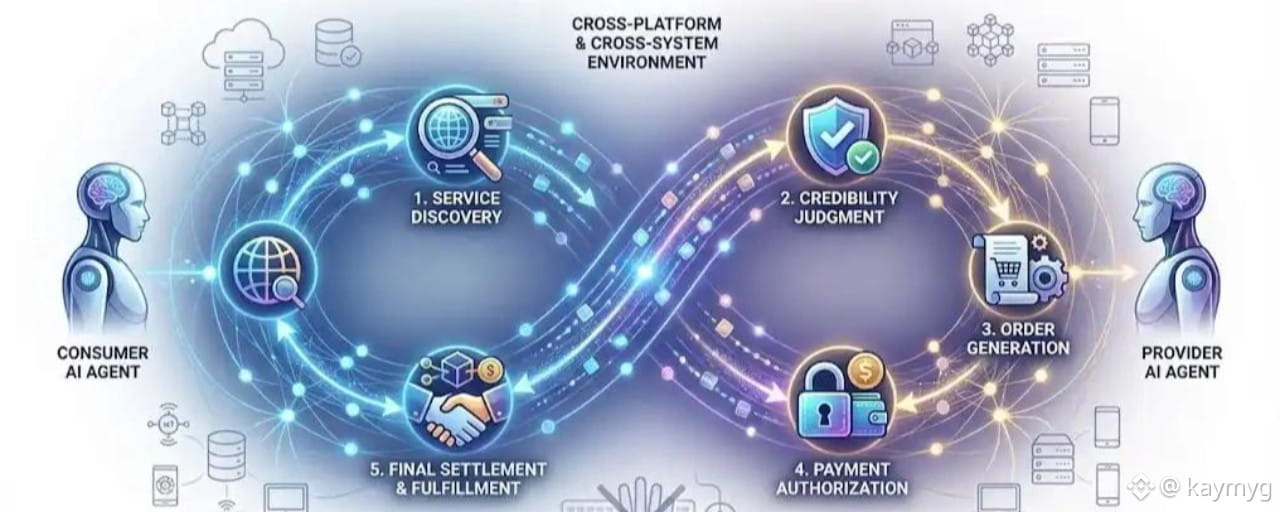
#AIAgents can increasingly observe its environment, make decisions, call APIs, negotiate with other systems, purchase resources and execute transactions. As these capabilities mature, the internet could evolve from a network where humans use software into a network where software acts economically on behalf of humans or independently within defined constraints.
That creates a problem that has received far less attention than the intelligence itself:
What does money look like when the economic actor is a machine?
This is where #decred becomes an interesting protocol to examine.
The Internet is becoming an economic machine
The first generation of the internet connected people.
The second connected businesses.
The emerging generation may connect agents.
Imagine an AI agent operating continuously on the internet.
It might purchase compute from another provider, pay for access to a database, purchase an API call, compensate another agent for information, pay for storage, sell a service and use the proceeds to fund its next operation.
Instead of a human clicking “Pay,” the transaction could simply be:
Agent → authorization → payment → service → verification → payment
repeated thousands of times.
This is fundamentally different from today's consumer internet.
Humans tolerate friction.
Machines don't.
An agent cannot reasonably open a bank account, wait three business days for settlement, manually approve every transaction and phone a bank whenever a payment is blocked.
An agent-native economy therefore requires financial infrastructure that is:
programmable, permissionless, globally accessible, machine-readable and continuously available.
#Stablecoins will almost certainly play an important role in this environment. So will #bitcoin and other networks.
But another question emerges:
What happens when agents need money that isn't controlled by a company, government or intermediary?
That is where decentralized monetary networks become particularly interesting.
Decred was designed around a problem AI may make more important
Decred is often described simply as another cryptocurrency.
That description misses something important.
Decred was built around a fundamental question:
How can a decentralized monetary network govern itself over time without depending on a permanent central authority?
Its architecture combines Proof-of-Work and Proof-of-Stake, while incorporating stakeholder voting, a protocol treasury and an explicit governance mechanism.
That matters because decentralization isn't only about who produces blocks.
It is also about who gets to change the rules.
A cryptocurrency can be perfectly decentralized today and become increasingly centralized tomorrow if its development, treasury, governance or infrastructure becomes dependent on a small group of actors.
Decred's architecture attempts to make those political and economic decisions part of the protocol itself.
And that becomes particularly interesting in an AI-dominated internet.
When the adversary becomes an agent
The biggest change brought by agentic AI may not be that machines become smarter.
It may be that machines become abundant.
An internet containing ten million autonomous agents behaves very differently from an internet containing ten million human users.
Agents can operate 24/7.
They can replicate.
They can coordinate.
They can respond to incentives at machine speed.
They can attempt attacks continuously.
They can negotiate with one another.
And they can potentially use money as an operational resource.
This creates an unusual cybersecurity environment.
Today, an attacker may need employees, infrastructure, money and time.
Tomorrow, an attacker could deploy thousands of autonomous agents that continuously probe networks, generate identities, search for vulnerabilities, manipulate markets or attempt economic attacks.
The distinction between cybersecurity and monetary security could therefore become increasingly blurred.
Money itself becomes part of the security architecture.
Why governance could matter more than ever
Consider a decentralized network facing a new attack made possible by advanced AI.
The network needs to respond.
Perhaps its cryptographic assumptions need updating.
Perhaps its economic incentives need modification.
Perhaps its treasury allocation needs to change.
Perhaps its consensus rules need to evolve.
Who makes that decision?
A centralized blockchain can potentially have a company or small development team make the decision.
A decentralized network has a harder problem.
It needs to change without recreating the centralized authority it was designed to eliminate.
This is one of the areas where Decred's governance model becomes particularly relevant.
Its stakeholders can participate in decisions concerning protocol development and treasury expenditure.
That creates an unusual property:
the network contains an internal mechanism for adapting itself.
In an environment where technological change accelerates dramatically, adaptability could become a security property rather than merely a governance feature.
The treasury becomes interesting in an agentic world
Decred also has another feature that deserves more attention: its treasury.
A portion of network issuance funds the treasury, creating an endogenous source of funding for development and ecosystem work.
This creates an important distinction from projects whose continued development depends heavily on external fundraising.
Imagine a decentralized network existing for decades.
Its developers need to respond to new cryptographic threats.
Its infrastructure needs maintenance.
Its software needs upgrades.
Its ecosystem needs new tooling.
Its adversaries become increasingly sophisticated.
Where does the money come from?
A protocol-level treasury provides one answer:
the network can fund its own continued development.
In an agentic future, this becomes conceptually fascinating.
The network isn't simply maintaining a ledger.
It is maintaining an economic organism with resources dedicated to its own survival and evolution.
Agents need more than payments
There is a tendency to describe the AI-agent economy as simply:
“AI agents will need crypto payments.”
That's probably too narrow.
Agents will need an entire economic stack.
They need:
Identity
Who is this agent?
Authorization
What is it allowed to do?
Reputation
Should another agent trust it?
Settlement
How does it pay?
Collateral
What backs its commitments?
Privacy
Which information should remain private?
Governance
What happens when the rules need to change?
Security
What happens when another agent attempts to exploit it?
This is why the intersection between AI agents and cryptocurrency is much more interesting than simply putting an “AI” label on a token.
The real question is whether decentralized networks can become economic infrastructure for autonomous software.
Decred's privacy dimension
Agentic systems also create a potentially enormous privacy problem.
A human might make several payments during a day.
An autonomous agent could make thousands.
Those transactions could reveal:
what services the agent uses;which agents it communicates with;what resources it purchases;how much it earns;who funds it;what operations it performs.
At sufficient scale, financial data becomes behavioral intelligence.
This creates an uncomfortable possibility:
the autonomous internet could become extraordinarily efficient and extraordinarily surveilled.
Privacy-preserving transaction systems therefore become potentially important infrastructure for machine economies.
Decred has historically treated privacy as part of its broader monetary architecture rather than merely as a marketing feature.
That doesn't mean DCR automatically becomes the privacy currency of AI agents. Adoption still has to happen.
But the underlying requirement becomes increasingly obvious:
autonomous economic actors need the ability to transact without exposing their entire operational graph.
The battle won't necessarily be DCR versus AI tokens
There is another important point.
The future probably won't be:
AI agents → DCR
and nothing else.
The monetary architecture could become layered.
For example:
Stablecoins could handle predictable unit-of-account payments.
Bitcoin could function as high-value reserve collateral.
Lightning and other payment layers could handle rapid transactions.
Specialized networks could provide programmable or application-specific functionality.
And assets such as DCR could occupy a different niche:
independent, scarce, censorship-resistant monetary infrastructure with native governance.
This is important because Decred doesn't need to become the universal payment currency of AI agents for its architecture to become relevant.
It could instead become part of the security and monetary substrate underneath an increasingly autonomous internet.
The most interesting property may be independence
There is a deeper issue underneath all of this.
AI agents will increasingly depend on centralized infrastructure.
Cloud providers.
AI model providers.
Payment processors.
Identity providers.
Data providers.
Operating systems.
Application platforms.
That creates concentration.
An agent may be autonomous in its decision-making while still being completely dependent on centralized infrastructure.
The same could happen with money.
An agent could be autonomous but ultimately dependent on a centralized payment provider that can freeze its funds, reverse transactions or deny service.
That's not complete economic autonomy.
It is merely automated dependence.
Decentralized money offers a different model.
The agent controls its keys.
The network validates the transaction.
Settlement occurs according to protocol rules.
No customer-service representative needs to approve the transaction.
That distinction could become much more important as agents become economically significant.
Decred's real AI thesis
Decred therefore doesn't need an AI chatbot.
It doesn't need an AI-themed token.
It doesn't need to pretend to be an artificial-intelligence protocol.
Its potentially interesting relationship with AI is much more fundamental.
Agentic AI increases the number, speed and autonomy of economic actors on the internet.
That increases the demand for:
permissionless money, autonomous settlement, cryptographic authorization, privacy, robust security and governance mechanisms capable of adapting to new threats.
Those are precisely the kinds of problems decentralized monetary networks have been attempting to solve for years.
Decred simply approaches them through a particularly governance-oriented architecture.
The paradox
There is a fascinating paradox here.
The more intelligent the internet becomes, the less human it may become.
And the less human the economic environment becomes, the more important predictable rules could become.
Humans can negotiate.
Machines execute.
Humans can tolerate ambiguity.
Machines require explicit permissions.
Humans can call a bank.
An autonomous agent may need settlement immediately.
Humans can appeal a transaction.
A machine needs deterministic rules.
This suggests that the infrastructure underneath an agentic internet may ultimately need to look less like today's banking system and more like a cryptographic operating system for economic activity.
Decred's opportunity and its risk
None of this guarantees that Decred wins anything.
That distinction matters.
Technological suitability does not automatically create adoption.
Decred faces the same fundamental challenge it has faced for years:
Can an technically sophisticated decentralized network translate its architecture into meaningful economic usage and liquidity?
Litecoin, Bitcoin, stablecoins and newer programmable networks have substantial network effects.
An agent doesn't necessarily care which protocol has the most elegant governance model.
It cares whether the protocol is available, liquid, secure, cheap and useful.
That means Decred's AI-era thesis ultimately depends on adoption.
Its architecture may become more relevant.
That does not mean the market will necessarily recognize that relevance.
The bigger picture
The cryptocurrency debate has traditionally been framed around humans:
What money should people use?
Agentic AI introduces a different question:
What money should autonomous economic actors use?
That question has barely begun to be answered.
If millions or eventually billions of software agents begin participating in economic activity, the internet will need financial infrastructure capable of operating at machine speed without requiring continuous human permission.
That infrastructure will probably include centralized systems, stablecoins, traditional financial rails and decentralized networks simultaneously.
But the decentralized networks will have an additional role to play.
They provide something centralized systems cannot easily provide:
an economic system whose rules are enforced by a network rather than by an institution.
Decred's significance in that future isn't that it is an “AI cryptocurrency.”
It is that agentic AI could make the problems Decred was designed to solve more important.
The ultimate test won't be whether Decred can market itself to the AI industry.
It will be whether, in a world filled with autonomous economic actors, its combination of scarcity, security, governance, treasury-funded development and independence proves useful enough that those actors or the humans who control them choose to build around it.
The AI age may therefore produce a strange reversal.
We are building increasingly autonomous machines.
And at the same time, we may discover that those machines need something very old-fashioned:
money they can control themselves.
$DCR
Its next phase may not be.
For decades, the dominant economic actors online have been people, companies and institutions. They browse websites, sign contracts, open bank accounts, buy services, send payments and make decisions.
Agentic AI changes that model.
#AIAgents can increasingly observe its environment, make decisions, call APIs, negotiate with other systems, purchase resources and execute transactions. As these capabilities mature, the internet could evolve from a network where humans use software into a network where software acts economically on behalf of humans or independently within defined constraints.
That creates a problem that has received far less attention than the intelligence itself:
What does money look like when the economic actor is a machine?
This is where #decred becomes an interesting protocol to examine.
The Internet is becoming an economic machine
The first generation of the internet connected people.
The second connected businesses.
The emerging generation may connect agents.
Imagine an AI agent operating continuously on the internet.
It might purchase compute from another provider, pay for access to a database, purchase an API call, compensate another agent for information, pay for storage, sell a service and use the proceeds to fund its next operation.
Instead of a human clicking “Pay,” the transaction could simply be:
Agent → authorization → payment → service → verification → payment
repeated thousands of times.
This is fundamentally different from today's consumer internet.
Humans tolerate friction.
Machines don't.
An agent cannot reasonably open a bank account, wait three business days for settlement, manually approve every transaction and phone a bank whenever a payment is blocked.
An agent-native economy therefore requires financial infrastructure that is:
programmable, permissionless, globally accessible, machine-readable and continuously available.
#Stablecoins will almost certainly play an important role in this environment. So will #bitcoin and other networks.
But another question emerges:
What happens when agents need money that isn't controlled by a company, government or intermediary?
That is where decentralized monetary networks become particularly interesting.
Decred was designed around a problem AI may make more important
Decred is often described simply as another cryptocurrency.
That description misses something important.
Decred was built around a fundamental question:
How can a decentralized monetary network govern itself over time without depending on a permanent central authority?
Its architecture combines Proof-of-Work and Proof-of-Stake, while incorporating stakeholder voting, a protocol treasury and an explicit governance mechanism.
That matters because decentralization isn't only about who produces blocks.
It is also about who gets to change the rules.
A cryptocurrency can be perfectly decentralized today and become increasingly centralized tomorrow if its development, treasury, governance or infrastructure becomes dependent on a small group of actors.
Decred's architecture attempts to make those political and economic decisions part of the protocol itself.
And that becomes particularly interesting in an AI-dominated internet.
When the adversary becomes an agent
The biggest change brought by agentic AI may not be that machines become smarter.
It may be that machines become abundant.
An internet containing ten million autonomous agents behaves very differently from an internet containing ten million human users.
Agents can operate 24/7.
They can replicate.
They can coordinate.
They can respond to incentives at machine speed.
They can attempt attacks continuously.
They can negotiate with one another.
And they can potentially use money as an operational resource.
This creates an unusual cybersecurity environment.
Today, an attacker may need employees, infrastructure, money and time.
Tomorrow, an attacker could deploy thousands of autonomous agents that continuously probe networks, generate identities, search for vulnerabilities, manipulate markets or attempt economic attacks.
The distinction between cybersecurity and monetary security could therefore become increasingly blurred.
Money itself becomes part of the security architecture.
Why governance could matter more than ever
Consider a decentralized network facing a new attack made possible by advanced AI.
The network needs to respond.
Perhaps its cryptographic assumptions need updating.
Perhaps its economic incentives need modification.
Perhaps its treasury allocation needs to change.
Perhaps its consensus rules need to evolve.
Who makes that decision?
A centralized blockchain can potentially have a company or small development team make the decision.
A decentralized network has a harder problem.
It needs to change without recreating the centralized authority it was designed to eliminate.
This is one of the areas where Decred's governance model becomes particularly relevant.
Its stakeholders can participate in decisions concerning protocol development and treasury expenditure.
That creates an unusual property:
the network contains an internal mechanism for adapting itself.
In an environment where technological change accelerates dramatically, adaptability could become a security property rather than merely a governance feature.
The treasury becomes interesting in an agentic world
Decred also has another feature that deserves more attention: its treasury.
A portion of network issuance funds the treasury, creating an endogenous source of funding for development and ecosystem work.
This creates an important distinction from projects whose continued development depends heavily on external fundraising.
Imagine a decentralized network existing for decades.
Its developers need to respond to new cryptographic threats.
Its infrastructure needs maintenance.
Its software needs upgrades.
Its ecosystem needs new tooling.
Its adversaries become increasingly sophisticated.
Where does the money come from?
A protocol-level treasury provides one answer:
the network can fund its own continued development.
In an agentic future, this becomes conceptually fascinating.
The network isn't simply maintaining a ledger.
It is maintaining an economic organism with resources dedicated to its own survival and evolution.
Agents need more than payments
There is a tendency to describe the AI-agent economy as simply:
“AI agents will need crypto payments.”
That's probably too narrow.
Agents will need an entire economic stack.
They need:
Identity
Who is this agent?
Authorization
What is it allowed to do?
Reputation
Should another agent trust it?
Settlement
How does it pay?
Collateral
What backs its commitments?
Privacy
Which information should remain private?
Governance
What happens when the rules need to change?
Security
What happens when another agent attempts to exploit it?
This is why the intersection between AI agents and cryptocurrency is much more interesting than simply putting an “AI” label on a token.
The real question is whether decentralized networks can become economic infrastructure for autonomous software.
Decred's privacy dimension
Agentic systems also create a potentially enormous privacy problem.
A human might make several payments during a day.
An autonomous agent could make thousands.
Those transactions could reveal:
what services the agent uses;which agents it communicates with;what resources it purchases;how much it earns;who funds it;what operations it performs.
At sufficient scale, financial data becomes behavioral intelligence.
This creates an uncomfortable possibility:
the autonomous internet could become extraordinarily efficient and extraordinarily surveilled.
Privacy-preserving transaction systems therefore become potentially important infrastructure for machine economies.
Decred has historically treated privacy as part of its broader monetary architecture rather than merely as a marketing feature.
That doesn't mean DCR automatically becomes the privacy currency of AI agents. Adoption still has to happen.
But the underlying requirement becomes increasingly obvious:
autonomous economic actors need the ability to transact without exposing their entire operational graph.
The battle won't necessarily be DCR versus AI tokens
There is another important point.
The future probably won't be:
AI agents → DCR
and nothing else.
The monetary architecture could become layered.
For example:
Stablecoins could handle predictable unit-of-account payments.
Bitcoin could function as high-value reserve collateral.
Lightning and other payment layers could handle rapid transactions.
Specialized networks could provide programmable or application-specific functionality.
And assets such as DCR could occupy a different niche:
independent, scarce, censorship-resistant monetary infrastructure with native governance.
This is important because Decred doesn't need to become the universal payment currency of AI agents for its architecture to become relevant.
It could instead become part of the security and monetary substrate underneath an increasingly autonomous internet.
The most interesting property may be independence
There is a deeper issue underneath all of this.
AI agents will increasingly depend on centralized infrastructure.
Cloud providers.
AI model providers.
Payment processors.
Identity providers.
Data providers.
Operating systems.
Application platforms.
That creates concentration.
An agent may be autonomous in its decision-making while still being completely dependent on centralized infrastructure.
The same could happen with money.
An agent could be autonomous but ultimately dependent on a centralized payment provider that can freeze its funds, reverse transactions or deny service.
That's not complete economic autonomy.
It is merely automated dependence.
Decentralized money offers a different model.
The agent controls its keys.
The network validates the transaction.
Settlement occurs according to protocol rules.
No customer-service representative needs to approve the transaction.
That distinction could become much more important as agents become economically significant.
Decred's real AI thesis
Decred therefore doesn't need an AI chatbot.
It doesn't need an AI-themed token.
It doesn't need to pretend to be an artificial-intelligence protocol.
Its potentially interesting relationship with AI is much more fundamental.
Agentic AI increases the number, speed and autonomy of economic actors on the internet.
That increases the demand for:
permissionless money, autonomous settlement, cryptographic authorization, privacy, robust security and governance mechanisms capable of adapting to new threats.
Those are precisely the kinds of problems decentralized monetary networks have been attempting to solve for years.
Decred simply approaches them through a particularly governance-oriented architecture.
The paradox
There is a fascinating paradox here.
The more intelligent the internet becomes, the less human it may become.
And the less human the economic environment becomes, the more important predictable rules could become.
Humans can negotiate.
Machines execute.
Humans can tolerate ambiguity.
Machines require explicit permissions.
Humans can call a bank.
An autonomous agent may need settlement immediately.
Humans can appeal a transaction.
A machine needs deterministic rules.
This suggests that the infrastructure underneath an agentic internet may ultimately need to look less like today's banking system and more like a cryptographic operating system for economic activity.
Decred's opportunity and its risk
None of this guarantees that Decred wins anything.
That distinction matters.
Technological suitability does not automatically create adoption.
Decred faces the same fundamental challenge it has faced for years:
Can an technically sophisticated decentralized network translate its architecture into meaningful economic usage and liquidity?
Litecoin, Bitcoin, stablecoins and newer programmable networks have substantial network effects.
An agent doesn't necessarily care which protocol has the most elegant governance model.
It cares whether the protocol is available, liquid, secure, cheap and useful.
That means Decred's AI-era thesis ultimately depends on adoption.
Its architecture may become more relevant.
That does not mean the market will necessarily recognize that relevance.
The bigger picture
The cryptocurrency debate has traditionally been framed around humans:
What money should people use?
Agentic AI introduces a different question:
What money should autonomous economic actors use?
That question has barely begun to be answered.
If millions or eventually billions of software agents begin participating in economic activity, the internet will need financial infrastructure capable of operating at machine speed without requiring continuous human permission.
That infrastructure will probably include centralized systems, stablecoins, traditional financial rails and decentralized networks simultaneously.
But the decentralized networks will have an additional role to play.
They provide something centralized systems cannot easily provide:
an economic system whose rules are enforced by a network rather than by an institution.
Decred's significance in that future isn't that it is an “AI cryptocurrency.”
It is that agentic AI could make the problems Decred was designed to solve more important.
The ultimate test won't be whether Decred can market itself to the AI industry.
It will be whether, in a world filled with autonomous economic actors, its combination of scarcity, security, governance, treasury-funded development and independence proves useful enough that those actors or the humans who control them choose to build around it.
The AI age may therefore produce a strange reversal.
We are building increasingly autonomous machines.
And at the same time, we may discover that those machines need something very old-fashioned:
money they can control themselves.
$DCR
kaymyg
·
--
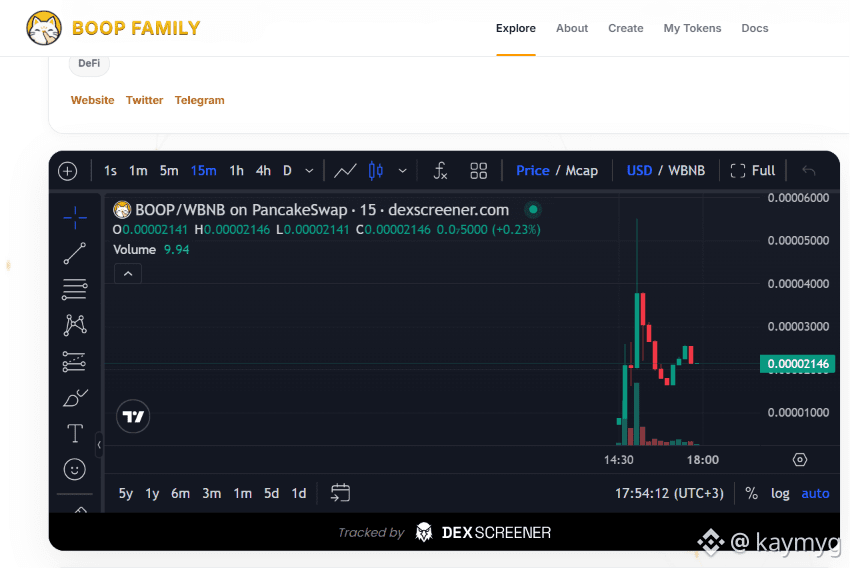
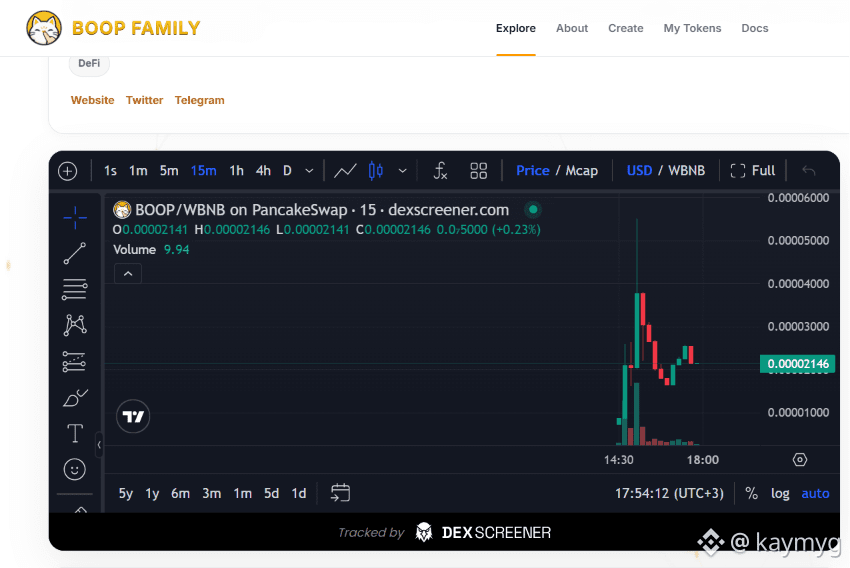
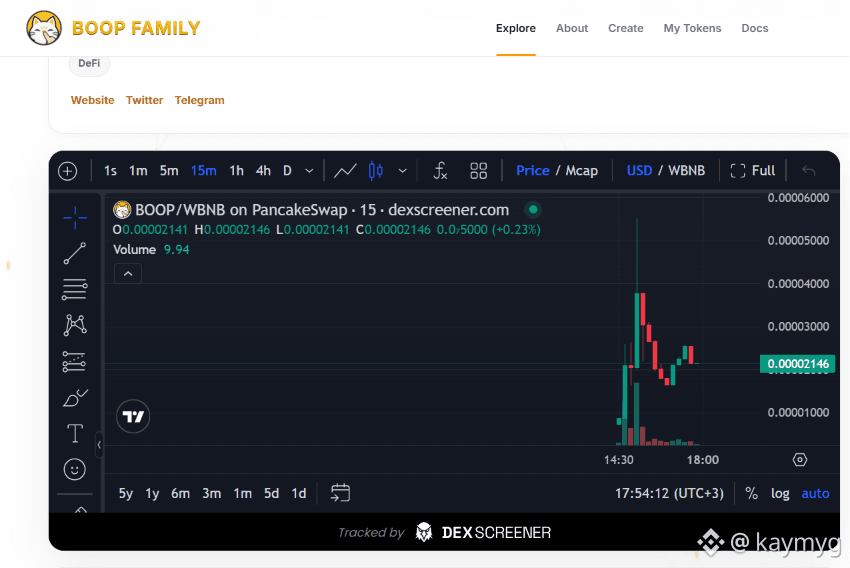
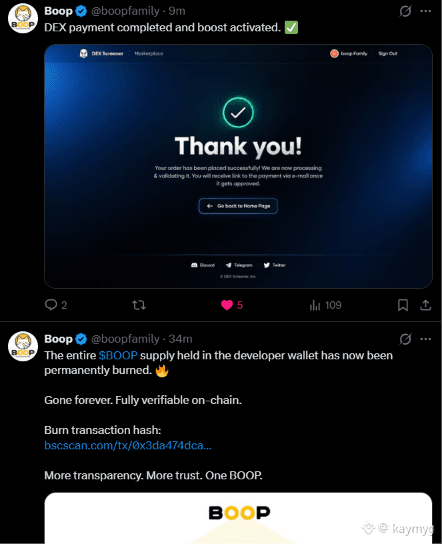
HaussierLaunch a token in one boop. Pair it with the native token, any token, or stocks on #BNBChain
#bnb #Launchpad $boop
#bnb #Launchpad $boop
Connectez-vous pour découvrir plus de contenu