

jujucrypt
1.4k Publications

jujucrypt
Signaler
Bloquer l’utilisateur
just here to learn and share ideas BP-EB1C098E98BB
Ouvert au trading
Trade occasionnellement
4.8 an(s)
26 Suivis
1.6K+ Abonnés
8.2K+ J’aime
Publications
Portefeuille
Tous
Citations
·
--
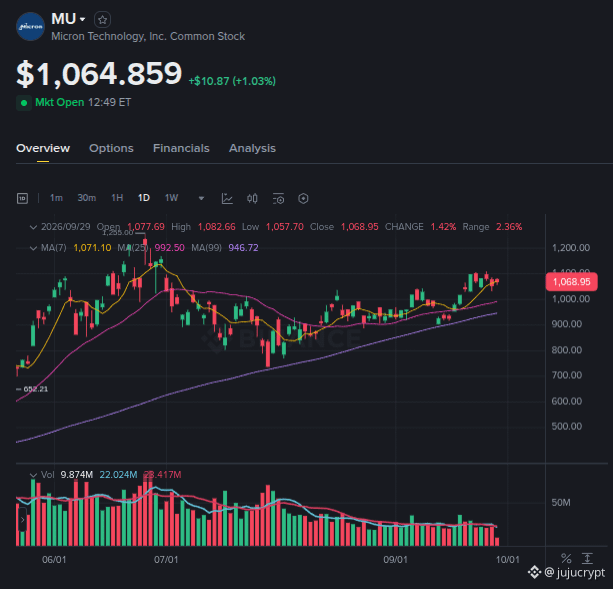
$MU earnings are almost here.
Micron reports Q4 results on September 30, and I’m mainly watching the numbers that matter for the AI memory story.
The company previously guided for around $50B revenue, $31 non-GAAP EPS and roughly 86% gross margin.
My bias going into earnings is long, but I’m not trying to chase the move before the report.
If the numbers and guidance come in strong and $MU confirms the move after earnings, I’ll look for a long entry.
If the reaction is weak, I’ll stay out rather than force a short just because price drops.
For me, the plan is simple: long if earnings and price action confirm, no trade if they don’t.
#EarningsSeason
$MU earnings are almost here.
Micron reports Q4 results on September 30, and I’m mainly watching the numbers that matter for the AI memory story.
The company previously guided for around $50B revenue, $31 non-GAAP EPS and roughly 86% gross margin.
My bias going into earnings is long, but I’m not trying to chase the move before the report.
If the numbers and guidance come in strong and $MU confirms the move after earnings, I’ll look for a long entry.
If the reaction is weak, I’ll stay out rather than force a short just because price drops.
For me, the plan is simple: long if earnings and price action confirm, no trade if they don’t.
#EarningsSeason
Micron reports Q4 results on September 30, and I’m mainly watching the numbers that matter for the AI memory story.
The company previously guided for around $50B revenue, $31 non-GAAP EPS and roughly 86% gross margin.
My bias going into earnings is long, but I’m not trying to chase the move before the report.
If the numbers and guidance come in strong and $MU confirms the move after earnings, I’ll look for a long entry.
If the reaction is weak, I’ll stay out rather than force a short just because price drops.
For me, the plan is simple: long if earnings and price action confirm, no trade if they don’t.
#EarningsSeason
135
·
--
The AI compute race is getting wild.
Anthropic has disclosed an agreement that could involve up to $84.5B in Nvidia-based computing capacity through 2029.
That’s almost double the roughly $45B figure SpaceX disclosed earlier this year.
The bigger story here isn’t just the size of the deal.
AI companies are locking in huge amounts of computing power because demand for AI keeps growing, and Nvidia’s chips are still at the center of much of that infrastructure.
For $NVDA , this is another reminder of how much money is being committed to AI infrastructure.
The numbers are getting harder to ignore.
$SPCX
#NvidiaApproves$150BBuyback
The AI compute race is getting wild.
Anthropic has disclosed an agreement that could involve up to $84.5B in Nvidia-based computing capacity through 2029.
That’s almost double the roughly $45B figure SpaceX disclosed earlier this year.
The bigger story here isn’t just the size of the deal.
AI companies are locking in huge amounts of computing power because demand for AI keeps growing, and Nvidia’s chips are still at the center of much of that infrastructure.
For $NVDA , this is another reminder of how much money is being committed to AI infrastructure.
The numbers are getting harder to ignore.
$SPCX
#NvidiaApproves$150BBuyback
Anthropic has disclosed an agreement that could involve up to $84.5B in Nvidia-based computing capacity through 2029.
That’s almost double the roughly $45B figure SpaceX disclosed earlier this year.
The bigger story here isn’t just the size of the deal.
AI companies are locking in huge amounts of computing power because demand for AI keeps growing, and Nvidia’s chips are still at the center of much of that infrastructure.
For $NVDA , this is another reminder of how much money is being committed to AI infrastructure.
The numbers are getting harder to ignore.
$SPCX
#NvidiaApproves$150BBuyback

470
·
--
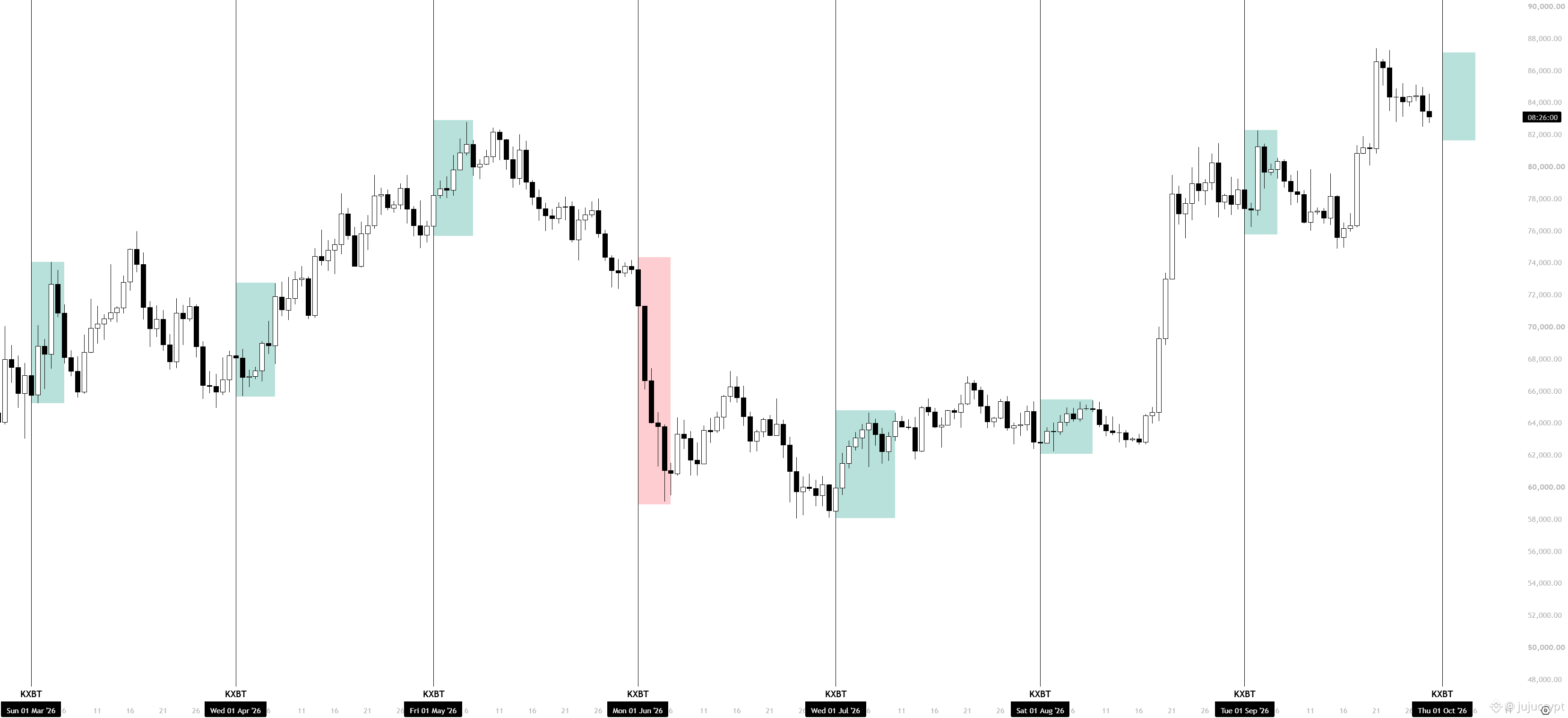
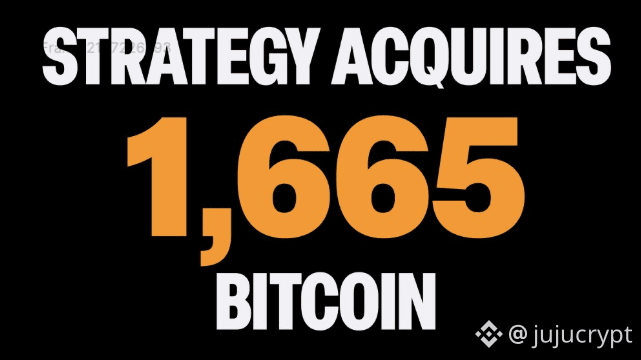
Big names are still buying $BTC .
Michael Saylor just announced that Strategy added another 1,665 BTC, taking its total holdings to 847,666 BTC.
The company also repurchased around $152M worth of STRC, while holding about $6.02B in USD assets.
Strategy clearly isn’t slowing down on its Bitcoin strategy.
With institutions and large players continuing to add BTC, I’m watching closely to see how the market reacts from here.
#BTC
Big names are still buying $BTC .
Michael Saylor just announced that Strategy added another 1,665 BTC, taking its total holdings to 847,666 BTC.
The company also repurchased around $152M worth of STRC, while holding about $6.02B in USD assets.
Strategy clearly isn’t slowing down on its Bitcoin strategy.
With institutions and large players continuing to add BTC, I’m watching closely to see how the market reacts from here.
#BTC
Michael Saylor just announced that Strategy added another 1,665 BTC, taking its total holdings to 847,666 BTC.
The company also repurchased around $152M worth of STRC, while holding about $6.02B in USD assets.
Strategy clearly isn’t slowing down on its Bitcoin strategy.
With institutions and large players continuing to add BTC, I’m watching closely to see how the market reacts from here.
#BTC
26
·
--
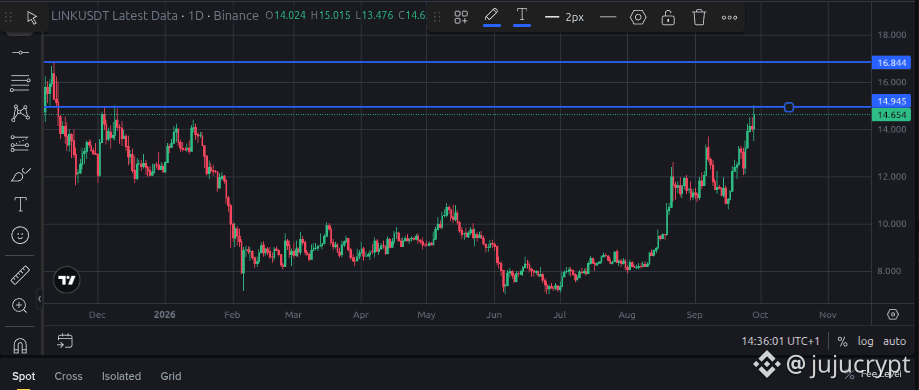
$LINK just got another interesting update.
Chainlink has launched CCIP 2.0, bringing enterprise-grade verification directly into its cross-chain infrastructure.
For anyone unfamiliar, CCIP is Chainlink’s system for moving tokens and data between different blockchains without relying on traditional bridges.
The big update is Cross-Chain Verifiers (CCVs).
Institutions can now add their own independent verification layer on top of Chainlink’s existing 16-node network. They can run it themselves or use providers like Infosys and Nethermind.
So before a transfer goes through, both verification layers have to approve it.
CCIP 2.0 also adds compliance tools for things like KYC, AML, sanctions screening and custom rules, while giving institutions different speed and security options depending on the transaction.
The bigger picture is pretty simple:
Chainlink is making it easier for institutions to move tokenized assets across different chains while keeping more control over security and compliance.
With names like ANZ, Fidelity International, SBI Digital Markets, AWS and Google Cloud involved at launch, this is definitely one I’m keeping an eye on.
#ChainlinkLaunchesCCIP2WithEnterpriseVerification
$LINK just got another interesting update.
Chainlink has launched CCIP 2.0, bringing enterprise-grade verification directly into its cross-chain infrastructure.
For anyone unfamiliar, CCIP is Chainlink’s system for moving tokens and data between different blockchains without relying on traditional bridges.
The big update is Cross-Chain Verifiers (CCVs).
Institutions can now add their own independent verification layer on top of Chainlink’s existing 16-node network. They can run it themselves or use providers like Infosys and Nethermind.
So before a transfer goes through, both verification layers have to approve it.
CCIP 2.0 also adds compliance tools for things like KYC, AML, sanctions screening and custom rules, while giving institutions different speed and security options depending on the transaction.
The bigger picture is pretty simple:
Chainlink is making it easier for institutions to move tokenized assets across different chains while keeping more control over security and compliance.
With names like ANZ, Fidelity International, SBI Digital Markets, AWS and Google Cloud involved at launch, this is definitely one I’m keeping an eye on.
#ChainlinkLaunchesCCIP2WithEnterpriseVerification
Chainlink has launched CCIP 2.0, bringing enterprise-grade verification directly into its cross-chain infrastructure.
For anyone unfamiliar, CCIP is Chainlink’s system for moving tokens and data between different blockchains without relying on traditional bridges.
The big update is Cross-Chain Verifiers (CCVs).
Institutions can now add their own independent verification layer on top of Chainlink’s existing 16-node network. They can run it themselves or use providers like Infosys and Nethermind.
So before a transfer goes through, both verification layers have to approve it.
CCIP 2.0 also adds compliance tools for things like KYC, AML, sanctions screening and custom rules, while giving institutions different speed and security options depending on the transaction.
The bigger picture is pretty simple:
Chainlink is making it easier for institutions to move tokenized assets across different chains while keeping more control over security and compliance.
With names like ANZ, Fidelity International, SBI Digital Markets, AWS and Google Cloud involved at launch, this is definitely one I’m keeping an eye on.
#ChainlinkLaunchesCCIP2WithEnterpriseVerification
1
80
·
--
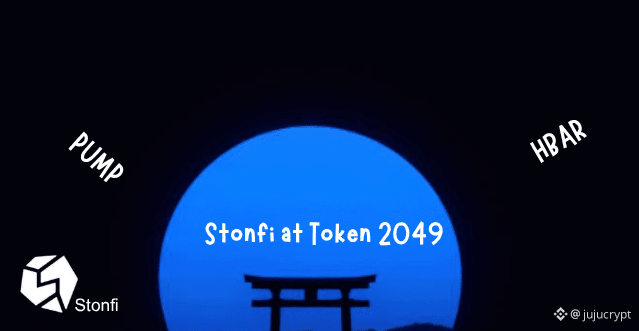
Some alts I’ve got on watch right now
$PUMP is probably at the top of my list, followed by $HBAR
The market still feels like it’s waiting for that bigger rotation where alts start making some serious moves across the board. Obviously, nobody knows exactly when that happens, but I’m keeping my watchlist ready instead of chasing every green candle.
Meanwhile, on the STONfi side, there’s quite a bit coming up too.
The team is heading to Korea Blockchain Week in Seoul on Sept. 30–Oct. 1, followed by TOKEN2049 Singapore on Oct. 7–8.
Andrey Fedorov, STON.fi’s CMO & CBDO, is also speaking at HSC Conference Seoul on Oct. 1 about “Beyond Chain Boundaries: The Next Layer of DeFi.”
Ethan Clime, Head of DevRel, will be there as well for networking and conversations around cross-chain DeFi.
I like seeing this side of things because while I’m watching the charts for the next alt move, STON.fi is still out there building and talking about where cross-chain DeFi is heading.
Different things on the radar, but I’m watching both.
Some alts I’ve got on watch right now
$PUMP is probably at the top of my list, followed by $HBAR
The market still feels like it’s waiting for that bigger rotation where alts start making some serious moves across the board. Obviously, nobody knows exactly when that happens, but I’m keeping my watchlist ready instead of chasing every green candle.
Meanwhile, on the STONfi side, there’s quite a bit coming up too.
The team is heading to Korea Blockchain Week in Seoul on Sept. 30–Oct. 1, followed by TOKEN2049 Singapore on Oct. 7–8.
Andrey Fedorov, STON.fi’s CMO & CBDO, is also speaking at HSC Conference Seoul on Oct. 1 about “Beyond Chain Boundaries: The Next Layer of DeFi.”
Ethan Clime, Head of DevRel, will be there as well for networking and conversations around cross-chain DeFi.
I like seeing this side of things because while I’m watching the charts for the next alt move, STON.fi is still out there building and talking about where cross-chain DeFi is heading.
Different things on the radar, but I’m watching both.
$PUMP is probably at the top of my list, followed by $HBAR
The market still feels like it’s waiting for that bigger rotation where alts start making some serious moves across the board. Obviously, nobody knows exactly when that happens, but I’m keeping my watchlist ready instead of chasing every green candle.
Meanwhile, on the STONfi side, there’s quite a bit coming up too.
The team is heading to Korea Blockchain Week in Seoul on Sept. 30–Oct. 1, followed by TOKEN2049 Singapore on Oct. 7–8.
Andrey Fedorov, STON.fi’s CMO & CBDO, is also speaking at HSC Conference Seoul on Oct. 1 about “Beyond Chain Boundaries: The Next Layer of DeFi.”
Ethan Clime, Head of DevRel, will be there as well for networking and conversations around cross-chain DeFi.
I like seeing this side of things because while I’m watching the charts for the next alt move, STON.fi is still out there building and talking about where cross-chain DeFi is heading.
Different things on the radar, but I’m watching both.
1
79
·
--
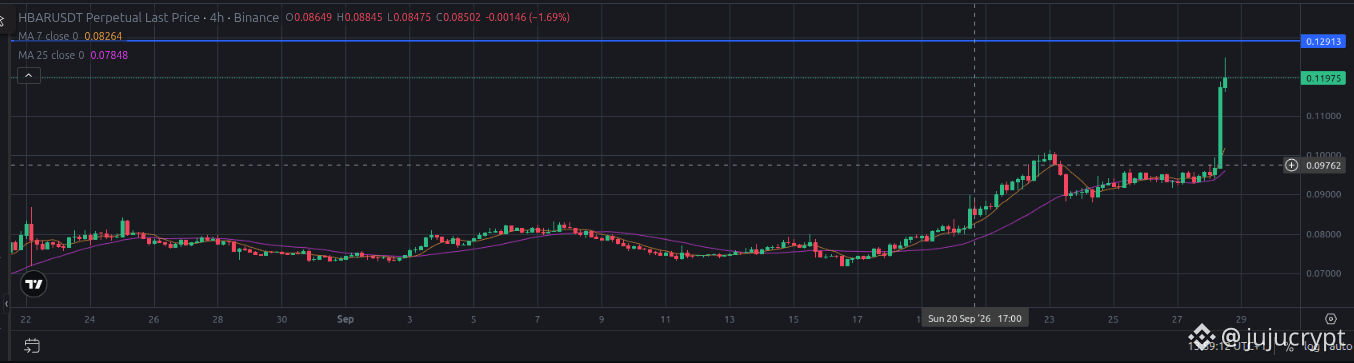
$HBAR is back on the chart and starting to get a good flow around $0.122.
$ONDO is moving nicely too, so there’s definitely some interesting action across the market right now.
Then I noticed GEMSTON had a pretty good pump yesterday.
Man literally cancelled 2 zeros.
That one caught my attention because I’ve been following what’s happening around STON.fi for a while now, and GEMSTON has become one of those smaller ecosystem tokens I keep checking.
I’m not saying every pump means it’s time to chase. Crypto can move fast in both directions, so I’m still watching the volume and how it holds after the move.
But seeing GEMSTON start getting this kind of attention while stonfi continues building is interesting.
The protocol has been expanding beyond simple swaps, with more focus on liquidity, cross-chain movement and the wider TON DeFi ecosystem.
So yeah, HBAR and ONDO are on my radar...
But after that GEMSTON move, I’m definitely paying a little more attention to what’s happening on the STON.fi side too.
Still watching. Still researching.
#TON
$HBAR is back on the chart and starting to get a good flow around $0.122.
$ONDO is moving nicely too, so there’s definitely some interesting action across the market right now.
Then I noticed GEMSTON had a pretty good pump yesterday.
Man literally cancelled 2 zeros.
That one caught my attention because I’ve been following what’s happening around STON.fi for a while now, and GEMSTON has become one of those smaller ecosystem tokens I keep checking.
I’m not saying every pump means it’s time to chase. Crypto can move fast in both directions, so I’m still watching the volume and how it holds after the move.
But seeing GEMSTON start getting this kind of attention while stonfi continues building is interesting.
The protocol has been expanding beyond simple swaps, with more focus on liquidity, cross-chain movement and the wider TON DeFi ecosystem.
So yeah, HBAR and ONDO are on my radar...
But after that GEMSTON move, I’m definitely paying a little more attention to what’s happening on the STON.fi side too.
Still watching. Still researching.
#TON
$ONDO is moving nicely too, so there’s definitely some interesting action across the market right now.
Then I noticed GEMSTON had a pretty good pump yesterday.
Man literally cancelled 2 zeros.
That one caught my attention because I’ve been following what’s happening around STON.fi for a while now, and GEMSTON has become one of those smaller ecosystem tokens I keep checking.
I’m not saying every pump means it’s time to chase. Crypto can move fast in both directions, so I’m still watching the volume and how it holds after the move.
But seeing GEMSTON start getting this kind of attention while stonfi continues building is interesting.
The protocol has been expanding beyond simple swaps, with more focus on liquidity, cross-chain movement and the wider TON DeFi ecosystem.
So yeah, HBAR and ONDO are on my radar...
But after that GEMSTON move, I’m definitely paying a little more attention to what’s happening on the STON.fi side too.
Still watching. Still researching.
#TON
1
491
·
--
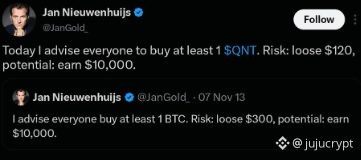
$QNT is really getting my attention right now.
I just saw a KOL who called $BTC very early also talking about $QNT, so I’m definitely keeping it on my radar.
After the recent move, the pullback we’re seeing could simply be some profit-taking. Still, I want to see how price reacts from here before getting too excited.
On the other side, I’m still keeping my hands on STON.fi.
One thing I’ve started to appreciate about Omniston is how simple the idea becomes when you strip away the technical stuff.
You want to move an asset from one chain to another.
Choose → get a quote → confirm → receive.
Behind the scenes, Omniston finds liquidity through resolvers and coordinates the swap across both chains. The assets are secured on both sides, so the swap either completes or can be refunded through the HTLC setup.
No need to manually figure out the bridge or deal with wrapped assets in the middle.
Different things on my radar right now, but I’m keeping an eye on both.
#QNTFallsOver40%FromMorningHigh
$QNT is really getting my attention right now.
I just saw a KOL who called $BTC very early also talking about $QNT , so I’m definitely keeping it on my radar.
After the recent move, the pullback we’re seeing could simply be some profit-taking. Still, I want to see how price reacts from here before getting too excited.
On the other side, I’m still keeping my hands on STON.fi.
One thing I’ve started to appreciate about Omniston is how simple the idea becomes when you strip away the technical stuff.
You want to move an asset from one chain to another.
Choose → get a quote → confirm → receive.
Behind the scenes, Omniston finds liquidity through resolvers and coordinates the swap across both chains. The assets are secured on both sides, so the swap either completes or can be refunded through the HTLC setup.
No need to manually figure out the bridge or deal with wrapped assets in the middle.
Different things on my radar right now, but I’m keeping an eye on both.
#QNTFallsOver40%FromMorningHigh
I just saw a KOL who called $BTC very early also talking about $QNT , so I’m definitely keeping it on my radar.
After the recent move, the pullback we’re seeing could simply be some profit-taking. Still, I want to see how price reacts from here before getting too excited.
On the other side, I’m still keeping my hands on STON.fi.
One thing I’ve started to appreciate about Omniston is how simple the idea becomes when you strip away the technical stuff.
You want to move an asset from one chain to another.
Choose → get a quote → confirm → receive.
Behind the scenes, Omniston finds liquidity through resolvers and coordinates the swap across both chains. The assets are secured on both sides, so the swap either completes or can be refunded through the HTLC setup.
No need to manually figure out the bridge or deal with wrapped assets in the middle.
Different things on my radar right now, but I’m keeping an eye on both.
#QNTFallsOver40%FromMorningHigh
198
·
--
Vérifié
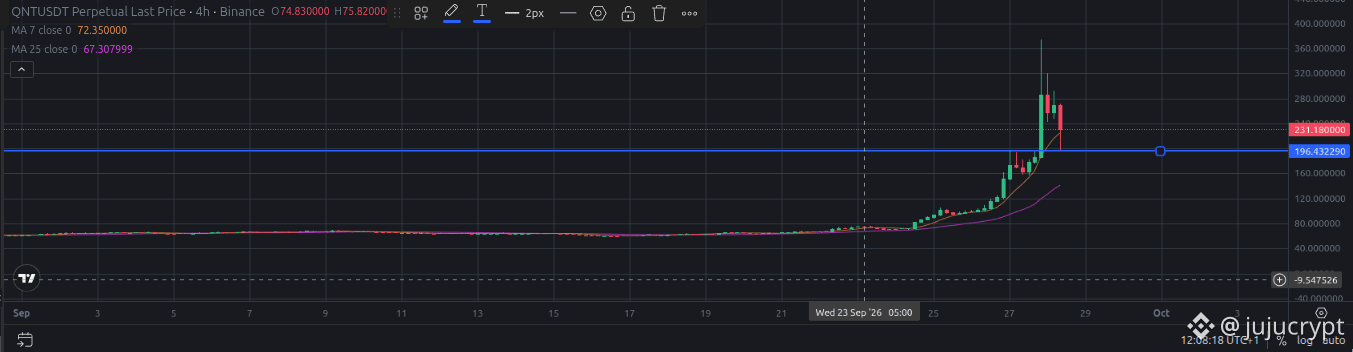
$QNT (Quant) dumped over 40% from its morning high today (Sept 28, 2026).
It rocketed on big news: The Clearing House (the network behind major US banks like JPMorgan, Citi, etc.) picked Quant’s tech for tokenized bank deposits.
That sparked a wild multi-day run—up hundreds of percent in a week, hitting highs around $340–$370+.
Then classic crypto action hit: profit-taking, overbought conditions (RSI sky-high), and thin liquidity turned the spike into a sharp pullback.
24h range swung from roughly $158 low to $358 high. Price is still massively up on the week, just cooling hard after the vertical move.
Simple takeaway: news-driven pump → extreme overextension → sharp correction from the morning peak. Volatility is the game here.
#QNTFallsOver40%FromMorningHigh
$QNT (Quant) dumped over 40% from its morning high today (Sept 28, 2026).
It rocketed on big news: The Clearing House (the network behind major US banks like JPMorgan, Citi, etc.) picked Quant’s tech for tokenized bank deposits.
That sparked a wild multi-day run—up hundreds of percent in a week, hitting highs around $340–$370+.
Then classic crypto action hit: profit-taking, overbought conditions (RSI sky-high), and thin liquidity turned the spike into a sharp pullback.
24h range swung from roughly $158 low to $358 high. Price is still massively up on the week, just cooling hard after the vertical move.
Simple takeaway: news-driven pump → extreme overextension → sharp correction from the morning peak. Volatility is the game here.
#QNTFallsOver40%FromMorningHigh
It rocketed on big news: The Clearing House (the network behind major US banks like JPMorgan, Citi, etc.) picked Quant’s tech for tokenized bank deposits.
That sparked a wild multi-day run—up hundreds of percent in a week, hitting highs around $340–$370+.
Then classic crypto action hit: profit-taking, overbought conditions (RSI sky-high), and thin liquidity turned the spike into a sharp pullback.
24h range swung from roughly $158 low to $358 high. Price is still massively up on the week, just cooling hard after the vertical move.
Simple takeaway: news-driven pump → extreme overextension → sharp correction from the morning peak. Volatility is the game here.
#QNTFallsOver40%FromMorningHigh
1
791
·
--
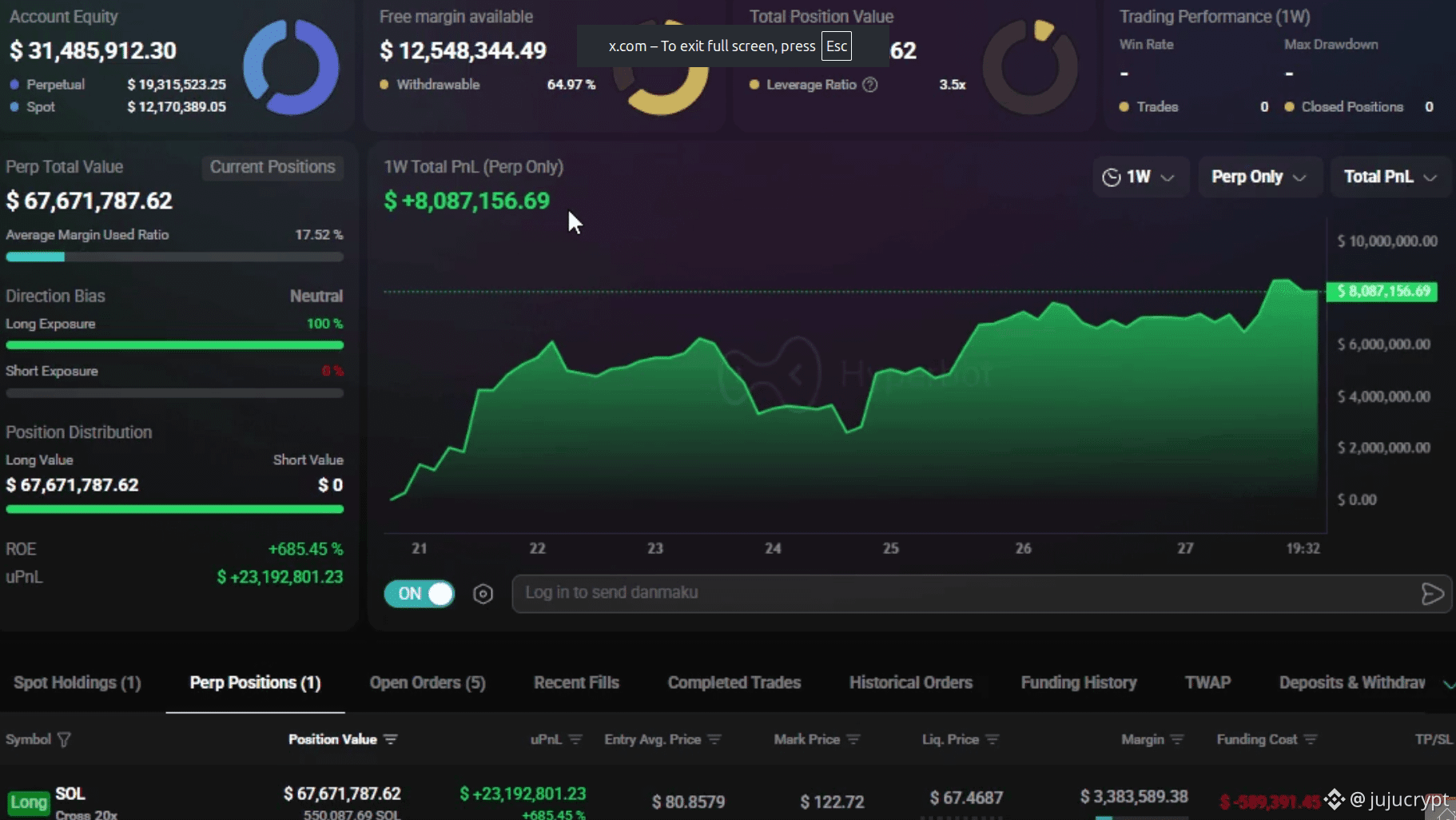
$SOL whales are making some serious moves.
Bitfinex whale long positions have gone vertical, while Solana ETFs bought 2.32M SOL, worth around $278M, over the past two weeks.
Total ETF AUM is now around $2.28B.
With whales stacking and ETF demand picking up, is Solana setting up for another meme season?
#SOLSpotETFWeeklyInflow$188M
$SOL whales are making some serious moves.
Bitfinex whale long positions have gone vertical, while Solana ETFs bought 2.32M SOL, worth around $278M, over the past two weeks.
Total ETF AUM is now around $2.28B.
With whales stacking and ETF demand picking up, is Solana setting up for another meme season?
#SOLSpotETFWeeklyInflow$188M
Bitfinex whale long positions have gone vertical, while Solana ETFs bought 2.32M SOL, worth around $278M, over the past two weeks.
Total ETF AUM is now around $2.28B.
With whales stacking and ETF demand picking up, is Solana setting up for another meme season?
#SOLSpotETFWeeklyInflow$188M
9
1
17
25.6k
·
--
$NEAR just got another important step forward.
Bitwise has filed its final prospectus for a spot NEAR #etf , designed to give traditional investors exposure to NEAR through a regular exchange-traded product.
What makes this one interesting is the staking component. The fund plans to stake its NEAR holdings and potentially earn additional NEAR from those rewards.
The SEC registration became effective on September 24, with the ETF set to list on NYSE Arca under the proposed ticker NRR.
For me, the bigger story is access.
Investors who don’t want to buy and manage NEAR directly could now get exposure through a traditional brokerage account.
Now I’m watching what happens once the ETF starts trading and whether actual inflows follow the headline.
#BitwiseFilesFinalNEARSpotETFProspectus
$NEAR just got another important step forward.
Bitwise has filed its final prospectus for a spot NEAR #etf , designed to give traditional investors exposure to NEAR through a regular exchange-traded product.
What makes this one interesting is the staking component. The fund plans to stake its NEAR holdings and potentially earn additional NEAR from those rewards.
The SEC registration became effective on September 24, with the ETF set to list on NYSE Arca under the proposed ticker NRR.
For me, the bigger story is access.
Investors who don’t want to buy and manage NEAR directly could now get exposure through a traditional brokerage account.
Now I’m watching what happens once the ETF starts trading and whether actual inflows follow the headline.
#BitwiseFilesFinalNEARSpotETFProspectus
Bitwise has filed its final prospectus for a spot NEAR #etf , designed to give traditional investors exposure to NEAR through a regular exchange-traded product.
What makes this one interesting is the staking component. The fund plans to stake its NEAR holdings and potentially earn additional NEAR from those rewards.
The SEC registration became effective on September 24, with the ETF set to list on NYSE Arca under the proposed ticker NRR.
For me, the bigger story is access.
Investors who don’t want to buy and manage NEAR directly could now get exposure through a traditional brokerage account.
Now I’m watching what happens once the ETF starts trading and whether actual inflows follow the headline.
#BitwiseFilesFinalNEARSpotETFProspectus
99
·
--
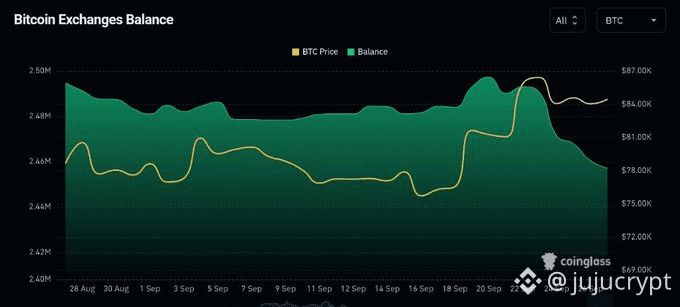
More liquidity coming out of exchanges, I guess.
Around 30,000 $BTC flowed out of centralized exchanges over the past 7 days, according to CoinGlass.
That’s roughly $2.52B worth of BTC leaving exchanges in just one week.
I’m watching to see where this liquidity goes next and what it means for the market.
#bitcoin
More liquidity coming out of exchanges, I guess.
Around 30,000 $BTC flowed out of centralized exchanges over the past 7 days, according to CoinGlass.
That’s roughly $2.52B worth of BTC leaving exchanges in just one week.
I’m watching to see where this liquidity goes next and what it means for the market.
#bitcoin
Around 30,000 $BTC flowed out of centralized exchanges over the past 7 days, according to CoinGlass.
That’s roughly $2.52B worth of BTC leaving exchanges in just one week.
I’m watching to see where this liquidity goes next and what it means for the market.
#bitcoin
1
41
·
--
BGB feels similar to $ZEC a while back before it had the massive pump it best to pay attention to it charts
BGB feels similar to $ZEC a while back before it had the massive pump it best to pay attention to it charts
1
192
·
--
On September 24, 2026, Bitget suffered a major security breach, with around $387M–$390M in assets reportedly stolen.
A big part of the stolen funds was $XRP .
Around 103M $XRP, worth roughly $157M–$160M at the time, was moved into five wallets controlled by the attacker.
By September 26, about 54M XRP ($83M) had already been moved out of three of those wallets.
Two wallets that each held around 20M XRP were almost completely emptied, while another was reduced to about 5.8M XRP.
That left roughly 49M XRP, worth around $75M at the time, still sitting in the original wallets.
The transfers also picked up overnight, with the funds being split across new wallets. Some reports say part of the XRP was later moved through THORChain toward Bitcoin.
Definitely a situation I’m keeping an eye on as the funds continue to move.
#BitgetHackerMoves$83MStolenXRP
On September 24, 2026, Bitget suffered a major security breach, with around $387M–$390M in assets reportedly stolen.
A big part of the stolen funds was $XRP .
Around 103M $XRP , worth roughly $157M–$160M at the time, was moved into five wallets controlled by the attacker.
By September 26, about 54M XRP ($83M) had already been moved out of three of those wallets.
Two wallets that each held around 20M XRP were almost completely emptied, while another was reduced to about 5.8M XRP.
That left roughly 49M XRP, worth around $75M at the time, still sitting in the original wallets.
The transfers also picked up overnight, with the funds being split across new wallets. Some reports say part of the XRP was later moved through THORChain toward Bitcoin.
Definitely a situation I’m keeping an eye on as the funds continue to move.
#BitgetHackerMoves$83MStolenXRP
A big part of the stolen funds was $XRP .
Around 103M $XRP , worth roughly $157M–$160M at the time, was moved into five wallets controlled by the attacker.
By September 26, about 54M XRP ($83M) had already been moved out of three of those wallets.
Two wallets that each held around 20M XRP were almost completely emptied, while another was reduced to about 5.8M XRP.
That left roughly 49M XRP, worth around $75M at the time, still sitting in the original wallets.
The transfers also picked up overnight, with the funds being split across new wallets. Some reports say part of the XRP was later moved through THORChain toward Bitcoin.
Definitely a situation I’m keeping an eye on as the funds continue to move.
#BitgetHackerMoves$83MStolenXRP

22
4
37
59.1k
·
--
Vérifié
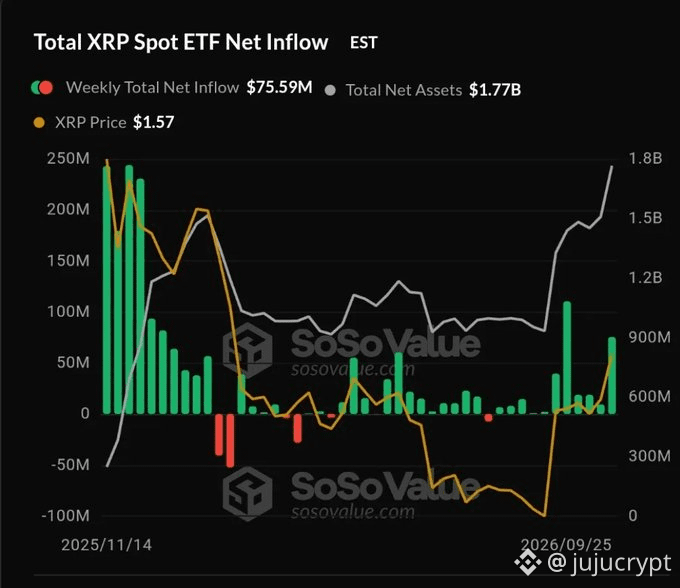
Spot $XRP ETFs just had their strongest week since late August.
They pulled in around $76M in net inflows, pushing total AUM to roughly $1.77B, while the products now hold about 1.8% of the total XRP supply.
That’s a pretty noticeable amount of capital flowing into XRP exposure through traditional market products.
Meanwhile, on the DeFi side, Arc Network is now live on STONfi cross-chain swaps.
This means USDC on Arc can now be moved to and from TON and other supported networks through the STONfi cross-chain flow.
What I find interesting is what this means for users.
You don't have to manually figure out how to move assets between Arc and TON, find a separate bridge, or jump between multiple platforms.
You select the source network, choose where you want to go, review the quote and confirm.
Arc → TON → other supported chains, all through one cross-chain flow.
As more networks launch, making them easy to connect becomes just as important as launching the network itself.
#Ripple #BitgetHackerMoves$83MStolenXRP
Spot $XRP ETFs just had their strongest week since late August.
They pulled in around $76M in net inflows, pushing total AUM to roughly $1.77B, while the products now hold about 1.8% of the total XRP supply.
That’s a pretty noticeable amount of capital flowing into XRP exposure through traditional market products.
Meanwhile, on the DeFi side, Arc Network is now live on STONfi cross-chain swaps.
This means USDC on Arc can now be moved to and from TON and other supported networks through the STONfi cross-chain flow.
What I find interesting is what this means for users.
You don't have to manually figure out how to move assets between Arc and TON, find a separate bridge, or jump between multiple platforms.
You select the source network, choose where you want to go, review the quote and confirm.
Arc → TON → other supported chains, all through one cross-chain flow.
As more networks launch, making them easy to connect becomes just as important as launching the network itself.
#Ripple #BitgetHackerMoves$83MStolenXRP
They pulled in around $76M in net inflows, pushing total AUM to roughly $1.77B, while the products now hold about 1.8% of the total XRP supply.
That’s a pretty noticeable amount of capital flowing into XRP exposure through traditional market products.
Meanwhile, on the DeFi side, Arc Network is now live on STONfi cross-chain swaps.
This means USDC on Arc can now be moved to and from TON and other supported networks through the STONfi cross-chain flow.
What I find interesting is what this means for users.
You don't have to manually figure out how to move assets between Arc and TON, find a separate bridge, or jump between multiple platforms.
You select the source network, choose where you want to go, review the quote and confirm.
Arc → TON → other supported chains, all through one cross-chain flow.
As more networks launch, making them easy to connect becomes just as important as launching the network itself.
#Ripple #BitgetHackerMoves$83MStolenXRP
1
45
·
--
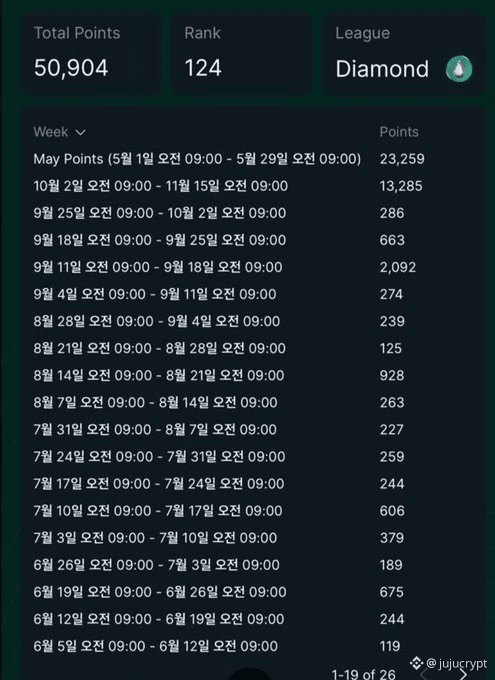
Thought I was having a bad day… then I remembered someone completely forgot to register for the #Hyperliquid X airdrop.
😭
Total loss: 260K+ $HYPE , worth around $24M today.
Yeah… suddenly my day doesn’t look so bad anymore. 😂
Thought I was having a bad day… then I remembered someone completely forgot to register for the #Hyperliquid X airdrop.
😭
Total loss: 260K+ $HYPE , worth around $24M today.
Yeah… suddenly my day doesn’t look so bad anymore. 😂
😭
Total loss: 260K+ $HYPE , worth around $24M today.
Yeah… suddenly my day doesn’t look so bad anymore. 😂
1
1
196
·
--
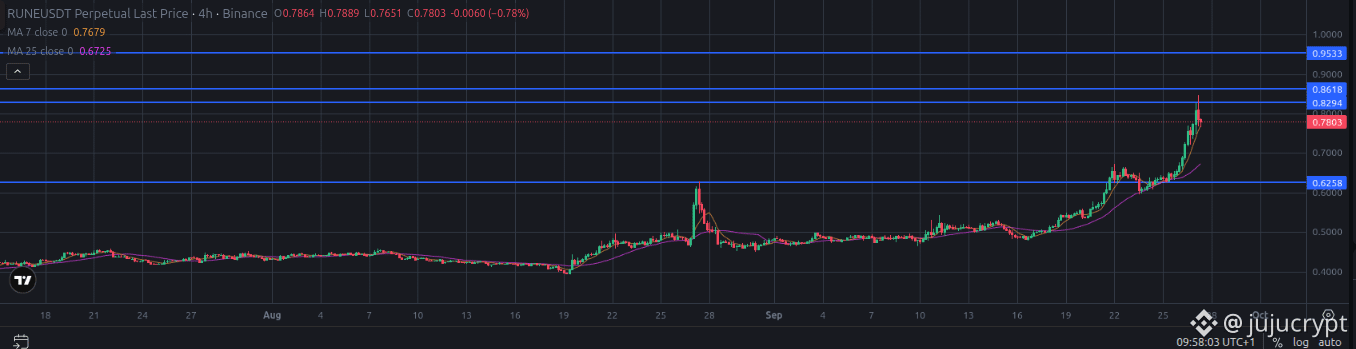
$RUNE is playing out.....
$RUNE is playing out.....
jujucrypt
·
--
$RUNE looks at a good zone so far, I am expecting a down move from here but a break of this level might mean more up move too..
77
·
--
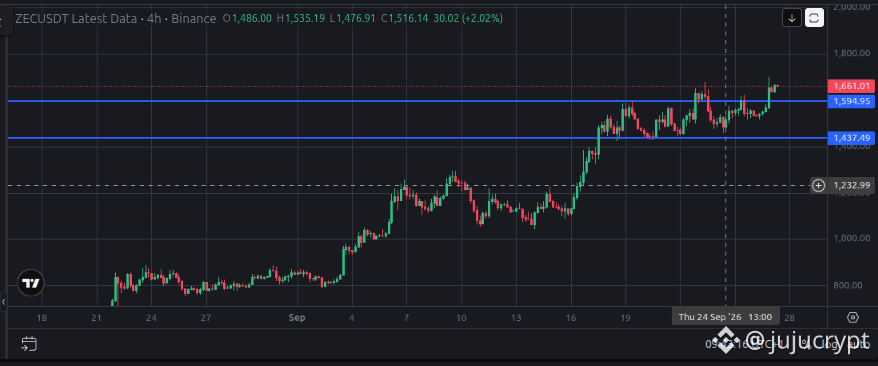
$ZEC is still catching my attention.
At this point, I’m watching the chart closely to see if it can make a run toward $2K.
$PAID is getting quite the attention too definitely one of those “all eyes on me” moments.
Meanwhile, Omniston just crossed $7.5M in total cross-chain volume, more than 2x the $3M it reached earlier this month.
Last week alone, it did $1.8M, up 26% from the previous week. The busiest route was BNB Chain → $TON , accounting for 78% of the volume.
A lot happening across different parts of crypto right now. I’m mostly watching which of these trends actually keep building.
#zec
$ZEC is still catching my attention.
At this point, I’m watching the chart closely to see if it can make a run toward $2K.
$PAID is getting quite the attention too definitely one of those “all eyes on me” moments.
Meanwhile, Omniston just crossed $7.5M in total cross-chain volume, more than 2x the $3M it reached earlier this month.
Last week alone, it did $1.8M, up 26% from the previous week. The busiest route was BNB Chain → $TON , accounting for 78% of the volume.
A lot happening across different parts of crypto right now. I’m mostly watching which of these trends actually keep building.
#zec
At this point, I’m watching the chart closely to see if it can make a run toward $2K.
$PAID is getting quite the attention too definitely one of those “all eyes on me” moments.
Meanwhile, Omniston just crossed $7.5M in total cross-chain volume, more than 2x the $3M it reached earlier this month.
Last week alone, it did $1.8M, up 26% from the previous week. The busiest route was BNB Chain → $TON , accounting for 78% of the volume.
A lot happening across different parts of crypto right now. I’m mostly watching which of these trends actually keep building.
#zec
1
279
·
--
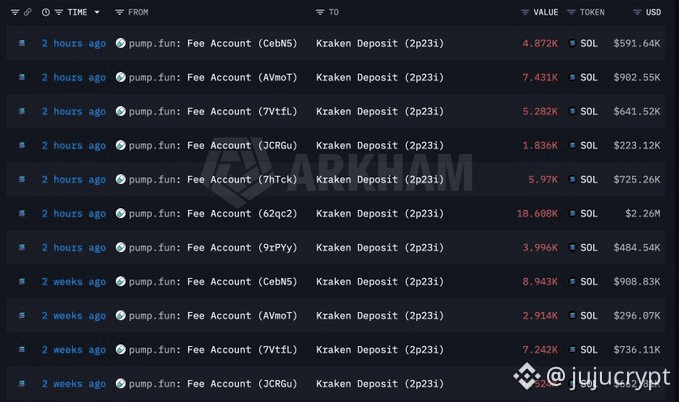
here's new update on what up on $SOL
Pumpfun just sold another 47,994 SOL, worth around $5.83M.
That brings its total sales to roughly 5.24M SOL, worth about $848M, at an average price of around $162.
That’s a lot of SOL being sold into the market.
I’m watching to see how SOL reacts to these sales and whether the market can absorb the selling pressure.
#solana
here's new update on what up on $SOL
Pumpfun just sold another 47,994 SOL, worth around $5.83M.
That brings its total sales to roughly 5.24M SOL, worth about $848M, at an average price of around $162.
That’s a lot of SOL being sold into the market.
I’m watching to see how SOL reacts to these sales and whether the market can absorb the selling pressure.
#solana
Pumpfun just sold another 47,994 SOL, worth around $5.83M.
That brings its total sales to roughly 5.24M SOL, worth about $848M, at an average price of around $162.
That’s a lot of SOL being sold into the market.
I’m watching to see how SOL reacts to these sales and whether the market can absorb the selling pressure.
#solana
1
65
·
--
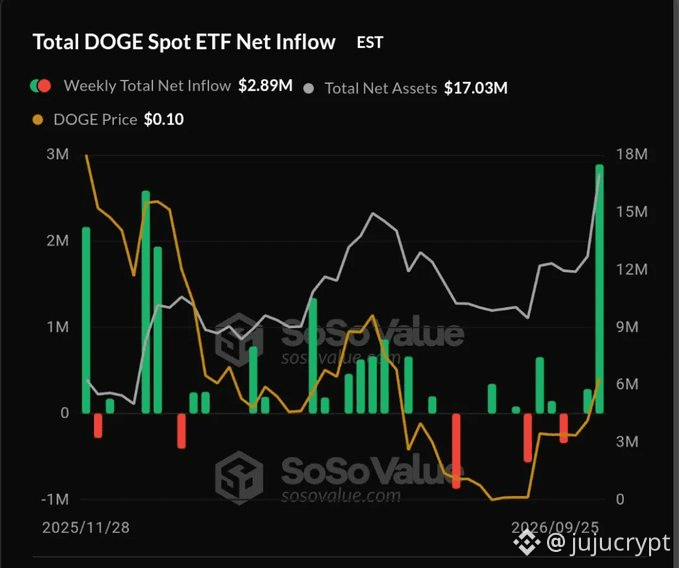
Spot $DOGE
ETFs just had their strongest week ever, pulling in about $2.89M in net inflows, beating the previous weekly high of $2.59M from January.
Seeing more #etf activity around altcoins is honestly making me pay more attention to the broader market.
Could this bring more attention to DOGE and other alts? Maybe. I’m watching the flows before jumping to conclusions.
But it also makes me more interested in the ecosystems building around these assets.
I’ve been watching Gram and the $TON ecosystem more closely lately, especially with DEXs like STON.fi continuing to expand their cross-chain and DeFi infrastructure.
And STON has been holding up well through all of this too.
For me, the interesting part isn't just the ETF narrative.
It’s watching how more money and attention around altcoins eventually flows into the ecosystems, apps and infrastructure supporting them.
The assets get the headlines. The infrastructure gets built in the background.
#TON
Spot $DOGE
ETFs just had their strongest week ever, pulling in about $2.89M in net inflows, beating the previous weekly high of $2.59M from January.
Seeing more #etf activity around altcoins is honestly making me pay more attention to the broader market.
Could this bring more attention to DOGE and other alts? Maybe. I’m watching the flows before jumping to conclusions.
But it also makes me more interested in the ecosystems building around these assets.
I’ve been watching Gram and the $TON ecosystem more closely lately, especially with DEXs like STON.fi continuing to expand their cross-chain and DeFi infrastructure.
And STON has been holding up well through all of this too.
For me, the interesting part isn't just the ETF narrative.
It’s watching how more money and attention around altcoins eventually flows into the ecosystems, apps and infrastructure supporting them.
The assets get the headlines. The infrastructure gets built in the background.
#TON
ETFs just had their strongest week ever, pulling in about $2.89M in net inflows, beating the previous weekly high of $2.59M from January.
Seeing more #etf activity around altcoins is honestly making me pay more attention to the broader market.
Could this bring more attention to DOGE and other alts? Maybe. I’m watching the flows before jumping to conclusions.
But it also makes me more interested in the ecosystems building around these assets.
I’ve been watching Gram and the $TON ecosystem more closely lately, especially with DEXs like STON.fi continuing to expand their cross-chain and DeFi infrastructure.
And STON has been holding up well through all of this too.
For me, the interesting part isn't just the ETF narrative.
It’s watching how more money and attention around altcoins eventually flows into the ecosystems, apps and infrastructure supporting them.
The assets get the headlines. The infrastructure gets built in the background.
#TON
1
52
Connectez-vous pour découvrir plus de contenu
Rejoignez la communauté mondiale des adeptes de cryptomonnaies sur Binance Square
⚡️ Suviez les dernières informations importantes sur les cryptomonnaies.
💬 Jugé digne de confiance par la plus grande plateforme d’échange de cryptomonnaies au monde.
👍 Découvrez les connaissances que partagent les créateurs vérifiés.
Adresse e-mail/Nº de téléphone