

Houria-
3.2k Publications

Houria-
Signaler
Bloquer l’utilisateur
NEW IN CRYPTO .Content Creator. HODLER Mindset. X:@itxCrypto_Queen
Ouvert au trading
Trade régulièrement
1.8 an(s)
257 Suivis
2.9K+ Abonnés
4.5K+ J’aime
Publications
Portefeuille
Tous
Citations
Vidéos
Direct
PINNED
·
--
Vérifié
#nil $NIL @nillionnetwork
Been looking into @nillionnetwork lately and the blind computation idea makes sense to me. Most blockchains can't handle sensitive data like trading data or AI agent data, but Nillion lets you store and compute on it while it stays encrypted. Covenants looks like the core piece here, and Dusk going live on Ethereum mainnet is a solid first step. Traded some $NIL myself, trade card is attached. Curious to see how the 7-era roadmap plays out. #NIL
#nil $NIL @Nillion
Been looking into @Nillion lately and the blind computation idea makes sense to me. Most blockchains can't handle sensitive data like trading data or AI agent data, but Nillion lets you store and compute on it while it stays encrypted. Covenants looks like the core piece here, and Dusk going live on Ethereum mainnet is a solid first step. Traded some $NIL myself, trade card is attached. Curious to see how the 7-era roadmap plays out. #NIL
Been looking into @Nillion lately and the blind computation idea makes sense to me. Most blockchains can't handle sensitive data like trading data or AI agent data, but Nillion lets you store and compute on it while it stays encrypted. Covenants looks like the core piece here, and Dusk going live on Ethereum mainnet is a solid first step. Traded some $NIL myself, trade card is attached. Curious to see how the 7-era roadmap plays out. #NIL
10
7
146
·
--
I'll be honest, when I first heard "AI agents that can pay for things," my reaction was: who's making sure they don't go rogue with my money?
That's what pulled me into Kite's whitepaper, "From Human-Centric to Agent-Native." The idea is simple but sharp. Payment systems and blockchains were built assuming a human is behind every transaction, someone who guards their keys and notices when something looks off. An agent making hundreds of small decisions a day breaks that assumption completely.
What I like is how Kite answers it. Authority flows from you to your agent to a short-lived session, so an agent never touches your private keys directly. Spending limits are enforced by smart contracts rather than by hoping the agent behaves, and every authorization expires on its own. According to the docs, you can know your maximum exposure before you approve anything.
On the payment side, fees are in stablecoins, so costs don't swing with a gas token, and state channels aim to make tiny pay-per-request payments cost a fraction of a cent. That's the kind of thing AI services actually need. It also works with open standards like MCP, A2A, OAuth 2.1, x402 and AP2, which tells me the team is thinking about adoption and not just a nice demo.
Most projects in this space ask how fast an agent can pay. Kite asks how safely it can. For the agent economy to grow beyond demos, I think that second question is the one that matters, and it's why $KITE has my attention.
Would you let an agent run on a budget you set, with a kill switch in your own hands? Curious where you'd draw the line.
Not financial advice, just my take after reading the whitepaper and docs. #KiteBBW $KITE @GoKiteAI
{spot}(KITEUSDT)
I'll be honest, when I first heard "AI agents that can pay for things," my reaction was: who's making sure they don't go rogue with my money?
That's what pulled me into Kite's whitepaper, "From Human-Centric to Agent-Native." The idea is simple but sharp. Payment systems and blockchains were built assuming a human is behind every transaction, someone who guards their keys and notices when something looks off. An agent making hundreds of small decisions a day breaks that assumption completely.
What I like is how Kite answers it. Authority flows from you to your agent to a short-lived session, so an agent never touches your private keys directly. Spending limits are enforced by smart contracts rather than by hoping the agent behaves, and every authorization expires on its own. According to the docs, you can know your maximum exposure before you approve anything.
On the payment side, fees are in stablecoins, so costs don't swing with a gas token, and state channels aim to make tiny pay-per-request payments cost a fraction of a cent. That's the kind of thing AI services actually need. It also works with open standards like MCP, A2A, OAuth 2.1, x402 and AP2, which tells me the team is thinking about adoption and not just a nice demo.
Most projects in this space ask how fast an agent can pay. Kite asks how safely it can. For the agent economy to grow beyond demos, I think that second question is the one that matters, and it's why $KITE has my attention.
Would you let an agent run on a budget you set, with a kill switch in your own hands? Curious where you'd draw the line.
Not financial advice, just my take after reading the whitepaper and docs. #KiteBBW $KITE @KITE AI 中文
That's what pulled me into Kite's whitepaper, "From Human-Centric to Agent-Native." The idea is simple but sharp. Payment systems and blockchains were built assuming a human is behind every transaction, someone who guards their keys and notices when something looks off. An agent making hundreds of small decisions a day breaks that assumption completely.
What I like is how Kite answers it. Authority flows from you to your agent to a short-lived session, so an agent never touches your private keys directly. Spending limits are enforced by smart contracts rather than by hoping the agent behaves, and every authorization expires on its own. According to the docs, you can know your maximum exposure before you approve anything.
On the payment side, fees are in stablecoins, so costs don't swing with a gas token, and state channels aim to make tiny pay-per-request payments cost a fraction of a cent. That's the kind of thing AI services actually need. It also works with open standards like MCP, A2A, OAuth 2.1, x402 and AP2, which tells me the team is thinking about adoption and not just a nice demo.
Most projects in this space ask how fast an agent can pay. Kite asks how safely it can. For the agent economy to grow beyond demos, I think that second question is the one that matters, and it's why $KITE has my attention.
Would you let an agent run on a budget you set, with a kill switch in your own hands? Curious where you'd draw the line.
Not financial advice, just my take after reading the whitepaper and docs. #KiteBBW $KITE @KITE AI 中文
2
113

·
--
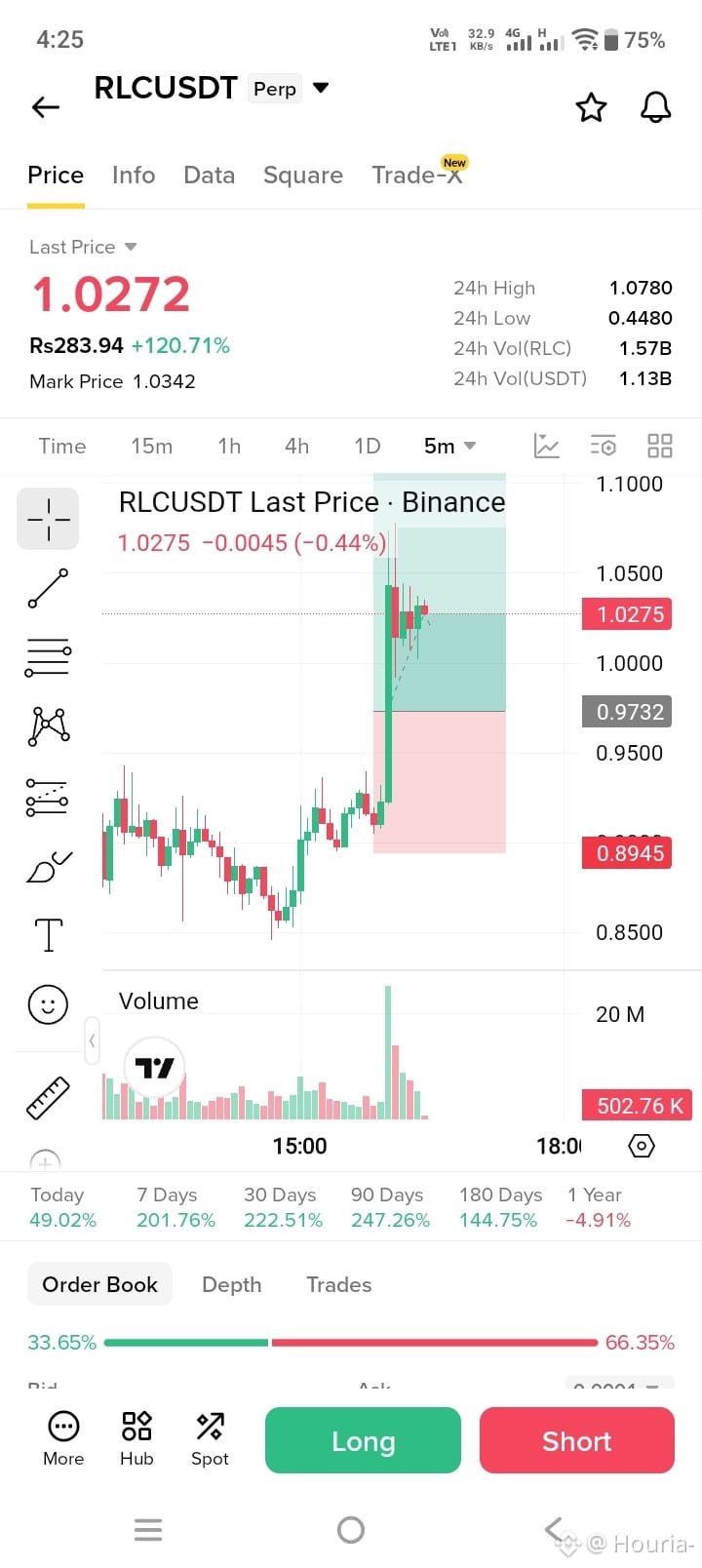
🔥 $RLC is moving differently right now
RLC just printed a +120% move with a massive volume expansion.
The interesting part isn’t the pump — it’s what happens after it.
Price pushed above $1.00 and is currently holding around $1.02, while the breakout area is being tested. If buyers defend this zone, the next move could target $1.05 → $1.10.
But after a move this aggressive, chasing candles is dangerous. I’d rather see a clean hold/retest than FOMO into the spike.
RLC levels I’m watching: 🟢 Hold: $1.00–$1.02
🎯 Targets: $1.05 / $1.10
🔴 Invalidation: below $0.97
Volume is the key here. If it stays strong, RLC could remain one of the more interesting momentum setups.
#RLC #iExec #Crypto #Altcoins #BinanceSquare
🔥 $RLC is moving differently right now
RLC just printed a +120% move with a massive volume expansion.
The interesting part isn’t the pump — it’s what happens after it.
Price pushed above $1.00 and is currently holding around $1.02, while the breakout area is being tested. If buyers defend this zone, the next move could target $1.05 → $1.10.
But after a move this aggressive, chasing candles is dangerous. I’d rather see a clean hold/retest than FOMO into the spike.
RLC levels I’m watching: 🟢 Hold: $1.00–$1.02
🎯 Targets: $1.05 / $1.10
🔴 Invalidation: below $0.97
Volume is the key here. If it stays strong, RLC could remain one of the more interesting momentum setups.
#RLC #iExec #Crypto #Altcoins #BinanceSquare
RLC just printed a +120% move with a massive volume expansion.
The interesting part isn’t the pump — it’s what happens after it.
Price pushed above $1.00 and is currently holding around $1.02, while the breakout area is being tested. If buyers defend this zone, the next move could target $1.05 → $1.10.
But after a move this aggressive, chasing candles is dangerous. I’d rather see a clean hold/retest than FOMO into the spike.
RLC levels I’m watching: 🟢 Hold: $1.00–$1.02
🎯 Targets: $1.05 / $1.10
🔴 Invalidation: below $0.97
Volume is the key here. If it stays strong, RLC could remain one of the more interesting momentum setups.
#RLC #iExec #Crypto #Altcoins #BinanceSquare
1
407
·
--
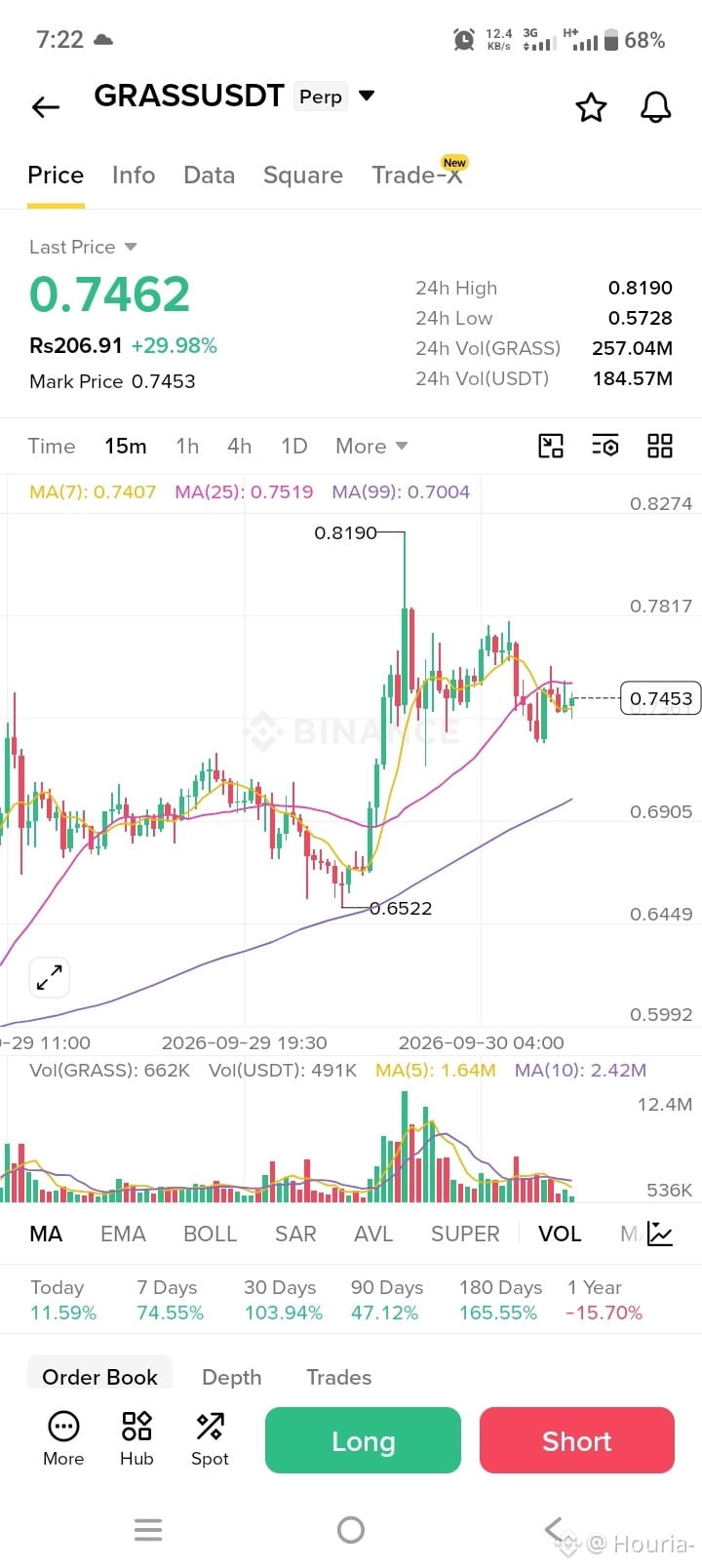
$GRASS is holding the breakout zone 🌱🔥
GRASS/USDT is around $0.746, up nearly 30% today after a sharp move from $0.65 and a spike to $0.819.
What I’m watching now is the consolidation: price is sitting near MA(7) $0.741, while $0.752 is the nearby MA(25) level.
A clean reclaim of $0.75–0.76 with volume could bring another push toward $0.819. If momentum fades, $0.70–0.72 becomes an important area to watch.
The breakout already happened. Now the real question is whether GRASS can hold the higher range. 👀📊
#GRASS #Crypto #Altcoins #Binance #TradingCommunity
$GRASS is holding the breakout zone 🌱🔥
GRASS/USDT is around $0.746, up nearly 30% today after a sharp move from $0.65 and a spike to $0.819.
What I’m watching now is the consolidation: price is sitting near MA(7) $0.741, while $0.752 is the nearby MA(25) level.
A clean reclaim of $0.75–0.76 with volume could bring another push toward $0.819. If momentum fades, $0.70–0.72 becomes an important area to watch.
The breakout already happened. Now the real question is whether GRASS can hold the higher range. 👀📊
#GRASS #Crypto #Altcoins #Binance #TradingCommunity
GRASS/USDT is around $0.746, up nearly 30% today after a sharp move from $0.65 and a spike to $0.819.
What I’m watching now is the consolidation: price is sitting near MA(7) $0.741, while $0.752 is the nearby MA(25) level.
A clean reclaim of $0.75–0.76 with volume could bring another push toward $0.819. If momentum fades, $0.70–0.72 becomes an important area to watch.
The breakout already happened. Now the real question is whether GRASS can hold the higher range. 👀📊
#GRASS #Crypto #Altcoins #Binance #TradingCommunity
219
·
--
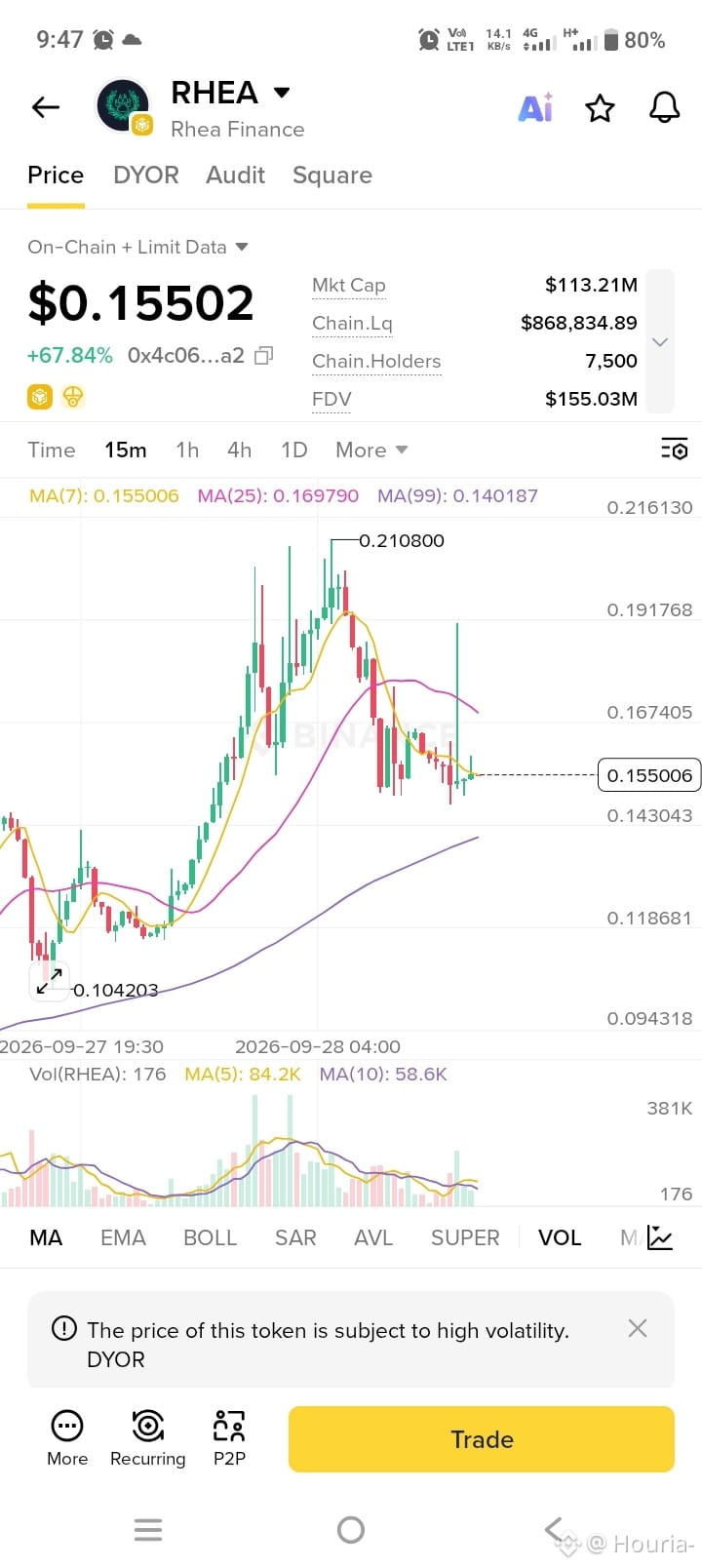
$RHEA is sitting at a key level 👀
RHEA/USDT is around $0.155, up nearly 68%, but the chart tells a more interesting story than the percentage.
After the spike to $0.2108, price has cooled off and is now consolidating. $0.155 is close to the short-term MA(7), while $0.143 looks like an important nearby support zone.
If buyers reclaim $0.168–0.170 with volume, momentum could start building again. Until then, this looks more like consolidation after a big move than a clean breakout.
High volatility here — confirmation matters more than FOMO. 📊
#RHEA
$RHEA is sitting at a key level 👀
RHEA/USDT is around $0.155, up nearly 68%, but the chart tells a more interesting story than the percentage.
After the spike to $0.2108, price has cooled off and is now consolidating. $0.155 is close to the short-term MA(7), while $0.143 looks like an important nearby support zone.
If buyers reclaim $0.168–0.170 with volume, momentum could start building again. Until then, this looks more like consolidation after a big move than a clean breakout.
High volatility here — confirmation matters more than FOMO. 📊
#RHEA
RHEA/USDT is around $0.155, up nearly 68%, but the chart tells a more interesting story than the percentage.
After the spike to $0.2108, price has cooled off and is now consolidating. $0.155 is close to the short-term MA(7), while $0.143 looks like an important nearby support zone.
If buyers reclaim $0.168–0.170 with volume, momentum could start building again. Until then, this looks more like consolidation after a big move than a clean breakout.
High volatility here — confirmation matters more than FOMO. 📊
#RHEA
1
268
·
--
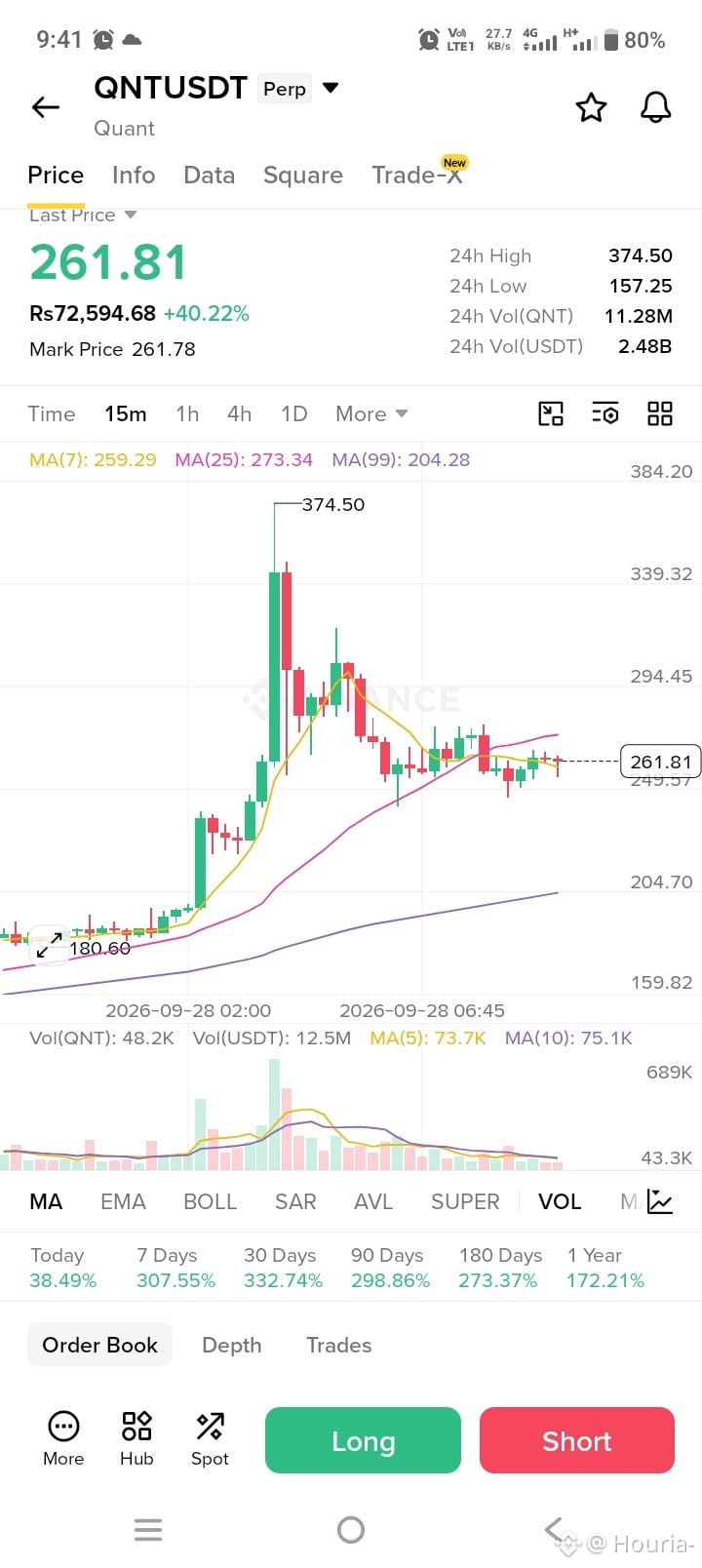
$QNT
{spot}(QNTUSDT)
just went vertical 🚀
QNT is now around 261.81, after touching 374.50 on the 15m chart. That’s a huge move, but the interesting part is what happens after the spike.
Price is consolidating around 260, while volume has cooled down.
259–260 is the immediate area I’m watching. A reclaim toward 273–294 could bring momentum back, while losing 250 may open a deeper pullback.
After a move like this, I’m watching the reaction, not chasing the candle. 👀📊
$QNT
just went vertical 🚀
QNT is now around 261.81, after touching 374.50 on the 15m chart. That’s a huge move, but the interesting part is what happens after the spike.
Price is consolidating around 260, while volume has cooled down.
259–260 is the immediate area I’m watching. A reclaim toward 273–294 could bring momentum back, while losing 250 may open a deeper pullback.
After a move like this, I’m watching the reaction, not chasing the candle. 👀📊
just went vertical 🚀
QNT is now around 261.81, after touching 374.50 on the 15m chart. That’s a huge move, but the interesting part is what happens after the spike.
Price is consolidating around 260, while volume has cooled down.
259–260 is the immediate area I’m watching. A reclaim toward 273–294 could bring momentum back, while losing 250 may open a deeper pullback.
After a move like this, I’m watching the reaction, not chasing the candle. 👀📊
188
Connectez-vous pour découvrir plus de contenu
Rejoignez la communauté mondiale des adeptes de cryptomonnaies sur Binance Square
⚡️ Suviez les dernières informations importantes sur les cryptomonnaies.
💬 Jugé digne de confiance par la plus grande plateforme d’échange de cryptomonnaies au monde.
👍 Découvrez les connaissances que partagent les créateurs vérifiés.
Adresse e-mail/Nº de téléphone
Sujets d’actualité
BinancePick
3.3M vues
160,609 mentions
Join #EarningsSeason: Predict Earnings on Binance Pick, Share Your Take on Binance Square!
Binance Square Official
·417 mentions J’aime
·344.4k vues
EarningsSeason
5.4M vues
26,482 mentions
StrategySkipsBitcoinPurchasesSpends$205MOnSTRCBuybacks
6 vues
4 mentions