

Dependency
62 Publications

Dependency
Signaler
Bloquer l’utilisateur
1 Suivis
52 Abonnés
146 J’aime
1 Badges
Publications
·
--
Article
Autonomys: The Toolkit Quietly Solving Web3's Biggest Dev ProblemBuilding on-chain has always meant choosing between decentralization and developer sanity. Autonomys' new Developer Hub is trying to close that gap — and it's doing it with tools most Web2 developers already know how to use.
What's actually new here
The centerpiece is the Auto SDK, a modular TypeScript/JavaScript toolkit that lets developers build "super dApps" and on-chain autonomous agents without wrestling with low-level blockchain plumbing. Instead of one monolithic framework, you pull in only the packages you need — permanent decentralized storage, distributed compute, decentralized identity, and payment handling — and skip the rest.
Alongside it sits Auto EVM, a fully EVM-compatible environment running on the Autonomys Network. That's the part worth paying attention to: it means Solidity developers and existing Ethereum tooling can plug into Autonomys' storage-and-compute layer without relearning a new stack.
Why this matters
Most "decentralized AI" narratives stay theoretical because the infrastructure to actually build agents — persistent memory, verifiable storage, identity, payments — is scattered across a dozen incompatible protocols. Autonomys is packaging these primitives into one coherent SDK, aimed squarely at what it calls AI 3.0: autonomous agents that live and transact on-chain, not just chatbots wrapped in a UI.
The takeaway
This isn't a flashy token narrative — it's infrastructure. But infrastructure is exactly what's been missing for on-chain AI agents to move from demo to production. If Autonomys' SDK delivers on ease-of-use while keeping the EVM door open, it could become a default building block for the next wave of autonomous dApps.
Worth a look if you're tracking where AI and Web3 actually intersect — not just where they're marketed together.
Not financial advice. DYOR.
Autonomys: The Toolkit Quietly Solving Web3's Biggest Dev Problem
Building on-chain has always meant choosing between decentralization and developer sanity. Autonomys' new Developer Hub is trying to close that gap — and it's doing it with tools most Web2 developers already know how to use.
What's actually new here
The centerpiece is the Auto SDK, a modular TypeScript/JavaScript toolkit that lets developers build "super dApps" and on-chain autonomous agents without wrestling with low-level blockchain plumbing. Instead of one monolithic framework, you pull in only the packages you need — permanent decentralized storage, distributed compute, decentralized identity, and payment handling — and skip the rest.
Alongside it sits Auto EVM, a fully EVM-compatible environment running on the Autonomys Network. That's the part worth paying attention to: it means Solidity developers and existing Ethereum tooling can plug into Autonomys' storage-and-compute layer without relearning a new stack.
Why this matters
Most "decentralized AI" narratives stay theoretical because the infrastructure to actually build agents — persistent memory, verifiable storage, identity, payments — is scattered across a dozen incompatible protocols. Autonomys is packaging these primitives into one coherent SDK, aimed squarely at what it calls AI 3.0: autonomous agents that live and transact on-chain, not just chatbots wrapped in a UI.
The takeaway
This isn't a flashy token narrative — it's infrastructure. But infrastructure is exactly what's been missing for on-chain AI agents to move from demo to production. If Autonomys' SDK delivers on ease-of-use while keeping the EVM door open, it could become a default building block for the next wave of autonomous dApps.
Worth a look if you're tracking where AI and Web3 actually intersect — not just where they're marketed together.
Not financial advice. DYOR.
What's actually new here
The centerpiece is the Auto SDK, a modular TypeScript/JavaScript toolkit that lets developers build "super dApps" and on-chain autonomous agents without wrestling with low-level blockchain plumbing. Instead of one monolithic framework, you pull in only the packages you need — permanent decentralized storage, distributed compute, decentralized identity, and payment handling — and skip the rest.
Alongside it sits Auto EVM, a fully EVM-compatible environment running on the Autonomys Network. That's the part worth paying attention to: it means Solidity developers and existing Ethereum tooling can plug into Autonomys' storage-and-compute layer without relearning a new stack.
Why this matters
Most "decentralized AI" narratives stay theoretical because the infrastructure to actually build agents — persistent memory, verifiable storage, identity, payments — is scattered across a dozen incompatible protocols. Autonomys is packaging these primitives into one coherent SDK, aimed squarely at what it calls AI 3.0: autonomous agents that live and transact on-chain, not just chatbots wrapped in a UI.
The takeaway
This isn't a flashy token narrative — it's infrastructure. But infrastructure is exactly what's been missing for on-chain AI agents to move from demo to production. If Autonomys' SDK delivers on ease-of-use while keeping the EVM door open, it could become a default building block for the next wave of autonomous dApps.
Worth a look if you're tracking where AI and Web3 actually intersect — not just where they're marketed together.
Not financial advice. DYOR.
1
74
·
--
Article
AI Agents Are Smart. But Can They Remember?Everyone is racing to build smarter AI agents.
But there's a problem most people overlook:
What happens when an agent forgets everything?
Today, most AI agents depend on centralized servers and databases. If the infrastructure goes down, their memory disappears with it.
That's why a recent proof-of-concept from Secret Network and Autonomys Network caught my attention.
SecretVM provides confidential compute, allowing an AI agent to operate securely while keeping its keys and internal processes private.
But the real highlight for me is Autonomys Auto Drive.
With Auto Drive, every conversation and interaction is stored on a decentralized storage network, creating a persistent memory layer that survives VM restarts, migrations, and infrastructure changes.
The agent doesn't start over. It remembers.
That might sound like a small detail, but it's actually a huge step toward truly autonomous AI.
Without memory, an agent is just a tool.
With permanent memory, an agent can build context, learn from experience, and maintain continuity over time.
As AI evolves, intelligence alone won't be enough.
The winners will be the agents that can remember.
And that's exactly the infrastructure layer Autonomys is building.
{spot}(SCRTUSDT)
AI Agents Are Smart. But Can They Remember?
Everyone is racing to build smarter AI agents.
But there's a problem most people overlook:
What happens when an agent forgets everything?
Today, most AI agents depend on centralized servers and databases. If the infrastructure goes down, their memory disappears with it.
That's why a recent proof-of-concept from Secret Network and Autonomys Network caught my attention.
SecretVM provides confidential compute, allowing an AI agent to operate securely while keeping its keys and internal processes private.
But the real highlight for me is Autonomys Auto Drive.
With Auto Drive, every conversation and interaction is stored on a decentralized storage network, creating a persistent memory layer that survives VM restarts, migrations, and infrastructure changes.
The agent doesn't start over. It remembers.
That might sound like a small detail, but it's actually a huge step toward truly autonomous AI.
Without memory, an agent is just a tool.
With permanent memory, an agent can build context, learn from experience, and maintain continuity over time.
As AI evolves, intelligence alone won't be enough.
The winners will be the agents that can remember.
And that's exactly the infrastructure layer Autonomys is building.
But there's a problem most people overlook:
What happens when an agent forgets everything?
Today, most AI agents depend on centralized servers and databases. If the infrastructure goes down, their memory disappears with it.
That's why a recent proof-of-concept from Secret Network and Autonomys Network caught my attention.
SecretVM provides confidential compute, allowing an AI agent to operate securely while keeping its keys and internal processes private.
But the real highlight for me is Autonomys Auto Drive.
With Auto Drive, every conversation and interaction is stored on a decentralized storage network, creating a persistent memory layer that survives VM restarts, migrations, and infrastructure changes.
The agent doesn't start over. It remembers.
That might sound like a small detail, but it's actually a huge step toward truly autonomous AI.
Without memory, an agent is just a tool.
With permanent memory, an agent can build context, learn from experience, and maintain continuity over time.
As AI evolves, intelligence alone won't be enough.
The winners will be the agents that can remember.
And that's exactly the infrastructure layer Autonomys is building.
1
268
·
--
Article
Pay with AI3 just got a massive upgrade.🚨 Pay with AI3 just got a massive upgrade.
Autonomys integrated full Pay with AI3 support directly into the Auto SDK with the latest @autonomys/auto-drive v1.6.10 release 🔥
No more manually building payment flows from scratch.
Developers can now handle the entire storage purchase lifecycle with just a few SDK calls:
⚡ Storage price lookups
⚡ Payment intents
⚡ Transaction watching
⚡ Completion polling
⚡ Live contract data
All baked directly into the SDK.
This is a huge step for developer experience on Auto Drive. Apps can now offer seamless AI3-powered storage purchases without dealing with complex backend logic or hardcoded contract configs.
Even better:
✅ No breaking changes
✅ Existing uploads continue working normally
✅ Supports both custodial & self-purchase integration models
✅ Built on lessons from the Eulonomys reference app
The whole flow is becoming smoother, cleaner, and way more accessible for builders entering the Autonomys ecosystem.
AI3 utility keeps expanding 👀
Pay with AI3 just got a massive upgrade.
🚨 Pay with AI3 just got a massive upgrade.
Autonomys integrated full Pay with AI3 support directly into the Auto SDK with the latest @autonomys/auto-drive v1.6.10 release 🔥
No more manually building payment flows from scratch.
Developers can now handle the entire storage purchase lifecycle with just a few SDK calls:
⚡ Storage price lookups
⚡ Payment intents
⚡ Transaction watching
⚡ Completion polling
⚡ Live contract data
All baked directly into the SDK.
This is a huge step for developer experience on Auto Drive. Apps can now offer seamless AI3-powered storage purchases without dealing with complex backend logic or hardcoded contract configs.
Even better:
✅ No breaking changes
✅ Existing uploads continue working normally
✅ Supports both custodial & self-purchase integration models
✅ Built on lessons from the Eulonomys reference app
The whole flow is becoming smoother, cleaner, and way more accessible for builders entering the Autonomys ecosystem.
AI3 utility keeps expanding 👀
Autonomys integrated full Pay with AI3 support directly into the Auto SDK with the latest @autonomys/auto-drive v1.6.10 release 🔥
No more manually building payment flows from scratch.
Developers can now handle the entire storage purchase lifecycle with just a few SDK calls:
⚡ Storage price lookups
⚡ Payment intents
⚡ Transaction watching
⚡ Completion polling
⚡ Live contract data
All baked directly into the SDK.
This is a huge step for developer experience on Auto Drive. Apps can now offer seamless AI3-powered storage purchases without dealing with complex backend logic or hardcoded contract configs.
Even better:
✅ No breaking changes
✅ Existing uploads continue working normally
✅ Supports both custodial & self-purchase integration models
✅ Built on lessons from the Eulonomys reference app
The whole flow is becoming smoother, cleaner, and way more accessible for builders entering the Autonomys ecosystem.
AI3 utility keeps expanding 👀
1
166
·
--
Article
healthpass1 x Autonomys: Your Health Data. Finally Yours.Big move in the health + Web3 lane.
healthpass1 just teamed up with Autonomys Network — and this isn’t just another “partnership announcement.” This is infrastructure-level change.
Let’s break it down.
🧠 The Problem
Right now, your health data is a mess.
Doctor here. Lab there. Fitness app somewhere else.
No full picture. No real ownership. No control.
And worst part?
All of it sits on servers you don’t control.
🔐 The Play
healthpass1 is building a private digital health passport — one place where your entire health history lives.
But here’s the real alpha:
It’s powered by Auto Drive from Autonomys.
That means:
Data is encrypted on your device first
You hold the keys (not them)
No one sees anything without your permission
Not even the platform itself
Delete your key = data is gone forever
No backdoors. No recovery tricks. Just pure ownership.
⚙️ Why Autonomys Hits Different
Autonomys Network isn’t your typical cloud.
No central server
No single point of failure
~400 independent operators
50+ petabytes of storage backing it
Files don’t sit on “a company.”
They live across a decentralized network — encrypted, permanent, untouchable.
This is architecture-level privacy, not a checkbox in Terms of Service.
🧬 What You Actually Get
With healthpass1:
Connect medical portals
Upload labs, scans, docs
Sync fitness + wellness apps
Get AI-powered insights (optional)
Share data only when you choose
Doctor visit? Share access.
Emergency? временный доступ.
Everything else? Locked.
🧭 Why This Matters
This is bigger than an app.
It’s a shift:
from “institutions own your data” → to “you own your data”
Healthcare finally catching up to what crypto’s been preaching for years:
self-custody isn’t just for money — it’s for identity, data, everything.
🚀 Bottom Line
healthpass1 + Autonomys are building something most people didn’t even realize was possible:
A world where your health history is:
private
portable
complete
and fully under your control
No trust needed. Just code.
If this executes right…
this isn’t just a product.
It’s a new standard.
healthpass1 x Autonomys: Your Health Data. Finally Yours.
Big move in the health + Web3 lane.
healthpass1 just teamed up with Autonomys Network — and this isn’t just another “partnership announcement.” This is infrastructure-level change.
Let’s break it down.
🧠 The Problem
Right now, your health data is a mess.
Doctor here. Lab there. Fitness app somewhere else.
No full picture. No real ownership. No control.
And worst part?
All of it sits on servers you don’t control.
🔐 The Play
healthpass1 is building a private digital health passport — one place where your entire health history lives.
But here’s the real alpha:
It’s powered by Auto Drive from Autonomys.
That means:
Data is encrypted on your device first
You hold the keys (not them)
No one sees anything without your permission
Not even the platform itself
Delete your key = data is gone forever
No backdoors. No recovery tricks. Just pure ownership.
⚙️ Why Autonomys Hits Different
Autonomys Network isn’t your typical cloud.
No central server
No single point of failure
~400 independent operators
50+ petabytes of storage backing it
Files don’t sit on “a company.”
They live across a decentralized network — encrypted, permanent, untouchable.
This is architecture-level privacy, not a checkbox in Terms of Service.
🧬 What You Actually Get
With healthpass1:
Connect medical portals
Upload labs, scans, docs
Sync fitness + wellness apps
Get AI-powered insights (optional)
Share data only when you choose
Doctor visit? Share access.
Emergency? временный доступ.
Everything else? Locked.
🧭 Why This Matters
This is bigger than an app.
It’s a shift:
from “institutions own your data” → to “you own your data”
Healthcare finally catching up to what crypto’s been preaching for years:
self-custody isn’t just for money — it’s for identity, data, everything.
🚀 Bottom Line
healthpass1 + Autonomys are building something most people didn’t even realize was possible:
A world where your health history is:
private
portable
complete
and fully under your control
No trust needed. Just code.
If this executes right…
this isn’t just a product.
It’s a new standard.
healthpass1 just teamed up with Autonomys Network — and this isn’t just another “partnership announcement.” This is infrastructure-level change.
Let’s break it down.
🧠 The Problem
Right now, your health data is a mess.
Doctor here. Lab there. Fitness app somewhere else.
No full picture. No real ownership. No control.
And worst part?
All of it sits on servers you don’t control.
🔐 The Play
healthpass1 is building a private digital health passport — one place where your entire health history lives.
But here’s the real alpha:
It’s powered by Auto Drive from Autonomys.
That means:
Data is encrypted on your device first
You hold the keys (not them)
No one sees anything without your permission
Not even the platform itself
Delete your key = data is gone forever
No backdoors. No recovery tricks. Just pure ownership.
⚙️ Why Autonomys Hits Different
Autonomys Network isn’t your typical cloud.
No central server
No single point of failure
~400 independent operators
50+ petabytes of storage backing it
Files don’t sit on “a company.”
They live across a decentralized network — encrypted, permanent, untouchable.
This is architecture-level privacy, not a checkbox in Terms of Service.
🧬 What You Actually Get
With healthpass1:
Connect medical portals
Upload labs, scans, docs
Sync fitness + wellness apps
Get AI-powered insights (optional)
Share data only when you choose
Doctor visit? Share access.
Emergency? временный доступ.
Everything else? Locked.
🧭 Why This Matters
This is bigger than an app.
It’s a shift:
from “institutions own your data” → to “you own your data”
Healthcare finally catching up to what crypto’s been preaching for years:
self-custody isn’t just for money — it’s for identity, data, everything.
🚀 Bottom Line
healthpass1 + Autonomys are building something most people didn’t even realize was possible:
A world where your health history is:
private
portable
complete
and fully under your control
No trust needed. Just code.
If this executes right…
this isn’t just a product.
It’s a new standard.
1
133
·
--

Article
Auto Drive — Storage That Doesn’t ExpireMost cloud storage today works on a simple rule: stop paying, lose access. That model creates friction, risk, and dependency—especially for builders who need data to persist long-term.
Auto Drive by Autonomys Network flips that model completely.
Instead of renting storage, you upload your files once—and they stay accessible forever.
🚀 What makes Auto Drive different?
Auto Drive is built on decentralized infrastructure, meaning your data isn’t sitting on a single company’s servers. It’s distributed across a network, removing single points of failure and ensuring long-term availability.
Key features:
Permanent Storage
Upload once. No renewals. No subscriptions. Your files stay online indefinitely.
End-to-End Encryption (E2EE)
You control your data security—choose global encryption, per-file keys, or no encryption at all.
Decentralized Integrity via Auto-DAG
Files are split into smaller chunks and stored using a DAG-based structure, ensuring authenticity and resilience.
Developer-Friendly
With APIs and SDKs (including TypeScript support), Auto Drive is built for builders integrating storage directly into apps, agents, or workflows.
🧠 Why it matters (especially for AI & Web3)
For AI developers, data isn’t just storage—it’s infrastructure.
Training datasets, agent memory, logs, and outputs all need to be:
Persistent
Verifiable
Tamper-resistant
Auto Drive delivers exactly that.
No broken links. No lost files. No platform risk.
💡 The bigger picture
We’re moving from temporary cloud storage to permanent digital ownership. Auto Drive represents that shift—where your data becomes an asset, not a liability tied to subscriptions.
Auto Drive — Storage That Doesn’t Expire
Most cloud storage today works on a simple rule: stop paying, lose access. That model creates friction, risk, and dependency—especially for builders who need data to persist long-term.
Auto Drive by Autonomys Network flips that model completely.
Instead of renting storage, you upload your files once—and they stay accessible forever.
🚀 What makes Auto Drive different?
Auto Drive is built on decentralized infrastructure, meaning your data isn’t sitting on a single company’s servers. It’s distributed across a network, removing single points of failure and ensuring long-term availability.
Key features:
Permanent Storage
Upload once. No renewals. No subscriptions. Your files stay online indefinitely.
End-to-End Encryption (E2EE)
You control your data security—choose global encryption, per-file keys, or no encryption at all.
Decentralized Integrity via Auto-DAG
Files are split into smaller chunks and stored using a DAG-based structure, ensuring authenticity and resilience.
Developer-Friendly
With APIs and SDKs (including TypeScript support), Auto Drive is built for builders integrating storage directly into apps, agents, or workflows.
🧠 Why it matters (especially for AI & Web3)
For AI developers, data isn’t just storage—it’s infrastructure.
Training datasets, agent memory, logs, and outputs all need to be:
Persistent
Verifiable
Tamper-resistant
Auto Drive delivers exactly that.
No broken links. No lost files. No platform risk.
💡 The bigger picture
We’re moving from temporary cloud storage to permanent digital ownership. Auto Drive represents that shift—where your data becomes an asset, not a liability tied to subscriptions.
Auto Drive by Autonomys Network flips that model completely.
Instead of renting storage, you upload your files once—and they stay accessible forever.
🚀 What makes Auto Drive different?
Auto Drive is built on decentralized infrastructure, meaning your data isn’t sitting on a single company’s servers. It’s distributed across a network, removing single points of failure and ensuring long-term availability.
Key features:
Permanent Storage
Upload once. No renewals. No subscriptions. Your files stay online indefinitely.
End-to-End Encryption (E2EE)
You control your data security—choose global encryption, per-file keys, or no encryption at all.
Decentralized Integrity via Auto-DAG
Files are split into smaller chunks and stored using a DAG-based structure, ensuring authenticity and resilience.
Developer-Friendly
With APIs and SDKs (including TypeScript support), Auto Drive is built for builders integrating storage directly into apps, agents, or workflows.
🧠 Why it matters (especially for AI & Web3)
For AI developers, data isn’t just storage—it’s infrastructure.
Training datasets, agent memory, logs, and outputs all need to be:
Persistent
Verifiable
Tamper-resistant
Auto Drive delivers exactly that.
No broken links. No lost files. No platform risk.
💡 The bigger picture
We’re moving from temporary cloud storage to permanent digital ownership. Auto Drive represents that shift—where your data becomes an asset, not a liability tied to subscriptions.
1
2
108
·
--
Article
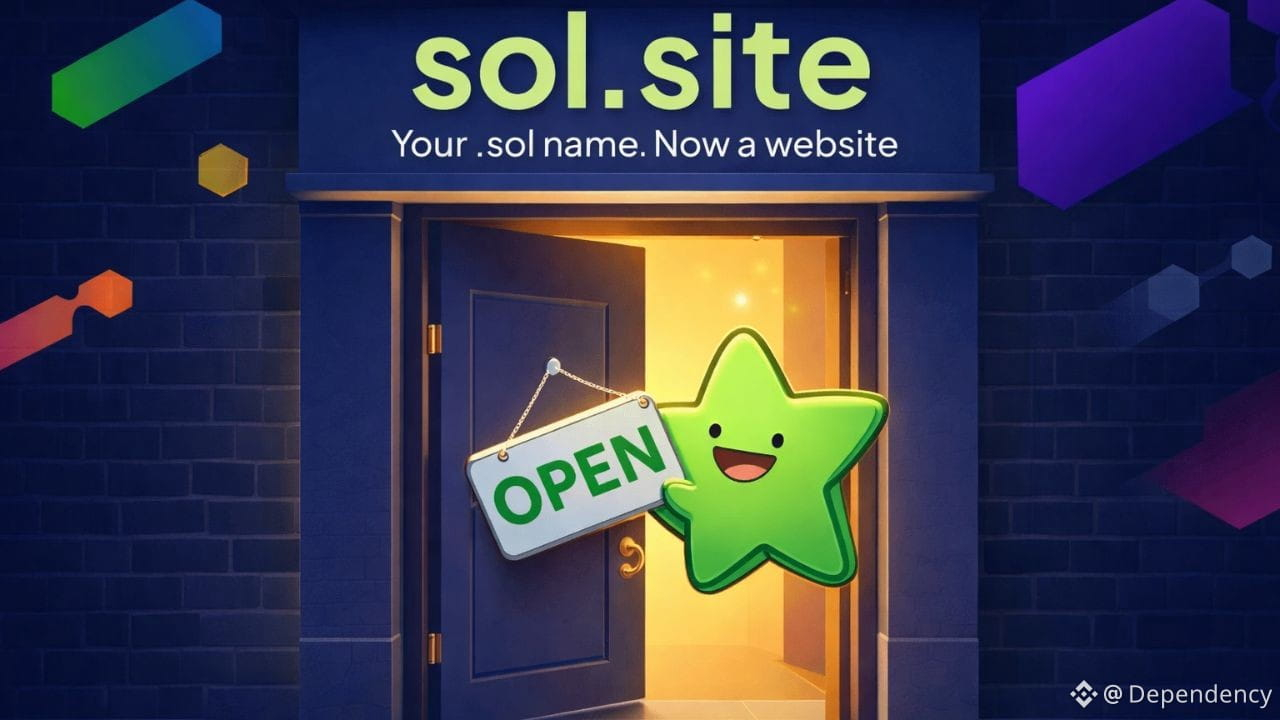
Your .sol just got a real homeYour .sol, now with a home on the web.
No more explaining wallets.
No more “you need this extension bro”.
Now it’s simple:
👉 {yourname}.sol.site
👉 Type it in ANY browser
👉 ANY device
👉 It just works
Yeah… Web3 finally speaking Web2 language.
⚡ What you actually get (and it’s not basic)
This isn’t just a redirect gimmick. It’s a full upgrade:
→ Instant Web3 profile page (live the moment you own a .sol)
→ Connect your domain to Vercel, GitHub Pages, AWS, whatever you want
→ Email setup via MX records (yep, real emails on your .sol 👀)
And the best part?
Your domain still lives on Solana.
But sol.site acts like the bridge that makes it usable for everyone.
Clean. Simple. Powerful.
🧠 The underrated part nobody’s talking about
This turns .sol into actual identity infra.
Not just a name you flex in X bio.
Now it can be:
→ Your portfolio
→ Your project landing
→ Your link-in-bio killer
→ Your AI agent endpoint (this one is crazy)
→ Or just your universal Web3 identity
Basically… whatever you want people to see when they type your name.
🔒 Early access (not for everyone)
They didn’t open this wide.
Only:
→ SNS VIPs
→ 10+ .sol holders (one wallet)
→ SNS Ambassadors
First 100 only.
So yeah… this is still early-early.
🧪 My take
This is one of those drops that looks small…
but actually fixes a MASSIVE friction point.
If people can just type your name and land on your page?
That’s adoption.
No friction. No education needed.
Just vibes + utility.
Test it. Break it. Build on it.
This might be the moment .sol stops being “just Web3” and starts becoming part of the real internet 😮💨
{spot}(SOLUSDT)
Your .sol just got a real home
Your .sol, now with a home on the web.
No more explaining wallets.
No more “you need this extension bro”.
Now it’s simple:
👉 {yourname}.sol.site
👉 Type it in ANY browser
👉 ANY device
👉 It just works
Yeah… Web3 finally speaking Web2 language.
⚡ What you actually get (and it’s not basic)
This isn’t just a redirect gimmick. It’s a full upgrade:
→ Instant Web3 profile page (live the moment you own a .sol)
→ Connect your domain to Vercel, GitHub Pages, AWS, whatever you want
→ Email setup via MX records (yep, real emails on your .sol 👀)
And the best part?
Your domain still lives on Solana.
But sol.site acts like the bridge that makes it usable for everyone.
Clean. Simple. Powerful.
🧠 The underrated part nobody’s talking about
This turns .sol into actual identity infra.
Not just a name you flex in X bio.
Now it can be:
→ Your portfolio
→ Your project landing
→ Your link-in-bio killer
→ Your AI agent endpoint (this one is crazy)
→ Or just your universal Web3 identity
Basically… whatever you want people to see when they type your name.
🔒 Early access (not for everyone)
They didn’t open this wide.
Only:
→ SNS VIPs
→ 10+ .sol holders (one wallet)
→ SNS Ambassadors
First 100 only.
So yeah… this is still early-early.
🧪 My take
This is one of those drops that looks small…
but actually fixes a MASSIVE friction point.
If people can just type your name and land on your page?
That’s adoption.
No friction. No education needed.
Just vibes + utility.
Test it. Break it. Build on it.
This might be the moment .sol stops being “just Web3” and starts becoming part of the real internet 😮💨
No more explaining wallets.
No more “you need this extension bro”.
Now it’s simple:
👉 {yourname}.sol.site
👉 Type it in ANY browser
👉 ANY device
👉 It just works
Yeah… Web3 finally speaking Web2 language.
⚡ What you actually get (and it’s not basic)
This isn’t just a redirect gimmick. It’s a full upgrade:
→ Instant Web3 profile page (live the moment you own a .sol)
→ Connect your domain to Vercel, GitHub Pages, AWS, whatever you want
→ Email setup via MX records (yep, real emails on your .sol 👀)
And the best part?
Your domain still lives on Solana.
But sol.site acts like the bridge that makes it usable for everyone.
Clean. Simple. Powerful.
🧠 The underrated part nobody’s talking about
This turns .sol into actual identity infra.
Not just a name you flex in X bio.
Now it can be:
→ Your portfolio
→ Your project landing
→ Your link-in-bio killer
→ Your AI agent endpoint (this one is crazy)
→ Or just your universal Web3 identity
Basically… whatever you want people to see when they type your name.
🔒 Early access (not for everyone)
They didn’t open this wide.
Only:
→ SNS VIPs
→ 10+ .sol holders (one wallet)
→ SNS Ambassadors
First 100 only.
So yeah… this is still early-early.
🧪 My take
This is one of those drops that looks small…
but actually fixes a MASSIVE friction point.
If people can just type your name and land on your page?
That’s adoption.
No friction. No education needed.
Just vibes + utility.
Test it. Break it. Build on it.
This might be the moment .sol stops being “just Web3” and starts becoming part of the real internet 😮💨
2
39
·
--
Article
AI agents just got a trust upgradeAutonomys Network x Heurist are leveling up their integration… and it’s not just another “partnership announcement.”
This is infrastructure.
🧠 What dropped?
A full Heurist Skills Marketplace — think of it like an app store for AI agents, but:
Every skill is verifiedEvery version is auditedAnd most importantly… nothing can be changed later
Yeah. No rug scripts. No silent updates.
⚠️ Why this matters
Most AI agents today run tools you can’t fully trust:
Code can be swappedLogic can be alteredOutputs can be manipulated
Now imagine your agent is handling crypto transactions with that 💀
This update fixes that.
🔐 Autonomys brings the sauce
Every skill is:
Stored via Auto DrivePermanent (not hosted, not editable)Cryptographically verifiable
Meaning:
👉 The skill you install today = the same one forever
👉 No broken links, no backend edits
👉 Full transparency for anyone
That’s real trust in AI execution.
⚙️ What’s inside
Already live:
30+ verified skillsBinance Web3 toolsOpenZeppelin integrationsOn-chain analytics
And it works with agents like Claude Code, Codex, OpenClaw out of the box.
🌍 Bigger picture
This isn’t just about tools.
It’s about making AI agents reliable in high-stakes environments — DeFi, trading, automation.
Because if agents are the future…
👉 Then verifiable infrastructure = non-negotiable
😮💨 While others are experimenting with agents…
Autonomys x Heurist are building the trust layer they actually need.
{spot}(ETHUSDT)
And that’s where things start getting serious.
AI agents just got a trust upgrade
Autonomys Network x Heurist are leveling up their integration… and it’s not just another “partnership announcement.”
This is infrastructure.
🧠 What dropped?
A full Heurist Skills Marketplace — think of it like an app store for AI agents, but:
Every skill is verifiedEvery version is auditedAnd most importantly… nothing can be changed later
Yeah. No rug scripts. No silent updates.
⚠️ Why this matters
Most AI agents today run tools you can’t fully trust:
Code can be swappedLogic can be alteredOutputs can be manipulated
Now imagine your agent is handling crypto transactions with that 💀
This update fixes that.
🔐 Autonomys brings the sauce
Every skill is:
Stored via Auto DrivePermanent (not hosted, not editable)Cryptographically verifiable
Meaning:
👉 The skill you install today = the same one forever
👉 No broken links, no backend edits
👉 Full transparency for anyone
That’s real trust in AI execution.
⚙️ What’s inside
Already live:
30+ verified skillsBinance Web3 toolsOpenZeppelin integrationsOn-chain analytics
And it works with agents like Claude Code, Codex, OpenClaw out of the box.
🌍 Bigger picture
This isn’t just about tools.
It’s about making AI agents reliable in high-stakes environments — DeFi, trading, automation.
Because if agents are the future…
👉 Then verifiable infrastructure = non-negotiable
😮💨 While others are experimenting with agents…
Autonomys x Heurist are building the trust layer they actually need.
And that’s where things start getting serious.
This is infrastructure.
🧠 What dropped?
A full Heurist Skills Marketplace — think of it like an app store for AI agents, but:
Every skill is verifiedEvery version is auditedAnd most importantly… nothing can be changed later
Yeah. No rug scripts. No silent updates.
⚠️ Why this matters
Most AI agents today run tools you can’t fully trust:
Code can be swappedLogic can be alteredOutputs can be manipulated
Now imagine your agent is handling crypto transactions with that 💀
This update fixes that.
🔐 Autonomys brings the sauce
Every skill is:
Stored via Auto DrivePermanent (not hosted, not editable)Cryptographically verifiable
Meaning:
👉 The skill you install today = the same one forever
👉 No broken links, no backend edits
👉 Full transparency for anyone
That’s real trust in AI execution.
⚙️ What’s inside
Already live:
30+ verified skillsBinance Web3 toolsOpenZeppelin integrationsOn-chain analytics
And it works with agents like Claude Code, Codex, OpenClaw out of the box.
🌍 Bigger picture
This isn’t just about tools.
It’s about making AI agents reliable in high-stakes environments — DeFi, trading, automation.
Because if agents are the future…
👉 Then verifiable infrastructure = non-negotiable
😮💨 While others are experimenting with agents…
Autonomys x Heurist are building the trust layer they actually need.
And that’s where things start getting serious.
2
83
·
--
Article
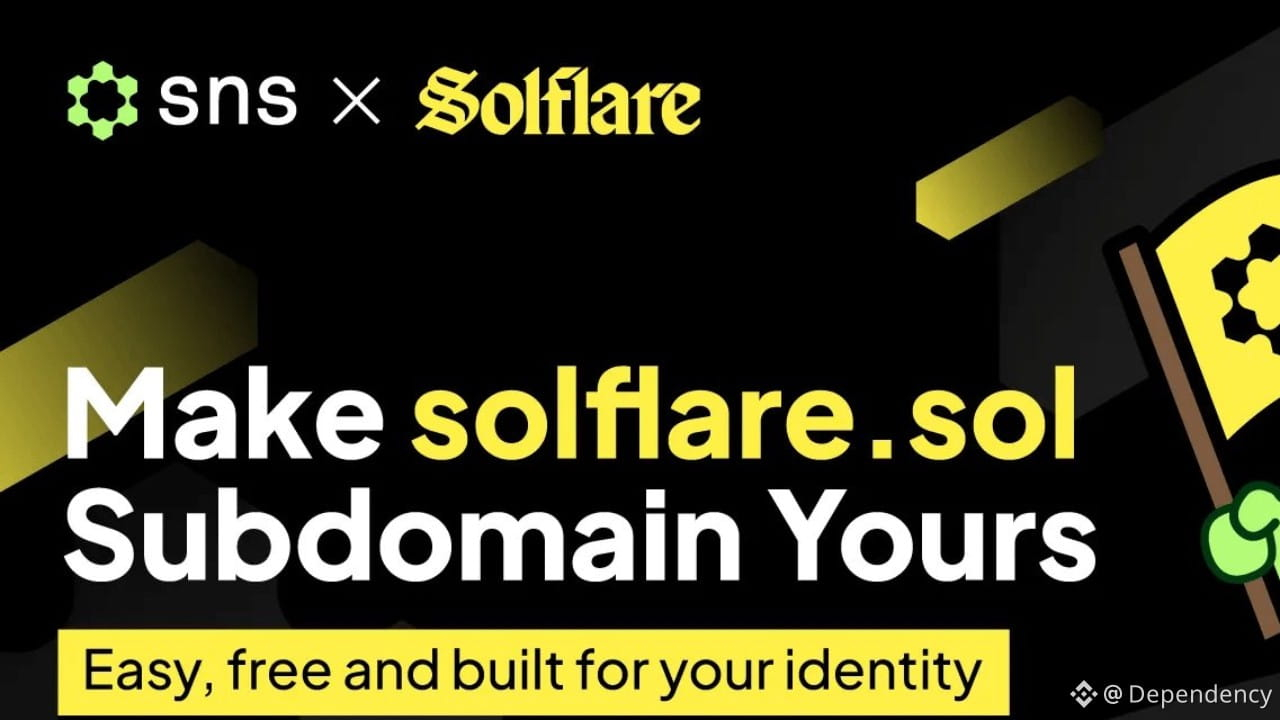
Identity Meets Privacy: Solflare x SNSOn Solana, identity has been evolving for years through the Solana Name Service.
Instead of sending crypto to a long wallet address, users can register a .sol domain — a human-readable identity that works across wallets, DeFi apps, NFT platforms, and more. Your .sol isn’t just a shortcut. It’s your on-chain presence.
Wallets like Solflare made this even smoother by integrating SNS directly into the send flow. Just type a .sol name, and the wallet resolves the address instantly. No copy-pasting. No risky manual entry.
But public identity on-chain always had a tradeoff: transparency.
Once someone finds your address, your transaction history becomes visible.
That’s where Solflare’s new Privacy Aggregator Layer (PAL) changes things.
PAL introduces Private Send, allowing users to send crypto without publicly linking the sender and receiver wallets on-chain. The feature is optional and built directly into the wallet, meaning users don’t need external tools or separate privacy apps.
The result is a powerful combination.
Your .sol domain keeps your identity recognizable across the ecosystem, while Private Send gives you the choice to keep certain transactions private.
For freelancers, traders, DAOs, and everyday users, this balance matters. You stay discoverable and professional on-chain — without exposing every financial interaction by default.
With SNS building the identity layer and Solflare adding native privacy infrastructure, Solana is quietly assembling something Web3 has been missing:
{future}(SOLUSDT)
an identity system that doesn’t sacrifice privacy. 🚀
Identity Meets Privacy: Solflare x SNS
On Solana, identity has been evolving for years through the Solana Name Service.
Instead of sending crypto to a long wallet address, users can register a .sol domain — a human-readable identity that works across wallets, DeFi apps, NFT platforms, and more. Your .sol isn’t just a shortcut. It’s your on-chain presence.
Wallets like Solflare made this even smoother by integrating SNS directly into the send flow. Just type a .sol name, and the wallet resolves the address instantly. No copy-pasting. No risky manual entry.
But public identity on-chain always had a tradeoff: transparency.
Once someone finds your address, your transaction history becomes visible.
That’s where Solflare’s new Privacy Aggregator Layer (PAL) changes things.
PAL introduces Private Send, allowing users to send crypto without publicly linking the sender and receiver wallets on-chain. The feature is optional and built directly into the wallet, meaning users don’t need external tools or separate privacy apps.
The result is a powerful combination.
Your .sol domain keeps your identity recognizable across the ecosystem, while Private Send gives you the choice to keep certain transactions private.
For freelancers, traders, DAOs, and everyday users, this balance matters. You stay discoverable and professional on-chain — without exposing every financial interaction by default.
With SNS building the identity layer and Solflare adding native privacy infrastructure, Solana is quietly assembling something Web3 has been missing:
an identity system that doesn’t sacrifice privacy. 🚀
Instead of sending crypto to a long wallet address, users can register a .sol domain — a human-readable identity that works across wallets, DeFi apps, NFT platforms, and more. Your .sol isn’t just a shortcut. It’s your on-chain presence.
Wallets like Solflare made this even smoother by integrating SNS directly into the send flow. Just type a .sol name, and the wallet resolves the address instantly. No copy-pasting. No risky manual entry.
But public identity on-chain always had a tradeoff: transparency.
Once someone finds your address, your transaction history becomes visible.
That’s where Solflare’s new Privacy Aggregator Layer (PAL) changes things.
PAL introduces Private Send, allowing users to send crypto without publicly linking the sender and receiver wallets on-chain. The feature is optional and built directly into the wallet, meaning users don’t need external tools or separate privacy apps.
The result is a powerful combination.
Your .sol domain keeps your identity recognizable across the ecosystem, while Private Send gives you the choice to keep certain transactions private.
For freelancers, traders, DAOs, and everyday users, this balance matters. You stay discoverable and professional on-chain — without exposing every financial interaction by default.
With SNS building the identity layer and Solflare adding native privacy infrastructure, Solana is quietly assembling something Web3 has been missing:
an identity system that doesn’t sacrifice privacy. 🚀
2
76
·
--
Article
Autonomys: Infrastructure for AI Agents That Don’t ForgetAI agents are getting smarter. They trade, automate workflows, and run complex tasks. But there’s a problem most people ignore:
Agents don’t have permanent memory.
If infrastructure fails or a server goes down, their history disappears. Their identity resets. In practice, the agent “dies”.
This is exactly the problem Autonomys Network is solving.
Autonomys allows data and its proof to live permanently on-chain, meaning an agent’s actions, history, and identity can persist even if systems fail. Instead of temporary logs, agents get verifiable, immutable memory.
And the best part: developers don’t need blockchain expertise to use it. Tools like LangChain and CrewAI can integrate through a simple API, with no token required to start.
As AI systems become more autonomous, infrastructure like Autonomys may become essential.
Because the difference between a simple AI tool and a truly autonomous agent is simple:
Memory that survives.
Autonomys: Infrastructure for AI Agents That Don’t Forget
AI agents are getting smarter. They trade, automate workflows, and run complex tasks. But there’s a problem most people ignore:
Agents don’t have permanent memory.
If infrastructure fails or a server goes down, their history disappears. Their identity resets. In practice, the agent “dies”.
This is exactly the problem Autonomys Network is solving.
Autonomys allows data and its proof to live permanently on-chain, meaning an agent’s actions, history, and identity can persist even if systems fail. Instead of temporary logs, agents get verifiable, immutable memory.
And the best part: developers don’t need blockchain expertise to use it. Tools like LangChain and CrewAI can integrate through a simple API, with no token required to start.
As AI systems become more autonomous, infrastructure like Autonomys may become essential.
Because the difference between a simple AI tool and a truly autonomous agent is simple:
Memory that survives.
Agents don’t have permanent memory.
If infrastructure fails or a server goes down, their history disappears. Their identity resets. In practice, the agent “dies”.
This is exactly the problem Autonomys Network is solving.
Autonomys allows data and its proof to live permanently on-chain, meaning an agent’s actions, history, and identity can persist even if systems fail. Instead of temporary logs, agents get verifiable, immutable memory.
And the best part: developers don’t need blockchain expertise to use it. Tools like LangChain and CrewAI can integrate through a simple API, with no token required to start.
As AI systems become more autonomous, infrastructure like Autonomys may become essential.
Because the difference between a simple AI tool and a truly autonomous agent is simple:
Memory that survives.
1
30
·
--
Article
Why Autonomys Is Not “Another Storage Chain”Most people still try to compare storage networks using Web2 logic: price per GB, retrieval speed, or incentive models.
But Autonomys Network isn’t competing in the same category.
It’s building something deeper: storage as the foundation of consensus itself.
Storage = Security
In most crypto storage stacks, storage is a service that the blockchain checks.
Autonomys does the opposite.
With Proof-of-Archival-Storage, the network is secured by farmers storing real historical blockchain data. The more history stored → the stronger and more decentralized the network becomes.
Storage is not optional infrastructure.
Storage is the security model.
Permanence Isn’t Incentive-Based — It’s Protocol-Level
Most decentralized storage depends on:
• Economic demand
• Pinning services
• External providers
• Client-driven replication
Autonomys removes these dependencies.
If data is written → it becomes part of chain history.
If it’s part of history → it inherits consensus-level permanence.
This is critical for:
• AI agent memory and decision logs
• InfraFi infrastructure financing records
• Tokenized real-world asset history
• Long-term machine-generated datasets
Built for the Next Wave, Not the Last One
According to sector analysis from Messari, DePIN is moving from experimental to revenue-generating infrastructure.
But the next phase isn’t just about running nodes or sharing compute.
It’s about who can guarantee historical truth when infrastructure starts handling:
Stablecoin-financed hardware
Autonomous AI economies
Real-world infrastructure tokenization
That requires data that doesn’t depend on market cycles, usage popularity, or off-chain providers.
The Real Bet Autonomys Is Making
Not fastest execution.
Not cheapest storage.
Not best short-term incentives.
The bet is simple:
In the next infrastructure cycle, the most valuable networks will be the ones where data can never disappear.
And if AI x DePIN + InfraFi actually scale — the permanent record layer becomes more important than the execution layer.
That’s the category Autonomys is building for.
Why Autonomys Is Not “Another Storage Chain”
Most people still try to compare storage networks using Web2 logic: price per GB, retrieval speed, or incentive models.
But Autonomys Network isn’t competing in the same category.
It’s building something deeper: storage as the foundation of consensus itself.
Storage = Security
In most crypto storage stacks, storage is a service that the blockchain checks.
Autonomys does the opposite.
With Proof-of-Archival-Storage, the network is secured by farmers storing real historical blockchain data. The more history stored → the stronger and more decentralized the network becomes.
Storage is not optional infrastructure.
Storage is the security model.
Permanence Isn’t Incentive-Based — It’s Protocol-Level
Most decentralized storage depends on:
• Economic demand
• Pinning services
• External providers
• Client-driven replication
Autonomys removes these dependencies.
If data is written → it becomes part of chain history.
If it’s part of history → it inherits consensus-level permanence.
This is critical for:
• AI agent memory and decision logs
• InfraFi infrastructure financing records
• Tokenized real-world asset history
• Long-term machine-generated datasets
Built for the Next Wave, Not the Last One
According to sector analysis from Messari, DePIN is moving from experimental to revenue-generating infrastructure.
But the next phase isn’t just about running nodes or sharing compute.
It’s about who can guarantee historical truth when infrastructure starts handling:
Stablecoin-financed hardware
Autonomous AI economies
Real-world infrastructure tokenization
That requires data that doesn’t depend on market cycles, usage popularity, or off-chain providers.
The Real Bet Autonomys Is Making
Not fastest execution.
Not cheapest storage.
Not best short-term incentives.
The bet is simple:
In the next infrastructure cycle, the most valuable networks will be the ones where data can never disappear.
And if AI x DePIN + InfraFi actually scale — the permanent record layer becomes more important than the execution layer.
That’s the category Autonomys is building for.
But Autonomys Network isn’t competing in the same category.
It’s building something deeper: storage as the foundation of consensus itself.
Storage = Security
In most crypto storage stacks, storage is a service that the blockchain checks.
Autonomys does the opposite.
With Proof-of-Archival-Storage, the network is secured by farmers storing real historical blockchain data. The more history stored → the stronger and more decentralized the network becomes.
Storage is not optional infrastructure.
Storage is the security model.
Permanence Isn’t Incentive-Based — It’s Protocol-Level
Most decentralized storage depends on:
• Economic demand
• Pinning services
• External providers
• Client-driven replication
Autonomys removes these dependencies.
If data is written → it becomes part of chain history.
If it’s part of history → it inherits consensus-level permanence.
This is critical for:
• AI agent memory and decision logs
• InfraFi infrastructure financing records
• Tokenized real-world asset history
• Long-term machine-generated datasets
Built for the Next Wave, Not the Last One
According to sector analysis from Messari, DePIN is moving from experimental to revenue-generating infrastructure.
But the next phase isn’t just about running nodes or sharing compute.
It’s about who can guarantee historical truth when infrastructure starts handling:
Stablecoin-financed hardware
Autonomous AI economies
Real-world infrastructure tokenization
That requires data that doesn’t depend on market cycles, usage popularity, or off-chain providers.
The Real Bet Autonomys Is Making
Not fastest execution.
Not cheapest storage.
Not best short-term incentives.
The bet is simple:
In the next infrastructure cycle, the most valuable networks will be the ones where data can never disappear.
And if AI x DePIN + InfraFi actually scale — the permanent record layer becomes more important than the execution layer.
That’s the category Autonomys is building for.
6
173
·
--
Article
.sol Domains Land in Yieldbay: Why the SNS Integration MattersThe new integration between Yieldbay and SNS is more than a simple feature drop — it’s a step toward making DeFi identity native inside portfolio tools.
Users can now register and connect .sol domains directly inside Yieldbay’s platform. That means no external steps — just search, register via wallet, and instantly link the domain to your profile.
Why This Is Important for SNS
On Solana, SNS has always been strong technically. The missing piece was daily usage. Integrations like this turn .sol domains from “nice-to-have” collectibles into active identity layers used inside real DeFi workflows.
Instead of long wallet addresses, users now get:
Human-readable portfolio identityEasier social sharingCleaner UX across appsStronger reputation layer over time
The Bigger Picture
This is part of a bigger shift in Web3:
Wallet → Portfolio → Identity → Reputation
By embedding domains directly into yield dashboards, SNS moves closer to becoming core identity infrastructure for DeFi, not just a naming service.
And the infra that becomes part of daily user behavior usually wins long-term.
{spot}(SOLUSDT)
.sol Domains Land in Yieldbay: Why the SNS Integration Matters
The new integration between Yieldbay and SNS is more than a simple feature drop — it’s a step toward making DeFi identity native inside portfolio tools.
Users can now register and connect .sol domains directly inside Yieldbay’s platform. That means no external steps — just search, register via wallet, and instantly link the domain to your profile.
Why This Is Important for SNS
On Solana, SNS has always been strong technically. The missing piece was daily usage. Integrations like this turn .sol domains from “nice-to-have” collectibles into active identity layers used inside real DeFi workflows.
Instead of long wallet addresses, users now get:
Human-readable portfolio identityEasier social sharingCleaner UX across appsStronger reputation layer over time
The Bigger Picture
This is part of a bigger shift in Web3:
Wallet → Portfolio → Identity → Reputation
By embedding domains directly into yield dashboards, SNS moves closer to becoming core identity infrastructure for DeFi, not just a naming service.
And the infra that becomes part of daily user behavior usually wins long-term.
Users can now register and connect .sol domains directly inside Yieldbay’s platform. That means no external steps — just search, register via wallet, and instantly link the domain to your profile.
Why This Is Important for SNS
On Solana, SNS has always been strong technically. The missing piece was daily usage. Integrations like this turn .sol domains from “nice-to-have” collectibles into active identity layers used inside real DeFi workflows.
Instead of long wallet addresses, users now get:
Human-readable portfolio identityEasier social sharingCleaner UX across appsStronger reputation layer over time
The Bigger Picture
This is part of a bigger shift in Web3:
Wallet → Portfolio → Identity → Reputation
By embedding domains directly into yield dashboards, SNS moves closer to becoming core identity infrastructure for DeFi, not just a naming service.
And the infra that becomes part of daily user behavior usually wins long-term.
1
121
·
--
Article
2026 Is Not About AI Apps. It’s About Data That Actually LastsAI discourse is still dominated by applications: agents, copilots, interfaces. But the next cycle isn’t decided by what AI shows on the surface. It’s decided by what sits underneath.
BlackRock’s 2026 Thematic Outlook makes one thing clear: the main constraint for AI is no longer intelligence or capital. It’s infrastructure — specifically, whether data can persist, scale, and remain verifiable over time.
As AI moves into reasoning and agentic systems, workloads become stateful. Agents don’t just respond; they accumulate memory, decision histories, and context. This data must exist after execution and remain trustworthy long-term. Ephemeral compute and temporary storage models are not designed for this.
At the same time, AI infrastructure is running into physical limits: power availability, energy reliability, and geographic concentration. Centralized systems remain efficient, but increasingly fragile when long-term data availability becomes critical.
Autonomys Network is built around this exact constraint. Instead of treating storage as an add-on, it makes storage the security model. Through Proof-of-Archival-Storage, consensus is tied directly to real, distributed historical data. The data secures the network, and the network guarantees the data.
This matters beyond AI. Tokenization is shifting from speculative narratives to record-driven systems. Settlement, provenance, and ownership history only work if underlying records are durable, auditable, and independent. Execution layers need a reliable data layer beneath them.
Auto Drive lowers the barrier to adoption by exposing permanent on-chain storage through familiar cloud-style interfaces. Builders don’t need new mental models, only stronger guarantees.
2026 won’t reward the fastest AI apps. It will reward systems that can store, verify, and preserve data under real-world constraints. Infrastructure isn’t the background anymore — it’s the differentiator.
{spot}(BTCUSDT)
{spot}(ETHUSDT)
2026 Is Not About AI Apps. It’s About Data That Actually Lasts
AI discourse is still dominated by applications: agents, copilots, interfaces. But the next cycle isn’t decided by what AI shows on the surface. It’s decided by what sits underneath.
BlackRock’s 2026 Thematic Outlook makes one thing clear: the main constraint for AI is no longer intelligence or capital. It’s infrastructure — specifically, whether data can persist, scale, and remain verifiable over time.
As AI moves into reasoning and agentic systems, workloads become stateful. Agents don’t just respond; they accumulate memory, decision histories, and context. This data must exist after execution and remain trustworthy long-term. Ephemeral compute and temporary storage models are not designed for this.
At the same time, AI infrastructure is running into physical limits: power availability, energy reliability, and geographic concentration. Centralized systems remain efficient, but increasingly fragile when long-term data availability becomes critical.
Autonomys Network is built around this exact constraint. Instead of treating storage as an add-on, it makes storage the security model. Through Proof-of-Archival-Storage, consensus is tied directly to real, distributed historical data. The data secures the network, and the network guarantees the data.
This matters beyond AI. Tokenization is shifting from speculative narratives to record-driven systems. Settlement, provenance, and ownership history only work if underlying records are durable, auditable, and independent. Execution layers need a reliable data layer beneath them.
Auto Drive lowers the barrier to adoption by exposing permanent on-chain storage through familiar cloud-style interfaces. Builders don’t need new mental models, only stronger guarantees.
2026 won’t reward the fastest AI apps. It will reward systems that can store, verify, and preserve data under real-world constraints. Infrastructure isn’t the background anymore — it’s the differentiator.
BlackRock’s 2026 Thematic Outlook makes one thing clear: the main constraint for AI is no longer intelligence or capital. It’s infrastructure — specifically, whether data can persist, scale, and remain verifiable over time.
As AI moves into reasoning and agentic systems, workloads become stateful. Agents don’t just respond; they accumulate memory, decision histories, and context. This data must exist after execution and remain trustworthy long-term. Ephemeral compute and temporary storage models are not designed for this.
At the same time, AI infrastructure is running into physical limits: power availability, energy reliability, and geographic concentration. Centralized systems remain efficient, but increasingly fragile when long-term data availability becomes critical.
Autonomys Network is built around this exact constraint. Instead of treating storage as an add-on, it makes storage the security model. Through Proof-of-Archival-Storage, consensus is tied directly to real, distributed historical data. The data secures the network, and the network guarantees the data.
This matters beyond AI. Tokenization is shifting from speculative narratives to record-driven systems. Settlement, provenance, and ownership history only work if underlying records are durable, auditable, and independent. Execution layers need a reliable data layer beneath them.
Auto Drive lowers the barrier to adoption by exposing permanent on-chain storage through familiar cloud-style interfaces. Builders don’t need new mental models, only stronger guarantees.
2026 won’t reward the fastest AI apps. It will reward systems that can store, verify, and preserve data under real-world constraints. Infrastructure isn’t the background anymore — it’s the differentiator.
4
33
·
--
Article
SNS Marketplace & Explore: Real-Time .sol Action at Your FingertipsSNS just dropped major updates for the .sol community. Here’s what’s new:
Marketplace 2.0:
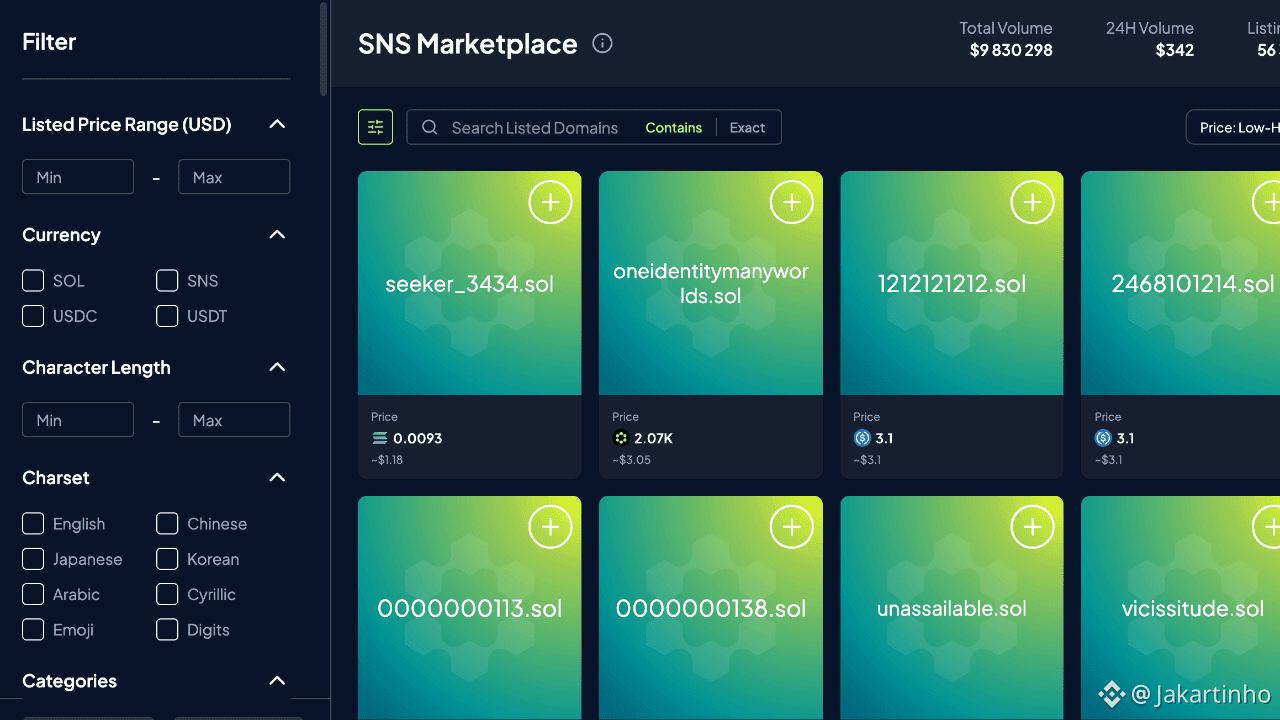
Smarter filters to find exactly what you wantBuy & make offers directly from listingsBulk offers for power usersClear price context: list, floor, last sale, top offerLive market activityAI-powered domain descriptions
My Portfolio now combines your listings, offers, and full account history in one simple view.
Explore Page:
Continuously updated feed of registrations, listings, offers, and salesTrending categories and searchesLeaderboard for top buyers, sellers, and holders
Together, these updates give you the full picture: watch trends in real time, track momentum, and act instantly with better tools for discovery, trading, and management.
{spot}(SOLUSDT)
{spot}(USDCUSDT)
Both are live now at sns.id — click around, test the tools, and share feedback. The community built this, and your input drives the next improvements!
SNS Marketplace & Explore: Real-Time .sol Action at Your Fingertips
SNS just dropped major updates for the .sol community. Here’s what’s new:
Marketplace 2.0:
Smarter filters to find exactly what you wantBuy & make offers directly from listingsBulk offers for power usersClear price context: list, floor, last sale, top offerLive market activityAI-powered domain descriptions
My Portfolio now combines your listings, offers, and full account history in one simple view.
Explore Page:
Continuously updated feed of registrations, listings, offers, and salesTrending categories and searchesLeaderboard for top buyers, sellers, and holders
Together, these updates give you the full picture: watch trends in real time, track momentum, and act instantly with better tools for discovery, trading, and management.
Both are live now at sns.id — click around, test the tools, and share feedback. The community built this, and your input drives the next improvements!
Marketplace 2.0:
Smarter filters to find exactly what you wantBuy & make offers directly from listingsBulk offers for power usersClear price context: list, floor, last sale, top offerLive market activityAI-powered domain descriptions
My Portfolio now combines your listings, offers, and full account history in one simple view.
Explore Page:
Continuously updated feed of registrations, listings, offers, and salesTrending categories and searchesLeaderboard for top buyers, sellers, and holders
Together, these updates give you the full picture: watch trends in real time, track momentum, and act instantly with better tools for discovery, trading, and management.
Both are live now at sns.id — click around, test the tools, and share feedback. The community built this, and your input drives the next improvements!
3
34
·
--
Article
Autonomys Agents: AI That Never ForgetsAutonomys Agents are on-chain AI bots that think, plan, and execute, while storing every decision permanently on the blockchain. This means full transparency, verifiable memory, and auditable reasoning—AI you can fact-check. 🧠💾
Their tiered memory lets them handle short-term tasks, domain-specific workflows, and permanent knowledge archives. Demo agent Argu-mint (@0xargumint) shows it all: every social interaction chronologically stored, cryptographically linked, and queryable in real-time.
Use cases:
Finance: verifiable trading strategies & risk analysisSocial media: transparent moderation & trend predictionR&D: permanent experimental records & algorithm validation
With multi-model support, built-in orchestration, and extensible tools, Autonomys Agents are AI that learns, remembers, and proves it. 💥
Autonomys Agents: AI That Never Forgets
Autonomys Agents are on-chain AI bots that think, plan, and execute, while storing every decision permanently on the blockchain. This means full transparency, verifiable memory, and auditable reasoning—AI you can fact-check. 🧠💾
Their tiered memory lets them handle short-term tasks, domain-specific workflows, and permanent knowledge archives. Demo agent Argu-mint (@0xargumint) shows it all: every social interaction chronologically stored, cryptographically linked, and queryable in real-time.
Use cases:
Finance: verifiable trading strategies & risk analysisSocial media: transparent moderation & trend predictionR&D: permanent experimental records & algorithm validation
With multi-model support, built-in orchestration, and extensible tools, Autonomys Agents are AI that learns, remembers, and proves it. 💥
Their tiered memory lets them handle short-term tasks, domain-specific workflows, and permanent knowledge archives. Demo agent Argu-mint (@0xargumint) shows it all: every social interaction chronologically stored, cryptographically linked, and queryable in real-time.
Use cases:
Finance: verifiable trading strategies & risk analysisSocial media: transparent moderation & trend predictionR&D: permanent experimental records & algorithm validation
With multi-model support, built-in orchestration, and extensible tools, Autonomys Agents are AI that learns, remembers, and proves it. 💥
1
16
·
--
Article
SNS Roadmap 2026: Making .sol the Internet’s Easiest IdentitySNS is entering 2026 with one clear goal: make .sol domains the simplest and most powerful digital identity on the internet. The roadmap shows a strong focus on usability, liquidity, and real on-chain utility — turning domain ownership from a niche activity into a core Web3 primitive.
A Faster, Smarter Marketplace
SNS is already rolling out Marketplace V2, a complete engine rebuild designed to make trading feel effortless. Reduced load times, cleaner domain pages, and real-time activity feeds mean users can finally read the market as it moves, not after.
To make discovery easier, AI Prompt Search lets users describe what they want in plain English — from DAO names to brandable business ideas — and instantly see available domains. This turns naming into a creative, not technical, process.
$SNS Becomes the Trading Currency
In 2026, $SNS will be fully integrated into the marketplace. Domains will be bought and sold directly with $SNS at price parity, making the token a first-class trading asset instead of just a registration tool.
SNS is also upgrading how markets work with Category Markets and Offers 2.0. Traders will be able to see floors, volumes, and supply for entire groups like 3-digit names or clubs, and even place one offer across a whole category — a powerful tool for liquidity and floor-sweeping.
Pro-Level Tools for Domain Traders
Later in the year, SNS will introduce Market Pulse & Analytics, showing 24h, 7d, and 30d volume, leaderboards, and trending categories. Bulk operations will let users manage large portfolios with one-click transfers and multi-domain wraps.
For communities, Community Hubs (Sub-Registrar V2) will allow DAOs and groups to run their own namespaces with on-chain dashboards, turning .sol into a true identity layer for entire ecosystems.
Auctions, Transparency, and Web2 Bridges
SNS will also launch Curated Auctions for premium domains, with monthly events and automated settlements. Public dashboards will provide transparency on volume and ecosystem activity, giving investors and builders real data to work with.
Looking even further ahead, SNS is preparing .sol for Web2 compatibility, including groundwork for ICANN gTLD readiness — a serious step toward making .sol usable beyond crypto.
{future}(SOLUSDT)
With Marketplace V2 already live and a packed pipeline of analytics, community tools, and liquidity upgrades ahead, SNS is positioning .sol as the go-to identity standard for Web3 — and beyond.
SNS Roadmap 2026: Making .sol the Internet’s Easiest Identity
SNS is entering 2026 with one clear goal: make .sol domains the simplest and most powerful digital identity on the internet. The roadmap shows a strong focus on usability, liquidity, and real on-chain utility — turning domain ownership from a niche activity into a core Web3 primitive.
A Faster, Smarter Marketplace
SNS is already rolling out Marketplace V2, a complete engine rebuild designed to make trading feel effortless. Reduced load times, cleaner domain pages, and real-time activity feeds mean users can finally read the market as it moves, not after.
To make discovery easier, AI Prompt Search lets users describe what they want in plain English — from DAO names to brandable business ideas — and instantly see available domains. This turns naming into a creative, not technical, process.
$SNS Becomes the Trading Currency
In 2026, $SNS will be fully integrated into the marketplace. Domains will be bought and sold directly with $SNS at price parity, making the token a first-class trading asset instead of just a registration tool.
SNS is also upgrading how markets work with Category Markets and Offers 2.0. Traders will be able to see floors, volumes, and supply for entire groups like 3-digit names or clubs, and even place one offer across a whole category — a powerful tool for liquidity and floor-sweeping.
Pro-Level Tools for Domain Traders
Later in the year, SNS will introduce Market Pulse & Analytics, showing 24h, 7d, and 30d volume, leaderboards, and trending categories. Bulk operations will let users manage large portfolios with one-click transfers and multi-domain wraps.
For communities, Community Hubs (Sub-Registrar V2) will allow DAOs and groups to run their own namespaces with on-chain dashboards, turning .sol into a true identity layer for entire ecosystems.
Auctions, Transparency, and Web2 Bridges
SNS will also launch Curated Auctions for premium domains, with monthly events and automated settlements. Public dashboards will provide transparency on volume and ecosystem activity, giving investors and builders real data to work with.
Looking even further ahead, SNS is preparing .sol for Web2 compatibility, including groundwork for ICANN gTLD readiness — a serious step toward making .sol usable beyond crypto.
With Marketplace V2 already live and a packed pipeline of analytics, community tools, and liquidity upgrades ahead, SNS is positioning .sol as the go-to identity standard for Web3 — and beyond.
A Faster, Smarter Marketplace
SNS is already rolling out Marketplace V2, a complete engine rebuild designed to make trading feel effortless. Reduced load times, cleaner domain pages, and real-time activity feeds mean users can finally read the market as it moves, not after.
To make discovery easier, AI Prompt Search lets users describe what they want in plain English — from DAO names to brandable business ideas — and instantly see available domains. This turns naming into a creative, not technical, process.
$SNS Becomes the Trading Currency
In 2026, $SNS will be fully integrated into the marketplace. Domains will be bought and sold directly with $SNS at price parity, making the token a first-class trading asset instead of just a registration tool.
SNS is also upgrading how markets work with Category Markets and Offers 2.0. Traders will be able to see floors, volumes, and supply for entire groups like 3-digit names or clubs, and even place one offer across a whole category — a powerful tool for liquidity and floor-sweeping.
Pro-Level Tools for Domain Traders
Later in the year, SNS will introduce Market Pulse & Analytics, showing 24h, 7d, and 30d volume, leaderboards, and trending categories. Bulk operations will let users manage large portfolios with one-click transfers and multi-domain wraps.
For communities, Community Hubs (Sub-Registrar V2) will allow DAOs and groups to run their own namespaces with on-chain dashboards, turning .sol into a true identity layer for entire ecosystems.
Auctions, Transparency, and Web2 Bridges
SNS will also launch Curated Auctions for premium domains, with monthly events and automated settlements. Public dashboards will provide transparency on volume and ecosystem activity, giving investors and builders real data to work with.
Looking even further ahead, SNS is preparing .sol for Web2 compatibility, including groundwork for ICANN gTLD readiness — a serious step toward making .sol usable beyond crypto.
With Marketplace V2 already live and a packed pipeline of analytics, community tools, and liquidity upgrades ahead, SNS is positioning .sol as the go-to identity standard for Web3 — and beyond.
1
38
·
--
Article
Guardians of Growth: How Autonomys Is Bootstrapping Staking the Right WayAt mainnet launch, activity is always quiet before the real action starts — and Autonomys is being honest about that. With low early transaction volume, staking rewards based purely on fees would naturally be smaller, which isn’t great for security or decentralization from day one. That’s exactly where the Guardians of Growth Staking Bootstrap Program comes in.
Instead of changing tokenomics or inventing artificial rewards, the Subspace Foundation is doing something refreshingly clean: using real on-chain transactions with tips to temporarily support operators and nominators. These tips are distributed exactly like normal network fees, meaning rewards flow through the protocol itself, not through manual decisions or off-chain logic.
For stakers, this means an incentive to start early, learn how staking works, and actively support network security without giving up custody of their tokens. For operators, it ensures predictable rewards while organic usage on Auto-EVM and future domains ramps up. And for developers, it creates a more stable base layer to build on from day one.
Most importantly, this program is time-bound and transparent. It’s designed to run for around 12 months, funded by a small portion of the Foundation treasury, and every transaction can be verified on-chain. No shortcuts, no black boxes — just a thoughtful bootstrap that aligns everyone toward long-term growth.
Guardians of Growth isn’t about inflating numbers. It’s about making sure Autonomys launches strong, decentralized, and ready for what comes next 🚀
Guardians of Growth: How Autonomys Is Bootstrapping Staking the Right Way
At mainnet launch, activity is always quiet before the real action starts — and Autonomys is being honest about that. With low early transaction volume, staking rewards based purely on fees would naturally be smaller, which isn’t great for security or decentralization from day one. That’s exactly where the Guardians of Growth Staking Bootstrap Program comes in.
Instead of changing tokenomics or inventing artificial rewards, the Subspace Foundation is doing something refreshingly clean: using real on-chain transactions with tips to temporarily support operators and nominators. These tips are distributed exactly like normal network fees, meaning rewards flow through the protocol itself, not through manual decisions or off-chain logic.
For stakers, this means an incentive to start early, learn how staking works, and actively support network security without giving up custody of their tokens. For operators, it ensures predictable rewards while organic usage on Auto-EVM and future domains ramps up. And for developers, it creates a more stable base layer to build on from day one.
Most importantly, this program is time-bound and transparent. It’s designed to run for around 12 months, funded by a small portion of the Foundation treasury, and every transaction can be verified on-chain. No shortcuts, no black boxes — just a thoughtful bootstrap that aligns everyone toward long-term growth.
Guardians of Growth isn’t about inflating numbers. It’s about making sure Autonomys launches strong, decentralized, and ready for what comes next 🚀
Instead of changing tokenomics or inventing artificial rewards, the Subspace Foundation is doing something refreshingly clean: using real on-chain transactions with tips to temporarily support operators and nominators. These tips are distributed exactly like normal network fees, meaning rewards flow through the protocol itself, not through manual decisions or off-chain logic.
For stakers, this means an incentive to start early, learn how staking works, and actively support network security without giving up custody of their tokens. For operators, it ensures predictable rewards while organic usage on Auto-EVM and future domains ramps up. And for developers, it creates a more stable base layer to build on from day one.
Most importantly, this program is time-bound and transparent. It’s designed to run for around 12 months, funded by a small portion of the Foundation treasury, and every transaction can be verified on-chain. No shortcuts, no black boxes — just a thoughtful bootstrap that aligns everyone toward long-term growth.
Guardians of Growth isn’t about inflating numbers. It’s about making sure Autonomys launches strong, decentralized, and ready for what comes next 🚀
1
30
·
--
Article
Autonomys Grants: Fuel for the AI3.0 DegensAutonomys just dropped a Grants Program that basically screams: “If you’re building real deAI — we’ve got your back.”
They’re allocating up to 10% of the entire $AI3 supply to help devs, researchers and founders push AI3.0 forward. No fluff, no corporate vibes — just real support for people who ship.
🔥 What They Fund
Five big tracks, so almost any solid idea fits:
Infrastructure — storage, PoAS, compute, all the heavy machineryAI-powered dApps — super dApps, on-chain agents, autonomous toolsResearch — privacy, scalability, governance, zk + AICommunity — docs, guides, workshops, educationIntegrations — bridges, SDKs, cross-chain AI tooling
If it strengthens the Autonomys Network, they want it.
🛠 What You Get
Funding in $AI3, stables, USD or gas credits, plus:
Active support from the grants teamFull docs + dev resourcesMentorship from Autonomys expertsCommunity visibility
Basically: the ecosystem starter pack.
👀 Who Should Apply?
Anyone building at the intersection of AI + blockchain — dApp devs, researchers, data scientists, DeFi maniacs, zk builders.
🚦 Why It Matters
This isn’t a marketing stunt. It’s a real push toward decentralized AI — with money, tools and people who actually care about innovation.
If you’ve got an idea that fits the AI3.0 future, now’s the moment.
Apply and build something the ecosystem will remember.
Autonomys Grants: Fuel for the AI3.0 Degens
Autonomys just dropped a Grants Program that basically screams: “If you’re building real deAI — we’ve got your back.”
They’re allocating up to 10% of the entire $AI3 supply to help devs, researchers and founders push AI3.0 forward. No fluff, no corporate vibes — just real support for people who ship.
🔥 What They Fund
Five big tracks, so almost any solid idea fits:
Infrastructure — storage, PoAS, compute, all the heavy machineryAI-powered dApps — super dApps, on-chain agents, autonomous toolsResearch — privacy, scalability, governance, zk + AICommunity — docs, guides, workshops, educationIntegrations — bridges, SDKs, cross-chain AI tooling
If it strengthens the Autonomys Network, they want it.
🛠 What You Get
Funding in $AI3, stables, USD or gas credits, plus:
Active support from the grants teamFull docs + dev resourcesMentorship from Autonomys expertsCommunity visibility
Basically: the ecosystem starter pack.
👀 Who Should Apply?
Anyone building at the intersection of AI + blockchain — dApp devs, researchers, data scientists, DeFi maniacs, zk builders.
🚦 Why It Matters
This isn’t a marketing stunt. It’s a real push toward decentralized AI — with money, tools and people who actually care about innovation.
If you’ve got an idea that fits the AI3.0 future, now’s the moment.
Apply and build something the ecosystem will remember.
They’re allocating up to 10% of the entire $AI3 supply to help devs, researchers and founders push AI3.0 forward. No fluff, no corporate vibes — just real support for people who ship.
🔥 What They Fund
Five big tracks, so almost any solid idea fits:
Infrastructure — storage, PoAS, compute, all the heavy machineryAI-powered dApps — super dApps, on-chain agents, autonomous toolsResearch — privacy, scalability, governance, zk + AICommunity — docs, guides, workshops, educationIntegrations — bridges, SDKs, cross-chain AI tooling
If it strengthens the Autonomys Network, they want it.
🛠 What You Get
Funding in $AI3, stables, USD or gas credits, plus:
Active support from the grants teamFull docs + dev resourcesMentorship from Autonomys expertsCommunity visibility
Basically: the ecosystem starter pack.
👀 Who Should Apply?
Anyone building at the intersection of AI + blockchain — dApp devs, researchers, data scientists, DeFi maniacs, zk builders.
🚦 Why It Matters
This isn’t a marketing stunt. It’s a real push toward decentralized AI — with money, tools and people who actually care about innovation.
If you’ve got an idea that fits the AI3.0 future, now’s the moment.
Apply and build something the ecosystem will remember.
2
39
·
--
Article
Auto Drive: Finally, real on-chain storage that doesn’t feel like homeworkAutonomys just launched Auto Drive — and honestly, this is the first time “decentralized storage” doesn’t feel like a scammy Dropbox clone.
What is it?
A clean, Web2-style dashboard (ai3.storage) where you literally drag & drop files straight into real Autonomys blockspace. Not IPFS pinning. Not “distributed servers.” Actual on-chain, permanent storage secured by the network’s PoAS consensus.
Why it hits different:
Your files live in the same blockspace that stores the chain’s historyOptional end-to-end encryption (your secrets stay yours)Super simple UI — feels like Google Drive but on-chainDevs get a nice TS/JS SDK + REST API to plug blockspace into any appAuto-DAG handles big files without melting your brain (or the network)
The whole point:
Web3 keeps pretending data is decentralized, but most projects still store files off-chain like it’s 2016. Autonomys actually fixes that by making blockspace a usable resource — and Auto Drive is the doorway.
Auto Drive: Finally, real on-chain storage that doesn’t feel like homework
Autonomys just launched Auto Drive — and honestly, this is the first time “decentralized storage” doesn’t feel like a scammy Dropbox clone.
What is it?
A clean, Web2-style dashboard (ai3.storage) where you literally drag & drop files straight into real Autonomys blockspace. Not IPFS pinning. Not “distributed servers.” Actual on-chain, permanent storage secured by the network’s PoAS consensus.
Why it hits different:
Your files live in the same blockspace that stores the chain’s historyOptional end-to-end encryption (your secrets stay yours)Super simple UI — feels like Google Drive but on-chainDevs get a nice TS/JS SDK + REST API to plug blockspace into any appAuto-DAG handles big files without melting your brain (or the network)
The whole point:
Web3 keeps pretending data is decentralized, but most projects still store files off-chain like it’s 2016. Autonomys actually fixes that by making blockspace a usable resource — and Auto Drive is the doorway.
What is it?
A clean, Web2-style dashboard (ai3.storage) where you literally drag & drop files straight into real Autonomys blockspace. Not IPFS pinning. Not “distributed servers.” Actual on-chain, permanent storage secured by the network’s PoAS consensus.
Why it hits different:
Your files live in the same blockspace that stores the chain’s historyOptional end-to-end encryption (your secrets stay yours)Super simple UI — feels like Google Drive but on-chainDevs get a nice TS/JS SDK + REST API to plug blockspace into any appAuto-DAG handles big files without melting your brain (or the network)
The whole point:
Web3 keeps pretending data is decentralized, but most projects still store files off-chain like it’s 2016. Autonomys actually fixes that by making blockspace a usable resource — and Auto Drive is the doorway.
2
27
·
--
Article
SNS Referral Update — The Game Might Be ChangingAlright frens, listen up. SNS just dropped a draft for new referral tiers and it looks like a move to finally let the little guys in on the VIP perks.
Right now, you basically need 1M $SNS just to hit VIP1 and 20M for VIP3. That’s brutal if you’re active, helping grow the network but don’t have a giant bag.
Proposed new tiers are way friendlier
Regular: < 300k $SNS → 2% referral feeVIP1: ≥ 300k $SNS → 5% referral feeVIP2: ≥ 1M $SNS → 10% referral fee + 3% discount for invitesVIP3: ≥ 10M $SNS → 20% referral fee + 5% discount
What this means is more people actually get rewarded for hustling their friends into SNS. More referrals, more action, more .sol love.
The team wants your thoughts before the vote goes live. The draft is public on Discord so drop your opinions, hype it, debate it, whatever.
If this passes expect a boost in referrals, more active users, and rewards flowing to the community, not just whales.
💡 TL;DR: SNS might finally stop being VIPs only and let more of us play. Keep your eyes peeled frens.
{future}(SOLUSDT)
SNS Referral Update — The Game Might Be Changing
Alright frens, listen up. SNS just dropped a draft for new referral tiers and it looks like a move to finally let the little guys in on the VIP perks.
Right now, you basically need 1M $SNS just to hit VIP1 and 20M for VIP3. That’s brutal if you’re active, helping grow the network but don’t have a giant bag.
Proposed new tiers are way friendlier
Regular: < 300k $SNS → 2% referral feeVIP1: ≥ 300k $SNS → 5% referral feeVIP2: ≥ 1M $SNS → 10% referral fee + 3% discount for invitesVIP3: ≥ 10M $SNS → 20% referral fee + 5% discount
What this means is more people actually get rewarded for hustling their friends into SNS. More referrals, more action, more .sol love.
The team wants your thoughts before the vote goes live. The draft is public on Discord so drop your opinions, hype it, debate it, whatever.
If this passes expect a boost in referrals, more active users, and rewards flowing to the community, not just whales.
💡 TL;DR: SNS might finally stop being VIPs only and let more of us play. Keep your eyes peeled frens.
Right now, you basically need 1M $SNS just to hit VIP1 and 20M for VIP3. That’s brutal if you’re active, helping grow the network but don’t have a giant bag.
Proposed new tiers are way friendlier
Regular: < 300k $SNS → 2% referral feeVIP1: ≥ 300k $SNS → 5% referral feeVIP2: ≥ 1M $SNS → 10% referral fee + 3% discount for invitesVIP3: ≥ 10M $SNS → 20% referral fee + 5% discount
What this means is more people actually get rewarded for hustling their friends into SNS. More referrals, more action, more .sol love.
The team wants your thoughts before the vote goes live. The draft is public on Discord so drop your opinions, hype it, debate it, whatever.
If this passes expect a boost in referrals, more active users, and rewards flowing to the community, not just whales.
💡 TL;DR: SNS might finally stop being VIPs only and let more of us play. Keep your eyes peeled frens.
3
26
·
--
Article
Autonomys: The Farm Where AI Meets Decentralization So you’ve heard people scream “AI this, decentralization that!” — but rarely in the same sentence without someone trying to sell you a $5,000 mining rig.
Yeah, that era’s done.
Autonomys just dropped Space Acres, a lightweight desktop farming app that literally lets your laptop join the decentralized AI revolution. No staking. No specialized rigs. No “validator” memes that end in you buying a new GPU. Just you, your SSD, and the power to turn idle storage into $AI3 rewards.
Let’s break it down 👇
🧩 What’s Autonomys anyway?
It’s not just another blockchain trying to be the next Layer-1 miracle.
Autonomys is building the foundation layer for AI3.0 — think of it as the AI’s operating system for Web3. It’s got all the heavy stuff under the hood: distributed storage, modular execution, and on-chain AI agents that can actually think and act.
Basically, it’s what happens when decentralized infrastructure stops pretending and starts working.
🌾 The Farming Twist
They made it stupidly simple.
Minimum specs?
🧠 4 cores CPU🐏 8GB RAM📦 100GB storage
That’s it.
No staking hoops. No crypto gymnastics. You just download Space Acres, let it use your unused SSD space, and start farming AI3 tokens.
In a world where “decentralized” often means “only whales can join”, Autonomys flips the script — anyone can power the network.
🤖 Why it matters
The AI boom needs compute and data. The Web3 world needs real decentralization.
Autonomys bridges that gap — letting regular people run micro-nodes that feed the global AI engine.
It’s like turning your PC into a mini data farm — except instead of cows, you’re feeding the next generation of autonomous apps. 🧠💽
So yeah, AI3.0 isn’t a buzzword anymore.
It’s something you can literally run from your desk.
Autonomys: The Farm Where AI Meets Decentralization
So you’ve heard people scream “AI this, decentralization that!” — but rarely in the same sentence without someone trying to sell you a $5,000 mining rig.
Yeah, that era’s done.
Autonomys just dropped Space Acres, a lightweight desktop farming app that literally lets your laptop join the decentralized AI revolution. No staking. No specialized rigs. No “validator” memes that end in you buying a new GPU. Just you, your SSD, and the power to turn idle storage into $AI3 rewards.
Let’s break it down 👇
🧩 What’s Autonomys anyway?
It’s not just another blockchain trying to be the next Layer-1 miracle.
Autonomys is building the foundation layer for AI3.0 — think of it as the AI’s operating system for Web3. It’s got all the heavy stuff under the hood: distributed storage, modular execution, and on-chain AI agents that can actually think and act.
Basically, it’s what happens when decentralized infrastructure stops pretending and starts working.
🌾 The Farming Twist
They made it stupidly simple.
Minimum specs?
🧠 4 cores CPU🐏 8GB RAM📦 100GB storage
That’s it.
No staking hoops. No crypto gymnastics. You just download Space Acres, let it use your unused SSD space, and start farming AI3 tokens.
In a world where “decentralized” often means “only whales can join”, Autonomys flips the script — anyone can power the network.
🤖 Why it matters
The AI boom needs compute and data. The Web3 world needs real decentralization.
Autonomys bridges that gap — letting regular people run micro-nodes that feed the global AI engine.
It’s like turning your PC into a mini data farm — except instead of cows, you’re feeding the next generation of autonomous apps. 🧠💽
So yeah, AI3.0 isn’t a buzzword anymore.
It’s something you can literally run from your desk.
Yeah, that era’s done.
Autonomys just dropped Space Acres, a lightweight desktop farming app that literally lets your laptop join the decentralized AI revolution. No staking. No specialized rigs. No “validator” memes that end in you buying a new GPU. Just you, your SSD, and the power to turn idle storage into $AI3 rewards.
Let’s break it down 👇
🧩 What’s Autonomys anyway?
It’s not just another blockchain trying to be the next Layer-1 miracle.
Autonomys is building the foundation layer for AI3.0 — think of it as the AI’s operating system for Web3. It’s got all the heavy stuff under the hood: distributed storage, modular execution, and on-chain AI agents that can actually think and act.
Basically, it’s what happens when decentralized infrastructure stops pretending and starts working.
🌾 The Farming Twist
They made it stupidly simple.
Minimum specs?
🧠 4 cores CPU🐏 8GB RAM📦 100GB storage
That’s it.
No staking hoops. No crypto gymnastics. You just download Space Acres, let it use your unused SSD space, and start farming AI3 tokens.
In a world where “decentralized” often means “only whales can join”, Autonomys flips the script — anyone can power the network.
🤖 Why it matters
The AI boom needs compute and data. The Web3 world needs real decentralization.
Autonomys bridges that gap — letting regular people run micro-nodes that feed the global AI engine.
It’s like turning your PC into a mini data farm — except instead of cows, you’re feeding the next generation of autonomous apps. 🧠💽
So yeah, AI3.0 isn’t a buzzword anymore.
It’s something you can literally run from your desk.
1
12
Connectez-vous pour découvrir plus de contenu
Rejoignez la communauté mondiale des adeptes de cryptomonnaies sur Binance Square
⚡️ Suviez les dernières informations importantes sur les cryptomonnaies.
💬 Jugé digne de confiance par la plus grande plateforme d’échange de cryptomonnaies au monde.
👍 Découvrez les connaissances que partagent les créateurs vérifiés.
Adresse e-mail/Nº de téléphone
Sujets d’actualité
BitwiseFilesFinalNEARSpotETFProspectus
62,915 vues
1,222 mentions
#bitwisefilesfinalnearspotetfprospectus
Can $NEAR REALLY reach $562 with an ETF approval? 🚀
The crypto market is buzzing as Bitwise files its final prospectus for a Spot NEAR ETF (Ticker: NRR on NYSE Arca)! 📊🔥
Is institutional money about to unleash the biggest pump in NEAR’s history? Analysts are throwing around mind-blowing price targets:
🎯 Intermediate Target: $155
🎯 2030 Long-Term Target: $562
💡 Let's do the math:
At $562, $NEAR would sit at roughly a $680 Billion market cap—putting it right up there with Ethereum's potential valuation. With NEAR leading the Chain Abstraction & AI crypto narrative, this might not be as crazy as it sounds!
With SEC regulations turning more crypto-friendly and Wall Street knocking on the door, are you Accumulating or Holding?
👇 Drop your realistic price prediction for $NEAR in the comments! 👇
#BitwiseFilesFinalNEARSpotETFProspectus #Altcoins #CryptoNews #ETF
Doomsday-Trader
·5 mentions J’aime
·3.5k vues
BitgetHackerMoves$83MStolenXRP
27,607 vues
153 mentions
SOLSpotETFWeeklyInflow$188M
16,916 vues
121 mentions