

Ibrina_ETH
8.7k Publications

Ibrina_ETH
 Binance Square Vérifié
Signaler
Bloquer l’utilisateur
Binance Square Creator | Crypto Researcher | Market Analyst | 24/7 Crypto Trader | Web3 & DeFi Insights
Ouvert au trading
Trade régulièrement
2.2 an(s)
30 Suivis
37.5K+ Abonnés
49.6K+ J’aime
Publications
Portefeuille
Tous
Citations
Vidéos
Direct
PINNED
·
--
Haussier
🚨 BREAKING
🇺🇸 The U.S. Senate's schedule currently doesn't include a vote on the Crypto CLARITY Act.
Here's why the market is watching:
📈 If it passes, many expect it could be a major bullish catalyst for Bitcoin.
📉 If it fails or gets pushed back, sentiment could turn negative across the crypto market.
Right now, Kalshi is pricing just a 33% chance that the bill gets approved this year.
Remember: 60 Senate votes are needed for it to pass.
For now, this isn't looking like good news for crypto.
$BICO $VIC
#BREAKING #news #TRUMP
🚨 BREAKING
🇺🇸 The U.S. Senate's schedule currently doesn't include a vote on the Crypto CLARITY Act.
Here's why the market is watching:
📈 If it passes, many expect it could be a major bullish catalyst for Bitcoin.
📉 If it fails or gets pushed back, sentiment could turn negative across the crypto market.
Right now, Kalshi is pricing just a 33% chance that the bill gets approved this year.
Remember: 60 Senate votes are needed for it to pass.
For now, this isn't looking like good news for crypto.
$BICO $VIC
#BREAKING #news #TRUMP
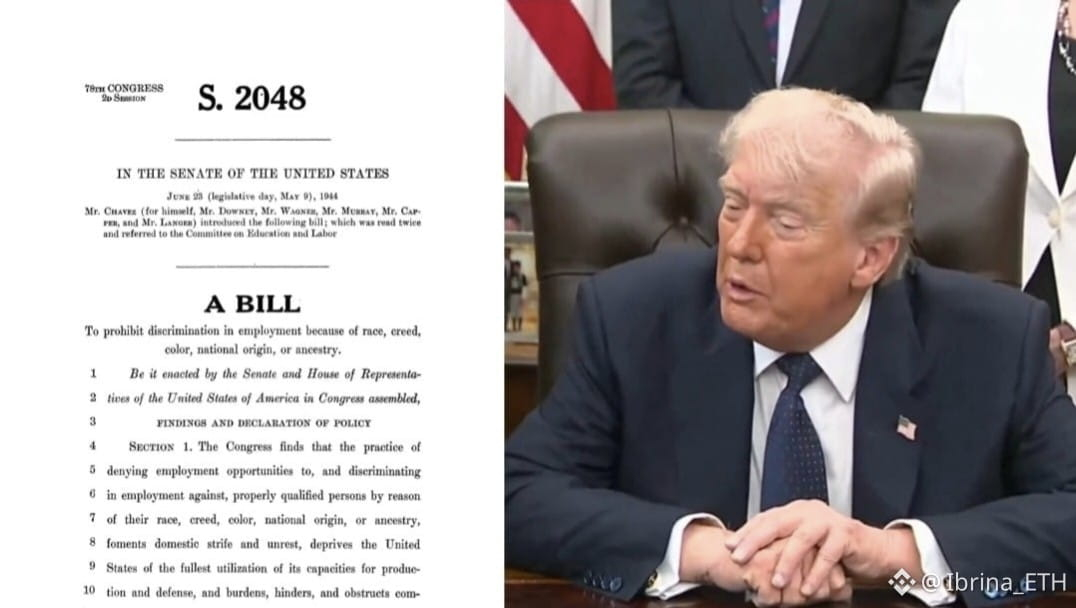
🇺🇸 The U.S. Senate's schedule currently doesn't include a vote on the Crypto CLARITY Act.
Here's why the market is watching:
📈 If it passes, many expect it could be a major bullish catalyst for Bitcoin.
📉 If it fails or gets pushed back, sentiment could turn negative across the crypto market.
Right now, Kalshi is pricing just a 33% chance that the bill gets approved this year.
Remember: 60 Senate votes are needed for it to pass.
For now, this isn't looking like good news for crypto.
$BICO $VIC
#BREAKING #news #TRUMP
21
1
91
133.1k
·
--
🚨 ISRAEL’S ELECTION COULD MATTER FAR BEYOND ISRAEL.
With tensions between Israel and Iran still in focus, the election outcome could influence how markets price the next phase of the conflict.
Here’s what I’m watching:
🇮🇱 If Netanyahu loses: Markets may start pricing in hopes of de-escalation. Oil could come under pressure, while stocks and crypto could benefit from improving risk sentiment.
🇮🇱 If Netanyahu wins: If investors interpret the result as a sign of continued confrontation, oil could move higher and risk assets could face renewed selling pressure.
But there’s a catch: the election result alone won’t determine the market’s direction. What matters is whether it changes the actual risk of military escalation, oil supply disruptions, or the chances of diplomatic progress.
For crypto, I’ll be watching Bitcoin’s reaction alongside crude oil and broader market sentiment. A headline-driven rally can reverse quickly if tensions rise again.
The real question isn’t just who wins the election it’s what happens next.
Stay focused on the facts, manage risk, and don’t trade headlines blindly.
$AIN $SNDK $BTC
#BREAKING #bitcoin
{future}(BTCUSDT)
🚨 ISRAEL’S ELECTION COULD MATTER FAR BEYOND ISRAEL.
With tensions between Israel and Iran still in focus, the election outcome could influence how markets price the next phase of the conflict.
Here’s what I’m watching:
🇮🇱 If Netanyahu loses: Markets may start pricing in hopes of de-escalation. Oil could come under pressure, while stocks and crypto could benefit from improving risk sentiment.
🇮🇱 If Netanyahu wins: If investors interpret the result as a sign of continued confrontation, oil could move higher and risk assets could face renewed selling pressure.
But there’s a catch: the election result alone won’t determine the market’s direction. What matters is whether it changes the actual risk of military escalation, oil supply disruptions, or the chances of diplomatic progress.
For crypto, I’ll be watching Bitcoin’s reaction alongside crude oil and broader market sentiment. A headline-driven rally can reverse quickly if tensions rise again.
The real question isn’t just who wins the election it’s what happens next.
Stay focused on the facts, manage risk, and don’t trade headlines blindly.
$AIN $SNDK $BTC
#BREAKING #bitcoin
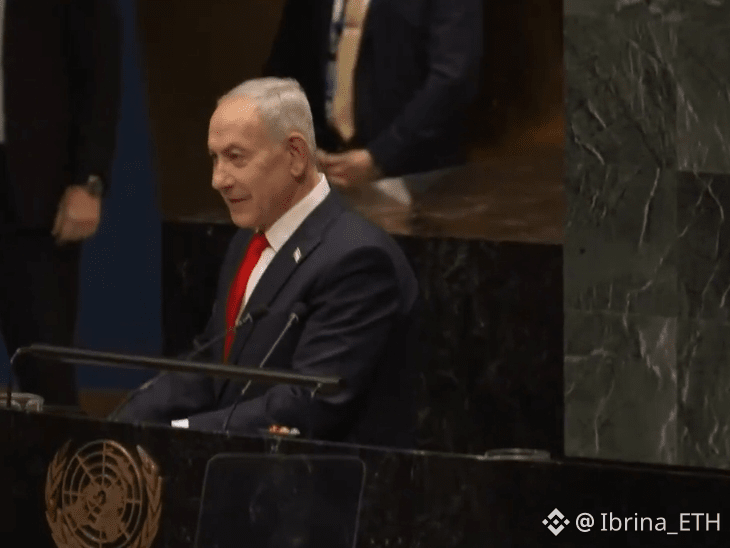
With tensions between Israel and Iran still in focus, the election outcome could influence how markets price the next phase of the conflict.
Here’s what I’m watching:
🇮🇱 If Netanyahu loses: Markets may start pricing in hopes of de-escalation. Oil could come under pressure, while stocks and crypto could benefit from improving risk sentiment.
🇮🇱 If Netanyahu wins: If investors interpret the result as a sign of continued confrontation, oil could move higher and risk assets could face renewed selling pressure.
But there’s a catch: the election result alone won’t determine the market’s direction. What matters is whether it changes the actual risk of military escalation, oil supply disruptions, or the chances of diplomatic progress.
For crypto, I’ll be watching Bitcoin’s reaction alongside crude oil and broader market sentiment. A headline-driven rally can reverse quickly if tensions rise again.
The real question isn’t just who wins the election it’s what happens next.
Stay focused on the facts, manage risk, and don’t trade headlines blindly.
$AIN $SNDK $BTC
#BREAKING #bitcoin
1
820
·
--
🚨 $ETH THE RECOVERY IS FACING RESISTANCE
ETH is trading around $2,350 on the 1H chart after bouncing from $2,281. The recovery was strong initially, but price has now pulled back from the $2,366 area, and sellers are starting to show up again.
The 7 MA is near $2,359.85, the 25 MA is around $2,352.89, and the 99 MA sits much higher at $2,404.94. Price is struggling around the short-term averages and remains below the 99 MA, so I’m not calling this a bullish reversal yet.
My trade plan 👇
📍 Long entry: $2,335–$2,345, if support holds and buyers confirm
🟢 Support: $2,335, $2,305, $2,281
🔴 Resistance: $2,353–$2,367, $2,397, $2,405
🛑 Stop-loss: $2,318
🎯 Target 1: $2,367
🎯 Target 2: $2,397
🎯 Target 3: $2,405, if momentum continues
What I’m watching:
If ETH holds $2,335 and reclaims $2,367, buyers could push toward $2,397–$2,405.
But if $2,335 breaks, I’d expect another test of $2,305. Losing $2,281 would weaken the recovery further.
Risk-to-reward: From a $2,340 entry with a $2,318 stop, the approximate ratios are 1:1.2 to Target 1, 1:2.6 to Target 2, and 1:3 to Target 3, before fees and slippage.
Risk management: I’d risk no more than 1% of my trading capital and size the position according to the stop-loss distance.
Invalidation: A move below $2,318 invalidates this particular long setup.
For now, I want to see ETH reclaim resistance before getting confident. If support fails, I’d rather stay patient than force a long.
Based on the provided 1H chart. Levels are planning scenarios, not guaranteed outcomes. DYOR Not financial advice.
{future}(ETHUSDT)
🚨 $ETH THE RECOVERY IS FACING RESISTANCE
ETH is trading around $2,350 on the 1H chart after bouncing from $2,281. The recovery was strong initially, but price has now pulled back from the $2,366 area, and sellers are starting to show up again.
The 7 MA is near $2,359.85, the 25 MA is around $2,352.89, and the 99 MA sits much higher at $2,404.94. Price is struggling around the short-term averages and remains below the 99 MA, so I’m not calling this a bullish reversal yet.
My trade plan 👇
📍 Long entry: $2,335–$2,345, if support holds and buyers confirm
🟢 Support: $2,335, $2,305, $2,281
🔴 Resistance: $2,353–$2,367, $2,397, $2,405
🛑 Stop-loss: $2,318
🎯 Target 1: $2,367
🎯 Target 2: $2,397
🎯 Target 3: $2,405, if momentum continues
What I’m watching:
If ETH holds $2,335 and reclaims $2,367, buyers could push toward $2,397–$2,405.
But if $2,335 breaks, I’d expect another test of $2,305. Losing $2,281 would weaken the recovery further.
Risk-to-reward: From a $2,340 entry with a $2,318 stop, the approximate ratios are 1:1.2 to Target 1, 1:2.6 to Target 2, and 1:3 to Target 3, before fees and slippage.
Risk management: I’d risk no more than 1% of my trading capital and size the position according to the stop-loss distance.
Invalidation: A move below $2,318 invalidates this particular long setup.
For now, I want to see ETH reclaim resistance before getting confident. If support fails, I’d rather stay patient than force a long.
Based on the provided 1H chart. Levels are planning scenarios, not guaranteed outcomes. DYOR Not financial advice.
ETH is trading around $2,350 on the 1H chart after bouncing from $2,281. The recovery was strong initially, but price has now pulled back from the $2,366 area, and sellers are starting to show up again.
The 7 MA is near $2,359.85, the 25 MA is around $2,352.89, and the 99 MA sits much higher at $2,404.94. Price is struggling around the short-term averages and remains below the 99 MA, so I’m not calling this a bullish reversal yet.
My trade plan 👇
📍 Long entry: $2,335–$2,345, if support holds and buyers confirm
🟢 Support: $2,335, $2,305, $2,281
🔴 Resistance: $2,353–$2,367, $2,397, $2,405
🛑 Stop-loss: $2,318
🎯 Target 1: $2,367
🎯 Target 2: $2,397
🎯 Target 3: $2,405, if momentum continues
What I’m watching:
If ETH holds $2,335 and reclaims $2,367, buyers could push toward $2,397–$2,405.
But if $2,335 breaks, I’d expect another test of $2,305. Losing $2,281 would weaken the recovery further.
Risk-to-reward: From a $2,340 entry with a $2,318 stop, the approximate ratios are 1:1.2 to Target 1, 1:2.6 to Target 2, and 1:3 to Target 3, before fees and slippage.
Risk management: I’d risk no more than 1% of my trading capital and size the position according to the stop-loss distance.
Invalidation: A move below $2,318 invalidates this particular long setup.
For now, I want to see ETH reclaim resistance before getting confident. If support fails, I’d rather stay patient than force a long.
Based on the provided 1H chart. Levels are planning scenarios, not guaranteed outcomes. DYOR Not financial advice.
322
·
--
🚨 A CRITICAL WEEK IS COMING FOR GLOBAL MARKETS.
The next 5 days could bring serious volatility across stocks, gold, oil, and crypto.
Here’s what traders need to watch
MONDAY: U.S. markets reopen after Trump's warning of another strike on Iran. Brent crude oil is already near $117.
TUESDAY: Jobs, housing, and consumer confidence data.
WEDNESDAY: Fed rate decision and Kevin Warsh’s press conference. The key question: could higher rates stay for longer?
🔥 THURSDAY: U.S. GDP and PCE inflation data. Any upside surprise could fuel inflation fears.
🇯🇵 FRIDAY: Japan’s unemployment data and U.S. wage inflation figures.
WHY IT MATTERS:
Oil prices are rising, inflation risks remain, and concerns over AI spending are adding pressure.
If inflation comes in hotter than expected and the Fed takes a more hawkish stance, risk assets could face another wave of selling.
For crypto traders, the next move may depend on inflation, Fed guidance, and geopolitical headlines.
Stay alert. Manage risk. Don't let volatility make your decisions for you.
One week. Major catalysts. No room for blind bets.
$JCT $TRUMP
#BREAKING #news #TRUMP
🚨 A CRITICAL WEEK IS COMING FOR GLOBAL MARKETS.
The next 5 days could bring serious volatility across stocks, gold, oil, and crypto.
Here’s what traders need to watch
MONDAY: U.S. markets reopen after Trump's warning of another strike on Iran. Brent crude oil is already near $117.
TUESDAY: Jobs, housing, and consumer confidence data.
WEDNESDAY: Fed rate decision and Kevin Warsh’s press conference. The key question: could higher rates stay for longer?
🔥 THURSDAY: U.S. GDP and PCE inflation data. Any upside surprise could fuel inflation fears.
🇯🇵 FRIDAY: Japan’s unemployment data and U.S. wage inflation figures.
WHY IT MATTERS:
Oil prices are rising, inflation risks remain, and concerns over AI spending are adding pressure.
If inflation comes in hotter than expected and the Fed takes a more hawkish stance, risk assets could face another wave of selling.
For crypto traders, the next move may depend on inflation, Fed guidance, and geopolitical headlines.
Stay alert. Manage risk. Don't let volatility make your decisions for you.
One week. Major catalysts. No room for blind bets.
$JCT $TRUMP
#BREAKING #news #TRUMP
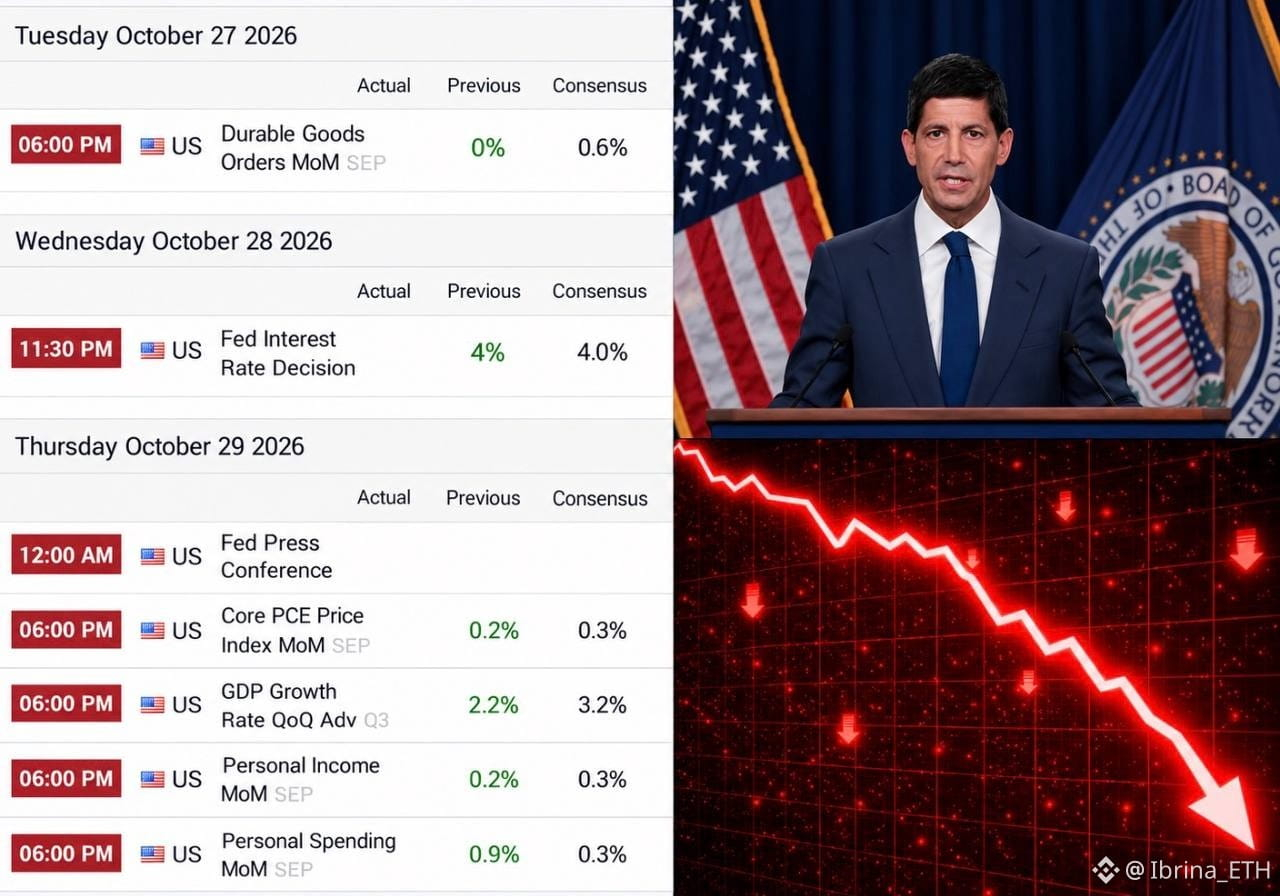
The next 5 days could bring serious volatility across stocks, gold, oil, and crypto.
Here’s what traders need to watch
MONDAY: U.S. markets reopen after Trump's warning of another strike on Iran. Brent crude oil is already near $117.
TUESDAY: Jobs, housing, and consumer confidence data.
WEDNESDAY: Fed rate decision and Kevin Warsh’s press conference. The key question: could higher rates stay for longer?
🔥 THURSDAY: U.S. GDP and PCE inflation data. Any upside surprise could fuel inflation fears.
🇯🇵 FRIDAY: Japan’s unemployment data and U.S. wage inflation figures.
WHY IT MATTERS:
Oil prices are rising, inflation risks remain, and concerns over AI spending are adding pressure.
If inflation comes in hotter than expected and the Fed takes a more hawkish stance, risk assets could face another wave of selling.
For crypto traders, the next move may depend on inflation, Fed guidance, and geopolitical headlines.
Stay alert. Manage risk. Don't let volatility make your decisions for you.
One week. Major catalysts. No room for blind bets.
$JCT $TRUMP
#BREAKING #news #TRUMP
211
·
--
🚨 Trump is reportedly preparing a plan to crack down on crypto scammers targeting Americans.
Crypto was built on the idea of financial freedom, but scammers continue to exploit that freedom to steal people's hard-earned money.
Fake investment platforms, phishing attacks, and fraudulent schemes have damaged trust in the industry and left many investors with painful losses.
If this plan leads to stronger enforcement and real consequences for fraudsters, it could be a meaningful step toward making the crypto space safer.
But the real question is: What actions will the administration actually take, and how far will this crackdown go?
The industry doesn't just need promises. It needs effective enforcement, better investor protection, and accountability for those who use crypto to commit fraud.
Protecting users is essential for building long-term trust and bringing more people into the market.
Until then, stay alert. Verify platforms before investing, never trust guaranteed returns, and think twice before sending funds to anyone.
Crypto needs innovation, but it also needs accountability. 🔒🇺🇸
$JCT $ORDER $TRUMP
#BREAKING #news #TRUMP
🚨 Trump is reportedly preparing a plan to crack down on crypto scammers targeting Americans.
Crypto was built on the idea of financial freedom, but scammers continue to exploit that freedom to steal people's hard-earned money.
Fake investment platforms, phishing attacks, and fraudulent schemes have damaged trust in the industry and left many investors with painful losses.
If this plan leads to stronger enforcement and real consequences for fraudsters, it could be a meaningful step toward making the crypto space safer.
But the real question is: What actions will the administration actually take, and how far will this crackdown go?
The industry doesn't just need promises. It needs effective enforcement, better investor protection, and accountability for those who use crypto to commit fraud.
Protecting users is essential for building long-term trust and bringing more people into the market.
Until then, stay alert. Verify platforms before investing, never trust guaranteed returns, and think twice before sending funds to anyone.
Crypto needs innovation, but it also needs accountability. 🔒🇺🇸
$JCT $ORDER $TRUMP
#BREAKING #news #TRUMP
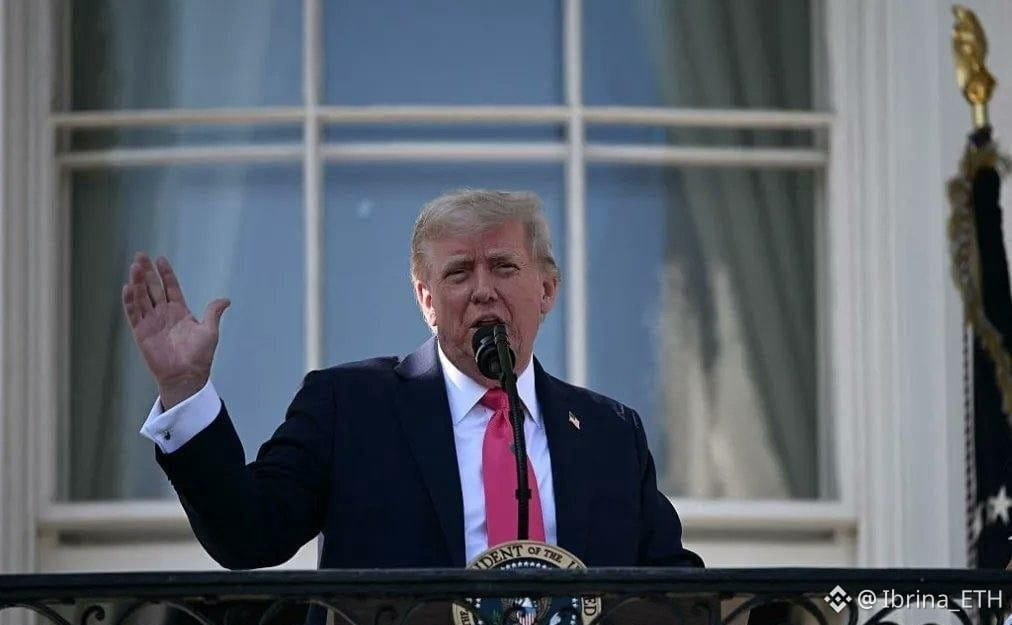
Crypto was built on the idea of financial freedom, but scammers continue to exploit that freedom to steal people's hard-earned money.
Fake investment platforms, phishing attacks, and fraudulent schemes have damaged trust in the industry and left many investors with painful losses.
If this plan leads to stronger enforcement and real consequences for fraudsters, it could be a meaningful step toward making the crypto space safer.
But the real question is: What actions will the administration actually take, and how far will this crackdown go?
The industry doesn't just need promises. It needs effective enforcement, better investor protection, and accountability for those who use crypto to commit fraud.
Protecting users is essential for building long-term trust and bringing more people into the market.
Until then, stay alert. Verify platforms before investing, never trust guaranteed returns, and think twice before sending funds to anyone.
Crypto needs innovation, but it also needs accountability. 🔒🇺🇸
$JCT $ORDER $TRUMP
#BREAKING #news #TRUMP
1
788
·
--
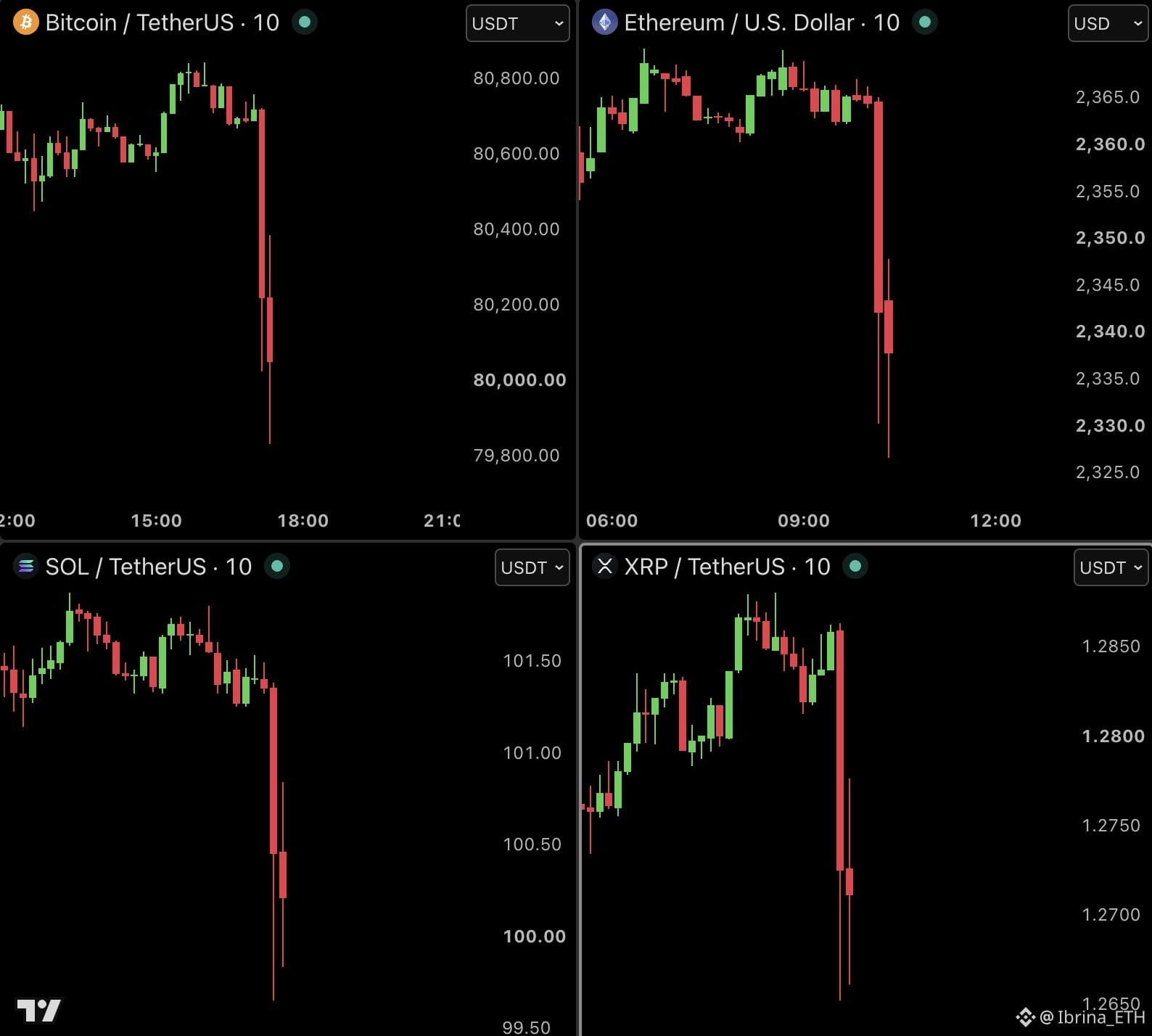
FUCKTOBER STRIKES AGAIN: $220M LIQUIDATED IN 15 MINUTES!
🚨BREAKING🚨
$BTC below $80,000
$ETH below $2,350
$SOL below $100
$XRP below $1.30
$220 MILLION in longs liquidated in just 15 minutes.
All of this came right after reports that the US military is fully prepared to attack Iran.
OCTOBER TURNED INTO FUCKTOBER.
$ORDER
#BREAKING #news
FUCKTOBER STRIKES AGAIN: $220M LIQUIDATED IN 15 MINUTES!
🚨BREAKING🚨
$BTC below $80,000
$ETH below $2,350
$SOL below $100
$XRP below $1.30
$220 MILLION in longs liquidated in just 15 minutes.
All of this came right after reports that the US military is fully prepared to attack Iran.
OCTOBER TURNED INTO FUCKTOBER.
$ORDER
#BREAKING #news
🚨BREAKING🚨
$BTC below $80,000
$ETH below $2,350
$SOL below $100
$XRP below $1.30
$220 MILLION in longs liquidated in just 15 minutes.
All of this came right after reports that the US military is fully prepared to attack Iran.
OCTOBER TURNED INTO FUCKTOBER.
$ORDER
#BREAKING #news
1
166
·
--
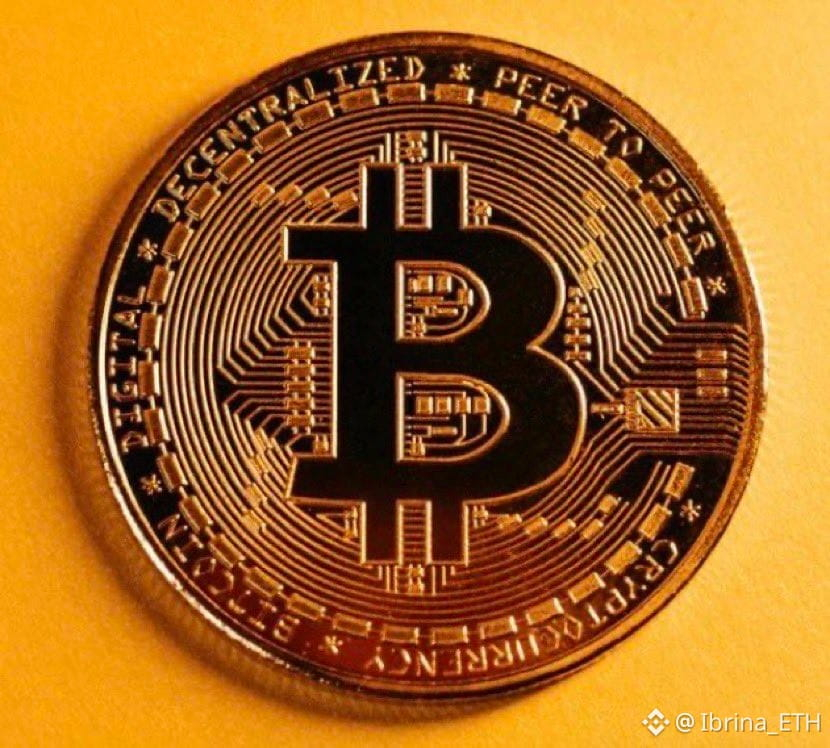
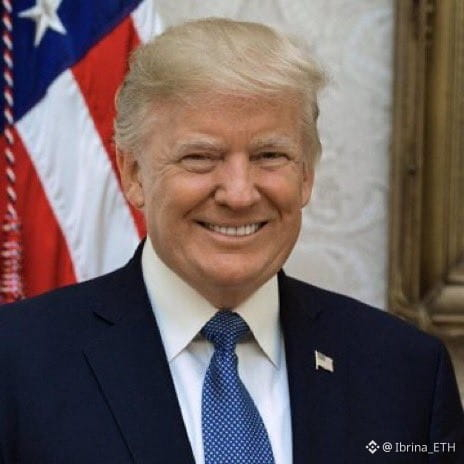
🚨 🇺🇸 THE U.S. ISN’T IGNORING BITCOIN.
The White House is working on a Strategic Bitcoin Reserve, a move that could have long-term implications for how the U.S. approaches digital assets.
Think about the bigger picture.
If Bitcoin becomes a more established part of the U.S. government's long-term strategy, it could strengthen the narrative around BTC as a strategic asset.
But the real question is how far this plan will go — and whether it leads to further adoption.
The long-term Bitcoin story is getting more interesting. 👀
$BTC is no longer a conversation the world can easily ignore.
$BIRB $TRUMP
#BREAKING #news #bitcoin
🚨 🇺🇸 THE U.S. ISN’T IGNORING BITCOIN.
The White House is working on a Strategic Bitcoin Reserve, a move that could have long-term implications for how the U.S. approaches digital assets.
Think about the bigger picture.
If Bitcoin becomes a more established part of the U.S. government's long-term strategy, it could strengthen the narrative around BTC as a strategic asset.
But the real question is how far this plan will go — and whether it leads to further adoption.
The long-term Bitcoin story is getting more interesting. 👀
$BTC is no longer a conversation the world can easily ignore.
$BIRB $TRUMP
#BREAKING #news #bitcoin
The White House is working on a Strategic Bitcoin Reserve, a move that could have long-term implications for how the U.S. approaches digital assets.
Think about the bigger picture.
If Bitcoin becomes a more established part of the U.S. government's long-term strategy, it could strengthen the narrative around BTC as a strategic asset.
But the real question is how far this plan will go — and whether it leads to further adoption.
The long-term Bitcoin story is getting more interesting. 👀
$BTC is no longer a conversation the world can easily ignore.
$BIRB $TRUMP
#BREAKING #news #bitcoin
1
1
252
·
--
Haussier
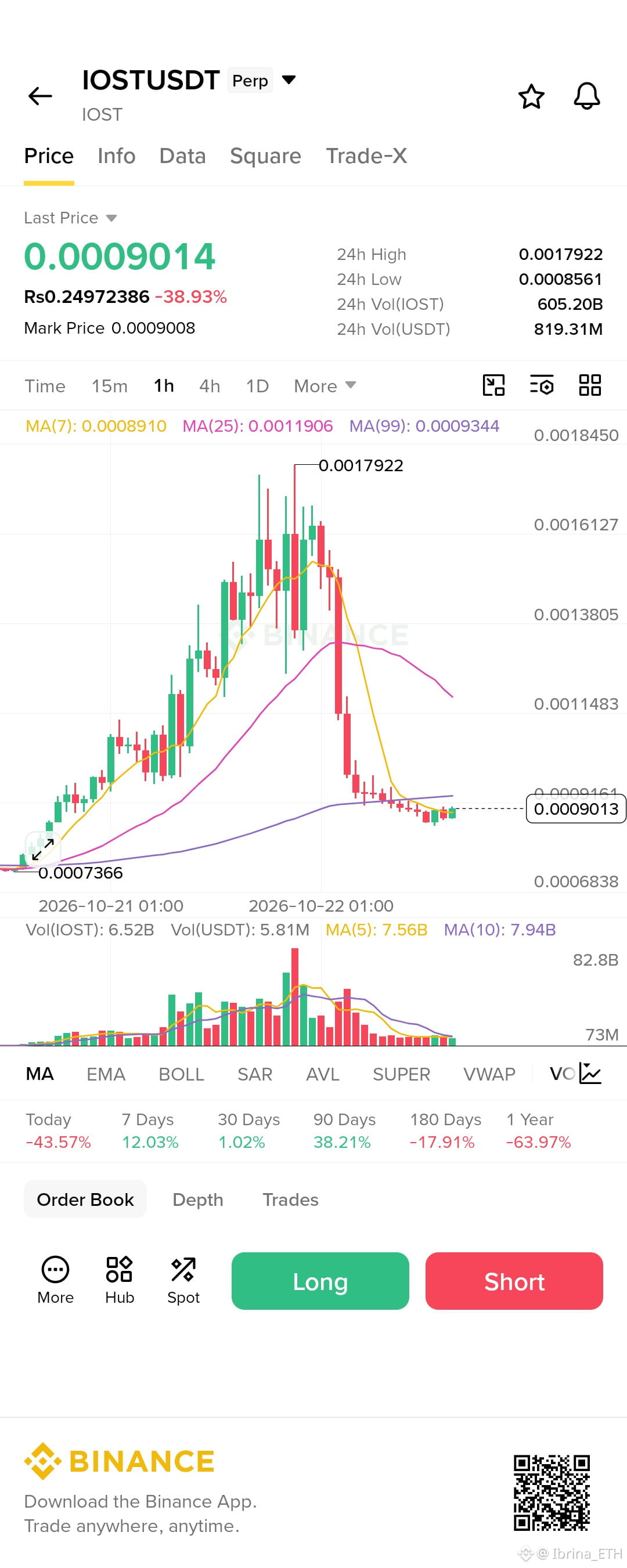
$IOST PERP — WAITING FOR A REVERSAL OR ANOTHER LEG DOWN? 📉
IOST has taken a serious hit after rallying from around $0.0007366 to $0.0017922. The 1H chart now shows a sharp sell-off, with price sitting near $0.0009014.
I'm not rushing into a long here. Price is trying to stabilize, but the overall structure is still bearish.
MARKET STRUCTURE
- Strong rejection after the move toward $0.0017922.
- Lower prices and heavy selling have shifted momentum to the downside.
- Selling volume increased during the dump, while recent candles show weaker activity.
- Price is near the 99 MA at $0.0009344, which is an important area to watch.
MY TRADE PLAN
Potential Long Setup
- Entry zone: $0.0008900–$0.0009050
- Support: $0.0008850–$0.0009000
- Resistance: $0.0009161–$0.0009344
- Stop-loss: $0.0008750
- TP1: $0.0009161
- TP2: $0.0009344
- TP3: $0.0009800
The long idea only makes sense if price holds support and starts showing stronger buying pressure. These are potential targets, not confirmed resistance levels.
Risk-to-reward: From an entry near $0.0009000, the approximate R:R is 1:1.1 at TP1, 1:2.3 at TP2, and 1:5.3 at TP3, before fees and slippage.
BEARISH SCENARIO
If IOST loses the $0.0008850–$0.0009000 area and fails to reclaim it, I would avoid forcing a long. A breakdown could open the way toward the previous chart area around $0.0008561.
BULLISH SCENARIO
If price holds the current base, reclaims $0.0009161, and breaks above $0.0009344 with stronger volume, a recovery toward $0.0009800 becomes more reasonable. I'd still want confirmation before entering.
INVALIDATION & RISK MANAGEMENT
For the potential long, a move below $0.0008750 invalidates this setup. Risk only a small amount of your account, calculate position size before entry, and don't average down into a losing trade.
My view: IOST is trying to find a floor, but a few small green candles don't confirm a reversal. I'd rather wait for confirmation than catch a falling knife.
DYOR. NFA this is a chart-based trading plan, not a guarantee of results.
{future}(IOSTUSDT)
$IOST PERP — WAITING FOR A REVERSAL OR ANOTHER LEG DOWN? 📉
IOST has taken a serious hit after rallying from around $0.0007366 to $0.0017922. The 1H chart now shows a sharp sell-off, with price sitting near $0.0009014.
I'm not rushing into a long here. Price is trying to stabilize, but the overall structure is still bearish.
MARKET STRUCTURE
- Strong rejection after the move toward $0.0017922.
- Lower prices and heavy selling have shifted momentum to the downside.
- Selling volume increased during the dump, while recent candles show weaker activity.
- Price is near the 99 MA at $0.0009344, which is an important area to watch.
MY TRADE PLAN
Potential Long Setup
- Entry zone: $0.0008900–$0.0009050
- Support: $0.0008850–$0.0009000
- Resistance: $0.0009161–$0.0009344
- Stop-loss: $0.0008750
- TP1: $0.0009161
- TP2: $0.0009344
- TP3: $0.0009800
The long idea only makes sense if price holds support and starts showing stronger buying pressure. These are potential targets, not confirmed resistance levels.
Risk-to-reward: From an entry near $0.0009000, the approximate R:R is 1:1.1 at TP1, 1:2.3 at TP2, and 1:5.3 at TP3, before fees and slippage.
BEARISH SCENARIO
If IOST loses the $0.0008850–$0.0009000 area and fails to reclaim it, I would avoid forcing a long. A breakdown could open the way toward the previous chart area around $0.0008561.
BULLISH SCENARIO
If price holds the current base, reclaims $0.0009161, and breaks above $0.0009344 with stronger volume, a recovery toward $0.0009800 becomes more reasonable. I'd still want confirmation before entering.
INVALIDATION & RISK MANAGEMENT
For the potential long, a move below $0.0008750 invalidates this setup. Risk only a small amount of your account, calculate position size before entry, and don't average down into a losing trade.
My view: IOST is trying to find a floor, but a few small green candles don't confirm a reversal. I'd rather wait for confirmation than catch a falling knife.
DYOR. NFA this is a chart-based trading plan, not a guarantee of results.
IOST has taken a serious hit after rallying from around $0.0007366 to $0.0017922. The 1H chart now shows a sharp sell-off, with price sitting near $0.0009014.
I'm not rushing into a long here. Price is trying to stabilize, but the overall structure is still bearish.
MARKET STRUCTURE
- Strong rejection after the move toward $0.0017922.
- Lower prices and heavy selling have shifted momentum to the downside.
- Selling volume increased during the dump, while recent candles show weaker activity.
- Price is near the 99 MA at $0.0009344, which is an important area to watch.
MY TRADE PLAN
Potential Long Setup
- Entry zone: $0.0008900–$0.0009050
- Support: $0.0008850–$0.0009000
- Resistance: $0.0009161–$0.0009344
- Stop-loss: $0.0008750
- TP1: $0.0009161
- TP2: $0.0009344
- TP3: $0.0009800
The long idea only makes sense if price holds support and starts showing stronger buying pressure. These are potential targets, not confirmed resistance levels.
Risk-to-reward: From an entry near $0.0009000, the approximate R:R is 1:1.1 at TP1, 1:2.3 at TP2, and 1:5.3 at TP3, before fees and slippage.
BEARISH SCENARIO
If IOST loses the $0.0008850–$0.0009000 area and fails to reclaim it, I would avoid forcing a long. A breakdown could open the way toward the previous chart area around $0.0008561.
BULLISH SCENARIO
If price holds the current base, reclaims $0.0009161, and breaks above $0.0009344 with stronger volume, a recovery toward $0.0009800 becomes more reasonable. I'd still want confirmation before entering.
INVALIDATION & RISK MANAGEMENT
For the potential long, a move below $0.0008750 invalidates this setup. Risk only a small amount of your account, calculate position size before entry, and don't average down into a losing trade.
My view: IOST is trying to find a floor, but a few small green candles don't confirm a reversal. I'd rather wait for confirmation than catch a falling knife.
DYOR. NFA this is a chart-based trading plan, not a guarantee of results.
1
303
·
--
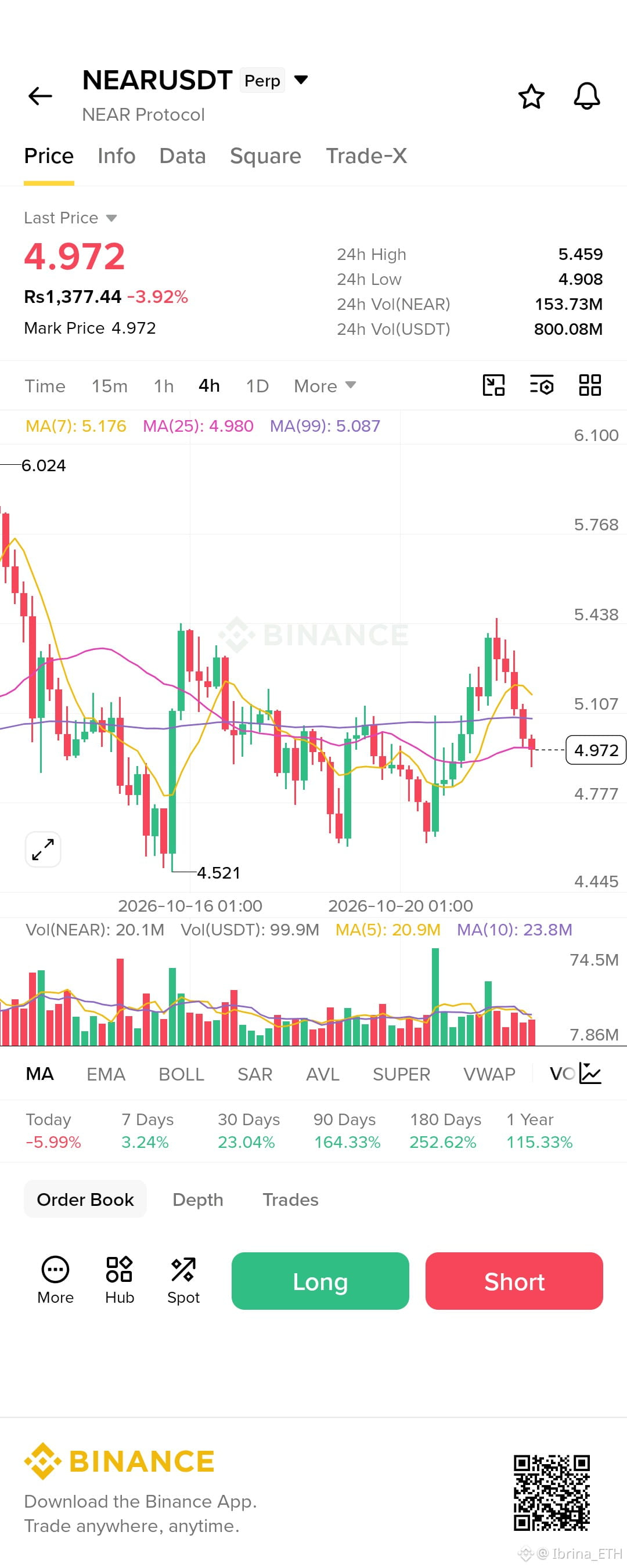
🚨 $NEAR THE RECENT RALLY IS LOSING MOMENTUM
$NEAR is trading around $4.972 on the 4H chart after getting rejected near $5.459. Buyers pushed price higher, but sellers have stepped in, and the latest candles are showing clear weakness.
The 7 MA is at $5.176, the 25 MA is around $4.980, and the 99 MA sits near $5.087. Price is now below all three, which puts short-term momentum under pressure.
I wouldn’t rush into a long here. I want to see whether buyers can reclaim resistance or if this pullback continues.
My trade plan 👇
📍 Long entry: $4.900–$4.950, only if support holds and buyers show confirmation
🟢 Support: $4.908, $4.777, $4.521
🔴 Resistance: $4.980, $5.087, $5.176
🛑 Stop-loss: $4.740
🎯 Target 1: $5.087
🎯 Target 2: $5.176
🎯 Target 3: $5.300, if momentum returns
What I’m watching:
If NEAR holds the $4.900 area and reclaims $4.980, a recovery toward $5.087 and $5.176 becomes possible.
But if buyers fail to defend $4.908, price could move toward $4.777. Losing that level would put the previous low near $4.521 back on the radar.
Risk-to-reward: From a $4.925 entry with a $4.740 stop, the approximate ratio is 1:0.9 to Target 1, 1:1.4 to Target 2, and 1:2 to Target 3, before fees and slippage. I’d prefer stronger confirmation or a better entry if the first target offers too little reward.
Risk management: I’d risk no more than 1% of my trading capital and calculate position size based on the stop-loss distance.
Invalidation: A break below $4.740 would invalidate this particular long setup.
For now, NEAR looks weak on the 4H timeframe. The bullish case needs a support hold and a reclaim of resistance. Until then, I’d rather wait for confirmation than force a trade.
Based on the provided 4H chart. These are planning levels, not guaranteed outcomes. DYOR Not financial advice.
{future}(NEARUSDT)
🚨 $NEAR THE RECENT RALLY IS LOSING MOMENTUM
$NEAR is trading around $4.972 on the 4H chart after getting rejected near $5.459. Buyers pushed price higher, but sellers have stepped in, and the latest candles are showing clear weakness.
The 7 MA is at $5.176, the 25 MA is around $4.980, and the 99 MA sits near $5.087. Price is now below all three, which puts short-term momentum under pressure.
I wouldn’t rush into a long here. I want to see whether buyers can reclaim resistance or if this pullback continues.
My trade plan 👇
📍 Long entry: $4.900–$4.950, only if support holds and buyers show confirmation
🟢 Support: $4.908, $4.777, $4.521
🔴 Resistance: $4.980, $5.087, $5.176
🛑 Stop-loss: $4.740
🎯 Target 1: $5.087
🎯 Target 2: $5.176
🎯 Target 3: $5.300, if momentum returns
What I’m watching:
If NEAR holds the $4.900 area and reclaims $4.980, a recovery toward $5.087 and $5.176 becomes possible.
But if buyers fail to defend $4.908, price could move toward $4.777. Losing that level would put the previous low near $4.521 back on the radar.
Risk-to-reward: From a $4.925 entry with a $4.740 stop, the approximate ratio is 1:0.9 to Target 1, 1:1.4 to Target 2, and 1:2 to Target 3, before fees and slippage. I’d prefer stronger confirmation or a better entry if the first target offers too little reward.
Risk management: I’d risk no more than 1% of my trading capital and calculate position size based on the stop-loss distance.
Invalidation: A break below $4.740 would invalidate this particular long setup.
For now, NEAR looks weak on the 4H timeframe. The bullish case needs a support hold and a reclaim of resistance. Until then, I’d rather wait for confirmation than force a trade.
Based on the provided 4H chart. These are planning levels, not guaranteed outcomes. DYOR Not financial advice.
$NEAR is trading around $4.972 on the 4H chart after getting rejected near $5.459. Buyers pushed price higher, but sellers have stepped in, and the latest candles are showing clear weakness.
The 7 MA is at $5.176, the 25 MA is around $4.980, and the 99 MA sits near $5.087. Price is now below all three, which puts short-term momentum under pressure.
I wouldn’t rush into a long here. I want to see whether buyers can reclaim resistance or if this pullback continues.
My trade plan 👇
📍 Long entry: $4.900–$4.950, only if support holds and buyers show confirmation
🟢 Support: $4.908, $4.777, $4.521
🔴 Resistance: $4.980, $5.087, $5.176
🛑 Stop-loss: $4.740
🎯 Target 1: $5.087
🎯 Target 2: $5.176
🎯 Target 3: $5.300, if momentum returns
What I’m watching:
If NEAR holds the $4.900 area and reclaims $4.980, a recovery toward $5.087 and $5.176 becomes possible.
But if buyers fail to defend $4.908, price could move toward $4.777. Losing that level would put the previous low near $4.521 back on the radar.
Risk-to-reward: From a $4.925 entry with a $4.740 stop, the approximate ratio is 1:0.9 to Target 1, 1:1.4 to Target 2, and 1:2 to Target 3, before fees and slippage. I’d prefer stronger confirmation or a better entry if the first target offers too little reward.
Risk management: I’d risk no more than 1% of my trading capital and calculate position size based on the stop-loss distance.
Invalidation: A break below $4.740 would invalidate this particular long setup.
For now, NEAR looks weak on the 4H timeframe. The bullish case needs a support hold and a reclaim of resistance. Until then, I’d rather wait for confirmation than force a trade.
Based on the provided 4H chart. These are planning levels, not guaranteed outcomes. DYOR Not financial advice.
Ibrina_ETH
·
--
Haussier🚨 $NEAR BULLISH RECOVERY, BUT ONE LEVEL MATTERS
$NEAR is showing signs of recovery on the 4H chart after bouncing from the $4.521 low. Price is now around $5.017, and buyers have pushed it back above the 7 MA at $4.877 and the 25 MA at $4.921.
But there’s still one thing I’m watching closely: the 99 MA is sitting near $5.077, which could act as resistance.
I like the recovery, but I wouldn’t call it a confirmed breakout just yet.
My trade plan 👇
📍 Entry zone: $4.920–$4.980, if the pullback holds and buyers step in
🟢 Support: $4.920, $4.877, $4.777
🔴 Resistance: $5.077, $5.107, $5.250
🛑 Stop-loss: $4.760
🎯 Target 1: $5.107
🎯 Target 2: $5.250
🎯 Target 3: $5.438, if momentum builds
What I’m watching:
If NEAR breaks above $5.077–$5.107 and holds that area, buyers could push price toward the next resistance levels.
On the other hand, if price gets rejected around $5.077 and loses $4.920, I’d expect another test of lower support. A break below $4.777 would weaken the recovery further.
For the entry zone above, the estimated risk-to-reward is around 1:0.8 to Target 1 and 1:1.7 to Target 2, depending on the exact entry. I’d prefer stronger confirmation or a better entry before taking the trade.
Risk management: I’d risk no more than 1% of my trading capital and size the position based on the stop-loss distance.
Invalidation: A 4H close below $4.760 would invalidate this particular long setup.
For me, NEAR is trying to recover, but the $5.077–$5.107 zone is the real test. I want to see buyers prove their strength instead of chasing the move.
Based on the provided 4H chart. Levels are for planning, not guaranteed outcomes. DYOR — Not financial advice.
$NEAR is showing signs of recovery on the 4H chart after bouncing from the $4.521 low. Price is now around $5.017, and buyers have pushed it back above the 7 MA at $4.877 and the 25 MA at $4.921.
But there’s still one thing I’m watching closely: the 99 MA is sitting near $5.077, which could act as resistance.
I like the recovery, but I wouldn’t call it a confirmed breakout just yet.
My trade plan 👇
📍 Entry zone: $4.920–$4.980, if the pullback holds and buyers step in
🟢 Support: $4.920, $4.877, $4.777
🔴 Resistance: $5.077, $5.107, $5.250
🛑 Stop-loss: $4.760
🎯 Target 1: $5.107
🎯 Target 2: $5.250
🎯 Target 3: $5.438, if momentum builds
What I’m watching:
If NEAR breaks above $5.077–$5.107 and holds that area, buyers could push price toward the next resistance levels.
On the other hand, if price gets rejected around $5.077 and loses $4.920, I’d expect another test of lower support. A break below $4.777 would weaken the recovery further.
For the entry zone above, the estimated risk-to-reward is around 1:0.8 to Target 1 and 1:1.7 to Target 2, depending on the exact entry. I’d prefer stronger confirmation or a better entry before taking the trade.
Risk management: I’d risk no more than 1% of my trading capital and size the position based on the stop-loss distance.
Invalidation: A 4H close below $4.760 would invalidate this particular long setup.
For me, NEAR is trying to recover, but the $5.077–$5.107 zone is the real test. I want to see buyers prove their strength instead of chasing the move.
Based on the provided 4H chart. Levels are for planning, not guaranteed outcomes. DYOR — Not financial advice.
2
747
·
--
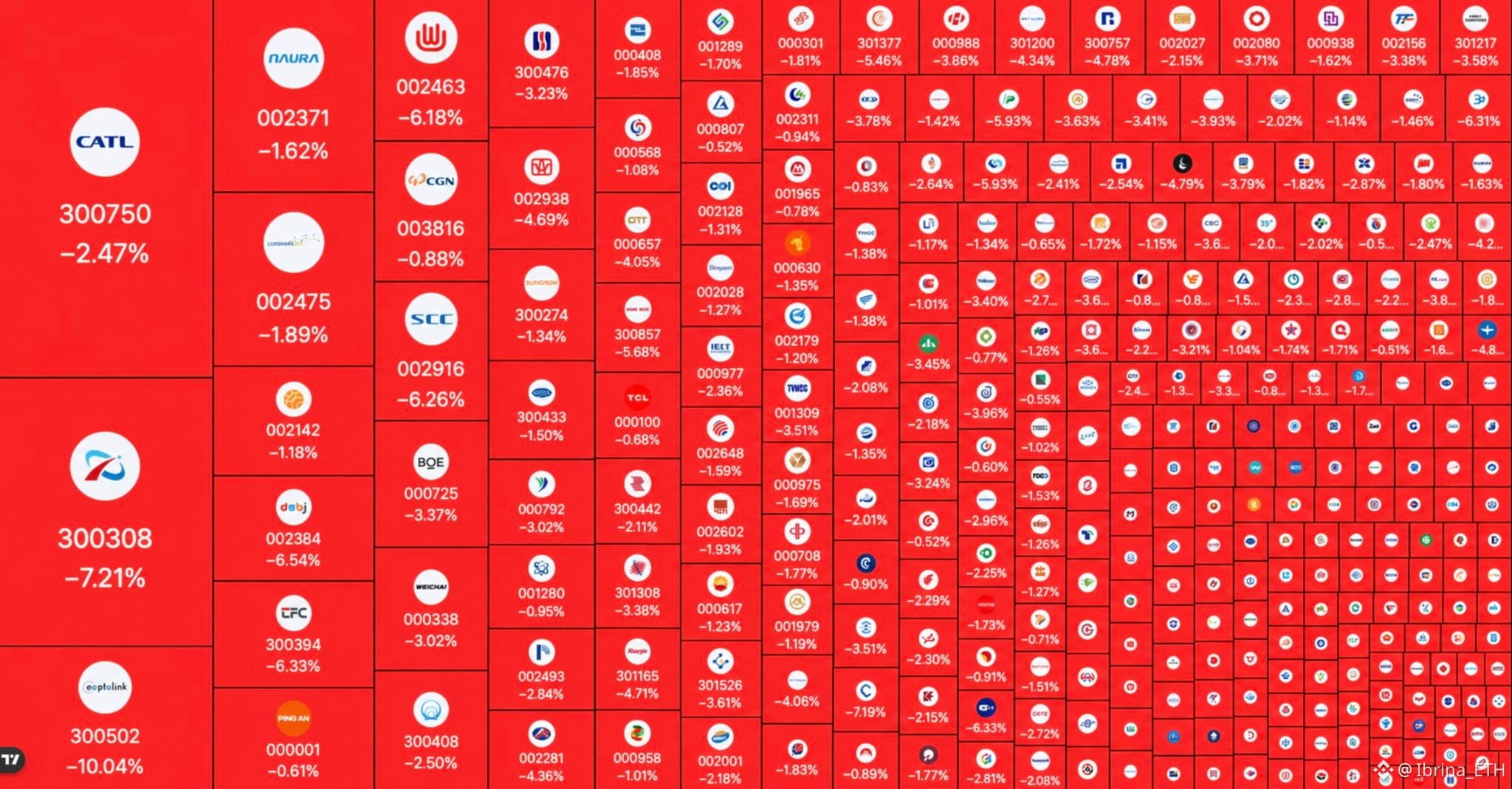
🚨 CHINA'S STOCK MARKET UNDER PRESSURE 🇨🇳
More than ¥900 billion ($130 billion) in market value reportedly wiped out as the Shanghai Composite drops 1.30%.
That's a massive amount of money disappearing from the market in a single session.
When stocks start falling this sharply, investors naturally begin questioning what's coming next.
The bigger concern is whether this sell-off spreads further across global markets.
And for crypto traders, this is worth watching too. If risk sentiment weakens, Bitcoin and other risk assets could face additional pressure.
Is this just a short-term correction, or the start of something bigger? 👀
Keep an eye on global markets. Things can change quickly. $IRYS $NVDAB
#china #StockMarket #bitcoin
🚨 CHINA'S STOCK MARKET UNDER PRESSURE 🇨🇳
More than ¥900 billion ($130 billion) in market value reportedly wiped out as the Shanghai Composite drops 1.30%.
That's a massive amount of money disappearing from the market in a single session.
When stocks start falling this sharply, investors naturally begin questioning what's coming next.
The bigger concern is whether this sell-off spreads further across global markets.
And for crypto traders, this is worth watching too. If risk sentiment weakens, Bitcoin and other risk assets could face additional pressure.
Is this just a short-term correction, or the start of something bigger? 👀
Keep an eye on global markets. Things can change quickly. $IRYS $NVDAB
#china #StockMarket #bitcoin
More than ¥900 billion ($130 billion) in market value reportedly wiped out as the Shanghai Composite drops 1.30%.
That's a massive amount of money disappearing from the market in a single session.
When stocks start falling this sharply, investors naturally begin questioning what's coming next.
The bigger concern is whether this sell-off spreads further across global markets.
And for crypto traders, this is worth watching too. If risk sentiment weakens, Bitcoin and other risk assets could face additional pressure.
Is this just a short-term correction, or the start of something bigger? 👀
Keep an eye on global markets. Things can change quickly. $IRYS $NVDAB
#china #StockMarket #bitcoin
625
·
--
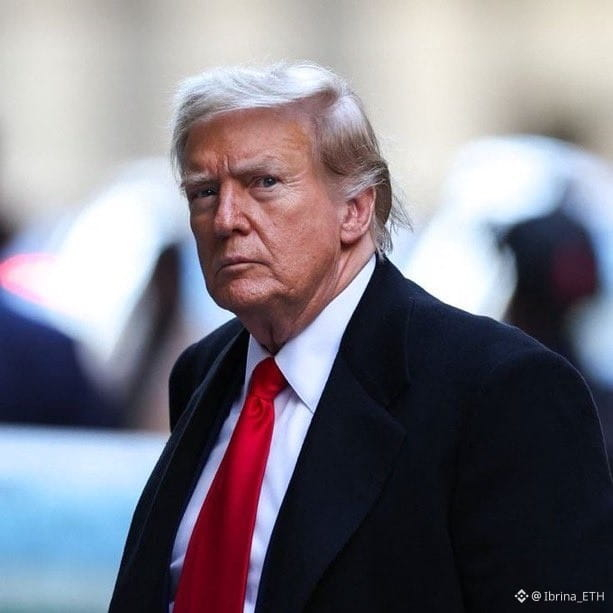
🚨 🇺🇸 TRUMP SAYS BITCOIN COULD ONE DAY OVERTAKE GOLD
President Trump is pointing to Bitcoin’s massive growth and its potential to become one of the world’s biggest stores of value.
He highlighted Bitcoin’s rise during his first term, from around $898 to $35,900.
That’s an incredible move, showing just how much Bitcoin has changed the financial conversation over the years.
But the bigger question is still ahead…
Can Bitcoin really challenge gold in the long run? 👀
Bitcoin has a limited supply of 21 million coins, while gold has centuries of history as a store of value.
The comparison is getting harder to ignore, but the road ahead won't be without volatility.
What do you think will $BTC eventually overtake gold? 🚀
$IRYS $TRUMP
#BREAKING #news #TRUMP #bitcoin
{future}(TRUMPUSDT)
🚨 🇺🇸 TRUMP SAYS BITCOIN COULD ONE DAY OVERTAKE GOLD
President Trump is pointing to Bitcoin’s massive growth and its potential to become one of the world’s biggest stores of value.
He highlighted Bitcoin’s rise during his first term, from around $898 to $35,900.
That’s an incredible move, showing just how much Bitcoin has changed the financial conversation over the years.
But the bigger question is still ahead…
Can Bitcoin really challenge gold in the long run? 👀
Bitcoin has a limited supply of 21 million coins, while gold has centuries of history as a store of value.
The comparison is getting harder to ignore, but the road ahead won't be without volatility.
What do you think will $BTC eventually overtake gold? 🚀
$IRYS $TRUMP
#BREAKING #news #TRUMP #bitcoin
President Trump is pointing to Bitcoin’s massive growth and its potential to become one of the world’s biggest stores of value.
He highlighted Bitcoin’s rise during his first term, from around $898 to $35,900.
That’s an incredible move, showing just how much Bitcoin has changed the financial conversation over the years.
But the bigger question is still ahead…
Can Bitcoin really challenge gold in the long run? 👀
Bitcoin has a limited supply of 21 million coins, while gold has centuries of history as a store of value.
The comparison is getting harder to ignore, but the road ahead won't be without volatility.
What do you think will $BTC eventually overtake gold? 🚀
$IRYS $TRUMP
#BREAKING #news #TRUMP #bitcoin

2
2
857
·
--
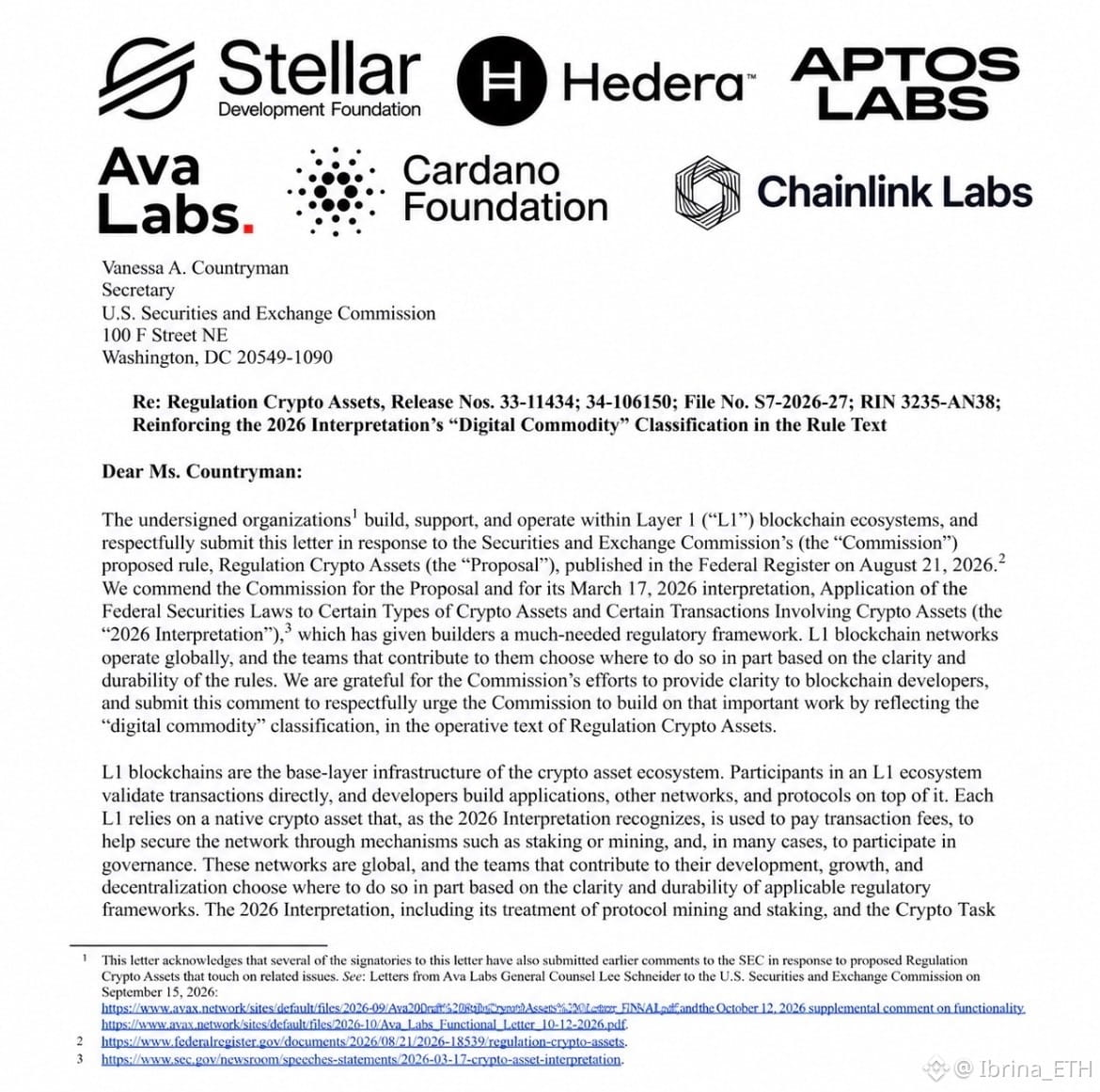
🚨 BREAKING: MAJOR CRYPTO CLARITY PUSH IN WASHINGTON 🇺🇸
Stellar, Hedera, Aptos, Avalanche, Cardano, and Chainlink are urging the SEC to establish clear rules on which cryptocurrencies should be classified as digital commodities.
And this matters more than people think.
For years, uncertainty around crypto regulations has made it difficult for projects, investors, and businesses to know exactly where they stand.
Clear rules could help reduce confusion, give crypto projects more certainty, and create a stronger foundation for the industry's future.
The big question now is: Will the SEC finally bring the clarity the crypto market has been waiting for? 👀
The next move from regulators could be important for the entire industry.
#Crypto #CLARITYAct $XLM $HBAR $APT $AVAX $BULLA $ADA $LINK
🚨 BREAKING: MAJOR CRYPTO CLARITY PUSH IN WASHINGTON 🇺🇸
Stellar, Hedera, Aptos, Avalanche, Cardano, and Chainlink are urging the SEC to establish clear rules on which cryptocurrencies should be classified as digital commodities.
And this matters more than people think.
For years, uncertainty around crypto regulations has made it difficult for projects, investors, and businesses to know exactly where they stand.
Clear rules could help reduce confusion, give crypto projects more certainty, and create a stronger foundation for the industry's future.
The big question now is: Will the SEC finally bring the clarity the crypto market has been waiting for? 👀
The next move from regulators could be important for the entire industry.
#Crypto #CLARITYAct $XLM $HBAR $APT $AVAX $BULLA $ADA $LINK
Stellar, Hedera, Aptos, Avalanche, Cardano, and Chainlink are urging the SEC to establish clear rules on which cryptocurrencies should be classified as digital commodities.
And this matters more than people think.
For years, uncertainty around crypto regulations has made it difficult for projects, investors, and businesses to know exactly where they stand.
Clear rules could help reduce confusion, give crypto projects more certainty, and create a stronger foundation for the industry's future.
The big question now is: Will the SEC finally bring the clarity the crypto market has been waiting for? 👀
The next move from regulators could be important for the entire industry.
#Crypto #CLARITYAct $XLM $HBAR $APT $AVAX $BULLA $ADA $LINK

3
5
2.1k
·
--
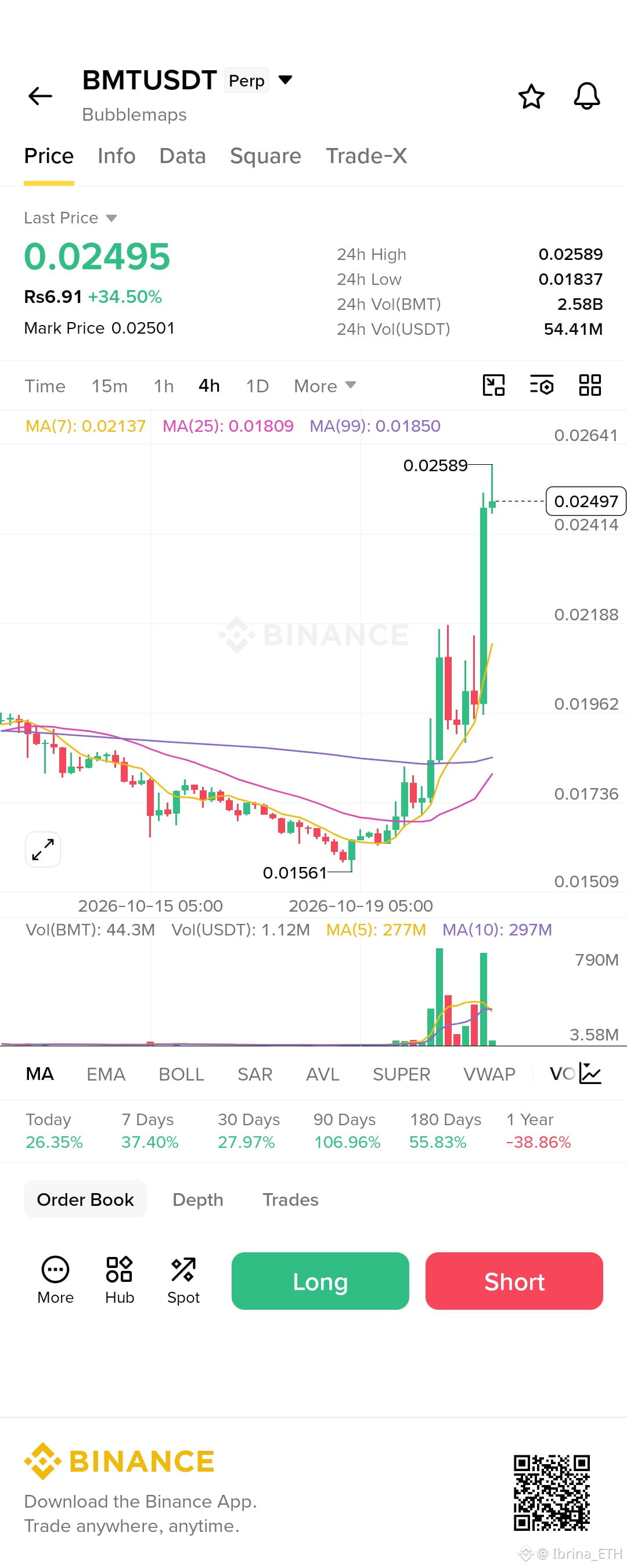
🚨 $BMT HUGE BREAKOUT, BUT I WOULDN’T CHASE HERE
$BMT is up around 34.5% on the chart, with price near $0.02495 after a strong breakout from the $0.018–$0.020 area.
The 4H candles show strong buying pressure, and volume has increased sharply. Price is also trading above the 7 MA at $0.02137, the 25 MA at $0.01809, and the 99 MA at $0.01850.
The momentum is clearly bullish right now, but after such a fast move, a pullback wouldn’t surprise me. I’d rather wait for a retest than enter just because the candles are green.
My trade plan 👇
📍 Entry zone: $0.0230–$0.0240, if price pulls back and holds
🟢 Support: $0.0241, $0.0219, $0.0214
🔴 Resistance: $0.02589, $0.02641, then the next extension if momentum continues
🛑 Stop-loss: $0.0212
🎯 Target 1: $0.02589
🎯 Target 2: $0.02641
🎯 Target 3: $0.0280, if buyers maintain control
What I’m watching:
If BMT holds the entry zone and breaks above $0.02589 with strong volume, another push higher could develop.
But if price loses $0.0230, I’d be cautious. A deeper pullback toward $0.0219–$0.0214 could follow, especially if buying volume starts fading.
Risk management: From a $0.0235 entry to the $0.0212 stop, the potential risk is about 9.8%. Target 1 offers roughly 1:1 risk-to-reward, while Target 2 is around 1:1.3, before fees and slippage. That’s not the strongest ratio, so I’d want a better entry or stronger confirmation before taking the trade.
I’d risk no more than 1% of my trading capital and size the position based on the stop-loss distance.
Invalidation: A 4H close below $0.0212 would invalidate this particular long setup.
For me, BMT has momentum, but the main question is whether buyers can hold these higher levels. I don’t want to turn a good chart into a bad trade by chasing an extended candle.
Based on the provided 4H chart. Levels are planning scenarios, not guaranteed outcomes. DYOR Not financial advice.
{future}(BMTUSDT)
🚨 $BMT HUGE BREAKOUT, BUT I WOULDN’T CHASE HERE
$BMT is up around 34.5% on the chart, with price near $0.02495 after a strong breakout from the $0.018–$0.020 area.
The 4H candles show strong buying pressure, and volume has increased sharply. Price is also trading above the 7 MA at $0.02137, the 25 MA at $0.01809, and the 99 MA at $0.01850.
The momentum is clearly bullish right now, but after such a fast move, a pullback wouldn’t surprise me. I’d rather wait for a retest than enter just because the candles are green.
My trade plan 👇
📍 Entry zone: $0.0230–$0.0240, if price pulls back and holds
🟢 Support: $0.0241, $0.0219, $0.0214
🔴 Resistance: $0.02589, $0.02641, then the next extension if momentum continues
🛑 Stop-loss: $0.0212
🎯 Target 1: $0.02589
🎯 Target 2: $0.02641
🎯 Target 3: $0.0280, if buyers maintain control
What I’m watching:
If BMT holds the entry zone and breaks above $0.02589 with strong volume, another push higher could develop.
But if price loses $0.0230, I’d be cautious. A deeper pullback toward $0.0219–$0.0214 could follow, especially if buying volume starts fading.
Risk management: From a $0.0235 entry to the $0.0212 stop, the potential risk is about 9.8%. Target 1 offers roughly 1:1 risk-to-reward, while Target 2 is around 1:1.3, before fees and slippage. That’s not the strongest ratio, so I’d want a better entry or stronger confirmation before taking the trade.
I’d risk no more than 1% of my trading capital and size the position based on the stop-loss distance.
Invalidation: A 4H close below $0.0212 would invalidate this particular long setup.
For me, BMT has momentum, but the main question is whether buyers can hold these higher levels. I don’t want to turn a good chart into a bad trade by chasing an extended candle.
Based on the provided 4H chart. Levels are planning scenarios, not guaranteed outcomes. DYOR Not financial advice.
$BMT is up around 34.5% on the chart, with price near $0.02495 after a strong breakout from the $0.018–$0.020 area.
The 4H candles show strong buying pressure, and volume has increased sharply. Price is also trading above the 7 MA at $0.02137, the 25 MA at $0.01809, and the 99 MA at $0.01850.
The momentum is clearly bullish right now, but after such a fast move, a pullback wouldn’t surprise me. I’d rather wait for a retest than enter just because the candles are green.
My trade plan 👇
📍 Entry zone: $0.0230–$0.0240, if price pulls back and holds
🟢 Support: $0.0241, $0.0219, $0.0214
🔴 Resistance: $0.02589, $0.02641, then the next extension if momentum continues
🛑 Stop-loss: $0.0212
🎯 Target 1: $0.02589
🎯 Target 2: $0.02641
🎯 Target 3: $0.0280, if buyers maintain control
What I’m watching:
If BMT holds the entry zone and breaks above $0.02589 with strong volume, another push higher could develop.
But if price loses $0.0230, I’d be cautious. A deeper pullback toward $0.0219–$0.0214 could follow, especially if buying volume starts fading.
Risk management: From a $0.0235 entry to the $0.0212 stop, the potential risk is about 9.8%. Target 1 offers roughly 1:1 risk-to-reward, while Target 2 is around 1:1.3, before fees and slippage. That’s not the strongest ratio, so I’d want a better entry or stronger confirmation before taking the trade.
I’d risk no more than 1% of my trading capital and size the position based on the stop-loss distance.
Invalidation: A 4H close below $0.0212 would invalidate this particular long setup.
For me, BMT has momentum, but the main question is whether buyers can hold these higher levels. I don’t want to turn a good chart into a bad trade by chasing an extended candle.
Based on the provided 4H chart. Levels are planning scenarios, not guaranteed outcomes. DYOR Not financial advice.
127
·
--
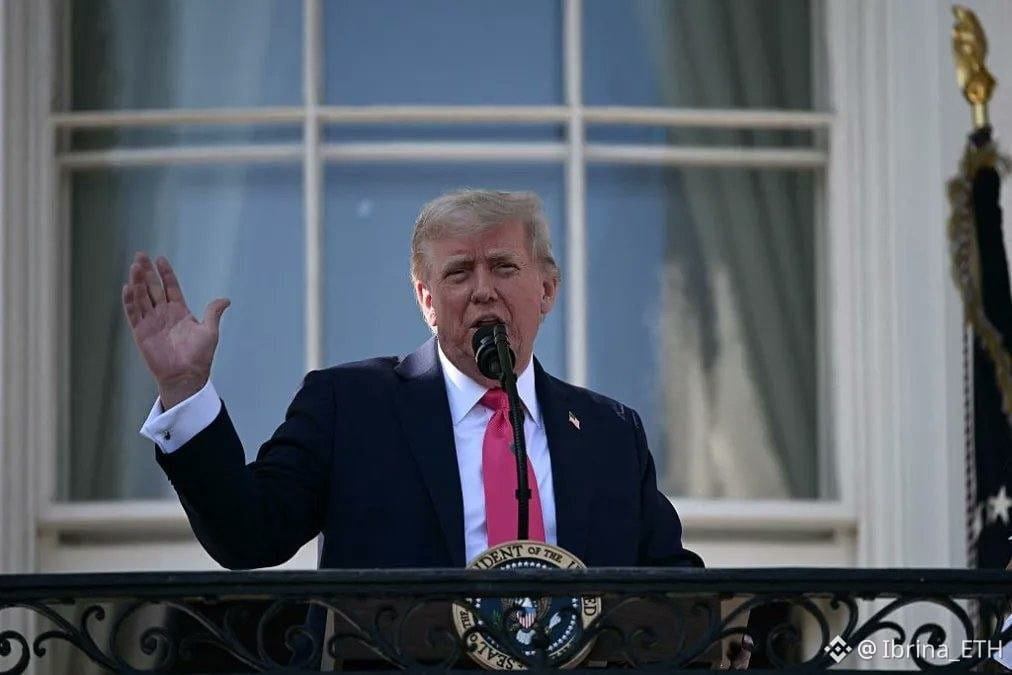
🚨 BREAKING: TRUMP TARGETS CRYPTO SCAMMERS 🇺🇸
President Donald Trump is reportedly preparing to announce a plan to crack down on crypto scammers who steal money from Americans.
Crypto scams have cost people their hard-earned money, with fraudsters using fake investment platforms, phishing attacks, and other tricks to target investors.
If this plan brings stronger action against these criminals, it could be a major step toward protecting crypto users.
The big question is: how far will this crackdown go, and what actions will follow?
One thing is clear: crypto investors need better protection, and scammers should face real consequences.
Stay alert. Verify before you trust. Never risk money you can't afford to lose. 🔒
$DOOD $TRUMP
#BREAKING #news #TRUMP
🚨 BREAKING: TRUMP TARGETS CRYPTO SCAMMERS 🇺🇸
President Donald Trump is reportedly preparing to announce a plan to crack down on crypto scammers who steal money from Americans.
Crypto scams have cost people their hard-earned money, with fraudsters using fake investment platforms, phishing attacks, and other tricks to target investors.
If this plan brings stronger action against these criminals, it could be a major step toward protecting crypto users.
The big question is: how far will this crackdown go, and what actions will follow?
One thing is clear: crypto investors need better protection, and scammers should face real consequences.
Stay alert. Verify before you trust. Never risk money you can't afford to lose. 🔒
$DOOD $TRUMP
#BREAKING #news #TRUMP
President Donald Trump is reportedly preparing to announce a plan to crack down on crypto scammers who steal money from Americans.
Crypto scams have cost people their hard-earned money, with fraudsters using fake investment platforms, phishing attacks, and other tricks to target investors.
If this plan brings stronger action against these criminals, it could be a major step toward protecting crypto users.
The big question is: how far will this crackdown go, and what actions will follow?
One thing is clear: crypto investors need better protection, and scammers should face real consequences.
Stay alert. Verify before you trust. Never risk money you can't afford to lose. 🔒
$DOOD $TRUMP
#BREAKING #news #TRUMP
18
3
65
98.1k
·
--
Haussier
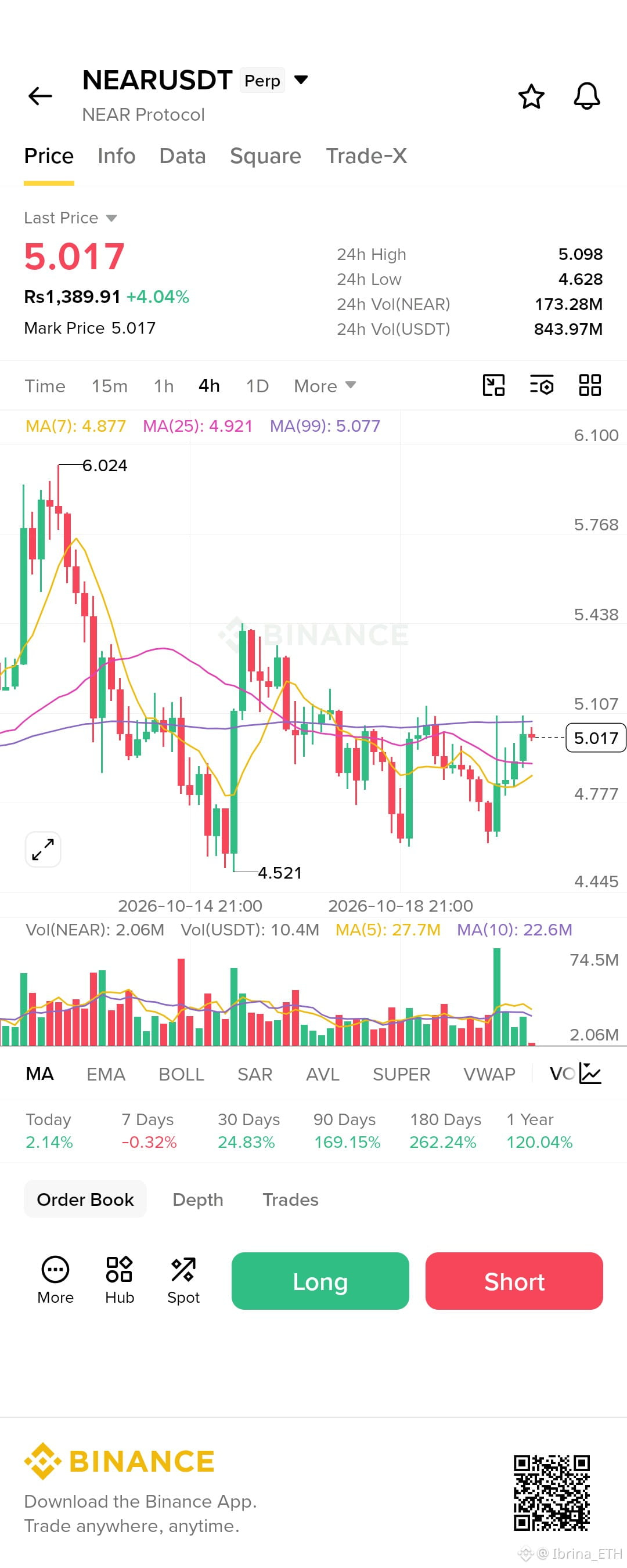
🚨 $NEAR BULLISH RECOVERY, BUT ONE LEVEL MATTERS
$NEAR is showing signs of recovery on the 4H chart after bouncing from the $4.521 low. Price is now around $5.017, and buyers have pushed it back above the 7 MA at $4.877 and the 25 MA at $4.921.
But there’s still one thing I’m watching closely: the 99 MA is sitting near $5.077, which could act as resistance.
I like the recovery, but I wouldn’t call it a confirmed breakout just yet.
My trade plan 👇
📍 Entry zone: $4.920–$4.980, if the pullback holds and buyers step in
🟢 Support: $4.920, $4.877, $4.777
🔴 Resistance: $5.077, $5.107, $5.250
🛑 Stop-loss: $4.760
🎯 Target 1: $5.107
🎯 Target 2: $5.250
🎯 Target 3: $5.438, if momentum builds
What I’m watching:
If NEAR breaks above $5.077–$5.107 and holds that area, buyers could push price toward the next resistance levels.
On the other hand, if price gets rejected around $5.077 and loses $4.920, I’d expect another test of lower support. A break below $4.777 would weaken the recovery further.
For the entry zone above, the estimated risk-to-reward is around 1:0.8 to Target 1 and 1:1.7 to Target 2, depending on the exact entry. I’d prefer stronger confirmation or a better entry before taking the trade.
Risk management: I’d risk no more than 1% of my trading capital and size the position based on the stop-loss distance.
Invalidation: A 4H close below $4.760 would invalidate this particular long setup.
For me, NEAR is trying to recover, but the $5.077–$5.107 zone is the real test. I want to see buyers prove their strength instead of chasing the move.
Based on the provided 4H chart. Levels are for planning, not guaranteed outcomes. DYOR — Not financial advice.
{future}(NEARUSDT)
🚨 $NEAR BULLISH RECOVERY, BUT ONE LEVEL MATTERS
$NEAR is showing signs of recovery on the 4H chart after bouncing from the $4.521 low. Price is now around $5.017, and buyers have pushed it back above the 7 MA at $4.877 and the 25 MA at $4.921.
But there’s still one thing I’m watching closely: the 99 MA is sitting near $5.077, which could act as resistance.
I like the recovery, but I wouldn’t call it a confirmed breakout just yet.
My trade plan 👇
📍 Entry zone: $4.920–$4.980, if the pullback holds and buyers step in
🟢 Support: $4.920, $4.877, $4.777
🔴 Resistance: $5.077, $5.107, $5.250
🛑 Stop-loss: $4.760
🎯 Target 1: $5.107
🎯 Target 2: $5.250
🎯 Target 3: $5.438, if momentum builds
What I’m watching:
If NEAR breaks above $5.077–$5.107 and holds that area, buyers could push price toward the next resistance levels.
On the other hand, if price gets rejected around $5.077 and loses $4.920, I’d expect another test of lower support. A break below $4.777 would weaken the recovery further.
For the entry zone above, the estimated risk-to-reward is around 1:0.8 to Target 1 and 1:1.7 to Target 2, depending on the exact entry. I’d prefer stronger confirmation or a better entry before taking the trade.
Risk management: I’d risk no more than 1% of my trading capital and size the position based on the stop-loss distance.
Invalidation: A 4H close below $4.760 would invalidate this particular long setup.
For me, NEAR is trying to recover, but the $5.077–$5.107 zone is the real test. I want to see buyers prove their strength instead of chasing the move.
Based on the provided 4H chart. Levels are for planning, not guaranteed outcomes. DYOR — Not financial advice.
$NEAR is showing signs of recovery on the 4H chart after bouncing from the $4.521 low. Price is now around $5.017, and buyers have pushed it back above the 7 MA at $4.877 and the 25 MA at $4.921.
But there’s still one thing I’m watching closely: the 99 MA is sitting near $5.077, which could act as resistance.
I like the recovery, but I wouldn’t call it a confirmed breakout just yet.
My trade plan 👇
📍 Entry zone: $4.920–$4.980, if the pullback holds and buyers step in
🟢 Support: $4.920, $4.877, $4.777
🔴 Resistance: $5.077, $5.107, $5.250
🛑 Stop-loss: $4.760
🎯 Target 1: $5.107
🎯 Target 2: $5.250
🎯 Target 3: $5.438, if momentum builds
What I’m watching:
If NEAR breaks above $5.077–$5.107 and holds that area, buyers could push price toward the next resistance levels.
On the other hand, if price gets rejected around $5.077 and loses $4.920, I’d expect another test of lower support. A break below $4.777 would weaken the recovery further.
For the entry zone above, the estimated risk-to-reward is around 1:0.8 to Target 1 and 1:1.7 to Target 2, depending on the exact entry. I’d prefer stronger confirmation or a better entry before taking the trade.
Risk management: I’d risk no more than 1% of my trading capital and size the position based on the stop-loss distance.
Invalidation: A 4H close below $4.760 would invalidate this particular long setup.
For me, NEAR is trying to recover, but the $5.077–$5.107 zone is the real test. I want to see buyers prove their strength instead of chasing the move.
Based on the provided 4H chart. Levels are for planning, not guaranteed outcomes. DYOR — Not financial advice.
1
1
1.2k
·
--
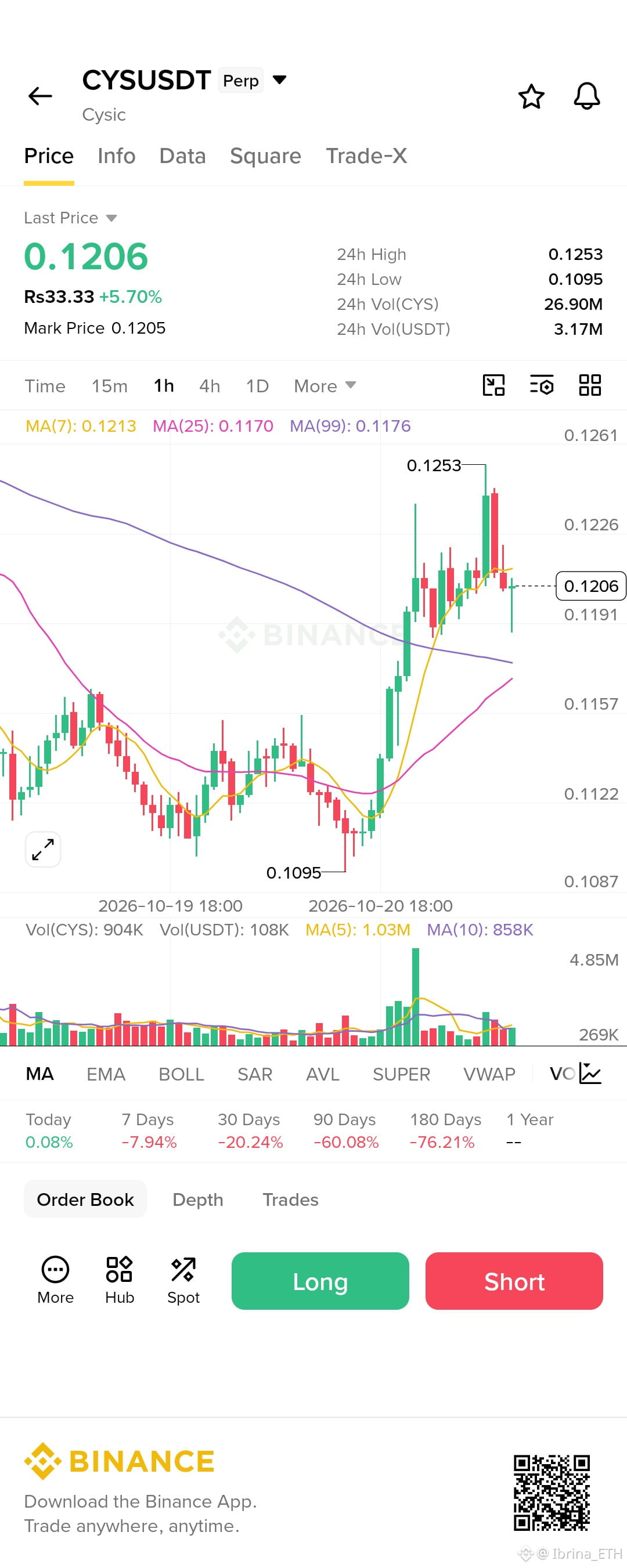
$CYS is showing strong short-term momentum after bouncing from the $0.1095 low and pushing up to $0.1253. Price is now around $0.1206, and the 1H chart shows a sharp breakout followed by some cooling off.
The 7 MA is near $0.1213, while the 25 MA and 99 MA are around $0.1170 and $0.1176. Price is still above the longer moving averages, so the structure looks bullish for now. But after such a fast move, I wouldn’t rush into a long without confirmation.
My trade plan 👇
📍 Entry zone: $0.1190–$0.1200, if support holds and buyers step in
🟢 Support: $0.1190, $0.1176, $0.1170
🔴 Resistance: $0.1226, $0.1253, $0.1261
🛑 Stop-loss: $0.1170
🎯 Target 1: $0.1226
🎯 Target 2: $0.1253
🎯 Target 3: $0.1261, if momentum continues
What I’m watching:
If buyers reclaim $0.1226 and push through $0.1253 with solid volume, another move higher could follow.
But if price loses $0.1190, I’d be careful. A pullback toward $0.1176–$0.1170 wouldn’t be surprising. A 1H close below $0.1170 would invalidate this particular long setup.
For the entry above, the potential reward to the first target is roughly 1:1.7, and to the second target around 1:3.3, before fees and slippage. I’d risk no more than 1% of my trading capital and size the position according to the stop-loss distance.
The key here is not to chase a green candle. I want to see buyers defend support before entering. If the setup doesn’t develop, I’m happy to wait.
Based on the provided 1H chart. Levels are for planning, not guaranteed outcomes. DYOR Not financial advice.
{future}(CYSUSDT)
$CYS is showing strong short-term momentum after bouncing from the $0.1095 low and pushing up to $0.1253. Price is now around $0.1206, and the 1H chart shows a sharp breakout followed by some cooling off.
The 7 MA is near $0.1213, while the 25 MA and 99 MA are around $0.1170 and $0.1176. Price is still above the longer moving averages, so the structure looks bullish for now. But after such a fast move, I wouldn’t rush into a long without confirmation.
My trade plan 👇
📍 Entry zone: $0.1190–$0.1200, if support holds and buyers step in
🟢 Support: $0.1190, $0.1176, $0.1170
🔴 Resistance: $0.1226, $0.1253, $0.1261
🛑 Stop-loss: $0.1170
🎯 Target 1: $0.1226
🎯 Target 2: $0.1253
🎯 Target 3: $0.1261, if momentum continues
What I’m watching:
If buyers reclaim $0.1226 and push through $0.1253 with solid volume, another move higher could follow.
But if price loses $0.1190, I’d be careful. A pullback toward $0.1176–$0.1170 wouldn’t be surprising. A 1H close below $0.1170 would invalidate this particular long setup.
For the entry above, the potential reward to the first target is roughly 1:1.7, and to the second target around 1:3.3, before fees and slippage. I’d risk no more than 1% of my trading capital and size the position according to the stop-loss distance.
The key here is not to chase a green candle. I want to see buyers defend support before entering. If the setup doesn’t develop, I’m happy to wait.
Based on the provided 1H chart. Levels are for planning, not guaranteed outcomes. DYOR Not financial advice.
The 7 MA is near $0.1213, while the 25 MA and 99 MA are around $0.1170 and $0.1176. Price is still above the longer moving averages, so the structure looks bullish for now. But after such a fast move, I wouldn’t rush into a long without confirmation.
My trade plan 👇
📍 Entry zone: $0.1190–$0.1200, if support holds and buyers step in
🟢 Support: $0.1190, $0.1176, $0.1170
🔴 Resistance: $0.1226, $0.1253, $0.1261
🛑 Stop-loss: $0.1170
🎯 Target 1: $0.1226
🎯 Target 2: $0.1253
🎯 Target 3: $0.1261, if momentum continues
What I’m watching:
If buyers reclaim $0.1226 and push through $0.1253 with solid volume, another move higher could follow.
But if price loses $0.1190, I’d be careful. A pullback toward $0.1176–$0.1170 wouldn’t be surprising. A 1H close below $0.1170 would invalidate this particular long setup.
For the entry above, the potential reward to the first target is roughly 1:1.7, and to the second target around 1:3.3, before fees and slippage. I’d risk no more than 1% of my trading capital and size the position according to the stop-loss distance.
The key here is not to chase a green candle. I want to see buyers defend support before entering. If the setup doesn’t develop, I’m happy to wait.
Based on the provided 1H chart. Levels are for planning, not guaranteed outcomes. DYOR Not financial advice.
690
·
--
🚨 “DAD, I’M LONG $100 MILLION. JUST TELL THE MARKET WE’RE MAKING PEACE.”
Imagine opening a $100M long position, then suddenly hearing that the US and Iran are having “good peace talks.” 😂
Oil prices move, Bitcoin reacts, and the entire market starts repricing the news.
The funny part? One headline can change market sentiment in minutes.
But here’s the real question 👀
Was the market reacting to genuine progress toward peace, or was someone already positioned before the news broke?
In a market this sensitive, timing is everything.
$JCT $BIRB $TRUMP
#BREAKING #news #TRUMP
🚨 “DAD, I’M LONG $100 MILLION. JUST TELL THE MARKET WE’RE MAKING PEACE.”
Imagine opening a $100M long position, then suddenly hearing that the US and Iran are having “good peace talks.” 😂
Oil prices move, Bitcoin reacts, and the entire market starts repricing the news.
The funny part? One headline can change market sentiment in minutes.
But here’s the real question 👀
Was the market reacting to genuine progress toward peace, or was someone already positioned before the news broke?
In a market this sensitive, timing is everything.
$JCT $BIRB $TRUMP
#BREAKING #news #TRUMP
Imagine opening a $100M long position, then suddenly hearing that the US and Iran are having “good peace talks.” 😂
Oil prices move, Bitcoin reacts, and the entire market starts repricing the news.
The funny part? One headline can change market sentiment in minutes.
But here’s the real question 👀
Was the market reacting to genuine progress toward peace, or was someone already positioned before the news broke?
In a market this sensitive, timing is everything.
$JCT $BIRB $TRUMP
#BREAKING #news #TRUMP

1
4
1.6k
·
--
Haussier
🚨 BINANCE QAFILA IS HERE — $1 MILLION IN TOTAL REWARDS! 🎉
Binance MENAT is bringing the community together for Qafila 2026, a major campaign running from 20 October to 30 November 2026, with $1M in total rewards across different activities.
Here’s what eligible users can explore 👇
🔹 First Trade: Up to 20 USDC
🔹 First TradFi Perps Trade: Up to 15 USDC
🔹 Spot & Futures Trading Challenge: 75,000 USDC reward pool
🔹 Simple Earn: 1.5 USDC for an eligible subscription
🔹 Referral Challenge: Up to 20 USDC, with a top leaderboard reward of 10,000 USDC
The available activities and rewards vary by region, so check which milestones are open to you before participating.
🔗 Explore the official Qafila campaign page for participation steps, eligibility and full Terms & Conditions: [https://www.binance.com/en/ti/act/Qafila](https://www.binance.com/en/ti/act/Qafila)
Let’s make this a shared journey. Which Qafila milestone are you most interested in exploring?
This is a general announcement. Products and services may not be available in your region. All rewards are subject to campaign terms and eligibility requirements. Digital assets carry high market risk and price volatility. Your investment value can go up or down, and you may lose the amount invested. You are responsible for your investment decisions; Binance is not liable for losses you may incur. Not financial advice. See Binance’s Terms of Use and Risk Warning.
$JST $DOOD $BTC
#Binance #Qafila
🚨 BINANCE QAFILA IS HERE — $1 MILLION IN TOTAL REWARDS! 🎉
Binance MENAT is bringing the community together for Qafila 2026, a major campaign running from 20 October to 30 November 2026, with $1M in total rewards across different activities.
Here’s what eligible users can explore 👇
🔹 First Trade: Up to 20 USDC
🔹 First TradFi Perps Trade: Up to 15 USDC
🔹 Spot & Futures Trading Challenge: 75,000 USDC reward pool
🔹 Simple Earn: 1.5 USDC for an eligible subscription
🔹 Referral Challenge: Up to 20 USDC, with a top leaderboard reward of 10,000 USDC
The available activities and rewards vary by region, so check which milestones are open to you before participating.
🔗 Explore the official Qafila campaign page for participation steps, eligibility and full Terms & Conditions: https://www.binance.com/en/ti/act/Qafila
Let’s make this a shared journey. Which Qafila milestone are you most interested in exploring?
This is a general announcement. Products and services may not be available in your region. All rewards are subject to campaign terms and eligibility requirements. Digital assets carry high market risk and price volatility. Your investment value can go up or down, and you may lose the amount invested. You are responsible for your investment decisions; Binance is not liable for losses you may incur. Not financial advice. See Binance’s Terms of Use and Risk Warning.
$JST $DOOD $BTC
#Binance #Qafila
Binance MENAT is bringing the community together for Qafila 2026, a major campaign running from 20 October to 30 November 2026, with $1M in total rewards across different activities.
Here’s what eligible users can explore 👇
🔹 First Trade: Up to 20 USDC
🔹 First TradFi Perps Trade: Up to 15 USDC
🔹 Spot & Futures Trading Challenge: 75,000 USDC reward pool
🔹 Simple Earn: 1.5 USDC for an eligible subscription
🔹 Referral Challenge: Up to 20 USDC, with a top leaderboard reward of 10,000 USDC
The available activities and rewards vary by region, so check which milestones are open to you before participating.
🔗 Explore the official Qafila campaign page for participation steps, eligibility and full Terms & Conditions: https://www.binance.com/en/ti/act/Qafila
Let’s make this a shared journey. Which Qafila milestone are you most interested in exploring?
This is a general announcement. Products and services may not be available in your region. All rewards are subject to campaign terms and eligibility requirements. Digital assets carry high market risk and price volatility. Your investment value can go up or down, and you may lose the amount invested. You are responsible for your investment decisions; Binance is not liable for losses you may incur. Not financial advice. See Binance’s Terms of Use and Risk Warning.
$JST $DOOD $BTC
#Binance #Qafila


1
4
466
·
--
🚨 JPMORGAN NOW SEES BITCOIN OUTPERFORMING MAJOR ASSET CLASSES.
This is an interesting shift when you remember what Jamie Dimon said about Bitcoin back in 2017.
JPMorgan’s long-term market outlook reportedly projects:
📈 Bitcoin: 10% annual return in the base case, 16.5% in the bull case
🇺🇸 U.S. Stocks: 7.5%
🥇 Gold: 5.5%
📊 U.S. Bonds: 5.6%
Using the report’s assumed BTC price of $83,000, the projections suggest:
• Base case: Around $215,000 in 10 years
• Bull case: Around $385,000 in 10 years
But here’s the part worth paying attention to.
In 2017, Jamie Dimon called Bitcoin a fraud and said he would fire any JPMorgan trader caught trading it.
Back then, Bitcoin was trading around $4,100.
Now, JPMorgan’s long-term projections are putting Bitcoin ahead of stocks, gold, and bonds in expected annual returns.
The bigger takeaway? Even when major financial institutions remain cautious, their view of Bitcoin’s long-term potential can change as the market evolves.
Of course, these are projections, not guarantees. Bitcoin remains volatile, and the actual results could look very different.
Still, it raises an interesting question:
👀 Could Bitcoin become one of the strongest-performing assets over the next decade?
What do you think — is $BTC heading toward $200K–$400K, or are these expectations too bullish?
$JCT $DOOD
#BREAKING #bitcoin #news
🚨 JPMORGAN NOW SEES BITCOIN OUTPERFORMING MAJOR ASSET CLASSES.
This is an interesting shift when you remember what Jamie Dimon said about Bitcoin back in 2017.
JPMorgan’s long-term market outlook reportedly projects:
📈 Bitcoin: 10% annual return in the base case, 16.5% in the bull case
🇺🇸 U.S. Stocks: 7.5%
🥇 Gold: 5.5%
📊 U.S. Bonds: 5.6%
Using the report’s assumed BTC price of $83,000, the projections suggest:
• Base case: Around $215,000 in 10 years
• Bull case: Around $385,000 in 10 years
But here’s the part worth paying attention to.
In 2017, Jamie Dimon called Bitcoin a fraud and said he would fire any JPMorgan trader caught trading it.
Back then, Bitcoin was trading around $4,100.
Now, JPMorgan’s long-term projections are putting Bitcoin ahead of stocks, gold, and bonds in expected annual returns.
The bigger takeaway? Even when major financial institutions remain cautious, their view of Bitcoin’s long-term potential can change as the market evolves.
Of course, these are projections, not guarantees. Bitcoin remains volatile, and the actual results could look very different.
Still, it raises an interesting question:
👀 Could Bitcoin become one of the strongest-performing assets over the next decade?
What do you think — is $BTC heading toward $200K–$400K, or are these expectations too bullish?
$JCT $DOOD
#BREAKING #bitcoin #news
This is an interesting shift when you remember what Jamie Dimon said about Bitcoin back in 2017.
JPMorgan’s long-term market outlook reportedly projects:
📈 Bitcoin: 10% annual return in the base case, 16.5% in the bull case
🇺🇸 U.S. Stocks: 7.5%
🥇 Gold: 5.5%
📊 U.S. Bonds: 5.6%
Using the report’s assumed BTC price of $83,000, the projections suggest:
• Base case: Around $215,000 in 10 years
• Bull case: Around $385,000 in 10 years
But here’s the part worth paying attention to.
In 2017, Jamie Dimon called Bitcoin a fraud and said he would fire any JPMorgan trader caught trading it.
Back then, Bitcoin was trading around $4,100.
Now, JPMorgan’s long-term projections are putting Bitcoin ahead of stocks, gold, and bonds in expected annual returns.
The bigger takeaway? Even when major financial institutions remain cautious, their view of Bitcoin’s long-term potential can change as the market evolves.
Of course, these are projections, not guarantees. Bitcoin remains volatile, and the actual results could look very different.
Still, it raises an interesting question:
👀 Could Bitcoin become one of the strongest-performing assets over the next decade?
What do you think — is $BTC heading toward $200K–$400K, or are these expectations too bullish?
$JCT $DOOD
#BREAKING #bitcoin #news
195
·
--
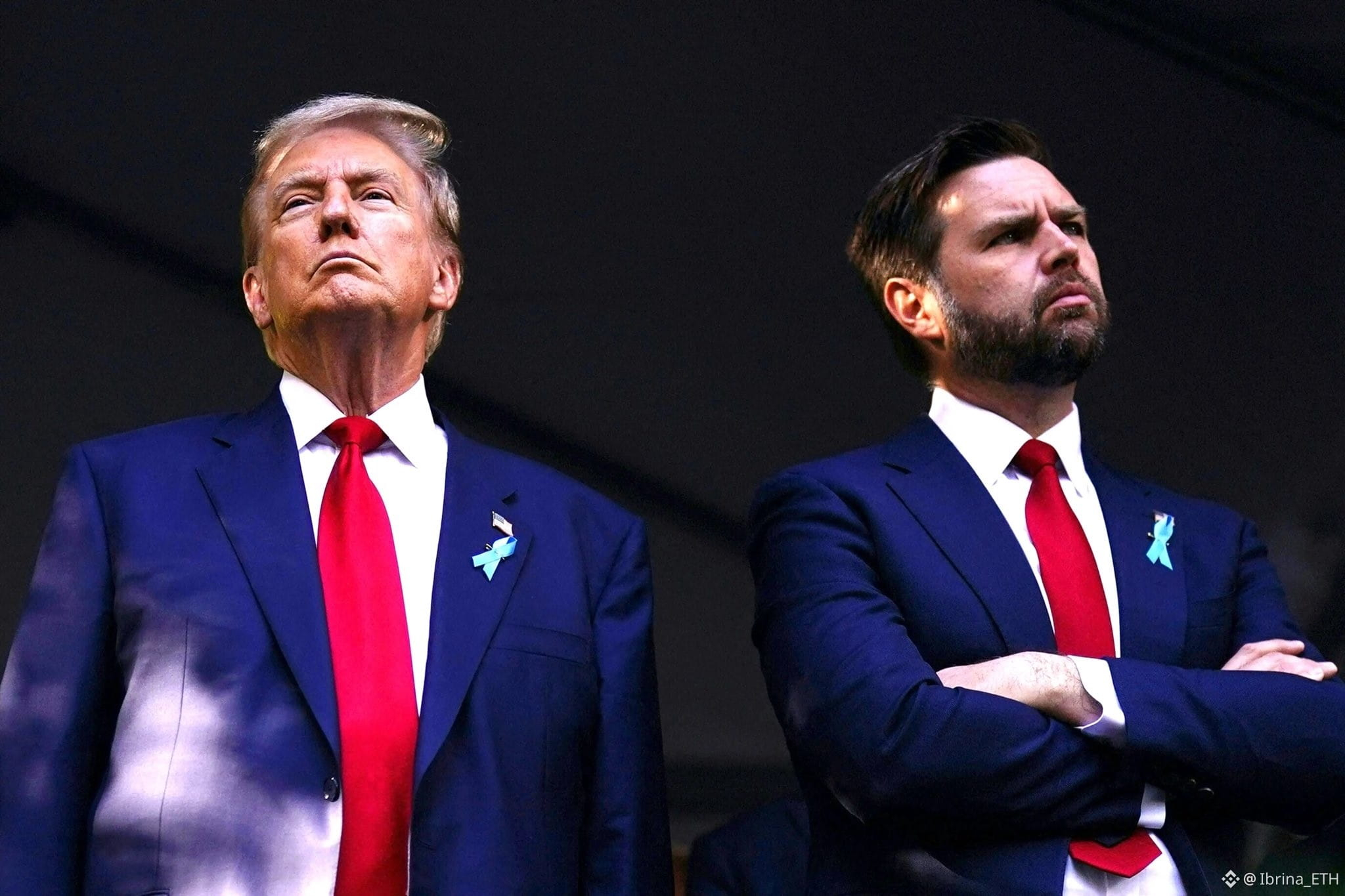
💥 BREAKING: TRUMP & JD VANCE TO MAKE MAJOR ANNOUNCEMENT TODAY
President Donald Trump and Vice President JD Vance are scheduled to make a major announcement from the Oval Office today at 1:30 PM ET.
Right now, the big question is: What are they about to announce? 👀
The details haven't been confirmed yet, so there's plenty of room for speculation. Given the potential impact of major U.S. political decisions, markets and investors may be watching closely for any important signals.
Could this be related to the economy, foreign policy, or something completely unexpected?
We'll have to wait for the official announcement to know for sure.
Stay tuned. This could be an important update. 🇺🇸
$BREV $PHA
#BREAKING #news #TRUMP
💥 BREAKING: TRUMP & JD VANCE TO MAKE MAJOR ANNOUNCEMENT TODAY
President Donald Trump and Vice President JD Vance are scheduled to make a major announcement from the Oval Office today at 1:30 PM ET.
Right now, the big question is: What are they about to announce? 👀
The details haven't been confirmed yet, so there's plenty of room for speculation. Given the potential impact of major U.S. political decisions, markets and investors may be watching closely for any important signals.
Could this be related to the economy, foreign policy, or something completely unexpected?
We'll have to wait for the official announcement to know for sure.
Stay tuned. This could be an important update. 🇺🇸
$BREV $PHA
#BREAKING #news #TRUMP
President Donald Trump and Vice President JD Vance are scheduled to make a major announcement from the Oval Office today at 1:30 PM ET.
Right now, the big question is: What are they about to announce? 👀
The details haven't been confirmed yet, so there's plenty of room for speculation. Given the potential impact of major U.S. political decisions, markets and investors may be watching closely for any important signals.
Could this be related to the economy, foreign policy, or something completely unexpected?
We'll have to wait for the official announcement to know for sure.
Stay tuned. This could be an important update. 🇺🇸
$BREV $PHA
#BREAKING #news #TRUMP
7
3
47
57.6k
Connectez-vous pour découvrir plus de contenu
Rejoignez la communauté mondiale des adeptes de cryptomonnaies sur Binance Square
⚡️ Suviez les dernières informations importantes sur les cryptomonnaies.
💬 Jugé digne de confiance par la plus grande plateforme d’échange de cryptomonnaies au monde.
👍 Découvrez les connaissances que partagent les créateurs vérifiés.
Adresse e-mail/Nº de téléphone