
HASEEB_CRPTO
4.5k Publications

HASEEB_CRPTO
Signaler
Bloquer l’utilisateur
The perfect plan is not about luck,its is about perfect strategy.
Ouvert au trading

Détenteur pour TMX
Trade fréquemment
1.3 an(s)
891 Suivis
33.5K+ Abonnés
16.2K+ J’aime
Publications
Portefeuille
Tous
Citations
Direct
·
--
Haussier
235
·
--
Haussier
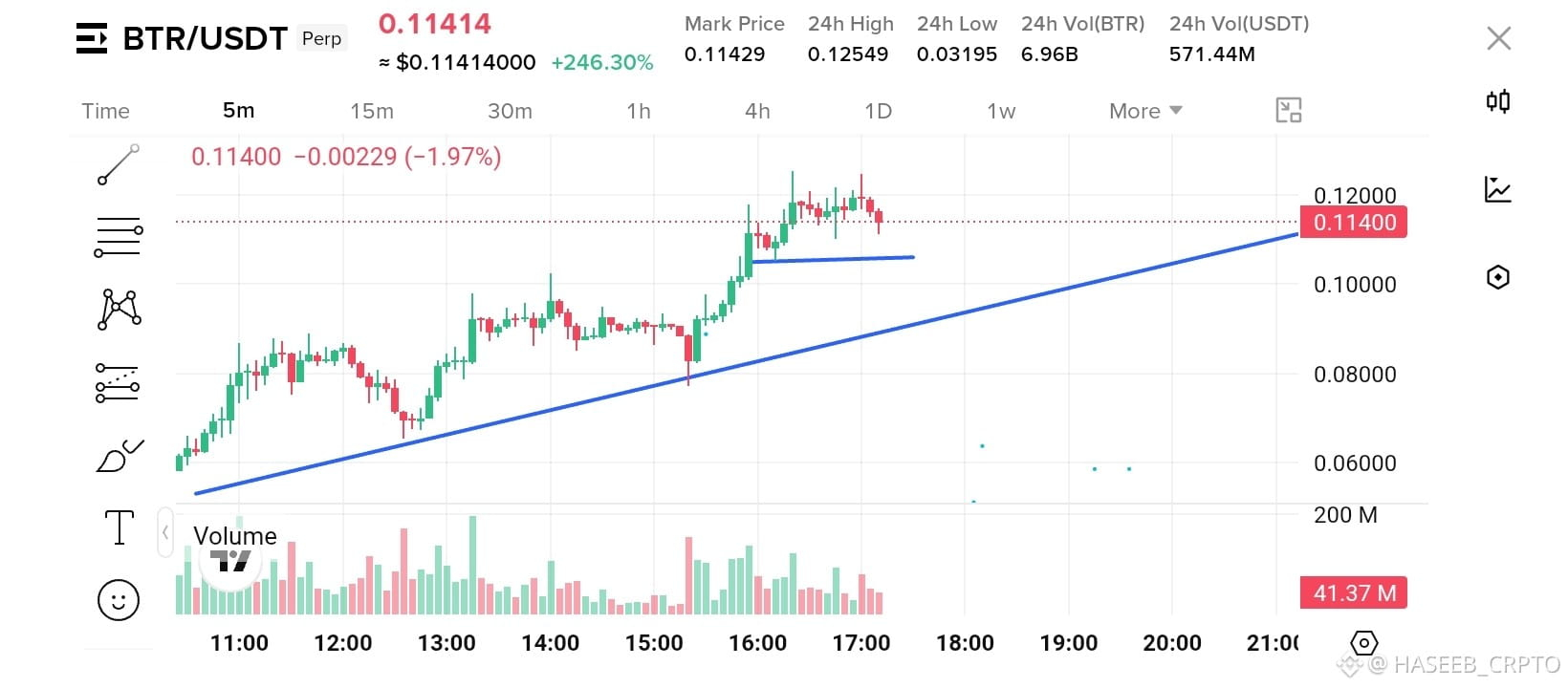
$BTR est fortement explosé avec un fort volume et gagne 256% de pompe massive .J’attends que BTR respecte cette ligne de tendance pour monter la prochaine grande vague de cette tendance haussière .Mais maintenant sur le graphique de 15 minutes un double sommet est formé et le nouveau plus bas plus haut formé est d’environ ce qui suggère un repli à la baisse .Pour que cette tendance haussière continue, la ligne de tendance doit être respectée ou, si elle la respecte, alors le support à 0,08$ doit être respecté sinon le scénario est baissier .
dyor
$BTR est fortement explosé avec un fort volume et gagne 256% de pompe massive .J’attends que BTR respecte cette ligne de tendance pour monter la prochaine grande vague de cette tendance haussière .Mais maintenant sur le graphique de 15 minutes un double sommet est formé et le nouveau plus bas plus haut formé est d’environ ce qui suggère un repli à la baisse .Pour que cette tendance haussière continue, la ligne de tendance doit être respectée ou, si elle la respecte, alors le support à 0,08$ doit être respecté sinon le scénario est baissier .
dyor
dyor
1
4
2.6k
·
--
Ce rapport d’audit me donne encore des frissons.
Tu te souviens de ce protocole sur lequel j’avais misé et qui s’est fait absolument démolir. Pas à cause d’un piratage—mais à cause d’une avancée mathématique. Quelqu’un a découvert une faiblesse subtile dans la courbe d’appariement. Rien de catastrophique au départ. Juste… des fissures. Puis tout ce qui reposait dessus s’est mis à s’effondrer. Les signatures ont échoué. Les preuves ont été invalidées. Les positions ? Liquidées. 💀
Ce souvenir m’est revenu quand j’ai cartographié la pile cryptographique de Dusk.
Voici ce qui saute aux yeux. À la base de l’architecture de Dusk, on trouve des primitives comme BLS12-381, JubJub, Schnorr et Poseidon. BLS12-381 est une courbe elliptique compatible avec l’appariement utilisée dans de nombreux systèmes de preuve modernes. JubJub est une courbe de Edwards tordue définie sur GF(q)—et voici le détail qui compte : le choix de GF(q) est fait pour correspondre au champ des scalaires de la construction de la courbe elliptique BLS12-381. Le hachage Poseidon fonctionne sur le champ des scalaires BLS12-381. PLONK ? Une implémentation pure en Rust du système de preuves PLONK sur BLS12-381. Les signatures Schnorr utilisent JubJub et Poseidon.
Ce ne sont pas des pièces indépendantes. C’est un système étroitement couplé. Une chaîne de dépendances.
Et voici ce que j’apprécie vraiment dans l’approche de Dusk : ils ne font pas semblant que ça n’existe pas. Le fichier AGENTS.md prévient ouvertement : « A bug here affects consensus and privacy ». Les changements dans les constantes de permutation, la structure des tours ou la logique du sponge peuvent casser silencieusement la dérivation des nullifiers, les preuves Merkle et le chiffrement côté chaîne. Ce n’est pas de la négligence—c’est de la maturité d’ingénierie.
On ne construit pas une infrastructure institutionnelle en prétendant que les points uniques n’existent pas. On construit en les reconnaissant, en concevant pour la flexibilité et en gardant les portes ouvertes.
$DUSK ne cache pas la chaîne de dépendances. Ils la construisent pour que tu puisses la comprendre.
Alors voilà la question qui me tient éveillé : si la fondation se déplace, ton infrastructure est-elle prête à bouger avec elle ?@Dusk_Foundation #dusk $BTR $BMT
Ce rapport d’audit me donne encore des frissons.
Tu te souviens de ce protocole sur lequel j’avais misé et qui s’est fait absolument démolir. Pas à cause d’un piratage—mais à cause d’une avancée mathématique. Quelqu’un a découvert une faiblesse subtile dans la courbe d’appariement. Rien de catastrophique au départ. Juste… des fissures. Puis tout ce qui reposait dessus s’est mis à s’effondrer. Les signatures ont échoué. Les preuves ont été invalidées. Les positions ? Liquidées. 💀
Ce souvenir m’est revenu quand j’ai cartographié la pile cryptographique de Dusk.
Voici ce qui saute aux yeux. À la base de l’architecture de Dusk, on trouve des primitives comme BLS12-381, JubJub, Schnorr et Poseidon. BLS12-381 est une courbe elliptique compatible avec l’appariement utilisée dans de nombreux systèmes de preuve modernes. JubJub est une courbe de Edwards tordue définie sur GF(q)—et voici le détail qui compte : le choix de GF(q) est fait pour correspondre au champ des scalaires de la construction de la courbe elliptique BLS12-381. Le hachage Poseidon fonctionne sur le champ des scalaires BLS12-381. PLONK ? Une implémentation pure en Rust du système de preuves PLONK sur BLS12-381. Les signatures Schnorr utilisent JubJub et Poseidon.
Ce ne sont pas des pièces indépendantes. C’est un système étroitement couplé. Une chaîne de dépendances.
Et voici ce que j’apprécie vraiment dans l’approche de Dusk : ils ne font pas semblant que ça n’existe pas. Le fichier AGENTS.md prévient ouvertement : « A bug here affects consensus and privacy ». Les changements dans les constantes de permutation, la structure des tours ou la logique du sponge peuvent casser silencieusement la dérivation des nullifiers, les preuves Merkle et le chiffrement côté chaîne. Ce n’est pas de la négligence—c’est de la maturité d’ingénierie.
On ne construit pas une infrastructure institutionnelle en prétendant que les points uniques n’existent pas. On construit en les reconnaissant, en concevant pour la flexibilité et en gardant les portes ouvertes.
$DUSK ne cache pas la chaîne de dépendances. Ils la construisent pour que tu puisses la comprendre.
Alors voilà la question qui me tient éveillé : si la fondation se déplace, ton infrastructure est-elle prête à bouger avec elle ?@Dusk #dusk $BTR $BMT
Tu te souviens de ce protocole sur lequel j’avais misé et qui s’est fait absolument démolir. Pas à cause d’un piratage—mais à cause d’une avancée mathématique. Quelqu’un a découvert une faiblesse subtile dans la courbe d’appariement. Rien de catastrophique au départ. Juste… des fissures. Puis tout ce qui reposait dessus s’est mis à s’effondrer. Les signatures ont échoué. Les preuves ont été invalidées. Les positions ? Liquidées. 💀
Ce souvenir m’est revenu quand j’ai cartographié la pile cryptographique de Dusk.
Voici ce qui saute aux yeux. À la base de l’architecture de Dusk, on trouve des primitives comme BLS12-381, JubJub, Schnorr et Poseidon. BLS12-381 est une courbe elliptique compatible avec l’appariement utilisée dans de nombreux systèmes de preuve modernes. JubJub est une courbe de Edwards tordue définie sur GF(q)—et voici le détail qui compte : le choix de GF(q) est fait pour correspondre au champ des scalaires de la construction de la courbe elliptique BLS12-381. Le hachage Poseidon fonctionne sur le champ des scalaires BLS12-381. PLONK ? Une implémentation pure en Rust du système de preuves PLONK sur BLS12-381. Les signatures Schnorr utilisent JubJub et Poseidon.
Ce ne sont pas des pièces indépendantes. C’est un système étroitement couplé. Une chaîne de dépendances.
Et voici ce que j’apprécie vraiment dans l’approche de Dusk : ils ne font pas semblant que ça n’existe pas. Le fichier AGENTS.md prévient ouvertement : « A bug here affects consensus and privacy ». Les changements dans les constantes de permutation, la structure des tours ou la logique du sponge peuvent casser silencieusement la dérivation des nullifiers, les preuves Merkle et le chiffrement côté chaîne. Ce n’est pas de la négligence—c’est de la maturité d’ingénierie.
On ne construit pas une infrastructure institutionnelle en prétendant que les points uniques n’existent pas. On construit en les reconnaissant, en concevant pour la flexibilité et en gardant les portes ouvertes.
$DUSK ne cache pas la chaîne de dépendances. Ils la construisent pour que tu puisses la comprendre.
Alors voilà la question qui me tient éveillé : si la fondation se déplace, ton infrastructure est-elle prête à bouger avec elle ?@Dusk #dusk $BTR $BMT
2
3
122
·
--
Baissier
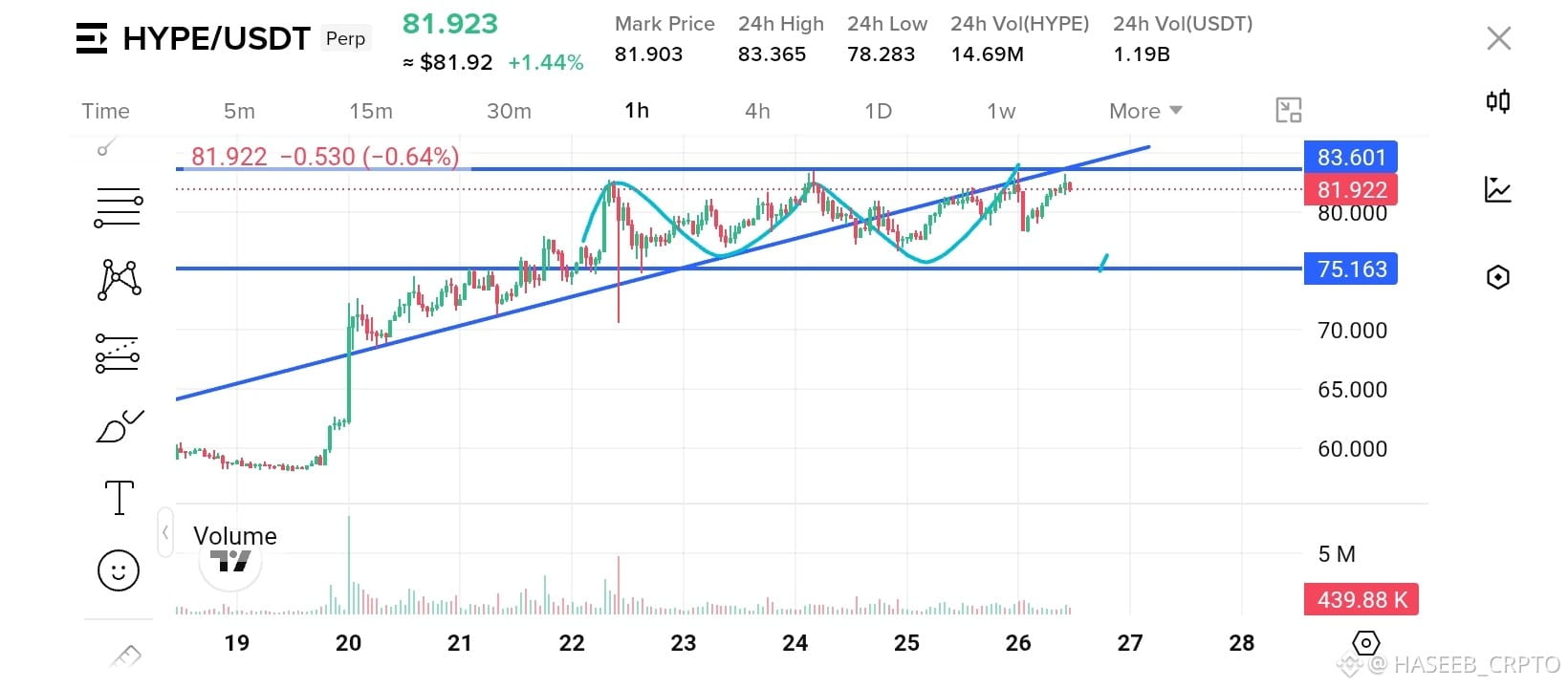
Que pensez-vous de la prochaine étape de $HYPE : baissière ou haussière ? À mon avis, la figure en triple sommet est en formation et le mouvement des prix respecte la cassure de la tendance (trendline) sur 1 heure. Je vois pour l’instant un repli valide et cela pourrait être le début d’une tendance baissière.
dyor
Que pensez-vous de la prochaine étape de $HYPE : baissière ou haussière ? À mon avis, la figure en triple sommet est en formation et le mouvement des prix respecte la cassure de la tendance (trendline) sur 1 heure. Je vois pour l’instant un repli valide et cela pourrait être le début d’une tendance baissière.
dyor
dyor
1
325
·
--
Haussier
Je regardais autrefois un agent d’entretien perdre la trace des fonds d’un client parce que son système n’arrivait pas à synchroniser deux grands livres.
Le cabinet d’un ami gérait à la fois des actifs publics et privés pour des clients institutionnels. Un jour, une conversion a échoué à mi-chemin. Les fonds sont sortis du grand livre privé, mais n’ont jamais été arrivés sur le grand livre public. Le système affichait un état équilibré, mais l’argent était introuvable. Il leur a fallu trois semaines pour démêler tout ça. 💀
Ce souvenir a pris une toute autre dimension en lisant le modèle à double état de Dusk.
Voici l’architecture : Moonlight pour les transferts publics. Phoenix pour le privé, des notes chiffrées. Les deux s’alignent sur la même chaîne. Le contrat de transfert coordonne le mouvement de la valeur.
C’est propre, non ?
Sauf qu’il existe un manque que la documentation ne traite pas : les conversions entre états ne sont pas atomiques.
Imaginez ceci :
· une institution détient 1M de DUSK répartis entre les deux états : 500k publics, 500k privés
· lance la conversion de 200k de Phoenix vers Moonlight
· les notes Phoenix sont consommées. Le crédit Moonlight échoue ou est retardé.
· l’offre totale est temporairement réduite. 200k disparaissent du système.
L’attaquant surveille, détecte les notes consommées, constate que Moonlight n’a pas crédité. Exploite l’écart. Retire des fonds d’une plateforme qui ne consulte que les soldes Moonlight.
Des fonds qui existent dans aucun état, ou dans les deux.
La correction ? Un Unified State Aggregator (agrégateur d’état unifié) avec des preuves ZK. Il fournit une vue unifiée du total des avoirs sur les deux modèles sans révéler les transactions individuelles. Les gestionnaires (custodians) vérifient l’exactitude. Pas de trous de synchronisation. Pas d’arbitrage.
$DUSK construit une infrastructure réglementée de niveau réel. Mais un double état sans conversion atomique ? C’est une bombe à retardement pour la garde (custody).
Dusk va-t-il résoudre la séparation des états avant la première faille exploitée ? 🤔@Dusk_Foundation #dusk $BMT $TAC
Je regardais autrefois un agent d’entretien perdre la trace des fonds d’un client parce que son système n’arrivait pas à synchroniser deux grands livres.
Le cabinet d’un ami gérait à la fois des actifs publics et privés pour des clients institutionnels. Un jour, une conversion a échoué à mi-chemin. Les fonds sont sortis du grand livre privé, mais n’ont jamais été arrivés sur le grand livre public. Le système affichait un état équilibré, mais l’argent était introuvable. Il leur a fallu trois semaines pour démêler tout ça. 💀
Ce souvenir a pris une toute autre dimension en lisant le modèle à double état de Dusk.
Voici l’architecture : Moonlight pour les transferts publics. Phoenix pour le privé, des notes chiffrées. Les deux s’alignent sur la même chaîne. Le contrat de transfert coordonne le mouvement de la valeur.
C’est propre, non ?
Sauf qu’il existe un manque que la documentation ne traite pas : les conversions entre états ne sont pas atomiques.
Imaginez ceci :
· une institution détient 1M de DUSK répartis entre les deux états : 500k publics, 500k privés
· lance la conversion de 200k de Phoenix vers Moonlight
· les notes Phoenix sont consommées. Le crédit Moonlight échoue ou est retardé.
· l’offre totale est temporairement réduite. 200k disparaissent du système.
L’attaquant surveille, détecte les notes consommées, constate que Moonlight n’a pas crédité. Exploite l’écart. Retire des fonds d’une plateforme qui ne consulte que les soldes Moonlight.
Des fonds qui existent dans aucun état, ou dans les deux.
La correction ? Un Unified State Aggregator (agrégateur d’état unifié) avec des preuves ZK. Il fournit une vue unifiée du total des avoirs sur les deux modèles sans révéler les transactions individuelles. Les gestionnaires (custodians) vérifient l’exactitude. Pas de trous de synchronisation. Pas d’arbitrage.
$DUSK construit une infrastructure réglementée de niveau réel. Mais un double état sans conversion atomique ? C’est une bombe à retardement pour la garde (custody).
Dusk va-t-il résoudre la séparation des états avant la première faille exploitée ? 🤔@Dusk #dusk $BMT $TAC
Le cabinet d’un ami gérait à la fois des actifs publics et privés pour des clients institutionnels. Un jour, une conversion a échoué à mi-chemin. Les fonds sont sortis du grand livre privé, mais n’ont jamais été arrivés sur le grand livre public. Le système affichait un état équilibré, mais l’argent était introuvable. Il leur a fallu trois semaines pour démêler tout ça. 💀
Ce souvenir a pris une toute autre dimension en lisant le modèle à double état de Dusk.
Voici l’architecture : Moonlight pour les transferts publics. Phoenix pour le privé, des notes chiffrées. Les deux s’alignent sur la même chaîne. Le contrat de transfert coordonne le mouvement de la valeur.
C’est propre, non ?
Sauf qu’il existe un manque que la documentation ne traite pas : les conversions entre états ne sont pas atomiques.
Imaginez ceci :
· une institution détient 1M de DUSK répartis entre les deux états : 500k publics, 500k privés
· lance la conversion de 200k de Phoenix vers Moonlight
· les notes Phoenix sont consommées. Le crédit Moonlight échoue ou est retardé.
· l’offre totale est temporairement réduite. 200k disparaissent du système.
L’attaquant surveille, détecte les notes consommées, constate que Moonlight n’a pas crédité. Exploite l’écart. Retire des fonds d’une plateforme qui ne consulte que les soldes Moonlight.
Des fonds qui existent dans aucun état, ou dans les deux.
La correction ? Un Unified State Aggregator (agrégateur d’état unifié) avec des preuves ZK. Il fournit une vue unifiée du total des avoirs sur les deux modèles sans révéler les transactions individuelles. Les gestionnaires (custodians) vérifient l’exactitude. Pas de trous de synchronisation. Pas d’arbitrage.
$DUSK construit une infrastructure réglementée de niveau réel. Mais un double état sans conversion atomique ? C’est une bombe à retardement pour la garde (custody).
Dusk va-t-il résoudre la séparation des états avant la première faille exploitée ? 🤔@Dusk #dusk $BMT $TAC
1
2
210
·
--
Baissier
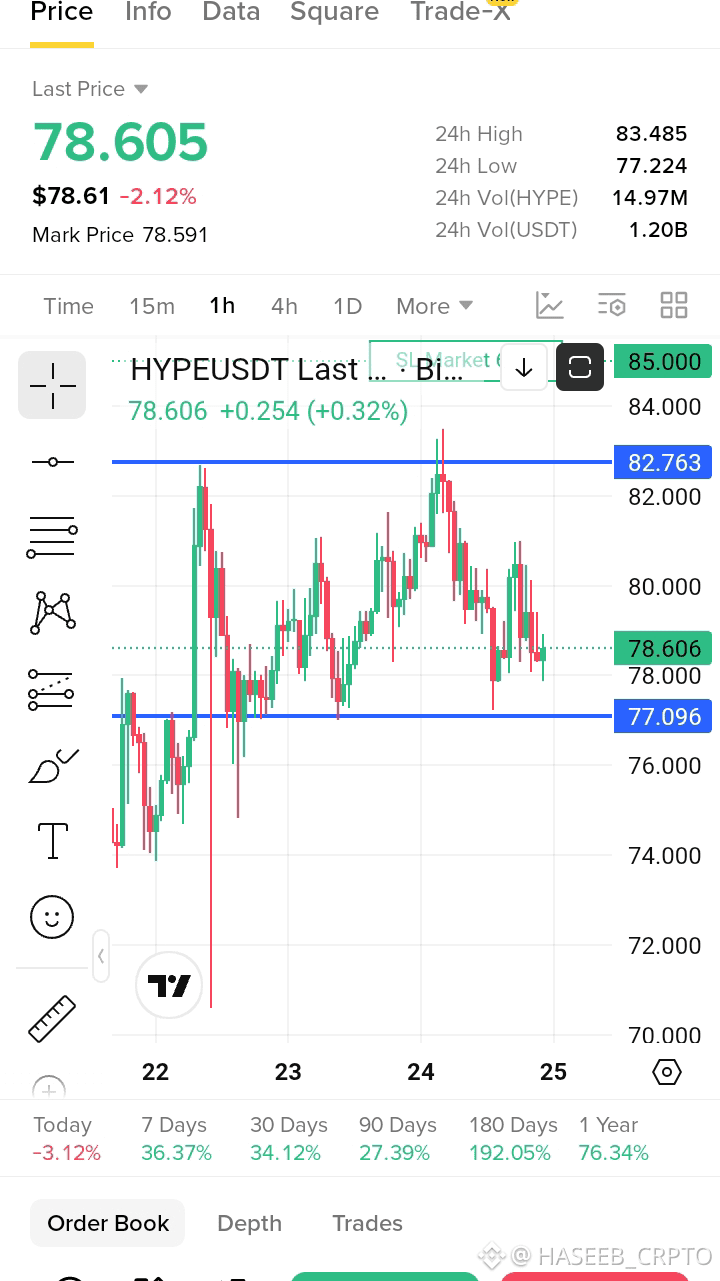
$HYPE est en phase de consolidation et maintenant je pense que si le support à 77$ avec un volume fort, une courte évolution pourrait avoir lieu.
$HYPE est en phase de consolidation et maintenant je pense que si le support à 77$ avec un volume fort, une courte évolution pourrait avoir lieu.
214
·
--
Haussier
J’ai vu des cauchemars liés au KYC détruire des opérations transfrontalières.
Il y a quelques années, j’ai assisté à la perte d’un investisseur institutionnel majeur par un gérant de fonds : la vérification KYC a pris six semaines. Des juridictions différentes. Des exigences contradictoires. L’investisseur en a eu assez d’attendre et s’est retiré. L’opération s’est effondrée. Tout ça parce que la conformité n’arrivait pas à suivre le capital mondial. 💀
Ce souvenir m’a frappé différemment en lisant le modèle « KYC unique » de Citadel.
Voici le pitch : réaliser un KYC complet une seule fois avec un fournisseur de licence. Les fournisseurs de services acceptent cette licence comme preuve. Plus besoin de plusieurs processus de vérification. Les coûts baissent. L’efficacité augmente.
Ça paraît parfait, non ?
Sauf qu’il existe un énorme angle mort que les documents passent sous silence : les standards juridictionnels ne sont pas harmonisés.
Imaginez ceci :
· l’utilisateur complète son KYC aux Pays-Bas, licencié comme « investisseur accrédité » selon les règles de l’AFM. Conforme au RGPD.
· l’utilisateur transfère cette licence à une plateforme de trading à Singapour. La MAS impose des exigences plus strictes — seuils de valeur nette plus élevés, exclusions différentes.
· la plateforme accepte la licence néerlandaise. La transaction est exécutée. Le régulateur enquête.
· qui est responsable ? La plateforme affirme s’être fiée à Citadel. Le LP soutient qu’il n’a fait que vérifier les règles néerlandaises. L’utilisateur prétend ne pas le savoir.
Le régulateur sanctionne la plateforme. Les économies de conformité ? Anéanties.
L’article célèbre « la conformité mondiale ». Mais la conformité n’est pas mondiale — elle est locale. Et les normes locales ne s’alignent pas.
La solution ? Un registre de licences par juridiction avec des preuves de conversion ZK. Des licences marquées avec la juridiction d’émission. Lors du passage des frontières, l’utilisateur fournit une preuve que ses attributs vérifiés répondent aux standards de la destination. Le SP vérifie la conformité sans que le LP ait besoin de licences locales.
$DUSK construit une infrastructure réelle pour des marchés réglementés. Mais le « KYC une seule fois » ne fonctionne que si les régulateurs s’accordent sur ce que signifie le KYC. Or ils ne le font pas.
Citadel résoudra-t-il l’inadéquation juridictionnelle avant le premier échec d’audit transfrontalier ?@Dusk_Foundation #dusk $PORTAL $STORJ 🤔
J’ai vu des cauchemars liés au KYC détruire des opérations transfrontalières.
Il y a quelques années, j’ai assisté à la perte d’un investisseur institutionnel majeur par un gérant de fonds : la vérification KYC a pris six semaines. Des juridictions différentes. Des exigences contradictoires. L’investisseur en a eu assez d’attendre et s’est retiré. L’opération s’est effondrée. Tout ça parce que la conformité n’arrivait pas à suivre le capital mondial. 💀
Ce souvenir m’a frappé différemment en lisant le modèle « KYC unique » de Citadel.
Voici le pitch : réaliser un KYC complet une seule fois avec un fournisseur de licence. Les fournisseurs de services acceptent cette licence comme preuve. Plus besoin de plusieurs processus de vérification. Les coûts baissent. L’efficacité augmente.
Ça paraît parfait, non ?
Sauf qu’il existe un énorme angle mort que les documents passent sous silence : les standards juridictionnels ne sont pas harmonisés.
Imaginez ceci :
· l’utilisateur complète son KYC aux Pays-Bas, licencié comme « investisseur accrédité » selon les règles de l’AFM. Conforme au RGPD.
· l’utilisateur transfère cette licence à une plateforme de trading à Singapour. La MAS impose des exigences plus strictes — seuils de valeur nette plus élevés, exclusions différentes.
· la plateforme accepte la licence néerlandaise. La transaction est exécutée. Le régulateur enquête.
· qui est responsable ? La plateforme affirme s’être fiée à Citadel. Le LP soutient qu’il n’a fait que vérifier les règles néerlandaises. L’utilisateur prétend ne pas le savoir.
Le régulateur sanctionne la plateforme. Les économies de conformité ? Anéanties.
L’article célèbre « la conformité mondiale ». Mais la conformité n’est pas mondiale — elle est locale. Et les normes locales ne s’alignent pas.
La solution ? Un registre de licences par juridiction avec des preuves de conversion ZK. Des licences marquées avec la juridiction d’émission. Lors du passage des frontières, l’utilisateur fournit une preuve que ses attributs vérifiés répondent aux standards de la destination. Le SP vérifie la conformité sans que le LP ait besoin de licences locales.
$DUSK construit une infrastructure réelle pour des marchés réglementés. Mais le « KYC une seule fois » ne fonctionne que si les régulateurs s’accordent sur ce que signifie le KYC. Or ils ne le font pas.
Citadel résoudra-t-il l’inadéquation juridictionnelle avant le premier échec d’audit transfrontalier ?@Dusk #dusk $PORTAL $STORJ 🤔
Il y a quelques années, j’ai assisté à la perte d’un investisseur institutionnel majeur par un gérant de fonds : la vérification KYC a pris six semaines. Des juridictions différentes. Des exigences contradictoires. L’investisseur en a eu assez d’attendre et s’est retiré. L’opération s’est effondrée. Tout ça parce que la conformité n’arrivait pas à suivre le capital mondial. 💀
Ce souvenir m’a frappé différemment en lisant le modèle « KYC unique » de Citadel.
Voici le pitch : réaliser un KYC complet une seule fois avec un fournisseur de licence. Les fournisseurs de services acceptent cette licence comme preuve. Plus besoin de plusieurs processus de vérification. Les coûts baissent. L’efficacité augmente.
Ça paraît parfait, non ?
Sauf qu’il existe un énorme angle mort que les documents passent sous silence : les standards juridictionnels ne sont pas harmonisés.
Imaginez ceci :
· l’utilisateur complète son KYC aux Pays-Bas, licencié comme « investisseur accrédité » selon les règles de l’AFM. Conforme au RGPD.
· l’utilisateur transfère cette licence à une plateforme de trading à Singapour. La MAS impose des exigences plus strictes — seuils de valeur nette plus élevés, exclusions différentes.
· la plateforme accepte la licence néerlandaise. La transaction est exécutée. Le régulateur enquête.
· qui est responsable ? La plateforme affirme s’être fiée à Citadel. Le LP soutient qu’il n’a fait que vérifier les règles néerlandaises. L’utilisateur prétend ne pas le savoir.
Le régulateur sanctionne la plateforme. Les économies de conformité ? Anéanties.
L’article célèbre « la conformité mondiale ». Mais la conformité n’est pas mondiale — elle est locale. Et les normes locales ne s’alignent pas.
La solution ? Un registre de licences par juridiction avec des preuves de conversion ZK. Des licences marquées avec la juridiction d’émission. Lors du passage des frontières, l’utilisateur fournit une preuve que ses attributs vérifiés répondent aux standards de la destination. Le SP vérifie la conformité sans que le LP ait besoin de licences locales.
$DUSK construit une infrastructure réelle pour des marchés réglementés. Mais le « KYC une seule fois » ne fonctionne que si les régulateurs s’accordent sur ce que signifie le KYC. Or ils ne le font pas.
Citadel résoudra-t-il l’inadéquation juridictionnelle avant le premier échec d’audit transfrontalier ?@Dusk #dusk $PORTAL $STORJ 🤔
1
1
294
·
--
Haussier
J’ai assisté à la mort d’un fonds immobilier tokenisé appartenant à un ami, à cause de carnets d’ordres vides.
Magnifique travail de conformité. KYC irréprochable. Juridiquement impeccable. Mais au lancement ? Silence radio. Les investisseurs ont adoré l’actif — juste pas assez pour être les premiers à y entrer. Trois semaines de volume à zéro. Il a coupé le système. L’infrastructure était parfaite. La liquidité, elle, n’existait pas. 💀
Ce souvenir m’a durement frappé en lisant à propos de Dusk Trade.
Voici la vérité inconfortable que personne n’ose dire à voix haute : un design pensé d’abord pour la conformité crée un cauchemar “œuf et poule”.
Les émetteurs font face à de sérieux obstacles. « Définir les termes de l’actif, l’éligibilité, les règles de transfert, les actions de service ». Ce n’est pas un simple déploiement de token. Ce sont des équipes juridiques, des responsables conformité et une coordination technique — un coût et une friction réels dès le départ.
Et les investisseurs ? « Inscription complète et vérification de l’éligibilité ». Pas juste connecter un wallet. Vérifications KYC/AML. Preuve du statut accrédité. Vérification de la juridiction. Une friction réelle.
Aucun des deux ne peut avancer en premier sans l’autre.
Le M AUM de NPEX, 300 M€, est bien réel. Mais transférer des actifs existants on-chain, c’est un événement ponctuel, pas un moteur de croissance durable. Il faut de nouveaux émetteurs, de nouveaux investisseurs, de nouvelle liquidité — en continu.
La documentation indique que Dusk Trade gère le « workflow complet du marché ». Vrai. Mais « complet » signifie aussi « coûteux à mettre en place ». Et ce coût doit être payé avant qu’une seule transaction n’ait lieu.
La solution ? Une Facility d’Amorçage de Liquidité. Soutenue par la Dusk Foundation. S’engage à acheter des montants minimum d’actifs conformes. Limitée dans le temps — 12 mois. Offre une marge de respiration à l’écosystème pendant que la liquidité organique se développe.
Cela transforme le dilemme en un volant d’inertie : les émetteurs rejoignent parce que la liquidité existe → les investisseurs rejoignent parce que les actifs existent → la liquidité organique augmente → la facility se retire.
$DUSK construit une infrastructure sérieuse pour des marchés réglementés. Mais une infrastructure sans liquidité, c’est juste une architecture chère.
Dusk Trade résoudra-t-il le problème de liquidité avant que le marché ne le résolve pour eux ? 🤔@Dusk_Foundation #dusk
J’ai assisté à la mort d’un fonds immobilier tokenisé appartenant à un ami, à cause de carnets d’ordres vides.
Magnifique travail de conformité. KYC irréprochable. Juridiquement impeccable. Mais au lancement ? Silence radio. Les investisseurs ont adoré l’actif — juste pas assez pour être les premiers à y entrer. Trois semaines de volume à zéro. Il a coupé le système. L’infrastructure était parfaite. La liquidité, elle, n’existait pas. 💀
Ce souvenir m’a durement frappé en lisant à propos de Dusk Trade.
Voici la vérité inconfortable que personne n’ose dire à voix haute : un design pensé d’abord pour la conformité crée un cauchemar “œuf et poule”.
Les émetteurs font face à de sérieux obstacles. « Définir les termes de l’actif, l’éligibilité, les règles de transfert, les actions de service ». Ce n’est pas un simple déploiement de token. Ce sont des équipes juridiques, des responsables conformité et une coordination technique — un coût et une friction réels dès le départ.
Et les investisseurs ? « Inscription complète et vérification de l’éligibilité ». Pas juste connecter un wallet. Vérifications KYC/AML. Preuve du statut accrédité. Vérification de la juridiction. Une friction réelle.
Aucun des deux ne peut avancer en premier sans l’autre.
Le M AUM de NPEX, 300 M€, est bien réel. Mais transférer des actifs existants on-chain, c’est un événement ponctuel, pas un moteur de croissance durable. Il faut de nouveaux émetteurs, de nouveaux investisseurs, de nouvelle liquidité — en continu.
La documentation indique que Dusk Trade gère le « workflow complet du marché ». Vrai. Mais « complet » signifie aussi « coûteux à mettre en place ». Et ce coût doit être payé avant qu’une seule transaction n’ait lieu.
La solution ? Une Facility d’Amorçage de Liquidité. Soutenue par la Dusk Foundation. S’engage à acheter des montants minimum d’actifs conformes. Limitée dans le temps — 12 mois. Offre une marge de respiration à l’écosystème pendant que la liquidité organique se développe.
Cela transforme le dilemme en un volant d’inertie : les émetteurs rejoignent parce que la liquidité existe → les investisseurs rejoignent parce que les actifs existent → la liquidité organique augmente → la facility se retire.
$DUSK construit une infrastructure sérieuse pour des marchés réglementés. Mais une infrastructure sans liquidité, c’est juste une architecture chère.
Dusk Trade résoudra-t-il le problème de liquidité avant que le marché ne le résolve pour eux ? 🤔@Dusk #dusk
Magnifique travail de conformité. KYC irréprochable. Juridiquement impeccable. Mais au lancement ? Silence radio. Les investisseurs ont adoré l’actif — juste pas assez pour être les premiers à y entrer. Trois semaines de volume à zéro. Il a coupé le système. L’infrastructure était parfaite. La liquidité, elle, n’existait pas. 💀
Ce souvenir m’a durement frappé en lisant à propos de Dusk Trade.
Voici la vérité inconfortable que personne n’ose dire à voix haute : un design pensé d’abord pour la conformité crée un cauchemar “œuf et poule”.
Les émetteurs font face à de sérieux obstacles. « Définir les termes de l’actif, l’éligibilité, les règles de transfert, les actions de service ». Ce n’est pas un simple déploiement de token. Ce sont des équipes juridiques, des responsables conformité et une coordination technique — un coût et une friction réels dès le départ.
Et les investisseurs ? « Inscription complète et vérification de l’éligibilité ». Pas juste connecter un wallet. Vérifications KYC/AML. Preuve du statut accrédité. Vérification de la juridiction. Une friction réelle.
Aucun des deux ne peut avancer en premier sans l’autre.
Le M AUM de NPEX, 300 M€, est bien réel. Mais transférer des actifs existants on-chain, c’est un événement ponctuel, pas un moteur de croissance durable. Il faut de nouveaux émetteurs, de nouveaux investisseurs, de nouvelle liquidité — en continu.
La documentation indique que Dusk Trade gère le « workflow complet du marché ». Vrai. Mais « complet » signifie aussi « coûteux à mettre en place ». Et ce coût doit être payé avant qu’une seule transaction n’ait lieu.
La solution ? Une Facility d’Amorçage de Liquidité. Soutenue par la Dusk Foundation. S’engage à acheter des montants minimum d’actifs conformes. Limitée dans le temps — 12 mois. Offre une marge de respiration à l’écosystème pendant que la liquidité organique se développe.
Cela transforme le dilemme en un volant d’inertie : les émetteurs rejoignent parce que la liquidité existe → les investisseurs rejoignent parce que les actifs existent → la liquidité organique augmente → la facility se retire.
$DUSK construit une infrastructure sérieuse pour des marchés réglementés. Mais une infrastructure sans liquidité, c’est juste une architecture chère.
Dusk Trade résoudra-t-il le problème de liquidité avant que le marché ne le résolve pour eux ? 🤔@Dusk #dusk
duskvm
100%
duskds
0%
2 Votes • Vote fermé
2
1
160
·
--
Haussier
La blockchain était censée éliminer le tiers de confiance.
Je me souviens des débuts où le slogan « ne faites pas confiance, vérifiez » semblait révolutionnaire. Pas de banques, pas de gardiens, pas d’intermédiaires. Juste du code et de la cryptographie.
Mais voici le point important : les institutions ne veulent pas supprimer la confiance. Elles veulent une confiance maîtrisée.
Alors quand j’ai lu le cadre de conformité de Dusk, j’ai eu un moment de lucidité. Les preuves ZK permettent une divulgation sélective. Les régulateurs peuvent auditer quand c’est nécessaire. Les acteurs du marché décident qui voit quoi. C’est magnifique, non ?
Sauf que c’est construit sur une base que je ne peux pas ignorer.
Qui définit la conformité ? Qui valide la preuve ? Qui décide quand un audit est « requis » ? Le protocole ne répond pas à ces questions : il suppose simplement que les régulateurs sont l’autorité ultime.
Ce n’est pas une minimisation de la confiance. C’est un déplacement de la confiance.
Ne vous méprenez pas : le modèle de Dusk est une énorme amélioration par rapport à la finance traditionnelle. Il est plus rapide, plus efficace et donne aux acteurs du marché davantage de contrôle que les systèmes traditionnels n’en ont jamais offert.
Mais soyons honnêtes sur ce qu’il n’est pas : la révolution sans confiance que la crypto des débuts promettait.
Les régulateurs ne sont pas plus « sans confiance » que les banques. Ils ont simplement des incitations différentes.
Voici le vrai test : un titre émis selon les règles de la Dutch AFM. Un investisseur français l’achète. L’AMF dit autre chose. Qu’est-ce qui se passe maintenant ?
Le cadre de conformité est lié à une seule juridiction. Ce n’est pas une solution : c’est un mécanisme de fragmentation, qui ne demande qu’à arriver.
La prochaine phase de l’adoption de la blockchain sera portée par les institutions. $DUSK se positionne magnifiquement pour cette réalité.
Mais les institutions ne viennent pas sans conditions. La question est de savoir si nous pouvons construire des systèmes qui servent à la fois l’éthique de la crypto et la réalité réglementaire, ou si « une confidentialité prête pour la conformité » n’est qu’une façon plus jolie de dire « faites-nous confiance, on est les gentils maintenant ». 🤔#dusk @Dusk_Foundation $ACE $BTW
La blockchain était censée éliminer le tiers de confiance.
Je me souviens des débuts où le slogan « ne faites pas confiance, vérifiez » semblait révolutionnaire. Pas de banques, pas de gardiens, pas d’intermédiaires. Juste du code et de la cryptographie.
Mais voici le point important : les institutions ne veulent pas supprimer la confiance. Elles veulent une confiance maîtrisée.
Alors quand j’ai lu le cadre de conformité de Dusk, j’ai eu un moment de lucidité. Les preuves ZK permettent une divulgation sélective. Les régulateurs peuvent auditer quand c’est nécessaire. Les acteurs du marché décident qui voit quoi. C’est magnifique, non ?
Sauf que c’est construit sur une base que je ne peux pas ignorer.
Qui définit la conformité ? Qui valide la preuve ? Qui décide quand un audit est « requis » ? Le protocole ne répond pas à ces questions : il suppose simplement que les régulateurs sont l’autorité ultime.
Ce n’est pas une minimisation de la confiance. C’est un déplacement de la confiance.
Ne vous méprenez pas : le modèle de Dusk est une énorme amélioration par rapport à la finance traditionnelle. Il est plus rapide, plus efficace et donne aux acteurs du marché davantage de contrôle que les systèmes traditionnels n’en ont jamais offert.
Mais soyons honnêtes sur ce qu’il n’est pas : la révolution sans confiance que la crypto des débuts promettait.
Les régulateurs ne sont pas plus « sans confiance » que les banques. Ils ont simplement des incitations différentes.
Voici le vrai test : un titre émis selon les règles de la Dutch AFM. Un investisseur français l’achète. L’AMF dit autre chose. Qu’est-ce qui se passe maintenant ?
Le cadre de conformité est lié à une seule juridiction. Ce n’est pas une solution : c’est un mécanisme de fragmentation, qui ne demande qu’à arriver.
La prochaine phase de l’adoption de la blockchain sera portée par les institutions. $DUSK se positionne magnifiquement pour cette réalité.
Mais les institutions ne viennent pas sans conditions. La question est de savoir si nous pouvons construire des systèmes qui servent à la fois l’éthique de la crypto et la réalité réglementaire, ou si « une confidentialité prête pour la conformité » n’est qu’une façon plus jolie de dire « faites-nous confiance, on est les gentils maintenant ». 🤔#dusk @Dusk $ACE $BTW
Je me souviens des débuts où le slogan « ne faites pas confiance, vérifiez » semblait révolutionnaire. Pas de banques, pas de gardiens, pas d’intermédiaires. Juste du code et de la cryptographie.
Mais voici le point important : les institutions ne veulent pas supprimer la confiance. Elles veulent une confiance maîtrisée.
Alors quand j’ai lu le cadre de conformité de Dusk, j’ai eu un moment de lucidité. Les preuves ZK permettent une divulgation sélective. Les régulateurs peuvent auditer quand c’est nécessaire. Les acteurs du marché décident qui voit quoi. C’est magnifique, non ?
Sauf que c’est construit sur une base que je ne peux pas ignorer.
Qui définit la conformité ? Qui valide la preuve ? Qui décide quand un audit est « requis » ? Le protocole ne répond pas à ces questions : il suppose simplement que les régulateurs sont l’autorité ultime.
Ce n’est pas une minimisation de la confiance. C’est un déplacement de la confiance.
Ne vous méprenez pas : le modèle de Dusk est une énorme amélioration par rapport à la finance traditionnelle. Il est plus rapide, plus efficace et donne aux acteurs du marché davantage de contrôle que les systèmes traditionnels n’en ont jamais offert.
Mais soyons honnêtes sur ce qu’il n’est pas : la révolution sans confiance que la crypto des débuts promettait.
Les régulateurs ne sont pas plus « sans confiance » que les banques. Ils ont simplement des incitations différentes.
Voici le vrai test : un titre émis selon les règles de la Dutch AFM. Un investisseur français l’achète. L’AMF dit autre chose. Qu’est-ce qui se passe maintenant ?
Le cadre de conformité est lié à une seule juridiction. Ce n’est pas une solution : c’est un mécanisme de fragmentation, qui ne demande qu’à arriver.
La prochaine phase de l’adoption de la blockchain sera portée par les institutions. $DUSK se positionne magnifiquement pour cette réalité.
Mais les institutions ne viennent pas sans conditions. La question est de savoir si nous pouvons construire des systèmes qui servent à la fois l’éthique de la crypto et la réalité réglementaire, ou si « une confidentialité prête pour la conformité » n’est qu’une façon plus jolie de dire « faites-nous confiance, on est les gentils maintenant ». 🤔#dusk @Dusk $ACE $BTW
compliance
100%
privacy
0%
1 Votes • Vote fermé
182
·
--
Haussier
Vérifié
ok allons droit au but une seconde.
J'ai assez roulé ma bosse pour savoir que quand un protocole dit « fonctionnalité de sécurité », je cherche immédiatement l’exploit. appelez ça un traumatisme. 😅
voici ce que j’ai relevé en lisant à travers les docs du coffre (vault) de Termmax :
le timelock est censé protéger les déposants. des changements qui augmentent le risque ? un délai d’1 jour. ceux qui réduisent le risque ? instantané. ça a l’air raisonnable, non ?
sauf que le timelock, c’est essentiellement un énorme panneau clignotant qui dit : « HÉ, LE CAPITAL VA ARRIVER ICI DEMAIN. »
et devinez qui contrôle ce signal ? le même curateur qui peut déployer sa poche personnelle avant le coffre.
voilà comment ça se passe :
le curateur soumet l’ajout d’un nouveau marché juteux. la tx atterrit sur la blockchain. tout le monde peut la voir. mais surtout le curateur.
ils prêtent personnellement sur ce marché à 10 % de rendement annuel (APY). 24h plus tard, les 10 M$ de TVL du coffre affluent. les taux se compressent à 6 %.
le curateur ferme sa position personnelle. il empoche l’écart de 4 %. les déposants récupèrent le taux compressé. 💀
et la conception asymétrique rend ça encore pire :
· ajouter un marché = signal d’anti-anticipation (pré-arb) sur 1 jour
· supprimer un marché = signal de sortie instantané
le curateur peut pré-sortir ses positions personnelles, soumettre la suppression, puis ré-entrer après que la sortie forcée du coffre ait poussé les taux à la hausse.
c’est un glitch d’argent sans risque financé par le rendement des déposants.
le veto du guardian ajoute une autre couche de collusion possible. se positionner à l’avance, partager les profits, puis bloquer le changement à la dernière seconde. le vault n’entre jamais en jeu. le guardian garde l’intégralité du rendement.
l’infrastructure de Termmax est vraiment pensée pour des marchés régulés. mais cette transparence du timelock ? elle rend structurellement possible pour les curateurs de se placer en front-run sur les déposants qu’ils sont censés représenter.
les institutions devraient se demander : pas « le timelock est-il sécurisé ? », mais « qui trade sur mon signal de timelock ? »
@termmax
ce n’est pas un conseil. juste de la reconnaissance de schémas de quelqu’un qui a vu trop de « fonctionnalités de sécurité » se faire transformer en armes.#TermMax $ENA $AVAAI
ok allons droit au but une seconde.
J'ai assez roulé ma bosse pour savoir que quand un protocole dit « fonctionnalité de sécurité », je cherche immédiatement l’exploit. appelez ça un traumatisme. 😅
voici ce que j’ai relevé en lisant à travers les docs du coffre (vault) de Termmax :
le timelock est censé protéger les déposants. des changements qui augmentent le risque ? un délai d’1 jour. ceux qui réduisent le risque ? instantané. ça a l’air raisonnable, non ?
sauf que le timelock, c’est essentiellement un énorme panneau clignotant qui dit : « HÉ, LE CAPITAL VA ARRIVER ICI DEMAIN. »
et devinez qui contrôle ce signal ? le même curateur qui peut déployer sa poche personnelle avant le coffre.
voilà comment ça se passe :
le curateur soumet l’ajout d’un nouveau marché juteux. la tx atterrit sur la blockchain. tout le monde peut la voir. mais surtout le curateur.
ils prêtent personnellement sur ce marché à 10 % de rendement annuel (APY). 24h plus tard, les 10 M$ de TVL du coffre affluent. les taux se compressent à 6 %.
le curateur ferme sa position personnelle. il empoche l’écart de 4 %. les déposants récupèrent le taux compressé. 💀
et la conception asymétrique rend ça encore pire :
· ajouter un marché = signal d’anti-anticipation (pré-arb) sur 1 jour
· supprimer un marché = signal de sortie instantané
le curateur peut pré-sortir ses positions personnelles, soumettre la suppression, puis ré-entrer après que la sortie forcée du coffre ait poussé les taux à la hausse.
c’est un glitch d’argent sans risque financé par le rendement des déposants.
le veto du guardian ajoute une autre couche de collusion possible. se positionner à l’avance, partager les profits, puis bloquer le changement à la dernière seconde. le vault n’entre jamais en jeu. le guardian garde l’intégralité du rendement.
l’infrastructure de Termmax est vraiment pensée pour des marchés régulés. mais cette transparence du timelock ? elle rend structurellement possible pour les curateurs de se placer en front-run sur les déposants qu’ils sont censés représenter.
les institutions devraient se demander : pas « le timelock est-il sécurisé ? », mais « qui trade sur mon signal de timelock ? »
@TermMax
ce n’est pas un conseil. juste de la reconnaissance de schémas de quelqu’un qui a vu trop de « fonctionnalités de sécurité » se faire transformer en armes.#TermMax $ENA $AVAAI
J'ai assez roulé ma bosse pour savoir que quand un protocole dit « fonctionnalité de sécurité », je cherche immédiatement l’exploit. appelez ça un traumatisme. 😅
voici ce que j’ai relevé en lisant à travers les docs du coffre (vault) de Termmax :
le timelock est censé protéger les déposants. des changements qui augmentent le risque ? un délai d’1 jour. ceux qui réduisent le risque ? instantané. ça a l’air raisonnable, non ?
sauf que le timelock, c’est essentiellement un énorme panneau clignotant qui dit : « HÉ, LE CAPITAL VA ARRIVER ICI DEMAIN. »
et devinez qui contrôle ce signal ? le même curateur qui peut déployer sa poche personnelle avant le coffre.
voilà comment ça se passe :
le curateur soumet l’ajout d’un nouveau marché juteux. la tx atterrit sur la blockchain. tout le monde peut la voir. mais surtout le curateur.
ils prêtent personnellement sur ce marché à 10 % de rendement annuel (APY). 24h plus tard, les 10 M$ de TVL du coffre affluent. les taux se compressent à 6 %.
le curateur ferme sa position personnelle. il empoche l’écart de 4 %. les déposants récupèrent le taux compressé. 💀
et la conception asymétrique rend ça encore pire :
· ajouter un marché = signal d’anti-anticipation (pré-arb) sur 1 jour
· supprimer un marché = signal de sortie instantané
le curateur peut pré-sortir ses positions personnelles, soumettre la suppression, puis ré-entrer après que la sortie forcée du coffre ait poussé les taux à la hausse.
c’est un glitch d’argent sans risque financé par le rendement des déposants.
le veto du guardian ajoute une autre couche de collusion possible. se positionner à l’avance, partager les profits, puis bloquer le changement à la dernière seconde. le vault n’entre jamais en jeu. le guardian garde l’intégralité du rendement.
l’infrastructure de Termmax est vraiment pensée pour des marchés régulés. mais cette transparence du timelock ? elle rend structurellement possible pour les curateurs de se placer en front-run sur les déposants qu’ils sont censés représenter.
les institutions devraient se demander : pas « le timelock est-il sécurisé ? », mais « qui trade sur mon signal de timelock ? »
@TermMax
ce n’est pas un conseil. juste de la reconnaissance de schémas de quelqu’un qui a vu trop de « fonctionnalités de sécurité » se faire transformer en armes.#TermMax $ENA $AVAAI
time lock
100%
vaults
0%
curators
0%
1 Votes • Vote fermé
1.3k
·
--
Haussier
Je me souviens du stress en voyant le jeton d’un ami se scinder entre deux chaînes.
Il pensait être malin en émettant le même actif sur les deux environnements pour capter la liquidité partout. Au lieu de ça, il a vu sa communauté se fragmenter. La moitié des détenteurs d’une version, la moitié sur l’autre. Des bots d’arbitrage ont vidé la valeur. Quand il a finalement voulu les unifier, il était trop tard. Les dégâts étaient faits. 💀
Ce souvenir m’est revenu en lisant sur les environnements d’exécution duals de Dusk.
Voici le choix que présentent les docs : DuskEVM pour les développeurs Solidity. DuskVM pour les contrats Rust/WASM avec des capacités de confidentialité et de ZK. Choisissez votre voie. Simple, non ?
Sauf que ce n’est pas un choix neutre. C’est une bifurcation architecturale.
Le pont transfère DUSK et les messages entre les deux environnements. MAIS et c’est crucial : les docs sont de façon manifeste silencieuses sur la question de savoir si des actifs autres que DUSK peuvent circuler entre eux.
Alors voici le piège institutionnel :
· Émettre une obligation tokenisée sur DuskEVM ? Vos devs connaissent Solidity. Très bien. Mais vous êtes exclu des primitives de confidentialité de DuskVM — précisément la chose qui vous avait attiré chez Dusk.
· Émettre sur DuskVM ? Vous obtenez la confidentialité. Mais vous êtes coupé de l’écosystème EVM : portefeuilles, outils et liquidité.
Le pont est un mur avec une porte. Pas une unification.
La documentation appelle ça un « choix ». En réalité, c’est un dilemme de Sophies pour les émetteurs institutionnels : sacrifier la familiarité des développeurs pour la confidentialité, ou sacrifier la confidentialité pour la familiarité des développeurs.
La solution ? Un registre d’actifs unifié : une source canonique unique de propriété et d’offre. DuskEVM et DuskVM ne sont que des vues du même état sous-jacent. Pas besoin de pont. Les actifs vivent dans le registre. Les deux environnements lisent et y écrivent.
$DUSK construit une infrastructure sérieuse. Mais un « multi-VM » sans état d’actifs partagé, c’est juste une fragmentation avec un nom plus joli.
La question est : est-ce que les institutions vont découvrir ça avant ou après avoir déployé ? 🤔
$AVAAI $ENA
Je me souviens du stress en voyant le jeton d’un ami se scinder entre deux chaînes.
Il pensait être malin en émettant le même actif sur les deux environnements pour capter la liquidité partout. Au lieu de ça, il a vu sa communauté se fragmenter. La moitié des détenteurs d’une version, la moitié sur l’autre. Des bots d’arbitrage ont vidé la valeur. Quand il a finalement voulu les unifier, il était trop tard. Les dégâts étaient faits. 💀
Ce souvenir m’est revenu en lisant sur les environnements d’exécution duals de Dusk.
Voici le choix que présentent les docs : DuskEVM pour les développeurs Solidity. DuskVM pour les contrats Rust/WASM avec des capacités de confidentialité et de ZK. Choisissez votre voie. Simple, non ?
Sauf que ce n’est pas un choix neutre. C’est une bifurcation architecturale.
Le pont transfère DUSK et les messages entre les deux environnements. MAIS et c’est crucial : les docs sont de façon manifeste silencieuses sur la question de savoir si des actifs autres que DUSK peuvent circuler entre eux.
Alors voici le piège institutionnel :
· Émettre une obligation tokenisée sur DuskEVM ? Vos devs connaissent Solidity. Très bien. Mais vous êtes exclu des primitives de confidentialité de DuskVM — précisément la chose qui vous avait attiré chez Dusk.
· Émettre sur DuskVM ? Vous obtenez la confidentialité. Mais vous êtes coupé de l’écosystème EVM : portefeuilles, outils et liquidité.
Le pont est un mur avec une porte. Pas une unification.
La documentation appelle ça un « choix ». En réalité, c’est un dilemme de Sophies pour les émetteurs institutionnels : sacrifier la familiarité des développeurs pour la confidentialité, ou sacrifier la confidentialité pour la familiarité des développeurs.
La solution ? Un registre d’actifs unifié : une source canonique unique de propriété et d’offre. DuskEVM et DuskVM ne sont que des vues du même état sous-jacent. Pas besoin de pont. Les actifs vivent dans le registre. Les deux environnements lisent et y écrivent.
$DUSK construit une infrastructure sérieuse. Mais un « multi-VM » sans état d’actifs partagé, c’est juste une fragmentation avec un nom plus joli.
La question est : est-ce que les institutions vont découvrir ça avant ou après avoir déployé ? 🤔
$AVAAI $ENA
Il pensait être malin en émettant le même actif sur les deux environnements pour capter la liquidité partout. Au lieu de ça, il a vu sa communauté se fragmenter. La moitié des détenteurs d’une version, la moitié sur l’autre. Des bots d’arbitrage ont vidé la valeur. Quand il a finalement voulu les unifier, il était trop tard. Les dégâts étaient faits. 💀
Ce souvenir m’est revenu en lisant sur les environnements d’exécution duals de Dusk.
Voici le choix que présentent les docs : DuskEVM pour les développeurs Solidity. DuskVM pour les contrats Rust/WASM avec des capacités de confidentialité et de ZK. Choisissez votre voie. Simple, non ?
Sauf que ce n’est pas un choix neutre. C’est une bifurcation architecturale.
Le pont transfère DUSK et les messages entre les deux environnements. MAIS et c’est crucial : les docs sont de façon manifeste silencieuses sur la question de savoir si des actifs autres que DUSK peuvent circuler entre eux.
Alors voici le piège institutionnel :
· Émettre une obligation tokenisée sur DuskEVM ? Vos devs connaissent Solidity. Très bien. Mais vous êtes exclu des primitives de confidentialité de DuskVM — précisément la chose qui vous avait attiré chez Dusk.
· Émettre sur DuskVM ? Vous obtenez la confidentialité. Mais vous êtes coupé de l’écosystème EVM : portefeuilles, outils et liquidité.
Le pont est un mur avec une porte. Pas une unification.
La documentation appelle ça un « choix ». En réalité, c’est un dilemme de Sophies pour les émetteurs institutionnels : sacrifier la familiarité des développeurs pour la confidentialité, ou sacrifier la confidentialité pour la familiarité des développeurs.
La solution ? Un registre d’actifs unifié : une source canonique unique de propriété et d’offre. DuskEVM et DuskVM ne sont que des vues du même état sous-jacent. Pas besoin de pont. Les actifs vivent dans le registre. Les deux environnements lisent et y écrivent.
$DUSK construit une infrastructure sérieuse. Mais un « multi-VM » sans état d’actifs partagé, c’est juste une fragmentation avec un nom plus joli.
La question est : est-ce que les institutions vont découvrir ça avant ou après avoir déployé ? 🤔
$AVAAI $ENA
bridge
0%
Dusk's dual execution
100%
duskevm and duskvm
0%
1 Votes • Vote fermé
1
1
193
·
--
Haussier
Comment j’ai été pressé par mon propre ordre à double sens sur TermMax 🤡
alors je me suis dit que j’étais malin. j’ai configuré un ordre à plage à double sens sur $TERMMAX, en gagnant un spread entre les courbes d’emprunt et de prêt. un revenu passif facile, non ?
FAUX.
voici ce que j’ai appris à mes dépens. quand les emprunteurs remplissent votre courbe d’emprunt, votre dette GT est AMPLIFIÉE : principal + intérêts. quand les prêteurs remplissent votre courbe de prêt, vous ne recevez que des FTs en retour. une question de calcul, non ?
mais voilà la cerise sur le gâteau : si PLUS d’emprunteurs remplissent votre courbe d’emprunt que de prêteurs ne remplissent votre courbe de prêt, votre bilan explose :
· la trésorerie augmente ✅
· la dette GT augmente BEAUCOUP ✅✅ (à cause de cette majoration liée aux intérêts)
· l’inventaire de FT reste bas ❌
du coup, vous êtes forcé d’ACHETER des FTs sur le marché libre pour couvrir votre dette. et devinez quoi ? le marché le sait. des baleines observent ces ordres et remplissent délibérément la courbe d’emprunt pour déclencher la pression. ensuite elles shortent les FT et profitent quand vous êtes obligé d’acheter à des prix plus élevés. 💀
j’ai perdu 200 $ sur un seul ordre avant de comprendre ça. l’écart que j’avais gagné était de la petite monnaie par rapport à la perte de la pression.
l’ordre à plage à double sens n’est pas neutre : c’est un pari directionnel déguisé en revenu passif. en gros, vous vendez une option “gratuite” à tous ceux qui veulent abuser de votre déséquilibre d’inventaire.
ma solution ? je surveille maintenant le flux d’ordres avec rigueur. si la courbe d’emprunt se remplit plus vite que la courbe de prêt pendant 3 blocs d’affilée, j’annule et je repositionne. j’ai aussi commencé à garder des réserves supplémentaires de FT pour me couvrir.
$TermMax a construit cet outil incroyable, mais l’asymétrie est BIEN RÉELLE. n’apprenez pas ça à la dure comme moi.#TermMax @termmax
$ACE $AVAAI
Comment j’ai été pressé par mon propre ordre à double sens sur TermMax 🤡
alors je me suis dit que j’étais malin. j’ai configuré un ordre à plage à double sens sur $TERMMAX, en gagnant un spread entre les courbes d’emprunt et de prêt. un revenu passif facile, non ?
FAUX.
voici ce que j’ai appris à mes dépens. quand les emprunteurs remplissent votre courbe d’emprunt, votre dette GT est AMPLIFIÉE : principal + intérêts. quand les prêteurs remplissent votre courbe de prêt, vous ne recevez que des FTs en retour. une question de calcul, non ?
mais voilà la cerise sur le gâteau : si PLUS d’emprunteurs remplissent votre courbe d’emprunt que de prêteurs ne remplissent votre courbe de prêt, votre bilan explose :
· la trésorerie augmente ✅
· la dette GT augmente BEAUCOUP ✅✅ (à cause de cette majoration liée aux intérêts)
· l’inventaire de FT reste bas ❌
du coup, vous êtes forcé d’ACHETER des FTs sur le marché libre pour couvrir votre dette. et devinez quoi ? le marché le sait. des baleines observent ces ordres et remplissent délibérément la courbe d’emprunt pour déclencher la pression. ensuite elles shortent les FT et profitent quand vous êtes obligé d’acheter à des prix plus élevés. 💀
j’ai perdu 200 $ sur un seul ordre avant de comprendre ça. l’écart que j’avais gagné était de la petite monnaie par rapport à la perte de la pression.
l’ordre à plage à double sens n’est pas neutre : c’est un pari directionnel déguisé en revenu passif. en gros, vous vendez une option “gratuite” à tous ceux qui veulent abuser de votre déséquilibre d’inventaire.
ma solution ? je surveille maintenant le flux d’ordres avec rigueur. si la courbe d’emprunt se remplit plus vite que la courbe de prêt pendant 3 blocs d’affilée, j’annule et je repositionne. j’ai aussi commencé à garder des réserves supplémentaires de FT pour me couvrir.
$TermMax a construit cet outil incroyable, mais l’asymétrie est BIEN RÉELLE. n’apprenez pas ça à la dure comme moi.#TermMax @TermMax
$ACE $AVAAI
alors je me suis dit que j’étais malin. j’ai configuré un ordre à plage à double sens sur $TERMMAX, en gagnant un spread entre les courbes d’emprunt et de prêt. un revenu passif facile, non ?
FAUX.
voici ce que j’ai appris à mes dépens. quand les emprunteurs remplissent votre courbe d’emprunt, votre dette GT est AMPLIFIÉE : principal + intérêts. quand les prêteurs remplissent votre courbe de prêt, vous ne recevez que des FTs en retour. une question de calcul, non ?
mais voilà la cerise sur le gâteau : si PLUS d’emprunteurs remplissent votre courbe d’emprunt que de prêteurs ne remplissent votre courbe de prêt, votre bilan explose :
· la trésorerie augmente ✅
· la dette GT augmente BEAUCOUP ✅✅ (à cause de cette majoration liée aux intérêts)
· l’inventaire de FT reste bas ❌
du coup, vous êtes forcé d’ACHETER des FTs sur le marché libre pour couvrir votre dette. et devinez quoi ? le marché le sait. des baleines observent ces ordres et remplissent délibérément la courbe d’emprunt pour déclencher la pression. ensuite elles shortent les FT et profitent quand vous êtes obligé d’acheter à des prix plus élevés. 💀
j’ai perdu 200 $ sur un seul ordre avant de comprendre ça. l’écart que j’avais gagné était de la petite monnaie par rapport à la perte de la pression.
l’ordre à plage à double sens n’est pas neutre : c’est un pari directionnel déguisé en revenu passif. en gros, vous vendez une option “gratuite” à tous ceux qui veulent abuser de votre déséquilibre d’inventaire.
ma solution ? je surveille maintenant le flux d’ordres avec rigueur. si la courbe d’emprunt se remplit plus vite que la courbe de prêt pendant 3 blocs d’affilée, j’annule et je repositionne. j’ai aussi commencé à garder des réserves supplémentaires de FT pour me couvrir.
$TermMax a construit cet outil incroyable, mais l’asymétrie est BIEN RÉELLE. n’apprenez pas ça à la dure comme moi.#TermMax @TermMax
$ACE $AVAAI
two way range order
0%
fx and gt token
0%
0 Votes • Vote fermé
4
496
·
--
Haussier
J’ai vu des systèmes « compatibles » dévorer des traders.
En 2021, j’ai regardé un protocole DeFi perdre des millions parce que son pont inter-chaînes utilisait une précision décimale différente de chaque côté. Les calculs semblaient corrects. Les transactions passaient. Mais ce minuscule écart d’arrondi ? Les bots d’arbitrage s’en sont régalés pendant des semaines avant que quelqu’un ne s’en rende compte. À ce moment-là, les dégâts étaient déjà faits. 💀
Cette mémoire m’a frappé en lisant à propos de l’adaptateur de DuskEVM.
Hein Dauven l’appelle « plomberie critique » — l’indexation de l’état de Dusk, la mise en correspondance des données natives vers des réponses compatibles Ethereum. Ça sonne propre, non ?
Voici la faille : Dusk utilise du LUX sur le L1. Les outils Ethereum attendent des WEI. Dusk a des modèles de compte différents, une identification de l’appelant différente, des contraintes d’exécution différentes. L’adaptateur ne fait pas que traduire — il interprète.
Et chaque choix d’interprétation ? C’est une surface d’attaque.
Voici le scénario qui m’empêche de dormir :
• L’adaptateur convertit le LUX en WEI à l’aide d’un taux fixe
• La précision de Dusk diffère du modèle WEI d’Ethereum
• L’adaptateur arrondit, tronque ou complète pendant la conversion
• L’attaquant trouve l’exacte frontière où l’interprétation diverge de la réalité du règlement
• Le smart contract s’exécute sur la version WEI de l’adaptateur. DuskDS règle la valeur LUX réelle.
• L’écart entre eux ? Une valeur extractible.
« La plupart du comportement EVM est identique » signifie que tout ne l’est pas. COINBASE, PREVRANDAO, ORIGIN — les différences, c’est là que vivent les exploits.
Le correctif ? Ne faites pas confiance à l’adaptateur. Exigez des preuves ZK pour chaque traduction. Les smart contracts vérifient la preuve avant d’agir — garantissant l’équivalence sémantique sans faire confiance à l’interprétation.
$DUSK construit une infrastructure sérieuse et réglementée. Mais « EVM-compatible » sans équivalence sémantique, ce n’est rien de plus qu’un emballage différent pour la vulnérabilité.
Vont-ils l’appeler « EVM-équivalent » ou une « façade compatible » ?
@Dusk_Foundation #dusk $MAGMA $BIO
J’ai vu des systèmes « compatibles » dévorer des traders.
En 2021, j’ai regardé un protocole DeFi perdre des millions parce que son pont inter-chaînes utilisait une précision décimale différente de chaque côté. Les calculs semblaient corrects. Les transactions passaient. Mais ce minuscule écart d’arrondi ? Les bots d’arbitrage s’en sont régalés pendant des semaines avant que quelqu’un ne s’en rende compte. À ce moment-là, les dégâts étaient déjà faits. 💀
Cette mémoire m’a frappé en lisant à propos de l’adaptateur de DuskEVM.
Hein Dauven l’appelle « plomberie critique » — l’indexation de l’état de Dusk, la mise en correspondance des données natives vers des réponses compatibles Ethereum. Ça sonne propre, non ?
Voici la faille : Dusk utilise du LUX sur le L1. Les outils Ethereum attendent des WEI. Dusk a des modèles de compte différents, une identification de l’appelant différente, des contraintes d’exécution différentes. L’adaptateur ne fait pas que traduire — il interprète.
Et chaque choix d’interprétation ? C’est une surface d’attaque.
Voici le scénario qui m’empêche de dormir :
• L’adaptateur convertit le LUX en WEI à l’aide d’un taux fixe
• La précision de Dusk diffère du modèle WEI d’Ethereum
• L’adaptateur arrondit, tronque ou complète pendant la conversion
• L’attaquant trouve l’exacte frontière où l’interprétation diverge de la réalité du règlement
• Le smart contract s’exécute sur la version WEI de l’adaptateur. DuskDS règle la valeur LUX réelle.
• L’écart entre eux ? Une valeur extractible.
« La plupart du comportement EVM est identique » signifie que tout ne l’est pas. COINBASE, PREVRANDAO, ORIGIN — les différences, c’est là que vivent les exploits.
Le correctif ? Ne faites pas confiance à l’adaptateur. Exigez des preuves ZK pour chaque traduction. Les smart contracts vérifient la preuve avant d’agir — garantissant l’équivalence sémantique sans faire confiance à l’interprétation.
$DUSK construit une infrastructure sérieuse et réglementée. Mais « EVM-compatible » sans équivalence sémantique, ce n’est rien de plus qu’un emballage différent pour la vulnérabilité.
Vont-ils l’appeler « EVM-équivalent » ou une « façade compatible » ?
@Dusk #dusk $MAGMA $BIO
En 2021, j’ai regardé un protocole DeFi perdre des millions parce que son pont inter-chaînes utilisait une précision décimale différente de chaque côté. Les calculs semblaient corrects. Les transactions passaient. Mais ce minuscule écart d’arrondi ? Les bots d’arbitrage s’en sont régalés pendant des semaines avant que quelqu’un ne s’en rende compte. À ce moment-là, les dégâts étaient déjà faits. 💀
Cette mémoire m’a frappé en lisant à propos de l’adaptateur de DuskEVM.
Hein Dauven l’appelle « plomberie critique » — l’indexation de l’état de Dusk, la mise en correspondance des données natives vers des réponses compatibles Ethereum. Ça sonne propre, non ?
Voici la faille : Dusk utilise du LUX sur le L1. Les outils Ethereum attendent des WEI. Dusk a des modèles de compte différents, une identification de l’appelant différente, des contraintes d’exécution différentes. L’adaptateur ne fait pas que traduire — il interprète.
Et chaque choix d’interprétation ? C’est une surface d’attaque.
Voici le scénario qui m’empêche de dormir :
• L’adaptateur convertit le LUX en WEI à l’aide d’un taux fixe
• La précision de Dusk diffère du modèle WEI d’Ethereum
• L’adaptateur arrondit, tronque ou complète pendant la conversion
• L’attaquant trouve l’exacte frontière où l’interprétation diverge de la réalité du règlement
• Le smart contract s’exécute sur la version WEI de l’adaptateur. DuskDS règle la valeur LUX réelle.
• L’écart entre eux ? Une valeur extractible.
« La plupart du comportement EVM est identique » signifie que tout ne l’est pas. COINBASE, PREVRANDAO, ORIGIN — les différences, c’est là que vivent les exploits.
Le correctif ? Ne faites pas confiance à l’adaptateur. Exigez des preuves ZK pour chaque traduction. Les smart contracts vérifient la preuve avant d’agir — garantissant l’équivalence sémantique sans faire confiance à l’interprétation.
$DUSK construit une infrastructure sérieuse et réglementée. Mais « EVM-compatible » sans équivalence sémantique, ce n’est rien de plus qu’un emballage différent pour la vulnérabilité.
Vont-ils l’appeler « EVM-équivalent » ou une « façade compatible » ?
@Dusk #dusk $MAGMA $BIO
duskvm
0%
duskds
0%
0 Votes • Vote fermé
5
1
141
·
--
Haussier
J’ai déjà vu ce film. Ça ne se termine pas bien pour la confidentialité.
Il y a quelques années, j’ai regardé un groupe de baleines se faire complètement détruire. Il pensait être malin en utilisant une configuration préservant la confidentialité pour cacher sa position. Mais le flux de l’oracle ? Complètement transparent. Chaque prix d’exécution, chaque volume, chaque horodatage diffusé pour que le monde entier voie. Les concurrents ont reconstitué toute sa stratégie en quelques heures. La couche de confidentialité n’était qu’une jolie façade. 💀
Ce souvenir m’est revenu en lisant l’intégration de Chainlink par Dusk.
voici la contradiction dont personne ne parle :
Le modèle Phoenix de Dusk conserve les soldes chiffrés sous forme de notes protégées. Des preuves à divulgation nulle de connaissance vérifient les transactions sans révéler de détails. La divulgation sélective signifie que les régulateurs voient ce dont ils ont besoin — et que les concurrents ne voient rien.
n’est-ce pas magnifique ?
sauf que Chainlink DataLink publie désormais des données officielles d’échange NPEX directement on-chain. Les prix. Les volumes. Les horodatages. Tout est immuable. Tout est public.
Alors que se passe-t-il lorsqu’une institution exécute un gros bloc d’ordres avec Phoenix ?
• Phoenix cache le contrepartiste et le montant
• DataLink diffuse le prix et le volume exacts
• Les concurrents surveillent le flux, recoupent les horodatages et reconstituent la position
Celui qui reste privé, c’est le « qui ». Mais le « quoi », le « quand », le « à quel prix » et le « combien » ? Exposés obligatoirement.
La confidentialité ne consiste pas seulement à cacher qui a négocié. Il s’agit aussi de cacher quoi a été négocié.
L’architecture de Dusk promet une « confidentialité sans compromettre la conformité ». Mais les données de conformité publiées via l’oracle sont visibles par tout le monde, pas seulement par les régulateurs.
La correction ? Ne pas publier de données d’échange en clair. Publier une preuve ZK compressée — exactitude vérifiable sans révéler les valeurs réelles. Les smart contracts règlent. Les concurrents ne voient rien.
$DUSK construit quelque chose de concret pour les marchés régulés. Mais les institutions doivent se demander : « Cet oracle transforme-t-il notre confidentialité en performance ? »@Dusk_Foundation #dusk $BTW $HEMI
J’ai déjà vu ce film. Ça ne se termine pas bien pour la confidentialité.
Il y a quelques années, j’ai regardé un groupe de baleines se faire complètement détruire. Il pensait être malin en utilisant une configuration préservant la confidentialité pour cacher sa position. Mais le flux de l’oracle ? Complètement transparent. Chaque prix d’exécution, chaque volume, chaque horodatage diffusé pour que le monde entier voie. Les concurrents ont reconstitué toute sa stratégie en quelques heures. La couche de confidentialité n’était qu’une jolie façade. 💀
Ce souvenir m’est revenu en lisant l’intégration de Chainlink par Dusk.
voici la contradiction dont personne ne parle :
Le modèle Phoenix de Dusk conserve les soldes chiffrés sous forme de notes protégées. Des preuves à divulgation nulle de connaissance vérifient les transactions sans révéler de détails. La divulgation sélective signifie que les régulateurs voient ce dont ils ont besoin — et que les concurrents ne voient rien.
n’est-ce pas magnifique ?
sauf que Chainlink DataLink publie désormais des données officielles d’échange NPEX directement on-chain. Les prix. Les volumes. Les horodatages. Tout est immuable. Tout est public.
Alors que se passe-t-il lorsqu’une institution exécute un gros bloc d’ordres avec Phoenix ?
• Phoenix cache le contrepartiste et le montant
• DataLink diffuse le prix et le volume exacts
• Les concurrents surveillent le flux, recoupent les horodatages et reconstituent la position
Celui qui reste privé, c’est le « qui ». Mais le « quoi », le « quand », le « à quel prix » et le « combien » ? Exposés obligatoirement.
La confidentialité ne consiste pas seulement à cacher qui a négocié. Il s’agit aussi de cacher quoi a été négocié.
L’architecture de Dusk promet une « confidentialité sans compromettre la conformité ». Mais les données de conformité publiées via l’oracle sont visibles par tout le monde, pas seulement par les régulateurs.
La correction ? Ne pas publier de données d’échange en clair. Publier une preuve ZK compressée — exactitude vérifiable sans révéler les valeurs réelles. Les smart contracts règlent. Les concurrents ne voient rien.
$DUSK construit quelque chose de concret pour les marchés régulés. Mais les institutions doivent se demander : « Cet oracle transforme-t-il notre confidentialité en performance ? »@Dusk #dusk $BTW $HEMI
Il y a quelques années, j’ai regardé un groupe de baleines se faire complètement détruire. Il pensait être malin en utilisant une configuration préservant la confidentialité pour cacher sa position. Mais le flux de l’oracle ? Complètement transparent. Chaque prix d’exécution, chaque volume, chaque horodatage diffusé pour que le monde entier voie. Les concurrents ont reconstitué toute sa stratégie en quelques heures. La couche de confidentialité n’était qu’une jolie façade. 💀
Ce souvenir m’est revenu en lisant l’intégration de Chainlink par Dusk.
voici la contradiction dont personne ne parle :
Le modèle Phoenix de Dusk conserve les soldes chiffrés sous forme de notes protégées. Des preuves à divulgation nulle de connaissance vérifient les transactions sans révéler de détails. La divulgation sélective signifie que les régulateurs voient ce dont ils ont besoin — et que les concurrents ne voient rien.
n’est-ce pas magnifique ?
sauf que Chainlink DataLink publie désormais des données officielles d’échange NPEX directement on-chain. Les prix. Les volumes. Les horodatages. Tout est immuable. Tout est public.
Alors que se passe-t-il lorsqu’une institution exécute un gros bloc d’ordres avec Phoenix ?
• Phoenix cache le contrepartiste et le montant
• DataLink diffuse le prix et le volume exacts
• Les concurrents surveillent le flux, recoupent les horodatages et reconstituent la position
Celui qui reste privé, c’est le « qui ». Mais le « quoi », le « quand », le « à quel prix » et le « combien » ? Exposés obligatoirement.
La confidentialité ne consiste pas seulement à cacher qui a négocié. Il s’agit aussi de cacher quoi a été négocié.
L’architecture de Dusk promet une « confidentialité sans compromettre la conformité ». Mais les données de conformité publiées via l’oracle sont visibles par tout le monde, pas seulement par les régulateurs.
La correction ? Ne pas publier de données d’échange en clair. Publier une preuve ZK compressée — exactitude vérifiable sans révéler les valeurs réelles. Les smart contracts règlent. Les concurrents ne voient rien.
$DUSK construit quelque chose de concret pour les marchés régulés. Mais les institutions doivent se demander : « Cet oracle transforme-t-il notre confidentialité en performance ? »@Dusk #dusk $BTW $HEMI
npex integeration
100%
chain link integration
0%
1 Votes • Vote fermé
101
·
--
Haussier
Vérifié
D’accord, laisse-moi te parler d’un truc qui m’a complètement retourné l’esprit quand je l’ai repéré pour la première fois.
le "custom amm" de Termmax utilise des ordres par tranches : en gros, des LP disent « je prête entre 5 et 6% de rendement, rien de plus ». Ça a l’air simple, non ? Mais voilà le piège : quand tu raccordes ces ordres, la courbe de taux n’est pas lisse comme dans un amm classique. C’est un escalier avec des pièges invisibles.
la semaine dernière, j’ai vu un emprunteur cliquer sur le bouton « one-click looping », en s’attendant à un levier pas cher. Leur transaction a commencé à consommer de la liquidité à 4%, puis 5%—et bam. Il y a eu un trou. Pas de LP entre 5% et 8%. Leur trade a bondi violemment de 5% à 8% en un seul bloc. Ce n’est pas du slippage : c’est une falaise.
c’est là que ça devient intéressant. En tant que LP, si je repère une grosse transaction d’emprunteur dans le mempool, je peux la devancer en plaçant un ordre par tranche directement dans cet intervalle—par exemple à 6%. Le trade de l’emprunteur se remplit contre moi : je vends des FTs à 6%. Ensuite, je retire mon ordre et je les rachète à 5% une fois que la demande retombe. Un spread quasi sans risque. C’est comme attraper un couteau qui tombe… mais avec un filet de sécurité.
et le coup avancé ? le « mirage de liquidité » : placer des ordres-appâts à des taux bas, puis les annuler en plein milieu pour forcer les emprunteurs à prendre des taux coûteux. Brutal, mais brillant.
l’amm de Termmax n’est pas une simple machine à rendement passif : c’est un champ de bataille microstructurel où des LP malins exploitent le slippage des emprunteurs. Et honnêtement ? C’est beaucoup plus excitant que des frais de LP ennuyeux.#TermMax @termmax $BTW
D’accord, laisse-moi te parler d’un truc qui m’a complètement retourné l’esprit quand je l’ai repéré pour la première fois.
le "custom amm" de Termmax utilise des ordres par tranches : en gros, des LP disent « je prête entre 5 et 6% de rendement, rien de plus ». Ça a l’air simple, non ? Mais voilà le piège : quand tu raccordes ces ordres, la courbe de taux n’est pas lisse comme dans un amm classique. C’est un escalier avec des pièges invisibles.
la semaine dernière, j’ai vu un emprunteur cliquer sur le bouton « one-click looping », en s’attendant à un levier pas cher. Leur transaction a commencé à consommer de la liquidité à 4%, puis 5%—et bam. Il y a eu un trou. Pas de LP entre 5% et 8%. Leur trade a bondi violemment de 5% à 8% en un seul bloc. Ce n’est pas du slippage : c’est une falaise.
c’est là que ça devient intéressant. En tant que LP, si je repère une grosse transaction d’emprunteur dans le mempool, je peux la devancer en plaçant un ordre par tranche directement dans cet intervalle—par exemple à 6%. Le trade de l’emprunteur se remplit contre moi : je vends des FTs à 6%. Ensuite, je retire mon ordre et je les rachète à 5% une fois que la demande retombe. Un spread quasi sans risque. C’est comme attraper un couteau qui tombe… mais avec un filet de sécurité.
et le coup avancé ? le « mirage de liquidité » : placer des ordres-appâts à des taux bas, puis les annuler en plein milieu pour forcer les emprunteurs à prendre des taux coûteux. Brutal, mais brillant.
l’amm de Termmax n’est pas une simple machine à rendement passif : c’est un champ de bataille microstructurel où des LP malins exploitent le slippage des emprunteurs. Et honnêtement ? C’est beaucoup plus excitant que des frais de LP ennuyeux.#TermMax @TermMax $BTW
le "custom amm" de Termmax utilise des ordres par tranches : en gros, des LP disent « je prête entre 5 et 6% de rendement, rien de plus ». Ça a l’air simple, non ? Mais voilà le piège : quand tu raccordes ces ordres, la courbe de taux n’est pas lisse comme dans un amm classique. C’est un escalier avec des pièges invisibles.
la semaine dernière, j’ai vu un emprunteur cliquer sur le bouton « one-click looping », en s’attendant à un levier pas cher. Leur transaction a commencé à consommer de la liquidité à 4%, puis 5%—et bam. Il y a eu un trou. Pas de LP entre 5% et 8%. Leur trade a bondi violemment de 5% à 8% en un seul bloc. Ce n’est pas du slippage : c’est une falaise.
c’est là que ça devient intéressant. En tant que LP, si je repère une grosse transaction d’emprunteur dans le mempool, je peux la devancer en plaçant un ordre par tranche directement dans cet intervalle—par exemple à 6%. Le trade de l’emprunteur se remplit contre moi : je vends des FTs à 6%. Ensuite, je retire mon ordre et je les rachète à 5% une fois que la demande retombe. Un spread quasi sans risque. C’est comme attraper un couteau qui tombe… mais avec un filet de sécurité.
et le coup avancé ? le « mirage de liquidité » : placer des ordres-appâts à des taux bas, puis les annuler en plein milieu pour forcer les emprunteurs à prendre des taux coûteux. Brutal, mais brillant.
l’amm de Termmax n’est pas une simple machine à rendement passif : c’est un champ de bataille microstructurel où des LP malins exploitent le slippage des emprunteurs. Et honnêtement ? C’est beaucoup plus excitant que des frais de LP ennuyeux.#TermMax @TermMax $BTW
ft token
100%
g token
0%
1 Votes • Vote fermé
1
1
603
·
--
Haussier
Alors, je regardais la documentation de TermMax l’autre soir, et un déclic s’est produit : impossible de ne pas le voir.
La plupart des gens regardent GT et FT et se disent : « cool, des prêts à taux fixe ». Ennuyeux, non ? Mauvaise réponse.
Le vrai sujet, c’est le squeezes de règlement sur GT dont personne ne parle.
Termmax donne aux emprunteurs deux façons de rembourser :
1. rembourser en USDC (par exemple 800 $)
2. acheter des FT sur le marché avec une décote et les restituer à la place
La doc présente l’option 2 comme un « avantage de réduction des coûts » pour les emprunteurs. Mais voici le piège : la dette de l’emprunteur est fixée en quantité de FT, pas en valeur USD.
Donc si tu dois 800 FT, tu DOIS acquérir exactement 800 FT pour libérer ton collatéral. Tu ne peux pas en créer de nouveaux : tu dois les acheter. Et devine qui les détient ? Le prêteur.
C’est là que ça devient intéressant.
Imagine que tu sois trader. Tu repères une position GT qui approche de sa maturité, avec un gros collatéral et une liquidité en FT plutôt faible. Tu achètes discrètement une partie des FT en circulation. À ce moment-là, tu contrôles l’offre.
Arrive la maturité. L’emprunteur calcule : « acheter 800 FT à 0,95 $ = 760 $, contre payer 800 $ d’USDC, donc je gagne 40 $. » Mais tu refuses de vendre en dessous de 0,99 $. Leur choix devient alors : payer 792 $ en FT (toujours « en économisant » 8 $) ou payer 800 $ en USDC. Tu viens d’extraire presque tout l’écart de décote comme profit.
Ce n’est pas de la manipulation : ce sont des mécanismes imposés par un smart contract.
Aave ne peut pas faire ça. Compound ne peut pas faire ça. L’architecture GT/FT de Termmax rend ce scénario uniquement possible, parce que chaque GT enregistre publiquement exactement le nombre de FT dus.
Donc voilà mon avis : GT n’est pas seulement un simple tracker passif de prêt. C’est une position courte adossée à un collatéral sur la liquidité en FT. Chaque emprunteur est implicitement short de FT qu’il doit racheter. Et les acteurs avertis peuvent traiter chaque GT comme une cible de squeeze publiquement observable.
$termmax ne se limite pas à des prêts à taux fixe. C’est un champ de bataille de règlement où le timing et la domination de la liquidité déterminent ton vrai coût.
Et franchement ? C’est bien plus intéressant que des taux fixes ennuyeux.
@termmax #TermMax $1000SATS $ACE
Alors, je regardais la documentation de TermMax l’autre soir, et un déclic s’est produit : impossible de ne pas le voir.
La plupart des gens regardent GT et FT et se disent : « cool, des prêts à taux fixe ». Ennuyeux, non ? Mauvaise réponse.
Le vrai sujet, c’est le squeezes de règlement sur GT dont personne ne parle.
Termmax donne aux emprunteurs deux façons de rembourser :
1. rembourser en USDC (par exemple 800 $)
2. acheter des FT sur le marché avec une décote et les restituer à la place
La doc présente l’option 2 comme un « avantage de réduction des coûts » pour les emprunteurs. Mais voici le piège : la dette de l’emprunteur est fixée en quantité de FT, pas en valeur USD.
Donc si tu dois 800 FT, tu DOIS acquérir exactement 800 FT pour libérer ton collatéral. Tu ne peux pas en créer de nouveaux : tu dois les acheter. Et devine qui les détient ? Le prêteur.
C’est là que ça devient intéressant.
Imagine que tu sois trader. Tu repères une position GT qui approche de sa maturité, avec un gros collatéral et une liquidité en FT plutôt faible. Tu achètes discrètement une partie des FT en circulation. À ce moment-là, tu contrôles l’offre.
Arrive la maturité. L’emprunteur calcule : « acheter 800 FT à 0,95 $ = 760 $, contre payer 800 $ d’USDC, donc je gagne 40 $. » Mais tu refuses de vendre en dessous de 0,99 $. Leur choix devient alors : payer 792 $ en FT (toujours « en économisant » 8 $) ou payer 800 $ en USDC. Tu viens d’extraire presque tout l’écart de décote comme profit.
Ce n’est pas de la manipulation : ce sont des mécanismes imposés par un smart contract.
Aave ne peut pas faire ça. Compound ne peut pas faire ça. L’architecture GT/FT de Termmax rend ce scénario uniquement possible, parce que chaque GT enregistre publiquement exactement le nombre de FT dus.
Donc voilà mon avis : GT n’est pas seulement un simple tracker passif de prêt. C’est une position courte adossée à un collatéral sur la liquidité en FT. Chaque emprunteur est implicitement short de FT qu’il doit racheter. Et les acteurs avertis peuvent traiter chaque GT comme une cible de squeeze publiquement observable.
$termmax ne se limite pas à des prêts à taux fixe. C’est un champ de bataille de règlement où le timing et la domination de la liquidité déterminent ton vrai coût.
Et franchement ? C’est bien plus intéressant que des taux fixes ennuyeux.
@TermMax #TermMax $1000SATS $ACE
La plupart des gens regardent GT et FT et se disent : « cool, des prêts à taux fixe ». Ennuyeux, non ? Mauvaise réponse.
Le vrai sujet, c’est le squeezes de règlement sur GT dont personne ne parle.
Termmax donne aux emprunteurs deux façons de rembourser :
1. rembourser en USDC (par exemple 800 $)
2. acheter des FT sur le marché avec une décote et les restituer à la place
La doc présente l’option 2 comme un « avantage de réduction des coûts » pour les emprunteurs. Mais voici le piège : la dette de l’emprunteur est fixée en quantité de FT, pas en valeur USD.
Donc si tu dois 800 FT, tu DOIS acquérir exactement 800 FT pour libérer ton collatéral. Tu ne peux pas en créer de nouveaux : tu dois les acheter. Et devine qui les détient ? Le prêteur.
C’est là que ça devient intéressant.
Imagine que tu sois trader. Tu repères une position GT qui approche de sa maturité, avec un gros collatéral et une liquidité en FT plutôt faible. Tu achètes discrètement une partie des FT en circulation. À ce moment-là, tu contrôles l’offre.
Arrive la maturité. L’emprunteur calcule : « acheter 800 FT à 0,95 $ = 760 $, contre payer 800 $ d’USDC, donc je gagne 40 $. » Mais tu refuses de vendre en dessous de 0,99 $. Leur choix devient alors : payer 792 $ en FT (toujours « en économisant » 8 $) ou payer 800 $ en USDC. Tu viens d’extraire presque tout l’écart de décote comme profit.
Ce n’est pas de la manipulation : ce sont des mécanismes imposés par un smart contract.
Aave ne peut pas faire ça. Compound ne peut pas faire ça. L’architecture GT/FT de Termmax rend ce scénario uniquement possible, parce que chaque GT enregistre publiquement exactement le nombre de FT dus.
Donc voilà mon avis : GT n’est pas seulement un simple tracker passif de prêt. C’est une position courte adossée à un collatéral sur la liquidité en FT. Chaque emprunteur est implicitement short de FT qu’il doit racheter. Et les acteurs avertis peuvent traiter chaque GT comme une cible de squeeze publiquement observable.
$termmax ne se limite pas à des prêts à taux fixe. C’est un champ de bataille de règlement où le timing et la domination de la liquidité déterminent ton vrai coût.
Et franchement ? C’est bien plus intéressant que des taux fixes ennuyeux.
@TermMax #TermMax $1000SATS $ACE
settlement squeeze
0%
fixed rates
100%
1 Votes • Vote fermé
1
423
·
--
Haussier
J’ai appris ça en regardant un ami s’approprier un jeton en le transférant entre plusieurs chaînes. Il a repéré la différence de prix, il a agi vite… et il s’est fait détruire quand même. Pourquoi ? Les garanties de confidentialité de l’actif ont expiré au moment où il est passé de “shielded” à transparent. Le trading devient visible. Le front-running est inévitable. 💀
Ce souvenir m’a frappé différemment en lisant l’actualité sur le partenariat de Dusk avec 21X.
Tout le monde célèbre. Personne ne se demande : 21X fonctionne sur des blockchains publiques, Polygon PoS. Dusk ? Conçu pour la confidentialité. Phoenix équilibre avec des notes chiffrées, pas avec des soldes explicites.
Alors que se passe-t-il quand une obligation tokenisée, émise nativement sur des smart contracts confidentiels de Dusk avec des preuves ZK et des soldes chiffrés, est listée sur le carnet d’ordres de Polygon sur 21X ?
L’actif existe désormais en DEUX états cryptographiques. Un état privé. Un état public.
La roadmap de 21X ? Multichaîne. Polygon aujourd’hui. Stellar ensuite. Solana en préparation. Chaque nouvelle chaîne = une nouvelle surface de confidentialité.
Voilà le vecteur d’attaque que je n’arrive pas à ignorer :
• Une institution émet une obligation privée sur Dusk
• La même obligation est listée sur le site Polygon de 21X
• Polygon est transparent. Le carnet d’ordres est public. Chaque grosse commande institutionnelle devient visible.
• Un trader surveille Polygon, identifie l’activité d’une baleine, puis front-run sur la couche privée de Dusk avant que le règlement finalise
Les garanties de confidentialité expirent au moment du transfert inter-chaînes.
@Dusk_Foundation ’s CLOB + le carnet transparent de 21X = machine à arbitrage réglementaire.
Le règlement atomique de 21X est propre, en T+0, sans risque de contrepartie. Mais atomique à l’intérieur de 21X ≠ atomique à travers la frontière de confidentialité entre Dusk et Polygon.
Le correctif ? Ne pas déplacer l’actif. Déplacer une preuve ZK de validité. Le règlement sur Polygon se fait sans révéler le solde chiffré, en prouvant simplement que l’actif existe et qu’il est suffisant. L’actif reste sur Dusk. La confidentialité est préservée. 21X obtient un règlement atomique.
$DUSK a une infrastructure vraiment réfléchie pour des marchés régulés. Mais “multichaîne” n’est pas un bienfait inconditionnel quand la confidentialité se fragmente sur chaque nouvelle chaîne.
La question que les institutions devraient se poser n’est pas : “peut-on accéder à la liquidité ?” mais “qu’advient-il de notre confidentialité quand on y accède ?”#dusk $1000RATS $GPS
J’ai appris ça en regardant un ami s’approprier un jeton en le transférant entre plusieurs chaînes. Il a repéré la différence de prix, il a agi vite… et il s’est fait détruire quand même. Pourquoi ? Les garanties de confidentialité de l’actif ont expiré au moment où il est passé de “shielded” à transparent. Le trading devient visible. Le front-running est inévitable. 💀
Ce souvenir m’a frappé différemment en lisant l’actualité sur le partenariat de Dusk avec 21X.
Tout le monde célèbre. Personne ne se demande : 21X fonctionne sur des blockchains publiques, Polygon PoS. Dusk ? Conçu pour la confidentialité. Phoenix équilibre avec des notes chiffrées, pas avec des soldes explicites.
Alors que se passe-t-il quand une obligation tokenisée, émise nativement sur des smart contracts confidentiels de Dusk avec des preuves ZK et des soldes chiffrés, est listée sur le carnet d’ordres de Polygon sur 21X ?
L’actif existe désormais en DEUX états cryptographiques. Un état privé. Un état public.
La roadmap de 21X ? Multichaîne. Polygon aujourd’hui. Stellar ensuite. Solana en préparation. Chaque nouvelle chaîne = une nouvelle surface de confidentialité.
Voilà le vecteur d’attaque que je n’arrive pas à ignorer :
• Une institution émet une obligation privée sur Dusk
• La même obligation est listée sur le site Polygon de 21X
• Polygon est transparent. Le carnet d’ordres est public. Chaque grosse commande institutionnelle devient visible.
• Un trader surveille Polygon, identifie l’activité d’une baleine, puis front-run sur la couche privée de Dusk avant que le règlement finalise
Les garanties de confidentialité expirent au moment du transfert inter-chaînes.
@Dusk ’s CLOB + le carnet transparent de 21X = machine à arbitrage réglementaire.
Le règlement atomique de 21X est propre, en T+0, sans risque de contrepartie. Mais atomique à l’intérieur de 21X ≠ atomique à travers la frontière de confidentialité entre Dusk et Polygon.
Le correctif ? Ne pas déplacer l’actif. Déplacer une preuve ZK de validité. Le règlement sur Polygon se fait sans révéler le solde chiffré, en prouvant simplement que l’actif existe et qu’il est suffisant. L’actif reste sur Dusk. La confidentialité est préservée. 21X obtient un règlement atomique.
$DUSK a une infrastructure vraiment réfléchie pour des marchés régulés. Mais “multichaîne” n’est pas un bienfait inconditionnel quand la confidentialité se fragmente sur chaque nouvelle chaîne.
La question que les institutions devraient se poser n’est pas : “peut-on accéder à la liquidité ?” mais “qu’advient-il de notre confidentialité quand on y accède ?”#dusk $1000RATS $GPS
Ce souvenir m’a frappé différemment en lisant l’actualité sur le partenariat de Dusk avec 21X.
Tout le monde célèbre. Personne ne se demande : 21X fonctionne sur des blockchains publiques, Polygon PoS. Dusk ? Conçu pour la confidentialité. Phoenix équilibre avec des notes chiffrées, pas avec des soldes explicites.
Alors que se passe-t-il quand une obligation tokenisée, émise nativement sur des smart contracts confidentiels de Dusk avec des preuves ZK et des soldes chiffrés, est listée sur le carnet d’ordres de Polygon sur 21X ?
L’actif existe désormais en DEUX états cryptographiques. Un état privé. Un état public.
La roadmap de 21X ? Multichaîne. Polygon aujourd’hui. Stellar ensuite. Solana en préparation. Chaque nouvelle chaîne = une nouvelle surface de confidentialité.
Voilà le vecteur d’attaque que je n’arrive pas à ignorer :
• Une institution émet une obligation privée sur Dusk
• La même obligation est listée sur le site Polygon de 21X
• Polygon est transparent. Le carnet d’ordres est public. Chaque grosse commande institutionnelle devient visible.
• Un trader surveille Polygon, identifie l’activité d’une baleine, puis front-run sur la couche privée de Dusk avant que le règlement finalise
Les garanties de confidentialité expirent au moment du transfert inter-chaînes.
@Dusk ’s CLOB + le carnet transparent de 21X = machine à arbitrage réglementaire.
Le règlement atomique de 21X est propre, en T+0, sans risque de contrepartie. Mais atomique à l’intérieur de 21X ≠ atomique à travers la frontière de confidentialité entre Dusk et Polygon.
Le correctif ? Ne pas déplacer l’actif. Déplacer une preuve ZK de validité. Le règlement sur Polygon se fait sans révéler le solde chiffré, en prouvant simplement que l’actif existe et qu’il est suffisant. L’actif reste sur Dusk. La confidentialité est préservée. 21X obtient un règlement atomique.
$DUSK a une infrastructure vraiment réfléchie pour des marchés régulés. Mais “multichaîne” n’est pas un bienfait inconditionnel quand la confidentialité se fragmente sur chaque nouvelle chaîne.
La question que les institutions devraient se poser n’est pas : “peut-on accéder à la liquidité ?” mais “qu’advient-il de notre confidentialité quand on y accède ?”#dusk $1000RATS $GPS
Dusk confidential smart
0%
21X's atomic settlement
100%
TWO cryptographic states
0%
1 Votes • Vote fermé
5
6
283
·
--
Haussier
#TermMax @termmax
L’« arbitrage Theta en escaliers » : comment je mine l’horloge de TermMax pour capter de l’alpha ⏰
ok donc je suis là, à 3h du matin, à regarder mon sac d’ETH ne rien faire du tout, quand je décide de creuser la formule de tarification de $TERMMAX. et là… j’ai trouvé quelque chose de très juteux.
on connaît tous l’équation : I = r × θ, où θ = floor(d / 365). des maths ennuyeuses, non ? FAUX.
voici le problème : personne ne parle du fait que la fonction floor crée une INEFFICIENCE MÉCANIQUE. la finance traditionnelle traite la décroissance du temps comme de la crème glacée qui fond : fluide, continue, prévisible. mais TermMax ? c’est plutôt un escalier. le temps ne s’érode pas progressivement, il DESCEND LITTÉRALEMENT d’un étage chaque jour à 00:00 UTC. 🪜
alors j’ai commencé à observer ce pattern comme un faucon. et devine quoi ? c’est RÉEL. juste avant la limite quotidienne en UTC, les tokens FT sont sous-évalués parce que θ reflète encore le « vieux » ratio de temps plus élevé. puis BOUM : la fonction floor se déclenche, et l’AMM réévalue FT vers le HAUT instantanément sur le plan mathématique.
voici la stratégie exacte que j’exécute :
1. charger des tokens FT ~30 minutes avant minuit UTC
2. attendre la baisse. le prix de FT bondit. sortir.
3. shorter XT en même temps, parce que sa valeur est tronquée à cette même borne
j’ai testé ça avec 5 ETH la semaine dernière. les micro-pics sont faibles (1–2%), mais ils sont PRÉDICTIBLES. voilà le billet gagnant. 🎯
les emprunteurs peuvent même « bidouiller » ça : rembourser juste AVANT la chute du floor pour régler la dette avec une décote. ton APR effectif tombe en dessous du taux annoncé par le marché. carrément dingue.
TermMax a construit ce beau modèle « Actif + Taux d’intérêt + Temps », mais la composante « Temps » a une porte dérobée cachée. on ne fait pas que trader des taux, on trade l’horloge du protocole.
écoute, je ne dis pas que c’est un conseil financier. je partage juste le alpha d’un dégénéré. mais voici mon avis à chaud : les smart money ne lisent pas des graphiques. ils lisent du code. et en ce moment, ce code a un battement de cœur prévisible. 💀
temps est la seule variable qu’on ne peut pas falsifier… à moins de savoir exactement quand il se réinitialise.$GPS $ACE
#TermMax @TermMax
L’« arbitrage Theta en escaliers » : comment je mine l’horloge de TermMax pour capter de l’alpha ⏰
ok donc je suis là, à 3h du matin, à regarder mon sac d’ETH ne rien faire du tout, quand je décide de creuser la formule de tarification de $TERMMAX. et là… j’ai trouvé quelque chose de très juteux.
on connaît tous l’équation : I = r × θ, où θ = floor(d / 365). des maths ennuyeuses, non ? FAUX.
voici le problème : personne ne parle du fait que la fonction floor crée une INEFFICIENCE MÉCANIQUE. la finance traditionnelle traite la décroissance du temps comme de la crème glacée qui fond : fluide, continue, prévisible. mais TermMax ? c’est plutôt un escalier. le temps ne s’érode pas progressivement, il DESCEND LITTÉRALEMENT d’un étage chaque jour à 00:00 UTC. 🪜
alors j’ai commencé à observer ce pattern comme un faucon. et devine quoi ? c’est RÉEL. juste avant la limite quotidienne en UTC, les tokens FT sont sous-évalués parce que θ reflète encore le « vieux » ratio de temps plus élevé. puis BOUM : la fonction floor se déclenche, et l’AMM réévalue FT vers le HAUT instantanément sur le plan mathématique.
voici la stratégie exacte que j’exécute :
1. charger des tokens FT ~30 minutes avant minuit UTC
2. attendre la baisse. le prix de FT bondit. sortir.
3. shorter XT en même temps, parce que sa valeur est tronquée à cette même borne
j’ai testé ça avec 5 ETH la semaine dernière. les micro-pics sont faibles (1–2%), mais ils sont PRÉDICTIBLES. voilà le billet gagnant. 🎯
les emprunteurs peuvent même « bidouiller » ça : rembourser juste AVANT la chute du floor pour régler la dette avec une décote. ton APR effectif tombe en dessous du taux annoncé par le marché. carrément dingue.
TermMax a construit ce beau modèle « Actif + Taux d’intérêt + Temps », mais la composante « Temps » a une porte dérobée cachée. on ne fait pas que trader des taux, on trade l’horloge du protocole.
écoute, je ne dis pas que c’est un conseil financier. je partage juste le alpha d’un dégénéré. mais voici mon avis à chaud : les smart money ne lisent pas des graphiques. ils lisent du code. et en ce moment, ce code a un battement de cœur prévisible. 💀
temps est la seule variable qu’on ne peut pas falsifier… à moins de savoir exactement quand il se réinitialise.$GPS $ACE
L’« arbitrage Theta en escaliers » : comment je mine l’horloge de TermMax pour capter de l’alpha ⏰
ok donc je suis là, à 3h du matin, à regarder mon sac d’ETH ne rien faire du tout, quand je décide de creuser la formule de tarification de $TERMMAX. et là… j’ai trouvé quelque chose de très juteux.
on connaît tous l’équation : I = r × θ, où θ = floor(d / 365). des maths ennuyeuses, non ? FAUX.
voici le problème : personne ne parle du fait que la fonction floor crée une INEFFICIENCE MÉCANIQUE. la finance traditionnelle traite la décroissance du temps comme de la crème glacée qui fond : fluide, continue, prévisible. mais TermMax ? c’est plutôt un escalier. le temps ne s’érode pas progressivement, il DESCEND LITTÉRALEMENT d’un étage chaque jour à 00:00 UTC. 🪜
alors j’ai commencé à observer ce pattern comme un faucon. et devine quoi ? c’est RÉEL. juste avant la limite quotidienne en UTC, les tokens FT sont sous-évalués parce que θ reflète encore le « vieux » ratio de temps plus élevé. puis BOUM : la fonction floor se déclenche, et l’AMM réévalue FT vers le HAUT instantanément sur le plan mathématique.
voici la stratégie exacte que j’exécute :
1. charger des tokens FT ~30 minutes avant minuit UTC
2. attendre la baisse. le prix de FT bondit. sortir.
3. shorter XT en même temps, parce que sa valeur est tronquée à cette même borne
j’ai testé ça avec 5 ETH la semaine dernière. les micro-pics sont faibles (1–2%), mais ils sont PRÉDICTIBLES. voilà le billet gagnant. 🎯
les emprunteurs peuvent même « bidouiller » ça : rembourser juste AVANT la chute du floor pour régler la dette avec une décote. ton APR effectif tombe en dessous du taux annoncé par le marché. carrément dingue.
TermMax a construit ce beau modèle « Actif + Taux d’intérêt + Temps », mais la composante « Temps » a une porte dérobée cachée. on ne fait pas que trader des taux, on trade l’horloge du protocole.
écoute, je ne dis pas que c’est un conseil financier. je partage juste le alpha d’un dégénéré. mais voici mon avis à chaud : les smart money ne lisent pas des graphiques. ils lisent du code. et en ce moment, ce code a un battement de cœur prévisible. 💀
temps est la seule variable qu’on ne peut pas falsifier… à moins de savoir exactement quand il se réinitialise.$GPS $ACE
fixed maturity
100%
fixed rate lending
0%
1 Votes • Vote fermé
1
331
·
--
Haussier
#dusk $DUSK @Dusk_Foundation
i j’ai failli perdre un hedge fund client à cause d’une règle de conformité. pas une blague.
nous avons intégré une limite de détention de 5 % dans un titre tokenisé. ça a l’air simple, non ? le smart contract ne pouvait toutefois pas lire les soldes chiffrés. alors nous avons déployé un oracle centralisé qui déchiffrait tout périodiquement pour vérifier la conformité. puis un jour ? il est tombé en panne pendant une session volatile. chaos total.
ce souvenir m’a vraiment marqué en lisant la contribution de Hedger sur le sujet.
voici mon inquiétude : le « proof-backed review » de Hedger fonctionne à merveille pour des audits consensuels. le régulateur demande, l’utilisateur prouve. propre. mais qu’en est-il d’une application non consensuelle ? 🤔
imaginons qu’un émetteur doive faire respecter ce plafond de 5 %. le smart contract doit surveiller en permanence les soldes chiffrés de Phoenix.
problème : les investisseurs ne vont pas prouver volontairement qu’ils sont sous la limite. le réseau est confronté à un choix brutal :
Option 1 : Décrypter tout le monde. la confidentialité disparaît.
Option 2 : Déployer un oracle hors chaîne avec une clé de consultation. il déchiffre tous les soldes, vérifie la conformité, puis publie les preuves on-chain.
devine quelle voie prennent la plupart des projets ? 😬
et cet oracle devient un point de contrôle unique :
· un opérateur malveillant pourrait signaler à tort et geler des portefeuilles
· des gouvernements exercent une pression pour des sanctions sélectives
· l’oracle plante pendant un creux ? la conformité s’effondre
ce n’est pas de la théorie. j’ai déjà vu des couches centralisées de conformité se transformer en vecteurs d’attaque.
a solution ? Multi-Party Computation. répartir la clé de consultation entre des validateurs indépendants. M-of-N doit collaborer pour déchiffrer et vérifier les violations. aucune partie n’a accès aux soldes complets. les journaux d’exécution incluent des preuves ZK.
préserve la confidentialité de Hedger. répartit la confiance. pas de dépendance à un oracle.
l’infrastructure de $DUSK pour les actifs réglementés est vraiment réfléchie. mais soyons honnêtes : il y a des lacunes avant que les institutions ne les découvrent à leurs dépens.
la vraie question ? ce n’est pas de savoir si nous pouvons construire des transferts préservant la confidentialité. c’est de savoir si nous pouvons construire une application préservant la confidentialité, sans réintroduire la centralisation que nous cherchons à fuir.$ACE $GPS
#dusk $DUSK @Dusk
i j’ai failli perdre un hedge fund client à cause d’une règle de conformité. pas une blague.
nous avons intégré une limite de détention de 5 % dans un titre tokenisé. ça a l’air simple, non ? le smart contract ne pouvait toutefois pas lire les soldes chiffrés. alors nous avons déployé un oracle centralisé qui déchiffrait tout périodiquement pour vérifier la conformité. puis un jour ? il est tombé en panne pendant une session volatile. chaos total.
ce souvenir m’a vraiment marqué en lisant la contribution de Hedger sur le sujet.
voici mon inquiétude : le « proof-backed review » de Hedger fonctionne à merveille pour des audits consensuels. le régulateur demande, l’utilisateur prouve. propre. mais qu’en est-il d’une application non consensuelle ? 🤔
imaginons qu’un émetteur doive faire respecter ce plafond de 5 %. le smart contract doit surveiller en permanence les soldes chiffrés de Phoenix.
problème : les investisseurs ne vont pas prouver volontairement qu’ils sont sous la limite. le réseau est confronté à un choix brutal :
Option 1 : Décrypter tout le monde. la confidentialité disparaît.
Option 2 : Déployer un oracle hors chaîne avec une clé de consultation. il déchiffre tous les soldes, vérifie la conformité, puis publie les preuves on-chain.
devine quelle voie prennent la plupart des projets ? 😬
et cet oracle devient un point de contrôle unique :
· un opérateur malveillant pourrait signaler à tort et geler des portefeuilles
· des gouvernements exercent une pression pour des sanctions sélectives
· l’oracle plante pendant un creux ? la conformité s’effondre
ce n’est pas de la théorie. j’ai déjà vu des couches centralisées de conformité se transformer en vecteurs d’attaque.
a solution ? Multi-Party Computation. répartir la clé de consultation entre des validateurs indépendants. M-of-N doit collaborer pour déchiffrer et vérifier les violations. aucune partie n’a accès aux soldes complets. les journaux d’exécution incluent des preuves ZK.
préserve la confidentialité de Hedger. répartit la confiance. pas de dépendance à un oracle.
l’infrastructure de $DUSK pour les actifs réglementés est vraiment réfléchie. mais soyons honnêtes : il y a des lacunes avant que les institutions ne les découvrent à leurs dépens.
la vraie question ? ce n’est pas de savoir si nous pouvons construire des transferts préservant la confidentialité. c’est de savoir si nous pouvons construire une application préservant la confidentialité, sans réintroduire la centralisation que nous cherchons à fuir.$ACE $GPS
i j’ai failli perdre un hedge fund client à cause d’une règle de conformité. pas une blague.
nous avons intégré une limite de détention de 5 % dans un titre tokenisé. ça a l’air simple, non ? le smart contract ne pouvait toutefois pas lire les soldes chiffrés. alors nous avons déployé un oracle centralisé qui déchiffrait tout périodiquement pour vérifier la conformité. puis un jour ? il est tombé en panne pendant une session volatile. chaos total.
ce souvenir m’a vraiment marqué en lisant la contribution de Hedger sur le sujet.
voici mon inquiétude : le « proof-backed review » de Hedger fonctionne à merveille pour des audits consensuels. le régulateur demande, l’utilisateur prouve. propre. mais qu’en est-il d’une application non consensuelle ? 🤔
imaginons qu’un émetteur doive faire respecter ce plafond de 5 %. le smart contract doit surveiller en permanence les soldes chiffrés de Phoenix.
problème : les investisseurs ne vont pas prouver volontairement qu’ils sont sous la limite. le réseau est confronté à un choix brutal :
Option 1 : Décrypter tout le monde. la confidentialité disparaît.
Option 2 : Déployer un oracle hors chaîne avec une clé de consultation. il déchiffre tous les soldes, vérifie la conformité, puis publie les preuves on-chain.
devine quelle voie prennent la plupart des projets ? 😬
et cet oracle devient un point de contrôle unique :
· un opérateur malveillant pourrait signaler à tort et geler des portefeuilles
· des gouvernements exercent une pression pour des sanctions sélectives
· l’oracle plante pendant un creux ? la conformité s’effondre
ce n’est pas de la théorie. j’ai déjà vu des couches centralisées de conformité se transformer en vecteurs d’attaque.
a solution ? Multi-Party Computation. répartir la clé de consultation entre des validateurs indépendants. M-of-N doit collaborer pour déchiffrer et vérifier les violations. aucune partie n’a accès aux soldes complets. les journaux d’exécution incluent des preuves ZK.
préserve la confidentialité de Hedger. répartit la confiance. pas de dépendance à un oracle.
l’infrastructure de $DUSK pour les actifs réglementés est vraiment réfléchie. mais soyons honnêtes : il y a des lacunes avant que les institutions ne les découvrent à leurs dépens.
la vraie question ? ce n’est pas de savoir si nous pouvons construire des transferts préservant la confidentialité. c’est de savoir si nous pouvons construire une application préservant la confidentialité, sans réintroduire la centralisation que nous cherchons à fuir.$ACE $GPS
oracle
100%
tokenized security
0%
2 Votes • Vote fermé
4
3
183
·
--
Haussier
Trading sur 30 j de 47.8 USDT en $DUSK
MEV n’est pas mort. Il a juste déménagé.
Je l’ai appris à mes dépens en regardant l’ordre limite d’un ami se faire complètement détruire sur une autre chaîne. Il pensait être malin. Puis un bot a repéré sa transaction en attente, a arbitré le même actif sur un CEX, et a encaissé la hausse du prix qui aurait dû lui revenir. Brutal. 💀
Ce terrier m’a mené tout droit à Dusk.
Voici ce dont personne ne parle : le consensus SBA de Dusk avec Proof-of-Blind-Bid ? Oui, ça tue le MEV des validateurs. Les validateurs ne peuvent pas front-run ce qu’ils ne peuvent pas voir. Propre.
Mais il y a un vide.
La phase 3, la phase de la Révélation, force les utilisateurs à diffuser leur pré-image (le prix et le volume réels) dans le mempool public avant que le VM Rusk règle le match. On parle de secondes entre la diffusion et la finalité. Des secondes où les détails exacts de l’ordre sont en clair dans le plaintext.
Pas pour les validateurs. Pour tout le monde.
Voici comment le Pre-Image Sniper se déroule :
• Une baleine passe un ordre d’achat massif. Obfusqué. Les validateurs ne voient que les frais.
• La phase 3 arrive. La pré-image arrive dans le mempool. Le prix et le volume sont exposés.
• Un bot qui surveille le mempool de Dusk décode le prix limite.
• Le bot achète instantanément le même actif sur un CEX à forte liquidité ou sur L2.
• Dusk règle l’ordre original. Le prix s’envole.
• Le bot vend pendant la flambée. Argent sans risque.
Le CLOB de Dusk devient un système gratuit d’alerte pour les snipers multi-chaînes.
Le trader est exécuté. Mais il perd l’upside après transaction. Le sniper n’a jamais touché l’ensemble des validateurs de Dusk. Complètement en dehors du récit.
Alors, quel est le correctif ?
Au lieu de diffuser la pré-image en plaintext, utilisez un Time-Lock Puzzle ou un VDF. Le secret se déchiffre simultanément avec la finalisation du règlement. Comprimer l’écart de latence à zéro. Le prix s’exécute et se révèle à la même milliseconde exacte. Pas de fenêtre de réaction.
Ce n’est pas de la FUD. C’est un retour de conception.
Dusk fait quelque chose de réellement important pour la finance régulée. Mais si on prétend « pas de MEV », parlons-en. Pas seulement du type « validateurs ».
La question n’est pas si @Dusk_Foundation peut le résoudre. C’est si on va y remédier avant que les snipers ne l’exploitent.$DUSK #dusk $ACE $APR
MEV n’est pas mort. Il a juste déménagé.
Je l’ai appris à mes dépens en regardant l’ordre limite d’un ami se faire complètement détruire sur une autre chaîne. Il pensait être malin. Puis un bot a repéré sa transaction en attente, a arbitré le même actif sur un CEX, et a encaissé la hausse du prix qui aurait dû lui revenir. Brutal. 💀
Ce terrier m’a mené tout droit à Dusk.
Voici ce dont personne ne parle : le consensus SBA de Dusk avec Proof-of-Blind-Bid ? Oui, ça tue le MEV des validateurs. Les validateurs ne peuvent pas front-run ce qu’ils ne peuvent pas voir. Propre.
Mais il y a un vide.
La phase 3, la phase de la Révélation, force les utilisateurs à diffuser leur pré-image (le prix et le volume réels) dans le mempool public avant que le VM Rusk règle le match. On parle de secondes entre la diffusion et la finalité. Des secondes où les détails exacts de l’ordre sont en clair dans le plaintext.
Pas pour les validateurs. Pour tout le monde.
Voici comment le Pre-Image Sniper se déroule :
• Une baleine passe un ordre d’achat massif. Obfusqué. Les validateurs ne voient que les frais.
• La phase 3 arrive. La pré-image arrive dans le mempool. Le prix et le volume sont exposés.
• Un bot qui surveille le mempool de Dusk décode le prix limite.
• Le bot achète instantanément le même actif sur un CEX à forte liquidité ou sur L2.
• Dusk règle l’ordre original. Le prix s’envole.
• Le bot vend pendant la flambée. Argent sans risque.
Le CLOB de Dusk devient un système gratuit d’alerte pour les snipers multi-chaînes.
Le trader est exécuté. Mais il perd l’upside après transaction. Le sniper n’a jamais touché l’ensemble des validateurs de Dusk. Complètement en dehors du récit.
Alors, quel est le correctif ?
Au lieu de diffuser la pré-image en plaintext, utilisez un Time-Lock Puzzle ou un VDF. Le secret se déchiffre simultanément avec la finalisation du règlement. Comprimer l’écart de latence à zéro. Le prix s’exécute et se révèle à la même milliseconde exacte. Pas de fenêtre de réaction.
Ce n’est pas de la FUD. C’est un retour de conception.
Dusk fait quelque chose de réellement important pour la finance régulée. Mais si on prétend « pas de MEV », parlons-en. Pas seulement du type « validateurs ».
La question n’est pas si @Dusk peut le résoudre. C’est si on va y remédier avant que les snipers ne l’exploitent.$DUSK #dusk $ACE $APR
Je l’ai appris à mes dépens en regardant l’ordre limite d’un ami se faire complètement détruire sur une autre chaîne. Il pensait être malin. Puis un bot a repéré sa transaction en attente, a arbitré le même actif sur un CEX, et a encaissé la hausse du prix qui aurait dû lui revenir. Brutal. 💀
Ce terrier m’a mené tout droit à Dusk.
Voici ce dont personne ne parle : le consensus SBA de Dusk avec Proof-of-Blind-Bid ? Oui, ça tue le MEV des validateurs. Les validateurs ne peuvent pas front-run ce qu’ils ne peuvent pas voir. Propre.
Mais il y a un vide.
La phase 3, la phase de la Révélation, force les utilisateurs à diffuser leur pré-image (le prix et le volume réels) dans le mempool public avant que le VM Rusk règle le match. On parle de secondes entre la diffusion et la finalité. Des secondes où les détails exacts de l’ordre sont en clair dans le plaintext.
Pas pour les validateurs. Pour tout le monde.
Voici comment le Pre-Image Sniper se déroule :
• Une baleine passe un ordre d’achat massif. Obfusqué. Les validateurs ne voient que les frais.
• La phase 3 arrive. La pré-image arrive dans le mempool. Le prix et le volume sont exposés.
• Un bot qui surveille le mempool de Dusk décode le prix limite.
• Le bot achète instantanément le même actif sur un CEX à forte liquidité ou sur L2.
• Dusk règle l’ordre original. Le prix s’envole.
• Le bot vend pendant la flambée. Argent sans risque.
Le CLOB de Dusk devient un système gratuit d’alerte pour les snipers multi-chaînes.
Le trader est exécuté. Mais il perd l’upside après transaction. Le sniper n’a jamais touché l’ensemble des validateurs de Dusk. Complètement en dehors du récit.
Alors, quel est le correctif ?
Au lieu de diffuser la pré-image en plaintext, utilisez un Time-Lock Puzzle ou un VDF. Le secret se déchiffre simultanément avec la finalisation du règlement. Comprimer l’écart de latence à zéro. Le prix s’exécute et se révèle à la même milliseconde exacte. Pas de fenêtre de réaction.
Ce n’est pas de la FUD. C’est un retour de conception.
Dusk fait quelque chose de réellement important pour la finance régulée. Mais si on prétend « pas de MEV », parlons-en. Pas seulement du type « validateurs ».
La question n’est pas si @Dusk peut le résoudre. C’est si on va y remédier avant que les snipers ne l’exploitent.$DUSK #dusk $ACE $APR
order flow
0%
mev
0%
0 Votes • Vote fermé
2
3
189
Connectez-vous pour découvrir plus de contenu
Rejoignez la communauté mondiale des adeptes de cryptomonnaies sur Binance Square
⚡️ Suviez les dernières informations importantes sur les cryptomonnaies.
💬 Jugé digne de confiance par la plus grande plateforme d’échange de cryptomonnaies au monde.
👍 Découvrez les connaissances que partagent les créateurs vérifiés.
Adresse e-mail/Nº de téléphone
Sujets d’actualité
FedRateWatch
785,067 vues
3,719 mentions
Partagez et gagnez une récompense de trafic dans notre campagne de hashtag tendance
✨Sujet : FOMC de septembre — Quelle sera la prochaine décision de la Fed ?
👉Comment participer :
Publiez une courte publication ou un article avec le hashtag #FedRateWatch
Créez du contenu à partir des angles ci-dessous :
- L’inflation cœur de l’IPC d’août a augmenté de 0,3% d’un mois sur l’autre, et les chances d’une hausse de 25 points de base cette semaine sont désormais proches de 90%. Anticipez-vous une hausse des taux cette semaine ? Est-ce un cas isolé, ou le début d’un cycle de hausses plus long ?
- Si la hausse a lieu, comment cela se répercute-t-il sur le BTC, les valeurs technologiques et l’or ? Plutôt haussier ou baissier ?
- Comment comptez-vous trader ensuite ? Partagez votre trading/positions BTC, actions ou or avec notre widget de partage de trades.
⏰Période de la campagne :
- 2026-09-15 11:00 - 2026-09-17 3:00 UTC
🎁Récompense :
- Les publications éligibles qui respectent les consignes ci-dessus et contiennent plus de 100 mots seront examinées et pourraient recevoir un boost aléatoire de trafic de 500 à 3 000 vues. Vous recevrez une notification de votre secrétaire de flux si votre publication est sélectionnée.
- Ayez une chance de faire apparaître votre article sur Binance Square Official
Vous manque-t-il des idées pour votre publication ? Visitez la page du sujet #FedRateWatch ou le Square Guide on How to Post for Better Reach.
Binance Square Official
·485 mentions J’aime
·1.1M vues
BitcoinFalls4%
225 vues
44 mentions
ArgentinaCommitsToOECDCryptoReportingBy2029
4,466 vues
148 mentions