
GEMINI
1.1k Publications

GEMINI
Signaler
Bloquer l’utilisateur
I'm just an immature trader and a crypto lover 👋
79 Suivis
173 Abonnés
272 J’aime
Publications
Tous
Citations
Vidéos
Direct
·
--
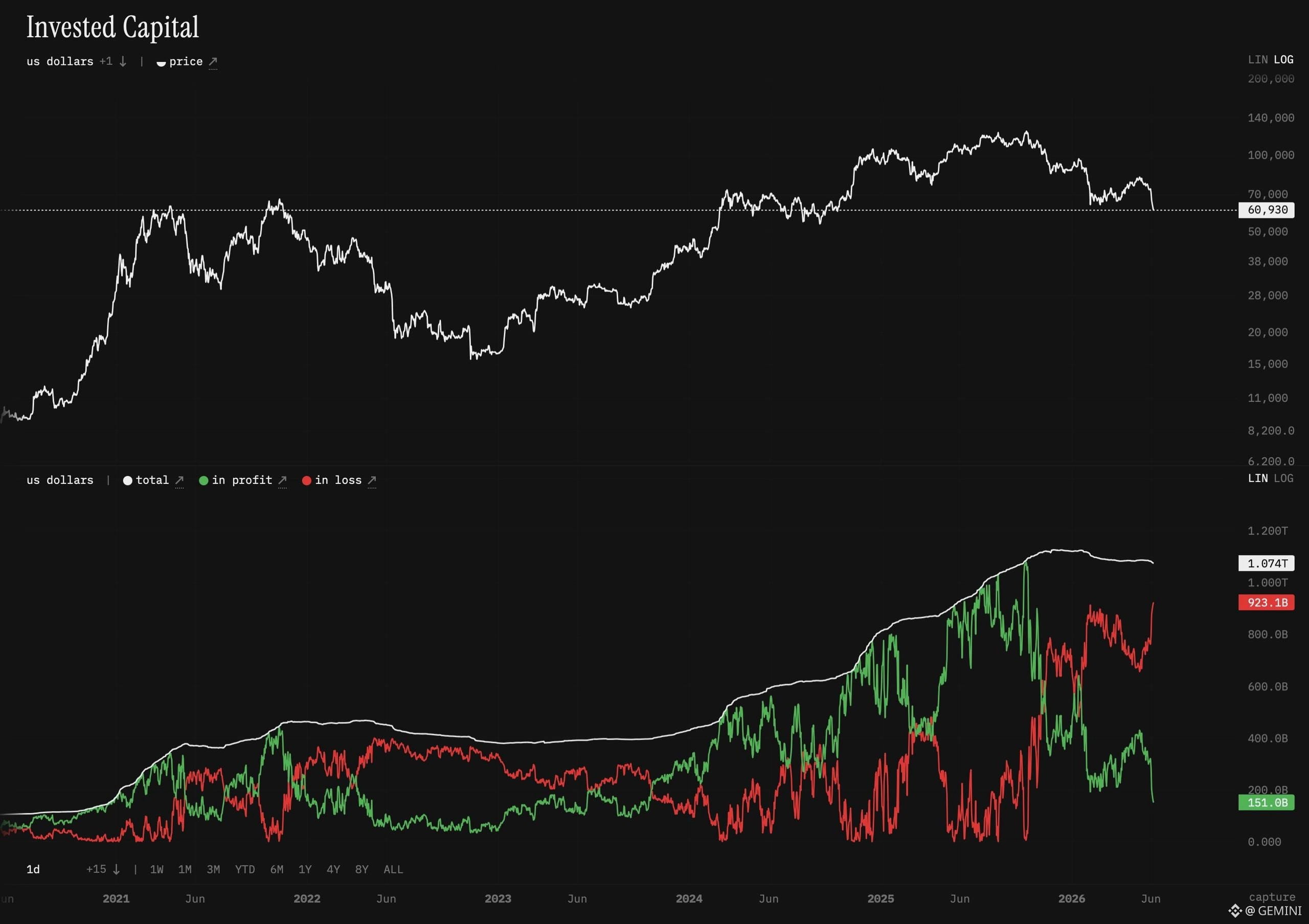
Une des façons les plus négligées d'évaluer les conditions du marché est à travers le capital investi plutôt que par l'offre seule. Actuellement, un record de 920 milliards de dollars de capital investi dans #Bitcoin est à perte, soulignant l'ampleur des pertes non réalisées sur le marché. Un #Bitcoin acheté à 126 000 $ représente un investissement totalement différent de celui acquis à 1 $.
Ce qui signifie que le montant de capital à risque compte tout autant que le nombre de pièces. En même temps, seulement 153 milliards de dollars de capital investi restent en profit, principalement parce que les holders à long terme ont accumulé leurs positions à des prix beaucoup plus bas. Vu sous cet angle, le marché baissier actuel met une pression substantielle sur les portefeuilles des investisseurs.
Une des façons les plus négligées d'évaluer les conditions du marché est à travers le capital investi plutôt que par l'offre seule. Actuellement, un record de 920 milliards de dollars de capital investi dans #Bitcoin est à perte, soulignant l'ampleur des pertes non réalisées sur le marché. Un #Bitcoin acheté à 126 000 $ représente un investissement totalement différent de celui acquis à 1 $.
Ce qui signifie que le montant de capital à risque compte tout autant que le nombre de pièces. En même temps, seulement 153 milliards de dollars de capital investi restent en profit, principalement parce que les holders à long terme ont accumulé leurs positions à des prix beaucoup plus bas. Vu sous cet angle, le marché baissier actuel met une pression substantielle sur les portefeuilles des investisseurs.
Ce qui signifie que le montant de capital à risque compte tout autant que le nombre de pièces. En même temps, seulement 153 milliards de dollars de capital investi restent en profit, principalement parce que les holders à long terme ont accumulé leurs positions à des prix beaucoup plus bas. Vu sous cet angle, le marché baissier actuel met une pression substantielle sur les portefeuilles des investisseurs.
105
·
--
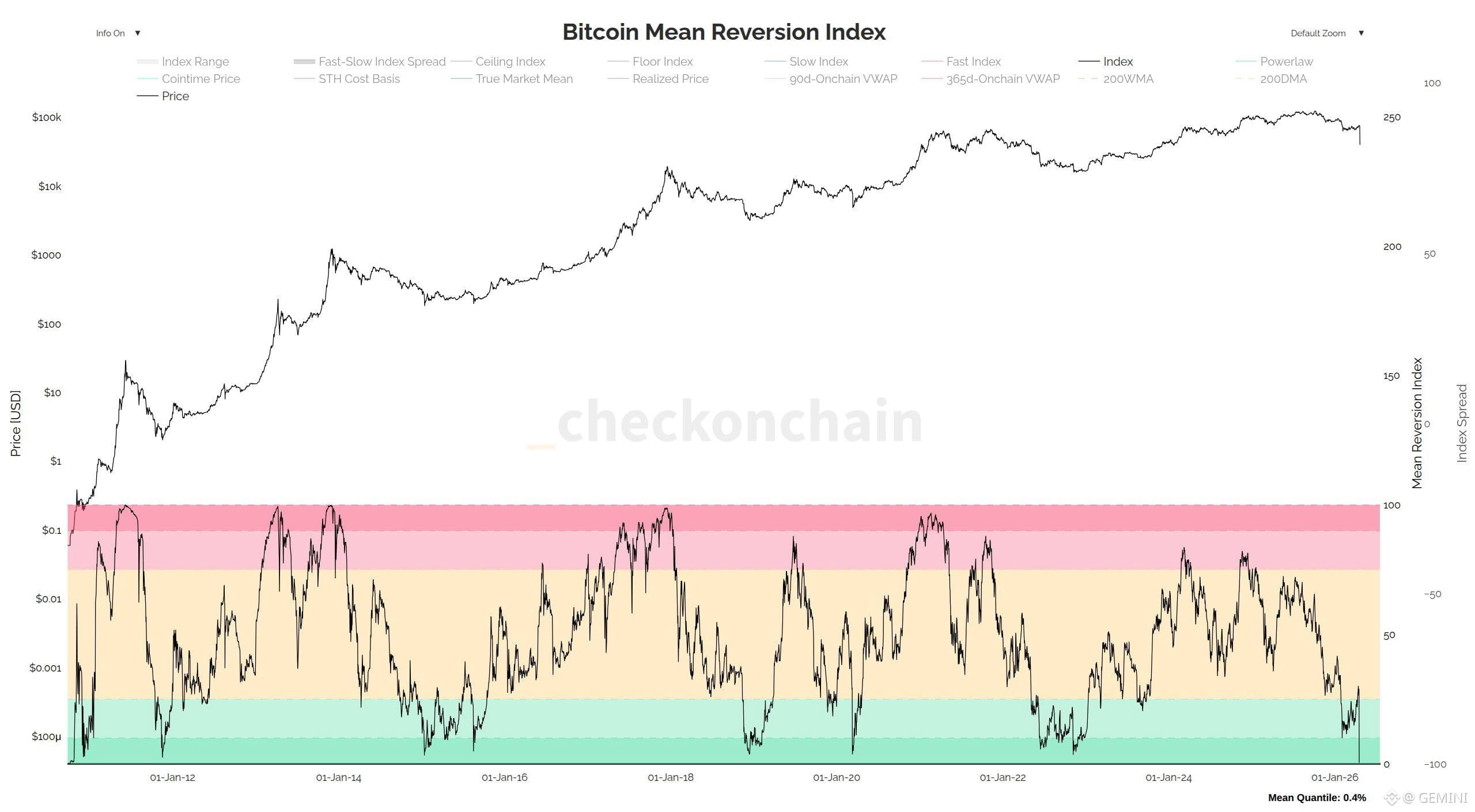
Beaucoup prédisent un $40k #Bitcoin et ils pourraient encore avoir raison. En même temps, il est important de reconnaître où se trouve déjà le marché. En utilisant un modèle de réversion à la moyenne construit à partir de neuf ancres distinctes, y compris les techniques, les données on-chain, les signaux de tendance et les moyennes à court et long terme, les niveaux actuels représentent environ un événement Q0.4.
Cela place cette zone dans un territoire statistiquement plus extrême que le trading de Bitcoin en dessous de $2 en 2011. Le prix pourrait-il descendre plus bas ? Bien sûr. Les marchés peuvent toujours s'étendre plus loin que prévu. Mais historiquement, des conditions comme celles-ci ont souvent marqué des zones d'opportunité plutôt que les endroits les plus intelligents pour paniquer. Plus la peur devient forte, plus le contexte commence à compter.
Beaucoup prédisent un $40k #Bitcoin et ils pourraient encore avoir raison. En même temps, il est important de reconnaître où se trouve déjà le marché. En utilisant un modèle de réversion à la moyenne construit à partir de neuf ancres distinctes, y compris les techniques, les données on-chain, les signaux de tendance et les moyennes à court et long terme, les niveaux actuels représentent environ un événement Q0.4.
Cela place cette zone dans un territoire statistiquement plus extrême que le trading de Bitcoin en dessous de $2 en 2011. Le prix pourrait-il descendre plus bas ? Bien sûr. Les marchés peuvent toujours s'étendre plus loin que prévu. Mais historiquement, des conditions comme celles-ci ont souvent marqué des zones d'opportunité plutôt que les endroits les plus intelligents pour paniquer. Plus la peur devient forte, plus le contexte commence à compter.
Cela place cette zone dans un territoire statistiquement plus extrême que le trading de Bitcoin en dessous de $2 en 2011. Le prix pourrait-il descendre plus bas ? Bien sûr. Les marchés peuvent toujours s'étendre plus loin que prévu. Mais historiquement, des conditions comme celles-ci ont souvent marqué des zones d'opportunité plutôt que les endroits les plus intelligents pour paniquer. Plus la peur devient forte, plus le contexte commence à compter.
55
·
--
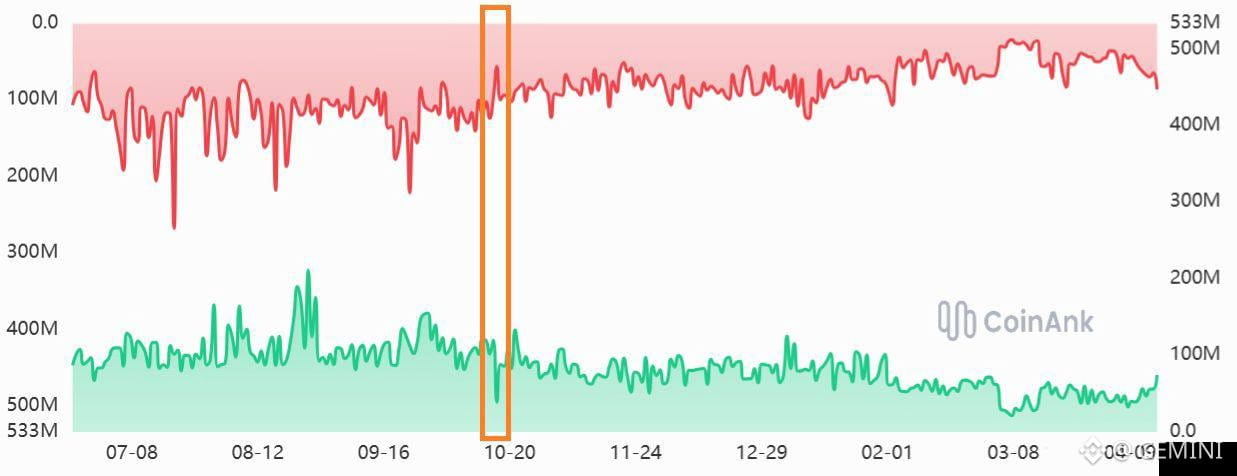
La liquidité sur le #Bitcoin marché a chuté de près de 50 % depuis septembre 2025, une contraction claire de la profondeur du marché. Avec moins de participants et une activité de trading réduite, les carnets de commandes sont devenus plus fins, rendant les prix plus sensibles à une pression d'achat ou de vente soudaine. En conséquence, les traders peuvent connaître une volatilité plus élevée et un comportement des prix moins prévisible dans l'environnement actuel du marché...
La liquidité sur le #Bitcoin marché a chuté de près de 50 % depuis septembre 2025, une contraction claire de la profondeur du marché. Avec moins de participants et une activité de trading réduite, les carnets de commandes sont devenus plus fins, rendant les prix plus sensibles à une pression d'achat ou de vente soudaine. En conséquence, les traders peuvent connaître une volatilité plus élevée et un comportement des prix moins prévisible dans l'environnement actuel du marché...
19
·
--
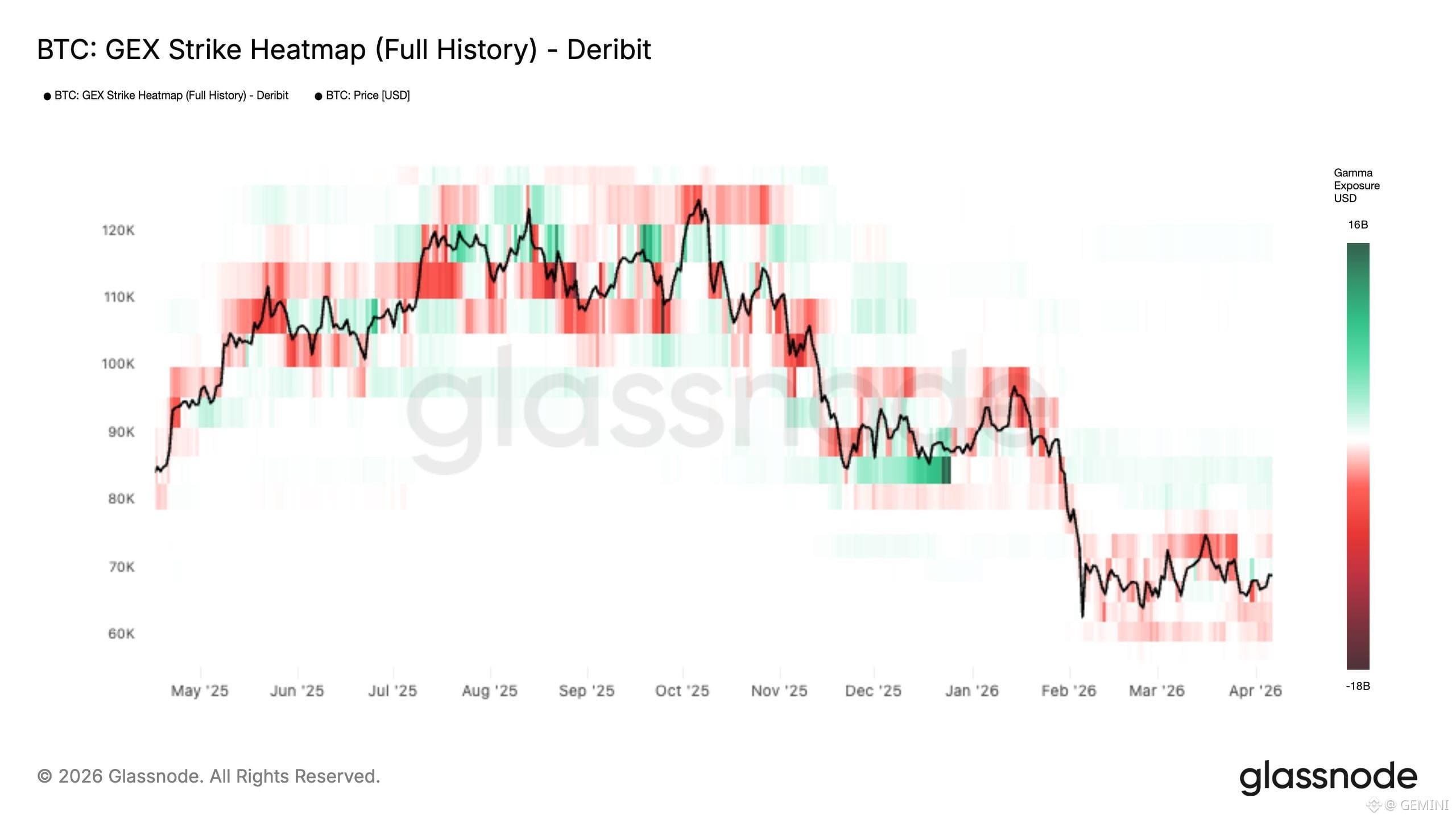
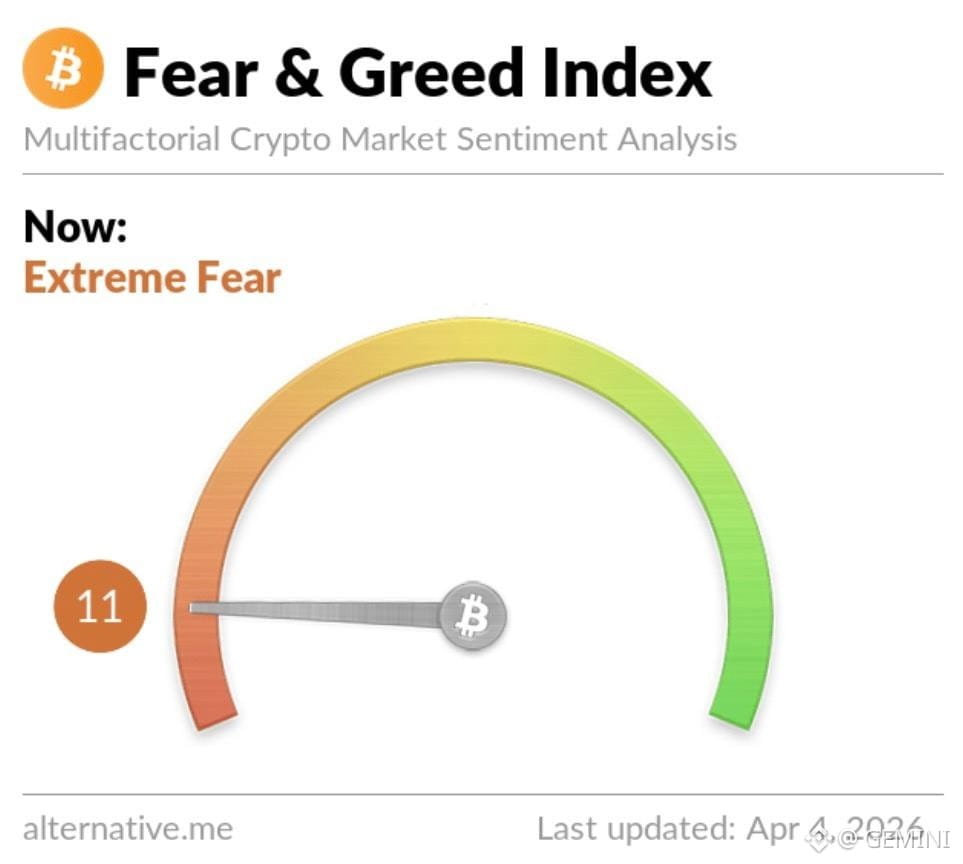
Le marché est actuellement dans une position sensible, avec #Bitcoin trading à l'intérieur d'une plage étroite de 65 000 $ à 70 000 $ formée par des conditions de gamma négatif. Dans cette configuration, la couverture des dealers tend à amplifier l'action des prix, rendant les mouvements plus réactifs et souvent plus brusques que d'habitude. Une zone de résistance se forme près de 72 000 $, ce qui pourrait limiter le potentiel à la hausse à moins qu'une forte pression d'achat ne franchisse ce seuil.
Sur le côté inférieur, le support semble relativement mince, augmentant le risque d'une chute plus rapide si les acheteurs perdent en force. Dans l'ensemble, cette plage ne semble pas stable pour longtemps. Une rupture ou un effondrement à partir d'ici pourrait conduire à un mouvement accéléré plutôt qu'à une tendance graduelle.
Le marché est actuellement dans une position sensible, avec #Bitcoin trading à l'intérieur d'une plage étroite de 65 000 $ à 70 000 $ formée par des conditions de gamma négatif. Dans cette configuration, la couverture des dealers tend à amplifier l'action des prix, rendant les mouvements plus réactifs et souvent plus brusques que d'habitude. Une zone de résistance se forme près de 72 000 $, ce qui pourrait limiter le potentiel à la hausse à moins qu'une forte pression d'achat ne franchisse ce seuil.
Sur le côté inférieur, le support semble relativement mince, augmentant le risque d'une chute plus rapide si les acheteurs perdent en force. Dans l'ensemble, cette plage ne semble pas stable pour longtemps. Une rupture ou un effondrement à partir d'ici pourrait conduire à un mouvement accéléré plutôt qu'à une tendance graduelle.
Sur le côté inférieur, le support semble relativement mince, augmentant le risque d'une chute plus rapide si les acheteurs perdent en force. Dans l'ensemble, cette plage ne semble pas stable pour longtemps. Une rupture ou un effondrement à partir d'ici pourrait conduire à un mouvement accéléré plutôt qu'à une tendance graduelle.
1
1
102
·
--
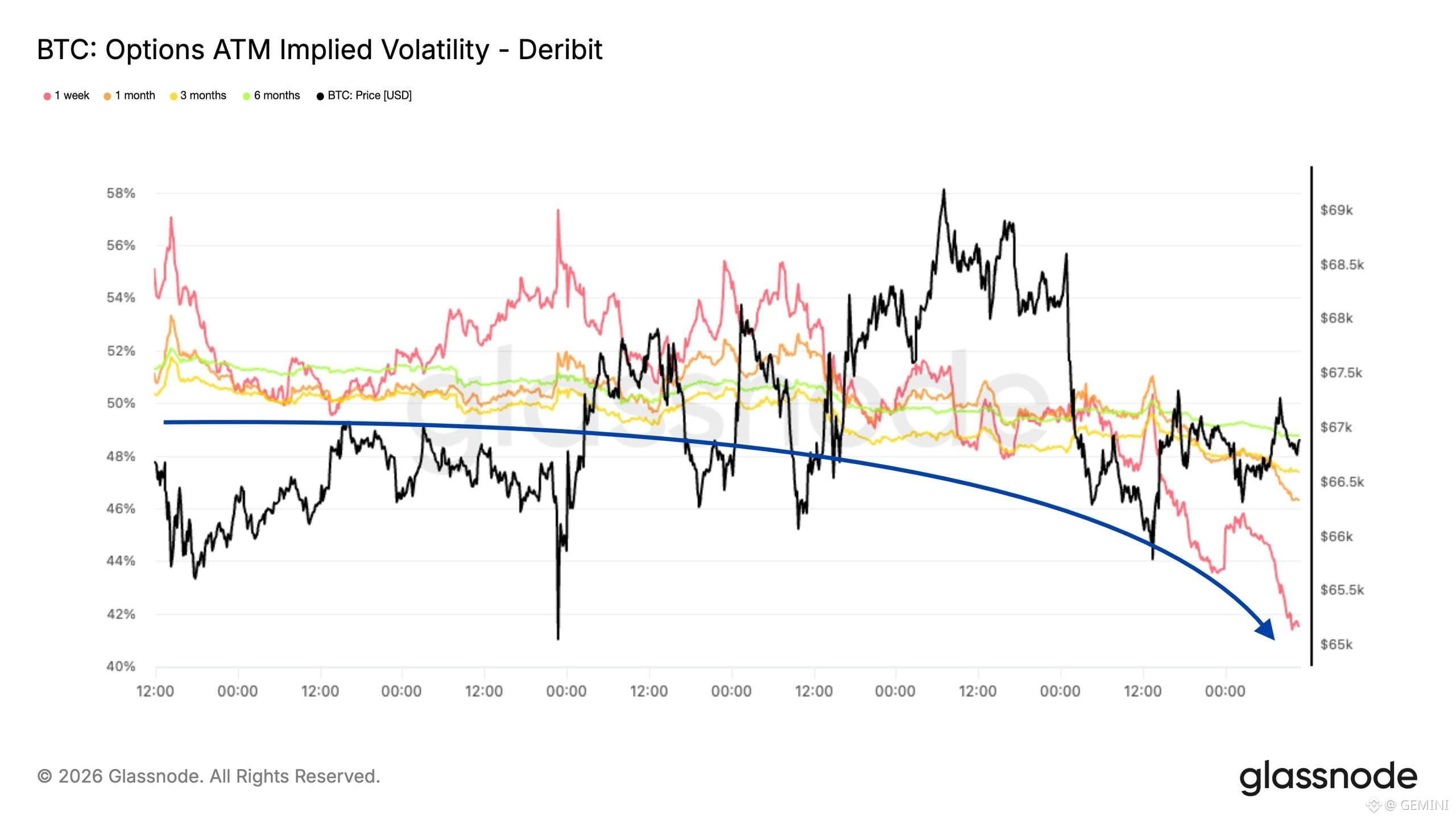
La volatilité implicite diminue sur l'ensemble de la courbe, menée par une forte baisse à court terme. Le délai de 1W a chuté à environ 41.5%, marquant son point le plus bas depuis fin janvier, tandis que les échéances plus longues sont maintenant étroitement regroupées entre 46% et 48%, ce qui entraîne une courbe plus plate. Un marché qui réduit les attentes pour les catalyseurs à court terme.
La demande d'options à court terme a diminué, suggérant que les traders se concentrent moins sur les risques immédiats ou les mouvements soudains. En même temps, l'écart plus étroit entre les délais courts et longs signale une distribution plus équilibrée de l'incertitude. Plutôt que de concentrer le risque à court terme, le marché semble être dans une attitude d'attente, adoptant une posture plus mesurée et moins réactive.
La volatilité implicite diminue sur l'ensemble de la courbe, menée par une forte baisse à court terme. Le délai de 1W a chuté à environ 41.5%, marquant son point le plus bas depuis fin janvier, tandis que les échéances plus longues sont maintenant étroitement regroupées entre 46% et 48%, ce qui entraîne une courbe plus plate. Un marché qui réduit les attentes pour les catalyseurs à court terme.
La demande d'options à court terme a diminué, suggérant que les traders se concentrent moins sur les risques immédiats ou les mouvements soudains. En même temps, l'écart plus étroit entre les délais courts et longs signale une distribution plus équilibrée de l'incertitude. Plutôt que de concentrer le risque à court terme, le marché semble être dans une attitude d'attente, adoptant une posture plus mesurée et moins réactive.
La demande d'options à court terme a diminué, suggérant que les traders se concentrent moins sur les risques immédiats ou les mouvements soudains. En même temps, l'écart plus étroit entre les délais courts et longs signale une distribution plus équilibrée de l'incertitude. Plutôt que de concentrer le risque à court terme, le marché semble être dans une attitude d'attente, adoptant une posture plus mesurée et moins réactive.
25
·
--
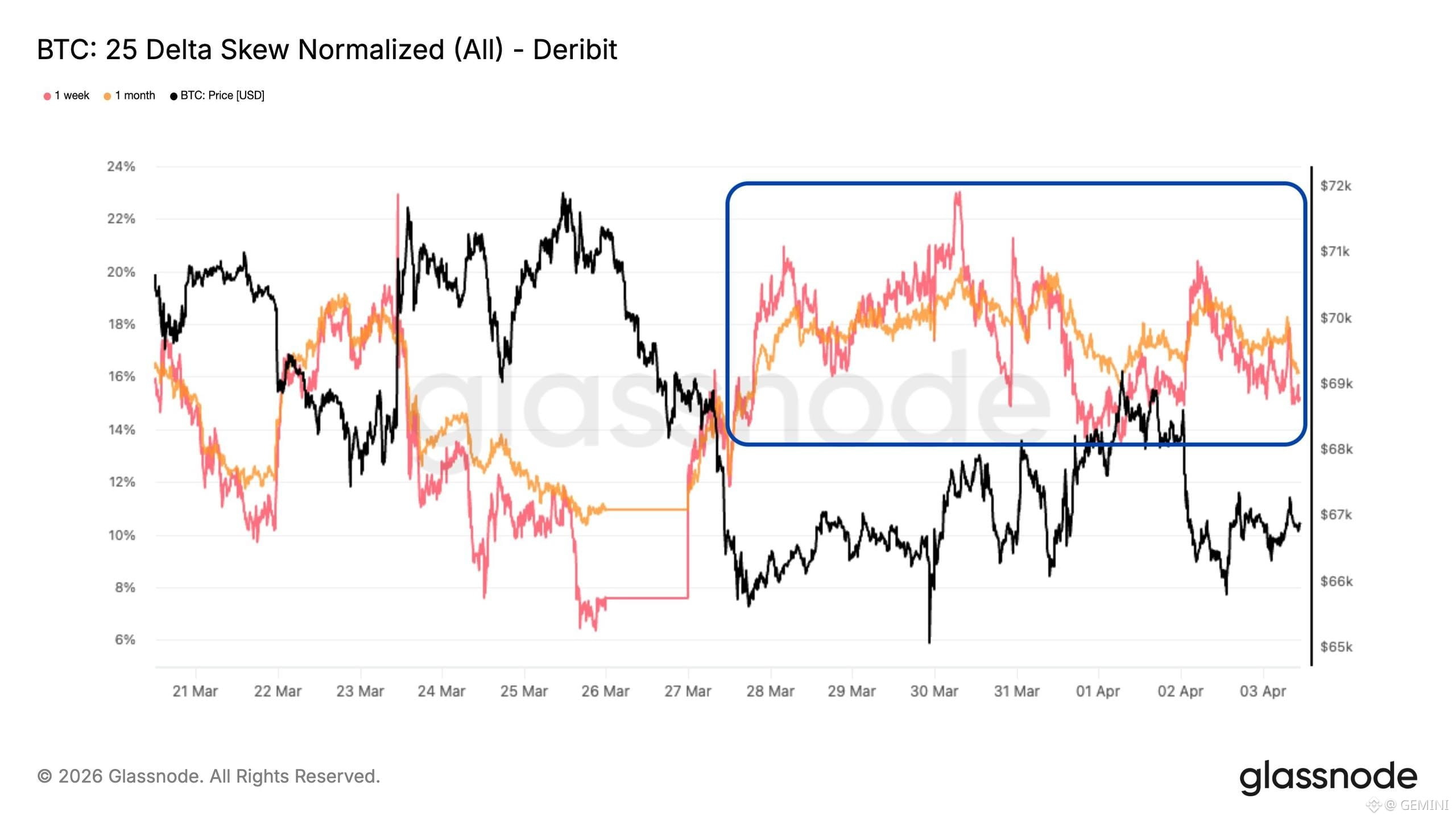
La demande de protection contre les baisses reste forte, avec un biais restant élevé sur l'ensemble de la courbe par rapport à la semaine dernière. Les échéances de 1W et 1M continuent de se situer autour de 15-16 %, soulignant un intérêt constant pour la couverture contre les baisses, même si la volatilité globale tend à diminuer.
Cette configuration indique un ton de marché prudent. Malgré le récent refroidissement de la volatilité, les participants protègent toujours activement contre les risques potentiels de baisse, la confiance n'est pas complètement revenue et le marché reste positionné de manière défensive.
La demande de protection contre les baisses reste forte, avec un biais restant élevé sur l'ensemble de la courbe par rapport à la semaine dernière. Les échéances de 1W et 1M continuent de se situer autour de 15-16 %, soulignant un intérêt constant pour la couverture contre les baisses, même si la volatilité globale tend à diminuer.
Cette configuration indique un ton de marché prudent. Malgré le récent refroidissement de la volatilité, les participants protègent toujours activement contre les risques potentiels de baisse, la confiance n'est pas complètement revenue et le marché reste positionné de manière défensive.
Cette configuration indique un ton de marché prudent. Malgré le récent refroidissement de la volatilité, les participants protègent toujours activement contre les risques potentiels de baisse, la confiance n'est pas complètement revenue et le marché reste positionné de manière défensive.
12
·
--
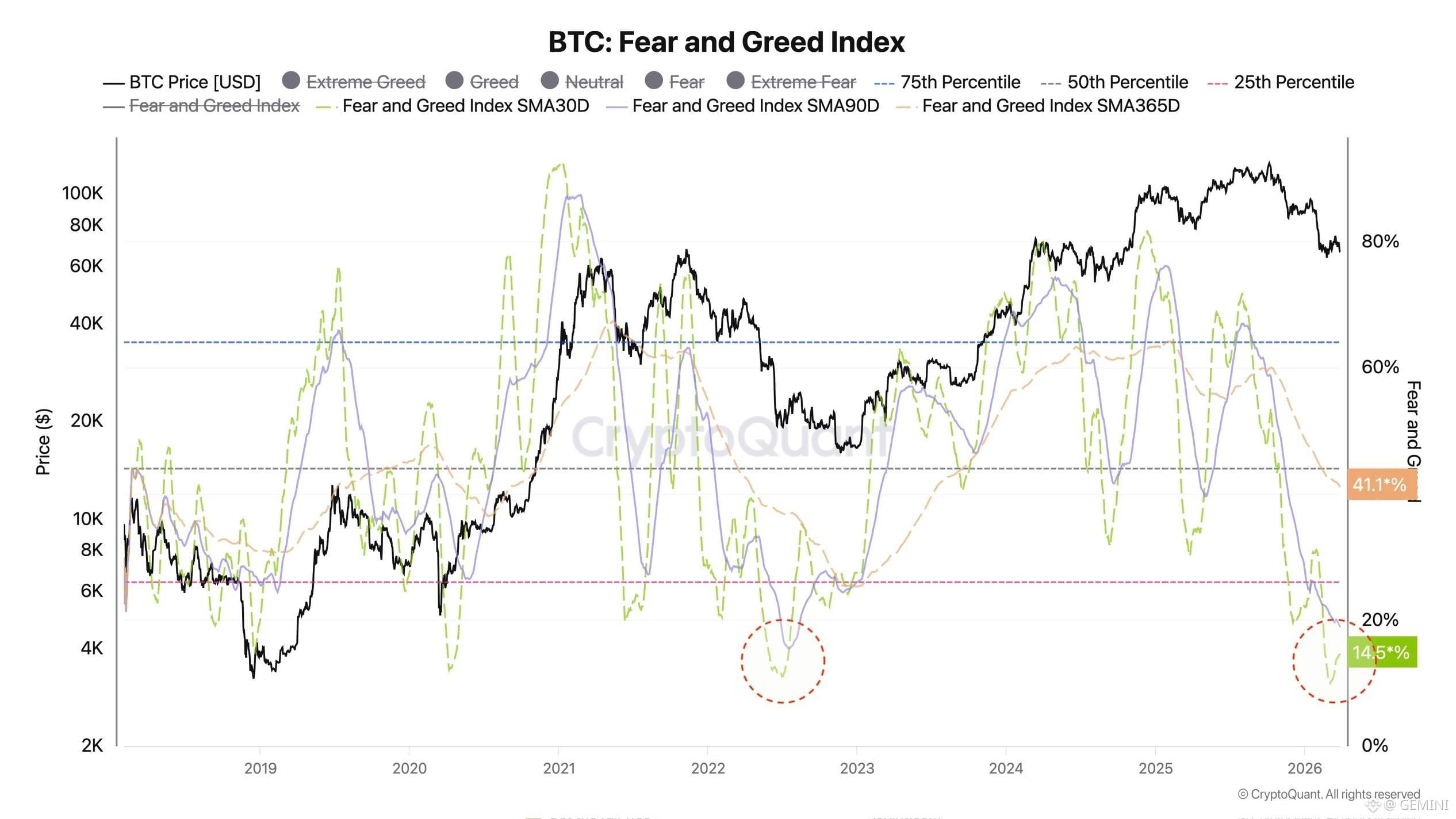
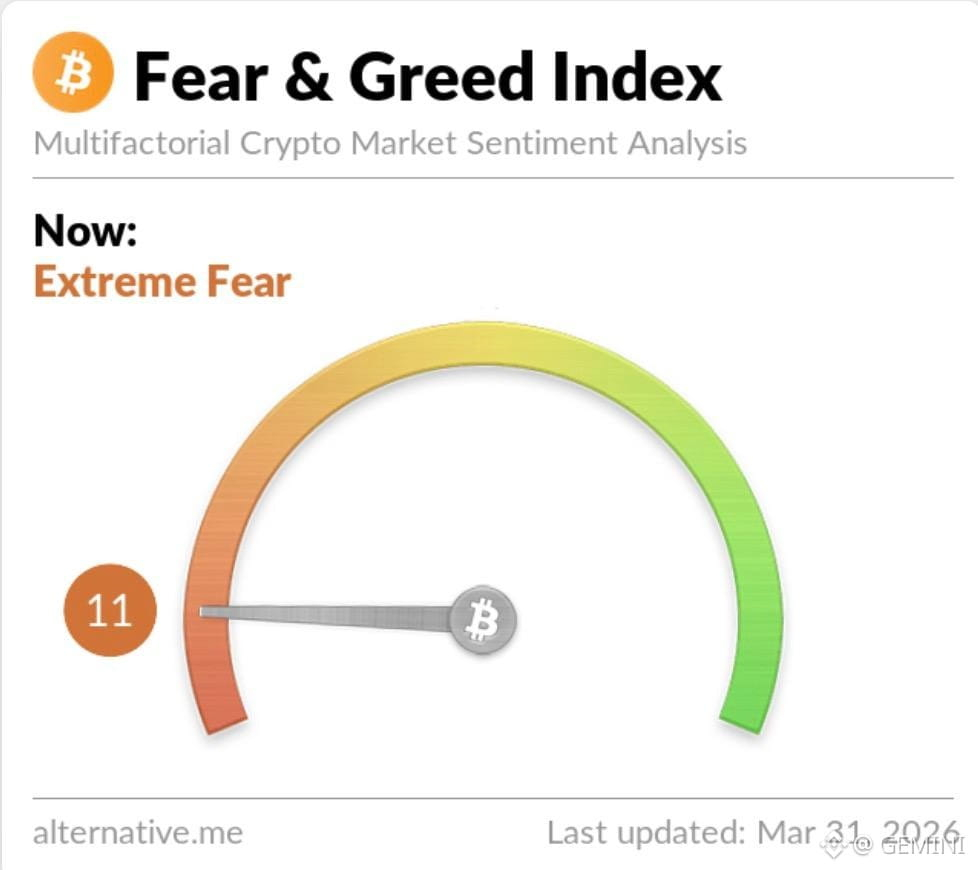
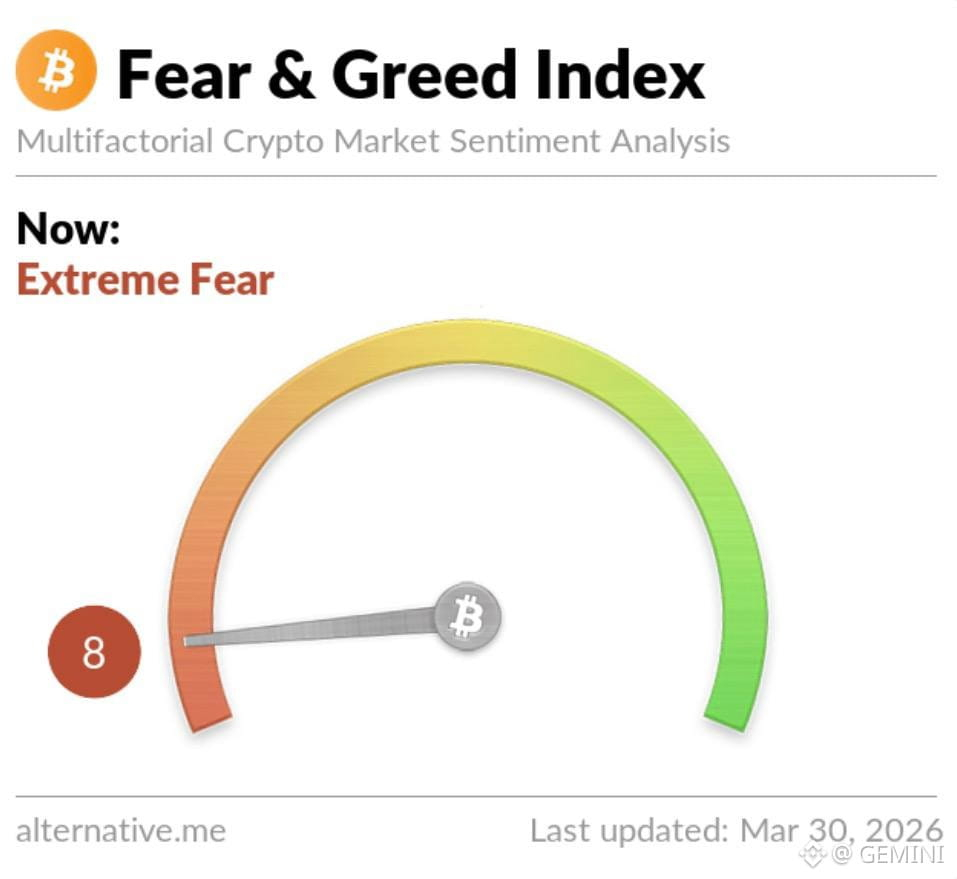
Le sentiment du marché commence à refléter le même schéma que nous avons vu en 2022, avec l'indice de peur et de cupidité qui penche lentement vers la peur. Cependant, la moyenne mobile sur 365 jours est encore à un niveau relativement élevé, ce qui indique qu'un réinitialisation complète du marché baissier ne s'est pas encore produite.
Alors que la confiance à court terme s'estompe, la tendance générale ne s'est pas complètement refroidie. Il reste encore un certain optimisme résiduel sur le marché, et tant que cela ne sera pas éliminé, dire qu'il s'agit d'une réinitialisation complète serait prématuré. En termes simples, le marché montre des signes précoces de faiblesse, mais il n'a pas traversé le genre de profonde réinitialisation qui marque typiquement la fin d'un cycle.
Le sentiment du marché commence à refléter le même schéma que nous avons vu en 2022, avec l'indice de peur et de cupidité qui penche lentement vers la peur. Cependant, la moyenne mobile sur 365 jours est encore à un niveau relativement élevé, ce qui indique qu'un réinitialisation complète du marché baissier ne s'est pas encore produite.
Alors que la confiance à court terme s'estompe, la tendance générale ne s'est pas complètement refroidie. Il reste encore un certain optimisme résiduel sur le marché, et tant que cela ne sera pas éliminé, dire qu'il s'agit d'une réinitialisation complète serait prématuré. En termes simples, le marché montre des signes précoces de faiblesse, mais il n'a pas traversé le genre de profonde réinitialisation qui marque typiquement la fin d'un cycle.
Alors que la confiance à court terme s'estompe, la tendance générale ne s'est pas complètement refroidie. Il reste encore un certain optimisme résiduel sur le marché, et tant que cela ne sera pas éliminé, dire qu'il s'agit d'une réinitialisation complète serait prématuré. En termes simples, le marché montre des signes précoces de faiblesse, mais il n'a pas traversé le genre de profonde réinitialisation qui marque typiquement la fin d'un cycle.
37
·
--
Haussier
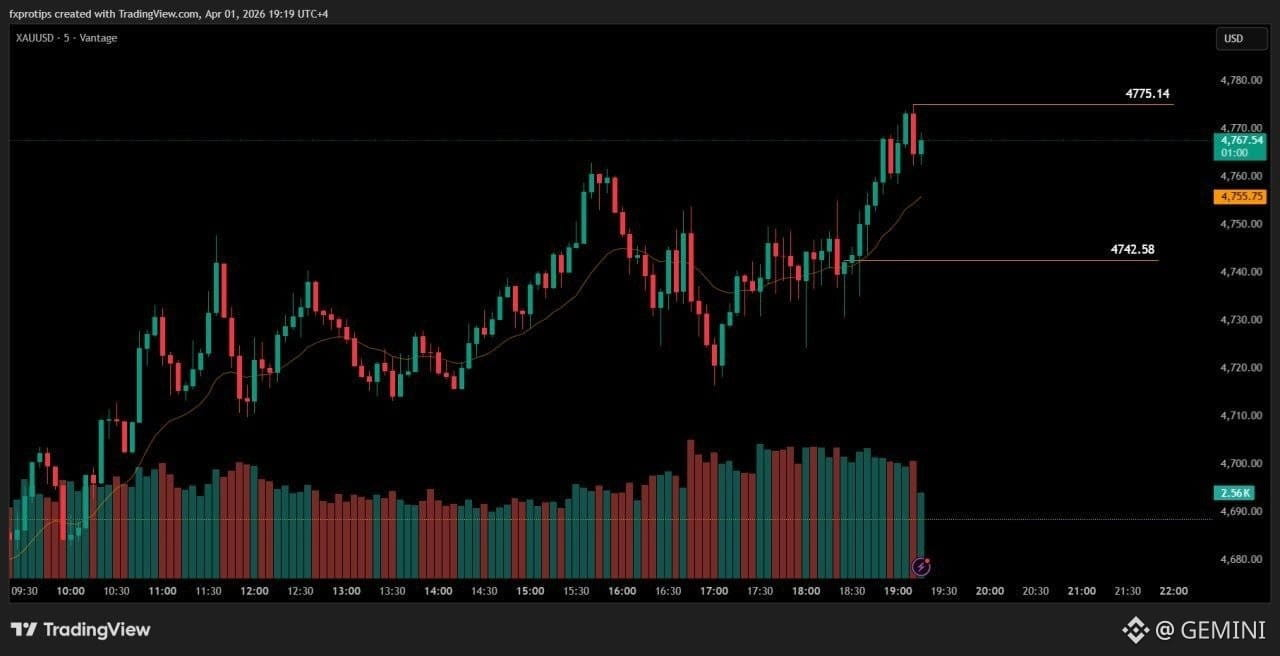
#L'or a définitivement dépassé le précédent sommet de 4762 et a atteint un nouveau sommet à 4775. C'est la preuve la plus claire que les "acheteurs sont très forts" malgré les nouvelles fondamentales comme vous l'avez noté.
Le #EMA est en pente ascendante, indiquant que l'élan à la hausse est à son apogée. Chaque fois que le prix s'approche de l'EMA, il est immédiatement repoussé vers le haut.
Une petite bougie rouge est apparue au sommet de 4775. C'est simplement une prise de bénéfices à court terme après une longue poussée ; il n'y a pas encore de signes d'un retournement.
Le graphique défie complètement les attentes fondamentales baissières. Les acheteurs sont pleinement aux commandes, entraînés par un fort élan et potentiellement un "short squeeze" suite à des tentatives de vente infructueuses.
N'essayez pas de contrer ce mouvement. Cherchez des entrées sur des retracements mineurs vers le niveau de support.
#plan
#L'or a définitivement dépassé le précédent sommet de 4762 et a atteint un nouveau sommet à 4775. C'est la preuve la plus claire que les "acheteurs sont très forts" malgré les nouvelles fondamentales comme vous l'avez noté.
Le #EMA est en pente ascendante, indiquant que l'élan à la hausse est à son apogée. Chaque fois que le prix s'approche de l'EMA, il est immédiatement repoussé vers le haut.
Une petite bougie rouge est apparue au sommet de 4775. C'est simplement une prise de bénéfices à court terme après une longue poussée ; il n'y a pas encore de signes d'un retournement.
Le graphique défie complètement les attentes fondamentales baissières. Les acheteurs sont pleinement aux commandes, entraînés par un fort élan et potentiellement un "short squeeze" suite à des tentatives de vente infructueuses.
N'essayez pas de contrer ce mouvement. Cherchez des entrées sur des retracements mineurs vers le niveau de support.
#plan
Le #EMA est en pente ascendante, indiquant que l'élan à la hausse est à son apogée. Chaque fois que le prix s'approche de l'EMA, il est immédiatement repoussé vers le haut.
Une petite bougie rouge est apparue au sommet de 4775. C'est simplement une prise de bénéfices à court terme après une longue poussée ; il n'y a pas encore de signes d'un retournement.
Le graphique défie complètement les attentes fondamentales baissières. Les acheteurs sont pleinement aux commandes, entraînés par un fort élan et potentiellement un "short squeeze" suite à des tentatives de vente infructueuses.
N'essayez pas de contrer ce mouvement. Cherchez des entrées sur des retracements mineurs vers le niveau de support.
#plan
55
·
--
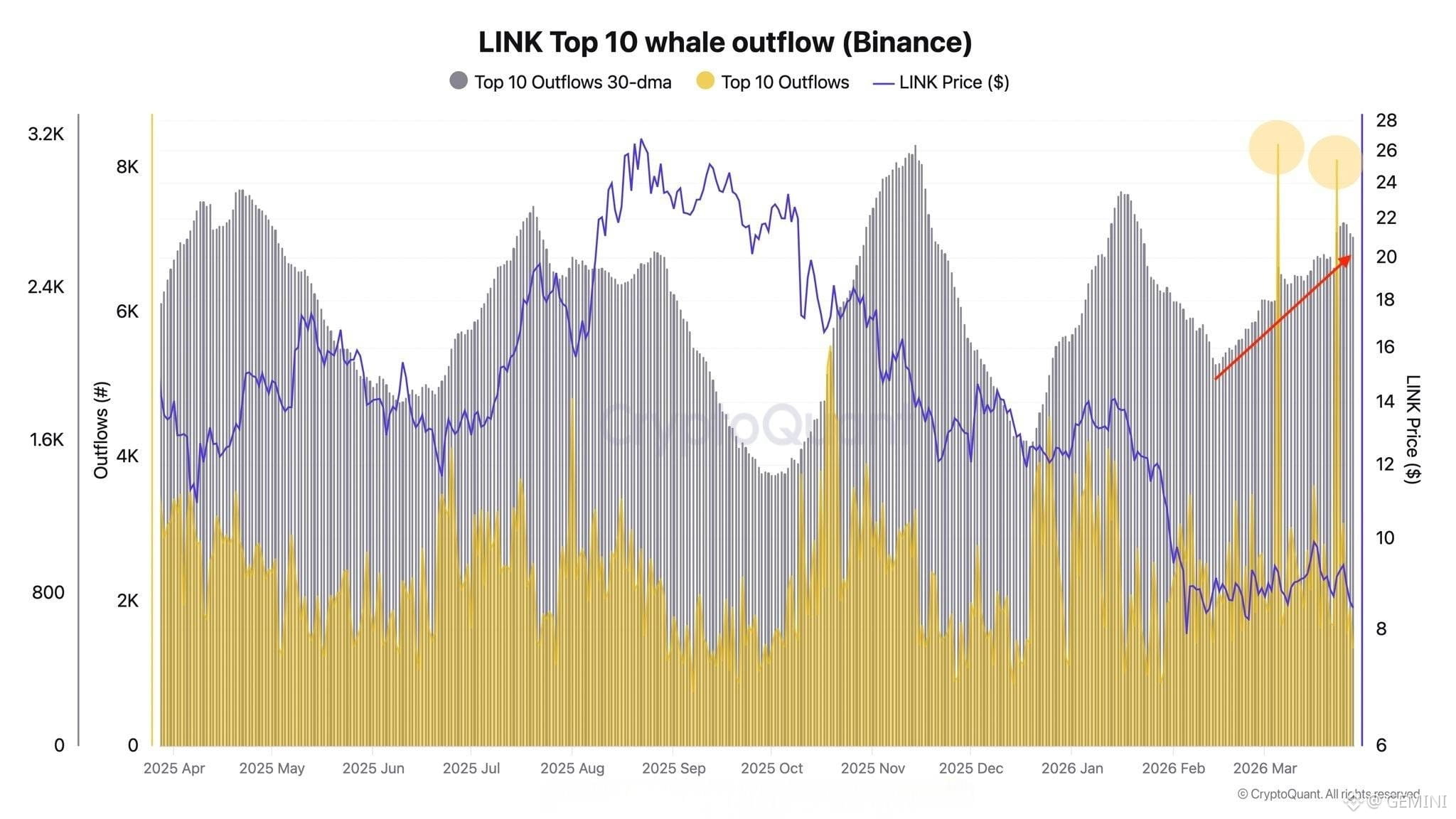
Les grands #LINK détenteurs deviennent plus actifs. Deux pics quotidiens clairs peuvent être observés, avec plus de 8 000 LINK retirés de #Binance parmi les 10 meilleures transactions. En même temps, le flux moyen mensuel sortant de ces grandes transactions augmente. Depuis la mi-février, il est passé d'environ 2 000 LINK par jour à près de 2 600, une augmentation constante des mouvements à grande échelle.
Les grands #LINK détenteurs deviennent plus actifs. Deux pics quotidiens clairs peuvent être observés, avec plus de 8 000 LINK retirés de #Binance parmi les 10 meilleures transactions. En même temps, le flux moyen mensuel sortant de ces grandes transactions augmente. Depuis la mi-février, il est passé d'environ 2 000 LINK par jour à près de 2 600, une augmentation constante des mouvements à grande échelle.
100
·
--
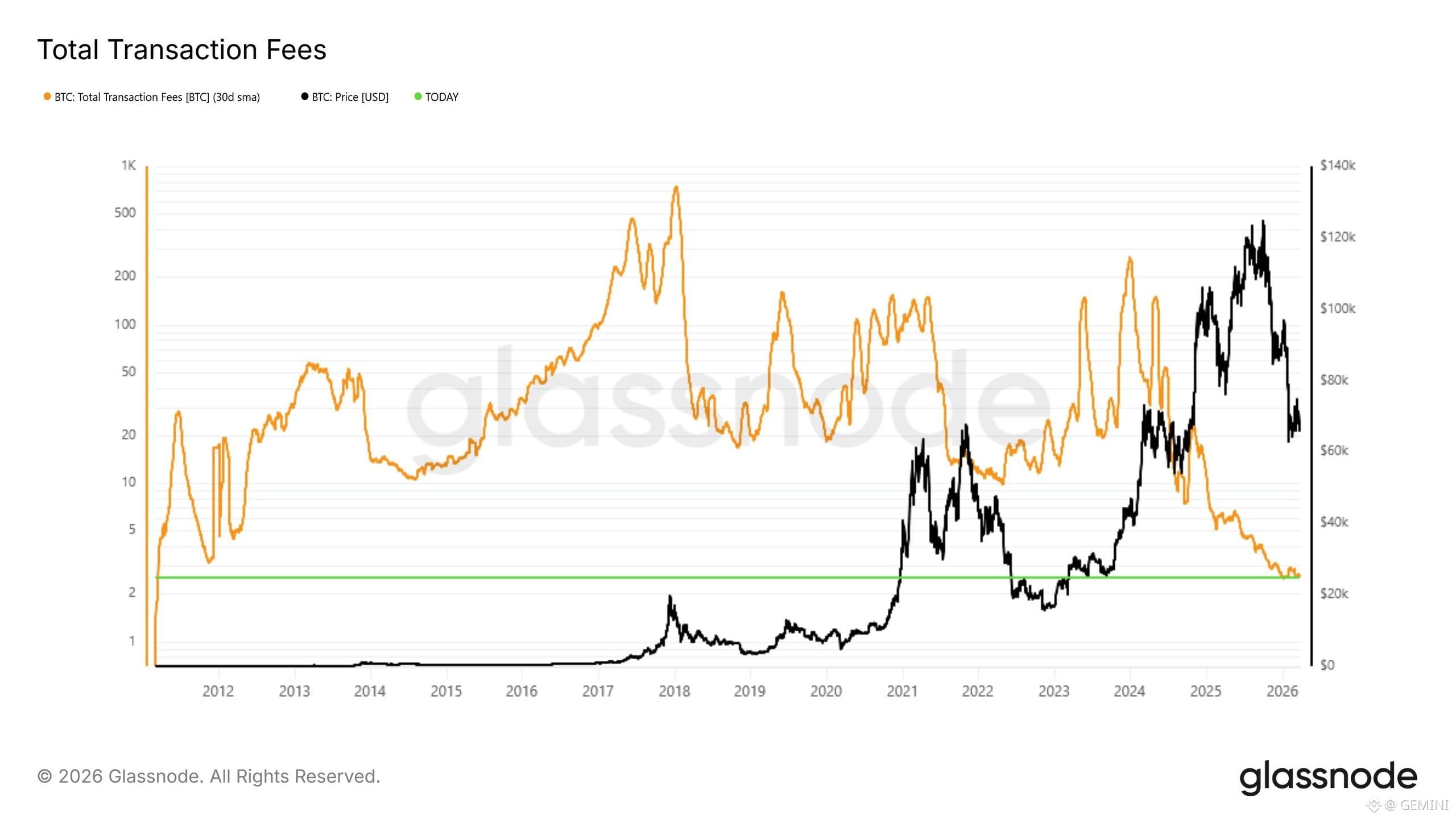
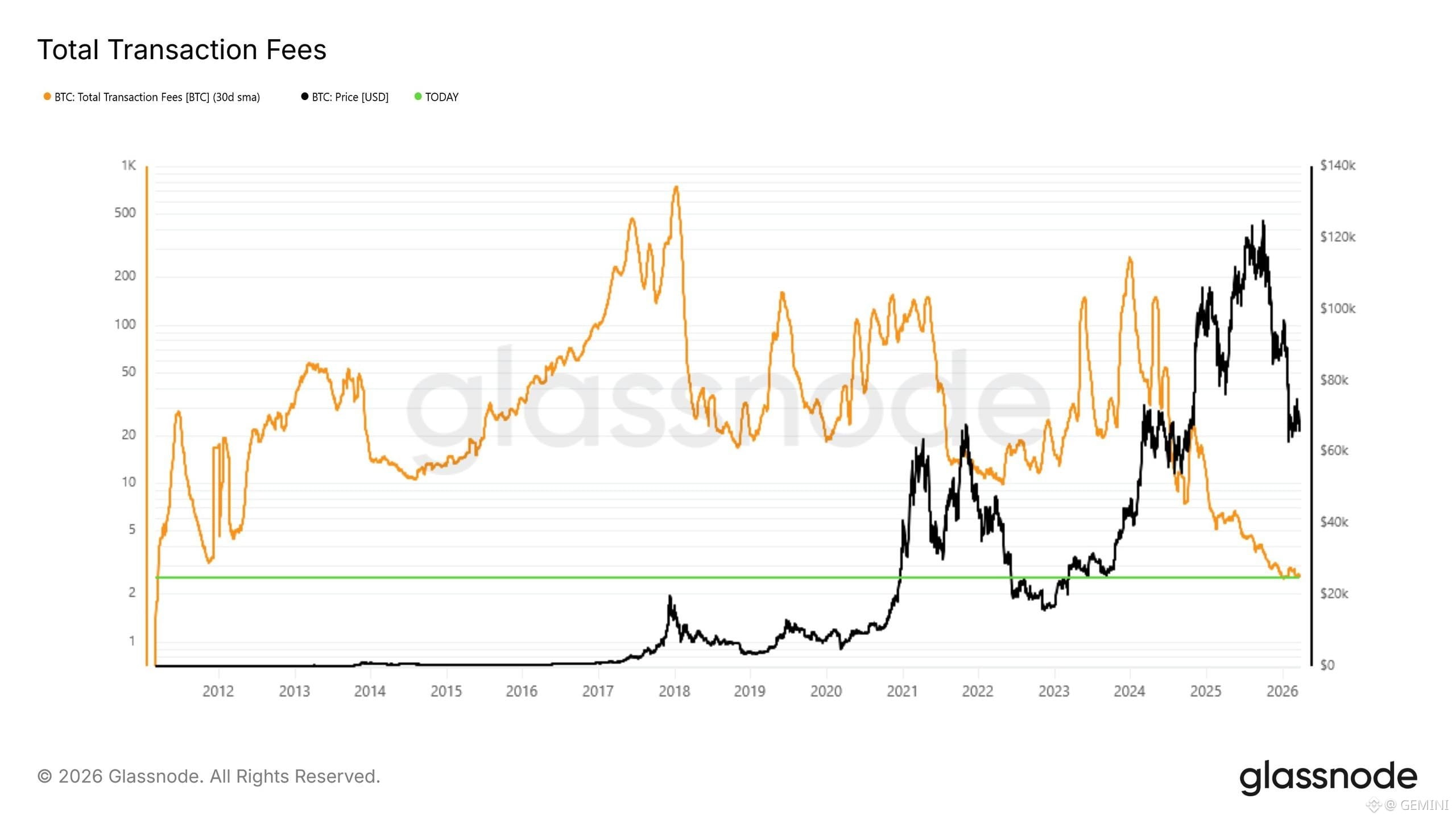
Les frais de transaction à travers le réseau ont considérablement diminué, avec la moyenne sur 30 jours maintenant à seulement 2,5 #BTC par jour, le niveau le plus bas observé depuis mars 2011. Ce niveau de compression des frais indique une baisse claire de la demande pour l'espace de bloc, l'activité sur la chaîne a considérablement ralenti. Avec moins d'utilisateurs en concurrence pour faire confirmer les transactions, le réseau connaît une utilisation plus légère et une congestion minimale.
Cela peut également refléter un déclin plus large de l'activité de trading, une participation réduite, ou un changement croissant vers des alternatives hors chaîne. Dans l'ensemble, les données indiquent une phase calme pour le réseau, où la pression des transactions est faible et l'activité globale reste modérée.
Les frais de transaction à travers le réseau ont considérablement diminué, avec la moyenne sur 30 jours maintenant à seulement 2,5 #BTC par jour, le niveau le plus bas observé depuis mars 2011. Ce niveau de compression des frais indique une baisse claire de la demande pour l'espace de bloc, l'activité sur la chaîne a considérablement ralenti. Avec moins d'utilisateurs en concurrence pour faire confirmer les transactions, le réseau connaît une utilisation plus légère et une congestion minimale.
Cela peut également refléter un déclin plus large de l'activité de trading, une participation réduite, ou un changement croissant vers des alternatives hors chaîne. Dans l'ensemble, les données indiquent une phase calme pour le réseau, où la pression des transactions est faible et l'activité globale reste modérée.
Cela peut également refléter un déclin plus large de l'activité de trading, une participation réduite, ou un changement croissant vers des alternatives hors chaîne. Dans l'ensemble, les données indiquent une phase calme pour le réseau, où la pression des transactions est faible et l'activité globale reste modérée.
4
·
--
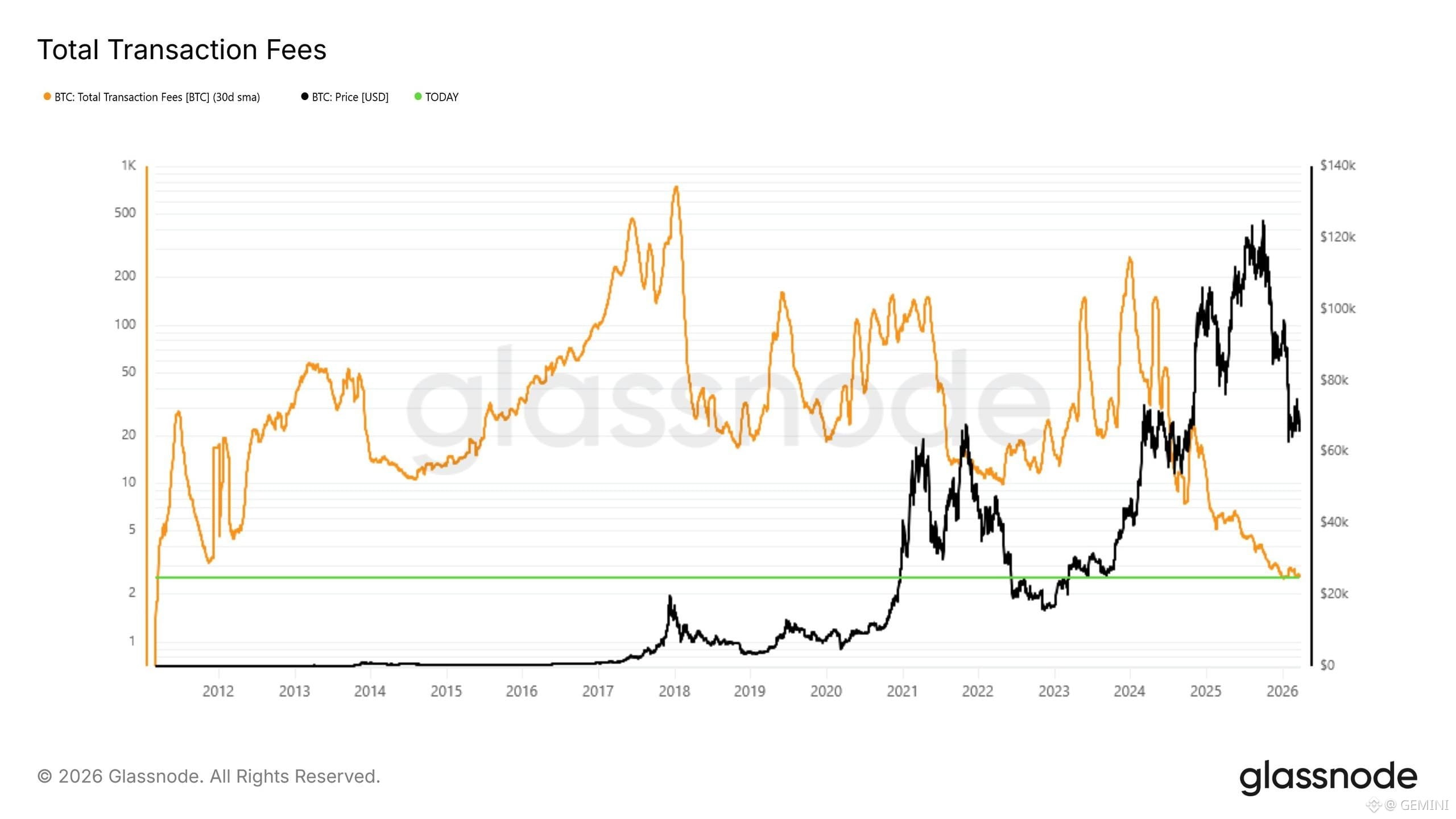
Les frais de transaction à travers le réseau ont considérablement diminué, avec la moyenne sur 30 jours maintenant à seulement 2,5 #BTC par jour, le niveau le plus bas observé depuis mars 2011. Ce niveau de compression des frais indique une baisse claire de la demande pour l'espace de bloc, l'activité sur la chaîne a considérablement ralenti. Avec moins d'utilisateurs en compétition pour faire confirmer les transactions, le réseau connaît une utilisation plus légère et une congestion minimale.
Cela peut également refléter un déclin plus large de l'activité de trading, une participation réduite ou un changement croissant vers des alternatives hors chaîne. Dans l'ensemble, les données indiquent une phase calme pour le réseau, où la pression des transactions est faible et l'activité globale reste contenue.
Les frais de transaction à travers le réseau ont considérablement diminué, avec la moyenne sur 30 jours maintenant à seulement 2,5 #BTC par jour, le niveau le plus bas observé depuis mars 2011. Ce niveau de compression des frais indique une baisse claire de la demande pour l'espace de bloc, l'activité sur la chaîne a considérablement ralenti. Avec moins d'utilisateurs en compétition pour faire confirmer les transactions, le réseau connaît une utilisation plus légère et une congestion minimale.
Cela peut également refléter un déclin plus large de l'activité de trading, une participation réduite ou un changement croissant vers des alternatives hors chaîne. Dans l'ensemble, les données indiquent une phase calme pour le réseau, où la pression des transactions est faible et l'activité globale reste contenue.
Cela peut également refléter un déclin plus large de l'activité de trading, une participation réduite ou un changement croissant vers des alternatives hors chaîne. Dans l'ensemble, les données indiquent une phase calme pour le réseau, où la pression des transactions est faible et l'activité globale reste contenue.
24
·
--
Les frais de transaction à travers le réseau ont considérablement diminué, avec une moyenne sur 30 jours maintenant à seulement 2,5 #BTC par jour, le niveau le plus bas observé depuis mars 2011. Ce niveau de compression des frais indique une baisse claire de la demande d'espace de bloc, l'activité sur la chaîne a considérablement ralenti. Avec moins d'utilisateurs en concurrence pour faire confirmer les transactions, le réseau connaît une utilisation plus légère et une congestion minimale.
Cela peut également refléter un déclin plus large de l'activité de trading, une participation réduite, ou un changement croissant vers des alternatives hors chaîne. Dans l'ensemble, les données indiquent une phase calme pour le réseau, où la pression des transactions est faible et l'activité globale reste contenue.
Les frais de transaction à travers le réseau ont considérablement diminué, avec une moyenne sur 30 jours maintenant à seulement 2,5 #BTC par jour, le niveau le plus bas observé depuis mars 2011. Ce niveau de compression des frais indique une baisse claire de la demande d'espace de bloc, l'activité sur la chaîne a considérablement ralenti. Avec moins d'utilisateurs en concurrence pour faire confirmer les transactions, le réseau connaît une utilisation plus légère et une congestion minimale.
Cela peut également refléter un déclin plus large de l'activité de trading, une participation réduite, ou un changement croissant vers des alternatives hors chaîne. Dans l'ensemble, les données indiquent une phase calme pour le réseau, où la pression des transactions est faible et l'activité globale reste contenue.
Cela peut également refléter un déclin plus large de l'activité de trading, une participation réduite, ou un changement croissant vers des alternatives hors chaîne. Dans l'ensemble, les données indiquent une phase calme pour le réseau, où la pression des transactions est faible et l'activité globale reste contenue.
11
·
--
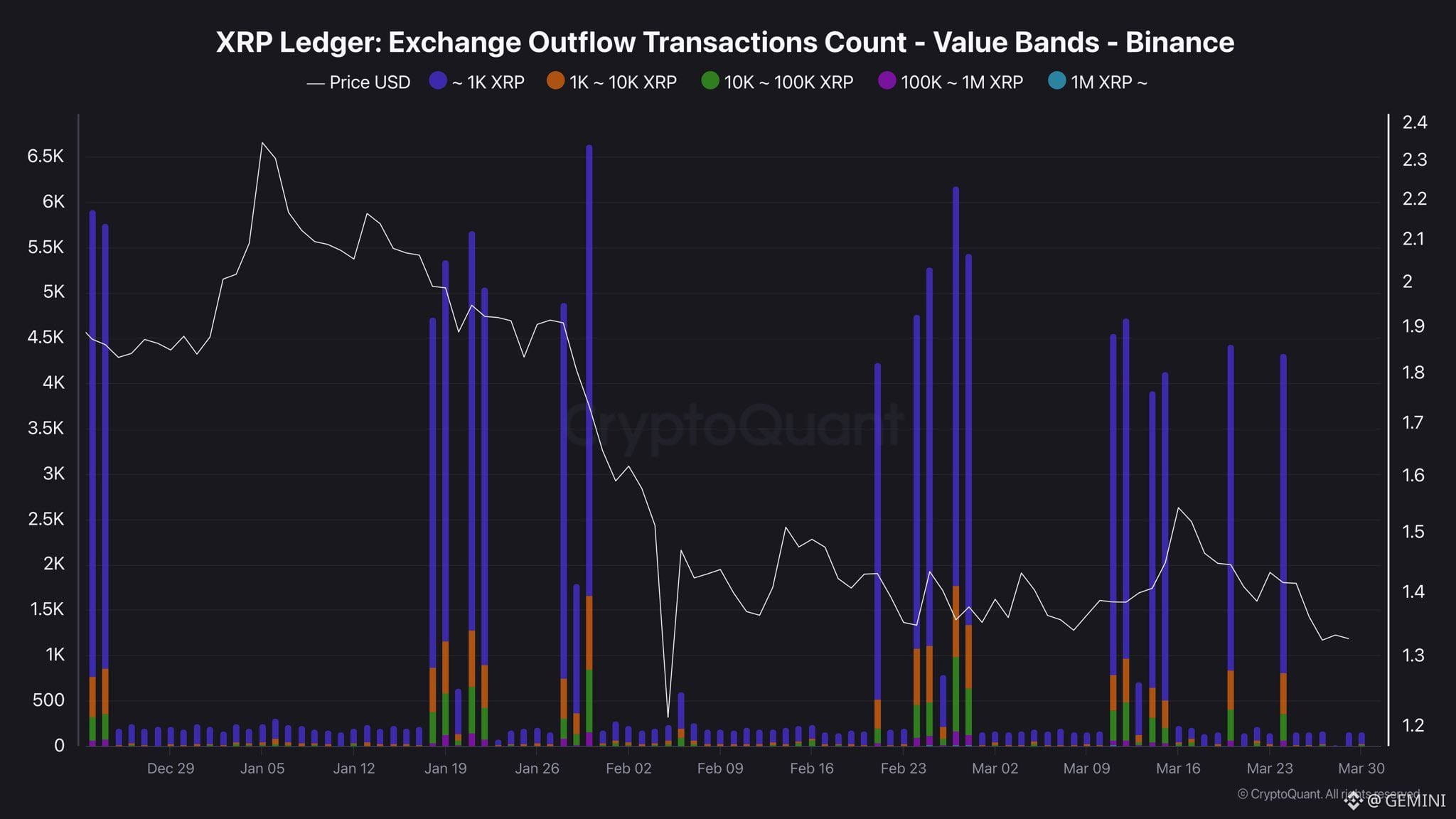
Dans sa plage actuelle, #XRP montre des signes clairs d'accumulation alors que l'activité augmente discrètement. Au cours de cette période, plusieurs jours ont enregistré plus de 4 000 transactions de sortie, avec des pics atteignant près de 6 000 en une seule journée. Ce flux constant suggère que les investisseurs pourraient se repositionner en prévision d'un mouvement potentiel.
Dans sa plage actuelle, #XRP montre des signes clairs d'accumulation alors que l'activité augmente discrètement. Au cours de cette période, plusieurs jours ont enregistré plus de 4 000 transactions de sortie, avec des pics atteignant près de 6 000 en une seule journée. Ce flux constant suggère que les investisseurs pourraient se repositionner en prévision d'un mouvement potentiel.
96
·
--
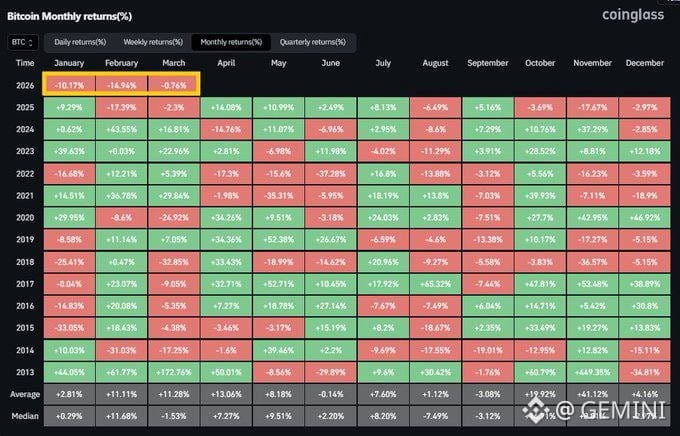
Pour la première fois, #Bitcoin pourrait clôturer ses trois premiers mois de l'année dans le rouge, marquant un début rare et inhabituel.
Pour la première fois, #Bitcoin pourrait clôturer ses trois premiers mois de l'année dans le rouge, marquant un début rare et inhabituel.
117
·
--
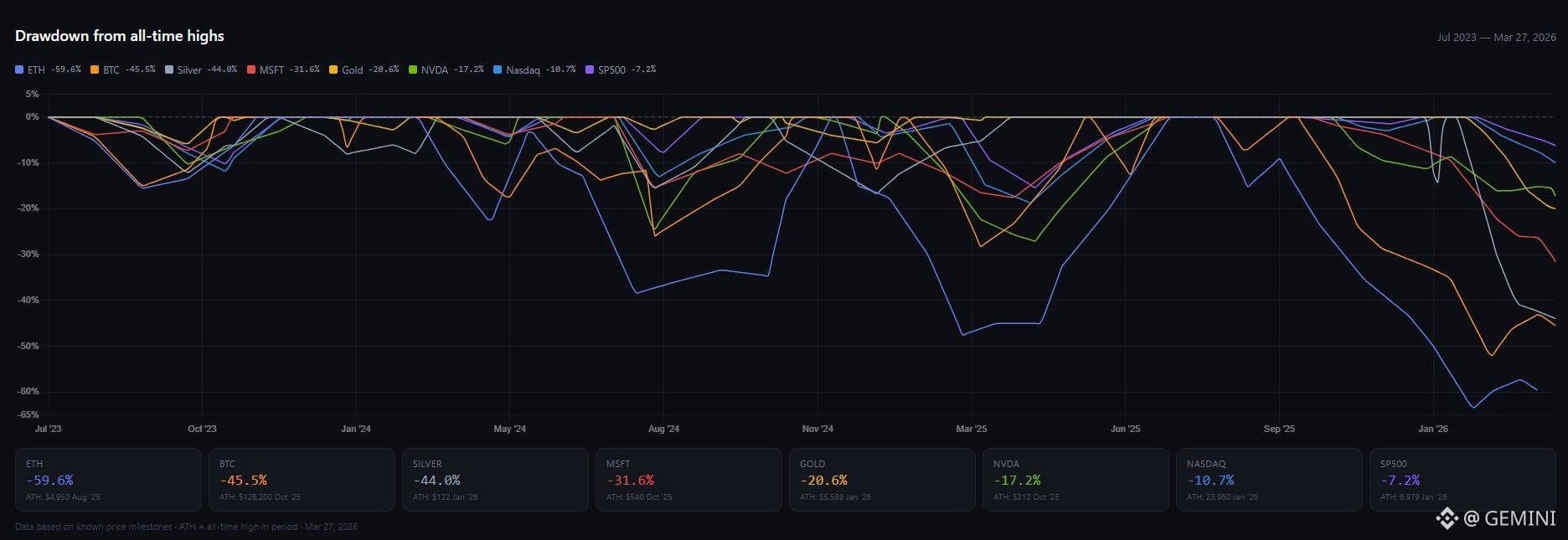
Dans les principaux marchés, les actifs ont nettement reculé par rapport à leurs sommets historiques. #Ethereum a chuté d'environ 60 % et #Bitcoin d'environ 45 %, tandis que les actifs traditionnels ressentent également la pression, avec l'argent en baisse d'environ 44 % et Microsoft de plus de 30 %. Même des actifs relativement plus forts comme l'or et Nvidia ont diminué d'environ 20 % et 17 %, et des indices plus larges tels que le Nasdaq et S&P 500 ont également glissé.
Ce type de mouvement rend clair que le ralentissement n'est pas isolé à la crypto. Il reflète un changement plus large dans le sentiment du marché, où les investisseurs deviennent plus prudents et réévaluent le risque dans l'ensemble. Ces phases signalent souvent un réajustement des valorisations et peuvent façonner la direction du prochain cycle de marché.
Dans les principaux marchés, les actifs ont nettement reculé par rapport à leurs sommets historiques. #Ethereum a chuté d'environ 60 % et #Bitcoin d'environ 45 %, tandis que les actifs traditionnels ressentent également la pression, avec l'argent en baisse d'environ 44 % et Microsoft de plus de 30 %. Même des actifs relativement plus forts comme l'or et Nvidia ont diminué d'environ 20 % et 17 %, et des indices plus larges tels que le Nasdaq et S&P 500 ont également glissé.
Ce type de mouvement rend clair que le ralentissement n'est pas isolé à la crypto. Il reflète un changement plus large dans le sentiment du marché, où les investisseurs deviennent plus prudents et réévaluent le risque dans l'ensemble. Ces phases signalent souvent un réajustement des valorisations et peuvent façonner la direction du prochain cycle de marché.
Ce type de mouvement rend clair que le ralentissement n'est pas isolé à la crypto. Il reflète un changement plus large dans le sentiment du marché, où les investisseurs deviennent plus prudents et réévaluent le risque dans l'ensemble. Ces phases signalent souvent un réajustement des valorisations et peuvent façonner la direction du prochain cycle de marché.
1
136
·
--
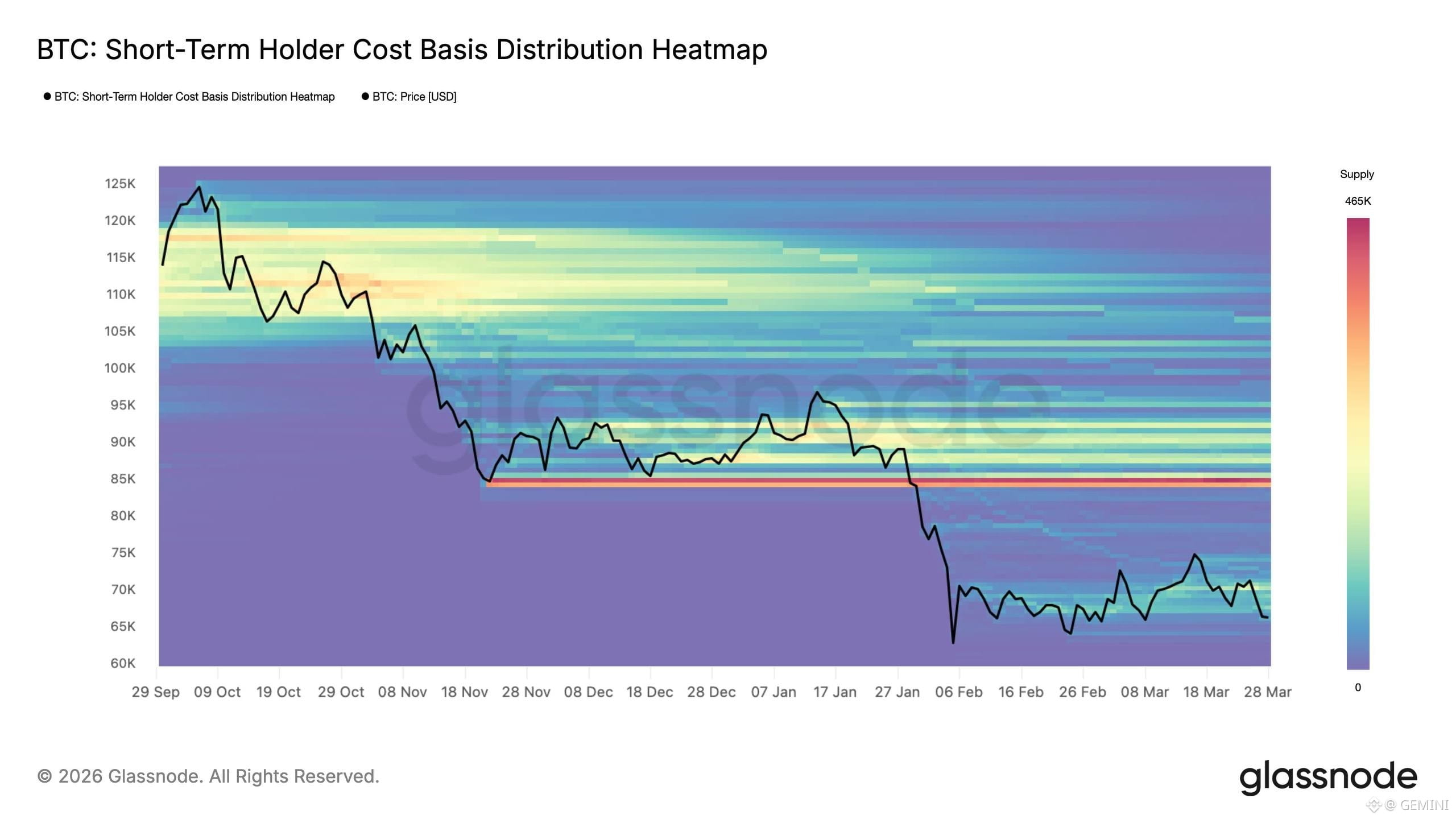
Actuellement, #Bitcoin se négocie près du bas de la fourchette de base de coût de 60 000 $ à 70 000 $ pour les acheteurs récents, une zone qui commence à montrer des signes de demande. Une accumulation visible se produit dans cette zone, indiquant que de nouveaux participants absorbent progressivement l'offre. L'intensité de cette accumulation est encore plus faible par rapport aux phases passées qui ont entraîné de fortes récupérations.
Le groupe d'acheteurs ici reste relativement mince, la conviction est encore en train de se construire plutôt que d'être entièrement établie. Dans l'ensemble, la structure semble constructive, mais elle n'est pas encore assez forte pour confirmer une base solide. Une accumulation continue et une concentration plus profonde de détenteurs dans cette fourchette seraient nécessaires pour soutenir une perspective haussière plus confiante.
Actuellement, #Bitcoin se négocie près du bas de la fourchette de base de coût de 60 000 $ à 70 000 $ pour les acheteurs récents, une zone qui commence à montrer des signes de demande. Une accumulation visible se produit dans cette zone, indiquant que de nouveaux participants absorbent progressivement l'offre. L'intensité de cette accumulation est encore plus faible par rapport aux phases passées qui ont entraîné de fortes récupérations.
Le groupe d'acheteurs ici reste relativement mince, la conviction est encore en train de se construire plutôt que d'être entièrement établie. Dans l'ensemble, la structure semble constructive, mais elle n'est pas encore assez forte pour confirmer une base solide. Une accumulation continue et une concentration plus profonde de détenteurs dans cette fourchette seraient nécessaires pour soutenir une perspective haussière plus confiante.
Le groupe d'acheteurs ici reste relativement mince, la conviction est encore en train de se construire plutôt que d'être entièrement établie. Dans l'ensemble, la structure semble constructive, mais elle n'est pas encore assez forte pour confirmer une base solide. Une accumulation continue et une concentration plus profonde de détenteurs dans cette fourchette seraient nécessaires pour soutenir une perspective haussière plus confiante.
52
·
--
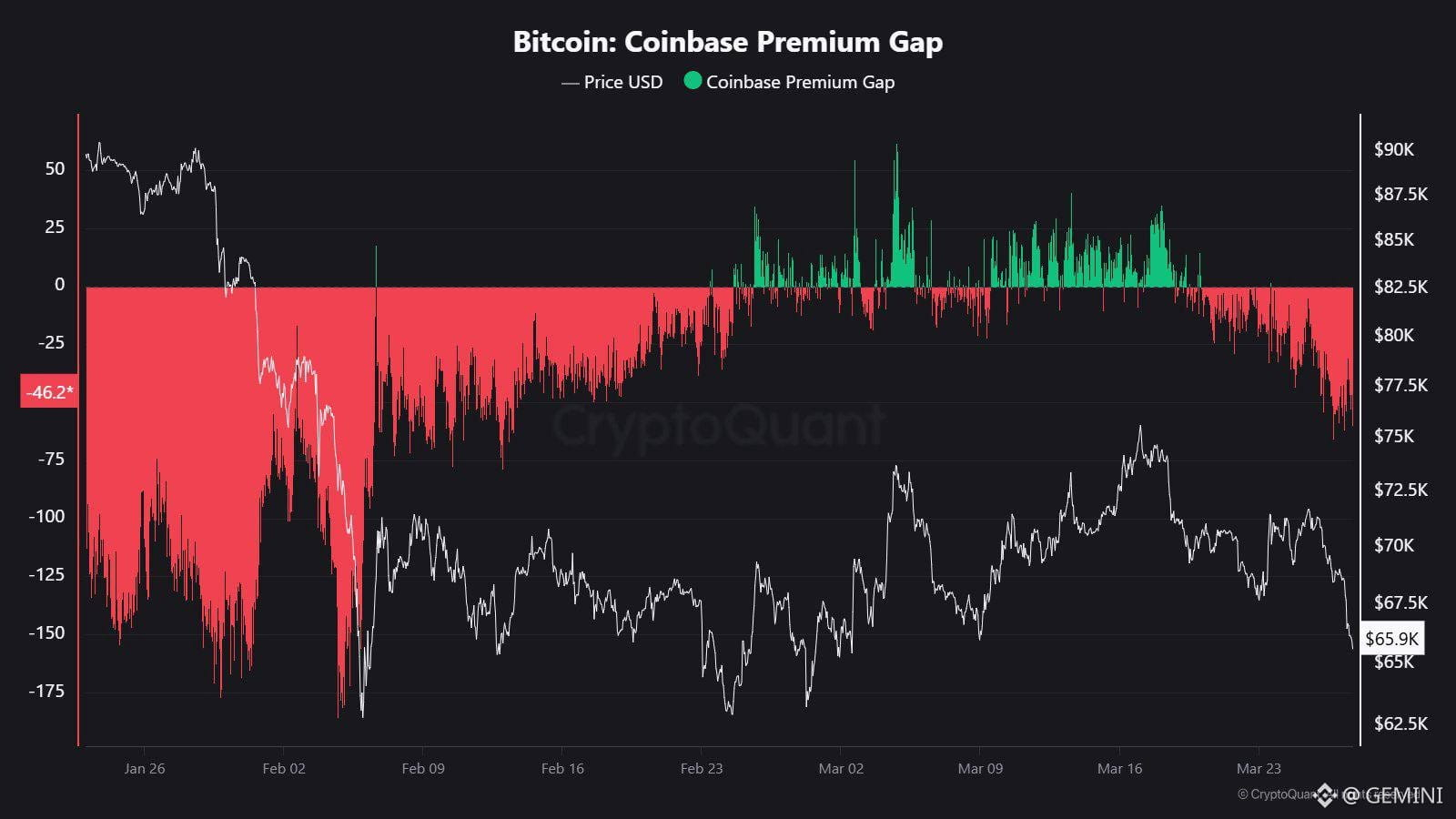
Une fois que l'offre de Coinbase s'est retirée, le changement était assez clair. L'écart de prime est devenu négatif, et le prix a continuellement baissé depuis. Cela signale généralement un affaiblissement de la demande au comptant aux États-Unis et sans ce soutien, le marché a tendance à dériver vers le bas. Certainement pas quelque chose à ignorer.
Une fois que l'offre de Coinbase s'est retirée, le changement était assez clair. L'écart de prime est devenu négatif, et le prix a continuellement baissé depuis. Cela signale généralement un affaiblissement de la demande au comptant aux États-Unis et sans ce soutien, le marché a tendance à dériver vers le bas. Certainement pas quelque chose à ignorer.
32
Connectez-vous pour découvrir plus de contenu
Rejoignez la communauté mondiale des adeptes de cryptomonnaies sur Binance Square
⚡️ Suviez les dernières informations importantes sur les cryptomonnaies.
💬 Jugé digne de confiance par la plus grande plateforme d’échange de cryptomonnaies au monde.
👍 Découvrez les connaissances que partagent les créateurs vérifiés.
Adresse e-mail/Nº de téléphone
Sujets d’actualité
CPIWatch
86.7M vues
502,269 mentions
Partagez et gagnez des récompenses en trafic dans notre campagne de hashtag tendance
✨Sujet : Le CPI déclenchera-t-il une hausse du taux ?
👉Comment participer :
Publiez une courte publication ou un article avec le hashtag #CPIWatch
Créez du contenu à partir des deux angles ci-dessous :
- Les créations d’emplois non agricoles dépassent les attentes et le CPI arrive bientôt : selon vous, la Fed va-t-elle augmenter le taux ou le maintenir ?
- Bullish ou bearish ? Partagez votre avis et mettez en avant vos actions ou votre trading/portefeuille sur l’or grâce à notre widget de partage des transactions.
🚀Période de la campagne :
- 2026-09-11 3:00 - 2026-09-12 9:00 UTC
🎁Récompense :
- Les publications éligibles conformes aux consignes ci-dessus et contenant plus de 100 mots seront examinées et peuvent recevoir un boost aléatoire de trafic de 500 à 3 000 vues. Vous recevrez une notification de la part de votre secrétaire de flux si votre publication est sélectionnée.
- Ayez une chance de voir votre article mis en avant sur Binance Square Officiel
Vous cherchez des idées pour votre publication ? Visitez la page du sujet #CPIWatch ou la Square Guide on How to Post for Better Reach.
Binance Square Official
·505 mentions J’aime
·1.2M vues
BitcoinReboundsAbove$79KAfterCPI
774 vues
85 mentions
BNBTops730USDT
8,868 vues
476 mentions