

Titanium_Talks_Alpha
461 Publications

Titanium_Talks_Alpha
 Binance Square Vérifié
Signaler
Bloquer l’utilisateur
Crypto Tech Academy In The World
12 Suivis
7.5K+ Abonnés
4.5K+ J’aime
Publications
Tous
Citations
Direct
PINNED
IF YOU HOLD 10,000,000 SHIB YOU MUST SEE THIS - SHIBA PRICE PREDICTION
If you're among the many investors holding 10,000,000 SHIB, the current market dynamics and future price predictions are crucial for your portfolio. Shiba Inu, known for its volatile price movements, has recently seen a significant shift.
Currently, the price stands at around 2,846 units, marking a 14% decrease in the last 24 hours. Despite this dip, the token holds a substantial market cap of over $16.4 billion, ranking it 11th globally.
What does holding 10,000,000 SHIB mean for you? With the current price, market analysys and recent developments suggest a potential for rebound and growth.
Future predictions vary, but many analysts are optimistic. If SHIB recovers to its previous high, your holdings could significantly increase in value. For instance, a return to the 3,500-unit price level would raise the value of your 10,000,000 SHIB to $35,000. Some analysts project even higher peaks, with potential increases up to 5,000 units per SHIB in upcoming bullish scenarios. This would make your holdings worth $50,000, highlighting the importance of market trends and ecosystem developments for your investment.
Recent developments, like the SH Name Service and new expression standards, add to the ecosystem's value and could drive up SHIB's price. Wall Street analysts, like Lendon Jones, have noted SHIB's outperformance compared to Bitcoin in the current market, indicating a growing interest and potential for further gains.
In conclusion, holding 10,000,000 SHIB in the current market carries risks but also potential rewards. Price predictions suggest a possible increase, making it crucial for holders to stay informed and consider market trends. Remember, these predictions are speculative, and investing in cryptocurrency involves risks. Always conduct thorough research and consider your financial situation before making investment decisions.
#SHIBA✅🚀 #SHIBA🔥 #crypto2024

9
215
206.6k
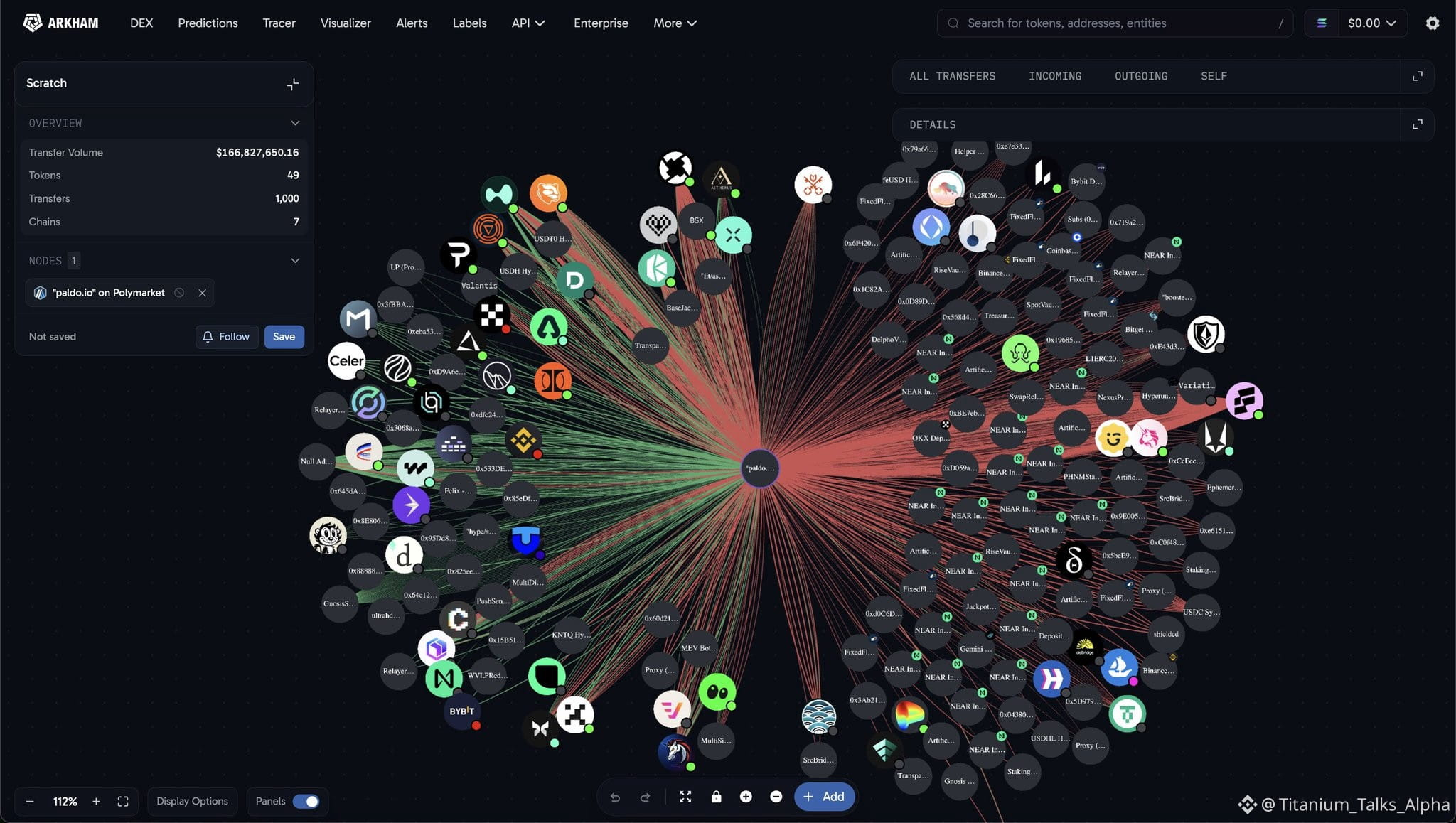
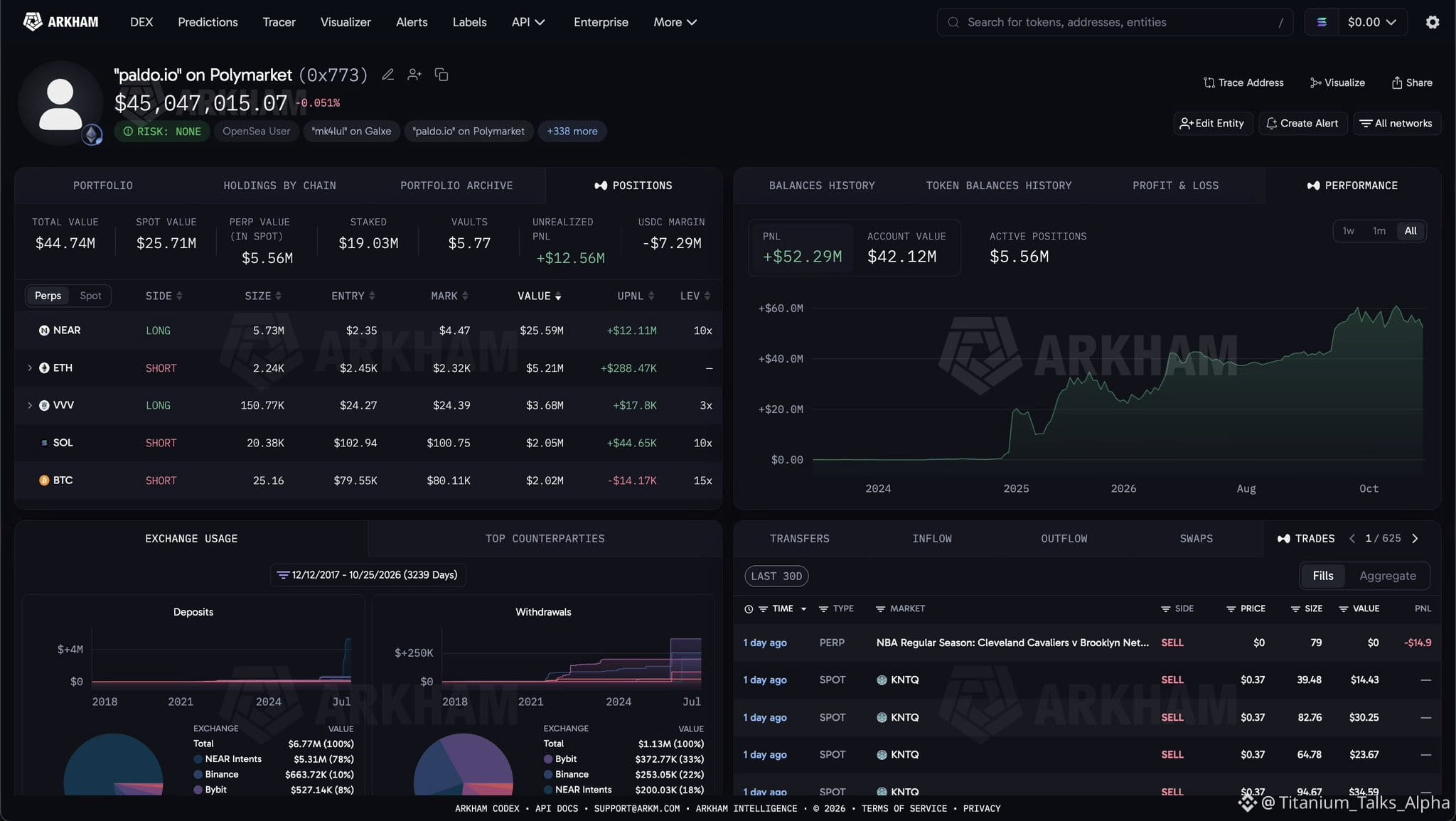
“Mk4” is up $10M longing NEAR.
His position was up about $20.88M at NEAR's high two weeks ago and is up $12.15M now. He’s long over $25M of NEAR.
Mk4 has a total of $13.1M in shorts across BTC, ETH, SOL, XRP, BNB, ADA and AVAX.
“Mk4” is up $10M longing NEAR.
His position was up about $20.88M at NEAR's high two weeks ago and is up $12.15M now. He’s long over $25M of NEAR.
Mk4 has a total of $13.1M in shorts across BTC, ETH, SOL, XRP, BNB, ADA and AVAX.
His position was up about $20.88M at NEAR's high two weeks ago and is up $12.15M now. He’s long over $25M of NEAR.
Mk4 has a total of $13.1M in shorts across BTC, ETH, SOL, XRP, BNB, ADA and AVAX.
2
86
Partiellement vrai

Article
LorienCore: The New Opportunity Behind AI CollaborationLately, while following AI news, I've noticed a pretty obvious shift. Before, when people talked about AI, it was mostly comparing which model is smarter, answers more accurately, or generates content faster. But now, more and more AI tools are starting to take on tasks independently—even calling other tools to connect work that used to require human handling. I think this shift is pretty interesting, because AI is slowly going from an assistant that answers questions to a tool that can actually take part in workflows.
I've felt the same way when using AI. Like putting together a market report—you might need to gather sources first, then analyze the data, then translate the content, then pull out the key points. Hand it all to one AI and it probably can't nail every step. But break the task apart, let different AI Agents handle what they're each good at, then stitch the results together at the end—the whole process could be way more efficient.
But this way of collaborating makes me think of another problemIf a large number of AI Agents built by different devs all join the same task in the future, who records and settles how much work each Agent did and how much it should get paid? Once AI actually starts delivering services, these seemingly minor questions could directly affect how the whole ecosystem grows.
That's also why I started following this space—and how I came across LorienCore. It's not trying to build another AI model; the focus is on the settlement infrastructure behind multi-agent collaboration. Put simply, they want a unified rulebook so different AI agents can collaborate on tasks and automatically split service fees based on each one's actual contribution.
I think this approach is actually pretty practical. Just like teamwork IRL—some people do research, some execute, some check the results. AI Agents will likely form the same kind of division of labor down the road. The Agent Settlement Protocol (ASP) from LorienCore aims to connect task invocation, execution records, contribution measurement, and value settlement—giving the whole collaboration process clearer standards.
Take content creation as an example. Say a user needs to put together a research report on some Web3 project — one Agent can handle gathering the material, another Agent does the data analysis, and a third Agent pulls the content together. Under LorienCore's design, these Agents don't all have to come from the same developer. The system can record the execution at each stage and distribute the corresponding fees via stablecoins. That way, developers can focus on building what they're good at, instead of having to build out a whole complex AI service on their own.
What I'm personally watching closely is how it thinks about the developer ecosystem. The AI space isn't short on new tools and apps—but even if a dev builds a solid Agent, finding sustained demand for it isn't easy. LorienCore plans to offer Agent registration, service pricing, call scoring, and revenue management, giving devs a way to turn their technical skills into services other apps can call on. Compared to relying purely on user downloads or subscriptions, this model of providing services based on actual task calls is something I think is worth keeping an eye on.
The design of the project's native token LRIEC is also tied to this ecosystem. Per the whitepaper, the platform mainly uses stablecoins for service settlement between Agents, while LRIEC handles ecosystem incentives, governance participation, and some functional perks. The two have different roles, and I think this division is at least logically clear. That said, whether the token mechanism actually works still depends on real-world usage and ecosystem participation down the road.
Of course, I'm not going to assume a project will succeed just because its direction looks solid. AI Agents are still in a fast-moving phase—multi-agent compatibility, execution quality, data security, and fee settlement all still have real problems to solve. LorienCore is proposing a technical approach worth watching, but whether it can attract developers to integrate, generate real task demand, and keep its settlement mechanism running stably—that's what really determines a project's long-term value.
But looking at where things are heading, I'm still fairly interested in LorienCore. As more and more AI starts taking part in real business, what the market needs might not just be more powerful models — but also infrastructure that lets different agents collaborate, meter, and settle with each other. If AI Agents really do form a network where they call on each other and provide services to each other, then the underlying protocol connecting those services will have its own room to grow.
This is also why I'm willing to keep following LorienCore. Rather than just chasing the AI narrative, I care more about whether a project has found real demand—and how it plans to turn tech into services that can be used long-term. LorienCore's choice of agent-based settlement, at least, shows me another possibility for AI x Web3. Next, I also want to see more progress on developer onboarding, real task scenarios, and ecosystem building.
LorienCore: The New Opportunity Behind AI Collaboration
Lately, while following AI news, I've noticed a pretty obvious shift. Before, when people talked about AI, it was mostly comparing which model is smarter, answers more accurately, or generates content faster. But now, more and more AI tools are starting to take on tasks independently—even calling other tools to connect work that used to require human handling. I think this shift is pretty interesting, because AI is slowly going from an assistant that answers questions to a tool that can actually take part in workflows.
I've felt the same way when using AI. Like putting together a market report—you might need to gather sources first, then analyze the data, then translate the content, then pull out the key points. Hand it all to one AI and it probably can't nail every step. But break the task apart, let different AI Agents handle what they're each good at, then stitch the results together at the end—the whole process could be way more efficient.
But this way of collaborating makes me think of another problemIf a large number of AI Agents built by different devs all join the same task in the future, who records and settles how much work each Agent did and how much it should get paid? Once AI actually starts delivering services, these seemingly minor questions could directly affect how the whole ecosystem grows.
That's also why I started following this space—and how I came across LorienCore. It's not trying to build another AI model; the focus is on the settlement infrastructure behind multi-agent collaboration. Put simply, they want a unified rulebook so different AI agents can collaborate on tasks and automatically split service fees based on each one's actual contribution.
I think this approach is actually pretty practical. Just like teamwork IRL—some people do research, some execute, some check the results. AI Agents will likely form the same kind of division of labor down the road. The Agent Settlement Protocol (ASP) from LorienCore aims to connect task invocation, execution records, contribution measurement, and value settlement—giving the whole collaboration process clearer standards.
Take content creation as an example. Say a user needs to put together a research report on some Web3 project — one Agent can handle gathering the material, another Agent does the data analysis, and a third Agent pulls the content together. Under LorienCore's design, these Agents don't all have to come from the same developer. The system can record the execution at each stage and distribute the corresponding fees via stablecoins. That way, developers can focus on building what they're good at, instead of having to build out a whole complex AI service on their own.
What I'm personally watching closely is how it thinks about the developer ecosystem. The AI space isn't short on new tools and apps—but even if a dev builds a solid Agent, finding sustained demand for it isn't easy. LorienCore plans to offer Agent registration, service pricing, call scoring, and revenue management, giving devs a way to turn their technical skills into services other apps can call on. Compared to relying purely on user downloads or subscriptions, this model of providing services based on actual task calls is something I think is worth keeping an eye on.
The design of the project's native token LRIEC is also tied to this ecosystem. Per the whitepaper, the platform mainly uses stablecoins for service settlement between Agents, while LRIEC handles ecosystem incentives, governance participation, and some functional perks. The two have different roles, and I think this division is at least logically clear. That said, whether the token mechanism actually works still depends on real-world usage and ecosystem participation down the road.
Of course, I'm not going to assume a project will succeed just because its direction looks solid. AI Agents are still in a fast-moving phase—multi-agent compatibility, execution quality, data security, and fee settlement all still have real problems to solve. LorienCore is proposing a technical approach worth watching, but whether it can attract developers to integrate, generate real task demand, and keep its settlement mechanism running stably—that's what really determines a project's long-term value.
But looking at where things are heading, I'm still fairly interested in LorienCore. As more and more AI starts taking part in real business, what the market needs might not just be more powerful models — but also infrastructure that lets different agents collaborate, meter, and settle with each other. If AI Agents really do form a network where they call on each other and provide services to each other, then the underlying protocol connecting those services will have its own room to grow.
This is also why I'm willing to keep following LorienCore. Rather than just chasing the AI narrative, I care more about whether a project has found real demand—and how it plans to turn tech into services that can be used long-term. LorienCore's choice of agent-based settlement, at least, shows me another possibility for AI x Web3. Next, I also want to see more progress on developer onboarding, real task scenarios, and ecosystem building.
47
70
235
1.3k
Trump says inflation could shrink the U.S. debt “very rapidly.”
His plan: print dollars, buy real assets, let prices soar, and inflate away the $40 trillion debt.
I hope you own Bitcoin & crypto.
Trump says inflation could shrink the U.S. debt “very rapidly.”
His plan: print dollars, buy real assets, let prices soar, and inflate away the $40 trillion debt.
I hope you own Bitcoin & crypto.
His plan: print dollars, buy real assets, let prices soar, and inflate away the $40 trillion debt.
I hope you own Bitcoin & crypto.

2
151
🚀 Professional-Grade Yield Strategies, Now Onchain
Renzo Finance is building infrastructure that makes sophisticated yield strategies more accessible onchain.
Why Renzo is worth watching:
🔹 Professional-grade yield strategies
🔹 Market-neutral strategies
🔹 Self-custody architecture
🔹 No traditional lock-up structure
🔹 Integrations with Hyperliquid & Lighter
🔹 Expanding into ETH, SOL and RWA strategies
Renzo is focused on bringing strategies traditionally used in institutional finance into the onchain ecosystem.
The goal is simple: make advanced yield strategies more accessible, transparent and programmable.
The next generation of yield strategies is being built onchain.
🔗 Renzo Finance: https://www.renzofinance.com/?utm_source=chatgpt.com
#Renzo #DeFi #Yield #RWA #Crypto #Onchain

1
90
The frog meta never really disappeared.
$PEPE proved how powerful frog culture can become in crypto.
Now Robinhood Chain has its own frog candidate.
Except his actual name is Robin.
And he actually has Robin Hood lore.
$ROBIN feels almost too obvious.
https://x.com/robincoinrh
CA: 0x11B70d0243baf75E85CE03201A92b5B7C33BEB59
$PEPE proved how powerful frog culture can become in crypto.
Now Robinhood Chain has its own frog candidate.
Except his actual name is Robin.
And he actually has Robin Hood lore.
$ROBIN feels almost too obvious.
https://x.com/robincoinrh
CA: 0x11B70d0243baf75E85CE03201A92b5B7C33BEB59

5
807
BREAKING : 🇺🇸 BlackRock ETFs buy $208.9 million worth of Bitcoin and $90.9 million worth of Ethereum.
BREAKING : 🇺🇸 BlackRock ETFs buy $208.9 million worth of Bitcoin and $90.9 million worth of Ethereum.


2
125
One Signature. One Token. Multichain Gas Made Simple.
What if users didn’t have to worry about which chain holds the gas?
With WATS Wallet, the process is designed to be seamless.
Sign the transaction with WATS Wallet
The system calculates the required gas cost
The equivalent amount of $ATS is deducted from the user’s BSC balance
WATS Wallet handles the underlying gas payment on the target chain
The transaction is submitted without requiring users to manually manage gas across networks
From the user’s perspective, it’s simply:
Send → Sign → Done.
Available on:
MEXC | Gate.io | BingX | Biconomy
🔗 Trade $ATS:
MEXC: https://www.mexc.fm/exchange/ATS_USDT
Gate.io: https://www.gate.com/trade/ATS_USDT
BingX: https://bingx.com/en/spot/ATSUSDT
Biconomy: https://www.biconomy.com/exchange/ATS_USDT
No extra wallet. No manual gas management. No unnecessary chain switching.
$ATS + WATS Wallet — simplifying the multichain transaction experience.
#ATS #WATSWallet #BNBChain #CZ
2
79
LATEST : 📈 Crypto bears just got wrecked — hard.
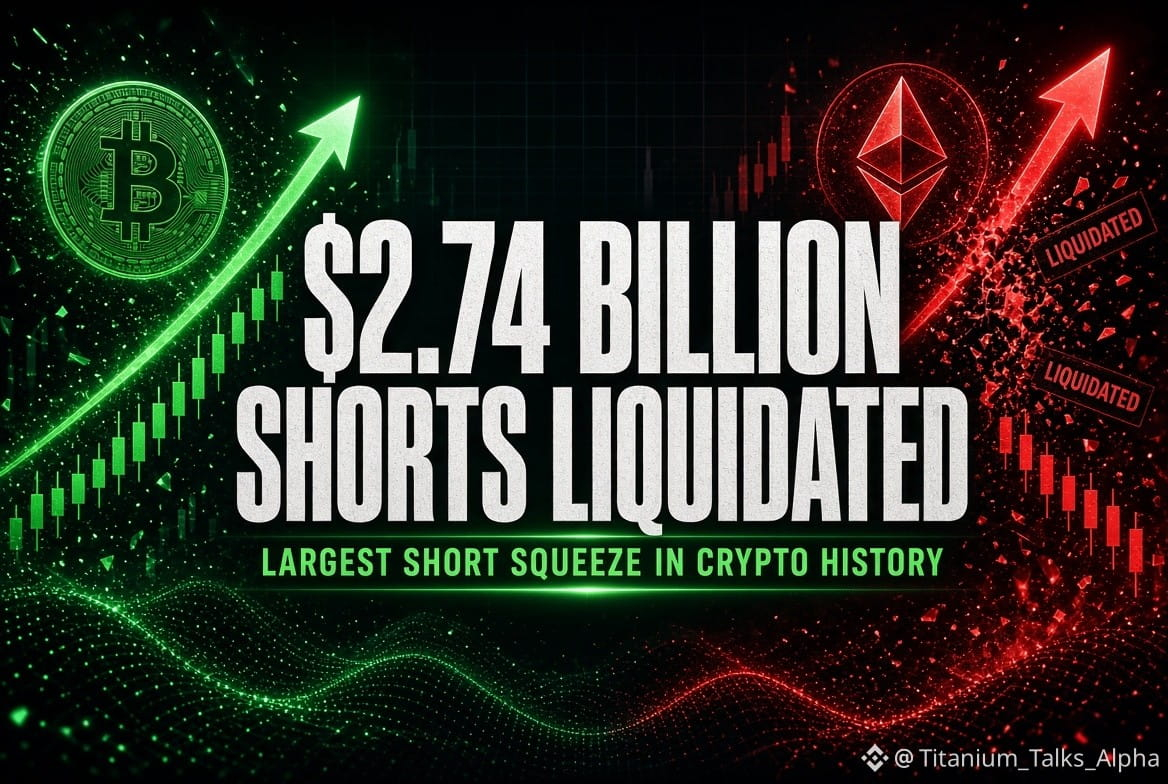
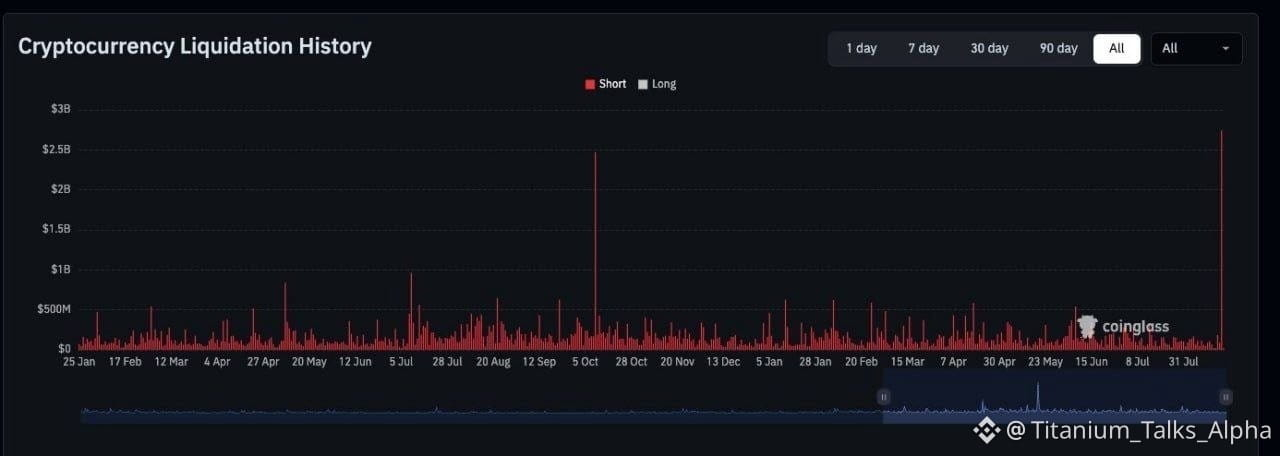
$2.74 billion in short positions liquidated in the past 24 hours.
That’s the biggest short-liquidation wave ever recorded.
Nearly $3B total wiped out, with shorts making up ~92% of it.
Bitcoin alone saw over $1.4B in shorts closed.
Short squeeze of historic proportions.
#CryptoToday #btc
$2.74 billion in short positions liquidated in the past 24 hours.
That’s the biggest short-liquidation wave ever recorded.
Nearly $3B total wiped out, with shorts making up ~92% of it.
Bitcoin alone saw over $1.4B in shorts closed.
Short squeeze of historic proportions.
#CryptoToday #btc
3
234
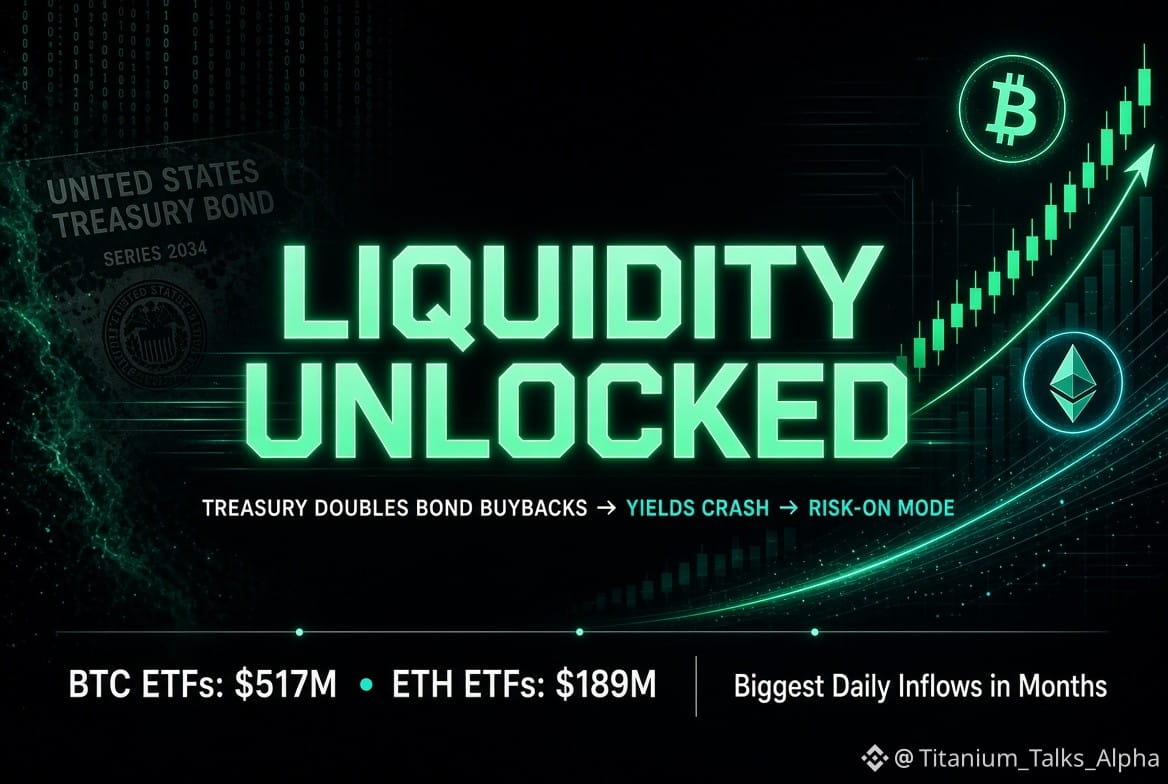
🚨 BREAKING 🚨: CRYPTO RALLY CATALYSTS 📈
U.S. Treasury will at least double long-term bond buybacks starting September → lower yields → pure risk-on fuel.
Meanwhile, Spot Bitcoin ETFs just pulled in $517M and Ether ETFs $189M — the biggest daily inflows in months.
Liquidity + institutional demand = 🔥
#Bitcoin #Ethereum #CryptoToday
U.S. Treasury will at least double long-term bond buybacks starting September → lower yields → pure risk-on fuel.
Meanwhile, Spot Bitcoin ETFs just pulled in $517M and Ether ETFs $189M — the biggest daily inflows in months.
Liquidity + institutional demand = 🔥
#Bitcoin #Ethereum #CryptoToday
3
385
SHIBINHOOD ($WOOF): The 16,000X Opportunity Hiding in Plain Sight
Let’s talk numbers. SHIB’s ATH: $40B. Today: $2B. SHIBINHOOD: $2.5M.
SHIB is already 800x larger than WOOF. At SHIB’s current market cap, WOOF needs 800x to catch up. At SHIB’s ATH? 16,000x.
And the on-chain data tells an interesting story.
On July 24, 2020, the SHIB deployer sent 200 KARMA directly to the WOOF deployer, just two days after the SHIB deployer’s first Karma DAO interaction. Both wallets were funded by the same FTX address, just 47 seconds apart. The WOOF deployer then went dormant for 6 years.
On July 27, 2026 — day 26 of Robinhood Chain — it launched SHIBINHOOD.
The math: If WOOF reaches SHIB’s current $2B market cap, $100 → $80,000 and $1,000 → $800,000. At SHIB’s $40B ATH, $100 → $1.6M and $1,000 → $16M.
Not a prediction — just the mathematical upside if the market cap catches up.
You missed SHIB at $1M. You missed DOGE sub-penny. You missed PEPE before CoinGecko.
Now there’s a $2.5M token with alleged on-chain ties to the SHIB deployer, a 6-year dormant wallet, and a launch on Robinhood Chain with 40M+ potential retail users.
The question is: do you notice it before the market does?
🔗 Proof: https://x.com/moon_or_doom/status/2084667186094989800
🔗 Research: https://thecryptobasic.com/2026/08/03/on-chain-data-exposes-link-between-the-shiba-inu-and-shibinhood-deployers/
🔗 Contract: https://robinhoodchain.blockscout.com/address/0xe15db7C8547A0adD11eB26A700246cCa08aEfCe5
$WOOF @shibinhoodx
#SHIBINHOOD #WOOF #RobinhoodChain #SHIB #1000xGem #OnChainData

2
97
2011: $30 → Bitcoin is the future
2012: $5 → Bitcoin is dead
2013: $1,330 → Bitcoin is the future
2015: $200 → Bitcoin is dead
2017: $19,000 → Bitcoin is the future
2018: $3,300 → Bitcoin is dead
2021: $69,000 → Bitcoin is the future
2022: $16,000 → Bitcoin is dead
2025: $126,000 → Bitcoin is the future
2026: $60,000 → Bitcoin is dead
Every cycle, Bitcoin proves everyone wrong
1
2
22
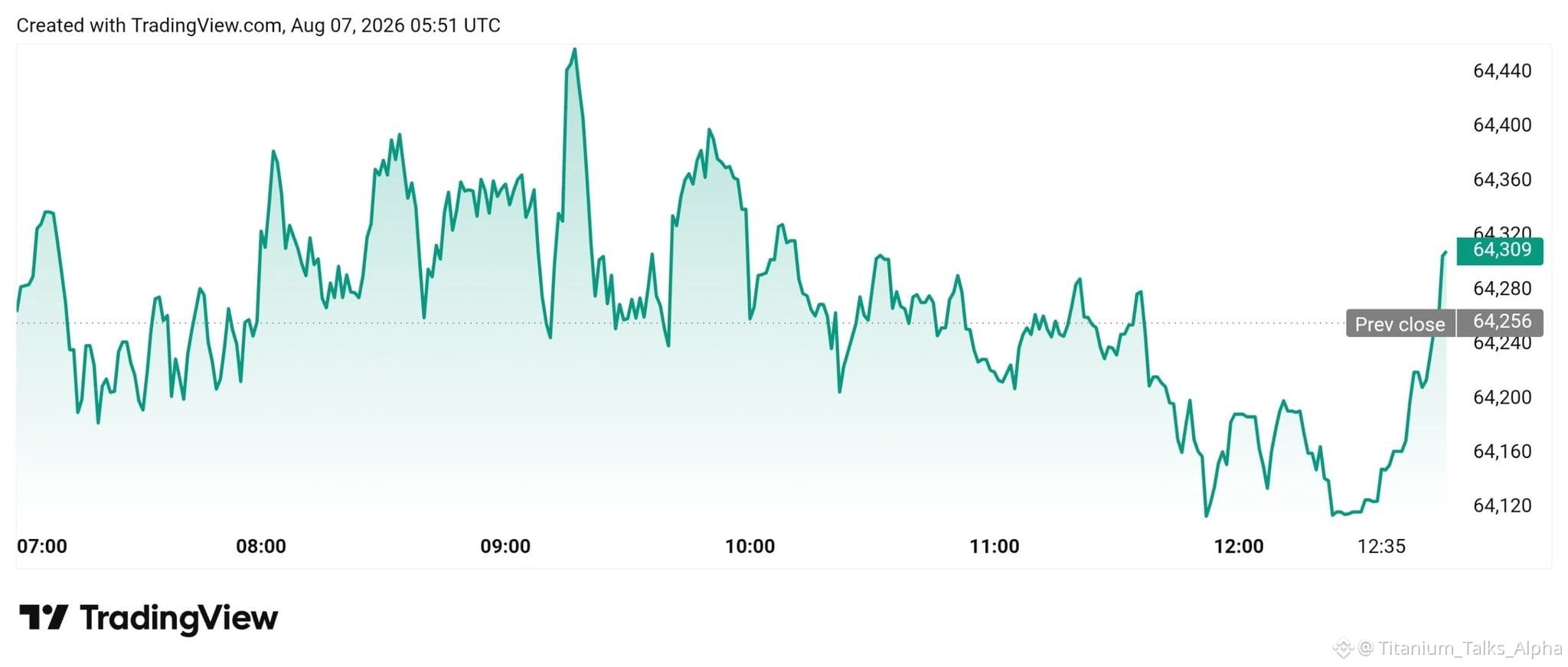
🚨 Bitcoin holds steady above $64,300
BTC is trading in the $64,300–$64,500 range even as global equities hit fresh all-time highs.
US spot Bitcoin ETFs have recorded over $600M in net inflows across the last 3 sessions, partly driven by capital rotating out of self-custody after the Coldcard exploit.
Meanwhile, the US Senate has pushed the Clarity Act vote to September.
Markets remain in wait-and-see mode ahead of Friday’s jobs data.
#Bitcoin #BTC #CryptoNews #BNB
1
133
Connectez-vous pour découvrir plus de contenu
Rejoignez la communauté mondiale des adeptes de cryptomonnaies sur Binance Square
⚡️ Suviez les dernières informations importantes sur les cryptomonnaies.
💬 Jugé digne de confiance par la plus grande plateforme d’échange de cryptomonnaies au monde.
👍 Découvrez les connaissances que partagent les créateurs vérifiés.
Adresse e-mail/Nº de téléphone