

Georgina Free Signal charts
142 Publications

Georgina Free Signal charts
Signaler
Bloquer l’utilisateur
In the cryptocurrency market, many offer free trading signals, but real-time market reports are the best way to earn money for free Just follow us for live news
Ouvert au trading
Trade occasionnellement
4.4 an(s)
15 Suivis
28 Abonnés
40 J’aime
Publications
Portefeuille
Tous
Vidéos
🔴 إيران تتمسك بالدبلوماسية… بعد رفض ترامب مقترح فتح هرمز
إيران أكدت اليوم أن الحل الوحيد للصراع هو الدبلوماسية، بعد أن قال ترامب إنه رفض المقترح الإيراني الأخير لإعادة فتح مضيق هرمز وإنهاء القتال.
المقترح الإيراني كان يقوم على إعادة فتح هرمز خلال فترة قصيرة مقابل تخفيف الحصار والضغط الأمريكي، لكن واشنطن لم تقبل الصيغة المطروحة.
⭐️ ماذا يعني ذلك ببساطة؟
◀️ الطرفان ما زالا يتحدثان عن التفاوض، لكن الفجوة بين شروط واشنطن وطهران ما زالت كبيرة.
◀️ ترامب يريد فتح هرمز واتفاقًا بشروط أقوى، بينما إيران تربط التهدئة بتخفيف الحصار والضغوط.
🛢 لذلك ملف هرمز يظل من أهم ما يجب مراقبته هذا الأسبوع، لأن أي تقدم مفاجئ قد يضغط على النفط، وأي فشل جديد قد يعيد علاوة المخاطر بسرعة.
#إيران #مضيق_هرمز #النفط #الاسواق_العالمية #BitwiseFilesFinalNEARSpotETFProspectus #DogecoinETFsPostBiggestWeekSinceLaunch #SECSaysTokenBuybacksNotAutoSecurities $AAPL.US $GOOGL.US
{stock_us}(GOOGL.US)
🔴 إيران تتمسك بالدبلوماسية… بعد رفض ترامب مقترح فتح هرمز
إيران أكدت اليوم أن الحل الوحيد للصراع هو الدبلوماسية، بعد أن قال ترامب إنه رفض المقترح الإيراني الأخير لإعادة فتح مضيق هرمز وإنهاء القتال.
المقترح الإيراني كان يقوم على إعادة فتح هرمز خلال فترة قصيرة مقابل تخفيف الحصار والضغط الأمريكي، لكن واشنطن لم تقبل الصيغة المطروحة.
⭐️ ماذا يعني ذلك ببساطة؟
◀️ الطرفان ما زالا يتحدثان عن التفاوض، لكن الفجوة بين شروط واشنطن وطهران ما زالت كبيرة.
◀️ ترامب يريد فتح هرمز واتفاقًا بشروط أقوى، بينما إيران تربط التهدئة بتخفيف الحصار والضغوط.
🛢 لذلك ملف هرمز يظل من أهم ما يجب مراقبته هذا الأسبوع، لأن أي تقدم مفاجئ قد يضغط على النفط، وأي فشل جديد قد يعيد علاوة المخاطر بسرعة.
#إيران #مضيق_هرمز #النفط #الاسواق_العالمية #BitwiseFilesFinalNEARSpotETFProspectus #DogecoinETFsPostBiggestWeekSinceLaunch #SECSaysTokenBuybacksNotAutoSecurities $AAPL.US $GOOGL.US
إيران أكدت اليوم أن الحل الوحيد للصراع هو الدبلوماسية، بعد أن قال ترامب إنه رفض المقترح الإيراني الأخير لإعادة فتح مضيق هرمز وإنهاء القتال.
المقترح الإيراني كان يقوم على إعادة فتح هرمز خلال فترة قصيرة مقابل تخفيف الحصار والضغط الأمريكي، لكن واشنطن لم تقبل الصيغة المطروحة.
⭐️ ماذا يعني ذلك ببساطة؟
◀️ الطرفان ما زالا يتحدثان عن التفاوض، لكن الفجوة بين شروط واشنطن وطهران ما زالت كبيرة.
◀️ ترامب يريد فتح هرمز واتفاقًا بشروط أقوى، بينما إيران تربط التهدئة بتخفيف الحصار والضغوط.
🛢 لذلك ملف هرمز يظل من أهم ما يجب مراقبته هذا الأسبوع، لأن أي تقدم مفاجئ قد يضغط على النفط، وأي فشل جديد قد يعيد علاوة المخاطر بسرعة.
#إيران #مضيق_هرمز #النفط #الاسواق_العالمية #BitwiseFilesFinalNEARSpotETFProspectus #DogecoinETFsPostBiggestWeekSinceLaunch #SECSaysTokenBuybacksNotAutoSecurities $AAPL.US $GOOGL.US
95
هل سيرتفع بيتكوين مع صعود الأسواق التقليدية؟
يطرح هذا التفاؤل سؤالاً مهماً أمام مستثمري العملات المشفرة. هل سيستفيد بيتكوين من نفس الزخم إذا واصلت الأسهم الصعود في الربع الرابع؟ أم ستعود رؤوس الأموال إلى الأصول التقليدية بدلاً من ذلك؟
يعطي تاريخ بيتكوين إجابة متباينة. سبق وأن تخلى عن موجات صعود الأسهم بالكامل، ليفصل نفسه عن دوره المعتاد كبديل عالي المخاطر لأسهم التكنولوجيا.
في الوقت الحالي، تشير حركة سعر بيتكوين خلال اليوم الماضي إلى سيناريو مختلف. يبدو أن المتداولين ينظرون إلى سياسة الفيدرالي الأكثر ميلًا للتيسير كإشارة إيجابية لكلا السوقين في الوقت نفسه. يعامل هذا التوجه كمصدر دفع إضافي، وليس سبباً للتحول بعيداً عن العملات المشفرة.
اعتمد على الأرباح وتعليقات الفيدرالي في الأسابيع القادمة لمعرفة ما إذا كان هذا التوافق سيستمر. كما قد تعتمد النتيجة على ما إذا كان ارتفاع بيتكوين يمكن أن يواكب الأسهم حتى الربع الرابع.
$BTC
{spot}(BTCUSDT)
$ETH
{spot}(ETHUSDT)
$NVDAB
{spot}(NVDABUSDT)
#NEARRisesNearly80%InAWeek #MultiversXPlansHardForkRecovery #CircleLaunchesInstitutionalBTCBackedBorrowing
هل سيرتفع بيتكوين مع صعود الأسواق التقليدية؟
يطرح هذا التفاؤل سؤالاً مهماً أمام مستثمري العملات المشفرة. هل سيستفيد بيتكوين من نفس الزخم إذا واصلت الأسهم الصعود في الربع الرابع؟ أم ستعود رؤوس الأموال إلى الأصول التقليدية بدلاً من ذلك؟
يعطي تاريخ بيتكوين إجابة متباينة. سبق وأن تخلى عن موجات صعود الأسهم بالكامل، ليفصل نفسه عن دوره المعتاد كبديل عالي المخاطر لأسهم التكنولوجيا.
في الوقت الحالي، تشير حركة سعر بيتكوين خلال اليوم الماضي إلى سيناريو مختلف. يبدو أن المتداولين ينظرون إلى سياسة الفيدرالي الأكثر ميلًا للتيسير كإشارة إيجابية لكلا السوقين في الوقت نفسه. يعامل هذا التوجه كمصدر دفع إضافي، وليس سبباً للتحول بعيداً عن العملات المشفرة.
اعتمد على الأرباح وتعليقات الفيدرالي في الأسابيع القادمة لمعرفة ما إذا كان هذا التوافق سيستمر. كما قد تعتمد النتيجة على ما إذا كان ارتفاع بيتكوين يمكن أن يواكب الأسهم حتى الربع الرابع.
$BTC
$ETH
$NVDAB
#NEARRisesNearly80%InAWeek #MultiversXPlansHardForkRecovery #CircleLaunchesInstitutionalBTCBackedBorrowing
يطرح هذا التفاؤل سؤالاً مهماً أمام مستثمري العملات المشفرة. هل سيستفيد بيتكوين من نفس الزخم إذا واصلت الأسهم الصعود في الربع الرابع؟ أم ستعود رؤوس الأموال إلى الأصول التقليدية بدلاً من ذلك؟
يعطي تاريخ بيتكوين إجابة متباينة. سبق وأن تخلى عن موجات صعود الأسهم بالكامل، ليفصل نفسه عن دوره المعتاد كبديل عالي المخاطر لأسهم التكنولوجيا.
في الوقت الحالي، تشير حركة سعر بيتكوين خلال اليوم الماضي إلى سيناريو مختلف. يبدو أن المتداولين ينظرون إلى سياسة الفيدرالي الأكثر ميلًا للتيسير كإشارة إيجابية لكلا السوقين في الوقت نفسه. يعامل هذا التوجه كمصدر دفع إضافي، وليس سبباً للتحول بعيداً عن العملات المشفرة.
اعتمد على الأرباح وتعليقات الفيدرالي في الأسابيع القادمة لمعرفة ما إذا كان هذا التوافق سيستمر. كما قد تعتمد النتيجة على ما إذا كان ارتفاع بيتكوين يمكن أن يواكب الأسهم حتى الربع الرابع.
$BTC
$ETH
$NVDAB
#NEARRisesNearly80%InAWeek #MultiversXPlansHardForkRecovery #CircleLaunchesInstitutionalBTCBackedBorrowing
82
لماذا تسبب ظهور ضيف واحد في تحريك سلسلة كاملة؟
افتتحت سيركل الشبكة العامة الأساسية لسلسلة Arc يوم الأربعاء من خلال بث مباشر من نيويورك. تضمن المسرح الرئيسي كلمات رئيسية من المدير التنفيذي جيريمي ألاير وجلسات طاولة مستديرة مع بلاك روك، DTCC، وAave. انطلق عرض ما قبل الحدث للمطورين في وقت سابق، وتم وصفه بأنه إبراز للشركاء ومداخلات المجتمع.
ظهر بال في ذاك العرض المسبق من منزله وخلفه كرسي ألعاب. انتشرت لقطة شاشة على منصة X خلال الساعة، حيث أبلغ متداول يُدعى KR، 764 000 مشاهد أنه باع حصته .
$NVDA.US
{stock_us}(NVDA.US)
$GOOGL.US
{stock_us}(GOOGL.US)
$PIXEL
{spot}(PIXELUSDT)
لماذا تسبب ظهور ضيف واحد في تحريك سلسلة كاملة؟
افتتحت سيركل الشبكة العامة الأساسية لسلسلة Arc يوم الأربعاء من خلال بث مباشر من نيويورك. تضمن المسرح الرئيسي كلمات رئيسية من المدير التنفيذي جيريمي ألاير وجلسات طاولة مستديرة مع بلاك روك، DTCC، وAave. انطلق عرض ما قبل الحدث للمطورين في وقت سابق، وتم وصفه بأنه إبراز للشركاء ومداخلات المجتمع.
ظهر بال في ذاك العرض المسبق من منزله وخلفه كرسي ألعاب. انتشرت لقطة شاشة على منصة X خلال الساعة، حيث أبلغ متداول يُدعى KR، 764 000 مشاهد أنه باع حصته .
$NVDA.US
$GOOGL.US
$PIXEL
افتتحت سيركل الشبكة العامة الأساسية لسلسلة Arc يوم الأربعاء من خلال بث مباشر من نيويورك. تضمن المسرح الرئيسي كلمات رئيسية من المدير التنفيذي جيريمي ألاير وجلسات طاولة مستديرة مع بلاك روك، DTCC، وAave. انطلق عرض ما قبل الحدث للمطورين في وقت سابق، وتم وصفه بأنه إبراز للشركاء ومداخلات المجتمع.
ظهر بال في ذاك العرض المسبق من منزله وخلفه كرسي ألعاب. انتشرت لقطة شاشة على منصة X خلال الساعة، حيث أبلغ متداول يُدعى KR، 764 000 مشاهد أنه باع حصته .
$NVDA.US
$GOOGL.US
$PIXEL
176
رواد الذكاء الاصطناعي يحذرون من مخاطر النماذج المتقدمة ويدعون لتشديد الرقابة
تزايدت خلال الأسبوع الماضي تحذيرات بارزة من كبار مطوري وخبراء الذكاء الاصطناعي حول العالم من المخاطر الوجودية التي قد تحملها النماذج الذكية المتقدمة، مع دعوات متزايدة إلى فرض مزيد من الضوابط وتشديد إجراءات السلامة.
وشهدت النقاشات تصاعدًا بعد استقالة باحث من شركة Anthropic، محذرًا من أن الذكاء الاصطناعي قد يشكل تهديدًا حقيقيًا للبشرية في السنوات المقبلة.
هذا الموقف دفع قادة أبرز الشركات، تشمل OpenAI وAnthropic وGoogle DeepMind، إلى تبنّي خطاب موحّد يطالب بالتريث في تطوير النماذج الأكبر والأكثر ذكاءً.
وأكدت سارة فراير، المديرة المالية في OpenAI، أن الشركة تأخذ جانب السلامة على محمل الجد، مضيفة أن وتيرة تطوير تقنيات الذكاء الاصطناعي يجب أن تكون متماشية مع توصيات الباحثين والخبراء، حتى إن تطلّب الأمر إبطاء العمليات على المدى القريب.
جوشوا بنجيو أحد مؤسسي منهج التعلم العميق، شدد على أن الباحثين في المختبرات الرائدة على اطلاع مبكر على مخاطر الأنظمة الحديثة قبل طرحها للعامة.
$AAPL.US
{stock_us}(AAPL.US)
$NVDA.US
{stock_us}(NVDA.US)
$ADI.US
{stock_us}(ADI.US)
رواد الذكاء الاصطناعي يحذرون من مخاطر النماذج المتقدمة ويدعون لتشديد الرقابة
تزايدت خلال الأسبوع الماضي تحذيرات بارزة من كبار مطوري وخبراء الذكاء الاصطناعي حول العالم من المخاطر الوجودية التي قد تحملها النماذج الذكية المتقدمة، مع دعوات متزايدة إلى فرض مزيد من الضوابط وتشديد إجراءات السلامة.
وشهدت النقاشات تصاعدًا بعد استقالة باحث من شركة Anthropic، محذرًا من أن الذكاء الاصطناعي قد يشكل تهديدًا حقيقيًا للبشرية في السنوات المقبلة.
هذا الموقف دفع قادة أبرز الشركات، تشمل OpenAI وAnthropic وGoogle DeepMind، إلى تبنّي خطاب موحّد يطالب بالتريث في تطوير النماذج الأكبر والأكثر ذكاءً.
وأكدت سارة فراير، المديرة المالية في OpenAI، أن الشركة تأخذ جانب السلامة على محمل الجد، مضيفة أن وتيرة تطوير تقنيات الذكاء الاصطناعي يجب أن تكون متماشية مع توصيات الباحثين والخبراء، حتى إن تطلّب الأمر إبطاء العمليات على المدى القريب.
جوشوا بنجيو أحد مؤسسي منهج التعلم العميق، شدد على أن الباحثين في المختبرات الرائدة على اطلاع مبكر على مخاطر الأنظمة الحديثة قبل طرحها للعامة.
$AAPL.US
$NVDA.US
$ADI.US
تزايدت خلال الأسبوع الماضي تحذيرات بارزة من كبار مطوري وخبراء الذكاء الاصطناعي حول العالم من المخاطر الوجودية التي قد تحملها النماذج الذكية المتقدمة، مع دعوات متزايدة إلى فرض مزيد من الضوابط وتشديد إجراءات السلامة.
وشهدت النقاشات تصاعدًا بعد استقالة باحث من شركة Anthropic، محذرًا من أن الذكاء الاصطناعي قد يشكل تهديدًا حقيقيًا للبشرية في السنوات المقبلة.
هذا الموقف دفع قادة أبرز الشركات، تشمل OpenAI وAnthropic وGoogle DeepMind، إلى تبنّي خطاب موحّد يطالب بالتريث في تطوير النماذج الأكبر والأكثر ذكاءً.
وأكدت سارة فراير، المديرة المالية في OpenAI، أن الشركة تأخذ جانب السلامة على محمل الجد، مضيفة أن وتيرة تطوير تقنيات الذكاء الاصطناعي يجب أن تكون متماشية مع توصيات الباحثين والخبراء، حتى إن تطلّب الأمر إبطاء العمليات على المدى القريب.
جوشوا بنجيو أحد مؤسسي منهج التعلم العميق، شدد على أن الباحثين في المختبرات الرائدة على اطلاع مبكر على مخاطر الأنظمة الحديثة قبل طرحها للعامة.
$AAPL.US
$NVDA.US
$ADI.US
AAPLUS+1,44%
ADIUS+2,86%
NVDAUS+0,22%
86
·
--
Haussier
Nvidia, Meta release open models to challenge Chinese rivals.
China’s DeepSeek is once again causing a stir in US tech and policy circles, this time with the release last week of V4 Pro, a so-called open weight artificial intelligence model that is free for anyone to download. The move has Washington and Silicon Valley debating more intensely than ever whether—and how—the US should respond to the rise of such Chinese AI technology.
While the Trump administration has floated a ban on Chinese open-weight AI models, US tech companies, big and small, are protesting the restriction of such models, regardless of their origin.
“The issue of open models is probably one of the trickiest, if not the trickiest, AI policy issues that the government and companies have to navigate,” said Aalok Mehta, director of the Wadhwani AI Center at the Center for Strategic and International Studies (CSIS), a Washington-based think tank.
At the center of the debate is the safety of such models offered by Chinese companies.
There are two types of open models: open-weight and fully open-source ones.
Once an open-weight model is published, anyone can run, fine-tune and build products on top of it, but they do not have access to the training data behind the model. Open-source models, by contrast, publish their training data and code.$NVDAB
{spot}(NVDABUSDT)
Nvidia, Meta release open models to challenge Chinese rivals.
China’s DeepSeek is once again causing a stir in US tech and policy circles, this time with the release last week of V4 Pro, a so-called open weight artificial intelligence model that is free for anyone to download. The move has Washington and Silicon Valley debating more intensely than ever whether—and how—the US should respond to the rise of such Chinese AI technology.
While the Trump administration has floated a ban on Chinese open-weight AI models, US tech companies, big and small, are protesting the restriction of such models, regardless of their origin.
“The issue of open models is probably one of the trickiest, if not the trickiest, AI policy issues that the government and companies have to navigate,” said Aalok Mehta, director of the Wadhwani AI Center at the Center for Strategic and International Studies (CSIS), a Washington-based think tank.
At the center of the debate is the safety of such models offered by Chinese companies.
There are two types of open models: open-weight and fully open-source ones.
Once an open-weight model is published, anyone can run, fine-tune and build products on top of it, but they do not have access to the training data behind the model. Open-source models, by contrast, publish their training data and code.$NVDAB
China’s DeepSeek is once again causing a stir in US tech and policy circles, this time with the release last week of V4 Pro, a so-called open weight artificial intelligence model that is free for anyone to download. The move has Washington and Silicon Valley debating more intensely than ever whether—and how—the US should respond to the rise of such Chinese AI technology.
While the Trump administration has floated a ban on Chinese open-weight AI models, US tech companies, big and small, are protesting the restriction of such models, regardless of their origin.
“The issue of open models is probably one of the trickiest, if not the trickiest, AI policy issues that the government and companies have to navigate,” said Aalok Mehta, director of the Wadhwani AI Center at the Center for Strategic and International Studies (CSIS), a Washington-based think tank.
At the center of the debate is the safety of such models offered by Chinese companies.
There are two types of open models: open-weight and fully open-source ones.
Once an open-weight model is published, anyone can run, fine-tune and build products on top of it, but they do not have access to the training data behind the model. Open-source models, by contrast, publish their training data and code.$NVDAB
83
·
--
Haussier
Bitcoin $BTC
-0.48%
fell below $64,000 on Wednesday after July U.S. inflation data landed exactly in line with forecasts, giving the largest cryptocurrency little reason to rally or escape the range it has occupied for weeks.
Headline consumer prices rose 3.4% year-over-year, cooling from 3.5% in June. Meanwhile, core inflation eased to 2.5% from 2.6% as both metrics matched consensus, the Bureau of Labor Statistics reported.
Bitcoin price after Aug. 12 CPI print | Image: The Block/TradingView.
A print that buys time, not clarity
The in-line reading resolved little after last week's payrolls shock, analysts said. As such, September's rate decision likely remains a genuine coin toss for the foreseeable future.
"An in-line CPI reading neither forces a hawkish re-pricing nor delivers a clear dovish catalyst," said Ryan Lee, chief analyst at Bitget Research. It preserves current September expectations and shifts focus to the Jackson Hole sympoe.#USJulyCPI&PPIDueThisWeek #KOSPIRisesNearly5%TriggersBuySideSidecar #OCCSaysDigitalFirmsCanSeekNationalBankStatus
Bitcoin $BTC
-0.48%
fell below $64,000 on Wednesday after July U.S. inflation data landed exactly in line with forecasts, giving the largest cryptocurrency little reason to rally or escape the range it has occupied for weeks.
Headline consumer prices rose 3.4% year-over-year, cooling from 3.5% in June. Meanwhile, core inflation eased to 2.5% from 2.6% as both metrics matched consensus, the Bureau of Labor Statistics reported.
Bitcoin price after Aug. 12 CPI print | Image: The Block/TradingView.
A print that buys time, not clarity
The in-line reading resolved little after last week's payrolls shock, analysts said. As such, September's rate decision likely remains a genuine coin toss for the foreseeable future.
"An in-line CPI reading neither forces a hawkish re-pricing nor delivers a clear dovish catalyst," said Ryan Lee, chief analyst at Bitget Research. It preserves current September expectations and shifts focus to the Jackson Hole sympoe.#USJulyCPI&PPIDueThisWeek #KOSPIRisesNearly5%TriggersBuySideSidecar #OCCSaysDigitalFirmsCanSeekNationalBankStatus
-0.48%
fell below $64,000 on Wednesday after July U.S. inflation data landed exactly in line with forecasts, giving the largest cryptocurrency little reason to rally or escape the range it has occupied for weeks.
Headline consumer prices rose 3.4% year-over-year, cooling from 3.5% in June. Meanwhile, core inflation eased to 2.5% from 2.6% as both metrics matched consensus, the Bureau of Labor Statistics reported.
Bitcoin price after Aug. 12 CPI print | Image: The Block/TradingView.
A print that buys time, not clarity
The in-line reading resolved little after last week's payrolls shock, analysts said. As such, September's rate decision likely remains a genuine coin toss for the foreseeable future.
"An in-line CPI reading neither forces a hawkish re-pricing nor delivers a clear dovish catalyst," said Ryan Lee, chief analyst at Bitget Research. It preserves current September expectations and shifts focus to the Jackson Hole sympoe.#USJulyCPI&PPIDueThisWeek #KOSPIRisesNearly5%TriggersBuySideSidecar #OCCSaysDigitalFirmsCanSeekNationalBankStatus
93
·
--
Haussier
🇷🇺 BREAKING: The central bank of Russia suggests permitting the trading of Bitcoin, Ether, and USDT on authorized exchanges.
$NVDA.US
{stock_us}(NVDA.US)
$KCCA.ETF
{etf_us}(KCCA.ETF)
$GAME
{alpha}(560x825459139c897d769339f295e962396c4f9e4a4d)
🇷🇺 BREAKING: The central bank of Russia suggests permitting the trading of Bitcoin, Ether, and USDT on authorized exchanges.
$NVDA.US
$KCCA.ETF
$GAME
$NVDA.US
$KCCA.ETF
$GAME
68
·
--
Haussier
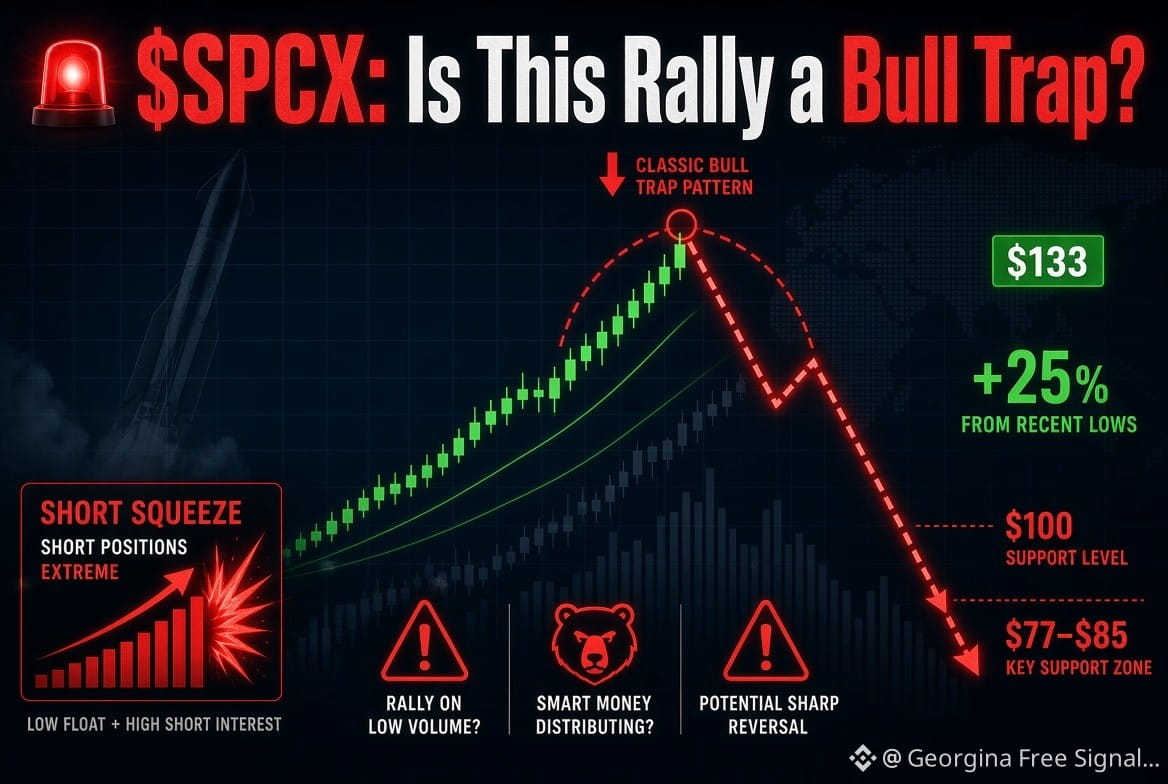
🚨 $SPCX: Is This Rally a Bull Trap?
$SPCX has surged back to around $133, gaining nearly 25% in just two days—despite a major share unlock.
Many traders expected heavy selling after approximately 911.5M shares became eligible for trading. Instead, a heavily shorted market was caught off guard, triggering a short squeeze that pushed prices sharply higher.
But the unlocked shares are still available, and additional unlock events could increase supply over time.
📍 Levels to watch:
• Current resistance: Around $133
• Key support: Below $100
• Potential downside zone: $77–$85
Rather than chasing the recent rally, some investors may prefer to wait for a better risk-to-reward entry if volatility returns.
As always, market outcomes remain uncertain—manage risk carefully and avoid making decisions based solely on short-term price moves.
#AIMemorySelloffEases #CPIToResetFedBets #BTCETHETFInflowsReturn
$SPCX.US
{stock_us}(SPCX.US)
🚨 $SPCX: Is This Rally a Bull Trap?
$SPCX has surged back to around $133, gaining nearly 25% in just two days—despite a major share unlock.
Many traders expected heavy selling after approximately 911.5M shares became eligible for trading. Instead, a heavily shorted market was caught off guard, triggering a short squeeze that pushed prices sharply higher.
But the unlocked shares are still available, and additional unlock events could increase supply over time.
📍 Levels to watch:
• Current resistance: Around $133
• Key support: Below $100
• Potential downside zone: $77–$85
Rather than chasing the recent rally, some investors may prefer to wait for a better risk-to-reward entry if volatility returns.
As always, market outcomes remain uncertain—manage risk carefully and avoid making decisions based solely on short-term price moves.
#AIMemorySelloffEases #CPIToResetFedBets #BTCETHETFInflowsReturn
$SPCX.US
$SPCX has surged back to around $133, gaining nearly 25% in just two days—despite a major share unlock.
Many traders expected heavy selling after approximately 911.5M shares became eligible for trading. Instead, a heavily shorted market was caught off guard, triggering a short squeeze that pushed prices sharply higher.
But the unlocked shares are still available, and additional unlock events could increase supply over time.
📍 Levels to watch:
• Current resistance: Around $133
• Key support: Below $100
• Potential downside zone: $77–$85
Rather than chasing the recent rally, some investors may prefer to wait for a better risk-to-reward entry if volatility returns.
As always, market outcomes remain uncertain—manage risk carefully and avoid making decisions based solely on short-term price moves.
#AIMemorySelloffEases #CPIToResetFedBets #BTCETHETFInflowsReturn
$SPCX.US
SPCXUS+0,41%
443
·
--
Haussier
Grayscale files quarterly report with SEC for Chainlink Trust ETF, marking routine milestone for LINK fund
The 10-Q filing for GLNK covers the first quarter of 2026 and represents standard regulatory compliance for the ETF that began trading in December 2025.
$ADA
{spot}(ADAUSDT)
Grayscale files quarterly report with SEC for Chainlink Trust ETF, marking routine milestone for LINK fund
The 10-Q filing for GLNK covers the first quarter of 2026 and represents standard regulatory compliance for the ETF that began trading in December 2025.
$ADA
The 10-Q filing for GLNK covers the first quarter of 2026 and represents standard regulatory compliance for the ETF that began trading in December 2025.
$ADA
108
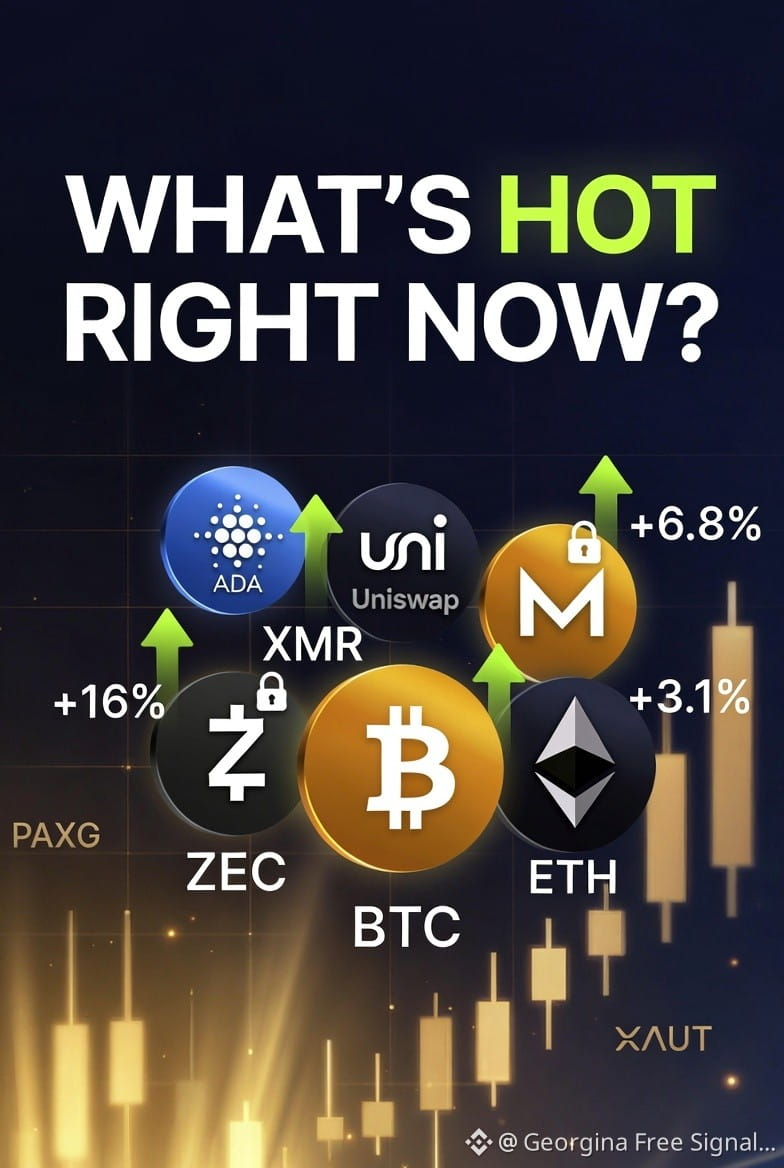
📈 WHAT'S HOT RIGHT NOW?
Here's a funny truth: the coin you're holding just stands still, while the coin you once dismissed quietly goes up. This week $ADA +16% despite a slight dip today, $ZEC +6.8%, $XMR +3.1% — the privacy and community groups are really attracting capital.
$BTC stands at $64,667 (+1.2%), $ETH is stronger with +2.3% up to $1,906. Notably: digital gold $PAXG/$XAUT also +2.6% — money is still seeking shelter, not daring to take risks yet. $UNI +2.2% is one of the rare DeFi representatives in the green.
Two perspectives: one is that capital is returning to the forgotten groups (privacy, community) — a kind of selective altseason; the other is liquidity is still thin, every pump is just local, waiting for $BTC to confirm the bottom.
In my opinion, what’s worth watching is not the coins rising today, but the coins accumulating over the past week. The surprise: the coin most criticized last year is the strongest this week.
Which coin in your wallet is quietly rising: $ADA, $ZEC, $XMR, $UNI, or $ETH? 👇#SandiskBeatAndBuyback #CircleArcLaunch #EarningsRealityCheck #HYPEGains79%InQ2 #KospiFalls4.58% #SpaceX911.5MShareLockupExpires #ADPJulyPrivatePayrollsMissedExpectations $ADA
{spot}(ADAUSDT)
$ZENT
{alpha}(560x8c321c2e323bc26c01df0dc62311482a1256fdf5)
📈 WHAT'S HOT RIGHT NOW?
Here's a funny truth: the coin you're holding just stands still, while the coin you once dismissed quietly goes up. This week $ADA +16% despite a slight dip today, $ZEC +6.8%, $XMR +3.1% — the privacy and community groups are really attracting capital.
$BTC stands at $64,667 (+1.2%), $ETH is stronger with +2.3% up to $1,906. Notably: digital gold $PAXG/$XAUT also +2.6% — money is still seeking shelter, not daring to take risks yet. $UNI +2.2% is one of the rare DeFi representatives in the green.
Two perspectives: one is that capital is returning to the forgotten groups (privacy, community) — a kind of selective altseason; the other is liquidity is still thin, every pump is just local, waiting for $BTC to confirm the bottom.
In my opinion, what’s worth watching is not the coins rising today, but the coins accumulating over the past week. The surprise: the coin most criticized last year is the strongest this week.
Which coin in your wallet is quietly rising: $ADA , $ZEC, $XMR, $UNI, or $ETH? 👇#SandiskBeatAndBuyback #CircleArcLaunch #EarningsRealityCheck #HYPEGains79%InQ2 #KospiFalls4.58% #SpaceX911.5MShareLockupExpires #ADPJulyPrivatePayrollsMissedExpectations $ADA
$ZENT
Here's a funny truth: the coin you're holding just stands still, while the coin you once dismissed quietly goes up. This week $ADA +16% despite a slight dip today, $ZEC +6.8%, $XMR +3.1% — the privacy and community groups are really attracting capital.
$BTC stands at $64,667 (+1.2%), $ETH is stronger with +2.3% up to $1,906. Notably: digital gold $PAXG/$XAUT also +2.6% — money is still seeking shelter, not daring to take risks yet. $UNI +2.2% is one of the rare DeFi representatives in the green.
Two perspectives: one is that capital is returning to the forgotten groups (privacy, community) — a kind of selective altseason; the other is liquidity is still thin, every pump is just local, waiting for $BTC to confirm the bottom.
In my opinion, what’s worth watching is not the coins rising today, but the coins accumulating over the past week. The surprise: the coin most criticized last year is the strongest this week.
Which coin in your wallet is quietly rising: $ADA , $ZEC, $XMR, $UNI, or $ETH? 👇#SandiskBeatAndBuyback #CircleArcLaunch #EarningsRealityCheck #HYPEGains79%InQ2 #KospiFalls4.58% #SpaceX911.5MShareLockupExpires #ADPJulyPrivatePayrollsMissedExpectations $ADA
$ZENT
272
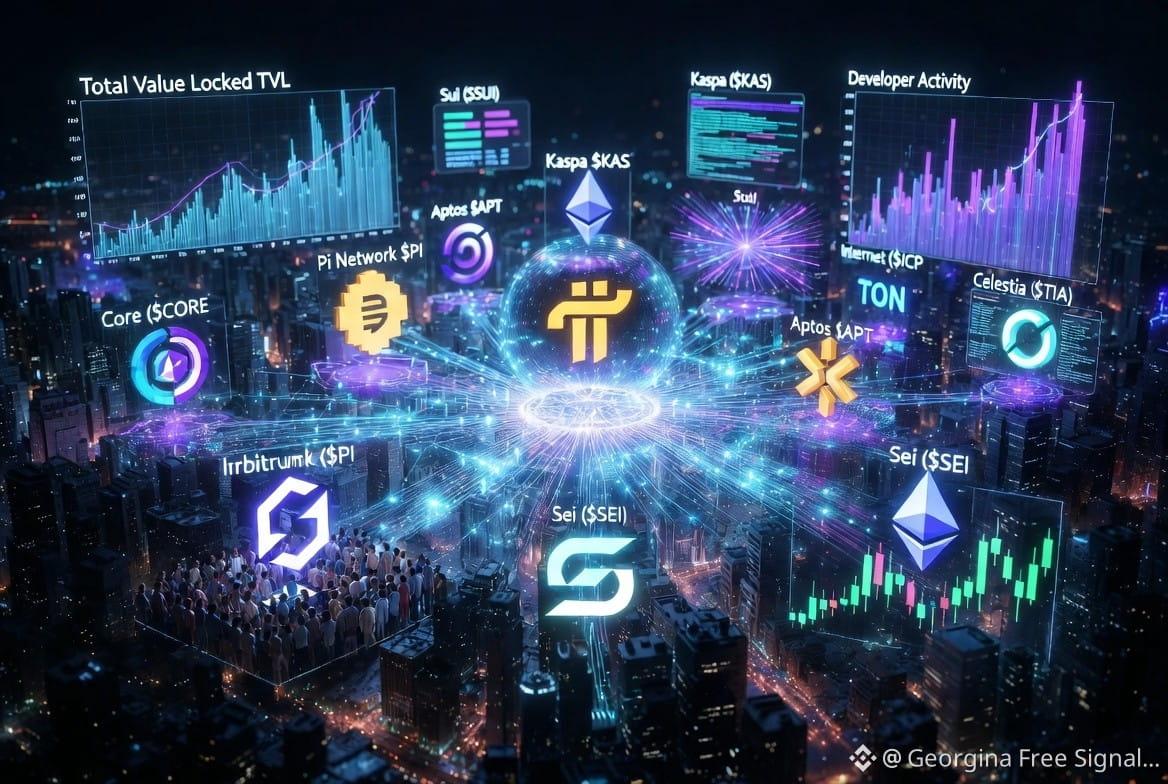
The next big run probably won't be decided by hype. It will come down to which projects are actually building, growing, and getting used.
$PI has scale on its side. Pi Network pulled in a massive community. Now it has to prove that community can translate into real products people use outside the app.
$CORE is taking a different angle by anchoring a Layer 1 to Bitcoin security. Its DeFi side is slowly filling out and gaining traction.
$KAS is rethinking Proof of Work with BlockDAG to push speed without giving up decentralization. The developer activity there has stayed strong.
$SUI was built for performance first, and you can see it in gaming and DeFi apps that need fast execution. $APT is chasing similar goals with a focus on throughput, and the tooling plus builder support keeps improving.
$SEI is going all in on trading. It is positioning itself as the Layer 1 that exchanges and order books want to run on.
On the infrastructure front, $ICP is trying to cut out cloud providers entirely by running full apps on chain. $TIA is going modular, giving teams an easier way to spin up custom, scalable chains.
$TON gets a boost from Telegram. As more people use Telegram, $TON gets more distribution and more developers by default.
$ARB is still one of Ethereum's main Layer 2s. Lower fees, faster transactions, and a DeFi ecosystem that has already proven itself.
If history is any guide, the winners will be the ones with real fundamentals, teams that keep shipping, ecosystems that are growing, and use cases people actually need.
Every investment comes with risk. Do your own research and manage risk. Don't chase short term noise. #USIranDealOrNoDeal #SpaceXToReportQ2Results #KOSPINikkeiOpenHigherOnChipStocks #MastercardCompletesBVNKStablecoinAcquisition
The next big run probably won't be decided by hype. It will come down to which projects are actually building, growing, and getting used.
$PI has scale on its side. Pi Network pulled in a massive community. Now it has to prove that community can translate into real products people use outside the app.
$CORE is taking a different angle by anchoring a Layer 1 to Bitcoin security. Its DeFi side is slowly filling out and gaining traction.
$KAS is rethinking Proof of Work with BlockDAG to push speed without giving up decentralization. The developer activity there has stayed strong.
$SUI was built for performance first, and you can see it in gaming and DeFi apps that need fast execution. $APT is chasing similar goals with a focus on throughput, and the tooling plus builder support keeps improving.
$SEI is going all in on trading. It is positioning itself as the Layer 1 that exchanges and order books want to run on.
On the infrastructure front, $ICP is trying to cut out cloud providers entirely by running full apps on chain. $TIA is going modular, giving teams an easier way to spin up custom, scalable chains.
$TON gets a boost from Telegram. As more people use Telegram, $TON gets more distribution and more developers by default.
$ARB is still one of Ethereum's main Layer 2s. Lower fees, faster transactions, and a DeFi ecosystem that has already proven itself.
If history is any guide, the winners will be the ones with real fundamentals, teams that keep shipping, ecosystems that are growing, and use cases people actually need.
Every investment comes with risk. Do your own research and manage risk. Don't chase short term noise. #USIranDealOrNoDeal #SpaceXToReportQ2Results #KOSPINikkeiOpenHigherOnChipStocks #MastercardCompletesBVNKStablecoinAcquisition
$PI has scale on its side. Pi Network pulled in a massive community. Now it has to prove that community can translate into real products people use outside the app.
$CORE is taking a different angle by anchoring a Layer 1 to Bitcoin security. Its DeFi side is slowly filling out and gaining traction.
$KAS is rethinking Proof of Work with BlockDAG to push speed without giving up decentralization. The developer activity there has stayed strong.
$SUI was built for performance first, and you can see it in gaming and DeFi apps that need fast execution. $APT is chasing similar goals with a focus on throughput, and the tooling plus builder support keeps improving.
$SEI is going all in on trading. It is positioning itself as the Layer 1 that exchanges and order books want to run on.
On the infrastructure front, $ICP is trying to cut out cloud providers entirely by running full apps on chain. $TIA is going modular, giving teams an easier way to spin up custom, scalable chains.
$TON gets a boost from Telegram. As more people use Telegram, $TON gets more distribution and more developers by default.
$ARB is still one of Ethereum's main Layer 2s. Lower fees, faster transactions, and a DeFi ecosystem that has already proven itself.
If history is any guide, the winners will be the ones with real fundamentals, teams that keep shipping, ecosystems that are growing, and use cases people actually need.
Every investment comes with risk. Do your own research and manage risk. Don't chase short term noise. #USIranDealOrNoDeal #SpaceXToReportQ2Results #KOSPINikkeiOpenHigherOnChipStocks #MastercardCompletesBVNKStablecoinAcquisition
256
·
--
Haussier
موسم توزيعات الصيف المجانية من بينانس https://www.binance.com/activity/trading-competition/airdrop2mSAHARA?ref=453453254
موسم توزيعات الصيف المجانية من بينانس https://www.binance.com/activity/trading-competition/airdrop2mSAHARA?ref=453453254
6
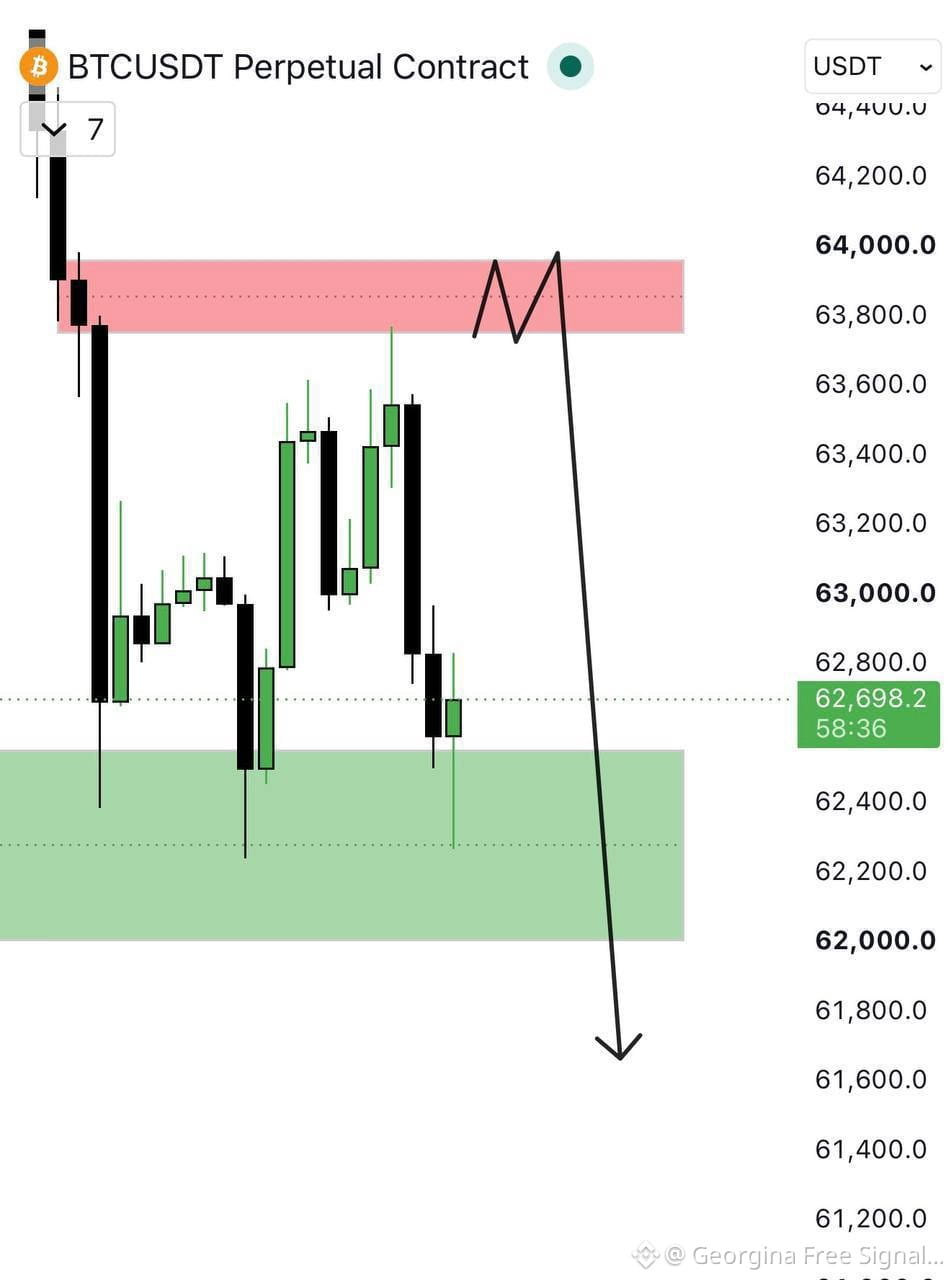
✏️ $BTC
At the start of the new week, a sharp market correction followed immediately. We saw a 2% pullback and dropped to the $62,300 level
It's interesting to note that the local pump happened right up to the local resistance boundary at $63,800 exactly the zone I marked as the extreme point where I expected the pullback to resume
I now expect the correction to continue and the current support level to brea
$BTC
{spot}(BTCUSDT)
$SOL
{spot}(SOLUSDT)
✏️ $BTC
At the start of the new week, a sharp market correction followed immediately. We saw a 2% pullback and dropped to the $62,300 level
It's interesting to note that the local pump happened right up to the local resistance boundary at $63,800 exactly the zone I marked as the extreme point where I expected the pullback to resume
I now expect the correction to continue and the current support level to brea
$BTC
$SOL
At the start of the new week, a sharp market correction followed immediately. We saw a 2% pullback and dropped to the $62,300 level
It's interesting to note that the local pump happened right up to the local resistance boundary at $63,800 exactly the zone I marked as the extreme point where I expected the pullback to resume
I now expect the correction to continue and the current support level to brea
$BTC
$SOL
113
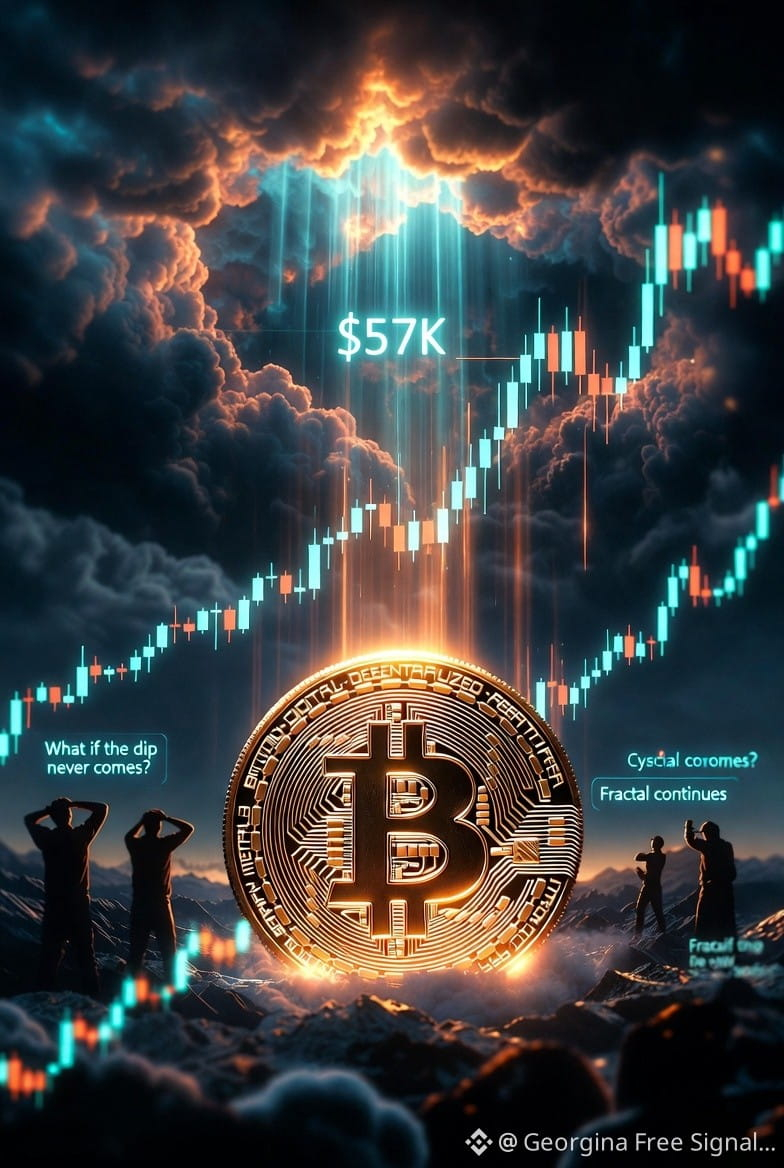
What if the biggest mistake of this cycle isn't buying too early...
...but waiting for a price that never comes?
The #CLARITY bill missed the recess window, and a lot of traders are now expecting another major flush.
But what if the market has other plans?
When I compare Bitcoin's current structure to 2022, one possibility stands out.
If this fractal continues to play out, $57K may end up being the lowest price we ever see this cycle.
I'm not saying that's guaranteed.
I'm not calling a bottom.
And this is not a trading signal.
It's simply an interesting fractal comparison that deserves attention.
Markets have a habit of doing the one thing that frustrates the most people.
Sometimes they crash when everyone expects a rally.
Other times they refuse to give the dip everyone is waiting for.
If this time is the latter, the traders sitting on the sidelines waiting for "just one more drop" could end up watching Bitcoin move higher without them.
That's something worth thinking about.
$LDOS.US
{stock_us}(LDOS.US)
$NVDA.US
{stock_us}(NVDA.US)
$V
{future}(VUSDT)
#GrayscaleUrgesSenateVoteOnCLARITYAct GoldTradesAbove$4000CryptoLiquidationsReach$330MInADay#USToCancelIranAttackSubjectToDeal #ColdcardExploitAttackersControl1366BTC #SpaceXUnlockLooms
What if the biggest mistake of this cycle isn't buying too early...
...but waiting for a price that never comes?
The #CLARITY bill missed the recess window, and a lot of traders are now expecting another major flush.
But what if the market has other plans?
When I compare Bitcoin's current structure to 2022, one possibility stands out.
If this fractal continues to play out, $57K may end up being the lowest price we ever see this cycle.
I'm not saying that's guaranteed.
I'm not calling a bottom.
And this is not a trading signal.
It's simply an interesting fractal comparison that deserves attention.
Markets have a habit of doing the one thing that frustrates the most people.
Sometimes they crash when everyone expects a rally.
Other times they refuse to give the dip everyone is waiting for.
If this time is the latter, the traders sitting on the sidelines waiting for "just one more drop" could end up watching Bitcoin move higher without them.
That's something worth thinking about.
$LDOS.US
$NVDA.US
$V
#GrayscaleUrgesSenateVoteOnCLARITYAct GoldTradesAbove$4000CryptoLiquidationsReach$330MInADay#USToCancelIranAttackSubjectToDeal #ColdcardExploitAttackersControl1366BTC #SpaceXUnlockLooms
...but waiting for a price that never comes?
The #CLARITY bill missed the recess window, and a lot of traders are now expecting another major flush.
But what if the market has other plans?
When I compare Bitcoin's current structure to 2022, one possibility stands out.
If this fractal continues to play out, $57K may end up being the lowest price we ever see this cycle.
I'm not saying that's guaranteed.
I'm not calling a bottom.
And this is not a trading signal.
It's simply an interesting fractal comparison that deserves attention.
Markets have a habit of doing the one thing that frustrates the most people.
Sometimes they crash when everyone expects a rally.
Other times they refuse to give the dip everyone is waiting for.
If this time is the latter, the traders sitting on the sidelines waiting for "just one more drop" could end up watching Bitcoin move higher without them.
That's something worth thinking about.
$LDOS.US
$NVDA.US
$V
#GrayscaleUrgesSenateVoteOnCLARITYAct GoldTradesAbove$4000CryptoLiquidationsReach$330MInADay#USToCancelIranAttackSubjectToDeal #ColdcardExploitAttackersControl1366BTC #SpaceXUnlockLooms
105
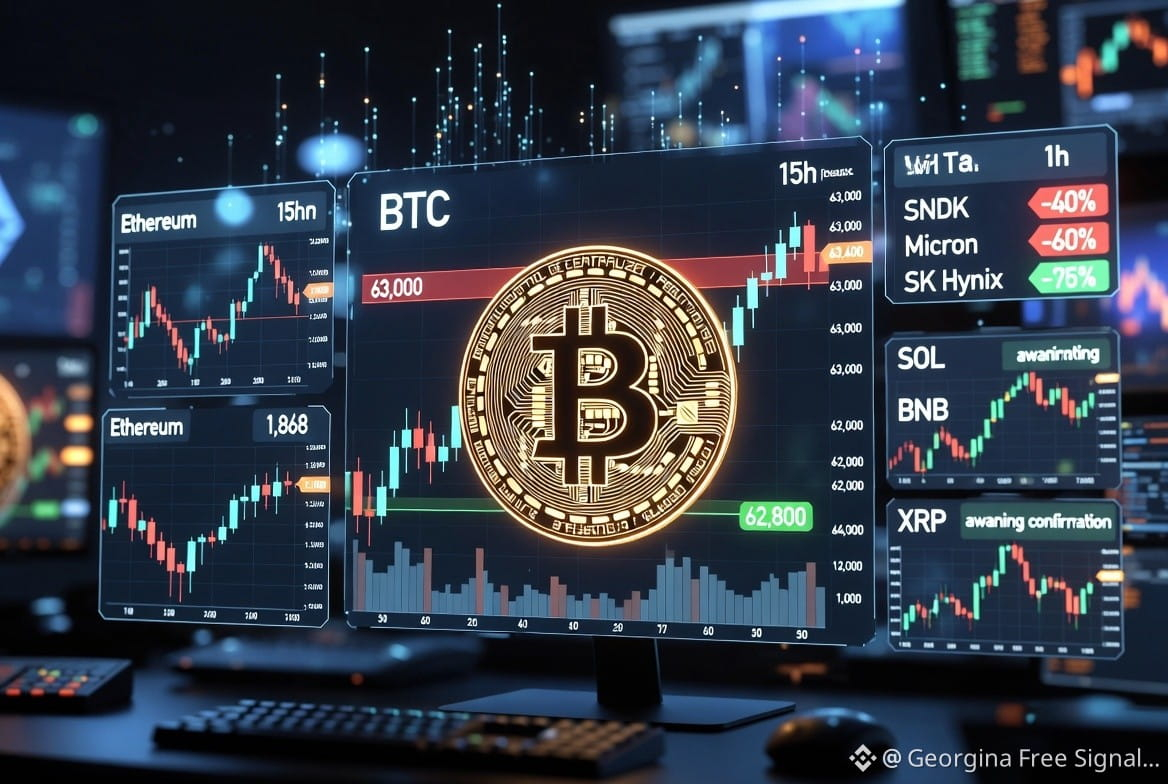
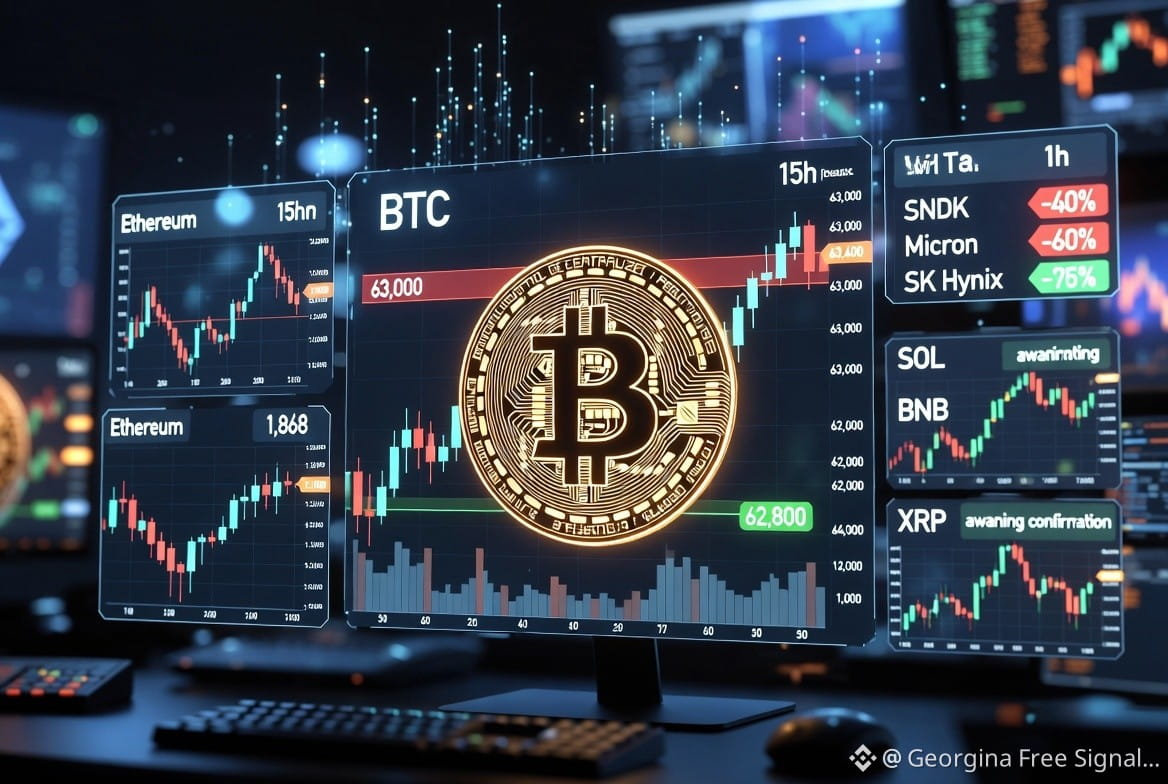
Thought I was logging off… then the charts dragged me back in 😂
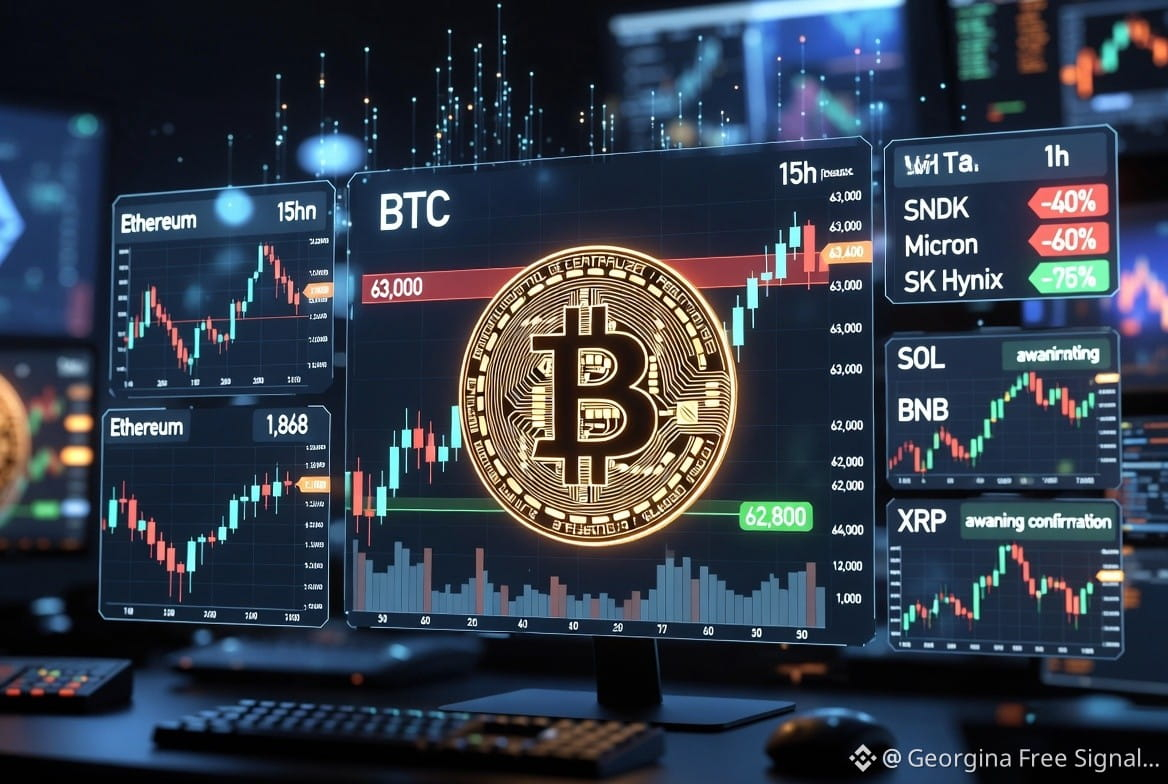
$BTC chilling near 63K, $ETH looking a bit stronger around 1,868. But 15m and 1H still feel tentative.
If BTC pushes 63.6K with no real volume, I’m watching for rejection, not chasing.
Took a small BTC long at 62.8K — not bullish, just hit my entry. Size right, don’t overleverage.
Outside crypto: $SNDK and Micron weak, SK hynix holding better. $SOL, $BNB, $XRP — waiting for confirmation before I touch longs.
Key levels:
📍 Resistance: 63.5K
📍 Support: 62.5K
No clean breakout/breakdown + volume = no forced trade.
Sometimes patience _is_ the trade
$TAO
{spot}(TAOUSDT)
$TRX
{spot}(TRXUSDT)
$HEI
{spot}(HEIUSDT)
#HedgeFundsAddBullishOilBets #XRPLedgerUpgradeToRestorePulledFeatures #OpenAIFindsMoreAgentsEscapedContainment
Thought I was logging off… then the charts dragged me back in 😂
$BTC chilling near 63K, $ETH looking a bit stronger around 1,868. But 15m and 1H still feel tentative.
If BTC pushes 63.6K with no real volume, I’m watching for rejection, not chasing.
Took a small BTC long at 62.8K — not bullish, just hit my entry. Size right, don’t overleverage.
Outside crypto: $SNDK and Micron weak, SK hynix holding better. $SOL, $BNB, $XRP — waiting for confirmation before I touch longs.
Key levels:
📍 Resistance: 63.5K
📍 Support: 62.5K
No clean breakout/breakdown + volume = no forced trade.
Sometimes patience _is_ the trade
$TAO
$TRX
$HEI
#HedgeFundsAddBullishOilBets #XRPLedgerUpgradeToRestorePulledFeatures #OpenAIFindsMoreAgentsEscapedContainment
$BTC chilling near 63K, $ETH looking a bit stronger around 1,868. But 15m and 1H still feel tentative.
If BTC pushes 63.6K with no real volume, I’m watching for rejection, not chasing.
Took a small BTC long at 62.8K — not bullish, just hit my entry. Size right, don’t overleverage.
Outside crypto: $SNDK and Micron weak, SK hynix holding better. $SOL, $BNB, $XRP — waiting for confirmation before I touch longs.
Key levels:
📍 Resistance: 63.5K
📍 Support: 62.5K
No clean breakout/breakdown + volume = no forced trade.
Sometimes patience _is_ the trade
$TAO
$TRX
$HEI
#HedgeFundsAddBullishOilBets #XRPLedgerUpgradeToRestorePulledFeatures #OpenAIFindsMoreAgentsEscapedContainment
145
Altseason? Not quite.
Memes aren’t leading this — the graveyard is. When $PENGU +4.04% and $ADA +2.92% look better than $BTC, that’s a red flag, not strength. The charts look green, but fundamentals say otherwise.
Those two green candles are a mirage. $ROBO and $PENGU might be popping, but their market caps raise real questions about liquidity. Meanwhile $XLM -1.51% and $ALLO -10.05% are quietly bleeding out. Even $DOT -0.78% shows whales aren’t buying the hype.
BTC is still the anchor. $ETH pulls in institutional chatter, but real value keeps coming back to Bitcoin. When $RLUSD -0.06% and $XAUT -0.46% barely move, it proves the foundation hasn’t shifted.
Follow the flows, not the noise. Ignore the altseason headlines and watch where the real liquidity is going.
#SoftPCEStrongDemand #AMZNMissesButRallies #MSFT450BInADay $PENGU
{spot}(PENGUUSDT)
#الفيدرالي_الامريكي #KospiUp15.13%InMorningTrade
Altseason? Not quite.
Memes aren’t leading this — the graveyard is. When $PENGU +4.04% and $ADA +2.92% look better than $BTC, that’s a red flag, not strength. The charts look green, but fundamentals say otherwise.
Those two green candles are a mirage. $ROBO and $PENGU might be popping, but their market caps raise real questions about liquidity. Meanwhile $XLM -1.51% and $ALLO -10.05% are quietly bleeding out. Even $DOT -0.78% shows whales aren’t buying the hype.
BTC is still the anchor. $ETH pulls in institutional chatter, but real value keeps coming back to Bitcoin. When $RLUSD -0.06% and $XAUT -0.46% barely move, it proves the foundation hasn’t shifted.
Follow the flows, not the noise. Ignore the altseason headlines and watch where the real liquidity is going.
#SoftPCEStrongDemand #AMZNMissesButRallies #MSFT450BInADay $PENGU
#الفيدرالي_الامريكي #KospiUp15.13%InMorningTrade
Memes aren’t leading this — the graveyard is. When $PENGU +4.04% and $ADA +2.92% look better than $BTC, that’s a red flag, not strength. The charts look green, but fundamentals say otherwise.
Those two green candles are a mirage. $ROBO and $PENGU might be popping, but their market caps raise real questions about liquidity. Meanwhile $XLM -1.51% and $ALLO -10.05% are quietly bleeding out. Even $DOT -0.78% shows whales aren’t buying the hype.
BTC is still the anchor. $ETH pulls in institutional chatter, but real value keeps coming back to Bitcoin. When $RLUSD -0.06% and $XAUT -0.46% barely move, it proves the foundation hasn’t shifted.
Follow the flows, not the noise. Ignore the altseason headlines and watch where the real liquidity is going.
#SoftPCEStrongDemand #AMZNMissesButRallies #MSFT450BInADay $PENGU
#الفيدرالي_الامريكي #KospiUp15.13%InMorningTrade
159
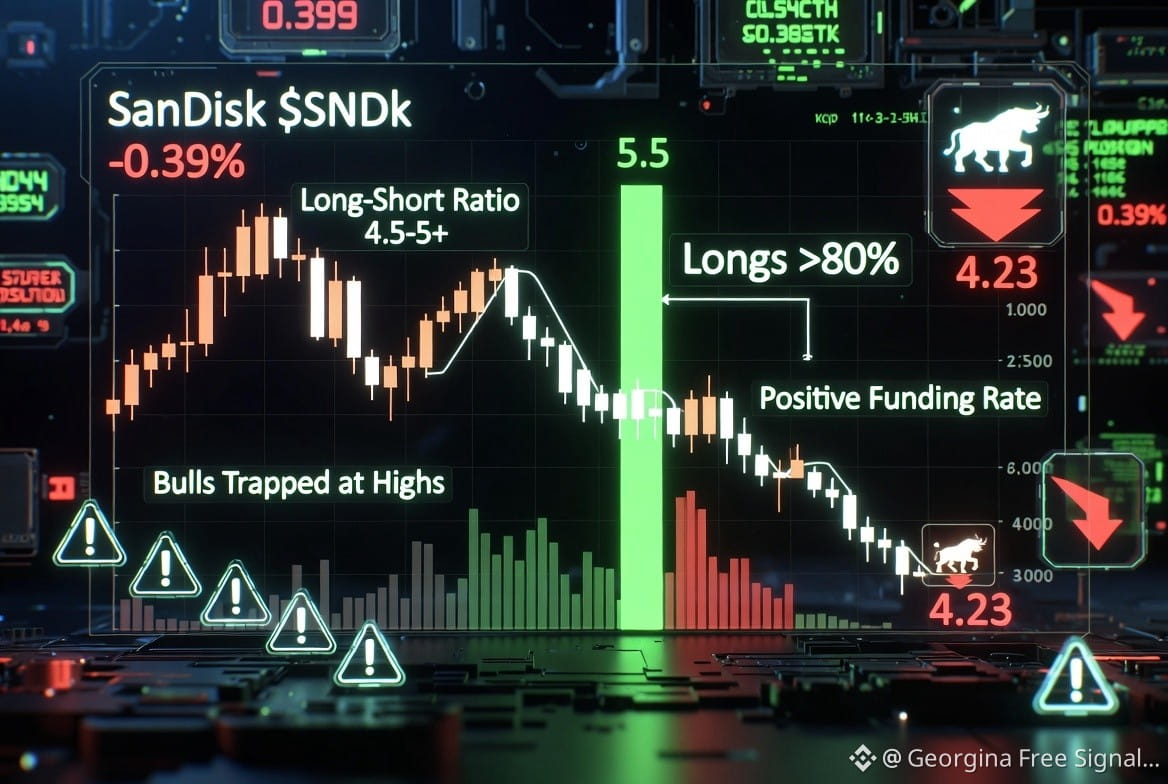
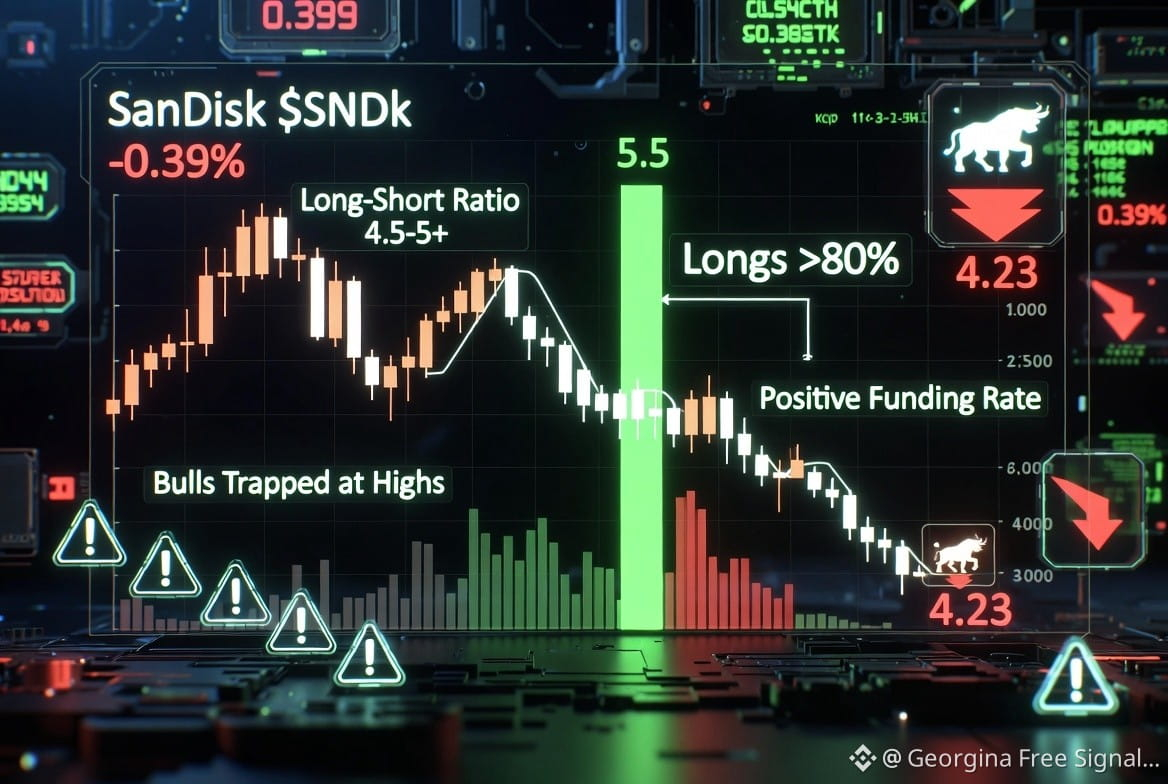
Bro, this chart really looks scary. SanDisk's long-short ratio has reached 4.5 or even above 5. What does that mean? For every 1 short position, there are 4 to 5 long positions on the other side. This is not just a bullish bias; this is bulls "huddling together for warmth."
Look at those green bars, long accounts make up more than 80%, while shorts are just a pitiful small group. But the problem is, the price isn't rising; it's actually falling. -0.39% doesn't look like much, but combined with this long-short ratio, it's very subtle—so many people are bullish, yet the coin price stubbornly moves down. This can only mean one thing: most of the bulls chasing the highs are already trapped at high levels.
Look at that white long-short ratio line, sliding from 5.5 at 15:25 down to 4.23 at 17:55. What does that indicate? It means some bulls couldn't hold their stops or got liquidated. But even after some have exited, the long-short ratio still stays above 4, meaning the remaining bulls have even higher cost bases and are trapped deeper.
What's worse is the funding rate above, which has been positive for a long time, so bulls have to regularly "pay protection fees" to the shorts. The price falls, and money is still drained—who can withstand that?
To put it plainly, this situation is a classic "retail bull trap." Bulls outnumber shorts by a landslide, but shorts may have larger capital and concentrated positions. If the price dips a bit more now, the stop-loss and liquidation orders of those 80% bulls will fall like dominoes. Then it won't just be about how many are trapped, but how severe the stampede will be. Bulls still in there, good luck to you. $SNDK
{future}(SNDKUSDT)
$SAFE
{future}(SAFEUSDT)
Bro, this chart really looks scary. SanDisk's long-short ratio has reached 4.5 or even above 5. What does that mean? For every 1 short position, there are 4 to 5 long positions on the other side. This is not just a bullish bias; this is bulls "huddling together for warmth."
Look at those green bars, long accounts make up more than 80%, while shorts are just a pitiful small group. But the problem is, the price isn't rising; it's actually falling. -0.39% doesn't look like much, but combined with this long-short ratio, it's very subtle—so many people are bullish, yet the coin price stubbornly moves down. This can only mean one thing: most of the bulls chasing the highs are already trapped at high levels.
Look at that white long-short ratio line, sliding from 5.5 at 15:25 down to 4.23 at 17:55. What does that indicate? It means some bulls couldn't hold their stops or got liquidated. But even after some have exited, the long-short ratio still stays above 4, meaning the remaining bulls have even higher cost bases and are trapped deeper.
What's worse is the funding rate above, which has been positive for a long time, so bulls have to regularly "pay protection fees" to the shorts. The price falls, and money is still drained—who can withstand that?
To put it plainly, this situation is a classic "retail bull trap." Bulls outnumber shorts by a landslide, but shorts may have larger capital and concentrated positions. If the price dips a bit more now, the stop-loss and liquidation orders of those 80% bulls will fall like dominoes. Then it won't just be about how many are trapped, but how severe the stampede will be. Bulls still in there, good luck to you. $SNDK
$SAFE
Look at those green bars, long accounts make up more than 80%, while shorts are just a pitiful small group. But the problem is, the price isn't rising; it's actually falling. -0.39% doesn't look like much, but combined with this long-short ratio, it's very subtle—so many people are bullish, yet the coin price stubbornly moves down. This can only mean one thing: most of the bulls chasing the highs are already trapped at high levels.
Look at that white long-short ratio line, sliding from 5.5 at 15:25 down to 4.23 at 17:55. What does that indicate? It means some bulls couldn't hold their stops or got liquidated. But even after some have exited, the long-short ratio still stays above 4, meaning the remaining bulls have even higher cost bases and are trapped deeper.
What's worse is the funding rate above, which has been positive for a long time, so bulls have to regularly "pay protection fees" to the shorts. The price falls, and money is still drained—who can withstand that?
To put it plainly, this situation is a classic "retail bull trap." Bulls outnumber shorts by a landslide, but shorts may have larger capital and concentrated positions. If the price dips a bit more now, the stop-loss and liquidation orders of those 80% bulls will fall like dominoes. Then it won't just be about how many are trapped, but how severe the stampede will be. Bulls still in there, good luck to you. $SNDK
$SAFE
319
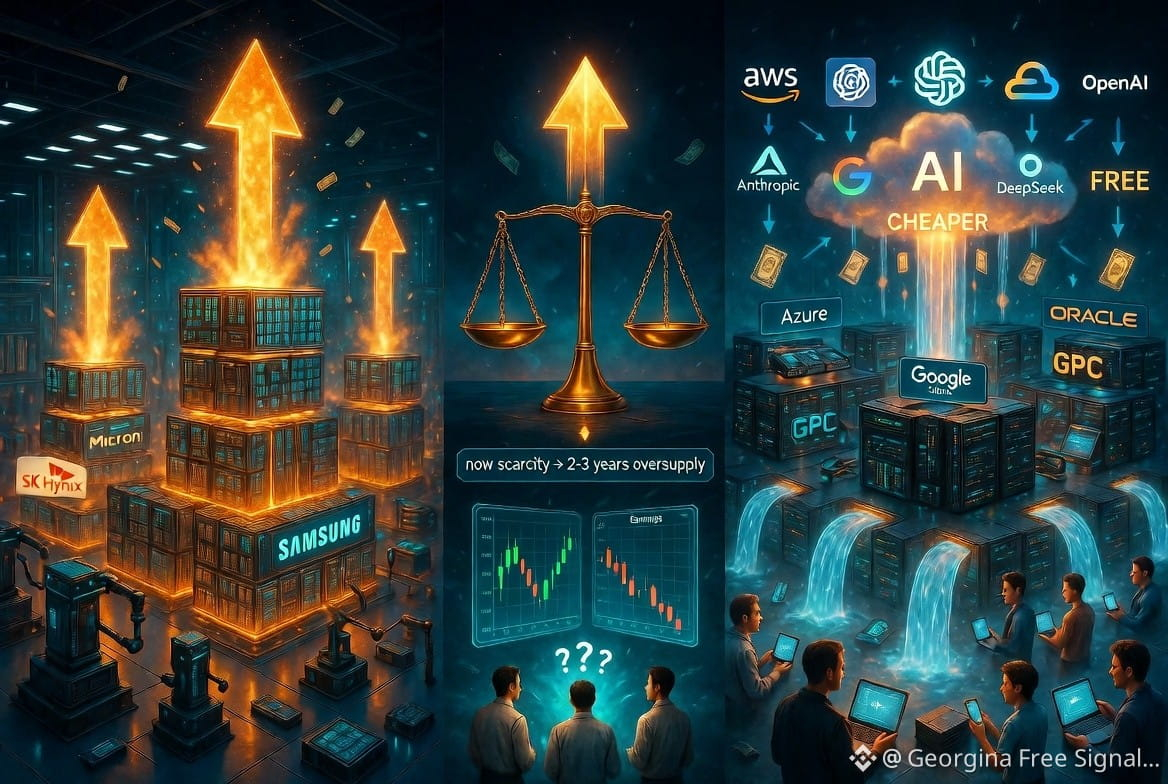
Today's AI industry is somewhat like the new energy vehicle industry back then.
Storage manufacturers correspond to lithium miners, and cloud providers correspond to car manufacturers.
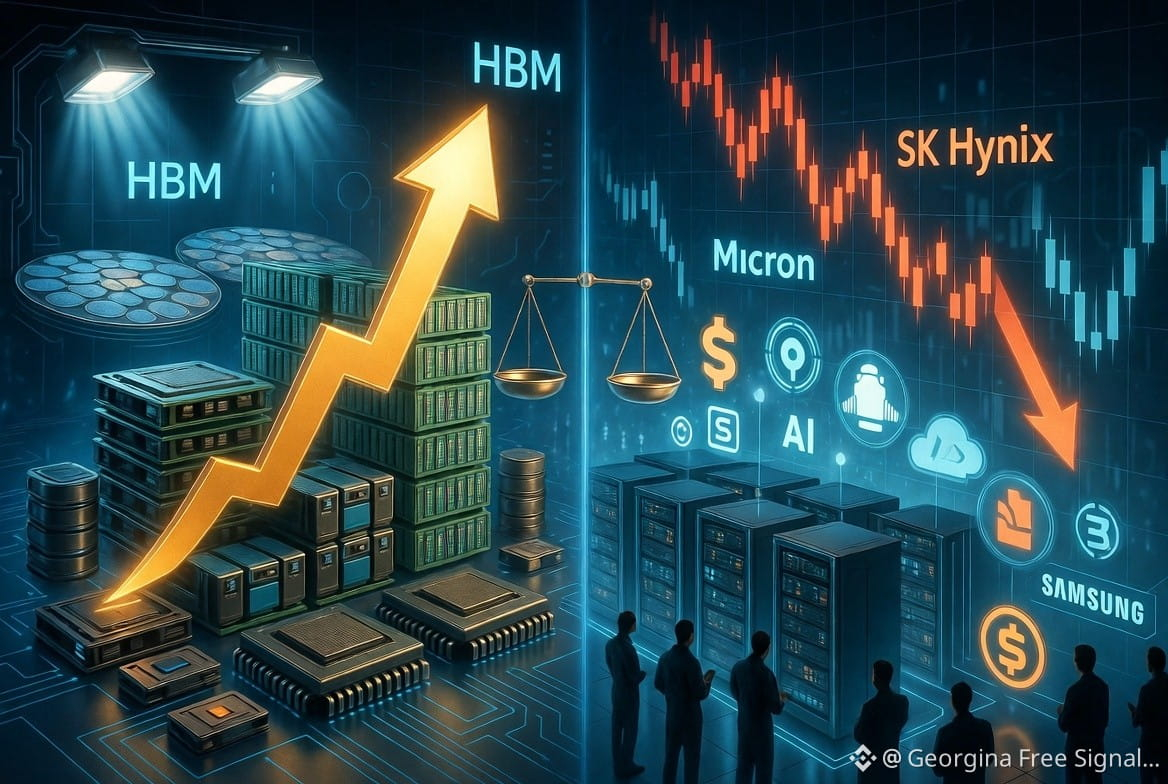
Over the past year, prices for HBM, DRAM, and enterprise SSDs have continuously risen, significantly improving profits for storage manufacturers like SK Hynix, Micron, and Samsung. Meanwhile, AWS, Azure, Google Cloud, and Oracle have been increasing purchases of GPUs, HBM, and servers, pushing infrastructure costs higher.
At this stage, the scarcest segment takes the most profit first.
But the market has already started looking ahead.
In the next two to three years, if HBM, DRAM, and advanced packaging continue to expand production, how long can this round of excess profits last? This is also why storage companies' earnings are still good, but their stock prices have already begun to adjust.
However, storage peaking does not necessarily mean cloud providers will be the biggest winners in the next round.
Because on the large model side, the price war has actually already begun.
OpenAI, Google, Anthropic, as well as Alibaba, DeepSeek, and Moonshadow, are continuously lowering model prices. Tokens are getting cheaper, inference costs keep dropping, and some models are even offered for free.
If computing power supply becomes increasingly abundant in the future, cloud providers may continue to cut prices to compete for customers.
By then, cost improvements from storage price drops may not fully translate into profits for AWS, Azure, or Google Cloud. Cheaper tokens, lower GPU rental prices, and larger free quotas may pass these benefits on to customers.
So this round of storage stock adjustments can be understood through the lens of the new energy vehicle cycle:
When upstream resources are scarcest, profits concentrate upstream first; high profits stimulate expansion, and stock prices start worrying about supply release in advance; when raw material prices really fall, how much profit downstream can keep depends on whether the industry has started a price war. $KR.US
{stock_us}(KR.US)
Today's AI industry is somewhat like the new energy vehicle industry back then.
Storage manufacturers correspond to lithium miners, and cloud providers correspond to car manufacturers.
Over the past year, prices for HBM, DRAM, and enterprise SSDs have continuously risen, significantly improving profits for storage manufacturers like SK Hynix, Micron, and Samsung. Meanwhile, AWS, Azure, Google Cloud, and Oracle have been increasing purchases of GPUs, HBM, and servers, pushing infrastructure costs higher.
At this stage, the scarcest segment takes the most profit first.
But the market has already started looking ahead.
In the next two to three years, if HBM, DRAM, and advanced packaging continue to expand production, how long can this round of excess profits last? This is also why storage companies' earnings are still good, but their stock prices have already begun to adjust.
However, storage peaking does not necessarily mean cloud providers will be the biggest winners in the next round.
Because on the large model side, the price war has actually already begun.
OpenAI, Google, Anthropic, as well as Alibaba, DeepSeek, and Moonshadow, are continuously lowering model prices. Tokens are getting cheaper, inference costs keep dropping, and some models are even offered for free.
If computing power supply becomes increasingly abundant in the future, cloud providers may continue to cut prices to compete for customers.
By then, cost improvements from storage price drops may not fully translate into profits for AWS, Azure, or Google Cloud. Cheaper tokens, lower GPU rental prices, and larger free quotas may pass these benefits on to customers.
So this round of storage stock adjustments can be understood through the lens of the new energy vehicle cycle:
When upstream resources are scarcest, profits concentrate upstream first; high profits stimulate expansion, and stock prices start worrying about supply release in advance; when raw material prices really fall, how much profit downstream can keep depends on whether the industry has started a price war. $KR.US
Storage manufacturers correspond to lithium miners, and cloud providers correspond to car manufacturers.
Over the past year, prices for HBM, DRAM, and enterprise SSDs have continuously risen, significantly improving profits for storage manufacturers like SK Hynix, Micron, and Samsung. Meanwhile, AWS, Azure, Google Cloud, and Oracle have been increasing purchases of GPUs, HBM, and servers, pushing infrastructure costs higher.
At this stage, the scarcest segment takes the most profit first.
But the market has already started looking ahead.
In the next two to three years, if HBM, DRAM, and advanced packaging continue to expand production, how long can this round of excess profits last? This is also why storage companies' earnings are still good, but their stock prices have already begun to adjust.
However, storage peaking does not necessarily mean cloud providers will be the biggest winners in the next round.
Because on the large model side, the price war has actually already begun.
OpenAI, Google, Anthropic, as well as Alibaba, DeepSeek, and Moonshadow, are continuously lowering model prices. Tokens are getting cheaper, inference costs keep dropping, and some models are even offered for free.
If computing power supply becomes increasingly abundant in the future, cloud providers may continue to cut prices to compete for customers.
By then, cost improvements from storage price drops may not fully translate into profits for AWS, Azure, or Google Cloud. Cheaper tokens, lower GPU rental prices, and larger free quotas may pass these benefits on to customers.
So this round of storage stock adjustments can be understood through the lens of the new energy vehicle cycle:
When upstream resources are scarcest, profits concentrate upstream first; high profits stimulate expansion, and stock prices start worrying about supply release in advance; when raw material prices really fall, how much profit downstream can keep depends on whether the industry has started a price war. $KR.US
KRUS-0,28%
54
Why are storage prices still rising, but storage stocks have already fallen?
Because the stock market looks further ahead. Everyone basically knows how high the profits are today; the biggest controversy now is whether there will be an oversupply in two to three years.
This scenario has already played out once in the last round of new energy vehicles.
In 2021, demand for new energy vehicles exploded, global lithium mine supply couldn't keep up, and battery-grade lithium carbonate prices rose from about ¥60,000/ton to nearly ¥600,000/ton, increasing nearly 10 times in two years.
In the industry chain, whoever is the scarcest gets the profits concentrated there first.
Lithium mining companies made huge profits, while battery manufacturers and car companies had to bear increasingly high raw material costs. In 2022, CATL's gross margin once dropped from nearly 28% to about 15%, simply because lithium prices rose too fast and battery price increases couldn't keep up.
High profits quickly attracted a lot of capital.
Mine expansions, rising capital expenditures, and increasing long-term purchase agreements. The market also began to worry whether lithium would still be so scarce when these new capacities come online in two to three years.
Therefore, lithium mining stocks often start to fall before lithium prices actually peak.
When lithium carbonate prices plummeted in 2023, many thought car manufacturers could finally turn all cost reductions into profits.
But the auto industry immediately entered a price war.
Tesla cut prices, BYD followed, and more brands competed for market share. Batteries did get cheaper, but the saved money did not all stay with the car manufacturers; a large part eventually turned into lower car prices.
Raw material cost reductions and downstream profit improvements are separated by industry competition dynamics.
$CRV
{spot}(CRVUSDT)
$HOT
{spot}(HOTUSDT)
$KR.US
{stock_us}(KR.US)
Why are storage prices still rising, but storage stocks have already fallen?
Because the stock market looks further ahead. Everyone basically knows how high the profits are today; the biggest controversy now is whether there will be an oversupply in two to three years.
This scenario has already played out once in the last round of new energy vehicles.
In 2021, demand for new energy vehicles exploded, global lithium mine supply couldn't keep up, and battery-grade lithium carbonate prices rose from about ¥60,000/ton to nearly ¥600,000/ton, increasing nearly 10 times in two years.
In the industry chain, whoever is the scarcest gets the profits concentrated there first.
Lithium mining companies made huge profits, while battery manufacturers and car companies had to bear increasingly high raw material costs. In 2022, CATL's gross margin once dropped from nearly 28% to about 15%, simply because lithium prices rose too fast and battery price increases couldn't keep up.
High profits quickly attracted a lot of capital.
Mine expansions, rising capital expenditures, and increasing long-term purchase agreements. The market also began to worry whether lithium would still be so scarce when these new capacities come online in two to three years.
Therefore, lithium mining stocks often start to fall before lithium prices actually peak.
When lithium carbonate prices plummeted in 2023, many thought car manufacturers could finally turn all cost reductions into profits.
But the auto industry immediately entered a price war.
Tesla cut prices, BYD followed, and more brands competed for market share. Batteries did get cheaper, but the saved money did not all stay with the car manufacturers; a large part eventually turned into lower car prices.
Raw material cost reductions and downstream profit improvements are separated by industry competition dynamics.
$CRV
$HOT
$KR.US
Because the stock market looks further ahead. Everyone basically knows how high the profits are today; the biggest controversy now is whether there will be an oversupply in two to three years.
This scenario has already played out once in the last round of new energy vehicles.
In 2021, demand for new energy vehicles exploded, global lithium mine supply couldn't keep up, and battery-grade lithium carbonate prices rose from about ¥60,000/ton to nearly ¥600,000/ton, increasing nearly 10 times in two years.
In the industry chain, whoever is the scarcest gets the profits concentrated there first.
Lithium mining companies made huge profits, while battery manufacturers and car companies had to bear increasingly high raw material costs. In 2022, CATL's gross margin once dropped from nearly 28% to about 15%, simply because lithium prices rose too fast and battery price increases couldn't keep up.
High profits quickly attracted a lot of capital.
Mine expansions, rising capital expenditures, and increasing long-term purchase agreements. The market also began to worry whether lithium would still be so scarce when these new capacities come online in two to three years.
Therefore, lithium mining stocks often start to fall before lithium prices actually peak.
When lithium carbonate prices plummeted in 2023, many thought car manufacturers could finally turn all cost reductions into profits.
But the auto industry immediately entered a price war.
Tesla cut prices, BYD followed, and more brands competed for market share. Batteries did get cheaper, but the saved money did not all stay with the car manufacturers; a large part eventually turned into lower car prices.
Raw material cost reductions and downstream profit improvements are separated by industry competition dynamics.
$CRV
$HOT
$KR.US
142
ETH Leads the Rebound as Altcoin Breadth Improves Selectively
• Total crypto market cap: $2.20T
• 24h market volume: $36.14B
• Dominance: BTC 58.6% | ETH 10.3%
📌 Core Market Balance
• BTC: $65,366.4 | +1.47% 24h | +1.60% 7d
• ETH: $1,959.69 | +4.04% 24h | +4.96% 7d
• BNB: $574.80 | +0.51% 24h | +1.42% 7d
• XRP: $1.1081 | +0.80% 24h | +1.57% 7d
• SOL: $76.392 | +1.71% 24h | +0.35% 7d
The core market is moving higher across both daily and weekly timeframes. ETH is the strongest major asset, while BTC remains the main stabilizing base above $65,000.
📌 Stronger Relative Setups
• LINK: $8.828 | +4.60% 24h | +4.82% 7d
• ETH: $1,959.69 | +4.04% 24h | +4.96% 7d
• BCH: $218.12 | +3.70% 24h | +3.08% 7d
• ZEC: $502.05 | +2.79% 24h | -4.99% 7d
• HYPE: $60.1710 | +2.53% 24h | +0.39% 7d
LINK and ETH show the cleanest strength, with gains confirmed on both timeframes. BCH is also recovering, while ZEC’s daily rebound still needs weekly repair.
📌 Weak Spots
• XMR: $350.002 | -3.77% 24h | +5.64% 7d
• DOGE: $0.072741 | -0.89% 24h | +1.43% 7d
• XLM: $0.18157 | +2.13% 24h | -2.46% 7d
• CC: $0.12319 | +1.17% 24h | -1.78% 7d
• DAI: $0.99951 | -0.01% 24h | +0.01% 7d
Weakness is not broad, but several assets still show mixed structure. XMR remains strong on the weekly frame despite daily pressure, while XLM and CC need stronger continuation to reverse their 7-day weakness.
📌 Liquidity Picture
• USDT: $1.0002 | +0.02% 24h | +0.01% 7d | $40.20B volume
• USDC: $1.0009 | 0.00% 24h | +0.03% 7d | $6.89B volume
• DAI: $0.99951 | -0.01% 24h | +0.01% 7d | $23.70M volume
Stablecoin prices remain close to peg, while USDT dominates liquidity activity. Total market volume at $36.14B is lower than recent sessions, which means the rebound is constructive but not yet supported by aggressive broad participation.
📝 Insight:
The market remains stable at $2.20T, with BTC dominance at 58.6% and ETH dominance at 10.3%.
$TAO
{spot}(TAOUSDT)
$GOOGL.US
{stock_us}(GOOGL.US)
$T
{spot}(TUSDT)
#BrentCrudeFallsAbout6% #OilDropsAbout6%
ETH Leads the Rebound as Altcoin Breadth Improves Selectively
• Total crypto market cap: $2.20T
• 24h market volume: $36.14B
• Dominance: BTC 58.6% | ETH 10.3%
📌 Core Market Balance
• BTC: $65,366.4 | +1.47% 24h | +1.60% 7d
• ETH: $1,959.69 | +4.04% 24h | +4.96% 7d
• BNB: $574.80 | +0.51% 24h | +1.42% 7d
• XRP: $1.1081 | +0.80% 24h | +1.57% 7d
• SOL: $76.392 | +1.71% 24h | +0.35% 7d
The core market is moving higher across both daily and weekly timeframes. ETH is the strongest major asset, while BTC remains the main stabilizing base above $65,000.
📌 Stronger Relative Setups
• LINK: $8.828 | +4.60% 24h | +4.82% 7d
• ETH: $1,959.69 | +4.04% 24h | +4.96% 7d
• BCH: $218.12 | +3.70% 24h | +3.08% 7d
• ZEC: $502.05 | +2.79% 24h | -4.99% 7d
• HYPE: $60.1710 | +2.53% 24h | +0.39% 7d
LINK and ETH show the cleanest strength, with gains confirmed on both timeframes. BCH is also recovering, while ZEC’s daily rebound still needs weekly repair.
📌 Weak Spots
• XMR: $350.002 | -3.77% 24h | +5.64% 7d
• DOGE: $0.072741 | -0.89% 24h | +1.43% 7d
• XLM: $0.18157 | +2.13% 24h | -2.46% 7d
• CC: $0.12319 | +1.17% 24h | -1.78% 7d
• DAI: $0.99951 | -0.01% 24h | +0.01% 7d
Weakness is not broad, but several assets still show mixed structure. XMR remains strong on the weekly frame despite daily pressure, while XLM and CC need stronger continuation to reverse their 7-day weakness.
📌 Liquidity Picture
• USDT: $1.0002 | +0.02% 24h | +0.01% 7d | $40.20B volume
• USDC: $1.0009 | 0.00% 24h | +0.03% 7d | $6.89B volume
• DAI: $0.99951 | -0.01% 24h | +0.01% 7d | $23.70M volume
Stablecoin prices remain close to peg, while USDT dominates liquidity activity. Total market volume at $36.14B is lower than recent sessions, which means the rebound is constructive but not yet supported by aggressive broad participation.
📝 Insight:
The market remains stable at $2.20T, with BTC dominance at 58.6% and ETH dominance at 10.3%.
$TAO
$GOOGL.US
$T
#BrentCrudeFallsAbout6% #OilDropsAbout6%
• Total crypto market cap: $2.20T
• 24h market volume: $36.14B
• Dominance: BTC 58.6% | ETH 10.3%
📌 Core Market Balance
• BTC: $65,366.4 | +1.47% 24h | +1.60% 7d
• ETH: $1,959.69 | +4.04% 24h | +4.96% 7d
• BNB: $574.80 | +0.51% 24h | +1.42% 7d
• XRP: $1.1081 | +0.80% 24h | +1.57% 7d
• SOL: $76.392 | +1.71% 24h | +0.35% 7d
The core market is moving higher across both daily and weekly timeframes. ETH is the strongest major asset, while BTC remains the main stabilizing base above $65,000.
📌 Stronger Relative Setups
• LINK: $8.828 | +4.60% 24h | +4.82% 7d
• ETH: $1,959.69 | +4.04% 24h | +4.96% 7d
• BCH: $218.12 | +3.70% 24h | +3.08% 7d
• ZEC: $502.05 | +2.79% 24h | -4.99% 7d
• HYPE: $60.1710 | +2.53% 24h | +0.39% 7d
LINK and ETH show the cleanest strength, with gains confirmed on both timeframes. BCH is also recovering, while ZEC’s daily rebound still needs weekly repair.
📌 Weak Spots
• XMR: $350.002 | -3.77% 24h | +5.64% 7d
• DOGE: $0.072741 | -0.89% 24h | +1.43% 7d
• XLM: $0.18157 | +2.13% 24h | -2.46% 7d
• CC: $0.12319 | +1.17% 24h | -1.78% 7d
• DAI: $0.99951 | -0.01% 24h | +0.01% 7d
Weakness is not broad, but several assets still show mixed structure. XMR remains strong on the weekly frame despite daily pressure, while XLM and CC need stronger continuation to reverse their 7-day weakness.
📌 Liquidity Picture
• USDT: $1.0002 | +0.02% 24h | +0.01% 7d | $40.20B volume
• USDC: $1.0009 | 0.00% 24h | +0.03% 7d | $6.89B volume
• DAI: $0.99951 | -0.01% 24h | +0.01% 7d | $23.70M volume
Stablecoin prices remain close to peg, while USDT dominates liquidity activity. Total market volume at $36.14B is lower than recent sessions, which means the rebound is constructive but not yet supported by aggressive broad participation.
📝 Insight:
The market remains stable at $2.20T, with BTC dominance at 58.6% and ETH dominance at 10.3%.
$TAO
$GOOGL.US
$T
#BrentCrudeFallsAbout6% #OilDropsAbout6%
1
1
460
Connectez-vous pour découvrir plus de contenu
Rejoignez la communauté mondiale des adeptes de cryptomonnaies sur Binance Square
⚡️ Suviez les dernières informations importantes sur les cryptomonnaies.
💬 Jugé digne de confiance par la plus grande plateforme d’échange de cryptomonnaies au monde.
👍 Découvrez les connaissances que partagent les créateurs vérifiés.
Adresse e-mail/Nº de téléphone
Sujets d’actualité
BitwiseFilesFinalNEARSpotETFProspectus
20,964 vues
627 mentions
#bitwisefilesfinalnearspotetfprospectus 🚀
Can the NEAR token reach $562?$NEAR
Bitwise is preparing a spot NEAR ETF, listed under the ticker NRR on NYSE Arca. The manager was already discussing targets of $155, or even $562 by 2030.$RESOLV $DASH
Rajo C
·5 mentions J’aime
·3.3k vues
BitgetHackerMoves$83MStolenXRP
17,117 vues
109 mentions
SOLSpotETFWeeklyInflow$188M
8,403 vues
84 mentions