
Nairobi_
1.8k Publications

Nairobi_
Signaler
Bloquer l’utilisateur
I don't just post charts and content 👀, I decode the heist behind every move👻.
290 Suivis
6.7K+ Abonnés
1.9K+ J’aime
Publications
Tous
Citations
Direct
·
--
Le tableau des perpetuals s’est réveillé et a choisi le chaos pur aujourd’hui 📈⚡
🟢 $ZETA +70.95%
🟢 $PTB +60.13%
🟢 $SAGA +35.74%
🟢 $NIL +34.37%
🟢 $KMNO +28.41%
🟢 $BTW +26.99%
🟢 $MINA +24.94%
🟢 $VVV +24.73%
ZETA donne une masterclass sur le momentum vertical, en affichant plus de +70% sans se retourner.
Pendant ce temps, PTB gagne +60% tout en tradeant à 0.0011 : c’est l’essence même de la dégénérescence perp.
Le plus dingue ? Même avec +24% aujourd’hui avec VVV etMINA, tu restes pile au niveau de base. Tout le tableau bouge comme si la structure du marché avait pris congé.
Quand l’effet de levier s’enclenche sur un ruban comme celui-ci, le vrai test n’est pas de capter le pump : c’est de savoir s’en aller avant que les taux de funding et les retests ne te le reprennent.
Parmi ces meilleurs performeurs, lequel a des jambes pour continuer à avancer demain ?
Le tableau des perpetuals s’est réveillé et a choisi le chaos pur aujourd’hui 📈⚡
🟢 $ZETA +70.95%
🟢 $PTB +60.13%
🟢 $SAGA +35.74%
🟢 $NIL +34.37%
🟢 $KMNO +28.41%
🟢 $BTW +26.99%
🟢 $MINA +24.94%
🟢 $VVV +24.73%
ZETA donne une masterclass sur le momentum vertical, en affichant plus de +70% sans se retourner.
Pendant ce temps, PTB gagne +60% tout en tradeant à 0.0011 : c’est l’essence même de la dégénérescence perp.
Le plus dingue ? Même avec +24% aujourd’hui avec VVV etMINA, tu restes pile au niveau de base. Tout le tableau bouge comme si la structure du marché avait pris congé.
Quand l’effet de levier s’enclenche sur un ruban comme celui-ci, le vrai test n’est pas de capter le pump : c’est de savoir s’en aller avant que les taux de funding et les retests ne te le reprennent.
Parmi ces meilleurs performeurs, lequel a des jambes pour continuer à avancer demain ?
🟢 $ZETA +70.95%
🟢 $PTB +60.13%
🟢 $SAGA +35.74%
🟢 $NIL +34.37%
🟢 $KMNO +28.41%
🟢 $BTW +26.99%
🟢 $MINA +24.94%
🟢 $VVV +24.73%
ZETA donne une masterclass sur le momentum vertical, en affichant plus de +70% sans se retourner.
Pendant ce temps, PTB gagne +60% tout en tradeant à 0.0011 : c’est l’essence même de la dégénérescence perp.
Le plus dingue ? Même avec +24% aujourd’hui avec VVV etMINA, tu restes pile au niveau de base. Tout le tableau bouge comme si la structure du marché avait pris congé.
Quand l’effet de levier s’enclenche sur un ruban comme celui-ci, le vrai test n’est pas de capter le pump : c’est de savoir s’en aller avant que les taux de funding et les retests ne te le reprennent.
Parmi ces meilleurs performeurs, lequel a des jambes pour continuer à avancer demain ?
$ZETA (Trend continuation)
$PTB (Micro-cap momentum)
$SAGA (Mid-tier breakout)
Fade all (Trap / Retest due)
13 heure(s) restante(s)
2.9k
·
--
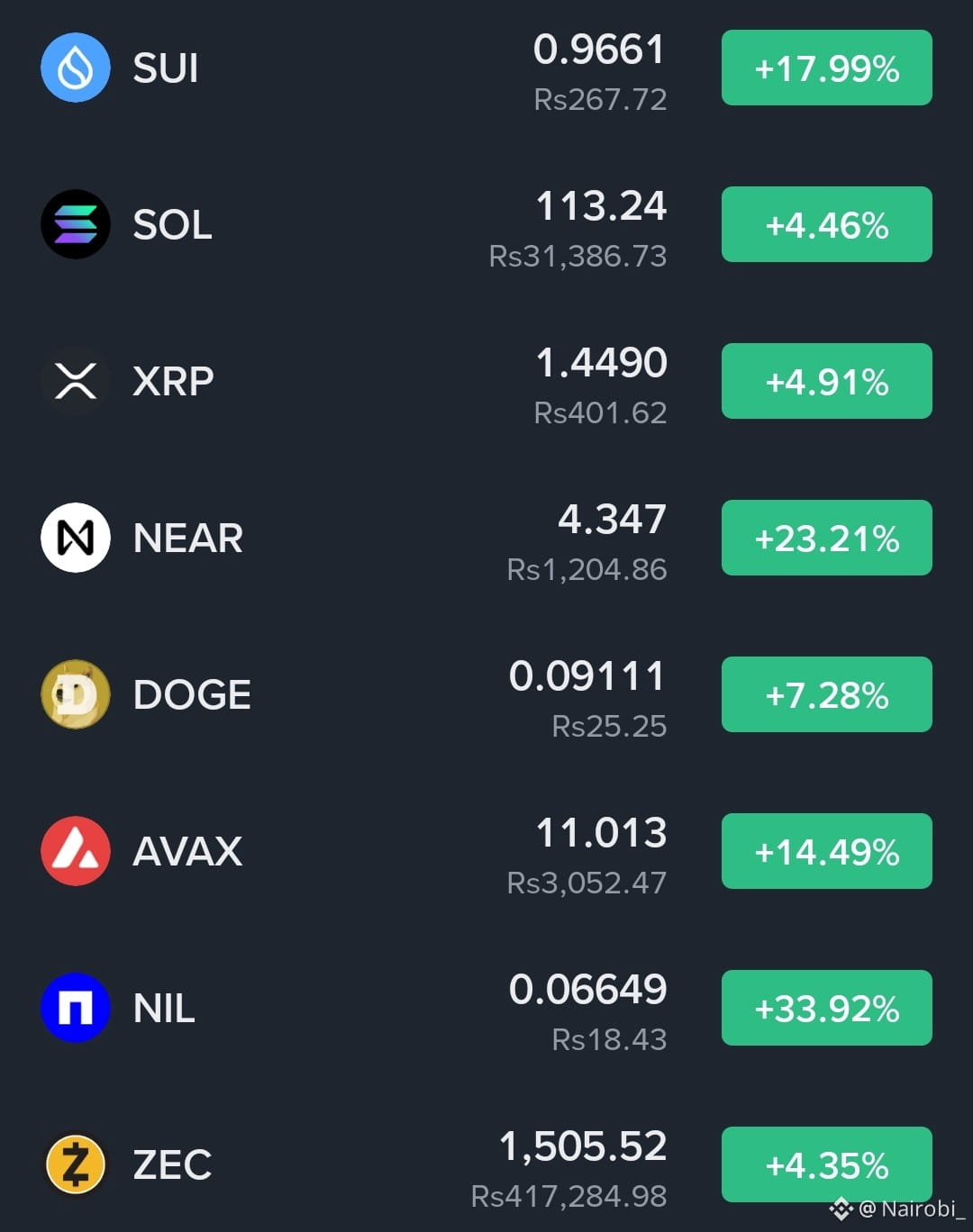
ALTSEASON VIENT JUSTE DE SE RÉVEILLER ? 👀
L’argent commence à affluer vers les alts, et les chiffres deviennent vraiment impossibles à ignorer :
🟢 $NIL +33.92%
🟢 $NEAR +23.21%
🟢 $SUI +17.99%
🟢 $AVAX +14.49%
🟢 $DOGE +7.28%
🟢 $XRP +4.91%
🟢 $SOL +4.46%
🟢 $ZEC +4.35%
C’est le genre d’écran qui fait que chaque trader se rappelle soudain qu’il a une watchlist 😂
Mais la vraie question est…
Tu as déjà tes alts en portefeuille, ou tu attends une “confirmation” pendant qu’ils tournent sans toi ? 👀
Dépose l’alt que tu surveilles en dessous.
Voyons quels sacs Crypto Twitter transporte vraiment. 🫡
#SolanaCutsTargetSlotTimeTo250ms
#BTCBreaks80K
#AltSeasonComing
ALTSEASON VIENT JUSTE DE SE RÉVEILLER ? 👀
L’argent commence à affluer vers les alts, et les chiffres deviennent vraiment impossibles à ignorer :
🟢 $NIL +33.92%
🟢 $NEAR +23.21%
🟢 $SUI +17.99%
🟢 $AVAX +14.49%
🟢 $DOGE +7.28%
🟢 $XRP +4.91%
🟢 $SOL +4.46%
🟢 $ZEC +4.35%
C’est le genre d’écran qui fait que chaque trader se rappelle soudain qu’il a une watchlist 😂
Mais la vraie question est…
Tu as déjà tes alts en portefeuille, ou tu attends une “confirmation” pendant qu’ils tournent sans toi ? 👀
Dépose l’alt que tu surveilles en dessous.
Voyons quels sacs Crypto Twitter transporte vraiment. 🫡
#SolanaCutsTargetSlotTimeTo250ms
#BTCBreaks80K
#AltSeasonComing
L’argent commence à affluer vers les alts, et les chiffres deviennent vraiment impossibles à ignorer :
🟢 $NIL +33.92%
🟢 $NEAR +23.21%
🟢 $SUI +17.99%
🟢 $AVAX +14.49%
🟢 $DOGE +7.28%
🟢 $XRP +4.91%
🟢 $SOL +4.46%
🟢 $ZEC +4.35%
C’est le genre d’écran qui fait que chaque trader se rappelle soudain qu’il a une watchlist 😂
Mais la vraie question est…
Tu as déjà tes alts en portefeuille, ou tu attends une “confirmation” pendant qu’ils tournent sans toi ? 👀
Dépose l’alt que tu surveilles en dessous.
Voyons quels sacs Crypto Twitter transporte vraiment. 🫡
#SolanaCutsTargetSlotTimeTo250ms
#BTCBreaks80K
#AltSeasonComing
1
321
·
--
Ce board refuse carrément d’agir normalement 😭
🟢 $BULLA +121.19%
🟢 $MARSCOIN +93.26%
🟢 $4 +54.05%
🟢 $BU +45.58%
🟢 $AKE +38.61%
🟢 牛来 +38.41%
🟢 $FLOCK +34.12%
BULLA a plus que doublé en 24 h.
MARSCOIN a presque fait pareil.
Et pourtant, +54 % sur 4 ressemble à un mouvement normal à côté d’eux 😂
Ce que je surveille maintenant, ce n’est pas qui a le plus pumpé, ça c’est évident.
C’est qui peut survivre à la première vraie vague de prises de bénéfices sans en rendre la moitié.
qui a encore une autre jambe ?
Ce board refuse carrément d’agir normalement 😭
🟢 $BULLA +121.19%
🟢 $MARSCOIN +93.26%
🟢 $4 +54.05%
🟢 $BU +45.58%
🟢 $AKE +38.61%
🟢 牛来 +38.41%
🟢 $FLOCK +34.12%
BULLA a plus que doublé en 24 h.
MARSCOIN a presque fait pareil.
Et pourtant, +54 % sur 4 ressemble à un mouvement normal à côté d’eux 😂
Ce que je surveille maintenant, ce n’est pas qui a le plus pumpé, ça c’est évident.
C’est qui peut survivre à la première vraie vague de prises de bénéfices sans en rendre la moitié.
qui a encore une autre jambe ?
🟢 $BULLA +121.19%
🟢 $MARSCOIN +93.26%
🟢 $4 +54.05%
🟢 $BU +45.58%
🟢 $AKE +38.61%
🟢 牛来 +38.41%
🟢 $FLOCK +34.12%
BULLA a plus que doublé en 24 h.
MARSCOIN a presque fait pareil.
Et pourtant, +54 % sur 4 ressemble à un mouvement normal à côté d’eux 😂
Ce que je surveille maintenant, ce n’est pas qui a le plus pumpé, ça c’est évident.
C’est qui peut survivre à la première vraie vague de prises de bénéfices sans en rendre la moitié.
qui a encore une autre jambe ?
🔘 BULLA
44%
🔘 MARSCOIN
36%
🔘 4
10%
🔘 FLOCK
10%
39 Votes • Vote fermé
1
3.3k
·
--
Les gagnants d’hier sont vérifiés aujourd’hui.
Le moche est $CYS à -33.52%.
Ensuite :
$牛来 -22.55%
$TRIA -22.17%
$ZORA -17.93%
$SKR -17.20%
$BLESS -16.21%
$4 -12.01%
Ce qui rend cette liste intéressante, ce n’est pas seulement le rouge.
C’est de voir ZORA et SKR ici alors qu’ils étaient encore du côté des haussiers il n’y a pas si longtemps.
C’est la partie du trading de momentum que les gens oublient souvent.
Le vert attire l’attention.
Le rouge met la conviction à l’épreuve.
Maintenant, je suis plus curieux de la réaction que de la baisse elle-même.
Les gagnants d’hier sont vérifiés aujourd’hui.
Le moche est $CYS à -33.52%.
Ensuite :
$牛来 -22.55%
$TRIA -22.17%
$ZORA -17.93%
$SKR -17.20%
$BLESS -16.21%
$4 -12.01%
Ce qui rend cette liste intéressante, ce n’est pas seulement le rouge.
C’est de voir ZORA et SKR ici alors qu’ils étaient encore du côté des haussiers il n’y a pas si longtemps.
C’est la partie du trading de momentum que les gens oublient souvent.
Le vert attire l’attention.
Le rouge met la conviction à l’épreuve.
Maintenant, je suis plus curieux de la réaction que de la baisse elle-même.
Le moche est $CYS à -33.52%.
Ensuite :
$牛来 -22.55%
$TRIA -22.17%
$ZORA -17.93%
$SKR -17.20%
$BLESS -16.21%
$4 -12.01%
Ce qui rend cette liste intéressante, ce n’est pas seulement le rouge.
C’est de voir ZORA et SKR ici alors qu’ils étaient encore du côté des haussiers il n’y a pas si longtemps.
C’est la partie du trading de momentum que les gens oublient souvent.
Le vert attire l’attention.
Le rouge met la conviction à l’épreuve.
Maintenant, je suis plus curieux de la réaction que de la baisse elle-même.
🔘 SKR bounces first
20%
🔘 ZORA gets bought back
5%
🔘 CYS gives strongest rebound
75%
🔘 Red continues tomorrow
0%
20 Votes • Vote fermé
1
1.4k
·
--
Table rouge ce soir. Et BTR s’est fait complètement détruire.
$BTR -37,57% à 0,09813$
CYS -21,12%
$MAGMA -20,25%
$PROM -19,68%
$ONG -17,42%
$RIVER -17,05%
$BLESS -16,57%
BTR est clairement la meilleure candidate ici. Un jour à près de -38% après toute l’attention qu’il avait eue récemment, c’est exactement pour ça que ces valeurs à forte volatilité sont amusantes… jusqu’à ce que ça ne le soit plus.
MAGMA et PROM qui reviennent aussi ici disent beaucoup. Elles avaient beaucoup d’élan plus tôt, maintenant l’autre côté de cette opération se manifeste.
La question n’est plus « qui a le plus déversé ? »
C’est qui a réellement le plus de chances de rebondir en premier ?
Table rouge ce soir. Et BTR s’est fait complètement détruire.
$BTR -37,57% à 0,09813$
CYS -21,12%
$MAGMA -20,25%
$PROM -19,68%
$ONG -17,42%
$RIVER -17,05%
$BLESS -16,57%
BTR est clairement la meilleure candidate ici. Un jour à près de -38% après toute l’attention qu’il avait eue récemment, c’est exactement pour ça que ces valeurs à forte volatilité sont amusantes… jusqu’à ce que ça ne le soit plus.
MAGMA et PROM qui reviennent aussi ici disent beaucoup. Elles avaient beaucoup d’élan plus tôt, maintenant l’autre côté de cette opération se manifeste.
La question n’est plus « qui a le plus déversé ? »
C’est qui a réellement le plus de chances de rebondir en premier ?
$BTR -37,57% à 0,09813$
CYS -21,12%
$MAGMA -20,25%
$PROM -19,68%
$ONG -17,42%
$RIVER -17,05%
$BLESS -16,57%
BTR est clairement la meilleure candidate ici. Un jour à près de -38% après toute l’attention qu’il avait eue récemment, c’est exactement pour ça que ces valeurs à forte volatilité sont amusantes… jusqu’à ce que ça ne le soit plus.
MAGMA et PROM qui reviennent aussi ici disent beaucoup. Elles avaient beaucoup d’élan plus tôt, maintenant l’autre côté de cette opération se manifeste.
La question n’est plus « qui a le plus déversé ? »
C’est qui a réellement le plus de chances de rebondir en premier ?
🔘 BTR — oversold bounce
85%
🔘 MAGMA — buyers return
6%
🔘 PROM — recovery setup
3%
🔘 None — more pain first
6%
35 Votes • Vote fermé
1.5k
·
--
Honnêtement, ce board commence à ressembler moins à un simple pump aléatoire et plus à une rotation de momentum à fond.
$SKR reste celui que tout le monde doit regarder en premier, +71,10%.
Ensuite, la deuxième ligne devient intéressante :
$ZORA +39,37%
$HEMI +37,39%
Cet écart est minime.
Une bougie plus forte et ZORA ou HEMI peuvent facilement devenir le prochain nom dont tout le monde commence à parler.
Ensuite, vous avez :
$0G +24,21%
$FLOCK +22,31%
Normalement, +20% suffirait à s’approprier l’écran.
Aujourd’hui, ça te donne juste une place à la table 😂
Ce que je regarde maintenant, ce n’est pas qui a pump le plus.
C’est qui peut encore maintenir le momentum une fois que les traders commencent à verrouiller leurs profits.
Honnêtement, ce board commence à ressembler moins à un simple pump aléatoire et plus à une rotation de momentum à fond.
$SKR reste celui que tout le monde doit regarder en premier, +71,10%.
Ensuite, la deuxième ligne devient intéressante :
$ZORA +39,37%
$HEMI +37,39%
Cet écart est minime.
Une bougie plus forte et ZORA ou HEMI peuvent facilement devenir le prochain nom dont tout le monde commence à parler.
Ensuite, vous avez :
$0G +24,21%
$FLOCK +22,31%
Normalement, +20% suffirait à s’approprier l’écran.
Aujourd’hui, ça te donne juste une place à la table 😂
Ce que je regarde maintenant, ce n’est pas qui a pump le plus.
C’est qui peut encore maintenir le momentum une fois que les traders commencent à verrouiller leurs profits.
$SKR reste celui que tout le monde doit regarder en premier, +71,10%.
Ensuite, la deuxième ligne devient intéressante :
$ZORA +39,37%
$HEMI +37,39%
Cet écart est minime.
Une bougie plus forte et ZORA ou HEMI peuvent facilement devenir le prochain nom dont tout le monde commence à parler.
Ensuite, vous avez :
$0G +24,21%
$FLOCK +22,31%
Normalement, +20% suffirait à s’approprier l’écran.
Aujourd’hui, ça te donne juste une place à la table 😂
Ce que je regarde maintenant, ce n’est pas qui a pump le plus.
C’est qui peut encore maintenir le momentum une fois que les traders commencent à verrouiller leurs profits.
🔘 SKR — still the leader
60%
🔘 ZORA — next one up
19%
🔘 HEMI — strongest challenger
13%
🔘 0G / FLOCK — sleeper move
8%
52 Votes • Vote fermé
1
3.7k
·
--
MOVR a vraiment dit « bougez-vous » 😭
🟢 $MOVR : +44,35% — 0,9885 $
🟢 $MAGMA : +32,99% — 0,35265 $
🟢 $VET : +28,30% — 0,007254 $
Ce qui est drôle, c’est que ce même trio était déjà en train de traîner du côté des gagnants plus tôt… et, d’une manière ou d’une autre, ils sont encore là.
MOVR a en fait poussé encore plus fort.
MAGMA est toujours confortablement au-dessus de +30%.
Et VET fait +28% comme si c’était un jeudi normal.
À ce stade, la question n’est plus de savoir qui a pump.
C’est qui a encore assez de carburant pour une autre étape ? 👀
MOVR a vraiment dit « bougez-vous » 😭
🟢 $MOVR : +44,35% — 0,9885 $
🟢 $MAGMA : +32,99% — 0,35265 $
🟢 $VET : +28,30% — 0,007254 $
Ce qui est drôle, c’est que ce même trio était déjà en train de traîner du côté des gagnants plus tôt… et, d’une manière ou d’une autre, ils sont encore là.
MOVR a en fait poussé encore plus fort.
MAGMA est toujours confortablement au-dessus de +30%.
Et VET fait +28% comme si c’était un jeudi normal.
À ce stade, la question n’est plus de savoir qui a pump.
C’est qui a encore assez de carburant pour une autre étape ? 👀
🟢 $MOVR : +44,35% — 0,9885 $
🟢 $MAGMA : +32,99% — 0,35265 $
🟢 $VET : +28,30% — 0,007254 $
Ce qui est drôle, c’est que ce même trio était déjà en train de traîner du côté des gagnants plus tôt… et, d’une manière ou d’une autre, ils sont encore là.
MOVR a en fait poussé encore plus fort.
MAGMA est toujours confortablement au-dessus de +30%.
Et VET fait +28% comme si c’était un jeudi normal.
À ce stade, la question n’est plus de savoir qui a pump.
C’est qui a encore assez de carburant pour une autre étape ? 👀
🔘 $MOVR — momentum king
50%
🔘 $MAGMA — still heating up
30%
🔘 $VET — sleeper pick
20%
🔘 None — pullback first
0%
10 Votes • Vote fermé
459
·
--
$PROM nous a donné la pompe. Maintenant, je regarde si elle peut transformer cette pompe en continuation.
Le graphique 1H reste solide : le prix est monté d’environ 2,60 $ → 4,05 $, s’est refroidi, et essaie maintenant de tenir autour de 3,75 $ au lieu de retracer complètement le mouvement.
Ça compte.
Mon setup 👇
🟢 Zone d’entrée : 3,68–3,76 $
🎯 TP1 : 3,90 $
🎯 TP2 : 4,05 $
🎯 TP3 : 4,25–4,30 $
🔴 Annulation : clôture 1H sous 3,55 $
La partie que j’aime le plus, c’est que PROM est toujours bien au-dessus de la MA25 autour de 3,31 $, tandis que la MA courte s’aplatit autour du prix actuel. En gros, le marché décide si cela devient une consolidation avant une nouvelle impulsion… ou le sommet du mouvement.
Pour moi, 4,05 $ est le vrai niveau “boss”.
Le casser proprement et rester au-dessus ? Je vise plus haut.
Perdre 3,55 $ ? Le setup est mort. Pas de discussion avec le graphique.
Que fait PROM ensuite ?
$UAI $SUPER
$PROM nous a donné la pompe. Maintenant, je regarde si elle peut transformer cette pompe en continuation.
Le graphique 1H reste solide : le prix est monté d’environ 2,60 $ → 4,05 $, s’est refroidi, et essaie maintenant de tenir autour de 3,75 $ au lieu de retracer complètement le mouvement.
Ça compte.
Mon setup 👇
🟢 Zone d’entrée : 3,68–3,76 $
🎯 TP1 : 3,90 $
🎯 TP2 : 4,05 $
🎯 TP3 : 4,25–4,30 $
🔴 Annulation : clôture 1H sous 3,55 $
La partie que j’aime le plus, c’est que PROM est toujours bien au-dessus de la MA25 autour de 3,31 $, tandis que la MA courte s’aplatit autour du prix actuel. En gros, le marché décide si cela devient une consolidation avant une nouvelle impulsion… ou le sommet du mouvement.
Pour moi, 4,05 $ est le vrai niveau “boss”.
Le casser proprement et rester au-dessus ? Je vise plus haut.
Perdre 3,55 $ ? Le setup est mort. Pas de discussion avec le graphique.
Que fait PROM ensuite ?
$UAI $SUPER
Le graphique 1H reste solide : le prix est monté d’environ 2,60 $ → 4,05 $, s’est refroidi, et essaie maintenant de tenir autour de 3,75 $ au lieu de retracer complètement le mouvement.
Ça compte.
Mon setup 👇
🟢 Zone d’entrée : 3,68–3,76 $
🎯 TP1 : 3,90 $
🎯 TP2 : 4,05 $
🎯 TP3 : 4,25–4,30 $
🔴 Annulation : clôture 1H sous 3,55 $
La partie que j’aime le plus, c’est que PROM est toujours bien au-dessus de la MA25 autour de 3,31 $, tandis que la MA courte s’aplatit autour du prix actuel. En gros, le marché décide si cela devient une consolidation avant une nouvelle impulsion… ou le sommet du mouvement.
Pour moi, 4,05 $ est le vrai niveau “boss”.
Le casser proprement et rester au-dessus ? Je vise plus haut.
Perdre 3,55 $ ? Le setup est mort. Pas de discussion avec le graphique.
Que fait PROM ensuite ?
$UAI $SUPER
🚀 Break $4.05
33%
📈 Tap $4.25+
45%
😴 Chop around $3.70
0%
📉 Lose $3.55
22%
9 Votes • Vote fermé
243
·
--
le 6 % n’a jamais bougé.
le trade a quand même empiré.
c’était le détail de levier TermMax que je ne cessais d’accuser d’un mauvais numéro.
j’avais un actif qui générait du rendement à 12 %.
TermMax pouvait me laisser emprunter dessus à un taux fixe de 6 %, utiliser le capital emprunté pour accroître l’exposition en collatéral, puis envelopper la position collatéral + dette dans du GT.
12 qui entre.
6 qui sort.
ajouter du levier à l’écart.
histoire plutôt facile à aimer.
et la partie rassurante, c’était le 6 %.
je n’avais pas à me demander si, quelque part, l’utilisation ferait grimper le financement à 9, puis 14, pendant que j’étais déjà dans la position.
TermMax avait verrouillé ce côté-là.
puis le rendement du collatéral est tombé à 4 %.
rien n’est arrivé à mon prêt.
c’est ça qui rendait la chose étrange.
le GT portait toujours la dette.
le taux d’emprunt TermMax était toujours à 6 %.
l’échéance n’avait pas changé.
personne n’a réévalué mon financement à taux fixe parce que les conditions de marché se sont dégradées.
le chiffre exact que je voulais protéger était toujours protégé.
sauf qu’à présent j’empruntais à 6 % pour augmenter l’exposition à quelque chose qui rapportait 4 %.
et le levier n’avait pas cessé de fonctionner.
il faisait juste multiplier un écart que je n’avais plus envie de voir multiplié.
je pense que j’avais transformé discrètement le « levier à taux fixe » en « rendement levier prévisible ».
tous deux ne sont pas la même chose.
TermMax peut supprimer le problème du taux d’emprunt variable.
il ne peut pas forcer un collatéral porteur de rendement à continuer de produire l’APY que j’utilisais au moment où je suis entré.
les 12 % appartiennent à un autre mécanisme.
les récompenses peuvent baisser.
le rendement sous-jacent peut se contracter.
et le GT n’a pas besoin d’être « cassé » pour que tout cela fasse du mal.
c’est pour ça que je reviens sans cesse au 6 %.
si ça avait sauté à 15 %, l’échec aurait semblé évident.
mais ici, TermMax a fait exactement ce que je lui avais demandé.
le 6 % est resté à 6 %.
le chiffre instable était de l’autre côté.
12 est devenu 4.
même dette fixe.
raisons très différentes de vouloir ce levier.
TermMax peut verrouiller un bord de cet écart.
je me demande encore pourquoi j’ai jamais traité la distance entre les deux comme quelque chose de figé aussi.
@termmax #TermMax #termmax $AVAAI $ONG $BOME
le 6 % n’a jamais bougé.
le trade a quand même empiré.
c’était le détail de levier TermMax que je ne cessais d’accuser d’un mauvais numéro.
j’avais un actif qui générait du rendement à 12 %.
TermMax pouvait me laisser emprunter dessus à un taux fixe de 6 %, utiliser le capital emprunté pour accroître l’exposition en collatéral, puis envelopper la position collatéral + dette dans du GT.
12 qui entre.
6 qui sort.
ajouter du levier à l’écart.
histoire plutôt facile à aimer.
et la partie rassurante, c’était le 6 %.
je n’avais pas à me demander si, quelque part, l’utilisation ferait grimper le financement à 9, puis 14, pendant que j’étais déjà dans la position.
TermMax avait verrouillé ce côté-là.
puis le rendement du collatéral est tombé à 4 %.
rien n’est arrivé à mon prêt.
c’est ça qui rendait la chose étrange.
le GT portait toujours la dette.
le taux d’emprunt TermMax était toujours à 6 %.
l’échéance n’avait pas changé.
personne n’a réévalué mon financement à taux fixe parce que les conditions de marché se sont dégradées.
le chiffre exact que je voulais protéger était toujours protégé.
sauf qu’à présent j’empruntais à 6 % pour augmenter l’exposition à quelque chose qui rapportait 4 %.
et le levier n’avait pas cessé de fonctionner.
il faisait juste multiplier un écart que je n’avais plus envie de voir multiplié.
je pense que j’avais transformé discrètement le « levier à taux fixe » en « rendement levier prévisible ».
tous deux ne sont pas la même chose.
TermMax peut supprimer le problème du taux d’emprunt variable.
il ne peut pas forcer un collatéral porteur de rendement à continuer de produire l’APY que j’utilisais au moment où je suis entré.
les 12 % appartiennent à un autre mécanisme.
les récompenses peuvent baisser.
le rendement sous-jacent peut se contracter.
et le GT n’a pas besoin d’être « cassé » pour que tout cela fasse du mal.
c’est pour ça que je reviens sans cesse au 6 %.
si ça avait sauté à 15 %, l’échec aurait semblé évident.
mais ici, TermMax a fait exactement ce que je lui avais demandé.
le 6 % est resté à 6 %.
le chiffre instable était de l’autre côté.
12 est devenu 4.
même dette fixe.
raisons très différentes de vouloir ce levier.
TermMax peut verrouiller un bord de cet écart.
je me demande encore pourquoi j’ai jamais traité la distance entre les deux comme quelque chose de figé aussi.
@TermMax #TermMax #termmax $AVAAI $ONG $BOME
le trade a quand même empiré.
c’était le détail de levier TermMax que je ne cessais d’accuser d’un mauvais numéro.
j’avais un actif qui générait du rendement à 12 %.
TermMax pouvait me laisser emprunter dessus à un taux fixe de 6 %, utiliser le capital emprunté pour accroître l’exposition en collatéral, puis envelopper la position collatéral + dette dans du GT.
12 qui entre.
6 qui sort.
ajouter du levier à l’écart.
histoire plutôt facile à aimer.
et la partie rassurante, c’était le 6 %.
je n’avais pas à me demander si, quelque part, l’utilisation ferait grimper le financement à 9, puis 14, pendant que j’étais déjà dans la position.
TermMax avait verrouillé ce côté-là.
puis le rendement du collatéral est tombé à 4 %.
rien n’est arrivé à mon prêt.
c’est ça qui rendait la chose étrange.
le GT portait toujours la dette.
le taux d’emprunt TermMax était toujours à 6 %.
l’échéance n’avait pas changé.
personne n’a réévalué mon financement à taux fixe parce que les conditions de marché se sont dégradées.
le chiffre exact que je voulais protéger était toujours protégé.
sauf qu’à présent j’empruntais à 6 % pour augmenter l’exposition à quelque chose qui rapportait 4 %.
et le levier n’avait pas cessé de fonctionner.
il faisait juste multiplier un écart que je n’avais plus envie de voir multiplié.
je pense que j’avais transformé discrètement le « levier à taux fixe » en « rendement levier prévisible ».
tous deux ne sont pas la même chose.
TermMax peut supprimer le problème du taux d’emprunt variable.
il ne peut pas forcer un collatéral porteur de rendement à continuer de produire l’APY que j’utilisais au moment où je suis entré.
les 12 % appartiennent à un autre mécanisme.
les récompenses peuvent baisser.
le rendement sous-jacent peut se contracter.
et le GT n’a pas besoin d’être « cassé » pour que tout cela fasse du mal.
c’est pour ça que je reviens sans cesse au 6 %.
si ça avait sauté à 15 %, l’échec aurait semblé évident.
mais ici, TermMax a fait exactement ce que je lui avais demandé.
le 6 % est resté à 6 %.
le chiffre instable était de l’autre côté.
12 est devenu 4.
même dette fixe.
raisons très différentes de vouloir ce levier.
TermMax peut verrouiller un bord de cet écart.
je me demande encore pourquoi j’ai jamais traité la distance entre les deux comme quelque chose de figé aussi.
@TermMax #TermMax #termmax $AVAAI $ONG $BOME
ONG
75%
BOME
13%
AVAAI
12%
TMX
0%
8 Votes • Vote fermé
2
750
·
--
le détail de réseau de Dusk auquel je revenais sans cesse, c’est qu’un nœud peut vérifier un message sans pour autant apprendre d’où ce message a commencé.
ma première lecture de la couche Kadcast de Dusk portait surtout sur l’efficacité.
Dusk organise les pairs via une distance XOR de style Kademlia, puis transmet des blocs, des transactions et des messages de consensus par des pairs sélectionnés au lieu d’inonder chaque voisin.
moins de transmissions en double. moins de bande passante. logique.
puis la partie sécurité change la donne.
les messages sur Dusk sont signés, et les nœuds vérifient ces signatures avant de les relayer.
ainsi, le réseau peut rejeter des données non légitimes sans exiger que chaque relais connaisse la source réseau d’origine.
la propagation de Kadcast à l’intérieur de Dusk obscurcit cette source.
un message transite par des pairs sélectionnés à des distances XOR croissantes. au moment où un autre nœud Dusk le reçoit, le nœud qui l’a transmis n’est peut-être pas celui qui l’a créé.
cela crée une distinction que je résumais un peu trop vite :
qui a authentifié ce message ?
et
où ce message est entré dans le réseau ?
ce ne sont pas les mêmes questions.
la signature protège l’authenticité.
le chemin de routage ne préserve pas une trace simple permettant de remonter à l’origine.
c’est d’autant plus important sur Dusk parce que la confidentialité des transactions fait déjà partie de la conception du registre. cacher le contenu des transactions tout en rendant triviale la traçabilité de l’origine réseau exposerait un autre type de métadonnées.
il y a pourtant un compromis dans le même mécanisme.
Dusk a toujours besoin d’une structure de routage. les nœuds maintiennent des tables de pairs, remplacent les pairs défaillants et peuvent utiliser des pairs alternatifs lorsqu’un chemin échoue.
donc, ici, la confidentialité n’est pas « personne ne sait quoi que ce soit ».
ce que Dusk évite, c’est de faire dépendre la livraison de la divulgation d’un chemin source-vers-destination parfaitement exploitable.
l’authenticité appartient au message.
l’origine appartient au chemin réseau.
et une fois ces éléments séparés, ma question change :
pour un réseau axé sur la confidentialité comme Dusk, quelle quantité de métadonnées la couche de transport peut-elle révéler avant que la confidentialité au niveau des transactions cesse d’être la seule histoire—celle qui compte—en matière de confidentialité ?
@Dusk_Foundation #Dusk $DUSK $HYPE $ZEC
le détail de réseau de Dusk auquel je revenais sans cesse, c’est qu’un nœud peut vérifier un message sans pour autant apprendre d’où ce message a commencé.
ma première lecture de la couche Kadcast de Dusk portait surtout sur l’efficacité.
Dusk organise les pairs via une distance XOR de style Kademlia, puis transmet des blocs, des transactions et des messages de consensus par des pairs sélectionnés au lieu d’inonder chaque voisin.
moins de transmissions en double. moins de bande passante. logique.
puis la partie sécurité change la donne.
les messages sur Dusk sont signés, et les nœuds vérifient ces signatures avant de les relayer.
ainsi, le réseau peut rejeter des données non légitimes sans exiger que chaque relais connaisse la source réseau d’origine.
la propagation de Kadcast à l’intérieur de Dusk obscurcit cette source.
un message transite par des pairs sélectionnés à des distances XOR croissantes. au moment où un autre nœud Dusk le reçoit, le nœud qui l’a transmis n’est peut-être pas celui qui l’a créé.
cela crée une distinction que je résumais un peu trop vite :
qui a authentifié ce message ?
et
où ce message est entré dans le réseau ?
ce ne sont pas les mêmes questions.
la signature protège l’authenticité.
le chemin de routage ne préserve pas une trace simple permettant de remonter à l’origine.
c’est d’autant plus important sur Dusk parce que la confidentialité des transactions fait déjà partie de la conception du registre. cacher le contenu des transactions tout en rendant triviale la traçabilité de l’origine réseau exposerait un autre type de métadonnées.
il y a pourtant un compromis dans le même mécanisme.
Dusk a toujours besoin d’une structure de routage. les nœuds maintiennent des tables de pairs, remplacent les pairs défaillants et peuvent utiliser des pairs alternatifs lorsqu’un chemin échoue.
donc, ici, la confidentialité n’est pas « personne ne sait quoi que ce soit ».
ce que Dusk évite, c’est de faire dépendre la livraison de la divulgation d’un chemin source-vers-destination parfaitement exploitable.
l’authenticité appartient au message.
l’origine appartient au chemin réseau.
et une fois ces éléments séparés, ma question change :
pour un réseau axé sur la confidentialité comme Dusk, quelle quantité de métadonnées la couche de transport peut-elle révéler avant que la confidentialité au niveau des transactions cesse d’être la seule histoire—celle qui compte—en matière de confidentialité ?
@Dusk #Dusk $DUSK $HYPE $ZEC
ma première lecture de la couche Kadcast de Dusk portait surtout sur l’efficacité.
Dusk organise les pairs via une distance XOR de style Kademlia, puis transmet des blocs, des transactions et des messages de consensus par des pairs sélectionnés au lieu d’inonder chaque voisin.
moins de transmissions en double. moins de bande passante. logique.
puis la partie sécurité change la donne.
les messages sur Dusk sont signés, et les nœuds vérifient ces signatures avant de les relayer.
ainsi, le réseau peut rejeter des données non légitimes sans exiger que chaque relais connaisse la source réseau d’origine.
la propagation de Kadcast à l’intérieur de Dusk obscurcit cette source.
un message transite par des pairs sélectionnés à des distances XOR croissantes. au moment où un autre nœud Dusk le reçoit, le nœud qui l’a transmis n’est peut-être pas celui qui l’a créé.
cela crée une distinction que je résumais un peu trop vite :
qui a authentifié ce message ?
et
où ce message est entré dans le réseau ?
ce ne sont pas les mêmes questions.
la signature protège l’authenticité.
le chemin de routage ne préserve pas une trace simple permettant de remonter à l’origine.
c’est d’autant plus important sur Dusk parce que la confidentialité des transactions fait déjà partie de la conception du registre. cacher le contenu des transactions tout en rendant triviale la traçabilité de l’origine réseau exposerait un autre type de métadonnées.
il y a pourtant un compromis dans le même mécanisme.
Dusk a toujours besoin d’une structure de routage. les nœuds maintiennent des tables de pairs, remplacent les pairs défaillants et peuvent utiliser des pairs alternatifs lorsqu’un chemin échoue.
donc, ici, la confidentialité n’est pas « personne ne sait quoi que ce soit ».
ce que Dusk évite, c’est de faire dépendre la livraison de la divulgation d’un chemin source-vers-destination parfaitement exploitable.
l’authenticité appartient au message.
l’origine appartient au chemin réseau.
et une fois ces éléments séparés, ma question change :
pour un réseau axé sur la confidentialité comme Dusk, quelle quantité de métadonnées la couche de transport peut-elle révéler avant que la confidentialité au niveau des transactions cesse d’être la seule histoire—celle qui compte—en matière de confidentialité ?
@Dusk #Dusk $DUSK $HYPE $ZEC
PHOENIX AND MOONLIGHT
75%
DUSK VM
25%
DUSK DS
0%
KADCAST's PROPAGATION
0%
4 Votes • Vote fermé
4
4
232
·
--
Vérifié
Une règle du coffre TermMax m’a plus dérangé que l’idée principale de « liquidité gérée à taux fixe ».
Un Curateur gère les ordres, l’allocation et la stratégie pour les déposants. Les utilisateurs fournissent le capital ; quelqu’un d’autre décide de son déploiement.
Puis j’ai remarqué la conception du timelock.
Dans les coffres TermMax, les changements sensibles ne sont pas tous soumis au même délai. Les changements qui augmentent le risque, comme l’augmentation de la commission de performance, l’ajout d’une liste blanche de marchés, la diminution du timelock ou la modification du Guardian, doivent passer par le timelock. Certains changements visant à réduire le risque peuvent s’appliquer immédiatement.
Au début, cela ressemblait à une simple commodité de gouvernance.
Je pense que c’est surtout une déclaration sur le temps.
TermMax sépare la permission de la vitesse.
Un Curateur peut avoir l’autorité de proposer un changement, mais l’autorité ne signifie pas que le changement doit devenir effectif tout de suite. Le système se demande : est-ce que cela accroît l’exposition des déposants, ou la réduit ?
Cela compte, car un coffre continue de fonctionner pendant que la gouvernance est en cours. Les ordres peuvent déjà être en direct. Le capital peut déjà être alloué. Les déposants ne surveillent peut-être pas chaque modification de paramètre.
Ainsi, le délai imposé à un changement qui augmente le risque n’est pas qu’une formalité. Il crée une période où l’état proposé et l’état actif sont différents, et le Guardian peut examiner ou révoquer le changement en attente avant qu’il ne devienne réel.
TermMax n’impose pas le même délai lorsque le changement va dans le sens le plus sûr.
Cette asymétrie m’est restée en tête.
La plupart des systèmes de permissions répondent à la question « qui est autorisé à faire ça ? »
La conception du coffre de TermMax pose aussi « à quelle vitesse ce type d’action doit-il être autorisé à produire un effet ? »
Ce sont deux contrôles différents.
Le Curateur gère la stratégie. Le Guardian peut intervenir pendant la période d’attente. Le contrat du coffre détermine quand une décision en attente devient exécutable.
Donc, dans TermMax, la gestion déléguée n’est pas la même chose que l’immédiateté déléguée.
La question qui me reste est de savoir ce que les déposants devraient surveiller de plus près : qui contrôle le coffre, ou quels changements peuvent devenir réels avant qu’ils aient le temps de réagir.
@termmax #TermMax $BTW $HEMI $TREE
Une règle du coffre TermMax m’a plus dérangé que l’idée principale de « liquidité gérée à taux fixe ».
Un Curateur gère les ordres, l’allocation et la stratégie pour les déposants. Les utilisateurs fournissent le capital ; quelqu’un d’autre décide de son déploiement.
Puis j’ai remarqué la conception du timelock.
Dans les coffres TermMax, les changements sensibles ne sont pas tous soumis au même délai. Les changements qui augmentent le risque, comme l’augmentation de la commission de performance, l’ajout d’une liste blanche de marchés, la diminution du timelock ou la modification du Guardian, doivent passer par le timelock. Certains changements visant à réduire le risque peuvent s’appliquer immédiatement.
Au début, cela ressemblait à une simple commodité de gouvernance.
Je pense que c’est surtout une déclaration sur le temps.
TermMax sépare la permission de la vitesse.
Un Curateur peut avoir l’autorité de proposer un changement, mais l’autorité ne signifie pas que le changement doit devenir effectif tout de suite. Le système se demande : est-ce que cela accroît l’exposition des déposants, ou la réduit ?
Cela compte, car un coffre continue de fonctionner pendant que la gouvernance est en cours. Les ordres peuvent déjà être en direct. Le capital peut déjà être alloué. Les déposants ne surveillent peut-être pas chaque modification de paramètre.
Ainsi, le délai imposé à un changement qui augmente le risque n’est pas qu’une formalité. Il crée une période où l’état proposé et l’état actif sont différents, et le Guardian peut examiner ou révoquer le changement en attente avant qu’il ne devienne réel.
TermMax n’impose pas le même délai lorsque le changement va dans le sens le plus sûr.
Cette asymétrie m’est restée en tête.
La plupart des systèmes de permissions répondent à la question « qui est autorisé à faire ça ? »
La conception du coffre de TermMax pose aussi « à quelle vitesse ce type d’action doit-il être autorisé à produire un effet ? »
Ce sont deux contrôles différents.
Le Curateur gère la stratégie. Le Guardian peut intervenir pendant la période d’attente. Le contrat du coffre détermine quand une décision en attente devient exécutable.
Donc, dans TermMax, la gestion déléguée n’est pas la même chose que l’immédiateté déléguée.
La question qui me reste est de savoir ce que les déposants devraient surveiller de plus près : qui contrôle le coffre, ou quels changements peuvent devenir réels avant qu’ils aient le temps de réagir.
@TermMax #TermMax $BTW $HEMI $TREE
Un Curateur gère les ordres, l’allocation et la stratégie pour les déposants. Les utilisateurs fournissent le capital ; quelqu’un d’autre décide de son déploiement.
Puis j’ai remarqué la conception du timelock.
Dans les coffres TermMax, les changements sensibles ne sont pas tous soumis au même délai. Les changements qui augmentent le risque, comme l’augmentation de la commission de performance, l’ajout d’une liste blanche de marchés, la diminution du timelock ou la modification du Guardian, doivent passer par le timelock. Certains changements visant à réduire le risque peuvent s’appliquer immédiatement.
Au début, cela ressemblait à une simple commodité de gouvernance.
Je pense que c’est surtout une déclaration sur le temps.
TermMax sépare la permission de la vitesse.
Un Curateur peut avoir l’autorité de proposer un changement, mais l’autorité ne signifie pas que le changement doit devenir effectif tout de suite. Le système se demande : est-ce que cela accroît l’exposition des déposants, ou la réduit ?
Cela compte, car un coffre continue de fonctionner pendant que la gouvernance est en cours. Les ordres peuvent déjà être en direct. Le capital peut déjà être alloué. Les déposants ne surveillent peut-être pas chaque modification de paramètre.
Ainsi, le délai imposé à un changement qui augmente le risque n’est pas qu’une formalité. Il crée une période où l’état proposé et l’état actif sont différents, et le Guardian peut examiner ou révoquer le changement en attente avant qu’il ne devienne réel.
TermMax n’impose pas le même délai lorsque le changement va dans le sens le plus sûr.
Cette asymétrie m’est restée en tête.
La plupart des systèmes de permissions répondent à la question « qui est autorisé à faire ça ? »
La conception du coffre de TermMax pose aussi « à quelle vitesse ce type d’action doit-il être autorisé à produire un effet ? »
Ce sont deux contrôles différents.
Le Curateur gère la stratégie. Le Guardian peut intervenir pendant la période d’attente. Le contrat du coffre détermine quand une décision en attente devient exécutable.
Donc, dans TermMax, la gestion déléguée n’est pas la même chose que l’immédiateté déléguée.
La question qui me reste est de savoir ce que les déposants devraient surveiller de plus près : qui contrôle le coffre, ou quels changements peuvent devenir réels avant qu’ils aient le temps de réagir.
@TermMax #TermMax $BTW $HEMI $TREE
CURATOR PROTECTION
50%
GUARDIAN WATCHING
0%
FT AND GT
50%
MATURITY FLOW
0%
6 Votes • Vote fermé
4
9
3.3k
·
--
le détail du staking de Dusk auquel je reviens sans cesse, c’est que verrouiller du DUSK ne donne pas immédiatement cette puissance de consensus.
ma première lecture était simple :
placer des jetons en staking.
devenir provisionner.
entrer dans le consensus.
mais Dusk insère un autre état entre ces étapes :
l’éligibilité.
un stake est enregistré comme un montant, plus la hauteur de bloc à laquelle sa transaction a été incluse. pour entrer dans la sélection déterministe (sortition), il doit atteindre le minimum et traverser une période de maturité liée à des epochs.
cette période n’est pas simplement « attendre N blocs après le dépôt ».
elle inclut le reste de l’epoch où le stake se place, plus une autre epoch entière. résultat : les nouveaux stakes deviennent éligibles à une frontière d’epoch.
ainsi, deux stakes engagés à des moments très différents peuvent tout de même acquérir des droits de consensus ensemble.
quelqu’un qui stake près du début d’une epoch attend plus longtemps que quelqu’un qui s’y trouve près de sa fin, mais tous deux peuvent franchir la limite d’éligibilité en même temps.
ça semble anodin jusqu’à ce qu’on sépare les états.
le capital verrouillé est déjà exposé au système de staking.
le capital éligible peut réellement entrer en sortition.
le capital sélectionné obtient un rôle concret dans le consensus.
ce sont trois moments différents.
les pénalités redistribuent encore la situation. la suspension peut exclure un provisionner de la sortition pendant des epochs. le soft slashing peut verrouiller une partie du stake et en réduire le poids. le hard slashing peut brûler le stake.
donc même « encore staké » ne veut pas nécessairement dire « encore avec la même influence de consensus ».
cela rend la frontière d’epoch plus qu’un simple détail administratif.
c’est une partie de la surface de sécurité du protocole.
imaginez un gros stake arrivant tard dans une epoch. le capital est engagé, mais il ne peut pas immédiatement remodeler la sélection du comité uniquement parce que la transaction est finalisée.
Dusk rend la détention du stake immédiate et l’éligibilité au consensus différée.
et ça a changé la question pour moi.
quand on dit qu’un réseau PoS a gagné un nouveau stake, est-ce qu’on veut dire que le capital a été verrouillé ?
ou que le protocole a effectivement permis à ce capital de commencer à décider des blocs ?
@Dusk_Foundation #Dusk $DUSK $GPS $VELVET
le détail du staking de Dusk auquel je reviens sans cesse, c’est que verrouiller du DUSK ne donne pas immédiatement cette puissance de consensus.
ma première lecture était simple :
placer des jetons en staking.
devenir provisionner.
entrer dans le consensus.
mais Dusk insère un autre état entre ces étapes :
l’éligibilité.
un stake est enregistré comme un montant, plus la hauteur de bloc à laquelle sa transaction a été incluse. pour entrer dans la sélection déterministe (sortition), il doit atteindre le minimum et traverser une période de maturité liée à des epochs.
cette période n’est pas simplement « attendre N blocs après le dépôt ».
elle inclut le reste de l’epoch où le stake se place, plus une autre epoch entière. résultat : les nouveaux stakes deviennent éligibles à une frontière d’epoch.
ainsi, deux stakes engagés à des moments très différents peuvent tout de même acquérir des droits de consensus ensemble.
quelqu’un qui stake près du début d’une epoch attend plus longtemps que quelqu’un qui s’y trouve près de sa fin, mais tous deux peuvent franchir la limite d’éligibilité en même temps.
ça semble anodin jusqu’à ce qu’on sépare les états.
le capital verrouillé est déjà exposé au système de staking.
le capital éligible peut réellement entrer en sortition.
le capital sélectionné obtient un rôle concret dans le consensus.
ce sont trois moments différents.
les pénalités redistribuent encore la situation. la suspension peut exclure un provisionner de la sortition pendant des epochs. le soft slashing peut verrouiller une partie du stake et en réduire le poids. le hard slashing peut brûler le stake.
donc même « encore staké » ne veut pas nécessairement dire « encore avec la même influence de consensus ».
cela rend la frontière d’epoch plus qu’un simple détail administratif.
c’est une partie de la surface de sécurité du protocole.
imaginez un gros stake arrivant tard dans une epoch. le capital est engagé, mais il ne peut pas immédiatement remodeler la sélection du comité uniquement parce que la transaction est finalisée.
Dusk rend la détention du stake immédiate et l’éligibilité au consensus différée.
et ça a changé la question pour moi.
quand on dit qu’un réseau PoS a gagné un nouveau stake, est-ce qu’on veut dire que le capital a été verrouillé ?
ou que le protocole a effectivement permis à ce capital de commencer à décider des blocs ?
@Dusk #Dusk $DUSK $GPS $VELVET
ma première lecture était simple :
placer des jetons en staking.
devenir provisionner.
entrer dans le consensus.
mais Dusk insère un autre état entre ces étapes :
l’éligibilité.
un stake est enregistré comme un montant, plus la hauteur de bloc à laquelle sa transaction a été incluse. pour entrer dans la sélection déterministe (sortition), il doit atteindre le minimum et traverser une période de maturité liée à des epochs.
cette période n’est pas simplement « attendre N blocs après le dépôt ».
elle inclut le reste de l’epoch où le stake se place, plus une autre epoch entière. résultat : les nouveaux stakes deviennent éligibles à une frontière d’epoch.
ainsi, deux stakes engagés à des moments très différents peuvent tout de même acquérir des droits de consensus ensemble.
quelqu’un qui stake près du début d’une epoch attend plus longtemps que quelqu’un qui s’y trouve près de sa fin, mais tous deux peuvent franchir la limite d’éligibilité en même temps.
ça semble anodin jusqu’à ce qu’on sépare les états.
le capital verrouillé est déjà exposé au système de staking.
le capital éligible peut réellement entrer en sortition.
le capital sélectionné obtient un rôle concret dans le consensus.
ce sont trois moments différents.
les pénalités redistribuent encore la situation. la suspension peut exclure un provisionner de la sortition pendant des epochs. le soft slashing peut verrouiller une partie du stake et en réduire le poids. le hard slashing peut brûler le stake.
donc même « encore staké » ne veut pas nécessairement dire « encore avec la même influence de consensus ».
cela rend la frontière d’epoch plus qu’un simple détail administratif.
c’est une partie de la surface de sécurité du protocole.
imaginez un gros stake arrivant tard dans une epoch. le capital est engagé, mais il ne peut pas immédiatement remodeler la sélection du comité uniquement parce que la transaction est finalisée.
Dusk rend la détention du stake immédiate et l’éligibilité au consensus différée.
et ça a changé la question pour moi.
quand on dit qu’un réseau PoS a gagné un nouveau stake, est-ce qu’on veut dire que le capital a été verrouillé ?
ou que le protocole a effectivement permis à ce capital de commencer à décider des blocs ?
@Dusk #Dusk $DUSK $GPS $VELVET
3
4
475
·
--
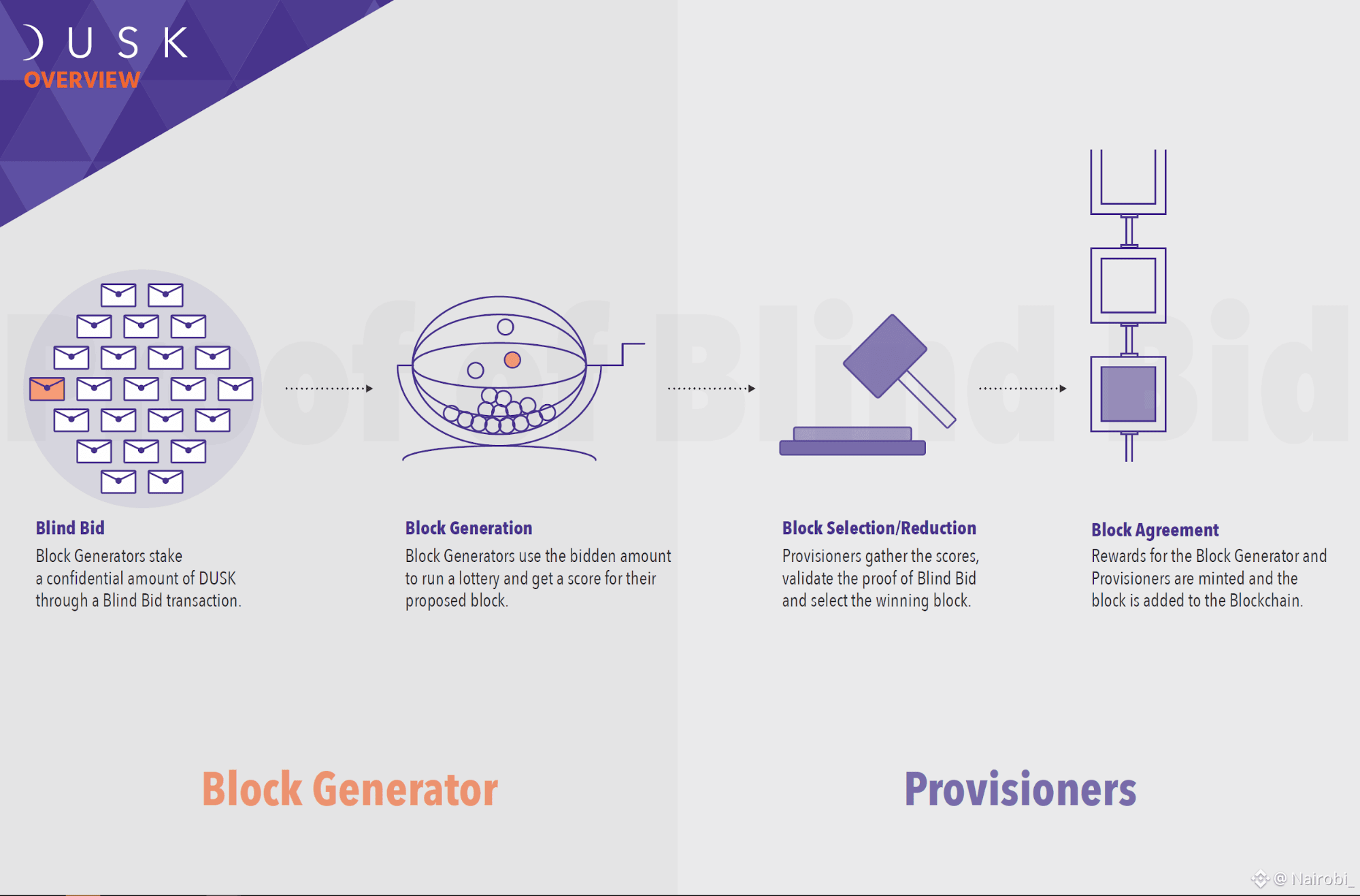
Le détail de Phoenix est facile à manquer :
les notes dépensées restent dans l’arbre de Merkle.
J’ai d’abord traité cet arbre comme un ensemble UTXO privé. une fois qu’une note était dépensée, je pensais qu’elle disparaîtrait.
le livre blanc dit le contraire.
lorsqu’une note Phoenix est dépensée, son propriétaire dérive un identifiant (nullifier) à partir de la clé secrète de la note. le réseau enregistre ce nullifier afin que la note ne puisse plus jamais être dépensée.
mais il n’apprend pas à quelle note appartient ce nullifier.
la note reste donc là. l’arbre continue de grossir.
cela crée une distinction à laquelle je n’avais pas pensé :
enregistré n’est pas la même chose que dépensable.
un récent racine de Merkle permet au réseau de vérifier qu’une note d’entrée appartient à l’arbre. l’appartenance seule ne signifie pas que la valeur est encore en vie.
cette réponse se trouve dans la liste des nullifiers.
et Phoenix conserve le lien public entre les deux éléments cachés.
dans Moonlight, Dusk associe un compte à un solde public.
Phoenix fonctionne autrement. le réseau vérifie une preuve ZK que les notes d’entrée sont correctement nullifiées et qu’elles contiennent suffisamment de valeur pour créer de nouvelles notes, déposer et payer le gas maximal, sans exposer les montants.
ainsi, une note Phoenix peut rester enregistrée même après la disparition de son utilité économique.
l’enregistrement survit.
le droit de dépense, lui, non.
puis il y a une autre séparation.
une clé de vue peut être fournie à une partie de confiance pour analyser le réseau et identifier les transactions adressées à l’utilisateur. mais elle ne peut toujours pas dépenser ces notes, car la clé secrète de la note nécessite la clé secrète complète de l’utilisateur.
donc « peut voir mon état privé » et « peut contrôler mon état privé » sont des permissions différentes.
deux limites apparaissent :
enregistré / dépensable
visible / contrôlable
le cas limite auquel je reviens sans cesse est celui où une application reconstruit ce que l’utilisateur a actuellement.
le fait que la note soit présente ne suffit pas.
le fait d’être capable de la reconnaître ne suffit pas non plus.
il faut de l’historique, l’état de nullification et le bon matériau secret.
ce qui me fait me demander :
dans un registre privé, « état courant » est-il un seul objet, ou bien l’intersection de relevés volontairement incomplets lorsqu’on les lit seuls ?
@Dusk_Foundation #dusk $DUSK $VELVET $APR
Le détail de Phoenix est facile à manquer :
les notes dépensées restent dans l’arbre de Merkle.
J’ai d’abord traité cet arbre comme un ensemble UTXO privé. une fois qu’une note était dépensée, je pensais qu’elle disparaîtrait.
le livre blanc dit le contraire.
lorsqu’une note Phoenix est dépensée, son propriétaire dérive un identifiant (nullifier) à partir de la clé secrète de la note. le réseau enregistre ce nullifier afin que la note ne puisse plus jamais être dépensée.
mais il n’apprend pas à quelle note appartient ce nullifier.
la note reste donc là. l’arbre continue de grossir.
cela crée une distinction à laquelle je n’avais pas pensé :
enregistré n’est pas la même chose que dépensable.
un récent racine de Merkle permet au réseau de vérifier qu’une note d’entrée appartient à l’arbre. l’appartenance seule ne signifie pas que la valeur est encore en vie.
cette réponse se trouve dans la liste des nullifiers.
et Phoenix conserve le lien public entre les deux éléments cachés.
dans Moonlight, Dusk associe un compte à un solde public.
Phoenix fonctionne autrement. le réseau vérifie une preuve ZK que les notes d’entrée sont correctement nullifiées et qu’elles contiennent suffisamment de valeur pour créer de nouvelles notes, déposer et payer le gas maximal, sans exposer les montants.
ainsi, une note Phoenix peut rester enregistrée même après la disparition de son utilité économique.
l’enregistrement survit.
le droit de dépense, lui, non.
puis il y a une autre séparation.
une clé de vue peut être fournie à une partie de confiance pour analyser le réseau et identifier les transactions adressées à l’utilisateur. mais elle ne peut toujours pas dépenser ces notes, car la clé secrète de la note nécessite la clé secrète complète de l’utilisateur.
donc « peut voir mon état privé » et « peut contrôler mon état privé » sont des permissions différentes.
deux limites apparaissent :
enregistré / dépensable
visible / contrôlable
le cas limite auquel je reviens sans cesse est celui où une application reconstruit ce que l’utilisateur a actuellement.
le fait que la note soit présente ne suffit pas.
le fait d’être capable de la reconnaître ne suffit pas non plus.
il faut de l’historique, l’état de nullification et le bon matériau secret.
ce qui me fait me demander :
dans un registre privé, « état courant » est-il un seul objet, ou bien l’intersection de relevés volontairement incomplets lorsqu’on les lit seuls ?
@Dusk #dusk $DUSK $VELVET $APR
les notes dépensées restent dans l’arbre de Merkle.
J’ai d’abord traité cet arbre comme un ensemble UTXO privé. une fois qu’une note était dépensée, je pensais qu’elle disparaîtrait.
le livre blanc dit le contraire.
lorsqu’une note Phoenix est dépensée, son propriétaire dérive un identifiant (nullifier) à partir de la clé secrète de la note. le réseau enregistre ce nullifier afin que la note ne puisse plus jamais être dépensée.
mais il n’apprend pas à quelle note appartient ce nullifier.
la note reste donc là. l’arbre continue de grossir.
cela crée une distinction à laquelle je n’avais pas pensé :
enregistré n’est pas la même chose que dépensable.
un récent racine de Merkle permet au réseau de vérifier qu’une note d’entrée appartient à l’arbre. l’appartenance seule ne signifie pas que la valeur est encore en vie.
cette réponse se trouve dans la liste des nullifiers.
et Phoenix conserve le lien public entre les deux éléments cachés.
dans Moonlight, Dusk associe un compte à un solde public.
Phoenix fonctionne autrement. le réseau vérifie une preuve ZK que les notes d’entrée sont correctement nullifiées et qu’elles contiennent suffisamment de valeur pour créer de nouvelles notes, déposer et payer le gas maximal, sans exposer les montants.
ainsi, une note Phoenix peut rester enregistrée même après la disparition de son utilité économique.
l’enregistrement survit.
le droit de dépense, lui, non.
puis il y a une autre séparation.
une clé de vue peut être fournie à une partie de confiance pour analyser le réseau et identifier les transactions adressées à l’utilisateur. mais elle ne peut toujours pas dépenser ces notes, car la clé secrète de la note nécessite la clé secrète complète de l’utilisateur.
donc « peut voir mon état privé » et « peut contrôler mon état privé » sont des permissions différentes.
deux limites apparaissent :
enregistré / dépensable
visible / contrôlable
le cas limite auquel je reviens sans cesse est celui où une application reconstruit ce que l’utilisateur a actuellement.
le fait que la note soit présente ne suffit pas.
le fait d’être capable de la reconnaître ne suffit pas non plus.
il faut de l’historique, l’état de nullification et le bon matériau secret.
ce qui me fait me demander :
dans un registre privé, « état courant » est-il un seul objet, ou bien l’intersection de relevés volontairement incomplets lorsqu’on les lit seuls ?
@Dusk #dusk $DUSK $VELVET $APR
1
3
142
·
--
Le détail du Crépuscule auquel je revenais sans cesse, c’est qu’un bloc peut avoir une attestation de succès et pourtant ne pas être final.
Ma première lecture de Succinct Attestation était plus simple.
une proposition atterrit.
la validation atteint une supermajorité de votes valides.
la ratification le confirme.
les signatures BLS agrégées prouvent le quorum.
c’est bon, non ?
pas tout à fait.
La section de finalité évolutive de Dusk découpe un bloc en accepté, attesté, confirmé et final.
si un bloc est produit à l’itération I > 0 alors qu’une itération précédente n’a encore aucune attestation d’échec, il peut porter une attestation de succès et n’être marqué qu’accepté.
car « le comité a atteint le quorum » ressemble beaucoup à « ce bloc ne peut pas disparaître ».
Sur Dusk, ce sont des affirmations différentes.
l’itération précédente encore non résolue compte. si un bloc d’une itération plus basse atteint plus tard un consensus, le repli peut remplacer le bloc accepté et jeter ses successeurs.
ainsi, l’attestation de succès prouve que l’accord a eu lieu.
elle ne prouve pas toujours que la chaîne a fini de choisir.
un bloc attesté atterrit soit à l’itération 0, soit a des attestations d’échec couvrant chaque itération antérieure, donc aucun bloc d’une itération plus basse ne peut le remplacer directement. la confirmation dépend des blocs suivants. la finalité n’arrive que lorsque le bloc est confirmé et que son parent est déjà final.
cela a rendu « la finalité en secondes » moins comme un événement unique, et davantage comme une frontière qu’une application doit lire correctement.
une application sur Dusk ne se contente pas de demander si le consensus a signé quelque chose.
libérer une garantie ?
reconnaître un transfert de sécurité ?
laisser un autre contrat traiter l’état comme irréversible ?
tout cela ne mérite peut-être pas le même seuil.
le plus souvent, ça avance probablement vite. c’est bon
le cas limite, lui, m’intéresse : un bloc semble réussi, une application y réagit, et une itération plus basse est encore en vie.
Dusk ne cache pas ce manque. il le nomme.
accepté n’est pas final.
et quand j’ai remarqué ça, ma question d’intégration a changé.
pas « le consensus a-t-il réussi ? »
de quelle irréversibilité cette application a-t-elle besoin, sur Dusk, avant d’agir ?
@Dusk_Foundation $DUSK #Dusk $ACE $APR
Le détail du Crépuscule auquel je revenais sans cesse, c’est qu’un bloc peut avoir une attestation de succès et pourtant ne pas être final.
Ma première lecture de Succinct Attestation était plus simple.
une proposition atterrit.
la validation atteint une supermajorité de votes valides.
la ratification le confirme.
les signatures BLS agrégées prouvent le quorum.
c’est bon, non ?
pas tout à fait.
La section de finalité évolutive de Dusk découpe un bloc en accepté, attesté, confirmé et final.
si un bloc est produit à l’itération I > 0 alors qu’une itération précédente n’a encore aucune attestation d’échec, il peut porter une attestation de succès et n’être marqué qu’accepté.
car « le comité a atteint le quorum » ressemble beaucoup à « ce bloc ne peut pas disparaître ».
Sur Dusk, ce sont des affirmations différentes.
l’itération précédente encore non résolue compte. si un bloc d’une itération plus basse atteint plus tard un consensus, le repli peut remplacer le bloc accepté et jeter ses successeurs.
ainsi, l’attestation de succès prouve que l’accord a eu lieu.
elle ne prouve pas toujours que la chaîne a fini de choisir.
un bloc attesté atterrit soit à l’itération 0, soit a des attestations d’échec couvrant chaque itération antérieure, donc aucun bloc d’une itération plus basse ne peut le remplacer directement. la confirmation dépend des blocs suivants. la finalité n’arrive que lorsque le bloc est confirmé et que son parent est déjà final.
cela a rendu « la finalité en secondes » moins comme un événement unique, et davantage comme une frontière qu’une application doit lire correctement.
une application sur Dusk ne se contente pas de demander si le consensus a signé quelque chose.
libérer une garantie ?
reconnaître un transfert de sécurité ?
laisser un autre contrat traiter l’état comme irréversible ?
tout cela ne mérite peut-être pas le même seuil.
le plus souvent, ça avance probablement vite. c’est bon
le cas limite, lui, m’intéresse : un bloc semble réussi, une application y réagit, et une itération plus basse est encore en vie.
Dusk ne cache pas ce manque. il le nomme.
accepté n’est pas final.
et quand j’ai remarqué ça, ma question d’intégration a changé.
pas « le consensus a-t-il réussi ? »
de quelle irréversibilité cette application a-t-elle besoin, sur Dusk, avant d’agir ?
@Dusk $DUSK #Dusk $ACE $APR
Ma première lecture de Succinct Attestation était plus simple.
une proposition atterrit.
la validation atteint une supermajorité de votes valides.
la ratification le confirme.
les signatures BLS agrégées prouvent le quorum.
c’est bon, non ?
pas tout à fait.
La section de finalité évolutive de Dusk découpe un bloc en accepté, attesté, confirmé et final.
si un bloc est produit à l’itération I > 0 alors qu’une itération précédente n’a encore aucune attestation d’échec, il peut porter une attestation de succès et n’être marqué qu’accepté.
car « le comité a atteint le quorum » ressemble beaucoup à « ce bloc ne peut pas disparaître ».
Sur Dusk, ce sont des affirmations différentes.
l’itération précédente encore non résolue compte. si un bloc d’une itération plus basse atteint plus tard un consensus, le repli peut remplacer le bloc accepté et jeter ses successeurs.
ainsi, l’attestation de succès prouve que l’accord a eu lieu.
elle ne prouve pas toujours que la chaîne a fini de choisir.
un bloc attesté atterrit soit à l’itération 0, soit a des attestations d’échec couvrant chaque itération antérieure, donc aucun bloc d’une itération plus basse ne peut le remplacer directement. la confirmation dépend des blocs suivants. la finalité n’arrive que lorsque le bloc est confirmé et que son parent est déjà final.
cela a rendu « la finalité en secondes » moins comme un événement unique, et davantage comme une frontière qu’une application doit lire correctement.
une application sur Dusk ne se contente pas de demander si le consensus a signé quelque chose.
libérer une garantie ?
reconnaître un transfert de sécurité ?
laisser un autre contrat traiter l’état comme irréversible ?
tout cela ne mérite peut-être pas le même seuil.
le plus souvent, ça avance probablement vite. c’est bon
le cas limite, lui, m’intéresse : un bloc semble réussi, une application y réagit, et une itération plus basse est encore en vie.
Dusk ne cache pas ce manque. il le nomme.
accepté n’est pas final.
et quand j’ai remarqué ça, ma question d’intégration a changé.
pas « le consensus a-t-il réussi ? »
de quelle irréversibilité cette application a-t-elle besoin, sur Dusk, avant d’agir ?
@Dusk $DUSK #Dusk $ACE $APR
SELECTIVE DISCLOSURE
0%
DUSKVM
0%
DUSK'S MOONLIGHT
100%
DUSK'S PHOENIX
0%
1 Votes • Vote fermé
3
1
145
·
--
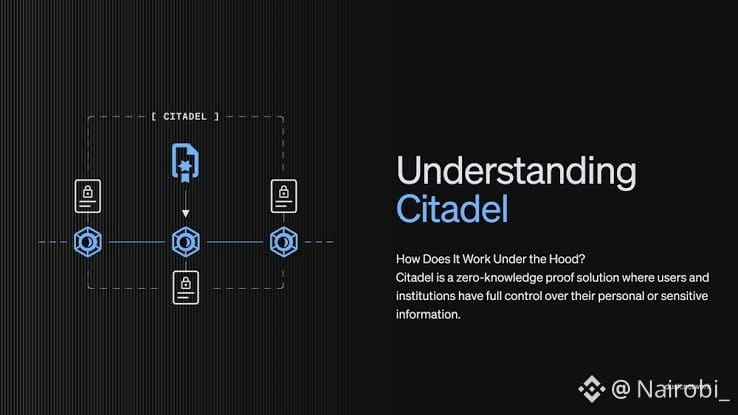
J’ai cru que la session publique de la Citadelle de Dusk était l’endroit où Dusk finirait par lâcher quelque chose.
En interne, dans Dusk, la preuve à connaissance nulle avait déjà été acceptée.
La session Citadelle existait sur la blockchain.
Donc je l’ai ouverte en m’attendant à trouver, quelque part à l’intérieur, la chose que je venais juste de prouver.
L’accréditation, peut-être. La résidence. N’importe quel attribut que le service de Dusk tient réellement en compte.
Et ce n’était pas là.
Honnêtement, ça m’a rendu méfiant avant de me donner l’impression inverse, puis de m’impressionner.
Parce que si Dusk enregistre cette session Citadelle publiquement sur le Dusk L1, qu’est-ce qui est devenu public exactement si l’accréditation elle-même n’apparaît jamais ?
Je continuais à traiter « vérifié sur Dusk » comme si cela devait forcément vouloir dire « révélé quelque part ».
Apparemment non.
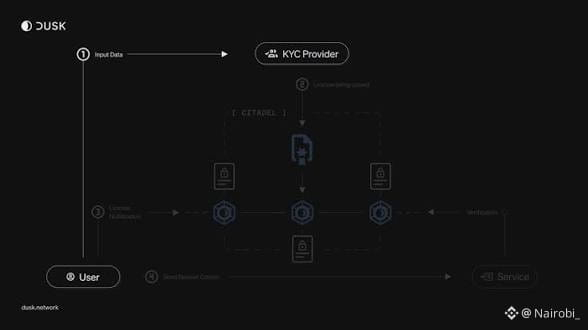
Dans la Citadelle, la détention d’une licence valide provenant d’un fournisseur de confiance peut être prouvée grâce à la connaissance nulle. Le contrat de la Citadelle vérifie cette preuve et enregistre la session.
Ensuite, le service récupère le cookie de session et décide si la preuve de la Citadelle de Dusk satisfait sa propre politique.
Mais je peux toujours ouvrir cette session publique et ne pas y trouver la licence que j’ai utilisée.
Aucun attribut signé n’y est déversé.
Aucun champ d’accréditation n’y est placé.
Aucune clé de portefeuille n’est exposée derrière.
Ça m’a continué à travailler.
Dusk avait rendu le fait que la vérification se produisait visible, sans rendre visible, de la même manière, le fait que j’avais moi-même vérifié.
Et oui, une divulgation sélective semblait beaucoup plus simple avant ça.
J’avais imaginé une confidentialité de Dusk qui garde tout fermé jusqu’à ce que quelqu’un de légitime en fasse la demande, puis qui ouvre une partie des informations.
La Citadelle donne l’impression d’être plus précisément irritante.
Un service obtient juste assez à partir de la preuve de Dusk pour prendre sa décision.
Le Dusk L1 obtient juste assez pour conserver la session.
Et d’une certaine façon, ni l’un ni l’autre n’a besoin que toute la chaîne hérite elle-même de l’accréditation.
Donc j’ai continué à rouvrir cette session de la Citadelle pour chercher la divulgation.
La session restait publique.
La raison qui me permettait d’être qualifié était toujours absente.
Et peut-être que c’est précisément ce qui continue de m’accrocher à Dusk ici.
Quelque chose a été divulgué.
Je ne suis juste pas sûr de savoir pourquoi j’ai jamais supposé que tout le monde devait la recevoir
@Dusk_Foundation $DUSK #dusk $ACE $VELVET
J’ai cru que la session publique de la Citadelle de Dusk était l’endroit où Dusk finirait par lâcher quelque chose.
En interne, dans Dusk, la preuve à connaissance nulle avait déjà été acceptée.
La session Citadelle existait sur la blockchain.
Donc je l’ai ouverte en m’attendant à trouver, quelque part à l’intérieur, la chose que je venais juste de prouver.
L’accréditation, peut-être. La résidence. N’importe quel attribut que le service de Dusk tient réellement en compte.
Et ce n’était pas là.
Honnêtement, ça m’a rendu méfiant avant de me donner l’impression inverse, puis de m’impressionner.
Parce que si Dusk enregistre cette session Citadelle publiquement sur le Dusk L1, qu’est-ce qui est devenu public exactement si l’accréditation elle-même n’apparaît jamais ?
Je continuais à traiter « vérifié sur Dusk » comme si cela devait forcément vouloir dire « révélé quelque part ».
Apparemment non.
Dans la Citadelle, la détention d’une licence valide provenant d’un fournisseur de confiance peut être prouvée grâce à la connaissance nulle. Le contrat de la Citadelle vérifie cette preuve et enregistre la session.
Ensuite, le service récupère le cookie de session et décide si la preuve de la Citadelle de Dusk satisfait sa propre politique.
Mais je peux toujours ouvrir cette session publique et ne pas y trouver la licence que j’ai utilisée.
Aucun attribut signé n’y est déversé.
Aucun champ d’accréditation n’y est placé.
Aucune clé de portefeuille n’est exposée derrière.
Ça m’a continué à travailler.
Dusk avait rendu le fait que la vérification se produisait visible, sans rendre visible, de la même manière, le fait que j’avais moi-même vérifié.
Et oui, une divulgation sélective semblait beaucoup plus simple avant ça.
J’avais imaginé une confidentialité de Dusk qui garde tout fermé jusqu’à ce que quelqu’un de légitime en fasse la demande, puis qui ouvre une partie des informations.
La Citadelle donne l’impression d’être plus précisément irritante.
Un service obtient juste assez à partir de la preuve de Dusk pour prendre sa décision.
Le Dusk L1 obtient juste assez pour conserver la session.
Et d’une certaine façon, ni l’un ni l’autre n’a besoin que toute la chaîne hérite elle-même de l’accréditation.
Donc j’ai continué à rouvrir cette session de la Citadelle pour chercher la divulgation.
La session restait publique.
La raison qui me permettait d’être qualifié était toujours absente.
Et peut-être que c’est précisément ce qui continue de m’accrocher à Dusk ici.
Quelque chose a été divulgué.
Je ne suis juste pas sûr de savoir pourquoi j’ai jamais supposé que tout le monde devait la recevoir
@Dusk $DUSK #dusk $ACE $VELVET
En interne, dans Dusk, la preuve à connaissance nulle avait déjà été acceptée.
La session Citadelle existait sur la blockchain.
Donc je l’ai ouverte en m’attendant à trouver, quelque part à l’intérieur, la chose que je venais juste de prouver.
L’accréditation, peut-être. La résidence. N’importe quel attribut que le service de Dusk tient réellement en compte.
Et ce n’était pas là.
Honnêtement, ça m’a rendu méfiant avant de me donner l’impression inverse, puis de m’impressionner.
Parce que si Dusk enregistre cette session Citadelle publiquement sur le Dusk L1, qu’est-ce qui est devenu public exactement si l’accréditation elle-même n’apparaît jamais ?
Je continuais à traiter « vérifié sur Dusk » comme si cela devait forcément vouloir dire « révélé quelque part ».
Apparemment non.
Dans la Citadelle, la détention d’une licence valide provenant d’un fournisseur de confiance peut être prouvée grâce à la connaissance nulle. Le contrat de la Citadelle vérifie cette preuve et enregistre la session.
Ensuite, le service récupère le cookie de session et décide si la preuve de la Citadelle de Dusk satisfait sa propre politique.
Mais je peux toujours ouvrir cette session publique et ne pas y trouver la licence que j’ai utilisée.
Aucun attribut signé n’y est déversé.
Aucun champ d’accréditation n’y est placé.
Aucune clé de portefeuille n’est exposée derrière.
Ça m’a continué à travailler.
Dusk avait rendu le fait que la vérification se produisait visible, sans rendre visible, de la même manière, le fait que j’avais moi-même vérifié.
Et oui, une divulgation sélective semblait beaucoup plus simple avant ça.
J’avais imaginé une confidentialité de Dusk qui garde tout fermé jusqu’à ce que quelqu’un de légitime en fasse la demande, puis qui ouvre une partie des informations.
La Citadelle donne l’impression d’être plus précisément irritante.
Un service obtient juste assez à partir de la preuve de Dusk pour prendre sa décision.
Le Dusk L1 obtient juste assez pour conserver la session.
Et d’une certaine façon, ni l’un ni l’autre n’a besoin que toute la chaîne hérite elle-même de l’accréditation.
Donc j’ai continué à rouvrir cette session de la Citadelle pour chercher la divulgation.
La session restait publique.
La raison qui me permettait d’être qualifié était toujours absente.
Et peut-être que c’est précisément ce qui continue de m’accrocher à Dusk ici.
Quelque chose a été divulgué.
Je ne suis juste pas sûr de savoir pourquoi j’ai jamais supposé que tout le monde devait la recevoir
@Dusk $DUSK #dusk $ACE $VELVET
2
1
146
·
--
Je n’arrêtais pas de passer de public à protégé dans le portefeuille Dusk parce que je pensais que l’un des deux devait être la « vraie » version de DUSK.
même jeton.
même réseau.
même portefeuille.
Moonlight se comportait comme un compte public ordinaire. solde visible. expéditeur visible. destinataire visible. montant visible.
Puis Phoenix a transformé le même DUSK en notes chiffrées et le transfert s’est arrêté, me laissant la même trace.
Et ouais, ça m’a semblé incohérent.
Si Dusk est une blockchain de confidentialité, pourquoi un envoi ressemble-t-il à du public ?
Ou si DUSK est assez public pour passer par Moonlight, qu’est-ce qui devient exactement privé quand je choisis Phoenix ?
Je continuais à essayer d’attribuer la confidentialité à l’actif.
C’était ça que j’avais mal compris.
Moonlight et Phoenix sont deux modèles de transactions dans DuskDS. l’un conserve la valeur dans un modèle de compte public. l’autre utilise des notes protégées et des preuves à divulgation nulle sans exposer les mêmes données sur l’expéditeur, le destinataire et le montant.
La pièce n’est pas devenue un autre type de pièce.
Ce que les observateurs étaient autorisés à apprendre.
Et d’une certaine manière, ça m’a dérangé plus qu’une chaîne qui serait simplement privée tout le temps.
Parce qu’à présent, la confidentialité n’était plus une propriété que je pouvais attribuer à Dusk et oublier.
Le choix était intégré au flux.
Envoyer via Moonlight et Dusk laisse une trace de compte public.
Envoyer via Phoenix et le transfert peut se conclure sans donner aux observateurs ordinaires le même aperçu financier.
même couche de règlement.
différente visibilité.
Et les applications Dusk rendent cela plus difficile à simplifier. un flux DuskVM peut rester transparent lorsque l’état public est utile et utiliser des capacités de confidentialité ou de preuves à divulgation nulle quand l’application en a besoin.
Donc « Dusk est privé » a commencé à sonner trop simple.
Je peux utiliser le même réseau et passer d’un solde destiné à être regardé à un transfert où prouver la correction suffit.
Je continue quand même à hésiter face à ce choix de portefeuille.
Pas parce que je ne sais pas ce que signifient public et protégé.
Mais parce que je pensais que la confidentialité devait appartenir à la chaîne.
Dusk continue de faire en sorte qu’elle appartienne au flux que je choisis réellement.
@Dusk_Foundation #Dusk $DUSK #dusk $AKE $COTI
Je n’arrêtais pas de passer de public à protégé dans le portefeuille Dusk parce que je pensais que l’un des deux devait être la « vraie » version de DUSK.
même jeton.
même réseau.
même portefeuille.
Moonlight se comportait comme un compte public ordinaire. solde visible. expéditeur visible. destinataire visible. montant visible.
Puis Phoenix a transformé le même DUSK en notes chiffrées et le transfert s’est arrêté, me laissant la même trace.
Et ouais, ça m’a semblé incohérent.
Si Dusk est une blockchain de confidentialité, pourquoi un envoi ressemble-t-il à du public ?
Ou si DUSK est assez public pour passer par Moonlight, qu’est-ce qui devient exactement privé quand je choisis Phoenix ?
Je continuais à essayer d’attribuer la confidentialité à l’actif.
C’était ça que j’avais mal compris.
Moonlight et Phoenix sont deux modèles de transactions dans DuskDS. l’un conserve la valeur dans un modèle de compte public. l’autre utilise des notes protégées et des preuves à divulgation nulle sans exposer les mêmes données sur l’expéditeur, le destinataire et le montant.
La pièce n’est pas devenue un autre type de pièce.
Ce que les observateurs étaient autorisés à apprendre.
Et d’une certaine manière, ça m’a dérangé plus qu’une chaîne qui serait simplement privée tout le temps.
Parce qu’à présent, la confidentialité n’était plus une propriété que je pouvais attribuer à Dusk et oublier.
Le choix était intégré au flux.
Envoyer via Moonlight et Dusk laisse une trace de compte public.
Envoyer via Phoenix et le transfert peut se conclure sans donner aux observateurs ordinaires le même aperçu financier.
même couche de règlement.
différente visibilité.
Et les applications Dusk rendent cela plus difficile à simplifier. un flux DuskVM peut rester transparent lorsque l’état public est utile et utiliser des capacités de confidentialité ou de preuves à divulgation nulle quand l’application en a besoin.
Donc « Dusk est privé » a commencé à sonner trop simple.
Je peux utiliser le même réseau et passer d’un solde destiné à être regardé à un transfert où prouver la correction suffit.
Je continue quand même à hésiter face à ce choix de portefeuille.
Pas parce que je ne sais pas ce que signifient public et protégé.
Mais parce que je pensais que la confidentialité devait appartenir à la chaîne.
Dusk continue de faire en sorte qu’elle appartienne au flux que je choisis réellement.
@Dusk #Dusk $DUSK #dusk $AKE $COTI
même jeton.
même réseau.
même portefeuille.
Moonlight se comportait comme un compte public ordinaire. solde visible. expéditeur visible. destinataire visible. montant visible.
Puis Phoenix a transformé le même DUSK en notes chiffrées et le transfert s’est arrêté, me laissant la même trace.
Et ouais, ça m’a semblé incohérent.
Si Dusk est une blockchain de confidentialité, pourquoi un envoi ressemble-t-il à du public ?
Ou si DUSK est assez public pour passer par Moonlight, qu’est-ce qui devient exactement privé quand je choisis Phoenix ?
Je continuais à essayer d’attribuer la confidentialité à l’actif.
C’était ça que j’avais mal compris.
Moonlight et Phoenix sont deux modèles de transactions dans DuskDS. l’un conserve la valeur dans un modèle de compte public. l’autre utilise des notes protégées et des preuves à divulgation nulle sans exposer les mêmes données sur l’expéditeur, le destinataire et le montant.
La pièce n’est pas devenue un autre type de pièce.
Ce que les observateurs étaient autorisés à apprendre.
Et d’une certaine manière, ça m’a dérangé plus qu’une chaîne qui serait simplement privée tout le temps.
Parce qu’à présent, la confidentialité n’était plus une propriété que je pouvais attribuer à Dusk et oublier.
Le choix était intégré au flux.
Envoyer via Moonlight et Dusk laisse une trace de compte public.
Envoyer via Phoenix et le transfert peut se conclure sans donner aux observateurs ordinaires le même aperçu financier.
même couche de règlement.
différente visibilité.
Et les applications Dusk rendent cela plus difficile à simplifier. un flux DuskVM peut rester transparent lorsque l’état public est utile et utiliser des capacités de confidentialité ou de preuves à divulgation nulle quand l’application en a besoin.
Donc « Dusk est privé » a commencé à sonner trop simple.
Je peux utiliser le même réseau et passer d’un solde destiné à être regardé à un transfert où prouver la correction suffit.
Je continue quand même à hésiter face à ce choix de portefeuille.
Pas parce que je ne sais pas ce que signifient public et protégé.
Mais parce que je pensais que la confidentialité devait appartenir à la chaîne.
Dusk continue de faire en sorte qu’elle appartienne au flux que je choisis réellement.
@Dusk #Dusk $DUSK #dusk $AKE $COTI
DUSK
67%
AKE
33%
COTI
0%
3 Votes • Vote fermé
6
5
171
·
--
Le tableau des futurs redevient intéressant 👀
$BTR +50% est le titre évident, mais $VELVET +40% est celui que je garderais à l’œil. Ensuite, $INX est à +31,63%, tandis que #FHE et #SQD continuent de pousser sans pour autant devenir complètement verticaux.
Ce que j’aime ici, c’est que les gains sont répartis au lieu d’être l’œuvre d’une seule monnaie.
Cela dit, ce sont des futures… donc « +50% » peut très vite se transformer en « pourquoi j’ai ouvert cette position ? » 😂
À surveiller : BTR pour l’élan, VELVET pour la continuité, INX comme wildcard.
Le tableau des futurs redevient intéressant 👀
$BTR +50% est le titre évident, mais $VELVET +40% est celui que je garderais à l’œil. Ensuite, $INX est à +31,63%, tandis que #FHE et #SQD continuent de pousser sans pour autant devenir complètement verticaux.
Ce que j’aime ici, c’est que les gains sont répartis au lieu d’être l’œuvre d’une seule monnaie.
Cela dit, ce sont des futures… donc « +50% » peut très vite se transformer en « pourquoi j’ai ouvert cette position ? » 😂
À surveiller : BTR pour l’élan, VELVET pour la continuité, INX comme wildcard.
$BTR +50% est le titre évident, mais $VELVET +40% est celui que je garderais à l’œil. Ensuite, $INX est à +31,63%, tandis que #FHE et #SQD continuent de pousser sans pour autant devenir complètement verticaux.
Ce que j’aime ici, c’est que les gains sont répartis au lieu d’être l’œuvre d’une seule monnaie.
Cela dit, ce sont des futures… donc « +50% » peut très vite se transformer en « pourquoi j’ai ouvert cette position ? » 😂
À surveiller : BTR pour l’élan, VELVET pour la continuité, INX comme wildcard.
🔘 BTR keeps running
25%
🔘 VELVET surprises
75%
🔘 INX wakes up
0%
🔘 I’m waiting for a pullback
0%
8 Votes • Vote fermé
570
·
--
L’onglet des gagnants fait encore ce truc où chaque pièce paraît « en avance » seulement après qu’elle a déjà pump de +50% 😭
$BICO +68.66%
$ZBT +66.46%
$ACE +57.07%
CTSI +54.21%
HFT +54.05%
Bref, cinq façons différentes de vérifier si j’ai appris quelque chose sur la poursuite des bougies vertes.
L’onglet des gagnants fait encore ce truc où chaque pièce paraît « en avance » seulement après qu’elle a déjà pump de +50% 😭
$BICO +68.66%
$ZBT +66.46%
$ACE +57.07%
CTSI +54.21%
HFT +54.05%
Bref, cinq façons différentes de vérifier si j’ai appris quelque chose sur la poursuite des bougies vertes.
$BICO +68.66%
$ZBT +66.46%
$ACE +57.07%
CTSI +54.21%
HFT +54.05%
Bref, cinq façons différentes de vérifier si j’ai appris quelque chose sur la poursuite des bougies vertes.
🔘 BICO keeps leading
0%
🔘 ZBT takes the crown
0%
🔘 ACE sneaks higher
0%
🔘 I’m waiting for the dump
0%
0 Votes • Vote fermé
92
Connectez-vous pour découvrir plus de contenu
Rejoignez la communauté mondiale des adeptes de cryptomonnaies sur Binance Square
⚡️ Suviez les dernières informations importantes sur les cryptomonnaies.
💬 Jugé digne de confiance par la plus grande plateforme d’échange de cryptomonnaies au monde.
👍 Découvrez les connaissances que partagent les créateurs vérifiés.
Adresse e-mail/Nº de téléphone
Sujets d’actualité
NEARRisesNearly80%InAWeek
5,780 vues
423 mentions
#nearrisesnearly80%inaweek
🚨 PROCHES RALLYES PRESQUE 80% EN UNE SEMAINE
Le token natif de NEAR Protocol a réalisé un mouvement hebdomadaire majeur, gagnant environ 78% au cours des sept derniers jours et s’échangeant autour de 4,29 $ au 21 septembre, selon des données CoinGecko rapportées.
📊 QU’EST-CE QUI ATTIRE L’ATTENTION ?
• NEAR est passé d’environ 2,20 $ à plus de 4,20 $ en environ une semaine
• Le volume cumulé des Intents de NEAR approche les 30 Md$
• L’activité récente autour du trading confidentiel de contrats perpétuels a ajouté un autre récit majeur à propos de l’écosystème
• La performance hebdomadaire de NEAR a nettement surpassé le marché crypto dans son ensemble, qui a gagné environ 6% sur la même période
🔎 POURQUOI C’EST IMPORTANT
Le rallye remet sous les projecteurs l’infrastructure de liquidité inter-chaînes de NEAR, l’écosystème Intents et les avancées en matière de trading axé sur la confidentialité.
Mais après un mouvement aussi rapide, la volatilité et la prise de profits sont aussi des risques importants à surveiller. Une forte hausse hebdomadaire ne garantit pas que l’élan se poursuivra.
📌 À SUIVRE
Les traders attendront de voir si NEAR peut maintenir la percée récente et si l’activité du réseau continue de soutenir le récit de marché.
Le mouvement du prix de NEAR est solide — mais le prochain test consiste à vérifier si l’activité de l’écosystème peut suivre le rythme de la spéculation.
$MUBARAK $PHA $NIL
顾清妍
·0 mentions J’aime
·1.4k vues
MultiversXPlansHardForkRecovery
7,015 vues
374 mentions
CircleLaunchesInstitutionalBTCBackedBorrowing
9,432 vues
505 mentions