

S H A H_
2k Publications

S H A H_
Signaler
Bloquer l’utilisateur
Building knowledge in crypto | Sharing alpha, insights & trends. NFA DYOR
Ouvert au trading
Trade régulièrement
3.5 an(s)
350 Suivis
1.0K+ Abonnés
2.5K+ J’aime
Publications
Portefeuille
Tous
Citations
Direct
·
--
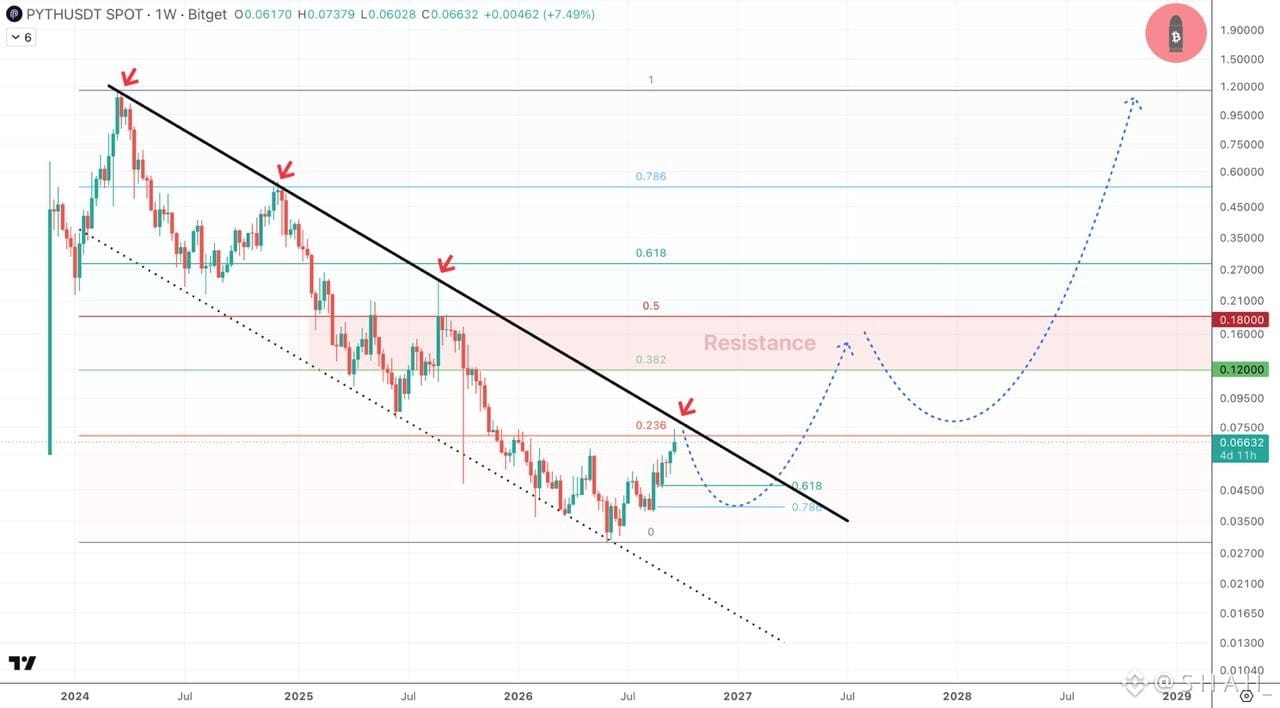
$PYTH Macro chart
$PYTH is facing Resistance here and I wouldn't be surprised to see a pullback to $0.04-0.05 before breaking out of this giant Downward Channel 📈
🔨 Major Resistance/Target 1 - $0.12-0.18
🎯 My main targets are $0.5 - $1 - $1.8
$PYTH Macro chart
$PYTH is facing Resistance here and I wouldn't be surprised to see a pullback to $0.04-0.05 before breaking out of this giant Downward Channel 📈
🔨 Major Resistance/Target 1 - $0.12-0.18
🎯 My main targets are $0.5 - $1 - $1.8
$PYTH is facing Resistance here and I wouldn't be surprised to see a pullback to $0.04-0.05 before breaking out of this giant Downward Channel 📈
🔨 Major Resistance/Target 1 - $0.12-0.18
🎯 My main targets are $0.5 - $1 - $1.8
93
·
--
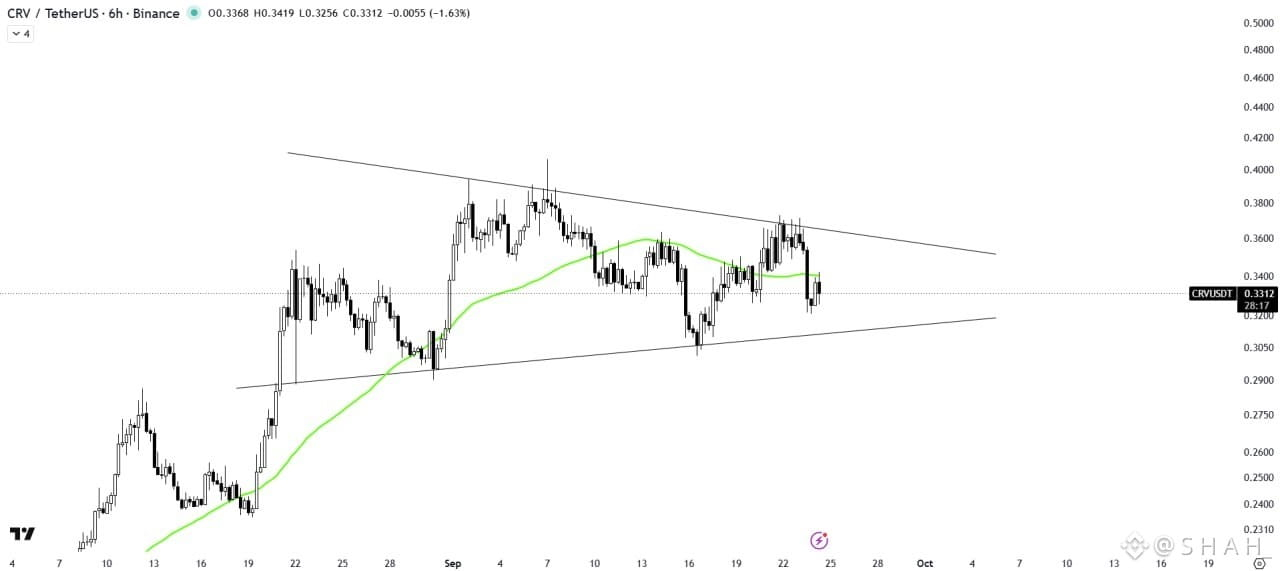
$CRV /USDT ANALYSIS
CRV is consolidating within the symmetrical triangle pattern and is currently trading below the 50MA.
The 50MA is acting as a key resistance barrier above the current price action.
We need to wait for a solid breakout or breakdown to confirm the next directional move.
$CRV /USDT ANALYSIS
CRV is consolidating within the symmetrical triangle pattern and is currently trading below the 50MA.
The 50MA is acting as a key resistance barrier above the current price action.
We need to wait for a solid breakout or breakdown to confirm the next directional move.
CRV is consolidating within the symmetrical triangle pattern and is currently trading below the 50MA.
The 50MA is acting as a key resistance barrier above the current price action.
We need to wait for a solid breakout or breakdown to confirm the next directional move.
80
·
--
Baissier
Dusk's JubJub curve implementation for a CreatorPad task and honestly the crypto wasn't the part that stuck with me. It was something adjacent — the bridge incident from Aug 16.
Quick context: #Dusk detected suspicious activity on a team managed bridge wallet, paused bridge services, recycled the compromised addresses and rolled out a Web Wallet recipient blocklist. All within hours. @DuskFoundation coordinated with Binance once part of the flow touched their platform. Fine, standard incident response.
This is a chain built around private by default, auditable when required using JubJub Poseidon specifically so transactions don't leak metadata. And the fix for a real security event was a centralized blocklist address recycling, decided and executed by the team. Not governance. Not some on chain slashing mechanism triggered by provisioners. Just the team, moving fast, doing exactly what a custodian would do.
Not a criticism, actually kind of reassuring speed wise. But it's a clean example of the gap between privacy preserving protocol as the pitch and centralized ops team with emergency levers as the actual safety net in practice. $DUSK price barely blinked, which tells you the market read it the same way I did.
At what point does that ops layer get formalized on-chain, or does it just stay a quiet assumption everyone's fine with until it isn't?
@Dusk_Foundation $DUSK #dusk
Dusk's JubJub curve implementation for a CreatorPad task and honestly the crypto wasn't the part that stuck with me. It was something adjacent — the bridge incident from Aug 16.
Quick context: #Dusk detected suspicious activity on a team managed bridge wallet, paused bridge services, recycled the compromised addresses and rolled out a Web Wallet recipient blocklist. All within hours. @DuskFoundation coordinated with Binance once part of the flow touched their platform. Fine, standard incident response.
This is a chain built around private by default, auditable when required using JubJub Poseidon specifically so transactions don't leak metadata. And the fix for a real security event was a centralized blocklist address recycling, decided and executed by the team. Not governance. Not some on chain slashing mechanism triggered by provisioners. Just the team, moving fast, doing exactly what a custodian would do.
Not a criticism, actually kind of reassuring speed wise. But it's a clean example of the gap between privacy preserving protocol as the pitch and centralized ops team with emergency levers as the actual safety net in practice. $DUSK price barely blinked, which tells you the market read it the same way I did.
At what point does that ops layer get formalized on-chain, or does it just stay a quiet assumption everyone's fine with until it isn't?
@Dusk $DUSK #dusk
Quick context: #Dusk detected suspicious activity on a team managed bridge wallet, paused bridge services, recycled the compromised addresses and rolled out a Web Wallet recipient blocklist. All within hours. @DuskFoundation coordinated with Binance once part of the flow touched their platform. Fine, standard incident response.
This is a chain built around private by default, auditable when required using JubJub Poseidon specifically so transactions don't leak metadata. And the fix for a real security event was a centralized blocklist address recycling, decided and executed by the team. Not governance. Not some on chain slashing mechanism triggered by provisioners. Just the team, moving fast, doing exactly what a custodian would do.
Not a criticism, actually kind of reassuring speed wise. But it's a clean example of the gap between privacy preserving protocol as the pitch and centralized ops team with emergency levers as the actual safety net in practice. $DUSK price barely blinked, which tells you the market read it the same way I did.
At what point does that ops layer get formalized on-chain, or does it just stay a quiet assumption everyone's fine with until it isn't?
@Dusk $DUSK #dusk
1
2
94
·
--
From Bug Bounties to 24/7 Monitoring one thing that stuck with me... TermMax security setup and almost skimmed past the number that actually mattered.
TVL sitting at $31.22M right now, down 7.2% over the past 30 days, while fees stayed steady around $19.9K. Small protocol, quiet outflow.
Nobody's panicking, nobody's tweeting about it either. the bug bounty caps critical payouts at $50K, calculated as 10% of funds directly at risk at time of submission.
So the reward literally scales with how much is actually in the pool that day... which means the incentive to report goes down as TVL drains, not up. that's the opposite of what you'd want during a slow bleed like this one.
Pair that with the Hypernative 24/7 on chain monitoring layer and it starts looking less like always watching and more like watching proportionally to what's left. Not a red flag exactly, just… a design detail that doesn't show up in the marketing copy and kept staring at that 7.2% number.
Does declining TVL quietly shrink your own security budget without anyone announcing it?
@termmax #TermMax
From Bug Bounties to 24/7 Monitoring one thing that stuck with me... TermMax security setup and almost skimmed past the number that actually mattered.
TVL sitting at $31.22M right now, down 7.2% over the past 30 days, while fees stayed steady around $19.9K. Small protocol, quiet outflow.
Nobody's panicking, nobody's tweeting about it either. the bug bounty caps critical payouts at $50K, calculated as 10% of funds directly at risk at time of submission.
So the reward literally scales with how much is actually in the pool that day... which means the incentive to report goes down as TVL drains, not up. that's the opposite of what you'd want during a slow bleed like this one.
Pair that with the Hypernative 24/7 on chain monitoring layer and it starts looking less like always watching and more like watching proportionally to what's left. Not a red flag exactly, just… a design detail that doesn't show up in the marketing copy and kept staring at that 7.2% number.
Does declining TVL quietly shrink your own security budget without anyone announcing it?
@TermMax #TermMax
TVL sitting at $31.22M right now, down 7.2% over the past 30 days, while fees stayed steady around $19.9K. Small protocol, quiet outflow.
Nobody's panicking, nobody's tweeting about it either. the bug bounty caps critical payouts at $50K, calculated as 10% of funds directly at risk at time of submission.
So the reward literally scales with how much is actually in the pool that day... which means the incentive to report goes down as TVL drains, not up. that's the opposite of what you'd want during a slow bleed like this one.
Pair that with the Hypernative 24/7 on chain monitoring layer and it starts looking less like always watching and more like watching proportionally to what's left. Not a red flag exactly, just… a design detail that doesn't show up in the marketing copy and kept staring at that 7.2% number.
Does declining TVL quietly shrink your own security budget without anyone announcing it?
@TermMax #TermMax
1
2
65
·
--
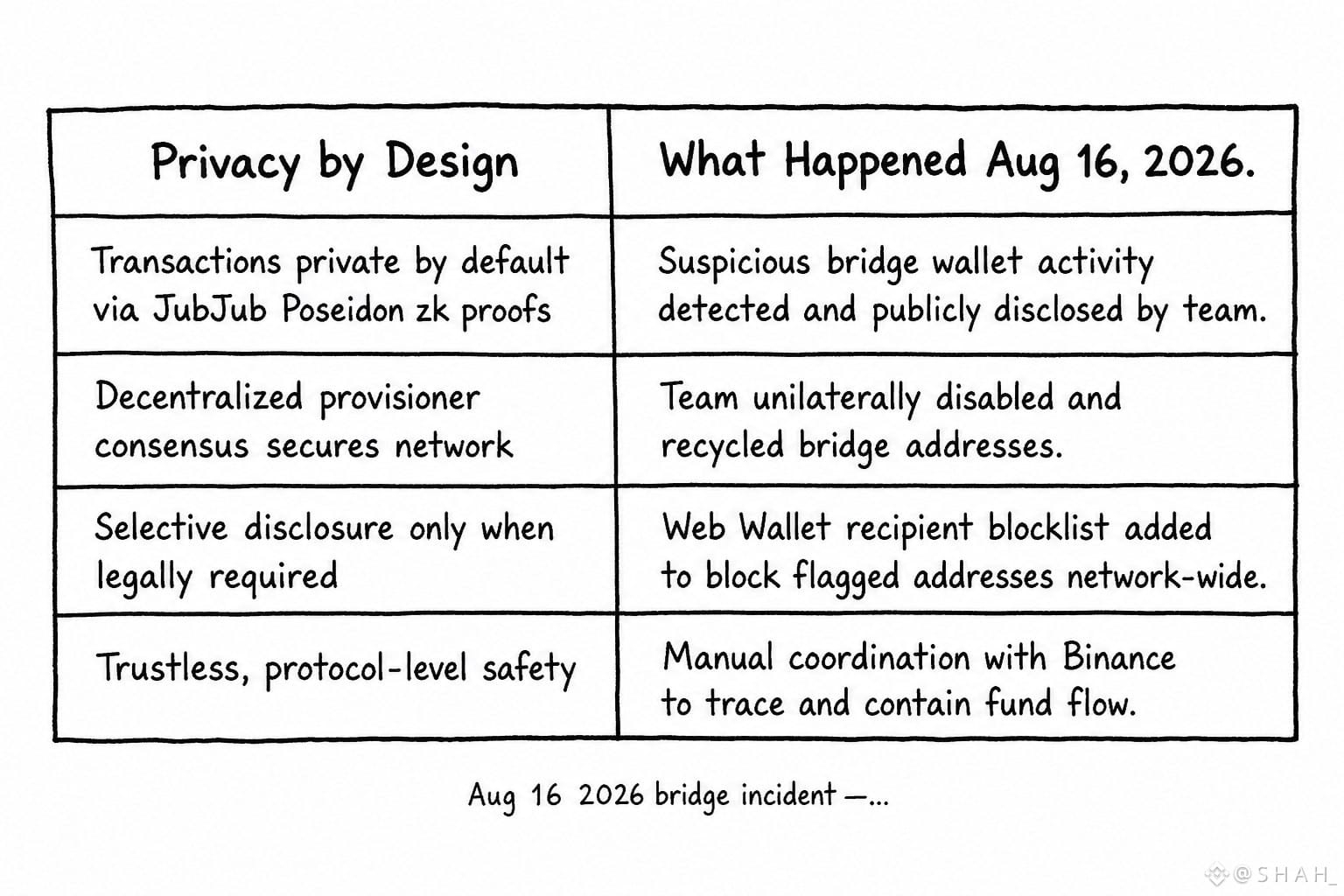
Dusk's bridge infra, half expecting the usual zk = untraceable marketing loop and then ran straight into the Aug 16 incident instead.
Team caught suspicious activity on a wallet tied to bridge ops, pulled the plug on the affected addresses and rolled out a Web Wallet recipient blocklist almost immediately.
The whole pitch is "private by default, accountable when required." Fine, sounds nice on a landing page. But watching it happen live was different.
The blocklist wasn't some optional compliance module tucked away for institutions later it went live fast, functioning as an actual operational safety valve.
Selective disclosure isn't just a regulatory checkbox here, it's the thing that let them contain a live problem without freezing the whole chain.
Made me pause a bit, honestly.
I went in assuming auditable privacy was mostly a story for banks and RWA issuers down the line the advanced tier feature nobody touches yet. Turns out it's also just… infrastructure hygiene. Default users benefit from it whether they notice or not.
Still chewing on this one if the accountability layer is what saves you during an incident, is privacy by default really the headline feature, or is it the audit trail underneath doing the real work?
@Dusk_Foundation $DUSK #dusk
Dusk's bridge infra, half expecting the usual zk = untraceable marketing loop and then ran straight into the Aug 16 incident instead.
Team caught suspicious activity on a wallet tied to bridge ops, pulled the plug on the affected addresses and rolled out a Web Wallet recipient blocklist almost immediately.
The whole pitch is "private by default, accountable when required." Fine, sounds nice on a landing page. But watching it happen live was different.
The blocklist wasn't some optional compliance module tucked away for institutions later it went live fast, functioning as an actual operational safety valve.
Selective disclosure isn't just a regulatory checkbox here, it's the thing that let them contain a live problem without freezing the whole chain.
Made me pause a bit, honestly.
I went in assuming auditable privacy was mostly a story for banks and RWA issuers down the line the advanced tier feature nobody touches yet. Turns out it's also just… infrastructure hygiene. Default users benefit from it whether they notice or not.
Still chewing on this one if the accountability layer is what saves you during an incident, is privacy by default really the headline feature, or is it the audit trail underneath doing the real work?
@Dusk $DUSK #dusk
Team caught suspicious activity on a wallet tied to bridge ops, pulled the plug on the affected addresses and rolled out a Web Wallet recipient blocklist almost immediately.
The whole pitch is "private by default, accountable when required." Fine, sounds nice on a landing page. But watching it happen live was different.
The blocklist wasn't some optional compliance module tucked away for institutions later it went live fast, functioning as an actual operational safety valve.
Selective disclosure isn't just a regulatory checkbox here, it's the thing that let them contain a live problem without freezing the whole chain.
Made me pause a bit, honestly.
I went in assuming auditable privacy was mostly a story for banks and RWA issuers down the line the advanced tier feature nobody touches yet. Turns out it's also just… infrastructure hygiene. Default users benefit from it whether they notice or not.
Still chewing on this one if the accountability layer is what saves you during an incident, is privacy by default really the headline feature, or is it the audit trail underneath doing the real work?
@Dusk $DUSK #dusk
1
2
78
·
--
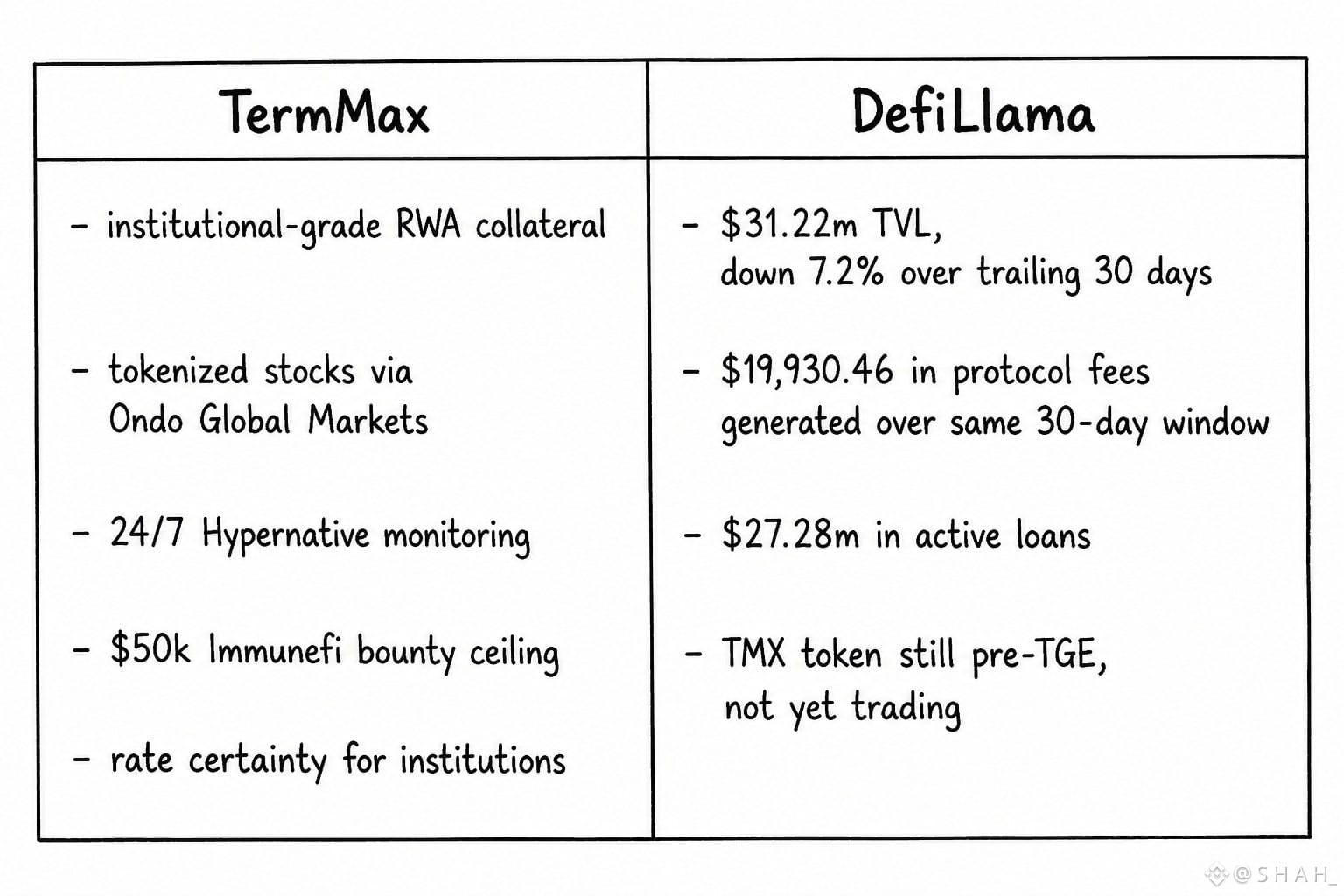
TermMax kept popping up in my feed as 24/7 monitored, bug bounty backed so I finally sat with the actual numbers instead of the pitch.
TVL sitting around $31.22m, down 7.2% over the trailing 30 days. Fees generated in that same window? $19,930.46. Real protocol revenue, not incentive inflated.
The thing that stuck with me. All the RWA headlines tokenized stocks as collateral, institutional rate certainty, Ondo integration sit on top of a fee base that's honestly modest.
The security stack Hypernative watching in real time, Immunefi bounty up to $50k, timelocked changes is genuinely built for scale that hasn't fully arrived yet. Infrastructure ahead of usage, not usage validating infrastructure.
Had a moment of doubt scrolling through it wondered if I was just reading a TVL dip as decline when it might just be quiet season.
Maybe that's the actual lesson: security first design gets built for the institutions who are promised, while today's fee revenue tells you who's actually here.
What the fee to TVL ratio looks like once if the tokenized equity collateral flow actually shows up on-chain.
@termmax #TermMax
TermMax kept popping up in my feed as 24/7 monitored, bug bounty backed so I finally sat with the actual numbers instead of the pitch.
TVL sitting around $31.22m, down 7.2% over the trailing 30 days. Fees generated in that same window? $19,930.46. Real protocol revenue, not incentive inflated.
The thing that stuck with me. All the RWA headlines tokenized stocks as collateral, institutional rate certainty, Ondo integration sit on top of a fee base that's honestly modest.
The security stack Hypernative watching in real time, Immunefi bounty up to $50k, timelocked changes is genuinely built for scale that hasn't fully arrived yet. Infrastructure ahead of usage, not usage validating infrastructure.
Had a moment of doubt scrolling through it wondered if I was just reading a TVL dip as decline when it might just be quiet season.
Maybe that's the actual lesson: security first design gets built for the institutions who are promised, while today's fee revenue tells you who's actually here.
What the fee to TVL ratio looks like once if the tokenized equity collateral flow actually shows up on-chain.
@TermMax #TermMax
TVL sitting around $31.22m, down 7.2% over the trailing 30 days. Fees generated in that same window? $19,930.46. Real protocol revenue, not incentive inflated.
The thing that stuck with me. All the RWA headlines tokenized stocks as collateral, institutional rate certainty, Ondo integration sit on top of a fee base that's honestly modest.
The security stack Hypernative watching in real time, Immunefi bounty up to $50k, timelocked changes is genuinely built for scale that hasn't fully arrived yet. Infrastructure ahead of usage, not usage validating infrastructure.
Had a moment of doubt scrolling through it wondered if I was just reading a TVL dip as decline when it might just be quiet season.
Maybe that's the actual lesson: security first design gets built for the institutions who are promised, while today's fee revenue tells you who's actually here.
What the fee to TVL ratio looks like once if the tokenized equity collateral flow actually shows up on-chain.
@TermMax #TermMax
56
25
322
·
--
Haussier
Dusk explorer after the Aug 15 network update dropped on dusk.network — nothing flashy, just the usual product notes, but it nudged me to actually check what "deterministic finality" means on this chain instead of nodding along to the phrase.
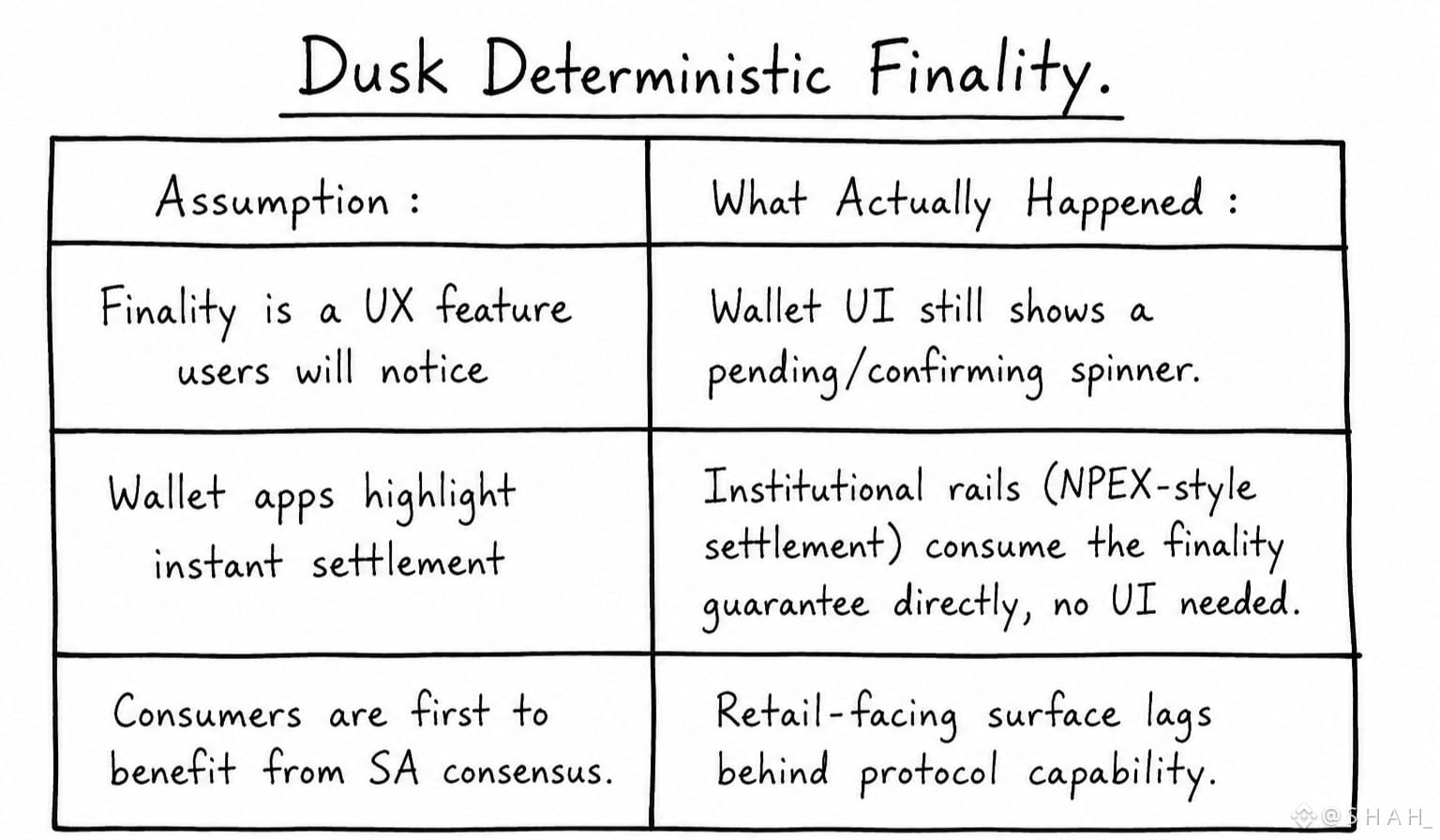
SA consensus finalizes a block in one round no six-confirmation wait, no probabilistic "it'll probably stay" like you get on PoW chains. That's not marketing copy, it's just how the block producer flow behaves right now on mainnet. But the wallet UI I was clicking through still shows a little pending spinner before settling, same pattern you'd see on any chain.
So the protocol already has the guarantee institutions actually need for settlement NPEX-style tokenized securities don't want probabilistic finality anywhere near them but the retail-facing surface hasn't caught up to advertising that
The real users benefiting first aren't the ones tapping the wallet button. It's the backend settlement rails. Kind of funny that the flashiest technical property is the one least visible in the default experience.
Anyone else notice which features ship quietly for institutions before they ever show up in the consumer app?
@Dusk_Foundation $DUSK #dusk
Dusk explorer after the Aug 15 network update dropped on dusk.network — nothing flashy, just the usual product notes, but it nudged me to actually check what "deterministic finality" means on this chain instead of nodding along to the phrase.
SA consensus finalizes a block in one round no six-confirmation wait, no probabilistic "it'll probably stay" like you get on PoW chains. That's not marketing copy, it's just how the block producer flow behaves right now on mainnet. But the wallet UI I was clicking through still shows a little pending spinner before settling, same pattern you'd see on any chain.
So the protocol already has the guarantee institutions actually need for settlement NPEX-style tokenized securities don't want probabilistic finality anywhere near them but the retail-facing surface hasn't caught up to advertising that
The real users benefiting first aren't the ones tapping the wallet button. It's the backend settlement rails. Kind of funny that the flashiest technical property is the one least visible in the default experience.
Anyone else notice which features ship quietly for institutions before they ever show up in the consumer app?
@Dusk $DUSK #dusk
SA consensus finalizes a block in one round no six-confirmation wait, no probabilistic "it'll probably stay" like you get on PoW chains. That's not marketing copy, it's just how the block producer flow behaves right now on mainnet. But the wallet UI I was clicking through still shows a little pending spinner before settling, same pattern you'd see on any chain.
So the protocol already has the guarantee institutions actually need for settlement NPEX-style tokenized securities don't want probabilistic finality anywhere near them but the retail-facing surface hasn't caught up to advertising that
The real users benefiting first aren't the ones tapping the wallet button. It's the backend settlement rails. Kind of funny that the flashiest technical property is the one least visible in the default experience.
Anyone else notice which features ship quietly for institutions before they ever show up in the consumer app?
@Dusk $DUSK #dusk
43
15
317
·
--
Haussier
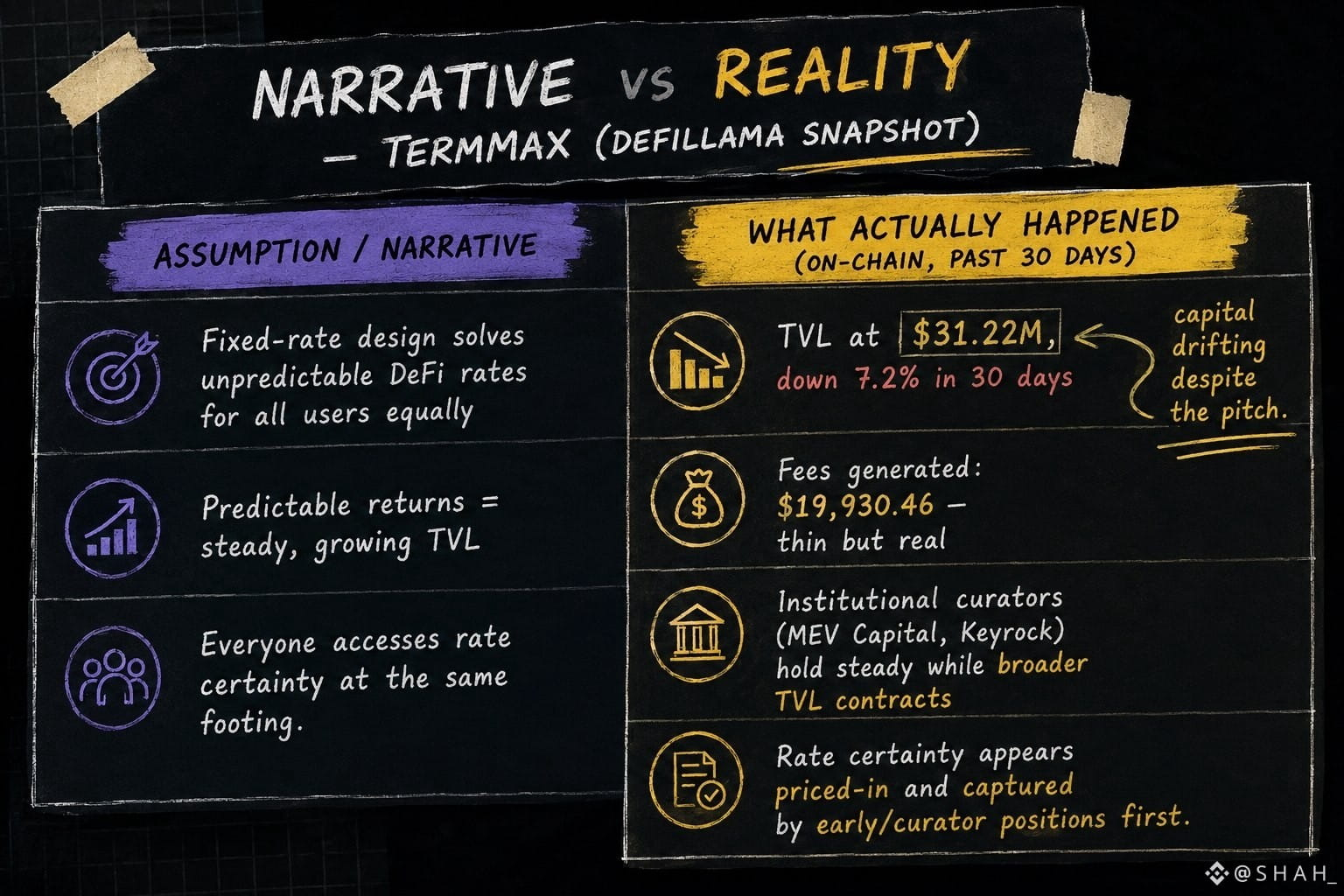
@termmax pulled up the DefiLlama just to sanity check the fixed rate solves everything pitch. TVL sitting at $31.22M right now, down 7.2% over the past 30 days. Fees generated in that same window: $19,930.46. Small numbers. Real numbers though, not marketing copy.
The protocol design is genuinely clever, zero-coupon FT/XT split, curator vaults, timelock on risk changes… all of it works as advertised.
But watching TVL bleed slowly while curators like MEV Capital and Keyrock keep their allocations steady tells a different story than the predictable rates for everyone narrative.
The certainty gets priced in and captured by whoever's already positioned institutional curators, vault managers before it trickles down to the retail depositor scrolling the Earn page.
Kinda reminds me of any fixed-income product IRL, honestly. The fixed part is only fixed for the guy who got there first.
Not bearish, not bullish, just noting the gap between we solved unpredictable rates and TVL still finding its floor.
Anyone else watching where that 7.2% actually went, or am I reading too much into one dashboard snapshot?
@termmax #TermMax
@TermMax pulled up the DefiLlama just to sanity check the fixed rate solves everything pitch. TVL sitting at $31.22M right now, down 7.2% over the past 30 days. Fees generated in that same window: $19,930.46. Small numbers. Real numbers though, not marketing copy.
The protocol design is genuinely clever, zero-coupon FT/XT split, curator vaults, timelock on risk changes… all of it works as advertised.
But watching TVL bleed slowly while curators like MEV Capital and Keyrock keep their allocations steady tells a different story than the predictable rates for everyone narrative.
The certainty gets priced in and captured by whoever's already positioned institutional curators, vault managers before it trickles down to the retail depositor scrolling the Earn page.
Kinda reminds me of any fixed-income product IRL, honestly. The fixed part is only fixed for the guy who got there first.
Not bearish, not bullish, just noting the gap between we solved unpredictable rates and TVL still finding its floor.
Anyone else watching where that 7.2% actually went, or am I reading too much into one dashboard snapshot?
@TermMax #TermMax
The protocol design is genuinely clever, zero-coupon FT/XT split, curator vaults, timelock on risk changes… all of it works as advertised.
But watching TVL bleed slowly while curators like MEV Capital and Keyrock keep their allocations steady tells a different story than the predictable rates for everyone narrative.
The certainty gets priced in and captured by whoever's already positioned institutional curators, vault managers before it trickles down to the retail depositor scrolling the Earn page.
Kinda reminds me of any fixed-income product IRL, honestly. The fixed part is only fixed for the guy who got there first.
Not bearish, not bullish, just noting the gap between we solved unpredictable rates and TVL still finding its floor.
Anyone else watching where that 7.2% actually went, or am I reading too much into one dashboard snapshot?
@TermMax #TermMax
43
21
331
·
--
Haussier
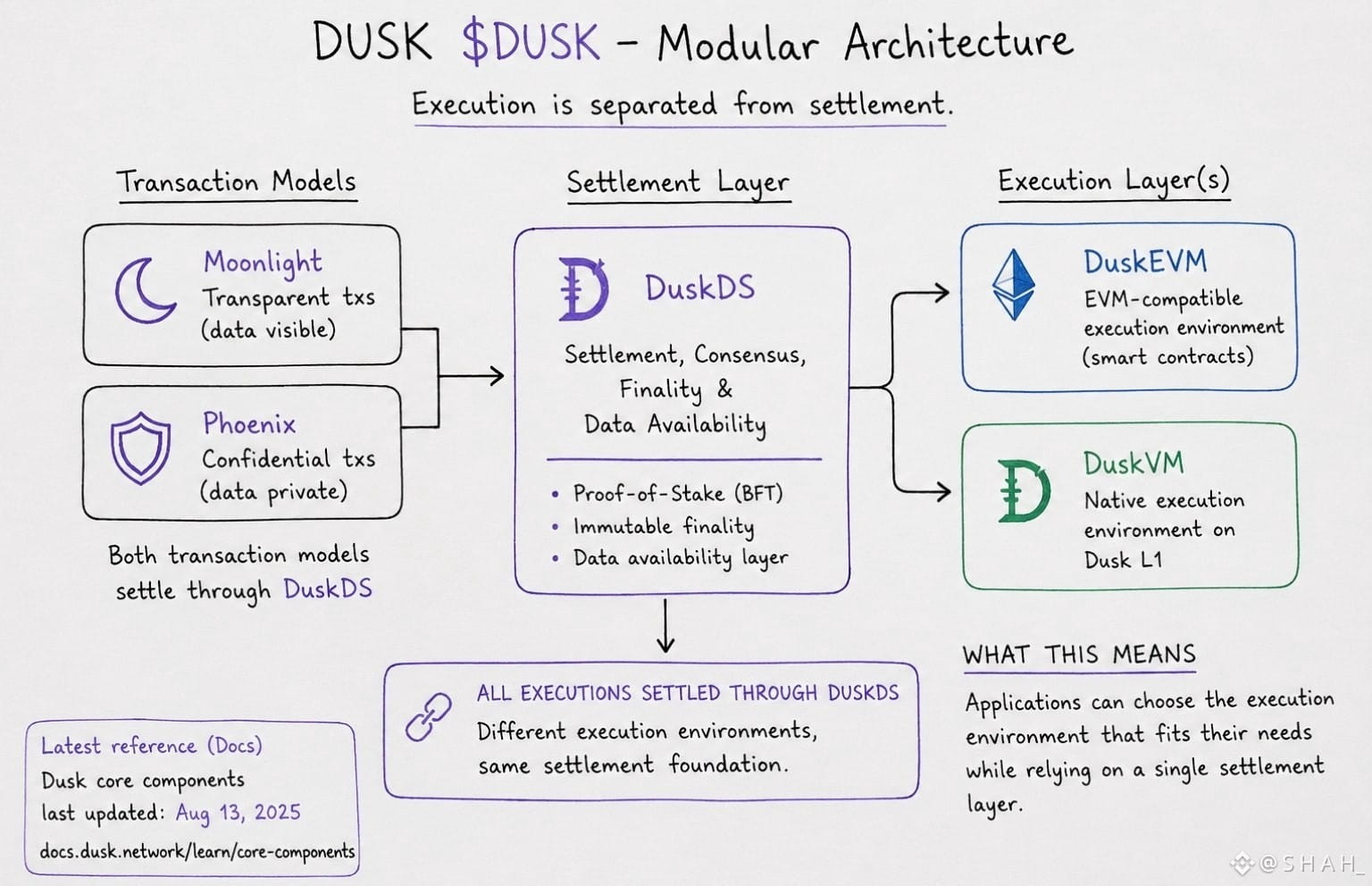
@Dusk_Foundation was realizing the modular bit isn’t just about having more components. $DUSK actually separates where settlement happens from where execution happens, and that changes how I think about the chain.
While checking the latest Dusk docs, I kept tracing DuskDS versus DuskEVM. DuskDS handles consensus, finality and data availability, while DuskEVM is the EVM execution layer that settles through it.
DuskVM is another execution environment directly on the L1. The interesting part is that they can all lean on the same settlement foundation rather than forcing every application into one execution model.
I initially read that as standard modular architecture language and almost skipped it. Then I looked closer at how Dusk handles actual transactions: Moonlight and Phoenix both settle through DuskDS, while smart-contract execution can sit elsewhere. That made the separation feel much more practical than the diagram suggests.
Still, I’m curious about the tradeoff. Once applications start moving between these execution environments, does the modularity actually reduce complexity for builders, or just move that complexity into the interfaces between them…
@Dusk_Foundation $DUSK #dusk
@Dusk was realizing the modular bit isn’t just about having more components. $DUSK actually separates where settlement happens from where execution happens, and that changes how I think about the chain.
While checking the latest Dusk docs, I kept tracing DuskDS versus DuskEVM. DuskDS handles consensus, finality and data availability, while DuskEVM is the EVM execution layer that settles through it.
DuskVM is another execution environment directly on the L1. The interesting part is that they can all lean on the same settlement foundation rather than forcing every application into one execution model.
I initially read that as standard modular architecture language and almost skipped it. Then I looked closer at how Dusk handles actual transactions: Moonlight and Phoenix both settle through DuskDS, while smart-contract execution can sit elsewhere. That made the separation feel much more practical than the diagram suggests.
Still, I’m curious about the tradeoff. Once applications start moving between these execution environments, does the modularity actually reduce complexity for builders, or just move that complexity into the interfaces between them…
@Dusk $DUSK #dusk
While checking the latest Dusk docs, I kept tracing DuskDS versus DuskEVM. DuskDS handles consensus, finality and data availability, while DuskEVM is the EVM execution layer that settles through it.
DuskVM is another execution environment directly on the L1. The interesting part is that they can all lean on the same settlement foundation rather than forcing every application into one execution model.
I initially read that as standard modular architecture language and almost skipped it. Then I looked closer at how Dusk handles actual transactions: Moonlight and Phoenix both settle through DuskDS, while smart-contract execution can sit elsewhere. That made the separation feel much more practical than the diagram suggests.
Still, I’m curious about the tradeoff. Once applications start moving between these execution environments, does the modularity actually reduce complexity for builders, or just move that complexity into the interfaces between them…
@Dusk $DUSK #dusk
25
13
255
·
--
Haussier
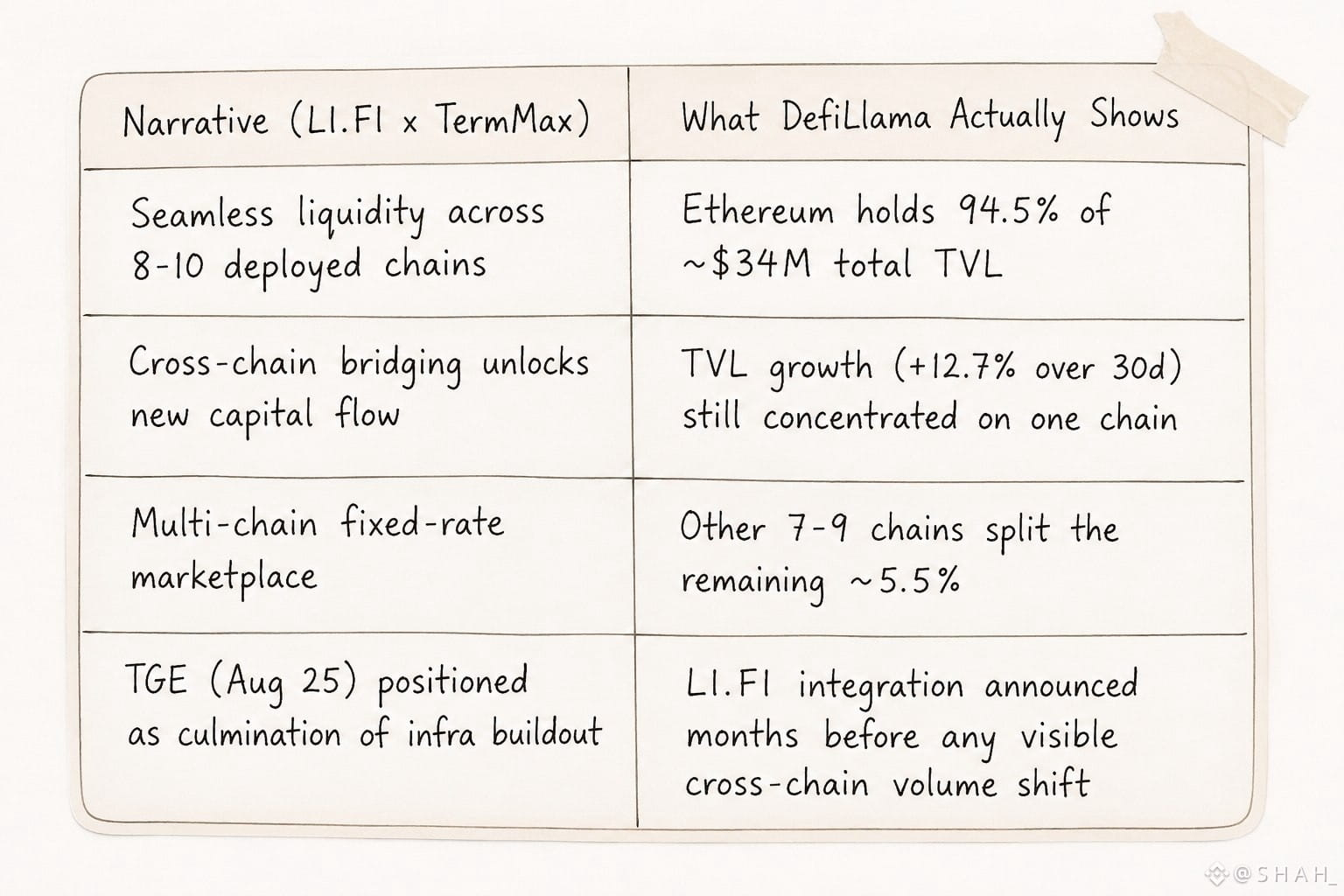
TermMax's LI.FI integration for the task, expecting the cross-chain story to actually show up in the numbers. It didn't, not really @termmax is live on something like 8-10 chains now, and LI.FI is supposed to be the plumbing that lets TMX liquidity move freely between them.
But pulled up DefiLlama and just sat there for a sec… Ethereum alone holds 94.5% of the protocol's ~$34M TVL right now. Ten chains deployed, one chain doing basically all the work.
The bridge exists, the SDK is wired in, the marketing deck says seamless multi chain access and users are just not using it that way yet.
Capital pools where it's always pooled. Made me second-guess whether cross chain ready and cross chain used are even the same claim, they're clearly not.
Timing's kind of wild too, TGE just got confirmed for August 25, so this whole LI.FI plumbing conversation is happening literally days before the token goes live, not after.
Feels like infrastructure getting built ahead of the liquidity event rather than reacting to it, which is either smart sequencing or a bet that the bridging actually gets adopted once TMX incentives kick in.
Does cross-chain tooling ever get used before there's a reason to move, or does the reason always have to come first?
@termmax #TermMax
TermMax's LI.FI integration for the task, expecting the cross-chain story to actually show up in the numbers. It didn't, not really @TermMax is live on something like 8-10 chains now, and LI.FI is supposed to be the plumbing that lets TMX liquidity move freely between them.
But pulled up DefiLlama and just sat there for a sec… Ethereum alone holds 94.5% of the protocol's ~$34M TVL right now. Ten chains deployed, one chain doing basically all the work.
The bridge exists, the SDK is wired in, the marketing deck says seamless multi chain access and users are just not using it that way yet.
Capital pools where it's always pooled. Made me second-guess whether cross chain ready and cross chain used are even the same claim, they're clearly not.
Timing's kind of wild too, TGE just got confirmed for August 25, so this whole LI.FI plumbing conversation is happening literally days before the token goes live, not after.
Feels like infrastructure getting built ahead of the liquidity event rather than reacting to it, which is either smart sequencing or a bet that the bridging actually gets adopted once TMX incentives kick in.
Does cross-chain tooling ever get used before there's a reason to move, or does the reason always have to come first?
@TermMax #TermMax
But pulled up DefiLlama and just sat there for a sec… Ethereum alone holds 94.5% of the protocol's ~$34M TVL right now. Ten chains deployed, one chain doing basically all the work.
The bridge exists, the SDK is wired in, the marketing deck says seamless multi chain access and users are just not using it that way yet.
Capital pools where it's always pooled. Made me second-guess whether cross chain ready and cross chain used are even the same claim, they're clearly not.
Timing's kind of wild too, TGE just got confirmed for August 25, so this whole LI.FI plumbing conversation is happening literally days before the token goes live, not after.
Feels like infrastructure getting built ahead of the liquidity event rather than reacting to it, which is either smart sequencing or a bet that the bridging actually gets adopted once TMX incentives kick in.
Does cross-chain tooling ever get used before there's a reason to move, or does the reason always have to come first?
@TermMax #TermMax
74
29
381
·
--
Haussier
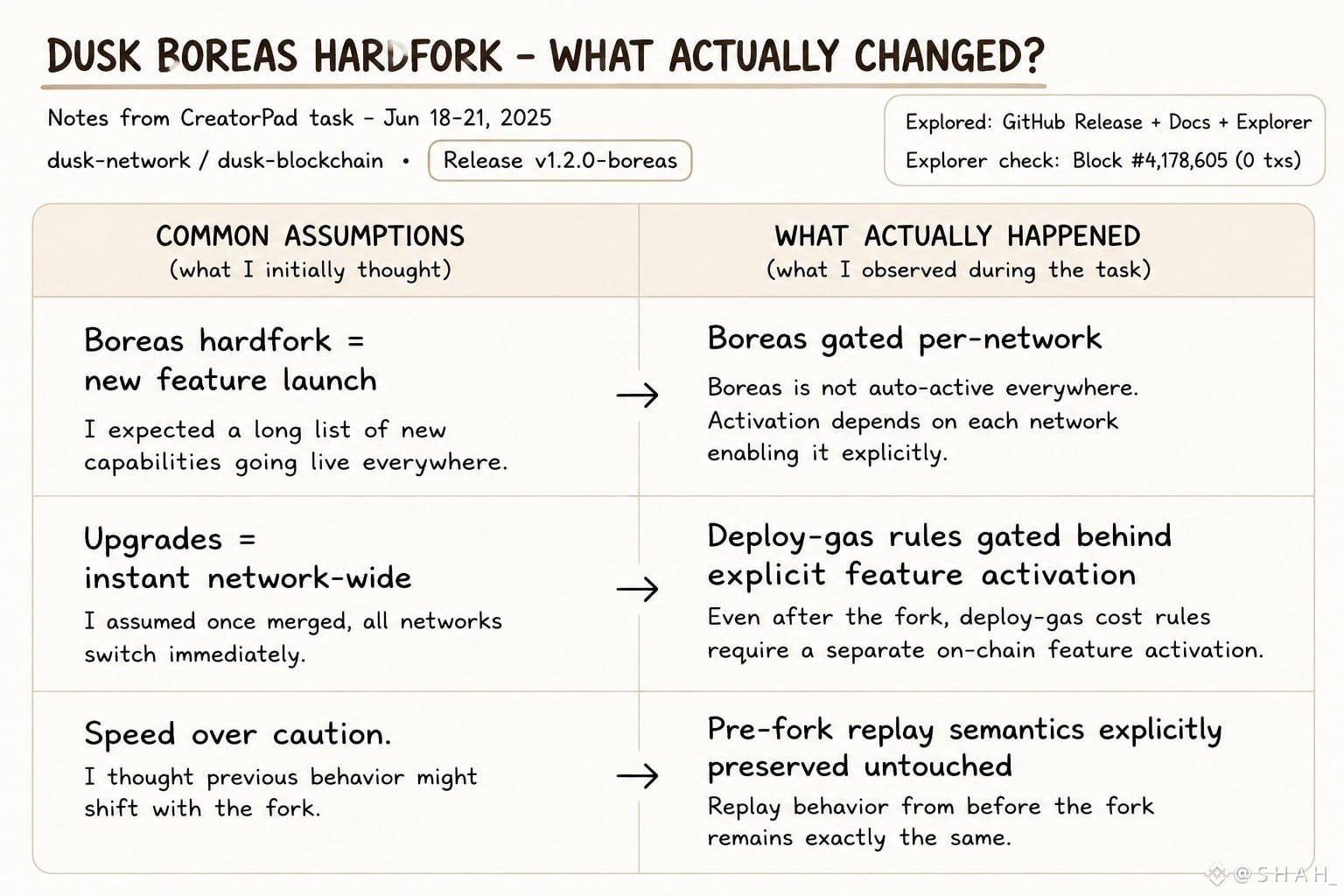
$DUSK release notes for the Rusk client and one line stopped methe Boreas hardfork host query activations got linked and gated separately for mainnet, testnet, and devnet/localnet, with deploy gas rules gated behind feature activation so pre fork replay stays untouched.
Because that's not how you ship something you're rushing to market. That's how you ship something you're scared to break.
The team is treating chain state continuity like it's sacred pre fork replay semantics literally can't shift even as new pricing logic activates underneath. Devnet gets Boreas from genesis, mainnet doesn't.
That gap between environments is the real product roadmap, not the announcement thread. most projects I've poked at during CreatorPad tasks love loud upgrades.
@Dusk_Foundation seems to be doing the opposite, layering activation gates like it's building for auditors who'll read the diff, not investors who'll read the tweet.
Privacy and compliance first positioning finally lining up with actual commit behavior… or am I reading too much intention into what's just careful engineering hygiene?
Either way, when's the last time you checked if a project's release notes matched its marketing?😵
@Dusk_Foundation $DUSK #dusk
$DUSK release notes for the Rusk client and one line stopped methe Boreas hardfork host query activations got linked and gated separately for mainnet, testnet, and devnet/localnet, with deploy gas rules gated behind feature activation so pre fork replay stays untouched.
Because that's not how you ship something you're rushing to market. That's how you ship something you're scared to break.
The team is treating chain state continuity like it's sacred pre fork replay semantics literally can't shift even as new pricing logic activates underneath. Devnet gets Boreas from genesis, mainnet doesn't.
That gap between environments is the real product roadmap, not the announcement thread. most projects I've poked at during CreatorPad tasks love loud upgrades.
@Dusk seems to be doing the opposite, layering activation gates like it's building for auditors who'll read the diff, not investors who'll read the tweet.
Privacy and compliance first positioning finally lining up with actual commit behavior… or am I reading too much intention into what's just careful engineering hygiene?
Either way, when's the last time you checked if a project's release notes matched its marketing?😵
@Dusk $DUSK #dusk
Because that's not how you ship something you're rushing to market. That's how you ship something you're scared to break.
The team is treating chain state continuity like it's sacred pre fork replay semantics literally can't shift even as new pricing logic activates underneath. Devnet gets Boreas from genesis, mainnet doesn't.
That gap between environments is the real product roadmap, not the announcement thread. most projects I've poked at during CreatorPad tasks love loud upgrades.
@Dusk seems to be doing the opposite, layering activation gates like it's building for auditors who'll read the diff, not investors who'll read the tweet.
Privacy and compliance first positioning finally lining up with actual commit behavior… or am I reading too much intention into what's just careful engineering hygiene?
Either way, when's the last time you checked if a project's release notes matched its marketing?😵
@Dusk $DUSK #dusk
8
9
254
·
--
Haussier
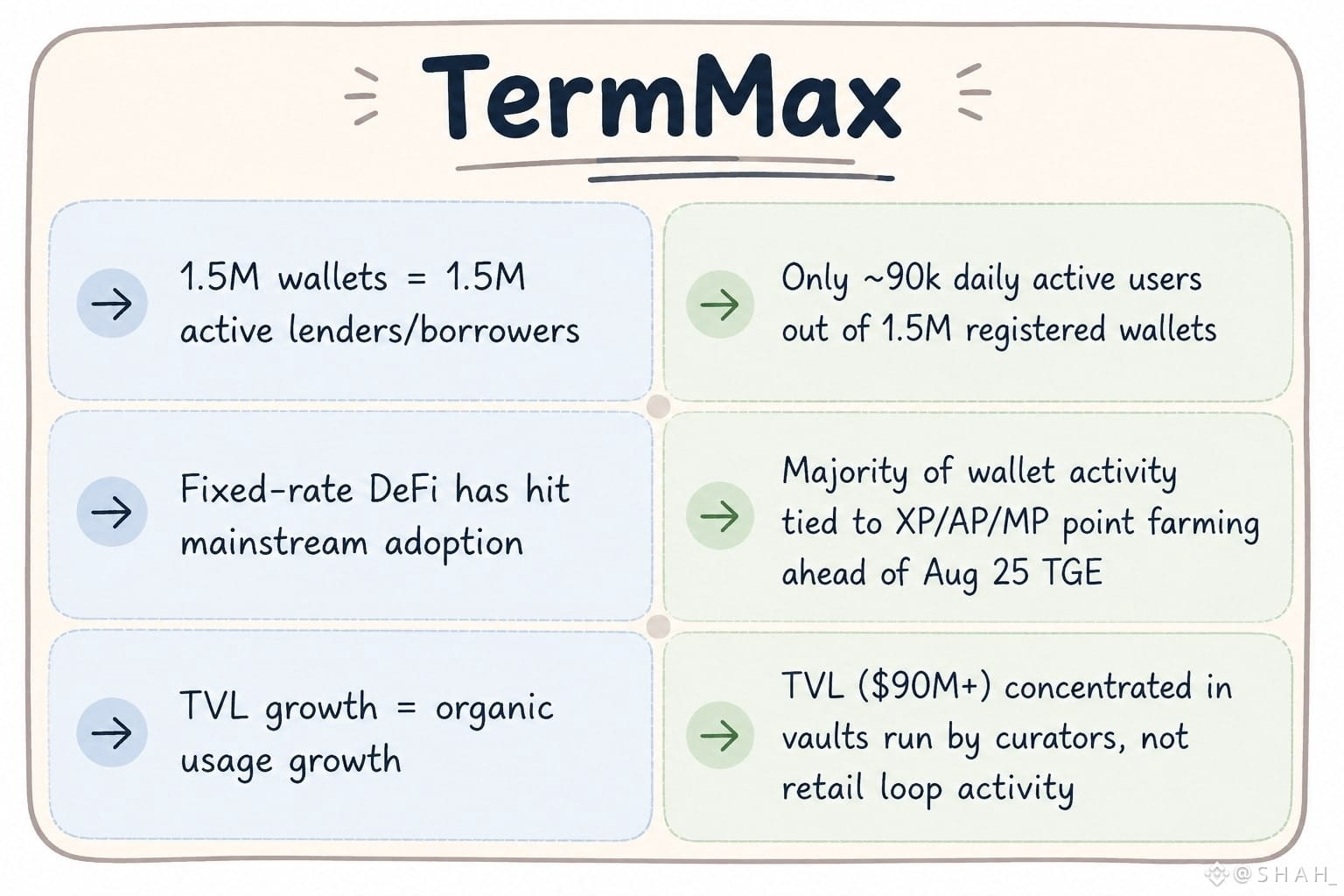
TGE for TermMax just got confirmed and registered wallets: over 1.5 million. Daily active users: around 90k. That gap sat with me longer than I expected.
Everyone's holding an XP/AP/MP position waiting to claim after TGE, sure, but only a fraction are actually opening a market and locking in a fixed rate day to day.
TVL sits above $90M across ten EVM chains, deployed alongside Morpho, Aave, Venus, Pendle integrations so the plumbing's real. It's just that most of the users showed up for the token, not the lending curve.
The infrastructure works FT/XT/GT mechanics are genuinely elegant for fixed rate borrowing but adoption right now looks more like positioning for an airdrop than people rolling over term loans for yield certainty, that's just what pre-TGE protocols usually look like.
Question is whether that 90k stays flat or climbs once the claim event passes and the farming crowd exits… anyone tracking that ratio post TGE?
@termmax #TermMax
TGE for TermMax just got confirmed and registered wallets: over 1.5 million. Daily active users: around 90k. That gap sat with me longer than I expected.
Everyone's holding an XP/AP/MP position waiting to claim after TGE, sure, but only a fraction are actually opening a market and locking in a fixed rate day to day.
TVL sits above $90M across ten EVM chains, deployed alongside Morpho, Aave, Venus, Pendle integrations so the plumbing's real. It's just that most of the users showed up for the token, not the lending curve.
The infrastructure works FT/XT/GT mechanics are genuinely elegant for fixed rate borrowing but adoption right now looks more like positioning for an airdrop than people rolling over term loans for yield certainty, that's just what pre-TGE protocols usually look like.
Question is whether that 90k stays flat or climbs once the claim event passes and the farming crowd exits… anyone tracking that ratio post TGE?
@TermMax #TermMax
Everyone's holding an XP/AP/MP position waiting to claim after TGE, sure, but only a fraction are actually opening a market and locking in a fixed rate day to day.
TVL sits above $90M across ten EVM chains, deployed alongside Morpho, Aave, Venus, Pendle integrations so the plumbing's real. It's just that most of the users showed up for the token, not the lending curve.
The infrastructure works FT/XT/GT mechanics are genuinely elegant for fixed rate borrowing but adoption right now looks more like positioning for an airdrop than people rolling over term loans for yield certainty, that's just what pre-TGE protocols usually look like.
Question is whether that 90k stays flat or climbs once the claim event passes and the farming crowd exits… anyone tracking that ratio post TGE?
@TermMax #TermMax
21
16
208
·
--
Haussier
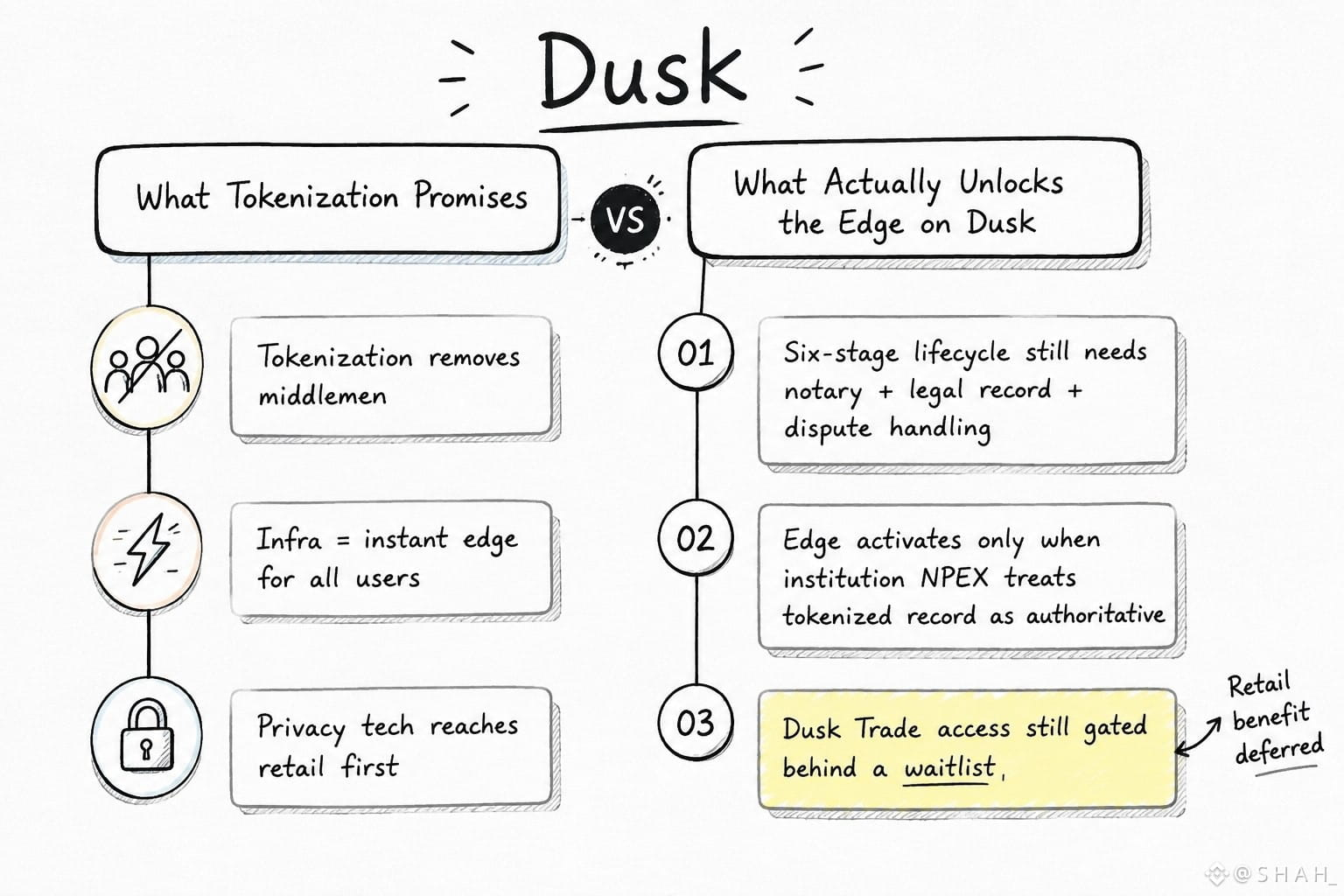
Dusk's own writeup instead of the usual price charts, and one detail stuck the Aug 15 post on tokenized SME lays out a six-stage ownership lifecycle table, and right there in black and white it admits what tokenization doesn't fix. Notarial deeds, dispute handling, legal record authority still there. Still human.
That's the part that stayed with me. The pitch is "infrastructure edge," but reading the actual before/after table, the edge only activates once an institution like NPEX plugs in and agrees to treat the tokenized record as authoritative. Retail doesn't get that first — the Dusk Trade waitlist is still... a waitlist. The infra is real, the selective-disclosure stuff for regulators is genuinely different from the usual "privacy coin" framing, but it's built for the NPEX side of the table first, everyone else later.
Made me pause mid-snack, ngl most L1s market infra as something you feel immediately. Dusk's version is closer to a compliance rail sitting quietly underneath, waiting on other institutions to decide it's trustworthy enough to reference.
Hmm. Is a long-term edge still an edge if the people it's built for aren't the ones holding the token day one?
@Dusk_Foundation $DUSK #dusk
Dusk's own writeup instead of the usual price charts, and one detail stuck the Aug 15 post on tokenized SME lays out a six-stage ownership lifecycle table, and right there in black and white it admits what tokenization doesn't fix. Notarial deeds, dispute handling, legal record authority still there. Still human.
That's the part that stayed with me. The pitch is "infrastructure edge," but reading the actual before/after table, the edge only activates once an institution like NPEX plugs in and agrees to treat the tokenized record as authoritative. Retail doesn't get that first — the Dusk Trade waitlist is still... a waitlist. The infra is real, the selective-disclosure stuff for regulators is genuinely different from the usual "privacy coin" framing, but it's built for the NPEX side of the table first, everyone else later.
Made me pause mid-snack, ngl most L1s market infra as something you feel immediately. Dusk's version is closer to a compliance rail sitting quietly underneath, waiting on other institutions to decide it's trustworthy enough to reference.
Hmm. Is a long-term edge still an edge if the people it's built for aren't the ones holding the token day one?
@Dusk $DUSK #dusk
That's the part that stayed with me. The pitch is "infrastructure edge," but reading the actual before/after table, the edge only activates once an institution like NPEX plugs in and agrees to treat the tokenized record as authoritative. Retail doesn't get that first — the Dusk Trade waitlist is still... a waitlist. The infra is real, the selective-disclosure stuff for regulators is genuinely different from the usual "privacy coin" framing, but it's built for the NPEX side of the table first, everyone else later.
Made me pause mid-snack, ngl most L1s market infra as something you feel immediately. Dusk's version is closer to a compliance rail sitting quietly underneath, waiting on other institutions to decide it's trustworthy enough to reference.
Hmm. Is a long-term edge still an edge if the people it's built for aren't the ones holding the token day one?
@Dusk $DUSK #dusk
4
2
82
·
--
Baissier
I paused at the DuskVM vs DuskEVM split because it looks simpler on paper than it feels once you trace what actually runs where.
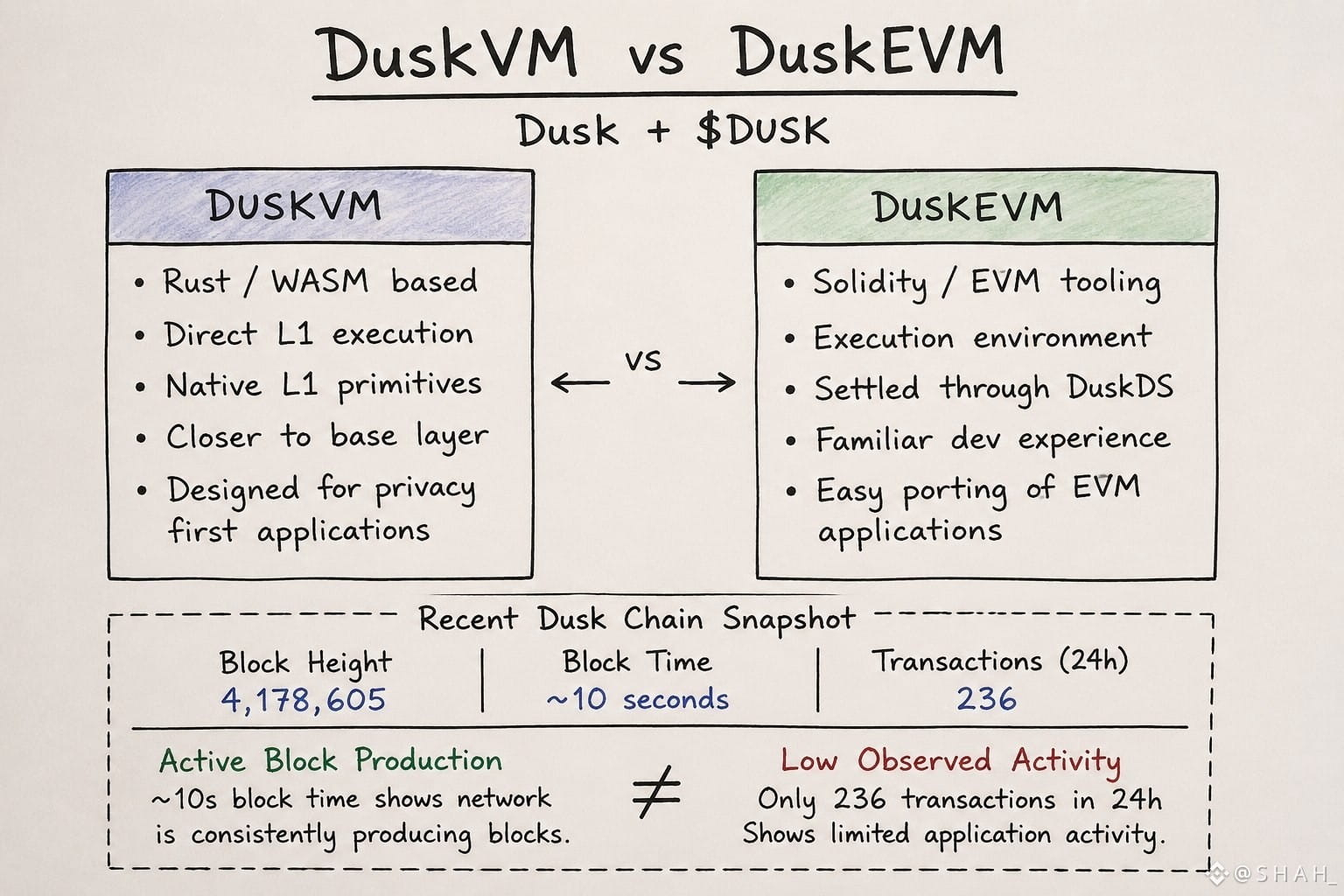
During the task, I checked the Dusk chain and saw block #4,178,605 with the network still producing blocks around the 10-second mark, while only 236 transactions were recorded over 24h. That contrast stuck with me.
@Dusk_Foundation isn’t really treating DuskVM and DuskEVM as two versions of the same thing. DuskVM is native Rust/WASM execution directly on the L1, while DuskEVM sits as an EVM execution environment settled through DuskDS.
The practical difference is what caught me. DuskVM gives you the deeper connection to native L1 primitives, while DuskEVM gives developers the familiar Solidity EVM route.
I initially thought the EVM layer would naturally become the obvious activity center, but the recent chain numbers made me slow down a bit. A busy block producer doesn’t automatically mean busy application usage.
I’m still wondering whether DuskEVM eventually becomes where most application activity actually settles, or whether the native VM keeps the more important workloads close to the base layer…
@Dusk_Foundation $DUSK #dusk
I paused at the DuskVM vs DuskEVM split because it looks simpler on paper than it feels once you trace what actually runs where.
During the task, I checked the Dusk chain and saw block #4,178,605 with the network still producing blocks around the 10-second mark, while only 236 transactions were recorded over 24h. That contrast stuck with me.
@Dusk isn’t really treating DuskVM and DuskEVM as two versions of the same thing. DuskVM is native Rust/WASM execution directly on the L1, while DuskEVM sits as an EVM execution environment settled through DuskDS.
The practical difference is what caught me. DuskVM gives you the deeper connection to native L1 primitives, while DuskEVM gives developers the familiar Solidity EVM route.
I initially thought the EVM layer would naturally become the obvious activity center, but the recent chain numbers made me slow down a bit. A busy block producer doesn’t automatically mean busy application usage.
I’m still wondering whether DuskEVM eventually becomes where most application activity actually settles, or whether the native VM keeps the more important workloads close to the base layer…
@Dusk $DUSK #dusk
During the task, I checked the Dusk chain and saw block #4,178,605 with the network still producing blocks around the 10-second mark, while only 236 transactions were recorded over 24h. That contrast stuck with me.
@Dusk isn’t really treating DuskVM and DuskEVM as two versions of the same thing. DuskVM is native Rust/WASM execution directly on the L1, while DuskEVM sits as an EVM execution environment settled through DuskDS.
The practical difference is what caught me. DuskVM gives you the deeper connection to native L1 primitives, while DuskEVM gives developers the familiar Solidity EVM route.
I initially thought the EVM layer would naturally become the obvious activity center, but the recent chain numbers made me slow down a bit. A busy block producer doesn’t automatically mean busy application usage.
I’m still wondering whether DuskEVM eventually becomes where most application activity actually settles, or whether the native VM keeps the more important workloads close to the base layer…
@Dusk $DUSK #dusk
2
76
·
--
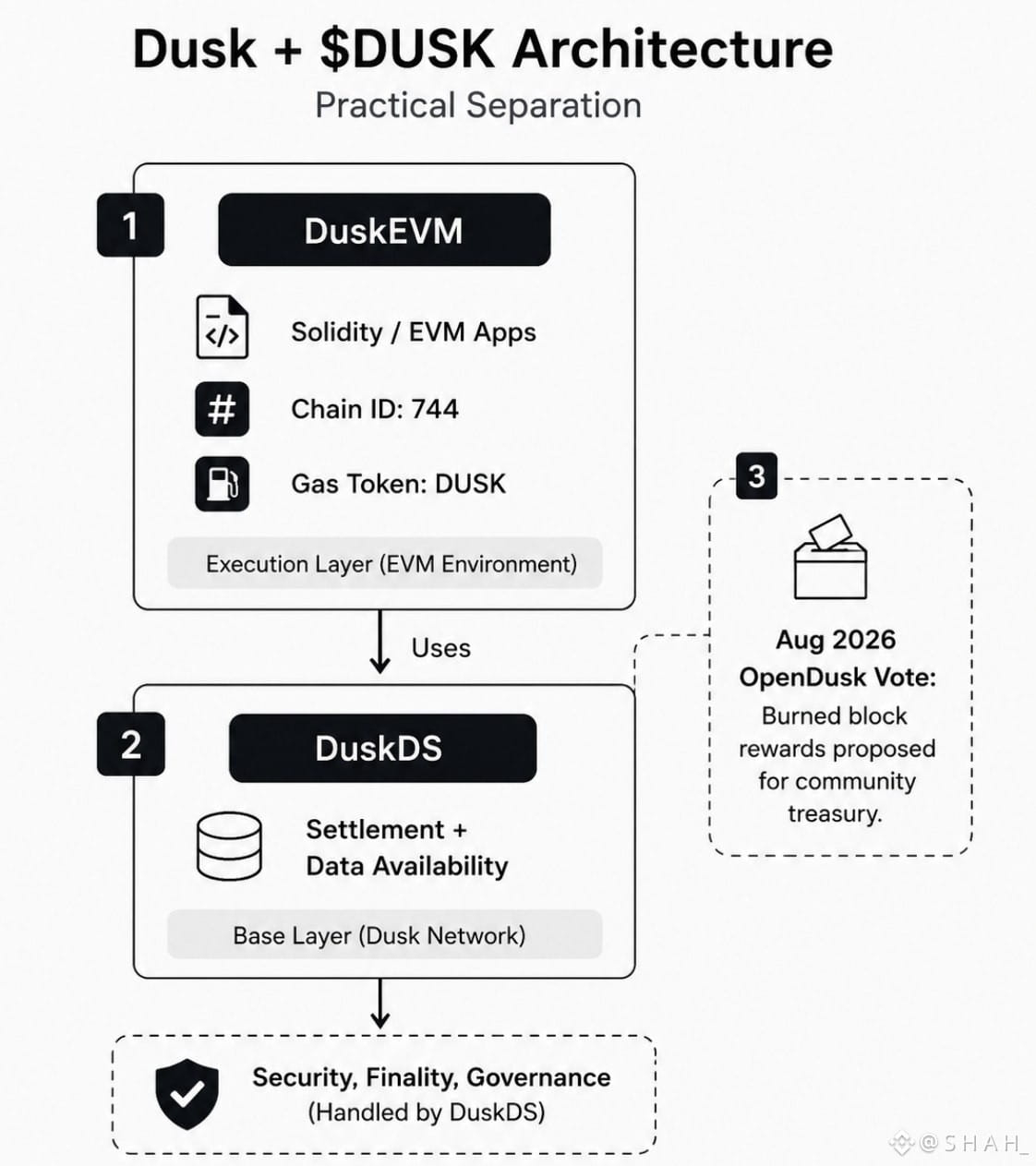
The thing that caught me while digging into DuskEVM wasn’t the EVM part itself. It was where the execution actually sits.
I was looking through @DuskNetwork, the current docs show DuskEVM using chain ID 744, with DUSK as the native gas token, while DuskDS handles settlement and data availability. That separation sounds clean on paper, but it changed how I looked at the network: the EVM environment isn’t replacing Dusk’s base layer; it is sitting on top of it.
What made me pause was the recent OpenDusk governance activity.
The August vote is about whether burned block rewards should flow into a community treasury, while DuskEVM is being positioned as the application layer. So there’s an interesting contrast here: governance and settlement stay tied to DuskDS, while developers get the familiar Solidity/EVM environment above it.
I originally thought EVM on Dusk mostly meant easier deployment. After tracing the architecture, I’m less sure that’s the important part.
The real question for me is whether developers actually use that separation in practice, or whether DuskEVM remains mostly a compatibility layer while the deeper activity stays on DuskDS…
@Dusk_Foundation $DUSK #dusk
The thing that caught me while digging into DuskEVM wasn’t the EVM part itself. It was where the execution actually sits.
I was looking through @DuskNetwork, the current docs show DuskEVM using chain ID 744, with DUSK as the native gas token, while DuskDS handles settlement and data availability. That separation sounds clean on paper, but it changed how I looked at the network: the EVM environment isn’t replacing Dusk’s base layer; it is sitting on top of it.
What made me pause was the recent OpenDusk governance activity.
The August vote is about whether burned block rewards should flow into a community treasury, while DuskEVM is being positioned as the application layer. So there’s an interesting contrast here: governance and settlement stay tied to DuskDS, while developers get the familiar Solidity/EVM environment above it.
I originally thought EVM on Dusk mostly meant easier deployment. After tracing the architecture, I’m less sure that’s the important part.
The real question for me is whether developers actually use that separation in practice, or whether DuskEVM remains mostly a compatibility layer while the deeper activity stays on DuskDS…
@Dusk $DUSK #dusk
I was looking through @DuskNetwork, the current docs show DuskEVM using chain ID 744, with DUSK as the native gas token, while DuskDS handles settlement and data availability. That separation sounds clean on paper, but it changed how I looked at the network: the EVM environment isn’t replacing Dusk’s base layer; it is sitting on top of it.
What made me pause was the recent OpenDusk governance activity.
The August vote is about whether burned block rewards should flow into a community treasury, while DuskEVM is being positioned as the application layer. So there’s an interesting contrast here: governance and settlement stay tied to DuskDS, while developers get the familiar Solidity/EVM environment above it.
I originally thought EVM on Dusk mostly meant easier deployment. After tracing the architecture, I’m less sure that’s the important part.
The real question for me is whether developers actually use that separation in practice, or whether DuskEVM remains mostly a compatibility layer while the deeper activity stays on DuskDS…
@Dusk $DUSK #dusk
7
2
94
·
--
Haussier
DuskVM is probably more important than it first looks.
I was digging into Dusk’s execution layer, and one detail stood out to me:
Dusk isn’t forcing every developer into the EVM.
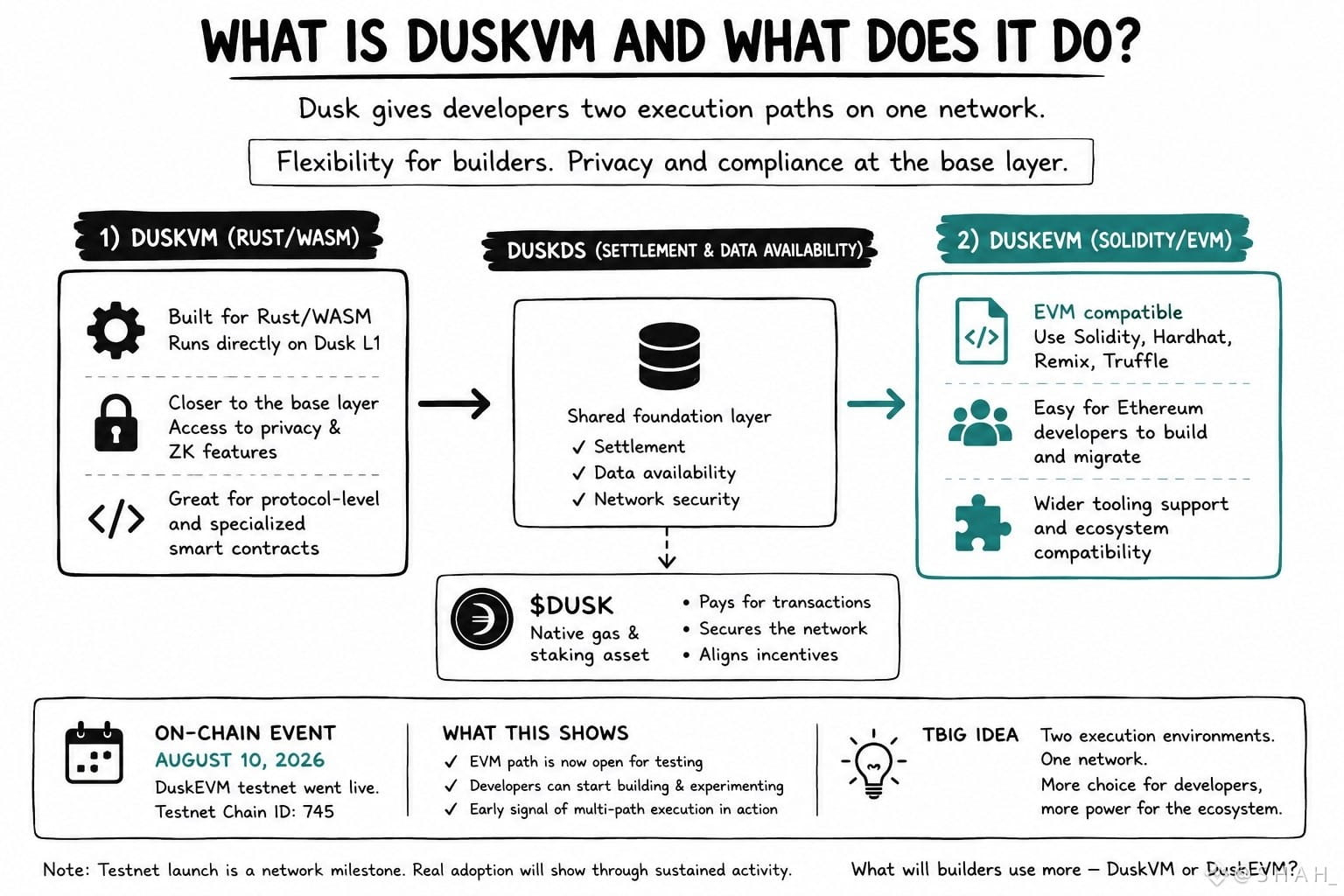
DuskVM runs Rust/WASM smart contracts directly on the Dusk L1, while DuskEVM gives developers the SolidityEVM route. That separation is interesting because the two environments solve different problems.
Then, on August 10, DuskEVM testnet went live, opening the EVM compatible side for Solidity and Hardhat based testing.
What I find interesting here is the architecture:
DuskVM → direct L1 execution
Rust/WASM → protocol-level and specialized contracts
Privacy/ZK access → closer to the base layer
DuskEVM → familiar Ethereum tooling
$DUSK → native gas and staking asset
My first reaction was actually: why build two execution paths?
The answer seems to be flexibility rather than compatibility for its own sake.
But testnet launch alone doesn't tell us whether developers will actually use both environments at scale. That's the part I'm watching now.
Will real builders choose DuskVM when direct L1 execution matters, or will most activity eventually gravitate toward DuskEVM?
@Dusk_Foundation $DUSK #dusk
DuskVM is probably more important than it first looks.
I was digging into Dusk’s execution layer, and one detail stood out to me:
Dusk isn’t forcing every developer into the EVM.
DuskVM runs Rust/WASM smart contracts directly on the Dusk L1, while DuskEVM gives developers the SolidityEVM route. That separation is interesting because the two environments solve different problems.
Then, on August 10, DuskEVM testnet went live, opening the EVM compatible side for Solidity and Hardhat based testing.
What I find interesting here is the architecture:
DuskVM → direct L1 execution
Rust/WASM → protocol-level and specialized contracts
Privacy/ZK access → closer to the base layer
DuskEVM → familiar Ethereum tooling
$DUSK → native gas and staking asset
My first reaction was actually: why build two execution paths?
The answer seems to be flexibility rather than compatibility for its own sake.
But testnet launch alone doesn't tell us whether developers will actually use both environments at scale. That's the part I'm watching now.
Will real builders choose DuskVM when direct L1 execution matters, or will most activity eventually gravitate toward DuskEVM?
@Dusk $DUSK #dusk
I was digging into Dusk’s execution layer, and one detail stood out to me:
Dusk isn’t forcing every developer into the EVM.
DuskVM runs Rust/WASM smart contracts directly on the Dusk L1, while DuskEVM gives developers the SolidityEVM route. That separation is interesting because the two environments solve different problems.
Then, on August 10, DuskEVM testnet went live, opening the EVM compatible side for Solidity and Hardhat based testing.
What I find interesting here is the architecture:
DuskVM → direct L1 execution
Rust/WASM → protocol-level and specialized contracts
Privacy/ZK access → closer to the base layer
DuskEVM → familiar Ethereum tooling
$DUSK → native gas and staking asset
My first reaction was actually: why build two execution paths?
The answer seems to be flexibility rather than compatibility for its own sake.
But testnet launch alone doesn't tell us whether developers will actually use both environments at scale. That's the part I'm watching now.
Will real builders choose DuskVM when direct L1 execution matters, or will most activity eventually gravitate toward DuskEVM?
@Dusk $DUSK #dusk
2
90
·
--
Haussier
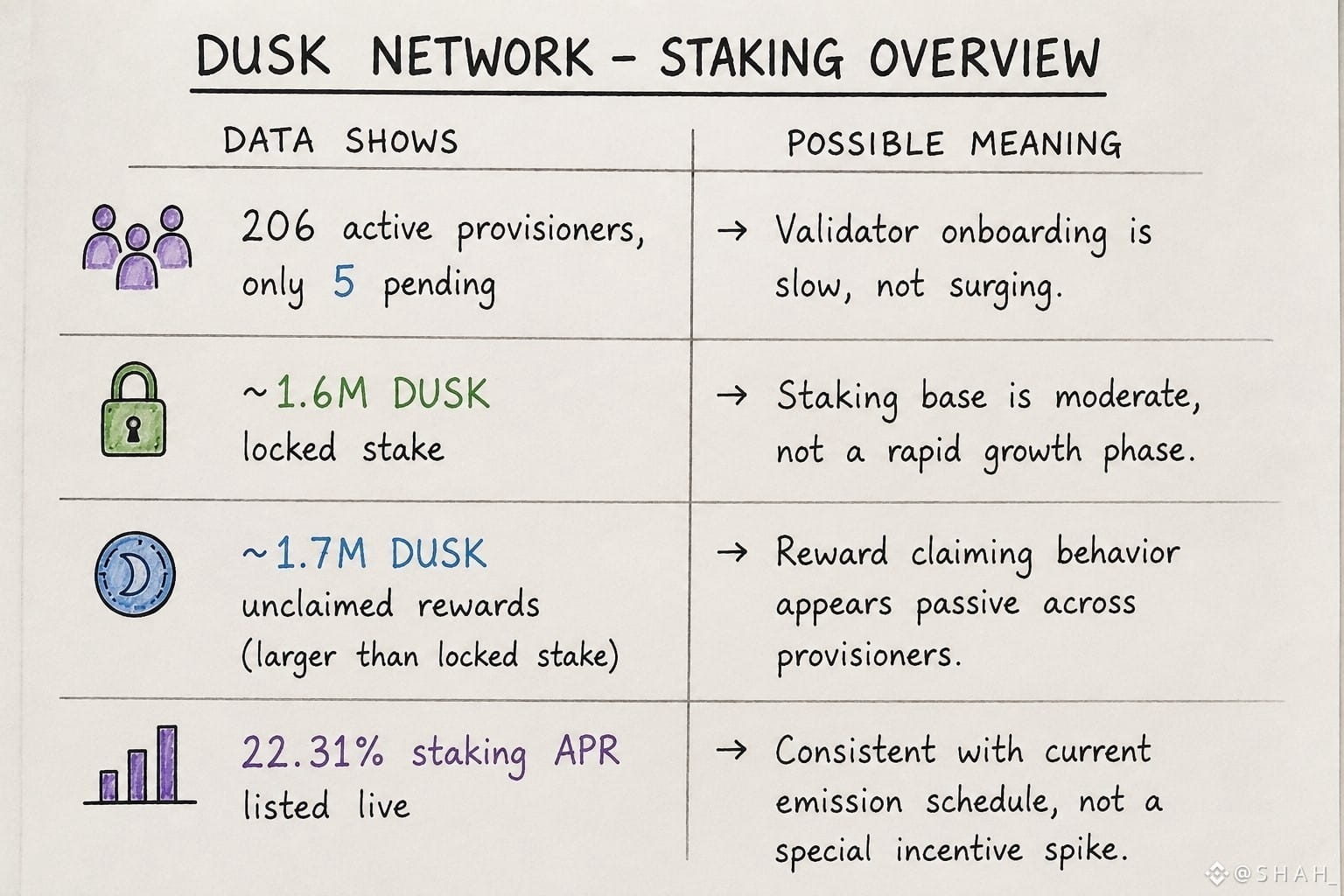
Before writing anything about Dusk, I pulled up its explorer instead of its docs. First thing that stood out: 206 active provisioners against only 5 pending.
For a chain still positioning itself around DuskEVM and RWA settlement, that's a thin queue validator entry isn't exactly crowded.
Locked stake currently sits near 1.6M DUSK, with about 1.7M DUSK in unclaimed rewards.
That unclaimed number is what made me pause, it's roughly comparable in size to the locked stake itself. Either claiming isn't automated for most stakers, or a chunk of provisioners just aren't bothering to withdraw yet.
What this tells us: participation is stable but not aggressively growing right now, and reward-claiming behavior looks passive rather than active.
What it doesn't tell us: I couldn't confirm how these figures compare to last week's snapshot, or whether the unclaimed rewards belong to a few large holders or many small ones, the explorer doesn't break that out cleanly.
Anyone tracking Dusk's provisioner set directly, is the low pending validator count a bottleneck or just a sign of a smaller, deliberate network?
#dusk @Dusk_Foundation $DUSK
Before writing anything about Dusk, I pulled up its explorer instead of its docs. First thing that stood out: 206 active provisioners against only 5 pending.
For a chain still positioning itself around DuskEVM and RWA settlement, that's a thin queue validator entry isn't exactly crowded.
Locked stake currently sits near 1.6M DUSK, with about 1.7M DUSK in unclaimed rewards.
That unclaimed number is what made me pause, it's roughly comparable in size to the locked stake itself. Either claiming isn't automated for most stakers, or a chunk of provisioners just aren't bothering to withdraw yet.
What this tells us: participation is stable but not aggressively growing right now, and reward-claiming behavior looks passive rather than active.
What it doesn't tell us: I couldn't confirm how these figures compare to last week's snapshot, or whether the unclaimed rewards belong to a few large holders or many small ones, the explorer doesn't break that out cleanly.
Anyone tracking Dusk's provisioner set directly, is the low pending validator count a bottleneck or just a sign of a smaller, deliberate network?
#dusk @Dusk $DUSK
For a chain still positioning itself around DuskEVM and RWA settlement, that's a thin queue validator entry isn't exactly crowded.
Locked stake currently sits near 1.6M DUSK, with about 1.7M DUSK in unclaimed rewards.
That unclaimed number is what made me pause, it's roughly comparable in size to the locked stake itself. Either claiming isn't automated for most stakers, or a chunk of provisioners just aren't bothering to withdraw yet.
What this tells us: participation is stable but not aggressively growing right now, and reward-claiming behavior looks passive rather than active.
What it doesn't tell us: I couldn't confirm how these figures compare to last week's snapshot, or whether the unclaimed rewards belong to a few large holders or many small ones, the explorer doesn't break that out cleanly.
Anyone tracking Dusk's provisioner set directly, is the low pending validator count a bottleneck or just a sign of a smaller, deliberate network?
#dusk @Dusk $DUSK
1
1
122
·
--
Haussier
1
215
·
--
Baissier
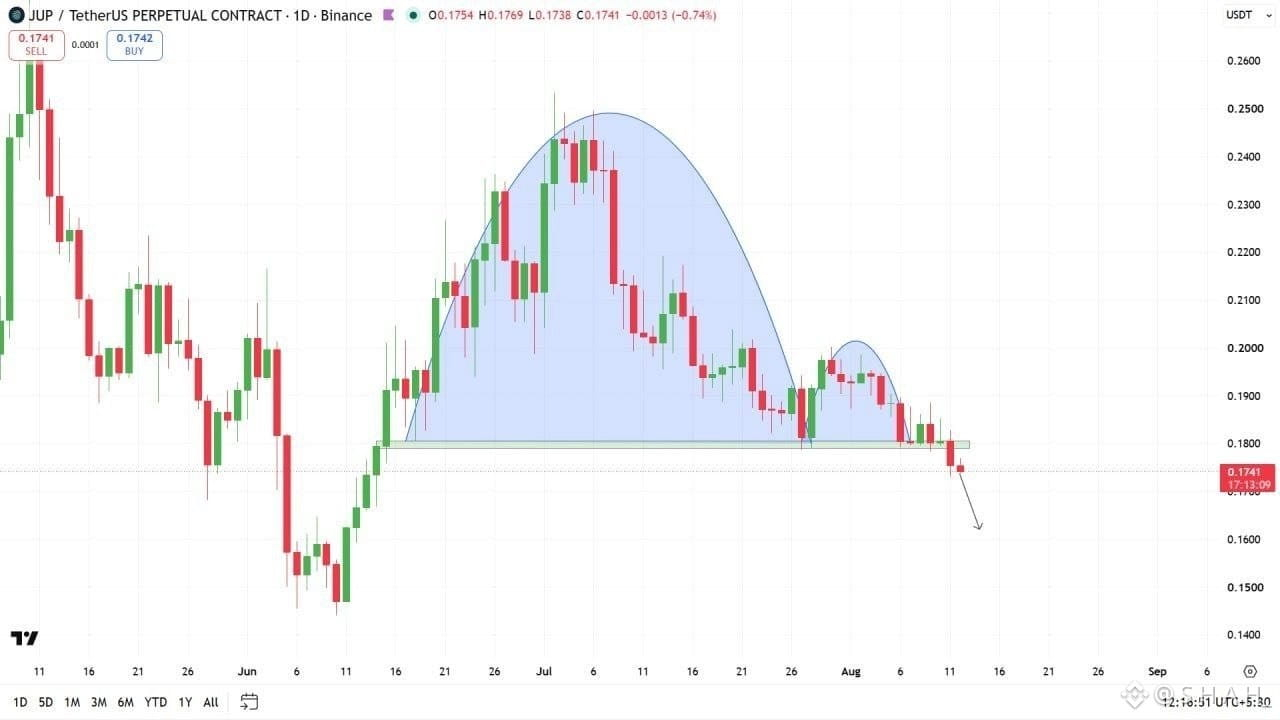
$JUP USDT already broke the inverse Cup and handle pattern, so we can expect a dump from here. Track it.
$JUP USDT already broke the inverse Cup and handle pattern, so we can expect a dump from here. Track it.
148
·
--
Haussier
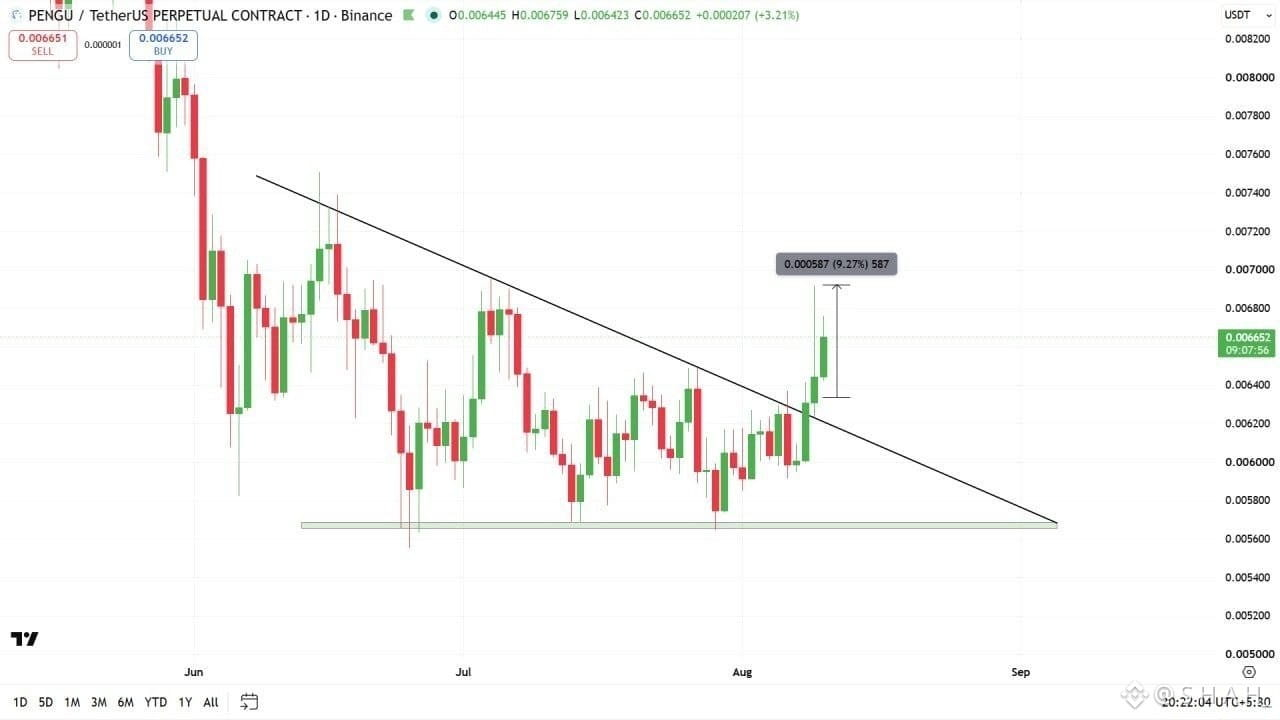
$PENGU USDT is pumping exactly as we predicted. It's up 9% so far, enjoy guys.
$PENGU USDT is pumping exactly as we predicted. It's up 9% so far, enjoy guys.
S H A H_
·
--
Haussier$PENGU USDT looks bullish after the breakout. We might see a pump soon. Keep an eye on it.
113
Connectez-vous pour découvrir plus de contenu
Rejoignez la communauté mondiale des adeptes de cryptomonnaies sur Binance Square
⚡️ Suviez les dernières informations importantes sur les cryptomonnaies.
💬 Jugé digne de confiance par la plus grande plateforme d’échange de cryptomonnaies au monde.
👍 Découvrez les connaissances que partagent les créateurs vérifiés.
Adresse e-mail/Nº de téléphone
Sujets d’actualité
EtherGains70.9%InQ3
84,626 vues
851 mentions
One of the best third quarters in history 💰
September closed out last night, and with it, the quarter. For the quarter, BTC is up 42%—the second-best Q3 on record. ETH had a record-breaking Q3 overall, up 70%.
Looking at the chart, things are still looking good: we’re holding support, but we’re testing it more and more often. Plus, ETF momentum is weakening — inflows are gradually declining, and yesterday saw outflows for the first time in a long while.
Yes, historically, October has been a good month for crypto — it’s not called “Uptober” for nothing. But it’s also one of the most volatile months. Last year, for example, we managed to hit a new all-time high (ATH) and experience a flash crash.
🚀 High Accuracy Trades.
$BTC
$ETH
$SOL
#EtherGains70.9%InQ3 #DollarIndexHitsHighestSinceMay2025 #CFTCSubmitsTwoEventContractRulesToWhiteHouse #MicronBeatsEarningsLiftsGuidance
Knowledge is Power
·0 mentions J’aime
·170 vues
TreasuryLetsStatesFileStablecoinCertificationsEarly
4,510 vues
49 mentions
US10YearYieldNears5.3%
112,461 vues
946 mentions