

el_billionaire
583 Publications

el_billionaire
Signaler
Bloquer l’utilisateur
Ouvert au trading
Trade occasionnellement
5.8 an(s)
9 Suivis
3.7K+ Abonnés
2.7K+ J’aime
Publications
Portefeuille
Tous
Citations
Direct
PINNED
Partiellement vrai
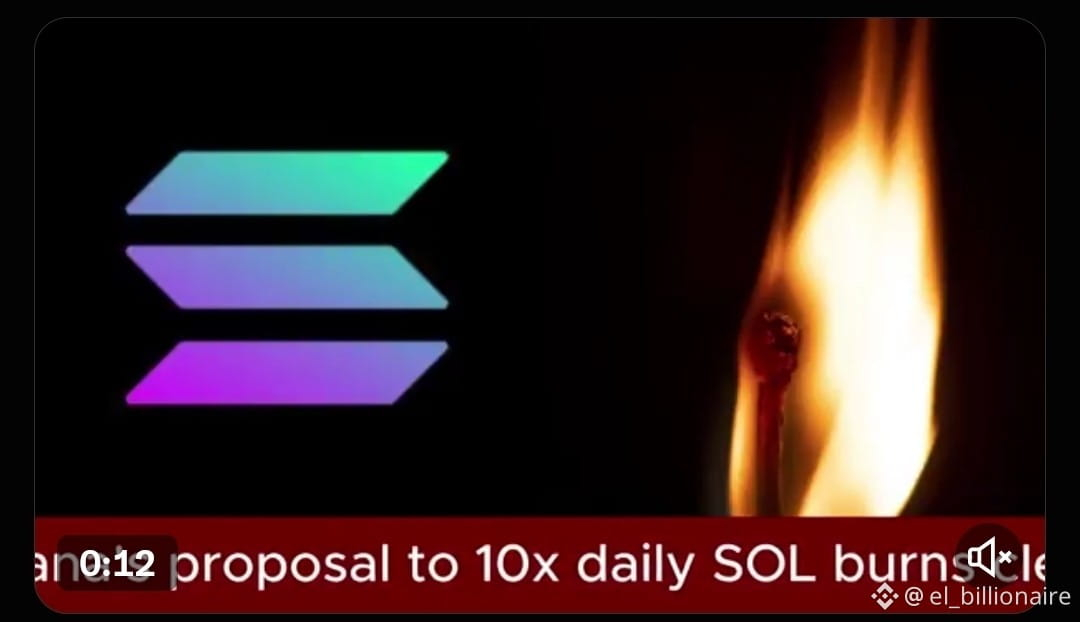
Solana's 10x burn proposal just cleared its first hurdle
The governance package that would multiply @solana's daily burns more than tenfold has crossed its 15% support threshold at 65.22M $SOL from 76 validators, with Helius and Jupiter the largest backers at 16M and 12.47M $SOL respectively. It now sits in the discussion phase until September 1, with the formal vote after that.
The plan pairs resource-based fees, lifting burns from around 650 SOL a day to as much as 9,000, with a doubled disinflation rate that pulls the 1.5% inflation floor forward from 2032 to 2029. With issuance still near 60,000 $SOL daily the token stays inflationary, but net supply growth would slow considerably.
#solana
{future}(SOLUSDT)
Solana's 10x burn proposal just cleared its first hurdle
The governance package that would multiply @solana's daily burns more than tenfold has crossed its 15% support threshold at 65.22M $SOL from 76 validators, with Helius and Jupiter the largest backers at 16M and 12.47M $SOL respectively. It now sits in the discussion phase until September 1, with the formal vote after that.
The plan pairs resource-based fees, lifting burns from around 650 SOL a day to as much as 9,000, with a doubled disinflation rate that pulls the 1.5% inflation floor forward from 2032 to 2029. With issuance still near 60,000 $SOL daily the token stays inflationary, but net supply growth would slow considerably.
#solana
16
3
109
124.1k
PINNED
Partiellement vrai
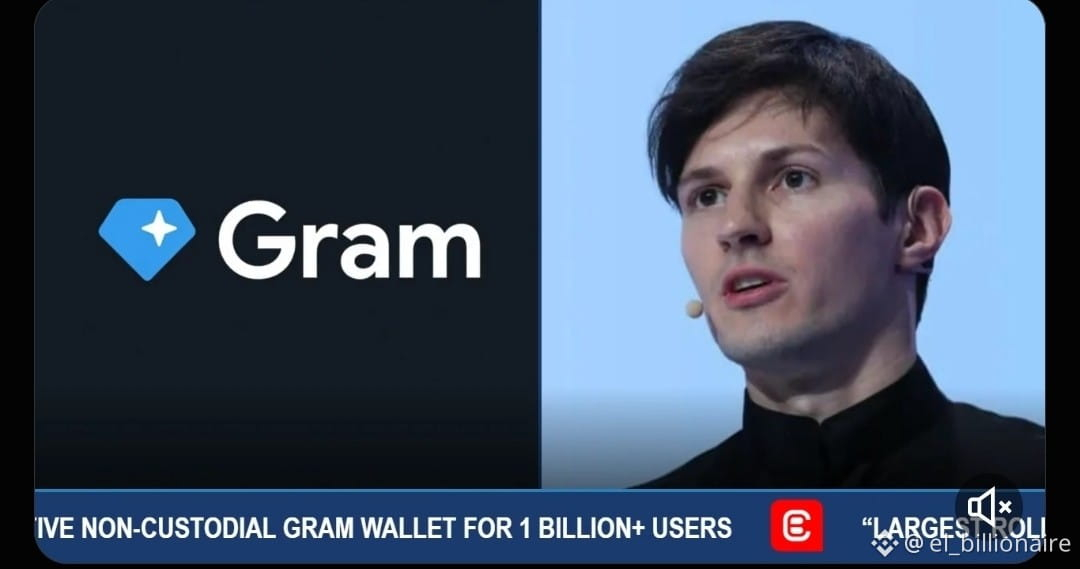
🚨TELEGRAM TO LAUNCH NATIVE NON-CUSTODIAL GRAM WALLET FOR 1 BILLION+ USERS!
Pavel Durov announced that Telegram will roll out a native, non-custodial $GRAM wallet to its roughly 1 billion users this summer.
He called it the “largest rollout of a non-custodial crypto wallet in human history,” enabling instant, zero-fee crypto transfers directly inside the app.
{future}(GRAMUSDT)
🚨TELEGRAM TO LAUNCH NATIVE NON-CUSTODIAL GRAM WALLET FOR 1 BILLION+ USERS!
Pavel Durov announced that Telegram will roll out a native, non-custodial $GRAM wallet to its roughly 1 billion users this summer.
He called it the “largest rollout of a non-custodial crypto wallet in human history,” enabling instant, zero-fee crypto transfers directly inside the app.
Pavel Durov announced that Telegram will roll out a native, non-custodial $GRAM wallet to its roughly 1 billion users this summer.
He called it the “largest rollout of a non-custodial crypto wallet in human history,” enabling instant, zero-fee crypto transfers directly inside the app.
10
1
92
72.8k
Vérifié
Sei Network Enters The MiCA Spotlight in Europe
SEI’s (@SeiNetwork) $SEI MiCA white paper has been filed for public record in Europe by OKX (@okx) Europe Limited.
The document covers 30 EEA countries and supports SEI’s admission to trading on OKX’s platform. It outlines the token’s utility, risks and holder rights.
The filing is a disclosure, not regulatory approval.
#CryptoNews
{future}(SEIUSDT)
Sei Network Enters The MiCA Spotlight in Europe
SEI’s (@SeiNetwork) $SEI MiCA white paper has been filed for public record in Europe by OKX (@okx) Europe Limited.
The document covers 30 EEA countries and supports SEI’s admission to trading on OKX’s platform. It outlines the token’s utility, risks and holder rights.
The filing is a disclosure, not regulatory approval.
#CryptoNews
2
422
Vérifié
Celestia goes live with Fibre, built for AI agents and nonstop markets
@celestia switched on Fibre on Tuesday, a new data availability protocol it calls its biggest upgrade since launch. Fibre starts at about 150 megabytes per second, roughly 15 times the old capacity. Every $TIA validator is now expected to run a Fibre server.
The speedup comes from ZODA, a new data encoding method that Celestia says is 881 times faster than the KZG method used elsewhere. Benchmarks hit 3 terabits per second in test settings not yet on mainnet. Celestia is targeting an increase to 2.2 gigabytes per second in November.
{future}(TIAUSDT)
#CryptoNews
Celestia goes live with Fibre, built for AI agents and nonstop markets
@celestia switched on Fibre on Tuesday, a new data availability protocol it calls its biggest upgrade since launch. Fibre starts at about 150 megabytes per second, roughly 15 times the old capacity. Every $TIA validator is now expected to run a Fibre server.
The speedup comes from ZODA, a new data encoding method that Celestia says is 881 times faster than the KZG method used elsewhere. Benchmarks hit 3 terabits per second in test settings not yet on mainnet. Celestia is targeting an increase to 2.2 gigabytes per second in November.
#CryptoNews
2
603
$ETH /USDT SELL SET-UP📉
Entry 1: 2515
Entry 2: 2535
Take Profit Targets:
📈TP1: 2485
📈TP2: 2450
📈TP3: 2405
Stop Loss: 2580
Leverage : Cross 50X
Trade safely & manage your risk!
#futuresignal
{spot}(ETHUSDT)
$ETH /USDT SELL SET-UP📉
Entry 1: 2515
Entry 2: 2535
Take Profit Targets:
📈TP1: 2485
📈TP2: 2450
📈TP3: 2405
Stop Loss: 2580
Leverage : Cross 50X
Trade safely & manage your risk!
#futuresignal
Entry 1: 2515
Entry 2: 2535
Take Profit Targets:
📈TP1: 2485
📈TP2: 2450
📈TP3: 2405
Stop Loss: 2580
Leverage : Cross 50X
Trade safely & manage your risk!
#futuresignal
132
Arbitrum $ARB hits a groundbreaking milestone!
On-chain analysis shows @Arbitrum has surpassed 2.4 billion lifetime transactions.
This confirms its leadership as the rollup with the largest transaction volume in the Ethereum ecosystem.
The data analyzed through @chainspect_app reflects fast transaction processing, thanks to the perpetual derivatives order book, AMM pools, and fast stablecoins settlements using Nitro stack technology.
#CryptoNews
{future}(ARBUSDT)
Arbitrum $ARB hits a groundbreaking milestone!
On-chain analysis shows @Arbitrum has surpassed 2.4 billion lifetime transactions.
This confirms its leadership as the rollup with the largest transaction volume in the Ethereum ecosystem.
The data analyzed through @chainspect_app reflects fast transaction processing, thanks to the perpetual derivatives order book, AMM pools, and fast stablecoins settlements using Nitro stack technology.
#CryptoNews
1
322
Take full profit on ARIA/USDT
Take full profit on ARIA/USDT
el_billionaire
·
--
SHORT
$ARIA /USDT
LIMIT ORDER:
ENTRY: 0.06014
TP1: 0.5135
TP2: 0.03653
❌SL: 0.06881
Apply risk management
#FutureTradingSignals
$ARIA /USDT
LIMIT ORDER:
ENTRY: 0.06014
TP1: 0.5135
TP2: 0.03653
❌SL: 0.06881
Apply risk management
#FutureTradingSignals
282
SHORT
$ARIA /USDT
LIMIT ORDER:
ENTRY: 0.06014
TP1: 0.5135
TP2: 0.03653
❌SL: 0.06881
Apply risk management
#FutureTradingSignals
{future}(ARIAUSDT)
SHORT
$ARIA /USDT
LIMIT ORDER:
ENTRY: 0.06014
TP1: 0.5135
TP2: 0.03653
❌SL: 0.06881
Apply risk management
#FutureTradingSignals
$ARIA /USDT
LIMIT ORDER:
ENTRY: 0.06014
TP1: 0.5135
TP2: 0.03653
❌SL: 0.06881
Apply risk management
#FutureTradingSignals
1
314
Vérifié
Injective Combines Stock Incentives Tokens Into Burn Protocol Process
@Injective introduces its first "Stockdrop," distributing tokenized stocks directly to users participating in the protocol's buyback process.
This follows a milestone in which the network has permanently burned over 7,200,000 $INJ tokens during the ongoing auction process.
Now, eligible users can receive tokenized stocks directly through the Injective Hub.
#CryptoNews
2
2
6
5.8k
Strategy Increases Bitcoin Treasury Position by 1,666 $BTC
@Strategy adds 1,666 $BTC , worth $138M, to its corporate reserves at an average acquisition price of about $82,833 per coin.
This latest transaction brings the company's cumulative treasury holdings to 847,666 $BTC .
The firm is further consolidating its position as the world's largest publicly traded corporate holder of the asset.
#CryptoNews
{future}(BTCUSDT)
Strategy Increases Bitcoin Treasury Position by 1,666 $BTC
@Strategy adds 1,666 $BTC , worth $138M, to its corporate reserves at an average acquisition price of about $82,833 per coin.
This latest transaction brings the company's cumulative treasury holdings to 847,666 $BTC .
The firm is further consolidating its position as the world's largest publicly traded corporate holder of the asset.
#CryptoNews
2
365
Cardano $ADA is facilitating payments without banking channels or central authorities...
Dominic Wallis (@Waalge), the developer behind it all, introduces Subbit(.)XYZ, a novel Layer 2 protocol for payment channels that aims to make trustless subscriptions and recurring micropayments possible on @Cardano.
The technology enables recurring payments to run automatically without banking channels or central authorities, essentially letting subscription models run on the blockchain.
The protocol acts as an additional settlement layer and optimizes the ledger for high-frequency transactions with minimal latency.
#CryptoNews
{future}(ADAUSDT)
Cardano $ADA is facilitating payments without banking channels or central authorities...
Dominic Wallis (@Waalge), the developer behind it all, introduces Subbit(.)XYZ, a novel Layer 2 protocol for payment channels that aims to make trustless subscriptions and recurring micropayments possible on @Cardano.
The technology enables recurring payments to run automatically without banking channels or central authorities, essentially letting subscription models run on the blockchain.
The protocol acts as an additional settlement layer and optimizes the ledger for high-frequency transactions with minimal latency.
#CryptoNews
1
300
LIMIT ORDER
$XAG USDT.P(Silver)
SELL/SHORT
ENTRY: 61.79
Sl❌:61.88
Tp✅:61.04
Use Manage risk management.
#FutureTradingSignals
{future}(XAGUSDT)
LIMIT ORDER
$XAG USDT.P(Silver)
SELL/SHORT
ENTRY: 61.79
Sl❌:61.88
Tp✅:61.04
Use Manage risk management.
#FutureTradingSignals
$XAG USDT.P(Silver)
SELL/SHORT
ENTRY: 61.79
Sl❌:61.88
Tp✅:61.04
Use Manage risk management.
#FutureTradingSignals
1
134
$SUI Network takes a hit with AlphaFi shutdown...
The @SuiNetwork-based DeFi yield optimizer and money market protocol @AlphaFiSUI has announced it is shutting down in an "orderly way".
Users can no longer take loans on the platform but withdrawals remain open.
According to $SUI itself, the shutdown follows a "misconfiguration of their ALPHA oracle and subsequent creation of bad debt".
#CryptoNews
{future}(SUIUSDT)
$SUI Network takes a hit with AlphaFi shutdown...
The @SuiNetwork-based DeFi yield optimizer and money market protocol @AlphaFiSUI has announced it is shutting down in an "orderly way".
Users can no longer take loans on the platform but withdrawals remain open.
According to $SUI itself, the shutdown follows a "misconfiguration of their ALPHA oracle and subsequent creation of bad debt".
#CryptoNews
1
238
Privacy on Injective "Coming coon".
@injective, keeping pace with networks like @0xPolygon, has promised to introduce native privacy and confidentiality features to its blockchain.
Packaged as "CypherOS", the upgrade platform will bring shielded transactions, confidential trading, and controlled execution environments to the $INJ ecosystem.
#CryptoNews
{spot}(INJUSDT)
Privacy on Injective "Coming coon".
@injective, keeping pace with networks like @0xPolygon, has promised to introduce native privacy and confidentiality features to its blockchain.
Packaged as "CypherOS", the upgrade platform will bring shielded transactions, confidential trading, and controlled execution environments to the $INJ ecosystem.
#CryptoNews
2
363
Vérifié
PancakeSwap Expands Stock Terminal With Launch Of Ondo Intelligent Portfolios
@PancakeSwap has now added support for @Ondo's Intelligent Portfolios, featuring a basket of tokenized assets in a single token.
The DEX has added the three new institutional-grade tokens, $BLKHIon, $BLKDIGon, and $BLKGRWon, in its Stock Terminal.
Backed by $ONDO Finance and supported by @BlackRock strategies, these tokens are the first to make complete portfolios tradable as single tokens.
This innovation is set to move PancakeSwap from listing assets to wealth management.
#CryptoNews
1
341
Connectez-vous pour découvrir plus de contenu
Rejoignez la communauté mondiale des adeptes de cryptomonnaies sur Binance Square
⚡️ Suviez les dernières informations importantes sur les cryptomonnaies.
💬 Jugé digne de confiance par la plus grande plateforme d’échange de cryptomonnaies au monde.
👍 Découvrez les connaissances que partagent les créateurs vérifiés.
Adresse e-mail/Nº de téléphone