
Zoya_BNB
12.9k Publications

Zoya_BNB
Signaler
Bloquer l’utilisateur
Ouvert au trading
Trade régulièrement
11.4 mois
625 Suivis
25.2K+ Abonnés
11.1K+ J’aime
Publications
Portefeuille
Tous
Citations
Direct
·
--
Haussier
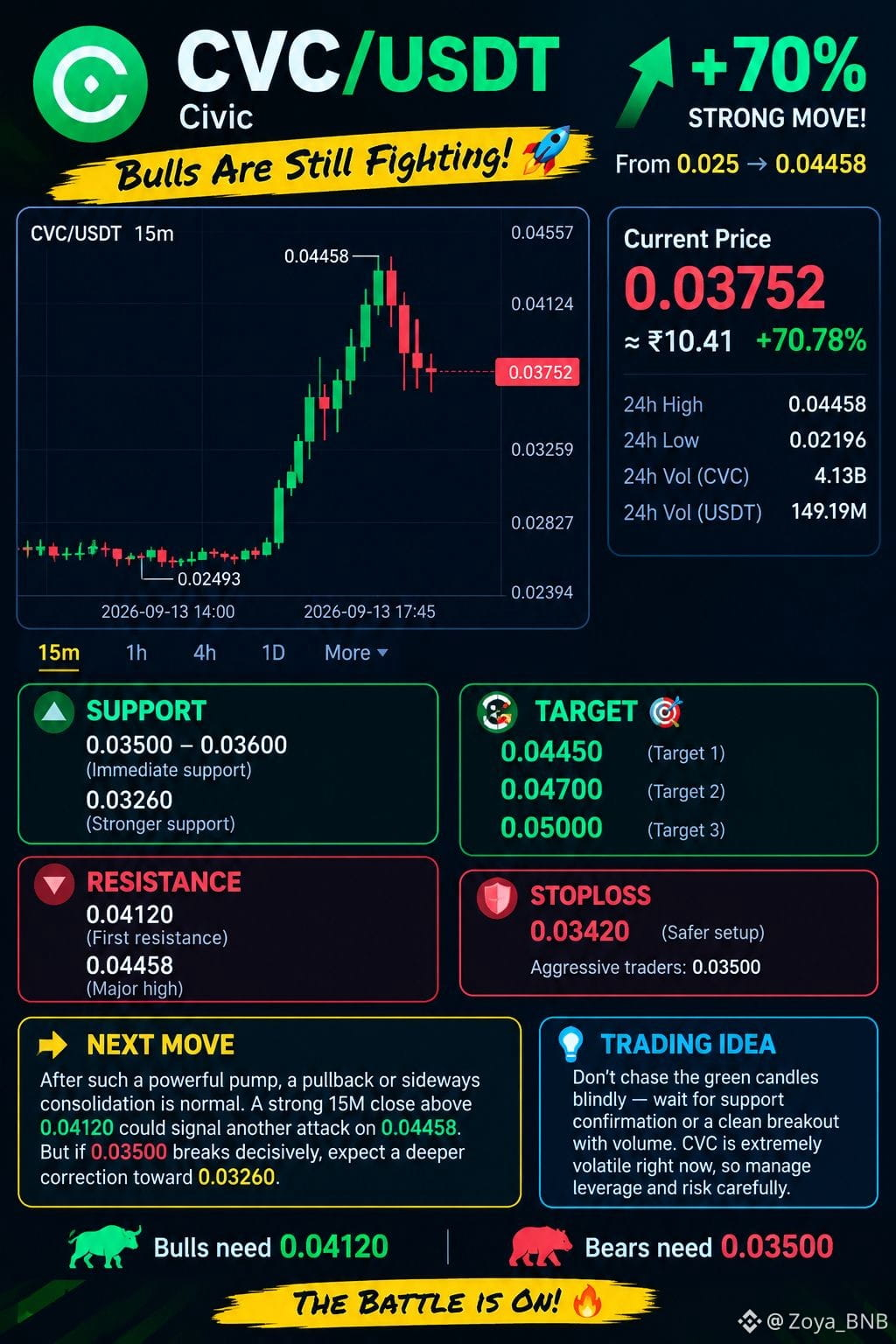
$CVC /USDT — Les taureaux se battent encore ! 🚀
CVC a explosé avec un mouvement massif de +70, passant d’environ 0.025 à un plus haut de 0.04458 avant de faire face à une forte prise de profits. Sur le graphique en 15M, le prix se situe actuellement près de 0.03752, donc les prochaines bougies pourraient décider si les taureaux se rechargent ou si les vendeurs reprennent le contrôle. 📈 Support : 0.03500–0.03600, avec un support plus solide autour de 0.03260. Résistance : 0.04120, puis le plus haut majeur à 0.04458. 🎯 Objectifs : si CVC se maintient au-dessus de 0.035–0.036 et reprend 0.04120, les objectifs à la hausse sont 0.04450 → 0.04700 → 0.05000. 🛑 Stop-loss : environ 0.03420 pour un setup plus sûr ; les traders agressifs peuvent surveiller de près 0.03500. Prochain mouvement : après un pump aussi puissant, une correction ou une consolidation latérale est normale. Une forte clôture en 15M au-dessus de 0.04120 pourrait signaler une nouvelle attaque sur 0.04458. Mais si 0.03500 casse nettement, attendez une correction plus profonde vers 0.03260. ⚡ Idée de trading : ne poursuis pas aveuglément les bougies vertes—attends une confirmation de support ou une cassure nette avec du volume. CVC est extrêmement volatile en ce moment, donc gérez soigneusement l’effet de levier et le risque. Les taureaux ont besoin de 0.04120 ; les ours ont besoin de 0.03500. Le combat est LANCÉ ! 🔥🎯
$CVC
{future}(CVCUSDT)
$CVC /USDT — Les taureaux se battent encore ! 🚀
CVC a explosé avec un mouvement massif de +70, passant d’environ 0.025 à un plus haut de 0.04458 avant de faire face à une forte prise de profits. Sur le graphique en 15M, le prix se situe actuellement près de 0.03752, donc les prochaines bougies pourraient décider si les taureaux se rechargent ou si les vendeurs reprennent le contrôle. 📈 Support : 0.03500–0.03600, avec un support plus solide autour de 0.03260. Résistance : 0.04120, puis le plus haut majeur à 0.04458. 🎯 Objectifs : si CVC se maintient au-dessus de 0.035–0.036 et reprend 0.04120, les objectifs à la hausse sont 0.04450 → 0.04700 → 0.05000. 🛑 Stop-loss : environ 0.03420 pour un setup plus sûr ; les traders agressifs peuvent surveiller de près 0.03500. Prochain mouvement : après un pump aussi puissant, une correction ou une consolidation latérale est normale. Une forte clôture en 15M au-dessus de 0.04120 pourrait signaler une nouvelle attaque sur 0.04458. Mais si 0.03500 casse nettement, attendez une correction plus profonde vers 0.03260. ⚡ Idée de trading : ne poursuis pas aveuglément les bougies vertes—attends une confirmation de support ou une cassure nette avec du volume. CVC est extrêmement volatile en ce moment, donc gérez soigneusement l’effet de levier et le risque. Les taureaux ont besoin de 0.04120 ; les ours ont besoin de 0.03500. Le combat est LANCÉ ! 🔥🎯
$CVC
CVC a explosé avec un mouvement massif de +70, passant d’environ 0.025 à un plus haut de 0.04458 avant de faire face à une forte prise de profits. Sur le graphique en 15M, le prix se situe actuellement près de 0.03752, donc les prochaines bougies pourraient décider si les taureaux se rechargent ou si les vendeurs reprennent le contrôle. 📈 Support : 0.03500–0.03600, avec un support plus solide autour de 0.03260. Résistance : 0.04120, puis le plus haut majeur à 0.04458. 🎯 Objectifs : si CVC se maintient au-dessus de 0.035–0.036 et reprend 0.04120, les objectifs à la hausse sont 0.04450 → 0.04700 → 0.05000. 🛑 Stop-loss : environ 0.03420 pour un setup plus sûr ; les traders agressifs peuvent surveiller de près 0.03500. Prochain mouvement : après un pump aussi puissant, une correction ou une consolidation latérale est normale. Une forte clôture en 15M au-dessus de 0.04120 pourrait signaler une nouvelle attaque sur 0.04458. Mais si 0.03500 casse nettement, attendez une correction plus profonde vers 0.03260. ⚡ Idée de trading : ne poursuis pas aveuglément les bougies vertes—attends une confirmation de support ou une cassure nette avec du volume. CVC est extrêmement volatile en ce moment, donc gérez soigneusement l’effet de levier et le risque. Les taureaux ont besoin de 0.04120 ; les ours ont besoin de 0.03500. Le combat est LANCÉ ! 🔥🎯
$CVC
3
402
·
--
Haussier
$LSK /USDT LA VOLATILITÉ EST TOUT SIMPLEMENT INSANE !
Lisk $LSK affiche actuellement un mouvement de momentum puissant, avec un prix autour de 0,5295 $ après un rallye explosif. Le
graphique sur 15 minutes raconte une histoire intéressante :
LSK est passé d’environ 0,22 $ à un plus haut proche de 0,6603 $, puis est entré dans une forte phase de repli et de consolidation. C’est désormais une zone critique où la prochaine cassure pourrait décider de la direction à court terme. ⚡📈
🟢 Zone de support : 0,489 $ 0,500 $
🟢 Support plus solide : 0,393 $
🔴 Résistance : 0,586 $
🔥 Résistance majeure : 0,660–0,682 $
Si LSK se maintient au-dessus de 0,489 $ et que les acheteurs reprennent 0,586 $, le prochain mouvement pourrait viser 0,625 🎯, puis une retest de
0,660 $ 0,682 $ 🎯. Une cassure nette au-dessus du précédent plus haut pourrait apporter une nouvelle vague de momentum, mais après un mouvement aussi énorme, la volatilité et des
replis soudains ne doivent pas être sous-estimés.
Pour un scénario haussier, je surveillerais la zone 0,50–0,53 pour confirmation plutôt que de courir après une bougie verticale. 📊
⚠️ Invalidations / Stop-Loss : Une rupture décisive en dessous de 0,489 $ affaiblit le scénario haussier ; pour un trade agressif, un stop pourrait être placé autour de 0,475.
$GRIFFAIN
{alpha}(CT_501KENJSUYLASHUMfHyy5o4Hp2FdNqZg1AsUPhfH2kYvEP)
$LSK /USDT LA VOLATILITÉ EST TOUT SIMPLEMENT INSANE !
Lisk $LSK affiche actuellement un mouvement de momentum puissant, avec un prix autour de 0,5295 $ après un rallye explosif. Le
graphique sur 15 minutes raconte une histoire intéressante :
LSK est passé d’environ 0,22 $ à un plus haut proche de 0,6603 $, puis est entré dans une forte phase de repli et de consolidation. C’est désormais une zone critique où la prochaine cassure pourrait décider de la direction à court terme. ⚡📈
🟢 Zone de support : 0,489 $ 0,500 $
🟢 Support plus solide : 0,393 $
🔴 Résistance : 0,586 $
🔥 Résistance majeure : 0,660–0,682 $
Si LSK se maintient au-dessus de 0,489 $ et que les acheteurs reprennent 0,586 $, le prochain mouvement pourrait viser 0,625 🎯, puis une retest de
0,660 $ 0,682 $ 🎯. Une cassure nette au-dessus du précédent plus haut pourrait apporter une nouvelle vague de momentum, mais après un mouvement aussi énorme, la volatilité et des
replis soudains ne doivent pas être sous-estimés.
Pour un scénario haussier, je surveillerais la zone 0,50–0,53 pour confirmation plutôt que de courir après une bougie verticale. 📊
⚠️ Invalidations / Stop-Loss : Une rupture décisive en dessous de 0,489 $ affaiblit le scénario haussier ; pour un trade agressif, un stop pourrait être placé autour de 0,475.
$GRIFFAIN
Lisk $LSK affiche actuellement un mouvement de momentum puissant, avec un prix autour de 0,5295 $ après un rallye explosif. Le
graphique sur 15 minutes raconte une histoire intéressante :
LSK est passé d’environ 0,22 $ à un plus haut proche de 0,6603 $, puis est entré dans une forte phase de repli et de consolidation. C’est désormais une zone critique où la prochaine cassure pourrait décider de la direction à court terme. ⚡📈
🟢 Zone de support : 0,489 $ 0,500 $
🟢 Support plus solide : 0,393 $
🔴 Résistance : 0,586 $
🔥 Résistance majeure : 0,660–0,682 $
Si LSK se maintient au-dessus de 0,489 $ et que les acheteurs reprennent 0,586 $, le prochain mouvement pourrait viser 0,625 🎯, puis une retest de
0,660 $ 0,682 $ 🎯. Une cassure nette au-dessus du précédent plus haut pourrait apporter une nouvelle vague de momentum, mais après un mouvement aussi énorme, la volatilité et des
replis soudains ne doivent pas être sous-estimés.
Pour un scénario haussier, je surveillerais la zone 0,50–0,53 pour confirmation plutôt que de courir après une bougie verticale. 📊
⚠️ Invalidations / Stop-Loss : Une rupture décisive en dessous de 0,489 $ affaiblit le scénario haussier ; pour un trade agressif, un stop pourrait être placé autour de 0,475.
$GRIFFAIN
Bhules❤️
25%
Banate 💚
75%
4 Votes • Vote fermé
3
677
·
--
Haussier
📊 WATCH CPI : La Fed va-t-elle relever ses taux ou les maintenir ?
Le marché se concentre désormais sur le prochain rapport sur l’IPC après que la publication des créations d’emplois hors secteur agricole (Nonfarm Payrolls) est ressortie plus forte que prévu. 🔥
La question clé est de savoir si des données sur l’emploi plus solides, combinées à une inflation persistante, pousseront la Fed à opérer une nouvelle hausse — ou si les responsables choisiront de maintenir les taux et d’attendre des preuves plus claires.
Mon avis : je suis prudemment baissier sur les actifs à risque à court terme si l’IPC ressort plus chaud que prévu. 📉 Un IPC plus élevé pourrait renforcer l’argument en faveur de taux plus élevés “plus longtemps”, exerçant potentiellement une pression sur les actions et la crypto, tout en soutenant le dollar américain et les rendements des Treasuries.
Si l’IPC sort plus faible que prévu, la situation pourrait évoluer rapidement. Une inflation plus basse pourrait raviver les attentes d’une Fed plus accommodante et déclencher une réaction haussière sur l’ensemble des actifs à risque. 📈
Pour l’instant, je surveille de près l’IPC et je garde la gestion du risque au cœur de ma stratégie.
🔥 Haussier ou baissier — quel est votre avis ?
#CPIWatch #CPI数据
$LAB
{future}(LABUSDT)
$LSK
{spot}(LSKUSDT)
$GRIFFAIN
📊 WATCH CPI : La Fed va-t-elle relever ses taux ou les maintenir ?
Le marché se concentre désormais sur le prochain rapport sur l’IPC après que la publication des créations d’emplois hors secteur agricole (Nonfarm Payrolls) est ressortie plus forte que prévu. 🔥
La question clé est de savoir si des données sur l’emploi plus solides, combinées à une inflation persistante, pousseront la Fed à opérer une nouvelle hausse — ou si les responsables choisiront de maintenir les taux et d’attendre des preuves plus claires.
Mon avis : je suis prudemment baissier sur les actifs à risque à court terme si l’IPC ressort plus chaud que prévu. 📉 Un IPC plus élevé pourrait renforcer l’argument en faveur de taux plus élevés “plus longtemps”, exerçant potentiellement une pression sur les actions et la crypto, tout en soutenant le dollar américain et les rendements des Treasuries.
Si l’IPC sort plus faible que prévu, la situation pourrait évoluer rapidement. Une inflation plus basse pourrait raviver les attentes d’une Fed plus accommodante et déclencher une réaction haussière sur l’ensemble des actifs à risque. 📈
Pour l’instant, je surveille de près l’IPC et je garde la gestion du risque au cœur de ma stratégie.
🔥 Haussier ou baissier — quel est votre avis ?
#CPIWatch #CPI数据
$LAB
$LSK
$GRIFFAIN
Le marché se concentre désormais sur le prochain rapport sur l’IPC après que la publication des créations d’emplois hors secteur agricole (Nonfarm Payrolls) est ressortie plus forte que prévu. 🔥
La question clé est de savoir si des données sur l’emploi plus solides, combinées à une inflation persistante, pousseront la Fed à opérer une nouvelle hausse — ou si les responsables choisiront de maintenir les taux et d’attendre des preuves plus claires.
Mon avis : je suis prudemment baissier sur les actifs à risque à court terme si l’IPC ressort plus chaud que prévu. 📉 Un IPC plus élevé pourrait renforcer l’argument en faveur de taux plus élevés “plus longtemps”, exerçant potentiellement une pression sur les actions et la crypto, tout en soutenant le dollar américain et les rendements des Treasuries.
Si l’IPC sort plus faible que prévu, la situation pourrait évoluer rapidement. Une inflation plus basse pourrait raviver les attentes d’une Fed plus accommodante et déclencher une réaction haussière sur l’ensemble des actifs à risque. 📈
Pour l’instant, je surveille de près l’IPC et je garde la gestion du risque au cœur de ma stratégie.
🔥 Haussier ou baissier — quel est votre avis ?
#CPIWatch #CPI数据
$LAB
$LSK
$GRIFFAIN

2
123
·
--
Haussier
📊 VEILLE CPI : La Fed va-t-elle relever ses taux ou les maintenir ?
Le marché entre dans un moment critique. Après que les créations d’emplois (hors secteur agricole) ont dépassé les prévisions, l’attention se tourne désormais vers le prochain rapport sur l’IPC. 🔥
La grande question est la suivante : des données sur l’emploi plus solides pousseront-elles la Fed à procéder à une nouvelle hausse des taux, ou les responsables choisiront-ils de maintenir les taux et d’attendre davantage de données sur l’inflation ?
Mon avis : je penche avec prudence pour une perspective baissière sur les actifs à risque à court terme si l’IPC ressort plus élevé que prévu. 📉 Une inflation supérieure aux attentes pourrait renforcer l’argument en faveur d’une politique monétaire plus restrictive, ce qui pourrait exercer une pression sur les actions et accroître la demande pour le dollar américain.
D’un autre côté, un IPC plus faible pourrait rapidement faire évoluer le récit et soutenir un mouvement haussier sur les actions et l’or. 🟡📈
Pour moi, il s’agit d’un marché qui attend les données. L’IPC pourrait être le catalyseur qui décidera de la prochaine grande direction.
Quelle est votre réponse : hausse ou maintien de la Fed ? Plutôt haussier ou baissier ?
#CPIWatch
#CPIWatch #CPIWatch #CPIWatch #CPIWatch
$牛来
{future}(牛来USDT)
$RAYSOL
{future}(RAYSOLUSDT)
📊 VEILLE CPI : La Fed va-t-elle relever ses taux ou les maintenir ?
Le marché entre dans un moment critique. Après que les créations d’emplois (hors secteur agricole) ont dépassé les prévisions, l’attention se tourne désormais vers le prochain rapport sur l’IPC. 🔥
La grande question est la suivante : des données sur l’emploi plus solides pousseront-elles la Fed à procéder à une nouvelle hausse des taux, ou les responsables choisiront-ils de maintenir les taux et d’attendre davantage de données sur l’inflation ?
Mon avis : je penche avec prudence pour une perspective baissière sur les actifs à risque à court terme si l’IPC ressort plus élevé que prévu. 📉 Une inflation supérieure aux attentes pourrait renforcer l’argument en faveur d’une politique monétaire plus restrictive, ce qui pourrait exercer une pression sur les actions et accroître la demande pour le dollar américain.
D’un autre côté, un IPC plus faible pourrait rapidement faire évoluer le récit et soutenir un mouvement haussier sur les actions et l’or. 🟡📈
Pour moi, il s’agit d’un marché qui attend les données. L’IPC pourrait être le catalyseur qui décidera de la prochaine grande direction.
Quelle est votre réponse : hausse ou maintien de la Fed ? Plutôt haussier ou baissier ?
#CPIWatch
#CPIWatch #CPIWatch #CPIWatch #CPIWatch
$牛来
$RAYSOL
Le marché entre dans un moment critique. Après que les créations d’emplois (hors secteur agricole) ont dépassé les prévisions, l’attention se tourne désormais vers le prochain rapport sur l’IPC. 🔥
La grande question est la suivante : des données sur l’emploi plus solides pousseront-elles la Fed à procéder à une nouvelle hausse des taux, ou les responsables choisiront-ils de maintenir les taux et d’attendre davantage de données sur l’inflation ?
Mon avis : je penche avec prudence pour une perspective baissière sur les actifs à risque à court terme si l’IPC ressort plus élevé que prévu. 📉 Une inflation supérieure aux attentes pourrait renforcer l’argument en faveur d’une politique monétaire plus restrictive, ce qui pourrait exercer une pression sur les actions et accroître la demande pour le dollar américain.
D’un autre côté, un IPC plus faible pourrait rapidement faire évoluer le récit et soutenir un mouvement haussier sur les actions et l’or. 🟡📈
Pour moi, il s’agit d’un marché qui attend les données. L’IPC pourrait être le catalyseur qui décidera de la prochaine grande direction.
Quelle est votre réponse : hausse ou maintien de la Fed ? Plutôt haussier ou baissier ?
#CPIWatch
#CPIWatch #CPIWatch #CPIWatch #CPIWatch
$牛来
$RAYSOL

2
3
162
·
--
tous les gars suivent le @SmartBoy_007 et réclament
tous les gars suivent le @Ethan_Blake et réclament


Ethan_Blake
·
--
Haussier🎁 CADEAUX DE PACKET ROUGE ! 🚀🔥
Je lance un Packet Rouge pour ma communauté ! ❤️
Envie d’en faire partie ? 👀
✅ Suivez-moi
❤️ Aimez cette publication
💬 Commentez TERMINÉ
Restez actifs et restez à l’affût — d’autres surprises arrivent ! 🔥
Grandissons ensemble ! 🚀📈
$BULLA
#RedPacket #Giveaway #Binance #CryptoCommunity #Followers
$MARSCOIN $AKE
Je lance un Packet Rouge pour ma communauté ! ❤️
Envie d’en faire partie ? 👀
✅ Suivez-moi
❤️ Aimez cette publication
💬 Commentez TERMINÉ
Restez actifs et restez à l’affût — d’autres surprises arrivent ! 🔥
Grandissons ensemble ! 🚀📈
$BULLA
#RedPacket #Giveaway #Binance #CryptoCommunity #Followers
$MARSCOIN $AKE

1
2
38
·
--
Haussier
Les gagnants d'aujourd'hui de Guy, pièces King 👑👑
$BULLA $0.060614
{future}(BULLAUSDT)
$4 $0.025942
{future}(4USDT)
$AKE $0.019397
{future}(AKEUSDT)
Les gagnants d'aujourd'hui de Guy, pièces King 👑👑
$BULLA $0.060614
$4 $0.025942
$AKE $0.019397
$BULLA $0.060614
$4 $0.025942
$AKE $0.019397
bullish
59%
bearish
41%
34 Votes • Vote fermé
3
2.6k
·
--
Haussier
aujourd’hui les gagnants en pièces que pensez-vous 🤔💬
$AKE
{future}(AKEUSDT)
$T
{future}(TUSDT)
$BULLA
{future}(BULLAUSDT)
aujourd’hui les gagnants en pièces que pensez-vous 🤔💬
$AKE
$T
$BULLA
$AKE
$T
$BULLA
$bulla
16%
$T
29%
$ake
55%
51 Votes • Vote fermé
3
1.7k
·
--
Haussier
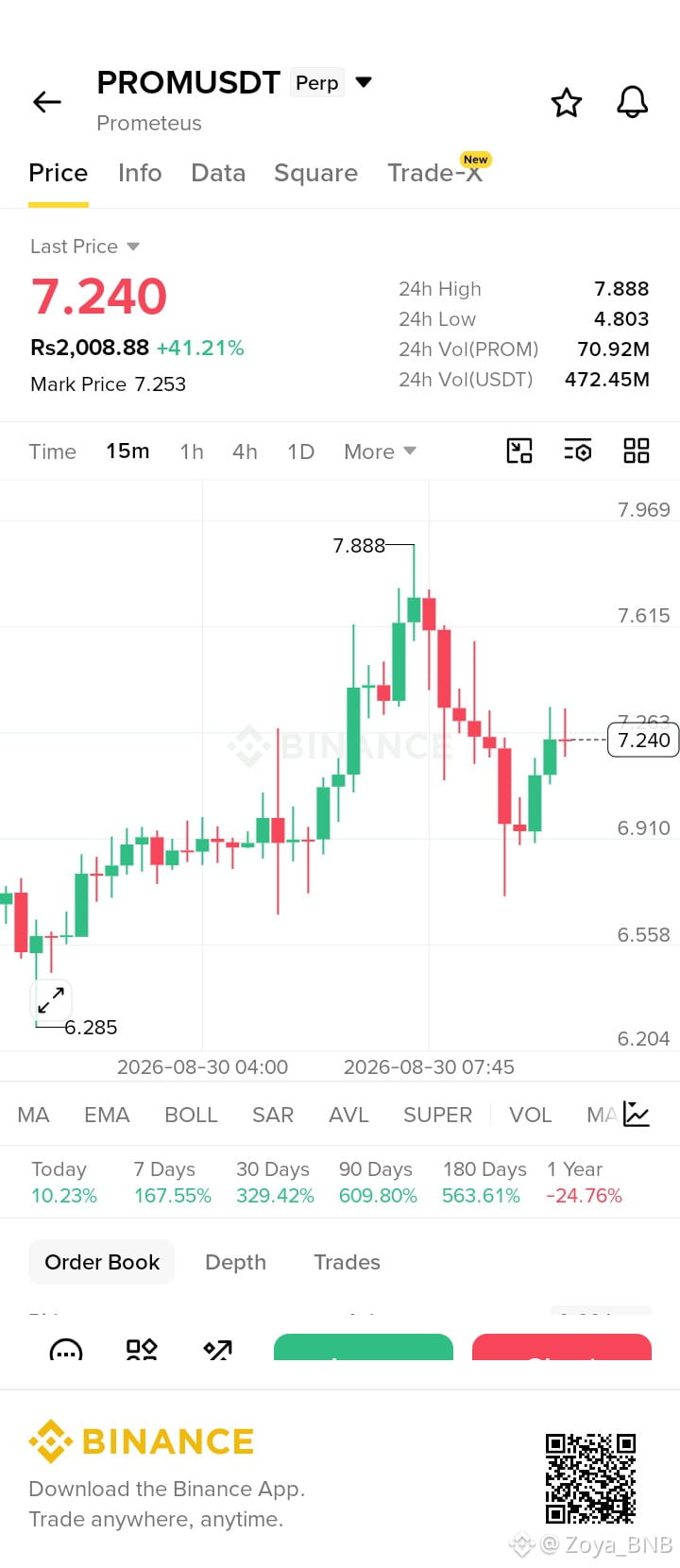
PROMUSDT – LONG (BREAKOUT PLAY)
🚀 $PROM affiche un élan BULLISH MASSIF avec un gain STUPÉFIANT de +41,21 % ! Les acheteurs restent pleinement aux commandes, avec un volume qui explose à 472,45M USDT. La structure reste constructive, avec une liquidité autour de 7,888 $.
EP : 7,20 $ – 7,25 $
TP1 : 7,45 $
TP2 : 7,65 $
TP3 : 7,888 $
SL : 6,90 $
La liquidité a été balayée près de 4,803 $ avant une forte réaction acheteuse. La structure reste constructive au-dessus de 6,90 $, avec une liquidité autour de 7,888 $. Le volume 24 h est énorme à 70,92M PROM, confirmant un fort intérêt institutionnel. Le gain sur 30 jours de 329,42 % et sur 90 jours de 609,80 % montrent que cette reprise a de sérieuses bases !
Allons-y $PROM 🚀
PROMUSDT – LONG (BREAKOUT PLAY)
🚀 $PROM affiche un élan BULLISH MASSIF avec un gain STUPÉFIANT de +41,21 % ! Les acheteurs restent pleinement aux commandes, avec un volume qui explose à 472,45M USDT. La structure reste constructive, avec une liquidité autour de 7,888 $.
EP : 7,20 $ – 7,25 $
TP1 : 7,45 $
TP2 : 7,65 $
TP3 : 7,888 $
SL : 6,90 $
La liquidité a été balayée près de 4,803 $ avant une forte réaction acheteuse. La structure reste constructive au-dessus de 6,90 $, avec une liquidité autour de 7,888 $. Le volume 24 h est énorme à 70,92M PROM, confirmant un fort intérêt institutionnel. Le gain sur 30 jours de 329,42 % et sur 90 jours de 609,80 % montrent que cette reprise a de sérieuses bases !
Allons-y $PROM 🚀
🚀 $PROM affiche un élan BULLISH MASSIF avec un gain STUPÉFIANT de +41,21 % ! Les acheteurs restent pleinement aux commandes, avec un volume qui explose à 472,45M USDT. La structure reste constructive, avec une liquidité autour de 7,888 $.
EP : 7,20 $ – 7,25 $
TP1 : 7,45 $
TP2 : 7,65 $
TP3 : 7,888 $
SL : 6,90 $
La liquidité a été balayée près de 4,803 $ avant une forte réaction acheteuse. La structure reste constructive au-dessus de 6,90 $, avec une liquidité autour de 7,888 $. Le volume 24 h est énorme à 70,92M PROM, confirmant un fort intérêt institutionnel. Le gain sur 30 jours de 329,42 % et sur 90 jours de 609,80 % montrent que cette reprise a de sérieuses bases !
Allons-y $PROM 🚀
1
3
104
·
--
Haussier
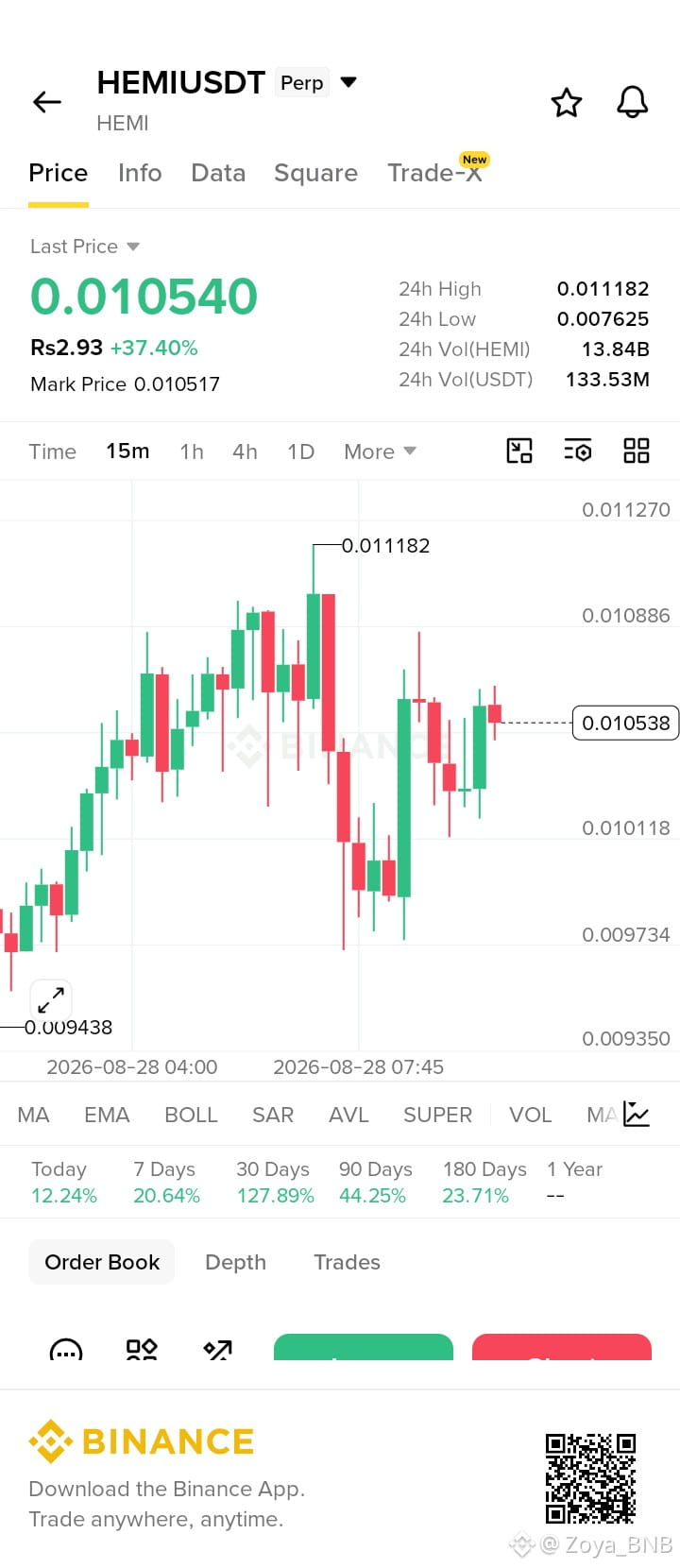
HEMIUSDT – LONG (BREAKOUT PLAY)
🚀 $HEMI affiche une énorme dynamique haussière avec un impressionnant +37,40% de hausse ! Les acheteurs restent aux commandes, avec un volume qui explose à 133,53M USDT. La structure demeure constructive, avec une liquidité autour de 0,011182 $.
EP : 0,01050 $ – 0,01055 $
TP1 : 0,01080 $
TP2 : 0,01100 $
TP3 : 0,011182 $
SL : 0,01020 $
La liquidité a été balayée près de 0,007625 $ avant une forte réaction des acheteurs. La structure reste constructive au-dessus de 0,01020 $, avec une liquidité située autour de 0,011182 $. Le volume sur 24h est massif à 13,84B HEMI, confirmant un fort intérêt institutionnel. La hausse sur 30 jours de 127,89% montre que cette reprise a de sérieuses jambes !
Allons-y $HEMI
{future}(HEMIUSDT)
HEMIUSDT – LONG (BREAKOUT PLAY)
🚀 $HEMI affiche une énorme dynamique haussière avec un impressionnant +37,40% de hausse ! Les acheteurs restent aux commandes, avec un volume qui explose à 133,53M USDT. La structure demeure constructive, avec une liquidité autour de 0,011182 $.
EP : 0,01050 $ – 0,01055 $
TP1 : 0,01080 $
TP2 : 0,01100 $
TP3 : 0,011182 $
SL : 0,01020 $
La liquidité a été balayée près de 0,007625 $ avant une forte réaction des acheteurs. La structure reste constructive au-dessus de 0,01020 $, avec une liquidité située autour de 0,011182 $. Le volume sur 24h est massif à 13,84B HEMI, confirmant un fort intérêt institutionnel. La hausse sur 30 jours de 127,89% montre que cette reprise a de sérieuses jambes !
Allons-y $HEMI
🚀 $HEMI affiche une énorme dynamique haussière avec un impressionnant +37,40% de hausse ! Les acheteurs restent aux commandes, avec un volume qui explose à 133,53M USDT. La structure demeure constructive, avec une liquidité autour de 0,011182 $.
EP : 0,01050 $ – 0,01055 $
TP1 : 0,01080 $
TP2 : 0,01100 $
TP3 : 0,011182 $
SL : 0,01020 $
La liquidité a été balayée près de 0,007625 $ avant une forte réaction des acheteurs. La structure reste constructive au-dessus de 0,01020 $, avec une liquidité située autour de 0,011182 $. Le volume sur 24h est massif à 13,84B HEMI, confirmant un fort intérêt institutionnel. La hausse sur 30 jours de 127,89% montre que cette reprise a de sérieuses jambes !
Allons-y $HEMI
2
121
·
--
La nuit dernière, je fixais une application bancaire et je pensais à la quantité de données financières que nous divulguons avec désinvolture juste pour transférer de l’argent.
Puis ça m’a frappé — les institutions ont le problème inverse.
Elles veulent la confidentialité.
Mais elles ont aussi besoin de preuves.
C’est là que Dusk devient intéressant.
Une institution régulée ne peut pas simplement dire : « Faites-moi confiance, cette transaction est conforme ». Un régulateur peut avoir besoin de preuves que l’investisseur est éligible, que le transfert respecte les limites, et que l’actif a suivi ses restrictions — sans voir chaque solde, identité ou détail de trading.
C’est la promesse de ZK.
Prouver la règle.
Cacher les données sous-jacentes.
Mais franchement, la partie difficile n’est pas les mathématiques.
C’est le circuit.
Une preuve ZK peut être parfaitement valide tout en prouvant la mauvaise chose si la logique de conformité est incomplète. Ajoutez des règles d’éligibilité, des vérifications de juridiction, des périodes de détention, des restrictions de transfert, des identifiants, des audits et des actions forcées — et soudain, la confidentialité devient un vrai défi d’ingénierie.
Et il y a un autre point de friction : les métadonnées, le comportement du portefeuille, les flux de liquidité et l’infrastructure de divulgation peuvent encore fuiter des informations.
Dusk n’a pas besoin d’une confidentialité maximale.
Il a besoin d’une divulgation minimale + d’une vérifiabilité maximale.
C’est le combat des institutions.
@Dusk_Foundation #dusk $DUSK
La nuit dernière, je fixais une application bancaire et je pensais à la quantité de données financières que nous divulguons avec désinvolture juste pour transférer de l’argent.
Puis ça m’a frappé — les institutions ont le problème inverse.
Elles veulent la confidentialité.
Mais elles ont aussi besoin de preuves.
C’est là que Dusk devient intéressant.
Une institution régulée ne peut pas simplement dire : « Faites-moi confiance, cette transaction est conforme ». Un régulateur peut avoir besoin de preuves que l’investisseur est éligible, que le transfert respecte les limites, et que l’actif a suivi ses restrictions — sans voir chaque solde, identité ou détail de trading.
C’est la promesse de ZK.
Prouver la règle.
Cacher les données sous-jacentes.
Mais franchement, la partie difficile n’est pas les mathématiques.
C’est le circuit.
Une preuve ZK peut être parfaitement valide tout en prouvant la mauvaise chose si la logique de conformité est incomplète. Ajoutez des règles d’éligibilité, des vérifications de juridiction, des périodes de détention, des restrictions de transfert, des identifiants, des audits et des actions forcées — et soudain, la confidentialité devient un vrai défi d’ingénierie.
Et il y a un autre point de friction : les métadonnées, le comportement du portefeuille, les flux de liquidité et l’infrastructure de divulgation peuvent encore fuiter des informations.
Dusk n’a pas besoin d’une confidentialité maximale.
Il a besoin d’une divulgation minimale + d’une vérifiabilité maximale.
C’est le combat des institutions.
@Dusk #dusk $DUSK
Puis ça m’a frappé — les institutions ont le problème inverse.
Elles veulent la confidentialité.
Mais elles ont aussi besoin de preuves.
C’est là que Dusk devient intéressant.
Une institution régulée ne peut pas simplement dire : « Faites-moi confiance, cette transaction est conforme ». Un régulateur peut avoir besoin de preuves que l’investisseur est éligible, que le transfert respecte les limites, et que l’actif a suivi ses restrictions — sans voir chaque solde, identité ou détail de trading.
C’est la promesse de ZK.
Prouver la règle.
Cacher les données sous-jacentes.
Mais franchement, la partie difficile n’est pas les mathématiques.
C’est le circuit.
Une preuve ZK peut être parfaitement valide tout en prouvant la mauvaise chose si la logique de conformité est incomplète. Ajoutez des règles d’éligibilité, des vérifications de juridiction, des périodes de détention, des restrictions de transfert, des identifiants, des audits et des actions forcées — et soudain, la confidentialité devient un vrai défi d’ingénierie.
Et il y a un autre point de friction : les métadonnées, le comportement du portefeuille, les flux de liquidité et l’infrastructure de divulgation peuvent encore fuiter des informations.
Dusk n’a pas besoin d’une confidentialité maximale.
Il a besoin d’une divulgation minimale + d’une vérifiabilité maximale.
C’est le combat des institutions.
@Dusk #dusk $DUSK
3
158
·
--
Haussier
Vérifié
🚨 La prochaine génération d’infrastructure financière est arrivée
Dusk Network est une blockchain Layer-1 optimisée par IA, conçue explicitement pour une finance confidentielle de niveau institutionnel.
⚡ Contrats intelligents confidentiels : exécutez une logique financière complexe avec une confidentialité cryptographique à connaissance nulle.
🔐 Confidentialité à connaissance nulle : sécurisez des données d’entreprise propriétaires sans compromettre la supervision réglementaire.
📜 Conformité à la norme XSC : un cadre natif conçu pour prendre en charge la conformité juridique et l’émission automatisée d’actifs.
🏦 Architecture à l’échelle institutionnelle : relier les marchés financiers traditionnels à la liquidité décentralisée.
Alors que les blockchains publiques traditionnelles exposent par défaut la télémétrie des transactions, Dusk Network offre une confidentialité totale pour les transitions d’état et les soldes des comptes.
La confidentialité n’est pas un module ajouté.
Elle est une architecture fondamentale du protocole.
Bienvenue dans le futur de la finance décentralisée institutionnelle. 🌐
{spot}(DUSKUSDT)
#dusk $DUSK @Dusk_Foundation
🚨 La prochaine génération d’infrastructure financière est arrivée
Dusk Network est une blockchain Layer-1 optimisée par IA, conçue explicitement pour une finance confidentielle de niveau institutionnel.
⚡ Contrats intelligents confidentiels : exécutez une logique financière complexe avec une confidentialité cryptographique à connaissance nulle.
🔐 Confidentialité à connaissance nulle : sécurisez des données d’entreprise propriétaires sans compromettre la supervision réglementaire.
📜 Conformité à la norme XSC : un cadre natif conçu pour prendre en charge la conformité juridique et l’émission automatisée d’actifs.
🏦 Architecture à l’échelle institutionnelle : relier les marchés financiers traditionnels à la liquidité décentralisée.
Alors que les blockchains publiques traditionnelles exposent par défaut la télémétrie des transactions, Dusk Network offre une confidentialité totale pour les transitions d’état et les soldes des comptes.
La confidentialité n’est pas un module ajouté.
Elle est une architecture fondamentale du protocole.
Bienvenue dans le futur de la finance décentralisée institutionnelle. 🌐
#dusk $DUSK @Dusk
Dusk Network est une blockchain Layer-1 optimisée par IA, conçue explicitement pour une finance confidentielle de niveau institutionnel.
⚡ Contrats intelligents confidentiels : exécutez une logique financière complexe avec une confidentialité cryptographique à connaissance nulle.
🔐 Confidentialité à connaissance nulle : sécurisez des données d’entreprise propriétaires sans compromettre la supervision réglementaire.
📜 Conformité à la norme XSC : un cadre natif conçu pour prendre en charge la conformité juridique et l’émission automatisée d’actifs.
🏦 Architecture à l’échelle institutionnelle : relier les marchés financiers traditionnels à la liquidité décentralisée.
Alors que les blockchains publiques traditionnelles exposent par défaut la télémétrie des transactions, Dusk Network offre une confidentialité totale pour les transitions d’état et les soldes des comptes.
La confidentialité n’est pas un module ajouté.
Elle est une architecture fondamentale du protocole.
Bienvenue dans le futur de la finance décentralisée institutionnelle. 🌐
#dusk $DUSK @Dusk
1
2
109
·
--
Haussier
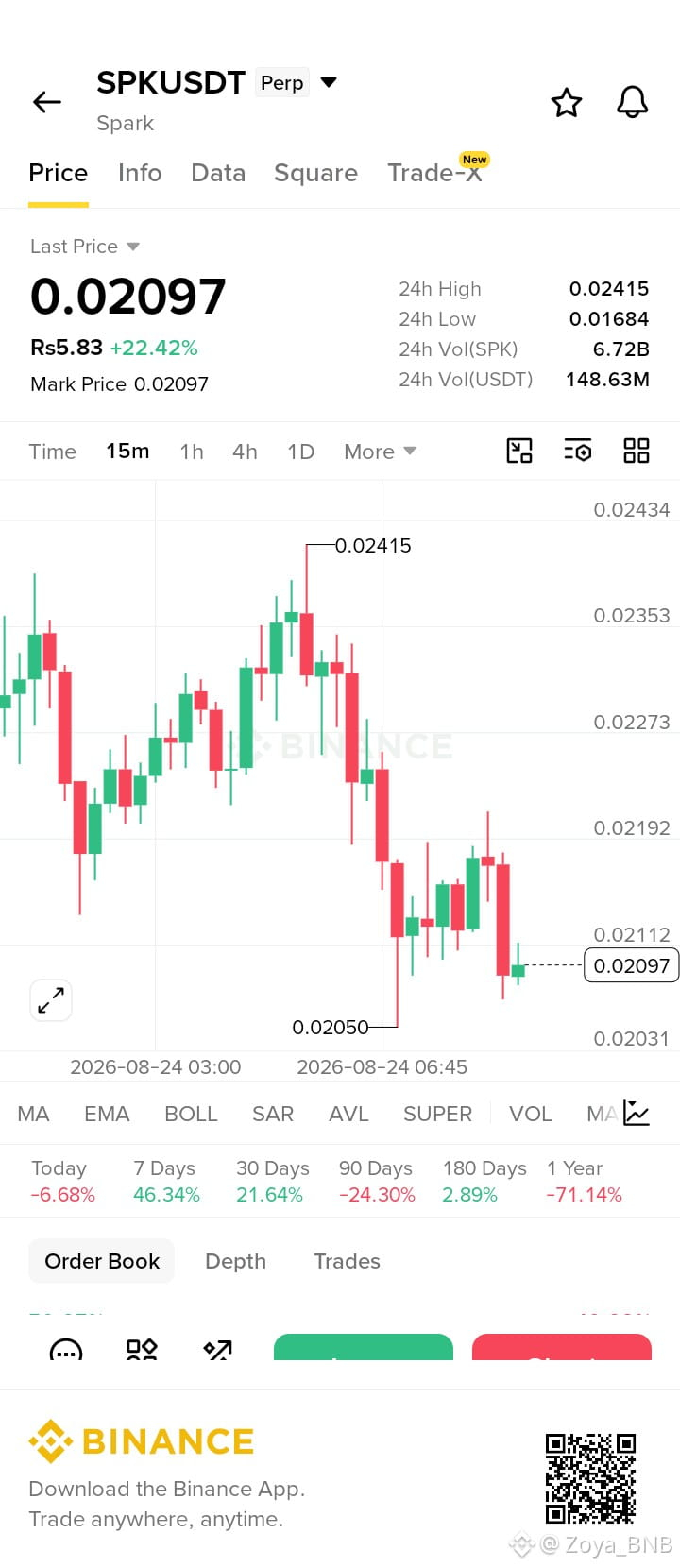
SPKUSDT – LONG (BREAKOUT PLAY)
🚀 affiche une forte dynamique haussière après un énorme rallye de +22,42 % ! Les acheteurs restent aux commandes, avec un volume qui explose à 148,63 M USDT. La structure demeure constructive, avec une liquidité située autour de 0,02415 $.
EP : 0,02090 $ – 0,02100 $
TP1 : 0,02200 $
TP2 : 0,02300 $
TP3 : 0,02415 $
SL : 0,02000 $
La liquidité a été balayée près de 0,01684 $ avant une forte réaction acheteuse. La structure reste constructive au-dessus de 0,02000 $, avec une liquidité située autour de 0,02415 $. Le volume sur 24 h est massif à 6,72 Md SPK, confirmant un fort intérêt institutionnel. La hausse sur 7 jours de 46,34 % montre que ce rallye a de vraies jambes !
Allons-y $SPK 🚀
{future}(SPKUSDT)
SPKUSDT – LONG (BREAKOUT PLAY)
🚀 affiche une forte dynamique haussière après un énorme rallye de +22,42 % ! Les acheteurs restent aux commandes, avec un volume qui explose à 148,63 M USDT. La structure demeure constructive, avec une liquidité située autour de 0,02415 $.
EP : 0,02090 $ – 0,02100 $
TP1 : 0,02200 $
TP2 : 0,02300 $
TP3 : 0,02415 $
SL : 0,02000 $
La liquidité a été balayée près de 0,01684 $ avant une forte réaction acheteuse. La structure reste constructive au-dessus de 0,02000 $, avec une liquidité située autour de 0,02415 $. Le volume sur 24 h est massif à 6,72 Md SPK, confirmant un fort intérêt institutionnel. La hausse sur 7 jours de 46,34 % montre que ce rallye a de vraies jambes !
Allons-y $SPK 🚀
🚀 affiche une forte dynamique haussière après un énorme rallye de +22,42 % ! Les acheteurs restent aux commandes, avec un volume qui explose à 148,63 M USDT. La structure demeure constructive, avec une liquidité située autour de 0,02415 $.
EP : 0,02090 $ – 0,02100 $
TP1 : 0,02200 $
TP2 : 0,02300 $
TP3 : 0,02415 $
SL : 0,02000 $
La liquidité a été balayée près de 0,01684 $ avant une forte réaction acheteuse. La structure reste constructive au-dessus de 0,02000 $, avec une liquidité située autour de 0,02415 $. Le volume sur 24 h est massif à 6,72 Md SPK, confirmant un fort intérêt institutionnel. La hausse sur 7 jours de 46,34 % montre que ce rallye a de vraies jambes !
Allons-y $SPK 🚀
2
152
·
--
Vérifié
Dusk Network a été conçu pour la confidentialité dont les actifs réglementés ont réellement besoin
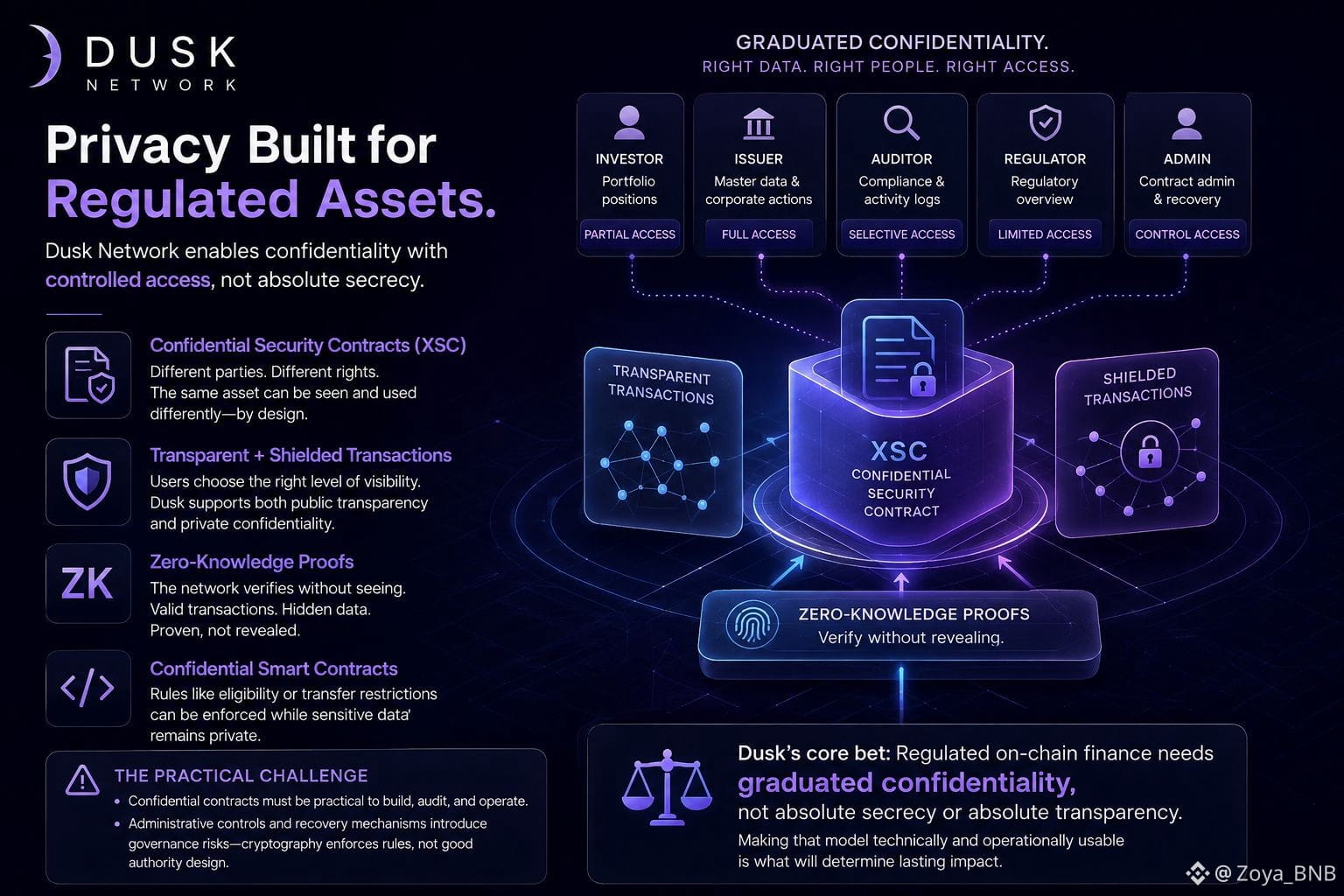
L’idée la plus distinctive de Dusk Network ne consiste pas seulement à masquer des données financières. Elle vise à rendre la confidentialité compatible avec des niveaux d’accès et de contrôle inégaux que les actifs réglementés exigent.
C’est la logique derrière sa norme de contrat de sécurité confidentielle, XSC. Un investisseur, un émetteur, un auditeur ou toute autre partie autorisée peut avoir besoin de droits différents concernant le même actif. Dusk cherche à le permettre sans mettre chaque position et détail de transaction sur un registre totalement transparent.
Son architecture combine des modèles de transactions transparentes et des transactions protégées, avec des preuves à connaissance nulle permettant au réseau de valider une activité privée sans exposer les données sous-jacentes. L’étape la plus difficile consiste à étendre cette idée aux contrats intelligents, où des règles comme l’éligibilité ou des restrictions de transfert doivent être appliquées tout en gardant les informations sensibles masquées.
Cela constitue le principal défi pratique de Dusk. L’infrastructure de confidentialité n’est utile que si les contrats confidentiels restent réalisables : à concevoir, auditer et exploiter. Les mécanismes de contrôle administratif et de récupération soulèvent aussi des questions de gouvernance : la cryptographie peut imposer les règles, mais elle ne peut pas rendre sûres des structures d’autorité mal conçues.
Le pari central de Dusk est que la finance réglementée en chaîne a besoin d’une confidentialité graduée, et non d’un secret absolu ni d’une transparence absolue. Le fait de rendre ce modèle techniquement et opérationnellement utilisable déterminera si son architecture a une réelle durabilité.
#dusk $DUSK @Dusk_Foundation
Dusk Network a été conçu pour la confidentialité dont les actifs réglementés ont réellement besoin
L’idée la plus distinctive de Dusk Network ne consiste pas seulement à masquer des données financières. Elle vise à rendre la confidentialité compatible avec des niveaux d’accès et de contrôle inégaux que les actifs réglementés exigent.
C’est la logique derrière sa norme de contrat de sécurité confidentielle, XSC. Un investisseur, un émetteur, un auditeur ou toute autre partie autorisée peut avoir besoin de droits différents concernant le même actif. Dusk cherche à le permettre sans mettre chaque position et détail de transaction sur un registre totalement transparent.
Son architecture combine des modèles de transactions transparentes et des transactions protégées, avec des preuves à connaissance nulle permettant au réseau de valider une activité privée sans exposer les données sous-jacentes. L’étape la plus difficile consiste à étendre cette idée aux contrats intelligents, où des règles comme l’éligibilité ou des restrictions de transfert doivent être appliquées tout en gardant les informations sensibles masquées.
Cela constitue le principal défi pratique de Dusk. L’infrastructure de confidentialité n’est utile que si les contrats confidentiels restent réalisables : à concevoir, auditer et exploiter. Les mécanismes de contrôle administratif et de récupération soulèvent aussi des questions de gouvernance : la cryptographie peut imposer les règles, mais elle ne peut pas rendre sûres des structures d’autorité mal conçues.
Le pari central de Dusk est que la finance réglementée en chaîne a besoin d’une confidentialité graduée, et non d’un secret absolu ni d’une transparence absolue. Le fait de rendre ce modèle techniquement et opérationnellement utilisable déterminera si son architecture a une réelle durabilité.
#dusk $DUSK @Dusk
L’idée la plus distinctive de Dusk Network ne consiste pas seulement à masquer des données financières. Elle vise à rendre la confidentialité compatible avec des niveaux d’accès et de contrôle inégaux que les actifs réglementés exigent.
C’est la logique derrière sa norme de contrat de sécurité confidentielle, XSC. Un investisseur, un émetteur, un auditeur ou toute autre partie autorisée peut avoir besoin de droits différents concernant le même actif. Dusk cherche à le permettre sans mettre chaque position et détail de transaction sur un registre totalement transparent.
Son architecture combine des modèles de transactions transparentes et des transactions protégées, avec des preuves à connaissance nulle permettant au réseau de valider une activité privée sans exposer les données sous-jacentes. L’étape la plus difficile consiste à étendre cette idée aux contrats intelligents, où des règles comme l’éligibilité ou des restrictions de transfert doivent être appliquées tout en gardant les informations sensibles masquées.
Cela constitue le principal défi pratique de Dusk. L’infrastructure de confidentialité n’est utile que si les contrats confidentiels restent réalisables : à concevoir, auditer et exploiter. Les mécanismes de contrôle administratif et de récupération soulèvent aussi des questions de gouvernance : la cryptographie peut imposer les règles, mais elle ne peut pas rendre sûres des structures d’autorité mal conçues.
Le pari central de Dusk est que la finance réglementée en chaîne a besoin d’une confidentialité graduée, et non d’un secret absolu ni d’une transparence absolue. Le fait de rendre ce modèle techniquement et opérationnellement utilisable déterminera si son architecture a une réelle durabilité.
#dusk $DUSK @Dusk
1
4
125
·
--
Haussier
TUTUSDT – LONG
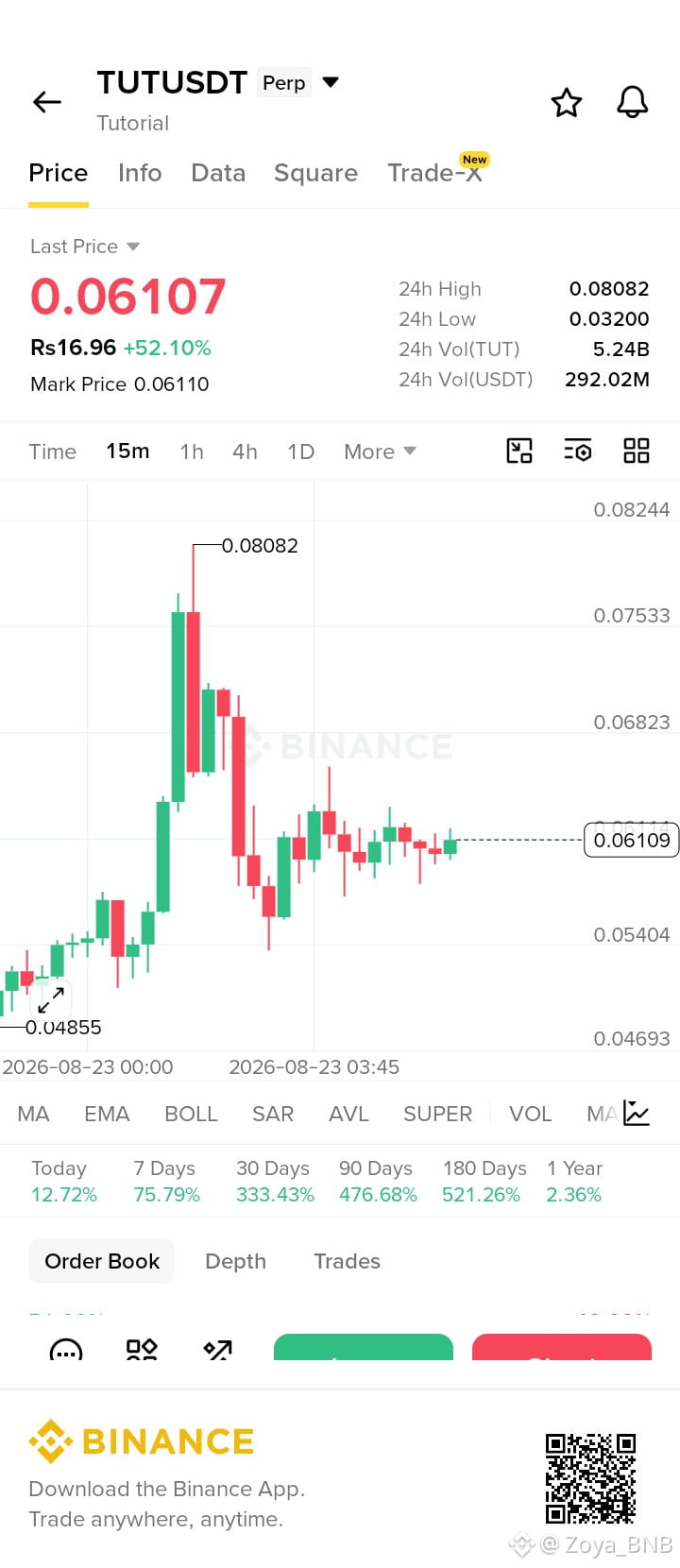
🚀 $TUT affiche un élan haussier massif après une flambée explosive depuis 0,03200 $ ! Les acheteurs restent totalement aux commandes, avec un volume en forte hausse jusqu’à 292,02 M USDT. La structure reste constructive, avec de la liquidité autour de 0,08082 $.
EP : 0,06050 $ – 0,06150 $
TP1 : 0,06500 $
TP2 : 0,07000 $
TP3 : 0,08082 $
SL : 0,05500 $
La liquidité a été balayée près de 0,03200 $ avant une forte réaction des acheteurs. La structure reste constructive au-dessus de 0,05500 $, avec de la liquidité autour de 0,08082 $. Le volume sur 24 h est énorme à 5,24 Md TUT, confirmant un intérêt institutionnel solide. La hausse sur 7 jours de 75,79 % et sur 30 jours de 333,43 % montrent que cette reprise a de sérieuses bases. Avec le plus haut sur 24 h à 0,08082 $, on pourrait revoir ce niveau très bientôt. La tendance est ton amie — et en ce moment, la tendance est indéniablement à la hausse !
On y va $TUT
{future}(TUTUSDT)
TUTUSDT – LONG
🚀 $TUT affiche un élan haussier massif après une flambée explosive depuis 0,03200 $ ! Les acheteurs restent totalement aux commandes, avec un volume en forte hausse jusqu’à 292,02 M USDT. La structure reste constructive, avec de la liquidité autour de 0,08082 $.
EP : 0,06050 $ – 0,06150 $
TP1 : 0,06500 $
TP2 : 0,07000 $
TP3 : 0,08082 $
SL : 0,05500 $
La liquidité a été balayée près de 0,03200 $ avant une forte réaction des acheteurs. La structure reste constructive au-dessus de 0,05500 $, avec de la liquidité autour de 0,08082 $. Le volume sur 24 h est énorme à 5,24 Md TUT, confirmant un intérêt institutionnel solide. La hausse sur 7 jours de 75,79 % et sur 30 jours de 333,43 % montrent que cette reprise a de sérieuses bases. Avec le plus haut sur 24 h à 0,08082 $, on pourrait revoir ce niveau très bientôt. La tendance est ton amie — et en ce moment, la tendance est indéniablement à la hausse !
On y va $TUT
🚀 $TUT affiche un élan haussier massif après une flambée explosive depuis 0,03200 $ ! Les acheteurs restent totalement aux commandes, avec un volume en forte hausse jusqu’à 292,02 M USDT. La structure reste constructive, avec de la liquidité autour de 0,08082 $.
EP : 0,06050 $ – 0,06150 $
TP1 : 0,06500 $
TP2 : 0,07000 $
TP3 : 0,08082 $
SL : 0,05500 $
La liquidité a été balayée près de 0,03200 $ avant une forte réaction des acheteurs. La structure reste constructive au-dessus de 0,05500 $, avec de la liquidité autour de 0,08082 $. Le volume sur 24 h est énorme à 5,24 Md TUT, confirmant un intérêt institutionnel solide. La hausse sur 7 jours de 75,79 % et sur 30 jours de 333,43 % montrent que cette reprise a de sérieuses bases. Avec le plus haut sur 24 h à 0,08082 $, on pourrait revoir ce niveau très bientôt. La tendance est ton amie — et en ce moment, la tendance est indéniablement à la hausse !
On y va $TUT
1
280
·
--
L’idée centrale de Dusk : la confidentialité avec preuve, pas seulement la confidentialité
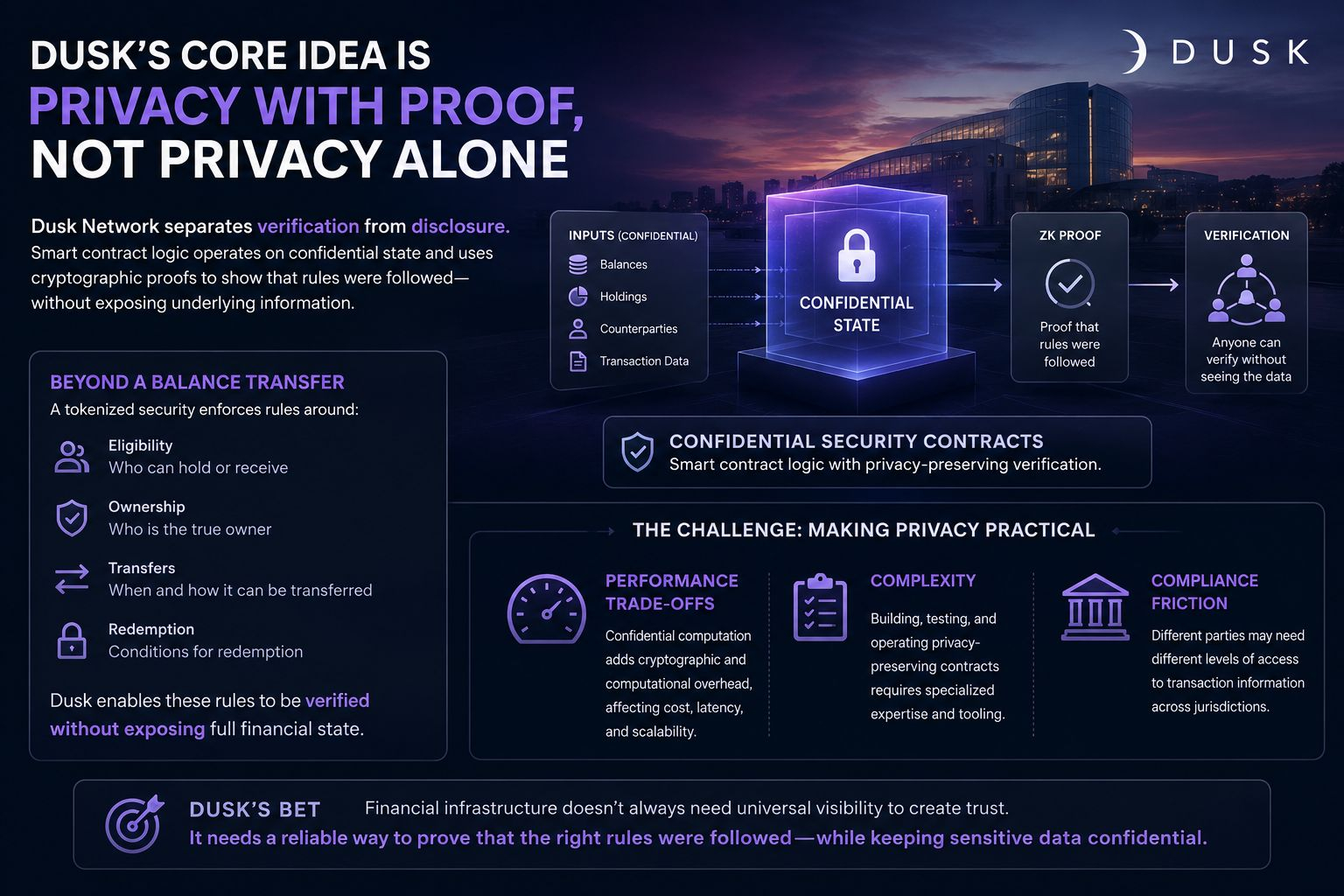
L’idée la plus importante du réseau Dusk n’est pas simplement de rendre l’activité blockchain privée. Il s’agit de séparer la vérification de la divulgation.
Son standard Confidential Security Contract permet à la logique des smart contracts de fonctionner sur un état confidentiel, en utilisant des preuves cryptographiques pour démontrer que les règles ont été respectées sans exposer toutes les informations sous-jacentes. Cette distinction est essentielle pour les actifs financiers : les données de transaction, les positions (holdings) et les contreparties peuvent être sensibles sur le plan commercial, mais les règles de détention et de transfert doivent tout de même être appliquées.
Par exemple, une sécurité tokenisée est plus qu’un solde qui passe entre des adresses. Elle peut comporter des restrictions concernant l’éligibilité, la propriété, les transferts ou le rachat. L’approche de Dusk est conçue pour permettre de vérifier ces règles sans rendre l’intégralité de l’état financier visible pour chaque participant.
Le défi consiste à rendre cela applicable en pratique. Le calcul confidentiel ajoute une surcharge cryptographique et computationnelle, ce qui peut impacter les coûts, la latence et la complexité opérationnelle. La conformité crée aussi des frictions, car différentes parties peuvent avoir besoin de niveaux d’accès différents aux informations relatives aux transactions.
C’est le pari réel de Dusk : l’infrastructure financière ne nécessite pas toujours une visibilité universelle pour instaurer la confiance. Elle a besoin d’une méthode fiable pour prouver que les bonnes règles ont été respectées tout en maintenant les données sensibles confidentielles.
#dusk
$DUSK @Dusk_Foundation
L’idée centrale de Dusk : la confidentialité avec preuve, pas seulement la confidentialité
L’idée la plus importante du réseau Dusk n’est pas simplement de rendre l’activité blockchain privée. Il s’agit de séparer la vérification de la divulgation.
Son standard Confidential Security Contract permet à la logique des smart contracts de fonctionner sur un état confidentiel, en utilisant des preuves cryptographiques pour démontrer que les règles ont été respectées sans exposer toutes les informations sous-jacentes. Cette distinction est essentielle pour les actifs financiers : les données de transaction, les positions (holdings) et les contreparties peuvent être sensibles sur le plan commercial, mais les règles de détention et de transfert doivent tout de même être appliquées.
Par exemple, une sécurité tokenisée est plus qu’un solde qui passe entre des adresses. Elle peut comporter des restrictions concernant l’éligibilité, la propriété, les transferts ou le rachat. L’approche de Dusk est conçue pour permettre de vérifier ces règles sans rendre l’intégralité de l’état financier visible pour chaque participant.
Le défi consiste à rendre cela applicable en pratique. Le calcul confidentiel ajoute une surcharge cryptographique et computationnelle, ce qui peut impacter les coûts, la latence et la complexité opérationnelle. La conformité crée aussi des frictions, car différentes parties peuvent avoir besoin de niveaux d’accès différents aux informations relatives aux transactions.
C’est le pari réel de Dusk : l’infrastructure financière ne nécessite pas toujours une visibilité universelle pour instaurer la confiance. Elle a besoin d’une méthode fiable pour prouver que les bonnes règles ont été respectées tout en maintenant les données sensibles confidentielles.
#dusk
$DUSK @Dusk
L’idée la plus importante du réseau Dusk n’est pas simplement de rendre l’activité blockchain privée. Il s’agit de séparer la vérification de la divulgation.
Son standard Confidential Security Contract permet à la logique des smart contracts de fonctionner sur un état confidentiel, en utilisant des preuves cryptographiques pour démontrer que les règles ont été respectées sans exposer toutes les informations sous-jacentes. Cette distinction est essentielle pour les actifs financiers : les données de transaction, les positions (holdings) et les contreparties peuvent être sensibles sur le plan commercial, mais les règles de détention et de transfert doivent tout de même être appliquées.
Par exemple, une sécurité tokenisée est plus qu’un solde qui passe entre des adresses. Elle peut comporter des restrictions concernant l’éligibilité, la propriété, les transferts ou le rachat. L’approche de Dusk est conçue pour permettre de vérifier ces règles sans rendre l’intégralité de l’état financier visible pour chaque participant.
Le défi consiste à rendre cela applicable en pratique. Le calcul confidentiel ajoute une surcharge cryptographique et computationnelle, ce qui peut impacter les coûts, la latence et la complexité opérationnelle. La conformité crée aussi des frictions, car différentes parties peuvent avoir besoin de niveaux d’accès différents aux informations relatives aux transactions.
C’est le pari réel de Dusk : l’infrastructure financière ne nécessite pas toujours une visibilité universelle pour instaurer la confiance. Elle a besoin d’une méthode fiable pour prouver que les bonnes règles ont été respectées tout en maintenant les données sensibles confidentielles.
#dusk
$DUSK @Dusk
2
4
123
·
--
Vérifié
#dusk Le mécanisme central de Dusk est une confidentialité programmable
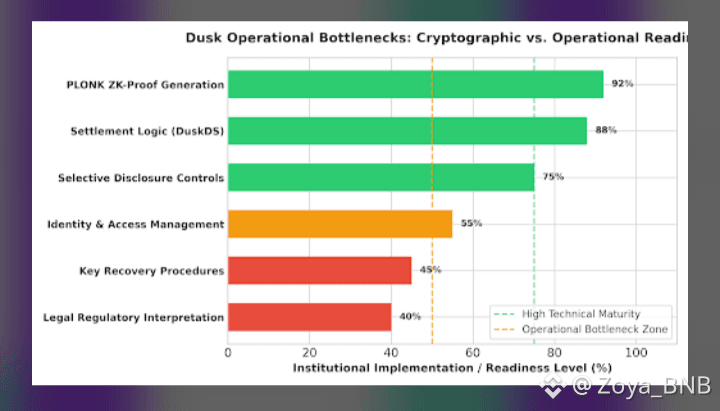
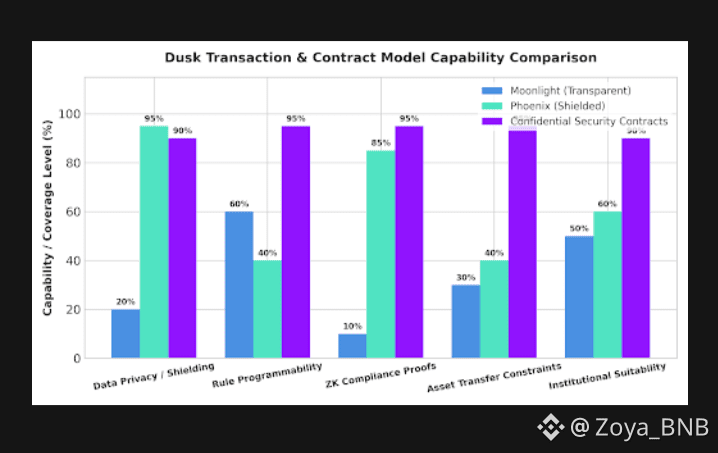
La caractéristique structurelle la plus importante du réseau Dusk n’est pas la confidentialité isolée, mais la capacité à combiner une exécution confidentielle avec des règles financières opposables. Son architecture sépare le règlement via DuskDS de l’exécution, tout en prenant en charge des transactions Moonlight transparentes et des transactions Phoenix protégées. La norme Confidential Security Contract étend ce modèle aux actifs réglementés en intégrant, dans la logique du contrat, des contraintes de transfert, d’éligibilité et de propriété, sans exiger que chaque point de données sous-jacent devienne public. Les preuves à divulgation nulle de connaissance, prises en charge par un système de preuve basé sur PLONK et par la pile cryptographique du réseau, sont au cœur de cette conception, car la conformité peut être démontrée sans exposer l’état complet de la transaction.
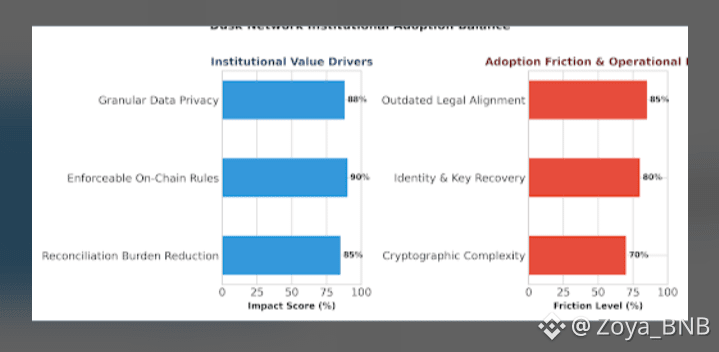
Le goulot d’étranglement de l’exécution relève davantage de l’exploitation que d’une pure cryptographie. Des preuves efficaces ne résolvent pas la gestion des identités, la récupération des clés, la divulgation sélective ni l’interprétation juridique des restrictions programmables. Les institutions ont aussi besoin de rapports fiables et de procédures claires pour déterminer qui peut accéder à des informations confidentielles. Un contrat peut appliquer une règle avec précision tout en reflétant une exigence réglementaire obsolète ou incorrectement interprétée.
C’est là le véritable test institutionnel de Dusk. L’adoption dépend de la question de savoir si des flux de travail confidentiels on-chain réduisent la charge de rapprochement et de partage des données de l’infrastructure financière existante, sans introduire une nouvelle couche de complexité cryptographique et opérationnelle. La valeur du protocole réside dans la programmabilité de la frontière entre divulgation et confidentialité, mais cette frontière doit aussi fonctionner au sein des systèmes de conservation, de conformité et juridiques que le code de la blockchain ne contrôle pas.
$DUSK @Dusk_Foundation
#dusk Le mécanisme central de Dusk est une confidentialité programmable
La caractéristique structurelle la plus importante du réseau Dusk n’est pas la confidentialité isolée, mais la capacité à combiner une exécution confidentielle avec des règles financières opposables. Son architecture sépare le règlement via DuskDS de l’exécution, tout en prenant en charge des transactions Moonlight transparentes et des transactions Phoenix protégées. La norme Confidential Security Contract étend ce modèle aux actifs réglementés en intégrant, dans la logique du contrat, des contraintes de transfert, d’éligibilité et de propriété, sans exiger que chaque point de données sous-jacent devienne public. Les preuves à divulgation nulle de connaissance, prises en charge par un système de preuve basé sur PLONK et par la pile cryptographique du réseau, sont au cœur de cette conception, car la conformité peut être démontrée sans exposer l’état complet de la transaction.
Le goulot d’étranglement de l’exécution relève davantage de l’exploitation que d’une pure cryptographie. Des preuves efficaces ne résolvent pas la gestion des identités, la récupération des clés, la divulgation sélective ni l’interprétation juridique des restrictions programmables. Les institutions ont aussi besoin de rapports fiables et de procédures claires pour déterminer qui peut accéder à des informations confidentielles. Un contrat peut appliquer une règle avec précision tout en reflétant une exigence réglementaire obsolète ou incorrectement interprétée.
C’est là le véritable test institutionnel de Dusk. L’adoption dépend de la question de savoir si des flux de travail confidentiels on-chain réduisent la charge de rapprochement et de partage des données de l’infrastructure financière existante, sans introduire une nouvelle couche de complexité cryptographique et opérationnelle. La valeur du protocole réside dans la programmabilité de la frontière entre divulgation et confidentialité, mais cette frontière doit aussi fonctionner au sein des systèmes de conservation, de conformité et juridiques que le code de la blockchain ne contrôle pas.
$DUSK @Dusk
La caractéristique structurelle la plus importante du réseau Dusk n’est pas la confidentialité isolée, mais la capacité à combiner une exécution confidentielle avec des règles financières opposables. Son architecture sépare le règlement via DuskDS de l’exécution, tout en prenant en charge des transactions Moonlight transparentes et des transactions Phoenix protégées. La norme Confidential Security Contract étend ce modèle aux actifs réglementés en intégrant, dans la logique du contrat, des contraintes de transfert, d’éligibilité et de propriété, sans exiger que chaque point de données sous-jacent devienne public. Les preuves à divulgation nulle de connaissance, prises en charge par un système de preuve basé sur PLONK et par la pile cryptographique du réseau, sont au cœur de cette conception, car la conformité peut être démontrée sans exposer l’état complet de la transaction.
Le goulot d’étranglement de l’exécution relève davantage de l’exploitation que d’une pure cryptographie. Des preuves efficaces ne résolvent pas la gestion des identités, la récupération des clés, la divulgation sélective ni l’interprétation juridique des restrictions programmables. Les institutions ont aussi besoin de rapports fiables et de procédures claires pour déterminer qui peut accéder à des informations confidentielles. Un contrat peut appliquer une règle avec précision tout en reflétant une exigence réglementaire obsolète ou incorrectement interprétée.
C’est là le véritable test institutionnel de Dusk. L’adoption dépend de la question de savoir si des flux de travail confidentiels on-chain réduisent la charge de rapprochement et de partage des données de l’infrastructure financière existante, sans introduire une nouvelle couche de complexité cryptographique et opérationnelle. La valeur du protocole réside dans la programmabilité de la frontière entre divulgation et confidentialité, mais cette frontière doit aussi fonctionner au sein des systèmes de conservation, de conformité et juridiques que le code de la blockchain ne contrôle pas.
$DUSK @Dusk
7
8
143
·
--
Haussier
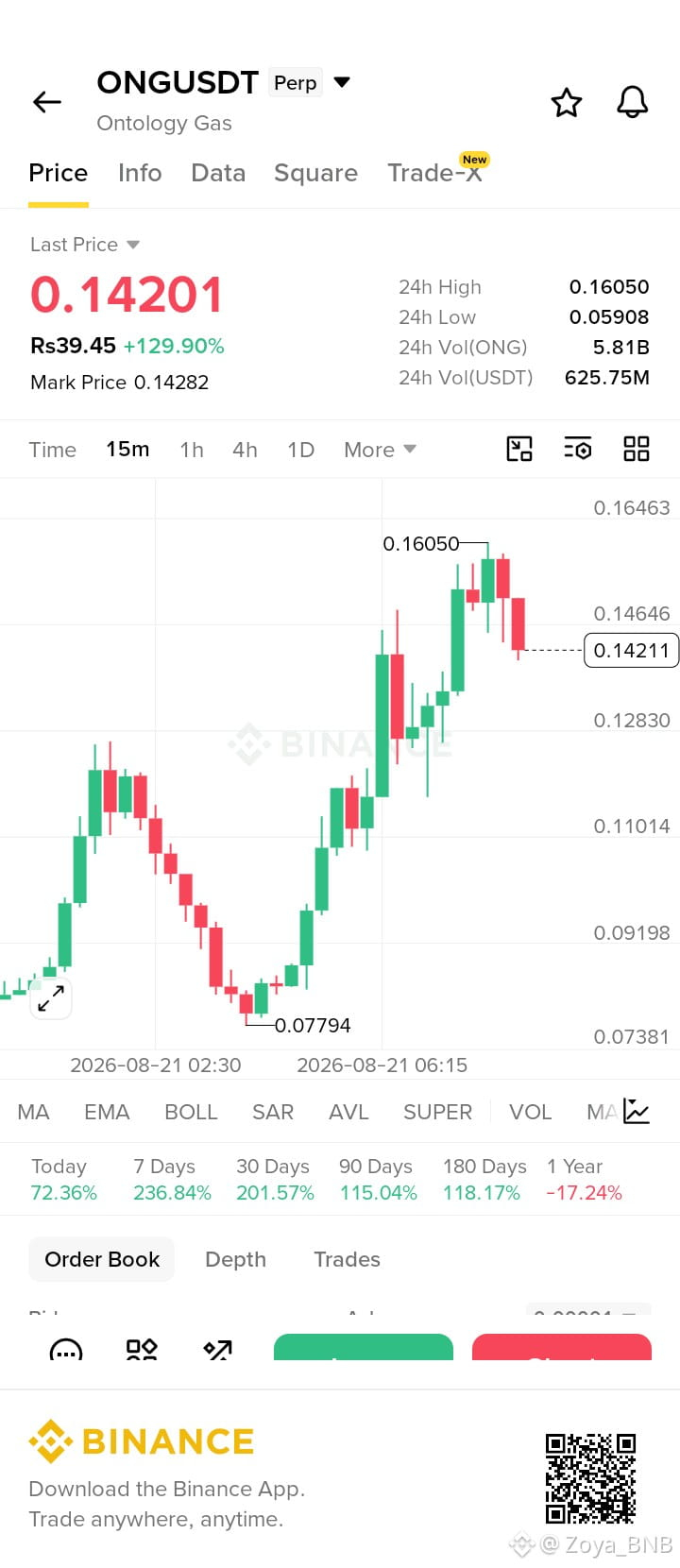
$ONG USDT – LONG (+129,90%)
🚀 LES GARS, JE PASSE LONG – CONFIGURATION SOLIDE, GROS DÉBLOCAGE !
ONG explose littéralement avec un gain stupéfiant de 129,90 % ! Ce n’est pas juste une pompe : c’est un véritable breakout complet depuis une zone d’accumulation sur plusieurs mois. Le volume est astronomique à 625,75 M USDT, confirmant que l’argent institutionnel afflue. Les haussiers ont totalement pris le contrôle, et cette relance ne montre aucun signe d’arrêt !
Entrée : 0,1400 $ – 0,1420 $
SL : 0,1300 $
TP1 : 0,1550 $
TP2 : 0,1650 $
TP3 : 0,1800 $
Le plus haut sur 24h est à 0,16050 $, et nous constatons une cassure nette au-dessus de la résistance. Le RSI montre une forte dynamique, et le MACD signale une énorme continuation haussière. Le gain du jour est de 72,36 %, le gain sur 7 jours est de 236,84 %, et le gain sur 30 jours est de 201,57 % : la tendance est sans conteste haussière !
C’est une configuration long à forte probabilité avec un excellent ratio risque/rendement. Ne manquez pas cette fusée – ONG est en train de performer plus fort que n’importe quoi d’autre sur le marché en ce moment. Montez la vague avec confiance, sécurisez vos profits aux objectifs, et laissez la dynamique vous porter vers des gains massifs !$ONG
{future}(ONGUSDT)
$ONG USDT – LONG (+129,90%)
🚀 LES GARS, JE PASSE LONG – CONFIGURATION SOLIDE, GROS DÉBLOCAGE !
ONG explose littéralement avec un gain stupéfiant de 129,90 % ! Ce n’est pas juste une pompe : c’est un véritable breakout complet depuis une zone d’accumulation sur plusieurs mois. Le volume est astronomique à 625,75 M USDT, confirmant que l’argent institutionnel afflue. Les haussiers ont totalement pris le contrôle, et cette relance ne montre aucun signe d’arrêt !
Entrée : 0,1400 $ – 0,1420 $
SL : 0,1300 $
TP1 : 0,1550 $
TP2 : 0,1650 $
TP3 : 0,1800 $
Le plus haut sur 24h est à 0,16050 $, et nous constatons une cassure nette au-dessus de la résistance. Le RSI montre une forte dynamique, et le MACD signale une énorme continuation haussière. Le gain du jour est de 72,36 %, le gain sur 7 jours est de 236,84 %, et le gain sur 30 jours est de 201,57 % : la tendance est sans conteste haussière !
C’est une configuration long à forte probabilité avec un excellent ratio risque/rendement. Ne manquez pas cette fusée – ONG est en train de performer plus fort que n’importe quoi d’autre sur le marché en ce moment. Montez la vague avec confiance, sécurisez vos profits aux objectifs, et laissez la dynamique vous porter vers des gains massifs !$ONG
🚀 LES GARS, JE PASSE LONG – CONFIGURATION SOLIDE, GROS DÉBLOCAGE !
ONG explose littéralement avec un gain stupéfiant de 129,90 % ! Ce n’est pas juste une pompe : c’est un véritable breakout complet depuis une zone d’accumulation sur plusieurs mois. Le volume est astronomique à 625,75 M USDT, confirmant que l’argent institutionnel afflue. Les haussiers ont totalement pris le contrôle, et cette relance ne montre aucun signe d’arrêt !
Entrée : 0,1400 $ – 0,1420 $
SL : 0,1300 $
TP1 : 0,1550 $
TP2 : 0,1650 $
TP3 : 0,1800 $
Le plus haut sur 24h est à 0,16050 $, et nous constatons une cassure nette au-dessus de la résistance. Le RSI montre une forte dynamique, et le MACD signale une énorme continuation haussière. Le gain du jour est de 72,36 %, le gain sur 7 jours est de 236,84 %, et le gain sur 30 jours est de 201,57 % : la tendance est sans conteste haussière !
C’est une configuration long à forte probabilité avec un excellent ratio risque/rendement. Ne manquez pas cette fusée – ONG est en train de performer plus fort que n’importe quoi d’autre sur le marché en ce moment. Montez la vague avec confiance, sécurisez vos profits aux objectifs, et laissez la dynamique vous porter vers des gains massifs !$ONG
4
204
·
--
Haussier
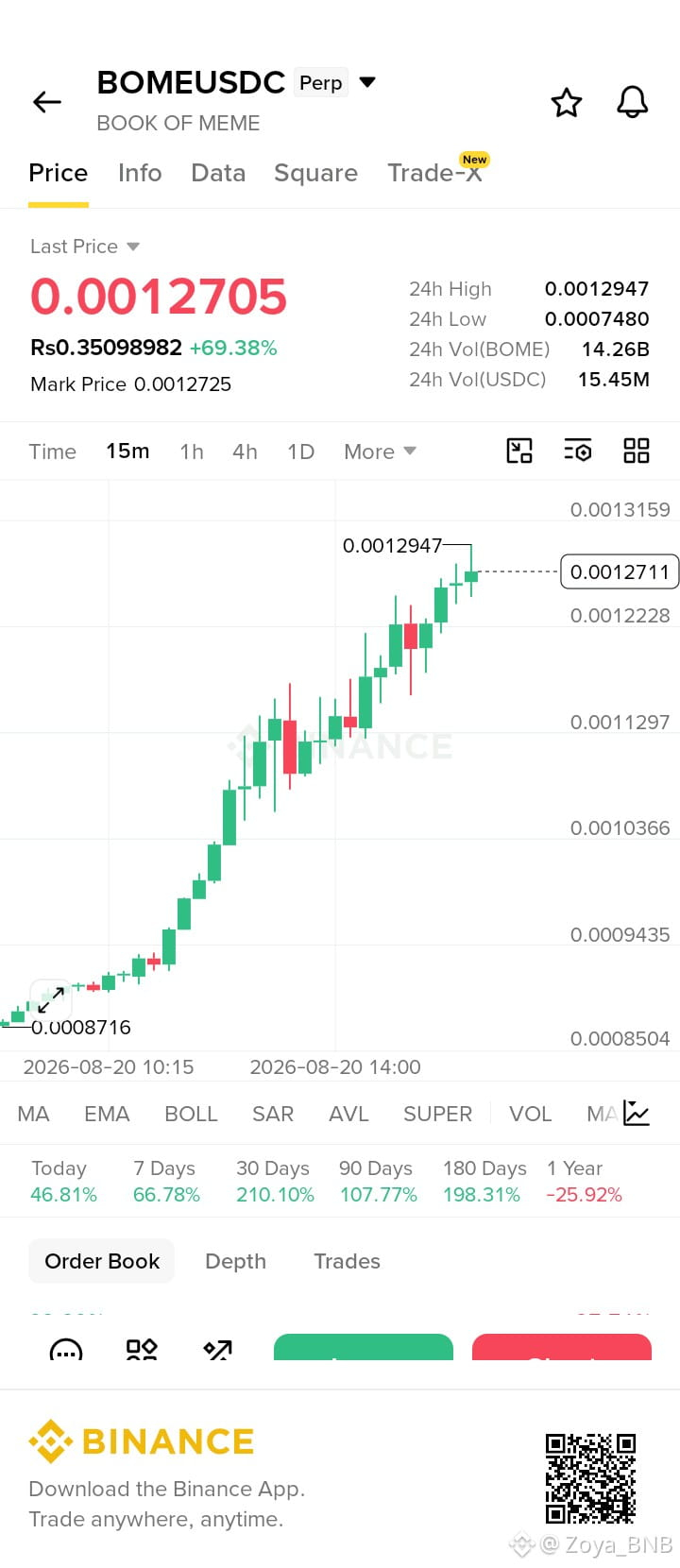
$BOME /USDC PERP – MISE À JOUR DU MARCHÉ
Prix actuel : 0,0012705 $ | +69,38 % aujourd’hui | Volume 24 h : 14,26 Md BOME
$BOME connaît une percée massive, bondissant d’environ 70 % par rapport à son plus bas sur 24 h de 0,0007480 $. La hausse spectaculaire du volume (14,26 milliards de tokens) indique un fort intérêt institutionnel plutôt qu’une simple spéculation de détail. Le prix mark se situe à 0,0012725 $, très proche du dernier prix échangé, ce qui confirme la stabilité du marché malgré le mouvement brusque.
Niveaux de support :
Le support immédiat se trouve à 0,0012228 $, avec un soutien plus solide à 0,0011297 $. Une cassure en dessous de ces niveaux signalerait un épuisement.
Niveaux de résistance :
Le plafond immédiat est à 0,00131459. Une percée nette au-dessus pourrait déclencher une dynamique haussière significative.
Objectifs :
Objectif 1 : 0,0014000 $
Objectif 2 : 0,0016000 $
Objectif étendu : 0,0020000 $
Stop Loss :
Stop prudent : 0,0012200 $
Stop plus large : 0,0011800 $
Prochain mouvement :
Le graphique sur 4 heures montre un schéma de continuation haussière avec un volume soutenu. Les indicateurs suggèrent que nous testerons la résistance à 0,00131459 dans les prochaines heures. Une cassure au-dessus de ce niveau pourrait déclencher des achats agressifs, tandis qu’un rejet pourrait conduire à un retest du support à 0,0012228 avant la prochaine étape à la hausse.
Le rendement sur 30 jours de 210 % et le rendement sur 180 jours de 198 % confirment une forte tendance haussière. Bien que le rendement sur 1 an affiche -25,92 %, le mouvement actuel suggère que nous avons complètement inversé cette baisse.
La gestion du risque est cruciale ici. C’est une pièce mème à forte volatilité : le dimensionnement des positions et les stop losses sont essentiels. La tendance reste fortement haussière en cas de repli.
{future}(BOMEUSDT)
$BOME /USDC PERP – MISE À JOUR DU MARCHÉ
Prix actuel : 0,0012705 $ | +69,38 % aujourd’hui | Volume 24 h : 14,26 Md BOME
$BOME connaît une percée massive, bondissant d’environ 70 % par rapport à son plus bas sur 24 h de 0,0007480 $. La hausse spectaculaire du volume (14,26 milliards de tokens) indique un fort intérêt institutionnel plutôt qu’une simple spéculation de détail. Le prix mark se situe à 0,0012725 $, très proche du dernier prix échangé, ce qui confirme la stabilité du marché malgré le mouvement brusque.
Niveaux de support :
Le support immédiat se trouve à 0,0012228 $, avec un soutien plus solide à 0,0011297 $. Une cassure en dessous de ces niveaux signalerait un épuisement.
Niveaux de résistance :
Le plafond immédiat est à 0,00131459. Une percée nette au-dessus pourrait déclencher une dynamique haussière significative.
Objectifs :
Objectif 1 : 0,0014000 $
Objectif 2 : 0,0016000 $
Objectif étendu : 0,0020000 $
Stop Loss :
Stop prudent : 0,0012200 $
Stop plus large : 0,0011800 $
Prochain mouvement :
Le graphique sur 4 heures montre un schéma de continuation haussière avec un volume soutenu. Les indicateurs suggèrent que nous testerons la résistance à 0,00131459 dans les prochaines heures. Une cassure au-dessus de ce niveau pourrait déclencher des achats agressifs, tandis qu’un rejet pourrait conduire à un retest du support à 0,0012228 avant la prochaine étape à la hausse.
Le rendement sur 30 jours de 210 % et le rendement sur 180 jours de 198 % confirment une forte tendance haussière. Bien que le rendement sur 1 an affiche -25,92 %, le mouvement actuel suggère que nous avons complètement inversé cette baisse.
La gestion du risque est cruciale ici. C’est une pièce mème à forte volatilité : le dimensionnement des positions et les stop losses sont essentiels. La tendance reste fortement haussière en cas de repli.
Prix actuel : 0,0012705 $ | +69,38 % aujourd’hui | Volume 24 h : 14,26 Md BOME
$BOME connaît une percée massive, bondissant d’environ 70 % par rapport à son plus bas sur 24 h de 0,0007480 $. La hausse spectaculaire du volume (14,26 milliards de tokens) indique un fort intérêt institutionnel plutôt qu’une simple spéculation de détail. Le prix mark se situe à 0,0012725 $, très proche du dernier prix échangé, ce qui confirme la stabilité du marché malgré le mouvement brusque.
Niveaux de support :
Le support immédiat se trouve à 0,0012228 $, avec un soutien plus solide à 0,0011297 $. Une cassure en dessous de ces niveaux signalerait un épuisement.
Niveaux de résistance :
Le plafond immédiat est à 0,00131459. Une percée nette au-dessus pourrait déclencher une dynamique haussière significative.
Objectifs :
Objectif 1 : 0,0014000 $
Objectif 2 : 0,0016000 $
Objectif étendu : 0,0020000 $
Stop Loss :
Stop prudent : 0,0012200 $
Stop plus large : 0,0011800 $
Prochain mouvement :
Le graphique sur 4 heures montre un schéma de continuation haussière avec un volume soutenu. Les indicateurs suggèrent que nous testerons la résistance à 0,00131459 dans les prochaines heures. Une cassure au-dessus de ce niveau pourrait déclencher des achats agressifs, tandis qu’un rejet pourrait conduire à un retest du support à 0,0012228 avant la prochaine étape à la hausse.
Le rendement sur 30 jours de 210 % et le rendement sur 180 jours de 198 % confirment une forte tendance haussière. Bien que le rendement sur 1 an affiche -25,92 %, le mouvement actuel suggère que nous avons complètement inversé cette baisse.
La gestion du risque est cruciale ici. C’est une pièce mème à forte volatilité : le dimensionnement des positions et les stop losses sont essentiels. La tendance reste fortement haussière en cas de repli.
4
242
·
--
Haussier
#dusk J’ai réfléchi à un problème de la blockchain, constamment discuté mais rarement résolu correctement : la confidentialité. Nous voulons des systèmes financiers ouverts et vérifiables, mais voulons-nous vraiment que chaque action financière devienne visible de façon permanente ?
Je pensais autrefois que la transparence était presque toujours une fonctionnalité. Avec le temps, j’ai réalisé que c’était incomplet. En finance réelle, tous les détails n’ont pas besoin d’être publics pour qu’un système reste digne de confiance.
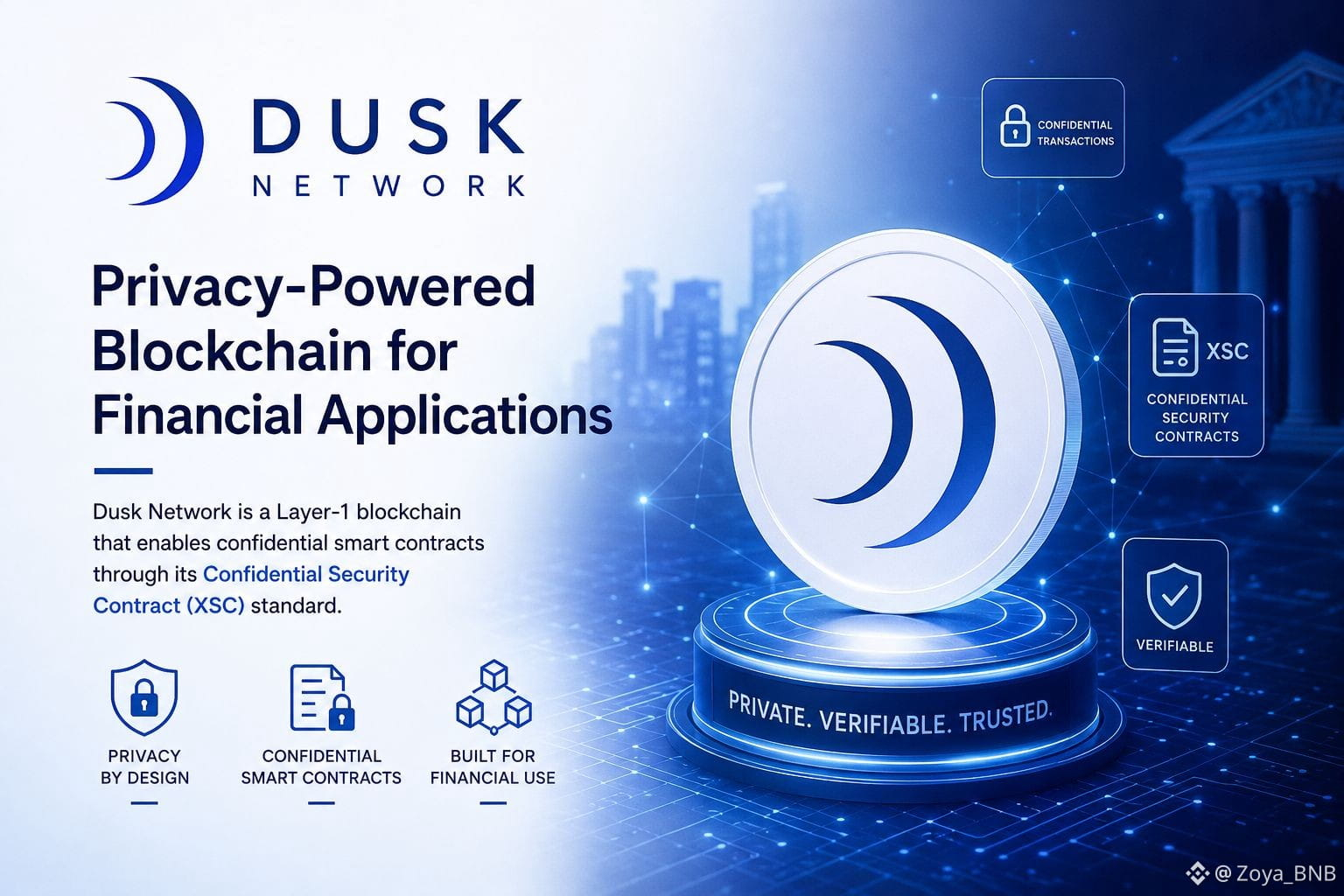
Cette tension, c’est ce qui a attiré mon attention sur le réseau $DUSK . Il s’agit d’une blockchain de couche 1 axée sur les applications financières, avec une confidentialité intégrée via sa norme Confidential Security Contract (XSC) et des smart contracts confidentiels.
L’idée est assez simple : la blockchain peut-elle préserver la vérification et la programmabilité sans tout exposer ?
Cette question devient cruciale à mesure que les actifs tokenisés, la finance réglementée et les marchés on-chain se développent. Mais la partie difficile n’est pas le concept. Les développeurs peuvent-ils réellement y construire des applications utiles ? Les institutions peuvent-elles faire confiance à l’infrastructure ? La confidentialité peut-elle coexister avec la conformité et une adoption pratique ?
$DUSK n’a pas besoin de battage supplémentaire. Il lui faut un usage réel, une exécution fiable et des développeurs prêts à construire.
Pour moi, la question la plus importante est de savoir si l’avenir de la finance peut être à la fois vérifiable et privé.:::
@Dusk_Foundation #dusk. $DUSK
{future}(DUSKUSDT)
#dusk J’ai réfléchi à un problème de la blockchain, constamment discuté mais rarement résolu correctement : la confidentialité. Nous voulons des systèmes financiers ouverts et vérifiables, mais voulons-nous vraiment que chaque action financière devienne visible de façon permanente ?
Je pensais autrefois que la transparence était presque toujours une fonctionnalité. Avec le temps, j’ai réalisé que c’était incomplet. En finance réelle, tous les détails n’ont pas besoin d’être publics pour qu’un système reste digne de confiance.
Cette tension, c’est ce qui a attiré mon attention sur le réseau $DUSK . Il s’agit d’une blockchain de couche 1 axée sur les applications financières, avec une confidentialité intégrée via sa norme Confidential Security Contract (XSC) et des smart contracts confidentiels.
L’idée est assez simple : la blockchain peut-elle préserver la vérification et la programmabilité sans tout exposer ?
Cette question devient cruciale à mesure que les actifs tokenisés, la finance réglementée et les marchés on-chain se développent. Mais la partie difficile n’est pas le concept. Les développeurs peuvent-ils réellement y construire des applications utiles ? Les institutions peuvent-elles faire confiance à l’infrastructure ? La confidentialité peut-elle coexister avec la conformité et une adoption pratique ?
$DUSK n’a pas besoin de battage supplémentaire. Il lui faut un usage réel, une exécution fiable et des développeurs prêts à construire.
Pour moi, la question la plus importante est de savoir si l’avenir de la finance peut être à la fois vérifiable et privé.:::
@Dusk #dusk. $DUSK
Je pensais autrefois que la transparence était presque toujours une fonctionnalité. Avec le temps, j’ai réalisé que c’était incomplet. En finance réelle, tous les détails n’ont pas besoin d’être publics pour qu’un système reste digne de confiance.
Cette tension, c’est ce qui a attiré mon attention sur le réseau $DUSK . Il s’agit d’une blockchain de couche 1 axée sur les applications financières, avec une confidentialité intégrée via sa norme Confidential Security Contract (XSC) et des smart contracts confidentiels.
L’idée est assez simple : la blockchain peut-elle préserver la vérification et la programmabilité sans tout exposer ?
Cette question devient cruciale à mesure que les actifs tokenisés, la finance réglementée et les marchés on-chain se développent. Mais la partie difficile n’est pas le concept. Les développeurs peuvent-ils réellement y construire des applications utiles ? Les institutions peuvent-elles faire confiance à l’infrastructure ? La confidentialité peut-elle coexister avec la conformité et une adoption pratique ?
$DUSK n’a pas besoin de battage supplémentaire. Il lui faut un usage réel, une exécution fiable et des développeurs prêts à construire.
Pour moi, la question la plus importante est de savoir si l’avenir de la finance peut être à la fois vérifiable et privé.:::
@Dusk #dusk. $DUSK
7
6
154
·
--
Baissier
#dusk J’ai réfléchi à un problème dont la crypto parle souvent, mais qu’elle ne résout que rarement correctement : la transparence est utile, mais la transparence totale peut devenir une faiblesse. Nous voulons des systèmes financiers ouverts et vérifiables, mais chaque transaction, solde ou détail d’activité doit-il vraiment être visible par tous ?
J’avais l’habitude de penser que la transparence était presque toujours la bonne réponse. Mais cette vision me semble aujourd’hui incomplète. De vrais systèmes financiers ont aussi besoin de confidentialité. Sans elle, les institutions pourraient hésiter à utiliser des blockchains publiques pour des activités sensibles.
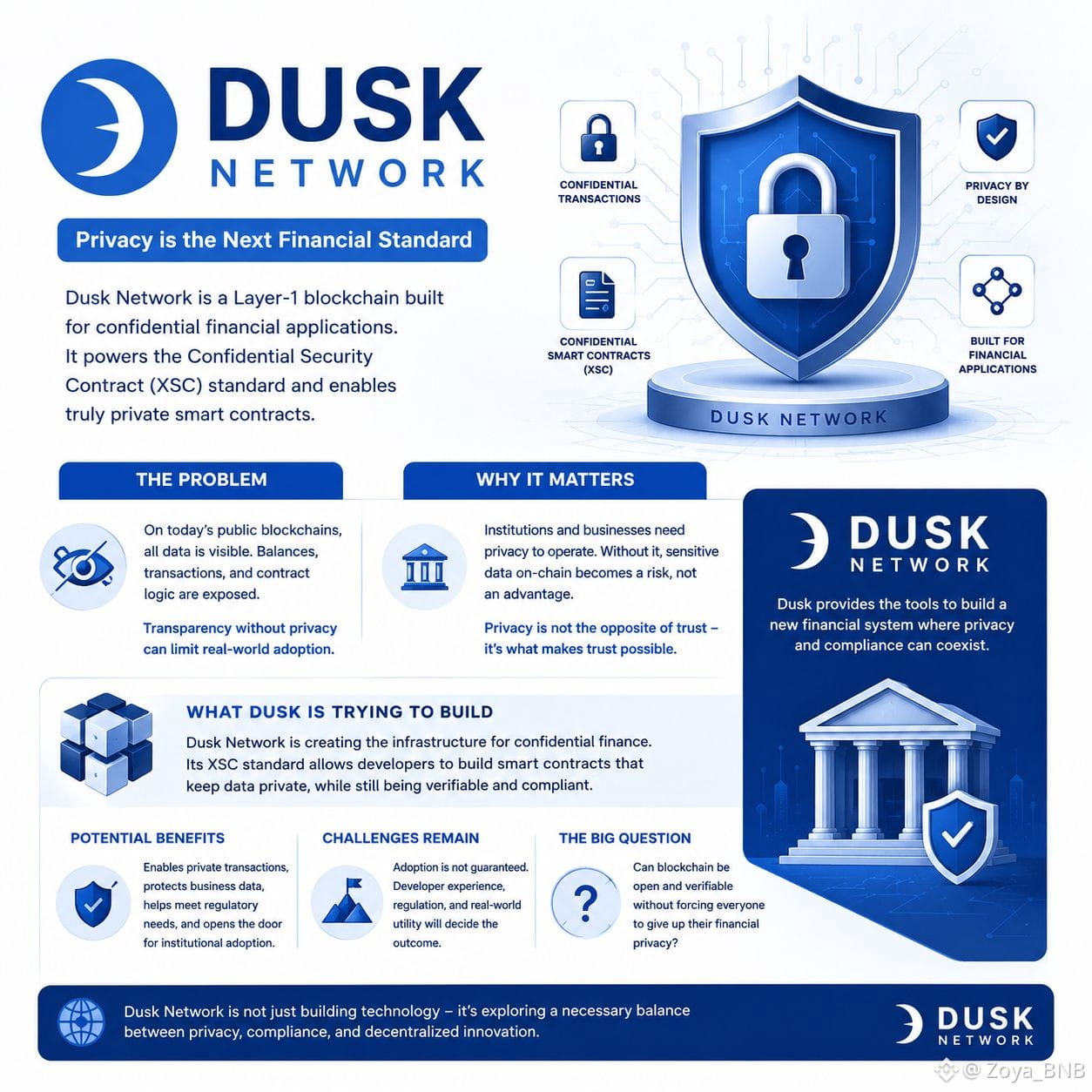
C’est là que le réseau Dusk a retenu mon attention. Plutôt que de traiter la confidentialité comme une fonctionnalité optionnelle, il construit une couche 1 (Layer-1) axée sur des applications financières, y compris des smart contracts confidentiels grâce à sa norme XSC.
Mais la question difficile demeure : la confidentialité peut-elle réellement devenir une infrastructure utile plutôt qu’un autre récit de la cryptomonnaie ?
Le potentiel est significatif. Les transactions confidentielles pourraient aider à rapprocher la finance régulée et la blockchain sans exposer publiquement tout. Pourtant, la technologie seule ne suffit pas. L’adoption, la conformité, l’expérience développeur, la sécurité et la demande concrète détermineront si l’idée compte vraiment.
Pour moi, Dusk soulève une question plus vaste : la blockchain peut-elle devenir réellement ouverte et vérifiable sans obliger chacun à sacrifier sa confidentialité financière ?
@Dusk_Foundation #dusk. $DUSK
{future}(DUSKUSDT)
$ST
{alpha}(560x70be40667385500c5da7f108a022e21b606045dd)
$AA
{alpha}(560x01bf3d77cd08b19bf3f2309972123a2cca0f6936)
#dusk J’ai réfléchi à un problème dont la crypto parle souvent, mais qu’elle ne résout que rarement correctement : la transparence est utile, mais la transparence totale peut devenir une faiblesse. Nous voulons des systèmes financiers ouverts et vérifiables, mais chaque transaction, solde ou détail d’activité doit-il vraiment être visible par tous ?
J’avais l’habitude de penser que la transparence était presque toujours la bonne réponse. Mais cette vision me semble aujourd’hui incomplète. De vrais systèmes financiers ont aussi besoin de confidentialité. Sans elle, les institutions pourraient hésiter à utiliser des blockchains publiques pour des activités sensibles.
C’est là que le réseau Dusk a retenu mon attention. Plutôt que de traiter la confidentialité comme une fonctionnalité optionnelle, il construit une couche 1 (Layer-1) axée sur des applications financières, y compris des smart contracts confidentiels grâce à sa norme XSC.
Mais la question difficile demeure : la confidentialité peut-elle réellement devenir une infrastructure utile plutôt qu’un autre récit de la cryptomonnaie ?
Le potentiel est significatif. Les transactions confidentielles pourraient aider à rapprocher la finance régulée et la blockchain sans exposer publiquement tout. Pourtant, la technologie seule ne suffit pas. L’adoption, la conformité, l’expérience développeur, la sécurité et la demande concrète détermineront si l’idée compte vraiment.
Pour moi, Dusk soulève une question plus vaste : la blockchain peut-elle devenir réellement ouverte et vérifiable sans obliger chacun à sacrifier sa confidentialité financière ?
@Dusk #dusk. $DUSK
$ST
$AA
J’avais l’habitude de penser que la transparence était presque toujours la bonne réponse. Mais cette vision me semble aujourd’hui incomplète. De vrais systèmes financiers ont aussi besoin de confidentialité. Sans elle, les institutions pourraient hésiter à utiliser des blockchains publiques pour des activités sensibles.
C’est là que le réseau Dusk a retenu mon attention. Plutôt que de traiter la confidentialité comme une fonctionnalité optionnelle, il construit une couche 1 (Layer-1) axée sur des applications financières, y compris des smart contracts confidentiels grâce à sa norme XSC.
Mais la question difficile demeure : la confidentialité peut-elle réellement devenir une infrastructure utile plutôt qu’un autre récit de la cryptomonnaie ?
Le potentiel est significatif. Les transactions confidentielles pourraient aider à rapprocher la finance régulée et la blockchain sans exposer publiquement tout. Pourtant, la technologie seule ne suffit pas. L’adoption, la conformité, l’expérience développeur, la sécurité et la demande concrète détermineront si l’idée compte vraiment.
Pour moi, Dusk soulève une question plus vaste : la blockchain peut-elle devenir réellement ouverte et vérifiable sans obliger chacun à sacrifier sa confidentialité financière ?
@Dusk #dusk. $DUSK
$ST
$AA
11
12
120
Connectez-vous pour découvrir plus de contenu
Rejoignez la communauté mondiale des adeptes de cryptomonnaies sur Binance Square
⚡️ Suviez les dernières informations importantes sur les cryptomonnaies.
💬 Jugé digne de confiance par la plus grande plateforme d’échange de cryptomonnaies au monde.
👍 Découvrez les connaissances que partagent les créateurs vérifiés.
Adresse e-mail/Nº de téléphone
Sujets d’actualité
BitcoinReboundsTo$79K
10,468 vues
105 mentions
🚨 $BTC est en train de progresser.
Le Bitcoin s’échange autour de 78 804 $ , en hausse d’environ 1,9 %, après avoir repris la zone des 78 K. Le prochain niveau à surveiller est le plus haut intraday, vers 78 905 $.
Une cassure nette au-dessus de ce niveau pourrait ouvrir la voie vers 79 K–80 K. Si le BTC est rejeté, le support se situe autour de 78 300 $, puis 77 975 $.
Les haussiers ont de l’élan, mais le BTC doit rester au-dessus de 78 K.
#Bitcoin #BTC #CryptoTrading #CryptoMarket #CryptoAnalysis
PulseON
·11 mentions J’aime
·10.7k vues
GrayscalePutsXRPAt26.11%InAdvisorPortfolio
1,014 vues
71 mentions
PhiladelphiaSemiconductorIndexFalls5.9%
976 vues
47 mentions