

0xnut6
14 Publications
0xnut6
Signaler
Bloquer l’utilisateur
多年資歷的專業交易員與分析師,專注衍生品、DeFi、鏈上數據、RWA 與 AI 賽道。每天整理市場最前沿的資訊,拆解背後的原因、資金流向與風險,幫你在變化快速的加密市場裡看清局勢、做出更好的決策。內容僅供參考,不構成投資建議。
12 Suivis
12 Abonnés
1 J’aime
Publications
·
--
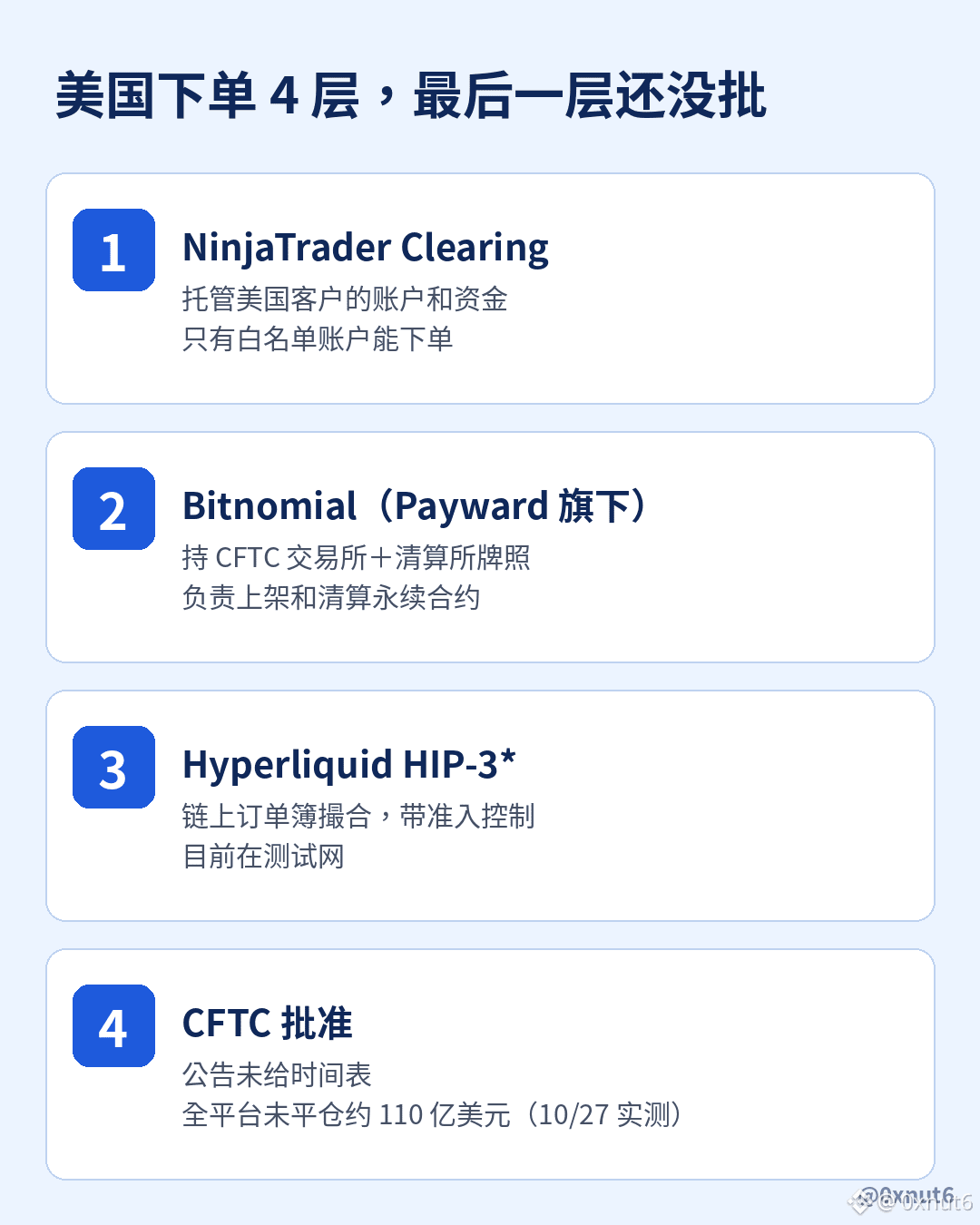
@krakenfx 的母公司 Payward 想把美国客户的永续合约放到 @HyperliquidX 上撮合。Hyperliquid 官方 10 月 27 日凌晨发的公告,到当天下午已有约 30 万浏览。对美国用户来说,以后有机会在受 CFTC 监管的账户里,交易链上订单簿的永续合约。
按公告的分工,Payward 旗下的 Bitnomial 持有 CFTC 交易所和清算所两张牌照,负责上架和清算这些合约;NinjaTrader Clearing 负责托管美国客户的账户和资金。交易仍在 Hyperliquid 链上撮合,但只有白名单账户能下单,现在跑在测试网上,正式上线要等监管批准。
HIP-3 是 Hyperliquid 让第三方自己部署永续市场的机制,原本谁质押够 HYPE 都能开市场。这次带星号的 HIP-3* 加了准入控制,相当于在同一条链上隔出一块合规区。
我刚用 Hyperliquid 公开接口查了一下,全平台未平仓合约约 110 亿美元。$HYPE 的标记价格是 77.4 美元,比 24 小时前只涨了不到 1%。市场还没有把这件事当成已经落地的利好,因为公告里没有给出任何批准时间表。
93
·
--
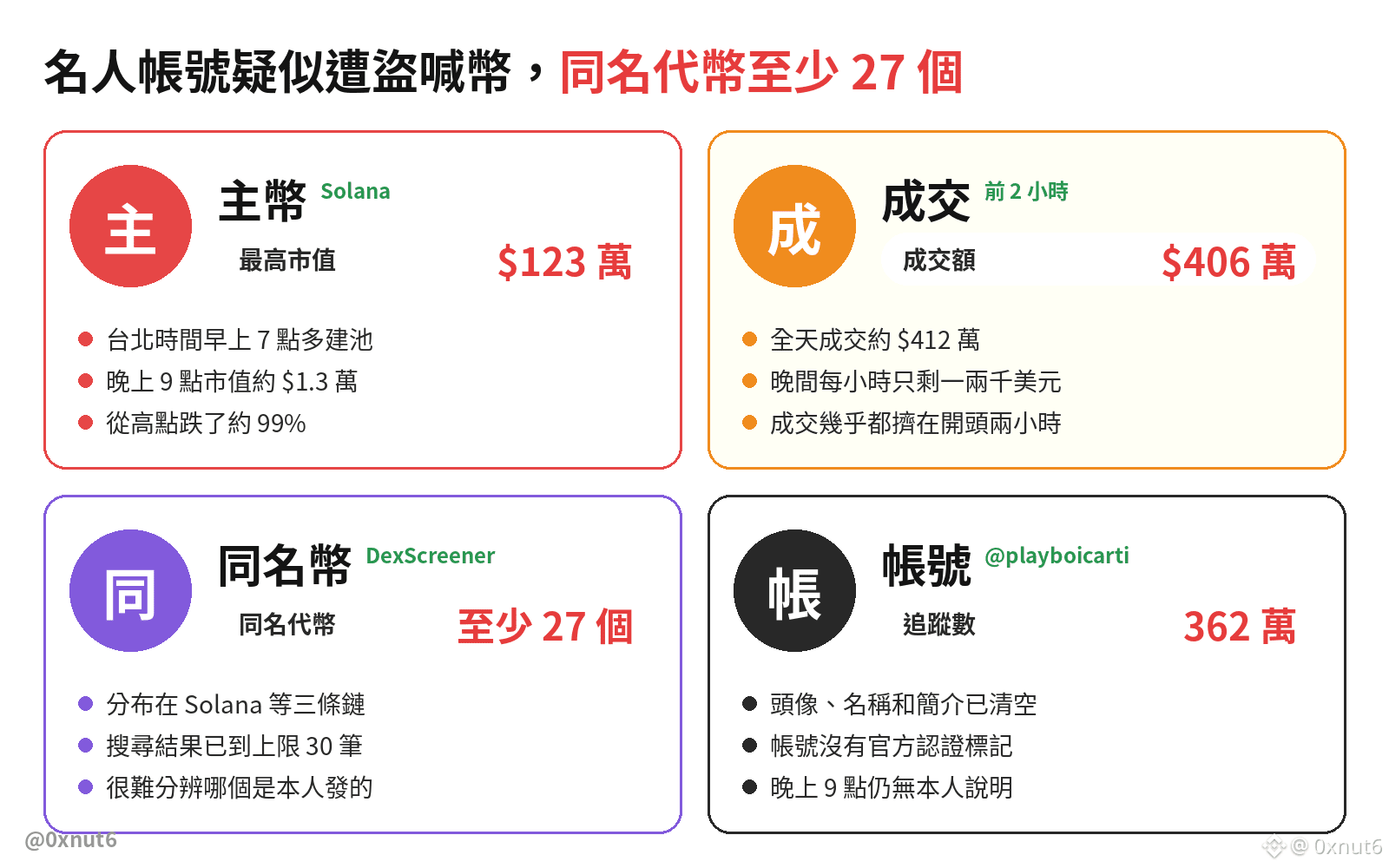
Playboi Carti 的 X 帳號 @playboicarti 有 362 萬人追蹤,今天早上被社群指出疑似遭盜,簡介一度掛上發幣平台的名字,接著出現推迷因幣的貼文。我用小時線看了主幣,它在台北時間早上 7 點多建池,市值最高衝到約 123 萬美元。前兩個小時的成交約 406 萬美元,現在市值只剩約 1.3 萬美元。晚上 9 點再看,帳號的頭像、名稱和簡介都已清空,但我還沒查到本人或團隊的說明。
這種事通常是先在 @Pumpfun 這類一鍵發幣平台發幣,再用大帳號貼出合約地址,等跟進的人買進時,發幣的人早就在賣了。這份清單可以先存起來:
1. 帳號過去從沒聊過加密貨幣,卻突然貼出合約地址,先當成異常
2. 簡介或名稱突然改動,常常比貼文本身更早露出問題
3. 在 DexScreener 搜一下代幣名稱,這次同名的至少有 27 個,很難確定哪個是本人發的
4. 流動性只有一兩萬美元的池子,一筆小賣單就可能把價格砸穿
5. 轉帳時從自己的通訊錄複製地址,不從交易紀錄複製,地址投毒就是把長得很像的假地址塞進紀錄
這種事通常是先在 @Pumpfun 這類一鍵發幣平台發幣,再用大帳號貼出合約地址,等跟進的人買進時,發幣的人早就在賣了。這份清單可以先存起來:
1. 帳號過去從沒聊過加密貨幣,卻突然貼出合約地址,先當成異常
2. 簡介或名稱突然改動,常常比貼文本身更早露出問題
3. 在 DexScreener 搜一下代幣名稱,這次同名的至少有 27 個,很難確定哪個是本人發的
4. 流動性只有一兩萬美元的池子,一筆小賣單就可能把價格砸穿
5. 轉帳時從自己的通訊錄複製地址,不從交易紀錄複製,地址投毒就是把長得很像的假地址塞進紀錄
63
·
--
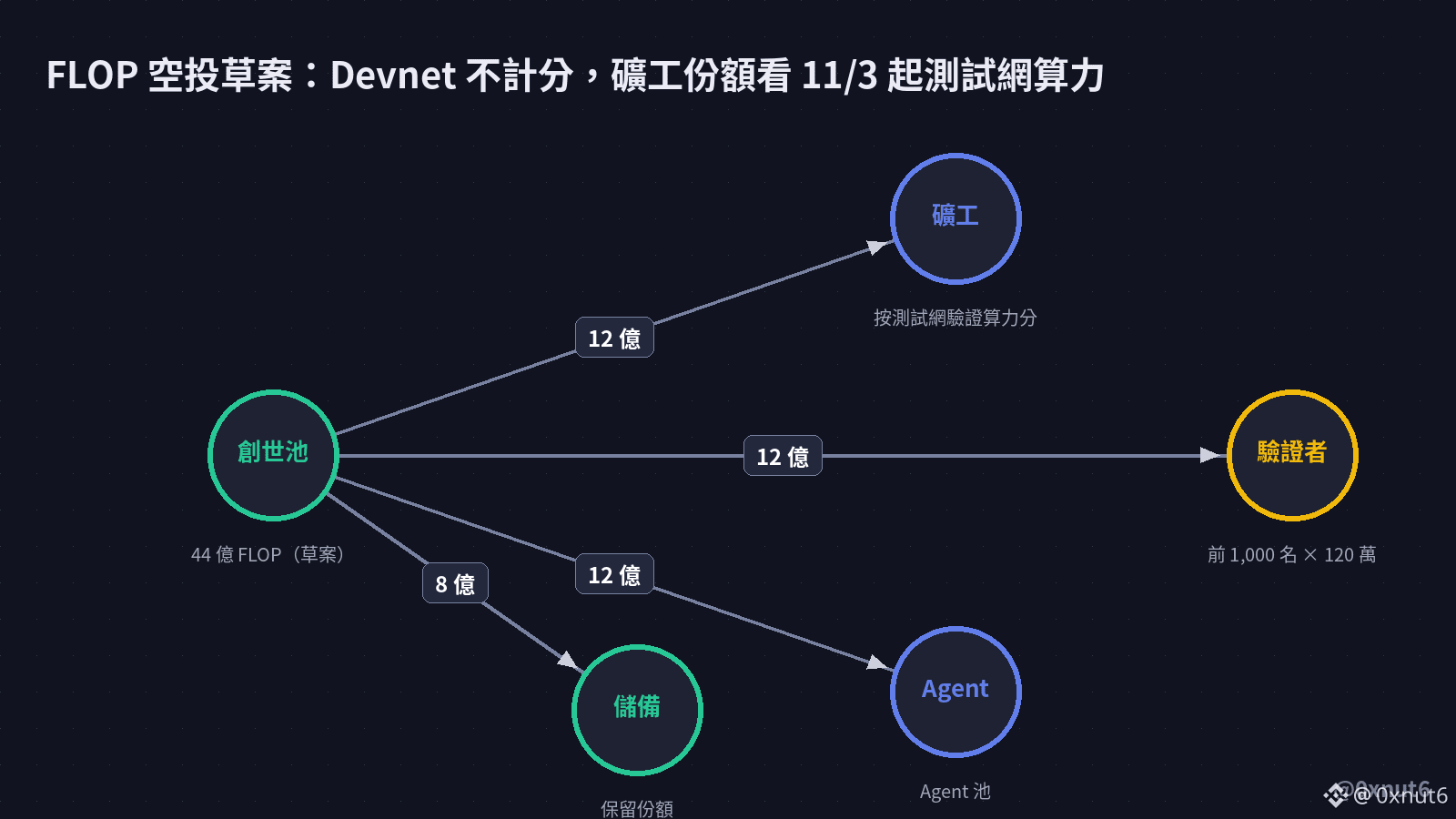
Arthur Hayes 今天在 X 上說,Flop Labs 幾天內會開放 Devnet,任何人都能以礦工或驗證者身分加入,但參與不計入任何代幣分配。習慣把每個測試階段都當成刷空投機會的人,這次在 Devnet 花的電費和時間,換到的只會是一台設定好的機器。
官方空投草案把創世池定在 44 億顆 FLOP,礦工那份 12 億顆按 11 月 3 日起約 90 天測試網的驗證算力按比例分,完成任務數、活躍天數和持有餘額都不計分。這跟過去不少項目看互動次數的做法不同,刷任務在這裡拿不到分數,只有真的接單跑出的算力才算數。驗證者則只取測試網表現前 1,000 名,每位 120 萬顆,整筆都當保證金鎖住。
所以 Devnet 真正的用處,是讓機器在測試網第一天就能穩定接單,因為文件寫明晚開機會拉低整段期間的分數。官方也註明這些數字仍是草案,11 月 3 日是目標日期而不是定案。
官方空投草案把創世池定在 44 億顆 FLOP,礦工那份 12 億顆按 11 月 3 日起約 90 天測試網的驗證算力按比例分,完成任務數、活躍天數和持有餘額都不計分。這跟過去不少項目看互動次數的做法不同,刷任務在這裡拿不到分數,只有真的接單跑出的算力才算數。驗證者則只取測試網表現前 1,000 名,每位 120 萬顆,整筆都當保證金鎖住。
所以 Devnet 真正的用處,是讓機器在測試網第一天就能穩定接單,因為文件寫明晚開機會拉低整段期間的分數。官方也註明這些數字仍是草案,11 月 3 日是目標日期而不是定案。
36
·
--
币安联合创始人 @cz_binance 发了一句 "Multiple chains, one coins",已经 47 万次浏览,多数人记住的是 BNB Chain 新 L1 的 200 毫秒出块和不发新币。我把 @BNBCHAIN 的开发文档读完,对写合约的人更要紧的是另外几个数。
新链按你声明的 gas 上限收费,不按实际消耗。文档的例子是一笔调用只用 7 万 gas,上限却填了 50 万。这样要按 50 万付,等于实际用量的 7 倍多。很多脚本习惯把估算乘 1.5,搬过去就是白付的钱。
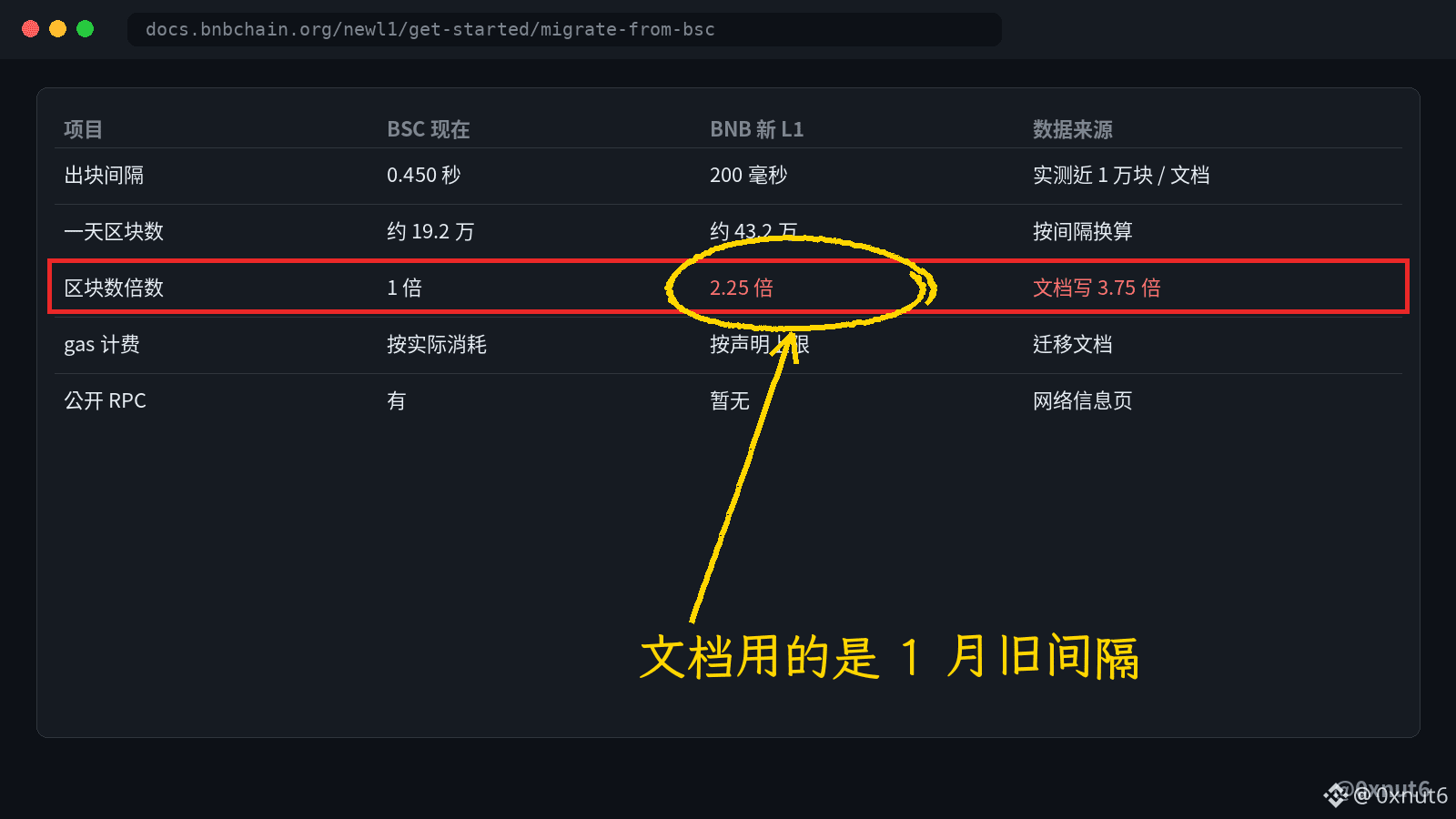
我用 BSC 公开节点抓了最近 1 万个区块,平均间隔 0.450 秒。新链是 200 毫秒,一天约 43.2 万个块。BSC 一天约 19.2 万个,两边差 2.25 倍。文档写的"约 3.75 倍"对应的是 BSC 今年 1 月 750 毫秒的旧间隔,按区块数算锁仓和 TWAP 窗口的合约,照文档改会算错。
目前只有内部开发网,没有公开 RPC,跨 BSC 的原生桥还没上线,官方计划 2026 年底上测试网。
68
·
--
Article
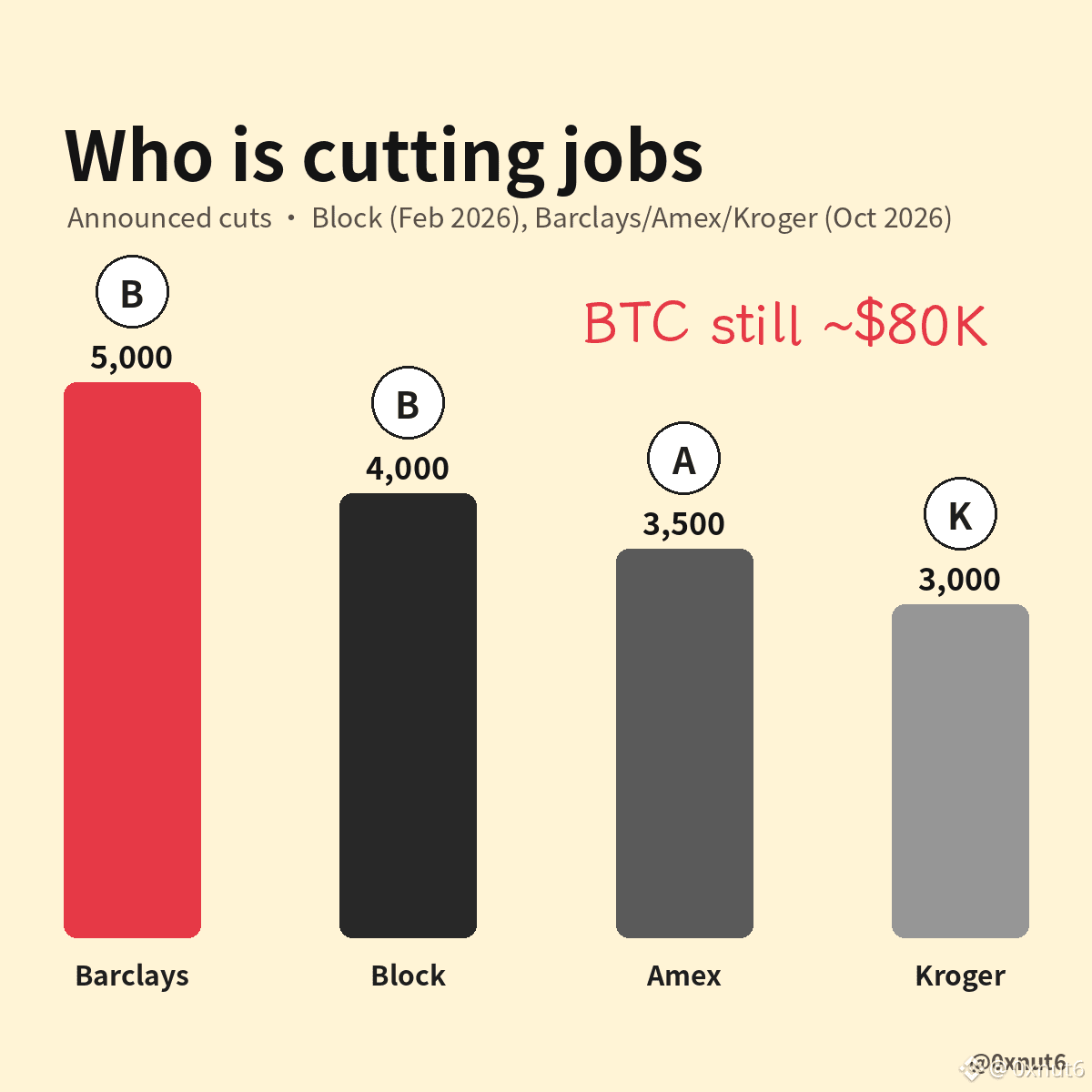
11,000 AI-era job cuts, and BTC hasn't movedBarclays, American Express and Kroger announced more than 11,000 job cuts between them this month, and BTC has barely moved off $80,000. The old playbook says weak jobs news brings rate cuts and rate cuts lift crypto. Right now that chain is stuck at the first link.
Look at who's cutting and why. @Barclays put 5,000 cuts into its Q3 results on Oct 22, with about 60% of them in support functions that include developers. A day later @AmericanExpress said it would trim about 5% of its roughly 77,000 staff, and its CFO said the goal was to get leaner and prepare for AI. Kroger's 3,000 head office jobs go over three years. Both banks reported solid profits that same week, so they're moving payroll into automation while customers keep spending.
The Fed sees it the same way. It raised its target range to 3.75% to 4.00% on Sept 16, and September CPI then came in at 3.7%. Futures price about a 90% chance of a hold this Wednesday and roughly three-in-four odds of a December hike. With inflation that high, the bond market reads AI layoffs as cost cuts rather than collapsing demand, so they don't pull rate expectations lower or hand BTC a liquidity tailwind. Challenger's September report backs that up, since announced cuts were the lowest for the month since 2022 while planned hiring was the weakest since 2011. The September data shows a hiring freeze more than a firing wave.
Crypto companies sit inside the same trend. The Singapore exchange run by Kris Marszalek cut about 12% of its staff in March, and he tied the move to AI. Block let go of more than 4,000 people in February for the same stated reason.
Weekly jobless claims for the week ending Oct 24 come out Thursday, the day after the Fed decides, with forecasts around 196,000 against 194,000 the prior week. A print near that would mean these layoffs still aren't turning into unemployment filings, which leaves the December hike priced and gives crypto no rate-cut story to trade on.
11,000 AI-era job cuts, and BTC hasn't moved
Barclays, American Express and Kroger announced more than 11,000 job cuts between them this month, and BTC has barely moved off $80,000. The old playbook says weak jobs news brings rate cuts and rate cuts lift crypto. Right now that chain is stuck at the first link.
Look at who's cutting and why. @Barclays put 5,000 cuts into its Q3 results on Oct 22, with about 60% of them in support functions that include developers. A day later @AmericanExpress said it would trim about 5% of its roughly 77,000 staff, and its CFO said the goal was to get leaner and prepare for AI. Kroger's 3,000 head office jobs go over three years. Both banks reported solid profits that same week, so they're moving payroll into automation while customers keep spending.
The Fed sees it the same way. It raised its target range to 3.75% to 4.00% on Sept 16, and September CPI then came in at 3.7%. Futures price about a 90% chance of a hold this Wednesday and roughly three-in-four odds of a December hike. With inflation that high, the bond market reads AI layoffs as cost cuts rather than collapsing demand, so they don't pull rate expectations lower or hand BTC a liquidity tailwind. Challenger's September report backs that up, since announced cuts were the lowest for the month since 2022 while planned hiring was the weakest since 2011. The September data shows a hiring freeze more than a firing wave.
Crypto companies sit inside the same trend. The Singapore exchange run by Kris Marszalek cut about 12% of its staff in March, and he tied the move to AI. Block let go of more than 4,000 people in February for the same stated reason.
Weekly jobless claims for the week ending Oct 24 come out Thursday, the day after the Fed decides, with forecasts around 196,000 against 194,000 the prior week. A print near that would mean these layoffs still aren't turning into unemployment filings, which leaves the December hike priced and gives crypto no rate-cut story to trade on.
309
·
--
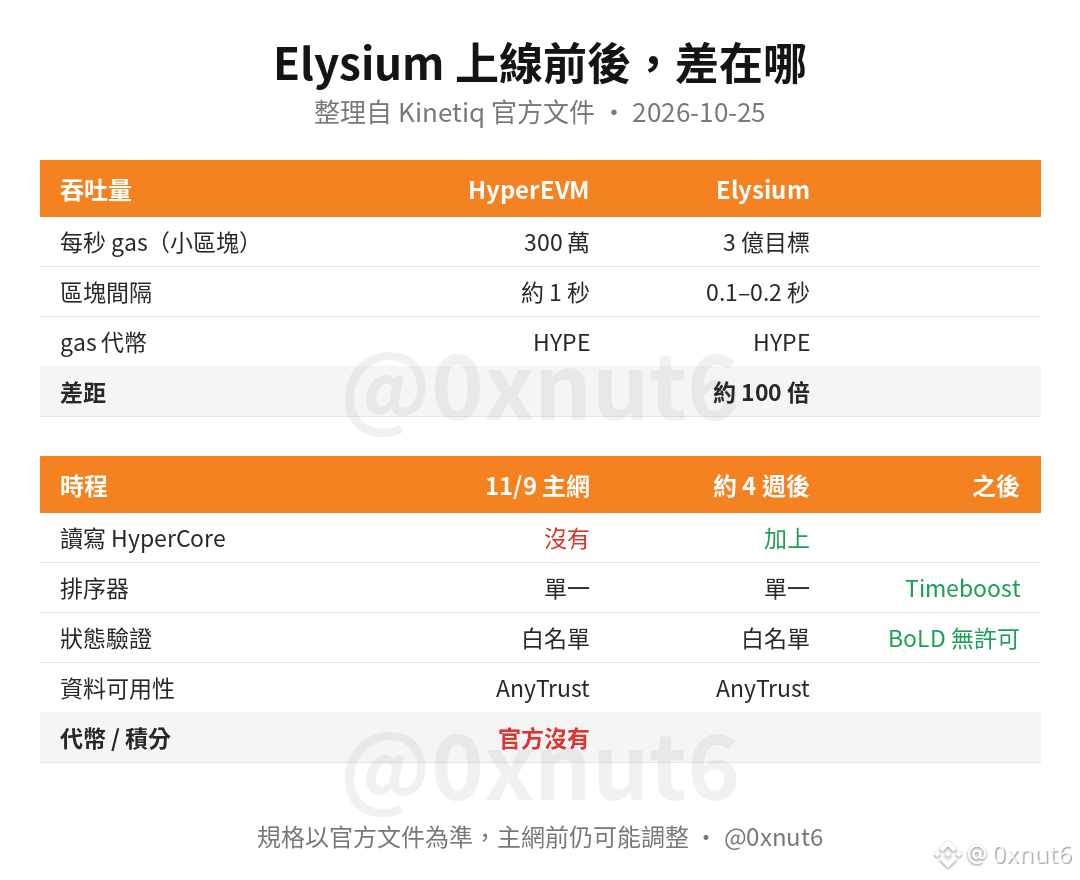
Kinetiq 做的 Elysium 是一條和 Hyperliquid 生態綁在一起的 L2,已經定在 11 月 9 日上主網,但大家最期待的功能,上線當天其實用不到。@Kinetiq_xyz 的文件寫得很清楚,讓合約直接讀 HyperCore 盤口、把訂單送進 HyperCore 的那一層,要等主網後大約四週,鏈的底層系統 ArbOS 升級之後才會加上。
Elysium 想解決的是 HyperEVM 區塊空間太小的問題。HyperEVM 為了不拖累 @HyperliquidX 的永續訂單簿,小區塊每秒只放 300 萬 gas。它用 @arbitrum Orbit 架構,結算回 HyperEVM、用 HYPE 付 gas。設計目標是每秒 3 億 gas,大約多出兩個數量級,主要想吸引每秒要改 5 到 10 次報價的做市型 AMM。排序器手續費有一半會拿去公開市場買回 KNTQ 並銷毀,對 TVL 比去年 10 月高點少了六成多的 Kinetiq 來說,這是一條新的收入來源。
代價是上線初期要多信任團隊一些,因為只有一個排序器負責排交易,資料可用性交給 AnyTrust 委員會,狀態驗證由白名單驗證者負責,無許可的 BoLD 證明排在之後。Arbitrum One 自己 2021 年上主網時也是白名單驗證,到 2025 年 2 月才開放 BoLD,中間隔了三年多。照這個前例,Elysium 開放 BoLD 恐怕不會只花幾個月。
Elysium 官方帳號 @Enter_Elysium 在 10/23 也公開提醒,主網還沒正式上線,要小心非官方工具和詐騙。在官方公布主網合約地址之前,任何號稱已經能在 Elysium 上交易的代幣,都沒有辦法核對真偽。
83
·
--
前 X 產品負責人 Nikita Bier 今天發文提醒,AI 一邊快速挖出系統漏洞、一邊把聲音做到和真人分不出來,騙子可以偽造來電顯示假冒你的銀行打給你。
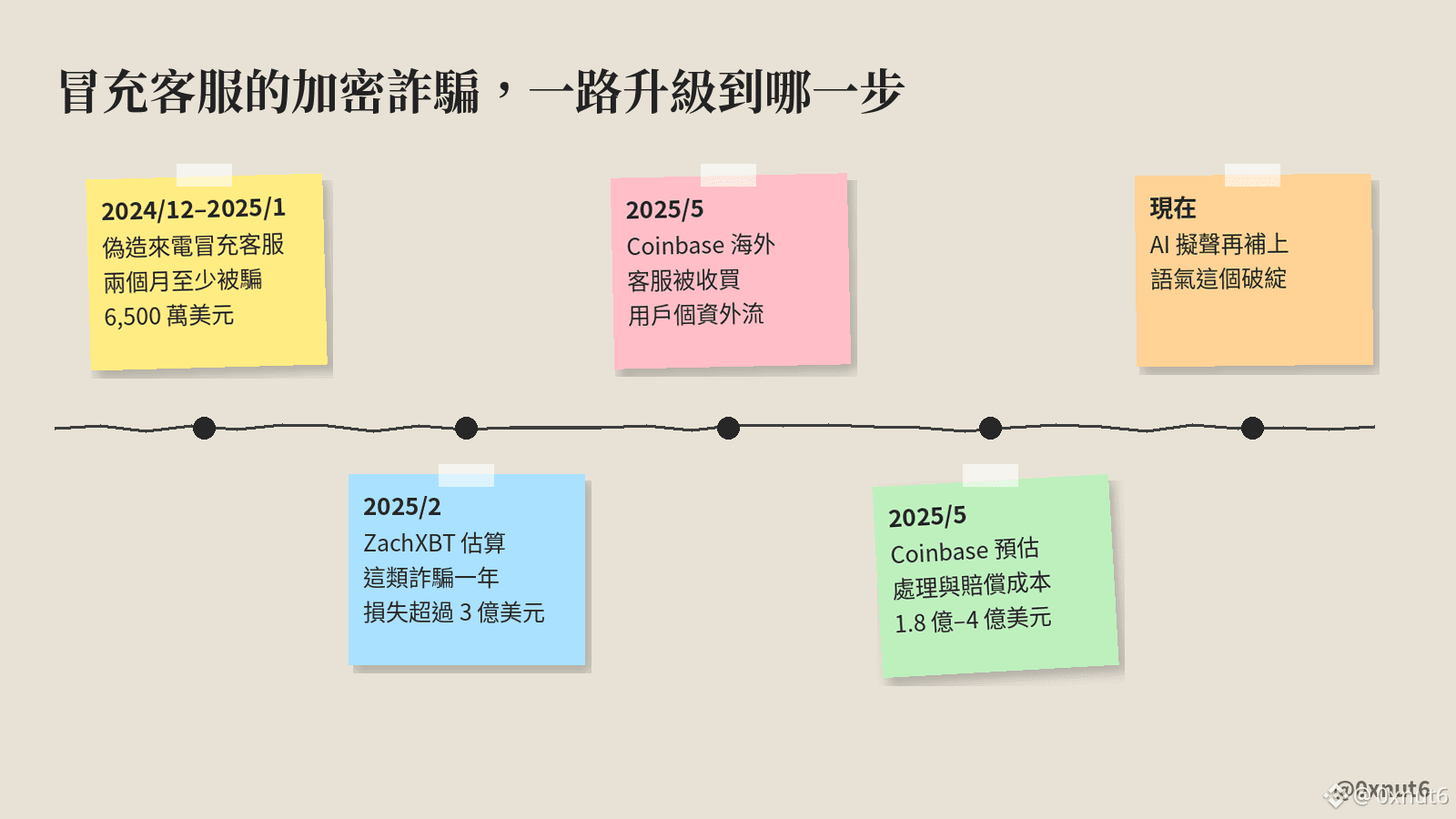
這個場景,加密圈早就有現成的劇本。2025 年 2 月,@zachxbt 和調查員 tanuki42 整理了一批 Coinbase 用戶被盜案例,光是兩個月就至少被騙走 6,500 萬美元。手法是偽造來電號碼冒充客服,再寄一封附假案件編號的郵件,引導受害者把幣轉到騙子的地址,他們估算一年損失超過 3 億美元。
同年 5 月,@coinbase 揭露海外客服被收買,外流了部分用戶的姓名、電話、證件照和交易紀錄,預估處理與賠償成本 1.8 億到 4 億美元。這種詐騙最難的一步是讓人相信電話那頭真的是客服,個資外流已經幫騙子補上一半,聲音模型再補上語氣,破綻只會更少。
所以分辨真假不能再靠聲音或來電顯示:
1. 自稱交易所或銀行的來電先掛斷,從 App 裡自己聯絡客服
2. 要你把資產轉到「安全錢包」的,一律當成詐騙
3. 打開提幣白名單,新增地址設延遲生效
69
·
--
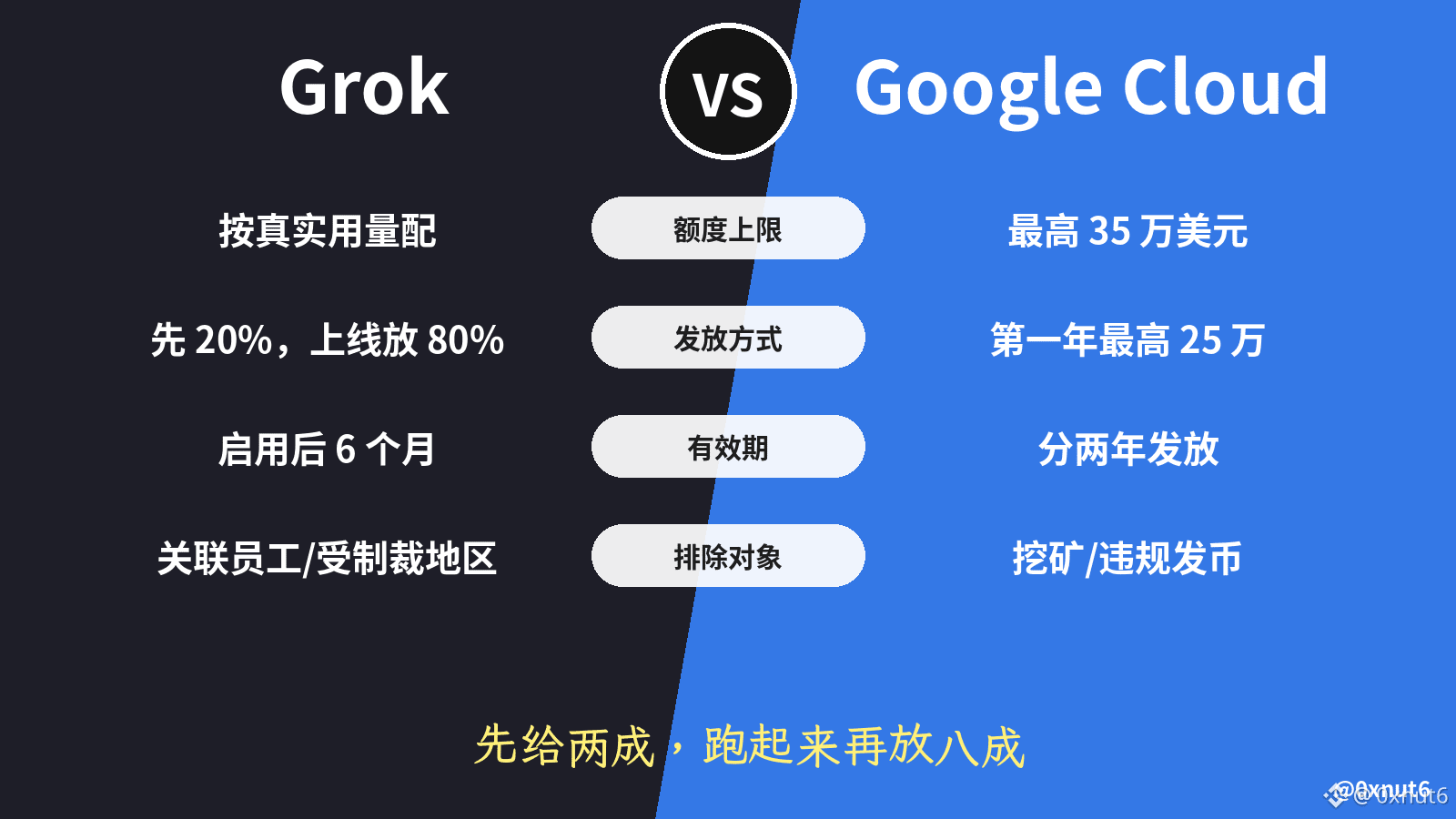
xAI 新推出的 Grok for Startups,审批通过后只先发 20% 额度,剩下 80% 要等产品真正用起来才自动释放,而且额度启用 6 个月后就过期,没用完直接作废。
这和 @googlecloud 的 AI 创业计划思路很不一样。谷歌给 AI 初创最高 35 万美元,分两年发,第一年最多 25 万,金额写在明面上。xAI 官方页面只说按 6 到 12 个月的真实用量来配,审核看融资、营收、现在的 AI 开销和团队规模。一个公司集团只能拿一次,禁止拆分主体重复申请,以前拿过的促销额度也要披露,核验文件 10 天内交齐。先给小头、用量真实再放大头,跟空投项目防女巫的做法是同一套逻辑。
对加密团队来说,两边差在准入上:谷歌条款点名不收挖矿公司和违规发币的项目,xAI 公开条款里列出的排除对象是关联公司员工和受制裁地区。不过这份额度不能转让、不能换现金,也不能拿去买 X Premium,只能花在 @grok 聊天、Grok Build、Grok Bot 和 API 上。
·
--
Article
Hyperliquid asks the SEC to rewrite airdrop rulesHyperliquid handed out 310 million HYPE, 31% of its supply, in its November 2024 genesis airdrop. Under the SEC's current airdrop guidance, an airdrop like that still isn't clearly covered, and @HyperliquidPC wants that fixed in rule text.
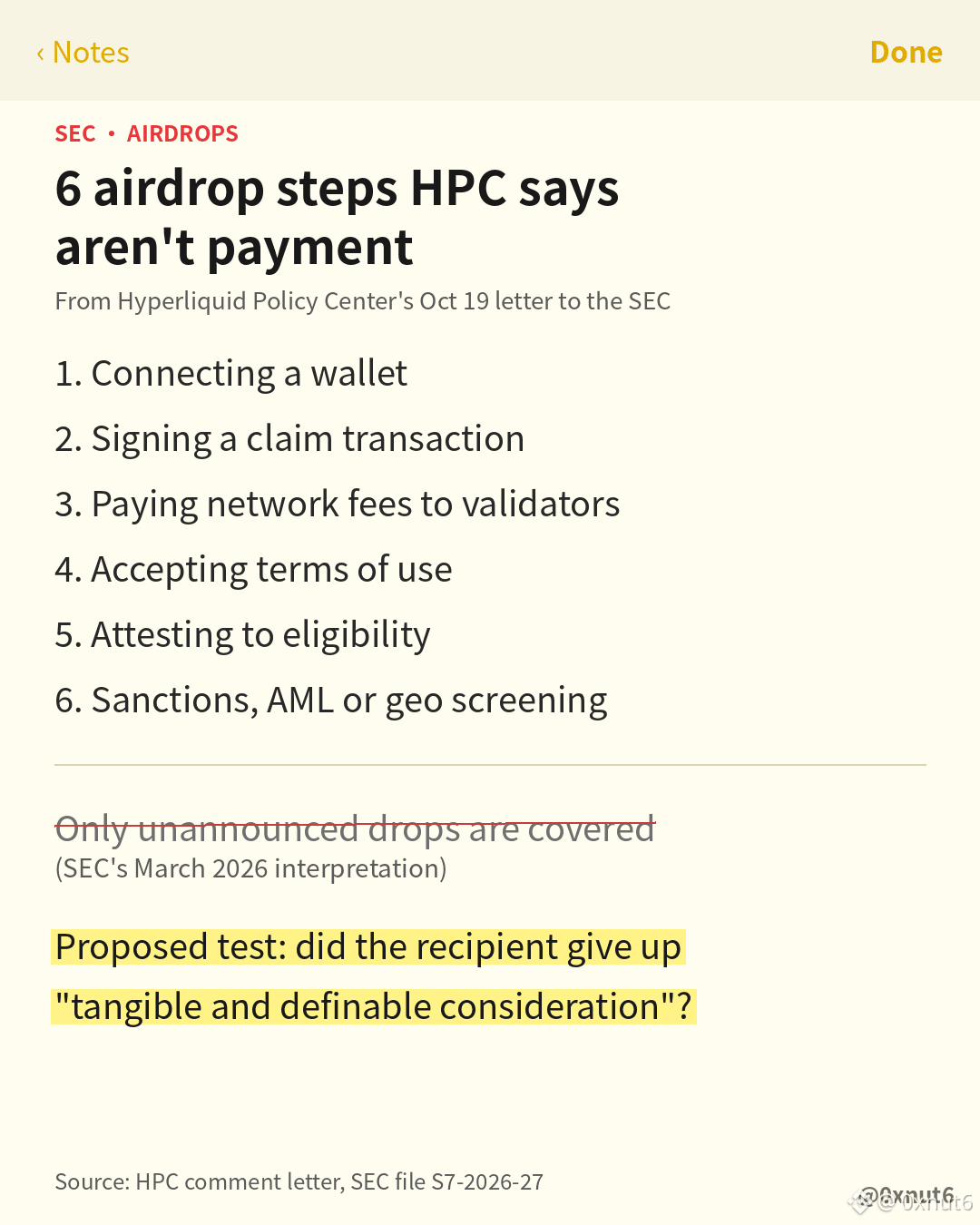
In its Oct 19 letter on the proposed Regulation Crypto Assets, the policy center led by Jake Chervinsky made five asks, and the airdrop one comes first. The SEC's March 2026 interpretation already says there's no "investment of money" when recipients give nothing for a token, but it only covers drops that weren't announced before the tokens went out. A points season that's public for months, where people keep trading because they know a token is coming, falls outside that wording.
HPC wants the test to be whether the recipient gave up "tangible and definable consideration," the standard from a 1979 Supreme Court case, not when the team made its announcement. Its conditions are that the network already works, rewards track the user's own activity, and the drop isn't a capital raise. It also lists steps that shouldn't count as payment: connecting a wallet, signing a claim, paying gas, accepting terms, attesting to eligibility, and passing sanctions, anti-money-laundering or geographic screening.
That's a long way from 2018, when @SECGov treated Tomahawk's "free" bounty tokens as a securities sale because the company got online promotion in return. Back then, doing promotional work in exchange for tokens was enough to count as payment.
The other four asks cover secondary trading outside broker and exchange rules, a safe harbor that doesn't force a project to admit its token was once a security, written rules for programmatic buybacks, and state preemption that doesn't end the moment a project qualifies for that safe harbor.
Not everyone's on board. On Oct 16, former SEC enforcement official John Reed Stark and Duke's Lee Reiners asked the agency to withdraw the whole proposal and warned it would invite a court challenge. Comments closed on Oct 20, and the SEC hasn't set a date for a vote.
If the final rule keeps the "unannounced only" limit, would teams drop public points programs, or would they just stop announcing what the points are for?
Hyperliquid asks the SEC to rewrite airdrop rules
Hyperliquid handed out 310 million HYPE, 31% of its supply, in its November 2024 genesis airdrop. Under the SEC's current airdrop guidance, an airdrop like that still isn't clearly covered, and @HyperliquidPC wants that fixed in rule text.
In its Oct 19 letter on the proposed Regulation Crypto Assets, the policy center led by Jake Chervinsky made five asks, and the airdrop one comes first. The SEC's March 2026 interpretation already says there's no "investment of money" when recipients give nothing for a token, but it only covers drops that weren't announced before the tokens went out. A points season that's public for months, where people keep trading because they know a token is coming, falls outside that wording.
HPC wants the test to be whether the recipient gave up "tangible and definable consideration," the standard from a 1979 Supreme Court case, not when the team made its announcement. Its conditions are that the network already works, rewards track the user's own activity, and the drop isn't a capital raise. It also lists steps that shouldn't count as payment: connecting a wallet, signing a claim, paying gas, accepting terms, attesting to eligibility, and passing sanctions, anti-money-laundering or geographic screening.
That's a long way from 2018, when @SECGov treated Tomahawk's "free" bounty tokens as a securities sale because the company got online promotion in return. Back then, doing promotional work in exchange for tokens was enough to count as payment.
The other four asks cover secondary trading outside broker and exchange rules, a safe harbor that doesn't force a project to admit its token was once a security, written rules for programmatic buybacks, and state preemption that doesn't end the moment a project qualifies for that safe harbor.
Not everyone's on board. On Oct 16, former SEC enforcement official John Reed Stark and Duke's Lee Reiners asked the agency to withdraw the whole proposal and warned it would invite a court challenge. Comments closed on Oct 20, and the SEC hasn't set a date for a vote.
If the final rule keeps the "unannounced only" limit, would teams drop public points programs, or would they just stop announcing what the points are for?
1
424
·
--
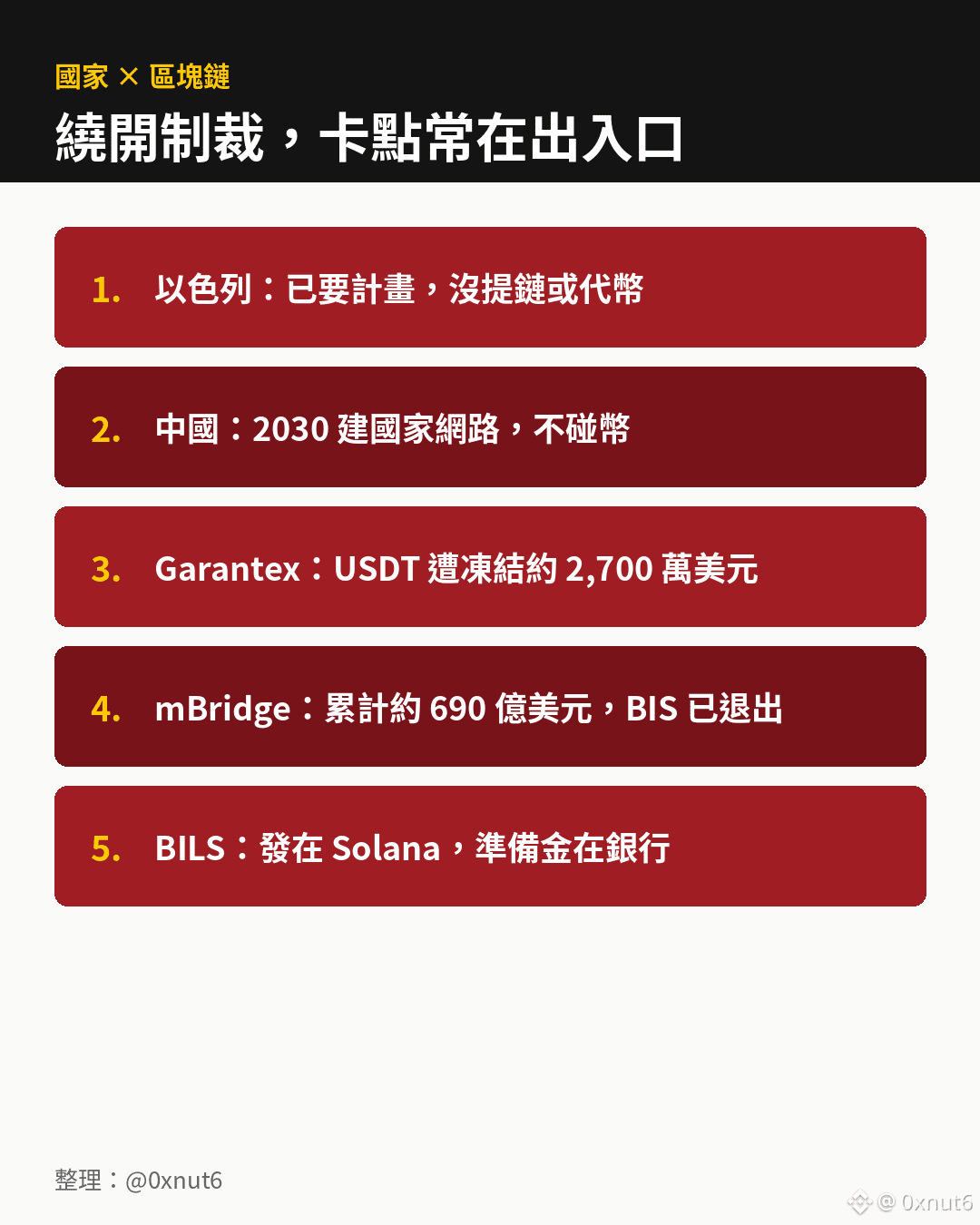
內塔尼亞胡 10/23 在以色列第 10 台的經濟頻道受訪時說,銀行制裁有可能真的會來,所以他已經要人準備一套能繞過制裁的「替代經濟」計畫,區塊鏈是其中一個選項。他沒有說要用哪條鏈,也沒有提到任何代幣,目前公開的只有這段受訪內容。
同一天,中國公布第十五個五年國家資訊化規劃,寫明 2030 年要基本建成國家區塊鏈網路。不過大陸的加密禁令沒有變,這張網路是國家主導的基礎設施,跟公鏈和代幣沒有關係。
以色列想的是繞過制裁,中國則透過另一套系統 mBridge,讓一部分跨境清算不必經過美元銀行體系,但這類做法卡關的地方通常在出入口。俄羅斯交易所 Garantex 在 2025 年 3 月被 Tether 凍結約 2,700 萬美元的 USDT 之後就停擺了,鏈沒有被關,可是發行商一凍結,錢就動不了。由中國主導的跨境平台 mBridge 改用各國央行數位貨幣直接結算,據 Atlantic Council 統計,到今年 6 月累計交易約 690 億美元,但 BIS 在 2024 年 10 月退出(官方說法是專案已經可以交給各國央行自己營運),沙烏地阿拉伯完成概念驗證後也離開了。
以色列其實已經有現成的工具。今年 4 月以色列資本市場管理局核准 Bits of Gold 發行 1:1 錨定謝克爾的穩定幣 BILS,發行在 Solana 上,託管技術由 Fireblocks 提供。可是 BILS 的準備金放在以色列境內的銀行帳戶,如果制裁直接打到銀行,這個穩定幣一樣會受影響。我覺得這份計畫最該說清楚的,是準備金和兌換通道要放在哪裡;如果最後還是靠國內銀行託管,能抵擋的制裁範圍恐怕相當有限。
196
·
--
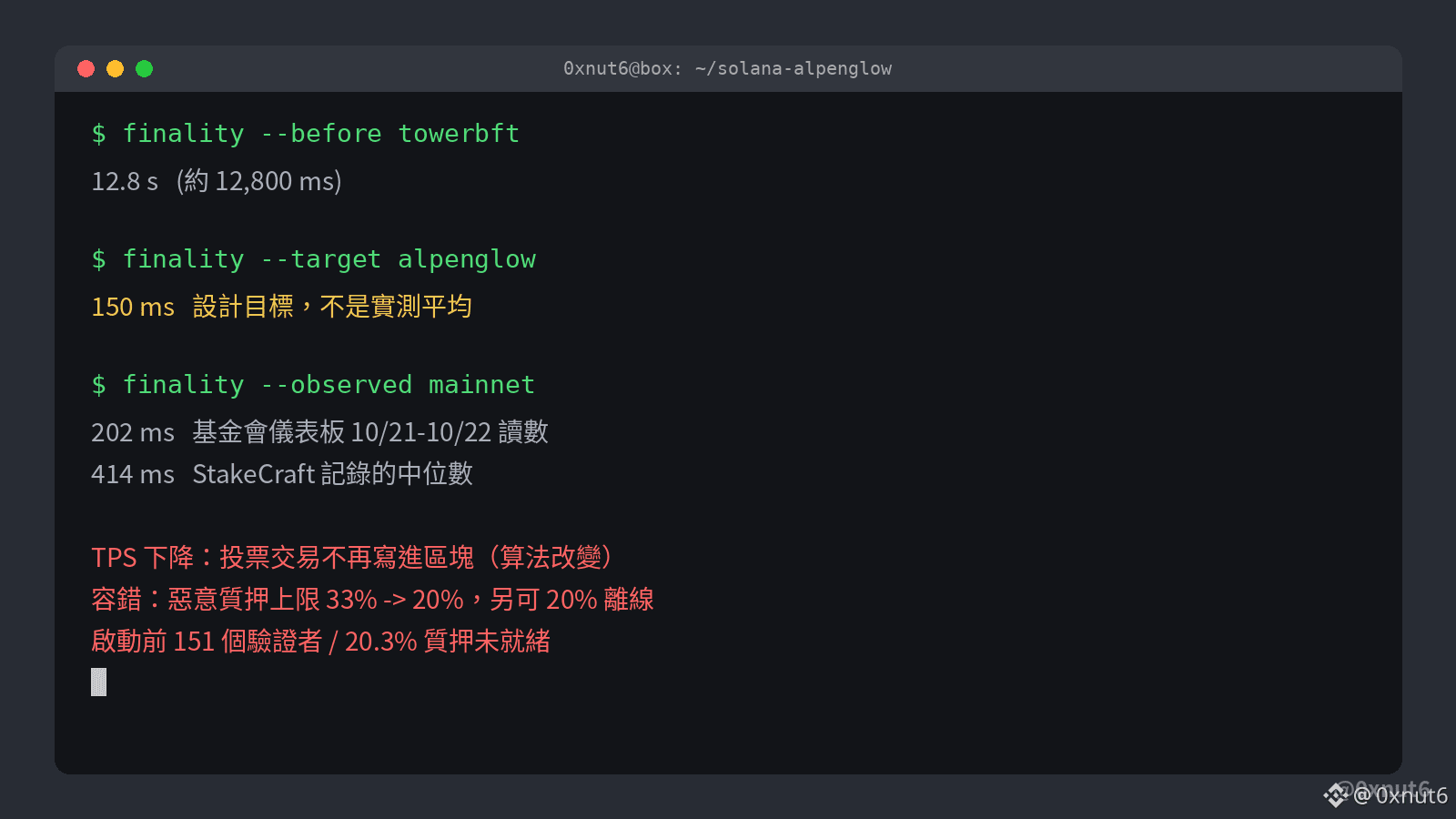
Solana 官方 10/21 宣布 Alpenglow 共識升級已在主網上線,最終性從約 12.8 秒降到約 150 毫秒。
Solana 官方說 Alpenglow 把最終性從約 12.8 秒降到約 150 毫秒,這確實是 Solana 上線以來共識層最大的一次改動。舊的 TowerBFT 退場後,驗證者改成直接互相投票、把票打包成證書,一個區塊跑完一到兩輪投票就算最終確定,交易不必再等十幾秒才確定不會被回滾。
不過 150 毫秒是設計目標,還不是主網的穩定實測值。基金會儀表板在 10/21 和 10/22 讀到的是 202 毫秒,驗證者營運商 StakeCraft 記錄的中位數大約是 414 毫秒,差別主要在區塊要跑一輪還是兩輪投票。就算用 414 毫秒來算,速度也比原本快了大約 30 倍,跟以太坊大約 12.8 分鐘的最終性相比,差距依然非常大。
另外有兩件事值得留意:
1. 投票交易不再寫進區塊,所以 Solana 的 TPS 數字會明顯往下掉,但真實使用量並沒有變少,跨過 10/21 的 TPS 圖表其實混了兩種算法。
2. 網路能容忍的惡意質押比例從 33% 降到 20%,換來的是另外 20% 質押離線時鏈還能繼續跑。啟動前一天仍有 151 個驗證者、約 20.3% 的質押被標記為沒準備好,這次遷移也不支援 Firedancer 客戶端。
有質押 SOL 的人,可以先確認自己委託的驗證者還在正常投票,因為不投票的節點拿不到通膨獎勵。@anza_xyz 規劃的第二階段 Rotor 目前還沒排定上線時間,在那之前,儀表板上的中位數會比 150 毫秒這個目標更接近實際體感。
190
·
--
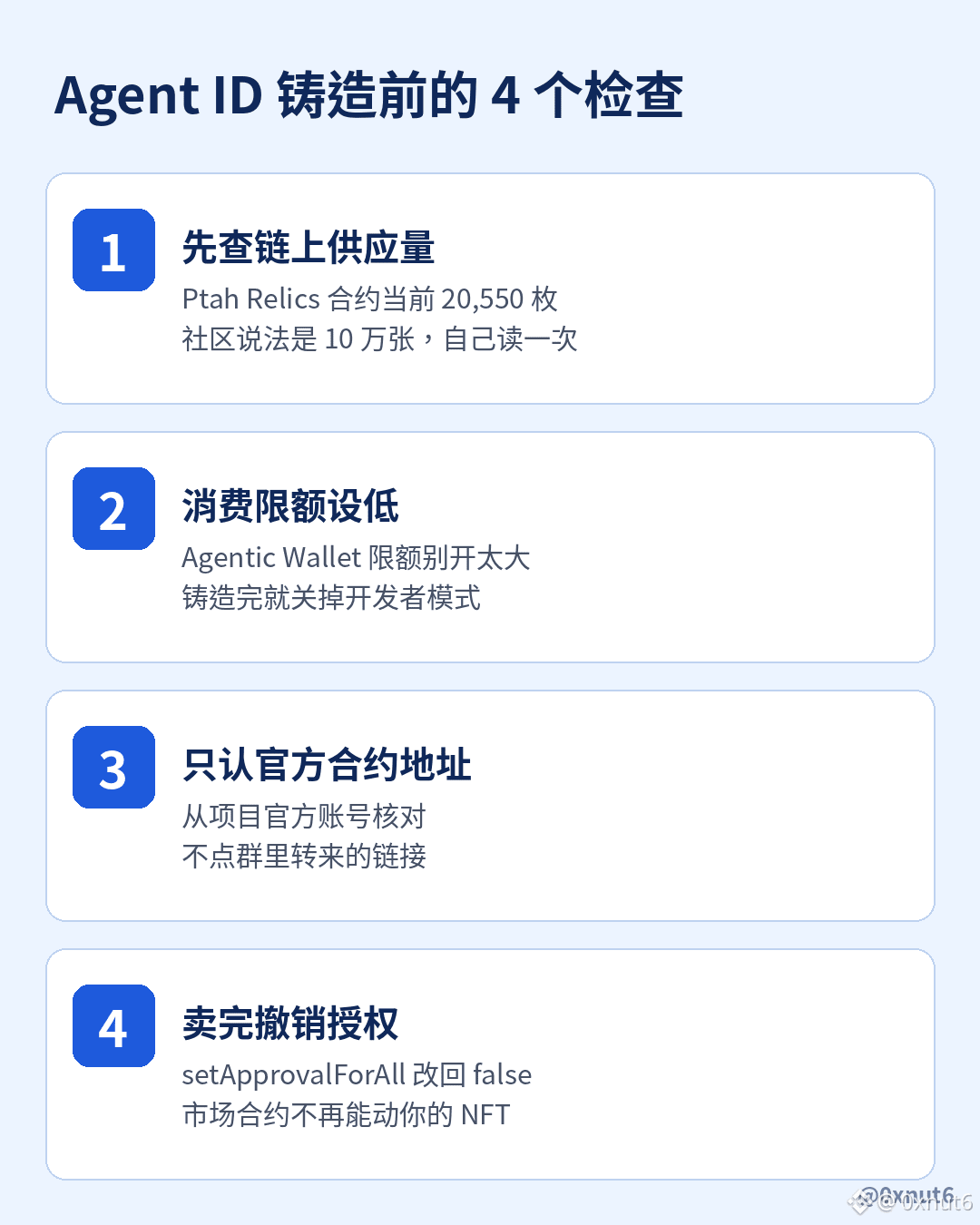
只许 Binance Agent ID 铸造的 Ptah Relics,我今天下午在 BNB Chain 上直接读了合约,当前供应量是 20,550 枚。社区里流传的说法是“10 万张一晚打完”,两边差了将近 5 倍,可能中间有销毁,也可能总量说法本来就不准,跟风之前值得自己去链上查一次。
背景是 @BinanceWallet 10 月 20 日上线的 .ai Agent ID,底层用 @spaceidprotocol 的域名设施,免费领取,每个 Agentic Wallet 只能绑一个,据目前的报道也不能转让。热度大致是在项目方开始拿 Agent ID 当参与门槛之后起来的。社区整理的规则是 @Ptahtrade 每个 ID 最多铸 4 枚,如果这个上限属实,倒推下来这一轮至少有 5,100 多个 ID 参与。
这很像 2022 年币安推出的 BAB 灵魂绑定代币,也是先发一张不可转让的身份凭证,再由项目只对持有者开放。区别在于 BAB 绑的是完成 KYC 的账户,Agent ID 绑的是能让 AI 自动签名的钱包,门槛低得多,被批量注册的可能也更高。通过技能自动铸造要先打开开发者模式,卖出时还要给市场合约做 setApprovalForAll 授权,也就是允许市场合约转走你在这个 NFT 合约里的全部藏品,风险主要藏在这两个开关里。
真要参与的话,这三件事比抢速度更重要:
1. Agentic Wallet 的消费限额设低一点,铸造完就把开发者模式关掉
2. 合约地址只从项目官方账号核对,不点群里转来的链接
3. 卖完之后在 NFT 合约上把市场授权改回 false
76
·
--
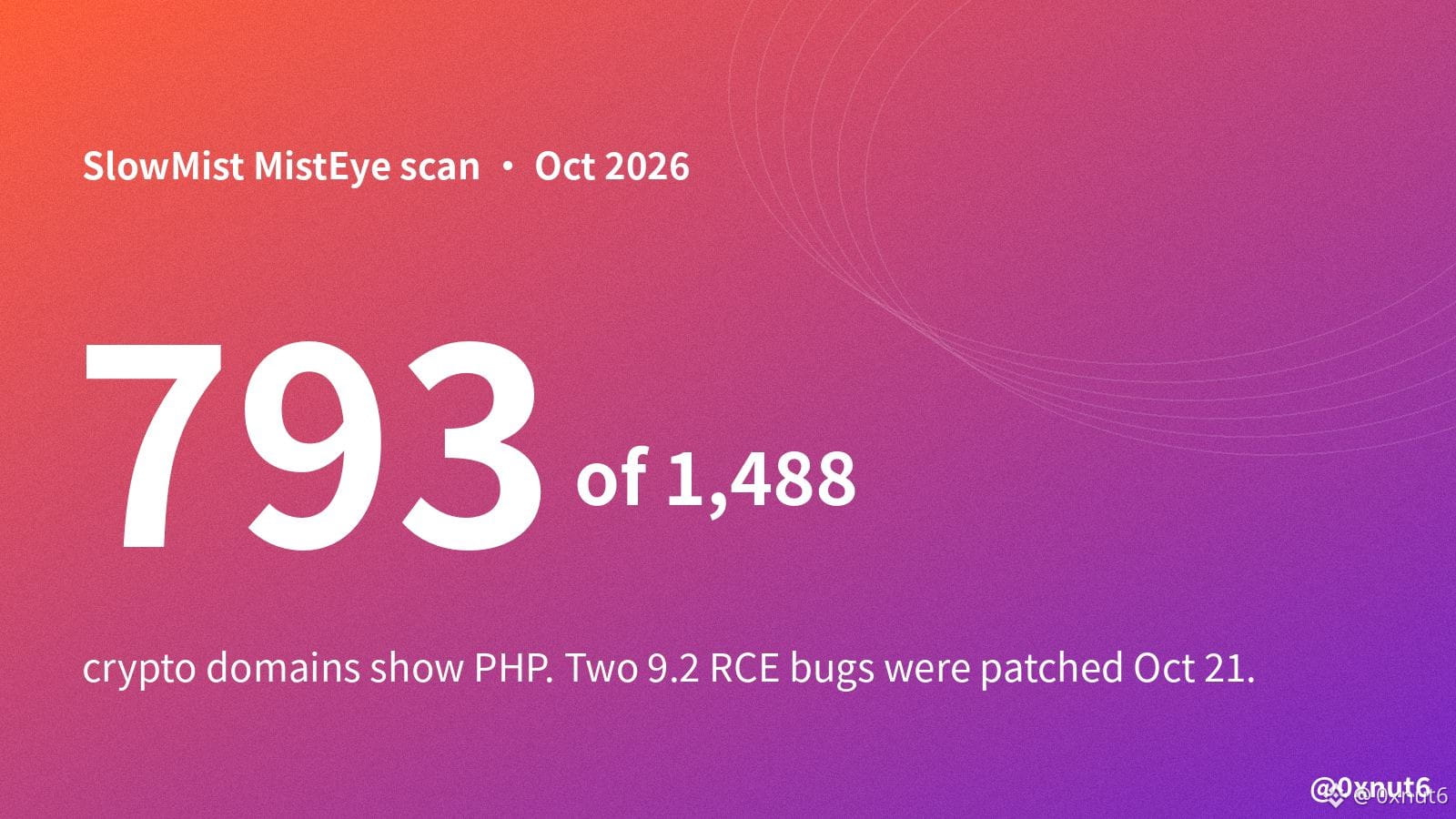
SlowMist scanned 1,488 crypto domains and found PHP on 793 of them. This week PHP patched two bugs that let a stranger run code on a web server without logging in.
Both are rated 9.2 and sit in memory management and error handling, code that nearly every request touches. On Apache with mod_php, one unauthenticated request can trigger the first bug before any app code runs. Fixes shipped Oct 21, but PHP 8.1 and older are end-of-life and get no official release, so those servers depend on a distro backport or an upgrade.
Users can get hurt even when no smart contract breaks, because an attacker who owns the web server can change what the page asks your wallet to sign. @SlowMist_Team flags swapped recipient addresses, swapped token approvals and stolen API keys that might reach a hot wallet. BadgerDAO lost about $120M to this kind of front-end tampering in December 2021, although the attacker got in through a stolen Cloudflare API key rather than PHP. Its contracts held up, while a script injected into the front end slipped extra approvals into normal deposits.
PHP on a domain doesn't mean that site is vulnerable. @PancakeSwap says it runs no PHP at all, and @binance says it had safeguards in place before the patch. PHP also disclosed a third bug on Oct 23. It only hits an unusual session setup and one config switch blocks it, so there's no emergency release, but teams still have cleanup left to do.
What I'd do this week:
- read the spender and amount on every approval, even on sites you use daily
- treat a sudden "re-approve" or "migrate" prompt as a warning sign
- revoke old unlimited approvals you don't need
64
·
--
币安宣布 Binance Feed 已更名为 Binance Square,从内容聚合器演变为社交平台,除了支持新闻之外,该平台还促进内容创作者和关注者之间的沟通。除此之外,Binance Square 最近还推出小费选项来奖励创作者的内容贡献。
币安宣布 Binance Feed 已更名为 Binance Square,从内容聚合器演变为社交平台,除了支持新闻之外,该平台还促进内容创作者和关注者之间的沟通。除此之外,Binance Square 最近还推出小费选项来奖励创作者的内容贡献。
82
Connectez-vous pour découvrir plus de contenu
Rejoignez la communauté mondiale des adeptes de cryptomonnaies sur Binance Square
⚡️ Suviez les dernières informations importantes sur les cryptomonnaies.
💬 Jugé digne de confiance par la plus grande plateforme d’échange de cryptomonnaies au monde.
👍 Découvrez les connaissances que partagent les créateurs vérifiés.
Adresse e-mail/Nº de téléphone
Sujets d’actualité
BinancePick
3.4M vues
165,811 mentions
Join #EarningsSeason: Predict Earnings on Binance Pick, Share Your Take on Binance Square!
Binance Square Official
·420 mentions J’aime
·345.7k vues
EarningsSeason
5.5M vues
27,011 mentions
StrategySkipsBitcoinPurchasesSpends$205MOnSTRCBuybacks
1,130 vues
38 mentions