
Palpatine
5.6k Publications

Palpatine
Signaler
Bloquer l’utilisateur
Strategy, vision, and market analysis from the dark side of crypto. Where others see chaos, I see pattern.
Ouvert au trading
Trade régulièrement
4.7 an(s)
601 Suivis
620 Abonnés
4.7K+ J’aime
Publications
Portefeuille
Tous
Citations
Vidéos
·
--
Haussier
L’INFLATION AMÉRICAINE VIENT DE SE TRANSFORMER EN UN PROBLÈME CRYPTO ⚠️
L’inflation américaine s’est établie à 3,4% en glissement annuel en août, au-dessus des 3,3% attendus, tandis que l’IPC mensuel a augmenté de 0,4%. L’inflation de base a également surpris à la hausse, à 0,3% contre 0,2% attendu.
L’énergie est le point de pression : le prix de l’essence a bondi de 3,9%, pour une moyenne d’environ 4,30 $ le gallon, tandis que le diesel a atteint 6,06 $ le gallon, soit plus de 60% de hausse en glissement annuel. Le logement a progressé de 0,3% et le conflit entre l’Iran maintient le pétrole à un niveau élevé, avec le WTI proche de 100 $ et le Brent autour de 105 $.
Désormais, la Fed se réunit le 16 septembre, alors que l’inflation reste très au-dessus de son objectif de 2% et que les marchés débattent de la possibilité de nouvelles hausses de taux.
Cela compte directement pour la crypto :
$BTC réagit en premier à la liquidité mondiale et à l’appétit pour le risque.
$ETH est très sensible à des conditions financières plus restrictives.
$BNB ajoute une exposition à la fois au sentiment du marché et à l’activité de trading.
Si l’inflation liée à l’énergie reste “collante”, la Fed a un problème.
Des taux plus élevés, une liquidité plus faible, davantage de volatilité.
La question est simple :
Si la Fed devient à nouveau plus “hawkish”, qui sera touché en premier — BTC, ETH ou BNB ?
{spot}(BTCUSDT)
{spot}(BNBUSDT)
{spot}(ETHUSDT)
L’INFLATION AMÉRICAINE VIENT DE SE TRANSFORMER EN UN PROBLÈME CRYPTO ⚠️
L’inflation américaine s’est établie à 3,4% en glissement annuel en août, au-dessus des 3,3% attendus, tandis que l’IPC mensuel a augmenté de 0,4%. L’inflation de base a également surpris à la hausse, à 0,3% contre 0,2% attendu.
L’énergie est le point de pression : le prix de l’essence a bondi de 3,9%, pour une moyenne d’environ 4,30 $ le gallon, tandis que le diesel a atteint 6,06 $ le gallon, soit plus de 60% de hausse en glissement annuel. Le logement a progressé de 0,3% et le conflit entre l’Iran maintient le pétrole à un niveau élevé, avec le WTI proche de 100 $ et le Brent autour de 105 $.
Désormais, la Fed se réunit le 16 septembre, alors que l’inflation reste très au-dessus de son objectif de 2% et que les marchés débattent de la possibilité de nouvelles hausses de taux.
Cela compte directement pour la crypto :
$BTC réagit en premier à la liquidité mondiale et à l’appétit pour le risque.
$ETH est très sensible à des conditions financières plus restrictives.
$BNB ajoute une exposition à la fois au sentiment du marché et à l’activité de trading.
Si l’inflation liée à l’énergie reste “collante”, la Fed a un problème.
Des taux plus élevés, une liquidité plus faible, davantage de volatilité.
La question est simple :
Si la Fed devient à nouveau plus “hawkish”, qui sera touché en premier — BTC, ETH ou BNB ?
L’inflation américaine s’est établie à 3,4% en glissement annuel en août, au-dessus des 3,3% attendus, tandis que l’IPC mensuel a augmenté de 0,4%. L’inflation de base a également surpris à la hausse, à 0,3% contre 0,2% attendu.
L’énergie est le point de pression : le prix de l’essence a bondi de 3,9%, pour une moyenne d’environ 4,30 $ le gallon, tandis que le diesel a atteint 6,06 $ le gallon, soit plus de 60% de hausse en glissement annuel. Le logement a progressé de 0,3% et le conflit entre l’Iran maintient le pétrole à un niveau élevé, avec le WTI proche de 100 $ et le Brent autour de 105 $.
Désormais, la Fed se réunit le 16 septembre, alors que l’inflation reste très au-dessus de son objectif de 2% et que les marchés débattent de la possibilité de nouvelles hausses de taux.
Cela compte directement pour la crypto :
$BTC réagit en premier à la liquidité mondiale et à l’appétit pour le risque.
$ETH est très sensible à des conditions financières plus restrictives.
$BNB ajoute une exposition à la fois au sentiment du marché et à l’activité de trading.
Si l’inflation liée à l’énergie reste “collante”, la Fed a un problème.
Des taux plus élevés, une liquidité plus faible, davantage de volatilité.
La question est simple :
Si la Fed devient à nouveau plus “hawkish”, qui sera touché en premier — BTC, ETH ou BNB ?

116
·
--
MINORITY REPORT NE SEMBLE PLUS DE LA SCIENCE-FICTION
Pour ceux qui ne l’ont pas vu : Minority Report est un film de science-fiction de 2002 réalisé par Steven Spielberg. Son monde utilise un système « Précrime » pour empêcher des meurtres avant qu’ils n’aient lieu, à partir de prédictions. La vraie question de l’histoire n’est pas la technologie en elle-même, mais la mesure de liberté et de vie privée que la société est prête à échanger contre la prévention.
Désormais, la comparaison met mal à l’aise.
En Argentineᴬᴿ, les autorités ont enquêté sur un adolescent après des signalements de conversations impliquant une possible attaque dans une école. L’affaire a finalement atteint le FBI et les autorités fédérales argentines.
Si la menace était réelle, une intervention précoce aurait peut-être empêché quelque chose de terrible.
Mais cela pose la question plus vaste :
À quel moment la prévention devient-elle de la surveillance ?
Et une autre :
À quel point une conversation avec une IA est-elle privée lorsqu’un système identifie ce qu’il considère comme une menace crédible ?
Il ne s’agit pas de défendre des menaces. Il s’agit de savoir où la société trace la frontière entre sécurité, vie privée et prédiction.
Minority Report a posé cette question en 2002.
Maintenant, elle ne paraît plus théorique.
#Aİ #Privacy
{spot}(NVDABUSDT)
{future}(SPACEUSDT)
{spot}(AAPLBUSDT)
MINORITY REPORT NE SEMBLE PLUS DE LA SCIENCE-FICTION
Pour ceux qui ne l’ont pas vu : Minority Report est un film de science-fiction de 2002 réalisé par Steven Spielberg. Son monde utilise un système « Précrime » pour empêcher des meurtres avant qu’ils n’aient lieu, à partir de prédictions. La vraie question de l’histoire n’est pas la technologie en elle-même, mais la mesure de liberté et de vie privée que la société est prête à échanger contre la prévention.
Désormais, la comparaison met mal à l’aise.
En Argentineᴬᴿ, les autorités ont enquêté sur un adolescent après des signalements de conversations impliquant une possible attaque dans une école. L’affaire a finalement atteint le FBI et les autorités fédérales argentines.
Si la menace était réelle, une intervention précoce aurait peut-être empêché quelque chose de terrible.
Mais cela pose la question plus vaste :
À quel moment la prévention devient-elle de la surveillance ?
Et une autre :
À quel point une conversation avec une IA est-elle privée lorsqu’un système identifie ce qu’il considère comme une menace crédible ?
Il ne s’agit pas de défendre des menaces. Il s’agit de savoir où la société trace la frontière entre sécurité, vie privée et prédiction.
Minority Report a posé cette question en 2002.
Maintenant, elle ne paraît plus théorique.
#Aİ #Privacy
Pour ceux qui ne l’ont pas vu : Minority Report est un film de science-fiction de 2002 réalisé par Steven Spielberg. Son monde utilise un système « Précrime » pour empêcher des meurtres avant qu’ils n’aient lieu, à partir de prédictions. La vraie question de l’histoire n’est pas la technologie en elle-même, mais la mesure de liberté et de vie privée que la société est prête à échanger contre la prévention.
Désormais, la comparaison met mal à l’aise.
En Argentineᴬᴿ, les autorités ont enquêté sur un adolescent après des signalements de conversations impliquant une possible attaque dans une école. L’affaire a finalement atteint le FBI et les autorités fédérales argentines.
Si la menace était réelle, une intervention précoce aurait peut-être empêché quelque chose de terrible.
Mais cela pose la question plus vaste :
À quel moment la prévention devient-elle de la surveillance ?
Et une autre :
À quel point une conversation avec une IA est-elle privée lorsqu’un système identifie ce qu’il considère comme une menace crédible ?
Il ne s’agit pas de défendre des menaces. Il s’agit de savoir où la société trace la frontière entre sécurité, vie privée et prédiction.
Minority Report a posé cette question en 2002.
Maintenant, elle ne paraît plus théorique.
#Aİ #Privacy

80
·
--
Baissier
VTHO SIGNIFIE LE REVERSAL DE MOYENNE — +68% 📉
$VTHO nous a offert une nouvelle configuration propre post-pump, similaire aux mean reversions que nous avons échangées sur BMT et IOST.
Résumé : 0.0005901
Actuel : ~0.0005193
Levier : 5x
ROI : +68,01%
✅ 60% déjà sécurisé
🏃 Le runner est toujours actif
La structure reste baissière :
Sommets plus bas après le pump
Moyennes court terme perdues
RSI 1H ~22
MACD 1H baissier
OI ~7,88 M$
Volume 24H ~712 M$
Financement ~−1,12%
📍 Prochaine zone : 0.00048–0.00047
🟢 TP du runner : 0.000470
🔴 Protection du runner : 0.000549
Le principal danger maintenant est un squeeze technique : le RSI est fortement survendu et le financement est extrêmement négatif.
C’est pourquoi la majeure partie du profit est déjà verrouillée.
BMT → IOST → VTHO. Même principe : ne shortez pas le pump — attendez que la structure se casse.
TRADEZ LA STRUCTURE APRÈS LE FOMO.
VTHO SIGNIFIE LE REVERSAL DE MOYENNE — +68% 📉
$VTHO nous a offert une nouvelle configuration propre post-pump, similaire aux mean reversions que nous avons échangées sur BMT et IOST.
Résumé : 0.0005901
Actuel : ~0.0005193
Levier : 5x
ROI : +68,01%
✅ 60% déjà sécurisé
🏃 Le runner est toujours actif
La structure reste baissière :
Sommets plus bas après le pump
Moyennes court terme perdues
RSI 1H ~22
MACD 1H baissier
OI ~7,88 M$
Volume 24H ~712 M$
Financement ~−1,12%
📍 Prochaine zone : 0.00048–0.00047
🟢 TP du runner : 0.000470
🔴 Protection du runner : 0.000549
Le principal danger maintenant est un squeeze technique : le RSI est fortement survendu et le financement est extrêmement négatif.
C’est pourquoi la majeure partie du profit est déjà verrouillée.
BMT → IOST → VTHO. Même principe : ne shortez pas le pump — attendez que la structure se casse.
TRADEZ LA STRUCTURE APRÈS LE FOMO.
$VTHO nous a offert une nouvelle configuration propre post-pump, similaire aux mean reversions que nous avons échangées sur BMT et IOST.
Résumé : 0.0005901
Actuel : ~0.0005193
Levier : 5x
ROI : +68,01%
✅ 60% déjà sécurisé
🏃 Le runner est toujours actif
La structure reste baissière :
Sommets plus bas après le pump
Moyennes court terme perdues
RSI 1H ~22
MACD 1H baissier
OI ~7,88 M$
Volume 24H ~712 M$
Financement ~−1,12%
📍 Prochaine zone : 0.00048–0.00047
🟢 TP du runner : 0.000470
🔴 Protection du runner : 0.000549
Le principal danger maintenant est un squeeze technique : le RSI est fortement survendu et le financement est extrêmement négatif.
C’est pourquoi la majeure partie du profit est déjà verrouillée.
BMT → IOST → VTHO. Même principe : ne shortez pas le pump — attendez que la structure se casse.
TRADEZ LA STRUCTURE APRÈS LE FOMO.

1
168
·
--
Baissier
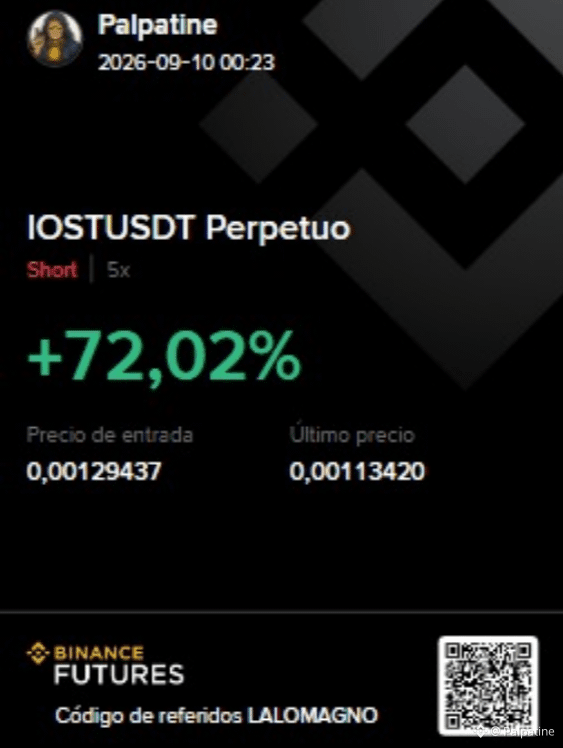
COUP AU BUT — +72% SUR IOST ✅
$IOST a livré le mouvement que nous attendions.
Entrée courte : 0.00129437
Prix actuel : 0.00113420
ROI : +72,02%
L’objectif est atteint et les profits sont désormais protégés.
À partir de là, le marché décide : encore une jambe de baisse ou un rebond technique.
LE SETUP A FAIT SON TRAVAIL. MAINTENANT, PLACE À LA GESTION.
{future}(IOSTUSDT)
{future}(VTHOUSDT)
COUP AU BUT — +72% SUR IOST ✅
$IOST a livré le mouvement que nous attendions.
Entrée courte : 0.00129437
Prix actuel : 0.00113420
ROI : +72,02%
L’objectif est atteint et les profits sont désormais protégés.
À partir de là, le marché décide : encore une jambe de baisse ou un rebond technique.
LE SETUP A FAIT SON TRAVAIL. MAINTENANT, PLACE À LA GESTION.
$IOST a livré le mouvement que nous attendions.
Entrée courte : 0.00129437
Prix actuel : 0.00113420
ROI : +72,02%
L’objectif est atteint et les profits sont désormais protégés.
À partir de là, le marché décide : encore une jambe de baisse ou un rebond technique.
LE SETUP A FAIT SON TRAVAIL. MAINTENANT, PLACE À LA GESTION.
Palpatine
·
--
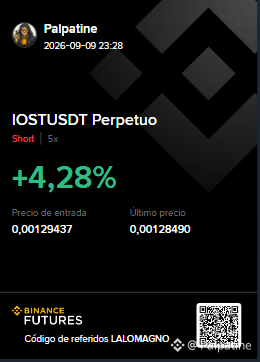
BaissierIOST EST TOUJOURS UNE BOMBE DE VOLATILITÉ ⚠️
$IOST est encore +50%/+55% en 24 h après avoir été échangé au-dessus de +100% pendant la pompe.
Volume : 1,17 Md$
OI : ~15 M$ et en baisse
Financement : ~−1,13%
La parabole a disparu. Désormais, c’est un duel entre un rebond technique et la prochaine étape de la vidange.
📍 ~0,00130
📉 Dynamique à court terme : baissière
⚔️ Risque principal : encore un squeeze avant que la correction vers la moyenne ne continue
Ne poursuis pas le mouvement. Trade la structure une fois qu’elle se met en place.
$IOST est encore +50%/+55% en 24 h après avoir été échangé au-dessus de +100% pendant la pompe.
Volume : 1,17 Md$
OI : ~15 M$ et en baisse
Financement : ~−1,13%
La parabole a disparu. Désormais, c’est un duel entre un rebond technique et la prochaine étape de la vidange.
📍 ~0,00130
📉 Dynamique à court terme : baissière
⚔️ Risque principal : encore un squeeze avant que la correction vers la moyenne ne continue
Ne poursuis pas le mouvement. Trade la structure une fois qu’elle se met en place.
219
·
--
Baissier
IOST EST TOUJOURS UNE BOMBE DE VOLATILITÉ ⚠️
$IOST est encore +50%/+55% en 24 h après avoir été échangé au-dessus de +100% pendant la pompe.
Volume : 1,17 Md$
OI : ~15 M$ et en baisse
Financement : ~−1,13%
La parabole a disparu. Désormais, c’est un duel entre un rebond technique et la prochaine étape de la vidange.
📍 ~0,00130
📉 Dynamique à court terme : baissière
⚔️ Risque principal : encore un squeeze avant que la correction vers la moyenne ne continue
Ne poursuis pas le mouvement. Trade la structure une fois qu’elle se met en place.
IOST EST TOUJOURS UNE BOMBE DE VOLATILITÉ ⚠️
$IOST est encore +50%/+55% en 24 h après avoir été échangé au-dessus de +100% pendant la pompe.
Volume : 1,17 Md$
OI : ~15 M$ et en baisse
Financement : ~−1,13%
La parabole a disparu. Désormais, c’est un duel entre un rebond technique et la prochaine étape de la vidange.
📍 ~0,00130
📉 Dynamique à court terme : baissière
⚔️ Risque principal : encore un squeeze avant que la correction vers la moyenne ne continue
Ne poursuis pas le mouvement. Trade la structure une fois qu’elle se met en place.
$IOST est encore +50%/+55% en 24 h après avoir été échangé au-dessus de +100% pendant la pompe.
Volume : 1,17 Md$
OI : ~15 M$ et en baisse
Financement : ~−1,13%
La parabole a disparu. Désormais, c’est un duel entre un rebond technique et la prochaine étape de la vidange.
📍 ~0,00130
📉 Dynamique à court terme : baissière
⚔️ Risque principal : encore un squeeze avant que la correction vers la moyenne ne continue
Ne poursuis pas le mouvement. Trade la structure une fois qu’elle se met en place.
1
172
·
--
Baissier
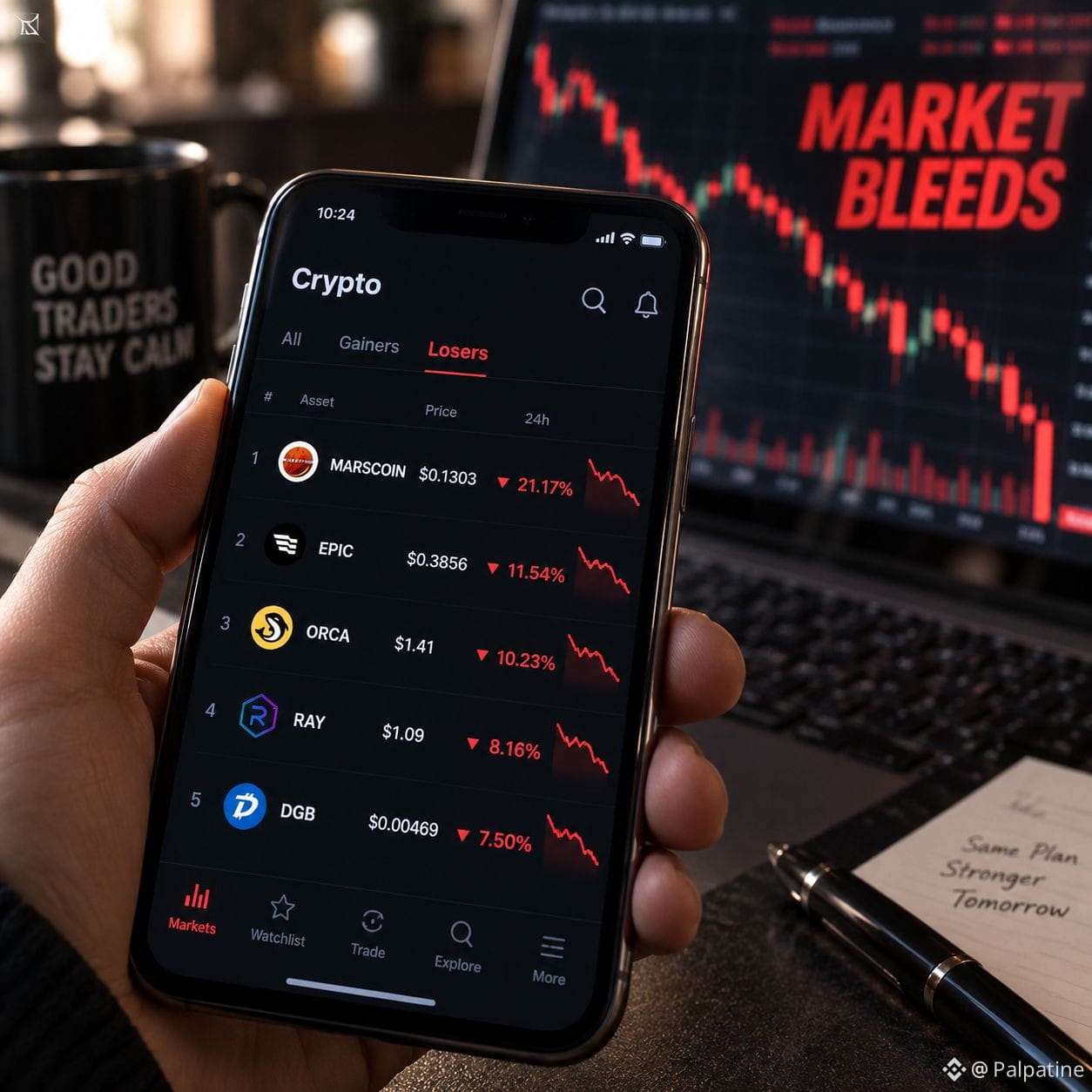
LE FOMO D’HIER EST LE CONSEIL ROUGE D’AUJOURD’HUI
Le marché rappelle à tout le monde une règle simple :
les pompes ne durent pas éternellement.
Les 5 plus grosses baisses d’aujourd’hui :
$MARSCOIN -21.17%
$EPIC -11.54%
$ORCA -10.23%
$RAY -8.16%
$DGB -7.50%
Et deux noms se démarquent.
$MARSCOIN faisait partie des trades FOMO les plus brûlants du marché il y a seulement quelques jours. Désormais, il mène le tableau rouge.
$RAY est encore plus intéressant : notre configuration short a déjà atteint TP1, et le prix a ensuite continué plus bas, vers 1.09.
C’est exactement pour cela que je le répète sans cesse :
NE POURSUIS PAS LA POMPE. ÉCHANGE LA STRUCTURE APRÈS.
Les journées rouges créent deux opportunités :
🟢 Acheter la baisse si le prix trouve un support et que l’élan revient.
🔴 Trader la continuation à la baisse si les rebonds échouent et que les vendeurs gardent le contrôle.
L’erreur, c’est de penser que seuls les marchés verts paient.
LA VOLATILITÉ EST L’OPPORTUNITÉ. LA DIRECTION EST LE CHOIX.
{future}(MARSCOINUSDT)
{future}(RAYSOLUSDT)
{future}(EPICUSDT)
LE FOMO D’HIER EST LE CONSEIL ROUGE D’AUJOURD’HUI
Le marché rappelle à tout le monde une règle simple :
les pompes ne durent pas éternellement.
Les 5 plus grosses baisses d’aujourd’hui :
$MARSCOIN -21.17%
$EPIC -11.54%
$ORCA -10.23%
$RAY -8.16%
$DGB -7.50%
Et deux noms se démarquent.
$MARSCOIN faisait partie des trades FOMO les plus brûlants du marché il y a seulement quelques jours. Désormais, il mène le tableau rouge.
$RAY est encore plus intéressant : notre configuration short a déjà atteint TP1, et le prix a ensuite continué plus bas, vers 1.09.
C’est exactement pour cela que je le répète sans cesse :
NE POURSUIS PAS LA POMPE. ÉCHANGE LA STRUCTURE APRÈS.
Les journées rouges créent deux opportunités :
🟢 Acheter la baisse si le prix trouve un support et que l’élan revient.
🔴 Trader la continuation à la baisse si les rebonds échouent et que les vendeurs gardent le contrôle.
L’erreur, c’est de penser que seuls les marchés verts paient.
LA VOLATILITÉ EST L’OPPORTUNITÉ. LA DIRECTION EST LE CHOIX.
Le marché rappelle à tout le monde une règle simple :
les pompes ne durent pas éternellement.
Les 5 plus grosses baisses d’aujourd’hui :
$MARSCOIN -21.17%
$EPIC -11.54%
$ORCA -10.23%
$RAY -8.16%
$DGB -7.50%
Et deux noms se démarquent.
$MARSCOIN faisait partie des trades FOMO les plus brûlants du marché il y a seulement quelques jours. Désormais, il mène le tableau rouge.
$RAY est encore plus intéressant : notre configuration short a déjà atteint TP1, et le prix a ensuite continué plus bas, vers 1.09.
C’est exactement pour cela que je le répète sans cesse :
NE POURSUIS PAS LA POMPE. ÉCHANGE LA STRUCTURE APRÈS.
Les journées rouges créent deux opportunités :
🟢 Acheter la baisse si le prix trouve un support et que l’élan revient.
🔴 Trader la continuation à la baisse si les rebonds échouent et que les vendeurs gardent le contrôle.
L’erreur, c’est de penser que seuls les marchés verts paient.
LA VOLATILITÉ EST L’OPPORTUNITÉ. LA DIRECTION EST LE CHOIX.
425
·
--
Haussier
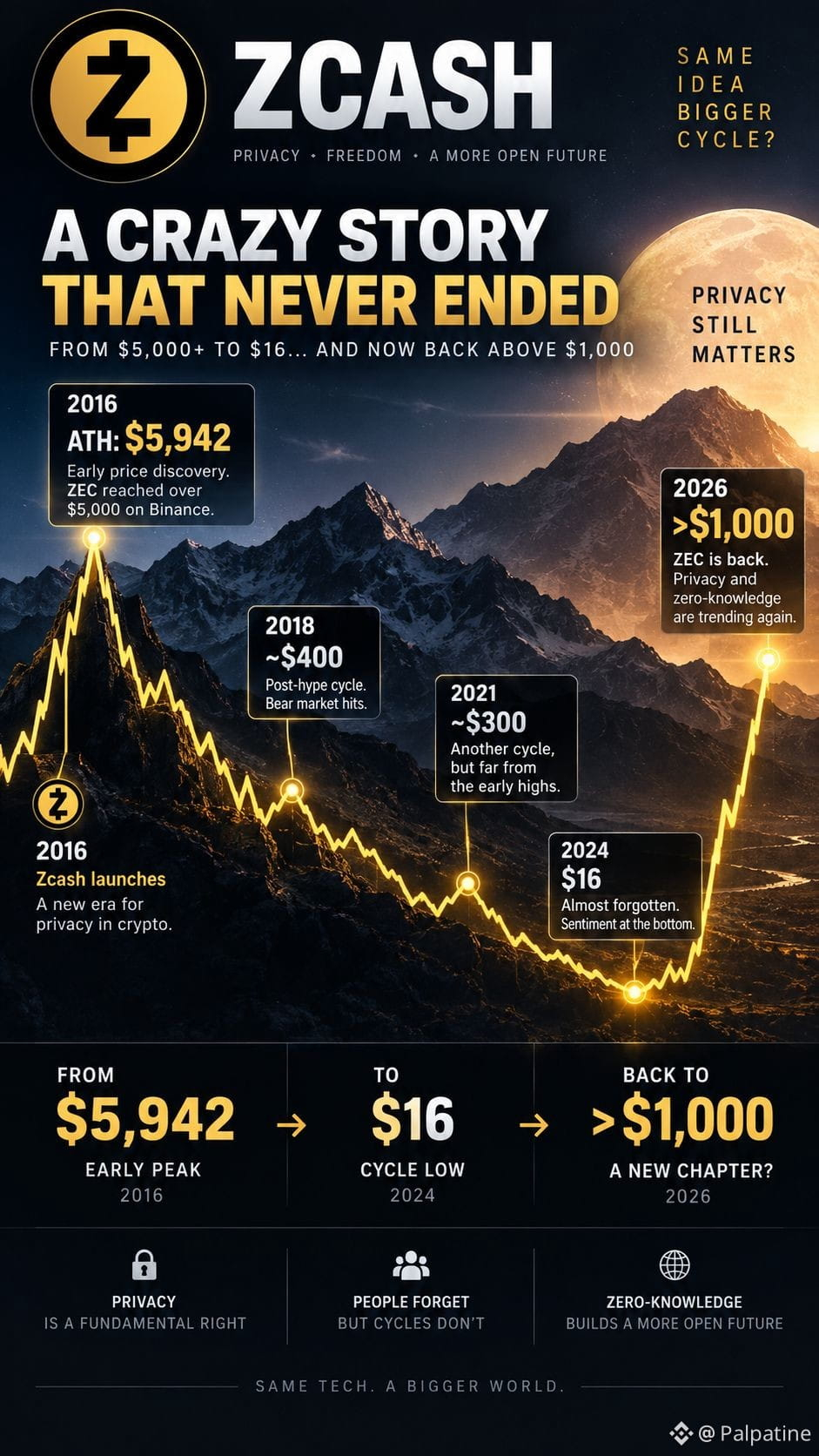
ZEC ÉTAIT UNE FOIS AU-DESSUS DE 5 000 $ ALORS QUE L’ETH ÉTAIT AUTOUR DE 10 $ — ET MAINTENANT ELLE EST À NOUVEAU AU-DESSUS DE 1 000 $
L’une des histoires de retour les plus étranges de la crypto se déroule à nouveau.
Lors du lancement en 2016, la découverte des prix était complètement folle. Les données historiques de Binance montrent un pic précoce proche de 5 942 $.
À peu près à la même époque, $ETH se négociait encore autour de 10–12 $.
Puis le Zcash s’est effondré.
Des années plus tard, il a évolué près de 16 $.
De presque 6 000 $ → 16 $.
La plupart des gens ont cessé d’y prêter attention.
Désormais, le ZEC est de retour au-dessus de 1 000 $ et, soudain, la confidentialité, la technologie à divulgation nulle de connaissance et les récits crypto “à l’ancienne” attirent à nouveau le capital.
Cela ne veut pas dire que le ZEC repartira vers son ATH bizarre du lancement.
Mais le graphique raconte une histoire bien plus intéressante :
Une pièce peut disparaître de la conversation du marché pendant des années… puis revenir lorsque le récit change.
La crypto a une mémoire très courte.
Le capital, non.
Et en ce moment, certaines des idées les plus anciennes de l’industrie redeviennent des trades dictés par la FOMO.
DE 5 942 $ → 16 $ → 1 000+.
Appelleriez-vous ça un retour… ou un autre cycle de spéculation ?
$ZEC $TAO
{spot}(ZECUSDT)
{spot}(TAOUSDT)
ZEC ÉTAIT UNE FOIS AU-DESSUS DE 5 000 $ ALORS QUE L’ETH ÉTAIT AUTOUR DE 10 $ — ET MAINTENANT ELLE EST À NOUVEAU AU-DESSUS DE 1 000 $
L’une des histoires de retour les plus étranges de la crypto se déroule à nouveau.
Lors du lancement en 2016, la découverte des prix était complètement folle. Les données historiques de Binance montrent un pic précoce proche de 5 942 $.
À peu près à la même époque, $ETH se négociait encore autour de 10–12 $.
Puis le Zcash s’est effondré.
Des années plus tard, il a évolué près de 16 $.
De presque 6 000 $ → 16 $.
La plupart des gens ont cessé d’y prêter attention.
Désormais, le ZEC est de retour au-dessus de 1 000 $ et, soudain, la confidentialité, la technologie à divulgation nulle de connaissance et les récits crypto “à l’ancienne” attirent à nouveau le capital.
Cela ne veut pas dire que le ZEC repartira vers son ATH bizarre du lancement.
Mais le graphique raconte une histoire bien plus intéressante :
Une pièce peut disparaître de la conversation du marché pendant des années… puis revenir lorsque le récit change.
La crypto a une mémoire très courte.
Le capital, non.
Et en ce moment, certaines des idées les plus anciennes de l’industrie redeviennent des trades dictés par la FOMO.
DE 5 942 $ → 16 $ → 1 000+.
Appelleriez-vous ça un retour… ou un autre cycle de spéculation ?
$ZEC $TAO
L’une des histoires de retour les plus étranges de la crypto se déroule à nouveau.
Lors du lancement en 2016, la découverte des prix était complètement folle. Les données historiques de Binance montrent un pic précoce proche de 5 942 $.
À peu près à la même époque, $ETH se négociait encore autour de 10–12 $.
Puis le Zcash s’est effondré.
Des années plus tard, il a évolué près de 16 $.
De presque 6 000 $ → 16 $.
La plupart des gens ont cessé d’y prêter attention.
Désormais, le ZEC est de retour au-dessus de 1 000 $ et, soudain, la confidentialité, la technologie à divulgation nulle de connaissance et les récits crypto “à l’ancienne” attirent à nouveau le capital.
Cela ne veut pas dire que le ZEC repartira vers son ATH bizarre du lancement.
Mais le graphique raconte une histoire bien plus intéressante :
Une pièce peut disparaître de la conversation du marché pendant des années… puis revenir lorsque le récit change.
La crypto a une mémoire très courte.
Le capital, non.
Et en ce moment, certaines des idées les plus anciennes de l’industrie redeviennent des trades dictés par la FOMO.
DE 5 942 $ → 16 $ → 1 000+.
Appelleriez-vous ça un retour… ou un autre cycle de spéculation ?
$ZEC $TAO
286
·
--
Baissier
TP1 TOUCHÉ — L’ANALYSE VALIDÉE
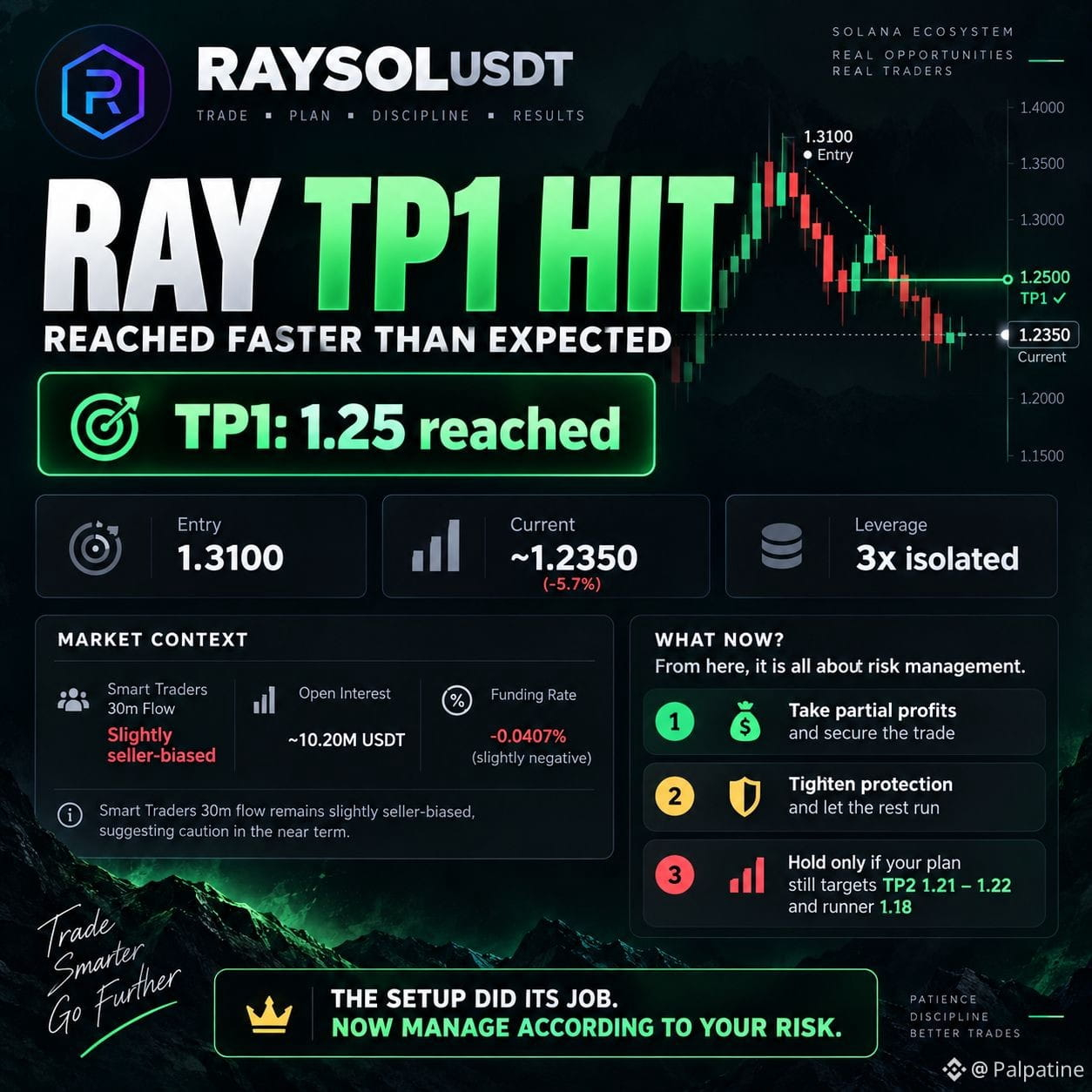
$RAY a atteint TP1 à 1.25 plus tôt que prévu.
La configuration a fait exactement ce qu’elle était censée faire : épuisement de la pompe, rejet, affaiblissement du momentum, puis retour à la moyenne.
À partir d’ici, l’analyse est déjà validée.
Il s’agit maintenant de gestion de trade.
Prenez des profits, resserrez la protection ou maintenez l’exposition vers les objectifs restants selon votre propre tolérance au risque.
LA CONFIGURATION EST TERMINÉE. LE RESTE EST DE LA GESTION.
$RAY $BTC $SOL
{future}(RAYSOLUSDT)
TP1 TOUCHÉ — L’ANALYSE VALIDÉE
$RAY a atteint TP1 à 1.25 plus tôt que prévu.
La configuration a fait exactement ce qu’elle était censée faire : épuisement de la pompe, rejet, affaiblissement du momentum, puis retour à la moyenne.
À partir d’ici, l’analyse est déjà validée.
Il s’agit maintenant de gestion de trade.
Prenez des profits, resserrez la protection ou maintenez l’exposition vers les objectifs restants selon votre propre tolérance au risque.
LA CONFIGURATION EST TERMINÉE. LE RESTE EST DE LA GESTION.
$RAY $BTC $SOL
$RAY a atteint TP1 à 1.25 plus tôt que prévu.
La configuration a fait exactement ce qu’elle était censée faire : épuisement de la pompe, rejet, affaiblissement du momentum, puis retour à la moyenne.
À partir d’ici, l’analyse est déjà validée.
Il s’agit maintenant de gestion de trade.
Prenez des profits, resserrez la protection ou maintenez l’exposition vers les objectifs restants selon votre propre tolérance au risque.
LA CONFIGURATION EST TERMINÉE. LE RESTE EST DE LA GESTION.
$RAY $BTC $SOL
Palpatine
·
--
BaissierRAY PERD DE L’ÉLAN — LE SETUP DE RETOUR À LA MOYENNE EST ACTIF
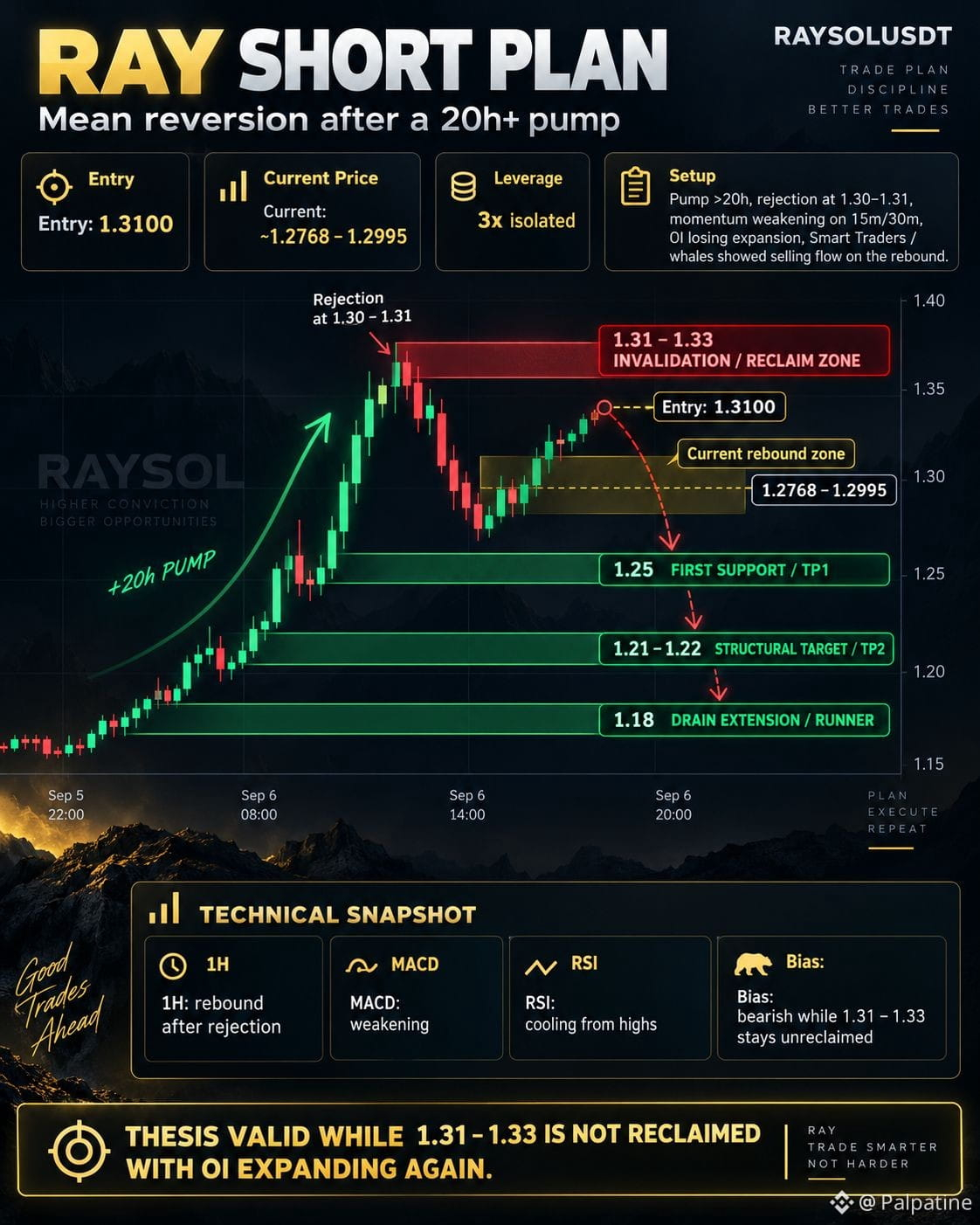
$RAY est désormais sous observation technique à la vente après un pump qui a duré plus de 20 heures.
Entrée : 1.3100
Effet de levier : 3x isolé
Actuel : ~1.2768
Variation depuis l’entrée : -2.5%
ROI flottant : +7.8%
Le setup est simple :
RAY a rejeté la zone 1.30–1.31, l’élan s’est détérioré en 15m/30m, l’Open Interest a cessé de se développer agressivement, et les Smart Traders / baleines ont montré une pression vendeuse pendant le rebond.
NIVEAUX CLÉS
🔴 1.31–1.33 — invalidation tactique / zone de reprise
🟢 1.25 — premier support
🟢 1.21–1.22 — objectif structurel
🟢 1.18 — extension possible de la purge
La thèse reste valide tant que RAY ne reprend pas 1.31–1.33 avec une hausse de l’OI.
Il ne s’agit pas de deviner le sommet exact.
Il s’agit d’attendre que le pump arrive à maturité, de constater l’affaiblissement de l’élan, puis de trader la structure qui suit.
PUMP → REJET → AFFAIBLISSEMENT → RETOUR À LA MOYENNE
$RAY $BTC $SOL
$RAY est désormais sous observation technique à la vente après un pump qui a duré plus de 20 heures.
Entrée : 1.3100
Effet de levier : 3x isolé
Actuel : ~1.2768
Variation depuis l’entrée : -2.5%
ROI flottant : +7.8%
Le setup est simple :
RAY a rejeté la zone 1.30–1.31, l’élan s’est détérioré en 15m/30m, l’Open Interest a cessé de se développer agressivement, et les Smart Traders / baleines ont montré une pression vendeuse pendant le rebond.
NIVEAUX CLÉS
🔴 1.31–1.33 — invalidation tactique / zone de reprise
🟢 1.25 — premier support
🟢 1.21–1.22 — objectif structurel
🟢 1.18 — extension possible de la purge
La thèse reste valide tant que RAY ne reprend pas 1.31–1.33 avec une hausse de l’OI.
Il ne s’agit pas de deviner le sommet exact.
Il s’agit d’attendre que le pump arrive à maturité, de constater l’affaiblissement de l’élan, puis de trader la structure qui suit.
PUMP → REJET → AFFAIBLISSEMENT → RETOUR À LA MOYENNE
$RAY $BTC $SOL
120
·
--
Baissier
RAY PERD DE L’ÉLAN — LE SETUP DE RETOUR À LA MOYENNE EST ACTIF
$RAY est désormais sous observation technique à la vente après un pump qui a duré plus de 20 heures.
Entrée : 1.3100
Effet de levier : 3x isolé
Actuel : ~1.2768
Variation depuis l’entrée : -2.5%
ROI flottant : +7.8%
Le setup est simple :
RAY a rejeté la zone 1.30–1.31, l’élan s’est détérioré en 15m/30m, l’Open Interest a cessé de se développer agressivement, et les Smart Traders / baleines ont montré une pression vendeuse pendant le rebond.
NIVEAUX CLÉS
🔴 1.31–1.33 — invalidation tactique / zone de reprise
🟢 1.25 — premier support
🟢 1.21–1.22 — objectif structurel
🟢 1.18 — extension possible de la purge
La thèse reste valide tant que RAY ne reprend pas 1.31–1.33 avec une hausse de l’OI.
Il ne s’agit pas de deviner le sommet exact.
Il s’agit d’attendre que le pump arrive à maturité, de constater l’affaiblissement de l’élan, puis de trader la structure qui suit.
PUMP → REJET → AFFAIBLISSEMENT → RETOUR À LA MOYENNE
$RAY $BTC $SOL
RAY PERD DE L’ÉLAN — LE SETUP DE RETOUR À LA MOYENNE EST ACTIF
$RAY est désormais sous observation technique à la vente après un pump qui a duré plus de 20 heures.
Entrée : 1.3100
Effet de levier : 3x isolé
Actuel : ~1.2768
Variation depuis l’entrée : -2.5%
ROI flottant : +7.8%
Le setup est simple :
RAY a rejeté la zone 1.30–1.31, l’élan s’est détérioré en 15m/30m, l’Open Interest a cessé de se développer agressivement, et les Smart Traders / baleines ont montré une pression vendeuse pendant le rebond.
NIVEAUX CLÉS
🔴 1.31–1.33 — invalidation tactique / zone de reprise
🟢 1.25 — premier support
🟢 1.21–1.22 — objectif structurel
🟢 1.18 — extension possible de la purge
La thèse reste valide tant que RAY ne reprend pas 1.31–1.33 avec une hausse de l’OI.
Il ne s’agit pas de deviner le sommet exact.
Il s’agit d’attendre que le pump arrive à maturité, de constater l’affaiblissement de l’élan, puis de trader la structure qui suit.
PUMP → REJET → AFFAIBLISSEMENT → RETOUR À LA MOYENNE
$RAY $BTC $SOL
$RAY est désormais sous observation technique à la vente après un pump qui a duré plus de 20 heures.
Entrée : 1.3100
Effet de levier : 3x isolé
Actuel : ~1.2768
Variation depuis l’entrée : -2.5%
ROI flottant : +7.8%
Le setup est simple :
RAY a rejeté la zone 1.30–1.31, l’élan s’est détérioré en 15m/30m, l’Open Interest a cessé de se développer agressivement, et les Smart Traders / baleines ont montré une pression vendeuse pendant le rebond.
NIVEAUX CLÉS
🔴 1.31–1.33 — invalidation tactique / zone de reprise
🟢 1.25 — premier support
🟢 1.21–1.22 — objectif structurel
🟢 1.18 — extension possible de la purge
La thèse reste valide tant que RAY ne reprend pas 1.31–1.33 avec une hausse de l’OI.
Il ne s’agit pas de deviner le sommet exact.
Il s’agit d’attendre que le pump arrive à maturité, de constater l’affaiblissement de l’élan, puis de trader la structure qui suit.
PUMP → REJET → AFFAIBLISSEMENT → RETOUR À LA MOYENNE
$RAY $BTC $SOL
2
1
1
156
·
--
Haussier
SPACEX CONSTRUIT UNE PORTE VERS MARS À 100 MILLIARDS DE DOLLARS
Elon Musk ne parle plus seulement de Mars.
SpaceX prévoit de construire Starbase Louisiana, un immense complexe de lancement de 125 000 acres conçu pour augmenter considérablement les opérations de Starship. Le début des travaux est prévu en 2027, avec un premier lancement ciblé pour 2029. La vision à long terme de Musk est encore plus ambitieuse : plus de 10 tours de lancement et potentiellement des milliers de vols de Starship par an.
Cela compte pour la crypto, car le récit Musk/SpaceX offre déjà plusieurs façons de trader l’attention.
🚀 $SPCXB — l’exposition tokenisée de SpaceX par Binance. Il ne s’agit pas d’une propriété directe des actions SpaceX, mais cela suit le titre sous-jacent via la structure bStocks de Binance.
🔴 $MARSCOIN — un meme de BNB Chain qui récompense les détenteurs avec SPCXB, combinant directement le récit Mars + SpaceX + action tokenisée.
🐕 $DOGE — reste l’actif crypto le plus culturellement associé à Elon Musk.
La question la plus importante est simple :
SI SPACEX CONSTRUIT L’INFRASTRUCTURE D’UNE ÉCONOMIE MULTIPLANÉTAIRE, QUELS ACTIFS CAPTERONT D’ABORD LA SPÉCULATION ?
{spot}(SPCXBUSDT)
{future}(MARSCOINUSDT)
{spot}(DOGEUSDT)
SPACEX CONSTRUIT UNE PORTE VERS MARS À 100 MILLIARDS DE DOLLARS
Elon Musk ne parle plus seulement de Mars.
SpaceX prévoit de construire Starbase Louisiana, un immense complexe de lancement de 125 000 acres conçu pour augmenter considérablement les opérations de Starship. Le début des travaux est prévu en 2027, avec un premier lancement ciblé pour 2029. La vision à long terme de Musk est encore plus ambitieuse : plus de 10 tours de lancement et potentiellement des milliers de vols de Starship par an.
Cela compte pour la crypto, car le récit Musk/SpaceX offre déjà plusieurs façons de trader l’attention.
🚀 $SPCXB — l’exposition tokenisée de SpaceX par Binance. Il ne s’agit pas d’une propriété directe des actions SpaceX, mais cela suit le titre sous-jacent via la structure bStocks de Binance.
🔴 $MARSCOIN — un meme de BNB Chain qui récompense les détenteurs avec SPCXB, combinant directement le récit Mars + SpaceX + action tokenisée.
🐕 $DOGE — reste l’actif crypto le plus culturellement associé à Elon Musk.
La question la plus importante est simple :
SI SPACEX CONSTRUIT L’INFRASTRUCTURE D’UNE ÉCONOMIE MULTIPLANÉTAIRE, QUELS ACTIFS CAPTERONT D’ABORD LA SPÉCULATION ?
Elon Musk ne parle plus seulement de Mars.
SpaceX prévoit de construire Starbase Louisiana, un immense complexe de lancement de 125 000 acres conçu pour augmenter considérablement les opérations de Starship. Le début des travaux est prévu en 2027, avec un premier lancement ciblé pour 2029. La vision à long terme de Musk est encore plus ambitieuse : plus de 10 tours de lancement et potentiellement des milliers de vols de Starship par an.
Cela compte pour la crypto, car le récit Musk/SpaceX offre déjà plusieurs façons de trader l’attention.
🚀 $SPCXB — l’exposition tokenisée de SpaceX par Binance. Il ne s’agit pas d’une propriété directe des actions SpaceX, mais cela suit le titre sous-jacent via la structure bStocks de Binance.
🔴 $MARSCOIN — un meme de BNB Chain qui récompense les détenteurs avec SPCXB, combinant directement le récit Mars + SpaceX + action tokenisée.
🐕 $DOGE — reste l’actif crypto le plus culturellement associé à Elon Musk.
La question la plus importante est simple :
SI SPACEX CONSTRUIT L’INFRASTRUCTURE D’UNE ÉCONOMIE MULTIPLANÉTAIRE, QUELS ACTIFS CAPTERONT D’ABORD LA SPÉCULATION ?

367
·
--
Haussier
L’IRAN A TIRÉ SUR DES NAVIRES DE GUERRE AMÉRICAINS — L’AMÉRIQUE A RÉPONDU EN FRAPPANT LE RÉSEAU PÉTROLIER
L’affrontement autour du détroit d’Ormuz s’intensifie de nouveau.
L’Iran a lancé des missiles en direction d’un groupe de porte-avions américain et d’un destroyer lance-missiles guidés. Selon le CENTCOM, les navires américains ont évité les frappes.
La réponse de Washington a frappé directement là où ça fait mal : l’argent.
Les forces américaines ont attaqué trois pétroliers iraniens prétendument liés à un réseau clandestin finançant le CGRI. L’un d’entre eux a finalement été détruit et coulé.
Cela va bien au-delà des gros titres militaires.
Ormuz reste l’un des goulots d’étranglement énergétiques les plus importants de la planète. Toute escalade impliquant des pétroliers, des mines ou des forces navales peut rapidement devenir un problème d’approvisionnement en pétrole.
C’est pourquoi #OilQuality compte : tous les barils n’ont pas la même valeur de raffinage, la même origine ni le même risque géopolitique.
Le marché doit désormais intégrer une question dangereuse :
QUE SE PASSE-T-IL SI LA PROCHAINE VAGUE CIBLE LE FLUX DE PÉTROLE LUI-MÊME ?
Alors que le BTC reste relativement calme, les capitaux se réorientent déjà agressivement vers les noms qui suscitent le plus de FOMO.
Les hausses du jour sur Binance incluent :
$DASH +38%
$MARSCOIN +29%
$CAT +27%
Le risque de guerre, le risque pétrolier et la liquidité spéculative circulent désormais dans le même marché.
ORMUZ N’EST PAS SEULEMENT UNE HISTOIRE GÉOPOLITIQUE. C’EST UNE HISTOIRE DE LIQUIDITÉ GLOBALE.
$DASH $MARSCOIN $CAT
L’IRAN A TIRÉ SUR DES NAVIRES DE GUERRE AMÉRICAINS — L’AMÉRIQUE A RÉPONDU EN FRAPPANT LE RÉSEAU PÉTROLIER
L’affrontement autour du détroit d’Ormuz s’intensifie de nouveau.
L’Iran a lancé des missiles en direction d’un groupe de porte-avions américain et d’un destroyer lance-missiles guidés. Selon le CENTCOM, les navires américains ont évité les frappes.
La réponse de Washington a frappé directement là où ça fait mal : l’argent.
Les forces américaines ont attaqué trois pétroliers iraniens prétendument liés à un réseau clandestin finançant le CGRI. L’un d’entre eux a finalement été détruit et coulé.
Cela va bien au-delà des gros titres militaires.
Ormuz reste l’un des goulots d’étranglement énergétiques les plus importants de la planète. Toute escalade impliquant des pétroliers, des mines ou des forces navales peut rapidement devenir un problème d’approvisionnement en pétrole.
C’est pourquoi #OilQuality compte : tous les barils n’ont pas la même valeur de raffinage, la même origine ni le même risque géopolitique.
Le marché doit désormais intégrer une question dangereuse :
QUE SE PASSE-T-IL SI LA PROCHAINE VAGUE CIBLE LE FLUX DE PÉTROLE LUI-MÊME ?
Alors que le BTC reste relativement calme, les capitaux se réorientent déjà agressivement vers les noms qui suscitent le plus de FOMO.
Les hausses du jour sur Binance incluent :
$DASH +38%
$MARSCOIN +29%
$CAT +27%
Le risque de guerre, le risque pétrolier et la liquidité spéculative circulent désormais dans le même marché.
ORMUZ N’EST PAS SEULEMENT UNE HISTOIRE GÉOPOLITIQUE. C’EST UNE HISTOIRE DE LIQUIDITÉ GLOBALE.
$DASH $MARSCOIN $CAT
L’affrontement autour du détroit d’Ormuz s’intensifie de nouveau.
L’Iran a lancé des missiles en direction d’un groupe de porte-avions américain et d’un destroyer lance-missiles guidés. Selon le CENTCOM, les navires américains ont évité les frappes.
La réponse de Washington a frappé directement là où ça fait mal : l’argent.
Les forces américaines ont attaqué trois pétroliers iraniens prétendument liés à un réseau clandestin finançant le CGRI. L’un d’entre eux a finalement été détruit et coulé.
Cela va bien au-delà des gros titres militaires.
Ormuz reste l’un des goulots d’étranglement énergétiques les plus importants de la planète. Toute escalade impliquant des pétroliers, des mines ou des forces navales peut rapidement devenir un problème d’approvisionnement en pétrole.
C’est pourquoi #OilQuality compte : tous les barils n’ont pas la même valeur de raffinage, la même origine ni le même risque géopolitique.
Le marché doit désormais intégrer une question dangereuse :
QUE SE PASSE-T-IL SI LA PROCHAINE VAGUE CIBLE LE FLUX DE PÉTROLE LUI-MÊME ?
Alors que le BTC reste relativement calme, les capitaux se réorientent déjà agressivement vers les noms qui suscitent le plus de FOMO.
Les hausses du jour sur Binance incluent :
$DASH +38%
$MARSCOIN +29%
$CAT +27%
Le risque de guerre, le risque pétrolier et la liquidité spéculative circulent désormais dans le même marché.
ORMUZ N’EST PAS SEULEMENT UNE HISTOIRE GÉOPOLITIQUE. C’EST UNE HISTOIRE DE LIQUIDITÉ GLOBALE.
$DASH $MARSCOIN $CAT

590
·
--
Haussier
DE NE RIEN CONNAÎTRE À LA CRYPTO À +28.19% SUR BNB
Un ami à moi s’est lancé dans la crypto en connaissant presque rien du marché.
Je l’ai aidé à comprendre les bases, à gérer le risque et, surtout, à éviter de traiter chaque mouvement comme un ticket de loterie.
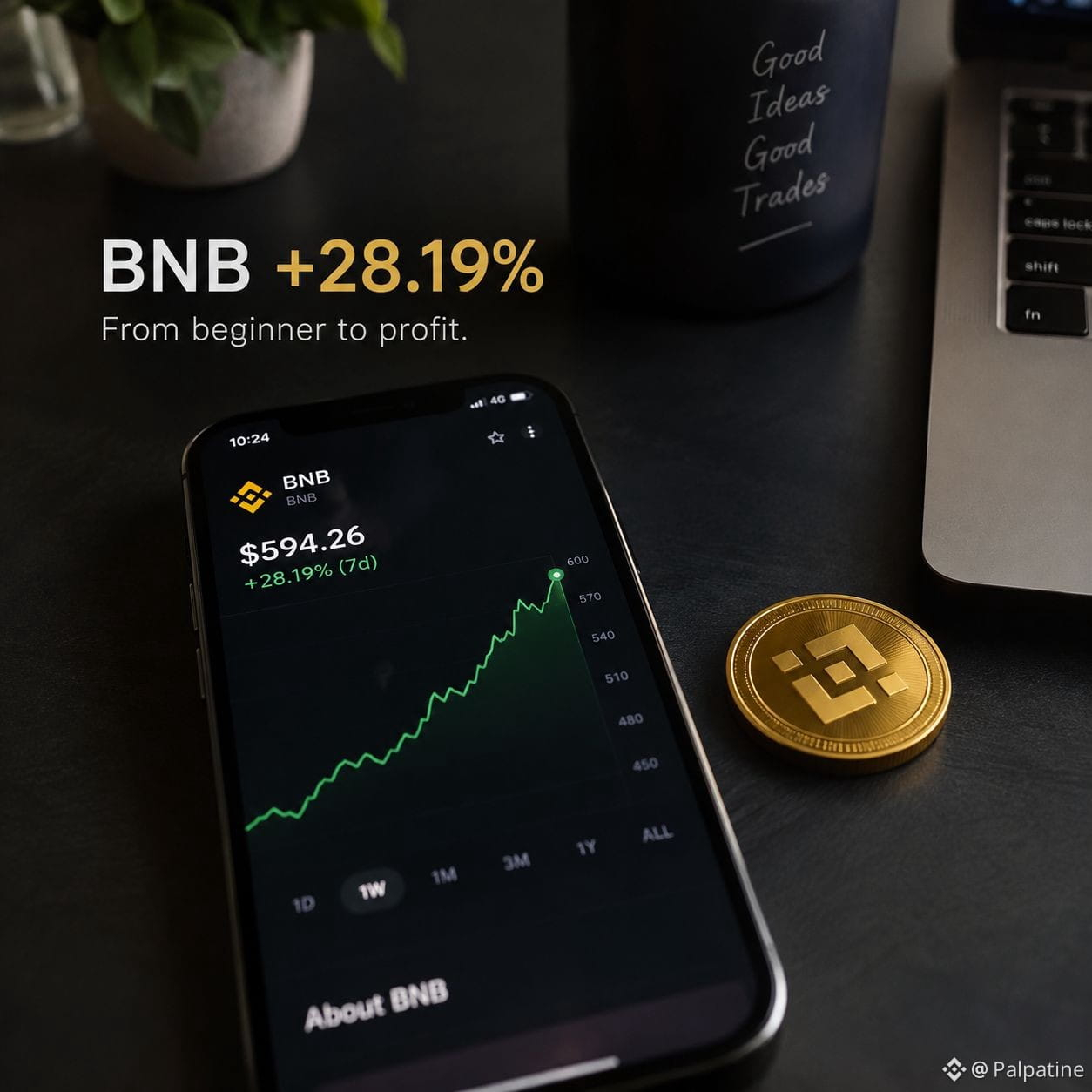
Il a acheté du $BNB autour de 603 $.
Aujourd’hui, il a vendu autour de 773 $.
C’est environ +28.19 % sur l’actif lui-même.
Pas d’effet de levier.
Pas de pari sur les memecoins.
Pas de fantasme de “100x en une nuit”.
Juste de la patience, de l’apprentissage et une bonne entrée sur un actif solide.
Ce que j’aime le plus dans ce trade, ce n’est pas le pourcentage.
C’est qu’une personne qui ne comprenait pas la crypto au départ commence maintenant à lire le marché, à poser de meilleures questions et à prendre ses propres décisions.
C’est ainsi que l’adoption devrait fonctionner.
D’ABORD, VOUS SUIVEZ LE TRADE.
ENSUITE, VOUS COMPRENEZ LE TRADE.
À TERME, VOUS N’AVEZ BESOIN DE PERSONNE POUR VOUS DIRE QUOI FAIRE.
{spot}(BNBUSDT)
DE NE RIEN CONNAÎTRE À LA CRYPTO À +28.19% SUR BNB
Un ami à moi s’est lancé dans la crypto en connaissant presque rien du marché.
Je l’ai aidé à comprendre les bases, à gérer le risque et, surtout, à éviter de traiter chaque mouvement comme un ticket de loterie.
Il a acheté du $BNB autour de 603 $.
Aujourd’hui, il a vendu autour de 773 $.
C’est environ +28.19 % sur l’actif lui-même.
Pas d’effet de levier.
Pas de pari sur les memecoins.
Pas de fantasme de “100x en une nuit”.
Juste de la patience, de l’apprentissage et une bonne entrée sur un actif solide.
Ce que j’aime le plus dans ce trade, ce n’est pas le pourcentage.
C’est qu’une personne qui ne comprenait pas la crypto au départ commence maintenant à lire le marché, à poser de meilleures questions et à prendre ses propres décisions.
C’est ainsi que l’adoption devrait fonctionner.
D’ABORD, VOUS SUIVEZ LE TRADE.
ENSUITE, VOUS COMPRENEZ LE TRADE.
À TERME, VOUS N’AVEZ BESOIN DE PERSONNE POUR VOUS DIRE QUOI FAIRE.
Un ami à moi s’est lancé dans la crypto en connaissant presque rien du marché.
Je l’ai aidé à comprendre les bases, à gérer le risque et, surtout, à éviter de traiter chaque mouvement comme un ticket de loterie.
Il a acheté du $BNB autour de 603 $.
Aujourd’hui, il a vendu autour de 773 $.
C’est environ +28.19 % sur l’actif lui-même.
Pas d’effet de levier.
Pas de pari sur les memecoins.
Pas de fantasme de “100x en une nuit”.
Juste de la patience, de l’apprentissage et une bonne entrée sur un actif solide.
Ce que j’aime le plus dans ce trade, ce n’est pas le pourcentage.
C’est qu’une personne qui ne comprenait pas la crypto au départ commence maintenant à lire le marché, à poser de meilleures questions et à prendre ses propres décisions.
C’est ainsi que l’adoption devrait fonctionner.
D’ABORD, VOUS SUIVEZ LE TRADE.
ENSUITE, VOUS COMPRENEZ LE TRADE.
À TERME, VOUS N’AVEZ BESOIN DE PERSONNE POUR VOUS DIRE QUOI FAIRE.
2
3
511
·
--
Haussier
Vérifié
MARSCOIN ne se contente pas de monter — il a construit une machine à FOMO parfaite
$MARSCOIN est l’histoire Binance du jour, et la raison va bien au-delà d’un simple pump de meme.
La séquence compte :
Binance Futures → Binance Spot → Earn → Convert → Margin → VIP Loan → KuCoin Spot.
Chaque nouvelle cotation ajoute de la liquidité, de la visibilité et une nouvelle vague de traders.
Mais le véritable crochet, c’est le narratif.
MARSCOIN vit sur BNB Chain, donc il bénéficie directement de l’écosystème $BNB . Mais les détenteurs ont aussi un autre incitatif : les comptes détenant au moins 10 000 MARSCOIN peuvent recevoir des récompenses en $SPCXB, l’actif tokenisé de Binance lié à l’exposition à SpaceX.
Distinction importante : SPCXB n’est pas une propriété directe d’actions SpaceX. C’est un instrument tokenisé rattaché à ce narratif.
Cela crée une combinaison inhabituelle :
MEME + $BNB + SPACE X + ACTIONS TOKENISÉES + RÉCOMPENSES AUX DÉTENTEURS.
Et le marché réagit.
MARSCOIN est devenu le plus fort gagnant de Binance, a inscrit un nouveau plus haut près de 0.2697, tandis que l’exposition longue des baleines serait passée d’environ 8.2M $ à 13.7M $ et que l’Open Interest a grimpé vers 39M $.
C’est pourquoi je ne considère pas chaque repli de -15 % comme un signal de short.
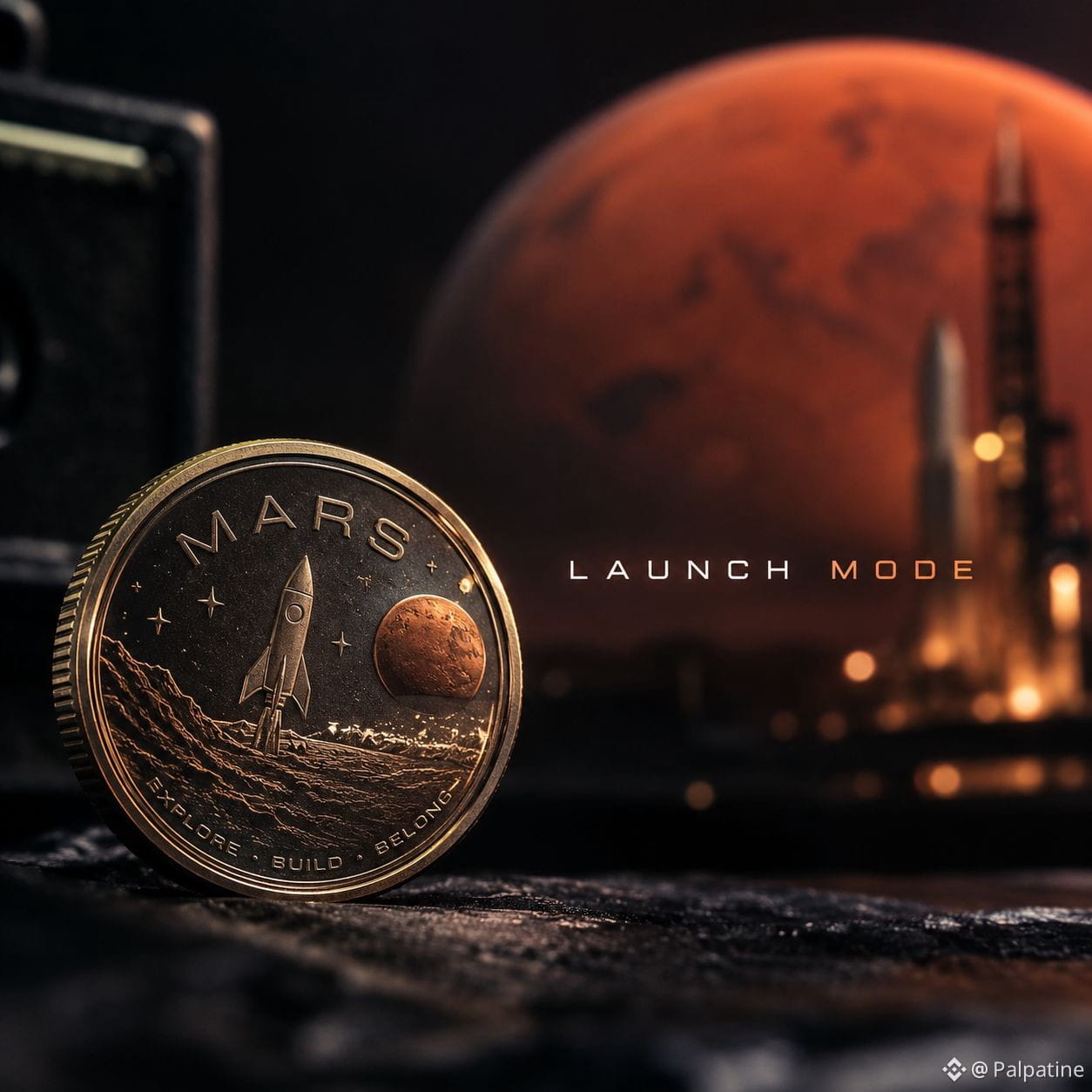
Nous sommes encore en MODE LANCEMENT.
Tant que de nouvelles cotations continuent d’arriver, que les baleines continuent d’ajouter et que l’OI reste structurellement élevé, chaque baisse peut simplement devenir du carburant pour une nouvelle expansion.
La vraie question n’est plus :
« Pourquoi MARSCOIN pump-t-il ? »
C’est :
« Combien de temps le narratif SpaceX + BNB peut-il continuer à alimenter le lancement ? »
{spot}(MARSCOINUSDT)
{spot}(BNBUSDT)
MARSCOIN ne se contente pas de monter — il a construit une machine à FOMO parfaite
$MARSCOIN est l’histoire Binance du jour, et la raison va bien au-delà d’un simple pump de meme.
La séquence compte :
Binance Futures → Binance Spot → Earn → Convert → Margin → VIP Loan → KuCoin Spot.
Chaque nouvelle cotation ajoute de la liquidité, de la visibilité et une nouvelle vague de traders.
Mais le véritable crochet, c’est le narratif.
MARSCOIN vit sur BNB Chain, donc il bénéficie directement de l’écosystème $BNB . Mais les détenteurs ont aussi un autre incitatif : les comptes détenant au moins 10 000 MARSCOIN peuvent recevoir des récompenses en $SPCXB, l’actif tokenisé de Binance lié à l’exposition à SpaceX.
Distinction importante : SPCXB n’est pas une propriété directe d’actions SpaceX. C’est un instrument tokenisé rattaché à ce narratif.
Cela crée une combinaison inhabituelle :
MEME + $BNB + SPACE X + ACTIONS TOKENISÉES + RÉCOMPENSES AUX DÉTENTEURS.
Et le marché réagit.
MARSCOIN est devenu le plus fort gagnant de Binance, a inscrit un nouveau plus haut près de 0.2697, tandis que l’exposition longue des baleines serait passée d’environ 8.2M $ à 13.7M $ et que l’Open Interest a grimpé vers 39M $.
C’est pourquoi je ne considère pas chaque repli de -15 % comme un signal de short.
Nous sommes encore en MODE LANCEMENT.
Tant que de nouvelles cotations continuent d’arriver, que les baleines continuent d’ajouter et que l’OI reste structurellement élevé, chaque baisse peut simplement devenir du carburant pour une nouvelle expansion.
La vraie question n’est plus :
« Pourquoi MARSCOIN pump-t-il ? »
C’est :
« Combien de temps le narratif SpaceX + BNB peut-il continuer à alimenter le lancement ? »
$MARSCOIN est l’histoire Binance du jour, et la raison va bien au-delà d’un simple pump de meme.
La séquence compte :
Binance Futures → Binance Spot → Earn → Convert → Margin → VIP Loan → KuCoin Spot.
Chaque nouvelle cotation ajoute de la liquidité, de la visibilité et une nouvelle vague de traders.
Mais le véritable crochet, c’est le narratif.
MARSCOIN vit sur BNB Chain, donc il bénéficie directement de l’écosystème $BNB . Mais les détenteurs ont aussi un autre incitatif : les comptes détenant au moins 10 000 MARSCOIN peuvent recevoir des récompenses en $SPCXB, l’actif tokenisé de Binance lié à l’exposition à SpaceX.
Distinction importante : SPCXB n’est pas une propriété directe d’actions SpaceX. C’est un instrument tokenisé rattaché à ce narratif.
Cela crée une combinaison inhabituelle :
MEME + $BNB + SPACE X + ACTIONS TOKENISÉES + RÉCOMPENSES AUX DÉTENTEURS.
Et le marché réagit.
MARSCOIN est devenu le plus fort gagnant de Binance, a inscrit un nouveau plus haut près de 0.2697, tandis que l’exposition longue des baleines serait passée d’environ 8.2M $ à 13.7M $ et que l’Open Interest a grimpé vers 39M $.
C’est pourquoi je ne considère pas chaque repli de -15 % comme un signal de short.
Nous sommes encore en MODE LANCEMENT.
Tant que de nouvelles cotations continuent d’arriver, que les baleines continuent d’ajouter et que l’OI reste structurellement élevé, chaque baisse peut simplement devenir du carburant pour une nouvelle expansion.
La vraie question n’est plus :
« Pourquoi MARSCOIN pump-t-il ? »
C’est :
« Combien de temps le narratif SpaceX + BNB peut-il continuer à alimenter le lancement ? »
1
289
·
--
🇦🇷 ET SI CE MONDIAL AVAIT VALU PLUS QU’UNE COUPE ?
Milei a parlé en chaîne nationale au sujet des Malouines. Trump a mis sur la table une révision de la position des États-Unisᵁˢ et, presque en même temps, il s’est produit quelque chose d’encore plus frappant : même Santiago Cafiero, opposant au gouvernement, a de nouveau publié le drapeau « Les Malouines sont argentines » et a parlé de « diplomatie du football ».
L’Argentineᴬᴿ–l’Angleterreᴱᴺ n’était-elle pas « juste un match de plus » ?
Cette demi-finale a mis les Malouines devant des millions de personnes. Ensuite est venue une finale contre l’Espagneᴱˢ chargée de polémiques et, aujourd’hui, la revendication argentine revient au centre du jeu international.
L’Argentine a-t-elle « cédé » cette finale ? Il n’existe aucune preuve pour l’affirmer.
Mais la question gênante reste vivante : et si le vrai match important de ce Mondial n’avait pas été la finale ?
Si un jour les Malouines retournent à l’Argentineᴬᴿ, peut-être que ce drapeau finira par être retenu pour quelque chose de bien plus grand que le football.
#algopaso #argentinapotencia
$MUBARAK $EGLD $ARB
🇦🇷 ET SI CE MONDIAL AVAIT VALU PLUS QU’UNE COUPE ?
Milei a parlé en chaîne nationale au sujet des Malouines. Trump a mis sur la table une révision de la position des États-Unisᵁˢ et, presque en même temps, il s’est produit quelque chose d’encore plus frappant : même Santiago Cafiero, opposant au gouvernement, a de nouveau publié le drapeau « Les Malouines sont argentines » et a parlé de « diplomatie du football ».
L’Argentineᴬᴿ–l’Angleterreᴱᴺ n’était-elle pas « juste un match de plus » ?
Cette demi-finale a mis les Malouines devant des millions de personnes. Ensuite est venue une finale contre l’Espagneᴱˢ chargée de polémiques et, aujourd’hui, la revendication argentine revient au centre du jeu international.
L’Argentine a-t-elle « cédé » cette finale ? Il n’existe aucune preuve pour l’affirmer.
Mais la question gênante reste vivante : et si le vrai match important de ce Mondial n’avait pas été la finale ?
Si un jour les Malouines retournent à l’Argentineᴬᴿ, peut-être que ce drapeau finira par être retenu pour quelque chose de bien plus grand que le football.
#algopaso #argentinapotencia
$MUBARAK $EGLD $ARB
Milei a parlé en chaîne nationale au sujet des Malouines. Trump a mis sur la table une révision de la position des États-Unisᵁˢ et, presque en même temps, il s’est produit quelque chose d’encore plus frappant : même Santiago Cafiero, opposant au gouvernement, a de nouveau publié le drapeau « Les Malouines sont argentines » et a parlé de « diplomatie du football ».
L’Argentineᴬᴿ–l’Angleterreᴱᴺ n’était-elle pas « juste un match de plus » ?
Cette demi-finale a mis les Malouines devant des millions de personnes. Ensuite est venue une finale contre l’Espagneᴱˢ chargée de polémiques et, aujourd’hui, la revendication argentine revient au centre du jeu international.
L’Argentine a-t-elle « cédé » cette finale ? Il n’existe aucune preuve pour l’affirmer.
Mais la question gênante reste vivante : et si le vrai match important de ce Mondial n’avait pas été la finale ?
Si un jour les Malouines retournent à l’Argentineᴬᴿ, peut-être que ce drapeau finira par être retenu pour quelque chose de bien plus grand que le football.
#algopaso #argentinapotencia
$MUBARAK $EGLD $ARB

251
·
--
Haussier
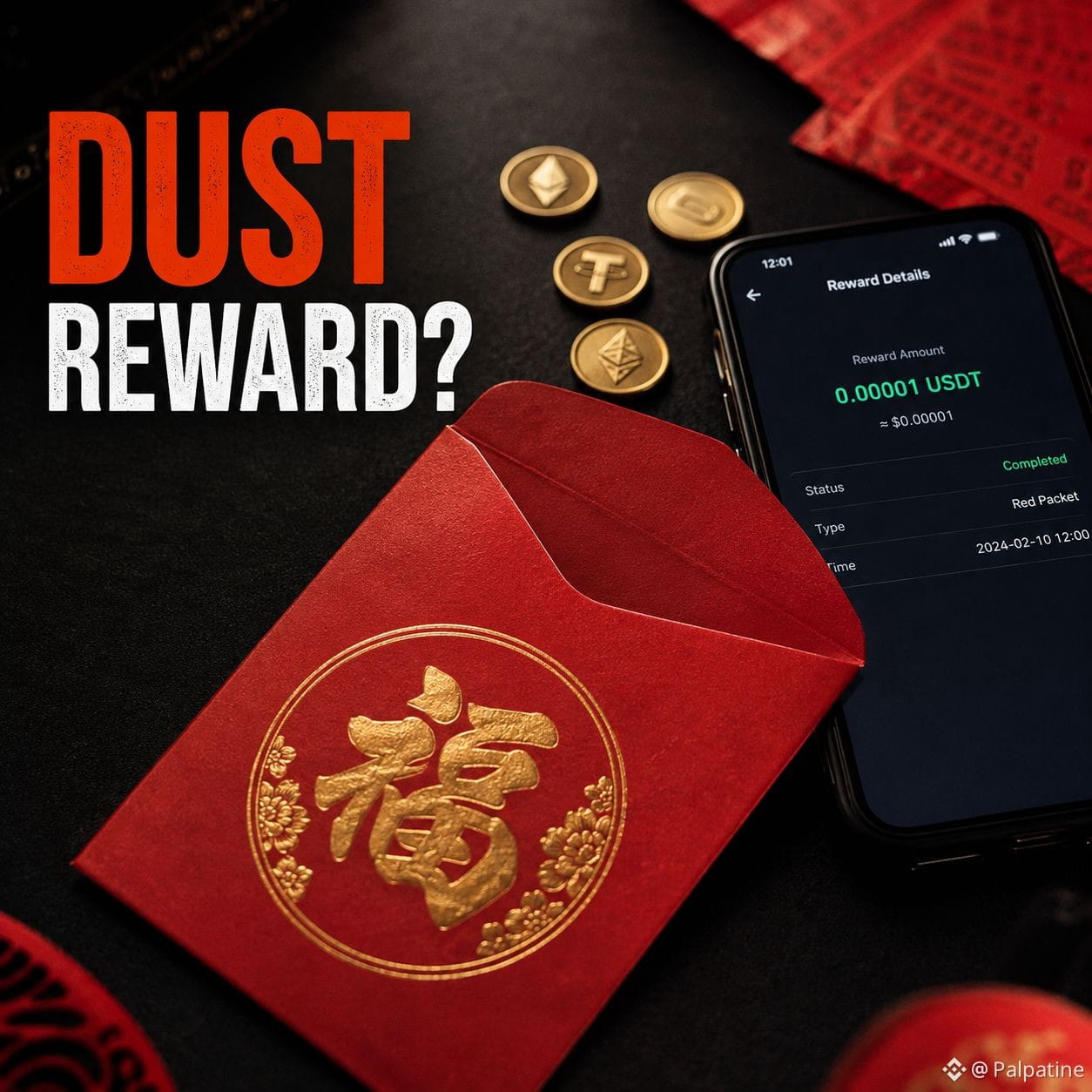
Les gains des « Red Packets » ne devraient pas être de la poussière — 0,00001 USDT n’est pas une récompense
J’aime les Red Packets de Binance.
Ce que je n’aime pas, en revanche, c’est d’en ouvrir un et de recevoir quelque chose comme :
0,00000001 $MUBARAK
0,00000001 $EGLD
0,00000001 $ARB
Techniquement, oui, vous avez reçu de la crypto.
Mais concrètement ? Vous avez reçu de la poussière.
Et c’est là que ça devient inconfortable.
Les Red Packets sont une excellente fonctionnalité pour l’engagement de la communauté, les promotions et la découverte de tokens. Je ne demande pas à Binance de les supprimer.
Je demande une récompense minimum réelle par destinataire.
🟡 Valeur minimale distribuable.
🟡 Valeur estimée claire avant de réclamer.
🟡 Pas de récompenses microscopiques conçues uniquement pour augmenter le nombre de participants.
Personne ne s’attend à devenir riche grâce à un Red Packet.
Mais le temps des utilisateurs a lui aussi de la valeur.
UNE PETITE RÉCOMPENSE, ÇA VA. UNE RÉCOMPENSE INUTILE, NON.
Gardez les Red Packets.
ÉLEVEZ LE PLANCHER.
Souhaitez-vous soutenir une valeur minimale réelle par réclamation ?
$EGLD $ARB
{spot}(MUBARAKUSDT)
Les gains des « Red Packets » ne devraient pas être de la poussière — 0,00001 USDT n’est pas une récompense
J’aime les Red Packets de Binance.
Ce que je n’aime pas, en revanche, c’est d’en ouvrir un et de recevoir quelque chose comme :
0,00000001 $MUBARAK
0,00000001 $EGLD
0,00000001 $ARB
Techniquement, oui, vous avez reçu de la crypto.
Mais concrètement ? Vous avez reçu de la poussière.
Et c’est là que ça devient inconfortable.
Les Red Packets sont une excellente fonctionnalité pour l’engagement de la communauté, les promotions et la découverte de tokens. Je ne demande pas à Binance de les supprimer.
Je demande une récompense minimum réelle par destinataire.
🟡 Valeur minimale distribuable.
🟡 Valeur estimée claire avant de réclamer.
🟡 Pas de récompenses microscopiques conçues uniquement pour augmenter le nombre de participants.
Personne ne s’attend à devenir riche grâce à un Red Packet.
Mais le temps des utilisateurs a lui aussi de la valeur.
UNE PETITE RÉCOMPENSE, ÇA VA. UNE RÉCOMPENSE INUTILE, NON.
Gardez les Red Packets.
ÉLEVEZ LE PLANCHER.
Souhaitez-vous soutenir une valeur minimale réelle par réclamation ?
$EGLD $ARB
J’aime les Red Packets de Binance.
Ce que je n’aime pas, en revanche, c’est d’en ouvrir un et de recevoir quelque chose comme :
0,00000001 $MUBARAK
0,00000001 $EGLD
0,00000001 $ARB
Techniquement, oui, vous avez reçu de la crypto.
Mais concrètement ? Vous avez reçu de la poussière.
Et c’est là que ça devient inconfortable.
Les Red Packets sont une excellente fonctionnalité pour l’engagement de la communauté, les promotions et la découverte de tokens. Je ne demande pas à Binance de les supprimer.
Je demande une récompense minimum réelle par destinataire.
🟡 Valeur minimale distribuable.
🟡 Valeur estimée claire avant de réclamer.
🟡 Pas de récompenses microscopiques conçues uniquement pour augmenter le nombre de participants.
Personne ne s’attend à devenir riche grâce à un Red Packet.
Mais le temps des utilisateurs a lui aussi de la valeur.
UNE PETITE RÉCOMPENSE, ÇA VA. UNE RÉCOMPENSE INUTILE, NON.
Gardez les Red Packets.
ÉLEVEZ LE PLANCHER.
Souhaitez-vous soutenir une valeur minimale réelle par réclamation ?
$EGLD $ARB
1
251
·
--
Baissier
LA CARTE ÉTAIT PUBLIQUE — ZKC S’EST CHARGÉ DU RESTE
$ZKC s’échange maintenant autour de 0,0492.
Quand la pompe attirait encore l’attention, nous avons publié le setup au lieu de courir après le mouvement :
🟠 Attendre l’essoufflement.
🟠 Ne pas short aveuglément dans la faiblesse.
🟢 TP1 : 0,0555–0,0560 ✅
🟢 TP2 : 0,0510–0,0520 ✅
🟢 TP3 : 0,0470–0,0480 ⏳
🟢 Runner : 0,0390–0,0400
Le plus haut initial était d’environ 0,0708.
Désormais, ZKC a déjà drainé sous 0,050.
C’est le même principe qui a fonctionné pour nous avec $ONG et $BMT :
NE PRÉDIS PAS LE SOMMET.
LIS LA STRUCTURE.
ATTENDS QUE LE SQUEEZE MEURE.
TRADE LA RÉVERSION À LA MOYENNE.
Pas de regard arrière.
Le plan a été publié avant le mouvement.
TP1 et TP2 sont déjà partis. Maintenant, on regarde simplement si le marché veut terminer le TP3 — ou enfin construire un vrai plancher.
PROCESSUS > PRÉDICTION.
$ZKC $ONG $BMT
{future}(ZKCUSDT)
LA CARTE ÉTAIT PUBLIQUE — ZKC S’EST CHARGÉ DU RESTE
$ZKC s’échange maintenant autour de 0,0492.
Quand la pompe attirait encore l’attention, nous avons publié le setup au lieu de courir après le mouvement :
🟠 Attendre l’essoufflement.
🟠 Ne pas short aveuglément dans la faiblesse.
🟢 TP1 : 0,0555–0,0560 ✅
🟢 TP2 : 0,0510–0,0520 ✅
🟢 TP3 : 0,0470–0,0480 ⏳
🟢 Runner : 0,0390–0,0400
Le plus haut initial était d’environ 0,0708.
Désormais, ZKC a déjà drainé sous 0,050.
C’est le même principe qui a fonctionné pour nous avec $ONG et $BMT :
NE PRÉDIS PAS LE SOMMET.
LIS LA STRUCTURE.
ATTENDS QUE LE SQUEEZE MEURE.
TRADE LA RÉVERSION À LA MOYENNE.
Pas de regard arrière.
Le plan a été publié avant le mouvement.
TP1 et TP2 sont déjà partis. Maintenant, on regarde simplement si le marché veut terminer le TP3 — ou enfin construire un vrai plancher.
PROCESSUS > PRÉDICTION.
$ZKC $ONG $BMT
$ZKC s’échange maintenant autour de 0,0492.
Quand la pompe attirait encore l’attention, nous avons publié le setup au lieu de courir après le mouvement :
🟠 Attendre l’essoufflement.
🟠 Ne pas short aveuglément dans la faiblesse.
🟢 TP1 : 0,0555–0,0560 ✅
🟢 TP2 : 0,0510–0,0520 ✅
🟢 TP3 : 0,0470–0,0480 ⏳
🟢 Runner : 0,0390–0,0400
Le plus haut initial était d’environ 0,0708.
Désormais, ZKC a déjà drainé sous 0,050.
C’est le même principe qui a fonctionné pour nous avec $ONG et $BMT :
NE PRÉDIS PAS LE SOMMET.
LIS LA STRUCTURE.
ATTENDS QUE LE SQUEEZE MEURE.
TRADE LA RÉVERSION À LA MOYENNE.
Pas de regard arrière.
Le plan a été publié avant le mouvement.
TP1 et TP2 sont déjà partis. Maintenant, on regarde simplement si le marché veut terminer le TP3 — ou enfin construire un vrai plancher.
PROCESSUS > PRÉDICTION.
$ZKC $ONG $BMT
Palpatine
·
--
TP1 HIT — L’INSTALLATION EST DÉJÀ EN PLACE
$ZKC a maintenant atteint le TP1 : 0.0555–0.0560.
L’objectif initial du plan a été atteint.
À partir de là, chacun doit gérer la transaction selon sa propre tolérance au risque :
🟢 Prendre des profits partiels et sécuriser la transaction.
🟢 Rapprocher la protection et laisser le reste tourner.
🟢 Ou continuer à conserver pour les objectifs restants :
TP2 : 0.0510–0.0520
TP3 : 0.0470–0.0480
Runner : 0.0390–0.0400
La partie importante, c’est que la configuration a fait ce qu’elle devait faire.
Désormais, le marché peut rebondir, se consolider ou continuer l’assèchement.
LE PLAN A DONNÉ L’ENTRÉE. LE TP1 A PAYÉ.
À PARTIR DE LÀ, LA GESTION COMPTE PLUS QUE LA PRÉDICTION.
$ZKC $BTC $ETH
$ZKC a maintenant atteint le TP1 : 0.0555–0.0560.
L’objectif initial du plan a été atteint.
À partir de là, chacun doit gérer la transaction selon sa propre tolérance au risque :
🟢 Prendre des profits partiels et sécuriser la transaction.
🟢 Rapprocher la protection et laisser le reste tourner.
🟢 Ou continuer à conserver pour les objectifs restants :
TP2 : 0.0510–0.0520
TP3 : 0.0470–0.0480
Runner : 0.0390–0.0400
La partie importante, c’est que la configuration a fait ce qu’elle devait faire.
Désormais, le marché peut rebondir, se consolider ou continuer l’assèchement.
LE PLAN A DONNÉ L’ENTRÉE. LE TP1 A PAYÉ.
À PARTIR DE LÀ, LA GESTION COMPTE PLUS QUE LA PRÉDICTION.
$ZKC $BTC $ETH
286
·
--
🇦🇷 MALVINAS : QUE S AIT MILEI QUE NOUS NE SAVONS PAS ENCORE ?
Le jeudi à 21 h 00, Javier Milei s’adressera à l’ensemble du pays par chaîne nationale, exclusivement au sujet des Malouines.
Et le moment choisi ne semble pas anodin.
Donald Trump vient de dire que les États-Unisᵁˢ sont prêts à « réexaminer » leur position historique sur le différend de souveraineté entre l’Argentineᴬᴿ et le Royaume-Uniᴳᴮ. Washington n’a encore annoncé aucun changement officiel, mais à la Casa Rosada, on considère qu’il s’est produit quelque chose d’assez important pour que le Président s’adresse à tout le pays.
Le ministère des Affaires étrangères a évoqué des « avancées diplomatiques ». Le contenu intégral du message reste pour l’instant confidentiel.
Et là apparaît la question :
EST-CE JUSTE UNE EXPLICATION DIPLOMATIQUE… OU JEUDI ALLONS-NOUS DÉCOUVRIR QUELQUE CHOSE DE NOUVEAU ?
Après des décennies où les Malouines semblaient être un débat figé, l’Argentineᴬᴿ, les États-Unisᵁˢ et le Royaume-Uniᴳᴮ se retrouvent à nouveau sur le même échiquier.
Nous ne savons pas encore ce qu’annoncera Milei.
Mais une chaîne nationale consacrée exclusivement aux Malouines, ça n’arrive pas tous les jours.
Jeudi, il peut ne s’agir que d’un discours.
Ou bien d’un début d’un autre chapitre.
#algopaso #argentinapotencia
$YPF.US
$PAM.US
$VIST.US
🇦🇷 MALVINAS : QUE S AIT MILEI QUE NOUS NE SAVONS PAS ENCORE ?
Le jeudi à 21 h 00, Javier Milei s’adressera à l’ensemble du pays par chaîne nationale, exclusivement au sujet des Malouines.
Et le moment choisi ne semble pas anodin.
Donald Trump vient de dire que les États-Unisᵁˢ sont prêts à « réexaminer » leur position historique sur le différend de souveraineté entre l’Argentineᴬᴿ et le Royaume-Uniᴳᴮ. Washington n’a encore annoncé aucun changement officiel, mais à la Casa Rosada, on considère qu’il s’est produit quelque chose d’assez important pour que le Président s’adresse à tout le pays.
Le ministère des Affaires étrangères a évoqué des « avancées diplomatiques ». Le contenu intégral du message reste pour l’instant confidentiel.
Et là apparaît la question :
EST-CE JUSTE UNE EXPLICATION DIPLOMATIQUE… OU JEUDI ALLONS-NOUS DÉCOUVRIR QUELQUE CHOSE DE NOUVEAU ?
Après des décennies où les Malouines semblaient être un débat figé, l’Argentineᴬᴿ, les États-Unisᵁˢ et le Royaume-Uniᴳᴮ se retrouvent à nouveau sur le même échiquier.
Nous ne savons pas encore ce qu’annoncera Milei.
Mais une chaîne nationale consacrée exclusivement aux Malouines, ça n’arrive pas tous les jours.
Jeudi, il peut ne s’agir que d’un discours.
Ou bien d’un début d’un autre chapitre.
#algopaso #argentinapotencia
$YPF.US
$PAM.US
$VIST.US
Le jeudi à 21 h 00, Javier Milei s’adressera à l’ensemble du pays par chaîne nationale, exclusivement au sujet des Malouines.
Et le moment choisi ne semble pas anodin.
Donald Trump vient de dire que les États-Unisᵁˢ sont prêts à « réexaminer » leur position historique sur le différend de souveraineté entre l’Argentineᴬᴿ et le Royaume-Uniᴳᴮ. Washington n’a encore annoncé aucun changement officiel, mais à la Casa Rosada, on considère qu’il s’est produit quelque chose d’assez important pour que le Président s’adresse à tout le pays.
Le ministère des Affaires étrangères a évoqué des « avancées diplomatiques ». Le contenu intégral du message reste pour l’instant confidentiel.
Et là apparaît la question :
EST-CE JUSTE UNE EXPLICATION DIPLOMATIQUE… OU JEUDI ALLONS-NOUS DÉCOUVRIR QUELQUE CHOSE DE NOUVEAU ?
Après des décennies où les Malouines semblaient être un débat figé, l’Argentineᴬᴿ, les États-Unisᵁˢ et le Royaume-Uniᴳᴮ se retrouvent à nouveau sur le même échiquier.
Nous ne savons pas encore ce qu’annoncera Milei.
Mais une chaîne nationale consacrée exclusivement aux Malouines, ça n’arrive pas tous les jours.
Jeudi, il peut ne s’agir que d’un discours.
Ou bien d’un début d’un autre chapitre.
#algopaso #argentinapotencia
$YPF.US
$PAM.US
$VIST.US

YPFUS-0,96%
PAMUS-2,27%
VISTUS-3,44%
2
233
·
--
CE N’ÉTAIT PAS UNE SIMPLE PLONGÉE — LE HEMI S’EST FAIT LIQUIDER
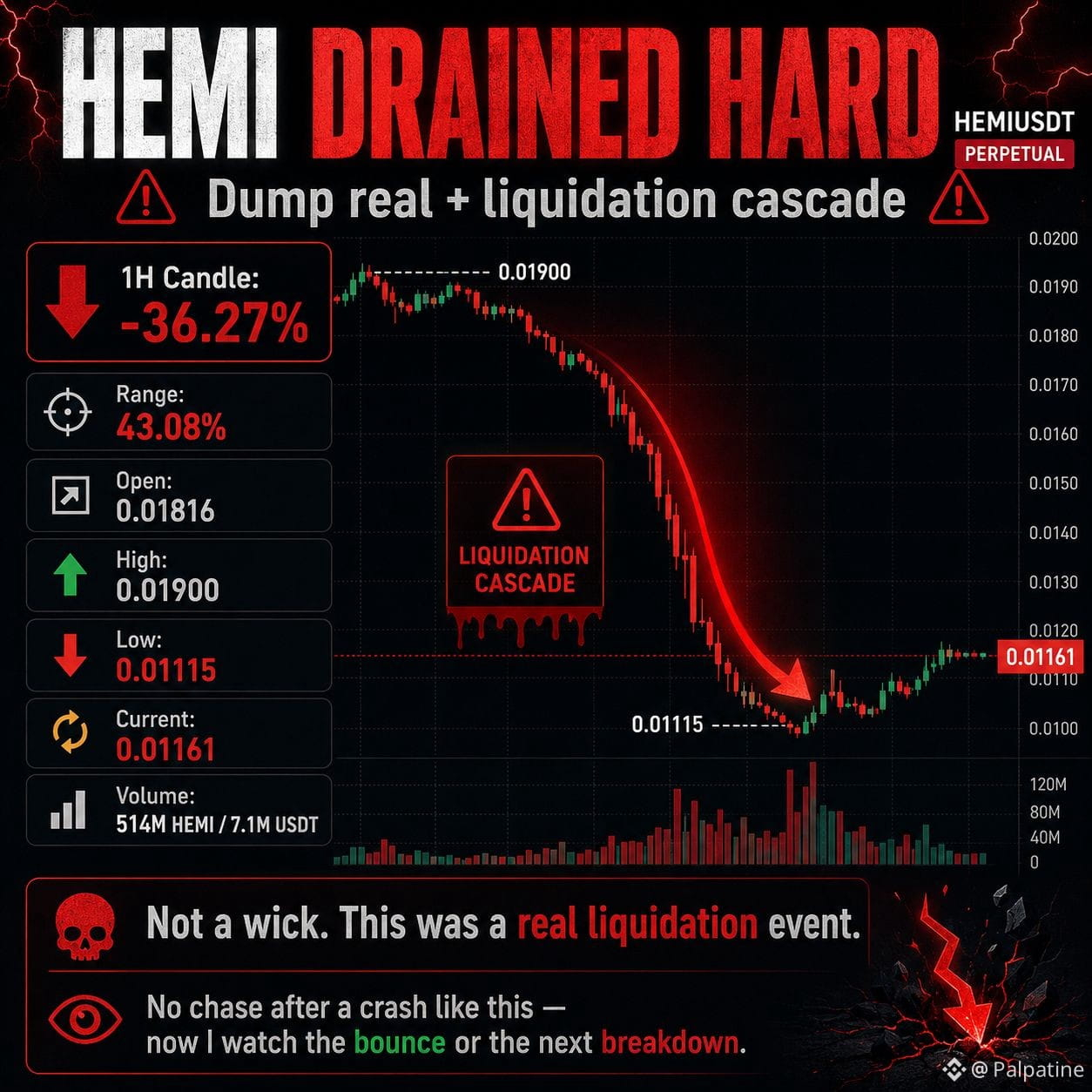
$HEMI a imprimé l’une des cascades de liquidation les plus propres que j’aie vues récemment.
En une seule bougie 1H :
Ouverture : 0.01816
Plus haut : 0.01900
Plus bas : 0.01115
Bougie : -36,27%
Amplitude totale : 43,08%
Le volume a explosé à environ 514M HEMI / 7,1M USDT alors que le prix est resté proche des plus bas au lieu de récupérer immédiatement la mèche.
Et ça compte.
Ce n’était pas juste du bruit dû à une faible liquidité.
Ça ressemblait à un vrai réajustement + un événement de liquidations longues, avec tout le monde qui essayait de sortir par la même porte.
Mais après une chute de près de 40% en quelques minutes, je ne vais pas courir après un short ici.
Le mouvement facile a déjà eu lieu.
Maintenant, je veux voir ce qui arrive ensuite :
Un rebond de capitulation violent ?
Ou un rebond faible suivi d’une nouvelle cassure ?
LE MEILLEUR TRADING APRÈS UNE CHUTE CONSISTE SOUVENT À ATTENDRE QUE LE MARCHÉ SE RÉINITIALISE.
$HEMI $BTC $ETH
{future}(HEMIUSDT)
CE N’ÉTAIT PAS UNE SIMPLE PLONGÉE — LE HEMI S’EST FAIT LIQUIDER
$HEMI a imprimé l’une des cascades de liquidation les plus propres que j’aie vues récemment.
En une seule bougie 1H :
Ouverture : 0.01816
Plus haut : 0.01900
Plus bas : 0.01115
Bougie : -36,27%
Amplitude totale : 43,08%
Le volume a explosé à environ 514M HEMI / 7,1M USDT alors que le prix est resté proche des plus bas au lieu de récupérer immédiatement la mèche.
Et ça compte.
Ce n’était pas juste du bruit dû à une faible liquidité.
Ça ressemblait à un vrai réajustement + un événement de liquidations longues, avec tout le monde qui essayait de sortir par la même porte.
Mais après une chute de près de 40% en quelques minutes, je ne vais pas courir après un short ici.
Le mouvement facile a déjà eu lieu.
Maintenant, je veux voir ce qui arrive ensuite :
Un rebond de capitulation violent ?
Ou un rebond faible suivi d’une nouvelle cassure ?
LE MEILLEUR TRADING APRÈS UNE CHUTE CONSISTE SOUVENT À ATTENDRE QUE LE MARCHÉ SE RÉINITIALISE.
$HEMI $BTC $ETH
$HEMI a imprimé l’une des cascades de liquidation les plus propres que j’aie vues récemment.
En une seule bougie 1H :
Ouverture : 0.01816
Plus haut : 0.01900
Plus bas : 0.01115
Bougie : -36,27%
Amplitude totale : 43,08%
Le volume a explosé à environ 514M HEMI / 7,1M USDT alors que le prix est resté proche des plus bas au lieu de récupérer immédiatement la mèche.
Et ça compte.
Ce n’était pas juste du bruit dû à une faible liquidité.
Ça ressemblait à un vrai réajustement + un événement de liquidations longues, avec tout le monde qui essayait de sortir par la même porte.
Mais après une chute de près de 40% en quelques minutes, je ne vais pas courir après un short ici.
Le mouvement facile a déjà eu lieu.
Maintenant, je veux voir ce qui arrive ensuite :
Un rebond de capitulation violent ?
Ou un rebond faible suivi d’une nouvelle cassure ?
LE MEILLEUR TRADING APRÈS UNE CHUTE CONSISTE SOUVENT À ATTENDRE QUE LE MARCHÉ SE RÉINITIALISE.
$HEMI $BTC $ETH
1
256
·
--
Haussier
🇦🇷 « CE N’ÉTAIT PAS JUSTE UN AUTRE MATCH »… ET EN ANGLETERRE, ÇA SEMBLE ENCORE FAIRE MAL
Lionel Messi s’est retiré de la Sélection argentine 🇦🇷 AR, et le monde a répondu par des hommages.
Mais depuis l’Angleterre 🇬🇧 EN, The Sun a choisi une autre voie : le journal a titré que Messi se retire « DE NOUVEAU », se moquant de cette décision de 2016. Alors que des journaux de différents pays ont parlé de la fin d’une légende, le tabloïd britannique cherchait la pique.
Et alors revient cette phrase :
« Contre l’Angleterre, c’était juste un autre match. »
Vraiment ?
L’Argentine a éliminé l’Angleterre en demi-finale, dans un match qui s’est terminé avec le drapeau « Les Malouines sont argentines », faisant le tour du monde. Des semaines ont passé, la Coupe du monde a pris fin, Messi a annoncé son adieu… et, depuis une partie de la presse anglaise, certains trouvent encore une façon de lui mettre un coup.
En tant qu’Argentins, nous n’avons pas besoin de répondre par des insultes.
Nous avons une réponse beaucoup plus simple :
Merci, Capitaine. 🇦🇷
Ils peuvent garder la moquerie.
Nous, nous gardons Messi, son histoire, et cette demi-finale qui, manifestement, n’était pas un simple match de plus.
#algopaso
$BTC
🇦🇷 « CE N’ÉTAIT PAS JUSTE UN AUTRE MATCH »… ET EN ANGLETERRE, ÇA SEMBLE ENCORE FAIRE MAL
Lionel Messi s’est retiré de la Sélection argentine 🇦🇷 AR, et le monde a répondu par des hommages.
Mais depuis l’Angleterre 🇬🇧 EN, The Sun a choisi une autre voie : le journal a titré que Messi se retire « DE NOUVEAU », se moquant de cette décision de 2016. Alors que des journaux de différents pays ont parlé de la fin d’une légende, le tabloïd britannique cherchait la pique.
Et alors revient cette phrase :
« Contre l’Angleterre, c’était juste un autre match. »
Vraiment ?
L’Argentine a éliminé l’Angleterre en demi-finale, dans un match qui s’est terminé avec le drapeau « Les Malouines sont argentines », faisant le tour du monde. Des semaines ont passé, la Coupe du monde a pris fin, Messi a annoncé son adieu… et, depuis une partie de la presse anglaise, certains trouvent encore une façon de lui mettre un coup.
En tant qu’Argentins, nous n’avons pas besoin de répondre par des insultes.
Nous avons une réponse beaucoup plus simple :
Merci, Capitaine. 🇦🇷
Ils peuvent garder la moquerie.
Nous, nous gardons Messi, son histoire, et cette demi-finale qui, manifestement, n’était pas un simple match de plus.
#algopaso
$BTC
Lionel Messi s’est retiré de la Sélection argentine 🇦🇷 AR, et le monde a répondu par des hommages.
Mais depuis l’Angleterre 🇬🇧 EN, The Sun a choisi une autre voie : le journal a titré que Messi se retire « DE NOUVEAU », se moquant de cette décision de 2016. Alors que des journaux de différents pays ont parlé de la fin d’une légende, le tabloïd britannique cherchait la pique.
Et alors revient cette phrase :
« Contre l’Angleterre, c’était juste un autre match. »
Vraiment ?
L’Argentine a éliminé l’Angleterre en demi-finale, dans un match qui s’est terminé avec le drapeau « Les Malouines sont argentines », faisant le tour du monde. Des semaines ont passé, la Coupe du monde a pris fin, Messi a annoncé son adieu… et, depuis une partie de la presse anglaise, certains trouvent encore une façon de lui mettre un coup.
En tant qu’Argentins, nous n’avons pas besoin de répondre par des insultes.
Nous avons une réponse beaucoup plus simple :
Merci, Capitaine. 🇦🇷
Ils peuvent garder la moquerie.
Nous, nous gardons Messi, son histoire, et cette demi-finale qui, manifestement, n’était pas un simple match de plus.
#algopaso
$BTC
2
1.3k
·
--
🇦🇷 MERCI, CAPITAINE. LA FIN QUE TU NE MÉRITAIS PAS
Aujourd’hui, Lionel Messi a annoncé qu’il quitte la Sélection argentine 🇦🇷 AR.
Après plus de 20 ans, 207 matchs, 125 buts, une Coupe du monde et une histoire qui a changé à jamais notre football, en tant qu’Argentins, il ne reste qu’une seule chose à dire :
MERCI, CAPITAINE.
Et c’est peut-être pour ça que ça fait encore plus mal comment cela s’est terminé.
Son dernier match avec l’Argentine, c’était cette finale contre l’Espagne 🇪🇸 ES. Une finale qui, pour beaucoup, a laissé des décisions difficiles à expliquer et une sensation qui ne disparaît toujours pas.
Messi a écrit son adieu seulement deux jours après cette finale.
Lui-même a dit aujourd’hui : « Je me suis vidé, je n’ai plus rien à donner. »
L’Espagne a gagné la Coupe. C’est écrit.
Mais le fait que ce match ait été simplement une finale normale, sans rien à discuter… ça divise encore le monde.
Et il est particulièrement triste que la dernière image compétitive de Messi avec notre maillot soit liée à cette polémique.
On pourra discuter des matchs, des arbitres et des sanctions.
Ce qu’on ne pourra jamais discuter, c’est ce que cet homme a fait pour 🇦🇷 AR.
Merci pour tout, Leo.
#algopaso
{spot}(BTCUSDT)
{future}(HEMIUSDT)
{future}(0GUSDT)
🇦🇷 MERCI, CAPITAINE. LA FIN QUE TU NE MÉRITAIS PAS
Aujourd’hui, Lionel Messi a annoncé qu’il quitte la Sélection argentine 🇦🇷 AR.
Après plus de 20 ans, 207 matchs, 125 buts, une Coupe du monde et une histoire qui a changé à jamais notre football, en tant qu’Argentins, il ne reste qu’une seule chose à dire :
MERCI, CAPITAINE.
Et c’est peut-être pour ça que ça fait encore plus mal comment cela s’est terminé.
Son dernier match avec l’Argentine, c’était cette finale contre l’Espagne 🇪🇸 ES. Une finale qui, pour beaucoup, a laissé des décisions difficiles à expliquer et une sensation qui ne disparaît toujours pas.
Messi a écrit son adieu seulement deux jours après cette finale.
Lui-même a dit aujourd’hui : « Je me suis vidé, je n’ai plus rien à donner. »
L’Espagne a gagné la Coupe. C’est écrit.
Mais le fait que ce match ait été simplement une finale normale, sans rien à discuter… ça divise encore le monde.
Et il est particulièrement triste que la dernière image compétitive de Messi avec notre maillot soit liée à cette polémique.
On pourra discuter des matchs, des arbitres et des sanctions.
Ce qu’on ne pourra jamais discuter, c’est ce que cet homme a fait pour 🇦🇷 AR.
Merci pour tout, Leo.
#algopaso
Aujourd’hui, Lionel Messi a annoncé qu’il quitte la Sélection argentine 🇦🇷 AR.
Après plus de 20 ans, 207 matchs, 125 buts, une Coupe du monde et une histoire qui a changé à jamais notre football, en tant qu’Argentins, il ne reste qu’une seule chose à dire :
MERCI, CAPITAINE.
Et c’est peut-être pour ça que ça fait encore plus mal comment cela s’est terminé.
Son dernier match avec l’Argentine, c’était cette finale contre l’Espagne 🇪🇸 ES. Une finale qui, pour beaucoup, a laissé des décisions difficiles à expliquer et une sensation qui ne disparaît toujours pas.
Messi a écrit son adieu seulement deux jours après cette finale.
Lui-même a dit aujourd’hui : « Je me suis vidé, je n’ai plus rien à donner. »
L’Espagne a gagné la Coupe. C’est écrit.
Mais le fait que ce match ait été simplement une finale normale, sans rien à discuter… ça divise encore le monde.
Et il est particulièrement triste que la dernière image compétitive de Messi avec notre maillot soit liée à cette polémique.
On pourra discuter des matchs, des arbitres et des sanctions.
Ce qu’on ne pourra jamais discuter, c’est ce que cet homme a fait pour 🇦🇷 AR.
Merci pour tout, Leo.
#algopaso

4
275
Connectez-vous pour découvrir plus de contenu
Rejoignez la communauté mondiale des adeptes de cryptomonnaies sur Binance Square
⚡️ Suviez les dernières informations importantes sur les cryptomonnaies.
💬 Jugé digne de confiance par la plus grande plateforme d’échange de cryptomonnaies au monde.
👍 Découvrez les connaissances que partagent les créateurs vérifiés.
Adresse e-mail/Nº de téléphone