

Max _ Hunter
14.7k Publications

Max _ Hunter
 Compte Square Vérifié+
Signaler
Bloquer l’utilisateur
Bull Market Hunter | Technical Analysis | AI Enthusiast
Ouvert au trading
Trade régulièrement
1.9 an(s)
318 Suivis
34.2K+ Abonnés
38.3K+ J’aime
Publications
Portefeuille
Tous
Citations
Vidéos
Direct
·
--
🚨 CRYPTO MARKET STRUCTURE UPDATE 🚨 🇺🇸
Trump continues pushing for the CLARITY Act, but the Senate failed to advance the major crypto market-structure bill on Sept. 15, 2026.
🔥 The legislation is designed to establish clearer U.S. rules for digital assets and define regulatory responsibilities, with the White House continuing to support a crypto-friendly regulatory framework.
₿ If the bill advances in the future, clearer regulation could have major implications for institutional participation and the broader crypto market—but claims of an immediate “trillions of dollars” inflow or a historic Bitcoin inflow are not currently verified. 📊🚀
#US10YearYieldNears5.3%
#KoreaProposesTokenizingStocksAndBonds
#MetaMaskExitsLidoValidatorsAfterSecurityIncident
#MicronBeatsEarningsLiftsGuidance
#CFTCSubmitsTwoEventContractRulesToWhiteHouse
$BTC
{spot}(BTCUSDT)
$LAB
{future}(LABUSDT)
$TLM
{spot}(TLMUSDT)
🚨 CRYPTO MARKET STRUCTURE UPDATE 🚨 🇺🇸
Trump continues pushing for the CLARITY Act, but the Senate failed to advance the major crypto market-structure bill on Sept. 15, 2026.
🔥 The legislation is designed to establish clearer U.S. rules for digital assets and define regulatory responsibilities, with the White House continuing to support a crypto-friendly regulatory framework.
₿ If the bill advances in the future, clearer regulation could have major implications for institutional participation and the broader crypto market—but claims of an immediate “trillions of dollars” inflow or a historic Bitcoin inflow are not currently verified. 📊🚀
#US10YearYieldNears5.3%
#KoreaProposesTokenizingStocksAndBonds
#MetaMaskExitsLidoValidatorsAfterSecurityIncident
#MicronBeatsEarningsLiftsGuidance
#CFTCSubmitsTwoEventContractRulesToWhiteHouse
$BTC
$LAB
$TLM
Trump continues pushing for the CLARITY Act, but the Senate failed to advance the major crypto market-structure bill on Sept. 15, 2026.
🔥 The legislation is designed to establish clearer U.S. rules for digital assets and define regulatory responsibilities, with the White House continuing to support a crypto-friendly regulatory framework.
₿ If the bill advances in the future, clearer regulation could have major implications for institutional participation and the broader crypto market—but claims of an immediate “trillions of dollars” inflow or a historic Bitcoin inflow are not currently verified. 📊🚀
#US10YearYieldNears5.3%
#KoreaProposesTokenizingStocksAndBonds
#MetaMaskExitsLidoValidatorsAfterSecurityIncident
#MicronBeatsEarningsLiftsGuidance
#CFTCSubmitsTwoEventContractRulesToWhiteHouse
$BTC
$LAB
$TLM

1
1.1k
·
--
🚨 IMPORTANT MARKET ALERT 🚨
🇺🇸 FED GOVERNOR CHRISTOPHER WALLER SPEAKS TODAY
⏰ 10:00 AM ET
🎙️ Markets will be watching closely for his comments on:
📊 US INFLATION
🇺🇸 ECONOMIC DATA
💵 INTEREST RATES
🏦 FED MONETARY POLICY
⚠️ Waller has previously emphasized that incoming inflation data is important for determining whether the Fed should hold rates or consider tighter policy.
🔥 HIS COMMENTS COULD BRING HIGH VOLATILITY ACROSS:
₿ BTC
♦️ ETH
📈 STOCKS
💵 DOLLAR
🥇 GOLD
📊 BOND YIELDS
🚨 STAY ALERT — FED SPEECHES CAN MOVE MARKETS FAST.
⏳ 10:00 AM ET
🇺🇸 CHRISTOPHER WALLER
🏦 FEDERAL RESERVE
#Bitcoin #BTC #US10YearYieldNears5.3%
#KoreaProposesTokenizingStocksAndBonds
#USADPAdds90000JobsInSeptember
🚨 IMPORTANT MARKET ALERT 🚨
🇺🇸 FED GOVERNOR CHRISTOPHER WALLER SPEAKS TODAY
⏰ 10:00 AM ET
🎙️ Markets will be watching closely for his comments on:
📊 US INFLATION
🇺🇸 ECONOMIC DATA
💵 INTEREST RATES
🏦 FED MONETARY POLICY
⚠️ Waller has previously emphasized that incoming inflation data is important for determining whether the Fed should hold rates or consider tighter policy.
🔥 HIS COMMENTS COULD BRING HIGH VOLATILITY ACROSS:
₿ BTC
♦️ ETH
📈 STOCKS
💵 DOLLAR
🥇 GOLD
📊 BOND YIELDS
🚨 STAY ALERT — FED SPEECHES CAN MOVE MARKETS FAST.
⏳ 10:00 AM ET
🇺🇸 CHRISTOPHER WALLER
🏦 FEDERAL RESERVE
#Bitcoin #BTC #US10YearYieldNears5.3%
#KoreaProposesTokenizingStocksAndBonds
#USADPAdds90000JobsInSeptember
🇺🇸 FED GOVERNOR CHRISTOPHER WALLER SPEAKS TODAY
⏰ 10:00 AM ET
🎙️ Markets will be watching closely for his comments on:
📊 US INFLATION
🇺🇸 ECONOMIC DATA
💵 INTEREST RATES
🏦 FED MONETARY POLICY
⚠️ Waller has previously emphasized that incoming inflation data is important for determining whether the Fed should hold rates or consider tighter policy.
🔥 HIS COMMENTS COULD BRING HIGH VOLATILITY ACROSS:
₿ BTC
♦️ ETH
📈 STOCKS
💵 DOLLAR
🥇 GOLD
📊 BOND YIELDS
🚨 STAY ALERT — FED SPEECHES CAN MOVE MARKETS FAST.
⏳ 10:00 AM ET
🇺🇸 CHRISTOPHER WALLER
🏦 FEDERAL RESERVE
#Bitcoin #BTC #US10YearYieldNears5.3%
#KoreaProposesTokenizingStocksAndBonds
#USADPAdds90000JobsInSeptember

125
·
--
Haussier
🚨 TRUMP You might want to start buying now
💰 BILLIONS & TRILLIONS OF CAPITAL ARE WATCHING CRYPTO
🔥 Institutional adoption, clearer regulation, tokenization and growing crypto infrastructure could bring massive new liquidity into digital assets.
🐂 If capital rotation accelerates, Bitcoin and major altcoins could enter a powerful new market phase
📈 The next major crypto cycle could be driven by
• 🏦 Institutional capital
• 💵 Stablecoin growth
• 🔗 Real-world asset tokenization
• ⚖️ Regulatory clarity
• 🌐 Global crypto adoption
🚨 IMPORTANT: The widely shared $30 TRILLION flowing into crypto figure should be treated as a projection/claim not guaranteed capital inflow
🔥 FOLLOW ME — WE’RE READY TO TRACK THE BIG MOVES TOGETHER
🚀 $BTC • $ETH • ALTCOINS
🐂 $NEXT.US BULL RUN WATCH
💎 STAY ALERT. STAY READY.
#Bitcoin #BTC #Crypto #Ethereum #ETH #Altcoins #BullRun #CryptoMarket #Trump #InstitutionalAdoption #CryptoNews #Blockchain #Web3 #trading
{spot}(ETHUSDT)
🚨 TRUMP You might want to start buying now
💰 BILLIONS & TRILLIONS OF CAPITAL ARE WATCHING CRYPTO
🔥 Institutional adoption, clearer regulation, tokenization and growing crypto infrastructure could bring massive new liquidity into digital assets.
🐂 If capital rotation accelerates, Bitcoin and major altcoins could enter a powerful new market phase
📈 The next major crypto cycle could be driven by
• 🏦 Institutional capital
• 💵 Stablecoin growth
• 🔗 Real-world asset tokenization
• ⚖️ Regulatory clarity
• 🌐 Global crypto adoption
🚨 IMPORTANT: The widely shared $30 TRILLION flowing into crypto figure should be treated as a projection/claim not guaranteed capital inflow
🔥 FOLLOW ME — WE’RE READY TO TRACK THE BIG MOVES TOGETHER
🚀 $BTC • $ETH • ALTCOINS
🐂 $NEXT.US BULL RUN WATCH
💎 STAY ALERT. STAY READY.
#Bitcoin #BTC #Crypto #Ethereum #ETH #Altcoins #BullRun #CryptoMarket #Trump #InstitutionalAdoption #CryptoNews #Blockchain #Web3 #trading
💰 BILLIONS & TRILLIONS OF CAPITAL ARE WATCHING CRYPTO
🔥 Institutional adoption, clearer regulation, tokenization and growing crypto infrastructure could bring massive new liquidity into digital assets.
🐂 If capital rotation accelerates, Bitcoin and major altcoins could enter a powerful new market phase
📈 The next major crypto cycle could be driven by
• 🏦 Institutional capital
• 💵 Stablecoin growth
• 🔗 Real-world asset tokenization
• ⚖️ Regulatory clarity
• 🌐 Global crypto adoption
🚨 IMPORTANT: The widely shared $30 TRILLION flowing into crypto figure should be treated as a projection/claim not guaranteed capital inflow
🔥 FOLLOW ME — WE’RE READY TO TRACK THE BIG MOVES TOGETHER
🚀 $BTC • $ETH • ALTCOINS
🐂 $NEXT.US BULL RUN WATCH
💎 STAY ALERT. STAY READY.
#Bitcoin #BTC #Crypto #Ethereum #ETH #Altcoins #BullRun #CryptoMarket #Trump #InstitutionalAdoption #CryptoNews #Blockchain #Web3 #trading

176
·
--
Haussier
Vérifié
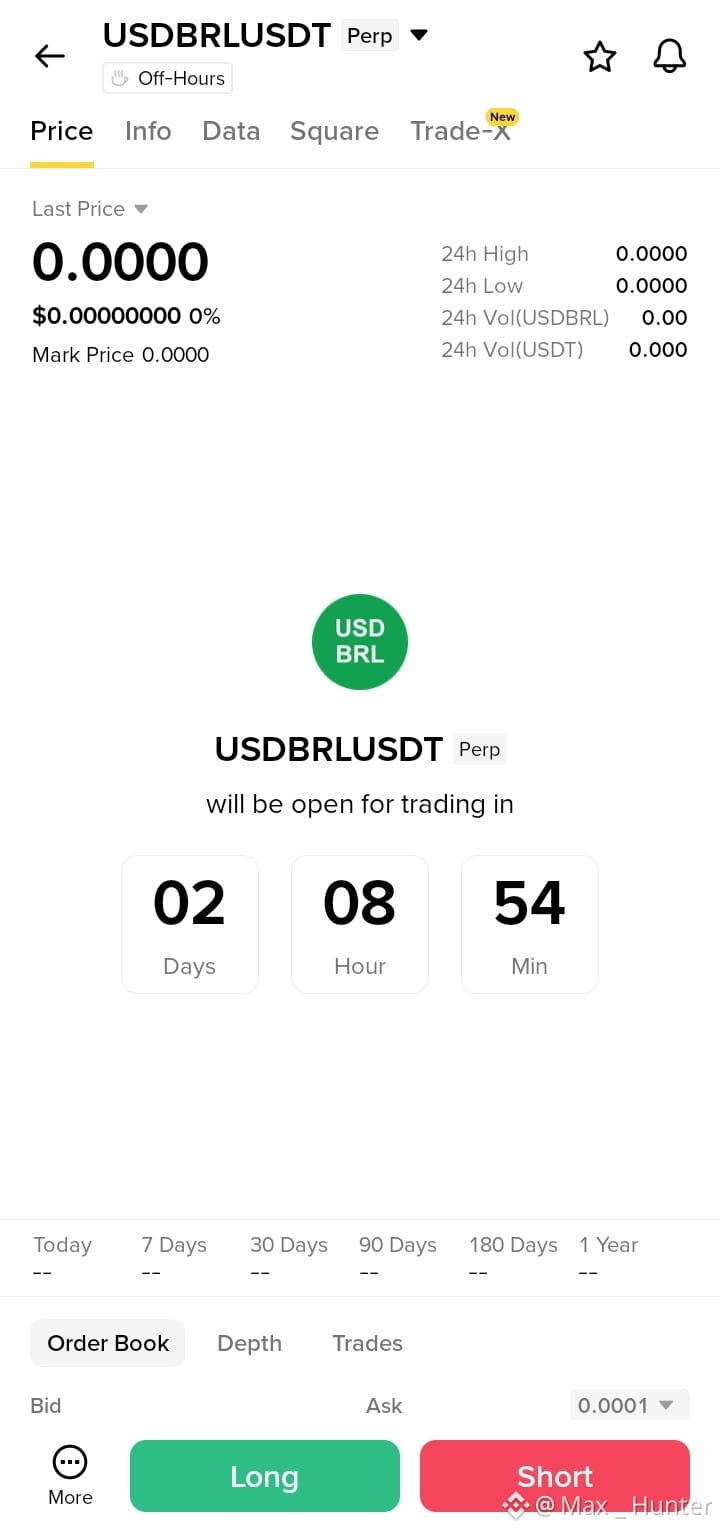
🚀 $USDBRL USDT /USDT Trading Launch ⏳
📌 USDBRLUSDT Perpetual will be open for trading soon.
⏰ Launch Countdown: 02 Days • 08 Hours • 54 Min
💰 Current Price: 0.0000
📊 Mark Price: 0.0000
📈 24h High: 0.0000
📉 24h Low: 0.0000
⚠️ Trading Tip: Wait for the market to open and price discovery to begin before taking a position. 📊
🚨 Risk: Since the contract has not started trading yet, there is no live price action or established market structure. Strict risk management is essential.
#BTCBreaks80K
#SOLJumpsAbout10%
#SECReceivesAmendedInjectiveETFFiling
#SanDiskToJoinSP100OnSep21
#TRMReportsYouTubeScamStole274.6ETH
🚀 $USDBRL USDT /USDT Trading Launch ⏳
📌 USDBRLUSDT Perpetual will be open for trading soon.
⏰ Launch Countdown: 02 Days • 08 Hours • 54 Min
💰 Current Price: 0.0000
📊 Mark Price: 0.0000
📈 24h High: 0.0000
📉 24h Low: 0.0000
⚠️ Trading Tip: Wait for the market to open and price discovery to begin before taking a position. 📊
🚨 Risk: Since the contract has not started trading yet, there is no live price action or established market structure. Strict risk management is essential.
#BTCBreaks80K
#SOLJumpsAbout10%
#SECReceivesAmendedInjectiveETFFiling
#SanDiskToJoinSP100OnSep21
#TRMReportsYouTubeScamStole274.6ETH
📌 USDBRLUSDT Perpetual will be open for trading soon.
⏰ Launch Countdown: 02 Days • 08 Hours • 54 Min
💰 Current Price: 0.0000
📊 Mark Price: 0.0000
📈 24h High: 0.0000
📉 24h Low: 0.0000
⚠️ Trading Tip: Wait for the market to open and price discovery to begin before taking a position. 📊
🚨 Risk: Since the contract has not started trading yet, there is no live price action or established market structure. Strict risk management is essential.
#BTCBreaks80K
#SOLJumpsAbout10%
#SECReceivesAmendedInjectiveETFFiling
#SanDiskToJoinSP100OnSep21
#TRMReportsYouTubeScamStole274.6ETH
1k
·
--
🔥 #FedRateWatch | FOMC September: What Could Be the Fed’s Next Move?
The September FOMC meeting is becoming a major focus for global markets. With August core CPI rising 0.3% month-over-month and expectations for a 25bp rate hike reportedly close to 90%, the Fed’s next decision could create a strong reaction across crypto, stocks, and gold.
In my view, the key question is not only whether the Fed hikes rates, but how the market interprets its guidance afterward. A rate hike combined with a hawkish message could strengthen the dollar and put pressure on risk assets. BTC and technology stocks could face short-term selling pressure, while gold may also struggle if yields move higher.
However, markets often move on expectations before the actual decision. If the hike is already fully priced in, BTC and tech stocks could potentially rebound if the Fed sounds less aggressive than expected. Gold could also find support if investors begin pricing in future rate cuts.
For BTC, I would watch the reaction after the announcement rather than chase the first move. The real opportunity may come from the market’s response to the Fed’s guidance.
One thing is certain: volatility could remain elevated, and risk management will be more important than ever.
What’s your view — bullish or bearish for $BTC , tech stocks, and gold?
{future}(LABUSDT)
#FOMC #Bitcoin #Crypto #Stocks
🔥 #FedRateWatch | FOMC September: What Could Be the Fed’s Next Move?
The September FOMC meeting is becoming a major focus for global markets. With August core CPI rising 0.3% month-over-month and expectations for a 25bp rate hike reportedly close to 90%, the Fed’s next decision could create a strong reaction across crypto, stocks, and gold.
In my view, the key question is not only whether the Fed hikes rates, but how the market interprets its guidance afterward. A rate hike combined with a hawkish message could strengthen the dollar and put pressure on risk assets. BTC and technology stocks could face short-term selling pressure, while gold may also struggle if yields move higher.
However, markets often move on expectations before the actual decision. If the hike is already fully priced in, BTC and tech stocks could potentially rebound if the Fed sounds less aggressive than expected. Gold could also find support if investors begin pricing in future rate cuts.
For BTC, I would watch the reaction after the announcement rather than chase the first move. The real opportunity may come from the market’s response to the Fed’s guidance.
One thing is certain: volatility could remain elevated, and risk management will be more important than ever.
What’s your view — bullish or bearish for $BTC , tech stocks, and gold?
#FOMC #Bitcoin #Crypto #Stocks
The September FOMC meeting is becoming a major focus for global markets. With August core CPI rising 0.3% month-over-month and expectations for a 25bp rate hike reportedly close to 90%, the Fed’s next decision could create a strong reaction across crypto, stocks, and gold.
In my view, the key question is not only whether the Fed hikes rates, but how the market interprets its guidance afterward. A rate hike combined with a hawkish message could strengthen the dollar and put pressure on risk assets. BTC and technology stocks could face short-term selling pressure, while gold may also struggle if yields move higher.
However, markets often move on expectations before the actual decision. If the hike is already fully priced in, BTC and tech stocks could potentially rebound if the Fed sounds less aggressive than expected. Gold could also find support if investors begin pricing in future rate cuts.
For BTC, I would watch the reaction after the announcement rather than chase the first move. The real opportunity may come from the market’s response to the Fed’s guidance.
One thing is certain: volatility could remain elevated, and risk management will be more important than ever.
What’s your view — bullish or bearish for $BTC , tech stocks, and gold?
#FOMC #Bitcoin #Crypto #Stocks

271
·
--
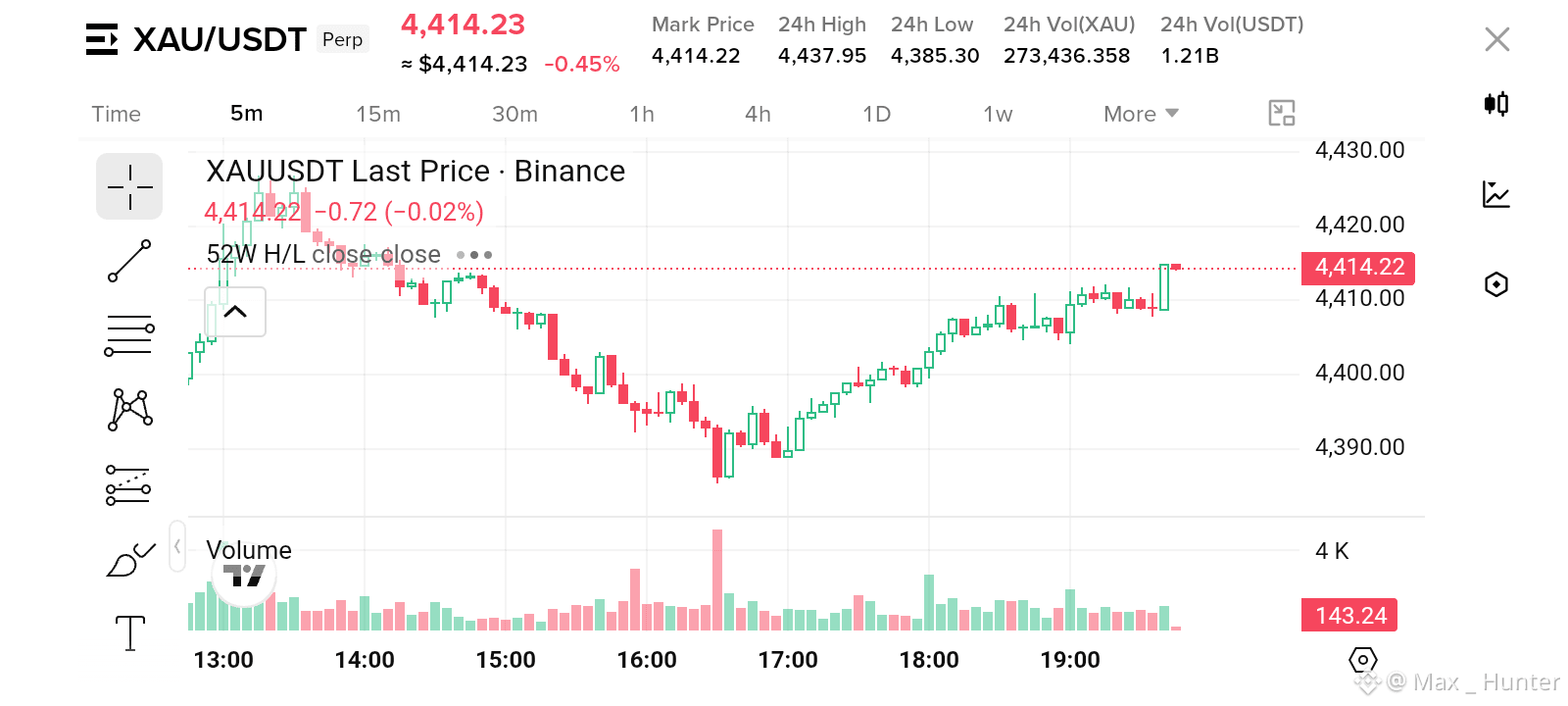
Gold's V-shaped bounce off the 4390 flush looks like dip-buyers won this round.
$XAUT USDT — LONG
Entry: 4405.00 – 4414.00
SL: 4385.00
TP1: 4420.00
TP2: 4430.00
TP3: 4437.95
⚠️ Personal market analysis only. NFA — manage risk and DYOR. Educational content, not investment advice or a recommendation to buy, sell, deposit, or withdraw any asset. No paid promotion or referral/affiliate links.
I'm watching gold here because after tapping the 24h low near 4385, price staged a sharp, near-uninterrupted V-recovery back to 4414 — that kind of quick reclaim usually signals aggressive dip-buying rather than a dead-cat bounce. On the 5m chart, the move off the 16:00 flush was accompanied by a volume spike, and since then price has been grinding higher in small, controlled candles rather than spiking and fading. The current price of 4414 is sitting right at the top of this recovery range, just under the session's earlier levels. I'm not calling for a clean breakout to new highs immediately; I'm noting that the risk-to-reward here — with SL below the 4385 low and TP2 near 4430 — favors staying long as long as price holds above the mid-recovery zone, rather than fading the bounce.
Do you think gold can push through 4420+ and reclaim the highs, or does it need to retest the 4400 zone first before the next move?
Gold's V-shaped bounce off the 4390 flush looks like dip-buyers won this round.
$XAUT USDT — LONG
Entry: 4405.00 – 4414.00
SL: 4385.00
TP1: 4420.00
TP2: 4430.00
TP3: 4437.95
⚠️ Personal market analysis only. NFA — manage risk and DYOR. Educational content, not investment advice or a recommendation to buy, sell, deposit, or withdraw any asset. No paid promotion or referral/affiliate links.
I'm watching gold here because after tapping the 24h low near 4385, price staged a sharp, near-uninterrupted V-recovery back to 4414 — that kind of quick reclaim usually signals aggressive dip-buying rather than a dead-cat bounce. On the 5m chart, the move off the 16:00 flush was accompanied by a volume spike, and since then price has been grinding higher in small, controlled candles rather than spiking and fading. The current price of 4414 is sitting right at the top of this recovery range, just under the session's earlier levels. I'm not calling for a clean breakout to new highs immediately; I'm noting that the risk-to-reward here — with SL below the 4385 low and TP2 near 4430 — favors staying long as long as price holds above the mid-recovery zone, rather than fading the bounce.
Do you think gold can push through 4420+ and reclaim the highs, or does it need to retest the 4400 zone first before the next move?
$XAUT USDT — LONG
Entry: 4405.00 – 4414.00
SL: 4385.00
TP1: 4420.00
TP2: 4430.00
TP3: 4437.95
⚠️ Personal market analysis only. NFA — manage risk and DYOR. Educational content, not investment advice or a recommendation to buy, sell, deposit, or withdraw any asset. No paid promotion or referral/affiliate links.
I'm watching gold here because after tapping the 24h low near 4385, price staged a sharp, near-uninterrupted V-recovery back to 4414 — that kind of quick reclaim usually signals aggressive dip-buying rather than a dead-cat bounce. On the 5m chart, the move off the 16:00 flush was accompanied by a volume spike, and since then price has been grinding higher in small, controlled candles rather than spiking and fading. The current price of 4414 is sitting right at the top of this recovery range, just under the session's earlier levels. I'm not calling for a clean breakout to new highs immediately; I'm noting that the risk-to-reward here — with SL below the 4385 low and TP2 near 4430 — favors staying long as long as price holds above the mid-recovery zone, rather than fading the bounce.
Do you think gold can push through 4420+ and reclaim the highs, or does it need to retest the 4400 zone first before the next move?
1
379
·
--
$ZEC is showing bullish momentum after a $1.7469K short liquidation around $1069.07.
Buyers remain active while sellers attempt to stabilize the current reaction zone.
EP
$1062–$1076
TP
TP1 $1090
TP2 $1115
TP3 $1145
SL
$1042
Liquidity remains exposed above the current structure while sellers stay under pressure.
Unless price loses the lower reaction zone, bullish continuation toward higher liquidity remains favored.
Let’s go $ZEC 🟢
$ZEC is showing bullish momentum after a $1.7469K short liquidation around $1069.07.
Buyers remain active while sellers attempt to stabilize the current reaction zone.
EP
$1062–$1076
TP
TP1 $1090
TP2 $1115
TP3 $1145
SL
$1042
Liquidity remains exposed above the current structure while sellers stay under pressure.
Unless price loses the lower reaction zone, bullish continuation toward higher liquidity remains favored.
Let’s go $ZEC 🟢
Buyers remain active while sellers attempt to stabilize the current reaction zone.
EP
$1062–$1076
TP
TP1 $1090
TP2 $1115
TP3 $1145
SL
$1042
Liquidity remains exposed above the current structure while sellers stay under pressure.
Unless price loses the lower reaction zone, bullish continuation toward higher liquidity remains favored.
Let’s go $ZEC 🟢
249
·
--
$DEXE is showing bearish momentum after a $4.9973K long liquidation around $1.97222.
Sellers remain active while buyers attempt to stabilize the current reaction zone.
EP
$1.955–$1.985
TP
TP1 $1.930
TP2 $1.890
TP3 $1.840
SL
$2.025
Liquidity remains exposed below the current structure while buyers stay under pressure.
Unless price reclaims the upper reaction zone, bearish continuation toward lower liquidity remains favored.
Let’s go $DEXE 🔻
$DEXE is showing bearish momentum after a $4.9973K long liquidation around $1.97222.
Sellers remain active while buyers attempt to stabilize the current reaction zone.
EP
$1.955–$1.985
TP
TP1 $1.930
TP2 $1.890
TP3 $1.840
SL
$2.025
Liquidity remains exposed below the current structure while buyers stay under pressure.
Unless price reclaims the upper reaction zone, bearish continuation toward lower liquidity remains favored.
Let’s go $DEXE 🔻
Sellers remain active while buyers attempt to stabilize the current reaction zone.
EP
$1.955–$1.985
TP
TP1 $1.930
TP2 $1.890
TP3 $1.840
SL
$2.025
Liquidity remains exposed below the current structure while buyers stay under pressure.
Unless price reclaims the upper reaction zone, bearish continuation toward lower liquidity remains favored.
Let’s go $DEXE 🔻
45
·
--
$NEAR is showing bearish momentum after a $4.9662K long liquidation around $2.182.
Sellers remain active while buyers attempt to stabilize the current reaction zone.
EP
$2.165–$2.195
TP
TP1 $2.140
TP2 $2.100
TP3 $2.050
SL
$2.230
Liquidity remains exposed below the current structure while buyers stay under pressure.
Unless price reclaims the upper reaction zone, bearish continuation toward lower liquidity remains favored.
Let’s go $NEAR 🔻
$NEAR is showing bearish momentum after a $4.9662K long liquidation around $2.182.
Sellers remain active while buyers attempt to stabilize the current reaction zone.
EP
$2.165–$2.195
TP
TP1 $2.140
TP2 $2.100
TP3 $2.050
SL
$2.230
Liquidity remains exposed below the current structure while buyers stay under pressure.
Unless price reclaims the upper reaction zone, bearish continuation toward lower liquidity remains favored.
Let’s go $NEAR 🔻
Sellers remain active while buyers attempt to stabilize the current reaction zone.
EP
$2.165–$2.195
TP
TP1 $2.140
TP2 $2.100
TP3 $2.050
SL
$2.230
Liquidity remains exposed below the current structure while buyers stay under pressure.
Unless price reclaims the upper reaction zone, bearish continuation toward lower liquidity remains favored.
Let’s go $NEAR 🔻
45
·
--
$ETH is showing bearish momentum after a $2.0874K long liquidation around $2499.92.
Sellers remain active while buyers attempt to stabilize the current reaction zone.
EP
$2488–$2510
TP
TP1 $2470
TP2 $2445
TP3 $2410
SL
$2535
Liquidity remains exposed below the current structure while buyers stay under pressure.
Unless price reclaims the upper reaction zone, bearish continuation toward lower liquidity remains favored.
Let’s go $ETH 🔻
$ETH is showing bearish momentum after a $2.0874K long liquidation around $2499.92.
Sellers remain active while buyers attempt to stabilize the current reaction zone.
EP
$2488–$2510
TP
TP1 $2470
TP2 $2445
TP3 $2410
SL
$2535
Liquidity remains exposed below the current structure while buyers stay under pressure.
Unless price reclaims the upper reaction zone, bearish continuation toward lower liquidity remains favored.
Let’s go $ETH 🔻
Sellers remain active while buyers attempt to stabilize the current reaction zone.
EP
$2488–$2510
TP
TP1 $2470
TP2 $2445
TP3 $2410
SL
$2535
Liquidity remains exposed below the current structure while buyers stay under pressure.
Unless price reclaims the upper reaction zone, bearish continuation toward lower liquidity remains favored.
Let’s go $ETH 🔻
65
·
--
$XPL is showing bearish momentum after a $3.6607K long liquidation around $0.0916.
Sellers remain active while buyers attempt to stabilize the current reaction zone.
EP
$0.0912–$0.0920
TP
TP1 $0.0905
TP2 $0.0895
TP3 $0.0880
SL
$0.0932
Liquidity remains exposed below the current structure while buyers stay under pressure.
Unless price reclaims the upper reaction zone, bearish continuation toward lower liquidity remains favored.
Let’s go $XPL 🔻
$XPL is showing bearish momentum after a $3.6607K long liquidation around $0.0916.
Sellers remain active while buyers attempt to stabilize the current reaction zone.
EP
$0.0912–$0.0920
TP
TP1 $0.0905
TP2 $0.0895
TP3 $0.0880
SL
$0.0932
Liquidity remains exposed below the current structure while buyers stay under pressure.
Unless price reclaims the upper reaction zone, bearish continuation toward lower liquidity remains favored.
Let’s go $XPL 🔻
Sellers remain active while buyers attempt to stabilize the current reaction zone.
EP
$0.0912–$0.0920
TP
TP1 $0.0905
TP2 $0.0895
TP3 $0.0880
SL
$0.0932
Liquidity remains exposed below the current structure while buyers stay under pressure.
Unless price reclaims the upper reaction zone, bearish continuation toward lower liquidity remains favored.
Let’s go $XPL 🔻
43
·
--
$ARC is showing bearish momentum after a $1.5304K long liquidation around $0.18867.
Sellers remain active while buyers attempt to stabilize the current reaction zone.
EP
$0.1870–$0.1905
TP
TP1 $0.1845
TP2 $0.1810
TP3 $0.1765
SL
$0.1940
Liquidity remains exposed below the current structure while buyers stay under pressure.
Unless price reclaims the upper reaction zone, bearish continuation toward lower liquidity remains favored.
Let’s go $ARC 🔻
$ARC is showing bearish momentum after a $1.5304K long liquidation around $0.18867.
Sellers remain active while buyers attempt to stabilize the current reaction zone.
EP
$0.1870–$0.1905
TP
TP1 $0.1845
TP2 $0.1810
TP3 $0.1765
SL
$0.1940
Liquidity remains exposed below the current structure while buyers stay under pressure.
Unless price reclaims the upper reaction zone, bearish continuation toward lower liquidity remains favored.
Let’s go $ARC 🔻
Sellers remain active while buyers attempt to stabilize the current reaction zone.
EP
$0.1870–$0.1905
TP
TP1 $0.1845
TP2 $0.1810
TP3 $0.1765
SL
$0.1940
Liquidity remains exposed below the current structure while buyers stay under pressure.
Unless price reclaims the upper reaction zone, bearish continuation toward lower liquidity remains favored.
Let’s go $ARC 🔻
72
·
--
$ZK is showing bearish momentum after a $3.571K long liquidation around $0.01003.
Sellers remain active while buyers attempt to stabilize the current reaction zone.
EP
$0.00995–$0.01010
TP
TP1 $0.00985
TP2 $0.00965
TP3 $0.00940
SL
$0.01025
Liquidity remains exposed below the current structure while buyers stay under pressure.
Unless price reclaims the upper reaction zone, bearish continuation toward lower liquidity remains favored.
Let’s go $ZKC 🔻
$ZK is showing bearish momentum after a $3.571K long liquidation around $0.01003.
Sellers remain active while buyers attempt to stabilize the current reaction zone.
EP
$0.00995–$0.01010
TP
TP1 $0.00985
TP2 $0.00965
TP3 $0.00940
SL
$0.01025
Liquidity remains exposed below the current structure while buyers stay under pressure.
Unless price reclaims the upper reaction zone, bearish continuation toward lower liquidity remains favored.
Let’s go $ZKC 🔻
Sellers remain active while buyers attempt to stabilize the current reaction zone.
EP
$0.00995–$0.01010
TP
TP1 $0.00985
TP2 $0.00965
TP3 $0.00940
SL
$0.01025
Liquidity remains exposed below the current structure while buyers stay under pressure.
Unless price reclaims the upper reaction zone, bearish continuation toward lower liquidity remains favored.
Let’s go $ZKC 🔻
113
·
--
$USELESS is showing bullish momentum after a $4.8218K short liquidation around $0.24676.
Buyers remain active while sellers attempt to stabilize the current reaction zone.
EP
$0.244–$0.249
TP
TP1 $0.253
TP2 $0.258
TP3 $0.266
SL
$0.239
Liquidity remains exposed above the current structure while sellers stay under pressure.
Unless price loses the lower reaction zone, bullish continuation toward higher liquidity remains favored.
Let’s go $USELESS 🟢
$USELESS is showing bullish momentum after a $4.8218K short liquidation around $0.24676.
Buyers remain active while sellers attempt to stabilize the current reaction zone.
EP
$0.244–$0.249
TP
TP1 $0.253
TP2 $0.258
TP3 $0.266
SL
$0.239
Liquidity remains exposed above the current structure while sellers stay under pressure.
Unless price loses the lower reaction zone, bullish continuation toward higher liquidity remains favored.
Let’s go $USELESS 🟢
Buyers remain active while sellers attempt to stabilize the current reaction zone.
EP
$0.244–$0.249
TP
TP1 $0.253
TP2 $0.258
TP3 $0.266
SL
$0.239
Liquidity remains exposed above the current structure while sellers stay under pressure.
Unless price loses the lower reaction zone, bullish continuation toward higher liquidity remains favored.
Let’s go $USELESS 🟢
53
·
--
$BCH is showing bearish momentum after a $1.2212K long liquidation around $259.38.
Sellers remain active while buyers attempt to stabilize the current reaction zone.
EP
$257–$261
TP
TP1 $255
TP2 $252
TP3 $248
SL
$264
Liquidity remains exposed below the current structure while buyers stay under pressure.
Unless price reclaims the upper reaction zone, bearish continuation toward lower liquidity remains favored.
Let’s go $BCH 🔻
$BCH is showing bearish momentum after a $1.2212K long liquidation around $259.38.
Sellers remain active while buyers attempt to stabilize the current reaction zone.
EP
$257–$261
TP
TP1 $255
TP2 $252
TP3 $248
SL
$264
Liquidity remains exposed below the current structure while buyers stay under pressure.
Unless price reclaims the upper reaction zone, bearish continuation toward lower liquidity remains favored.
Let’s go $BCH 🔻
Sellers remain active while buyers attempt to stabilize the current reaction zone.
EP
$257–$261
TP
TP1 $255
TP2 $252
TP3 $248
SL
$264
Liquidity remains exposed below the current structure while buyers stay under pressure.
Unless price reclaims the upper reaction zone, bearish continuation toward lower liquidity remains favored.
Let’s go $BCH 🔻
52
·
--
$COLLECT is showing bearish momentum after a $2.6569K long liquidation around $0.05314.
Sellers remain active while buyers attempt to stabilize the current reaction zone.
EP
$0.0528–$0.0535
TP
TP1 $0.0520
TP2 $0.0508
TP3 $0.0495
SL
$0.0545
Liquidity remains exposed below the current structure while buyers stay under pressure.
Unless price reclaims the upper reaction zone, bearish continuation toward lower liquidity remains favored.
Let’s go $COLLECT 🔻
$COLLECT is showing bearish momentum after a $2.6569K long liquidation around $0.05314.
Sellers remain active while buyers attempt to stabilize the current reaction zone.
EP
$0.0528–$0.0535
TP
TP1 $0.0520
TP2 $0.0508
TP3 $0.0495
SL
$0.0545
Liquidity remains exposed below the current structure while buyers stay under pressure.
Unless price reclaims the upper reaction zone, bearish continuation toward lower liquidity remains favored.
Let’s go $COLLECT 🔻
Sellers remain active while buyers attempt to stabilize the current reaction zone.
EP
$0.0528–$0.0535
TP
TP1 $0.0520
TP2 $0.0508
TP3 $0.0495
SL
$0.0545
Liquidity remains exposed below the current structure while buyers stay under pressure.
Unless price reclaims the upper reaction zone, bearish continuation toward lower liquidity remains favored.
Let’s go $COLLECT 🔻
36
·
--
$GRT is showing bearish momentum after a $1.1583K long liquidation around $0.01861.
Sellers remain active while buyers attempt to stabilize the current reaction zone.
EP
$0.01845–$0.01875
TP
TP1 $0.01825
TP2 $0.01790
TP3 $0.01745
SL
$0.01910
Liquidity remains exposed below the current structure while buyers stay under pressure.
Unless price reclaims the upper reaction zone, bearish continuation toward lower liquidity remains favored.
Let’s go $GRT 🔻
$GRT is showing bearish momentum after a $1.1583K long liquidation around $0.01861.
Sellers remain active while buyers attempt to stabilize the current reaction zone.
EP
$0.01845–$0.01875
TP
TP1 $0.01825
TP2 $0.01790
TP3 $0.01745
SL
$0.01910
Liquidity remains exposed below the current structure while buyers stay under pressure.
Unless price reclaims the upper reaction zone, bearish continuation toward lower liquidity remains favored.
Let’s go $GRT 🔻
Sellers remain active while buyers attempt to stabilize the current reaction zone.
EP
$0.01845–$0.01875
TP
TP1 $0.01825
TP2 $0.01790
TP3 $0.01745
SL
$0.01910
Liquidity remains exposed below the current structure while buyers stay under pressure.
Unless price reclaims the upper reaction zone, bearish continuation toward lower liquidity remains favored.
Let’s go $GRT 🔻
59
·
--
$TRIA is showing bearish momentum after a $1.7582K long liquidation around $0.00445.
Sellers remain active while buyers attempt to stabilize the current reaction zone.
EP
$0.00440–$0.00450
TP
TP1 $0.00432
TP2 $0.00420
TP3 $0.00405
SL
$0.00462
Liquidity remains exposed below the current structure while buyers stay under pressure.
Unless price reclaims the upper reaction zone, bearish continuation toward lower liquidity remains favored.
Let’s go $TRIA 🔻
$TRIA is showing bearish momentum after a $1.7582K long liquidation around $0.00445.
Sellers remain active while buyers attempt to stabilize the current reaction zone.
EP
$0.00440–$0.00450
TP
TP1 $0.00432
TP2 $0.00420
TP3 $0.00405
SL
$0.00462
Liquidity remains exposed below the current structure while buyers stay under pressure.
Unless price reclaims the upper reaction zone, bearish continuation toward lower liquidity remains favored.
Let’s go $TRIA 🔻
Sellers remain active while buyers attempt to stabilize the current reaction zone.
EP
$0.00440–$0.00450
TP
TP1 $0.00432
TP2 $0.00420
TP3 $0.00405
SL
$0.00462
Liquidity remains exposed below the current structure while buyers stay under pressure.
Unless price reclaims the upper reaction zone, bearish continuation toward lower liquidity remains favored.
Let’s go $TRIA 🔻
153
·
--
$UAI is showing bearish momentum after a $1.2745K long liquidation around $0.55681.
Sellers remain active while buyers attempt to stabilize the current reaction zone.
EP
$0.553–$0.561
TP
TP1 $0.548
TP2 $0.540
TP3 $0.528
SL
$0.570
Liquidity remains exposed below the current structure while buyers stay under pressure.
Unless price reclaims the upper reaction zone, bearish continuation toward lower liquidity remains favored.
Let’s go $UAI 🔻
$UAI is showing bearish momentum after a $1.2745K long liquidation around $0.55681.
Sellers remain active while buyers attempt to stabilize the current reaction zone.
EP
$0.553–$0.561
TP
TP1 $0.548
TP2 $0.540
TP3 $0.528
SL
$0.570
Liquidity remains exposed below the current structure while buyers stay under pressure.
Unless price reclaims the upper reaction zone, bearish continuation toward lower liquidity remains favored.
Let’s go $UAI 🔻
Sellers remain active while buyers attempt to stabilize the current reaction zone.
EP
$0.553–$0.561
TP
TP1 $0.548
TP2 $0.540
TP3 $0.528
SL
$0.570
Liquidity remains exposed below the current structure while buyers stay under pressure.
Unless price reclaims the upper reaction zone, bearish continuation toward lower liquidity remains favored.
Let’s go $UAI 🔻
161
·
--
$RAYSOL is showing bearish momentum after a $1.3386K long liquidation around $1.15192.
Sellers remain active while buyers attempt to stabilize the current reaction zone.
EP
$1.145–$1.160
TP
TP1 $1.135
TP2 $1.115
TP3 $1.085
SL
$1.185
Liquidity remains exposed below the current structure while buyers stay under pressure.
Unless price reclaims the upper reaction zone, bearish continuation toward lower liquidity remains favored.
Let’s go $RAYSOL 🔻
$RAYSOL is showing bearish momentum after a $1.3386K long liquidation around $1.15192.
Sellers remain active while buyers attempt to stabilize the current reaction zone.
EP
$1.145–$1.160
TP
TP1 $1.135
TP2 $1.115
TP3 $1.085
SL
$1.185
Liquidity remains exposed below the current structure while buyers stay under pressure.
Unless price reclaims the upper reaction zone, bearish continuation toward lower liquidity remains favored.
Let’s go $RAYSOL 🔻
Sellers remain active while buyers attempt to stabilize the current reaction zone.
EP
$1.145–$1.160
TP
TP1 $1.135
TP2 $1.115
TP3 $1.085
SL
$1.185
Liquidity remains exposed below the current structure while buyers stay under pressure.
Unless price reclaims the upper reaction zone, bearish continuation toward lower liquidity remains favored.
Let’s go $RAYSOL 🔻
118
Connectez-vous pour découvrir plus de contenu
Rejoignez la communauté mondiale des adeptes de cryptomonnaies sur Binance Square
⚡️ Suviez les dernières informations importantes sur les cryptomonnaies.
💬 Jugé digne de confiance par la plus grande plateforme d’échange de cryptomonnaies au monde.
👍 Découvrez les connaissances que partagent les créateurs vérifiés.
Adresse e-mail/Nº de téléphone
Sujets d’actualité
ZcashETFPostsFirstWeeklyOutflow$93.6M
51 vues
17 mentions
ZCASH ETF UPDATE
Zcash’s ETF has recorded its first weekly net outflow since launching in August.
Investors withdrew $93.6M as $ZEC fell toward $1,300. Grayscale’s ZCSH had attracted $98.2M two weeks earlier, but no daily net inflows have been recorded since September 22, according to SoSoValue.
ZEC was around $1,308 on October 3, down about 17.5% for the week and roughly 23% from its recent $1,690 peak.
$ZEC
Vicky-143
·0 mentions J’aime
·137 vues
GreekPoliceBustCryptoScamRingArrest17
324 vues
55 mentions
BitcoinRejectedAt$87K
49,390 vues
86 mentions