
CryptoFrontNews
17.6k Publications

CryptoFrontNews
 Compte Square Vérifié+
Signaler
Bloquer l’utilisateur
CryptoFrontNews (CFN) delivers the latest in cryptocurrency with real-time updates, expert analyses, and in-depth articles on digital currencies and blockchain.
4 Suivis
12.5K+ Abonnés
19.0K+ J’aime
Publications
Article
L’échec de la loi CLARITY révèle une scission républicaine sur les règles de rendement des stablecoinsSept Républicains ont soutenu l’amendement du sénateur Jerry Moran visant à renforcer les restrictions sur le rendement et les récompenses liés aux stablecoins.
La loi CLARITY n’a pas franchi l’étape, échouant par un vote de 49 voix contre 50 le 15 septembre, n’atteignant pas les 60 voix requises pour son adoption.
La SEC et la CFTC font avancer des mesures distinctes sur les cryptomonnaies, notamment un assouplissement pour les valeurs mobilières tokenisées et des règles de marché proposées.
L’échec de la loi « Clarity » au Sénat a mis en évidence une nouvelle division au sein des Républicains au sujet de règles sur le rendement des stablecoins, selon Punchbowl News. Le journaliste principal Brendan Pedersen a indiqué que sept Républicains avaient soutenu un amendement présenté par le sénateur Jerry Moran. La proposition aurait renforcé les restrictions sur le rendement des stablecoins recherchées par les groupes bancaires, ajoutant un nouvel obstacle à la trajectoire du projet de loi vers 60 voix.
L’échec de la loi CLARITY révèle une scission républicaine sur les règles de rendement des stablecoins
Sept Républicains ont soutenu l’amendement du sénateur Jerry Moran visant à renforcer les restrictions sur le rendement et les récompenses liés aux stablecoins.
La loi CLARITY n’a pas franchi l’étape, échouant par un vote de 49 voix contre 50 le 15 septembre, n’atteignant pas les 60 voix requises pour son adoption.
La SEC et la CFTC font avancer des mesures distinctes sur les cryptomonnaies, notamment un assouplissement pour les valeurs mobilières tokenisées et des règles de marché proposées.
L’échec de la loi « Clarity » au Sénat a mis en évidence une nouvelle division au sein des Républicains au sujet de règles sur le rendement des stablecoins, selon Punchbowl News. Le journaliste principal Brendan Pedersen a indiqué que sept Républicains avaient soutenu un amendement présenté par le sénateur Jerry Moran. La proposition aurait renforcé les restrictions sur le rendement des stablecoins recherchées par les groupes bancaires, ajoutant un nouvel obstacle à la trajectoire du projet de loi vers 60 voix.
La loi CLARITY n’a pas franchi l’étape, échouant par un vote de 49 voix contre 50 le 15 septembre, n’atteignant pas les 60 voix requises pour son adoption.
La SEC et la CFTC font avancer des mesures distinctes sur les cryptomonnaies, notamment un assouplissement pour les valeurs mobilières tokenisées et des règles de marché proposées.
L’échec de la loi « Clarity » au Sénat a mis en évidence une nouvelle division au sein des Républicains au sujet de règles sur le rendement des stablecoins, selon Punchbowl News. Le journaliste principal Brendan Pedersen a indiqué que sept Républicains avaient soutenu un amendement présenté par le sénateur Jerry Moran. La proposition aurait renforcé les restrictions sur le rendement des stablecoins recherchées par les groupes bancaires, ajoutant un nouvel obstacle à la trajectoire du projet de loi vers 60 voix.
57

Article
SUI vise 1,40 $ grâce à des divergences haussières et à l'alignement de trois signaux d'achat hebdomadairesSUI affiche des divergences haussières sur des horizons plus longs face au dollar et au Bitcoin, van de Poppe surveillant 2 100 sats.
Ali Charts identifie trois signaux d'achat hebdomadaires issus du TD Sequential, du SuperTrend et du potentiel Parabolic SAR.
SUI fait face à 0,98 $ comme niveau de confirmation clé, tandis qu'une cassure au-dessus de 1,03 $ pourrait remettre la cible de 1,40 $ dans la ligne de mire.
SUI reprend du terrain après des mois de sentiment négatif, avec Michael van de Poppe et Ali Charts pointant vers des signaux techniques distincts. Van de Poppe a mis en avant des divergences haussières et des développements à venir de Basecamp, tandis qu'Ali a identifié trois indicateurs soutenant un possible mouvement vers 1,40 $. Les deux analystes ont mis l'accent sur des niveaux de prix et des configurations techniques spécifiques derrière le récent rebond.
SUI vise 1,40 $ grâce à des divergences haussières et à l'alignement de trois signaux d'achat hebdomadaires
SUI affiche des divergences haussières sur des horizons plus longs face au dollar et au Bitcoin, van de Poppe surveillant 2 100 sats.
Ali Charts identifie trois signaux d'achat hebdomadaires issus du TD Sequential, du SuperTrend et du potentiel Parabolic SAR.
SUI fait face à 0,98 $ comme niveau de confirmation clé, tandis qu'une cassure au-dessus de 1,03 $ pourrait remettre la cible de 1,40 $ dans la ligne de mire.
SUI reprend du terrain après des mois de sentiment négatif, avec Michael van de Poppe et Ali Charts pointant vers des signaux techniques distincts. Van de Poppe a mis en avant des divergences haussières et des développements à venir de Basecamp, tandis qu'Ali a identifié trois indicateurs soutenant un possible mouvement vers 1,40 $. Les deux analystes ont mis l'accent sur des niveaux de prix et des configurations techniques spécifiques derrière le récent rebond.
Ali Charts identifie trois signaux d'achat hebdomadaires issus du TD Sequential, du SuperTrend et du potentiel Parabolic SAR.
SUI fait face à 0,98 $ comme niveau de confirmation clé, tandis qu'une cassure au-dessus de 1,03 $ pourrait remettre la cible de 1,40 $ dans la ligne de mire.
SUI reprend du terrain après des mois de sentiment négatif, avec Michael van de Poppe et Ali Charts pointant vers des signaux techniques distincts. Van de Poppe a mis en avant des divergences haussières et des développements à venir de Basecamp, tandis qu'Ali a identifié trois indicateurs soutenant un possible mouvement vers 1,40 $. Les deux analystes ont mis l'accent sur des niveaux de prix et des configurations techniques spécifiques derrière le récent rebond.
150
Article
Le trading d’actions tokenisées par la SEC pourrait commencer dès le prochain trimestre grâce à la nouvelle exemption d’innovationLes entreprises peuvent commencer à publier des avis pour des plateformes de titres tokenisés dans les mois à venir dans le cadre de l’exemption de cinq ans de la SEC.
Les plateformes admissibles peuvent faciliter le négoce autorisé de titres américains tokenisés en utilisant des pools de liquidité sur des blockchains publiques.
Les émetteurs conservent une période d’objection de 30 jours, tandis que la SEC peut ajuster les limites de négociation si elles restreignent l’adoption commerciale.
Le trading de titres tokenisés pourrait commencer à prendre forme dans le cadre de la nouvelle exemption d’innovation de la SEC dès le prochain trimestre, selon Taylor Lindman. Le conseiller juridique en chef de la SEC, chargé de la task force crypto, a déclaré que les entreprises pourraient bientôt publier des avis décrivant les lieux prévus. La commissaire Hester Peirce a indiqué que l’exemption offre aux entreprises la marge nécessaire pour tester, sur le plan commercial, des marchés d’actions tokenisées viables.
Le trading d’actions tokenisées par la SEC pourrait commencer dès le prochain trimestre grâce à la nouvelle exemption d’innovation
Les entreprises peuvent commencer à publier des avis pour des plateformes de titres tokenisés dans les mois à venir dans le cadre de l’exemption de cinq ans de la SEC.
Les plateformes admissibles peuvent faciliter le négoce autorisé de titres américains tokenisés en utilisant des pools de liquidité sur des blockchains publiques.
Les émetteurs conservent une période d’objection de 30 jours, tandis que la SEC peut ajuster les limites de négociation si elles restreignent l’adoption commerciale.
Le trading de titres tokenisés pourrait commencer à prendre forme dans le cadre de la nouvelle exemption d’innovation de la SEC dès le prochain trimestre, selon Taylor Lindman. Le conseiller juridique en chef de la SEC, chargé de la task force crypto, a déclaré que les entreprises pourraient bientôt publier des avis décrivant les lieux prévus. La commissaire Hester Peirce a indiqué que l’exemption offre aux entreprises la marge nécessaire pour tester, sur le plan commercial, des marchés d’actions tokenisées viables.
Les plateformes admissibles peuvent faciliter le négoce autorisé de titres américains tokenisés en utilisant des pools de liquidité sur des blockchains publiques.
Les émetteurs conservent une période d’objection de 30 jours, tandis que la SEC peut ajuster les limites de négociation si elles restreignent l’adoption commerciale.
Le trading de titres tokenisés pourrait commencer à prendre forme dans le cadre de la nouvelle exemption d’innovation de la SEC dès le prochain trimestre, selon Taylor Lindman. Le conseiller juridique en chef de la SEC, chargé de la task force crypto, a déclaré que les entreprises pourraient bientôt publier des avis décrivant les lieux prévus. La commissaire Hester Peirce a indiqué que l’exemption offre aux entreprises la marge nécessaire pour tester, sur le plan commercial, des marchés d’actions tokenisées viables.
92
Article
Trueo migrera de Base vers le mainnet Ethereum pour une décentralisation et des intégrations accruesTrueo migre vers Ethereum afin de soutenir une plus grande décentralisation, des intégrations plus larges et des effets de réseau plus solides.
Les marchés de base resteront actifs après la migration, les échanges, les résolutions et les rachats continuant normalement.
Les détenteurs de TRUE peuvent migrer leurs jetons vers Ethereum, où les futures récompenses de staking et de liquidité auront lieu.
Trueo migrera de Base vers le mainnet Ethereum après son lancement sur Base en mars 2025. Le marché de prédiction a indiqué qu’Ethereum correspond mieux à ses plans en matière de décentralisation, d’intégrations plus larges et d’oracle plus crédible. Le cofondateur d’Ethereum, Vitalik Buterin, a accueilli favorablement cette évolution, soulignant l’orientation de Trueo vers la décentralisation et de nouvelles utilisations pour les marchés de prédiction.
Trueo migrera de Base vers le mainnet Ethereum pour une décentralisation et des intégrations accrues
Trueo migre vers Ethereum afin de soutenir une plus grande décentralisation, des intégrations plus larges et des effets de réseau plus solides.
Les marchés de base resteront actifs après la migration, les échanges, les résolutions et les rachats continuant normalement.
Les détenteurs de TRUE peuvent migrer leurs jetons vers Ethereum, où les futures récompenses de staking et de liquidité auront lieu.
Trueo migrera de Base vers le mainnet Ethereum après son lancement sur Base en mars 2025. Le marché de prédiction a indiqué qu’Ethereum correspond mieux à ses plans en matière de décentralisation, d’intégrations plus larges et d’oracle plus crédible. Le cofondateur d’Ethereum, Vitalik Buterin, a accueilli favorablement cette évolution, soulignant l’orientation de Trueo vers la décentralisation et de nouvelles utilisations pour les marchés de prédiction.
Les marchés de base resteront actifs après la migration, les échanges, les résolutions et les rachats continuant normalement.
Les détenteurs de TRUE peuvent migrer leurs jetons vers Ethereum, où les futures récompenses de staking et de liquidité auront lieu.
Trueo migrera de Base vers le mainnet Ethereum après son lancement sur Base en mars 2025. Le marché de prédiction a indiqué qu’Ethereum correspond mieux à ses plans en matière de décentralisation, d’intégrations plus larges et d’oracle plus crédible. Le cofondateur d’Ethereum, Vitalik Buterin, a accueilli favorablement cette évolution, soulignant l’orientation de Trueo vers la décentralisation et de nouvelles utilisations pour les marchés de prédiction.
57
Article
Le Bitcoin atteint 87 K$ tandis qu’un analyste ouvre un short à 86,2 K$ visant 79 K$Le Bitcoin est passé de 60 000 $ à 87 000 $ alors que des acheteurs tardifs entraient, tandis que Doctor Profit a ouvert un short près de 86 200 $.
Doctor Profit vise 79 000 $, en utilisant la MM50 hebdomadaire comme niveau clé pour confirmer si le support tient.
Darkfost anticipe une possible correction en vague deux vers 74 500 $, où les moyennes mobiles exponentielles sur 50 jours et 200 jours convergent.
Le Bitcoin est monté à 87 000 $ après être passé de 60 000 $, alors que des acheteurs tardifs entraient sur le marché. L’analyste Doctor Profit a ouvert une position short à 86 200 $ visant 79 000 $, tandis que Darkfost a cartographié un possible repli vers 74 500 $. Les deux analystes se sont concentrés sur les niveaux techniques après la récente hausse du Bitcoin et l’évolution des attentes concernant un point bas d’octobre lors du dernier mouvement.
Le Bitcoin atteint 87 K$ tandis qu’un analyste ouvre un short à 86,2 K$ visant 79 K$
Le Bitcoin est passé de 60 000 $ à 87 000 $ alors que des acheteurs tardifs entraient, tandis que Doctor Profit a ouvert un short près de 86 200 $.
Doctor Profit vise 79 000 $, en utilisant la MM50 hebdomadaire comme niveau clé pour confirmer si le support tient.
Darkfost anticipe une possible correction en vague deux vers 74 500 $, où les moyennes mobiles exponentielles sur 50 jours et 200 jours convergent.
Le Bitcoin est monté à 87 000 $ après être passé de 60 000 $, alors que des acheteurs tardifs entraient sur le marché. L’analyste Doctor Profit a ouvert une position short à 86 200 $ visant 79 000 $, tandis que Darkfost a cartographié un possible repli vers 74 500 $. Les deux analystes se sont concentrés sur les niveaux techniques après la récente hausse du Bitcoin et l’évolution des attentes concernant un point bas d’octobre lors du dernier mouvement.
Doctor Profit vise 79 000 $, en utilisant la MM50 hebdomadaire comme niveau clé pour confirmer si le support tient.
Darkfost anticipe une possible correction en vague deux vers 74 500 $, où les moyennes mobiles exponentielles sur 50 jours et 200 jours convergent.
Le Bitcoin est monté à 87 000 $ après être passé de 60 000 $, alors que des acheteurs tardifs entraient sur le marché. L’analyste Doctor Profit a ouvert une position short à 86 200 $ visant 79 000 $, tandis que Darkfost a cartographié un possible repli vers 74 500 $. Les deux analystes se sont concentrés sur les niveaux techniques après la récente hausse du Bitcoin et l’évolution des attentes concernant un point bas d’octobre lors du dernier mouvement.
137
Article
SHIB teste la résistance à 0,0000055 $ au milieu d’une repriseSHIB fait face à une résistance à 0,0000055 $ après avoir rebondi depuis les plus bas de juillet, tandis que les indicateurs de momentum restent proches de niveaux neutres.
Les principaux liens Shibian renouvellent l’activité des développeurs, associée à l’optimisme autour de Shibarium, bien que la revendication des 100x demeure une attente non vérifiée.
Si le prix ne dépasse pas 0,00000495 $, alors la prochaine résistance importante se situe à 0,00000613 $.
SHIB reste dans une structure de reprise en développement, tandis que le développement de Shibarium, les flux de capitaux et la résistance technique façonnent la configuration actuelle du marché.
Le récit Shibarium attire à nouveau l’attention
SHIB teste la résistance à 0,0000055 $ au milieu d’une reprise
SHIB fait face à une résistance à 0,0000055 $ après avoir rebondi depuis les plus bas de juillet, tandis que les indicateurs de momentum restent proches de niveaux neutres.
Les principaux liens Shibian renouvellent l’activité des développeurs, associée à l’optimisme autour de Shibarium, bien que la revendication des 100x demeure une attente non vérifiée.
Si le prix ne dépasse pas 0,00000495 $, alors la prochaine résistance importante se situe à 0,00000613 $.
SHIB reste dans une structure de reprise en développement, tandis que le développement de Shibarium, les flux de capitaux et la résistance technique façonnent la configuration actuelle du marché.
Le récit Shibarium attire à nouveau l’attention
Les principaux liens Shibian renouvellent l’activité des développeurs, associée à l’optimisme autour de Shibarium, bien que la revendication des 100x demeure une attente non vérifiée.
Si le prix ne dépasse pas 0,00000495 $, alors la prochaine résistance importante se situe à 0,00000613 $.
SHIB reste dans une structure de reprise en développement, tandis que le développement de Shibarium, les flux de capitaux et la résistance technique façonnent la configuration actuelle du marché.
Le récit Shibarium attire à nouveau l’attention
169

Article
7 meilleures meme coins 2026 à surveiller – L’horloge tourne pour le prix de 0,0005 $ d’ApeingLes meme coins attirent de nouveau l’attention tandis que le marché crypto au sens large retrouve un nouvel élan. Le 20 septembre 2026, Dogecoin se négociait autour de 0,08455 $, tandis que PEPE était proche de 0,000004009 $, soulignant la poursuite de l’activité parmi certains des plus grands acteurs du secteur. Ce regain de mouvement remet fermement les meilleurs meme coins 2026 sous les projecteurs du marché crypto.
Mais le marché ne se limite pas aux tokens déjà établis. La prévente LIVE d’Apeing progresse à travers ses étapes de tarification prévues, avec un prix d’entrée actuellement positionné en dessous de l’étape suivante. Pour ceux qui suivent le prochain grand mouvement crypto, la différence entre entrer pendant une étape active et attendre une étape plus tard devient une partie de plus en plus visible de l’histoire d’Apeing.
7 meilleures meme coins 2026 à surveiller – L’horloge tourne pour le prix de 0,0005 $ d’Apeing
Les meme coins attirent de nouveau l’attention tandis que le marché crypto au sens large retrouve un nouvel élan. Le 20 septembre 2026, Dogecoin se négociait autour de 0,08455 $, tandis que PEPE était proche de 0,000004009 $, soulignant la poursuite de l’activité parmi certains des plus grands acteurs du secteur. Ce regain de mouvement remet fermement les meilleurs meme coins 2026 sous les projecteurs du marché crypto.
Mais le marché ne se limite pas aux tokens déjà établis. La prévente LIVE d’Apeing progresse à travers ses étapes de tarification prévues, avec un prix d’entrée actuellement positionné en dessous de l’étape suivante. Pour ceux qui suivent le prochain grand mouvement crypto, la différence entre entrer pendant une étape active et attendre une étape plus tard devient une partie de plus en plus visible de l’histoire d’Apeing.
Mais le marché ne se limite pas aux tokens déjà établis. La prévente LIVE d’Apeing progresse à travers ses étapes de tarification prévues, avec un prix d’entrée actuellement positionné en dessous de l’étape suivante. Pour ceux qui suivent le prochain grand mouvement crypto, la différence entre entrer pendant une étape active et attendre une étape plus tard devient une partie de plus en plus visible de l’histoire d’Apeing.
503

Article
Plus que quelques heures à 0,0005 $ : est-ce vraiment le top meme coin où investir maintenant dans un marché crypto haussier…Le rebond de Bitcoin au-dessus de 80 000 $ et environ 160 millions de dollars d’entrées dans les ETF spot américains signalent une demande de marché renouvelée, tandis que Remittix progresse dans sa prévente PayFi. Avec Remittix Markets déjà actif, un système de règlement crypto-banque en cours de développement, et RTX qui approche du prochain jalon de la prévente, le projet se positionne en misant sur une adoption plus large des cryptomonnaies et sur l’utilité financière. Les memecoins montrent une fois de plus à quelle vitesse l’attention peut se déplacer sur le marché crypto : Baby Doge Coin enregistre une hausse quotidienne modeste, tandis que Pepe connaît un bond majeur de l’activité de trading.
Plus que quelques heures à 0,0005 $ : est-ce vraiment le top meme coin où investir maintenant dans un marché crypto haussier…
Le rebond de Bitcoin au-dessus de 80 000 $ et environ 160 millions de dollars d’entrées dans les ETF spot américains signalent une demande de marché renouvelée, tandis que Remittix progresse dans sa prévente PayFi. Avec Remittix Markets déjà actif, un système de règlement crypto-banque en cours de développement, et RTX qui approche du prochain jalon de la prévente, le projet se positionne en misant sur une adoption plus large des cryptomonnaies et sur l’utilité financière. Les memecoins montrent une fois de plus à quelle vitesse l’attention peut se déplacer sur le marché crypto : Baby Doge Coin enregistre une hausse quotidienne modeste, tandis que Pepe connaît un bond majeur de l’activité de trading.
400
Article
L’offre de stablecoins diminue sur trois L1Le Monad a affiché la plus forte baisse hebdomadaire enregistrée, tandis que l’XRPL a conservé la plus importante base de stablecoins parmi les trois réseaux suivis.
La base de stablecoins de Stellar est restée diversifiée, avec USDY et USDC représentant la liquidité réseau déclarée pendant la période.
La base de stablecoins de l’XRPL est restée concentrée sur RLUSD, tandis que l’activité du réseau s’est poursuivie sur les transactions et adresses actives rapportées.
L’offre de stablecoins sur Monad, Stellar et XRPL a diminué cette semaine. Les mouvements indiquent une liquidité en dollars plus souple, tandis que les trois restent des réseaux Layer-1 établis dans le classement suivi.
L’offre de stablecoins diminue sur trois L1
Le Monad a affiché la plus forte baisse hebdomadaire enregistrée, tandis que l’XRPL a conservé la plus importante base de stablecoins parmi les trois réseaux suivis.
La base de stablecoins de Stellar est restée diversifiée, avec USDY et USDC représentant la liquidité réseau déclarée pendant la période.
La base de stablecoins de l’XRPL est restée concentrée sur RLUSD, tandis que l’activité du réseau s’est poursuivie sur les transactions et adresses actives rapportées.
L’offre de stablecoins sur Monad, Stellar et XRPL a diminué cette semaine. Les mouvements indiquent une liquidité en dollars plus souple, tandis que les trois restent des réseaux Layer-1 établis dans le classement suivi.
La base de stablecoins de Stellar est restée diversifiée, avec USDY et USDC représentant la liquidité réseau déclarée pendant la période.
La base de stablecoins de l’XRPL est restée concentrée sur RLUSD, tandis que l’activité du réseau s’est poursuivie sur les transactions et adresses actives rapportées.
L’offre de stablecoins sur Monad, Stellar et XRPL a diminué cette semaine. Les mouvements indiquent une liquidité en dollars plus souple, tandis que les trois restent des réseaux Layer-1 établis dans le classement suivi.
375
Article
Comment le processus et la pression de l’industrie ont influencé les pourparlers sur la loi sur la clartéBrendan Pedersen a rapporté que des aides ont cité la pression de l’industrie, un processus difficile, la perte de temps et des facteurs politiques externes.
Selon des informations, les négociateurs ont trouvé des accords qui ont ensuite été rouverts après des objections de parties prenantes de l’industrie du crypto.
Des sources du secteur ont contesté ce récit, citant des changements apportés au projet de loi au Sénat et des concessions faites lors de négociations antérieures.
L’effondrement de la loi sur la clarté est survenu après des mois de négociations, selon le correspondant de Punchbowl News Brendan Pedersen. Pedersen a déclaré que plus d’une douzaine d’aides du Congrès avaient décrit quatre facteurs à l’origine du vote d’obstruction (cloture) échoué de mardi. Ils ont cité la politique extérieure, un processus législatif difficile, la perte de temps de négociation et la pression exercée par des acteurs de l’industrie du crypto.
Comment le processus et la pression de l’industrie ont influencé les pourparlers sur la loi sur la clarté
Brendan Pedersen a rapporté que des aides ont cité la pression de l’industrie, un processus difficile, la perte de temps et des facteurs politiques externes.
Selon des informations, les négociateurs ont trouvé des accords qui ont ensuite été rouverts après des objections de parties prenantes de l’industrie du crypto.
Des sources du secteur ont contesté ce récit, citant des changements apportés au projet de loi au Sénat et des concessions faites lors de négociations antérieures.
L’effondrement de la loi sur la clarté est survenu après des mois de négociations, selon le correspondant de Punchbowl News Brendan Pedersen. Pedersen a déclaré que plus d’une douzaine d’aides du Congrès avaient décrit quatre facteurs à l’origine du vote d’obstruction (cloture) échoué de mardi. Ils ont cité la politique extérieure, un processus législatif difficile, la perte de temps de négociation et la pression exercée par des acteurs de l’industrie du crypto.
Selon des informations, les négociateurs ont trouvé des accords qui ont ensuite été rouverts après des objections de parties prenantes de l’industrie du crypto.
Des sources du secteur ont contesté ce récit, citant des changements apportés au projet de loi au Sénat et des concessions faites lors de négociations antérieures.
L’effondrement de la loi sur la clarté est survenu après des mois de négociations, selon le correspondant de Punchbowl News Brendan Pedersen. Pedersen a déclaré que plus d’une douzaine d’aides du Congrès avaient décrit quatre facteurs à l’origine du vote d’obstruction (cloture) échoué de mardi. Ils ont cité la politique extérieure, un processus législatif difficile, la perte de temps de négociation et la pression exercée par des acteurs de l’industrie du crypto.
113
Article
NOWPayments publie des données de versements inter-chaînes dévoilant des références clés des performances sur TRON, BN...Tallinn, Estonie, 21 septembre 2026, Chainwire
NOWPayments a publié aujourd’hui de nouvelles données empiriques analysant six mois d’activité de versement aux entreprises, offrant une référence comparative des performances entre TRON, BNB Smart Chain, Solana, Bitcoin et Ethereum afin d’aider les entreprises à choisir les rails blockchain optimaux en fonction de la vitesse, du volume de transactions et de l’efficacité des coûts.
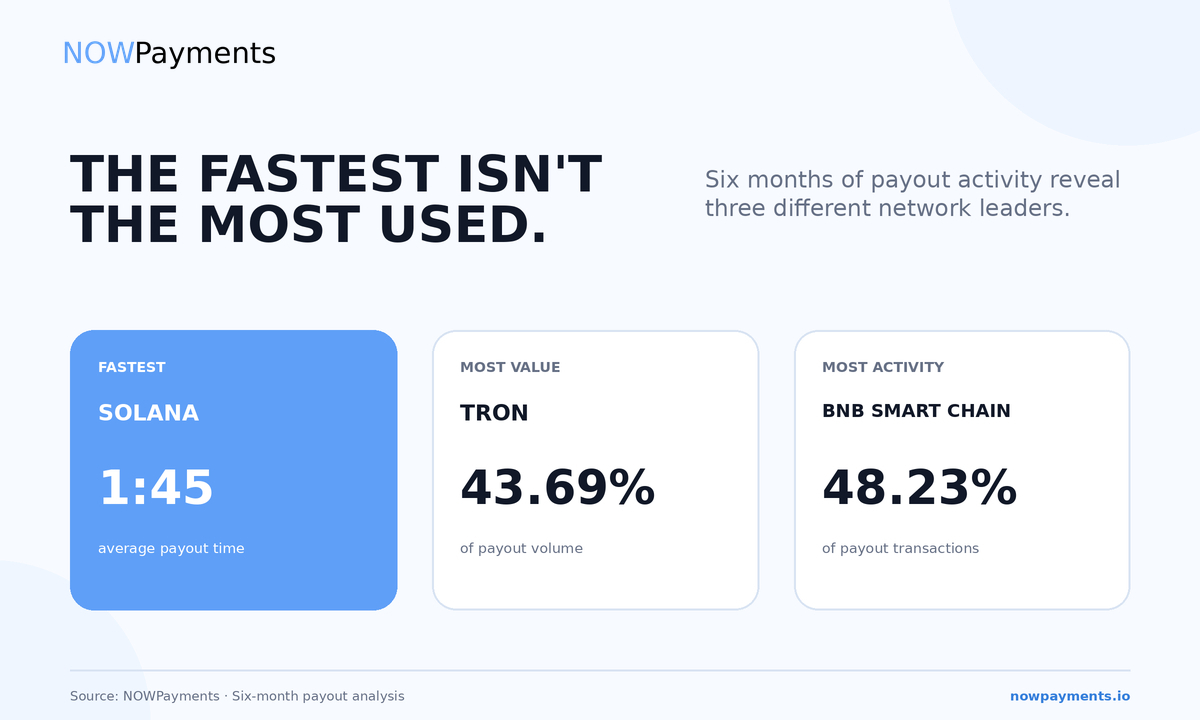
L’ensemble de données révèle des avantages opérationnels distincts selon les priorités de transfert : Solana a enregistré la vitesse moyenne de versement la plus rapide, à 1 minute et 45 secondes, tout en représentant 3,08 % du volume et 3,86 % des transactions. TRON a mené en volume monétaire total avec 43,69 %, et BNB Smart Chain a géré la plus grande part des transactions individuelles de versement, à 48,23 %.
NOWPayments publie des données de versements inter-chaînes dévoilant des références clés des performances sur TRON, BN...
Tallinn, Estonie, 21 septembre 2026, Chainwire
NOWPayments a publié aujourd’hui de nouvelles données empiriques analysant six mois d’activité de versement aux entreprises, offrant une référence comparative des performances entre TRON, BNB Smart Chain, Solana, Bitcoin et Ethereum afin d’aider les entreprises à choisir les rails blockchain optimaux en fonction de la vitesse, du volume de transactions et de l’efficacité des coûts.
L’ensemble de données révèle des avantages opérationnels distincts selon les priorités de transfert : Solana a enregistré la vitesse moyenne de versement la plus rapide, à 1 minute et 45 secondes, tout en représentant 3,08 % du volume et 3,86 % des transactions. TRON a mené en volume monétaire total avec 43,69 %, et BNB Smart Chain a géré la plus grande part des transactions individuelles de versement, à 48,23 %.
NOWPayments a publié aujourd’hui de nouvelles données empiriques analysant six mois d’activité de versement aux entreprises, offrant une référence comparative des performances entre TRON, BNB Smart Chain, Solana, Bitcoin et Ethereum afin d’aider les entreprises à choisir les rails blockchain optimaux en fonction de la vitesse, du volume de transactions et de l’efficacité des coûts.
L’ensemble de données révèle des avantages opérationnels distincts selon les priorités de transfert : Solana a enregistré la vitesse moyenne de versement la plus rapide, à 1 minute et 45 secondes, tout en représentant 3,08 % du volume et 3,86 % des transactions. TRON a mené en volume monétaire total avec 43,69 %, et BNB Smart Chain a géré la plus grande part des transactions individuelles de versement, à 48,23 %.
19
Article
HYPE S’approche des 100 $ alors qu’un analyste signale le niveau de cassure à 95 $ et un objectif à 150 $HYPE atteint 95,68 $ après être revenu de la zone des 77 $ à 80 $, tandis que 96 $ à 100 $ agissent désormais comme résistance clé.
Crypto Patel identifie 95 $ comme la ligne de nuque (inverse) du modèle tête-et-épaules, avec une clôture quotidienne au-dessus susceptible de viser 150 $.
Le RSI se situe à 77,97 tandis que le MACD s’affaiblit, maintenant 90 $, 85 $ et la zone 78 $ à 80 $ comme supports proches si HYPE recule.
Le 21 septembre, le HYPE de Hyperliquid a atteint 95,681 $, tandis que l’analyste Crypto Patel a mis en garde contre un schéma de tête et épaules inversé. Patel s’est concentré sur la ligne de nuque des 95 $, indiquant qu’une forte clôture quotidienne au-dessus pourrait viser 150 $. Toutefois, un rejet pourrait exposer HYPE à un mouvement vers la zone de support de 50 $ à 53 $.
HYPE S’approche des 100 $ alors qu’un analyste signale le niveau de cassure à 95 $ et un objectif à 150 $
HYPE atteint 95,68 $ après être revenu de la zone des 77 $ à 80 $, tandis que 96 $ à 100 $ agissent désormais comme résistance clé.
Crypto Patel identifie 95 $ comme la ligne de nuque (inverse) du modèle tête-et-épaules, avec une clôture quotidienne au-dessus susceptible de viser 150 $.
Le RSI se situe à 77,97 tandis que le MACD s’affaiblit, maintenant 90 $, 85 $ et la zone 78 $ à 80 $ comme supports proches si HYPE recule.
Le 21 septembre, le HYPE de Hyperliquid a atteint 95,681 $, tandis que l’analyste Crypto Patel a mis en garde contre un schéma de tête et épaules inversé. Patel s’est concentré sur la ligne de nuque des 95 $, indiquant qu’une forte clôture quotidienne au-dessus pourrait viser 150 $. Toutefois, un rejet pourrait exposer HYPE à un mouvement vers la zone de support de 50 $ à 53 $.
Crypto Patel identifie 95 $ comme la ligne de nuque (inverse) du modèle tête-et-épaules, avec une clôture quotidienne au-dessus susceptible de viser 150 $.
Le RSI se situe à 77,97 tandis que le MACD s’affaiblit, maintenant 90 $, 85 $ et la zone 78 $ à 80 $ comme supports proches si HYPE recule.
Le 21 septembre, le HYPE de Hyperliquid a atteint 95,681 $, tandis que l’analyste Crypto Patel a mis en garde contre un schéma de tête et épaules inversé. Patel s’est concentré sur la ligne de nuque des 95 $, indiquant qu’une forte clôture quotidienne au-dessus pourrait viser 150 $. Toutefois, un rejet pourrait exposer HYPE à un mouvement vers la zone de support de 50 $ à 53 $.
243

Article
NEAR Fait un Bond au-dessus de 4 $ alors que la Rentrée de Septembre alimente des Objectifs vers 8 $ et au-delàNEAR est passé de 2,30 $-2,60 $ à près de 4,30 $ entre le 9 septembre et le 21 septembre, prolongeant sa reprise de septembre.
CryptoBullet identifie une structure de double creux à long terme et cite des objectifs de 8 $ et 20 $, ainsi que des niveaux plus élevés de 30 $-40 $.
NEAR se maintient autour du support à 4 $, tandis que 4,25 $-4,50 restent des niveaux clés et que les flux des bourses montrent des variations marquées d’entrées et de sorties.
NEAR a grimpé au-dessus de 4 $ après une reprise en septembre, attirant l’attention des analystes CryptoBullet et Michael van de Poppe. Le token est passé d’environ 2,30 $-2,60 $ à près de 4,30 $ entre le 9 septembre et le 21 septembre. Pendant ce temps, les flux des bourses ont affiché de fortes fluctuations d’entrées et de sorties, alors que le prix de NEAR accélérait à la hausse.
NEAR Fait un Bond au-dessus de 4 $ alors que la Rentrée de Septembre alimente des Objectifs vers 8 $ et au-delà
NEAR est passé de 2,30 $-2,60 $ à près de 4,30 $ entre le 9 septembre et le 21 septembre, prolongeant sa reprise de septembre.
CryptoBullet identifie une structure de double creux à long terme et cite des objectifs de 8 $ et 20 $, ainsi que des niveaux plus élevés de 30 $-40 $.
NEAR se maintient autour du support à 4 $, tandis que 4,25 $-4,50 restent des niveaux clés et que les flux des bourses montrent des variations marquées d’entrées et de sorties.
NEAR a grimpé au-dessus de 4 $ après une reprise en septembre, attirant l’attention des analystes CryptoBullet et Michael van de Poppe. Le token est passé d’environ 2,30 $-2,60 $ à près de 4,30 $ entre le 9 septembre et le 21 septembre. Pendant ce temps, les flux des bourses ont affiché de fortes fluctuations d’entrées et de sorties, alors que le prix de NEAR accélérait à la hausse.
CryptoBullet identifie une structure de double creux à long terme et cite des objectifs de 8 $ et 20 $, ainsi que des niveaux plus élevés de 30 $-40 $.
NEAR se maintient autour du support à 4 $, tandis que 4,25 $-4,50 restent des niveaux clés et que les flux des bourses montrent des variations marquées d’entrées et de sorties.
NEAR a grimpé au-dessus de 4 $ après une reprise en septembre, attirant l’attention des analystes CryptoBullet et Michael van de Poppe. Le token est passé d’environ 2,30 $-2,60 $ à près de 4,30 $ entre le 9 septembre et le 21 septembre. Pendant ce temps, les flux des bourses ont affiché de fortes fluctuations d’entrées et de sorties, alors que le prix de NEAR accélérait à la hausse.
1
296
Article
SEI bondit de 16,5 % à la suite d’un dépôt de modification pour un ETF adossé à des mises, rapprochant le cours de 0,06 $SEI a grimpé de 16,5 % à environ 0,057 $ après que Canary Capital a déposé une modification de type S-1 pour un ETF SEI adossé à des mises (staked).
Le fonds proposé détiendrait du SEI au comptant, avec environ 90 % de ses positions attendues comme mises, et BitGo en tant que dépositaire (custodian).
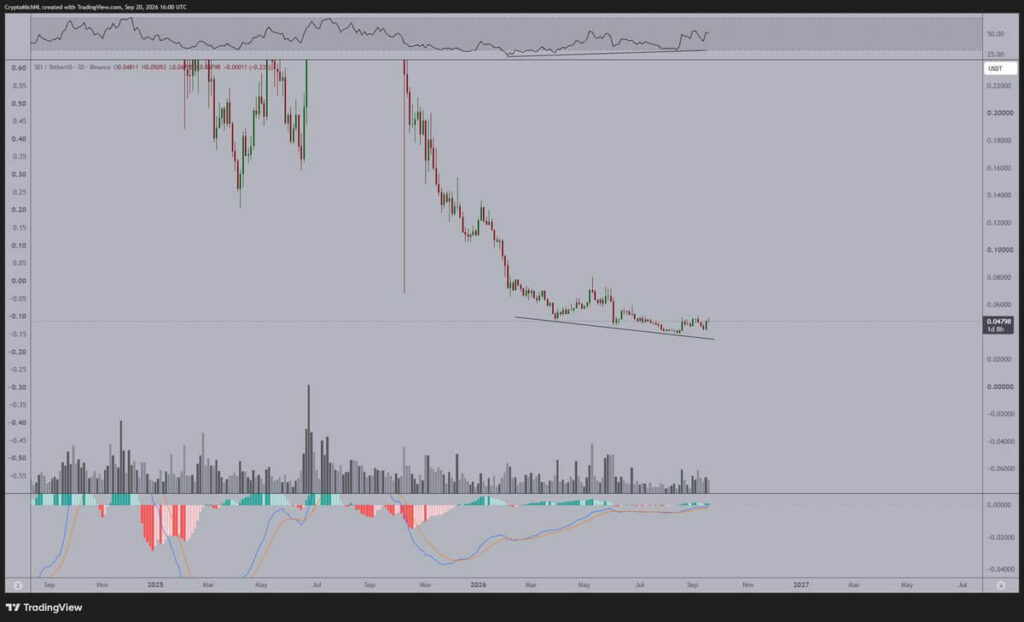
SEI a repris ses moyennes sur 50 et 200 jours, tandis que les résistances à 0,058-0,060 $ et le support à 0,050 $ restent des niveaux clés.
SEI a bondi à environ 0,057 $ après que Canary Capital a déposé une modification de type S-1 pour un ETF SEI adossé à des mises (staked). Le dossier couvre un fonds détenant du SEI au comptant, avec environ 90 % de ses positions attendues comme mises. Dans le même temps, l’analyste Michael van de Poppe a évoqué des mois de divergence et a déclaré que le SEI pourrait atteindre 0,10 $.
SEI bondit de 16,5 % à la suite d’un dépôt de modification pour un ETF adossé à des mises, rapprochant le cours de 0,06 $
SEI a grimpé de 16,5 % à environ 0,057 $ après que Canary Capital a déposé une modification de type S-1 pour un ETF SEI adossé à des mises (staked).
Le fonds proposé détiendrait du SEI au comptant, avec environ 90 % de ses positions attendues comme mises, et BitGo en tant que dépositaire (custodian).
SEI a repris ses moyennes sur 50 et 200 jours, tandis que les résistances à 0,058-0,060 $ et le support à 0,050 $ restent des niveaux clés.
SEI a bondi à environ 0,057 $ après que Canary Capital a déposé une modification de type S-1 pour un ETF SEI adossé à des mises (staked). Le dossier couvre un fonds détenant du SEI au comptant, avec environ 90 % de ses positions attendues comme mises. Dans le même temps, l’analyste Michael van de Poppe a évoqué des mois de divergence et a déclaré que le SEI pourrait atteindre 0,10 $.
Le fonds proposé détiendrait du SEI au comptant, avec environ 90 % de ses positions attendues comme mises, et BitGo en tant que dépositaire (custodian).
SEI a repris ses moyennes sur 50 et 200 jours, tandis que les résistances à 0,058-0,060 $ et le support à 0,050 $ restent des niveaux clés.
SEI a bondi à environ 0,057 $ après que Canary Capital a déposé une modification de type S-1 pour un ETF SEI adossé à des mises (staked). Le dossier couvre un fonds détenant du SEI au comptant, avec environ 90 % de ses positions attendues comme mises. Dans le même temps, l’analyste Michael van de Poppe a évoqué des mois de divergence et a déclaré que le SEI pourrait atteindre 0,10 $.
319
Article
Le Bitcoin se maintient au-dessus de la MA50 hebdomadaire à 78 700 $ alors que les réserves OTC tombent à 123 K BTCBitcoin a repris la moyenne mobile hebdomadaire (MA50) proche de 78 700 $ après plusieurs semaines de rejet, le BTC s’échangeant autour de 80 375 $.
Les réserves du desk OTC connues ont chuté à 123 000 BTC contre près de 500 000 BTC en septembre 2021, selon Darkfost.
Le Bitcoin reste dans une fourchette de 71 000 $ à 82 000 $, et 82 500 $ à 83 000 $ a été identifié comme la prochaine grande zone de cassure.
Bitcoin a de nouveau franchi la moyenne mobile hebdomadaire (MA50) proche de 78 700 $ après plusieurs semaines de rejet, selon Doctor Profit. L’analyste a indiqué que le BTC s’échangeait autour de 80 375 $, maintenant une clôture hebdomadaire au-dessus de la moyenne, à portée de main. Pendant ce temps, Darkfost a rapporté que les réserves du desk OTC avaient chuté à 123 000 BTC, contre près de 500 000 BTC en septembre 2021.
Le Bitcoin se maintient au-dessus de la MA50 hebdomadaire à 78 700 $ alors que les réserves OTC tombent à 123 K BTC
Bitcoin a repris la moyenne mobile hebdomadaire (MA50) proche de 78 700 $ après plusieurs semaines de rejet, le BTC s’échangeant autour de 80 375 $.
Les réserves du desk OTC connues ont chuté à 123 000 BTC contre près de 500 000 BTC en septembre 2021, selon Darkfost.
Le Bitcoin reste dans une fourchette de 71 000 $ à 82 000 $, et 82 500 $ à 83 000 $ a été identifié comme la prochaine grande zone de cassure.
Bitcoin a de nouveau franchi la moyenne mobile hebdomadaire (MA50) proche de 78 700 $ après plusieurs semaines de rejet, selon Doctor Profit. L’analyste a indiqué que le BTC s’échangeait autour de 80 375 $, maintenant une clôture hebdomadaire au-dessus de la moyenne, à portée de main. Pendant ce temps, Darkfost a rapporté que les réserves du desk OTC avaient chuté à 123 000 BTC, contre près de 500 000 BTC en septembre 2021.
Les réserves du desk OTC connues ont chuté à 123 000 BTC contre près de 500 000 BTC en septembre 2021, selon Darkfost.
Le Bitcoin reste dans une fourchette de 71 000 $ à 82 000 $, et 82 500 $ à 83 000 $ a été identifié comme la prochaine grande zone de cassure.
Bitcoin a de nouveau franchi la moyenne mobile hebdomadaire (MA50) proche de 78 700 $ après plusieurs semaines de rejet, selon Doctor Profit. L’analyste a indiqué que le BTC s’échangeait autour de 80 375 $, maintenant une clôture hebdomadaire au-dessus de la moyenne, à portée de main. Pendant ce temps, Darkfost a rapporté que les réserves du desk OTC avaient chuté à 123 000 BTC, contre près de 500 000 BTC en septembre 2021.
1
330
Article
Le franchissement d’Ethereum se maintient, alors que les analystes surveillent la zone des 2 800 $Ethereum a repris 2 560 $ et a maintenu ce niveau comme support, atteignant 2 657,85 $ après s’être redressé suite à sa récente consolidation.
Les analystes surveillent une résistance entre 2 675 $ et 2 700 $, suivie d’une zone d’offre plus large entre 2 800 $ et 3 000 $.
Le RSI et le MACD restent positifs, tandis que 2 600 $, 2 500 $ et 2 400 $ constituent des niveaux de support clés si l’ETH se replie.
Ethereum a franchi la barre des 2 560 $ et l’a retestée comme support, tandis que des analystes suivaient une résistance proche de 2 800 $. Le cours de l’ETH a atteint 2 657,85 $, après rebond à partir de sa récente phase de consolidation. Les analystes Ali Charts, Celal Kucuker, Ted Pillows et CrediBULL Crypto ont mis en avant des niveaux distincts ainsi que les risques autour de ce mouvement.
Le franchissement d’Ethereum se maintient, alors que les analystes surveillent la zone des 2 800 $
Ethereum a repris 2 560 $ et a maintenu ce niveau comme support, atteignant 2 657,85 $ après s’être redressé suite à sa récente consolidation.
Les analystes surveillent une résistance entre 2 675 $ et 2 700 $, suivie d’une zone d’offre plus large entre 2 800 $ et 3 000 $.
Le RSI et le MACD restent positifs, tandis que 2 600 $, 2 500 $ et 2 400 $ constituent des niveaux de support clés si l’ETH se replie.
Ethereum a franchi la barre des 2 560 $ et l’a retestée comme support, tandis que des analystes suivaient une résistance proche de 2 800 $. Le cours de l’ETH a atteint 2 657,85 $, après rebond à partir de sa récente phase de consolidation. Les analystes Ali Charts, Celal Kucuker, Ted Pillows et CrediBULL Crypto ont mis en avant des niveaux distincts ainsi que les risques autour de ce mouvement.
Les analystes surveillent une résistance entre 2 675 $ et 2 700 $, suivie d’une zone d’offre plus large entre 2 800 $ et 3 000 $.
Le RSI et le MACD restent positifs, tandis que 2 600 $, 2 500 $ et 2 400 $ constituent des niveaux de support clés si l’ETH se replie.
Ethereum a franchi la barre des 2 560 $ et l’a retestée comme support, tandis que des analystes suivaient une résistance proche de 2 800 $. Le cours de l’ETH a atteint 2 657,85 $, après rebond à partir de sa récente phase de consolidation. Les analystes Ali Charts, Celal Kucuker, Ted Pillows et CrediBULL Crypto ont mis en avant des niveaux distincts ainsi que les risques autour de ce mouvement.
205
Article
La thèse de tokenisation d’XRP cartographie une croissance sur 24 moisLa thèse de l’XRPL repose sur des gains modestes de part de marché, et non sur une migration généralisée des actifs mondiaux vers l’infrastructure blockchain.
Les avancées réglementaires et la tokenisation via la DTCC pourraient élargir l’accès institutionnel, tandis que les taux d’adoption restent la variable clé de la croissance.
La demande d’XRP dépend de la liquidité des ponts, du règlement, des garanties et de l’utilisation des DEX plutôt que de l’activité de tokenisation à elle seule.
La tokenisation d’XRP suscite un intérêt croissant, car une thèse sur 24 mois relie la croissance de l’XRPL à des actifs réglementés, à la liquidité institutionnelle, aux stablecoins et à des hypothèses de part de marché mesurées.
La thèse de tokenisation d’XRP cartographie une croissance sur 24 mois
La thèse de l’XRPL repose sur des gains modestes de part de marché, et non sur une migration généralisée des actifs mondiaux vers l’infrastructure blockchain.
Les avancées réglementaires et la tokenisation via la DTCC pourraient élargir l’accès institutionnel, tandis que les taux d’adoption restent la variable clé de la croissance.
La demande d’XRP dépend de la liquidité des ponts, du règlement, des garanties et de l’utilisation des DEX plutôt que de l’activité de tokenisation à elle seule.
La tokenisation d’XRP suscite un intérêt croissant, car une thèse sur 24 mois relie la croissance de l’XRPL à des actifs réglementés, à la liquidité institutionnelle, aux stablecoins et à des hypothèses de part de marché mesurées.
Les avancées réglementaires et la tokenisation via la DTCC pourraient élargir l’accès institutionnel, tandis que les taux d’adoption restent la variable clé de la croissance.
La demande d’XRP dépend de la liquidité des ponts, du règlement, des garanties et de l’utilisation des DEX plutôt que de l’activité de tokenisation à elle seule.
La tokenisation d’XRP suscite un intérêt croissant, car une thèse sur 24 mois relie la croissance de l’XRPL à des actifs réglementés, à la liquidité institutionnelle, aux stablecoins et à des hypothèses de part de marché mesurées.
1
368
Article
Les positions longues sur XRP augmentent avec l’expansion des marchés tokenisésLe positionnement long sur XRP s’est rétabli après que les liquidations ont éliminé une grande partie de l’exposition précédente, fortement tirée par effet de levier.
La baisse des positions vendeuses et le retour des achats indiquent un changement notable de la configuration du marché.
Les marchés boursiers tokenisés pourraient créer de nouvelles opportunités de liquidité pour XRP grâce à l’infrastructure XRPL.
Le positionnement de XRP se redresse après une forte baisse due à la liquidation massive du marché. De nouveaux achats longs ont émergé alors que l’exposition courte continue de diminuer. Dans le même temps, les marchés tokenisés élargissent la discussion sur la liquidité de XRP.
Les positions longues sur XRP augmentent avec l’expansion des marchés tokenisés
Le positionnement long sur XRP s’est rétabli après que les liquidations ont éliminé une grande partie de l’exposition précédente, fortement tirée par effet de levier.
La baisse des positions vendeuses et le retour des achats indiquent un changement notable de la configuration du marché.
Les marchés boursiers tokenisés pourraient créer de nouvelles opportunités de liquidité pour XRP grâce à l’infrastructure XRPL.
Le positionnement de XRP se redresse après une forte baisse due à la liquidation massive du marché. De nouveaux achats longs ont émergé alors que l’exposition courte continue de diminuer. Dans le même temps, les marchés tokenisés élargissent la discussion sur la liquidité de XRP.
La baisse des positions vendeuses et le retour des achats indiquent un changement notable de la configuration du marché.
Les marchés boursiers tokenisés pourraient créer de nouvelles opportunités de liquidité pour XRP grâce à l’infrastructure XRPL.
Le positionnement de XRP se redresse après une forte baisse due à la liquidation massive du marché. De nouveaux achats longs ont émergé alors que l’exposition courte continue de diminuer. Dans le même temps, les marchés tokenisés élargissent la discussion sur la liquidité de XRP.
142
Article
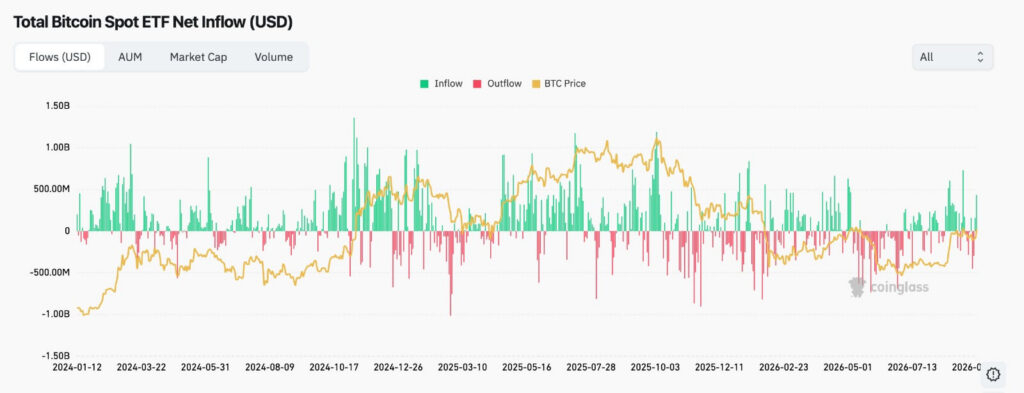
Les ETF sur le Bitcoin perdent 5 700 BTC malgré des entrées quotidiennes solidesLes ETF au comptant sur le Bitcoin ont enregistré 433 M$ d’entrées nettes le 18 septembre, portés par le FBTC de Fidelity avec 311 M$.
Les avoirs des ETF sur le Bitcoin ont chuté d’environ 5 700 BTC sur deux semaines consécutives négatives, malgré les dernières entrées quotidiennes.
Les ETF au comptant sur l’Ethereum ont enregistré 144 M$ d’entrées le 18 septembre, BlackRock’s ETHA représentant 114 M$ du total.
Les ETF au comptant sur le Bitcoin ont enregistré 433 millions de dollars d’entrées nettes le 18 septembre, mais les avoirs hebdomadaires ont chuté d’environ 5 700 BTC. L’analyste Darkfost a déclaré vendredi que la forte activité des ETF n’a pas réussi à inverser une deuxième semaine consécutive dans le rouge. SosoValue a également fait état de 144 millions de dollars d’entrées pour les ETF au comptant sur l’Ethereum ce jour-là, portées par BlackRock’s ETHA.
Les ETF sur le Bitcoin perdent 5 700 BTC malgré des entrées quotidiennes solides
Les ETF au comptant sur le Bitcoin ont enregistré 433 M$ d’entrées nettes le 18 septembre, portés par le FBTC de Fidelity avec 311 M$.
Les avoirs des ETF sur le Bitcoin ont chuté d’environ 5 700 BTC sur deux semaines consécutives négatives, malgré les dernières entrées quotidiennes.
Les ETF au comptant sur l’Ethereum ont enregistré 144 M$ d’entrées le 18 septembre, BlackRock’s ETHA représentant 114 M$ du total.
Les ETF au comptant sur le Bitcoin ont enregistré 433 millions de dollars d’entrées nettes le 18 septembre, mais les avoirs hebdomadaires ont chuté d’environ 5 700 BTC. L’analyste Darkfost a déclaré vendredi que la forte activité des ETF n’a pas réussi à inverser une deuxième semaine consécutive dans le rouge. SosoValue a également fait état de 144 millions de dollars d’entrées pour les ETF au comptant sur l’Ethereum ce jour-là, portées par BlackRock’s ETHA.
Les avoirs des ETF sur le Bitcoin ont chuté d’environ 5 700 BTC sur deux semaines consécutives négatives, malgré les dernières entrées quotidiennes.
Les ETF au comptant sur l’Ethereum ont enregistré 144 M$ d’entrées le 18 septembre, BlackRock’s ETHA représentant 114 M$ du total.
Les ETF au comptant sur le Bitcoin ont enregistré 433 millions de dollars d’entrées nettes le 18 septembre, mais les avoirs hebdomadaires ont chuté d’environ 5 700 BTC. L’analyste Darkfost a déclaré vendredi que la forte activité des ETF n’a pas réussi à inverser une deuxième semaine consécutive dans le rouge. SosoValue a également fait état de 144 millions de dollars d’entrées pour les ETF au comptant sur l’Ethereum ce jour-là, portées par BlackRock’s ETHA.
317

Article
La capitalisation du marché des altcoins rebondit alors que les analystes scrutent une nouvelle dynamiqueL’indice de capitalisation du marché des altcoins s’est redressé de 197 à 200 milliards de dollars à environ 226 à 227 milliards de dollars après avoir franchi les 210 milliards de dollars.
L’analyste identifie un triangle ascendant à long terme sur TOTAL2 et voit un potentiel pour un marché de cryptomonnaies alternatives (altcoin) d’une capitalisation de 5T$.
Le RSI reste au-dessus de 50, mais un croisement baissier de la MACD met sous les projecteurs les niveaux de support de 220B$, 210B$ et 200B$.
Les altcoins ont rebondi ces derniers jours, l’indice de capitalisation du marché, hors top 10, atteignant 226 à 227 milliards de dollars. Les analystes El Crypto Prof et Javon Marks ont souligné des configurations d’altcoins à plus long terme, tandis que des données récentes de graphiques montrent un ralentissement de la dynamique après la dernière avancée depuis le 16 septembre.
La capitalisation du marché des altcoins rebondit alors que les analystes scrutent une nouvelle dynamique
L’indice de capitalisation du marché des altcoins s’est redressé de 197 à 200 milliards de dollars à environ 226 à 227 milliards de dollars après avoir franchi les 210 milliards de dollars.
L’analyste identifie un triangle ascendant à long terme sur TOTAL2 et voit un potentiel pour un marché de cryptomonnaies alternatives (altcoin) d’une capitalisation de 5T$.
Le RSI reste au-dessus de 50, mais un croisement baissier de la MACD met sous les projecteurs les niveaux de support de 220B$, 210B$ et 200B$.
Les altcoins ont rebondi ces derniers jours, l’indice de capitalisation du marché, hors top 10, atteignant 226 à 227 milliards de dollars. Les analystes El Crypto Prof et Javon Marks ont souligné des configurations d’altcoins à plus long terme, tandis que des données récentes de graphiques montrent un ralentissement de la dynamique après la dernière avancée depuis le 16 septembre.
L’analyste identifie un triangle ascendant à long terme sur TOTAL2 et voit un potentiel pour un marché de cryptomonnaies alternatives (altcoin) d’une capitalisation de 5T$.
Le RSI reste au-dessus de 50, mais un croisement baissier de la MACD met sous les projecteurs les niveaux de support de 220B$, 210B$ et 200B$.
Les altcoins ont rebondi ces derniers jours, l’indice de capitalisation du marché, hors top 10, atteignant 226 à 227 milliards de dollars. Les analystes El Crypto Prof et Javon Marks ont souligné des configurations d’altcoins à plus long terme, tandis que des données récentes de graphiques montrent un ralentissement de la dynamique après la dernière avancée depuis le 16 septembre.
107
Connectez-vous pour découvrir plus de contenu
Rejoignez la communauté mondiale des adeptes de cryptomonnaies sur Binance Square
⚡️ Suviez les dernières informations importantes sur les cryptomonnaies.
💬 Jugé digne de confiance par la plus grande plateforme d’échange de cryptomonnaies au monde.
👍 Découvrez les connaissances que partagent les créateurs vérifiés.
Adresse e-mail/Nº de téléphone
Sujets d’actualité
AIStocksWhatNext
137,441 vues
1,679 mentions
Partagez et gagnez une récompense de trafic dans notre campagne de hashtag tendance
✨Sujet : Quelles autres opportunités d’investissement restent-elles alors que les actions liées à l’IA continuent de grimper ?
👉Comment participer :
Publiez une courte publication ou un article avec le hashtag #AIStocksWhatNext
Partagez si vous êtes plutôt haussier ou baissier, et publiez vos avoirs en actions IA ou votre transaction — utiliser le widget de trading peut améliorer votre éligibilité.
Vous pouvez aussi renforcer votre publication en partageant des données ou des graphiques, et en évitant les images générées par l’IA.
✍️Créez du contenu à partir des angles ci-dessous :
- Nvidia affirme que les ventes de puces vont doubler l’an prochain, et que les principaux acteurs de l’IA continuent d’enregistrer des revenus records ; les dépenses en calcul qui soutiennent tout cela sont tout aussi impressionnantes. La demande en IA décolle-t-elle vraiment ? Et combien de temps cela peut-il durer ? Les actions IA montent partout. Est-ce une vraie cassure, ou juste un rebond à court terme ?
- Des leaders de l’industrie appellent à ralentir le développement de l’IA, tandis que Trump prévoit de construire une « Force IA », affirmant que l’IA pourrait représenter 25 % du PIB américain à l’avenir. De quel côté êtes-vous ? Le soutien au niveau des États sera-t-il un gain de long terme pour les actions IA ?
- Achetez-vous des actions liées à l’IA ? Partagez votre transaction/position liée à l’IA avec notre widget de partage de trading.
⏰Période de la campagne :
- 2026-09-22 7:00 - 2026-09-24 4:00 UTC
🎁Récompense :
- Les publications qualifiées qui respectent les consignes ci-dessus et contiennent plus de 100 mots seront examinées et pourront recevoir un boost aléatoire de trafic de 500 à 3 000 vues. Vous recevrez une notification de la part de votre secrétaire de flux si votre publication est sélectionnée.
- Ayez une chance de voir votre article mis en avant sur Binance Square Official
Vous cherchez des idées pour votre publication ? Visitez la page du sujet #AIStocksWhatNext ou la page Square Guide on How to Post for Better Reach.
Binance Square Official
·246 mentions J’aime
·458.2k vues
BitcoinBreaksAboveMayHighNears$86K
3,577 vues
63 mentions
DogecoinRises15%
8,921 vues
398 mentions