Introduction: Bridging the Gap Between Blockchain and the Real World
Blockchain technology has evolved rapidly over the past decade, yet mass adoption remains a major challenge. While innovation has been constant, many blockchain networks still cater primarily to developers and technical users, leaving everyday people, brands, and enterprises struggling to engage with decentralized systems. Complicated interfaces, high fees, slow performance, and poor user experience have limited blockchain’s reach beyond niche communities.
Vanar Blockchain was created to address this gap.
Vanar is a purpose-built Layer-1 blockchain designed from the ground up to support real-world adoption. Instead of focusing solely on technical complexity or speculative use cases, Vanar emphasizes simplicity, scalability, speed, and usability, making it accessible to mainstream users and businesses. Its long-term vision is ambitious yet practical: to help onboard the next three billion users into Web3 by removing friction and making blockchain technology feel natural rather than intimidating.
Vision and Philosophy: Adoption First, Technology Second
Unlike many blockchain projects that start with advanced technical concepts and attempt to force users to adapt, Vanar follows a user-first philosophy. The core belief behind Vanar is that blockchain adoption will not happen through complexity, but through seamless integration into everyday digital experiences.
Vanar does not aim to replace existing systems overnight. Instead, it focuses on working alongside current industries, enhancing them with blockchain benefits such as transparency, digital ownership, decentralization, and trust—without overwhelming users with technical barriers.
This approach makes Vanar fundamentally different from many Layer-1 networks that prioritize experimental features over usability. Vanar’s strategy is clear:
Built by Industry Experts, Not Just Developers
One of Vanar’s strongest advantages is the background of its core team. The team brings deep experience from gaming, entertainment, digital brands, and large-scale consumer platforms. This experience heavily influences how the blockchain is designed, developed, and deployed.
Rather than focusing purely on theoretical blockchain capabilities, the Vanar team understands:
How users interact with digital products What brands require for scalability and compliance How gaming ecosystems function at scale Why user experience determines success or failure
This real-world industry knowledge allows Vanar to build infrastructure that is commercially viable, not just technically impressive.
Technical Foundation: A Layer-1 Optimized for Performance and Simplicity
Vanar operates as a Layer-1 blockchain, meaning it has its own independent network, consensus mechanism, and infrastructure. This gives Vanar full control over performance optimization, scalability, and security—without relying on external chains.
Key Design Principles:
High throughput: Capable of supporting large numbers of users and transactions Low latency: Fast confirmations suitable for gaming and real-time applications Cost efficiency: Designed to keep transaction fees affordable for everyday use Developer-friendly: Tools and frameworks that simplify application development
By optimizing these core aspects, Vanar ensures that applications built on the network can scale smoothly without sacrificing user experience.
Focused on Real-World Sectors with Massive Growth Potential
Vanar is not a one-use blockchain. It is built to support multiple high-growth industries that already have massive global demand. This multi-sector focus increases the resilience and long-term relevance of the ecosystem.
1. Gaming and Interactive Entertainment
Gaming is one of the largest digital industries in the world, with billions of players globally. Vanar recognizes that blockchain gaming must prioritize fun, speed, and immersion, not just token mechanics.
By offering fast transactions, low fees, and scalable infrastructure, Vanar allows developers to:
Integrate digital ownership naturally Enable cross-game assets Support large player bases without congestion Build sustainable in-game economies
2. Metaverse and Immersive Digital Experiences
Virtual worlds, digital land, avatars, and branded environments are becoming central to the future of online interaction. Vanar supports metaverse applications that require:
Real-time interactions Secure digital ownership Scalable environments Brand-friendly infrastructure
Vanar’s blockchain operates quietly in the background, allowing users to focus on experiences rather than transactions.
3. Artificial Intelligence Integration
AI and blockchain are increasingly intersecting. Vanar supports AI-driven applications by offering infrastructure that can:
Handle large data interactions Support decentralized AI tools Enable transparent data ownership Integrate AI features into consumer apps
This positions Vanar at the crossroads of two transformative technologies.
4. Eco-Friendly Digital Solutions
Sustainability is becoming a core requirement for modern technology. Vanar emphasizes efficient blockchain operations, minimizing unnecessary energy consumption while maintaining performance. This approach appeals to environmentally conscious brands and enterprises seeking blockchain solutions without high ecological costs.
5. Brand and Enterprise Tools
Brands require reliability, compliance, scalability, and smooth user onboarding. Vanar provides the foundation for:
NFT-based brand engagement Loyalty programs Digital collectibles Web3 marketing tools
All while keeping the blockchain layer invisible to end users.
Flagship Products Built on Vanar
Two major platforms demonstrate Vanar’s real-world utility and ecosystem maturity.
Virtua Metaverse
Virtua is a next-generation metaverse platform built on Vanar, focused on:
Immersive digital worlds Digital ownership Branded virtual experiences Interactive entertainment
Virtua allows users to own digital assets, explore virtual environments, and engage with brands in new ways. For businesses, it offers a powerful tool to connect with audiences in immersive digital spaces.
VGN Games Network
The VGN Games Network connects games, developers, and players through blockchain infrastructure. Its purpose is to:
Simplify blockchain integration for game studios Enable cross-game interoperability Support scalable multiplayer environments Enhance player ownership and engagement
VGN demonstrates how blockchain can enhance gaming ecosystems without disrupting gameplay.
The VANRY Token: Powering the Ecosystem
At the center of the Vanar ecosystem is the VANRY token. VANRY is not merely a speculative asset; it serves as the core utility token that powers network operations and ecosystem activity.
Key Uses of VANRY:
Transaction fees and network operations Participation in ecosystem services Value exchange across applications Incentives for developers and partners
As more users, applications, and enterprises join Vanar, the role of VANRY becomes increasingly important in maintaining network activity and economic flow.
Scalability and Long-Term Growth Strategy
Vanar’s architecture is designed for long-term scalability, not short-term hype. Instead of chasing temporary trends, Vanar focuses on building infrastructure that can support:
Millions of users Enterprise-grade applications Long-term partnerships Sustainable ecosystem growth
This strategy reduces dependency on speculative cycles and increases resilience during market volatility.
Competitive Positioning in the Layer-1 Landscape
The Layer-1 blockchain space is crowded, but Vanar differentiates itself through:
Strong focus on real-world adoption Industry-driven design philosophy Multi-sector ecosystem support Live products, not just concepts
While many chains compete on theoretical metrics, Vanar competes on practical usability and integration.
Challenges and Considerations
Like all blockchain projects, Vanar faces challenges:
Competing with established Layer-1 networks Navigating market cycles Scaling adoption globally Educating users without overwhelming them
However, Vanar’s clear vision and product-focused approach position it well to address these challenges over time.
Conclusion: A Blockchain Built for the Next Phase of Web3
Vanar Blockchain represents a mature evolution of Layer-1 design, shifting focus from complexity to usability, from speculation to adoption, and from niche communities to global audiences.
With:
A clear mission Strong industry experience Real products already live Support for major growth sectors A utility-driven ecosystem token
Vanar is building infrastructure not just for today’s Web3 users, but for the next generation of digital participants worldwide.
As blockchain continues to move toward mainstream adoption, platforms like Vanar—designed with people, brands, and businesses in mind—are likely to play a critical role in shaping the future of decentralized technology.
$PSG /USDT is trading at $0.686, facing rejection from the recent spike high and forming a lower-high structure suggesting bearish continuation if support breaks.
Plasma Blockchain A Purpose Built Layer 1 for Stablecoin Settlement
#Plasma @Plasma $XPL The rapid growth of stablecoins has reshaped how value moves across the internet. What began as a simple bridge between traditional finance and crypto markets has evolved into a global payment rail used by millions of individuals and businesses. Stablecoins are now used for remittances, everyday payments, payroll, cross border trade, and financial settlement at scale. However, despite this adoption, most blockchains were not designed specifically for stablecoin usage. Instead, stablecoins have been forced to operate on general purpose networks that introduce friction, cost, and unnecessary complexity.
Plasma Blockchain was created to address this fundamental mismatch. Rather than being another multi use Layer 1 trying to serve every possible application, Plasma is a blockchain built with a single, focused objective: enabling fast, low cost, and reliable stablecoin payments and settlement for real world use. This clarity of purpose defines Plasma’s architecture, performance, and long term vision.
By prioritizing stablecoins from the ground up, Plasma aims to become the foundational infrastructure for the global stablecoin economy.
Why Stablecoins Need Dedicated Infrastructure
Stablecoins are fundamentally different from speculative crypto assets. They are designed to maintain a consistent value, usually pegged to fiat currencies like the US dollar. Because of this, users expect stablecoins to behave like digital cash. Transfers should be fast, predictable, and inexpensive. Fees should be minimal and transparent. Settlement should be near instant. Volatility should not affect usability.
General purpose blockchains struggle to meet these expectations consistently. Network congestion, fluctuating gas fees, slow finality, and reliance on volatile native tokens create friction for users who simply want to send or receive stable value. In many cases, the cost of a transaction can exceed the value being transferred, making stablecoins impractical for everyday payments.
Plasma approaches this challenge differently. Instead of adapting stablecoins to fit an existing blockchain model, Plasma builds the blockchain around stablecoins themselves. This results in an experience that feels closer to traditional payment systems while retaining the benefits of decentralization and blockchain security.
A Layer 1 Designed for Payments and Settlement
Plasma is a Layer 1 blockchain, meaning it operates as its own independent network rather than relying on another chain for security or execution. This allows Plasma to optimize every aspect of its design for payments and settlement.
At the core of Plasma’s design philosophy is simplicity. The network avoids unnecessary complexity and focuses on delivering consistent performance. Transactions are processed quickly, finality is achieved in sub second timeframes, and fees remain predictable. This makes Plasma suitable for high frequency payment activity and financial settlement use cases where speed and reliability are essential.
By narrowing its scope, Plasma avoids the trade offs that often come with trying to support every possible decentralized application. The result is a blockchain that performs exceptionally well for its intended purpose.
Full EVM Compatibility with Ethereum
One of Plasma’s key strengths is its full compatibility with the Ethereum ecosystem. Plasma uses the Ethereum Virtual Machine through Reth, allowing developers to deploy existing Ethereum smart contracts on Plasma with minimal modification.
This compatibility significantly lowers the barrier to adoption. Developers can continue using familiar programming languages, development tools, wallets, and frameworks. Applications built for Ethereum can be migrated or extended to Plasma without requiring a complete rewrite.
For businesses and institutions already experimenting with Ethereum based infrastructure, Plasma offers a seamless transition path. They gain access to faster settlement and lower costs without abandoning the tools and standards they already trust.
EVM compatibility also ensures that Plasma can integrate smoothly with the broader Web3 ecosystem, including decentralized exchanges, payment applications, and financial infrastructure.
Sub Second Finality with PlasmaBFT Consensus
Fast settlement is critical for payment networks. Waiting minutes or even seconds for confirmation can disrupt user experience, especially for point of sale transactions, remittances, and financial clearing.
Plasma addresses this requirement through its custom consensus mechanism known as PlasmaBFT. This consensus system is designed to provide sub second finality, meaning transactions are confirmed almost instantly and cannot be reversed.
Instant finality enables use cases that are difficult or impossible on slower networks. Merchants can accept payments with confidence. Financial institutions can settle transactions in real time. Users experience transfers that feel immediate, similar to traditional digital payment systems.
By combining fast execution with strong security guarantees, PlasmaBFT delivers the performance required for global payment infrastructure.
Stablecoin First Design Philosophy
Unlike most blockchains where stablecoins are secondary assets, Plasma treats stablecoins as first class citizens. This philosophy is reflected in several key features that significantly improve usability.
One of the most notable innovations is gasless USDT transfers. Users can send USDT without paying traditional gas fees, removing one of the biggest barriers to adoption. For everyday users, this creates a frictionless experience where sending stable value feels as simple as sending a message.
In addition to gasless transfers, Plasma allows stablecoins to be used directly as gas. Instead of holding a volatile native token to pay transaction fees, users can pay fees using the same stablecoin they are transacting with. This removes exposure to price volatility and eliminates the need to manage multiple assets.
For businesses, this predictability is extremely valuable. Accounting becomes simpler, costs are easier to forecast, and operational complexity is reduced.
Removing Volatility from the User Experience
One of the most common pain points in blockchain usage is the reliance on volatile native tokens. Users are often required to hold and manage assets whose value can fluctuate dramatically just to interact with the network.
Plasma’s stablecoin based fee model removes this friction entirely. By allowing stablecoins to serve as gas, Plasma aligns incentives with real world financial behavior. Users interact with stable value from start to finish.
This approach makes Plasma especially attractive in regions where stablecoins are already widely used as a hedge against inflation or currency instability. Users can transact confidently without worrying about sudden changes in transaction costs.
For institutions and enterprises, this stability is essential for compliance, budgeting, and risk management.
Bitcoin Anchored Security and Neutrality
Security and neutrality are fundamental requirements for global financial infrastructure. Plasma enhances trust and censorship resistance by anchoring its network to Bitcoin.
Bitcoin is widely regarded as the most secure and decentralized blockchain in existence. By leveraging Bitcoin’s security model, Plasma strengthens its own resilience against attacks and manipulation.
Anchoring to Bitcoin also reinforces neutrality. No single entity or small group can easily control or censor transactions on the network. This is particularly important for global payments, where trust must extend across jurisdictions, institutions, and political boundaries.
For users and businesses, Bitcoin anchored security provides an additional layer of confidence that the network will remain stable, reliable, and resistant to interference over the long term.
Built for Global Stablecoin Adoption
Stablecoins are already playing a major role in global finance, particularly in emerging markets. In many regions, stablecoins are used for daily transactions, savings, and cross border transfers due to their accessibility and stability.
Plasma is designed to support this real world usage at scale. Fast confirmations, low costs, and simple user experience make it suitable for retail payments, peer to peer transfers, and remittances.
For merchants, Plasma enables efficient acceptance of stablecoin payments without the delays and fees associated with traditional payment processors. For individuals, it offers a reliable way to send and receive value across borders.
By focusing on usability and performance, Plasma positions itself as a practical solution rather than a purely experimental technology.
Institutional Grade Settlement Infrastructure
Beyond retail use cases, Plasma is also built to meet the needs of institutions operating in payments and finance. Financial institutions require predictable settlement, strong security, and infrastructure that can support compliance and reporting requirements.
Plasma’s architecture supports these needs by providing fast finality, transparent transaction records, and a stable fee environment. Institutions can integrate Plasma into their operations as a settlement layer without exposing themselves to unnecessary volatility or operational risk.
Use cases include cross border payments, treasury management, on chain settlement between financial entities, and integration with fintech platforms.
By combining blockchain efficiency with institutional requirements, Plasma bridges the gap between decentralized technology and traditional finance.
Developer Friendly Ecosystem
Adoption depends not only on users and institutions but also on developers. Plasma is designed to be developer friendly from the start.
EVM compatibility ensures that developers can reuse existing code and knowledge. Tooling and workflows familiar from Ethereum work seamlessly on Plasma. This reduces onboarding time and accelerates application development.
By focusing on payments and settlement, Plasma also creates opportunities for developers to build specialized applications such as wallets, payment gateways, remittance platforms, and financial services tailored to stablecoin usage.
A focused ecosystem encourages innovation in areas that directly support real world adoption rather than speculative experimentation.
A Clear Positioning in a Crowded Market
The blockchain space is crowded with Layer 1 networks competing for attention. Many projects attempt to differentiate themselves through technical complexity or broad feature sets.
Plasma takes a different approach. Its positioning is clear and deliberate. Plasma is not trying to be everything. It is built to do one thing exceptionally well: stablecoin payments and settlement.
This clarity gives Plasma a strong narrative and practical relevance. As stablecoin usage continues to grow, demand for specialized infrastructure will increase. Plasma’s focused design allows it to serve this demand more effectively than general purpose alternatives.
Long Term Vision for the Stablecoin Economy
The future of digital finance will be shaped by stablecoins. As regulatory frameworks evolve and adoption expands, stablecoins are likely to become a core component of the global financial system.
Plasma aims to be the foundational Layer 1 that supports this future. By prioritizing usability, security, and neutrality, Plasma aligns itself with long term adoption rather than short term speculation.
Its design choices reflect an understanding of how stablecoins are actually used in the real world. Payments must be fast. Fees must be predictable. Infrastructure must be reliable and neutral.
Plasma’s architecture positions it to scale alongside stablecoin adoption and adapt to the evolving needs of users and institutions.
Conclusion Plasma as the Backbone of Stablecoin Settlement
Plasma Blockchain represents a thoughtful and practical approach to blockchain design. Instead of building a general purpose network and hoping stablecoins fit, Plasma builds the network around stablecoins themselves.
With EVM compatibility, sub second finality through PlasmaBFT, gasless USDT transfers, stablecoin based gas fees, and Bitcoin anchored security, Plasma delivers a comprehensive solution for modern digital payments.
Its focus on simplicity, performance, and real world usability sets it apart in an increasingly complex ecosystem. For users, businesses, and institutions seeking reliable stablecoin settlement infrastructure, Plasma offers a clear and compelling foundation.
As the stablecoin economy continues to expand, Plasma stands positioned not as another experimental blockchain, but as a purpose built Layer 1 designed to power the next generation of global payments.
$ASTER has failed to hold above the 0.64–0.65 range, showing clear rejection from the recent highs. The structure suggests distribution after an upmove, with sellers now pressing price lower. A continuation to the downside is likely if support fails to recover.
$BNB Breaks Key Support, Sellers Maintain Control Amid Rising Weakness
$BNB is showing increasing downside pressure after breaking below the 610 support zone. The structure is forming lower highs and lower lows, confirming seller dominance. Any short-term bounce is likely to face resistance.
$RIF Faces Rejection Near Local Highs, Short-Term Bearish Setup Forming
$RIF is showing signs of weakness after failing to sustain above the recent high near 0.046. The current structure suggests a short-term bearish pullback as momentum cools and sellers begin to step in.
Vanar Blockchain: A Practical Layer 1 for Real-World Adoption
#Vanar is a purpose-built Layer 1 blockchain designed for real-world use. Unlike platforms aimed mainly at technical users, Vanar focuses on everyday people, brands, and businesses. Its mission is to onboard the next three billion users into Web3 through simple, practical, and user-friendly technology.
The team behind Vanar brings strong experience from the gaming, entertainment, and branding industries. This background influences the platform’s design philosophy, which prioritizes smooth user experience, fast performance, and easy integration. By reducing complexity, Vanar makes blockchain technology more accessible for mainstream adoption beyond the crypto-native audience.
Vanar supports a wide range of fast-growing sectors, including gaming, metaverse experiences, artificial intelligence, eco-friendly digital solutions, and brand-focused tools. This broad support allows developers and enterprises to build flexible applications that feel familiar to users while leveraging blockchain technology in the background.
Key products built on Vanar include Virtua Metaverse and the VGN Games Network. Virtua focuses on immersive digital environments, digital ownership, and branded experiences, while VGN enables scalable, blockchain-powered gaming ecosystems that connect players and developers.
The Vanar ecosystem is powered by the $VANRY token, which is used for network operations, ecosystem participation, and value exchange across Vanar-based products. As adoption grows, VANRY plays a central role in maintaining and connecting the network.
In summary, Vanar is a Layer 1 blockchain designed for practical adoption. With strong industry expertise, a focus on simplicity, and support for major real-world sectors, Vanar aims to make Web3 accessible, usable, and ready for global scale.
Plasma Blockchain A Layer 1 Built for Stablecoin Settlement
#Plasma is a purpose-built Layer 1 blockchain designed specifically for stablecoin payments and settlement. Instead of trying to serve every use case, Plasma focuses on one core goal: enabling fast, low-cost, and reliable stablecoin transactions for real-world use.
Plasma is fully EVM-compatible, allowing developers to deploy existing Ethereum smart contracts with minimal changes. Familiar wallets, tools, and workflows work seamlessly, making adoption straightforward. The network achieves sub-second finality through its custom consensus mechanism, PlasmaBFT, ensuring near-instant transaction confirmation—an essential feature for payments and financial settlement.
A key differentiator of Plasma is its stablecoin-first design. Users can transfer USDT with zero gas fees, eliminating friction for everyday payments. Additionally, stablecoins can be used directly to pay gas fees, removing the need to hold volatile native tokens. This creates a predictable and user-friendly experience for both individuals and businesses.
Plasma also emphasizes security and neutrality. The network is anchored to Bitcoin, leveraging Bitcoin’s proven security model to enhance trust and censorship resistance. This architecture helps protect the network from centralized control, making it well-suited for global financial applications.
Designed for both retail users and institutions, Plasma supports simple peer-to-peer payments in stablecoin-heavy regions while offering institutions a secure, compliant, and efficient settlement layer.
In summary, Plasma delivers a focused solution for the stablecoin economy. By combining EVM compatibility, instant finality, gasless stablecoin transfers, stablecoin-based gas, and Bitcoin-anchored security, Plasma provides a strong foundation for the future of digital payments.
$BCH faced rejection near the 528–530 resistance zone and is now showing weakness with a strong bearish move back into the range. Failure to hold above resistance suggests sellers are regaining control, opening the door for a deeper pullback.
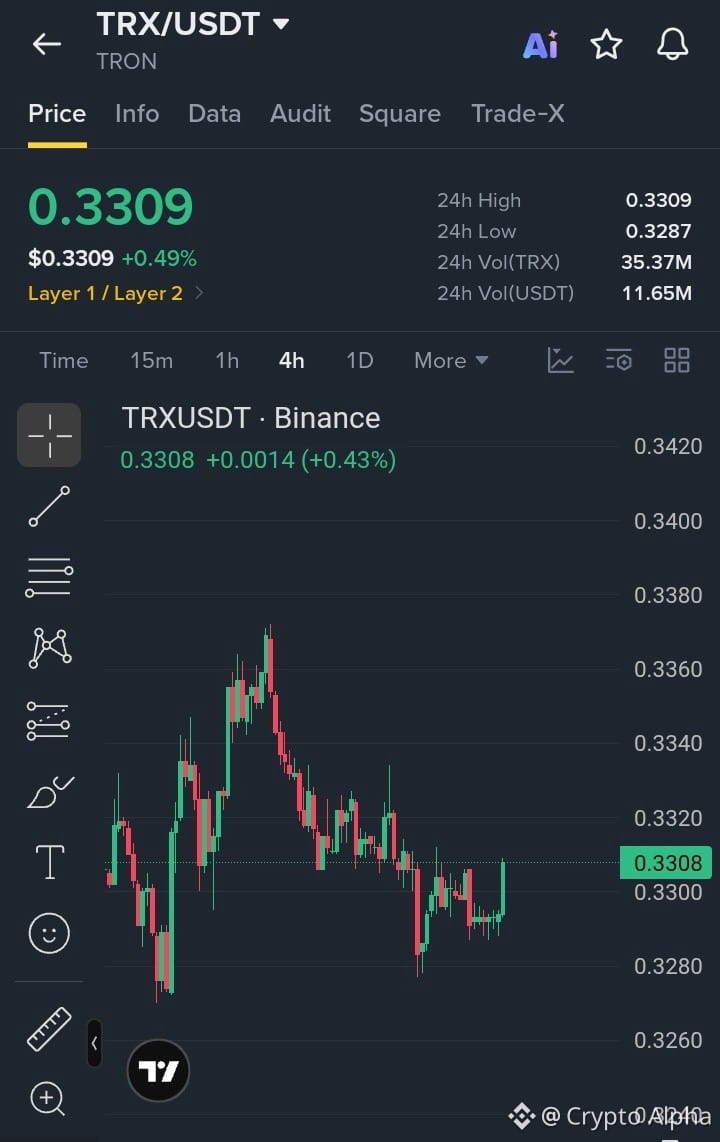
$TRX is showing short-term weakness after failing to hold near the recent high around 0.279. Price is forming lower highs on the intraday timeframe, suggesting a controlled pullback as selling pressure increases near resistance.
$PLAY is showing a bearish rejection near the top after an impulsive move. Price is struggling to hold above resistance, indicating weakening bullish momentum and increasing selling pressure.
Altcoins are showing strong momentum today as buyers dominate price action across the board. Several tokens are delivering notable gains, reflecting increased market participation and short-term trading opportunities.
Top Gainers
$GHST +131.03%
$ATM +56.27%
$DATA +30.00%
DF +26.90%
FTT +24.89%
Strong percentage moves like these often signal heightened volatility and momentum-driven setups. Traders should remain selective, manage risk carefully, and watch for continuation or corrective pullbacks.
Market activity is picking up, and momentum is clearly in play.
$PSG faced a strong rejection near the 0.80–0.81 resistance zone and is now showing signs of weakness. Price is consolidating below key resistance around 0.73, suggesting fading bullish momentum and a possible continuation to the downside if support breaks.
$BNB / USDT Reversal Bounce Alert Buyers Stepping In Near Support
$BNB is currently trading around 624, after a healthy pullback from recent highs. Price has reacted strongly from the 615–620 support zone, indicating buyer interest and potential short-term recovery. Structure suggests a possible bounce if support continues to hold.
Vanar Blockchain Report A Simple and Professional Overview
@Vanarchain | $VANRY | #vanar Vanar is a next-generation Layer 1 blockchain designed with a strong focus on real-world adoption. Unlike many blockchain platforms that primarily serve technical users and developers, Vanar is built for everyday users, global brands, and mainstream businesses. Its core mission is to simplify blockchain technology and help onboard the next three billion users into Web3 through practical, user-friendly solutions.
From its foundation, Vanar has prioritized usability and performance over complexity. Rather than introducing technical barriers that limit adoption, the network is designed to feel intuitive and accessible, even for users with no prior experience in blockchain or cryptocurrencies. This user-first approach positions Vanar as a blockchain that aims to bridge the gap between Web2 and Web3, enabling seamless interaction between traditional digital experiences and decentralized infrastructure.
A key strength of Vanar lies in the background and expertise of its team. With extensive experience in gaming, entertainment, and brand development, the team brings a deep understanding of how mainstream users interact with digital platforms. This industry knowledge directly influences Vanar’s design philosophy. Instead of focusing on overly complex systems, the platform emphasizes smooth user experiences, fast transaction performance, and easy integration for businesses and developers. These qualities make Vanar particularly attractive to industries that require reliability, scalability, and simplicity.
Vanar is built to support a wide range of real-world applications and fast-growing sectors. These include gaming, metaverse environments, artificial intelligence, eco-friendly digital solutions, and brand-focused tools. By supporting multiple industries, Vanar creates a flexible and adaptable ecosystem that can evolve alongside market trends. This multi-sector approach ensures that the blockchain remains relevant as new use cases emerge and user demands change over time.
For developers and companies, Vanar offers an environment where applications can be built to feel familiar and intuitive to everyday users. Blockchain technology operates seamlessly in the background, allowing users to enjoy digital products without needing to understand complex technical mechanics. This design philosophy lowers the barrier to entry for non-crypto-native audiences and makes it easier for businesses to introduce blockchain-powered features into their existing products.
Two flagship products highlight Vanar’s capabilities and real-world focus: Virtua Metaverse and the VGN Games Network. Virtua Metaverse is an immersive digital platform that combines virtual worlds, digital ownership, and branded experiences. It enables users to interact with digital environments while maintaining true ownership of virtual assets. Through partnerships and branded content, Virtua demonstrates how blockchain technology can enhance entertainment and digital engagement without sacrificing usability.
The VGN Games Network is designed to connect games, developers, and players through blockchain infrastructure. It provides tools that help developers create scalable, interoperable, and engaging gaming experiences. By integrating blockchain technology into gaming ecosystems, VGN allows for secure digital ownership, cross-game asset utility, and enhanced player engagement. These features support the growing demand for blockchain-enabled gaming while maintaining a smooth and enjoyable user experience.
At the center of the Vanar ecosystem is the VANRY token, which powers network operations and ecosystem activity. VANRY is used for transactions, participation within applications, and value exchange across the Vanar platform. As more products, developers, and users join the ecosystem, the token plays an increasingly important role in maintaining network activity and economic alignment. Its utility-driven design ensures that the token remains closely connected to real usage rather than speculative activity alone.
Vanar’s long-term vision is centered on sustainable adoption and practical utility. By focusing on industries with existing global demand—such as gaming, entertainment, and digital branding—the network positions itself for organic growth. This approach contrasts with platforms that rely solely on experimental use cases or short-term trends. Vanar’s emphasis on real-world applications helps create a stable foundation for long-term ecosystem development.
Another important aspect of Vanar’s strategy is its focus on accessibility and global reach. By designing tools and applications that are easy to use, Vanar aims to attract users from diverse regions and backgrounds. This inclusivity is essential for achieving its goal of onboarding billions of users into Web3. Whether through gaming, digital experiences, or brand engagement, Vanar provides entry points that feel familiar and approachable to non-technical audiences.
Conclusion
Vanar is a purpose-built Layer 1 blockchain focused on real-world adoption and mainstream usability. Backed by strong industry experience, a user-first design philosophy, and support for major growth sectors, Vanar aims to make blockchain technology practical, accessible, and scalable. By combining simplicity, performance, and real-world applications, Vanar positions itself as a blockchain platform ready to support the next phase of global Web3 adoption.
Plasma Blockchain A Purpose-Built Layer 1 for Stablecoin Settlement
@Plasma | $XPL | #Plasma Plasma is a next-generation Layer 1 blockchain designed specifically to support stablecoin payments and settlement at scale. While many blockchains attempt to serve every possible use case, Plasma takes a focused and practical approach. Its primary objective is to make stablecoin transfers fast, simple, low-cost, and reliable, enabling real-world financial activity rather than experimental or purely technical use cases.
Stablecoins have become a critical part of the global digital economy, especially in regions where access to traditional banking is limited or where local currencies face volatility. Plasma is built with this reality in mind. Instead of forcing users to navigate complex blockchain mechanics, Plasma abstracts away unnecessary complexity, creating a blockchain experience that feels closer to traditional payment systems while preserving the benefits of decentralization.
One of Plasma’s key strengths is its full Ethereum Virtual Machine (EVM) compatibility, achieved through the use of Reth, a high-performance Ethereum execution client. This allows developers to deploy existing Ethereum smart contracts on Plasma with minimal or no changes. Popular developer tools, wallets, and infrastructure already used in the Ethereum ecosystem work seamlessly on Plasma. This compatibility significantly lowers the barrier to entry, enabling faster adoption by developers and businesses without the need to learn an entirely new technology stack.
While maintaining Ethereum compatibility, Plasma introduces its own custom consensus mechanism called PlasmaBFT, which enables sub-second transaction finality. Transactions confirm almost instantly, a feature that is essential for payments, remittances, and financial settlement. In contrast to networks that require long confirmation times or multiple block confirmations, Plasma provides near-instant certainty that a transaction is complete. This makes the blockchain suitable for real-time commerce, point-of-sale payments, and cross-border transfers where speed and reliability are critical.
Plasma’s design philosophy is centered on being stablecoin-first. Unlike most blockchains that rely on volatile native tokens for gas fees, Plasma removes this friction entirely. Users can send USDT with zero gas fees, making everyday transactions more accessible and predictable. This feature is particularly important for non-technical users who may not understand gas mechanics or who want to avoid fluctuating transaction costs.
In addition to gasless transfers, Plasma allows stablecoins themselves to be used as gas. This eliminates the requirement to hold a separate native token simply to transact on the network. For both individuals and businesses, this creates a smoother user experience and reduces operational complexity. By aligning transaction costs with stable assets, Plasma makes blockchain payments feel more familiar and practical, especially for users transitioning from traditional financial systems.
Security and neutrality are fundamental to Plasma’s long-term vision. The network is anchored to Bitcoin, leveraging Bitcoin’s proven security model to enhance trust, censorship resistance, and decentralization. By tying its architecture to Bitcoin, Plasma benefits from the strongest and most battle-tested blockchain security available today. This design helps ensure that the network cannot be easily manipulated or controlled by any single entity, which is a critical requirement for global financial infrastructure.
The Bitcoin-anchored approach also reinforces Plasma’s neutrality. In the context of payments and settlement, neutrality is essential. Businesses, institutions, and users need assurance that the network operates fairly and cannot be influenced by special interests. Plasma’s architecture supports this by prioritizing transparency, security, and long-term resilience over short-term optimization.
Plasma is designed to serve both retail users and institutional participants. For everyday users in stablecoin-heavy markets, the blockchain offers fast, inexpensive, and easy-to-use transfers suitable for daily payments, peer-to-peer transactions, and remittances. The removal of gas fees and instant finality makes Plasma particularly attractive in regions where transaction costs and delays are significant barriers to adoption.
For institutions, payment providers, and financial platforms, Plasma delivers reliable settlement infrastructure with strong security guarantees. Its predictable fee structure, fast confirmation times, and compatibility with existing Ethereum-based systems make it suitable for large-scale payment flows, treasury operations, and cross-border settlement. Additionally, Plasma’s design supports compliance-friendly use cases, which is increasingly important as stablecoins become more integrated into regulated financial environments.
From a broader perspective, Plasma represents a shift toward specialized blockchains built for specific economic functions. Rather than competing with general-purpose networks, Plasma complements the wider blockchain ecosystem by focusing on one of the most important use cases in Web3: stablecoin payments. This specialization allows the network to optimize performance, user experience, and security around a clearly defined goal.
Conclusion
Plasma is a purpose-built Layer 1 blockchain designed to power the stablecoin economy. By combining EVM compatibility, sub-second finality, gasless USDT transfers, stablecoin-based gas, and Bitcoin-anchored security, Plasma offers a clear and practical solution for modern digital payments and settlement. Its focus on simplicity, reliability, and real-world usability positions it as a strong foundation for the next phase of global stablecoin adoption.
$BAT /USDT Trade Setup Short-Term Weakness After Rejection
$BAT is trading around 0.1266 after facing rejection near the upper zone. Price is pulling back from resistance, and short-term structure suggests continued pressure unless strong support holds.
$ZAMA /USDT Trade Setup Range Breakdown Caution Zone.
$ZAMA is currently trading around 0.0270, showing weakness after rejection from the upper range. Price is testing a key support area, and further downside is possible if this level fails.
Vanar is a purpose-built Layer 1 blockchain designed for real-world adoption. Unlike many blockchain platforms that primarily cater to technical users, Vanar focuses on simplicity, usability, and mainstream accessibility. Its core mission is to help onboard the next three billion users into Web3 through practical and user-friendly solutions.
The Vanar team brings extensive experience in gaming, entertainment, and brand development, which strongly influences the platform’s design philosophy. Instead of complex technical processes, Vanar prioritizes seamless user experiences, high performance, and easy integration for businesses and global brands. This approach makes the blockchain suitable for adoption beyond the traditional crypto audience.
Vanar supports a wide range of real-world sectors, including gaming, metaverse environments, artificial intelligence, sustainable digital solutions, and brand-focused tools. By serving multiple industries, Vanar creates a flexible and scalable ecosystem that can adapt to evolving market needs. Developers can build applications that feel intuitive to everyday users while blockchain technology operates quietly in the background.
Two flagship products within the Vanar ecosystem are Virtua Metaverse and the VGN Games Network. Virtua Metaverse delivers immersive digital environments, digital ownership, and branded virtual experiences. Meanwhile, the VGN Games Network enables developers and players to connect through blockchain-powered gaming infrastructure, supporting scalable and engaging gameplay.
The entire ecosystem is powered by the VANRY token, which is used for network operations, ecosystem participation, and value exchange across Vanar-based products. As adoption grows and more applications are launched, VANRY plays a central role in maintaining connectivity and activity within the network.
$OG /USDT Bullish Continuation Setup Strong Momentum | Buyers in Control
$OG is showing strong bullish strength after a sharp breakout, currently trading around 4.44 with solid volume support. Price structure suggests continuation to the upside as bulls remain dominant.