

Crypto Man MAB
18.4k Publications

Crypto Man MAB
 Compte Square Vérifié+
Signaler
Bloquer l’utilisateur
Binance Sqaure Top KOL - Streamer - Binance PAC Product Advisory Counsel Member - X @MabMan338

#BinanceTurns7 task 2

#BinanceTurns7

Top Voices
Ouvert au trading
Trade régulièrement
5.6 an(s)
851 Suivis
83.6K+ Abonnés
175.9K+ J’aime
4 Badges
Publications
Portefeuille
Tous
Citations
Vidéos
Direct
PINNED
Two Legends Are Following me one on X and other one on Binance Sqaure😇
Two Legends Are Following me one on X and other one on Binance Sqaure😇

19
1
93
1.6k
Binance launched on July 14, 2017.
Within months it was one of the biggest crypto exchanges in the world.
How did a programmer who started with years of trading tech experience and a risky idea build it, and what happened next?
I made a 9-minute documentary on the story of @CZ and Binance. 🎬👇
#Binance $BNB
Binance launched on July 14, 2017.
Within months it was one of the biggest crypto exchanges in the world.
How did a programmer who started with years of trading tech experience and a risky idea build it, and what happened next?
I made a 9-minute documentary on the story of @CZ and Binance. 🎬👇
#Binance $BNB
Within months it was one of the biggest crypto exchanges in the world.
How did a programmer who started with years of trading tech experience and a risky idea build it, and what happened next?
I made a 9-minute documentary on the story of @CZ and Binance. 🎬👇
#Binance $BNB
260
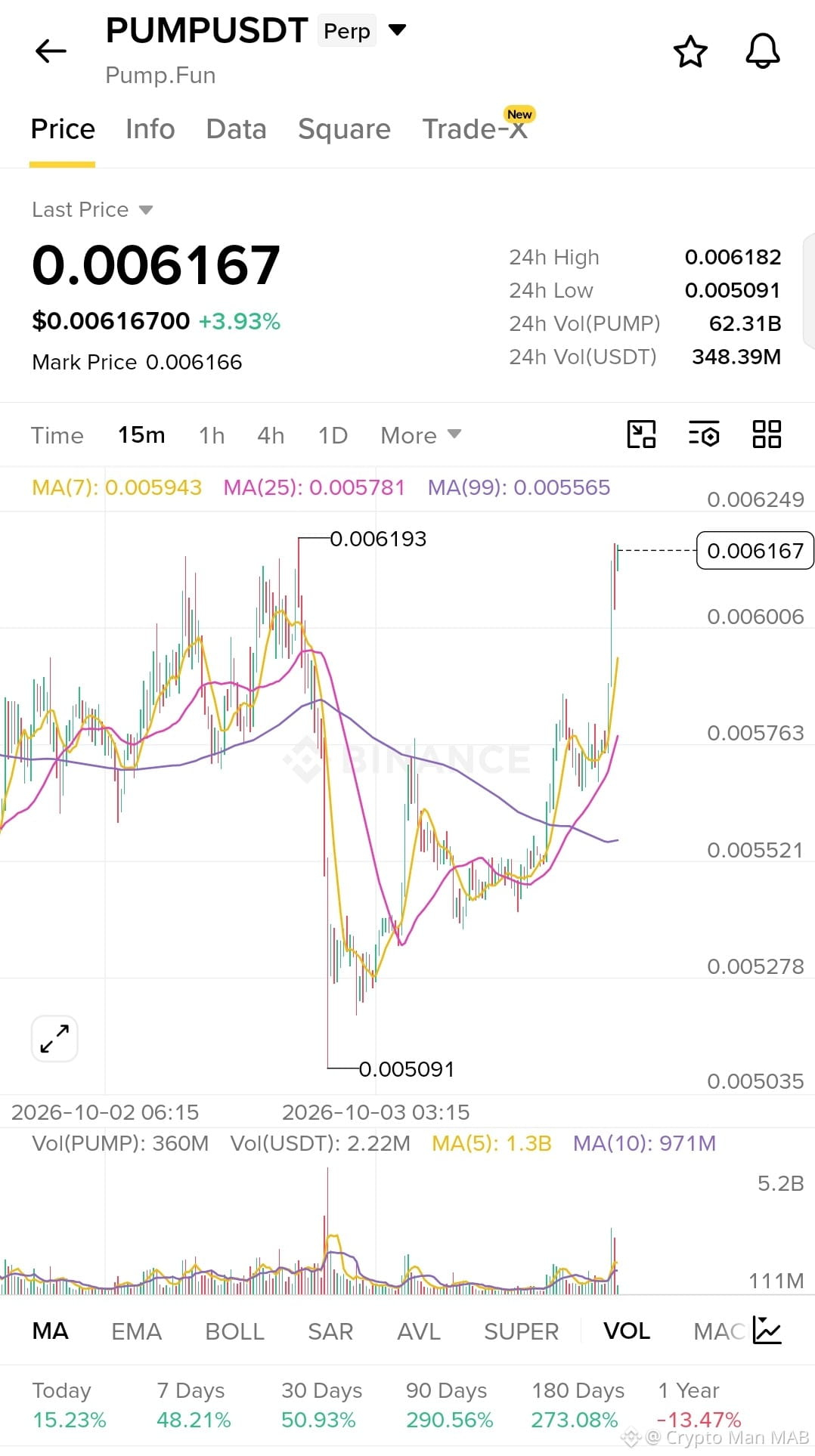
$PUMP has broken above the $0.0055 resistance and is holding firmly above it.
{future}(PUMPUSDT)
If this consolidation continues to hold, I’m expecting another strong move higher.
Long setup
Entry: $0.0058 - $0.006
TP: $0.0065 - $0.007 - $0.008 - $0.009 - $0.01
SL: $0.0053
$PUMP has broken above the $0.0055 resistance and is holding firmly above it.
If this consolidation continues to hold, I’m expecting another strong move higher.
Long setup
Entry: $0.0058 - $0.006
TP: $0.0065 - $0.007 - $0.008 - $0.009 - $0.01
SL: $0.0053
If this consolidation continues to hold, I’m expecting another strong move higher.
Long setup
Entry: $0.0058 - $0.006
TP: $0.0065 - $0.007 - $0.008 - $0.009 - $0.01
SL: $0.0053
5
980
Real-world assets are moving on-chain.
Tokenization turns things like bonds, gold or property into digital tokens that can be held and transferred on a blockchain.
In this video I explain, simply:
• What tokenization means
• Why it matters
• Where the risks are
Watch till the end 👇
Educational only, not financial advice. DYOR.
#Tokenization #RWA #Blockchain #Crypto #Binance
Real-world assets are moving on-chain.
Tokenization turns things like bonds, gold or property into digital tokens that can be held and transferred on a blockchain.
In this video I explain, simply:
• What tokenization means
• Why it matters
• Where the risks are
Watch till the end 👇
Educational only, not financial advice. DYOR.
#Tokenization #RWA #Blockchain #Crypto #Binance
Tokenization turns things like bonds, gold or property into digital tokens that can be held and transferred on a blockchain.
In this video I explain, simply:
• What tokenization means
• Why it matters
• Where the risks are
Watch till the end 👇
Educational only, not financial advice. DYOR.
#Tokenization #RWA #Blockchain #Crypto #Binance
1
509
Partiellement vrai
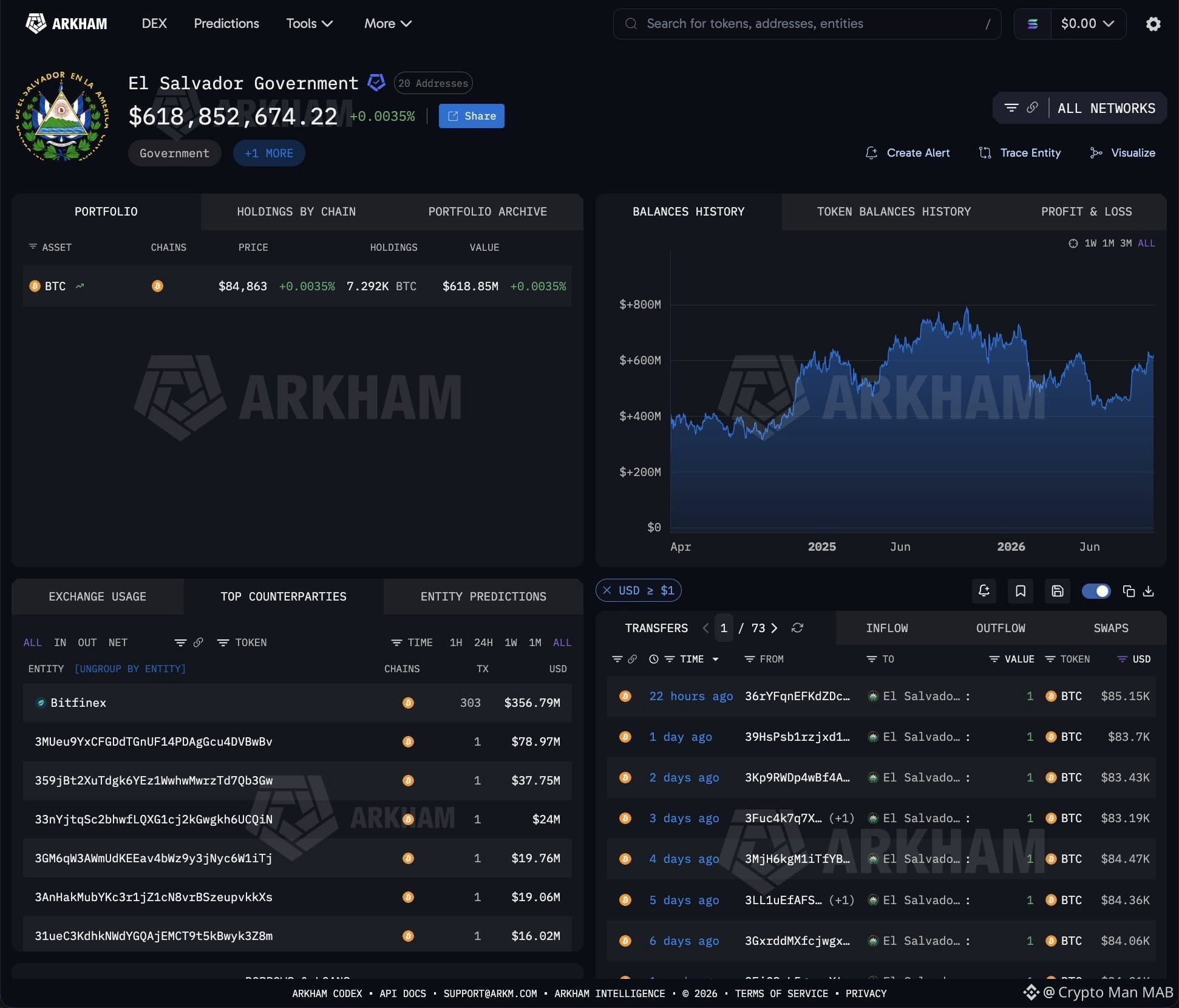
EL SALVADOR HOLDS $618 MILLION OF BITCOIN ON-CHAIN
El Salvador has bought Bitcoin at 1 $BTC per day since 2021, and kept buying even after the IMF lent it $1.4B on the condition it limit its Bitcoin activity.
EL SALVADOR HOLDS $618 MILLION OF BITCOIN ON-CHAIN
El Salvador has bought Bitcoin at 1 $BTC per day since 2021, and kept buying even after the IMF lent it $1.4B on the condition it limit its Bitcoin activity.
El Salvador has bought Bitcoin at 1 $BTC per day since 2021, and kept buying even after the IMF lent it $1.4B on the condition it limit its Bitcoin activity.
3
901
Article
THE ARCHITECTS OF MONEY: The People Who Helped Build CryptoCrypto wasn't built by people shouting the loudest on X or by those who simply bought early and became rich.
It was built by people who took ideas that sounded impossible, took enormous risks, and turned those ideas into something millions of people use today.
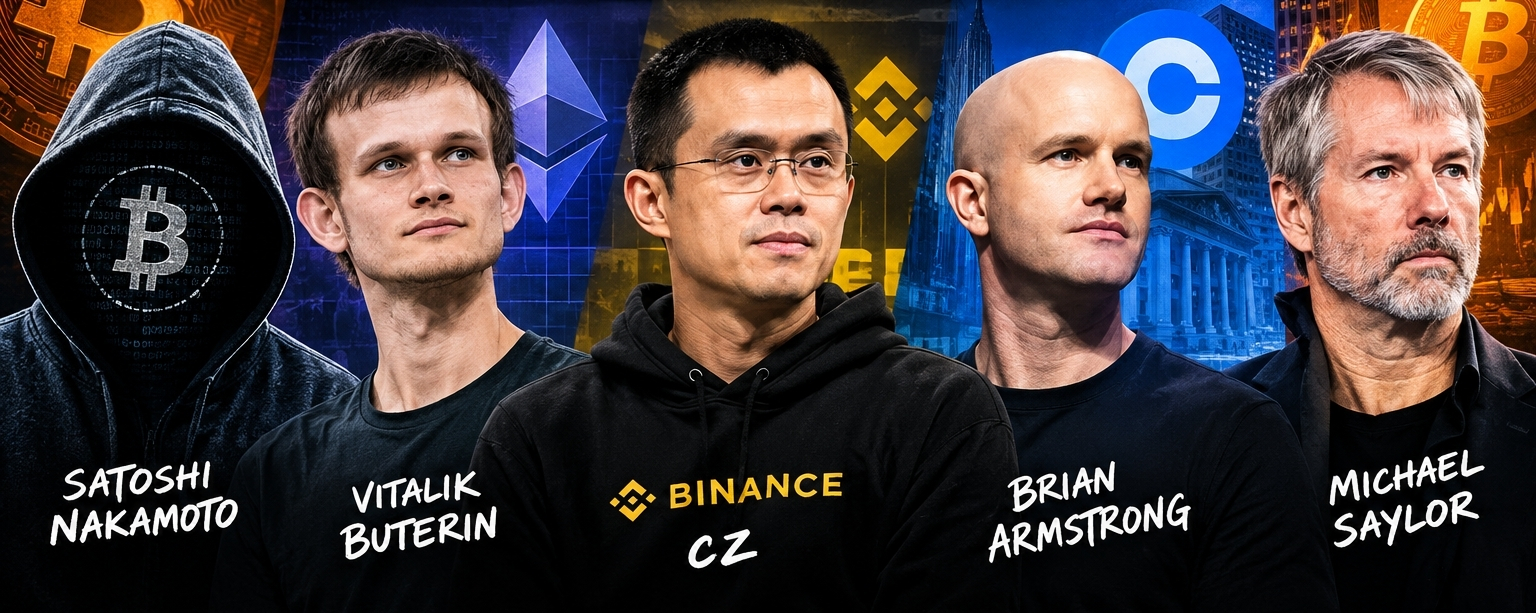
When I think about the people who fundamentally shaped crypto, five names immediately come to mind:
Satoshi Nakamoto. Vitalik Buterin. CZ. Brian Armstrong. Michael Saylor.
They all played completely different roles.
But each one changed the industry in a way that would be difficult to ignore.
1. Satoshi Nakamoto — The Beginning
Everything starts with Satoshi.
In 2008, an anonymous person or group published the Bitcoin whitepaper: Bitcoin: A Peer-to-Peer Electronic Cash System.
The idea was simple but revolutionary.
Create digital money that doesn't require a bank, government or central authority to operate.
Then, in January 2009, the Bitcoin network went live.
Satoshi didn't build a company around Bitcoin.
There was no CEO.
No marketing department.
No venture capital campaign.
No personal brand.
Just an open source protocol that anyone could use.
And then Satoshi disappeared.
That might be one of the most important parts of the Bitcoin story.
There is no central founder running Bitcoin today. The network continued without its creator.
Satoshi didn't just create a cryptocurrency.
Satoshi created the foundation for an entirely new financial system.
2. Vitalik Buterin — Giving Blockchain a Brain
Bitcoin proved that decentralized digital money could work.
But Vitalik Buterin asked a different question:
What if a blockchain could do more than transfer money?
That idea became Ethereum.
Vitalik proposed Ethereum as a blockchain capable of running smart contracts and decentralized applications.
Suddenly, blockchain wasn't just about sending Bitcoin from one wallet to another.
Developers could build financial applications, tokens, marketplaces, games, DAOs and entire ecosystems on top of a blockchain.
Ethereum became one of the most important development platforms in crypto.
DeFi, NFTs, stablecoins and countless other applications helped demonstrate what programmable blockchains could become.
Satoshi created decentralized money.
Vitalik expanded the idea into programmable infrastructure.
That's a massive shift.
3. CZ — Bringing Crypto to the Masses
If Satoshi created the foundation and Vitalik expanded the technology, CZ helped bring crypto to millions of ordinary users.
Changpeng Zhao founded Binance in 2017.
The company grew extremely quickly and became one of the largest cryptocurrency exchanges in the world.
Binance didn't just provide a place to trade.
It became an entire ecosystem around crypto, with products covering trading, education, payments, token launches and more.
CZ understood something important:
Technology doesn't matter much if ordinary people can't access it.
Binance helped make crypto easier to discover and use for people around the world.
CZ's career has also included major controversies and legal consequences. In 2023, he pleaded guilty in the United States to a criminal charge related to anti-money-laundering requirements and stepped down as Binance CEO.
But regardless of how someone views @CZ personally, the scale of Binance's impact on crypto adoption is difficult to separate from the industry's history.
He helped make crypto global.
4. Brian Armstrong — Building the Bridge to Traditional Finance
Brian Armstrong took a different approach.
While many early crypto companies operated in uncertain regulatory environments, Armstrong built Coinbase around the idea that crypto could eventually become part of the traditional financial system.
Coinbase launched in 2012 with a simple proposition:
Make buying and using cryptocurrency easier for regular people.
Over time, Coinbase became one of the most recognizable crypto companies in the United States.
Then came a major milestone.
In 2021, Coinbase became a publicly traded company.
That moment mattered because crypto was no longer just something happening on obscure internet forums.
A major crypto company was now sitting directly inside the traditional financial markets.
Armstrong's broader vision has also been about bringing more financial activity onchain.
Whether that vision ultimately plays out exactly as expected remains to be seen.
But Coinbase helped create an important bridge between crypto and traditional finance.
5. Michael Saylor — Putting Bitcoin on Corporate Balance Sheets
Then there's Michael Saylor.
In 2020, Saylor made a decision that looked extremely unusual at the time.
MicroStrategy began allocating significant amounts of its corporate treasury to Bitcoin.
And it didn't stop there.
The company continued acquiring Bitcoin and eventually became one of the largest corporate holders of BTC.
Saylor also became one of Bitcoin's most vocal advocates.
His argument was different from the typical crypto pitch.
He wasn't primarily talking about memecoins, trading or speculation.
He was talking to CEOs, CFOs and institutional investors about Bitcoin as a potential treasury asset and digital store of value.
Whatever someone thinks about the strategy, Saylor helped put Bitcoin into corporate boardroom conversations.
He turned Bitcoin from something many executives dismissed into something that companies had to at least consider.
Five People. Five Different Roles.
What's interesting is that these five people didn't build the same thing.
Satoshi created the foundation.
Vitalik expanded what blockchain could do.
CZ helped bring crypto to a global audience.
Brian Armstrong helped connect crypto with traditional finance.
Michael Saylor pushed Bitcoin deeper into the corporate world.
Their philosophies are different.
Their strategies are different.
Their personalities are different.
But together, they represent several major stages of crypto's evolution:
Creation.
Innovation.
Adoption.
Institutionalization.
Corporate acceptance.
And that's what makes their stories interesting.
Crypto didn't become what it is today because of one person.
It evolved through thousands of developers, entrepreneurs, researchers, investors and communities.
But some individuals changed the direction of that evolution more than others.
And these five names belong in that conversation.
Who will be the next architect?
Because crypto is still being built.
The next Satoshi, Vitalik, CZ, Armstrong or Saylor probably isn't famous yet.
They might just be somewhere right now working on an idea everyone else thinks is crazy.
And that's how this industry has always moved forward.
Someone imagines it.
Someone builds it.
Someone makes people use it.
And eventually, the world starts paying attention.
#Bitcoin #Ethereum #Crypto #Web3 $BTC $ETH
THE ARCHITECTS OF MONEY: The People Who Helped Build Crypto
Crypto wasn't built by people shouting the loudest on X or by those who simply bought early and became rich.
It was built by people who took ideas that sounded impossible, took enormous risks, and turned those ideas into something millions of people use today.
When I think about the people who fundamentally shaped crypto, five names immediately come to mind:
Satoshi Nakamoto. Vitalik Buterin. CZ. Brian Armstrong. Michael Saylor.
They all played completely different roles.
But each one changed the industry in a way that would be difficult to ignore.
1. Satoshi Nakamoto — The Beginning
Everything starts with Satoshi.
In 2008, an anonymous person or group published the Bitcoin whitepaper: Bitcoin: A Peer-to-Peer Electronic Cash System.
The idea was simple but revolutionary.
Create digital money that doesn't require a bank, government or central authority to operate.
Then, in January 2009, the Bitcoin network went live.
Satoshi didn't build a company around Bitcoin.
There was no CEO.
No marketing department.
No venture capital campaign.
No personal brand.
Just an open source protocol that anyone could use.
And then Satoshi disappeared.
That might be one of the most important parts of the Bitcoin story.
There is no central founder running Bitcoin today. The network continued without its creator.
Satoshi didn't just create a cryptocurrency.
Satoshi created the foundation for an entirely new financial system.
2. Vitalik Buterin — Giving Blockchain a Brain
Bitcoin proved that decentralized digital money could work.
But Vitalik Buterin asked a different question:
What if a blockchain could do more than transfer money?
That idea became Ethereum.
Vitalik proposed Ethereum as a blockchain capable of running smart contracts and decentralized applications.
Suddenly, blockchain wasn't just about sending Bitcoin from one wallet to another.
Developers could build financial applications, tokens, marketplaces, games, DAOs and entire ecosystems on top of a blockchain.
Ethereum became one of the most important development platforms in crypto.
DeFi, NFTs, stablecoins and countless other applications helped demonstrate what programmable blockchains could become.
Satoshi created decentralized money.
Vitalik expanded the idea into programmable infrastructure.
That's a massive shift.
3. CZ — Bringing Crypto to the Masses
If Satoshi created the foundation and Vitalik expanded the technology, CZ helped bring crypto to millions of ordinary users.
Changpeng Zhao founded Binance in 2017.
The company grew extremely quickly and became one of the largest cryptocurrency exchanges in the world.
Binance didn't just provide a place to trade.
It became an entire ecosystem around crypto, with products covering trading, education, payments, token launches and more.
CZ understood something important:
Technology doesn't matter much if ordinary people can't access it.
Binance helped make crypto easier to discover and use for people around the world.
CZ's career has also included major controversies and legal consequences. In 2023, he pleaded guilty in the United States to a criminal charge related to anti-money-laundering requirements and stepped down as Binance CEO.
But regardless of how someone views @CZ personally, the scale of Binance's impact on crypto adoption is difficult to separate from the industry's history.
He helped make crypto global.
4. Brian Armstrong — Building the Bridge to Traditional Finance
Brian Armstrong took a different approach.
While many early crypto companies operated in uncertain regulatory environments, Armstrong built Coinbase around the idea that crypto could eventually become part of the traditional financial system.
Coinbase launched in 2012 with a simple proposition:
Make buying and using cryptocurrency easier for regular people.
Over time, Coinbase became one of the most recognizable crypto companies in the United States.
Then came a major milestone.
In 2021, Coinbase became a publicly traded company.
That moment mattered because crypto was no longer just something happening on obscure internet forums.
A major crypto company was now sitting directly inside the traditional financial markets.
Armstrong's broader vision has also been about bringing more financial activity onchain.
Whether that vision ultimately plays out exactly as expected remains to be seen.
But Coinbase helped create an important bridge between crypto and traditional finance.
5. Michael Saylor — Putting Bitcoin on Corporate Balance Sheets
Then there's Michael Saylor.
In 2020, Saylor made a decision that looked extremely unusual at the time.
MicroStrategy began allocating significant amounts of its corporate treasury to Bitcoin.
And it didn't stop there.
The company continued acquiring Bitcoin and eventually became one of the largest corporate holders of BTC.
Saylor also became one of Bitcoin's most vocal advocates.
His argument was different from the typical crypto pitch.
He wasn't primarily talking about memecoins, trading or speculation.
He was talking to CEOs, CFOs and institutional investors about Bitcoin as a potential treasury asset and digital store of value.
Whatever someone thinks about the strategy, Saylor helped put Bitcoin into corporate boardroom conversations.
He turned Bitcoin from something many executives dismissed into something that companies had to at least consider.
Five People. Five Different Roles.
What's interesting is that these five people didn't build the same thing.
Satoshi created the foundation.
Vitalik expanded what blockchain could do.
CZ helped bring crypto to a global audience.
Brian Armstrong helped connect crypto with traditional finance.
Michael Saylor pushed Bitcoin deeper into the corporate world.
Their philosophies are different.
Their strategies are different.
Their personalities are different.
But together, they represent several major stages of crypto's evolution:
Creation.
Innovation.
Adoption.
Institutionalization.
Corporate acceptance.
And that's what makes their stories interesting.
Crypto didn't become what it is today because of one person.
It evolved through thousands of developers, entrepreneurs, researchers, investors and communities.
But some individuals changed the direction of that evolution more than others.
And these five names belong in that conversation.
Who will be the next architect?
Because crypto is still being built.
The next Satoshi, Vitalik, CZ, Armstrong or Saylor probably isn't famous yet.
They might just be somewhere right now working on an idea everyone else thinks is crazy.
And that's how this industry has always moved forward.
Someone imagines it.
Someone builds it.
Someone makes people use it.
And eventually, the world starts paying attention.
#Bitcoin #Ethereum #Crypto #Web3 $BTC $ETH
It was built by people who took ideas that sounded impossible, took enormous risks, and turned those ideas into something millions of people use today.
When I think about the people who fundamentally shaped crypto, five names immediately come to mind:
Satoshi Nakamoto. Vitalik Buterin. CZ. Brian Armstrong. Michael Saylor.
They all played completely different roles.
But each one changed the industry in a way that would be difficult to ignore.
1. Satoshi Nakamoto — The Beginning
Everything starts with Satoshi.
In 2008, an anonymous person or group published the Bitcoin whitepaper: Bitcoin: A Peer-to-Peer Electronic Cash System.
The idea was simple but revolutionary.
Create digital money that doesn't require a bank, government or central authority to operate.
Then, in January 2009, the Bitcoin network went live.
Satoshi didn't build a company around Bitcoin.
There was no CEO.
No marketing department.
No venture capital campaign.
No personal brand.
Just an open source protocol that anyone could use.
And then Satoshi disappeared.
That might be one of the most important parts of the Bitcoin story.
There is no central founder running Bitcoin today. The network continued without its creator.
Satoshi didn't just create a cryptocurrency.
Satoshi created the foundation for an entirely new financial system.
2. Vitalik Buterin — Giving Blockchain a Brain
Bitcoin proved that decentralized digital money could work.
But Vitalik Buterin asked a different question:
What if a blockchain could do more than transfer money?
That idea became Ethereum.
Vitalik proposed Ethereum as a blockchain capable of running smart contracts and decentralized applications.
Suddenly, blockchain wasn't just about sending Bitcoin from one wallet to another.
Developers could build financial applications, tokens, marketplaces, games, DAOs and entire ecosystems on top of a blockchain.
Ethereum became one of the most important development platforms in crypto.
DeFi, NFTs, stablecoins and countless other applications helped demonstrate what programmable blockchains could become.
Satoshi created decentralized money.
Vitalik expanded the idea into programmable infrastructure.
That's a massive shift.
3. CZ — Bringing Crypto to the Masses
If Satoshi created the foundation and Vitalik expanded the technology, CZ helped bring crypto to millions of ordinary users.
Changpeng Zhao founded Binance in 2017.
The company grew extremely quickly and became one of the largest cryptocurrency exchanges in the world.
Binance didn't just provide a place to trade.
It became an entire ecosystem around crypto, with products covering trading, education, payments, token launches and more.
CZ understood something important:
Technology doesn't matter much if ordinary people can't access it.
Binance helped make crypto easier to discover and use for people around the world.
CZ's career has also included major controversies and legal consequences. In 2023, he pleaded guilty in the United States to a criminal charge related to anti-money-laundering requirements and stepped down as Binance CEO.
But regardless of how someone views @CZ personally, the scale of Binance's impact on crypto adoption is difficult to separate from the industry's history.
He helped make crypto global.
4. Brian Armstrong — Building the Bridge to Traditional Finance
Brian Armstrong took a different approach.
While many early crypto companies operated in uncertain regulatory environments, Armstrong built Coinbase around the idea that crypto could eventually become part of the traditional financial system.
Coinbase launched in 2012 with a simple proposition:
Make buying and using cryptocurrency easier for regular people.
Over time, Coinbase became one of the most recognizable crypto companies in the United States.
Then came a major milestone.
In 2021, Coinbase became a publicly traded company.
That moment mattered because crypto was no longer just something happening on obscure internet forums.
A major crypto company was now sitting directly inside the traditional financial markets.
Armstrong's broader vision has also been about bringing more financial activity onchain.
Whether that vision ultimately plays out exactly as expected remains to be seen.
But Coinbase helped create an important bridge between crypto and traditional finance.
5. Michael Saylor — Putting Bitcoin on Corporate Balance Sheets
Then there's Michael Saylor.
In 2020, Saylor made a decision that looked extremely unusual at the time.
MicroStrategy began allocating significant amounts of its corporate treasury to Bitcoin.
And it didn't stop there.
The company continued acquiring Bitcoin and eventually became one of the largest corporate holders of BTC.
Saylor also became one of Bitcoin's most vocal advocates.
His argument was different from the typical crypto pitch.
He wasn't primarily talking about memecoins, trading or speculation.
He was talking to CEOs, CFOs and institutional investors about Bitcoin as a potential treasury asset and digital store of value.
Whatever someone thinks about the strategy, Saylor helped put Bitcoin into corporate boardroom conversations.
He turned Bitcoin from something many executives dismissed into something that companies had to at least consider.
Five People. Five Different Roles.
What's interesting is that these five people didn't build the same thing.
Satoshi created the foundation.
Vitalik expanded what blockchain could do.
CZ helped bring crypto to a global audience.
Brian Armstrong helped connect crypto with traditional finance.
Michael Saylor pushed Bitcoin deeper into the corporate world.
Their philosophies are different.
Their strategies are different.
Their personalities are different.
But together, they represent several major stages of crypto's evolution:
Creation.
Innovation.
Adoption.
Institutionalization.
Corporate acceptance.
And that's what makes their stories interesting.
Crypto didn't become what it is today because of one person.
It evolved through thousands of developers, entrepreneurs, researchers, investors and communities.
But some individuals changed the direction of that evolution more than others.
And these five names belong in that conversation.
Who will be the next architect?
Because crypto is still being built.
The next Satoshi, Vitalik, CZ, Armstrong or Saylor probably isn't famous yet.
They might just be somewhere right now working on an idea everyone else thinks is crazy.
And that's how this industry has always moved forward.
Someone imagines it.
Someone builds it.
Someone makes people use it.
And eventually, the world starts paying attention.
#Bitcoin #Ethereum #Crypto #Web3 $BTC $ETH
5
362
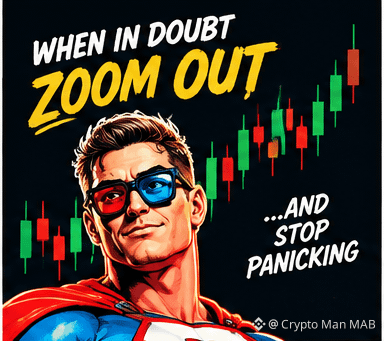
let's start new month blessing with positive mindset and achieve new milestone
let's start new month blessing with positive mindset and achieve new milestone

1
3
785
·
--
Haussier
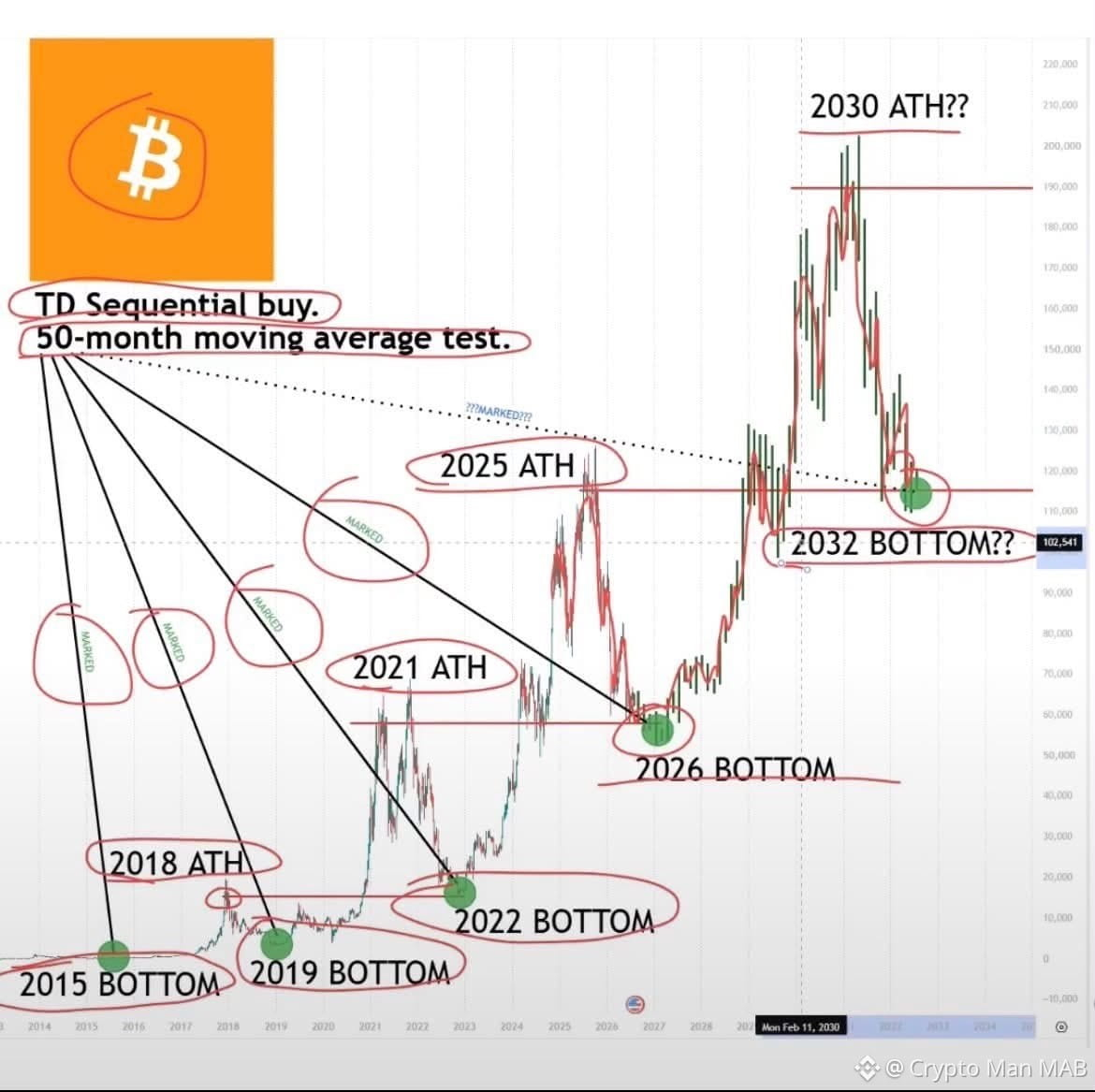
Bitcoin’s 4-Year Cycle Continues:
Cycle 1 (2011–2014)
2011 — Buy
2012 — Hold
2013 — Sell
2014 — Bear Market
Cycle 2 (2015–2018)
2015 — Buy
2016 — Hold
2017 — Sell
2018 — Bear Market
Cycle 3 (2019–2022)
2019 — Buy
2020 — Hold
2021 — Sell
2022 — Bear Market
Cycle 4 (2023–2026)
2023 — Buy
2024 — Hold
2025 — Sell
2026 — Bear Market ← WE ARE HERE
Cycle 5 (2027–2030)
2027 — Buy
2028 — Hold
2029 — Sell
2030 — Bear Market
So far, the 4-year cycles have played out perfectly.
With the pattern continuing, the best buying time is now.
For the record: I called Bitcoin’s last cycle top at $126,000 and told you to buy when Bitcoin was at $60K in June.
The next call could be even more important.
I’ll post it here publicly like I always do.
Turn notifications on.
If you’re not following yet, you’ll understand why that was a mistake later.
Bitcoin’s 4-Year Cycle Continues:
Cycle 1 (2011–2014)
2011 — Buy
2012 — Hold
2013 — Sell
2014 — Bear Market
Cycle 2 (2015–2018)
2015 — Buy
2016 — Hold
2017 — Sell
2018 — Bear Market
Cycle 3 (2019–2022)
2019 — Buy
2020 — Hold
2021 — Sell
2022 — Bear Market
Cycle 4 (2023–2026)
2023 — Buy
2024 — Hold
2025 — Sell
2026 — Bear Market ← WE ARE HERE
Cycle 5 (2027–2030)
2027 — Buy
2028 — Hold
2029 — Sell
2030 — Bear Market
So far, the 4-year cycles have played out perfectly.
With the pattern continuing, the best buying time is now.
For the record: I called Bitcoin’s last cycle top at $126,000 and told you to buy when Bitcoin was at $60K in June.
The next call could be even more important.
I’ll post it here publicly like I always do.
Turn notifications on.
If you’re not following yet, you’ll understand why that was a mistake later.
Cycle 1 (2011–2014)
2011 — Buy
2012 — Hold
2013 — Sell
2014 — Bear Market
Cycle 2 (2015–2018)
2015 — Buy
2016 — Hold
2017 — Sell
2018 — Bear Market
Cycle 3 (2019–2022)
2019 — Buy
2020 — Hold
2021 — Sell
2022 — Bear Market
Cycle 4 (2023–2026)
2023 — Buy
2024 — Hold
2025 — Sell
2026 — Bear Market ← WE ARE HERE
Cycle 5 (2027–2030)
2027 — Buy
2028 — Hold
2029 — Sell
2030 — Bear Market
So far, the 4-year cycles have played out perfectly.
With the pattern continuing, the best buying time is now.
For the record: I called Bitcoin’s last cycle top at $126,000 and told you to buy when Bitcoin was at $60K in June.
The next call could be even more important.
I’ll post it here publicly like I always do.
Turn notifications on.
If you’re not following yet, you’ll understand why that was a mistake later.
2
660
·
--
Haussier
400 million St. Cloud credit union says that Bitcoin is the "Blockbuster moment" for credit unions 👀
"Some people have called me crazy, but I really think we have this sprint between now and 2030" to adopt Bitcoin 🚀
400 million St. Cloud credit union says that Bitcoin is the "Blockbuster moment" for credit unions 👀
"Some people have called me crazy, but I really think we have this sprint between now and 2030" to adopt Bitcoin 🚀
"Some people have called me crazy, but I really think we have this sprint between now and 2030" to adopt Bitcoin 🚀
394
·
--
Haussier
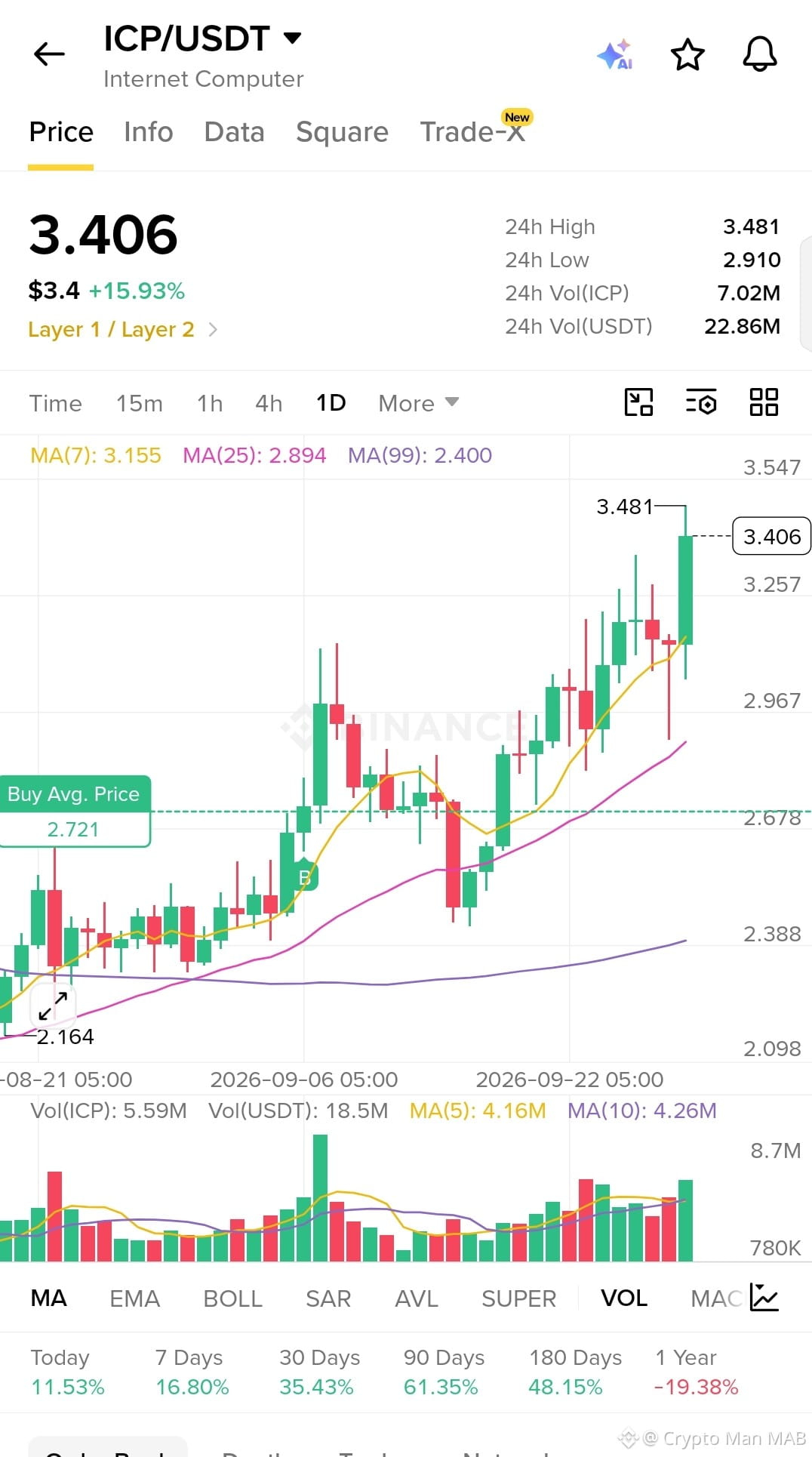
Hope you guys cooking profit from $ICP
{future}(ICPUSDT)
Hope you guys cooking profit from $ICP
4
1.3k
hey guys $XLM looks good for now so i added in my portfolio soo let's pump it.
hey guys $XLM looks good for now so i added in my portfolio soo let's pump it.
6
1.6k
just bought $JUP again for DCA.
just bought $JUP again for DCA.
Crypto Man MAB
·
--
#ShareYourTrades $JUP let's pump it
3
1.4k
·
--
Haussier
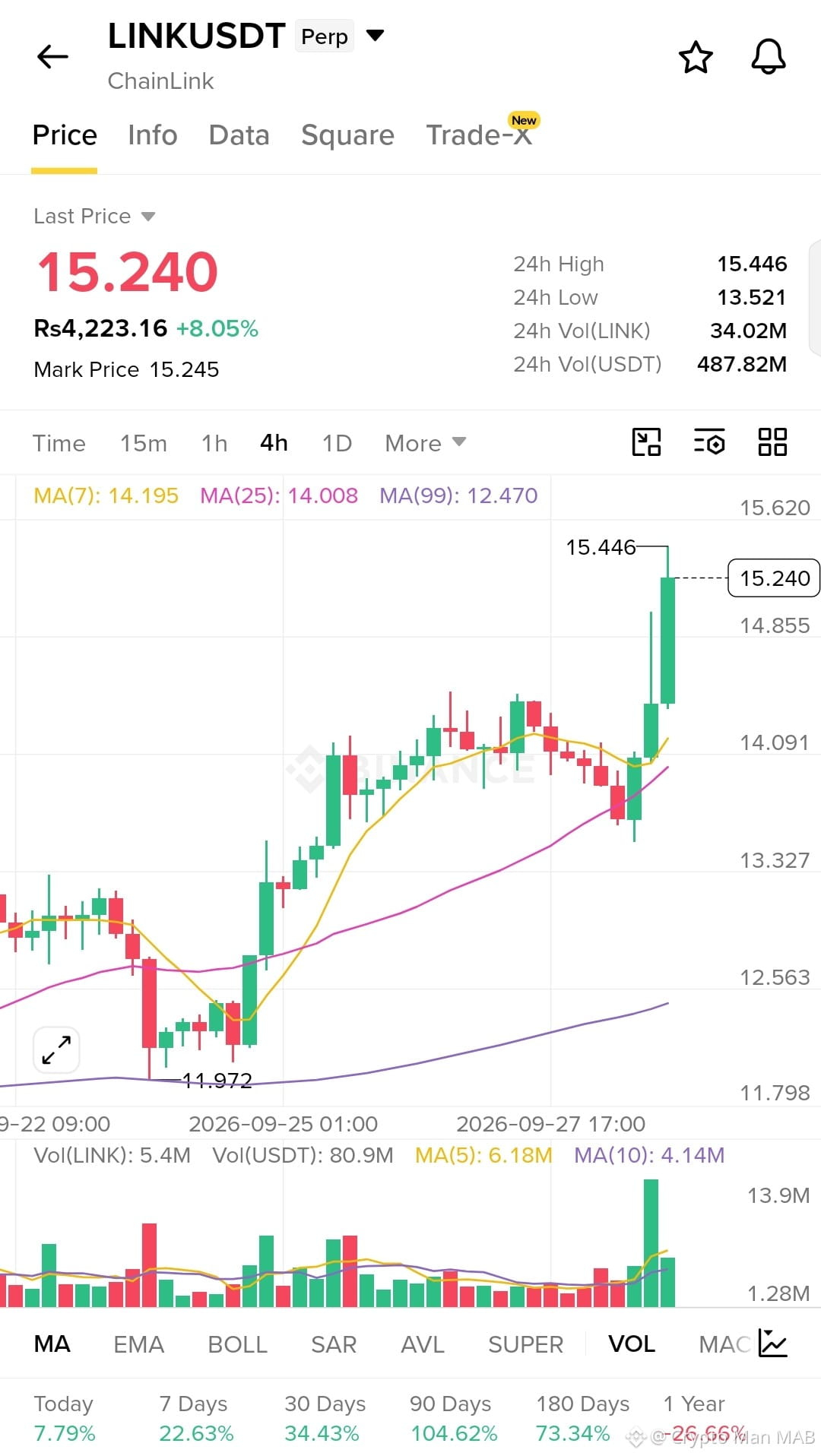
$LINK looks strong here.
{future}(LINKUSDT)
The path toward $20 looks clean if this momentum continues. I’m watching for a long entry around the current zone.
Entry: $14.5 - $15
TP: $16 - $17 - $18 - $20
SL: $13.3
$LINK looks strong here.
The path toward $20 looks clean if this momentum continues. I’m watching for a long entry around the current zone.
Entry: $14.5 - $15
TP: $16 - $17 - $18 - $20
SL: $13.3
The path toward $20 looks clean if this momentum continues. I’m watching for a long entry around the current zone.
Entry: $14.5 - $15
TP: $16 - $17 - $18 - $20
SL: $13.3
1
667
·
--
Haussier
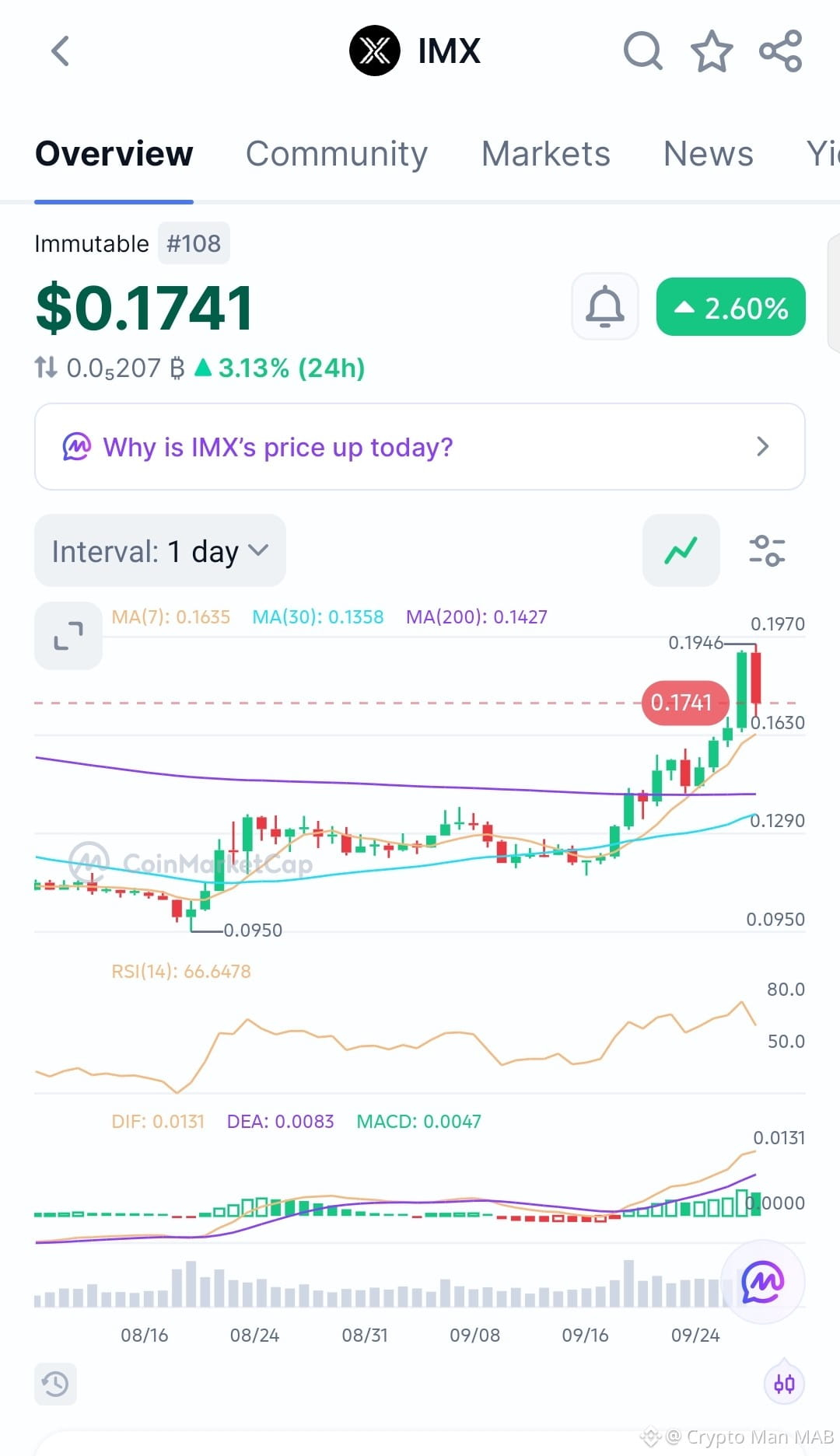
$IMX has been one of the cleaner bounces off the August lows. It bottomed around 9.5 cents and just ran up toward 20 before cooling off a bit around 17.
{future}(IMXUSDT)
Technically it looks alright. Price is sitting above the 7, 30 and 200 day MAs, RSI is strong but not blown out yet, and MACD has flipped back to the bullish side. Volume actually showed up on the push, which is more than you can say for a lot of these dead cat moves.
Doesn’t feel like there was one huge catalyst today. More like a technical breakout plus some money rotating into alts / gaming names. The project itself has cleaned a few things up over the last year (chain merger, SEC thing closed), but that was already known.
Still 98% off the old highs so nobody should get carried away. Watch whether it holds the 16 cent area. Lose that and it probably just fades back into the range. Hold it and 20 becomes the next obvious test.
$IMX has been one of the cleaner bounces off the August lows. It bottomed around 9.5 cents and just ran up toward 20 before cooling off a bit around 17.
Technically it looks alright. Price is sitting above the 7, 30 and 200 day MAs, RSI is strong but not blown out yet, and MACD has flipped back to the bullish side. Volume actually showed up on the push, which is more than you can say for a lot of these dead cat moves.
Doesn’t feel like there was one huge catalyst today. More like a technical breakout plus some money rotating into alts / gaming names. The project itself has cleaned a few things up over the last year (chain merger, SEC thing closed), but that was already known.
Still 98% off the old highs so nobody should get carried away. Watch whether it holds the 16 cent area. Lose that and it probably just fades back into the range. Hold it and 20 becomes the next obvious test.
Technically it looks alright. Price is sitting above the 7, 30 and 200 day MAs, RSI is strong but not blown out yet, and MACD has flipped back to the bullish side. Volume actually showed up on the push, which is more than you can say for a lot of these dead cat moves.
Doesn’t feel like there was one huge catalyst today. More like a technical breakout plus some money rotating into alts / gaming names. The project itself has cleaned a few things up over the last year (chain merger, SEC thing closed), but that was already known.
Still 98% off the old highs so nobody should get carried away. Watch whether it holds the 16 cent area. Lose that and it probably just fades back into the range. Hold it and 20 becomes the next obvious test.
551
·
--
Haussier
Vérifié
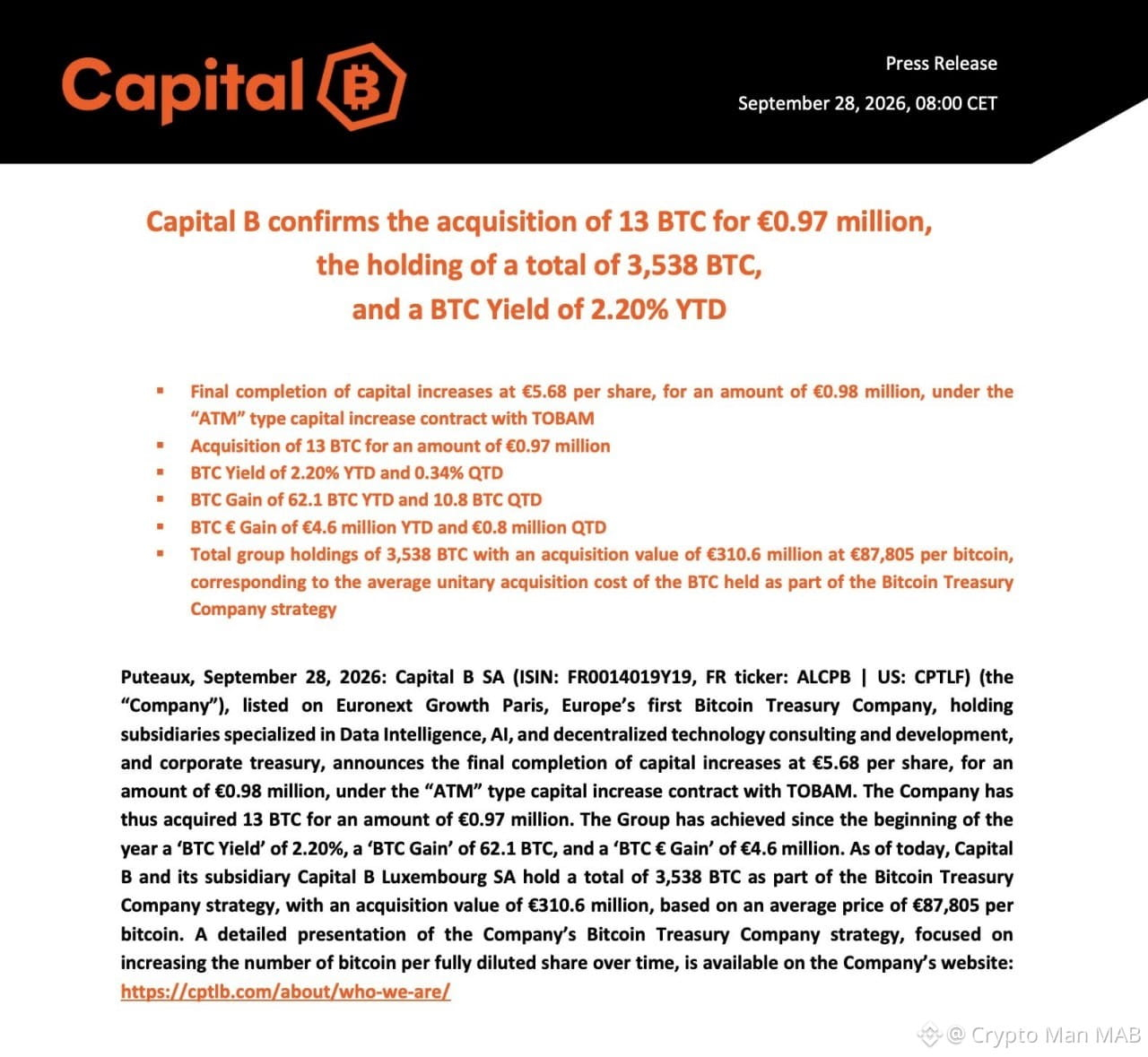
Capital B confirms the acquisition of 13 $BTC for €0.97 million, the holding of a total of 3,538 BTC, and a BTC Yield of 2.20% YTD
Capital B confirms the acquisition of 13 $BTC for €0.97 million, the holding of a total of 3,538 BTC, and a BTC Yield of 2.20% YTD
1
647
#ShareYourTrades $JUP let's pump it
#ShareYourTrades $JUP let's pump it
1
2
1.1k
·
--
Haussier
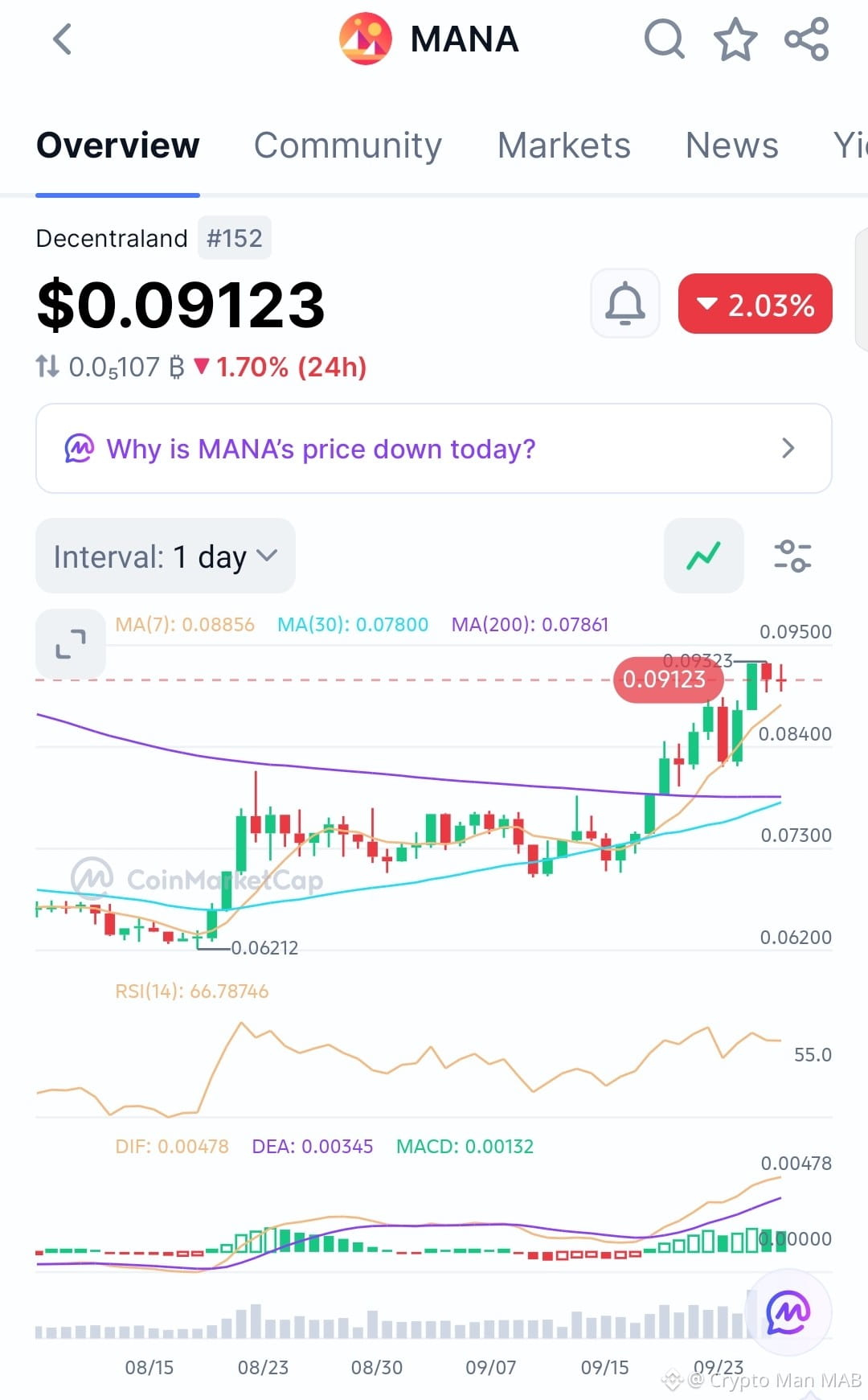
$MANA Update
{future}(MANAUSDT)
Sitting at $0.09123 — down a tiny -2% today, but don’t let that fool you.
✅ Price above all key moving averages → pure bullish setup
✅ RSI ~66.8 → strong momentum, not overbought yet, still room to climb
✅ MACD still rising → uptrend fully intact
Levels to watch:
• Resistance: $0.093–$0.095 → break this & $0.10 is next
• Support: $0.088–$0.090 → 7-day MA, buyers zone
$MANA Update
Sitting at $0.09123 — down a tiny -2% today, but don’t let that fool you.
✅ Price above all key moving averages → pure bullish setup
✅ RSI ~66.8 → strong momentum, not overbought yet, still room to climb
✅ MACD still rising → uptrend fully intact
Levels to watch:
• Resistance: $0.093–$0.095 → break this & $0.10 is next
• Support: $0.088–$0.090 → 7-day MA, buyers zone
Sitting at $0.09123 — down a tiny -2% today, but don’t let that fool you.
✅ Price above all key moving averages → pure bullish setup
✅ RSI ~66.8 → strong momentum, not overbought yet, still room to climb
✅ MACD still rising → uptrend fully intact
Levels to watch:
• Resistance: $0.093–$0.095 → break this & $0.10 is next
• Support: $0.088–$0.090 → 7-day MA, buyers zone
4
772
Connectez-vous pour découvrir plus de contenu
Rejoignez la communauté mondiale des adeptes de cryptomonnaies sur Binance Square
⚡️ Suviez les dernières informations importantes sur les cryptomonnaies.
💬 Jugé digne de confiance par la plus grande plateforme d’échange de cryptomonnaies au monde.
👍 Découvrez les connaissances que partagent les créateurs vérifiés.
Adresse e-mail/Nº de téléphone
Sujets d’actualité
SECHaltsCryptoETFReviewsAmidFundingLapse
65,033 vues
720 mentions
🚨🔥 BREAKING: SEC FUNDING LAPSE JUST FREEZES NEW CRYPTO ETF REVIEWS! 🇺🇸
⚠️ Following the start of the U.S. fiscal year on October 1, a lapse in federal funding has temporarily disrupted SEC operations.
📄 Reviews and effective approvals for new crypto ETF registration statements are reportedly paused during the funding disruption.
👀 ETF APPROVALS ON HOLD — CRYPTO MARKET WATCHING!
🚀 Could this create a major delay for the next wave of crypto ETFs?
💬 BULLISH OR BEARISH FOR CRYPTO? DROP YOUR TAKE! 👇
🔔 Follow for more SEC, ETF & crypto breaking news.
$AIN $BEAMX $GLMR
#SECHaltsCryptoETFReviewsAmidFundingLapse
Salotra Crypto
·0 mentions J’aime
·100 vues
ZcashETFPostsFirstWeeklyOutflow$93.6M
66,242 vues
205 mentions
GreekPoliceBustCryptoScamRingArrest17
220,990 vues
1,561 mentions