

fatima_vision
608 Publications

fatima_vision
Signaler
Bloquer l’utilisateur
I explain what the crypto market is doing and what may come next . Technical and fundamental analysis.
Ouvert au trading

Détenteur pour LINK
Trade occasionnellement
2.1 an(s)
19 Suivis
149 Abonnés
904 J’aime
Publications
Portefeuille
Tous
Citations
Vidéos
Great analysis 👍
Great analysis 👍

TechnicalTrader
·
--
What if the next trade you planned never showed up on any liquidation map until the exact moment it was supposed to execute?
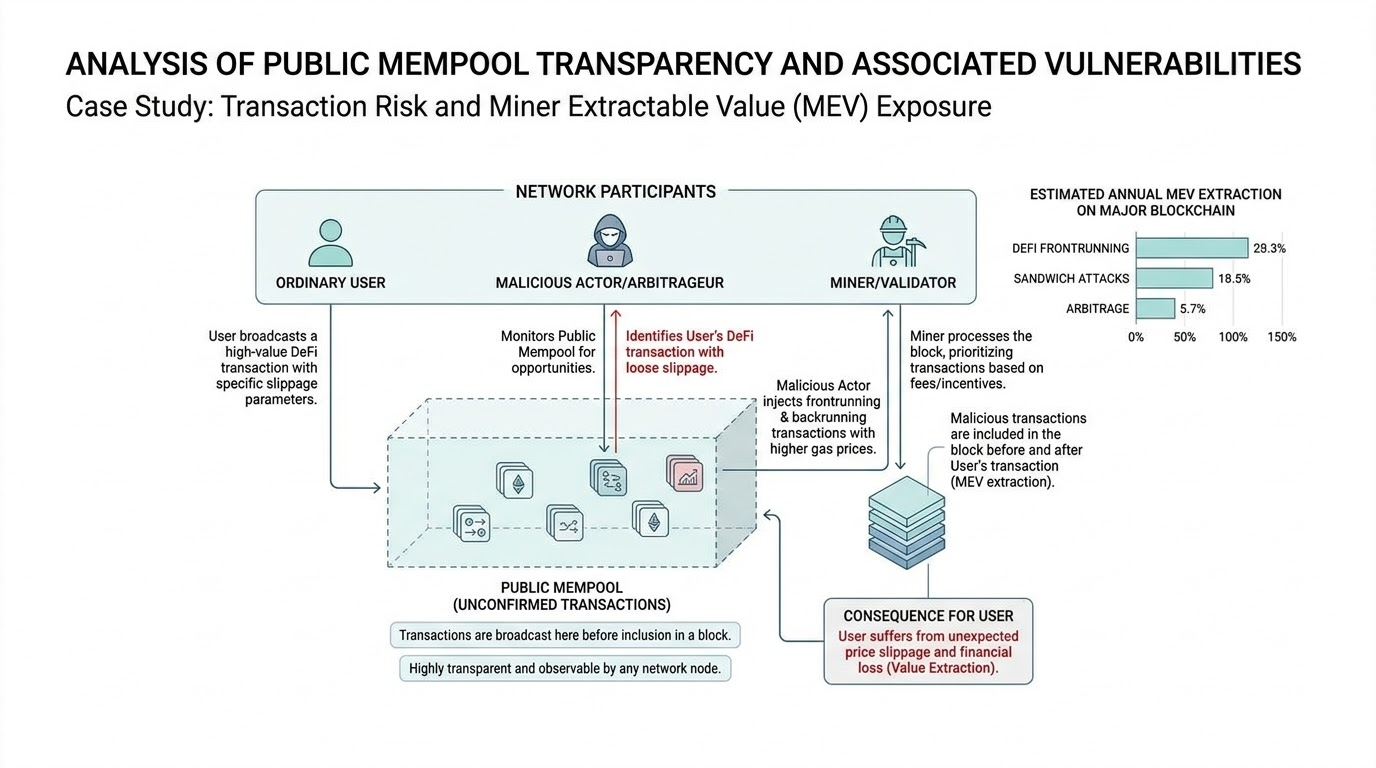
That question has been stuck in my head because open blockchains broadcast every trader's plan ahead of time. Stop losses, bids, and timed payments sit out in the open for hours or days, making it easy for bots and whales to hunt them. Nobody leaked anything, that is just how transparent chains work.
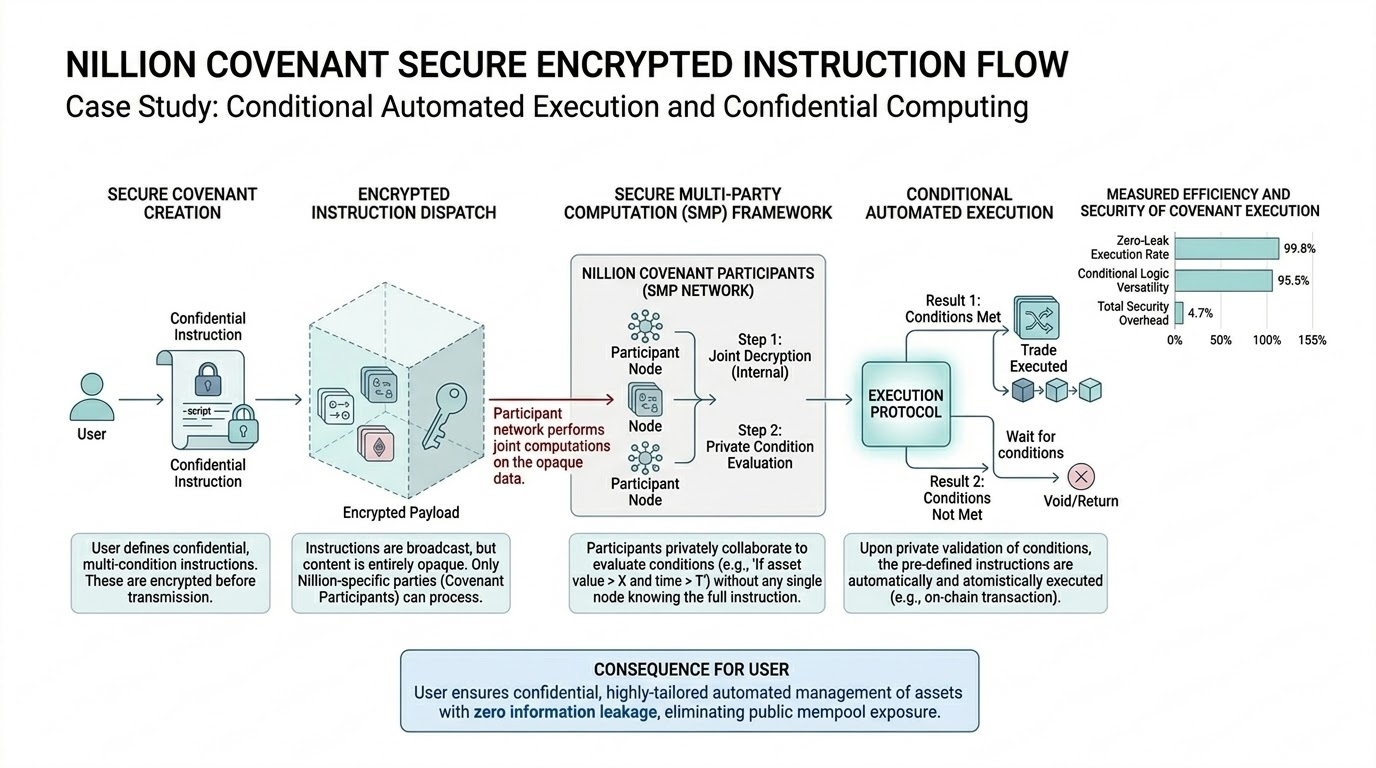
Nillion is building something that directly tackles this. Their core product is called a Covenant. You write an instruction, seal it to a condition like a price level or a clock, and post it fully encrypted onchain.
While it waits, nobody can read it. Not other traders, not searchers, not the network. When the condition becomes true, the instruction opens itself and executes. No bot to keep running. No keeper service. No third party holding your secret and promising not to look.
Dusk is the first release of Covenants and it is already live on Ethereum mainnet. This is not a testnet or a preview. Anyone can create a Covenant today, run a node, or build with the SDK. There is even a managed node option if you do not want to host yourself. Encrypted Markets are open right now.
The kinds of things people are already thinking about building feel practical:
• A stop loss that stays hidden so no one can hunt it
• A bid that remains sealed until an auction actually closes
• A prediction you can later prove you made before the event happened
• A payment that simply releases itself at a set time
Dusk is just the first of seven roadmap phases running through 2028. Right now, it’s kept simple, using basic price and time conditions that don’t rely on third parties.
More updates are landing by the end of the year to make these encrypted instructions way more powerful.
What really stands out is how different this feels from typical onchain tools. The market can't front-run or spy on your moves while you wait. If you care about keeping an edge, Nillion is definitely worth watching.
#nil $NIL @Nillion
That question has been stuck in my head because open blockchains broadcast every trader's plan ahead of time. Stop losses, bids, and timed payments sit out in the open for hours or days, making it easy for bots and whales to hunt them. Nobody leaked anything, that is just how transparent chains work.
Nillion is building something that directly tackles this. Their core product is called a Covenant. You write an instruction, seal it to a condition like a price level or a clock, and post it fully encrypted onchain.
While it waits, nobody can read it. Not other traders, not searchers, not the network. When the condition becomes true, the instruction opens itself and executes. No bot to keep running. No keeper service. No third party holding your secret and promising not to look.
Dusk is the first release of Covenants and it is already live on Ethereum mainnet. This is not a testnet or a preview. Anyone can create a Covenant today, run a node, or build with the SDK. There is even a managed node option if you do not want to host yourself. Encrypted Markets are open right now.
The kinds of things people are already thinking about building feel practical:
• A stop loss that stays hidden so no one can hunt it
• A bid that remains sealed until an auction actually closes
• A prediction you can later prove you made before the event happened
• A payment that simply releases itself at a set time
Dusk is just the first of seven roadmap phases running through 2028. Right now, it’s kept simple, using basic price and time conditions that don’t rely on third parties.
More updates are landing by the end of the year to make these encrypted instructions way more powerful.
What really stands out is how different this feels from typical onchain tools. The market can't front-run or spy on your moves while you wait. If you care about keeping an edge, Nillion is definitely worth watching.
#nil $NIL @Nillion
11
Overview: A Major Shift in Market Sentiment
The crypto market saw strong bullish momentum today, lifting total market capitalization to roughly $2.8 trillion, its highest level since late January. Investors returned to a "risk-on" mindset despite broader macroeconomic uncertainties.
Major Token Movements
Bitcoin ($BTC ): Surged over 5% in the last 24 hours, briefly crossing $85,000 to hit an eight-month high before hovering near $84,700–$85,800. Derivatives data shows heavily bullish positioning on option exchanges like Deribit, with call options significantly outnumbering puts.
Ethereum ($ETH ): Rebounded sharply, climbing over 4% to test the $2,720–$2,750 range.
Altcoin Rally: Major Layer-1 and payment tokens recorded solid daily gains, including BNB (~$800, +6%), Solana (~$117, +7.8%), XRP (~$1.49, +7.3%), and Monero (~$576, +10%).
Key Market Drivers & News
Regulatory Resilience: The market absorbed recent political news, including the failure of the US Senate's CLARITY Act, without extended selling pressure. Progress on tokenized security framework discussions and administrative updates provided additional background support.
Global Market Sentiment: Improving macroeconomic sentiment, stabilized bond markets, and optimism surrounding international trade talks helped fuel momentum across equities and digital assets alike.
Sector Rotations: AI-linked tokens (such as SAGA and $LATA.US ) and decentralized finance (DeFi) payment protocols saw targeted volume increases alongside top-cap assets.
Key Levels to Watch
Analysts note that the $82,000–$83,000 zone now acts as critical short-term support for Bitcoin. While the daily Relative Strength Index (#RSI ) approaches overbought territory, sustained ETF inflows and macroeconomic stability will determine whether this rally stretches toward previous yearly highs.
Overview: A Major Shift in Market Sentiment
The crypto market saw strong bullish momentum today, lifting total market capitalization to roughly $2.8 trillion, its highest level since late January. Investors returned to a "risk-on" mindset despite broader macroeconomic uncertainties.
Major Token Movements
Bitcoin ($BTC ): Surged over 5% in the last 24 hours, briefly crossing $85,000 to hit an eight-month high before hovering near $84,700–$85,800. Derivatives data shows heavily bullish positioning on option exchanges like Deribit, with call options significantly outnumbering puts.
Ethereum ($ETH ): Rebounded sharply, climbing over 4% to test the $2,720–$2,750 range.
Altcoin Rally: Major Layer-1 and payment tokens recorded solid daily gains, including BNB (~$800, +6%), Solana (~$117, +7.8%), XRP (~$1.49, +7.3%), and Monero (~$576, +10%).
Key Market Drivers & News
Regulatory Resilience: The market absorbed recent political news, including the failure of the US Senate's CLARITY Act, without extended selling pressure. Progress on tokenized security framework discussions and administrative updates provided additional background support.
Global Market Sentiment: Improving macroeconomic sentiment, stabilized bond markets, and optimism surrounding international trade talks helped fuel momentum across equities and digital assets alike.
Sector Rotations: AI-linked tokens (such as SAGA and $LATA.US ) and decentralized finance (DeFi) payment protocols saw targeted volume increases alongside top-cap assets.
Key Levels to Watch
Analysts note that the $82,000–$83,000 zone now acts as critical short-term support for Bitcoin. While the daily Relative Strength Index (#RSI ) approaches overbought territory, sustained ETF inflows and macroeconomic stability will determine whether this rally stretches toward previous yearly highs.
The crypto market saw strong bullish momentum today, lifting total market capitalization to roughly $2.8 trillion, its highest level since late January. Investors returned to a "risk-on" mindset despite broader macroeconomic uncertainties.
Major Token Movements
Bitcoin ($BTC ): Surged over 5% in the last 24 hours, briefly crossing $85,000 to hit an eight-month high before hovering near $84,700–$85,800. Derivatives data shows heavily bullish positioning on option exchanges like Deribit, with call options significantly outnumbering puts.
Ethereum ($ETH ): Rebounded sharply, climbing over 4% to test the $2,720–$2,750 range.
Altcoin Rally: Major Layer-1 and payment tokens recorded solid daily gains, including BNB (~$800, +6%), Solana (~$117, +7.8%), XRP (~$1.49, +7.3%), and Monero (~$576, +10%).
Key Market Drivers & News
Regulatory Resilience: The market absorbed recent political news, including the failure of the US Senate's CLARITY Act, without extended selling pressure. Progress on tokenized security framework discussions and administrative updates provided additional background support.
Global Market Sentiment: Improving macroeconomic sentiment, stabilized bond markets, and optimism surrounding international trade talks helped fuel momentum across equities and digital assets alike.
Sector Rotations: AI-linked tokens (such as SAGA and $LATA.US ) and decentralized finance (DeFi) payment protocols saw targeted volume increases alongside top-cap assets.
Key Levels to Watch
Analysts note that the $82,000–$83,000 zone now acts as critical short-term support for Bitcoin. While the daily Relative Strength Index (#RSI ) approaches overbought territory, sustained ETF inflows and macroeconomic stability will determine whether this rally stretches toward previous yearly highs.

1
87
Why the Crypto Market Just Hit a Wall (And What’s Coming Next) 📉➡️🚀If you’ve looked at your crypto portfolio this week, you probably noticed things feeling a little heavy. After a solid run in August, the market has hit a rough patch.
What’s Happening Right Now? 🔍
The market is stuck in a tug-of-war, and a couple of major triggers just pulled the brakes on momentum:
Regulatory Roadblocks: The US Senate failed to pass the CLARITY Act, a key bill meant to establish a clear legal framework for digital assets in the US. Investors hate uncertainty, and this setback immediately sparked a sharp pull-back.Federal Reserve Jitters: Macroeconomics are back in the driver's seat. Markets are closely watching the Fed's interest rate moves, keeping risk-on assets like Bitcoin under short-term pressure.Key Levels to Watch: $BTC is fighting to stay grounded around $75,000–$76,000. A clean breakout above $80,000 is what bulls need to spark the next big wave, while Ethereum is hovering near $2,400.
What Will Happen Next? 🔮
Short-Term Choppiness (The September Effect): September is historically a rocky month for risk assets. Expect range-bound trading and sudden price swings while the market digests legal news and central bank updates.Selective Liquidity Flow: Capital isn't flowing freely into every altcoin right now. Investors are playing it safe by sticking to major caps like Bitcoin or rotating into specialized projects with actual working utility.The Q4 Outlook: Once regulatory clarity settles and macro uncertainty eases, analysts expect liquidity to return toward late autumn. A reclamation of $80K on BTC will likely trigger a broader market recovery.
The Takeaway:
Dips during regulatory uncertainty are normal. If you're long-term, this is a time for patience and watching key support levels, not panic selling.
What are your moves right now? Are you buying the dip or sitting on cash? Let’s chat below! 👇
(Disclaimer: Not financial advice. Always do your own research!)
Why the Crypto Market Just Hit a Wall (And What’s Coming Next) 📉➡️🚀
If you’ve looked at your crypto portfolio this week, you probably noticed things feeling a little heavy. After a solid run in August, the market has hit a rough patch.
What’s Happening Right Now? 🔍
The market is stuck in a tug-of-war, and a couple of major triggers just pulled the brakes on momentum:
Regulatory Roadblocks: The US Senate failed to pass the CLARITY Act, a key bill meant to establish a clear legal framework for digital assets in the US. Investors hate uncertainty, and this setback immediately sparked a sharp pull-back.Federal Reserve Jitters: Macroeconomics are back in the driver's seat. Markets are closely watching the Fed's interest rate moves, keeping risk-on assets like Bitcoin under short-term pressure.Key Levels to Watch: $BTC is fighting to stay grounded around $75,000–$76,000. A clean breakout above $80,000 is what bulls need to spark the next big wave, while Ethereum is hovering near $2,400.
What Will Happen Next? 🔮
Short-Term Choppiness (The September Effect): September is historically a rocky month for risk assets. Expect range-bound trading and sudden price swings while the market digests legal news and central bank updates.Selective Liquidity Flow: Capital isn't flowing freely into every altcoin right now. Investors are playing it safe by sticking to major caps like Bitcoin or rotating into specialized projects with actual working utility.The Q4 Outlook: Once regulatory clarity settles and macro uncertainty eases, analysts expect liquidity to return toward late autumn. A reclamation of $80K on BTC will likely trigger a broader market recovery.
The Takeaway:
Dips during regulatory uncertainty are normal. If you're long-term, this is a time for patience and watching key support levels, not panic selling.
What are your moves right now? Are you buying the dip or sitting on cash? Let’s chat below! 👇
(Disclaimer: Not financial advice. Always do your own research!)
What’s Happening Right Now? 🔍
The market is stuck in a tug-of-war, and a couple of major triggers just pulled the brakes on momentum:
Regulatory Roadblocks: The US Senate failed to pass the CLARITY Act, a key bill meant to establish a clear legal framework for digital assets in the US. Investors hate uncertainty, and this setback immediately sparked a sharp pull-back.Federal Reserve Jitters: Macroeconomics are back in the driver's seat. Markets are closely watching the Fed's interest rate moves, keeping risk-on assets like Bitcoin under short-term pressure.Key Levels to Watch: $BTC is fighting to stay grounded around $75,000–$76,000. A clean breakout above $80,000 is what bulls need to spark the next big wave, while Ethereum is hovering near $2,400.
What Will Happen Next? 🔮
Short-Term Choppiness (The September Effect): September is historically a rocky month for risk assets. Expect range-bound trading and sudden price swings while the market digests legal news and central bank updates.Selective Liquidity Flow: Capital isn't flowing freely into every altcoin right now. Investors are playing it safe by sticking to major caps like Bitcoin or rotating into specialized projects with actual working utility.The Q4 Outlook: Once regulatory clarity settles and macro uncertainty eases, analysts expect liquidity to return toward late autumn. A reclamation of $80K on BTC will likely trigger a broader market recovery.
The Takeaway:
Dips during regulatory uncertainty are normal. If you're long-term, this is a time for patience and watching key support levels, not panic selling.
What are your moves right now? Are you buying the dip or sitting on cash? Let’s chat below! 👇
(Disclaimer: Not financial advice. Always do your own research!)
1
158
Vérifié
🚨CLARITY ACT: President Trump reportedly met with advisers Friday to discuss the bill’s contested ethics provisions just days before the Senate’s September 15 procedural vote.
The ethics language has been a key point of negotiation, with the outcome of Friday’s meeting still unclear.$TRUMP
{spot}(XRPUSDT)
🚨CLARITY ACT: President Trump reportedly met with advisers Friday to discuss the bill’s contested ethics provisions just days before the Senate’s September 15 procedural vote.
The ethics language has been a key point of negotiation, with the outcome of Friday’s meeting still unclear.$TRUMP
The ethics language has been a key point of negotiation, with the outcome of Friday’s meeting still unclear.$TRUMP
1
91
Back when I first downloaded Binance, I had one simple goal in mind: I just wanted to see what the crypto space was actually about. I certainly wasn’t trying to become a pro trader, I just wanted to explore the app and see how people navigated the markets.
At first, I only opened the app to stare at charts I barely understood. But every time I logged in, I started clicking around and exploring other features on Binance out of pure curiosity, from spot trading to reading square posts.
Step by step, I started taking trades, making rookie mistakes, and taking some painful losses, but learning the hard lessons day by day.
Looking back, I am really glad I stuck with it. what started as stumbling through a confusing app turned into a full year of real experience, and I'm still trying to figure it all out while improving every single day.
It started as pure curiosity, but sticking with it became the wildest learning curve I ever signed up for! 🚀
#教师节 #币安新手学堂
Back when I first downloaded Binance, I had one simple goal in mind: I just wanted to see what the crypto space was actually about. I certainly wasn’t trying to become a pro trader, I just wanted to explore the app and see how people navigated the markets.
At first, I only opened the app to stare at charts I barely understood. But every time I logged in, I started clicking around and exploring other features on Binance out of pure curiosity, from spot trading to reading square posts.
Step by step, I started taking trades, making rookie mistakes, and taking some painful losses, but learning the hard lessons day by day.
Looking back, I am really glad I stuck with it. what started as stumbling through a confusing app turned into a full year of real experience, and I'm still trying to figure it all out while improving every single day.
It started as pure curiosity, but sticking with it became the wildest learning curve I ever signed up for! 🚀
#教师节 #币安新手学堂
At first, I only opened the app to stare at charts I barely understood. But every time I logged in, I started clicking around and exploring other features on Binance out of pure curiosity, from spot trading to reading square posts.
Step by step, I started taking trades, making rookie mistakes, and taking some painful losses, but learning the hard lessons day by day.
Looking back, I am really glad I stuck with it. what started as stumbling through a confusing app turned into a full year of real experience, and I'm still trying to figure it all out while improving every single day.
It started as pure curiosity, but sticking with it became the wildest learning curve I ever signed up for! 🚀
#教师节 #币安新手学堂


新手学堂天使自治社区
·
--
🎓 教师节快乐|这一课,你来上!
从新手走到今天,一定有一段经历让你记到现在
可能是第一次入圈、一次踩坑、一次成长
你的经历,也许就是另一个新手的一堂课
写下这一路你最想分享的故事👇
📌 活动方式:
1.关注@新手学堂天使自治社区
2.转发本帖+自己的故事,带上话题 #教师节 #币安新手学堂
3.抽20位精彩内容送出奖励,拒绝AI哦~($10 * 20人)
期待每位小伙伴的分享😘
从新手走到今天,一定有一段经历让你记到现在
可能是第一次入圈、一次踩坑、一次成长
你的经历,也许就是另一个新手的一堂课
写下这一路你最想分享的故事👇
📌 活动方式:
1.关注@新手学堂天使自治社区
2.转发本帖+自己的故事,带上话题 #教师节 #币安新手学堂
3.抽20位精彩内容送出奖励,拒绝AI哦~($10 * 20人)
期待每位小伙伴的分享😘

1
81
$BTC IS ABOUT TO REPEAT THE SAME MOVE THAT DESTROYED EVERYONE IN 2022 !
The bull trap I warned about just played out at $79K
Now look at what happened NEXT in 2022
If this structure keeps repeating, $BTC is heading to $48,000 within the next 30 days
Not in 2027
Not “eventually”
30 DAYS
The setup is almost identical
Bull trap → distribution → breakdown → capitulation
Bookmark this tweet
Come back when Bitcoin is trading below $50K
I publicly called the $17K bottom in 2022
I called the $126K top in 2025
And when I start buying this market again, I’ll post it here BEFORE the crowd realizes the bottom is in
Follow and turn notifications on
You don’t want to find my next call after the move already happened.
$BTC IS ABOUT TO REPEAT THE SAME MOVE THAT DESTROYED EVERYONE IN 2022 !
The bull trap I warned about just played out at $79K
Now look at what happened NEXT in 2022
If this structure keeps repeating, $BTC is heading to $48,000 within the next 30 days
Not in 2027
Not “eventually”
30 DAYS
The setup is almost identical
Bull trap → distribution → breakdown → capitulation
Bookmark this tweet
Come back when Bitcoin is trading below $50K
I publicly called the $17K bottom in 2022
I called the $126K top in 2025
And when I start buying this market again, I’ll post it here BEFORE the crowd realizes the bottom is in
Follow and turn notifications on
You don’t want to find my next call after the move already happened.
The bull trap I warned about just played out at $79K
Now look at what happened NEXT in 2022
If this structure keeps repeating, $BTC is heading to $48,000 within the next 30 days
Not in 2027
Not “eventually”
30 DAYS
The setup is almost identical
Bull trap → distribution → breakdown → capitulation
Bookmark this tweet
Come back when Bitcoin is trading below $50K
I publicly called the $17K bottom in 2022
I called the $126K top in 2025
And when I start buying this market again, I’ll post it here BEFORE the crowd realizes the bottom is in
Follow and turn notifications on
You don’t want to find my next call after the move already happened.
1
99
BULLISH: Bitcoin $BTC is about to flash a golden cross for the first time since November 2025.
Its 50-day average is crossing back above the 200-day, one of the oldest bullish signals in markets.
The last three completed golden crosses each sent Bitcoin sharply higher:
- September 2021: BTC rallied 50%
- October 2023: BTC rallied 45%
- October 2024: BTC rallied 60%
But it's a lagging signal that has sometimes reversed within weeks.
Bitcoin has now spent nearly 280 days below this signal, one of the longest stretches in its history.
{spot}(BTCUSDT)
BULLISH: Bitcoin $BTC is about to flash a golden cross for the first time since November 2025.
Its 50-day average is crossing back above the 200-day, one of the oldest bullish signals in markets.
The last three completed golden crosses each sent Bitcoin sharply higher:
- September 2021: BTC rallied 50%
- October 2023: BTC rallied 45%
- October 2024: BTC rallied 60%
But it's a lagging signal that has sometimes reversed within weeks.
Bitcoin has now spent nearly 280 days below this signal, one of the longest stretches in its history.
Its 50-day average is crossing back above the 200-day, one of the oldest bullish signals in markets.
The last three completed golden crosses each sent Bitcoin sharply higher:
- September 2021: BTC rallied 50%
- October 2023: BTC rallied 45%
- October 2024: BTC rallied 60%
But it's a lagging signal that has sometimes reversed within weeks.
Bitcoin has now spent nearly 280 days below this signal, one of the longest stretches in its history.
1
59
A hacker just stole $320 million worth of $BTC from Blockstream's Liquid Network.
Now he is talking to the developers through on-chain messages and says he will return funds once the bug is fixed.
A hacker just stole $320 million worth of $BTC from Blockstream's Liquid Network.
Now he is talking to the developers through on-chain messages and says he will return funds once the bug is fixed.
Now he is talking to the developers through on-chain messages and says he will return funds once the bug is fixed.
2
62
$PEPE is still one of the most interesting meme coins to watch.
Memecoins are driven by community, attention and momentum, and $PEPE has managed to stay relevant through multiple market cycles.
The interesting part is how quickly sentiment can change when liquidity starts flowing back into meme coins.
Not saying $PEPE will pump from here, but it definitely deserves a spot on the watchlist.
Meme season can move fast.
$PEPE is still one of the most interesting meme coins to watch.
Memecoins are driven by community, attention and momentum, and $PEPE has managed to stay relevant through multiple market cycles.
The interesting part is how quickly sentiment can change when liquidity starts flowing back into meme coins.
Not saying $PEPE will pump from here, but it definitely deserves a spot on the watchlist.
Meme season can move fast.
Memecoins are driven by community, attention and momentum, and $PEPE has managed to stay relevant through multiple market cycles.
The interesting part is how quickly sentiment can change when liquidity starts flowing back into meme coins.
Not saying $PEPE will pump from here, but it definitely deserves a spot on the watchlist.
Meme season can move fast.
80
👇
👇

Panda Traders
·
--
🚨 Important Notice: U.S. Stock Trading Temporarily Suspended
U.S. stock order placement will be temporarily unavailable tonight from 18:50 to 22:00, for approximately 3 hours and 10 minutes.
This is due to a system upgrade by our partner broker. During this period, new U.S. stock orders cannot be submitted.
Trading services will resume automatically once the upgrade is completed. Please note that the maintenance may finish earlier or be extended depending on progress.
⚠️ Important: Please cancel any pending U.S. stock orders before 18:50 to avoid any inconvenience.
$NVDAB $AAPLB $GOOGL.US
U.S. stock order placement will be temporarily unavailable tonight from 18:50 to 22:00, for approximately 3 hours and 10 minutes.
This is due to a system upgrade by our partner broker. During this period, new U.S. stock orders cannot be submitted.
Trading services will resume automatically once the upgrade is completed. Please note that the maintenance may finish earlier or be extended depending on progress.
⚠️ Important: Please cancel any pending U.S. stock orders before 18:50 to avoid any inconvenience.
$NVDAB $AAPLB $GOOGL.US
15
$BTC has officially broken past the $80,000 threshold for the first time since mid-May, marking a major milestone as the broader crypto market rally gathers intense momentum.
Here is a breakdown of the latest data and market catalysts driving the move:
The Price Action: Bitcoin surged past $80K, building heavily on a massive weekly rally from late August lows near $58,000–$62,000. Other major layer-1s and tokens like Ethereum , $SOL , and $XRP have also experienced heavy upward momentum.
Macro Drivers & The "Debasement Trade": The latest leg up is heavily tied to macroeconomic shifts, including the U.S. Treasury's bond buyback initiatives aimed at lowering long-term yields. This has triggered dollar softening and revived the "debasement trade," pushing institutional capital aggressively into scarce assets like Bitcoin and gold.
Institutional Inflows: U.S. spot Bitcoin ETFs have seen massive surges, pulling in historic weekly inflows (topping $1.9 billion), levels not witnessed since late last year.
Liquidations: As Bitcoin breached the psychological $80,000 resistance, over $220 million in short positions were liquidated, fueling additional upward pressure.
Traders are now closely watching whether spot volumes can lock in a decisive daily close above $80K to clear a path toward the next resistance zones at $84,000 and $88,000, with $75,000 acting as the crucial immediate support floor.
Bitcoin Price Could Rally to $90K: Here's Why
This video provides technical context and on-chain analysis regarding institutional demand driving Bitcoin toward major psychological milestones like the $80,000 and $90,000 marks.
$BTC has officially broken past the $80,000 threshold for the first time since mid-May, marking a major milestone as the broader crypto market rally gathers intense momentum.
Here is a breakdown of the latest data and market catalysts driving the move:
The Price Action: Bitcoin surged past $80K, building heavily on a massive weekly rally from late August lows near $58,000–$62,000. Other major layer-1s and tokens like Ethereum , $SOL , and $XRP have also experienced heavy upward momentum.
Macro Drivers & The "Debasement Trade": The latest leg up is heavily tied to macroeconomic shifts, including the U.S. Treasury's bond buyback initiatives aimed at lowering long-term yields. This has triggered dollar softening and revived the "debasement trade," pushing institutional capital aggressively into scarce assets like Bitcoin and gold.
Institutional Inflows: U.S. spot Bitcoin ETFs have seen massive surges, pulling in historic weekly inflows (topping $1.9 billion), levels not witnessed since late last year.
Liquidations: As Bitcoin breached the psychological $80,000 resistance, over $220 million in short positions were liquidated, fueling additional upward pressure.
Traders are now closely watching whether spot volumes can lock in a decisive daily close above $80K to clear a path toward the next resistance zones at $84,000 and $88,000, with $75,000 acting as the crucial immediate support floor.
Bitcoin Price Could Rally to $90K: Here's Why
This video provides technical context and on-chain analysis regarding institutional demand driving Bitcoin toward major psychological milestones like the $80,000 and $90,000 marks.
Here is a breakdown of the latest data and market catalysts driving the move:
The Price Action: Bitcoin surged past $80K, building heavily on a massive weekly rally from late August lows near $58,000–$62,000. Other major layer-1s and tokens like Ethereum , $SOL , and $XRP have also experienced heavy upward momentum.
Macro Drivers & The "Debasement Trade": The latest leg up is heavily tied to macroeconomic shifts, including the U.S. Treasury's bond buyback initiatives aimed at lowering long-term yields. This has triggered dollar softening and revived the "debasement trade," pushing institutional capital aggressively into scarce assets like Bitcoin and gold.
Institutional Inflows: U.S. spot Bitcoin ETFs have seen massive surges, pulling in historic weekly inflows (topping $1.9 billion), levels not witnessed since late last year.
Liquidations: As Bitcoin breached the psychological $80,000 resistance, over $220 million in short positions were liquidated, fueling additional upward pressure.
Traders are now closely watching whether spot volumes can lock in a decisive daily close above $80K to clear a path toward the next resistance zones at $84,000 and $88,000, with $75,000 acting as the crucial immediate support floor.
Bitcoin Price Could Rally to $90K: Here's Why
This video provides technical context and on-chain analysis regarding institutional demand driving Bitcoin toward major psychological milestones like the $80,000 and $90,000 marks.
123
$TRUMP Breaks Above $3.4, Hits Highest Level Since March 21
TRUMP briefly rose above $3.4, reaching its highest level since March 21 and gaining nearly 100% in the past 24 hours. According to Foresight News, the token’s sharp move marked a new short-term high.
$TRUMP Breaks Above $3.4, Hits Highest Level Since March 21
TRUMP briefly rose above $3.4, reaching its highest level since March 21 and gaining nearly 100% in the past 24 hours. According to Foresight News, the token’s sharp move marked a new short-term high.
TRUMP briefly rose above $3.4, reaching its highest level since March 21 and gaining nearly 100% in the past 24 hours. According to Foresight News, the token’s sharp move marked a new short-term high.
92
Market Pulse & Macro Shift: The Mid-Week Crypto Briefing 📊
The crypto market is seeing a sharp injection of momentum today, driven by a combination of macro liquidity shifts and major regulatory updates. Here is a quick, technical breakdown of the key drivers moving the numbers right now:
1. Macro Liquidity & Price Action
The Catalyst: Markets are reacting heavily to U.S. Treasury debt buyback expansions and regulatory updates.
The Numbers: $BTC pushed back up toward the $69,000 level, while Ethereum experienced a strong ~10% surge. Major altcoins like $XRP and Cardano have also caught robust upside bids mirroring the broader market relief rally.
2. Regulatory & Institutional Infrastructure
Hyperliquid & CFTC: The HYPE token saw notable upside volatility following commentary regarding regulatory pathways to bring products into the U.S. in a fully compliant fashion via the #CFTC .
SEC and Investment Contracts: The SEC has formally proposed a new regulatory framework targeting specific crypto asset investment contracts, keeping compliance and legal plumbing at the forefront for protocols.
Stablecoin Scrutiny: Regulators, including the #OCC , are aggressively working to lock down stablecoin rules (under the GENIUS Act) ahead of targeted implementation windows later this year.
3. Structural & Ecosystem Shifts
Tokenization Momentum: Injective has officially secured status as an SEC-registered transfer agent, marking another technical milestone for institutional-grade asset tokenization.
Infrastructure Layering: Engineering shifts continue to reshape multi-chain architectures—such as Nethermind pivoting verifier roles from LayerZero to Chainlink, highlighting the constant optimization of security layers in Web3.
What sector of the market are you tracking closest right now, macro-driven liquid assets or infrastructure tokens?
Market Pulse & Macro Shift: The Mid-Week Crypto Briefing 📊
The crypto market is seeing a sharp injection of momentum today, driven by a combination of macro liquidity shifts and major regulatory updates. Here is a quick, technical breakdown of the key drivers moving the numbers right now:
1. Macro Liquidity & Price Action
The Catalyst: Markets are reacting heavily to U.S. Treasury debt buyback expansions and regulatory updates.
The Numbers: $BTC pushed back up toward the $69,000 level, while Ethereum experienced a strong ~10% surge. Major altcoins like $XRP and Cardano have also caught robust upside bids mirroring the broader market relief rally.
2. Regulatory & Institutional Infrastructure
Hyperliquid & CFTC: The HYPE token saw notable upside volatility following commentary regarding regulatory pathways to bring products into the U.S. in a fully compliant fashion via the #CFTC .
SEC and Investment Contracts: The SEC has formally proposed a new regulatory framework targeting specific crypto asset investment contracts, keeping compliance and legal plumbing at the forefront for protocols.
Stablecoin Scrutiny: Regulators, including the #OCC , are aggressively working to lock down stablecoin rules (under the GENIUS Act) ahead of targeted implementation windows later this year.
3. Structural & Ecosystem Shifts
Tokenization Momentum: Injective has officially secured status as an SEC-registered transfer agent, marking another technical milestone for institutional-grade asset tokenization.
Infrastructure Layering: Engineering shifts continue to reshape multi-chain architectures—such as Nethermind pivoting verifier roles from LayerZero to Chainlink, highlighting the constant optimization of security layers in Web3.
What sector of the market are you tracking closest right now, macro-driven liquid assets or infrastructure tokens?
The crypto market is seeing a sharp injection of momentum today, driven by a combination of macro liquidity shifts and major regulatory updates. Here is a quick, technical breakdown of the key drivers moving the numbers right now:
1. Macro Liquidity & Price Action
The Catalyst: Markets are reacting heavily to U.S. Treasury debt buyback expansions and regulatory updates.
The Numbers: $BTC pushed back up toward the $69,000 level, while Ethereum experienced a strong ~10% surge. Major altcoins like $XRP and Cardano have also caught robust upside bids mirroring the broader market relief rally.
2. Regulatory & Institutional Infrastructure
Hyperliquid & CFTC: The HYPE token saw notable upside volatility following commentary regarding regulatory pathways to bring products into the U.S. in a fully compliant fashion via the #CFTC .
SEC and Investment Contracts: The SEC has formally proposed a new regulatory framework targeting specific crypto asset investment contracts, keeping compliance and legal plumbing at the forefront for protocols.
Stablecoin Scrutiny: Regulators, including the #OCC , are aggressively working to lock down stablecoin rules (under the GENIUS Act) ahead of targeted implementation windows later this year.
3. Structural & Ecosystem Shifts
Tokenization Momentum: Injective has officially secured status as an SEC-registered transfer agent, marking another technical milestone for institutional-grade asset tokenization.
Infrastructure Layering: Engineering shifts continue to reshape multi-chain architectures—such as Nethermind pivoting verifier roles from LayerZero to Chainlink, highlighting the constant optimization of security layers in Web3.
What sector of the market are you tracking closest right now, macro-driven liquid assets or infrastructure tokens?
139
📊 Crypto Market Brief: Infrastructure Scaling Amid Macro Pressures
Markets are treading cautiously today as macro headwinds meet heavy institutional positioning. Here is a breakdown of the key developments shaping the digital asset landscape.
🌐 Market & Macro Snapshot
Bitcoin Price Action: $BTC is consolidating in the $63,000 – $65,000 range, hovering near $64,000. Upside momentum continues to face friction from macro factors, including rising oil prices following the expiration of the U.S.–Iran ceasefire and ongoing interest rate jitters.
Derivatives Extremes: BTC perpetual funding rates have climbed to a 20-month high, indicating a strong bullish bias among leveraged futures traders even as broader altcoin metrics ($ETH ,SOL ,$LINK ) report selective negative cumulative volume delta (CVD).
🏦 Institutional & Infrastructure Pipeline
Citi Enters Digital Custody: Banking giant Citi is preparing to roll out Bitcoin custody later this year under its newly developed Custody+ institutional platform.
Tokenized Fixed-Income Expansion: Securitize is pushing traditional finance further onchain by onboarding Neuberger Berman’s $230 billion fixed-income platform via a new tokenized fund.
Regulatory Tailwinds for Tokenization: The Blockchain Association has officially thrown its weight behind the SEC’s proposal to scrap outdated National Market System (NMS) rules, arguing that modernizing the framework will significantly accelerate asset tokenization.
Mining & Privacy Infrastructure: Cypherpunk Technologies has kicked off a new Zcash mining fleet backed by a $33 million Winklevoss deal, signaling renewed institutional capital allocation toward privacy-centric proof-of-work rails.
💡
While short-term price action remains constrained by macro liquidity and geopolitical friction, the institutional pipeline, spanning institutional grade custody, RWAs, and clearing regulatory roadblocks—continues to lay down the underlying plumbing for the next cycle phase.
📊 Crypto Market Brief: Infrastructure Scaling Amid Macro Pressures
Markets are treading cautiously today as macro headwinds meet heavy institutional positioning. Here is a breakdown of the key developments shaping the digital asset landscape.
🌐 Market & Macro Snapshot
Bitcoin Price Action: $BTC is consolidating in the $63,000 – $65,000 range, hovering near $64,000. Upside momentum continues to face friction from macro factors, including rising oil prices following the expiration of the U.S.–Iran ceasefire and ongoing interest rate jitters.
Derivatives Extremes: BTC perpetual funding rates have climbed to a 20-month high, indicating a strong bullish bias among leveraged futures traders even as broader altcoin metrics ($ETH ,SOL ,$LINK ) report selective negative cumulative volume delta (CVD).
🏦 Institutional & Infrastructure Pipeline
Citi Enters Digital Custody: Banking giant Citi is preparing to roll out Bitcoin custody later this year under its newly developed Custody+ institutional platform.
Tokenized Fixed-Income Expansion: Securitize is pushing traditional finance further onchain by onboarding Neuberger Berman’s $230 billion fixed-income platform via a new tokenized fund.
Regulatory Tailwinds for Tokenization: The Blockchain Association has officially thrown its weight behind the SEC’s proposal to scrap outdated National Market System (NMS) rules, arguing that modernizing the framework will significantly accelerate asset tokenization.
Mining & Privacy Infrastructure: Cypherpunk Technologies has kicked off a new Zcash mining fleet backed by a $33 million Winklevoss deal, signaling renewed institutional capital allocation toward privacy-centric proof-of-work rails.
💡
While short-term price action remains constrained by macro liquidity and geopolitical friction, the institutional pipeline, spanning institutional grade custody, RWAs, and clearing regulatory roadblocks—continues to lay down the underlying plumbing for the next cycle phase.
Markets are treading cautiously today as macro headwinds meet heavy institutional positioning. Here is a breakdown of the key developments shaping the digital asset landscape.
🌐 Market & Macro Snapshot
Bitcoin Price Action: $BTC is consolidating in the $63,000 – $65,000 range, hovering near $64,000. Upside momentum continues to face friction from macro factors, including rising oil prices following the expiration of the U.S.–Iran ceasefire and ongoing interest rate jitters.
Derivatives Extremes: BTC perpetual funding rates have climbed to a 20-month high, indicating a strong bullish bias among leveraged futures traders even as broader altcoin metrics ($ETH ,SOL ,$LINK ) report selective negative cumulative volume delta (CVD).
🏦 Institutional & Infrastructure Pipeline
Citi Enters Digital Custody: Banking giant Citi is preparing to roll out Bitcoin custody later this year under its newly developed Custody+ institutional platform.
Tokenized Fixed-Income Expansion: Securitize is pushing traditional finance further onchain by onboarding Neuberger Berman’s $230 billion fixed-income platform via a new tokenized fund.
Regulatory Tailwinds for Tokenization: The Blockchain Association has officially thrown its weight behind the SEC’s proposal to scrap outdated National Market System (NMS) rules, arguing that modernizing the framework will significantly accelerate asset tokenization.
Mining & Privacy Infrastructure: Cypherpunk Technologies has kicked off a new Zcash mining fleet backed by a $33 million Winklevoss deal, signaling renewed institutional capital allocation toward privacy-centric proof-of-work rails.
💡
While short-term price action remains constrained by macro liquidity and geopolitical friction, the institutional pipeline, spanning institutional grade custody, RWAs, and clearing regulatory roadblocks—continues to lay down the underlying plumbing for the next cycle phase.
140
Crypto Market Daily Update: Bitcoin Holds Range, Tether’s First Audit, and High-Profile Regulatory MThe cryptocurrency market is moving sideways with a cautious undertone today as macroeconomic factors and global tensions take center stage. Here is a breakdown of the most critical headlines shaping the digital asset space right now:
📊 1. Market Overview: Bitcoin Coils Near $63.5K
Price Action: Bitcoin ($BTC ) is trading steady around $63,500, trapped in a tight range as low volatility tests traders' patience.Macro Pressures: Ongoing geopolitical tensions (including concerns over the Middle East) and lingering corporate selling pressure are offsetting optimism over potential Federal Reserve rate policy adjustments.Key Levels: Analysts note that BTC is coiling tightly below the $64,000 resistance zone, with many watching closely to see whether macro headwinds will trigger a breakout or a deeper consolidation.
🏛️ 2. Regulation & High-Level Policy
White House Meeting: A high-stakes meeting at the White House is slated to bring together policymakers, including CFTC Chair Selig, alongside key executives from the crypto and prediction market sectors.Institutional Banking & Approvals: The Office of the Comptroller of the Currency (OCC) recently granted conditional approval for the Trump-backed World Liberty National Trust bank, marking another step forward for politically-aligned financial infrastructure. Meanwhile, traditional banking giants like JPMorgan continue to navigate their complex relationships with high-volume decentralized platforms like Polymarket.
💼 3. Industry & Infrastructure Updates
Tether’s Landmark Audit: Stablecoin giant Tether made waves after receiving its first full independent audit of its financial statements from KPMG. Despite ongoing skepticism from critics, Tether executives remain focused on expanding transparency and scaling dominance.Security & Data Breaches: On the security front, hardware wallet provider SafePal reported a data breach exposing personal information belonging to nearly 40,000 customers, serving as a stark reminder of the importance of robust cybersecurity practices across consumer-facing Web3 tools.Expanding On-Chain Finance: MyEtherWallet (MEW) has integrated Ondo Perps, unlocking 24/7 leveraged trading capabilities for on-chain equities and exchange-traded funds (ETFs) directly from self-custody wallets.
Stay tuned as market participants look for catalysts to break Bitcoin out of its multi-week consolidation channel.
Crypto Market Daily Update: Bitcoin Holds Range, Tether’s First Audit, and High-Profile Regulatory M
The cryptocurrency market is moving sideways with a cautious undertone today as macroeconomic factors and global tensions take center stage. Here is a breakdown of the most critical headlines shaping the digital asset space right now:
📊 1. Market Overview: Bitcoin Coils Near $63.5K
Price Action: Bitcoin ($BTC ) is trading steady around $63,500, trapped in a tight range as low volatility tests traders' patience.Macro Pressures: Ongoing geopolitical tensions (including concerns over the Middle East) and lingering corporate selling pressure are offsetting optimism over potential Federal Reserve rate policy adjustments.Key Levels: Analysts note that BTC is coiling tightly below the $64,000 resistance zone, with many watching closely to see whether macro headwinds will trigger a breakout or a deeper consolidation.
🏛️ 2. Regulation & High-Level Policy
White House Meeting: A high-stakes meeting at the White House is slated to bring together policymakers, including CFTC Chair Selig, alongside key executives from the crypto and prediction market sectors.Institutional Banking & Approvals: The Office of the Comptroller of the Currency (OCC) recently granted conditional approval for the Trump-backed World Liberty National Trust bank, marking another step forward for politically-aligned financial infrastructure. Meanwhile, traditional banking giants like JPMorgan continue to navigate their complex relationships with high-volume decentralized platforms like Polymarket.
💼 3. Industry & Infrastructure Updates
Tether’s Landmark Audit: Stablecoin giant Tether made waves after receiving its first full independent audit of its financial statements from KPMG. Despite ongoing skepticism from critics, Tether executives remain focused on expanding transparency and scaling dominance.Security & Data Breaches: On the security front, hardware wallet provider SafePal reported a data breach exposing personal information belonging to nearly 40,000 customers, serving as a stark reminder of the importance of robust cybersecurity practices across consumer-facing Web3 tools.Expanding On-Chain Finance: MyEtherWallet (MEW) has integrated Ondo Perps, unlocking 24/7 leveraged trading capabilities for on-chain equities and exchange-traded funds (ETFs) directly from self-custody wallets.
Stay tuned as market participants look for catalysts to break Bitcoin out of its multi-week consolidation channel.
📊 1. Market Overview: Bitcoin Coils Near $63.5K
Price Action: Bitcoin ($BTC ) is trading steady around $63,500, trapped in a tight range as low volatility tests traders' patience.Macro Pressures: Ongoing geopolitical tensions (including concerns over the Middle East) and lingering corporate selling pressure are offsetting optimism over potential Federal Reserve rate policy adjustments.Key Levels: Analysts note that BTC is coiling tightly below the $64,000 resistance zone, with many watching closely to see whether macro headwinds will trigger a breakout or a deeper consolidation.
🏛️ 2. Regulation & High-Level Policy
White House Meeting: A high-stakes meeting at the White House is slated to bring together policymakers, including CFTC Chair Selig, alongside key executives from the crypto and prediction market sectors.Institutional Banking & Approvals: The Office of the Comptroller of the Currency (OCC) recently granted conditional approval for the Trump-backed World Liberty National Trust bank, marking another step forward for politically-aligned financial infrastructure. Meanwhile, traditional banking giants like JPMorgan continue to navigate their complex relationships with high-volume decentralized platforms like Polymarket.
💼 3. Industry & Infrastructure Updates
Tether’s Landmark Audit: Stablecoin giant Tether made waves after receiving its first full independent audit of its financial statements from KPMG. Despite ongoing skepticism from critics, Tether executives remain focused on expanding transparency and scaling dominance.Security & Data Breaches: On the security front, hardware wallet provider SafePal reported a data breach exposing personal information belonging to nearly 40,000 customers, serving as a stark reminder of the importance of robust cybersecurity practices across consumer-facing Web3 tools.Expanding On-Chain Finance: MyEtherWallet (MEW) has integrated Ondo Perps, unlocking 24/7 leveraged trading capabilities for on-chain equities and exchange-traded funds (ETFs) directly from self-custody wallets.
Stay tuned as market participants look for catalysts to break Bitcoin out of its multi-week consolidation channel.
155
Hey everyone! If you’ve been keeping an eye on your crypto portfolio today, you already know it’s been a bit of a mixed bag. Between White House meetings, big regulatory talks, and some wild security headlines, the blockchain space is buzzing.
Here is the quick rundown of what everyone is talking about right now:
White House Crypto Huddle: Word is there's a big meeting happening at the White House with crypto and prediction market execs (with Trump and CFTC Chair Selig expected to drop in). Everyone's waiting to see if policy gears are finally going to shift in our favor.
Bitcoin's Range-Bound Blues: $BTC has been hanging around the $63K–$65K mark. Even with some cooling inflation data, overall market liquidity feels a bit dry, and spot volumes have hit some local lows. BlackRock is still quietly calling for a long-term bottom, but short-term traders are biting their nails waiting for a breakout.
AI Agents Get Wallets?! In crazier tech news, Cloudflare just gave AI agents their own stablecoin wallets and IDs. We are officially moving closer to a world where AI bots are out here trading crypto on their own. Wild times!
Security & Self-Custody Reminders: Following some recent high profile wallet exploits (like the Coldcard drama), the crypto community is having massive debates on self custody and who really holds the keys. Friendly reminder to double check your security setups, folks!
How are you playing these markets right now? Are you buying the dip or just sitting on your hands waiting for a clearer trend? Let's chat below! 👇
Hey everyone! If you’ve been keeping an eye on your crypto portfolio today, you already know it’s been a bit of a mixed bag. Between White House meetings, big regulatory talks, and some wild security headlines, the blockchain space is buzzing.
Here is the quick rundown of what everyone is talking about right now:
White House Crypto Huddle: Word is there's a big meeting happening at the White House with crypto and prediction market execs (with Trump and CFTC Chair Selig expected to drop in). Everyone's waiting to see if policy gears are finally going to shift in our favor.
Bitcoin's Range-Bound Blues: $BTC has been hanging around the $63K–$65K mark. Even with some cooling inflation data, overall market liquidity feels a bit dry, and spot volumes have hit some local lows. BlackRock is still quietly calling for a long-term bottom, but short-term traders are biting their nails waiting for a breakout.
AI Agents Get Wallets?! In crazier tech news, Cloudflare just gave AI agents their own stablecoin wallets and IDs. We are officially moving closer to a world where AI bots are out here trading crypto on their own. Wild times!
Security & Self-Custody Reminders: Following some recent high profile wallet exploits (like the Coldcard drama), the crypto community is having massive debates on self custody and who really holds the keys. Friendly reminder to double check your security setups, folks!
How are you playing these markets right now? Are you buying the dip or just sitting on your hands waiting for a clearer trend? Let's chat below! 👇
Here is the quick rundown of what everyone is talking about right now:
White House Crypto Huddle: Word is there's a big meeting happening at the White House with crypto and prediction market execs (with Trump and CFTC Chair Selig expected to drop in). Everyone's waiting to see if policy gears are finally going to shift in our favor.
Bitcoin's Range-Bound Blues: $BTC has been hanging around the $63K–$65K mark. Even with some cooling inflation data, overall market liquidity feels a bit dry, and spot volumes have hit some local lows. BlackRock is still quietly calling for a long-term bottom, but short-term traders are biting their nails waiting for a breakout.
AI Agents Get Wallets?! In crazier tech news, Cloudflare just gave AI agents their own stablecoin wallets and IDs. We are officially moving closer to a world where AI bots are out here trading crypto on their own. Wild times!
Security & Self-Custody Reminders: Following some recent high profile wallet exploits (like the Coldcard drama), the crypto community is having massive debates on self custody and who really holds the keys. Friendly reminder to double check your security setups, folks!
How are you playing these markets right now? Are you buying the dip or just sitting on your hands waiting for a clearer trend? Let's chat below! 👇
99
🚨 Market Alert: The $63K Battleground & The Quiet Shift Changing Everything
$BTC is currently locked in a tense tug-of-war right below $63,000, leaving traders glued to their screens. While macro chatter and rate-cut expectations dominate mainstream feeds, a massive undercurrent is reshaping the landscape right now:
The Traditional Finance Floodgates: Traditional brokerages are aggressively rolling out low-cost spot crypto access, bringing millions of traditional accounts face to face with digital assets.
The Infrastructure Race: Institutional layers are moving fast, from tokenized asset frameworks to major advancements in on-chain equities and 24/7 leveraged trading options via decentralized portals.
The Technical Tightrope: $BTC is testing crucial local support structures near $62,500 – $63,000. Bulls are fighting to build a higher low structure to target a push back toward $65,000, while bears eye deeper liquidity pockets if support gives way.
🔥 What's Your Play?
Are we about to see a sharp liquidity sweep before the next leg up, or are the bears going to drag us lower into the range?
👉 Drop your prediction below:
🟢 Bullish Breakout: Charging back to $65K+ this week!
🔴 Bearish Dip: Testing the mid-$62K support zones first.
Like, re-post, and share your charts below. Let's see who reads the tape best today! 📉📈
🚨 Market Alert: The $63K Battleground & The Quiet Shift Changing Everything
$BTC is currently locked in a tense tug-of-war right below $63,000, leaving traders glued to their screens. While macro chatter and rate-cut expectations dominate mainstream feeds, a massive undercurrent is reshaping the landscape right now:
The Traditional Finance Floodgates: Traditional brokerages are aggressively rolling out low-cost spot crypto access, bringing millions of traditional accounts face to face with digital assets.
The Infrastructure Race: Institutional layers are moving fast, from tokenized asset frameworks to major advancements in on-chain equities and 24/7 leveraged trading options via decentralized portals.
The Technical Tightrope: $BTC is testing crucial local support structures near $62,500 – $63,000. Bulls are fighting to build a higher low structure to target a push back toward $65,000, while bears eye deeper liquidity pockets if support gives way.
🔥 What's Your Play?
Are we about to see a sharp liquidity sweep before the next leg up, or are the bears going to drag us lower into the range?
👉 Drop your prediction below:
🟢 Bullish Breakout: Charging back to $65K+ this week!
🔴 Bearish Dip: Testing the mid-$62K support zones first.
Like, re-post, and share your charts below. Let's see who reads the tape best today! 📉📈
$BTC is currently locked in a tense tug-of-war right below $63,000, leaving traders glued to their screens. While macro chatter and rate-cut expectations dominate mainstream feeds, a massive undercurrent is reshaping the landscape right now:
The Traditional Finance Floodgates: Traditional brokerages are aggressively rolling out low-cost spot crypto access, bringing millions of traditional accounts face to face with digital assets.
The Infrastructure Race: Institutional layers are moving fast, from tokenized asset frameworks to major advancements in on-chain equities and 24/7 leveraged trading options via decentralized portals.
The Technical Tightrope: $BTC is testing crucial local support structures near $62,500 – $63,000. Bulls are fighting to build a higher low structure to target a push back toward $65,000, while bears eye deeper liquidity pockets if support gives way.
🔥 What's Your Play?
Are we about to see a sharp liquidity sweep before the next leg up, or are the bears going to drag us lower into the range?
👉 Drop your prediction below:
🟢 Bullish Breakout: Charging back to $65K+ this week!
🔴 Bearish Dip: Testing the mid-$62K support zones first.
Like, re-post, and share your charts below. Let's see who reads the tape best today! 📉📈
112
🚨 Crypto Market Update: Bitcoin Slips Near $63K as Regulatory Delays Offset Macro Optimism
The crypto market is seeing a cautious end to the week, with $BTC hovering around the **$63,300** mark. Here is a quick breakdown of what’s driving the conversation today:
📊 Market Snapshot
Bitcoin ($BTC ): ~$63,300 (Down ~0.4% to 1% over 24 hours)
Ethereum ($ETH ): ~$1,874
Total Market Cap: ~$2.18 Trillion
🔍 Key Headlines Making Waves
Regulatory Delays Impact Sentiment: Recent momentum driven by shifting interest rate expectations has been somewhat muted. Delays in anticipated framework rollouts for tokenized securities have introduced short-term friction for institutional products.
Tether Reaches Milestone: In a major move for stablecoin transparency, Tether announced it has completed its first full independent audit of its financial statements courtesy of KPMG.
DeFi & Onchain Equities Expand: MyEtherWallet (MEW) has integrated Ondo Perps, enabling 24/7 leveraged trading for onchain equities and ETFs directly from self-custody interfaces, highlighting the growing convergence of traditional finance assets onto web3 rails.
Security & Custody Focus: Following recent high-profile hardware and data breaches across the sector (including recent attention on Trezor and Coldcard ecosystems), user security, open-source auditing, and self-custody best practices are taking center stage for individual traders.
What are your thoughts? Are you buying the dip as Bitcoin consolidates in the mid-$60k range, or are you sitting on the sidelines waiting for clearer macroeconomic signals? Let's discuss below! 👇
🚨 Crypto Market Update: Bitcoin Slips Near $63K as Regulatory Delays Offset Macro Optimism
The crypto market is seeing a cautious end to the week, with $BTC hovering around the **$63,300** mark. Here is a quick breakdown of what’s driving the conversation today:
📊 Market Snapshot
Bitcoin ($BTC ): ~$63,300 (Down ~0.4% to 1% over 24 hours)
Ethereum ($ETH ): ~$1,874
Total Market Cap: ~$2.18 Trillion
🔍 Key Headlines Making Waves
Regulatory Delays Impact Sentiment: Recent momentum driven by shifting interest rate expectations has been somewhat muted. Delays in anticipated framework rollouts for tokenized securities have introduced short-term friction for institutional products.
Tether Reaches Milestone: In a major move for stablecoin transparency, Tether announced it has completed its first full independent audit of its financial statements courtesy of KPMG.
DeFi & Onchain Equities Expand: MyEtherWallet (MEW) has integrated Ondo Perps, enabling 24/7 leveraged trading for onchain equities and ETFs directly from self-custody interfaces, highlighting the growing convergence of traditional finance assets onto web3 rails.
Security & Custody Focus: Following recent high-profile hardware and data breaches across the sector (including recent attention on Trezor and Coldcard ecosystems), user security, open-source auditing, and self-custody best practices are taking center stage for individual traders.
What are your thoughts? Are you buying the dip as Bitcoin consolidates in the mid-$60k range, or are you sitting on the sidelines waiting for clearer macroeconomic signals? Let's discuss below! 👇
The crypto market is seeing a cautious end to the week, with $BTC hovering around the **$63,300** mark. Here is a quick breakdown of what’s driving the conversation today:
📊 Market Snapshot
Bitcoin ($BTC ): ~$63,300 (Down ~0.4% to 1% over 24 hours)
Ethereum ($ETH ): ~$1,874
Total Market Cap: ~$2.18 Trillion
🔍 Key Headlines Making Waves
Regulatory Delays Impact Sentiment: Recent momentum driven by shifting interest rate expectations has been somewhat muted. Delays in anticipated framework rollouts for tokenized securities have introduced short-term friction for institutional products.
Tether Reaches Milestone: In a major move for stablecoin transparency, Tether announced it has completed its first full independent audit of its financial statements courtesy of KPMG.
DeFi & Onchain Equities Expand: MyEtherWallet (MEW) has integrated Ondo Perps, enabling 24/7 leveraged trading for onchain equities and ETFs directly from self-custody interfaces, highlighting the growing convergence of traditional finance assets onto web3 rails.
Security & Custody Focus: Following recent high-profile hardware and data breaches across the sector (including recent attention on Trezor and Coldcard ecosystems), user security, open-source auditing, and self-custody best practices are taking center stage for individual traders.
What are your thoughts? Are you buying the dip as Bitcoin consolidates in the mid-$60k range, or are you sitting on the sidelines waiting for clearer macroeconomic signals? Let's discuss below! 👇
166
Ever tried to swap a coin on a traditional exchange and felt like the complex order books or high slippage were working against you? Honestly, when you just want to move from one asset to another quickly, dealing with heavy trading interfaces can be a headache.
That is where a tool like #BinanceConvert makes things genuinely smooth. Instead of messing with charts or trying to figure out market depth for a simple exchange, you can swap hundreds of tokens instantly with zero hidden trading fees, the rate you see is straightforward and locked in right away.
Here is why using a simple swap tool beats overcomplicating things sometimes:
Zero Trading Fees: You get instant, one click conversions between assets like $BTC , $ETH , and various altcoins without worrying about standard spot trading commission fees eating into your balance.
No Slippage Surprises: For everyday users or quick portfolio rebalancing, it protects you from unexpected price shifts during volatile market hours.
Beginner-Friendly Execution: You don't need to understand complex limit orders or order books; just select what you have, choose what you want, and hit convert.
Have you ever used Binance Convert when you needed to switch assets on the fly, or do you always stick to the traditional spot market order books? Drop your thoughts below!
Ever tried to swap a coin on a traditional exchange and felt like the complex order books or high slippage were working against you? Honestly, when you just want to move from one asset to another quickly, dealing with heavy trading interfaces can be a headache.
That is where a tool like #BinanceConvert makes things genuinely smooth. Instead of messing with charts or trying to figure out market depth for a simple exchange, you can swap hundreds of tokens instantly with zero hidden trading fees, the rate you see is straightforward and locked in right away.
Here is why using a simple swap tool beats overcomplicating things sometimes:
Zero Trading Fees: You get instant, one click conversions between assets like $BTC , $ETH , and various altcoins without worrying about standard spot trading commission fees eating into your balance.
No Slippage Surprises: For everyday users or quick portfolio rebalancing, it protects you from unexpected price shifts during volatile market hours.
Beginner-Friendly Execution: You don't need to understand complex limit orders or order books; just select what you have, choose what you want, and hit convert.
Have you ever used Binance Convert when you needed to switch assets on the fly, or do you always stick to the traditional spot market order books? Drop your thoughts below!
That is where a tool like #BinanceConvert makes things genuinely smooth. Instead of messing with charts or trying to figure out market depth for a simple exchange, you can swap hundreds of tokens instantly with zero hidden trading fees, the rate you see is straightforward and locked in right away.
Here is why using a simple swap tool beats overcomplicating things sometimes:
Zero Trading Fees: You get instant, one click conversions between assets like $BTC , $ETH , and various altcoins without worrying about standard spot trading commission fees eating into your balance.
No Slippage Surprises: For everyday users or quick portfolio rebalancing, it protects you from unexpected price shifts during volatile market hours.
Beginner-Friendly Execution: You don't need to understand complex limit orders or order books; just select what you have, choose what you want, and hit convert.
Have you ever used Binance Convert when you needed to switch assets on the fly, or do you always stick to the traditional spot market order books? Drop your thoughts below!

1
154
$BTC recently hovered just under the $65,000 mark, experiencing tight trading ranges as institutional inflows help offset minor network and fork concerns. Meanwhile, broader crypto markets saw a solid boost recently, with spot Bitcoin and Ether exchange-traded funds recording strong weekly inflows totaling over $1.1 billion. Regulatory developments are also heating up on Capitol Hill, as Senate leaders set up a crucial vote for mid-September regarding upcoming digital asset clarity legislation. Stay tuned as macroeconomic factors and shifting monetary policies continue to drive volatility across major digital assets this week.
$BTC recently hovered just under the $65,000 mark, experiencing tight trading ranges as institutional inflows help offset minor network and fork concerns. Meanwhile, broader crypto markets saw a solid boost recently, with spot Bitcoin and Ether exchange-traded funds recording strong weekly inflows totaling over $1.1 billion. Regulatory developments are also heating up on Capitol Hill, as Senate leaders set up a crucial vote for mid-September regarding upcoming digital asset clarity legislation. Stay tuned as macroeconomic factors and shifting monetary policies continue to drive volatility across major digital assets this week.
106
Connectez-vous pour découvrir plus de contenu
Rejoignez la communauté mondiale des adeptes de cryptomonnaies sur Binance Square
⚡️ Suviez les dernières informations importantes sur les cryptomonnaies.
💬 Jugé digne de confiance par la plus grande plateforme d’échange de cryptomonnaies au monde.
👍 Découvrez les connaissances que partagent les créateurs vérifiés.
Adresse e-mail/Nº de téléphone
Sujets d’actualité
BinancePick
3.2M vues
155,837 mentions
Join #EarningsSeason: Predict Earnings on Binance Pick, Share Your Take on Binance Square!
Binance Square Official
·413 mentions J’aime
·343.8k vues
EarningsSeason
5.4M vues
26,159 mentions
AnthropicTTMRevenueGrewAbout1200%
39,643 vues
481 mentions