

ComputeAlpha
43 Publications

ComputeAlpha
Signaler
Bloquer l’utilisateur
AI, semiconductors & compute infrastructure. Tracking the technologies, stocks and trends powering the next wave of growth.
0 Suivis
4 Abonnés
9 J’aime
Publications
·
--
Hot Chips takeaway: real fatigue around $NVDA, $AVGO, and $AMD hoovering up all supply-chain bandwidth. Even startups with legit tech advantages can't break through. The old model—good idea + execution = viable semi company—is dead.
Most technical sessions rehashed known info. One interesting data point: co-packaged optics (CPO) might not cost much more than pluggables, suggesting CPO ramp could accelerate faster than the Street expects.
Otherwise, great for networking. See you next year.
Hot Chips takeaway: real fatigue around $NVDA, $AVGO, and $AMD hoovering up all supply-chain bandwidth. Even startups with legit tech advantages can't break through. The old model—good idea + execution = viable semi company—is dead.
Most technical sessions rehashed known info. One interesting data point: co-packaged optics (CPO) might not cost much more than pluggables, suggesting CPO ramp could accelerate faster than the Street expects.
Otherwise, great for networking. See you next year.
Most technical sessions rehashed known info. One interesting data point: co-packaged optics (CPO) might not cost much more than pluggables, suggesting CPO ramp could accelerate faster than the Street expects.
Otherwise, great for networking. See you next year.
1
575
·
--
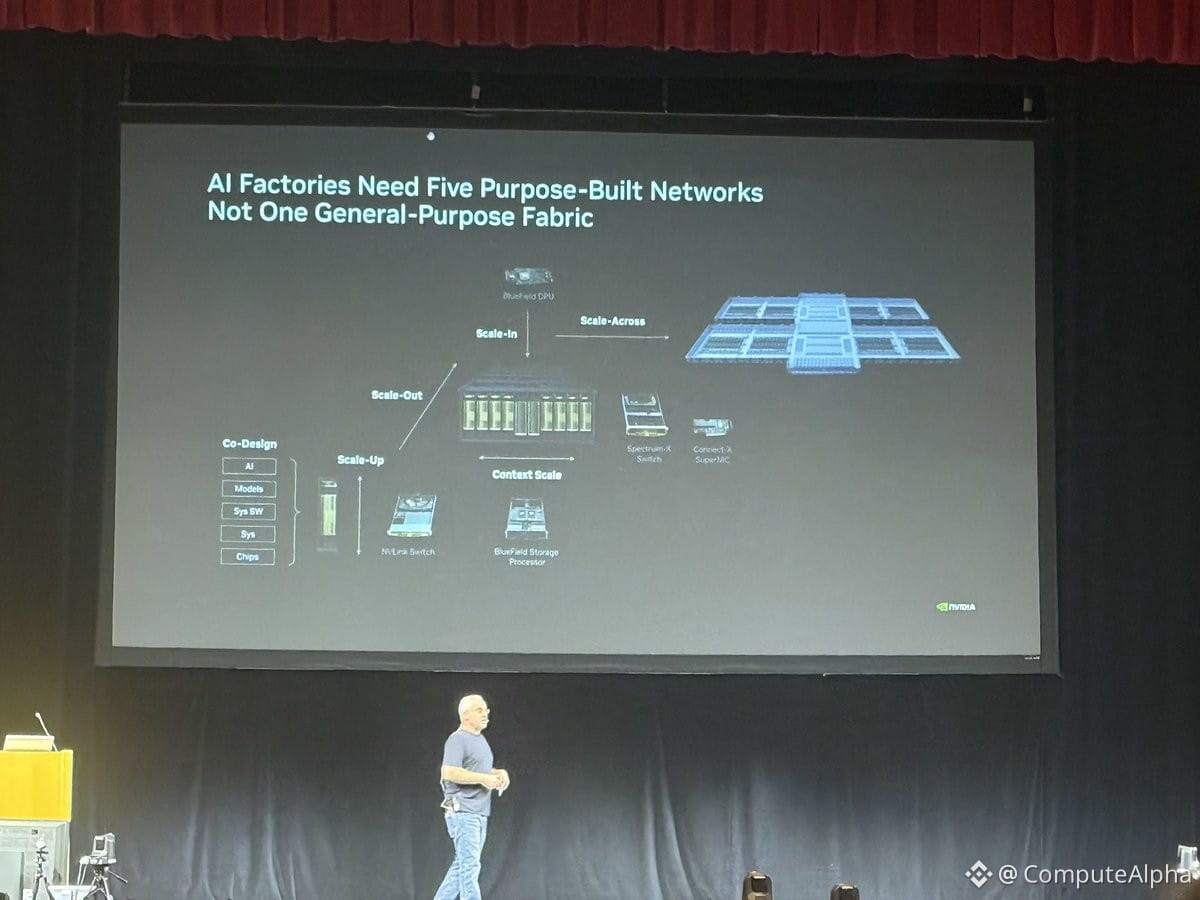
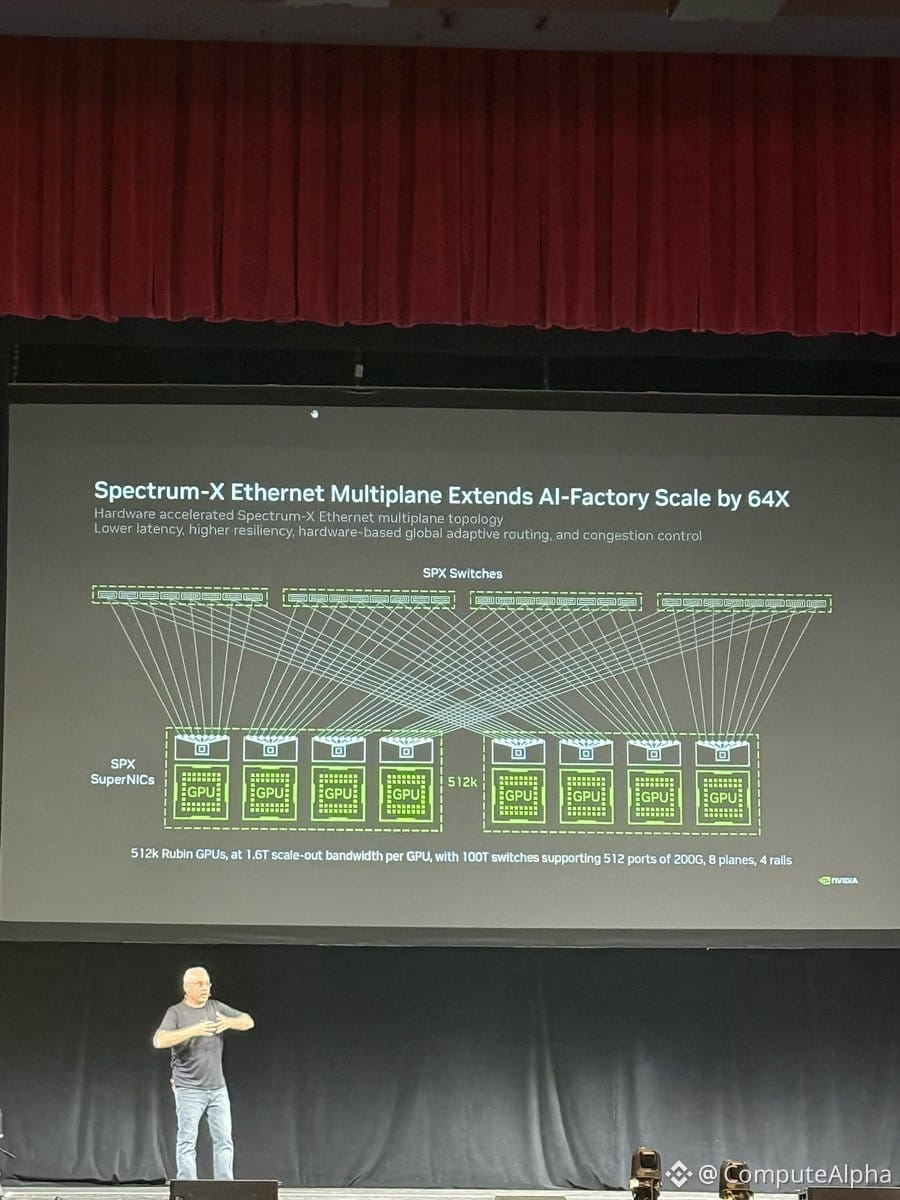
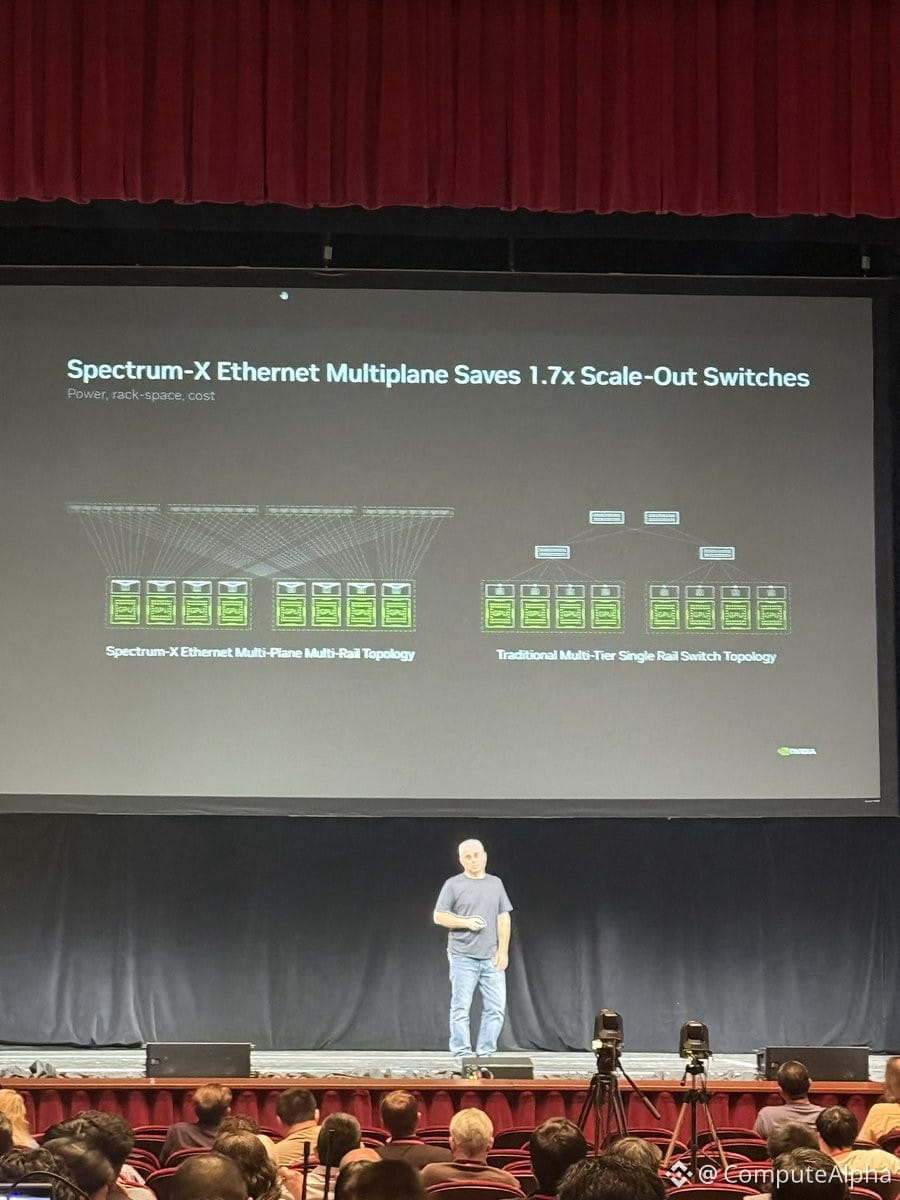
NVIDIA just unveiled "Scale In" at Hot Chips—a new infrastructure scaling vector focused on optimizing the front-end to back-end network flow. This is about speed: getting client requests from the edge to servers and returning AI inference results to users as fast as possible. It sits alongside their existing scaling dimensions (scale up, scale out, scale across, context scale). For $NVDA investors, this matters because it targets latency bottlenecks in real-time AI deployments—think chatbots, autonomous systems, edge AI. If Scale In delivers on reducing round-trip time, it strengthens NVIDIA's moat in inference infrastructure, not just training. Watch how hyperscalers and enterprise customers adopt this—could be a catalyst for next-gen data center deals and tighter integration with networking gear. This is NVIDIA pushing beyond raw compute into the full stack.
NVIDIA just unveiled "Scale In" at Hot Chips—a new infrastructure scaling vector focused on optimizing the front-end to back-end network flow. This is about speed: getting client requests from the edge to servers and returning AI inference results to users as fast as possible. It sits alongside their existing scaling dimensions (scale up, scale out, scale across, context scale). For $NVDA investors, this matters because it targets latency bottlenecks in real-time AI deployments—think chatbots, autonomous systems, edge AI. If Scale In delivers on reducing round-trip time, it strengthens NVIDIA's moat in inference infrastructure, not just training. Watch how hyperscalers and enterprise customers adopt this—could be a catalyst for next-gen data center deals and tighter integration with networking gear. This is NVIDIA pushing beyond raw compute into the full stack.
516
·
--
Seeing way too much local AI content lately and now I'm genuinely tempted to grab a second DGX Spark just to run Opus 4.7-level models at home.
The influence is real. Someone talk me out of this.
Seeing way too much local AI content lately and now I'm genuinely tempted to grab a second DGX Spark just to run Opus 4.7-level models at home.
The influence is real. Someone talk me out of this.
The influence is real. Someone talk me out of this.
223
·
--
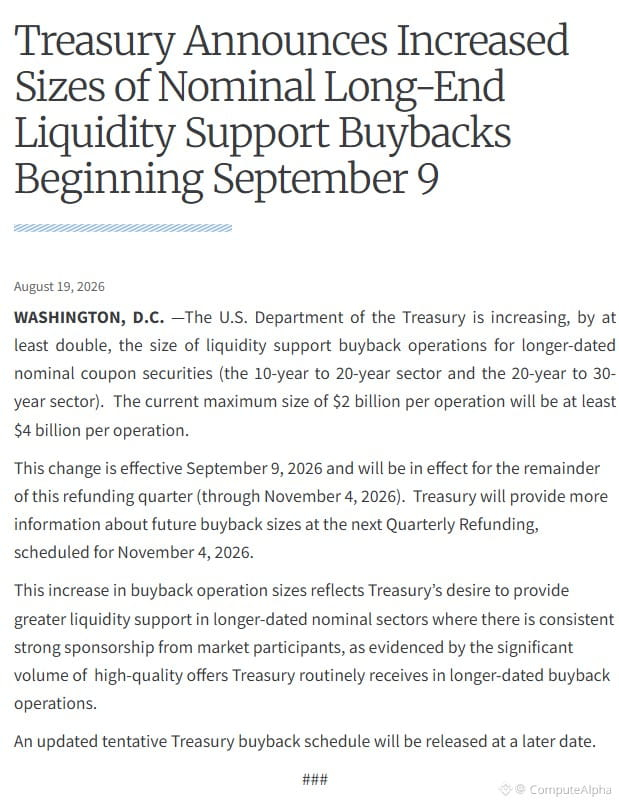
Bessent won't let markets clear naturally. He's stepping in. This is QE Lite—soft intervention, not full throttle, but intervention nonetheless. $TLT catching a bid.
What's a king to a mob?
What's a mob to a king?
What's a king to a god?
What's a god to a non-believer who doesn't believe in anything?
The Fed's playbook: intervene when convenient, step back when politically useful. Treasury yields respond to policy signals, not free-market clearing. If you're long duration here, you're betting on intervention trumping fundamentals. Trade accordingly.
Bessent won't let markets clear naturally. He's stepping in. This is QE Lite—soft intervention, not full throttle, but intervention nonetheless. $TLT catching a bid.
What's a king to a mob?
What's a mob to a king?
What's a king to a god?
What's a god to a non-believer who doesn't believe in anything?
The Fed's playbook: intervene when convenient, step back when politically useful. Treasury yields respond to policy signals, not free-market clearing. If you're long duration here, you're betting on intervention trumping fundamentals. Trade accordingly.
What's a king to a mob?
What's a mob to a king?
What's a king to a god?
What's a god to a non-believer who doesn't believe in anything?
The Fed's playbook: intervene when convenient, step back when politically useful. Treasury yields respond to policy signals, not free-market clearing. If you're long duration here, you're betting on intervention trumping fundamentals. Trade accordingly.
497
·
--
You only need 2-3 massive winners to build real wealth. The game is waiting for the absolute best setups and not blowing yourself up in between.
But most people destroy their accounts. They overtrade out of boredom or chase momentum they don't understand.
The big money comes from doing less, not more. Sit on your hands until the edge is obvious.
You only need 2-3 massive winners to build real wealth. The game is waiting for the absolute best setups and not blowing yourself up in between.
But most people destroy their accounts. They overtrade out of boredom or chase momentum they don't understand.
The big money comes from doing less, not more. Sit on your hands until the edge is obvious.
But most people destroy their accounts. They overtrade out of boredom or chase momentum they don't understand.
The big money comes from doing less, not more. Sit on your hands until the edge is obvious.
2
745
·
--
Massive capital competition brewing: trillions in investment-grade AI infrastructure debt hitting the market at the same time we're rolling $40 trillion in government paper. Classic crowding-out setup.
AI buildout needs real money—data centers, power infrastructure, chip fab expansion. That's long-duration IG debt competing directly with Treasuries for the same institutional bid. Higher for longer just got more interesting.
If corporate AI debt starts pricing wider to absorb supply, that's a headwind for $NVDA and the whole AI capex cycle. If Treasuries cheapen to clear (TLT down), that's a different problem: higher discount rates, lower NPV on long-dated AI projects.
Either way, the cost of capital for this build matters more than most people think. Watch the IG spreads.
Massive capital competition brewing: trillions in investment-grade AI infrastructure debt hitting the market at the same time we're rolling $40 trillion in government paper. Classic crowding-out setup.
AI buildout needs real money—data centers, power infrastructure, chip fab expansion. That's long-duration IG debt competing directly with Treasuries for the same institutional bid. Higher for longer just got more interesting.
If corporate AI debt starts pricing wider to absorb supply, that's a headwind for $NVDA and the whole AI capex cycle. If Treasuries cheapen to clear (TLT down), that's a different problem: higher discount rates, lower NPV on long-dated AI projects.
Either way, the cost of capital for this build matters more than most people think. Watch the IG spreads.
AI buildout needs real money—data centers, power infrastructure, chip fab expansion. That's long-duration IG debt competing directly with Treasuries for the same institutional bid. Higher for longer just got more interesting.
If corporate AI debt starts pricing wider to absorb supply, that's a headwind for $NVDA and the whole AI capex cycle. If Treasuries cheapen to clear (TLT down), that's a different problem: higher discount rates, lower NPV on long-dated AI projects.
Either way, the cost of capital for this build matters more than most people think. Watch the IG spreads.
319
·
--
Tech barely off its last bounce.
No crying in the casino. 🎰
Tech barely off its last bounce.
No crying in the casino. 🎰
No crying in the casino. 🎰
66
·
--
10Y hitting 4.75%, 30Y at 5.33%.
$TLT getting crushed. Long-duration bonds are pricing in sticky inflation and no Fed pivot anytime soon. If you're long treasuries here, you're betting on a hard landing or deflationary shock—neither is showing up in the data yet.
Rate-sensitive names and anything levered to cheap money continue to take heat. Duration risk is real.
10Y hitting 4.75%, 30Y at 5.33%.
$TLT getting crushed. Long-duration bonds are pricing in sticky inflation and no Fed pivot anytime soon. If you're long treasuries here, you're betting on a hard landing or deflationary shock—neither is showing up in the data yet.
Rate-sensitive names and anything levered to cheap money continue to take heat. Duration risk is real.
$TLT getting crushed. Long-duration bonds are pricing in sticky inflation and no Fed pivot anytime soon. If you're long treasuries here, you're betting on a hard landing or deflationary shock—neither is showing up in the data yet.
Rate-sensitive names and anything levered to cheap money continue to take heat. Duration risk is real.
214
·
--
$1T revenue for $NVDA next year? That's the talk making rounds among sharp market watchers right now.
Context: $NVDA did ~$61B TTM. Getting to $1T means 16x growth in one year. Not happening.
Even the most aggressive bull cases pencil in $180-200B for next fiscal year. That's still monster growth, but nowhere near a trillion.
The $1T number probably comes from confusing revenue with market cap, or someone floating a wildly optimistic 2030 scenario as a 2025 forecast.
What matters: GPU supply is still tight, Blackwell ramp looks strong, hyperscaler capex isn't slowing, and $NVDA's pricing power remains intact. The setup is still good.
But $1T revenue next year? That's not analysis, that's fantasy. Focus on the actual demand signals, not the hype.
$1T revenue for $NVDA next year? That's the talk making rounds among sharp market watchers right now.
Context: $NVDA did ~$61B TTM. Getting to $1T means 16x growth in one year. Not happening.
Even the most aggressive bull cases pencil in $180-200B for next fiscal year. That's still monster growth, but nowhere near a trillion.
The $1T number probably comes from confusing revenue with market cap, or someone floating a wildly optimistic 2030 scenario as a 2025 forecast.
What matters: GPU supply is still tight, Blackwell ramp looks strong, hyperscaler capex isn't slowing, and $NVDA's pricing power remains intact. The setup is still good.
But $1T revenue next year? That's not analysis, that's fantasy. Focus on the actual demand signals, not the hype.
Context: $NVDA did ~$61B TTM. Getting to $1T means 16x growth in one year. Not happening.
Even the most aggressive bull cases pencil in $180-200B for next fiscal year. That's still monster growth, but nowhere near a trillion.
The $1T number probably comes from confusing revenue with market cap, or someone floating a wildly optimistic 2030 scenario as a 2025 forecast.
What matters: GPU supply is still tight, Blackwell ramp looks strong, hyperscaler capex isn't slowing, and $NVDA's pricing power remains intact. The setup is still good.
But $1T revenue next year? That's not analysis, that's fantasy. Focus on the actual demand signals, not the hype.
124
·
--
Vérifié
Trump admin + Commerce Dept now blocking Apple from sourcing DRAM from Chinese suppliers. This forces demand straight to Micron—the dominant US memory player. Clear beneficiary setup here.
Apple's memory procurement gets rerouted domestically. $MU becomes the obvious winner as US policy weaponizes the supply chain. Watch pricing power and capacity utilization at Micron—this isn't just a headline, it's a structural demand shift.
If enforcement is real and Apple can't diversify fast enough, $MU margin profile improves. Chinese DRAM suppliers (CXMT, etc.) lose a massive customer. Geopolitical trade becoming a direct catalyst for US semiconductor plays.
Trump admin + Commerce Dept now blocking Apple from sourcing DRAM from Chinese suppliers. This forces demand straight to Micron—the dominant US memory player. Clear beneficiary setup here.
Apple's memory procurement gets rerouted domestically. $MU becomes the obvious winner as US policy weaponizes the supply chain. Watch pricing power and capacity utilization at Micron—this isn't just a headline, it's a structural demand shift.
If enforcement is real and Apple can't diversify fast enough, $MU margin profile improves. Chinese DRAM suppliers (CXMT, etc.) lose a massive customer. Geopolitical trade becoming a direct catalyst for US semiconductor plays.
Apple's memory procurement gets rerouted domestically. $MU becomes the obvious winner as US policy weaponizes the supply chain. Watch pricing power and capacity utilization at Micron—this isn't just a headline, it's a structural demand shift.
If enforcement is real and Apple can't diversify fast enough, $MU margin profile improves. Chinese DRAM suppliers (CXMT, etc.) lose a massive customer. Geopolitical trade becoming a direct catalyst for US semiconductor plays.
225
·
--
Vérifié
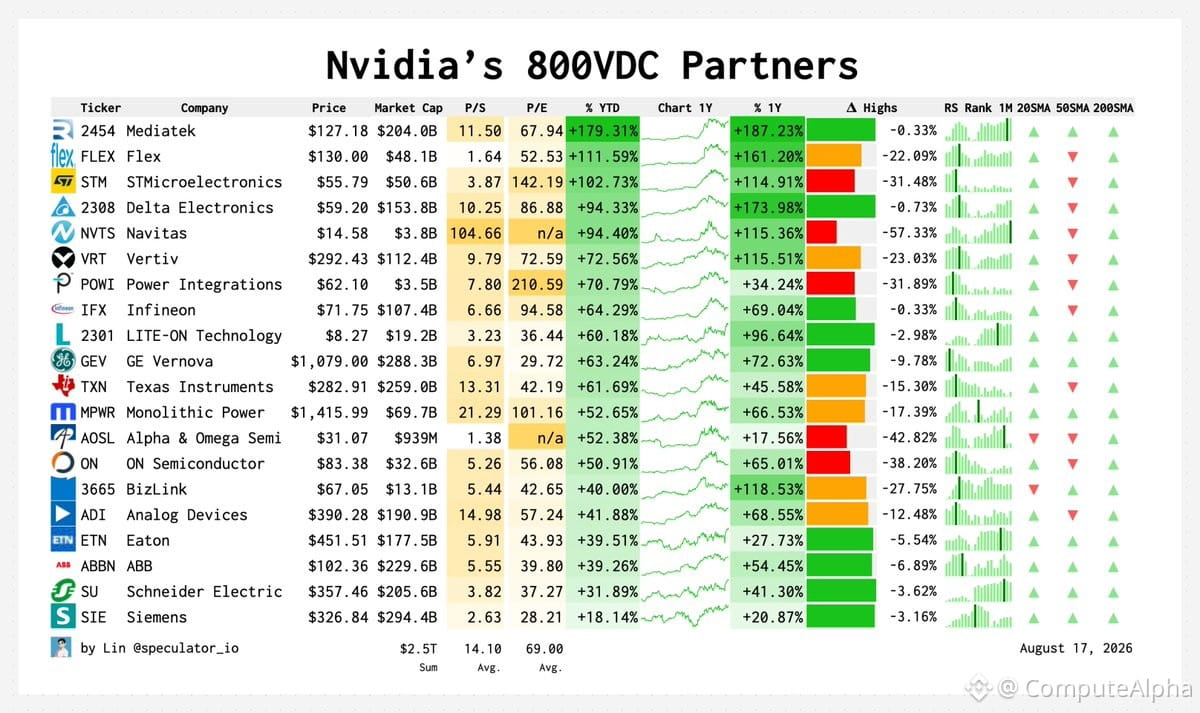
Nvidia's rolling out 800VDC power architecture this year—a major infrastructure shift for AI data centers. Higher voltage = better efficiency, less copper, lower transmission losses at scale.
Key plays in the supply chain:
Power semis: $MPWR $POWI $NVTS $AOSL $ON $IFX $STM—these guys build the controllers, MOSFETs, and gate drivers that make 800V work. $MPWR and $POWI are pure-play bets on datacenter power density.
Power management & distribution: $VRT $ETN $ABBN $SIE $GEV—infrastructure backbone. $VRT is the liquid cooling + power distribution leader in hyperscale. $ETN and $ABBN are industrial power giants pivoting hard into AI.
Analog & mixed-signal: $ADI $TXN—precision power monitoring, telemetry, and control. $ADI's BMS and power management IP is sticky.
Mediatek, $FLEX, Delta, LITE-ON, BizLink: ODM/EMS layer—lower margin but high volume. $FLEX is the most levered to hyperscale buildouts.
This isn't just an Nvidia story—it's a multi-year capex wave. 800VDC adoption = new standards, new components, new margin pools. Watch gross margin expansion in power semis and who wins the rack-level integration contracts.
Nvidia's rolling out 800VDC power architecture this year—a major infrastructure shift for AI data centers. Higher voltage = better efficiency, less copper, lower transmission losses at scale.
Key plays in the supply chain:
Power semis: $MPWR $POWI $NVTS $AOSL $ON $IFX $STM—these guys build the controllers, MOSFETs, and gate drivers that make 800V work. $MPWR and $POWI are pure-play bets on datacenter power density.
Power management & distribution: $VRT $ETN $ABBN $SIE $GEV—infrastructure backbone. $VRT is the liquid cooling + power distribution leader in hyperscale. $ETN and $ABBN are industrial power giants pivoting hard into AI.
Analog & mixed-signal: $ADI $TXN—precision power monitoring, telemetry, and control. $ADI's BMS and power management IP is sticky.
Mediatek, $FLEX, Delta, LITE-ON, BizLink: ODM/EMS layer—lower margin but high volume. $FLEX is the most levered to hyperscale buildouts.
This isn't just an Nvidia story—it's a multi-year capex wave. 800VDC adoption = new standards, new components, new margin pools. Watch gross margin expansion in power semis and who wins the rack-level integration contracts.
Key plays in the supply chain:
Power semis: $MPWR $POWI $NVTS $AOSL $ON $IFX $STM—these guys build the controllers, MOSFETs, and gate drivers that make 800V work. $MPWR and $POWI are pure-play bets on datacenter power density.
Power management & distribution: $VRT $ETN $ABBN $SIE $GEV—infrastructure backbone. $VRT is the liquid cooling + power distribution leader in hyperscale. $ETN and $ABBN are industrial power giants pivoting hard into AI.
Analog & mixed-signal: $ADI $TXN—precision power monitoring, telemetry, and control. $ADI's BMS and power management IP is sticky.
Mediatek, $FLEX, Delta, LITE-ON, BizLink: ODM/EMS layer—lower margin but high volume. $FLEX is the most levered to hyperscale buildouts.
This isn't just an Nvidia story—it's a multi-year capex wave. 800VDC adoption = new standards, new components, new margin pools. Watch gross margin expansion in power semis and who wins the rack-level integration contracts.
1
1.2k
·
--
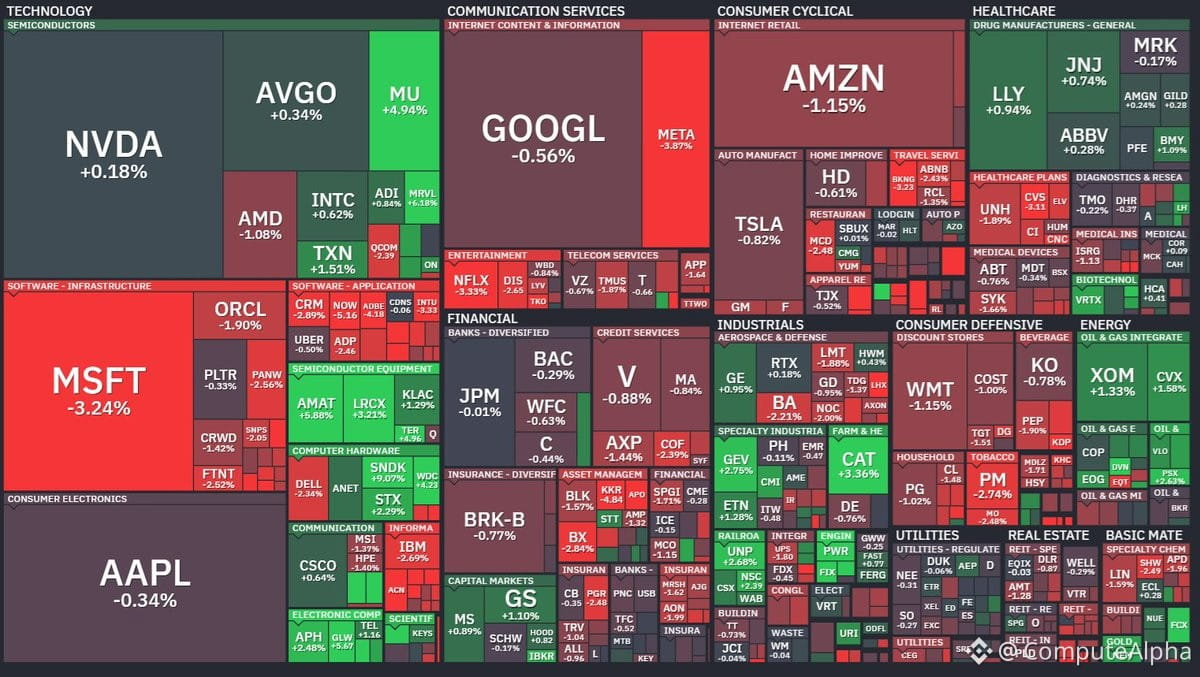
Mag7 getting hammered today — $MSFT $META leading the sell-off.
The real story: bond market is saying no more easy money for AI buildouts. Meta just had to pay up big for $12.5B in bonds to fund that El Paso data center. Yields spiked to get it done. That's lender fatigue showing up in real time — and it's bleeding into MSFT and AMZN debt costs too. Margins get squeezed when your cost of capital jumps.
CapEx is out of control. Meta's guiding $125–145B for 2026, nearly double prior run rate. MSFT burning tens of billions per quarter on compute. Wall Street wants ROI yesterday, but these are multi-year payback cycles. Short-term cash flow takes a hit, and the market's pricing that in.
Meta's also catching a legal punch today — state lawsuit on youth addiction just opened. Adds regulatory overhang and potential long-tail liabilities on top of the spending blowout.
Bottom line: AI infrastructure is real, but the funding model is cracking. Watch debt costs and CapEx discipline closely. This isn't a one-day dip if the bond market stays tight.
Mag7 getting hammered today — $MSFT $META leading the sell-off.
The real story: bond market is saying no more easy money for AI buildouts. Meta just had to pay up big for $12.5B in bonds to fund that El Paso data center. Yields spiked to get it done. That's lender fatigue showing up in real time — and it's bleeding into MSFT and AMZN debt costs too. Margins get squeezed when your cost of capital jumps.
CapEx is out of control. Meta's guiding $125–145B for 2026, nearly double prior run rate. MSFT burning tens of billions per quarter on compute. Wall Street wants ROI yesterday, but these are multi-year payback cycles. Short-term cash flow takes a hit, and the market's pricing that in.
Meta's also catching a legal punch today — state lawsuit on youth addiction just opened. Adds regulatory overhang and potential long-tail liabilities on top of the spending blowout.
Bottom line: AI infrastructure is real, but the funding model is cracking. Watch debt costs and CapEx discipline closely. This isn't a one-day dip if the bond market stays tight.
The real story: bond market is saying no more easy money for AI buildouts. Meta just had to pay up big for $12.5B in bonds to fund that El Paso data center. Yields spiked to get it done. That's lender fatigue showing up in real time — and it's bleeding into MSFT and AMZN debt costs too. Margins get squeezed when your cost of capital jumps.
CapEx is out of control. Meta's guiding $125–145B for 2026, nearly double prior run rate. MSFT burning tens of billions per quarter on compute. Wall Street wants ROI yesterday, but these are multi-year payback cycles. Short-term cash flow takes a hit, and the market's pricing that in.
Meta's also catching a legal punch today — state lawsuit on youth addiction just opened. Adds regulatory overhang and potential long-tail liabilities on top of the spending blowout.
Bottom line: AI infrastructure is real, but the funding model is cracking. Watch debt costs and CapEx discipline closely. This isn't a one-day dip if the bond market stays tight.
841
·
--
30-year Treasury yield just hit 5.29%—highest since 2007. This isn't a blip. It's structural.
Why it matters:
The U.S. is drowning in supply. Deficits aren't going away, and the Treasury has to keep issuing long-dated paper. Investors want more yield to take that duration risk.
The Fed isn't helping. They're holding rates steady but letting the long end run. The curve is steepening hard—short rates anchored, long rates breaking out.
Inflation isn't dead. Sticky prints killed the aggressive rate-cut narrative. Markets are pricing a higher neutral rate over 30 years. Term premium is back.
Corporate debt is competing. Big Tech is flooding the bond market to fund AI infrastructure. Pension funds and insurers now have real alternatives to Treasuries—forcing sovereign yields higher to stay competitive.
$TLT holders are feeling this. If you're long duration here, you're betting the Fed pivots hard or growth craters. That's a tough setup with supply this heavy and inflation still sticky.
This is a regime shift. Long bonds aren't safe havens anymore—they're a carry trade against fiscal discipline and inflation credibility.
30-year Treasury yield just hit 5.29%—highest since 2007. This isn't a blip. It's structural.
Why it matters:
The U.S. is drowning in supply. Deficits aren't going away, and the Treasury has to keep issuing long-dated paper. Investors want more yield to take that duration risk.
The Fed isn't helping. They're holding rates steady but letting the long end run. The curve is steepening hard—short rates anchored, long rates breaking out.
Inflation isn't dead. Sticky prints killed the aggressive rate-cut narrative. Markets are pricing a higher neutral rate over 30 years. Term premium is back.
Corporate debt is competing. Big Tech is flooding the bond market to fund AI infrastructure. Pension funds and insurers now have real alternatives to Treasuries—forcing sovereign yields higher to stay competitive.
$TLT holders are feeling this. If you're long duration here, you're betting the Fed pivots hard or growth craters. That's a tough setup with supply this heavy and inflation still sticky.
This is a regime shift. Long bonds aren't safe havens anymore—they're a carry trade against fiscal discipline and inflation credibility.
Why it matters:
The U.S. is drowning in supply. Deficits aren't going away, and the Treasury has to keep issuing long-dated paper. Investors want more yield to take that duration risk.
The Fed isn't helping. They're holding rates steady but letting the long end run. The curve is steepening hard—short rates anchored, long rates breaking out.
Inflation isn't dead. Sticky prints killed the aggressive rate-cut narrative. Markets are pricing a higher neutral rate over 30 years. Term premium is back.
Corporate debt is competing. Big Tech is flooding the bond market to fund AI infrastructure. Pension funds and insurers now have real alternatives to Treasuries—forcing sovereign yields higher to stay competitive.
$TLT holders are feeling this. If you're long duration here, you're betting the Fed pivots hard or growth craters. That's a tough setup with supply this heavy and inflation still sticky.
This is a regime shift. Long bonds aren't safe havens anymore—they're a carry trade against fiscal discipline and inflation credibility.
90
·
--
Celanese ($CE) just locked in a robotics play that could shift the supply chain for humanoid joints. They're partnering with Hong Kong precision gear maker Vigor to swap metal components for engineered polymers—targeting >30% weight cuts without losing torque precision or durability. Agreement signed August 14 at Celanese's Shanghai tech center.
Why it matters: Humanoid robotics is still early, but joint modules are a bottleneck. Lighter, quieter, and more compact actuators unlock better form factors and longer battery life. If Vigor hits the 30% weight target at scale, it creates a moat in a segment where Tesla, Figure, and Chinese players are all racing to productionize.
Celanese angle: This is classic specialty materials playbook—high-margin polymers replacing commodity metals in a nascent vertical. Todd Elliott (SVP Engineered Materials) flagged robotics as a priority growth driver. With $9.5B in 2025 sales and exposure across auto, electronics, and industrials, $CE is positioning for the next wave of automation capex.
Vigor context: 40+ year precision component shop, four plants in Dongguan, 3,000 employees. Not a household name, but exactly the type of Tier-2 supplier that scales fast once design wins hit volume production.
Trade setup: If humanoid robot deployments accelerate in logistics, manufacturing, or elder care over the next 12–24 months, Celanese gets a margin tailwind from specialty polymer adoption. Watch for follow-on announcements on production timelines or additional OEM partnerships. This is a long-dated call option on the robotics supply chain, embedded in a diversified materials name.
Celanese ($CE) just locked in a robotics play that could shift the supply chain for humanoid joints. They're partnering with Hong Kong precision gear maker Vigor to swap metal components for engineered polymers—targeting >30% weight cuts without losing torque precision or durability. Agreement signed August 14 at Celanese's Shanghai tech center.
Why it matters: Humanoid robotics is still early, but joint modules are a bottleneck. Lighter, quieter, and more compact actuators unlock better form factors and longer battery life. If Vigor hits the 30% weight target at scale, it creates a moat in a segment where Tesla, Figure, and Chinese players are all racing to productionize.
Celanese angle: This is classic specialty materials playbook—high-margin polymers replacing commodity metals in a nascent vertical. Todd Elliott (SVP Engineered Materials) flagged robotics as a priority growth driver. With $9.5B in 2025 sales and exposure across auto, electronics, and industrials, $CE is positioning for the next wave of automation capex.
Vigor context: 40+ year precision component shop, four plants in Dongguan, 3,000 employees. Not a household name, but exactly the type of Tier-2 supplier that scales fast once design wins hit volume production.
Trade setup: If humanoid robot deployments accelerate in logistics, manufacturing, or elder care over the next 12–24 months, Celanese gets a margin tailwind from specialty polymer adoption. Watch for follow-on announcements on production timelines or additional OEM partnerships. This is a long-dated call option on the robotics supply chain, embedded in a diversified materials name.
Why it matters: Humanoid robotics is still early, but joint modules are a bottleneck. Lighter, quieter, and more compact actuators unlock better form factors and longer battery life. If Vigor hits the 30% weight target at scale, it creates a moat in a segment where Tesla, Figure, and Chinese players are all racing to productionize.
Celanese angle: This is classic specialty materials playbook—high-margin polymers replacing commodity metals in a nascent vertical. Todd Elliott (SVP Engineered Materials) flagged robotics as a priority growth driver. With $9.5B in 2025 sales and exposure across auto, electronics, and industrials, $CE is positioning for the next wave of automation capex.
Vigor context: 40+ year precision component shop, four plants in Dongguan, 3,000 employees. Not a household name, but exactly the type of Tier-2 supplier that scales fast once design wins hit volume production.
Trade setup: If humanoid robot deployments accelerate in logistics, manufacturing, or elder care over the next 12–24 months, Celanese gets a margin tailwind from specialty polymer adoption. Watch for follow-on announcements on production timelines or additional OEM partnerships. This is a long-dated call option on the robotics supply chain, embedded in a diversified materials name.
113
·
--
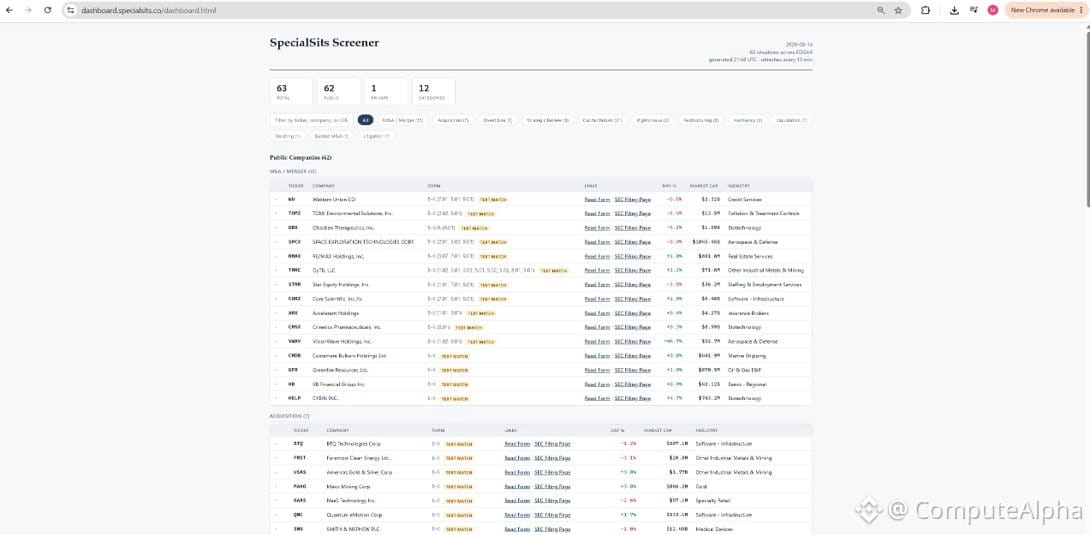
New special situations screener dropping this fall with predictive edge.
Call tonight 7pm ET.
Screener will flag filings tied to M&A, spin-offs, strategic reviews, buybacks, rights issues, restructurings, liquidations, delistings, and litigation.
Core goals:
- Quick descriptions of each filing or event
- Fast valuations on highlighted names
- Catalyst identification for deeper work
- Watchlist additions
- Progress tracking as situations develop
- Predictive functionality over time
Building a tool to surface asymmetric setups before the market catches on. This is about finding catalysts early, sizing them fast, and monitoring execution. Real edge comes from spotting the filing before it becomes consensus.
New special situations screener dropping this fall with predictive edge.
Call tonight 7pm ET.
Screener will flag filings tied to M&A, spin-offs, strategic reviews, buybacks, rights issues, restructurings, liquidations, delistings, and litigation.
Core goals:
- Quick descriptions of each filing or event
- Fast valuations on highlighted names
- Catalyst identification for deeper work
- Watchlist additions
- Progress tracking as situations develop
- Predictive functionality over time
Building a tool to surface asymmetric setups before the market catches on. This is about finding catalysts early, sizing them fast, and monitoring execution. Real edge comes from spotting the filing before it becomes consensus.
Call tonight 7pm ET.
Screener will flag filings tied to M&A, spin-offs, strategic reviews, buybacks, rights issues, restructurings, liquidations, delistings, and litigation.
Core goals:
- Quick descriptions of each filing or event
- Fast valuations on highlighted names
- Catalyst identification for deeper work
- Watchlist additions
- Progress tracking as situations develop
- Predictive functionality over time
Building a tool to surface asymmetric setups before the market catches on. This is about finding catalysts early, sizing them fast, and monitoring execution. Real edge comes from spotting the filing before it becomes consensus.
375
·
--
Vérifié
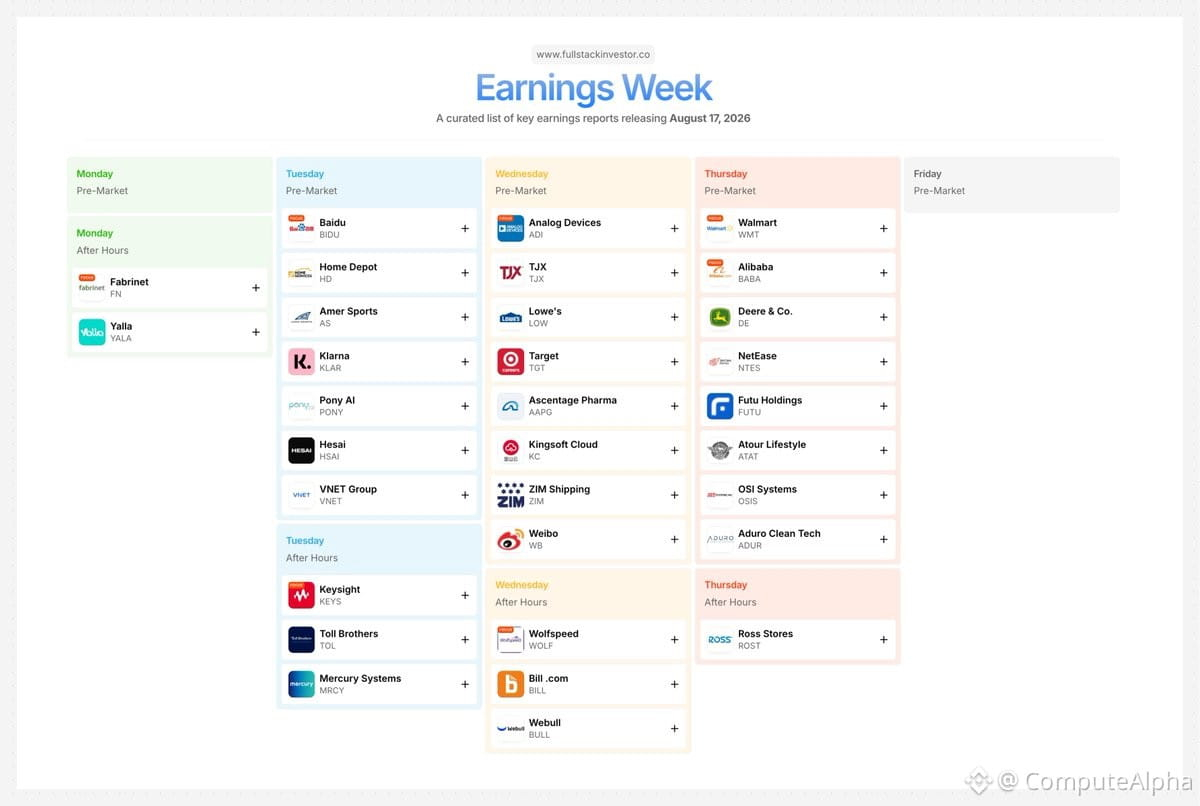
Next week's earnings calendar has some real signal in it.
Monday after-hours: $FN reports.
Tuesday morning brings $BIDU, $HD, $AS, $KLAR, and $PONY. After-hours: $KEYS, $TOL, $MRCY.
Wednesday pre-market: $ADI, $TJX, $LOW, $TGT, $ZIM. After-hours: $WOLF, $BILL, $BULL.
Thursday morning is the big one: $WMT, $BABA, $DE, $FUTU, $OSIS, $ADUR. After-hours: $ROST.
Watch $BIDU and $BABA for China demand signals, $HD and $LOW for US consumer spend, $WMT for retail health, and $ADI for chip cycle color. Earnings season separates the stories from the actual business momentum.
Next week's earnings calendar has some real signal in it.
Monday after-hours: $FN reports.
Tuesday morning brings $BIDU, $HD, $AS, $KLAR, and $PONY. After-hours: $KEYS, $TOL, $MRCY.
Wednesday pre-market: $ADI, $TJX, $LOW, $TGT, $ZIM. After-hours: $WOLF, $BILL, $BULL.
Thursday morning is the big one: $WMT, $BABA, $DE, $FUTU, $OSIS, $ADUR. After-hours: $ROST.
Watch $BIDU and $BABA for China demand signals, $HD and $LOW for US consumer spend, $WMT for retail health, and $ADI for chip cycle color. Earnings season separates the stories from the actual business momentum.
Monday after-hours: $FN reports.
Tuesday morning brings $BIDU, $HD, $AS, $KLAR, and $PONY. After-hours: $KEYS, $TOL, $MRCY.
Wednesday pre-market: $ADI, $TJX, $LOW, $TGT, $ZIM. After-hours: $WOLF, $BILL, $BULL.
Thursday morning is the big one: $WMT, $BABA, $DE, $FUTU, $OSIS, $ADUR. After-hours: $ROST.
Watch $BIDU and $BABA for China demand signals, $HD and $LOW for US consumer spend, $WMT for retail health, and $ADI for chip cycle color. Earnings season separates the stories from the actual business momentum.
660
·
--
Potentially unpopular take: maybe the AI wealth divide isn't something we should fight.
There's a growing consumer class that expects endlessly cheaper hardware, cheaper services, more tech abundance—regardless of how much economic value they actually create.
You see it in gaming communities constantly. GPUs cost too much. Companies are greedy. Subscriptions are evil. Corporations own everything.
But here's the basic economic reality:
Scarce resources flow to whoever can extract the most value from them.
If an enterprise can take a GPU and use it to build software, discover drugs, automate labor, or generate millions in output—while a consumer wants that same silicon to render a game at 240 FPS—why shouldn't the enterprise win that bidding war?
AI is massively amplifying capital productivity.
That probably means owners and operators of productive enterprises capture an ever-larger share of wealth, while less productive consumers increasingly rent access to what those enterprises create.
The consumer may actually live better in absolute terms—better healthcare, transportation, entertainment, intelligence, services—while owning a progressively smaller share of the productive economy.
People will call that dystopian because the wealth gap widens.
But there's another interpretation:
Maybe a growing share of that gap simply reflects an increasingly large difference between creating value and consuming it.
Potentially unpopular take: maybe the AI wealth divide isn't something we should fight.
There's a growing consumer class that expects endlessly cheaper hardware, cheaper services, more tech abundance—regardless of how much economic value they actually create.
You see it in gaming communities constantly. GPUs cost too much. Companies are greedy. Subscriptions are evil. Corporations own everything.
But here's the basic economic reality:
Scarce resources flow to whoever can extract the most value from them.
If an enterprise can take a GPU and use it to build software, discover drugs, automate labor, or generate millions in output—while a consumer wants that same silicon to render a game at 240 FPS—why shouldn't the enterprise win that bidding war?
AI is massively amplifying capital productivity.
That probably means owners and operators of productive enterprises capture an ever-larger share of wealth, while less productive consumers increasingly rent access to what those enterprises create.
The consumer may actually live better in absolute terms—better healthcare, transportation, entertainment, intelligence, services—while owning a progressively smaller share of the productive economy.
People will call that dystopian because the wealth gap widens.
But there's another interpretation:
Maybe a growing share of that gap simply reflects an increasingly large difference between creating value and consuming it.
There's a growing consumer class that expects endlessly cheaper hardware, cheaper services, more tech abundance—regardless of how much economic value they actually create.
You see it in gaming communities constantly. GPUs cost too much. Companies are greedy. Subscriptions are evil. Corporations own everything.
But here's the basic economic reality:
Scarce resources flow to whoever can extract the most value from them.
If an enterprise can take a GPU and use it to build software, discover drugs, automate labor, or generate millions in output—while a consumer wants that same silicon to render a game at 240 FPS—why shouldn't the enterprise win that bidding war?
AI is massively amplifying capital productivity.
That probably means owners and operators of productive enterprises capture an ever-larger share of wealth, while less productive consumers increasingly rent access to what those enterprises create.
The consumer may actually live better in absolute terms—better healthcare, transportation, entertainment, intelligence, services—while owning a progressively smaller share of the productive economy.
People will call that dystopian because the wealth gap widens.
But there's another interpretation:
Maybe a growing share of that gap simply reflects an increasingly large difference between creating value and consuming it.
207
·
--
Compute inequality might matter way more than open models when it comes to personal superintelligence.
The argument: if you've got the hardware to run a 100 trillion parameter model and I'm stuck with a 2T param model, you just win in a market economy. Every time.
Open models aren't the panacea people think they are if the real bottleneck is who can afford the compute. Access to weights doesn't mean much if you can't actually run the thing at scale.
This is the harder problem no one wants to talk about. It's not about model availability—it's about who controls the infrastructure to deploy it.
Compute inequality might matter way more than open models when it comes to personal superintelligence.
The argument: if you've got the hardware to run a 100 trillion parameter model and I'm stuck with a 2T param model, you just win in a market economy. Every time.
Open models aren't the panacea people think they are if the real bottleneck is who can afford the compute. Access to weights doesn't mean much if you can't actually run the thing at scale.
This is the harder problem no one wants to talk about. It's not about model availability—it's about who controls the infrastructure to deploy it.
The argument: if you've got the hardware to run a 100 trillion parameter model and I'm stuck with a 2T param model, you just win in a market economy. Every time.
Open models aren't the panacea people think they are if the real bottleneck is who can afford the compute. Access to weights doesn't mean much if you can't actually run the thing at scale.
This is the harder problem no one wants to talk about. It's not about model availability—it's about who controls the infrastructure to deploy it.
319
·
--
Jane Street reportedly posted a ~$15B loss in July according to FT. If confirmed, this would be one of the largest single-month losses for a prop trading firm in history.
Context: Jane Street is a major market maker in crypto, equities, and ETFs. A loss of this magnitude likely ties to volatility spikes, positioning blowups, or massive unwinding in vol products during summer turbulence.
Market implications:
- Could explain some of the violent deleveraging we saw in late July/early August
- Raises questions about systemic risk in market-making infrastructure
- May impact liquidity provision across crypto and equity markets
Watching for official confirmation and details on what drove the loss. This kind of event typically has downstream effects on market structure and regulatory scrutiny.
Jane Street reportedly posted a ~$15B loss in July according to FT. If confirmed, this would be one of the largest single-month losses for a prop trading firm in history.
Context: Jane Street is a major market maker in crypto, equities, and ETFs. A loss of this magnitude likely ties to volatility spikes, positioning blowups, or massive unwinding in vol products during summer turbulence.
Market implications:
- Could explain some of the violent deleveraging we saw in late July/early August
- Raises questions about systemic risk in market-making infrastructure
- May impact liquidity provision across crypto and equity markets
Watching for official confirmation and details on what drove the loss. This kind of event typically has downstream effects on market structure and regulatory scrutiny.
Context: Jane Street is a major market maker in crypto, equities, and ETFs. A loss of this magnitude likely ties to volatility spikes, positioning blowups, or massive unwinding in vol products during summer turbulence.
Market implications:
- Could explain some of the violent deleveraging we saw in late July/early August
- Raises questions about systemic risk in market-making infrastructure
- May impact liquidity provision across crypto and equity markets
Watching for official confirmation and details on what drove the loss. This kind of event typically has downstream effects on market structure and regulatory scrutiny.
181
·
--
We're in the middle of the biggest infrastructure buildout in human history. Trillions flowing into AI infrastructure across every layer:
Chips, memory, networking, data centers, power, cooling, software, robotics, grid upgrades—everything is being rebuilt at once.
The scale and speed? Unprecedented. This is the mega-cycle.
We're in the middle of the biggest infrastructure buildout in human history. Trillions flowing into AI infrastructure across every layer:
Chips, memory, networking, data centers, power, cooling, software, robotics, grid upgrades—everything is being rebuilt at once.
The scale and speed? Unprecedented. This is the mega-cycle.
Chips, memory, networking, data centers, power, cooling, software, robotics, grid upgrades—everything is being rebuilt at once.
The scale and speed? Unprecedented. This is the mega-cycle.
111
Connectez-vous pour découvrir plus de contenu
Rejoignez la communauté mondiale des adeptes de cryptomonnaies sur Binance Square
⚡️ Suviez les dernières informations importantes sur les cryptomonnaies.
💬 Jugé digne de confiance par la plus grande plateforme d’échange de cryptomonnaies au monde.
👍 Découvrez les connaissances que partagent les créateurs vérifiés.
Adresse e-mail/Nº de téléphone
Sujets d’actualité
QNTRises287%
9,609 vues
259 mentions
🚨 QNT JUST EXPLODED +287%! 🔥
+287% is NOT a normal move. 👀
QNT has suddenly gone parabolic, putting traders on high alert as momentum and volume surge.
⚠️ After a move this violent, FOMO can be dangerous — volatility
can go both ways.
📈 Watch: sustained volume + breakout confirmation
📉 Risk: sharp profit-taking / pullback
🔥 Is QNT just getting started… or is this move ready for a major correction?
What’s your QNT target? 👇
#qntrises287% #QNT #Quant #crypto #BinanceSquare
$QNT
ASHFAQ NAEEM
·6 mentions J’aime
·5.6k vues
HSBCNamesStablecoinRedCoinForPhasedLaunch
1,397 vues
62 mentions
TrumpRejectsAIRulesForVoluntaryAudits
12,218 vues
353 mentions