
Chumba Money
8k Publications

Chumba Money
 Binance Square Vérifié
Signaler
Bloquer l’utilisateur
Research & Analysis | Crypto Education | Chumba Labs Dev

Top Voices

Level 2 Creator
2 Suivis
49.8K+ Abonnés
18.2K+ J’aime
2 Badges
Publications
Tous
Citations
·
--
Voir la traduction
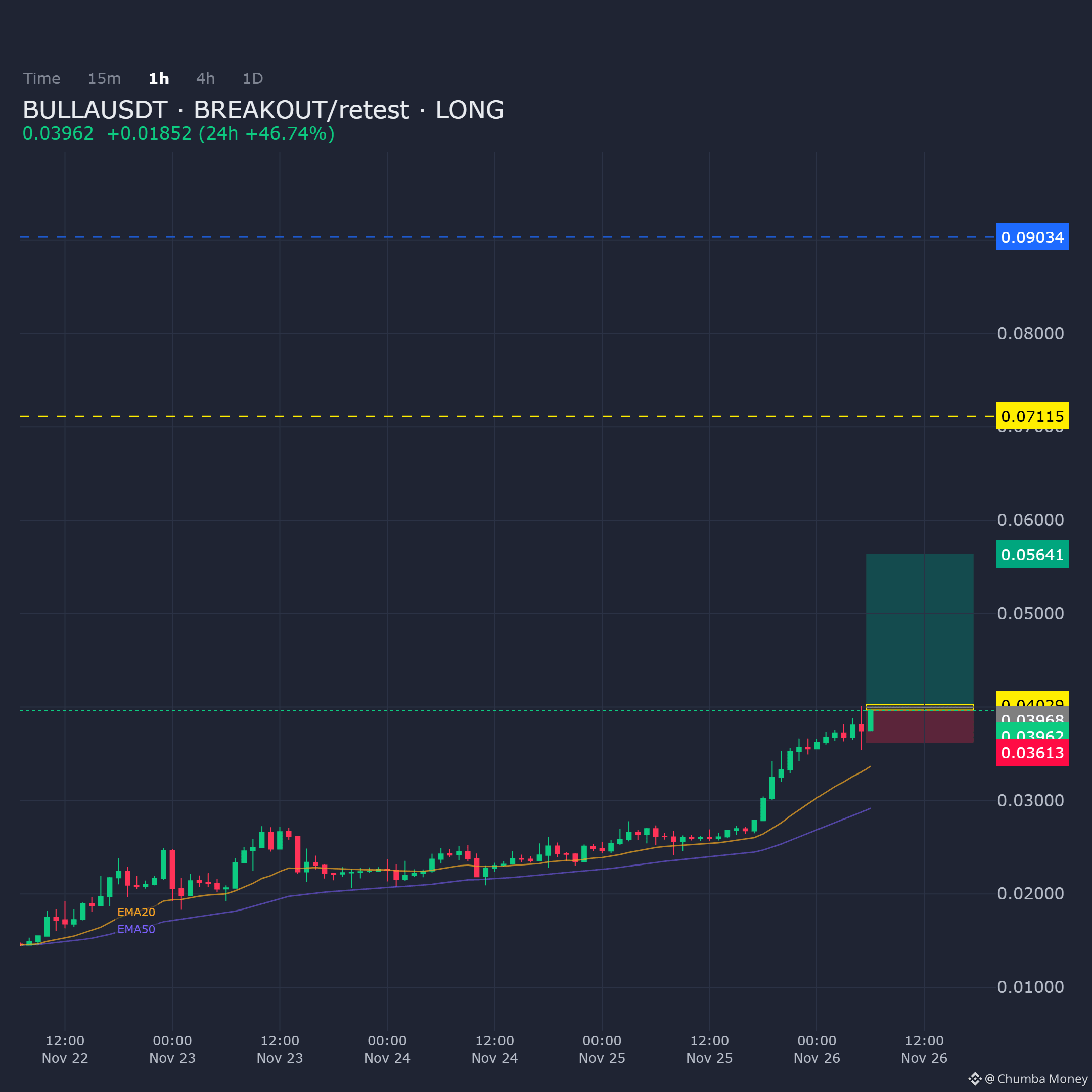
BULLAUSDT on the 1H chart shows breakout-retest confluence supporting a long bias.
Entry: 0.039678 - 0.040292
Targets: TP1: 0.056411, TP2: 0.071149, TP3: 0.090339
Stop Loss: 0.036129
$BULLA
BULLAUSDT on the 1H chart shows breakout-retest confluence supporting a long bias.
Entry: 0.039678 - 0.040292
Targets: TP1: 0.056411, TP2: 0.071149, TP3: 0.090339
Stop Loss: 0.036129
$BULLA
Entry: 0.039678 - 0.040292
Targets: TP1: 0.056411, TP2: 0.071149, TP3: 0.090339
Stop Loss: 0.036129
$BULLA
9
·
--
Voir la traduction
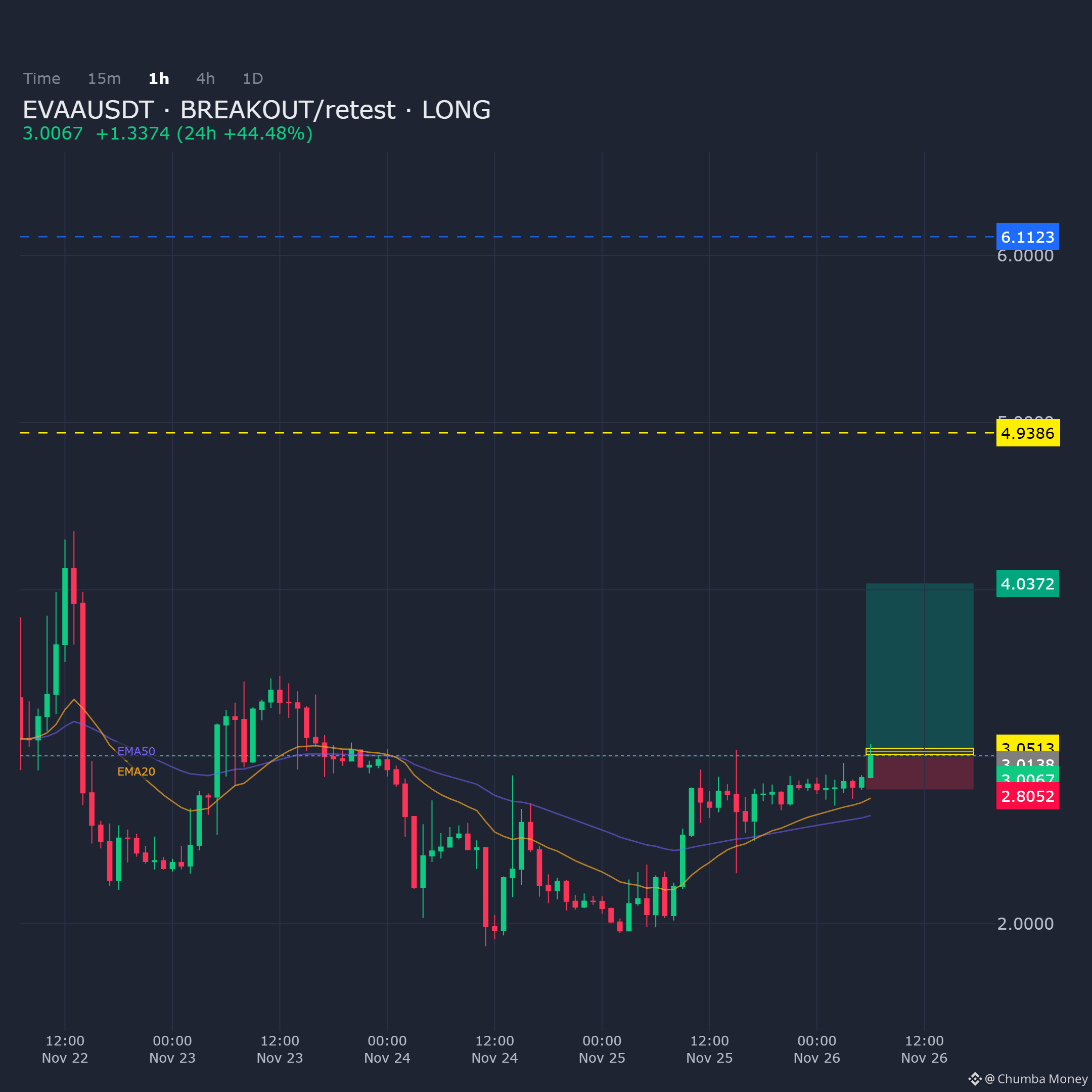
EVAAUSDT on the 1H timeframe is pulling back into a defined demand zone following a breakout structure. The bias remains long as long as this support area holds.
Entry: 3.0138 - 3.0513
Targets: TP1: 4.0372, TP2: 4.9386, TP3: 6.1123
Stop Loss: 2.8052
$EVAA
EVAAUSDT on the 1H timeframe is pulling back into a defined demand zone following a breakout structure. The bias remains long as long as this support area holds.
Entry: 3.0138 - 3.0513
Targets: TP1: 4.0372, TP2: 4.9386, TP3: 6.1123
Stop Loss: 2.8052
$EVAA
Entry: 3.0138 - 3.0513
Targets: TP1: 4.0372, TP2: 4.9386, TP3: 6.1123
Stop Loss: 2.8052
$EVAA
2
·
--
Voir la traduction
SKY EMERGENCY VOTE AND THE PRICING OF DEFI LIQUIDITY RISKObservation: Sky’s Core Facilitator has invoked the protocol’s emergency response process to expedite a governance vote on a $25 million transfer, bypassing the next scheduled vote on Dec. 3. The stated context is liquidity stress. No additional detail on the size of Sky’s total value locked, the composition of its reserves, or the counterparty receiving the transfer was provided in the excerpt, so the scale of the stress relative to the protocol’s balance sheet is unknown.
Interpretation: An emergency vote is a governance signal, not a market price. It indicates that Sky’s operators believe the standard decision-making timeline is too slow for current conditions. In DeFi, liquidity stress often compounds because withdrawals can be asynchronous and opaque; a $25 million transfer may be modest in absolute terms against a multi-billion protocol, or material if Sky’s liquid reserves are thin. Without those figures, the market cannot calibrate the risk, which is precisely when narratives tend to overshoot in either direction.
Catalysts: The outcome of the expedited vote and any disclosure of the transfer’s purpose and destination. A swift, uneventful execution would likely defuse near-term panic. A failed vote, a delayed transfer, or a subsequent withdrawal spike would point to deeper funding pressure. Broader market context matters too: BTC is at $60,747, up 2.77% over 24h but down 3.58% over 7d, while Galaxy has flagged a daily close below $58,525 as a potential trigger for materially lower lows. If Bitcoin breaks that level, protocol-level liquidity concerns across DeFi could receive amplified attention regardless of Sky’s specific fundamentals.
Risks: The primary risk is conflation. Sky’s idiosyncratic governance action could be read as a sector-wide liquidity warning, or dismissed as routine treasury management, depending on how much information is released. There is also execution risk in moving $25 million under stress, including slippage, counterparty exposure, and potential cascading redemptions if users interpret the move as a precursor to insolvency.
Falsifiers: The narrative that Sky faces acute liquidity crisis would be weakened if the protocol publishes reserve balances showing the $25 million transfer is a small fraction of liquid assets, or if the vote passes and funds move without disruption to user withdrawals. Conversely, the narrative that this is a non-event would be falsified by a failed vote, an emergency pause, or disclosure that the transfer covers a funding gap rather than a planned allocation.
Takeaway: Sky’s emergency vote is a specific governance event with unknown balance-sheet context. Until the protocol discloses the size of its liquid reserves relative to the $25 million transfer and the reason for the urgency, the market is pricing an ambiguous signal. Investors should separate the observable fact an expedited vote is occurring from the interpretation that Sky is in distress, and watch the vote outcome and subsequent disclosures as the primary evidence.
SKY EMERGENCY VOTE AND THE PRICING OF DEFI LIQUIDITY RISK
Observation: Sky’s Core Facilitator has invoked the protocol’s emergency response process to expedite a governance vote on a $25 million transfer, bypassing the next scheduled vote on Dec. 3. The stated context is liquidity stress. No additional detail on the size of Sky’s total value locked, the composition of its reserves, or the counterparty receiving the transfer was provided in the excerpt, so the scale of the stress relative to the protocol’s balance sheet is unknown.
Interpretation: An emergency vote is a governance signal, not a market price. It indicates that Sky’s operators believe the standard decision-making timeline is too slow for current conditions. In DeFi, liquidity stress often compounds because withdrawals can be asynchronous and opaque; a $25 million transfer may be modest in absolute terms against a multi-billion protocol, or material if Sky’s liquid reserves are thin. Without those figures, the market cannot calibrate the risk, which is precisely when narratives tend to overshoot in either direction.
Catalysts: The outcome of the expedited vote and any disclosure of the transfer’s purpose and destination. A swift, uneventful execution would likely defuse near-term panic. A failed vote, a delayed transfer, or a subsequent withdrawal spike would point to deeper funding pressure. Broader market context matters too: BTC is at $60,747, up 2.77% over 24h but down 3.58% over 7d, while Galaxy has flagged a daily close below $58,525 as a potential trigger for materially lower lows. If Bitcoin breaks that level, protocol-level liquidity concerns across DeFi could receive amplified attention regardless of Sky’s specific fundamentals.
Risks: The primary risk is conflation. Sky’s idiosyncratic governance action could be read as a sector-wide liquidity warning, or dismissed as routine treasury management, depending on how much information is released. There is also execution risk in moving $25 million under stress, including slippage, counterparty exposure, and potential cascading redemptions if users interpret the move as a precursor to insolvency.
Falsifiers: The narrative that Sky faces acute liquidity crisis would be weakened if the protocol publishes reserve balances showing the $25 million transfer is a small fraction of liquid assets, or if the vote passes and funds move without disruption to user withdrawals. Conversely, the narrative that this is a non-event would be falsified by a failed vote, an emergency pause, or disclosure that the transfer covers a funding gap rather than a planned allocation.
Takeaway: Sky’s emergency vote is a specific governance event with unknown balance-sheet context. Until the protocol discloses the size of its liquid reserves relative to the $25 million transfer and the reason for the urgency, the market is pricing an ambiguous signal. Investors should separate the observable fact an expedited vote is occurring from the interpretation that Sky is in distress, and watch the vote outcome and subsequent disclosures as the primary evidence.
8
·
--
Voir la traduction
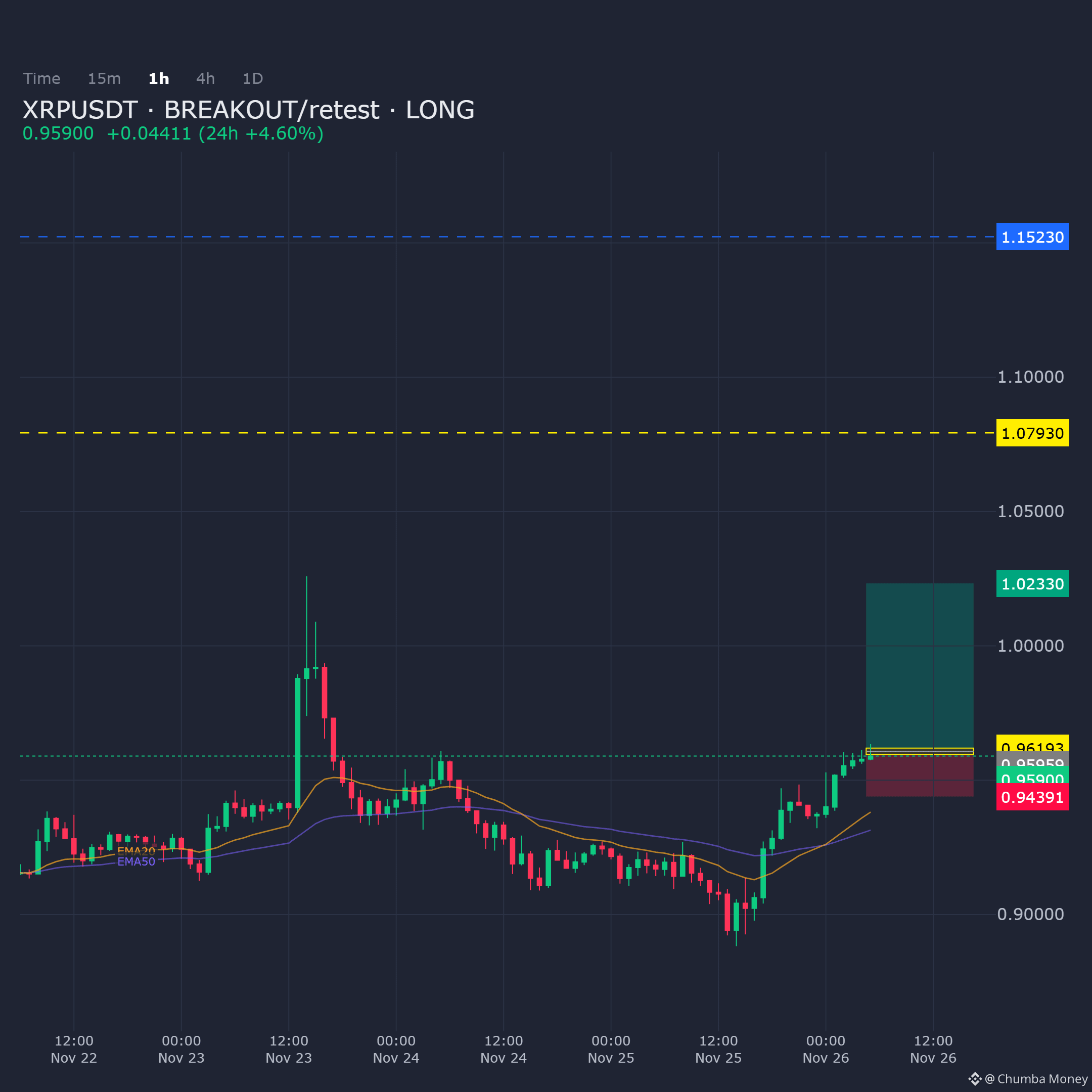
XRPUSDT on the 1H holds key structure into demand. A breakout-and-retest alignment favors the long side.
Entry: 0.959594 - 0.96193
Targets: TP1: 1.0233, TP2: 1.0793, TP3: 1.1523
Stop Loss: 0.943908
$XRP
XRPUSDT on the 1H holds key structure into demand. A breakout-and-retest alignment favors the long side.
Entry: 0.959594 - 0.96193
Targets: TP1: 1.0233, TP2: 1.0793, TP3: 1.1523
Stop Loss: 0.943908
$XRP
Entry: 0.959594 - 0.96193
Targets: TP1: 1.0233, TP2: 1.0793, TP3: 1.1523
Stop Loss: 0.943908
$XRP
8
·
--
Voir la traduction
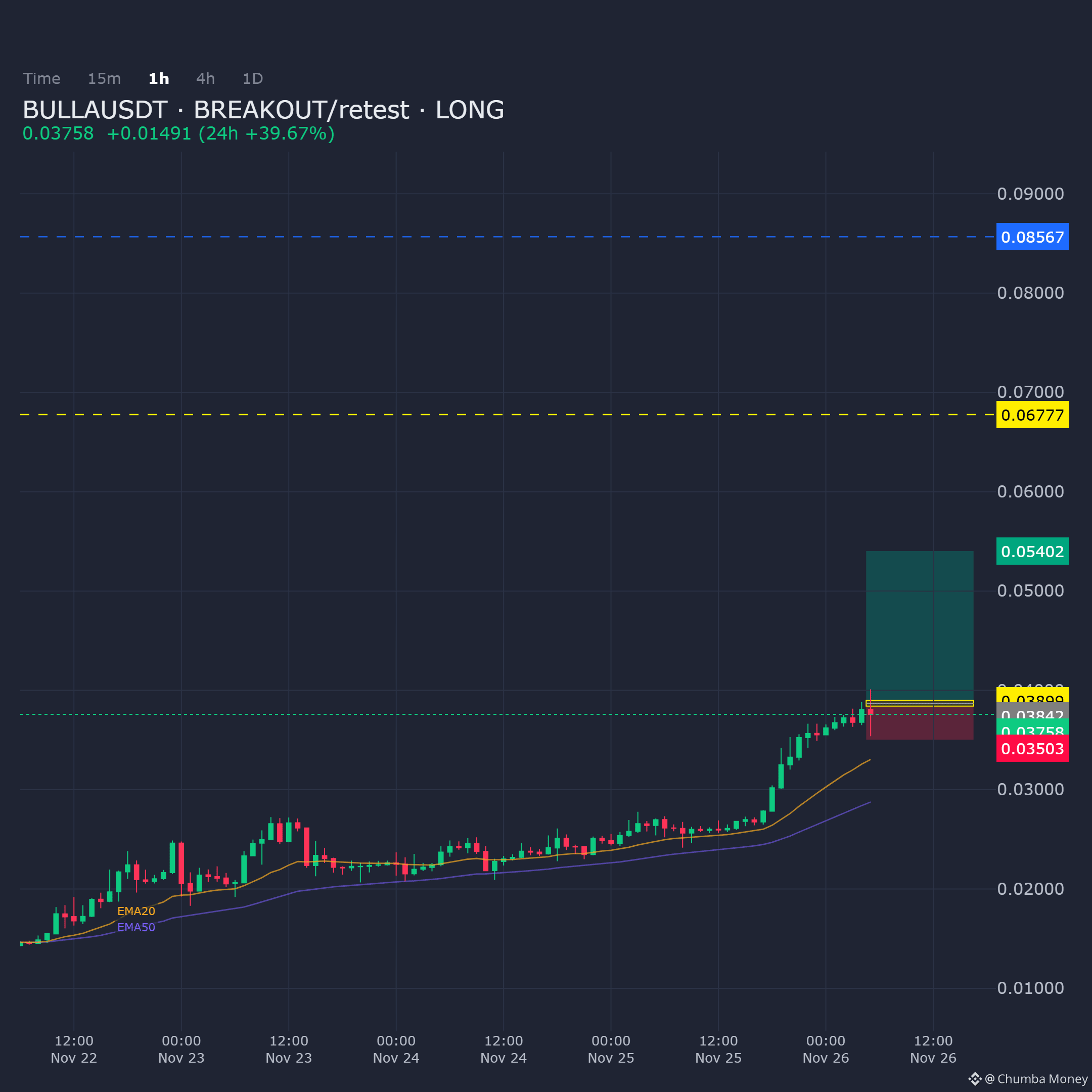
BULLAUSDT on the 1H timeframe is holding a bullish bias, with a breakout/retest setup aligning in this zone.
Entry: 0.038416 - 0.038989
Targets: TP1: 0.054025, TP2: 0.067772, TP3: 0.085672
Stop Loss: 0.035035
$BULLA
BULLAUSDT on the 1H timeframe is holding a bullish bias, with a breakout/retest setup aligning in this zone.
Entry: 0.038416 - 0.038989
Targets: TP1: 0.054025, TP2: 0.067772, TP3: 0.085672
Stop Loss: 0.035035
$BULLA
Entry: 0.038416 - 0.038989
Targets: TP1: 0.054025, TP2: 0.067772, TP3: 0.085672
Stop Loss: 0.035035
$BULLA
5
·
--
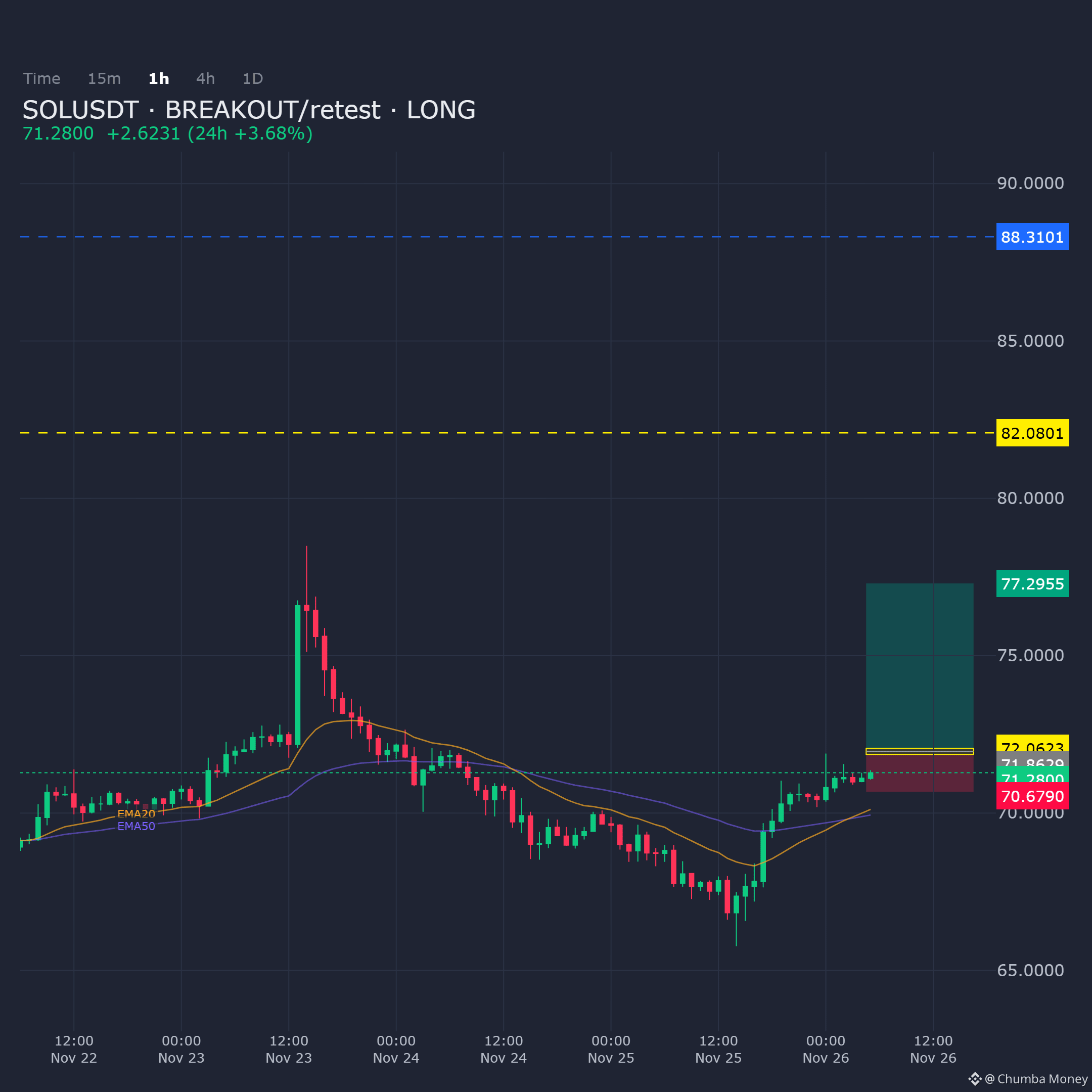
SOLUSDT en 1H montre une structure qui tient à l’approche de la zone de demande, avec une configuration de cassure/retest qui se met en place en faveur d’une position longue.
Entrée : 71.8629 - 72.0623
Objectifs : TP1 : 77.2955, TP2 : 82.0801, TP3 : 88.3101
Stop-loss : 70.679
$SOL
SOLUSDT en 1H montre une structure qui tient à l’approche de la zone de demande, avec une configuration de cassure/retest qui se met en place en faveur d’une position longue.
Entrée : 71.8629 - 72.0623
Objectifs : TP1 : 77.2955, TP2 : 82.0801, TP3 : 88.3101
Stop-loss : 70.679
$SOL
Entrée : 71.8629 - 72.0623
Objectifs : TP1 : 77.2955, TP2 : 82.0801, TP3 : 88.3101
Stop-loss : 70.679
$SOL
13
·
--
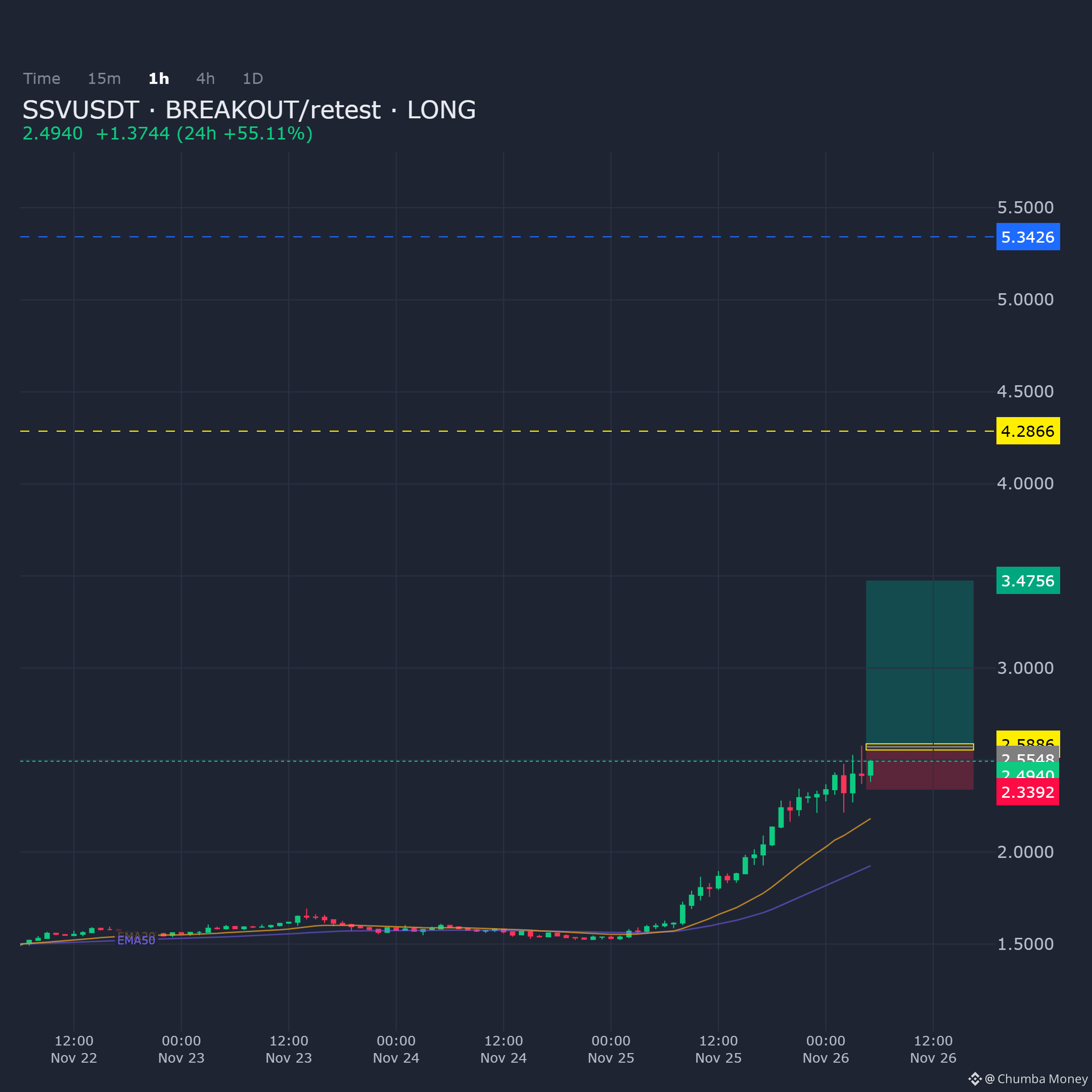
SSVUSDT sur le graphique en 1 h effectue un repli vers une zone de demande clairement définie, avec un biais haussier intact tant que ce niveau tient.
Entrée : 2.5548 - 2.5886
Objectifs : TP1 : 3.4756, TP2 : 4.2866, TP3 : 5.3426
Stop-loss : 2.3392
$SSV
SSVUSDT sur le graphique en 1 h effectue un repli vers une zone de demande clairement définie, avec un biais haussier intact tant que ce niveau tient.
Entrée : 2.5548 - 2.5886
Objectifs : TP1 : 3.4756, TP2 : 4.2866, TP3 : 5.3426
Stop-loss : 2.3392
$SSV
Entrée : 2.5548 - 2.5886
Objectifs : TP1 : 3.4756, TP2 : 4.2866, TP3 : 5.3426
Stop-loss : 2.3392
$SSV
44
·
--
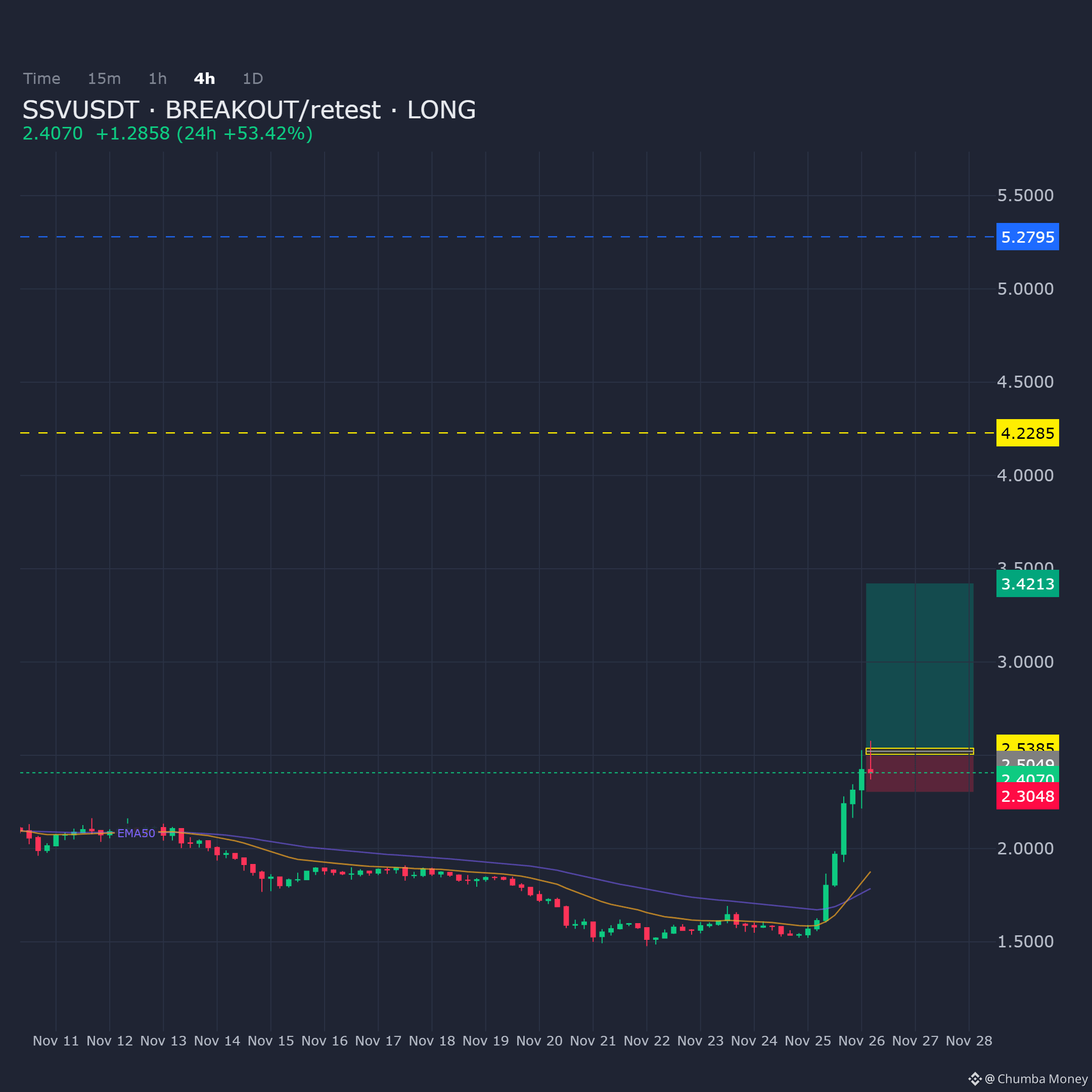
SSVUSDT sur le graphique 4H revient dans une zone de demande définie, ce qui maintient un biais haussier tant que cette zone tient.
Entrée : 2.5049 - 2.5385
Objectifs : TP1 : 3.4213, TP2 : 4.2285, TP3 : 5.2795
Stop-loss : 2.3048
$SSV
SSVUSDT sur le graphique 4H revient dans une zone de demande définie, ce qui maintient un biais haussier tant que cette zone tient.
Entrée : 2.5049 - 2.5385
Objectifs : TP1 : 3.4213, TP2 : 4.2285, TP3 : 5.2795
Stop-loss : 2.3048
$SSV
Entrée : 2.5049 - 2.5385
Objectifs : TP1 : 3.4213, TP2 : 4.2285, TP3 : 5.2795
Stop-loss : 2.3048
$SSV
51
·
--
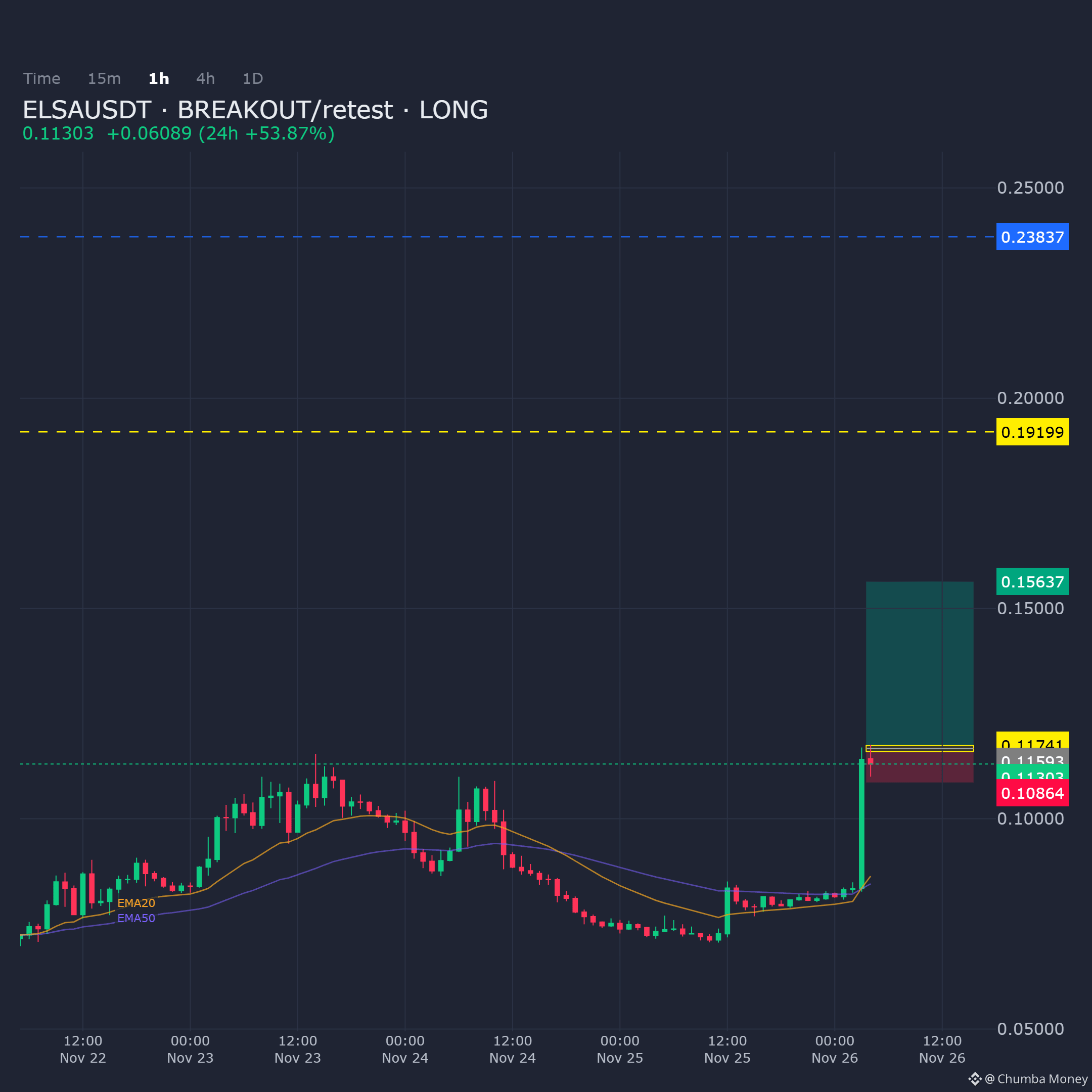
ELSAUSDT sur le graphique 1H montre un repli du prix vers une zone de demande définie, ce qui maintient un biais haussier tant que ce niveau tient.
Entrée : 0.11593 - 0.117414
Objectifs : TP1 : 0.156373, TP2 : 0.191993, TP3 : 0.238373
Stop-loss : 0.108636
$ELSA
ELSAUSDT sur le graphique 1H montre un repli du prix vers une zone de demande définie, ce qui maintient un biais haussier tant que ce niveau tient.
Entrée : 0.11593 - 0.117414
Objectifs : TP1 : 0.156373, TP2 : 0.191993, TP3 : 0.238373
Stop-loss : 0.108636
$ELSA
Entrée : 0.11593 - 0.117414
Objectifs : TP1 : 0.156373, TP2 : 0.191993, TP3 : 0.238373
Stop-loss : 0.108636
$ELSA
59
·
--
Voir la traduction
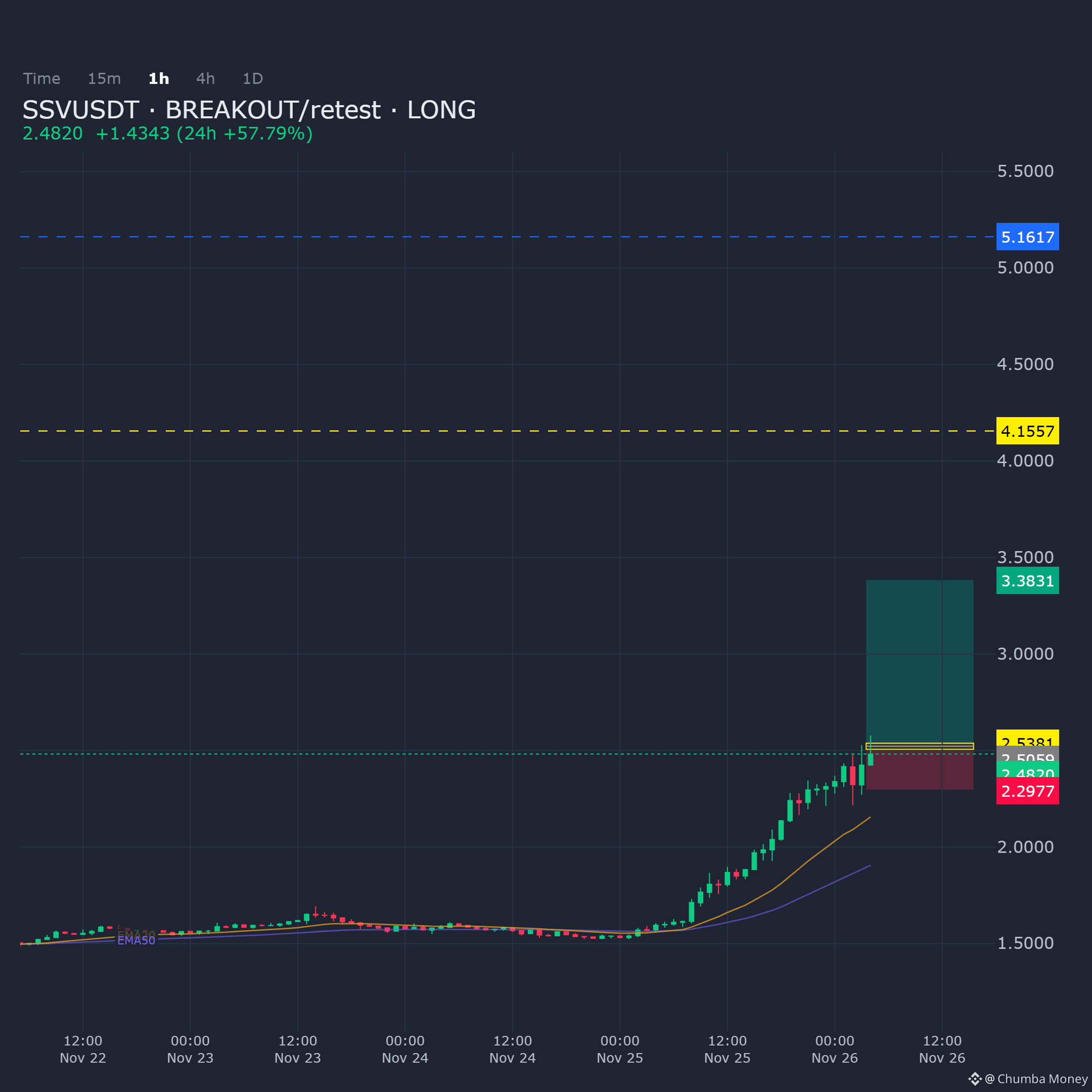
SSVUSDT on the 1H chart is retracting into a defined demand zone, keeping the bias long provided this area remains intact.
Entry: 2.5059 - 2.5381
Targets: TP1: 3.3831, TP2: 4.1557, TP3: 5.1617
Stop Loss: 2.2977
$SSV
SSVUSDT on the 1H chart is retracting into a defined demand zone, keeping the bias long provided this area remains intact.
Entry: 2.5059 - 2.5381
Targets: TP1: 3.3831, TP2: 4.1557, TP3: 5.1617
Stop Loss: 2.2977
$SSV
Entry: 2.5059 - 2.5381
Targets: TP1: 3.3831, TP2: 4.1557, TP3: 5.1617
Stop Loss: 2.2977
$SSV
26
·
--
Voir la traduction
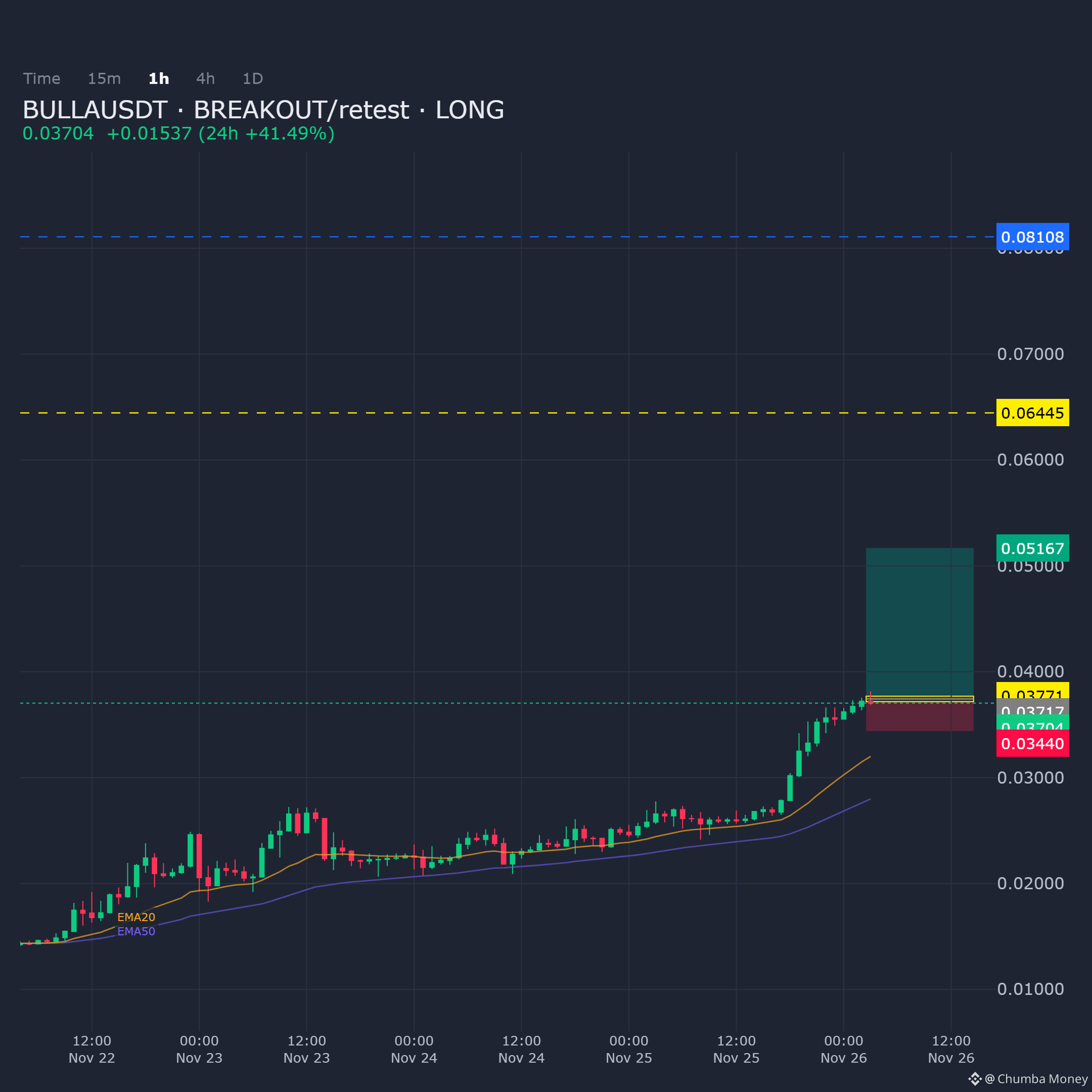
BULLAUSDT on the 1H chart shows confluence favoring a long bias, structured around a breakout and retest pattern.
Entry: 0.037174 - 0.037706
Targets: TP1: 0.051675, TP2: 0.064447, TP3: 0.081077
Stop Loss: 0.034403
$BULLA
BULLAUSDT on the 1H chart shows confluence favoring a long bias, structured around a breakout and retest pattern.
Entry: 0.037174 - 0.037706
Targets: TP1: 0.051675, TP2: 0.064447, TP3: 0.081077
Stop Loss: 0.034403
$BULLA
Entry: 0.037174 - 0.037706
Targets: TP1: 0.051675, TP2: 0.064447, TP3: 0.081077
Stop Loss: 0.034403
$BULLA
44
·
--
Voir la traduction
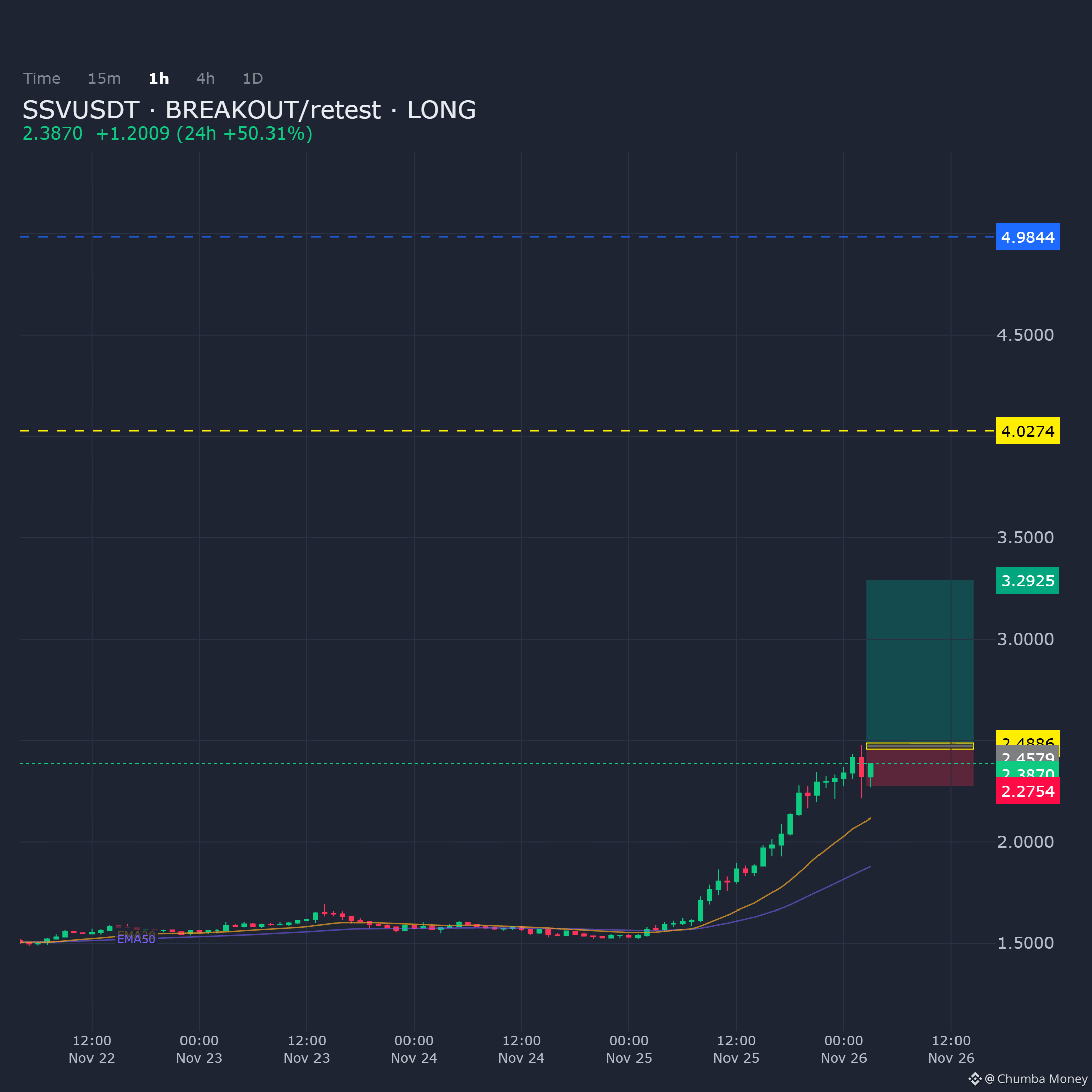
SSVUSDT on the 1H timeframe is retracing toward the demand zone. Bias remains long provided this area holds.
Entry: 2.4579 - 2.4886
Targets: TP1: 3.2925, TP2: 4.0274, TP3: 4.9844
Stop Loss: 2.2754
$SSV
SSVUSDT on the 1H timeframe is retracing toward the demand zone. Bias remains long provided this area holds.
Entry: 2.4579 - 2.4886
Targets: TP1: 3.2925, TP2: 4.0274, TP3: 4.9844
Stop Loss: 2.2754
$SSV
Entry: 2.4579 - 2.4886
Targets: TP1: 3.2925, TP2: 4.0274, TP3: 4.9844
Stop Loss: 2.2754
$SSV
23
·
--
Voir la traduction
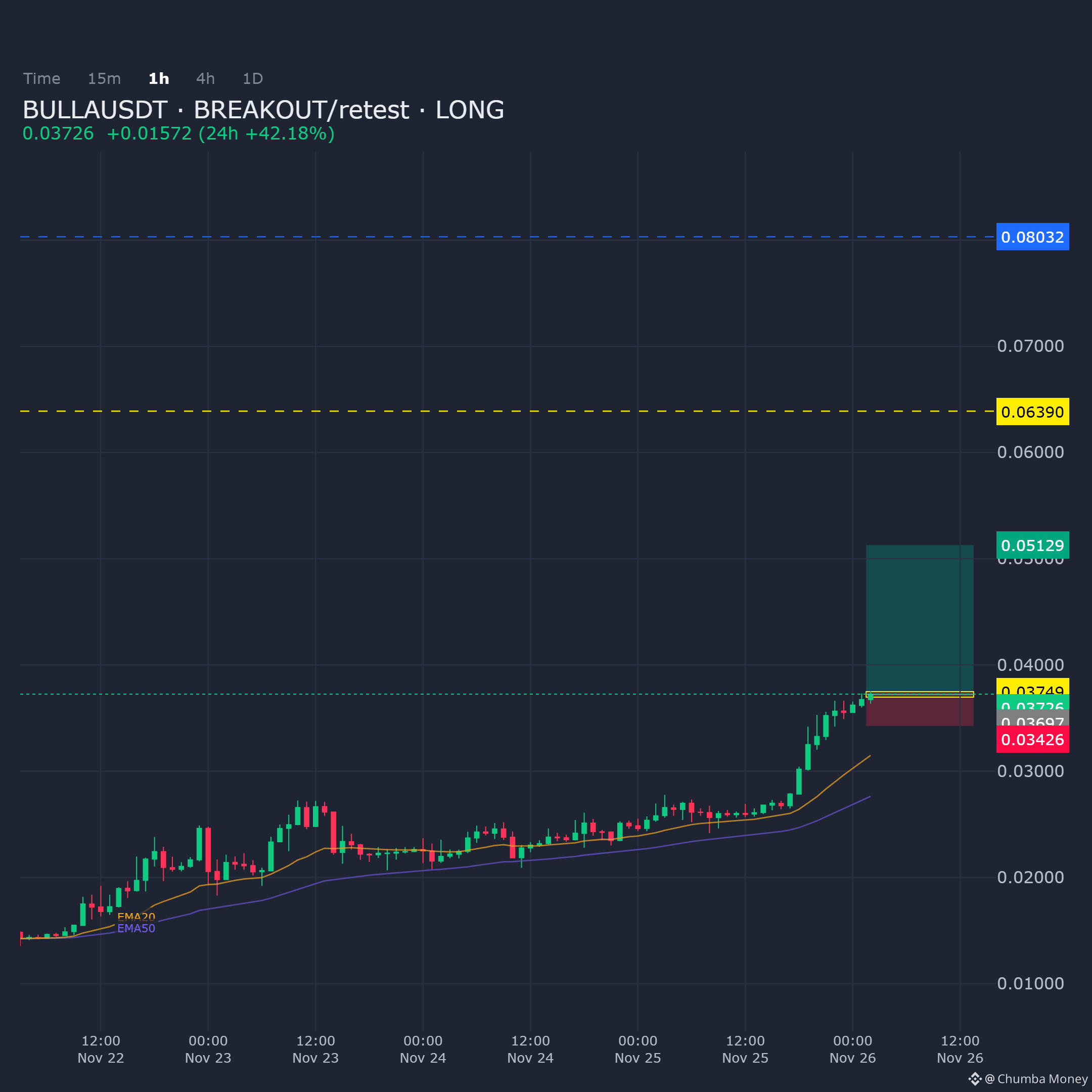
BULLAUSDT on the 1H is structuring for a breakout followed by a retest. Price action near this zone suggests the setup is aligning.
Entry: 0.036969 - 0.037494
Targets: TP1: 0.051287, TP2: 0.063898, TP3: 0.080318
Stop Loss: 0.034255
$BULLA
BULLAUSDT on the 1H is structuring for a breakout followed by a retest. Price action near this zone suggests the setup is aligning.
Entry: 0.036969 - 0.037494
Targets: TP1: 0.051287, TP2: 0.063898, TP3: 0.080318
Stop Loss: 0.034255
$BULLA
Entry: 0.036969 - 0.037494
Targets: TP1: 0.051287, TP2: 0.063898, TP3: 0.080318
Stop Loss: 0.034255
$BULLA
25
·
--
Voir la traduction
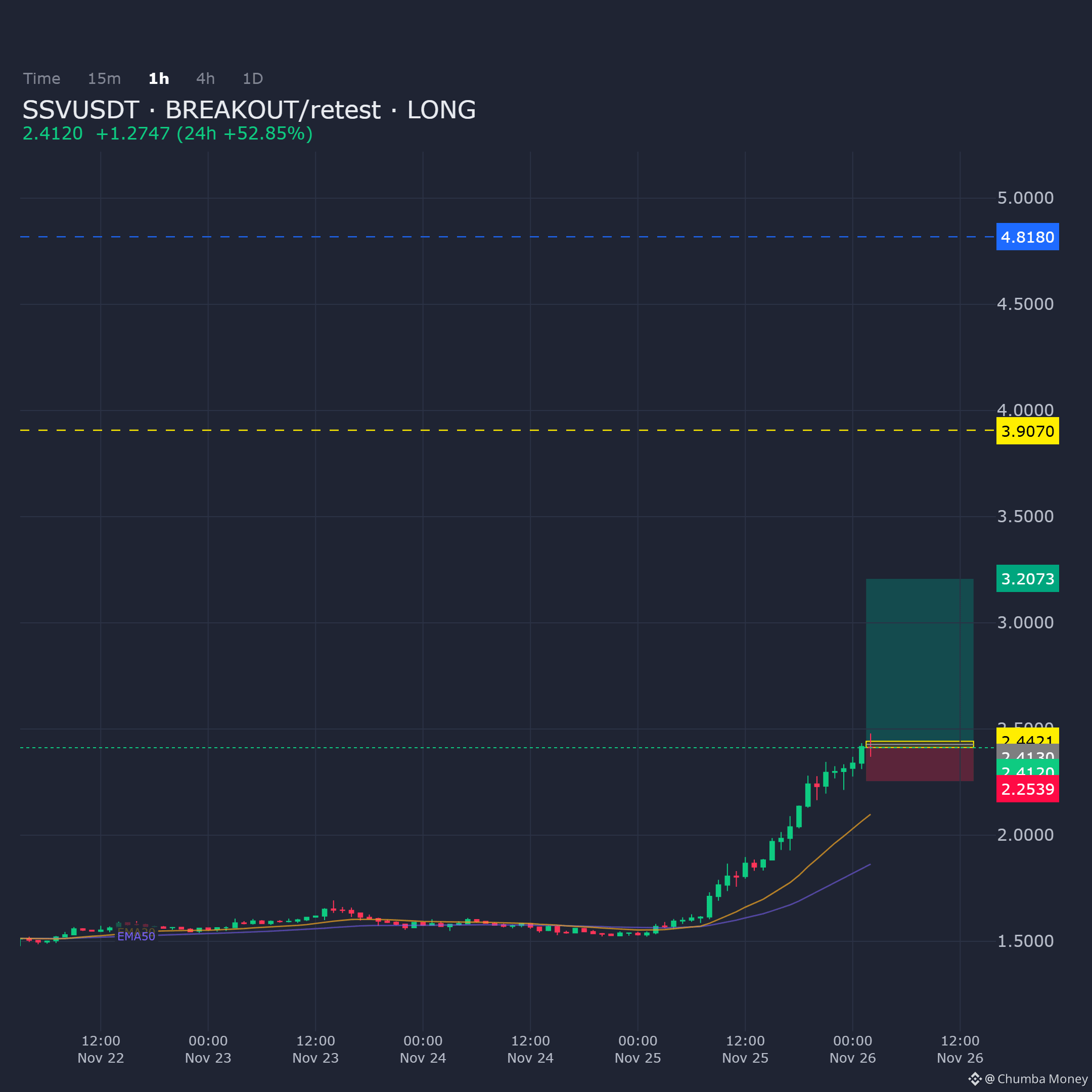
SSVUSDT on the 1H chart shows price retracing into a defined demand zone, keeping the long bias intact while support holds.
Entry: 2.413 - 2.4421
Targets: TP1: 3.2073, TP2: 3.907, TP3: 4.818
Stop Loss: 2.2539
$SSV
SSVUSDT on the 1H chart shows price retracing into a defined demand zone, keeping the long bias intact while support holds.
Entry: 2.413 - 2.4421
Targets: TP1: 3.2073, TP2: 3.907, TP3: 4.818
Stop Loss: 2.2539
$SSV
Entry: 2.413 - 2.4421
Targets: TP1: 3.2073, TP2: 3.907, TP3: 4.818
Stop Loss: 2.2539
$SSV
21
·
--
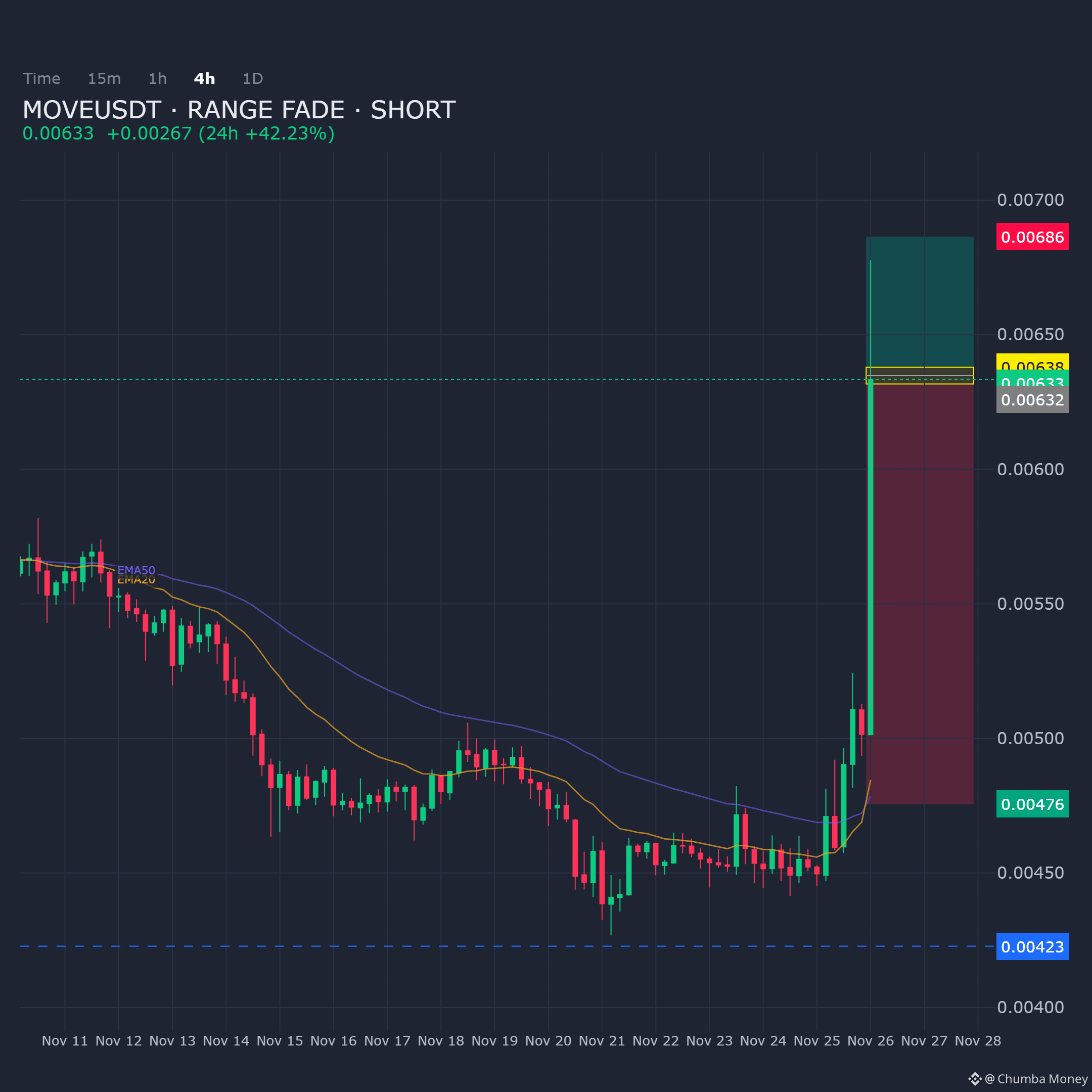
Le MOVEUSDT en 4H est en extension dans une zone d’offre, avec une stratégie de vente des extrêmes du range active. Je cherche à vendre à découvert depuis cette zone.
Entrée : 0.006317 - 0.006379
Objectifs : TP1 : 0.004756, TP2 : 0.004414, TP3 : 0.004228
Stop-loss : 0.006864
$MOVE
Le MOVEUSDT en 4H est en extension dans une zone d’offre, avec une stratégie de vente des extrêmes du range active. Je cherche à vendre à découvert depuis cette zone.
Entrée : 0.006317 - 0.006379
Objectifs : TP1 : 0.004756, TP2 : 0.004414, TP3 : 0.004228
Stop-loss : 0.006864
$MOVE
Entrée : 0.006317 - 0.006379
Objectifs : TP1 : 0.004756, TP2 : 0.004414, TP3 : 0.004228
Stop-loss : 0.006864
$MOVE
24
·
--
Voir la traduction
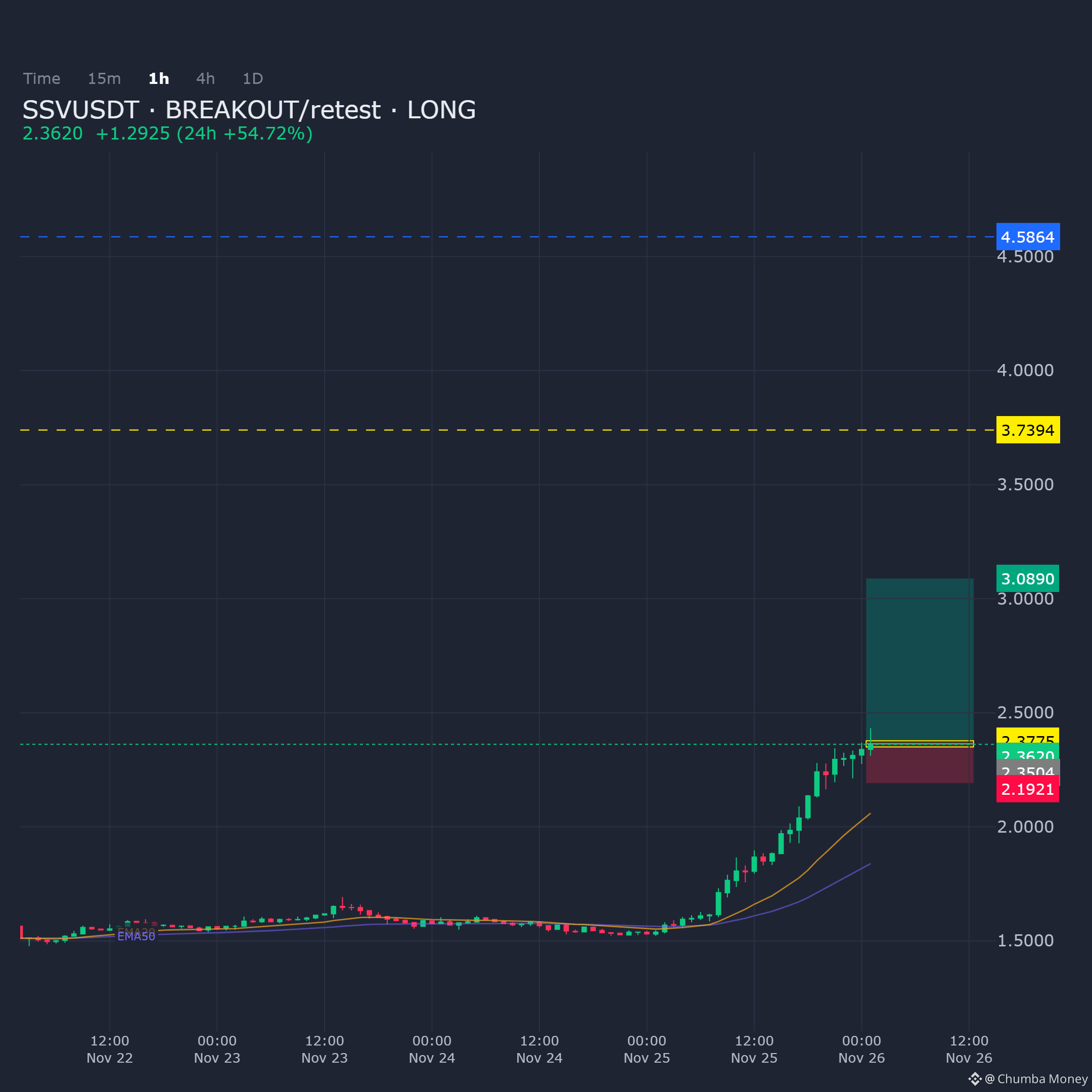
SSVUSDT on the 1H chart is forming a breakout retest setup. Price is pulling back into a defined demand zone, keeping the bias long as long as this support area holds.
Entry: 2.3504 - 2.3775
Targets: TP1: 3.089, TP2: 3.7394, TP3: 4.5864
Stop Loss: 2.1921
$SSV
SSVUSDT on the 1H chart is forming a breakout retest setup. Price is pulling back into a defined demand zone, keeping the bias long as long as this support area holds.
Entry: 2.3504 - 2.3775
Targets: TP1: 3.089, TP2: 3.7394, TP3: 4.5864
Stop Loss: 2.1921
$SSV
Entry: 2.3504 - 2.3775
Targets: TP1: 3.089, TP2: 3.7394, TP3: 4.5864
Stop Loss: 2.1921
$SSV
46
·
--
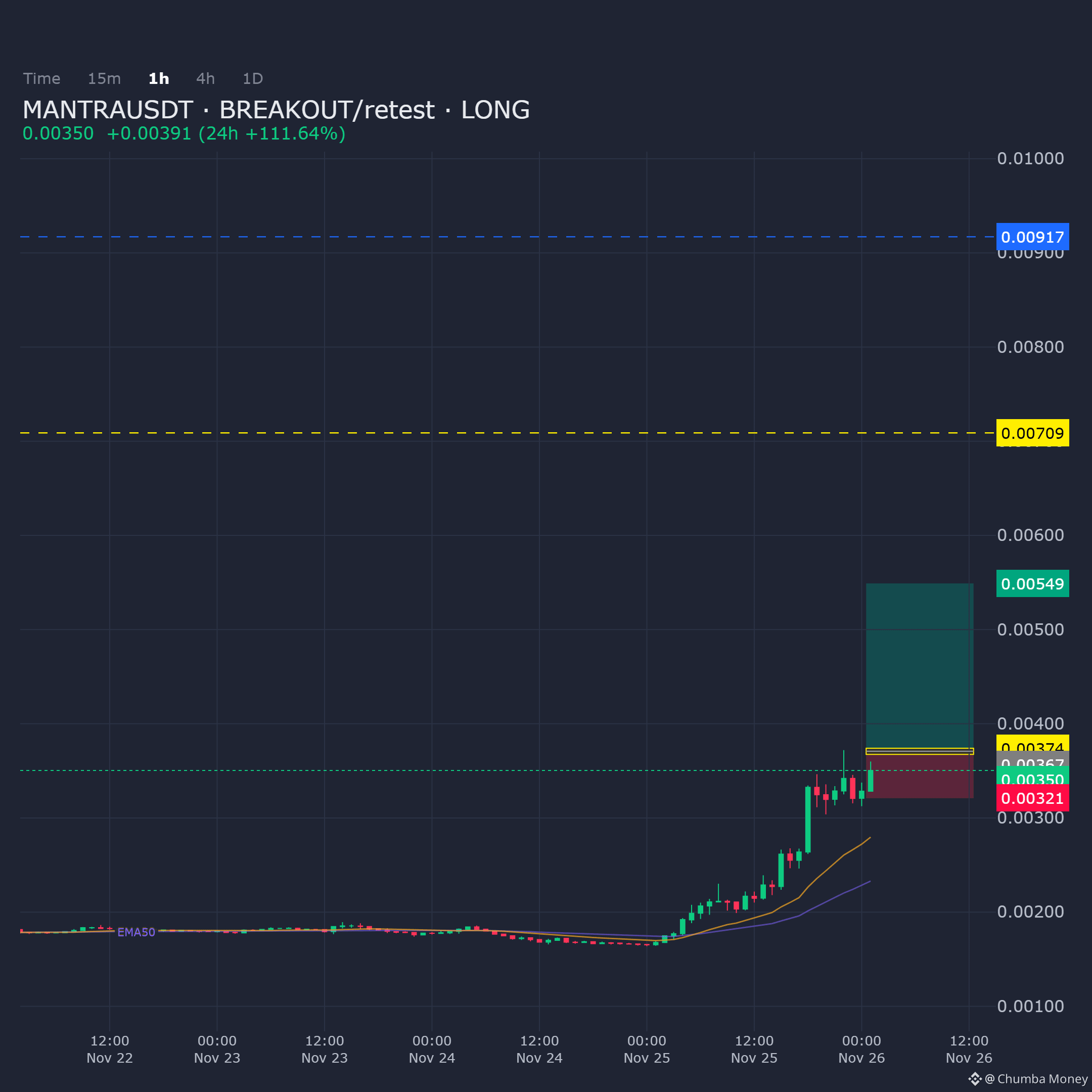
MANTRAUSDT consolide sur l’unité de temps 1H avec un biais haussier après la formation d’une zone de cassure. Le prix approche d’une zone de retest qui correspond à des niveaux structurels clés.
Entrée : 0.003674 - 0.003741
Objectifs : TP1 : 0.00549, TP2 : 0.007089, TP3 : 0.009171
Stop-loss : 0.00321
$MANTRA
Entrée : 0.003674 - 0.003741
Objectifs : TP1 : 0.00549, TP2 : 0.007089, TP3 : 0.009171
Stop-loss : 0.00321
$MANTRA
47
·
--
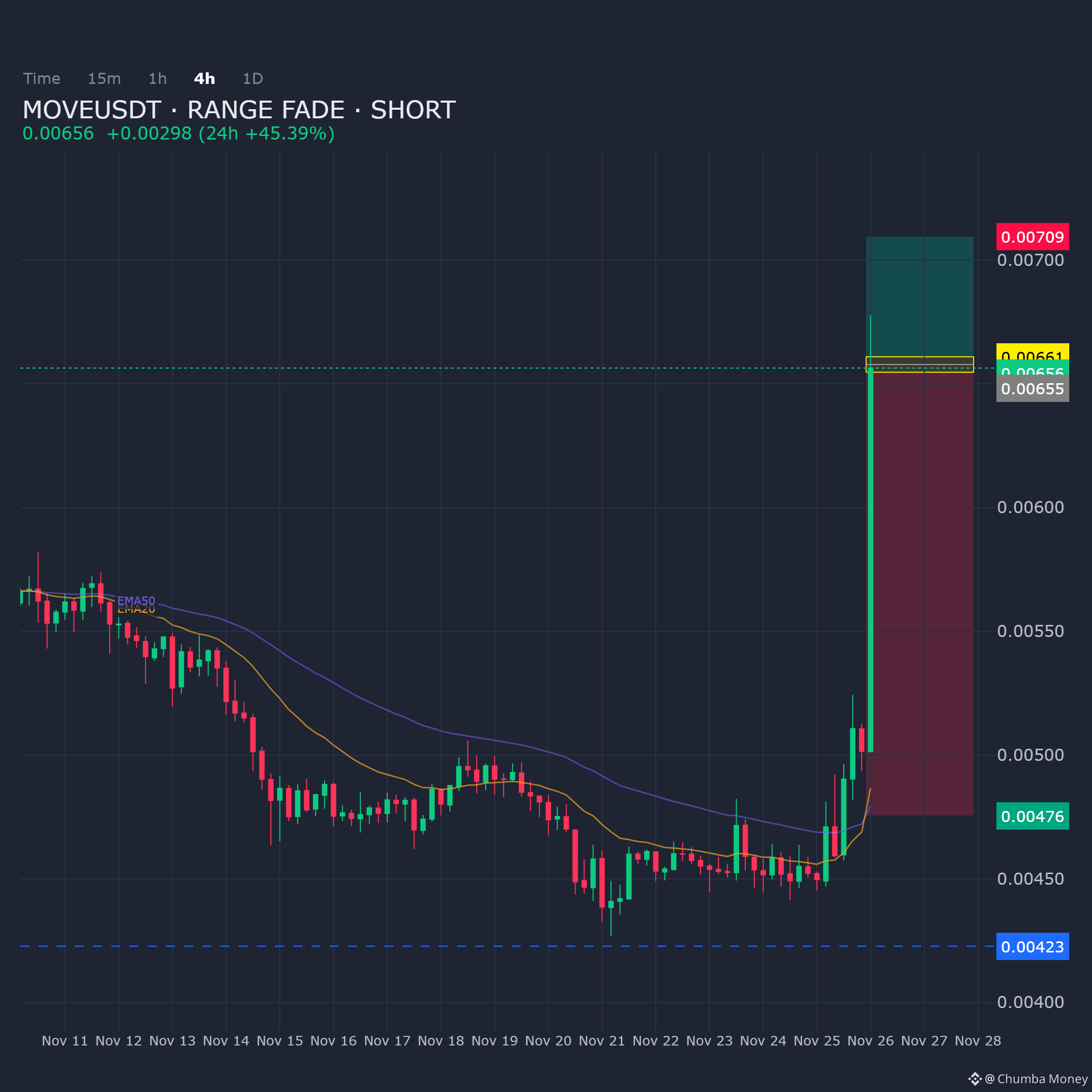
MOVEUSDT se négocie au sommet de la fourchette 4H après un mouvement prolongé, offrant une configuration classique de rejet dans une zone d’offre.
Entrée : 0.006547 - 0.006609
Objectifs : TP1 : 0.004756, TP2 : 0.004414, TP3 : 0.004228
Stop loss : 0.007094
$MOVE
MOVEUSDT se négocie au sommet de la fourchette 4H après un mouvement prolongé, offrant une configuration classique de rejet dans une zone d’offre.
Entrée : 0.006547 - 0.006609
Objectifs : TP1 : 0.004756, TP2 : 0.004414, TP3 : 0.004228
Stop loss : 0.007094
$MOVE
Entrée : 0.006547 - 0.006609
Objectifs : TP1 : 0.004756, TP2 : 0.004414, TP3 : 0.004228
Stop loss : 0.007094
$MOVE
56
·
--
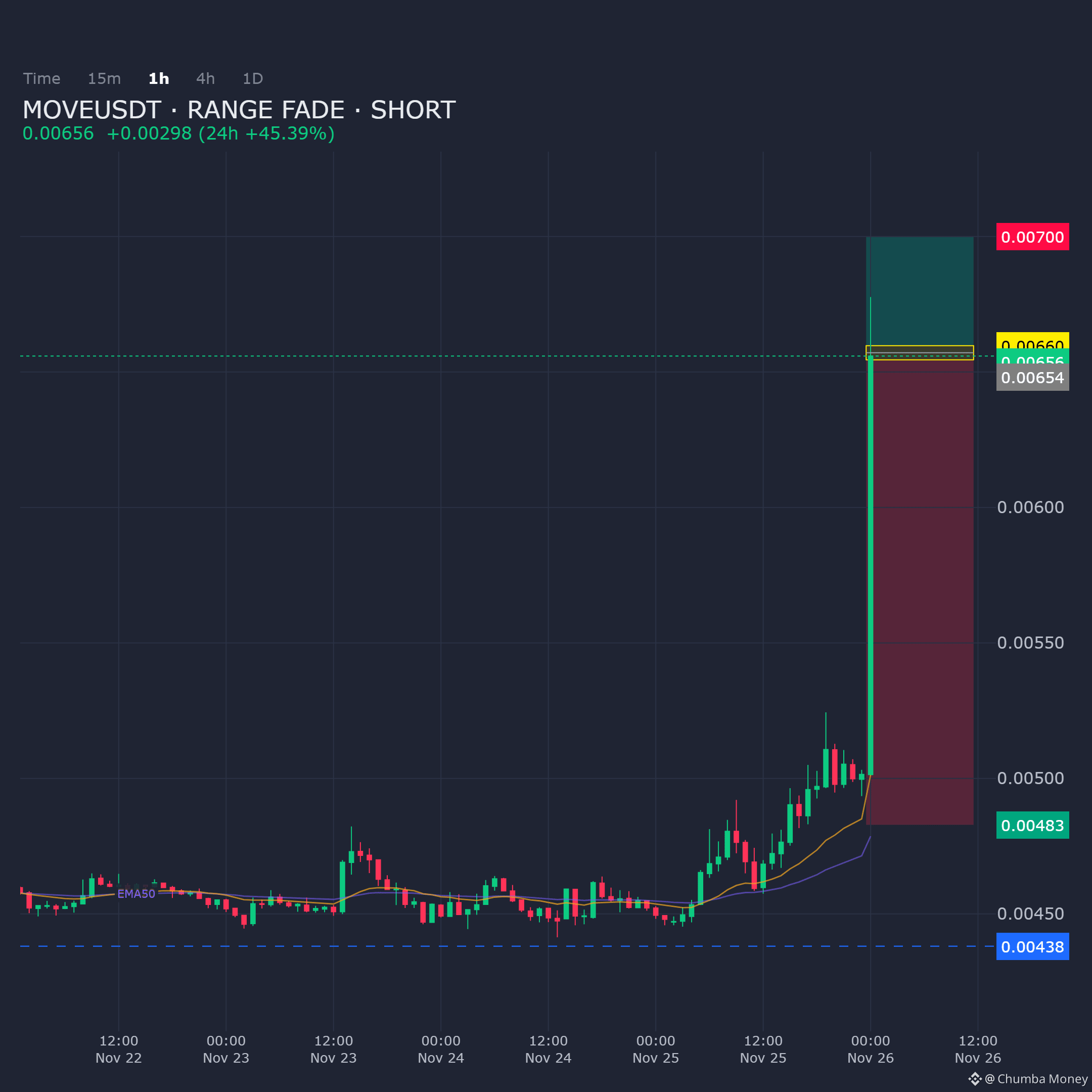
MOVEUSDT sur l’unité de temps 1H est en situation de surachat dans une zone d’offre, ce qui fait basculer le biais intrajournalier à la baisse. On cherche à jouer le rejet du range tant que la résistance tient.
Entrée : 0.006545 - 0.006597
Objectifs : TP1 : 0.004829, TP2 : 0.004538, TP3 : 0.004381
Stop-loss : 0.006999
$MOVE
Entrée : 0.006545 - 0.006597
Objectifs : TP1 : 0.004829, TP2 : 0.004538, TP3 : 0.004381
Stop-loss : 0.006999
$MOVE
74
·
--
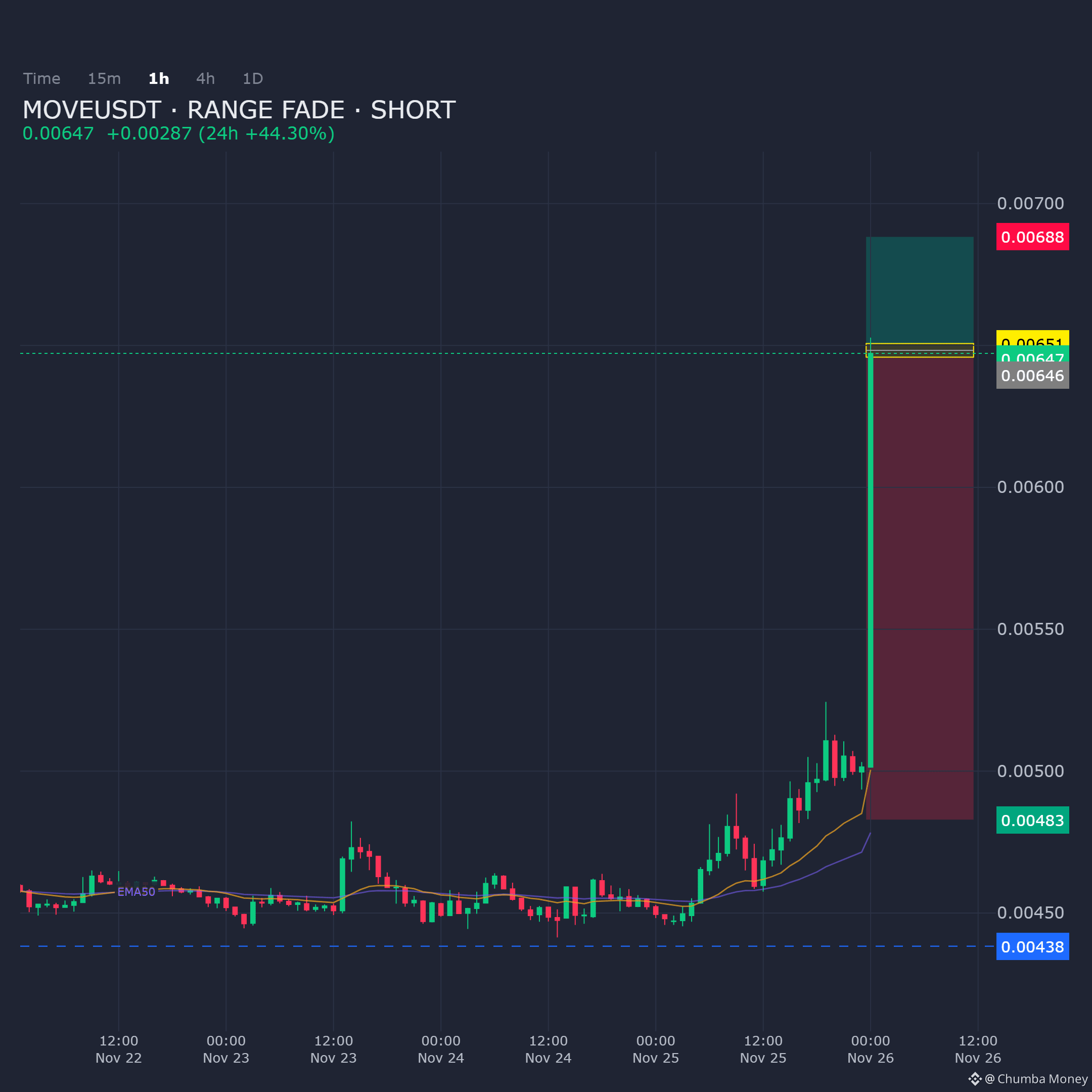
MOVEUSDT sur l’unité de temps 1 h est trop étiré dans une zone d’offre, ce qui ouvre la voie à une position vendeuse de retour dans la fourchette depuis la résistance actuelle.
Entrée : 0.006459 - 0.006507
Objectifs : TP1 : 0.004829, TP2 : 0.004538, TP3 : 0.004383
Stop-loss : 0.006883
$MOVE
MOVEUSDT sur l’unité de temps 1 h est trop étiré dans une zone d’offre, ce qui ouvre la voie à une position vendeuse de retour dans la fourchette depuis la résistance actuelle.
Entrée : 0.006459 - 0.006507
Objectifs : TP1 : 0.004829, TP2 : 0.004538, TP3 : 0.004383
Stop-loss : 0.006883
$MOVE
Entrée : 0.006459 - 0.006507
Objectifs : TP1 : 0.004829, TP2 : 0.004538, TP3 : 0.004383
Stop-loss : 0.006883
$MOVE
93
Connectez-vous pour découvrir plus de contenu
Rejoignez la communauté mondiale des adeptes de cryptomonnaies sur Binance Square
⚡️ Suviez les dernières informations importantes sur les cryptomonnaies.
💬 Jugé digne de confiance par la plus grande plateforme d’échange de cryptomonnaies au monde.
👍 Découvrez les connaissances que partagent les créateurs vérifiés.
Adresse e-mail/Nº de téléphone
Sujets d’actualité
CanMarketsReboundAfterThanksgiving?
24,478 vues
552 mentions
Les paris sur une hausse des taux persistent à l’approche de la fermeture des marchés américains pour Thanksgiving
Binance News
·1 mentions J’aime
·1.7k vues
CouldSpaceX’sOrbitalDataCentersBoostAIChipDemand?
15,552 vues
352 mentions
EvolveAtBinanceBlockchainWeek
669,724 vues
7,394 mentions