

ccResearch
10 Publications

ccResearch
Signaler
Bloquer l’utilisateur
Deep research on crypto, macro & global narratives.
4 Suivis
24 Abonnés
28 J’aime
Publications
·
--
Article
The Terra Luna Domino Effect: Anatomy of a Financial Collapse and Lessons for the Modern InvestorThe cryptocurrency market has long been a witness to cycles of euphoria and distress, yet few events have reshaped the regulatory landscape and investor psychology as profoundly as the cataclysm of Terra (LUNA) and its sister stablecoin, TerraUSD (UST).
Indeed, your suspicions were correct: the collapse occurred in May 2022. In a matter of just three days, an ecosystem that ranked among the top three largest in the world (trailing only Bitcoin and Ethereum) and boasted a combined market capitalization of over $45 billion, completely evaporated.
Below, we break down with corporate analytical precision and editorial rigor what triggered this crisis, how its complex financial engineering operated, and the golden rules you must follow to protect your capital from similar schemes in the future.
The Engine of the Disaster: What Was Terra Luna and How Did It Work? To understand the collapse, we must first deconstruct the machine. Unlike traditional stablecoins such as USDT (Tether) or USDC (Circle), which are backed 1:1 by physical fiat dollars or Treasury bills held in a bank, UST was an algorithmic stablecoin. It possessed no physical fiat reserves.
The system relied entirely on an arbitrage mechanism driven by two tokens:
UST: The stablecoin engineered to always maintain a value of exactly $1.00 USD.
LUNA: The network's floating native token, designed to absorb UST's volatility.
The Mint and Burn Mechanism The protocol dictated that 1 UST could always be exchanged (burned) for exactly $1.00 USD worth of LUNA, and vice versa.
If the price of UST rose to $1.05 USD, traders would burn $1.00 USD of LUNA to mint a new UST, selling it on the open market for $1.05 USD to pocket a risk-free arbitrage profit. This increased the circulating supply of UST, driving its price back down to $1.00 USD.
If the price of UST dropped to $0.95 USD, traders would buy that cheap UST, burn it within the protocol to receive $1.00 USD of newly minted LUNA, netting a $0.05 USD profit. This reduced the supply of UST, pushing its price back up to $1.00 USD.
The Achilles' Heel: This model operated under an idyllic mathematical premise: that there would always be market demand and inherent value for the LUNA token.
The Catalyst: Anchor Protocol and the 20% Illusion The meteoric adoption of UST was not driven by organic commercial utility, but rather by an artificial incentive: Anchor Protocol. This lending ecosystem on the Terra network offered a fixed 19.5% Annual Percentage Yield (APY) simply for depositing UST.
By April 2022, approximately 75% of all UST in global circulation was deposited in a single venue: Anchor. The system had devolved into a highly concentrated ticking time bomb where Terraform Labs, led by Do Kwon, subsidized millions of dollars daily to keep an unsustainable interest rate alive.
The Chronology of the Death Spiral On May 7, 2022, the delicate equilibrium fractured. Coinciding with a gradual reduction in Anchor’s interest rates and a global macro bear market, several institutional investors (or "whales") withdrew hundreds of millions of UST from Anchor and dumped them heavily across platforms like Curve and Binance.
What followed was a textbook bank run, accelerated by the warp speed of blockchain technology:
As UST lost its peg, panicked users rushed to convert their UST into LUNA to salvage their funds.
The algorithm, hardcoded to automate this process, began minting billions of new LUNA tokens per second in a desperate bid to absorb the UST selling pressure.
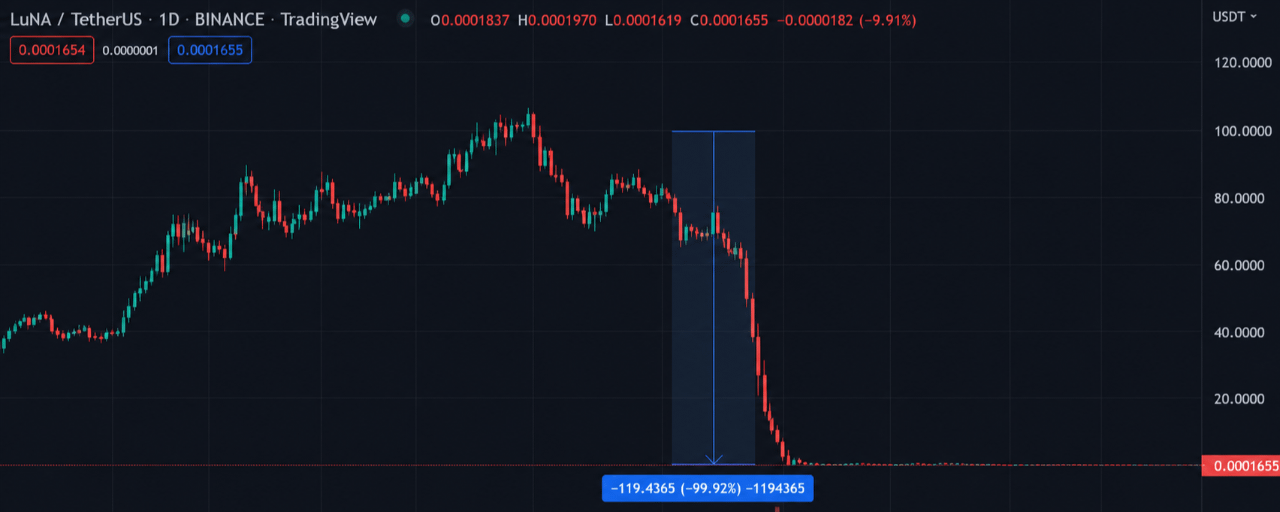
This triggered a massive hyperinflation in LUNA's supply. Its price was utterly pulverized, collapsing from trading above $80 USD to practically zero within 72 hours.
With no market value left in LUNA to back the conversion, the arbitrage mechanism broke entirely. UST plummeted to mere pennies, leaving hundreds of thousands of retail and institutional investors completely bankrupt.
The contagion ran so deep that it dragged down prominent venture capital firms like Three Arrows Capital and crypto lending platforms such as Celsius, culminating in historic legal reckonings: in December 2025, founder Do Kwon was sentenced in the U.S. to 15 years in prison after pleading guilty to federal fraud charges.
The Survival Manual: How to Identify and Avoid These Frauds The collapse of Terra Luna left invaluable lessons written in financial blood. To post on Binance Square with an analytical posture and protect the community, these are the corporate guidelines for vetting high-risk projects:
A. Beware of Asymmetric Guaranteed Returns If a project offers a high, fixed yield (such as Anchor's 20%) while central banks or traditional finance sit in the single digits, always ask yourself: Where is the liquidity coming from to pay my interest? If the answer is "from new users entering the system" or "from parent company subsidies," you are looking at an unsustainable scheme.
B. Comprehend the Asset's Real Backing (Collateral) Before allocating capital to a stablevalue asset, audit its reserves. Tokens backed by audited, tangible assets (cash, short-term government bonds) provide a genuine cushion during market panics. Purely algorithmic systems—or those backed solely by trust in a secondary native token—are inherently prone to systemic liquidity crises.
C. Analyze Governance and Ownership Concentration Utilizing on-chain analysis tools, verify token distribution. If an alarming percentage of the supply is held by the founders or concentrated inside a single protocol, the risk of market manipulation or a cascading liquidation cascade increases exponentially.
D. The Golden Rule: Infrastructure Diversification The crypto ecosystem heavily penalizes the centralization of capital within a single asset or network. Never keep your life savings exposed to a single smart contract ecosystem, regardless of how "bulletproof" its code claims to be or how charismatic its leaders appear on social media.
Editorial Reflection: Terra Luna proved that in the digital economy, mathematics without tangible collateral is merely a promise. The true professional investor does not chase the highest yield; they seek the best-managed risk.
The Terra Luna Domino Effect: Anatomy of a Financial Collapse and Lessons for the Modern Investor
The cryptocurrency market has long been a witness to cycles of euphoria and distress, yet few events have reshaped the regulatory landscape and investor psychology as profoundly as the cataclysm of Terra (LUNA) and its sister stablecoin, TerraUSD (UST).
Indeed, your suspicions were correct: the collapse occurred in May 2022. In a matter of just three days, an ecosystem that ranked among the top three largest in the world (trailing only Bitcoin and Ethereum) and boasted a combined market capitalization of over $45 billion, completely evaporated.
Below, we break down with corporate analytical precision and editorial rigor what triggered this crisis, how its complex financial engineering operated, and the golden rules you must follow to protect your capital from similar schemes in the future.
The Engine of the Disaster: What Was Terra Luna and How Did It Work? To understand the collapse, we must first deconstruct the machine. Unlike traditional stablecoins such as USDT (Tether) or USDC (Circle), which are backed 1:1 by physical fiat dollars or Treasury bills held in a bank, UST was an algorithmic stablecoin. It possessed no physical fiat reserves.
The system relied entirely on an arbitrage mechanism driven by two tokens:
UST: The stablecoin engineered to always maintain a value of exactly $1.00 USD.
LUNA: The network's floating native token, designed to absorb UST's volatility.
The Mint and Burn Mechanism The protocol dictated that 1 UST could always be exchanged (burned) for exactly $1.00 USD worth of LUNA, and vice versa.
If the price of UST rose to $1.05 USD, traders would burn $1.00 USD of LUNA to mint a new UST, selling it on the open market for $1.05 USD to pocket a risk-free arbitrage profit. This increased the circulating supply of UST, driving its price back down to $1.00 USD.
If the price of UST dropped to $0.95 USD, traders would buy that cheap UST, burn it within the protocol to receive $1.00 USD of newly minted LUNA, netting a $0.05 USD profit. This reduced the supply of UST, pushing its price back up to $1.00 USD.
The Achilles' Heel: This model operated under an idyllic mathematical premise: that there would always be market demand and inherent value for the LUNA token.
The Catalyst: Anchor Protocol and the 20% Illusion The meteoric adoption of UST was not driven by organic commercial utility, but rather by an artificial incentive: Anchor Protocol. This lending ecosystem on the Terra network offered a fixed 19.5% Annual Percentage Yield (APY) simply for depositing UST.
By April 2022, approximately 75% of all UST in global circulation was deposited in a single venue: Anchor. The system had devolved into a highly concentrated ticking time bomb where Terraform Labs, led by Do Kwon, subsidized millions of dollars daily to keep an unsustainable interest rate alive.
The Chronology of the Death Spiral On May 7, 2022, the delicate equilibrium fractured. Coinciding with a gradual reduction in Anchor’s interest rates and a global macro bear market, several institutional investors (or "whales") withdrew hundreds of millions of UST from Anchor and dumped them heavily across platforms like Curve and Binance.
What followed was a textbook bank run, accelerated by the warp speed of blockchain technology:
As UST lost its peg, panicked users rushed to convert their UST into LUNA to salvage their funds.
The algorithm, hardcoded to automate this process, began minting billions of new LUNA tokens per second in a desperate bid to absorb the UST selling pressure.
This triggered a massive hyperinflation in LUNA's supply. Its price was utterly pulverized, collapsing from trading above $80 USD to practically zero within 72 hours.
With no market value left in LUNA to back the conversion, the arbitrage mechanism broke entirely. UST plummeted to mere pennies, leaving hundreds of thousands of retail and institutional investors completely bankrupt.
The contagion ran so deep that it dragged down prominent venture capital firms like Three Arrows Capital and crypto lending platforms such as Celsius, culminating in historic legal reckonings: in December 2025, founder Do Kwon was sentenced in the U.S. to 15 years in prison after pleading guilty to federal fraud charges.
The Survival Manual: How to Identify and Avoid These Frauds The collapse of Terra Luna left invaluable lessons written in financial blood. To post on Binance Square with an analytical posture and protect the community, these are the corporate guidelines for vetting high-risk projects:
A. Beware of Asymmetric Guaranteed Returns If a project offers a high, fixed yield (such as Anchor's 20%) while central banks or traditional finance sit in the single digits, always ask yourself: Where is the liquidity coming from to pay my interest? If the answer is "from new users entering the system" or "from parent company subsidies," you are looking at an unsustainable scheme.
B. Comprehend the Asset's Real Backing (Collateral) Before allocating capital to a stablevalue asset, audit its reserves. Tokens backed by audited, tangible assets (cash, short-term government bonds) provide a genuine cushion during market panics. Purely algorithmic systems—or those backed solely by trust in a secondary native token—are inherently prone to systemic liquidity crises.
C. Analyze Governance and Ownership Concentration Utilizing on-chain analysis tools, verify token distribution. If an alarming percentage of the supply is held by the founders or concentrated inside a single protocol, the risk of market manipulation or a cascading liquidation cascade increases exponentially.
D. The Golden Rule: Infrastructure Diversification The crypto ecosystem heavily penalizes the centralization of capital within a single asset or network. Never keep your life savings exposed to a single smart contract ecosystem, regardless of how "bulletproof" its code claims to be or how charismatic its leaders appear on social media.
Editorial Reflection: Terra Luna proved that in the digital economy, mathematics without tangible collateral is merely a promise. The true professional investor does not chase the highest yield; they seek the best-managed risk.
Indeed, your suspicions were correct: the collapse occurred in May 2022. In a matter of just three days, an ecosystem that ranked among the top three largest in the world (trailing only Bitcoin and Ethereum) and boasted a combined market capitalization of over $45 billion, completely evaporated.
Below, we break down with corporate analytical precision and editorial rigor what triggered this crisis, how its complex financial engineering operated, and the golden rules you must follow to protect your capital from similar schemes in the future.
The Engine of the Disaster: What Was Terra Luna and How Did It Work? To understand the collapse, we must first deconstruct the machine. Unlike traditional stablecoins such as USDT (Tether) or USDC (Circle), which are backed 1:1 by physical fiat dollars or Treasury bills held in a bank, UST was an algorithmic stablecoin. It possessed no physical fiat reserves.
The system relied entirely on an arbitrage mechanism driven by two tokens:
UST: The stablecoin engineered to always maintain a value of exactly $1.00 USD.
LUNA: The network's floating native token, designed to absorb UST's volatility.
The Mint and Burn Mechanism The protocol dictated that 1 UST could always be exchanged (burned) for exactly $1.00 USD worth of LUNA, and vice versa.
If the price of UST rose to $1.05 USD, traders would burn $1.00 USD of LUNA to mint a new UST, selling it on the open market for $1.05 USD to pocket a risk-free arbitrage profit. This increased the circulating supply of UST, driving its price back down to $1.00 USD.
If the price of UST dropped to $0.95 USD, traders would buy that cheap UST, burn it within the protocol to receive $1.00 USD of newly minted LUNA, netting a $0.05 USD profit. This reduced the supply of UST, pushing its price back up to $1.00 USD.
The Achilles' Heel: This model operated under an idyllic mathematical premise: that there would always be market demand and inherent value for the LUNA token.
The Catalyst: Anchor Protocol and the 20% Illusion The meteoric adoption of UST was not driven by organic commercial utility, but rather by an artificial incentive: Anchor Protocol. This lending ecosystem on the Terra network offered a fixed 19.5% Annual Percentage Yield (APY) simply for depositing UST.
By April 2022, approximately 75% of all UST in global circulation was deposited in a single venue: Anchor. The system had devolved into a highly concentrated ticking time bomb where Terraform Labs, led by Do Kwon, subsidized millions of dollars daily to keep an unsustainable interest rate alive.
The Chronology of the Death Spiral On May 7, 2022, the delicate equilibrium fractured. Coinciding with a gradual reduction in Anchor’s interest rates and a global macro bear market, several institutional investors (or "whales") withdrew hundreds of millions of UST from Anchor and dumped them heavily across platforms like Curve and Binance.
What followed was a textbook bank run, accelerated by the warp speed of blockchain technology:
As UST lost its peg, panicked users rushed to convert their UST into LUNA to salvage their funds.
The algorithm, hardcoded to automate this process, began minting billions of new LUNA tokens per second in a desperate bid to absorb the UST selling pressure.
This triggered a massive hyperinflation in LUNA's supply. Its price was utterly pulverized, collapsing from trading above $80 USD to practically zero within 72 hours.
With no market value left in LUNA to back the conversion, the arbitrage mechanism broke entirely. UST plummeted to mere pennies, leaving hundreds of thousands of retail and institutional investors completely bankrupt.
The contagion ran so deep that it dragged down prominent venture capital firms like Three Arrows Capital and crypto lending platforms such as Celsius, culminating in historic legal reckonings: in December 2025, founder Do Kwon was sentenced in the U.S. to 15 years in prison after pleading guilty to federal fraud charges.
The Survival Manual: How to Identify and Avoid These Frauds The collapse of Terra Luna left invaluable lessons written in financial blood. To post on Binance Square with an analytical posture and protect the community, these are the corporate guidelines for vetting high-risk projects:
A. Beware of Asymmetric Guaranteed Returns If a project offers a high, fixed yield (such as Anchor's 20%) while central banks or traditional finance sit in the single digits, always ask yourself: Where is the liquidity coming from to pay my interest? If the answer is "from new users entering the system" or "from parent company subsidies," you are looking at an unsustainable scheme.
B. Comprehend the Asset's Real Backing (Collateral) Before allocating capital to a stablevalue asset, audit its reserves. Tokens backed by audited, tangible assets (cash, short-term government bonds) provide a genuine cushion during market panics. Purely algorithmic systems—or those backed solely by trust in a secondary native token—are inherently prone to systemic liquidity crises.
C. Analyze Governance and Ownership Concentration Utilizing on-chain analysis tools, verify token distribution. If an alarming percentage of the supply is held by the founders or concentrated inside a single protocol, the risk of market manipulation or a cascading liquidation cascade increases exponentially.
D. The Golden Rule: Infrastructure Diversification The crypto ecosystem heavily penalizes the centralization of capital within a single asset or network. Never keep your life savings exposed to a single smart contract ecosystem, regardless of how "bulletproof" its code claims to be or how charismatic its leaders appear on social media.
Editorial Reflection: Terra Luna proved that in the digital economy, mathematics without tangible collateral is merely a promise. The true professional investor does not chase the highest yield; they seek the best-managed risk.
392
·
--
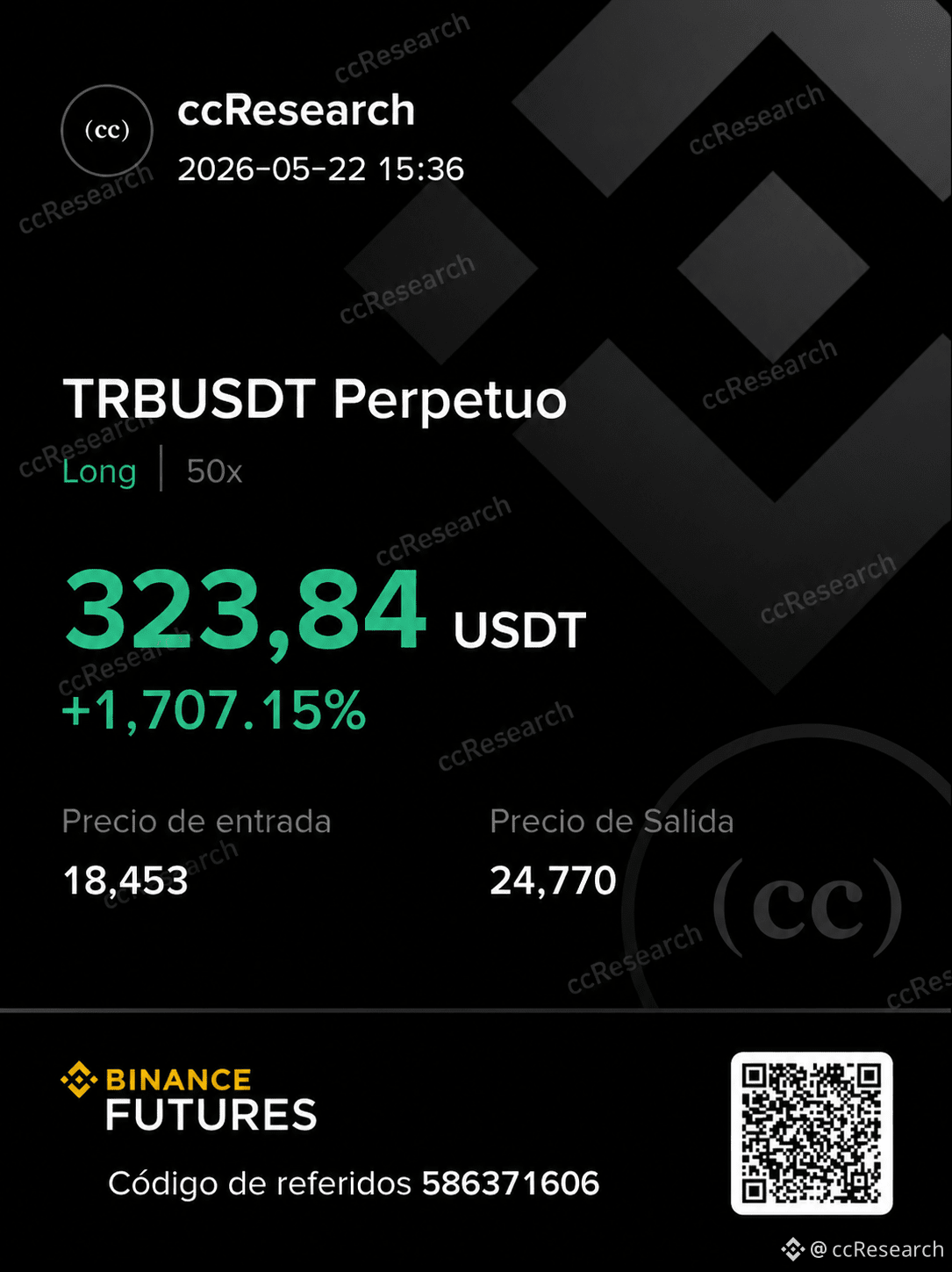
A few weeks ago, I identified a continuation opportunity in TRB (Tellor) within the futures market. The position eventually closed with a +1707% return, but beyond the result itself, what mattered most was the asset’s structural context and the execution behind the trade.
TRB has become one of the more interesting instruments for intraday trading and short-term swings due to its combination of volatility, derivatives liquidity, and sensitivity to technical levels. While the asset has historically experienced aggressive price movements, it has recently shown a more stable structure for traders who understand momentum expansion and order flow behavior.
The trade was executed under a bullish continuation and volatility expansion thesis:
• Entry: 18,453
• Exit: 24,770
• Position: Long
• Leverage: x50
The execution was based on:
— market structure
— momentum continuation
— futures flow reaction
— liquidity and acceleration zones
One of the most common mistakes in trading is assuming leverage creates an edge by itself. In reality, the key difference still comes down to risk management, discipline, and correctly reading market context.
TRB remains a high-volatility, high-risk asset, but that is precisely why it can continue offering strong opportunities for traders with experience in derivatives and operational discipline.
Not financial advice.
Simply sharing the analysis and execution behind a trade that worked out well.
#TRB #Tellor #BinanceFutures $TRB
{future}(TRBUSDT)
A few weeks ago, I identified a continuation opportunity in TRB (Tellor) within the futures market. The position eventually closed with a +1707% return, but beyond the result itself, what mattered most was the asset’s structural context and the execution behind the trade.
TRB has become one of the more interesting instruments for intraday trading and short-term swings due to its combination of volatility, derivatives liquidity, and sensitivity to technical levels. While the asset has historically experienced aggressive price movements, it has recently shown a more stable structure for traders who understand momentum expansion and order flow behavior.
The trade was executed under a bullish continuation and volatility expansion thesis:
• Entry: 18,453
• Exit: 24,770
• Position: Long
• Leverage: x50
The execution was based on:
— market structure
— momentum continuation
— futures flow reaction
— liquidity and acceleration zones
One of the most common mistakes in trading is assuming leverage creates an edge by itself. In reality, the key difference still comes down to risk management, discipline, and correctly reading market context.
TRB remains a high-volatility, high-risk asset, but that is precisely why it can continue offering strong opportunities for traders with experience in derivatives and operational discipline.
Not financial advice.
Simply sharing the analysis and execution behind a trade that worked out well.
#TRB #Tellor #BinanceFutures $TRB
TRB has become one of the more interesting instruments for intraday trading and short-term swings due to its combination of volatility, derivatives liquidity, and sensitivity to technical levels. While the asset has historically experienced aggressive price movements, it has recently shown a more stable structure for traders who understand momentum expansion and order flow behavior.
The trade was executed under a bullish continuation and volatility expansion thesis:
• Entry: 18,453
• Exit: 24,770
• Position: Long
• Leverage: x50
The execution was based on:
— market structure
— momentum continuation
— futures flow reaction
— liquidity and acceleration zones
One of the most common mistakes in trading is assuming leverage creates an edge by itself. In reality, the key difference still comes down to risk management, discipline, and correctly reading market context.
TRB remains a high-volatility, high-risk asset, but that is precisely why it can continue offering strong opportunities for traders with experience in derivatives and operational discipline.
Not financial advice.
Simply sharing the analysis and execution behind a trade that worked out well.
#TRB #Tellor #BinanceFutures $TRB
353
·
--
Article
The Worldcoin Factor: A Technical Roadmap of a Crypto Ecosystem in the Age of Total AutomationThe intersection of cryptography and Artificial Intelligence (AI) has shifted from theoretical speculation into a concrete landscape of financial and regulatory engineering. At the center of this ecosystem is Worldcoin (WLD), a project co-founded by Sam Altman and Alex Blania through the firm Tools for Humanity (TFH).
Unlike other crypto assets driven purely by narratives of digital scarcity or DeFi, Worldcoin was specifically engineered as an infrastructural response to the rapid rise of automation and synthetic content generation.
The following sections analyze the technical facts, supply metrics, and structural projections of the protocol across short-, medium-, and long-term horizons.
Protocol Architecture: How Worldcoin Operates To understand its market behavior, it is necessary to break down its technical architecture, which relies on four operational pillars:
The Orb: A physical hardware device equipped with optical and thermal sensors designed to perform a biometric scan of the human iris. The sole purpose of this hardware is to verify an individual's "uniqueness."
IrisCode: The device does not store photographs of the eye. It processes the image locally and, utilizing an irreversible mathematical algorithm, generates a unique numerical code based on the patterns of the iris.
World ID: The resulting digital credential. It leverages Zero-Knowledge Proofs (ZKP), allowing users to prove to third-party applications that they are a unique, real human without revealing their IrisCode or legal identity.
World Chain: A Layer 2 network built on the OP Stack (Optimism ecosystem) and anchored to the security of the Ethereum mainnet. This is the infrastructure where the ecosystem's transactions and smart contracts are settled.
Short-Term Horizon: Technical and Financial Factors in July 2026 The year 2026 represents a critical milestone in the economic design of the WLD token due to a programmed modification in its issuance algorithms:
The Deceleration of Circulating Supply Starting July 24, 2026, the automated unlock schedule for tokens allocated to initial investors and the Tools for Humanity development team undergoes a structural shift. The daily emission rate drops by 43%, decreasing from approximately 5.1 million WLD per day to 2.9 million WLD per day. This technical adjustment drastically reduces the structural sell pressure absorbed by exchange order books.
Institutional Treasury Management To fund the global manufacturing of Orbs and sustain network incentives, the Worldcoin Foundation regularly executes Over-The-Counter (OTC) transactions. These operations move large blocks of tokens directly from the treasury to institutional trading desks, avoiding direct liquidity impacts on public order books.
Medium-Term Horizon (2031): Identity Infrastructure Facing the "Synthetic Internet" If AI continues to displace traditional content creation across news outlets, blogs, and social platforms, the digital environment will face severe saturation from autonomous software. In this five-year scenario, the protocol operates under engineering principles already deployed within its codebase:
Global Sybil Attack Mitigation A Sybil attack involves creating massive quantities of fake identities to manipulate voting systems, recommendation algorithms, or digital marketplaces. With APIs already connecting World ID to platforms like Shopify, Discord, Reddit, and Mercado Libre, the protocol acts as a verification layer requiring a human cryptographic signature to interact, effectively isolating bot traffic without storing government data.
Media and Content Indexing The Worldcoin protocol does not act as an arbiter of truth (it does not determine whether a piece of news is factually accurate or fake); its function is purely binary: it validates whether the original creator is a software bot or a unique human. In a media landscape dominated by AI, information agencies and content distributors will utilize these credentials to certify the organic authorship of their work.
Long-Term Horizon (2036): The UBI Model and Regulatory Barriers The long-term vision documented in the Worldcoin Whitepaper is the establishment of a globally distributed Universal Basic Income (UBI). However, the viability of this ten-year scenario depends on very specific legal and infrastructural realities:
The Financial Mechanism of "Grants" The system is programmed to issue fixed WLD grants to verified users. For this subsidy to function as a real financial value flow for the recipient, the World Chain network must generate sufficient internal demand through transaction fees (gas) and verification service contracts paid for by tech corporations.
The Conflict with Sovereign Data Privacy Laws The ultimate determining factor for Worldcoin's survival is not user adoption, but compliance with the GDPR (General Data Protection Regulation in the European Union) and similar global legislations. Three regulatory realities define its trajectory:
Territorial Bans: Regulators in countries such as Spain, Portugal, Kenya, and South Korea have previously implemented temporary or permanent suspensions on Orb operations due to audits regarding user consent and the handling of minors' data.
Personal Data Custody: To mitigate the legal risks of centralized storage, the project updated its architecture so that encrypted iris images remain exclusively on the user's personal physical device.
Forking Risks: Because it is an open-source protocol, if sovereign states ban the centralized governance of Tools for Humanity, the software allows independent developers or local governments to create "forks" of the network to implement human verification systems under specific local state controls.
#WLD
The Worldcoin Factor: A Technical Roadmap of a Crypto Ecosystem in the Age of Total Automation
The intersection of cryptography and Artificial Intelligence (AI) has shifted from theoretical speculation into a concrete landscape of financial and regulatory engineering. At the center of this ecosystem is Worldcoin (WLD), a project co-founded by Sam Altman and Alex Blania through the firm Tools for Humanity (TFH).
Unlike other crypto assets driven purely by narratives of digital scarcity or DeFi, Worldcoin was specifically engineered as an infrastructural response to the rapid rise of automation and synthetic content generation.
The following sections analyze the technical facts, supply metrics, and structural projections of the protocol across short-, medium-, and long-term horizons.
Protocol Architecture: How Worldcoin Operates To understand its market behavior, it is necessary to break down its technical architecture, which relies on four operational pillars:
The Orb: A physical hardware device equipped with optical and thermal sensors designed to perform a biometric scan of the human iris. The sole purpose of this hardware is to verify an individual's "uniqueness."
IrisCode: The device does not store photographs of the eye. It processes the image locally and, utilizing an irreversible mathematical algorithm, generates a unique numerical code based on the patterns of the iris.
World ID: The resulting digital credential. It leverages Zero-Knowledge Proofs (ZKP), allowing users to prove to third-party applications that they are a unique, real human without revealing their IrisCode or legal identity.
World Chain: A Layer 2 network built on the OP Stack (Optimism ecosystem) and anchored to the security of the Ethereum mainnet. This is the infrastructure where the ecosystem's transactions and smart contracts are settled.
Short-Term Horizon: Technical and Financial Factors in July 2026 The year 2026 represents a critical milestone in the economic design of the WLD token due to a programmed modification in its issuance algorithms:
The Deceleration of Circulating Supply Starting July 24, 2026, the automated unlock schedule for tokens allocated to initial investors and the Tools for Humanity development team undergoes a structural shift. The daily emission rate drops by 43%, decreasing from approximately 5.1 million WLD per day to 2.9 million WLD per day. This technical adjustment drastically reduces the structural sell pressure absorbed by exchange order books.
Institutional Treasury Management To fund the global manufacturing of Orbs and sustain network incentives, the Worldcoin Foundation regularly executes Over-The-Counter (OTC) transactions. These operations move large blocks of tokens directly from the treasury to institutional trading desks, avoiding direct liquidity impacts on public order books.
Medium-Term Horizon (2031): Identity Infrastructure Facing the "Synthetic Internet" If AI continues to displace traditional content creation across news outlets, blogs, and social platforms, the digital environment will face severe saturation from autonomous software. In this five-year scenario, the protocol operates under engineering principles already deployed within its codebase:
Global Sybil Attack Mitigation A Sybil attack involves creating massive quantities of fake identities to manipulate voting systems, recommendation algorithms, or digital marketplaces. With APIs already connecting World ID to platforms like Shopify, Discord, Reddit, and Mercado Libre, the protocol acts as a verification layer requiring a human cryptographic signature to interact, effectively isolating bot traffic without storing government data.
Media and Content Indexing The Worldcoin protocol does not act as an arbiter of truth (it does not determine whether a piece of news is factually accurate or fake); its function is purely binary: it validates whether the original creator is a software bot or a unique human. In a media landscape dominated by AI, information agencies and content distributors will utilize these credentials to certify the organic authorship of their work.
Long-Term Horizon (2036): The UBI Model and Regulatory Barriers The long-term vision documented in the Worldcoin Whitepaper is the establishment of a globally distributed Universal Basic Income (UBI). However, the viability of this ten-year scenario depends on very specific legal and infrastructural realities:
The Financial Mechanism of "Grants" The system is programmed to issue fixed WLD grants to verified users. For this subsidy to function as a real financial value flow for the recipient, the World Chain network must generate sufficient internal demand through transaction fees (gas) and verification service contracts paid for by tech corporations.
The Conflict with Sovereign Data Privacy Laws The ultimate determining factor for Worldcoin's survival is not user adoption, but compliance with the GDPR (General Data Protection Regulation in the European Union) and similar global legislations. Three regulatory realities define its trajectory:
Territorial Bans: Regulators in countries such as Spain, Portugal, Kenya, and South Korea have previously implemented temporary or permanent suspensions on Orb operations due to audits regarding user consent and the handling of minors' data.
Personal Data Custody: To mitigate the legal risks of centralized storage, the project updated its architecture so that encrypted iris images remain exclusively on the user's personal physical device.
Forking Risks: Because it is an open-source protocol, if sovereign states ban the centralized governance of Tools for Humanity, the software allows independent developers or local governments to create "forks" of the network to implement human verification systems under specific local state controls.
#WLD
Unlike other crypto assets driven purely by narratives of digital scarcity or DeFi, Worldcoin was specifically engineered as an infrastructural response to the rapid rise of automation and synthetic content generation.
The following sections analyze the technical facts, supply metrics, and structural projections of the protocol across short-, medium-, and long-term horizons.
Protocol Architecture: How Worldcoin Operates To understand its market behavior, it is necessary to break down its technical architecture, which relies on four operational pillars:
The Orb: A physical hardware device equipped with optical and thermal sensors designed to perform a biometric scan of the human iris. The sole purpose of this hardware is to verify an individual's "uniqueness."
IrisCode: The device does not store photographs of the eye. It processes the image locally and, utilizing an irreversible mathematical algorithm, generates a unique numerical code based on the patterns of the iris.
World ID: The resulting digital credential. It leverages Zero-Knowledge Proofs (ZKP), allowing users to prove to third-party applications that they are a unique, real human without revealing their IrisCode or legal identity.
World Chain: A Layer 2 network built on the OP Stack (Optimism ecosystem) and anchored to the security of the Ethereum mainnet. This is the infrastructure where the ecosystem's transactions and smart contracts are settled.
Short-Term Horizon: Technical and Financial Factors in July 2026 The year 2026 represents a critical milestone in the economic design of the WLD token due to a programmed modification in its issuance algorithms:
The Deceleration of Circulating Supply Starting July 24, 2026, the automated unlock schedule for tokens allocated to initial investors and the Tools for Humanity development team undergoes a structural shift. The daily emission rate drops by 43%, decreasing from approximately 5.1 million WLD per day to 2.9 million WLD per day. This technical adjustment drastically reduces the structural sell pressure absorbed by exchange order books.
Institutional Treasury Management To fund the global manufacturing of Orbs and sustain network incentives, the Worldcoin Foundation regularly executes Over-The-Counter (OTC) transactions. These operations move large blocks of tokens directly from the treasury to institutional trading desks, avoiding direct liquidity impacts on public order books.
Medium-Term Horizon (2031): Identity Infrastructure Facing the "Synthetic Internet" If AI continues to displace traditional content creation across news outlets, blogs, and social platforms, the digital environment will face severe saturation from autonomous software. In this five-year scenario, the protocol operates under engineering principles already deployed within its codebase:
Global Sybil Attack Mitigation A Sybil attack involves creating massive quantities of fake identities to manipulate voting systems, recommendation algorithms, or digital marketplaces. With APIs already connecting World ID to platforms like Shopify, Discord, Reddit, and Mercado Libre, the protocol acts as a verification layer requiring a human cryptographic signature to interact, effectively isolating bot traffic without storing government data.
Media and Content Indexing The Worldcoin protocol does not act as an arbiter of truth (it does not determine whether a piece of news is factually accurate or fake); its function is purely binary: it validates whether the original creator is a software bot or a unique human. In a media landscape dominated by AI, information agencies and content distributors will utilize these credentials to certify the organic authorship of their work.
Long-Term Horizon (2036): The UBI Model and Regulatory Barriers The long-term vision documented in the Worldcoin Whitepaper is the establishment of a globally distributed Universal Basic Income (UBI). However, the viability of this ten-year scenario depends on very specific legal and infrastructural realities:
The Financial Mechanism of "Grants" The system is programmed to issue fixed WLD grants to verified users. For this subsidy to function as a real financial value flow for the recipient, the World Chain network must generate sufficient internal demand through transaction fees (gas) and verification service contracts paid for by tech corporations.
The Conflict with Sovereign Data Privacy Laws The ultimate determining factor for Worldcoin's survival is not user adoption, but compliance with the GDPR (General Data Protection Regulation in the European Union) and similar global legislations. Three regulatory realities define its trajectory:
Territorial Bans: Regulators in countries such as Spain, Portugal, Kenya, and South Korea have previously implemented temporary or permanent suspensions on Orb operations due to audits regarding user consent and the handling of minors' data.
Personal Data Custody: To mitigate the legal risks of centralized storage, the project updated its architecture so that encrypted iris images remain exclusively on the user's personal physical device.
Forking Risks: Because it is an open-source protocol, if sovereign states ban the centralized governance of Tools for Humanity, the software allows independent developers or local governments to create "forks" of the network to implement human verification systems under specific local state controls.
#WLD
1
3
282
·
--
Article
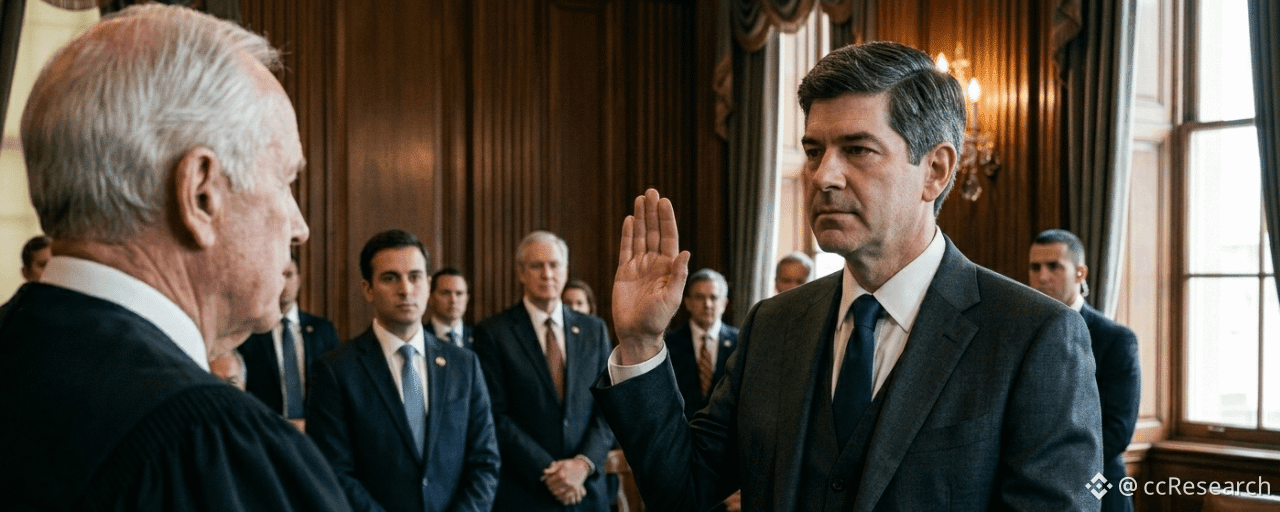
Fed Change of Guard: Kevin Warsh Sworn In & The Market ImpactIt’s official. Today, Friday, May 22, 2026, Kevin Warsh has formally taken office as the new Chairman of the Federal Reserve, replacing Jerome Powell following a narrow Senate confirmation (54-45).
For those of us who closely follow macroeconomics, this was no ordinary change of command. Today's event broke nearly 40 years of institutional tradition and redefines the global financial landscape for the second half of the decade.
Below, ccResearch breaks down the 3 key takeaways from the day and their latent impact on the markets:
A Historic Protocol Breach (The Shadow of Independence) For the first time since Alan Greenspan in 1987, a Fed Chairman was sworn in directly at the White House by the executive branch, rather than at the Federal Reserve’s own headquarters.
Although President Donald Trump declared during the ceremony that he wants Warsh to be "fully independent," the choice of location has not gone unnoticed by Wall Street analysts. The symbolism is heavy, especially following a year of intense political pressure to accelerate interest rate cuts.
The Powell Factor: Remaining on the Board Unlike other transitions where the outgoing Chairman steps down completely, Jerome Powell has decided to remain as a Governor on the Fed Board (his term as a committee member runs until 2028).
Why does this matter from a technical standpoint? Warsh takes the helm of an ideologically divided Federal Open Market Committee (FOMC). Powell’s presence as a pivotal vote means Warsh will not have an easy path if he seeks to implement radical changes or force aggressive rate cuts without the backing of the technical majority.
Warsh’s Economic Vision: Productivity and AI Departing from the traditional stance, Warsh has championed the thesis that the Artificial Intelligence (AI) boom is elevating structural productivity across the economy. Theoretically, this could allow solid growth to persist while keeping inflation in check, potentially opening the door for policy easing. Nonetheless, markets remain cautious: global geopolitical tensions and stable energy prices continue to put upward pressure on core inflation.
📊 Market & Crypto Implications (ccResearch View):
Wall Street (Equities): Stocks reacted with moderate optimism today. The market prefers the certainty of having a confirmed new leader, but the ultimate litmus test will be the upcoming FOMC meeting on June 16 and 17, where we will get Warsh's first interest rate guidance.
Crypto Assets: While Bitcoin Pizza Day commands retail attention today, the institutional crypto sector is keeping a close eye on Warsh. A Fed that gives in even slightly to liquidity pressures will inject heavy fuel into the crypto market over the medium term. However, if inflation spikes again, monetary tightening will hit risk assets hard.
Conclusion: The "Warsh Effect" has officially begun. The narrative of a Fed entirely insulated from Washington politics will be heavily tested in the coming months. At ccResearch, we will continue monitoring macro data to anticipate global liquidity shifts.
Do you think Warsh will successfully maintain the Fed's independence amid pressures for lower rates, or will we see a drastic shift in monetary policy this June? Leave your analysis in the comments below!
#FederalReserve #KevinWarsh #ccResearch #BinanceSquare #FinanceNews
Fed Change of Guard: Kevin Warsh Sworn In & The Market Impact
It’s official. Today, Friday, May 22, 2026, Kevin Warsh has formally taken office as the new Chairman of the Federal Reserve, replacing Jerome Powell following a narrow Senate confirmation (54-45).
For those of us who closely follow macroeconomics, this was no ordinary change of command. Today's event broke nearly 40 years of institutional tradition and redefines the global financial landscape for the second half of the decade.
Below, ccResearch breaks down the 3 key takeaways from the day and their latent impact on the markets:
A Historic Protocol Breach (The Shadow of Independence) For the first time since Alan Greenspan in 1987, a Fed Chairman was sworn in directly at the White House by the executive branch, rather than at the Federal Reserve’s own headquarters.
Although President Donald Trump declared during the ceremony that he wants Warsh to be "fully independent," the choice of location has not gone unnoticed by Wall Street analysts. The symbolism is heavy, especially following a year of intense political pressure to accelerate interest rate cuts.
The Powell Factor: Remaining on the Board Unlike other transitions where the outgoing Chairman steps down completely, Jerome Powell has decided to remain as a Governor on the Fed Board (his term as a committee member runs until 2028).
Why does this matter from a technical standpoint? Warsh takes the helm of an ideologically divided Federal Open Market Committee (FOMC). Powell’s presence as a pivotal vote means Warsh will not have an easy path if he seeks to implement radical changes or force aggressive rate cuts without the backing of the technical majority.
Warsh’s Economic Vision: Productivity and AI Departing from the traditional stance, Warsh has championed the thesis that the Artificial Intelligence (AI) boom is elevating structural productivity across the economy. Theoretically, this could allow solid growth to persist while keeping inflation in check, potentially opening the door for policy easing. Nonetheless, markets remain cautious: global geopolitical tensions and stable energy prices continue to put upward pressure on core inflation.
📊 Market & Crypto Implications (ccResearch View):
Wall Street (Equities): Stocks reacted with moderate optimism today. The market prefers the certainty of having a confirmed new leader, but the ultimate litmus test will be the upcoming FOMC meeting on June 16 and 17, where we will get Warsh's first interest rate guidance.
Crypto Assets: While Bitcoin Pizza Day commands retail attention today, the institutional crypto sector is keeping a close eye on Warsh. A Fed that gives in even slightly to liquidity pressures will inject heavy fuel into the crypto market over the medium term. However, if inflation spikes again, monetary tightening will hit risk assets hard.
Conclusion: The "Warsh Effect" has officially begun. The narrative of a Fed entirely insulated from Washington politics will be heavily tested in the coming months. At ccResearch, we will continue monitoring macro data to anticipate global liquidity shifts.
Do you think Warsh will successfully maintain the Fed's independence amid pressures for lower rates, or will we see a drastic shift in monetary policy this June? Leave your analysis in the comments below!
#FederalReserve #KevinWarsh #ccResearch #BinanceSquare #FinanceNews
For those of us who closely follow macroeconomics, this was no ordinary change of command. Today's event broke nearly 40 years of institutional tradition and redefines the global financial landscape for the second half of the decade.
Below, ccResearch breaks down the 3 key takeaways from the day and their latent impact on the markets:
A Historic Protocol Breach (The Shadow of Independence) For the first time since Alan Greenspan in 1987, a Fed Chairman was sworn in directly at the White House by the executive branch, rather than at the Federal Reserve’s own headquarters.
Although President Donald Trump declared during the ceremony that he wants Warsh to be "fully independent," the choice of location has not gone unnoticed by Wall Street analysts. The symbolism is heavy, especially following a year of intense political pressure to accelerate interest rate cuts.
The Powell Factor: Remaining on the Board Unlike other transitions where the outgoing Chairman steps down completely, Jerome Powell has decided to remain as a Governor on the Fed Board (his term as a committee member runs until 2028).
Why does this matter from a technical standpoint? Warsh takes the helm of an ideologically divided Federal Open Market Committee (FOMC). Powell’s presence as a pivotal vote means Warsh will not have an easy path if he seeks to implement radical changes or force aggressive rate cuts without the backing of the technical majority.
Warsh’s Economic Vision: Productivity and AI Departing from the traditional stance, Warsh has championed the thesis that the Artificial Intelligence (AI) boom is elevating structural productivity across the economy. Theoretically, this could allow solid growth to persist while keeping inflation in check, potentially opening the door for policy easing. Nonetheless, markets remain cautious: global geopolitical tensions and stable energy prices continue to put upward pressure on core inflation.
📊 Market & Crypto Implications (ccResearch View):
Wall Street (Equities): Stocks reacted with moderate optimism today. The market prefers the certainty of having a confirmed new leader, but the ultimate litmus test will be the upcoming FOMC meeting on June 16 and 17, where we will get Warsh's first interest rate guidance.
Crypto Assets: While Bitcoin Pizza Day commands retail attention today, the institutional crypto sector is keeping a close eye on Warsh. A Fed that gives in even slightly to liquidity pressures will inject heavy fuel into the crypto market over the medium term. However, if inflation spikes again, monetary tightening will hit risk assets hard.
Conclusion: The "Warsh Effect" has officially begun. The narrative of a Fed entirely insulated from Washington politics will be heavily tested in the coming months. At ccResearch, we will continue monitoring macro data to anticipate global liquidity shifts.
Do you think Warsh will successfully maintain the Fed's independence amid pressures for lower rates, or will we see a drastic shift in monetary policy this June? Leave your analysis in the comments below!
#FederalReserve #KevinWarsh #ccResearch #BinanceSquare #FinanceNews
122
·
--
EDENUSDT Case Study: Greed vs. Strategy? Why Securing Profits Saves Your Capital 📊 From 0.115 to 0.175 ⚡
Yesterday, we analyzed the massive rally of OpenEden (EDEN) driven by the RWA narrative. Today, I want to use our own futures trade (+175.53% PnL) to spark a crucial debate within the ccResearch community: The psychology of taking profit vs. extreme volatility.
🔍 The Trade
Entry Price: 0.11576 (Point B)
Average Closing Price: 0.1259194 (Point S)
Could we have made more?
Yes. Looking at the chart after our exit, the price continued its vertical rally and hit a 24-hour high of 0.1749 before starting to retrace. Anyone might think: "If I had just held the position, the returns would have been three or four times higher." However, trading based on "what ifs" is the fastest way to blow up an account. This is exactly where the line is drawn between a trader driven by greed and one guided by a strict strategy.
💡 3 Risk Management Lessons from this Trade:
Securing Profits Isn't Fear, It's Discipline: In extremely overbought assets, market reversals are violent. The goal of day trading is to accumulate consistent returns and protect your capital, not to guess the exact peak of a move.
The Danger of Greed (The Reverse Scenario): If the market had dumped with the same intensity instead of pumping to 0.175—a very common occurrence in highly volatile tokens—lacking an exit plan would have turned a brilliant trade into a Stop-Loss execution, or worse, a severe loss.
Stop-Loss is Non-Negotiable: For traders who aren't used to setting a Stop-Loss, these scenarios are death traps. A sudden wick against your position in leveraged contracts can wipe out your margin in minutes if you let emotions take the wheel.
At ccResearch, we always prefer a guaranteed percentage in the wallet over a theoretical profit exposed to market risk. Volatility is meant to be exploited with precision, not luck.
What about you? Are you the type of trader who secures profits along the way, or do you let it ride and risk the position? Let me know in the comments! #EDEN
EDENUSDT Case Study: Greed vs. Strategy? Why Securing Profits Saves Your Capital 📊 From 0.115 to 0.175 ⚡
Yesterday, we analyzed the massive rally of OpenEden (EDEN) driven by the RWA narrative. Today, I want to use our own futures trade (+175.53% PnL) to spark a crucial debate within the ccResearch community: The psychology of taking profit vs. extreme volatility.
🔍 The Trade
Entry Price: 0.11576 (Point B)
Average Closing Price: 0.1259194 (Point S)
Could we have made more?
Yes. Looking at the chart after our exit, the price continued its vertical rally and hit a 24-hour high of 0.1749 before starting to retrace. Anyone might think: "If I had just held the position, the returns would have been three or four times higher." However, trading based on "what ifs" is the fastest way to blow up an account. This is exactly where the line is drawn between a trader driven by greed and one guided by a strict strategy.
💡 3 Risk Management Lessons from this Trade:
Securing Profits Isn't Fear, It's Discipline: In extremely overbought assets, market reversals are violent. The goal of day trading is to accumulate consistent returns and protect your capital, not to guess the exact peak of a move.
The Danger of Greed (The Reverse Scenario): If the market had dumped with the same intensity instead of pumping to 0.175—a very common occurrence in highly volatile tokens—lacking an exit plan would have turned a brilliant trade into a Stop-Loss execution, or worse, a severe loss.
Stop-Loss is Non-Negotiable: For traders who aren't used to setting a Stop-Loss, these scenarios are death traps. A sudden wick against your position in leveraged contracts can wipe out your margin in minutes if you let emotions take the wheel.
At ccResearch, we always prefer a guaranteed percentage in the wallet over a theoretical profit exposed to market risk. Volatility is meant to be exploited with precision, not luck.
What about you? Are you the type of trader who secures profits along the way, or do you let it ride and risk the position? Let me know in the comments! #EDEN
Yesterday, we analyzed the massive rally of OpenEden (EDEN) driven by the RWA narrative. Today, I want to use our own futures trade (+175.53% PnL) to spark a crucial debate within the ccResearch community: The psychology of taking profit vs. extreme volatility.
🔍 The Trade
Entry Price: 0.11576 (Point B)
Average Closing Price: 0.1259194 (Point S)
Could we have made more?
Yes. Looking at the chart after our exit, the price continued its vertical rally and hit a 24-hour high of 0.1749 before starting to retrace. Anyone might think: "If I had just held the position, the returns would have been three or four times higher." However, trading based on "what ifs" is the fastest way to blow up an account. This is exactly where the line is drawn between a trader driven by greed and one guided by a strict strategy.
💡 3 Risk Management Lessons from this Trade:
Securing Profits Isn't Fear, It's Discipline: In extremely overbought assets, market reversals are violent. The goal of day trading is to accumulate consistent returns and protect your capital, not to guess the exact peak of a move.
The Danger of Greed (The Reverse Scenario): If the market had dumped with the same intensity instead of pumping to 0.175—a very common occurrence in highly volatile tokens—lacking an exit plan would have turned a brilliant trade into a Stop-Loss execution, or worse, a severe loss.
Stop-Loss is Non-Negotiable: For traders who aren't used to setting a Stop-Loss, these scenarios are death traps. A sudden wick against your position in leveraged contracts can wipe out your margin in minutes if you let emotions take the wheel.
At ccResearch, we always prefer a guaranteed percentage in the wallet over a theoretical profit exposed to market risk. Volatility is meant to be exploited with precision, not luck.
What about you? Are you the type of trader who secures profits along the way, or do you let it ride and risk the position? Let me know in the comments! #EDEN
344
·
--
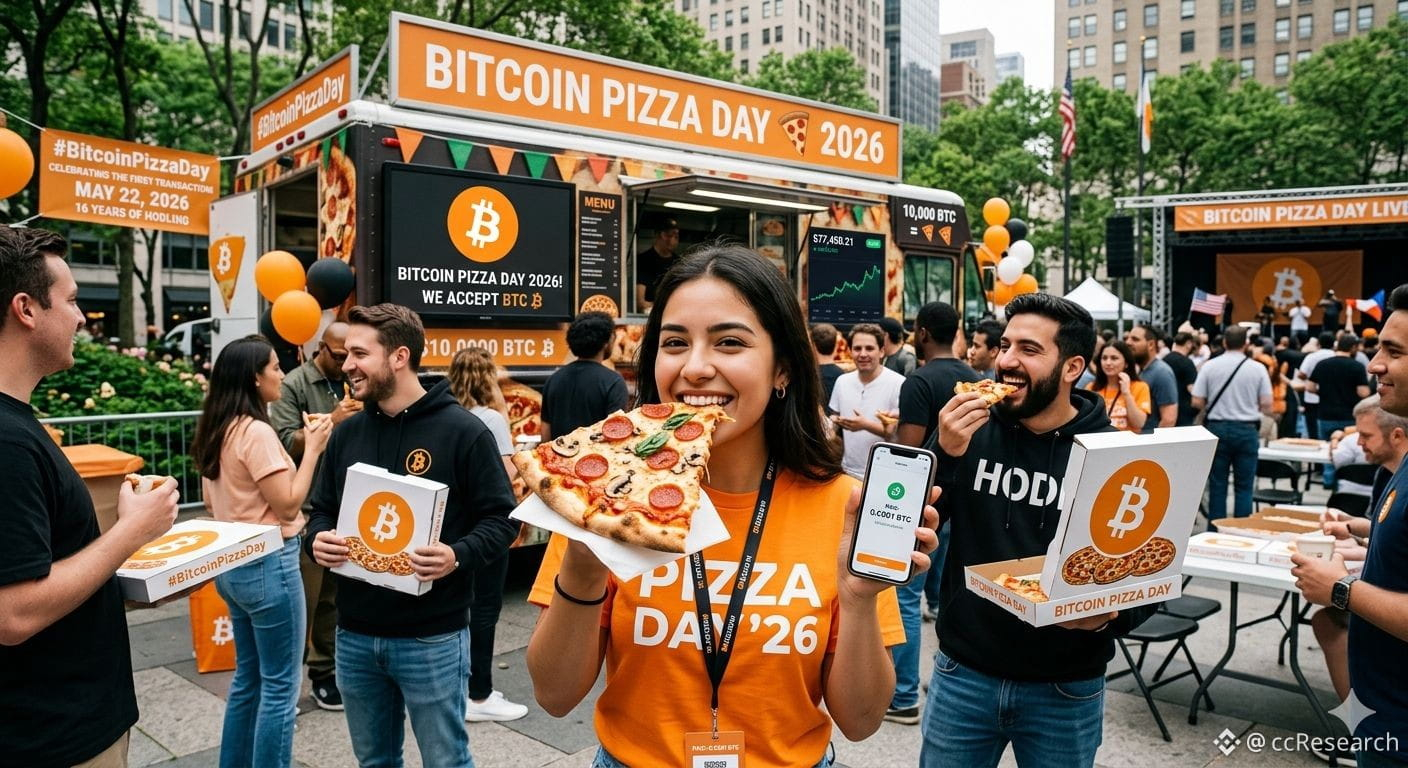
From $41 to Over $770 Million: Bitcoin Pizza Day in 2026 and History's Greatest HODL Lesson 🍕📉
Happy Bitcoin Pizza Day, community! Today marks 16 years since that famous night in 2010 when Laszlo Hanyecz changed the course of global finance by purchasing two Papa John's pizzas for 10,000 BTC.
At the time, those pizzas were worth around $41. Today, with Bitcoin consolidating in the $77,000 - $78,000 range, those same two pizzas are worth over $770 million.
Even though we are seeing a slight 29.7% correction this year compared to last year's peak—when that same block of coins topped $1.1 billion—the big picture remains unchanged: we are looking at the digital asset with the greatest structural maturity of the decade.
3 Lessons Pizza Day Leaves Us in 2026:
Utility Precedes Value: Laszlo didn't "lose" money; he proved that Bitcoin could be used in the real world. Without that first transaction, the road to mass adoption would have been significantly slower.
The Power of HODL: Today's crypto market is undergoing a massive transition driven by institutional capital inflows, debates over key legislation like the CLARITY Act in the US, and a new leadership shift at the Fed. Those who keep their eyes on the long term navigate daily volatility with a completely different mindset.
The Cheapest Pizza is the One You Buy with Fiat Today: Leave your BTC alone. 😉
How are you celebrating today? Buying the dip or ordering a traditional pizza with fiat? Let me know in the comments below!
#BitcoinPizzaDay #BTC #Crypto2026 #BinanceSquare
From $41 to Over $770 Million: Bitcoin Pizza Day in 2026 and History's Greatest HODL Lesson 🍕📉
Happy Bitcoin Pizza Day, community! Today marks 16 years since that famous night in 2010 when Laszlo Hanyecz changed the course of global finance by purchasing two Papa John's pizzas for 10,000 BTC.
At the time, those pizzas were worth around $41. Today, with Bitcoin consolidating in the $77,000 - $78,000 range, those same two pizzas are worth over $770 million.
Even though we are seeing a slight 29.7% correction this year compared to last year's peak—when that same block of coins topped $1.1 billion—the big picture remains unchanged: we are looking at the digital asset with the greatest structural maturity of the decade.
3 Lessons Pizza Day Leaves Us in 2026:
Utility Precedes Value: Laszlo didn't "lose" money; he proved that Bitcoin could be used in the real world. Without that first transaction, the road to mass adoption would have been significantly slower.
The Power of HODL: Today's crypto market is undergoing a massive transition driven by institutional capital inflows, debates over key legislation like the CLARITY Act in the US, and a new leadership shift at the Fed. Those who keep their eyes on the long term navigate daily volatility with a completely different mindset.
The Cheapest Pizza is the One You Buy with Fiat Today: Leave your BTC alone. 😉
How are you celebrating today? Buying the dip or ordering a traditional pizza with fiat? Let me know in the comments below!
#BitcoinPizzaDay #BTC #Crypto2026 #BinanceSquare
Happy Bitcoin Pizza Day, community! Today marks 16 years since that famous night in 2010 when Laszlo Hanyecz changed the course of global finance by purchasing two Papa John's pizzas for 10,000 BTC.
At the time, those pizzas were worth around $41. Today, with Bitcoin consolidating in the $77,000 - $78,000 range, those same two pizzas are worth over $770 million.
Even though we are seeing a slight 29.7% correction this year compared to last year's peak—when that same block of coins topped $1.1 billion—the big picture remains unchanged: we are looking at the digital asset with the greatest structural maturity of the decade.
3 Lessons Pizza Day Leaves Us in 2026:
Utility Precedes Value: Laszlo didn't "lose" money; he proved that Bitcoin could be used in the real world. Without that first transaction, the road to mass adoption would have been significantly slower.
The Power of HODL: Today's crypto market is undergoing a massive transition driven by institutional capital inflows, debates over key legislation like the CLARITY Act in the US, and a new leadership shift at the Fed. Those who keep their eyes on the long term navigate daily volatility with a completely different mindset.
The Cheapest Pizza is the One You Buy with Fiat Today: Leave your BTC alone. 😉
How are you celebrating today? Buying the dip or ordering a traditional pizza with fiat? Let me know in the comments below!
#BitcoinPizzaDay #BTC #Crypto2026 #BinanceSquare
147
·
--
Haussier
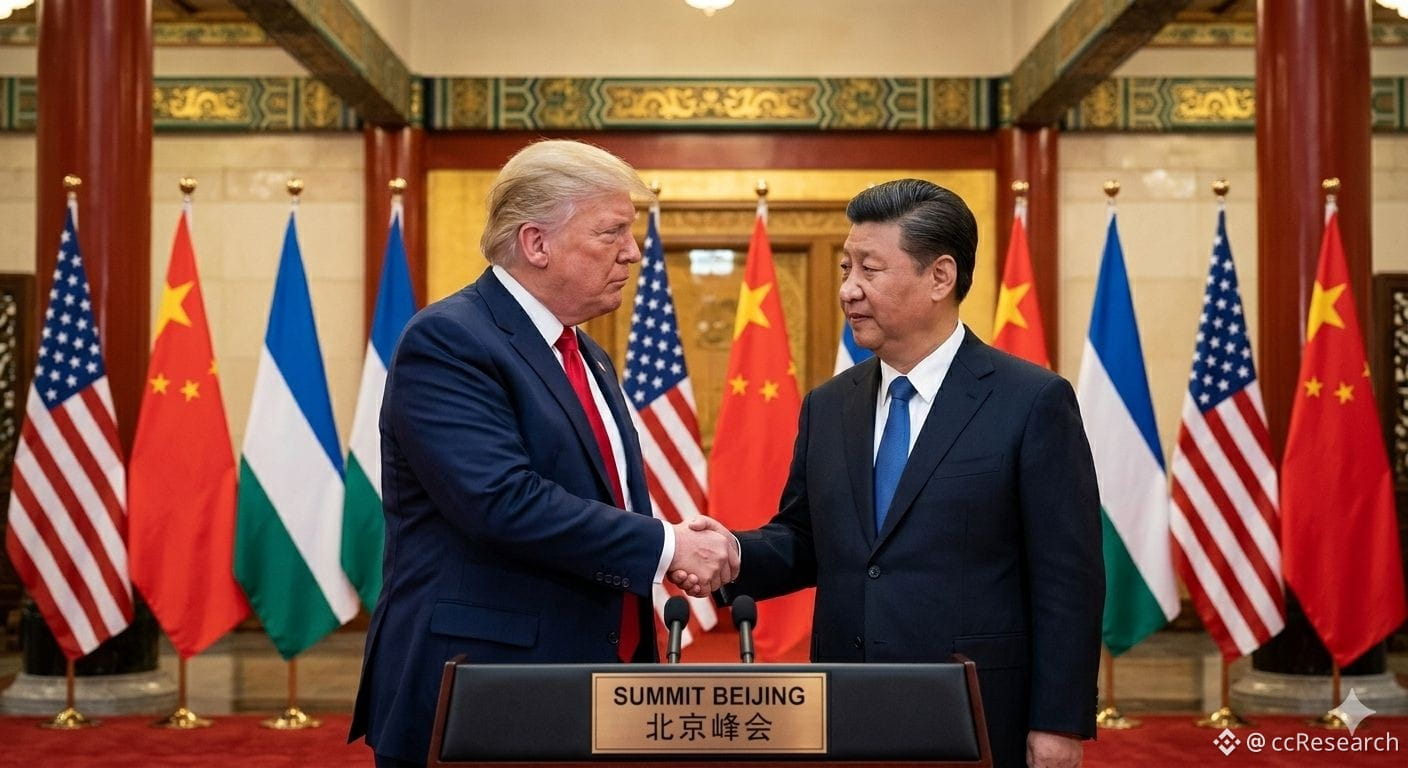
BTC Smashes $81,800: The "Beijing Effect" Gains Momentum
MARKET ANALYSIS – MAY 14, 2026
The digital asset market has delivered a decisive move. In the last few hours, Bitcoin ($BTC) has surged past the $80,000 psychological barrier, hitting a local high of $81,800. This bullish momentum aligns with the ongoing high-level talks in Beijing, a phenomenon traders are already calling the "Beijing Pump."
1. Resistance Breakout and Institutional FOMO
Breaking above $81,000 has triggered a cascade of short liquidations, providing the fuel for this aggressive move. Optimism surrounding the stabilization of tech supply chains has restored confidence among institutional investors.
2. The AI Rally: $FET and $NEAR in Focus
It’s not just a Bitcoin story. The presence of semiconductor industry giants at the Beijing summit has ignited a massive interest in the AI sector. Tokens like $FET and $NEAR are leading today's gains, riding the narrative of a global "tech truce."
3. Next Target: $85,000?
With a new support floor forming at $80,500, the technical path toward $85,000 appears wide open. Strong performance in the S&P 500 further suggests a broad "Risk-On" environment as long as the diplomatic negotiations in Asia remain positive.
Disclaimer: This content is for informational purposes only and does not constitute financial advice. Always Do Your Own Research (DYOR).$BTC
BTC Smashes $81,800: The "Beijing Effect" Gains Momentum
MARKET ANALYSIS – MAY 14, 2026
The digital asset market has delivered a decisive move. In the last few hours, Bitcoin ($BTC ) has surged past the $80,000 psychological barrier, hitting a local high of $81,800. This bullish momentum aligns with the ongoing high-level talks in Beijing, a phenomenon traders are already calling the "Beijing Pump."
1. Resistance Breakout and Institutional FOMO
Breaking above $81,000 has triggered a cascade of short liquidations, providing the fuel for this aggressive move. Optimism surrounding the stabilization of tech supply chains has restored confidence among institutional investors.
2. The AI Rally: $FET and $NEAR in Focus
It’s not just a Bitcoin story. The presence of semiconductor industry giants at the Beijing summit has ignited a massive interest in the AI sector. Tokens like $FET and $NEAR are leading today's gains, riding the narrative of a global "tech truce."
3. Next Target: $85,000?
With a new support floor forming at $80,500, the technical path toward $85,000 appears wide open. Strong performance in the S&P 500 further suggests a broad "Risk-On" environment as long as the diplomatic negotiations in Asia remain positive.
Disclaimer: This content is for informational purposes only and does not constitute financial advice. Always Do Your Own Research (DYOR).$BTC
MARKET ANALYSIS – MAY 14, 2026
The digital asset market has delivered a decisive move. In the last few hours, Bitcoin ($BTC ) has surged past the $80,000 psychological barrier, hitting a local high of $81,800. This bullish momentum aligns with the ongoing high-level talks in Beijing, a phenomenon traders are already calling the "Beijing Pump."
1. Resistance Breakout and Institutional FOMO
Breaking above $81,000 has triggered a cascade of short liquidations, providing the fuel for this aggressive move. Optimism surrounding the stabilization of tech supply chains has restored confidence among institutional investors.
2. The AI Rally: $FET and $NEAR in Focus
It’s not just a Bitcoin story. The presence of semiconductor industry giants at the Beijing summit has ignited a massive interest in the AI sector. Tokens like $FET and $NEAR are leading today's gains, riding the narrative of a global "tech truce."
3. Next Target: $85,000?
With a new support floor forming at $80,500, the technical path toward $85,000 appears wide open. Strong performance in the S&P 500 further suggests a broad "Risk-On" environment as long as the diplomatic negotiations in Asia remain positive.
Disclaimer: This content is for informational purposes only and does not constitute financial advice. Always Do Your Own Research (DYOR).$BTC
273
·
--
Article
Global Macro Trends: The Path to $90,000 BTCThe ongoing high-level bilateral meetings in Beijing represent a pivotal macroeconomic shift for digital assets. As Bitcoin ($BTC) maintains its position near $80,000, these global diplomatic movements are becoming the primary volatility drivers for the remainder of 2026.
3 Key Macro Drivers for the Crypto Market
1. Trade Policy and Market Liquidity
Anticipation of new trade frameworks and tariff adjustments is currently providing relief to global markets. A shift toward de-escalation typically triggers a "Risk-On" sentiment, increasing the liquidity required for a sustained crypto breakout.
2. The AI Infrastructure Play
Discussions surrounding semiconductor supply chains and AI technology exports have placed high-beta tokens like $FET, $NEAR, and $RNDR in a prime position. Institutional interest in AI infrastructure is closely tied to these international agreements.
3. Digital Assets as Strategic Reserves
The evolving narrative of digital assets being integrated into national strategic frameworks is a major talking point. Increased regulatory clarity and international cooperation could pave the way for massive institutional adoption across global markets.
Technical Analysis: The Support Floor
While the $80,000 psychological level remains the focus for retail traders, the on-chain data shows a more precise picture for the "Smart Money."
Critical Support: Bitcoin has established a strong local bottom at $78,869.40.Price Targets: A positive outcome from the current global summits could push BTC through the $85,000 resistance within days. Conversely, a lack of progress may lead to a retest of the $75,000 zone.
Do you believe this visit marks the beginning of the true 2026 'Supercycle'? Or is it just political noise?
Share your thoughts in the comments and follow me to stay updated with the post-summit analysis!
$BTC
{future}(BTCUSDT)
#BTC #Macro #CryptoNews #BinanceSquare
Disclaimer: This content is for informational purposes only and does not constitute financial advice. Always Do Your Own Research (DYOR).
Global Macro Trends: The Path to $90,000 BTC
The ongoing high-level bilateral meetings in Beijing represent a pivotal macroeconomic shift for digital assets. As Bitcoin ($BTC ) maintains its position near $80,000, these global diplomatic movements are becoming the primary volatility drivers for the remainder of 2026.
3 Key Macro Drivers for the Crypto Market
1. Trade Policy and Market Liquidity
Anticipation of new trade frameworks and tariff adjustments is currently providing relief to global markets. A shift toward de-escalation typically triggers a "Risk-On" sentiment, increasing the liquidity required for a sustained crypto breakout.
2. The AI Infrastructure Play
Discussions surrounding semiconductor supply chains and AI technology exports have placed high-beta tokens like $FET, $NEAR, and $RNDR in a prime position. Institutional interest in AI infrastructure is closely tied to these international agreements.
3. Digital Assets as Strategic Reserves
The evolving narrative of digital assets being integrated into national strategic frameworks is a major talking point. Increased regulatory clarity and international cooperation could pave the way for massive institutional adoption across global markets.
Technical Analysis: The Support Floor
While the $80,000 psychological level remains the focus for retail traders, the on-chain data shows a more precise picture for the "Smart Money."
Critical Support: Bitcoin has established a strong local bottom at $78,869.40.Price Targets: A positive outcome from the current global summits could push BTC through the $85,000 resistance within days. Conversely, a lack of progress may lead to a retest of the $75,000 zone.
Do you believe this visit marks the beginning of the true 2026 'Supercycle'? Or is it just political noise?
Share your thoughts in the comments and follow me to stay updated with the post-summit analysis!
$BTC
#BTC #Macro #CryptoNews #BinanceSquare
Disclaimer: This content is for informational purposes only and does not constitute financial advice. Always Do Your Own Research (DYOR).
3 Key Macro Drivers for the Crypto Market
1. Trade Policy and Market Liquidity
Anticipation of new trade frameworks and tariff adjustments is currently providing relief to global markets. A shift toward de-escalation typically triggers a "Risk-On" sentiment, increasing the liquidity required for a sustained crypto breakout.
2. The AI Infrastructure Play
Discussions surrounding semiconductor supply chains and AI technology exports have placed high-beta tokens like $FET, $NEAR, and $RNDR in a prime position. Institutional interest in AI infrastructure is closely tied to these international agreements.
3. Digital Assets as Strategic Reserves
The evolving narrative of digital assets being integrated into national strategic frameworks is a major talking point. Increased regulatory clarity and international cooperation could pave the way for massive institutional adoption across global markets.
Technical Analysis: The Support Floor
While the $80,000 psychological level remains the focus for retail traders, the on-chain data shows a more precise picture for the "Smart Money."
Critical Support: Bitcoin has established a strong local bottom at $78,869.40.Price Targets: A positive outcome from the current global summits could push BTC through the $85,000 resistance within days. Conversely, a lack of progress may lead to a retest of the $75,000 zone.
Do you believe this visit marks the beginning of the true 2026 'Supercycle'? Or is it just political noise?
Share your thoughts in the comments and follow me to stay updated with the post-summit analysis!
$BTC
#BTC #Macro #CryptoNews #BinanceSquare
Disclaimer: This content is for informational purposes only and does not constitute financial advice. Always Do Your Own Research (DYOR).
1
129
·
--
Article
DOGE: The New "Safe Haven" Amidst Inflation?TL;DR: Why isn't it crashing?
While Bitcoin (BTC) retreats due to fears surrounding the 3.8% US inflation data, Dogecoin is holding its ground at the $0.11 mark. This isn't just "meme magic" anymore; it’s a strategic combination of massive whale accumulation and real-world utility via the new DogeOS layer.
3 Key Data Points You Need to Know:
1. Resilience vs. BTC: The global market is bleeding red due to Middle East tensions and sticky inflation. However, DOGE has achieved a technical decoupling, maintaining a rock-solid support at $0.109. Analysts see this as a sign of maturity—it no longer needs a tweet to stay afloat.2. The "Whale Wall": Recent Santiment data confirms that the top 149 wallets now hold 108.52 billion DOGE (approx. $11.6 billion). These whales aren't selling; they are accumulating at record levels, creating a price floor that prevents a freefall.3. Real Utility (DogeOS): Unlike the 2021 hype, Dogecoin now features a programmable layer (DogeOS) allowing for smart contracts and DeFi. This attracts investors looking for a functional, low-fee payment network rather than just a joke.
The Verdict:
"Dogecoin has evolved from a 'hype coin' to a technical stability play. With whales shielding the price and inflation hitting Bitcoin hard, DOGE is emerging as the most resilient asset of this quarter."
Disclaimer: This content is for informational purposes only and does not constitute financial advice. Always Do Your Own Research (DYOR).
$DOGE
{future}(DOGEUSDT)
DOGE: The New "Safe Haven" Amidst Inflation?
TL;DR: Why isn't it crashing?
While Bitcoin (BTC) retreats due to fears surrounding the 3.8% US inflation data, Dogecoin is holding its ground at the $0.11 mark. This isn't just "meme magic" anymore; it’s a strategic combination of massive whale accumulation and real-world utility via the new DogeOS layer.
3 Key Data Points You Need to Know:
1. Resilience vs. BTC: The global market is bleeding red due to Middle East tensions and sticky inflation. However, DOGE has achieved a technical decoupling, maintaining a rock-solid support at $0.109. Analysts see this as a sign of maturity—it no longer needs a tweet to stay afloat.2. The "Whale Wall": Recent Santiment data confirms that the top 149 wallets now hold 108.52 billion DOGE (approx. $11.6 billion). These whales aren't selling; they are accumulating at record levels, creating a price floor that prevents a freefall.3. Real Utility (DogeOS): Unlike the 2021 hype, Dogecoin now features a programmable layer (DogeOS) allowing for smart contracts and DeFi. This attracts investors looking for a functional, low-fee payment network rather than just a joke.
The Verdict:
"Dogecoin has evolved from a 'hype coin' to a technical stability play. With whales shielding the price and inflation hitting Bitcoin hard, DOGE is emerging as the most resilient asset of this quarter."
Disclaimer: This content is for informational purposes only and does not constitute financial advice. Always Do Your Own Research (DYOR).
$DOGE
While Bitcoin (BTC) retreats due to fears surrounding the 3.8% US inflation data, Dogecoin is holding its ground at the $0.11 mark. This isn't just "meme magic" anymore; it’s a strategic combination of massive whale accumulation and real-world utility via the new DogeOS layer.
3 Key Data Points You Need to Know:
1. Resilience vs. BTC: The global market is bleeding red due to Middle East tensions and sticky inflation. However, DOGE has achieved a technical decoupling, maintaining a rock-solid support at $0.109. Analysts see this as a sign of maturity—it no longer needs a tweet to stay afloat.2. The "Whale Wall": Recent Santiment data confirms that the top 149 wallets now hold 108.52 billion DOGE (approx. $11.6 billion). These whales aren't selling; they are accumulating at record levels, creating a price floor that prevents a freefall.3. Real Utility (DogeOS): Unlike the 2021 hype, Dogecoin now features a programmable layer (DogeOS) allowing for smart contracts and DeFi. This attracts investors looking for a functional, low-fee payment network rather than just a joke.
The Verdict:
"Dogecoin has evolved from a 'hype coin' to a technical stability play. With whales shielding the price and inflation hitting Bitcoin hard, DOGE is emerging as the most resilient asset of this quarter."
Disclaimer: This content is for informational purposes only and does not constitute financial advice. Always Do Your Own Research (DYOR).
$DOGE
189
Connectez-vous pour découvrir plus de contenu
Rejoignez la communauté mondiale des adeptes de cryptomonnaies sur Binance Square
⚡️ Suviez les dernières informations importantes sur les cryptomonnaies.
💬 Jugé digne de confiance par la plus grande plateforme d’échange de cryptomonnaies au monde.
👍 Découvrez les connaissances que partagent les créateurs vérifiés.
Adresse e-mail/Nº de téléphone
Sujets d’actualité
UKFCAWinsCourtOrderToRecover851400Pounds
1,225 vues
202 mentions
🚨 CRYPTO REGULATION JUST ENTERED A NEW PHASE: THEY’RE NOT ONLY WRITING RULES — THEY’RE TAKING MONEY BACK.
The UK’s FCA has secured another court-backed asset recovery, reinforcing a broader enforcement push against unauthorized financial and crypto-related activity.
And look at what’s happening simultaneously:
🇬🇧 FCA → enforcement + asset recovery
🇺🇸 SEC → clearer rules for functional crypto assets
🇺🇸 Fed → formal stablecoin supervision under the GENIUS Act
That combination matters.
Regulators are no longer debating whether crypto belongs inside the financial system.
They’re increasingly deciding who gets access, what rules they follow, and what happens when those rules are broken.
The next crypto cycle may not be “regulation vs innovation.”
It may be regulated crypto vs everyone who can’t meet the standard. 👀
$COIN $CRCL $BTC
#ukfcawinscourtordertorecover851400pounds #ChainlinkLaunchesCCIP2WithEnterpriseVerification #GoldFallsTo$4144 #QNTFallsOver40%FromMorningHigh #USDTAdds845900HoldersInPast7Days
KimHotbae
·0 mentions J’aime
·944 vues
ChainlinkLaunchesCCIP2WithEnterpriseVerification
10,578 vues
503 mentions
GoldFallsTo$4144
5,124 vues
105 mentions