

Crypto Queen 65
4k Publications

Crypto Queen 65
Signaler
Bloquer l’utilisateur
Quick moves fast markets Sharing rapid fire updates setups & signals in real time Twitter@Crypto queen77
Ouvert au trading
Trade régulièrement
1.2 an(s)
425 Suivis
19.8K+ Abonnés
7.3K+ J’aime
Publications
Portefeuille
Tous
Citations
Direct
baby
baby


Jamie Smith
·
--
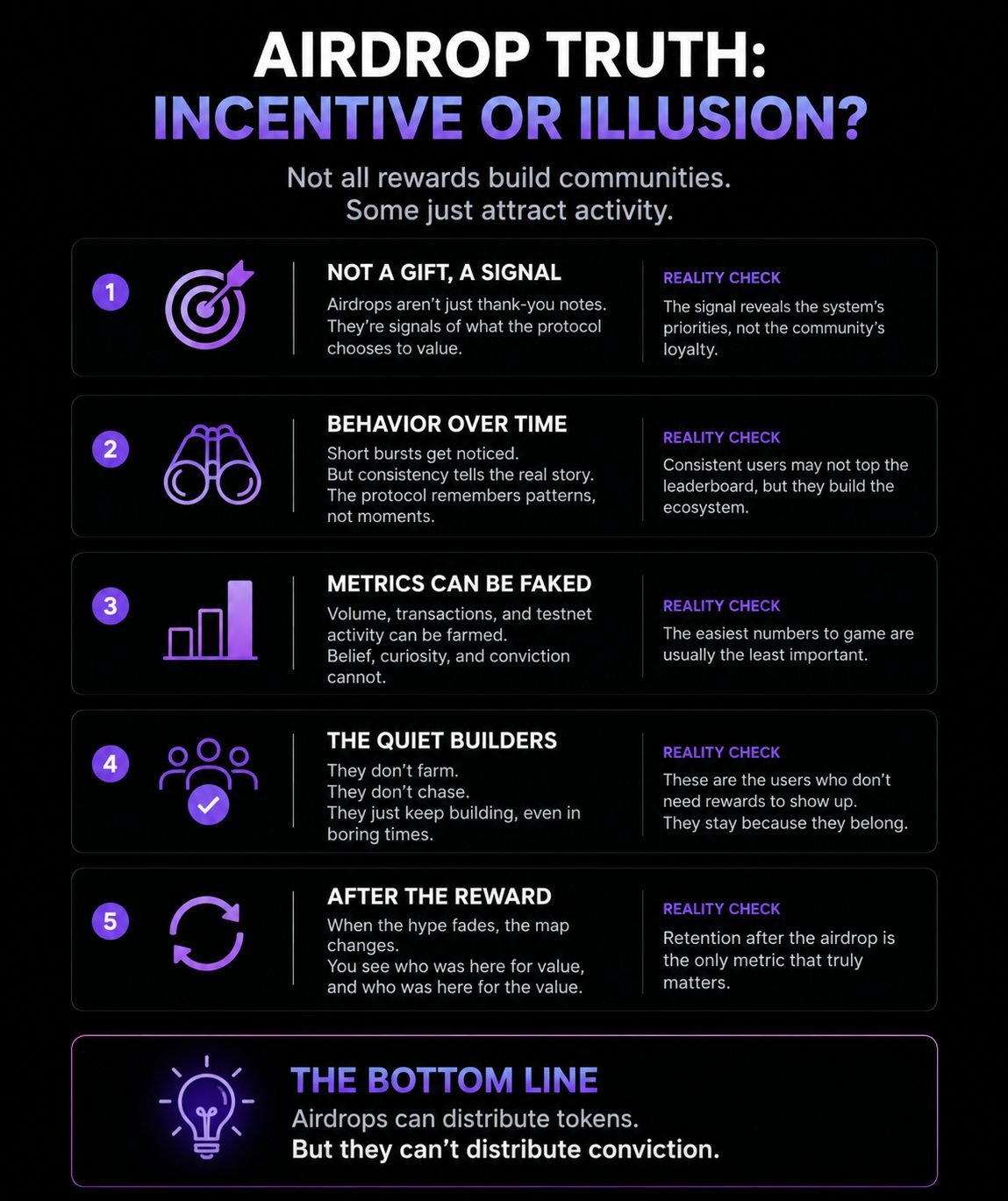
HaussierAt first I thought growth was the thing that mattered most. Wallets, more transactions, more users. That was the story everyone wanted to tell.. The longer I watched growth the less I believed in the numbers. There would be times when a lot of people were using the system. This would only happen when there were special deals or when we worked with other companies or when people thought something big was going to happen. People would pay attention for a while but then they would lose interest really fast.
The people who really interested me were the ones who kept coming after all the excitement was over. They were not taking pictures of their screens. Trying to get rewards or trying to make every interaction perfect. They just found something they liked. They kept using it. Their activity was small and quiet. It was almost impossible to see compared to all the noise when something new came out.
That is what makes networks so hard to understand. It is easy to see when people are paying attention because it is loud.. It is much harder to see when people really believe in something because that happens slowly. One thing makes a splash while the other makes something that lasts.
So maybe the real question is not how many people showed up when everyone was watching growth. Maybe the real question is how many people decided to stay with growth when nobody was paying attention to growth.
@BabylonLabs_io $BABY
#baby
$AAVE
The people who really interested me were the ones who kept coming after all the excitement was over. They were not taking pictures of their screens. Trying to get rewards or trying to make every interaction perfect. They just found something they liked. They kept using it. Their activity was small and quiet. It was almost impossible to see compared to all the noise when something new came out.
That is what makes networks so hard to understand. It is easy to see when people are paying attention because it is loud.. It is much harder to see when people really believe in something because that happens slowly. One thing makes a splash while the other makes something that lasts.
So maybe the real question is not how many people showed up when everyone was watching growth. Maybe the real question is how many people decided to stay with growth when nobody was paying attention to growth.
@BabylonLabs_io $BABY
#baby
$AAVE
79
·
--
Haussier
The part that kept bothering me while walking through @NewtonProtocol Newton’s policy flow wasn’t the eligibility check itself. It was what happens after an approved investor receives the asset and tries to move it again.
Most “compliant token” setups still feel like a gated front door attached to an open hallway. The buyer gets checked once, the token lands, and every secondary transfer becomes somebody else’s monitoring problem. Newton flips that by putting the rule in the transfer path, so the asset asks again: is this recipient eligible, in the right jurisdiction, and allowed under the current policy?
That sounds cleaner than it feels in practice. The check can be sub-second, according to Newton’s docs, but users don’t experience “sub-second policy evaluation.” They experience a transfer that either works or mysteriously doesn’t. The onchain receipt is useful for an auditor; it doesn’t automatically make a rejection understandable to the person holding the asset.
This matters more as tokenized RWAs push past roughly $25 billion. At that scale, the hard problem is not proving that rules were enforced. It is handling normal edge cases: credentials expiring, jurisdiction status changing, a wallet being replaced, or a recipient passing KYC with one provider but not resolving correctly in the policy.
The enforcement layer looks solid. The awkward bit is that compliance state now travels with every transfer, while the user still thinks they are just sending a token.
$NEWT
#Newt
The part that kept bothering me while walking through @NewtonProtocol Newton’s policy flow wasn’t the eligibility check itself. It was what happens after an approved investor receives the asset and tries to move it again.
Most “compliant token” setups still feel like a gated front door attached to an open hallway. The buyer gets checked once, the token lands, and every secondary transfer becomes somebody else’s monitoring problem. Newton flips that by putting the rule in the transfer path, so the asset asks again: is this recipient eligible, in the right jurisdiction, and allowed under the current policy?
That sounds cleaner than it feels in practice. The check can be sub-second, according to Newton’s docs, but users don’t experience “sub-second policy evaluation.” They experience a transfer that either works or mysteriously doesn’t. The onchain receipt is useful for an auditor; it doesn’t automatically make a rejection understandable to the person holding the asset.
This matters more as tokenized RWAs push past roughly $25 billion. At that scale, the hard problem is not proving that rules were enforced. It is handling normal edge cases: credentials expiring, jurisdiction status changing, a wallet being replaced, or a recipient passing KYC with one provider but not resolving correctly in the policy.
The enforcement layer looks solid. The awkward bit is that compliance state now travels with every transfer, while the user still thinks they are just sending a token.
$NEWT
#Newt
Most “compliant token” setups still feel like a gated front door attached to an open hallway. The buyer gets checked once, the token lands, and every secondary transfer becomes somebody else’s monitoring problem. Newton flips that by putting the rule in the transfer path, so the asset asks again: is this recipient eligible, in the right jurisdiction, and allowed under the current policy?
That sounds cleaner than it feels in practice. The check can be sub-second, according to Newton’s docs, but users don’t experience “sub-second policy evaluation.” They experience a transfer that either works or mysteriously doesn’t. The onchain receipt is useful for an auditor; it doesn’t automatically make a rejection understandable to the person holding the asset.
This matters more as tokenized RWAs push past roughly $25 billion. At that scale, the hard problem is not proving that rules were enforced. It is handling normal edge cases: credentials expiring, jurisdiction status changing, a wallet being replaced, or a recipient passing KYC with one provider but not resolving correctly in the policy.
The enforcement layer looks solid. The awkward bit is that compliance state now travels with every transfer, while the user still thinks they are just sending a token.
$NEWT
#Newt
Worth Holding
0%
Buying Opportunity
0%
Next Breakout
0%
0 Votes • Vote fermé
1
1
131
·
--
Baissier
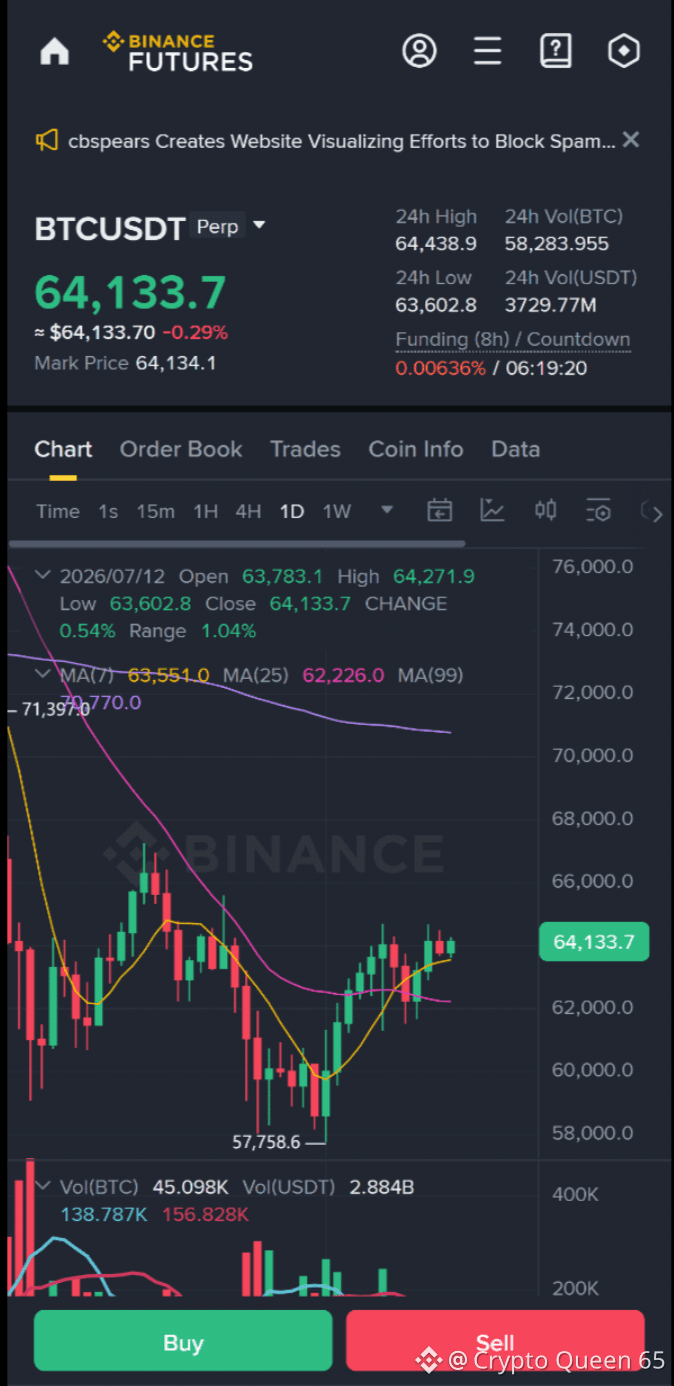
$BTC If MicroStrategy ever decides to sell, the market could see serious volatility. Some traders are even wondering if Bitcoin could revisit much lower levels instead of pushing toward $300K.
Nothing is certain, but it's definitely a scenario worth keeping an eye on. Trade smart and manage your risk. 👀📉
#BTC
#BitcoinPlansECashHardFork
$BTC
{spot}(BTCUSDT)
$BTC If MicroStrategy ever decides to sell, the market could see serious volatility. Some traders are even wondering if Bitcoin could revisit much lower levels instead of pushing toward $300K.
Nothing is certain, but it's definitely a scenario worth keeping an eye on. Trade smart and manage your risk. 👀📉
#BTC
#BitcoinPlansECashHardFork
$BTC
Nothing is certain, but it's definitely a scenario worth keeping an eye on. Trade smart and manage your risk. 👀📉
#BTC
#BitcoinPlansECashHardFork
$BTC
1
77
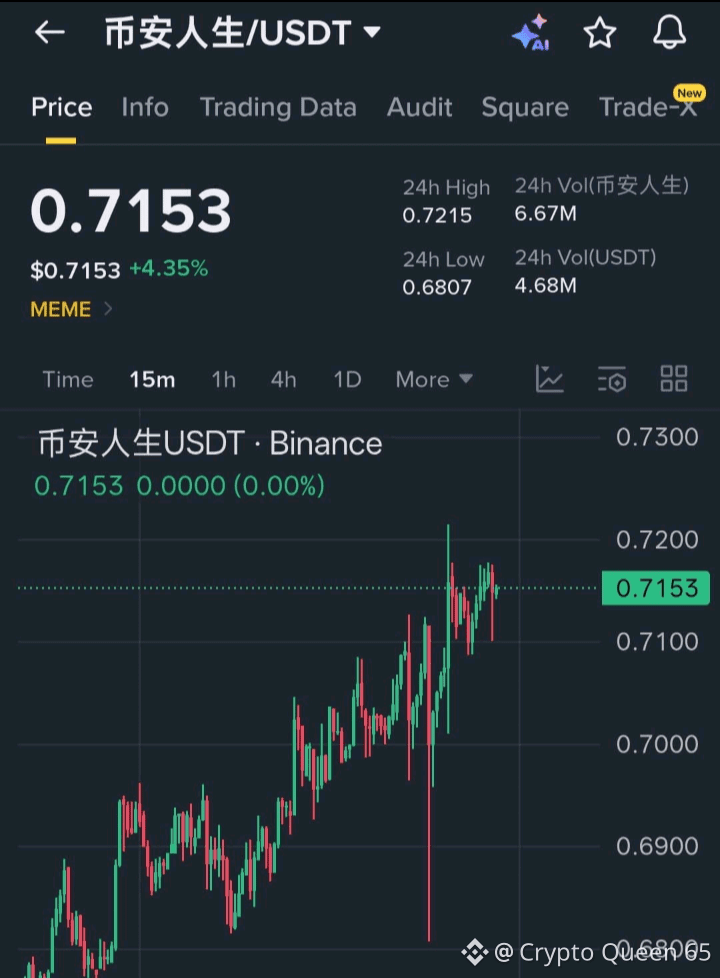
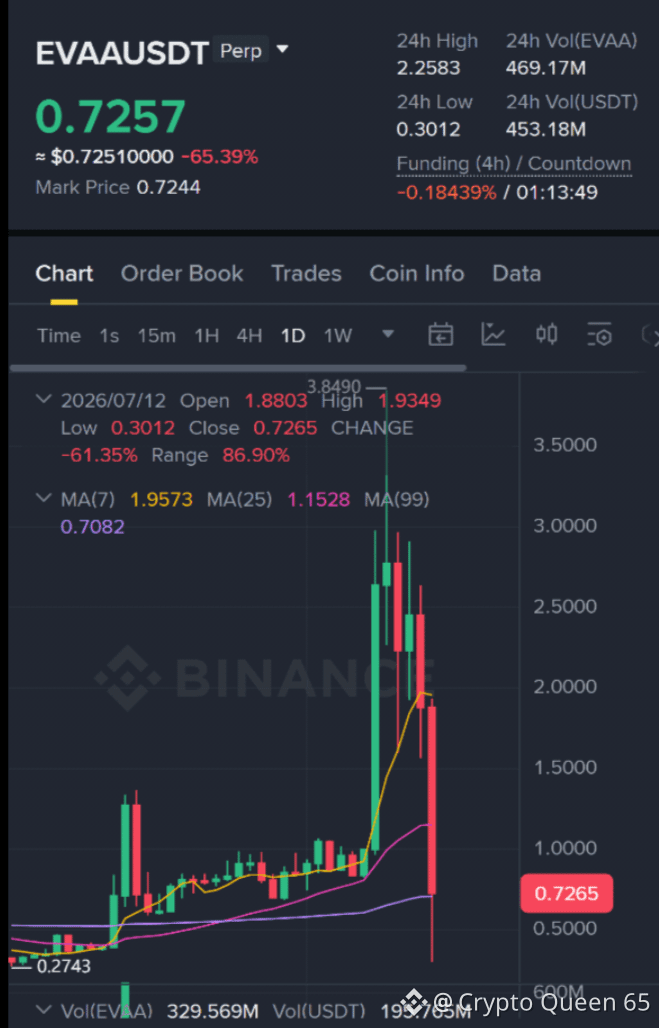
Bullish Momentum Holding Strong 📈
Buyers continue to defend the trend, keeping the bullish structure intact.
Entry: 0.7153–0.7215
🎯 Target: 0.7300
🛑 Stop Loss: Below 0.7000
As long as price stays above key support, the upside move remains in play. Manage your risk and let the market confirm the next push.
Bullish Momentum Holding Strong 📈
Buyers continue to defend the trend, keeping the bullish structure intact.
Entry: 0.7153–0.7215
🎯 Target: 0.7300
🛑 Stop Loss: Below 0.7000
As long as price stays above key support, the upside move remains in play. Manage your risk and let the market confirm the next push.
Buyers continue to defend the trend, keeping the bullish structure intact.
Entry: 0.7153–0.7215
🎯 Target: 0.7300
🛑 Stop Loss: Below 0.7000
As long as price stays above key support, the upside move remains in play. Manage your risk and let the market confirm the next push.
86
·
--
Haussier
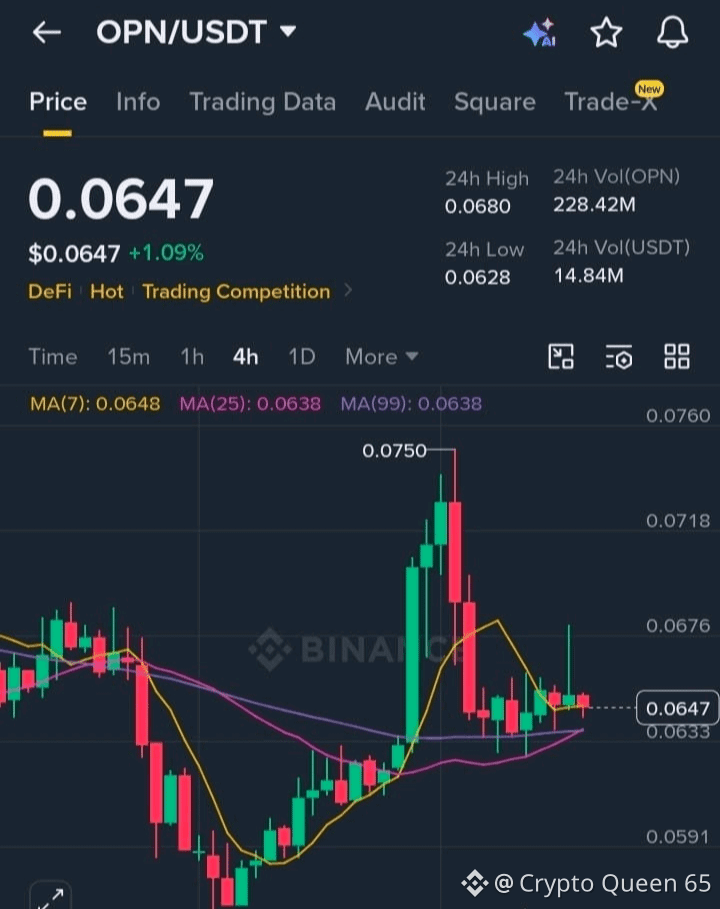
$OPN is holding a key support zone, and the price action is starting to look promising. 👀
Trade Setup
📍 Entry: $0.0638 – $0.0647
🎯 TP1: $0.0680
🎯 TP2: $0.0718
🛑 Stop Loss: $0.0628
If buyers manage to push the price above $0.0680, it could confirm a bullish recovery and open the door for a stronger move higher. Keep this one on your watchlist and always manage your risk. 🚀
#OPN
#AMDSharesSlideNearly10%
#BitcoinPlansECashHardFork
$OPN
{spot}(OPNUSDT)
$OPN is holding a key support zone, and the price action is starting to look promising. 👀
Trade Setup
📍 Entry: $0.0638 – $0.0647
🎯 TP1: $0.0680
🎯 TP2: $0.0718
🛑 Stop Loss: $0.0628
If buyers manage to push the price above $0.0680, it could confirm a bullish recovery and open the door for a stronger move higher. Keep this one on your watchlist and always manage your risk. 🚀
#OPN
#AMDSharesSlideNearly10%
#BitcoinPlansECashHardFork
$OPN
Trade Setup
📍 Entry: $0.0638 – $0.0647
🎯 TP1: $0.0680
🎯 TP2: $0.0718
🛑 Stop Loss: $0.0628
If buyers manage to push the price above $0.0680, it could confirm a bullish recovery and open the door for a stronger move higher. Keep this one on your watchlist and always manage your risk. 🚀
#OPN
#AMDSharesSlideNearly10%
#BitcoinPlansECashHardFork
$OPN
153
·
--
Haussier
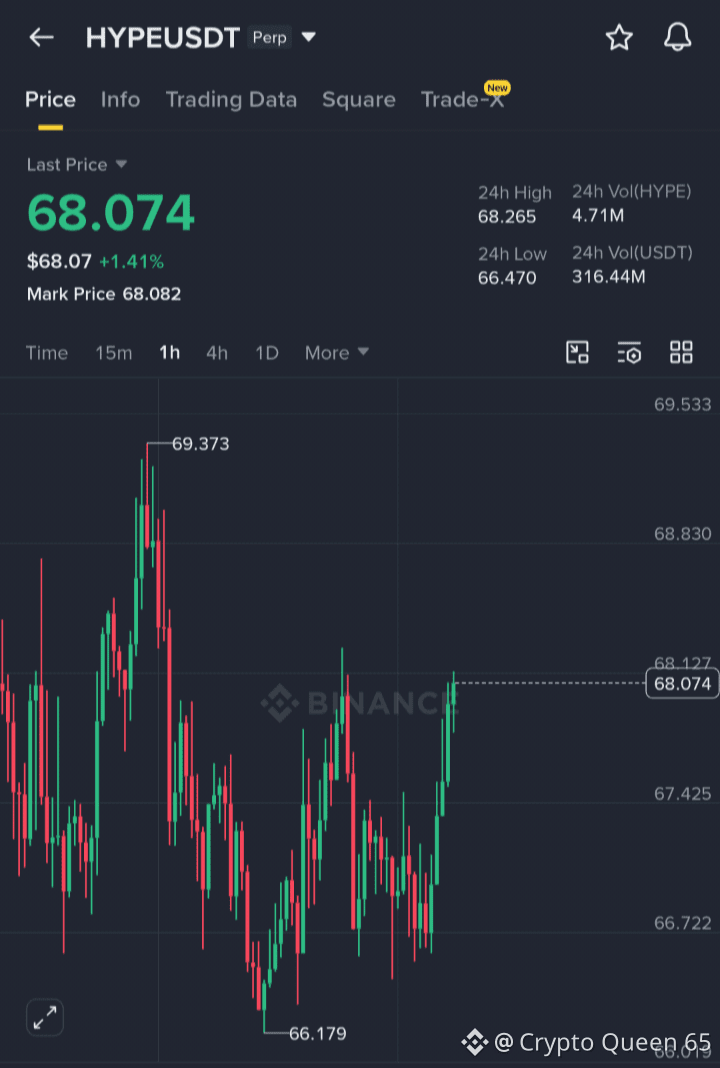
$HYPE is back at a key resistance level as bullish momentum continues to build. 📈
After a strong rebound from the $66.20 support, price has recovered steadily and is now testing the $68.00–$69.50 resistance zone. Buyers remain in control, but a confirmed breakout above $69.50 is needed to unlock the next move higher.
Key Levels
• Trend: Short-term Bullish
• Support: $66.20
• Resistance: $69.50
As long as $66.20 holds, the structure remains constructive. A clean breakout above $69.50 could open the path toward the $72.00 area. Keep a close eye on this zone—the next move could be significant. 🚀
#hype
#BitcoinPlansECashHardFork
$HYPE
{future}(HYPEUSDT)
$HYPE is back at a key resistance level as bullish momentum continues to build. 📈
After a strong rebound from the $66.20 support, price has recovered steadily and is now testing the $68.00–$69.50 resistance zone. Buyers remain in control, but a confirmed breakout above $69.50 is needed to unlock the next move higher.
Key Levels
• Trend: Short-term Bullish
• Support: $66.20
• Resistance: $69.50
As long as $66.20 holds, the structure remains constructive. A clean breakout above $69.50 could open the path toward the $72.00 area. Keep a close eye on this zone—the next move could be significant. 🚀
#hype
#BitcoinPlansECashHardFork
$HYPE
After a strong rebound from the $66.20 support, price has recovered steadily and is now testing the $68.00–$69.50 resistance zone. Buyers remain in control, but a confirmed breakout above $69.50 is needed to unlock the next move higher.
Key Levels
• Trend: Short-term Bullish
• Support: $66.20
• Resistance: $69.50
As long as $66.20 holds, the structure remains constructive. A clean breakout above $69.50 could open the path toward the $72.00 area. Keep a close eye on this zone—the next move could be significant. 🚀
#hype
#BitcoinPlansECashHardFork
$HYPE
29
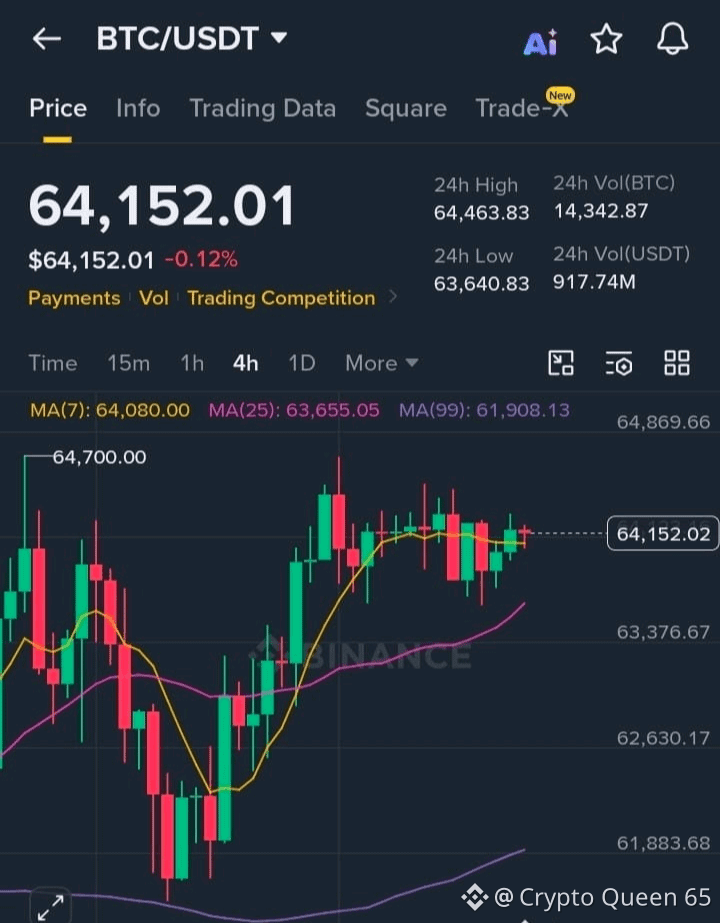
🚨$BTC is setting up for a potential breakout. The current range is tightening, and a strong move could be just around the corner.
Trade Setup
📍 Entry: $61,908 – $64,152
🎯 TP1: $64,700
🎯 TP2: $65,500
🛑 Stop Loss: $63,640
A decisive break above $64,700 could confirm bullish momentum and open the door for a push toward the next targets. Stay patient and manage your risk. 📈
#BTC
#BitcoinPlansECashHardFork
$BTC
{spot}(BTCUSDT)
🚨$BTC is setting up for a potential breakout. The current range is tightening, and a strong move could be just around the corner.
Trade Setup
📍 Entry: $61,908 – $64,152
🎯 TP1: $64,700
🎯 TP2: $65,500
🛑 Stop Loss: $63,640
A decisive break above $64,700 could confirm bullish momentum and open the door for a push toward the next targets. Stay patient and manage your risk. 📈
#BTC
#BitcoinPlansECashHardFork
$BTC
Trade Setup
📍 Entry: $61,908 – $64,152
🎯 TP1: $64,700
🎯 TP2: $65,500
🛑 Stop Loss: $63,640
A decisive break above $64,700 could confirm bullish momentum and open the door for a push toward the next targets. Stay patient and manage your risk. 📈
#BTC
#BitcoinPlansECashHardFork
$BTC
54
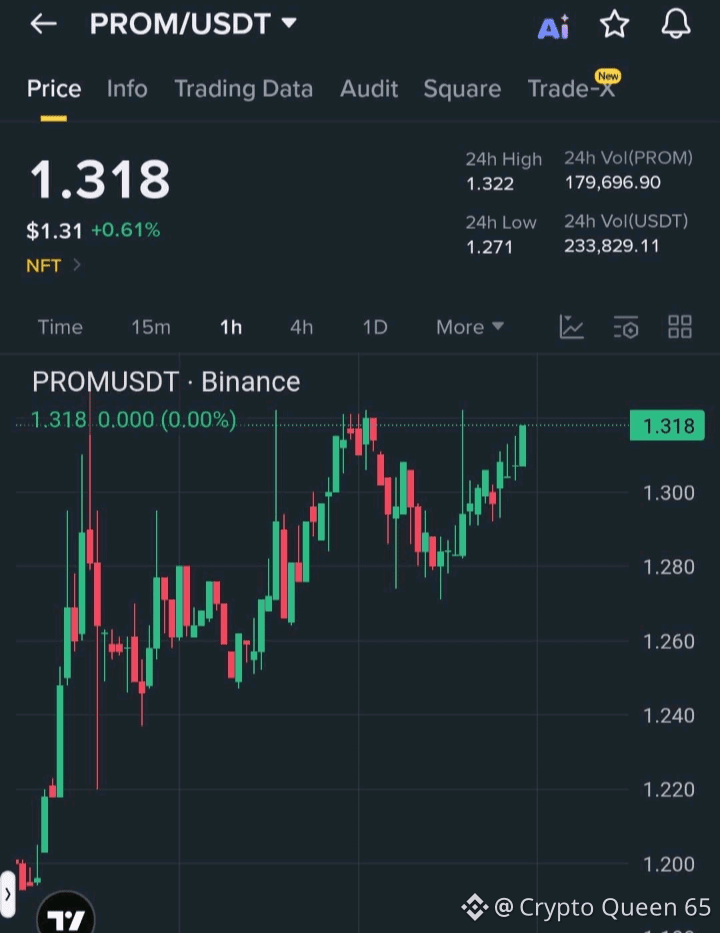
I'm opening a long on $PROM here. 📈
Trade Setup
• Leverage: 15x
• Entry: 1.305–1.320
• TP1: 1.360
• TP2: 1.420
• TP3: 1.500
• Stop Loss: 1.275
The setup looks promising as long as price holds the entry zone. Manage your risk and trade wisely. 🚀
#prom
$PROM
{spot}(PROMUSDT)
I'm opening a long on $PROM here. 📈
Trade Setup
• Leverage: 15x
• Entry: 1.305–1.320
• TP1: 1.360
• TP2: 1.420
• TP3: 1.500
• Stop Loss: 1.275
The setup looks promising as long as price holds the entry zone. Manage your risk and trade wisely. 🚀
#prom
$PROM
Trade Setup
• Leverage: 15x
• Entry: 1.305–1.320
• TP1: 1.360
• TP2: 1.420
• TP3: 1.500
• Stop Loss: 1.275
The setup looks promising as long as price holds the entry zone. Manage your risk and trade wisely. 🚀
#prom
$PROM
77
$TRX has been rewarding holders with that insane 5000% APY all day, and now the price is pushing higher again. 🚀
Earning passive rewards while watching the chart climb? That's the kind of combo everyone loves. 😤💸
#TRX
#BitcoinPlansECashHardFork
$TRX
{spot}(TRXUSDT)
$TRX has been rewarding holders with that insane 5000% APY all day, and now the price is pushing higher again. 🚀
Earning passive rewards while watching the chart climb? That's the kind of combo everyone loves. 😤💸
#TRX
#BitcoinPlansECashHardFork
$TRX
Earning passive rewards while watching the chart climb? That's the kind of combo everyone loves. 😤💸
#TRX
#BitcoinPlansECashHardFork
$TRX
1
2
137
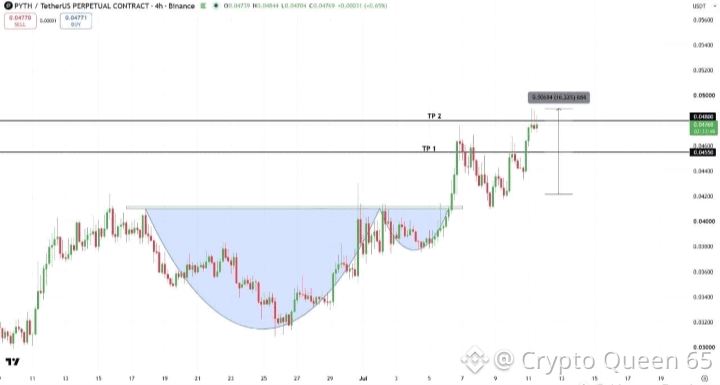
$PYTH delivered exactly as expected and smashed every target we shared. 🎯
The trade played out cleanly from entry to final target, locking in an impressive 16% gain. Huge congratulations to everyone who stayed patient and trusted the setup.
Enjoy the profits, protect your gains, and get ready—more opportunities are on the way. 🚀
#PYTH
#BitcoinPlansECashHardFork
$PYTH
{spot}(PYTHUSDT)
$PYTH delivered exactly as expected and smashed every target we shared. 🎯
The trade played out cleanly from entry to final target, locking in an impressive 16% gain. Huge congratulations to everyone who stayed patient and trusted the setup.
Enjoy the profits, protect your gains, and get ready—more opportunities are on the way. 🚀
#PYTH
#BitcoinPlansECashHardFork
$PYTH
The trade played out cleanly from entry to final target, locking in an impressive 16% gain. Huge congratulations to everyone who stayed patient and trusted the setup.
Enjoy the profits, protect your gains, and get ready—more opportunities are on the way. 🚀
#PYTH
#BitcoinPlansECashHardFork
$PYTH
100
Article
I Looked Into Newton Protocol, and One Question Kept Coming BackA few days ago, I noticed something interesting while reading through discussions about tokenized real-world assets. Most people were focused on the usual topics—liquidity, faster settlement, and bringing traditional finance onto blockchain. But buried in one conversation was a much simpler question: what happens when an asset isn't supposed to be owned by just anyone?
That question stayed with me longer than I expected, and it eventually led me to @NewtonProtocol and its approach to enforcing investor eligibility and transfer rules onchain.
At first, I assumed this was just another compliance-focused project trying to move paperwork onto blockchain. After spending more time reading about the idea, I realized it's a little different. The goal isn't simply to record ownership. It's to make certain ownership rules part of the asset itself, so transfers that don't meet predefined conditions can be rejected before they ever happen.
On paper, that sounds practical.
If an investment is legally restricted to a specific group of investors, it makes sense to check those conditions automatically instead of relying on someone to catch mistakes later. That could save time, reduce operational headaches, and make regulated assets easier to manage as more financial activity moves onchain.
I can understand why institutions would find that attractive.
Still, one thought kept coming back while I was reading.
Technology can enforce a rule perfectly, but it can't decide whether the rule is the right one.
That distinction feels small at first, but I think it's actually the most important part of the whole discussion.
It's easy to hear phrases like "onchain compliance" and assume the system somehow becomes more trustworthy simply because everything is automated. I don't think that's necessarily true. Automation removes inconsistency, but it doesn't remove human judgment. Someone still has to define the rules, decide who qualifies, update policies when regulations change, and handle situations that don't fit neatly into predefined logic.
The blockchain simply follows instructions.
I hadn't really separated those two ideas before. I used to think that putting compliance onchain solved the compliance problem itself. Looking at it more closely, it really solves the enforcement problem. Whether the underlying policy is fair, accurate, or current is still something people have to figure out.
A simple example helped me think about it.
Imagine a tokenized investment fund that can only be transferred between verified accredited investors. If someone no longer meets those requirements, the protocol can automatically prevent the transfer. From a technical perspective, everything works exactly as designed.
But what if the investor database hasn't been updated? Or the regulations changed last month? Or an exception should apply in a unique situation? The protocol isn't making those decisions. It's enforcing whatever information it has been given.
That's where the responsibility shifts from code to governance.
As more institutions explore tokenized securities and regulated financial products, that distinction becomes much more important. The larger the market grows, the more people will depend on these automated systems doing exactly what they're supposed to do. And when significant amounts of money are involved, even a well-designed protocol is only as reliable as the policies guiding it.
I'm also careful not to jump from interesting technology to an investment conclusion. Newton Protocol is tackling a real challenge, but a useful idea doesn't automatically translate into long-term adoption or a strong token thesis. I'd rather watch how these systems perform in real-world environments than assume the market narrative will play out as expected.
For now, that's probably my biggest takeaway. I don't think the most interesting question is whether blockchain can enforce investor eligibility. It probably can. The more meaningful question is whether the people defining those eligibility rules can keep up with the complexity of the real world. That's something no protocol can automate away.
$NEWT
#Newt
I Looked Into Newton Protocol, and One Question Kept Coming Back
A few days ago, I noticed something interesting while reading through discussions about tokenized real-world assets. Most people were focused on the usual topics—liquidity, faster settlement, and bringing traditional finance onto blockchain. But buried in one conversation was a much simpler question: what happens when an asset isn't supposed to be owned by just anyone?
That question stayed with me longer than I expected, and it eventually led me to @NewtonProtocol and its approach to enforcing investor eligibility and transfer rules onchain.
At first, I assumed this was just another compliance-focused project trying to move paperwork onto blockchain. After spending more time reading about the idea, I realized it's a little different. The goal isn't simply to record ownership. It's to make certain ownership rules part of the asset itself, so transfers that don't meet predefined conditions can be rejected before they ever happen.
On paper, that sounds practical.
If an investment is legally restricted to a specific group of investors, it makes sense to check those conditions automatically instead of relying on someone to catch mistakes later. That could save time, reduce operational headaches, and make regulated assets easier to manage as more financial activity moves onchain.
I can understand why institutions would find that attractive.
Still, one thought kept coming back while I was reading.
Technology can enforce a rule perfectly, but it can't decide whether the rule is the right one.
That distinction feels small at first, but I think it's actually the most important part of the whole discussion.
It's easy to hear phrases like "onchain compliance" and assume the system somehow becomes more trustworthy simply because everything is automated. I don't think that's necessarily true. Automation removes inconsistency, but it doesn't remove human judgment. Someone still has to define the rules, decide who qualifies, update policies when regulations change, and handle situations that don't fit neatly into predefined logic.
The blockchain simply follows instructions.
I hadn't really separated those two ideas before. I used to think that putting compliance onchain solved the compliance problem itself. Looking at it more closely, it really solves the enforcement problem. Whether the underlying policy is fair, accurate, or current is still something people have to figure out.
A simple example helped me think about it.
Imagine a tokenized investment fund that can only be transferred between verified accredited investors. If someone no longer meets those requirements, the protocol can automatically prevent the transfer. From a technical perspective, everything works exactly as designed.
But what if the investor database hasn't been updated? Or the regulations changed last month? Or an exception should apply in a unique situation? The protocol isn't making those decisions. It's enforcing whatever information it has been given.
That's where the responsibility shifts from code to governance.
As more institutions explore tokenized securities and regulated financial products, that distinction becomes much more important. The larger the market grows, the more people will depend on these automated systems doing exactly what they're supposed to do. And when significant amounts of money are involved, even a well-designed protocol is only as reliable as the policies guiding it.
I'm also careful not to jump from interesting technology to an investment conclusion. Newton Protocol is tackling a real challenge, but a useful idea doesn't automatically translate into long-term adoption or a strong token thesis. I'd rather watch how these systems perform in real-world environments than assume the market narrative will play out as expected.
For now, that's probably my biggest takeaway. I don't think the most interesting question is whether blockchain can enforce investor eligibility. It probably can. The more meaningful question is whether the people defining those eligibility rules can keep up with the complexity of the real world. That's something no protocol can automate away.
$NEWT
#Newt
That question stayed with me longer than I expected, and it eventually led me to @NewtonProtocol and its approach to enforcing investor eligibility and transfer rules onchain.
At first, I assumed this was just another compliance-focused project trying to move paperwork onto blockchain. After spending more time reading about the idea, I realized it's a little different. The goal isn't simply to record ownership. It's to make certain ownership rules part of the asset itself, so transfers that don't meet predefined conditions can be rejected before they ever happen.
On paper, that sounds practical.
If an investment is legally restricted to a specific group of investors, it makes sense to check those conditions automatically instead of relying on someone to catch mistakes later. That could save time, reduce operational headaches, and make regulated assets easier to manage as more financial activity moves onchain.
I can understand why institutions would find that attractive.
Still, one thought kept coming back while I was reading.
Technology can enforce a rule perfectly, but it can't decide whether the rule is the right one.
That distinction feels small at first, but I think it's actually the most important part of the whole discussion.
It's easy to hear phrases like "onchain compliance" and assume the system somehow becomes more trustworthy simply because everything is automated. I don't think that's necessarily true. Automation removes inconsistency, but it doesn't remove human judgment. Someone still has to define the rules, decide who qualifies, update policies when regulations change, and handle situations that don't fit neatly into predefined logic.
The blockchain simply follows instructions.
I hadn't really separated those two ideas before. I used to think that putting compliance onchain solved the compliance problem itself. Looking at it more closely, it really solves the enforcement problem. Whether the underlying policy is fair, accurate, or current is still something people have to figure out.
A simple example helped me think about it.
Imagine a tokenized investment fund that can only be transferred between verified accredited investors. If someone no longer meets those requirements, the protocol can automatically prevent the transfer. From a technical perspective, everything works exactly as designed.
But what if the investor database hasn't been updated? Or the regulations changed last month? Or an exception should apply in a unique situation? The protocol isn't making those decisions. It's enforcing whatever information it has been given.
That's where the responsibility shifts from code to governance.
As more institutions explore tokenized securities and regulated financial products, that distinction becomes much more important. The larger the market grows, the more people will depend on these automated systems doing exactly what they're supposed to do. And when significant amounts of money are involved, even a well-designed protocol is only as reliable as the policies guiding it.
I'm also careful not to jump from interesting technology to an investment conclusion. Newton Protocol is tackling a real challenge, but a useful idea doesn't automatically translate into long-term adoption or a strong token thesis. I'd rather watch how these systems perform in real-world environments than assume the market narrative will play out as expected.
For now, that's probably my biggest takeaway. I don't think the most interesting question is whether blockchain can enforce investor eligibility. It probably can. The more meaningful question is whether the people defining those eligibility rules can keep up with the complexity of the real world. That's something no protocol can automate away.
$NEWT
#Newt
10
4
107
·
--
Haussier
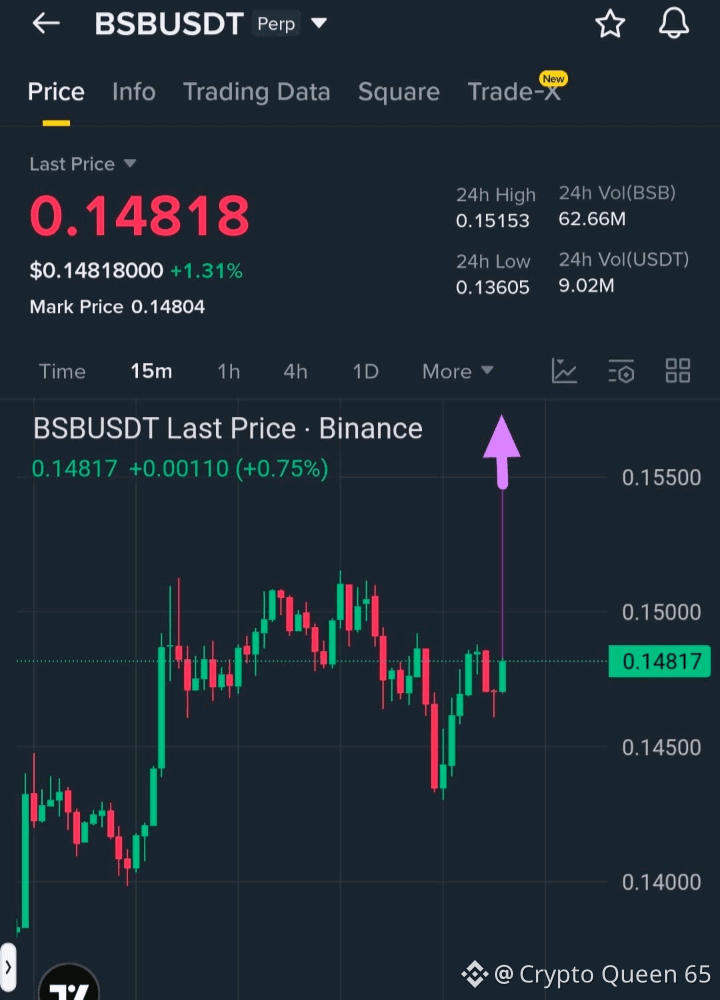
$BSB | Bullish Breakout Watch 🚀
I'm looking at a long on $BSB as price continues to hold above a key support zone with buyers staying in control.
📍 Entry: $0.1478 – $0.1485
🎯 TP1: $0.1515
🎯 TP2: $0.1540
🎯 TP3: $0.1575
🛑 SL: $0.1455
A confirmed breakout above the nearby resistance could open the door for another strong move higher. Keep your risk under control, use up to 20× leverage, and move your stop loss to breakeven once the trade is in profit.
#BsB #EthereumFoundationAIAgentsFindNodeCrashBug #BitcoinUp9.5%InJulyBestInFourYears #XRPActiveWalletsHitSecondLowestOf2026
$BSB
{future}(BSBUSDT)
$BSB | Bullish Breakout Watch 🚀
I'm looking at a long on $BSB as price continues to hold above a key support zone with buyers staying in control.
📍 Entry: $0.1478 – $0.1485
🎯 TP1: $0.1515
🎯 TP2: $0.1540
🎯 TP3: $0.1575
🛑 SL: $0.1455
A confirmed breakout above the nearby resistance could open the door for another strong move higher. Keep your risk under control, use up to 20× leverage, and move your stop loss to breakeven once the trade is in profit.
#BsB #EthereumFoundationAIAgentsFindNodeCrashBug #BitcoinUp9.5%InJulyBestInFourYears #XRPActiveWalletsHitSecondLowestOf2026
$BSB
I'm looking at a long on $BSB as price continues to hold above a key support zone with buyers staying in control.
📍 Entry: $0.1478 – $0.1485
🎯 TP1: $0.1515
🎯 TP2: $0.1540
🎯 TP3: $0.1575
🛑 SL: $0.1455
A confirmed breakout above the nearby resistance could open the door for another strong move higher. Keep your risk under control, use up to 20× leverage, and move your stop loss to breakeven once the trade is in profit.
#BsB #EthereumFoundationAIAgentsFindNodeCrashBug #BitcoinUp9.5%InJulyBestInFourYears #XRPActiveWalletsHitSecondLowestOf2026
$BSB
3
416
The Signal I Watch Before a Protocol Starts Standing Out
Most people notice a protocol only after the numbers start climbing. More users, more activity, more attention. But I think the real story begins much earlier, when developers decide it's worth building on.
That's one of the reasons Newton Protocol keeps catching my eye.
The more I learn about it, the more it feels like it's focused on earning the trust of builders instead of chasing short-term hype. That matters because developers don't commit to a project for headlines. They commit to solid infrastructure that makes building easier and more reliable.
What I find interesting is that the best infrastructure usually fades into the background. If Newton Protocol succeeds, most people won't even notice it working. They'll simply use applications that feel safer, smoother, and more dependable. The technology doing the heavy lifting stays invisible, and that's often a sign that it's doing its job well.
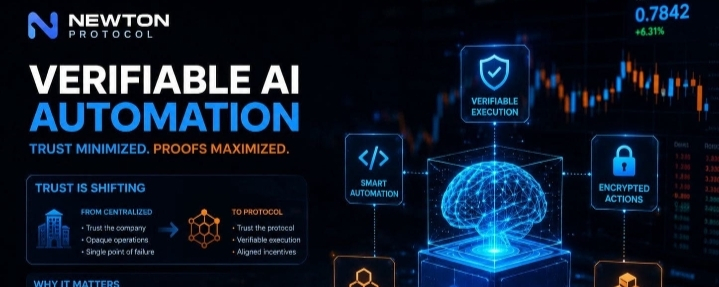
Newton Protocol also encourages developers to think differently about authorization. Instead of solving the same problem inside every application, it treats authorization as shared infrastructure that everyone can build on. If more builders adopt that approach, it won't just improve individual apps. It could shape the way future on-chain systems are designed from the ground up.
#BitcoinPlansECashHardFork
#Evvaprotocol
#BitcoinUp9.5%InJulyBestInFourYears #MorganStanleyAdds1000BTC #RetailStockBuyingLowestSince2020
$BEE
{alpha}(560xdb6f1f098b55e36b036603c8e54663a8d907d6e1)
The Signal I Watch Before a Protocol Starts Standing Out
Most people notice a protocol only after the numbers start climbing. More users, more activity, more attention. But I think the real story begins much earlier, when developers decide it's worth building on.
That's one of the reasons Newton Protocol keeps catching my eye.
The more I learn about it, the more it feels like it's focused on earning the trust of builders instead of chasing short-term hype. That matters because developers don't commit to a project for headlines. They commit to solid infrastructure that makes building easier and more reliable.
What I find interesting is that the best infrastructure usually fades into the background. If Newton Protocol succeeds, most people won't even notice it working. They'll simply use applications that feel safer, smoother, and more dependable. The technology doing the heavy lifting stays invisible, and that's often a sign that it's doing its job well.
Newton Protocol also encourages developers to think differently about authorization. Instead of solving the same problem inside every application, it treats authorization as shared infrastructure that everyone can build on. If more builders adopt that approach, it won't just improve individual apps. It could shape the way future on-chain systems are designed from the ground up.
#BitcoinPlansECashHardFork
#Evvaprotocol
#BitcoinUp9.5%InJulyBestInFourYears #MorganStanleyAdds1000BTC #RetailStockBuyingLowestSince2020
$BEE
Most people notice a protocol only after the numbers start climbing. More users, more activity, more attention. But I think the real story begins much earlier, when developers decide it's worth building on.
That's one of the reasons Newton Protocol keeps catching my eye.
The more I learn about it, the more it feels like it's focused on earning the trust of builders instead of chasing short-term hype. That matters because developers don't commit to a project for headlines. They commit to solid infrastructure that makes building easier and more reliable.
What I find interesting is that the best infrastructure usually fades into the background. If Newton Protocol succeeds, most people won't even notice it working. They'll simply use applications that feel safer, smoother, and more dependable. The technology doing the heavy lifting stays invisible, and that's often a sign that it's doing its job well.
Newton Protocol also encourages developers to think differently about authorization. Instead of solving the same problem inside every application, it treats authorization as shared infrastructure that everyone can build on. If more builders adopt that approach, it won't just improve individual apps. It could shape the way future on-chain systems are designed from the ground up.
#BitcoinPlansECashHardFork
#Evvaprotocol
#BitcoinUp9.5%InJulyBestInFourYears #MorganStanleyAdds1000BTC #RetailStockBuyingLowestSince2020
$BEE
291
I hate when a bot does nothing… and gives me zero clue why.
That’s the first thing I noticed while looking at @NewtonProtocol .
Setting rules before giving an automated agent access to your funds actually feels good. I can decide the limits, conditions, and what the bot is allowed to do instead of just handing over full control and hoping for the best.
But when an action doesn’t happen, the confusion starts.
Was the price condition missed? Did I set the limit too tight? Was the wallet permission blocked? Or did I simply mess up the setup? 😅
I don’t mind Newton rejecting a transaction if it breaks my rules. That’s literally the point.
I just don’t want to sit there checking five different things to understand one skipped trade.
The control feels useful. The silence after a rejection doesn’t.
$NEWT
#Newt
I hate when a bot does nothing… and gives me zero clue why.
That’s the first thing I noticed while looking at @NewtonProtocol .
Setting rules before giving an automated agent access to your funds actually feels good. I can decide the limits, conditions, and what the bot is allowed to do instead of just handing over full control and hoping for the best.
But when an action doesn’t happen, the confusion starts.
Was the price condition missed? Did I set the limit too tight? Was the wallet permission blocked? Or did I simply mess up the setup? 😅
I don’t mind Newton rejecting a transaction if it breaks my rules. That’s literally the point.
I just don’t want to sit there checking five different things to understand one skipped trade.
The control feels useful. The silence after a rejection doesn’t.
$NEWT
#Newt
That’s the first thing I noticed while looking at @NewtonProtocol .
Setting rules before giving an automated agent access to your funds actually feels good. I can decide the limits, conditions, and what the bot is allowed to do instead of just handing over full control and hoping for the best.
But when an action doesn’t happen, the confusion starts.
Was the price condition missed? Did I set the limit too tight? Was the wallet permission blocked? Or did I simply mess up the setup? 😅
I don’t mind Newton rejecting a transaction if it breaks my rules. That’s literally the point.
I just don’t want to sit there checking five different things to understand one skipped trade.
The control feels useful. The silence after a rejection doesn’t.
$NEWT
#Newt
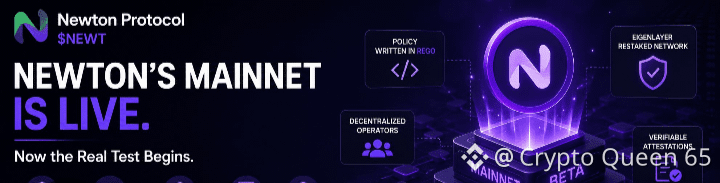
15
5
150
Article
Newton Protocol: The Missing Authorization Layer in Web3@NewtonProtocol A few days ago, I was reading another discussion about bringing traditional assets onchain. The usual benefits appeared quickly: faster settlement, fractional ownership, programmable transfers, and wider market access. All of that sounded familiar.
What caught my attention this time was a less exciting but more important question: how do these assets remain compliant after they start moving across wallets, protocols, and automated financial systems?
That question led me to Newton Protocol.
Newton describes itself as an authorization layer for onchain finance. In practical terms, it allows applications to evaluate a transaction against predefined policies before the transaction settles. Those policies can cover areas such as investor eligibility, jurisdictional restrictions, position limits, sanctions screening, and approved counterparties.
This approach makes sense for real-world assets. A tokenized treasury product, private credit position, or property-linked instrument cannot always circulate as freely as a normal crypto token. The issuer may need to restrict ownership to verified investors, block certain jurisdictions, or prevent transfers to high-risk addresses.
Instead of placing every compliance rule inside one isolated application, Newton aims to provide a reusable policy layer that can work across different protocols.
I can see the value in that design. Compliance often becomes fragmented when every platform builds its own verification process. A shared authorization system could make rules easier to apply consistently, especially as tokenized assets begin interacting with lending markets, vaults, payment systems, and automated agents.
But one distinction matters.
A protocol can verify that a transaction followed the encoded rules. It cannot automatically prove that those rules are complete, legally correct, or fair.
At first, I treated “compliant onchain assets” as mainly a technical challenge. I assumed the difficult part was checking identities, screening addresses, and preventing unauthorized transfers. After looking more closely, I realized that enforcement is only one part of the problem.
Before Newton can determine whether a transaction should proceed, someone must decide what conditions count as acceptable.
Consider a tokenized private credit fund. Its policy might allow transfers only to verified investors from approved jurisdictions. Newton could evaluate those conditions before settlement and produce evidence that the transfer satisfied them.
Technically, the system worked.
But suppose the issuer’s approved-jurisdiction list is outdated. Perhaps regulations changed, an investor’s status expired, or the legal structure behind the token no longer provides the protections buyers expect. The transaction could still pass every programmed check while creating a real-world legal problem.
This is not a weakness unique to Newton. It is a broader limitation of programmable compliance.
Blockchains are good at proving what happened inside a defined system. Real-world assets depend on information and obligations outside that system: legal ownership, custody, bankruptcy treatment, asset valuation, redemption rights, and the authority of the entity issuing the token. Research on RWA infrastructure continues to show that these offchain legal and operational arrangements remain central even when transfer controls move onchain.
That leads to the deeper question: who is responsible for the policy itself?
Is it the asset issuer, the protocol integrating Newton, the identity provider supplying the data, or the governance process approving policy updates? And when a rule technically functions but produces an unwanted outcome, where does accountability sit?
These questions become more serious as the value involved grows. A minor policy mistake in an experimental vault may affect a handful of users. The same mistake inside an institutional credit market could freeze legitimate investors, permit restricted transfers, or create disputes involving several jurisdictions.
Newton’s role could still be important. Reliable authorization infrastructure may be necessary for real-world assets to move beyond closed, permissioned platforms. But authorization should not be confused with legal certainty.
The NEWT token adds another layer to the discussion because it is connected to protocol security and network participation. I am not ready to form a strong market view based only on the RWA narrative. The more useful signals will be actual policy evaluations, serious integrations, and evidence that institutions trust the system for meaningful transactions.
For now, I see Newton Protocol as an attempt to solve a real infrastructure gap. Its strongest contribution may not be making assets compliant by itself, but making compliance policies visible, programmable, and enforceable before settlement.
$NEWT
#Newt
Newton Protocol: The Missing Authorization Layer in Web3
@NewtonProtocol A few days ago, I was reading another discussion about bringing traditional assets onchain. The usual benefits appeared quickly: faster settlement, fractional ownership, programmable transfers, and wider market access. All of that sounded familiar.
What caught my attention this time was a less exciting but more important question: how do these assets remain compliant after they start moving across wallets, protocols, and automated financial systems?
That question led me to Newton Protocol.
Newton describes itself as an authorization layer for onchain finance. In practical terms, it allows applications to evaluate a transaction against predefined policies before the transaction settles. Those policies can cover areas such as investor eligibility, jurisdictional restrictions, position limits, sanctions screening, and approved counterparties.
This approach makes sense for real-world assets. A tokenized treasury product, private credit position, or property-linked instrument cannot always circulate as freely as a normal crypto token. The issuer may need to restrict ownership to verified investors, block certain jurisdictions, or prevent transfers to high-risk addresses.
Instead of placing every compliance rule inside one isolated application, Newton aims to provide a reusable policy layer that can work across different protocols.
I can see the value in that design. Compliance often becomes fragmented when every platform builds its own verification process. A shared authorization system could make rules easier to apply consistently, especially as tokenized assets begin interacting with lending markets, vaults, payment systems, and automated agents.
But one distinction matters.
A protocol can verify that a transaction followed the encoded rules. It cannot automatically prove that those rules are complete, legally correct, or fair.
At first, I treated “compliant onchain assets” as mainly a technical challenge. I assumed the difficult part was checking identities, screening addresses, and preventing unauthorized transfers. After looking more closely, I realized that enforcement is only one part of the problem.
Before Newton can determine whether a transaction should proceed, someone must decide what conditions count as acceptable.
Consider a tokenized private credit fund. Its policy might allow transfers only to verified investors from approved jurisdictions. Newton could evaluate those conditions before settlement and produce evidence that the transfer satisfied them.
Technically, the system worked.
But suppose the issuer’s approved-jurisdiction list is outdated. Perhaps regulations changed, an investor’s status expired, or the legal structure behind the token no longer provides the protections buyers expect. The transaction could still pass every programmed check while creating a real-world legal problem.
This is not a weakness unique to Newton. It is a broader limitation of programmable compliance.
Blockchains are good at proving what happened inside a defined system. Real-world assets depend on information and obligations outside that system: legal ownership, custody, bankruptcy treatment, asset valuation, redemption rights, and the authority of the entity issuing the token. Research on RWA infrastructure continues to show that these offchain legal and operational arrangements remain central even when transfer controls move onchain.
That leads to the deeper question: who is responsible for the policy itself?
Is it the asset issuer, the protocol integrating Newton, the identity provider supplying the data, or the governance process approving policy updates? And when a rule technically functions but produces an unwanted outcome, where does accountability sit?
These questions become more serious as the value involved grows. A minor policy mistake in an experimental vault may affect a handful of users. The same mistake inside an institutional credit market could freeze legitimate investors, permit restricted transfers, or create disputes involving several jurisdictions.
Newton’s role could still be important. Reliable authorization infrastructure may be necessary for real-world assets to move beyond closed, permissioned platforms. But authorization should not be confused with legal certainty.
The NEWT token adds another layer to the discussion because it is connected to protocol security and network participation. I am not ready to form a strong market view based only on the RWA narrative. The more useful signals will be actual policy evaluations, serious integrations, and evidence that institutions trust the system for meaningful transactions.
For now, I see Newton Protocol as an attempt to solve a real infrastructure gap. Its strongest contribution may not be making assets compliant by itself, but making compliance policies visible, programmable, and enforceable before settlement.
$NEWT
#Newt
What caught my attention this time was a less exciting but more important question: how do these assets remain compliant after they start moving across wallets, protocols, and automated financial systems?
That question led me to Newton Protocol.
Newton describes itself as an authorization layer for onchain finance. In practical terms, it allows applications to evaluate a transaction against predefined policies before the transaction settles. Those policies can cover areas such as investor eligibility, jurisdictional restrictions, position limits, sanctions screening, and approved counterparties.
This approach makes sense for real-world assets. A tokenized treasury product, private credit position, or property-linked instrument cannot always circulate as freely as a normal crypto token. The issuer may need to restrict ownership to verified investors, block certain jurisdictions, or prevent transfers to high-risk addresses.
Instead of placing every compliance rule inside one isolated application, Newton aims to provide a reusable policy layer that can work across different protocols.
I can see the value in that design. Compliance often becomes fragmented when every platform builds its own verification process. A shared authorization system could make rules easier to apply consistently, especially as tokenized assets begin interacting with lending markets, vaults, payment systems, and automated agents.
But one distinction matters.
A protocol can verify that a transaction followed the encoded rules. It cannot automatically prove that those rules are complete, legally correct, or fair.
At first, I treated “compliant onchain assets” as mainly a technical challenge. I assumed the difficult part was checking identities, screening addresses, and preventing unauthorized transfers. After looking more closely, I realized that enforcement is only one part of the problem.
Before Newton can determine whether a transaction should proceed, someone must decide what conditions count as acceptable.
Consider a tokenized private credit fund. Its policy might allow transfers only to verified investors from approved jurisdictions. Newton could evaluate those conditions before settlement and produce evidence that the transfer satisfied them.
Technically, the system worked.
But suppose the issuer’s approved-jurisdiction list is outdated. Perhaps regulations changed, an investor’s status expired, or the legal structure behind the token no longer provides the protections buyers expect. The transaction could still pass every programmed check while creating a real-world legal problem.
This is not a weakness unique to Newton. It is a broader limitation of programmable compliance.
Blockchains are good at proving what happened inside a defined system. Real-world assets depend on information and obligations outside that system: legal ownership, custody, bankruptcy treatment, asset valuation, redemption rights, and the authority of the entity issuing the token. Research on RWA infrastructure continues to show that these offchain legal and operational arrangements remain central even when transfer controls move onchain.
That leads to the deeper question: who is responsible for the policy itself?
Is it the asset issuer, the protocol integrating Newton, the identity provider supplying the data, or the governance process approving policy updates? And when a rule technically functions but produces an unwanted outcome, where does accountability sit?
These questions become more serious as the value involved grows. A minor policy mistake in an experimental vault may affect a handful of users. The same mistake inside an institutional credit market could freeze legitimate investors, permit restricted transfers, or create disputes involving several jurisdictions.
Newton’s role could still be important. Reliable authorization infrastructure may be necessary for real-world assets to move beyond closed, permissioned platforms. But authorization should not be confused with legal certainty.
The NEWT token adds another layer to the discussion because it is connected to protocol security and network participation. I am not ready to form a strong market view based only on the RWA narrative. The more useful signals will be actual policy evaluations, serious integrations, and evidence that institutions trust the system for meaningful transactions.
For now, I see Newton Protocol as an attempt to solve a real infrastructure gap. Its strongest contribution may not be making assets compliant by itself, but making compliance policies visible, programmable, and enforceable before settlement.
$NEWT
#Newt
2
1
112
·
--
Haussier
The part of @NewtonProtocol that keeps sticking with me isn’t “AI agents doing things onchain.” We already have bots that route trades, rebalance positions, and move funds.
The awkward part is permission.
Most agents still operate with a choice that feels too binary: give them broad wallet access, or keep approving every action manually. One defeats automation. The other creates a security problem the moment market conditions change.
Newton’s policy flow makes that middle layer feel more concrete. A transaction can be checked against rules before execution—spending limits, identity requirements, jurisdiction checks, even external data—rather than trusting the agent because it was configured correctly once.
The official quickstart says a sanctions-screening policy can be simulated in under five minutes, which is less interesting as a speed claim than as proof that permissions can become part of the normal developer workflow.
That seems like the real bottleneck in an agentic economy. Not whether agents can act, but whether users and applications can define exactly when they are allowed to act without rebuilding a custom control system each time.
I’m still skeptical about how decentralized and frictionless this becomes at scale, but the permission problem feels more immediate than the agent hype around it.
$NEWT
{spot}(NEWTUSDT)
#Newt
The part of @NewtonProtocol that keeps sticking with me isn’t “AI agents doing things onchain.” We already have bots that route trades, rebalance positions, and move funds.
The awkward part is permission.
Most agents still operate with a choice that feels too binary: give them broad wallet access, or keep approving every action manually. One defeats automation. The other creates a security problem the moment market conditions change.
Newton’s policy flow makes that middle layer feel more concrete. A transaction can be checked against rules before execution—spending limits, identity requirements, jurisdiction checks, even external data—rather than trusting the agent because it was configured correctly once.
The official quickstart says a sanctions-screening policy can be simulated in under five minutes, which is less interesting as a speed claim than as proof that permissions can become part of the normal developer workflow.
That seems like the real bottleneck in an agentic economy. Not whether agents can act, but whether users and applications can define exactly when they are allowed to act without rebuilding a custom control system each time.
I’m still skeptical about how decentralized and frictionless this becomes at scale, but the permission problem feels more immediate than the agent hype around it.
$NEWT
#Newt
The awkward part is permission.
Most agents still operate with a choice that feels too binary: give them broad wallet access, or keep approving every action manually. One defeats automation. The other creates a security problem the moment market conditions change.
Newton’s policy flow makes that middle layer feel more concrete. A transaction can be checked against rules before execution—spending limits, identity requirements, jurisdiction checks, even external data—rather than trusting the agent because it was configured correctly once.
The official quickstart says a sanctions-screening policy can be simulated in under five minutes, which is less interesting as a speed claim than as proof that permissions can become part of the normal developer workflow.
That seems like the real bottleneck in an agentic economy. Not whether agents can act, but whether users and applications can define exactly when they are allowed to act without rebuilding a custom control system each time.
I’m still skeptical about how decentralized and frictionless this becomes at scale, but the permission problem feels more immediate than the agent hype around it.
$NEWT
#Newt
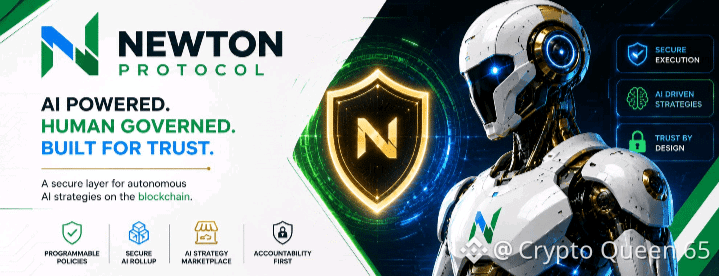
3
2
101
Article
Newton Protocol’s Real Edge Isn’t Automation—It’s Who Controls the RulesA few weeks ago, I kept seeing @NewtonProtocol described through the familiar language of AI agents and onchain automation. The basic idea sounded useful but not especially surprising: users define a task, software carries it out, and blockchain infrastructure makes the result verifiable.
That was my first impression, at least.
I started reading more because I wanted to understand what “verifiable automation” actually meant in practice. Was Newton mainly trying to prove that an agent completed a transaction correctly? Was it another marketplace for automated strategies? Or was the important part happening somewhere else?
The policy layer changed how I looked at it.
Newton is designed around rules that can be checked before sensitive onchain actions are executed. These policies may define limits, permissions, market conditions, authorization requirements, or other constraints. A transaction that violates the relevant policy can be stopped before funds move, rather than merely identified as a problem afterward.
That is more interesting than automation alone.
Automation answers a practical question: can software perform the task?
The policy layer answers a more important one: should this particular action be allowed under these conditions?
I can see why this architecture is useful. Giving an AI agent unrestricted control over a wallet is uncomfortable, especially when the agent is interacting with volatile markets, unfamiliar contracts, or large balances. A policy could restrict the assets it may use, limit transaction size, require certain market conditions, or block actions that fall outside an approved strategy.
Instead of trusting the agent to remember every boundary, the system attempts to enforce those boundaries at execution time.
But one distinction kept bothering me.
A policy engine can verify that an action follows the rules. It cannot automatically prove that the rules themselves are sensible.
At first, I treated “verifiable” as something close to “safe.” Looking more closely, I realized those are not the same claim. Newton may help establish that an operation satisfied a defined policy at a specific moment. That is valuable. Yet the quality of the outcome still depends on who designed the policy, what information it used, and which situations the author failed to anticipate.
Consider a treasury that allows an automated agent to rebalance stablecoin holdings. Its policy might say that the agent can move no more than 10% of the treasury per transaction and can only use approved protocols.
The agent follows those rules perfectly.
Then one approved stablecoin begins losing market confidence. The agent continues allocating toward it because the asset remains on the approved list and the written conditions have not been updated. Technically, the policy system worked. The action was authorized exactly as designed. The unwanted result came from an incomplete policy, not failed enforcement.
That example gets to what I now see as Newton’s deeper challenge.
Who is responsible for translating human intentions into machine-enforceable rules?
Most users do not naturally think in terms of edge cases, oracle failures, unusual liquidity conditions, or conflicting constraints. Developers may be able to write detailed policies, but ordinary users will probably depend on templates, applications, risk providers, or institutions to define those boundaries for them.
That creates a new trust surface. We may trust the execution less blindly, but we still need to evaluate the people and processes behind the policy.
The stakes rise as automation becomes more autonomous. A poorly designed rule affecting a small experimental wallet is one thing. The same mistake inside an institutional treasury, payment system, or network of interacting agents could repeat across thousands of transactions before anyone fully understands the pattern.
This does not make the policy layer less valuable. It makes it the central part of the system.
Newton’s native token, NEWT, may eventually be evaluated through participation in the protocol’s security and authorization infrastructure, but I am not ready to form a strong market view from the narrative alone. The technology is interesting; the token thesis still depends on meaningful integrations, sustained usage, and evidence that policy-based authorization solves problems users will pay to avoid.
I originally saw Newton as infrastructure that helps agents do things automatically. Now I see it more as infrastructure that defines what agents are permitted to do.
That is a stronger idea, but it also leads to a harder question: when machines can follow rules perfectly, how much attention are we giving to the humans who write them?
$NEWT
#Newt
Newton Protocol’s Real Edge Isn’t Automation—It’s Who Controls the Rules
A few weeks ago, I kept seeing @NewtonProtocol described through the familiar language of AI agents and onchain automation. The basic idea sounded useful but not especially surprising: users define a task, software carries it out, and blockchain infrastructure makes the result verifiable.
That was my first impression, at least.
I started reading more because I wanted to understand what “verifiable automation” actually meant in practice. Was Newton mainly trying to prove that an agent completed a transaction correctly? Was it another marketplace for automated strategies? Or was the important part happening somewhere else?
The policy layer changed how I looked at it.
Newton is designed around rules that can be checked before sensitive onchain actions are executed. These policies may define limits, permissions, market conditions, authorization requirements, or other constraints. A transaction that violates the relevant policy can be stopped before funds move, rather than merely identified as a problem afterward.
That is more interesting than automation alone.
Automation answers a practical question: can software perform the task?
The policy layer answers a more important one: should this particular action be allowed under these conditions?
I can see why this architecture is useful. Giving an AI agent unrestricted control over a wallet is uncomfortable, especially when the agent is interacting with volatile markets, unfamiliar contracts, or large balances. A policy could restrict the assets it may use, limit transaction size, require certain market conditions, or block actions that fall outside an approved strategy.
Instead of trusting the agent to remember every boundary, the system attempts to enforce those boundaries at execution time.
But one distinction kept bothering me.
A policy engine can verify that an action follows the rules. It cannot automatically prove that the rules themselves are sensible.
At first, I treated “verifiable” as something close to “safe.” Looking more closely, I realized those are not the same claim. Newton may help establish that an operation satisfied a defined policy at a specific moment. That is valuable. Yet the quality of the outcome still depends on who designed the policy, what information it used, and which situations the author failed to anticipate.
Consider a treasury that allows an automated agent to rebalance stablecoin holdings. Its policy might say that the agent can move no more than 10% of the treasury per transaction and can only use approved protocols.
The agent follows those rules perfectly.
Then one approved stablecoin begins losing market confidence. The agent continues allocating toward it because the asset remains on the approved list and the written conditions have not been updated. Technically, the policy system worked. The action was authorized exactly as designed. The unwanted result came from an incomplete policy, not failed enforcement.
That example gets to what I now see as Newton’s deeper challenge.
Who is responsible for translating human intentions into machine-enforceable rules?
Most users do not naturally think in terms of edge cases, oracle failures, unusual liquidity conditions, or conflicting constraints. Developers may be able to write detailed policies, but ordinary users will probably depend on templates, applications, risk providers, or institutions to define those boundaries for them.
That creates a new trust surface. We may trust the execution less blindly, but we still need to evaluate the people and processes behind the policy.
The stakes rise as automation becomes more autonomous. A poorly designed rule affecting a small experimental wallet is one thing. The same mistake inside an institutional treasury, payment system, or network of interacting agents could repeat across thousands of transactions before anyone fully understands the pattern.
This does not make the policy layer less valuable. It makes it the central part of the system.
Newton’s native token, NEWT, may eventually be evaluated through participation in the protocol’s security and authorization infrastructure, but I am not ready to form a strong market view from the narrative alone. The technology is interesting; the token thesis still depends on meaningful integrations, sustained usage, and evidence that policy-based authorization solves problems users will pay to avoid.
I originally saw Newton as infrastructure that helps agents do things automatically. Now I see it more as infrastructure that defines what agents are permitted to do.
That is a stronger idea, but it also leads to a harder question: when machines can follow rules perfectly, how much attention are we giving to the humans who write them?
$NEWT
#Newt
That was my first impression, at least.
I started reading more because I wanted to understand what “verifiable automation” actually meant in practice. Was Newton mainly trying to prove that an agent completed a transaction correctly? Was it another marketplace for automated strategies? Or was the important part happening somewhere else?
The policy layer changed how I looked at it.
Newton is designed around rules that can be checked before sensitive onchain actions are executed. These policies may define limits, permissions, market conditions, authorization requirements, or other constraints. A transaction that violates the relevant policy can be stopped before funds move, rather than merely identified as a problem afterward.
That is more interesting than automation alone.
Automation answers a practical question: can software perform the task?
The policy layer answers a more important one: should this particular action be allowed under these conditions?
I can see why this architecture is useful. Giving an AI agent unrestricted control over a wallet is uncomfortable, especially when the agent is interacting with volatile markets, unfamiliar contracts, or large balances. A policy could restrict the assets it may use, limit transaction size, require certain market conditions, or block actions that fall outside an approved strategy.
Instead of trusting the agent to remember every boundary, the system attempts to enforce those boundaries at execution time.
But one distinction kept bothering me.
A policy engine can verify that an action follows the rules. It cannot automatically prove that the rules themselves are sensible.
At first, I treated “verifiable” as something close to “safe.” Looking more closely, I realized those are not the same claim. Newton may help establish that an operation satisfied a defined policy at a specific moment. That is valuable. Yet the quality of the outcome still depends on who designed the policy, what information it used, and which situations the author failed to anticipate.
Consider a treasury that allows an automated agent to rebalance stablecoin holdings. Its policy might say that the agent can move no more than 10% of the treasury per transaction and can only use approved protocols.
The agent follows those rules perfectly.
Then one approved stablecoin begins losing market confidence. The agent continues allocating toward it because the asset remains on the approved list and the written conditions have not been updated. Technically, the policy system worked. The action was authorized exactly as designed. The unwanted result came from an incomplete policy, not failed enforcement.
That example gets to what I now see as Newton’s deeper challenge.
Who is responsible for translating human intentions into machine-enforceable rules?
Most users do not naturally think in terms of edge cases, oracle failures, unusual liquidity conditions, or conflicting constraints. Developers may be able to write detailed policies, but ordinary users will probably depend on templates, applications, risk providers, or institutions to define those boundaries for them.
That creates a new trust surface. We may trust the execution less blindly, but we still need to evaluate the people and processes behind the policy.
The stakes rise as automation becomes more autonomous. A poorly designed rule affecting a small experimental wallet is one thing. The same mistake inside an institutional treasury, payment system, or network of interacting agents could repeat across thousands of transactions before anyone fully understands the pattern.
This does not make the policy layer less valuable. It makes it the central part of the system.
Newton’s native token, NEWT, may eventually be evaluated through participation in the protocol’s security and authorization infrastructure, but I am not ready to form a strong market view from the narrative alone. The technology is interesting; the token thesis still depends on meaningful integrations, sustained usage, and evidence that policy-based authorization solves problems users will pay to avoid.
I originally saw Newton as infrastructure that helps agents do things automatically. Now I see it more as infrastructure that defines what agents are permitted to do.
That is a stronger idea, but it also leads to a harder question: when machines can follow rules perfectly, how much attention are we giving to the humans who write them?
$NEWT
#Newt
7
1
71
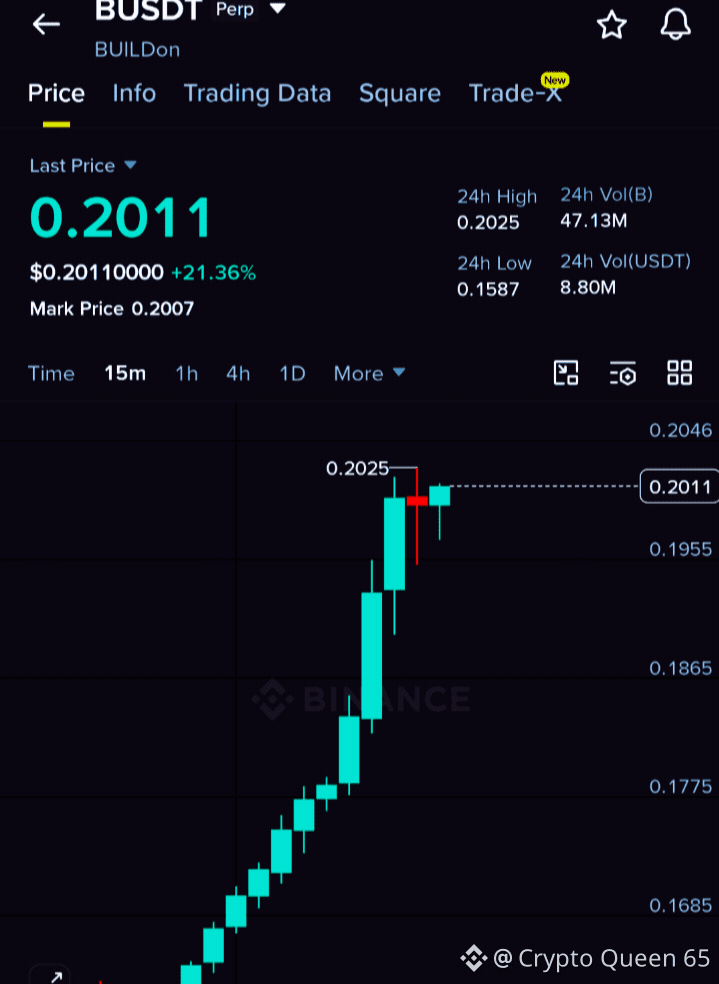
$B3 is showing strong momentum. 👀
$0.30 looks well within reach if buyers stay in control. 💓⛓️💥
$B3
{alpha}(84530xb3b32f9f8827d4634fe7d973fa1034ec9fddb3b3)
$B3 is showing strong momentum. 👀
$0.30 looks well within reach if buyers stay in control. 💓⛓️💥
$B3
$0.30 looks well within reach if buyers stay in control. 💓⛓️💥
$B3
1
1
88
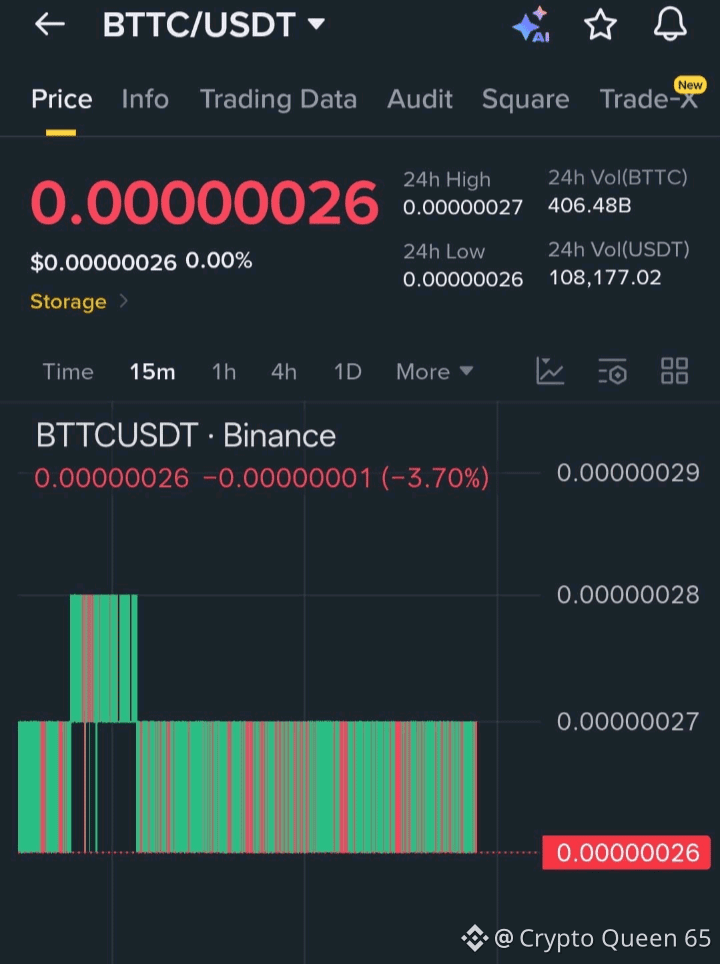
$BTTC Breakout Setup 👀
$BTTC is holding a key support level, and buyers are showing signs of strength.
📍 Entry: 0.00000026
🎯 TP: 0.00000027
🛑 SL: Below 0.00000026
A strong move above 0.00000027 could open the door for a quick bullish push. Keep this level on your watchlist and manage your risk wisely. 🚀
#BTTC
$BTTC
{spot}(BTTCUSDT)
$BTTC Breakout Setup 👀
$BTTC is holding a key support level, and buyers are showing signs of strength.
📍 Entry: 0.00000026
🎯 TP: 0.00000027
🛑 SL: Below 0.00000026
A strong move above 0.00000027 could open the door for a quick bullish push. Keep this level on your watchlist and manage your risk wisely. 🚀
#BTTC
$BTTC
$BTTC is holding a key support level, and buyers are showing signs of strength.
📍 Entry: 0.00000026
🎯 TP: 0.00000027
🛑 SL: Below 0.00000026
A strong move above 0.00000027 could open the door for a quick bullish push. Keep this level on your watchlist and manage your risk wisely. 🚀
#BTTC
$BTTC
1
277
Connectez-vous pour découvrir plus de contenu
Rejoignez la communauté mondiale des adeptes de cryptomonnaies sur Binance Square
⚡️ Suviez les dernières informations importantes sur les cryptomonnaies.
💬 Jugé digne de confiance par la plus grande plateforme d’échange de cryptomonnaies au monde.
👍 Découvrez les connaissances que partagent les créateurs vérifiés.
Adresse e-mail/Nº de téléphone
Sujets d’actualité
BinanceLaunchesBinanceIntelligence
146,587 vues
1,411 mentions
#BinanceLaunchesBinanceIntelligence
👉 WHEN AI STOPS JUST TALKING
For years, AI in crypto felt like a smart voice beside the chart. Useful, fast, sometimes impressive, but still separate from the actual machinery of trading.
Binance Intelligence feels like a different chapter.🧠
Binance AI brings market research closer to the user, while AI Pro can turn a plain-language trading idea into a structured workflow that can be tested before deployment. Agent OS pushes the idea further, connecting AI agents with market data, account information and supported trading capabilities. It has already passed 280,000 daily calls.
That creates a new sequence:
Think → research → design → test → approve → execute.
And that final word matters most.
Because the moment AI moves from explaining a market to interacting with it, the conversation changes from intelligence to trust.
A good AI can process information faster than I can. But faster does not automatically mean wiser.
Markets punish mistakes in real time.
So the question I find more interesting than “Can AI trade?” is:
How much authority should we ever give an algorithm over our money? 🤖📊
MoonlitQueen
·1 mentions J’aime
·207 vues
StriveBuys2000BTCFor$169M
6,081 vues
64 mentions
EvernorthXRPTreasuryCompletesSPACMerger
89,696 vues
888 mentions