
Blockman PR - Marketing
913 Publications

Blockman PR - Marketing
Signaler
Bloquer l’utilisateur
Entrust your press release distribution to us and experience the difference.
Follow us for the latest crypto PR insights, success stories, and industry news.
0 Suivis
1K Abonnés
497 J’aime
Publications

Article
Voir la traduction
Former Cointelegraph CEO Joins Phase as Co-Founder and CEOThe appointment follows the launch of Phase’s Layer 1 blockchain mainnet and AI agent services, backed by $45 million in founder funding.
Phase, a technology company building the operating layer for the AI agent economy, today announced that Yana Prikhodchenko, former CEO of Cointelegraph, has joined the company as co-founder and CEO. She will lead strategy, global expansion and commercial development, working alongside founder Kirill Eves, as Phase scales its decentralized infrastructure for autonomous AI agents.
Prikhodchenko joins Phase after nearly five years at Cointelegraph, where she served as CEO, leading a global team of more than 200 people and transforming the company from a crypto news platform into a diversified group spanning media, marketing, research, acceleration and industry events. Before joining Cointelegraph, she spent more than a decade in senior leadership roles at major banking and insurance companies, including Allianz.
Phase is building the operating layer for the AI agent economy, giving AI agents everything they need to operate autonomously, from accessing the open web and orchestrating AI models to performing computing tasks and making payments. These services run on Phase's Layer 1 blockchain, powered by a decentralized network of everyday devices whose owners earn rewards for validating transactions and contributing connectivity and computing power.
“AI agents are moving from answering questions to performing real tasks on our behalf, but the infrastructure they depend on was not built for autonomous systems. Phase is building an open, decentralized network that anyone can participate in. My focus is to bring this technology to developers and businesses worldwide and build the ecosystem needed to support the next generation of AI agents,” said Yana Prikhodchenko, co-founder and CEO of Phase.
“Yana brings extensive leadership experience across media, technology and financial services, along with the operational expertise and industry relationships needed to take Phase into its next stage of growth. As we bring our technology to market, she will lead the company's commercial development and global expansion,” said Kirill Eves, founder of Phase.
About Phase
Phase is a technology company building the operating layer for the AI agent economy, with four integrated services that give AI agents everything they need to operate autonomously, from accessing the open web and orchestrating AI models to performing computing tasks and making payments. The platform runs on its own Layer 1 blockchain, powered by a decentralized network of everyday devices. Phase has received $45 million in funding from its founder, Kirill Eves.
Phase Proxy enables AI agents acting on behalf of users to access websites that restrict automated traffic through mobile and residential internet connections. Phase Router intelligently directs requests across leading AI models to optimize quality, performance and cost. Phase Compute harnesses the processing power of devices across the network to run open-weight AI models, while on-chain settlement enables autonomous payments using stablecoins and PHASE, the network’s native token. Phase is building its own AI model to serve as the platform’s central intelligence, capable of advanced reasoning, solving complex tasks independently and orchestrating other AI models.
Unlike most blockchain networks that require dedicated servers or token staking, Phase allows anyone to become a validator simply by downloading the app, without specialized hardware or upfront investment. Its reputation-based consensus and randomized validator selection secure the network and prevent control from concentrating in the hands of a few powerful operators. Phase rewards device owners with PHASE tokens for validating blocks and contributing connectivity and computing power, enabling millions of people to help build the AI economy and share in the value it creates.
Former Cointelegraph CEO Joins Phase as Co-Founder and CEO
The appointment follows the launch of Phase’s Layer 1 blockchain mainnet and AI agent services, backed by $45 million in founder funding.
Phase, a technology company building the operating layer for the AI agent economy, today announced that Yana Prikhodchenko, former CEO of Cointelegraph, has joined the company as co-founder and CEO. She will lead strategy, global expansion and commercial development, working alongside founder Kirill Eves, as Phase scales its decentralized infrastructure for autonomous AI agents.
Prikhodchenko joins Phase after nearly five years at Cointelegraph, where she served as CEO, leading a global team of more than 200 people and transforming the company from a crypto news platform into a diversified group spanning media, marketing, research, acceleration and industry events. Before joining Cointelegraph, she spent more than a decade in senior leadership roles at major banking and insurance companies, including Allianz.
Phase is building the operating layer for the AI agent economy, giving AI agents everything they need to operate autonomously, from accessing the open web and orchestrating AI models to performing computing tasks and making payments. These services run on Phase's Layer 1 blockchain, powered by a decentralized network of everyday devices whose owners earn rewards for validating transactions and contributing connectivity and computing power.
“AI agents are moving from answering questions to performing real tasks on our behalf, but the infrastructure they depend on was not built for autonomous systems. Phase is building an open, decentralized network that anyone can participate in. My focus is to bring this technology to developers and businesses worldwide and build the ecosystem needed to support the next generation of AI agents,” said Yana Prikhodchenko, co-founder and CEO of Phase.
“Yana brings extensive leadership experience across media, technology and financial services, along with the operational expertise and industry relationships needed to take Phase into its next stage of growth. As we bring our technology to market, she will lead the company's commercial development and global expansion,” said Kirill Eves, founder of Phase.
About Phase
Phase is a technology company building the operating layer for the AI agent economy, with four integrated services that give AI agents everything they need to operate autonomously, from accessing the open web and orchestrating AI models to performing computing tasks and making payments. The platform runs on its own Layer 1 blockchain, powered by a decentralized network of everyday devices. Phase has received $45 million in funding from its founder, Kirill Eves.
Phase Proxy enables AI agents acting on behalf of users to access websites that restrict automated traffic through mobile and residential internet connections. Phase Router intelligently directs requests across leading AI models to optimize quality, performance and cost. Phase Compute harnesses the processing power of devices across the network to run open-weight AI models, while on-chain settlement enables autonomous payments using stablecoins and PHASE, the network’s native token. Phase is building its own AI model to serve as the platform’s central intelligence, capable of advanced reasoning, solving complex tasks independently and orchestrating other AI models.
Unlike most blockchain networks that require dedicated servers or token staking, Phase allows anyone to become a validator simply by downloading the app, without specialized hardware or upfront investment. Its reputation-based consensus and randomized validator selection secure the network and prevent control from concentrating in the hands of a few powerful operators. Phase rewards device owners with PHASE tokens for validating blocks and contributing connectivity and computing power, enabling millions of people to help build the AI economy and share in the value it creates.
104
Article
Voir la traduction
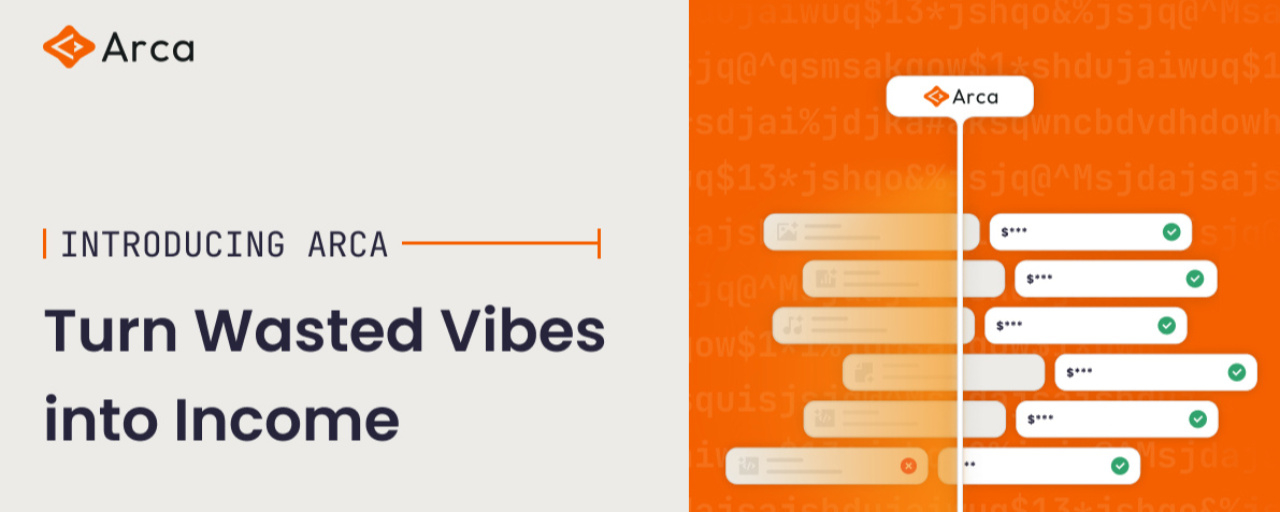
Arca Opens to Everyone, Paying People for the AI Sessions They'd Otherwise Throw AwayAfter invite-only early access, the desktop app from the team behind Brevis is now open to anyone on Mac and Windows.
HONG KONG, November 11, 2026: Arca, a new desktop app from the team behind Brevis, opened to the public today. Arca pays people for the AI sessions they'd otherwise throw away. It finds the session history their AI tools already keep on their computer, lets them choose which sessions to submit, strips sensitive details on the device before anything is uploaded, and pays for the sessions that are approved. Starting today, anyone can sign up with an email address, with no invite and no waitlist.
Much of today's knowledge work runs through AI tools. People steer a model through a task, correcting it, throwing out what fails and keeping what holds up. Every one of those sessions leaves a detailed record of real work: the back-and-forth, the dead ends, the fix that finally worked. These records pile up by the thousands on people's computers, and once the window closes, they're worth nothing to the person who did the work. Arca gives that work a value.
How it works
Arca works with the AI tools people already use, including Claude Code, Codex, Cursor and Claude Desktop. After installing the app, users see the sessions Arca has found on their machine, past ones included. They pick a session to upload, and Arca anonymises it on their computer before it leaves, then returns a quote range. Users either confirm, which sends the session to review, or withdraw, in which case the upload is deleted. Approved sessions are paid weekly.
Arca only reads sessions that are already on the user's computer, and it lists everything it finds. Nothing uploads in the background, and nothing leaves the device until the user picks a session and confirms. Before a session is uploaded, Arca strips names, file paths, account details and keys, and further anonymising runs on Arca's side.
"Every AI session is a record of real thinking and real work, and until now the person who did that work got nothing for it," said Michael, co-founder and CEO of Brevis. "Arca lets people see what their sessions are worth and decide for themselves what to share. We opened it in small batches first to get the experience right. Today it's open to everyone."
Built for real work in any field
Arca is built for anyone who does real work with AI, from code to contract reviews, research and long working conversations. Sessions with Claude Opus and Fable, and with the latest GPT models in Codex, qualify today, with more to come. Very short sessions don't qualify, and every submission is reviewed before it pays. Users can connect GitHub to strengthen their profile, which can raise the value of their sessions, but it isn't required.
Arca carries the principle behind Brevis's verifiable computing work into a new domain: things you can verify are worth more than things you have to trust.
Availability
Arca first opened on October 13 in invite-only early access, admitting users in small batches. With today's launch, the invite requirement is gone. Users sign up with an email address or a Google account and can start right away. Arca is free to use and available now for Mac and Windows at arca.market.
Through November 30, the Arca Launch Challenge adds $10,000 in prizes on top of regular payouts for approved sessions.
About Arca
Arca pays people for the AI sessions they'd otherwise throw away. The desktop app finds the sessions people's AI tools already keep, lets them choose what to share, anonymises sessions on the device before upload, and pays for approved sessions. Arca is built by the team behind Brevis. Learn more at arca.market.
About Brevis
Brevis builds verifiable computing infrastructure. Its zero-knowledge proving technology, including the open-source Pico zkVM, lets applications prove the results of complex computations. Learn more at brevis.network.
Arca Opens to Everyone, Paying People for the AI Sessions They'd Otherwise Throw Away
After invite-only early access, the desktop app from the team behind Brevis is now open to anyone on Mac and Windows.
HONG KONG, November 11, 2026: Arca, a new desktop app from the team behind Brevis, opened to the public today. Arca pays people for the AI sessions they'd otherwise throw away. It finds the session history their AI tools already keep on their computer, lets them choose which sessions to submit, strips sensitive details on the device before anything is uploaded, and pays for the sessions that are approved. Starting today, anyone can sign up with an email address, with no invite and no waitlist.
Much of today's knowledge work runs through AI tools. People steer a model through a task, correcting it, throwing out what fails and keeping what holds up. Every one of those sessions leaves a detailed record of real work: the back-and-forth, the dead ends, the fix that finally worked. These records pile up by the thousands on people's computers, and once the window closes, they're worth nothing to the person who did the work. Arca gives that work a value.
How it works
Arca works with the AI tools people already use, including Claude Code, Codex, Cursor and Claude Desktop. After installing the app, users see the sessions Arca has found on their machine, past ones included. They pick a session to upload, and Arca anonymises it on their computer before it leaves, then returns a quote range. Users either confirm, which sends the session to review, or withdraw, in which case the upload is deleted. Approved sessions are paid weekly.
Arca only reads sessions that are already on the user's computer, and it lists everything it finds. Nothing uploads in the background, and nothing leaves the device until the user picks a session and confirms. Before a session is uploaded, Arca strips names, file paths, account details and keys, and further anonymising runs on Arca's side.
"Every AI session is a record of real thinking and real work, and until now the person who did that work got nothing for it," said Michael, co-founder and CEO of Brevis. "Arca lets people see what their sessions are worth and decide for themselves what to share. We opened it in small batches first to get the experience right. Today it's open to everyone."
Built for real work in any field
Arca is built for anyone who does real work with AI, from code to contract reviews, research and long working conversations. Sessions with Claude Opus and Fable, and with the latest GPT models in Codex, qualify today, with more to come. Very short sessions don't qualify, and every submission is reviewed before it pays. Users can connect GitHub to strengthen their profile, which can raise the value of their sessions, but it isn't required.
Arca carries the principle behind Brevis's verifiable computing work into a new domain: things you can verify are worth more than things you have to trust.
Availability
Arca first opened on October 13 in invite-only early access, admitting users in small batches. With today's launch, the invite requirement is gone. Users sign up with an email address or a Google account and can start right away. Arca is free to use and available now for Mac and Windows at arca.market.
Through November 30, the Arca Launch Challenge adds $10,000 in prizes on top of regular payouts for approved sessions.
About Arca
Arca pays people for the AI sessions they'd otherwise throw away. The desktop app finds the sessions people's AI tools already keep, lets them choose what to share, anonymises sessions on the device before upload, and pays for approved sessions. Arca is built by the team behind Brevis. Learn more at arca.market.
About Brevis
Brevis builds verifiable computing infrastructure. Its zero-knowledge proving technology, including the open-source Pico zkVM, lets applications prove the results of complex computations. Learn more at brevis.network.
80

Article
HTX publie son rapport de performance d’octobreLa liquidité du marché spot s’améliore considérablement, tandis que les boosts d’APY aident les utilisateurs à passer un hiver au chaud
Depuis le début du quatrième trimestre, le marché des cryptomonnaies a continué de s’affaiblir dans un contexte de volatilité. Les prix des principaux actifs ont reculé après avoir atteint leurs plus hauts niveaux, et les acteurs du marché se montrent plus prudents. Alors que le marché se refroidit, HTX concentre ses efforts sur le renforcement des fondamentaux de son activité de trading et propose diverses possibilités de génération de rendement. En octobre, HTX a constaté une amélioration globale significative de la profondeur de marché de ses principales paires de trading spot, la profondeur à 0,05 % de la paire BTC/USDT ayant augmenté de 78 %. Parallèlement, le nombre total d’actifs de trading au comptant sur la plateforme est passé à 307, et le volume cumulé des transactions TradFi a dépassé 7,5 milliards d’USDT. Fin octobre, HTX Earn a lancé la Promotion Boost d’APY dans le cadre de la campagne hivernale HTX, proposant aux utilisateurs des options de rendement stable malgré les fluctuations du marché.
HTX publie son rapport de performance d’octobre
La liquidité du marché spot s’améliore considérablement, tandis que les boosts d’APY aident les utilisateurs à passer un hiver au chaud
Depuis le début du quatrième trimestre, le marché des cryptomonnaies a continué de s’affaiblir dans un contexte de volatilité. Les prix des principaux actifs ont reculé après avoir atteint leurs plus hauts niveaux, et les acteurs du marché se montrent plus prudents. Alors que le marché se refroidit, HTX concentre ses efforts sur le renforcement des fondamentaux de son activité de trading et propose diverses possibilités de génération de rendement. En octobre, HTX a constaté une amélioration globale significative de la profondeur de marché de ses principales paires de trading spot, la profondeur à 0,05 % de la paire BTC/USDT ayant augmenté de 78 %. Parallèlement, le nombre total d’actifs de trading au comptant sur la plateforme est passé à 307, et le volume cumulé des transactions TradFi a dépassé 7,5 milliards d’USDT. Fin octobre, HTX Earn a lancé la Promotion Boost d’APY dans le cadre de la campagne hivernale HTX, proposant aux utilisateurs des options de rendement stable malgré les fluctuations du marché.
Depuis le début du quatrième trimestre, le marché des cryptomonnaies a continué de s’affaiblir dans un contexte de volatilité. Les prix des principaux actifs ont reculé après avoir atteint leurs plus hauts niveaux, et les acteurs du marché se montrent plus prudents. Alors que le marché se refroidit, HTX concentre ses efforts sur le renforcement des fondamentaux de son activité de trading et propose diverses possibilités de génération de rendement. En octobre, HTX a constaté une amélioration globale significative de la profondeur de marché de ses principales paires de trading spot, la profondeur à 0,05 % de la paire BTC/USDT ayant augmenté de 78 %. Parallèlement, le nombre total d’actifs de trading au comptant sur la plateforme est passé à 307, et le volume cumulé des transactions TradFi a dépassé 7,5 milliards d’USDT. Fin octobre, HTX Earn a lancé la Promotion Boost d’APY dans le cadre de la campagne hivernale HTX, proposant aux utilisateurs des options de rendement stable malgré les fluctuations du marché.
4
Article
Voir la traduction
TRON Network Integrates with Backpack Wallet, Expanding Access to Its Multichain EcosystemGeneva, Switzerland, November 9, 2026 — TRON DAO, the community-governed DAO dedicated to accelerating the decentralization of the internet through blockchain technology and decentralized applications (dApps), today announced the integration of the TRON network with Backpack Wallet. The integration brings TRON's blockchain ecosystem directly to Backpack users, enabling them to send, receive, bridge, and manage TRON-based digital assets through Backpack's mobile app and browser extension, all while maintaining full self-custody.
Through the integration, Backpack users will be able to send, receive, and hold TRON-based digital assets, including USDT (TRC-20), directly within their wallet while maintaining full self-custody. Users will also be able to bridge assets between TRON and other supported blockchains, explore decentralized finance applications and dApps across the TRON ecosystem, including Sun.io, and manage their TRON assets alongside holdings from other supported networks within a single multichain wallet experience.
This integration follows the recent listing of TRX for spot trading and perpetual contracts on Backpack Exchange. The listings expanded market access to TRON's native utility token, allowing users in eligible jurisdictions to trade TRX through both spot and perpetual markets on Backpack's trading platform. Together, these developments establish a foundation for deeper ecosystem connectivity, bringing TRON's blockchain infrastructure and digital assets to Backpack users across both its wallet and exchange products.
The collaboration reinforces TRON's commitment to expanding global access to blockchain infrastructure, stablecoin payments, and decentralized finance, while advancing its mission to make digital assets more accessible worldwide.
About TRON DAO
TRON DAO is a community-governed DAO dedicated to accelerating the decentralization of the internet via blockchain technology and dApps.
Founded in September 2017, the TRON blockchain has experienced significant growth since its MainNet launch in May 2018. Today, TRON hosts the largest circulating supply of USD Tether (USDT) stablecoin, which currently exceeds $94 billion. As of November 2026, the TRON blockchain has recorded over 412 million in total user accounts, more than 16 billion in total transactions, and over $27 billion in total value locked (TVL), based on TRONSCAN. Recognized as the global settlement layer for stablecoin transactions and everyday purchases with proven success, TRON is “Moving Trillions, Empowering Billions.”
TRON Network Integrates with Backpack Wallet, Expanding Access to Its Multichain Ecosystem
Geneva, Switzerland, November 9, 2026 — TRON DAO, the community-governed DAO dedicated to accelerating the decentralization of the internet through blockchain technology and decentralized applications (dApps), today announced the integration of the TRON network with Backpack Wallet. The integration brings TRON's blockchain ecosystem directly to Backpack users, enabling them to send, receive, bridge, and manage TRON-based digital assets through Backpack's mobile app and browser extension, all while maintaining full self-custody.
Through the integration, Backpack users will be able to send, receive, and hold TRON-based digital assets, including USDT (TRC-20), directly within their wallet while maintaining full self-custody. Users will also be able to bridge assets between TRON and other supported blockchains, explore decentralized finance applications and dApps across the TRON ecosystem, including Sun.io, and manage their TRON assets alongside holdings from other supported networks within a single multichain wallet experience.
This integration follows the recent listing of TRX for spot trading and perpetual contracts on Backpack Exchange. The listings expanded market access to TRON's native utility token, allowing users in eligible jurisdictions to trade TRX through both spot and perpetual markets on Backpack's trading platform. Together, these developments establish a foundation for deeper ecosystem connectivity, bringing TRON's blockchain infrastructure and digital assets to Backpack users across both its wallet and exchange products.
The collaboration reinforces TRON's commitment to expanding global access to blockchain infrastructure, stablecoin payments, and decentralized finance, while advancing its mission to make digital assets more accessible worldwide.
About TRON DAO
TRON DAO is a community-governed DAO dedicated to accelerating the decentralization of the internet via blockchain technology and dApps.
Founded in September 2017, the TRON blockchain has experienced significant growth since its MainNet launch in May 2018. Today, TRON hosts the largest circulating supply of USD Tether (USDT) stablecoin, which currently exceeds $94 billion. As of November 2026, the TRON blockchain has recorded over 412 million in total user accounts, more than 16 billion in total transactions, and over $27 billion in total value locked (TVL), based on TRONSCAN. Recognized as the global settlement layer for stablecoin transactions and everyday purchases with proven success, TRON is “Moving Trillions, Empowering Billions.”
91

Article
Voir la traduction
Trade Tokenized US Stocks on HTX! HTX Launches Tokenized US Stocks for Spot TradingAs traditional finance and blockchain become increasingly interconnected and barriers between asset classes break down, the ability to offer users one-stop access to both crypto and US stock trading is becoming an essential capability for trading platforms. On November 9, HTX officially launched spot trading for bStocks (tokenized US stocks and ETFs), with 20 popular assets, including NVDA, TSLA, GOOGL, MSTR, CRCL, and QQQ, available in USDT trading pairs. The launch also kicks off the tokenized US stocks trading carnival event, featuring zero trading fees on designated trading pairs and exciting rewards, including an iPhone Duo, bringing a new U.S. stock trading experience to users worldwide.
The campaign runs from November 9 to February 9, 2027. During the campaign, users who register and trade spot on the 20 designated tokenized U.S. stock and ETF pairs will have a chance to enjoy four rewards.
Details: https://www.htx.com/en-us/mars/web/activity-center?callId=179395001871350
Reward 1: Enjoy Zero Trading Fees and Unlock Surprise Rewards
From 9:00 (UTC) on November 9 to 9:00 (UTC) on February 9, 2027, maker orders (limit orders) on designated trading pairs will enjoy zero trading fees. This zero-fee trading benefit lasts for 3 months, covering the year-end trading period and the new US earnings season beginning in January.
From 9:00 (UTC) on November 9 to 9:00 (UTC) on December 9, a trading challenge will run alongside the campaign. Users who reach a single-day trading volume of 10,000 USDT will receive a full rebate of the actual trading fees paid that day. Users who reach a cumulative trading volume of 500,000 USDT can share the 50,000 USDT prize pool. In addition, the top three users by cumulative trading volume, each with an individual trading volume of at least 5,000,000 USDT, will each receive a reward equivalent in value to an iPhone Duo 1TB.
Reward 2: Daily Lucky Draw - Win an iPhone 18 Pro Max
The lucky draw runs until February 9, 2027. Registered users earn one draw chance for every 200 USDT in daily spot trading volume of designated tokens, up to three chances per day. Every draw guarantees a prize, and the luckiest participant will take home the grand prize: an iPhone 18 Pro Max.
Reward 3: Invite Friends and Earn Up to 200 USDT
From November 9 to November 23, users who invite friends to register on HTX will have one valid referral for each invitee who completes at least 100 USDT in spot trading volume in the designated tokens. Rewards are unlocked in tiers based on the number of valid referrals, with each user eligible to receive up to 200 USDT in Spot Token Coupons.
Reward 4: Complete Limited-Time Tasks to Claim Asset Boost Rewards
From November 9 to November 23, users who complete the limited-time TradFi tasks in the Rewards Hub will unlock gift packs at different tiers based on their cumulative trading volume, with rewards worth up to 200 USDT per person. New users who make their first trade of a designated token with a value of more than 20 USDT can also enter a lucky draw for an airdrop worth up to 50 USDT.
From Futures to Spot: HTX Accelerates Its TradFi Expansion
Since early 2026, HTX has been expanding its TradFi offering, starting with futures trading, while continuously improving the trading experience and liquidity and broadening its asset coverage. According to platform data, by the end of October, the platform's stock futures had expanded to 307 instruments, with cumulative trading volume exceeding $7.5 billion. The launch of bStocks (tokenized U.S. stocks and ETFs) further strengthens HTX's product lineup, enabling the platform to meet the diverse needs of more users, including trading and holding US stocks and diversifying their asset portfolios. Looking ahead, HTX will continue expanding its range of tokenized U.S. stocks and other TradFi assets, building bridges between crypto and traditional financial markets and moving closer to its vision of "Achieve Financial Freedom for 8 Billion People on Earth".
Note: The above content is not an investment advice and does not constitute any offer or solicitation to offer or recommendation of any investment product. For full campaign terms and conditions, please refer to HTX's official announcement.
About HTX
Founded in 2013, HTX has evolved from a virtual asset exchange into a comprehensive ecosystem of blockchain businesses that span digital asset trading, derivatives, research, investments, incubation, and other businesses.
Guided by its vision to “Achieve Financial Freedom for 8 Billion People Worldwide,” HTX works to make the digital asset space more accessible to a broader audience. The platform continues to develop its products and services in response to user needs and an evolving industry landscape.
Trade Tokenized US Stocks on HTX! HTX Launches Tokenized US Stocks for Spot Trading
As traditional finance and blockchain become increasingly interconnected and barriers between asset classes break down, the ability to offer users one-stop access to both crypto and US stock trading is becoming an essential capability for trading platforms. On November 9, HTX officially launched spot trading for bStocks (tokenized US stocks and ETFs), with 20 popular assets, including NVDA, TSLA, GOOGL, MSTR, CRCL, and QQQ, available in USDT trading pairs. The launch also kicks off the tokenized US stocks trading carnival event, featuring zero trading fees on designated trading pairs and exciting rewards, including an iPhone Duo, bringing a new U.S. stock trading experience to users worldwide.
The campaign runs from November 9 to February 9, 2027. During the campaign, users who register and trade spot on the 20 designated tokenized U.S. stock and ETF pairs will have a chance to enjoy four rewards.
Details: https://www.htx.com/en-us/mars/web/activity-center?callId=179395001871350
Reward 1: Enjoy Zero Trading Fees and Unlock Surprise Rewards
From 9:00 (UTC) on November 9 to 9:00 (UTC) on February 9, 2027, maker orders (limit orders) on designated trading pairs will enjoy zero trading fees. This zero-fee trading benefit lasts for 3 months, covering the year-end trading period and the new US earnings season beginning in January.
From 9:00 (UTC) on November 9 to 9:00 (UTC) on December 9, a trading challenge will run alongside the campaign. Users who reach a single-day trading volume of 10,000 USDT will receive a full rebate of the actual trading fees paid that day. Users who reach a cumulative trading volume of 500,000 USDT can share the 50,000 USDT prize pool. In addition, the top three users by cumulative trading volume, each with an individual trading volume of at least 5,000,000 USDT, will each receive a reward equivalent in value to an iPhone Duo 1TB.
Reward 2: Daily Lucky Draw - Win an iPhone 18 Pro Max
The lucky draw runs until February 9, 2027. Registered users earn one draw chance for every 200 USDT in daily spot trading volume of designated tokens, up to three chances per day. Every draw guarantees a prize, and the luckiest participant will take home the grand prize: an iPhone 18 Pro Max.
Reward 3: Invite Friends and Earn Up to 200 USDT
From November 9 to November 23, users who invite friends to register on HTX will have one valid referral for each invitee who completes at least 100 USDT in spot trading volume in the designated tokens. Rewards are unlocked in tiers based on the number of valid referrals, with each user eligible to receive up to 200 USDT in Spot Token Coupons.
Reward 4: Complete Limited-Time Tasks to Claim Asset Boost Rewards
From November 9 to November 23, users who complete the limited-time TradFi tasks in the Rewards Hub will unlock gift packs at different tiers based on their cumulative trading volume, with rewards worth up to 200 USDT per person. New users who make their first trade of a designated token with a value of more than 20 USDT can also enter a lucky draw for an airdrop worth up to 50 USDT.
From Futures to Spot: HTX Accelerates Its TradFi Expansion
Since early 2026, HTX has been expanding its TradFi offering, starting with futures trading, while continuously improving the trading experience and liquidity and broadening its asset coverage. According to platform data, by the end of October, the platform's stock futures had expanded to 307 instruments, with cumulative trading volume exceeding $7.5 billion. The launch of bStocks (tokenized U.S. stocks and ETFs) further strengthens HTX's product lineup, enabling the platform to meet the diverse needs of more users, including trading and holding US stocks and diversifying their asset portfolios. Looking ahead, HTX will continue expanding its range of tokenized U.S. stocks and other TradFi assets, building bridges between crypto and traditional financial markets and moving closer to its vision of "Achieve Financial Freedom for 8 Billion People on Earth".
Note: The above content is not an investment advice and does not constitute any offer or solicitation to offer or recommendation of any investment product. For full campaign terms and conditions, please refer to HTX's official announcement.
About HTX
Founded in 2013, HTX has evolved from a virtual asset exchange into a comprehensive ecosystem of blockchain businesses that span digital asset trading, derivatives, research, investments, incubation, and other businesses.
Guided by its vision to “Achieve Financial Freedom for 8 Billion People Worldwide,” HTX works to make the digital asset space more accessible to a broader audience. The platform continues to develop its products and services in response to user needs and an evolving industry landscape.
17
Article
Voir la traduction
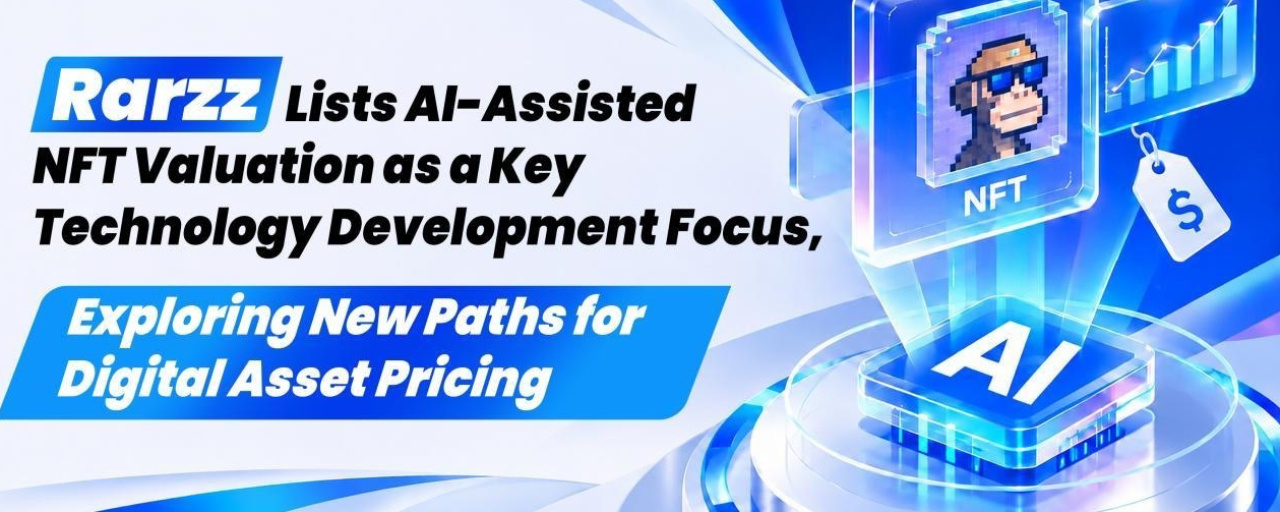
Rarzz Prioritizes AI-Assisted NFT Valuation in Technology DevelopmentRarzz plans to explore artificial intelligence applications in digital asset management, focusing on NFT pricing efficiency, asset valuation analysis, and risk identification.
Rarzz, an NFT digital asset platform, has identified AI-assisted valuation and digital asset pricing research as key priorities in its technology development strategy. The platform plans to explore more systematic approaches to NFT valuation by combining multidimensional asset data analysis, market information processing, and intelligent models, with the goal of providing additional insights to support future digital asset management and trading decisions.
As the NFT market gradually moves toward more diverse applications, asset valuation methods and pricing efficiency are becoming increasingly important industry concerns. Unlike traditional standardized financial assets, NFTs vary significantly in scarcity, transaction history, market demand, and practical utility. Developing more effective mechanisms for asset analysis and pricing references remains a challenge for the industry.
NFT Asset Pricing Faces Multidimensional Challenges
NFT valuation is characterized by significant differences across individual assets.
Even within the same collection, NFTs may exhibit different price patterns due to variations in rarity, historical transaction records, market interest, utility benefits, and trading activity.
Currently, NFT market participants typically assess asset values using historical transaction prices, collection floor prices, and publicly listed asking prices. However, these indicators often reflect only part of the overall market picture.
For example, some NFTs have limited transaction histories, while listing prices do not necessarily reflect actual buyer demand or the prices at which transactions can be completed. Short-term market fluctuations may also affect the reliability of pricing references.
For NFTs with low trading frequency or insufficient market depth, a single pricing indicator may be particularly inadequate in reflecting overall market conditions.
As a result, integrating data from multiple sources and conducting comprehensive analyses of asset characteristics, trading activity, and market conditions has become an important direction for further development in NFT valuation technology.
Exploring AI-Driven Multidimensional Asset Analysis
To address fragmented data and differences in valuation assessments within the NFT market, Rarzz plans to research applications of AI technology in digital asset valuation and market analysis.
Key areas of research include historical transaction data, NFT attributes, market liquidity, and price movements.
By exploring the use of machine learning and data analytics, the platform aims to establish a more systematic analytical framework for evaluating the market performance of different NFTs, helping users better understand the key factors influencing asset pricing.
Compared with approaches that rely solely on historical transaction prices or a single floor price, multidimensional analysis can provide a broader range of information to support asset valuation.
However, the effectiveness of AI models remains dependent on factors such as data quality, market conditions, and model assumptions. Automated analysis may involve greater uncertainty for assets with limited transaction histories, unusual trading activity, or significant price volatility.
Therefore, Rarzz will focus on data reliability, the interpretability of valuation results, and risk disclosure mechanisms, exploring ways to combine AI-driven analysis with users' independent judgment.
Focusing on Dynamic Pricing and Market Change Detection
In addition to asset valuation, dynamic market data analysis is another area of technological focus for Rarzz.
The NFT market is influenced by multiple factors, including supply and demand, market sentiment, asset use cases, and broader digital asset market conditions. As a result, price movements may be irregular and subject to sudden changes.
Against this backdrop, the focus of dynamic pricing research is not simply to predict future NFT prices, but rather to help users identify the factors behind price movements through continuous analysis of publicly available market information and asset conditions.
Rarzz plans to explore the application of market data analysis in NFT trading references, price range assessments, and the detection of abnormal market behavior, with the aim of providing users with clearer market information.
In practical applications, such analysis must also account for insufficient market liquidity, unusual transaction records, and data discrepancies across trading platforms to avoid treating unrepresentative market information as a reliable basis for asset valuation.
Strengthening Risk Identification and Information Transparency
As NFT products and use cases continue to diversify, the significance of asset valuation is gradually extending beyond simple comparisons of transaction prices.
For digital asset management platforms, the reliability of the data underlying valuation information, the explainability of analytical results, and the clarity of risk disclosures can all influence how users understand and use platform tools.
As part of its research into AI-assisted analysis, Rarzz plans to focus on risk identification and information transparency, including factors such as asset transaction data quality, abnormal price fluctuations, and changes in market liquidity.
Through clearer data presentation and analytical mechanisms, the platform aims to provide users with useful asset information and reduce the limitations associated with relying on a single pricing indicator.
Importantly, AI-assisted valuation does not mean that an asset can necessarily be sold at its estimated value, nor does it guarantee trading returns or eliminate market risks. Such technology should be viewed as a decision-support tool rather than a mechanism for predicting prices with certainty.
Advancing a More Systematic Approach to NFT Asset Analysis
As NFTs expand beyond digital collectibles into a wider range of digital asset applications, demand for asset information analysis, valuation, and risk management tools may continue to grow.
Rarzz will continue exploring the integration of AI technology into NFT asset management, focusing its technology and product planning on intelligent valuation, dynamic market analysis, and risk identification.
Looking ahead, the platform plans to gradually explore the application of these analytical capabilities in NFT asset management and trading scenarios, based on the progress of its research and product development efforts, with the goal of providing more comprehensive information to support the digital asset market.
About Rarzz
Founded in 2021, Rarzz is a platform focused on NFT technology and digital asset applications. The company is registered in Colorado and headquartered in Seattle, Washington. Rarzz focuses its product planning and technology development on AI technology, cross-chain asset management, and diverse NFT use cases, with the goal of building a digital asset service ecosystem covering NFT creation, trading, management, and transfer.
Rarzz Prioritizes AI-Assisted NFT Valuation in Technology Development
Rarzz plans to explore artificial intelligence applications in digital asset management, focusing on NFT pricing efficiency, asset valuation analysis, and risk identification.
Rarzz, an NFT digital asset platform, has identified AI-assisted valuation and digital asset pricing research as key priorities in its technology development strategy. The platform plans to explore more systematic approaches to NFT valuation by combining multidimensional asset data analysis, market information processing, and intelligent models, with the goal of providing additional insights to support future digital asset management and trading decisions.
As the NFT market gradually moves toward more diverse applications, asset valuation methods and pricing efficiency are becoming increasingly important industry concerns. Unlike traditional standardized financial assets, NFTs vary significantly in scarcity, transaction history, market demand, and practical utility. Developing more effective mechanisms for asset analysis and pricing references remains a challenge for the industry.
NFT Asset Pricing Faces Multidimensional Challenges
NFT valuation is characterized by significant differences across individual assets.
Even within the same collection, NFTs may exhibit different price patterns due to variations in rarity, historical transaction records, market interest, utility benefits, and trading activity.
Currently, NFT market participants typically assess asset values using historical transaction prices, collection floor prices, and publicly listed asking prices. However, these indicators often reflect only part of the overall market picture.
For example, some NFTs have limited transaction histories, while listing prices do not necessarily reflect actual buyer demand or the prices at which transactions can be completed. Short-term market fluctuations may also affect the reliability of pricing references.
For NFTs with low trading frequency or insufficient market depth, a single pricing indicator may be particularly inadequate in reflecting overall market conditions.
As a result, integrating data from multiple sources and conducting comprehensive analyses of asset characteristics, trading activity, and market conditions has become an important direction for further development in NFT valuation technology.
Exploring AI-Driven Multidimensional Asset Analysis
To address fragmented data and differences in valuation assessments within the NFT market, Rarzz plans to research applications of AI technology in digital asset valuation and market analysis.
Key areas of research include historical transaction data, NFT attributes, market liquidity, and price movements.
By exploring the use of machine learning and data analytics, the platform aims to establish a more systematic analytical framework for evaluating the market performance of different NFTs, helping users better understand the key factors influencing asset pricing.
Compared with approaches that rely solely on historical transaction prices or a single floor price, multidimensional analysis can provide a broader range of information to support asset valuation.
However, the effectiveness of AI models remains dependent on factors such as data quality, market conditions, and model assumptions. Automated analysis may involve greater uncertainty for assets with limited transaction histories, unusual trading activity, or significant price volatility.
Therefore, Rarzz will focus on data reliability, the interpretability of valuation results, and risk disclosure mechanisms, exploring ways to combine AI-driven analysis with users' independent judgment.
Focusing on Dynamic Pricing and Market Change Detection
In addition to asset valuation, dynamic market data analysis is another area of technological focus for Rarzz.
The NFT market is influenced by multiple factors, including supply and demand, market sentiment, asset use cases, and broader digital asset market conditions. As a result, price movements may be irregular and subject to sudden changes.
Against this backdrop, the focus of dynamic pricing research is not simply to predict future NFT prices, but rather to help users identify the factors behind price movements through continuous analysis of publicly available market information and asset conditions.
Rarzz plans to explore the application of market data analysis in NFT trading references, price range assessments, and the detection of abnormal market behavior, with the aim of providing users with clearer market information.
In practical applications, such analysis must also account for insufficient market liquidity, unusual transaction records, and data discrepancies across trading platforms to avoid treating unrepresentative market information as a reliable basis for asset valuation.
Strengthening Risk Identification and Information Transparency
As NFT products and use cases continue to diversify, the significance of asset valuation is gradually extending beyond simple comparisons of transaction prices.
For digital asset management platforms, the reliability of the data underlying valuation information, the explainability of analytical results, and the clarity of risk disclosures can all influence how users understand and use platform tools.
As part of its research into AI-assisted analysis, Rarzz plans to focus on risk identification and information transparency, including factors such as asset transaction data quality, abnormal price fluctuations, and changes in market liquidity.
Through clearer data presentation and analytical mechanisms, the platform aims to provide users with useful asset information and reduce the limitations associated with relying on a single pricing indicator.
Importantly, AI-assisted valuation does not mean that an asset can necessarily be sold at its estimated value, nor does it guarantee trading returns or eliminate market risks. Such technology should be viewed as a decision-support tool rather than a mechanism for predicting prices with certainty.
Advancing a More Systematic Approach to NFT Asset Analysis
As NFTs expand beyond digital collectibles into a wider range of digital asset applications, demand for asset information analysis, valuation, and risk management tools may continue to grow.
Rarzz will continue exploring the integration of AI technology into NFT asset management, focusing its technology and product planning on intelligent valuation, dynamic market analysis, and risk identification.
Looking ahead, the platform plans to gradually explore the application of these analytical capabilities in NFT asset management and trading scenarios, based on the progress of its research and product development efforts, with the goal of providing more comprehensive information to support the digital asset market.
About Rarzz
Founded in 2021, Rarzz is a platform focused on NFT technology and digital asset applications. The company is registered in Colorado and headquartered in Seattle, Washington. Rarzz focuses its product planning and technology development on AI technology, cross-chain asset management, and diverse NFT use cases, with the goal of building a digital asset service ecosystem covering NFT creation, trading, management, and transfer.
92

Article
Adrian Wall, de la DSA, et Chris Giancarlo, ancien président de la CFTC, discutent de l’avenir de la réglementation des cryptomonnaies aux États-UnisAdrian Wall, de la DSA, et Chris Giancarlo, ancien président de la CFTC, discutent de l’avenir de la réglementation des cryptomonnaies aux États-Unis au Strobe Summit
L’Alliance pour la souveraineté numérique (DSA), une organisation à but non lucratif qui œuvre à la promotion de politiques publiques claires et éthiques, ainsi qu’à la recherche et à l’éducation dans le domaine des technologies émergentes, a participé au Strobe Summit. Adrian Wall, directeur général de la DSA, y a animé un entretien informel avec Christiopher Giancarlo, ancien président de la Commodity Futures Trading Commission (CFTC), sur l’évolution du cadre réglementaire des actifs numériques et l’avenir des marchés financiers.
Adrian Wall, de la DSA, et Chris Giancarlo, ancien président de la CFTC, discutent de l’avenir de la réglementation des cryptomonnaies aux États-Unis
Adrian Wall, de la DSA, et Chris Giancarlo, ancien président de la CFTC, discutent de l’avenir de la réglementation des cryptomonnaies aux États-Unis au Strobe Summit
L’Alliance pour la souveraineté numérique (DSA), une organisation à but non lucratif qui œuvre à la promotion de politiques publiques claires et éthiques, ainsi qu’à la recherche et à l’éducation dans le domaine des technologies émergentes, a participé au Strobe Summit. Adrian Wall, directeur général de la DSA, y a animé un entretien informel avec Christiopher Giancarlo, ancien président de la Commodity Futures Trading Commission (CFTC), sur l’évolution du cadre réglementaire des actifs numériques et l’avenir des marchés financiers.
L’Alliance pour la souveraineté numérique (DSA), une organisation à but non lucratif qui œuvre à la promotion de politiques publiques claires et éthiques, ainsi qu’à la recherche et à l’éducation dans le domaine des technologies émergentes, a participé au Strobe Summit. Adrian Wall, directeur général de la DSA, y a animé un entretien informel avec Christiopher Giancarlo, ancien président de la Commodity Futures Trading Commission (CFTC), sur l’évolution du cadre réglementaire des actifs numériques et l’avenir des marchés financiers.
79
Article
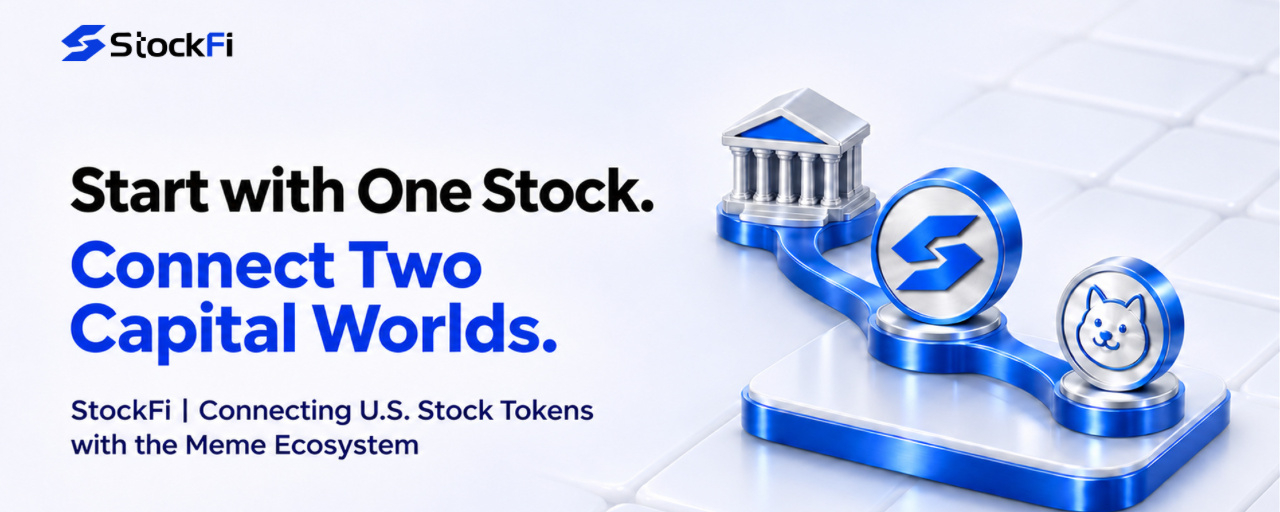
StockFi : relier les actions américaines à l’écosystème on-chain pour transformer la circulation des actifsCommencer par une action. Relier deux univers financiers.
6 novembre — Singapour — StockFi fait progresser le rapprochement entre les actions traditionnelles et l’écosystème on-chain grâce à la tokenisation d’actions américaines. Construite sur BSC, la plateforme intègre les jetons d’actions et l’écosystème des mèmes à sa stratégie de développement, en explorant de nouvelles façons de servir les utilisateurs on-chain du monde entier grâce à l’émission d’actifs, à leur circulation on-chain et aux applications produit.
L’approche de StockFi relie la valeur sous-jacente des actions, l’utilité des produits on-chain et la portée des communautés. À partir de sa première offre d’actions, la plateforme prévoit de développer progressivement l’intégration des actifs, l’émission de jetons, les environnements de trading et l’accès des utilisateurs, afin d’offrir aux actions une portée et une utilité plus vastes une fois qu’elles entrent sur le marché on-chain.
StockFi : relier les actions américaines à l’écosystème on-chain pour transformer la circulation des actifs
Commencer par une action. Relier deux univers financiers.
6 novembre — Singapour — StockFi fait progresser le rapprochement entre les actions traditionnelles et l’écosystème on-chain grâce à la tokenisation d’actions américaines. Construite sur BSC, la plateforme intègre les jetons d’actions et l’écosystème des mèmes à sa stratégie de développement, en explorant de nouvelles façons de servir les utilisateurs on-chain du monde entier grâce à l’émission d’actifs, à leur circulation on-chain et aux applications produit.
L’approche de StockFi relie la valeur sous-jacente des actions, l’utilité des produits on-chain et la portée des communautés. À partir de sa première offre d’actions, la plateforme prévoit de développer progressivement l’intégration des actifs, l’émission de jetons, les environnements de trading et l’accès des utilisateurs, afin d’offrir aux actions une portée et une utilité plus vastes une fois qu’elles entrent sur le marché on-chain.
84

Article
Onlend dévoile une infrastructure sans code pour lancer des applications de prêt on-chain personnaliséesConçu par une équipe qui a contribué à développer un protocole de prêt DeFi de premier plan, Onlend vise à permettre aux fintechs, aux gestionnaires d’actifs, aux curateurs et aux émetteurs d’actifs de créer et d’exploiter plus facilement leurs propres produits de prêt.
Onlend a dévoilé publiquement sa plateforme d’infrastructure décentralisée, conçue pour permettre à chacun de créer, lancer et exploiter ses propres applications de prêt on-chain sans avoir à développer la technologie sous-jacente de zéro.
Le projet entre sur un marché qui offre une marge de croissance considérable. La dette mondiale a dépassé les 350 000 milliards de dollars au début de 2026, selon l’Institute of International Finance, tandis que les prêts actifs sur les protocoles DeFi s’élèvent actuellement à environ 33 milliards de dollars, selon DefiLlama. Bien que ces chiffres portent sur des marchés différents, ils illustrent la taille relativement modeste du crédit on-chain aujourd’hui.
Onlend dévoile une infrastructure sans code pour lancer des applications de prêt on-chain personnalisées
Conçu par une équipe qui a contribué à développer un protocole de prêt DeFi de premier plan, Onlend vise à permettre aux fintechs, aux gestionnaires d’actifs, aux curateurs et aux émetteurs d’actifs de créer et d’exploiter plus facilement leurs propres produits de prêt.
Onlend a dévoilé publiquement sa plateforme d’infrastructure décentralisée, conçue pour permettre à chacun de créer, lancer et exploiter ses propres applications de prêt on-chain sans avoir à développer la technologie sous-jacente de zéro.
Le projet entre sur un marché qui offre une marge de croissance considérable. La dette mondiale a dépassé les 350 000 milliards de dollars au début de 2026, selon l’Institute of International Finance, tandis que les prêts actifs sur les protocoles DeFi s’élèvent actuellement à environ 33 milliards de dollars, selon DefiLlama. Bien que ces chiffres portent sur des marchés différents, ils illustrent la taille relativement modeste du crédit on-chain aujourd’hui.
3
Article
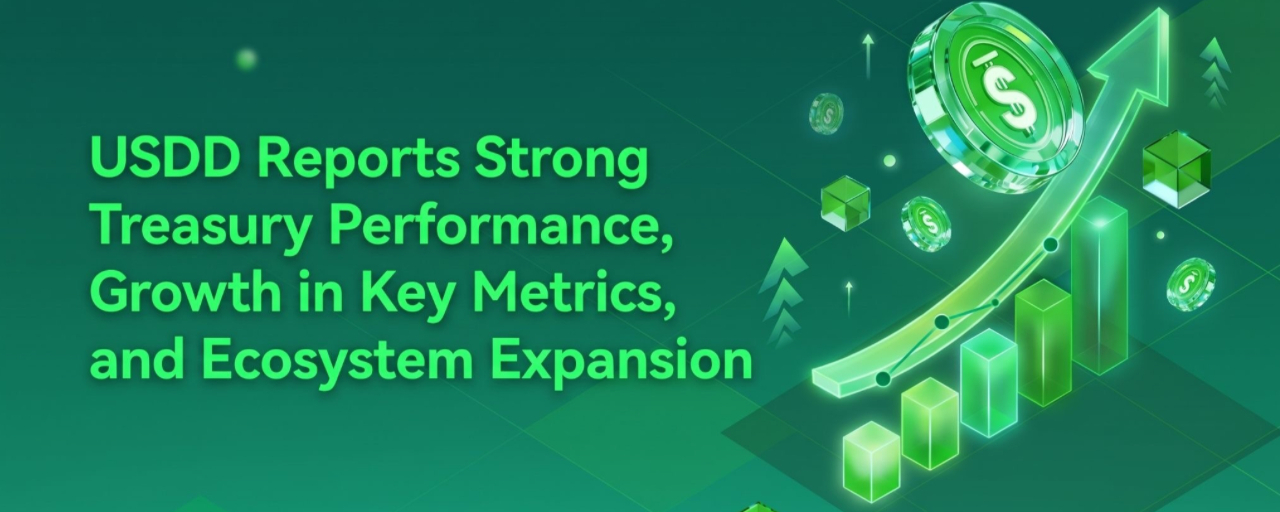
USDD fait état d’une solide performance de sa trésorerie, d’une croissance de ses indicateurs clés et de l’expansion de son écosystèmeUSDD a fait état d’une solide performance de sa trésorerie au troisième trimestre 2026, tout en poursuivant sa croissance sur des indicateurs clés, notamment l’offre en circulation et la valeur totale verrouillée (TVL). Ces dernières avancées témoignent de l’expansion de l’écosystème du protocole, portée par l’adoption croissante des solutions multichaînes, de nouvelles intégrations DeFi et des possibilités plus nombreuses pour les utilisateurs de générer des revenus avec USDD, de le transférer et de le déployer.
En tant que stablecoin décentralisé et surcollatéralisé, USDD vise à allier stabilité et utilité concrète. Examinons de plus près les principaux développements à l’origine de sa récente croissance.
USDD fait état d’une solide performance de sa trésorerie, d’une croissance de ses indicateurs clés et de l’expansion de son écosystème
USDD a fait état d’une solide performance de sa trésorerie au troisième trimestre 2026, tout en poursuivant sa croissance sur des indicateurs clés, notamment l’offre en circulation et la valeur totale verrouillée (TVL). Ces dernières avancées témoignent de l’expansion de l’écosystème du protocole, portée par l’adoption croissante des solutions multichaînes, de nouvelles intégrations DeFi et des possibilités plus nombreuses pour les utilisateurs de générer des revenus avec USDD, de le transférer et de le déployer.
En tant que stablecoin décentralisé et surcollatéralisé, USDD vise à allier stabilité et utilité concrète. Examinons de plus près les principaux développements à l’origine de sa récente croissance.
En tant que stablecoin décentralisé et surcollatéralisé, USDD vise à allier stabilité et utilité concrète. Examinons de plus près les principaux développements à l’origine de sa récente croissance.
379
Article
Lancement des options TRX sur Blockchain.com : un accès élargi à l’écosystème TRON dans le monde entierTRON DAO, la DAO gouvernée par sa communauté et dédiée à l’accélération de la décentralisation d’Internet grâce à la technologie blockchain et aux applications décentralisées (dApps), se réjouit du lancement des options TRX sur Blockchain.com, un leader mondial des services crypto destinés aux particuliers et aux utilisateurs institutionnels. Disponibles via le compte de trading Blockchain.com dans les juridictions admissibles, ces options permettent d’accéder plus facilement au TRX, le jeton utilitaire natif du réseau TRON.
Blockchain.com intègre l’accès aux options TRX à son application grand public, simplifiant ainsi l’expérience des utilisateurs pour une catégorie de produits qui impliquait traditionnellement des démarches plus complexes. Le produit est proposé aux utilisateurs admissibles dans les juridictions prises en charge, sous réserve du droit applicable et des exigences réglementaires.
Lancement des options TRX sur Blockchain.com : un accès élargi à l’écosystème TRON dans le monde entier
TRON DAO, la DAO gouvernée par sa communauté et dédiée à l’accélération de la décentralisation d’Internet grâce à la technologie blockchain et aux applications décentralisées (dApps), se réjouit du lancement des options TRX sur Blockchain.com, un leader mondial des services crypto destinés aux particuliers et aux utilisateurs institutionnels. Disponibles via le compte de trading Blockchain.com dans les juridictions admissibles, ces options permettent d’accéder plus facilement au TRX, le jeton utilitaire natif du réseau TRON.
Blockchain.com intègre l’accès aux options TRX à son application grand public, simplifiant ainsi l’expérience des utilisateurs pour une catégorie de produits qui impliquait traditionnellement des démarches plus complexes. Le produit est proposé aux utilisateurs admissibles dans les juridictions prises en charge, sous réserve du droit applicable et des exigences réglementaires.
Blockchain.com intègre l’accès aux options TRX à son application grand public, simplifiant ainsi l’expérience des utilisateurs pour une catégorie de produits qui impliquait traditionnellement des démarches plus complexes. Le produit est proposé aux utilisateurs admissibles dans les juridictions prises en charge, sous réserve du droit applicable et des exigences réglementaires.
144

Article
Le trading confidentiel de ZEC est désormais disponible sur ShieldLes traders peuvent désormais acheter, vendre et fournir des liquidités en ZEC tout en préservant la confidentialité de leur identité, de leur portefeuille et de leurs stratégies de trading.
Shield a lancé la première paire de trading on-chain confidentielle pour le ZEC, permettant aux utilisateurs de gérer leurs Zcash aux côtés d’autres actifs dans son portefeuille non dépositaire.
Cette nouvelle paire donne aux détenteurs de ZEC accès à un AMM confidentiel et non dépositaire, où ils peuvent acheter, vendre et fournir des liquidités sans rendre publiques leurs activités de portefeuille sur le marché.
Ce lancement élargit les marchés pris en charge par Shield grâce à son AMM à liquidité concentrée sur Aleo. Shield ajoute ainsi la prise en charge du ZEC à son portefeuille non dépositaire, permettant aux utilisateurs de gérer cet actif aux côtés de leurs autres actifs pris en charge.
Le trading confidentiel de ZEC est désormais disponible sur Shield
Les traders peuvent désormais acheter, vendre et fournir des liquidités en ZEC tout en préservant la confidentialité de leur identité, de leur portefeuille et de leurs stratégies de trading.
Shield a lancé la première paire de trading on-chain confidentielle pour le ZEC, permettant aux utilisateurs de gérer leurs Zcash aux côtés d’autres actifs dans son portefeuille non dépositaire.
Cette nouvelle paire donne aux détenteurs de ZEC accès à un AMM confidentiel et non dépositaire, où ils peuvent acheter, vendre et fournir des liquidités sans rendre publiques leurs activités de portefeuille sur le marché.
Ce lancement élargit les marchés pris en charge par Shield grâce à son AMM à liquidité concentrée sur Aleo. Shield ajoute ainsi la prise en charge du ZEC à son portefeuille non dépositaire, permettant aux utilisateurs de gérer cet actif aux côtés de leurs autres actifs pris en charge.
212
Article
SUN.io réalise son 52e rachat et sa 52e destruction de tokensGrâce à son programme récurrent de rachat et de destruction, SUN.io continue d’affecter les revenus du protocole générés par SunSwap, SunPump et SunX à la valorisation du token SUN, tout en accélérant les intégrations multiplateformes de SunSwap afin de renforcer la liquidité décentralisée.
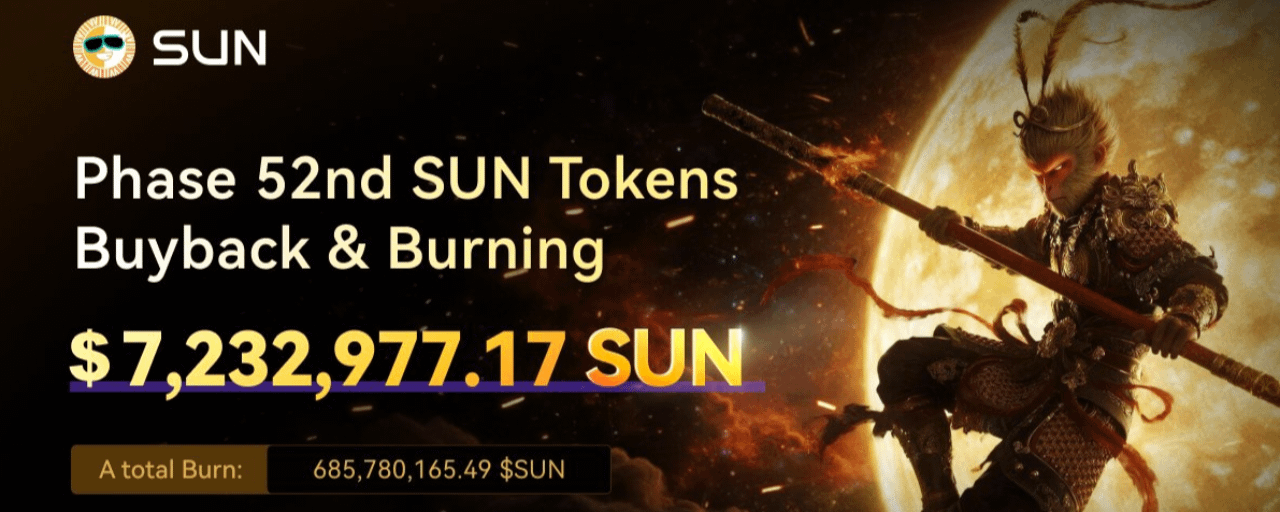
SUN.io, l’infrastructure centrale de liquidité DeFi du réseau TRON, a procédé avec succès le 27 octobre au 52e rachat et à la destruction de tokens SUN, retirant ainsi plus de 7,23 millions de SUN de la circulation.
Cette opération marque la 52e destruction consécutive de tokens par la plateforme, portant le total cumulé à plus de 685 millions de tokens SUN, pour une valeur supérieure à 11 millions de dollars. Ce cycle récurrent et ininterrompu de rachats et de destructions réduit progressivement l’offre en circulation de SUN, soulignant l’engagement à long terme du protocole en faveur d’une croissance durable de l’écosystème.
SUN.io réalise son 52e rachat et sa 52e destruction de tokens
Grâce à son programme récurrent de rachat et de destruction, SUN.io continue d’affecter les revenus du protocole générés par SunSwap, SunPump et SunX à la valorisation du token SUN, tout en accélérant les intégrations multiplateformes de SunSwap afin de renforcer la liquidité décentralisée.
SUN.io, l’infrastructure centrale de liquidité DeFi du réseau TRON, a procédé avec succès le 27 octobre au 52e rachat et à la destruction de tokens SUN, retirant ainsi plus de 7,23 millions de SUN de la circulation.
Cette opération marque la 52e destruction consécutive de tokens par la plateforme, portant le total cumulé à plus de 685 millions de tokens SUN, pour une valeur supérieure à 11 millions de dollars. Ce cycle récurrent et ininterrompu de rachats et de destructions réduit progressivement l’offre en circulation de SUN, soulignant l’engagement à long terme du protocole en faveur d’une croissance durable de l’écosystème.
160

Article
Le Prix Justin Sun s’associe à MathDB, dirigé par le professeur de Caltech Tony Yue Yu, pour un programme pilote portant sur 50 problèmesGenève, Suisse — 26 octobre 2026 — Le Bureau de Justin Sun a annoncé aujourd’hui un programme pilote pour le Prix Justin Sun, en collaboration avec MathDB, une plateforme de recherche mathématique développée par le professeur de Caltech Tony Yue Yu et son équipe.
Le Prix Justin Sun a été créé pour devenir le « prix Nobel de l’ère de l’IA », en réponse à la profonde transformation de la recherche scientifique et des mécanismes d’incitation dans la nouvelle ère, de manière plus décentralisée, formalisée et pilotée par des machines. Les récompenses par problème peuvent atteindre 1 million de dollars, sous réserve des conditions d’attribution et des critères d’admissibilité applicables.
Le Prix Justin Sun s’associe à MathDB, dirigé par le professeur de Caltech Tony Yue Yu, pour un programme pilote portant sur 50 problèmes
Genève, Suisse — 26 octobre 2026 — Le Bureau de Justin Sun a annoncé aujourd’hui un programme pilote pour le Prix Justin Sun, en collaboration avec MathDB, une plateforme de recherche mathématique développée par le professeur de Caltech Tony Yue Yu et son équipe.
Le Prix Justin Sun a été créé pour devenir le « prix Nobel de l’ère de l’IA », en réponse à la profonde transformation de la recherche scientifique et des mécanismes d’incitation dans la nouvelle ère, de manière plus décentralisée, formalisée et pilotée par des machines. Les récompenses par problème peuvent atteindre 1 million de dollars, sous réserve des conditions d’attribution et des critères d’admissibilité applicables.
Le Prix Justin Sun a été créé pour devenir le « prix Nobel de l’ère de l’IA », en réponse à la profonde transformation de la recherche scientifique et des mécanismes d’incitation dans la nouvelle ère, de manière plus décentralisée, formalisée et pilotée par des machines. Les récompenses par problème peuvent atteindre 1 million de dollars, sous réserve des conditions d’attribution et des critères d’admissibilité applicables.
72
Article
Mise à niveau du rachat et de la destruction de JST : revenus de GasFree et injection de 20,34 M$ de fonds excédentairesRésumé :
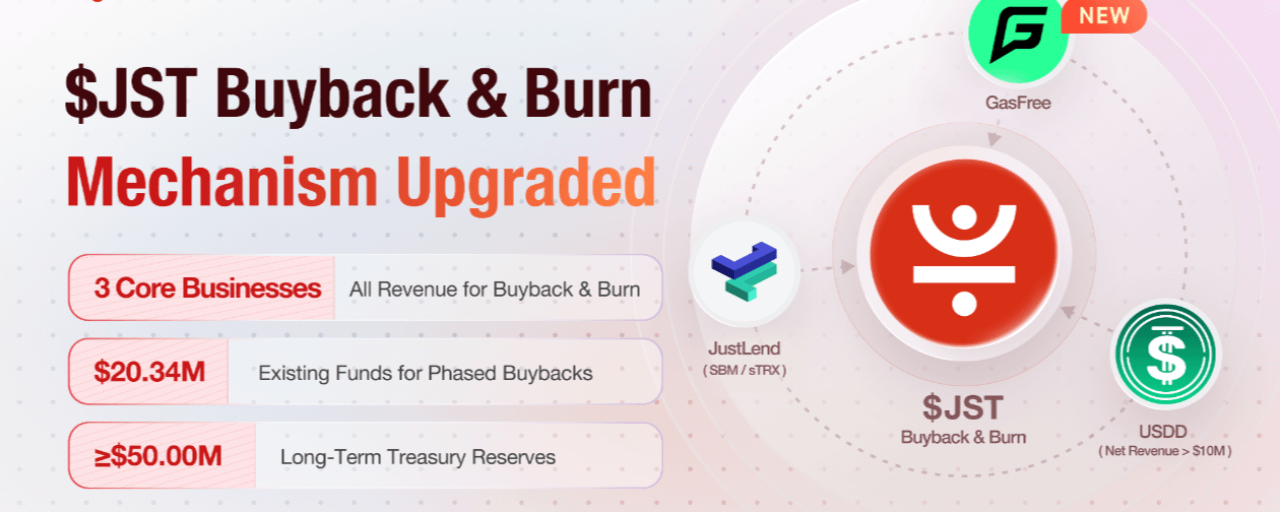
Les principaux points du programme actualisé de rachat et de destruction de JST sont les suivants :
· Réserve de sécurité de trésorerie de 50 M$ : instaure un coussin de sécurité pour assurer la durabilité des activités de l’écosystème.
· Sources de financement élargies : les revenus de GasFree s’ajoutent à ceux de JustLend et d’USDD afin de couvrir 100 % des produits phares de JUST.
· Injection de capital d’environ 20,34 M$ : déblocage progressif des fonds excédentaires historiques en vue de futurs rachats.
· Exécution par la JUST DAO : exécution entièrement sur la blockchain, avec une transparence totale et une vérification open source.
Mise à niveau du rachat et de la destruction de JST : revenus de GasFree et injection de 20,34 M$ de fonds excédentaires
Résumé :
Les principaux points du programme actualisé de rachat et de destruction de JST sont les suivants :
· Réserve de sécurité de trésorerie de 50 M$ : instaure un coussin de sécurité pour assurer la durabilité des activités de l’écosystème.
· Sources de financement élargies : les revenus de GasFree s’ajoutent à ceux de JustLend et d’USDD afin de couvrir 100 % des produits phares de JUST.
· Injection de capital d’environ 20,34 M$ : déblocage progressif des fonds excédentaires historiques en vue de futurs rachats.
· Exécution par la JUST DAO : exécution entièrement sur la blockchain, avec une transparence totale et une vérification open source.
105

Article
Paybis ajoute iDEAL, BLIK, Multibanco et EPS pour acheter des cryptomonnaies en EuropeLes clients aux Pays-Bas, en Pologne, au Portugal et en Autriche peuvent désormais acheter des cryptomonnaies sur Paybis via une application bancaire ou une référence de paiement, sans avoir à fournir les informations de leur carte. Ces quatre méthodes constituent la première vague des 13 moyens de paiement locaux que Paybis ajoute.
Riga, Lettonie, 23 octobre 2026 — Paybis, une plateforme mondiale d’échange de cryptomonnaies et un fournisseur d’infrastructures de paiement, a ajouté aujourd’hui quatre moyens de paiement locaux pour acheter des cryptomonnaies en Europe. Les clients peuvent désormais payer avec iDEAL aux Pays-Bas, BLIK en Pologne, Multibanco au Portugal et EPS en Autriche. Les cartes et les virements bancaires restent disponibles, mais ne sont désormais plus les seules options.
Paybis ajoute iDEAL, BLIK, Multibanco et EPS pour acheter des cryptomonnaies en Europe
Les clients aux Pays-Bas, en Pologne, au Portugal et en Autriche peuvent désormais acheter des cryptomonnaies sur Paybis via une application bancaire ou une référence de paiement, sans avoir à fournir les informations de leur carte. Ces quatre méthodes constituent la première vague des 13 moyens de paiement locaux que Paybis ajoute.
Riga, Lettonie, 23 octobre 2026 — Paybis, une plateforme mondiale d’échange de cryptomonnaies et un fournisseur d’infrastructures de paiement, a ajouté aujourd’hui quatre moyens de paiement locaux pour acheter des cryptomonnaies en Europe. Les clients peuvent désormais payer avec iDEAL aux Pays-Bas, BLIK en Pologne, Multibanco au Portugal et EPS en Autriche. Les cartes et les virements bancaires restent disponibles, mais ne sont désormais plus les seules options.
Riga, Lettonie, 23 octobre 2026 — Paybis, une plateforme mondiale d’échange de cryptomonnaies et un fournisseur d’infrastructures de paiement, a ajouté aujourd’hui quatre moyens de paiement locaux pour acheter des cryptomonnaies en Europe. Les clients peuvent désormais payer avec iDEAL aux Pays-Bas, BLIK en Pologne, Multibanco au Portugal et EPS en Autriche. Les cartes et les virements bancaires restent disponibles, mais ne sont désormais plus les seules options.
111
Article
HTX Research publie ses perspectives du marché des cryptomonnaies à l’approche des élections américaines de mi-mandat de 2026HTX Research, le pôle de recherche dédié de HTX, a publié un nouveau rapport intitulé « Perspectives du marché des cryptomonnaies avant et après les élections américaines de mi-mandat de 2026 ».
Le rapport estime que, si les élections de mi-mandat peuvent redéfinir les anticipations en matière de politique pour les deux prochaines années, à court terme, les cours des cryptomonnaies restent déterminés par l’inflation, les coûts de financement et les flux de capitaux. Son scénario de base pour la période précédant le scrutin et lui faisant immédiatement suite prévoit une forte volatilité, des réajustements répétés des prix et des évolutions divergentes selon les actifs, plutôt qu’une hausse durable portée par un seul récit politique.
HTX Research publie ses perspectives du marché des cryptomonnaies à l’approche des élections américaines de mi-mandat de 2026
HTX Research, le pôle de recherche dédié de HTX, a publié un nouveau rapport intitulé « Perspectives du marché des cryptomonnaies avant et après les élections américaines de mi-mandat de 2026 ».
Le rapport estime que, si les élections de mi-mandat peuvent redéfinir les anticipations en matière de politique pour les deux prochaines années, à court terme, les cours des cryptomonnaies restent déterminés par l’inflation, les coûts de financement et les flux de capitaux. Son scénario de base pour la période précédant le scrutin et lui faisant immédiatement suite prévoit une forte volatilité, des réajustements répétés des prix et des évolutions divergentes selon les actifs, plutôt qu’une hausse durable portée par un seul récit politique.
Le rapport estime que, si les élections de mi-mandat peuvent redéfinir les anticipations en matière de politique pour les deux prochaines années, à court terme, les cours des cryptomonnaies restent déterminés par l’inflation, les coûts de financement et les flux de capitaux. Son scénario de base pour la période précédant le scrutin et lui faisant immédiatement suite prévoit une forte volatilité, des réajustements répétés des prix et des évolutions divergentes selon les actifs, plutôt qu’une hausse durable portée par un seul récit politique.
2

Article
GRVT brûle 1,1 million de jetons alors que le compte à rebours vers Grvt 2.0 commenceCe rachat discrétionnaire représente près de 1 % de l’offre en circulation et précède quatre étapes produit prévues, qui culmineront avec Grvt 2.0.
Grvt, une plateforme de trading autogérée construite sur sa propre blockchain à divulgation nulle de connaissance (ZK), a annoncé que l’émetteur du jeton de la Fondation avait effectué le premier rachat de jetons GRVT, en achetant puis en brûlant 1,1 million de jetons GRVT sur le marché libre.
La transaction a définitivement retiré près de 1 % de l’offre en circulation de GRVT au moment de l’achat. Elle constitue le premier de cinq jalons avant le lancement prévu de Grvt 2.0 à la fin novembre 2026.
GRVT brûle 1,1 million de jetons alors que le compte à rebours vers Grvt 2.0 commence
Ce rachat discrétionnaire représente près de 1 % de l’offre en circulation et précède quatre étapes produit prévues, qui culmineront avec Grvt 2.0.
Grvt, une plateforme de trading autogérée construite sur sa propre blockchain à divulgation nulle de connaissance (ZK), a annoncé que l’émetteur du jeton de la Fondation avait effectué le premier rachat de jetons GRVT, en achetant puis en brûlant 1,1 million de jetons GRVT sur le marché libre.
La transaction a définitivement retiré près de 1 % de l’offre en circulation de GRVT au moment de l’achat. Elle constitue le premier de cinq jalons avant le lancement prévu de Grvt 2.0 à la fin novembre 2026.
61
Article
TRON règle 2,2 billions de dollars au T3 et capte 73 % du volume total des stablecoins, tandis que le premier ETF TRX est lancé : CoinDeskTRON a renforcé sa position de réseau blockchain de premier plan pour le règlement des stablecoins au troisième trimestre 2026, avec des volumes de transactions se chiffrant en milliers de milliards, une offre d’USDT record, une adoption croissante des cartes de paiement et le lancement du premier fonds négocié en bourse (ETF) américain au comptant adossé à des TRX stakés, selon des rapports de recherche indépendants de CoinDesk Data et Nansen.
CoinDesk
Le rapport trimestriel de CoinDesk sur le réseau TRON : T3 2026 propose une évaluation technique du réseau TRON pour la période de juillet à septembre 2026. Les conclusions portent sur l’évolution du réseau et de son écosystème, les principaux indicateurs on-chain ainsi que l’activité DeFi dans les secteurs des prêts et des plateformes d’échange décentralisées (DEX).
TRON règle 2,2 billions de dollars au T3 et capte 73 % du volume total des stablecoins, tandis que le premier ETF TRX est lancé : CoinDesk
TRON a renforcé sa position de réseau blockchain de premier plan pour le règlement des stablecoins au troisième trimestre 2026, avec des volumes de transactions se chiffrant en milliers de milliards, une offre d’USDT record, une adoption croissante des cartes de paiement et le lancement du premier fonds négocié en bourse (ETF) américain au comptant adossé à des TRX stakés, selon des rapports de recherche indépendants de CoinDesk Data et Nansen.
CoinDesk
Le rapport trimestriel de CoinDesk sur le réseau TRON : T3 2026 propose une évaluation technique du réseau TRON pour la période de juillet à septembre 2026. Les conclusions portent sur l’évolution du réseau et de son écosystème, les principaux indicateurs on-chain ainsi que l’activité DeFi dans les secteurs des prêts et des plateformes d’échange décentralisées (DEX).
127

Article
Probly clôture TOKEN2049 Singapore et WHALE3RAProbly, un marché de prédiction on-chain couvrant le sport, la politique, les cryptomonnaies, la finance et les événements mondiaux, a conclu sa participation en tant que sponsor Gold de TOKEN2049 Singapore et coorganisateur de la soirée WHALE3RA, aux côtés de BloFin, TxFlow et d’autres partenaires de l’écosystème.
Tout au long de la semaine de TOKEN2049, Probly a rencontré des traders, des créateurs, des équipes d’infrastructure, des partenaires et des communautés Web3 pour échanger sur le rôle croissant des marchés de prédiction, qui permettent d’exprimer son point de vue sur des événements du monde réel.
Cette semaine a également été l’occasion pour Probly de présenter son approche des marchés de prédiction à un public plus large, natif de la crypto : accès simple, large éventail de marchés, USDC en auto-conservation, trading de pair à pair et règlement on-chain vérifiable.
Probly clôture TOKEN2049 Singapore et WHALE3RA
Probly, un marché de prédiction on-chain couvrant le sport, la politique, les cryptomonnaies, la finance et les événements mondiaux, a conclu sa participation en tant que sponsor Gold de TOKEN2049 Singapore et coorganisateur de la soirée WHALE3RA, aux côtés de BloFin, TxFlow et d’autres partenaires de l’écosystème.
Tout au long de la semaine de TOKEN2049, Probly a rencontré des traders, des créateurs, des équipes d’infrastructure, des partenaires et des communautés Web3 pour échanger sur le rôle croissant des marchés de prédiction, qui permettent d’exprimer son point de vue sur des événements du monde réel.
Cette semaine a également été l’occasion pour Probly de présenter son approche des marchés de prédiction à un public plus large, natif de la crypto : accès simple, large éventail de marchés, USDC en auto-conservation, trading de pair à pair et règlement on-chain vérifiable.
83
Connectez-vous pour découvrir plus de contenu
Rejoignez la communauté mondiale des adeptes de cryptomonnaies sur Binance Square
⚡️ Suviez les dernières informations importantes sur les cryptomonnaies.
💬 Jugé digne de confiance par la plus grande plateforme d’échange de cryptomonnaies au monde.
👍 Découvrez les connaissances que partagent les créateurs vérifiés.
Adresse e-mail/Nº de téléphone
Sujets d’actualité
HotCPIDecemberHikePriced
318,982 vues
3,214 mentions
Suivi des marchés et de l’IPC | L’IPC américain progresse de 0,4 % en octobre, contre 0,3 % attendu
Binance News
·34 mentions J’aime
·48.6k vues
ZcashFallsBelow$1000ForFirstTimeSinceSeptember
9,252 vues
56 mentions
StrategyFaces$2.8BSelloffRiskFromMSCIRemoval
19,871 vues
137 mentions