

Salvia XPSR
227 Publications

Salvia XPSR
Signaler
Bloquer l’utilisateur
Bringing you the latest in crypto, gaming, and AI 🤖🔥 Stay ahead of the curve.
0 Suivis
14 Abonnés
11 J’aime
Publications
·
--
Don't Get Tricked By The Pump 📈
We've all seen a token pumping, felt like we were missing out and considered jumping in before the move got away from us.
That's exactly where having automated decision tools can save you from a bad trade.
$QNT has plenty of reasons to look interesting right now, with recent institutional announcements helping create buzz around the token.
But when Pear Protocol's free Agent Pear checked the actual setup, the data wasn't nearly as exciting.
QNT was trading below its 50-day moving average, RSI was sitting around 43, and Pear's pair-signal engine couldn't find a reliable mean-reverting hedge with enough statistical evidence to recommend a high-conviction pair trade.
So instead of seeing a hot token and automatically finding a reason to trade it, Pear found a reason not to.
I'd much rather have an AI that does that instead of telling me what it thinks I want to hear.
And when the data does support a trade, non-custodial execution happens through $HYPE .
Make smarter trading decisions at app.pear.garden
#Altcoin Season#
Don't Get Tricked By The Pump 📈
We've all seen a token pumping, felt like we were missing out and considered jumping in before the move got away from us.
That's exactly where having automated decision tools can save you from a bad trade.
$QNT has plenty of reasons to look interesting right now, with recent institutional announcements helping create buzz around the token.
But when Pear Protocol's free Agent Pear checked the actual setup, the data wasn't nearly as exciting.
QNT was trading below its 50-day moving average, RSI was sitting around 43, and Pear's pair-signal engine couldn't find a reliable mean-reverting hedge with enough statistical evidence to recommend a high-conviction pair trade.
So instead of seeing a hot token and automatically finding a reason to trade it, Pear found a reason not to.
I'd much rather have an AI that does that instead of telling me what it thinks I want to hear.
And when the data does support a trade, non-custodial execution happens through $HYPE .
Make smarter trading decisions at app.pear.garden
#Altcoin Season#
We've all seen a token pumping, felt like we were missing out and considered jumping in before the move got away from us.
That's exactly where having automated decision tools can save you from a bad trade.
$QNT has plenty of reasons to look interesting right now, with recent institutional announcements helping create buzz around the token.
But when Pear Protocol's free Agent Pear checked the actual setup, the data wasn't nearly as exciting.
QNT was trading below its 50-day moving average, RSI was sitting around 43, and Pear's pair-signal engine couldn't find a reliable mean-reverting hedge with enough statistical evidence to recommend a high-conviction pair trade.
So instead of seeing a hot token and automatically finding a reason to trade it, Pear found a reason not to.
I'd much rather have an AI that does that instead of telling me what it thinks I want to hear.
And when the data does support a trade, non-custodial execution happens through $HYPE .
Make smarter trading decisions at app.pear.garden
#Altcoin Season#
31
·
--
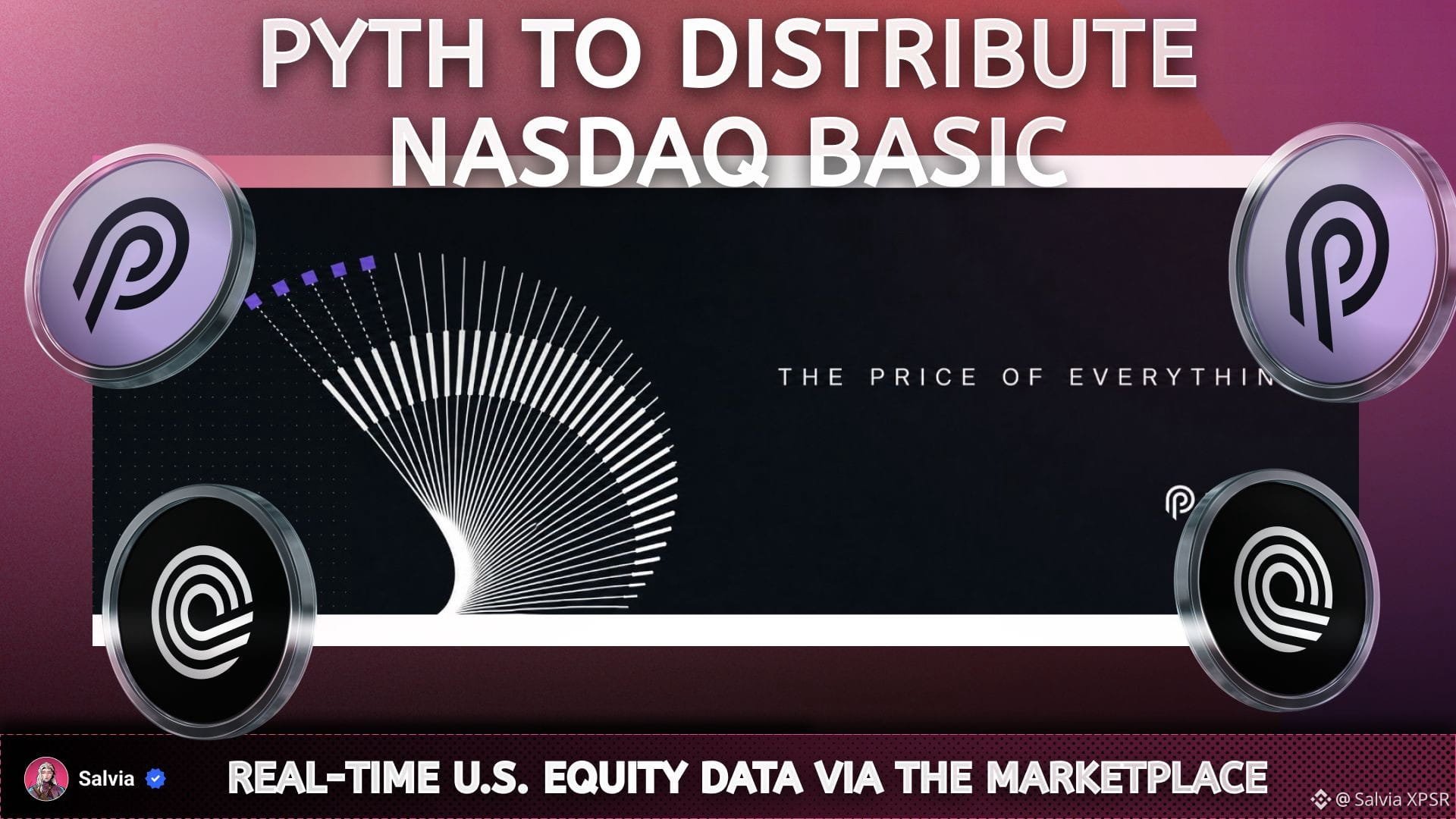
Nasdaq Basic is headed through Pyth 🔥
$ONDO has brought tokenized U.S. stocks into the crypto conversation. $PYTH now has a different role in that market: Pyth has been approved to distribute Nasdaq Basic through its Data Marketplace.
Nasdaq Basic carries live bids, offers and trades for U.S. equities, along with official opening and closing prices. Those reference prices caught my eye.
They are used to value positions at the start and end of the trading day.
There is a licensing process behind the headline.
Clients contract directly with Nasdaq and need written approval before receiving the feed through Pyth. Nasdaq controls access to its data; Pyth gives it another route into financial software and blockchain-native applications.
I’d call the approval a meaningful distribution win.
I want to see which clients choose Pyth as their Nasdaq Basic provider next. That will show us how much demand this new route attracts.
#Altcoin Season#
Nasdaq Basic is headed through Pyth 🔥
$ONDO has brought tokenized U.S. stocks into the crypto conversation. $PYTH now has a different role in that market: Pyth has been approved to distribute Nasdaq Basic through its Data Marketplace.
Nasdaq Basic carries live bids, offers and trades for U.S. equities, along with official opening and closing prices. Those reference prices caught my eye.
They are used to value positions at the start and end of the trading day.
There is a licensing process behind the headline.
Clients contract directly with Nasdaq and need written approval before receiving the feed through Pyth. Nasdaq controls access to its data; Pyth gives it another route into financial software and blockchain-native applications.
I’d call the approval a meaningful distribution win.
I want to see which clients choose Pyth as their Nasdaq Basic provider next. That will show us how much demand this new route attracts.
#Altcoin Season#
$ONDO has brought tokenized U.S. stocks into the crypto conversation. $PYTH now has a different role in that market: Pyth has been approved to distribute Nasdaq Basic through its Data Marketplace.
Nasdaq Basic carries live bids, offers and trades for U.S. equities, along with official opening and closing prices. Those reference prices caught my eye.
They are used to value positions at the start and end of the trading day.
There is a licensing process behind the headline.
Clients contract directly with Nasdaq and need written approval before receiving the feed through Pyth. Nasdaq controls access to its data; Pyth gives it another route into financial software and blockchain-native applications.
I’d call the approval a meaningful distribution win.
I want to see which clients choose Pyth as their Nasdaq Basic provider next. That will show us how much demand this new route attracts.
#Altcoin Season#
59
·
--
Don't Get Tricked By The Pump 📈
We've all seen a token pumping, felt like we were missing out and considered jumping in before the move got away from us.
That's exactly where having automated decision tools can save you from a bad trade.
$QNT has plenty of reasons to look interesting right now, with recent institutional announcements helping create buzz around the token.
But when Pear Protocol's free Agent Pear checked the actual setup, the data wasn't nearly as exciting.
QNT was trading below its 50-day moving average, RSI was sitting around 43, and Pear's pair-signal engine couldn't find a reliable mean-reverting hedge with enough statistical evidence to recommend a high-conviction pair trade.
So instead of seeing a hot token and automatically finding a reason to trade it, Pear found a reason not to.
I'd much rather have an AI that does that instead of telling me what it thinks I want to hear.
And when the data does support a trade, non-custodial execution happens through $HYPE .
Make smarter trading decisions at app.pear.garden
#Altcoin Season#
Don't Get Tricked By The Pump 📈
We've all seen a token pumping, felt like we were missing out and considered jumping in before the move got away from us.
That's exactly where having automated decision tools can save you from a bad trade.
$QNT has plenty of reasons to look interesting right now, with recent institutional announcements helping create buzz around the token.
But when Pear Protocol's free Agent Pear checked the actual setup, the data wasn't nearly as exciting.
QNT was trading below its 50-day moving average, RSI was sitting around 43, and Pear's pair-signal engine couldn't find a reliable mean-reverting hedge with enough statistical evidence to recommend a high-conviction pair trade.
So instead of seeing a hot token and automatically finding a reason to trade it, Pear found a reason not to.
I'd much rather have an AI that does that instead of telling me what it thinks I want to hear.
And when the data does support a trade, non-custodial execution happens through $HYPE .
Make smarter trading decisions at app.pear.garden
#Altcoin Season#
We've all seen a token pumping, felt like we were missing out and considered jumping in before the move got away from us.
That's exactly where having automated decision tools can save you from a bad trade.
$QNT has plenty of reasons to look interesting right now, with recent institutional announcements helping create buzz around the token.
But when Pear Protocol's free Agent Pear checked the actual setup, the data wasn't nearly as exciting.
QNT was trading below its 50-day moving average, RSI was sitting around 43, and Pear's pair-signal engine couldn't find a reliable mean-reverting hedge with enough statistical evidence to recommend a high-conviction pair trade.
So instead of seeing a hot token and automatically finding a reason to trade it, Pear found a reason not to.
I'd much rather have an AI that does that instead of telling me what it thinks I want to hear.
And when the data does support a trade, non-custodial execution happens through $HYPE .
Make smarter trading decisions at app.pear.garden
#Altcoin Season#
52
·
--
The strongest IP doesn't need introducing.
There's a version of cultural IP that has to earn attention. Build the community. Develop the brand. Expand slowly into new markets.
And then there's the DeLorean.
$PENGU holders know what strong IP looks like. They've lived the expansion firsthand.
$DMC skips the building phase entirely. 40 years of global recognition arrived before the token did. Every market. Every generation. No community building required to make people care.
The kind of starting position most brands spend decades trying to reach.
#Altcoin Season#
The strongest IP doesn't need introducing.
There's a version of cultural IP that has to earn attention. Build the community. Develop the brand. Expand slowly into new markets.
And then there's the DeLorean.
$PENGU holders know what strong IP looks like. They've lived the expansion firsthand.
$DMC skips the building phase entirely. 40 years of global recognition arrived before the token did. Every market. Every generation. No community building required to make people care.
The kind of starting position most brands spend decades trying to reach.
#Altcoin Season#
There's a version of cultural IP that has to earn attention. Build the community. Develop the brand. Expand slowly into new markets.
And then there's the DeLorean.
$PENGU holders know what strong IP looks like. They've lived the expansion firsthand.
$DMC skips the building phase entirely. 40 years of global recognition arrived before the token did. Every market. Every generation. No community building required to make people care.
The kind of starting position most brands spend decades trying to reach.
#Altcoin Season#
1
1.2k
·
--
The SEC Just Reframed Financial Privacy 🔐
$ZEC made selective privacy understandable to crypto markets. $VFY sits on the verification side of that same shift.
On September 23, SEC Commissioner Hester Peirce argued that Americans deserve both security and privacy.
These were her personal views rather than formal SEC policy, but the use cases were remarkably specific.
She described financial institutions collecting larger stores of names, addresses and transaction data while struggling to isolate illegal activity. Her alternative was attribute-based verification.
A customer could prove accredited-investor status or successful sanctions screening without exposing the private data behind that answer.
The identity application would create the credential and Zero Knowledge proof.
zkVerify could independently check whether that submitted proof is cryptographically valid.
The institution would receive a usable result without adding another copy of the customer’s documents to its database. The privacy comes from the credential system and proof design. zkVerify makes the resulting evidence practical to verify at scale.
VFY is used when that checking work is submitted to the network.
I think the regulatory conversation is moving closer to the problem zkVerify was designed to address.
If finance adopts proof-based compliance, independent verification becomes part of the institutional stack.
#Privacy #Altcoin Season#
The SEC Just Reframed Financial Privacy 🔐
$ZEC made selective privacy understandable to crypto markets. $VFY sits on the verification side of that same shift.
On September 23, SEC Commissioner Hester Peirce argued that Americans deserve both security and privacy.
These were her personal views rather than formal SEC policy, but the use cases were remarkably specific.
She described financial institutions collecting larger stores of names, addresses and transaction data while struggling to isolate illegal activity. Her alternative was attribute-based verification.
A customer could prove accredited-investor status or successful sanctions screening without exposing the private data behind that answer.
The identity application would create the credential and Zero Knowledge proof.
zkVerify could independently check whether that submitted proof is cryptographically valid.
The institution would receive a usable result without adding another copy of the customer’s documents to its database. The privacy comes from the credential system and proof design. zkVerify makes the resulting evidence practical to verify at scale.
VFY is used when that checking work is submitted to the network.
I think the regulatory conversation is moving closer to the problem zkVerify was designed to address.
If finance adopts proof-based compliance, independent verification becomes part of the institutional stack.
#Privacy #Altcoin Season#
$ZEC made selective privacy understandable to crypto markets. $VFY sits on the verification side of that same shift.
On September 23, SEC Commissioner Hester Peirce argued that Americans deserve both security and privacy.
These were her personal views rather than formal SEC policy, but the use cases were remarkably specific.
She described financial institutions collecting larger stores of names, addresses and transaction data while struggling to isolate illegal activity. Her alternative was attribute-based verification.
A customer could prove accredited-investor status or successful sanctions screening without exposing the private data behind that answer.
The identity application would create the credential and Zero Knowledge proof.
zkVerify could independently check whether that submitted proof is cryptographically valid.
The institution would receive a usable result without adding another copy of the customer’s documents to its database. The privacy comes from the credential system and proof design. zkVerify makes the resulting evidence practical to verify at scale.
VFY is used when that checking work is submitted to the network.
I think the regulatory conversation is moving closer to the problem zkVerify was designed to address.
If finance adopts proof-based compliance, independent verification becomes part of the institutional stack.
#Privacy #Altcoin Season#
54
·
--
Hypercall Just Entered A New Volume Regime 🔥
$LINK shows how quickly an infrastructure narrative strengthens once usage becomes measurable.
$SYN is reaching that stage through Hypercall.
The latest venue data shows approximately $398.77M in notional options volume over seven days.
Hypercall’s displayed all-time volume was approximately $459.11M in the same snapshot.
That means roughly 87% of the venue’s recorded volume arrived during a single week.
This is more than a temporary increase from a quiet baseline. It shows Hypercall can process activity at a completely different scale when liquidity and demand align.
The next bullish confirmation would be retention. If Hypercall sustains even part of this pace, the market will have to evaluate SYN against a much larger operating footprint.
#DeFi #AltcoinSeason
Hypercall Just Entered A New Volume Regime 🔥
$LINK shows how quickly an infrastructure narrative strengthens once usage becomes measurable.
$SYN is reaching that stage through Hypercall.
The latest venue data shows approximately $398.77M in notional options volume over seven days.
Hypercall’s displayed all-time volume was approximately $459.11M in the same snapshot.
That means roughly 87% of the venue’s recorded volume arrived during a single week.
This is more than a temporary increase from a quiet baseline. It shows Hypercall can process activity at a completely different scale when liquidity and demand align.
The next bullish confirmation would be retention. If Hypercall sustains even part of this pace, the market will have to evaluate SYN against a much larger operating footprint.
#DeFi #AltcoinSeason
$LINK shows how quickly an infrastructure narrative strengthens once usage becomes measurable.
$SYN is reaching that stage through Hypercall.
The latest venue data shows approximately $398.77M in notional options volume over seven days.
Hypercall’s displayed all-time volume was approximately $459.11M in the same snapshot.
That means roughly 87% of the venue’s recorded volume arrived during a single week.
This is more than a temporary increase from a quiet baseline. It shows Hypercall can process activity at a completely different scale when liquidity and demand align.
The next bullish confirmation would be retention. If Hypercall sustains even part of this pace, the market will have to evaluate SYN against a much larger operating footprint.
#DeFi #AltcoinSeason
79
·
--
The SYN Treasury Story Is Starting 👀
$ONDO reflects the growing connection between digital assets and traditional capital markets. $SYN may now be entering that conversation through SonicStrategy.
The company has proposed a private placement of up to 4.5M USD.
The financing would include up to 2.25M USD in cash subscriptions and another 2.25M USD in subscriptions paid with digital assets.
Those digital assets have not been identified as SYN, and the placement remains subject to approval and completion.
The existing 500,000 SYN purchase nevertheless makes the financing worth following.
If future proceeds or in-kind subscriptions expand the position, SonicStrategy could begin developing into a more meaningful public-market holder of SYN.
The treasury thesis is still early. The structure required to expand it is visible.
#Altcoin Season#
The SYN Treasury Story Is Starting 👀
$ONDO reflects the growing connection between digital assets and traditional capital markets. $SYN may now be entering that conversation through SonicStrategy.
The company has proposed a private placement of up to 4.5M USD.
The financing would include up to 2.25M USD in cash subscriptions and another 2.25M USD in subscriptions paid with digital assets.
Those digital assets have not been identified as SYN, and the placement remains subject to approval and completion.
The existing 500,000 SYN purchase nevertheless makes the financing worth following.
If future proceeds or in-kind subscriptions expand the position, SonicStrategy could begin developing into a more meaningful public-market holder of SYN.
The treasury thesis is still early. The structure required to expand it is visible.
#Altcoin Season#
$ONDO reflects the growing connection between digital assets and traditional capital markets. $SYN may now be entering that conversation through SonicStrategy.
The company has proposed a private placement of up to 4.5M USD.
The financing would include up to 2.25M USD in cash subscriptions and another 2.25M USD in subscriptions paid with digital assets.
Those digital assets have not been identified as SYN, and the placement remains subject to approval and completion.
The existing 500,000 SYN purchase nevertheless makes the financing worth following.
If future proceeds or in-kind subscriptions expand the position, SonicStrategy could begin developing into a more meaningful public-market holder of SYN.
The treasury thesis is still early. The structure required to expand it is visible.
#Altcoin Season#
55
·
--
The Order Ticket Is Just A Sentence Now 🗣️
$BNKR and $GMX sit at opposite ends of the same problem. One built an interface for traders who already know what a stop order is. The other assumes you can just say it.
Bankr's execution layer takes plain English and turns it into the order types a trading desk would use. Swaps, limit orders, stop orders, DCA, TWAP, leveraged positions, Polymarket, NFTs and transfers, all from an instruction rather than a form.
The part that gets underrated is which order types made the list.
DCA and TWAP are not beginner features. They are the tools you reach for in DeFi when size is a problem and you do not want to move the price against yourself. Putting them behind a sentence rather than a configuration screen changes who can use them, not what they do.
That is the real accessibility argument in this category, and it is narrower than the marketing version. Natural language does not make a bad trade good. It removes the step where someone who understood the trade gave up on the interface.
The caveat sits in the same place as the benefit. An ambiguous instruction gets interpreted, and an interpreted order is still an order. Precision in the sentence now does the work the form used to do.
Say what you mean. That was always the requirement. It just used to be enforced by dropdowns.
#DeFi #Trading
The Order Ticket Is Just A Sentence Now 🗣️
$BNKR and $GMX sit at opposite ends of the same problem. One built an interface for traders who already know what a stop order is. The other assumes you can just say it.
Bankr's execution layer takes plain English and turns it into the order types a trading desk would use. Swaps, limit orders, stop orders, DCA, TWAP, leveraged positions, Polymarket, NFTs and transfers, all from an instruction rather than a form.
The part that gets underrated is which order types made the list.
DCA and TWAP are not beginner features. They are the tools you reach for in DeFi when size is a problem and you do not want to move the price against yourself. Putting them behind a sentence rather than a configuration screen changes who can use them, not what they do.
That is the real accessibility argument in this category, and it is narrower than the marketing version. Natural language does not make a bad trade good. It removes the step where someone who understood the trade gave up on the interface.
The caveat sits in the same place as the benefit. An ambiguous instruction gets interpreted, and an interpreted order is still an order. Precision in the sentence now does the work the form used to do.
Say what you mean. That was always the requirement. It just used to be enforced by dropdowns.
#DeFi #Trading
$BNKR and $GMX sit at opposite ends of the same problem. One built an interface for traders who already know what a stop order is. The other assumes you can just say it.
Bankr's execution layer takes plain English and turns it into the order types a trading desk would use. Swaps, limit orders, stop orders, DCA, TWAP, leveraged positions, Polymarket, NFTs and transfers, all from an instruction rather than a form.
The part that gets underrated is which order types made the list.
DCA and TWAP are not beginner features. They are the tools you reach for in DeFi when size is a problem and you do not want to move the price against yourself. Putting them behind a sentence rather than a configuration screen changes who can use them, not what they do.
That is the real accessibility argument in this category, and it is narrower than the marketing version. Natural language does not make a bad trade good. It removes the step where someone who understood the trade gave up on the interface.
The caveat sits in the same place as the benefit. An ambiguous instruction gets interpreted, and an interpreted order is still an order. Precision in the sentence now does the work the form used to do.
Say what you mean. That was always the requirement. It just used to be enforced by dropdowns.
#DeFi #Trading
69
·
--
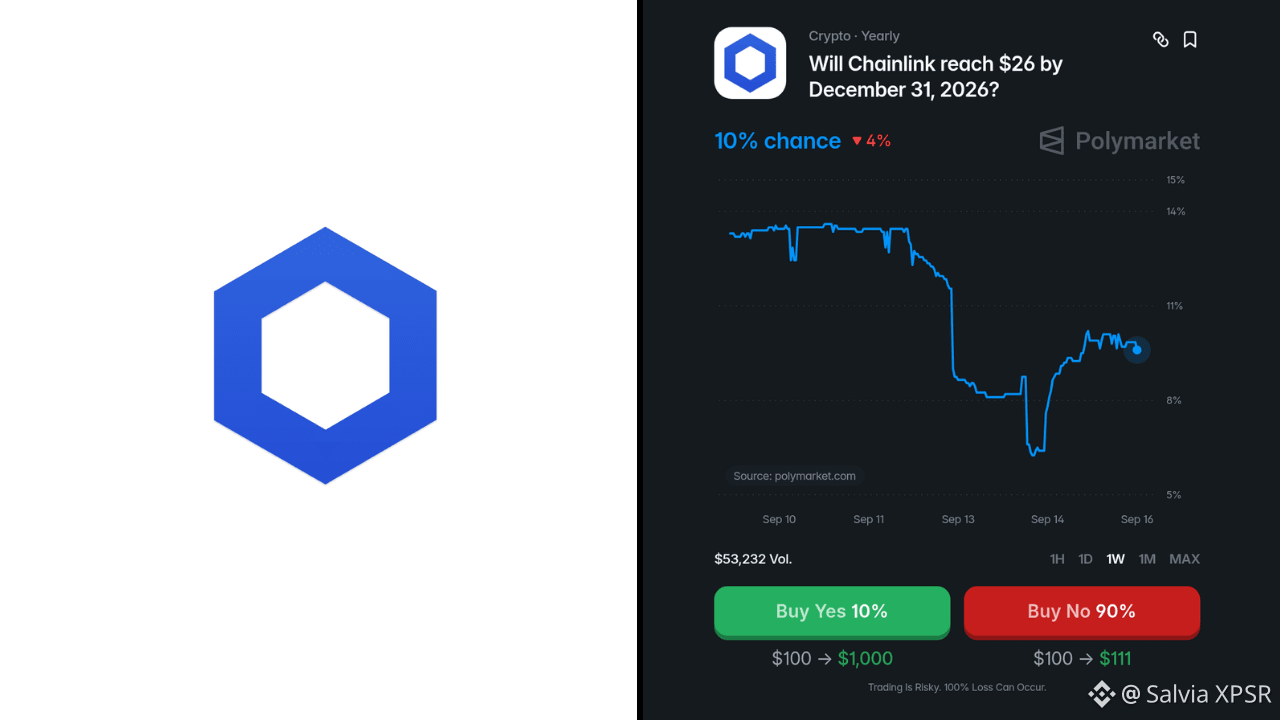
Can $LINK really hit $26? 📈
10% on Yes after another move lower.
I'm buying the long shot.
LINK does not need to hold $26 for months. For a price-target prediction, what matters is whether the qualifying price condition is reached before the deadline.
That difference is why I'm interested.
And 10% is the magic number where the payout becomes very easy to visualize.
Roughly $10 bought around 10% represents about $100 if Yes ultimately resolves, before fees and execution differences.
That's approximately $90 of potential profit if I get the call right.
Obviously the market only offers that payout because nine out of ten probability points are currently sitting against me.
But that's exactly why I like it.
One aggressive altcoin rotation could change the entire conversation.
And I don't have to wait for $26 either.
If Chainlink momentum pushes this prediction from 10% to 25%, I can exit the Polymarket position beforehand and take the repricing.
That's much more interesting to me than simply buying another chart and hoping.
I know my target.
I know my deadline.
I know what the crowd thinks.
Now I choose a side.
Yes.
#Altcoin Season#
Can $LINK really hit $26? 📈
10% on Yes after another move lower.
I'm buying the long shot.
LINK does not need to hold $26 for months. For a price-target prediction, what matters is whether the qualifying price condition is reached before the deadline.
That difference is why I'm interested.
And 10% is the magic number where the payout becomes very easy to visualize.
Roughly $10 bought around 10% represents about $100 if Yes ultimately resolves, before fees and execution differences.
That's approximately $90 of potential profit if I get the call right.
Obviously the market only offers that payout because nine out of ten probability points are currently sitting against me.
But that's exactly why I like it.
One aggressive altcoin rotation could change the entire conversation.
And I don't have to wait for $26 either.
If Chainlink momentum pushes this prediction from 10% to 25%, I can exit the Polymarket position beforehand and take the repricing.
That's much more interesting to me than simply buying another chart and hoping.
I know my target.
I know my deadline.
I know what the crowd thinks.
Now I choose a side.
Yes.
#Altcoin Season#
10% on Yes after another move lower.
I'm buying the long shot.
LINK does not need to hold $26 for months. For a price-target prediction, what matters is whether the qualifying price condition is reached before the deadline.
That difference is why I'm interested.
And 10% is the magic number where the payout becomes very easy to visualize.
Roughly $10 bought around 10% represents about $100 if Yes ultimately resolves, before fees and execution differences.
That's approximately $90 of potential profit if I get the call right.
Obviously the market only offers that payout because nine out of ten probability points are currently sitting against me.
But that's exactly why I like it.
One aggressive altcoin rotation could change the entire conversation.
And I don't have to wait for $26 either.
If Chainlink momentum pushes this prediction from 10% to 25%, I can exit the Polymarket position beforehand and take the repricing.
That's much more interesting to me than simply buying another chart and hoping.
I know my target.
I know my deadline.
I know what the crowd thinks.
Now I choose a side.
Yes.
#Altcoin Season#
55
·
--
Know Your Risk Loss Before Entry 🛡️
$INJ helped make sophisticated derivatives a familiar part of the onchain trading landscape. $SYN adds another instrument to that conversation through Hypercall’s defined-risk options.
When a trader buys a fully paid option, the premium determines the maximum amount at risk on that position.
The market can move against the trade without triggering a margin liquidation on the long option itself.
There is still a clear trade-off. The option has an expiry, and the entire premium can be lost if the required move does not happen in time.
That makes options and perpetuals useful for different situations.
A perp offers continuous directional exposure but requires the trader to manage margin and liquidation risk. An option lets the trader select a timeframe and define the premium at risk before entering.
Hypercall brings that choice into the Hyperliquid ecosystem.
For me, the product becomes more compelling when it gives traders another tool rather than asking them to replace the tools they already use.
#DeFi #Hyperliquid
Know Your Risk Loss Before Entry 🛡️
$INJ helped make sophisticated derivatives a familiar part of the onchain trading landscape. $SYN adds another instrument to that conversation through Hypercall’s defined-risk options.
When a trader buys a fully paid option, the premium determines the maximum amount at risk on that position.
The market can move against the trade without triggering a margin liquidation on the long option itself.
There is still a clear trade-off. The option has an expiry, and the entire premium can be lost if the required move does not happen in time.
That makes options and perpetuals useful for different situations.
A perp offers continuous directional exposure but requires the trader to manage margin and liquidation risk. An option lets the trader select a timeframe and define the premium at risk before entering.
Hypercall brings that choice into the Hyperliquid ecosystem.
For me, the product becomes more compelling when it gives traders another tool rather than asking them to replace the tools they already use.
#DeFi #Hyperliquid
$INJ helped make sophisticated derivatives a familiar part of the onchain trading landscape. $SYN adds another instrument to that conversation through Hypercall’s defined-risk options.
When a trader buys a fully paid option, the premium determines the maximum amount at risk on that position.
The market can move against the trade without triggering a margin liquidation on the long option itself.
There is still a clear trade-off. The option has an expiry, and the entire premium can be lost if the required move does not happen in time.
That makes options and perpetuals useful for different situations.
A perp offers continuous directional exposure but requires the trader to manage margin and liquidation risk. An option lets the trader select a timeframe and define the premium at risk before entering.
Hypercall brings that choice into the Hyperliquid ecosystem.
For me, the product becomes more compelling when it gives traders another tool rather than asking them to replace the tools they already use.
#DeFi #Hyperliquid
52
·
--
Profit Without Chasing Pumps 🧘
Watching $ONDO and $FET pump without you is one of the easiest ways to start making bad trades.
That's exactly the kind of FOMO Pear Protocol's Agent Pear Vault can help take out of trading.
Instead of waiting for you to spot the next opportunity, the Vault continuously monitors the market for statistical pair-trading setups and can automatically size, enter, manage and exit qualifying trades.
So your capital can already be looking for opportunities while you're working, sleeping or watching everyone on CT celebrate a pump you missed.
And because the strategy trades relative-value opportunities instead of simply chasing whichever token is going up, you don't need to turn every market pump into an emergency buy.
That's probably one of my favorite parts of automated trading. You can miss the pump without having to miss the opportunity.
Put your FOMO away and autopilot your strategy at pear.garden
#Altcoin Season#
Profit Without Chasing Pumps 🧘
Watching $ONDO and $FET pump without you is one of the easiest ways to start making bad trades.
That's exactly the kind of FOMO Pear Protocol's Agent Pear Vault can help take out of trading.
Instead of waiting for you to spot the next opportunity, the Vault continuously monitors the market for statistical pair-trading setups and can automatically size, enter, manage and exit qualifying trades.
So your capital can already be looking for opportunities while you're working, sleeping or watching everyone on CT celebrate a pump you missed.
And because the strategy trades relative-value opportunities instead of simply chasing whichever token is going up, you don't need to turn every market pump into an emergency buy.
That's probably one of my favorite parts of automated trading. You can miss the pump without having to miss the opportunity.
Put your FOMO away and autopilot your strategy at pear.garden
#Altcoin Season#
Watching $ONDO and $FET pump without you is one of the easiest ways to start making bad trades.
That's exactly the kind of FOMO Pear Protocol's Agent Pear Vault can help take out of trading.
Instead of waiting for you to spot the next opportunity, the Vault continuously monitors the market for statistical pair-trading setups and can automatically size, enter, manage and exit qualifying trades.
So your capital can already be looking for opportunities while you're working, sleeping or watching everyone on CT celebrate a pump you missed.
And because the strategy trades relative-value opportunities instead of simply chasing whichever token is going up, you don't need to turn every market pump into an emergency buy.
That's probably one of my favorite parts of automated trading. You can miss the pump without having to miss the opportunity.
Put your FOMO away and autopilot your strategy at pear.garden
#Altcoin Season#
66
·
--
One BlackRock headline creates two trades 👀
BlackRock saying AI compute could eventually be priced, financed and traded as tokenized assets gives me a pretty simple way to look at the AI trade from here.
$VVV is already catching the demand side. From September 17 to 23, VVV moved from $25.69 to $30.24, roughly +18%, with its market cap now around $1.46B.
Then there is $B3, which I see as the more asymmetric side of the same narrative.
B3 moved roughly +27% from its September 17 close to September 23, and today has already seen about $39M in volume against a ~$34M market cap. That is the kind of price action I watch when a new narrative starts finding a smaller token.
The thesis underneath it is B3IQ.
Instead of only accessing AI compute, B3IQ lets buyers own the physical NVIDIA machine, put as little as 30% down on select systems and keep 85% of realized gross revenue when B3 sells the available capacity.
So I see two sides of the same trade.
VVV gives me exposure to AI inference demand.
B3 gives me exposure to the idea that the GPU itself becomes a financeable asset.
If BlackRock keeps pushing compute into the digital-a$sset conversation, I expect both narratives to get more attention, but the smaller valuation on B3 is what makes that side especially interesting to me 🔥
#Altcoin Season# #RWA
One BlackRock headline creates two trades 👀
BlackRock saying AI compute could eventually be priced, financed and traded as tokenized assets gives me a pretty simple way to look at the AI trade from here.
$VVV is already catching the demand side. From September 17 to 23, VVV moved from $25.69 to $30.24, roughly +18%, with its market cap now around $1.46B.
Then there is $B3, which I see as the more asymmetric side of the same narrative.
B3 moved roughly +27% from its September 17 close to September 23, and today has already seen about $39M in volume against a ~$34M market cap. That is the kind of price action I watch when a new narrative starts finding a smaller token.
The thesis underneath it is B3IQ.
Instead of only accessing AI compute, B3IQ lets buyers own the physical NVIDIA machine, put as little as 30% down on select systems and keep 85% of realized gross revenue when B3 sells the available capacity.
So I see two sides of the same trade.
VVV gives me exposure to AI inference demand.
B3 gives me exposure to the idea that the GPU itself becomes a financeable asset.
If BlackRock keeps pushing compute into the digital-a$sset conversation, I expect both narratives to get more attention, but the smaller valuation on B3 is what makes that side especially interesting to me 🔥
#Altcoin Season# #RWA
BlackRock saying AI compute could eventually be priced, financed and traded as tokenized assets gives me a pretty simple way to look at the AI trade from here.
$VVV is already catching the demand side. From September 17 to 23, VVV moved from $25.69 to $30.24, roughly +18%, with its market cap now around $1.46B.
Then there is $B3, which I see as the more asymmetric side of the same narrative.
B3 moved roughly +27% from its September 17 close to September 23, and today has already seen about $39M in volume against a ~$34M market cap. That is the kind of price action I watch when a new narrative starts finding a smaller token.
The thesis underneath it is B3IQ.
Instead of only accessing AI compute, B3IQ lets buyers own the physical NVIDIA machine, put as little as 30% down on select systems and keep 85% of realized gross revenue when B3 sells the available capacity.
So I see two sides of the same trade.
VVV gives me exposure to AI inference demand.
B3 gives me exposure to the idea that the GPU itself becomes a financeable asset.
If BlackRock keeps pushing compute into the digital-a$sset conversation, I expect both narratives to get more attention, but the smaller valuation on B3 is what makes that side especially interesting to me 🔥
#Altcoin Season# #RWA
52
·
--
Position Size Should Fit Your Needs 🎯
The $UNI ecosystem helped make flexible trade sizing a familiar part of DeFi.
$SYN brings that flexibility to equity-linked options through Hypercall.
A standard US equity option contract generally represents 100 shares. An option quoted at 2.50 USD per share therefore costs 250 USD for one contract, before fees.
That multiplier can make a smaller trading idea more expensive to express than someone initially expects.
Hypercall supports fractional positions from around 1 USD.
A trader can choose a smaller premium commitment while still reviewing the strike, expiry and payoff of the contract.
The smaller size does not remove the risk. A purchased option can expire worthless, and the quoted terms still matter.
What changes is the amount someone needs to commit to an individual position.
Hypercall brings flexible sizing to its options markets on Hyperliquid, giving the SYN story a clear user benefit.
#DeFi #Hyperliquid
Position Size Should Fit Your Needs 🎯
The $UNI ecosystem helped make flexible trade sizing a familiar part of DeFi.
$SYN brings that flexibility to equity-linked options through Hypercall.
A standard US equity option contract generally represents 100 shares. An option quoted at 2.50 USD per share therefore costs 250 USD for one contract, before fees.
That multiplier can make a smaller trading idea more expensive to express than someone initially expects.
Hypercall supports fractional positions from around 1 USD.
A trader can choose a smaller premium commitment while still reviewing the strike, expiry and payoff of the contract.
The smaller size does not remove the risk. A purchased option can expire worthless, and the quoted terms still matter.
What changes is the amount someone needs to commit to an individual position.
Hypercall brings flexible sizing to its options markets on Hyperliquid, giving the SYN story a clear user benefit.
#DeFi #Hyperliquid
The $UNI ecosystem helped make flexible trade sizing a familiar part of DeFi.
$SYN brings that flexibility to equity-linked options through Hypercall.
A standard US equity option contract generally represents 100 shares. An option quoted at 2.50 USD per share therefore costs 250 USD for one contract, before fees.
That multiplier can make a smaller trading idea more expensive to express than someone initially expects.
Hypercall supports fractional positions from around 1 USD.
A trader can choose a smaller premium commitment while still reviewing the strike, expiry and payoff of the contract.
The smaller size does not remove the risk. A purchased option can expire worthless, and the quoted terms still matter.
What changes is the amount someone needs to commit to an individual position.
Hypercall brings flexible sizing to its options markets on Hyperliquid, giving the SYN story a clear user benefit.
#DeFi #Hyperliquid
80
·
--
Stock Options From Your Crypto Wallet 📱
$ONDO brings traditional assets into onchain finance. With $SYN the angle is Hypercall’s options markets around familiar stocks.
The RWA opportunity gets more interesting when traders can choose how they want exposure to an asset.
A stock view might be about next week’s earnings, a short-term pullback, or a move that needs several days to develop. Different views call for different contracts.
Hypercall brings that choice into its options interface.
For an NVDA trade, the process starts with the underlying and the available expiries. From there, a trader can review the strike, premium and payoff before choosing a position size.
Fractional contracts allow small positions, with sizing from around 1 USD. The platform also supports strategies beyond a single call or put.
A trader can inspect an options chain and decide whether the available contract fits their view.
For me, that makes Hypercall’s place in DeFi much easier to understand. The product gives the SYN thesis something tangible to build on.
#DeFi
Stock Options From Your Crypto Wallet 📱
$ONDO brings traditional assets into onchain finance. With $SYN the angle is Hypercall’s options markets around familiar stocks.
The RWA opportunity gets more interesting when traders can choose how they want exposure to an asset.
A stock view might be about next week’s earnings, a short-term pullback, or a move that needs several days to develop. Different views call for different contracts.
Hypercall brings that choice into its options interface.
For an NVDA trade, the process starts with the underlying and the available expiries. From there, a trader can review the strike, premium and payoff before choosing a position size.
Fractional contracts allow small positions, with sizing from around 1 USD. The platform also supports strategies beyond a single call or put.
A trader can inspect an options chain and decide whether the available contract fits their view.
For me, that makes Hypercall’s place in DeFi much easier to understand. The product gives the SYN thesis something tangible to build on.
#DeFi
$ONDO brings traditional assets into onchain finance. With $SYN the angle is Hypercall’s options markets around familiar stocks.
The RWA opportunity gets more interesting when traders can choose how they want exposure to an asset.
A stock view might be about next week’s earnings, a short-term pullback, or a move that needs several days to develop. Different views call for different contracts.
Hypercall brings that choice into its options interface.
For an NVDA trade, the process starts with the underlying and the available expiries. From there, a trader can review the strike, premium and payoff before choosing a position size.
Fractional contracts allow small positions, with sizing from around 1 USD. The platform also supports strategies beyond a single call or put.
A trader can inspect an options chain and decide whether the available contract fits their view.
For me, that makes Hypercall’s place in DeFi much easier to understand. The product gives the SYN thesis something tangible to build on.
#DeFi
60
·
--
Sui Just Removed Gas From African Payments 🌍
$SUI is now live as settlement infrastructure for Daya in Nigeria.
Businesses using Daya can move supported stablecoins across borders without acquiring or holding SUI for network fees.
The integration already operates across Daya Business, Daya Pro and its developer APIs.
Those products cover payments, liquidity, remittances, treasury management and fintech integrations.
Expansion into South Africa, Ghana and Kenya is planned as more local-currency rails come online.
For the end user, the blockchain complexity starts disappearing.
For Sui, every business using Daya becomes evidence that gasless stablecoin infrastructure can support real commercial activity.
This is the adoption model I want to see.
The network works underneath while businesses simply receive faster and cheaper financial services.
#Altcoin Season# #DeFi
Sui Just Removed Gas From African Payments 🌍
$SUI is now live as settlement infrastructure for Daya in Nigeria.
Businesses using Daya can move supported stablecoins across borders without acquiring or holding SUI for network fees.
The integration already operates across Daya Business, Daya Pro and its developer APIs.
Those products cover payments, liquidity, remittances, treasury management and fintech integrations.
Expansion into South Africa, Ghana and Kenya is planned as more local-currency rails come online.
For the end user, the blockchain complexity starts disappearing.
For Sui, every business using Daya becomes evidence that gasless stablecoin infrastructure can support real commercial activity.
This is the adoption model I want to see.
The network works underneath while businesses simply receive faster and cheaper financial services.
#Altcoin Season# #DeFi
$SUI is now live as settlement infrastructure for Daya in Nigeria.
Businesses using Daya can move supported stablecoins across borders without acquiring or holding SUI for network fees.
The integration already operates across Daya Business, Daya Pro and its developer APIs.
Those products cover payments, liquidity, remittances, treasury management and fintech integrations.
Expansion into South Africa, Ghana and Kenya is planned as more local-currency rails come online.
For the end user, the blockchain complexity starts disappearing.
For Sui, every business using Daya becomes evidence that gasless stablecoin infrastructure can support real commercial activity.
This is the adoption model I want to see.
The network works underneath while businesses simply receive faster and cheaper financial services.
#Altcoin Season# #DeFi
57
·
--
I would stop calling this only an oracle update 🧠
The bigger story around $PYTH is distribution. $SOL made fast financial apps feel normal for crypto users, and Pyth is now pushing toward the data layer those apps, fintechs, trading venues and RWA products need underneath.
Nasdaq Basic will be available through Pyth’s Data Marketplace for approved clients who license directly with Nasdaq.
That detail matters because Nasdaq Basic is not some niche crypto dataset. It is real-time U.S. equity market data used across brokerages, banks, fintech platforms and investing apps.
The Data Marketplace is where this gets interesting.
Publishers can distribute proprietary data through one integration, keep attribution, and retain commercial control. Clients get a channel designed for software-native destinations instead of legacy-only market-data routes.
That is a real category expansion for Pyth.
Pyth Pro already has 3,500+ feeds. Pyth has 138+ first-party publishers. Pyth Indices reached $1.59M ARR in August. The Terminal brought in 90,850 visitors in one month.
Nasdaq Basic through the marketplace adds a new kind of proof point.
The market-data business is not theoretical anymore. Pyth is building products institutions can actually use, and $PYTH still feels like the token narrative has not fully caught up with the company-level direction.
#Altcoin Season#
I would stop calling this only an oracle update 🧠
The bigger story around $PYTH is distribution. $SOL made fast financial apps feel normal for crypto users, and Pyth is now pushing toward the data layer those apps, fintechs, trading venues and RWA products need underneath.
Nasdaq Basic will be available through Pyth’s Data Marketplace for approved clients who license directly with Nasdaq.
That detail matters because Nasdaq Basic is not some niche crypto dataset. It is real-time U.S. equity market data used across brokerages, banks, fintech platforms and investing apps.
The Data Marketplace is where this gets interesting.
Publishers can distribute proprietary data through one integration, keep attribution, and retain commercial control. Clients get a channel designed for software-native destinations instead of legacy-only market-data routes.
That is a real category expansion for Pyth.
Pyth Pro already has 3,500+ feeds. Pyth has 138+ first-party publishers. Pyth Indices reached $1.59M ARR in August. The Terminal brought in 90,850 visitors in one month.
Nasdaq Basic through the marketplace adds a new kind of proof point.
The market-data business is not theoretical anymore. Pyth is building products institutions can actually use, and $PYTH still feels like the token narrative has not fully caught up with the company-level direction.
#Altcoin Season#
The bigger story around $PYTH is distribution. $SOL made fast financial apps feel normal for crypto users, and Pyth is now pushing toward the data layer those apps, fintechs, trading venues and RWA products need underneath.
Nasdaq Basic will be available through Pyth’s Data Marketplace for approved clients who license directly with Nasdaq.
That detail matters because Nasdaq Basic is not some niche crypto dataset. It is real-time U.S. equity market data used across brokerages, banks, fintech platforms and investing apps.
The Data Marketplace is where this gets interesting.
Publishers can distribute proprietary data through one integration, keep attribution, and retain commercial control. Clients get a channel designed for software-native destinations instead of legacy-only market-data routes.
That is a real category expansion for Pyth.
Pyth Pro already has 3,500+ feeds. Pyth has 138+ first-party publishers. Pyth Indices reached $1.59M ARR in August. The Terminal brought in 90,850 visitors in one month.
Nasdaq Basic through the marketplace adds a new kind of proof point.
The market-data business is not theoretical anymore. Pyth is building products institutions can actually use, and $PYTH still feels like the token narrative has not fully caught up with the company-level direction.
#Altcoin Season#
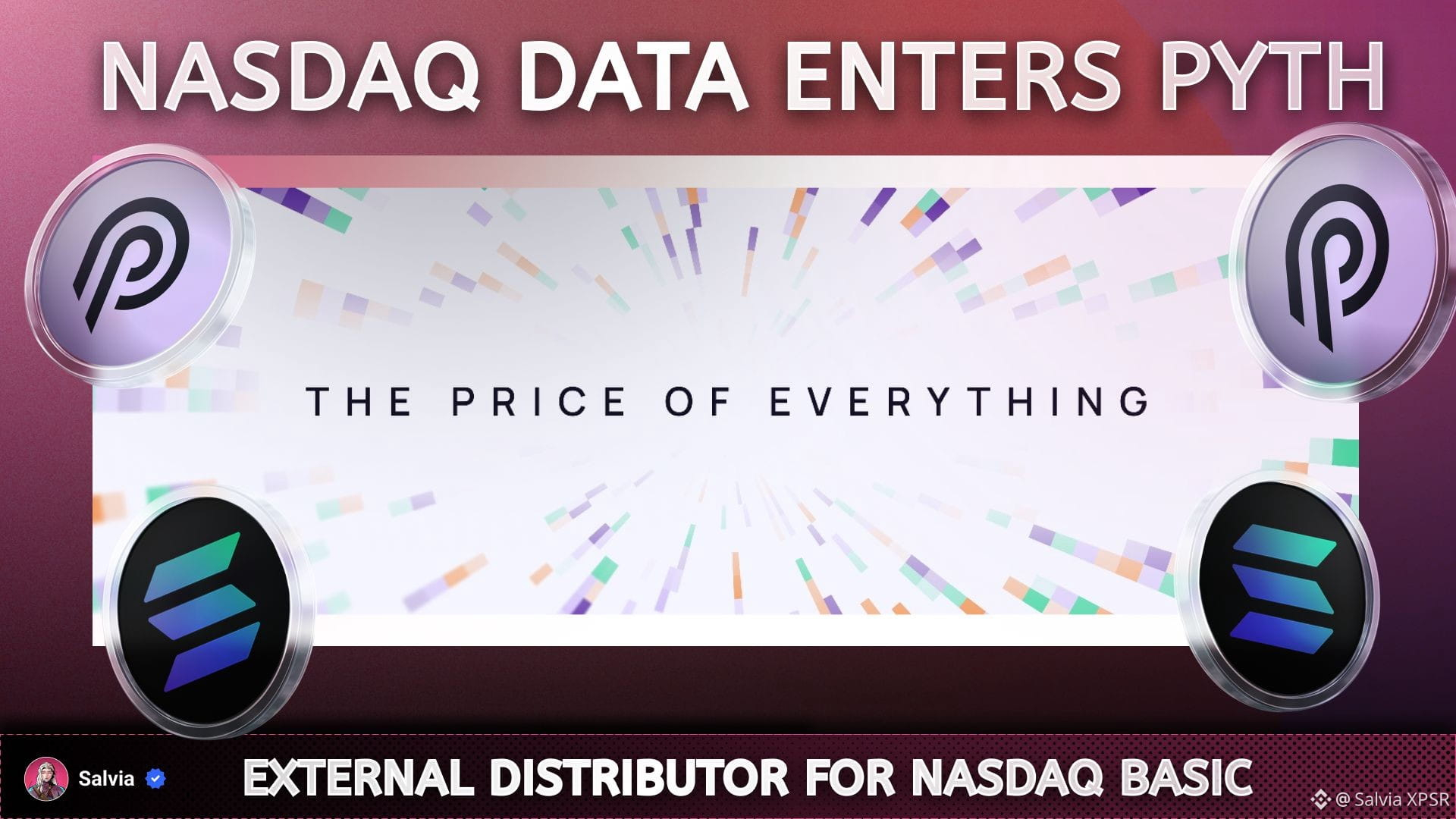
36
·
--
A 70% week creates two trades 👀
$NEAR is up more than 70% in seven days, leaving traders with two very different setups: momentum traders see a breakout that may still have room, while others see an extended move and wait for weakness before taking the other side.
I would not treat either view as automatic because the useful signal comes after the first move.
If price keeps holding once the initial momentum cools, continuation remains valid, while a failed hold creates the pullback setup.
That is the trade decision today.
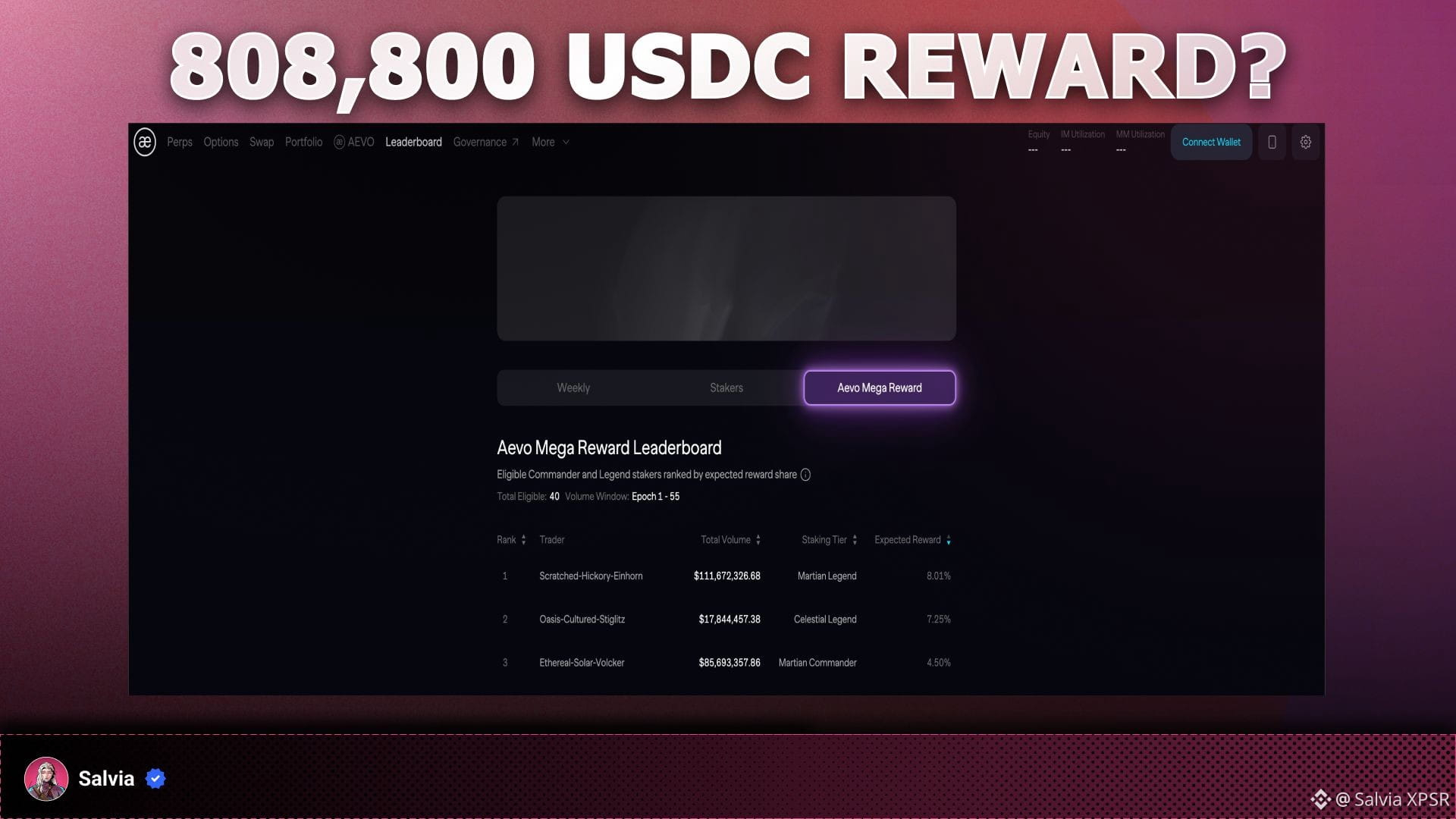
$AEVO currently includes NEAR among this week’s qualifying Perp Majors, so whichever side I trade, the eligible volume also adds to the year-end leaderboard.
The leaderboard tracks progress toward the 10m cumulative volume requirement for Aevo’s projected 808,800 USDC year-end distribution.
For me, that makes the trade useful twice.
The setup gives me something to act on now, and the volume keeps building toward December 🔥
#Altcoin Season#
A 70% week creates two trades 👀
$NEAR is up more than 70% in seven days, leaving traders with two very different setups: momentum traders see a breakout that may still have room, while others see an extended move and wait for weakness before taking the other side.
I would not treat either view as automatic because the useful signal comes after the first move.
If price keeps holding once the initial momentum cools, continuation remains valid, while a failed hold creates the pullback setup.
That is the trade decision today.
$AEVO currently includes NEAR among this week’s qualifying Perp Majors, so whichever side I trade, the eligible volume also adds to the year-end leaderboard.
The leaderboard tracks progress toward the 10m cumulative volume requirement for Aevo’s projected 808,800 USDC year-end distribution.
For me, that makes the trade useful twice.
The setup gives me something to act on now, and the volume keeps building toward December 🔥
#Altcoin Season#
$NEAR is up more than 70% in seven days, leaving traders with two very different setups: momentum traders see a breakout that may still have room, while others see an extended move and wait for weakness before taking the other side.
I would not treat either view as automatic because the useful signal comes after the first move.
If price keeps holding once the initial momentum cools, continuation remains valid, while a failed hold creates the pullback setup.
That is the trade decision today.
$AEVO currently includes NEAR among this week’s qualifying Perp Majors, so whichever side I trade, the eligible volume also adds to the year-end leaderboard.
The leaderboard tracks progress toward the 10m cumulative volume requirement for Aevo’s projected 808,800 USDC year-end distribution.
For me, that makes the trade useful twice.
The setup gives me something to act on now, and the volume keeps building toward December 🔥
#Altcoin Season#
50
·
--
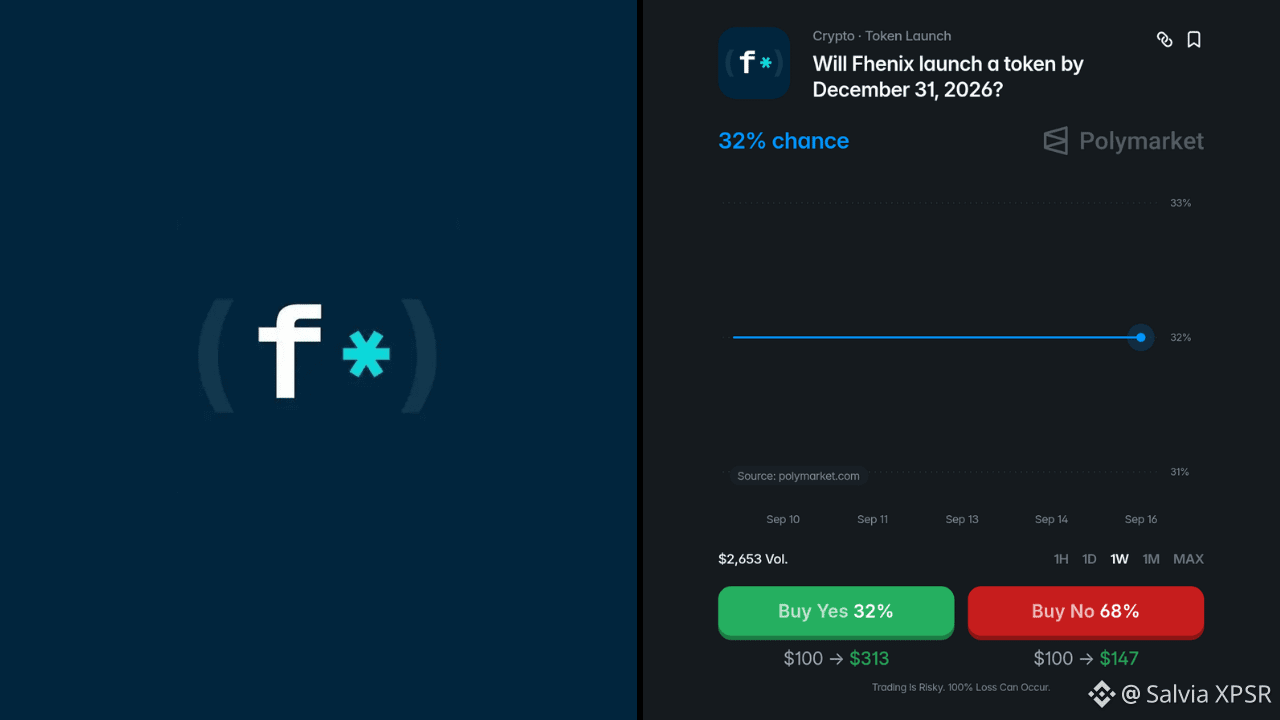
Fhenix looks cheap at 32% 🚨
32% Yes and barely $2.7K traded.
This is exactly where I like searching for asymmetric Polymarket trades.
I'm taking Yes.
Fhenix is still actively shipping privacy infrastructure. Its current product centers around CoFHE, bringing fully homomorphic encryption to EVM applications, and it published another major token-standard piece in August around combining public and confidential token functionality.
That doesn't prove a token launches this year.
But at 32%, I don't need proof.
I need the market to be underestimating the chance.
The low volume makes this even more interesting to me because the prediction hasn't attracted much capital yet. One meaningful announcement can move a thin market very quickly.
I'd rather rotate some $SOL into that possibility than buy another random privacy token after the narrative is already trending.
And remember, resolution isn't my only exit.
If Yes moves from 32% to 50% after stronger token signals, I can sell beforehand.
That's the game.
Find the market before everyone else finds the catalyst.
#Altcoin Season#
Fhenix looks cheap at 32% 🚨
32% Yes and barely $2.7K traded.
This is exactly where I like searching for asymmetric Polymarket trades.
I'm taking Yes.
Fhenix is still actively shipping privacy infrastructure. Its current product centers around CoFHE, bringing fully homomorphic encryption to EVM applications, and it published another major token-standard piece in August around combining public and confidential token functionality.
That doesn't prove a token launches this year.
But at 32%, I don't need proof.
I need the market to be underestimating the chance.
The low volume makes this even more interesting to me because the prediction hasn't attracted much capital yet. One meaningful announcement can move a thin market very quickly.
I'd rather rotate some $SOL into that possibility than buy another random privacy token after the narrative is already trending.
And remember, resolution isn't my only exit.
If Yes moves from 32% to 50% after stronger token signals, I can sell beforehand.
That's the game.
Find the market before everyone else finds the catalyst.
#Altcoin Season#
32% Yes and barely $2.7K traded.
This is exactly where I like searching for asymmetric Polymarket trades.
I'm taking Yes.
Fhenix is still actively shipping privacy infrastructure. Its current product centers around CoFHE, bringing fully homomorphic encryption to EVM applications, and it published another major token-standard piece in August around combining public and confidential token functionality.
That doesn't prove a token launches this year.
But at 32%, I don't need proof.
I need the market to be underestimating the chance.
The low volume makes this even more interesting to me because the prediction hasn't attracted much capital yet. One meaningful announcement can move a thin market very quickly.
I'd rather rotate some $SOL into that possibility than buy another random privacy token after the narrative is already trending.
And remember, resolution isn't my only exit.
If Yes moves from 32% to 50% after stronger token signals, I can sell beforehand.
That's the game.
Find the market before everyone else finds the catalyst.
#Altcoin Season#
61
·
--
AI Shouldn't Run The Fund 🤖❌
Hot take: I don't want an autonomous agent deciding what happens with institutional capital.
I want it doing the work underneath the decision.
That's why the curator model Theoriq is pushing makes more sense to me than the "AI manages everything" narrative.
Humans define eligible venues, strategy parameters, concentration limits and the conditions that should trigger an unwind.
Then AI can continuously scan the things humans are bad at watching 24/7: rates, liquidity, collateral health, cross-venue spreads and changes in portfolio state.
Theoriq's current model goes even further. Proposed transactions are validated against policy, run through TEE consensus and simulated against the live portfolio before capital moves.
That distinction will matter as decentralized AI networks like $TAO make autonomous intelligence dramatically more capable.
Better models don't eliminate judgment.
They increase the amount of information a good curator can act on.
I think the winning architecture is humans deciding what is acceptable and machines making sure nothing inside those boundaries gets missed.
#Altcoin Season#
AI Shouldn't Run The Fund 🤖❌
Hot take: I don't want an autonomous agent deciding what happens with institutional capital.
I want it doing the work underneath the decision.
That's why the curator model Theoriq is pushing makes more sense to me than the "AI manages everything" narrative.
Humans define eligible venues, strategy parameters, concentration limits and the conditions that should trigger an unwind.
Then AI can continuously scan the things humans are bad at watching 24/7: rates, liquidity, collateral health, cross-venue spreads and changes in portfolio state.
Theoriq's current model goes even further. Proposed transactions are validated against policy, run through TEE consensus and simulated against the live portfolio before capital moves.
That distinction will matter as decentralized AI networks like $TAO make autonomous intelligence dramatically more capable.
Better models don't eliminate judgment.
They increase the amount of information a good curator can act on.
I think the winning architecture is humans deciding what is acceptable and machines making sure nothing inside those boundaries gets missed.
#Altcoin Season#
Hot take: I don't want an autonomous agent deciding what happens with institutional capital.
I want it doing the work underneath the decision.
That's why the curator model Theoriq is pushing makes more sense to me than the "AI manages everything" narrative.
Humans define eligible venues, strategy parameters, concentration limits and the conditions that should trigger an unwind.
Then AI can continuously scan the things humans are bad at watching 24/7: rates, liquidity, collateral health, cross-venue spreads and changes in portfolio state.
Theoriq's current model goes even further. Proposed transactions are validated against policy, run through TEE consensus and simulated against the live portfolio before capital moves.
That distinction will matter as decentralized AI networks like $TAO make autonomous intelligence dramatically more capable.
Better models don't eliminate judgment.
They increase the amount of information a good curator can act on.
I think the winning architecture is humans deciding what is acceptable and machines making sure nothing inside those boundaries gets missed.
#Altcoin Season#
65
·
--
Some things don't need to prove themselves twice.
$UNI holders back a chain built on rigorous, peer-reviewed proof. No shortcuts, just a protocol that had to earn its credibility mathematically.
The DeLorean earned its credibility differently, but just as rigorously.
40 years of cultural proof. Every generation, every continent, the same recognition holding up without needing a whitepaper to explain it. $DMC is that already-proven IP, now provable onchain too.
Different kind of proof. Same result. Nothing left to question. 🚗
#Altcoin Season#
Some things don't need to prove themselves twice.
$UNI holders back a chain built on rigorous, peer-reviewed proof. No shortcuts, just a protocol that had to earn its credibility mathematically.
The DeLorean earned its credibility differently, but just as rigorously.
40 years of cultural proof. Every generation, every continent, the same recognition holding up without needing a whitepaper to explain it. $DMC is that already-proven IP, now provable onchain too.
Different kind of proof. Same result. Nothing left to question. 🚗
#Altcoin Season#
$UNI holders back a chain built on rigorous, peer-reviewed proof. No shortcuts, just a protocol that had to earn its credibility mathematically.
The DeLorean earned its credibility differently, but just as rigorously.
40 years of cultural proof. Every generation, every continent, the same recognition holding up without needing a whitepaper to explain it. $DMC is that already-proven IP, now provable onchain too.
Different kind of proof. Same result. Nothing left to question. 🚗
#Altcoin Season#
54
Connectez-vous pour découvrir plus de contenu
Rejoignez la communauté mondiale des adeptes de cryptomonnaies sur Binance Square
⚡️ Suviez les dernières informations importantes sur les cryptomonnaies.
💬 Jugé digne de confiance par la plus grande plateforme d’échange de cryptomonnaies au monde.
👍 Découvrez les connaissances que partagent les créateurs vérifiés.
Adresse e-mail/Nº de téléphone
Sujets d’actualité
EtherGains70.9%InQ3
125,575 vues
1,042 mentions
One of the best third quarters in history 💰
September closed out last night, and with it, the quarter. For the quarter, BTC is up 42%—the second-best Q3 on record. ETH had a record-breaking Q3 overall, up 70%.
Looking at the chart, things are still looking good: we’re holding support, but we’re testing it more and more often. Plus, ETF momentum is weakening — inflows are gradually declining, and yesterday saw outflows for the first time in a long while.
Yes, historically, October has been a good month for crypto — it’s not called “Uptober” for nothing. But it’s also one of the most volatile months. Last year, for example, we managed to hit a new all-time high (ATH) and experience a flash crash.
🚀 High Accuracy Trades.
$BTC
$ETH
$SOL
#EtherGains70.9%InQ3 #DollarIndexHitsHighestSinceMay2025 #CFTCSubmitsTwoEventContractRulesToWhiteHouse #MicronBeatsEarningsLiftsGuidance
Knowledge is Power
·0 mentions J’aime
·207 vues
TreasuryLetsStatesFileStablecoinCertificationsEarly
6,792 vues
73 mentions
US10YearYieldNears5.3%
135,626 vues
1,076 mentions