

BigBreakingWire
561 Publications

BigBreakingWire
Signaler
Bloquer l’utilisateur
Follow @BigBreakingWire-Your fast lane to finance, stocks, crypto & bonds! Get sharp insights, stay ahead, invest smarter.
0 Suivis
46 Abonnés
165 J’aime
Publications
Tous
Citations
Vidéos
BREAKING: Pure Gasoline Cars Fall Below 50% of Global New Car Sales
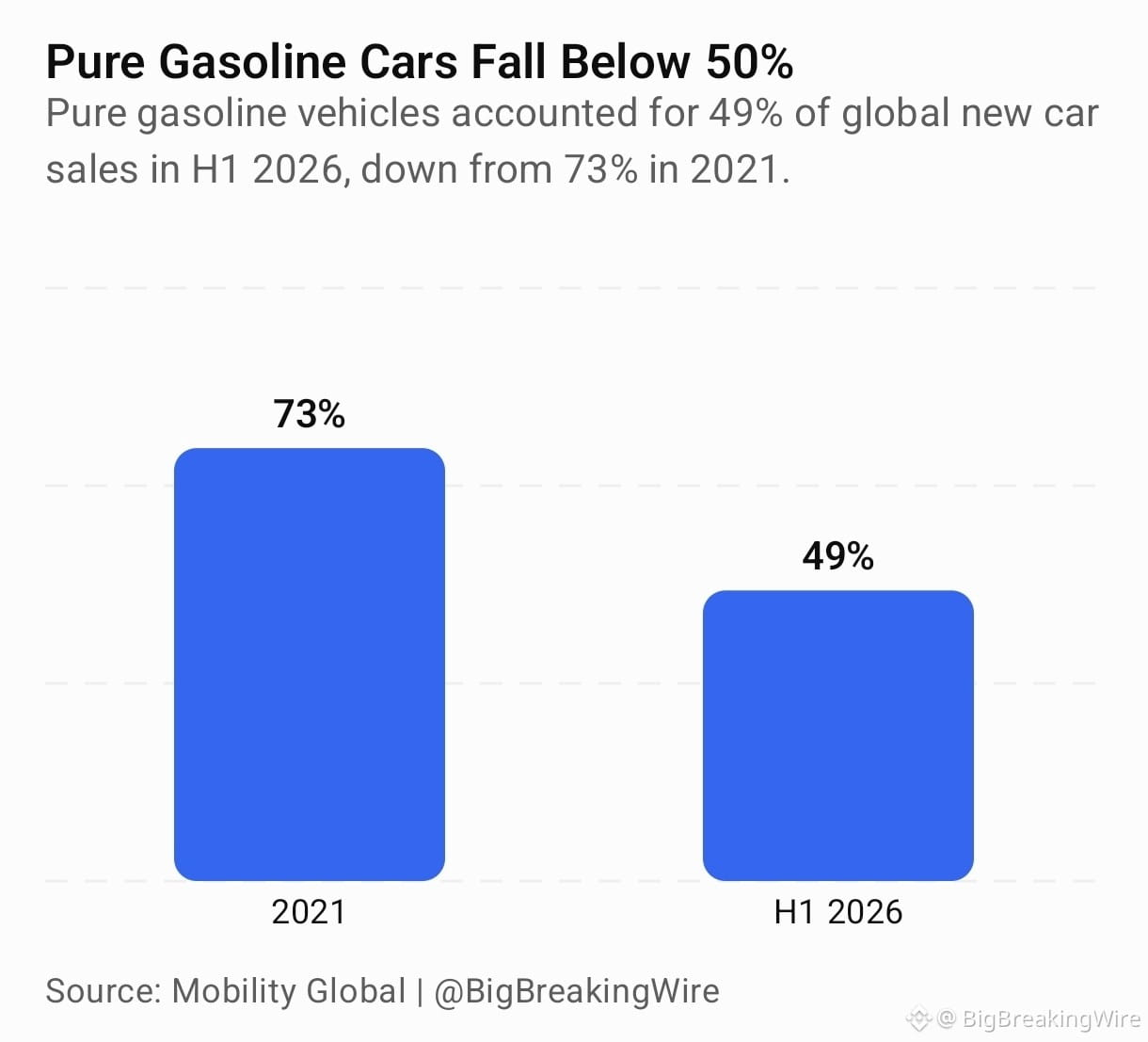
Pure gasoline powered vehicles accounted for just 49% of global new car sales in H1 2026, falling below 50% for the first time, according to Mobility Global data.
The share has dropped sharply from 73% in 2021, while the overall auto market contracted about 5% in H1.
Gasoline vehicle sales fell 26% in China and 13% in Europe, with higher fuel prices accelerating the shift toward lower operating cost vehicles.
Pure EV sales rose 32% in Europe to 1.81 million, 81% in Southeast Asia to 350,000, and more than doubled in Oceania to 110,000.
BREAKING: Pure Gasoline Cars Fall Below 50% of Global New Car Sales
Pure gasoline powered vehicles accounted for just 49% of global new car sales in H1 2026, falling below 50% for the first time, according to Mobility Global data.
The share has dropped sharply from 73% in 2021, while the overall auto market contracted about 5% in H1.
Gasoline vehicle sales fell 26% in China and 13% in Europe, with higher fuel prices accelerating the shift toward lower operating cost vehicles.
Pure EV sales rose 32% in Europe to 1.81 million, 81% in Southeast Asia to 350,000, and more than doubled in Oceania to 110,000.
Pure gasoline powered vehicles accounted for just 49% of global new car sales in H1 2026, falling below 50% for the first time, according to Mobility Global data.
The share has dropped sharply from 73% in 2021, while the overall auto market contracted about 5% in H1.
Gasoline vehicle sales fell 26% in China and 13% in Europe, with higher fuel prices accelerating the shift toward lower operating cost vehicles.
Pure EV sales rose 32% in Europe to 1.81 million, 81% in Southeast Asia to 350,000, and more than doubled in Oceania to 110,000.
57
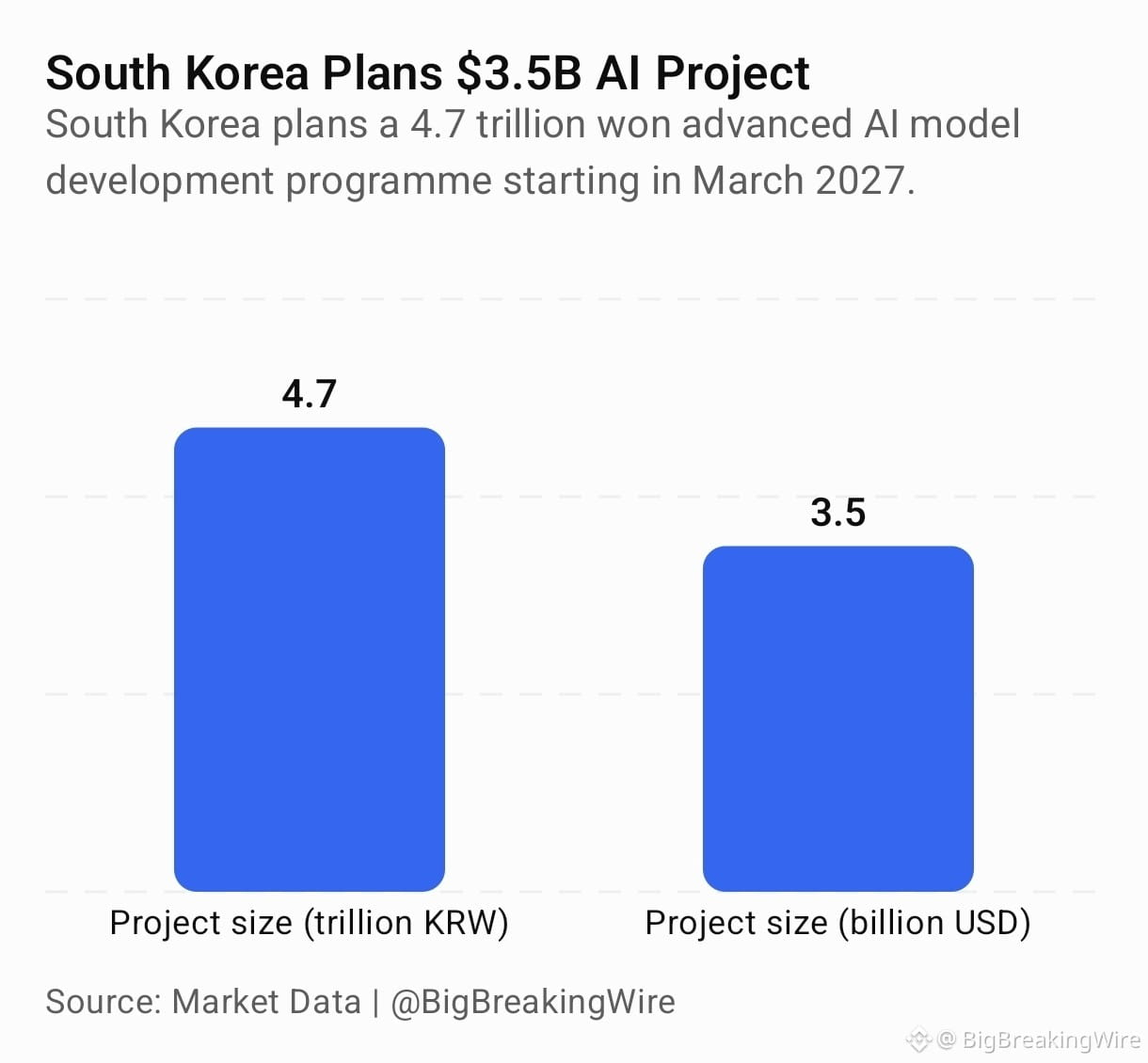
BREAKING: South Korea plans a $3.5 billion AI model project from March 2027.
The 4.7 trillion won programme will combine state equity investment with private capital, targeting chips, data and AI talent.
A lead developer could be selected by February after the 2027 budget is approved in December.
BREAKING: South Korea plans a $3.5 billion AI model project from March 2027.
The 4.7 trillion won programme will combine state equity investment with private capital, targeting chips, data and AI talent.
A lead developer could be selected by February after the 2027 budget is approved in December.
The 4.7 trillion won programme will combine state equity investment with private capital, targeting chips, data and AI talent.
A lead developer could be selected by February after the 2027 budget is approved in December.
88
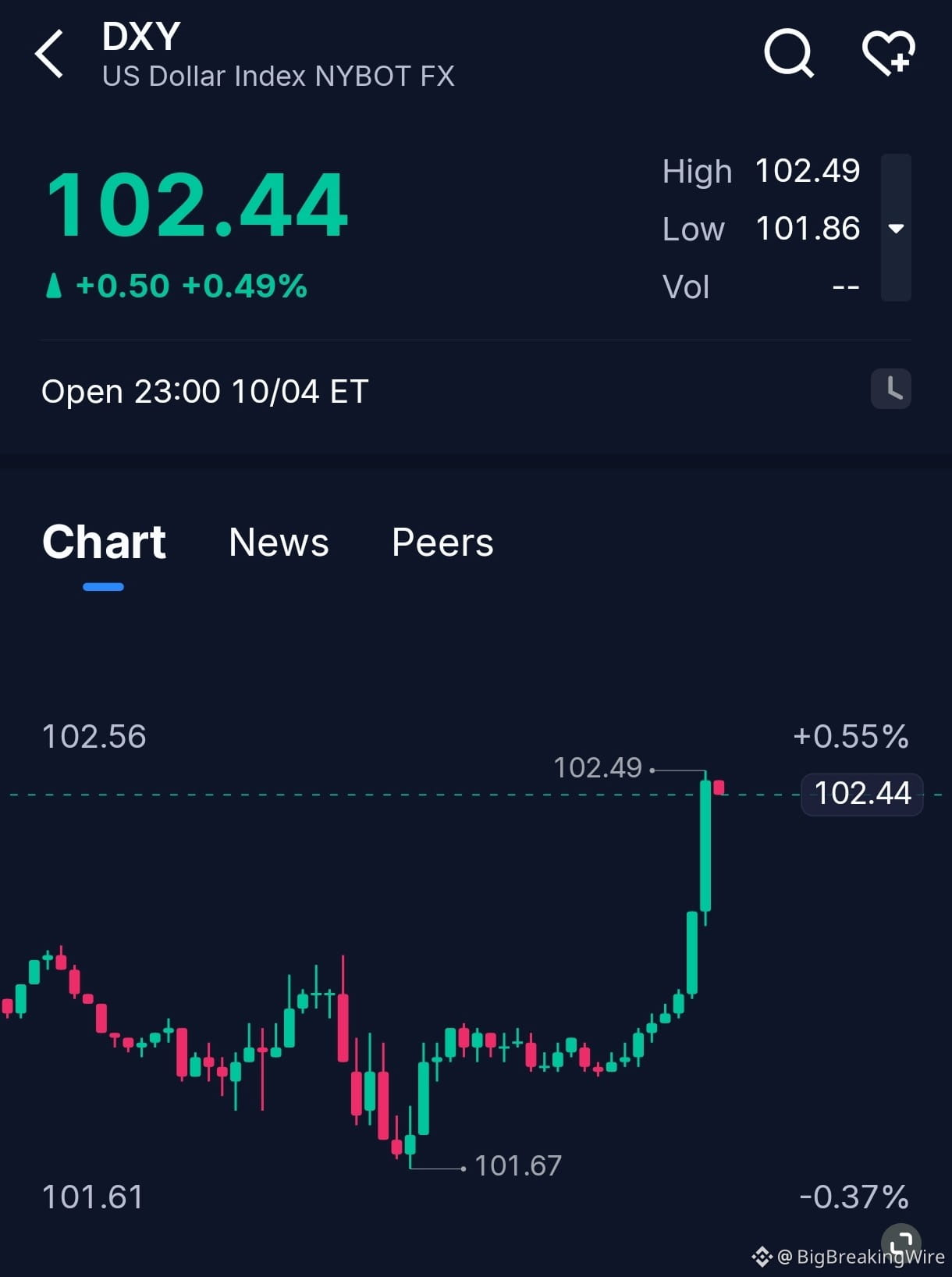
🚨 Dollar Index rises 0.5% to 102.49.
US stock futures turn lower, with Dow Jones and S&P 500 futures slipping into negative territory.
Markets are facing renewed pressure as the dollar strengthens.
🚨 Dollar Index rises 0.5% to 102.49.
US stock futures turn lower, with Dow Jones and S&P 500 futures slipping into negative territory.
Markets are facing renewed pressure as the dollar strengthens.
US stock futures turn lower, with Dow Jones and S&P 500 futures slipping into negative territory.
Markets are facing renewed pressure as the dollar strengthens.
81
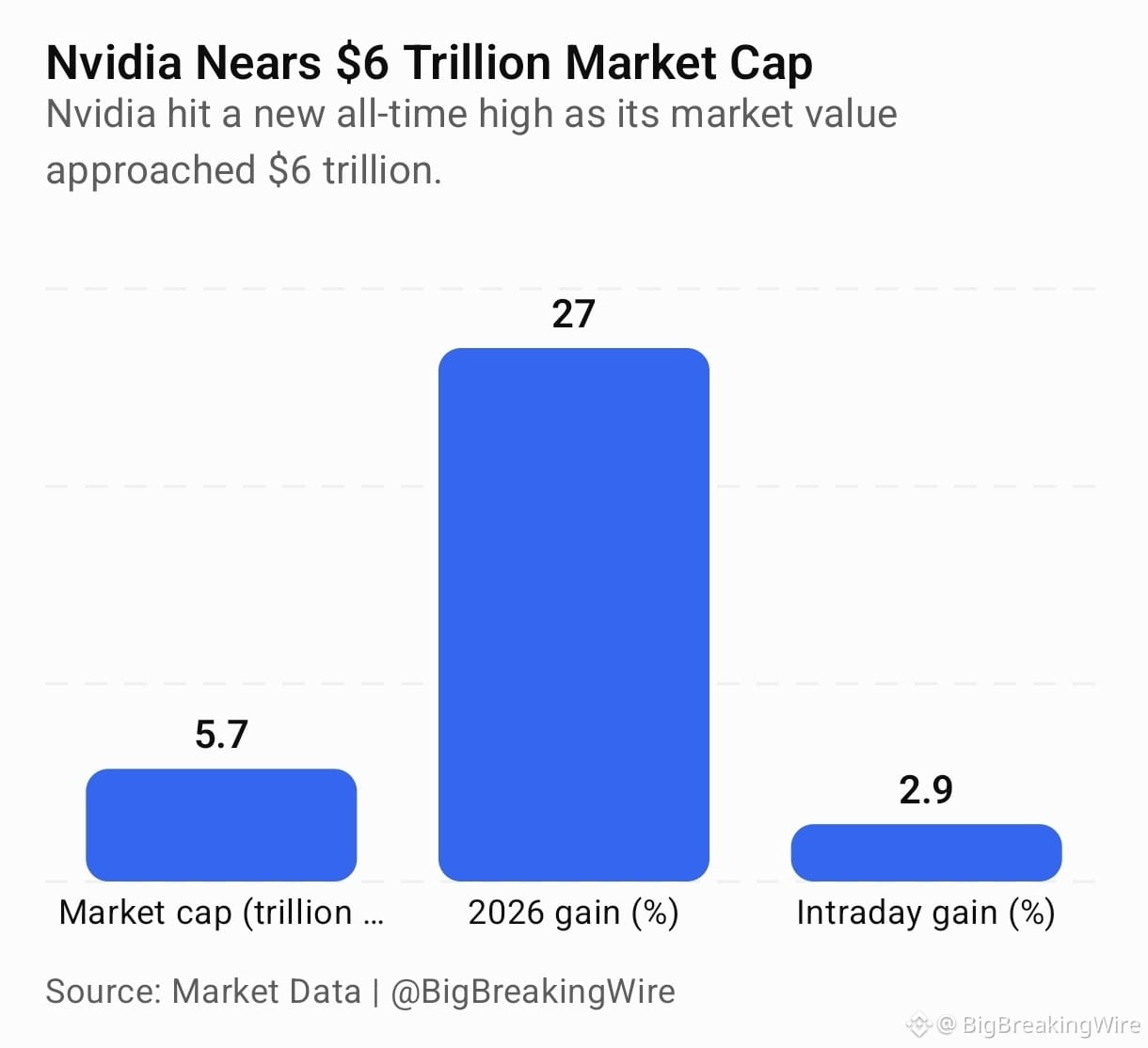
Nvidia hits a new all-time high, with market cap nearing $6 trillion.
Shares jumped as much as 2.9% intraday.
Nvidia is up about 27% this year, with market cap around $5.7 trillion.
$NVDA
Nvidia hits a new all-time high, with market cap nearing $6 trillion.
Shares jumped as much as 2.9% intraday.
Nvidia is up about 27% this year, with market cap around $5.7 trillion.
$NVDA
Shares jumped as much as 2.9% intraday.
Nvidia is up about 27% this year, with market cap around $5.7 trillion.
$NVDA
184
🚨 Mid-day Update
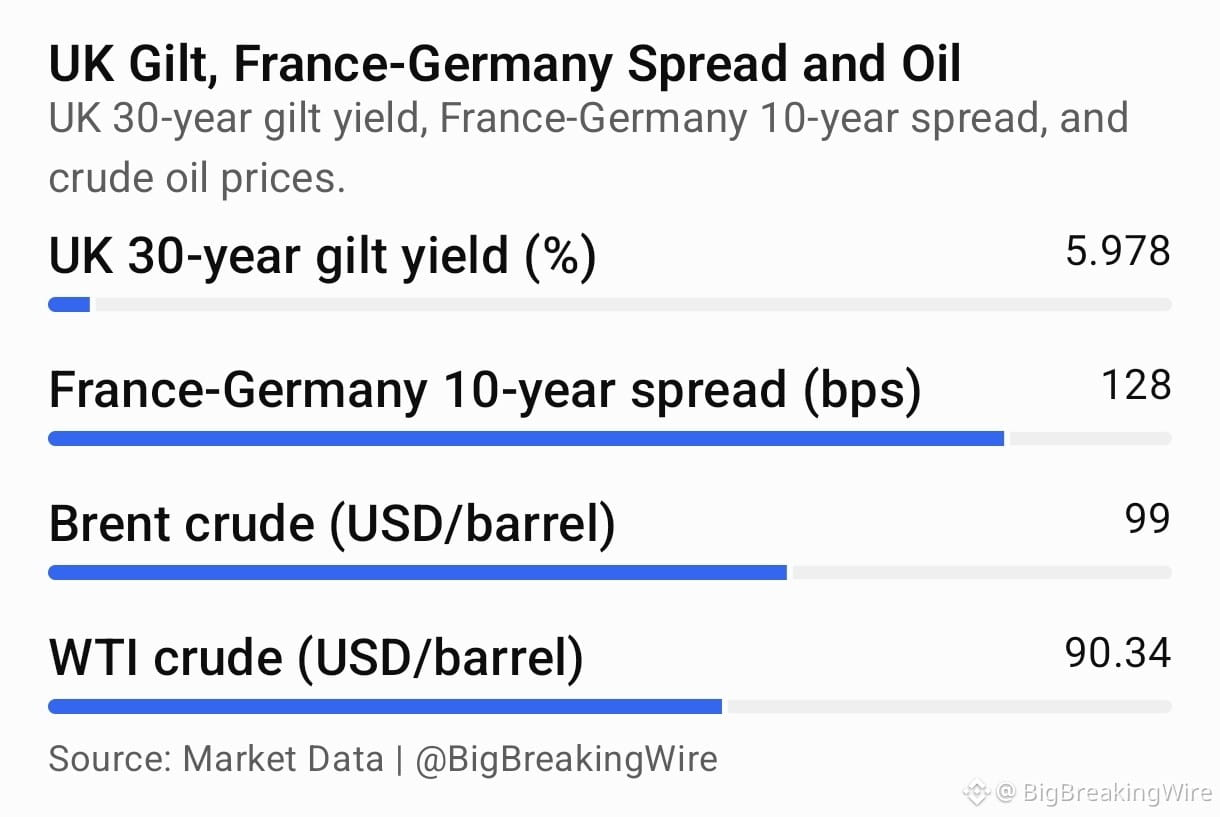
UK 30-year gilt yield hits 5.978%, highest since February 1998.
France-Germany 10-year spread widens to 128 bps, highest since 2012.
Brent hits $99. WTI rises to $90.34.
🚨 Mid-day Update
UK 30-year gilt yield hits 5.978%, highest since February 1998.
France-Germany 10-year spread widens to 128 bps, highest since 2012.
Brent hits $99. WTI rises to $90.34.
UK 30-year gilt yield hits 5.978%, highest since February 1998.
France-Germany 10-year spread widens to 128 bps, highest since 2012.
Brent hits $99. WTI rises to $90.34.
3
🚨 Jefferies says US Treasury yields look attractive for long-term investors.
But uncertainty remains high over the 10-year yield’s next move.
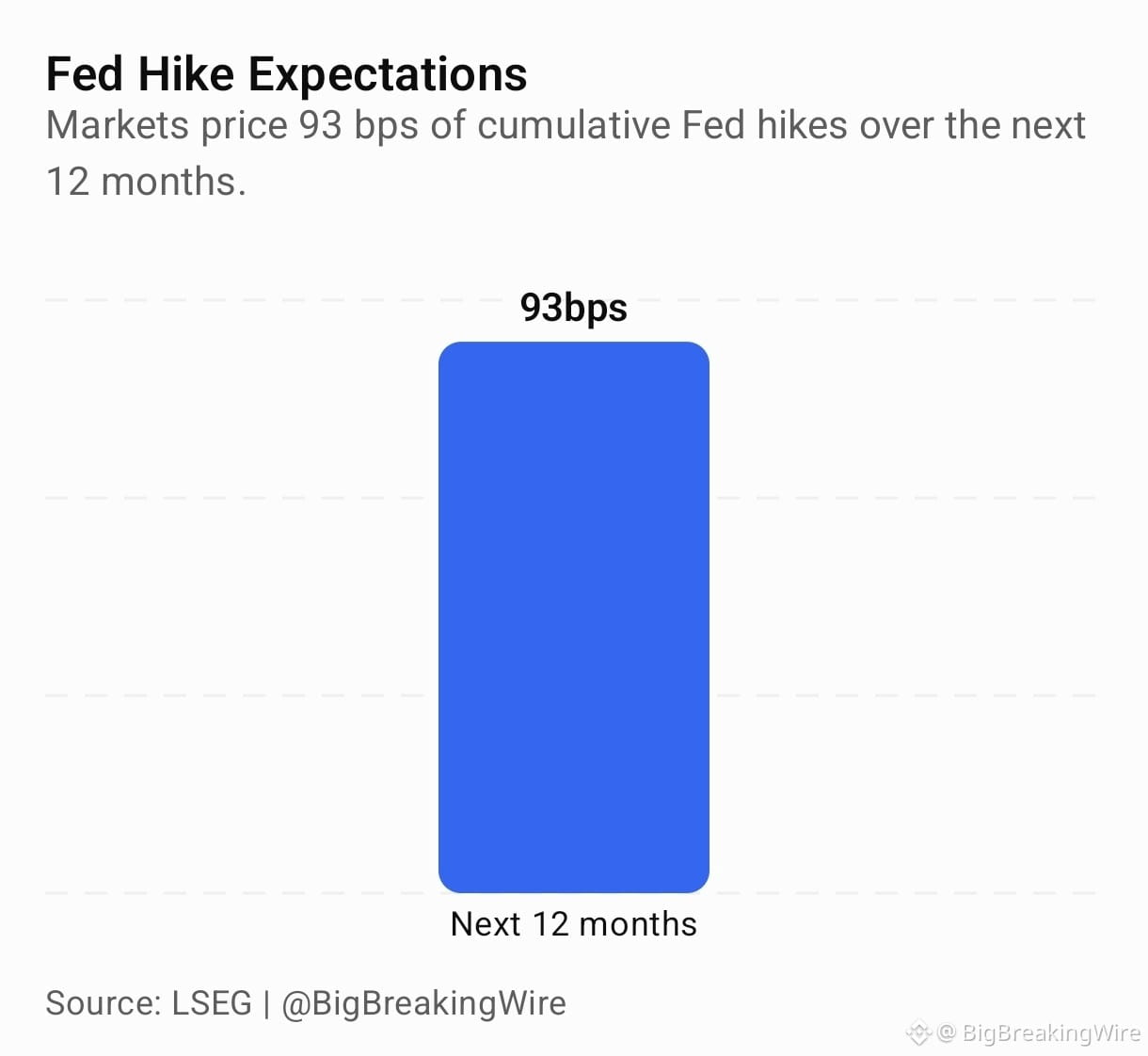
Markets are pricing about 93 bps of Fed hikes over the next 12 months.
🚨 Jefferies says US Treasury yields look attractive for long-term investors.
But uncertainty remains high over the 10-year yield’s next move.
Markets are pricing about 93 bps of Fed hikes over the next 12 months.
But uncertainty remains high over the 10-year yield’s next move.
Markets are pricing about 93 bps of Fed hikes over the next 12 months.
IEFETF+0,22%
76
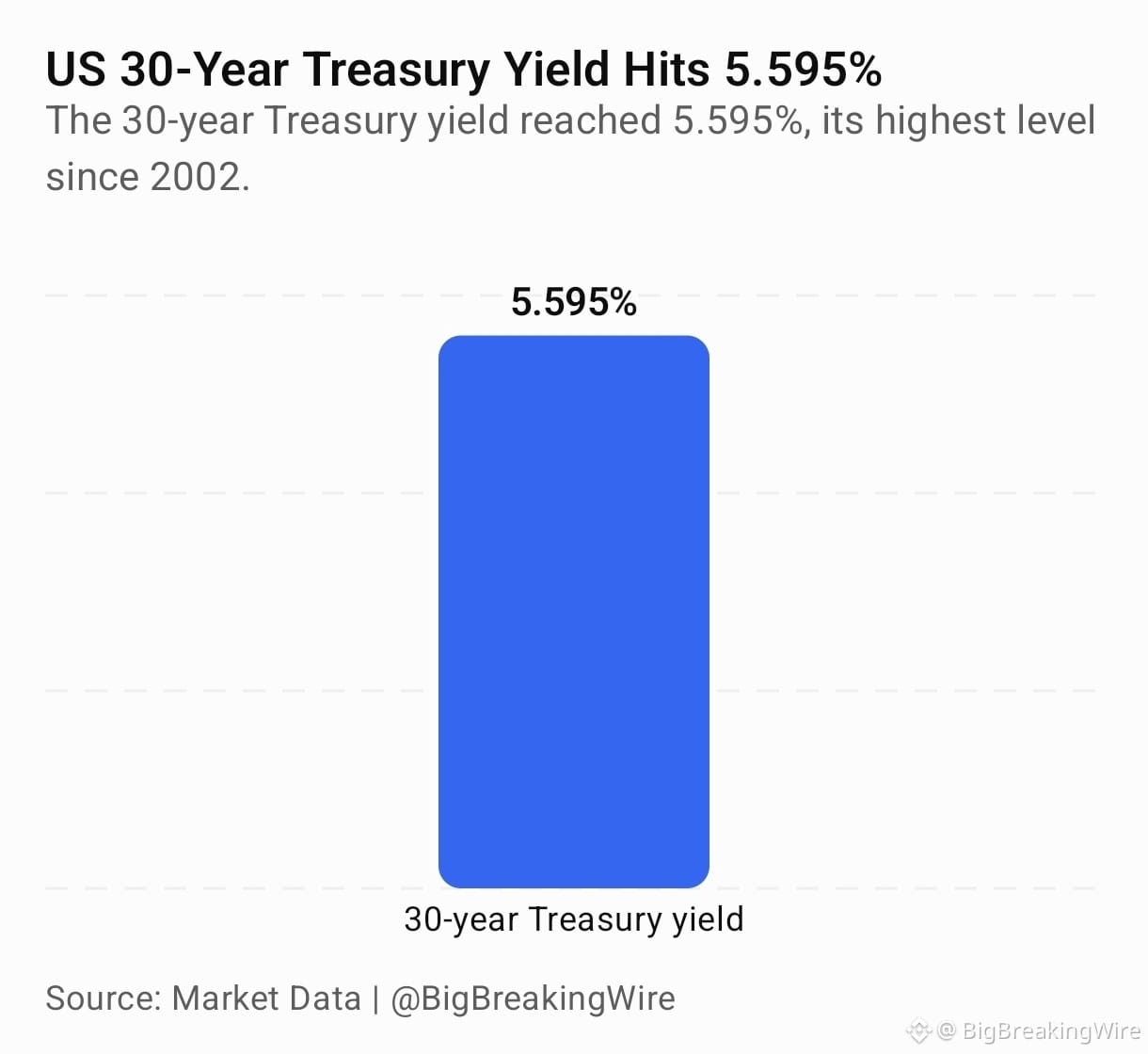
US 30-year Treasury yield just hit 5.595%.
That’s the highest since 2002.
The yield has risen for six straight sessions as oil prices, inflation pressure and government debt concerns weigh on bonds.
US 30-year Treasury yield just hit 5.595%.
That’s the highest since 2002.
The yield has risen for six straight sessions as oil prices, inflation pressure and government debt concerns weigh on bonds.
That’s the highest since 2002.
The yield has risen for six straight sessions as oil prices, inflation pressure and government debt concerns weigh on bonds.
TLTETF+0,39%
79
BREAKING: Goldman Opens $100 Billion Treasury Fund to Crypto Firms
Goldman Sachs is making its roughly $100 billion FTIXX Treasury fund available to institutional crypto firms through the Lynq settlement network, according to CoinDesk.
Unlike BlackRock’s tokenised BUIDL fund, Goldman is keeping FTIXX in its traditional format and using Lynq as a distribution channel.
More than 30 crypto native firms on Lynq, including Wintermute and Galaxy, can now use the fund to earn yield on idle cash between trades.
The move expands institutional access to traditional Treasury fund yields without Goldman launching a blockchain based fund.
$BTC
BREAKING: Goldman Opens $100 Billion Treasury Fund to Crypto Firms
Goldman Sachs is making its roughly $100 billion FTIXX Treasury fund available to institutional crypto firms through the Lynq settlement network, according to CoinDesk.
Unlike BlackRock’s tokenised BUIDL fund, Goldman is keeping FTIXX in its traditional format and using Lynq as a distribution channel.
More than 30 crypto native firms on Lynq, including Wintermute and Galaxy, can now use the fund to earn yield on idle cash between trades.
The move expands institutional access to traditional Treasury fund yields without Goldman launching a blockchain based fund.
$BTC
Goldman Sachs is making its roughly $100 billion FTIXX Treasury fund available to institutional crypto firms through the Lynq settlement network, according to CoinDesk.
Unlike BlackRock’s tokenised BUIDL fund, Goldman is keeping FTIXX in its traditional format and using Lynq as a distribution channel.
More than 30 crypto native firms on Lynq, including Wintermute and Galaxy, can now use the fund to earn yield on idle cash between trades.
The move expands institutional access to traditional Treasury fund yields without Goldman launching a blockchain based fund.
$BTC
71
BREAKING: Goldman Turns Bullish on Yen, Sees ¥150 per Dollar in 12 Months
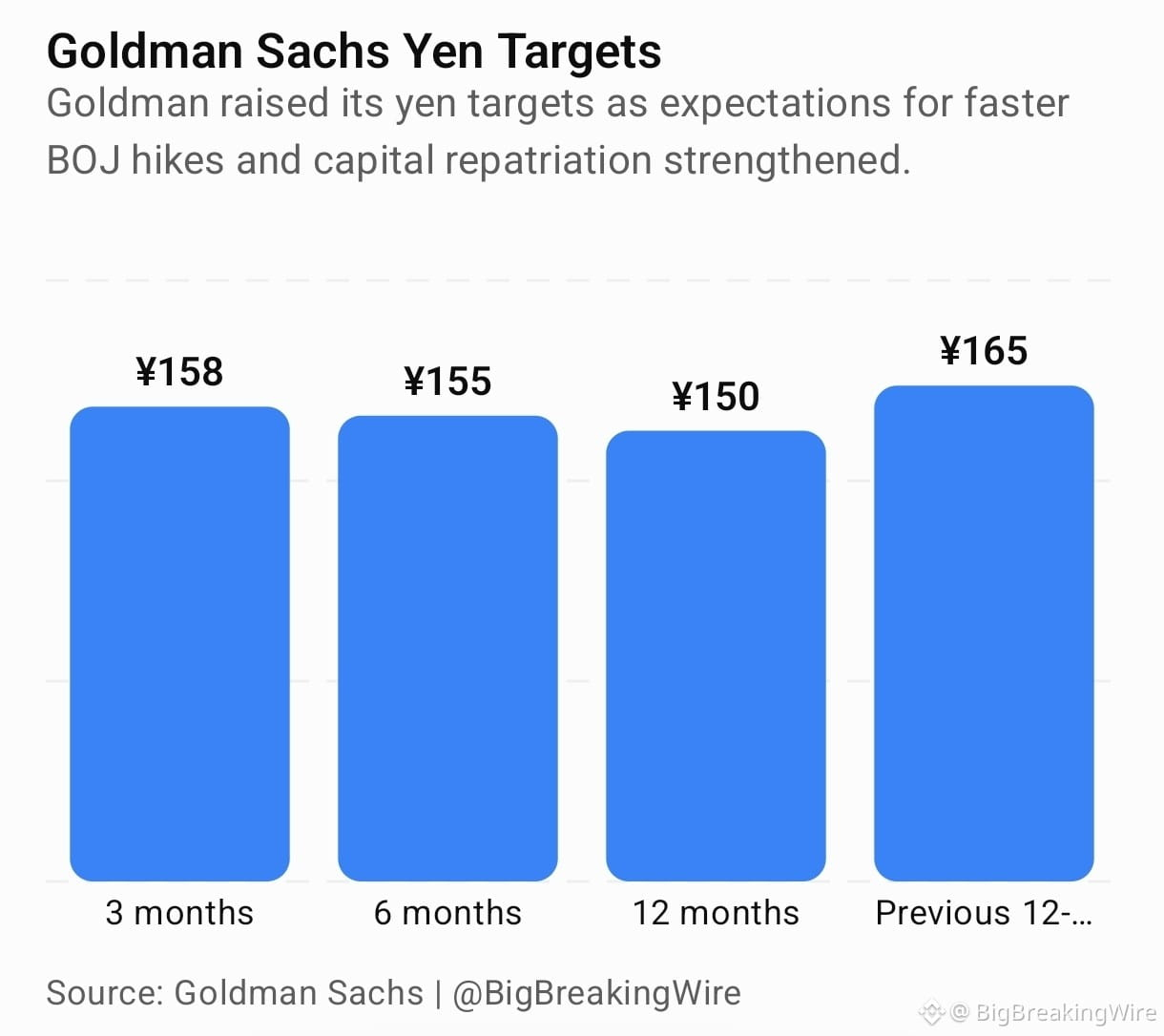
Goldman Sachs raised its 12 month yen target to ¥150 per dollar from a previous bearish target of ¥165.
The bank also raised its 3 month target to ¥158 and 6 month target to ¥155.
Goldman cited faster than expected BOJ rate hikes and a higher likelihood of Japanese capital being repatriated into domestic assets.
Strategist Karen Leischgott Fishman said these developments increase the attractiveness of long yen positions, particularly if markets face rising recession concerns.
BREAKING: Goldman Turns Bullish on Yen, Sees ¥150 per Dollar in 12 Months
Goldman Sachs raised its 12 month yen target to ¥150 per dollar from a previous bearish target of ¥165.
The bank also raised its 3 month target to ¥158 and 6 month target to ¥155.
Goldman cited faster than expected BOJ rate hikes and a higher likelihood of Japanese capital being repatriated into domestic assets.
Strategist Karen Leischgott Fishman said these developments increase the attractiveness of long yen positions, particularly if markets face rising recession concerns.
Goldman Sachs raised its 12 month yen target to ¥150 per dollar from a previous bearish target of ¥165.
The bank also raised its 3 month target to ¥158 and 6 month target to ¥155.
Goldman cited faster than expected BOJ rate hikes and a higher likelihood of Japanese capital being repatriated into domestic assets.
Strategist Karen Leischgott Fishman said these developments increase the attractiveness of long yen positions, particularly if markets face rising recession concerns.
47
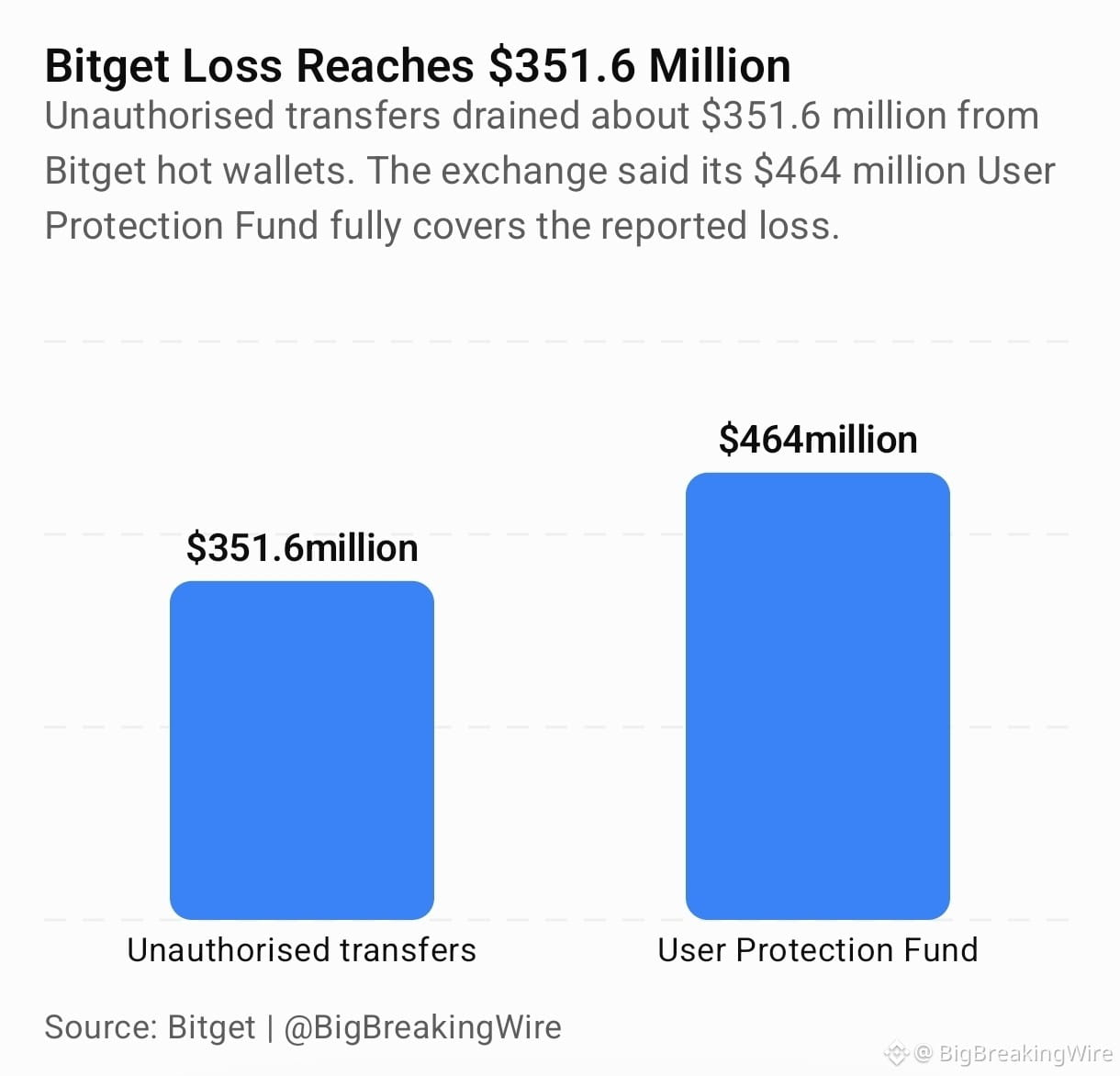
BREAKING: Bitget Loses $351.6 Million in Unauthorised Transfers
Bitget CEO Gracy Chen said unauthorised transfers drained roughly $351.6 million from the exchange’s hot wallets on Thursday.
The exchange suspended withdrawals while conducting a security review, saying its $464 million User Protection Fund fully covers the loss.
Blockchain researchers flagged assets moving to a single address, with early suspicion reportedly falling on North Korea’s Lazarus Group.
Bitget said withdrawals were frozen after the transfers were detected and the protection fund covers the full loss.
BREAKING: Bitget Loses $351.6 Million in Unauthorised Transfers
Bitget CEO Gracy Chen said unauthorised transfers drained roughly $351.6 million from the exchange’s hot wallets on Thursday.
The exchange suspended withdrawals while conducting a security review, saying its $464 million User Protection Fund fully covers the loss.
Blockchain researchers flagged assets moving to a single address, with early suspicion reportedly falling on North Korea’s Lazarus Group.
Bitget said withdrawals were frozen after the transfers were detected and the protection fund covers the full loss.
Bitget CEO Gracy Chen said unauthorised transfers drained roughly $351.6 million from the exchange’s hot wallets on Thursday.
The exchange suspended withdrawals while conducting a security review, saying its $464 million User Protection Fund fully covers the loss.
Blockchain researchers flagged assets moving to a single address, with early suspicion reportedly falling on North Korea’s Lazarus Group.
Bitget said withdrawals were frozen after the transfers were detected and the protection fund covers the full loss.
53
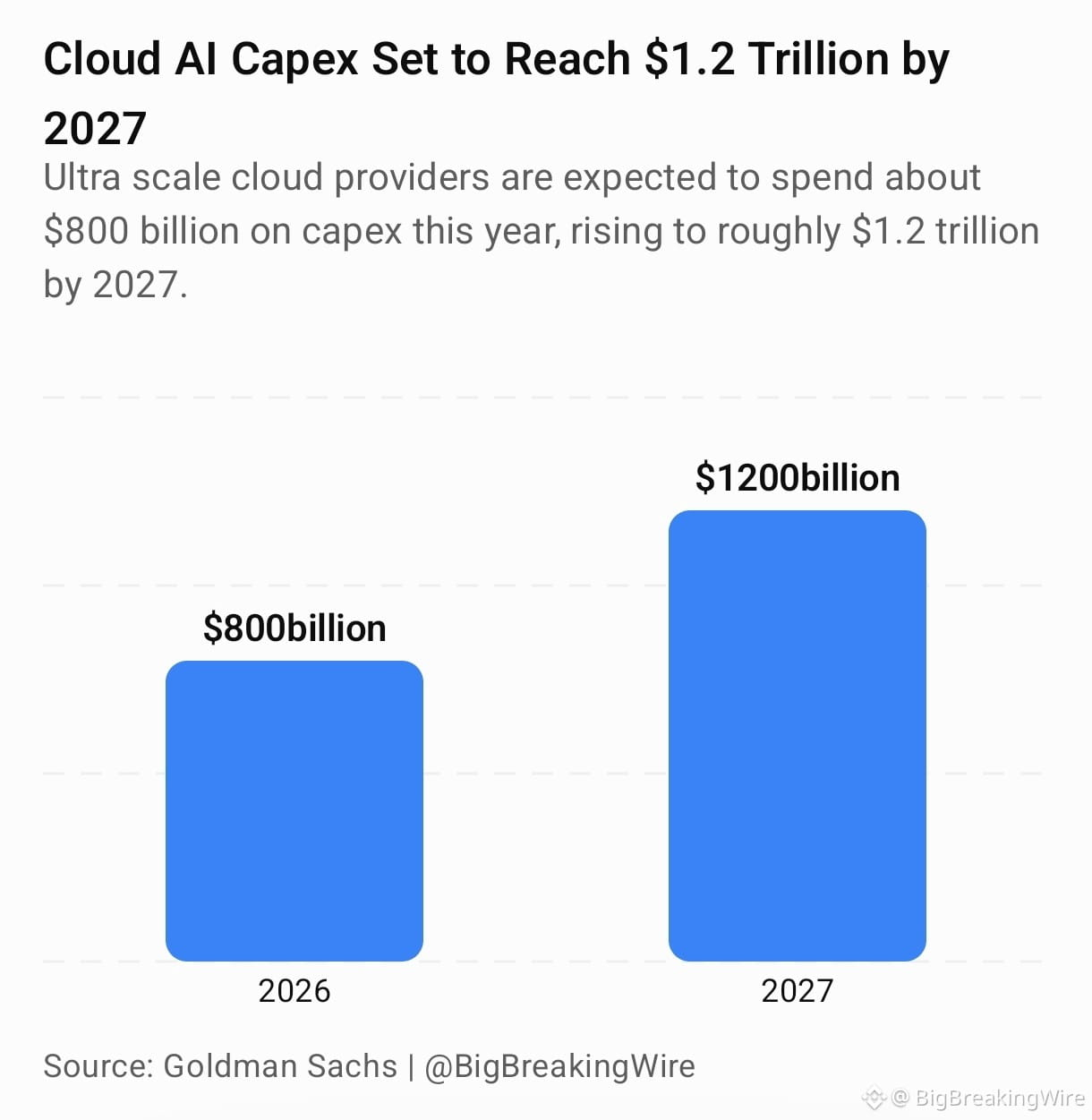
BREAKING: Goldman Says AI Stocks Attractive as Cloud Capex Set to Hit $1.2 Trillion
Goldman Sachs’ Timothy Moe said AI related stocks remain attractive despite higher government bond yields, with the firm in the “longer for longer” camp on interest rates.
Ultra scale cloud providers are expected to spend about $800 billion on capex this year, rising to roughly $1.2 trillion by 2027, supporting Asian AI hardware demand.
Asian equities trade at around 10x PE, near the low end of their historical range, while earnings growth could provide support in a high rate environment.
Moe expects volatility to persist through the US midterms, with energy prices and geopolitical risks weighing on markets, but sees scope for a year end rally if earnings and valuations recover.
BREAKING: Goldman Says AI Stocks Attractive as Cloud Capex Set to Hit $1.2 Trillion
Goldman Sachs’ Timothy Moe said AI related stocks remain attractive despite higher government bond yields, with the firm in the “longer for longer” camp on interest rates.
Ultra scale cloud providers are expected to spend about $800 billion on capex this year, rising to roughly $1.2 trillion by 2027, supporting Asian AI hardware demand.
Asian equities trade at around 10x PE, near the low end of their historical range, while earnings growth could provide support in a high rate environment.
Moe expects volatility to persist through the US midterms, with energy prices and geopolitical risks weighing on markets, but sees scope for a year end rally if earnings and valuations recover.
Goldman Sachs’ Timothy Moe said AI related stocks remain attractive despite higher government bond yields, with the firm in the “longer for longer” camp on interest rates.
Ultra scale cloud providers are expected to spend about $800 billion on capex this year, rising to roughly $1.2 trillion by 2027, supporting Asian AI hardware demand.
Asian equities trade at around 10x PE, near the low end of their historical range, while earnings growth could provide support in a high rate environment.
Moe expects volatility to persist through the US midterms, with energy prices and geopolitical risks weighing on markets, but sees scope for a year end rally if earnings and valuations recover.
80
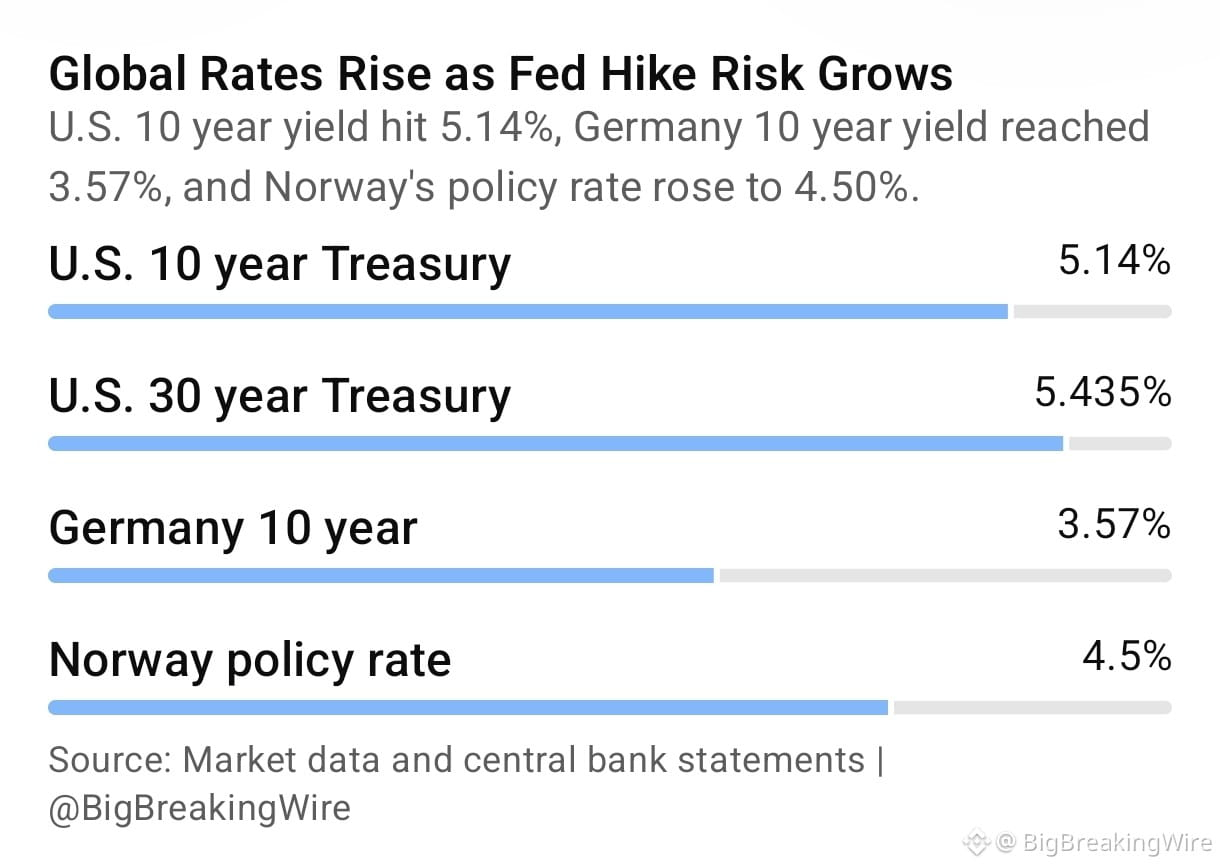
BREAKING: Fed’s Williams Signals Another Rate Hike, US 10Y Yield Hits 5.14%
Fed’s Williams said another rate hike before year end would be reasonable, citing significant inflation challenges and strong AI demand.
The U.S. 10 year Treasury yield rose 2 bps to 5.14%, highest since 2007, while the 30 year yield climbed 3 bps to 5.435%.
Spot gold fell more than $10 to around $4,270 an ounce as yields rose.
Germany’s 10 year yield reached 3.57%, highest since 2009, while Norway’s central bank raised rates 25 bps to 4.50% and signaled rates may stay elevated.
BREAKING: Fed’s Williams Signals Another Rate Hike, US 10Y Yield Hits 5.14%
Fed’s Williams said another rate hike before year end would be reasonable, citing significant inflation challenges and strong AI demand.
The U.S. 10 year Treasury yield rose 2 bps to 5.14%, highest since 2007, while the 30 year yield climbed 3 bps to 5.435%.
Spot gold fell more than $10 to around $4,270 an ounce as yields rose.
Germany’s 10 year yield reached 3.57%, highest since 2009, while Norway’s central bank raised rates 25 bps to 4.50% and signaled rates may stay elevated.
Fed’s Williams said another rate hike before year end would be reasonable, citing significant inflation challenges and strong AI demand.
The U.S. 10 year Treasury yield rose 2 bps to 5.14%, highest since 2007, while the 30 year yield climbed 3 bps to 5.435%.
Spot gold fell more than $10 to around $4,270 an ounce as yields rose.
Germany’s 10 year yield reached 3.57%, highest since 2009, while Norway’s central bank raised rates 25 bps to 4.50% and signaled rates may stay elevated.
11
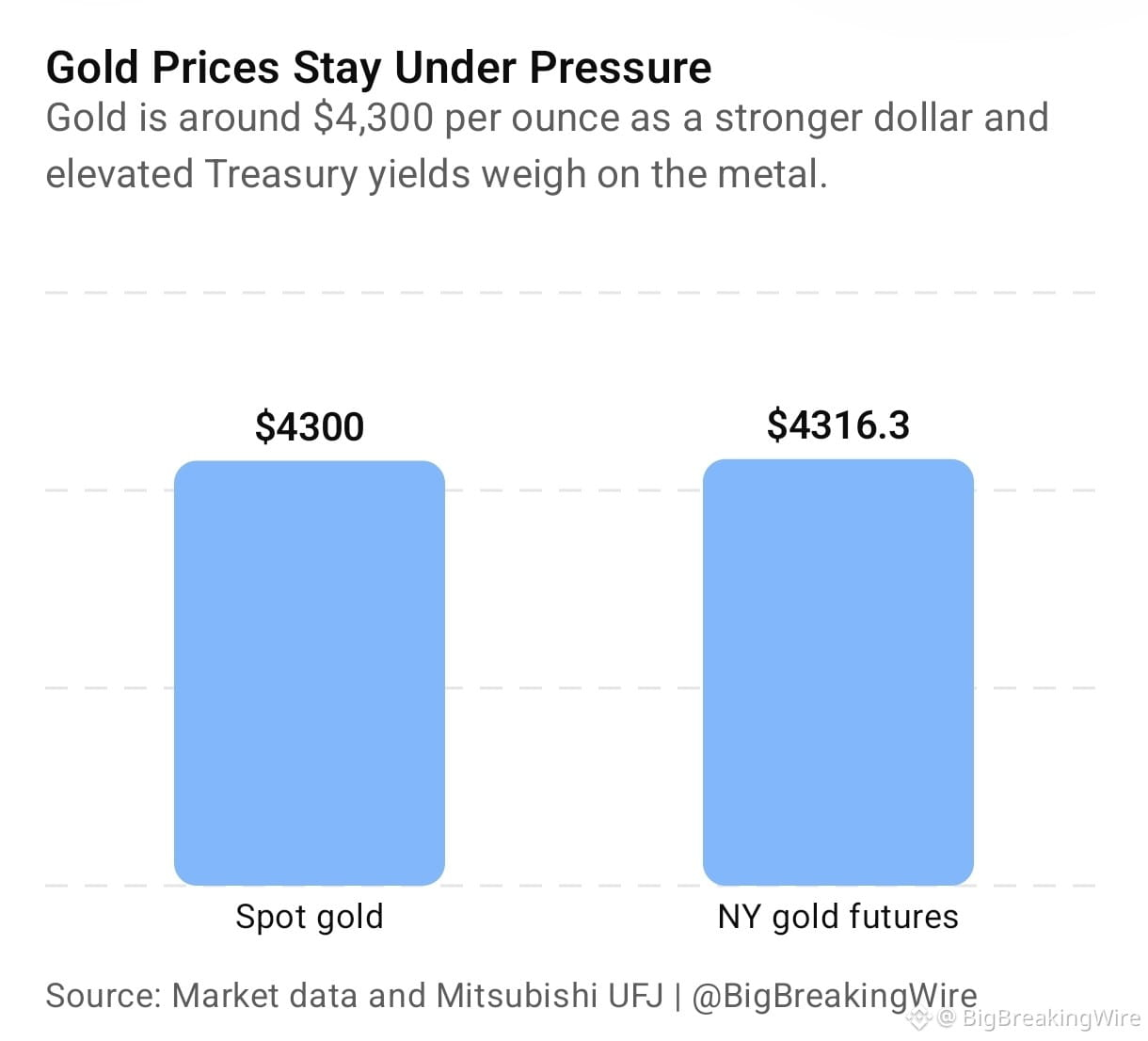
🚨 BREAKING: Gold stays under pressure as dollar firms and Treasury yields hit multi year highs
Gold remained muted around $4,300 per ounce, with NY gold futures flat at $4,316.30 as a stronger dollar and elevated US Treasury yields weighed on the metal.
Mitsubishi UFJ analysts said Fed officials remain hawkish, while Fed board member Barr indicated further tightening may be needed.
Markets are pricing in at least three more Fed rate hikes by April, keeping pressure on gold as higher yields increase the opportunity cost of holding the metal.
Persistent energy driven inflation and multi year high Treasury yields remain major headwinds for gold.
🚨 BREAKING: Gold stays under pressure as dollar firms and Treasury yields hit multi year highs
Gold remained muted around $4,300 per ounce, with NY gold futures flat at $4,316.30 as a stronger dollar and elevated US Treasury yields weighed on the metal.
Mitsubishi UFJ analysts said Fed officials remain hawkish, while Fed board member Barr indicated further tightening may be needed.
Markets are pricing in at least three more Fed rate hikes by April, keeping pressure on gold as higher yields increase the opportunity cost of holding the metal.
Persistent energy driven inflation and multi year high Treasury yields remain major headwinds for gold.
Gold remained muted around $4,300 per ounce, with NY gold futures flat at $4,316.30 as a stronger dollar and elevated US Treasury yields weighed on the metal.
Mitsubishi UFJ analysts said Fed officials remain hawkish, while Fed board member Barr indicated further tightening may be needed.
Markets are pricing in at least three more Fed rate hikes by April, keeping pressure on gold as higher yields increase the opportunity cost of holding the metal.
Persistent energy driven inflation and multi year high Treasury yields remain major headwinds for gold.
208
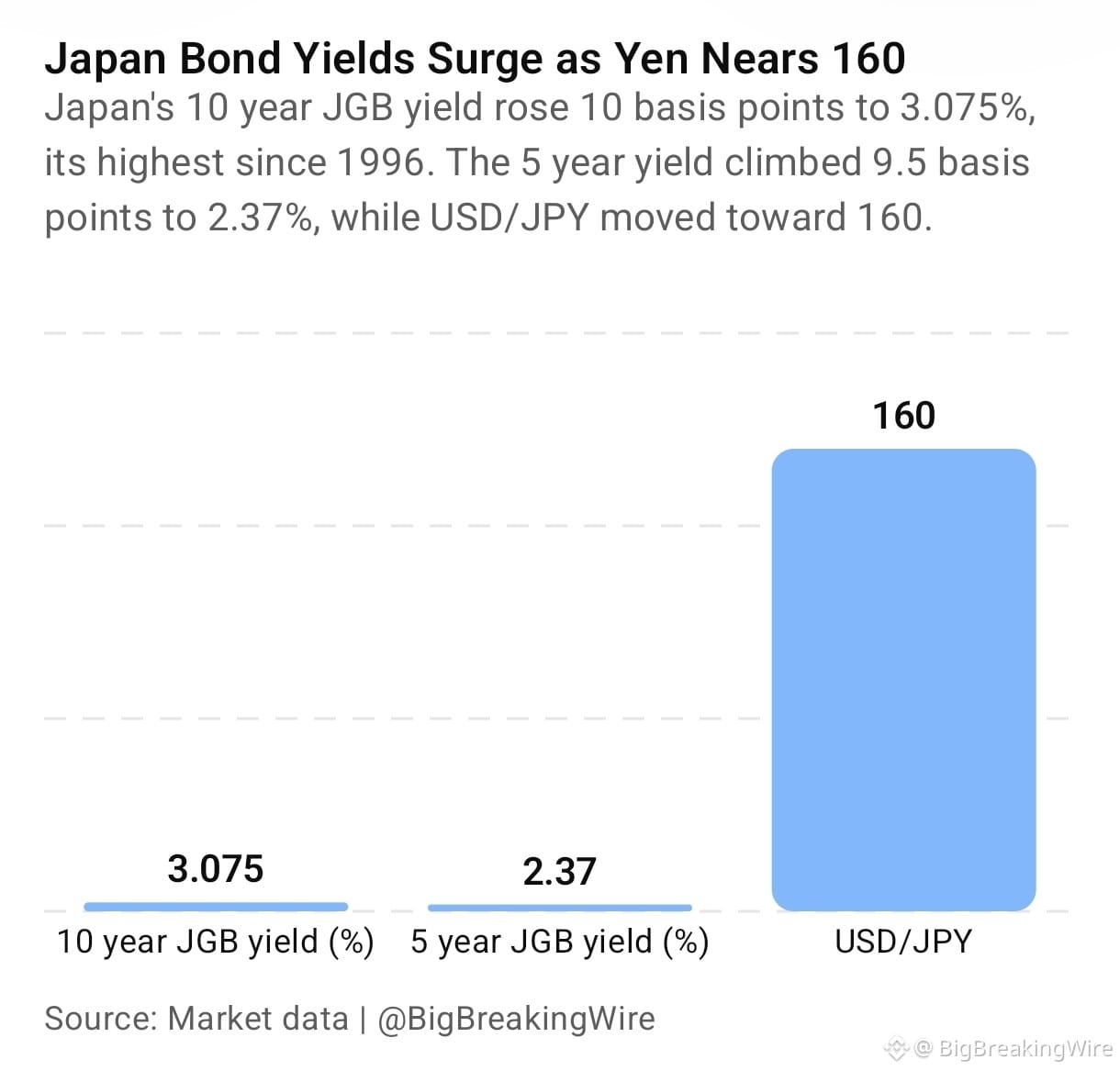
BREAKING: Japan 10 Year JGB Yield Hits 3.075%, Yen Nears 160 per Dollar
Japan’s 10 year JGB yield jumped 10 bps to 3.075%, the highest since 1996, while the 5 year yield rose 9.5 bps to 2.37%.
The move followed a U.S. Treasury selloff, rising oil prices and expectations of further Fed tightening, alongside expectations for more BOJ rate hikes.
The yen weakened for a second straight week, pushing USD/JPY toward the closely watched 160 level.
Markets are watching 160 as a potential trigger for renewed Japanese intervention concerns if the yen weakens rapidly.
BREAKING: Japan 10 Year JGB Yield Hits 3.075%, Yen Nears 160 per Dollar
Japan’s 10 year JGB yield jumped 10 bps to 3.075%, the highest since 1996, while the 5 year yield rose 9.5 bps to 2.37%.
The move followed a U.S. Treasury selloff, rising oil prices and expectations of further Fed tightening, alongside expectations for more BOJ rate hikes.
The yen weakened for a second straight week, pushing USD/JPY toward the closely watched 160 level.
Markets are watching 160 as a potential trigger for renewed Japanese intervention concerns if the yen weakens rapidly.
Japan’s 10 year JGB yield jumped 10 bps to 3.075%, the highest since 1996, while the 5 year yield rose 9.5 bps to 2.37%.
The move followed a U.S. Treasury selloff, rising oil prices and expectations of further Fed tightening, alongside expectations for more BOJ rate hikes.
The yen weakened for a second straight week, pushing USD/JPY toward the closely watched 160 level.
Markets are watching 160 as a potential trigger for renewed Japanese intervention concerns if the yen weakens rapidly.
439
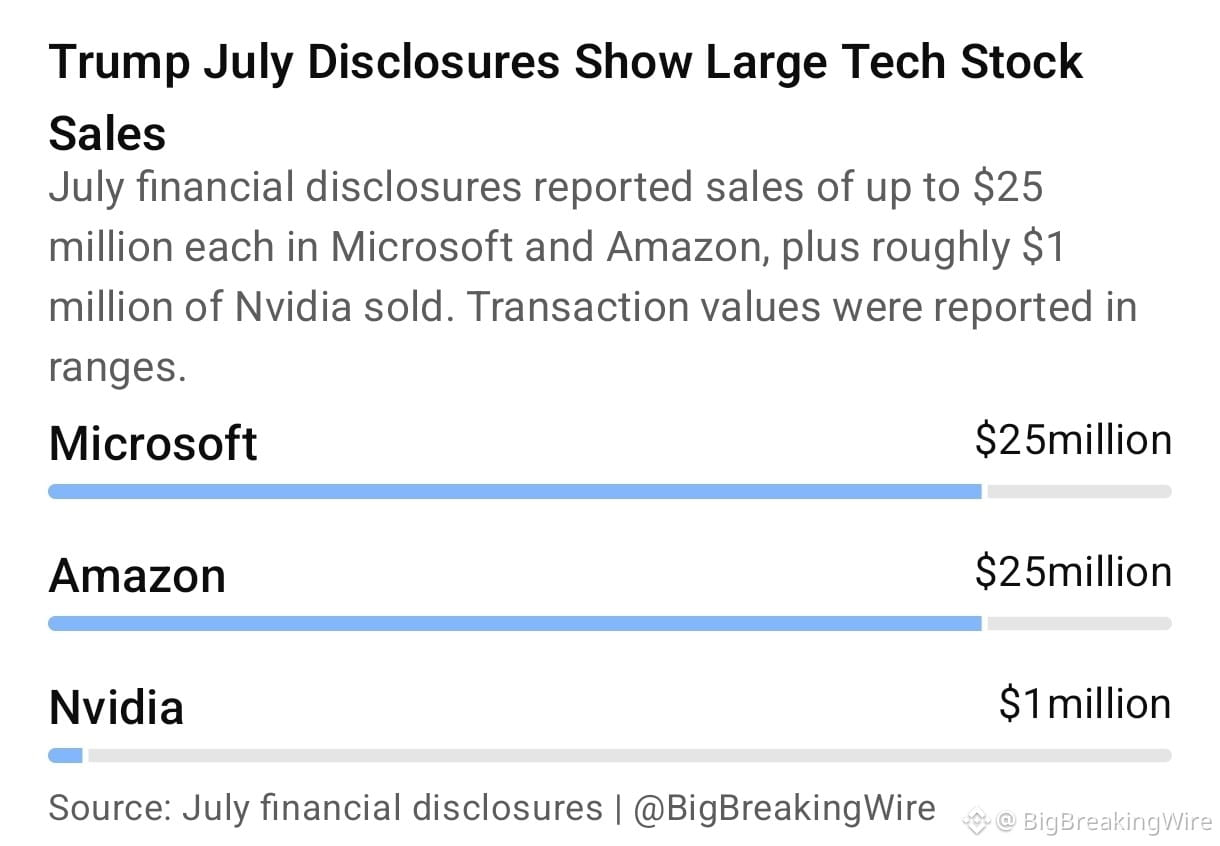
BREAKING: Trump Sold Up to $50M of Microsoft and Amazon Shares in July
U.S. President Donald Trump’s July financial disclosures show sales of up to $25M each in Microsoft and Amazon shares.
The filings also show sales involving Meta, Alphabet and Nvidia, including about $1M of Nvidia sold in two trades and roughly the same amount bought.
More than 700 sell transactions and over 440 purchases were disclosed for July, with amounts reported in ranges rather than exact figures.
The filings cover trades made on Trump’s behalf through independently managed accounts.
BREAKING: Trump Sold Up to $50M of Microsoft and Amazon Shares in July
U.S. President Donald Trump’s July financial disclosures show sales of up to $25M each in Microsoft and Amazon shares.
The filings also show sales involving Meta, Alphabet and Nvidia, including about $1M of Nvidia sold in two trades and roughly the same amount bought.
More than 700 sell transactions and over 440 purchases were disclosed for July, with amounts reported in ranges rather than exact figures.
The filings cover trades made on Trump’s behalf through independently managed accounts.
U.S. President Donald Trump’s July financial disclosures show sales of up to $25M each in Microsoft and Amazon shares.
The filings also show sales involving Meta, Alphabet and Nvidia, including about $1M of Nvidia sold in two trades and roughly the same amount bought.
More than 700 sell transactions and over 440 purchases were disclosed for July, with amounts reported in ranges rather than exact figures.
The filings cover trades made on Trump’s behalf through independently managed accounts.
114
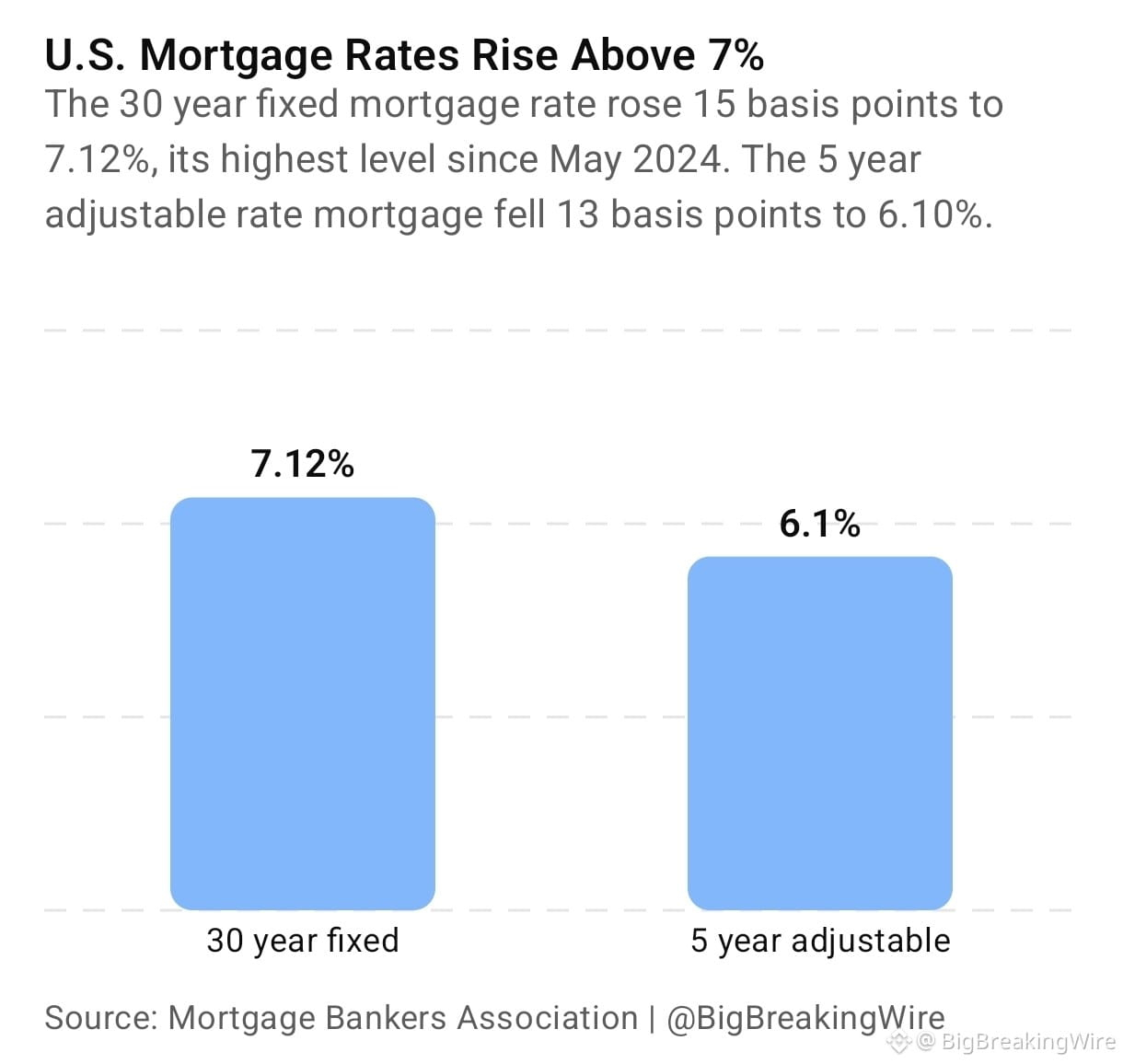
BREAKING: U.S. Mortgage Rates Hit 7.12%, Highest Since May 2024
The 30 year fixed mortgage rate rose 15 bps to 7.12% for the week ended September 18, adding pressure to the housing market.
The 5 year adjustable rate mortgage fell 13 bps to 6.10%.
MBA mortgage demand weakened, with the purchase index down 0.8% and refinancing demand falling 2.6% to its lowest since February 2025.
Rates above 7% could further weigh on housing demand as high prices and weak sales persist.
BREAKING: U.S. Mortgage Rates Hit 7.12%, Highest Since May 2024
The 30 year fixed mortgage rate rose 15 bps to 7.12% for the week ended September 18, adding pressure to the housing market.
The 5 year adjustable rate mortgage fell 13 bps to 6.10%.
MBA mortgage demand weakened, with the purchase index down 0.8% and refinancing demand falling 2.6% to its lowest since February 2025.
Rates above 7% could further weigh on housing demand as high prices and weak sales persist.
The 30 year fixed mortgage rate rose 15 bps to 7.12% for the week ended September 18, adding pressure to the housing market.
The 5 year adjustable rate mortgage fell 13 bps to 6.10%.
MBA mortgage demand weakened, with the purchase index down 0.8% and refinancing demand falling 2.6% to its lowest since February 2025.
Rates above 7% could further weigh on housing demand as high prices and weak sales persist.
64
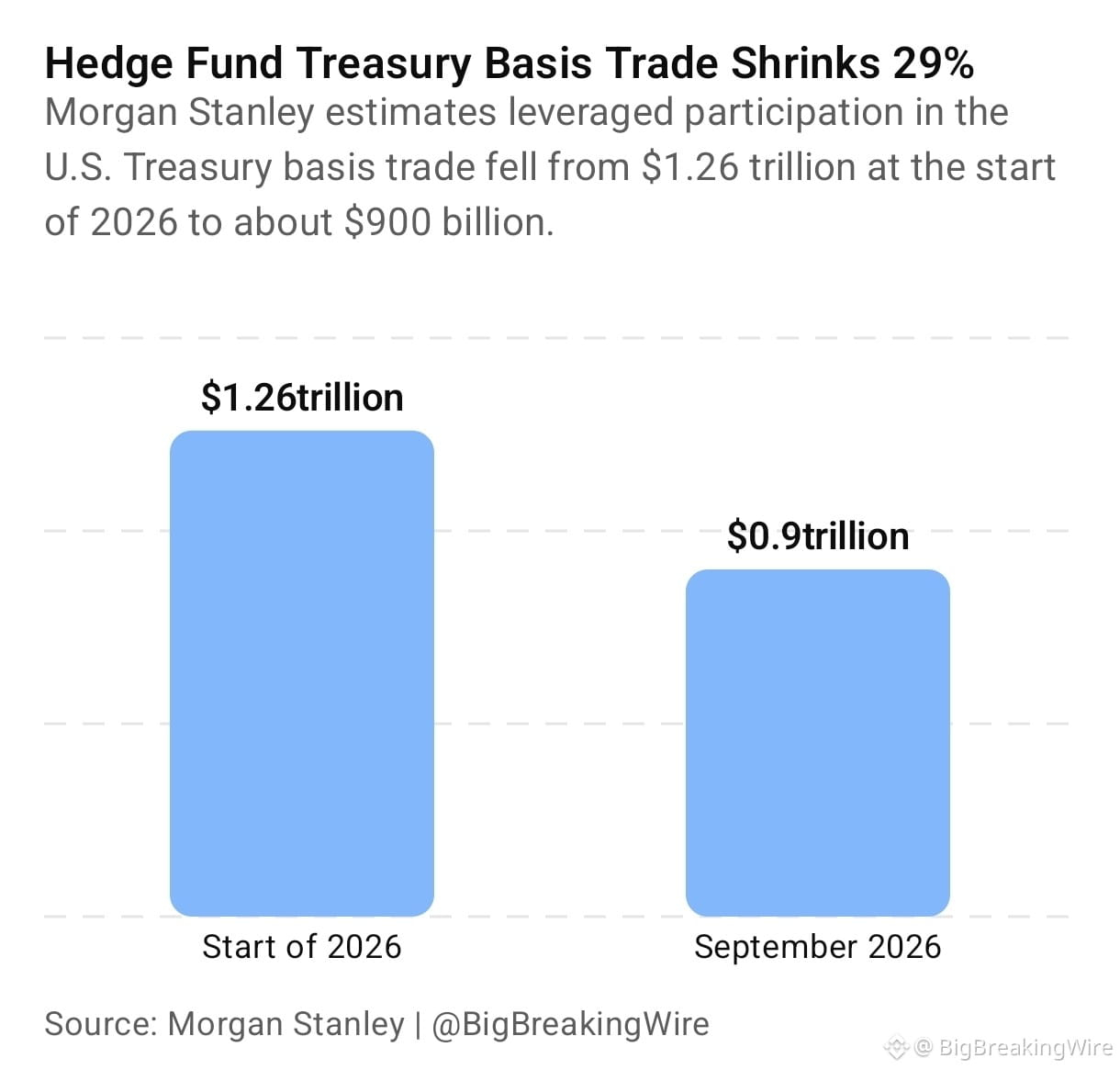
BREAKING: Hedge Funds Cut Treasury Basis Trades From $1.26T to $900B
Morgan Stanley estimates leveraged participation in the U.S. Treasury basis trade has fallen from $1.26 trillion at the start of 2026 to about $900 billion.
The strategy has shrunk to its smallest scale in more than two years as futures cash spreads and market dislocations narrow.
Citigroup and Morgan Stanley say the trade is not disappearing, but weaker relative value opportunities and lower volatility have reduced hedge fund activity.
The slowdown could also mean stronger than expected underlying demand for U.S. Treasuries as hedge funds provide less liquidity.
BREAKING: Hedge Funds Cut Treasury Basis Trades From $1.26T to $900B
Morgan Stanley estimates leveraged participation in the U.S. Treasury basis trade has fallen from $1.26 trillion at the start of 2026 to about $900 billion.
The strategy has shrunk to its smallest scale in more than two years as futures cash spreads and market dislocations narrow.
Citigroup and Morgan Stanley say the trade is not disappearing, but weaker relative value opportunities and lower volatility have reduced hedge fund activity.
The slowdown could also mean stronger than expected underlying demand for U.S. Treasuries as hedge funds provide less liquidity.
Morgan Stanley estimates leveraged participation in the U.S. Treasury basis trade has fallen from $1.26 trillion at the start of 2026 to about $900 billion.
The strategy has shrunk to its smallest scale in more than two years as futures cash spreads and market dislocations narrow.
Citigroup and Morgan Stanley say the trade is not disappearing, but weaker relative value opportunities and lower volatility have reduced hedge fund activity.
The slowdown could also mean stronger than expected underlying demand for U.S. Treasuries as hedge funds provide less liquidity.
AGGETF+0,29%
57
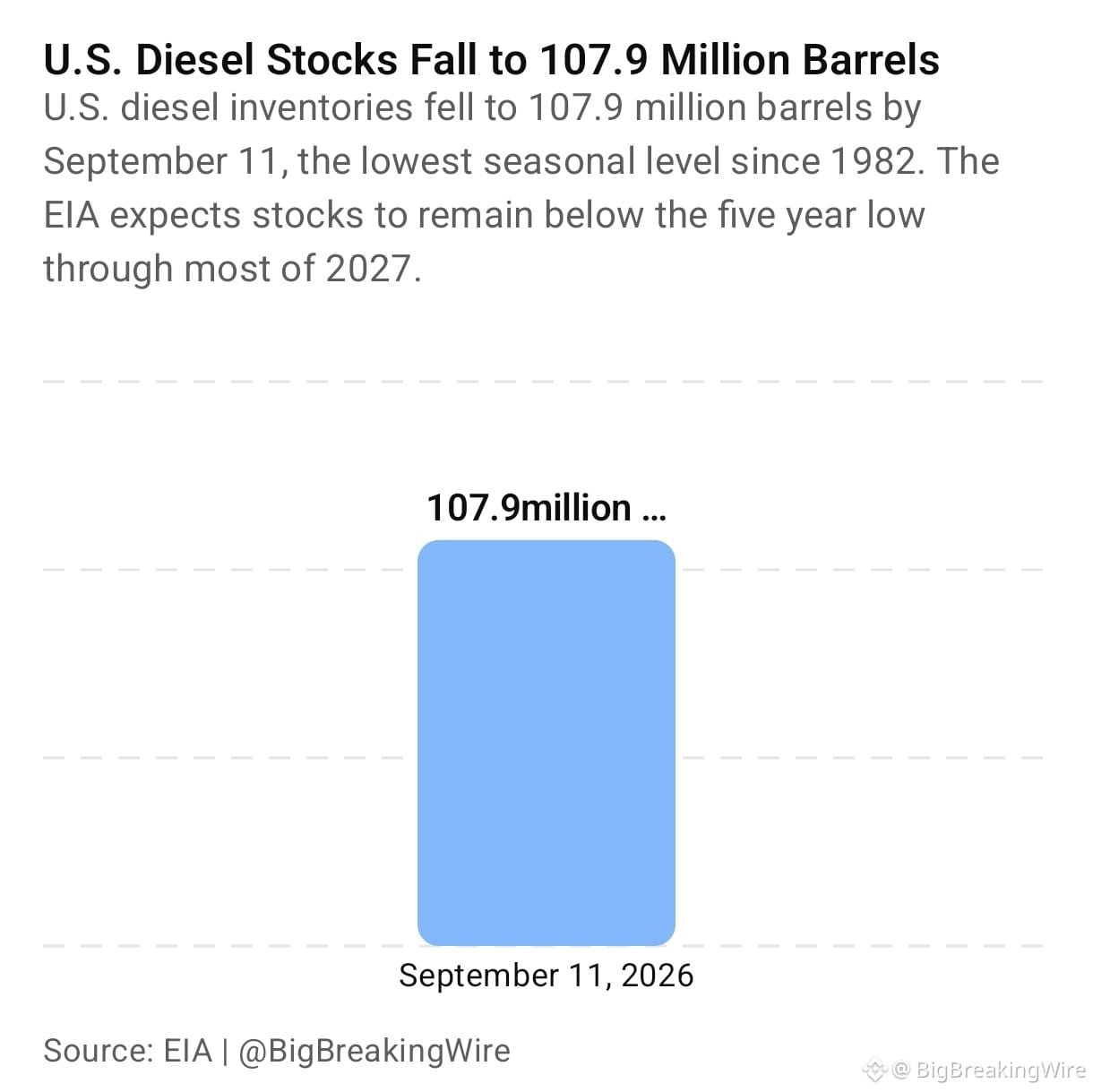
BREAKING: U.S. Diesel Stocks Hit 107.9M Barrels, Lowest Seasonal Level Since 1982
U.S. diesel inventories fell to 107.9M barrels by September 11, with EIA expecting stocks to remain below the five year low through most of 2027.
U.S. retail diesel has crossed $6 a gallon as Iran and Ukraine wars, plus Russia’s diesel export restrictions, tighten global supplies.
Saudi Aramco reportedly cut October crude shipments to Europe, forcing refiners to compete for costlier replacement barrels.
China cut crude imports from 11–12M bpd to around 5M bpd, helping contain the price surge during the Hormuz crisis.
IEA members have released 80% of 400M emergency barrels, while the Hormuz disruption affected up to 14% of global oil and gas supply.
BREAKING: U.S. Diesel Stocks Hit 107.9M Barrels, Lowest Seasonal Level Since 1982
U.S. diesel inventories fell to 107.9M barrels by September 11, with EIA expecting stocks to remain below the five year low through most of 2027.
U.S. retail diesel has crossed $6 a gallon as Iran and Ukraine wars, plus Russia’s diesel export restrictions, tighten global supplies.
Saudi Aramco reportedly cut October crude shipments to Europe, forcing refiners to compete for costlier replacement barrels.
China cut crude imports from 11–12M bpd to around 5M bpd, helping contain the price surge during the Hormuz crisis.
IEA members have released 80% of 400M emergency barrels, while the Hormuz disruption affected up to 14% of global oil and gas supply.
U.S. diesel inventories fell to 107.9M barrels by September 11, with EIA expecting stocks to remain below the five year low through most of 2027.
U.S. retail diesel has crossed $6 a gallon as Iran and Ukraine wars, plus Russia’s diesel export restrictions, tighten global supplies.
Saudi Aramco reportedly cut October crude shipments to Europe, forcing refiners to compete for costlier replacement barrels.
China cut crude imports from 11–12M bpd to around 5M bpd, helping contain the price surge during the Hormuz crisis.
IEA members have released 80% of 400M emergency barrels, while the Hormuz disruption affected up to 14% of global oil and gas supply.
238
🚨 BREAKING: Fed Raises Rates by 25 Bps, Signals Another Hike in 2026
The Federal Reserve raised its federal funds target range by 25 bps to 3.75% to 4.00%, its first rate hike since July 2023 and ending the longest pause since 2008.
The decision was unanimous and in line with expectations. The Fed said higher rates will support a more timely return of inflation to its 2% target.
The FOMC dot plot shows one additional rate hike in 2026, while the median end 2026 rate forecast rose to 4.1% from 3.8% in June.
The move could support the U.S. dollar and Treasury yields while adding pressure to equities, with markets now focused on the Fed’s path beyond this meeting.
#FedRateWatch
🚨 BREAKING: Fed Raises Rates by 25 Bps, Signals Another Hike in 2026
The Federal Reserve raised its federal funds target range by 25 bps to 3.75% to 4.00%, its first rate hike since July 2023 and ending the longest pause since 2008.
The decision was unanimous and in line with expectations. The Fed said higher rates will support a more timely return of inflation to its 2% target.
The FOMC dot plot shows one additional rate hike in 2026, while the median end 2026 rate forecast rose to 4.1% from 3.8% in June.
The move could support the U.S. dollar and Treasury yields while adding pressure to equities, with markets now focused on the Fed’s path beyond this meeting.
#FedRateWatch
The Federal Reserve raised its federal funds target range by 25 bps to 3.75% to 4.00%, its first rate hike since July 2023 and ending the longest pause since 2008.
The decision was unanimous and in line with expectations. The Fed said higher rates will support a more timely return of inflation to its 2% target.
The FOMC dot plot shows one additional rate hike in 2026, while the median end 2026 rate forecast rose to 4.1% from 3.8% in June.
The move could support the U.S. dollar and Treasury yields while adding pressure to equities, with markets now focused on the Fed’s path beyond this meeting.
#FedRateWatch
79
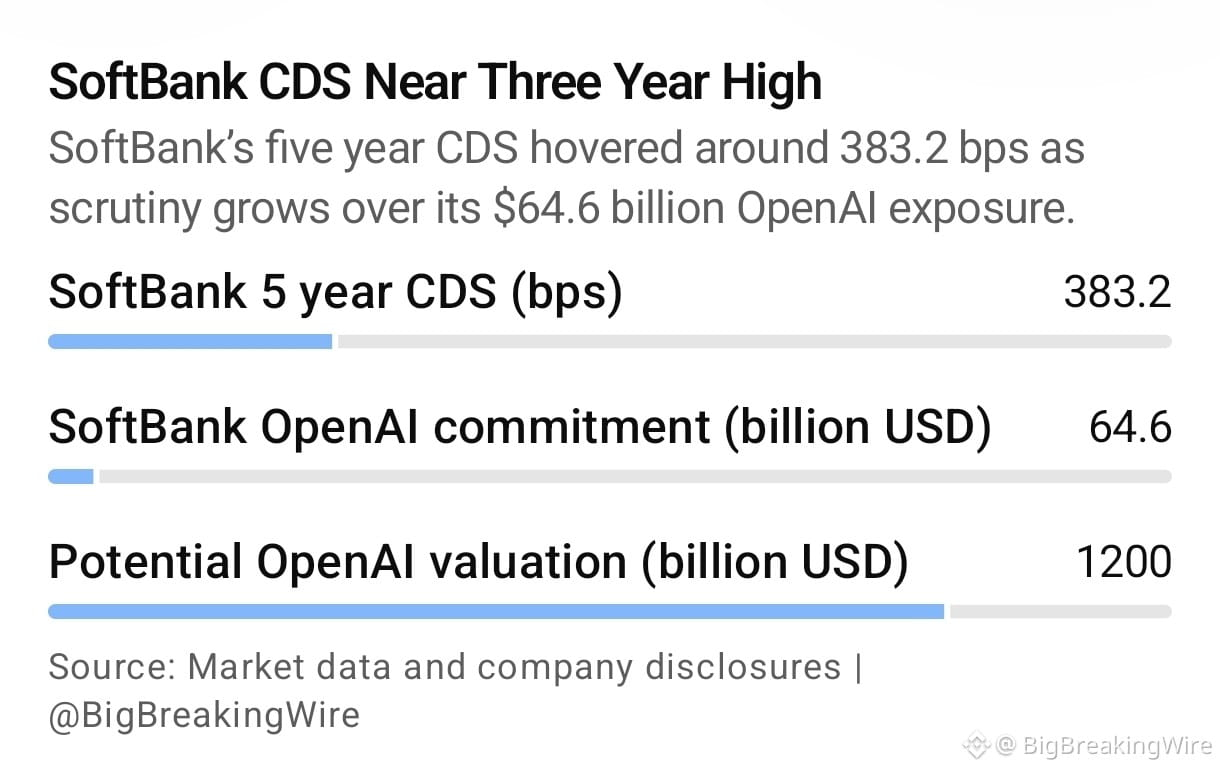
🚨 SoftBank CDS hits near three year high as OpenAI exposure draws scrutiny
SoftBank’s five year CDS hovered around 383.2 bps, near its highest level since 2023, as traders assessed the group’s growing exposure to OpenAI.
SoftBank has committed $64.6 billion to OpenAI, making it one of the group’s largest investments.
OpenAI is in early talks for a pre IPO funding round that could value the company above $1.2 trillion.
CEO Sam Altman said OpenAI is preparing for an IPO, but does not expect the listing to happen this year.
🚨 SoftBank CDS hits near three year high as OpenAI exposure draws scrutiny
SoftBank’s five year CDS hovered around 383.2 bps, near its highest level since 2023, as traders assessed the group’s growing exposure to OpenAI.
SoftBank has committed $64.6 billion to OpenAI, making it one of the group’s largest investments.
OpenAI is in early talks for a pre IPO funding round that could value the company above $1.2 trillion.
CEO Sam Altman said OpenAI is preparing for an IPO, but does not expect the listing to happen this year.
SoftBank’s five year CDS hovered around 383.2 bps, near its highest level since 2023, as traders assessed the group’s growing exposure to OpenAI.
SoftBank has committed $64.6 billion to OpenAI, making it one of the group’s largest investments.
OpenAI is in early talks for a pre IPO funding round that could value the company above $1.2 trillion.
CEO Sam Altman said OpenAI is preparing for an IPO, but does not expect the listing to happen this year.
76
Connectez-vous pour découvrir plus de contenu
Rejoignez la communauté mondiale des adeptes de cryptomonnaies sur Binance Square
⚡️ Suviez les dernières informations importantes sur les cryptomonnaies.
💬 Jugé digne de confiance par la plus grande plateforme d’échange de cryptomonnaies au monde.
👍 Découvrez les connaissances que partagent les créateurs vérifiés.
Adresse e-mail/Nº de téléphone
Sujets d’actualité
BinanceLaunchesBinanceIntelligence
114,463 vues
1,208 mentions
🚨 BINANCE JUST PUT AI DIRECTLY INSIDE THE EXCHANGE — AND THIS COULD CHANGE HOW RETAIL TRADES.
Binance has officially launched Binance Intelligence, a new AI layer built into the Binance ecosystem. It combines three products:
Binance AI for everyday users,
Binance AI Pro for automated trading workflows,
and Agent OS for developers building financial agents.
The part traders should care about?
Binance AI can surface market briefs, smart alerts, PnL recaps and personalized information, while AI Pro is designed to turn a plain-English trading idea into a visual strategy workflow.
That means the next phase of exchange competition may not be:
lowest fees vs deepest liquidity.
It could be:
who gives traders the best AI execution layer.
If Binance Intelligence actually drives heavier user activity, automated strategies and higher trading frequency, watch $BNB first.
AI adoption ↑
→ Binance engagement ↑
→ trading activity ↑
→ ecosystem narrative strengthens.
The catalyst I’d watch now:
global rollout + AI Pro launch + measurable user adoption.
Because once AI stops just telling you what the market is doing…
…and starts helping build the trade itself?
That’s when this gets much bigger than another chatbot. 👀
#binancelaunchesbinanceintelligence #EvernorthXRPTreasuryCompletesSPACMerger #ADAGains10%Above$0.27 #ETHUp70%InQ3ButLiquidityFalls #EthStakingExitQueueHits2026High
KimHotbae
·33 mentions J’aime
·39.9k vues
StriveBuys2000BTCFor$169M
3,950 vues
52 mentions
EvernorthXRPTreasuryCompletesSPACMerger
74,808 vues
795 mentions