
Bella伊娃
5k Publications

Bella伊娃
📊 Spot Trader || Binance Square ✅ || Live streamer || Learn smart. Invest wisely || Binance since 2024✅ || Follow for real crypto vibes✅
Ouvert au trading
Trade régulièrement
2.5 an(s)
612 Suivis
11.7K+ Abonnés
10.1K+ J’aime
Publications
Portefeuille
Tous
Citations
Vidéos
Direct
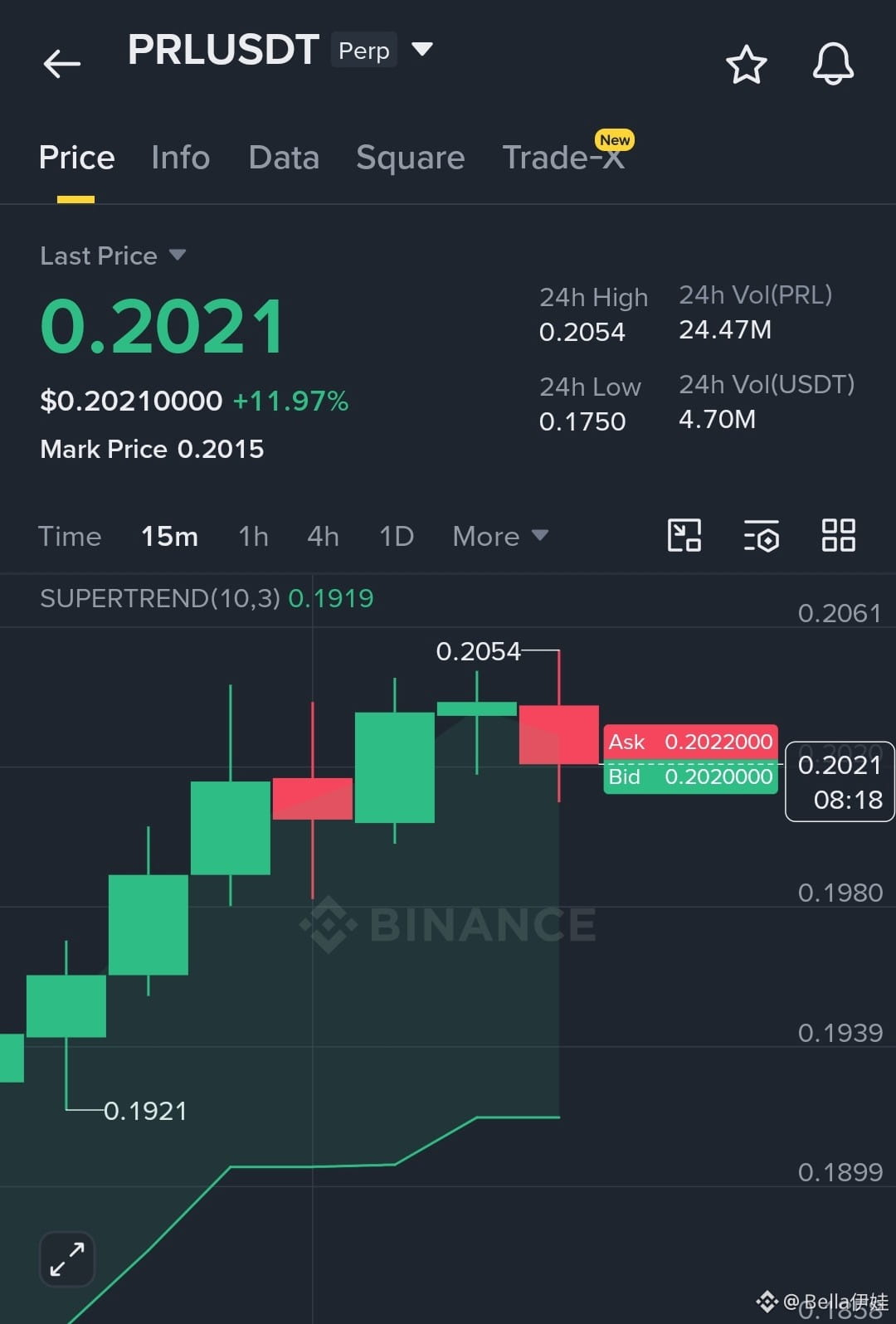
$PRL LONG
DON'T MISS THE PUMP🫠
Entry 0.1920 – 0.2020
Stop Loss 0.1850
Take Profit
✅TP1 0.2100
✅TP2 0.2220
✅TP3 0.2350
Supply & Risk
There is a supply zone higher up around 0.2054 where selling came in before, so we need to be careful there. Keep your risk strictly at 2%, and as soon as TP1 hits, move your stop loss to entry to keep your capital safe.
$PRL $ON #Write2Earn #BinanceSquareFamily #SouthKoreaFSCPlansDigitalAssetAct
DON'T MISS THE PUMP🫠
Entry 0.1920 – 0.2020
Stop Loss 0.1850
Take Profit
✅TP1 0.2100
✅TP2 0.2220
✅TP3 0.2350
Supply & Risk
There is a supply zone higher up around 0.2054 where selling came in before, so we need to be careful there. Keep your risk strictly at 2%, and as soon as TP1 hits, move your stop loss to entry to keep your capital safe.
$PRL $ON #Write2Earn #BinanceSquareFamily #SouthKoreaFSCPlansDigitalAssetAct
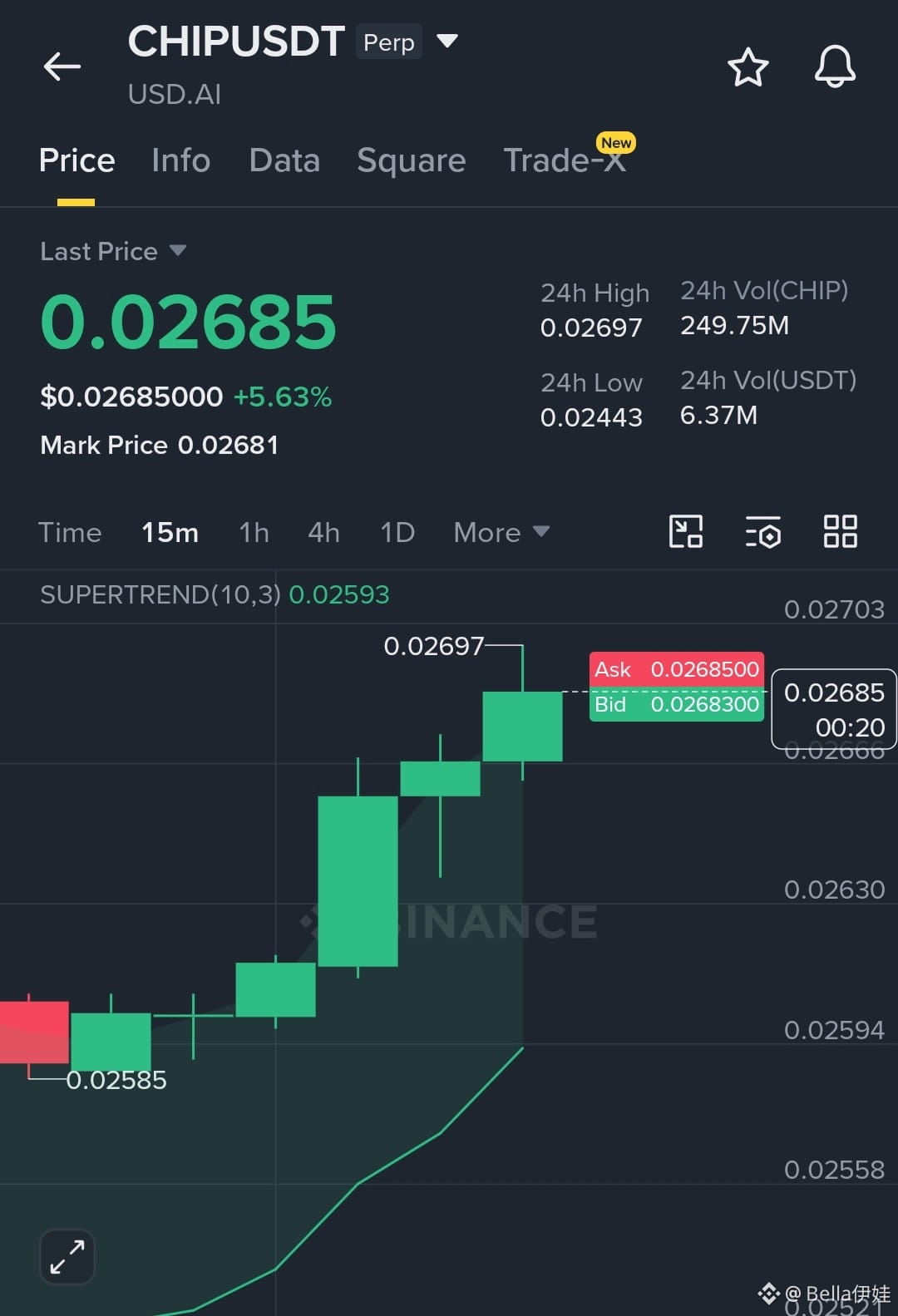
$CHIP LONG
Entry 0.02590 – 0.02685
Stop Loss 0.02520
Take Profit
✅TP1 0.02780
✅TP2 0.02900
✅TP3 0.03050
Supply & Risk
There is a supply zone higher up around 0.02697 where selling came in before, so we need to be careful there. Keep your risk strictly at 2%, and as soon as TP1 hits, move your stop loss to entry to keep your capital safe.
$CHIP $VANA #Write2Earn #BNBSmartChainToUndergoHardFork #SouthKoreaFSCPlansDigitalAssetAct #BinanceSquareFamily
Entry 0.02590 – 0.02685
Stop Loss 0.02520
Take Profit
✅TP1 0.02780
✅TP2 0.02900
✅TP3 0.03050
Supply & Risk
There is a supply zone higher up around 0.02697 where selling came in before, so we need to be careful there. Keep your risk strictly at 2%, and as soon as TP1 hits, move your stop loss to entry to keep your capital safe.
$CHIP $VANA #Write2Earn #BNBSmartChainToUndergoHardFork #SouthKoreaFSCPlansDigitalAssetAct #BinanceSquareFamily
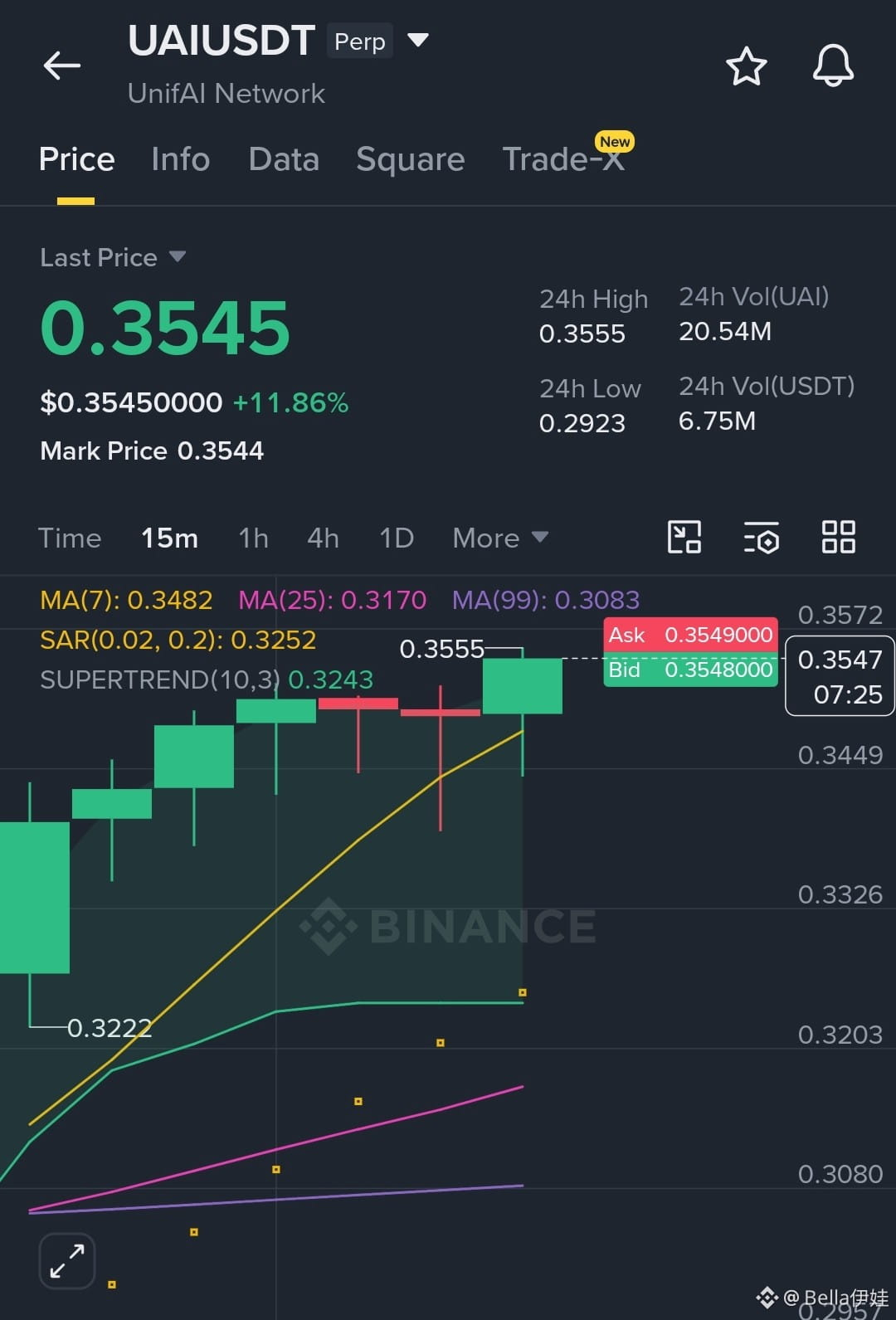
$UAI LONG
Attention now … wait a minute 👀
Trade Plan
Entry 0.3420 – 0.3550
Stop Loss 0.3220
Take Profit
✅TP1 0.3650
✅TP2 0.3800
✅TP3 0.4000
Supply & Risk
There is a supply zone higher up around 0.3555 where selling came in before, so we need to be careful there. Keep your risk strictly at 2%, and as soon as TP1 hits, move your stop loss to entry to keep your capital safe.
$UAI $BEAT #SouthKoreaFSCPlansDigitalAssetAct #IraqCrudeExportsFallSharply #Write2Earn
Attention now … wait a minute 👀
Trade Plan
Entry 0.3420 – 0.3550
Stop Loss 0.3220
Take Profit
✅TP1 0.3650
✅TP2 0.3800
✅TP3 0.4000
Supply & Risk
There is a supply zone higher up around 0.3555 where selling came in before, so we need to be careful there. Keep your risk strictly at 2%, and as soon as TP1 hits, move your stop loss to entry to keep your capital safe.
$UAI $BEAT #SouthKoreaFSCPlansDigitalAssetAct #IraqCrudeExportsFallSharply #Write2Earn
$BABY Every blockchain eventually reaches a point where users have to trust that the data they're seeing is correct. What interests me is how Babylon approaches that question without expecting everyone to verify every detail themselves.
One concept that stood out to me is ZK-SNARK-based verification.
The value isn't simply that proofs are smaller or verification is faster. It's that a complex computation can be validated without revealing the underlying data or forcing every participant to repeat the same work.
For a protocol that connects Bitcoin security with a broader staking ecosystem, that matters.
As networks grow, verification can become just as important as execution. If checking correctness becomes too expensive or too slow, decentralization starts to suffer because fewer participants can verify independently.
ZK-SNARKs offer a different direction. They reduce the cost of proving correctness while preserving privacy, making verification more practical as the system scales. Of course, they also introduce engineering complexity, so the challenge is finding the right balance between cryptographic sophistication and operational simplicity.
I think this is one of those technical choices that rarely gets attention because it's mostly invisible when everything works. Yet invisible infrastructure often determines whether a protocol can continue scaling without asking users to place more trust in intermediaries.
As Babylon evolves, do you think efficient cryptographic verification will become just as important as Bitcoin-backed security itself?
@BabylonLabs_io $BABY #baby $BANK
Which challenge do ZK-SNARKs help solve best?
One concept that stood out to me is ZK-SNARK-based verification.
The value isn't simply that proofs are smaller or verification is faster. It's that a complex computation can be validated without revealing the underlying data or forcing every participant to repeat the same work.
For a protocol that connects Bitcoin security with a broader staking ecosystem, that matters.
As networks grow, verification can become just as important as execution. If checking correctness becomes too expensive or too slow, decentralization starts to suffer because fewer participants can verify independently.
ZK-SNARKs offer a different direction. They reduce the cost of proving correctness while preserving privacy, making verification more practical as the system scales. Of course, they also introduce engineering complexity, so the challenge is finding the right balance between cryptographic sophistication and operational simplicity.
I think this is one of those technical choices that rarely gets attention because it's mostly invisible when everything works. Yet invisible infrastructure often determines whether a protocol can continue scaling without asking users to place more trust in intermediaries.
As Babylon evolves, do you think efficient cryptographic verification will become just as important as Bitcoin-backed security itself?
@BabylonLabs_io $BABY #baby $BANK
Which challenge do ZK-SNARKs help solve best?
🚀 Scalability
0%
🔒 Privacy
0%
✔️ Trustless Verification
0%
⚡ Efficient Validation
0%
0 Votes • Vote fermé
The relationship between BTC stakers and BABY stakers is one of the more interesting design choices in Babylon, and I don't think it gets enough attention.
At first glance, it might seem like both groups are doing the same job because they are both staking assets into the same ecosystem. But their roles are actually quite different.
BTC stakers contribute Bitcoin as the foundation of the network's economic security while keeping their coins in self-custody. Their participation helps strengthen the protocol by extending Bitcoin's security model beyond the Bitcoin blockchain itself.
BABY stakers, on the other hand, take on responsibilities that go beyond economic security. They participate in validator operations and governance, helping shape how the network evolves over time. In other words, one group contributes security, while the other contributes coordination and decision-making.
I find this separation interesting because it avoids forcing a single asset to perform every role. Instead, Babylon assigns different responsibilities to different participants, creating a system where security and governance are connected but not identical.
The real question is whether this balance will continue to work as the ecosystem grows. As more users join and the network becomes more decentralized, will the incentives between BTC stakers and BABY stakers remain aligned, or will new trade-offs begin to appear?
@BabylonLabs_io #baby
$DEXE
$EUL
$BABY
At first glance, it might seem like both groups are doing the same job because they are both staking assets into the same ecosystem. But their roles are actually quite different.
BTC stakers contribute Bitcoin as the foundation of the network's economic security while keeping their coins in self-custody. Their participation helps strengthen the protocol by extending Bitcoin's security model beyond the Bitcoin blockchain itself.
BABY stakers, on the other hand, take on responsibilities that go beyond economic security. They participate in validator operations and governance, helping shape how the network evolves over time. In other words, one group contributes security, while the other contributes coordination and decision-making.
I find this separation interesting because it avoids forcing a single asset to perform every role. Instead, Babylon assigns different responsibilities to different participants, creating a system where security and governance are connected but not identical.
The real question is whether this balance will continue to work as the ecosystem grows. As more users join and the network becomes more decentralized, will the incentives between BTC stakers and BABY stakers remain aligned, or will new trade-offs begin to appear?
@BabylonLabs_io #baby
$DEXE
$EUL
$BABY
🟠 BTC Stakers
50%
👥 BABY Stakers
50%
🤝 Both Equally Critical
0%
🔍 Need More Research
0%
2 Votes • Vote fermé
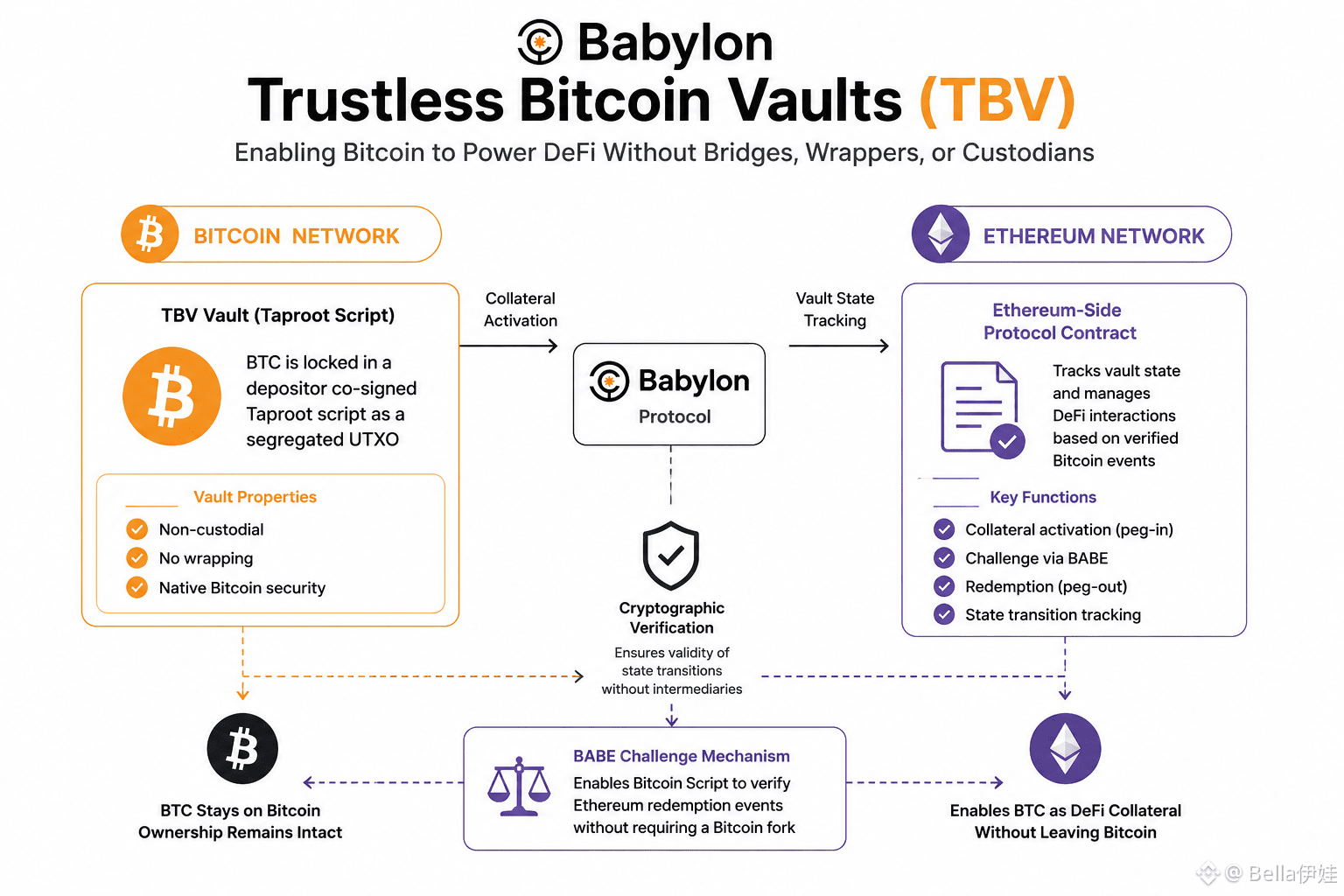
$BABY Most approaches that bring Bitcoin into DeFi introduce an additional trust layer through bridges, custodians, or wrapped assets.
Babylon's Trustless Bitcoin Vaults (TBV) follow a different security model.
BTC remains locked on the Bitcoin network inside a depositor co-signed Taproot script as a segregated UTXO, while an Ethereum-side protocol contract tracks the vault state for DeFi use. $BABY
Collateral activation binds the Bitcoin lockup to Ethereum through cryptographic verification, and redemption relies on the BABE challenge mechanism, allowing Bitcoin Script to verify Ethereum redemption events without requiring a Bitcoin fork.
The result is a model where Bitcoin can serve as DeFi collateral while ownership stays on Bitcoin and trust shifts from intermediaries to protocol-enforced cryptography. @BabylonLabs_io $BABY #baby
Babylon's Trustless Bitcoin Vaults (TBV) follow a different security model.
BTC remains locked on the Bitcoin network inside a depositor co-signed Taproot script as a segregated UTXO, while an Ethereum-side protocol contract tracks the vault state for DeFi use. $BABY
Collateral activation binds the Bitcoin lockup to Ethereum through cryptographic verification, and redemption relies on the BABE challenge mechanism, allowing Bitcoin Script to verify Ethereum redemption events without requiring a Bitcoin fork.
The result is a model where Bitcoin can serve as DeFi collateral while ownership stays on Bitcoin and trust shifts from intermediaries to protocol-enforced cryptography. @BabylonLabs_io $BABY #baby
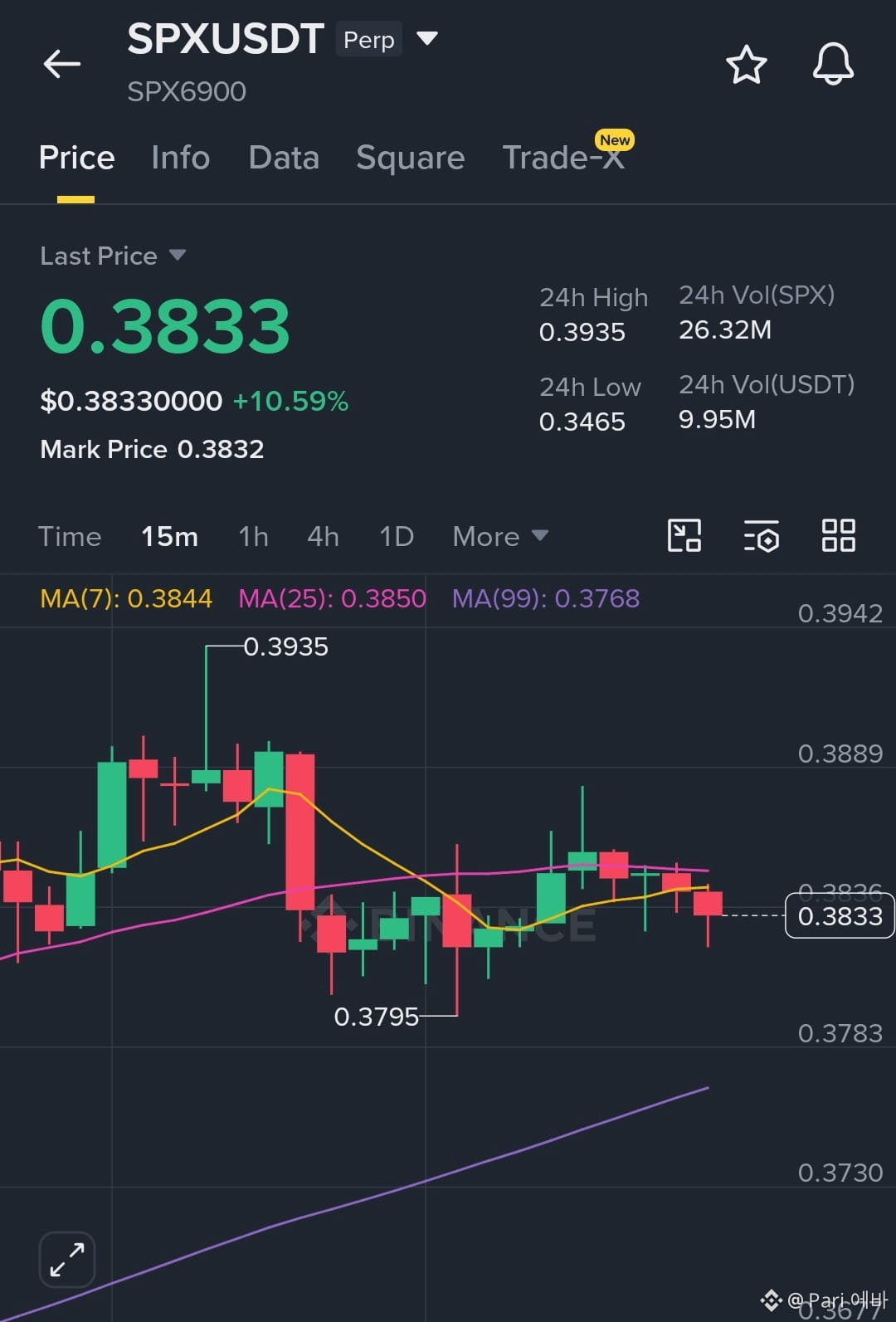
$BABY While reading Babylon's documentation, I noticed that its two-layer architecture solves more than a technical challenge.
The Trustless Bitcoin Vault protocol is responsible only for creating, tracking, and redeeming Bitcoin vaults, while DeFi applications focus on lending and other financial services.
This clear separation keeps Bitcoin locked under protocol rules instead of application control.
It also allows different DeFi products to build on the same secure foundation without changing how the vault itself works.
To me, this design makes Bitcoin-backed DeFi more modular, transparent, and easier to expand over time.
@BabylonLabs_io $BABY #Babylon #baby
The Trustless Bitcoin Vault protocol is responsible only for creating, tracking, and redeeming Bitcoin vaults, while DeFi applications focus on lending and other financial services.
This clear separation keeps Bitcoin locked under protocol rules instead of application control.
It also allows different DeFi products to build on the same secure foundation without changing how the vault itself works.
To me, this design makes Bitcoin-backed DeFi more modular, transparent, and easier to expand over time.
@BabylonLabs_io $BABY #Babylon #baby
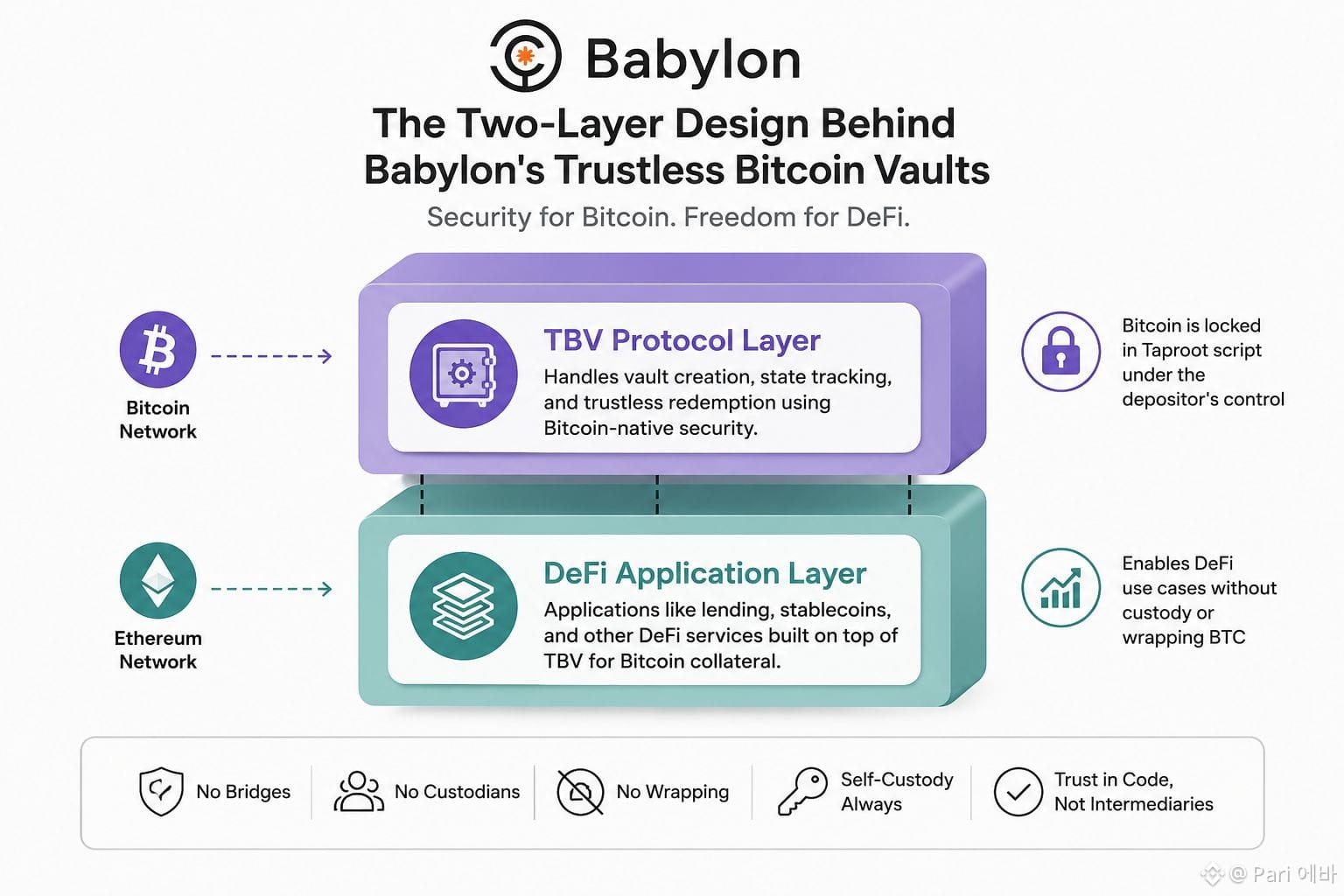
$FIGHT LONG
Trade Plan
Entry 0.003250 – 0.003380
Stop Loss 0.003100
Take Profit
✅TP1 0.003550
✅TP2 0.003750
✅TP3 0.004000
Supply & Risk
There is a supply zone higher up around 0.003415 where selling came in before, so we need to be careful there. Keep your risk strictly at 2%, and as soon as TP1 hits, move your stop loss to entry to keep your capital safe.
$FIGHT $PTB
#FİGHT #FootballSeason2026 #TrumpMeetsOnWiderIranOffensive
Trade Plan
Entry 0.003250 – 0.003380
Stop Loss 0.003100
Take Profit
✅TP1 0.003550
✅TP2 0.003750
✅TP3 0.004000
Supply & Risk
There is a supply zone higher up around 0.003415 where selling came in before, so we need to be careful there. Keep your risk strictly at 2%, and as soon as TP1 hits, move your stop loss to entry to keep your capital safe.
$FIGHT $PTB
#FİGHT #FootballSeason2026 #TrumpMeetsOnWiderIranOffensive
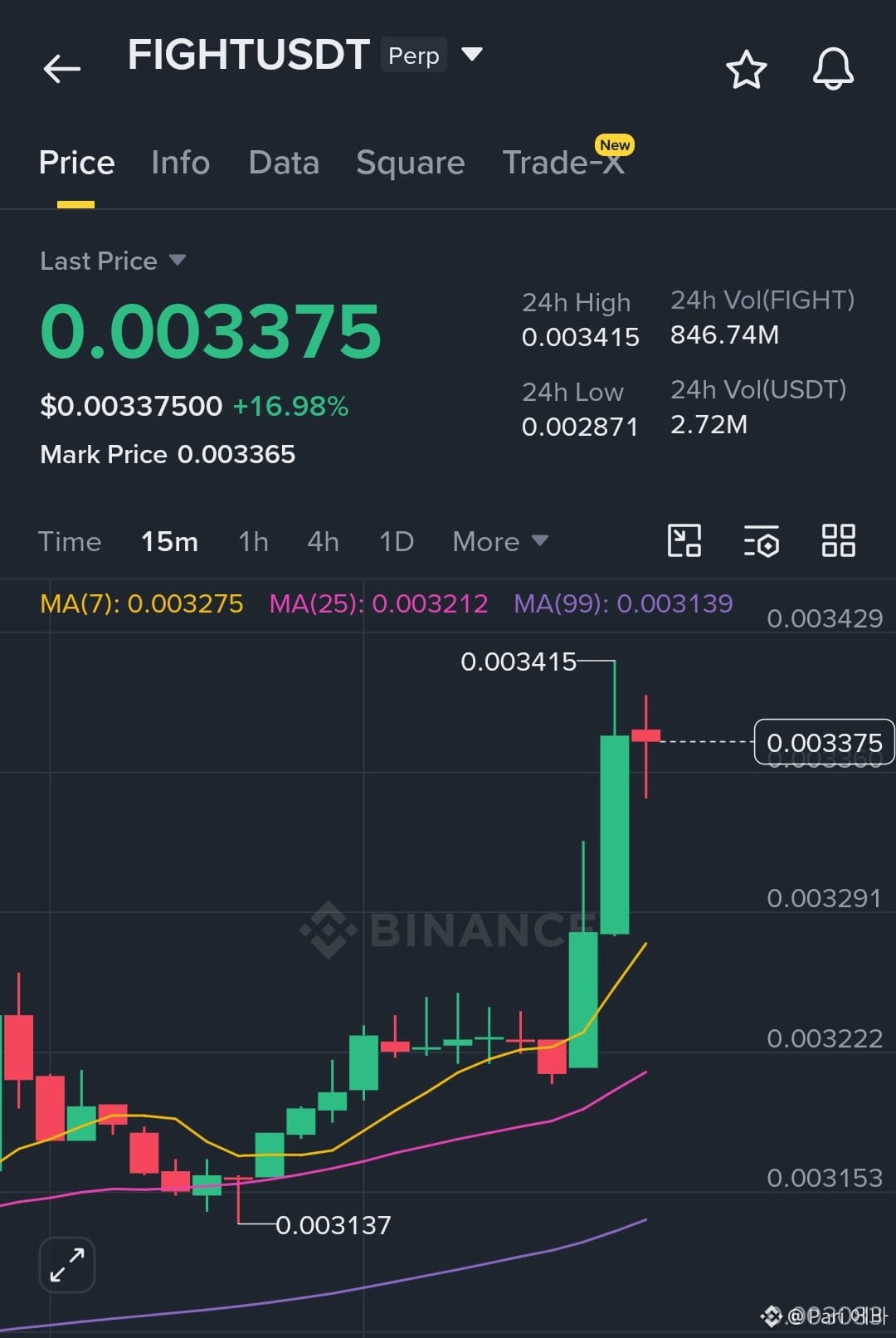

$PTB LONG
Trade Plan
Entry 0.0005650 – 0.0005950
Stop Loss 0.0005300
Take Profit
✅TP1 0.0006400
✅TP2 0.0006900
✅TP3 0.0007500
Supply & Risk
There is a supply zone higher up around 0.0006158 and 0.0006405 where selling came in before, so we need to be careful there. Keep your risk strictly at 2%, and as soon as TP1 hits, move your stop loss to entry to keep your capital safe.
$PTB
$MEGA
#FootballSeason2026 #PTB
Trade Plan
Entry 0.0005650 – 0.0005950
Stop Loss 0.0005300
Take Profit
✅TP1 0.0006400
✅TP2 0.0006900
✅TP3 0.0007500
Supply & Risk
There is a supply zone higher up around 0.0006158 and 0.0006405 where selling came in before, so we need to be careful there. Keep your risk strictly at 2%, and as soon as TP1 hits, move your stop loss to entry to keep your capital safe.
$PTB
$MEGA
#FootballSeason2026 #PTB
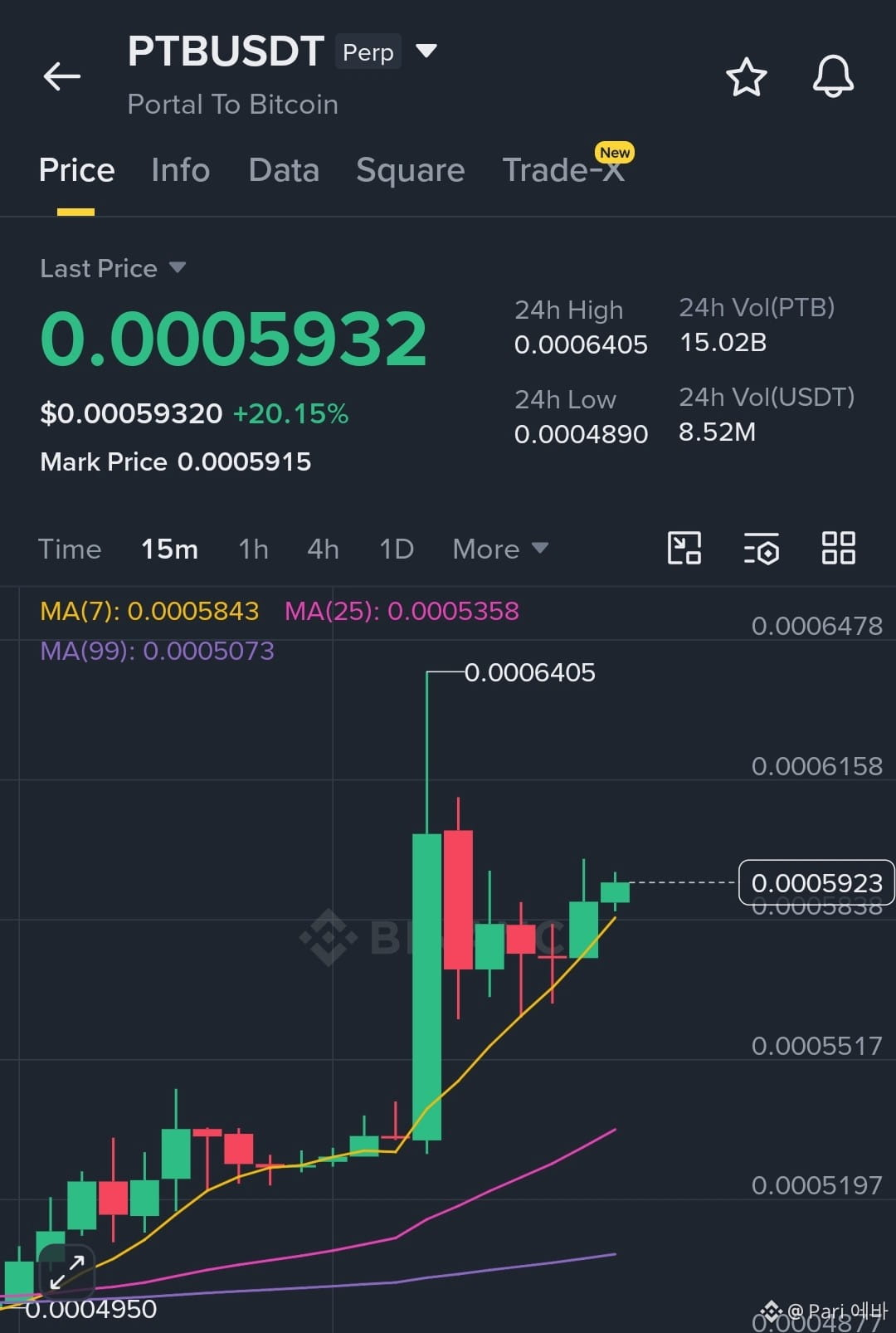

$SPX LONG
Attention now … wait a minute 👀
Trade Plan
Entry 0.3795 – 0.3840
Stop Loss 0.3730
Take Profit
✅TP1 0.3935
✅TP2 0.4050
✅TP3 0.4200
Supply & Risk
There is a supply zone higher up around 0.3889 and 0.3935 where selling came in before, so we need to be careful there. Keep your risk strictly at 2%, and as soon as TP1 hits, move your stop loss to entry to keep your capital safe.
$SPX $MAGMA #SPX #right2earn #FootballSeason2026 #USUKTreasuriesRecommendStablecoinAlignment
Attention now … wait a minute 👀
Trade Plan
Entry 0.3795 – 0.3840
Stop Loss 0.3730
Take Profit
✅TP1 0.3935
✅TP2 0.4050
✅TP3 0.4200
Supply & Risk
There is a supply zone higher up around 0.3889 and 0.3935 where selling came in before, so we need to be careful there. Keep your risk strictly at 2%, and as soon as TP1 hits, move your stop loss to entry to keep your capital safe.
$SPX $MAGMA #SPX #right2earn #FootballSeason2026 #USUKTreasuriesRecommendStablecoinAlignment

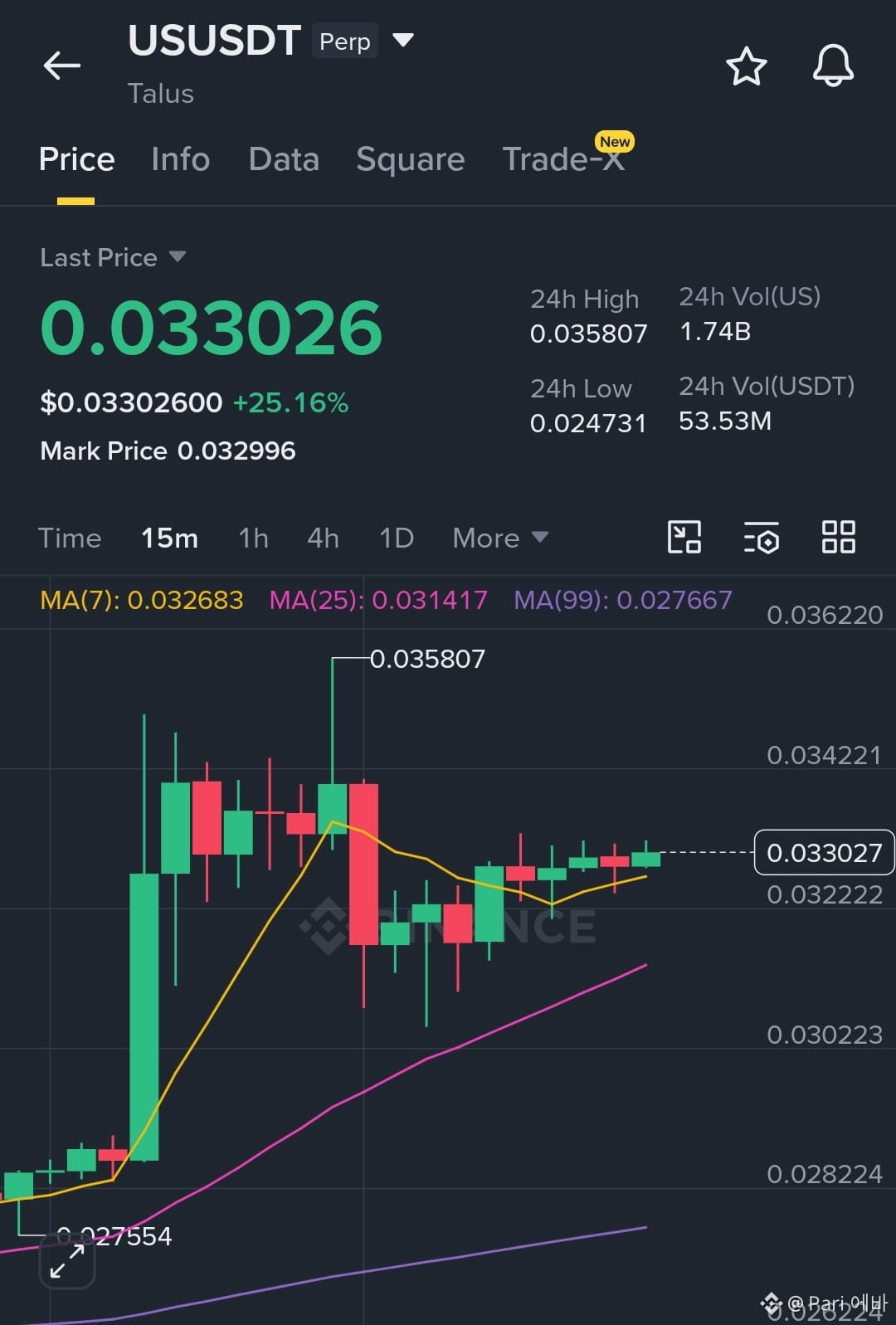
$US LONG
STOP SCROLLING AND LOOK
Trade Plan
Entry 0.031500 – 0.033100
Stop Loss 0.029800
Take Profit
✅TP1 0.034500
✅TP2 0.036000
✅TP3 0.038000
Supply & Risk
There is a supply zone higher up around 0.034221 and 0.035807 where selling came in before, so we need to be careful there. Keep your risk strictly at 2%, and as soon as TP1 hits, move your stop loss to entry to keep your capital safe.
$US $1000XEC
#FootballSeason2026 #US #CzechAddsPolymarketToIllegalGamblingList #right2earn
STOP SCROLLING AND LOOK
Trade Plan
Entry 0.031500 – 0.033100
Stop Loss 0.029800
Take Profit
✅TP1 0.034500
✅TP2 0.036000
✅TP3 0.038000
Supply & Risk
There is a supply zone higher up around 0.034221 and 0.035807 where selling came in before, so we need to be careful there. Keep your risk strictly at 2%, and as soon as TP1 hits, move your stop loss to entry to keep your capital safe.
$US $1000XEC
#FootballSeason2026 #US #CzechAddsPolymarketToIllegalGamblingList #right2earn

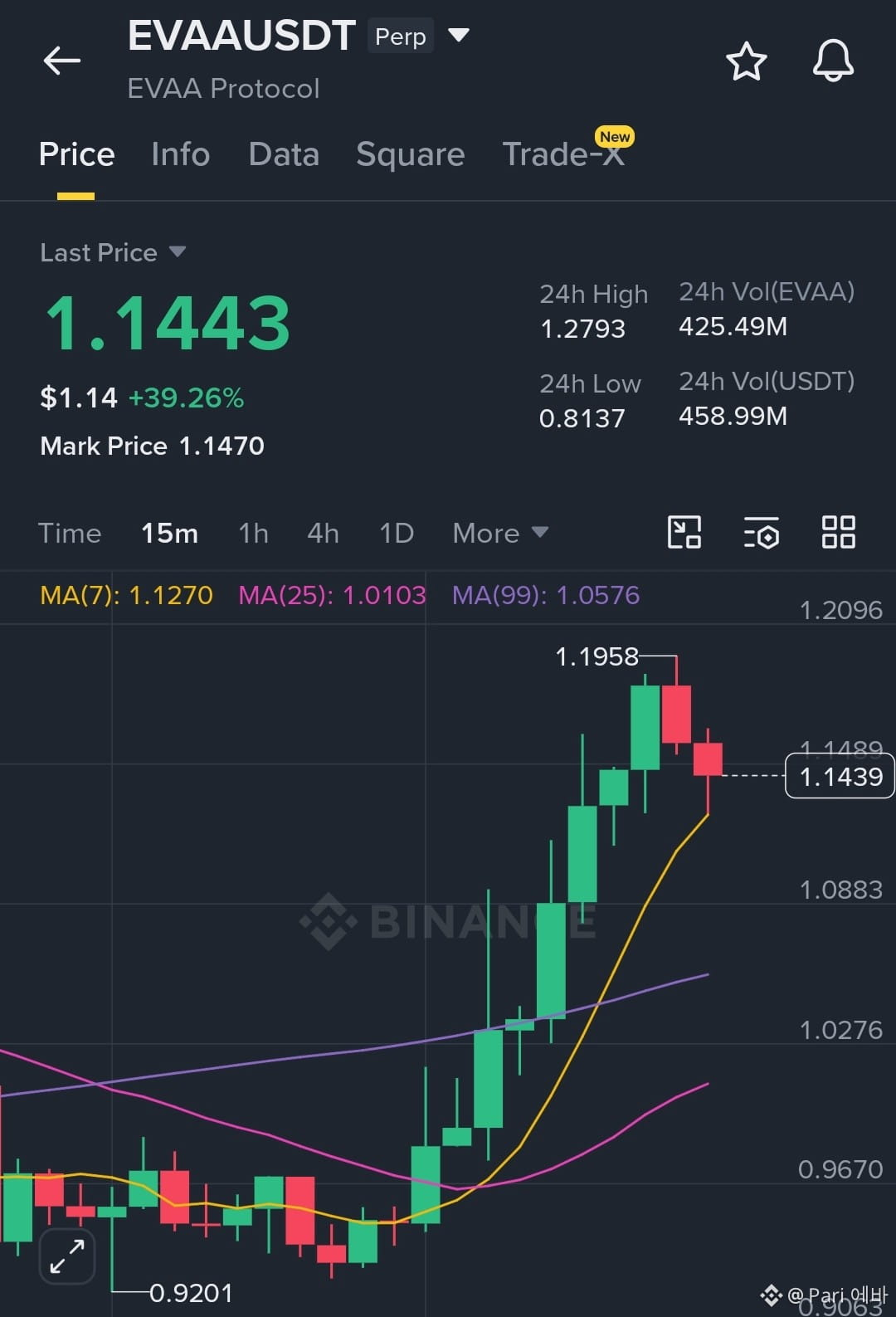
$EVAA LONG
WAKE UP TRADERS
Trade Plan
Entry 1.0950 – 1.1450
Stop Loss 1.0450
Take Profit
✅TP1 1.1950
✅TP2 1.2450
✅TP3 1.2800
Supply & Risk
There is a supply zone higher up around 1.1958 and 1.2793 where selling came in before, so we need to be careful there. Keep your risk strictly at 2%, and as soon as TP1 hits, move your stop loss to entry to keep your capital safe.
$EVAA $NVDAB #EVA #FootballSeason2026 #JuneCPIFedHike20%
WAKE UP TRADERS
Trade Plan
Entry 1.0950 – 1.1450
Stop Loss 1.0450
Take Profit
✅TP1 1.1950
✅TP2 1.2450
✅TP3 1.2800
Supply & Risk
There is a supply zone higher up around 1.1958 and 1.2793 where selling came in before, so we need to be careful there. Keep your risk strictly at 2%, and as soon as TP1 hits, move your stop loss to entry to keep your capital safe.
$EVAA $NVDAB #EVA #FootballSeason2026 #JuneCPIFedHike20%

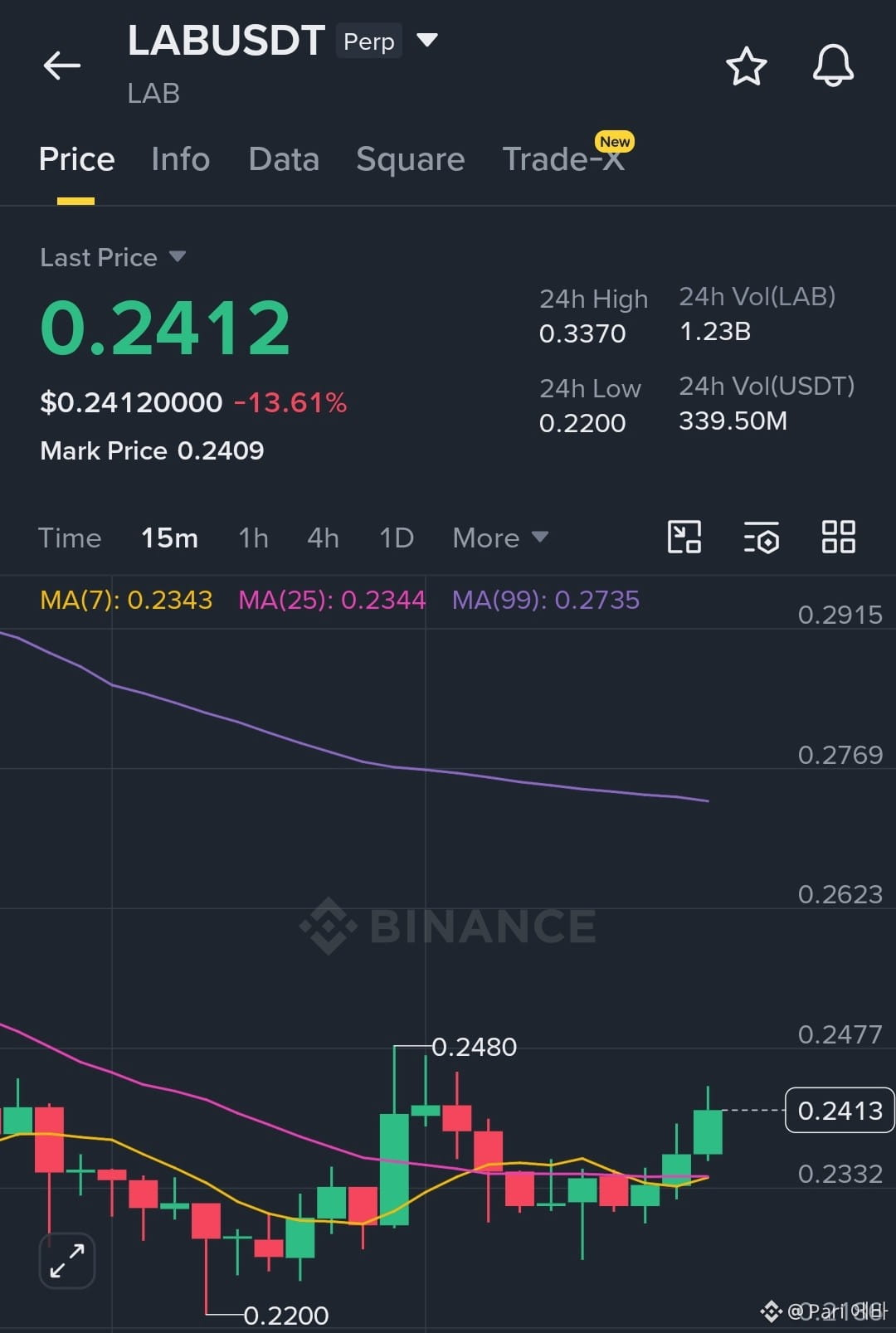
LAB LONG
STOP SCROLLING AND LOOK
Trade Plan
Entry 0.2280 – 0.2415
Stop Loss 0.2180
Take Profit
✅TP1 0.2480
✅TP2 0.2620
✅TP3 0.2760
Supply & Risk
There is a supply zone higher up around 0.2480 and 0.2735 where selling came in before, so we need to be careful there. Keep your risk strictly at 2%, and as soon as TP1 hits, move your stop loss to entry to keep your capital safe.
$LAB $O $LDO
#Labs #FootballSeason2026 #TrumpMeetsOnWiderIranOffensive #right2earn
STOP SCROLLING AND LOOK
Trade Plan
Entry 0.2280 – 0.2415
Stop Loss 0.2180
Take Profit
✅TP1 0.2480
✅TP2 0.2620
✅TP3 0.2760
Supply & Risk
There is a supply zone higher up around 0.2480 and 0.2735 where selling came in before, so we need to be careful there. Keep your risk strictly at 2%, and as soon as TP1 hits, move your stop loss to entry to keep your capital safe.
$LAB $O $LDO
#Labs #FootballSeason2026 #TrumpMeetsOnWiderIranOffensive #right2earn

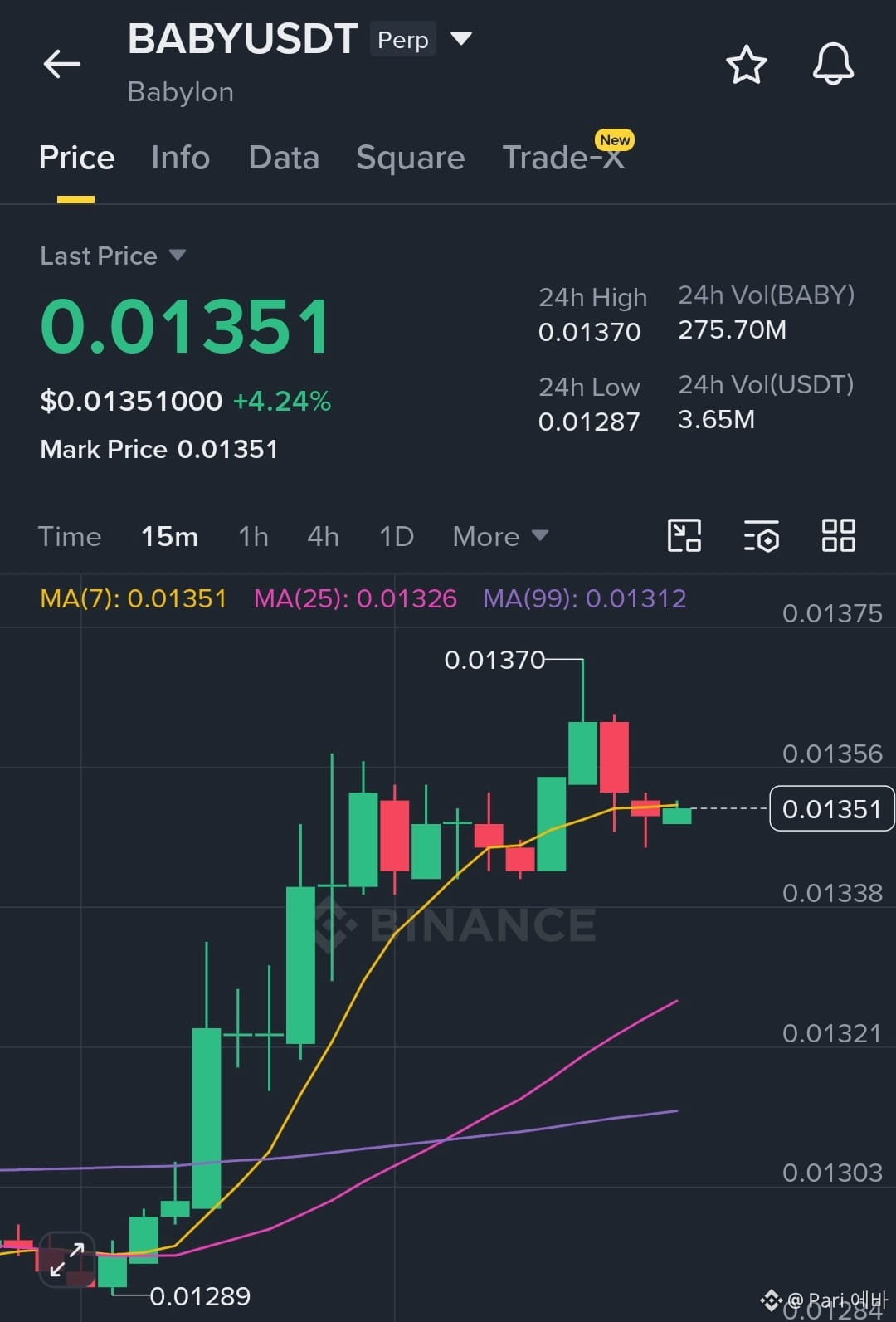
BABY LONG
Attention now … wait a minute 👀
Trade Plan
Entry 0.01250 – 0.01350
Stop Loss 0.01180
Take Profit
✅TP1 0.01450
✅TP2 0.01550
✅TP3 0.01680
The price has made a strong support floor at the bottom and is now getting ready to move up.
📌Supply & Risk
There is a supply zone higher up around 0.01408 and 0.01525 where selling came in before, so we need to be careful there. Keep your risk strictly at 2%, and as soon as TP1 hits, move your stop loss to entry to keep your capital safe.
Attention now … wait a minute 👀
Trade Plan
Entry 0.01250 – 0.01350
Stop Loss 0.01180
Take Profit
✅TP1 0.01450
✅TP2 0.01550
✅TP3 0.01680
The price has made a strong support floor at the bottom and is now getting ready to move up.
📌Supply & Risk
There is a supply zone higher up around 0.01408 and 0.01525 where selling came in before, so we need to be careful there. Keep your risk strictly at 2%, and as soon as TP1 hits, move your stop loss to entry to keep your capital safe.

#newt Everyone, for the past few days I haven't been working at my best, and my ranking has kept slipping.
It's been three or four days without earning any post points, so I decided to slow down, think more deeply, and create something more meaningful. Let's see what you think.
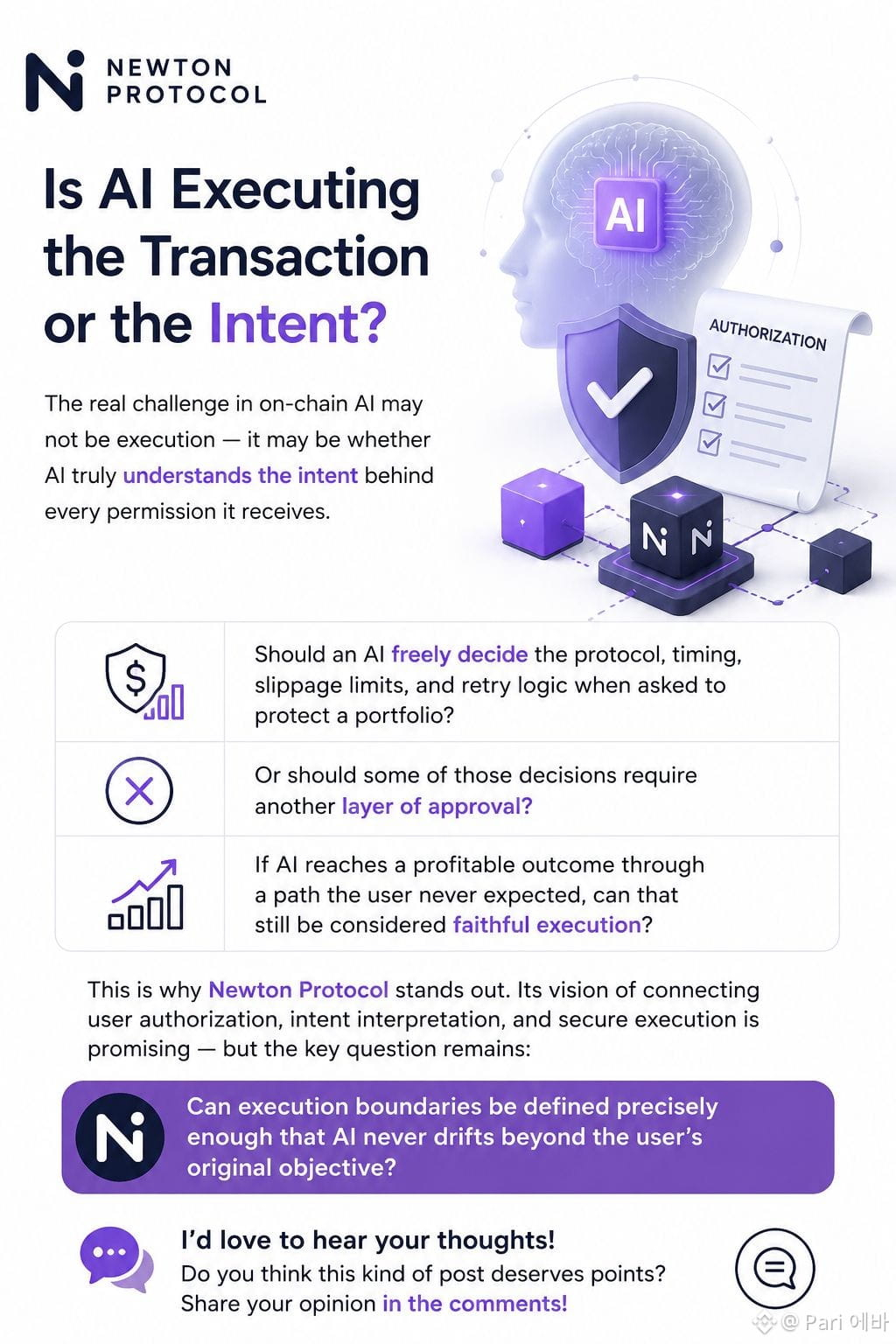
After spending more time studying on-chain AI, I’ve started to think that the real challenge may not be whether AI can execute transactions, but whether it truly understands the intent behind every permission it receives.
Many discussions focus on contract exploits, yet what if the larger risk appears when an AI correctly follows incomplete instructions instead of rejecting them?Imagine asking an AI to protect a portfolio during market volatility.
Should it freely decide the protocol, execution timing, slippage limits, and retry logic, or should some of those decisions always require another layer of approval? If the system reaches a profitable outcome through a path the user never expected, can that still be considered faithful execution?
This is one reason Newton Protocol has attracted my attention.
Its vision of connecting user authorization, intent interpretation, and secure execution is promising, but an important question remains: can execution boundaries be defined precisely enough that AI never drifts beyond the user's original objective?I've shared all my thoughts above. Now I'd really like to hear yours.
Do you think this kind of post deserves points? Please share your opinion in the comments!
$NEWT #Newt @NewtonProtocol $BEAT $POL
It's been three or four days without earning any post points, so I decided to slow down, think more deeply, and create something more meaningful. Let's see what you think.
After spending more time studying on-chain AI, I’ve started to think that the real challenge may not be whether AI can execute transactions, but whether it truly understands the intent behind every permission it receives.
Many discussions focus on contract exploits, yet what if the larger risk appears when an AI correctly follows incomplete instructions instead of rejecting them?Imagine asking an AI to protect a portfolio during market volatility.
Should it freely decide the protocol, execution timing, slippage limits, and retry logic, or should some of those decisions always require another layer of approval? If the system reaches a profitable outcome through a path the user never expected, can that still be considered faithful execution?
This is one reason Newton Protocol has attracted my attention.
Its vision of connecting user authorization, intent interpretation, and secure execution is promising, but an important question remains: can execution boundaries be defined precisely enough that AI never drifts beyond the user's original objective?I've shared all my thoughts above. Now I'd really like to hear yours.
Do you think this kind of post deserves points? Please share your opinion in the comments!
$NEWT #Newt @NewtonProtocol $BEAT $POL
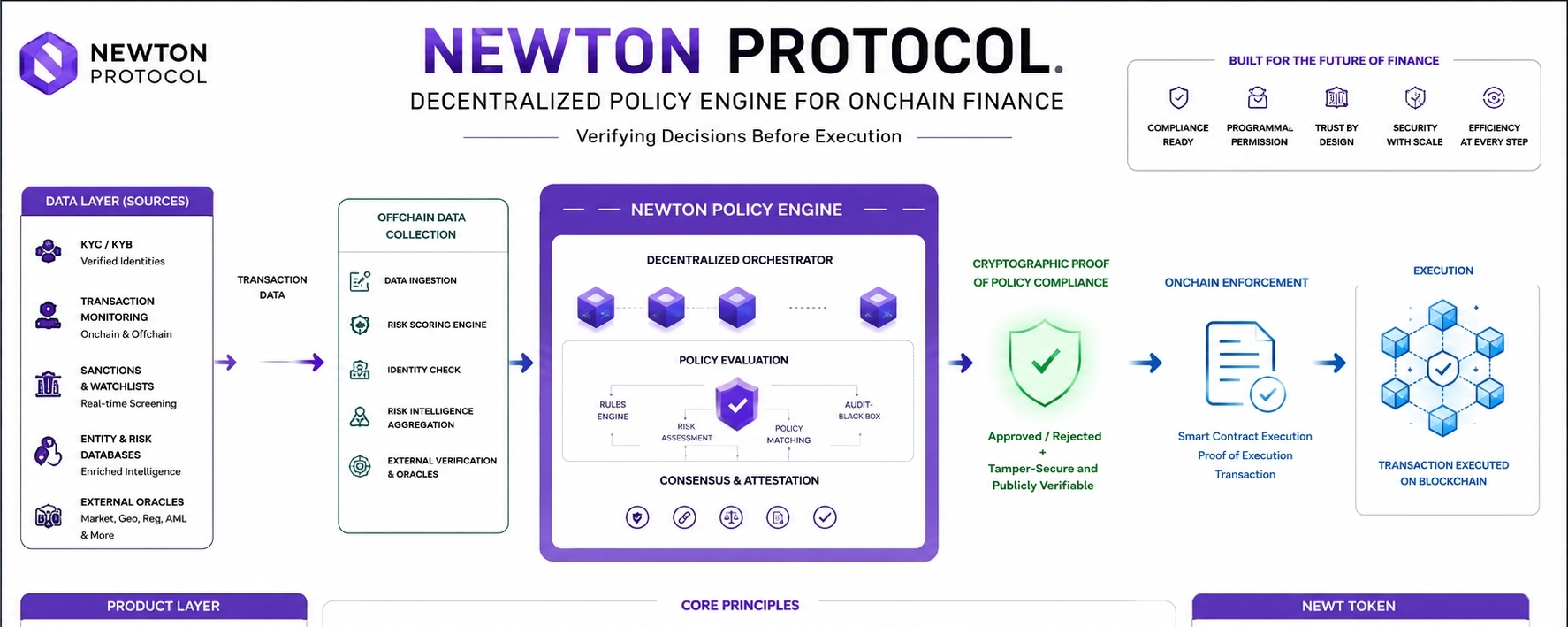
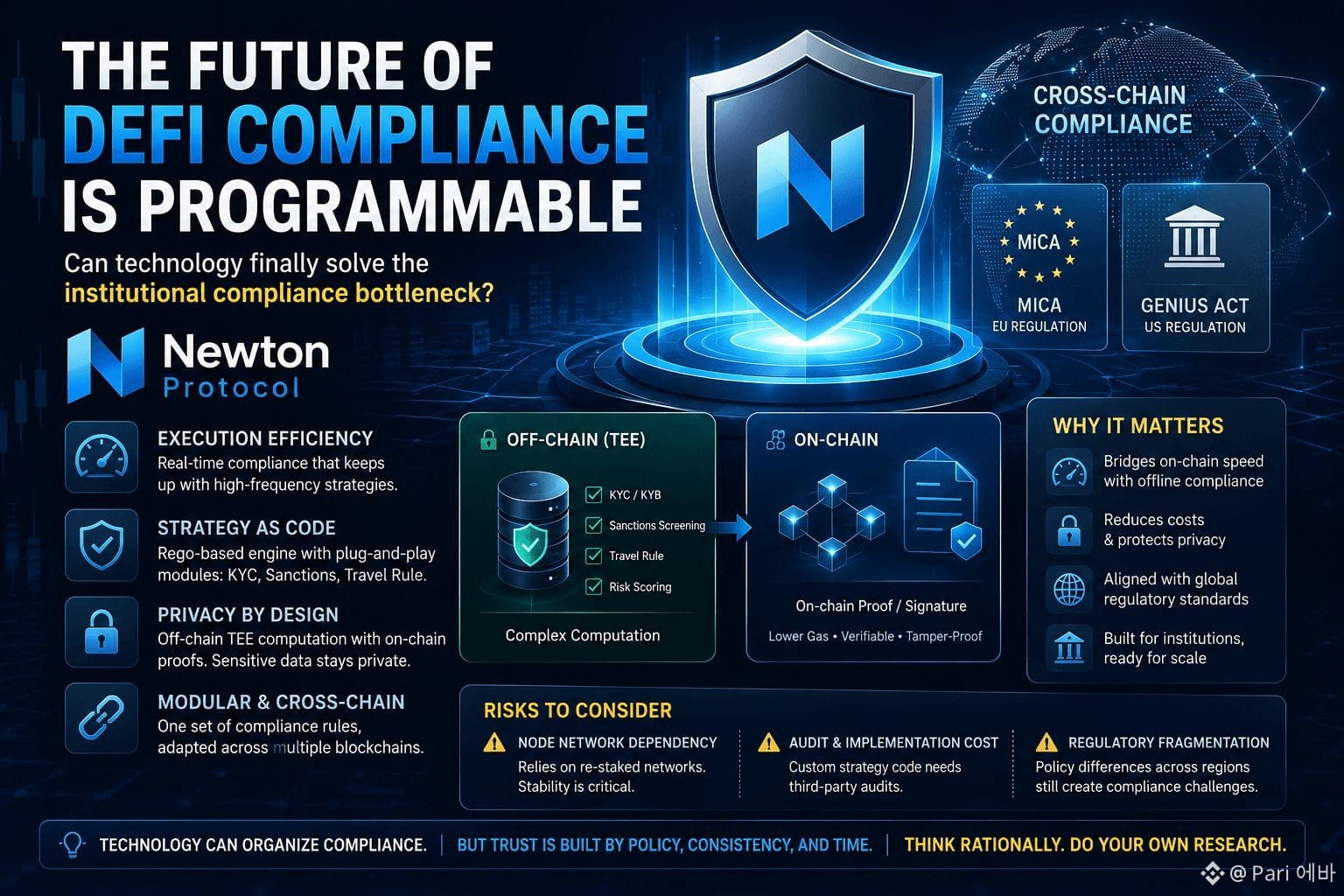
#newt Institutional DeFi often treats compliance as a checkpoint after execution, but is that approach still practical when strategies operate in milliseconds? If compliance always arrives after the transaction, can it truly reduce risk, or does it simply document what has already happened? That question becomes more important as automated trading continues to accelerate.
Newton Protocol approaches the challenge differently by turning compliance into programmable rules rather than a slow manual workflow. But what does that actually mean? A rule engine is more than software—it combines policy logic, verification steps, permission controls, and automated decision-making into one coordinated process.
Instead of relying only on human review, predefined conditions can be evaluated before actions moveforward.
The architecture also separates heavy computation from on-chain execution through trusted environments while recording only cryptographic proof on-chain.
This lowers blockchain costs and helps protect sensitive identity information. Yet another question remains: if verification depends on external node networks and custom compliance logic, how much resilience exists when infrastructure changes or regulations differ across jurisdictions?Perhaps the bigger lesson is that technology can organize compliance, but it cannot create regulatory consensus.
As policies evolve, the real measure of success may not be faster automation alone, but whether one adaptable framework can remain trustworthy across different legal environments over time.
$NEWT $LDO $B3
@NewtonProtocol #Newt
Newton Protocol approaches the challenge differently by turning compliance into programmable rules rather than a slow manual workflow. But what does that actually mean? A rule engine is more than software—it combines policy logic, verification steps, permission controls, and automated decision-making into one coordinated process.
Instead of relying only on human review, predefined conditions can be evaluated before actions moveforward.
The architecture also separates heavy computation from on-chain execution through trusted environments while recording only cryptographic proof on-chain.
This lowers blockchain costs and helps protect sensitive identity information. Yet another question remains: if verification depends on external node networks and custom compliance logic, how much resilience exists when infrastructure changes or regulations differ across jurisdictions?Perhaps the bigger lesson is that technology can organize compliance, but it cannot create regulatory consensus.
As policies evolve, the real measure of success may not be faster automation alone, but whether one adaptable framework can remain trustworthy across different legal environments over time.
$NEWT $LDO $B3
@NewtonProtocol #Newt
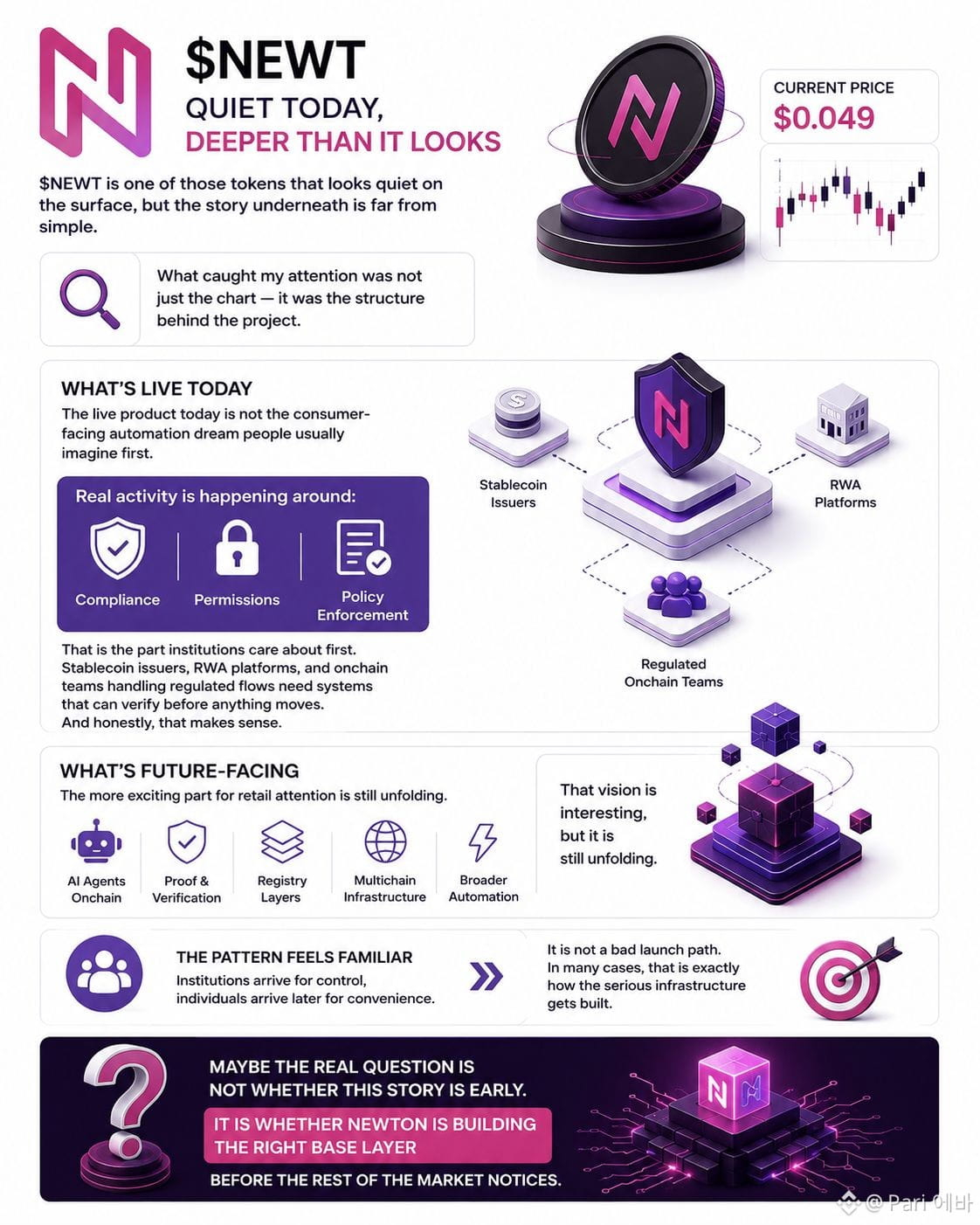
#newt $NEWT is one of those tokens that looks quiet on the surface, but the story underneath is far from simple.
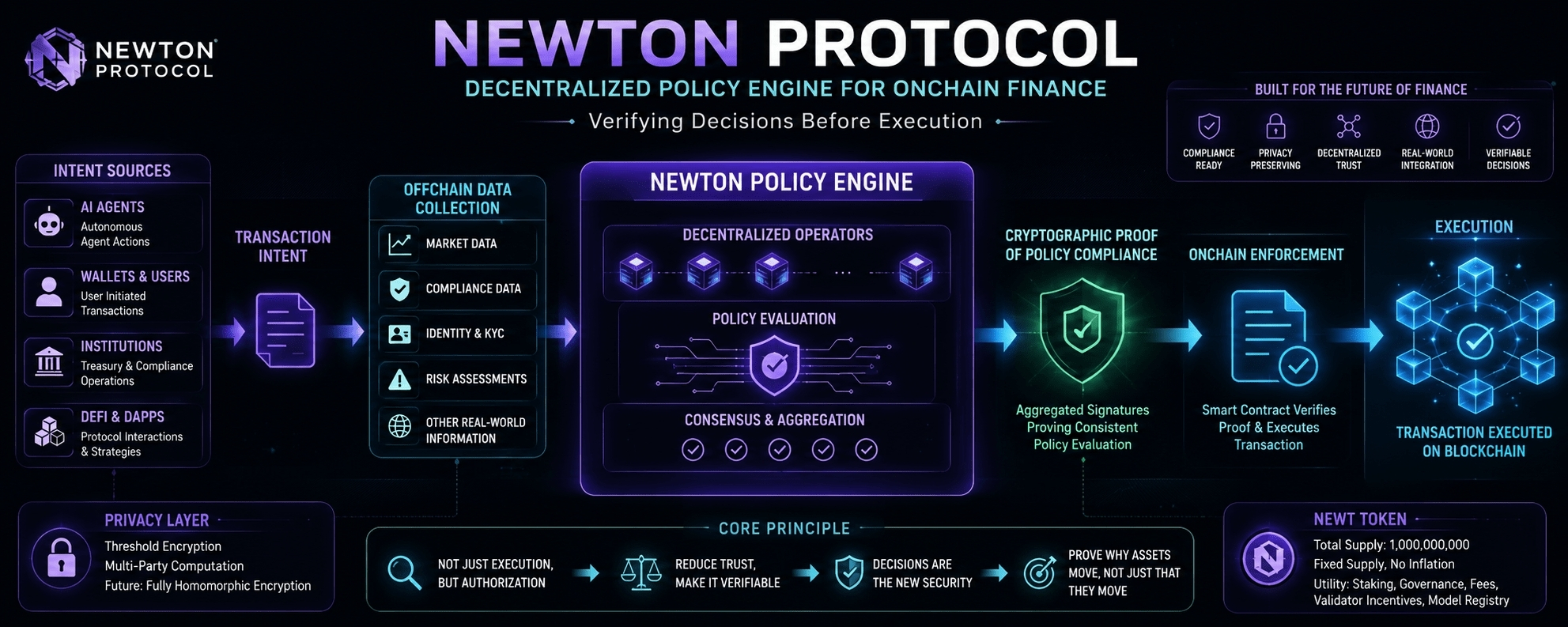
Today the price is hovering around $0.049, and what caught my attention was not just the chart — it was the structure behind the project. The more I dug into Newton Protocol, the clearer it became that the live product today is not the consumer-facing automation dream people usually imagine first.$NEWT
Right now, the real activity seems to be happening around compliance, permissions, and policy enforcement. That is the part institutions care about first.
Stablecoin issuers, RWA platforms, and onchain teams handling regulated flows need systems that can verify before anything moves.
And honestly, that makes sense.
What is still future-facing is the more exciting part for retail attention: AI agents carrying out tasks onchain with proof, registry layers, multichain infrastructure, and broader automation use cases.
That vision is interesting, but it is still unfolding.
So the pattern feels familiar: institutions arrive for control, individuals arrive later for convenience.
It is not a bad launch path.
In many cases, that is exactly how the serious infrastructure gets built.
Maybe the real question is not whether this story is early. It is whether Newton is building the right base layer before the rest of the market notices.
$NEWT
@NewtonProtocol #Newt
Today the price is hovering around $0.049, and what caught my attention was not just the chart — it was the structure behind the project. The more I dug into Newton Protocol, the clearer it became that the live product today is not the consumer-facing automation dream people usually imagine first.$NEWT
Right now, the real activity seems to be happening around compliance, permissions, and policy enforcement. That is the part institutions care about first.
Stablecoin issuers, RWA platforms, and onchain teams handling regulated flows need systems that can verify before anything moves.
And honestly, that makes sense.
What is still future-facing is the more exciting part for retail attention: AI agents carrying out tasks onchain with proof, registry layers, multichain infrastructure, and broader automation use cases.
That vision is interesting, but it is still unfolding.
So the pattern feels familiar: institutions arrive for control, individuals arrive later for convenience.
It is not a bad launch path.
In many cases, that is exactly how the serious infrastructure gets built.
Maybe the real question is not whether this story is early. It is whether Newton is building the right base layer before the rest of the market notices.
$NEWT
@NewtonProtocol #Newt
Connectez-vous pour découvrir plus de contenu