

Bitcoffee
434 Publications

Bitcoffee
Signaler
Bloquer l’utilisateur
Follow me for the latest news on the market 🤝🏻
0 Suivis
883 Abonnés
1.1K+ J’aime
Publications
·
--
Agentic Takeover Could Destroy Everything 🚨
$VFY and $FET could meet where autonomous agents need permission to access real services.
The internet cannot respond to agent swarms by blocking every machine.
Businesses will want legitimate agents to book appointments, place orders and complete authorised tasks.
The real problem is separating approved software from anonymous automation designed to abuse the service.
This has already happened with ticket sales for concerts, complaints for refunds, and many other illegal activities conducted by AI agents.
An agent credential system could generate a proof showing that the software is authorised and operating within defined limits.
The proof design could keep the agent’s private logic and owner information confidential.
zkVerify would check whether that submitted proof is valid.
A website could then approve the request, enforce a rate limit or reject an agent that lacks verified credentials.
The policy still belongs to the business, and the credential still comes from the external agent system. zkVerify supplies the common checking layer between them.
That distinction is very important because the market gap is larger than bot detection.
The next internet will need reusable evidence for humans, authorised agents and unknown automation. VFY gains a compelling infrastructure role if that evidence begins flowing through one specialised verification network.
I’m bullish on the projects building the trust layer before agent traffic becomes impossible to ignore.
#AI #Altcoin Season#
Agentic Takeover Could Destroy Everything 🚨
$VFY and $FET could meet where autonomous agents need permission to access real services.
The internet cannot respond to agent swarms by blocking every machine.
Businesses will want legitimate agents to book appointments, place orders and complete authorised tasks.
The real problem is separating approved software from anonymous automation designed to abuse the service.
This has already happened with ticket sales for concerts, complaints for refunds, and many other illegal activities conducted by AI agents.
An agent credential system could generate a proof showing that the software is authorised and operating within defined limits.
The proof design could keep the agent’s private logic and owner information confidential.
zkVerify would check whether that submitted proof is valid.
A website could then approve the request, enforce a rate limit or reject an agent that lacks verified credentials.
The policy still belongs to the business, and the credential still comes from the external agent system. zkVerify supplies the common checking layer between them.
That distinction is very important because the market gap is larger than bot detection.
The next internet will need reusable evidence for humans, authorised agents and unknown automation. VFY gains a compelling infrastructure role if that evidence begins flowing through one specialised verification network.
I’m bullish on the projects building the trust layer before agent traffic becomes impossible to ignore.
#AI #Altcoin Season#
$VFY and $FET could meet where autonomous agents need permission to access real services.
The internet cannot respond to agent swarms by blocking every machine.
Businesses will want legitimate agents to book appointments, place orders and complete authorised tasks.
The real problem is separating approved software from anonymous automation designed to abuse the service.
This has already happened with ticket sales for concerts, complaints for refunds, and many other illegal activities conducted by AI agents.
An agent credential system could generate a proof showing that the software is authorised and operating within defined limits.
The proof design could keep the agent’s private logic and owner information confidential.
zkVerify would check whether that submitted proof is valid.
A website could then approve the request, enforce a rate limit or reject an agent that lacks verified credentials.
The policy still belongs to the business, and the credential still comes from the external agent system. zkVerify supplies the common checking layer between them.
That distinction is very important because the market gap is larger than bot detection.
The next internet will need reusable evidence for humans, authorised agents and unknown automation. VFY gains a compelling infrastructure role if that evidence begins flowing through one specialised verification network.
I’m bullish on the projects building the trust layer before agent traffic becomes impossible to ignore.
#AI #Altcoin Season#
235
·
--
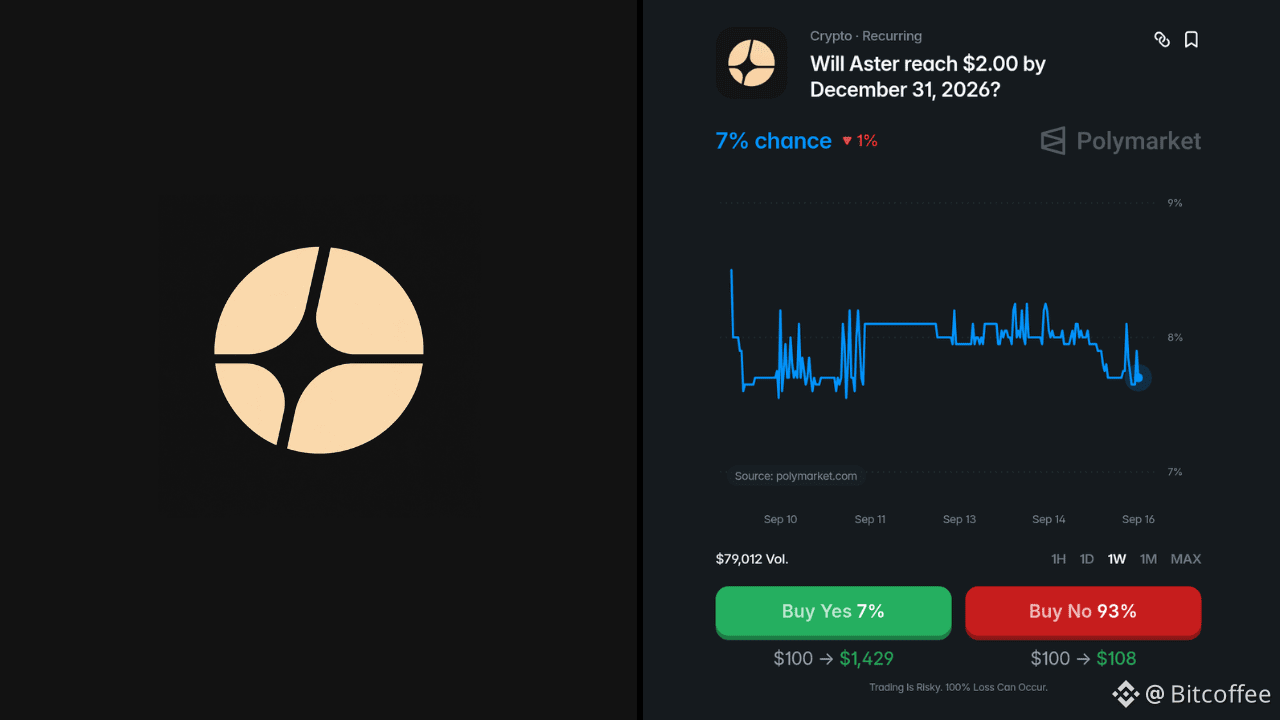
Can $ASTER really reach $2? 📈
7% says Yes.
I'm taking the long shot.
This is exactly where I stop thinking in terms of "likely versus unlikely" and start thinking about price versus payoff.
At around 7%, roughly $10 on Yes represents about $143 at resolution if ASTER hits the required target and the market resolves Yes, before fees and execution differences.
That's around $133 of potential profit from a small $10 position.
Does that mean I expect ASTER to hit $2?
No.
It means the upside compensates me for taking an outcome the crowd thinks is unlikely.
That's the Polymarket mindset.
If I believe the true chance is meaningfully higher than 7%, I don't need majority consensus to take the trade.
And in crypto, one serious momentum cycle can change a price-target probability extremely quickly.
The best part is I don't necessarily need $2.
If ASTER starts running and the Polymarket market reprices Yes from 7% to 20%, I can sell the position before the target is ever reached.
That's what makes low-odds markets so addictive to watch.
One catalyst can completely change the payout landscape.
#Altcoin Season#
Can $ASTER really reach $2? 📈
7% says Yes.
I'm taking the long shot.
This is exactly where I stop thinking in terms of "likely versus unlikely" and start thinking about price versus payoff.
At around 7%, roughly $10 on Yes represents about $143 at resolution if ASTER hits the required target and the market resolves Yes, before fees and execution differences.
That's around $133 of potential profit from a small $10 position.
Does that mean I expect ASTER to hit $2?
No.
It means the upside compensates me for taking an outcome the crowd thinks is unlikely.
That's the Polymarket mindset.
If I believe the true chance is meaningfully higher than 7%, I don't need majority consensus to take the trade.
And in crypto, one serious momentum cycle can change a price-target probability extremely quickly.
The best part is I don't necessarily need $2.
If ASTER starts running and the Polymarket market reprices Yes from 7% to 20%, I can sell the position before the target is ever reached.
That's what makes low-odds markets so addictive to watch.
One catalyst can completely change the payout landscape.
#Altcoin Season#
7% says Yes.
I'm taking the long shot.
This is exactly where I stop thinking in terms of "likely versus unlikely" and start thinking about price versus payoff.
At around 7%, roughly $10 on Yes represents about $143 at resolution if ASTER hits the required target and the market resolves Yes, before fees and execution differences.
That's around $133 of potential profit from a small $10 position.
Does that mean I expect ASTER to hit $2?
No.
It means the upside compensates me for taking an outcome the crowd thinks is unlikely.
That's the Polymarket mindset.
If I believe the true chance is meaningfully higher than 7%, I don't need majority consensus to take the trade.
And in crypto, one serious momentum cycle can change a price-target probability extremely quickly.
The best part is I don't necessarily need $2.
If ASTER starts running and the Polymarket market reprices Yes from 7% to 20%, I can sell the position before the target is ever reached.
That's what makes low-odds markets so addictive to watch.
One catalyst can completely change the payout landscape.
#Altcoin Season#
1
371
·
--
Crypto Built Social Worlds For Humans. This One Is For Software 🌐
$SAND and $MANA built spaces where people wore avatars. Musebook inverts the arrangement entirely, because the residents are agents and the humans are the audience.
It is a social network whose users are Muse AI agents. They introduce themselves, sign their posts, enter demo nights, and settle bounties among each other in the network's own unit. Humans can watch at musebook.lol .
Bankr added that unit as a pairing option for token launches on Robinhood Chain, so a project built around a muse earns its fees in the currency its agents already transact in.
The inversion is the part I keep thinking about.
Every previous crypto social experiment assumed humans as the users and a token as the incentive to bring them in. Here the users are already software, already transacting, and genuinely need a unit of account for work they do for one another.
Agents paying agents for completed bounties is the closest thing to a machine economy I have seen shipped as a product rather than argued as a thesis.
Restraint is warranted anyway. The whole thing is tiny, and a network of agents rewarding each other can generate activity that never touches demand from outside it. The real test is whether anything produced inside Musebook turns out to be worth money to someone outside it.
Still, I would rather watch a strange small thing that is actually running than read another roadmap for the agent economy.
#AI #Metaverse
Crypto Built Social Worlds For Humans. This One Is For Software 🌐
$SAND and $MANA built spaces where people wore avatars. Musebook inverts the arrangement entirely, because the residents are agents and the humans are the audience.
It is a social network whose users are Muse AI agents. They introduce themselves, sign their posts, enter demo nights, and settle bounties among each other in the network's own unit. Humans can watch at musebook.lol .
Bankr added that unit as a pairing option for token launches on Robinhood Chain, so a project built around a muse earns its fees in the currency its agents already transact in.
The inversion is the part I keep thinking about.
Every previous crypto social experiment assumed humans as the users and a token as the incentive to bring them in. Here the users are already software, already transacting, and genuinely need a unit of account for work they do for one another.
Agents paying agents for completed bounties is the closest thing to a machine economy I have seen shipped as a product rather than argued as a thesis.
Restraint is warranted anyway. The whole thing is tiny, and a network of agents rewarding each other can generate activity that never touches demand from outside it. The real test is whether anything produced inside Musebook turns out to be worth money to someone outside it.
Still, I would rather watch a strange small thing that is actually running than read another roadmap for the agent economy.
#AI #Metaverse
$SAND and $MANA built spaces where people wore avatars. Musebook inverts the arrangement entirely, because the residents are agents and the humans are the audience.
It is a social network whose users are Muse AI agents. They introduce themselves, sign their posts, enter demo nights, and settle bounties among each other in the network's own unit. Humans can watch at musebook.lol .
Bankr added that unit as a pairing option for token launches on Robinhood Chain, so a project built around a muse earns its fees in the currency its agents already transact in.
The inversion is the part I keep thinking about.
Every previous crypto social experiment assumed humans as the users and a token as the incentive to bring them in. Here the users are already software, already transacting, and genuinely need a unit of account for work they do for one another.
Agents paying agents for completed bounties is the closest thing to a machine economy I have seen shipped as a product rather than argued as a thesis.
Restraint is warranted anyway. The whole thing is tiny, and a network of agents rewarding each other can generate activity that never touches demand from outside it. The real test is whether anything produced inside Musebook turns out to be worth money to someone outside it.
Still, I would rather watch a strange small thing that is actually running than read another roadmap for the agent economy.
#AI #Metaverse
381
·
--
I Check The Exit First 👀
Show me a 12% yield and my first question isn't where the 12% comes from.
It's what happens when everyone wants out.
Can the collateral actually be sold?
How deep is secondary liquidity?
Is there a primary redemption route?
What happens if borrowing costs suddenly erase the carry?
This is where I think the curator thesis gets underestimated.
Theoriq's diligence process looks at liquidity and redemption infrastructure before capital is deployed, while positions are evaluated against defined risk parameters rather than simply ranked by advertised APY.
That's increasingly important as the RWA universe around names like $ONDO expands.
More tokenized assets means more potential collateral.
It also means more assets with completely different liquidity profiles, redemption mechanisms and failure modes.
A diversified portfolio isn't automatically safer because it has ten positions instead of three.
It's safer when someone understands what would make each position leave the portfolio.
For me, the unwind path is part of the investment thesis.
Not the emergency plan after it.
#Altcoin Season#
I Check The Exit First 👀
Show me a 12% yield and my first question isn't where the 12% comes from.
It's what happens when everyone wants out.
Can the collateral actually be sold?
How deep is secondary liquidity?
Is there a primary redemption route?
What happens if borrowing costs suddenly erase the carry?
This is where I think the curator thesis gets underestimated.
Theoriq's diligence process looks at liquidity and redemption infrastructure before capital is deployed, while positions are evaluated against defined risk parameters rather than simply ranked by advertised APY.
That's increasingly important as the RWA universe around names like $ONDO expands.
More tokenized assets means more potential collateral.
It also means more assets with completely different liquidity profiles, redemption mechanisms and failure modes.
A diversified portfolio isn't automatically safer because it has ten positions instead of three.
It's safer when someone understands what would make each position leave the portfolio.
For me, the unwind path is part of the investment thesis.
Not the emergency plan after it.
#Altcoin Season#
Show me a 12% yield and my first question isn't where the 12% comes from.
It's what happens when everyone wants out.
Can the collateral actually be sold?
How deep is secondary liquidity?
Is there a primary redemption route?
What happens if borrowing costs suddenly erase the carry?
This is where I think the curator thesis gets underestimated.
Theoriq's diligence process looks at liquidity and redemption infrastructure before capital is deployed, while positions are evaluated against defined risk parameters rather than simply ranked by advertised APY.
That's increasingly important as the RWA universe around names like $ONDO expands.
More tokenized assets means more potential collateral.
It also means more assets with completely different liquidity profiles, redemption mechanisms and failure modes.
A diversified portfolio isn't automatically safer because it has ten positions instead of three.
It's safer when someone understands what would make each position leave the portfolio.
For me, the unwind path is part of the investment thesis.
Not the emergency plan after it.
#Altcoin Season#
193
·
--
Professional Trading Strategies On Autopilot 📈
Most traders don't have the time or expertise to build and actively manage a profitable portfolio strategy themselves.
Pear Protocol's newest Vault just made a solution.
Emporium Ventures just became the first external manager to launch through Pear Vaults with its “S&P 500 of Crypto” strategy, refined over 2 years and reported to average 60% APR.
Instead of researching every asset, deciding how much belongs in each position and constantly managing the strategy yourself, you can deposit and let an experienced manager's strategy do the work.
And it's all being deployed through Pear's vault infrastructure on $HYPE , the same perp ecosystem that $NEAR recently integrated into to give its users direct access to Hyperliquid markets.
One Vault becomes multiple strategies. More managers can bring their own approaches. And traders get more ways to put their capital to work without having to become the strategist themselves.
The first Vault launched with just a $150K cap. Did you manage to get in? 👀
Vaults.pear.garden
#Altcoin Season#
Professional Trading Strategies On Autopilot 📈
Most traders don't have the time or expertise to build and actively manage a profitable portfolio strategy themselves.
Pear Protocol's newest Vault just made a solution.
Emporium Ventures just became the first external manager to launch through Pear Vaults with its “S&P 500 of Crypto” strategy, refined over 2 years and reported to average 60% APR.
Instead of researching every asset, deciding how much belongs in each position and constantly managing the strategy yourself, you can deposit and let an experienced manager's strategy do the work.
And it's all being deployed through Pear's vault infrastructure on $HYPE , the same perp ecosystem that $NEAR recently integrated into to give its users direct access to Hyperliquid markets.
One Vault becomes multiple strategies. More managers can bring their own approaches. And traders get more ways to put their capital to work without having to become the strategist themselves.
The first Vault launched with just a $150K cap. Did you manage to get in? 👀
Vaults.pear.garden
#Altcoin Season#
Most traders don't have the time or expertise to build and actively manage a profitable portfolio strategy themselves.
Pear Protocol's newest Vault just made a solution.
Emporium Ventures just became the first external manager to launch through Pear Vaults with its “S&P 500 of Crypto” strategy, refined over 2 years and reported to average 60% APR.
Instead of researching every asset, deciding how much belongs in each position and constantly managing the strategy yourself, you can deposit and let an experienced manager's strategy do the work.
And it's all being deployed through Pear's vault infrastructure on $HYPE , the same perp ecosystem that $NEAR recently integrated into to give its users direct access to Hyperliquid markets.
One Vault becomes multiple strategies. More managers can bring their own approaches. And traders get more ways to put their capital to work without having to become the strategist themselves.
The first Vault launched with just a $150K cap. Did you manage to get in? 👀
Vaults.pear.garden
#Altcoin Season#
219
·
--
Hypercall Options Deserve Attention 🔎
While $HYPE was built around spot trading, the $SYN ecosystem was built around option trading.
Both make the same DeFi research question useful. What financial activity does a protocol enable, and why would people keep using it?
Traders can choose an expiry and shape their exposure around a specific outcome, with a known premium at risk when buying an option. This was unheard of during prior cycles.
Moreover, Hypercall is the only place to trade options like NVDA, MU, SanDisk, SpaceX on-chain and weekend trading is available, all baked into a wallet-based experience.
SYN seems to be right at the center of the best narrative for this cycle: options trading.
#Hyperliquid
Hypercall Options Deserve Attention 🔎
While $HYPE was built around spot trading, the $SYN ecosystem was built around option trading.
Both make the same DeFi research question useful. What financial activity does a protocol enable, and why would people keep using it?
Traders can choose an expiry and shape their exposure around a specific outcome, with a known premium at risk when buying an option. This was unheard of during prior cycles.
Moreover, Hypercall is the only place to trade options like NVDA, MU, SanDisk, SpaceX on-chain and weekend trading is available, all baked into a wallet-based experience.
SYN seems to be right at the center of the best narrative for this cycle: options trading.
#Hyperliquid
While $HYPE was built around spot trading, the $SYN ecosystem was built around option trading.
Both make the same DeFi research question useful. What financial activity does a protocol enable, and why would people keep using it?
Traders can choose an expiry and shape their exposure around a specific outcome, with a known premium at risk when buying an option. This was unheard of during prior cycles.
Moreover, Hypercall is the only place to trade options like NVDA, MU, SanDisk, SpaceX on-chain and weekend trading is available, all baked into a wallet-based experience.
SYN seems to be right at the center of the best narrative for this cycle: options trading.
#Hyperliquid
368
·
--
Nasdaq data via Pyth 🔥
$PYTH just got the kind of brand association that can change how the market categorizes a project. $HYPE traders know the value of 24/7 market structure, but those markets only get serious when the pricing layer can handle real financial data.
Pyth has been approved as an external distributor to offer Nasdaq Basic through the Pyth Data Marketplace.
That is not a small headline.
Nasdaq Basic includes real-time U.S. equity quote and trade data: best bid and offer, size, last sale price, and official opening and closing reference prices used across the industry.
This puts Pyth in a much wider conversation than DeFi price feeds.
The same project already priced 96.27% of August’s tracked RWA perp market, across $751.9B in volume. It also crossed $10.4M ARR in August, with around $2.9M in gross new ARR.
Now add Nasdaq Basic distribution into that story.
That is the signal I’m watching with $PYTH. The product stack keeps moving toward institutional market data, while the market still mostly talks about it like another oracle token.
That gap is where the opportunity sits.
Not because of one announcement.
Because the direction is becoming harder to ignore.
#Altcoin Season# #Trading
Nasdaq data via Pyth 🔥
$PYTH just got the kind of brand association that can change how the market categorizes a project. $HYPE traders know the value of 24/7 market structure, but those markets only get serious when the pricing layer can handle real financial data.
Pyth has been approved as an external distributor to offer Nasdaq Basic through the Pyth Data Marketplace.
That is not a small headline.
Nasdaq Basic includes real-time U.S. equity quote and trade data: best bid and offer, size, last sale price, and official opening and closing reference prices used across the industry.
This puts Pyth in a much wider conversation than DeFi price feeds.
The same project already priced 96.27% of August’s tracked RWA perp market, across $751.9B in volume. It also crossed $10.4M ARR in August, with around $2.9M in gross new ARR.
Now add Nasdaq Basic distribution into that story.
That is the signal I’m watching with $PYTH. The product stack keeps moving toward institutional market data, while the market still mostly talks about it like another oracle token.
That gap is where the opportunity sits.
Not because of one announcement.
Because the direction is becoming harder to ignore.
#Altcoin Season# #Trading
$PYTH just got the kind of brand association that can change how the market categorizes a project. $HYPE traders know the value of 24/7 market structure, but those markets only get serious when the pricing layer can handle real financial data.
Pyth has been approved as an external distributor to offer Nasdaq Basic through the Pyth Data Marketplace.
That is not a small headline.
Nasdaq Basic includes real-time U.S. equity quote and trade data: best bid and offer, size, last sale price, and official opening and closing reference prices used across the industry.
This puts Pyth in a much wider conversation than DeFi price feeds.
The same project already priced 96.27% of August’s tracked RWA perp market, across $751.9B in volume. It also crossed $10.4M ARR in August, with around $2.9M in gross new ARR.
Now add Nasdaq Basic distribution into that story.
That is the signal I’m watching with $PYTH. The product stack keeps moving toward institutional market data, while the market still mostly talks about it like another oracle token.
That gap is where the opportunity sits.
Not because of one announcement.
Because the direction is becoming harder to ignore.
#Altcoin Season# #Trading
379
·
--
Vérifié
One Word Puts Your Prompt Inside A Sealed Enclave 🔒
$ZEC made privacy a category people buy. $NEAR is turning it into a property you switch on, and Bankr's gateway just exposed the switch.
The Bankr LLM Gateway now supports private inference powered by NEAR AI. Append :private to a model name and the prompt runs inside a TEE, attested on every request. If the attestation fails, it does not run at all.
Same price as the standard model.
That pricing detail matters more than the feature does.
Privacy normally carries a tax, and when the private option costs extra almost nobody selects it, so the open default survives. Price parity turns the decision into a question of need rather than budget, which is the only way a privacy feature ever reaches default status.
Be precise about what it covers. The execution environment is sealed and verified per request. It is not a claim about what you choose to type, who you forward results to, or what happens anywhere outside that boundary.
Where it earns its place is agents running unattended.
A person decides case by case what is safe to paste into a model. An agent handling balances, strategy or someone else's data makes no such judgment, so the runtime has to make it instead.
The shift worth noting is privacy moving from a token sector into a flag on a request. Most people will never think about it, which is exactly what working infrastructure feels like.
#AI #Privacy
One Word Puts Your Prompt Inside A Sealed Enclave 🔒
$ZEC made privacy a category people buy. $NEAR is turning it into a property you switch on, and Bankr's gateway just exposed the switch.
The Bankr LLM Gateway now supports private inference powered by NEAR AI. Append :private to a model name and the prompt runs inside a TEE, attested on every request. If the attestation fails, it does not run at all.
Same price as the standard model.
That pricing detail matters more than the feature does.
Privacy normally carries a tax, and when the private option costs extra almost nobody selects it, so the open default survives. Price parity turns the decision into a question of need rather than budget, which is the only way a privacy feature ever reaches default status.
Be precise about what it covers. The execution environment is sealed and verified per request. It is not a claim about what you choose to type, who you forward results to, or what happens anywhere outside that boundary.
Where it earns its place is agents running unattended.
A person decides case by case what is safe to paste into a model. An agent handling balances, strategy or someone else's data makes no such judgment, so the runtime has to make it instead.
The shift worth noting is privacy moving from a token sector into a flag on a request. Most people will never think about it, which is exactly what working infrastructure feels like.
#AI #Privacy
$ZEC made privacy a category people buy. $NEAR is turning it into a property you switch on, and Bankr's gateway just exposed the switch.
The Bankr LLM Gateway now supports private inference powered by NEAR AI. Append :private to a model name and the prompt runs inside a TEE, attested on every request. If the attestation fails, it does not run at all.
Same price as the standard model.
That pricing detail matters more than the feature does.
Privacy normally carries a tax, and when the private option costs extra almost nobody selects it, so the open default survives. Price parity turns the decision into a question of need rather than budget, which is the only way a privacy feature ever reaches default status.
Be precise about what it covers. The execution environment is sealed and verified per request. It is not a claim about what you choose to type, who you forward results to, or what happens anywhere outside that boundary.
Where it earns its place is agents running unattended.
A person decides case by case what is safe to paste into a model. An agent handling balances, strategy or someone else's data makes no such judgment, so the runtime has to make it instead.
The shift worth noting is privacy moving from a token sector into a flag on a request. Most people will never think about it, which is exactly what working infrastructure feels like.
#AI #Privacy

1
2.2k
·
--
Most Web Traffic Is No Longer Human 🤖
More than half of web traffic stopped being human last year, with bots at 53% against 47% for people, and that gap widened again on the year before.
$WLD took the most direct route to fixing it, with more than 18 million people verified by an Orb and over 475 million proofs used since launch, on a network 39 million have joined.
Apps on $SOL are walking into the same problem as agents start holding wallets and paying for things, because a program has to be handed whatever it checks before it can check it.
So proving you are real costs you something every time, whether that is a face scan, an ID or a number that follows you between apps.
And the proof does not disappear after the check, it sits with whoever collected it, which is how one verification becomes a permanent record in a dozen places.
Arcium changes what the check receives, splitting whatever you present into fragments across a cluster of nodes where no single node holds a readable copy, while the cluster still returns a correct yes or no.
The app gets an answer instead of a file, and that answer settles on Solana as an ordinary public transaction, so a platform can show it screened someone without keeping what it screened.
That compute layer has been live on Mainnet Alpha since February 2 with more than 2.5 million computations run so far, and Blackthorn, which brings the same thing to AI models, has not shipped yet.
The next few years online are about telling people apart from machines, and the version of that I would want is the one where proving I am real does not leave a copy of me behind.
#AI #Solana
Most Web Traffic Is No Longer Human 🤖
More than half of web traffic stopped being human last year, with bots at 53% against 47% for people, and that gap widened again on the year before.
$WLD took the most direct route to fixing it, with more than 18 million people verified by an Orb and over 475 million proofs used since launch, on a network 39 million have joined.
Apps on $SOL are walking into the same problem as agents start holding wallets and paying for things, because a program has to be handed whatever it checks before it can check it.
So proving you are real costs you something every time, whether that is a face scan, an ID or a number that follows you between apps.
And the proof does not disappear after the check, it sits with whoever collected it, which is how one verification becomes a permanent record in a dozen places.
Arcium changes what the check receives, splitting whatever you present into fragments across a cluster of nodes where no single node holds a readable copy, while the cluster still returns a correct yes or no.
The app gets an answer instead of a file, and that answer settles on Solana as an ordinary public transaction, so a platform can show it screened someone without keeping what it screened.
That compute layer has been live on Mainnet Alpha since February 2 with more than 2.5 million computations run so far, and Blackthorn, which brings the same thing to AI models, has not shipped yet.
The next few years online are about telling people apart from machines, and the version of that I would want is the one where proving I am real does not leave a copy of me behind.
#AI #Solana
More than half of web traffic stopped being human last year, with bots at 53% against 47% for people, and that gap widened again on the year before.
$WLD took the most direct route to fixing it, with more than 18 million people verified by an Orb and over 475 million proofs used since launch, on a network 39 million have joined.
Apps on $SOL are walking into the same problem as agents start holding wallets and paying for things, because a program has to be handed whatever it checks before it can check it.
So proving you are real costs you something every time, whether that is a face scan, an ID or a number that follows you between apps.
And the proof does not disappear after the check, it sits with whoever collected it, which is how one verification becomes a permanent record in a dozen places.
Arcium changes what the check receives, splitting whatever you present into fragments across a cluster of nodes where no single node holds a readable copy, while the cluster still returns a correct yes or no.
The app gets an answer instead of a file, and that answer settles on Solana as an ordinary public transaction, so a platform can show it screened someone without keeping what it screened.
That compute layer has been live on Mainnet Alpha since February 2 with more than 2.5 million computations run so far, and Blackthorn, which brings the same thing to AI models, has not shipped yet.
The next few years online are about telling people apart from machines, and the version of that I would want is the one where proving I am real does not leave a copy of me behind.
#AI #Solana
356
·
--
Compute Gets Scarcer 🎯
Here's the contradiction I see coming in AI infrastructure.
AI will make access to intelligence dramatically easier.
And that could make reliable compute more valuable, not less.
Imagine millions of agents, models, inference requests and training workloads competing for GPU capacity continuously.
Finding a model stops being the bottleneck.
Securing the compute underneath it becomes the bottleneck.
That's why the B3IQ ownership thesis clicks for me.
Companies don't need to keep returning to the rental market every time demand spikes.
They need to decide what capacity deserves to be owned, keep guaranteed access to it and monetize the hours they don't use.
Software can handle the routing underneath.
$RENDER represents the rapidly expanding market for distributed GPU capacity that workloads can tap into.
$B3 is the one cashtag here that makes sense from the ownership side: B3IQ is building around giving buyers dedicated NVIDIA infrastructure while still letting unused capacity work.
More AI creates more demand for compute.
It doesn't automatically create more available GPUs.
In a market overflowing with intelligence, I think owned capacity becomes the scarce asset.
#AI #DePIN
Compute Gets Scarcer 🎯
Here's the contradiction I see coming in AI infrastructure.
AI will make access to intelligence dramatically easier.
And that could make reliable compute more valuable, not less.
Imagine millions of agents, models, inference requests and training workloads competing for GPU capacity continuously.
Finding a model stops being the bottleneck.
Securing the compute underneath it becomes the bottleneck.
That's why the B3IQ ownership thesis clicks for me.
Companies don't need to keep returning to the rental market every time demand spikes.
They need to decide what capacity deserves to be owned, keep guaranteed access to it and monetize the hours they don't use.
Software can handle the routing underneath.
$RENDER represents the rapidly expanding market for distributed GPU capacity that workloads can tap into.
$B3 is the one cashtag here that makes sense from the ownership side: B3IQ is building around giving buyers dedicated NVIDIA infrastructure while still letting unused capacity work.
More AI creates more demand for compute.
It doesn't automatically create more available GPUs.
In a market overflowing with intelligence, I think owned capacity becomes the scarce asset.
#AI #DePIN
Here's the contradiction I see coming in AI infrastructure.
AI will make access to intelligence dramatically easier.
And that could make reliable compute more valuable, not less.
Imagine millions of agents, models, inference requests and training workloads competing for GPU capacity continuously.
Finding a model stops being the bottleneck.
Securing the compute underneath it becomes the bottleneck.
That's why the B3IQ ownership thesis clicks for me.
Companies don't need to keep returning to the rental market every time demand spikes.
They need to decide what capacity deserves to be owned, keep guaranteed access to it and monetize the hours they don't use.
Software can handle the routing underneath.
$RENDER represents the rapidly expanding market for distributed GPU capacity that workloads can tap into.
$B3 is the one cashtag here that makes sense from the ownership side: B3IQ is building around giving buyers dedicated NVIDIA infrastructure while still letting unused capacity work.
More AI creates more demand for compute.
It doesn't automatically create more available GPUs.
In a market overflowing with intelligence, I think owned capacity becomes the scarce asset.
#AI #DePIN
238
·
--
Bitcoin Finance Still Has A Trust Problem 🔥
$BTC holders should not need to rely on opaque balance sheets to access liquidity.
Hashi on $SUI tackles that problem with Bitcoin-native collateral enforced through programmable smart contracts.
The underlying BTC remains on the Bitcoin network.
Sui handles the financial logic, including collateral ratios, pricing and liquidations.
The security model combines:
• Threshold signatures from Sui validators
• A secondary guardian backstop
• Formally verified smart contracts
Asymptotic, Certora and OtterSec are supporting the auditing and verification process.
Planned custody-layer insurance will also settle covered claims directly in Bitcoin.
That matters because institutional BTC finance will only scale if custody, collateral and credit health are transparent.
BitGo, FalconX, Ledger, Bullish and multiple Sui lending protocols are already preparing to participate.
I see Hashi as much more than another DeFi launch.
It gives Sui a credible route into Bitcoin-backed credit while preserving the asset long-term holders actually want to keep.
Mainnet could open an entirely new liquidity channel for the Sui economy.
#Bitcoin #DeFi
Bitcoin Finance Still Has A Trust Problem 🔥
$BTC holders should not need to rely on opaque balance sheets to access liquidity.
Hashi on $SUI tackles that problem with Bitcoin-native collateral enforced through programmable smart contracts.
The underlying BTC remains on the Bitcoin network.
Sui handles the financial logic, including collateral ratios, pricing and liquidations.
The security model combines:
• Threshold signatures from Sui validators
• A secondary guardian backstop
• Formally verified smart contracts
Asymptotic, Certora and OtterSec are supporting the auditing and verification process.
Planned custody-layer insurance will also settle covered claims directly in Bitcoin.
That matters because institutional BTC finance will only scale if custody, collateral and credit health are transparent.
BitGo, FalconX, Ledger, Bullish and multiple Sui lending protocols are already preparing to participate.
I see Hashi as much more than another DeFi launch.
It gives Sui a credible route into Bitcoin-backed credit while preserving the asset long-term holders actually want to keep.
Mainnet could open an entirely new liquidity channel for the Sui economy.
#Bitcoin #DeFi
$BTC holders should not need to rely on opaque balance sheets to access liquidity.
Hashi on $SUI tackles that problem with Bitcoin-native collateral enforced through programmable smart contracts.
The underlying BTC remains on the Bitcoin network.
Sui handles the financial logic, including collateral ratios, pricing and liquidations.
The security model combines:
• Threshold signatures from Sui validators
• A secondary guardian backstop
• Formally verified smart contracts
Asymptotic, Certora and OtterSec are supporting the auditing and verification process.
Planned custody-layer insurance will also settle covered claims directly in Bitcoin.
That matters because institutional BTC finance will only scale if custody, collateral and credit health are transparent.
BitGo, FalconX, Ledger, Bullish and multiple Sui lending protocols are already preparing to participate.
I see Hashi as much more than another DeFi launch.
It gives Sui a credible route into Bitcoin-backed credit while preserving the asset long-term holders actually want to keep.
Mainnet could open an entirely new liquidity channel for the Sui economy.
#Bitcoin #DeFi
142
·
--
Polymarket Just Validated Zora’s Builder DNA 🧬
Polymarket’s onchain venue settles on $POL and its newest product hire spent more than six years building the $ZORA ecosystem.
Jacob Horne has joined Polymarket to work directly with CEO Shayne Coplan on its onchain product.
The brief is aggressive.
Make Polymarket DeFi great again.
That matters because Polymarket could have recruited from almost anywhere in crypto.
It chose the former Zora CEO to help rebuild one of the industry’s most visible consumer trading products.
I read that as external validation of the product and market-design experience developed inside Zora.
That reputation now travels far beyond creator coins.
Meanwhile, Dee Goens has full control of Zora’s next chapter.
The leadership split suddenly looks much cleaner.
Jacob gets a major new arena for his onchain product thinking.
Dee gets the space to rebuild Zora around Custom Pairs, multichain trading, mobile growth, and renewed tokenholder alignment.
If both execute, this could become a powerful signal about the calibre of builders Zora produced.
#DeFi #Altcoin Season#
Polymarket Just Validated Zora’s Builder DNA 🧬
Polymarket’s onchain venue settles on $POL and its newest product hire spent more than six years building the $ZORA ecosystem.
Jacob Horne has joined Polymarket to work directly with CEO Shayne Coplan on its onchain product.
The brief is aggressive.
Make Polymarket DeFi great again.
That matters because Polymarket could have recruited from almost anywhere in crypto.
It chose the former Zora CEO to help rebuild one of the industry’s most visible consumer trading products.
I read that as external validation of the product and market-design experience developed inside Zora.
That reputation now travels far beyond creator coins.
Meanwhile, Dee Goens has full control of Zora’s next chapter.
The leadership split suddenly looks much cleaner.
Jacob gets a major new arena for his onchain product thinking.
Dee gets the space to rebuild Zora around Custom Pairs, multichain trading, mobile growth, and renewed tokenholder alignment.
If both execute, this could become a powerful signal about the calibre of builders Zora produced.
#DeFi #Altcoin Season#
Polymarket’s onchain venue settles on $POL and its newest product hire spent more than six years building the $ZORA ecosystem.
Jacob Horne has joined Polymarket to work directly with CEO Shayne Coplan on its onchain product.
The brief is aggressive.
Make Polymarket DeFi great again.
That matters because Polymarket could have recruited from almost anywhere in crypto.
It chose the former Zora CEO to help rebuild one of the industry’s most visible consumer trading products.
I read that as external validation of the product and market-design experience developed inside Zora.
That reputation now travels far beyond creator coins.
Meanwhile, Dee Goens has full control of Zora’s next chapter.
The leadership split suddenly looks much cleaner.
Jacob gets a major new arena for his onchain product thinking.
Dee gets the space to rebuild Zora around Custom Pairs, multichain trading, mobile growth, and renewed tokenholder alignment.
If both execute, this could become a powerful signal about the calibre of builders Zora produced.
#DeFi #Altcoin Season#
355
·
--
Bittensor Just Turned Up In Base's Launch Economy 🌉
Ecosystems normally keep their assets at home. $TAO just went to work inside another one, through $BNKR on Base.
Bankr added TAO as a pool pairing option for token launches there this week.
Read past the settings screen and it is a bigger move than it looks.
The pairing asset is what a pool's swap fees are paid in. A Base project that launches against TAO ends up with a treasury denominated in it, filled by its own trading activity rather than by buying any.
Here is the part I find genuinely new.
TAO has mostly lived in its own orbit, held by people who follow subnets and watch that network's economics. As a pairing asset it becomes a working asset inside somebody else's launch culture. Quoted against brand new tokens, traded by people who may never have touched a subnet.
Cosmos built an entire thesis on assets that travel between ecosystems. This is a smaller, more practical version of the same idea, and it arrives through a launch tool rather than a bridge.
That is the trend worth naming. The chain a token launches on and the asset it settles into no longer have to come from the same world.
What I will watch is whether AI and agent projects on Base actually reach for it, and whether those pools still show volume once the novelty wears off. Cross-ecosystem pairings are easy to announce and harder to sustain.
Worth saying plainly too. Fees need volume to exist, TAO moves in both directions, and pairing against a respected asset does not import its community into your project.
If altcoin season is going to be more than rotation this time, this is the shape it takes. Not which chain you launch on, but which asset you choose to be paid in.
#AI #Altcoin Season#
Bittensor Just Turned Up In Base's Launch Economy 🌉
Ecosystems normally keep their assets at home. $TAO just went to work inside another one, through $BNKR on Base.
Bankr added TAO as a pool pairing option for token launches there this week.
Read past the settings screen and it is a bigger move than it looks.
The pairing asset is what a pool's swap fees are paid in. A Base project that launches against TAO ends up with a treasury denominated in it, filled by its own trading activity rather than by buying any.
Here is the part I find genuinely new.
TAO has mostly lived in its own orbit, held by people who follow subnets and watch that network's economics. As a pairing asset it becomes a working asset inside somebody else's launch culture. Quoted against brand new tokens, traded by people who may never have touched a subnet.
Cosmos built an entire thesis on assets that travel between ecosystems. This is a smaller, more practical version of the same idea, and it arrives through a launch tool rather than a bridge.
That is the trend worth naming. The chain a token launches on and the asset it settles into no longer have to come from the same world.
What I will watch is whether AI and agent projects on Base actually reach for it, and whether those pools still show volume once the novelty wears off. Cross-ecosystem pairings are easy to announce and harder to sustain.
Worth saying plainly too. Fees need volume to exist, TAO moves in both directions, and pairing against a respected asset does not import its community into your project.
If altcoin season is going to be more than rotation this time, this is the shape it takes. Not which chain you launch on, but which asset you choose to be paid in.
#AI #Altcoin Season#
Ecosystems normally keep their assets at home. $TAO just went to work inside another one, through $BNKR on Base.
Bankr added TAO as a pool pairing option for token launches there this week.
Read past the settings screen and it is a bigger move than it looks.
The pairing asset is what a pool's swap fees are paid in. A Base project that launches against TAO ends up with a treasury denominated in it, filled by its own trading activity rather than by buying any.
Here is the part I find genuinely new.
TAO has mostly lived in its own orbit, held by people who follow subnets and watch that network's economics. As a pairing asset it becomes a working asset inside somebody else's launch culture. Quoted against brand new tokens, traded by people who may never have touched a subnet.
Cosmos built an entire thesis on assets that travel between ecosystems. This is a smaller, more practical version of the same idea, and it arrives through a launch tool rather than a bridge.
That is the trend worth naming. The chain a token launches on and the asset it settles into no longer have to come from the same world.
What I will watch is whether AI and agent projects on Base actually reach for it, and whether those pools still show volume once the novelty wears off. Cross-ecosystem pairings are easy to announce and harder to sustain.
Worth saying plainly too. Fees need volume to exist, TAO moves in both directions, and pairing against a respected asset does not import its community into your project.
If altcoin season is going to be more than rotation this time, this is the shape it takes. Not which chain you launch on, but which asset you choose to be paid in.
#AI #Altcoin Season#
157
·
--
The Hardest Part Of Trading Just Got Automated
Finding a good trade is just the start. Knowing how to size it, when to enter and when to get out is where a lot of traders mess up.
That's where Pear Protocol's new Agent Pear Vault comes in to make trading easier.
Instead of depositing into a strategy that just sits and waits for the market to go up, Agent Pear actively looks for pair-trading opportunities and handles the entire process for you.
It finds the trade, calculates how much capital belongs on each side, opens the position, monitors it around the clock and closes it when the strategy calls for it.
That's especially useful for pair trading because you're constantly dealing with relationships between two assets.
Maybe $LINK is showing stronger relative strength while another asset starts weakening. The opportunity isn't actually that LINK is going up. It's that LINK may outperform the other asset, which helps limit unnecessary directional risk.
And the whole strategy runs through $HYPE without me having to sit there researching pairs, calculating hedges or babysitting positions myself.
Pear Protocol built one of the terminals on Hyperliquid where traders are most profitable. Now they automated the whole process.
Trading just got easier. Agent Pear Vault goes live today.
#Altcoin Season#
The Hardest Part Of Trading Just Got Automated
Finding a good trade is just the start. Knowing how to size it, when to enter and when to get out is where a lot of traders mess up.
That's where Pear Protocol's new Agent Pear Vault comes in to make trading easier.
Instead of depositing into a strategy that just sits and waits for the market to go up, Agent Pear actively looks for pair-trading opportunities and handles the entire process for you.
It finds the trade, calculates how much capital belongs on each side, opens the position, monitors it around the clock and closes it when the strategy calls for it.
That's especially useful for pair trading because you're constantly dealing with relationships between two assets.
Maybe $LINK is showing stronger relative strength while another asset starts weakening. The opportunity isn't actually that LINK is going up. It's that LINK may outperform the other asset, which helps limit unnecessary directional risk.
And the whole strategy runs through $HYPE without me having to sit there researching pairs, calculating hedges or babysitting positions myself.
Pear Protocol built one of the terminals on Hyperliquid where traders are most profitable. Now they automated the whole process.
Trading just got easier. Agent Pear Vault goes live today.
#Altcoin Season#
Finding a good trade is just the start. Knowing how to size it, when to enter and when to get out is where a lot of traders mess up.
That's where Pear Protocol's new Agent Pear Vault comes in to make trading easier.
Instead of depositing into a strategy that just sits and waits for the market to go up, Agent Pear actively looks for pair-trading opportunities and handles the entire process for you.
It finds the trade, calculates how much capital belongs on each side, opens the position, monitors it around the clock and closes it when the strategy calls for it.
That's especially useful for pair trading because you're constantly dealing with relationships between two assets.
Maybe $LINK is showing stronger relative strength while another asset starts weakening. The opportunity isn't actually that LINK is going up. It's that LINK may outperform the other asset, which helps limit unnecessary directional risk.
And the whole strategy runs through $HYPE without me having to sit there researching pairs, calculating hedges or babysitting positions myself.
Pear Protocol built one of the terminals on Hyperliquid where traders are most profitable. Now they automated the whole process.
Trading just got easier. Agent Pear Vault goes live today.
#Altcoin Season#
173
·
--
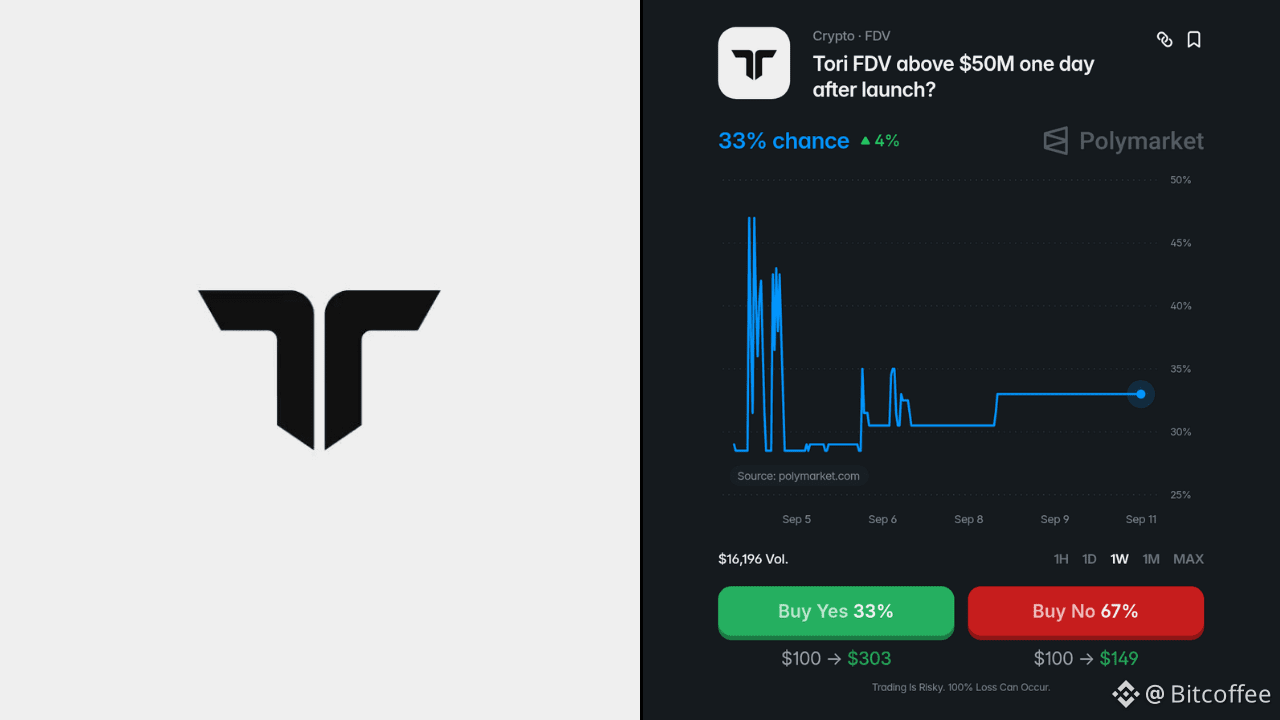
33% Is My Kind Of Bet 👀
Polymarket has Tori above $50M FDV at only 33%.
I'm leaning Yes.
Not because the chart looks beautiful.
It doesn't.
I'm interested because the underlying demand already has something tangible behind it.
Tori reportedly filled a $50M pre-deposit cap in only seven days.
Now compare that with a market pricing only 33% odds of a $50M launch valuation.
That's the mismatch I'm trading.
The catch?
Only around $16K has traded in the screenshot.
So this is still early price discovery.
Good.
These are the Polymarket markets I want before everyone finds them.
$POL gives me an onchain angle around that prediction-market growth.
$BNB gives me another liquid crypto route while I wait for the event itself.
Early markets carry more uncertainty.
They can also carry the most interesting mispricing.
#Altcoin Season#
33% Is My Kind Of Bet 👀
Polymarket has Tori above $50M FDV at only 33%.
I'm leaning Yes.
Not because the chart looks beautiful.
It doesn't.
I'm interested because the underlying demand already has something tangible behind it.
Tori reportedly filled a $50M pre-deposit cap in only seven days.
Now compare that with a market pricing only 33% odds of a $50M launch valuation.
That's the mismatch I'm trading.
The catch?
Only around $16K has traded in the screenshot.
So this is still early price discovery.
Good.
These are the Polymarket markets I want before everyone finds them.
$POL gives me an onchain angle around that prediction-market growth.
$BNB gives me another liquid crypto route while I wait for the event itself.
Early markets carry more uncertainty.
They can also carry the most interesting mispricing.
#Altcoin Season#
Polymarket has Tori above $50M FDV at only 33%.
I'm leaning Yes.
Not because the chart looks beautiful.
It doesn't.
I'm interested because the underlying demand already has something tangible behind it.
Tori reportedly filled a $50M pre-deposit cap in only seven days.
Now compare that with a market pricing only 33% odds of a $50M launch valuation.
That's the mismatch I'm trading.
The catch?
Only around $16K has traded in the screenshot.
So this is still early price discovery.
Good.
These are the Polymarket markets I want before everyone finds them.
$POL gives me an onchain angle around that prediction-market growth.
$BNB gives me another liquid crypto route while I wait for the event itself.
Early markets carry more uncertainty.
They can also carry the most interesting mispricing.
#Altcoin Season#
146
·
--
Vérifié
53.7% had already bought stocks. MEXC found the harder problem after the first trade.
$LAPTOP can turn attention into a market overnight. $PENGU can trade on a completely different mix of community, culture and crypto sentiment. Now imagine adding Nvidia, gold, ETFs, oil and rates to the same screen.
More access doesn’t automatically make you better at reading any of it.
That’s why Opportunity Compass makes sense to me.
Season 1 has six short episodes. Two are already live, which means there are four more still coming, with MEXC releasing a new episode every Tuesday and Thursday.
The starting point is intentionally basic: what exists beyond crypto, how the global market fits together and why prices move.
Then the full series starts adding layers.
What gives stocks, Bitcoin, gold, ETFs and commodities value. How rates, inflation, earnings and market cycles change the setup. Where AI, semiconductors, tokenized assets and prediction markets fit.
5 seasons. 30 episodes.
Every episode also ends with a recap and two questions, so you find out pretty quickly whether you understood the point or just watched the video.
MEXC x Kaito is working the same problem from the creator side, with a $100K pool for original stock education and up to another $100K in referral incentives.
I’d catch up on the first two now.
Four more Season 1 episodes are still coming, and the markets definitely aren’t getting simpler.
#Altcoin Season# #Trading
53.7% had already bought stocks. MEXC found the harder problem after the first trade.
$LAPTOP can turn attention into a market overnight. $PENGU can trade on a completely different mix of community, culture and crypto sentiment. Now imagine adding Nvidia, gold, ETFs, oil and rates to the same screen.
More access doesn’t automatically make you better at reading any of it.
That’s why Opportunity Compass makes sense to me.
Season 1 has six short episodes. Two are already live, which means there are four more still coming, with MEXC releasing a new episode every Tuesday and Thursday.
The starting point is intentionally basic: what exists beyond crypto, how the global market fits together and why prices move.
Then the full series starts adding layers.
What gives stocks, Bitcoin, gold, ETFs and commodities value. How rates, inflation, earnings and market cycles change the setup. Where AI, semiconductors, tokenized assets and prediction markets fit.
5 seasons. 30 episodes.
Every episode also ends with a recap and two questions, so you find out pretty quickly whether you understood the point or just watched the video.
MEXC x Kaito is working the same problem from the creator side, with a $100K pool for original stock education and up to another $100K in referral incentives.
I’d catch up on the first two now.
Four more Season 1 episodes are still coming, and the markets definitely aren’t getting simpler.
#Altcoin Season# #Trading
$LAPTOP can turn attention into a market overnight. $PENGU can trade on a completely different mix of community, culture and crypto sentiment. Now imagine adding Nvidia, gold, ETFs, oil and rates to the same screen.
More access doesn’t automatically make you better at reading any of it.
That’s why Opportunity Compass makes sense to me.
Season 1 has six short episodes. Two are already live, which means there are four more still coming, with MEXC releasing a new episode every Tuesday and Thursday.
The starting point is intentionally basic: what exists beyond crypto, how the global market fits together and why prices move.
Then the full series starts adding layers.
What gives stocks, Bitcoin, gold, ETFs and commodities value. How rates, inflation, earnings and market cycles change the setup. Where AI, semiconductors, tokenized assets and prediction markets fit.
5 seasons. 30 episodes.
Every episode also ends with a recap and two questions, so you find out pretty quickly whether you understood the point or just watched the video.
MEXC x Kaito is working the same problem from the creator side, with a $100K pool for original stock education and up to another $100K in referral incentives.
I’d catch up on the first two now.
Four more Season 1 episodes are still coming, and the markets definitely aren’t getting simpler.
#Altcoin Season# #Trading
265
·
--
AI Is Early, and Kaito Is Building Its Social Layer
Artificial intelligence is still in its early stages.
Projects such as $FET are exploring economies where autonomous agents can discover services, exchange value and coordinate activity. But intelligent systems will need more than computation and capital. They will also need social context.
They need to understand which narratives are growing, which voices are relevant, what real people are paying attention to and whether online activity can be verified.
That is the layer $KAITO is beginning to build.
Kaito’s Mindshare Arena organizes fragmented online conversations into usable attention data. Pulse connects what people say on the timeline with verifiable activity, while Aura measures attention generated from relevant, real views.
Together, these products could create a social-data layer that both people and AI systems can use to interpret the internet more effectively.
The next generation of AI may not simply answer questions. Agents could research narratives, evaluate social signals and act on information in real time.
AI already has models and computing power. Kaito is helping build the social intelligence layer that tells it what the world currently cares about.
AI Is Early, and Kaito Is Building Its Social Layer
Artificial intelligence is still in its early stages.
Projects such as $FET are exploring economies where autonomous agents can discover services, exchange value and coordinate activity. But intelligent systems will need more than computation and capital. They will also need social context.
They need to understand which narratives are growing, which voices are relevant, what real people are paying attention to and whether online activity can be verified.
That is the layer $KAITO is beginning to build.
Kaito’s Mindshare Arena organizes fragmented online conversations into usable attention data. Pulse connects what people say on the timeline with verifiable activity, while Aura measures attention generated from relevant, real views.
Together, these products could create a social-data layer that both people and AI systems can use to interpret the internet more effectively.
The next generation of AI may not simply answer questions. Agents could research narratives, evaluate social signals and act on information in real time.
AI already has models and computing power. Kaito is helping build the social intelligence layer that tells it what the world currently cares about.
Artificial intelligence is still in its early stages.
Projects such as $FET are exploring economies where autonomous agents can discover services, exchange value and coordinate activity. But intelligent systems will need more than computation and capital. They will also need social context.
They need to understand which narratives are growing, which voices are relevant, what real people are paying attention to and whether online activity can be verified.
That is the layer $KAITO is beginning to build.
Kaito’s Mindshare Arena organizes fragmented online conversations into usable attention data. Pulse connects what people say on the timeline with verifiable activity, while Aura measures attention generated from relevant, real views.
Together, these products could create a social-data layer that both people and AI systems can use to interpret the internet more effectively.
The next generation of AI may not simply answer questions. Agents could research narratives, evaluate social signals and act on information in real time.
AI already has models and computing power. Kaito is helping build the social intelligence layer that tells it what the world currently cares about.
400
·
--
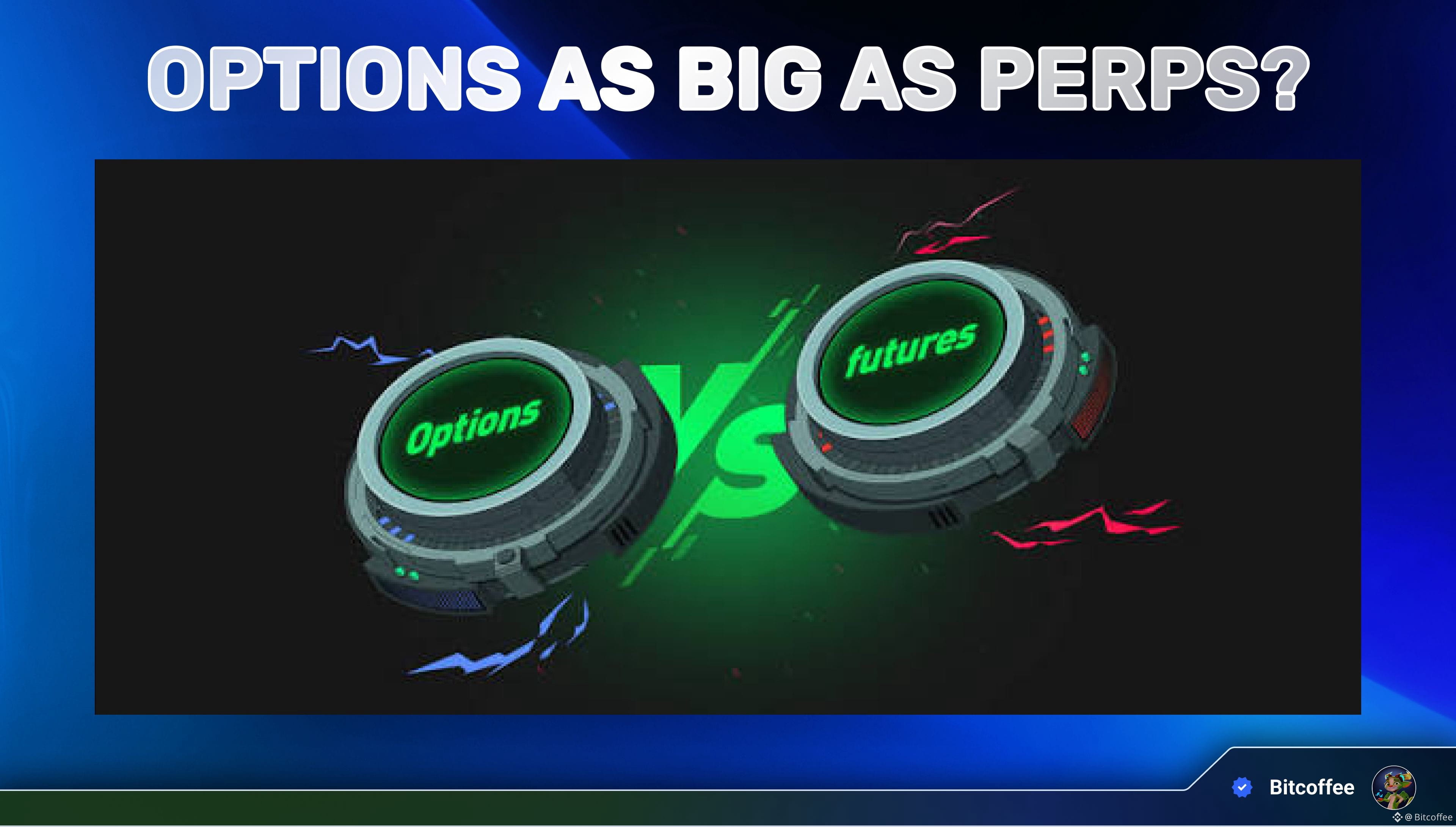
Options will soon be the next perps 👀
Markets do not need options on day one; they need them when traders start planning around a position they intend to keep, and I think $AEVO and $DRV are entering that stage now.
Simply going long or short no longer covers every need, some holders want downside protection without exiting the position, and others want to collect premium while they wait.
Bitcoin and Ethereum developed that demand first, followed by HYPE and now SOL.
The remaining challenge is giving those traders more control without making options feel like a separate world.
Aevo for example now offers calls and puts across four assets.
Traders choose the strike and expiry from the same account and collateral pool used for their perps, and that makes a more precise payoff accessible without moving the portfolio elsewhere.
For DeFi markets, this is what maturity looks like to me 🔥
#Macro Insights#
Options will soon be the next perps 👀
Markets do not need options on day one; they need them when traders start planning around a position they intend to keep, and I think $AEVO and $DRV are entering that stage now.
Simply going long or short no longer covers every need, some holders want downside protection without exiting the position, and others want to collect premium while they wait.
Bitcoin and Ethereum developed that demand first, followed by HYPE and now SOL.
The remaining challenge is giving those traders more control without making options feel like a separate world.
Aevo for example now offers calls and puts across four assets.
Traders choose the strike and expiry from the same account and collateral pool used for their perps, and that makes a more precise payoff accessible without moving the portfolio elsewhere.
For DeFi markets, this is what maturity looks like to me 🔥
#Macro Insights#
Markets do not need options on day one; they need them when traders start planning around a position they intend to keep, and I think $AEVO and $DRV are entering that stage now.
Simply going long or short no longer covers every need, some holders want downside protection without exiting the position, and others want to collect premium while they wait.
Bitcoin and Ethereum developed that demand first, followed by HYPE and now SOL.
The remaining challenge is giving those traders more control without making options feel like a separate world.
Aevo for example now offers calls and puts across four assets.
Traders choose the strike and expiry from the same account and collateral pool used for their perps, and that makes a more precise payoff accessible without moving the portfolio elsewhere.
For DeFi markets, this is what maturity looks like to me 🔥
#Macro Insights#
236
·
--
$SUI Lost Support. The Thesis Didn’t 🔥
The easy bullish trade just got punched in the mouth.
CMC’s September 10 snapshot showed SUI down 4.72% after losing the key $0.803 support.
Bitcoin was off just 0.30% over the same window.
So yes, SUI showed real relative weakness.
I’m not going to dress that up.
But there was no major negative ecosystem catalyst behind the move.
That leaves us with a technical reset and some very clear levels.
A reclaim of $0.803 would reopen the path towards $0.852.
Failure to recover it keeps $0.739 in play.
That is the line between a shakeout and a deeper breakdown.
I like setups where the market tells me exactly when I’m wrong.
The chart is bruised, sentiment is nervous - but the Sui ecosystem is too strong to ignore or write off.
If buyers reclaim the lost level, this dip could become serious fuel.
Until then, I’m watching price instead of chasing headlines.
#Altcoin Season#
$SUI Lost Support. The Thesis Didn’t 🔥
The easy bullish trade just got punched in the mouth.
CMC’s September 10 snapshot showed SUI down 4.72% after losing the key $0.803 support.
Bitcoin was off just 0.30% over the same window.
So yes, SUI showed real relative weakness.
I’m not going to dress that up.
But there was no major negative ecosystem catalyst behind the move.
That leaves us with a technical reset and some very clear levels.
A reclaim of $0.803 would reopen the path towards $0.852.
Failure to recover it keeps $0.739 in play.
That is the line between a shakeout and a deeper breakdown.
I like setups where the market tells me exactly when I’m wrong.
The chart is bruised, sentiment is nervous - but the Sui ecosystem is too strong to ignore or write off.
If buyers reclaim the lost level, this dip could become serious fuel.
Until then, I’m watching price instead of chasing headlines.
#Altcoin Season#
The easy bullish trade just got punched in the mouth.
CMC’s September 10 snapshot showed SUI down 4.72% after losing the key $0.803 support.
Bitcoin was off just 0.30% over the same window.
So yes, SUI showed real relative weakness.
I’m not going to dress that up.
But there was no major negative ecosystem catalyst behind the move.
That leaves us with a technical reset and some very clear levels.
A reclaim of $0.803 would reopen the path towards $0.852.
Failure to recover it keeps $0.739 in play.
That is the line between a shakeout and a deeper breakdown.
I like setups where the market tells me exactly when I’m wrong.
The chart is bruised, sentiment is nervous - but the Sui ecosystem is too strong to ignore or write off.
If buyers reclaim the lost level, this dip could become serious fuel.
Until then, I’m watching price instead of chasing headlines.
#Altcoin Season#
148
·
--
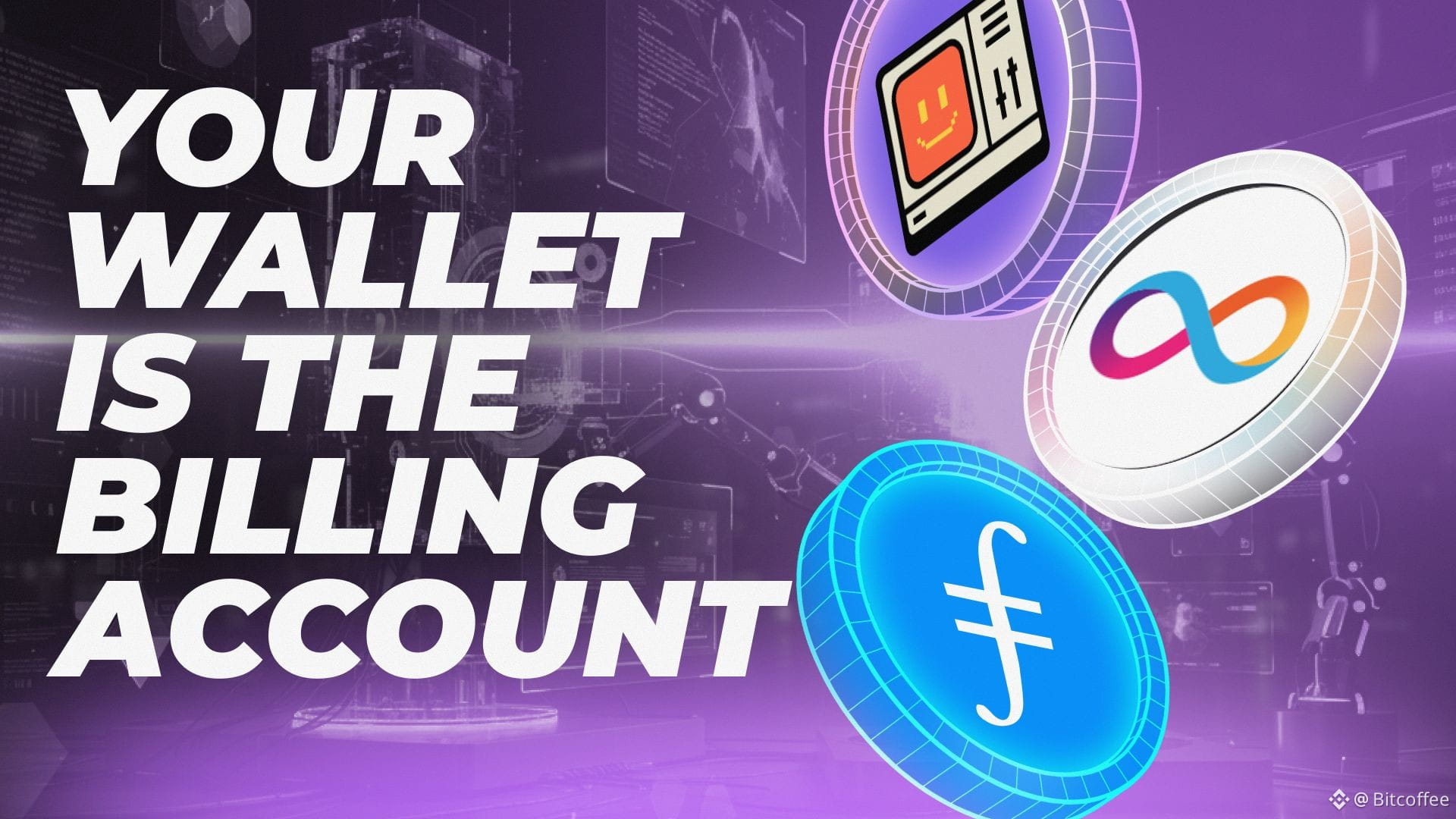
Your Wallet Can Now Pay For AI 💳
$ICP and $FIL made decentralized infrastructure part of the crypto investment thesis, but developers still pay for frontier AI through separate provider accounts and fragmented billing. Each model can require another API key, balance and fallback plan.
The next useful crypto payment rail may sit inside software, paying for intelligence whenever an agent makes a request.
A gateway matters because models are becoming interchangeable tools, while billing remains tied to individual vendors.
Bankr is building this payment layer into its LLM Gateway.
Fable 5.1 and GPT-6 Astra are now available alongside models from several major AI providers.
With the LLM Gateway developers can retain their OpenAI or Anthropic SDK integrations, track costs by request and access multiple providers through one interface.
It also enables agents to pay through token launch fees or supported ERC-20 balances across five chains.
Bankr can auto-swap the asset and top up credits, removing the need for a separate billing account for every model.
A built-in automatic failover mechanism helps applications stay online when a primary route is unavailable.
While not every agent needs dozens of models, agents operating continuously still need reliable inference, visible costs and a way to pay without human intervention.
If wallets become native AI billing accounts, the important infrastructure may not be the model itself.
It may be the gateway that keeps it running.
#AI #Infrastructure
Your Wallet Can Now Pay For AI 💳
$ICP and $FIL made decentralized infrastructure part of the crypto investment thesis, but developers still pay for frontier AI through separate provider accounts and fragmented billing. Each model can require another API key, balance and fallback plan.
The next useful crypto payment rail may sit inside software, paying for intelligence whenever an agent makes a request.
A gateway matters because models are becoming interchangeable tools, while billing remains tied to individual vendors.
Bankr is building this payment layer into its LLM Gateway.
Fable 5.1 and GPT-6 Astra are now available alongside models from several major AI providers.
With the LLM Gateway developers can retain their OpenAI or Anthropic SDK integrations, track costs by request and access multiple providers through one interface.
It also enables agents to pay through token launch fees or supported ERC-20 balances across five chains.
Bankr can auto-swap the asset and top up credits, removing the need for a separate billing account for every model.
A built-in automatic failover mechanism helps applications stay online when a primary route is unavailable.
While not every agent needs dozens of models, agents operating continuously still need reliable inference, visible costs and a way to pay without human intervention.
If wallets become native AI billing accounts, the important infrastructure may not be the model itself.
It may be the gateway that keeps it running.
#AI #Infrastructure
$ICP and $FIL made decentralized infrastructure part of the crypto investment thesis, but developers still pay for frontier AI through separate provider accounts and fragmented billing. Each model can require another API key, balance and fallback plan.
The next useful crypto payment rail may sit inside software, paying for intelligence whenever an agent makes a request.
A gateway matters because models are becoming interchangeable tools, while billing remains tied to individual vendors.
Bankr is building this payment layer into its LLM Gateway.
Fable 5.1 and GPT-6 Astra are now available alongside models from several major AI providers.
With the LLM Gateway developers can retain their OpenAI or Anthropic SDK integrations, track costs by request and access multiple providers through one interface.
It also enables agents to pay through token launch fees or supported ERC-20 balances across five chains.
Bankr can auto-swap the asset and top up credits, removing the need for a separate billing account for every model.
A built-in automatic failover mechanism helps applications stay online when a primary route is unavailable.
While not every agent needs dozens of models, agents operating continuously still need reliable inference, visible costs and a way to pay without human intervention.
If wallets become native AI billing accounts, the important infrastructure may not be the model itself.
It may be the gateway that keeps it running.
#AI #Infrastructure
225
Connectez-vous pour découvrir plus de contenu
Rejoignez la communauté mondiale des adeptes de cryptomonnaies sur Binance Square
⚡️ Suviez les dernières informations importantes sur les cryptomonnaies.
💬 Jugé digne de confiance par la plus grande plateforme d’échange de cryptomonnaies au monde.
👍 Découvrez les connaissances que partagent les créateurs vérifiés.
Adresse e-mail/Nº de téléphone
Sujets d’actualité
BitwiseFilesFinalNEARSpotETFProspectus
26,692 vues
795 mentions
#bitwisefilesfinalnearspotetfprospectus 🚀
Can the NEAR token reach $562?$NEAR
Bitwise is preparing a spot NEAR ETF, listed under the ticker NRR on NYSE Arca. The manager was already discussing targets of $155, or even $562 by 2030.$RESOLV $DASH
Rajo C
·5 mentions J’aime
·3.5k vues
BitgetHackerMoves$83MStolenXRP
18,790 vues
115 mentions
SOLSpotETFWeeklyInflow$188M
9,943 vues
89 mentions