
CryptoQuant Quicktake
8.9k Publications

CryptoQuant Quicktake
 Compte Square Vérifié+
Signaler
Bloquer l’utilisateur
CryptoQuant.com - Leading On-chain Data/Analytics Provider
0 Suivis
22.9K+ Abonnés
27.1K+ J’aime
Publications
Article
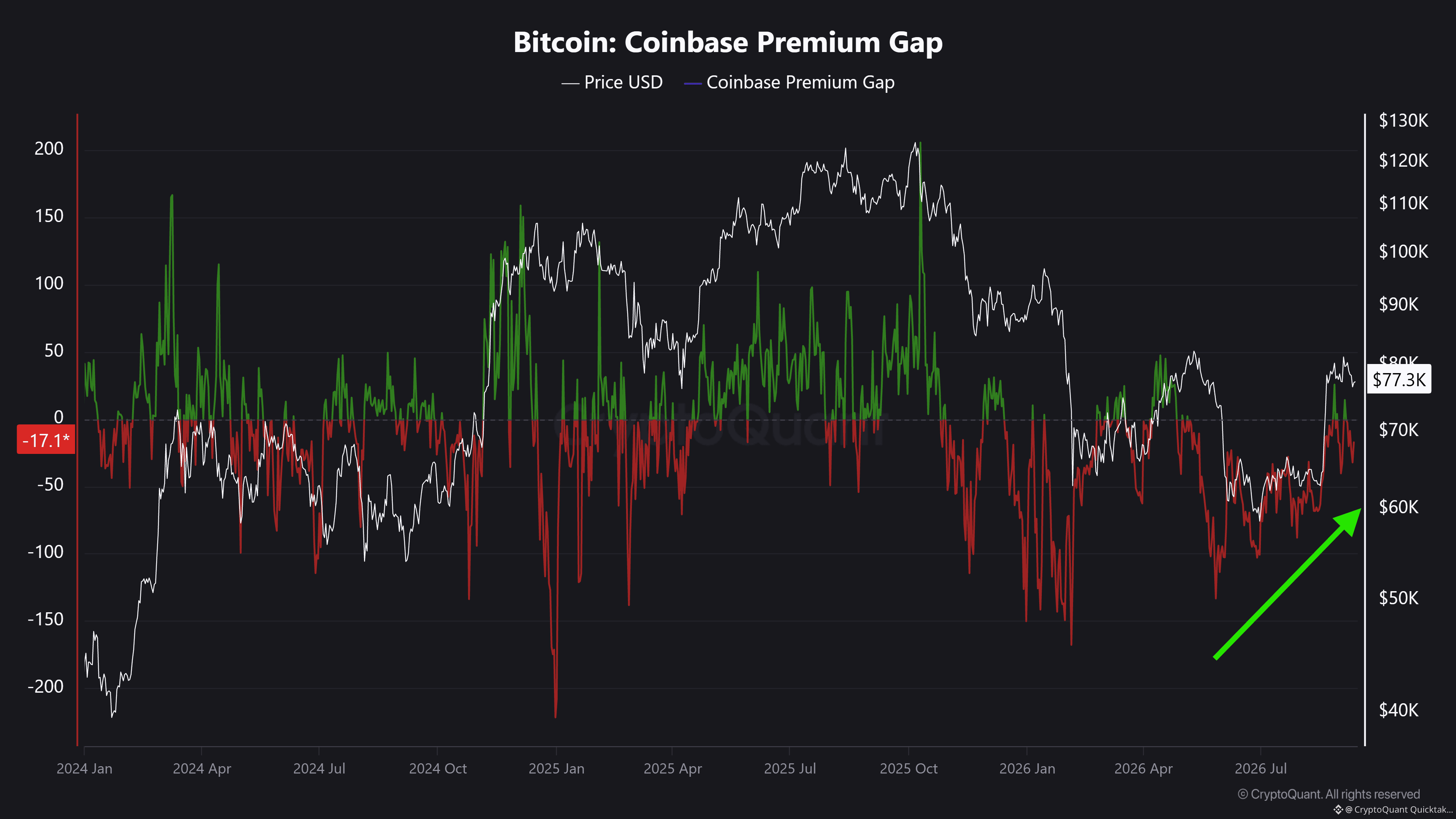
Écart de prime Coinbase : la lecture négative diminue, pas l’inverseLe Bitcoin est remonté à 77 300 $ après des mois de baisse. L’écart de la prime Coinbase, lui, reste à -17,1 en territoire négatif, mais ce seul chiffre cache la partie la plus intéressante de l’histoire.
Après le sommet d’octobre 2025 proche de 126 000 $, la métrique a chuté jusqu’à -150 à -170 tandis que le prix s’effondrait dans les tranches de 60 000 $. Depuis lors, l’écart s’est réduit pas à pas avec la stabilisation lente du marché, et il affiche désormais -17,1. La valeur absolue reste encore négative. La trajectoire n’est pas en train de s’inverser.
Cette distinction compte car un recul de la prime négative précède souvent une bascule complète vers un territoire positif, et historiquement, cette bascule a marqué le début de rallies durables. Un écart qui se resserre suggère que la pression à la vente côté États-Unis sur Coinbase s’estompe, même si la domination côté achats n’est pas encore arrivée. À ce stade, l’interprétation la plus juste est l’épuisement des ventes, plutôt qu’une accumulation nouvelle.
Écart de prime Coinbase : la lecture négative diminue, pas l’inverse
Le Bitcoin est remonté à 77 300 $ après des mois de baisse. L’écart de la prime Coinbase, lui, reste à -17,1 en territoire négatif, mais ce seul chiffre cache la partie la plus intéressante de l’histoire.
Après le sommet d’octobre 2025 proche de 126 000 $, la métrique a chuté jusqu’à -150 à -170 tandis que le prix s’effondrait dans les tranches de 60 000 $. Depuis lors, l’écart s’est réduit pas à pas avec la stabilisation lente du marché, et il affiche désormais -17,1. La valeur absolue reste encore négative. La trajectoire n’est pas en train de s’inverser.
Cette distinction compte car un recul de la prime négative précède souvent une bascule complète vers un territoire positif, et historiquement, cette bascule a marqué le début de rallies durables. Un écart qui se resserre suggère que la pression à la vente côté États-Unis sur Coinbase s’estompe, même si la domination côté achats n’est pas encore arrivée. À ce stade, l’interprétation la plus juste est l’épuisement des ventes, plutôt qu’une accumulation nouvelle.
Après le sommet d’octobre 2025 proche de 126 000 $, la métrique a chuté jusqu’à -150 à -170 tandis que le prix s’effondrait dans les tranches de 60 000 $. Depuis lors, l’écart s’est réduit pas à pas avec la stabilisation lente du marché, et il affiche désormais -17,1. La valeur absolue reste encore négative. La trajectoire n’est pas en train de s’inverser.
Cette distinction compte car un recul de la prime négative précède souvent une bascule complète vers un territoire positif, et historiquement, cette bascule a marqué le début de rallies durables. Un écart qui se resserre suggère que la pression à la vente côté États-Unis sur Coinbase s’estompe, même si la domination côté achats n’est pas encore arrivée. À ce stade, l’interprétation la plus juste est l’épuisement des ventes, plutôt qu’une accumulation nouvelle.
14
Article
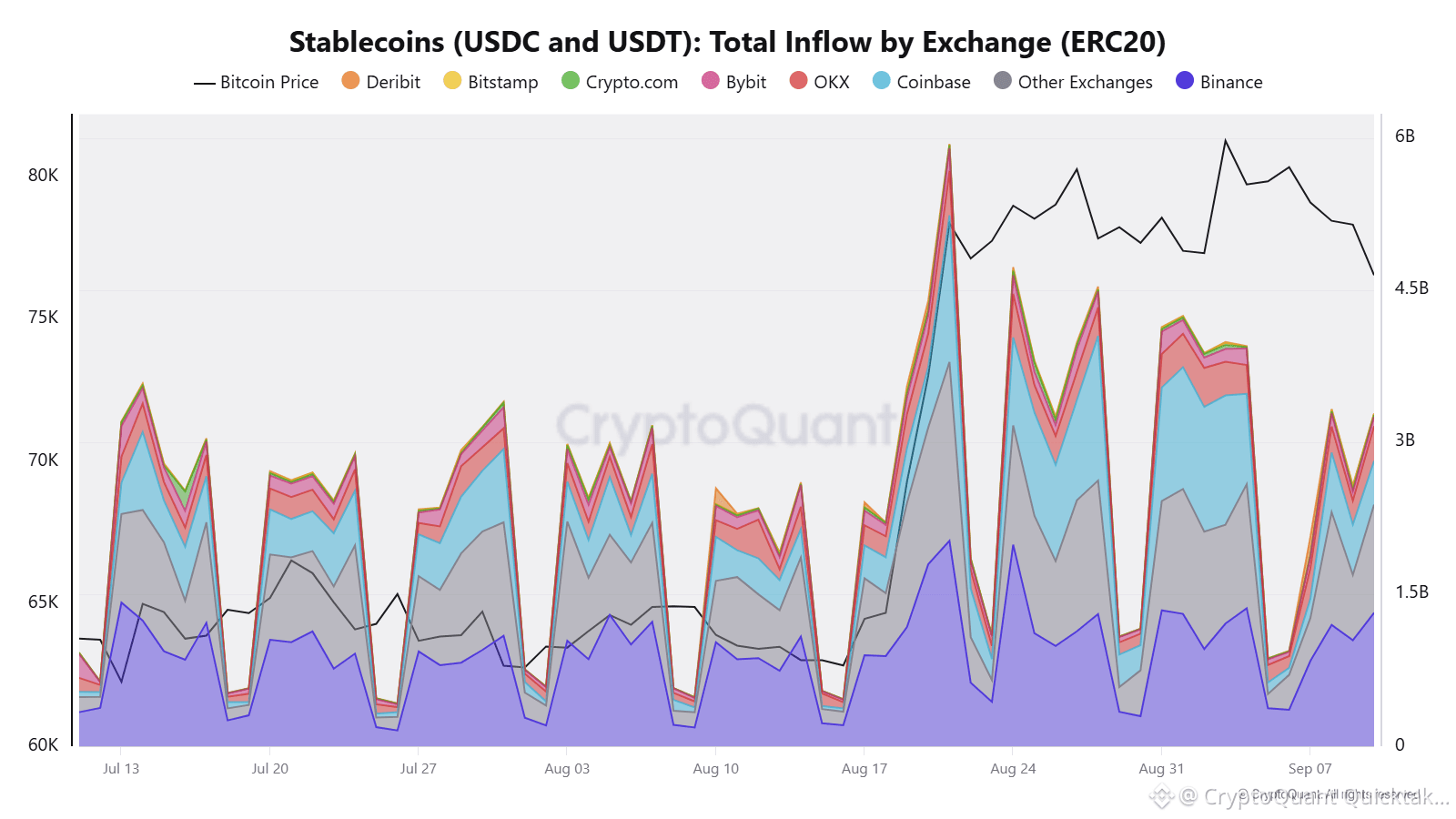
La récente tendance baissière de $BTC est due à l’affaiblissement du pouvoir d’achat sur Coinbase.La récente tendance baissière de $BTC est portée par un affaiblissement du pouvoir d’achat sur Coinbase.
Le précédent rally de $BTC a été mené conjointement par Binance et Coinbase. Ils représentaient plus de la moitié de toutes les entrées de stablecoins.
Toutefois, les entrées de stablecoins vers Coinbase ont récemment chuté de manière significative.
Binance maintient des entrées quotidiennes supérieures à 1 milliard de dollars, tandis que Coinbase a connu une forte baisse, tombant dans la fourchette de 400 à 500 millions de dollars. Cela représente moins de la moitié des niveaux d’entrées observés lors du récent rally.
Cette diminution de la pression haussière a contribué à la tendance baissière de $BTC.
La récente tendance baissière de $BTC est due à l’affaiblissement du pouvoir d’achat sur Coinbase.
La récente tendance baissière de $BTC est portée par un affaiblissement du pouvoir d’achat sur Coinbase.
Le précédent rally de $BTC a été mené conjointement par Binance et Coinbase. Ils représentaient plus de la moitié de toutes les entrées de stablecoins.
Toutefois, les entrées de stablecoins vers Coinbase ont récemment chuté de manière significative.
Binance maintient des entrées quotidiennes supérieures à 1 milliard de dollars, tandis que Coinbase a connu une forte baisse, tombant dans la fourchette de 400 à 500 millions de dollars. Cela représente moins de la moitié des niveaux d’entrées observés lors du récent rally.
Cette diminution de la pression haussière a contribué à la tendance baissière de $BTC.
Le précédent rally de $BTC a été mené conjointement par Binance et Coinbase. Ils représentaient plus de la moitié de toutes les entrées de stablecoins.
Toutefois, les entrées de stablecoins vers Coinbase ont récemment chuté de manière significative.
Binance maintient des entrées quotidiennes supérieures à 1 milliard de dollars, tandis que Coinbase a connu une forte baisse, tombant dans la fourchette de 400 à 500 millions de dollars. Cela représente moins de la moitié des niveaux d’entrées observés lors du récent rally.
Cette diminution de la pression haussière a contribué à la tendance baissière de $BTC.
91
Article
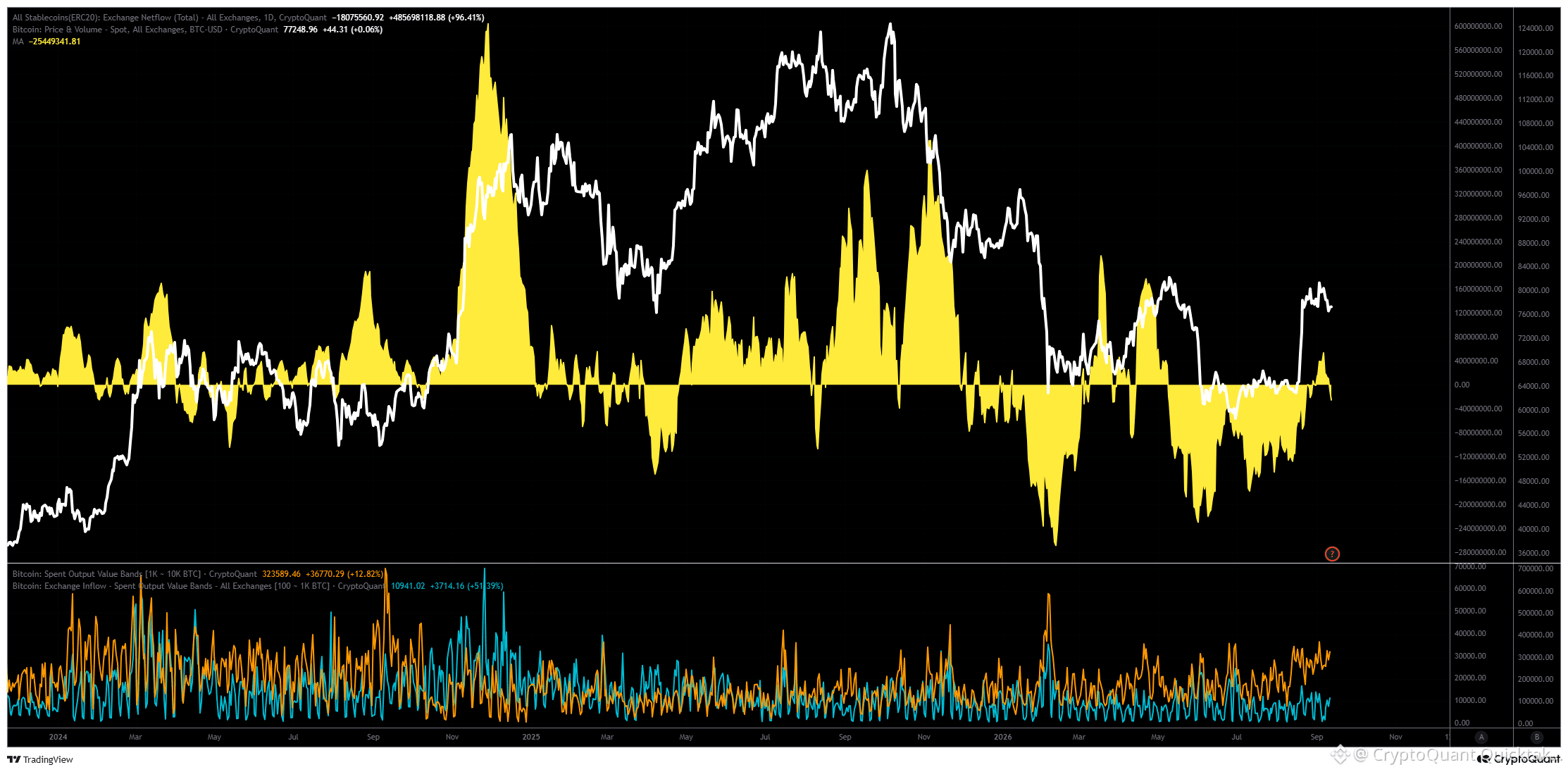
La hausse du marché des cryptomonnaies s’accompagne d’une entrée nette de stablecoins.L’indicateur de flux nets de stablecoins, qui était auparavant passé à un état de flux nets entrants après une longue période de sorties nettes, est désormais revenu à un état de flux nets sortants.
En parallèle, le BTC montre également une tendance baissière.
Les prix des cryptomonnaies augmentent généralement lorsque les flux de stabloecoin entrent sur le marché. Toutefois, une légère tendance de sorties nettes persiste actuellement.
Une fois que les flux de stablecoins repasseront à un état de flux nets entrants, la correction à court terme prendra fin et le rallye reprendra.
Rédigé par CW8900
La hausse du marché des cryptomonnaies s’accompagne d’une entrée nette de stablecoins.
L’indicateur de flux nets de stablecoins, qui était auparavant passé à un état de flux nets entrants après une longue période de sorties nettes, est désormais revenu à un état de flux nets sortants.
En parallèle, le BTC montre également une tendance baissière.
Les prix des cryptomonnaies augmentent généralement lorsque les flux de stabloecoin entrent sur le marché. Toutefois, une légère tendance de sorties nettes persiste actuellement.
Une fois que les flux de stablecoins repasseront à un état de flux nets entrants, la correction à court terme prendra fin et le rallye reprendra.
Rédigé par CW8900
En parallèle, le BTC montre également une tendance baissière.
Les prix des cryptomonnaies augmentent généralement lorsque les flux de stabloecoin entrent sur le marché. Toutefois, une légère tendance de sorties nettes persiste actuellement.
Une fois que les flux de stablecoins repasseront à un état de flux nets entrants, la correction à court terme prendra fin et le rallye reprendra.
Rédigé par CW8900
139
Article
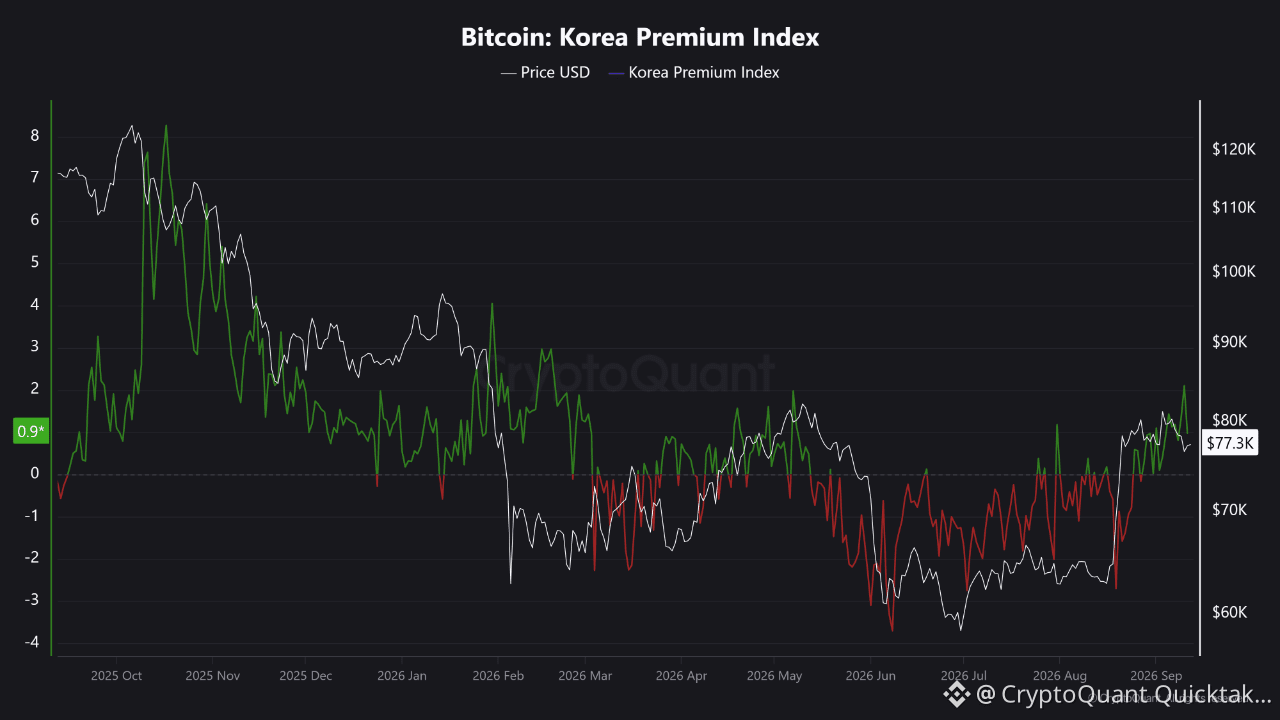
Bitcoin : la prime coréenne baisse, l’effet de levier reste tempéréLa configuration on-chain de la BTC reste neutre plutôt que clairement dominée par une demande côté achat, tandis que les dérivés montrent des signes limités de surchauffe.
Les flux nets des échanges ont fortement chuté, passant de +2 724,6 BTC le 11 septembre à +211,8 BTC le 12 septembre. La pression vendeuse liée aux entrées sur les plateformes d’échange persiste, mais son intensité a nettement diminué.
Le taux de financement est passé de 0,005646 à 0,003604 tout en restant positif. La position longue reste dominante, mais la baisse du financement suggère que l’effet de levier n’est pas excessivement surchargé.
L’intérêt ouvert a légèrement augmenté, passant d’environ 25,01 Md$ à 25,15 Md$. La hausse de l’IO associée à un financement plus faible indique un positionnement relativement sain plutôt qu’une accumulation agressive de levier.
Bitcoin : la prime coréenne baisse, l’effet de levier reste tempéré
La configuration on-chain de la BTC reste neutre plutôt que clairement dominée par une demande côté achat, tandis que les dérivés montrent des signes limités de surchauffe.
Les flux nets des échanges ont fortement chuté, passant de +2 724,6 BTC le 11 septembre à +211,8 BTC le 12 septembre. La pression vendeuse liée aux entrées sur les plateformes d’échange persiste, mais son intensité a nettement diminué.
Le taux de financement est passé de 0,005646 à 0,003604 tout en restant positif. La position longue reste dominante, mais la baisse du financement suggère que l’effet de levier n’est pas excessivement surchargé.
L’intérêt ouvert a légèrement augmenté, passant d’environ 25,01 Md$ à 25,15 Md$. La hausse de l’IO associée à un financement plus faible indique un positionnement relativement sain plutôt qu’une accumulation agressive de levier.
Les flux nets des échanges ont fortement chuté, passant de +2 724,6 BTC le 11 septembre à +211,8 BTC le 12 septembre. La pression vendeuse liée aux entrées sur les plateformes d’échange persiste, mais son intensité a nettement diminué.
Le taux de financement est passé de 0,005646 à 0,003604 tout en restant positif. La position longue reste dominante, mais la baisse du financement suggère que l’effet de levier n’est pas excessivement surchargé.
L’intérêt ouvert a légèrement augmenté, passant d’environ 25,01 Md$ à 25,15 Md$. La hausse de l’IO associée à un financement plus faible indique un positionnement relativement sain plutôt qu’une accumulation agressive de levier.
1
166
Article
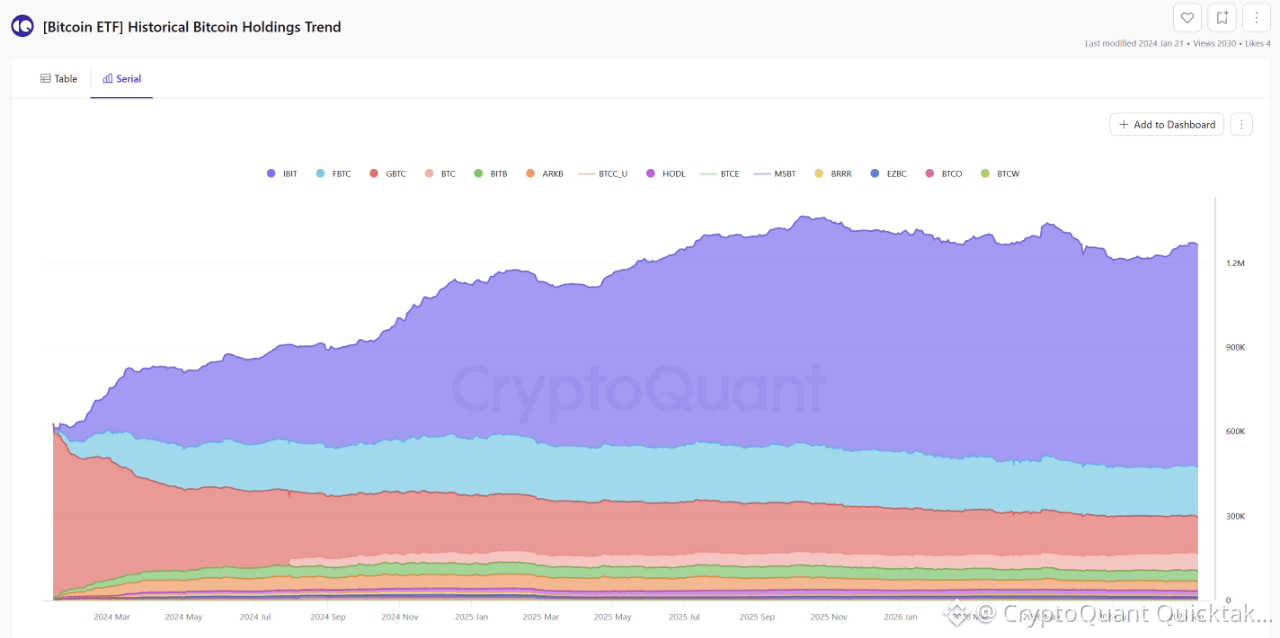
Ni haussier ni baissier — Les investisseurs Bitcoin restent prudents après l’IPCLe Bitcoin est resté coincé entre des acheteurs persistants et une prudence à court terme en hausse cette semaine. L’IPC américain était globalement conforme aux prévisions, mais l’inflation sous-jacente mensuelle a dépassé les attentes, ce qui a renforcé les inquiétudes liées à des taux plus élevés. Le BTC est tombé à environ 76 700 $ après la publication, a rebondi vers 80 000 $, puis est revenu dans la fourchette autour de 77 000 $.
Le problème plus profond réside dans l’écart entre la demande à long terme et la pression de vente à court terme. Les ETF spot Bitcoin américains ont enregistré des entrées pendant trois semaines consécutives, tandis que les investisseurs corporatifs et de long terme continuent d’accumuler. Pourtant, la demande au comptant reste faible, les réserves de BTC de Binance ont atteint un plus haut sur deux ans et les ventes sur les produits dérivés se sont intensifiées, sans réduction suffisante de l’intérêt ouvert.
Ni haussier ni baissier — Les investisseurs Bitcoin restent prudents après l’IPC
Le Bitcoin est resté coincé entre des acheteurs persistants et une prudence à court terme en hausse cette semaine. L’IPC américain était globalement conforme aux prévisions, mais l’inflation sous-jacente mensuelle a dépassé les attentes, ce qui a renforcé les inquiétudes liées à des taux plus élevés. Le BTC est tombé à environ 76 700 $ après la publication, a rebondi vers 80 000 $, puis est revenu dans la fourchette autour de 77 000 $.
Le problème plus profond réside dans l’écart entre la demande à long terme et la pression de vente à court terme. Les ETF spot Bitcoin américains ont enregistré des entrées pendant trois semaines consécutives, tandis que les investisseurs corporatifs et de long terme continuent d’accumuler. Pourtant, la demande au comptant reste faible, les réserves de BTC de Binance ont atteint un plus haut sur deux ans et les ventes sur les produits dérivés se sont intensifiées, sans réduction suffisante de l’intérêt ouvert.
Le problème plus profond réside dans l’écart entre la demande à long terme et la pression de vente à court terme. Les ETF spot Bitcoin américains ont enregistré des entrées pendant trois semaines consécutives, tandis que les investisseurs corporatifs et de long terme continuent d’accumuler. Pourtant, la demande au comptant reste faible, les réserves de BTC de Binance ont atteint un plus haut sur deux ans et les ventes sur les produits dérivés se sont intensifiées, sans réduction suffisante de l’intérêt ouvert.
133
Partiellement vrai
Article
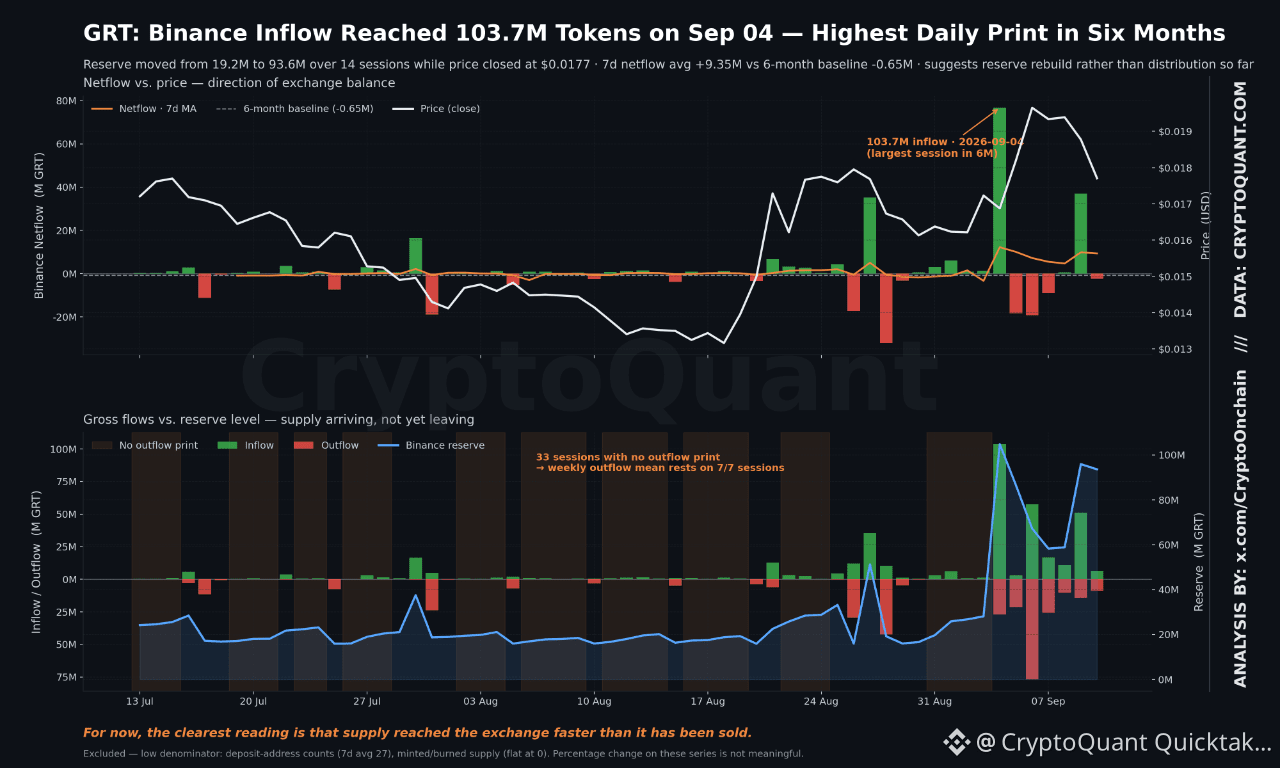
Les entrées de GRT de Binance ont atteint 103,7 M de tokens le 4 septembre — la plus forte séance unique en six moisLes entrées de Binance ont atteint 103 693 101 GRT le 4 septembre, le plus fort chiffre quotidien en six mois. Les réserves de Binance s’élevaient à 93 596 706 GRT au 10 septembre, contre 16 020 984 au 29 août. Le GRT a clôturé à 0,0185 $ le 10 septembre, soit 12,5 % au-dessus de la semaine précédente.
Précautions : les sorties de Binance ont affiché exactement zéro le 31 août et les 1er au 3 septembre ; ainsi, la moyenne hebdomadaire des sorties repose sur trois séances, et non sept. Les comptes des adresses de dépôt (moyenne 7 jours à 26,9) et l’offre en circulation issue des émissions/rachats (stable à 0) portent des dénominateurs trop faibles pour être exprimés en pourcentages.
Les entrées de GRT de Binance ont atteint 103,7 M de tokens le 4 septembre — la plus forte séance unique en six mois
Les entrées de Binance ont atteint 103 693 101 GRT le 4 septembre, le plus fort chiffre quotidien en six mois. Les réserves de Binance s’élevaient à 93 596 706 GRT au 10 septembre, contre 16 020 984 au 29 août. Le GRT a clôturé à 0,0185 $ le 10 septembre, soit 12,5 % au-dessus de la semaine précédente.
Précautions : les sorties de Binance ont affiché exactement zéro le 31 août et les 1er au 3 septembre ; ainsi, la moyenne hebdomadaire des sorties repose sur trois séances, et non sept. Les comptes des adresses de dépôt (moyenne 7 jours à 26,9) et l’offre en circulation issue des émissions/rachats (stable à 0) portent des dénominateurs trop faibles pour être exprimés en pourcentages.
Précautions : les sorties de Binance ont affiché exactement zéro le 31 août et les 1er au 3 septembre ; ainsi, la moyenne hebdomadaire des sorties repose sur trois séances, et non sept. Les comptes des adresses de dépôt (moyenne 7 jours à 26,9) et l’offre en circulation issue des émissions/rachats (stable à 0) portent des dénominateurs trop faibles pour être exprimés en pourcentages.
162

Article
La tendance perd de sa puissance, même si la ligne de signal monteLa force de la tendance du Bitcoin s’estompe, et les deux courbes de ce graphique commencent à diverger.
L’ADX mesure la puissance qui accompagne un mouvement, pas sa direction. Un ADX élevé signifie que la tendance, à la hausse comme à la baisse, est convaincante. Un ADX en baisse indique que le mouvement perd de sa force, même si le prix continue de dériver dans le même sens.
En ce moment, l’ADX lui-même s’est retourné. Il a fortement reculé par rapport aux fortes valeurs des dernières semaines et se trouve désormais au milieu de sa plage, loin des niveaux qui indiquaient de réelles conditions de tendance.
La tendance perd de sa puissance, même si la ligne de signal monte
La force de la tendance du Bitcoin s’estompe, et les deux courbes de ce graphique commencent à diverger.
L’ADX mesure la puissance qui accompagne un mouvement, pas sa direction. Un ADX élevé signifie que la tendance, à la hausse comme à la baisse, est convaincante. Un ADX en baisse indique que le mouvement perd de sa force, même si le prix continue de dériver dans le même sens.
En ce moment, l’ADX lui-même s’est retourné. Il a fortement reculé par rapport aux fortes valeurs des dernières semaines et se trouve désormais au milieu de sa plage, loin des niveaux qui indiquaient de réelles conditions de tendance.
L’ADX mesure la puissance qui accompagne un mouvement, pas sa direction. Un ADX élevé signifie que la tendance, à la hausse comme à la baisse, est convaincante. Un ADX en baisse indique que le mouvement perd de sa force, même si le prix continue de dériver dans le même sens.
En ce moment, l’ADX lui-même s’est retourné. Il a fortement reculé par rapport aux fortes valeurs des dernières semaines et se trouve désormais au milieu de sa plage, loin des niveaux qui indiquaient de réelles conditions de tendance.
195

Article
La Realized Cap du Bitcoin ↓• La Realized Cap est l’un des outils les plus importants et fondamentaux dans le domaine de l’analyse on-chain.
• Elle mesure la valeur agrégée de l’offre de Bitcoin en évaluant chaque BTC au prix auquel il a réalisé sa dernière transaction on-chain, plutôt qu’en appliquant uniformément le prix de marché actuel à l’ensemble des BTC.
• D’janvier à août, les flux de BTC en chaîne dont le prix était inférieur à leurs valorisations précédentes ont fait baisser la Realized Cap. Récemment, pour la première fois cette année, cette tendance a commencé à s’inverser.
La Realized Cap du Bitcoin ↓
• La Realized Cap est l’un des outils les plus importants et fondamentaux dans le domaine de l’analyse on-chain.
• Elle mesure la valeur agrégée de l’offre de Bitcoin en évaluant chaque BTC au prix auquel il a réalisé sa dernière transaction on-chain, plutôt qu’en appliquant uniformément le prix de marché actuel à l’ensemble des BTC.
• D’janvier à août, les flux de BTC en chaîne dont le prix était inférieur à leurs valorisations précédentes ont fait baisser la Realized Cap. Récemment, pour la première fois cette année, cette tendance a commencé à s’inverser.
• Elle mesure la valeur agrégée de l’offre de Bitcoin en évaluant chaque BTC au prix auquel il a réalisé sa dernière transaction on-chain, plutôt qu’en appliquant uniformément le prix de marché actuel à l’ensemble des BTC.
• D’janvier à août, les flux de BTC en chaîne dont le prix était inférieur à leurs valorisations précédentes ont fait baisser la Realized Cap. Récemment, pour la première fois cette année, cette tendance a commencé à s’inverser.
131

Article
Les réserves de BTC de Binance atteignent un plus haut sur 2 ans près de 693 000 alors que le prix teste 77 000 $Le Bitcoin s’échange autour de la fourchette de 76,9 000 $ à 77,1 000 $ après s’être replié depuis la zone récente des 80 000 $. Dans le même temps, les réserves de BTC sur Binance ont grimpé jusqu’à un nouveau niveau notable.
Les données de CryptoQuant indiquent que les réserves de BTC de Binance ont atteint environ 693 000 BTC, le niveau le plus élevé en deux ans, et représentent environ 30 % du Bitcoin détenu par les principales bourses. Les réserves ont augmenté d’environ 77 000 BTC depuis la fin avril.
Des réserves élevées sur la plus grande bourse en termes de volume de transactions augmentent la quantité de BTC immédiatement disponible pour le trading. Lorsque cela se produit pendant une phase de consolidation des prix ou un repli, cela peut signaler une liquidité vendeuse potentiellement plus importante, liée à la prise de bénéfices, au hedging ou au repositionnement.
Les réserves de BTC de Binance atteignent un plus haut sur 2 ans près de 693 000 alors que le prix teste 77 000 $
Le Bitcoin s’échange autour de la fourchette de 76,9 000 $ à 77,1 000 $ après s’être replié depuis la zone récente des 80 000 $. Dans le même temps, les réserves de BTC sur Binance ont grimpé jusqu’à un nouveau niveau notable.
Les données de CryptoQuant indiquent que les réserves de BTC de Binance ont atteint environ 693 000 BTC, le niveau le plus élevé en deux ans, et représentent environ 30 % du Bitcoin détenu par les principales bourses. Les réserves ont augmenté d’environ 77 000 BTC depuis la fin avril.
Des réserves élevées sur la plus grande bourse en termes de volume de transactions augmentent la quantité de BTC immédiatement disponible pour le trading. Lorsque cela se produit pendant une phase de consolidation des prix ou un repli, cela peut signaler une liquidité vendeuse potentiellement plus importante, liée à la prise de bénéfices, au hedging ou au repositionnement.
Les données de CryptoQuant indiquent que les réserves de BTC de Binance ont atteint environ 693 000 BTC, le niveau le plus élevé en deux ans, et représentent environ 30 % du Bitcoin détenu par les principales bourses. Les réserves ont augmenté d’environ 77 000 BTC depuis la fin avril.
Des réserves élevées sur la plus grande bourse en termes de volume de transactions augmentent la quantité de BTC immédiatement disponible pour le trading. Lorsque cela se produit pendant une phase de consolidation des prix ou un repli, cela peut signaler une liquidité vendeuse potentiellement plus importante, liée à la prise de bénéfices, au hedging ou au repositionnement.
146

Article
Avant l’IPC américain, l’afflux ETH de Bitfinex atteint 495 M$, le plus élevé depuis février 2025, tandis que Binance et OKX voient...Les flux d’échanges d’Ethereum ont fortement divergé le 10 septembre, juste avant la publication de l’IPC américain, Bitfinex enregistrant environ 495 millions de dollars d’entrées nettes positives en ETH, tandis que Binance et OKX sont allés nettement dans la direction opposée.
La lecture de Bitfinex était la plus élevée depuis le 2 février 2025, lorsque les entrées nettes positives avaient atteint environ 365 millions de dollars. Le chiffre le plus récent est donc supérieur d’environ 36 % à ce précédent repère.
Entre-temps, Binance a enregistré environ 244 millions de dollars de sorties nettes, tandis qu’OKX a publié environ 99 millions de dollars de sorties nettes, portant leur total combiné à environ 343 millions de dollars.
Avant l’IPC américain, l’afflux ETH de Bitfinex atteint 495 M$, le plus élevé depuis février 2025, tandis que Binance et OKX voient...
Les flux d’échanges d’Ethereum ont fortement divergé le 10 septembre, juste avant la publication de l’IPC américain, Bitfinex enregistrant environ 495 millions de dollars d’entrées nettes positives en ETH, tandis que Binance et OKX sont allés nettement dans la direction opposée.
La lecture de Bitfinex était la plus élevée depuis le 2 février 2025, lorsque les entrées nettes positives avaient atteint environ 365 millions de dollars. Le chiffre le plus récent est donc supérieur d’environ 36 % à ce précédent repère.
Entre-temps, Binance a enregistré environ 244 millions de dollars de sorties nettes, tandis qu’OKX a publié environ 99 millions de dollars de sorties nettes, portant leur total combiné à environ 343 millions de dollars.
La lecture de Bitfinex était la plus élevée depuis le 2 février 2025, lorsque les entrées nettes positives avaient atteint environ 365 millions de dollars. Le chiffre le plus récent est donc supérieur d’environ 36 % à ce précédent repère.
Entre-temps, Binance a enregistré environ 244 millions de dollars de sorties nettes, tandis qu’OKX a publié environ 99 millions de dollars de sorties nettes, portant leur total combiné à environ 343 millions de dollars.
218

Article
Les positions ouvertes sur l’Ethereum sur Binance dépassent sa moyenne sur 30 joursLes données de Binance indiquent une hausse notable des positions ouvertes pour les contrats sur l’Ethereum récemment, coïncidant avec la reprise du prix de l’ETH et le regain d’activité sur le marché des produits dérivés.
D’après des données récentes, les positions ouvertes se situaient à environ 6,05 milliards de dollars, contre une moyenne mobile sur 30 jours d’environ 5,77 milliards de dollars, ce qui signifie que les niveaux actuels dépassent la moyenne récente d’environ 4,7 %. Par ailleurs, l’écart type s’établissait à environ 600,7 millions de dollars, tandis que le score Z atteignait environ 0,45.
Les positions ouvertes sur l’Ethereum sur Binance dépassent sa moyenne sur 30 jours
Les données de Binance indiquent une hausse notable des positions ouvertes pour les contrats sur l’Ethereum récemment, coïncidant avec la reprise du prix de l’ETH et le regain d’activité sur le marché des produits dérivés.
D’après des données récentes, les positions ouvertes se situaient à environ 6,05 milliards de dollars, contre une moyenne mobile sur 30 jours d’environ 5,77 milliards de dollars, ce qui signifie que les niveaux actuels dépassent la moyenne récente d’environ 4,7 %. Par ailleurs, l’écart type s’établissait à environ 600,7 millions de dollars, tandis que le score Z atteignait environ 0,45.
D’après des données récentes, les positions ouvertes se situaient à environ 6,05 milliards de dollars, contre une moyenne mobile sur 30 jours d’environ 5,77 milliards de dollars, ce qui signifie que les niveaux actuels dépassent la moyenne récente d’environ 4,7 %. Par ailleurs, l’écart type s’établissait à environ 600,7 millions de dollars, tandis que le score Z atteignait environ 0,45.
182

Article
Les traders de Bitcoin réduisent de 842 M$ l’intérêt ouvert sur 7 jours dans cinq bourses, alors que Binance atteint son plus bas niveau depuis...Les traders de dérivés sur Bitcoin ont fortement réduit leurs positions ouvertes sur plusieurs grandes bourses le 11 septembre, la variation cumulée de l’intérêt ouvert sur sept jours sur Binance, Bybit, Deribit, HTX et Bitfinex atteignant environ -842 millions de dollars.
La plus forte contraction est venue des traders de
Binance est tombé à environ -400 millions de dollars, atteignant son plus bas niveau depuis juillet.
Bybit a suivi avec environ -240 millions de dollars, tandis que
Deribit a enregistré -96 millions de dollars,
HTX Global -72 millions de dollars, et
Bitfinex environ -34 millions de dollars.
Ensemble, Binance et Bybit ont représenté environ 76 % de la baisse de 842 millions de dollars, mettant en évidence où la plus grande partie de la réduction de l’exposition aux dérivés ouverts était concentrée.
Les traders de Bitcoin réduisent de 842 M$ l’intérêt ouvert sur 7 jours dans cinq bourses, alors que Binance atteint son plus bas niveau depuis...
Les traders de dérivés sur Bitcoin ont fortement réduit leurs positions ouvertes sur plusieurs grandes bourses le 11 septembre, la variation cumulée de l’intérêt ouvert sur sept jours sur Binance, Bybit, Deribit, HTX et Bitfinex atteignant environ -842 millions de dollars.
La plus forte contraction est venue des traders de
Binance est tombé à environ -400 millions de dollars, atteignant son plus bas niveau depuis juillet.
Bybit a suivi avec environ -240 millions de dollars, tandis que
Deribit a enregistré -96 millions de dollars,
HTX Global -72 millions de dollars, et
Bitfinex environ -34 millions de dollars.
Ensemble, Binance et Bybit ont représenté environ 76 % de la baisse de 842 millions de dollars, mettant en évidence où la plus grande partie de la réduction de l’exposition aux dérivés ouverts était concentrée.
La plus forte contraction est venue des traders de
Binance est tombé à environ -400 millions de dollars, atteignant son plus bas niveau depuis juillet.
Bybit a suivi avec environ -240 millions de dollars, tandis que
Deribit a enregistré -96 millions de dollars,
HTX Global -72 millions de dollars, et
Bitfinex environ -34 millions de dollars.
Ensemble, Binance et Bybit ont représenté environ 76 % de la baisse de 842 millions de dollars, mettant en évidence où la plus grande partie de la réduction de l’exposition aux dérivés ouverts était concentrée.
145

Article
Architecture de liquidité institutionnelle et resserrement imminent de l’offre dans le BitcoinLe repli observé au premier trimestre 2026 a été une purge agressive visant une liquidité de marché peu profonde et éliminant les mains faibles du système. Alors que le prix dérivait vers la zone des 60 000 $, des écarts rouges nets sur l’indice de friction de liquidité ont clairement indiqué des liquidations de marge et une pression vendeuse qui a complètement asséché la profondeur du carnet d’ordres.
Cependant, en entrant dans la fenêtre de juillet à septembre 2026, la structure du marché a totalement changé. Bien que le prix se soit consolidé dans la fourchette des 80 000 $, la hausse verticale du flux net de capital sur 30 jours a fourni un exemple typique d’absorption du carnet d’ordres. Malgré le fait que le prix n’ait pas imprimé de nouveaux plus hauts immédiats, la liquidité côté vendeur présente dans les carnets d’ordres était absorbée sur place par des bureaux OTC et des entités institutionnelles. Cette divergence haussière entre l’afflux massif de capitaux frais et le mouvement de prix en retard confirme que les baleines et les teneurs de marché augmentaient discrètement leur prix de revient.
Architecture de liquidité institutionnelle et resserrement imminent de l’offre dans le Bitcoin
Le repli observé au premier trimestre 2026 a été une purge agressive visant une liquidité de marché peu profonde et éliminant les mains faibles du système. Alors que le prix dérivait vers la zone des 60 000 $, des écarts rouges nets sur l’indice de friction de liquidité ont clairement indiqué des liquidations de marge et une pression vendeuse qui a complètement asséché la profondeur du carnet d’ordres.
Cependant, en entrant dans la fenêtre de juillet à septembre 2026, la structure du marché a totalement changé. Bien que le prix se soit consolidé dans la fourchette des 80 000 $, la hausse verticale du flux net de capital sur 30 jours a fourni un exemple typique d’absorption du carnet d’ordres. Malgré le fait que le prix n’ait pas imprimé de nouveaux plus hauts immédiats, la liquidité côté vendeur présente dans les carnets d’ordres était absorbée sur place par des bureaux OTC et des entités institutionnelles. Cette divergence haussière entre l’afflux massif de capitaux frais et le mouvement de prix en retard confirme que les baleines et les teneurs de marché augmentaient discrètement leur prix de revient.
Cependant, en entrant dans la fenêtre de juillet à septembre 2026, la structure du marché a totalement changé. Bien que le prix se soit consolidé dans la fourchette des 80 000 $, la hausse verticale du flux net de capital sur 30 jours a fourni un exemple typique d’absorption du carnet d’ordres. Malgré le fait que le prix n’ait pas imprimé de nouveaux plus hauts immédiats, la liquidité côté vendeur présente dans les carnets d’ordres était absorbée sur place par des bureaux OTC et des entités institutionnelles. Cette divergence haussière entre l’afflux massif de capitaux frais et le mouvement de prix en retard confirme que les baleines et les teneurs de marché augmentaient discrètement leur prix de revient.
200
Partiellement vrai

Article
Les réserves de BTC de Binance viennent d’atteindre un plus haut sur 2 ansLes réserves de BTC de Binance viennent d’atteindre un nouveau record, atteignant leur plus haut niveau en deux ans.
Aujourd’hui, Binance détient plus de 693 000 bitcoins, ce qui représente environ 30 % de tous les bitcoins détenus dans les réserves des principales bourses.
À elles seules, entre la fin avril et aujourd’hui, les réserves de BTC de Binance ont augmenté de 77 000 bitcoins, soit une hausse loin d’être négligeable sur une période aussi courte.
Cette hausse s’explique en grande partie par le fait que des investisseurs ont profité du rallye de mai, puis de celui d’aujourd’hui, pour transférer leur BTC vers une bourse afin de le vendre. Compte tenu de la liquidité particulièrement profonde de Binance, il est logique que les plus importants flux de BTC observés sur le marché y apparaissent.
Les réserves de BTC de Binance viennent d’atteindre un plus haut sur 2 ans
Les réserves de BTC de Binance viennent d’atteindre un nouveau record, atteignant leur plus haut niveau en deux ans.
Aujourd’hui, Binance détient plus de 693 000 bitcoins, ce qui représente environ 30 % de tous les bitcoins détenus dans les réserves des principales bourses.
À elles seules, entre la fin avril et aujourd’hui, les réserves de BTC de Binance ont augmenté de 77 000 bitcoins, soit une hausse loin d’être négligeable sur une période aussi courte.
Cette hausse s’explique en grande partie par le fait que des investisseurs ont profité du rallye de mai, puis de celui d’aujourd’hui, pour transférer leur BTC vers une bourse afin de le vendre. Compte tenu de la liquidité particulièrement profonde de Binance, il est logique que les plus importants flux de BTC observés sur le marché y apparaissent.
Aujourd’hui, Binance détient plus de 693 000 bitcoins, ce qui représente environ 30 % de tous les bitcoins détenus dans les réserves des principales bourses.
À elles seules, entre la fin avril et aujourd’hui, les réserves de BTC de Binance ont augmenté de 77 000 bitcoins, soit une hausse loin d’être négligeable sur une période aussi courte.
Cette hausse s’explique en grande partie par le fait que des investisseurs ont profité du rallye de mai, puis de celui d’aujourd’hui, pour transférer leur BTC vers une bourse afin de le vendre. Compte tenu de la liquidité particulièrement profonde de Binance, il est logique que les plus importants flux de BTC observés sur le marché y apparaissent.
119

Article
Bitcoin : l’offre vieille de dix ans se déplace pendant que le matelas en dollars de Binance s’accumuleObservation. Bitcoin a clôturé à 78 315 $ le 9 septembre — 2,5 % en dessous du chiffre de 80 336 $ du 6 septembre, maintenant une fourchette d’environ 2,6 % depuis le 5 septembre. Le flux net agrégé des échanges a en moyenne atteint +669 BTC par jour, en hausse de 259 % d’une semaine sur l’autre (WoW) et de 542 % par rapport à la référence trimestrielle.
Contexte. Les dépenses du groupe des détenteurs de 10 ans et plus ont atteint en moyenne 469 BTC par jour (37,4 M$), soit +161 % WoW. Pourtant, la part liée aux échanges est négligeable — les entrées 10y+ vers Coinbase ont en moyenne été de 0,88 BTC. L’offre la plus ancienne semble se déplacer plutôt que d’être livrée ; cette distinction serait masquée par la seule variation en pourcentage.
Bitcoin : l’offre vieille de dix ans se déplace pendant que le matelas en dollars de Binance s’accumule
Observation. Bitcoin a clôturé à 78 315 $ le 9 septembre — 2,5 % en dessous du chiffre de 80 336 $ du 6 septembre, maintenant une fourchette d’environ 2,6 % depuis le 5 septembre. Le flux net agrégé des échanges a en moyenne atteint +669 BTC par jour, en hausse de 259 % d’une semaine sur l’autre (WoW) et de 542 % par rapport à la référence trimestrielle.
Contexte. Les dépenses du groupe des détenteurs de 10 ans et plus ont atteint en moyenne 469 BTC par jour (37,4 M$), soit +161 % WoW. Pourtant, la part liée aux échanges est négligeable — les entrées 10y+ vers Coinbase ont en moyenne été de 0,88 BTC. L’offre la plus ancienne semble se déplacer plutôt que d’être livrée ; cette distinction serait masquée par la seule variation en pourcentage.
Contexte. Les dépenses du groupe des détenteurs de 10 ans et plus ont atteint en moyenne 469 BTC par jour (37,4 M$), soit +161 % WoW. Pourtant, la part liée aux échanges est négligeable — les entrées 10y+ vers Coinbase ont en moyenne été de 0,88 BTC. L’offre la plus ancienne semble se déplacer plutôt que d’être livrée ; cette distinction serait masquée par la seule variation en pourcentage.
81

Article
L’absorption des ventes de Bitcoin s’intensifie : la correction va-t-elle se poursuivre ?Le Bitcoin est entré dans une phase de retracement claire après avoir échoué à franchir le solide mur de vente rencontré dans la zone de 81,5 k$ – 82 k$. Après cette correction brutale depuis le sommet, le prix du BTC est revenu vers la zone de 76,8 k$ – 77,2 k$. En observant les dynamiques actuelles du marché, le principal moteur de cette baisse semble être une forte absorption des ventes en cours sur les principales bourses.
À mesure que le prix baisse, les tentatives des acheteurs pour absorber la liquidité sont immédiatement contrées et englouties par des ordres de vente agressifs. Ce mécanisme d’absorption empêche les haussiers de gagner en élan sur les volumes tout en maintenant une pression baissière implacable sur le prix.
L’absorption des ventes de Bitcoin s’intensifie : la correction va-t-elle se poursuivre ?
Le Bitcoin est entré dans une phase de retracement claire après avoir échoué à franchir le solide mur de vente rencontré dans la zone de 81,5 k$ – 82 k$. Après cette correction brutale depuis le sommet, le prix du BTC est revenu vers la zone de 76,8 k$ – 77,2 k$. En observant les dynamiques actuelles du marché, le principal moteur de cette baisse semble être une forte absorption des ventes en cours sur les principales bourses.
À mesure que le prix baisse, les tentatives des acheteurs pour absorber la liquidité sont immédiatement contrées et englouties par des ordres de vente agressifs. Ce mécanisme d’absorption empêche les haussiers de gagner en élan sur les volumes tout en maintenant une pression baissière implacable sur le prix.
À mesure que le prix baisse, les tentatives des acheteurs pour absorber la liquidité sont immédiatement contrées et englouties par des ordres de vente agressifs. Ce mécanisme d’absorption empêche les haussiers de gagner en élan sur les volumes tout en maintenant une pression baissière implacable sur le prix.
95
Article
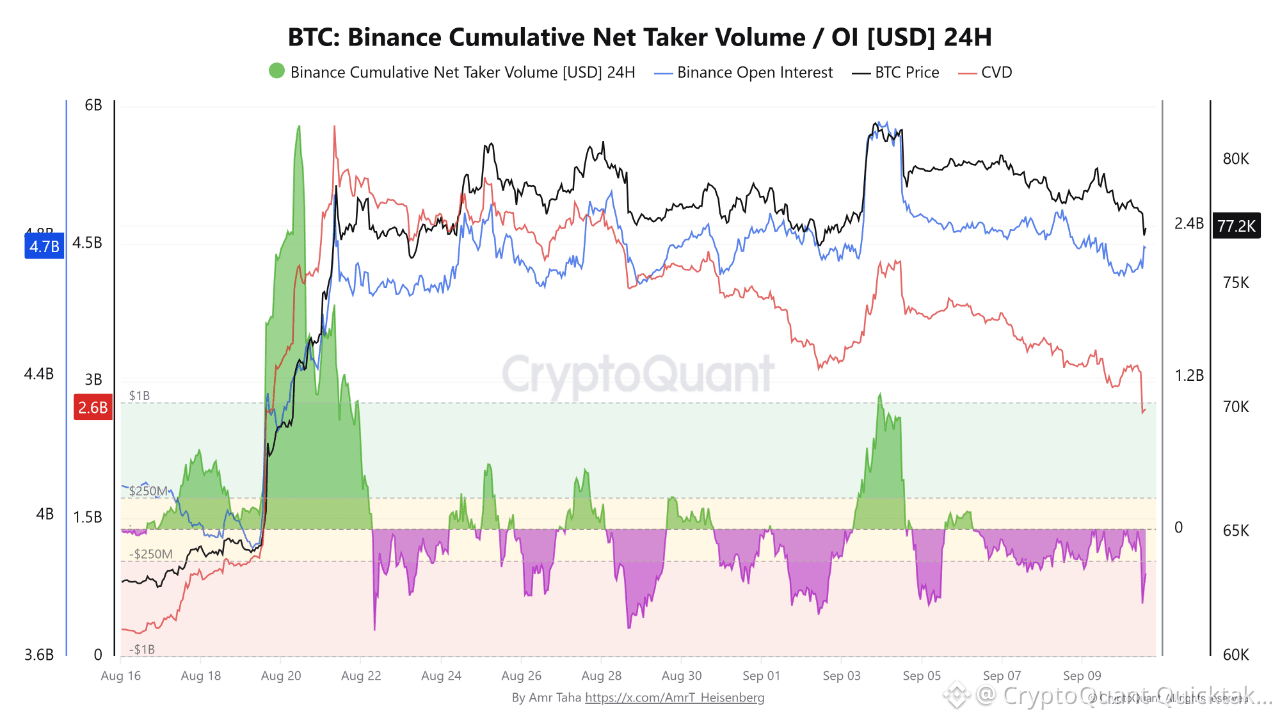
Les traders de produits dérivés sur Bitcoin basculent brusquement du côté des vendeurs alors que le CVD chute de 54% tandis que l’intérêt ouvert ne baisse que de 4%Les traders de produits dérivés sur Bitcoin chez Binance ont montré un virage marqué vers des ventes agressives, le volume net des preneurs (Net Taker Volume) passant à -440 millions de dollars après la publication des données américaines sur l’IPU d’août.
Le changement plus large dans le comportement des traders ressort encore davantage dans le volume net cumulatif des preneurs (Cumulative Net Taker Volume).
Le CVD est passé de 5,77 milliards de dollars le 21 août à 2,67 milliards de dollars aujourd’hui, soit une baisse d’environ 3,1 milliards de dollars, ou 54%.
Pourtant, l’intérêt ouvert (Open Interest) du Bitcoin sur Binance est resté relativement stable sur la même période, passant d’environ 4,9 milliards de dollars à 4,7 milliards de dollars, soit une baisse d’à peine 4%.
Les traders de produits dérivés sur Bitcoin basculent brusquement du côté des vendeurs alors que le CVD chute de 54% tandis que l’intérêt ouvert ne baisse que de 4%
Les traders de produits dérivés sur Bitcoin chez Binance ont montré un virage marqué vers des ventes agressives, le volume net des preneurs (Net Taker Volume) passant à -440 millions de dollars après la publication des données américaines sur l’IPU d’août.
Le changement plus large dans le comportement des traders ressort encore davantage dans le volume net cumulatif des preneurs (Cumulative Net Taker Volume).
Le CVD est passé de 5,77 milliards de dollars le 21 août à 2,67 milliards de dollars aujourd’hui, soit une baisse d’environ 3,1 milliards de dollars, ou 54%.
Pourtant, l’intérêt ouvert (Open Interest) du Bitcoin sur Binance est resté relativement stable sur la même période, passant d’environ 4,9 milliards de dollars à 4,7 milliards de dollars, soit une baisse d’à peine 4%.
Le changement plus large dans le comportement des traders ressort encore davantage dans le volume net cumulatif des preneurs (Cumulative Net Taker Volume).
Le CVD est passé de 5,77 milliards de dollars le 21 août à 2,67 milliards de dollars aujourd’hui, soit une baisse d’environ 3,1 milliards de dollars, ou 54%.
Pourtant, l’intérêt ouvert (Open Interest) du Bitcoin sur Binance est resté relativement stable sur la même période, passant d’environ 4,9 milliards de dollars à 4,7 milliards de dollars, soit une baisse d’à peine 4%.
115
Article
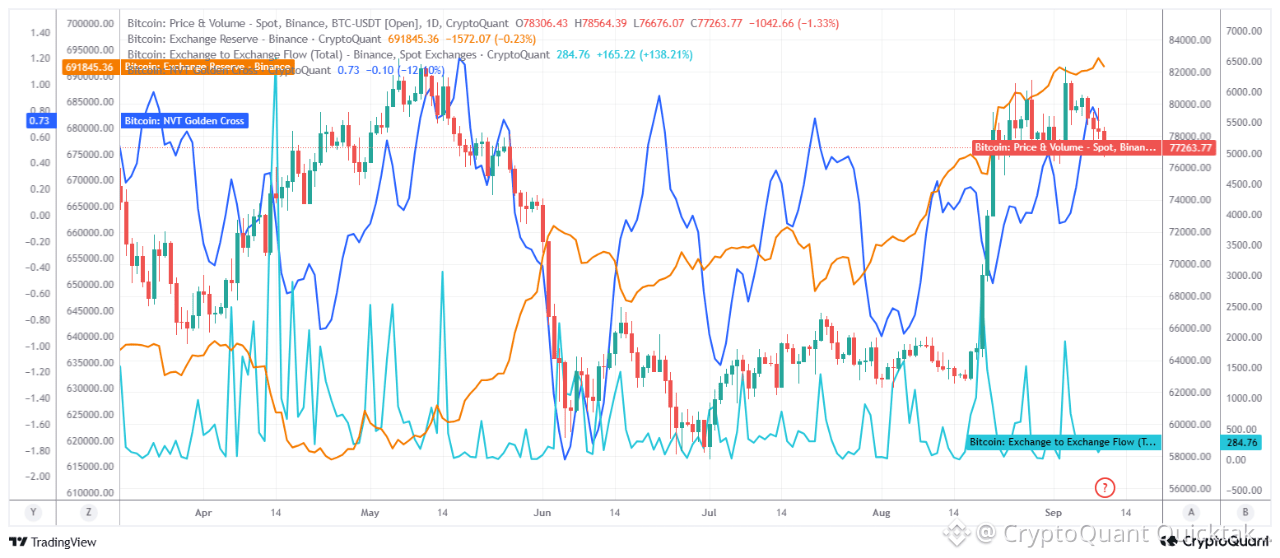
Les réserves de Bitcoin sur Binance ont atteint un niveau dangereuxLe Bitcoin affiche une forte reprise, mais des données récentes suggèrent que la prise de profits pourrait déjà avoir commencé.
La réserve totale de BTC de Binance s’élève à 691 845 BTC, ce qui constitue un signal d’alerte à moyen terme. La réserve a généralement augmenté depuis mai, ce qui dresse un tableau prudent du côté de l’offre. Alors que le BTC a rebondi à la fin août et au début septembre, les réserves de Binance sont restées élevées. Cette divergence indique que, même si la reprise se poursuit, le risque de prises de profits ou d’un repli brutal pourrait être en hausse.
Les réserves de Bitcoin sur Binance ont atteint un niveau dangereux
Le Bitcoin affiche une forte reprise, mais des données récentes suggèrent que la prise de profits pourrait déjà avoir commencé.
La réserve totale de BTC de Binance s’élève à 691 845 BTC, ce qui constitue un signal d’alerte à moyen terme. La réserve a généralement augmenté depuis mai, ce qui dresse un tableau prudent du côté de l’offre. Alors que le BTC a rebondi à la fin août et au début septembre, les réserves de Binance sont restées élevées. Cette divergence indique que, même si la reprise se poursuit, le risque de prises de profits ou d’un repli brutal pourrait être en hausse.
La réserve totale de BTC de Binance s’élève à 691 845 BTC, ce qui constitue un signal d’alerte à moyen terme. La réserve a généralement augmenté depuis mai, ce qui dresse un tableau prudent du côté de l’offre. Alors que le BTC a rebondi à la fin août et au début septembre, les réserves de Binance sont restées élevées. Cette divergence indique que, même si la reprise se poursuit, le risque de prises de profits ou d’un repli brutal pourrait être en hausse.
129
Article
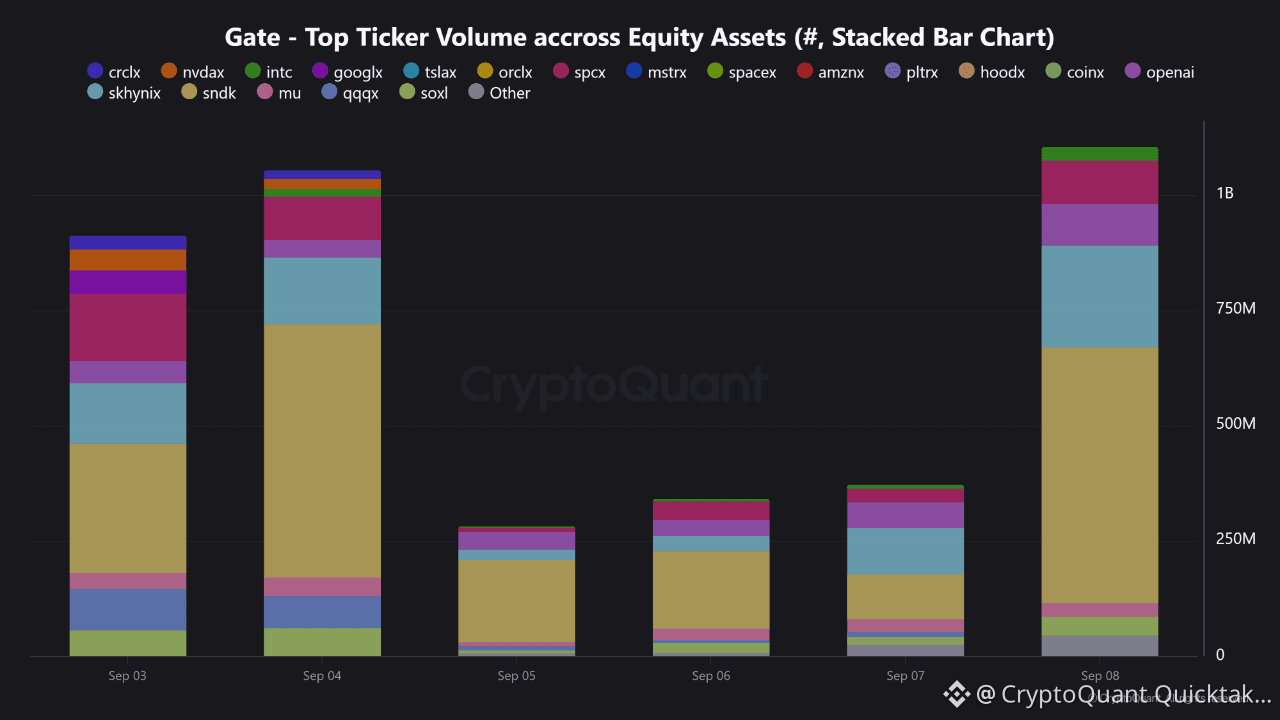
Les principaux tickers d’actions d’Gate stimulent un volume TradFi recordL’activité boursière d’Gate est de plus en plus alimentée par un petit groupe de tickers à forte conviction.
Ces dernières semaines, les principaux noms d’actions TradFi de la plateforme ont généré un volume de transactions significatif. Depuis la fin juillet, les principaux tickers boursiers d’Gate ont constamment enregistré plus de 10 Md $ de volume hebdomadaire. Une semaine récente a dépassé les 20 Md $, marquant un nouveau record sur la plateforme et une hausse de 94 % d’une semaine sur l’autre.
Les noms qui se démarquent incluent :
SNDK (SanDisk) a mené avec un volume exceptionnel sur une seule journée, dépassant les 3,6 Md $.
Les principaux tickers d’actions d’Gate stimulent un volume TradFi record
L’activité boursière d’Gate est de plus en plus alimentée par un petit groupe de tickers à forte conviction.
Ces dernières semaines, les principaux noms d’actions TradFi de la plateforme ont généré un volume de transactions significatif. Depuis la fin juillet, les principaux tickers boursiers d’Gate ont constamment enregistré plus de 10 Md $ de volume hebdomadaire. Une semaine récente a dépassé les 20 Md $, marquant un nouveau record sur la plateforme et une hausse de 94 % d’une semaine sur l’autre.
Les noms qui se démarquent incluent :
SNDK (SanDisk) a mené avec un volume exceptionnel sur une seule journée, dépassant les 3,6 Md $.
Ces dernières semaines, les principaux noms d’actions TradFi de la plateforme ont généré un volume de transactions significatif. Depuis la fin juillet, les principaux tickers boursiers d’Gate ont constamment enregistré plus de 10 Md $ de volume hebdomadaire. Une semaine récente a dépassé les 20 Md $, marquant un nouveau record sur la plateforme et une hausse de 94 % d’une semaine sur l’autre.
Les noms qui se démarquent incluent :
SNDK (SanDisk) a mené avec un volume exceptionnel sur une seule journée, dépassant les 3,6 Md $.
173
Article
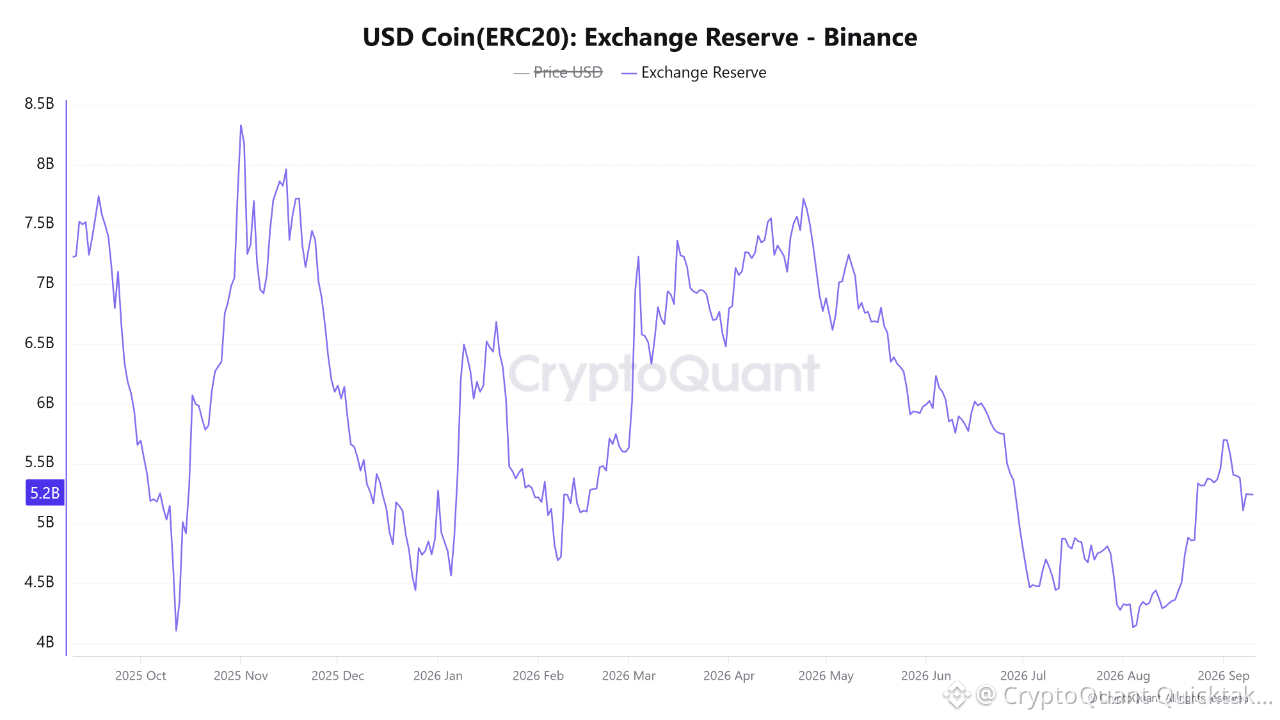
Les réserves d’USDC sur Binance viennent de rebondir.L’USDC représente principalement de l’argent institutionnel et des traders de grande taille. Lorsque cette réserve a évolué à des plus bas pendant tout le mois de juillet et août, le marché ne disposait pratiquement d’aucun véritable soutien. Le fait de voir l’USDC refluer vers l’échange en moins d’un mois montre qu’une quantité notable de liquidités est à nouveau prête dans des comptes.
Le capital ne se contente plus de rester dans des cold wallets : il migre vers les CEX. Cela signifie que les gens sont prêts à prendre un risque de garde pour attendre une opportunité.
Cela crée une couche de liquidité côté achats, épaisse, directement sur Binance. Difficile de dire si cette poudre sèche sera effectivement déployée pour pousser les prix à la hausse tout de suite. Mais au moins, le marché ne fonctionne plus complètement à sec comme il y a quelques semaines.
Les réserves d’USDC sur Binance viennent de rebondir.
L’USDC représente principalement de l’argent institutionnel et des traders de grande taille. Lorsque cette réserve a évolué à des plus bas pendant tout le mois de juillet et août, le marché ne disposait pratiquement d’aucun véritable soutien. Le fait de voir l’USDC refluer vers l’échange en moins d’un mois montre qu’une quantité notable de liquidités est à nouveau prête dans des comptes.
Le capital ne se contente plus de rester dans des cold wallets : il migre vers les CEX. Cela signifie que les gens sont prêts à prendre un risque de garde pour attendre une opportunité.
Cela crée une couche de liquidité côté achats, épaisse, directement sur Binance. Difficile de dire si cette poudre sèche sera effectivement déployée pour pousser les prix à la hausse tout de suite. Mais au moins, le marché ne fonctionne plus complètement à sec comme il y a quelques semaines.
Le capital ne se contente plus de rester dans des cold wallets : il migre vers les CEX. Cela signifie que les gens sont prêts à prendre un risque de garde pour attendre une opportunité.
Cela crée une couche de liquidité côté achats, épaisse, directement sur Binance. Difficile de dire si cette poudre sèche sera effectivement déployée pour pousser les prix à la hausse tout de suite. Mais au moins, le marché ne fonctionne plus complètement à sec comme il y a quelques semaines.
56
Connectez-vous pour découvrir plus de contenu
Rejoignez la communauté mondiale des adeptes de cryptomonnaies sur Binance Square
⚡️ Suviez les dernières informations importantes sur les cryptomonnaies.
💬 Jugé digne de confiance par la plus grande plateforme d’échange de cryptomonnaies au monde.
👍 Découvrez les connaissances que partagent les créateurs vérifiés.
Adresse e-mail/Nº de téléphone
Sujets d’actualité
ClarityActFacesProceduralVoteSept15
13,663 vues
275 mentions
#clarityactfacesproceduralvotesept15
🚨 La loi CLARITY fait face à un vote procédural le 15 septembre 🚨
La salle du Sénat est calme, mais le marché crypto surveille déjà l’horloge. Le 15 septembre, un vote procédural pourrait déterminer si un important projet de loi américain sur la structure du marché crypto a l’opportunité d’avancer.
La loi CLARITY ne fait pas face, ce jour-là, à un vote final. Les sénateurs devraient voter sur une motion visant à engager la procédure, une étape procédurale critique qui requiert 60 voix pour franchir l’obstacle au Sénat.
Cette distinction compte. Un vote favorable ne ferait pas du projet de loi une loi, mais il ouvrirait la porte à un examen plus approfondi au Sénat et à des négociations.
Les enjeux sont considérables, car le texte vise à établir des règles plus claires autour des actifs numériques et à déterminer comment les responsabilités sont partagées entre les régulateurs américains.
La révision la plus récente, longue de 630 pages, ajoute également des dispositions qui traitent certains protocoles de trading non décentralisés, tandis que plusieurs désaccords politiques et réglementaires restent à résoudre.
Mon avis : le 15 septembre devrait être vu moins comme un jour de victoire ou de défaite que comme un test de crédibilité. Franchir l’obstacle procédural pourrait renforcer la confiance que la législation crypto américaine avance vers un cadre plus clair. Un échec pourrait prolonger l’incertitude.
Pour les marchés crypto, la clarté réglementaire peut influencer la participation institutionnelle, les décisions des entreprises et la manière dont les investisseurs évaluent l’exposition aux États-Unis. Mais les attentes peuvent évoluer plus vite que la législation elle-même.
Le signal réel n’est pas de savoir si la crypto obtient une clarté du jour au lendemain, mais si les législateurs peuvent enfin construire suffisamment de consensus pour faire avancer le processus.
Le vote du 15 septembre deviendra-t-il un tournant pour la réglementation crypto aux États-Unis, ou un autre report ?
Avertissement : Cet article est fourni à des fins éducatives uniquement et ne constitue pas un conseil financier. Faites vos propres recherches et gérez les risques avec soin.
#CryptoRegulation #Bitcoin #GrowWithSAC $SUI $NEAR $BNB
#ClarityActFacesProceduralVoteSept15
Sienna Leo-你真棒-带我走
·2 mentions J’aime
·2.5k vues
US2YearYieldRisesTo4.61%
17,579 vues
370 mentions
US10YearTreasuryYieldNears5%
9,177 vues
222 mentions