

Binance News
397k Publications

Binance News
 Compte Binance officiellement vérifié
Signaler
Follow Binance News to stay on top of industry trends & news
9 Suivis
2.3M+ Abonnés
2.8M+ J’aime
À la une
Réponses
Vidéos
·
--
Solana Rises Above $110 as Spot SOL ETFs Record $264 Million in Monthly InflowsSolana rose above the $110 resistance level as spot SOL ETFs recorded $264 million in monthly inflows. According to NS3.AI, the ETFs posted inflows for six consecutive days, while Solana’s staking ratio reached nearly 70%.
Solana Rises Above $110 as Spot SOL ETFs Record $264 Million in Monthly Inflows
Solana rose above the $110 resistance level as spot SOL ETFs recorded $264 million in monthly inflows. According to NS3.AI, the ETFs posted inflows for six consecutive days, while Solana’s staking ratio reached nearly 70%.
8
3
39
15.9k
·
--
Zelenskyy Says Russian Strikes Hit Ukraine Data CentersUkraine said Russian airstrikes overnight and early Sunday killed at least six people across the country and hit several large data centers in Kyiv. According to Sina Finance, President Volodymyr Zelenskyy said three people were killed in the Zaporizhzhia region and a man died in Kyiv after the airstrikes.
He also said civilian infrastructure in at least eight regions was struck, including energy facilities and residential buildings. Zelenskyy said Russia hit one data center in Kyiv twice during the overnight attacks, injuring three people, but gave no further details.
Zelenskyy Says Russian Strikes Hit Ukraine Data Centers
Ukraine said Russian airstrikes overnight and early Sunday killed at least six people across the country and hit several large data centers in Kyiv. According to Sina Finance, President Volodymyr Zelenskyy said three people were killed in the Zaporizhzhia region and a man died in Kyiv after the airstrikes.
He also said civilian infrastructure in at least eight regions was struck, including energy facilities and residential buildings. Zelenskyy said Russia hit one data center in Kyiv twice during the overnight attacks, injuring three people, but gave no further details.
He also said civilian infrastructure in at least eight regions was struck, including energy facilities and residential buildings. Zelenskyy said Russia hit one data center in Kyiv twice during the overnight attacks, injuring three people, but gave no further details.
12
12
9.5k
·
--
Hackers Move $83 Million in Stolen Bitget XRPHackers behind the Bitget exchange attack have moved about $83 million in stolen XRP from three holding wallets, while about $75 million remains in accounts that cannot be frozen under the network's current rules. According to Sina Finance, nearly 103 million XRP were stolen from Bitget on Thursday and spread across five accounts.
A review of XRP Ledger records showed that by Saturday 12:41 UTC, two accounts that initially held 20 million XRP each had fallen to about 23 tokens and 55 tokens, respectively. The third account's balance had dropped to about 5.8 million XRP.
Circle and Tether have frozen about $320,000 in stablecoins linked to the attack. XRP traded at about $1.54 on Saturday, down roughly 4% in 24 hours but still up about 9% for the week, according to CoinGecko data.
Hackers Move $83 Million in Stolen Bitget XRP
Hackers behind the Bitget exchange attack have moved about $83 million in stolen XRP from three holding wallets, while about $75 million remains in accounts that cannot be frozen under the network's current rules. According to Sina Finance, nearly 103 million XRP were stolen from Bitget on Thursday and spread across five accounts.
A review of XRP Ledger records showed that by Saturday 12:41 UTC, two accounts that initially held 20 million XRP each had fallen to about 23 tokens and 55 tokens, respectively. The third account's balance had dropped to about 5.8 million XRP.
Circle and Tether have frozen about $320,000 in stablecoins linked to the attack. XRP traded at about $1.54 on Saturday, down roughly 4% in 24 hours but still up about 9% for the week, according to CoinGecko data.
A review of XRP Ledger records showed that by Saturday 12:41 UTC, two accounts that initially held 20 million XRP each had fallen to about 23 tokens and 55 tokens, respectively. The third account's balance had dropped to about 5.8 million XRP.
Circle and Tether have frozen about $320,000 in stablecoins linked to the attack. XRP traded at about $1.54 on Saturday, down roughly 4% in 24 hours but still up about 9% for the week, according to CoinGecko data.
15
14
58
105k
·
--
GEOPOLITICS | Oil Rises, Stock Futures Fall After Trump Rejects Iran Strait ProposalOil advanced and US equity futures slipped after US President Donald Trump rejected Iran’s latest proposal to reopen the Strait of Hormuz, according to Bloomberg.
Trump said negotiations may resume this week.
GEOPOLITICS | Oil Rises, Stock Futures Fall After Trump Rejects Iran Strait Proposal
Oil advanced and US equity futures slipped after US President Donald Trump rejected Iran’s latest proposal to reopen the Strait of Hormuz, according to Bloomberg.
Trump said negotiations may resume this week.
Trump said negotiations may resume this week.
1
860
·
--
Vitalik Buterin Says Original Novel 'Snowmoon' Is Complete at 32 ChaptersEthereum co-founder Vitalik Buterin said today that his original novel, Snowmoon, has been completed and consists of 32 chapters. According to ChainCatcher, the story is a speculative science fiction work set in a world heavily dependent on cryptography and decentralized governance.
The novel centers on ideological conflict between societies including Veridia and the Arctic Empire, and incorporates themes such as zero-knowledge proofs, quadratic voting, privacy technology, and content-based tax mechanisms. Buterin said the work reflects themes he has long explored, including mechanism design and digital sovereignty.
He said the book is being released under the GPL v3 license. Buterin added that adaptations into films or animation are allowed, but the related production pipeline, including AI prompts and scripts, must be open sourced. He also said all text was written by him, with AI used only for spelling and grammar checks, consistency verification, and web formatting.
Vitalik Buterin Says Original Novel 'Snowmoon' Is Complete at 32 Chapters
Ethereum co-founder Vitalik Buterin said today that his original novel, Snowmoon, has been completed and consists of 32 chapters. According to ChainCatcher, the story is a speculative science fiction work set in a world heavily dependent on cryptography and decentralized governance.
The novel centers on ideological conflict between societies including Veridia and the Arctic Empire, and incorporates themes such as zero-knowledge proofs, quadratic voting, privacy technology, and content-based tax mechanisms. Buterin said the work reflects themes he has long explored, including mechanism design and digital sovereignty.
He said the book is being released under the GPL v3 license. Buterin added that adaptations into films or animation are allowed, but the related production pipeline, including AI prompts and scripts, must be open sourced. He also said all text was written by him, with AI used only for spelling and grammar checks, consistency verification, and web formatting.
The novel centers on ideological conflict between societies including Veridia and the Arctic Empire, and incorporates themes such as zero-knowledge proofs, quadratic voting, privacy technology, and content-based tax mechanisms. Buterin said the work reflects themes he has long explored, including mechanism design and digital sovereignty.
He said the book is being released under the GPL v3 license. Buterin added that adaptations into films or animation are allowed, but the related production pipeline, including AI prompts and scripts, must be open sourced. He also said all text was written by him, with AI used only for spelling and grammar checks, consistency verification, and web formatting.
10
4.9k
·
--
Bitwise Files Final NEAR ETF Prospectus and Publishes 39-Page Investment ReportBitwise has filed the final prospectus for its NEAR spot ETF and released a 39-page investment report co-authored by Chief Investment Officer Matt Hougan. According to ChainCatcher, the report outlines several scenarios for NEAR, including a base case of $155 by 2030, a bullish case of $562, and a bearish case of $1.63.
The report also highlights downside risk and compares NEAR with Visa in its most optimistic scenario. It notes that Visa processed $15.7 trillion in payment transactions in 2024 and had a market value of about $701 billion, using that as one reference point for assessing NEAR's potential value. The report also includes a product page for Bitwise's Europe NEAR ETP.
Bitwise Files Final NEAR ETF Prospectus and Publishes 39-Page Investment Report
Bitwise has filed the final prospectus for its NEAR spot ETF and released a 39-page investment report co-authored by Chief Investment Officer Matt Hougan. According to ChainCatcher, the report outlines several scenarios for NEAR, including a base case of $155 by 2030, a bullish case of $562, and a bearish case of $1.63.
The report also highlights downside risk and compares NEAR with Visa in its most optimistic scenario. It notes that Visa processed $15.7 trillion in payment transactions in 2024 and had a market value of about $701 billion, using that as one reference point for assessing NEAR's potential value. The report also includes a product page for Bitwise's Europe NEAR ETP.
The report also highlights downside risk and compares NEAR with Visa in its most optimistic scenario. It notes that Visa processed $15.7 trillion in payment transactions in 2024 and had a market value of about $701 billion, using that as one reference point for assessing NEAR's potential value. The report also includes a product page for Bitwise's Europe NEAR ETP.
NEARETF+0,14%
1
12
7.4k
·
--
Solana Co-Founder Says Industry Is Not Ready for Alpenglow UpgradeSolana co-founder Anatoly Yakovenko said the industry is not ready for the chain’s next major upgrade, Alpenglow. According to Odaily, Anza engineers have already migrated Solana’s developer network to the Alpenglow consensus protocol, which is designed to change how blocks are processed and reduce transaction finality from about 12.8 seconds to 100 to 150 milliseconds.
Solana Co-Founder Says Industry Is Not Ready for Alpenglow Upgrade
Solana co-founder Anatoly Yakovenko said the industry is not ready for the chain’s next major upgrade, Alpenglow. According to Odaily, Anza engineers have already migrated Solana’s developer network to the Alpenglow consensus protocol, which is designed to change how blocks are processed and reduce transaction finality from about 12.8 seconds to 100 to 150 milliseconds.
6
5
36
31.1k
·
--
CRYPTO | Token Unlocks Data Shows Large Releases for 2Z, SUI, ENA Next WeekToken Unlocks data shows that several tokens, including DoubleZero (2Z), Sui (SUI), and Ethena (ENA), are scheduled for large unlocks next week.
According to PANews, DoubleZero (2Z) will unlock about 1.66 billion tokens at 9:00 p.m. on October 2, representing about 47.69% of its circulating supply. Sui (SUI) will unlock about 13.26 million tokens at 8:00 a.m. on October 1, equal to about 0.32% of its circulating supply. Ethena (ENA) will unlock about 40.63 million tokens at 3:00 p.m. on October 2, equal to about 0.45% of its circulating supply.
Kamino (KMNO) is set to unlock about 229 million tokens at 8:00 p.m. on September 30, representing about 2.81% of its circulating supply. Collector Crypt (CARDS) will unlock about 59.26 million tokens at 3:00 a.m. on September 30, equal to about 10.62% of its circulating supply. EigenCloud (EIGEN) will unlock about 36.82 million tokens at noon on October 1, equal to about 5.19% of its circulating supply. Falcon Finance (FF) will unlock about 77.14 million tokens at 9:00 p.m. on September 29, representing about 2.51% of its circulating supply.
CRYPTO | Token Unlocks Data Shows Large Releases for 2Z, SUI, ENA Next Week
Token Unlocks data shows that several tokens, including DoubleZero (2Z), Sui (SUI), and Ethena (ENA), are scheduled for large unlocks next week.
According to PANews, DoubleZero (2Z) will unlock about 1.66 billion tokens at 9:00 p.m. on October 2, representing about 47.69% of its circulating supply. Sui (SUI) will unlock about 13.26 million tokens at 8:00 a.m. on October 1, equal to about 0.32% of its circulating supply. Ethena (ENA) will unlock about 40.63 million tokens at 3:00 p.m. on October 2, equal to about 0.45% of its circulating supply.
Kamino (KMNO) is set to unlock about 229 million tokens at 8:00 p.m. on September 30, representing about 2.81% of its circulating supply. Collector Crypt (CARDS) will unlock about 59.26 million tokens at 3:00 a.m. on September 30, equal to about 10.62% of its circulating supply. EigenCloud (EIGEN) will unlock about 36.82 million tokens at noon on October 1, equal to about 5.19% of its circulating supply. Falcon Finance (FF) will unlock about 77.14 million tokens at 9:00 p.m. on September 29, representing about 2.51% of its circulating supply.
According to PANews, DoubleZero (2Z) will unlock about 1.66 billion tokens at 9:00 p.m. on October 2, representing about 47.69% of its circulating supply. Sui (SUI) will unlock about 13.26 million tokens at 8:00 a.m. on October 1, equal to about 0.32% of its circulating supply. Ethena (ENA) will unlock about 40.63 million tokens at 3:00 p.m. on October 2, equal to about 0.45% of its circulating supply.
Kamino (KMNO) is set to unlock about 229 million tokens at 8:00 p.m. on September 30, representing about 2.81% of its circulating supply. Collector Crypt (CARDS) will unlock about 59.26 million tokens at 3:00 a.m. on September 30, equal to about 10.62% of its circulating supply. EigenCloud (EIGEN) will unlock about 36.82 million tokens at noon on October 1, equal to about 5.19% of its circulating supply. Falcon Finance (FF) will unlock about 77.14 million tokens at 9:00 p.m. on September 29, representing about 2.51% of its circulating supply.
5
2
30
43.4k
·
--
Article
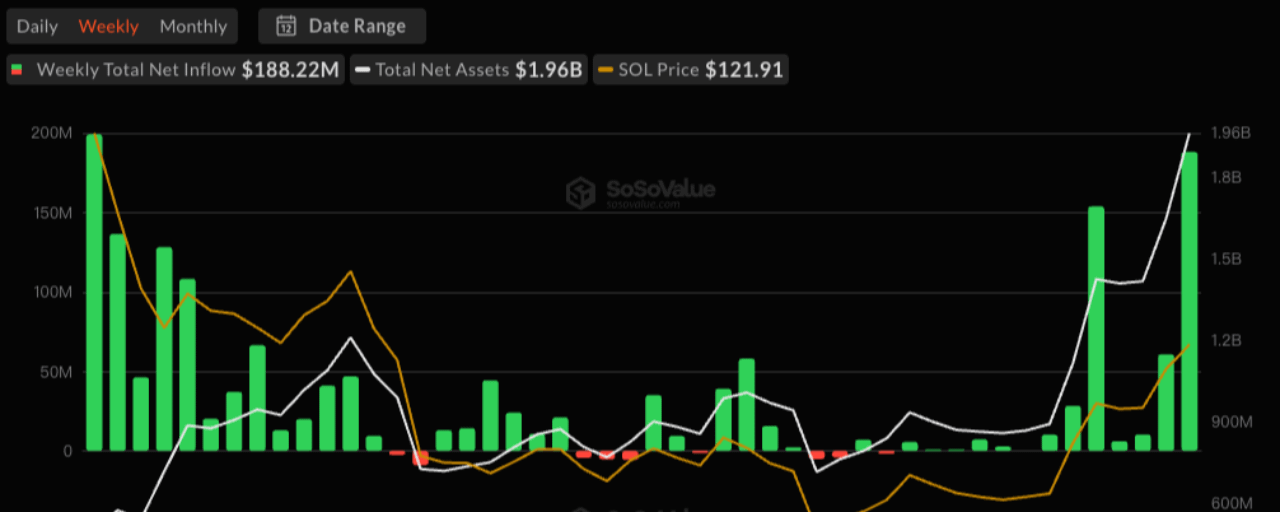
SOL Spot ETFs Record Second-Highest Weekly Net Inflow at $188 MillionU.S. SOL spot ETFs recorded about $188 million in total net inflows this week, according to SoSoValue data. According to Foresight News, the figure was second only to the roughly $199 million in net inflows during the first week after listing and marked the second-highest weekly record on record.
SOL Spot ETFs Record Second-Highest Weekly Net Inflow at $188 Million
U.S. SOL spot ETFs recorded about $188 million in total net inflows this week, according to SoSoValue data. According to Foresight News, the figure was second only to the roughly $199 million in net inflows during the first week after listing and marked the second-highest weekly record on record.
1
1
24
19.8k
·
--
Article
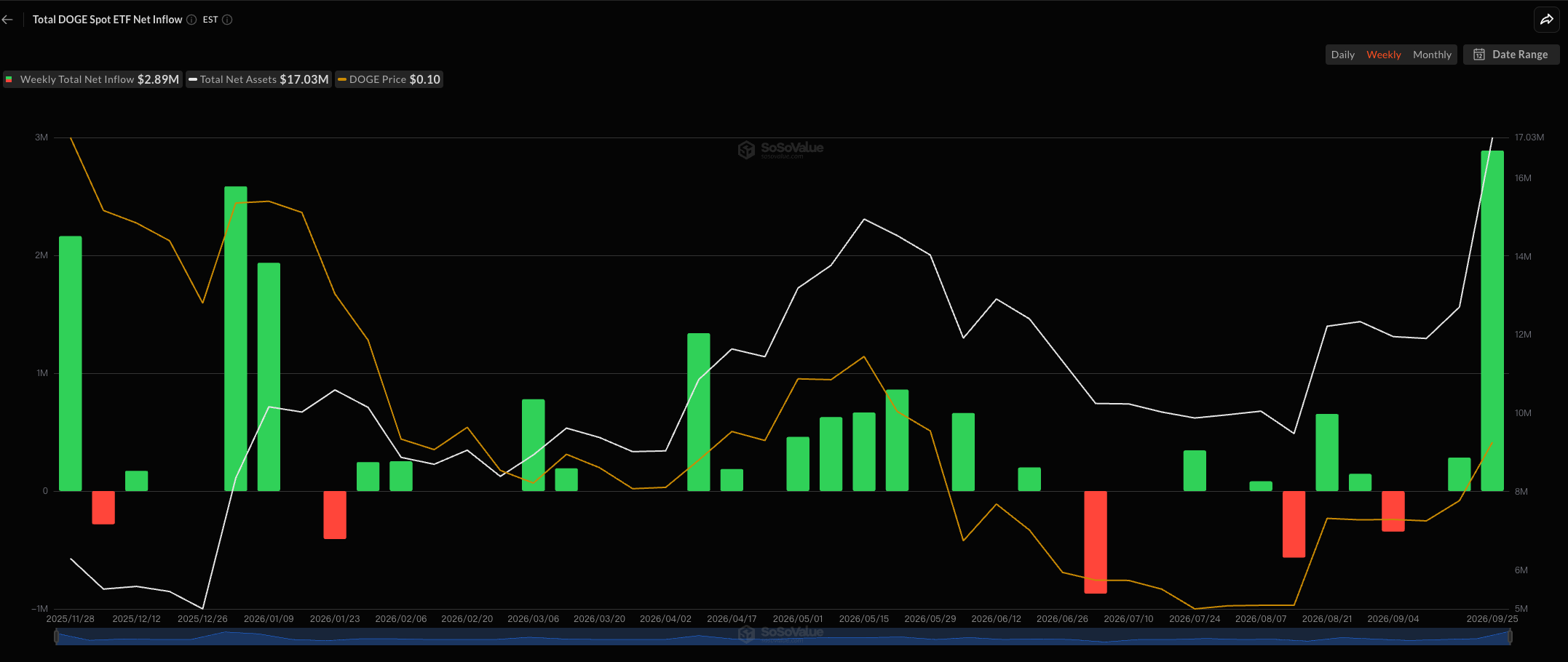
Dogecoin ETFs Hit Record Week as Bitwise Prepares to Exit US spot Dogecoin ETFs drew $2.89 million in net inflows in the week ending September 25 — their largest week since launch, according to BeInCrypto, citing SoSoValue data. The record came 11 days after Bitwise said it would shut its own Dogecoin fund, BWOW, and topped the previous weekly high of about $2.59 million set in the week ending January 2; the week before brought in just $284,510. All of last week's new money arrived in three sessions — Monday, Tuesday and Friday.Bitwise would liquidate BWOW, with its last trading day on October 14, barely three weeks away; the fund has lifetime net outflows of $1.23 million and holds $801,400. "Bitwise has determined to liquidate the Fund as it continues to optimize its product range to meet evolving investor needs," the issuer said. Since that announcement, cumulative inflows into Grayscale's GDOG rose from $11.7 million to $15.46 million, while 21Shares' TDOG slipped from $1.63 million to $1.03 million. GDOG took all of Friday's $806,060 and now holds $13.87 million, or about 81% of the group's assets.The funds hold just 0.11% of Dogecoin's total market value, with DOGE trading near $0.098 for a market cap of about $15.3 billion. Quiet days are the norm — between July 1 and September 18, the funds posted net flows on only nine trading days. The Dogecoin record also landed in the same week US spot Bitcoin ETFs pulled in $2.39 billion, more than 800 times the Dogecoin figure.
Dogecoin ETFs Hit Record Week as Bitwise Prepares to Exit
US spot Dogecoin ETFs drew $2.89 million in net inflows in the week ending September 25 — their largest week since launch, according to BeInCrypto, citing SoSoValue data. The record came 11 days after Bitwise said it would shut its own Dogecoin fund, BWOW, and topped the previous weekly high of about $2.59 million set in the week ending January 2; the week before brought in just $284,510. All of last week's new money arrived in three sessions — Monday, Tuesday and Friday.Bitwise would liquidate BWOW, with its last trading day on October 14, barely three weeks away; the fund has lifetime net outflows of $1.23 million and holds $801,400. "Bitwise has determined to liquidate the Fund as it continues to optimize its product range to meet evolving investor needs," the issuer said. Since that announcement, cumulative inflows into Grayscale's GDOG rose from $11.7 million to $15.46 million, while 21Shares' TDOG slipped from $1.63 million to $1.03 million. GDOG took all of Friday's $806,060 and now holds $13.87 million, or about 81% of the group's assets.The funds hold just 0.11% of Dogecoin's total market value, with DOGE trading near $0.098 for a market cap of about $15.3 billion. Quiet days are the norm — between July 1 and September 18, the funds posted net flows on only nine trading days. The Dogecoin record also landed in the same week US spot Bitcoin ETFs pulled in $2.39 billion, more than 800 times the Dogecoin figure.
226
21
228
18.6k
·
--
BNB Surpasses 780 USDT with a 1.05% Increase in 24 HoursOn Sep 27, 2026, 22:00 PM(UTC). According to Binance Market Data, BNB has crossed the 780 USDT benchmark and is now trading at 780.190002 USDT, with a narrowed 1.05% increase in 24 hours.
BNB Surpasses 780 USDT with a 1.05% Increase in 24 Hours
On Sep 27, 2026, 22:00 PM(UTC). According to Binance Market Data, BNB has crossed the 780 USDT benchmark and is now trading at 780.190002 USDT, with a narrowed 1.05% increase in 24 hours.
3
1.6k
·
--
Whale Transfers 16,919 ETH to Exchange, Clearing On-Chain BalanceA wallet that accumulated 130,591 ETH in 2023 sent another 16,919 ETH to an exchange three hours ago, according to Ai Yi monitoring. According to Odaily, the transfer was worth $45.85 million, and the wallet’s on-chain ETH balance has now been cleared.
Over the past week, the address has transferred a total of 128,972.05 ETH to exchanges at an average price of $2,680.31. If sold, the holdings are expected to generate a profit of $84.31 million.
Whale Transfers 16,919 ETH to Exchange, Clearing On-Chain Balance
A wallet that accumulated 130,591 ETH in 2023 sent another 16,919 ETH to an exchange three hours ago, according to Ai Yi monitoring. According to Odaily, the transfer was worth $45.85 million, and the wallet’s on-chain ETH balance has now been cleared.
Over the past week, the address has transferred a total of 128,972.05 ETH to exchanges at an average price of $2,680.31. If sold, the holdings are expected to generate a profit of $84.31 million.
Over the past week, the address has transferred a total of 128,972.05 ETH to exchanges at an average price of $2,680.31. If sold, the holdings are expected to generate a profit of $84.31 million.
1
23
36.2k
·
--
Article
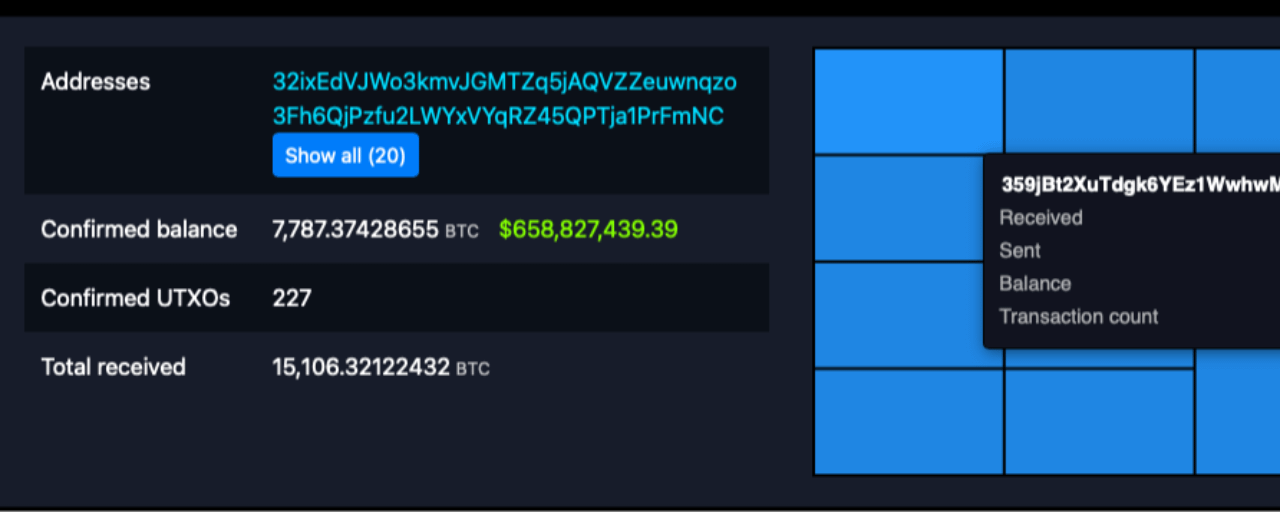
El Salvador Adds 8 Bitcoin in 7 Days, Holdings Reach 7,787.37 BTCEl Salvador increased its Bitcoin holdings by 8 BTC over the past 7 days and by 31 BTC over the past 30 days. According to ChainCatcher, its total Bitcoin holdings now stand at 7,787.37 BTC, with a total value of $658 million.
El Salvador Adds 8 Bitcoin in 7 Days, Holdings Reach 7,787.37 BTC
El Salvador increased its Bitcoin holdings by 8 BTC over the past 7 days and by 31 BTC over the past 30 days. According to ChainCatcher, its total Bitcoin holdings now stand at 7,787.37 BTC, with a total value of $658 million.
2
1
34
69.6k
·
--
Article
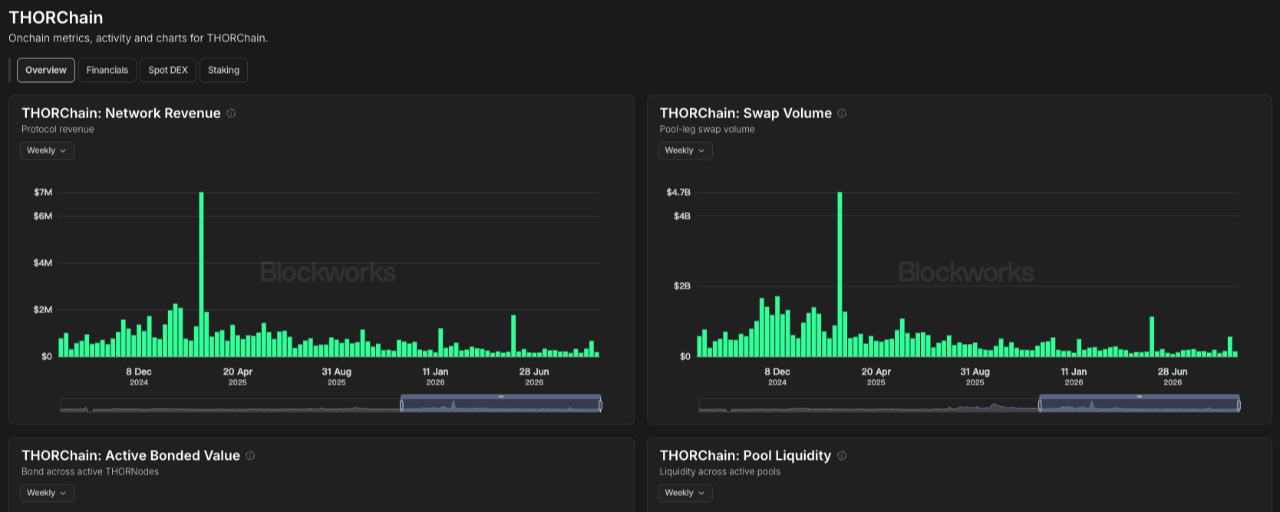
THORChain Revenue Reaches Highest Level Since April 25 as Trading Volume Tops $200 MillionTHORChain generated about $382,000 in revenue on September 25 in U.S. local time, while trading volume exceeded $200 million. According to Foresight News, the revenue marked the highest level since April 25, and the trading volume was the second-highest since April 23, trailing only the roughly $280 million recorded on September 10.
THORChain Revenue Reaches Highest Level Since April 25 as Trading Volume Tops $200 Million
THORChain generated about $382,000 in revenue on September 25 in U.S. local time, while trading volume exceeded $200 million. According to Foresight News, the revenue marked the highest level since April 25, and the trading volume was the second-highest since April 23, trailing only the roughly $280 million recorded on September 10.
2
2
33
49.3k
·
--
SOL Trader With 20x Leverage Position Holds More Than $23 Million in Unrealized ProfitA wallet opened a 20x leveraged long position on 550,087 SOL a month ago, with the position currently showing more than $23 million in unrealized profit. According to Odaily, the address also placed a take-profit order at $200, and if SOL reaches that level, the profit could exceed $65 million.
SOL Trader With 20x Leverage Position Holds More Than $23 Million in Unrealized Profit
A wallet opened a 20x leveraged long position on 550,087 SOL a month ago, with the position currently showing more than $23 million in unrealized profit. According to Odaily, the address also placed a take-profit order at $200, and if SOL reaches that level, the profit could exceed $65 million.
17
32.8k
·
--
Zano Rolls Back Blockchain to Block 3,833,000 After Inflation BugPrivacy blockchain project Zano said it rolled back its blockchain to block height 3,833,000, before its sixth hard fork, and deleted about one month of on-chain transaction records to address an inflation bug involving Gateway Addresses. According to Odaily, the bug allowed unauthorized issuance of the native ZANO token and the dollar-pegged stablecoin fUSD.
Zano said its core consensus protocol, wallet spending keys, and ordinary transaction privacy were not affected. It added that nodes, miners, stakers, and service providers need to upgrade.
Freedom Dollar said millions of dollars in assets held by the project had been exchanged for fake fUSD, and that the project will bear the related losses. Freedom Dollar also asked fUSD holders to pause economic activity involving the token until the repaired Zano chain is confirmed stable.
Zano Rolls Back Blockchain to Block 3,833,000 After Inflation Bug
Privacy blockchain project Zano said it rolled back its blockchain to block height 3,833,000, before its sixth hard fork, and deleted about one month of on-chain transaction records to address an inflation bug involving Gateway Addresses. According to Odaily, the bug allowed unauthorized issuance of the native ZANO token and the dollar-pegged stablecoin fUSD.
Zano said its core consensus protocol, wallet spending keys, and ordinary transaction privacy were not affected. It added that nodes, miners, stakers, and service providers need to upgrade.
Freedom Dollar said millions of dollars in assets held by the project had been exchanged for fake fUSD, and that the project will bear the related losses. Freedom Dollar also asked fUSD holders to pause economic activity involving the token until the repaired Zano chain is confirmed stable.
Zano said its core consensus protocol, wallet spending keys, and ordinary transaction privacy were not affected. It added that nodes, miners, stakers, and service providers need to upgrade.
Freedom Dollar said millions of dollars in assets held by the project had been exchanged for fake fUSD, and that the project will bear the related losses. Freedom Dollar also asked fUSD holders to pause economic activity involving the token until the repaired Zano chain is confirmed stable.
5
2
9
6.3k
·
--
Tether Says EQIBank Exposure Is Less Than 0.034% of Group AssetsTether disclosed exposure to EQIBank after a U.S. civil forfeiture case listed about $84.2 million in assets. According to NS3.AI, Tether said its exposure was less than 0.034% of group assets on Sept. 25. The records do not establish that the listed property belongs to Tether or that it backs USDT redemptions.
Tether Says EQIBank Exposure Is Less Than 0.034% of Group Assets
Tether disclosed exposure to EQIBank after a U.S. civil forfeiture case listed about $84.2 million in assets. According to NS3.AI, Tether said its exposure was less than 0.034% of group assets on Sept. 25. The records do not establish that the listed property belongs to Tether or that it backs USDT redemptions.
2
1.5k
·
--
Vitalik Says Ethereum Plans Include FOCIL, EIP-8288, and Privacy FeaturesVitalik said on X that he tried to briefly explain the real meaning of Ethereum’s plans after the Hegota fork. According to Odaily, he described Ethereum as no longer just a blockchain, but a hybrid architecture combining blockchain and modern cryptography that can support stronger features.
He said the related plans include FOCIL, EIP-8288, simplified consensus, state management, formal verification, mempool improvements with privacy features, and long-term obfuscation techniques.
Vitalik Says Ethereum Plans Include FOCIL, EIP-8288, and Privacy Features
Vitalik said on X that he tried to briefly explain the real meaning of Ethereum’s plans after the Hegota fork. According to Odaily, he described Ethereum as no longer just a blockchain, but a hybrid architecture combining blockchain and modern cryptography that can support stronger features.
He said the related plans include FOCIL, EIP-8288, simplified consensus, state management, formal verification, mempool improvements with privacy features, and long-term obfuscation techniques.
He said the related plans include FOCIL, EIP-8288, simplified consensus, state management, formal verification, mempool improvements with privacy features, and long-term obfuscation techniques.
8
5.3k
·
--
Michael Saylor Posts Another Bitcoin Tracker Update as Strategy Signals Possible DisclosureMichael Saylor, founder and executive chairman of Bitcoin treasury company Strategy, posted another Bitcoin Tracker update with the caption "Even more orange." According to ChainCatcher, Strategy has typically disclosed changes in its Bitcoin holdings the day after such posts.
Michael Saylor Posts Another Bitcoin Tracker Update as Strategy Signals Possible Disclosure
Michael Saylor, founder and executive chairman of Bitcoin treasury company Strategy, posted another Bitcoin Tracker update with the caption "Even more orange." According to ChainCatcher, Strategy has typically disclosed changes in its Bitcoin holdings the day after such posts.
2
3.4k
·
--
Trump Says He Has Considered Resuming Strikes on IranAccording to Jin10, U.S. President Donald Trump said he has been considering whether to resume strikes on Iran, while also saying the U.S. military is helping large volumes of oil pass through the Strait of Hormuz. He said the amount of oil passing through the strait last weekend reached the highest level since the war began, at more than 20 million barrels, and a U.S. defense official confirmed his remarks, saying 22 million barrels of oil were exported through the strait on Friday night.
Trump Says He Has Considered Resuming Strikes on Iran
According to Jin10, U.S. President Donald Trump said he has been considering whether to resume strikes on Iran, while also saying the U.S. military is helping large volumes of oil pass through the Strait of Hormuz. He said the amount of oil passing through the strait last weekend reached the highest level since the war began, at more than 20 million barrels, and a U.S. defense official confirmed his remarks, saying 22 million barrels of oil were exported through the strait on Friday night.
8
14.8k
·
--
Maye Musk Says Elon Ignored Her Advice To Stick To One Company After PayPalMaye Musk said she told Elon Musk to focus on one company after PayPal, but he instead launched ventures including SpaceX and Tesla, and Forbes now puts his fortune at $929 billion. According to BeInCrypto, she made the remarks while promoting her memoir Timeless and said the wealth is stock in his companies, not cash in the bank.
She also said Elon wants her to use Grok, the chatbot from xAI, and that she still sleeps in a small bed in his garage at Starbase.
Maye Musk Says Elon Ignored Her Advice To Stick To One Company After PayPal
Maye Musk said she told Elon Musk to focus on one company after PayPal, but he instead launched ventures including SpaceX and Tesla, and Forbes now puts his fortune at $929 billion. According to BeInCrypto, she made the remarks while promoting her memoir Timeless and said the wealth is stock in his companies, not cash in the bank.
She also said Elon wants her to use Grok, the chatbot from xAI, and that she still sleeps in a small bed in his garage at Starbase.
She also said Elon wants her to use Grok, the chatbot from xAI, and that she still sleeps in a small bed in his garage at Starbase.
2
5.2k
·
--
RLUSD Circulating Supply Reaches 2.49 Billion Tokens as Market Value Nears $2.5 BillionRLUSD’s circulating supply is about 2.49 billion tokens, and its market value is close to $2.5 billion, up about $490 million from Ripple’s $2 billion milestone announced in August. According to Odaily, the total value of stablecoins on the XRP Ledger is about $1.19 billion, rising about 6% over seven days and about 11% over 30 days. RLUSD accounts for about $1.1 billion of that total, or more than 92%.
RLUSD Circulating Supply Reaches 2.49 Billion Tokens as Market Value Nears $2.5 Billion
RLUSD’s circulating supply is about 2.49 billion tokens, and its market value is close to $2.5 billion, up about $490 million from Ripple’s $2 billion milestone announced in August. According to Odaily, the total value of stablecoins on the XRP Ledger is about $1.19 billion, rising about 6% over seven days and about 11% over 30 days. RLUSD accounts for about $1.1 billion of that total, or more than 92%.
6
24.4k
·
--
Solana's SIMD-0649 Rule Closes Without MergingSolana's proposed SIMD-0649 rule closed on Sept. 25 without merging. According to NS3.AI, the draft would let validators reject blocks when transactions within a batch violate fee-priority order, but it would not decide which transactions leaders include or how leaders split them into batches.
The proposal would also require every batch except the final batch to span at least 64 data shreds.
Solana's SIMD-0649 Rule Closes Without Merging
Solana's proposed SIMD-0649 rule closed on Sept. 25 without merging. According to NS3.AI, the draft would let validators reject blocks when transactions within a batch violate fee-priority order, but it would not decide which transactions leaders include or how leaders split them into batches.
The proposal would also require every batch except the final batch to span at least 64 data shreds.
The proposal would also require every batch except the final batch to span at least 64 data shreds.
5
5.9k
·
--
Ethereum(ETH) Drops Below 2,700 USDT with a Narrowed 0.45% Increase in 24 HoursOn Sep 27, 2026, 13:13 PM(UTC). According to Binance Market Data, Ethereum has dropped below 2,700 USDT and is now trading at 2,699.570068 USDT, with a narrowed narrowed 0.45% increase in 24 hours.
Ethereum(ETH) Drops Below 2,700 USDT with a Narrowed 0.45% Increase in 24 Hours
On Sep 27, 2026, 13:13 PM(UTC). According to Binance Market Data, Ethereum has dropped below 2,700 USDT and is now trading at 2,699.570068 USDT, with a narrowed narrowed 0.45% increase in 24 hours.
3
4.1k
·
--
Fidelity’s Timmer Says Bitcoin Break Above $80,000 Could Open Path To $100,000Bitcoin held above $80,000, a level Fidelity Investments’ Jurrien Timmer says would confirm a double bottom and point to $100,000. Bitcoin traded at $84,647 on Sunday and briefly touched about $87,500 after crossing the threshold, according to BeInCrypto, while futures speculators added to record bullish bets. Timmer also said holding $60,000 supports a new bull market targeting $300,000 in 2029.
Fidelity’s Timmer Says Bitcoin Break Above $80,000 Could Open Path To $100,000
Bitcoin held above $80,000, a level Fidelity Investments’ Jurrien Timmer says would confirm a double bottom and point to $100,000. Bitcoin traded at $84,647 on Sunday and briefly touched about $87,500 after crossing the threshold, according to BeInCrypto, while futures speculators added to record bullish bets. Timmer also said holding $60,000 supports a new bull market targeting $300,000 in 2029.
1
1
12
27.9k
·
--
Trader Loracle Holds 3x Leveraged HYPE Short Position With Over $550,000 in Funding Fee IncomeOn September 27, TradingBeats monitoring showed that trader Loracle is holding a 3x leveraged short position of 104,600 HYPE. According to BlockBeats On-chain Detection, the short position has generated more than $550,000 in funding fee income, while the unrealized loss stands at $2.97 million.
The position was opened at $64.70, with a liquidation price of $123.63, and the overall position value is $9.74 million. Loracle's total on-chain unrealized loss has narrowed to $9.82 million.
Trader Loracle Holds 3x Leveraged HYPE Short Position With Over $550,000 in Funding Fee Income
On September 27, TradingBeats monitoring showed that trader Loracle is holding a 3x leveraged short position of 104,600 HYPE. According to BlockBeats On-chain Detection, the short position has generated more than $550,000 in funding fee income, while the unrealized loss stands at $2.97 million.
The position was opened at $64.70, with a liquidation price of $123.63, and the overall position value is $9.74 million. Loracle's total on-chain unrealized loss has narrowed to $9.82 million.
The position was opened at $64.70, with a liquidation price of $123.63, and the overall position value is $9.74 million. Loracle's total on-chain unrealized loss has narrowed to $9.82 million.
1
7
12.8k
·
--
Tokenized Stock Trading Volume on DEXs Reaches $20.9 Billion in 30 DaysTokenized stock trading volume on decentralized exchanges reached $20.9 billion over the past 30 days. According to Odaily, Uniswap V4 led the market with a 40.7% share, followed by Uniswap V3 at 19.4%, and the two versions together accounted for 60.1% of trading volume, or about $12.6 billion.
Tokenized Stock Trading Volume on DEXs Reaches $20.9 Billion in 30 Days
Tokenized stock trading volume on decentralized exchanges reached $20.9 billion over the past 30 days. According to Odaily, Uniswap V4 led the market with a 40.7% share, followed by Uniswap V3 at 19.4%, and the two versions together accounted for 60.1% of trading volume, or about $12.6 billion.
1
3
13
7.1k
·
--
U.S. President Donald Trump Praises Arrests in Probe Into Alleged Plot Against British Air Force BaseU.S. President Donald Trump called the arrest of five men suspected of planning an attack on a British Air Force base used by the United States "great." According to Sina Finance, Britain’s counterterrorism police said the suspects were arrested on suspicion of violating the U.K. Explosives Act and preparing to carry out terrorist acts.
Authorities are investigating whether there was Iranian state involvement, but they said the inquiry is still ongoing and may ultimately identify other motives.
U.S. President Donald Trump Praises Arrests in Probe Into Alleged Plot Against British Air Force Base
U.S. President Donald Trump called the arrest of five men suspected of planning an attack on a British Air Force base used by the United States "great." According to Sina Finance, Britain’s counterterrorism police said the suspects were arrested on suspicion of violating the U.K. Explosives Act and preparing to carry out terrorist acts.
Authorities are investigating whether there was Iranian state involvement, but they said the inquiry is still ongoing and may ultimately identify other motives.
Authorities are investigating whether there was Iranian state involvement, but they said the inquiry is still ongoing and may ultimately identify other motives.
2
8.4k
·
--
California Governor Newsom Signs Bill Banning Public Officials From Issuing Meme CoinsCalifornia Governor Gavin Newsom has signed a bill that prohibits public officials in the state from issuing meme coins. According to Odaily, the measure applies to California public officials.
California Governor Newsom Signs Bill Banning Public Officials From Issuing Meme Coins
California Governor Gavin Newsom has signed a bill that prohibits public officials in the state from issuing meme coins. According to Odaily, the measure applies to California public officials.
2
738
·
--
BNB Surpasses 780 USDT with a 0.76% Increase in 24 HoursOn Sep 27, 2026, 08:34 AM(UTC). According to Binance Market Data, BNB has crossed the 780 USDT benchmark and is now trading at 780.200012 USDT, with a narrowed 0.76% increase in 24 hours.
BNB Surpasses 780 USDT with a 0.76% Increase in 24 Hours
On Sep 27, 2026, 08:34 AM(UTC). According to Binance Market Data, BNB has crossed the 780 USDT benchmark and is now trading at 780.200012 USDT, with a narrowed 0.76% increase in 24 hours.
5
4.3k
·
--
ETH Faces $649 Million Short Liquidation Risk Above $2,828, Coinglass Data ShowsCoinglass data shows that if ETH breaks above $2,828, cumulative short liquidations across major centralized exchanges would reach $649 million. According to ChainCatcher, if ETH falls below $2,562, cumulative long liquidations across major centralized exchanges would reach $636 million.
ETH Faces $649 Million Short Liquidation Risk Above $2,828, Coinglass Data Shows
Coinglass data shows that if ETH breaks above $2,828, cumulative short liquidations across major centralized exchanges would reach $649 million. According to ChainCatcher, if ETH falls below $2,562, cumulative long liquidations across major centralized exchanges would reach $636 million.
1
17
9.4k
·
--
MARA Pays $100 Million Power Deposit for Texas Data Center ProjectBitcoin miner MARA said it has paid a $100 million power deposit for its data center project in Matagorda County, Texas, and revised the payment and exit terms of its deal with sustainable fuel developer HIF USA. According to Odaily, the project covers more than 1,200 acres and is planned to have up to 2 gigawatts of power capacity.
Under the revised agreement, some payments that were previously tied to regulatory approval will now be made in two installments. If all milestones are met, the project acquisition price cap remains $600 million.
MARA Pays $100 Million Power Deposit for Texas Data Center Project
Bitcoin miner MARA said it has paid a $100 million power deposit for its data center project in Matagorda County, Texas, and revised the payment and exit terms of its deal with sustainable fuel developer HIF USA. According to Odaily, the project covers more than 1,200 acres and is planned to have up to 2 gigawatts of power capacity.
Under the revised agreement, some payments that were previously tied to regulatory approval will now be made in two installments. If all milestones are met, the project acquisition price cap remains $600 million.
Under the revised agreement, some payments that were previously tied to regulatory approval will now be made in two installments. If all milestones are met, the project acquisition price cap remains $600 million.
2
9
3.4k
·
--
DyorSwap Says Fake GIWA Mainnet Used in Bridge ScamDyorSwap said the so-called GIWA mainnet it had previously identified was actually a fake chain set up by scammers. According to ChainCatcher, the counterfeit network used the correct GIWA chain ID 9134, making it appear legitimate during initial verification.
The team also identified several suspicious messages and individuals in the related community that may be linked to the incident. DyorSwap said the fraudulent cross-chain bridge has already caused significant losses.
DyorSwap said it is taking three immediate steps: contacting a professional security team to conduct further on-chain tracing and investigate the addresses, transactions, and fund flows involved; preserving all related evidence, including chat records, RPC information, bridge addresses, and on-chain transactions; and preparing to use treasury funds to compensate affected users. Eligibility criteria, loss verification procedures, compensation scope, and a detailed plan will be announced after the investigation and verification process is completed.
The team warned users not to use any unofficial GIWA mainnet RPC, bridge, or contract, and not to send funds to any related address until further notice. It apologized to all affected users and said more updates will be released as soon as possible.
DyorSwap Says Fake GIWA Mainnet Used in Bridge Scam
DyorSwap said the so-called GIWA mainnet it had previously identified was actually a fake chain set up by scammers. According to ChainCatcher, the counterfeit network used the correct GIWA chain ID 9134, making it appear legitimate during initial verification.
The team also identified several suspicious messages and individuals in the related community that may be linked to the incident. DyorSwap said the fraudulent cross-chain bridge has already caused significant losses.
DyorSwap said it is taking three immediate steps: contacting a professional security team to conduct further on-chain tracing and investigate the addresses, transactions, and fund flows involved; preserving all related evidence, including chat records, RPC information, bridge addresses, and on-chain transactions; and preparing to use treasury funds to compensate affected users. Eligibility criteria, loss verification procedures, compensation scope, and a detailed plan will be announced after the investigation and verification process is completed.
The team warned users not to use any unofficial GIWA mainnet RPC, bridge, or contract, and not to send funds to any related address until further notice. It apologized to all affected users and said more updates will be released as soon as possible.
The team also identified several suspicious messages and individuals in the related community that may be linked to the incident. DyorSwap said the fraudulent cross-chain bridge has already caused significant losses.
DyorSwap said it is taking three immediate steps: contacting a professional security team to conduct further on-chain tracing and investigate the addresses, transactions, and fund flows involved; preserving all related evidence, including chat records, RPC information, bridge addresses, and on-chain transactions; and preparing to use treasury funds to compensate affected users. Eligibility criteria, loss verification procedures, compensation scope, and a detailed plan will be announced after the investigation and verification process is completed.
The team warned users not to use any unofficial GIWA mainnet RPC, bridge, or contract, and not to send funds to any related address until further notice. It apologized to all affected users and said more updates will be released as soon as possible.
8
1
10
3.8k
·
--
Trump Officials Say Iran Is Misjudging U.S. Leverage in Nuclear TalksTrump officials said Iran would be mistaken if it believes rising prices and the midterm elections will weaken U.S. President Donald Trump’s leverage in talks to end the nearly seven-month conflict. According to Odaily, the U.S. government remained confident that increasing economic pressure would push Iran toward an agreement.
The comments came after a three-hour meeting this week ended without any announcement of a breakthrough. U.S. State Department Principal Deputy Spokesperson Tommy Pigott said Trump holds all the leverage.
Trump Officials Say Iran Is Misjudging U.S. Leverage in Nuclear Talks
Trump officials said Iran would be mistaken if it believes rising prices and the midterm elections will weaken U.S. President Donald Trump’s leverage in talks to end the nearly seven-month conflict. According to Odaily, the U.S. government remained confident that increasing economic pressure would push Iran toward an agreement.
The comments came after a three-hour meeting this week ended without any announcement of a breakthrough. U.S. State Department Principal Deputy Spokesperson Tommy Pigott said Trump holds all the leverage.
The comments came after a three-hour meeting this week ended without any announcement of a breakthrough. U.S. State Department Principal Deputy Spokesperson Tommy Pigott said Trump holds all the leverage.
8
5.3k
·
--
SEC Staff Says Token Buyback Announcements Do Not Automatically Satisfy Howey TestSEC staff said announcing token buybacks on functional crypto networks does not, by itself, promise the essential managerial efforts required under the Howey test. According to NS3.AI, staff added that a buyback announcement for a nonfunctional network could cross the line if the issuer promotes yield or returns for holders.
The staff guidance was issued in FAQ form and carries no legal force. It could also be reversed by a future SEC.
SEC Staff Says Token Buyback Announcements Do Not Automatically Satisfy Howey Test
SEC staff said announcing token buybacks on functional crypto networks does not, by itself, promise the essential managerial efforts required under the Howey test. According to NS3.AI, staff added that a buyback announcement for a nonfunctional network could cross the line if the issuer promotes yield or returns for holders.
The staff guidance was issued in FAQ form and carries no legal force. It could also be reversed by a future SEC.
The staff guidance was issued in FAQ form and carries no legal force. It could also be reversed by a future SEC.
1
2.4k
·
--
USDC Circulating Supply Rises by About 1.5 Billion in One WeekCircle’s website shows that USDC issued about 11.4 billion tokens and redeemed about 9.9 billion in the week ending September 24 local time, leaving circulating supply up by about 1.5 billion tokens. According to Foresight News, USDC circulation stood at about 75.2 billion tokens as of September 24 local time, while reserve assets were valued at about $75.5 billion.
USDC Circulating Supply Rises by About 1.5 Billion in One Week
Circle’s website shows that USDC issued about 11.4 billion tokens and redeemed about 9.9 billion in the week ending September 24 local time, leaving circulating supply up by about 1.5 billion tokens. According to Foresight News, USDC circulation stood at about 75.2 billion tokens as of September 24 local time, while reserve assets were valued at about $75.5 billion.
3
8.2k
·
--
Hyperliquid Whale Positions Reach $9.695 Billion as ETH Short Shows $42.07 Million Unrealized LossAccording to Coinglass data, Hyperliquid whale positions currently total $9.695 billion, with long positions at $4.548 billion, or 46.91%, and short positions at $5.147 billion, or 53.09%. According to ChainCatcher, long positions show $683 million in profit and loss, while short positions show a $756 million loss.
A whale address, 0x5b5d..60, is currently holding a 5x cross-margin ETH short at $2,304.06, with an unrealized loss of $42.07 million.
Hyperliquid Whale Positions Reach $9.695 Billion as ETH Short Shows $42.07 Million Unrealized Loss
According to Coinglass data, Hyperliquid whale positions currently total $9.695 billion, with long positions at $4.548 billion, or 46.91%, and short positions at $5.147 billion, or 53.09%. According to ChainCatcher, long positions show $683 million in profit and loss, while short positions show a $756 million loss.
A whale address, 0x5b5d..60, is currently holding a 5x cross-margin ETH short at $2,304.06, with an unrealized loss of $42.07 million.
A whale address, 0x5b5d..60, is currently holding a 5x cross-margin ETH short at $2,304.06, with an unrealized loss of $42.07 million.
10
8.7k
·
--
Bitcoin 7-Day Hashrate Falls to Three-Week Low as Some Miners Shift to AI ContractsBitcoin’s 7-day average hashrate fell to 915.8 EH/s on September 26, a three-week low, after dropping by about 34.86 million TH/s over the past week. According to Odaily, miner reserves also declined by 1,530 BTC during the same period.
Some mining companies are shifting hashrate to AI contracts. Hyperscale Data has shut down its Michigan mining site to prepare for its AI business, and Ethiopia has reduced electricity supply to miners because reservoir water levels have fallen.
Bitcoin 7-Day Hashrate Falls to Three-Week Low as Some Miners Shift to AI Contracts
Bitcoin’s 7-day average hashrate fell to 915.8 EH/s on September 26, a three-week low, after dropping by about 34.86 million TH/s over the past week. According to Odaily, miner reserves also declined by 1,530 BTC during the same period.
Some mining companies are shifting hashrate to AI contracts. Hyperscale Data has shut down its Michigan mining site to prepare for its AI business, and Ethiopia has reduced electricity supply to miners because reservoir water levels have fallen.
Some mining companies are shifting hashrate to AI contracts. Hyperscale Data has shut down its Michigan mining site to prepare for its AI business, and Ethiopia has reduced electricity supply to miners because reservoir water levels have fallen.
9
3.3k
·
--
Core Lightning Fixes Channel-Close Flaw in v26.06.7Core Lightning fixed a channel-close flaw in v26.06.7 that could allow a peer to broadcast a revoked channel state without triggering a cheating penalty. According to NS3.AI, the issue only arose when a peer omitted an upfront shutdown script while opening the channel.
The project strongly recommends upgrading to v26.06.8 and checking Docker image digests.
Core Lightning Fixes Channel-Close Flaw in v26.06.7
Core Lightning fixed a channel-close flaw in v26.06.7 that could allow a peer to broadcast a revoked channel state without triggering a cheating penalty. According to NS3.AI, the issue only arose when a peer omitted an upfront shutdown script while opening the channel.
The project strongly recommends upgrading to v26.06.8 and checking Docker image digests.
The project strongly recommends upgrading to v26.06.8 and checking Docker image digests.
1
260
·
--
U.S. Ambassador to the United Nations Mike Waltz: 146 Countries Condemn Iran's Attacks on Civilian ShipsAccording to Jin10, U.S. Ambassador to the United Nations Mike Waltz said 146 countries have joined the U.S. in condemning Iran's attacks on civilian ships, a record number at the United Nations, and said Iran is being condemned worldwide for actions that violate international law in every respect.
U.S. Ambassador to the United Nations Mike Waltz: 146 Countries Condemn Iran's Attacks on Civilian Ships
According to Jin10, U.S. Ambassador to the United Nations Mike Waltz said 146 countries have joined the U.S. in condemning Iran's attacks on civilian ships, a record number at the United Nations, and said Iran is being condemned worldwide for actions that violate international law in every respect.
1
1
4
3.4k
Rejoignez la communauté mondiale des adeptes de cryptomonnaies sur Binance Square
⚡️ Suviez les dernières informations importantes sur les cryptomonnaies.
💬 Jugé digne de confiance par la plus grande plateforme d’échange de cryptomonnaies au monde.
👍 Découvrez les connaissances que partagent les créateurs vérifiés.
Adresse e-mail/Nº de téléphone
Sujets d’actualité
BitwiseFilesFinalNEARSpotETFProspectus
68,579 vues
1,252 mentions
#bitwisefilesfinalnearspotetfprospectus
Can $NEAR REALLY reach $562 with an ETF approval? 🚀
The crypto market is buzzing as Bitwise files its final prospectus for a Spot NEAR ETF (Ticker: NRR on NYSE Arca)! 📊🔥
Is institutional money about to unleash the biggest pump in NEAR’s history? Analysts are throwing around mind-blowing price targets:
🎯 Intermediate Target: $155
🎯 2030 Long-Term Target: $562
💡 Let's do the math:
At $562, $NEAR would sit at roughly a $680 Billion market cap—putting it right up there with Ethereum's potential valuation. With NEAR leading the Chain Abstraction & AI crypto narrative, this might not be as crazy as it sounds!
With SEC regulations turning more crypto-friendly and Wall Street knocking on the door, are you Accumulating or Holding?
👇 Drop your realistic price prediction for $NEAR in the comments! 👇
#BitwiseFilesFinalNEARSpotETFProspectus #Altcoins #CryptoNews #ETF
Doomsday-Trader
·6 mentions J’aime
·3.6k vues
BitgetHackerMoves$83MStolenXRP
28,883 vues
155 mentions
SOLSpotETFWeeklyInflow$188M
18,099 vues
125 mentions