

CryptoFund Radar
852 news-ui-buzz-detail-posts-count

CryptoFund Radar
news-ui-buzz-detail-more-report-button
news-ui-feed-more-option-block-btn
Crypto fund & institutional insights. VC funding, fund strategy, institutional adoption trends. Tracking smart money moves in crypto.
0 news-ui-buzz-following
1 news-ui-buzz-profile-followers-count
9 news-ui-buzz-profile-liked-count
news-ui-feed-profile-tab-posts
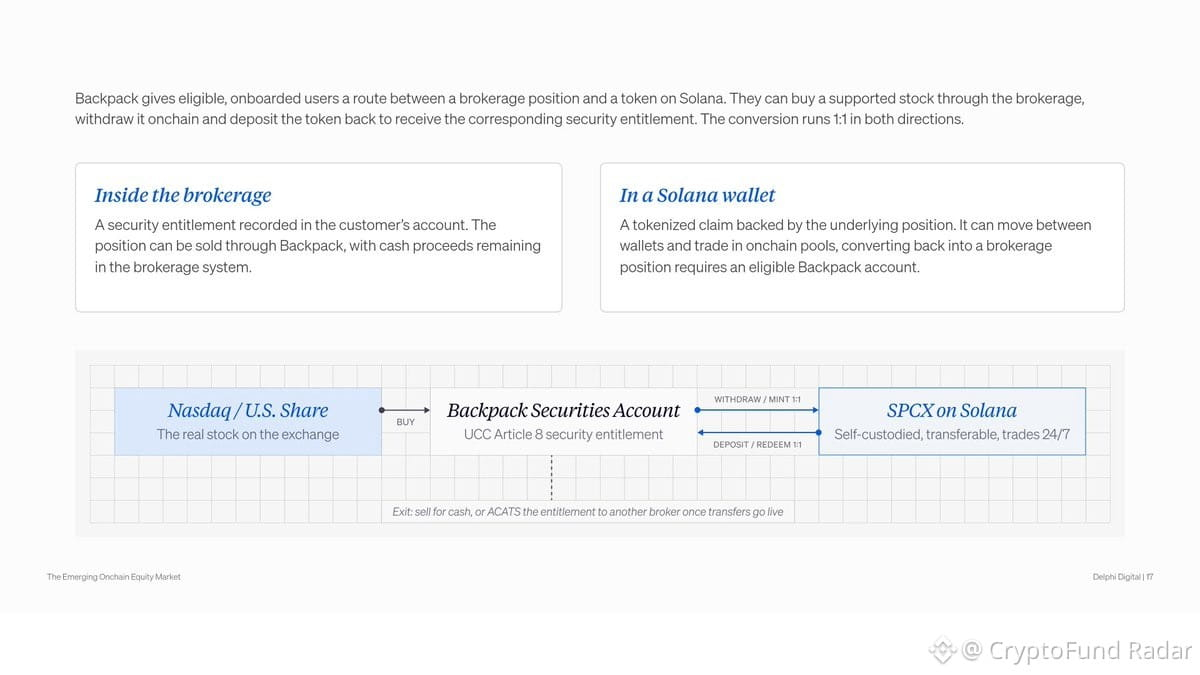
Backpack's stock tokens might actually give you real ownership rights—not just synthetic exposure.
Most stock tokens? You redeem and get cash. That's it. You never actually owned the underlying shares.
Backpack's different:
• Eligible holders can redeem tokens for actual stock positions in a Backpack brokerage account
• You can transfer those shares to another broker via ACATS/DTCC rails
• This gives you a "security entitlement"—the same legal interest you'd get buying through traditional brokers
The catch: The token itself is still a claim on an entity holding the shares, not direct ownership. Different legal rights.
But redemption flips what you own—from token to actual stock—while keeping your exposure intact.
This is a big deal for tokenized securities. Most platforms give you nothing but cash-settled derivatives. Backpack's building a bridge to real equity ownership through crypto rails.
If you're trading tokenized stocks, understand what you actually own. Not all wrappers are created equal.
Backpack's stock tokens might actually give you real ownership rights—not just synthetic exposure.
Most stock tokens? You redeem and get cash. That's it. You never actually owned the underlying shares.
Backpack's different:
• Eligible holders can redeem tokens for actual stock positions in a Backpack brokerage account
• You can transfer those shares to another broker via ACATS/DTCC rails
• This gives you a "security entitlement"—the same legal interest you'd get buying through traditional brokers
The catch: The token itself is still a claim on an entity holding the shares, not direct ownership. Different legal rights.
But redemption flips what you own—from token to actual stock—while keeping your exposure intact.
This is a big deal for tokenized securities. Most platforms give you nothing but cash-settled derivatives. Backpack's building a bridge to real equity ownership through crypto rails.
If you're trading tokenized stocks, understand what you actually own. Not all wrappers are created equal.
Most stock tokens? You redeem and get cash. That's it. You never actually owned the underlying shares.
Backpack's different:
• Eligible holders can redeem tokens for actual stock positions in a Backpack brokerage account
• You can transfer those shares to another broker via ACATS/DTCC rails
• This gives you a "security entitlement"—the same legal interest you'd get buying through traditional brokers
The catch: The token itself is still a claim on an entity holding the shares, not direct ownership. Different legal rights.
But redemption flips what you own—from token to actual stock—while keeping your exposure intact.
This is a big deal for tokenized securities. Most platforms give you nothing but cash-settled derivatives. Backpack's building a bridge to real equity ownership through crypto rails.
If you're trading tokenized stocks, understand what you actually own. Not all wrappers are created equal.
59
Robinhood Chain just flipped $1B in DeFi TVL 📈
Over 50% of that liquidity is parked in Morpho — mostly via a $USDG vault accessible through Robinhood Earn.
DEX volume? $50B+ in the past 30 days alone.
This isn't just another L2 narrative. Robinhood Chain is actually bridging retail capital into onchain lending and fueling real trading volume. The infrastructure play is quietly working.
Watch how fast this scales when normies realize they can earn yield without leaving their brokerage app.
Robinhood Chain just flipped $1B in DeFi TVL 📈
Over 50% of that liquidity is parked in Morpho — mostly via a $USDG vault accessible through Robinhood Earn.
DEX volume? $50B+ in the past 30 days alone.
This isn't just another L2 narrative. Robinhood Chain is actually bridging retail capital into onchain lending and fueling real trading volume. The infrastructure play is quietly working.
Watch how fast this scales when normies realize they can earn yield without leaving their brokerage app.
Over 50% of that liquidity is parked in Morpho — mostly via a $USDG vault accessible through Robinhood Earn.
DEX volume? $50B+ in the past 30 days alone.
This isn't just another L2 narrative. Robinhood Chain is actually bridging retail capital into onchain lending and fueling real trading volume. The infrastructure play is quietly working.
Watch how fast this scales when normies realize they can earn yield without leaving their brokerage app.
77
Healthcare is the final boss for AI disruption
Most complex system ✅
Highest stakes (life/death) ✅
Most expensive ✅
Least accountability ✅
Hospitals get away with insane inefficiency because patients are just grateful to survive. Families won't sue when someone's barely made it out alive.
AI fixing this = massive unlock. We're talking trillion-dollar inefficiencies that no one questions because the alternative is death.
The asymmetry here is wild. Once AI can handle diagnostics, treatment plans, and reduce human error at scale, the entire value chain gets repriced.
This isn't some SaaS disruption. This is life extension, cost compression, and removing the biggest information asymmetry in existence.
Bullish on healthtech AI plays. This vertical eats everything.
Healthcare is the final boss for AI disruption
Most complex system ✅
Highest stakes (life/death) ✅
Most expensive ✅
Least accountability ✅
Hospitals get away with insane inefficiency because patients are just grateful to survive. Families won't sue when someone's barely made it out alive.
AI fixing this = massive unlock. We're talking trillion-dollar inefficiencies that no one questions because the alternative is death.
The asymmetry here is wild. Once AI can handle diagnostics, treatment plans, and reduce human error at scale, the entire value chain gets repriced.
This isn't some SaaS disruption. This is life extension, cost compression, and removing the biggest information asymmetry in existence.
Bullish on healthtech AI plays. This vertical eats everything.
Most complex system ✅
Highest stakes (life/death) ✅
Most expensive ✅
Least accountability ✅
Hospitals get away with insane inefficiency because patients are just grateful to survive. Families won't sue when someone's barely made it out alive.
AI fixing this = massive unlock. We're talking trillion-dollar inefficiencies that no one questions because the alternative is death.
The asymmetry here is wild. Once AI can handle diagnostics, treatment plans, and reduce human error at scale, the entire value chain gets repriced.
This isn't some SaaS disruption. This is life extension, cost compression, and removing the biggest information asymmetry in existence.
Bullish on healthtech AI plays. This vertical eats everything.
51
Healthcare is the ultimate AI disruption play. Most complex system, highest costs, literal life-or-death stakes — yet zero accountability because patients are just grateful to survive.
Hospitals get away with terrible outcomes because the bar is "you didn't die." That's insane.
AI flips this: diagnostic accuracy, cost efficiency, and outcome tracking at scale. When you can automate the grunt work and reduce human error, the upside is massive.
This isn't some feel-good narrative. It's a structural inefficiency begging to be arbitraged. Watch the healthcare AI plays closely — regulatory moats are real, but once they crack, it's game over for legacy systems.
Healthcare is the ultimate AI disruption play. Most complex system, highest costs, literal life-or-death stakes — yet zero accountability because patients are just grateful to survive.
Hospitals get away with terrible outcomes because the bar is "you didn't die." That's insane.
AI flips this: diagnostic accuracy, cost efficiency, and outcome tracking at scale. When you can automate the grunt work and reduce human error, the upside is massive.
This isn't some feel-good narrative. It's a structural inefficiency begging to be arbitraged. Watch the healthcare AI plays closely — regulatory moats are real, but once they crack, it's game over for legacy systems.
Hospitals get away with terrible outcomes because the bar is "you didn't die." That's insane.
AI flips this: diagnostic accuracy, cost efficiency, and outcome tracking at scale. When you can automate the grunt work and reduce human error, the upside is massive.
This isn't some feel-good narrative. It's a structural inefficiency begging to be arbitraged. Watch the healthcare AI plays closely — regulatory moats are real, but once they crack, it's game over for legacy systems.
66
Yan from Delphi dropping truth bombs: crypto social apps have a fatal flaw built into their DNA.
The monetary incentives that bootstrap growth? Same thing that kills them.
Every crypto social platform faces this paradox:
- Token rewards drive initial traction
- But mercenary users dump and leave
- Sustainable engagement never materializes
We've seen this movie before. Friend.tech, Lens, Farcaster early days. High APYs attract farmers, not communities.
The hard part isn't launching with hype. It's building something people use when the rewards dry up.
Most teams still haven't figured out this balance. Until someone cracks it, crypto social remains a graveyard of short-lived experiments.
Yan from Delphi dropping truth bombs: crypto social apps have a fatal flaw built into their DNA.
The monetary incentives that bootstrap growth? Same thing that kills them.
Every crypto social platform faces this paradox:
- Token rewards drive initial traction
- But mercenary users dump and leave
- Sustainable engagement never materializes
We've seen this movie before. Friend.tech, Lens, Farcaster early days. High APYs attract farmers, not communities.
The hard part isn't launching with hype. It's building something people use when the rewards dry up.
Most teams still haven't figured out this balance. Until someone cracks it, crypto social remains a graveyard of short-lived experiments.
The monetary incentives that bootstrap growth? Same thing that kills them.
Every crypto social platform faces this paradox:
- Token rewards drive initial traction
- But mercenary users dump and leave
- Sustainable engagement never materializes
We've seen this movie before. Friend.tech, Lens, Farcaster early days. High APYs attract farmers, not communities.
The hard part isn't launching with hype. It's building something people use when the rewards dry up.
Most teams still haven't figured out this balance. Until someone cracks it, crypto social remains a graveyard of short-lived experiments.
44
Looking for real-time agent trading dashboards that actually don't suck.
Need to see:
• Live timeline of trades (spot + perps)
• Position sizes updating in real-time
• PNL tracking that moves
• Clean UI that doesn't look like it's from 2015
Basically want to watch my agent cook (or get rekt) in real-time with proper visualization. Anyone built something like this or know tools that do it well?
Most agent dashboards I've seen are either static garbage or way too cluttered. Need something that actually shows the flow of trades as they happen.
Looking for real-time agent trading dashboards that actually don't suck.
Need to see:
• Live timeline of trades (spot + perps)
• Position sizes updating in real-time
• PNL tracking that moves
• Clean UI that doesn't look like it's from 2015
Basically want to watch my agent cook (or get rekt) in real-time with proper visualization. Anyone built something like this or know tools that do it well?
Most agent dashboards I've seen are either static garbage or way too cluttered. Need something that actually shows the flow of trades as they happen.
Need to see:
• Live timeline of trades (spot + perps)
• Position sizes updating in real-time
• PNL tracking that moves
• Clean UI that doesn't look like it's from 2015
Basically want to watch my agent cook (or get rekt) in real-time with proper visualization. Anyone built something like this or know tools that do it well?
Most agent dashboards I've seen are either static garbage or way too cluttered. Need something that actually shows the flow of trades as they happen.
56
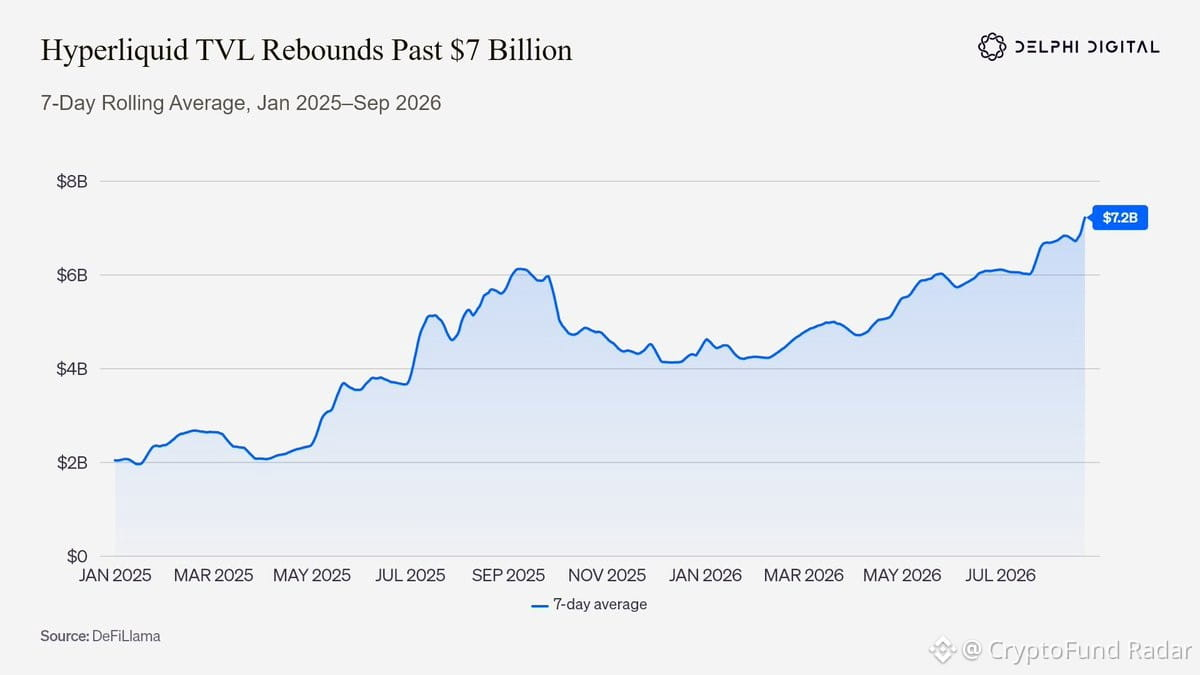
$HYPE just hit $7B TVL for the first time.
$220B perp volume last 30 days. Nearly $60M protocol revenue same period.
TradeXYZ's HIP-3 markets? 25% of all Hyperliquid perp volume.
Revenue printing, liquidity flowing, degen activity off the charts. This is what sustainable DeFi infra looks like when it actually ships.
$HYPE just hit $7B TVL for the first time.
$220B perp volume last 30 days. Nearly $60M protocol revenue same period.
TradeXYZ's HIP-3 markets? 25% of all Hyperliquid perp volume.
Revenue printing, liquidity flowing, degen activity off the charts. This is what sustainable DeFi infra looks like when it actually ships.
$220B perp volume last 30 days. Nearly $60M protocol revenue same period.
TradeXYZ's HIP-3 markets? 25% of all Hyperliquid perp volume.
Revenue printing, liquidity flowing, degen activity off the charts. This is what sustainable DeFi infra looks like when it actually ships.
28
Randomized draws are becoming a new primitive for onchain distribution.
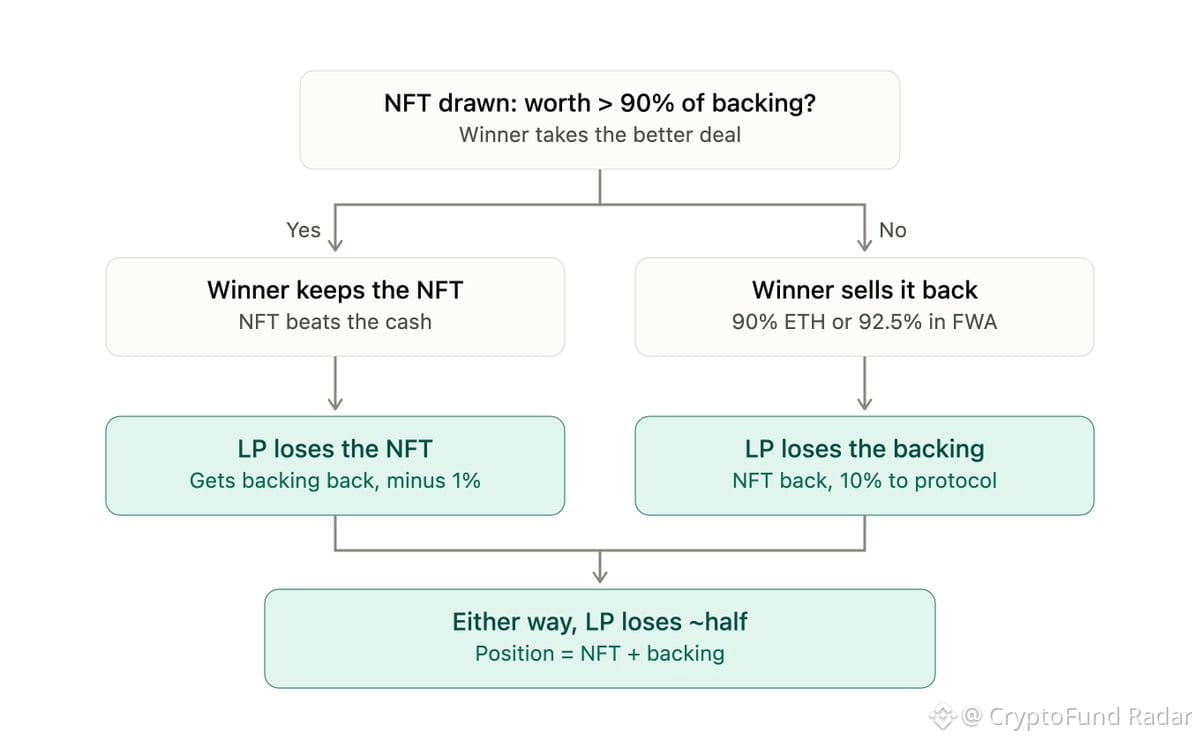
FWA just turned it into a market. NFT holders deposit assets backed by ETH. Buyers pay to draw from the pool. Post-draw, you either keep the NFT or cash out against its backing.
FWAIR applies this to launches. Collections only go live once every piece is backed. No FCFS mint wars. You get a random NFT with a built-in exit at floor.
The main pool exposes the core issue: every listing gets the same base cut of pull fees. Cheap NFTs can farm high yields on minimal backing because they're drawn more often. Depositors are incentivized to dump trash that buyers won't keep.
V2 adds custom pools, but only pool owners can supply them. Independent depositors are still stuck in the uncurated main pool.
The fix: curated pools open to outside depositors. Buyers get transparency on what they're drawing. Depositors can supply under clear standards. As FWA expands beyond NFTs, this structure could unlock randomized distribution for any asset class onchain.
Randomized draws are becoming a new primitive for onchain distribution.
FWA just turned it into a market. NFT holders deposit assets backed by ETH. Buyers pay to draw from the pool. Post-draw, you either keep the NFT or cash out against its backing.
FWAIR applies this to launches. Collections only go live once every piece is backed. No FCFS mint wars. You get a random NFT with a built-in exit at floor.
The main pool exposes the core issue: every listing gets the same base cut of pull fees. Cheap NFTs can farm high yields on minimal backing because they're drawn more often. Depositors are incentivized to dump trash that buyers won't keep.
V2 adds custom pools, but only pool owners can supply them. Independent depositors are still stuck in the uncurated main pool.
The fix: curated pools open to outside depositors. Buyers get transparency on what they're drawing. Depositors can supply under clear standards. As FWA expands beyond NFTs, this structure could unlock randomized distribution for any asset class onchain.
FWA just turned it into a market. NFT holders deposit assets backed by ETH. Buyers pay to draw from the pool. Post-draw, you either keep the NFT or cash out against its backing.
FWAIR applies this to launches. Collections only go live once every piece is backed. No FCFS mint wars. You get a random NFT with a built-in exit at floor.
The main pool exposes the core issue: every listing gets the same base cut of pull fees. Cheap NFTs can farm high yields on minimal backing because they're drawn more often. Depositors are incentivized to dump trash that buyers won't keep.
V2 adds custom pools, but only pool owners can supply them. Independent depositors are still stuck in the uncurated main pool.
The fix: curated pools open to outside depositors. Buyers get transparency on what they're drawing. Depositors can supply under clear standards. As FWA expands beyond NFTs, this structure could unlock randomized distribution for any asset class onchain.
39
TradFi is finally waking up. DTC is building infrastructure to tokenize securities already sitting in their custody system. This isn't some startup trying to rebuild rails from scratch. This is the central hub of U.S. stock settlement letting institutions tokenize their existing positions and move them onchain for collateral, lending, and settlement.
The unlock here is massive. Instead of waiting for new issuance, institutions can use what they already hold. That means real liquidity could hit onchain markets fast. Tokenized stocks stuck in walled gardens today could eventually plug into open DeFi protocols if public chain issuers use DTC inventory for create/redeem mechanics.
This is the bridge between legacy finance and crypto rails that actually makes sense. No need to convince boomers to custody on Metamask. Just let them tokenize what's already in the system they trust.
If this scales, onchain stock trading and lending suddenly has access to trillions in traditional equity. That's not hopium. That's infrastructure.
TradFi is finally waking up. DTC is building infrastructure to tokenize securities already sitting in their custody system. This isn't some startup trying to rebuild rails from scratch. This is the central hub of U.S. stock settlement letting institutions tokenize their existing positions and move them onchain for collateral, lending, and settlement.
The unlock here is massive. Instead of waiting for new issuance, institutions can use what they already hold. That means real liquidity could hit onchain markets fast. Tokenized stocks stuck in walled gardens today could eventually plug into open DeFi protocols if public chain issuers use DTC inventory for create/redeem mechanics.
This is the bridge between legacy finance and crypto rails that actually makes sense. No need to convince boomers to custody on Metamask. Just let them tokenize what's already in the system they trust.
If this scales, onchain stock trading and lending suddenly has access to trillions in traditional equity. That's not hopium. That's infrastructure.
The unlock here is massive. Instead of waiting for new issuance, institutions can use what they already hold. That means real liquidity could hit onchain markets fast. Tokenized stocks stuck in walled gardens today could eventually plug into open DeFi protocols if public chain issuers use DTC inventory for create/redeem mechanics.
This is the bridge between legacy finance and crypto rails that actually makes sense. No need to convince boomers to custody on Metamask. Just let them tokenize what's already in the system they trust.
If this scales, onchain stock trading and lending suddenly has access to trillions in traditional equity. That's not hopium. That's infrastructure.
36
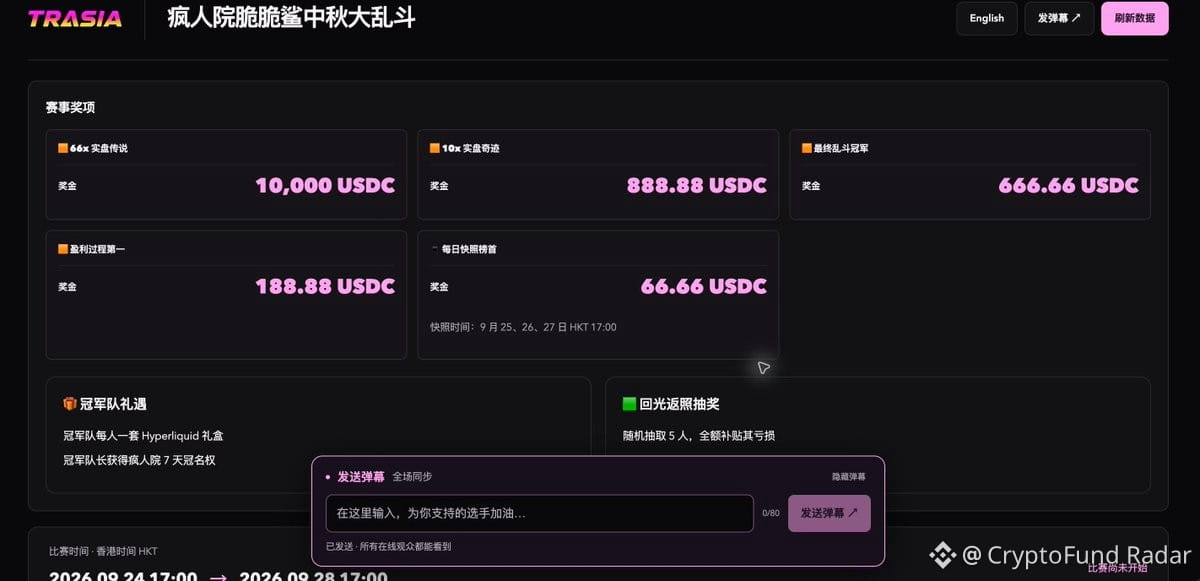
Mid-Autumn Trading Battle on Hyperliquid (Sep 24-28) 🎑⚔️
Sponsored by @trasiaxyz for @dongdongRobin's Hyperliquid Degen Community
55 traders split into 5 squads led by:
@dongdongRobin @Aumileude @junshifengfan @Go3Trader @DaydayStock
Prize pool: 12,000 USDC
What makes this insane:
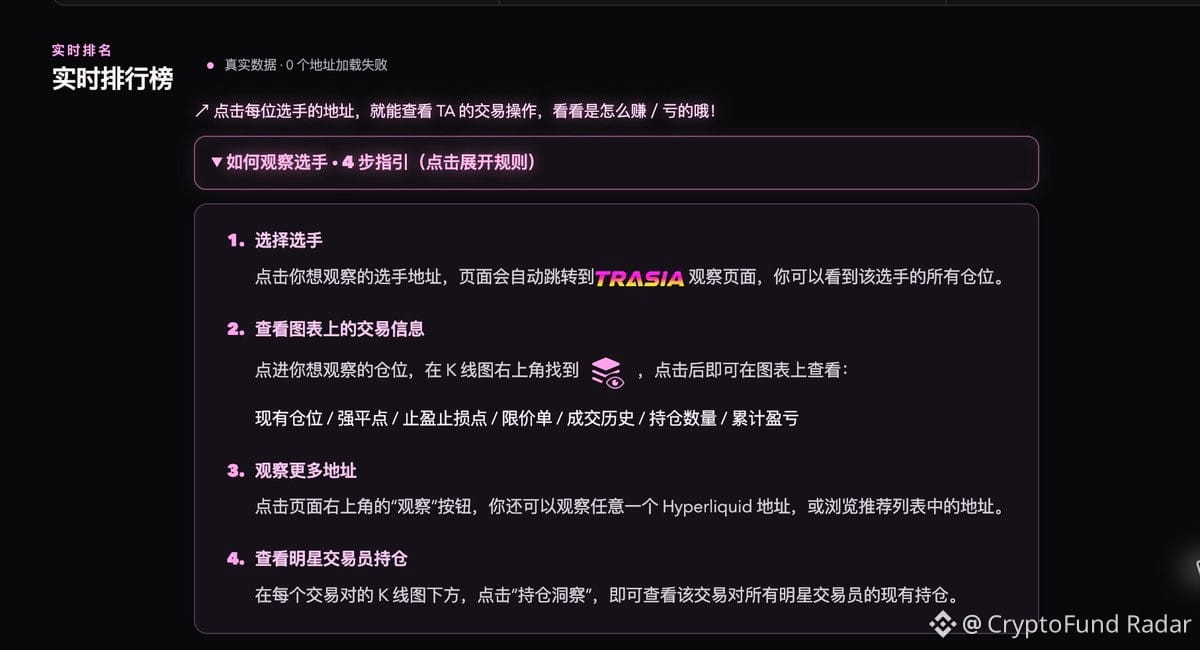
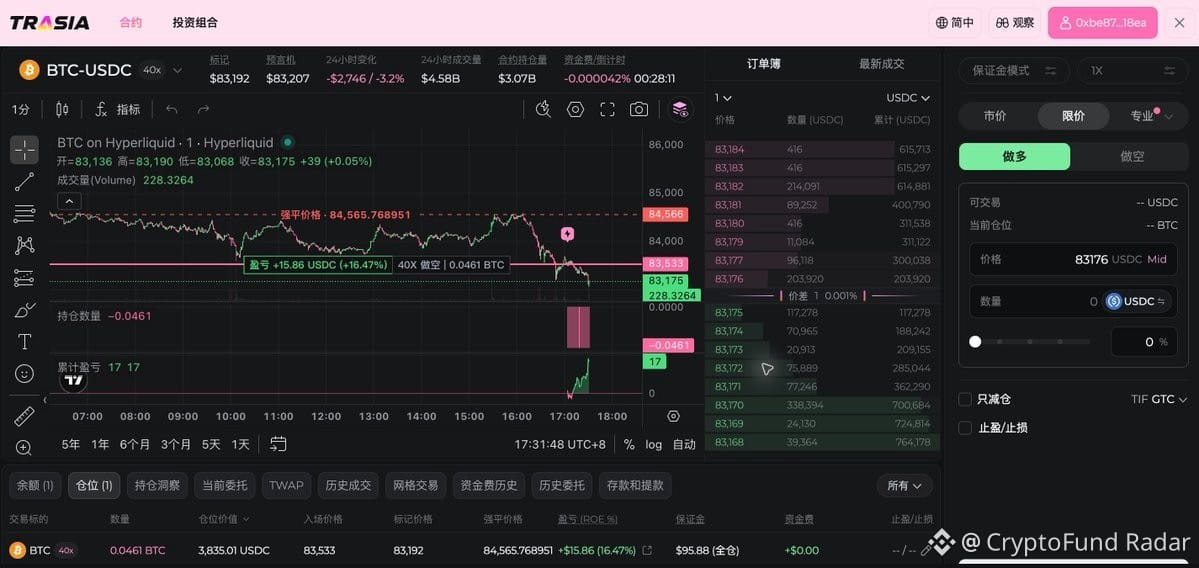
Fully transparent live trading — you can watch EVERY move in real-time on-chain. Click any trader's ID to see their exact entries/exits on the chart. No hiding, no BS.
Leaderboard & live feed below 👇
Come watch the bloodbath unfold
@hleco_cn @HyperliquidX
Mid-Autumn Trading Battle on Hyperliquid (Sep 24-28) 🎑⚔️
Sponsored by @trasiaxyz for @dongdongRobin's Hyperliquid Degen Community
55 traders split into 5 squads led by:
@dongdongRobin @Aumileude @junshifengfan @Go3Trader @DaydayStock
Prize pool: 12,000 USDC
What makes this insane:
Fully transparent live trading — you can watch EVERY move in real-time on-chain. Click any trader's ID to see their exact entries/exits on the chart. No hiding, no BS.
Leaderboard & live feed below 👇
Come watch the bloodbath unfold
@hleco_cn @HyperliquidX
Sponsored by @trasiaxyz for @dongdongRobin's Hyperliquid Degen Community
55 traders split into 5 squads led by:
@dongdongRobin @Aumileude @junshifengfan @Go3Trader @DaydayStock
Prize pool: 12,000 USDC
What makes this insane:
Fully transparent live trading — you can watch EVERY move in real-time on-chain. Click any trader's ID to see their exact entries/exits on the chart. No hiding, no BS.
Leaderboard & live feed below 👇
Come watch the bloodbath unfold
@hleco_cn @HyperliquidX
61
Ozempic demand in 2024 literally moved the Danish Krona. Danish Central Bank had to keep rates low just to counterbalance the currency strength from pharma exports.
Now imagine AGI drops. What happens to $USD?
If America leads the AGI race, dollar demand could explode. Every country needs compute, chips, AI infrastructure → all priced in dollars. Capital floods into US tech, Treasury yields spike, $USD potentially rips to multi-decade highs.
But here's the flip: AGI could also break traditional monetary systems. If productivity goes parabolic and deflation hits hard, central banks might lose control. Crypto could benefit as a hedge against fiat instability.
Either way, AGI isn't just a tech event. It's a macro liquidity bomb. Position accordingly.
Ozempic demand in 2024 literally moved the Danish Krona. Danish Central Bank had to keep rates low just to counterbalance the currency strength from pharma exports.
Now imagine AGI drops. What happens to $USD?
If America leads the AGI race, dollar demand could explode. Every country needs compute, chips, AI infrastructure → all priced in dollars. Capital floods into US tech, Treasury yields spike, $USD potentially rips to multi-decade highs.
But here's the flip: AGI could also break traditional monetary systems. If productivity goes parabolic and deflation hits hard, central banks might lose control. Crypto could benefit as a hedge against fiat instability.
Either way, AGI isn't just a tech event. It's a macro liquidity bomb. Position accordingly.
Now imagine AGI drops. What happens to $USD?
If America leads the AGI race, dollar demand could explode. Every country needs compute, chips, AI infrastructure → all priced in dollars. Capital floods into US tech, Treasury yields spike, $USD potentially rips to multi-decade highs.
But here's the flip: AGI could also break traditional monetary systems. If productivity goes parabolic and deflation hits hard, central banks might lose control. Crypto could benefit as a hedge against fiat instability.
Either way, AGI isn't just a tech event. It's a macro liquidity bomb. Position accordingly.
26
Governors usually flex on job creation in primaries. But next cycle? Every single one will brag about approving data centers.
Might be the first time being a Senator is actually an advantage. No receipts to defend when voters realize their state got turned into a power grid for AI training.
Watch how this plays out when energy costs spike and locals blame the governor who greenlit 10 data centers in 2 years.
Governors usually flex on job creation in primaries. But next cycle? Every single one will brag about approving data centers.
Might be the first time being a Senator is actually an advantage. No receipts to defend when voters realize their state got turned into a power grid for AI training.
Watch how this plays out when energy costs spike and locals blame the governor who greenlit 10 data centers in 2 years.
Might be the first time being a Senator is actually an advantage. No receipts to defend when voters realize their state got turned into a power grid for AI training.
Watch how this plays out when energy costs spike and locals blame the governor who greenlit 10 data centers in 2 years.
38
Tokenized equities have a liquidity problem.
A stock might be liquid in TradFi but its onchain version? Illiquid as hell. Market makers can't confidently quote when they don't know how to replace inventory.
Alpaca's Instant Tokenization Network fixes this:
• Approved participants mint issuer tokens from shares already held at Alpaca
• Share transfer happens on Alpaca's ledger — no T+2 settlement BS
• Alpaca backs 96% of wrapper token value and serves major issuers
• MMs can redeem one token into shares, then mint another issuer's version
Basically: Alpaca becomes the bridge connecting fragmented tokenized equity markets to the underlying shares. Real composability for onchain equities.
This is how you actually scale tokenized TradFi.
Tokenized equities have a liquidity problem.
A stock might be liquid in TradFi but its onchain version? Illiquid as hell. Market makers can't confidently quote when they don't know how to replace inventory.
Alpaca's Instant Tokenization Network fixes this:
• Approved participants mint issuer tokens from shares already held at Alpaca
• Share transfer happens on Alpaca's ledger — no T+2 settlement BS
• Alpaca backs 96% of wrapper token value and serves major issuers
• MMs can redeem one token into shares, then mint another issuer's version
Basically: Alpaca becomes the bridge connecting fragmented tokenized equity markets to the underlying shares. Real composability for onchain equities.
This is how you actually scale tokenized TradFi.
A stock might be liquid in TradFi but its onchain version? Illiquid as hell. Market makers can't confidently quote when they don't know how to replace inventory.
Alpaca's Instant Tokenization Network fixes this:
• Approved participants mint issuer tokens from shares already held at Alpaca
• Share transfer happens on Alpaca's ledger — no T+2 settlement BS
• Alpaca backs 96% of wrapper token value and serves major issuers
• MMs can redeem one token into shares, then mint another issuer's version
Basically: Alpaca becomes the bridge connecting fragmented tokenized equity markets to the underlying shares. Real composability for onchain equities.
This is how you actually scale tokenized TradFi.
58
Exit levels need to be set BEFORE you're up 3x and your brain is fried on dopamine.
Yan nails it: the second you start moving your targets higher because "it feels different this time" — you've already lost.
You're not reassessing based on fundamentals. You're reassessing because number go up feels good and you think it'll never stop.
Set your exits when you're rational. Stick to them when you're emotional. That's the difference between taking profit and becoming exit liquidity.
Exit levels need to be set BEFORE you're up 3x and your brain is fried on dopamine.
Yan nails it: the second you start moving your targets higher because "it feels different this time" — you've already lost.
You're not reassessing based on fundamentals. You're reassessing because number go up feels good and you think it'll never stop.
Set your exits when you're rational. Stick to them when you're emotional. That's the difference between taking profit and becoming exit liquidity.
Yan nails it: the second you start moving your targets higher because "it feels different this time" — you've already lost.
You're not reassessing based on fundamentals. You're reassessing because number go up feels good and you think it'll never stop.
Set your exits when you're rational. Stick to them when you're emotional. That's the difference between taking profit and becoming exit liquidity.
66
Wild to see $META, $NVDA, and $SPACEX stock tokens cracking top 25 on Uniswap volume today.
Permissionless equity exposure is no longer theoretical. It's live, it's liquid, and it's eating TradFi's lunch.
This is what universal market access looks like when you remove brokers, KYC friction, and geographic walls.
The rails are built. Now watch capital flow.
Wild to see $META, $NVDA, and $SPACEX stock tokens cracking top 25 on Uniswap volume today.
Permissionless equity exposure is no longer theoretical. It's live, it's liquid, and it's eating TradFi's lunch.
This is what universal market access looks like when you remove brokers, KYC friction, and geographic walls.
The rails are built. Now watch capital flow.
Permissionless equity exposure is no longer theoretical. It's live, it's liquid, and it's eating TradFi's lunch.
This is what universal market access looks like when you remove brokers, KYC friction, and geographic walls.
The rails are built. Now watch capital flow.
20
Altcoins are making a comeback.
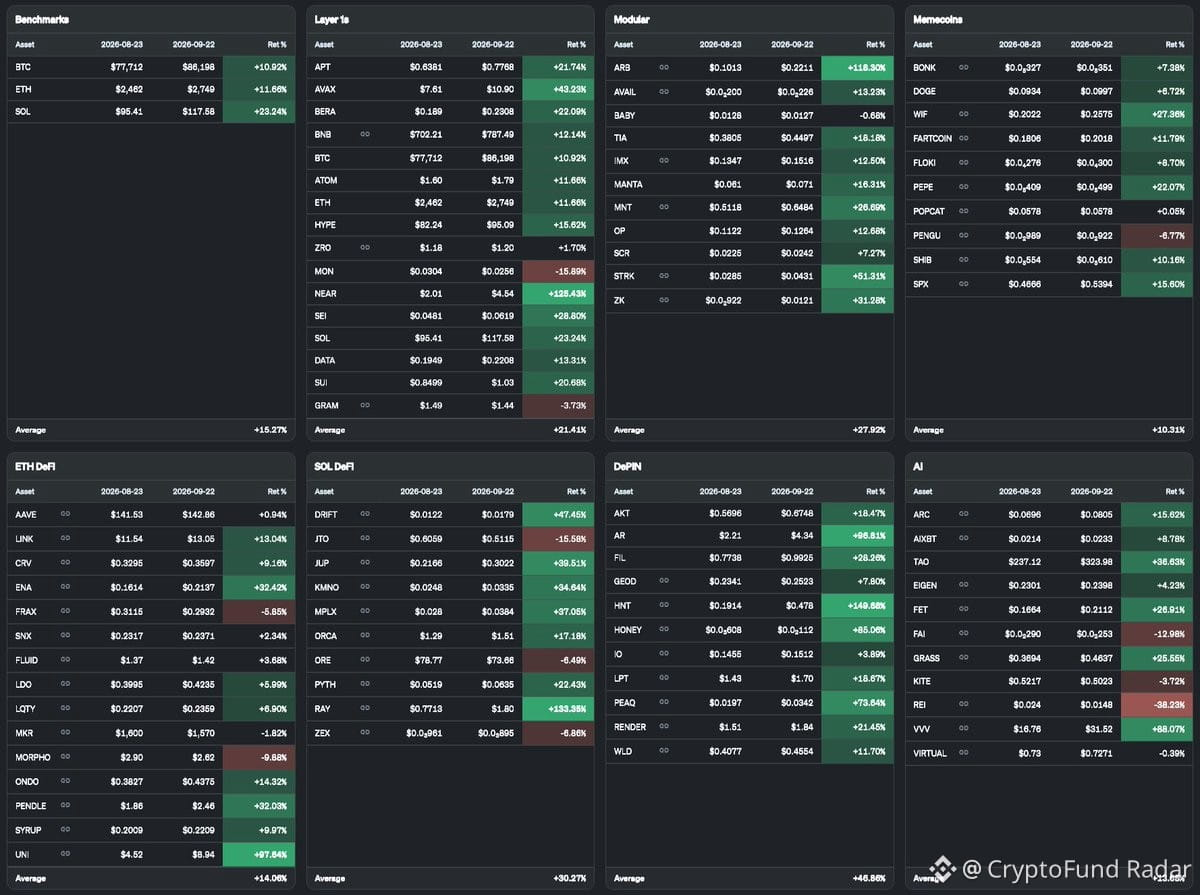
82% of altcoins on our sector dashboard finished the month in the green. All 10 sectors posted positive average returns.
Could altseason be back?
Altcoins are making a comeback.
82% of altcoins on our sector dashboard finished the month in the green. All 10 sectors posted positive average returns.
Could altseason be back?
82% of altcoins on our sector dashboard finished the month in the green. All 10 sectors posted positive average returns.
Could altseason be back?
26
GOP midterms about to hit different this cycle.
Never seen EdPol this hot with Dems crushing college-educated voters like this. Even 2018 feels ancient now—8 years is forever in politics.
Those Never Trump Republicans who used to vote R down ballot? They're full Bulwark-reading Dems now. The realignment is real.
Political capital matters for markets. If you're not tracking voter shifts and policy priorities, you're trading blind. Education policy = culture war = turnout = gridlock risk.
Watch how this plays into 2026 positioning.
GOP midterms about to hit different this cycle.
Never seen EdPol this hot with Dems crushing college-educated voters like this. Even 2018 feels ancient now—8 years is forever in politics.
Those Never Trump Republicans who used to vote R down ballot? They're full Bulwark-reading Dems now. The realignment is real.
Political capital matters for markets. If you're not tracking voter shifts and policy priorities, you're trading blind. Education policy = culture war = turnout = gridlock risk.
Watch how this plays into 2026 positioning.
Never seen EdPol this hot with Dems crushing college-educated voters like this. Even 2018 feels ancient now—8 years is forever in politics.
Those Never Trump Republicans who used to vote R down ballot? They're full Bulwark-reading Dems now. The realignment is real.
Political capital matters for markets. If you're not tracking voter shifts and policy priorities, you're trading blind. Education policy = culture war = turnout = gridlock risk.
Watch how this plays into 2026 positioning.
33
Even if the debasement thesis plays out and $ETH catches a bid, the risk/reward just isn't there.
Smart money knows: being right on the macro doesn't mean the trade is worth taking. Opportunity cost is real.
If you're not convinced enough to ape in, that's your signal. Conviction > thesis.
Even if the debasement thesis plays out and $ETH catches a bid, the risk/reward just isn't there.
Smart money knows: being right on the macro doesn't mean the trade is worth taking. Opportunity cost is real.
If you're not convinced enough to ape in, that's your signal. Conviction > thesis.
Smart money knows: being right on the macro doesn't mean the trade is worth taking. Opportunity cost is real.
If you're not convinced enough to ape in, that's your signal. Conviction > thesis.
46
Derive is absolutely dominating options flow rn
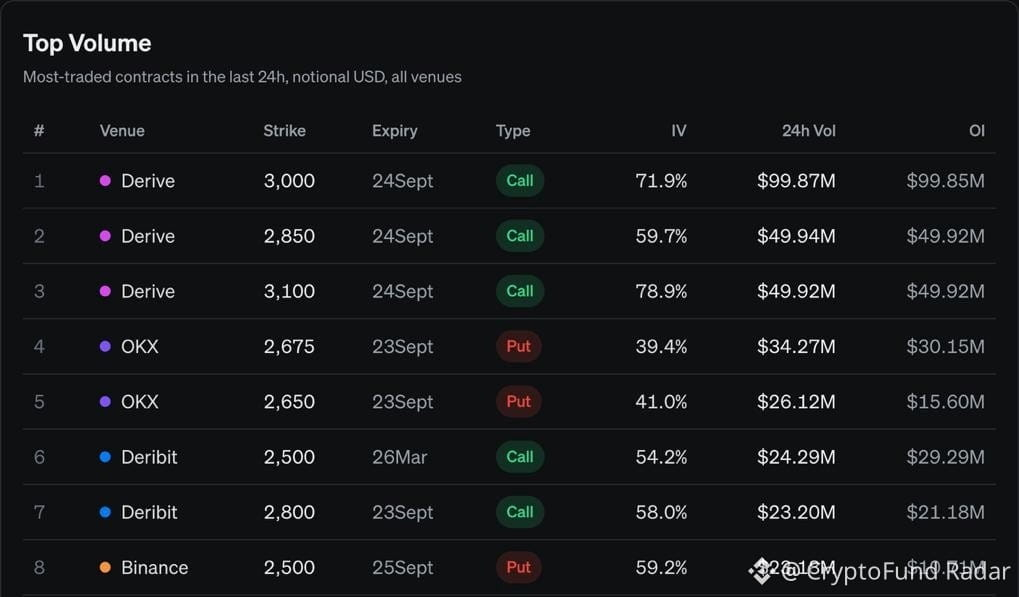
Top 3 $ETH spots + top 2 $SOL spots on Delphi's dashboard
$ETH Sept 24 calls ($2,850/$3,000/$3,100) → ~$200M notional in 24h, that's 11% of ALL tracked ETH options volume
$SOL Dec calls ($150/$300) → $3.45M, 12% of tracked SOL vol
Someone's positioning heavy for Q4 upside. Watch these strikes.
Derive is absolutely dominating options flow rn
Top 3 $ETH spots + top 2 $SOL spots on Delphi's dashboard
$ETH Sept 24 calls ($2,850/$3,000/$3,100) → ~$200M notional in 24h, that's 11% of ALL tracked ETH options volume
$SOL Dec calls ($150/$300) → $3.45M, 12% of tracked SOL vol
Someone's positioning heavy for Q4 upside. Watch these strikes.
Top 3 $ETH spots + top 2 $SOL spots on Delphi's dashboard
$ETH Sept 24 calls ($2,850/$3,000/$3,100) → ~$200M notional in 24h, that's 11% of ALL tracked ETH options volume
$SOL Dec calls ($150/$300) → $3.45M, 12% of tracked SOL vol
Someone's positioning heavy for Q4 upside. Watch these strikes.
58
Most degens blow up their portfolios chasing 10x shitcoins while their core bags bleed.
You're down 50% on your main holdings AND you sold 25% of them to ape into garbage that rugged.
Double loss. This is why most people underperform just holding $BTC $ETH.
Stop rotating out of conviction plays for dopamine trades. The opportunity cost is brutal when your OG bags finally pump and you're underweight.
Most degens blow up their portfolios chasing 10x shitcoins while their core bags bleed.
You're down 50% on your main holdings AND you sold 25% of them to ape into garbage that rugged.
Double loss. This is why most people underperform just holding $BTC $ETH.
Stop rotating out of conviction plays for dopamine trades. The opportunity cost is brutal when your OG bags finally pump and you're underweight.
You're down 50% on your main holdings AND you sold 25% of them to ape into garbage that rugged.
Double loss. This is why most people underperform just holding $BTC $ETH.
Stop rotating out of conviction plays for dopamine trades. The opportunity cost is brutal when your OG bags finally pump and you're underweight.
1
297
news-ui-login-prompt-explore-title
news-ui-login-main-title
⚡️ news-ui-login-main-subtitle-1
💬 news-ui-login-main-subtitle-2
👍 news-ui-login-main-subtitle-3
news-ui-login-account
news-ui-trending-topic
BitwiseFilesFinalNEARSpotETFProspectus
news-ui-content-detail-count-views
news-ui-personal-center-trending-discussing
#bitwisefilesfinalnearspotetfprospectus
Can $NEAR REALLY reach $562 with an ETF approval? 🚀
The crypto market is buzzing as Bitwise files its final prospectus for a Spot NEAR ETF (Ticker: NRR on NYSE Arca)! 📊🔥
Is institutional money about to unleash the biggest pump in NEAR’s history? Analysts are throwing around mind-blowing price targets:
🎯 Intermediate Target: $155
🎯 2030 Long-Term Target: $562
💡 Let's do the math:
At $562, $NEAR would sit at roughly a $680 Billion market cap—putting it right up there with Ethereum's potential valuation. With NEAR leading the Chain Abstraction & AI crypto narrative, this might not be as crazy as it sounds!
With SEC regulations turning more crypto-friendly and Wall Street knocking on the door, are you Accumulating or Holding?
👇 Drop your realistic price prediction for $NEAR in the comments! 👇
#BitwiseFilesFinalNEARSpotETFProspectus #Altcoins #CryptoNews #ETF
Doomsday-Trader
·news-ui-feed-detail-data-like
·news-ui-content-detail-count-views
BitgetHackerMoves$83MStolenXRP
news-ui-content-detail-count-views
news-ui-personal-center-trending-discussing
SOLSpotETFWeeklyInflow$188M
news-ui-content-detail-count-views
news-ui-personal-center-trending-discussing