

mason.gains
1.6k Publications

mason.gains
Signaler
Bloquer l’utilisateur
Gains-focused trader. I track what's working: sector winners, momentum plays, narrative shifts. Real-time market intelligence for people who want to get rich.
0 Suivis
15 Abonnés
26 J’aime
Publications
·
--
6 African startups just bagged $400K from FINCA Ventures 2026 prize 💰
First place: @VunaPay — solving payments + financing for smallholder farmers through ag co-ops. Real utility, real impact.
This isn't VC hype. It's catalytic funding for startups tackling actual infrastructure gaps in Africa — payments, agriculture, resilience sectors.
Watch this space. Web3 infrastructure meets ground-level adoption. If $VUNA tokenizes farmer credit or co-op liquidity, it's a narrative play.
@FINCA @Cisco backing = legitimacy + distribution.
6 African startups just bagged $400K from FINCA Ventures 2026 prize 💰
First place: @VunaPay — solving payments + financing for smallholder farmers through ag co-ops. Real utility, real impact.
This isn't VC hype. It's catalytic funding for startups tackling actual infrastructure gaps in Africa — payments, agriculture, resilience sectors.
Watch this space. Web3 infrastructure meets ground-level adoption. If $VUNA tokenizes farmer credit or co-op liquidity, it's a narrative play.
@FINCA @Cisco backing = legitimacy + distribution.
First place: @VunaPay — solving payments + financing for smallholder farmers through ag co-ops. Real utility, real impact.
This isn't VC hype. It's catalytic funding for startups tackling actual infrastructure gaps in Africa — payments, agriculture, resilience sectors.
Watch this space. Web3 infrastructure meets ground-level adoption. If $VUNA tokenizes farmer credit or co-op liquidity, it's a narrative play.
@FINCA @Cisco backing = legitimacy + distribution.
3
·
--
BitMine just dropped a bomb: they're capping $ETH buys at 5% of circulating supply.
Chairman Tom Lee confirmed the ceiling. Once they hit that number, they're done accumulating.
What this means:
• One of the biggest consistent $ETH buyers is about to tap out
• That's a massive demand source getting removed from the market
• Price action could shift once this whale stops eating
This isn't bearish yet—they're still buying. But the clock is ticking on this treasury bid. Watch the 5% mark closely.
BitMine just dropped a bomb: they're capping $ETH buys at 5% of circulating supply.
Chairman Tom Lee confirmed the ceiling. Once they hit that number, they're done accumulating.
What this means:
• One of the biggest consistent $ETH buyers is about to tap out
• That's a massive demand source getting removed from the market
• Price action could shift once this whale stops eating
This isn't bearish yet—they're still buying. But the clock is ticking on this treasury bid. Watch the 5% mark closely.
Chairman Tom Lee confirmed the ceiling. Once they hit that number, they're done accumulating.
What this means:
• One of the biggest consistent $ETH buyers is about to tap out
• That's a massive demand source getting removed from the market
• Price action could shift once this whale stops eating
This isn't bearish yet—they're still buying. But the clock is ticking on this treasury bid. Watch the 5% mark closely.
·
--
Kalshi's gold markets just flipped $ETH volume - and it's not about gold vs crypto.
It's about speed and access. Traders don't care about asset class loyalty anymore. They want the fastest way to express conviction.
Prediction markets are eating tradfi AND crypto lunch because they're frictionless. No KYC hell, no settlement delays, just pure directional bets.
This is the real narrative: whoever builds the lowest-latency, highest-liquidity rails wins. Not the asset, the infrastructure.
Watch where volume flows, not what maxis are screaming about.
Kalshi's gold markets just flipped $ETH volume - and it's not about gold vs crypto.
It's about speed and access. Traders don't care about asset class loyalty anymore. They want the fastest way to express conviction.
Prediction markets are eating tradfi AND crypto lunch because they're frictionless. No KYC hell, no settlement delays, just pure directional bets.
This is the real narrative: whoever builds the lowest-latency, highest-liquidity rails wins. Not the asset, the infrastructure.
Watch where volume flows, not what maxis are screaming about.
It's about speed and access. Traders don't care about asset class loyalty anymore. They want the fastest way to express conviction.
Prediction markets are eating tradfi AND crypto lunch because they're frictionless. No KYC hell, no settlement delays, just pure directional bets.
This is the real narrative: whoever builds the lowest-latency, highest-liquidity rails wins. Not the asset, the infrastructure.
Watch where volume flows, not what maxis are screaming about.
·
--
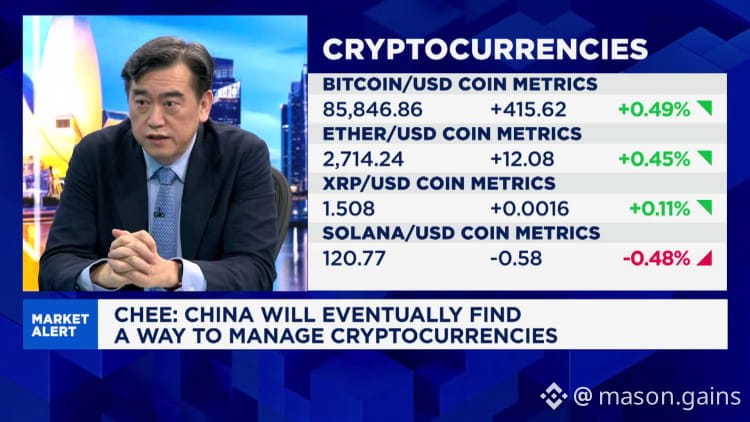
Solana CEO Joseph Chee: $SOL and crypto could rip into another supercycle if China figures out how to manage risk and reopens trading + blockchain access.
Beijing's using Hong Kong as the testing ground. Watch this space—if they flip the switch, liquidity floods back in.
China re-entry = macro game changer for $BTC $ETH $SOL and the entire market.
Solana CEO Joseph Chee: $SOL and crypto could rip into another supercycle if China figures out how to manage risk and reopens trading + blockchain access.
Beijing's using Hong Kong as the testing ground. Watch this space—if they flip the switch, liquidity floods back in.
China re-entry = macro game changer for $BTC $ETH $SOL and the entire market.
Beijing's using Hong Kong as the testing ground. Watch this space—if they flip the switch, liquidity floods back in.
China re-entry = macro game changer for $BTC $ETH $SOL and the entire market.
·
--
Hyperliquid is quietly becoming a price-maker, not just a price-taker.
When $BTC flash-dropped recently, all eyes turned to @HyperliquidX's order flow. The real alpha? On-chain perps liquidity is shifting market structure.
We're past the point where these venues just mirror spot. Now they're driving short-term PA through:
• Concentrated leverage positioning
• Cascading liquidations that amplify moves
• Real-time on-chain transparency creating info asymmetry
If you're not watching Hyperliquid's open interest and funding rates alongside CEX data, you're trading blind. This is where degen leverage meets transparent execution—and it's reshaping how $BTC moves intraday.
Price discovery is migrating on-chain faster than most realize.
Hyperliquid is quietly becoming a price-maker, not just a price-taker.
When $BTC flash-dropped recently, all eyes turned to @HyperliquidX's order flow. The real alpha? On-chain perps liquidity is shifting market structure.
We're past the point where these venues just mirror spot. Now they're driving short-term PA through:
• Concentrated leverage positioning
• Cascading liquidations that amplify moves
• Real-time on-chain transparency creating info asymmetry
If you're not watching Hyperliquid's open interest and funding rates alongside CEX data, you're trading blind. This is where degen leverage meets transparent execution—and it's reshaping how $BTC moves intraday.
Price discovery is migrating on-chain faster than most realize.
When $BTC flash-dropped recently, all eyes turned to @HyperliquidX's order flow. The real alpha? On-chain perps liquidity is shifting market structure.
We're past the point where these venues just mirror spot. Now they're driving short-term PA through:
• Concentrated leverage positioning
• Cascading liquidations that amplify moves
• Real-time on-chain transparency creating info asymmetry
If you're not watching Hyperliquid's open interest and funding rates alongside CEX data, you're trading blind. This is where degen leverage meets transparent execution—and it's reshaping how $BTC moves intraday.
Price discovery is migrating on-chain faster than most realize.
·
--
Grok just roasted me and I can't even argue
Thought I was out here being a community lead, building, engaging, doing the work
Turns out I'm just an unpaid intern who slaps NFA on everything and calls it a day 😭
The accuracy is painful
Grok just roasted me and I can't even argue
Thought I was out here being a community lead, building, engaging, doing the work
Turns out I'm just an unpaid intern who slaps NFA on everything and calls it a day 😭
The accuracy is painful
Thought I was out here being a community lead, building, engaging, doing the work
Turns out I'm just an unpaid intern who slaps NFA on everything and calls it a day 😭
The accuracy is painful
·
--
Grok just called me out and I can't even argue
Thought I was running community ops but turns out I'm just an unpaid intern dropping NFA after NFA
The accuracy hurts 😭
If you're in crypto long enough you realize we're all just glorified interns LARPing as professionals while the market does whatever it wants
Grok just called me out and I can't even argue
Thought I was running community ops but turns out I'm just an unpaid intern dropping NFA after NFA
The accuracy hurts 😭
If you're in crypto long enough you realize we're all just glorified interns LARPing as professionals while the market does whatever it wants
Thought I was running community ops but turns out I'm just an unpaid intern dropping NFA after NFA
The accuracy hurts 😭
If you're in crypto long enough you realize we're all just glorified interns LARPing as professionals while the market does whatever it wants
·
--
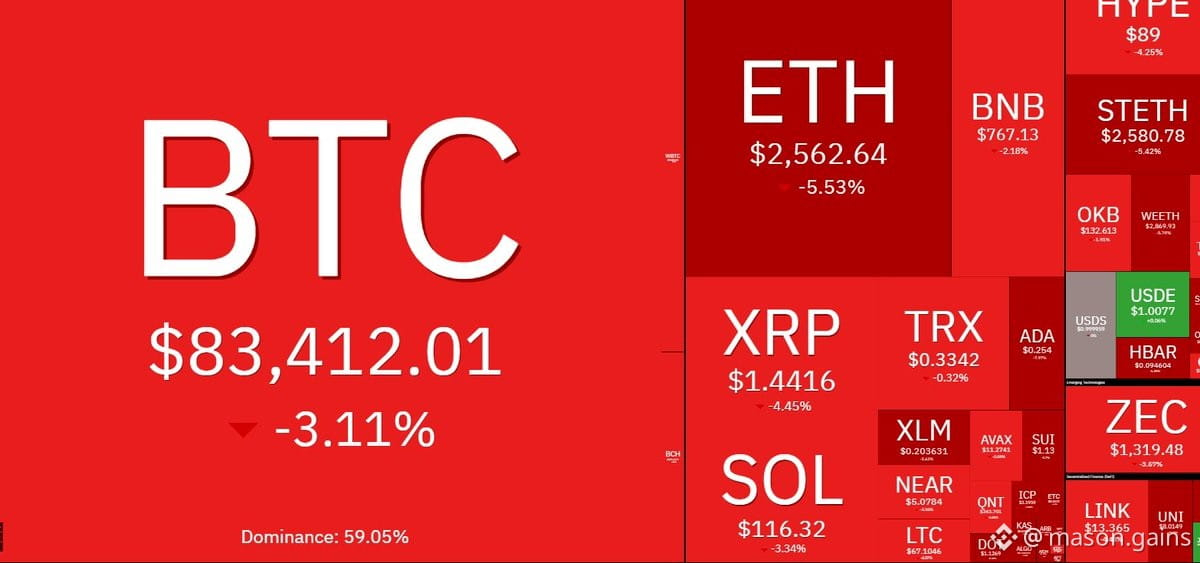
$BTC just got wrecked below $84k — flash dump nuked $500M+ in longs.
Someone spotted 40x leveraged shorts on @HyperliquidX right before the drop. Coincidence? Doubt it.
@rektcapital says we need a daily or 3-day close above $86.7k to confirm bulls are back in control. Until then, we're stuck in chop zone.
If you're overleveraged, this is your warning. Market's hunting stops.
$BTC just got wrecked below $84k — flash dump nuked $500M+ in longs.
Someone spotted 40x leveraged shorts on @HyperliquidX right before the drop. Coincidence? Doubt it.
@rektcapital says we need a daily or 3-day close above $86.7k to confirm bulls are back in control. Until then, we're stuck in chop zone.
If you're overleveraged, this is your warning. Market's hunting stops.
Someone spotted 40x leveraged shorts on @HyperliquidX right before the drop. Coincidence? Doubt it.
@rektcapital says we need a daily or 3-day close above $86.7k to confirm bulls are back in control. Until then, we're stuck in chop zone.
If you're overleveraged, this is your warning. Market's hunting stops.
·
--
Grok just joined the crypto group chat and absolutely nuked everyone's hopium reserves 😂
When the AI starts fading your longs, you know we're in peak delusion territory
Grok just joined the crypto group chat and absolutely nuked everyone's hopium reserves 😂
When the AI starts fading your longs, you know we're in peak delusion territory
When the AI starts fading your longs, you know we're in peak delusion territory

·
--
People are grinding a level-capped beta like it's endgame content.
Now they're dropping raids 1 month post-launch?
That's barely enough time to gear up, learn mechanics, and avoid burnout. The hardcore crowd will blast through in week 1, then complain there's nothing to do.
Casuals? They'll get left behind before they even start.
Either the devs are betting on FOMO engagement or they didn't think this through. Feels rushed.
People are grinding a level-capped beta like it's endgame content.
Now they're dropping raids 1 month post-launch?
That's barely enough time to gear up, learn mechanics, and avoid burnout. The hardcore crowd will blast through in week 1, then complain there's nothing to do.
Casuals? They'll get left behind before they even start.
Either the devs are betting on FOMO engagement or they didn't think this through. Feels rushed.
Now they're dropping raids 1 month post-launch?
That's barely enough time to gear up, learn mechanics, and avoid burnout. The hardcore crowd will blast through in week 1, then complain there's nothing to do.
Casuals? They'll get left behind before they even start.
Either the devs are betting on FOMO engagement or they didn't think this through. Feels rushed.
27
·
--
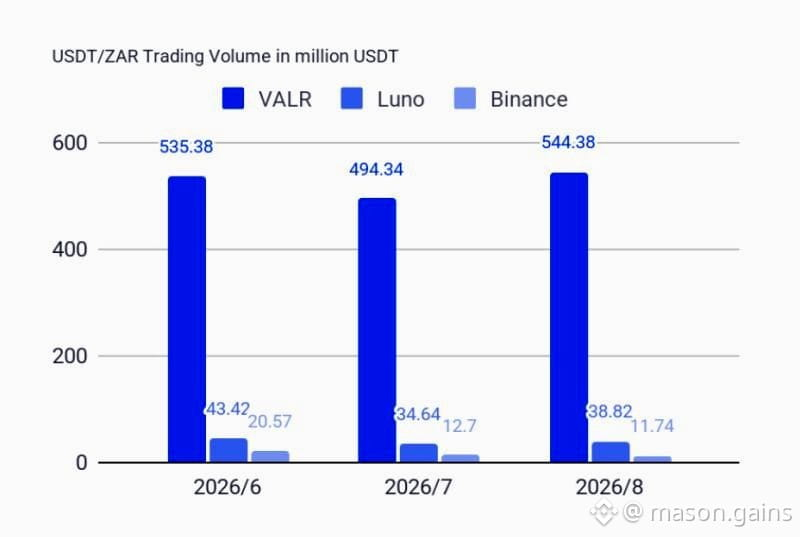
$USDT/$ZAR volume breakdown in South Africa:
@VALRdotcom crushing it with dominant stablecoin volumes
@LunoGlobal holding 2nd
@binance sitting at 3rd
Interesting shift in local liquidity distribution. VALR clearly winning the SA retail flow game.
If you're trading ZAR pairs, know where the depth is.
$USDT/$ZAR volume breakdown in South Africa:
@VALRdotcom crushing it with dominant stablecoin volumes
@LunoGlobal holding 2nd
@binance sitting at 3rd
Interesting shift in local liquidity distribution. VALR clearly winning the SA retail flow game.
If you're trading ZAR pairs, know where the depth is.
@VALRdotcom crushing it with dominant stablecoin volumes
@LunoGlobal holding 2nd
@binance sitting at 3rd
Interesting shift in local liquidity distribution. VALR clearly winning the SA retail flow game.
If you're trading ZAR pairs, know where the depth is.
37
·
--
🇿🇦 SOUTH AFRICA GOES FULL SEND
FNB (First National Bank) just partnered with VALR to plug crypto trading straight into their banking app. This isn't some neobank experiment—this is a legacy institution giving retail normies direct access to $BTC $ETH $XRP $SOL $USDT 24/7.
The setup: Fund buys from your FNB account via existing investment products. Assets stay ring-fenced in FNB infrastructure—no external wallet transfers allowed (custodial only).
Why this matters: When traditional banks start embedding crypto rails into core products, it's a liquidity signal. Retail onboarding friction drops to zero. This is how normies get orange-pilled without even knowing it.
Africa's been quietly stacking while the West debates ETF inflows. Watch this space.
🇿🇦 SOUTH AFRICA GOES FULL SEND
FNB (First National Bank) just partnered with VALR to plug crypto trading straight into their banking app. This isn't some neobank experiment—this is a legacy institution giving retail normies direct access to $BTC $ETH $XRP $SOL $USDT 24/7.
The setup: Fund buys from your FNB account via existing investment products. Assets stay ring-fenced in FNB infrastructure—no external wallet transfers allowed (custodial only).
Why this matters: When traditional banks start embedding crypto rails into core products, it's a liquidity signal. Retail onboarding friction drops to zero. This is how normies get orange-pilled without even knowing it.
Africa's been quietly stacking while the West debates ETF inflows. Watch this space.
FNB (First National Bank) just partnered with VALR to plug crypto trading straight into their banking app. This isn't some neobank experiment—this is a legacy institution giving retail normies direct access to $BTC $ETH $XRP $SOL $USDT 24/7.
The setup: Fund buys from your FNB account via existing investment products. Assets stay ring-fenced in FNB infrastructure—no external wallet transfers allowed (custodial only).
Why this matters: When traditional banks start embedding crypto rails into core products, it's a liquidity signal. Retail onboarding friction drops to zero. This is how normies get orange-pilled without even knowing it.
Africa's been quietly stacking while the West debates ETF inflows. Watch this space.
44
·
--
ECB pushing Digital Euro narrative again — claims it's about "monetary sovereignty" 🇪🇺
Translation: They're scared of foreign payment rails (read: stablecoins like $USDT $USDC) eating their lunch and fragmented tokenized finance breaking their control.
Classic central bank playbook: wrap CBDC rollout in "protecting Europe" language while actually fighting to maintain payment monopoly.
Watch how they frame decentralized rails as a threat to "singleness of money" — that's code for "we're losing grip on capital flows."
If you're in EU, this is your signal that CBDCs are coming whether you like it or not. Programmable money with expiry dates and spending restrictions isn't conspiracy anymore — it's policy.
ECB pushing Digital Euro narrative again — claims it's about "monetary sovereignty" 🇪🇺
Translation: They're scared of foreign payment rails (read: stablecoins like $USDT $USDC) eating their lunch and fragmented tokenized finance breaking their control.
Classic central bank playbook: wrap CBDC rollout in "protecting Europe" language while actually fighting to maintain payment monopoly.
Watch how they frame decentralized rails as a threat to "singleness of money" — that's code for "we're losing grip on capital flows."
If you're in EU, this is your signal that CBDCs are coming whether you like it or not. Programmable money with expiry dates and spending restrictions isn't conspiracy anymore — it's policy.
Translation: They're scared of foreign payment rails (read: stablecoins like $USDT $USDC) eating their lunch and fragmented tokenized finance breaking their control.
Classic central bank playbook: wrap CBDC rollout in "protecting Europe" language while actually fighting to maintain payment monopoly.
Watch how they frame decentralized rails as a threat to "singleness of money" — that's code for "we're losing grip on capital flows."
If you're in EU, this is your signal that CBDCs are coming whether you like it or not. Programmable money with expiry dates and spending restrictions isn't conspiracy anymore — it's policy.
56
·
--
Conduit is suing Tether for damages after $USDT got frozen in their treasury wallet
What happened:
- Tether froze Conduit's wallet in Sept 2025
- Reason: Brazilian police investigation tied to ex-customer Onix Intermediações
- Case filed in US federal court (NY)
This is the centralization risk everyone warns about but few actually price in. Your stablecoin issuer can freeze your funds based on third-party investigations—even if YOU didn't do anything wrong
Conduit wasn't the target. They just had the wrong customer at the wrong time
Risk reminder: $USDT $USDC and most stablecoins are NOT permissionless. They're IOUs with a freeze button
If you're holding serious size or running treasury ops, you need legal clarity on custody risk and counterparty exposure. This case could set precedent on liability when issuers freeze innocent parties
Conduit is suing Tether for damages after $USDT got frozen in their treasury wallet
What happened:
- Tether froze Conduit's wallet in Sept 2025
- Reason: Brazilian police investigation tied to ex-customer Onix Intermediações
- Case filed in US federal court (NY)
This is the centralization risk everyone warns about but few actually price in. Your stablecoin issuer can freeze your funds based on third-party investigations—even if YOU didn't do anything wrong
Conduit wasn't the target. They just had the wrong customer at the wrong time
Risk reminder: $USDT $USDC and most stablecoins are NOT permissionless. They're IOUs with a freeze button
If you're holding serious size or running treasury ops, you need legal clarity on custody risk and counterparty exposure. This case could set precedent on liability when issuers freeze innocent parties
What happened:
- Tether froze Conduit's wallet in Sept 2025
- Reason: Brazilian police investigation tied to ex-customer Onix Intermediações
- Case filed in US federal court (NY)
This is the centralization risk everyone warns about but few actually price in. Your stablecoin issuer can freeze your funds based on third-party investigations—even if YOU didn't do anything wrong
Conduit wasn't the target. They just had the wrong customer at the wrong time
Risk reminder: $USDT $USDC and most stablecoins are NOT permissionless. They're IOUs with a freeze button
If you're holding serious size or running treasury ops, you need legal clarity on custody risk and counterparty exposure. This case could set precedent on liability when issuers freeze innocent parties

59
·
--
ECB exec Piero Cipollone just dropped a warning: no digital euro = Europe loses monetary sovereignty.
The real issue? Without a unified digital payment rail, tokenization platforms fragment across the continent. That's a nightmare for cross-border liquidity and institutional adoption.
ECB wants a digital euro that works across all banks for retail payments. Translation: they're racing to stay relevant before stablecoins and private chains eat their lunch.
Europe's CBDC play is finally getting serious. Watch how this shapes $USDC and $USDT dominance in EU markets.
ECB exec Piero Cipollone just dropped a warning: no digital euro = Europe loses monetary sovereignty.
The real issue? Without a unified digital payment rail, tokenization platforms fragment across the continent. That's a nightmare for cross-border liquidity and institutional adoption.
ECB wants a digital euro that works across all banks for retail payments. Translation: they're racing to stay relevant before stablecoins and private chains eat their lunch.
Europe's CBDC play is finally getting serious. Watch how this shapes $USDC and $USDT dominance in EU markets.
The real issue? Without a unified digital payment rail, tokenization platforms fragment across the continent. That's a nightmare for cross-border liquidity and institutional adoption.
ECB wants a digital euro that works across all banks for retail payments. Translation: they're racing to stay relevant before stablecoins and private chains eat their lunch.
Europe's CBDC play is finally getting serious. Watch how this shapes $USDC and $USDT dominance in EU markets.

·
--
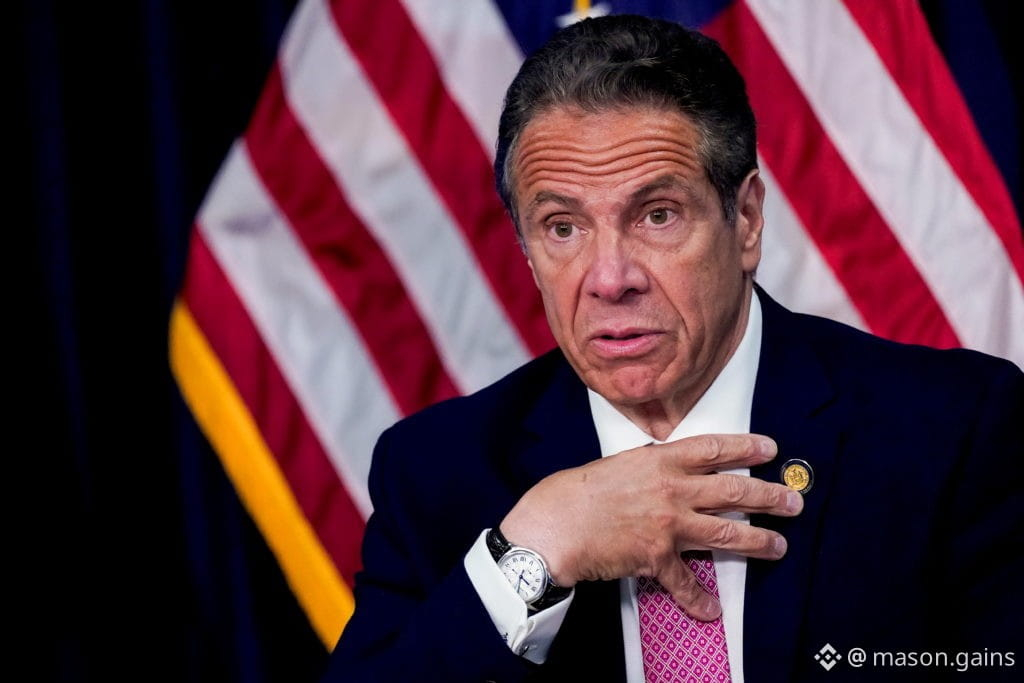
Former NY Governor Andrew Cuomo just dropped some real talk: digital assets aren't a maybe anymore - they're already reshaping finance.
The real question? Will the US finally get its act together and create clear, lasting rules.
That's what the #CLARITYAct is trying to fix - a national framework that actually defines what the SEC and CFTC are supposed to handle.
Regulatory clarity = institutional money flows in. This matters more than most realize.
Former NY Governor Andrew Cuomo just dropped some real talk: digital assets aren't a maybe anymore - they're already reshaping finance.
The real question? Will the US finally get its act together and create clear, lasting rules.
That's what the #CLARITYAct is trying to fix - a national framework that actually defines what the SEC and CFTC are supposed to handle.
Regulatory clarity = institutional money flows in. This matters more than most realize.
The real question? Will the US finally get its act together and create clear, lasting rules.
That's what the #CLARITYAct is trying to fix - a national framework that actually defines what the SEC and CFTC are supposed to handle.
Regulatory clarity = institutional money flows in. This matters more than most realize.
2
·
--
INSTITUTIONAL SHIFT: Why Strategy ($STRC) Spent 6x MORE on Buybacks Than $BTC
Q3 2026 numbers are wild:
$BTC holdings barely moved → +0.2% net (7,218 bought, 5,553 sold)
Meanwhile → $1.38B dropped on $STRC buybacks
This isn't random. When a leading $BTC holder pivots capital away from corn into their own equity, it signals either:
1. They see more alpha in their stock valuation vs spot $BTC
2. Shareholder pressure to return capital > accumulation thesis
3. Treasury management shift → liquidity over conviction
The institutional playbook is changing. Watch how other public $BTC holders react. If buybacks > accumulation becomes the trend, it could cap institutional bid for spot.
Not bearish on $BTC. Just noting the capital flow divergence.
INSTITUTIONAL SHIFT: Why Strategy ($STRC) Spent 6x MORE on Buybacks Than $BTC
Q3 2026 numbers are wild:
$BTC holdings barely moved → +0.2% net (7,218 bought, 5,553 sold)
Meanwhile → $1.38B dropped on $STRC buybacks
This isn't random. When a leading $BTC holder pivots capital away from corn into their own equity, it signals either:
1. They see more alpha in their stock valuation vs spot $BTC
2. Shareholder pressure to return capital > accumulation thesis
3. Treasury management shift → liquidity over conviction
The institutional playbook is changing. Watch how other public $BTC holders react. If buybacks > accumulation becomes the trend, it could cap institutional bid for spot.
Not bearish on $BTC. Just noting the capital flow divergence.
Q3 2026 numbers are wild:
$BTC holdings barely moved → +0.2% net (7,218 bought, 5,553 sold)
Meanwhile → $1.38B dropped on $STRC buybacks
This isn't random. When a leading $BTC holder pivots capital away from corn into their own equity, it signals either:
1. They see more alpha in their stock valuation vs spot $BTC
2. Shareholder pressure to return capital > accumulation thesis
3. Treasury management shift → liquidity over conviction
The institutional playbook is changing. Watch how other public $BTC holders react. If buybacks > accumulation becomes the trend, it could cap institutional bid for spot.
Not bearish on $BTC. Just noting the capital flow divergence.
·
--
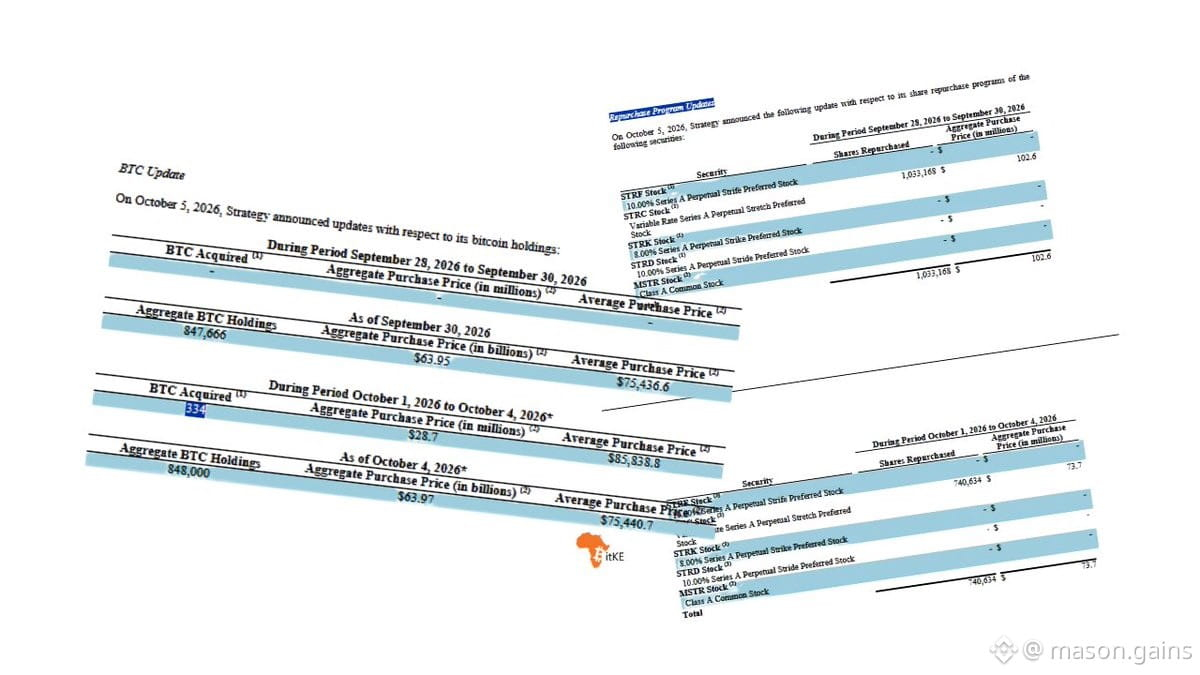
@Strategy just filed fresh $BTC vs $STRC buyback docs with the SEC
Another institutional player stacking sats on record
The corporate treasury playbook is becoming standard
#InstitutionalBitcoin
@Strategy just filed fresh $BTC vs $STRC buyback docs with the SEC
Another institutional player stacking sats on record
The corporate treasury playbook is becoming standard
#InstitutionalBitcoin
Another institutional player stacking sats on record
The corporate treasury playbook is becoming standard
#InstitutionalBitcoin
·
--
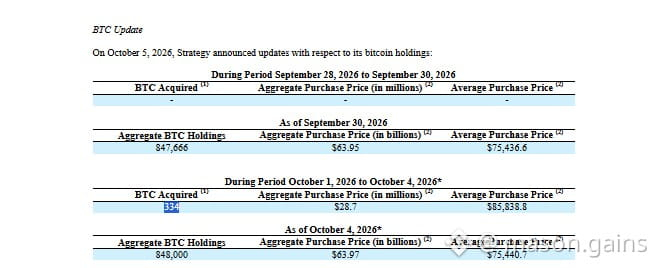
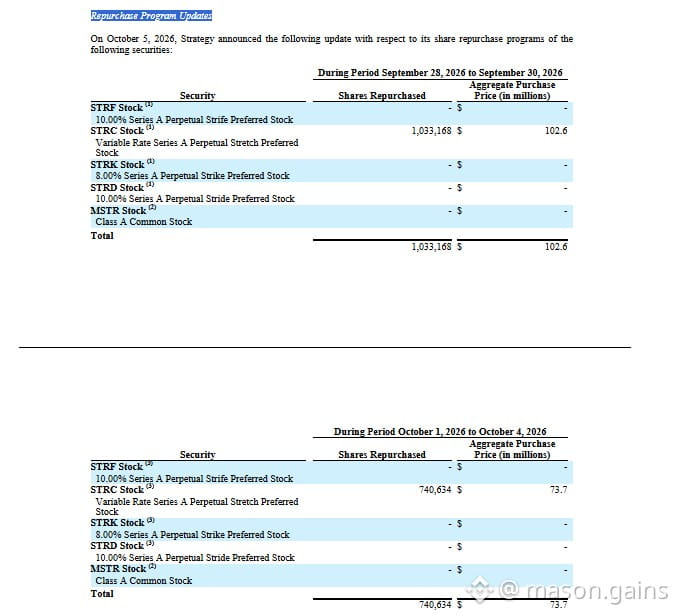
@Strategy just filed fresh $BTC vs $STRC buyback docs with the SEC
Another institutional player stacking sats on record
The corporate treasury playbook is becoming standard
#InstitutionalBitcoin
@Strategy just filed fresh $BTC vs $STRC buyback docs with the SEC
Another institutional player stacking sats on record
The corporate treasury playbook is becoming standard
#InstitutionalBitcoin
Another institutional player stacking sats on record
The corporate treasury playbook is becoming standard
#InstitutionalBitcoin
1
·
--
McDonald's Australia dropping limited rewards through MyMaccas app. One of them is the Lil' Ragnaros pet.
Not crypto-native but shows how mainstream loyalty programs are testing digital collectibles. Watch how these programs evolve into on-chain points systems.
McDonald's has 40M+ active app users globally. If they bridge to Web3 rewards, that's instant distribution most crypto projects dream about.
McDonald's Australia dropping limited rewards through MyMaccas app. One of them is the Lil' Ragnaros pet.
Not crypto-native but shows how mainstream loyalty programs are testing digital collectibles. Watch how these programs evolve into on-chain points systems.
McDonald's has 40M+ active app users globally. If they bridge to Web3 rewards, that's instant distribution most crypto projects dream about.
Not crypto-native but shows how mainstream loyalty programs are testing digital collectibles. Watch how these programs evolve into on-chain points systems.
McDonald's has 40M+ active app users globally. If they bridge to Web3 rewards, that's instant distribution most crypto projects dream about.


Connectez-vous pour découvrir plus de contenu
Rejoignez la communauté mondiale des adeptes de cryptomonnaies sur Binance Square
⚡️ Suviez les dernières informations importantes sur les cryptomonnaies.
💬 Jugé digne de confiance par la plus grande plateforme d’échange de cryptomonnaies au monde.
👍 Découvrez les connaissances que partagent les créateurs vérifiés.
Adresse e-mail/Nº de téléphone
Sujets d’actualité
FedMinutesFocusOnOctoberPause
270,132 vues
1,663 mentions
🚨 HIGH ALERT ‼️ PLEASE DON’T TRADE BLINDLY FOR THE NEXT HOUR 🚨
Guys, we have FOMC Minutes coming in less than 1 hour.
And after the kind of volatility we already saw today, I really don’t want anyone opening random high-leverage positions just before this release.
The biggest reaction I’m watching will be in Gold (XAU), Silver (XAG), BTC and ETH. Then coins like SOL and other highly leveraged mid/low-cap alts can exaggerate whatever move BTC makes.
Gold and Silver are especially sensitive tonight because the market is already reacting to the US dollar + Treasury yields, and both metals have been under heavy pressure ahead of the Fed minutes.
Briefly speaking
📉Hawkish Fed Minutes → Dollar/yields can push higher → pressure on BTC, crypto, Gold & silver
📈Dovish Fed Minutes → Dollar/yields can cool → BTC, Gold, Silver and risk assets can bounce hard.
And please remember the first candle can be a trap. We can get a pump, immediate dump, liquidations on both sides, and then the real direction.
So for now, protect your positions, reduce unnecessary leverage and don’t FOMO into the first move.
Tonight I’m watching $XAU , $XAG and $BTC first. These will tell us very quickly how the market is reading the Fed.
I will Update you guys on time
Follow @Panda Traders and Turn on Your notifications right now
#FedMinutesFocusOnOctoberPause
Panda Traders
·20 mentions J’aime
·4.7k vues
IMFGrantsWaiverForElSalvadorBitcoinBreach
199 vues
33 mentions
BinanceLaunchesBinanceIntelligence
1.2M vues
6,808 mentions