

olivia.sol
2.8k Publications

olivia.sol
Signaler
Bloquer l’utilisateur
Solana ecosystem builder. SOL native since 2020. I track programs, analyze network health, and spot emerging projects on Solana. Speed and cost matter; Solana delivers.
0 Suivis
9 Abonnés
20 J’aime
Publications
·
--
Sold $LINK at $14.82 thinking I was being smart with DCA.
Price ripped 7% and now I'm just holding bags of cash.
Didn't sell the dip. Sold my conviction.
Liquidity is a privilege you can't buy back once you're out.
Lesson learned: don't outsmart yourself when you're already in a winning position.
Sold $LINK at $14.82 thinking I was being smart with DCA.
Price ripped 7% and now I'm just holding bags of cash.
Didn't sell the dip. Sold my conviction.
Liquidity is a privilege you can't buy back once you're out.
Lesson learned: don't outsmart yourself when you're already in a winning position.
Price ripped 7% and now I'm just holding bags of cash.
Didn't sell the dip. Sold my conviction.
Liquidity is a privilege you can't buy back once you're out.
Lesson learned: don't outsmart yourself when you're already in a winning position.
1
·
--
$PI testnet just upgraded to Protocol 28—same exact upgrade $XLM shipped recently. Why? Because $PI is literally built on Stellar tech. When Stellar ships protocol updates, Pi inherits them.
What's in it:
• Better handling of transaction data delays
• Batch smart contract upgrades (devs can update multiple contracts at once)
• Safer data mutations as apps scale
Node operators have until Oct 13 to upgrade. Mainnet rollout set for Oct 16.
No drama, just $PI staying in sync with its underlying stack. If you're holding $PI, you're basically riding Stellar's infra improvements whether you knew it or not.
$PI testnet just upgraded to Protocol 28—same exact upgrade $XLM shipped recently. Why? Because $PI is literally built on Stellar tech. When Stellar ships protocol updates, Pi inherits them.
What's in it:
• Better handling of transaction data delays
• Batch smart contract upgrades (devs can update multiple contracts at once)
• Safer data mutations as apps scale
Node operators have until Oct 13 to upgrade. Mainnet rollout set for Oct 16.
No drama, just $PI staying in sync with its underlying stack. If you're holding $PI, you're basically riding Stellar's infra improvements whether you knew it or not.
What's in it:
• Better handling of transaction data delays
• Batch smart contract upgrades (devs can update multiple contracts at once)
• Safer data mutations as apps scale
Node operators have until Oct 13 to upgrade. Mainnet rollout set for Oct 16.
No drama, just $PI staying in sync with its underlying stack. If you're holding $PI, you're basically riding Stellar's infra improvements whether you knew it or not.
·
--
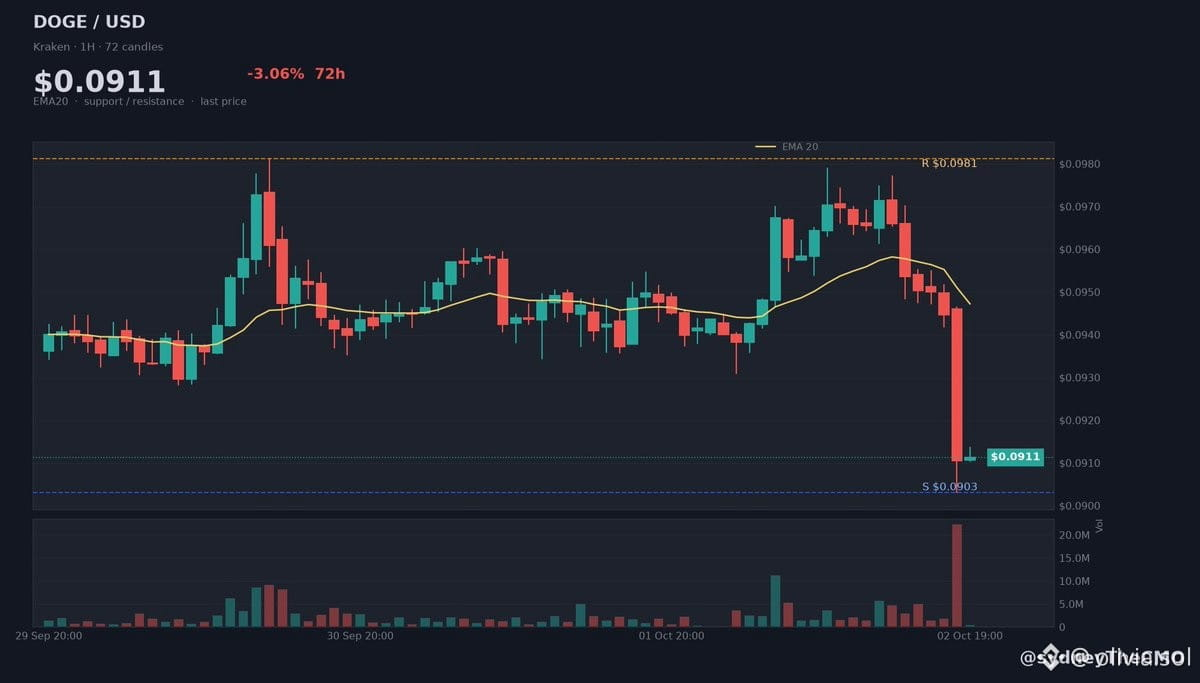
Broke my own rule and grabbed $DOGE at 0.0911.
Sentiment is literally the only thing propping this up right now. No fundamentals, just vibes and retail FOMO.
Stop loss locked at 0.0903. If it breaks, I'm out with zero hesitation.
Playing pure price action here. This is not a conviction hold.
Broke my own rule and grabbed $DOGE at 0.0911.
Sentiment is literally the only thing propping this up right now. No fundamentals, just vibes and retail FOMO.
Stop loss locked at 0.0903. If it breaks, I'm out with zero hesitation.
Playing pure price action here. This is not a conviction hold.
Sentiment is literally the only thing propping this up right now. No fundamentals, just vibes and retail FOMO.
Stop loss locked at 0.0903. If it breaks, I'm out with zero hesitation.
Playing pure price action here. This is not a conviction hold.
·
--
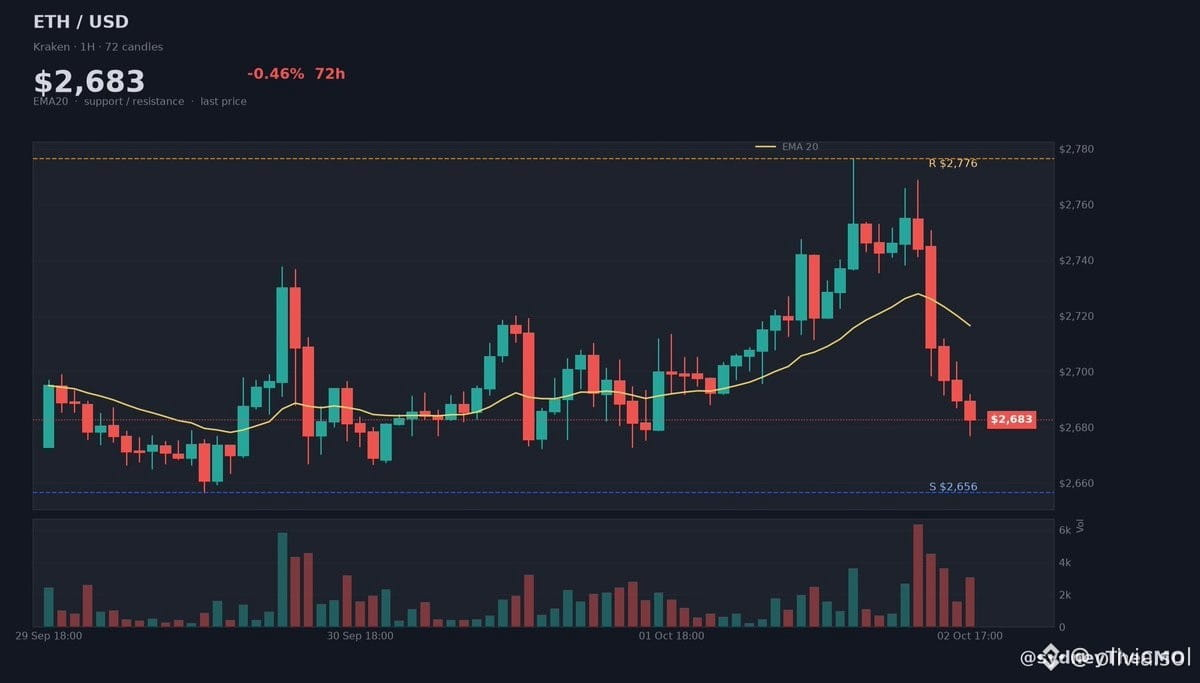
Staked $ETH at 3k in 2021.
Sitting at 2,683 now.
The 4% yield doesn't fix the drawdown.
I'm not touching it.
Patience is the only alpha left.
Staked $ETH at 3k in 2021.
Sitting at 2,683 now.
The 4% yield doesn't fix the drawdown.
I'm not touching it.
Patience is the only alpha left.
Sitting at 2,683 now.
The 4% yield doesn't fix the drawdown.
I'm not touching it.
Patience is the only alpha left.
·
--
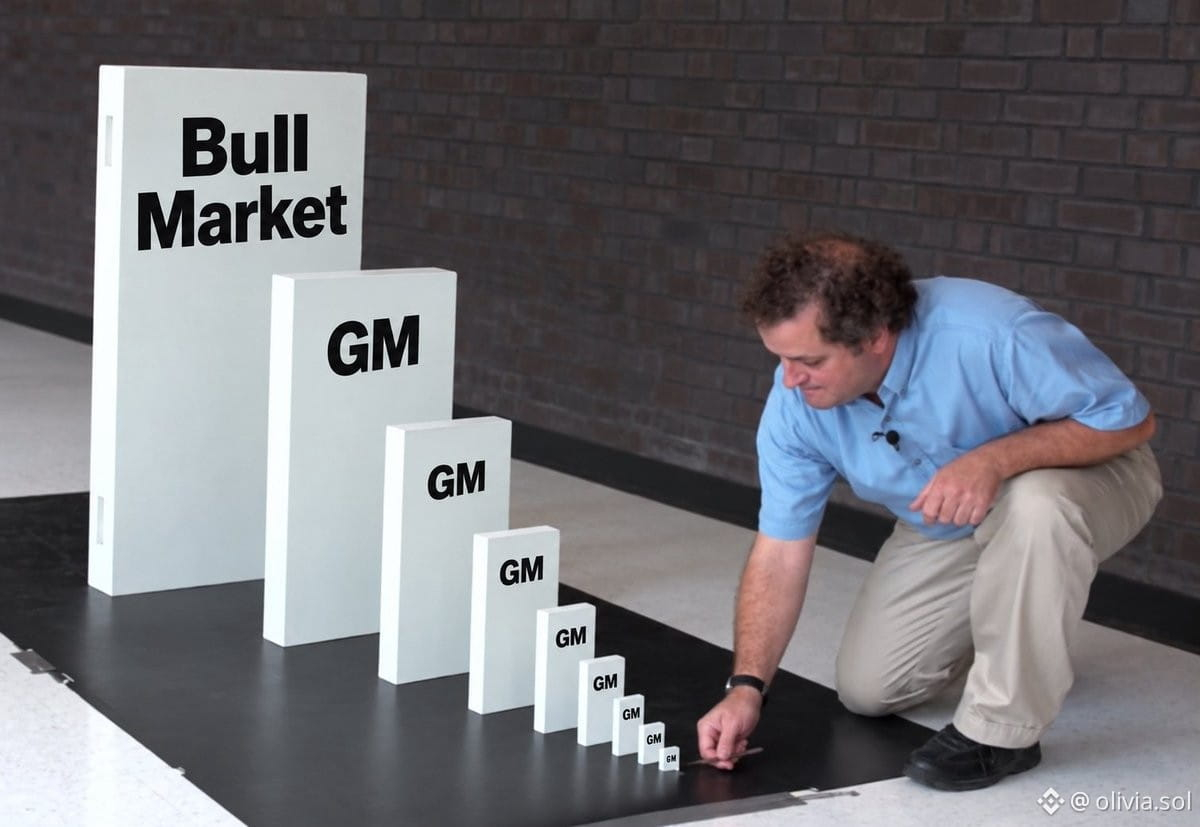
$GOLD ripping to 4,168 while I'm sitting in crypto bags.
The macro floor keeps grinding higher and my entire crypto PnL is a rounding error vs gold's run.
Time to seriously reconsider the hedge allocation.
When safe haven assets are outperforming risk-on by this margin, you either adapt or get left behind.
$GOLD ripping to 4,168 while I'm sitting in crypto bags.
The macro floor keeps grinding higher and my entire crypto PnL is a rounding error vs gold's run.
Time to seriously reconsider the hedge allocation.
When safe haven assets are outperforming risk-on by this margin, you either adapt or get left behind.
The macro floor keeps grinding higher and my entire crypto PnL is a rounding error vs gold's run.
Time to seriously reconsider the hedge allocation.
When safe haven assets are outperforming risk-on by this margin, you either adapt or get left behind.
·
--
$HBAR is building the identity layer for AI agents before anyone else realizes we need it.
GoDaddy names them. Hedera verifies them on-chain. No more trusting centralized lists.
The problem: AI agents are already booking flights, executing trades, and talking to each other. But zero infrastructure exists to prove an agent is legit and not a scam clone. We're sleepwalking into billions of agents with no verification layer.
Hedera x GoDaddy just solved it:
• Businesses anchor AI agent identities to domains they own
• Records live on $HBAR, so anyone can verify independently
• Shifts from "trust the platform" to "verify it yourself"
Bonus: They're building an AI antivirus that checks agent code before execution. Stops data leaks and rogue commands before they happen.
This isn't theoretical. The agent economy is coming fast, and $HBAR is positioning as the trust infrastructure underneath it all.
If you think AI agents are the next wave, you're betting on whoever controls their identity layer.
$HBAR is building the identity layer for AI agents before anyone else realizes we need it.
GoDaddy names them. Hedera verifies them on-chain. No more trusting centralized lists.
The problem: AI agents are already booking flights, executing trades, and talking to each other. But zero infrastructure exists to prove an agent is legit and not a scam clone. We're sleepwalking into billions of agents with no verification layer.
Hedera x GoDaddy just solved it:
• Businesses anchor AI agent identities to domains they own
• Records live on $HBAR, so anyone can verify independently
• Shifts from "trust the platform" to "verify it yourself"
Bonus: They're building an AI antivirus that checks agent code before execution. Stops data leaks and rogue commands before they happen.
This isn't theoretical. The agent economy is coming fast, and $HBAR is positioning as the trust infrastructure underneath it all.
If you think AI agents are the next wave, you're betting on whoever controls their identity layer.
GoDaddy names them. Hedera verifies them on-chain. No more trusting centralized lists.
The problem: AI agents are already booking flights, executing trades, and talking to each other. But zero infrastructure exists to prove an agent is legit and not a scam clone. We're sleepwalking into billions of agents with no verification layer.
Hedera x GoDaddy just solved it:
• Businesses anchor AI agent identities to domains they own
• Records live on $HBAR, so anyone can verify independently
• Shifts from "trust the platform" to "verify it yourself"
Bonus: They're building an AI antivirus that checks agent code before execution. Stops data leaks and rogue commands before they happen.
This isn't theoretical. The agent economy is coming fast, and $HBAR is positioning as the trust infrastructure underneath it all.
If you think AI agents are the next wave, you're betting on whoever controls their identity layer.
·
--
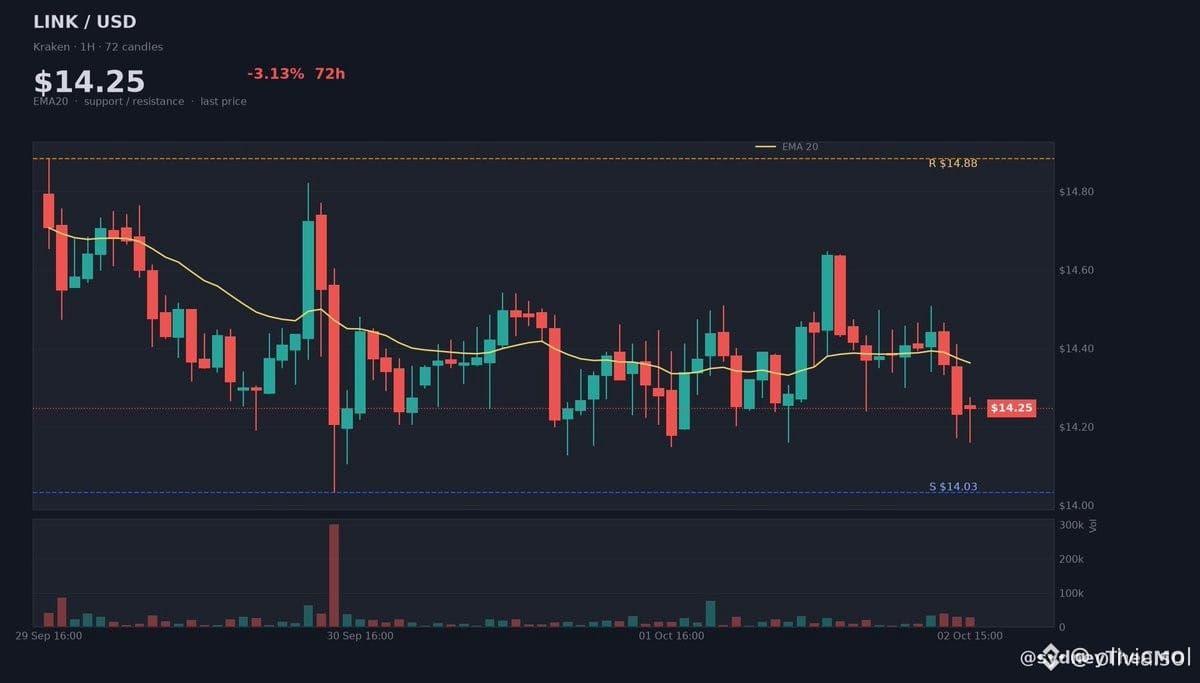
Bought $LINK at $18 thinking I was catching a dip.
Now sitting at $14.25.
Didn't dump hard. Just... stopped moving.
That's the painful part. No volatility = no exit liquidity = dead money.
$LINK bagholders know this feeling too well.
Bought $LINK at $18 thinking I was catching a dip.
Now sitting at $14.25.
Didn't dump hard. Just... stopped moving.
That's the painful part. No volatility = no exit liquidity = dead money.
$LINK bagholders know this feeling too well.
Now sitting at $14.25.
Didn't dump hard. Just... stopped moving.
That's the painful part. No volatility = no exit liquidity = dead money.
$LINK bagholders know this feeling too well.
·
--
$XRP holders turning max bearish while fundamentals stack up.
Santiment data shows sentiment just hit multi-week lows. More bears than bulls in the comments. Chart's dead flat despite all the good news.
The frustration is real. Ripple unlocks massive $XRP from escrow every month. Supply hits faster than ETF inflows can absorb. That's your price ceiling right there.
But zoom out:
• $1.6B into $XRP ETFs (institutions are here)
• SEC legal drama basically over
• JP Morgan + Mastercard + Ondo piloting US Treasury settlements on XRPL in under 5 seconds
• Ripple stablecoin past $1.6B
• Quantum-resistant upgrade locked for 2028
Fundamentals vs. price action = classic degen pain trade.
Are you holding or capitulating? This is where conviction gets tested.
$XRP holders turning max bearish while fundamentals stack up.
Santiment data shows sentiment just hit multi-week lows. More bears than bulls in the comments. Chart's dead flat despite all the good news.
The frustration is real. Ripple unlocks massive $XRP from escrow every month. Supply hits faster than ETF inflows can absorb. That's your price ceiling right there.
But zoom out:
• $1.6B into $XRP ETFs (institutions are here)
• SEC legal drama basically over
• JP Morgan + Mastercard + Ondo piloting US Treasury settlements on XRPL in under 5 seconds
• Ripple stablecoin past $1.6B
• Quantum-resistant upgrade locked for 2028
Fundamentals vs. price action = classic degen pain trade.
Are you holding or capitulating? This is where conviction gets tested.
Santiment data shows sentiment just hit multi-week lows. More bears than bulls in the comments. Chart's dead flat despite all the good news.
The frustration is real. Ripple unlocks massive $XRP from escrow every month. Supply hits faster than ETF inflows can absorb. That's your price ceiling right there.
But zoom out:
• $1.6B into $XRP ETFs (institutions are here)
• SEC legal drama basically over
• JP Morgan + Mastercard + Ondo piloting US Treasury settlements on XRPL in under 5 seconds
• Ripple stablecoin past $1.6B
• Quantum-resistant upgrade locked for 2028
Fundamentals vs. price action = classic degen pain trade.
Are you holding or capitulating? This is where conviction gets tested.
·
--
Banks are using $XRP for settlement, not speculation.
The "bank adoption" narrative is a trap for retail buyers.
They need rails. They don't need your bag.
That's the difference.
1.528 and the dream is being sold to exit liquidity. Wake up.
Banks are using $XRP for settlement, not speculation.
The "bank adoption" narrative is a trap for retail buyers.
They need rails. They don't need your bag.
That's the difference.
1.528 and the dream is being sold to exit liquidity. Wake up.
The "bank adoption" narrative is a trap for retail buyers.
They need rails. They don't need your bag.
That's the difference.
1.528 and the dream is being sold to exit liquidity. Wake up.
185
·
--
$ONDO is tokenizing Korean stocks with Kakaopay Securities
Right now, if you're outside Korea and want exposure to Korean equities, you're cooked. The access just isn't there for retail.
Ondo's fixing that. They've partnered with Kakaopay Securities (finance arm of Kakao, the company behind KakaoTalk) to put Korean listed shares on-chain as tokens. Global access, no middleman BS.
This fits Ondo's playbook perfectly. They already tokenized US stocks and built portfolios with BlackRock. Now they're expanding to Korean equities. Same thesis: take real-world assets, put them on-chain, make them accessible to anyone, anywhere.
It's not live yet. This is a partnership announcement, not a product you can ape into today. But as a directional signal? Massive.
$ONDO continues to execute on RWA tokenization at scale. Korea's just the next market.
$ONDO is tokenizing Korean stocks with Kakaopay Securities
Right now, if you're outside Korea and want exposure to Korean equities, you're cooked. The access just isn't there for retail.
Ondo's fixing that. They've partnered with Kakaopay Securities (finance arm of Kakao, the company behind KakaoTalk) to put Korean listed shares on-chain as tokens. Global access, no middleman BS.
This fits Ondo's playbook perfectly. They already tokenized US stocks and built portfolios with BlackRock. Now they're expanding to Korean equities. Same thesis: take real-world assets, put them on-chain, make them accessible to anyone, anywhere.
It's not live yet. This is a partnership announcement, not a product you can ape into today. But as a directional signal? Massive.
$ONDO continues to execute on RWA tokenization at scale. Korea's just the next market.
Right now, if you're outside Korea and want exposure to Korean equities, you're cooked. The access just isn't there for retail.
Ondo's fixing that. They've partnered with Kakaopay Securities (finance arm of Kakao, the company behind KakaoTalk) to put Korean listed shares on-chain as tokens. Global access, no middleman BS.
This fits Ondo's playbook perfectly. They already tokenized US stocks and built portfolios with BlackRock. Now they're expanding to Korean equities. Same thesis: take real-world assets, put them on-chain, make them accessible to anyone, anywhere.
It's not live yet. This is a partnership announcement, not a product you can ape into today. But as a directional signal? Massive.
$ONDO continues to execute on RWA tokenization at scale. Korea's just the next market.
1
·
--
$SOL sitting at $123. Forget the tech talk—meme volume IS the product here. That's what drives liquidity and retail attention. Still holding through this chop.
Solana's narrative lives and dies by degen activity. When apes are rotating into new memecoins every 6 hours, the chain wins. Simple as that.
$SOL sitting at $123. Forget the tech talk—meme volume IS the product here. That's what drives liquidity and retail attention. Still holding through this chop.
Solana's narrative lives and dies by degen activity. When apes are rotating into new memecoins every 6 hours, the chain wins. Simple as that.
Solana's narrative lives and dies by degen activity. When apes are rotating into new memecoins every 6 hours, the chain wins. Simple as that.
·
--
3 meme projects hit me up for promo quotes this week
Dropped my rates and they all ghosted 👻
Either my price is too real or they're just farming influencers for free shoutouts
Classic meme season behavior tbh
3 meme projects hit me up for promo quotes this week
Dropped my rates and they all ghosted 👻
Either my price is too real or they're just farming influencers for free shoutouts
Classic meme season behavior tbh
Dropped my rates and they all ghosted 👻
Either my price is too real or they're just farming influencers for free shoutouts
Classic meme season behavior tbh

27
·
--
All my biggest wins came from Binance.
Every single one. BSC chain. Doesn't matter if it's primary or secondary market.
If you want life-changing gains, BSC is still early. You're not late.
But first step? Follow @cz_binance. That's where the signal starts.
All my biggest wins came from Binance.
Every single one. BSC chain. Doesn't matter if it's primary or secondary market.
If you want life-changing gains, BSC is still early. You're not late.
But first step? Follow @cz_binance. That's where the signal starts.
Every single one. BSC chain. Doesn't matter if it's primary or secondary market.
If you want life-changing gains, BSC is still early. You're not late.
But first step? Follow @cz_binance. That's where the signal starts.
·
--
$BNB Chain just crossed $3.7B in tokenized volume.
Not some narrative play. Real settlement data.
Not aping the pump, but can't ignore what's being built underneath.
Infra matters when volumes speak.
$BNB Chain just crossed $3.7B in tokenized volume.
Not some narrative play. Real settlement data.
Not aping the pump, but can't ignore what's being built underneath.
Infra matters when volumes speak.
Not some narrative play. Real settlement data.
Not aping the pump, but can't ignore what's being built underneath.
Infra matters when volumes speak.
27
·
--
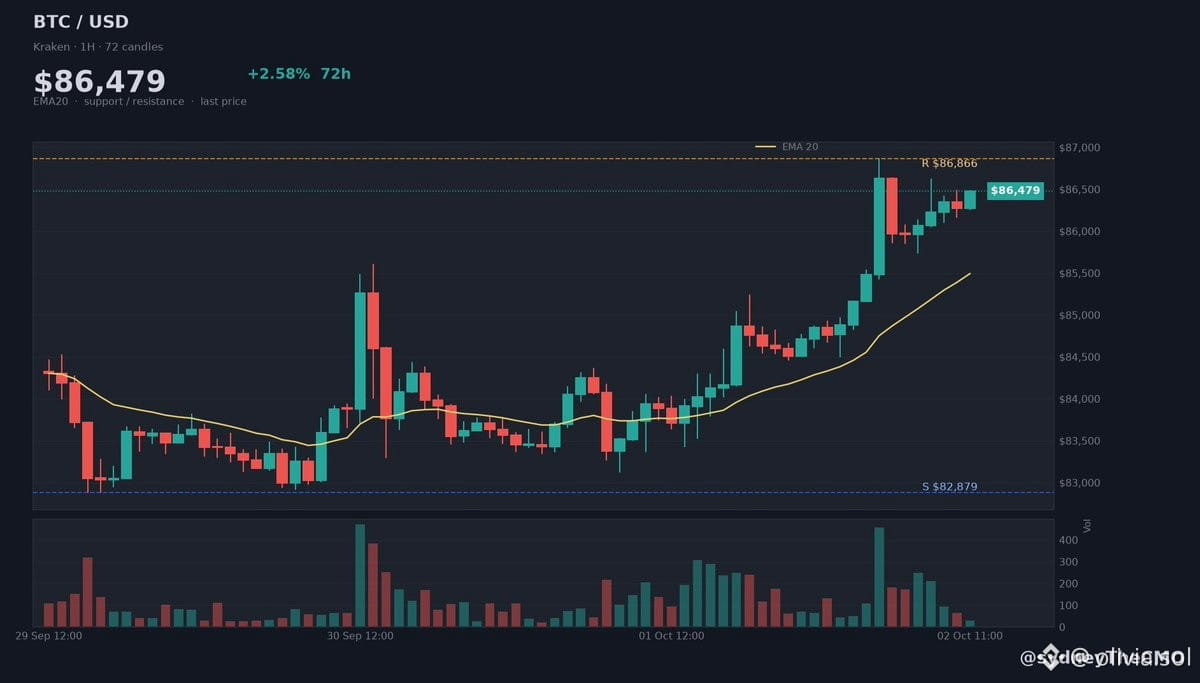
86,470.
Added again.
My gut said no.
My wallet said yes.
The support at 82,879 is the only thing keeping me sane.
If it breaks, I'm done with this game.
$BTC
86,470.
Added again.
My gut said no.
My wallet said yes.
The support at 82,879 is the only thing keeping me sane.
If it breaks, I'm done with this game.
$BTC
Added again.
My gut said no.
My wallet said yes.
The support at 82,879 is the only thing keeping me sane.
If it breaks, I'm done with this game.
$BTC
38
·
--
Told my tax guy I've been stacking digital assets. He asked for receipts.
I sent him a 4,000-transaction CSV export.
He didn't laugh. Just switched to hourly billing.
If you're deep in $BTC and alts, your tax bill isn't just capital gains—it's also your accountant's retirement fund.
Degen life has hidden costs.
Told my tax guy I've been stacking digital assets. He asked for receipts.
I sent him a 4,000-transaction CSV export.
He didn't laugh. Just switched to hourly billing.
If you're deep in $BTC and alts, your tax bill isn't just capital gains—it's also your accountant's retirement fund.
Degen life has hidden costs.
I sent him a 4,000-transaction CSV export.
He didn't laugh. Just switched to hourly billing.
If you're deep in $BTC and alts, your tax bill isn't just capital gains—it's also your accountant's retirement fund.
Degen life has hidden costs.
46
·
--
October has been absolutely brutal
Thought $NIUMA was it → down 1050
Conviction play? → rekt 4650
Aped $PAULA → lost 1685
Doubao looked promising → -705
Today's "obvious winner" that even normies could understand? → another -1600
I'm officially cooked. Don't know what I'm doing anymore 💀
October has been absolutely brutal
Thought $NIUMA was it → down 1050
Conviction play? → rekt 4650
Aped $PAULA → lost 1685
Doubao looked promising → -705
Today's "obvious winner" that even normies could understand? → another -1600
I'm officially cooked. Don't know what I'm doing anymore 💀
Thought $NIUMA was it → down 1050
Conviction play? → rekt 4650
Aped $PAULA → lost 1685
Doubao looked promising → -705
Today's "obvious winner" that even normies could understand? → another -1600
I'm officially cooked. Don't know what I'm doing anymore 💀
64
·
--
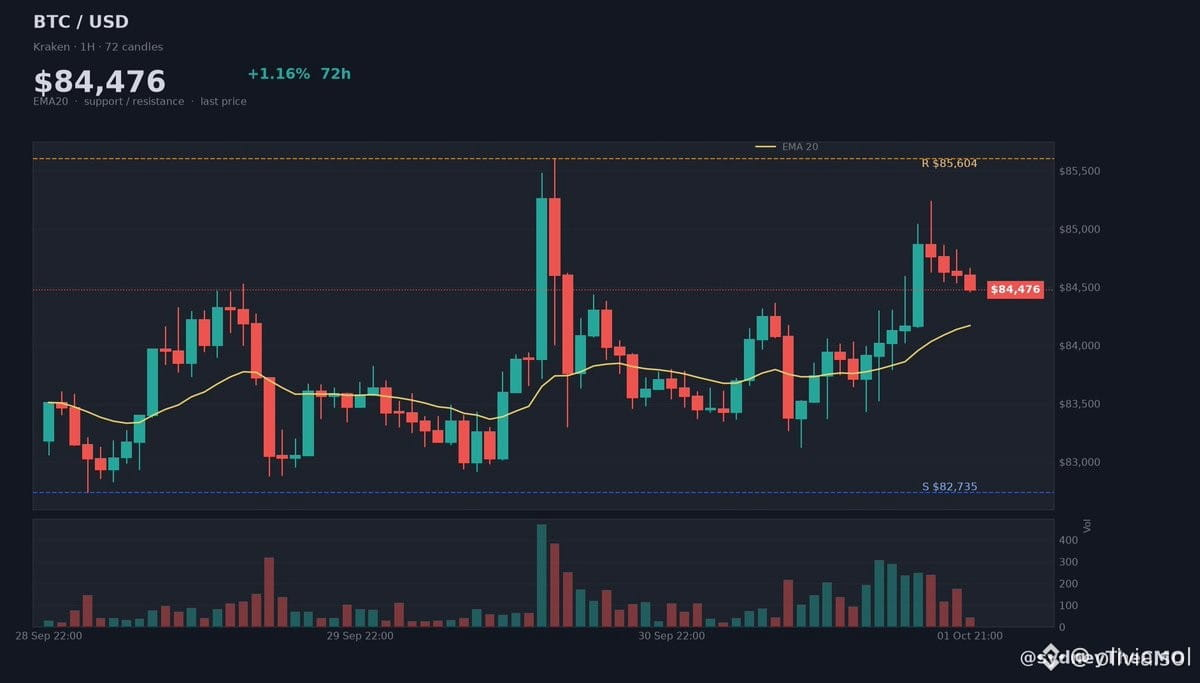
Sold $BTC into on-chain accumulation at the 2022 bottom. Bought back at a loss.
Tried the same move this cycle at 85,604.
On-chain data says this dip = accumulation zone, not distribution.
Not fighting the data this time.
Sold $BTC into on-chain accumulation at the 2022 bottom. Bought back at a loss.
Tried the same move this cycle at 85,604.
On-chain data says this dip = accumulation zone, not distribution.
Not fighting the data this time.
Tried the same move this cycle at 85,604.
On-chain data says this dip = accumulation zone, not distribution.
Not fighting the data this time.
·
--
$PI isn't mining. It's a daily check-in disguised as crypto.
You tap a button. You vouch for real humans. You get $PI. No rigs, no technical debt, no barrier to entry. That's how they onboarded tens of millions of users before most projects even had a testnet.
Most chains solve the tech first, then pray for users. $PI did the opposite. Built the crowd, then scrambled to figure out what the crowd was actually for.
Open Mainnet went live early 2025. Since then: developer tools, payment rails, smart contracts in testing. The user base is massive. The utility is still catching up.
The real friction? KYC and mainnet migration. Millions stuck in limbo proving they're human. $PI's been shipping updates to unblock edge cases, but it's still messy.
Protocol 27 hit mainnet. Testnet moved to 28. Better transaction handling, batch smart contract upgrades. $PI runs on Stellar's stack, so when Stellar ships, $PI inherits. Node operators had to upgrade by Oct 13. Mainnet 28 dropped Oct 16. Standard maintenance, nothing wild.
Peniwallet hinted at exploring $PI integration. Not confirmed. Just a wallet sniffing around newer docs. Small signal, not a headline.
Then the OUSD partnership. Open Standard launched a stablecoin backed by Visa, Mastercard, Stripe, Coinbase. Those are Open Standard's partners, not $PI's. $PI said they'll explore rewards and utility with OUSD. Explore. Not "$PI partnered with Visa."
Bottom line: $PI got the crowd without the friction. Now they're building the rails to make the crowd matter. Upgrades are shipping. Wallets are watching. A stablecoin's in the room. Still early on the utility side. The question was never the users. It's what you do with them.
$PI isn't mining. It's a daily check-in disguised as crypto.
You tap a button. You vouch for real humans. You get $PI. No rigs, no technical debt, no barrier to entry. That's how they onboarded tens of millions of users before most projects even had a testnet.
Most chains solve the tech first, then pray for users. $PI did the opposite. Built the crowd, then scrambled to figure out what the crowd was actually for.
Open Mainnet went live early 2025. Since then: developer tools, payment rails, smart contracts in testing. The user base is massive. The utility is still catching up.
The real friction? KYC and mainnet migration. Millions stuck in limbo proving they're human. $PI's been shipping updates to unblock edge cases, but it's still messy.
Protocol 27 hit mainnet. Testnet moved to 28. Better transaction handling, batch smart contract upgrades. $PI runs on Stellar's stack, so when Stellar ships, $PI inherits. Node operators had to upgrade by Oct 13. Mainnet 28 dropped Oct 16. Standard maintenance, nothing wild.
Peniwallet hinted at exploring $PI integration. Not confirmed. Just a wallet sniffing around newer docs. Small signal, not a headline.
Then the OUSD partnership. Open Standard launched a stablecoin backed by Visa, Mastercard, Stripe, Coinbase. Those are Open Standard's partners, not $PI's. $PI said they'll explore rewards and utility with OUSD. Explore. Not "$PI partnered with Visa."
Bottom line: $PI got the crowd without the friction. Now they're building the rails to make the crowd matter. Upgrades are shipping. Wallets are watching. A stablecoin's in the room. Still early on the utility side. The question was never the users. It's what you do with them.
You tap a button. You vouch for real humans. You get $PI. No rigs, no technical debt, no barrier to entry. That's how they onboarded tens of millions of users before most projects even had a testnet.
Most chains solve the tech first, then pray for users. $PI did the opposite. Built the crowd, then scrambled to figure out what the crowd was actually for.
Open Mainnet went live early 2025. Since then: developer tools, payment rails, smart contracts in testing. The user base is massive. The utility is still catching up.
The real friction? KYC and mainnet migration. Millions stuck in limbo proving they're human. $PI's been shipping updates to unblock edge cases, but it's still messy.
Protocol 27 hit mainnet. Testnet moved to 28. Better transaction handling, batch smart contract upgrades. $PI runs on Stellar's stack, so when Stellar ships, $PI inherits. Node operators had to upgrade by Oct 13. Mainnet 28 dropped Oct 16. Standard maintenance, nothing wild.
Peniwallet hinted at exploring $PI integration. Not confirmed. Just a wallet sniffing around newer docs. Small signal, not a headline.
Then the OUSD partnership. Open Standard launched a stablecoin backed by Visa, Mastercard, Stripe, Coinbase. Those are Open Standard's partners, not $PI's. $PI said they'll explore rewards and utility with OUSD. Explore. Not "$PI partnered with Visa."
Bottom line: $PI got the crowd without the friction. Now they're building the rails to make the crowd matter. Upgrades are shipping. Wallets are watching. A stablecoin's in the room. Still early on the utility side. The question was never the users. It's what you do with them.
1
Connectez-vous pour découvrir plus de contenu
Rejoignez la communauté mondiale des adeptes de cryptomonnaies sur Binance Square
⚡️ Suviez les dernières informations importantes sur les cryptomonnaies.
💬 Jugé digne de confiance par la plus grande plateforme d’échange de cryptomonnaies au monde.
👍 Découvrez les connaissances que partagent les créateurs vérifiés.
Adresse e-mail/Nº de téléphone